



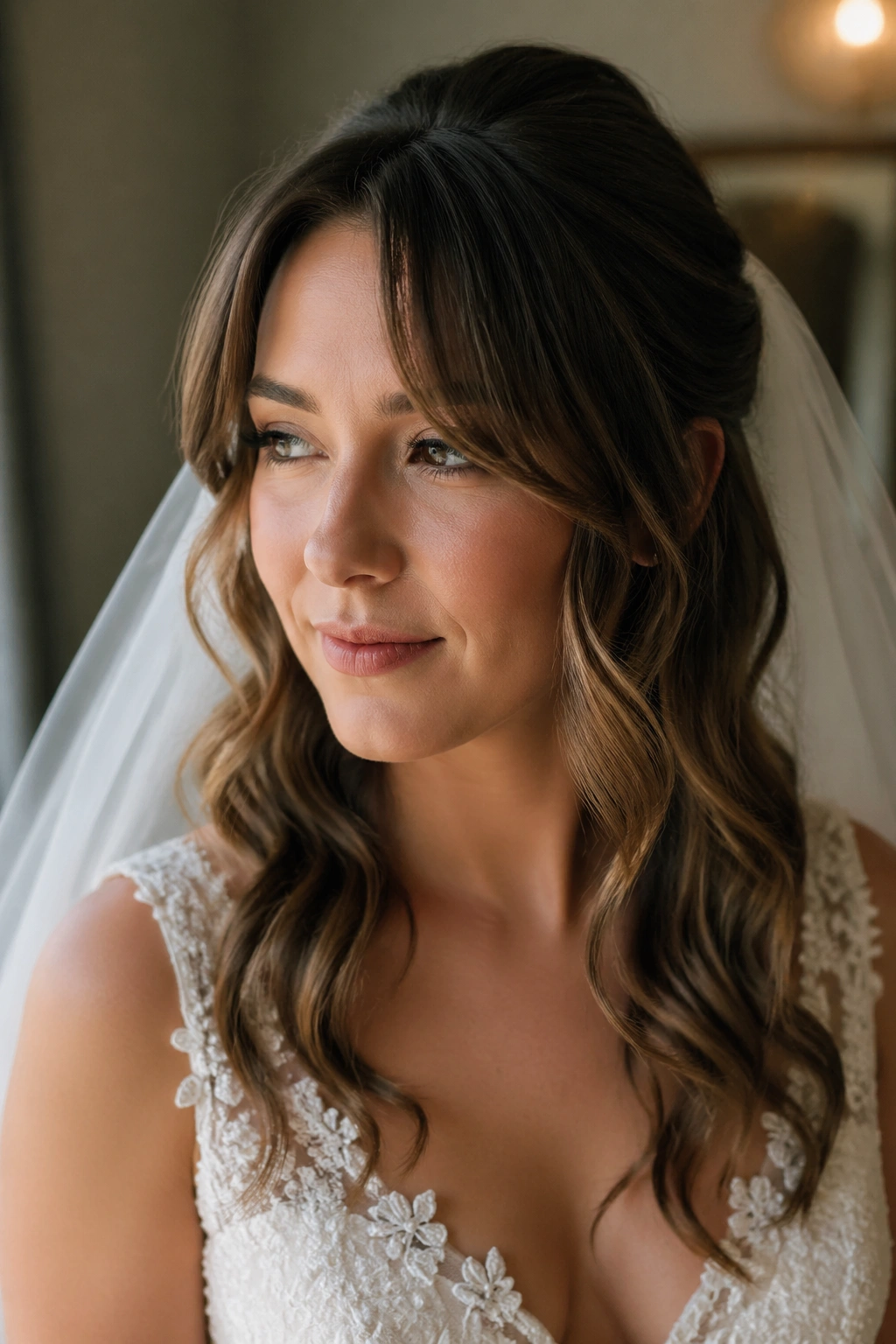
Bangs on a wedding day can make even a calm bride second-guess everything. Wavy bangs for weddings solve a real problem: they soften the face, hold shape better than pin-straight fringe, and look less severe in photos when the light hits from the side.
The hard part is not the wave itself. It’s the balance. A fringe that looks great in the mirror can fight a veil, disappear into a chignon, or puff up the moment the weather turns humid and the dancing starts. Wedding hair has to survive hugs, flash photography, and a long stretch of looking polished without constant fixing.
I’ve always liked wavy bangs because they keep the front of the hairstyle alive. A little bend near the brow, a few separated pieces, and suddenly the style feels intentional instead of stiff. Add a flexible spray and the front stays touchable instead of crunchy, which matters more than people admit.
Some brides want barely-there curtain pieces. Others want a full fringe with a glossy wave. Both can work. The smartest pick is the one that fits the dress, the veil, the neckline, and how much touch-up time you’re willing to spend between ceremony and reception.
1. Soft Curtain Bangs with Loose Bridal Waves
Soft curtain bangs are the safest place to start, and I mean that in a good way. They split the face cleanly, then blend into the rest of the hair instead of sitting like a hard line across the forehead. On a wedding day, that matters because the style still looks graceful if one side lifts a little or the part shifts after you’ve worn a veil for an hour.
Why Brides Keep Coming Back to This Shape
Curtain bangs work because they don’t ask for perfection. A slight bend away from the face is enough, and the rest of the wave can fall in a loose S-shape around the cheeks. Keep the shortest point around cheekbone level, not too high, so the fringe blends into face-framing layers rather than looking chopped.
A 1-inch curling iron or a medium round brush both work here. Let the hair cool before you touch it again. That little pause makes the wave hold better, and it keeps the front from collapsing into your skin by the time the photos start.
- Best with: soft veils, low buns, half-up styles
- Great for: oval, heart, and square faces
- Styling note: angle the fringe away from the cheekbones first, then let it fall naturally
Small trick: leave one side a touch longer than the other. It reads deliberate, not messy.
2. Side-Swept Wavy Fringe for a Veil-Friendly Look
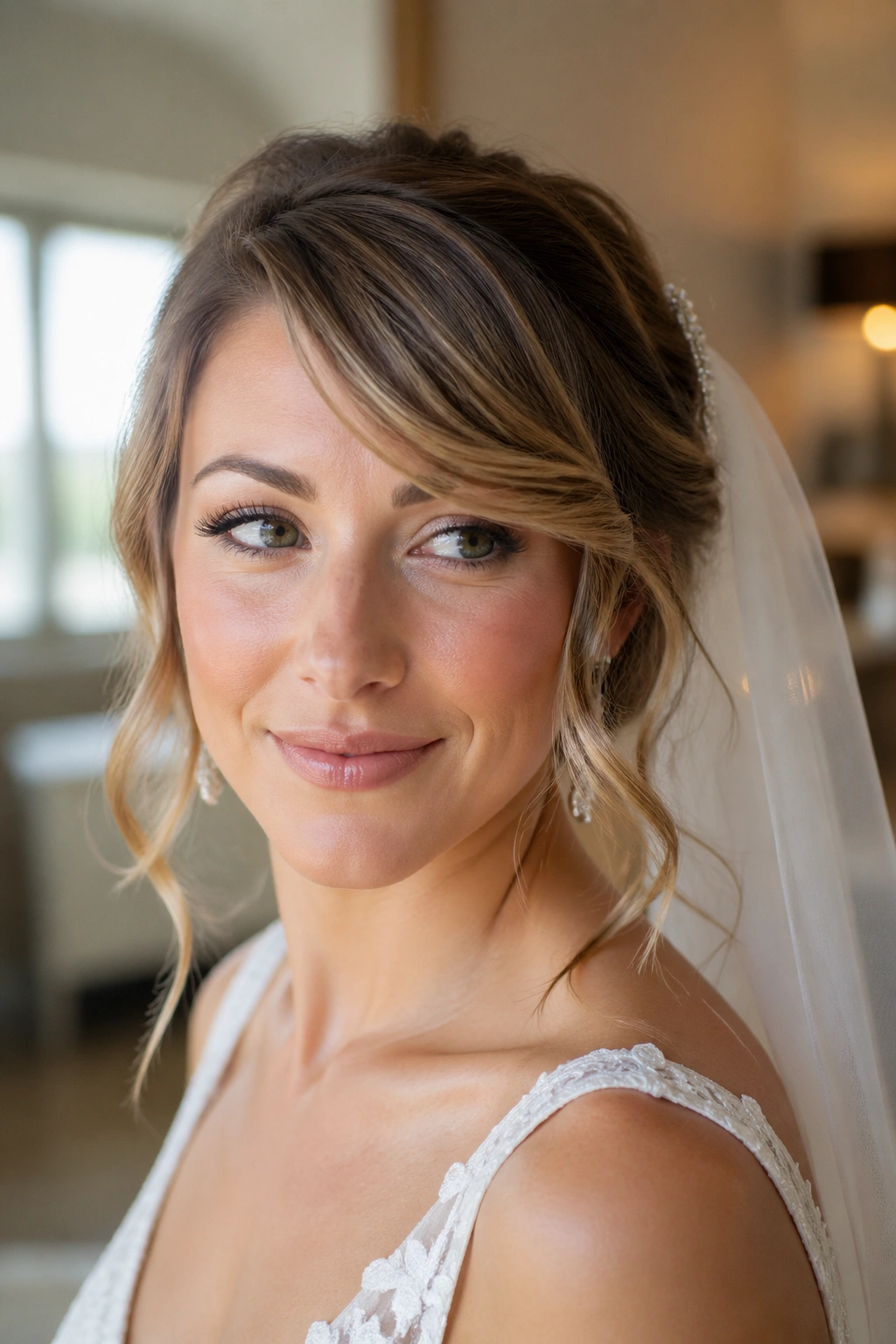
Want something that stays romantic when the wind starts behaving badly? A side-swept wavy fringe is one of the easiest answers. It clears one side of the forehead, opens the eyes, and gives the whole style a gentle diagonal line that looks especially good beside a veil comb or a shoulder-skimming neckline.
The trick is direction. Sweep the fringe in one clear motion, then set it with a soft bend, not a tight curl. If the bend is too round, the front starts to look dated. If it is too flat, you lose the softness that makes this style worth choosing in the first place.
This is one of those styles that looks calm in photos. It also saves you from the “my bangs got split down the middle by a breeze” problem, which is a real thing on outdoor ceremony days. A light mist of flexible spray at the roots is enough. Don’t drown it.
3. Brow-Grazing Wavy Bangs with a Polished Finish
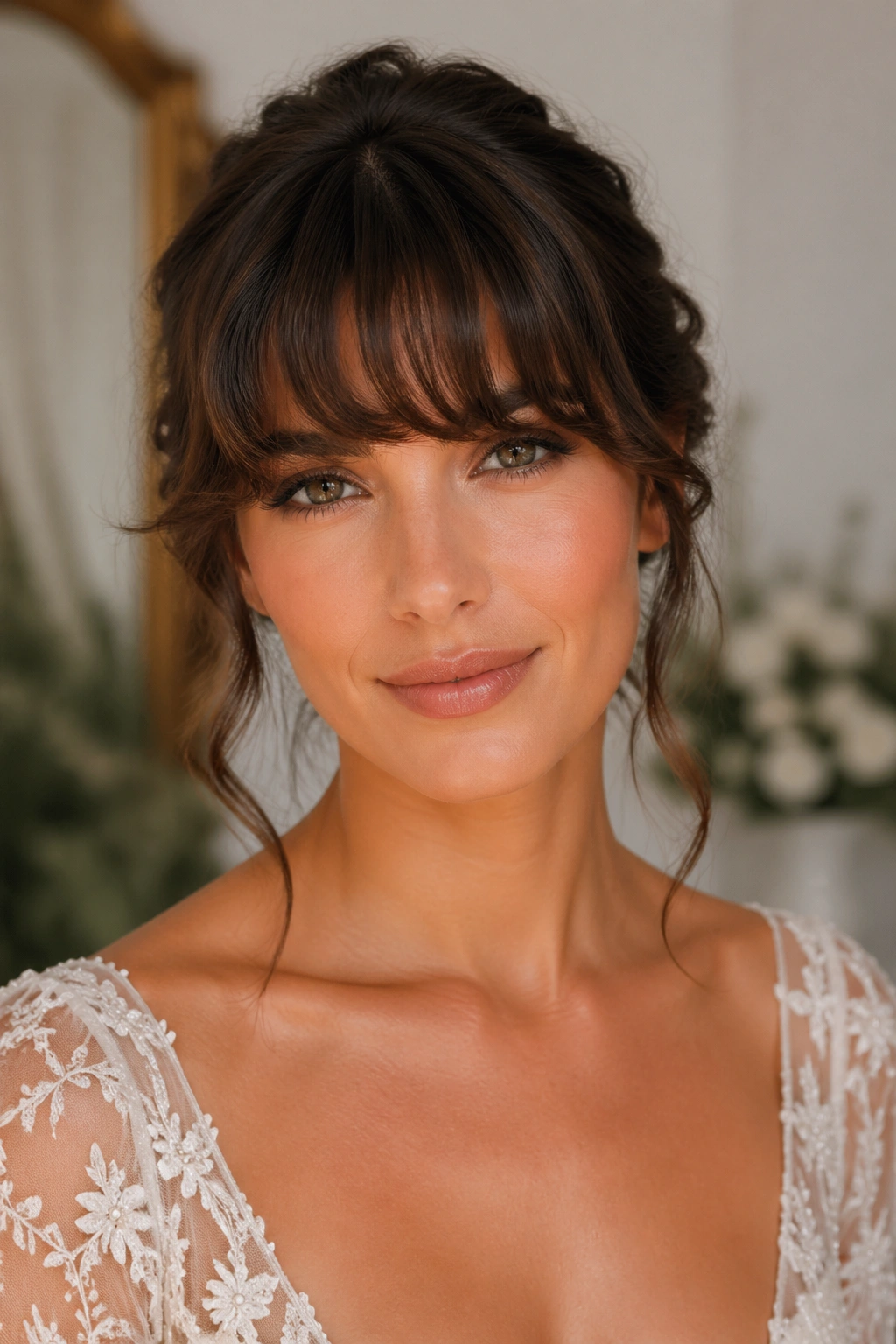
A brow-grazing fringe can be sharp in the best possible way. It brings focus straight to the eyes, which is exactly why so many brides like it with a clean gown, a satin slip dress, or anything with a high neckline that already has enough drama on its own.
The key is to keep the length close to the brow without sitting in it. Too long and the bangs start to drop into the lashes. Too short and they feel blunt instead of bridal. I like a soft wave that curves under at the ends, because it keeps the fringe from sticking straight out in photos.
This style works best when the rest of the hair is polished, not over-styled. Think controlled wave, not pageant curl. A clean finish makes the bangs look expensive even when the actual technique is simple. That little bit of restraint is doing a lot of work.
4. Airy Piecey Bangs with a Low Chignon
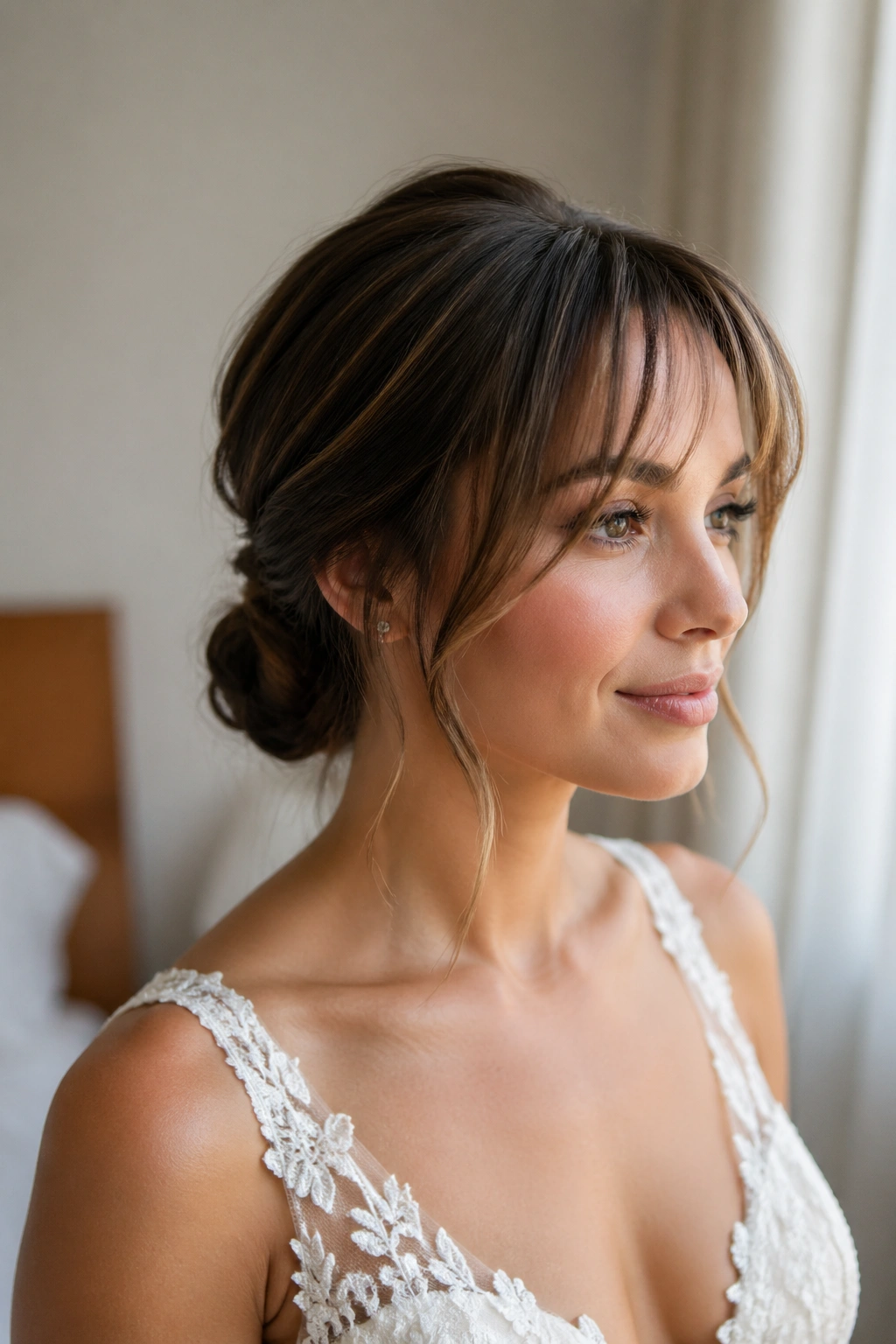
Airy piecey bangs change the whole mood of a low chignon. A chignon can get a little formal, even a little severe, if the front is too smooth. Split pieces at the fringe break that up and keep the face from feeling boxed in.
I like this look for brides wearing pearls, matte satin, or a dress with a covered back. The hair has structure, but the bangs stay soft. A tiny bit of styling cream on the ends is usually enough to separate the strands without making them sticky. Dry shampoo at the root helps too, especially if the hair tends to slide flat.
The best version of this style does not look “done to death.” It looks touched, not forced. That’s the difference. Leave a few tiny gaps between pieces, let a couple of ends flick outward, and the whole style feels lighter around the eyes.
5. Grown-Out Bangs Blended into Beach Waves
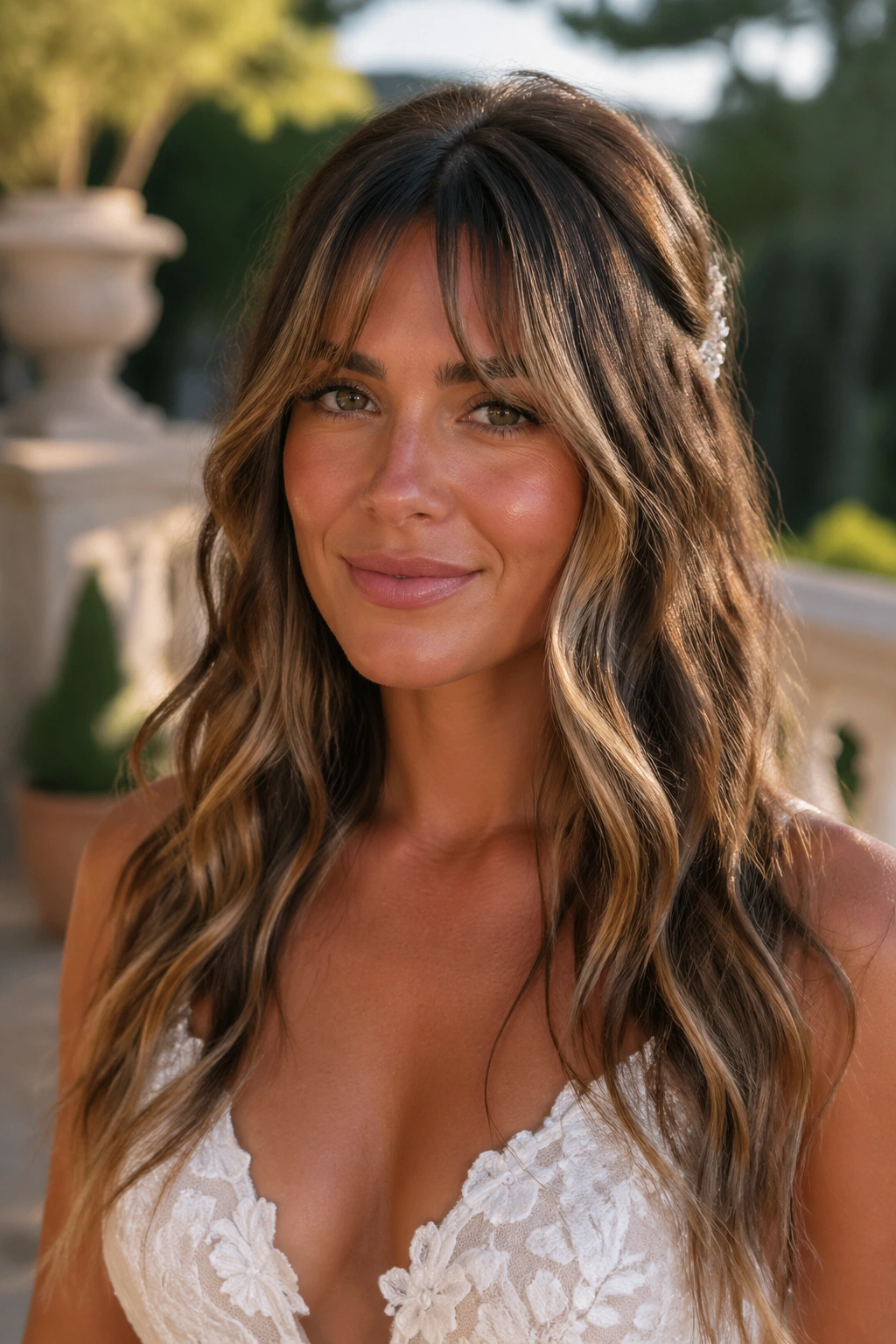
A grown-out fringe is not a problem. It can actually be prettier than a fresh cut, because it melts into the rest of the hair instead of announcing itself from across the room. Brides who are between bang lengths often worry they need to trim hard before the wedding. I usually think the opposite.
Blend the fringe into long beach waves and let the front pieces travel toward the cheekbones. The eye reads movement first, not the exact cut line. That makes this a useful choice if you want your hair to look softer in motion and less precise in close-up photos.
The important part is to avoid a blunt separation at the center. Wrap the front pieces away from the face, then brush them out with your fingers once they cool. You want the hair to feel grown-in and relaxed, not accidentally neglected.
6. Center-Part Curtain Bangs with a Half-Up Twist
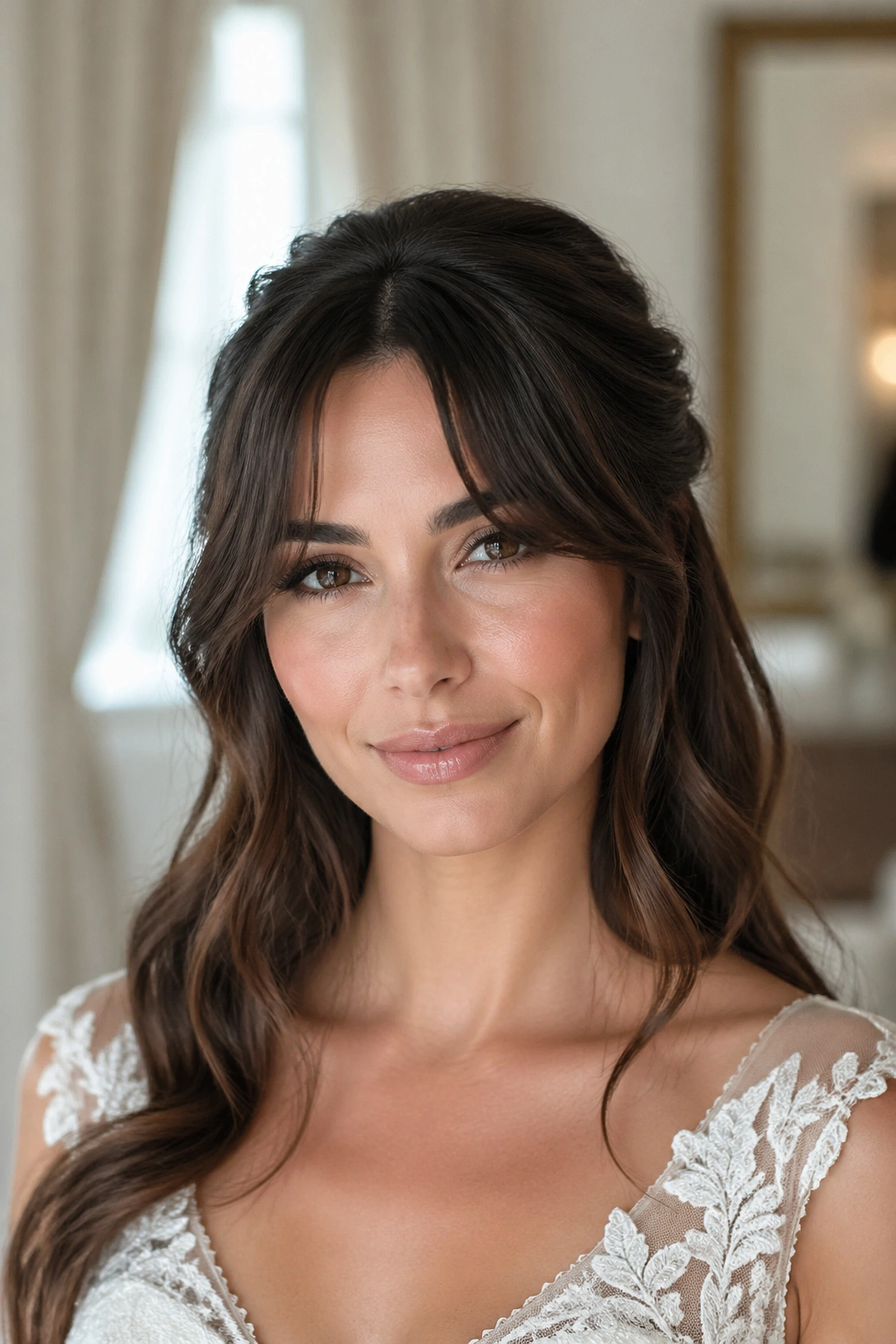
Center-part curtain bangs are the neatest way to keep the face open without giving up softness. Add a half-up twist, and the style gets a little lift at the crown, which helps the bangs sit where they should instead of sliding into the eyes after a long ceremony.
This is a strong choice for brides who want symmetry. The center part balances the face, and the half-up section gives you enough structure to hold a veil or a hair accessory without crowding the front. Lace gowns, square necklines, and simple earrings all tend to like this shape.
What to Tell Your Stylist
- Keep the center piece soft, not choppy
- Build the crown lift before you curl the fringe
- Pin the half-up section low enough that the bangs still move
The whole style works because it looks controlled but not stiff. That line is thinner than people think.
7. Curled-Under Bangs with Hollywood Waves
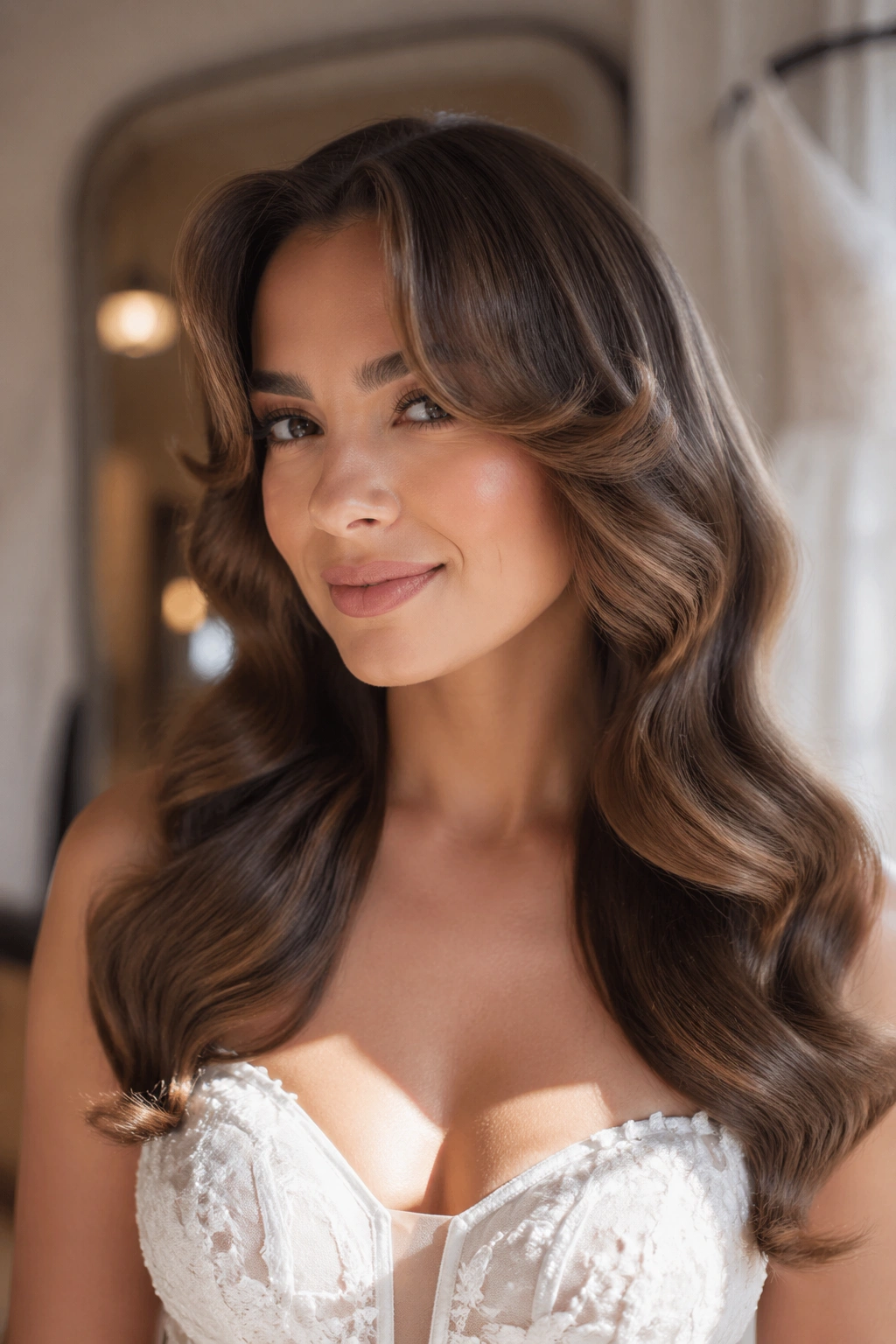
If the dress has satin, beading, or a straight neckline, this one brings polish fast. Curled-under bangs with Hollywood waves have that classic bridal feel without looking dated, and the front curve makes the face look framed in a very clean way.
The trick is to curl the fringe away from the face, then brush it into a smooth sweep once it cools. You want the front to blend into the wave pattern, not sit on top of it. A 1.25-inch iron is usually enough, especially if the hair is medium to long and has some natural bend already.
This style does ask for more maintenance than a soft curtain fringe. It can flatten if the bride keeps touching it. Still, when it holds, it’s one of the most elegant ways to wear wedding hair with bangs. The front should look glossy, not stiff.
8. Wispy Micro-Bangs on a Textured Bob
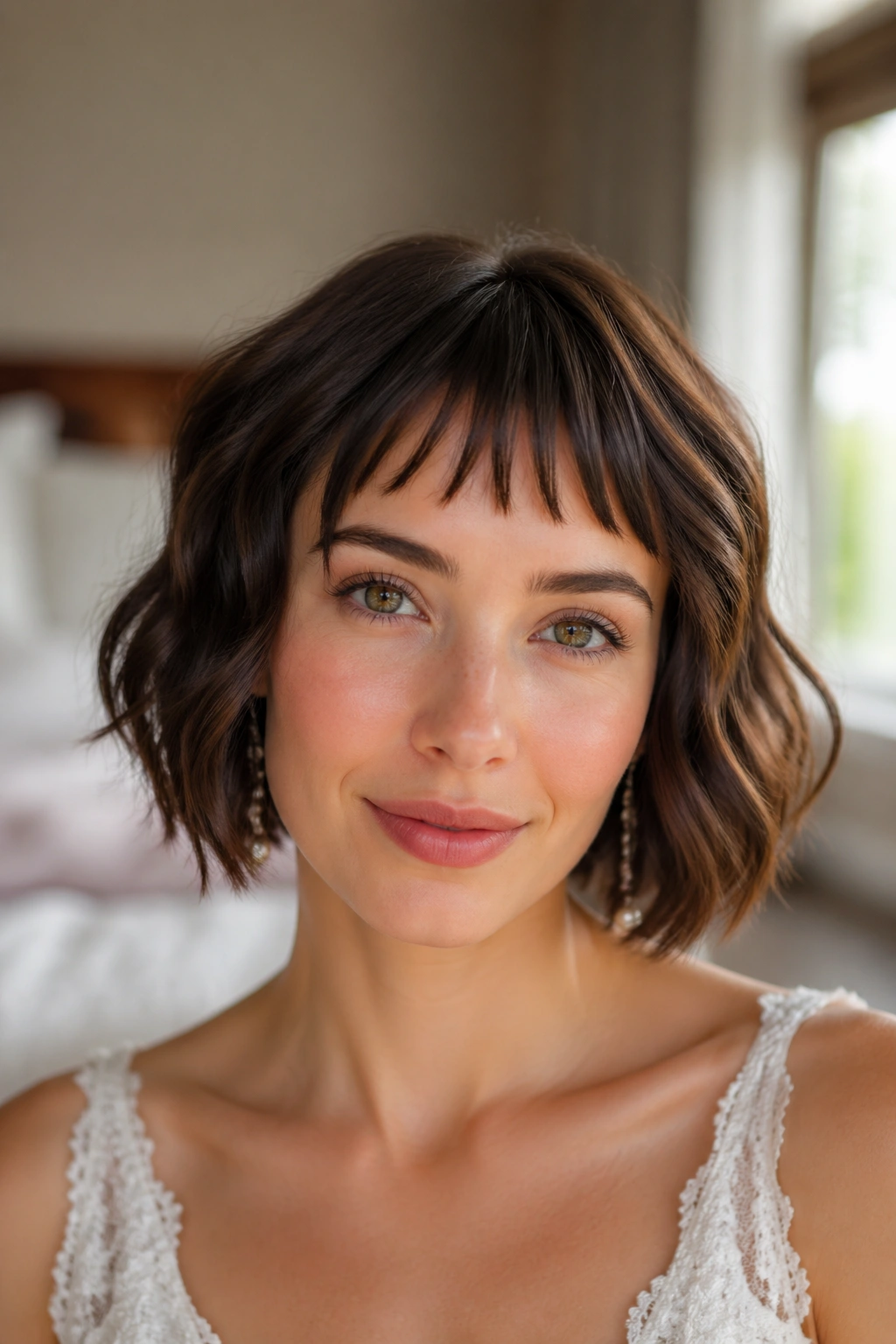
Micro-bangs are a bold move, and I’m not going to pretend they suit everyone. But on the right bride, with the right bob, they look sharp in a way that feels clean and modern rather than fussy. The texture keeps them from reading too harsh, which is exactly why the wavy finish matters.
This is the style for a bride who already wears short bangs and knows how they behave. It does not make sense to try it for the first time a week before the wedding. The front should sit just above the brows, with enough separation that the cut line doesn’t look heavy.
A textured bob gives these bangs room to breathe. Soft waves through the body of the hair prevent the whole shape from feeling too graphic. Keep the ends slightly undone and the result stays chic instead of severe.
9. Textured Fringe with a Braided Crown
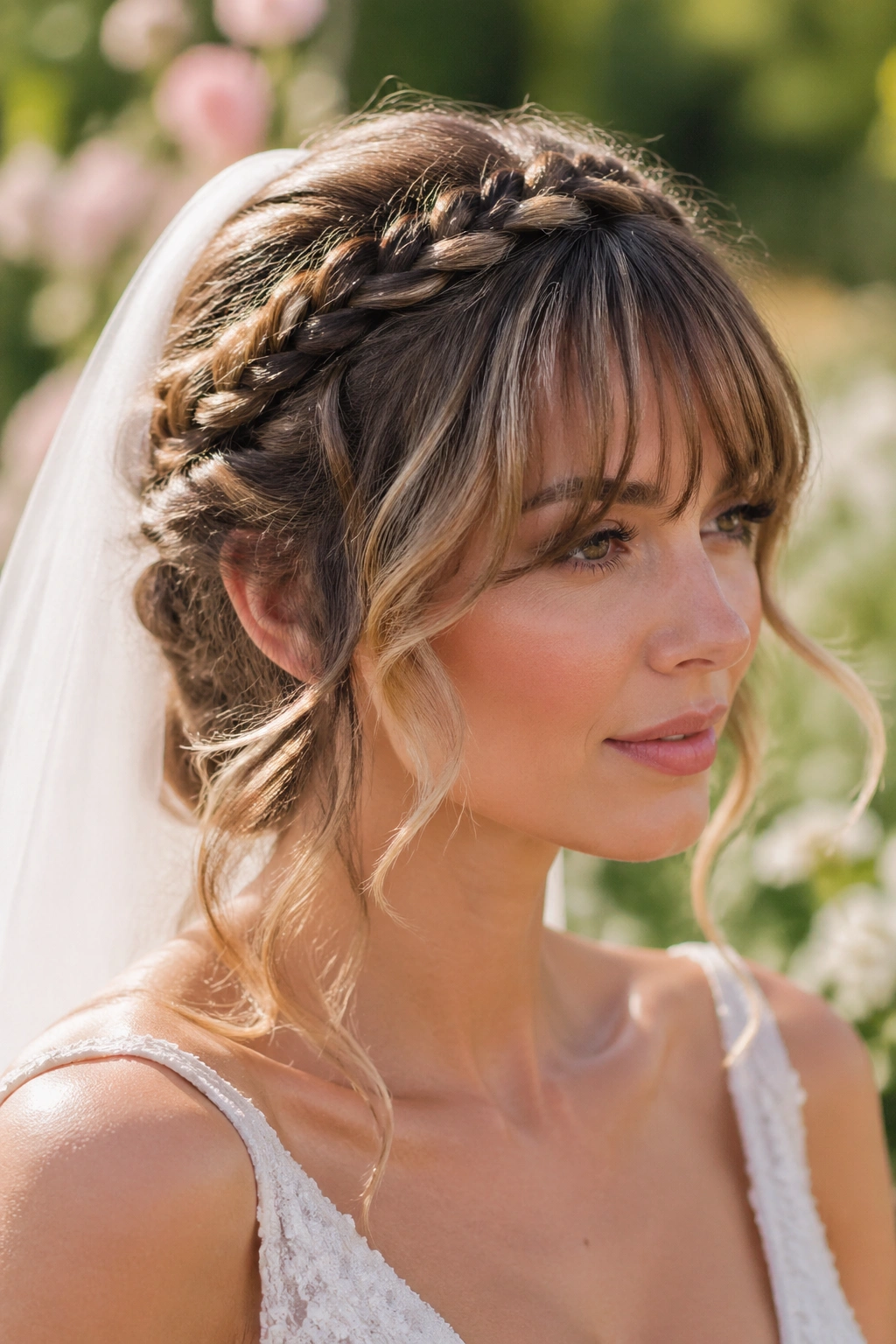
I keep coming back to this one for outdoor ceremonies. A textured fringe with a braided crown solves a practical problem and a style problem at the same time. The braid keeps the front from wandering, and the fringe still leaves enough softness around the face to keep the look romantic.
What Makes It Work
The braid should sit flat enough to support the fringe, but not so tight that it pulls the scalp. Leave the bangs piecey and lightly curved, then guide them into the braid line or let them fall just beneath it. Tiny gaps near the temples keep the style from looking helmet-like.
- Use: a bit of salt spray at the roots
- Avoid: heavy oils near the fringe
- Best for: garden weddings, beach setups, windy venues
A style like this looks better when the pieces are not identical. Tiny variations make it feel hand-set. That matters more than people think.
10. Long Layered Bangs with a Modern Ponytail
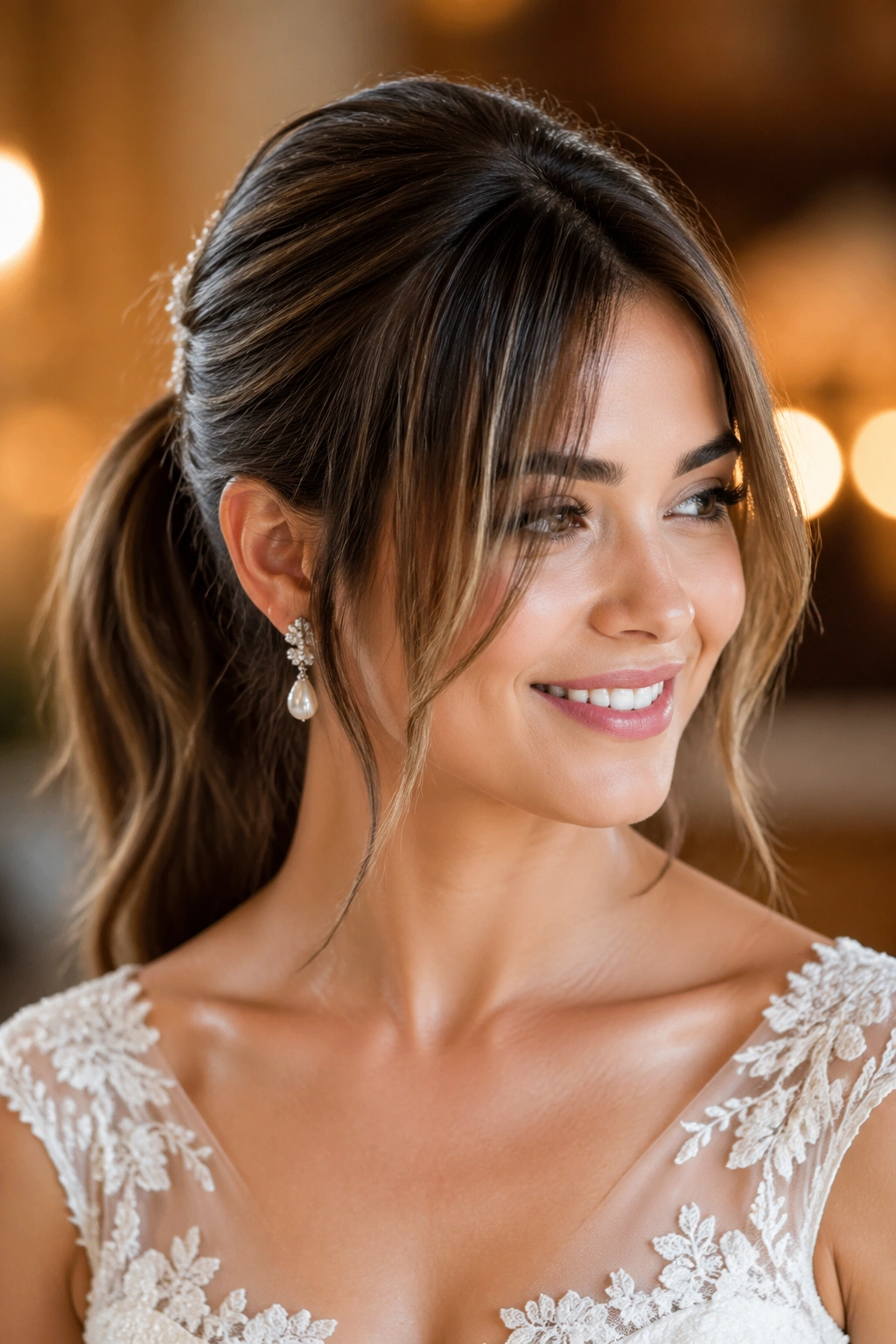
A ponytail sounds simple until the front gets ignored, and that is where long layered bangs save the whole look. They soften the face while the back stays sleek, which is a nice trade if you want your earrings, collarbones, or dress neckline to do some of the talking.
I like this for brides who want movement without wearing their hair fully down. The bangs can be curled away from the face, then brushed loose so they hang in a soft arc. Wrap a thin strand around the elastic and the ponytail stops looking like a last-minute gym fix.
This style also travels well from ceremony to reception. The ponytail stays put, and the bangs can be refreshed with a quick finger twist if they start to separate. It’s one of the easiest styles to live in when the day gets busy.
11. Feathered Bangs with a Salon Blowout
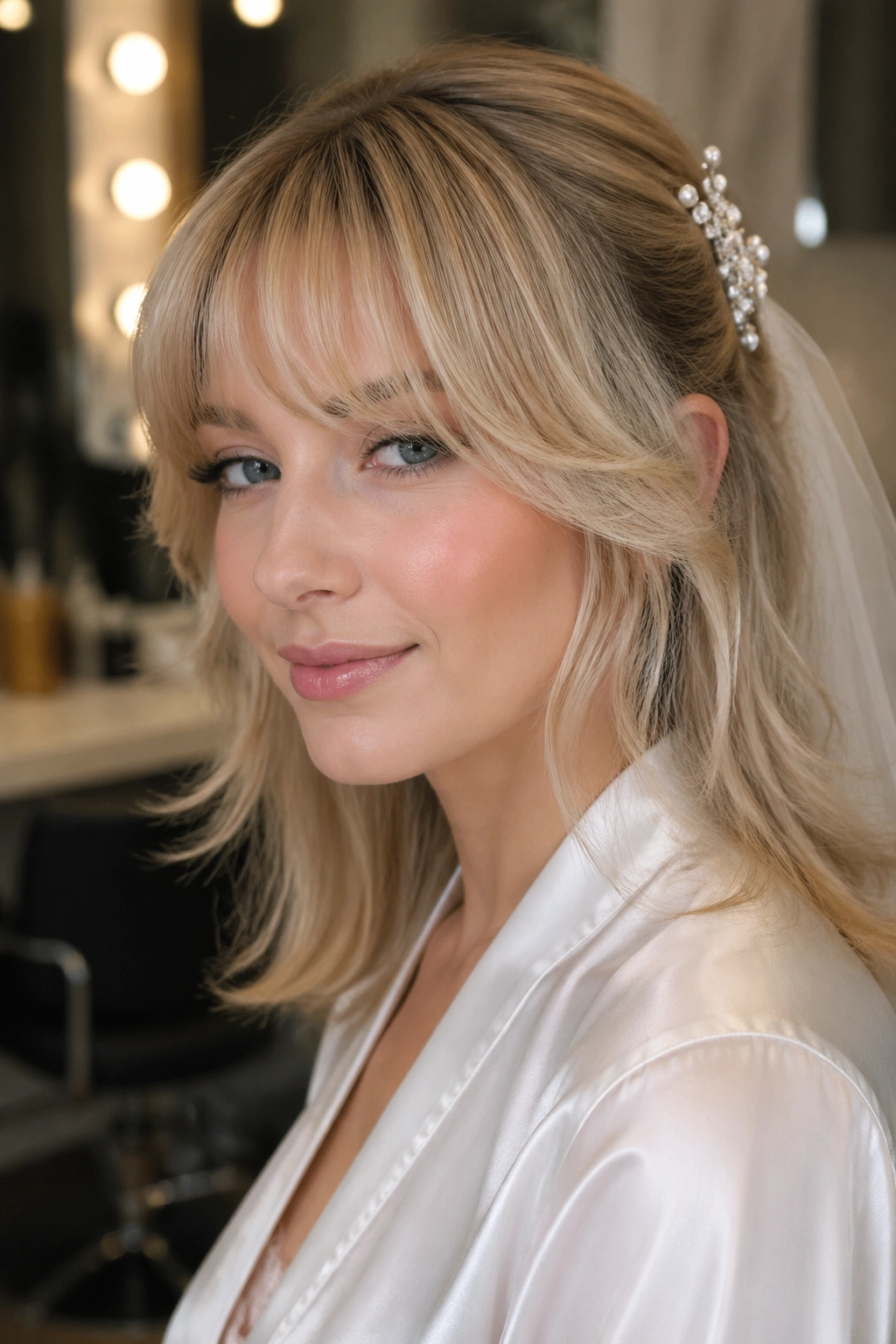
Not every wedding bang needs a curl iron. Feathered bangs with a salon blowout can look softer than a more obvious wave, especially on fine hair that gets weighed down fast. The movement comes from the brush, the airflow, and the direction of the ends.
A round brush and a nozzle attachment do most of the work. Pull the fringe slightly off the face while drying, then flip the ends under or out depending on the shape of the rest of the cut. The point is to keep the front airy, not puffy. A little root lift goes a long way.
This style is a smart choice for brides who hate the feel of too much product. A touch of mousse at the roots and a light serum on the ends is usually enough. Anything heavier can make the feathering collapse before the first dance.
12. Bottleneck Bangs with Soft Mermaid Waves
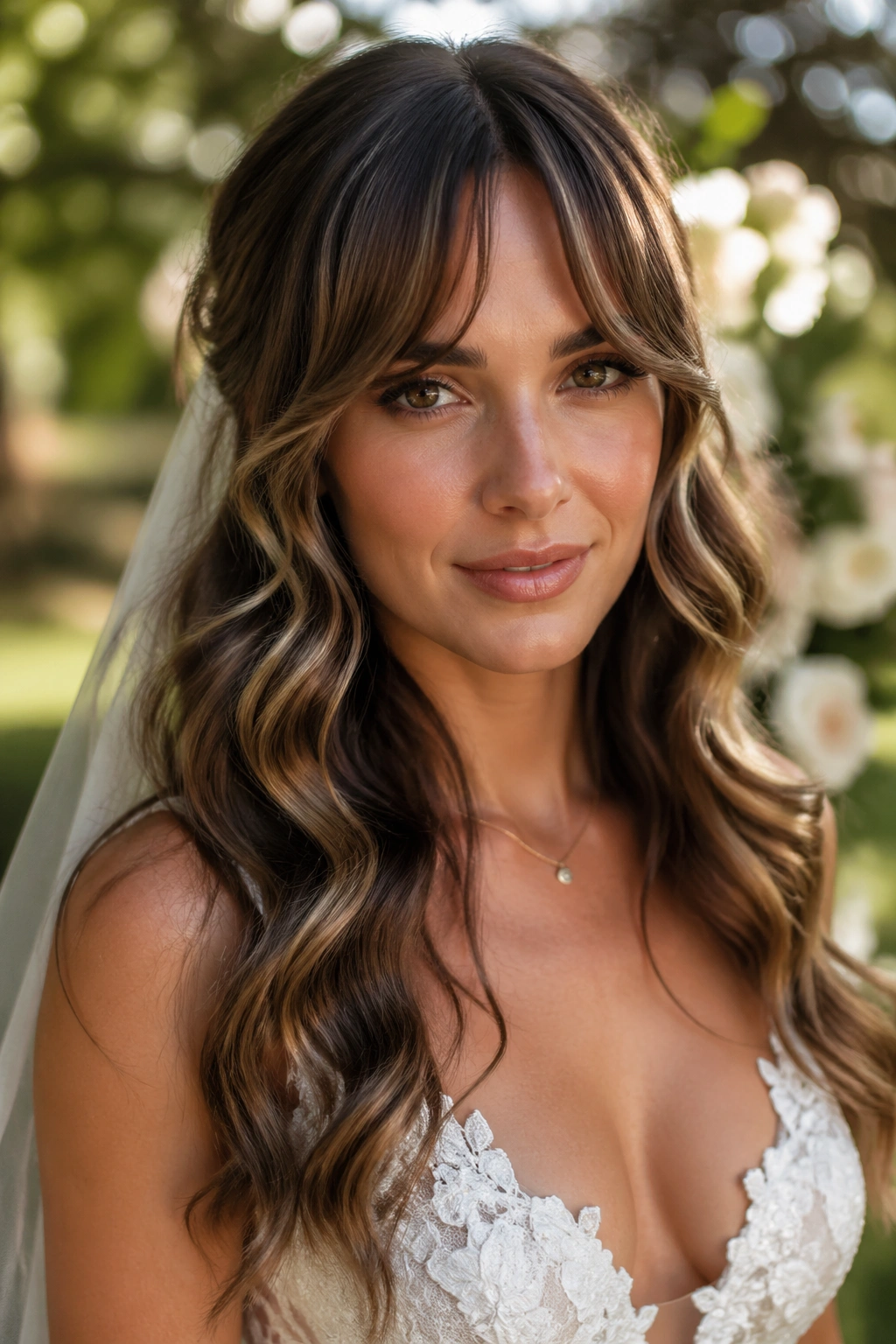
Bottleneck bangs are one of the most useful fringe shapes for wedding hair because they give you a narrower center and longer sides that melt into the rest of the style. The effect is gentle but not sleepy. It has shape.
Why the Shape Flatters So Easily
The shorter center opens the face, while the longer outer pieces frame the cheekbones and jaw. That makes this a good fit for thick hair, longer faces, or anyone who wants the front to feel more sculpted without going full blunt fringe. Soft mermaid waves keep the look from turning heavy.
The only real mistake is making the center too thick. Then the whole thing loses that tapered line. Keep the middle airy and let the sides do the heavy lifting. A few well-placed pins under the outer layers can help the bang sit where it should without showing.
13. Split Fringe with Floral Pins
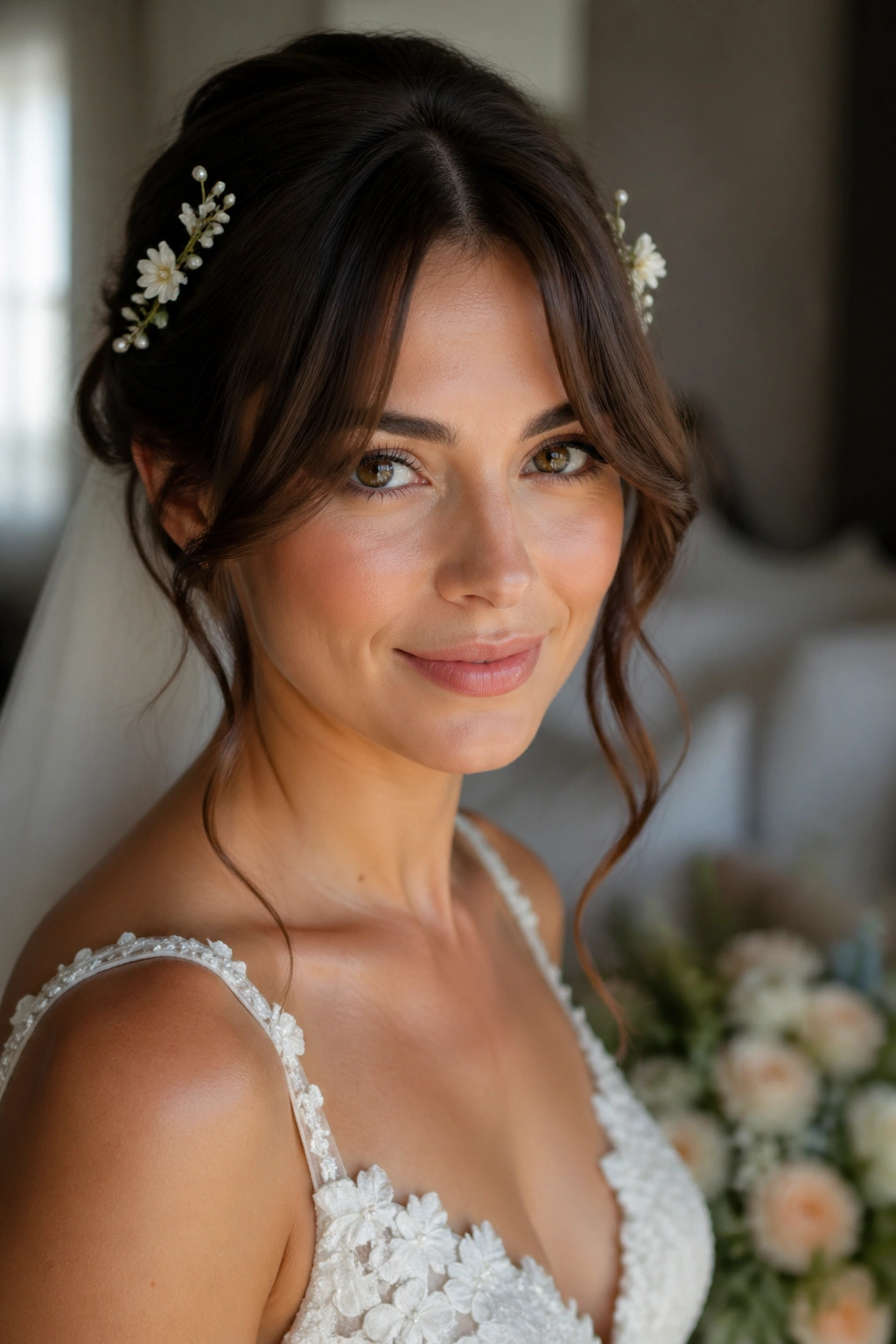
Want a little flower detail without covering the whole head in blooms? A split fringe is a good answer. Part the bangs softly at the center, then guide each side into a light curve and pin one side back with a small floral accent or two tiny hairpins.
This style matters most when the bouquet or floral crown already has a lot going on. The fringe should support the flowers, not fight them. Tiny blossoms, sprigs of baby’s breath, or a single pearl pin usually work better than anything large or heavy.
The split also keeps the eyes open in photos, which is a small thing until you are staring at wedding pictures for the next decade. The trick is to pin just enough. Overpinning turns a soft fringe into a stiff side panel, and that kills the whole idea.
14. Side-Part Bangs Under a Low Wedding Veil
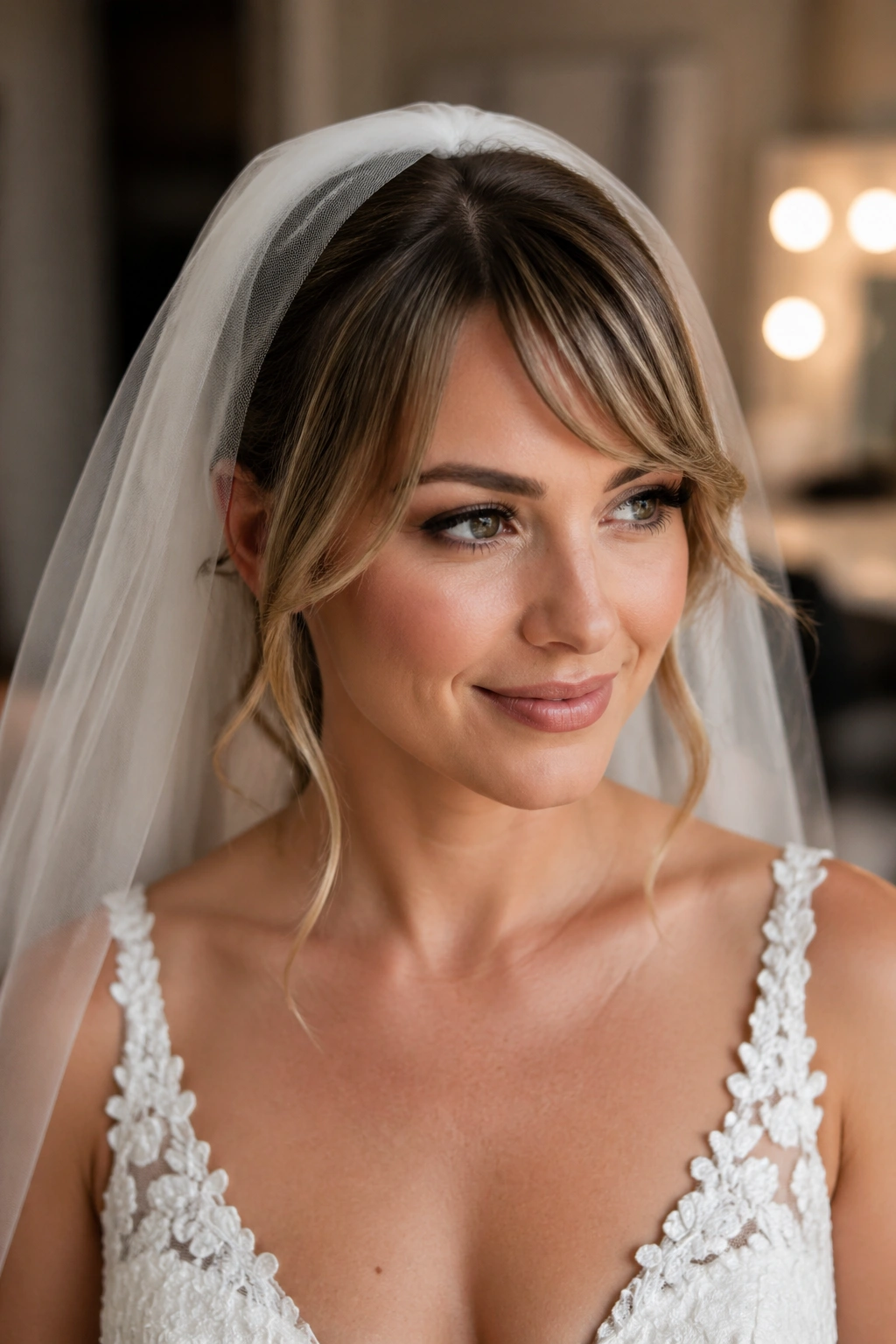
A side part changes the whole conversation around bangs and veils. A low veil can crush a center-part fringe if the placement is awkward, but a side-part bang gives the comb somewhere easier to sit. The result feels more natural and less crowded.
The part should travel diagonally, not just drift to one side. That diagonal line gives the bangs a little motion and keeps the forehead from looking too boxed in. If the veil sits close to the crown, a soft side sweep can also keep the front from getting flattened when it comes off later.
This is one of those styles that benefits from a trial run more than a lot of brides expect. Veil placement decides the shape of the front pieces. Get that wrong, and even good bangs start acting strange.
15. Curled Fringe with a Vintage Finger-Wave Mix
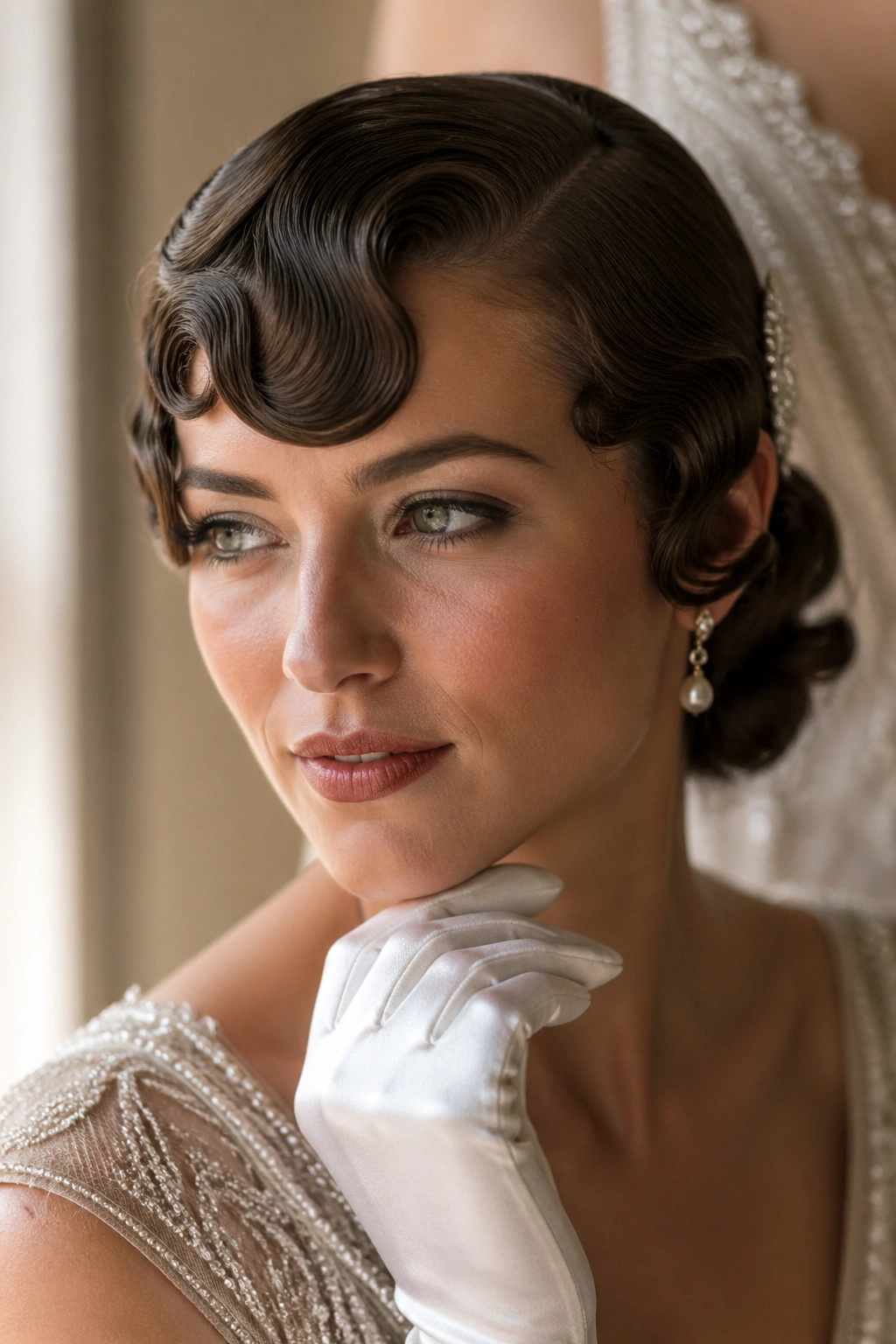
Curled fringe with finger waves has real drama. Not loud drama. More like old-film drama, the kind that belongs beside a beaded dress, a satin glove, or a bouquet that leans classic instead of wild. The front gets structure, and the wave line carries across the forehead like it was drawn on purpose.
The important part is not to overdo the curl at the end of the bang. Keep the wave near the temple smooth and let the fringe itself bend in a controlled arc. A comb and a setting clip can do more here than a hot tool if the hair is cooperative.
This style is probably not the easiest to live in all day, but it can be one of the most memorable. It has shape from every angle. That said, it needs a careful trial because small mistakes show quickly on a style this defined.
16. Thick Statement Bangs with Sleek-to-Wave Contrast
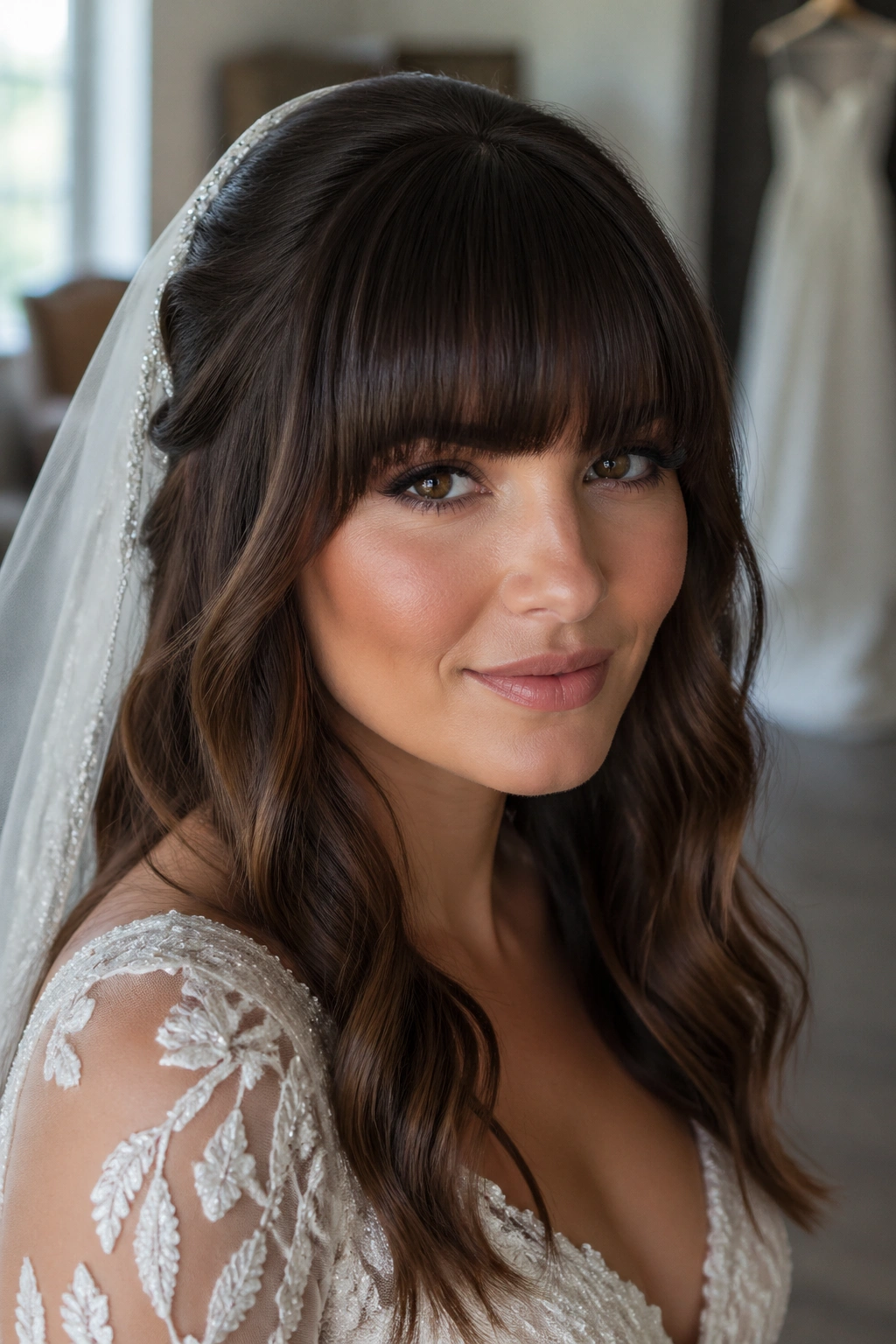
Thick statement bangs can look fearless on a wedding day. The front is fuller, the frame is stronger, and the contrast against loose waves gives the whole style a clean edge. I like this when the dress is simple and the bride wants the hair to carry more of the personality.
The key is not to curl the bangs too much. Keep the roots sleek, then add a soft bend through the mids so the front doesn’t feel heavy or shelf-like. The rest of the hair can be looser and more textured. That contrast is what makes the look work.
This style suits longer faces and stronger brows especially well, though it can be adjusted for other shapes too. The bangs should feel intentional, not accidental. Dense fringe needs room to breathe, so don’t bury it under too much finishing spray.
17. Barely-There Bangs with an Airy Updo
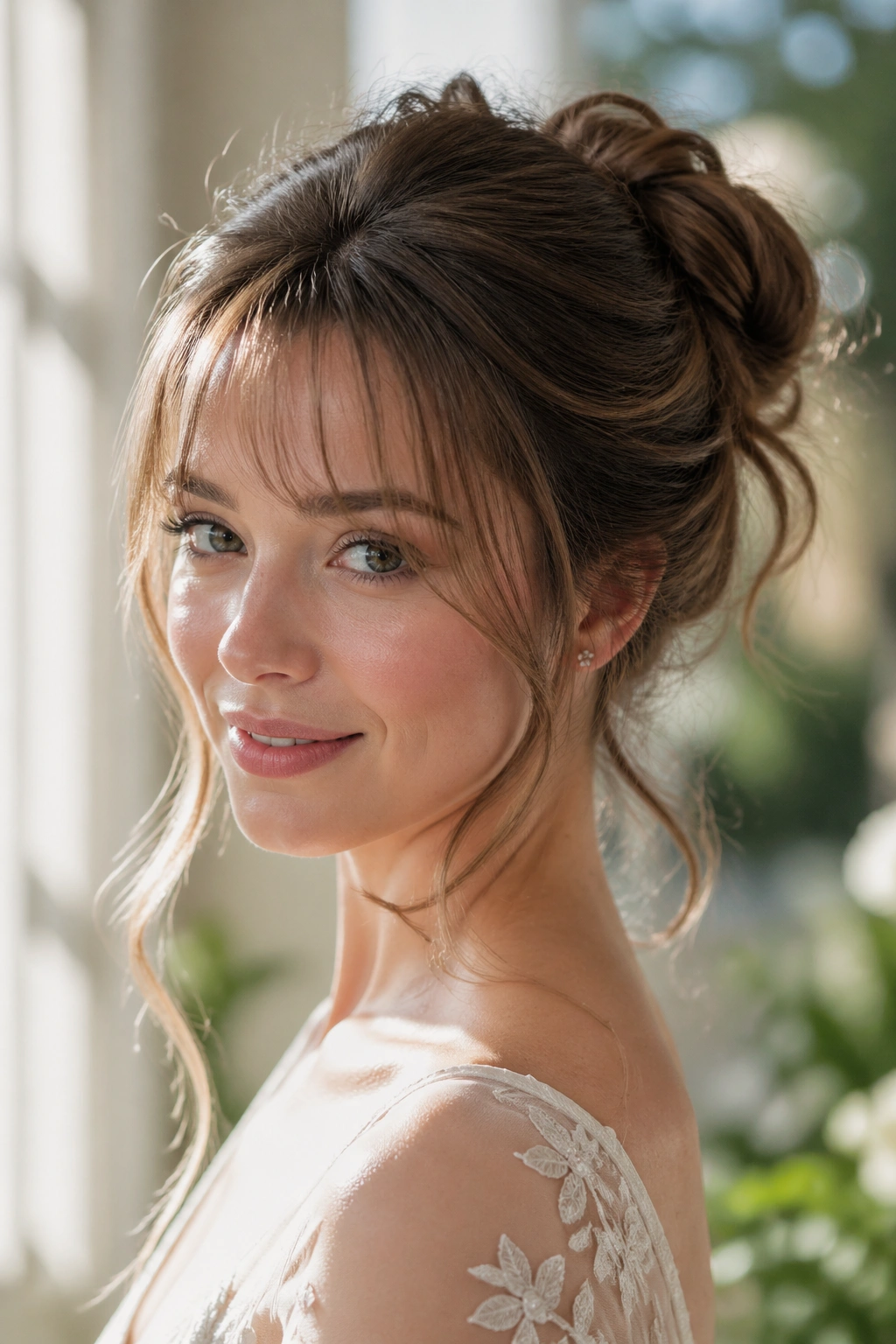
Sometimes the smartest bang is the one you barely notice. Barely-there bangs work for brides who want a hint of softness across the forehead without committing to a full fringe. The pieces are long enough to move, short enough to frame the face, and light enough to disappear into the updo when needed.
An airy updo keeps the whole look from feeling formal in a stiff way. The front pieces can be curled once, then finger-combed into a soft sweep. That gives you movement without obvious separation lines. I like this for brides who want the forehead partly visible and the eyes fully open.
This style also plays well with delicate jewelry. Small earrings, a narrow necklace, or a thin headband all sit nicely with it. Heavy accessories can crowd the front. A light hand is the better move here.
18. Swept-Back Bangs with Crown Volume
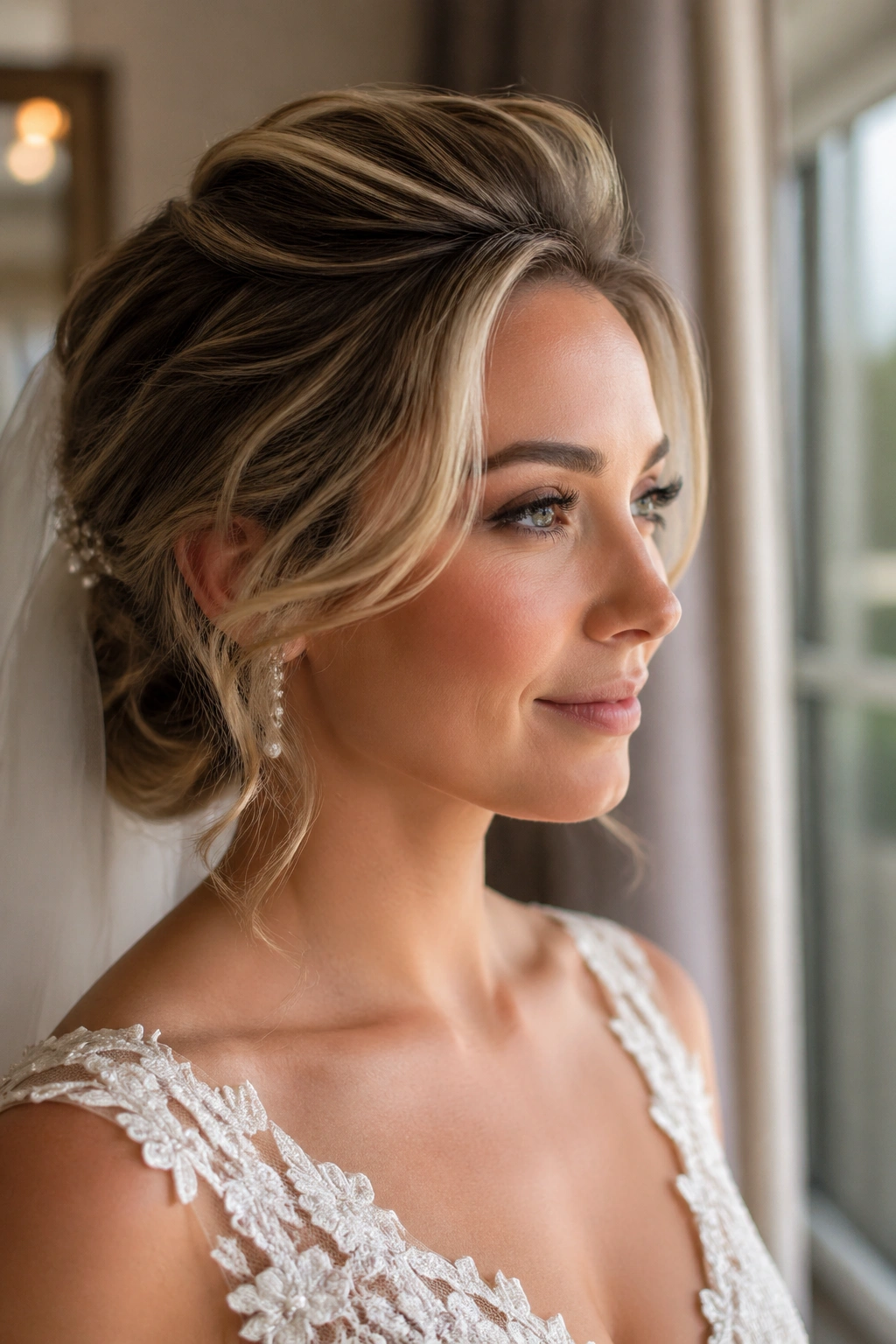
Swept-back bangs are useful when the crown needs to carry more of the shape. A little volume at the top lifts the whole hairstyle, and the bangs simply support that lift instead of competing with it. The front still feels soft, but the eyes get a bit more room.
Where the Height Should Sit
Build the volume about one inch behind the hairline, not right on top of it. That keeps the front from looking puffy. Then brush the bangs back just enough to show the forehead while leaving a few soft strands to break up the line.
This style works especially well with cathedral veils, statement earrings, and dresses that already have a lot of detail at the neckline. The hair should not steal from the gown. It should guide the eye upward and then get out of the way.
A strong blow-dry matters here. If the roots collapse, the sweep loses its shape fast. No miracle products. Just good sectioning and enough cool air to set the lift.
19. Soft Shag Bangs with a Boho Braid
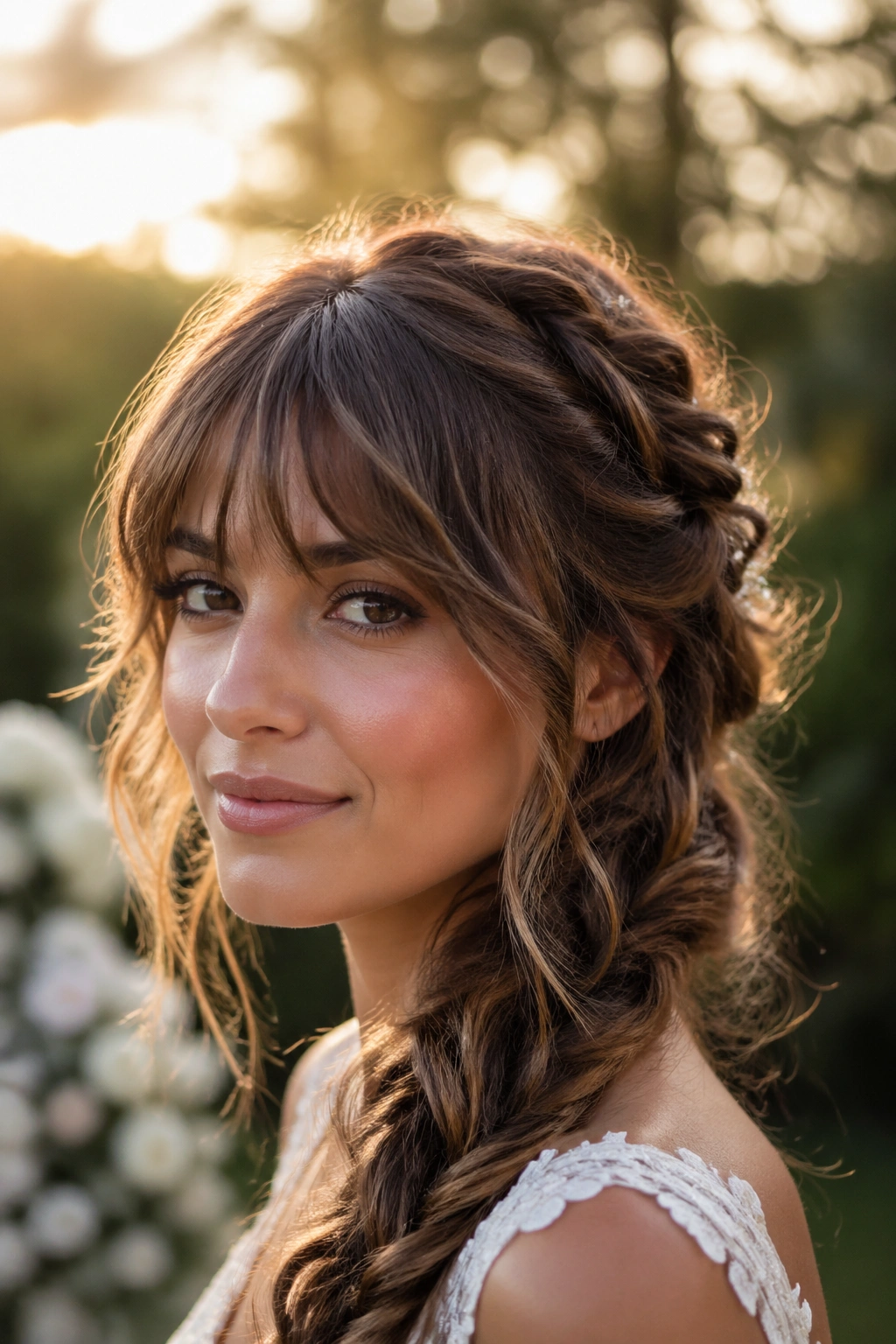
Want the hair to look relaxed without reading as unfinished? Soft shag bangs with a boho braid do that trick better than most styles. The bangs bring a little uneven movement to the front, while the braid keeps the rest of the hair from getting too loose or too precious.
This is a good fit for outdoor weddings, garden settings, and brides who like a looser dress code in their beauty look. The bangs should sit somewhere between eyebrow and cheekbone length, with soft bends rather than hard curls. A little texture spray at the mids helps the layers separate in a useful way.
The braid does not need to be tight. In fact, a looser braid usually looks better here because it keeps the style from fighting the fringe. A little mess is part of the charm, but it still has to be controlled mess.
20. Curved Bangs with Glossy S-Waves
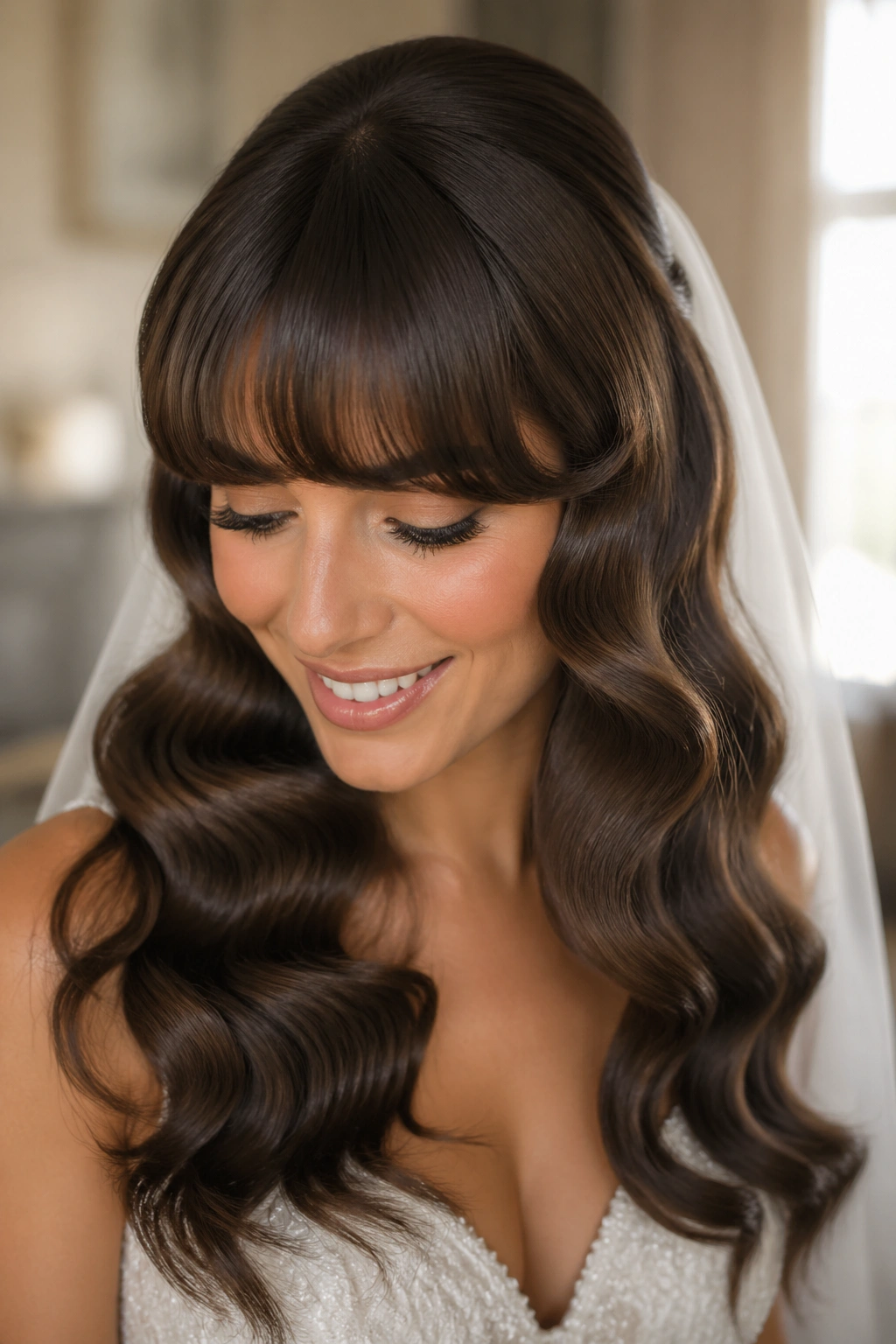
Curved bangs give you a line, and glossy S-waves give you shine. Put them together and the result feels polished without looking stiff. I like this when the gown has a clean shape and the bride wants the front of the hair to look smooth from every angle.
The curve should follow the brow softly, then swing into the rest of the wave pattern without a hard corner. That small detail matters. A harsh bend can make the front look chopped, while a soft curve feels like it belongs to the rest of the hairstyle.
Use a larger iron for the wave body and brush it out once it cools. That’s what creates the smooth ribbon effect. If the hair frizzes, the line is gone. So a light smoothing cream at the ends helps, but only a little. Too much and the waves lose definition.
21. Deep-Side-Part Waves with a Tucked Bang Section
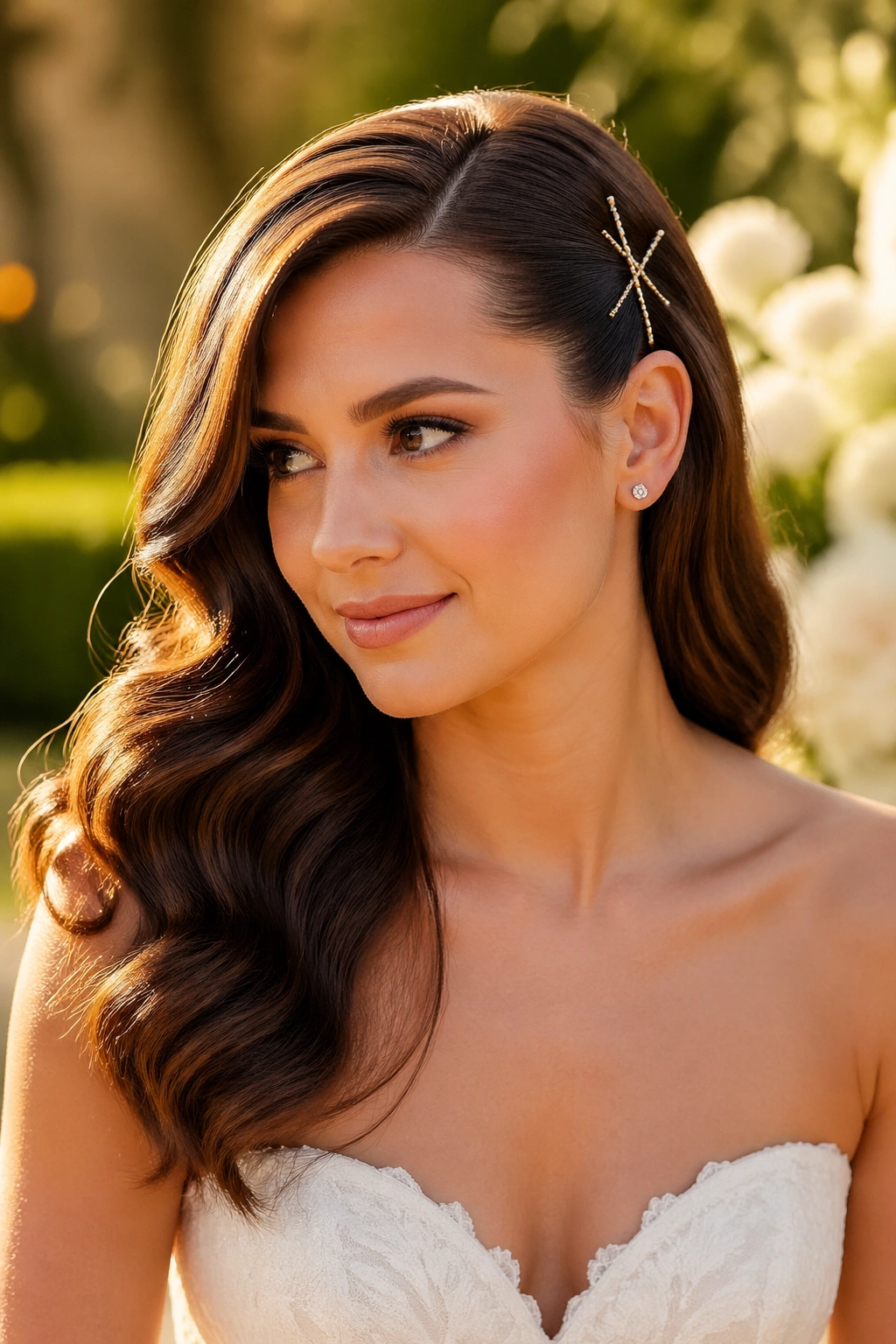
A deep side part changes the weight of the style in a useful way. One side stays loose, the other gets tucked or pinned, and the face ends up framed without looking overly symmetrical. That slight imbalance can be very flattering in photos, especially when the bride turns her head.
How to Style It
Start by creating a clean side part that lands near the arch of the eyebrow. Then direct the heavier side into a soft wave and tuck the smaller side behind the ear or pin it just above the temple with two crossed bobby pins. Crossed pins hold better. Simple, but worth doing.
This style is especially useful if the dress has one shoulder, a dramatic earring, or a neckline that benefits from a little asymmetry. The bang section should still move, though. If it’s pinned so hard that the hair looks locked in place, the whole thing loses its softness.
22. Choppy Bangs with Shoulder-Length Wedding Waves
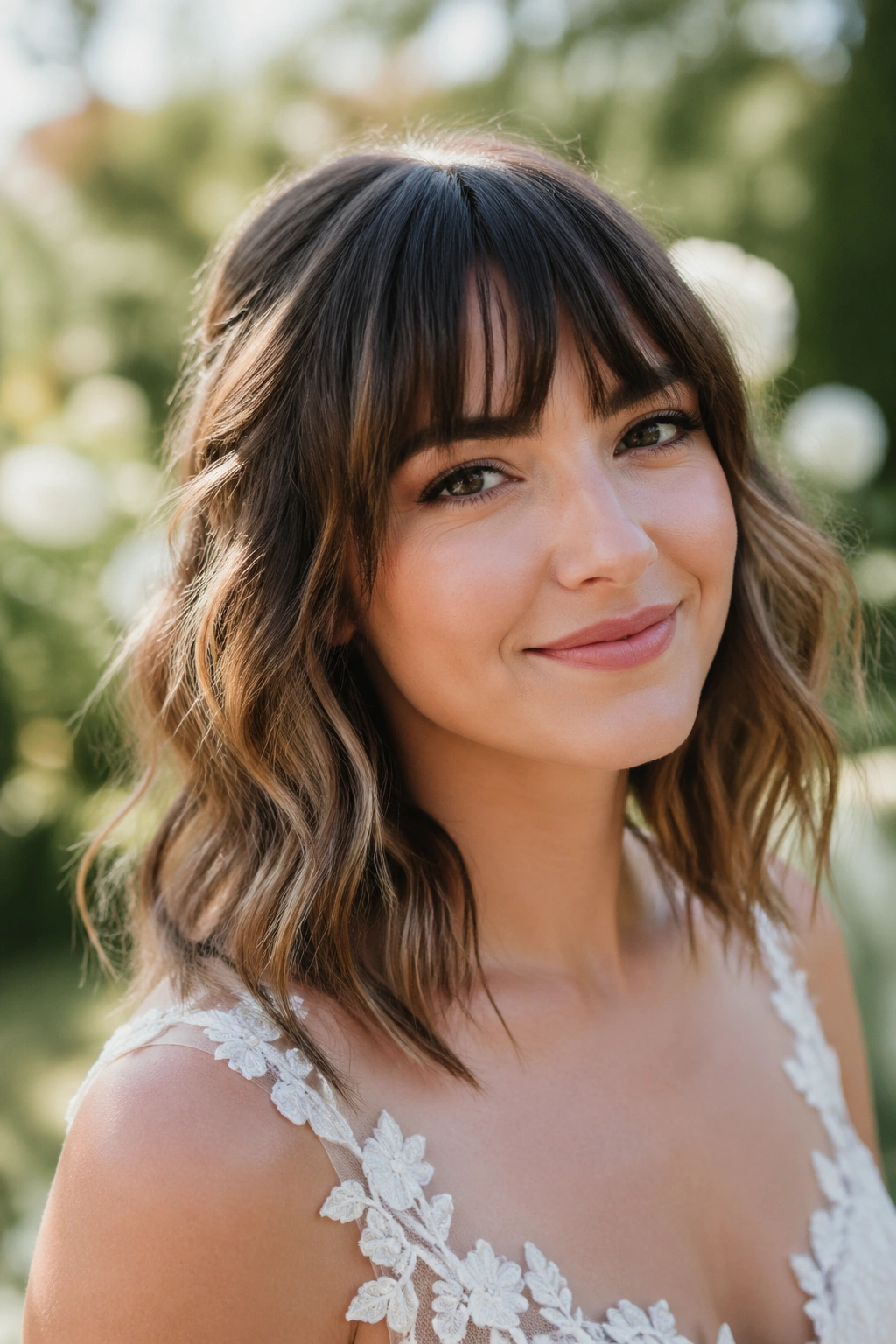
Shoulder-length hair with choppy bangs can look sharper than long hair if the cut has the right texture. The shorter length makes the face feel open, and the uneven fringe keeps the front from getting too sweet. That edge can be a nice contrast with a soft dress or delicate veil.
I like this because it does not need as much hair to look full. A few well-placed bends through the mid-lengths are enough. The bangs should be piecey and lightly separated, not straight across. That gives the whole cut a more lived-in feel, which works well when the wedding itself is relaxed.
The biggest mistake is over-curling. Shoulder-length waves can flip into bubble shape fast if the iron is too small or the hold spray is too heavy. Keep the finish loose and let the texture stay visible. Texture is the point here.
23. Rounded Bangs with a Polished Half-Up Style
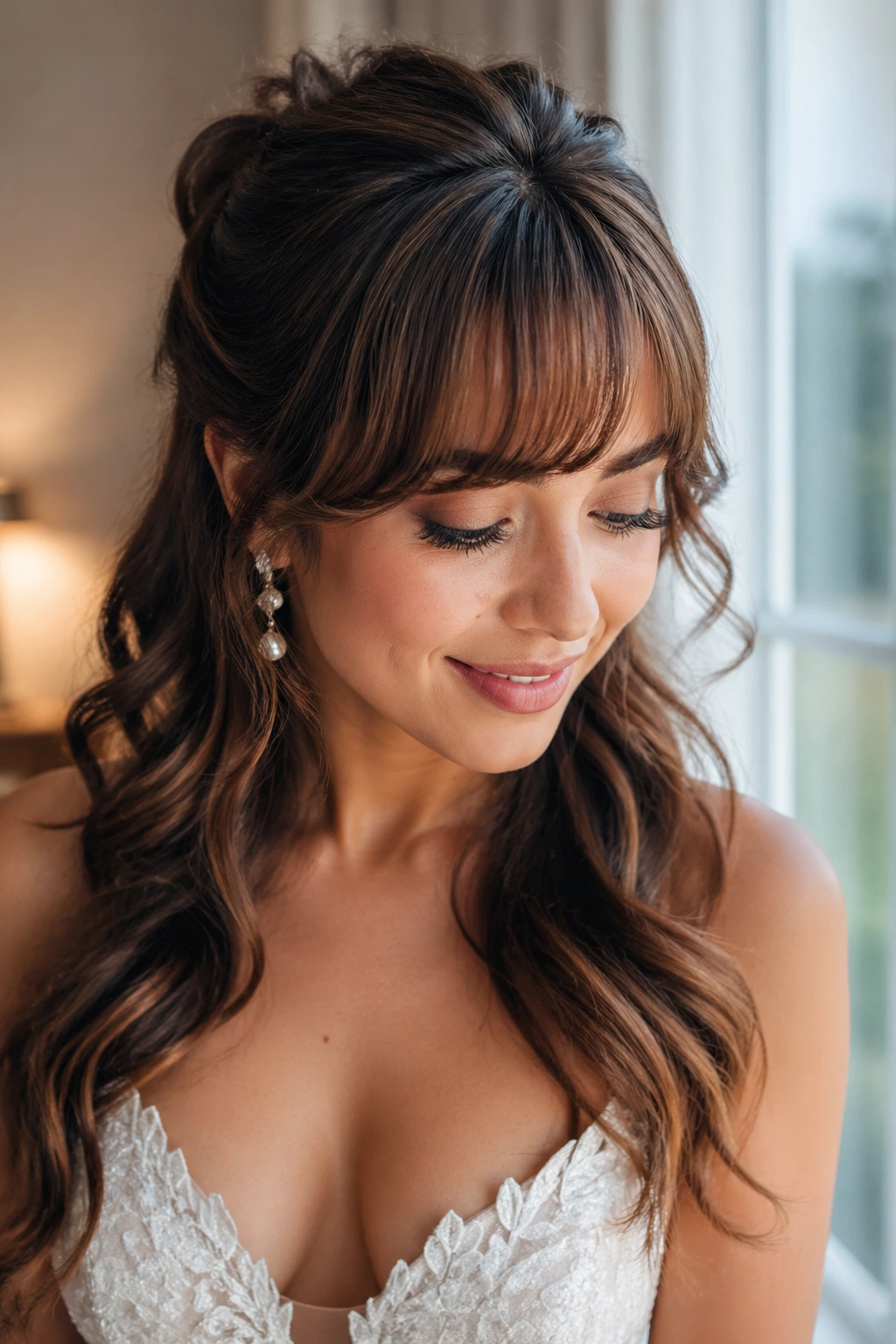
Rounded bangs get dismissed too fast. On the right face, they soften sharper angles and make the eyes feel open without dragging attention downward. A polished half-up style keeps the rest of the hair lifted, so the bangs can stay as the softest part of the look.
The curve should echo the shape of the brow, not sit like a heavy dome. That’s the line that matters. Too rounded and the front feels childish. Softly rounded and the result reads elegant, especially when paired with waves that stay smooth through the mid-lengths.
This style is useful for brides who want a little structure but not a hard fringe. The half-up section adds height, and the front keeps the look friendly. It is a good compromise when the dress is detailed but the hair still needs to feel calm.
24. Bangs Woven into a Halo Braid
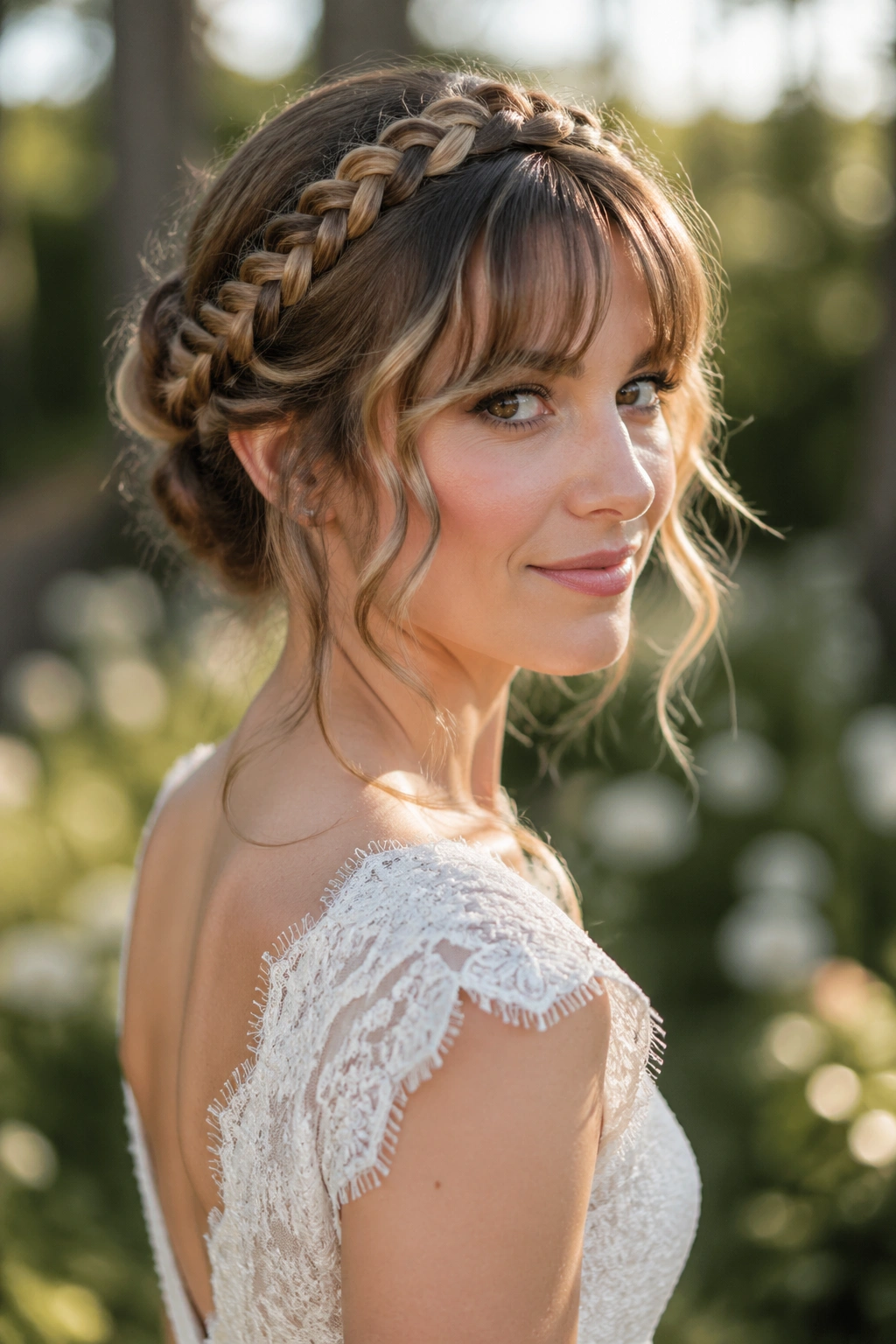
A halo braid gives the front pieces a job, which is part of why it works so well. Instead of sitting on the forehead and asking to be fussed with, the bangs get folded into the braid line and become part of the shape. Wind has a harder time messing with it too.
This style is a strong pick for outdoor ceremonies, travel-heavy wedding days, or any setting where you know you’ll be moving around a lot. The braid should not swallow every strand. Leave a few soft wavy pieces near the temples and one or two delicate wisps at the hairline so the face still feels open.
A tiny bit of texture helps the braid hold, but overdoing it can make the front look dry. That is the balance. Softness around the face, grip through the braid. Nothing fancy, just a very practical pair of goals.
25. Minimalist Wavy Bangs with a Low Knot
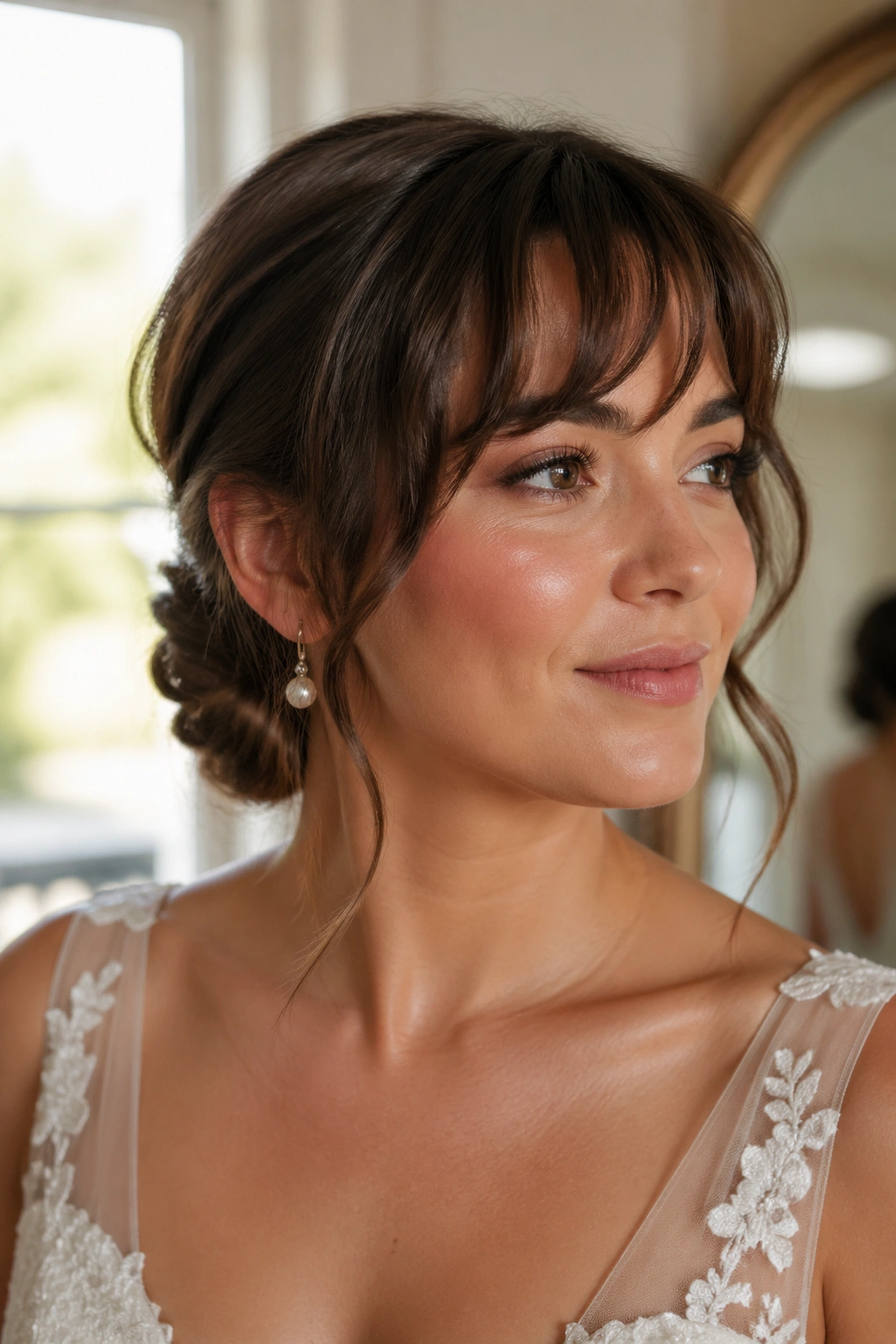
Not every bridal fringe has to be the star of the show. Minimalist wavy bangs with a low knot keep the front clean, the neck open, and the whole look very calm. The bangs give just enough movement to keep the style from feeling severe, while the knot stays neat at the nape.
I like this for civil ceremonies, courthouse weddings, and brides who wear simple dresses with sharp lines. The fringe should skim the forehead lightly and curve into the side pieces without obvious separation. A small amount of shine serum on the ends keeps the waves tidy. That’s it. No elaborate shaping needed.
This is the style to choose when you want the hair to look controlled in person and in photos. The front line should be tidy, the wave should be soft, and the knot should sit low enough that the whole style feels grounded. It’s quiet, but not boring.
Final Thoughts
The best wedding bang style is the one that survives real life, not the one that looks good for thirty seconds in a styling chair. Veil placement, hair density, and face shape all change how the front pieces behave, and that is before humidity, dancing, and hugs enter the picture.
A trial run matters more than people want to hear. Take a few photos in daylight, turn your head side to side, and see what happens when the bangs meet your eyebrows, your earrings, and the neckline of the dress. If the front still feels calm after that, you’re in good shape.
One practical test beats all the theory: move, smile, and blink a lot. If the wavy bangs still sit where they should, they’re probably the right ones.
