



Medium wavy haircuts live in that sweet spot where hair still feels easy to tie back, but the shape finally starts to matter. Too much length can drag waves flat; too little can make the ends puff out in all the wrong places. The right medium cut fixes that balance.
Wavy hair has a sneaky way of changing the rules once it dries. It may look smooth in the chair, then spring up at the sides or collapse at the crown an hour later. That is why cute medium wavy haircuts are less about chasing a trend and more about giving the wave pattern a shape that behaves.
Some cuts keep the perimeter blunt so the hair looks thicker. Others remove weight in just the right places so the wave bends instead of ballooning. And a few get the fringe right, which can change the whole mood of the haircut without taking off much length.
If you’ve been looking for medium wavy hair ideas that feel wearable, flattering, and not overly fussy, this list is built for that exact problem.
1. Collarbone Layers with Soft Ends
Collarbone layers are one of those cuts that quietly do a lot of work. The length sits right where waves naturally bend, so the hair keeps movement without losing its outline.
Ask for long layers that start below the chin and a perimeter that stays soft, not wispy. If your hair is thick, keep the layers spaced farther apart. If it’s finer, ask for only a few internal removals so the shape doesn’t go sparse at the ends.
- Best for oval, heart, and round faces
- Great if you air-dry more than you heat-style
- Ask for the front pieces to skim the collarbone, not stop above it
Tip: keep the last inch of the cut blunt enough to give the wave something to rest on.
2. Curtain Bangs with a Feathered Lob
Why do curtain bangs work so well with medium waves? Because they break up the forehead area without stealing too much length from the sides. The result feels soft, which is exactly what you want when the rest of the hair already has movement.
The trick is to keep the bang section long enough to split cleanly, usually around cheekbone length at the shortest point. Then let the side pieces feather into the rest of the cut. If the bangs are too short, they can spring up and look choppy in a way that feels accidental.
How to Style It
Wrap each bang section away from the face with a round brush or a wide curling iron for 5 to 8 seconds. Let them cool before touching them. That pause matters.
A little mousse at the roots helps the fringe sit with lift instead of sticking to the forehead. Use less than you think you need. Curtain bangs get greasy fast if you overdo product.
3. The Blunt Lob with Bouncy Waves
A blunt lob makes medium waves look denser. That’s the whole appeal. The clean line at the bottom gives the hair a stronger shape, so the wave pattern reads as polished instead of messy.
This cut works especially well if your hair is fine to medium and you want more visual weight. Keep the lob around chin to collarbone length, with minimal layering around the perimeter. The waves do the decorating; the cut does not need to be fussy.
One thing to watch: if your hair is extremely thick, a fully blunt line can feel heavy. In that case, ask for very subtle internal debulking under the top layer. You still want the edge to look solid.
4. Deep Side-Part Face-Framing Layers
If your roots fall flat by noon, a deep side part changes the entire shape. It gives the crown lift immediately and creates a little drama without needing a big haircut change.
The face-framing pieces should start around the cheekbone and taper toward the collarbone. That angle softens the face and makes waves look more deliberate. It’s a good move for anyone who wants medium wavy hair that feels styled even on low-effort days.
What Makes It Different
Unlike a center part, the deep side part gives one side more height and the other side more swing. That asymmetry is flattering on round and square faces, and it’s useful if one side of your hair grows flatter than the other.
Keep the side part slightly off center, not all the way to the temple. Too far over and the cut can start looking dated fast.
5. The Shaggy Medium Cut with Choppy Layers
The shag is still one of the smartest haircuts for waves because it works with texture instead of fighting it. The layers create movement from the top down, which means the wave pattern has room to breathe.
What makes a medium shag cute rather than shaggy in a bad way is control. You want choppy layers, yes, but not so many that the ends look shredded. The best version keeps the perimeter soft and the crown lifted just enough to stop the whole cut from sitting flat.
What to Ask For
- Layering that starts around the cheekbones
- A textured crown, not a short crown
- Ends that stay tapered instead of razor-thin
- A fringe that can be worn swept aside
Quick note: this cut looks best when the wave pattern is a little imperfect. Over-smoothing it usually kills the point.
6. The U-Shaped Midi Cut
A U-shaped cut is the quiet fix for wavy hair that wants to feel full but not bulky. The back stays slightly longer, and the sides curve forward in a soft arc, which helps the haircut sit with a natural swing.
This shape is especially good if your hair feels heavy in a straight line but you still want length. The U keeps the outline soft and stops the bottom from looking boxy. It’s one of those cuts people notice only after the hair starts moving.
I like this shape on medium waves because it doesn’t fight the wave pattern at the edges. You can wear it loose, clip it back, or tuck one side behind the ear and still keep the shape intact.
7. Bottleneck Bangs with a Tousled Lob
Bottleneck bangs split the difference between curtain bangs and a full fringe. They start narrower in the center and widen around the eyes, which makes them easier to blend into a medium wavy cut.
The lob underneath should stay lightly layered, not overcut. That way the bangs have room to frame the face without the rest of the hair going too fluffy. If you like soft texture around the cheekbones, this one is a winner.
How It Looks Best
The bangs should be longer at the outer edges, usually brushing the cheekbone or upper lip. That length gives you flexibility. You can wear them separated, pushed to the side, or blended into the wave pattern on lazy days.
Use a small round brush or even your fingers with a touch of cream. Heavy blowouts make bottleneck bangs lose their charm.
8. Invisible Layers for Thick Wavy Hair
Thick waves behave better when the layers are hidden inside the shape. That’s the magic of invisible layers. You keep the outside looking clean while the inside loses enough weight to stop the hair from puffing up like a triangle.
This cut is a gift if your hair feels dense but you hate obvious steps. The outer line stays smooth, so the haircut still looks polished. The movement comes from within, which is why it tends to grow out nicely too.
Best for: thick, coarse, or high-density waves that look bulky at the bottom.
Avoid this if: you want a very piecey, shaggy look. Invisible layers are subtle. That’s the point.
9. Shoulder-Grazing Swoop Layers
Shoulder-grazing swoop layers are one of the prettiest medium wavy haircuts if you like a softer, more feminine shape. The layers are long enough to keep fullness, but they bend around the shoulders instead of hanging straight down.
The front should sweep away from the face in a gentle curve. Not a sharp angle. That little difference matters because it keeps the haircut looking easy and light, not over-designed. This is the kind of cut that looks good with a side tuck, a claw clip, or nothing at all.
It also works well for people who don’t want bangs but still want something happening around the face. The swoop gives you that frame without the maintenance of a fringe.
10. The Soft Wolf Cut
The soft wolf cut is for the person who wants shape, edge, and movement without going full mullet. It keeps the crown a bit shorter, the mid-lengths airy, and the ends longer so the whole cut feels lived-in.
What makes this version wearable is restraint. The layers should be visible, but not jagged enough to fight your texture every morning. Think of it as a wolf cut that went to the salon and behaved itself.
Good Things to Know
- Works well on medium waves with some natural volume
- Needs a bit of texture cream or spray
- Looks best when the top is dried with lift at the roots
- Can be worn center-parted or side-parted
Tip: if your hair is fine, keep the crown layers longer so the top doesn’t disappear.
11. A Slightly Asymmetrical Lob
A slightly asymmetrical lob changes the face in a subtle way. One side sits a touch longer than the other, and that tiny difference gives the haircut energy without making it feel extreme.
This cut is nice if your waves fall differently on each side. Instead of forcing symmetry, it works with the natural bend. That makes the hair feel more relaxed, which is half the reason medium wavy haircuts look good in the first place.
Keep the difference small—about half an inch to one inch is enough. If the angle gets too dramatic, the waves can start looking disconnected from the cut.
12. Piecey Ends with a Textured Perimeter
Piecey ends are for the person who likes hair to look touched by wind. The outline stays soft, but the ends separate a little, so the haircut feels airy instead of heavy.
This cut is usually better on medium waves that already have some natural separation. If your hair is very frizzy, a heavily textured perimeter can make things look dry at the tips. That’s the catch. It’s a pretty cut, but it needs the right texture to shine.
A small amount of styling cream on damp hair helps the waves clump in the right places. Then leave the ends alone. Seriously. Too much finger-combing turns this style into fluff.
13. The Rounded Midi Cut
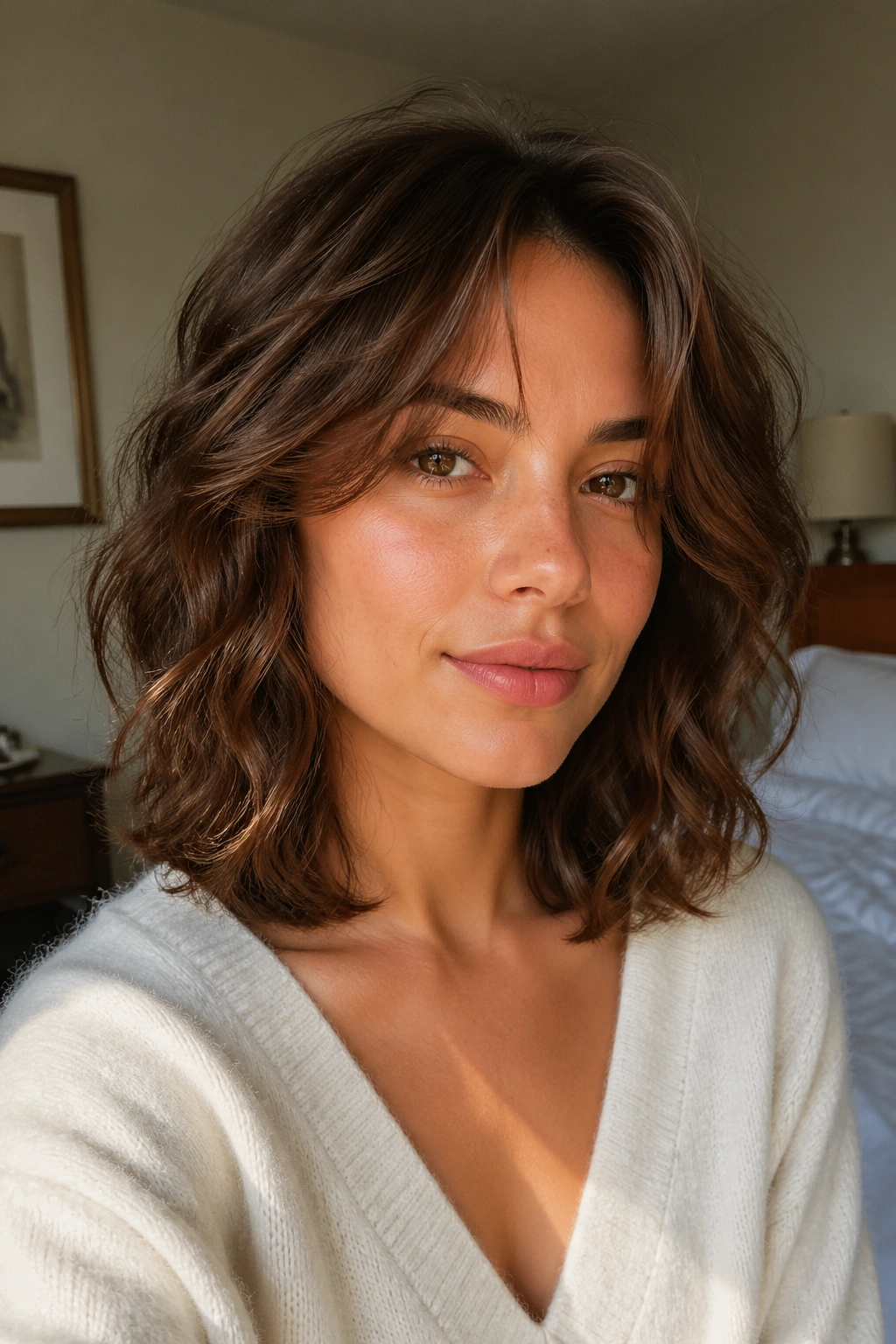
A rounded midi cut does not shout. It just sits beautifully. The shape curves in a soft halo around the head, which makes waves look fuller and more controlled at the same time.
The best part is the balance. The crown is not too flat, the sides are not too wide, and the ends are not too stringy. That rounded silhouette is especially flattering if your hair gets big in the wrong places or if you want something softer than a blunt line.
Why It Works
The curve helps medium wavy hair fall into a natural shape instead of spreading out horizontally. It’s also easy to grow out because the outline stays graceful even when the layers start to blend.
This is a good cut for someone who wants cute medium wavy hair without looking like they spent an hour styling it.
14. The A-Line Lob
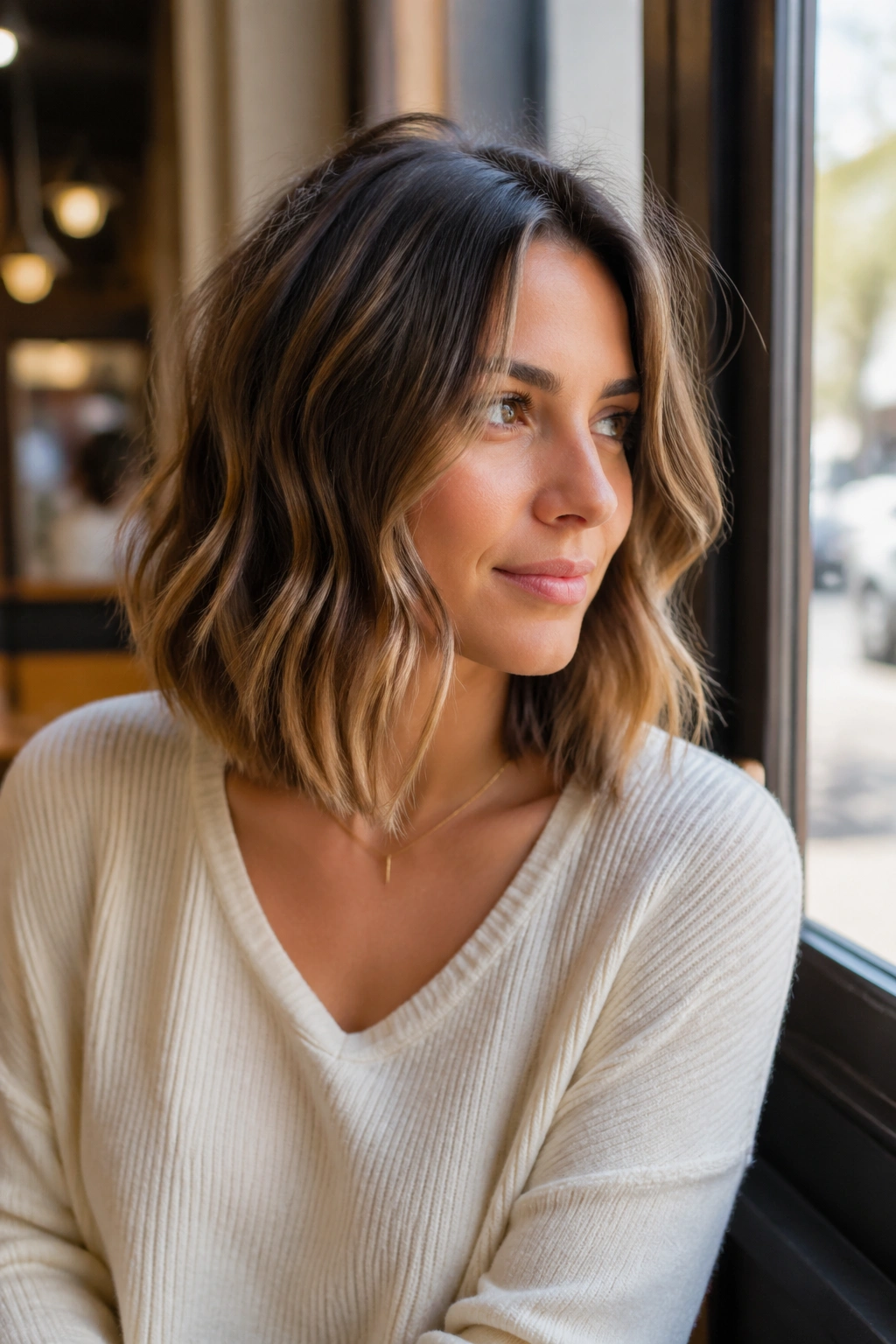
An A-line lob is the neatest way to keep wave and polish in the same haircut. The back sits a little shorter, and the front angles forward just enough to give the face some shape.
That angle helps the hair move away from the neck and jawline, which is useful if you want a cleaner profile. It’s especially nice on rounder faces, but it can work on plenty of shapes when the front is kept soft.
Use this cut if you like a haircut that feels put together but still bends and flips when you move. The waves give it softness; the angle gives it structure.
15. The Razor-Cut Shag
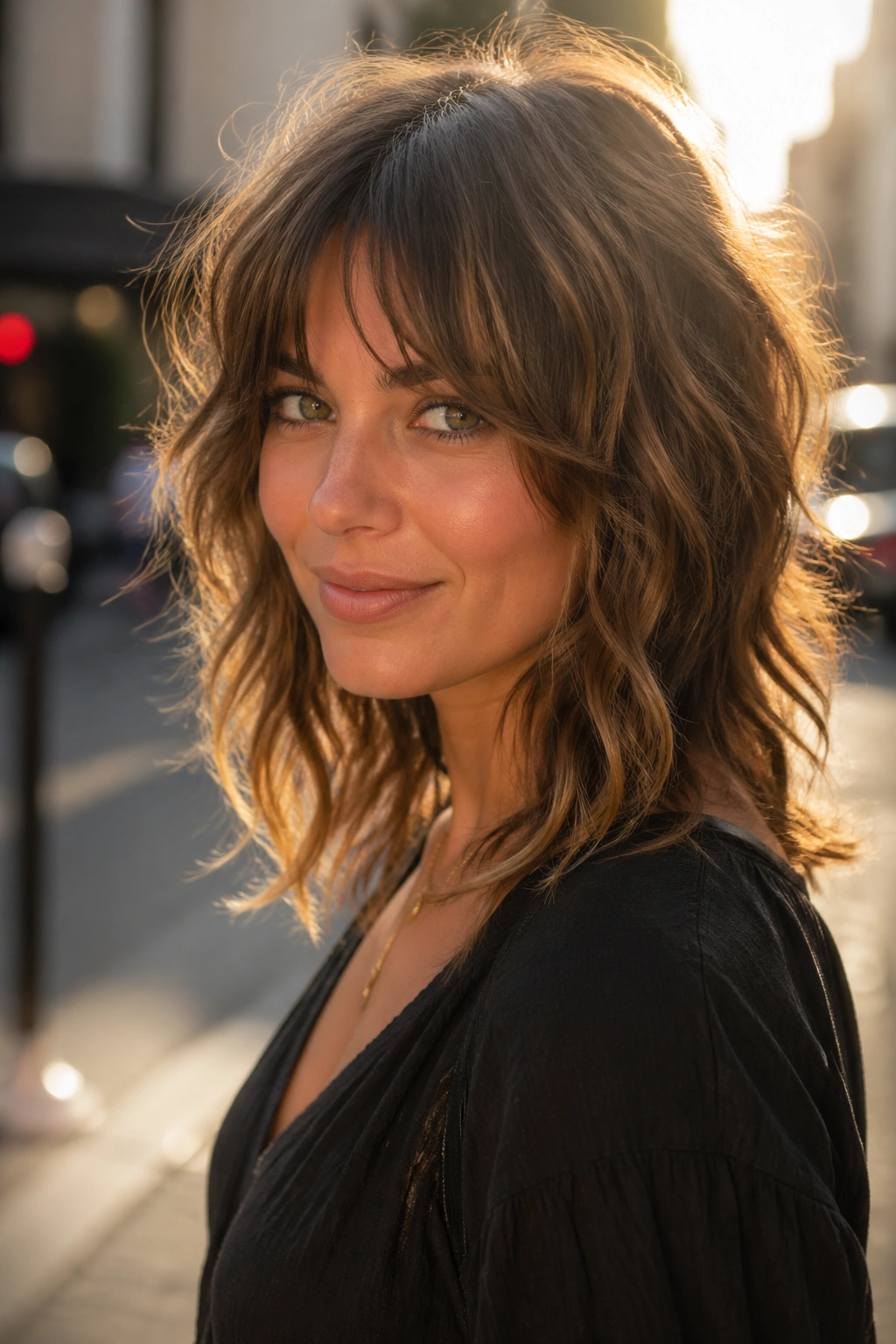
Razor-cut layers can be gorgeous on medium waves, but only when the stylist knows what they’re doing. A razor softens the ends and makes them separate in a lighter way than scissors usually do.
The effect is airy, not blunt. That makes the hair swing more freely, which can be useful if your waves tend to sit in one heavy block. But there’s a line here: too much razor work can make the ends feel thin and ragged.
Best For
- Medium-density waves
- Hair that feels too heavy at the bottom
- People who like a more undone finish
Ask for soft edges, not shredded ones. That distinction matters more than people think.
16. Internal Layers for Lift
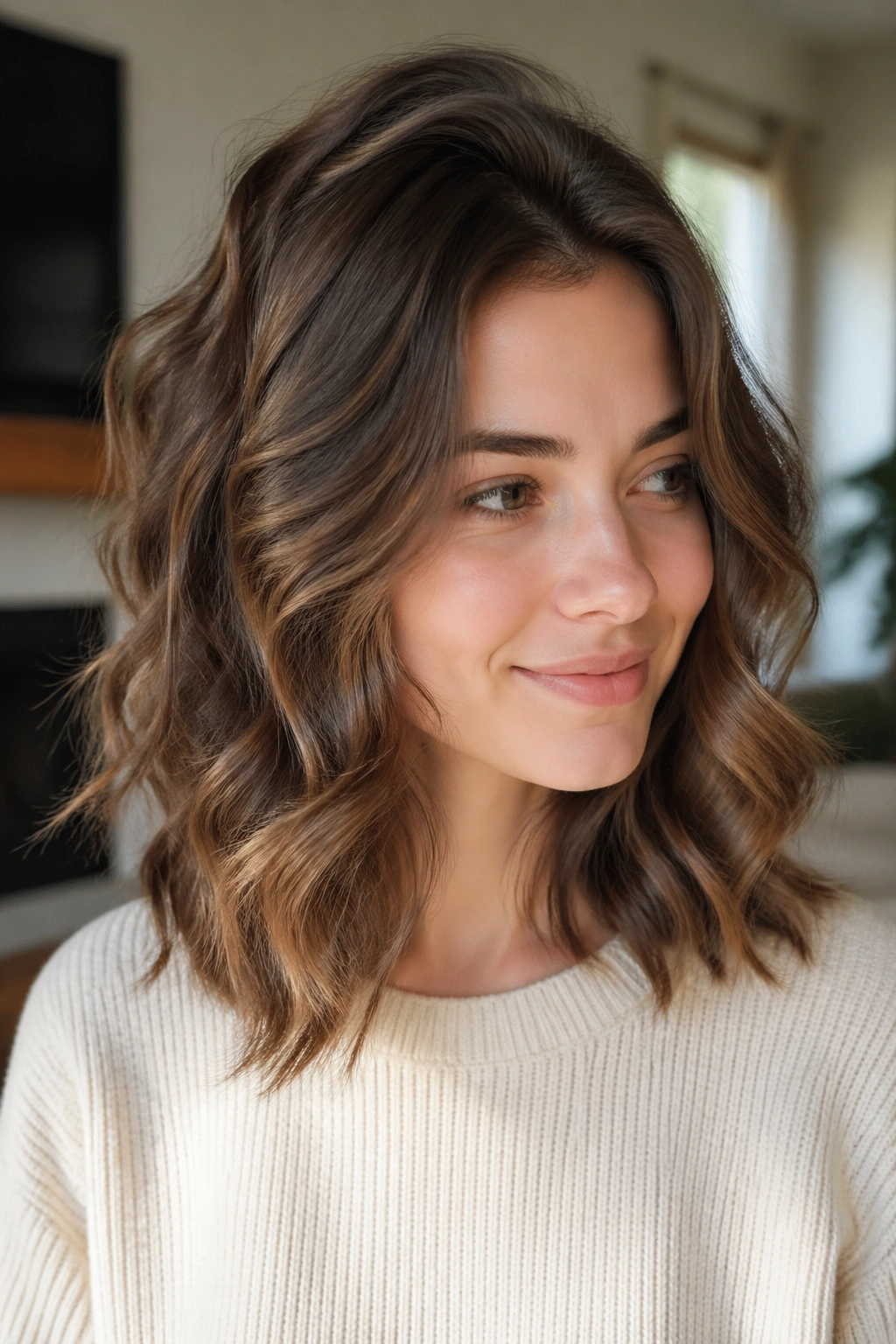
Internal layers are the hidden trick when you want volume without obvious steps. The outside of the haircut still looks smooth, but the inside has been taken apart just enough to let the waves rise and separate.
This works especially well if your hair collapses under its own weight. The stylist keeps the perimeter strong and removes bulk where the hair stacks up. You end up with lift that shows up when you turn your head, not just when you first leave the salon.
It is a smart cut for people who like medium wavy hair to look full from every angle, not only in photos taken from the front.
17. The Butterfly-Inspired Medium Cut
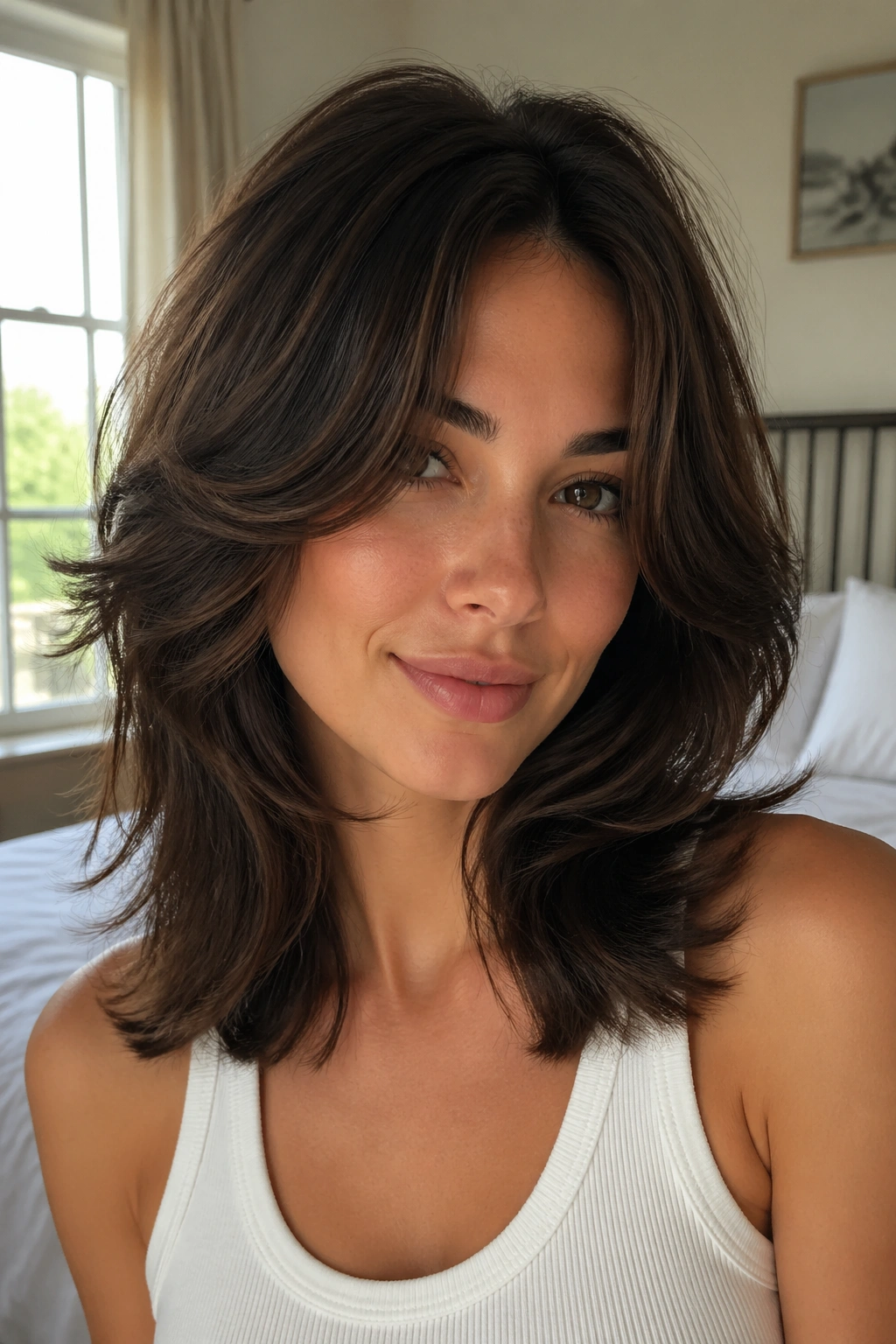
Butterfly layers are not just for long hair. On medium waves, the same idea creates lift around the face while keeping the lower half of the hair full and swingy.
The shortest layers live around the cheekbones or jawline, then blend into longer pieces that stay around the shoulders. That gives the cut a light top and a heavier bottom, which can look very pretty on waves because it keeps the shape from going flat.
What to Ask For
- Face-framing layers that start around the cheekbone
- Long lower layers that keep the length feeling substantial
- A soft blend, not a step-like outline
This cut is one of the better choices if you want movement without giving up the feeling of hair around your shoulders.
18. Bottleneck Fringe with Flip Ends
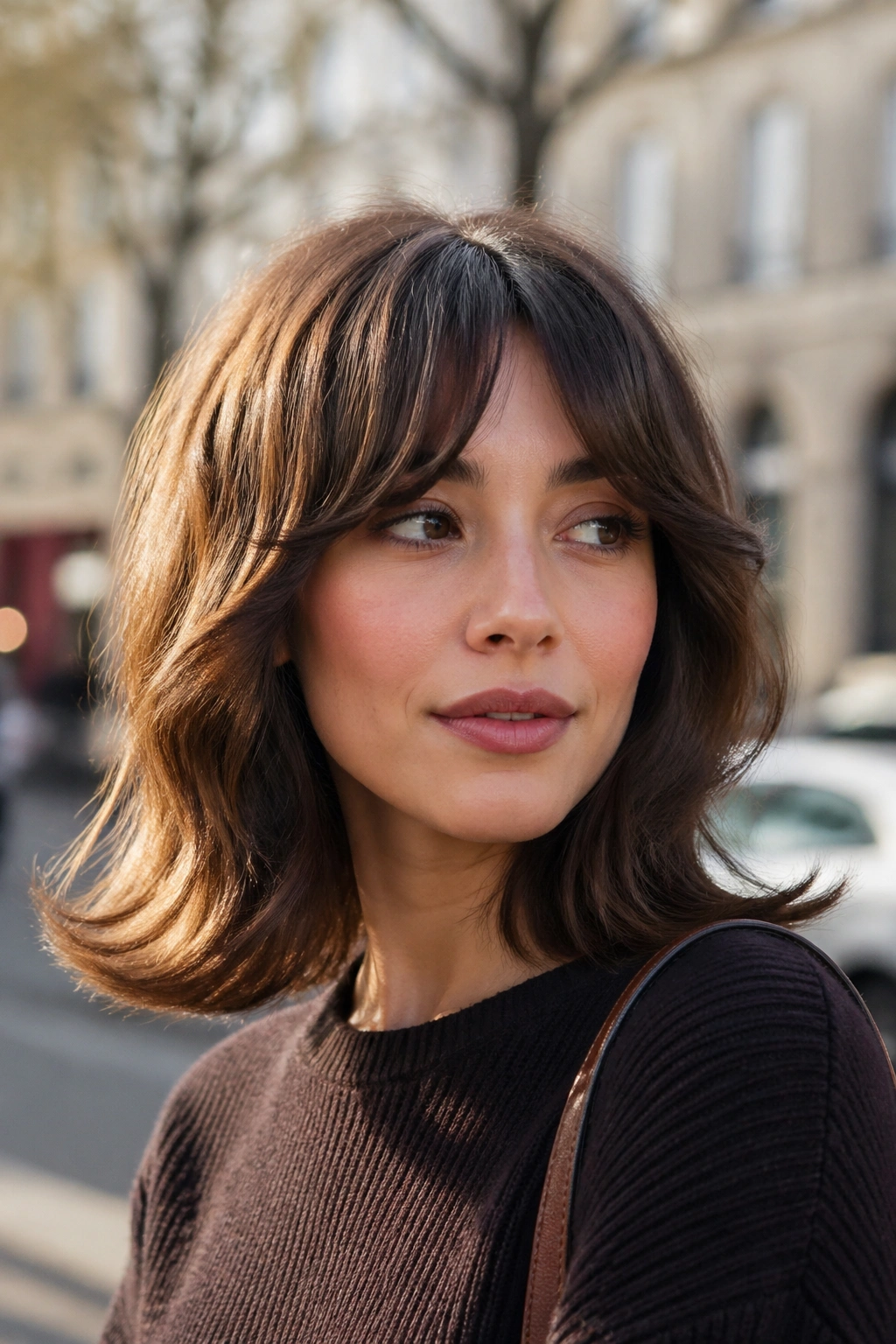
Flip ends and bottleneck fringe give medium hair a little retro bounce. The fringe frames the eyes, and the ends turn outward just enough to keep the shape lively.
This cut needs some styling, but not a ridiculous amount. A round brush at the ends and a quick bend through the front pieces is usually enough. What you want is a curve, not a stiff curl. Stiff curl is where things go wrong fast.
It suits someone who likes a haircut with personality. If you want hair that looks charming even when it’s not perfectly styled, this one earns its keep.
19. The One-Length Midi with Face-Framing Pieces
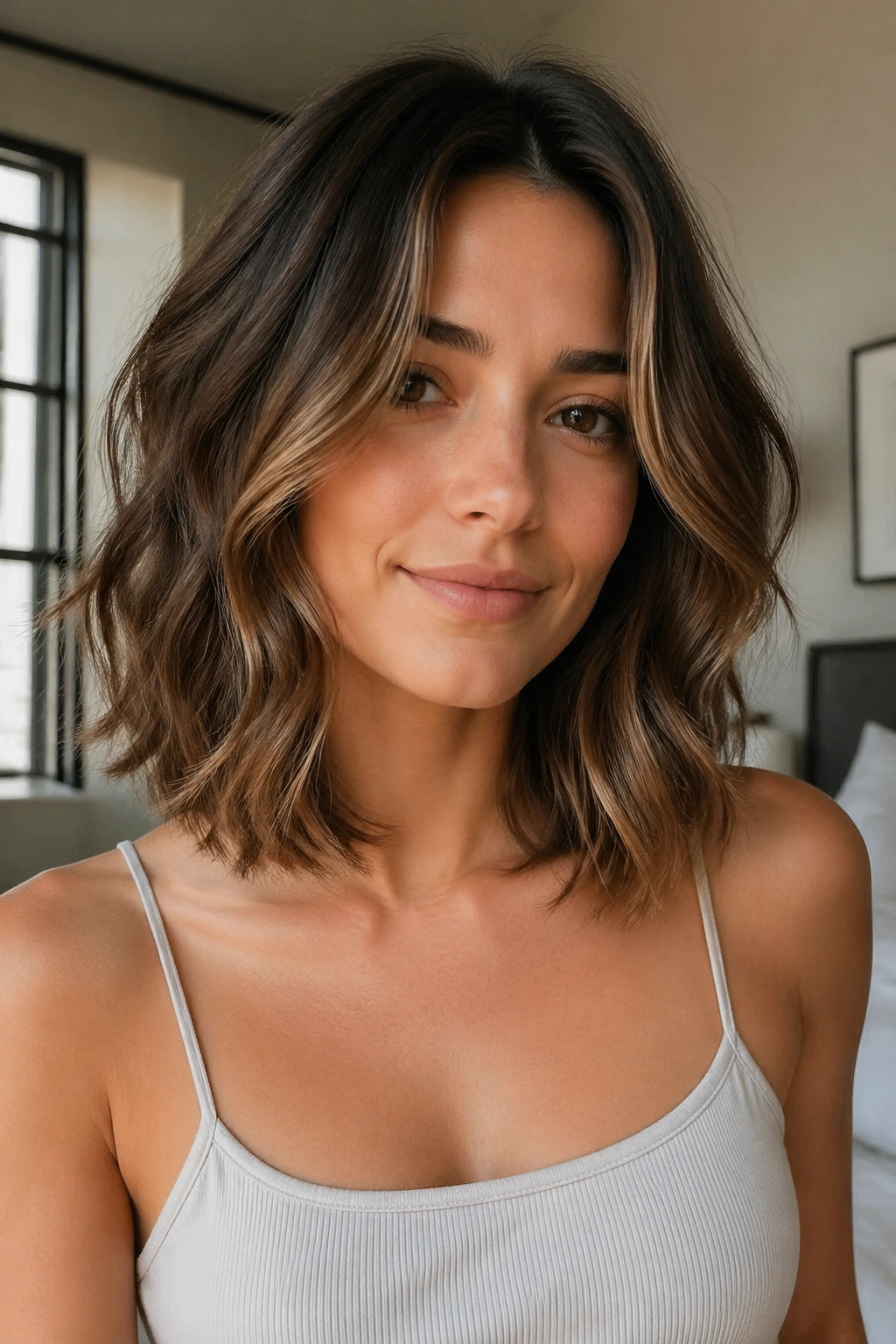
One-length medium hair can look plain on the hanger and rich on the head. The key is keeping the center of the cut solid while carving out two front pieces that soften the face.
This is a good option if you like clean lines and do not want layers all over the place. The face-framing pieces stop the haircut from feeling blocky, and the fuller perimeter gives waves a thick, healthy look. It is a simple formula, but simple does not mean boring.
A middle part usually works best here, though a soft side part can shift the mood. Keep the front pieces long enough to tuck behind the ears without losing the line.
20. The Center-Part Layered Lob
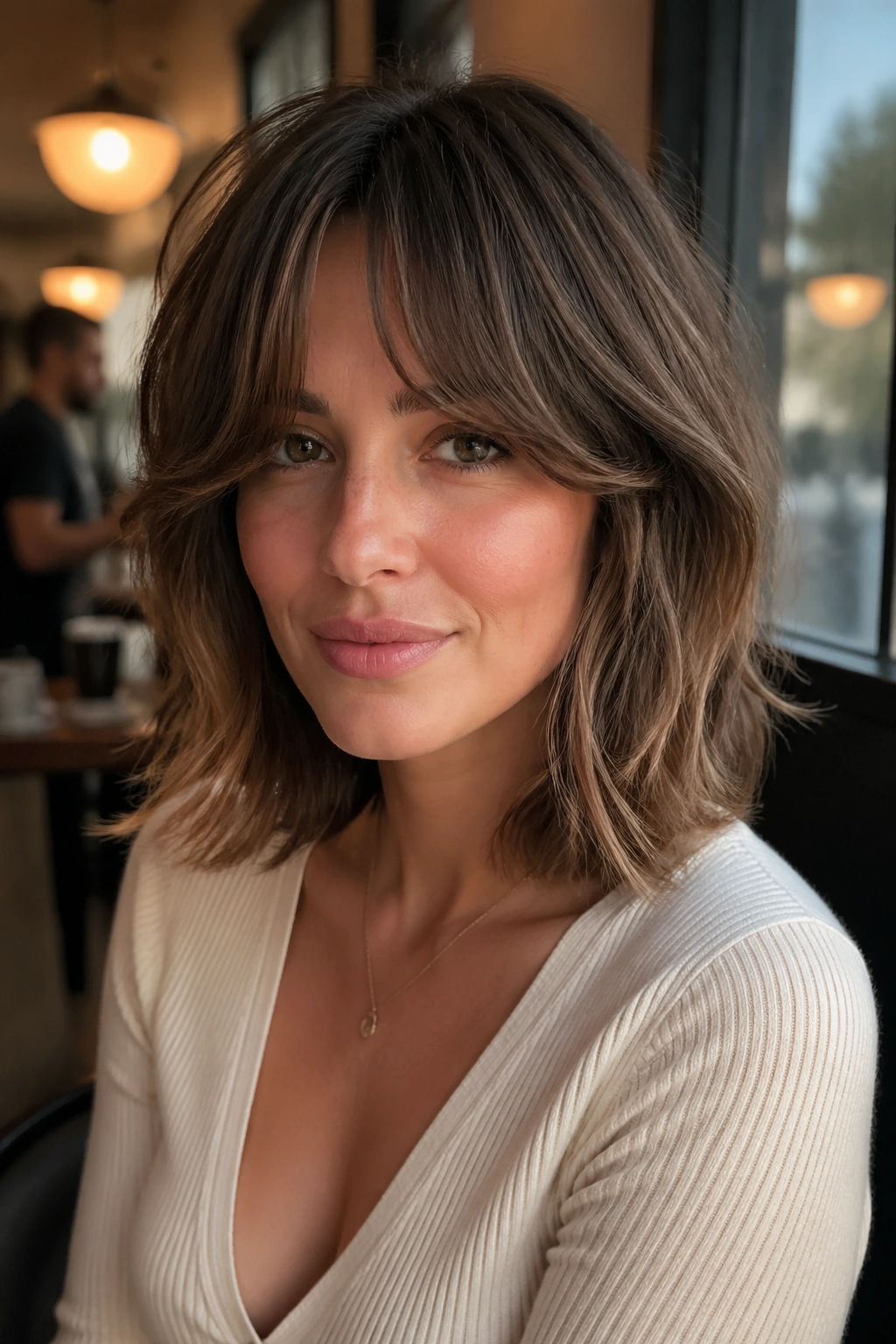
A center-part layered lob is the safe cut in the room, but safe in a good way. It’s balanced, easy to grow out, and usually flattering on medium waves because the texture falls evenly on both sides.
The layers should be long and soft, not chopped into visible shelves. You want the waves to move as one shape instead of breaking into chunks. If the part sits naturally in the middle of your head, this cut tends to look polished with almost no effort.
Styling Note
Work a lightweight mousse through damp hair, then scrunch once and leave it alone until dry. If you keep touching it, the wave pattern tends to separate too much.
This is one of those medium wavy haircuts that looks better after you’ve lived in it for a day.
21. The Tapered Cut for Heavy Waves
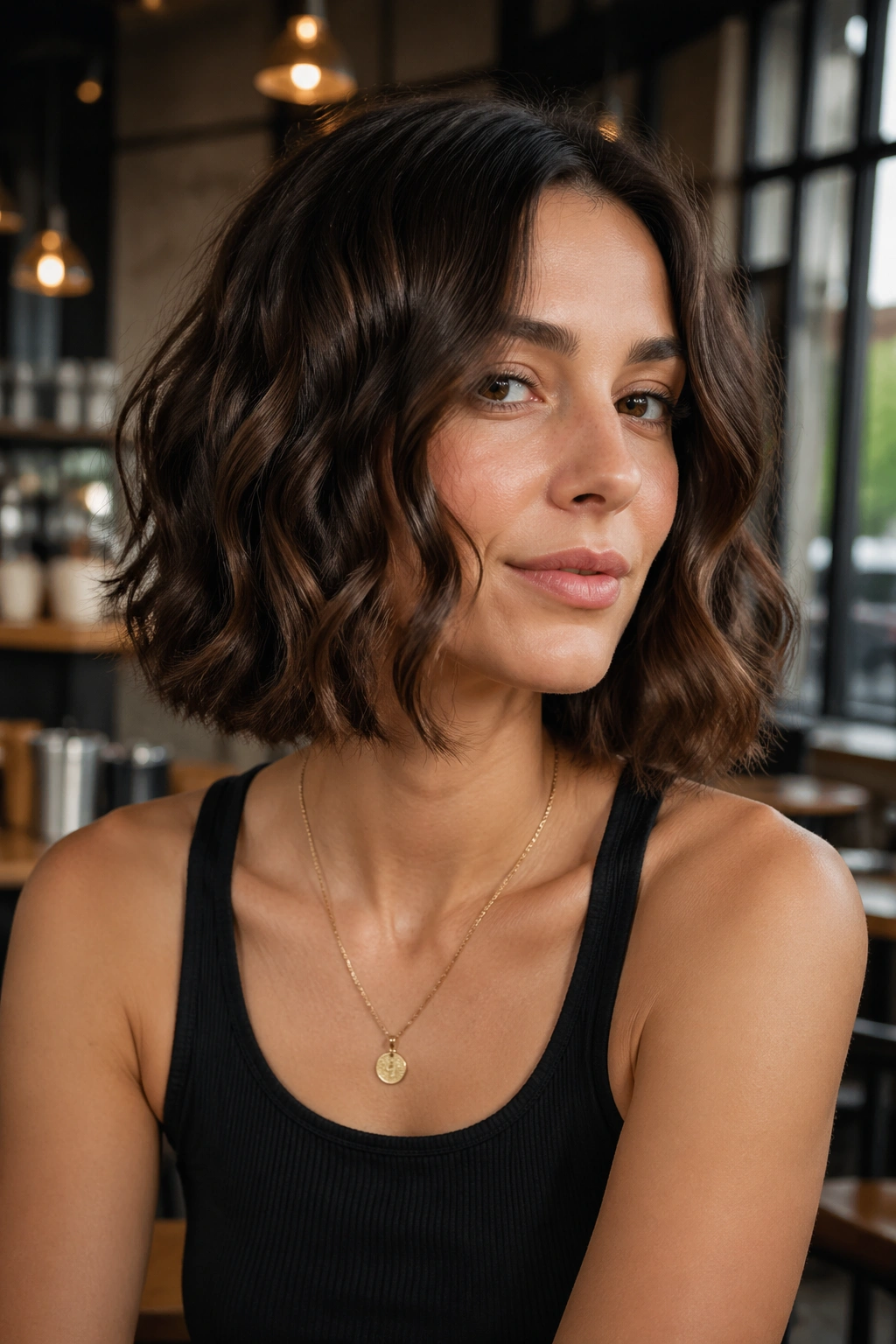
Heavy waves need a different plan. A tapered cut removes bulk gradually from the middle and lower sections, which helps the hair sit closer to the head instead of flaring outward.
The shape is especially useful if your hair looks triangular when it grows past the shoulders. With the taper, the bottom still feels full, but the sides don’t balloon. That means you can keep the medium length without carrying extra weight in every direction.
Ask for the taper to be subtle. Too much can make the ends look thin. You want release, not loss.
22. The Vintage Soft Flip
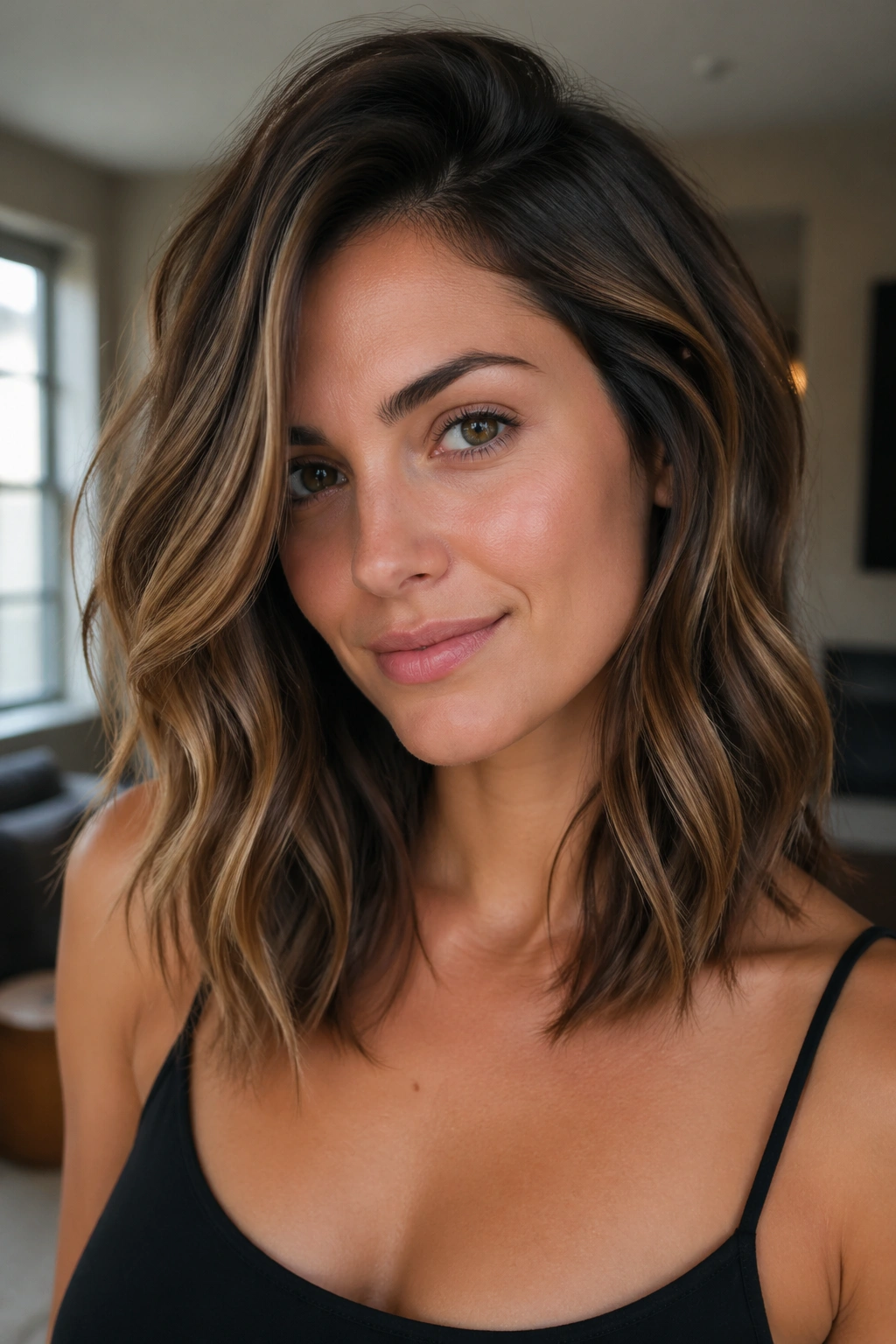
A vintage soft flip looks a little polished, a little flirty, and a lot better on wavy hair than people expect. The ends turn out instead of under, which gives the cut motion even when the rest of the hair is sitting still.
The length should hit somewhere around the shoulders or just below them. That gives the flip enough room to show. If the hair is cut too short, the turn-out can look cramped. If it’s too long, the flip disappears.
This cut feels especially cute with a side part and a soft fringe. It has a light retro mood without looking costume-like.
23. The Long-Layer Cut for Thick Wavy Hair
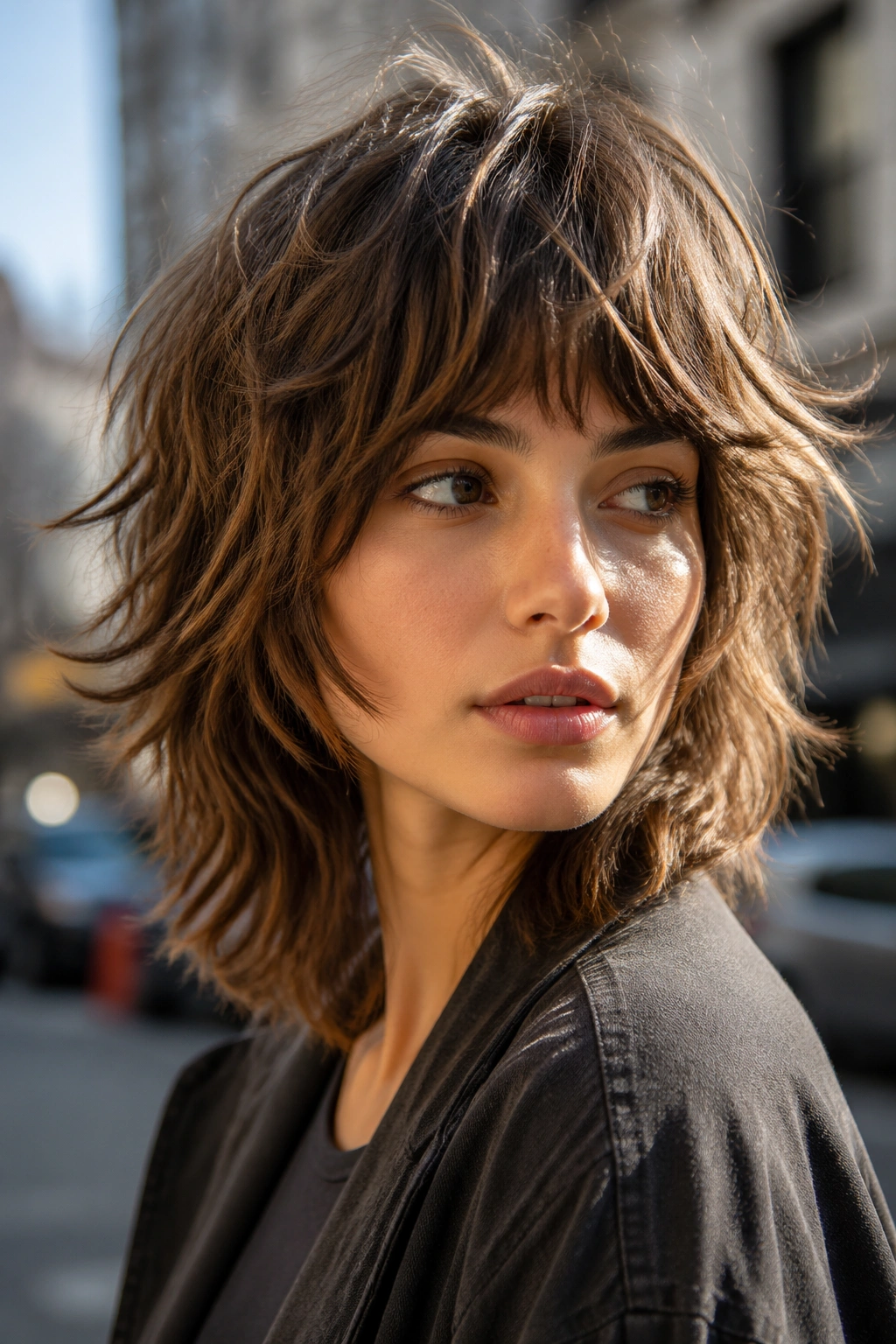
Thick wavy hair usually asks for length management. Long layers keep the bulk from piling up in one heavy block while still letting the hair look full from top to bottom.
The shortest layers should still be long enough to blend—usually around the jawline or lower. If they start too high, the cut can get frizzy fast and lose that clean wave pattern people want from medium hair. The goal is motion with control.
This is one of the best medium wavy haircuts if you love volume but hate heaviness. The hair swings. It does not sit like a helmet.
24. The Light-Layer Cut for Fine Waves
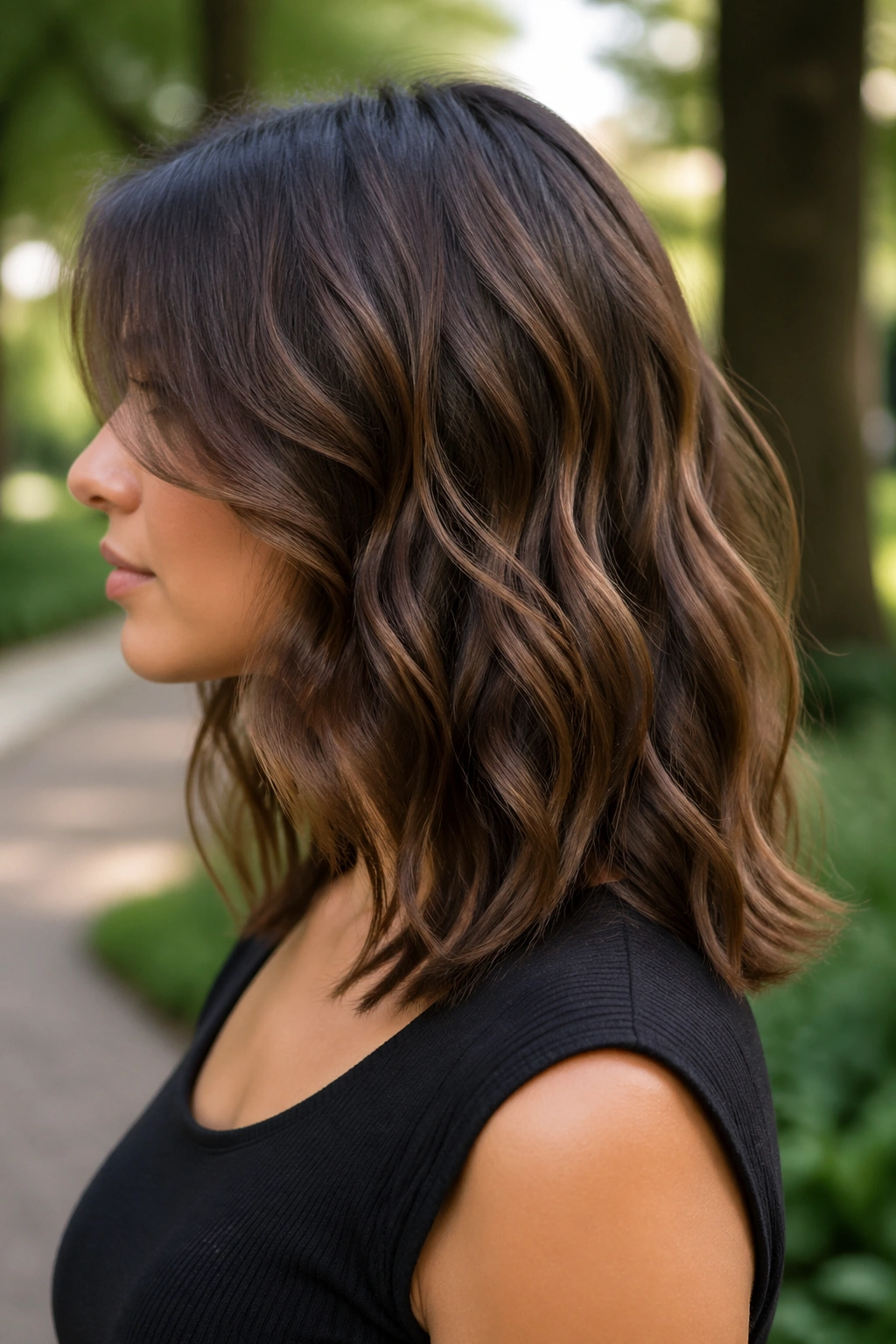
Fine waves need a gentler hand. Too many layers can make the hair look see-through at the ends, which is usually the opposite of what you want.
A light-layer cut keeps the perimeter mostly solid and uses only a few soft layers around the face or crown. That gives the hair enough lift to move while preserving density. It’s a small adjustment, but on fine hair it makes a big difference.
If your waves are soft and loose, this cut helps them read as intentional rather than limp. A small amount of texture spray at the roots can help, but the cut itself should do most of the work.
25. The Grown-Out Shag with a Curved Fringe
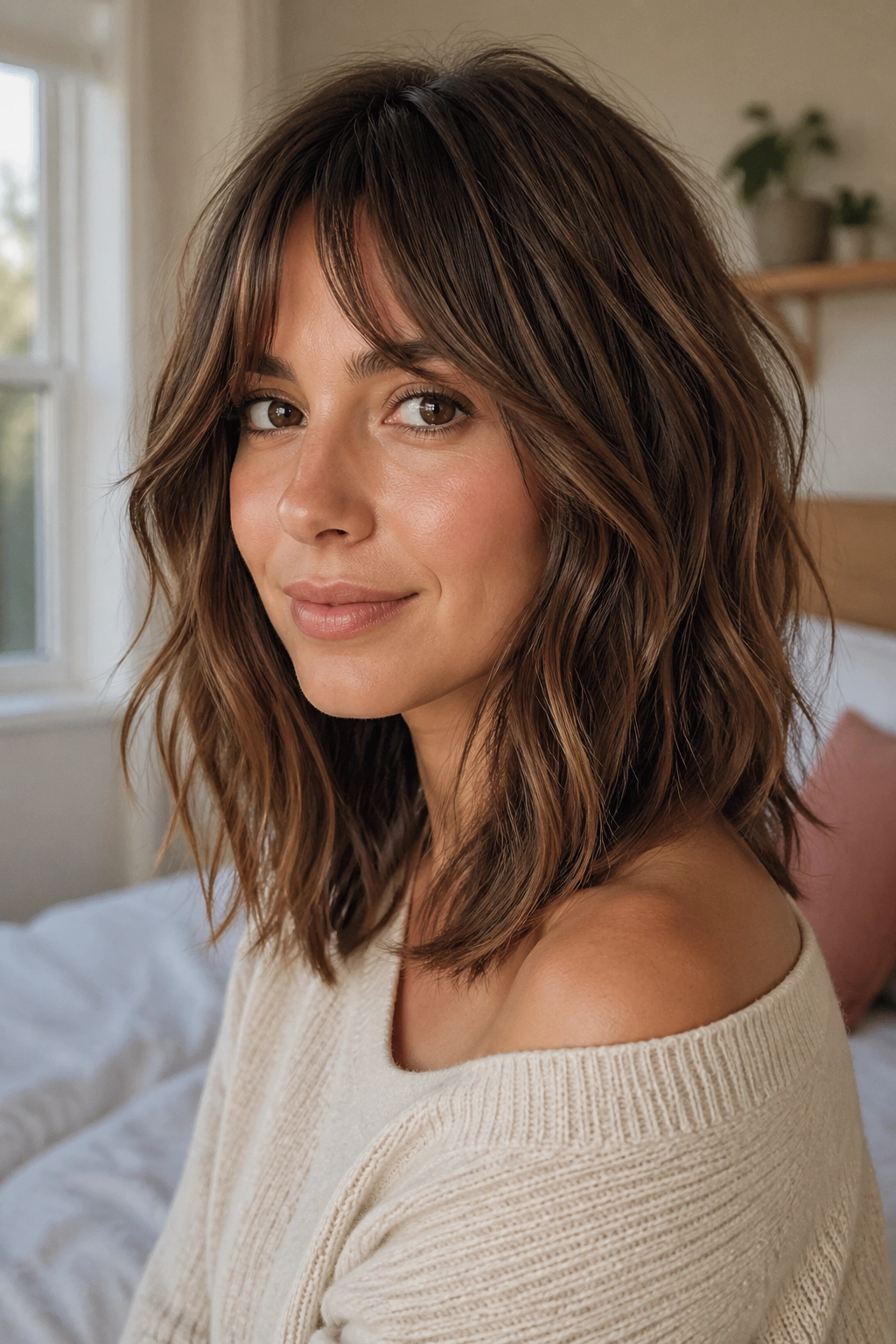
A grown-out shag is what happens when a cut stops trying too hard, and that is part of the charm. The fringe grows longer, the layers soften, and the whole shape starts to look easy in a good way.
The curved fringe helps the cut stay flattering as it grows. It frames the eyes without demanding constant trims. That makes this a practical choice if you do not want to visit the salon every few weeks just to keep your bangs in line.
It works beautifully on medium waves because the texture fills in the spaces that straight hair would leave blank. A little mess is fine here. Actually, it helps.
26. The Soft Mullet-Lite
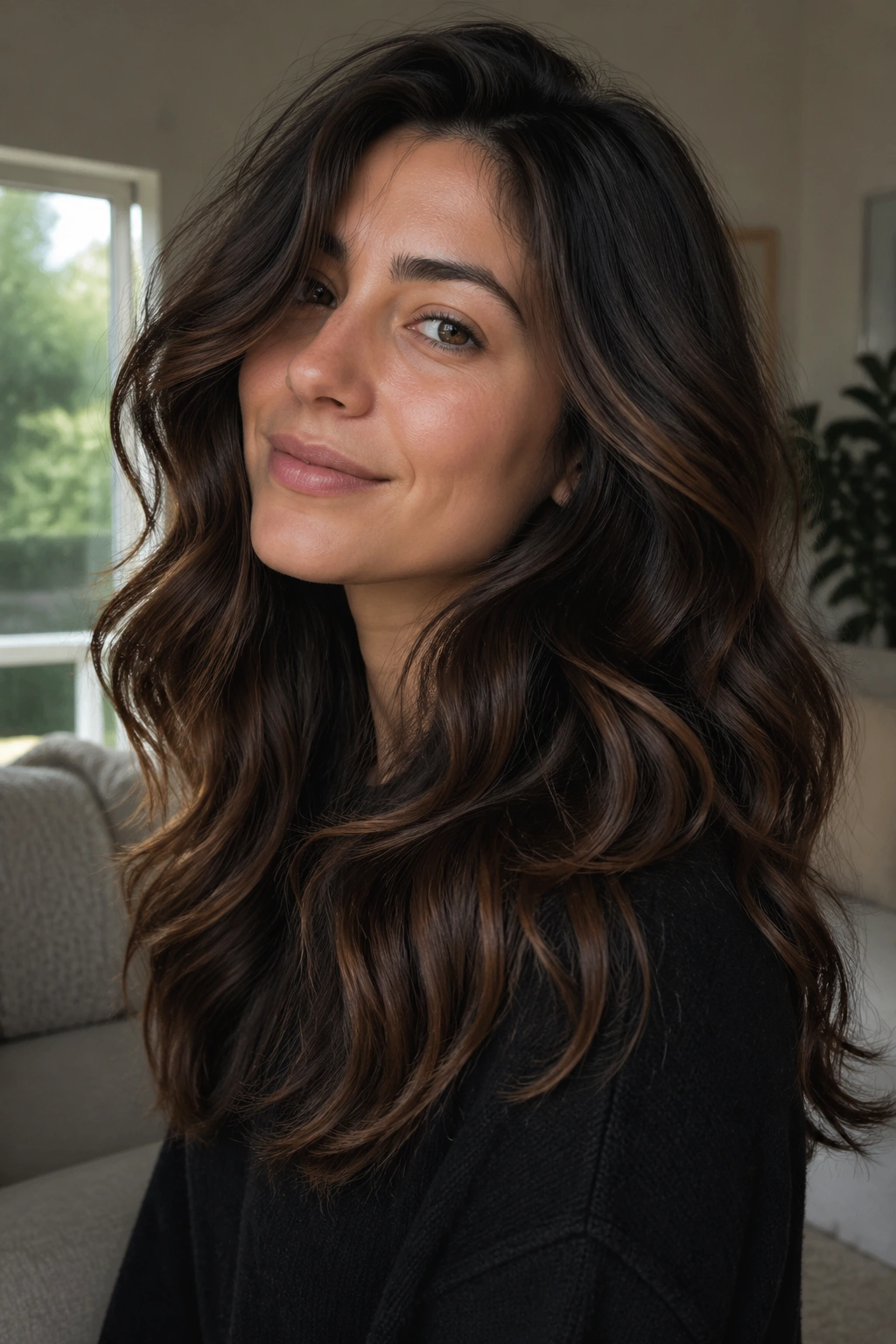
The soft mullet-lite is the boldest cut on this list, but it can still be cute when the edges are kept gentle. The crown gets a bit more lift, the sides stay soft, and the back keeps enough length to avoid looking severe.
What makes this version wearable is the lack of harsh contrast. You want a whisper of shape change, not a hard jump from short to long. On wavy hair, that softness keeps the cut playful instead of awkward.
This one is best for someone who wants personality and does not mind a little styling cream. If you like your hair to have some attitude, this is the cut.
27. Half-Bangs with a Medium-Length Wave Cut
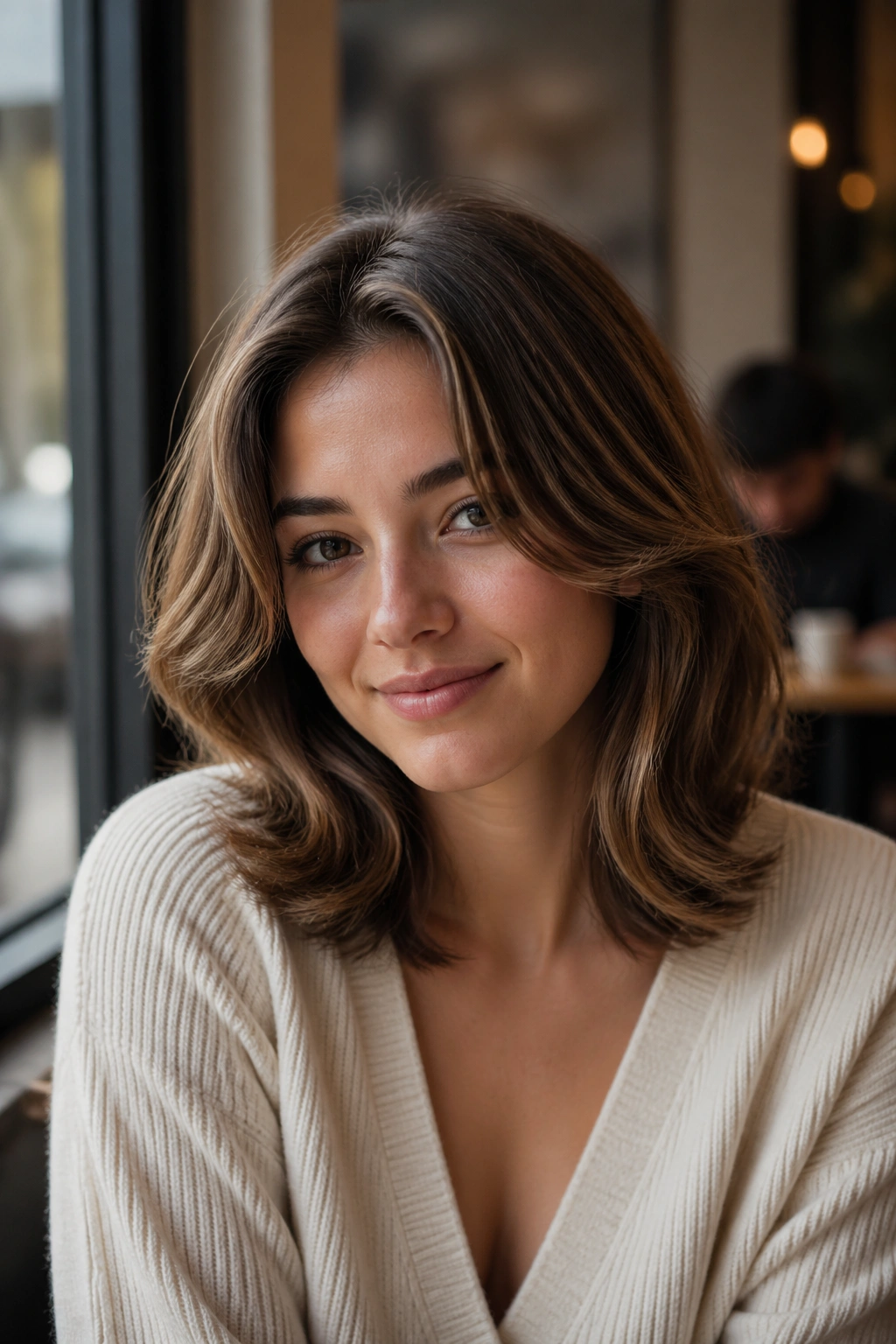
Half-bangs are the low-commitment cousin of a full fringe. They break up the forehead just enough to change the mood, but they stay wispy and movable, which works well with wave patterns that shift during the day.
The rest of the cut should stay layered but not shaggy. That way the bangs feel like part of the haircut rather than a separate idea pasted onto it. Keep the shortest pieces long enough to tuck into the sides if needed.
How to Wear It
Push the bangs forward when you want softness around the eyes. Sweep them aside when you want a cleaner face frame. That flexibility is the reason this cut stays useful for so many people.
28. The Blunt-End Polished Wave Cut

Blunt ends and wavy texture can look very neat together. The blunt line gives the hair weight, while the waves keep it from looking stiff. It is a simple pairing, but a good one.
This cut works best when the hair is cut in a clean line and styled with a light cream rather than a heavy oil. Too much shine product can make the waves flatten against the blunt ends. You want a soft finish, not a slick one.
It is a strong choice if you like your hair to look tidy on day one and still wearable on day three. That is not nothing.
29. Dry-Cut Layers That Follow the Wave Pattern
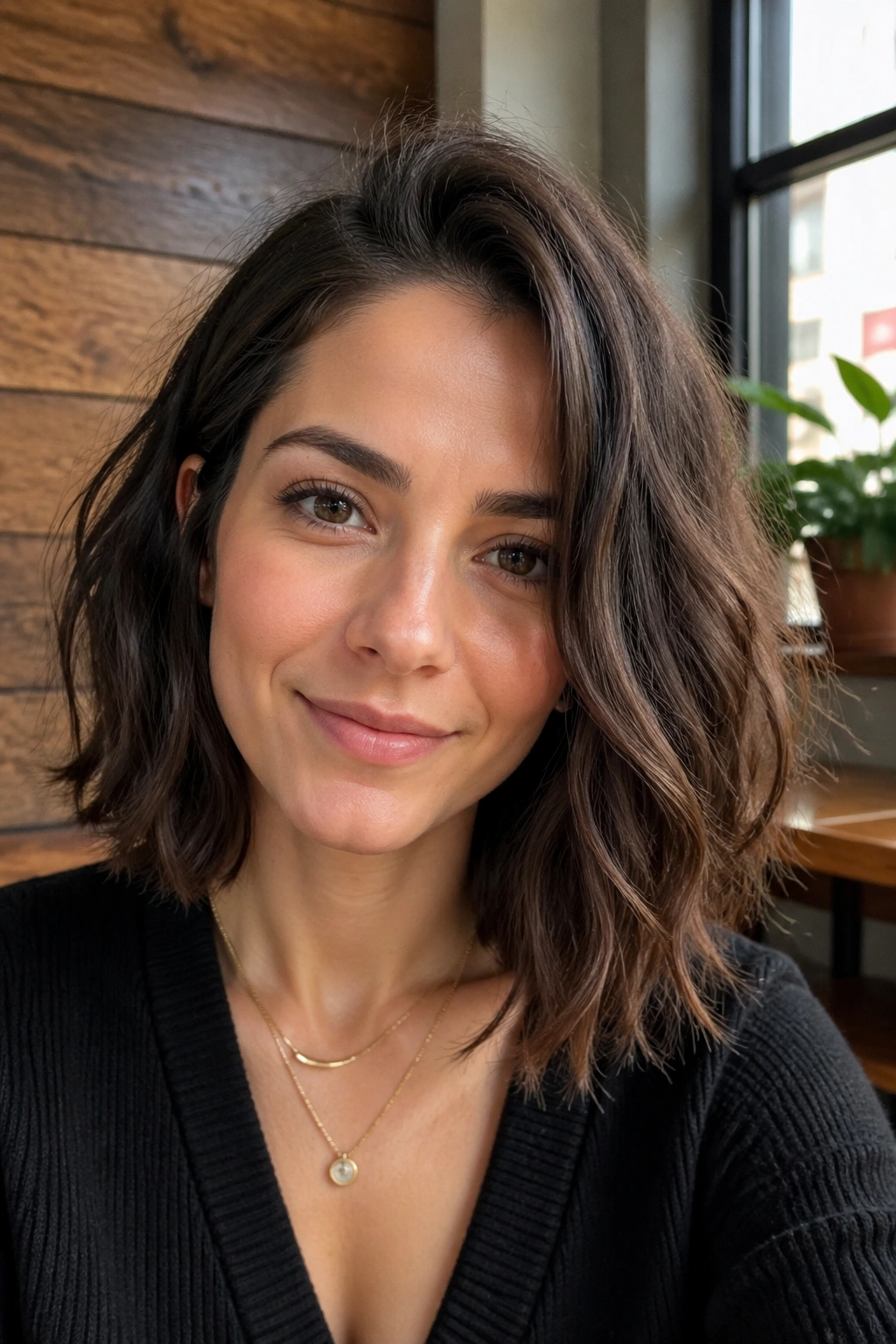
Dry cutting makes sense when your hair bends in its own strange little pattern. A stylist can see exactly where the waves sit, where they split, and where they puff once the hair is in its natural state.
That matters because wet hair lies. It stretches, hides volume, and can trick even a good haircut into looking wrong once it dries. A dry cut lets the shape be built around the real wave pattern, not the guesswork version.
Why Dry Cutting Helps
- It shows the true fall of the hair
- It helps avoid layers that sit too high
- It can reduce surprise bulk at the ends
- It usually works well for wavy textures that shift from strand to strand
If your hair has a few stubborn pieces that never behave, this is often the smarter approach.
30. The Low-Maintenance Midi with Invisible Texture
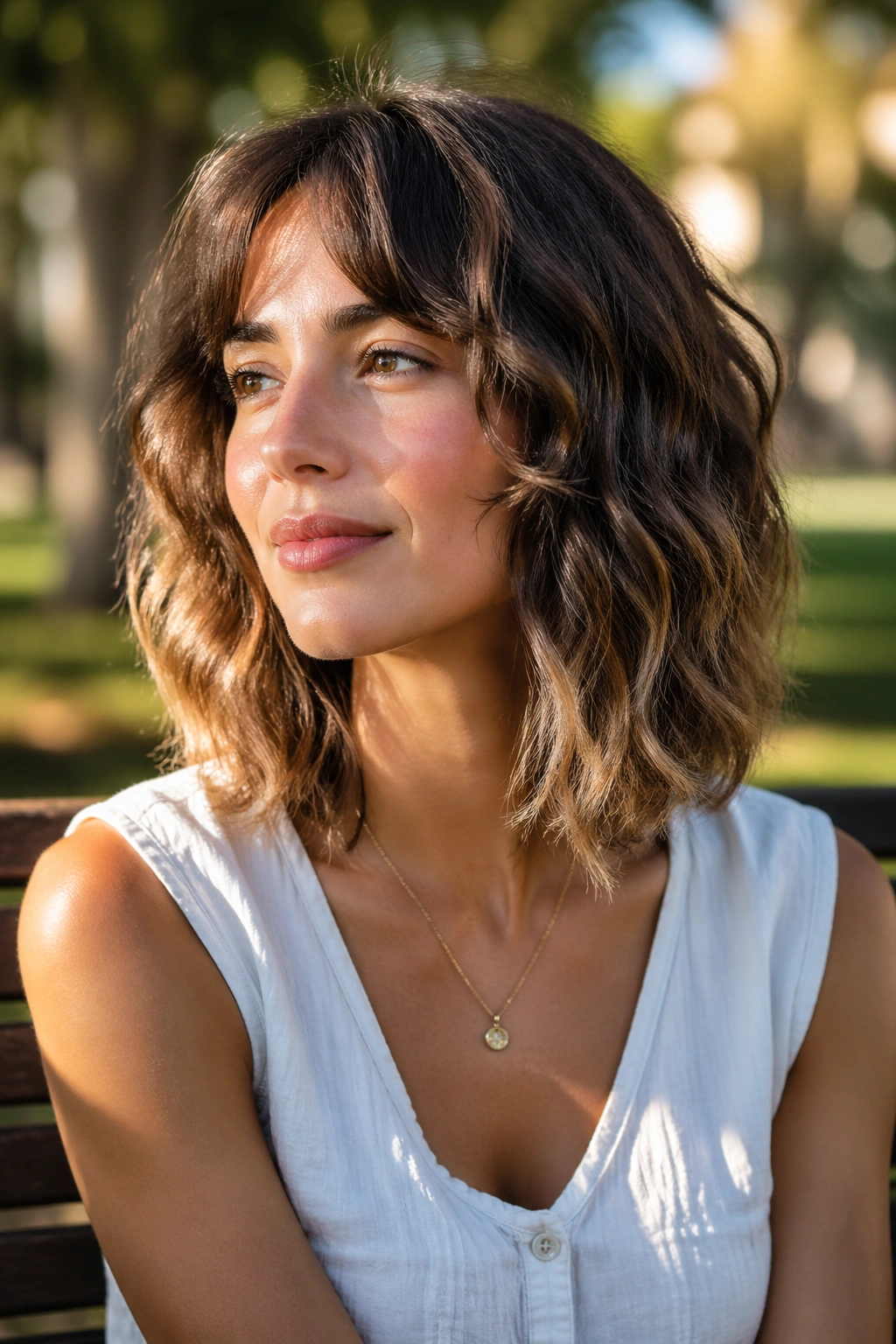
Low-maintenance medium hair is not lazy hair. It is simply hair that was cut with real life in mind. The invisible texture keeps the outline full, the waves loose, and the morning routine short enough that you will actually do it.
Ask for a solid outer shape with soft internal movement, nothing too chopped and nothing too blunt. The result should dry into a shape on its own, with only a little help from cream or mousse. If you want a haircut that still looks decent on day two without a full restyle, this is the one to keep near the top of your list.
A good medium wavy cut should make your hair feel easier, not more demanding. That is the whole point, really. The best version is the one that lets the wave pattern do its job and keeps you out of the mirror for too long.
A small trim every 8 to 12 weeks helps this shape stay clean. Past that, the texture can drift into something less intentional, and nobody wants that.
