



Red hair and waves are a smart pair, but the wrong cut can make both look flat in a hurry.
Long wavy layered cuts in red solve that problem by giving the hair room to move while keeping enough weight at the ends to stop it from puffing out. Copper, auburn, cherry, burgundy — they all behave a little differently in layers, and that difference matters more than people think. A blunt hemline can look heavy on waves; too many short pieces can make the shape frizzy. The sweet spot lives in the middle.
I always pay attention to where the first layer starts. Collarbone is safe. Cheekbone is livelier. Too high, and the hair can kick out in odd places once it dries. Too low, and the cut barely shows. The right red plus the right layering pattern can make even a simple air-dry look intentional.
Some of the cuts below lean soft. Some have bite. A few are built for thick hair that needs weight removed, while others are better for fine waves that need every inch left intact. All of them work with movement instead of fighting it.
1. Copper Curtain Layers
Copper and curtain layers get along fast. The warmth of the shade gives the front pieces more presence, while the longer back length keeps the whole cut from feeling thin or busy.
Why It Works
Curtain layers usually start around the cheekbone or just below it, which gives wavy hair a clean frame around the face. On copper hair, that frame looks richer because the color shifts a little as the waves bend. You notice the shape first, then the shine. That order matters.
Ask for the front pieces to be soft, not choppy. A hard line in copper can look too sharp unless that is the point. The rest of the hair can stay long and full, with internal layers hidden inside the shape so the bottom edge still looks thick.
- Keep the shortest face-framing pieces at cheekbone level.
- Leave the perimeter full so the ends do not look see-through.
- Use a 1.25-inch curling iron for loose bends, not ringlets.
- Finish with a light cream or serum, never a heavy mask.
Small tip: part the hair slightly off center. That tiny shift keeps curtain layers from looking too symmetrical.
2. Cherry Red Butterfly Layers
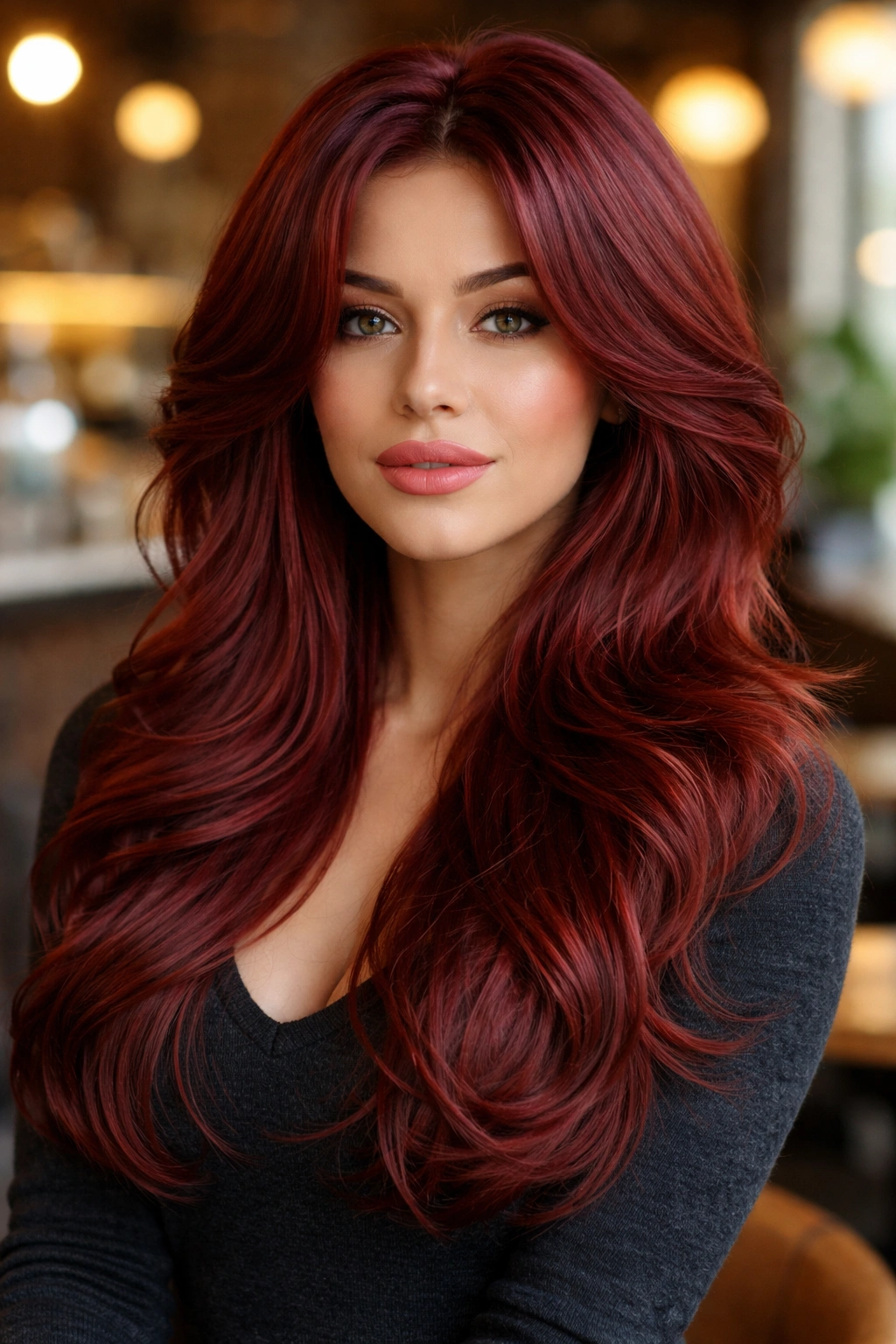
Cherry red is loud in the best way, and butterfly layers help keep it from turning into one giant block of color. The cut lifts the top section just enough to create motion, then leaves the lower length long and dramatic.
That split is the whole trick. The top layers sit shorter and feather around the face, while the lower layer keeps its length and sway. On long wavy hair, the result feels full but not bulky. It also gives you more options on styling days. Wear it loose and the layers show off. Pull half of it back, and the shape still makes sense.
I like this cut for hair that needs energy. If your waves tend to collapse after a few hours, butterfly layers bring them back to life without taking away too much weight. The red shade does a lot of work here too; cherry tones look sharper when the hair moves, because the light bounces across the bend instead of sitting still on the surface.
A lot of people think butterfly layers are only for blowouts. Not true. They also air-dry well if you scrunch in mousse and leave the ends a little undone. Messy is part of the charm.
3. Garnet Face-Framing Layers
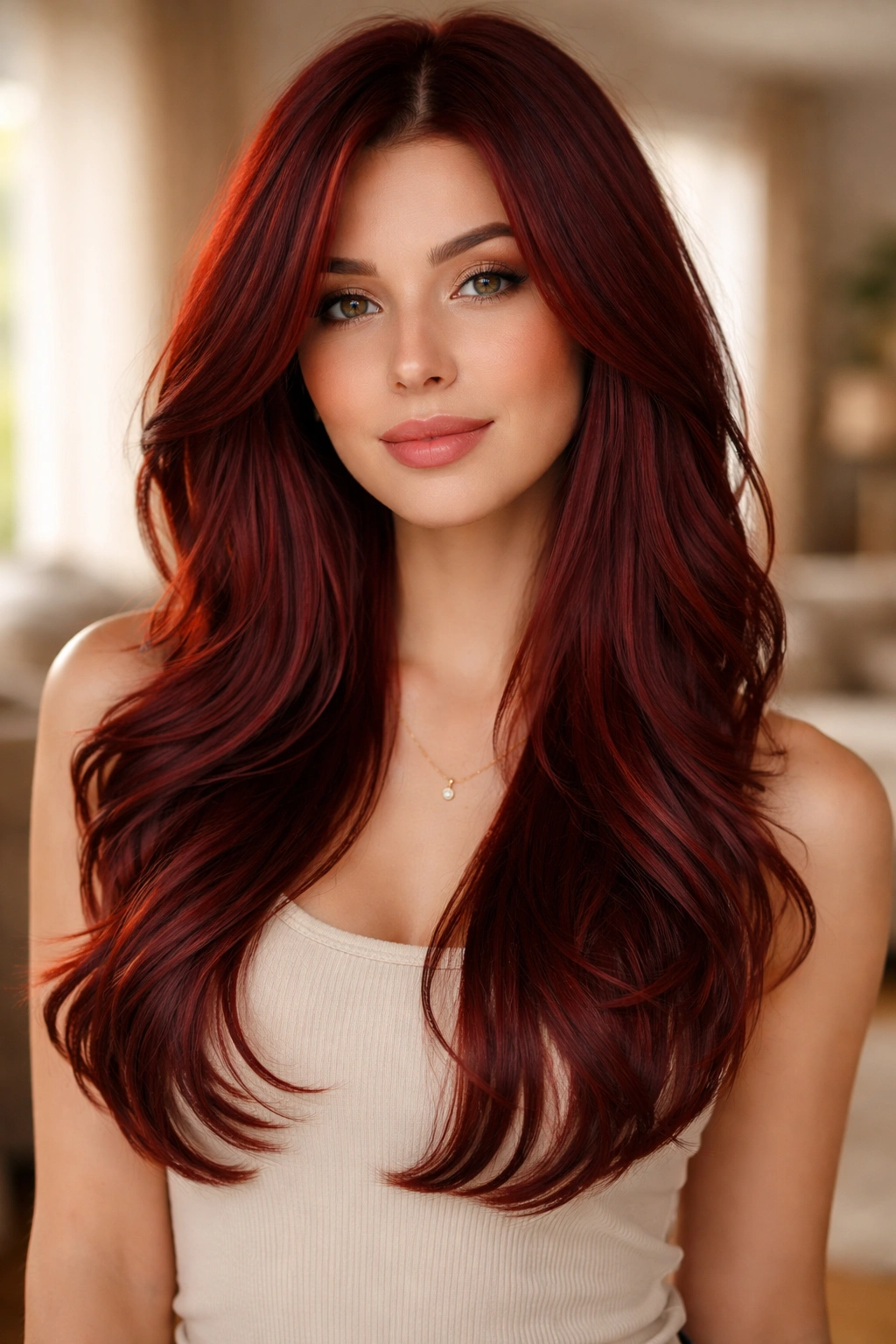
Why do face-framing layers look so good in garnet red? Because deep red shades can go heavy around the jaw if the front is cut in one solid sheet. A softer front opens the face and gives the color somewhere to break.
The best version starts with a short face frame that lands somewhere between the chin and collarbone, then drops into long layers through the back. That keeps the style feminine without making it fussy. On wavy hair, the front pieces bend away from the cheek and collar, which gives the whole cut a bit of lift.
How to Use It
If your hair is fine, keep the face frame longer. Fine hair loses volume fast when the shortest pieces are cut too high. If your hair is dense, you can go shorter in front and still keep the ends heavy.
Use a large round brush or a 1.5-inch curling iron to bend the front away from the face. That little flip makes the layers visible without forcing the rest of the hair into a full styling session. A side part works too, especially if you want garnet red to look softer and less severe.
The cut reads polished, but it still has movement. That’s the part people usually want and can never quite describe in the salon chair.
4. Cinnamon Shag Layers
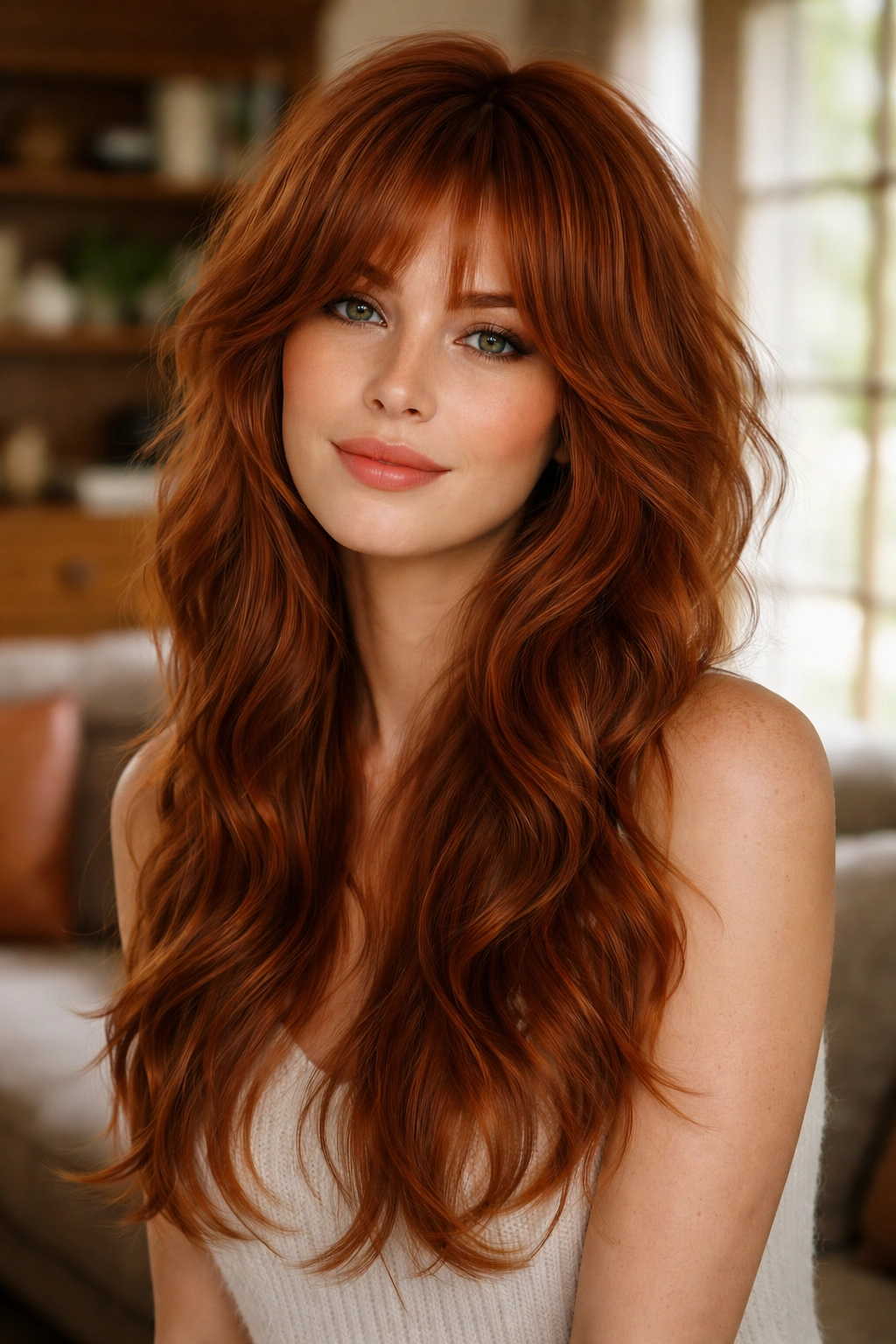
A cinnamon shag is for the person who likes hair with some attitude. It looks especially good on the second day, when the waves have settled and the texture feels lived-in instead of freshly styled.
The shape is built with shorter layers around the crown and softer, longer pieces through the lower half. That means the top gets lift while the bottom keeps its swing. Cinnamon red helps because it warms up the texture and keeps the cut from looking too gritty. A shag on dark brown hair can look flat. On cinnamon red, it looks warmer and more alive.
Key Details
- Ask for point cutting instead of blunt chopping.
- Keep the bottom few inches more solid so the ends do not fray out.
- Use mousse at the roots and a touch of wave spray through the mid-lengths.
- Skip heavy oils near the crown; they crush the lift fast.
A shag is not for someone who wants hair to sit perfectly still. It’s for someone who likes a little mess. Good mess, though. The kind that looks like the hair fell into place on its own, even if it took ten minutes and a diffuser.
5. Auburn Waterfall Layers
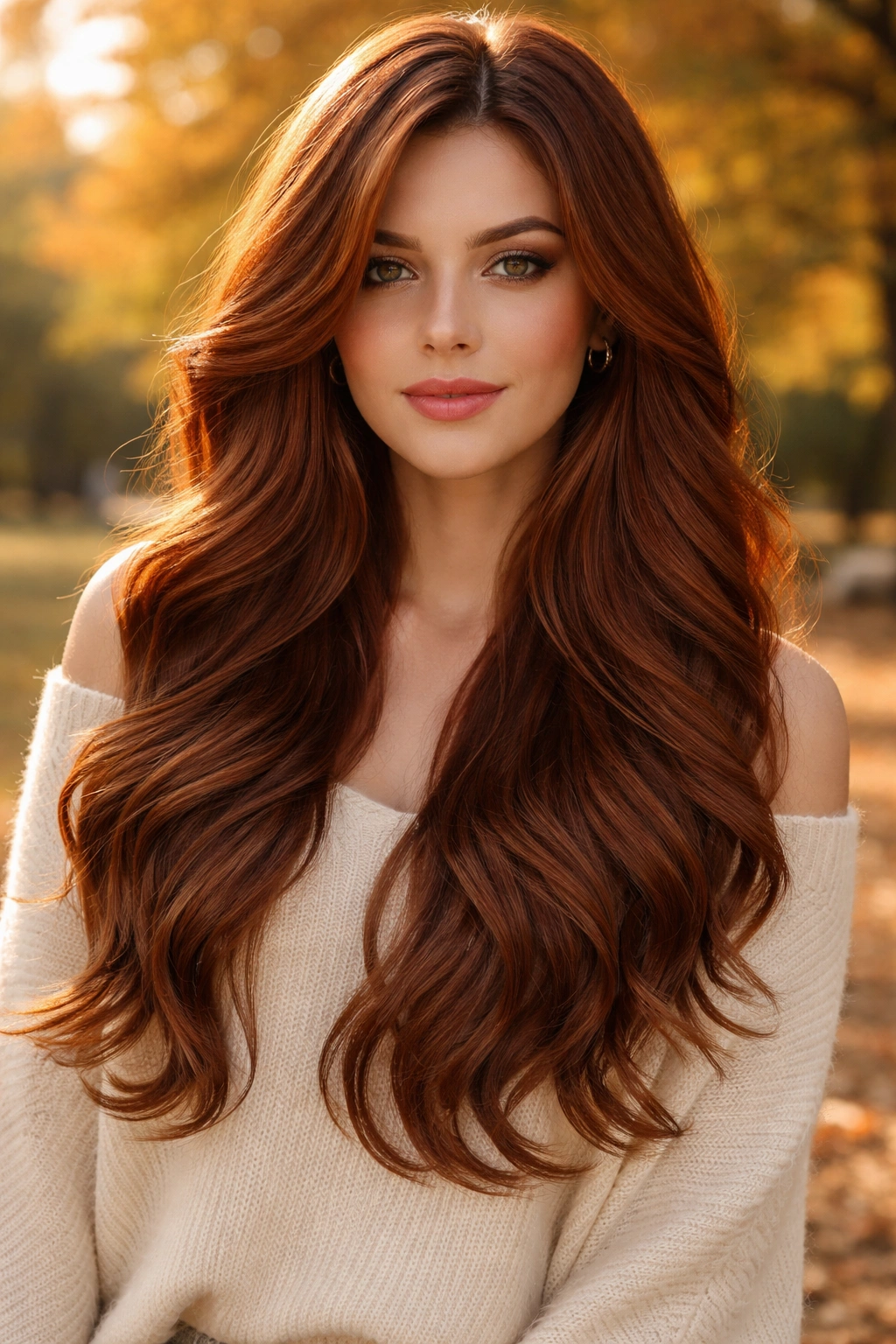
Auburn waterfall layers are one of those cuts that look calm at first glance and then keep revealing more shape the longer you watch them. The layers step down gradually, so the hair falls in long folds instead of obvious chunks.
That matters for wavy hair. Waves already have their own rhythm, and a waterfall cut lets them keep it. The layers do not fight the natural bend; they guide it. Auburn tones make the motion look softer because the shade sits between red and brown, which gives the whole style a deeper, richer base.
This is a cut for hair that you want to feel full in motion. When you turn your head, the waves slide over each other instead of flopping into one flat sheet. On thicker hair, that movement prevents the shape from getting boxy. On medium hair, it makes the cut look more expensive than it is. That sounds like a silly phrase, but you know what I mean.
The best version has a heavier perimeter and internal layers that you can barely see when the hair is dry. That hidden shaping is what keeps the hair from ballooning in humidity. It also makes ponytails look better, which is one of those practical details people never mention until they need it.
6. Burgundy U-Cut Layers
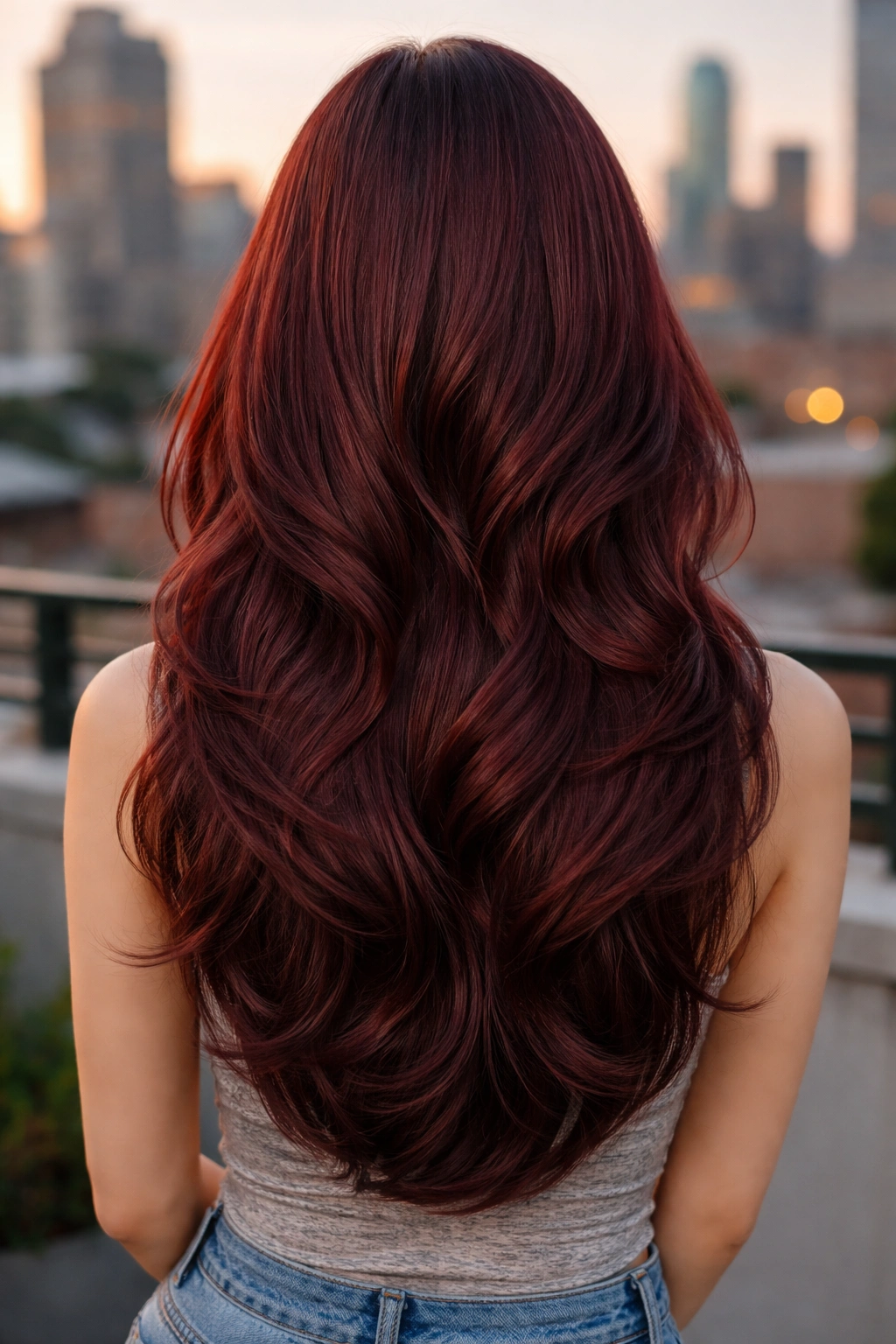
A burgundy U-cut gives you the length of a long style with a softer edge than a blunt hemline. Unlike a straight-across cut, the U shape curves gently at the back, which lets wavy hair fall in a more natural shape.
That curve helps burgundy hair a lot. Deep red shades can look harsh when the ends are cut too abruptly. A U-cut softens the line and lets the color taper in a nicer way. Long layers on top keep the crown from sitting heavy, while the lower edge stays full enough to look healthy.
This shape works especially well if your hair is thick and you’re tired of losing all that length in layers that start too high. Keep the layers lower and the base heavier. That gives you movement without turning the cut into a feathered mess. If your waves are looser, this shape will look graceful. If your waves are tighter, it will look more dramatic.
A burgundy U-cut also behaves well in a half-up style. The curved back line stays visible, and the layers around the face still do their job. That’s useful if you like hair that can be worn two or three different ways without needing a full restyle.
7. Strawberry Red Soft Layers
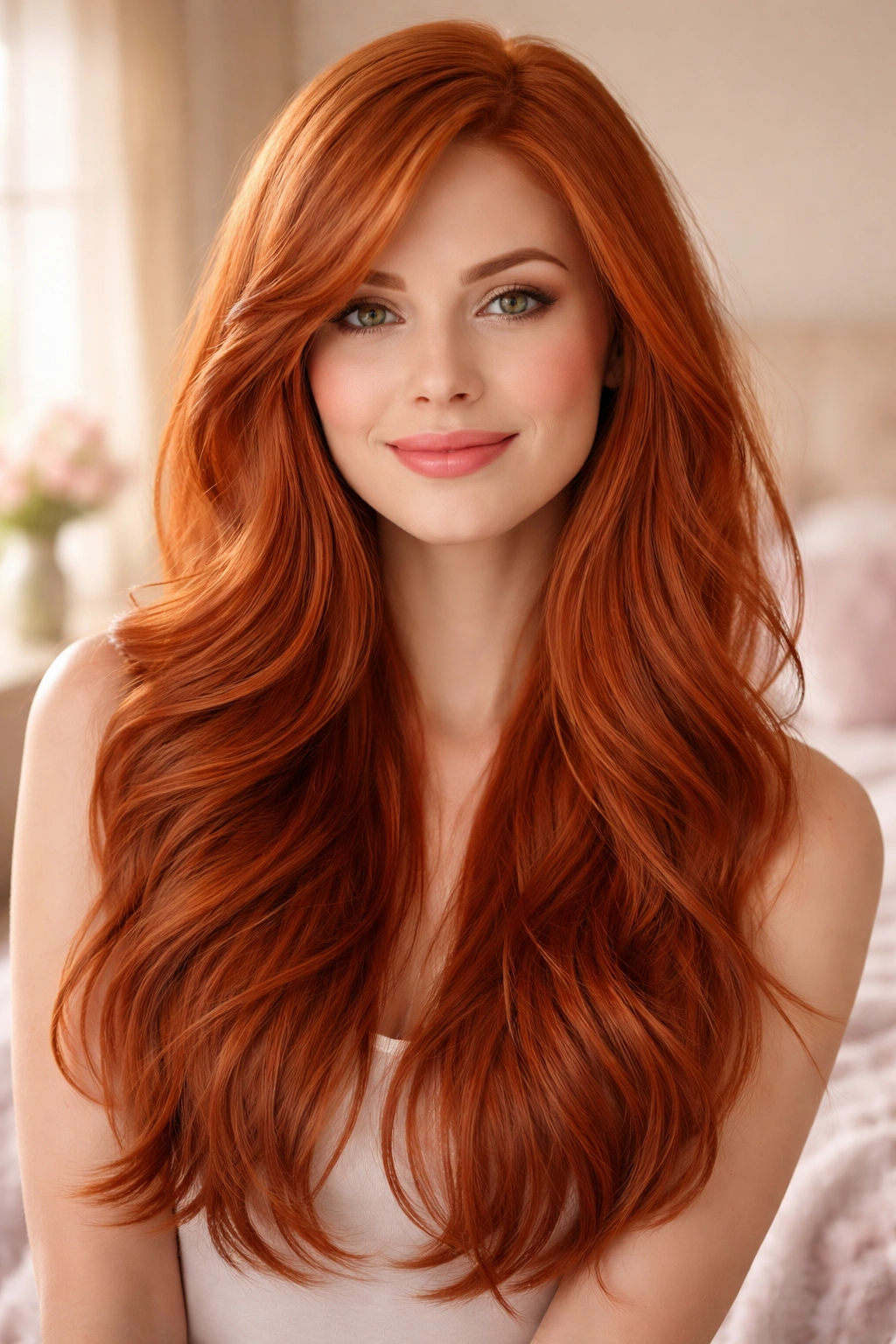
Strawberry red needs a lighter touch. The color already has brightness built in, so the cut should stay soft and airy rather than stacked or sharp.
Long, gentle layers keep the shade from looking too busy. On wavy hair, that means the waves can break up the red into little shifts of tone instead of one flat sheet. The effect is subtle from a distance and prettier up close. You notice the movement first, then the shade.
This cut is a good match for finer hair that needs help looking full without being stripped down. Keep the layers longer than you might think. Around 2 to 3 inches of difference between the shortest face frame and the longest back section is often enough. Go too short and strawberry red can start to look wispy.
A soft side part helps too. It gives the front a little lift and keeps the color from looking too even. I also like this cut with loose bend styling rather than tight curls. Tight curls make strawberry red look younger and a bit too bouncy. Loose waves feel more grown-up.
8. Mahogany Mermaid Layers
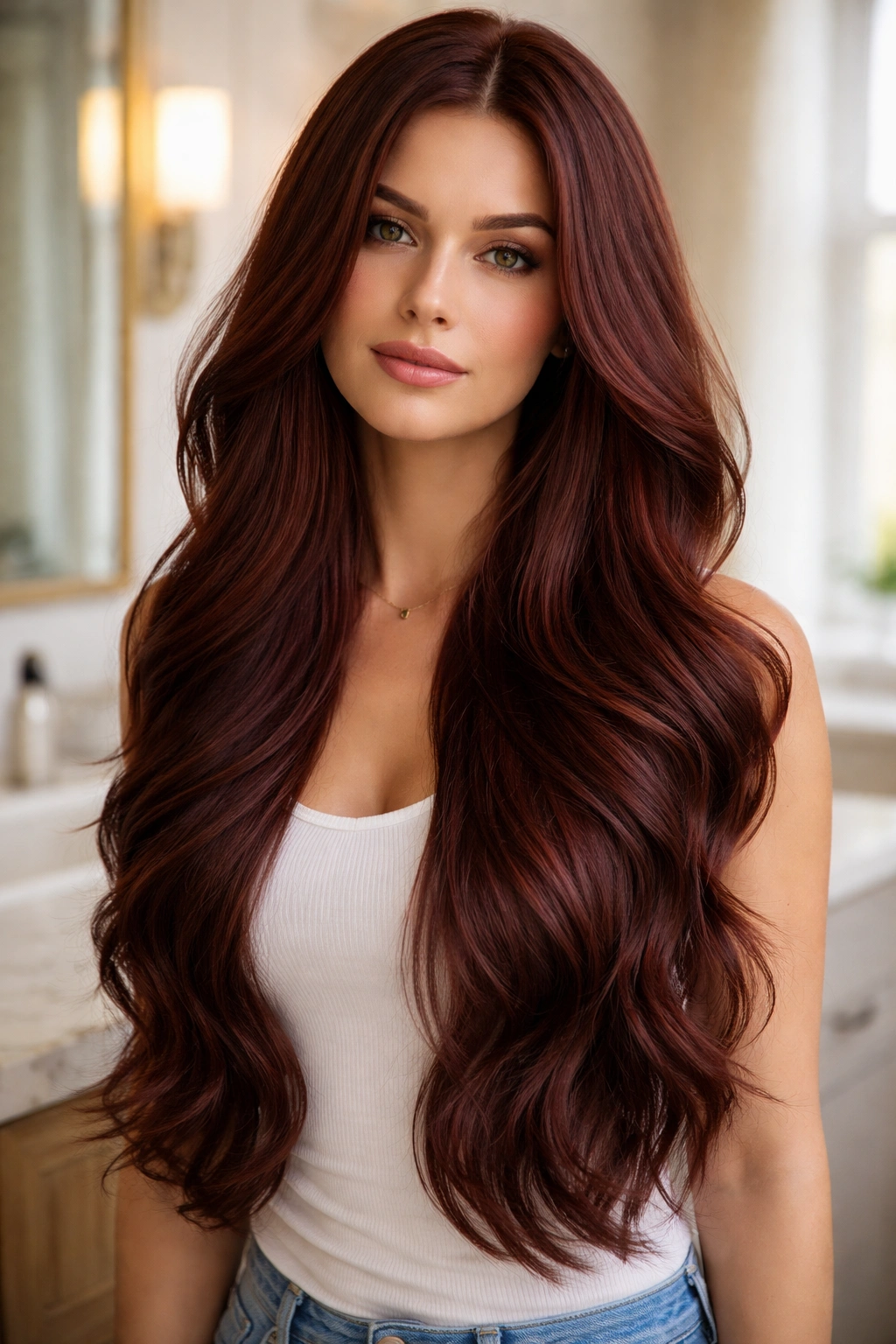
Mahogany mermaid layers are for long hair that already has presence. The shade is deep, rich, and a little moody, and the cut needs to respect that. Too many short pieces would steal the weight and ruin the whole point.
A Good Mermaid Shape
The best mermaid layers start low. Think chest level or below, where they can keep the length intact but still stop the ends from dragging the face down. On long wavy hair, this shape creates a slow ripple from top to bottom. Nothing feels rushed.
If your hair is thick, ask for internal weight removal rather than aggressive visible layering. That keeps the outline full. If your hair is medium, a little more movement around the face helps prevent the cut from sitting too flat at the sides. Mahogany red works nicely with both because the depth of the color makes the layers look more expensive and less obvious.
Styling Note
Use a wide-tooth comb after conditioner, not a brush. Mermaid layers can break apart fast when they’re pulled through too hard while wet. Once dry, a medium barrel iron or a flexi-rod set can give the waves a long, loose bend that suits the cut.
This one looks best when the hair feels dense, glossy, and heavy in the hand. That heaviness is not a problem here. It’s the whole mood.
9. Rust Red Razored Layers
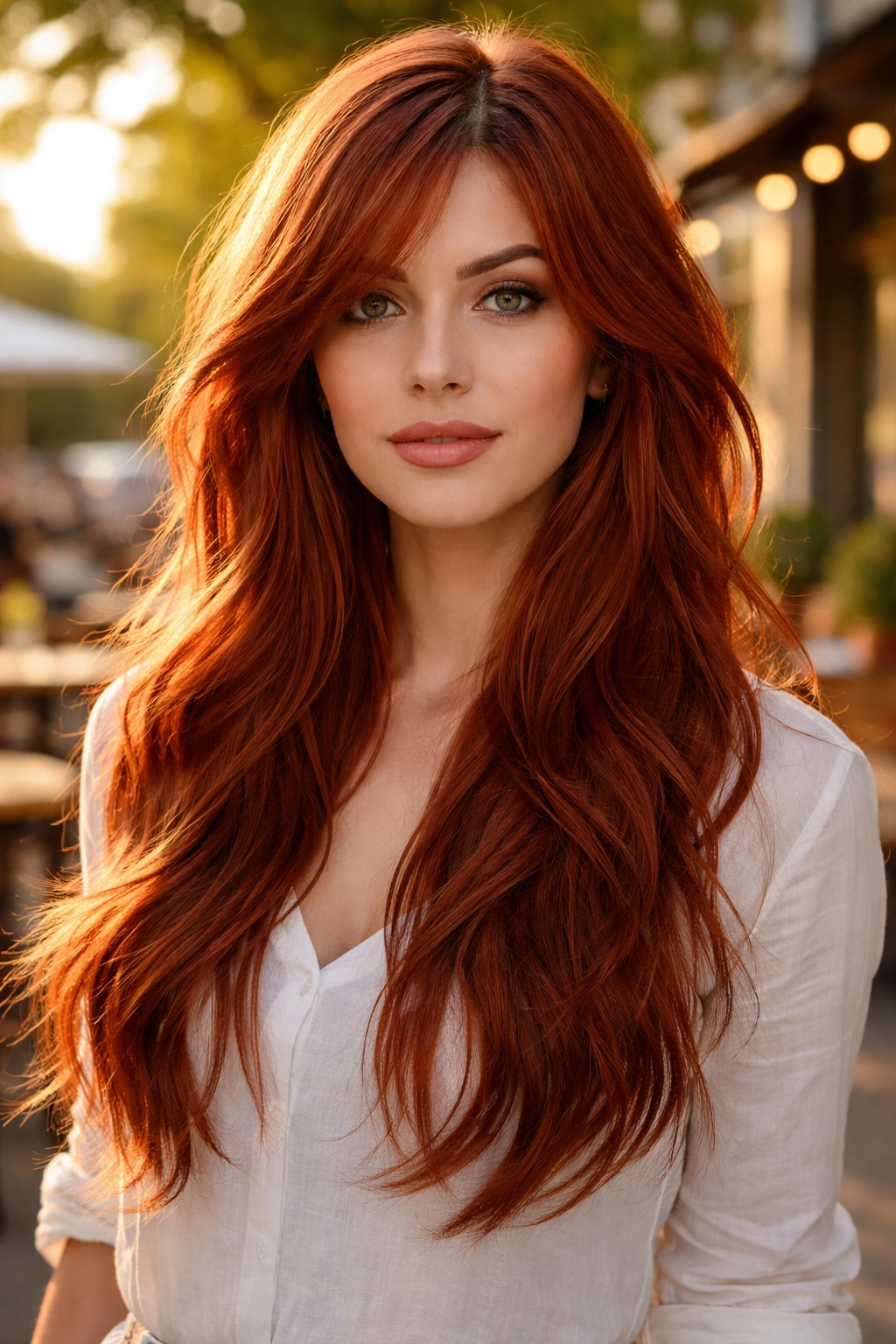
Can razor cutting work on long wavy red hair? Yes, but only when it’s used with a light hand. A razor can make thick waves move better, yet it can also wreck dry ends if the stylist goes too far.
Rust red is a strong match for razored layers because the color already has texture in it. The cut just needs to echo that texture. A few razored sections through the mid-lengths can remove weight and help the waves spread out instead of stacking on top of each other. That’s useful on coarse hair or hair that wants to feel too wide at the sides.
The trick is restraint. Keep the ends slightly softer, and avoid shaving too much off the lower half. If the bottom gets too thin, rust red starts to look scraggly fast, especially in bright light. You want movement, not fuzz.
This style usually looks best with a scrunched finish and a little air-dried texture. Straightening it takes away the point. A diffuser works, but keep the heat low and the airflow gentle. Too much heat can puff the razored pieces in the worst way.
10. Scarlet Long Layers with Fringe
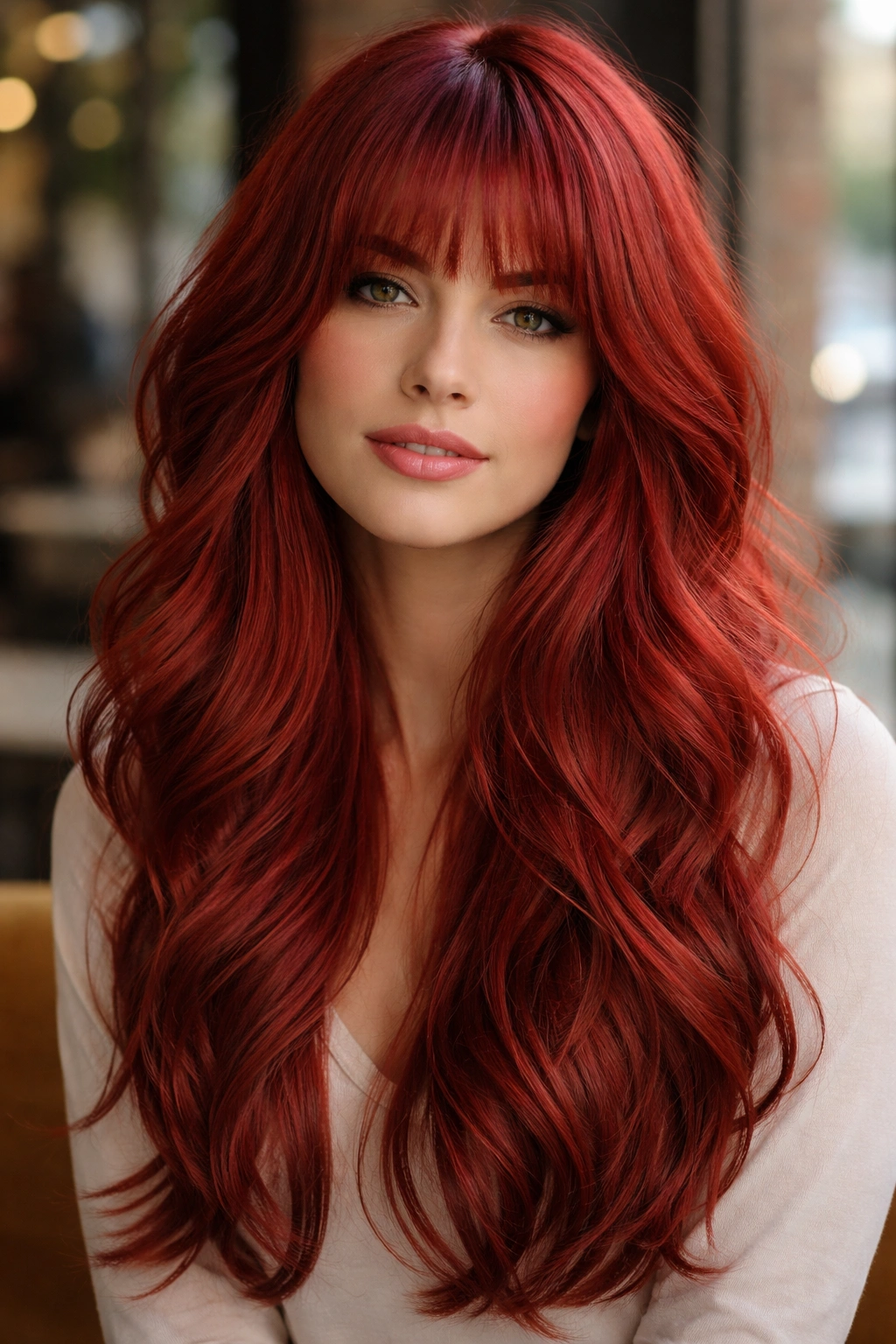
A full fringe changes everything. Put it with scarlet red and long layers, and the whole cut shifts from soft to sharp in one move.
That’s why it works. Scarlet is already bold, so the fringe gives the style a clean anchor at the front while the long waves keep the rest of it from looking severe. The layers should begin below the fringe line, not right at it, or the shape can get busy around the face. Clean separation is the goal.
If your forehead is wider or you like a little structure, this is a strong option. The fringe brings attention up, while the long red layers fall around the shoulders and chest. Wavy hair helps a lot because the fringe does not have to lie flat and perfect. A bit of texture makes it feel softer.
I’d keep the fringe slightly piecey rather than thick and blocky. That way, when the hair grows out, it blends more easily into the front layers. A heavy straight fringe in scarlet red can look fantastic, but it needs more upkeep than most people want.
The rest of the hair should stay full. Scarlet needs that weight so the color doesn’t feel too brittle.
11. Rose-Gold Layered Waves
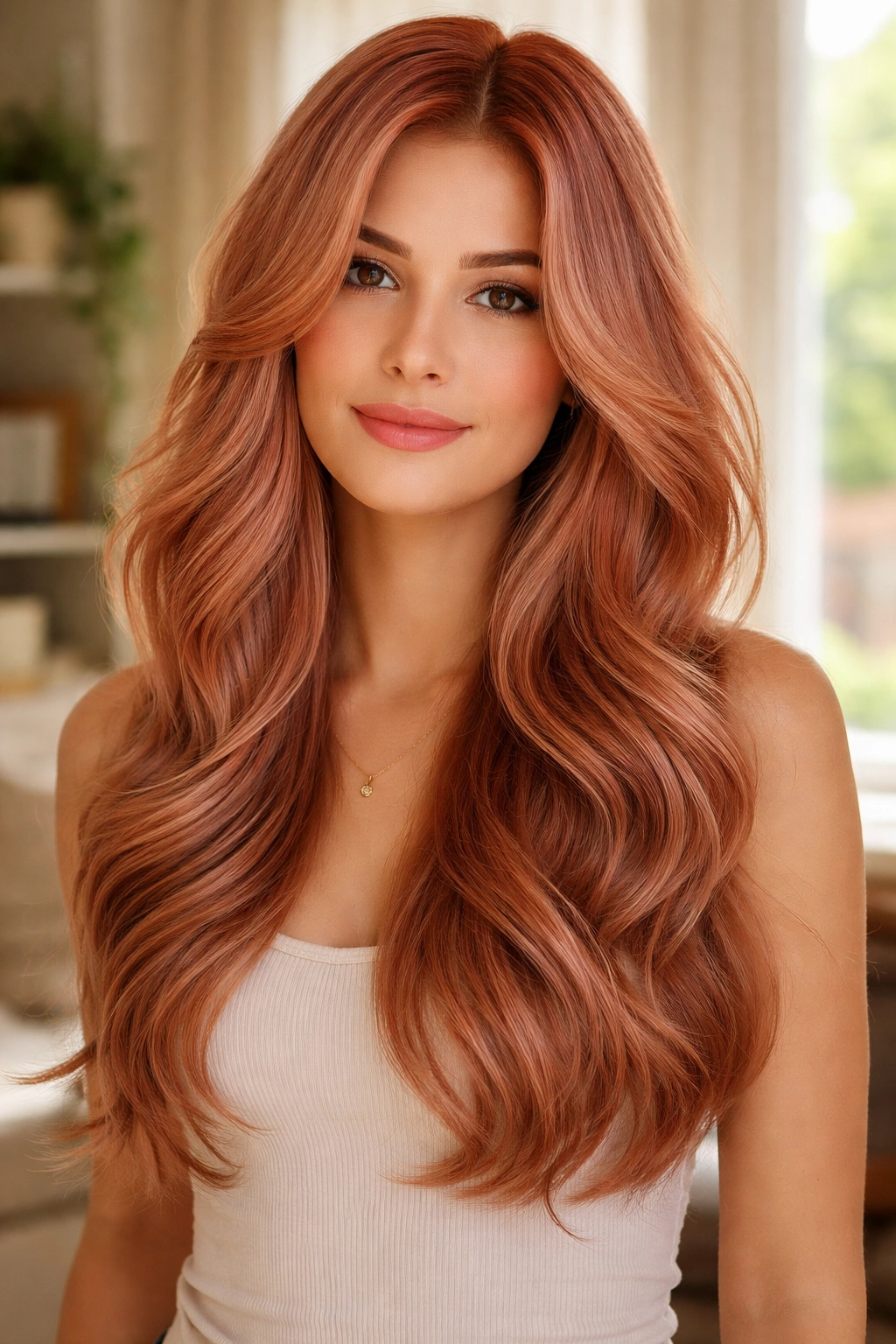
Rose-gold red is for someone who wants warmth without the louder copper edge. The cut should support that softness, which means long, floating layers and a very light hand around the face.
I once saw this shape on hair that was barely styled at all, and that was the point. The waves sat loose, the layers moved just enough, and the color did the rest. Rose-gold tones can look flat if the cut is too blunt. They need air between the sections.
What to Ask For
- Long layers that start below the cheekbone.
- Soft face-framing pieces, not a steep front angle.
- Minimal thinning near the ends.
- A rounded silhouette at the back rather than a hard V.
This cut is a good fit for people who wear their hair down most of the time and want it to look soft from every angle. It’s less about drama and more about glide. That may sound understated, but the result is still memorable because the color and shape work together instead of competing.
Finish it with a light gloss or shine spray. Not a heavy one. Rose-gold red can get greasy-looking fast if you pile too much product on top.
12. Dark Auburn V-Cut
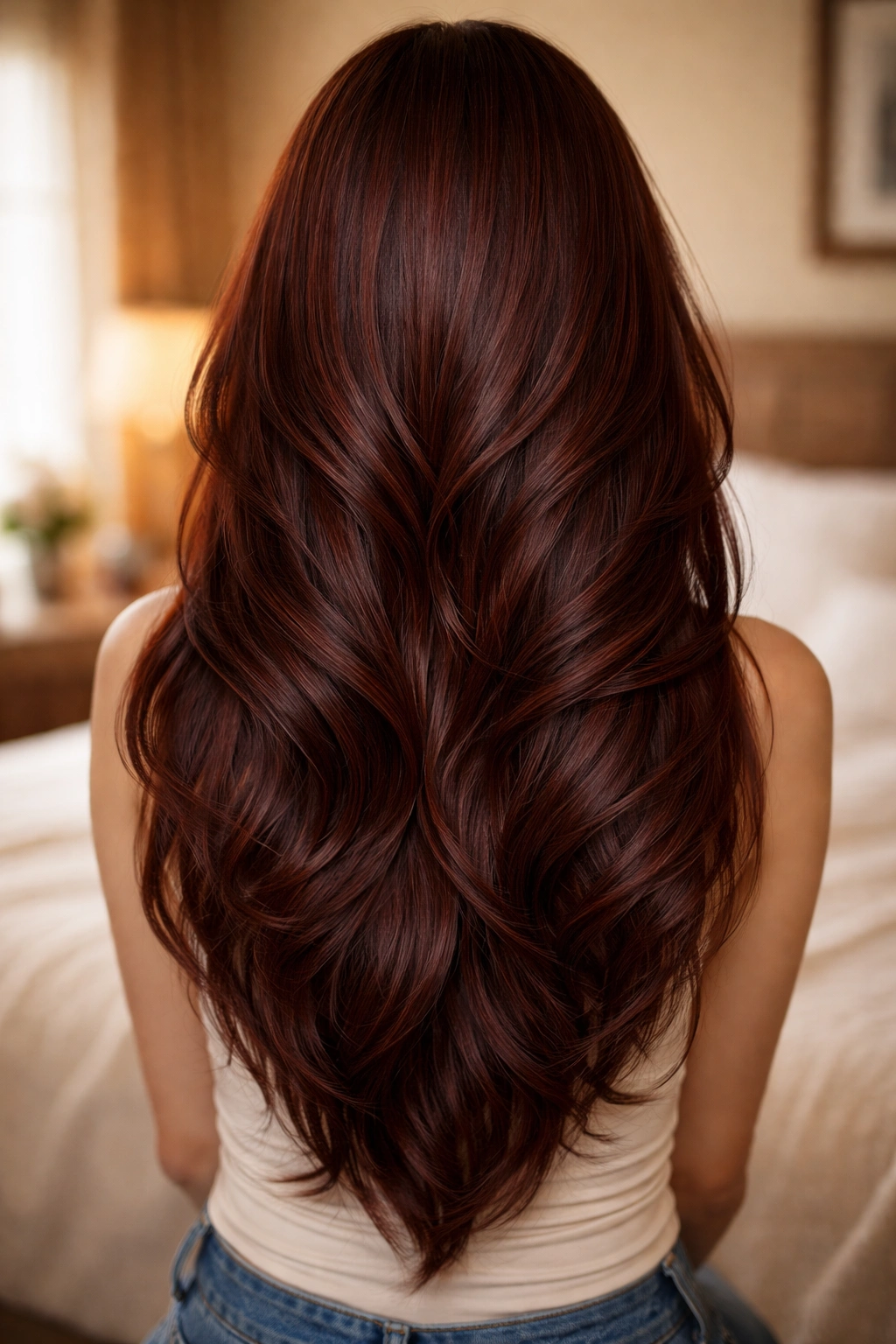
A V-cut gives long wavy hair a point at the back, which sounds simple until you see how much movement it creates. Compared with a U-cut, the V shape feels sharper and a little more deliberate.
Dark auburn suits that shape because the shade is deep enough to hold the outline. The point at the back stays visible even when the hair is loose over the shoulders. Long layers through the sides keep the shape from feeling too stiff, and the waves help the point soften as it moves.
This cut is especially good if you wear your hair in low ponytails or half-up styles. The point still peeks through, and the layers around the face keep the front from looking heavy. Thick hair benefits the most here. The V removes some bulk from the back without chopping away the length you worked to keep.
If your hair is fine, keep the point subtle. A dramatic V can make the ends look sparse. The shape should feel like a clean taper, not a triangle drawn with a ruler. That little difference changes everything.
13. Fire-Engine Red Invisible Layers
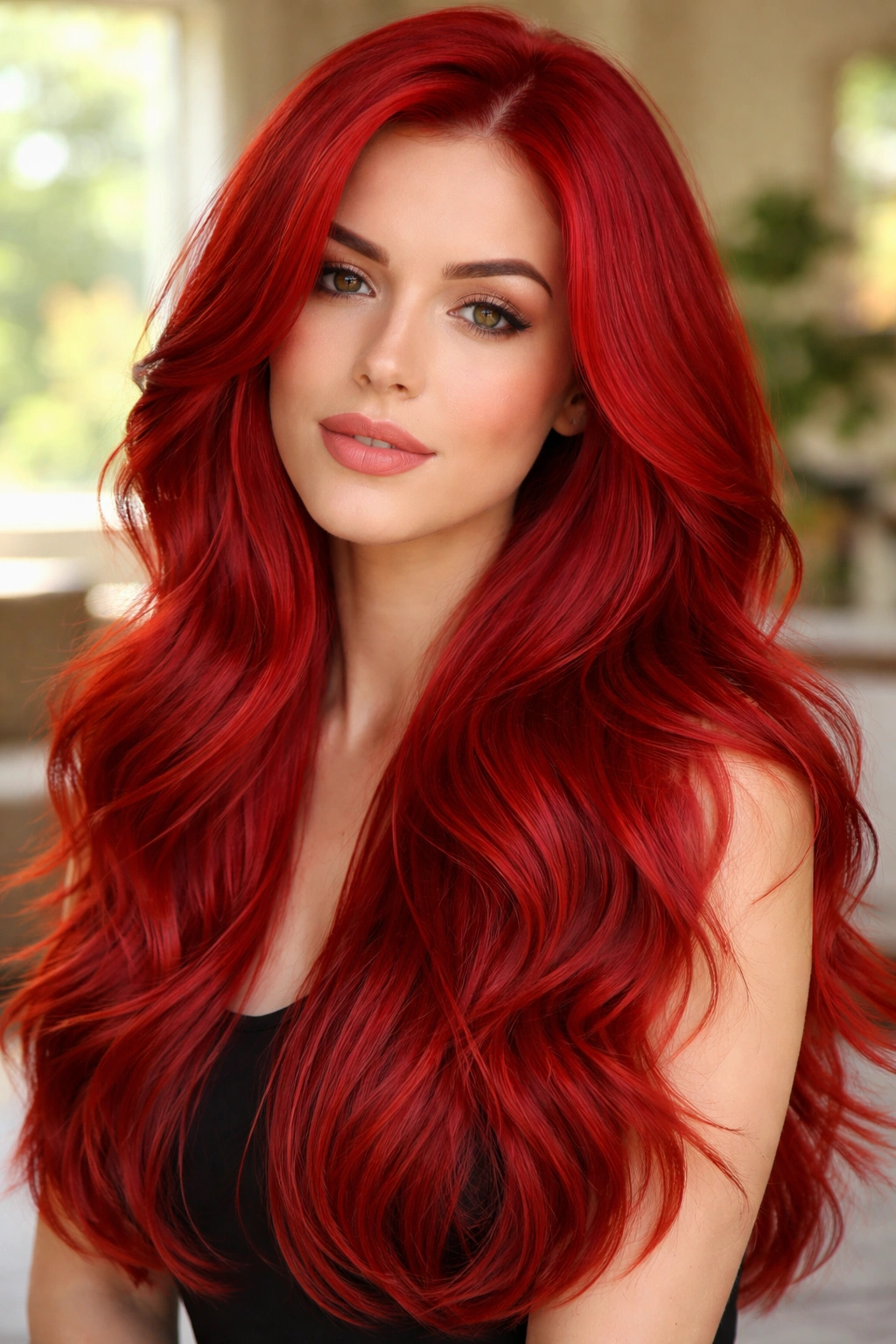
Fire-engine red is loud enough that the cut should almost disappear. Invisible layers do exactly that. They remove weight inside the shape while leaving the outside line clean, so the color and wave pattern stay in charge.
The Feel of It
You can usually tell this cut is working by the way the hair swings when you move. The ends still look thick, but the middle sections separate instead of clumping together. On long wavy hair, that swing makes the red feel sharper and more alive.
Invisible layers are a smart choice when you do not want to see obvious steps. They’re also useful if your hair is dense and heavy, because the weight comes out from the inside rather than from the perimeter. That keeps the silhouette smooth. Fire-engine red likes that smoothness. It can look ragged if the cut is too choppy.
How to Style It
Use a smoothing cream from mid-length to ends, then diffuse on low or air-dry with a little scrunching. If you want a bendier finish, wrap large sections around a 1.5-inch iron and brush them out once cool. That gives the layers a floating effect without showing the structure too clearly.
This is a good cut for someone who wants red that looks clean, bold, and expensive without shouting about the haircut itself.
14. Brick Red Boho Layers
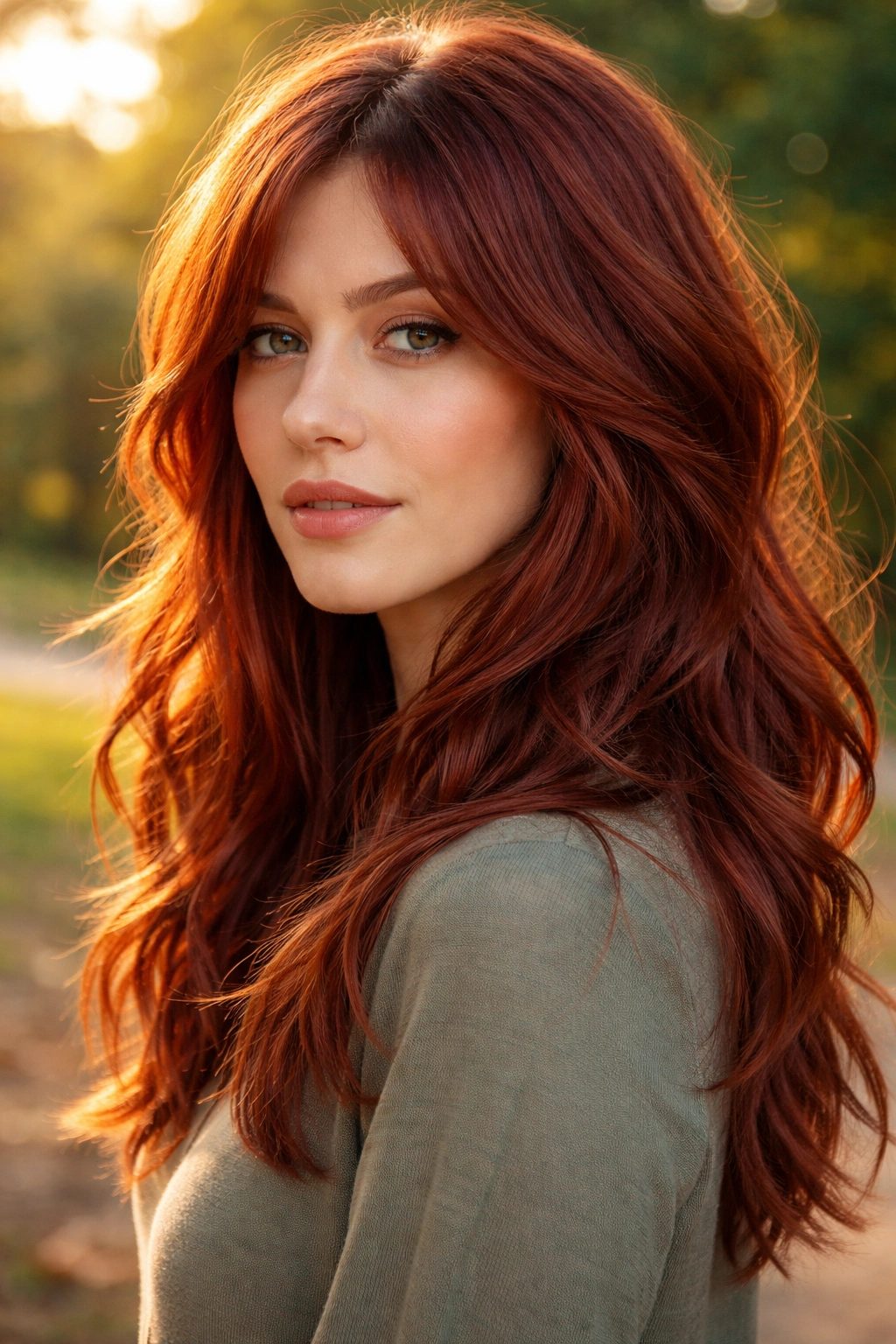
Brick red has an earthy side, and boho layers lean right into that. The cut works because it looks relaxed, not forced. You get movement, but you also get a shape that feels soft around the shoulders.
Loose layers around the face are a big part of the look. They should fall in a slightly undone way, almost like they were air-dried after a long day and decided to behave. Wavy hair helps a lot here. The waves break up the brick tone and make the red look deeper in some places and lighter in others.
- Ask for layers that stay long through the back.
- Keep the front pieces soft and slightly irregular.
- Use a matte wave spray if your hair gets too shiny and heavy.
- Let a few ends escape around the face. That part helps.
Brick red boho layers are good if you like hair that feels lived in. Not sloppy. Just relaxed. The shape does not need a crisp blowout to make sense. In fact, a little frizz can make it better, especially if your hair has natural texture.
15. Cherry Cola Layers
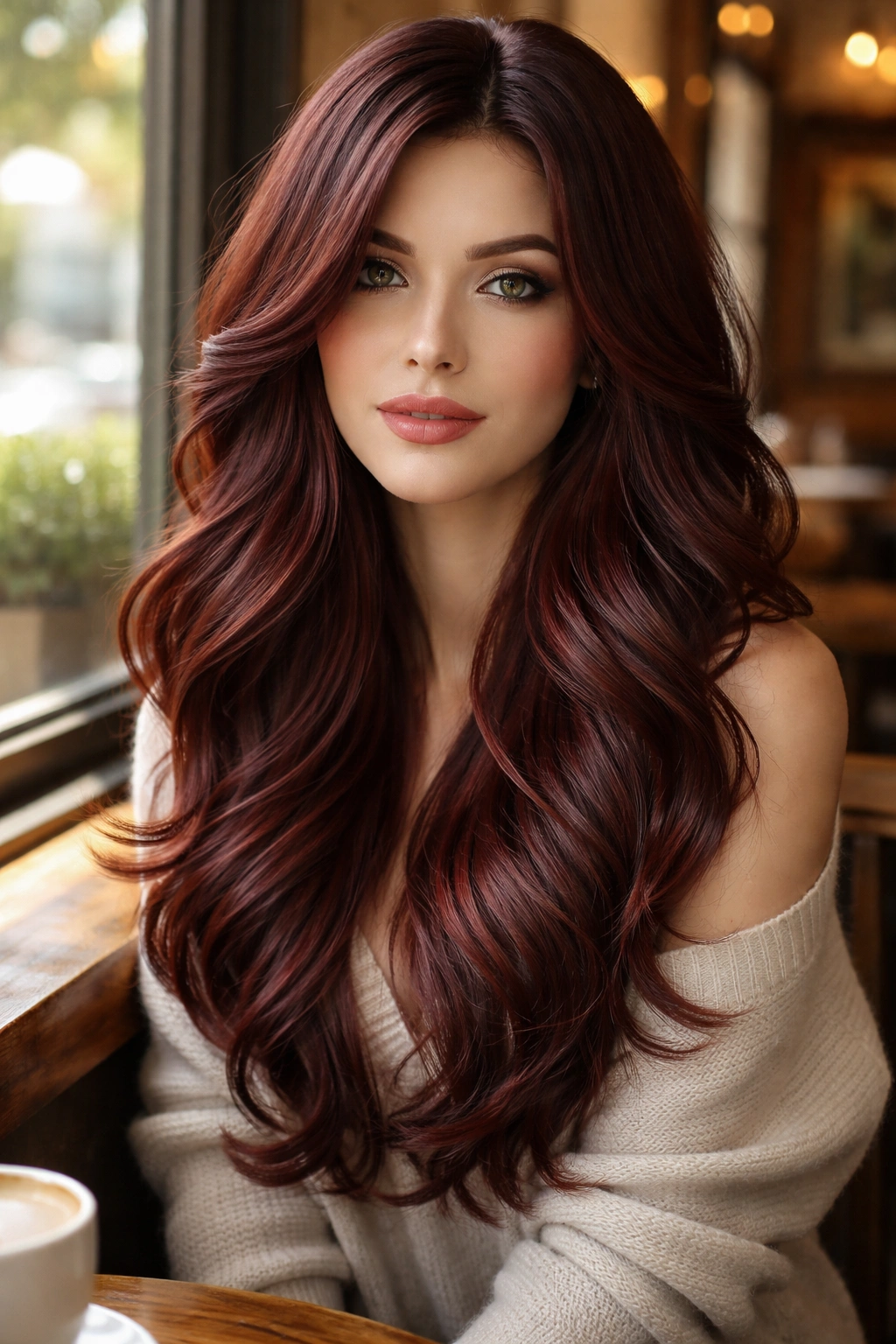
Why does cherry cola hair look so rich with long layers? Because the color has dark depth at the base and red showing through the wave pattern, so the cut needs to keep the surface from going flat.
The best cherry cola layers are long and softly stepped. You want the front to open a little around the cheekbones, but the back should stay full. That keeps the color looking deep instead of patchy. On wavy hair, the bend helps the red peek through in strips rather than sitting in one flat block.
This is one of those shades that can handle a center part or a soft side part, but the cut needs to be clean either way. I’d avoid very short crown layers unless your hair is dense. Too much lift can make the top feel too airy for such a dark shade. Cherry cola looks better with a little weight.
A gloss treatment helps a lot here. The shine matters because the red and brown tones need a smooth surface to read well. Without that, the color can start to look muddy. With it, the whole style feels richer and more deliberate.
16. Mulled Wine Soft Layers
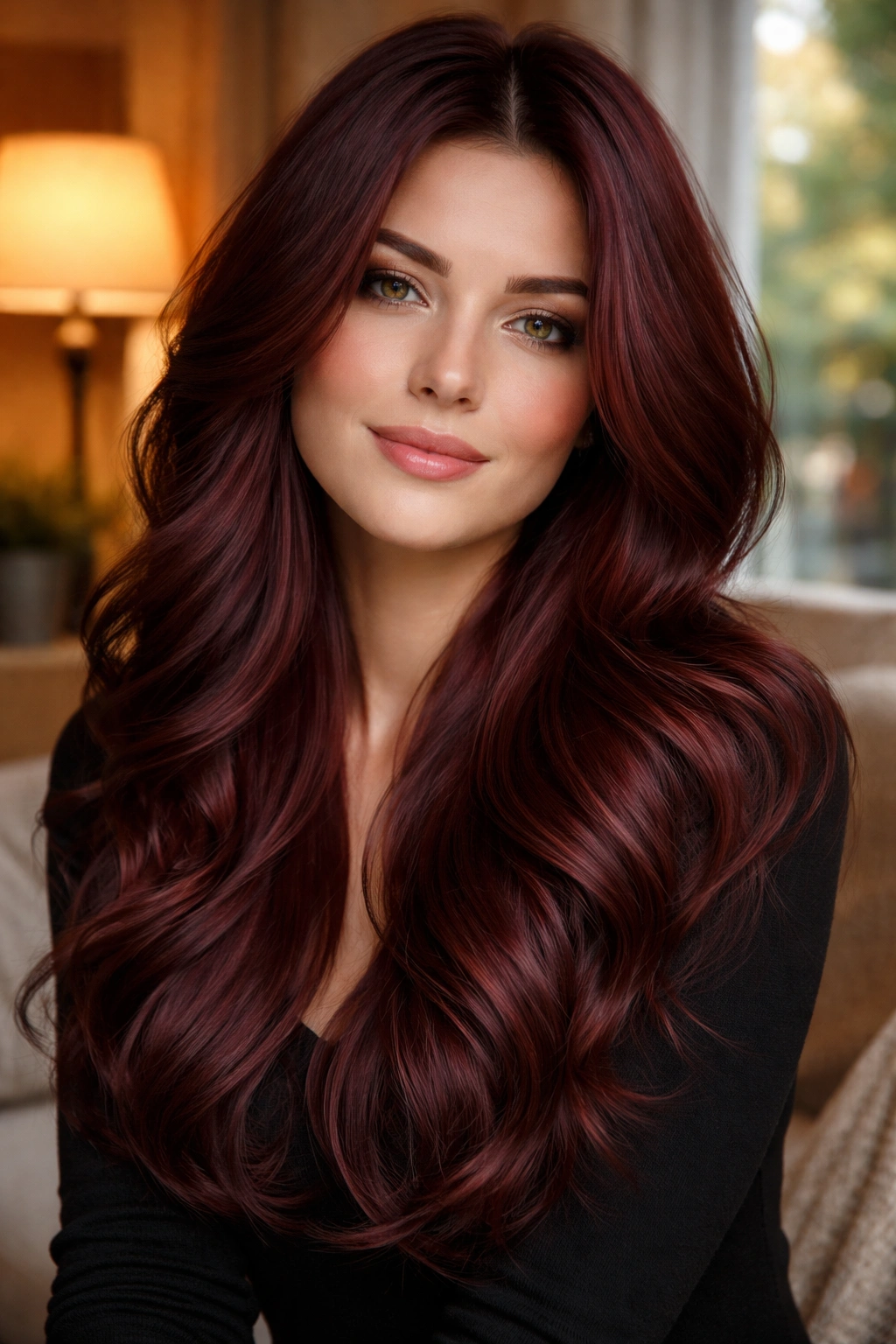
Mulled wine red is deep, warm, and a little moody. Soft layers keep it from feeling heavy, which is important because darker red shades can swallow movement if the cut is too blunt.
The shape should flow from the front into the back without sharp jumps. You want the waves to fold over each other in a slow way. That gives the hair a velvety feel. On long wavy hair, the effect is especially good because the waves already do some of the work. The cut just needs to guide them.
This style suits thicker hair, but it does not exclude finer hair. Fine hair just needs longer layers and less thinning. Keep the ends solid. A stringy finish is the enemy here. The color is too rich to be paired with see-through tips.
A middle part often works well with mulled wine layers because it keeps the shape centered and calm. A side part can make the front more dramatic. Either way, the cut should look like it was meant to fall this way, even if you only spent ten minutes on it.
17. Copper Balayage Layered Cut
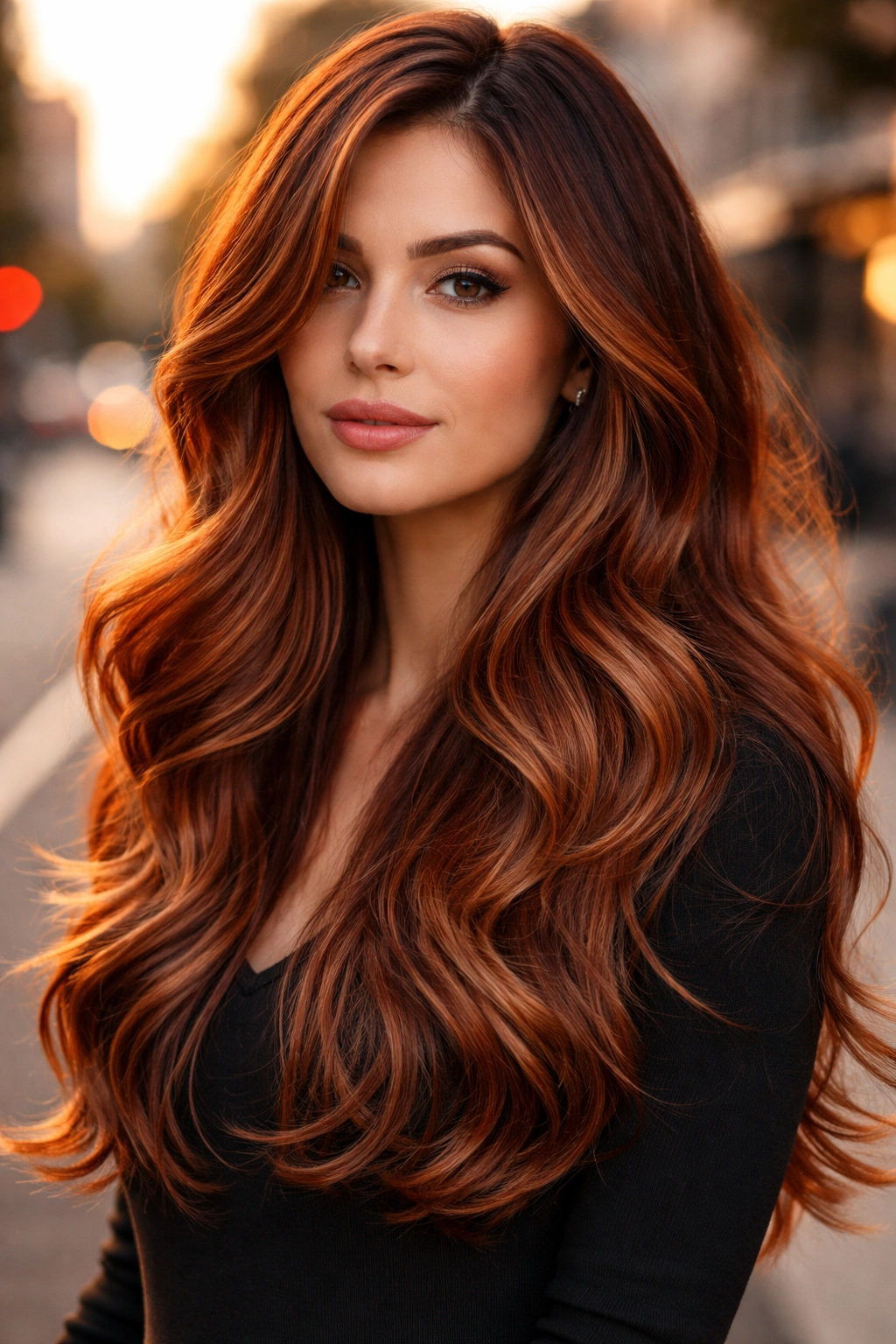
Copper balayage and layered hair are a strong pair because the color placement follows the shape of the cut. Highlights sit where the waves bend, which means the movement shows up before the styling product does.
Where the Color Should Sit
The lightest copper pieces usually work best around the face, through the top layer, and along the ends of the longest sections. That placement keeps the red from looking one-note. It also gives the cut more motion when the hair is worn loose.
The Cut Itself
Ask for long layers that keep the outline full. If the layers are too short, the balayage can look broken up in a bad way. You want the lighter copper ribbons to live inside a shape that still feels thick. This is a good place for subtle face framing too, especially if your waves start near the ends and not at the root.
Styling Tip
Use a large-barrel iron and alternate the direction of each wave. That breaks up any stripey look and makes the balayage blend better. A little texture spray at the mid-lengths helps the color show without making the hair stiff.
Copper balayage is one of the most forgiving ways to wear red. It grows out well, and the layers keep the color from sitting still.
18. Sunkissed Red Long Layers
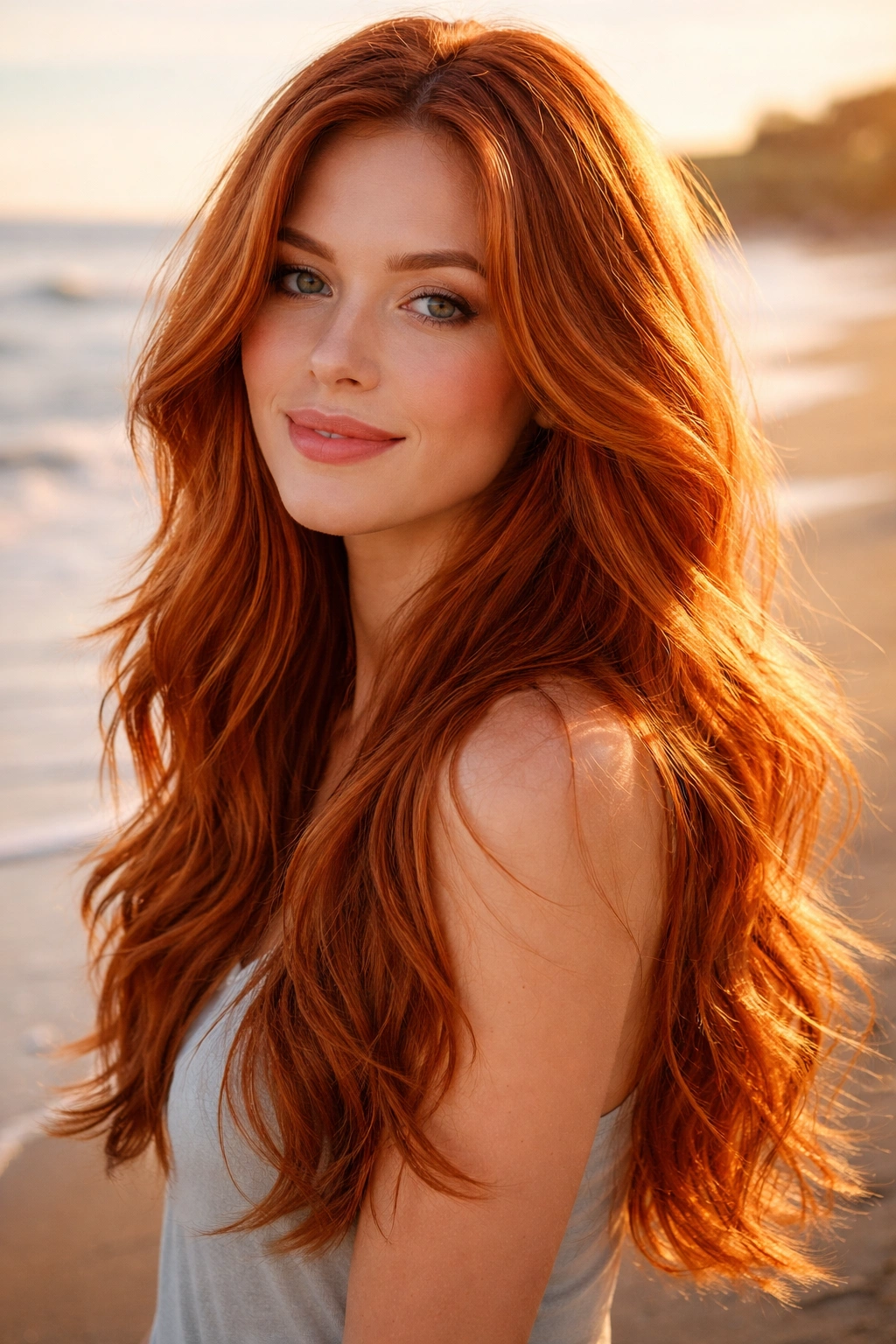
Sunkissed red is the kind of shade that looks like it belongs outdoors, but the cut still needs to do a job. Long layers make the color feel lighter and more spread out, which keeps it from looking heavy or painted on.
Imagine hair that has enough length to swing at the shoulders but enough shaping to keep the waves from collapsing. That is the point here. The layers should start low and stay soft. You want sunlight to move across the waves, not stop at hard lines.
- Keep the shortest pieces near the chin or collarbone.
- Leave the lower half full so the shape stays thick.
- Use a leave-in conditioner that does not weigh the hair down.
- Refresh with water and a pea-sized amount of curl cream on day two.
This cut is a good one for people who like red hair that reads warm rather than fiery. The shade does not have to shout. It can just glow a little. That low-key feel is the charm.
Sunkissed red also grows out kindly. The layers stay usable for a long time, which means fewer awkward weeks between cuts.
19. True Red Long Cascading Layers
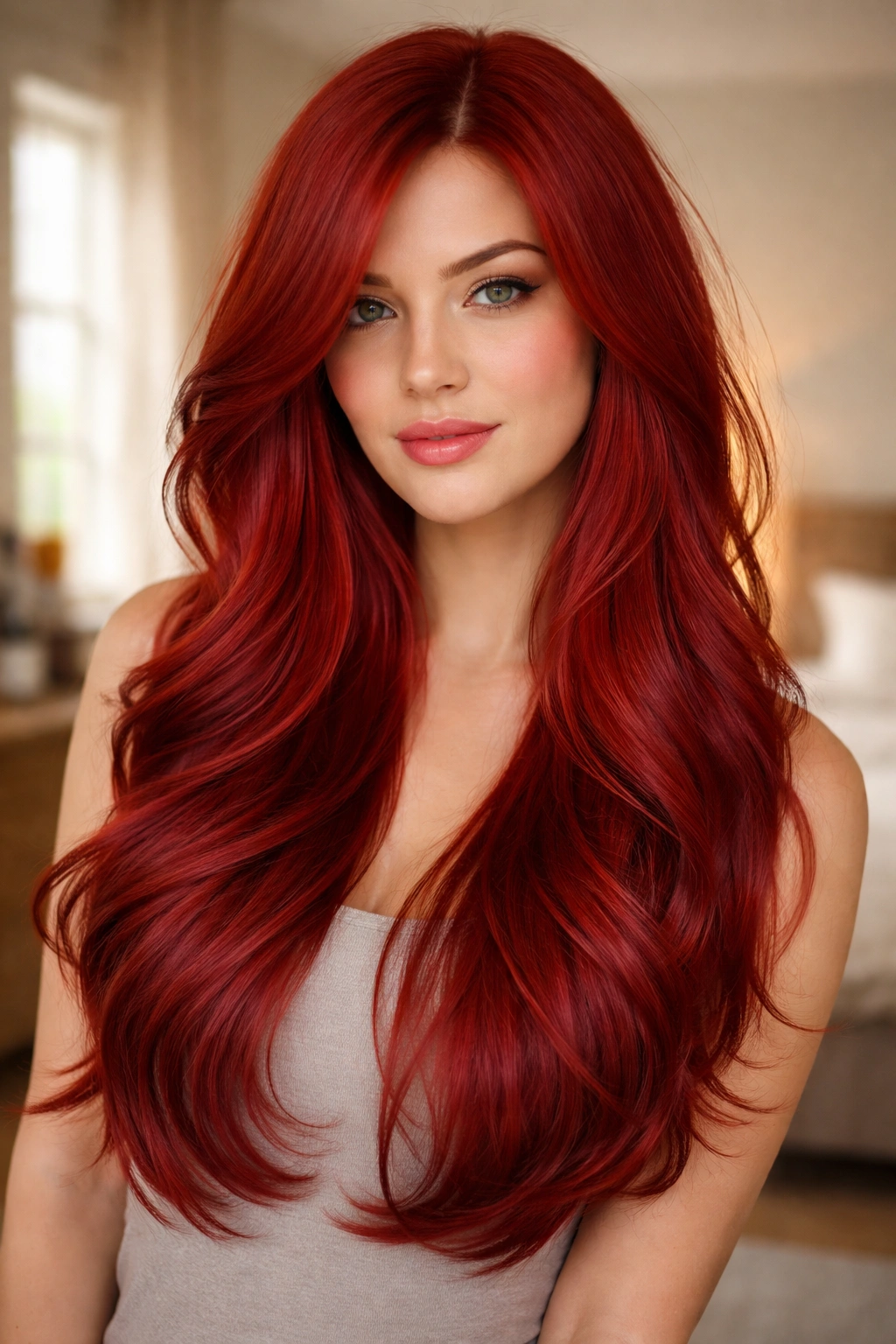
True red is not shy, so the cut should stay clean. Long cascading layers help the color read as a smooth sheet of red with motion inside it, not as a random mix of pieces.
Compared with softer reds, true red tends to look strongest when the outline is clear. That means the perimeter should stay full and the layers should fall in a steady pattern. A very jagged cut can make true red look loud in a messy way. A cascading shape gives it control.
This style works well if your waves are medium to loose. The waves give the red movement, while the layered structure keeps the shape from sinking at the sides. I also like this cut with a deep side part. It creates a strong front curve and lets the red look dramatic without needing a lot of styling.
If you like hair that looks good from across a room, this is one of the safer bets. The color does the first job. The cut does the second. Together, they make a strong silhouette that still feels soft enough to wear every day.
20. Plum Red Wavy Layers
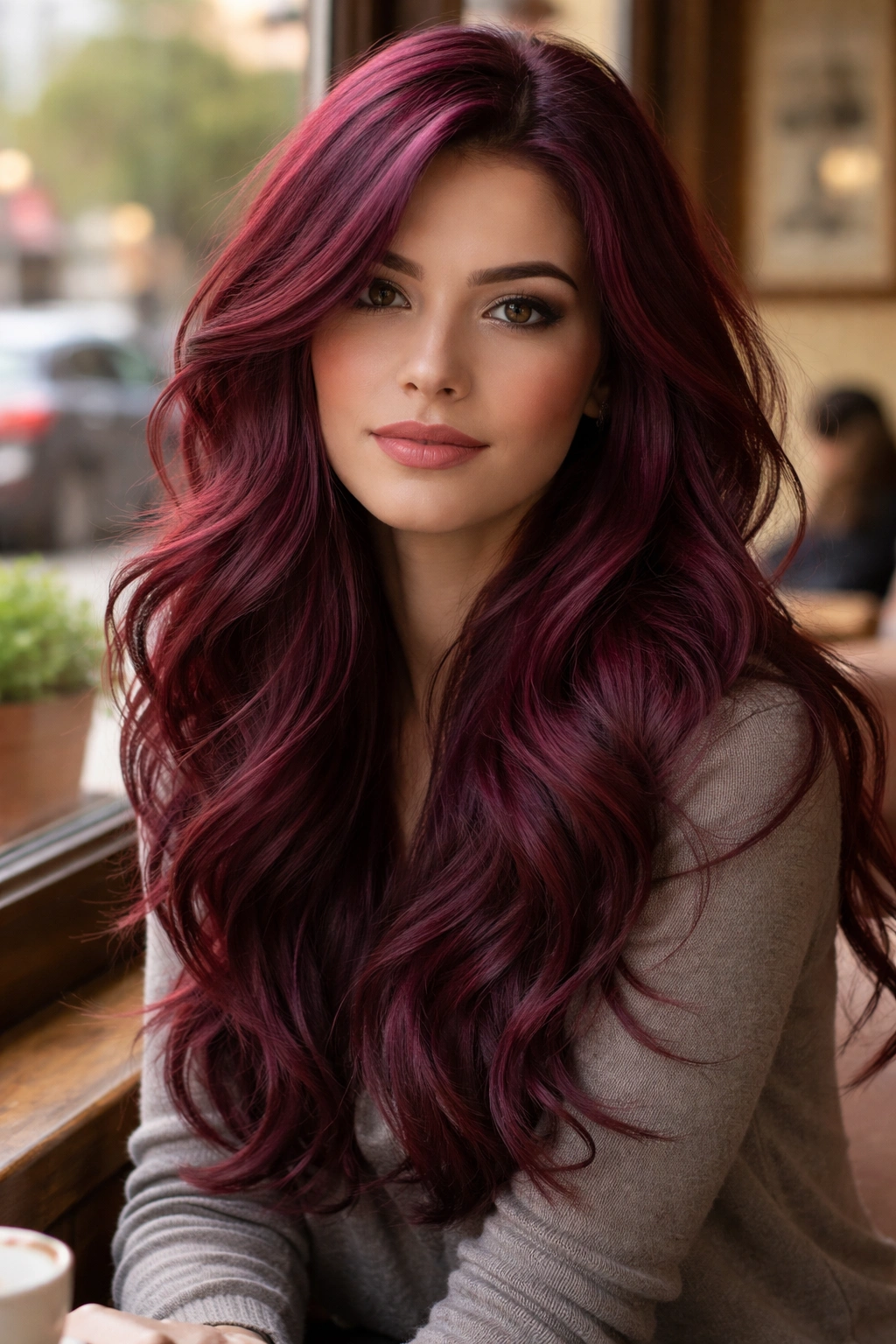
Plum red has a cooler edge, and long wavy layers help that shade keep its shape. The color can look flat if the cut is too uniform, so the hair needs movement through the mid-lengths and a little softness at the ends.
This is one of those cuts that looks better when the waves are not too perfect. Slightly uneven bends make the plum tones shift from violet to red in the light. That shift is what gives the hair life. If every wave is the same size, the color can lose some of its depth.
A plum red layered cut works well on dense hair because it can carry weight without puffing out. On finer hair, keep the layers longer and avoid over-texturizing. Too much slicing can make the ends look frayed, and plum red is too rich for that.
I like this cut with a simple center part and a soft finish. No heavy styling needed. Let the layers do the movement. The color already brings enough interest.
21. Deep Ginger Long Layers
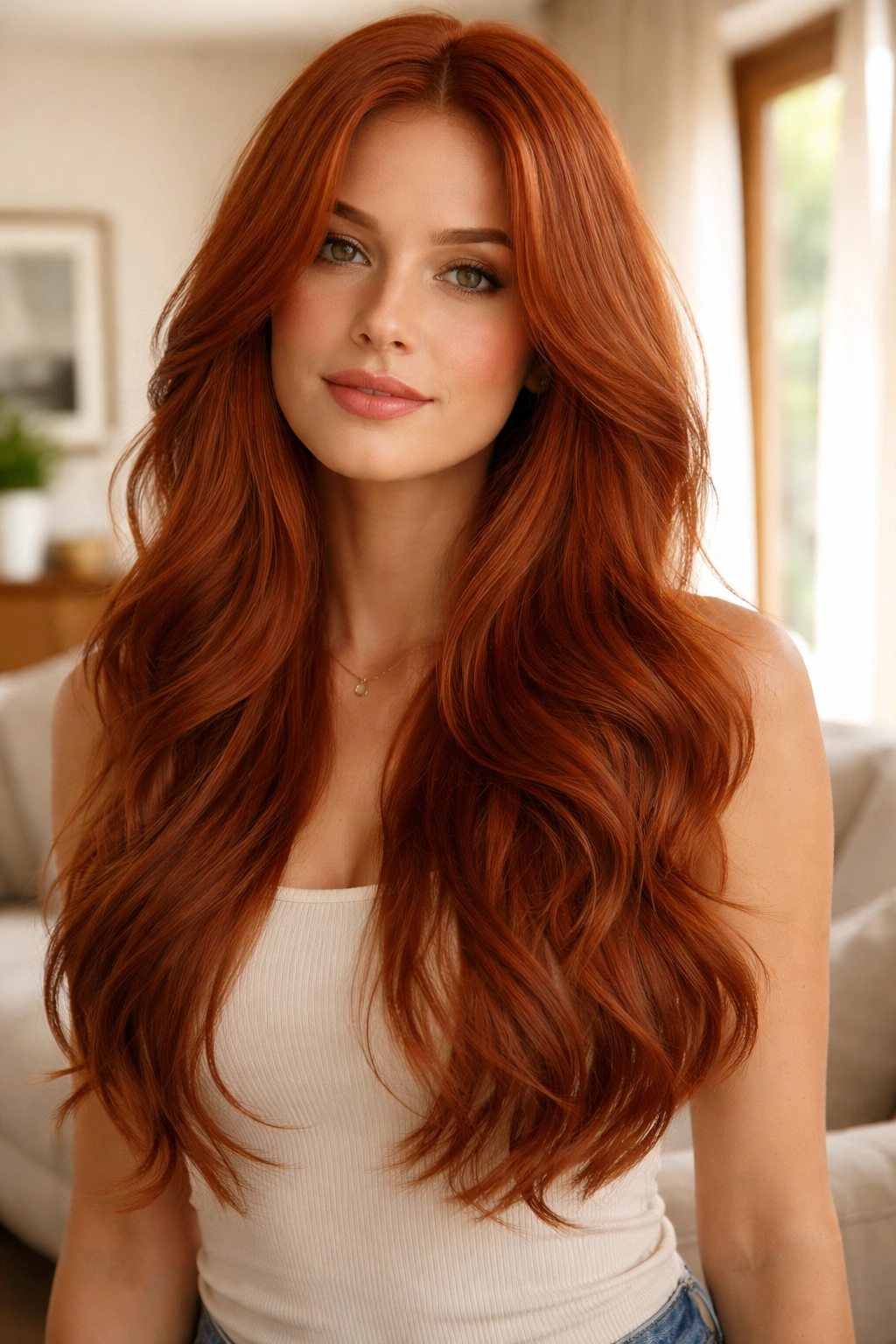
Deep ginger is one of the easiest reds to wear because it sits between copper and auburn. Long layers help it look fluid instead of bulky, which is exactly what wavy hair needs.
The shape should stay gentle. Long face-framing pieces, soft lower layers, and a full edge through the bottom all work together to keep the cut feeling grounded. Deep ginger has enough warmth to stand on its own, so the haircut does not need to be flashy. It just needs to let the waves breathe.
This cut is a good choice if you like to wear your hair down most days and want it to hold its shape with minimal fuss. A quick blow-dry with a round brush can make the front pieces turn slightly inward, but air-dried waves look just as good. The color is forgiving that way.
What I like most here is how balanced it feels. Not too bright. Not too dark. Just enough layering to keep the movement alive.
22. Red Velvet Layered Waves
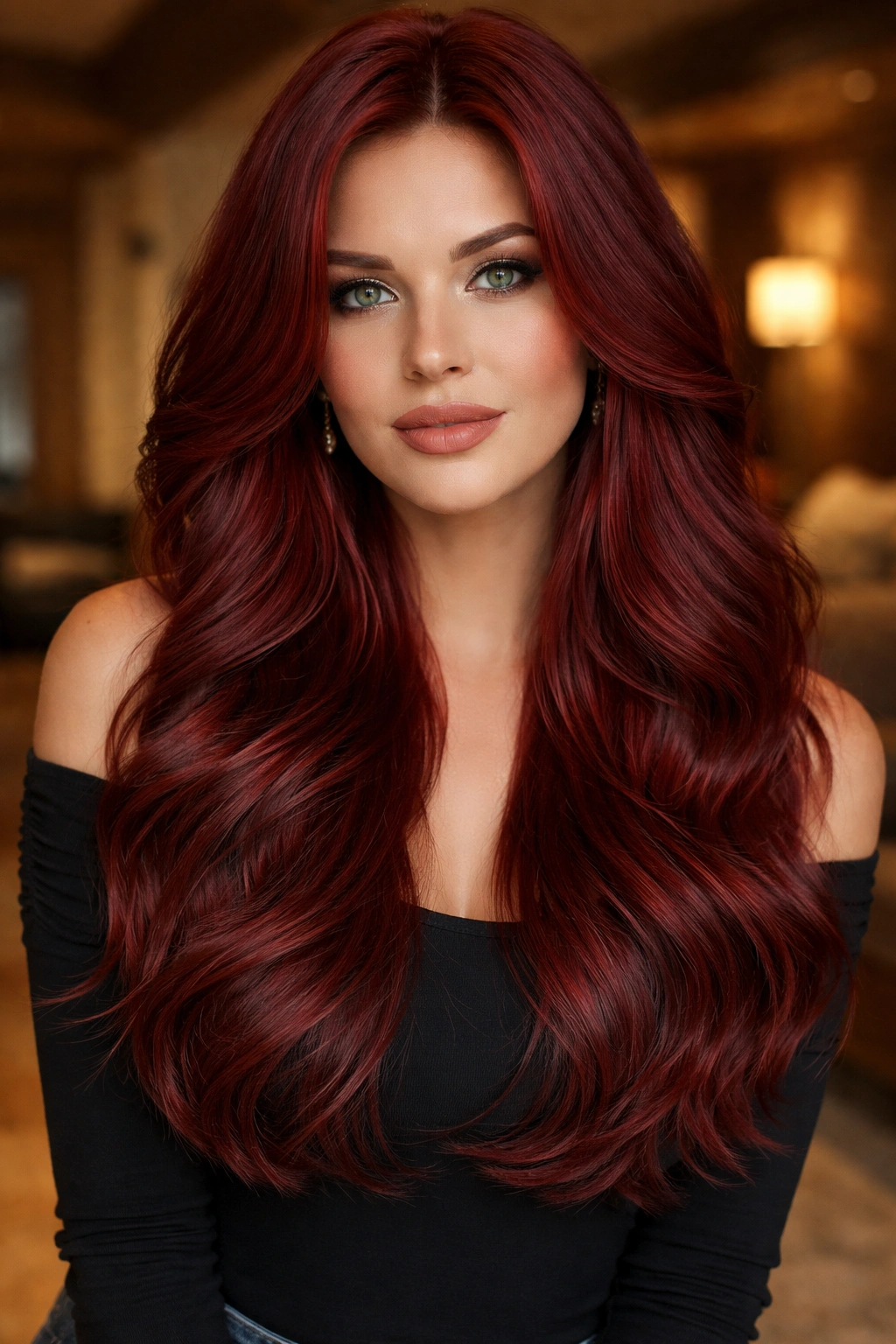
Red velvet is the polished end of the red spectrum. It has depth, shine, and a soft finish that looks especially good on long wavy layers with a clean outline.
The cut should feel luxurious in shape, not in a showy way. A full perimeter keeps the hair looking thick, while gentle layers through the interior stop it from sitting like one heavy block. On wavy hair, that combination lets the color show in folds. The result is smooth, rich, and easy to wear.
This style suits people who want red hair that looks intentional from every angle. The waves should be loose enough to move but not so loose that the cut disappears. A 1.5-inch iron, brushed out after cooling, gives a nice soft wave. A touch of shine serum on the ends can help, but only a small amount. Too much and the hair looks greasy instead of glossy.
Red velvet layered waves are the kind of cut you can wear to work, out to dinner, or to a casual weekend thing without changing a thing. That kind of range is hard to beat.
Final Thoughts
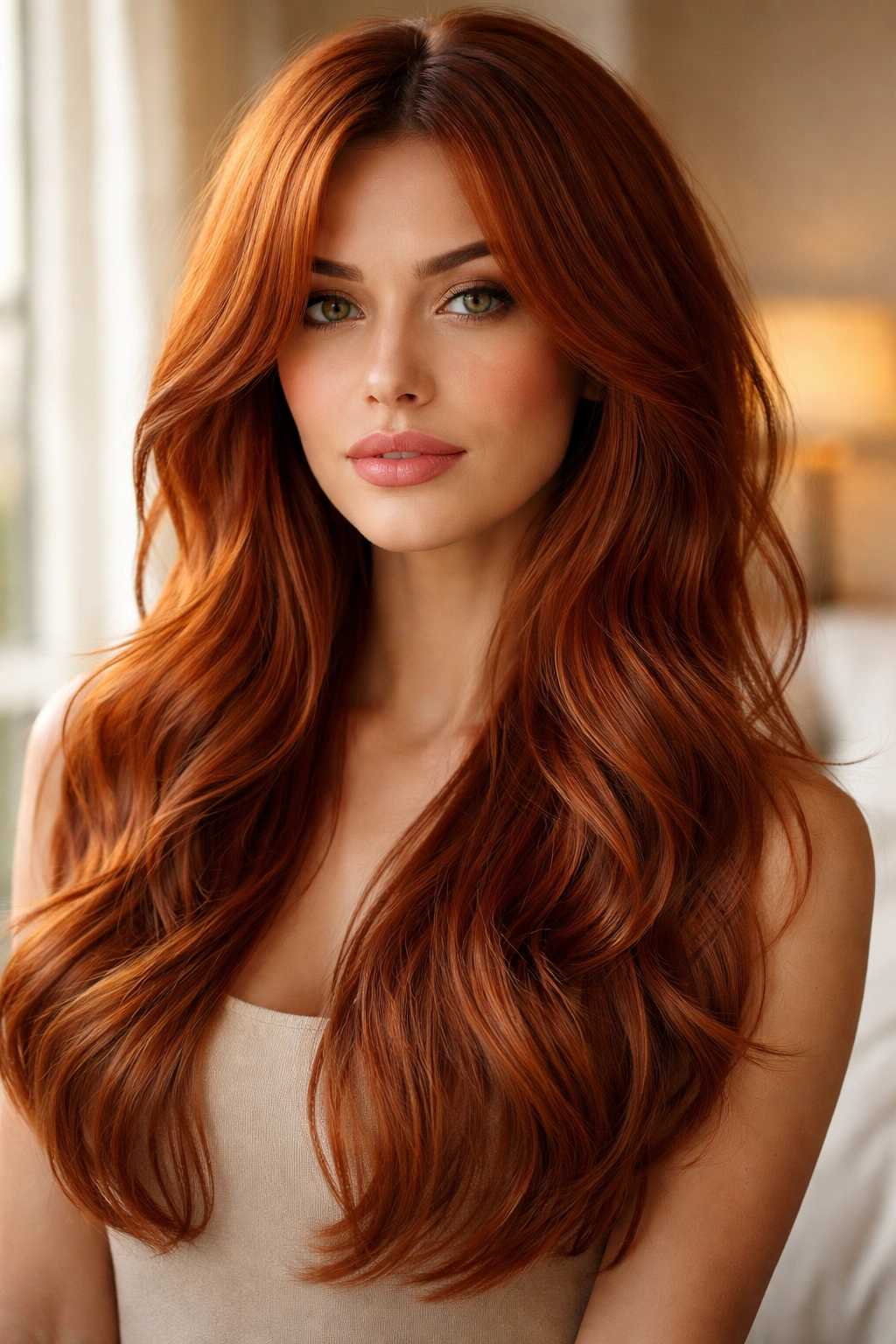
The smartest red layered cut is the one that works with your wave pattern, not against it. Fine hair usually needs longer layers and a fuller bottom edge. Thick hair can handle more shaping inside the cut. That difference matters more than the exact shade name.
Red also needs shine and movement. If the cut is flat, the color looks flatter. If the layers are too short, the ends can start to look thin fast. Keep the shape soft where you want flow, and keep the perimeter strong where you want fullness.
A good red cut does not fight the wave. It gives it somewhere to go.
