



A wavy pixie cut can calm frizz or turn it into a halo.
The best wavy pixie cuts work with the bend in the hair instead of shaving away every ounce of shape. Keep a little weight at the nape, leave enough length on top for the wave to settle, and the whole cut looks more deliberate. Strip too much out of the interior, and the hair puffs at the first sign of humidity or a rushed dry.
I’m cautious with pixies that rely on heavy razoring. On wavy hair, that can make the ends look soft on day one and fuzzy by day three, which is not the same thing at all. A cleaner taper, a soft fringe, and point-cut edges usually hold their shape better because the wave has a place to sit.
The 25 shapes below cover polished, piecey, short, grown-out, and slightly rebellious versions. Some are better for thicker waves, some are kinder to fine hair, and a few are the answer when you want a crop that still tucks behind the ear. Same goal, different shape: less puff, more pattern.
1. Airy Tapered Pixie
An airy tapered pixie is what I recommend when the frizz shows up first at the sides and back. The cut stays close to the head at the nape, but it leaves enough softness on top that the wave doesn’t collapse into a helmet.
Why It Works
The taper does the heavy lifting here. It removes bulk where wavy hair tends to swell, then lets the top keep a little movement so the shape still feels alive.
- Keep the top around 2 to 3 inches if your wave is loose.
- Ask for a soft taper at the nape and temples, not a hard clipper fade.
- Style with a pea-size cream on damp hair, then scrunch once and stop.
Skip the aggressive thinning shears. On wavy hair, they can leave the ends looking airy in the chair and frizzy two hours later.
2. Curly Fringe Pixie
Why does a fringe calm wavy hair so fast? Because it gives the front a job to do. Instead of every front strand fanning out at random, the fringe falls into one clean, face-framing line.
The sweet spot is usually right at the brow or a touch above it. Too short and it sticks up. Too long and it starts to split and behave like a tiny curtain with commitment issues.
How to Wear It
A curly fringe pixie works best when the fringe is left slightly longer than the rest of the front. That extra length helps the wave clump together instead of breaking into fuzzy bits.
- Dry the fringe first, using your fingers, not a brush.
- Use a light mousse if your hair is fine.
- Use a curl cream if your waves are thicker and need more hold.
The result is soft, not stiff. That matters. A fringe that moves a little looks intentional; a fringe that’s overworked just looks tired.
3. Long-Top Pixie
More length on top usually means less chaos. That’s the whole story with a long-top pixie, and it’s why this cut is a favorite for wavy hair that frizzes when it gets too short.
The longer crown acts like an anchor. It keeps the wave pattern visible and gives you enough room to push the hair forward, up, or sideways without exposing every fuzzy end.
If you’ve got coarse waves, this cut can be a relief. The sides stay neat, the top carries the personality, and the silhouette doesn’t balloon outward after a humid walk or a bad blow-dry.
For styling, I’d keep it simple. A small amount of mousse at the roots, a little cream on the ends, and a quick diffuser pass if you want more lift. Do not rough-dry it to the point of puffiness. That’s the fastest way to make a good shape look unfinished.
4. Side-Swept Pixie With an Undercut
If one side of your head always swells up while the other lies flat, this cut can feel like cheating. A side-swept pixie with an undercut gives the wave direction, then quietly removes bulk underneath so the top can do its thing.
You’re not trying to make the hair look shaved and edgy unless that’s your taste. The undercut can stay hidden at the nape and around the ears, where it cuts down on volume without stealing softness from the surface.
Good Details to Ask For
- Keep the top long enough to sweep across the forehead.
- Leave the side part deep enough to create a clear fall.
- Taper the undercut gently so it doesn’t leave a hard shelf.
What I like most is the balance. The sweep feels feminine or sharp depending on how you style it, and the frizz stays tucked into the shape instead of floating away from it.
5. Choppy Micro Pixie
Tiny doesn’t mean timid. A choppy micro pixie works when you want almost no length but still need the cut to have texture that keeps frizz from looking like an accident.
The important part is controlled choppiness. That means short, uneven pieces that are cut with intention, not shredded into nothing. Wavy hair can handle a micro length better when the ends are left crisp enough to sit together instead of fray apart.
I like this cut on people whose waves are stronger in the crown than at the ends. It creates a neat little ridge of movement on top and keeps the sides tight, which helps the whole shape stay clean between washes.
Use a matte paste or a soft styling cream, then pinch the top pieces once they’re dry. Less touching is better. The more you rake through a micro pixie, the more it starts to puff.
6. Soft Shag Pixie
A soft shag pixie is not a full shag cut pretending to be short. That’s the difference. It keeps the choppy movement people love, but the outline stays tighter around the ears and neck so the hair doesn’t spread outward like a dandelion.
This version suits wavy hair that likes layers but hates losing its shape. The crown gets enough lift to keep the cut from sitting flat, while the lower layers stay soft enough to avoid that mushroom look.
What I usually prefer here is restraint. A few smart layers around the cheekbones, a little softness at the back, and none of the over-thinning that makes the ends feel see-through. The result feels lived-in, not messy.
If your hair has a wave that bends in several directions, this cut can help. It gives each bend a place to land.
7. Asymmetrical Pixie
One side skims the cheek. The other stays close to the temple. That small difference can change how wavy hair behaves, because the asymmetry gives the wave a direction instead of letting it flare out on both sides.
A good asymmetrical pixie doesn’t need a dramatic length gap to work. Sometimes the shorter side is only an inch or so tighter, but that is enough to clean up the shape and keep the frizz from forming a wide halo around the face.
What Makes It Different
The uneven balance is doing the styling work for you. It draws the eye across the face, and it hides the places where the wave bends awkwardly.
- Best for hair that parts on its own and refuses to cooperate.
- Looks strongest when the longer side is cut with a soft edge.
- Needs a small amount of smoothing cream on the shorter side.
I like this cut for people who want a little attitude without a lot of effort. It has shape even when you barely touch it.
8. Pixie Bob Hybrid
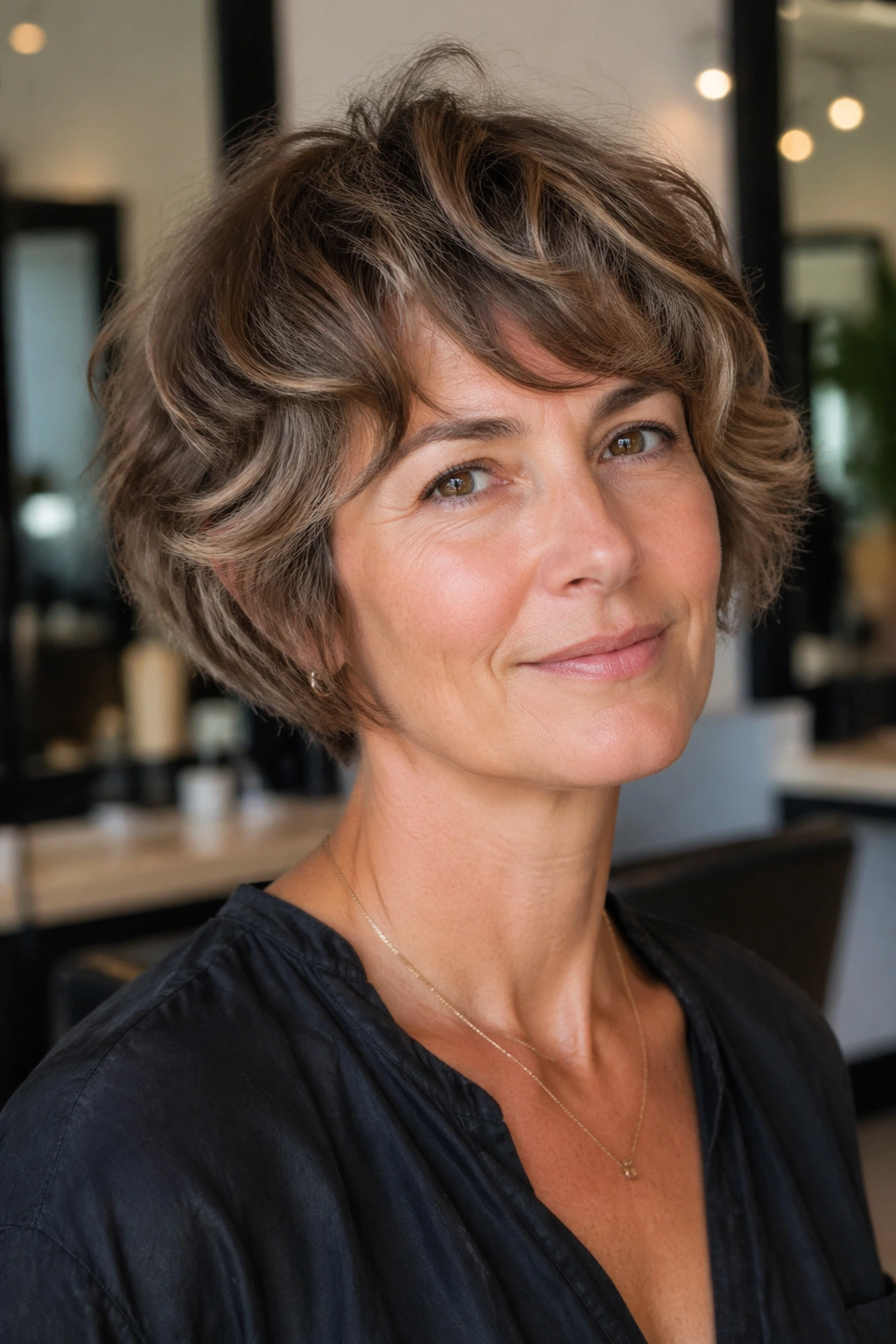
When a pixie feels too short and a bob feels too heavy, this is the middle ground. A pixie bob hybrid keeps the neckline tidy but leaves enough length around the sides and front to let the wave settle instead of exploding outward.
The key is perimeter weight. That’s the part many stylists miss. A little more length around the jawline or just below the ear can calm frizz in a way that ultra-short layers never will.
You can wear this one polished or undone. Air-dry it for a softer finish, or use a round brush only at the front if you want the face-framing pieces to bend cleanly away from the cheeks.
It’s a good choice for thicker waves that need shape without too much scalp exposure. The extra length acts like ballast. That matters more than people think.
9. Rounded Crown Pixie
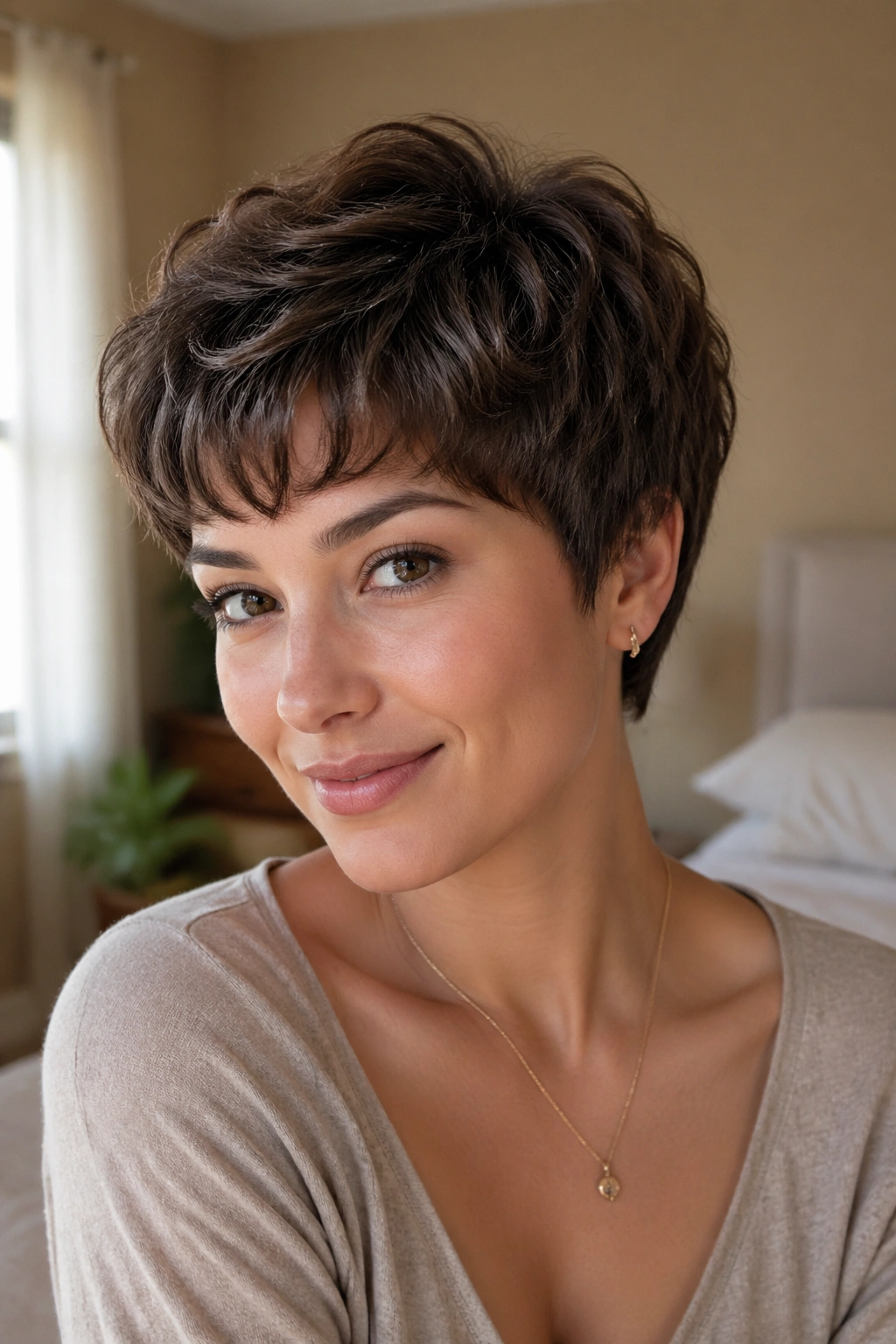
What if the crown is where the frizz starts? Then you want a rounded crown pixie, because the curve keeps the top from sticking up in random places and makes the whole cut sit closer to the head.
This shape is especially good for dense waves. A flat, over-layered crown can turn dense hair into a puffy mess. A rounded crown keeps some weight up top so the movement stays controlled.
Best For Denser Hair
The cut looks best when the silhouette follows the head instead of jutting out from it. I’d ask for a soft, curved outline rather than sharp points or disconnected spikes.
A tiny amount of mousse at the roots helps lift the crown without encouraging frizz. If you need definition, use your fingers to twist a few top sections while they’re damp. Don’t overdo it. The point is shape, not chaos.
10. Feathered Nape Pixie
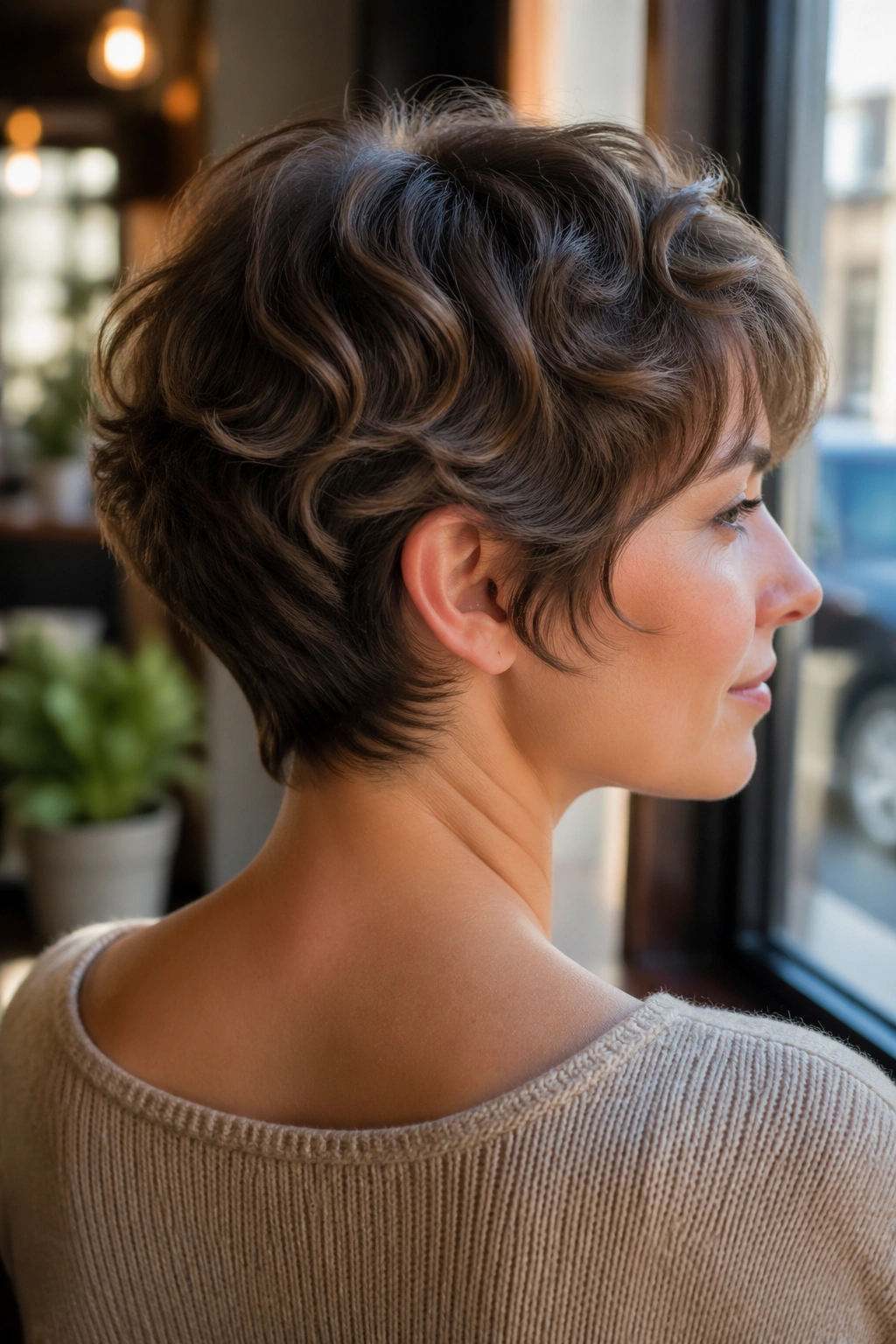
A soft, feathered nape does more for frizz than a razor-heavy top ever will. That’s where the back of the cut either settles neatly or starts to fuzz out under collars, scarves, and the kind of daily movement that no one thinks about until the haircut misbehaves.
Feathering works because it softens the line without removing all the weight. The hair still lies down, but it doesn’t look blunt or bulky.
This cut is one of my favorites for people who hate a chunky back view. It keeps the neckline clean, which makes the rest of the pixie look more expensive, even when it isn’t styled much.
A quick mist of leave-in conditioner and a thumb-sized amount of cream are enough for most hair types here. Don’t let the back get over-layered. A frizzy nape is hard to hide.
11. Side-Parted Classic Crop
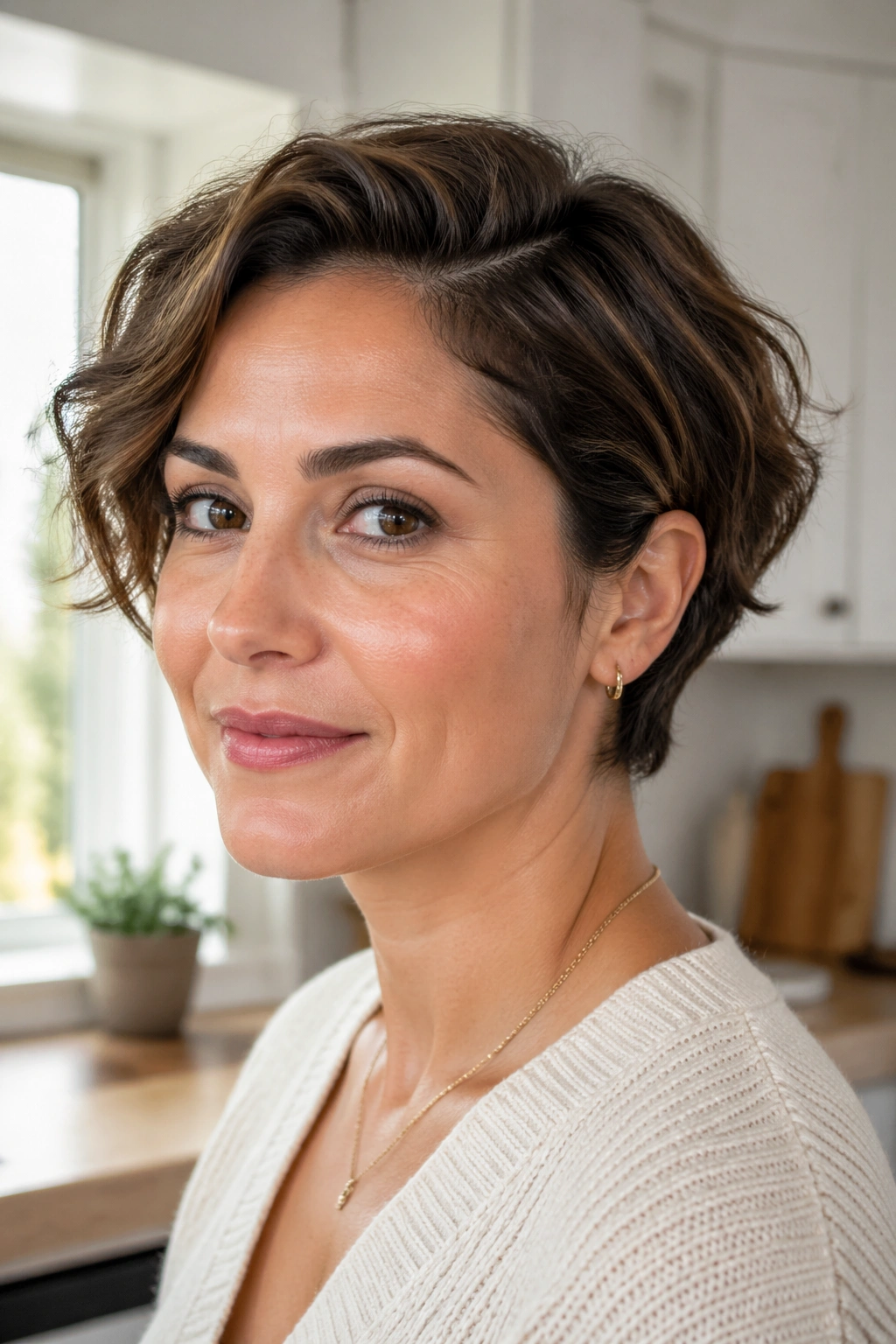
Unlike a center-part crop, a side-parted classic crop lets the wave fall where it already wants to go. That sounds small, but it saves a lot of fuss in the morning because you’re not fighting the hair’s natural bend.
This cut usually works well on people with a cowlick near the front or a stronger side wave on one temple. The part gives that growth pattern a place to land, which keeps the top from rising in two different directions.
A clean side part paired with short, soft sides feels tidy without looking severe. I’d ask for enough length at the front to tuck behind one ear when you want a quieter look. That little bit of flexibility matters.
If your hair frizzes around the forehead first, this is a calm, practical fix. It behaves.
12. Tousled Bixie
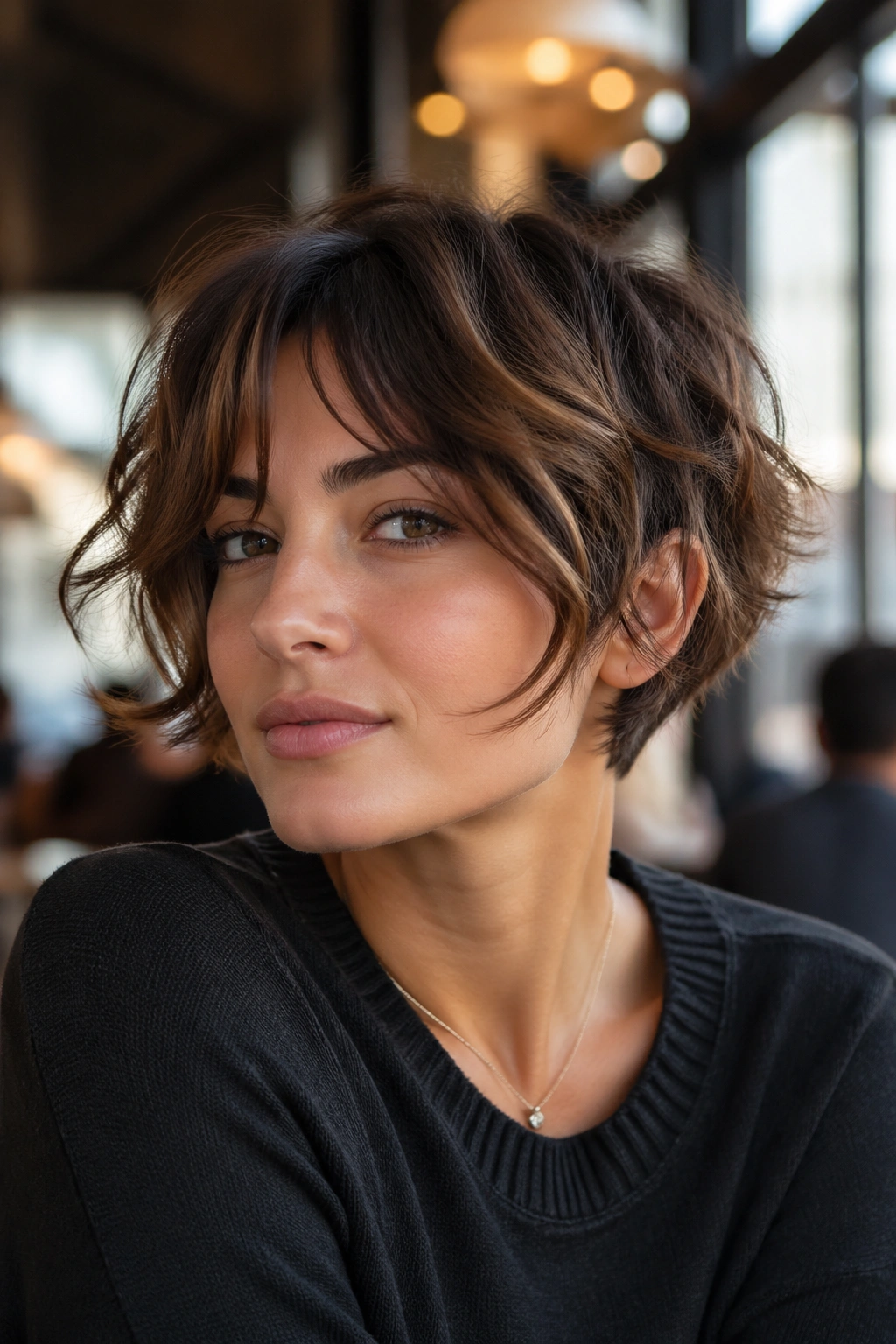
The tousled bixie sits between a pixie and a bob, but the texture is what makes it interesting. It gives wavy hair more room than a strict crop, yet it stays short enough that the frizz doesn’t spread into a full halo.
Why It Helps Frizz
The extra length around the sides keeps the ends from poking out, while the shorter crown keeps the shape from flattening. That combination works better than people expect.
- Keep the pieces around the cheekbone soft, not blunt.
- Ask for movement through the top, but not too much internal thinning.
- Use a light curl cream if your wave is loose; use mousse if it’s fine.
I think this cut is underrated. It has the easy feel of a pixie with enough body to look intentional on second-day hair, which is where most styles start to show their true personality anyway.
13. Grown-Out Pixie With Curtain Fringe
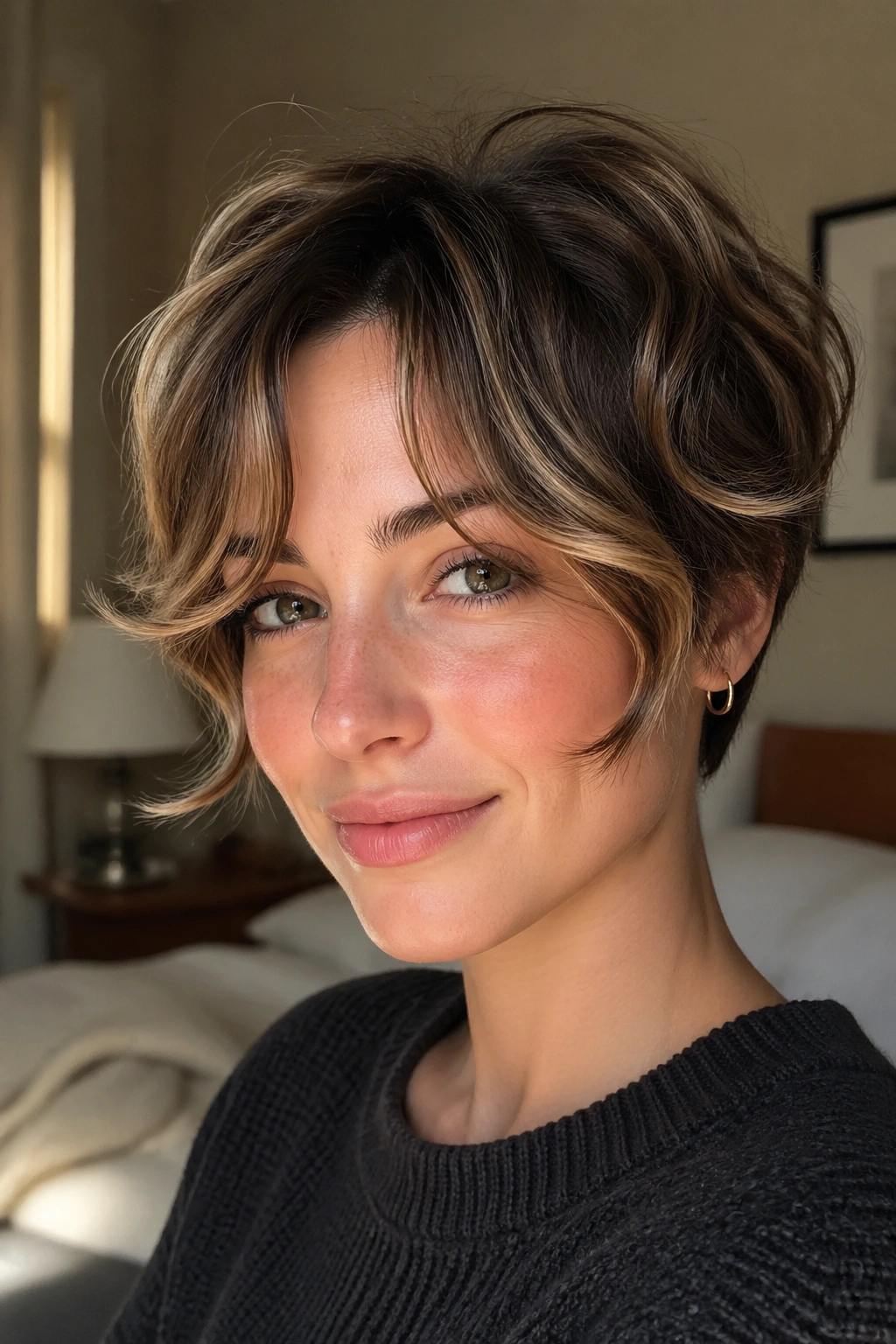
Some hair looks better a little longer. Wavy pixies often do.
A grown-out pixie with curtain fringe gives the wave more room through the front, which helps the cut settle instead of puffing. The fringe splits softly at the center or off-center and falls into the cheeks, where it can hide a little unevenness around the face.
The nice part is flexibility. You can wear it tucked, pushed forward, or brushed aside, and it still looks like a haircut rather than a compromise. That’s rare once a pixie starts growing out.
I’d keep the fringe soft and slightly longer than you think you need. Short curtain pieces can pop up in odd ways on wavy hair, while a touch more length lets them bend instead of frizz. A small change in length makes a big difference here.
14. Undercut Pixie With Lifted Top
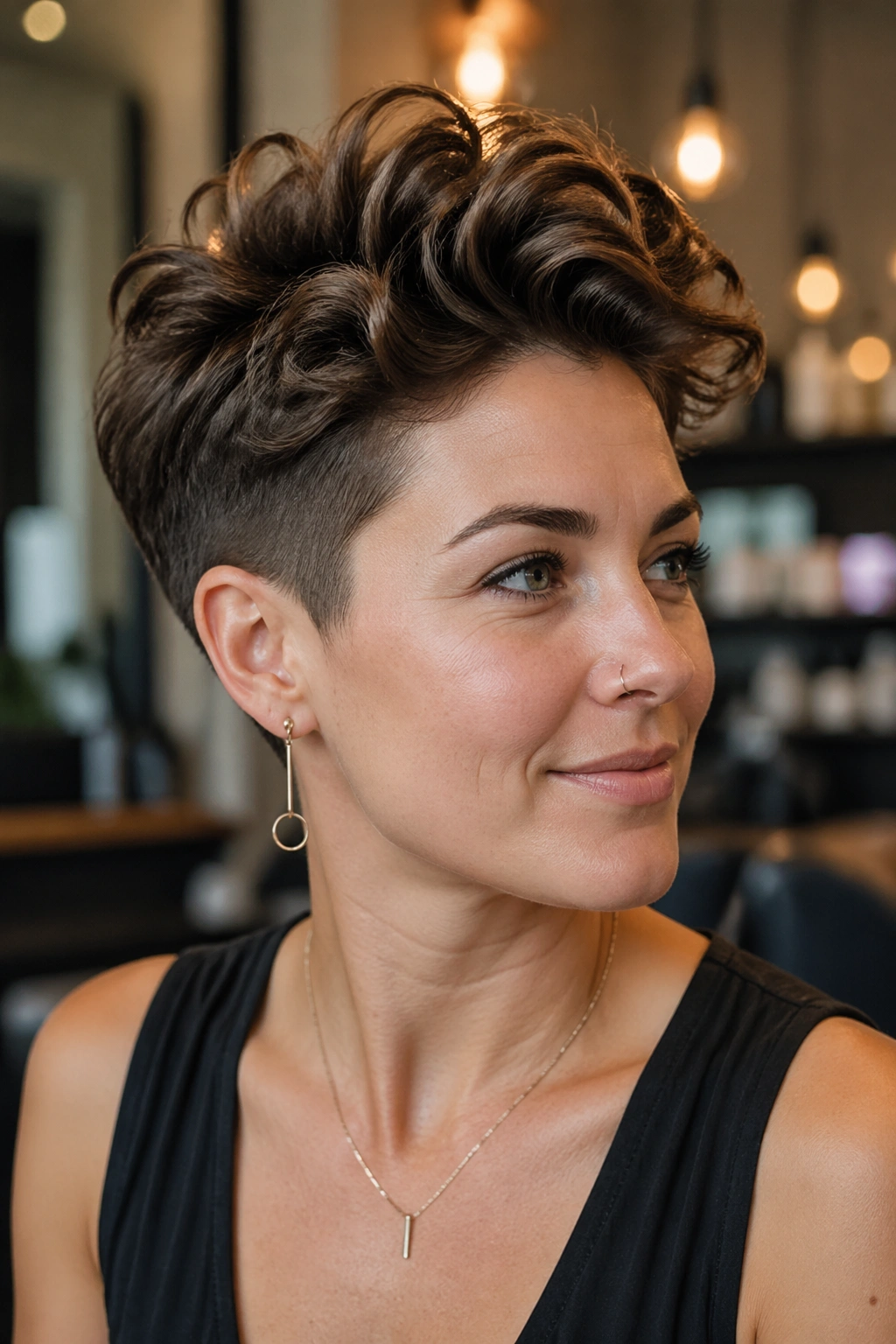
If your hair puffs at the sides, taking the bulk away underneath can make the top look cleaner. That’s the whole trick with an undercut pixie with a lifted top.
The top stays long enough to be styled upward or forward, while the hidden undercut trims away the heavy zones around the ears and nape. The result is airy at the top, controlled at the edges, and a lot less bulky around the head.
What to Ask For
- A hidden undercut behind the ears and at the nape.
- Top length around 3 inches or a little more, depending on wave strength.
- Soft blending at the transition line so the cut doesn’t look boxed in.
This cut can be edgy, sure. But it can also be practical. When the sides are trimmed properly, the whole shape looks lighter without turning fuzzy.
15. Rounded Bubble Pixie
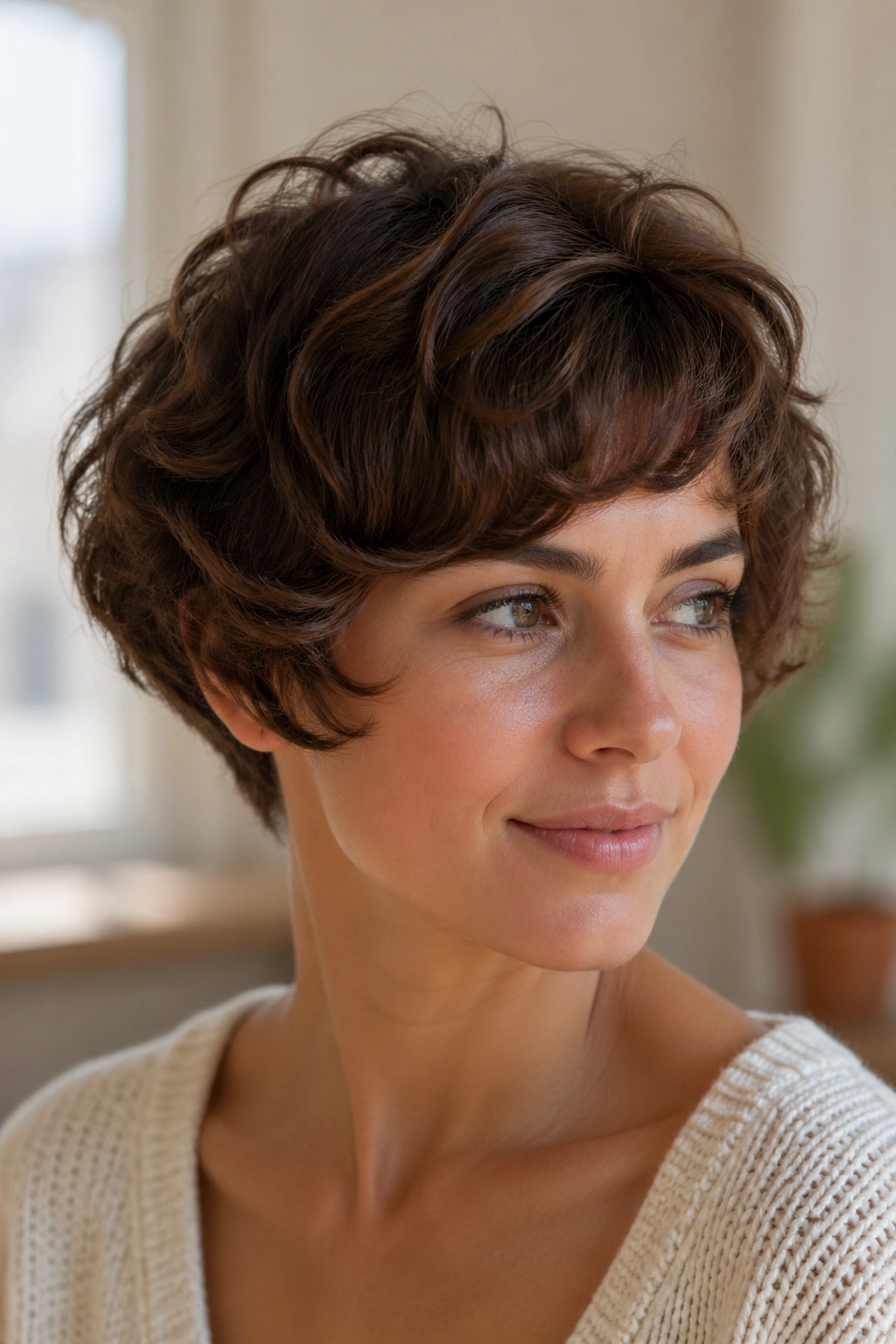
A rounded outline keeps wavy hair from exploding outward. That’s why the bubble pixie works so well when you want a neat silhouette with a little softness at the edges.
The shape stays compact around the temples and cheekbones, then curves gently back into the head. No sharp corners. No broken outline. Just a smooth, rounded form that makes the wave look deliberate instead of wild.
I like this cut for people who prefer a polished finish but don’t want flat hair. The roundness gives you body, and the shorter sides keep the frizz from building up where it’s most visible.
It also grows out fairly nicely, which is a bonus. The shape doesn’t collapse the second you skip a trim. That alone saves a lot of annoyance.
16. Piecey Pixie With Point-Cut Ends
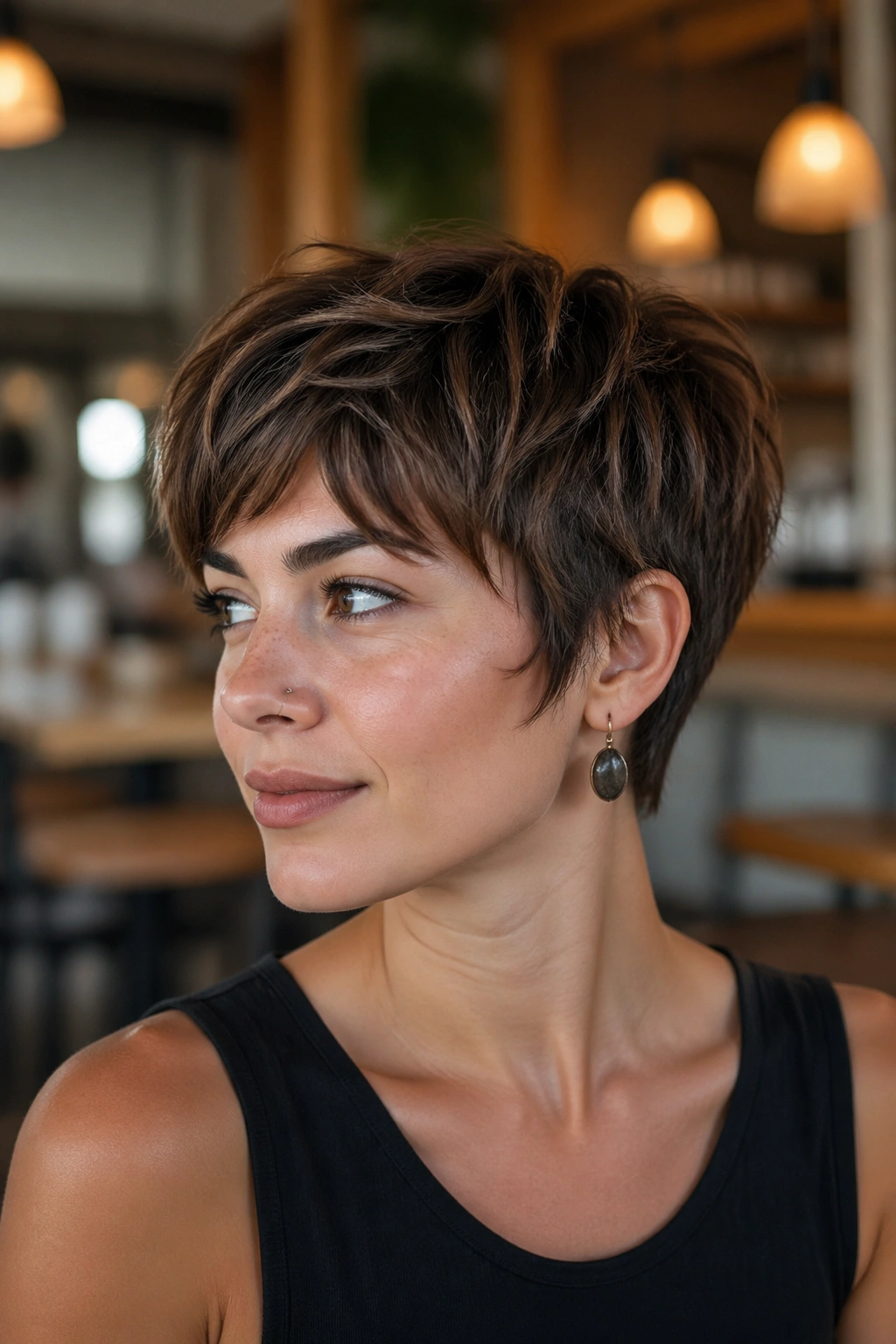
Why point-cut at all? Because blunt ends on wavy hair can look too heavy, while over-thinned ends go fuzzy fast. Point-cutting sits in the middle and softens the edge just enough for the wave to clump nicely.
This cut is all about little separated pieces that move on purpose. The hair doesn’t need to look messy. It just needs definition, and point-cut ends help the strands sit apart without fraying.
How to Ask for It
Tell the stylist you want soft, piecey ends rather than razor-broken texture. That difference matters. Point cutting gives a cleaner finish and usually grows out more gracefully.
A tiny bit of styling balm on the ends is enough. Warm it between your fingers first, then press it into the fringe and top layers. Don’t rake it through. That’s how the pieces disappear.
17. French-Inspired Pixie
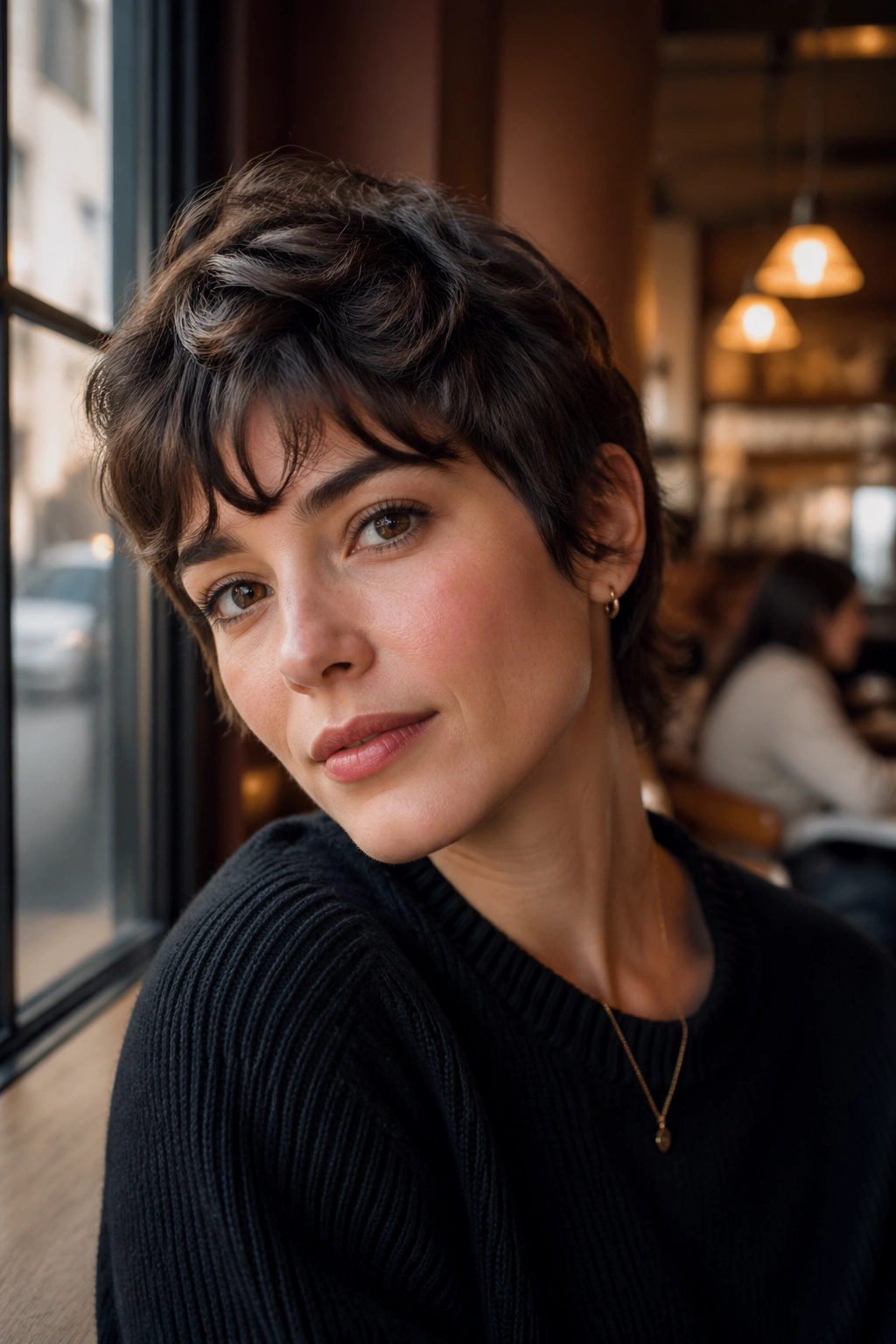
Unlike a severe crop, the French-inspired pixie leaves softness at the cheek and a little bend in the fringe. It has that relaxed, slightly undone feel, but it still keeps enough structure to stop wavy hair from going poofy.
This is a smart choice if you like a face-framing cut that does not feel engineered. The fringe can brush the brow, the sides can stay soft, and the nape can remain tidy without looking rigid.
What makes it work is restraint. You want clean lines, but not hard ones. You want movement, but not a cloud. That balance makes the frizz look like texture rather than a problem.
I’d keep the front a touch longer and let the wave decide where it falls. Trying to force the fringe straight is usually a waste of time. Let it bend.
18. Layered Pixie With a Neck Graze
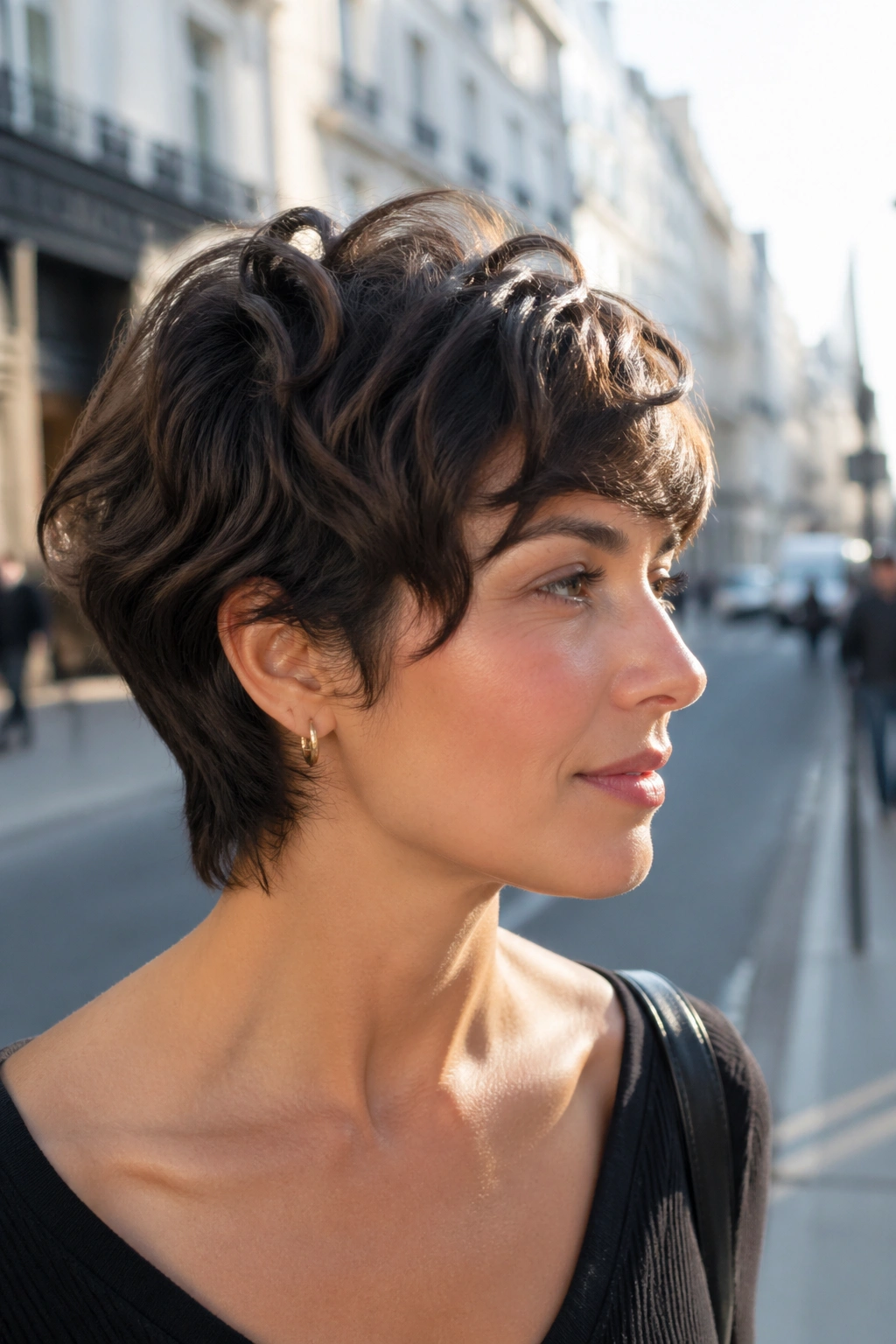
A neck-grazing length can be a gift for wavy hair. It keeps the lower edge from flipping outward, which is one of the easiest ways a pixie starts to look fuzzy instead of soft.
Why the Neck-Grazing Length Matters
The extra bit at the back helps the silhouette sit close to the head. It also gives you something to tuck into a collar or behind the ear when you want the cut to look neater.
- Ask for layers that start below the crown, not all over the top.
- Keep the lower edge long enough to touch the neckline.
- Use a light leave-in on the back sections if they tend to dry rough.
I like this version on coarser waves because it keeps the shape from ballooning. The layers create movement, but the length keeps the body grounded. That’s the part that makes it feel intentional.
19. Deep Side-Tuck Pixie
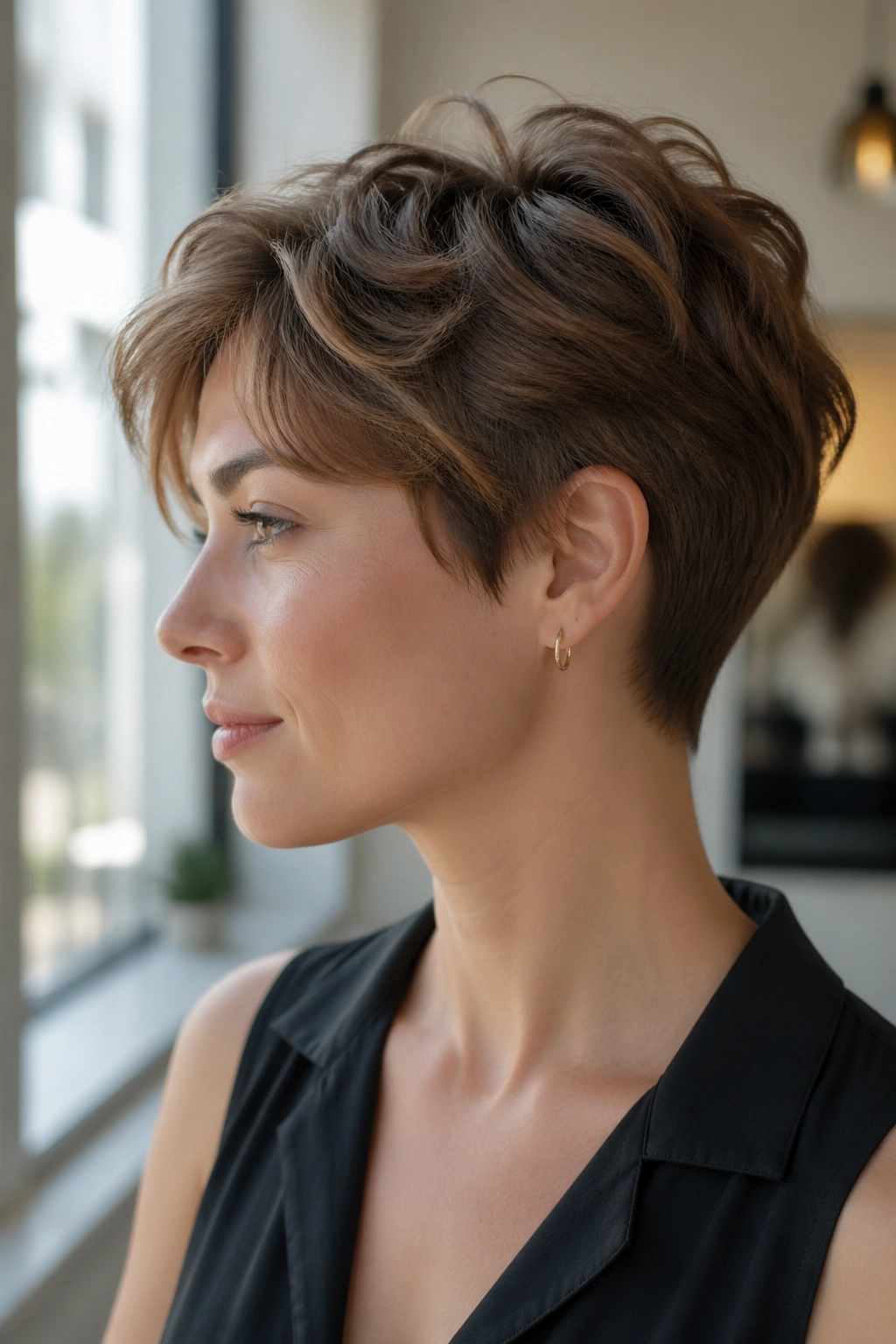
Picture one side tucked behind the ear and the other falling over the cheekbone. That small asymmetry can tame frizz better than a lot of styling products, because it gives the hair a clear direction and stops the cut from expanding evenly on both sides.
A deep side-tuck pixie leans into that habit. The top is cut with enough length to sweep across the head, while the tucked side stays closer and neater. The result feels easy, not overworked.
This cut is especially useful if your hair has a strong bend near the front or if one side tends to swell up faster than the other. The tuck hides the problem area and turns it into shape.
I’d keep the ends soft so the tucked side doesn’t jab outward. Sharp corners here are a bad idea. Soft edges tuck better and frizz less.
20. Soft Mohawk Pixie
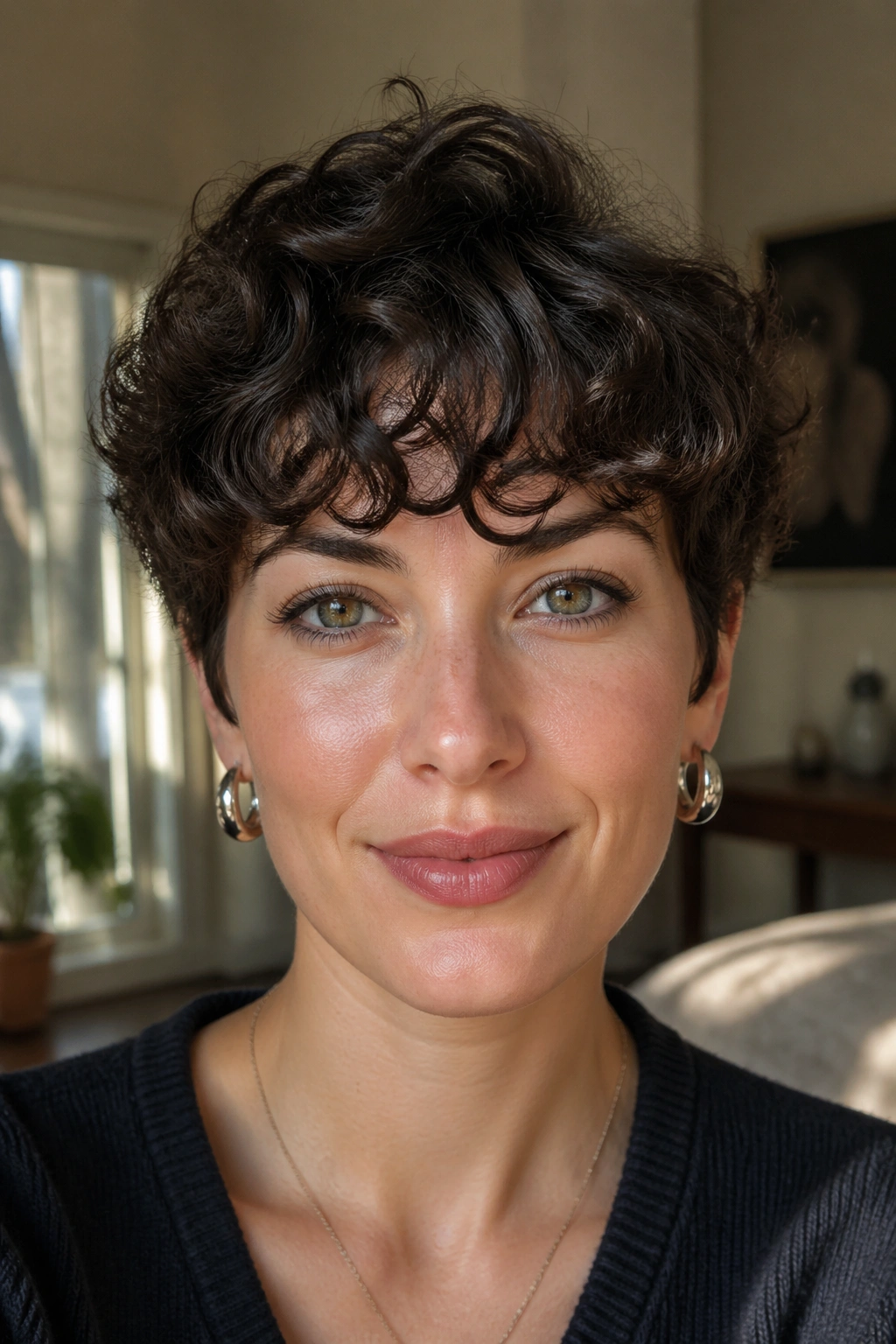
A soft mohawk pixie sounds bolder than it is. The center strip carries the length, while the sides stay tight enough to keep the silhouette clean. The key word is soft. Not spiky, not helmety, not stuck-up.
This cut can be excellent for wavy hair that gets frizzy at the temples. By removing some of the side bulk, the top wave can sit in one clear line instead of splitting into random directions.
What to Tell Your Stylist
- Keep the center ridge longer and movable.
- Shorten the sides, but keep the blend smooth.
- Avoid hard contrast unless you want a much sharper look.
I like this one for people who want a little drama without giving up control. It has presence, but the frizz gets pinned to a shape instead of filling the whole head.
21. Wedge-Inspired Pixie
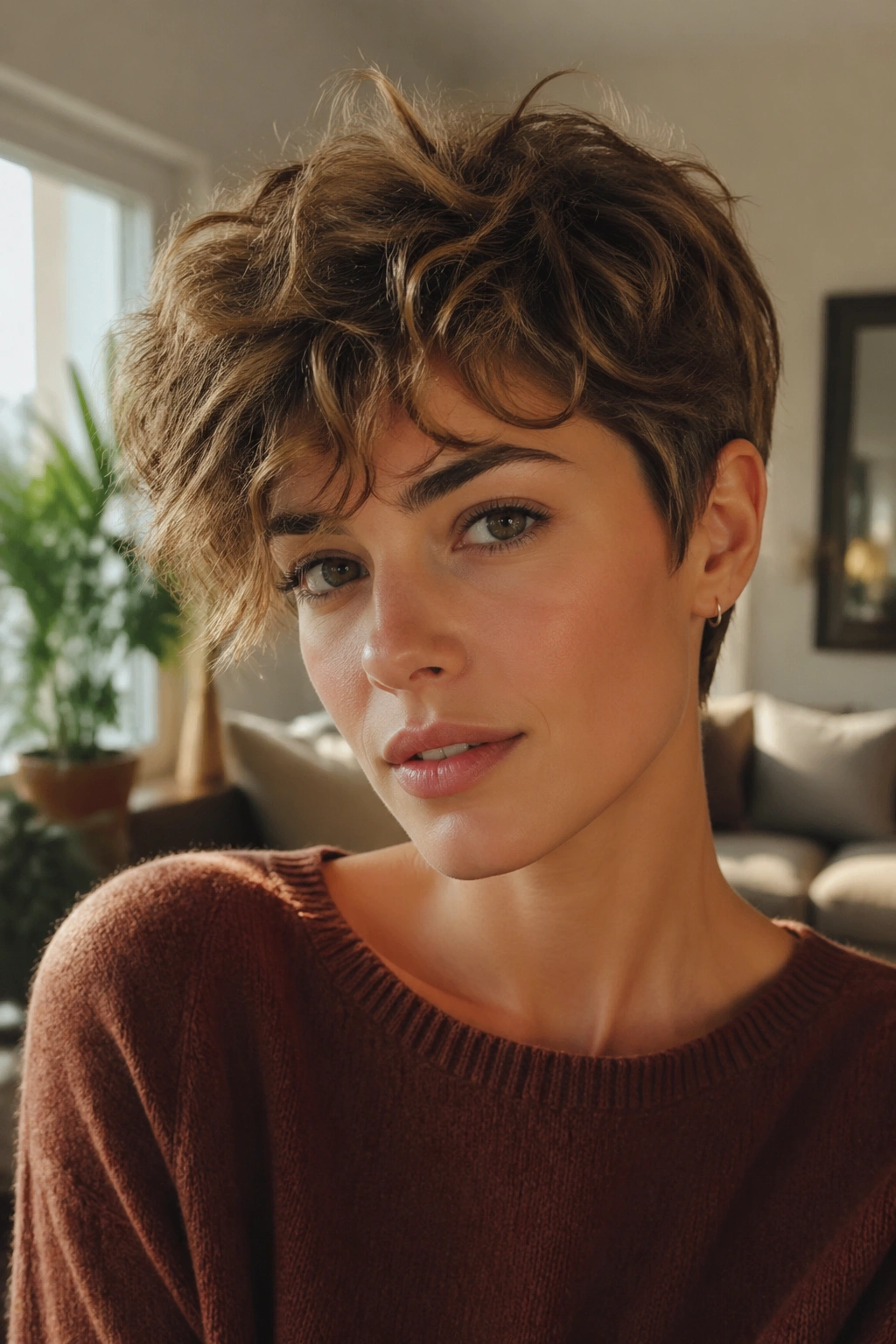
The wedge cut is old-school for a reason: it puts weight where wavy hair needs it. A wedge-inspired pixie borrows that stacked back and slightly longer top, which helps the hair sit down instead of puffing up.
This shape is especially friendly to thicker waves. The back gets enough structure to stay neat, and the crown gets a bit of lift without becoming fluffy. The overall effect is crisp, not hard.
I’d keep the stack soft rather than severe. Too much angle at the back can make the cut look dated in a hurry. The better version curves gently and lets the wave show through.
If your hair gets big fast, this is worth asking about. The stacked shape gives the hair a place to fall. That’s the part people often miss.
22. Slick-Back Wavy Pixie
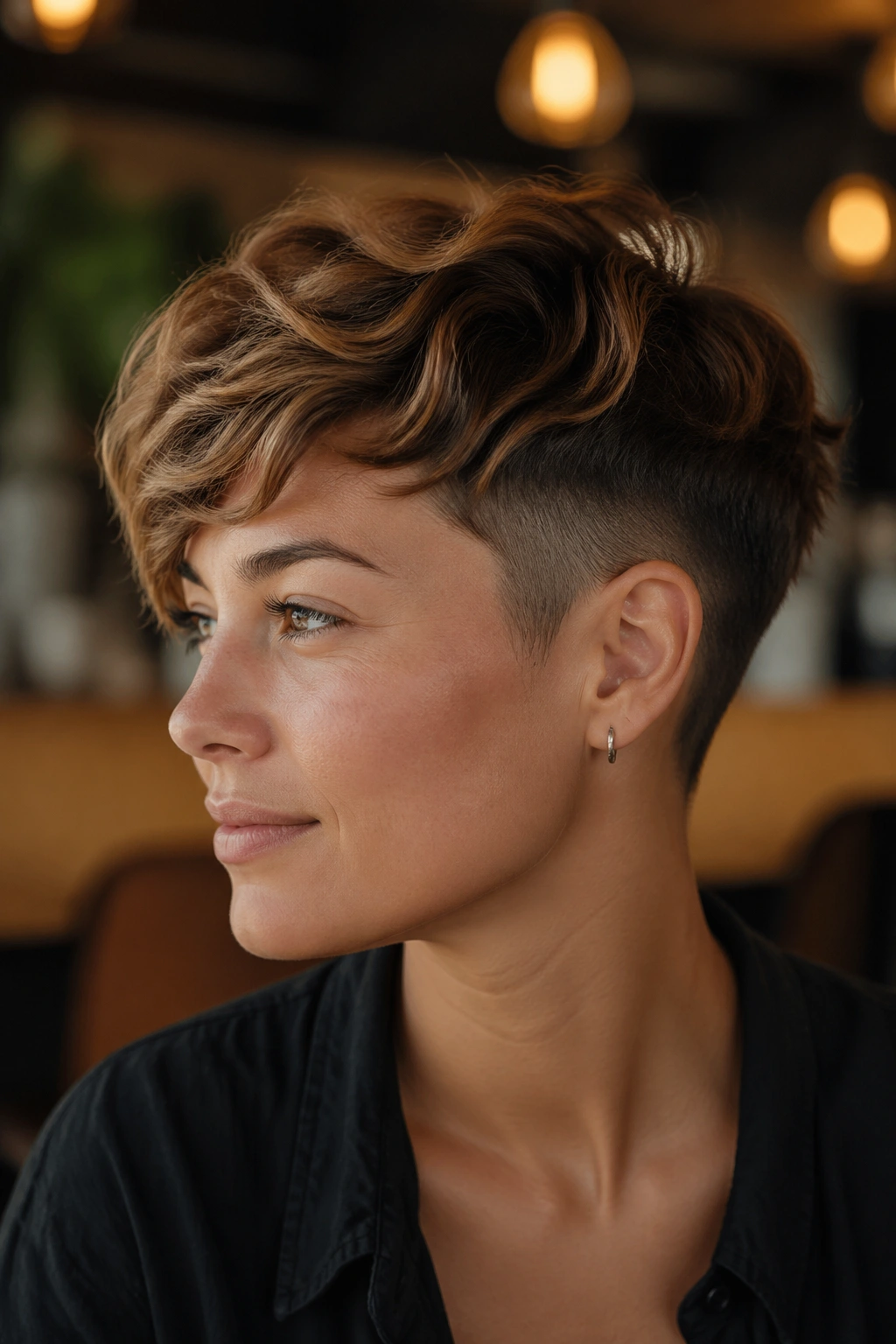
Unlike a fluffy pixie, a slick-back wavy pixie depends on close sides and a longer top that can be brushed back without splitting. It’s a cut that looks polished when you want it to, but it still works on natural wave if the length is right.
The trick is not to cut the front too short. You need enough length to brush back or slightly upward without every strand sticking up like a question mark. If the front is too short, the style loses its shape and starts to frizz.
This is one of the few pixies I’d call quietly practical for dressier days. It takes gel or cream well, but it does not need a lot of product if the cut itself is balanced.
For daily wear, a fingertip amount of smoothing cream is enough. Heavy product will flatten the wave and make the cut look tired.
23. Razor-Soft Crop
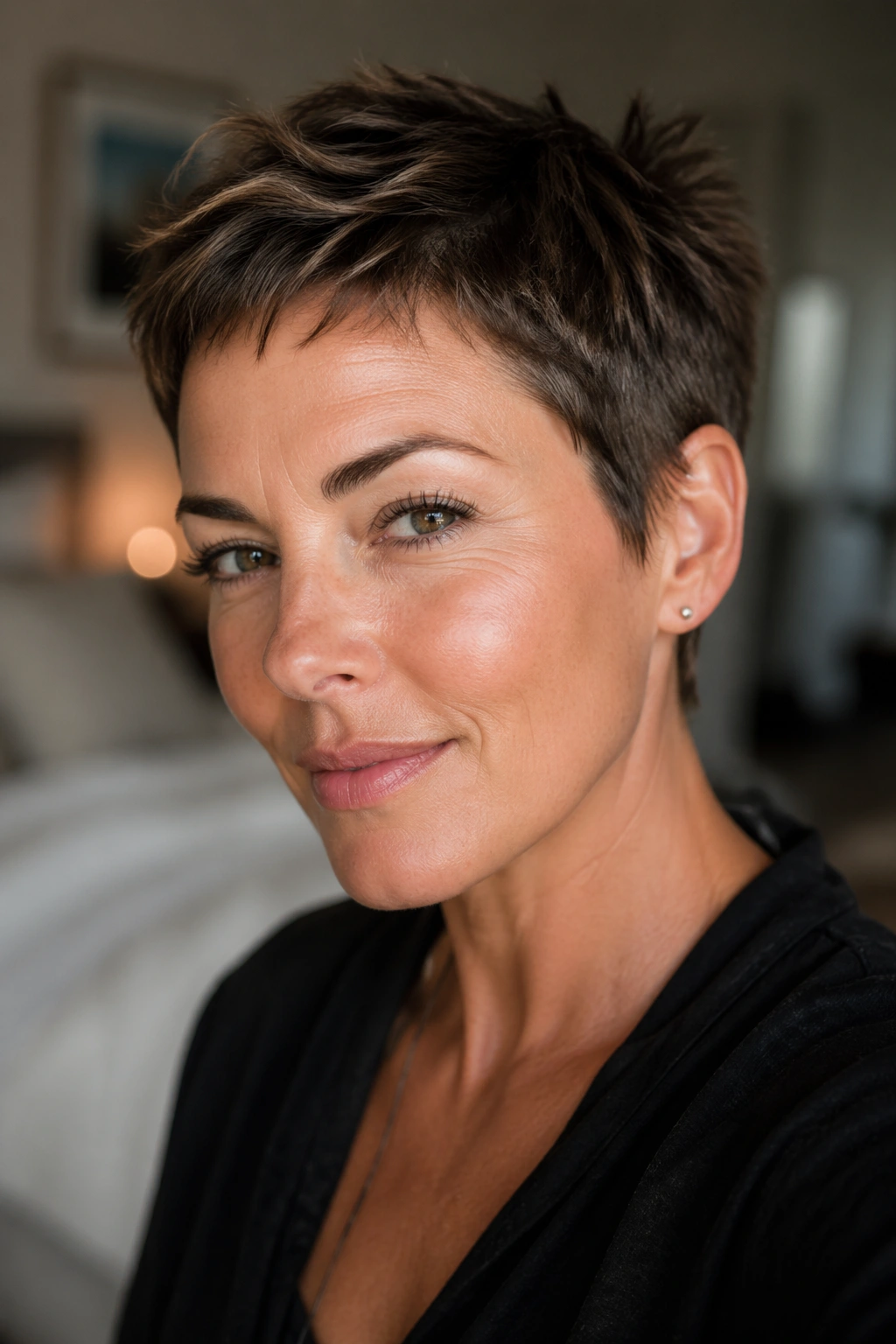
A razor-soft crop can be lovely on wavy hair, but only when the razor is used sparingly. Too much slicing and you get ends that flare out instead of sitting together. That’s the exact opposite of what most people want when they say “tame frizz.”
The right version keeps the edges feathered and the outline clean. It feels light, but not wispy. There’s a difference, and it’s not small.
What Makes It Different
The razor is used to soften selected areas, usually around the perimeter or fringe, while the interior stays controlled. That keeps the hair from turning into a fuzz cloud.
- Best when the wave is loose to medium, not extremely coarse.
- Works better with a gentle cream than with a stiff gel.
- Needs a stylist who knows when to stop.
I’d be blunt here: if your hair already frizzes hard, don’t let anyone shred it to pieces. Softness is the goal, not damage.
24. Halo Pixie
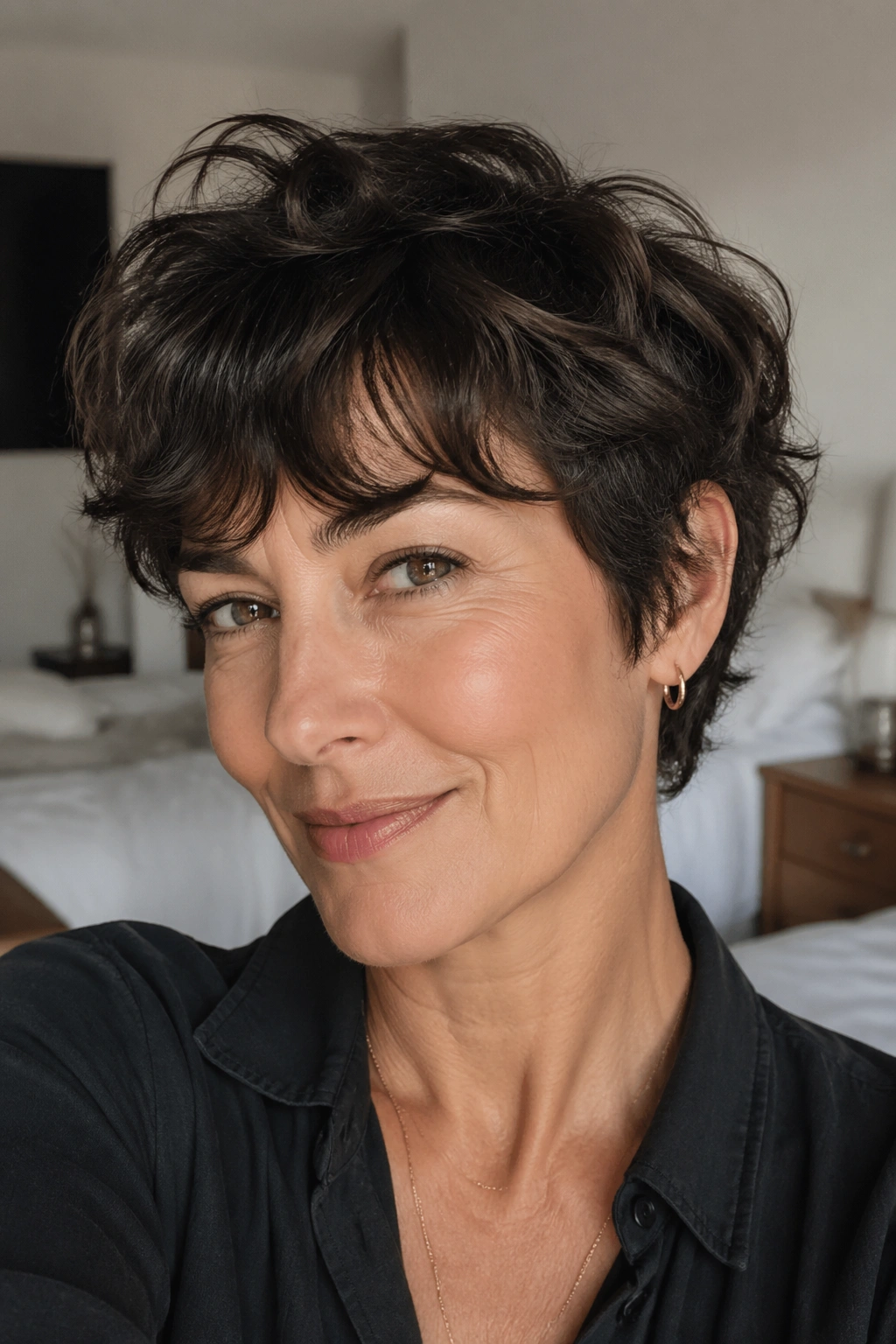
Can a pixie keep volume without turning fuzzy? Yes, if the shape is rounded and the perimeter holds enough weight to stay close to the head.
A halo pixie gives you that lifted, circular shape around the crown and sides, but it avoids the wide, open look that often happens when too much hair is removed from the interior. The wave sits in the cut instead of hovering around it.
This shape is flattering when you want fullness that looks intentional. It can also soften the upper part of the head, which is useful if your waves are strongest near the crown and weaker through the ends.
I’d ask for a rounded silhouette and avoid over-thinning the top. That’s the mistake that turns a halo into fuzz. The cut should feel full, not airy.
25. Soft Grow-Out Pixie
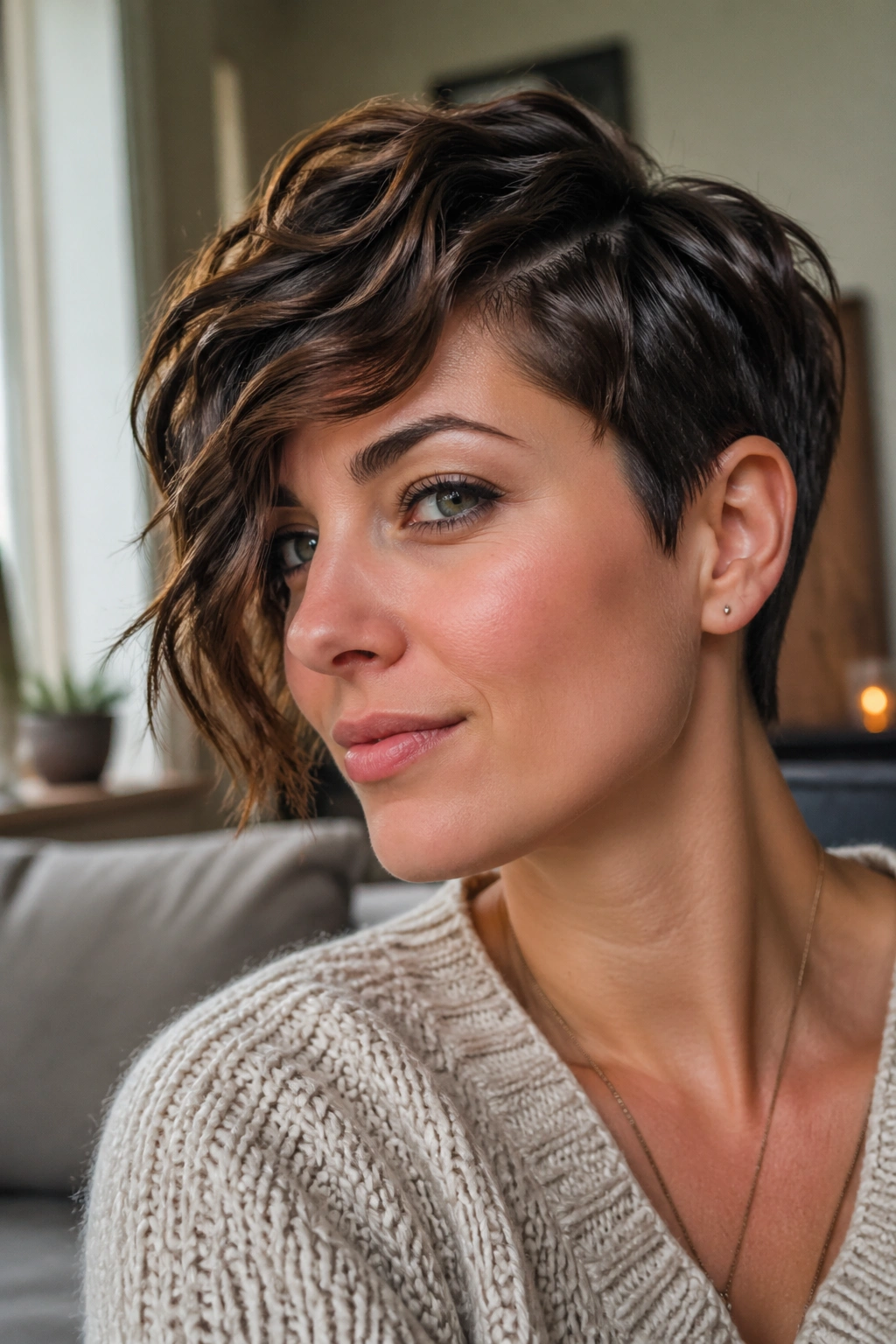
Some pixies are designed to fight grow-out. This one isn’t. A soft grow-out pixie keeps enough length at the fringe, temples, and nape that the haircut still looks finished even after it starts getting a little longer.
That makes it a smart choice if you dislike frequent trims. The shape stays neat, the wave stays visible, and the frizz doesn’t win the moment the cut softens around the edges.
I especially like this version for people who live in a ponytail one day and a cropped style the next. It bends with your routine instead of forcing a strict styling schedule. A little tuck behind the ear here, a little cream at the front there, and it keeps its character.
A good pixie should still look like a haircut when you skip a styling day. That’s the real test.
