


A good wavy wolf cut earns its keep when the air turns dry and hair starts acting moody. The shape keeps movement up top, leaves enough length to tuck behind a scarf, and makes waves look intentional instead of half-dried.
That is why wavy wolf cuts for fall keep showing up on heads that usually wear blunt lobs in warmer weather. The cut works because it gives the crown lift, softens the sides, and leaves the ends light enough to swing when you walk.
A bad one gets puffy fast.
Too many short layers on fine waves make the top look scattered, and too much bulk on thick hair turns the whole thing into a triangle. The real trick is picking the version that matches your wave pattern, density, and how much styling you’ll actually do before coffee.
1. Soft Curtain-Bang Wolf Cut
Soft curtain bangs are the friendliest entry point into a wolf cut. They split the forehead without boxing the face in, and the longer front pieces let wavy hair keep its movement instead of fighting for a sleek finish.
Why it works with waves
Ask for the shortest point of the bang to sit just below the brows, then let the sides fall to cheekbone level. That gives you lift near the crown and a softer line around the jaw. If your waves bend on their own, this cut usually needs less heat than a blunt fringe.
- Keep the center part narrow, then open it with your fingers after drying.
- Use a small round brush only at the roots.
- A light mousse near the scalp helps the top stay lifted for more than an hour.
My favorite part: it still looks neat after a scarf rubs it the wrong way.
2. Chin-Length Choppy Wolf Cut
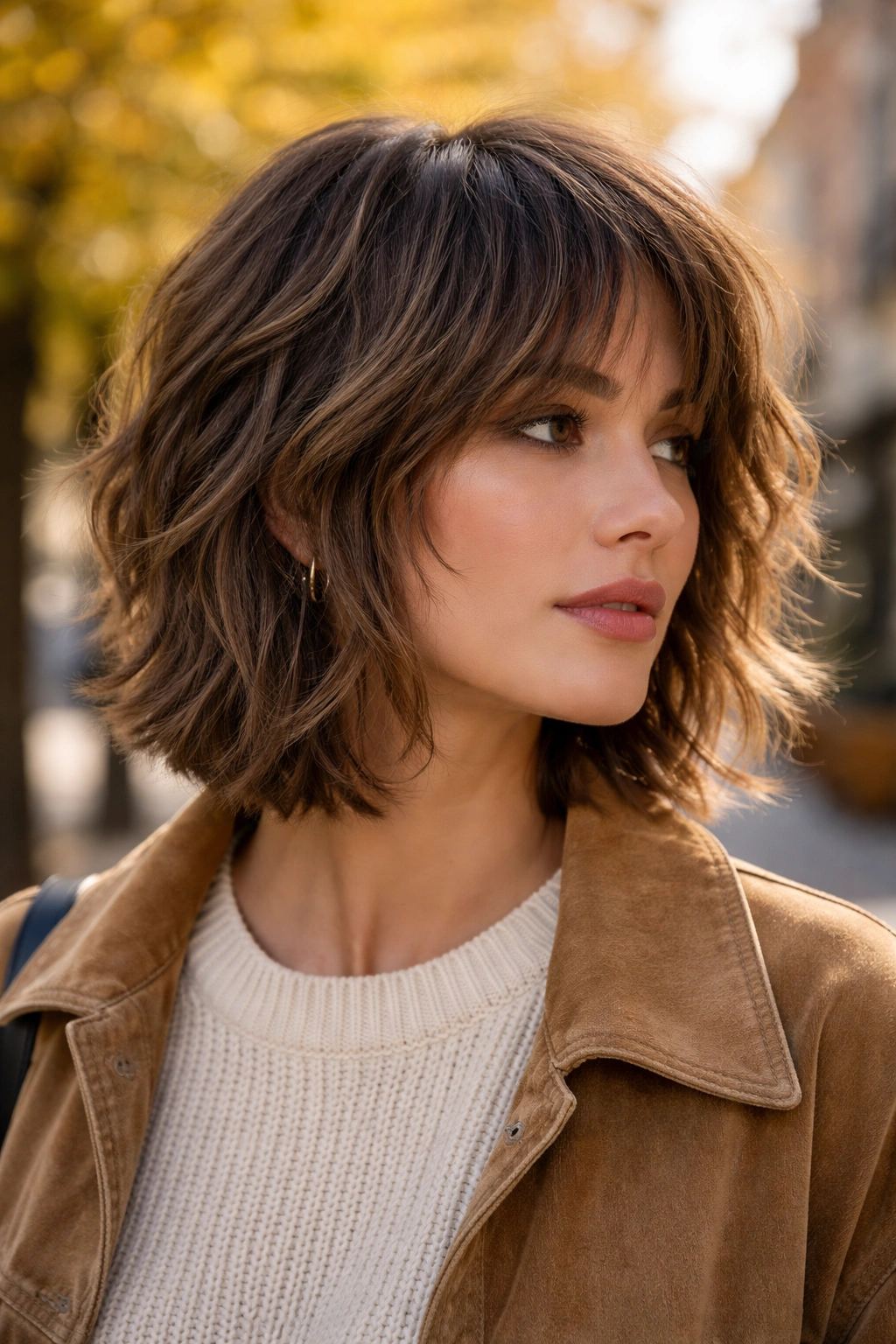
Why does a chin-length wolf cut look so sharp on wavy hair? Because the shorter length lets the layers do the talking. You get cheekbone emphasis, a little edge, and enough shape that the cut does not sink under coats and high collars.
The best version keeps the perimeter around the chin while the crown stays broken up with short, jagged layers. That keeps the silhouette from turning into a triangle. If your waves are loose, this cut will flick out with almost no effort. If your waves are tighter, you may need a diffuser and a dab of cream to keep the ends from ballooning.
Quick things to ask for
- The shortest top layers should land near the temple, not halfway to the crown.
- The sides should stay slightly longer than the back.
- The ends should be point-cut, not hacked blunt.
Worth saying: this cut looks best when it has a little mess to it.
3. Heavy Fringe Wolf Cut
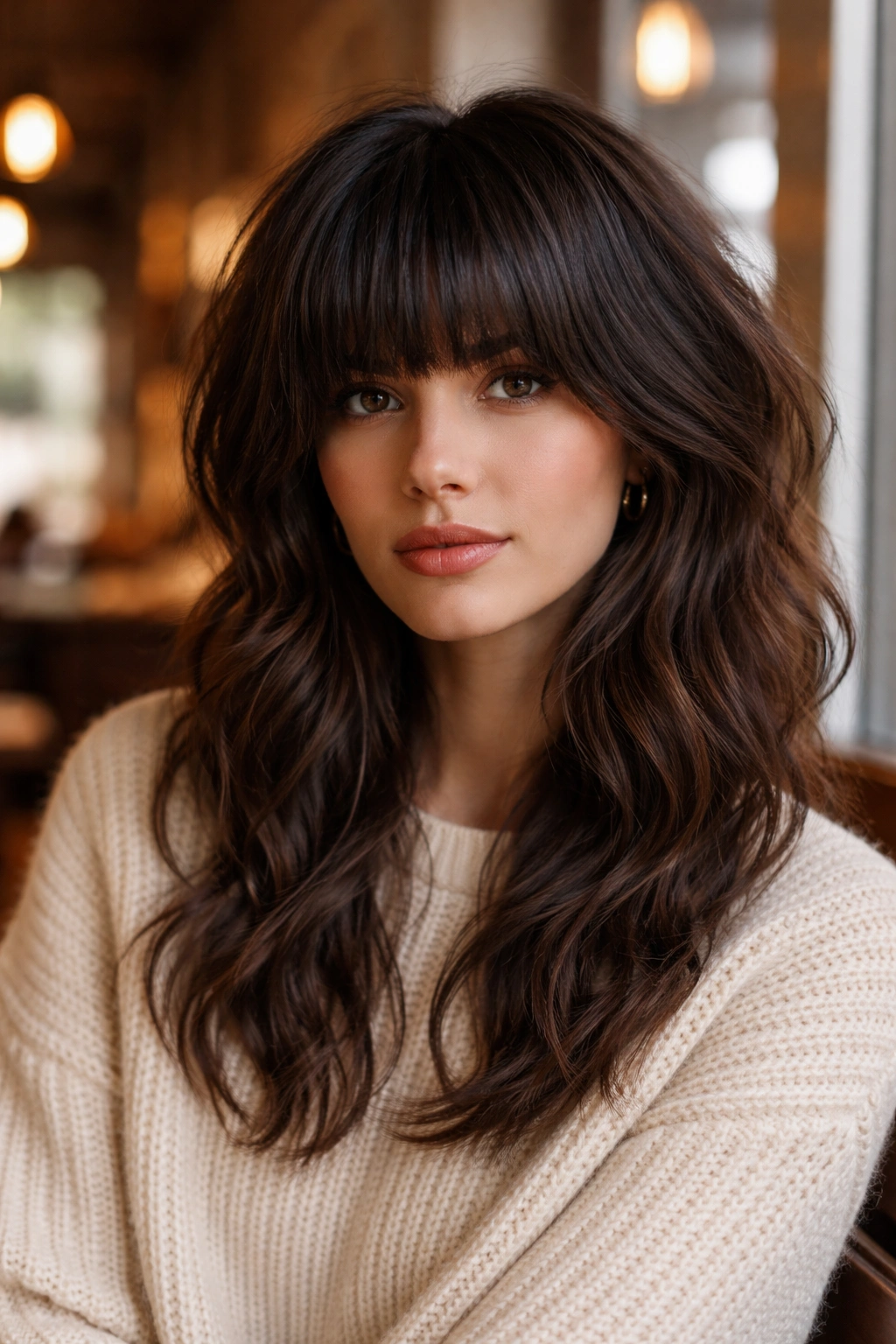
If your forehead is the first place you want less attention, the heavy fringe wolf cut handles that fast. It gives the front a strong line, then lets the rest of the hair fall in broken, wavy layers underneath. The result feels bolder than curtain bangs, but not as severe as a straight-across bob.
The fringe needs to be dense enough to read as a statement, yet cut with enough texture that it does not sit like a helmet. I like this version on medium to thick waves because the hair has enough body to support the bang. On finer hair, the fringe can go stringy if it is cut too long or thinned too much.
Styling note
Blow-dry the fringe first. Not later. If the front dries bent in the wrong direction, the whole cut starts acting harder to style than it should.
A dry shampoo at the roots helps keep the fringe from separating too much. That matters more in cool weather, when hair often loses grip and starts slipping flat by lunchtime.
4. Collarbone Wolf Cut with Loose S-Waves
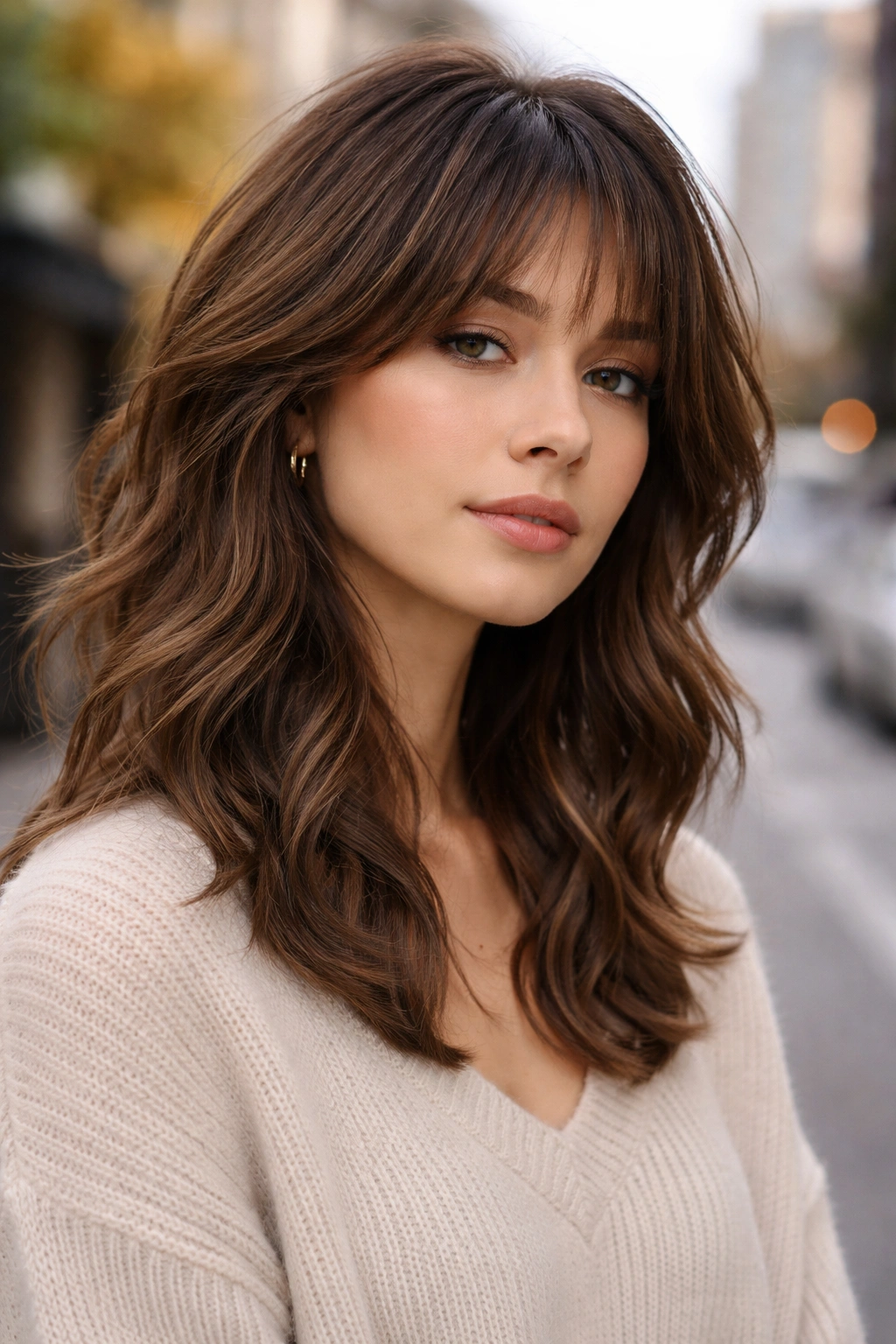
The collarbone length is the safe, grown-up version of a wolf cut, and I mean that in the best way. It gives you movement without taking away the option to tuck hair behind your ears or throw it into a lazy clip when you’re running late.
The magic is in the balance. The shortest layers should brush the cheekbones, the longest pieces should skim the collarbone, and the wave should fall in loose S-shapes rather than tight bends. That shape looks especially good with sweaters, trench coats, and anything with a high neckline, because the hair sits above the fabric instead of getting trapped under it.
It also grows out gracefully. That matters more than people admit. A wolf cut that holds its shape for six weeks is nice; one that still looks decent after three months is the version I’d actually recommend.
A 1.25-inch iron or a wide diffuser keeps this cut soft. Skip stiff styling paste. It will only make the waves look crunchy.
5. Long Wolf Cut with Hidden Layers
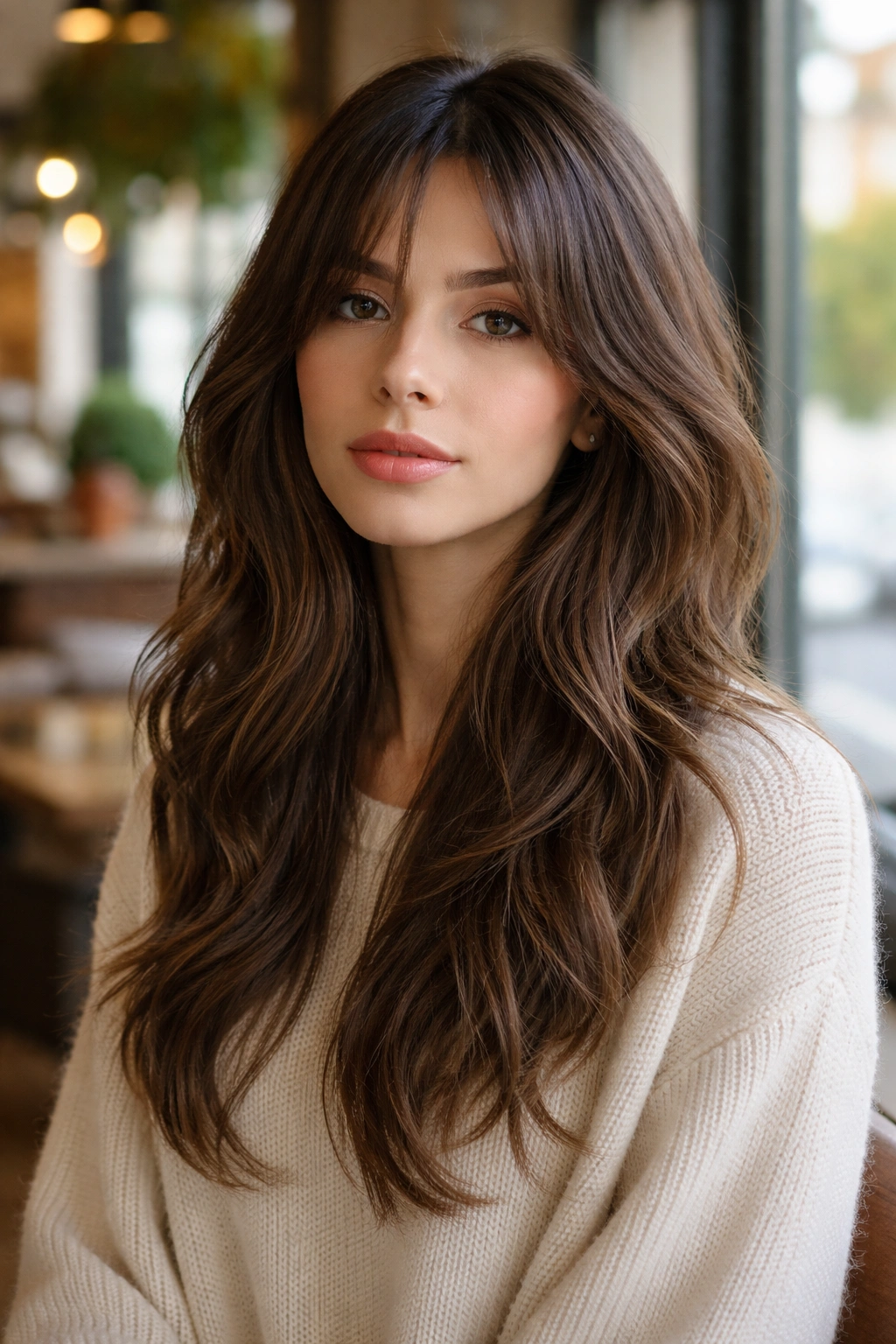
Unlike a classic shag, this version keeps the length but hides the structure inside. You still get that broken wolf-cut movement, but the outer line stays long enough to feel polished.
That makes it a smart pick if you like your hair on the longer side and don’t want to lose the “can still put it in a ponytail” option. The layers live underneath and around the face, so the haircut moves when you turn your head, yet the visible perimeter stays calm. It’s a cleaner look than a short, shaggy wolf cut, and that matters if your style leans more relaxed than edgy.
This is also the version I’d suggest for anyone nervous about a big chop. You can test the shape without committing to a dramatic change. Ask for internal layering, not heavy thinning at the ends. That keeps the cut from fraying out.
If you wear your hair wavy and long, this one can save you from the usual long-hair problem: all the length, none of the shape.
6. Short Shaggy Wolf Mullet
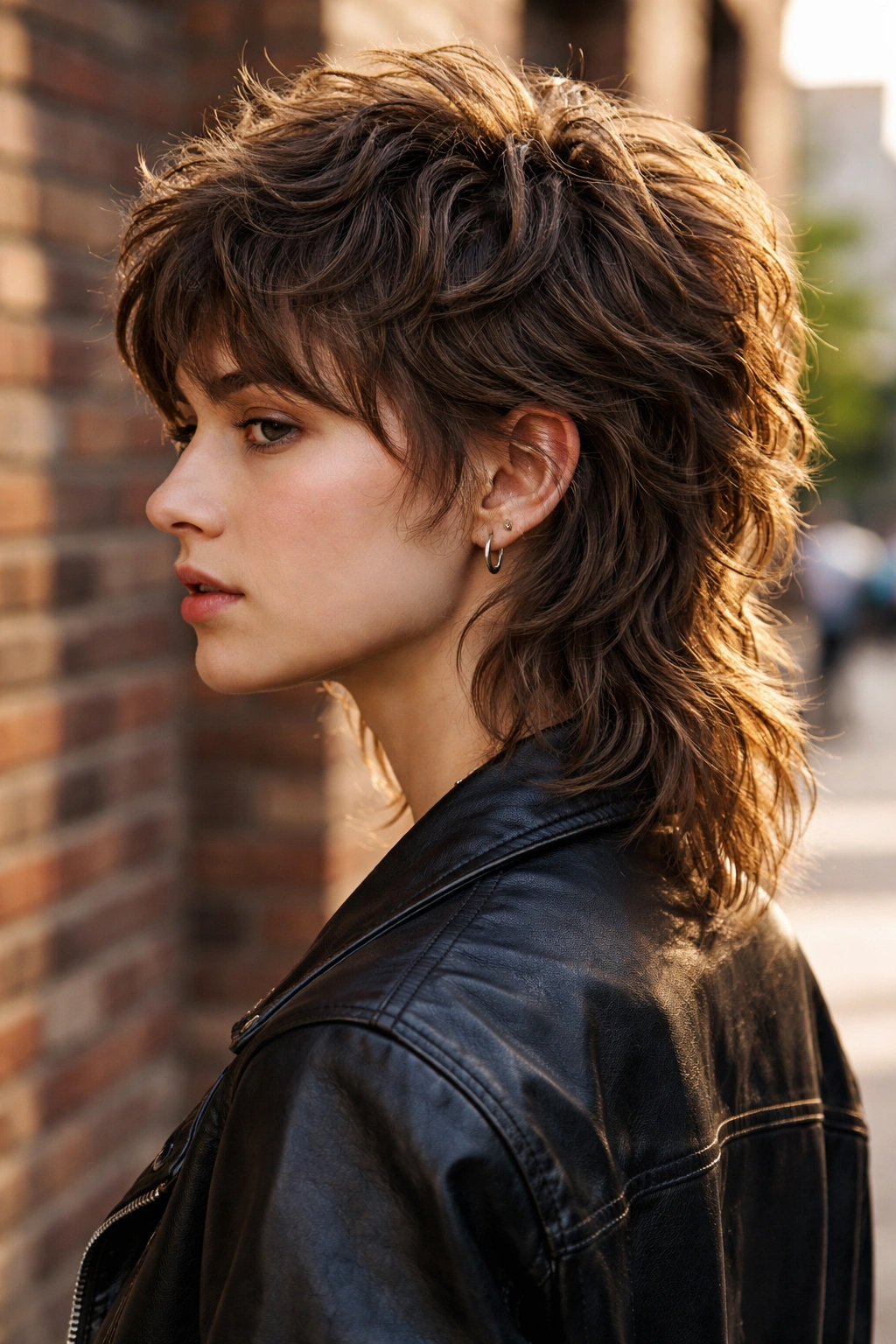
Short hair can still have attitude. A short shaggy wolf mullet proves it, and wavy texture is what keeps it from looking too harsh.
The crown stays choppy and lifted, while the nape stretches out enough to give the haircut that wolf-cut silhouette. It’s a good match if you want your hair off your neck but still want a little movement at the back. On wavy hair, the short pieces around the ears soften the whole thing so it doesn’t read as punk unless you want it to.
What to tell your stylist
- Keep the top layers short enough to stand away from the scalp.
- Leave a touch more length at the nape than you think you need.
- Use point-cutting on the ends so the shape feels broken, not blunt.
This cut does need maintenance. Not a mountain of it, but enough that the shape stays crisp. A quick mist of texturizing spray and a scrunch from underneath usually does the job.
7. Copper Wavy Wolf Cut
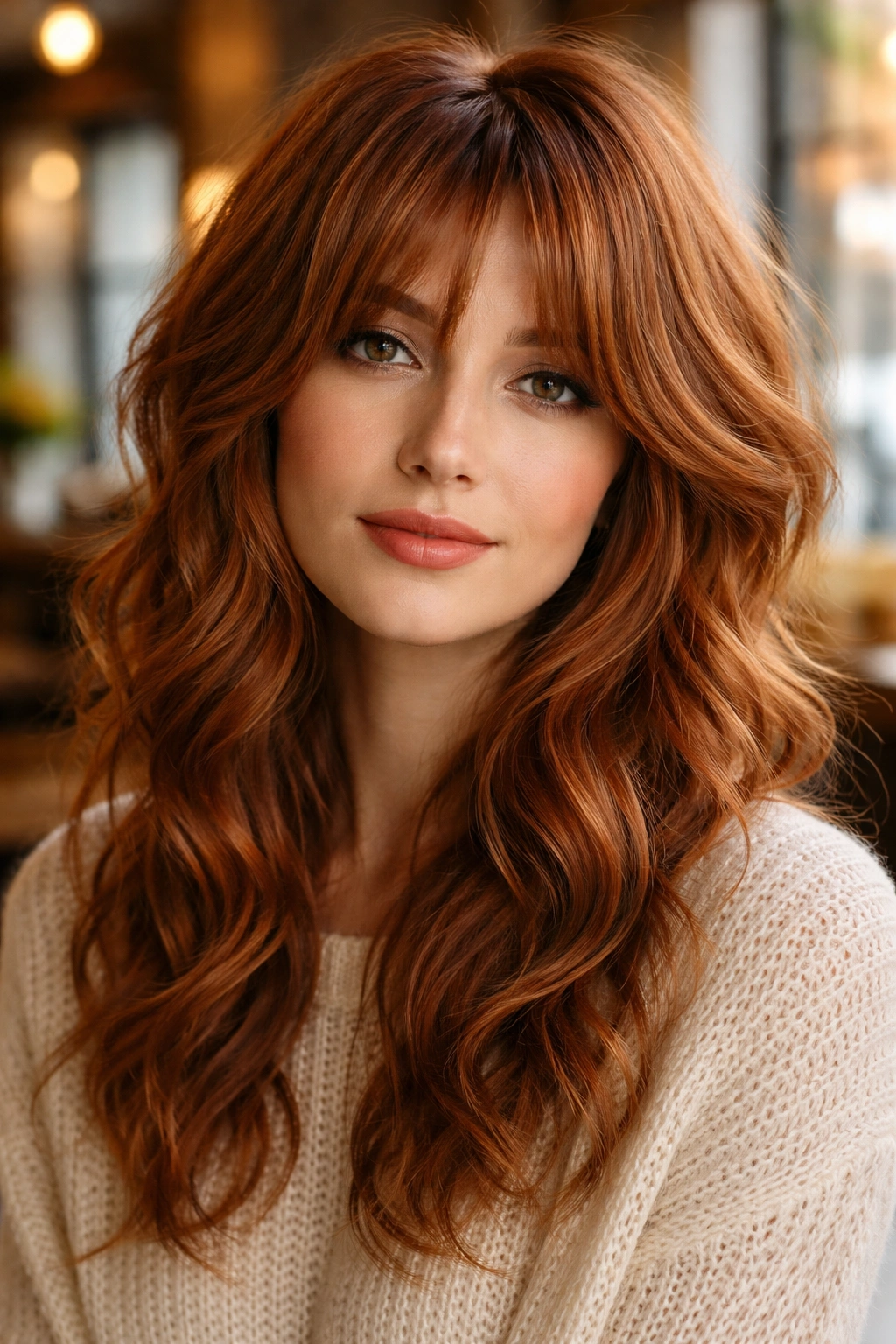
Want a cut that makes wavy hair look warmer? Copper does that work with almost no fuss. The color catches on the layers, so every bend and turn shows up more clearly than it would on a flat, single-tone brown.
This is one of my favorite fall-friendly pairings because the shade gives the haircut depth without needing hard styling. A soft copper, auburn, or cinnamon tone can make the front pieces look richer and the ends look softer. The wolf cut’s broken layers keep the color from reading as one solid block.
What to ask for at the salon
- A gloss or color melt around the crown for extra dimension.
- Slightly lighter face-framing pieces near the cheekbones.
- A warmer tone at the mids, not just the ends.
Copper does fade faster than darker shades, so a color-safe shampoo matters. Keep hot water off it if you can. Lukewarm is better, and your waves will thank you by staying smoother at the surface.
8. Razored Wolf Cut with Piecey Ends
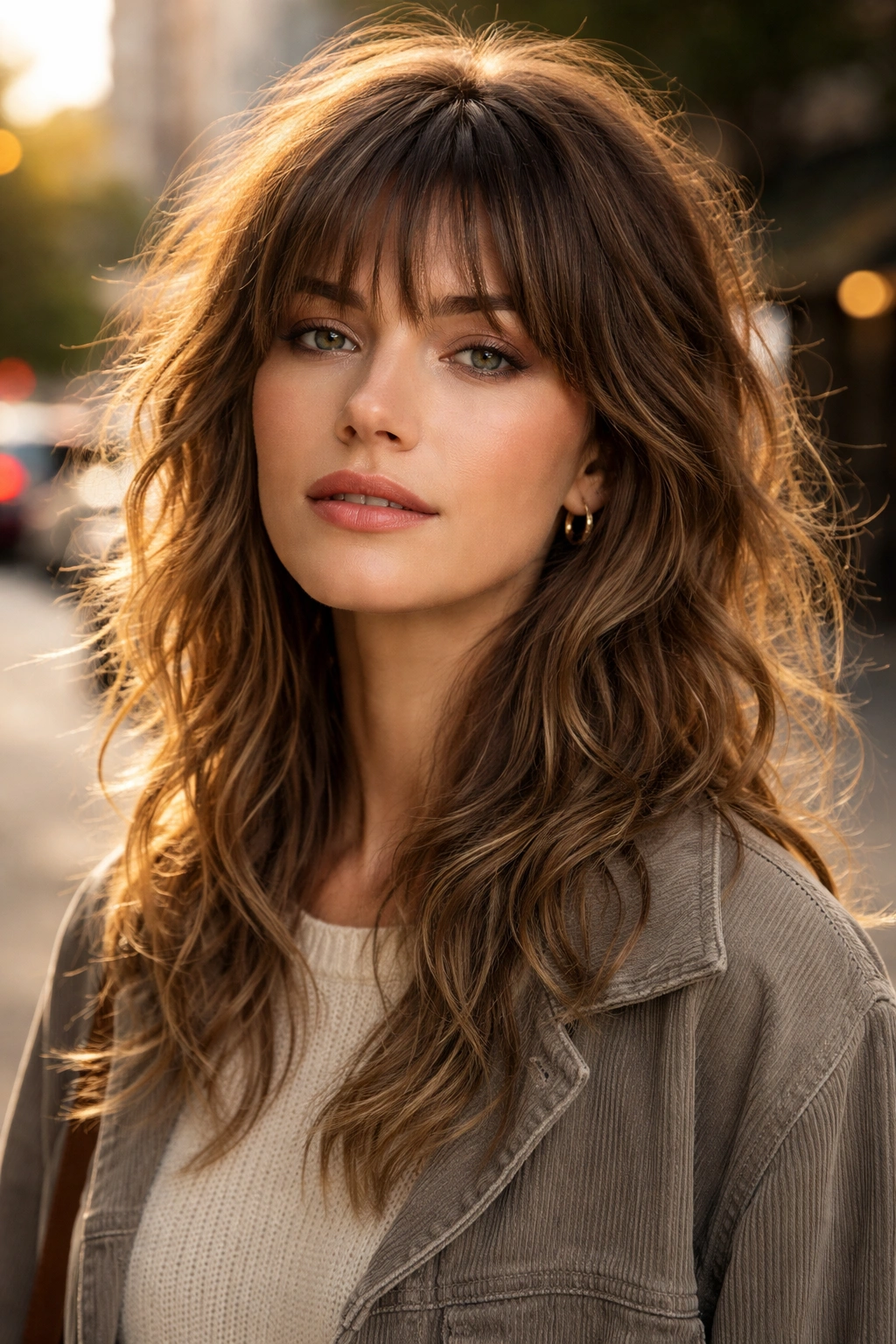
When hair feels bulky at the ends, razor-cutting changes the whole shape. The blades remove weight in a softer way than scissors, which gives the wolf cut those airy, separated ends people keep trying to copy with too much product.
This style works best on medium-density waves. The piecey finish lets the haircut show movement even when the hair is air-dried. On very fragile ends, though, too much razor work can make the tips look frayed. That is the trade-off. You want texture, not fuzz.
Things that make it work
- Keep the razor work focused on the mid-lengths and lower layers.
- Use a lightweight cream, not a heavy balm.
- Let the hair dry to about 80 percent before touching it.
A small amount of paste on the very ends can define the pieces, but use less than you think. Too much and the whole thing goes sticky. The best razored wolf cuts look easy, but they are usually the result of a careful hand.
9. Bottleneck Bang Wolf Cut
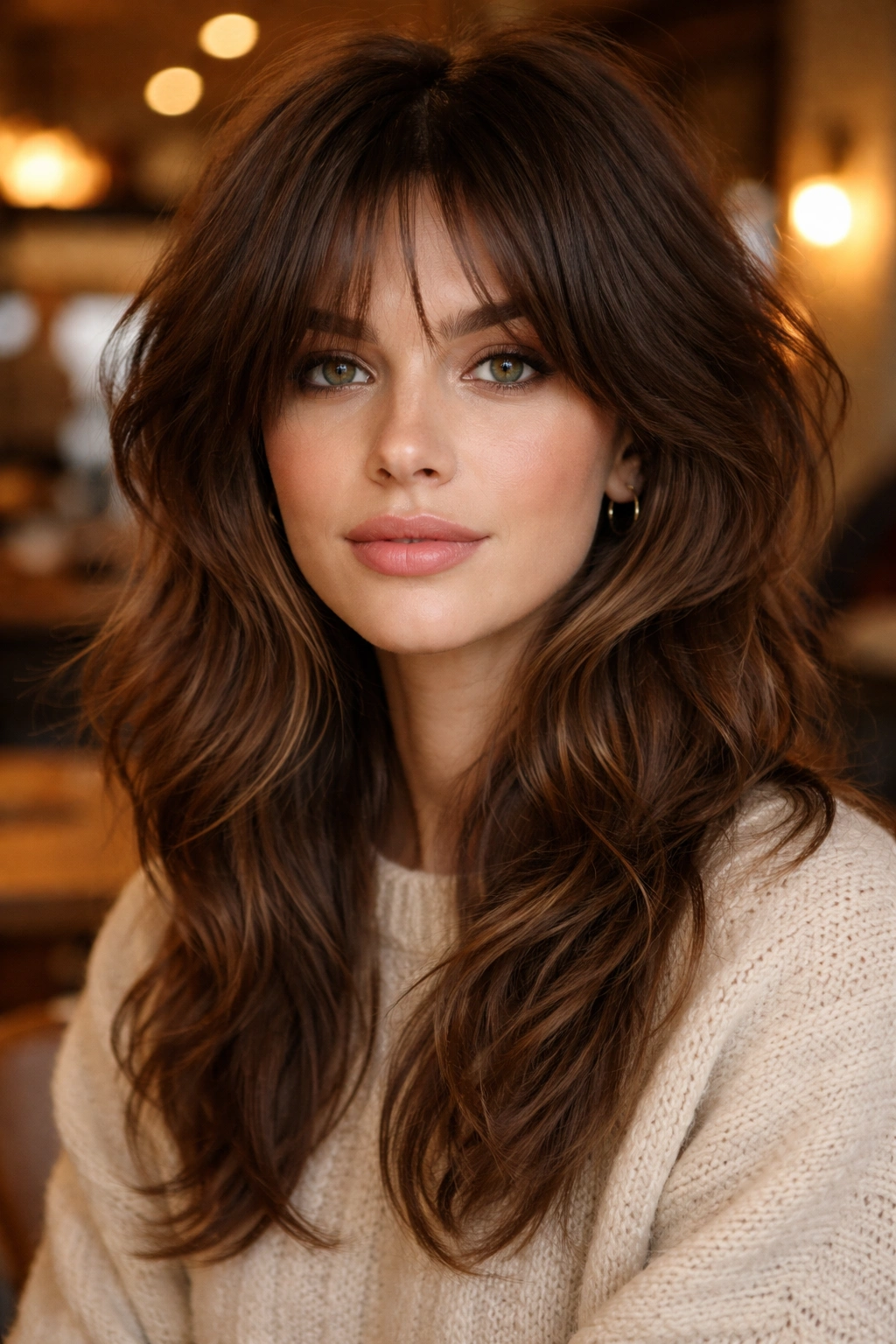
The bottleneck bang gives the wolf cut a cleaner front shape without flattening the waves. It starts narrow near the center of the forehead, then opens out around the eyes and cheekbones, which makes the face look a little longer and the haircut feel more balanced.
I like this version for people who want bangs but do not want a blunt wall across the brow. The shape grows out well, too. That matters because bangs are where people get bored fastest. If the fringe starts to irritate you, the longer side pieces can be tucked back or blended into the layers.
The styling part is straightforward. Blow-dry the center first, then direct the sides away from the face with a round brush or a brush and nozzle combo. If your waves are strong, let the bang cool in place before touching it. A warm fringe moves. A cooled fringe stays where you put it.
This one looks especially good when the rest of the cut is loose and a little messy.
10. Deep Side-Part Wolf Cut
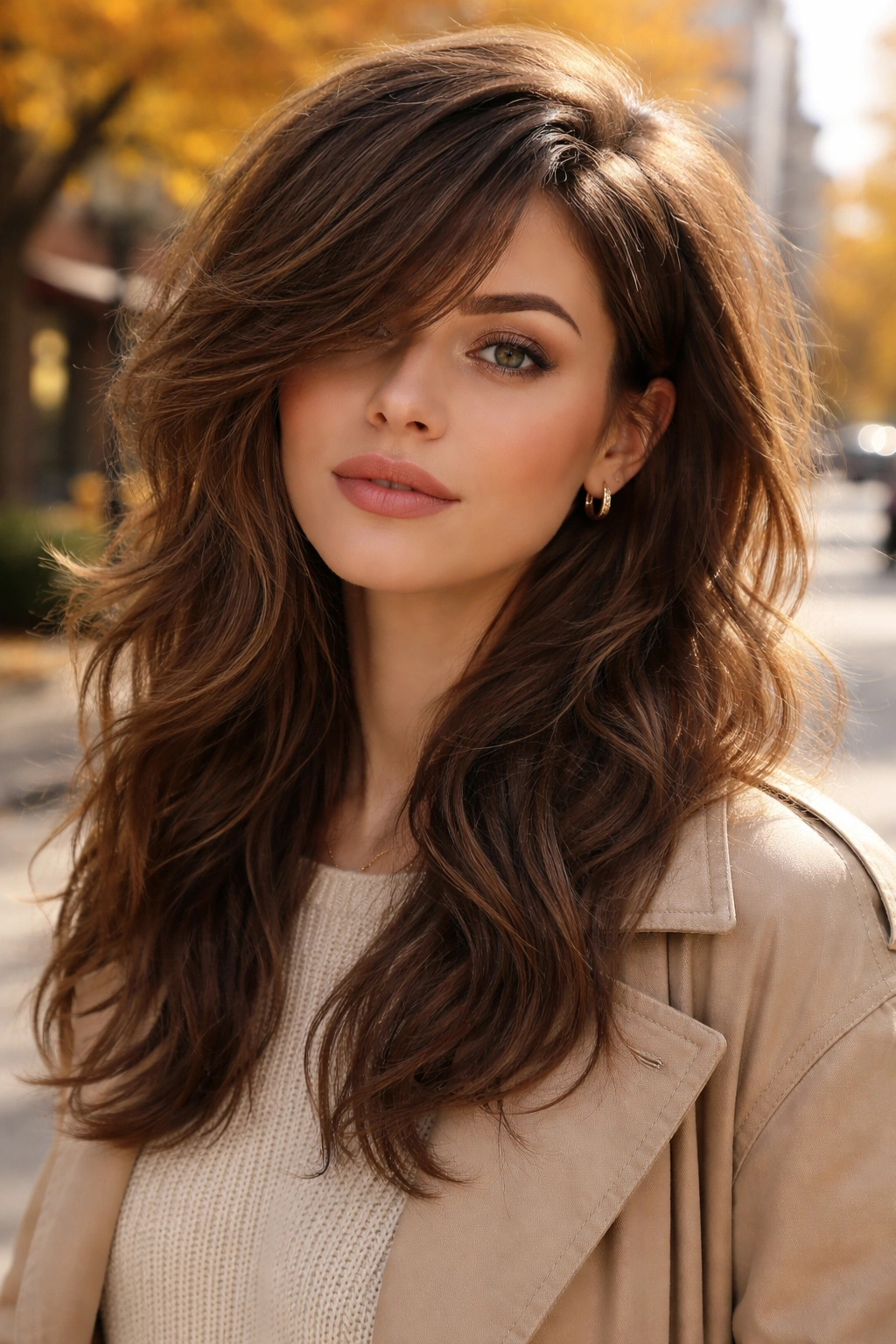
A deep side part changes the whole story of a wolf cut. The layers stay the same, but the silhouette shifts immediately, and wavy hair gets more lift on the heavier side of the part.
Compared with a middle part, this version feels softer at the cheekbones and more dramatic at the crown. It’s also useful if one side of your hair wants to fall flatter than the other. A side part can hide that without making the cut look forced. On wavy hair, it creates a bend that feels a little old-school in the best way.
Best for this shape
- Hair that goes flat at the roots.
- Faces that like a little diagonal framing.
- People who tuck one side behind the ear a lot.
A root spray or a light mousse at the front will keep the part from collapsing. If you want a more polished finish, blow-dry the front away from the part first, then switch directions. That tiny move gives the root lift that makes the whole cut look fuller.
11. Thick-Hair Wolf Cut with Internal Debulking
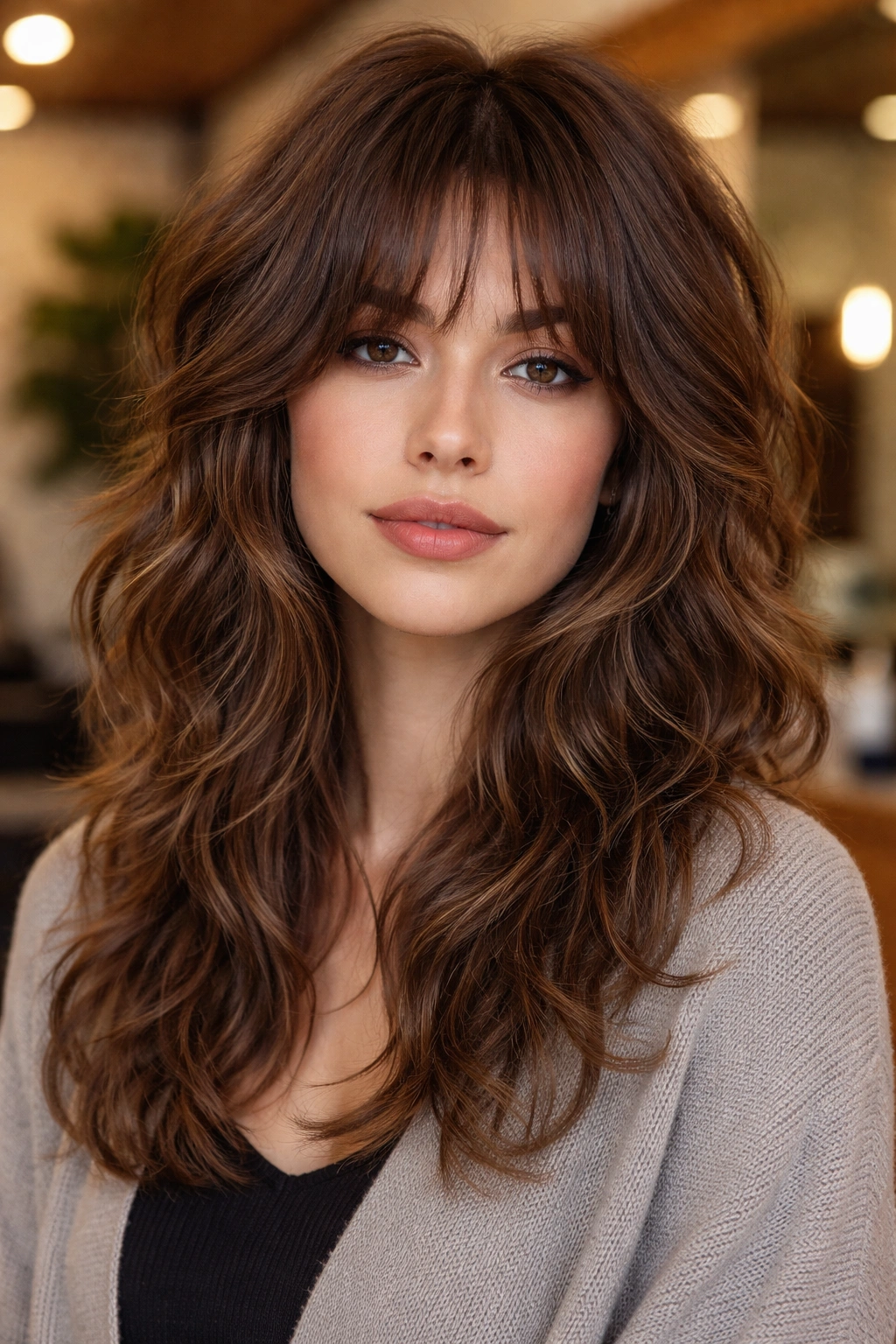
Thick waves need subtraction, not more layers. That’s the whole point of this cut. Internal debulking takes weight out from inside the shape, so the hair moves instead of sitting like one giant mass.
Where the weight should come out
Ask your stylist to remove bulk through the middle sections, not the perimeter. If the ends are thinned too much, the haircut can spread out and lose its edge. Keep the outer line solid enough to hold shape, then let the layers inside do the work.
- The crown should be lifted, not over-cut.
- The lower layers should keep enough density to avoid a see-through finish.
- The face frame should stay soft so the cut does not feel boxy.
This version is a lifesaver if your hair balloons in humidity or turns heavy under scarves and coats. It also cuts down on blow-dry time, because there’s less mass fighting against your brush. Thick hair still needs a little control, but it should not feel like a workout every morning.
12. Fine-Hair Wolf Cut with Airy Layers
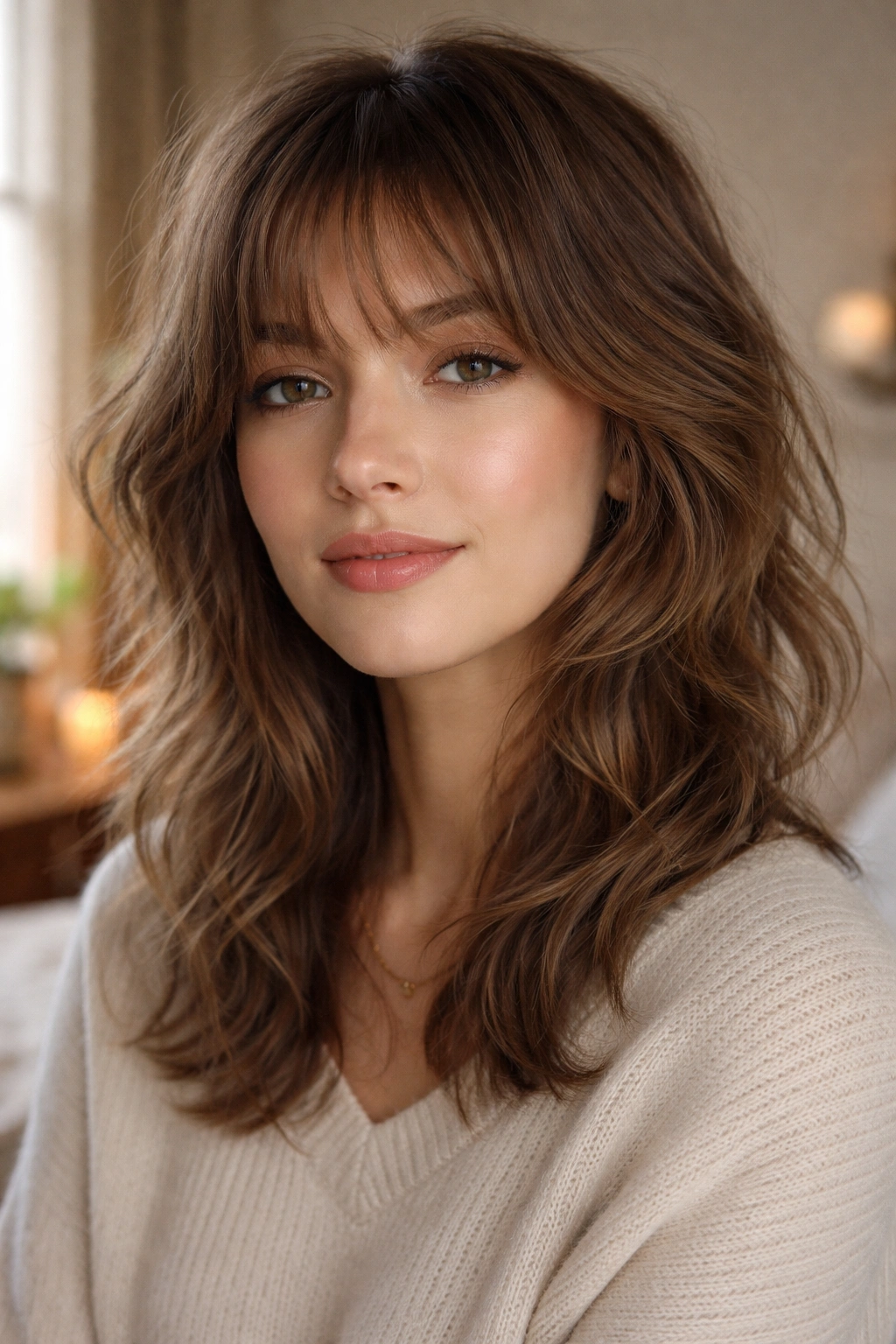
Can fine waves wear a wolf cut? Yes, if the layers are cut with restraint. Too many short pieces can make the crown look see-through, and that is the mistake I see most often.
The better move is to keep the shortest layers around cheekbone level and avoid carving too high into the top. That gives the hair a lift without stripping out the density it needs to look full. A soft fringe or a long face frame helps, because it adds shape without taking away body.
What to ask for
- Soft texturizing, not aggressive thinning.
- A rounded perimeter that stays a little fuller at the ends.
- Root mousse applied before drying.
Flip your head upside down for a quick blast at the roots if you want more volume. Then stop. Over-drying fine waves can make them frizzy and flat at the same time, which is an annoying little miracle no one asked for.
13. Round-Face Wolf Cut with Cheekbone Pieces
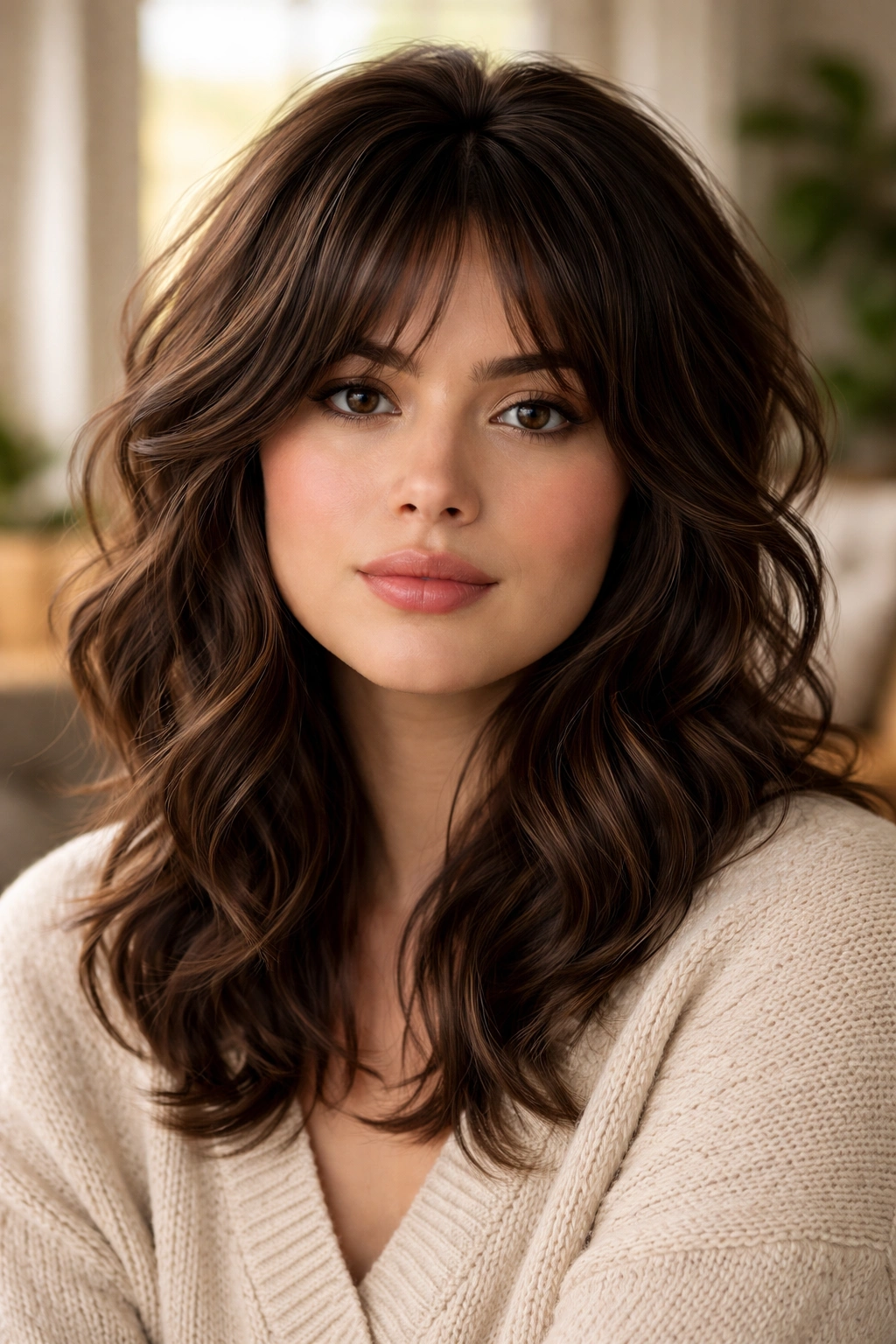
A round face benefits from lines that go up and down instead of side to side. That’s why cheekbone pieces matter here. They draw the eye lower, then back up, which keeps the haircut from widening the face.
The best version starts the shortest face-framing layers below the widest part of the cheeks. That small shift changes everything. If the fringe is part of the cut, keep it longer in the center and let the side pieces sweep outward. It gives the face room.
One detail people miss: crown height helps. A little lift at the top creates length, and that is more useful than adding extra width around the cheeks. This cut works well with loose waves because the bends themselves do some of the shaping.
If you wear glasses, this version can be especially nice. The layers sit around the frames instead of competing with them, which keeps the whole look cleaner.
14. Square-Face Wolf Cut with Softened Edges
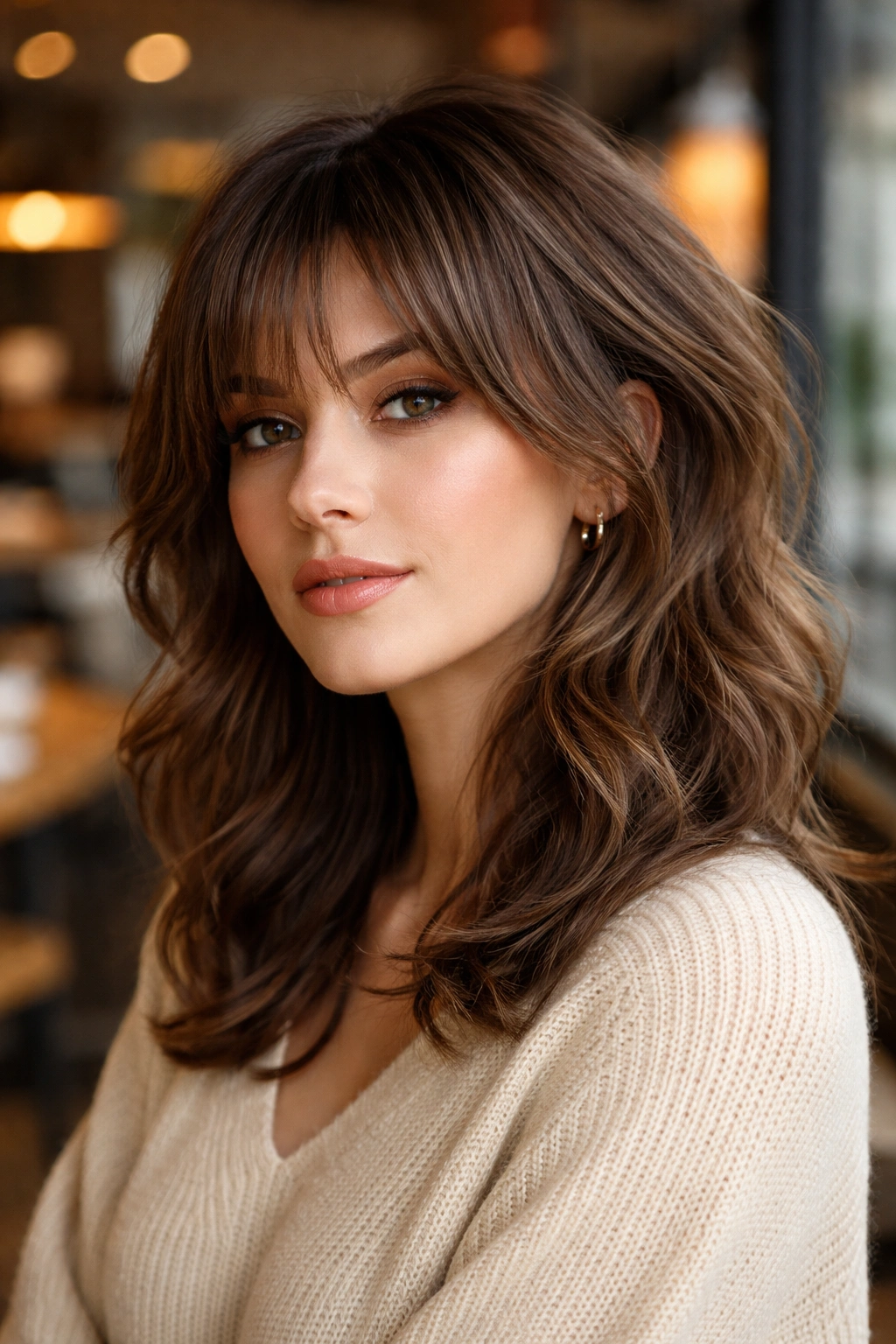
Square faces usually look best when the haircut takes the edge off the jaw without hiding it completely. The wolf cut can do that, but only if the layers are soft and the front pieces bend instead of hanging straight.
The key is movement around the jawline. Short, blunt ends can make a square face look harder; longer, feathered layers soften that effect. I’d keep the face frame starting near the cheekbones and let it taper toward the chin. That gives the haircut shape while still leaving enough structure to feel modern.
A wispy curtain fringe works well here, too. It breaks up the forehead line and keeps the front from looking severe. If your waves are strong, use a diffuser with a low heat setting so the ends keep their curve instead of puffing out.
This is one of those styles that looks better after it settles for an hour. Fresh out of the chair, it may seem too fluffy. Then it falls into place. That’s the good part.
15. Oval-Face Wolf Cut with Shorter Top Layers
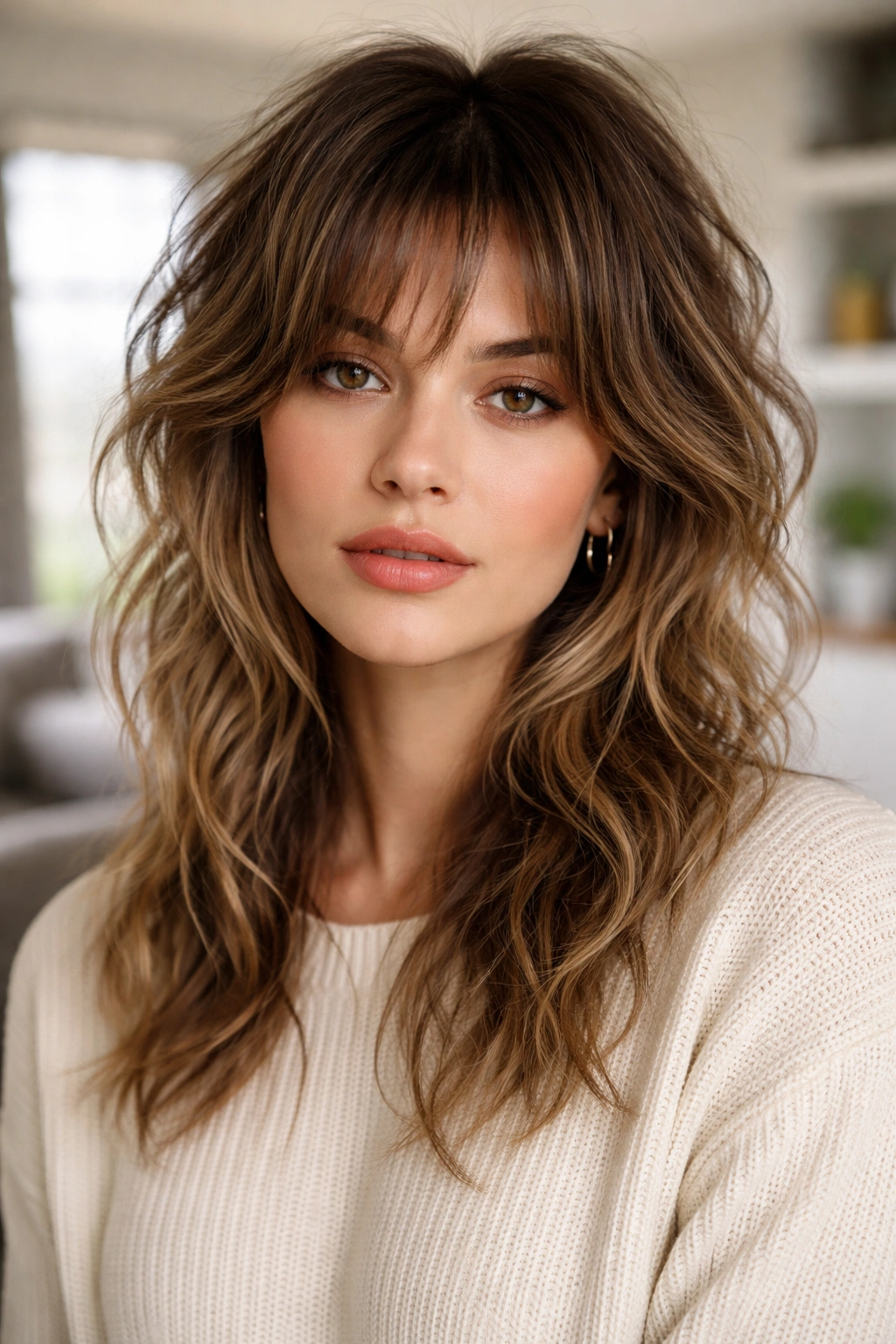
Oval faces can handle more drama at the top, which is why a shorter-layered wolf cut works so well here. You can push the crown higher, shorten the face frame, and keep the overall shape a little sharper without throwing the balance off.
Unlike face shapes that need more correction, oval faces can wear a stronger fringe or more obvious choppy layers. That means the cut can lean edgier. If you want the haircut to look intentional from across the room, this is the version to choose. It gives the waves a chance to lift and break apart instead of hanging quietly.
The sweet spot
- Keep the shortest layers around the temple or upper cheekbone.
- Let the side layers taper fast.
- Use a salt spray only at the roots if you want more separation.
Do not over-smooth this one. A bit of grit helps. The haircut loses its point if you blow every wave straight.
16. Grown-Out Bang Wolf Cut
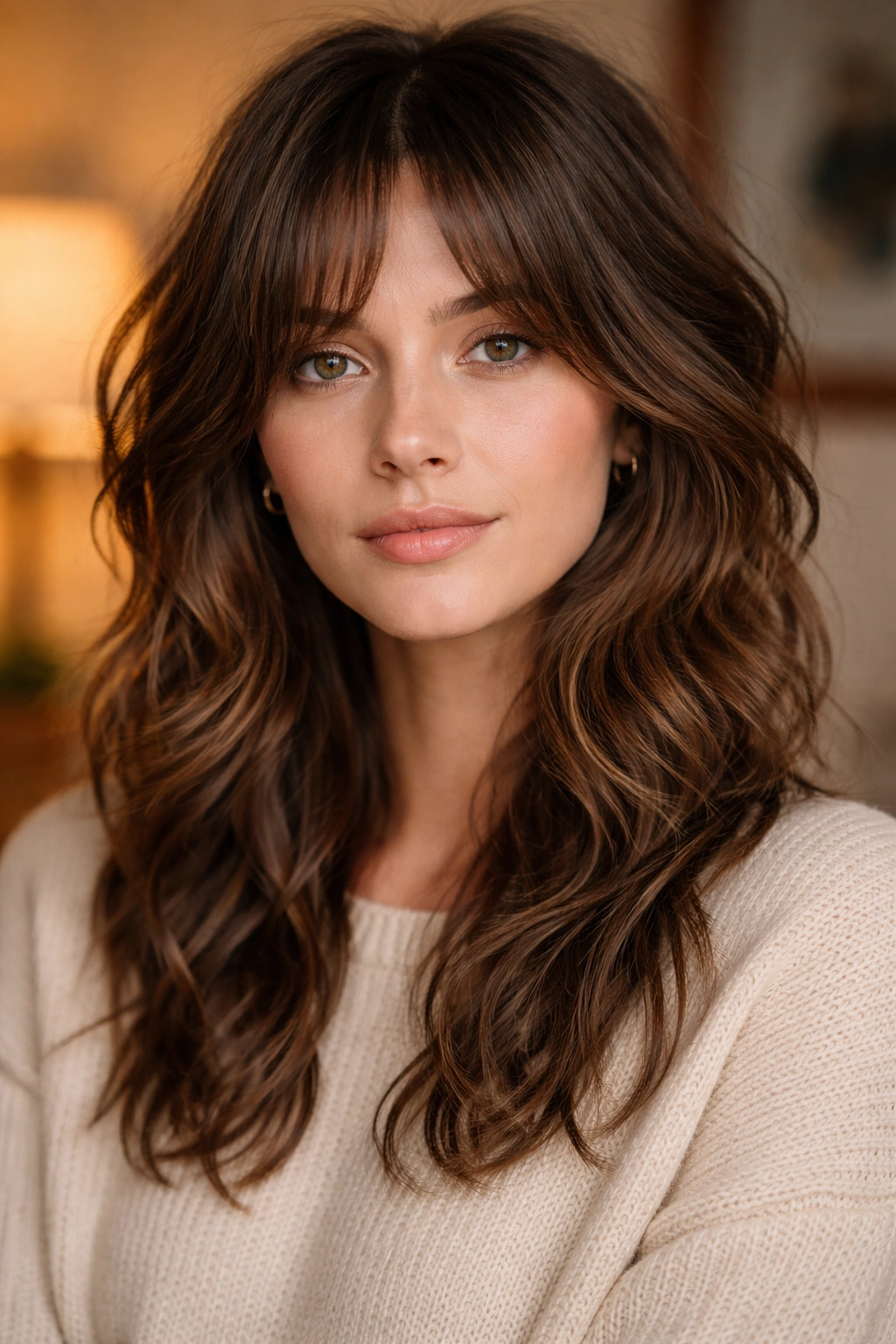
If you hate babysitting fringe, grow it out on purpose. A grown-out bang wolf cut turns that awkward in-between stage into part of the design, which is a much smarter way to deal with it than pretending you’ll trim bangs every three weeks forever.
How to ask for it
Tell your stylist you want a fringe that starts short enough to frame the eyes, then blends into the face frame by the cheekbone. That gives you options. You can wear it center-parted, sweep it aside, or let it fall forward on days when you want a softer look.
- Shortest point: just above or at the brows.
- Side pieces: cheekbone to jaw.
- Transition layers: soft enough to tuck behind the ear.
This version is useful for people who want the feel of bangs without the constant maintenance. The grown-out line also plays nicely with waves, because the texture keeps the fringe from looking too perfect. A little mess is part of the charm. Too much polish would spoil it.
17. Air-Dried Wolf Cut
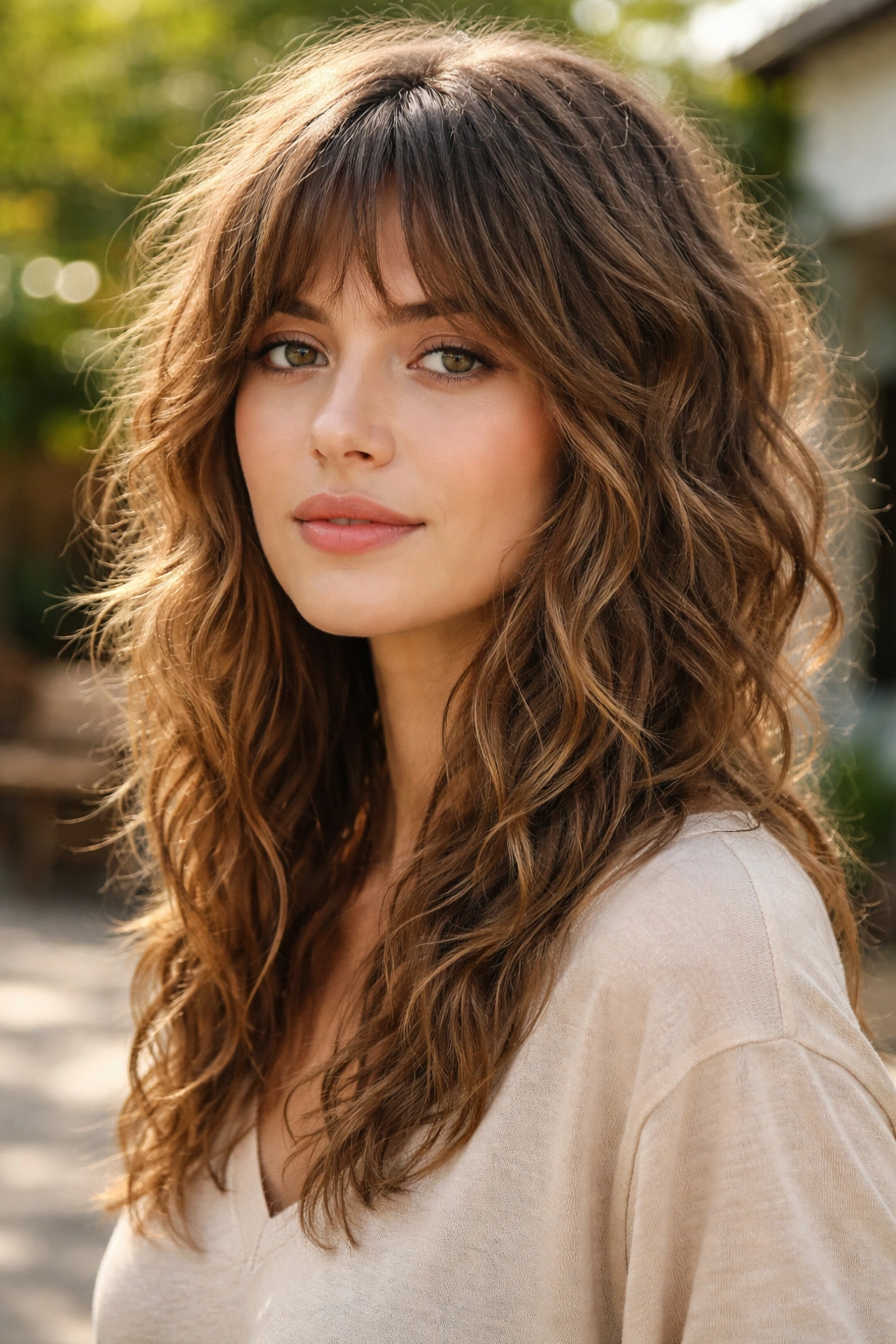
Can a wolf cut look good without heat? Yes, if the layers are cut for your natural bend. That is the whole deal. The wrong cut needs a blow-dryer to make sense; the right one starts making sense the moment it starts drying.
The best air-dried version keeps the top layers light and the ends soft enough to separate naturally. A little curl cream or foam on damp hair helps, but don’t drown it. Heavy product makes waves stretch out and lose the broken texture that gives the haircut its shape.
Scrunch once. Then leave it alone. That part matters more than any fancy trick. If you keep touching the hair while it dries, you’ll break up the wave pattern and end up with frizz in all the wrong places.
This cut shines on days when you want to wash, air-dry, and go. No round brush required.
18. Blowout Wolf Cut with Bouncy Ends
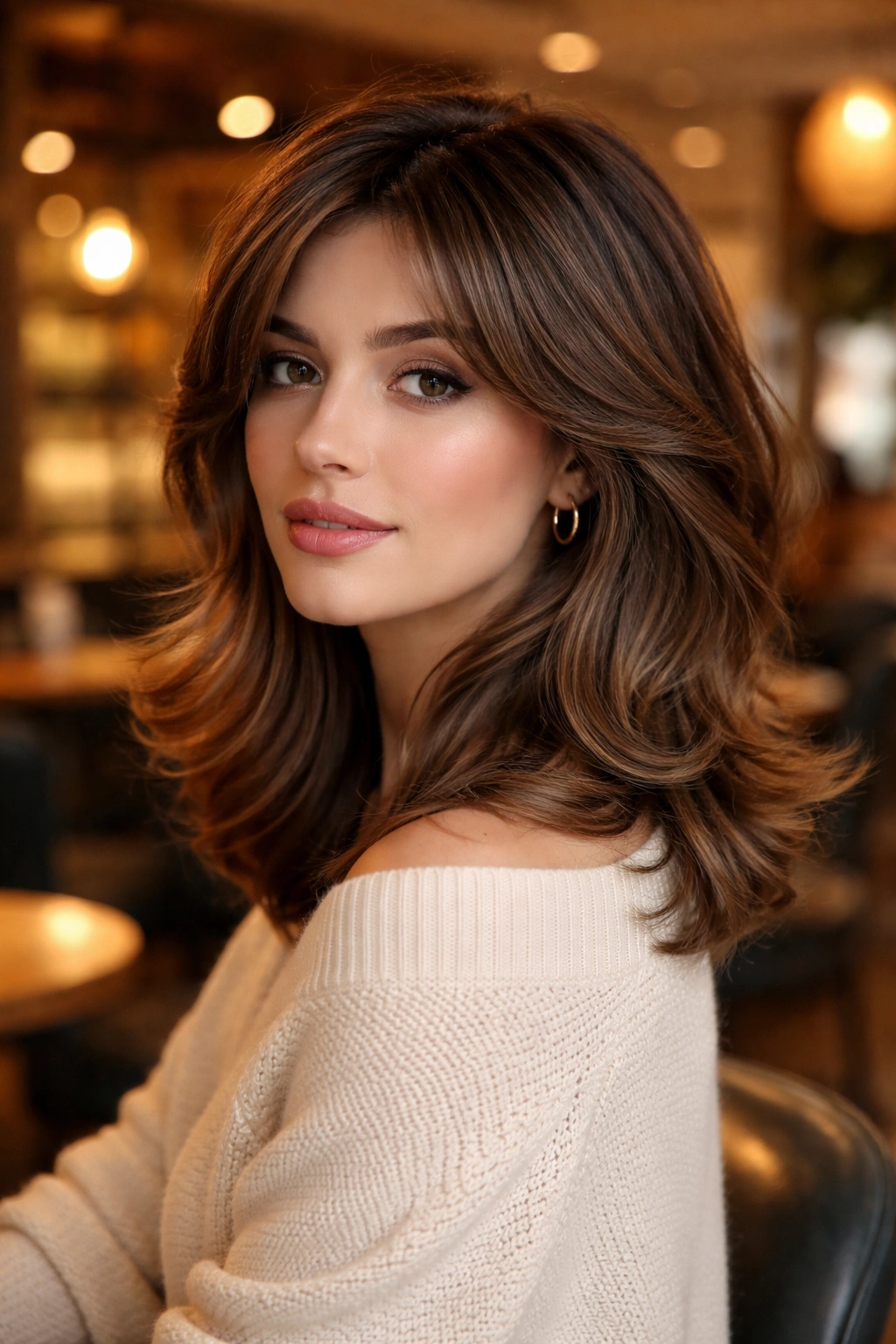
A blowout wolf cut takes the same layered shape and gives it a more finished edge. Think lifted roots, soft bend through the mids, and ends that flick outward just enough to feel styled.
The trick is to rough-dry first, then use a round brush or hot brush on the top layers and the face frame. Keep the brush movement controlled. You want bend, not a blown-flat finish that erases the wolf cut. A cool shot at the end helps the curve hold its shape.
A simple styling order
- Start at the crown and lift the roots.
- Work the face frame away from the face.
- Curve the ends under or out, depending on the look you want.
- Let the hair cool fully before touching it.
This version works when you want the haircut to feel a little more dressed up. It’s good for dinners, events, and any day when your waves need to look deliberate. The bounce makes the layers stand out in a cleaner way.
19. Dark Brunette Wolf Cut with Caramel Ribbons
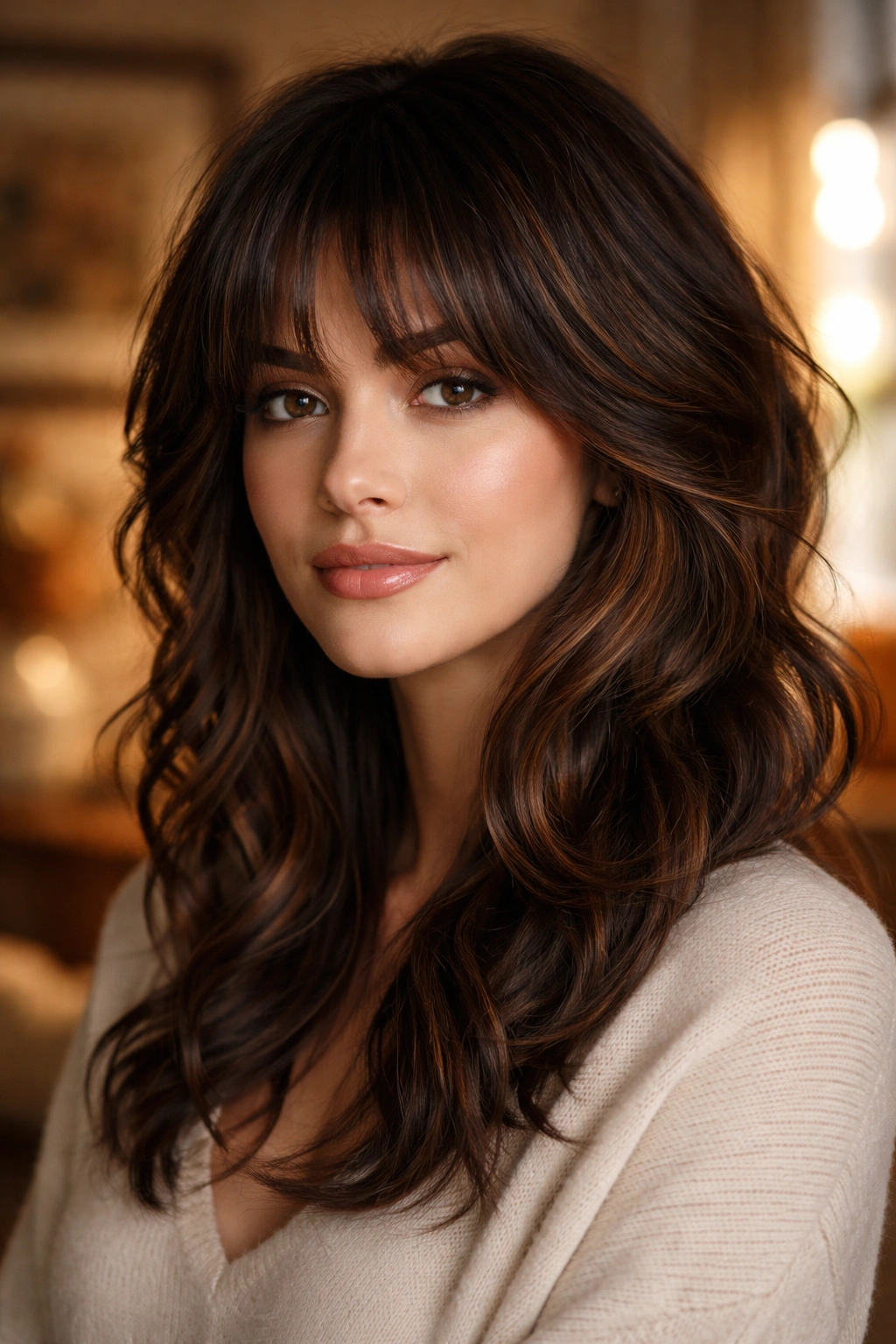
Dark brunette hair gets a huge lift from caramel ribbons, especially when the layers are broken up the way a wolf cut does it. The lighter strands catch the eye at the face frame and through the ends, so the haircut looks richer without needing a full color overhaul.
This works best when the ribbons are placed where the movement already lives. Around the cheekbones. Through the lower layers. A little around the bangs if you wear them. If the highlights are chunked in the wrong place, the style can start looking stripey, and that ruins the softness.
A gloss can keep the darker base from going flat. That matters because a wolf cut depends on contrast. The layers need depth to show up. Hair that is all one tone can still look good, but it will not have the same dimension when it moves.
I like this version for cooler months because it feels warm without looking too red or too gold. There’s a quiet richness to it that works with heavier knits and darker clothes.
20. Blonde Wolf Cut with Shadow Roots
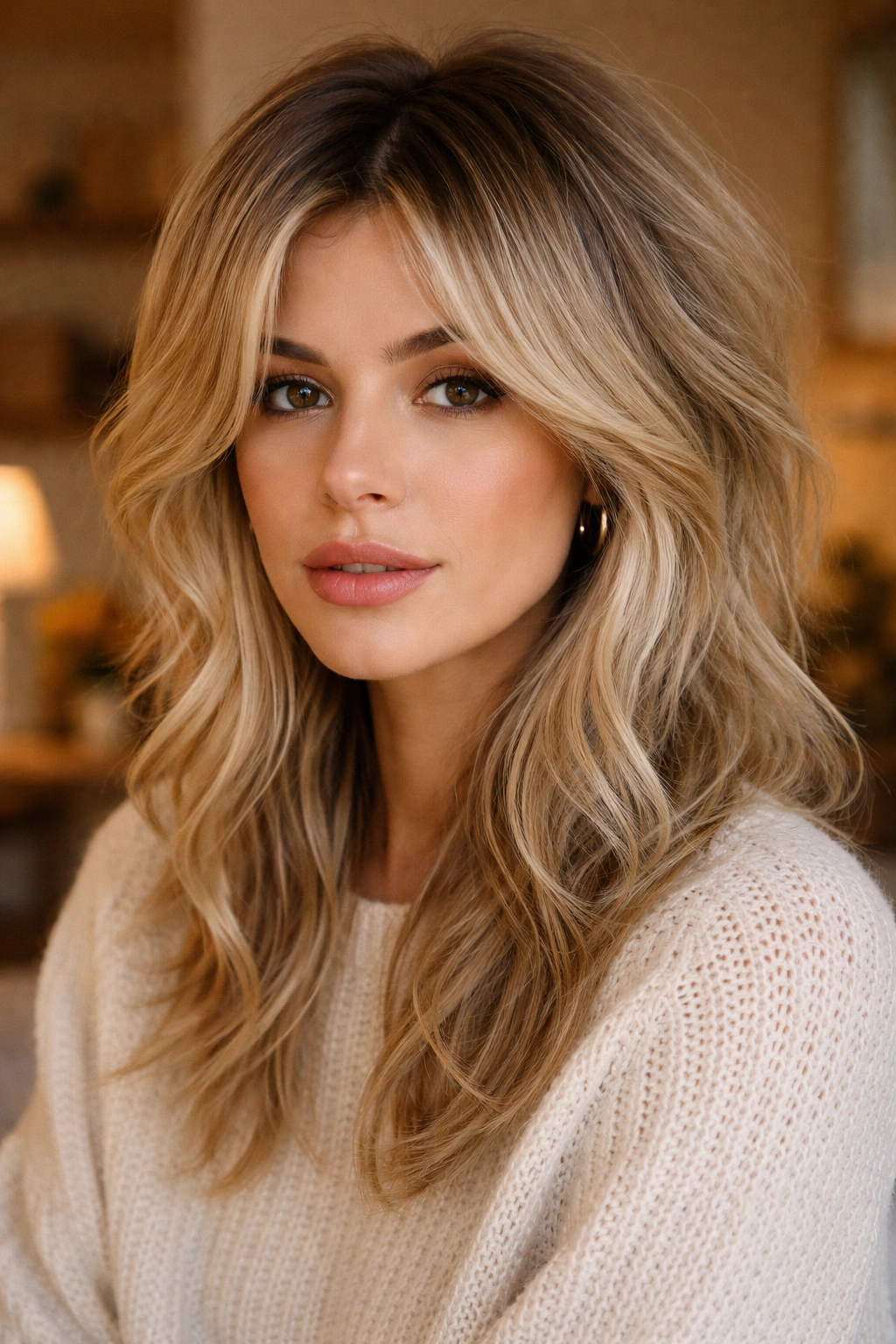
A shadow root saves blonde hair from looking too bright and a little bit flat. That root depth gives the wolf cut somewhere to start, which makes the layers read more clearly as the hair moves.
Compared with a bright all-over blonde, this version feels easier to wear. The darker roots soften the grow-out line, and the lighter mids and ends keep the shape from disappearing. On wavy hair, that contrast is useful. You can actually see the bends. Without it, the cut can blur.
Best way to wear it
- Keep the root shade one or two levels deeper than the blonde mids.
- Ask for face-framing pieces that are lighter than the rest.
- Finish with a shine spray, not a heavy oil.
This is a smart choice if you want brightness but do not want your roots screaming for attention after two weeks. The cut and the color do some of the same work: both create movement. That’s why they play nicely together.
21. Silver Wolf Cut with Soft Texture
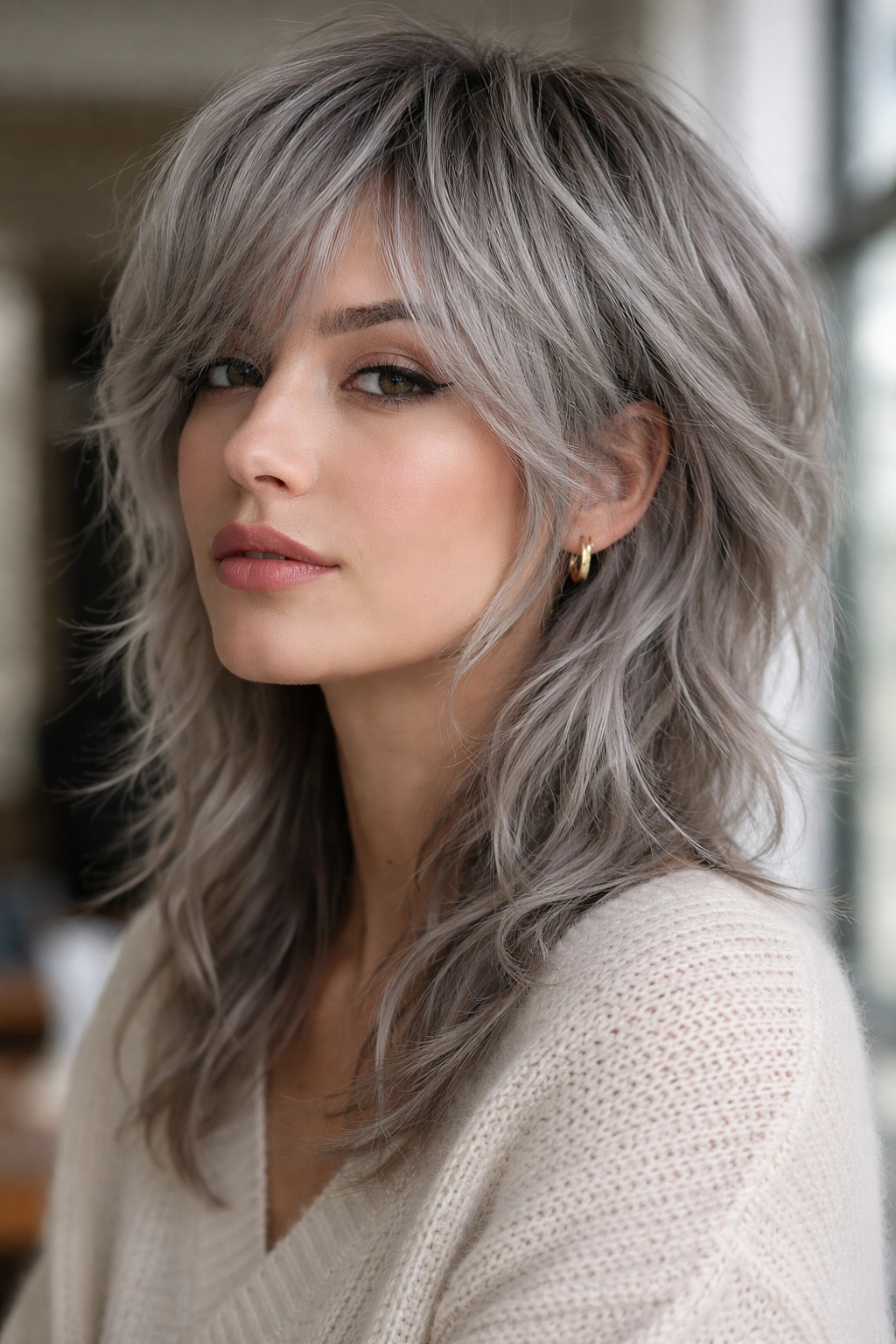
Gray and silver hair looks strongest when the cut respects the texture. A silver wolf cut does that by keeping the shape airy around the ears and crown while leaving enough length for the waves to bend naturally.
What makes it work
The texture can be a little more wiry or dry than pigmented hair, so heavy layering can backfire fast. Keep the layers soft and the ends skimming, not shredded. That preserves body. A light oil on the mids and ends helps the surface feel smoother, but too much product will flatten the shape.
- Use purple shampoo sparingly so the tone does not go dull or smoky.
- Ask for soft point-cutting rather than harsh razoring.
- Keep the fringe longer if your hair likes to puff up at the front.
This version feels clean and modern without trying too hard. The silver tone already has presence. The cut only needs to support it, not compete with it.
22. Micro Fringe Wolf Cut
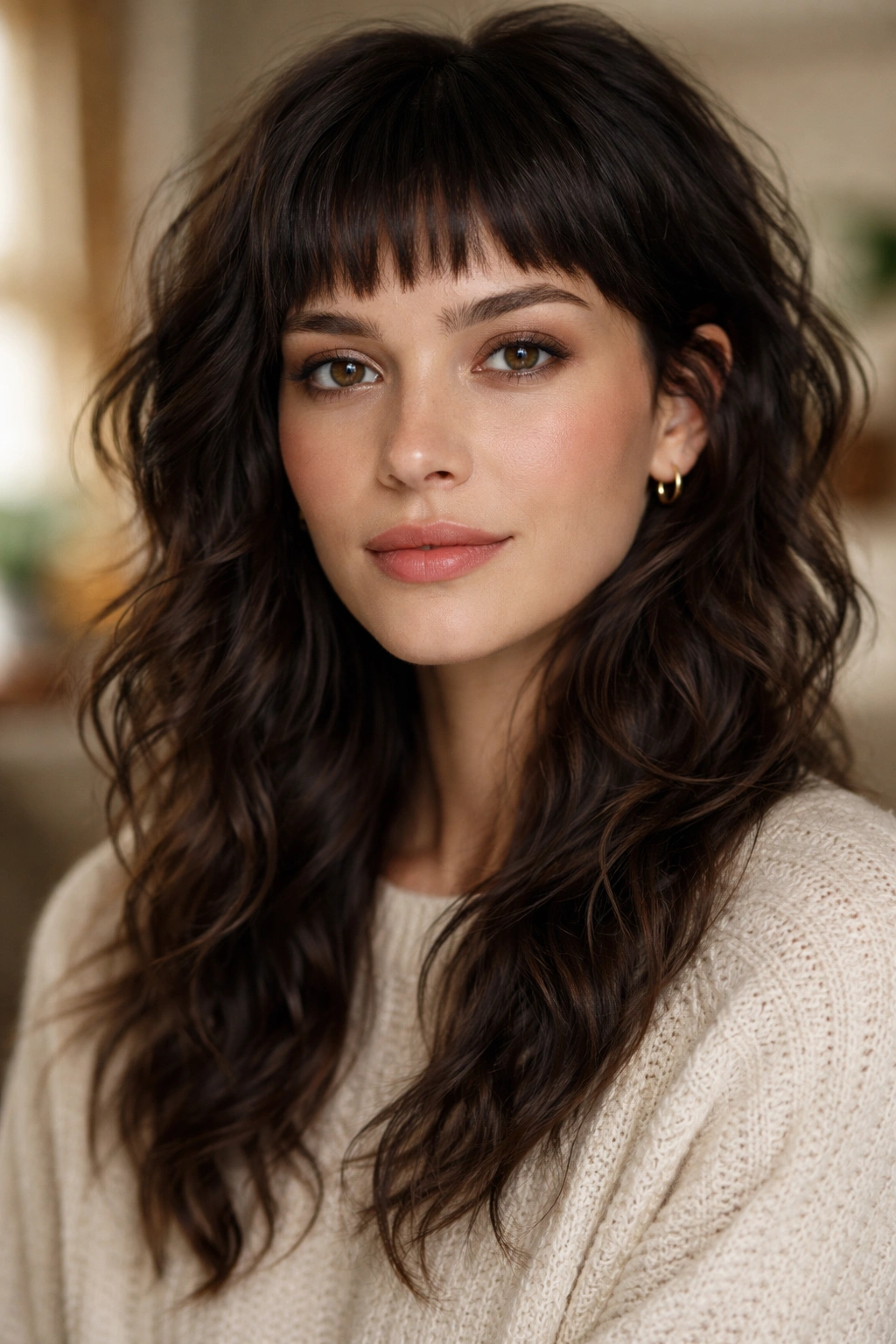
Do you want the cut to look sharper? A micro fringe does that in a single move. It shortens the front enough to create contrast, then lets the rest of the wavy wolf cut stay loose and layered.
This is not a lazy choice. The short bang asks for regular trim appointments and a little morning styling, because it can stick up or separate in odd ways if you ignore it. Still, when it works, it looks crisp in a way longer fringe never quite can. On wavy hair, the contrast between the short front and the softer lengths below feels fresh without being fussy.
Things to keep in mind
- The fringe should sit well above the brows.
- The rest of the layers should stay soft enough to balance the sharp front.
- A small flat brush or quick blow-dry helps tame cowlicks.
I’d recommend this version for people who like a little edge and don’t mind being noticed first in the front.
23. Wolf Cut with Long Face Frame
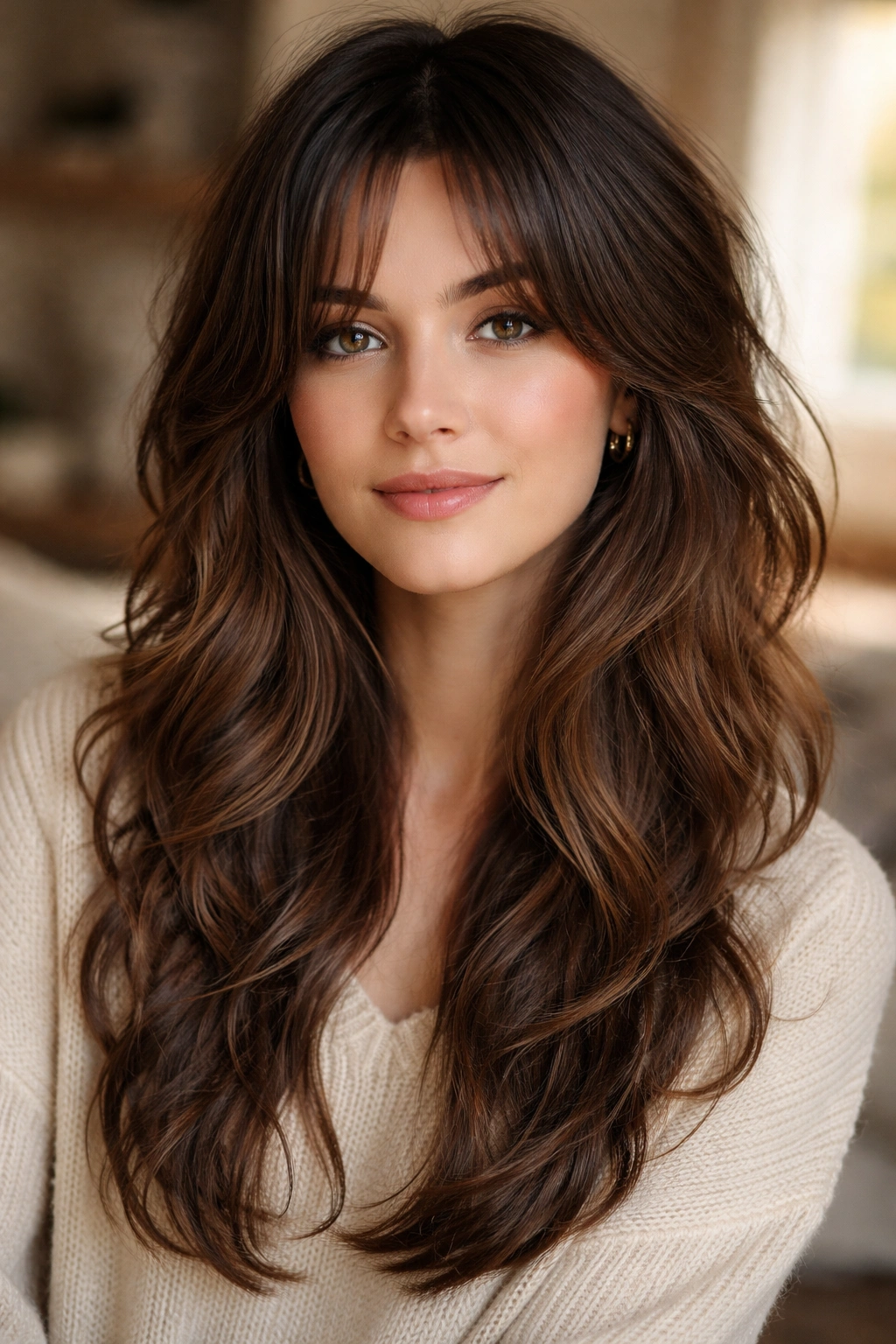
A long face frame is the easiest way to make a wolf cut feel softer and more wearable. The front pieces start lower, usually around the lip or jaw, then taper into the rest of the layers so the cut keeps movement without looking chopped up.
That length helps if you like to wear your hair half-up, clipped back, or tucked behind one ear. Shorter front pieces can disappear in those styles. Longer ones stay visible, which makes the cut look finished even on messy days.
The shape also works well for wavy hair that bends unevenly. If one side has more curl than the other, the longer frame hides the mismatch better than a short bang would. That is not a small thing. Hair rarely behaves symmetrically, and this cut understands that.
This version feels relaxed. It’s less about drama and more about letting the wave pattern show up in a controlled way.
24. Lob-to-Wolf Cut Grow-Out
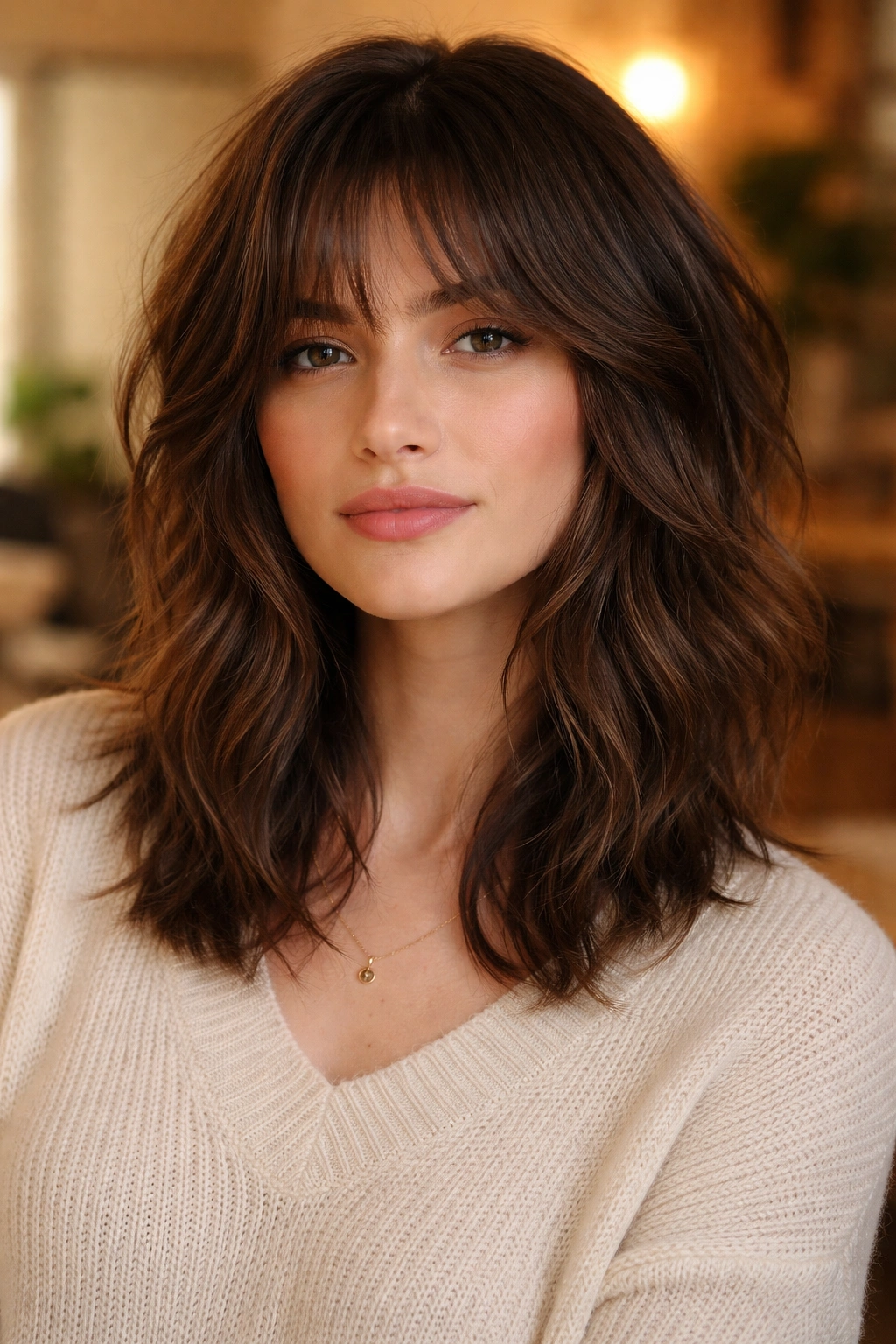
If you’re moving from a lob into something softer and more layered, this is the cleanest path. A lob-to-wolf cut grow-out keeps enough length to avoid a choppy jump, while the added layers slowly turn the shape more undone.
The perimeter should stay around collarbone length at first. Then the stylist can build in movement through the crown and face frame. That way the haircut shifts over time instead of looking like two cuts fighting each other. Wavy hair is good at hiding the transition, which is handy. The bend makes the layers blend before the eye notices the exact line.
This is also the least stressful way to test the wolf-cut shape. You do not need to commit to a dramatic fringe or a short top. You can ease into the texture and decide later whether you want more edge.
Awkward stage? Not really. If the layering is done well, the grow-out looks planned.
25. Long Sweeping Wolf Cut
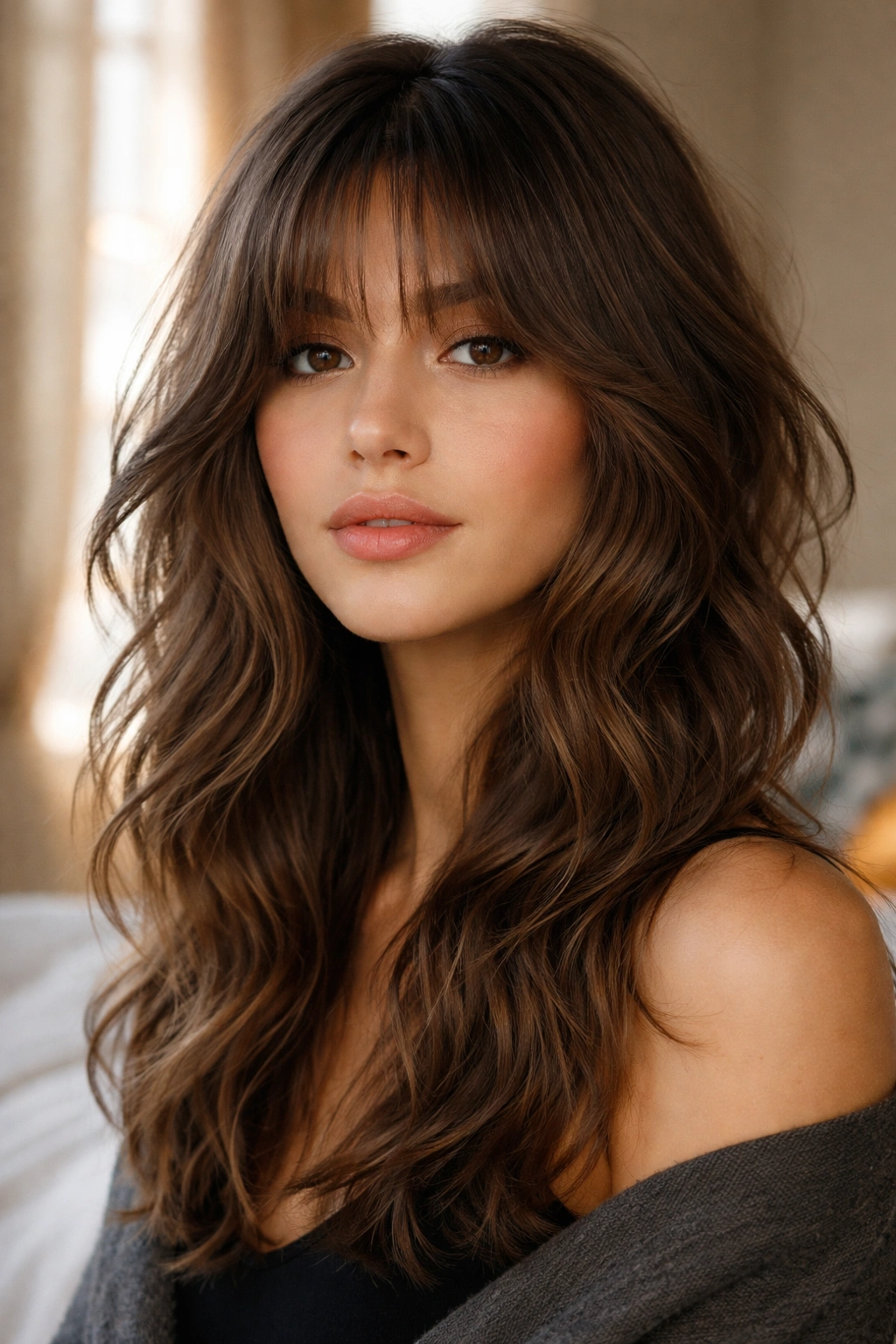
If you want one version that can live with you for a while, make it this one. A long sweeping wolf cut keeps the silhouette soft, the layers visible, and the styling simple enough that it does not start running your mornings.
Compared with shorter wolf cuts, this version stays calmer around the neckline and works better with hats, scarves, and longer coats. The longest layers still move, but they do not get swallowed by winter clothes. That matters more than people think. A haircut that disappears under layers of fabric is a haircut you stop enjoying.
The best version uses a sweeping fringe or a long face frame, plus enough internal layering to keep the wave pattern alive. I’d call this the safest final pick if you want texture without drama. It still has attitude. It just doesn’t demand much in return.
And that is probably the appeal here: you get shape, movement, and a cut that can handle real life without turning into a styling project every morning.