



A bubble ponytail on locs has a particular kind of appeal: it looks styled, but not stiff; playful, but still polished. The trick is in the spacing. Put the elastics too close together and the ponytail looks cramped. Leave too much room and the shape falls apart before it even gets a chance to show off.
Locs are a little different from loose hair, and that’s what makes bubble ponytails for locs worth learning properly. They hold shape with more weight, more texture, and a lot more personality. A medium-size loc can create a clean round section on its own. A thicker loc may build a fuller bubble with almost no effort. Fine locs need a bit more planning, especially if you want each section to read clearly from the front.
There’s also the scalp side of things. Tight elastics at the hairline are not cute once they start pulling, and rubber bands can snag if you rush. Smooth, snag-free bands, clean parting, and dry locs make a bigger difference than people think. Little things matter here. A lot.
So the smart move is to treat the style like a series of small decisions instead of one big ponytail. Height, spacing, parting, accessories, and bubble size all change the mood. Start with the cleanest version first.
1. Classic High Bubble Ponytail
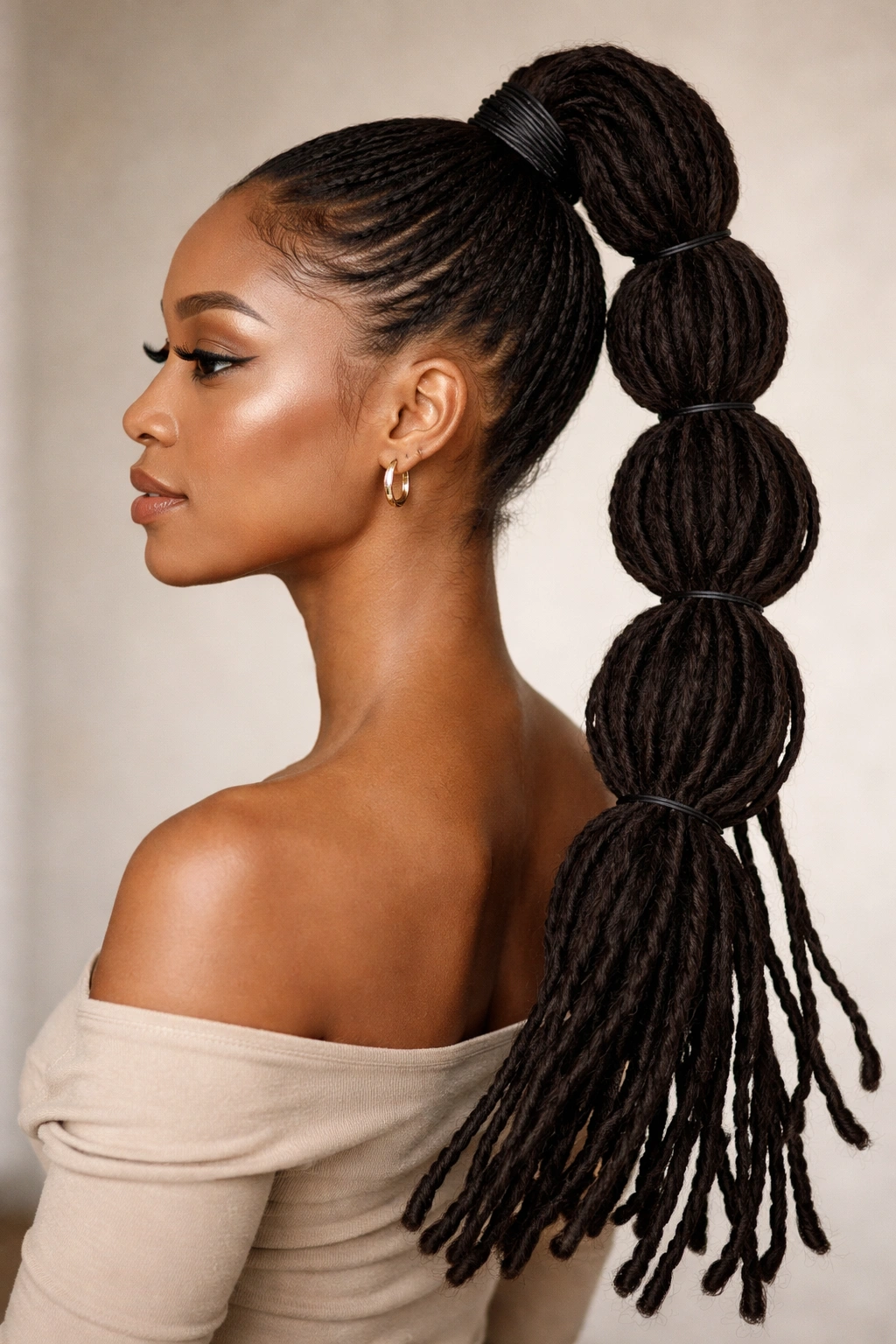
The high version is the one most people picture first, and for good reason. It sits at the crown, gives the face a lifted look, and turns the length of your locs into the main event. On long locs, the bubbles fall with a nice heavy swing. On medium-length locs, they sit more compactly, which can look even sharper.
I like this style because it does not need a lot of extras to work. A clean section at the front, a secure base ponytail, then elastics placed every 2 to 3 inches down the tail. That spacing keeps each bubble readable. Too tight, and the locs bunch. Too loose, and the whole thing loses its shape by lunch.
Wear it when you want something bold without leaning into a full updo. It photographs well from the side, from behind, and in motion. That matters more than people admit.
2. Low Bubble Ponytail at the Nape
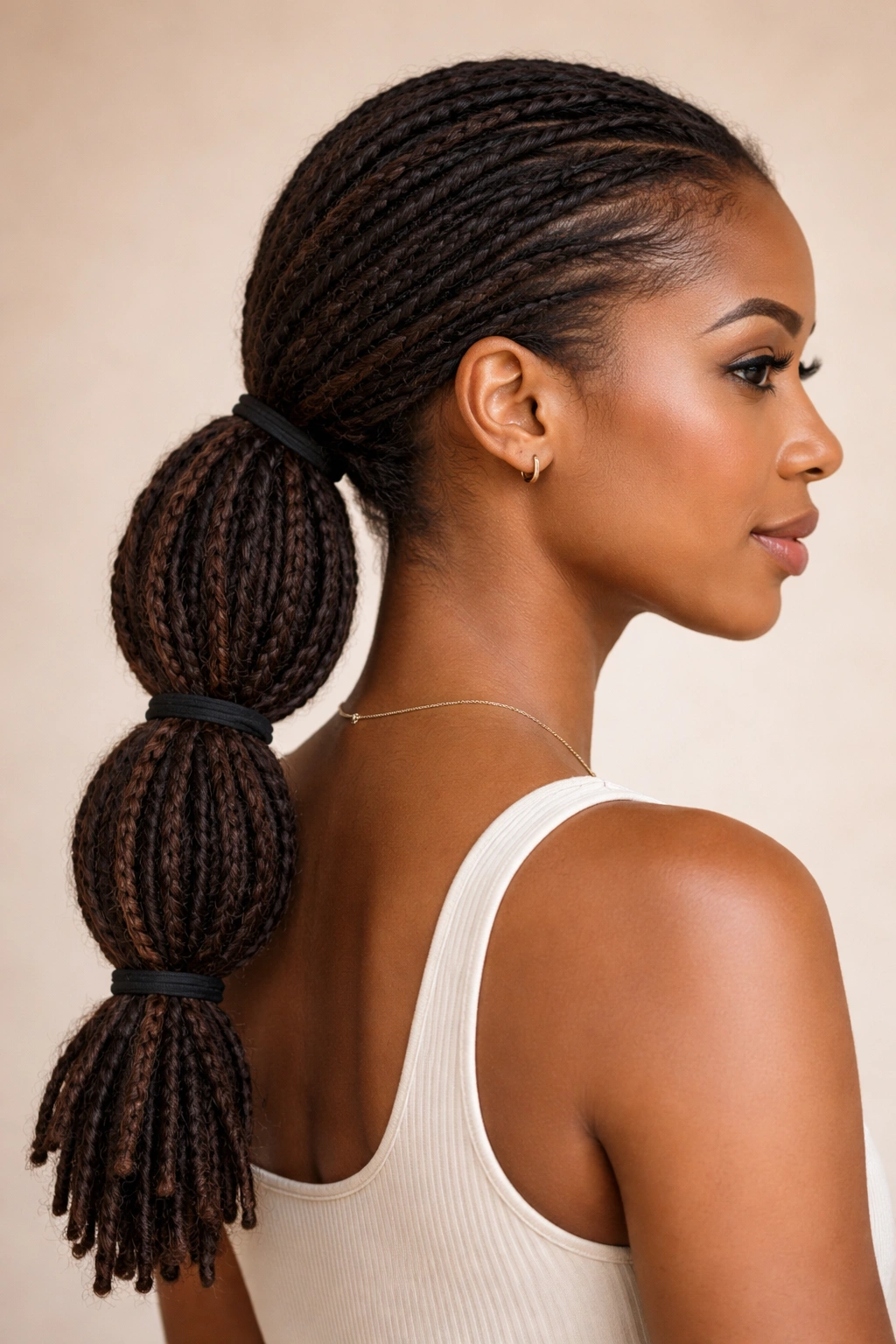
Why does the low bubble ponytail feel so polished? Because it sits close to the neck and lets the locs fall in a neat line instead of fighting for height. It also tends to feel gentler on the scalp, which is a relief if you already know what a heavy high pony can do after a long day.
What Makes It Work
A low ponytail lets the bubbles look fuller because the weight hangs downward instead of pushing outward from the crown. That means you can often get away with fewer elastics and still keep a strong shape. It also gives you a clean profile from the side, especially if your locs are medium to long.
- Place the base ponytail at the nape, not higher.
- Keep the first bubble a little longer than the rest.
- Use matte elastics if you want the style to look quiet and neat.
- Pull the sections apart with your fingers after securing each band.
My favorite part: the low bubble ponytail looks intentional even when it is very simple.
3. Half-Up Bubble Ponytail
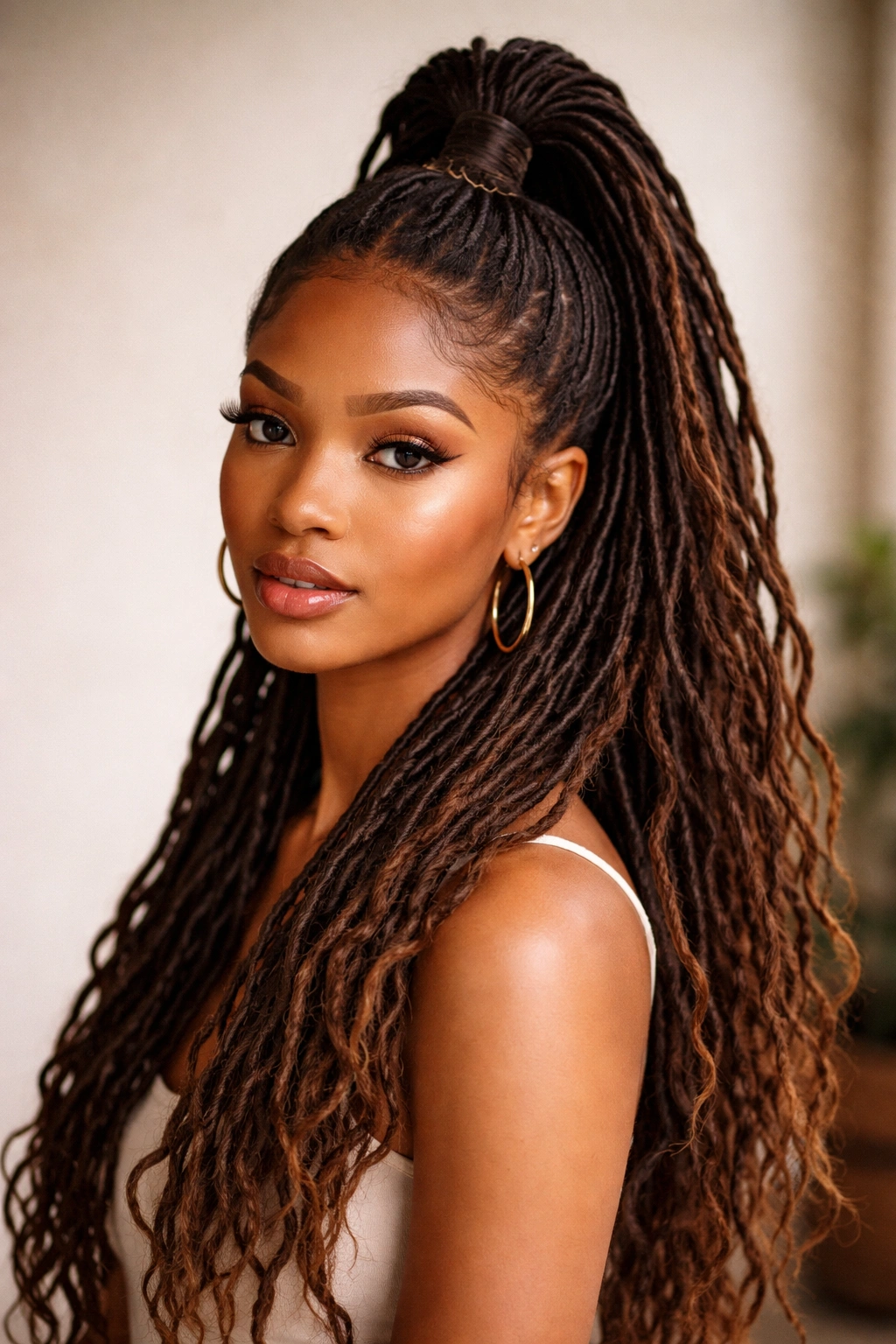
A half-up bubble ponytail on locs has an easy charm to it. You get the lift and shape up top, but you still keep plenty of length down your back, which is the whole point for a lot of people. It feels less formal than a full ponytail and less plain than wearing the locs loose.
This one works especially well if your locs have different lengths. The half-up section creates structure, while the rest of the hair softens the look. You can leave the lower locs straight down, curl the ends, or add cuffs to only the top section. No need to make it complicated.
If your face shape benefits from height at the crown, this is an easy win. The top section pulls the eye upward, and the loose locs keep the style from looking severe. That balance is why people keep returning to it.
4. Side-Swept Bubble Ponytail
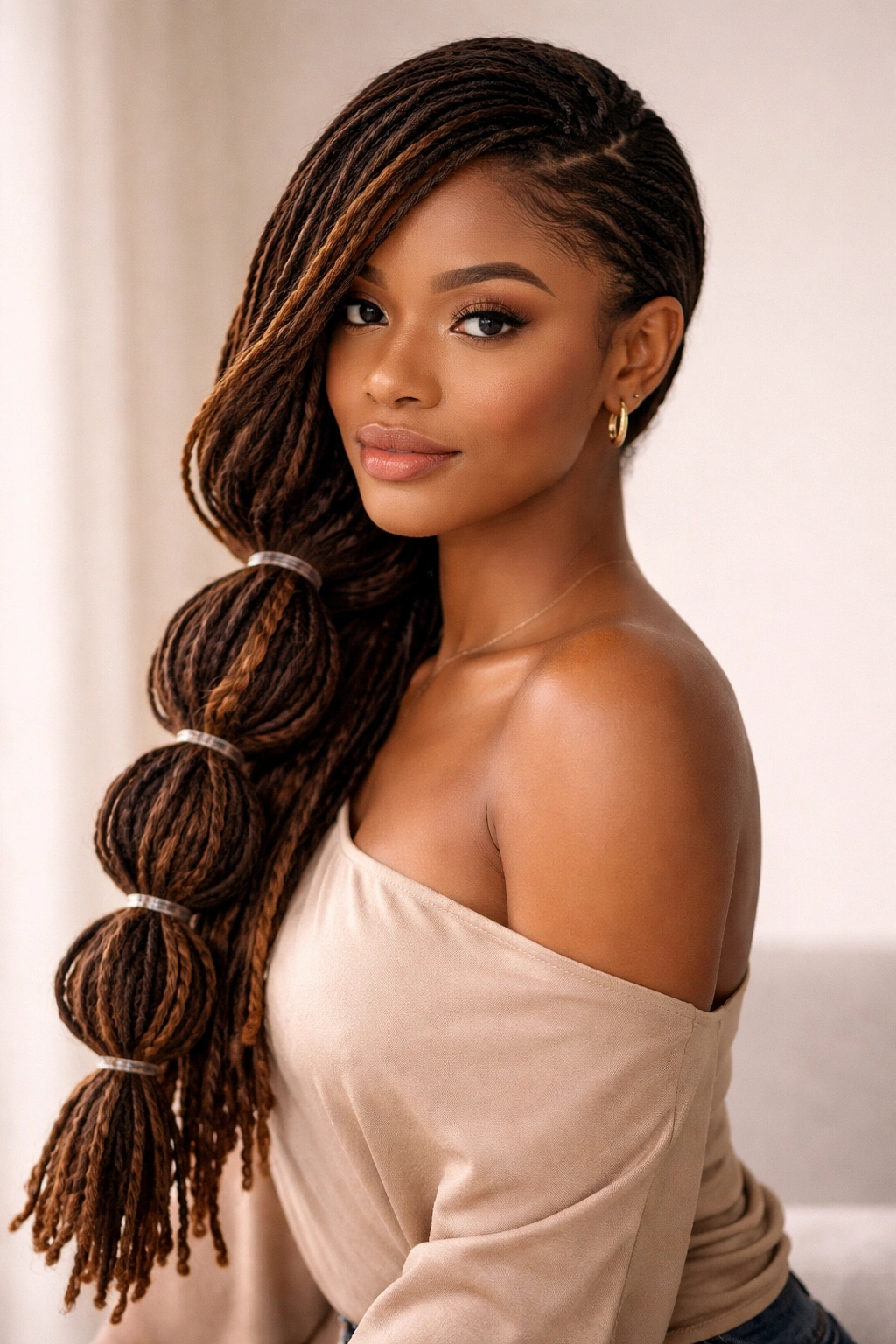
The side-swept version has more attitude than the centered one. It starts with a part that favors one side, then carries the bubble ponytail across the back or over one shoulder. That slight off-center placement changes the whole mood. It feels softer, a little more styled, and less expected.
I like this for locs with color in them. A side sweep shows off highlights, dyed tips, or mixed shades much better than a straight-back style does. It also flatters locs that are dense around the crown, because the sweep breaks up the mass and keeps the silhouette from looking blocky.
If you wear earrings, this is the style that shows them off. The ponytail moves the locs away from the ear just enough to let the jewelry do its job. Small detail. Big difference.
5. Center-Part Bubble Ponytail
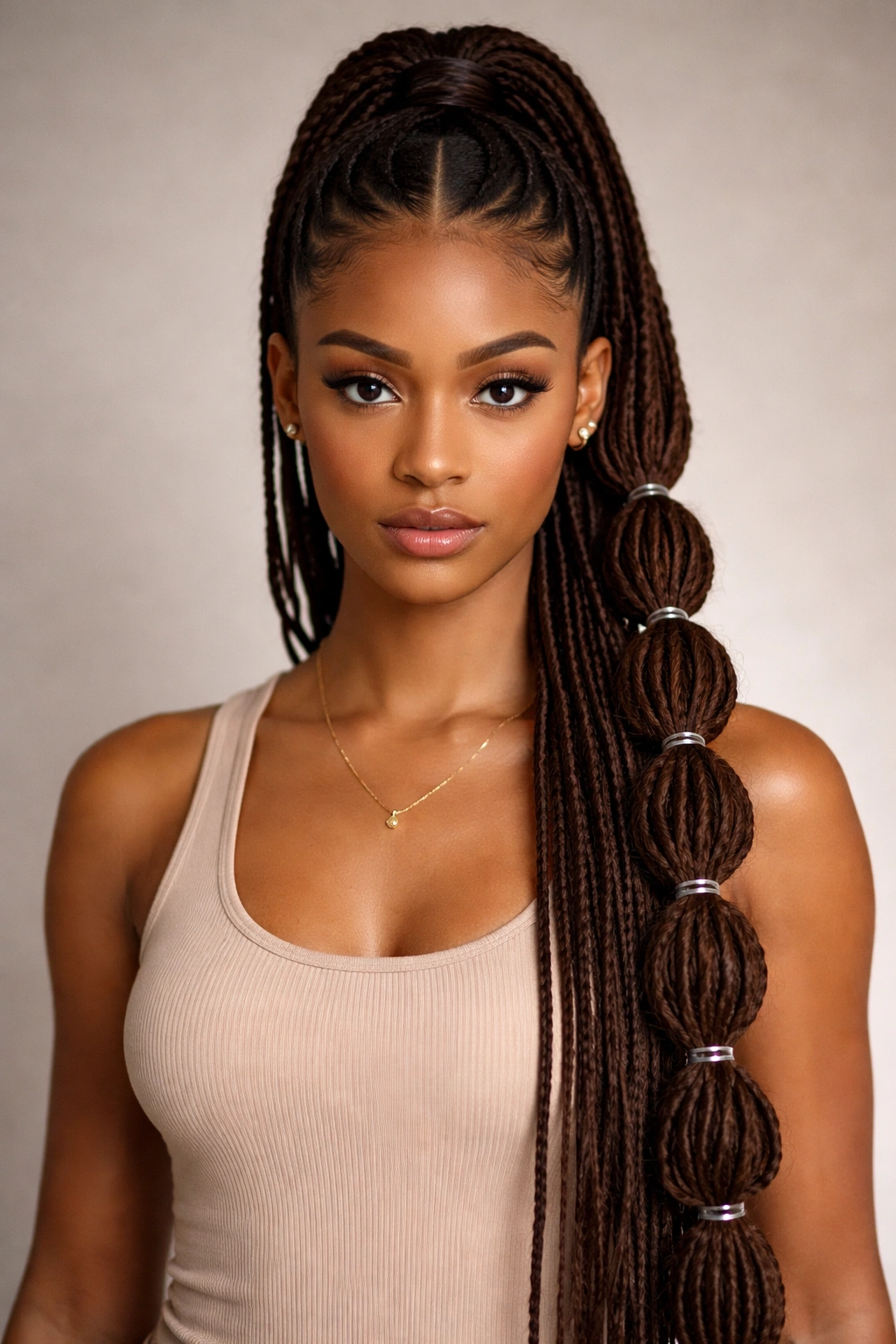
A center part can be brutal if the lines are uneven, but when it is clean, the result is worth the effort. The symmetry gives the bubble ponytail a sharp backbone. Everything feels deliberate, from the front section to the way the bubbles fall straight down the middle.
The Shape That Makes It Land
What matters most here is the part itself. If the part is crooked or fluffy, the whole look loses its crisp edge. Once the part is set, keep the base ponytail centered and space the elastics evenly so the bubbles stay balanced on both sides.
- Use a rat-tail comb for a straight part.
- Smooth the roots before tying the base ponytail.
- Keep both sides equal in tension.
- Choose medium bubble sections so the style stays tidy.
Tiny detail, huge payoff: a center part looks best when the front is flat but not shellacked.
6. Double Bubble Ponytail Pairs
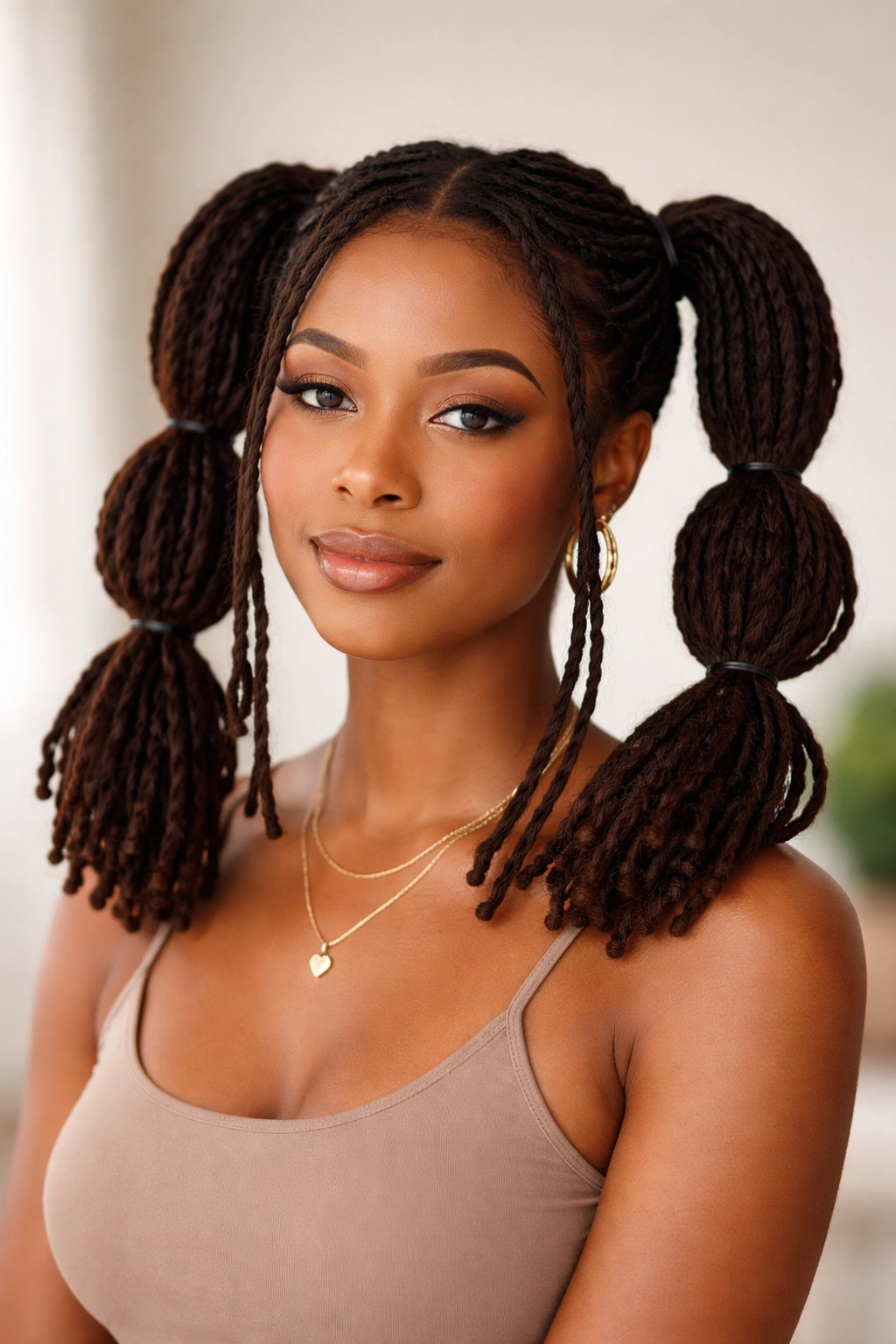
Two bubble ponytails are better than one when you want a playful look that still feels neat. Think of them as a split version of the classic style, with each side getting its own bubble chain. On locs, that creates a fun rhythm because the texture already has enough weight to keep the ponytails from looking thin.
This version is especially nice if your locs are shoulder length or just past it. A single long ponytail can sometimes feel too heavy for that length. Two smaller bubble tails solve that problem and keep the proportions in check. They also work well for casual days when you want something clean but not formal.
There’s a practical side too. The weight gets divided, so the style can feel easier on the scalp. That is not a small thing. Anyone who has worn a heavy ponytail for hours knows exactly what I mean.
7. Wrapped Elastic Bubble Ponytail
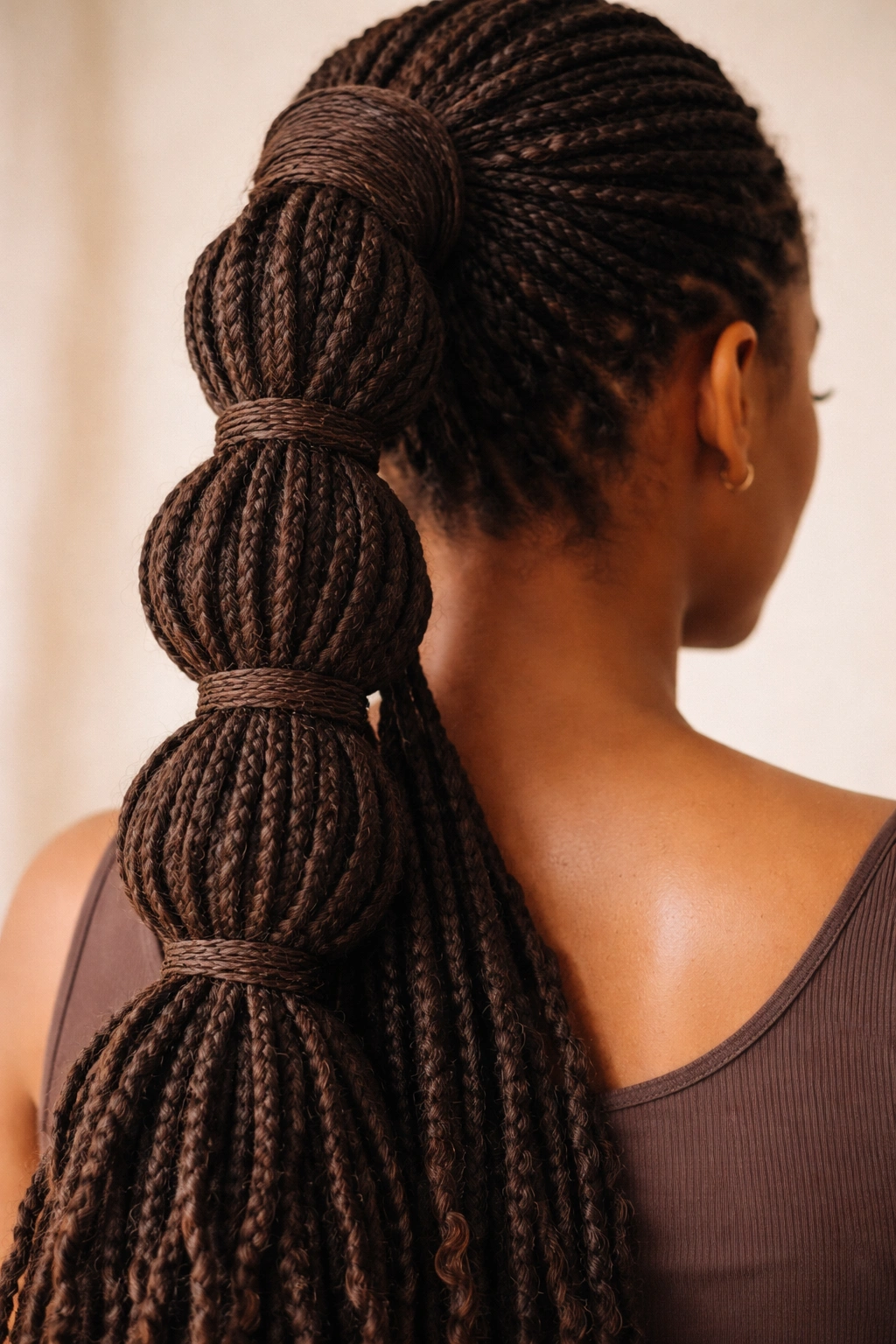
Hiding the elastics changes the entire finish. A wrapped bubble ponytail uses a small section of loc, a wrap piece, or a matching strand to conceal each band. The effect is cleaner and a little more refined, which matters if you hate seeing every elastic line in the mirror.
This style is useful when the bands themselves are unattractive against your loc color. Bright elastics can break the visual flow. Wrapped ones keep the bubbles looking like one continuous shape, almost as if they were built that way from the start.
It does take longer, though. No pretending otherwise. You need patience to wrap each section neatly, and you need enough length in the tail to do it without making the ends look thin or clumsy.
8. Beaded Bubble Ponytail
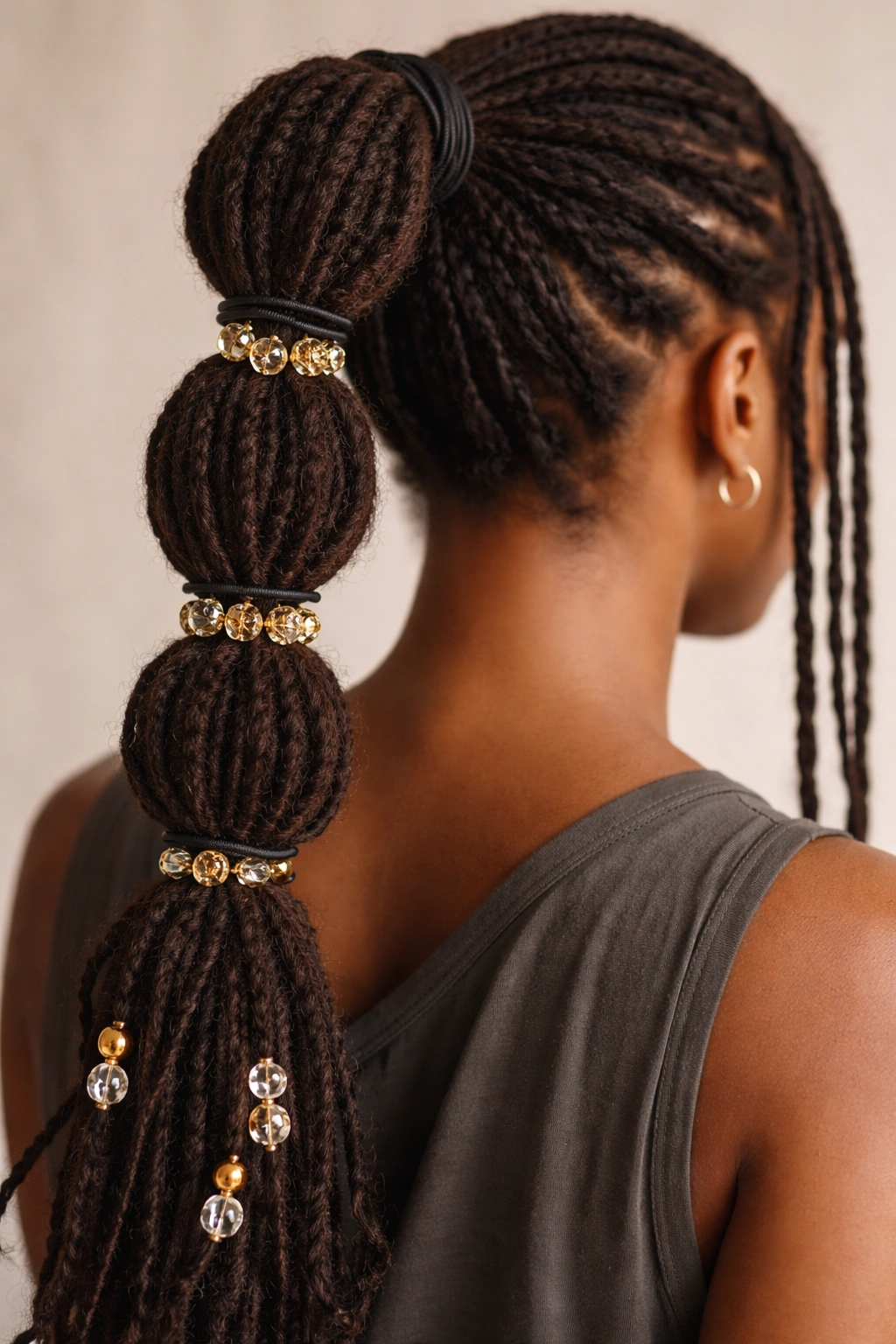
Can beads and bubble ponytails live in the same hairstyle? Absolutely. In fact, locs handle that combination better than most textures because the loc structure gives the beads something solid to sit on. The bubbles create the rhythm, and the beads give you punctuation marks in between.
Wooden beads give a warmer, earthy finish. Clear beads look lighter and catch the eye more. Metal cuffs do a different job entirely; they add shine without making the style feel busy. The key is restraint. Too many beads and the ponytail starts to clink around like jewelry storage gone wrong.
Where to Place the Beads
Place them at the ends of a bubble section or between two elastics, not every inch down the tail. That keeps the style from tipping over into clutter. One or two accents per side is usually enough.
A small warning: heavy beads can tug on fine locs if you stack them too low.
9. Braided Base Bubble Ponytail
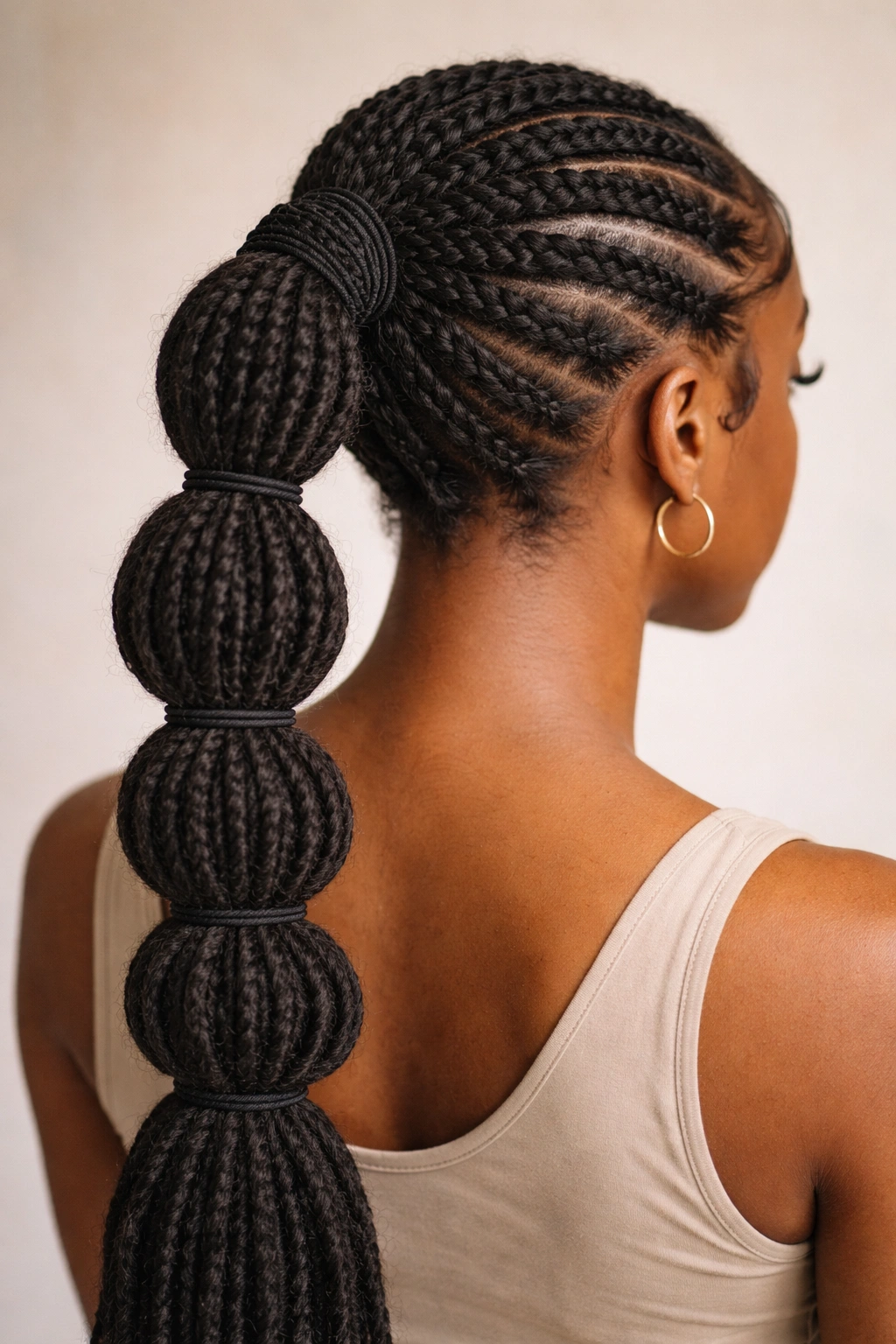
A braided base gives the bubble ponytail a sturdier start. Instead of tying the locs into a loose ponytail right away, you braid or plait the base section first, then continue into the bubble sections. The look feels more secure, and it tends to hold better on days when the weather is humid or your locs are slippery at the root.
This is a nice choice for people who want the ponytail to look anchored rather than floating. The braid adds a clear line at the scalp, which makes the style read as more intentional. It also helps if you have layers in your locs, because the braid keeps shorter pieces tucked in.
I’d pick this version for a long event or a day when you do not want to think about your hair at all. It stays put. That alone makes it worth learning.
10. Sleek Edges Bubble Ponytail
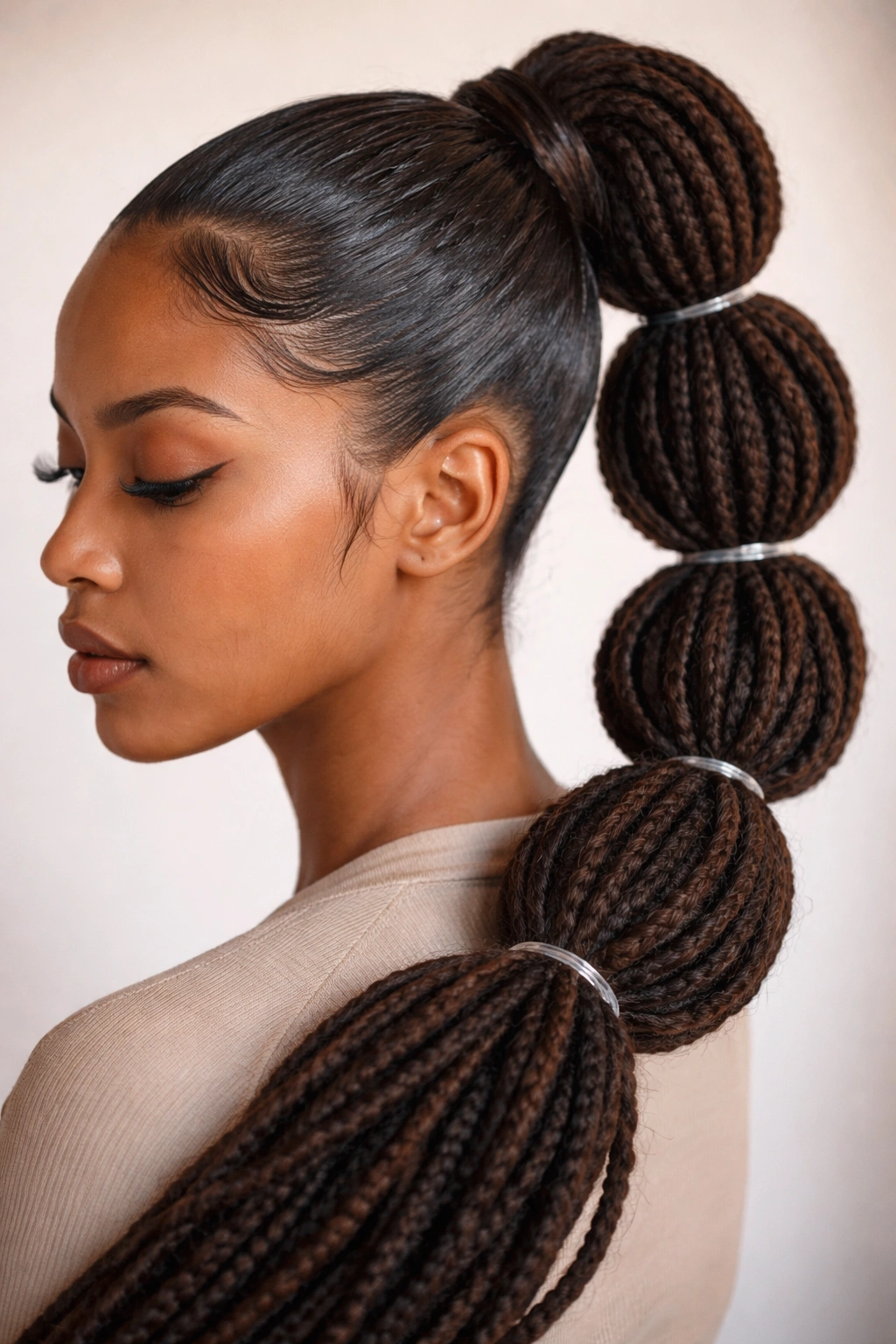
Sleek edges can make a bubble ponytail look expensive without adding a single accessory. The front gets smoothed, the parting gets cleaned up, and the bubbles do the rest. For locs, that contrast between flat roots and textured lengths is what gives the style its punch.
Use a light hand with gel or edge control. Heavy product near loc roots can leave buildup, and nobody wants stiff flakes around a style this clean. A soft toothbrush or edge brush helps, but the real trick is stopping before the hair starts to look pasted down.
Less is more here. A neat outline around the forehead and temples is enough. You do not need a shiny helmet.
11. Long-Length Statement Bubbles
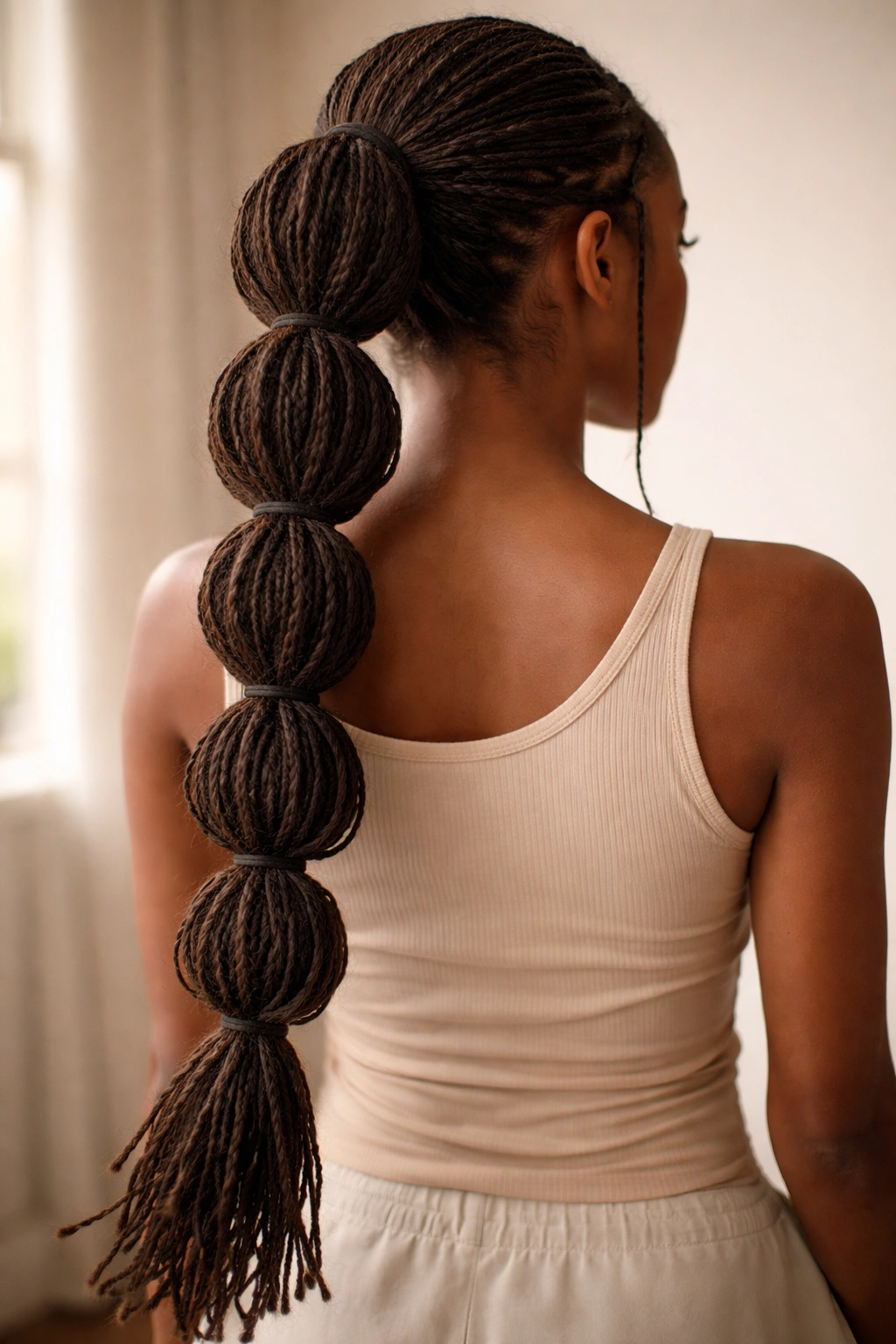
Long locs make bubble ponytails look almost sculptural. Once the sections are long enough, each bubble gets room to round out instead of sitting tight against the next elastic. That extra space changes the entire shape of the ponytail.
Spacing Matters More Than Size
People often think bigger bubbles come from bigger sections. Not always. On long locs, the gap between elastics matters just as much. I usually like 2.5 to 3 inches between bands on fuller locs, then a little finger-pulling after each section is secured.
- Keep the bubbles even, but not identical.
- Pull gently from the sides, not the center.
- Use 5 to 7 sections if your length allows it.
- Stop before the tail starts to look droopy.
A long bubble ponytail has presence. It looks best when it moves, which means it rewards walking, turning, and a little bit of attitude.
12. Short-Loc Bubble Ponytail
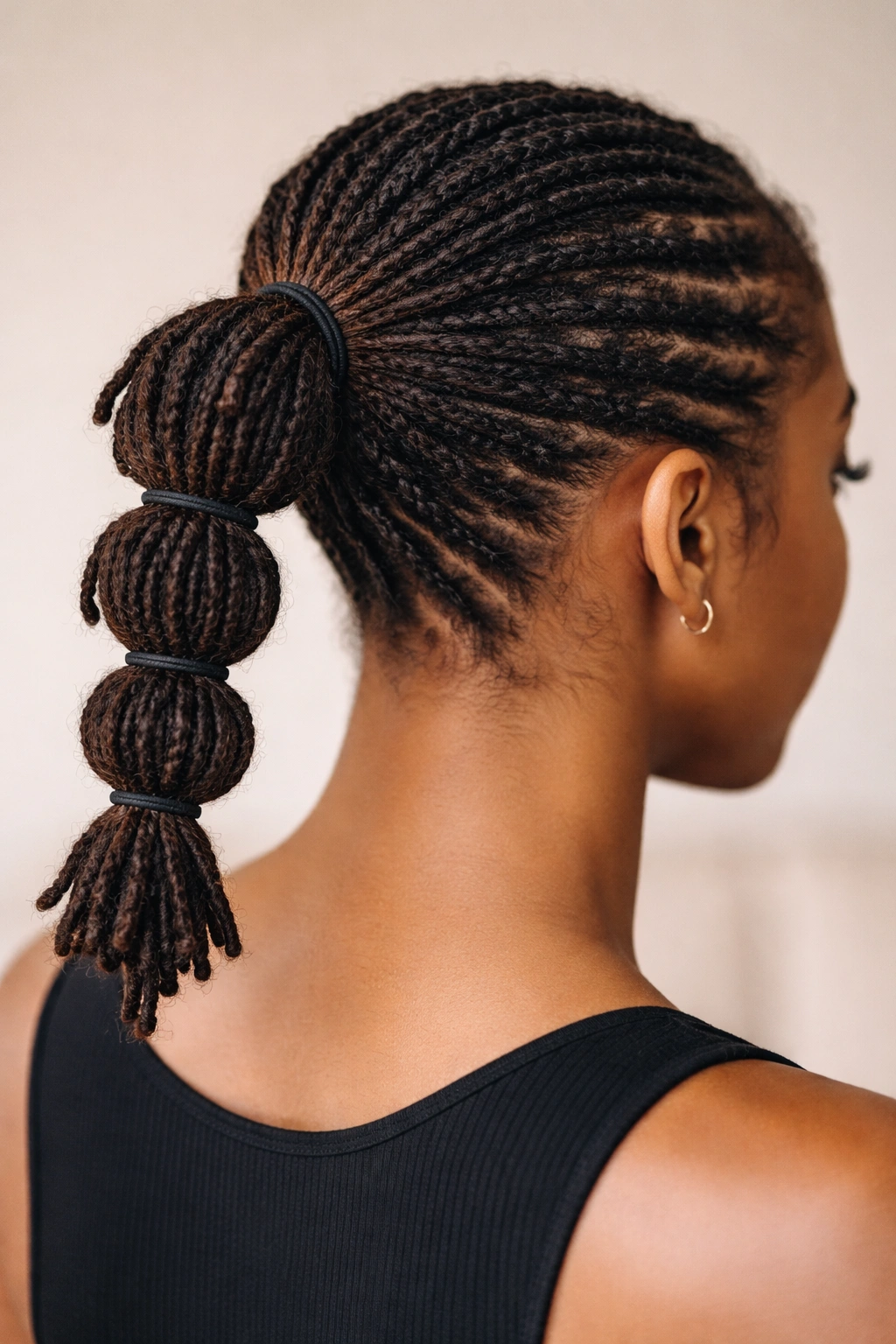
Short locs can do bubble ponytails too, and people love to act surprised by that. The trick is proportion. You are not trying to mimic a waist-length style on a shorter base. You are building smaller, tighter bubbles that suit the length you actually have.
Keep the sections compact and the elastics close enough to create shape without eating the whole ponytail. Two or three bubble sections may be plenty. If you stretch the locs too aggressively, the style can start to look strained, which is the opposite of what you want.
This version is practical for everyday wear because it stays neat without demanding a lot of length. It also works nicely when your locs are still maturing and you want a style that shows them off without overloading them.
13. Colored Loc Bubble Ponytail
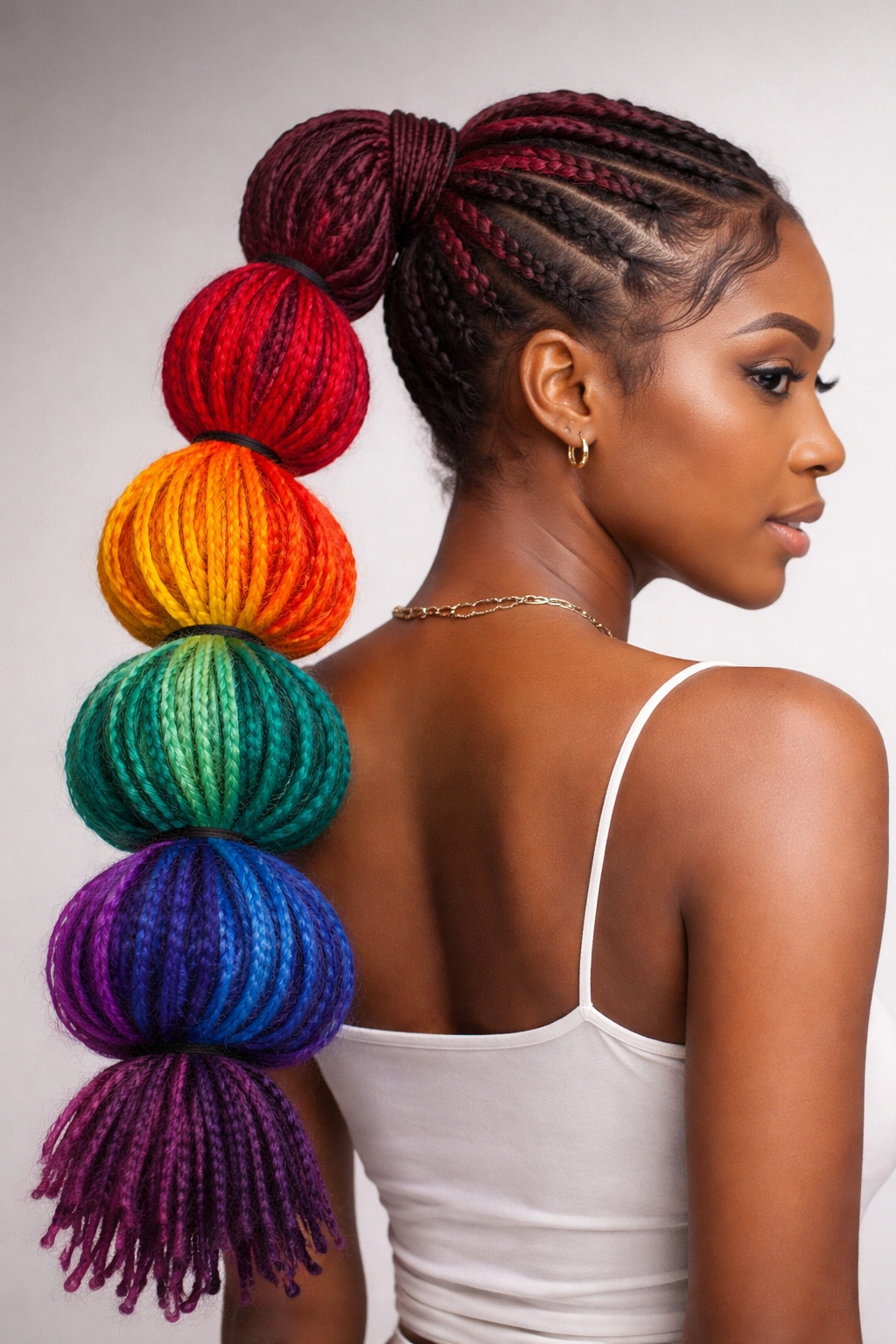
Color changes the whole story. Bright locs, honey-toned tips, auburn blends, even deep blue or burgundy hues all show up differently once the hair is divided into bubbles. Each section creates its own color block, which makes the ponytail feel alive from every angle.
The best part is that you do not need a lot of accessories when the color is doing the work. A clean bubble shape and a few hidden bands are enough. If you add cuffs, keep them spaced out so the color still gets the spotlight.
This is one of those styles that looks especially good in motion. The bubbles shift, the shades separate, and the whole ponytail reads like a moving ribbon. Dramatic? Yes. In a good way.
14. Mohawk Bubble Ponytail
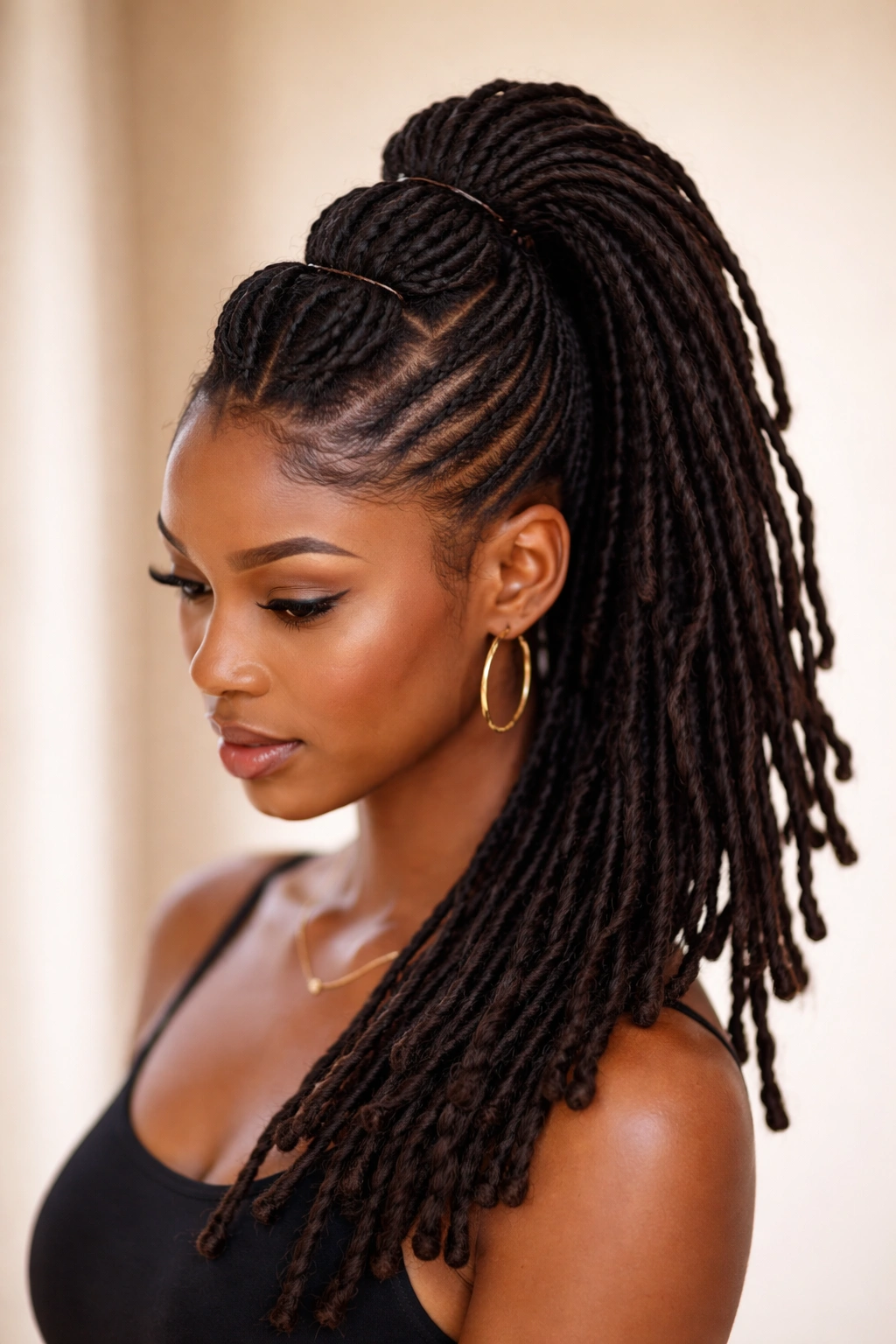
A mohawk-style bubble ponytail leans bold from the start. The sides are smoothed down or pinned close to the head, and the main bubble line runs straight through the center like a ridge. It has more edge than the classic high ponytail and more shape than a simple topknot.
Why the Mohawk Shape Works
The mohawk line draws the eye upward, then backward. That gives the style lift without requiring huge height at the front. It’s especially strong on locs because the texture helps the middle section feel thick and defined.
- Smooth the sides tightly, but not painfully.
- Keep the center section fuller than the rest.
- Place the first elastic high, almost at the crown.
- Let the bubbles taper slightly toward the ends.
It’s a confident style. Not loud for the sake of being loud, just clean and assertive.
15. Crown Bubble Ponytail
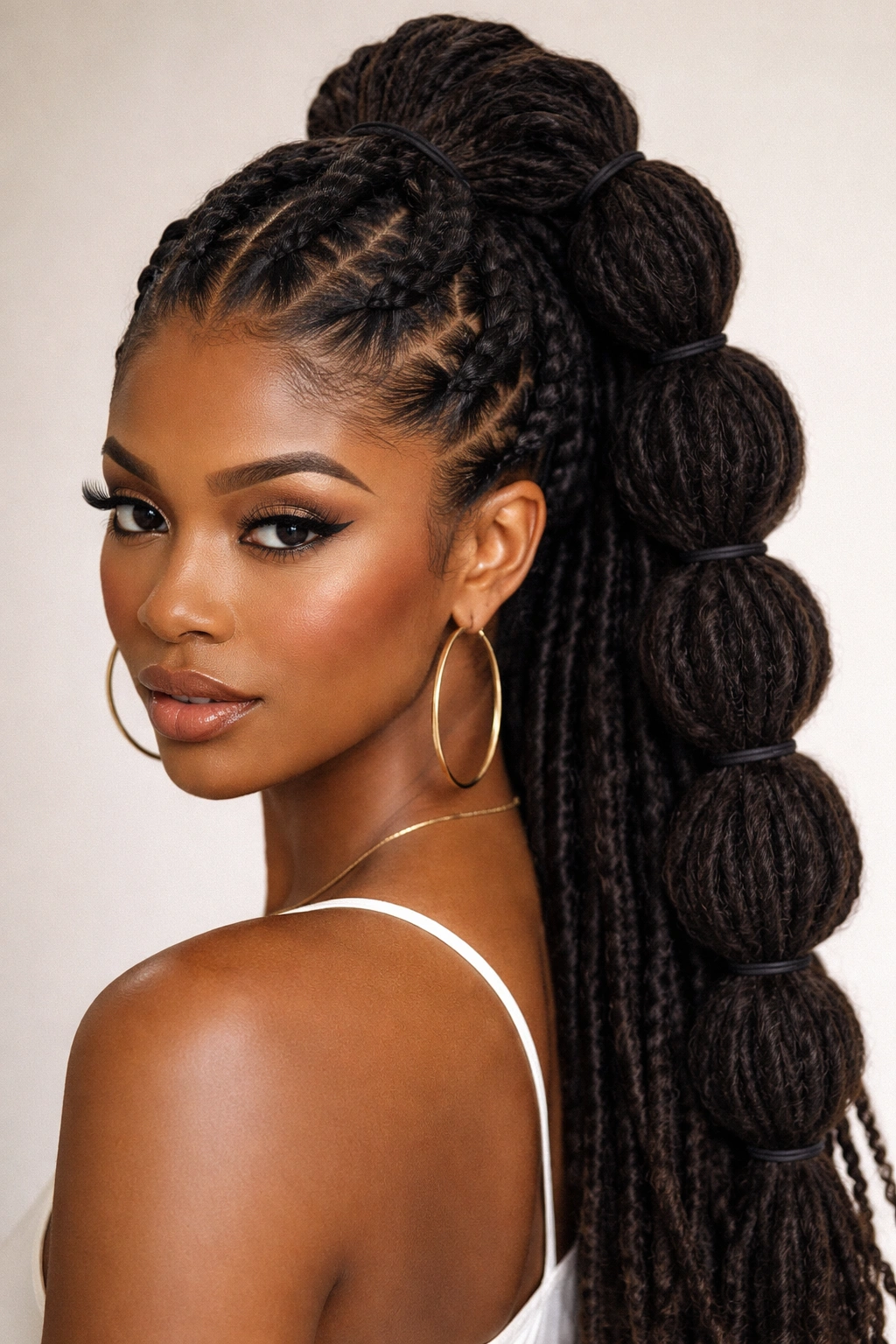
The crown version feels a little regal, though I dislike how often that word gets thrown around. What I mean is this: the ponytail starts high and wraps in a way that frames the head, almost like the bubbles are sitting on a path around the crown before dropping down.
That shape works well if you want the front to stay neat while still showing a lot of texture. It can also help balance a wide face by keeping the volume near the top and center. On locs, the effect is stronger because the sections hold their shape instead of collapsing into softness.
I would wear this for a dressed-up event or any day when you want your hair to carry the look for you. It does that job. No fuss.
16. Cross-Section Bubble Ponytail
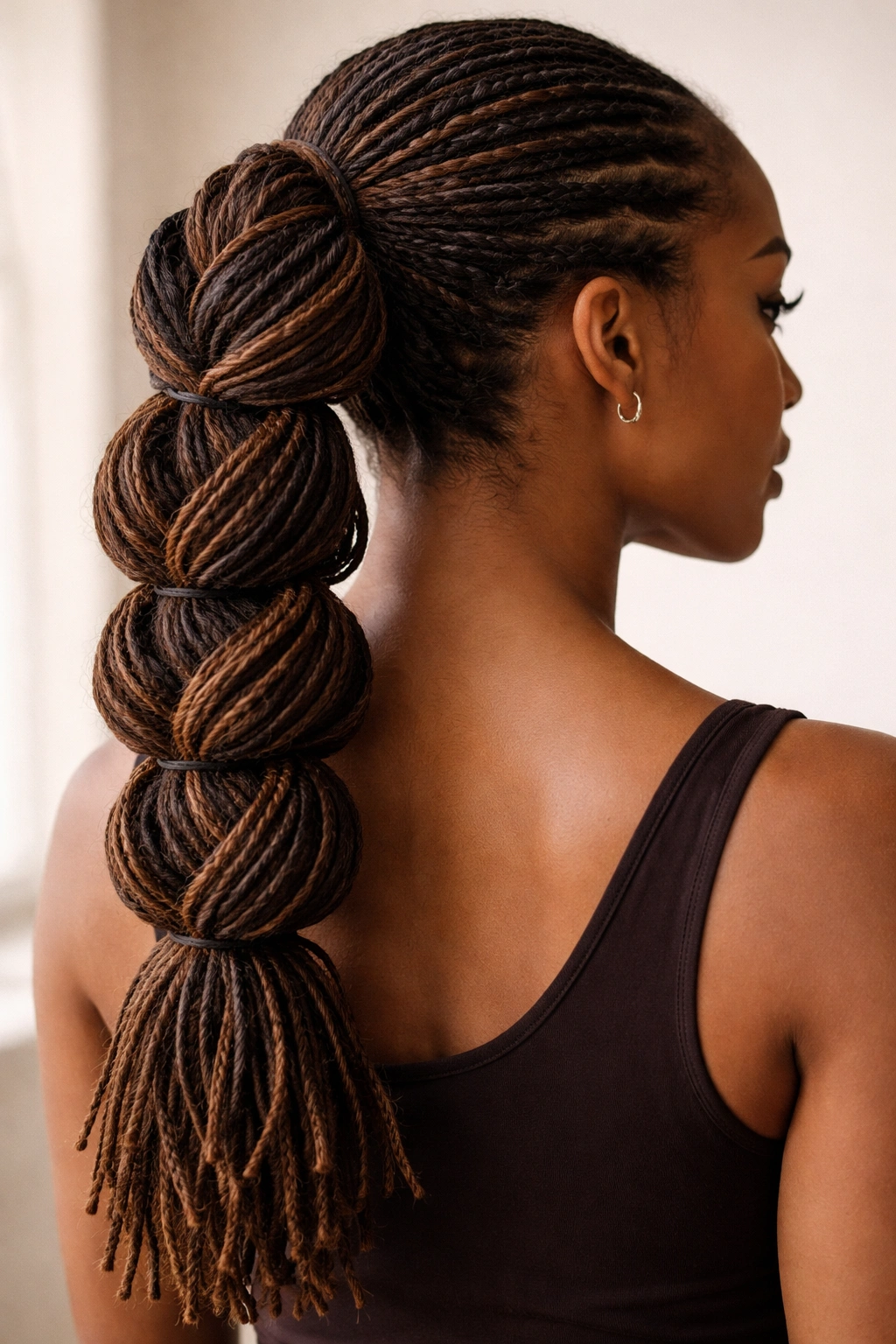
A cross-section bubble ponytail breaks the usual straight-line feel. Instead of dividing the tail in a simple stack, you cross pieces over each other before securing the next elastic. The result is a more layered look, with a little visual twist between the bubbles.
That small change keeps the style from feeling repetitive. You still get the bubble shape, but there is more movement in the pattern. On locs, where texture is already doing a lot of the heavy lifting, this extra detail can make the ponytail stand out without needing beads or wraps.
It takes a steadier hand than the classic version. Not hard, just a little more fiddly. If your sections are neat, though, the finished style has a nice woven feel that looks far more complex than it really is.
17. Tapered Ends Bubble Ponytail
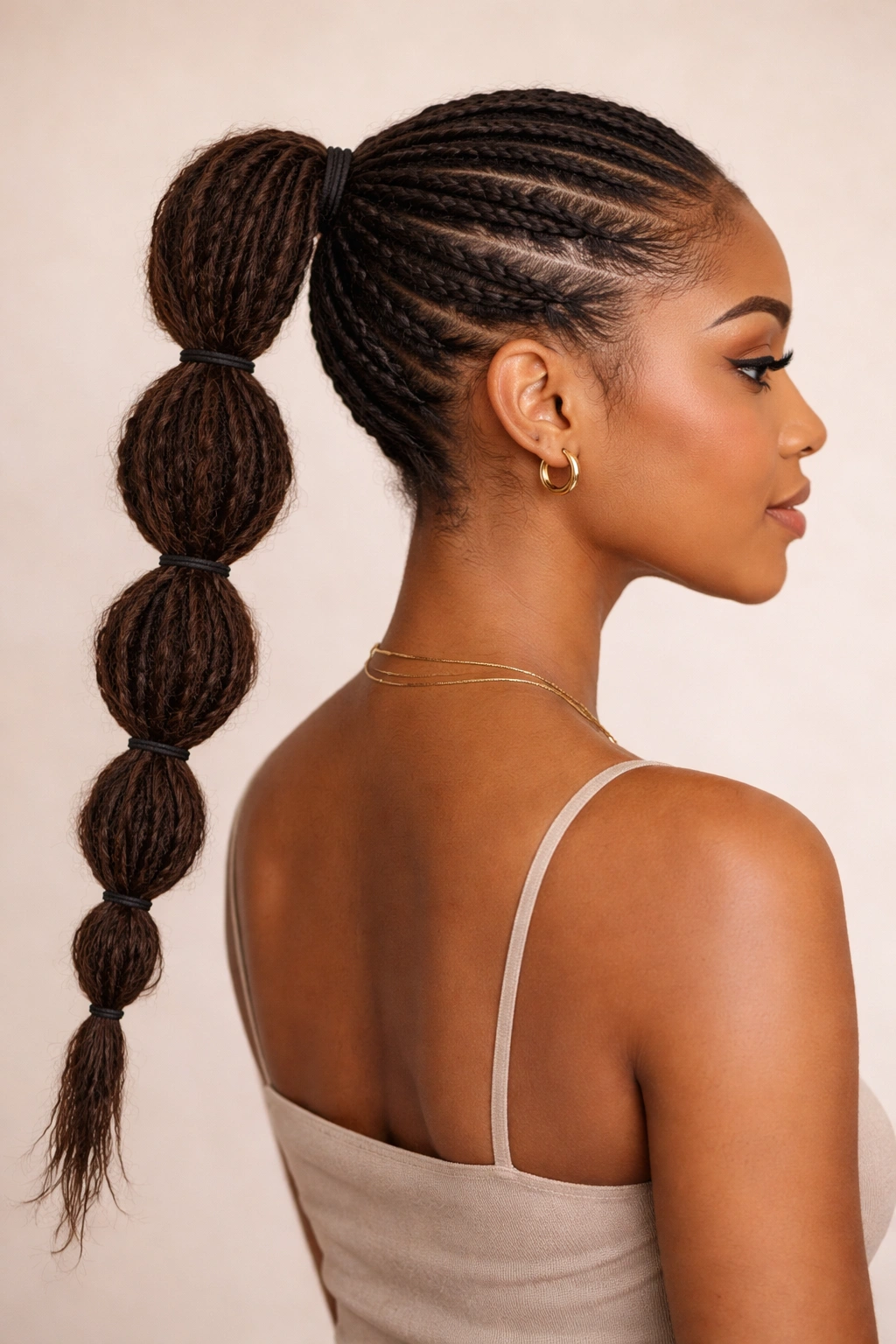
Tapered ends can make a bubble ponytail feel lighter at the bottom. That matters if your locs are thick, because a full tail can sometimes drag the style downward and make the final section look heavy. A slight taper keeps the silhouette moving.
How to Keep the Shape Clean
You do not need to cut anything dramatic. Sometimes it is only about how you section the tail and where you stop adding bubbles. The last one or two sections can be smaller so the end finishes neatly instead of ballooning out.
- Use slightly wider spacing near the top.
- Narrow the gaps toward the end.
- Keep the last elastic secure but not crushing.
- Add one cuff at the tip if you want a tidy finish.
The ending matters. A lot of styles look fine until the last four inches, where the whole thing can either land cleanly or fall flat.
18. Festival Bubble Ponytail with Accessories
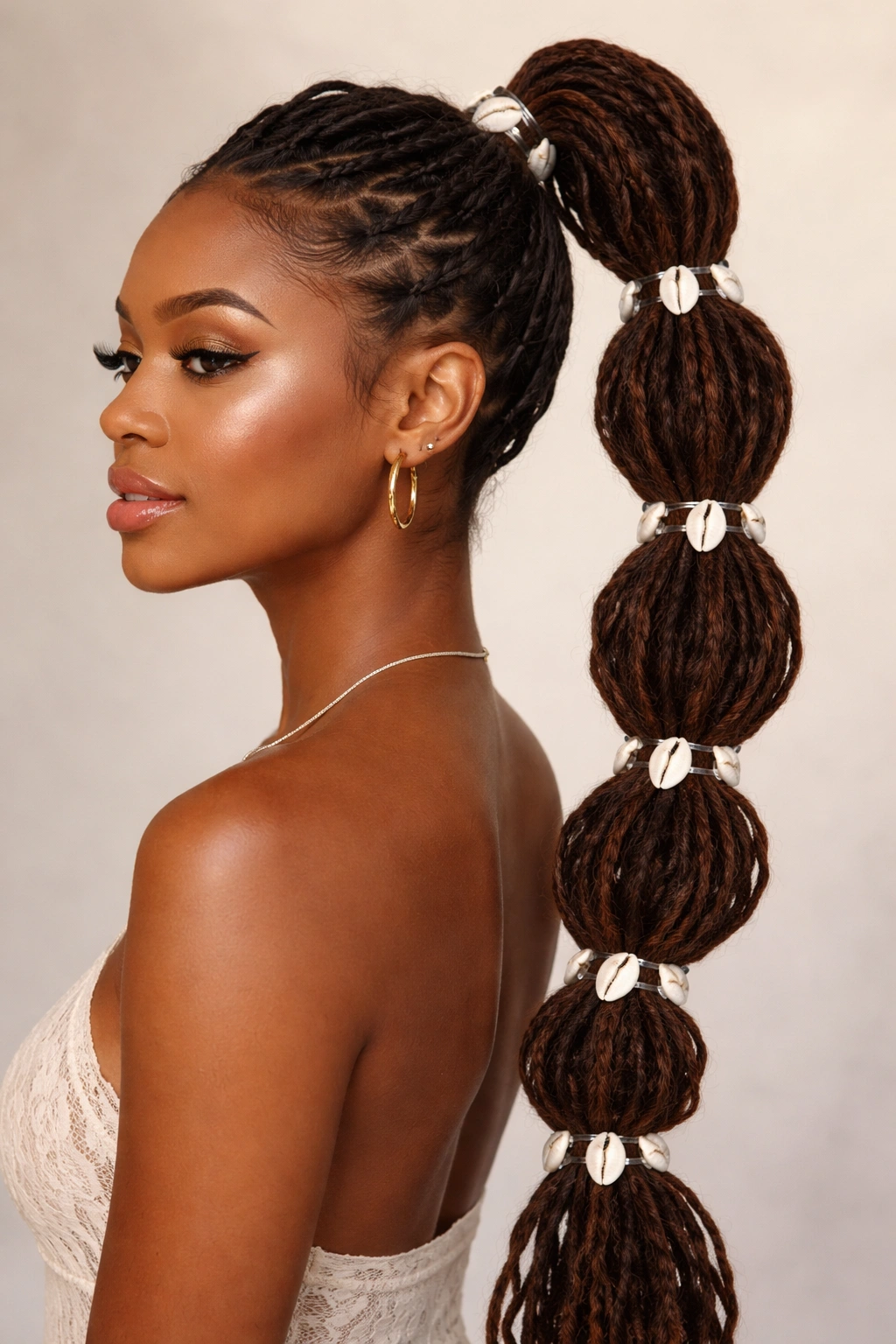
Shells, cuffs, thread wraps, tiny rings, bright ties — this is where the bubble ponytail gets to have fun. Locs take accessories well because the texture keeps the pieces from sliding around as much as they might on smoother hair. That gives you more room to play.
The caution is overloading the style. Too many shiny pieces start competing with each other, and then the ponytail looks busy instead of styled. Pick one main accent and repeat it in small doses. Shells at the ends, perhaps. Or cuffs placed at every other bubble. Not everything at once.
This version is best when you want the hair to feel like part of the outfit, not just something sitting on top of it. It’s a little louder, yes, but controlled loudness. There’s a difference.
19. Work-Ready Minimal Bubble Ponytail
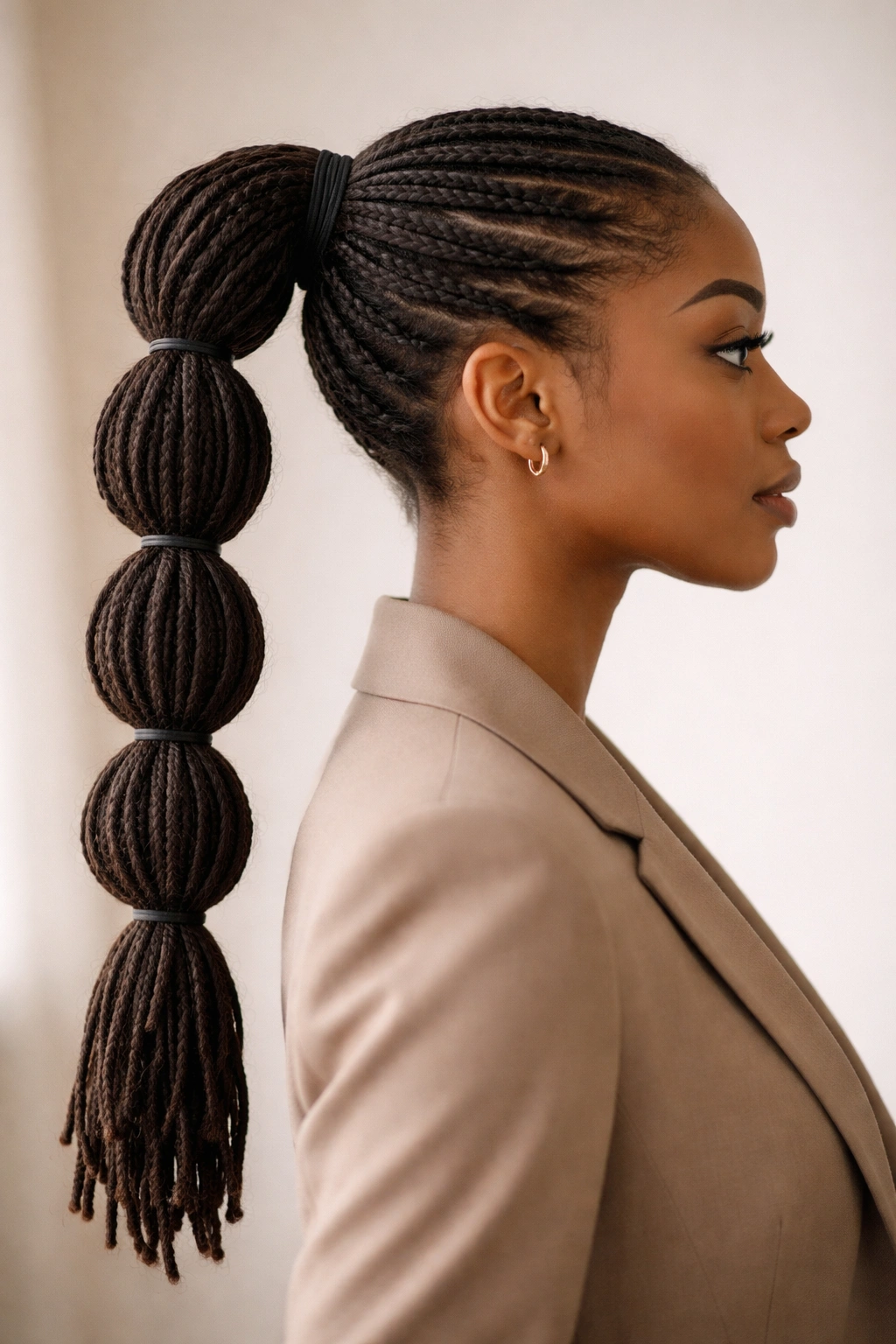
A minimal bubble ponytail is the one I’d wear when I want my locs out of the way but still neat enough for a polished setting. No beads. No wraps. No stray accents. Just clean bubbles, evenly spaced, with a smooth base and matched elastics.
The restraint is the point. This style looks tidy on camera and in person, which is not always true of more decorated versions. If your office, classroom, or client-facing day calls for something calm, this is a safe bet that still looks intentional.
Keep the bubbles modest and the parting clean. You do not need much more than that. Sometimes the quiet version is the strongest one in the room.
20. Puffy Bubble Ponytail
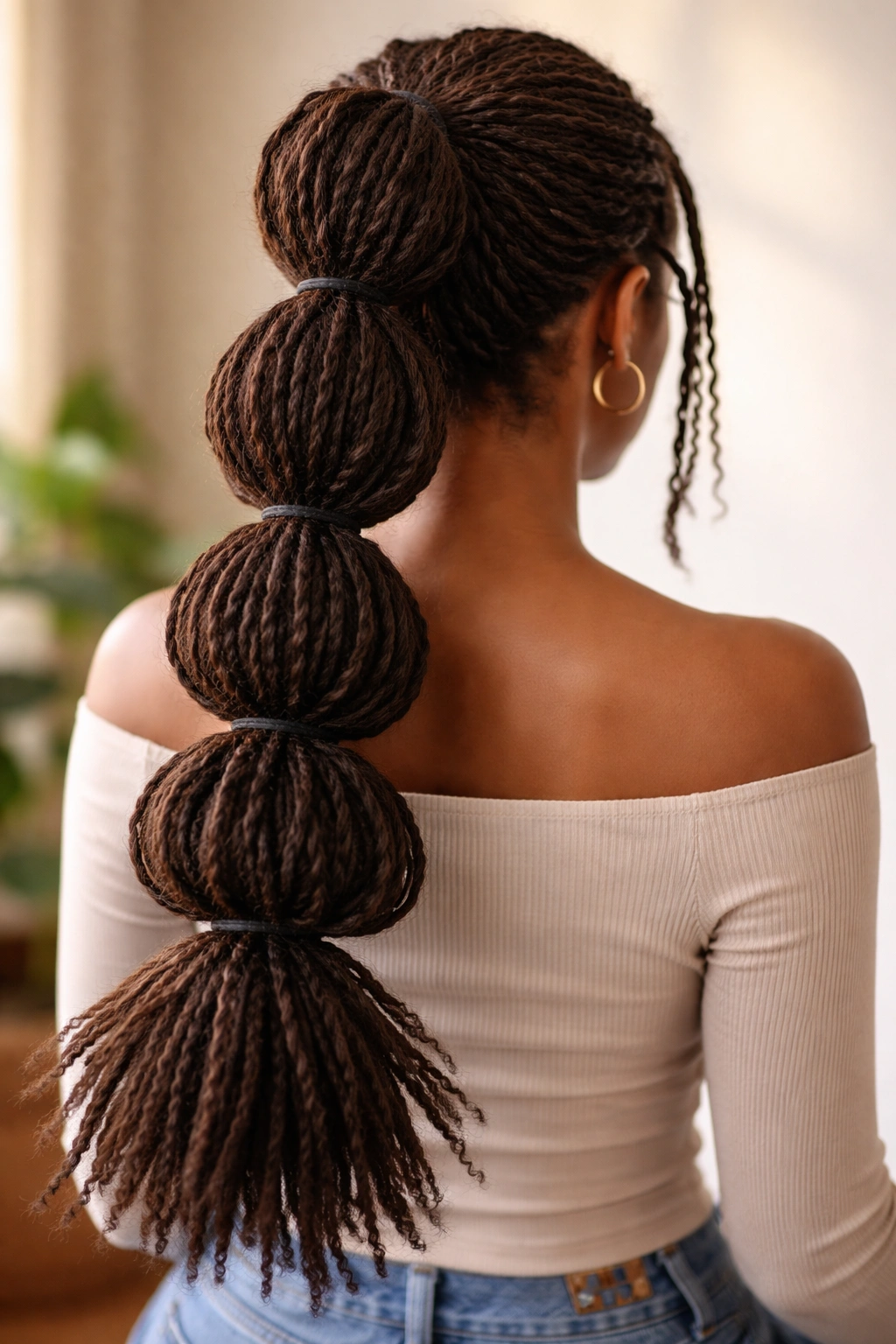
Want more volume? Push the bubbles outward. That is the whole trick here. A puffy bubble ponytail uses finger-pulling and looser spacing to make each section look fuller and rounder, which works especially well on medium to thick locs.
The Fuller Shape Without the Mess
The goal is volume, not chaos. Each bubble should stay distinct, even if it looks soft around the edges. I usually start with a secure base, add elastics a bit farther apart than usual, then gently tug the sides of each bubble until the locs fan out.
- Use larger sections if your locs are thick.
- Tug the outer edges, not the middle.
- Stop when the bubbles feel balanced.
- Keep the last section full so the tail does not look thin.
This style has presence. It is the sort of ponytail that looks good from the back and better in profile.
21. Rope-Section Bubble Ponytail
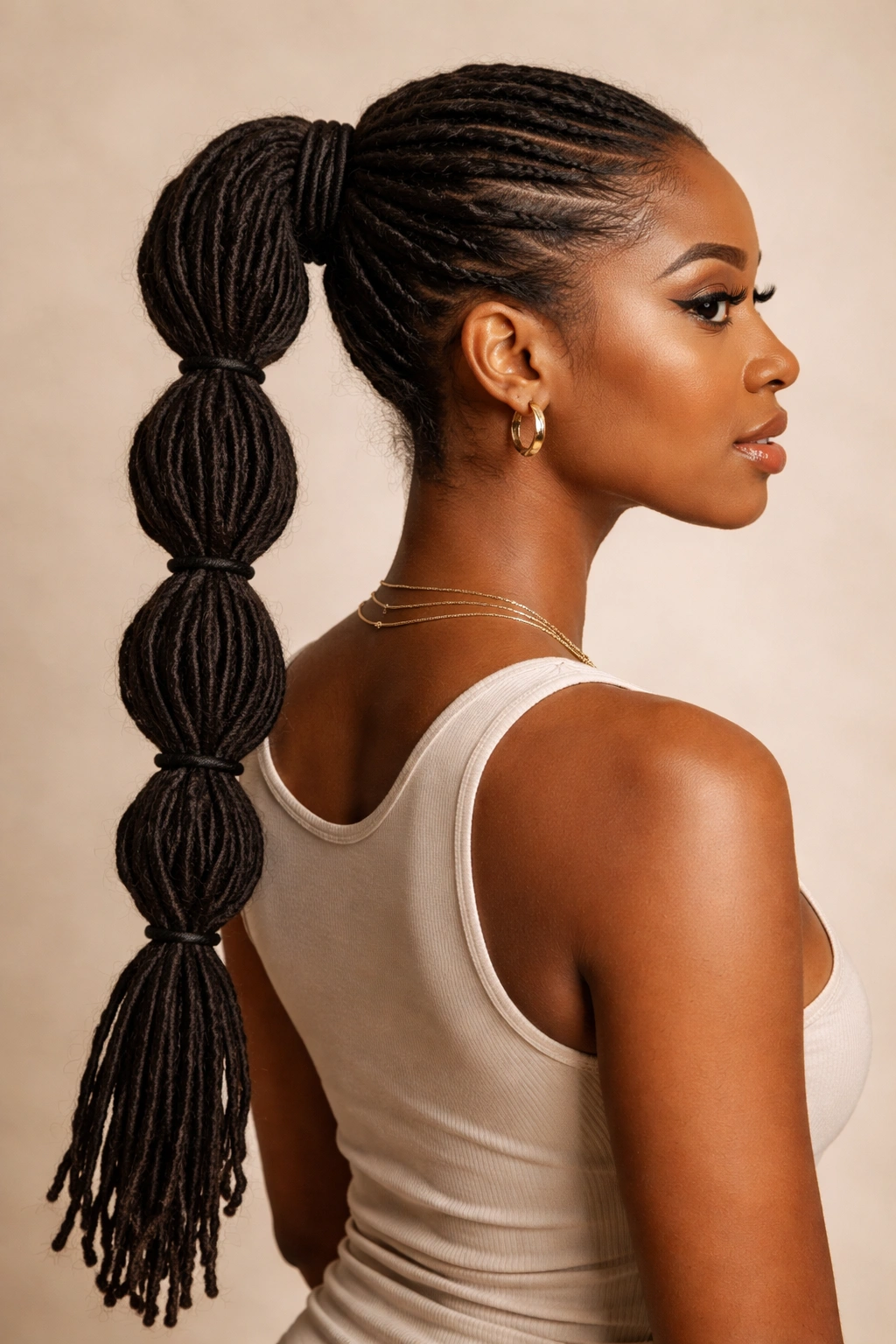
A rope-section bubble ponytail builds each bubble on a twist, almost like the locs are being guided around one another before each elastic takes hold. The shape feels tighter and more structured than the classic version, and that makes it a nice option if you want a little texture contrast.
This is one of those styles that rewards slightly thicker locs. The rope effect shows up more clearly when there is enough substance to the sections. On finer locs, you may need to twist a bit more firmly so the shape holds.
I think of this style as the polished cousin of the regular bubble ponytail. Same family, different attitude. It has a more sculpted finish, which makes it good for occasions where you want the hair to look done without looking fussy.
22. Micro-Bubble Loc Ponytail
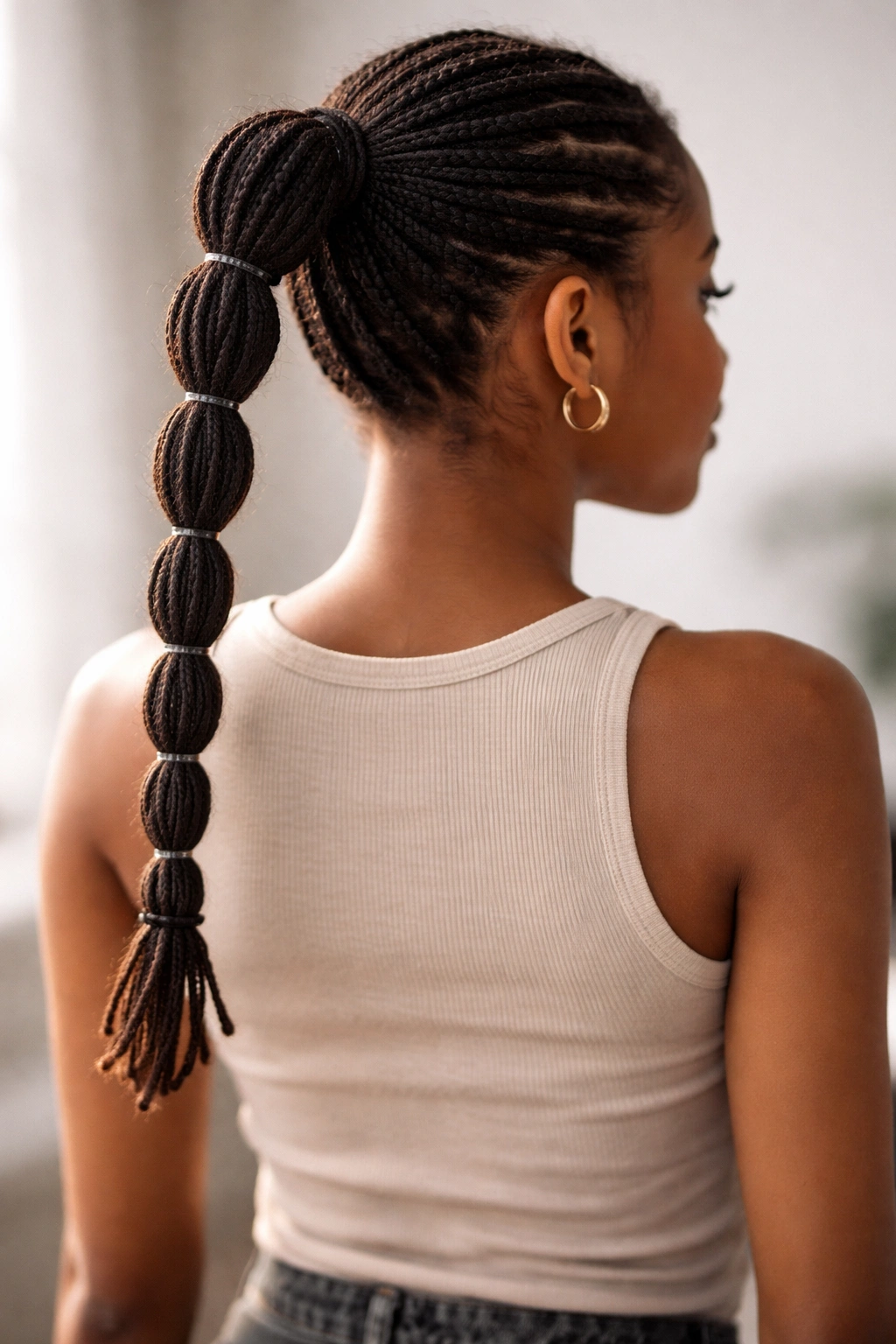
Micro-bubbles are small, neat, and a little addictive once you get the spacing right. Instead of three or four large sections, you build a long chain of tiny bubbles down the ponytail. On locs, that creates a segmented look that feels detailed without being flashy.
This works best when the locs are not overly thick, because very chunky locs can make the micro sections feel cramped. Smaller locs or medium locs usually hold the pattern better. You will also want plenty of elastics on hand, since this style uses more of them than almost anything else on the list.
It is a good choice for shorter ponytails too. The smaller sections create the illusion of length and rhythm, even when the tail itself is not long. That makes it more useful than people think.
23. Space-Bubble Ponytails for Locs
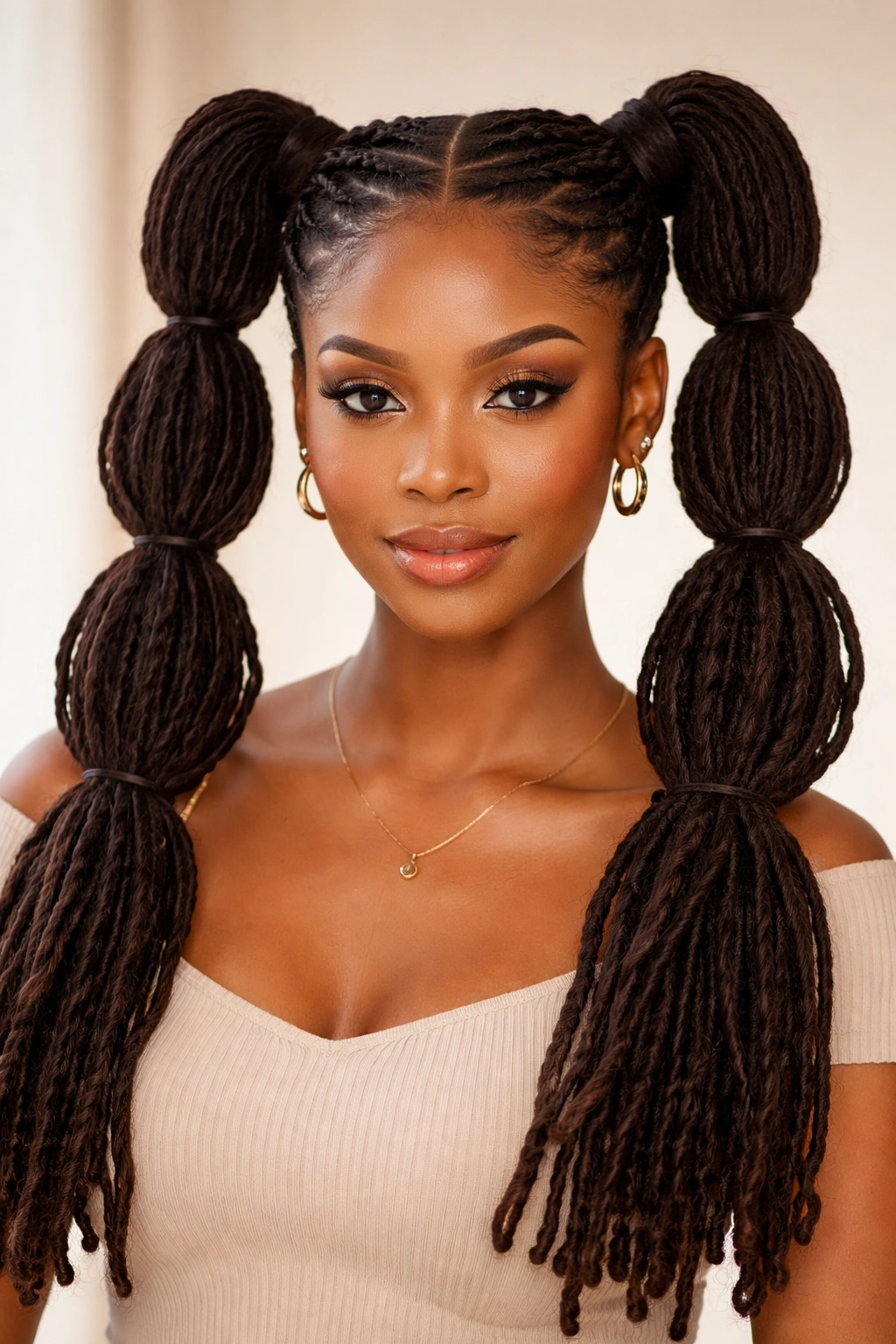
Two bubble ponytails, parted cleanly down the middle, give off a playful space-bun-adjacent energy without actually being buns. The bubbles drop from each side, which keeps the look energetic and youthful without losing structure.
When Two Ponytails Beat One
This is especially nice for thicker locs because it spreads the weight out. One high bubble ponytail can feel heavy after a while. Splitting it into two sides makes the style easier on the scalp and gives you twice the visual movement.
- Part the hair evenly from forehead to nape.
- Keep both ponytails at the same height.
- Match the bubble spacing on each side.
- Use small cuffs or bands if you want symmetry to stand out.
It’s playful, but not childish. That’s the part I like most.
24. Braided-Into-Bubbles Ponytail
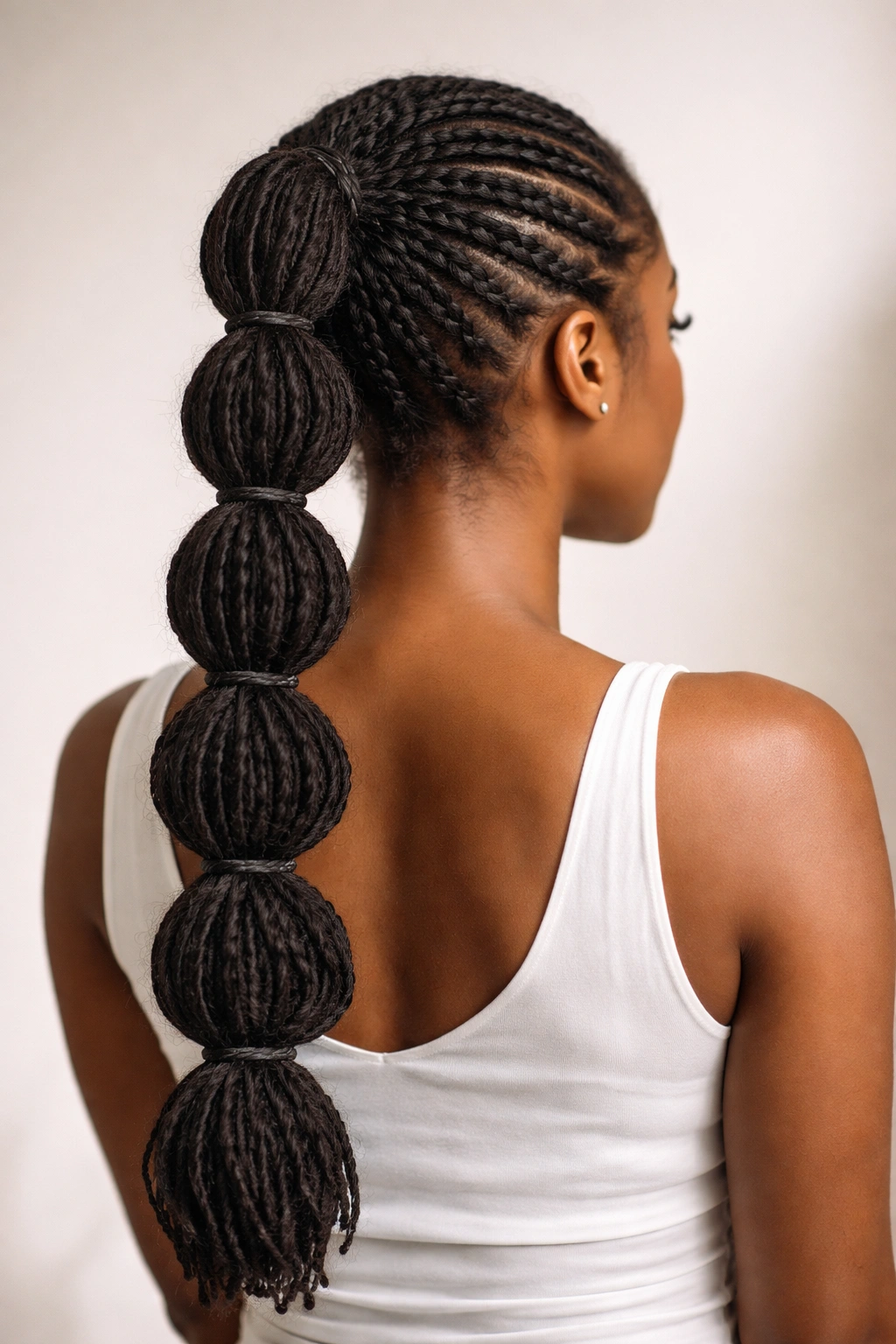
A braided base feeding into bubbles gives you the best of two worlds: the firmness of a braid near the scalp and the rounded shape of bubble sections through the tail. It is a smart choice if your roots need extra control or if your locs slip when you try to tie them back with a plain elastic.
The braid can be one central braid or two smaller braids that join into the ponytail. Either way, the transition into bubbles feels smooth. The braid also gives the top of the style a bit of texture before the bubbles begin, which keeps the look from feeling too flat at the crown.
This is a style I’d pick when I want something that lasts through a long day and still looks decent at the end of it. That counts for a lot.
25. Knotted Bubble Ponytail
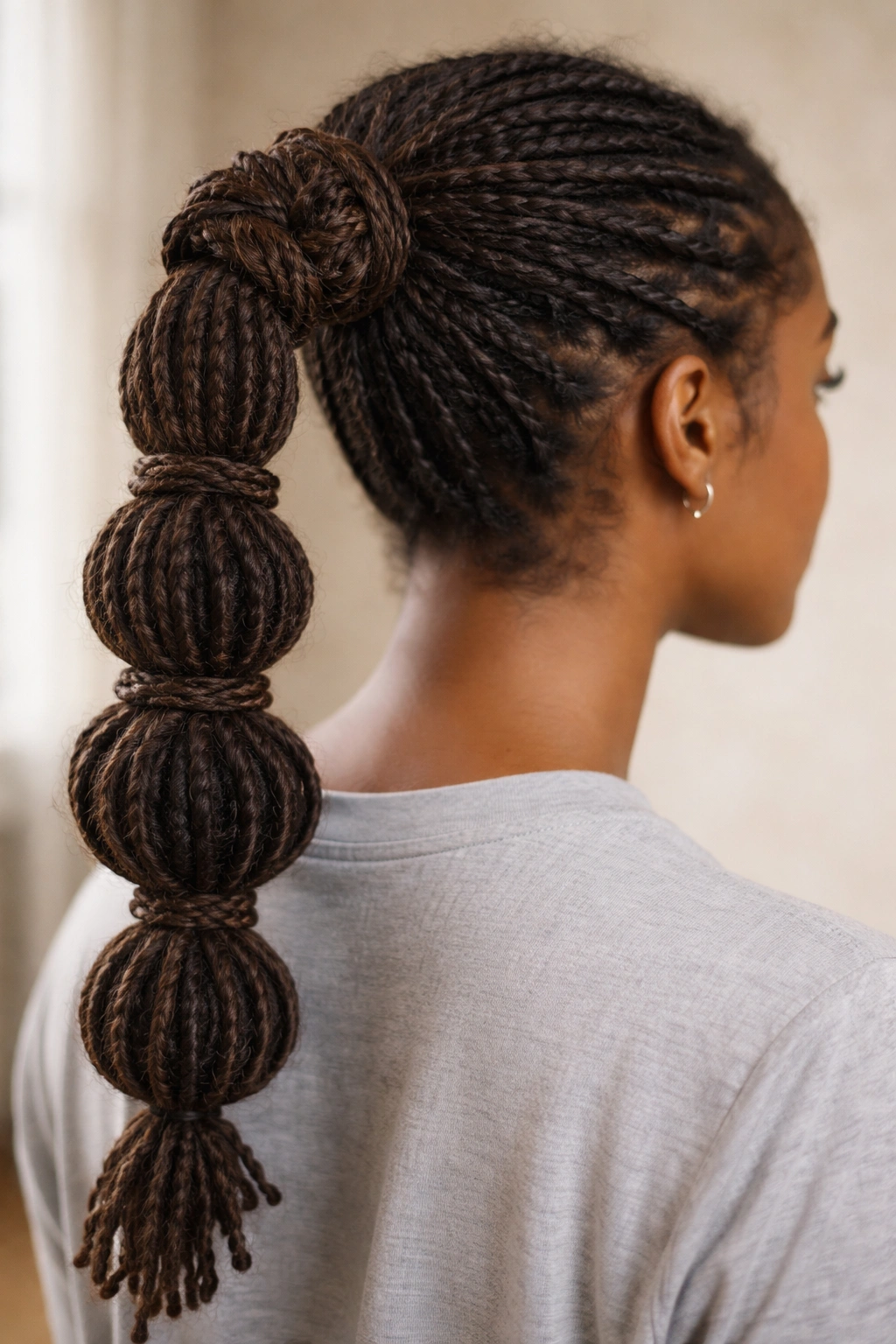
The knotted look adds shape before the bubbles even start. Instead of going straight from ponytail to elastic, you twist or knot small sections around the base so the style has a built-in detail. It’s a subtle thing, but on locs, subtle detail often reads better than oversized decoration.
This style can feel a little more handcrafted, which I like. It doesn’t try too hard. The knotted sections give the eye something to follow, then the bubbles take over down the length. It’s a neat sequence.
Be careful not to pull the knots too tight. The idea is texture, not tension. If the base starts to ache, loosen it. Hair should not feel like a dare.
26. Feed-In Bubble Ponytail
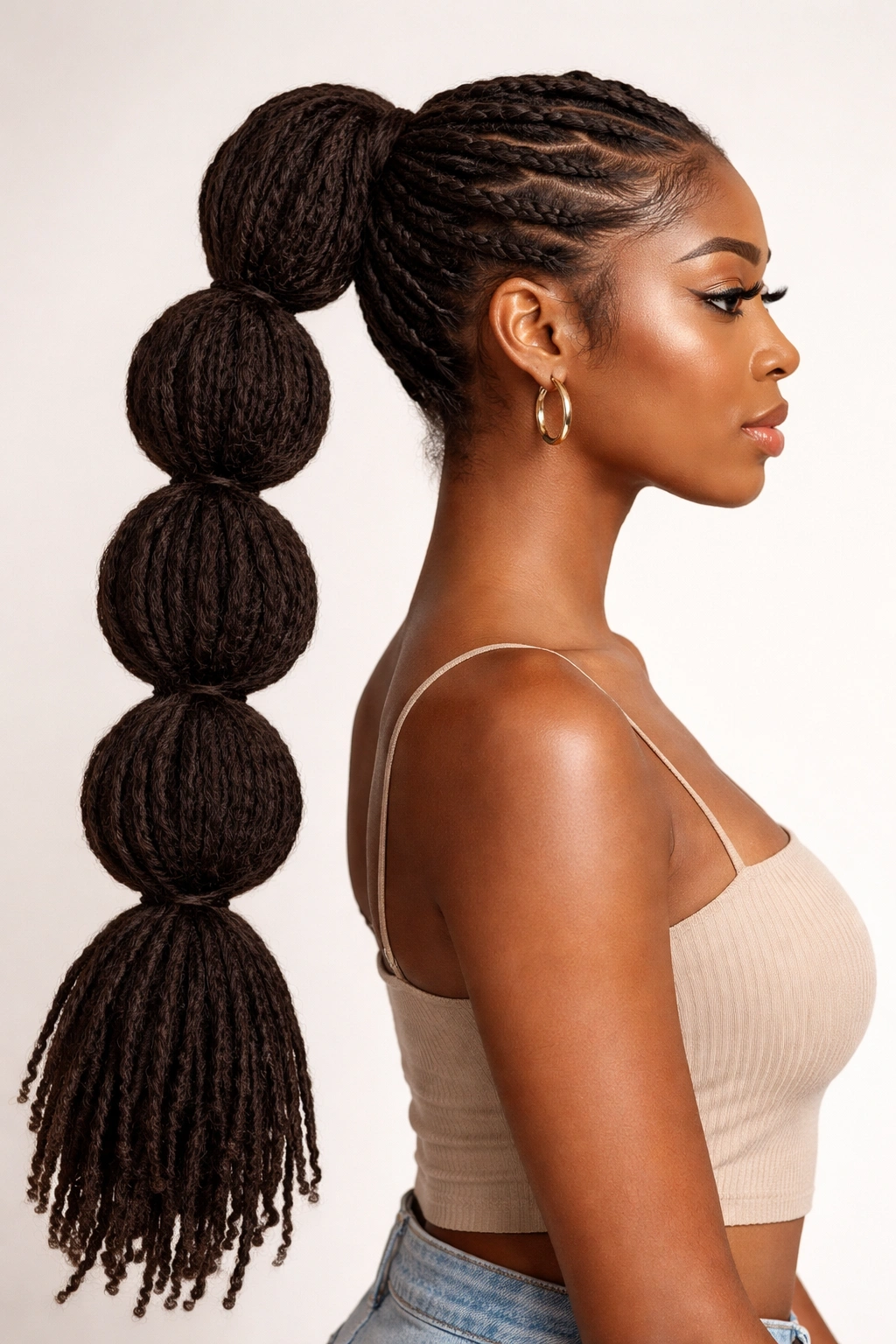
A feed-in bubble ponytail is the one to reach for when you want extra fullness or more length than your natural loc set is giving you on its own. Additional locs or extensions are added into the base, then the tail is shaped into bubbles. The result can be dramatic, but it works best when the added hair blends well with your own texture and size.
Where the Extra Length Helps
The extra length gives you more room for larger sections and better spacing. That means the bubbles can look cleaner and more balanced, especially if your own locs are shorter or layered. It also gives you more control over the final shape.
- Match the added hair to your loc thickness.
- Blend the first section carefully so the join does not show.
- Keep the base secure, but not strangled.
- Finish with a light pull-through so the bubbles round out.
A good feed-in style should look like one continuous ponytail, not a patchwork fix.
27. Soft Romantic Bubble Ponytail
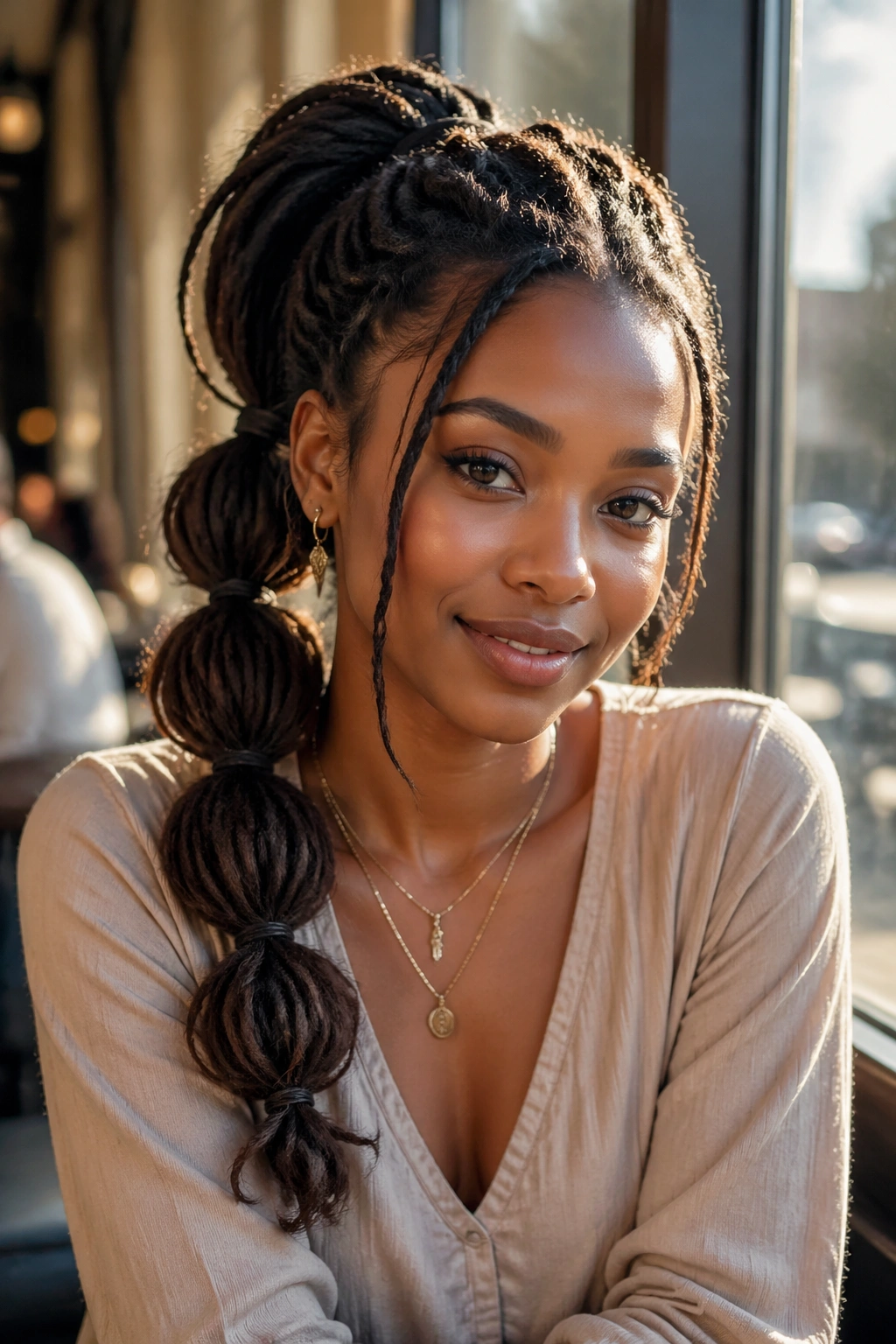
A softer bubble ponytail is the version I’d choose when I want the style to feel gentler around the edges. The part can be slightly off-center, a few locs can stay loose around the face, and the bubbles themselves can be spaced a little farther apart so the tail falls with more movement.
That softness matters. Locs have presence on their own, and sometimes the best styling choice is not to fight that. Let a few strands sit loose near the temples. Keep the elastics discreet. Skip the hard lines and let the shape breathe a little.
This one works beautifully for dates, dinners, or any day when you want your locs to look styled without looking armored. Quiet styles are underrated. They still hold attention, just in a calmer way.
