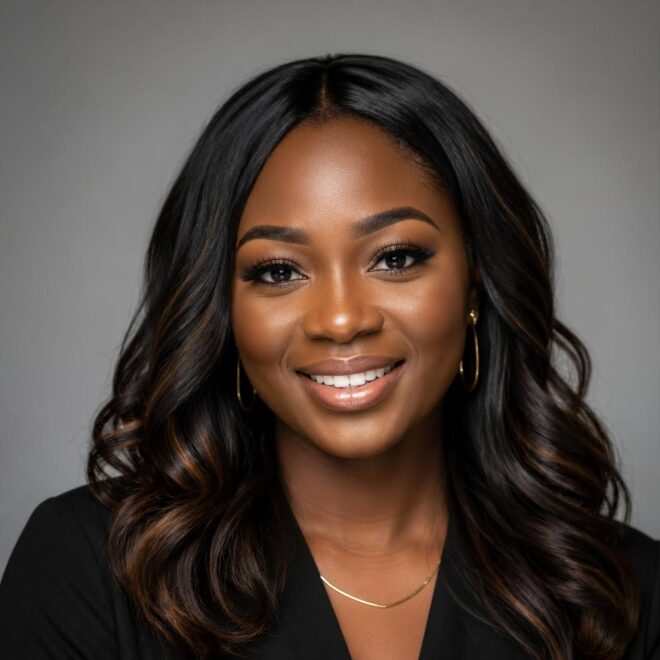


A bridesmaid side ponytail has a useful trick up its sleeve: it looks dressed up from the front and stays out of the way when the day gets busy. That matters more than people think. Bridesmaid hair has to handle hugs, dancing, wind, photos from every angle, and a dress that may already have a strong neckline or shoulder detail.
The best side ponytails for bridesmaids are never just swept over and sprayed stiff. They have shape. They have a little movement. And they sit low enough to feel polished without pulling attention away from the bride’s look, which is the whole point when you’re styling a bridal party.
Some versions are sleek and glossy. Others lean soft and romantic, with loose waves or braids tucked in at the temple. A few are meant for curls, a few for straight hair, and a few can rescue hair that refuses to behave unless it’s pinned within an inch of its life. The good ones look intentional without looking overworked.
1. Soft Low Side Ponytail with Face-Framing Waves
This is the style people picture first when they hear side ponytails for bridesmaids. It sits low, rests over one shoulder, and keeps the front soft with two curved pieces around the face. Nothing feels forced about it, and that is exactly why it works so well in wedding photos.
Why It Flatters Almost Everyone
A low side ponytail gives the face room. The waves soften the jawline, the side placement keeps the neckline open, and the whole look feels balanced even when the dress has a busy top. If one bridesmaid has fine hair and another has thicker hair, this style still plays nicely for both.
The trick is in the shape at the front. Ask for a slight bend near the cheekbone rather than a hard curl. That keeps the pieces from looking like they were added as an afterthought.
Use a 1-inch curling iron, then brush the waves out once they cool. The result should feel loose, not puffy.
2. Sleek Side Ponytail with Wrapped Base
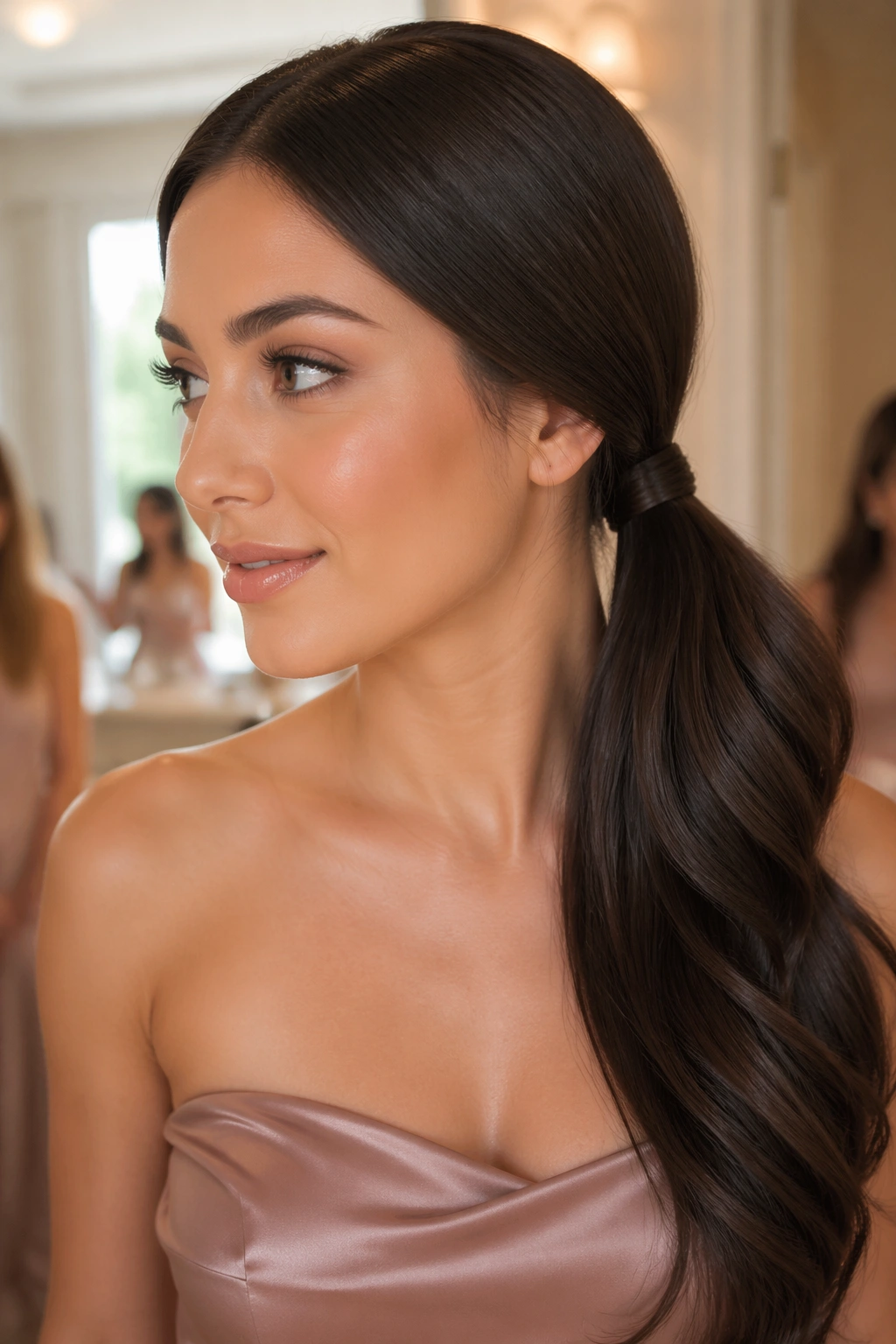
A sleek side ponytail is the one I’d choose for satin dresses, sharp tailoring, or a bridal party that wants a cleaner look. It has a quiet confidence to it. No frizz, no fluff, no extra decoration fighting for attention.
What Makes It Different
The shine does the heavy lifting here. Hair should be smoothed with a light cream or serum, then combed into a low side placement and secured tightly with an elastic. A small section of hair wraps around the base so the tie disappears.
That wrapped base matters. Without it, the style can look like a gym ponytail that wandered into a wedding. With it, the whole thing feels finished.
Keep the crown flat but not scraped back too hard. You want smoothness, not tension. A fine-tooth comb, a pea-size amount of smoothing cream, and 3 to 5 bobby pins are usually enough.
3. Textured Side Ponytail with Loose Tendrils
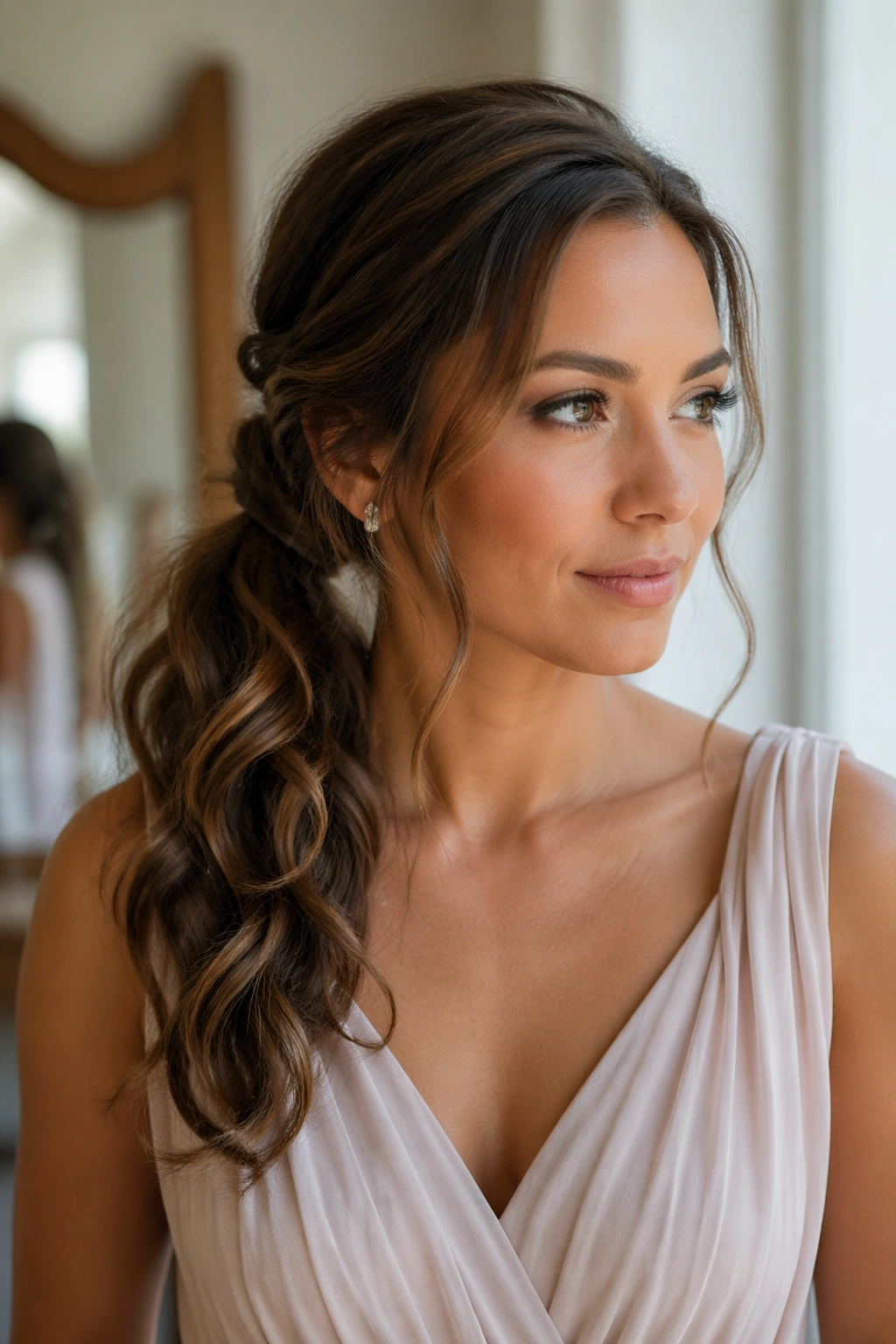
Want the version that feels a little softer and a little less formal? This is it. The textured side ponytail is a little undone in the best way, with waves that break up the shape and tendrils that move when you turn your head.
Why It Works So Well in Photos
Textured hair catches light in a more forgiving way than stiff curls. It also gives the stylist room to hide pins and elastic bands, which helps when a bridal party wants a cohesive look without everybody looking identical. That’s a smart trade.
A little texturizing spray at the mid-lengths makes a big difference. Too much, though, and the hair can feel dry and gritty. Start small. Add more only if the ponytail starts collapsing.
A one-inch section left out near the temple can make the face look softer fast. That tiny detail does more than people expect.
4. Braided Crown into Side Ponytail
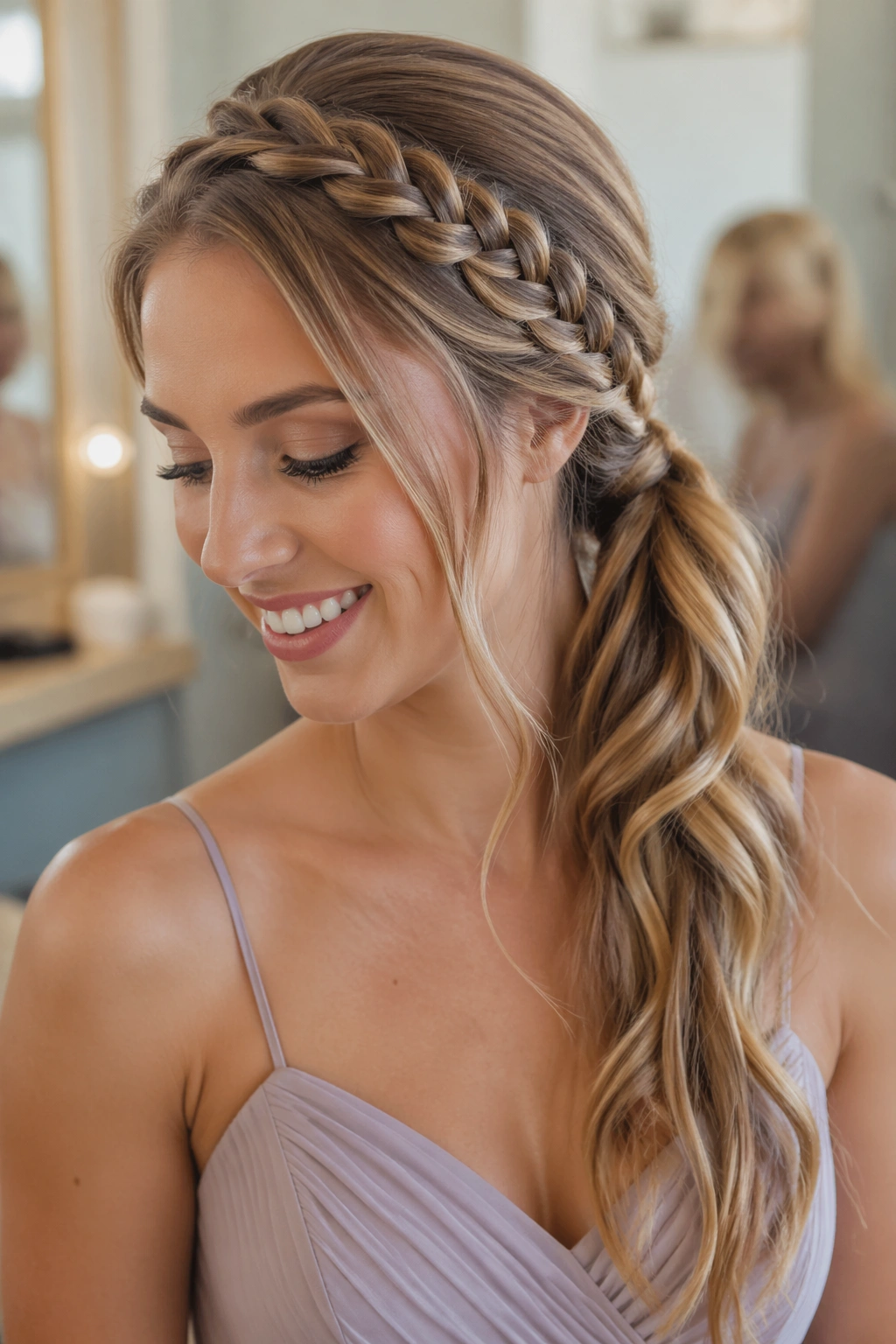
A braided crown leading into a side ponytail has a nice built-in structure. It gives you control at the front, movement at the back, and enough detail to keep the style interesting even without accessories.
The Part That Matters Most
The braid should start shallow, close to the hairline, and travel toward the ear before joining the ponytail. If it sits too high, the style can look heavy. Too low, and the braid loses its purpose.
This is a good choice for bridesmaids with layered hair or for dresses that are strapless and need a little shape around the head. It also helps when the bridal party wants their hair to stay put through a long event.
- Best on medium to long hair
- Holds extra well with a light mist of hairspray before braiding
- Needs 4 to 6 pins to anchor the braid into the base
- Works nicely with pearl pins or a tiny comb
Pro tip: braid first, then smooth the ponytail second. If you do it in the other order, the crown can loosen while you work.
5. Twisted Side Ponytail for Shorter Layers
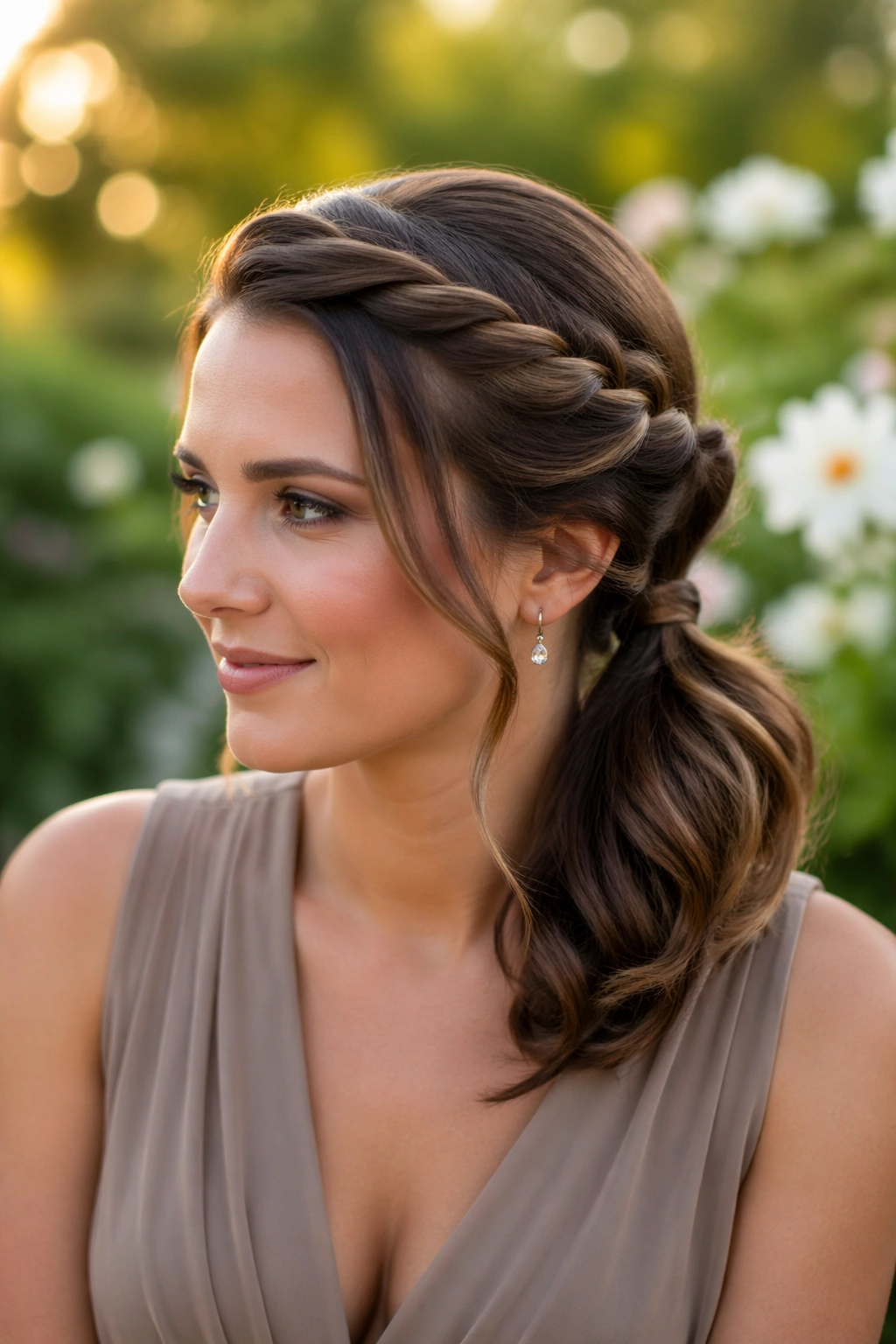
Shorter layers can be annoying in a side ponytail. They slip, they poke out, and they refuse to lie still when you want them to. Twists solve a lot of that without making the style look heavy.
The hair along the front is split into two or three sections, twisted back, and pinned before everything gathers into the ponytail. That keeps the shorter pieces controlled and gives the finished style a little depth near the temples.
I like this look for bridesmaids whose hair falls somewhere between shoulder length and collarbone length. It does not need a ton of length to work. It just needs a stylist who is willing to pin carefully and not rush the front pieces.
A fine mist of flexible-hold spray helps the twists stay smooth without turning them crunchy.
6. Bubble Side Ponytail for a Playful Bridal Party
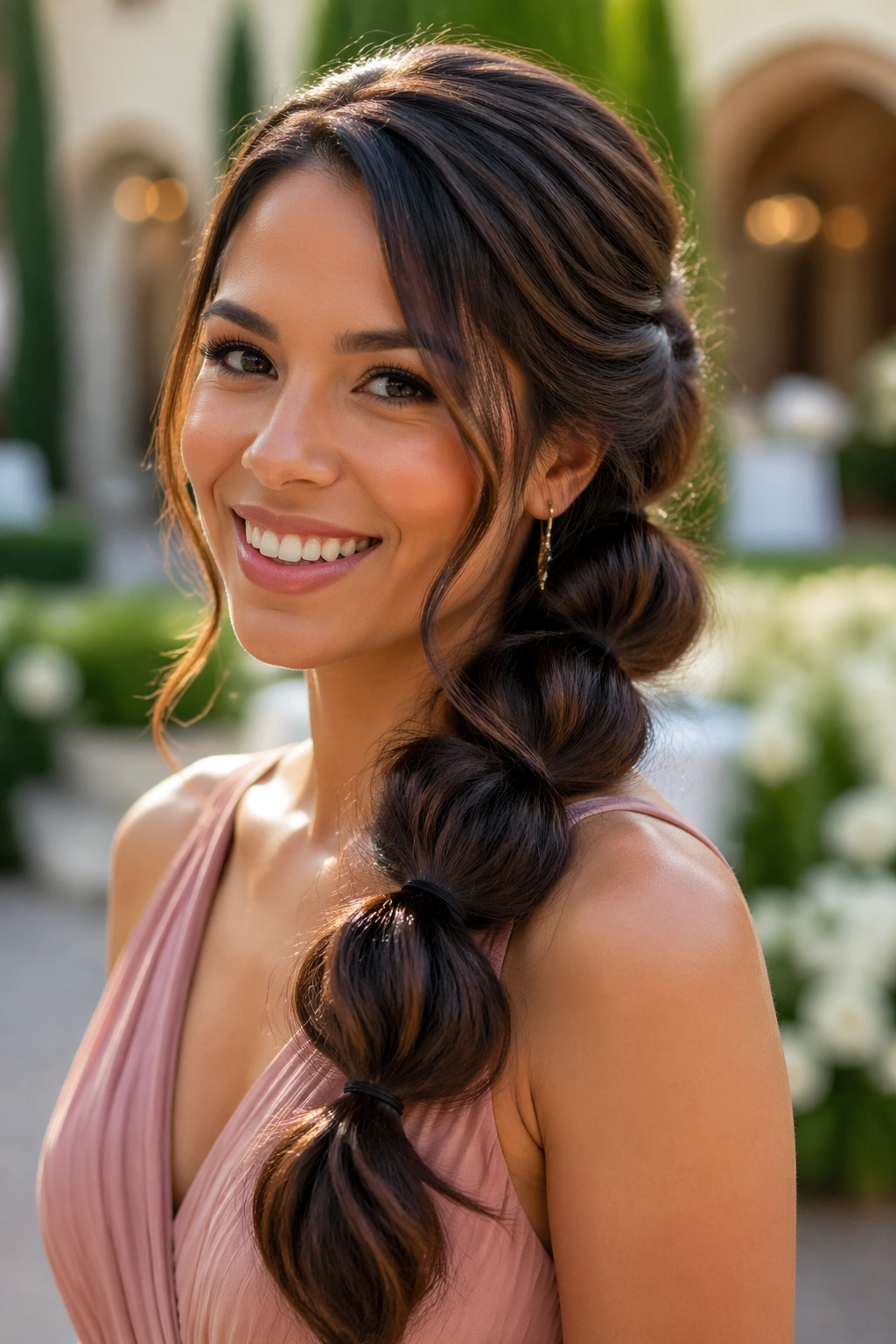
A bubble side ponytail is cheerful in a way that reads well in group photos. It feels a little modern, a little fun, and not at all fussy. Each section is tied off down the length of the ponytail, then gently pulled to create that rounded bubble shape.
That shape is what makes it stand out. A plain ponytail can vanish in photos if the hair is very similar in color to the dress or background. Bubbles add visible structure, which is useful when the bridal party is standing shoulder to shoulder.
This one looks best when the elastic bands match the hair color closely. If they don’t, the bubbles can look choppy instead of polished. A ribbon can hide the bottom tie if you want a softer finish.
It’s a nice pick for younger bridesmaids, but honestly, it works on adults too. The style just needs clean parting and even spacing between each section.
7. Ribbon-Tied Side Ponytail
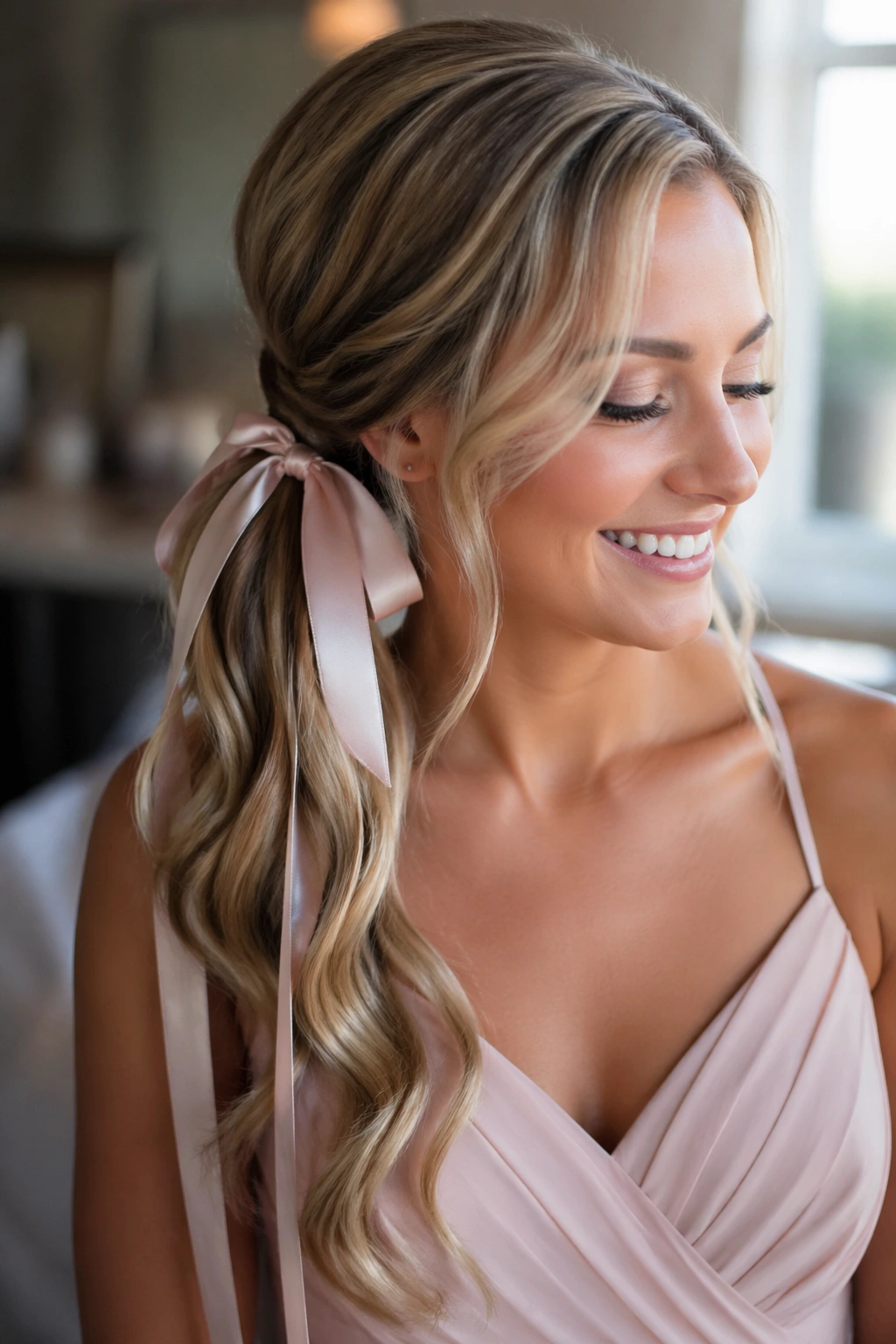
A ribbon-tied side ponytail has a soft, almost old-fashioned charm that never feels too sweet when it’s done right. The ribbon becomes part of the hairstyle, not just an add-on.
How to Place the Ribbon
Use satin for shine, grosgrain for a little texture, or velvet when the dress fabric is richer and heavier. The ribbon should sit at the base of the ponytail or tie over the wrapped elastic, then trail down a few inches past the ends.
The placement matters more than the color. Tie it too high, and it looks childlike. Tie it too low, and it disappears under the hair. Right at the base is the sweet spot.
This style plays well with side-swept waves and soft face-framing pieces. It also gives bridesmaids a simple way to coordinate without matching exactly. One ribbon color per dress palette can look elegant fast.
A ribbon with wire edges can hold its shape better, but it can also look stiff. I’d skip the wire if the rest of the look is soft.
8. Side Ponytail with Pearl Pins
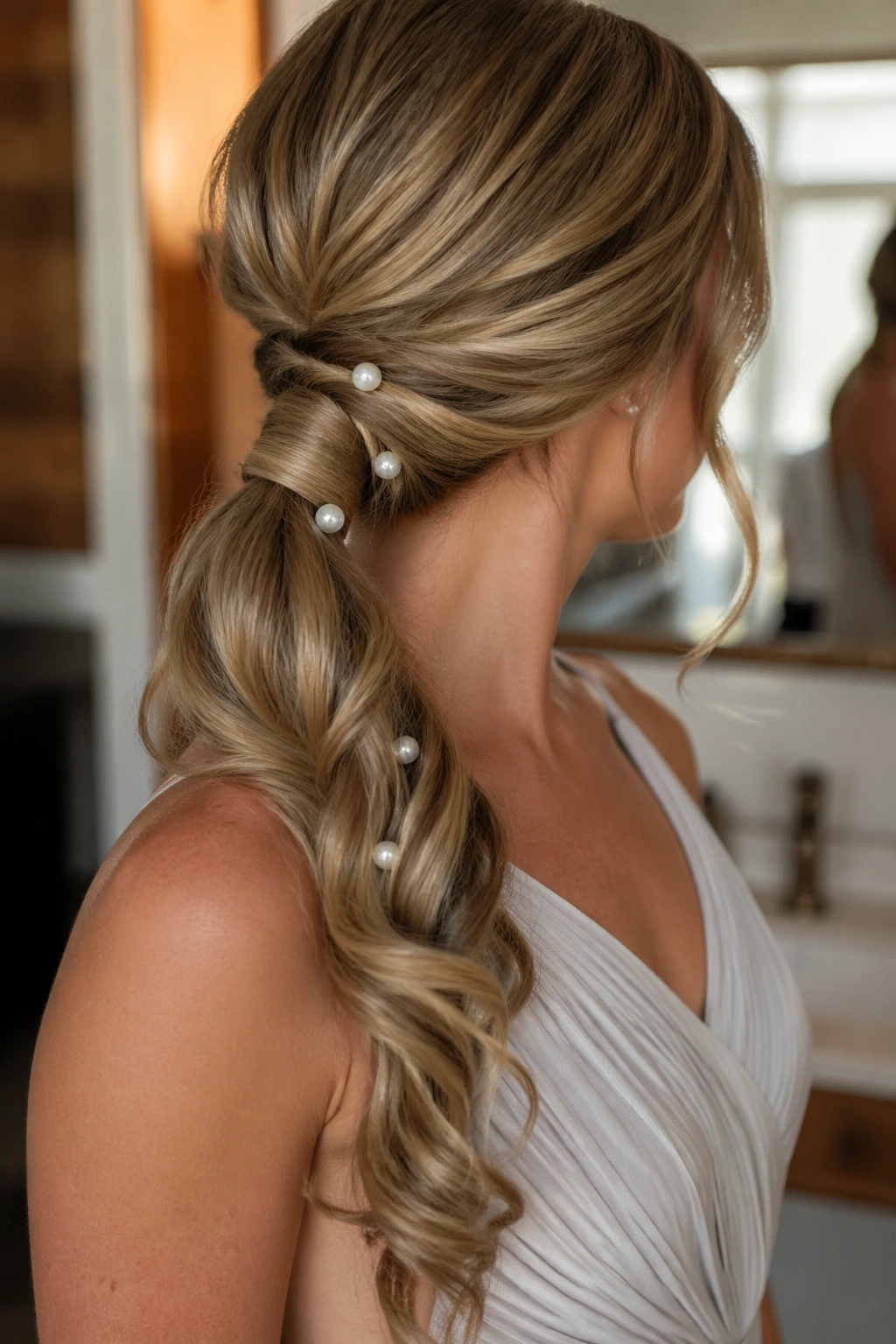
Pearl pins are a small detail, but they change the whole mood. A side ponytail with pearl pins feels bridal-party ready without turning into a full accessory moment.
The pins work best when they’re scattered along the curve of the ponytail, not lined up in a row like buttons on a shirt. A few near the wrap, a few where the ponytail starts to bend over the shoulder, and that’s usually enough.
This is one of those styles that looks more expensive than it is. Pearls catch the eye in a gentle way, and they pair well with almost any dress fabric, from chiffon to satin. No part of the look has to shout.
Use pins in different sizes if you can. Tiny pearls near the temples and slightly larger ones near the base create a natural rhythm. Too many large pearls can make the style feel crowded.
9. Old Hollywood Side Ponytail
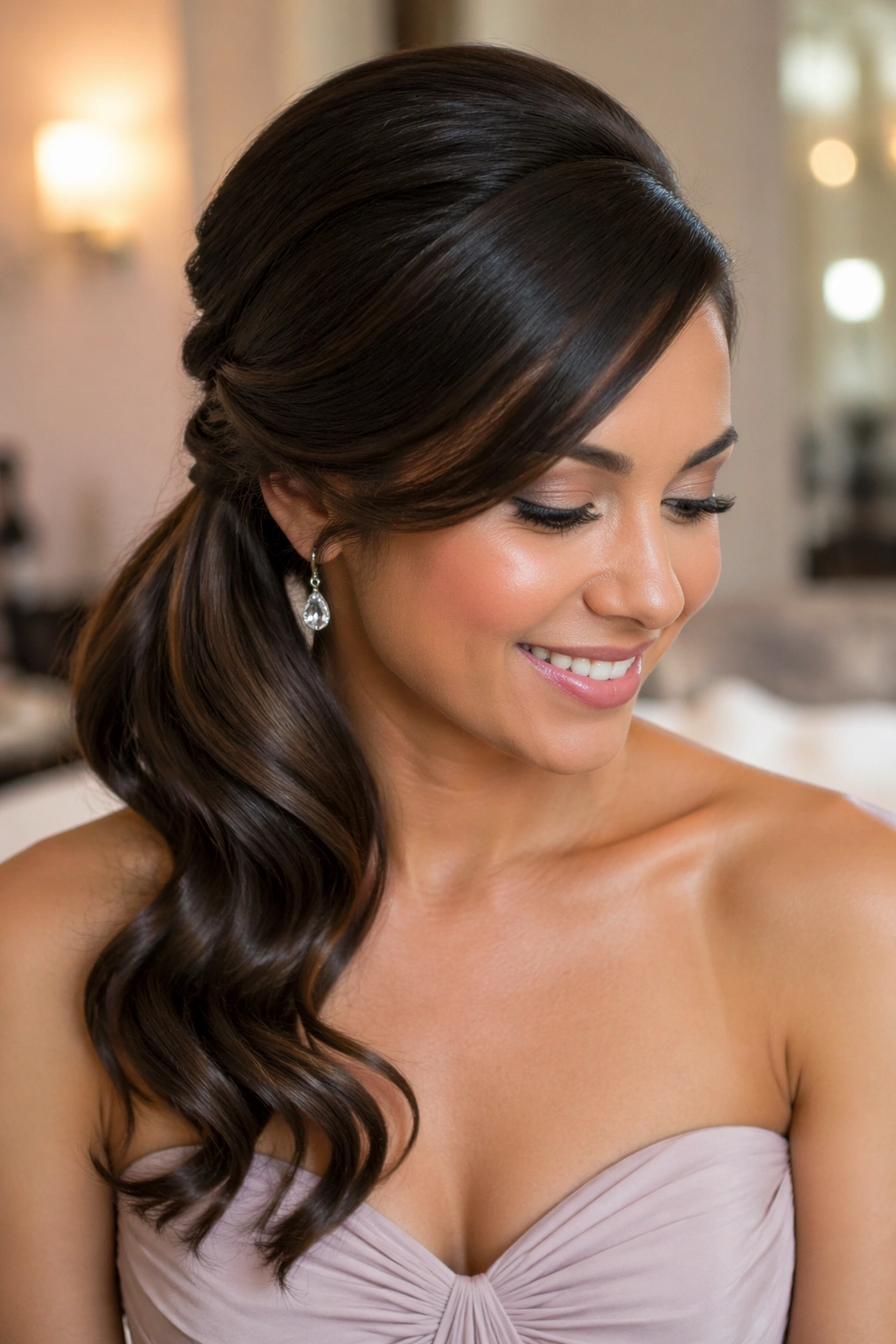
A polished side ponytail with glossy waves gives off a strong formal feel. It’s the sort of style that looks at home beside a structured gown, a clean makeup look, or a bridal party dressed in darker tones and rich fabrics.
The wave pattern should be smooth and deliberate, not beachy. That’s the difference. Beach waves have more broken pieces and movement; this look wants a steady S-shape that holds its form. A deep side part helps set the tone.
A lot of stylists miss the crown here. If the top is flat, the whole look collapses into the shoulder. A little lift at the roots makes the ponytail sit with more presence.
Keep the ends curled under or tucked in a soft bend. Straight ends can make the style look unfinished. Gloss spray, used lightly, finishes the job without making the hair greasy.
10. Fishtail Side Ponytail
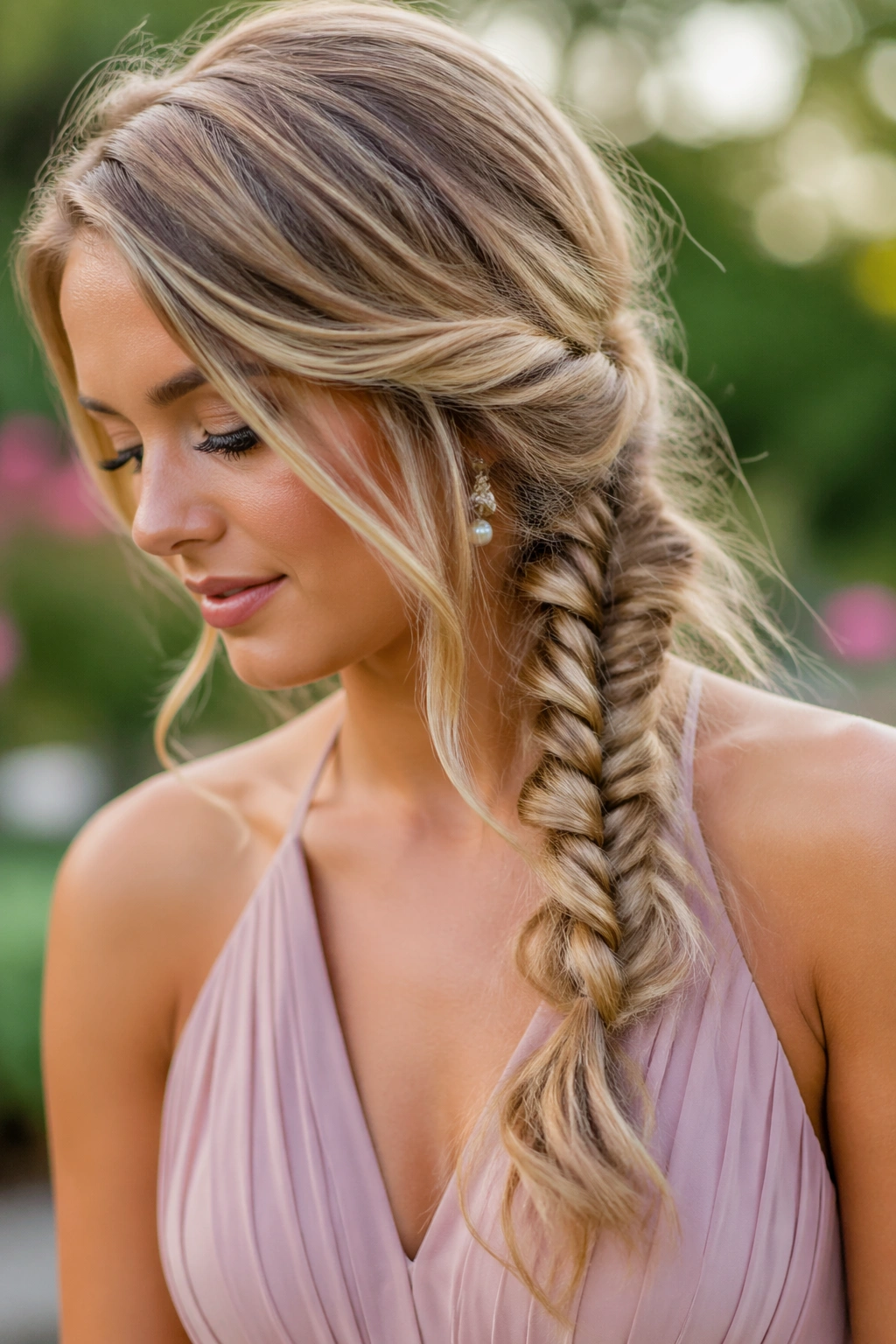
A fishtail side ponytail is for bridesmaids who want detail without a huge amount of decoration. The braid itself does the talking. It has that woven look that reads clearly even from the back of a crowded room.
What Makes It Stand Out
A fishtail braid creates smaller, tighter texture than a standard three-strand braid. That makes it look intricate even when the hair is not especially thick. If the ponytail is long, the braid can stay visible all the way to the ends.
The key is keeping the braid slightly loose. Pull it apart a little after tying so it looks fuller and softer. Too tight, and the braid can feel severe.
- Works best on medium to long hair
- Needs a smoothing cream before braiding
- Stays neat with a clear elastic at the end
- Looks good with pearl studs, tiny flowers, or nothing at all
One good pin at the base matters more than three loose ones elsewhere. Secure the braid where it starts to drape over the shoulder, or the whole shape can slide backward during the day.
11. Voluminous Crown Side Ponytail
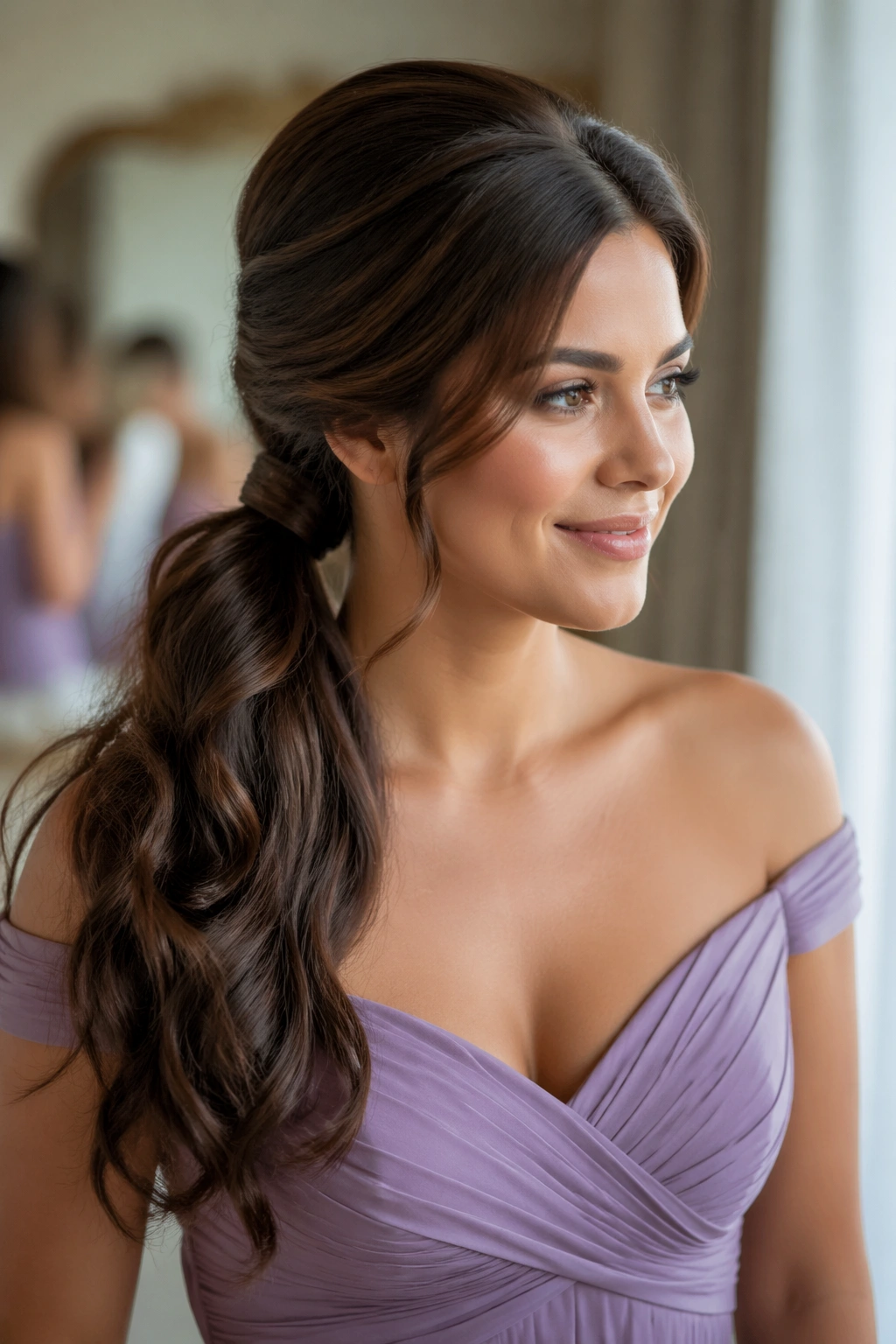
A little lift at the crown changes the whole balance of a side ponytail. Suddenly the style feels more formal, more sculpted, and a lot more flattering on camera from the front.
This version is especially useful when bridesmaid dresses have wide necklines or the group needs a consistent silhouette. The added volume keeps the hair from appearing too flat next to structured clothing. It also helps long faces feel a bit shorter.
Teasing should stay contained. You want lift, not a nest. A soft backcomb at the roots and a smoothing brush over the top is enough if the hair is medium density. Fine hair may need a small padding insert under the crown.
And no, the crown does not need to be huge. A half-inch of lift can be enough. More than that and the style starts stealing the whole picture.
12. Curly Side Ponytail for Natural Texture
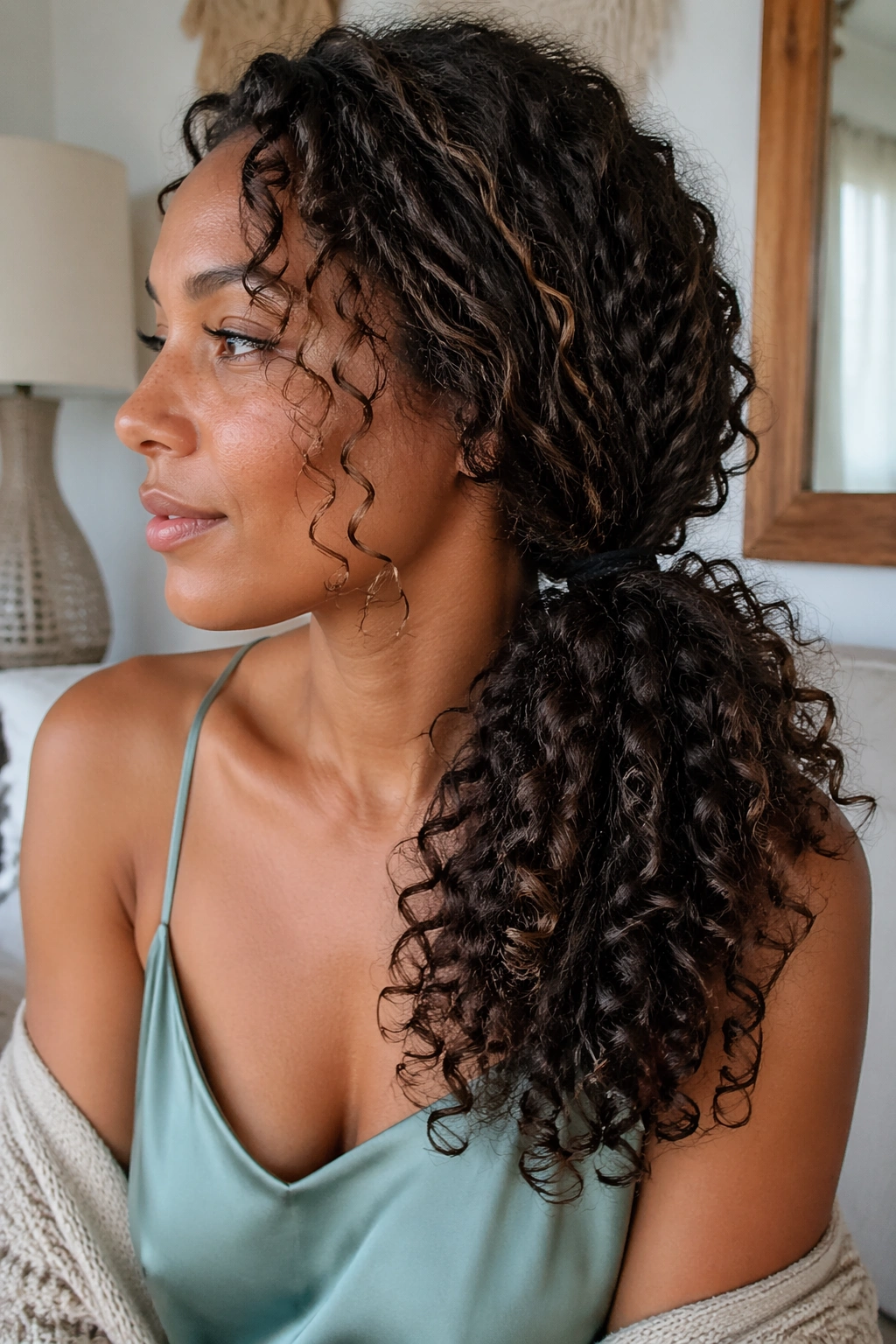
Curly hair looks at its best when it is allowed to stay curly. A side ponytail gives those curls a place to fall without flattening them into a shape they never wanted in the first place.
How to Keep the Curl Pattern Happy
Start with defined curls, not brushed-out volume. A curl cream or gel used while the hair is damp will keep the shape cleaner once the hair dries. Then gather the curls gently to one side and secure them low and loose.
The biggest mistake is over-manipulating the front. When curls are stretched too much, the hair can frizz at the hairline and lose its bounce. Leave a few pieces alone. They usually know what they’re doing.
This style works for everything from tight coils to loose ringlets. The main adjustment is how much of the curl is left free around the face. Tighter curls often look best with a bit more freedom, while looser curls can be softly pinned back.
A satin ribbon or small comb can be enough. Anything heavier may drag the curls down.
13. Side Ponytail with Floral Sprigs
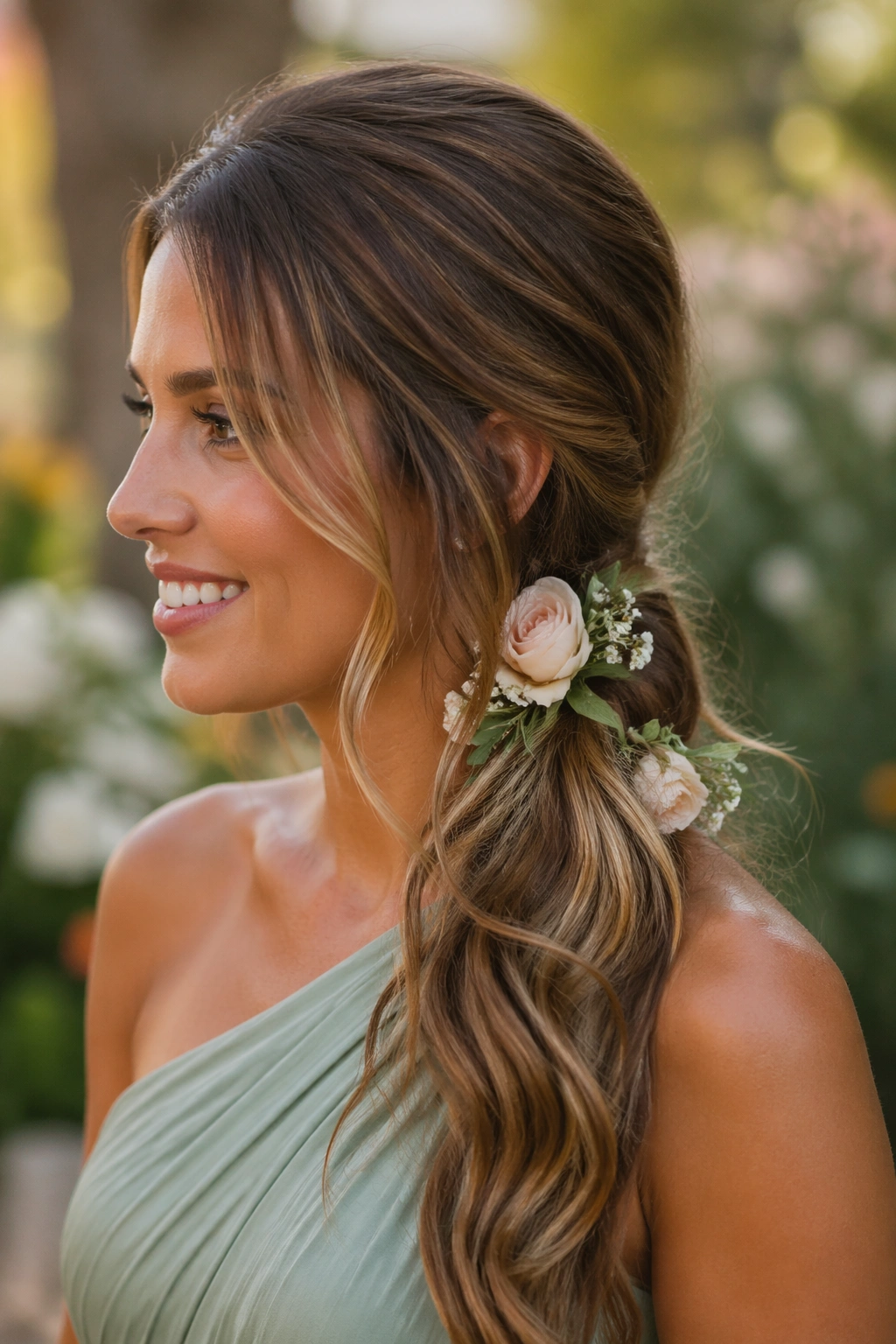
Fresh flowers tucked into a side ponytail give the style a bridal-party softness that feels easy to understand at a glance. You do not need a giant floral arrangement. A few sprigs near the base can be enough.
Think small blooms, greenery stems, or a single accent flower repeated across the group. That repetition matters more than size. When every bridesmaid has a slightly different flower cluster, the whole party can look scattered in photos.
The flowers should be placed where the hair already has structure: near the wrapped base, along a braid, or just above the curve where the ponytail starts to fall. Avoid stuffing flowers randomly through the ends. It looks fussy.
Fresh stems need to be trimmed short and wrapped so they do not poke the scalp. If you’re using real blooms, water tubes or floral wire can keep them from drooping before the ceremony ends.
14. Dutch Braid Accent Side Ponytail
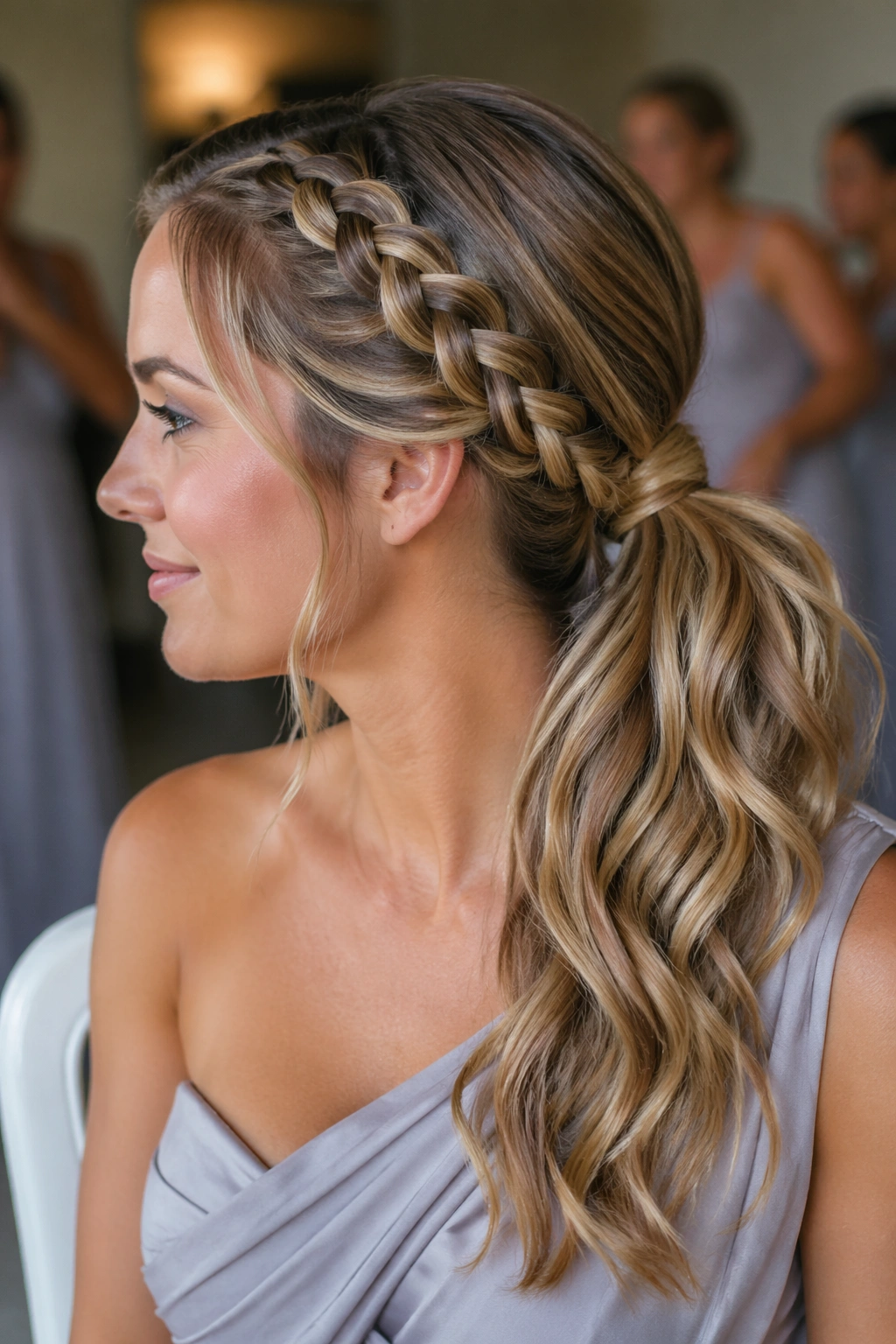
A Dutch braid accent adds a little edge to a side ponytail without making it feel hard or too trendy. Because the braid sits on top of the hair instead of sinking into it, the detail is easy to see from across the room.
The braid usually starts near the temple or slightly behind the hairline and runs diagonally into the ponytail base. That line helps shape the face and keeps the style from looking flat on one side. It’s a clean way to guide the eye.
This is one of my favorite choices for bridesmaids with layered hair. The braid holds those shorter layers in place and gives them a job to do. That beats letting them float loose and frizz up.
- Best when the braid is pancaked slightly for softness
- Uses 4 to 6 pins at the junction
- Looks good with one statement earring
- Pairs well with side parts and off-the-shoulder dresses
15. Minimalist Straight Side Ponytail
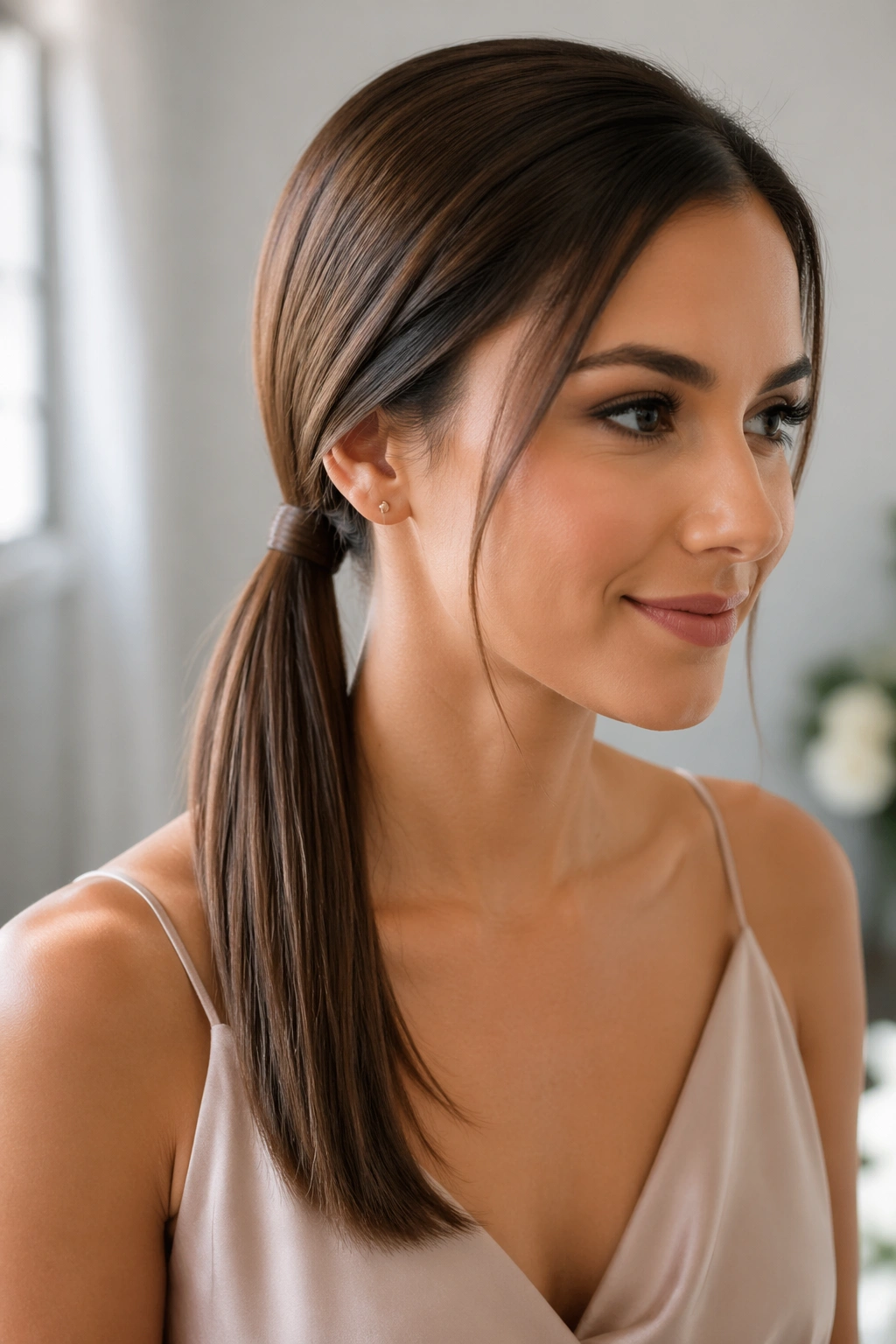
Not every bridesmaid hairstyle needs curls or braids to earn its keep. A straight side ponytail can look crisp, modern, and quietly expensive when the hair is healthy and the finish is clean.
This version depends on shine and exact placement. The ponytail should sit low, just behind the jawline, and fall in a smooth line over the shoulder. Any frizz at the top will stand out, so prep matters here more than in a softer style.
A flat iron pass near the roots and mid-lengths can help if the hair is naturally wavy. Keep the ends straight too, or the contrast can make the style look accidental. A soft serum on the ends is enough.
This is a strong choice for bridesmaids in more tailored dresses. It also plays well when the makeup is bold and the hair should step back a bit.
16. Side Ponytail with Hidden Elastic Wrap
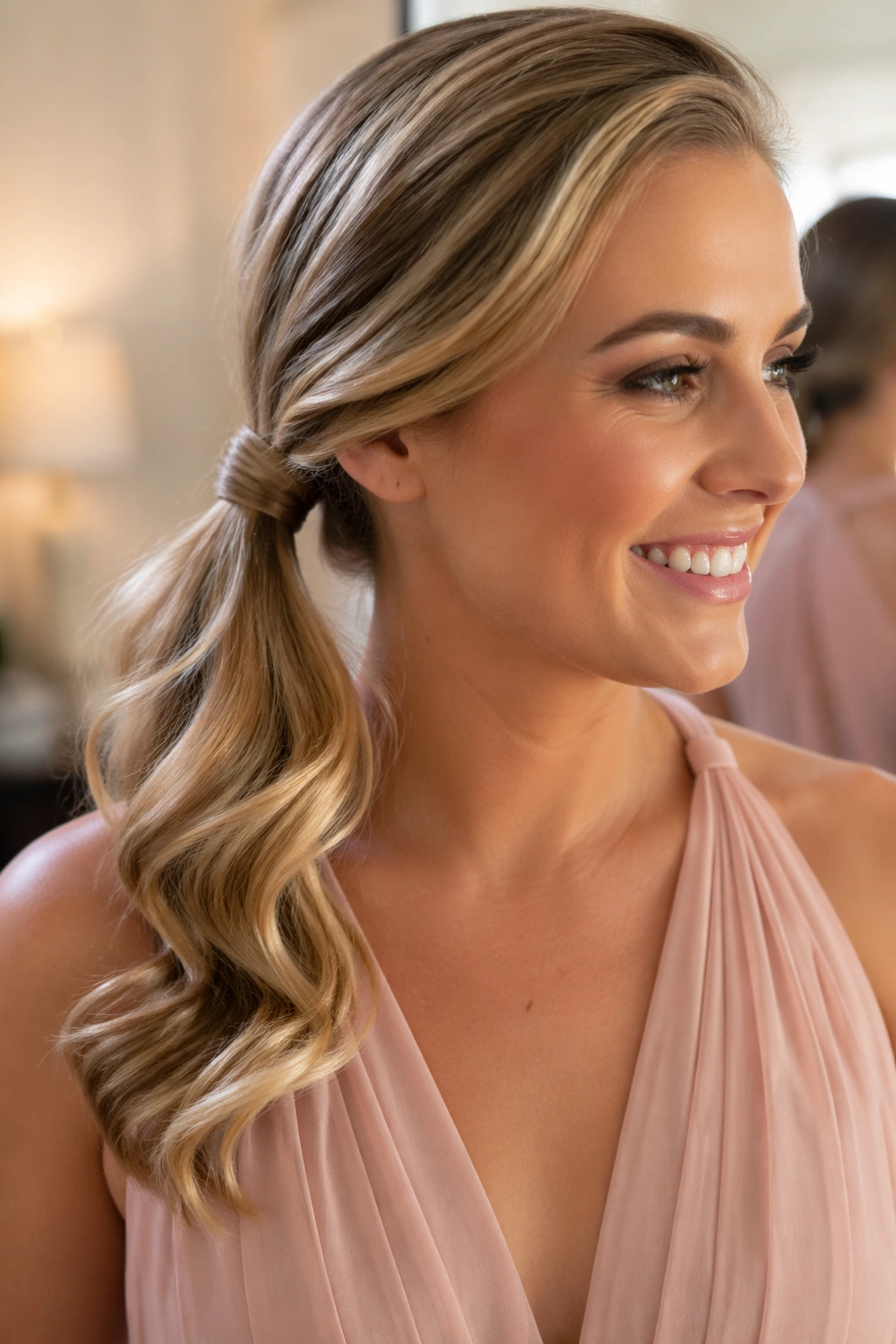
A hidden elastic wrap is one of those tiny finishing moves that separates a good side ponytail from a rushed one. The elastic disappears under a small section of hair, and the whole base looks calmer.
What the Wrap Actually Changes
It removes visual clutter. That sounds minor, but in wedding photos, clutter adds up fast. A visible elastic, a pin, a stray flyaway, and a bobby pin all at once can make the style feel busier than it should.
Keep the wrap narrow and smooth. A section about 1 inch wide is enough in most cases. Too thick, and it starts to look like a ribbon of hair sitting on top of the ponytail.
This style is especially nice when the dress has a clean neckline or when the rest of the bridal party styling is simple. It gives polish without adding another accessory.
A strong grip elastic underneath helps the wrap stay secure. If the base slips, the whole illusion falls apart. That part is boring, yes, but it matters.
17. Knotted Side Ponytail
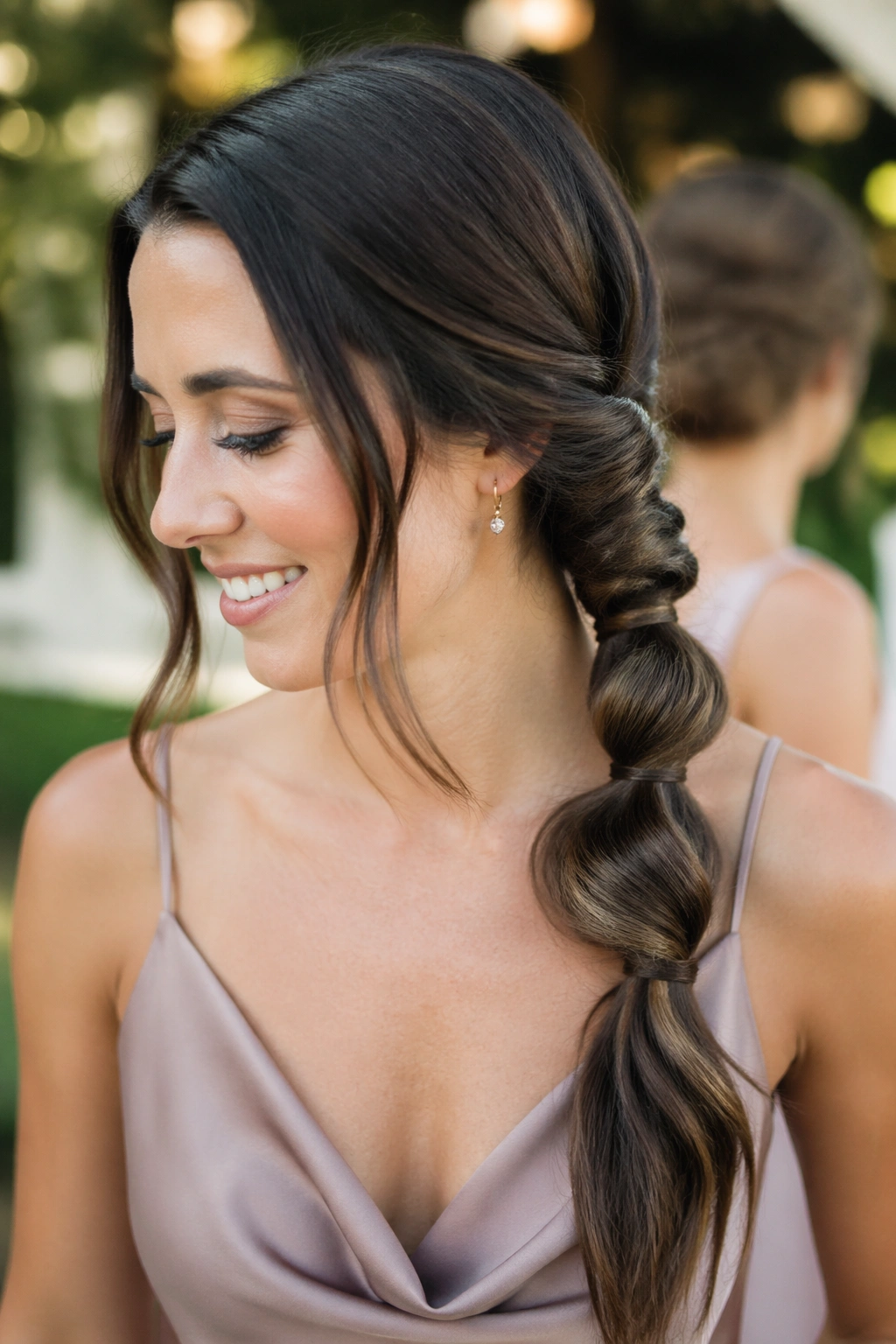
A knotted side ponytail feels modern without leaning severe. Instead of braiding the hair, you twist or knot sections together before securing the tail, which creates a soft rope-like shape down one side.
The look works because the knots break up the usual ponytail line. That can be useful when the dress is plain and the hairstyle needs a bit of built-in detail. It also helps a side ponytail feel different from the usual low sweep.
This style is nicest on medium to long hair with some grip. Freshly washed, silky hair can slip apart unless it’s prepped with a little texturizing spray. Day-two hair usually behaves better.
A few pins hidden inside the knots keep the shape from loosening. Do not pull each knot too tight. If the sections are cinched hard, the shape loses its softness and starts looking strained.
18. Boho Side Ponytail with Scattered Waves
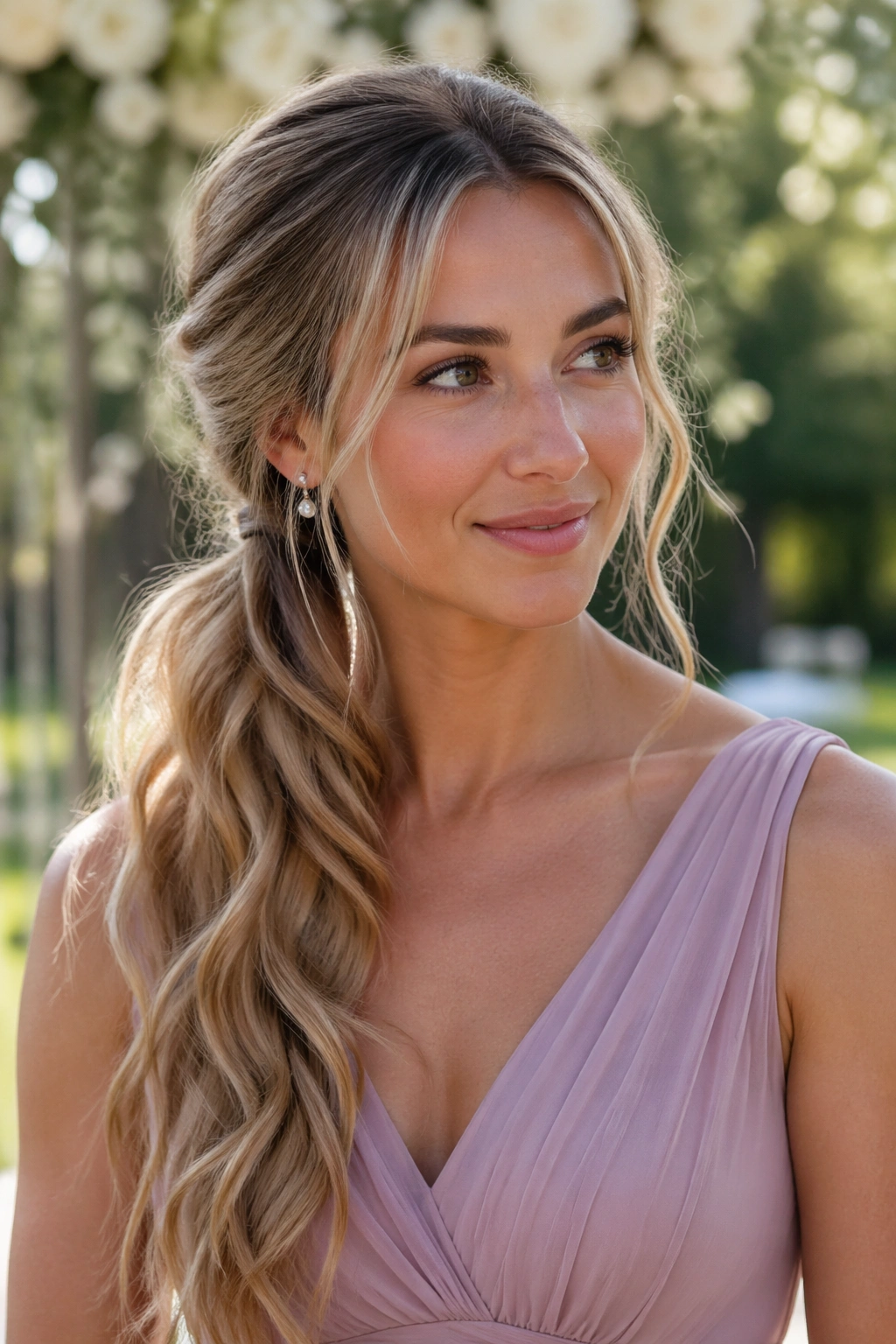
A boho side ponytail is what happens when you want movement first and structure second. The waves are loose, the ends are touchable, and the whole thing feels easy without being messy.
This is a good option for outdoor ceremonies, garden settings, or dresses with lace details. The style does not compete with ornamentation. It just sits there and looks calm.
What makes it work is spacing. The waves should not all sit at the same height or curl the same way. Slight irregularity gives the style a softer edge and keeps it from looking stamped out.
A light mist of sea salt spray at the mid-lengths helps, but don’t overdo it. Too much and the hair gets rough, which is a bad trade when bridesmaids are supposed to look soft, not windswept in a parking lot.
19. Side Ponytail with Velvet Bow
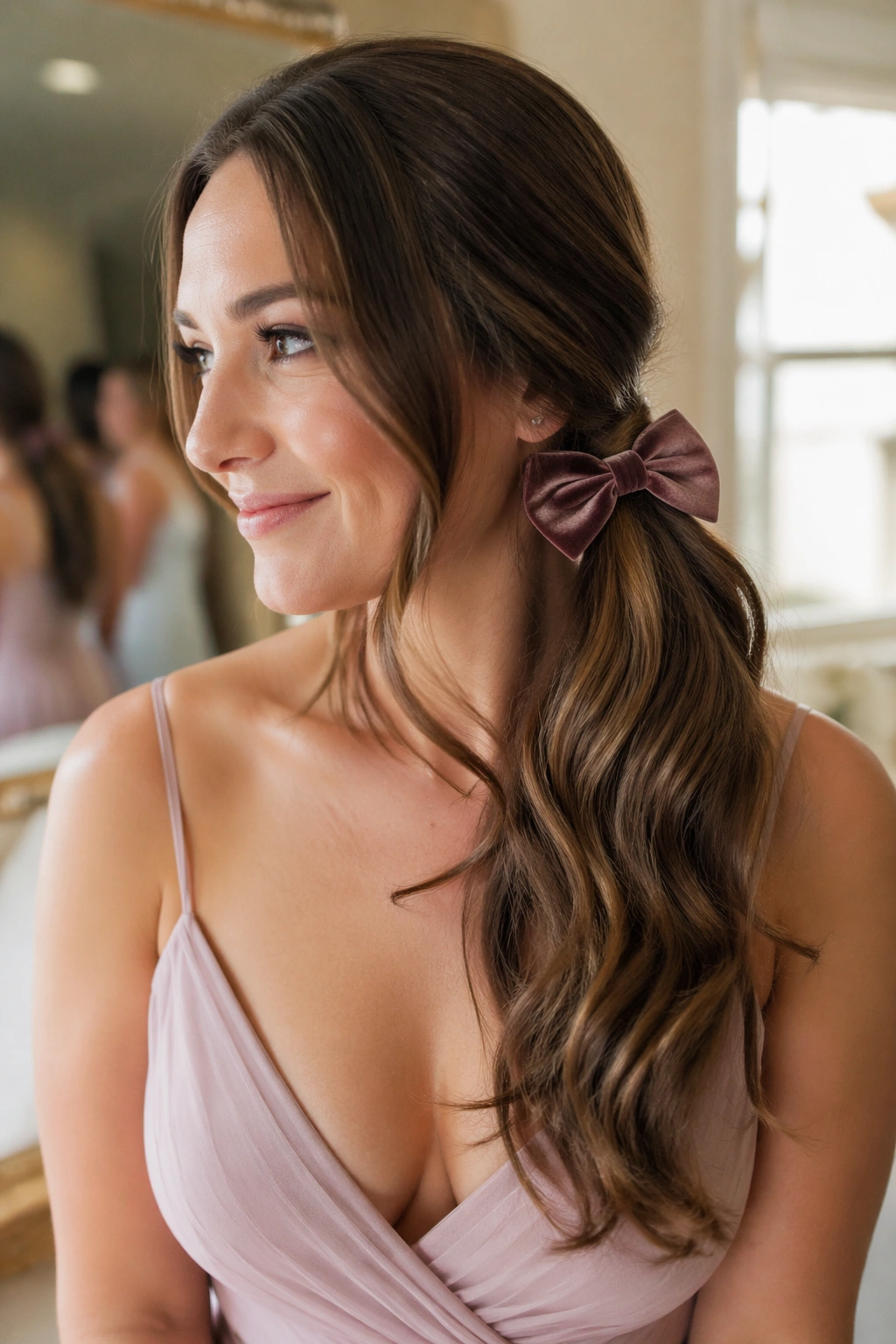
A velvet bow adds a richer, deeper finish than ribbon alone. It feels more grounded, and it can suit bridesmaid dresses with thicker fabric or a slightly more formal mood.
The bow should be sized to the hair, not the dress. A giant bow can overpower fine hair. A tiny one can disappear on thick hair. Mid-size is usually the safe call, with tails long enough to trail a few inches past the ponytail ends.
Place it right at the base, where the ponytail begins to fall over the shoulder. That keeps the shape visible from the front and side. If the bow slips behind the shoulder blade, it has already lost half its job.
This one is nice when a bridal party wants a coordinated detail that is easy to repeat. Same color, same material, same placement. That kind of consistency looks deliberate fast.
20. Side Ponytail for Thick Hair
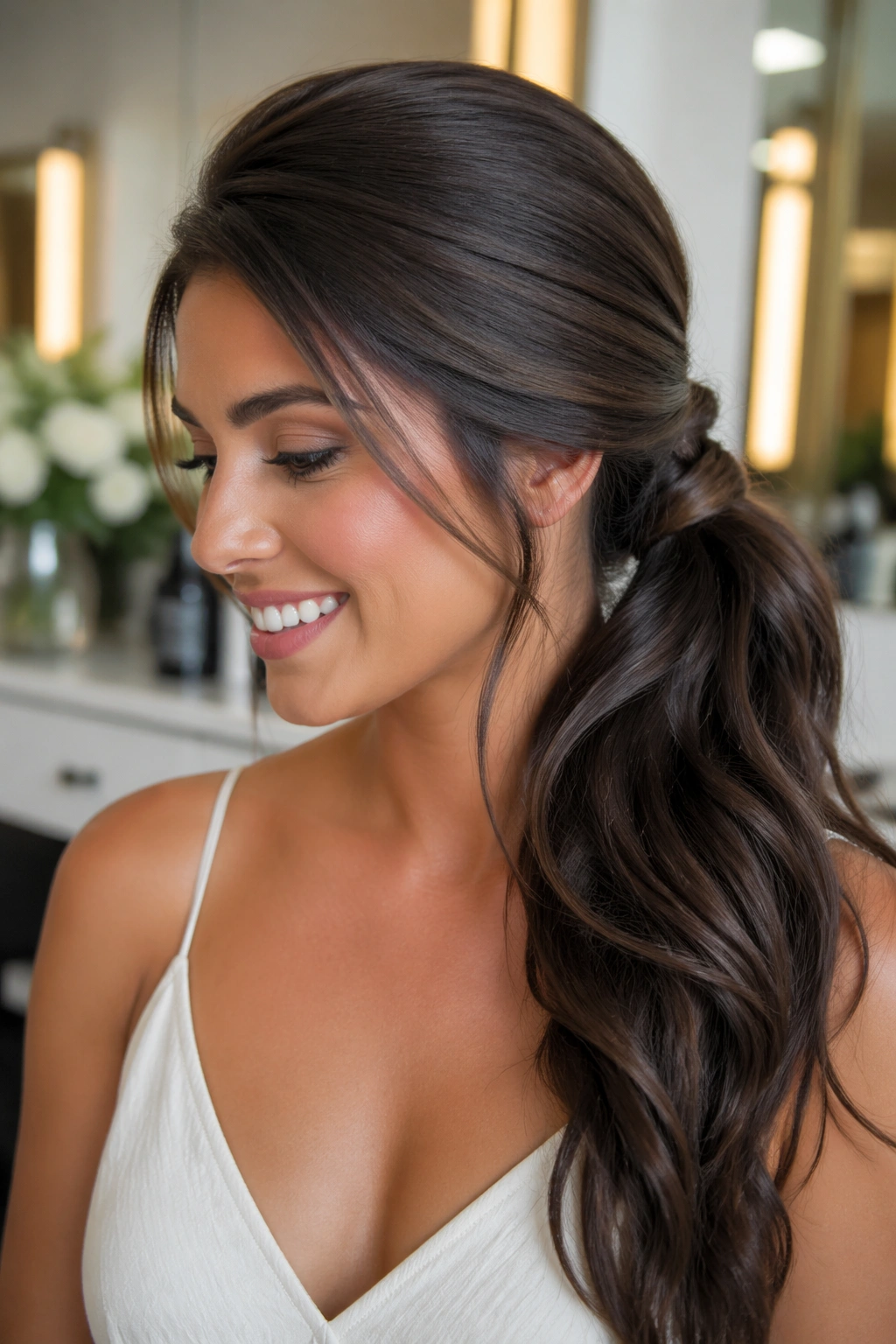
Thick hair can make a side ponytail look lush, but it can also turn the style into a heavy block if the weight is not handled well. The answer is not more spray. It’s better shape.
How to Keep the Weight Under Control
Start by sectioning the hair before gathering it. If you try to grab all of it at once, the top can get bumpy and the base can slide downward. A lower anchor, then a second pin set under the first, usually holds better.
A smoothing cream helps keep the sides flat, but only a little. Thick hair can go greasy fast when too much product is added. Use enough to calm the surface, not enough to slick it down into a helmet.
- Section the hair in two before securing
- Use two strong elastics if the ponytail is very dense
- Place pins in a crossed pattern for grip
- Keep the crown smooth, not stretched
A wide-tooth comb is your friend here. It helps organize the hair without making the ends look crushed.
21. Side Ponytail for Fine Hair with Padding
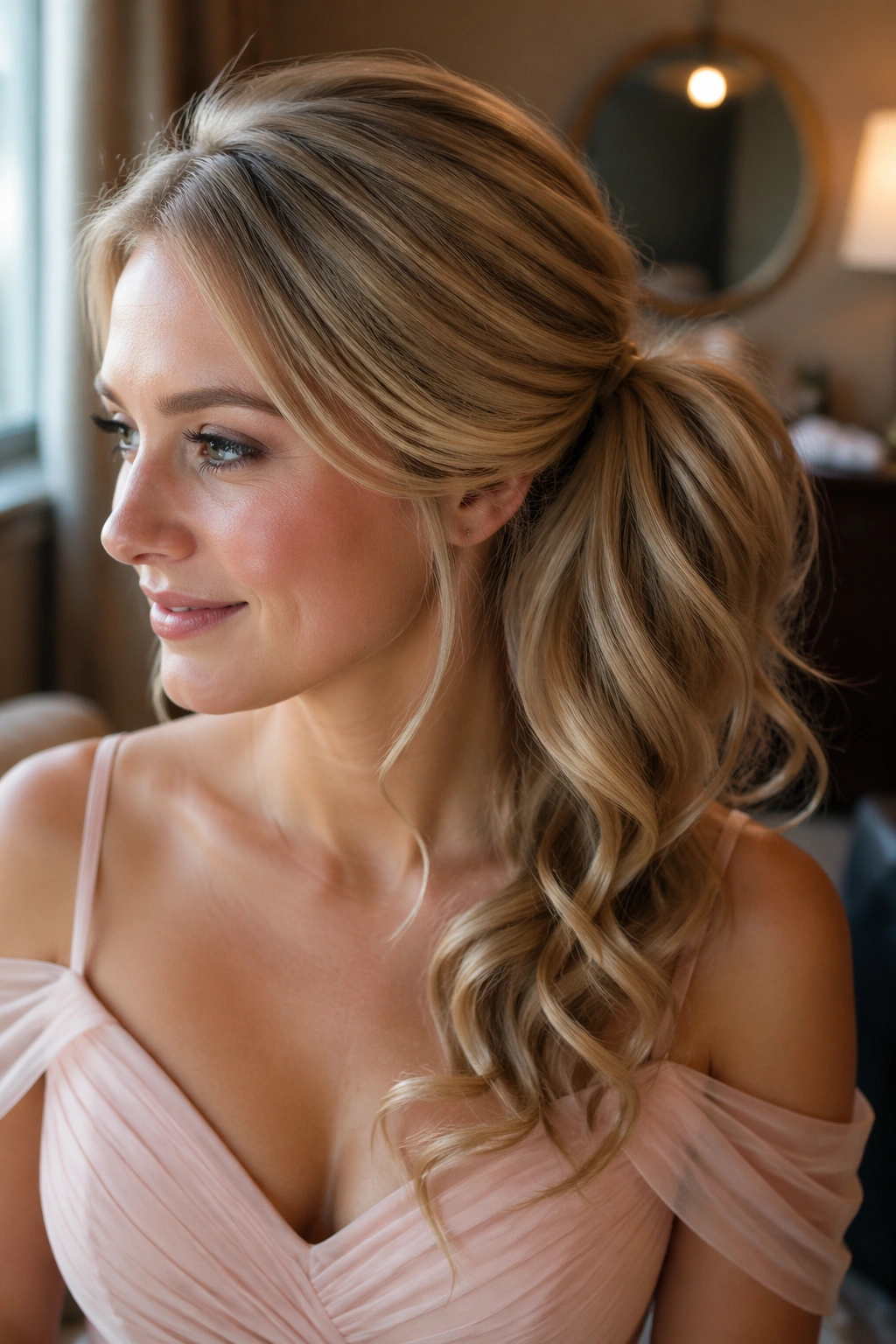
Fine hair needs structure if you want a side ponytail to look full in wedding photos. Padding, teasing, and clever placement can make a big difference without making the style look fake.
The easiest trick is a small ponytail insert or a light padding piece at the base. It gives the hair something to drape over, which adds the illusion of thickness. A light teasing at the crown helps too, but keep it soft. You’re building shape, not a rat’s nest.
This style also benefits from curling the ends first. Fine hair can look stringy when left straight, especially if the ponytail is long. Soft bends create the impression of more body.
A lot of people over-spray fine hair and then wonder why it goes flat by dinner. Use flexible-hold products. Hard spray weighs fine hair down fast, and once it collapses, there’s no easy rescue.
22. Half-Sweep Side Ponytail
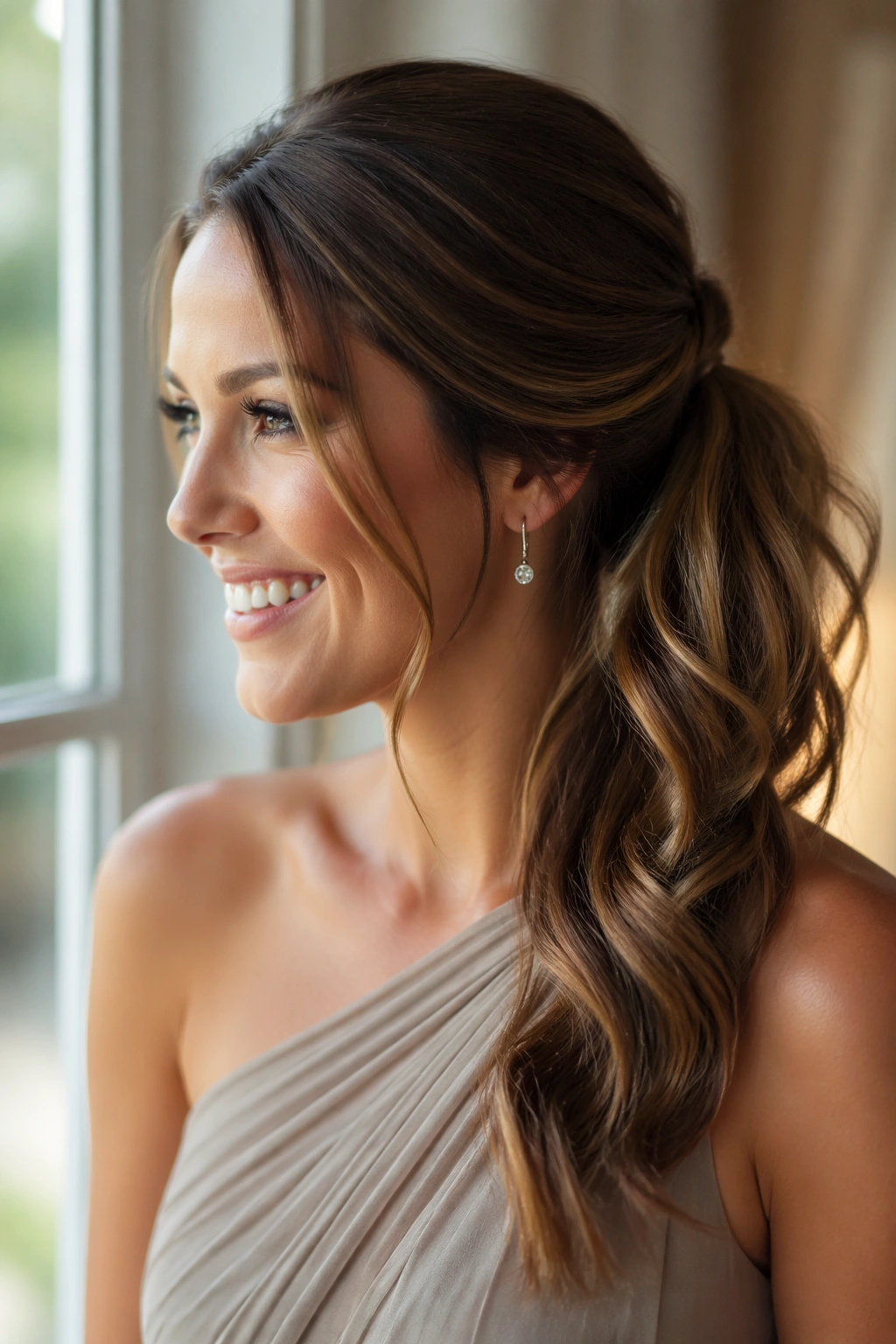
A half-sweep side ponytail sits between a half-up style and a full low ponytail. Some of the hair is gathered back, then swept to one side, while the lower lengths stay loose enough to move.
That makes it a smart choice for bridesmaids who want softness around the back but still need the front controlled. It also works well when the dress has a detailed back and you don’t want a full ponytail sitting over it.
The style relies on balance. Too much hair pulled into the sweep, and it stops looking half-up. Too little, and the side ponytail loses presence. The sweet spot is usually the upper third of the hair.
This one pairs well with loose curls or brushed-out waves. It can also help if the hair is too short for a full side ponytail. The half-sweep gives the illusion of more length without demanding it.
23. Side Ponytail with Hair Vine Placement
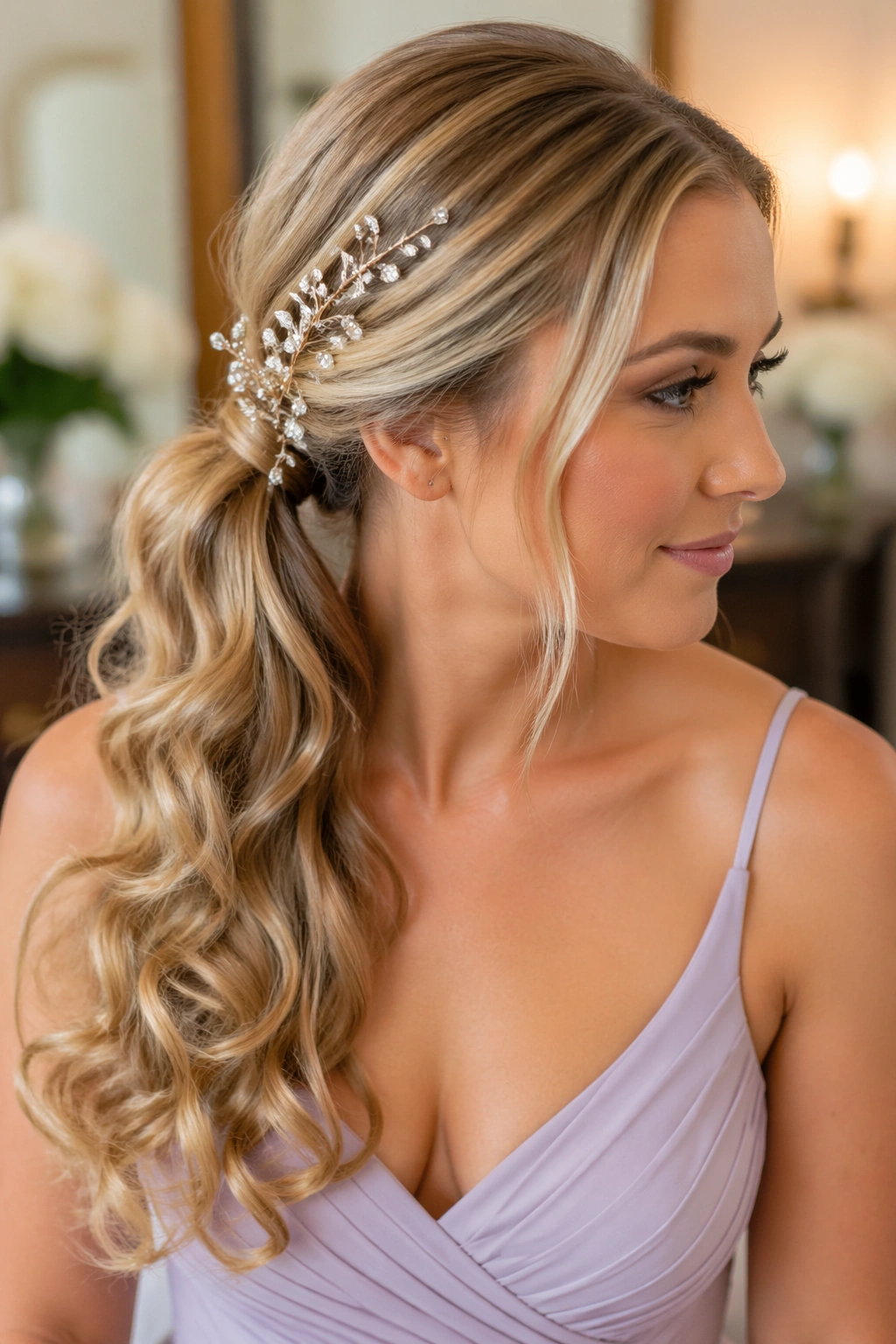
A hair vine or delicate comb can make a side ponytail feel dressed up without becoming crowded. The trick is placing the accessory where it follows the curve of the hair instead of sitting flat and obvious.
A vine looks best when it traces the side part or nestles above the ponytail base. That lets the metal or crystals catch a little light without taking over the whole look. If the vine is too low, it gets buried in the hair.
This style is especially useful for bridal parties with mixed hair textures. A vine can tie the looks together even when each bridesmaid’s ponytail shape is slightly different. That gives you cohesion without forced sameness.
Keep the rest of the hair simple if the vine is detailed. If the accessory is full of sparkle, the ponytail should stay calm. Otherwise the style starts fighting itself.
24. Side Ponytail with Sculpted Side Part
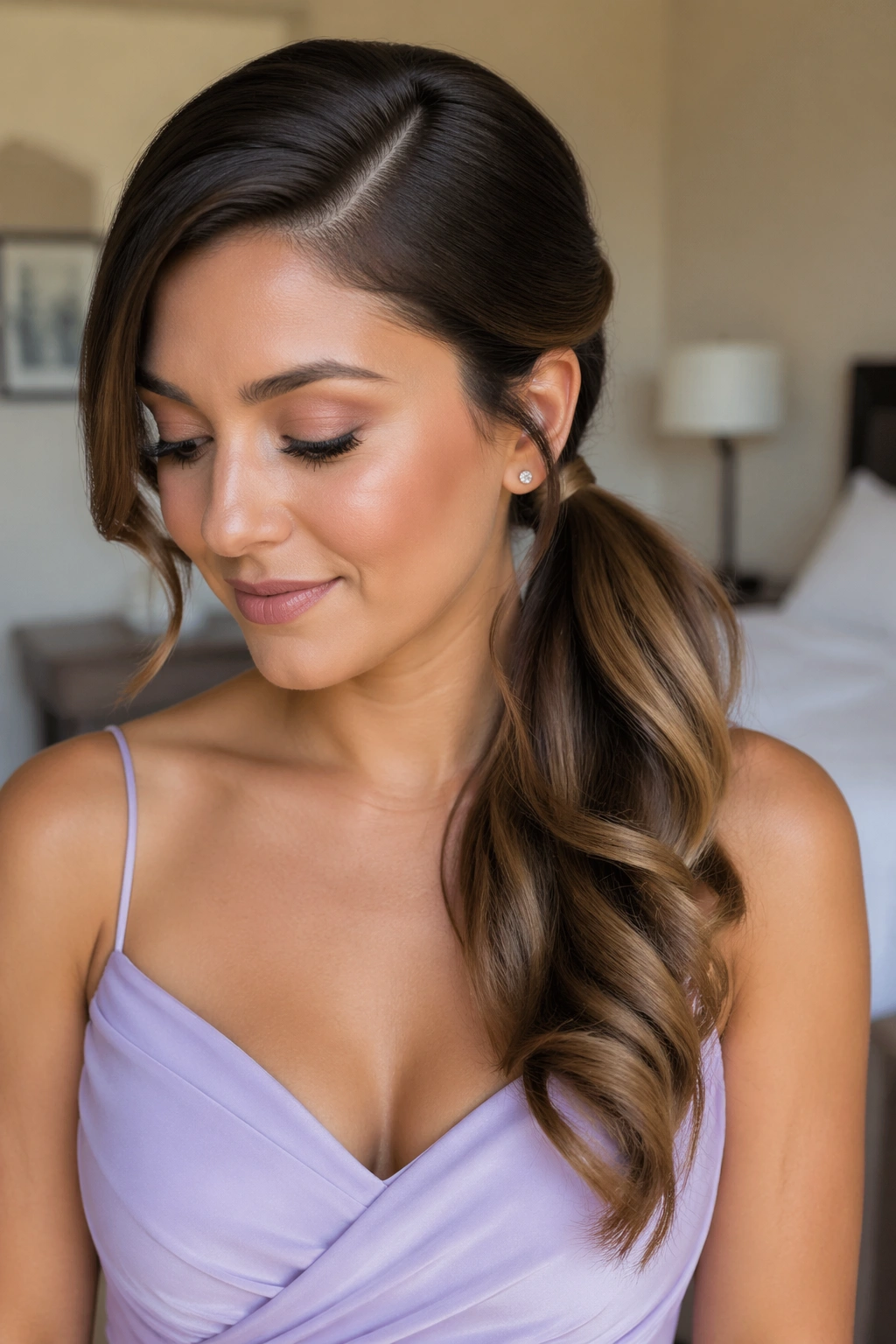
A sculpted side part gives a side ponytail a sharper outline. It frames the face, helps define the sweep, and makes the hairstyle feel more intentional from the first glance.
This is a strong move for bridesmaids wearing asymmetrical dresses or necklines that already lean to one side. The part mirrors the clothing and makes the whole look feel coordinated without being matchy.
The part should be clean but not severe. Use the tail of a comb, draw the line back to where it feels flattering, and press the front section smooth before tying it away. A dab of styling cream at the part keeps flyaways from spoiling the shape.
If you want the style to feel less strict, tuck one small piece behind the ear on the heavier side. That little bit of asymmetry softens the whole thing and keeps it from looking over-planned.
25. Draped Waves and a Secure Finish
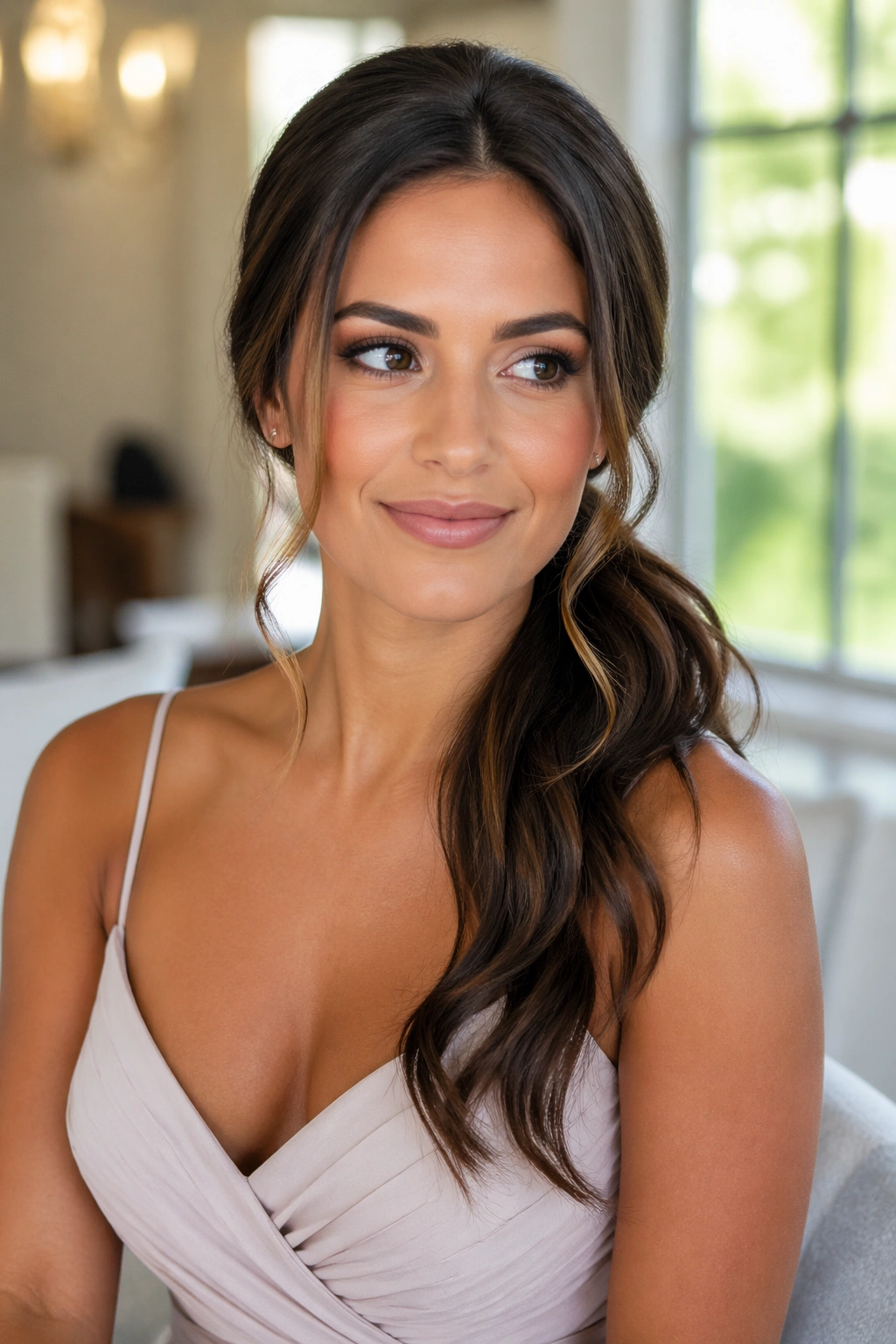
The side ponytail that survives a wedding day is the one that looks soft and still has a grip. That balance matters. It should fall neatly over one shoulder, hold its curve through hugs and dancing, and stay tidy even after hours of being touched and retouched.
A secure finish starts under the hair, not on top of it. Strong elastics, a hidden second pin set, and a final mist of flexible hairspray give the style staying power without turning it stiff. If a bridesmaid can turn her head without the ponytail slipping backward, the style is doing its job.
The draped waves are the part guests notice first. They should skim the shoulder, curve gently, and keep their shape without looking frozen. A few soft bends through the ends are enough. No need to overwork them.
A bridesmaid side ponytail works because it respects the whole picture. It keeps the group coordinated, gives each person room to look like herself, and handles long hours without falling apart. That’s a rare mix, and it’s why this hairstyle keeps earning its place in bridal party hair plans.