



Short hair can do a ponytail. It just refuses to do the lazy version.
That’s the part people miss. Updo ponytails for short hair are not about yanking everything back and hoping for the best. They’re about placement, hidden pins, a little texture at the roots, and knowing how to work with the length you actually have. A chin-length bob, a grown-out pixie, and a collarbone cut all need slightly different handling, and that’s why one person’s “impossible” style looks easy on someone else.
The good news is that short hair often gives you cleaner lines than long hair. You get less bulk, less weight pulling the style down, and a stronger shape around the crown and nape. The catch is that shorter layers slip loose faster, especially around the temples and the back of the neck, so the style has to be built with intention. Tiny elastics, bobby pins, texturizing spray, and a tail comb can do a lot more than brute-force hold.
If you’ve ever tried to make a ponytail out of a bob and ended up with a sad nub in the back, you’re in the right place. The styles below lean into what short hair actually does well: lift, texture, twists, braids, wrapped bases, and clipped sections that look deliberate instead of improvised.
1. The Slicked-Back Micro Ponytail at the Crown
This is the one I’d hand to anyone with a bob who wants clean lines fast. It sits high enough to feel styled, but not so high that short layers fight you every second. The whole trick is to smooth the front with a light gel or styling cream, then brush the hair upward until it hugs the crown.
Why It Works on Short Hair
Short hair likes a compact shape. A tiny ponytail at the crown gives you a neat lift without asking the ends to do a job they cannot do. Use a boar-bristle brush or a fine-tooth comb, and keep the base small and tight.
- Best for chin-length bobs and longer pixies
- Strongest with a clear side or center part
- Looks polished with gold hoops or small studs
- Hides shorter pieces better than a low pony
Pro tip: wrap a 1-inch section of hair around the elastic and pin it underneath. That tiny move makes the style look finished.
2. The Low Twisted Ponytail with Hidden Pins
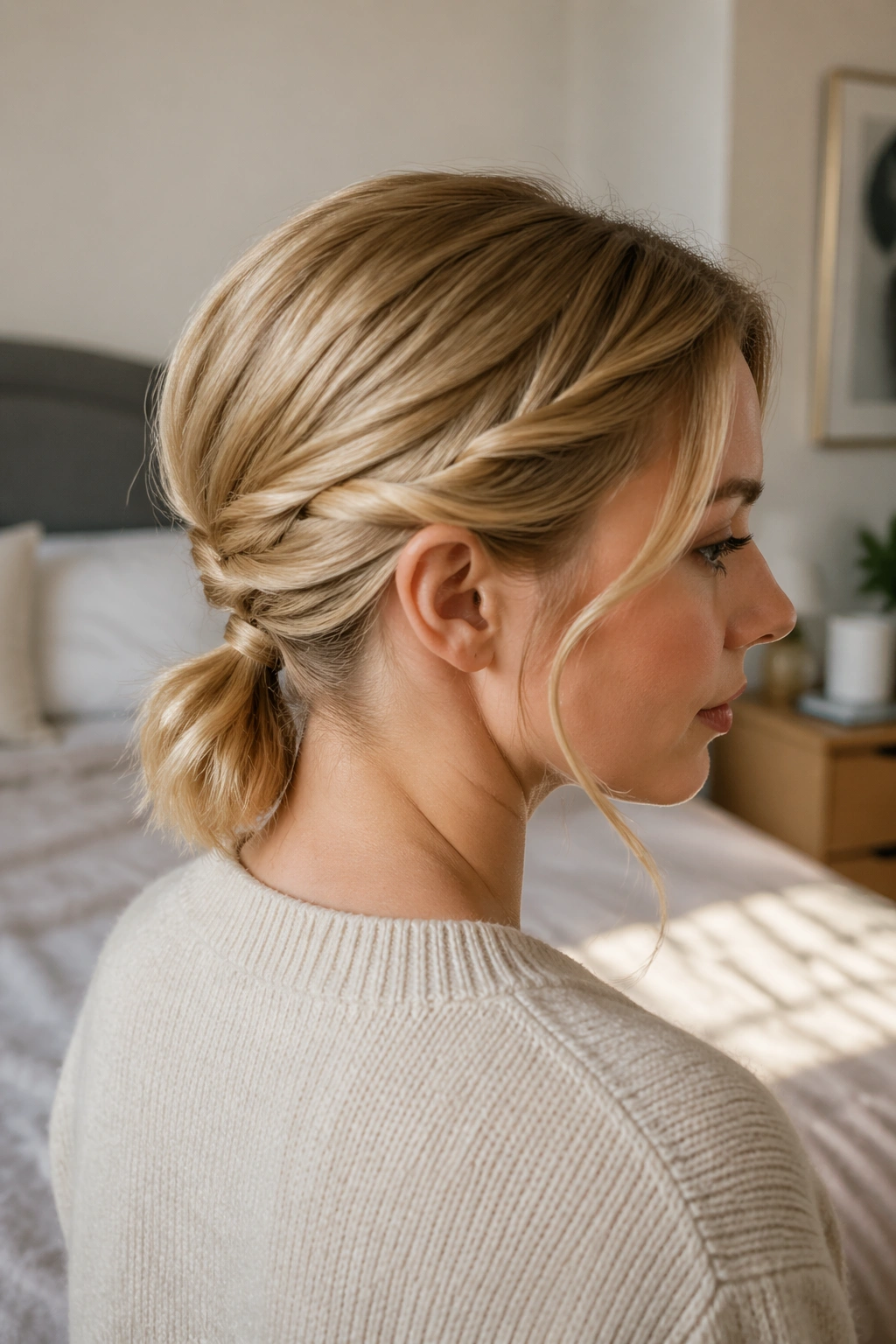
What happens when your layers won’t stay in a regular ponytail? You stop trying to force them and twist them instead.
A low twisted ponytail is one of the most forgiving updo ponytails for short hair because the twists act like little anchors. Take two front sections, twist them back toward the nape, and pin them where they meet. Then gather the rest into a low ponytail and secure it with a snag-free elastic.
What to Watch For
The twists need tension, but not too much. If you pull them hard, the style starts to puff out in a strange way near the temples. Leave a little softness around the hairline, especially if your cut has face-framing pieces.
This style looks best when the pony sits just below the occipital bone, not down at the collar. That placement keeps short ends tucked in and gives the whole look a calmer shape. A dab of pomade on the fingertips helps catch the flyaways that pop up around the ears.
3. The Braided Crown Into Ponytail
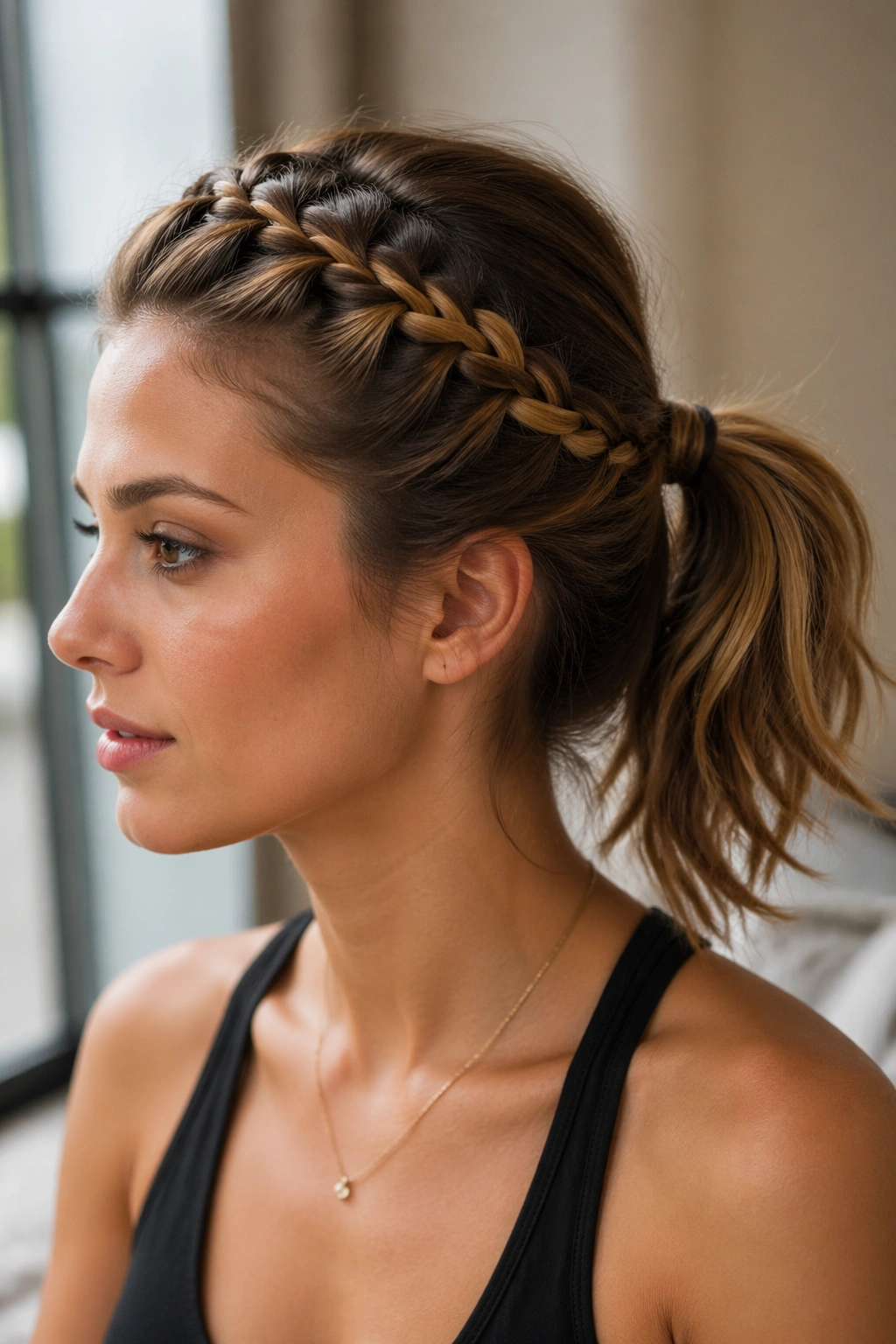
A braid at the hairline is a cheat code for short hair. It collects the pieces that usually slip out first and turns them into part of the design.
Start with a deep side part or a center part, then braid along the front section on one side, or both sides if your hair is long enough. Pin the braid toward the back and gather everything into a ponytail. The effect is part updo, part ponytail, and part “I spent more time on this than I did,” which is always useful.
Best On
- Bob lengths that graze the jaw
- Thick hair with layers around the face
- Hair that needs extra control at the fringe
- Styles that need to last through a full day
A braided crown also gives you a little grip where short hair is usually slick and stubborn. Use a tiny clear elastic on the braid tip, and pinch the braid wider once it’s pinned so it doesn’t look too tight or tiny.
4. The Bubble Ponytail with Mini Elastics
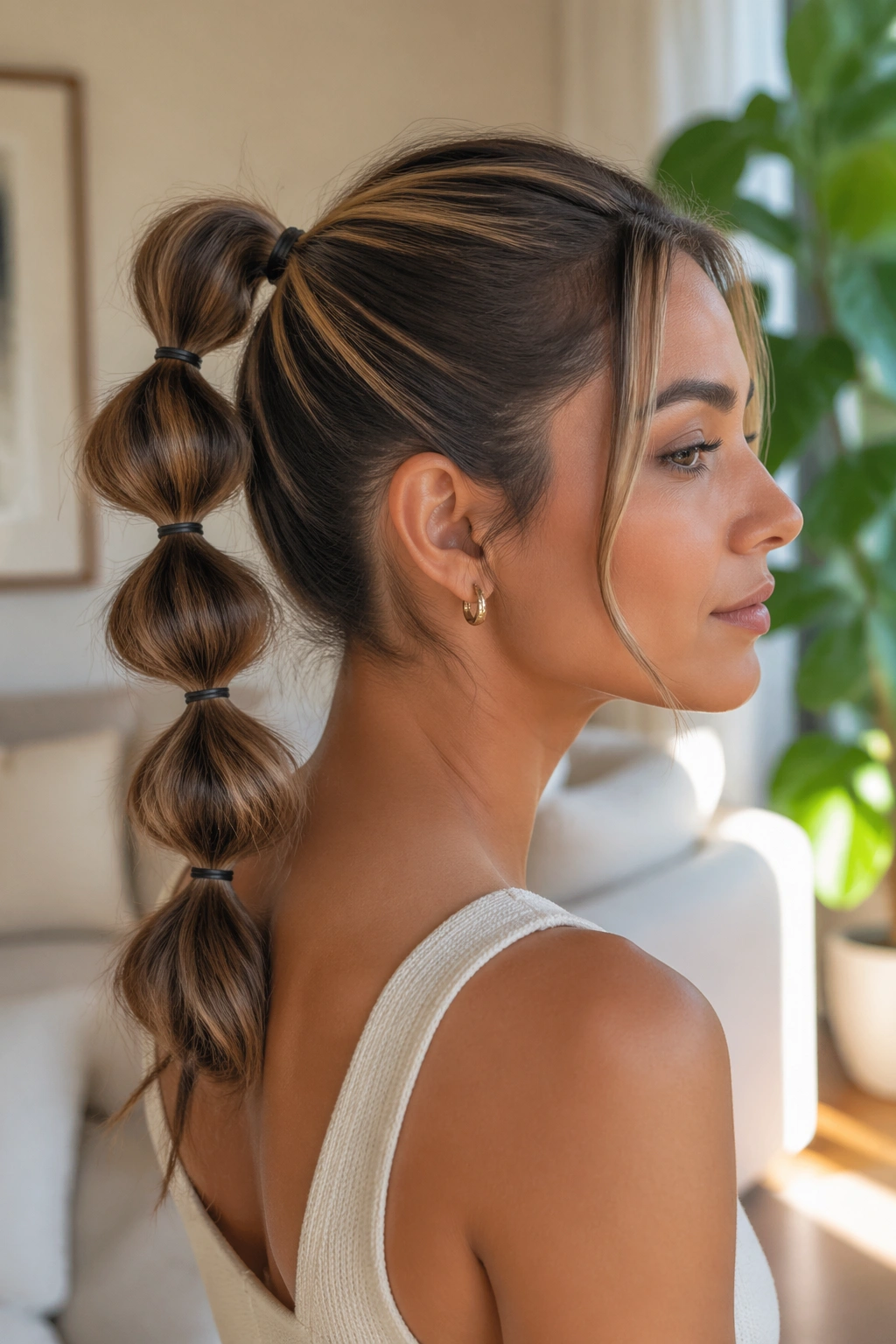
Bubble ponytails sound playful because they are, but on short hair they also solve a practical problem: they keep short lengths contained.
Create a small ponytail first, then add mini elastics every 1 to 2 inches down the length. Gently tug each section outward so it puffs into a bubble. If your hair is too short for a long tail, that’s fine. A few compact bubbles still look intentional and cute, especially on a bob or lob.
The best part is that the style does not need a lot of length to read well. Even a tiny tail can hold two or three bubbles if the elastic spacing is close. That makes this a smart choice for hair that falls somewhere between pixie and shoulder length.
Keep the root area smooth, though. If the top is frizzy and the bubbles are neat, the whole thing looks disconnected. A quick pass with cream or spray wax fixes that.
5. The Side-Swept Ponytail with Root Lift
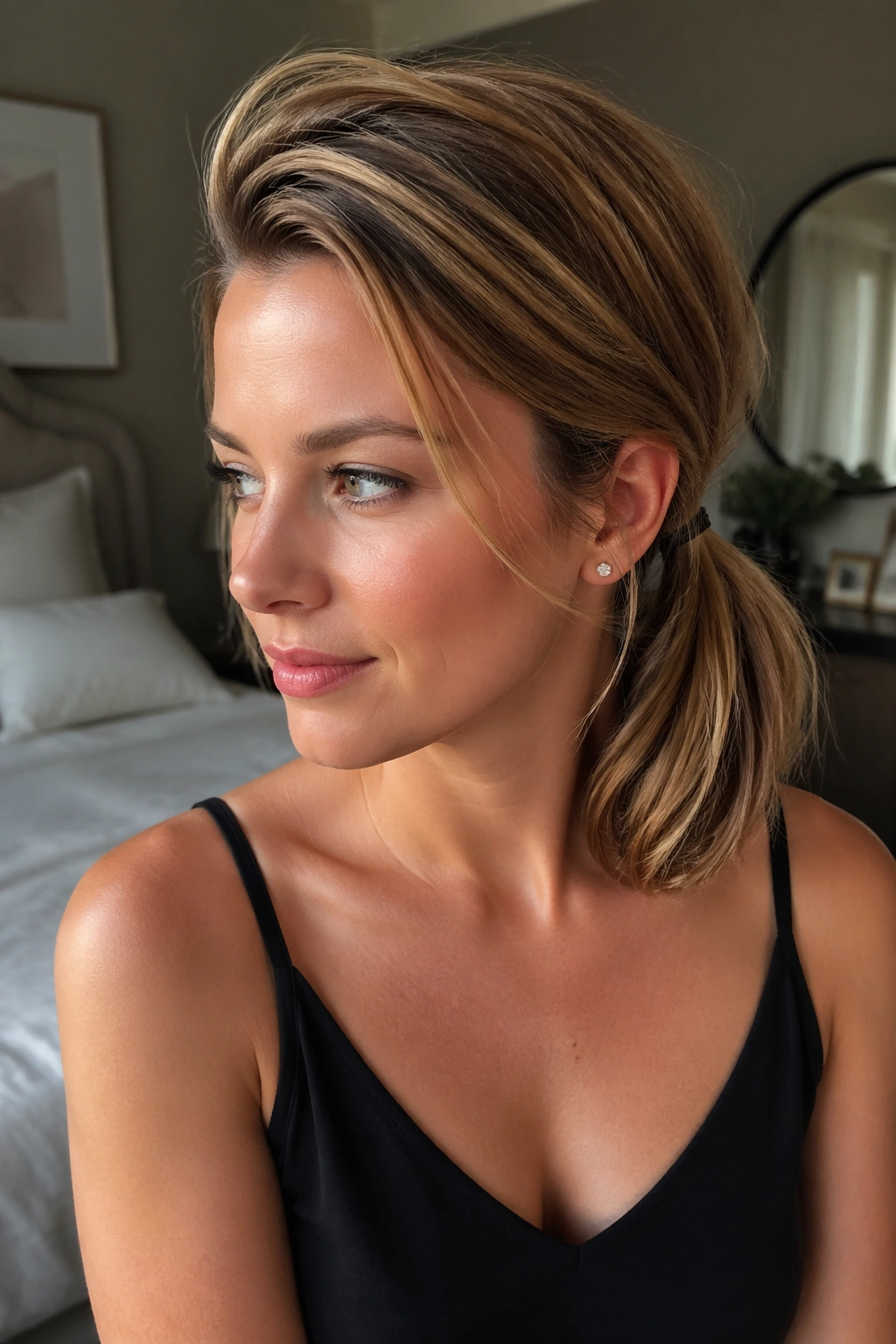
A deep side part changes everything. Seriously.
On short hair, a side-swept ponytail gives you room to build volume at the crown while pulling the hair into a shape that feels softer than a straight-back style. Tease the root lightly on the heavier side of the part, smooth the front over it, and gather the ponytail behind one ear or just below it.
Why I Like It More Than a Straight Pony
A center part can be unforgiving on shorter cuts when the hair barely reaches the nape. A side part creates a diagonal line, and diagonal lines usually flatter short lengths better because they stretch the eye across the face. The ponytail itself can stay small. That is part of the charm.
A small ribbon, a velvet tie, or even a matte black elastic keeps the look from feeling too plain. If your hair is fine, mist the roots with dry shampoo first; it gives the crown a little grit so the lift does not collapse in twenty minutes.
6. The Curled Faux Bob Ponytail
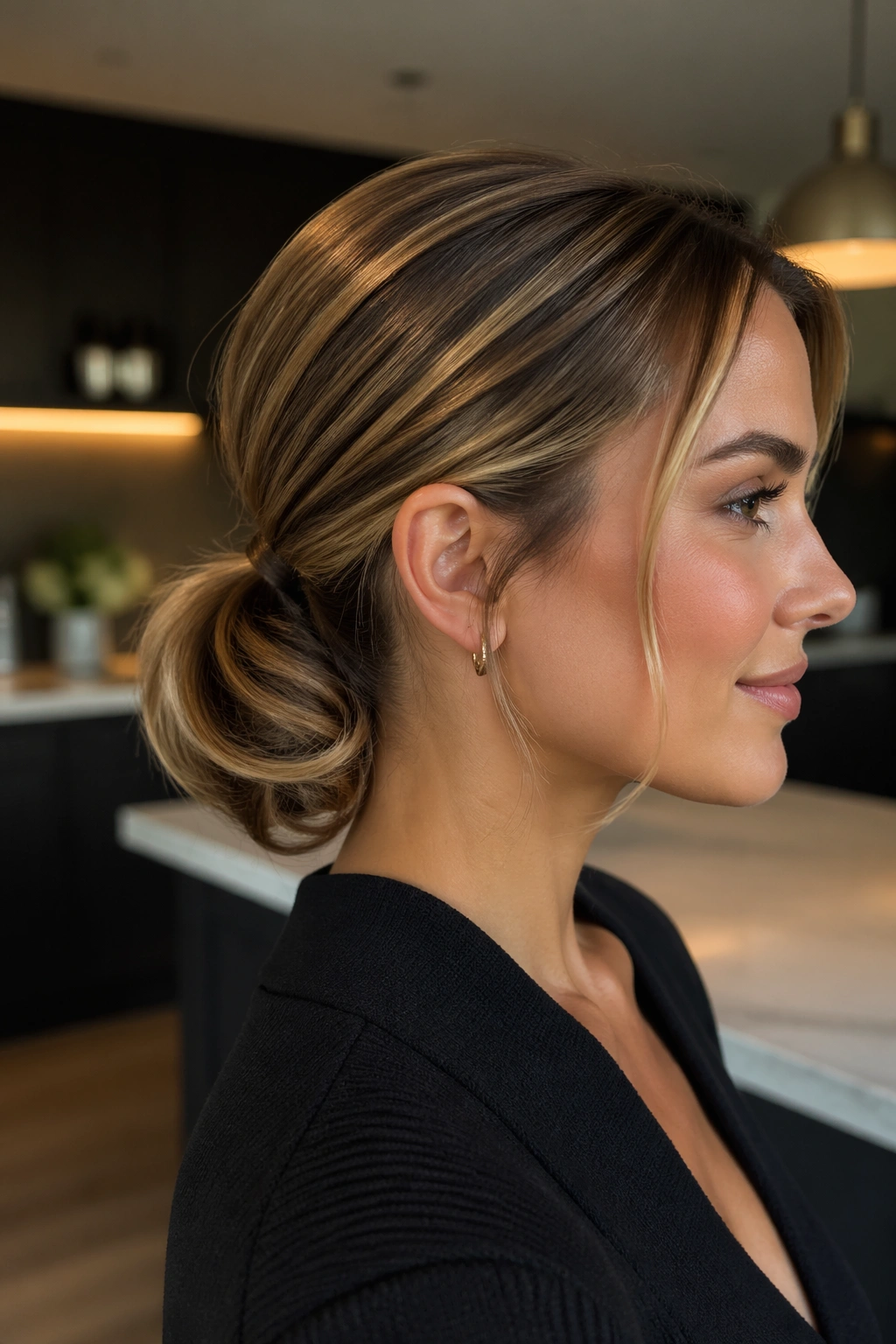
This one is for the days when your hair is too short to swing but long enough to bend and pin.
Curl the ends under with a small barrel iron or a flat iron, then loosely gather the hair into a low ponytail. Instead of letting the tail hang straight, pin the curled ends upward underneath the pony to fake more volume and create that tucked-under shape. It looks almost like a rolled updo from the side.
You’ll want a few extra bobby pins here. Maybe six. Maybe eight if your layers are rebellious.
This style shines on hair that already has a bit of wave or bend, because the curl gives the ponytail a fuller edge. If your hair is very straight, rough it up with texturizing spray before you start. Otherwise the tucked ends can feel too thin and may separate.
7. The Half-Up High Ponytail with Face-Framing Pieces
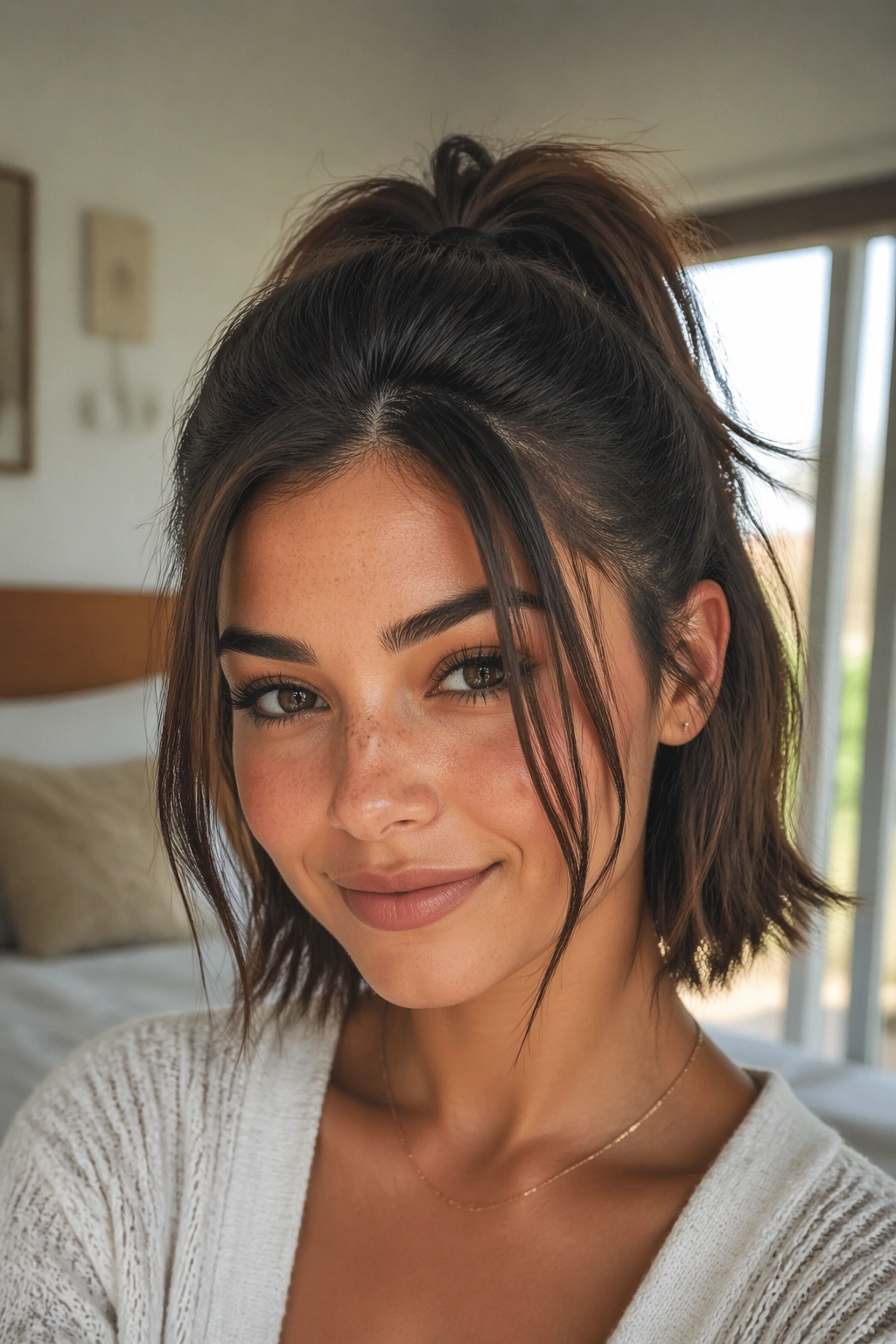
Can short hair do a high ponytail? Yes, if you stop insisting on all of it.
A half-up high ponytail is one of the easiest ways to get the lifted look without fighting the shortest layers at the nape. Pull the top half of the hair up to the crown, secure it tightly, and leave the bottom section free. The face-framing pieces soften the line and keep the style from looking like a kid’s recital pony.
How to Get the Most From It
The top section needs enough tension to feel secure, but not so much that it pulls the front flat against the head. A little puff at the crown is the whole point. If the back section is wavy, leave it alone. Straightening everything often makes the contrast too sharp.
This is a strong choice for a bob that sits at the jaw or just below it. It gives you the attitude of a full ponytail with half the stress.
8. The Double-Twist Low Ponytail
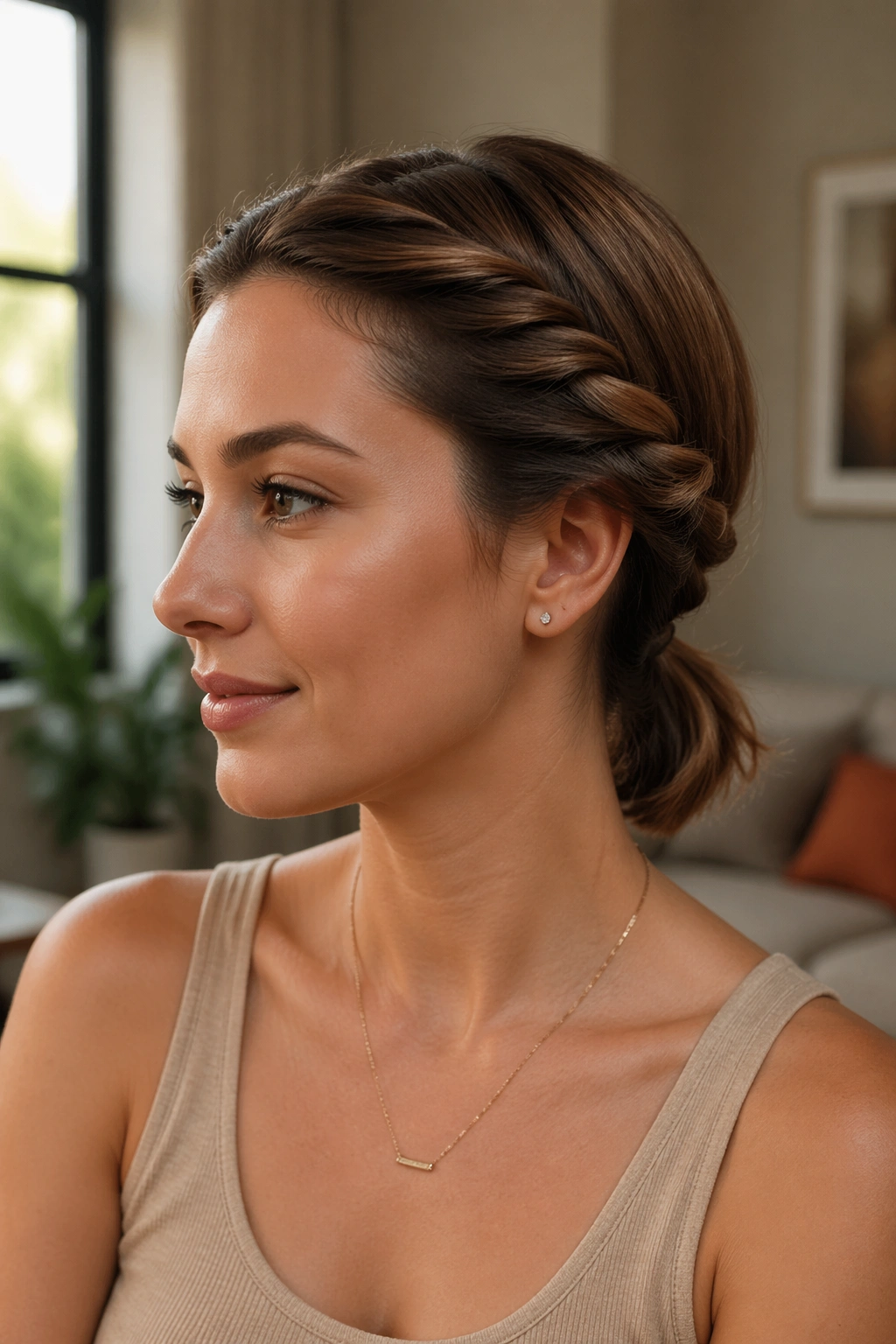
Two twists. That’s all it takes to turn awkward layers into something clean.
Take one section from each temple, twist them back toward the nape, and secure them together with a small elastic. Then gather the rest of the hair into a low ponytail under the twists. The front pieces stay controlled, and the ponytail gets a built-in frame that looks more styled than a plain tie.
If you have layers around the face, this is one of the smartest updo ponytails for short hair because the shorter pieces are already being guided into the twist. Pin the twists with crossed bobby pins if your hair slips. Crossed pins hold better than a single straight one. They always have.
This style works especially well with a little texture in the hair, not bone-straight strands. A few bends give the twists more grip and keep them from looking stringy.
9. The Messy Textured Pony with Tendrils
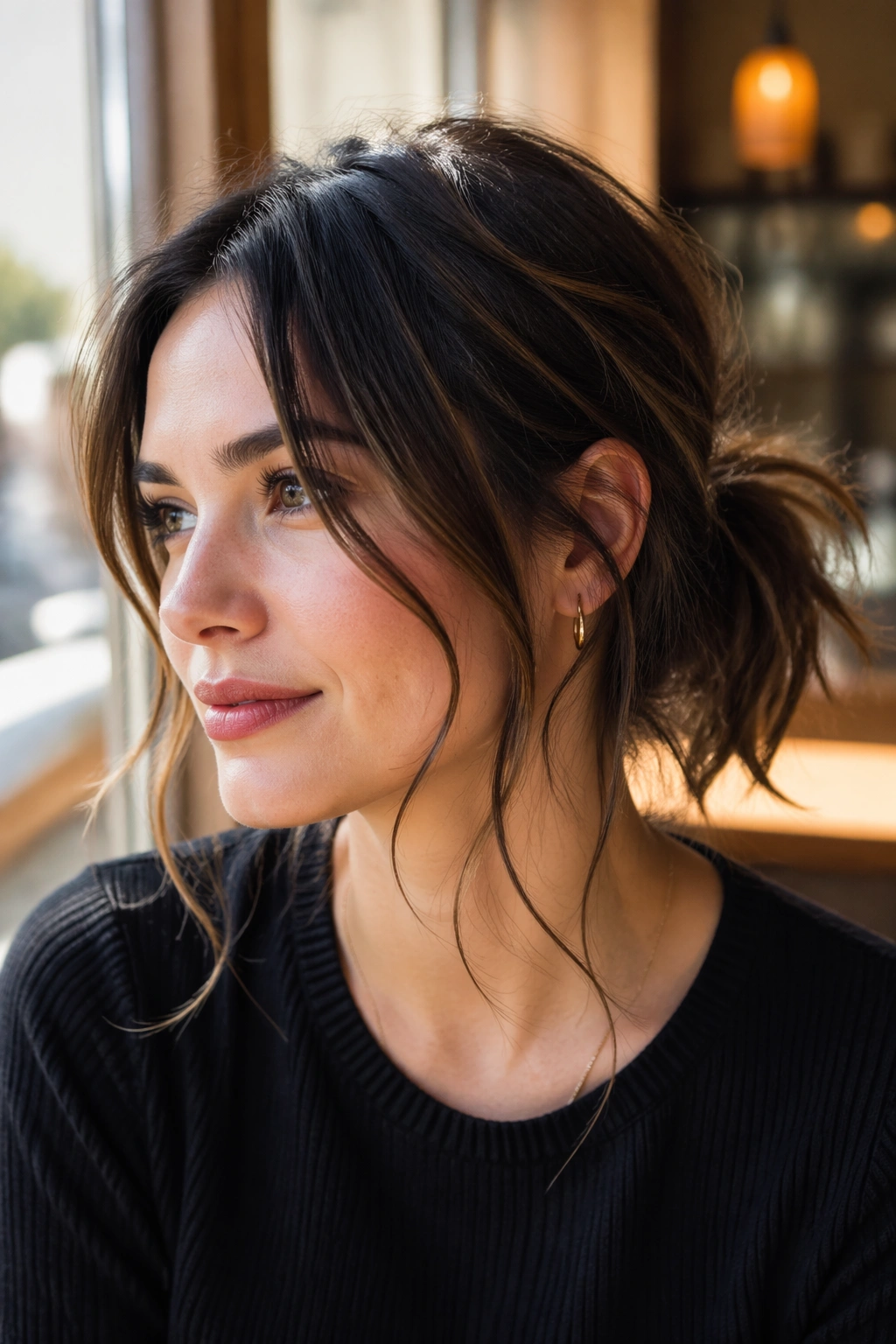
This one should feel a little lived-in. Not messy in the “I forgot to brush my hair” way. Messy in the “I knew exactly what I was doing” way.
Spray dry texture spray through the mids and roots, scrunch the ends, and pull the hair into a loose pony at the back of the head. Then release two thin tendrils around the face and maybe one at the nape if your cut allows it. The soft pieces keep the look from feeling too hard, which matters a lot on short hair.
The texture is what sells it. If your hair is too silky, the style can fall flat and look accidental. A rougher surface gives the ponytail shape and keeps the shorter layers from skidding loose. If you like a little grit, this one is a good excuse to use it.
10. The Wrapped-Base Sleek Ponytail
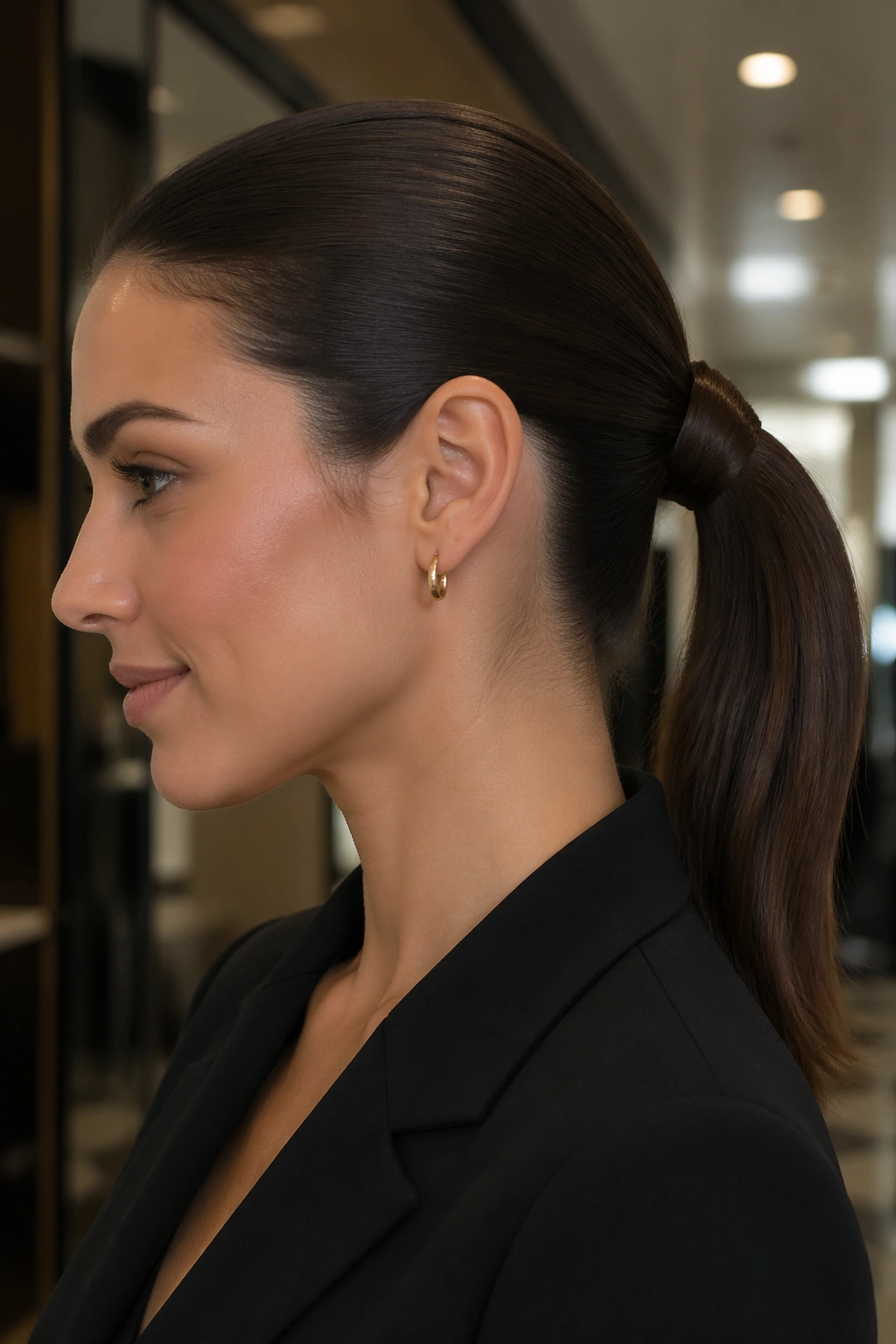
A wrapped base changes the whole mood of a ponytail. It makes even a tiny pony look deliberate.
Smooth the hair back into a mid or low ponytail, secure it, then take a small section from the tail and wrap it around the elastic. Pin the end underneath. The wrap hides the hardware and makes the style feel more finished, which is useful when the ponytail itself is small.
What Makes It Different
Unlike a loose, casual ponytail, this version depends on precision. The parting needs to be clean. The surface needs to be smooth. The elastic needs to sit flat. If you skip one of those steps, the whole style looks unfinished, and short hair has a way of making that obvious fast.
A wrapped base is also a nice trick for events because it looks more dressed up without needing extra length. Add a side part, a shine serum, or a pearl pin and it still stays restrained.
11. The Mini Dutch Braid Into Ponytail
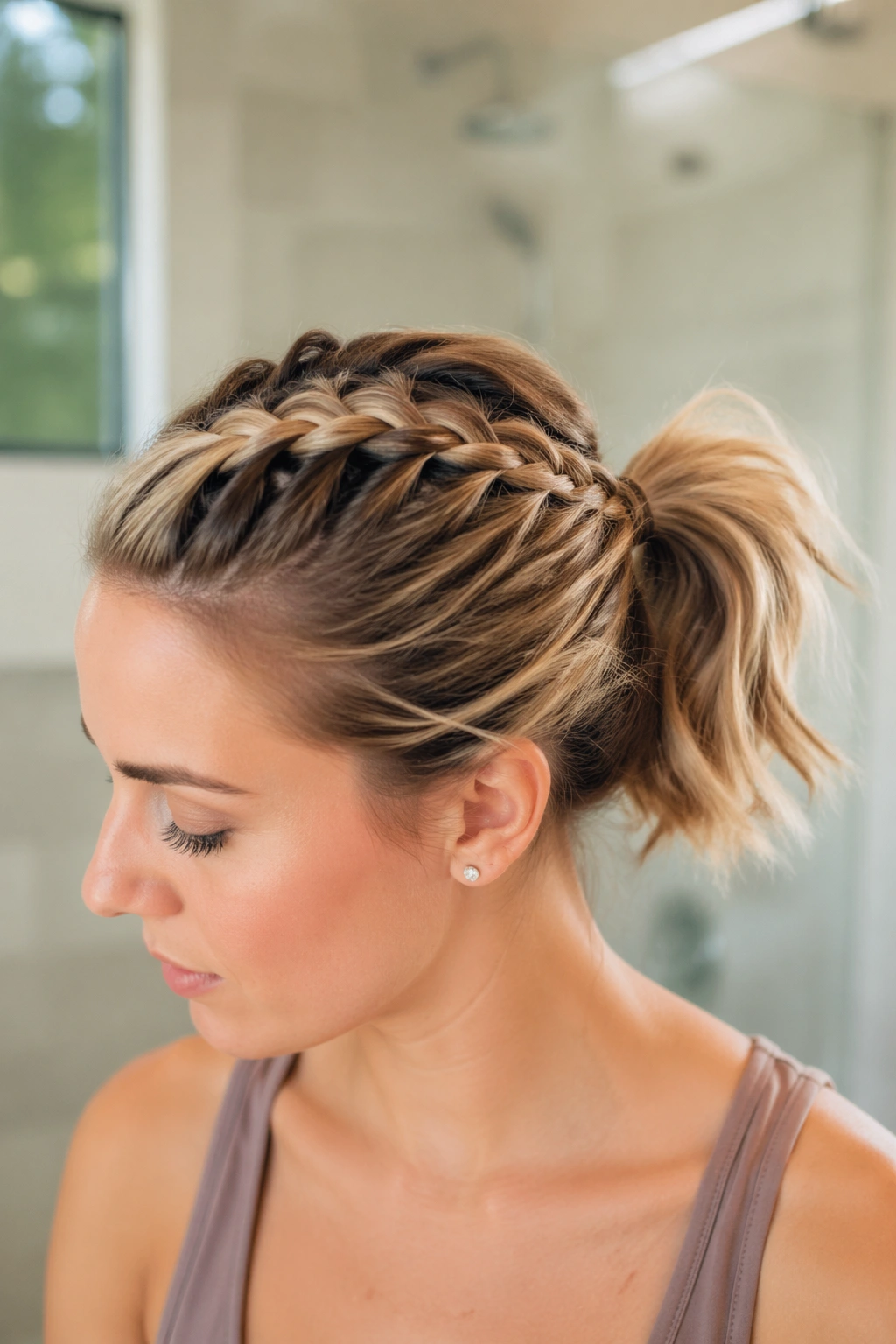
A Dutch braid gives short hair more structure than a simple tie. It also keeps the top section from puffing up in random spots.
Start the braid at the front hairline or crown and feed it backward for a few inches. Once you run out of length, secure the braid and gather the rest into a ponytail. The braid sits on top of the hair instead of disappearing into it, which is why it reads so clearly on shorter cuts.
H3: Best Hair Types for This Look
- Fine hair that needs grip
- Medium hair with a little bend
- Cuts with shorter layers at the crown
- Hair that tangles at the neck
Use a bit of mousse before braiding if your hair is slippery. The braid will hold its shape better, and the ponytail that follows it will feel less thin.
12. The Low Ponytail with Twisted Sides
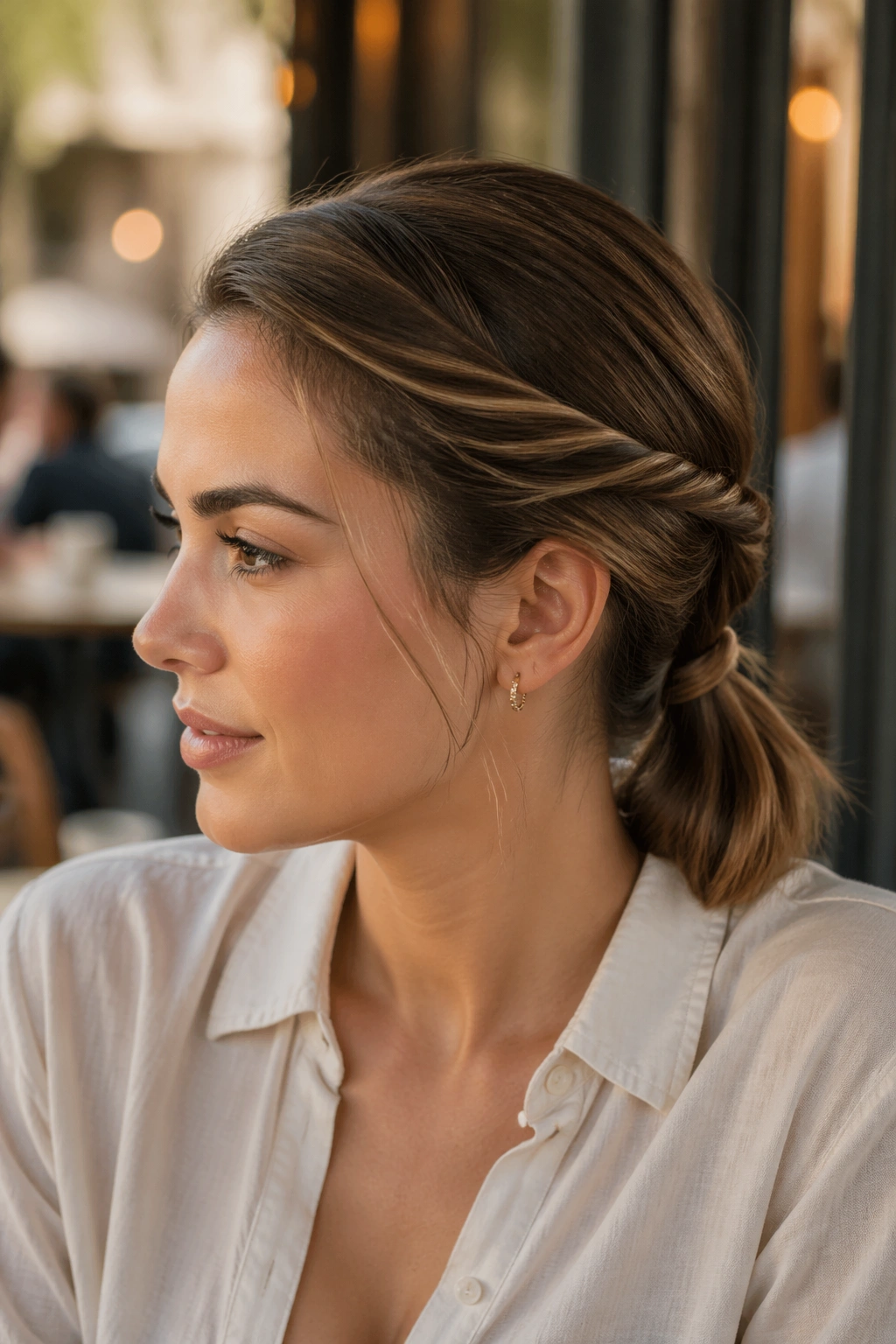
What makes this style work is the side detail. The ponytail itself can stay small, because the twisted sections do most of the visual work.
Twist back one section from each side of the head, pin them low, and let them meet near the nape. Then add the rest of the hair into a ponytail. This gives the illusion of length and structure without needing every strand to cooperate.
I like this version on hair that falls just past the ears or grazes the jaw. It’s neat, but not severe. If you want a more relaxed finish, pull a few strands around the temples after securing everything. Keep them thin. Big face pieces can make the style look messy fast.
A small satin ribbon tied around the base can soften the shape without hiding the twists.
13. The Clipped-Back Mini Pony with Barrette Accents
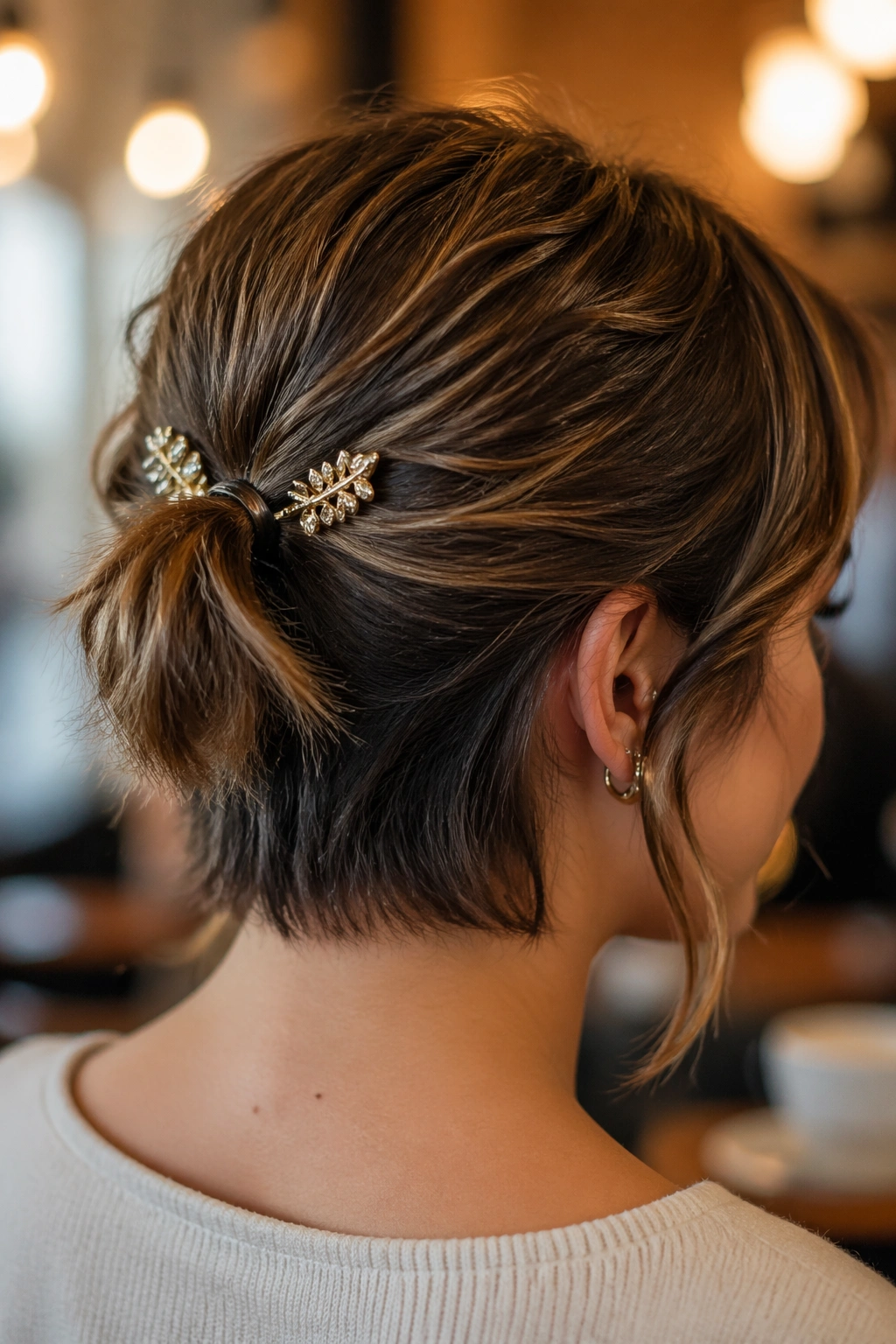
Sometimes the ponytail is not the star. The clips are.
Gather a small section of hair into a tiny ponytail near the center or back of the head, then sweep the side sections back and secure them with decorative barrettes. This is a smart move for short hair because the clips help control the shorter layers that refuse to sit still.
Why It Feels Different
This style has a little more personality than a basic ponytail. The clips act like a frame, and the ponytail becomes the anchor point instead of the whole show. It’s also one of the easiest ways to make short hair feel styled for dinner, parties, or a night out without needing a curling iron.
Use matching clips if you want it clean, or mix two shapes if you want a more playful look. Either way, keep the ponytail small and tidy so the accessories can breathe. Too much volume in the middle steals the effect.
14. The High Ponytail with Tucked Ends
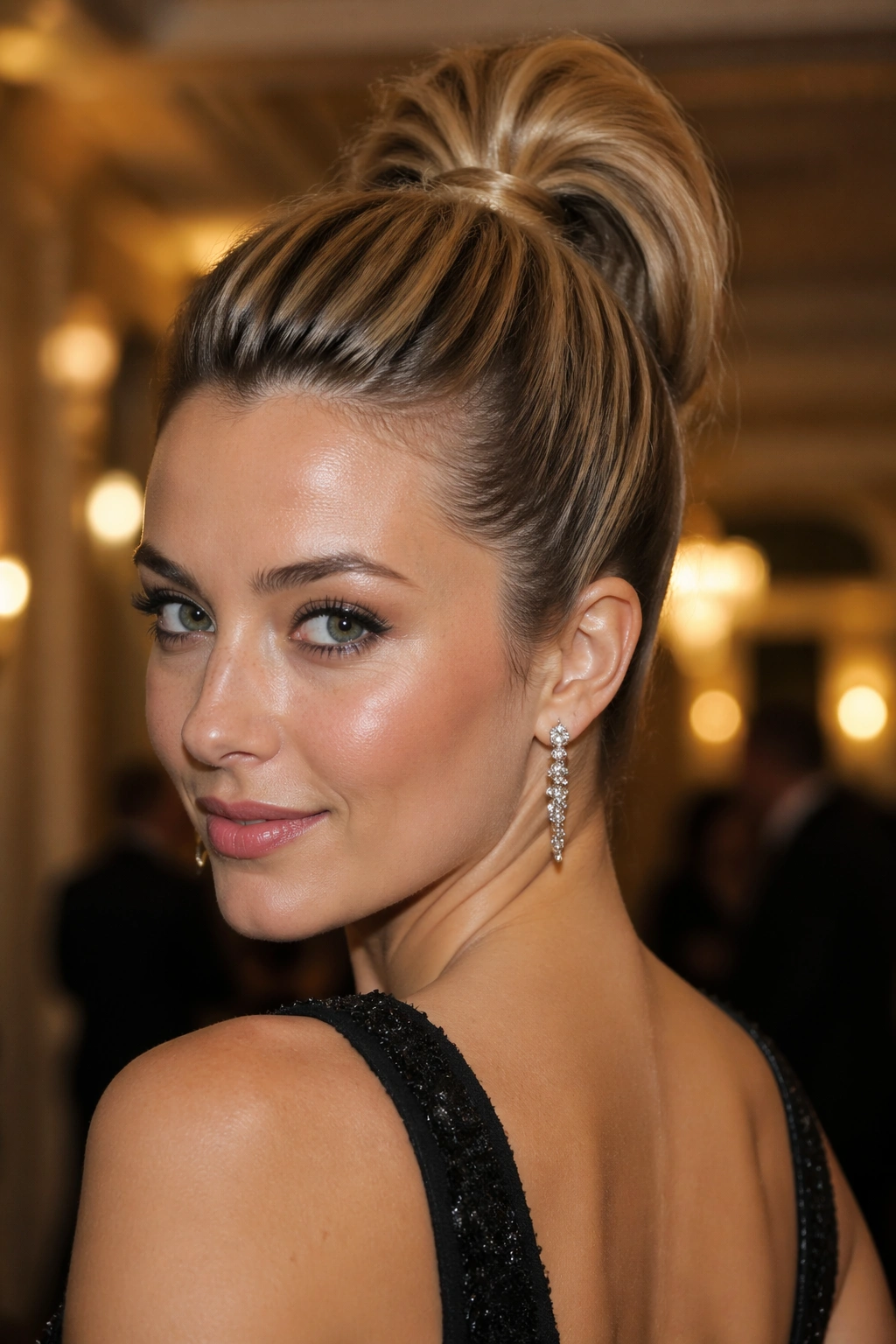
High ponytails on short hair can look too stubby if the ends hang out awkwardly. Tucking them changes that.
Pull the hair up high, secure it, then curl or fold the ends back toward the base and pin them underneath. You end up with a lifted shape that looks fuller from the front and cleaner from the side. This is a smart fix for a bob that barely reaches the crown when gathered.
A little teasing at the roots helps the top section stand up before it’s pinned. Don’t overdo it. You want lift, not a nest.
This one works especially well when you want height for an event or a photo. It gives short hair some drama without pretending it has more length than it does.
15. The Rope-Braid Ponytail
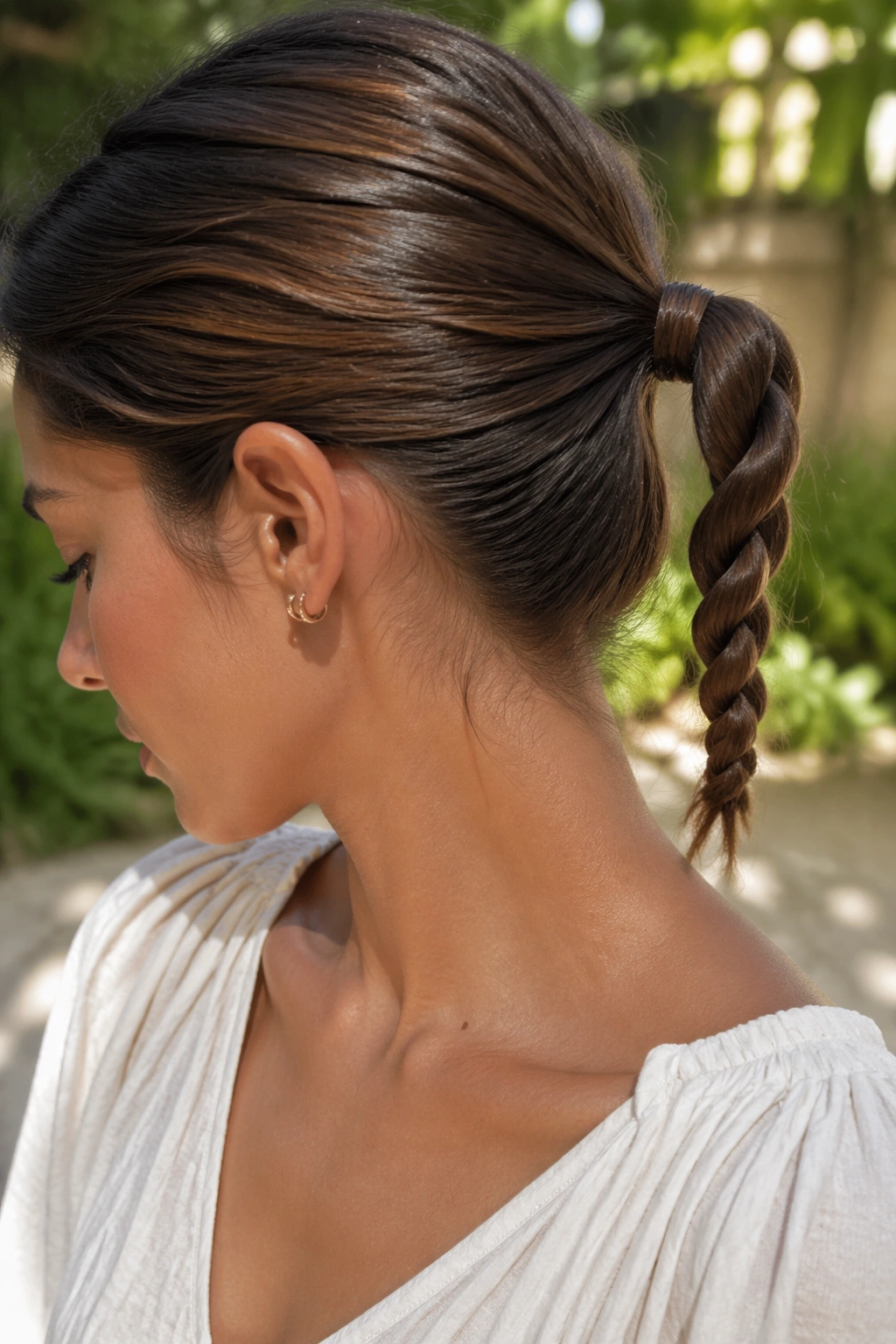
Rope braids are underrated. They are simple, fast, and surprisingly good at making short hair look tidier.
Gather the hair into a ponytail first, then split the tail into two sections and twist each section in the same direction before wrapping them around each other in the opposite direction. Secure the end with a small elastic. The twist compresses the hair, so shorter tails look neater and less frayed.
What Makes It Different From a Regular Braid
A three-strand braid spreads the hair out. A rope braid pulls it into a tighter line, which is useful when the tail is only a few inches long. It also looks a little sleeker, especially if you finish with a tiny bit of serum on the ends.
If your hair layers out too much, mist the tail lightly with water or leave-in conditioner before braiding. That little bit of dampness helps the strands stay grouped together.
16. The Soft Pompadour Ponytail
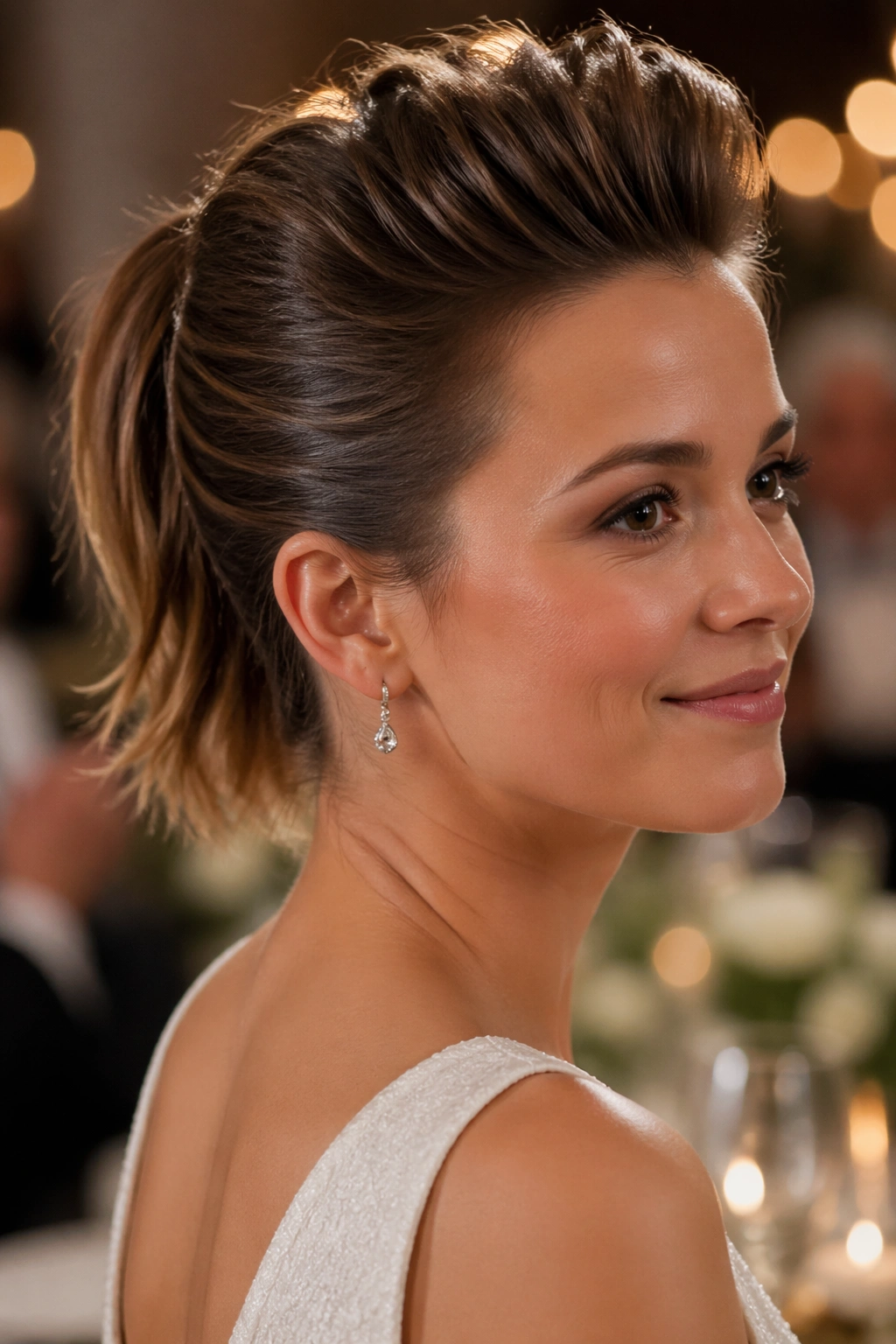
This one has attitude. Not loud attitude. Just enough.
Lift the front section at the crown, smooth it back into a gentle pompadour, and secure the rest into a ponytail at the back. The lifted front creates height, which short hair often needs if you want the style to read as an updo instead of a basic tie. Keep the shape rounded, not stiff.
How to Get It Right
The pompadour should feel soft when you press it, not crunchy or flat. Use a light hold spray under the lifted section and pin it from beneath so the front does not collapse. A side part can make the shape more flattering if your forehead is a little shorter or you want to soften a strong jawline.
This style has a slightly dressier mood than the others. It works for weddings, dinners, or any day when a plain ponytail feels too plain and a full blowout feels like too much work.
17. The Asymmetrical Ponytail with a Deep Side Part
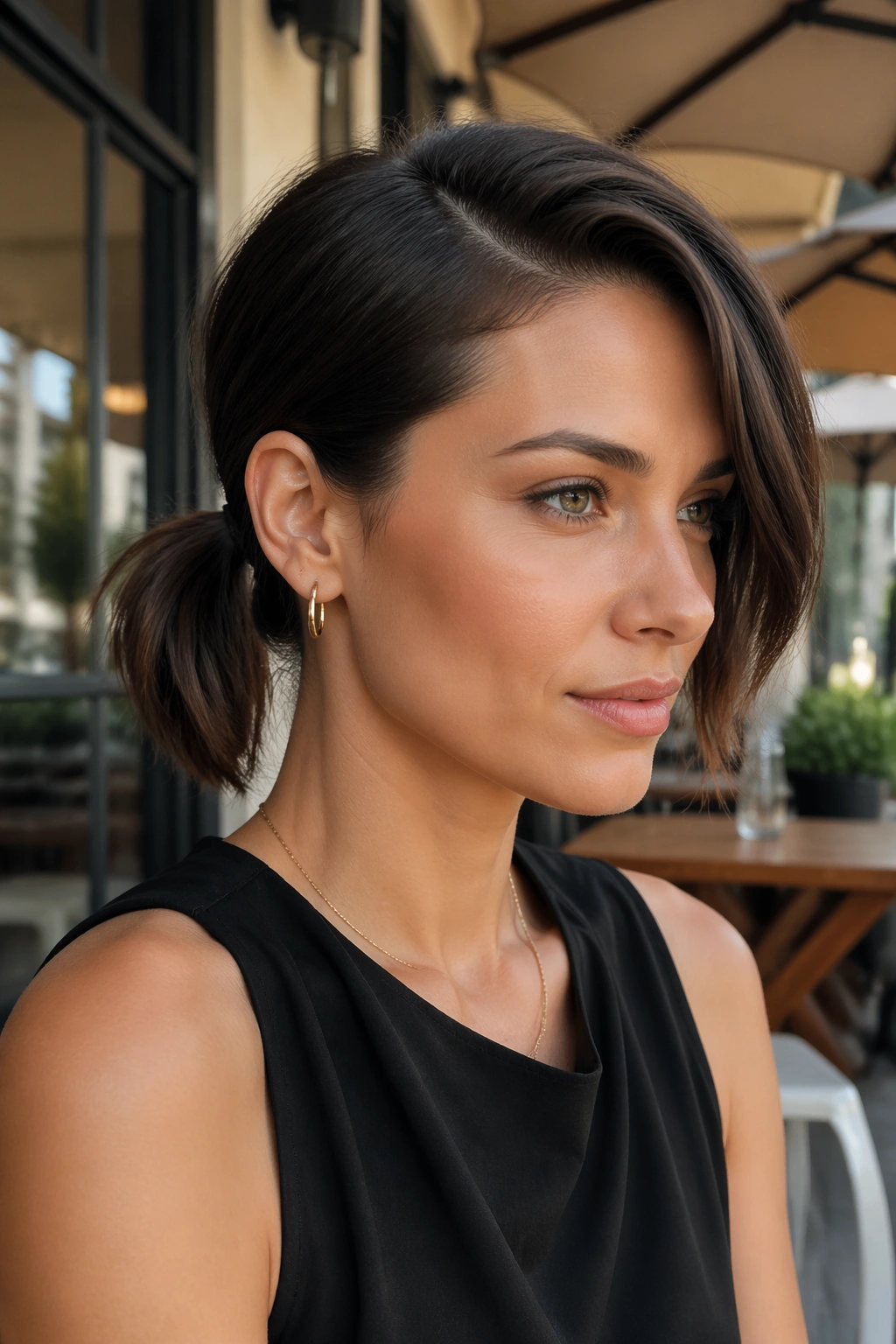
A deep side part and a low ponytail go together like they were designed by someone who understood short hair.
Sweep most of the hair over to one side, then secure the ponytail just behind the opposite ear or at the nape. The asymmetry gives the style movement, and it helps when one side of your cut is a little shorter than the other. That happens more than people admit.
This is a clean choice if you have a bob that tucks under on one side. Rather than fighting the bend, let it become part of the silhouette. A light spray wax on the smoother side keeps the part crisp and stops the shorter pieces from skimming out.
It’s a nice option for oval and square faces because the diagonal line softens the shape without hiding the face.
18. The Wavy Ponytail with a Teased Crown
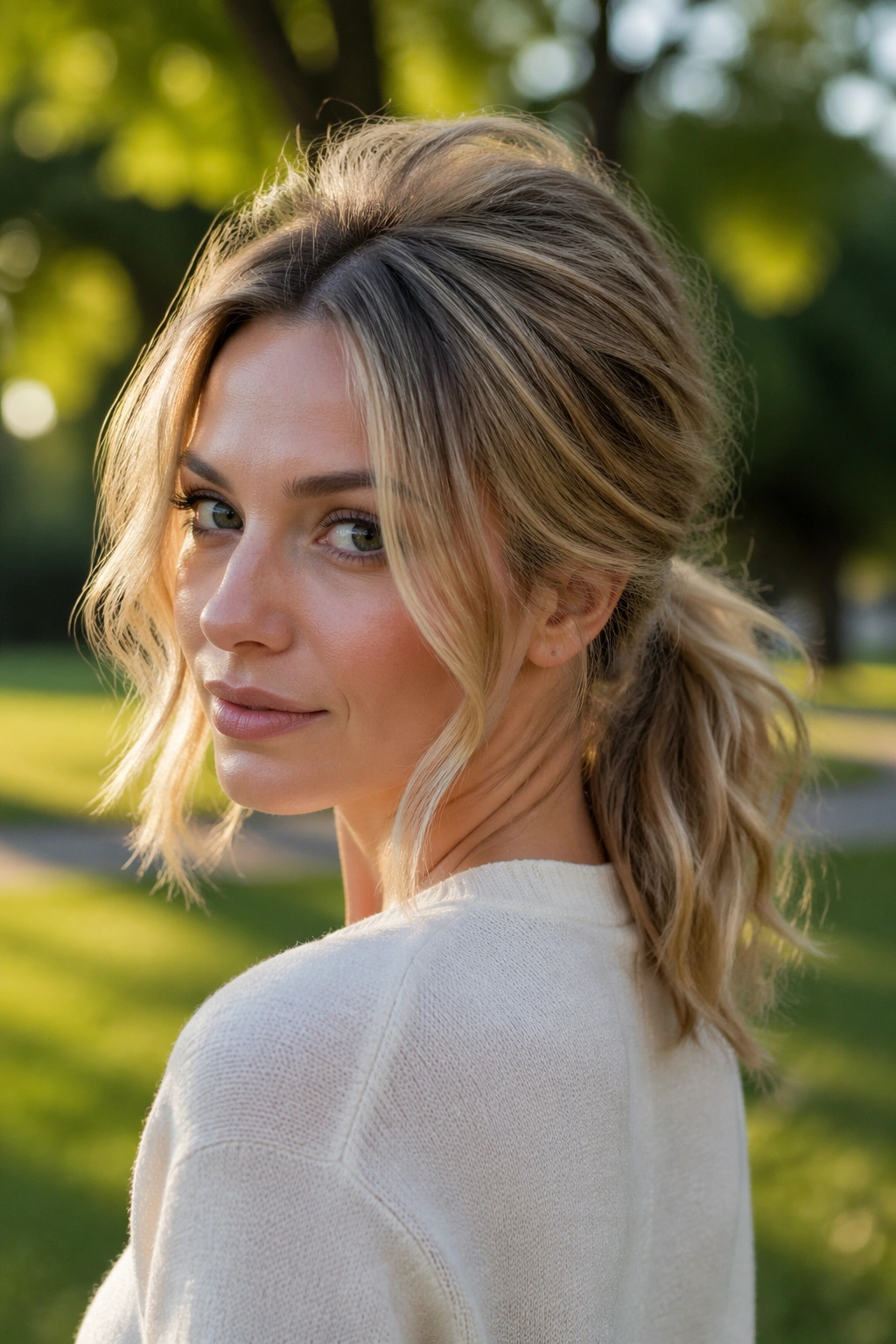
If your hair has a little wave, don’t straighten it just to make a ponytail. That’s a waste of good texture.
Tease the crown lightly, shape the top with your fingers, and pull the hair into a ponytail while leaving the waves soft through the mids and ends. The slight lift at the top gives the style height, while the waves keep it from looking flat or severe.
A grown-out lob is perfect for this. The waves fall in a way that makes the ponytail look fuller than it is. If your hair is naturally straight, use a 1-inch iron to create loose bends first. They do not need to be perfect. Actually, imperfect is better here.
This style has an easy, casual feel that still looks intentional. That’s a rare sweet spot.
19. The French Twist Ponytail Hybrid
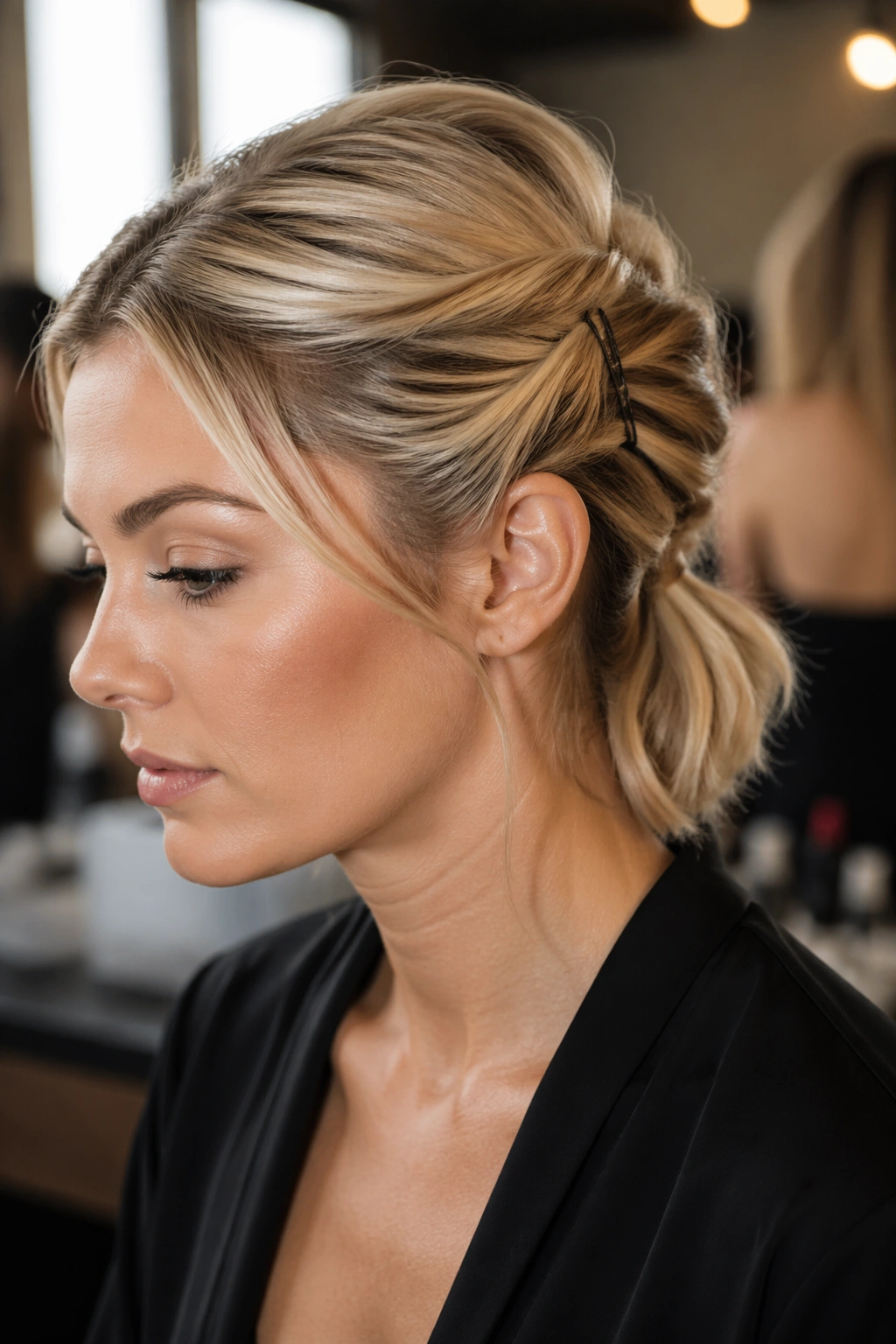
This is the most elegant option on the list, and it does not require absurdly long hair.
Start by twisting the sides of the hair upward toward the back, as if you were beginning a French twist. Instead of tucking everything in tightly, secure the twists and let them feed into a low ponytail. The result is half twist, half ponytail, and fully useful for short layers that need somewhere to go.
It looks especially good on hair that sits at the jaw or slightly below it. The twist creates a vertical line, which helps the style feel taller than it is. If your hair is thick, use long bobby pins rather than tiny ones; they hold the structure better.
A shine spray at the end makes this one look polished without making it stiff. Keep it light. Too much gloss and the hair can look greasy instead of smooth.
20. The Braided Mohawk Ponytail
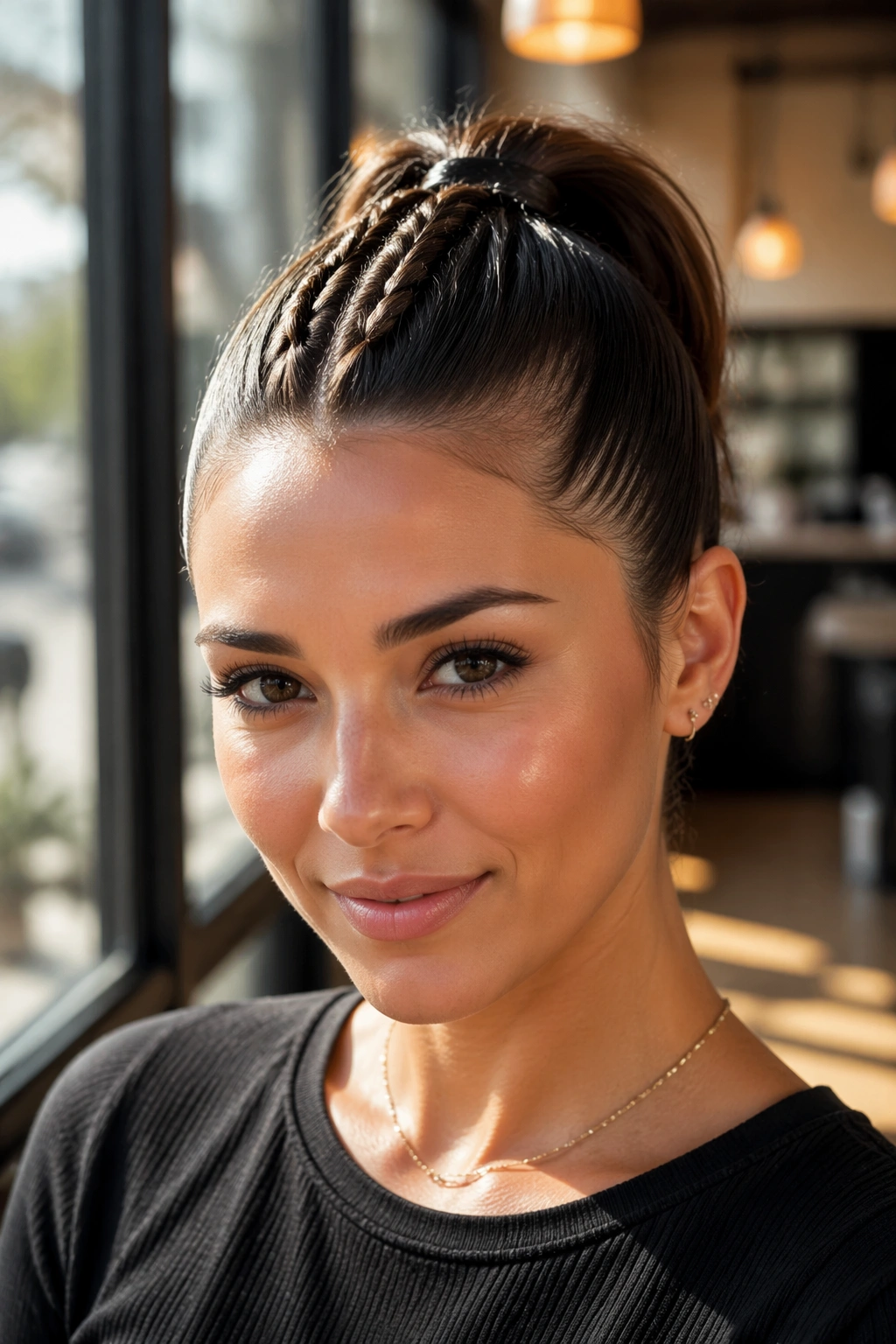
Short hair gets surprisingly cool when you give it a center braid and let the sides stay sleek.
Braid the middle section from the front hairline toward the crown, then gather the rest into a ponytail once the braid ends. The mohawk line draws the eye upward, which creates the illusion of more height. The sleek sides make the braid stand out even more.
The Science Behind It
Hair looks longer when you make the center line dominant. The braid does that by pulling the eye along the middle of the head instead of across the width. That is useful for short cuts because the style reads as strong and deliberate, not like you were trying to squeeze a long ponytail out of too little hair.
Keep the braid medium-tight. If it’s too tight, the scalp shows too much and the style can feel harsh. If it’s too loose, the whole line collapses.
21. The Low Ponytail with a Scarf Tie
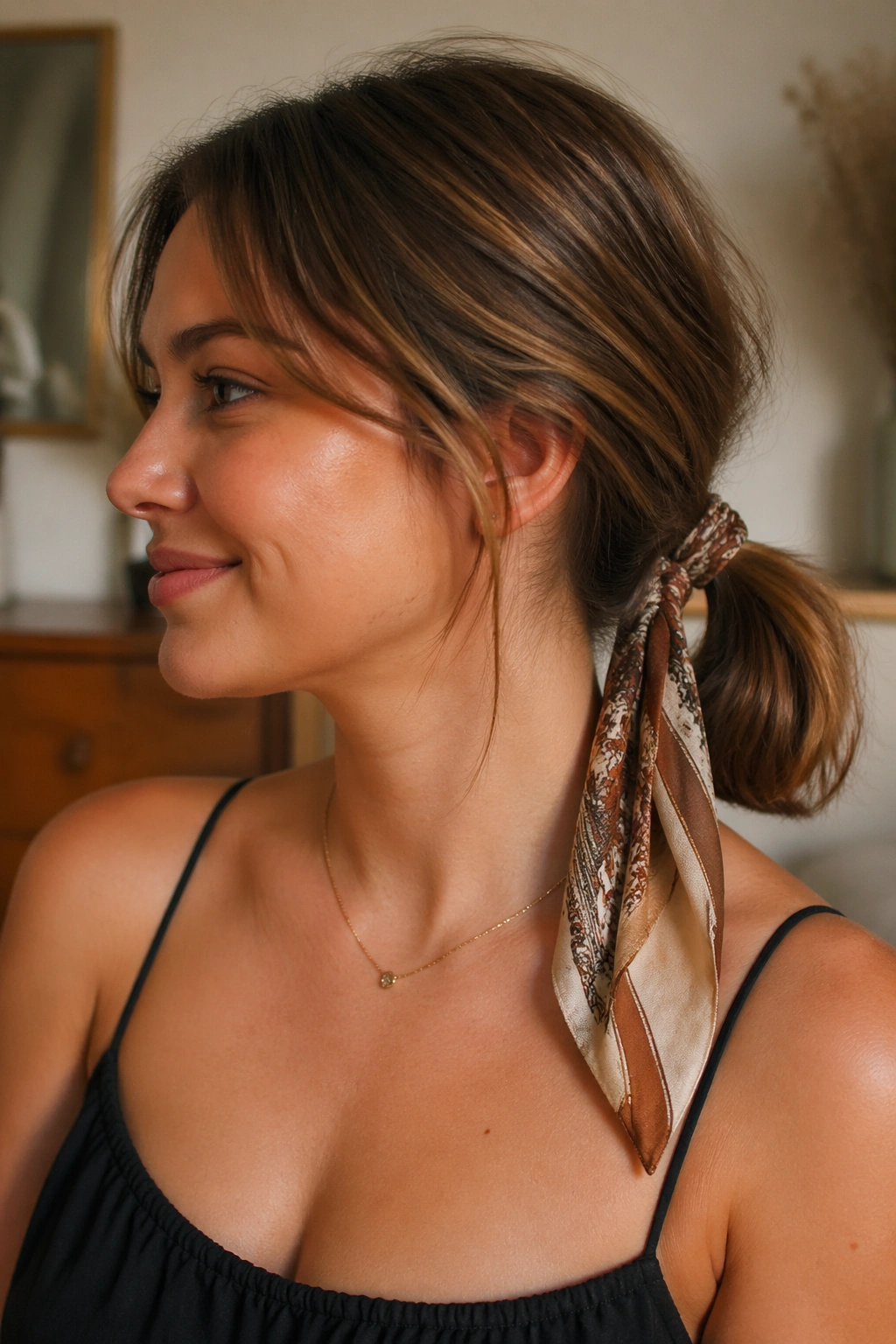
A scarf tie solves two problems at once. It hides a small elastic and gives you a place to tuck shorter ends.
Tie the hair into a low ponytail, then knot a silk or cotton scarf around the base. If the tail is short, let the scarf do some of the visual work. The pattern or color becomes part of the style, and the ponytail itself does not need to be long to matter.
This is one of the easiest ways to dress up short hair without adding clips or heavy products. It also works well on second-day hair, which often has enough grip to stay put but needs a little help looking fresh.
Choose a scarf that is narrow enough not to swallow the ponytail. A massive wrap can overwhelm a bob. A slim tie sits better and keeps the shape tidy.
22. The Mini Bubble Ponytail with Volume
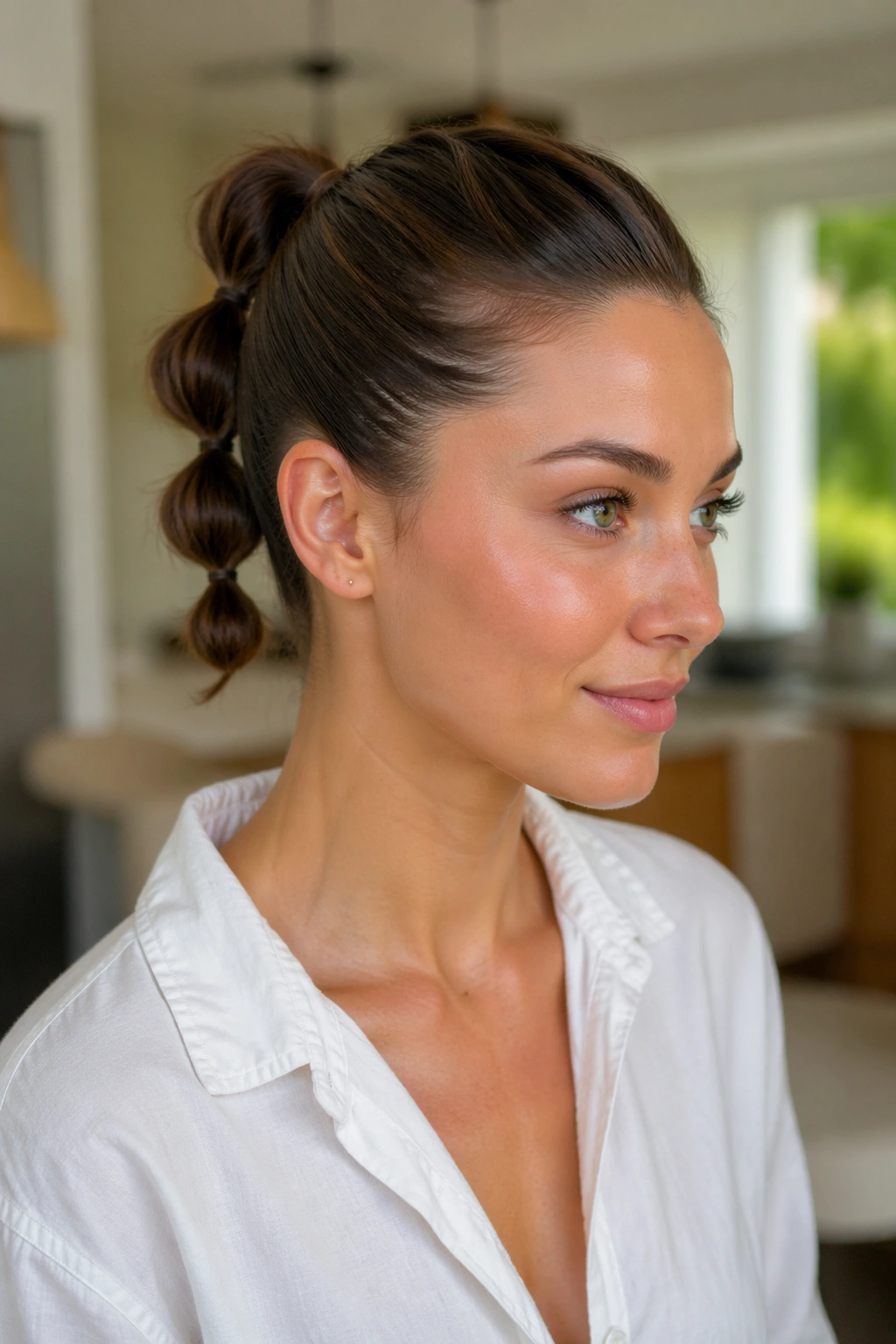
A mini bubble ponytail is the cousin of the full bubble style, only more compact and a little sharper.
Make a small ponytail, then add two or three elastics spaced closely down the tail. Instead of puffing each bubble huge, keep them tight and round. This works especially well on short hair because the smaller scale matches the length better than a stretched-out bubble chain.
Do you want it to look cleaner? Pull a few strands smooth around the temples and keep the bubbles even. Want it softer? Gently widen each bubble with your fingertips and let the ends stick out a bit.
The style can lean sporty or dressy depending on the finish. That flexibility is part of the reason it shows up so often in real life instead of just on inspiration boards.
23. The Twisted Half-Up Ponytail for Bob Length
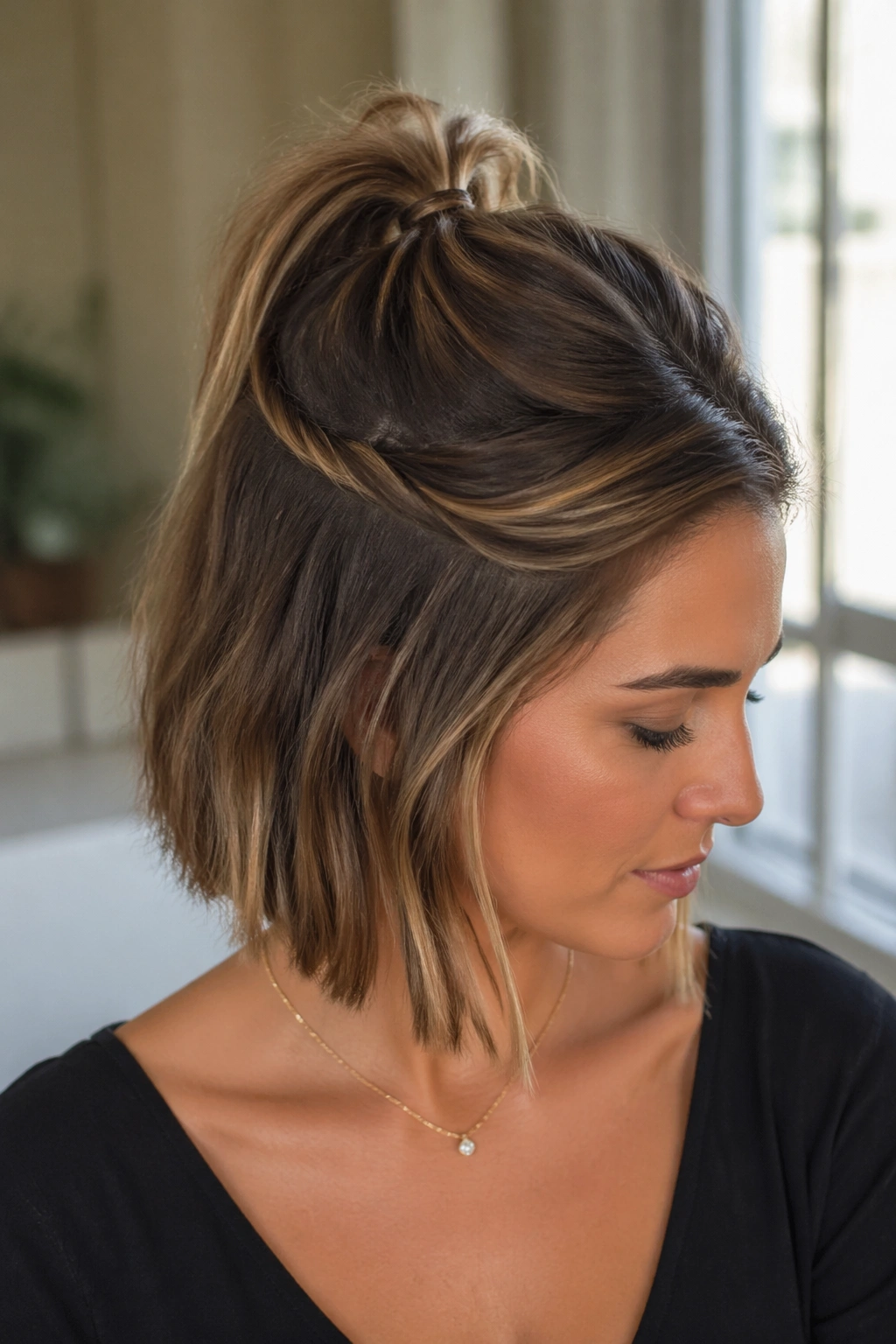
If your bob is too short for a full ponytail, a twisted half-up version is often the sweet spot.
Take two small sections from the front, twist them back, and secure them into a half-up ponytail at the crown. Leave the bottom half loose. It sounds simple because it is simple, and that’s why it works. The twists gather the front pieces, while the free lower section keeps the style from feeling overworked.
Who It Suits Best
- Chin-length bobs
- Fine hair that loses shape quickly
- Straight cuts with blunt ends
- Anyone who wants a faster styling option
A small claw clip can replace the elastic if you want something a little softer. Just make sure the clip teeth grip enough hair. Cheap clips tend to slide on silky strands, which is annoying and also predictable.
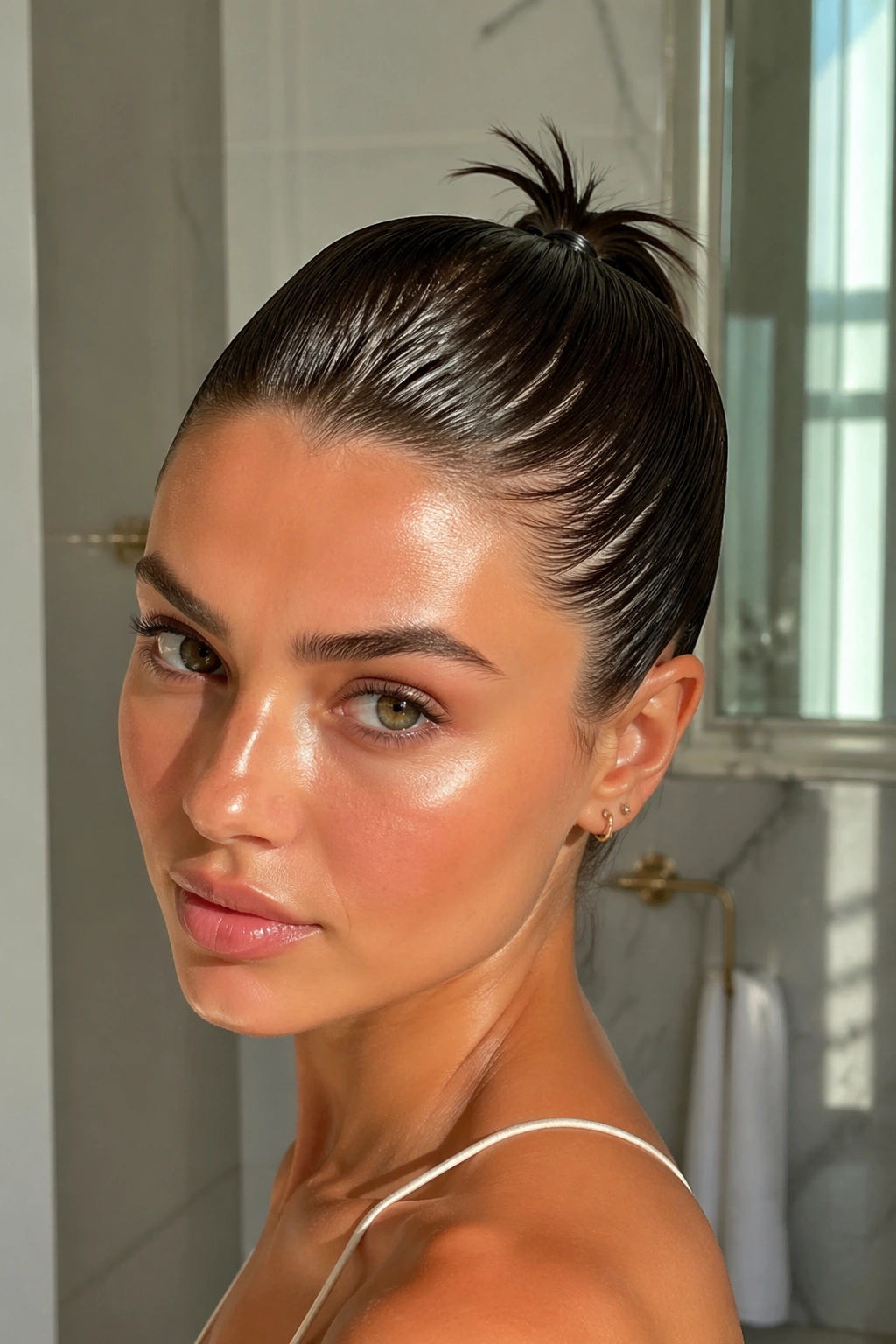
24. The Sleek Wet-Look Ponytail
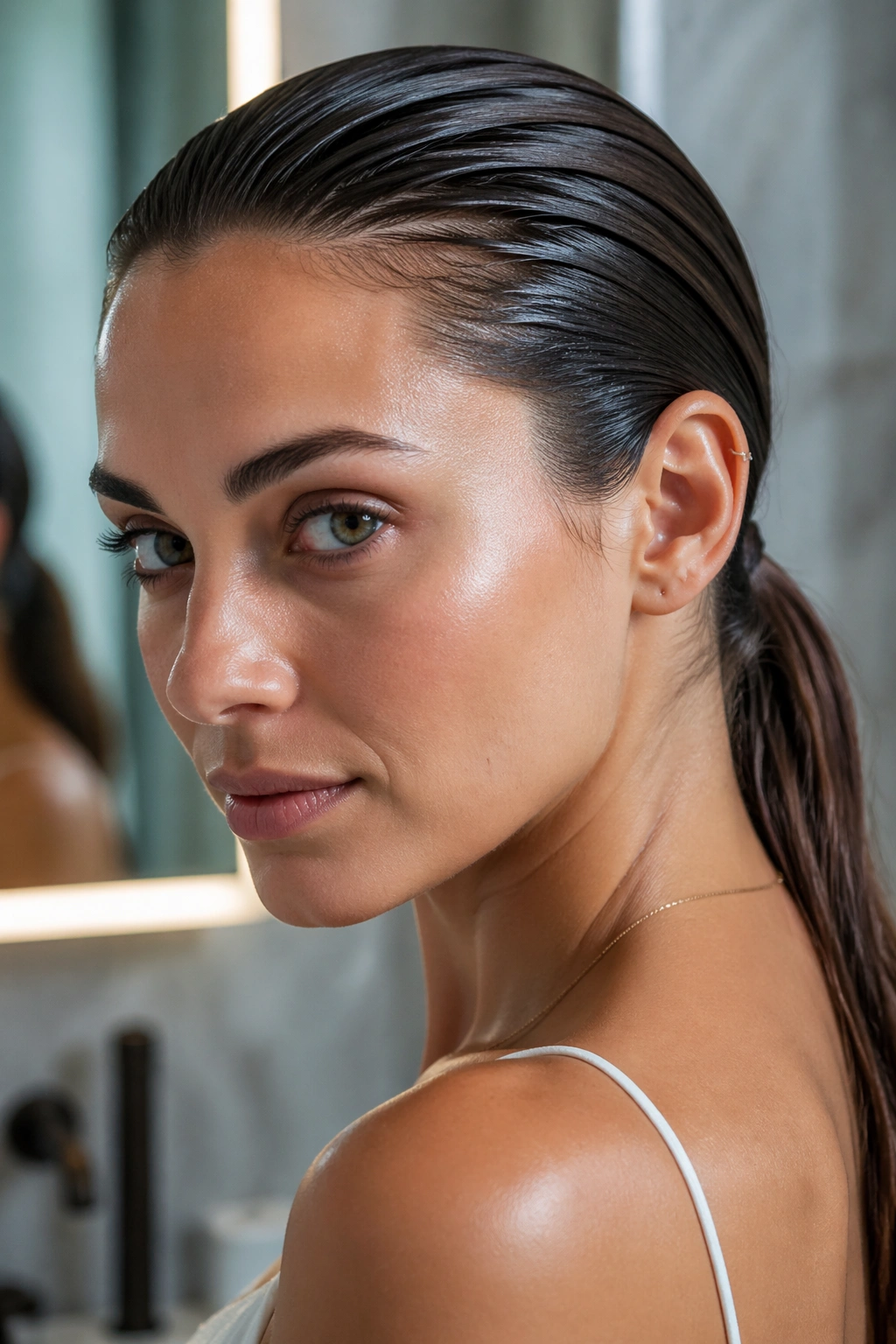
The wet look can be sleek and stylish on short hair when it is done with restraint.
Apply gel or a wet-look cream to damp hair, comb it flat, and secure a low or mid ponytail. Leave the finish glossy, but not dripping. The shine helps short layers blend into the shape instead of breaking away from it. That matters a lot when your cut has texture at the edges.
This style works especially well with strong brows, bold earrings, or a defined neckline. It creates a clean frame around the face. If you have fine hair, use less product than you think you need; too much can separate the strands and expose the scalp in a patchy way.
A narrow part, center or side, keeps the look crisp. Skip fluffy volume. It fights the point.
25. The Pinned Curl Ponytail for Short Layers
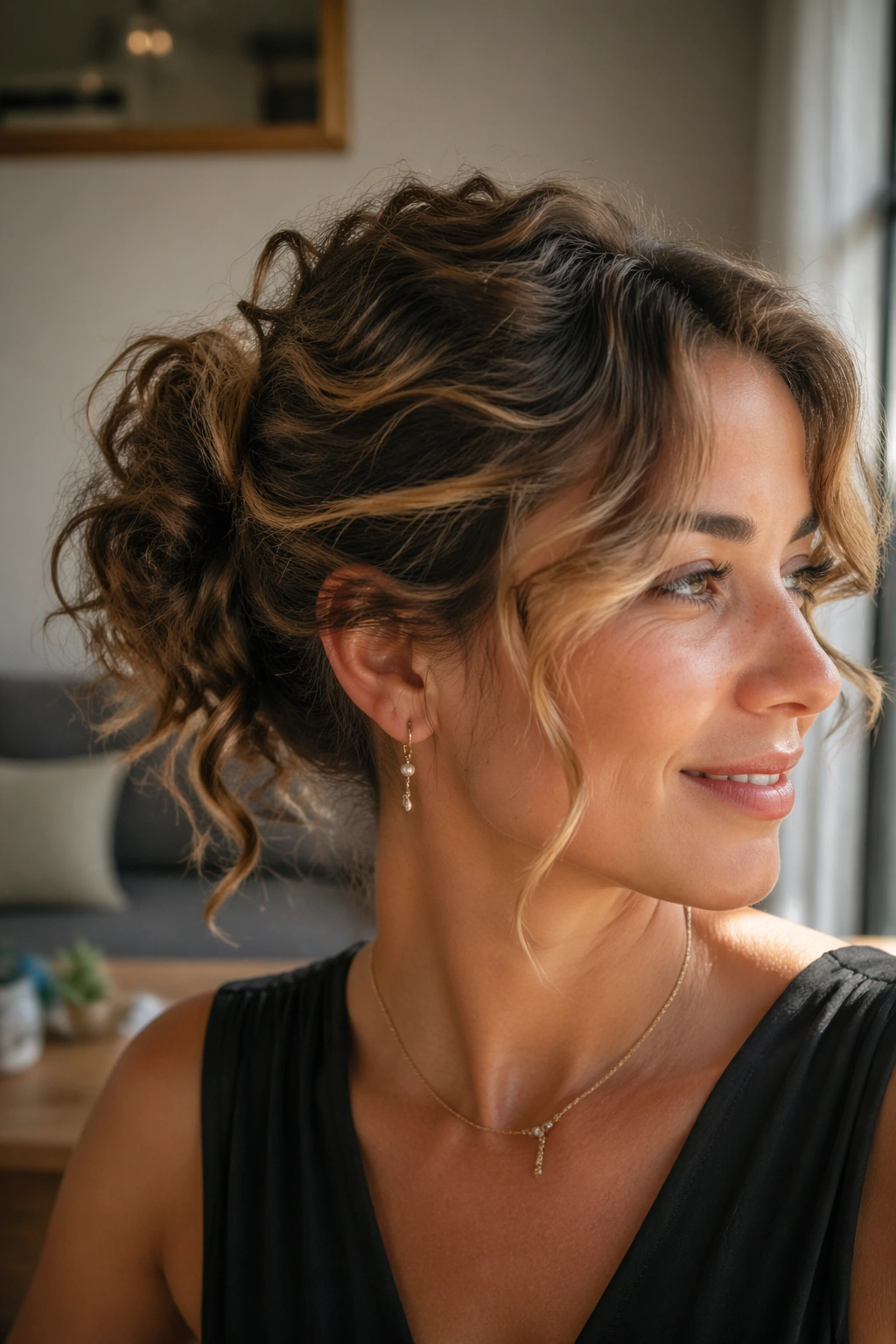
Short layers are easier to control when you treat them like individual pieces instead of one big mass.
Curl the hair in sections, then pin the shorter pieces into a loose ponytail or a half-up ponytail. The curls hide uneven lengths, and the pins let you decide exactly where each piece lands. It takes a little more time, but the result feels soft and full instead of chopped up.
If you have layers that stick out at the sides, curl them away from the face first. That opens the style and stops the ends from flipping in random directions. A light mist of flexible hairspray keeps the curls separate instead of shellacked together.
This one is useful for special occasions because it looks more detailed than a basic ponytail, even though the actual structure is simple.
26. The Textured Ponytail with a Claw Clip Lift
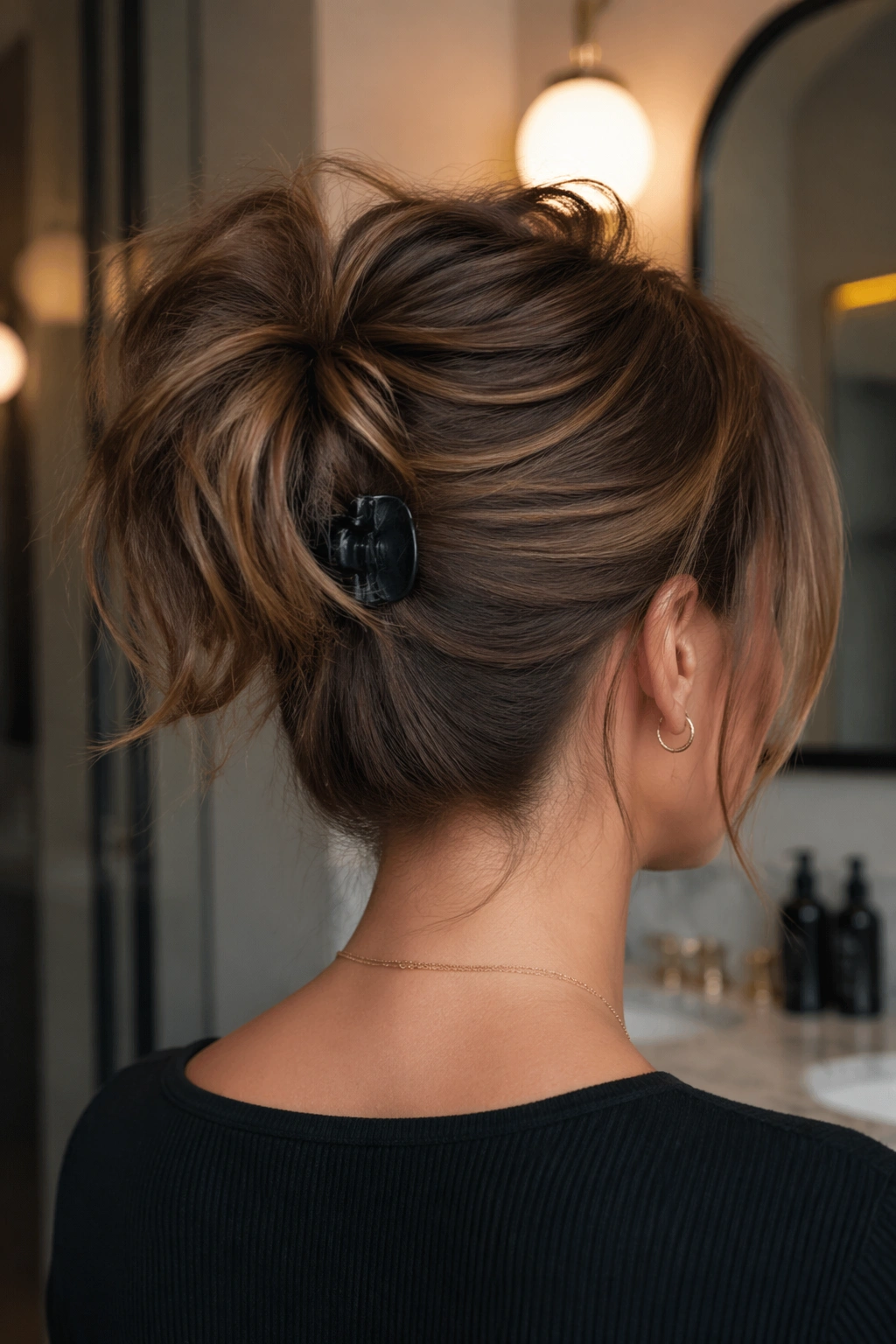
A claw clip under a ponytail sounds odd until you try it. Then it starts making sense.
Gather the hair loosely at the back, clip the base upward with a small claw clip for lift, and let the ponytail sit above or around it. The clip gives short hair extra height and support, especially if the top tends to lie flat. It also creates a little pocket where shorter layers can rest instead of slipping away.
Use texture spray first so the clip can grab. Smooth hair and clips often slide, which is a small misery nobody needs. If your hair is very fine, choose a matte clip with strong teeth. Glossy decorative clips can look cute but fail fast.
This style has a modern, slightly undone feel. I like it for days when you want the ponytail idea without committing to a tight, traditional finish.
27. The Elegant Low Loop Ponytail
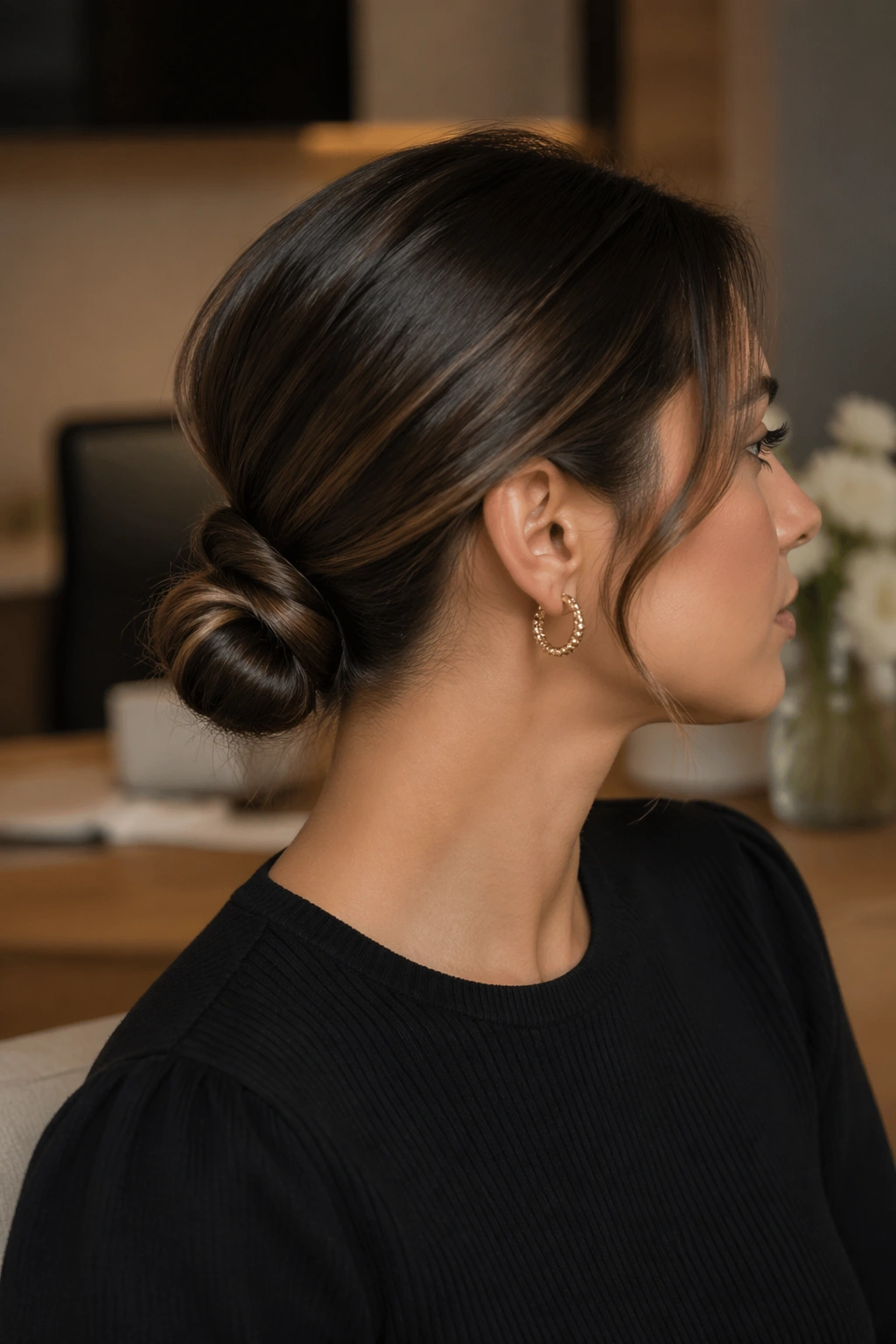
This one looks like a knot at a glance, but it’s easier than it seems.
Pull the hair into a low ponytail, then loop the tail through itself once or twice before pinning the ends underneath. On short hair, the loop can stay compact, which is actually a strength. You get shape and polish without needing much length at all.
A low loop ponytail is a good choice when you want something neat for work, dinner, or a formal event but don’t want a stiff chignon. It sits close to the neck, stays balanced, and lets short hair look on purpose. That last part matters.
If the ends are too short to loop neatly, let them tuck under and pin them flat. No one will notice if the base is clean and the finish is smooth.
Final Thoughts
Short hair gives up length, not style options. That is the piece people miss when they assume ponytails belong to longer cuts. The right updo ponytails for short hair depend on smart placement, a little texture, and enough pins to keep the shorter pieces where you want them.
The best styles usually do one of three things: they hide the short layers, turn the layers into the design, or shift the ponytail to a place where the hair can actually support it. Once you get comfortable with that idea, the whole category opens up fast.
Keep a small kit nearby if you wear short hair a lot: a few mini elastics, four or five bobby pins, a tail comb, and one styling product that gives grip. That’s enough to make most of these styles work without a whole bathroom counter full of tools.
