



A wedding ponytail should not look stiff. That is the whole point.
Indian messy ponytails for weddings work because they give you movement, lift, and a little breathing room around the face, while still leaving space for earrings, maang tikkas, flowers, and all the fabric drama that comes with wedding dressing. The trick is not chaos. The trick is controlled looseness: a smooth crown, textured lengths, and a base that looks deliberate from every angle.
I’ve always thought the best wedding hair is the kind that survives a long day without turning into a helmet. A messy ponytail does that better than people expect. It can feel bridal, festive, romantic, and sharp all at once, depending on where you place the volume and what you tuck into the base.
And yes, the details matter. A 1-inch curling iron gives a different finish from a 1.5-inch one. A center part changes the mood entirely. A low base works better with a heavy dupatta, while a higher one can make a blouse back look cleaner. The styles below move from soft and floral to bold and ornamental, so you can match the hair to the outfit instead of forcing the outfit to adapt to the hair.
1. Low Messy Ponytail With Fresh Gajra
A low messy ponytail with gajra is one of those styles that never looks out of place at an Indian wedding. It sits close to the neck, which means it plays nicely with heavy earrings, embroidered blouses, and layered necklaces, and the fresh jasmine softens the whole look fast. There is a reason so many brides and guests keep coming back to it. It feels rooted in tradition, but it does not look dated.
Why It Works
The base stays controlled while the lengths stay loose, which gives you both structure and softness. If your outfit has a lot going on — zari, stones, mirror work, a bold border — this ponytail keeps the hair from competing with the clothes.
A gajra wrapped around the elastic hides the tie point and adds fragrance, too. That part is underrated. The scent changes how the style feels in person.
- Keep the ponytail low, around the nape.
- Curl the tail in loose bends, not tight spirals.
- Wrap the jasmine around the base after the elastic is secured.
- Leave two thin face-framing pieces if your blouse neckline is open.
Best on: brides, close family, and anyone wearing a saree with heavy earrings.
2. Mid-Height Ponytail With Soft Waves
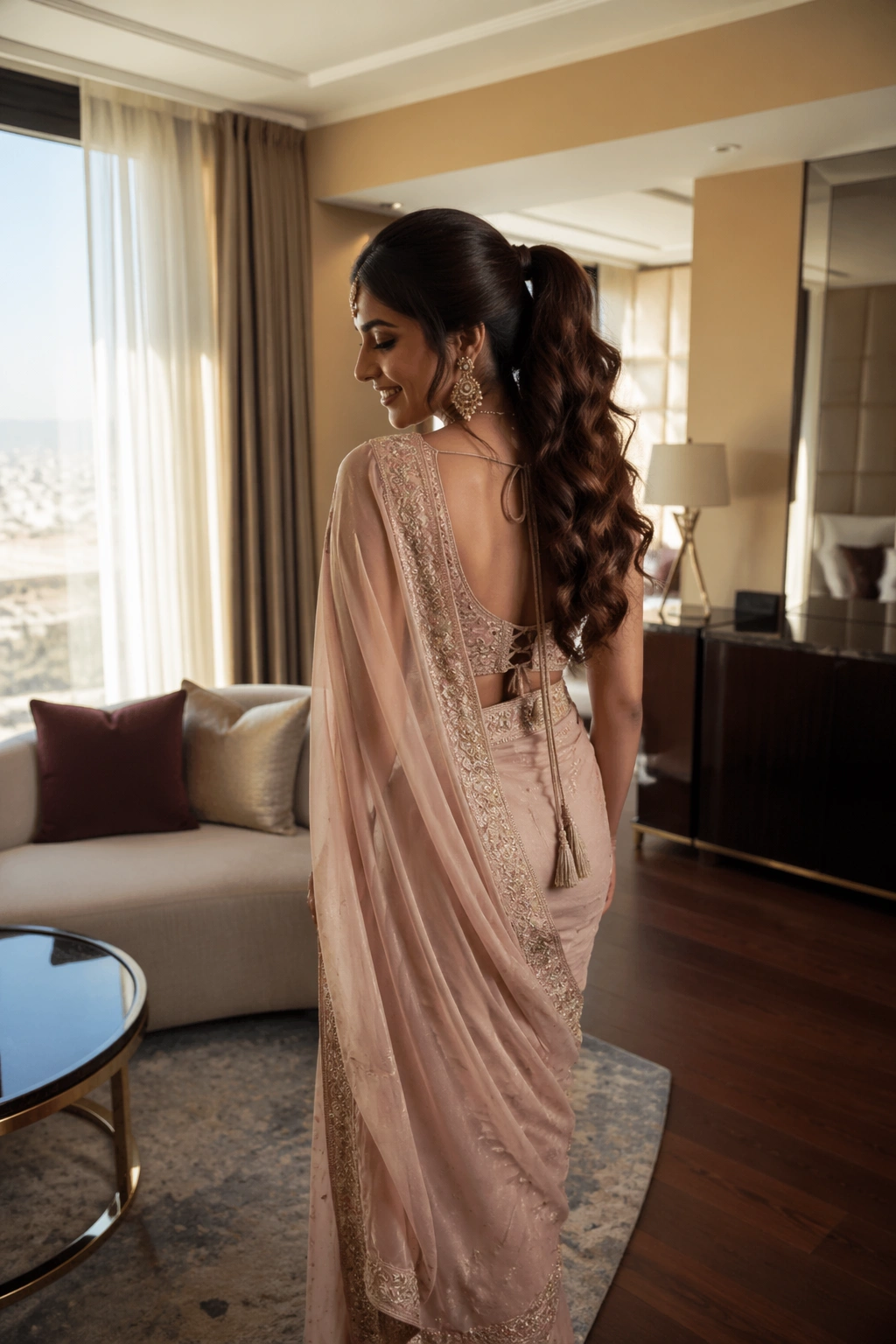
This is the ponytail I reach for when someone says, “I want something wedding-appropriate, but not too heavy.” A mid-height ponytail sits in that sweet middle zone, high enough to feel dressed up, low enough to stay comfortable for hours. The soft waves keep it from looking flat or rushed.
The shape also works with almost any neckline. Deep backs, boat necks, halter blouses, even a simple high neck. The height gives the profile a little lift, and the waves stop the tail from hanging like a rope.
The crown should be smoothed with a soft brush or a touch of cream, not lacquered down. You want the front to look neat, not frozen. If the hair is fine, a little backcombing at the crown helps. If the hair is thick, skip the teasing and focus on shine and shape instead.
One small thing. Don’t pull the ponytail too tight at the temples. That hard tug is what makes a style look tense.
3. Braided Crown Messy Ponytail
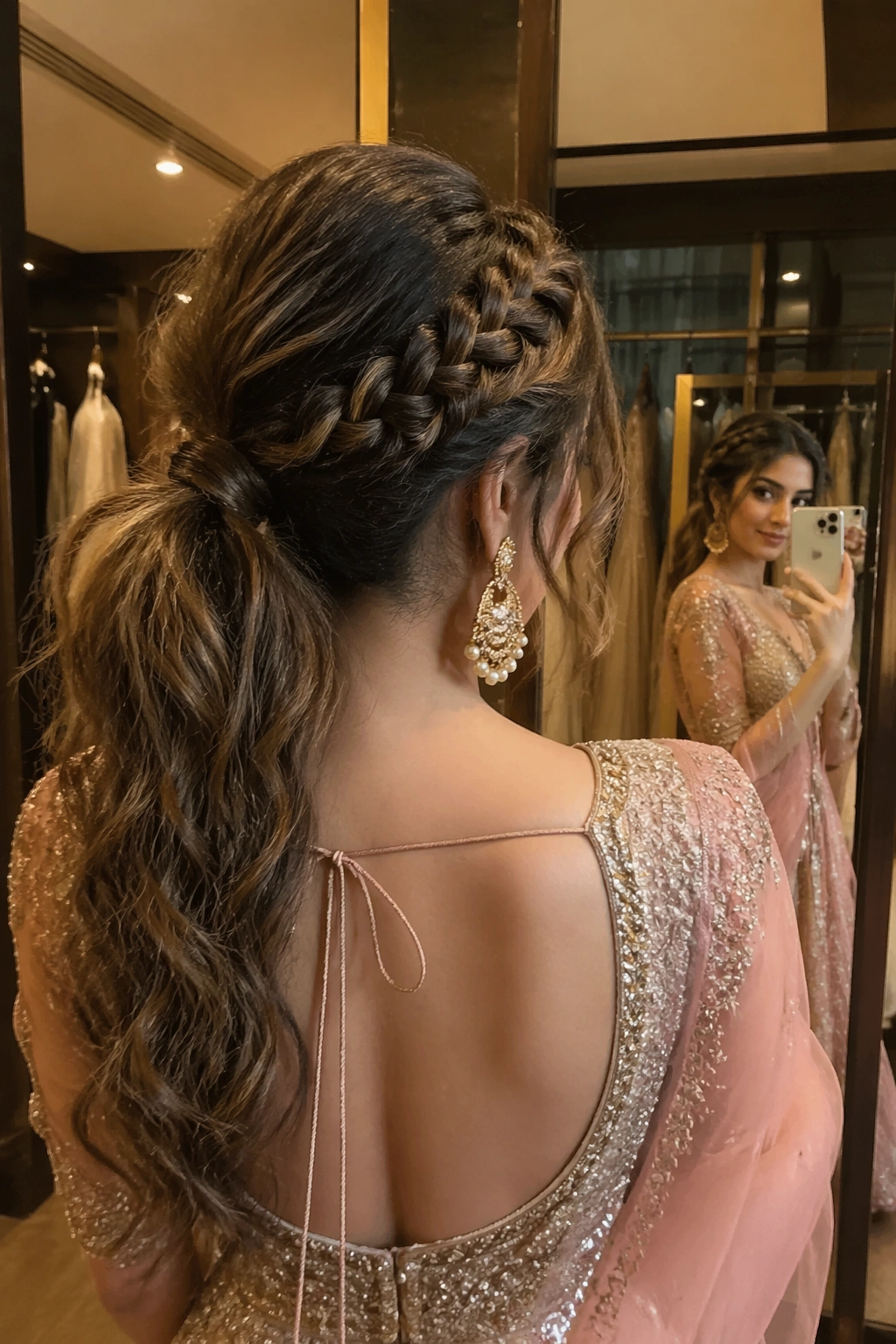
Why does this style feel so bridal without trying too hard? Because the braid acts like a frame. It draws the eye upward, gives the front of the hair some texture, and keeps the top from looking too plain.
A braided crown messy ponytail is especially good when you want the face open but still want detail near the hairline. The braid can be a simple three-strand version, or a softer Dutch braid if you want more lift. Either way, the ponytail itself should stay loose and a little undone so the whole style does not turn formal in a stiff way.
How to Wear It
Keep the braid slightly pancaked, which means gently tugging it wider after it is secured. That makes it look fuller. Let the ponytail fall in loose waves, then pinch a few sections apart with your fingers.
- Best with mid-weight earrings.
- Works well for mehndi and sangeet.
- Looks good with a center part or a soft side part.
- Needs a strong grip at the nape so the braid and tail stay connected.
A little looseness here goes a long way.
4. Bubble Ponytail With Pearl Pins
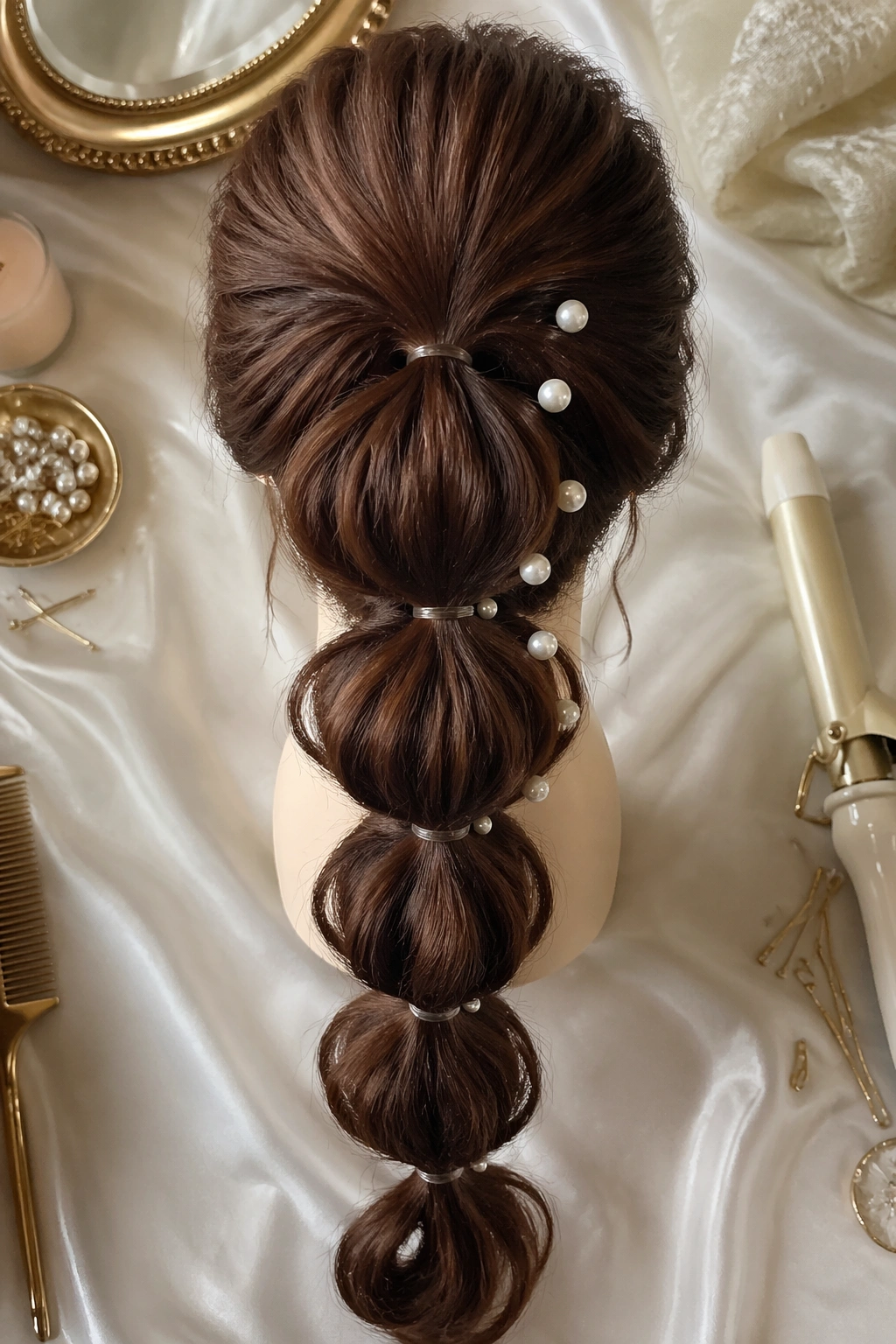
Picture a ponytail divided into soft round sections, each one puffed slightly and held with tiny elastics. That is the bubble ponytail, and when you add pearl pins, it turns into one of the easiest wedding styles to make look intentional.
The structure does a lot of the work for you. Each bubble creates volume, so you do not have to rely on heavy curling or a lot of teasing. The pearls give the eye a reason to travel down the length of the hair, which is useful when the outfit itself is simple and you need a little movement in the hairstyle.
Use clear elastics or thread-wrapped ties every 2 to 3 inches. Then pin pearls along one side of the bubbles, not all around, unless you want the style to feel more ornate. Too many pins can make it look busy fast. One side, though, looks clean and festive.
This is a smart choice for cocktail nights, reception looks, and fusion outfits. It has structure. It also has a bit of play.
5. Twisted Front Ponytail With Side Sweep
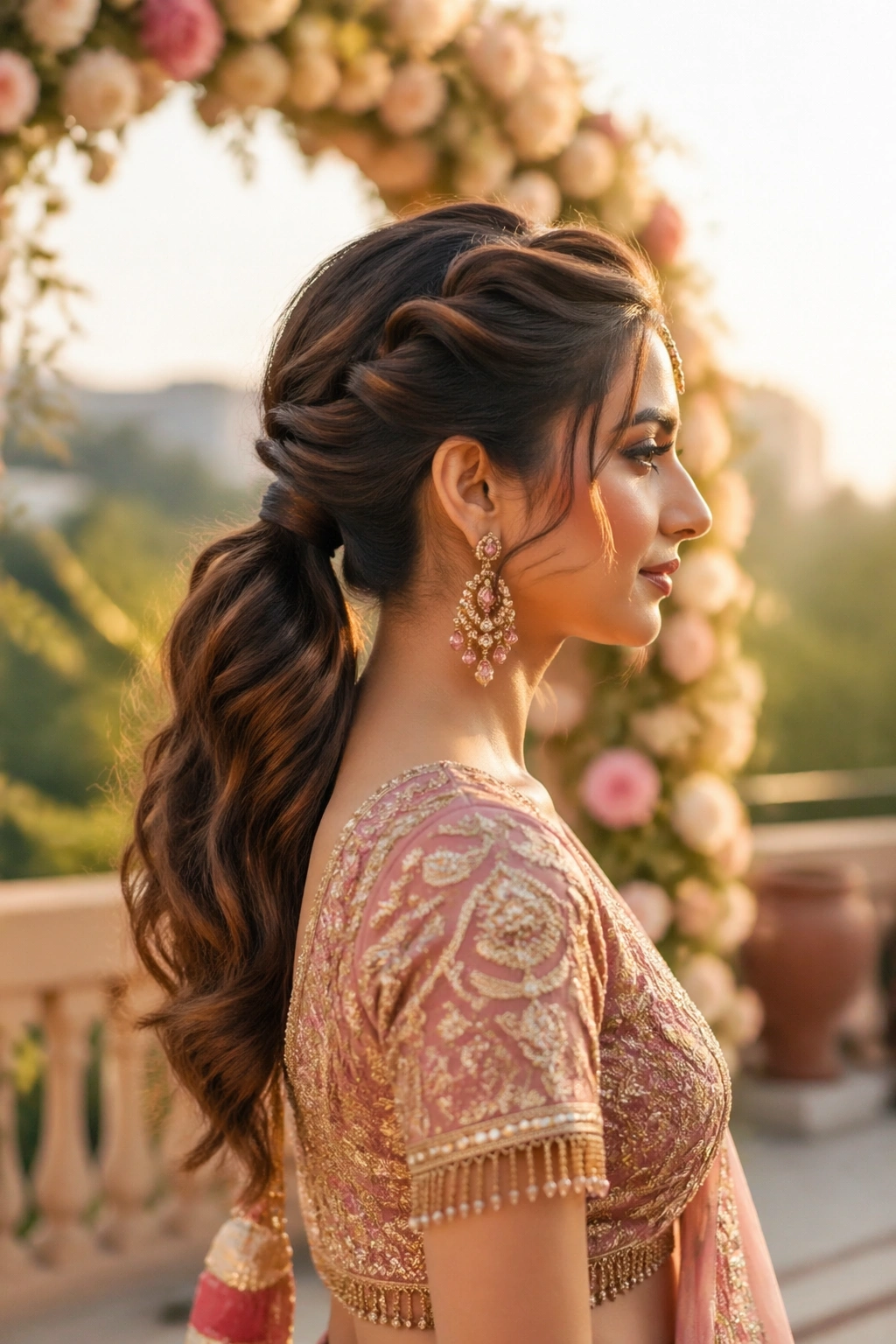
A side sweep changes the whole mood of a ponytail. Instead of feeling strict, the hair looks softer at the front and a little more fluid around the face. That matters when you are wearing statement makeup or a blouse with detailed shoulder work.
The style starts with twisted sections from the temple area, either one twist or two small ones, guided back into the ponytail. Those twists keep the front from feeling flat. They also help hide pins, which is always useful when you are dealing with a long wedding day and a lot of movement.
I like this version with a lower ponytail, not a sky-high one. The shape stays elegant and does not fight with earrings or a necklace. If you want more texture, curl only the lower half of the tail and leave the top smoother. That contrast makes the hairstyle look more deliberate.
One tiny warning. Side-swept hair can flatten on the covered side if a dupatta sits too heavy there, so place the twists where the fabric will not crush them.
6. High Textured Ponytail With Velvet Ribbon
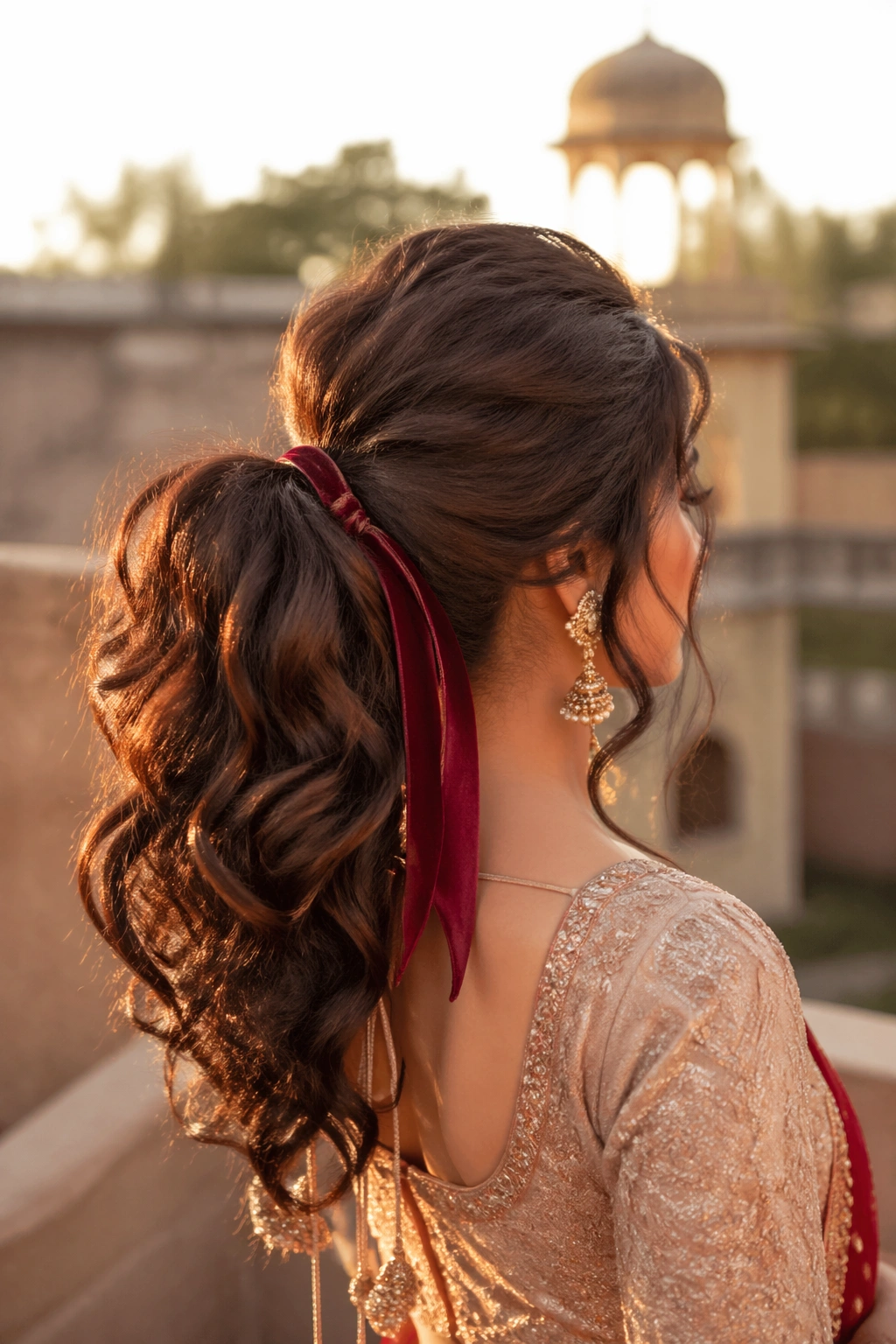
Unlike a sleek high ponytail, this one has a bit of softness at the crown and a lot more movement through the tail. That makes it easier to wear with festive clothes that are already loaded with detail.
A velvet ribbon wrapped around the base changes the mood immediately. It adds color, texture, and a little old-world charm without needing extra pins or flowers. Deep maroon, bottle green, and gold ribbon shades work especially well with bridal reds and jewel-tone lehengas, but the finish matters more than the color. Keep the ribbon wide enough to show, around 1 to 1.5 inches, so it does not disappear into the hair.
The crown should have a touch of lift, nothing extreme. The ponytail itself can be brushed out after curling so it looks plush rather than stiff. That brushed texture is what makes the style feel wedding-ready instead of gym-ready.
If your outfit has a glossy fabric, the velvet gives the hair a useful contrast. It breaks up the shine.
7. Open-Crown Bridal Ponytail With Maang Tikka
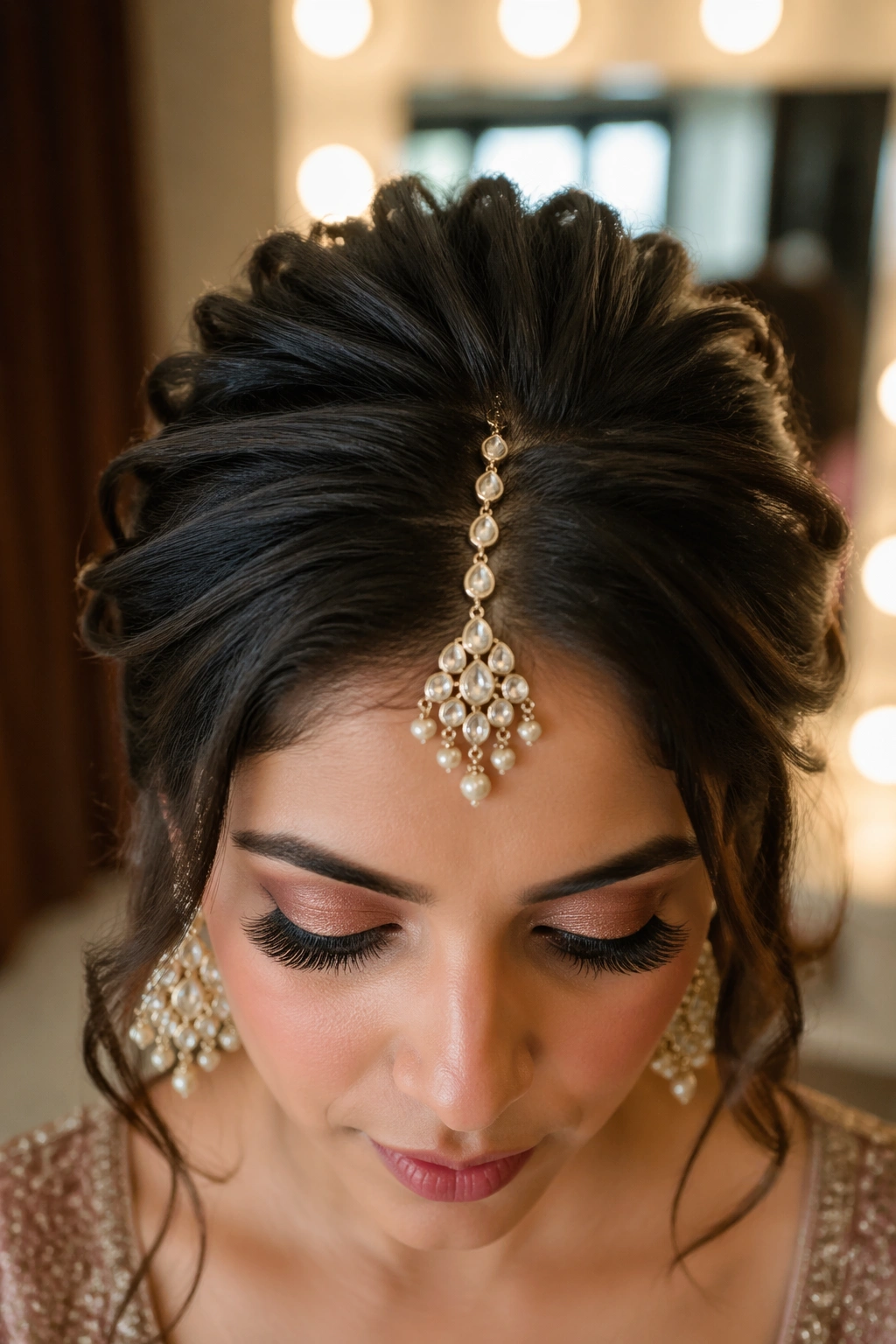
A maang tikka needs a stable center. That is why the open-crown bridal ponytail works so well. The front stays parted and controlled, the crown carries a little height, and the ornament can sit exactly where it should without fighting stray hair.
This style is especially strong for brides who want a bridal look that still lets the hair move. You get the formality of a center part and the softness of a ponytail, which is a useful combination when the outfit already has a heavy blouse, layered necklaces, or a long veil.
What Makes It Different
The crown is usually built with a little lift at the roots, then smoothed back toward the ponytail. The front should not look puffed up in a rigid way. It should look shaped, not forced.
A maang tikka looks best when the part line is clean and the hair around it is calm. Add soft waves to the tail, then let one or two thin strands fall near the ears if the face needs a bit of softness.
This is a very strong bridal choice. It has presence without swallowing the rest of the look.
8. Rope-Braid Ponytail With Gold Cuffs
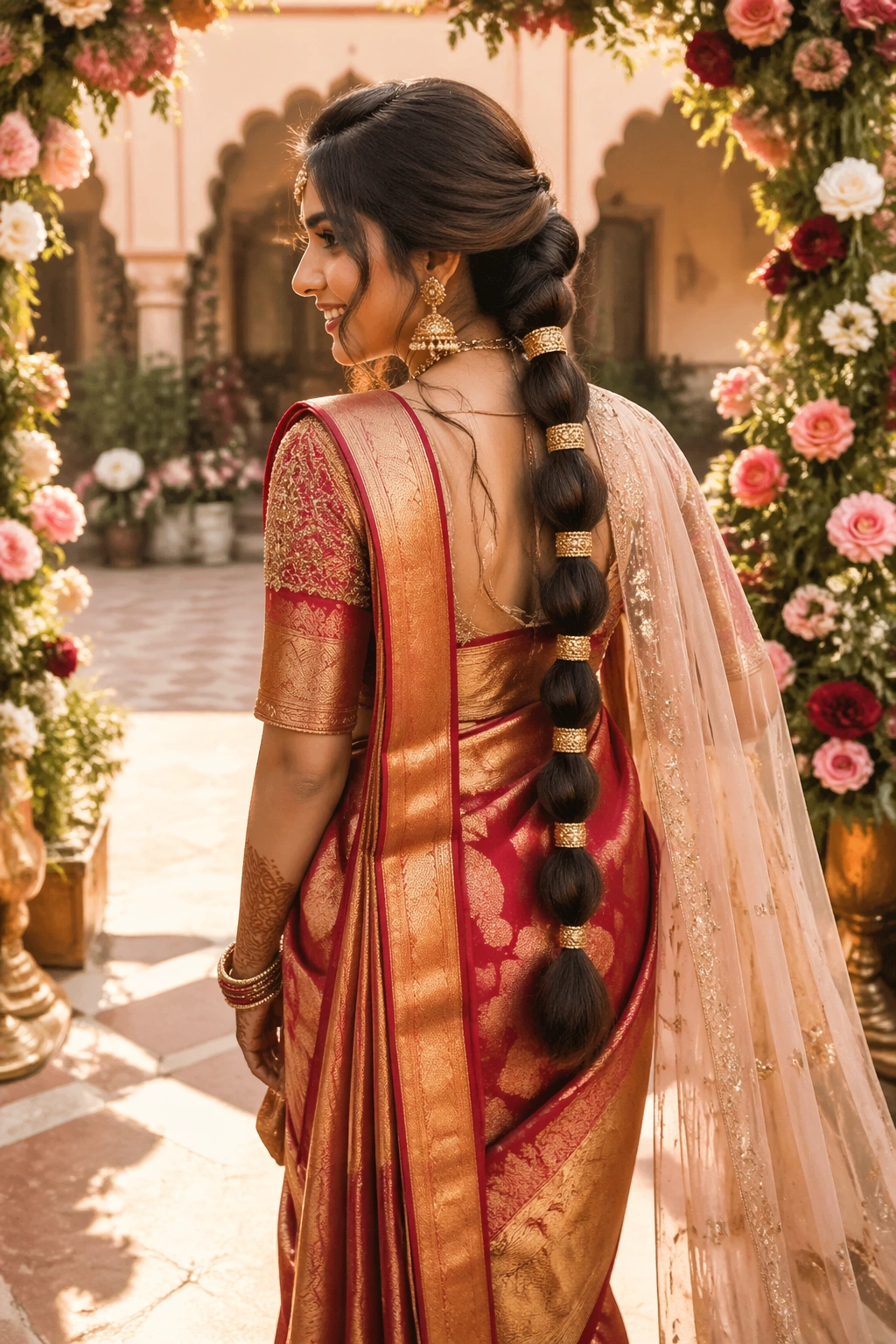
Why choose a rope braid over a regular braid? Because it gives you texture without the fuss of three-strand braiding, and the twisted finish feels neat even when the rest of the hairstyle stays relaxed.
The rope-braid ponytail is one of the easiest ways to add detail to long hair. Twist two sections in opposite directions, wrap them around each other, and secure the ends. Then add gold cuffs at intervals if you want the style to lean more festive. The cuffs should be spaced out, not packed together. Two or three is usually enough.
How to Get the Most From It
- Start with slightly textured hair so the twist holds.
- Secure the base tightly before braiding the tail.
- Use small cuffs that match the tone of your jewelry.
- Keep the crown smooth so the braid remains the focus.
This style works well with temple jewelry, silk sarees, and outfits that already have metallic borders. It is tidy from a distance, but up close it has enough detail to feel special. That balance is useful.
9. Fishtail Ponytail With Loose Ends
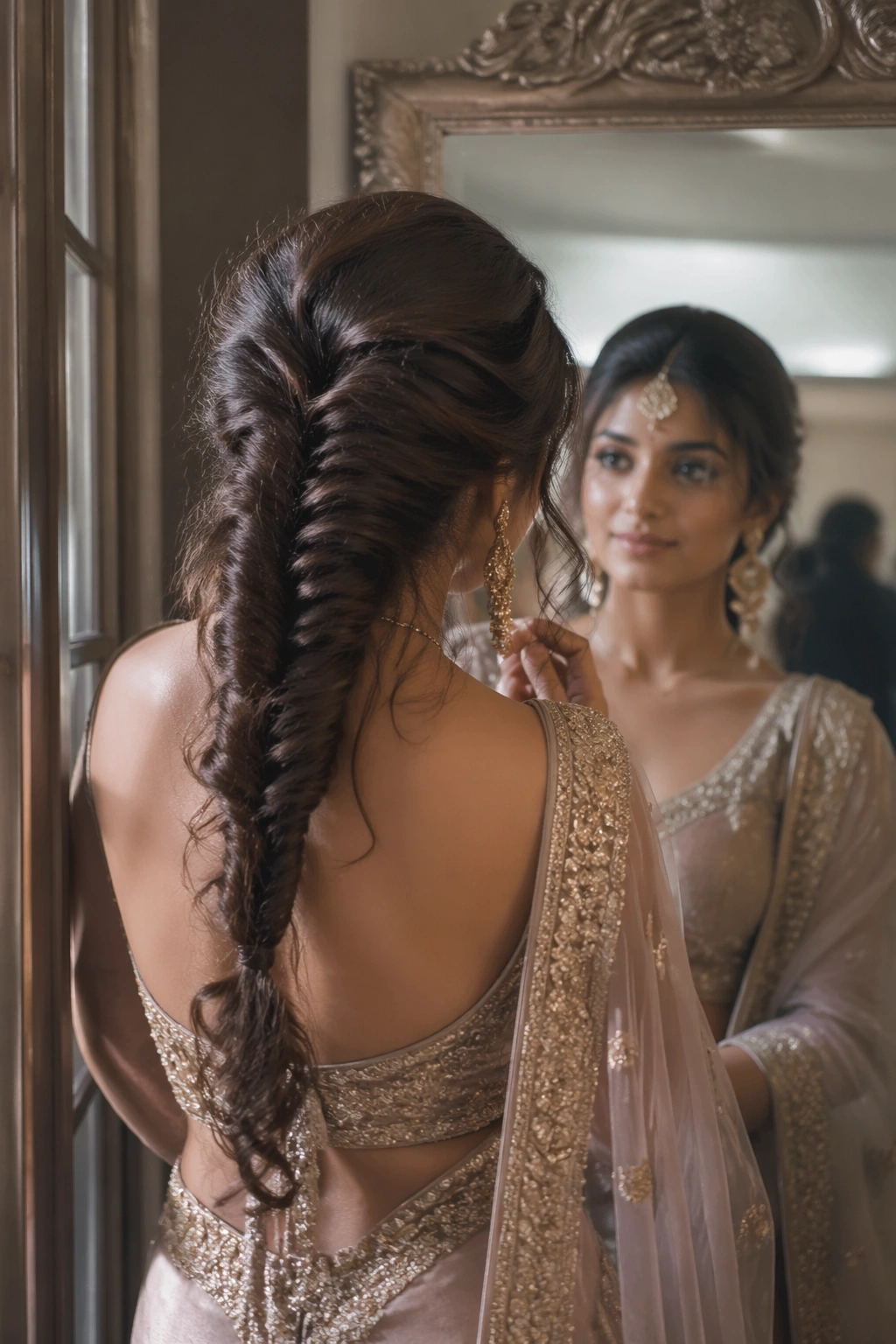
There is something quietly rich about a fishtail ponytail. It looks intricate, but it does not need a lot of extra decoration to hold its own. That is why it suits heavily embellished outfits so well. The hair can back off a little and let the clothes do their thing.
A fishtail braid built from a ponytail has a natural softness that regular braids do not always have. Pull the braid apart gently once it is secured so the edges widen and the pattern shows. Then leave the last few inches loose and curled. Those ends stop the style from feeling too strict.
This is a strong option for guests who want a dressed-up look without leaning all the way into bridal territory. It also works when the fabric has a lot of sparkle, because the braid gives the eye some rest. Not every wedding hairstyle needs to shout.
The best version has a controlled top and a slightly loosened tail. If the braid is too tight, it can look overworked. A little slack makes it feel better.
10. Curly Ponytail With Face-Framing Pieces
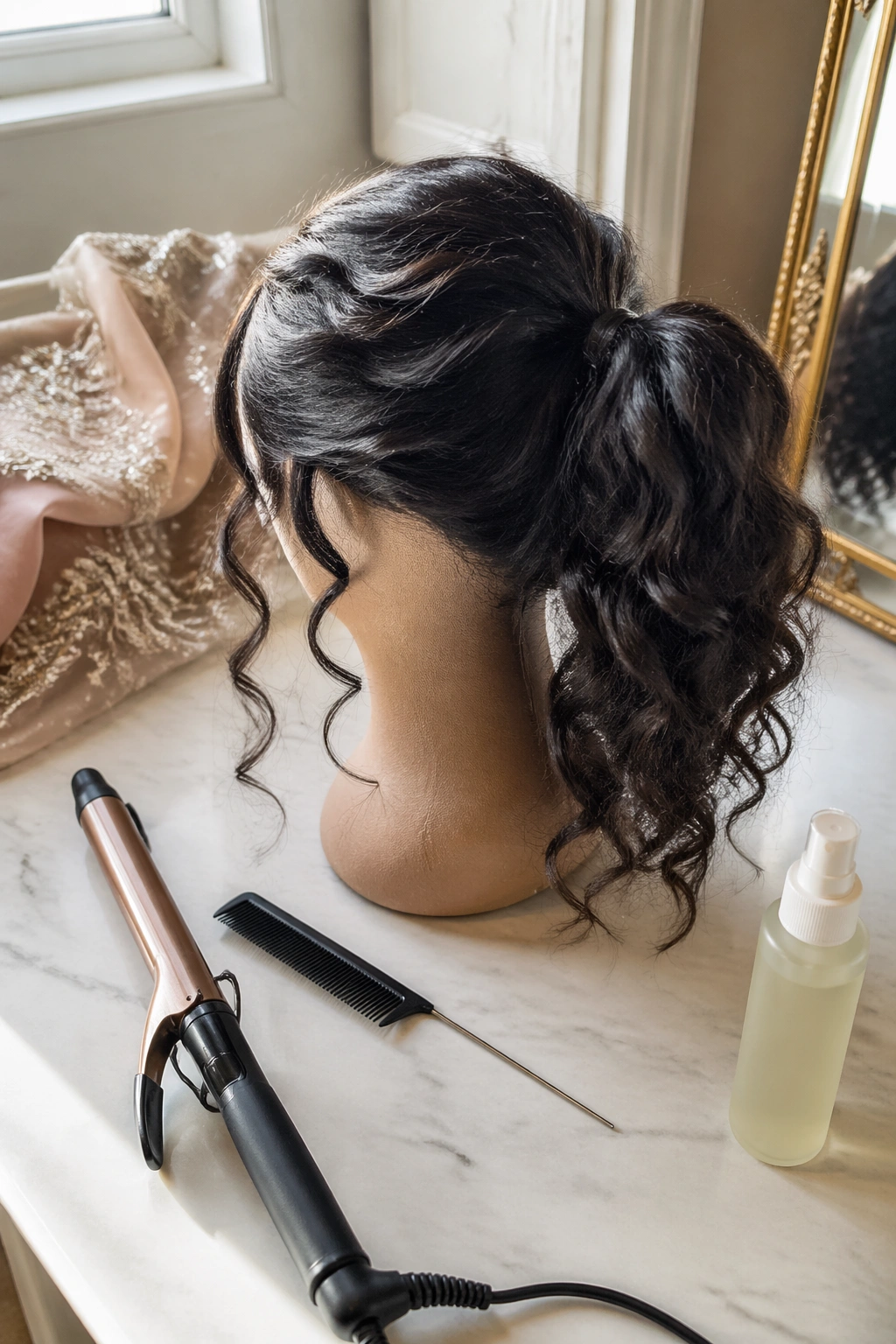
Curls change everything. A simple ponytail becomes richer, softer, and more alive the moment the lengths are curled and brushed out in the right way.
This style is a gift for people with naturally wavy or curly hair, because you do not have to fight the texture. You only need to shape it. Gather the hair into a mid or low ponytail, leave two face-framing pieces out, and curl those pieces away from the face so they open the cheekbones. The tail can be left in defined curls or brushed into bigger, softer bends.
A lot of wedding hairstyles lean hard on structure. This one leans on movement. That makes it feel less severe, which is useful if the makeup is bold or the blouse is ornate.
Use a light setting spray after curling, not a heavy coat. The hair should keep its shape but still move when you turn your head. If the curls become stiff, the style loses its charm fast.
This is one of those looks that gets better when the room is full of motion.
11. Sleek Crown, Messy Ends Ponytail
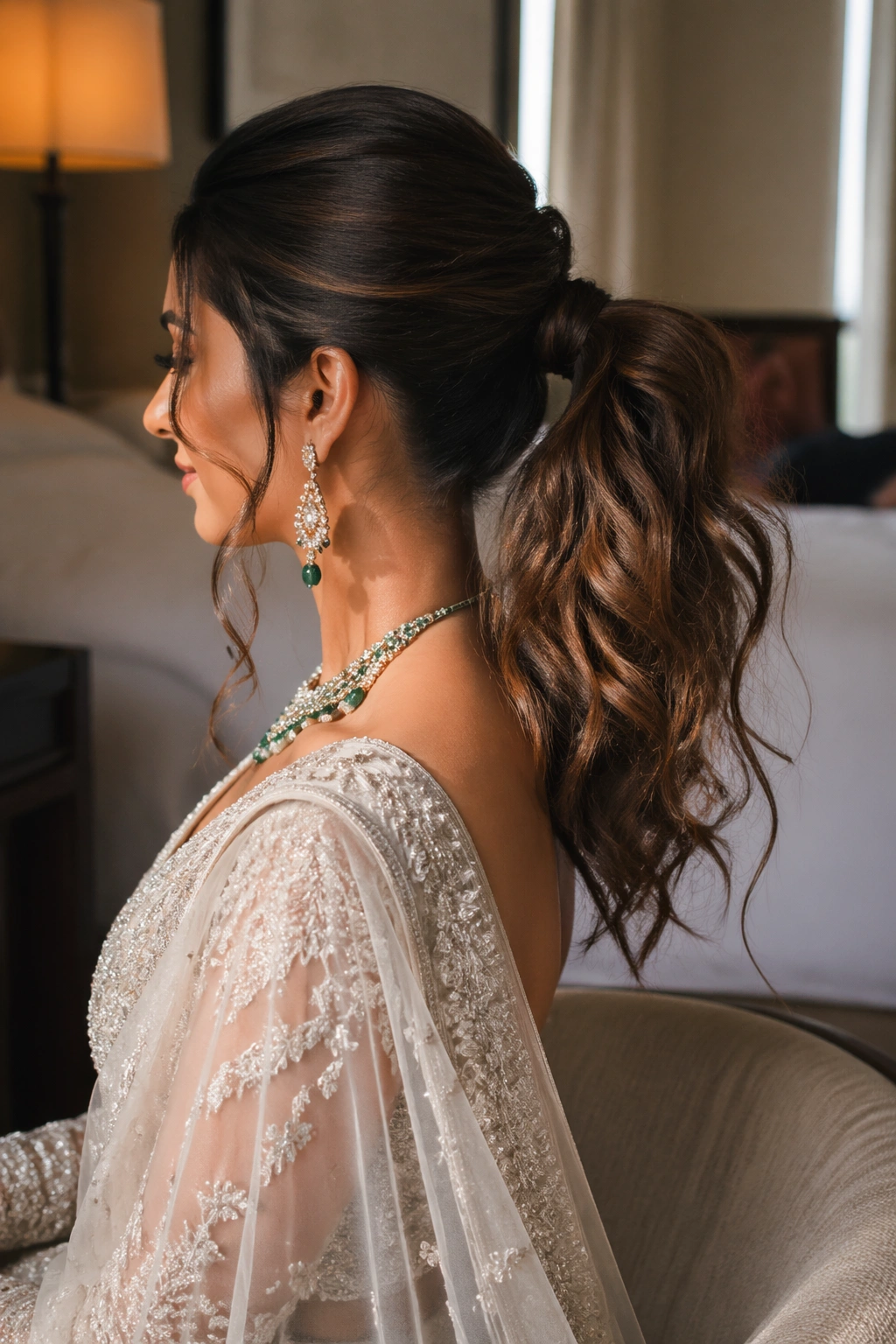
A polished crown with textured ends can look more expensive than an all-over messy style. Strange, but true. The contrast gives the eye something to hold onto: smooth at the top, loose through the tail.
This is a smart choice when the outfit has sharp lines or the blouse back is detailed. A sleek crown keeps the front clean and makes the earrings stand out, while the messy ends stop the ponytail from looking too severe. The trick is to smooth the top with a little serum or cream, then leave the lower half with soft waves or brushed-out curls.
The style also works when you want your makeup to be the main focus. There is no heavy braid or big floral cluster stealing attention. Just shape, shine, and movement.
I would not do this with very flat hair unless you are willing to add a little root lift. Without that, the contrast can disappear. But with even a small amount of volume, it lands well.
12. Floral-Cluster Ponytail
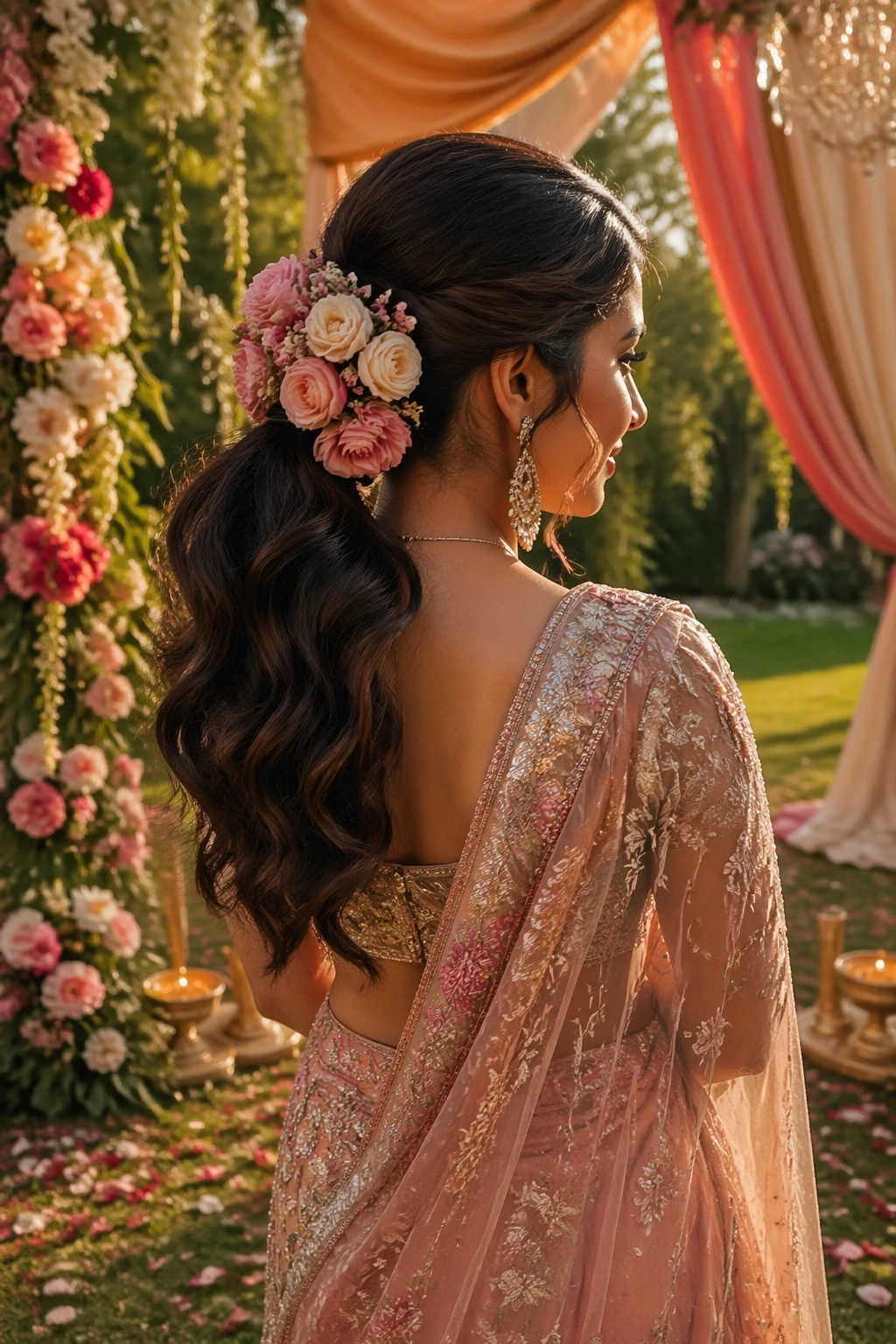
Fresh flowers can turn a simple ponytail into something that feels ready for a ceremony in seconds. The key is cluster placement. You do not want flowers scattered everywhere like confetti. You want them grouped in small pockets, usually near the base or along one side of the tail.
Roses, carnations, orchids, and tiny jasmine sprays all work, depending on the weight of the hair and the rest of the outfit. Soft blooms suit pastel lehengas and lighter sarees. Denser flowers work better with richer fabrics because they can hold their own beside embroidery.
What to Watch For
- Keep the flowers lightweight so the ponytail does not sag.
- Pin stems securely into the base before the final curl is brushed out.
- Match the flower tone to one color in the outfit, not all of it.
- Avoid oversized blooms if the face is petite; they can overpower the hair.
This style is especially good when you want the ponytail to feel festive without leaning too hard on jewelry in the hair. The flowers do the talking.
13. Puff Crown Ponytail With Volume at the Front
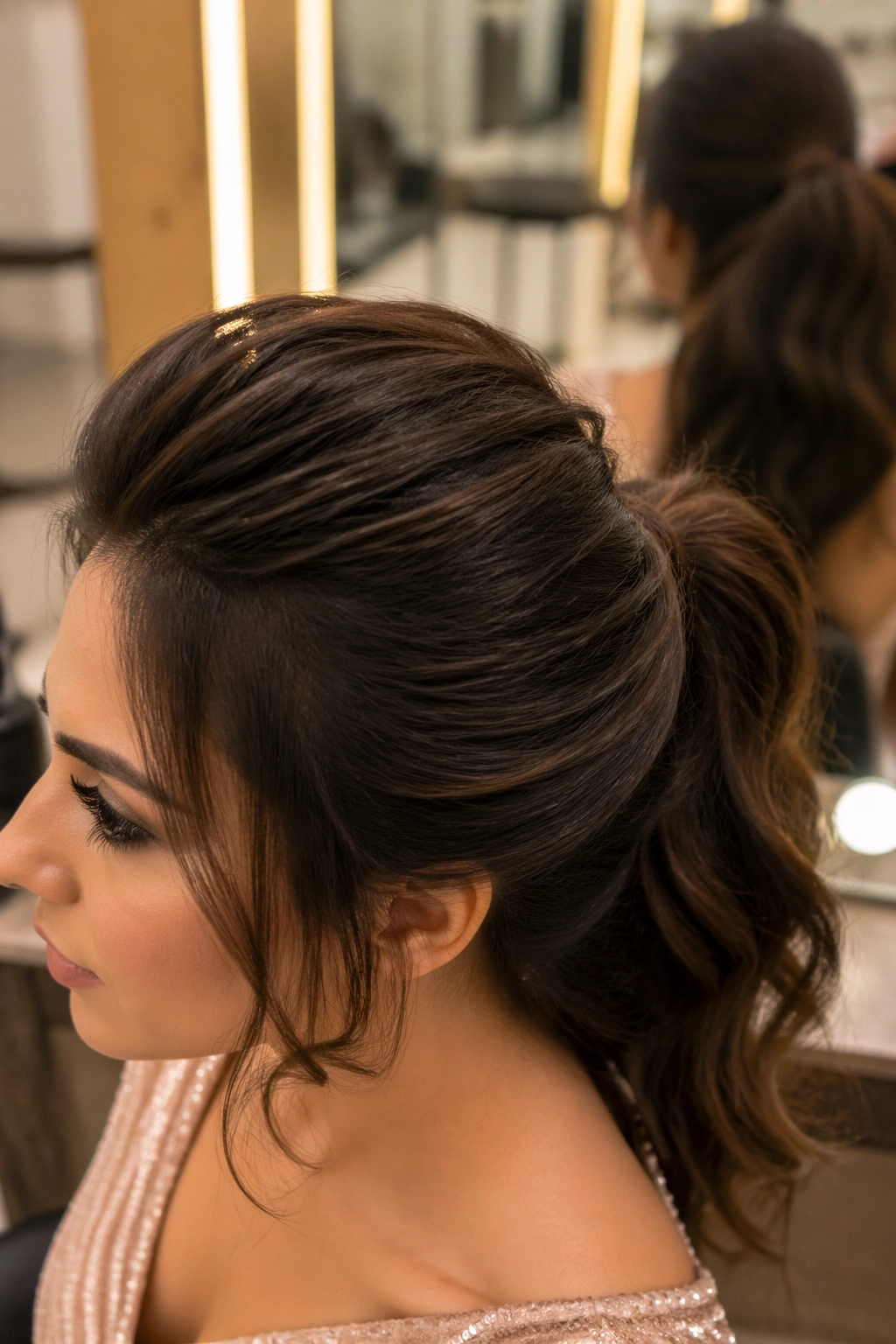
If you want a bridal look with a little height but do not want a full bun, this is the one. The puff crown ponytail gives lift at the front, keeps the face open, and still leaves the tail free to move.
The crown section is gently backcombed or padded, then smoothed over so the lift looks rounded rather than sharp. The ponytail drops from that point and can be curled, braided, or left in soft waves. The puff does a good job balancing heavier bridal makeup and a maang tikka because it creates a strong upper shape.
This style likes symmetry. A center part makes it feel classic. A slight side part softens it. Both work. What matters more is the finish around the temples. Keep those sections sleek enough that the puff looks intentional, not accidental.
A puff crown can go wrong if it becomes too tall and too hard. That is usually a sign of over-teasing. Keep the volume soft enough that it can still move when you turn your head.
14. One-Shoulder Draped Ponytail
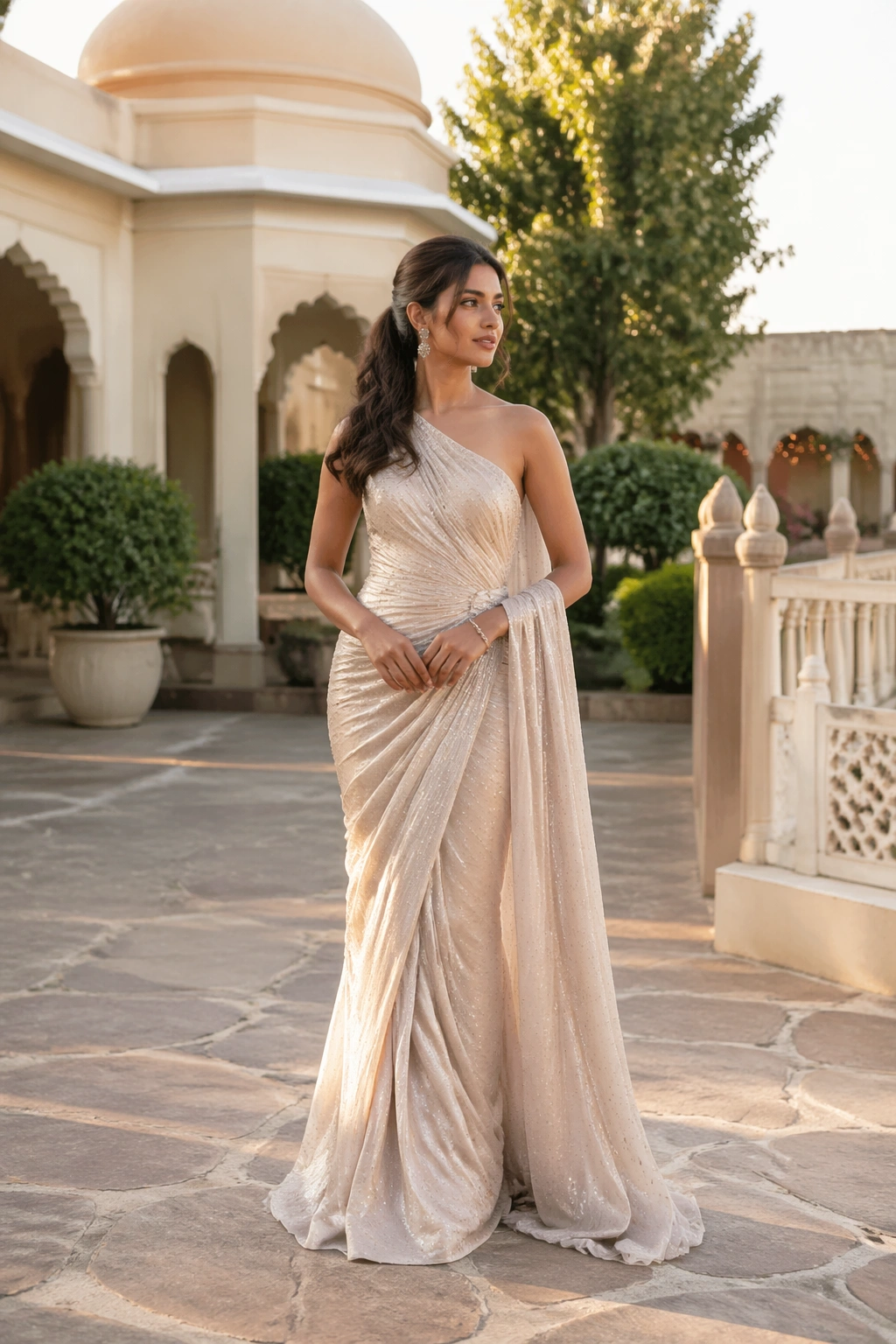
A one-shoulder blouse or an asymmetrical drape changes the whole hair conversation. The ponytail needs to stay out of the garment’s way while still looking styled from the front and side.
A one-shoulder draped ponytail solves that problem by shifting the tail toward the open side. It sits low or mid-low, then falls over one shoulder in loose curls or waves. That placement lets the neckline stay visible, which matters when the blouse has embroidery or a cut-out detail worth showing.
The front should be calm. A clean side part or a soft sweep keeps the attention on the shoulder line. If you add too much volume on both sides, the shape gets crowded. Keep one side lighter, one side fuller, and let the ponytail do the visual work.
This is a very useful style for guests and bridesmaids, especially when the outfit already has strong shape built into it. Hair that fights the blouse is a bad idea. Hair that follows the garment line makes the whole look easier to read.
15. Crisscross Pinned Ponytail
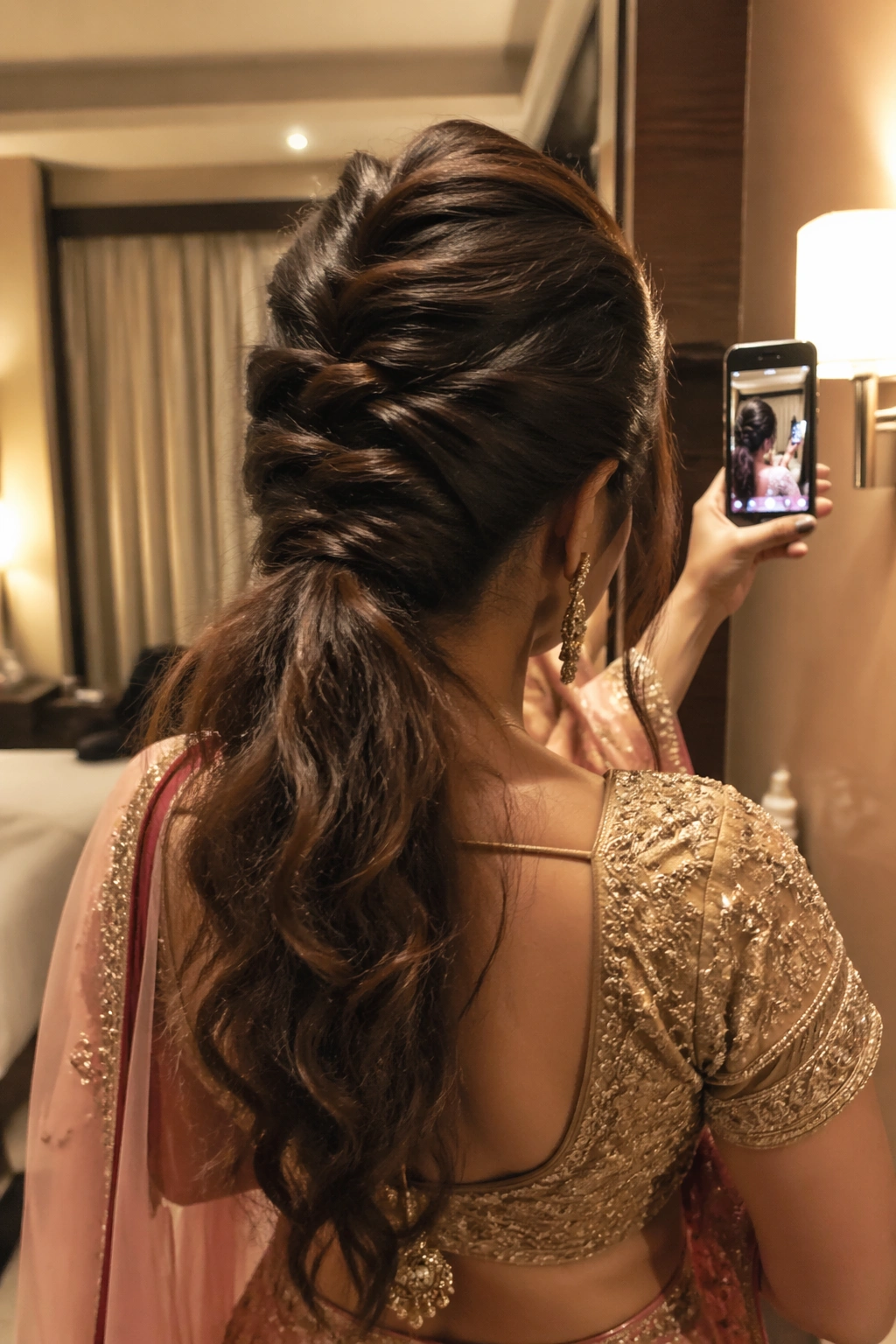
A crisscross pinned ponytail gives the back of the head a little pattern without asking for a full braid. It is the sort of style people notice from behind, which matters more than most of us admit.
The top sections are crossed over each other and pinned in place before the ponytail is secured. That creates a lattice effect near the crown. The ponytail itself can stay loose and textured, so the back does not look too rigid. It’s one of those styles that feels more detailed than it is, which is a nice payoff.
Quick Details
- Use strong bobby pins that match your hair color.
- Cross the sections evenly so the pattern sits centered.
- Keep the ponytail base hidden with a wrapped strand if possible.
- Add curls only to the lower half if you want the pattern to stay visible.
This works well for guest looks, especially when the outfit has a clean back and the hair needs to carry some visual interest. The best part is that it photographs from the rear without needing a lot of extra accessories.
16. Wrapped-Base Glam Ponytail
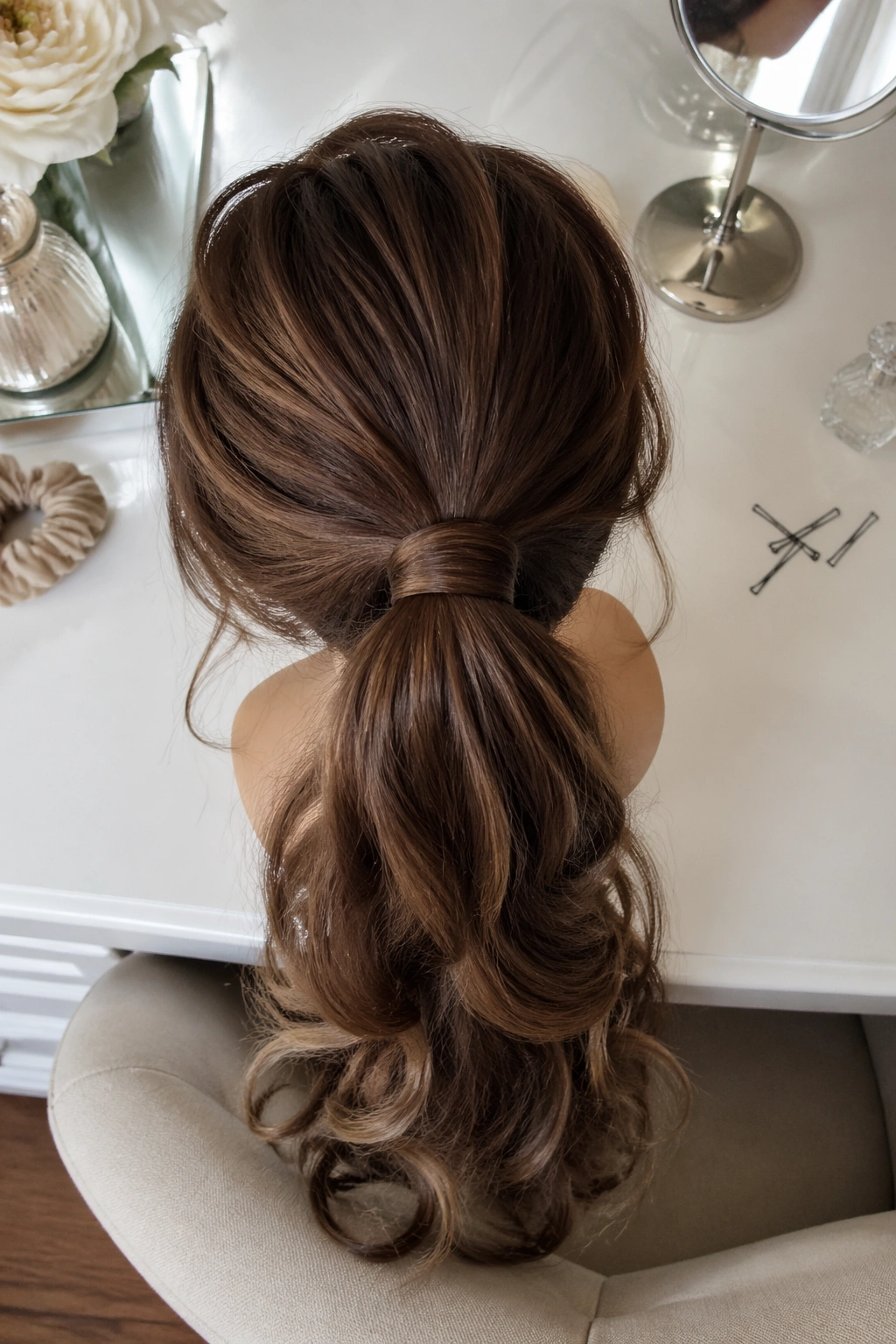
A wrapped base is one of my favorite little fixes because it makes almost any ponytail look finished. You take a strand of hair, wrap it around the elastic, and pin it underneath. That one move hides the utilitarian part and turns the base into a polished feature.
A glam version keeps the crown smooth, adds a touch of lift at the roots, and lets the tail fall in loose curls or brushed waves. The point is not to make the ponytail complicated. The point is to make the finish cleaner. That matters when the blouse back is detailed or when the earrings are large enough to need room.
This style is useful for people who do not want flowers or big accessories in the hair but still want the hair to look done. It also works well with darker, shinier fabrics because the wrapped base gives the eye a clear focal point.
One small thing. If the hair frizzes easily, smooth the wrapping strand with a tiny bit of cream before you wind it. Frayed ends at the base ruin the effect.
17. Center-Part Soft Ponytail
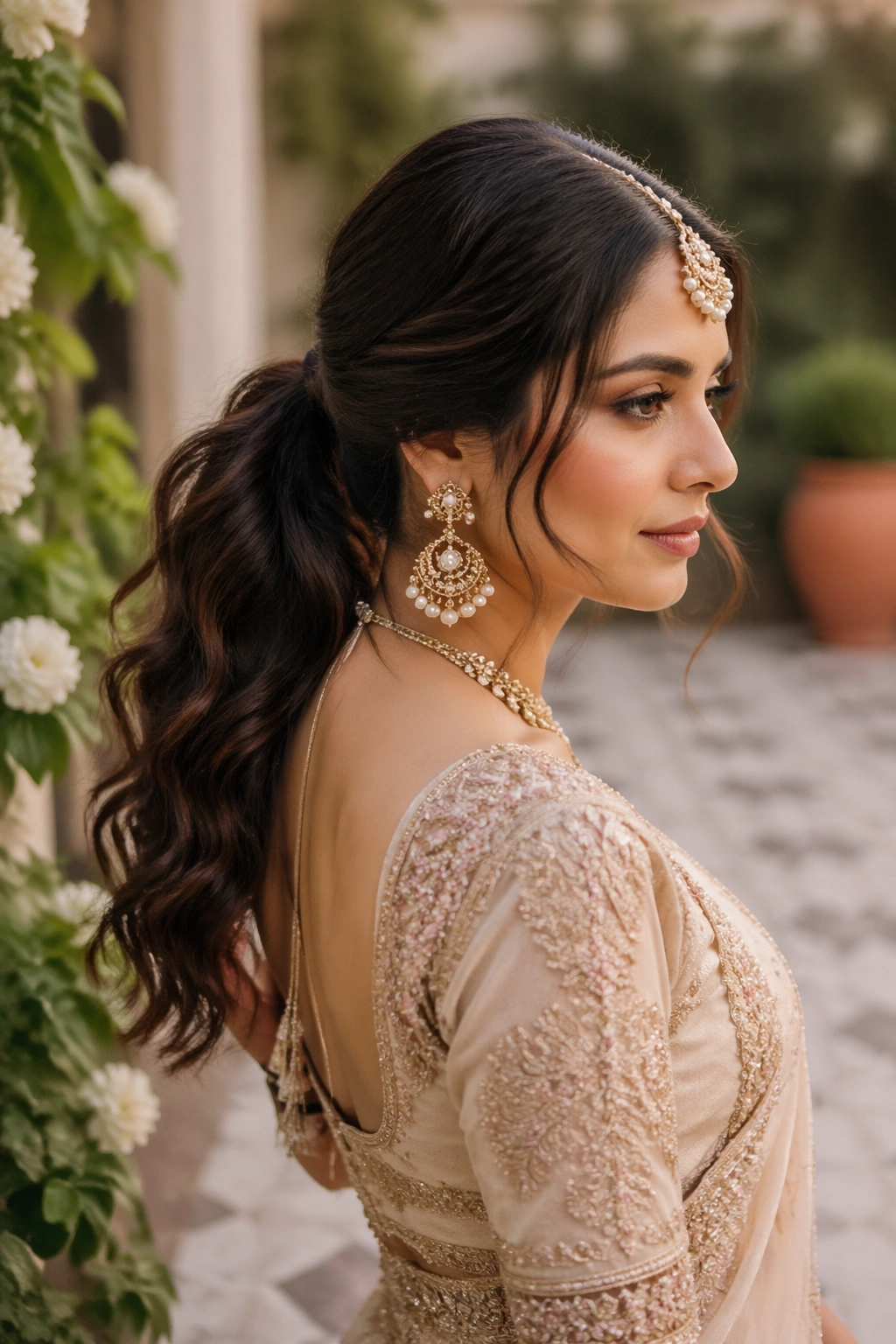
A center part brings order to a messy ponytail without killing its softness. That is why it suits Indian wedding hair so well. It gives the face structure, balances heavy earrings, and lets the hairline feel neat even when the tail itself stays loose.
This style is especially strong with traditional outfits. Sarees, silk lehengas, and outfits with a very defined neckline all benefit from the symmetry. The ponytail can sit low or mid-low, but the important part is the line from forehead to crown. Keep that line clean, then let the tail soften into waves.
If you wear a tikka, this is the easiest base to work with. The part sits naturally beneath the ornament, and the rest of the hair stays out of the way. Add one thin strand near each temple if you want a little movement around the face, but do not overdo it. The part itself already gives the style a strong shape.
This is one of those looks that ages well in photos because the symmetry never feels busy.
18. Statement Jhumka Ponytail
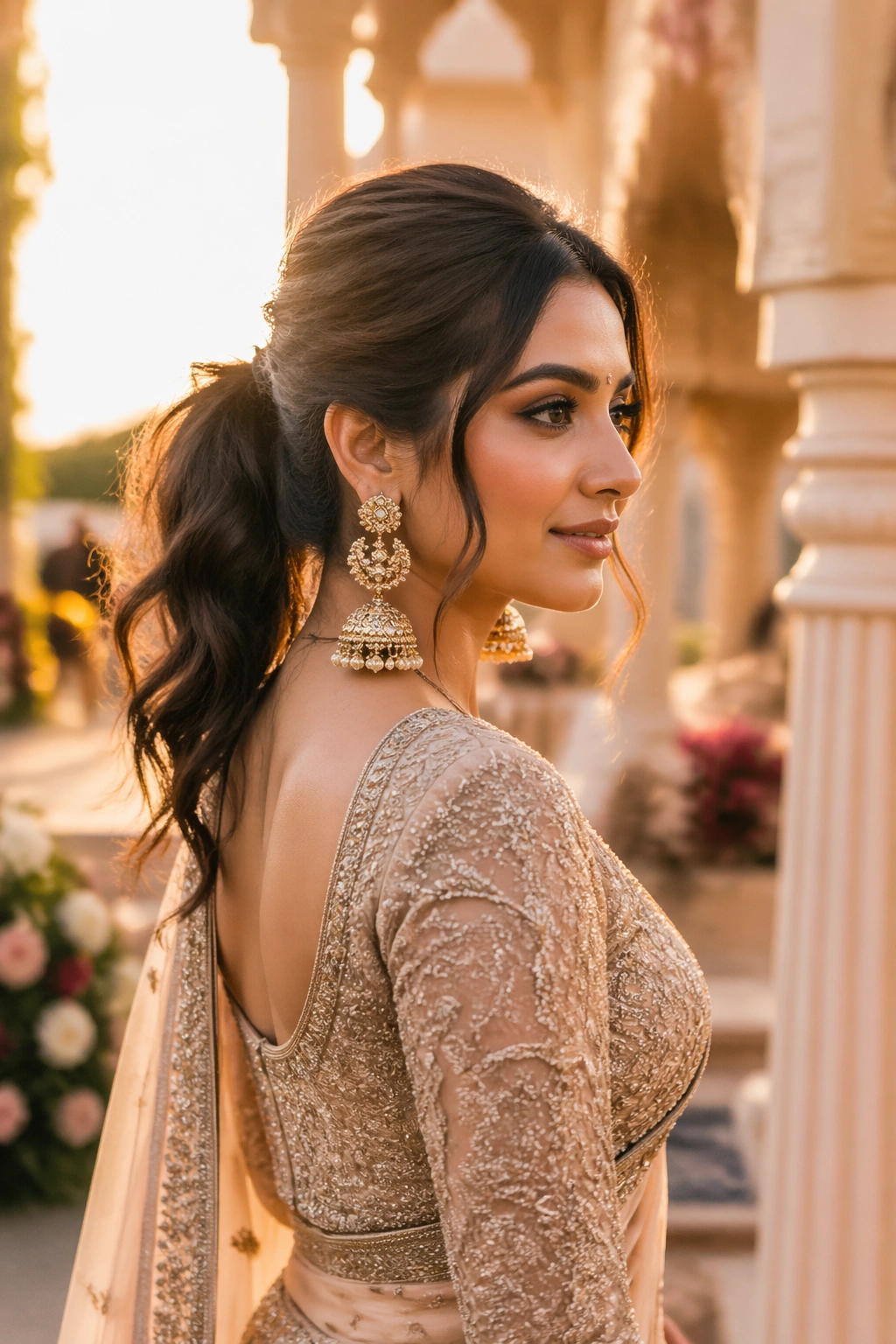
When the earrings are the star, the hair should step back a little. A statement jhumka ponytail does exactly that. It keeps the volume low to moderate, gives the face enough softness, and leaves space for the earrings to swing without tangling in the tail.
The ponytail itself can be textured, but not overloaded with braid work or florals. The goal is a frame, not competition. A little crown lift helps, especially if the jhumkas are large and the neckline is open. The rest can stay simple: soft waves, a wrapped base, maybe one slim strand tucked near the ears.
I like this style for guests who wear very heavy earrings and want the rest of the look to stay clean. It also works for brides who are already wearing a lot on the head and do not want the hair to pile on more visual weight.
Jhumkas already bring movement. Let them do it.
19. Braided Mohawk Ponytail
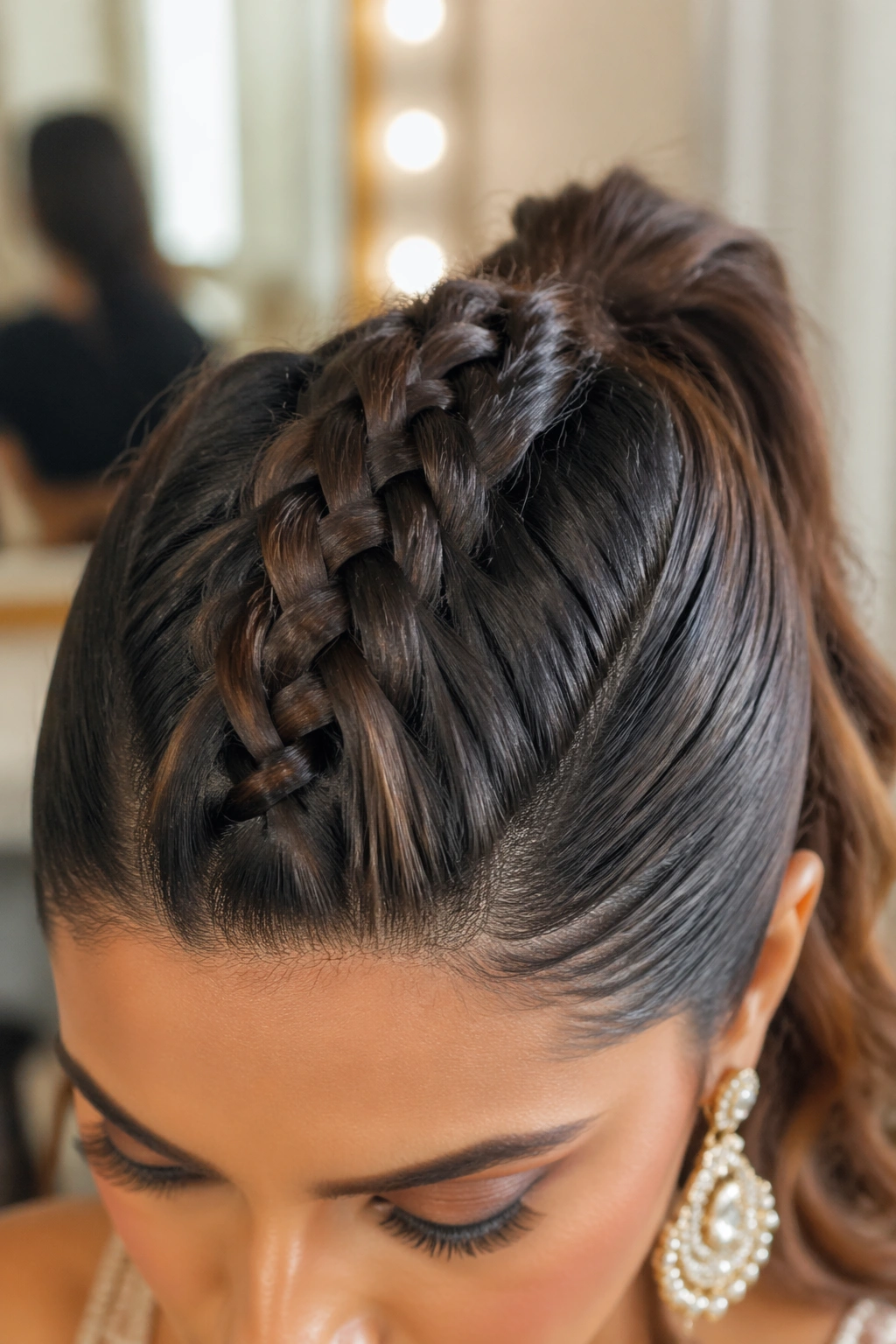
Can a ponytail feel edgy and wedding-friendly at the same time? Yes, if the braid is kept soft and the sides are smoothed properly.
The braided mohawk ponytail has a central braid or twisted ridge running from the front toward the crown, with the sides pulled tighter and the tail gathered at the back. It has more shape than a regular ponytail, which makes it a good option for sangeet looks, cocktail functions, or outfits with a strong modern cut.
How to Get the Most From It
A soft tug on the braid after it is secured makes the center look fuller. The side sections should stay tidy so the shape reads cleanly from the front. The tail can be curled, but keep the curl pattern loose enough that the braid remains the main detail.
- Best with bolder makeup.
- Works well with structured blouses.
- Needs firm pinning at the crown.
- Looks strongest on medium to long hair.
This is a confident style. Not loud, just confident.
20. Low Tucked Ponytail With Loose Tendrils
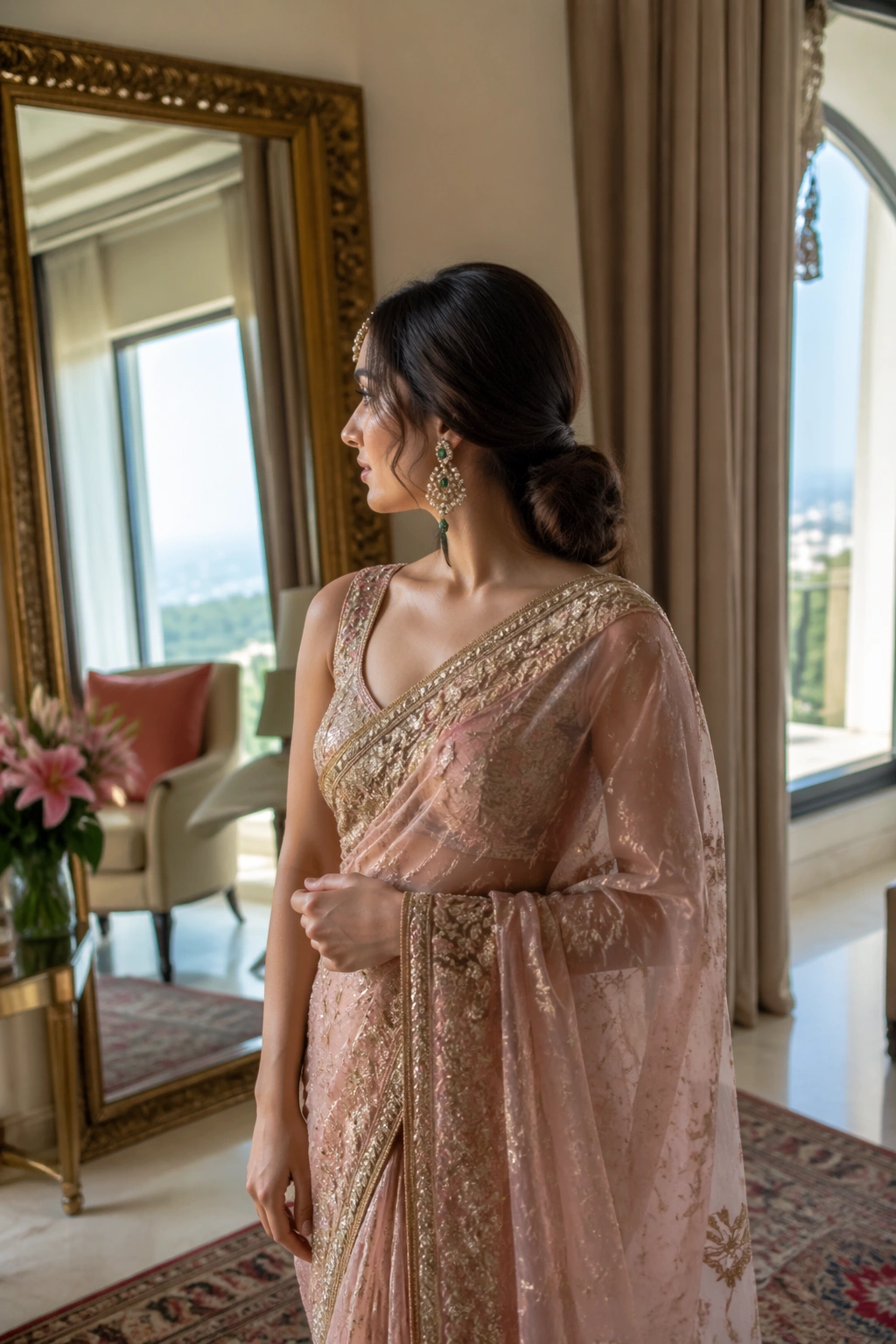
A low tucked ponytail is a quiet style, but it has one thing going for it that many louder looks do not: control. The tail is tucked or folded under slightly at the base, which makes the shape feel compact and neat, while a few loose tendrils keep the face soft.
This is a good choice when the outfit has fine embroidery or the jewelry is already doing a lot of work. The hair does not need to shout. It needs to sit well. That is a different job.
The tendrils should be thin, not chunky. Curl them away from the face so they open the cheekbones. Keep the tucked portion secure with U-pins if the hair is dense, because a loose fold will sag fast. If you want a little extra dimension, tease the crown just a touch before smoothing it over.
This style sits well with sarees, especially when you want the back of the blouse to stay visible. It is tidy, elegant, and a little softer than a pure sleek ponytail.
21. Gota Patti Accent Ponytail
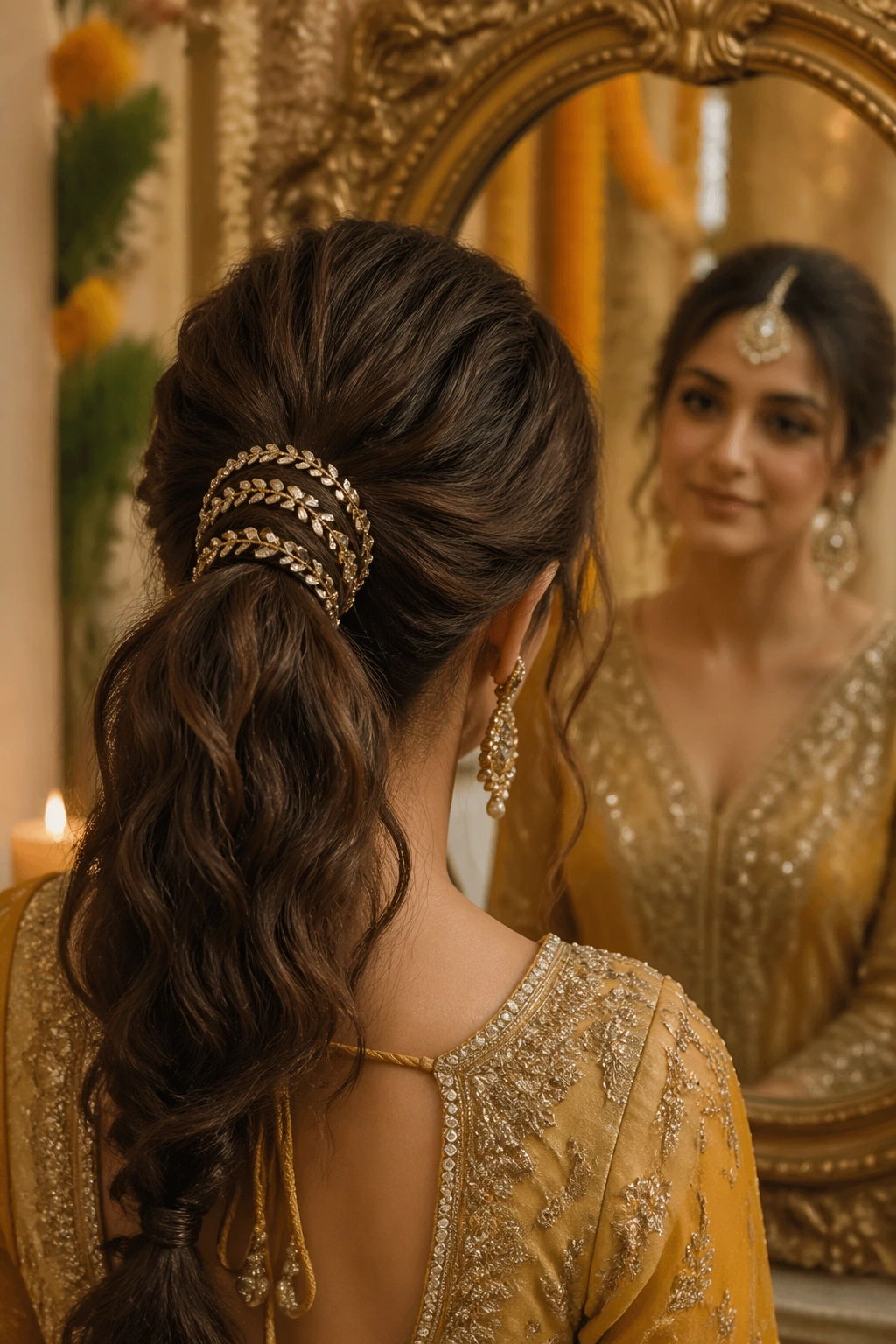
If your outfit already has gota patti work, bringing that same metallic language into the hair makes sense. A gota patti accent ponytail is the easiest way to make a ponytail feel festive without adding bulk.
You can thread a narrow strip around the base, weave it through a braid, or anchor a small decorative piece above the elastic. The key is restraint. One accent near the base usually does more than a long strip winding all the way down the tail. Too much metallic trim starts to look costume-like.
Placement Ideas That Actually Work
- Wrap a slim strip around the elastic and pin the end under the base.
- Add a small gota motif on one side of the ponytail.
- Use the accent to bridge the gap between the hair and the dupatta pin.
- Keep the rest of the hairstyle soft so the trim stays visible.
This works especially well for mehndi and festive daytime functions, when the outfit can handle a brighter detail in the hair. It is a small move, but it changes the whole finish.
22. Extra-Long Ponytail With Extensions
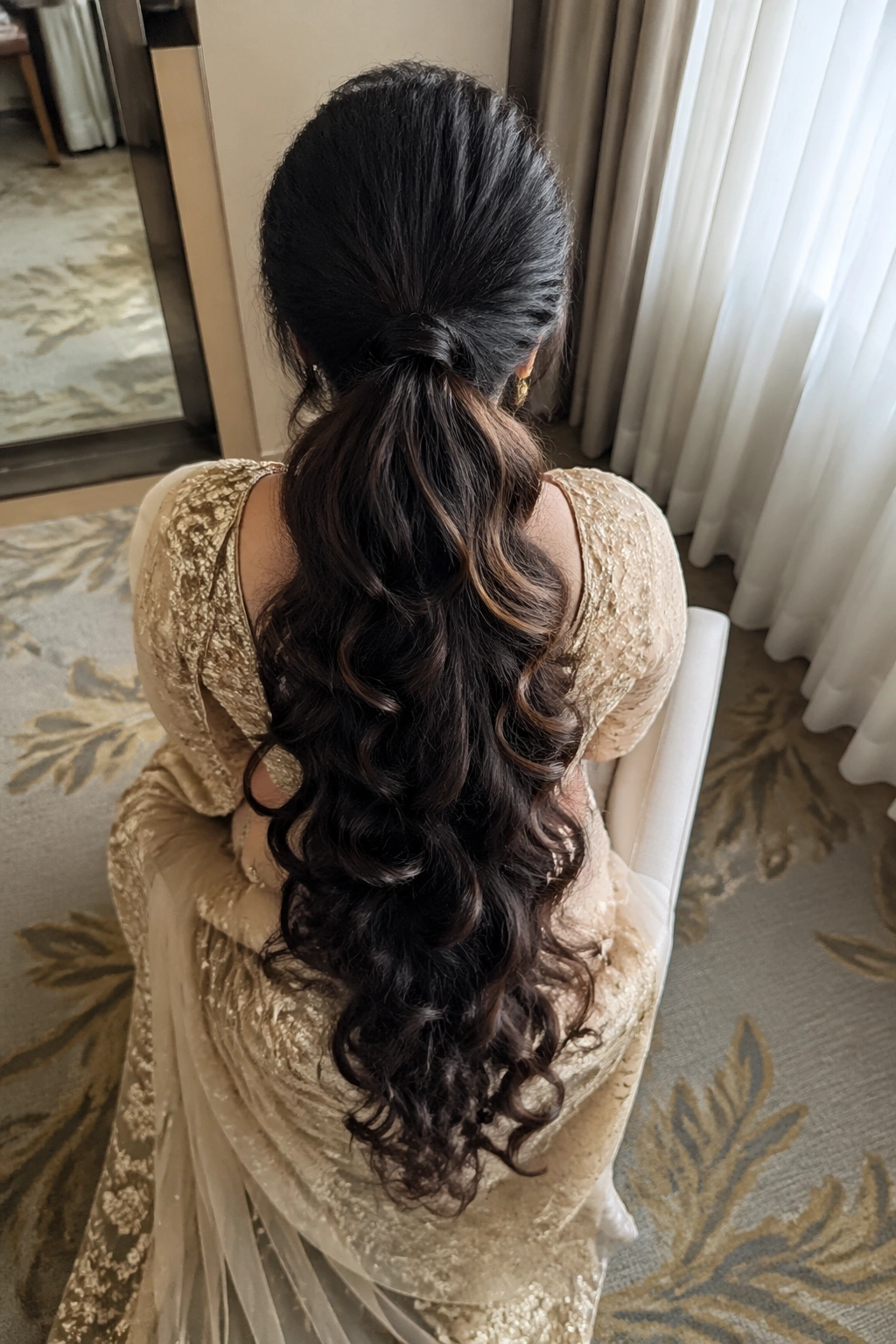
Sometimes the point is length. Not subtlety. An extra-long ponytail with extensions gives you that dramatic curtain of hair, and when it is blended well, it can look clean and luxurious from root to tip.
The biggest mistake here is mismatching the texture. If your natural hair is softly waved, straight extensions will stand out in the wrong way. If your hair is thick and coarse, fine silky extensions can slide. Match the texture first, then the color. That matters more than shade alone.
Clip-ins or wrapped-in ponytail extensions work best when they are anchored low and stacked firmly. Once the base is secure, curl the whole tail together so the join disappears. A gentle brush-out after curling helps the hair blend. You want one long line, not two separate sections pretending to be one.
This is a strong choice for brides who want photo drama or for anyone wearing a simpler outfit that can handle a bold hair moment. Long hair moves well in motion, and that is half the appeal.
23. Waterfall Braid Ponytail
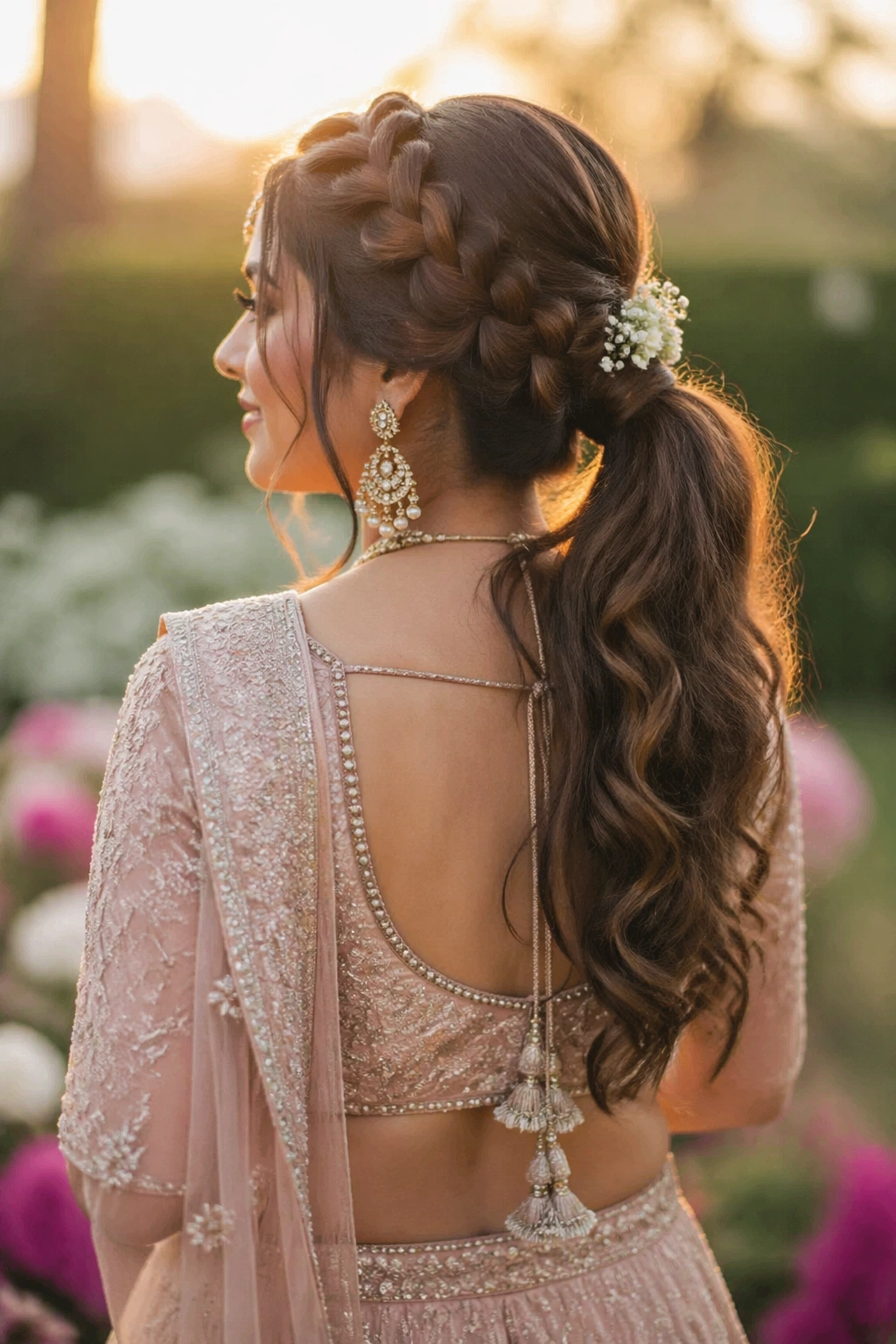
Why does a waterfall braid keep showing up in wedding hair? Because it gives softness at the front without taking over the entire head. The braid flows into the ponytail in a way that feels romantic, but still controlled.
The braid usually starts along one side of the head, then feeds into the ponytail at the back or slightly off-center. The loose strands create that falling effect. From there, the tail can be curled or left in soft waves. The braid itself should stay visible, so do not flatten it too much when pinning.
How to Keep It Looking Clean
Use a fine-tooth comb to section the braid evenly. Pin every loose point before moving to the next part. That keeps the pattern from slipping and getting fuzzy.
This style works well with softer fabrics and less rigid jewelry. It also suits people who want movement around the face without leaving the hair fully open. There is a nice middle ground here, which is not easy to find in wedding hair.
24. Side-Swept Messy Ponytail
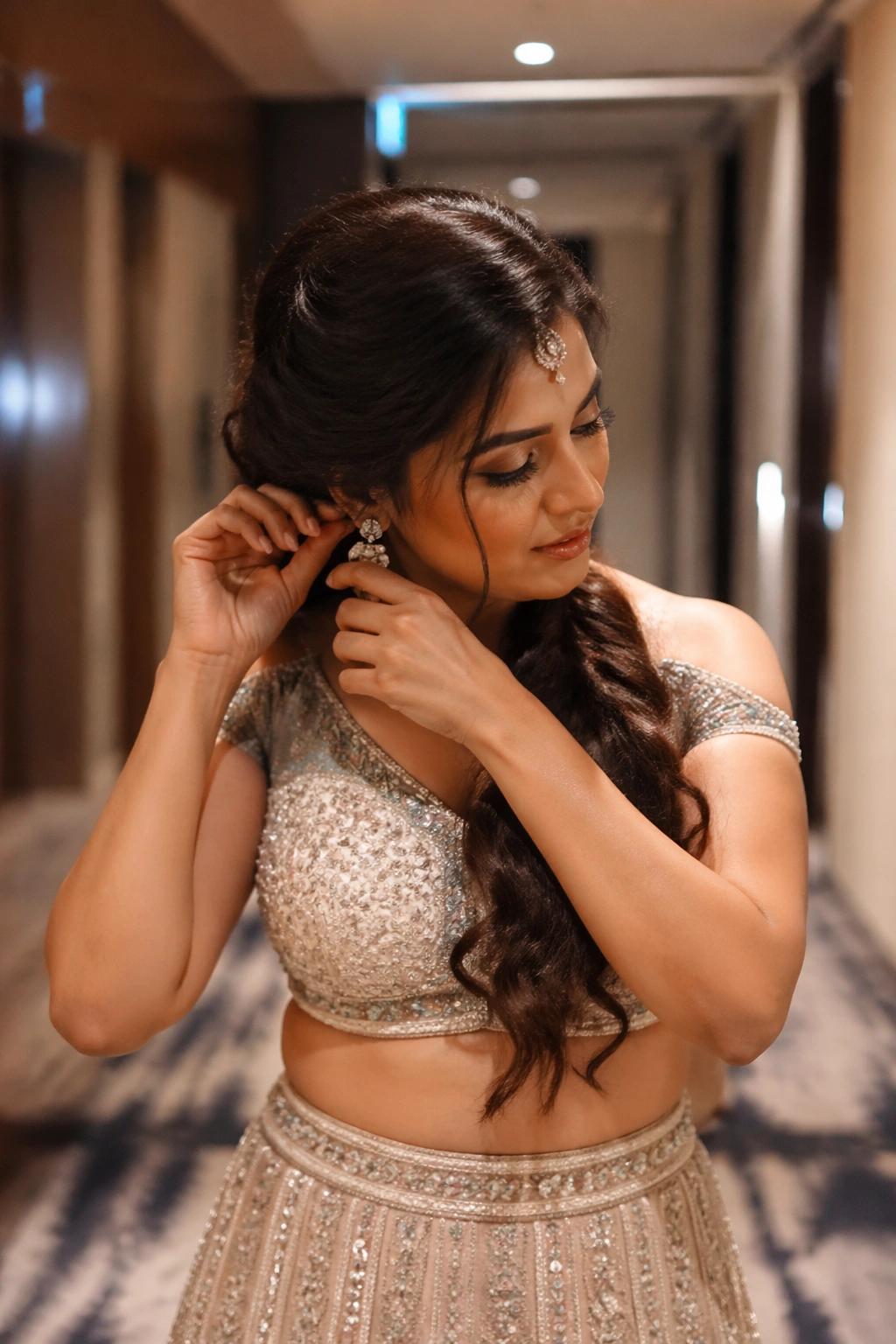
A side-swept ponytail gives the whole hairstyle a little more romance. Instead of hanging straight down the back, the tail falls over one shoulder and changes the silhouette of the outfit right away.
That shift can help with one-sided embroidery, heavier neckpieces, or a blouse that already has asymmetry built into it. The front stays soft, the crown stays neat, and the tail becomes visible from the front instead of hiding behind you. That matters when the ponytail itself is part of the outfit.
The side sweep should feel loose, not dragged over in a hard line. Curl the ends away from the face and let a few wisps stay free near the temple. If the hair is long, this style has a lovely drape. If the hair is medium-length, add a little texture so the sweep feels fuller.
I like this version for cocktail looks and reception dressing. It has a softer edge than a center-part ponytail and a little more movement than a straight back one.
25. Cuffed Ponytail With Gold Clips
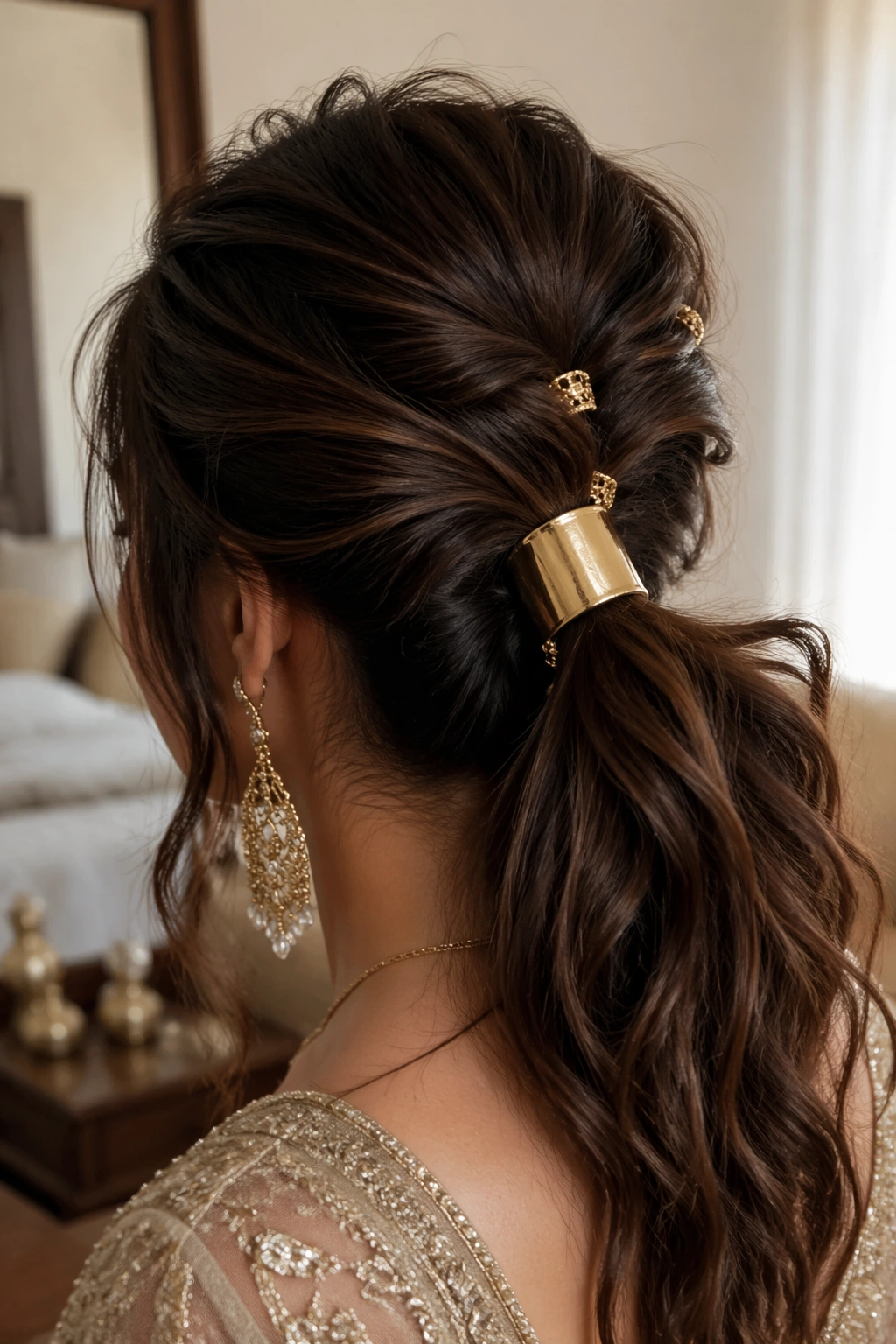
If your outfit has gold work, echo it in the hair. A cuffed ponytail with gold clips is one of the fastest ways to make a messy ponytail look coordinated instead of plain.
Hair cuffs can sit at the base, and a few slim clips can run along one side of the crown or tail. The trick is not to overdo the count. Two or three pieces are enough for most looks. More than that, and the hair starts to feel crowded.
Simple Placement Notes
- Put the largest cuff at the elastic to hide the tie.
- Place smaller clips where the hair curves, not in a straight line.
- Match warm gold with embroidered borders or temple jewelry.
- Keep the ponytail texture loose so the metal details stand out.
This style works especially well with lehengas that already have metallic threadwork. The hair and clothing start speaking the same language. That is what makes the whole look feel finished.
26. Thick-Hair Ponytail With Layered Texture
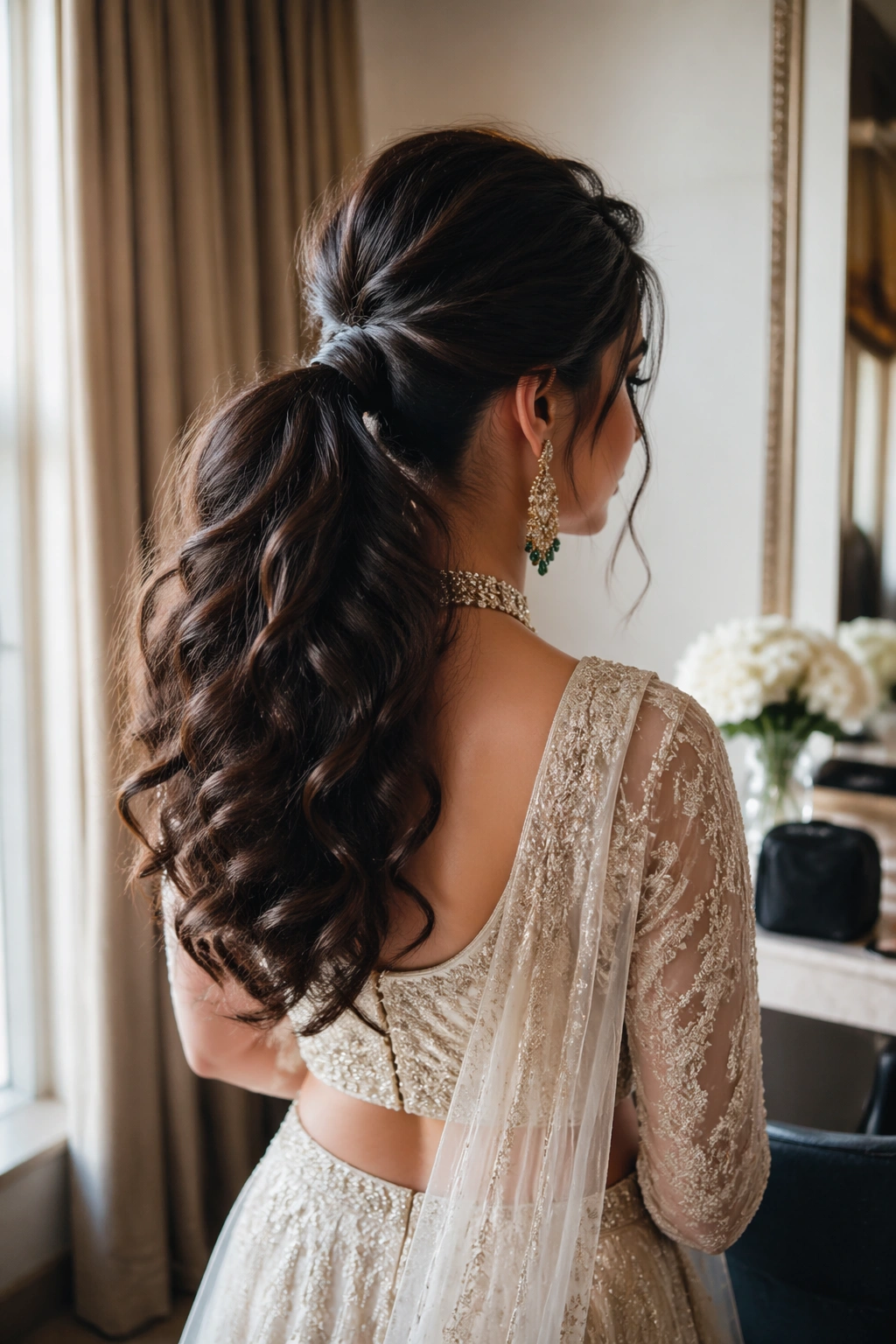
Thick hair can be a blessing and a headache. The blessing is obvious: volume. The headache is that it can turn into one giant block if you just pull it back and hope for the best.
A layered-texture ponytail solves that by dividing the hair into softer movement through the length. If your hair is naturally dense, skip heavy creams that weigh it down. Use a lighter texturizing product, create loose bends with a curling iron, and then separate the curls with your fingers. The layers help the tail fall in steps rather than one heavy curtain.
The crown should stay controlled so the ponytail does not flare out at the base. That is the main issue with thick hair. Too much volume in the wrong place and the style gets bulky fast. Keep the top flatter, let the tail carry the body, and the shape will look cleaner from every angle.
This is a good style for long events because thick hair holds shape well. You just have to guide it instead of fighting it.
27. Dupatta-Friendly Bridal Ponytail
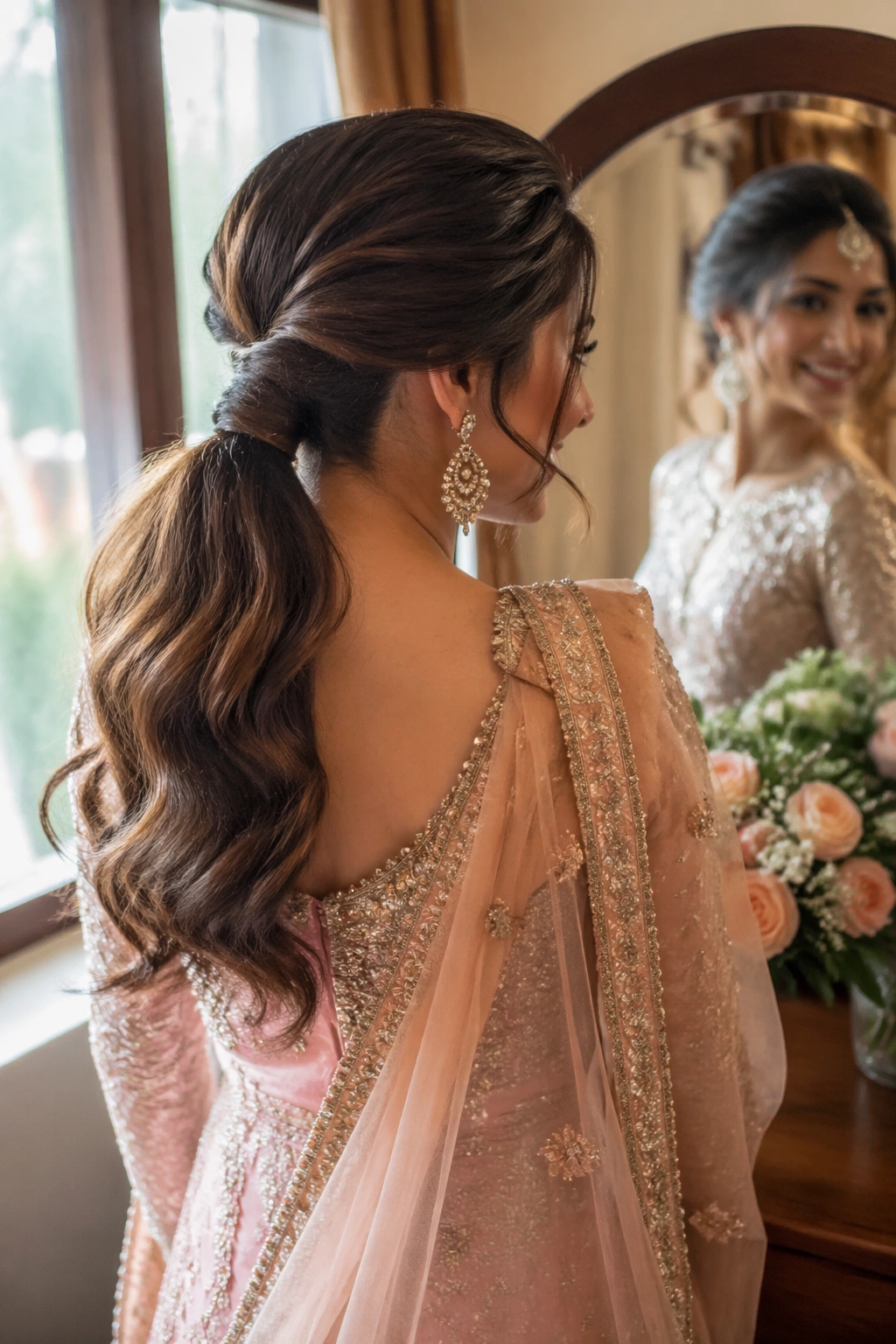
A dupatta-friendly bridal ponytail is the one I would point to if comfort, movement, and ceremony handling all matter at once. It sits low enough for pinning, keeps the crown neat beneath the fabric, and leaves enough tail to look special once the dupatta shifts off the shoulder.
That last part matters. Bridal hair has to survive movement. The style needs to look good under the dupatta, good with the veil lifted, and good after the first round of greetings. A low base with soft volume at the crown does that better than a rigid style that depends on one exact placement.
The best version usually has a wrapped base, a little lift at the front, and soft waves that start below the ears. Keep the dupatta pins away from the ponytail elastic itself so the fabric does not tug the hairline. That small detail saves a lot of discomfort.
For brides who want to feel graceful without feeling locked into one posture, this is a smart finish. It lets the outfit breathe.
Final Thoughts
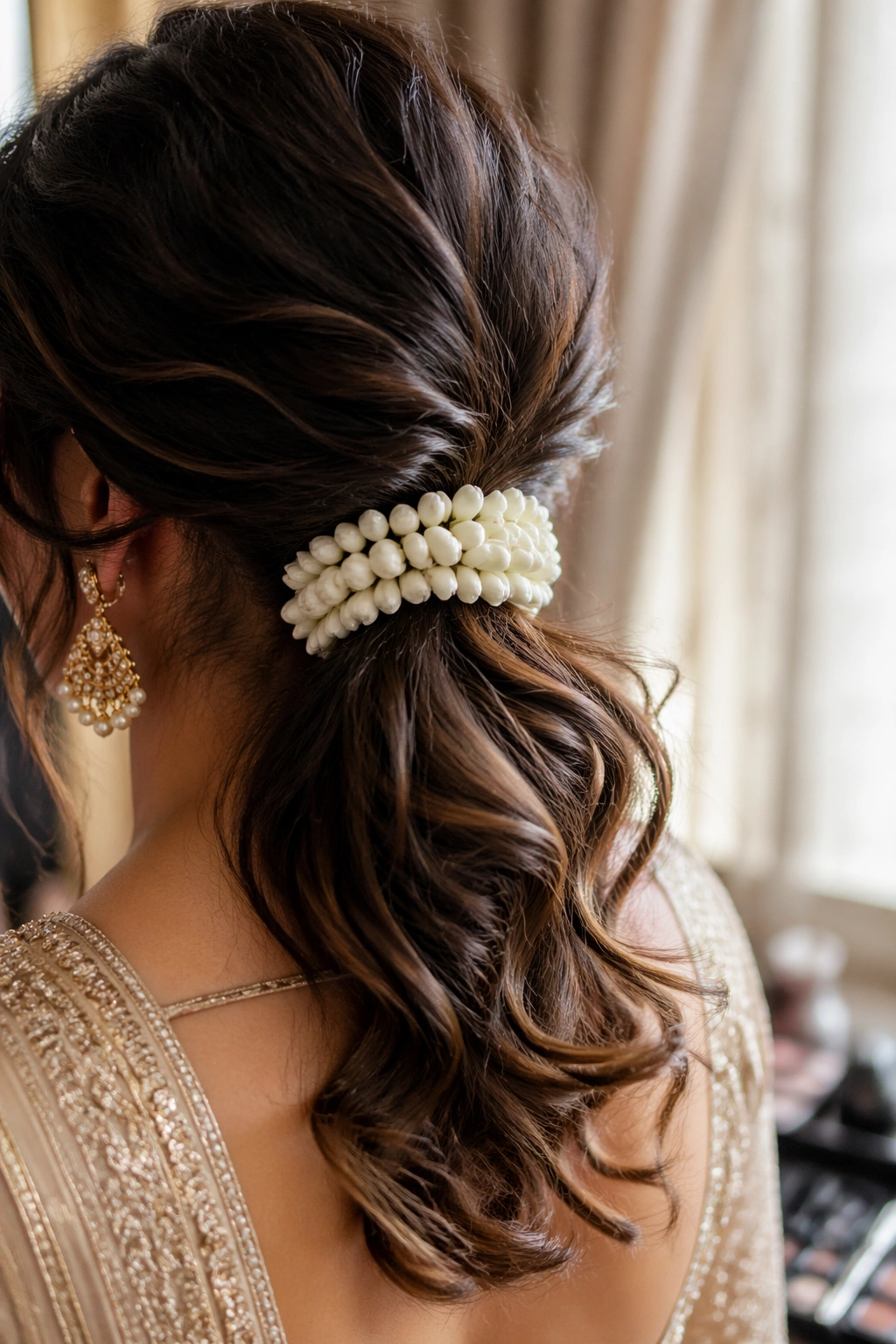
The best Indian messy ponytails for weddings all do the same three things: they control the crown, they keep the base tidy, and they let the tail move. Once those pieces are in place, the rest is styling flavor — flowers, ribbons, braids, cuffs, curls, whatever suits the outfit.
My honest opinion? Start with the outfit, not the hair. A heavy dupatta asks for a lower base. A strong necklace can handle a cleaner front. A simple blouse back gives you room for more braid work or floral detail. Hair should support the look, not fight for attention.
And do a trial run with your earrings on. That tiny rehearsal tells you more than a hundred inspiration photos ever will.
