



A wedding braid can do something plain curls often can’t: it stays pretty after the hugs, the dance floor, the wind on the steps outside the venue, and the 40th time someone asks for a photo. That is why braided ponytails for weddings have such staying power. They give you polish without locking you into a stiff updo that can feel too formal, too heavy, or too fussy by the second toast.
The nicest part is how flexible they are. A braid can sit low and soft for a lace gown, swing high and glossy with a strapless dress, or thread through a ponytail like a detail no one expected but everyone notices. Tiny changes matter here. Move the ponytail an inch higher, leave out two face-framing pieces, or wrap the elastic with a strand of hair, and the whole mood shifts.
I’ve always liked bridal ponytails that look intentional but not overworked. The ones that fail are usually trying too hard to be both sleek and romantic and end up neither. The ones that work have a clear point of view: clean shape, enough texture to hold, and one detail that makes them feel wedding-ready rather than gym-ready. That detail might be a fishtail, a ribbon, a pearl pin, or a braid woven through the base.
1. Soft Low Fishtail Ponytail
A low fishtail is the first style I’d hand to anyone who wants romance without fluff. The weave looks intricate from a few feet away, but up close it has that relaxed, airy texture that sits nicely beside lace sleeves, chiffon, or a gown with soft draping.
Why It Feels So Bridal
A fishtail breaks up the hair into tiny pieces, so the braid reads lighter than a standard three-strand plait. That matters on a wedding day because heavy-looking hair can pull the whole look down. Keep the ponytail low at the nape, then gently pancake the braid by tugging at the outer edges.
- Best with medium to long hair
- Works especially well on thick hair
- Pairs nicely with side-parted or center-parted fronts
- Looks better when the braid is slightly imperfect, not carved into place
Tip: Leave the last 2 to 3 inches of the ponytail unbraided if you want the style to feel softer and a little less formal.
2. Sleek High Bubble-Braid Ponytail
A high bubble braid is the bold one in the group. It gives bridal hair height, clean lines, and a little drama without needing a full blown bouffant. If the dress has a structured bodice or a sharp neckline, this style keeps pace.
The trick is keeping the crown smooth and the sections evenly spaced. Use clear elastics about every 1.5 to 2 inches, then tug each section until the bubbles look rounded but not loose. Too loose and it starts to feel playful in the wrong way. Too tight and it looks stiff.
This is the style for a bride who likes a little edge. It also photographs well from the side because the bubbles create shape all the way down the ponytail, not just at the top.
3. Side-Swept Dutch Braid Ponytail
Why do side-swept styles feel so flattering on wedding hair? Because they create movement without making the face look boxed in. A Dutch braid pushed over one shoulder has a gentle asymmetry that works especially well with off-shoulder gowns and statement earrings.
The braid starts at the temple and travels diagonally toward the nape before gathering into a ponytail. That little diagonal line does a lot of work. It draws the eye across the face, which can soften a strong jawline or balance a wider neckline. Keep the braid snug at the scalp and loosen the ponytail ends a bit so the finished look does not feel too rigid.
How to Style It
Use a shine spray before braiding, then finish with a medium-hold hairspray at the crown. If your hair slips easily, a dusty texture spray at the roots helps the braid stay put longer.
4. Crown Braid Into a Low Ponytail
Picture this at the reception: a braid wrapped like a halo from one side of the head to the other, then gathered into a low ponytail at the back. It has a quietly regal feel, which is probably why it suits ceremonies with veils, cathedral-length trains, and gowns that already carry a bit of drama.
The braid gives the style structure. The ponytail keeps it from turning into a full updo. That balance matters. You get the polish of an arranged style, but there is still some movement in the tail so it does not feel frozen in place.
- Good choice for medium-density hair
- Sits well under a veil comb
- Helps hold layers that would otherwise slip out
- Looks nicest when the braid follows the curve of the head, not too high
A crown braid is one of those styles that looks calm in person and even better in motion.
5. Ribbon-Woven Ponytail Braid
Ribbon woven through a braid can look twee if the color is wrong, and it can look unforgettable if it matches the outfit in a quiet way. Satin, silk, or velvet ribbon adds a bit of softness to the hair and gives the braid a visible line that feels intentional from the first photo.
I like this best with simple dresses. If the gown already has beading, lace, and a dramatic neckline, the ribbon can start to feel busy. But with a plain crepe dress or something garden-party light, it gives the whole look a lifted, personal feel. Choose a ribbon that is a shade darker or lighter than the dress, not an exact match. Exact matches can look flat.
What to Watch For
- Cut the ribbon long enough to weave and tie off
- Secure the starting point under the first elastic
- Keep the ribbon flat as you braid, or it twists awkwardly
- Press the ends with a flat iron if the fabric curls
6. Double French Braids Into One Ponytail
Unlike a single braid, two French braids feeding into one ponytail give the style a stronger frame at the scalp. That makes this a smart choice for long ceremonies, outdoor photos, and any bride who wants her hair to stay firmly in place without looking severe.
The center part keeps the style clean. The twin braids create symmetry, and the gathered ponytail softens the whole thing once the braids meet at the back. If you want it bridal rather than sporty, keep the braid sections small and the crown sleek, then loosen the tail with a curling iron or wave wand.
This one works especially well with veil placement at the back of the head. The braids give the veil comb something solid to rest against.
7. Boho Pull-Through Braid Ponytail
A pull-through braid is a clever little cheat. It gives the appearance of a thick, intricate braid even if the hair is a bit fine or slippery. That is part of why it shows up so often in wedding styling for long hair that needs a bigger shape.
The look is airy, not stiff. You build it with stacked ponytail sections, then gently fan out each loop so the braid feels full. Keep the top section soft and a little fluffy at the crown. The ponytail tail can be curled in loose bends, or left straighter if the dress already has a lot of texture.
Best for: brides who want volume without a lot of teasing, thick extensions, or a heavy backcombed crown.
8. Waterfall-Braid Ponytail
A waterfall braid has one job: make the hair feel delicate without disappearing into the background. The dropped strands create little openings in the braid, which gives the style a soft, airy edge that suits garden weddings, outdoor ceremonies, and dresses with sheer sleeves.
The look is all about control. Too many loose strands and it turns messy fast. Too few and the braid loses its charm. Start with a small section near the temple, keep the drops even, then pull the rest into a ponytail that sits low or mid-height depending on the gown.
This is a pretty style, but not a fussy one. That matters. It leaves room for the rest of the bridal look to breathe.
9. Wrapped Low Ponytail with a Hidden Braid
What I like about this one is the restraint. At first glance, it reads as a sleek low ponytail. Then you notice the braid tucked into the base or hidden under the wrapped section, and the whole thing gets a little more interesting.
This is for brides who hate anything that looks too decorated. The braid gives support, but the surface stays smooth. The hair around the elastic is wrapped with a strand from underneath, which hides the hardware and keeps the finish neat. If the dress has strong lines or a sculpted silhouette, this style fits right in.
Keep the ponytail low and polished. The braid should be a detail, not the headline.
10. Curly Textured Braided Ponytail
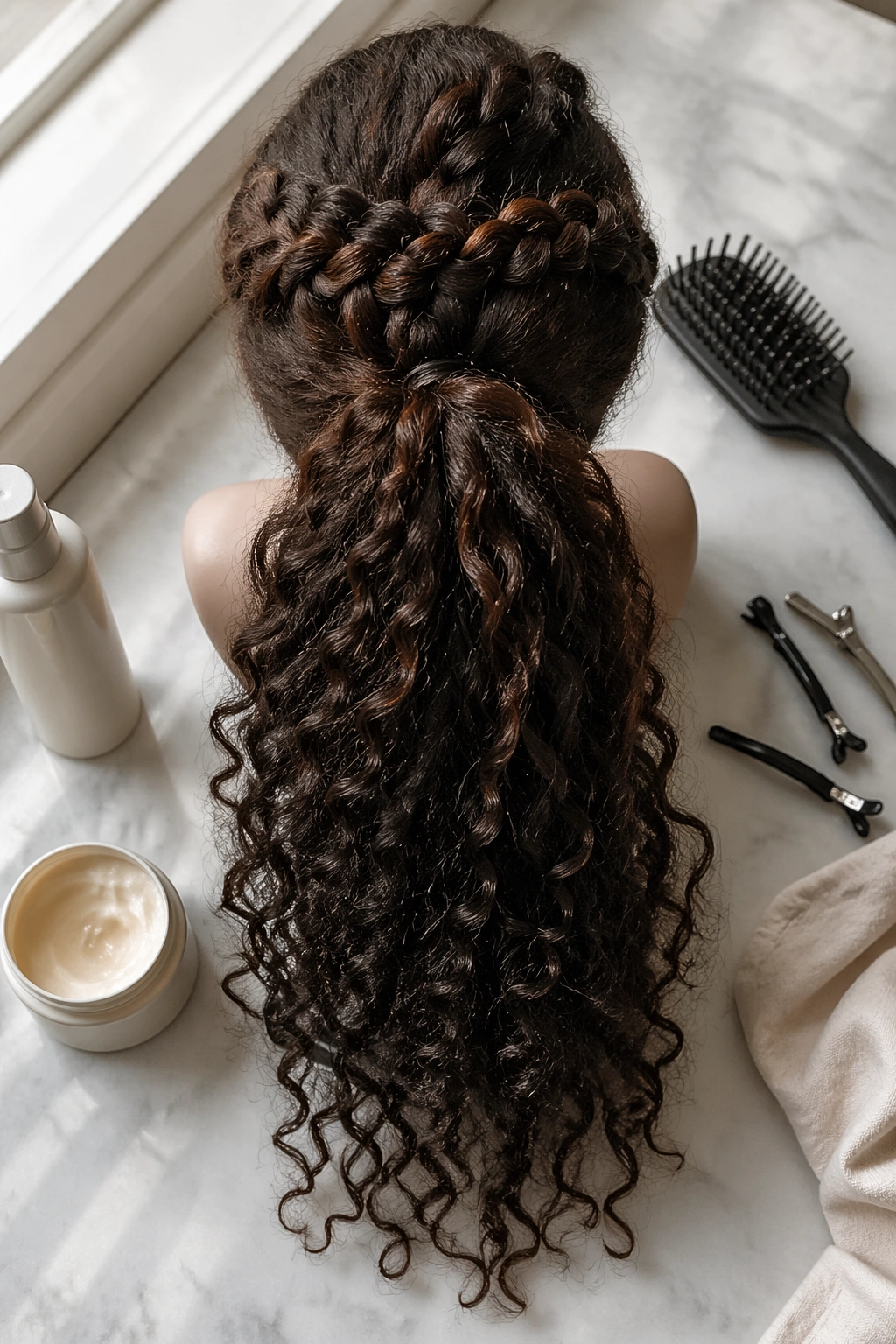
A curly braided ponytail can be one of the prettiest wedding styles on the list because it lets texture do half the work. Instead of trying to flatten curls into submission, this look leans into them. A braid at the crown or along one side gives shape, and the ponytail itself stays full, springy, and alive.
The key is preparation. Define the curls first, then braid before the hair dries out too much. A touch of cream or gel at the roots keeps frizz under control, but do not bury the curl pattern under product. That mistake makes the hair look dull.
How to Get the Best Result
Use a diffuser if you need volume at the roots, and pin the braid with discreet bobby pins that match the hair color. This style shines when the texture looks like itself, only tidier.
11. Rope-Braid Wedding Ponytail
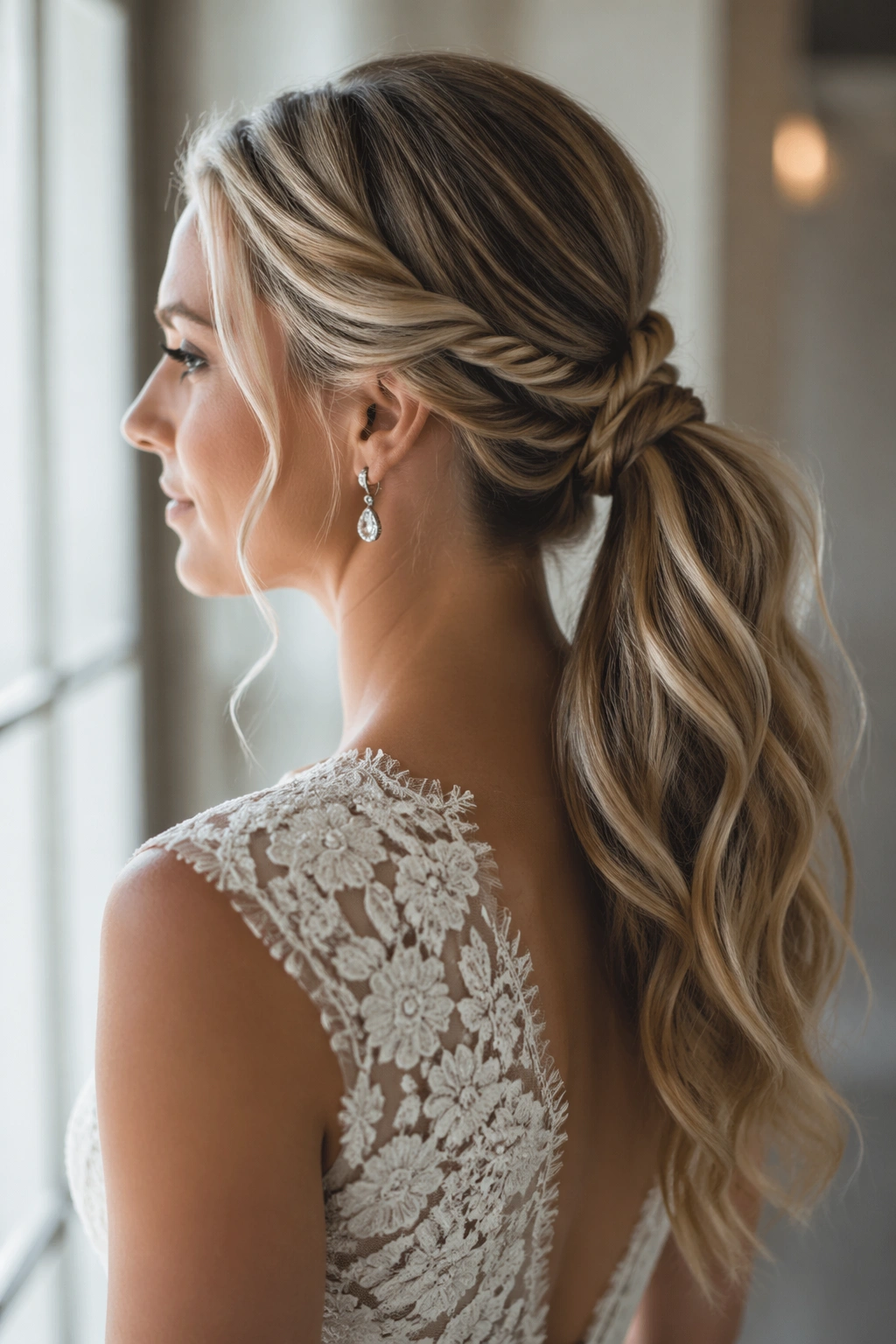
A rope braid is underrated. Two sections twisted around each other create a glossy, almost sculpted line that looks very different from a standard plait. It works best when you want something clean but not flat, especially with satin gowns, sharp tailoring, or a minimalist bridal suit.
This braid also moves well. It swings in a neat column, which makes it a strong pick if you want your hair to stay orderly without seeming frozen. Keep the sections equal in size and twist them in the same direction before wrapping them around each other in the opposite direction. That detail matters more than people think.
It is a straightforward style, but not boring. The shape is the thing.
12. Mermaid Braid Ponytail with Soft Ends
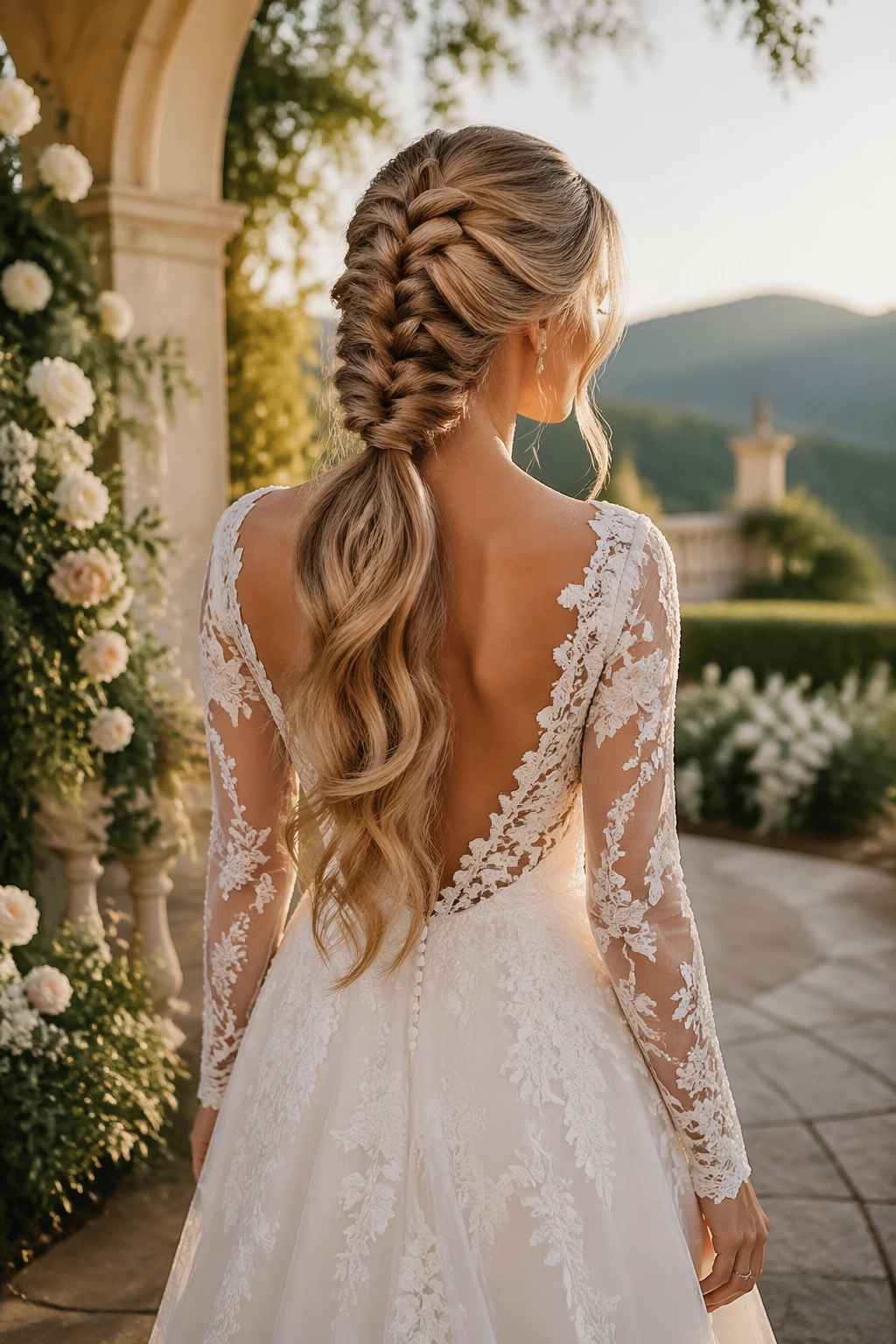
Unlike a tight braid that ends abruptly, a mermaid braid ponytail feels long, flowing, and slightly dramatic. The braid itself is wider and more open, then it spills into softer ends that can be curled or waved. That gives the style a dreamy shape that works well with tulle, lace, and dresses with layered skirts.
This one looks best on hair with a little length. If the hair is shorter, extensions can help, but the blend has to be very clean or the braid loses its charm. Keep the crown smooth and let the braid expand a little as it moves down the head. The tail should feel touched, not overworked.
If a bride wants hair that looks a bit like a storybook but not childish, this is a good place to start.
13. High Ponytail with a Braided Base
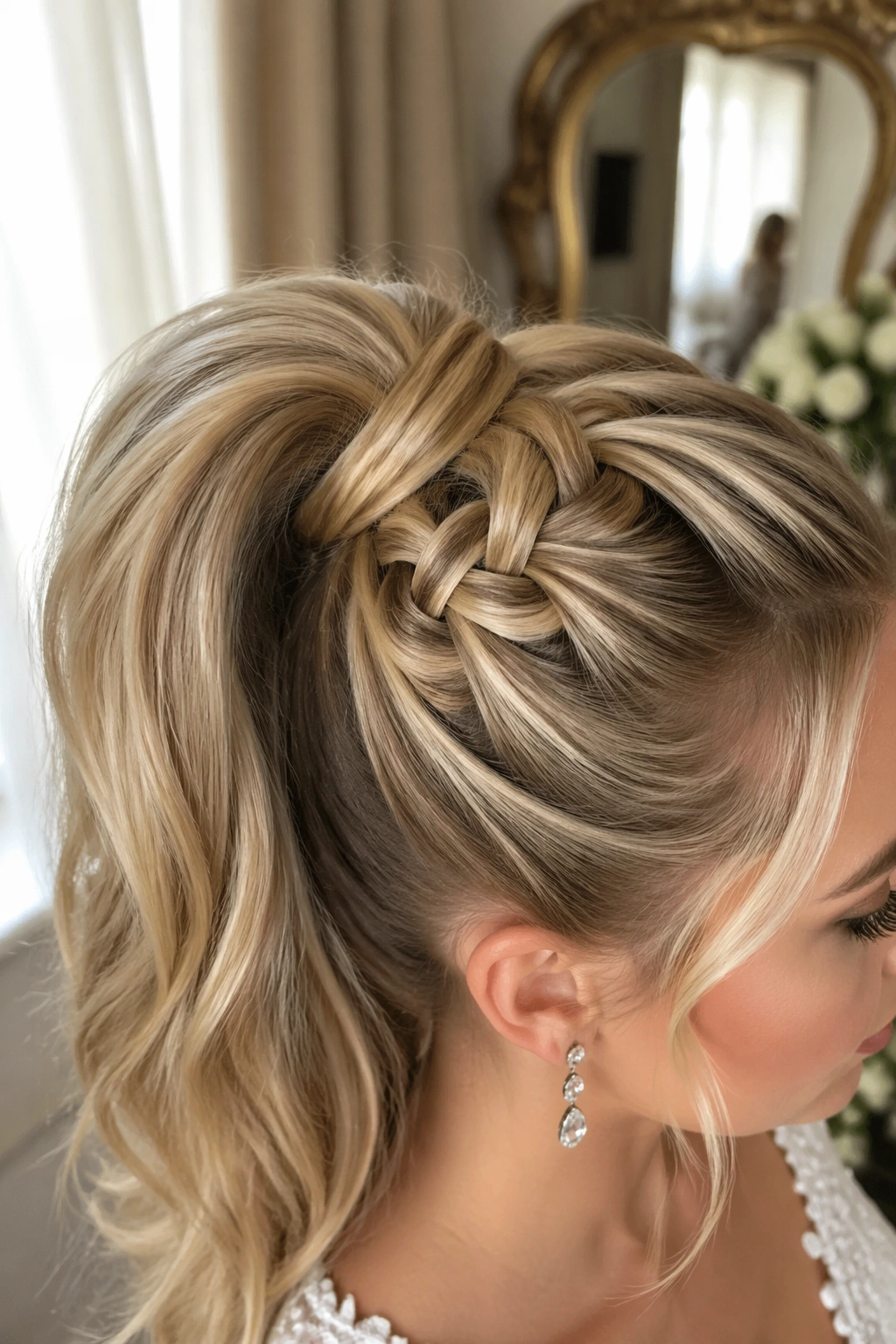
A high ponytail already has energy. Add a braided base, and it gets structure too. The braid around the crown acts like an anchor, keeping the style secure while the ponytail sits lifted and lively. That lift is especially useful with strapless dresses, high slits, or gowns that need a little visual balance at the top.
Why It Works
The high placement opens the face and elongates the neck. The braid keeps the top from looking too severe. Use a small Dutch braid or French braid at the front hairline, then gather the rest into a ponytail at the crown and curl the tail in loose sections.
This is the style for someone who wants glam but still wants movement. It is not shy. Good.
14. Minimalist Center-Part Braid Ponytail
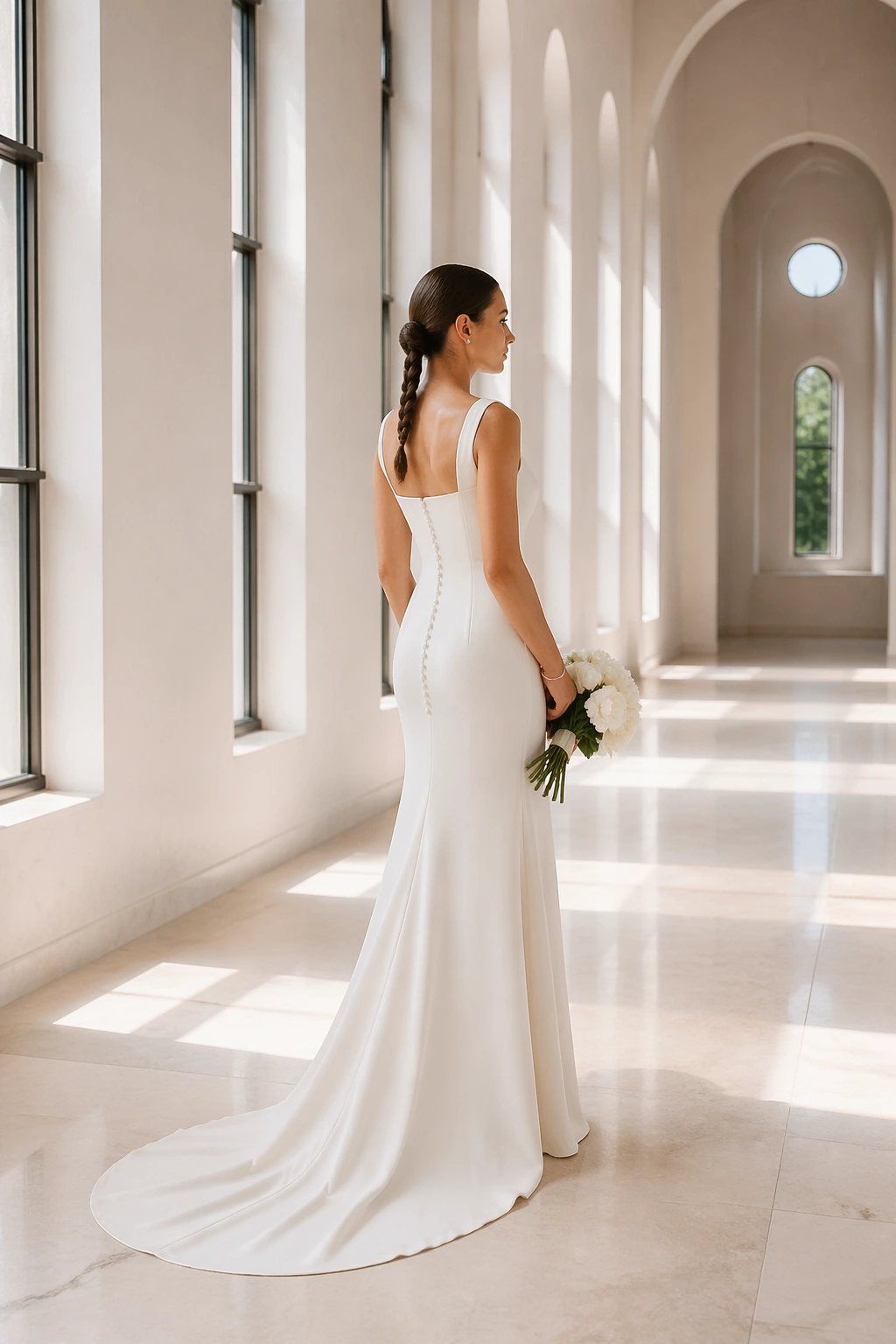
A center part gives a braid ponytail a crisp, modern line, and that line can be more flattering than a complicated curl pattern if the dress already has enough detail. This style is pared back on purpose. No extra teasing. No cloud of volume. Just a clean part, a neat braid, and a ponytail that sits where it should.
It suits square necklines, crepe gowns, and brides who like tidy edges. The braid can start at the front hairline and travel straight back, or it can be a slim accent braid that frames the part before disappearing into the base. Keep the finish glossy. Dry ends will ruin the whole effect.
The best thing about this look is how calm it feels. Calm hair reads expensive faster than overworked hair ever will.
15. Pearl-Pinned Braided Ponytail
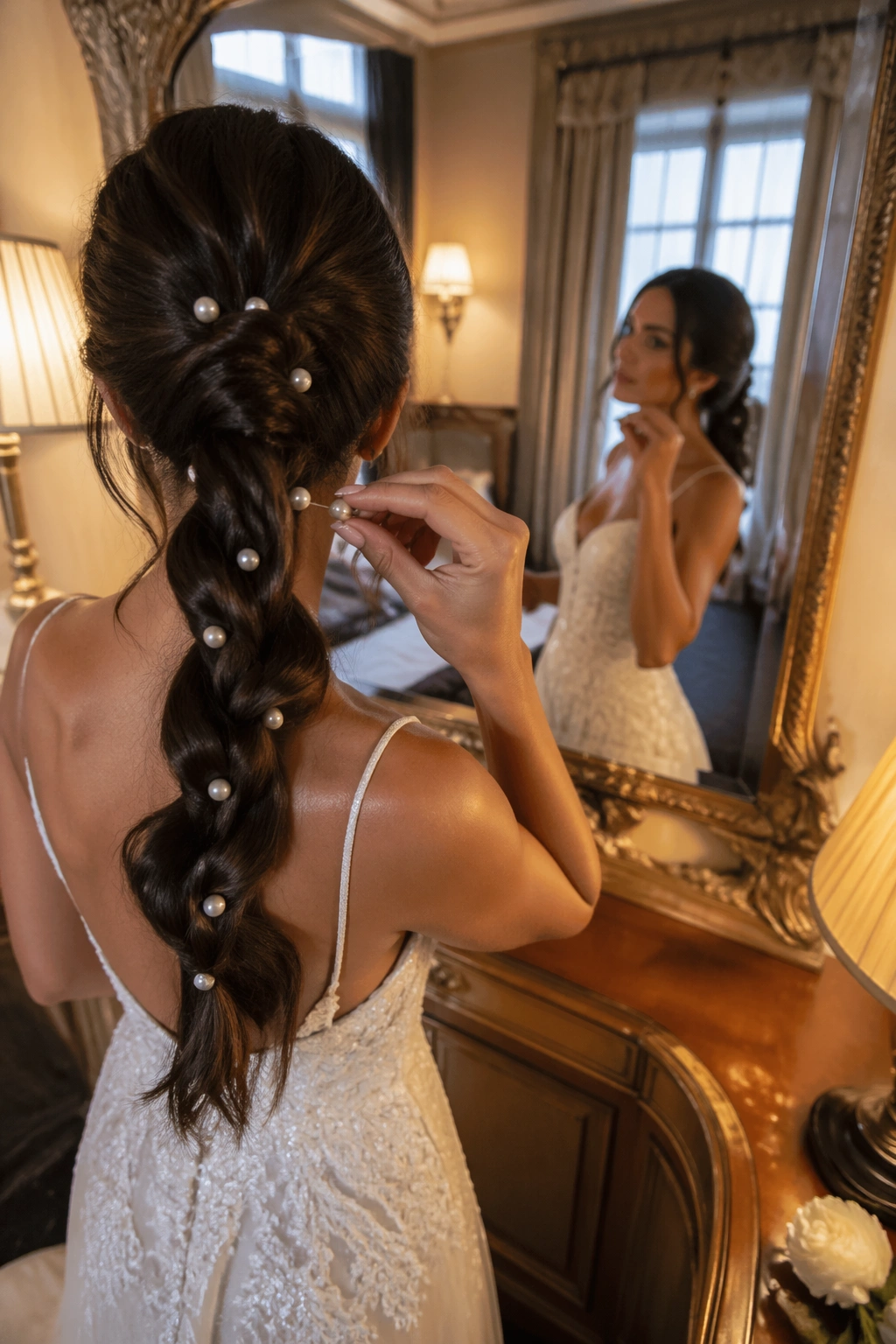
Pearls are never subtle for long, and that is part of their charm. A pearl-pinned braid ponytail can lean classic or a little fashion-forward depending on how many pins you use and where you place them. A few scattered through the braid look delicate. A line of them down one side reads more editorial.
The braid should still be the main shape. The pearls are the accent, not the structure. I’d keep the ponytail low or mid-height so the pins do not compete with the neckline. Tiny pearl pins work best when they are nestled into the braid rather than sitting on top of it like jewelry on a shelf.
This style suits veils, satin dresses, and evening ceremonies with low light, where the little reflective dots pick up movement nicely.
16. Side Ponytail with a Woven Braid
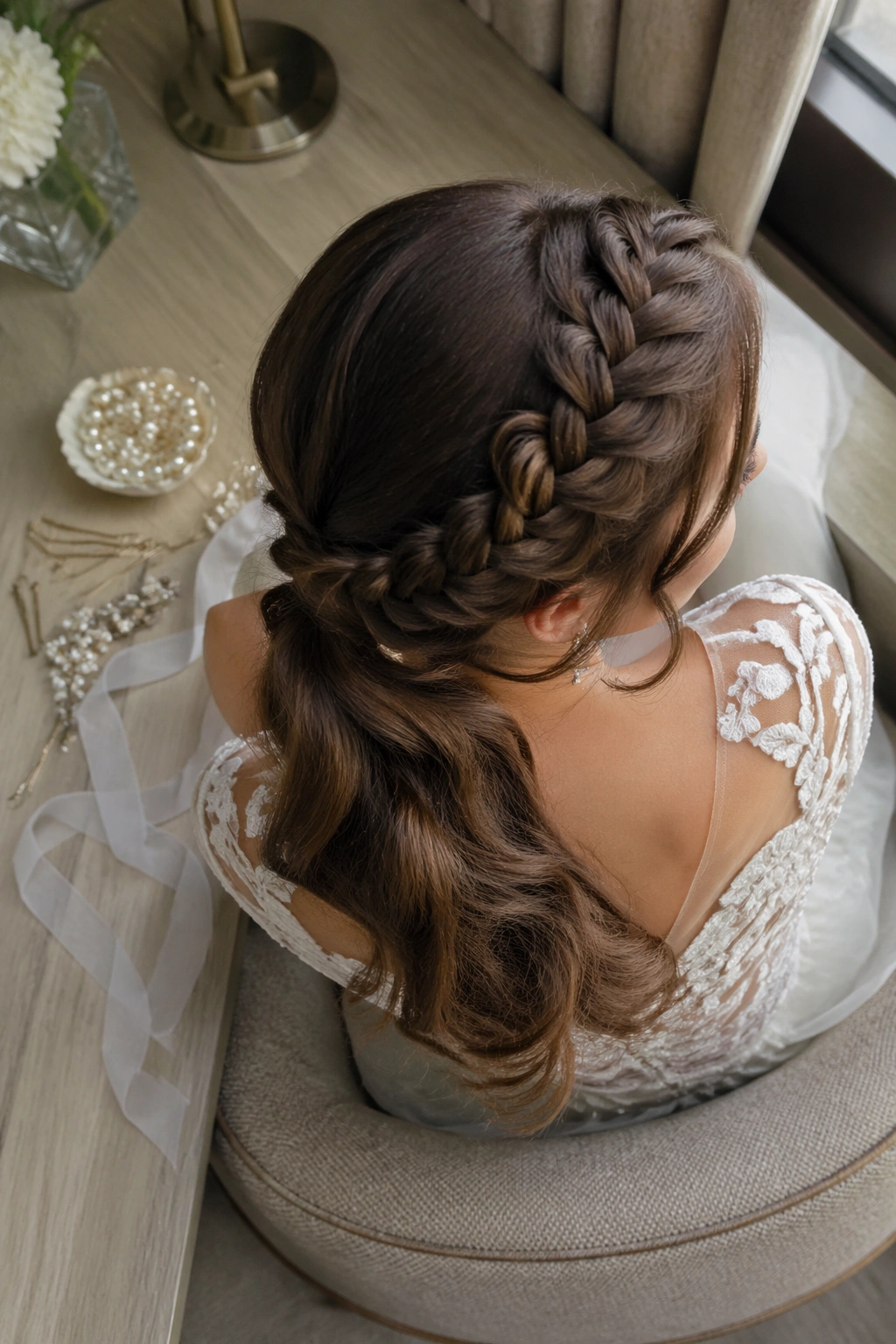
A side ponytail can go either very casual or very polished. The woven braid pushes it firmly into polished territory. Swept over one shoulder, the braid becomes part of the silhouette, which is useful if the dress has one sleeve, asymmetrical draping, or a neckline that already leans to one side.
The visual trick is keeping the top smooth and the braid slightly fuller at the edges. If the braid is too tight, the side ponytail can feel severe. If it is too loose, it slips into festival hair. The middle ground is what you want here.
- Best with statement earrings on the opposite side
- Nice for medium to thick hair
- Holds up well with layered gowns
- Needs pinning under the shoulder, not only at the base
It has a little old-Hollywood softness, just with more structure.
17. Tucked-Under Braided Ponytail
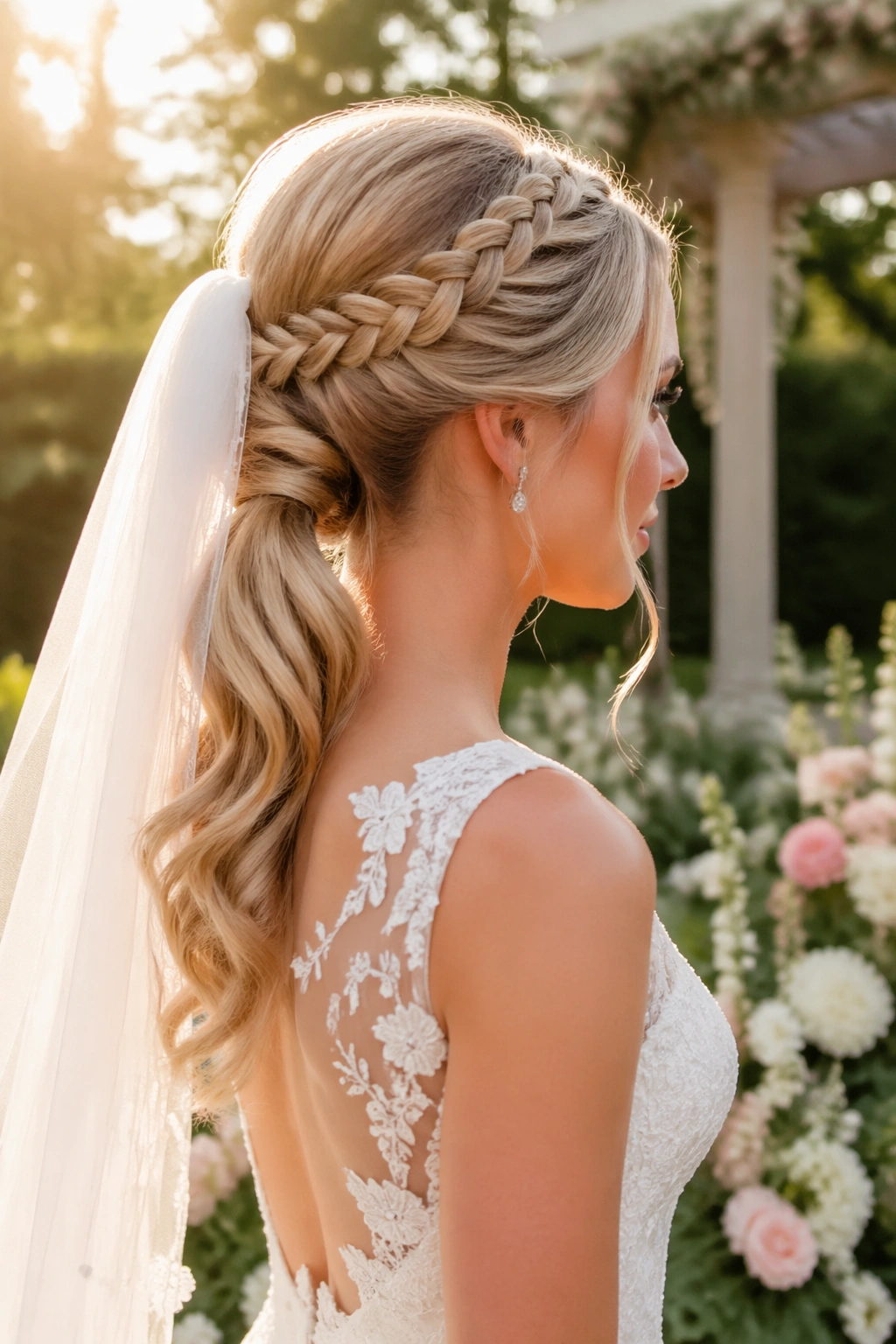
A tucked-under braided ponytail sits low, compact, and tidy, which makes it a strong match for formal ceremonies where the hair should support the dress, not fight it. The braid wraps into the base, then the ends are tucked under or curled inward so the silhouette looks clean from the back.
This one is useful for veils, capes, and gowns with busy backs because it keeps the hair from stealing attention. If you want to make it feel less severe, leave a couple of slim pieces out near the temples. Those pieces matter. They stop the style from reading too strict.
The tucked-under finish is one of those little backstage tricks that turns a basic braid into something more deliberate.
18. Half-Up Braided Ponytail for Long Hair
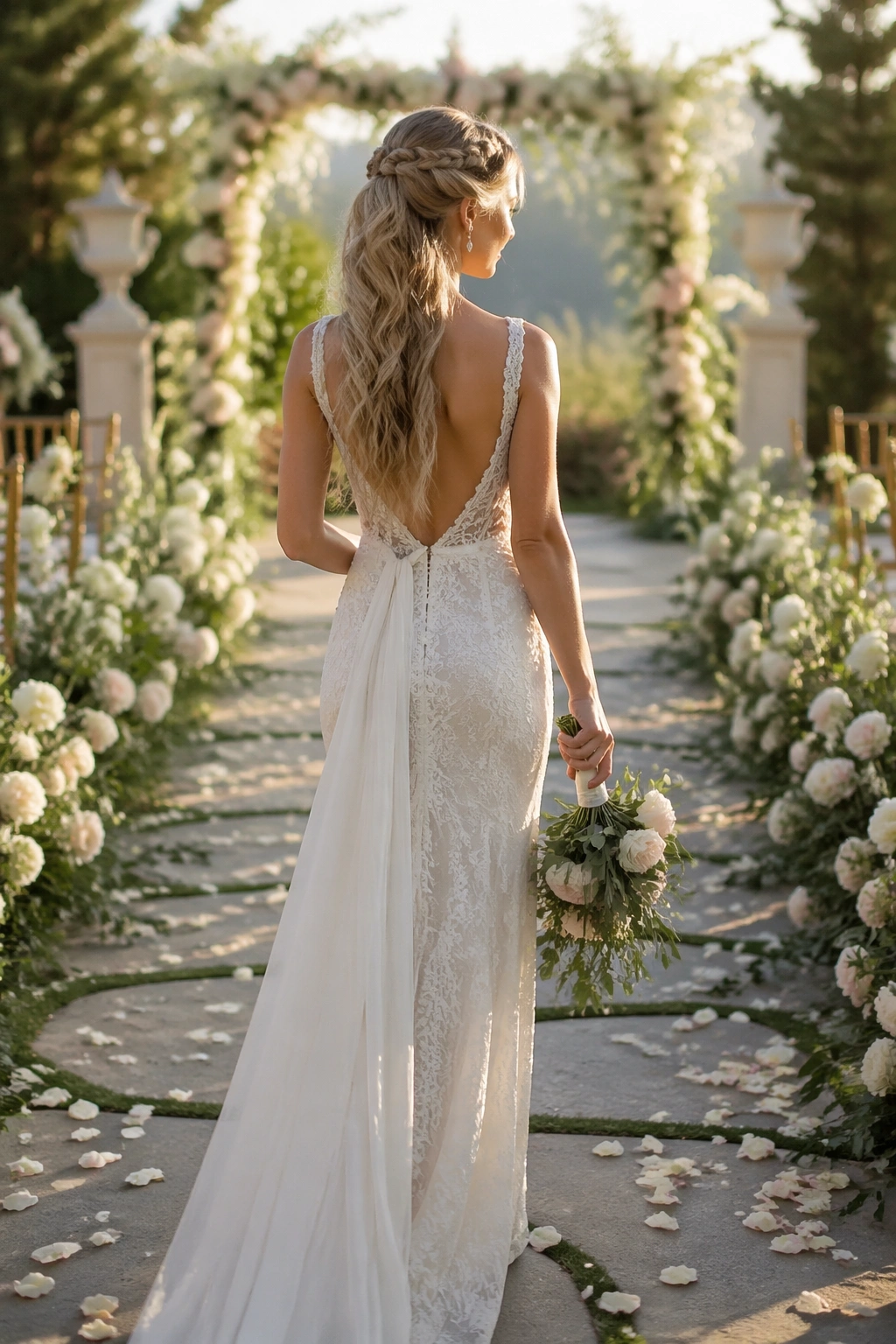
Can a half-up style count as a ponytail? Absolutely, if the gathered top section is pulled into a ponytail and finished with a braid. This version is good for brides who want to keep some length down the back while still getting that lifted, secured feeling at the crown.
The half-up section does the shaping. The lower hair stays loose, which can be helpful if the dress has a low back or if you want to keep the look soft for an outdoor setting. A braid across the crown keeps the top from collapsing by the end of the night.
Who It Suits
- Brides with very long hair
- Dresses with open backs
- Wavy textures that look better down than pinned up
- Anyone who wants movement first and structure second
It’s a good compromise. Sometimes that is exactly the point.
19. Low Bubble Ponytail with a Tiny Braid
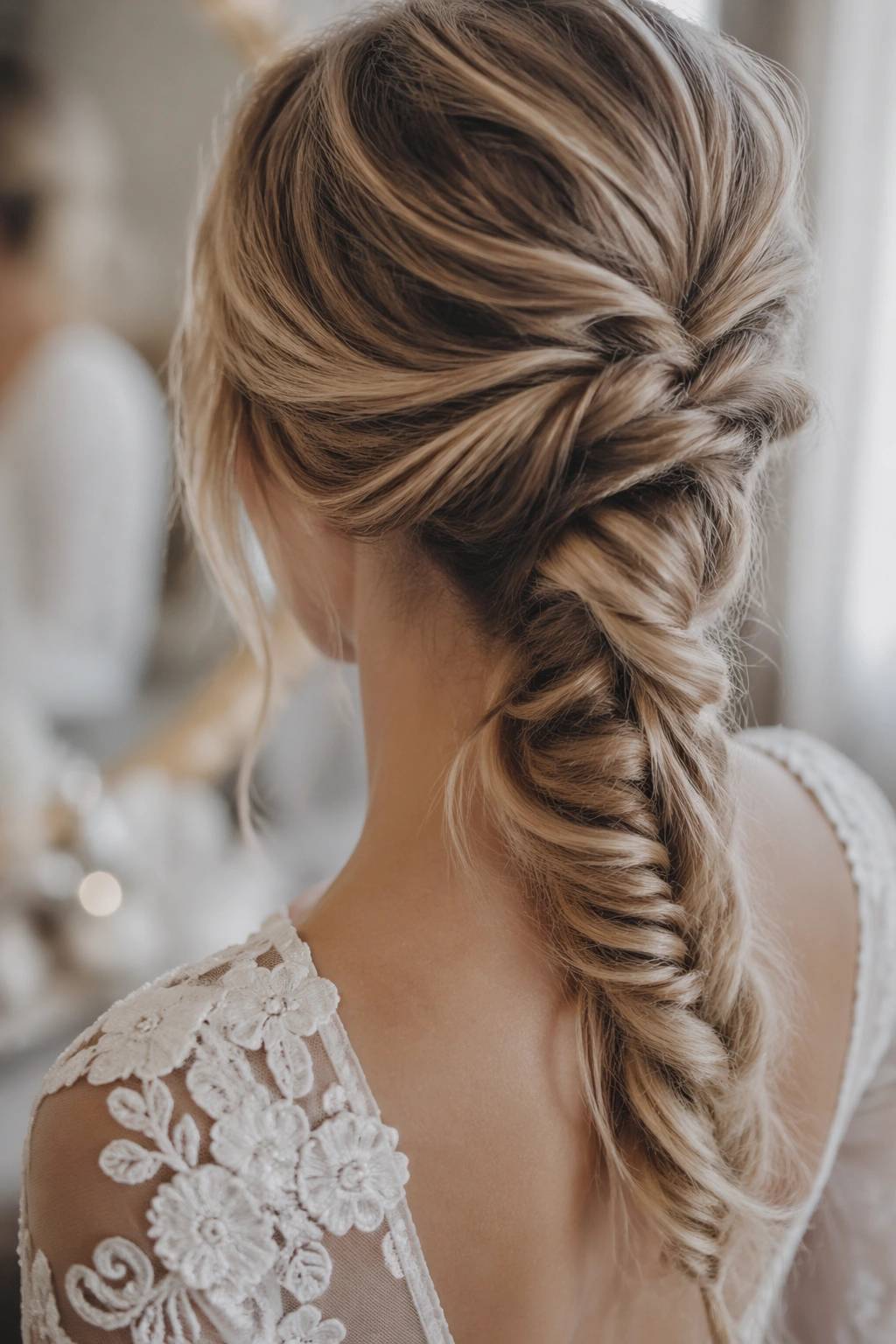
A low bubble ponytail can feel playful, but a tiny braid at the base grounds it and makes it look bridal instead of casual. The braid is the anchor; the bubbles are the shape. Together they create a line that feels modern without becoming too stark.
Use clear elastics and place them evenly down the length of the ponytail. Then tug each bubble gently until it rounds out. The braid at the front can be slim and neat, almost like a trim around the ponytail. That keeps the look from getting too sweet.
This style works best when the dress has simple lines or when the bridal party wants something coordinated but not identical. It has movement, and it has a little attitude.
20. Chignon-Style Braided Ponytail
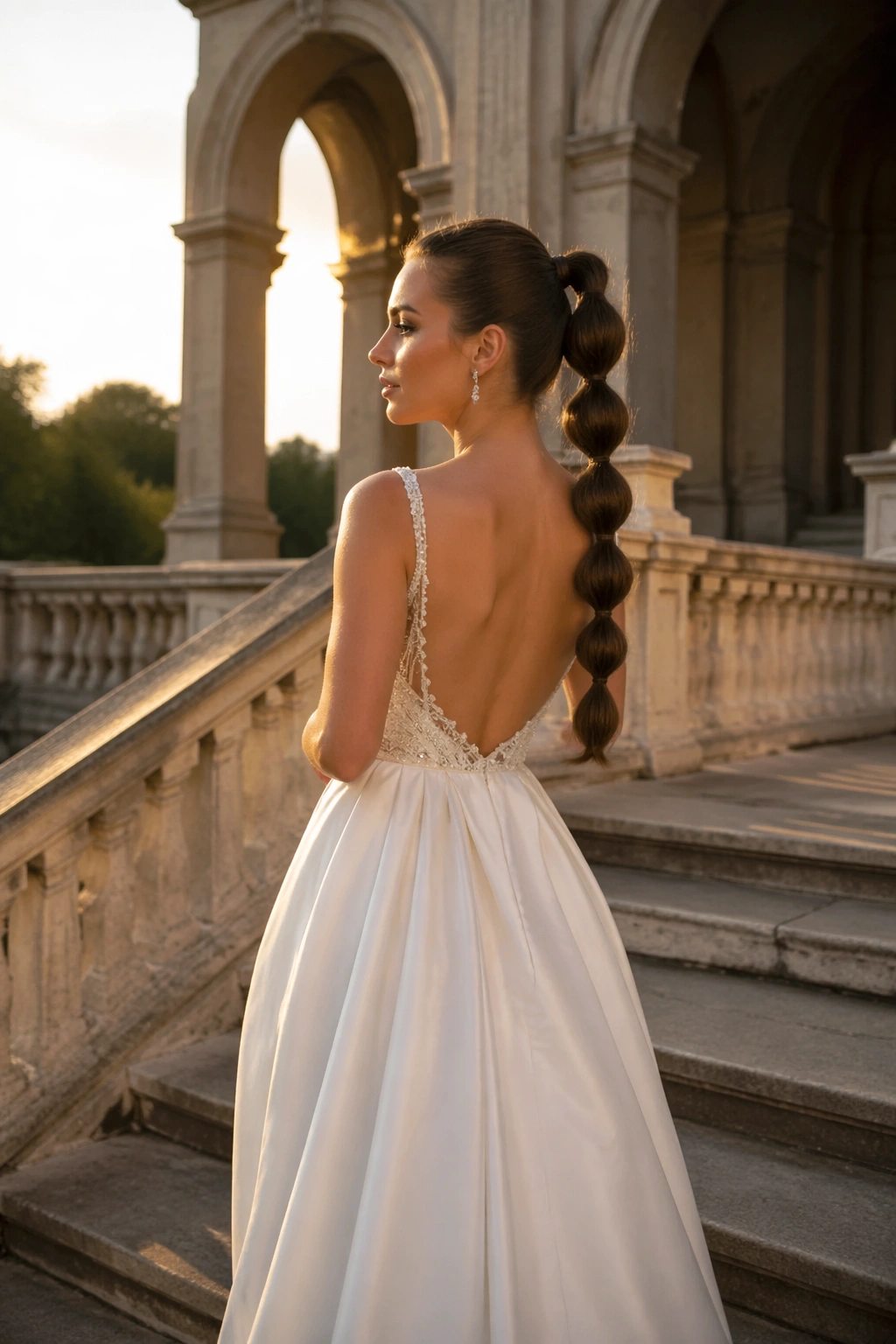
A chignon-style braided ponytail is what happens when a ponytail decides to dress up. The braid feeds into a tucked, rolled, or coiled shape at the nape, so the result lands somewhere between a braid and a low bun. That makes it useful for formal weddings where the hair needs to look settled and composed.
Unlike a full updo, this style can keep a hint of tail or movement. That little difference matters. It stops the hair from looking pinned into place by force. Use strong pins, especially if the hair is fine, and keep the braid compact so the base of the chignon has enough structure to hold.
It is elegant without being fussy. I like that.
21. Messy Textured Braided Ponytail
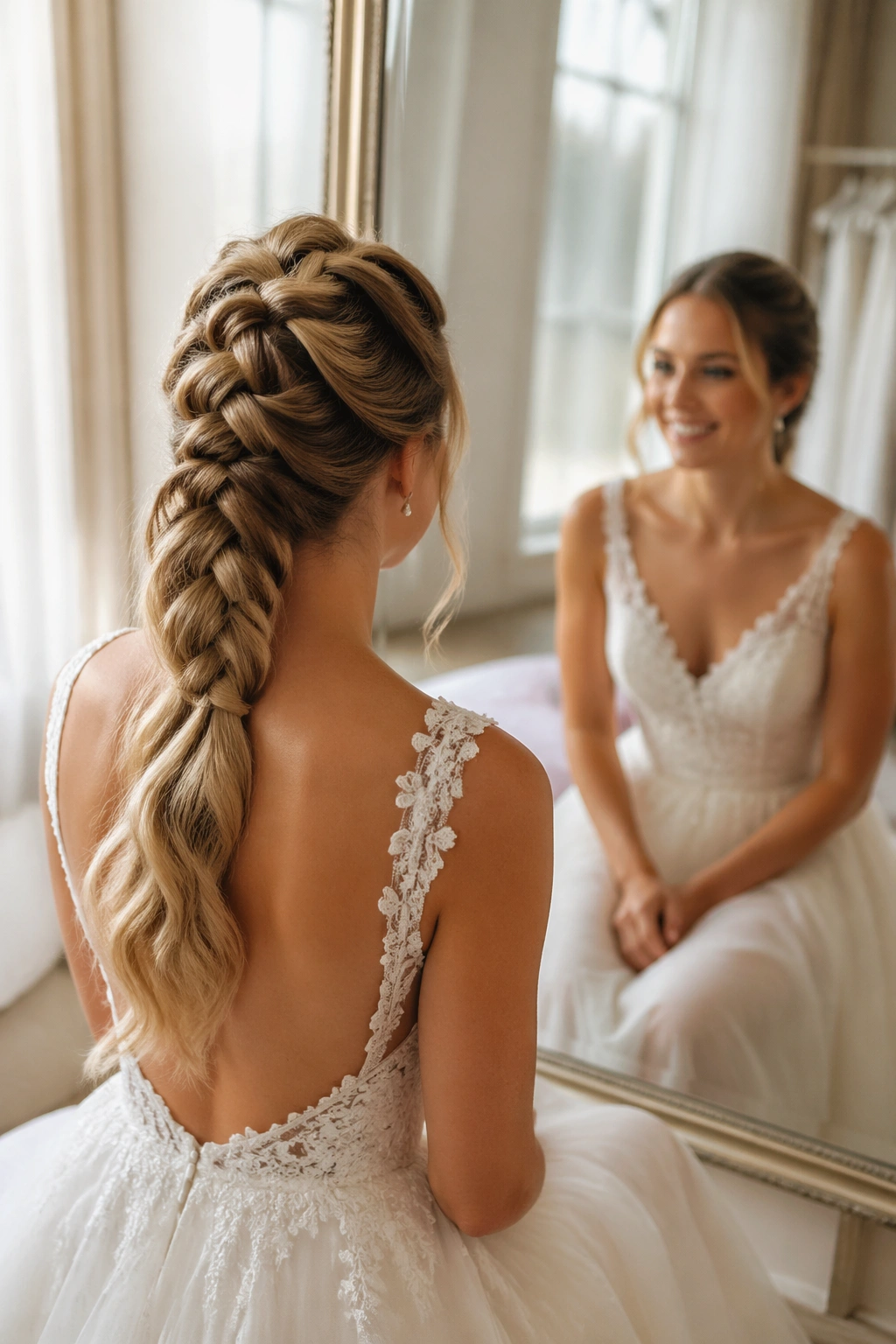
A messy braided ponytail only works when the mess is edited. Loose pieces should look chosen, not forgotten. The braid itself can be a little undone, with soft pulling at the edges, but the crown and base still need shape or the whole style slides into “I tried and then gave up.”
What Makes It Work
Texture spray at the roots. A few bends through the tail with a curling iron. Gentle pinching of the braid so it opens up without collapsing. That is the formula.
This style suits outdoor weddings, relaxed dresses, and brides who do not want anything too locked in. It also photographs well in motion because the loose pieces catch light as the hair moves, but only if the base is secure enough to survive the day.
22. Straight Sleek Braid-Wrapped Ponytail
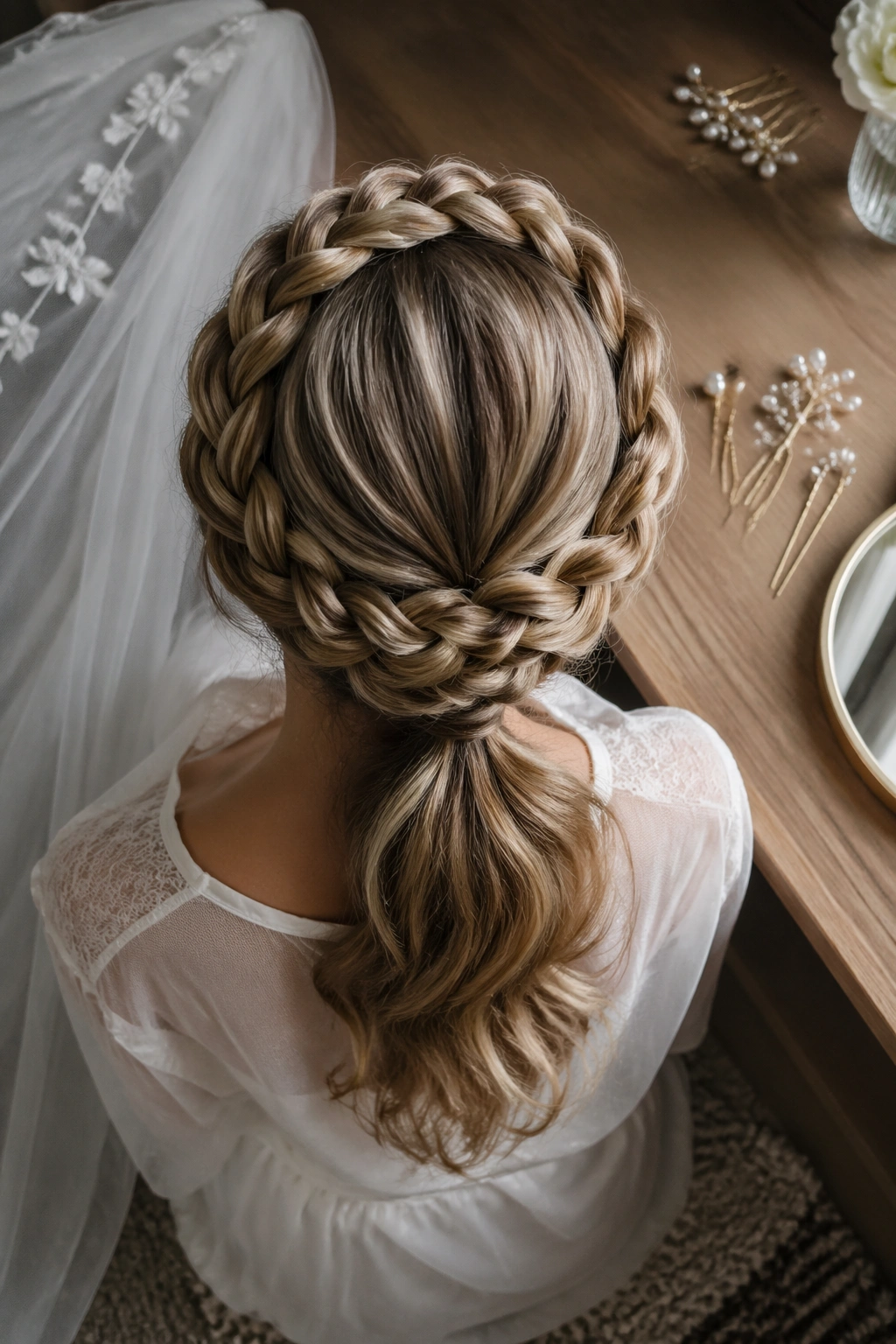
A braid-wrapped ponytail on straight hair has a crisp, graphic feel that some brides love and others run away from. If you like clean lines, this one is worth a look. The braid wraps the base, the ponytail stays straight or softly beveled at the ends, and the whole thing reads intentional from every angle.
The shine matters here. Use a smoothing cream before blow-drying, then pass a flat iron through the lengths so the finish is smooth but not limp. The braid should be tight enough to hold its shape and neat enough that the wrapping section does not fray.
This style pairs well with modern dresses, sharp tailoring, and jewelry that already does a lot of the visual work.
23. Romantic Face-Framing Braid Ponytail
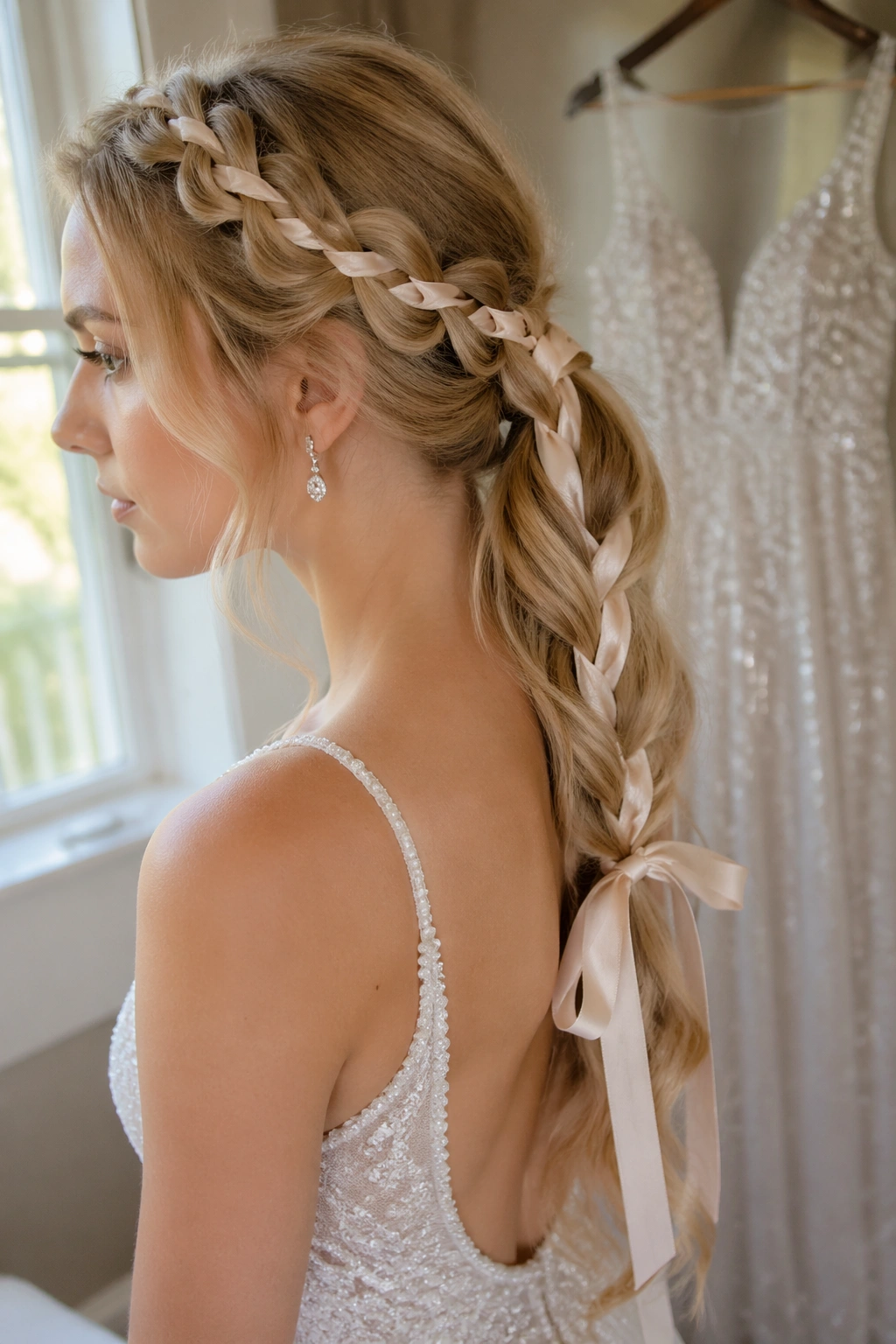
A few face-framing pieces can change a bridal ponytail faster than almost anything else. Add a braid through the front or side, then leave soft pieces loose around the cheeks and jaw, and the style goes from tidy to romantic without losing structure.
The important part is restraint. The face-framing strands should be thin enough to soften the features, not so thick that they start hiding the style. Curl them away from the face if you want a more open look, or let them bend inward if you want something quieter. The braid can stay low and loose to match the softness.
This is one of the easiest ways to make a ponytail feel less severe on a big day.
24. Braided Ponytail with a Veil-Friendly Anchor
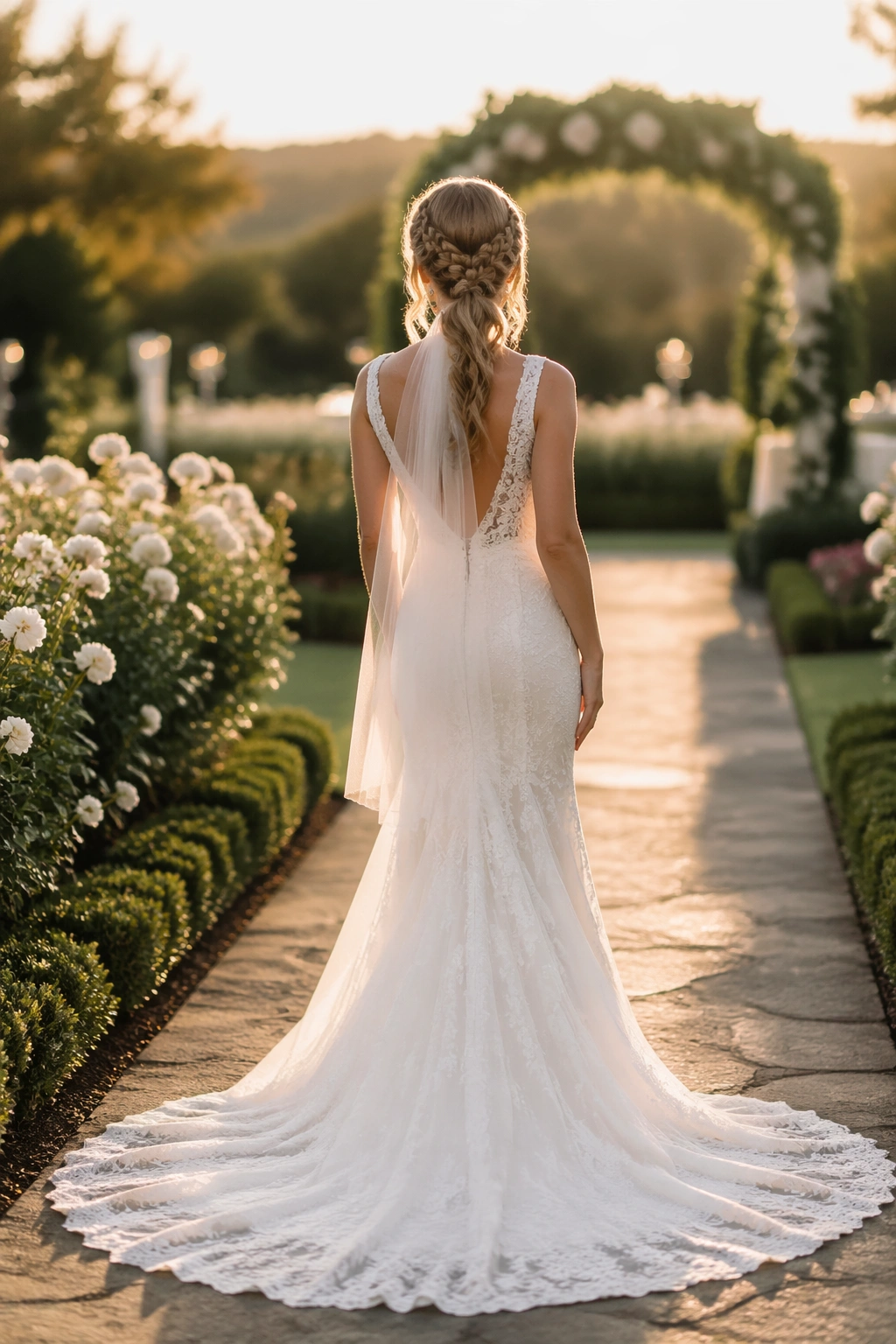
A veil can drag on a ponytail if the base is too slippery. That is where a veil-friendly anchor braid earns its keep. The braid sits under the veil comb or runs just beneath it, giving the accessory something to grip without wrecking the hairstyle.
This style is not about decoration first. It is about support that still looks good when the veil comes off. The ponytail can be low, mid, or even softly lifted, but the braid at the base should be firm and tidy. If the bride plans to wear the veil for only part of the day, this is smart hair. No drama when the comb comes out.
It is practical, yes, but practical can still look polished.
25. Thick Three-Strand Braid Ponytail
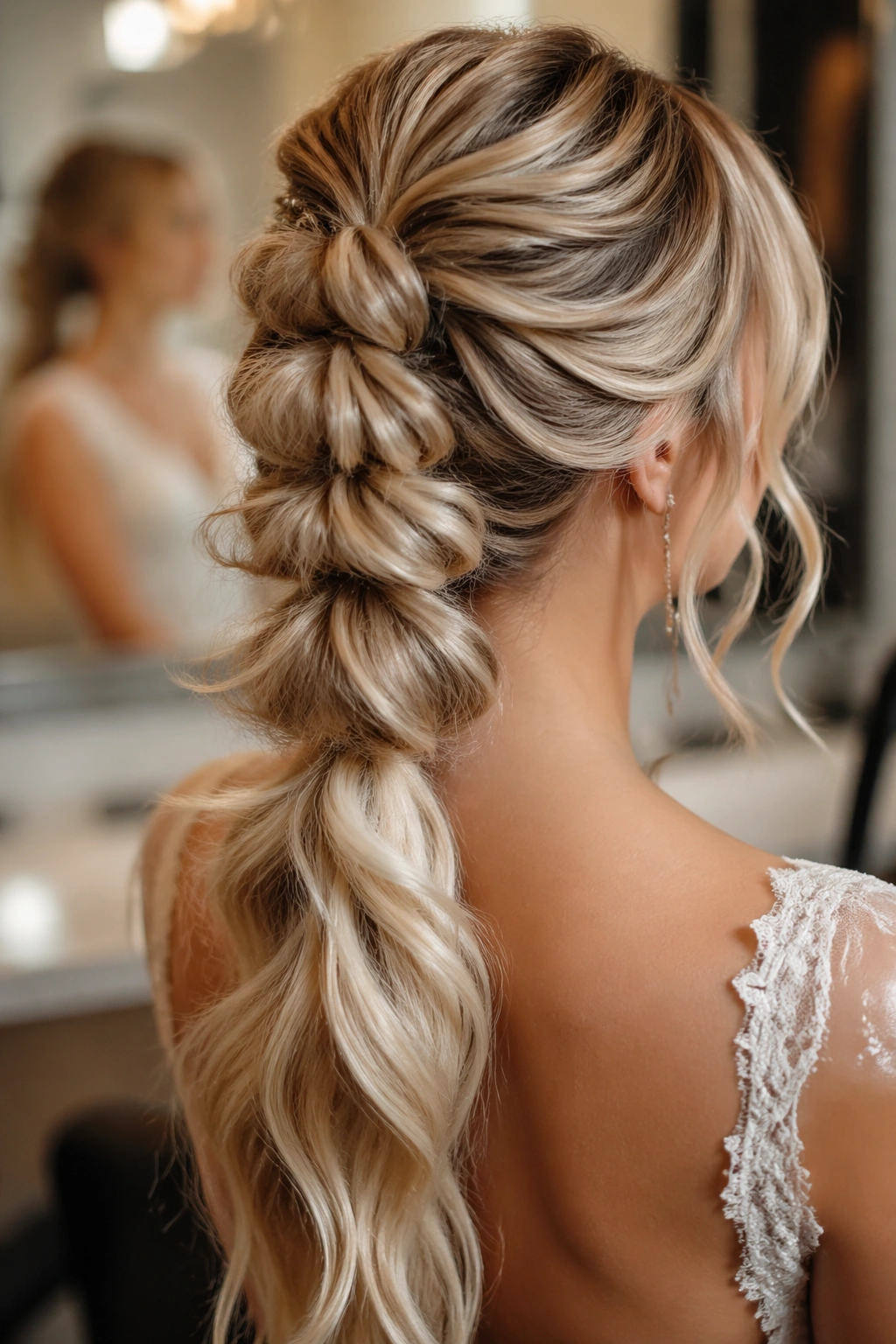
Sometimes the old standard wins. A thick three-strand braid ponytail is simple to read, easy to secure, and surprisingly handsome with wedding clothes because it does not overcomplicate the rest of the look. If the gown is ornate, this braid gives the eye a place to rest.
You can make it feel fuller by gently pulling each side of the braid after you finish. If the hair is fine, a bit of extension padding or clip-in length can help the braid look substantial without looking fake. Keep the elastics hidden and the tail smooth at the end.
A Small Detail That Helps
Wrap a narrow strand of hair around the base elastic and pin it underneath. It takes ten seconds and makes the whole thing feel finished.
26. Twisted Braid Ponytail for Shorter Lengths
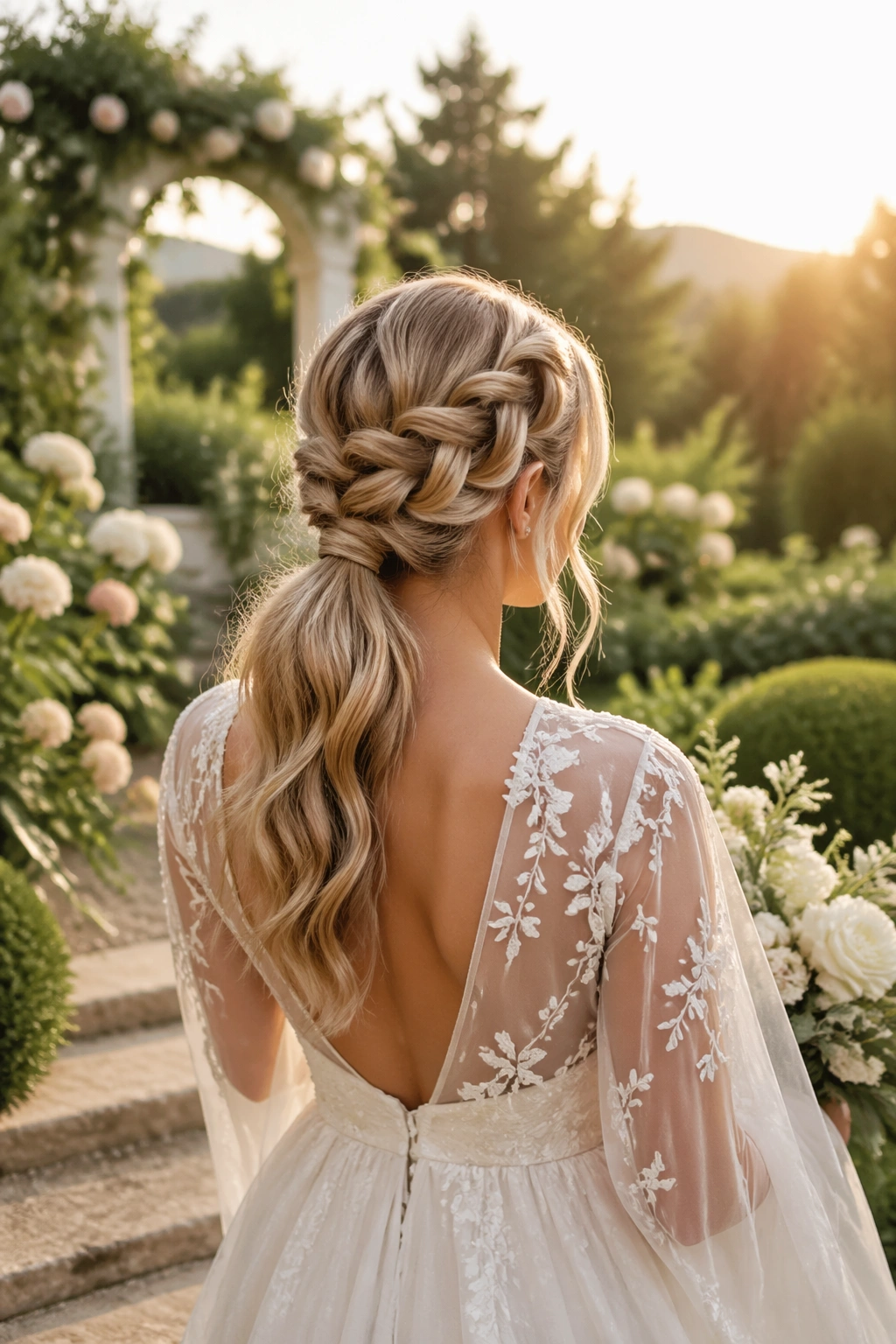
Shorter hair does not mean you have to skip a braided ponytail. A twisted braid style can work with collarbone-length hair, especially if a stylist builds the shape from two-strand twists near the crown and gathers the rest into a compact ponytail. Add extensions if needed, but do not force the braid to be longer than the hair wants to be.
This one is useful because it creates the impression of length without requiring hair that reaches the middle of the back. The twist sections also hold well, which helps with layers that usually slip out of a braid. Keep the finish soft around the face and the base tidy.
It is a smart choice for brides who want lift, but not a lot of bulk.
27. Crystal-Accented Bridal Ponytail Braid
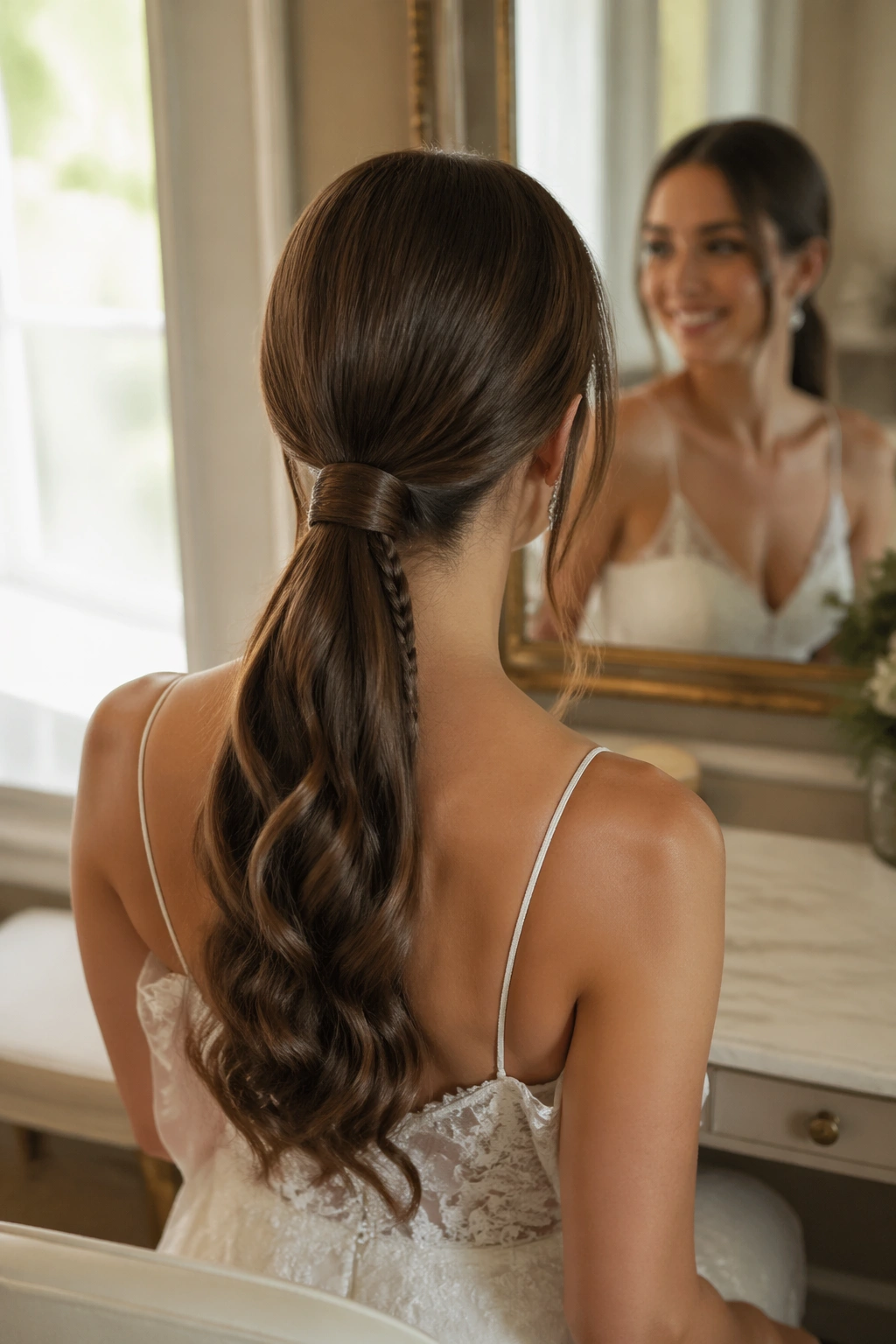
Crystal accents can be a mess if they are scattered without a plan. Used carefully, though, they turn a braid into a true bridal statement. A few pins along one side of the braid, or a slim crystal comb tucked near the base, gives the ponytail sparkle without making it look costume-like.
I like this version most with evening lighting, satin, or darker hair colors that show the shine more clearly. The braid itself should stay fairly simple so the crystals have room to matter. If there are too many competing details, the effect goes noisy fast.
The best version of this look is confident and controlled. A little shimmer, a clean braid, and a ponytail that still moves when you walk. That is enough.
