



The low ponytail is the great equalizer of hair styling. It doesn’t demand the precise architecture of a high-tension bun or the labor-intensive upkeep of intricate braids, yet it manages to look intentional and polished with almost zero effort. When you have long hair, this style stops being just a way to get your strands out of your face and starts acting as a blank canvas. The weight of long hair provides a natural drape that shorter cuts just can’t replicate, creating a silhouette that feels elegant, moody, or effortless depending entirely on how you secure the base and treat the lengths.
Most people approach a ponytail as an afterthought, reaching for the first hair tie they find in their junk drawer and pulling their hair back in a frantic, uneven swoop. That is a missed opportunity. Even a simple low pony can be elevated through texture, placement, and accessories. It isn’t about making your hair do something it doesn’t want to do; it is about working with the natural density and length you already have. Whether you want to achieve a look that feels like you just stepped off a runway or something soft enough for a lazy Sunday, the secret lies in the details—the grip of the elastic, the finish of the texture spray, and the way you frame your face.
1. The Sleek Center-Part
There is something inherently architectural about a dead-center part pulled back into a low ponytail. It creates a stark, clean line that draws the eye directly to the cheekbones and jawline. This look demands a bit more prep than a casual ponytail, as the part needs to be precise. You will want to use a rat-tail comb to ensure the line travels from your forehead all the way to the crown of your head, splitting the hair perfectly in two.
Achieving the Perfect Finish
To keep this look from appearing too severe, apply a small amount of smoothing cream or a light-hold pomade to your palms before pulling your hair back. This tames any flyaways around the part and ensures the hair stays close to the scalp. Once you have secured the ponytail at the nape of your neck, take a thin section of hair from the underside of the pony and wrap it around the elastic, pinning it in place with a hidden bobby pin. This simple step replaces the rubber band with hair, immediately making the entire style look high-end.
2. The Messy Textured Low Ponytail
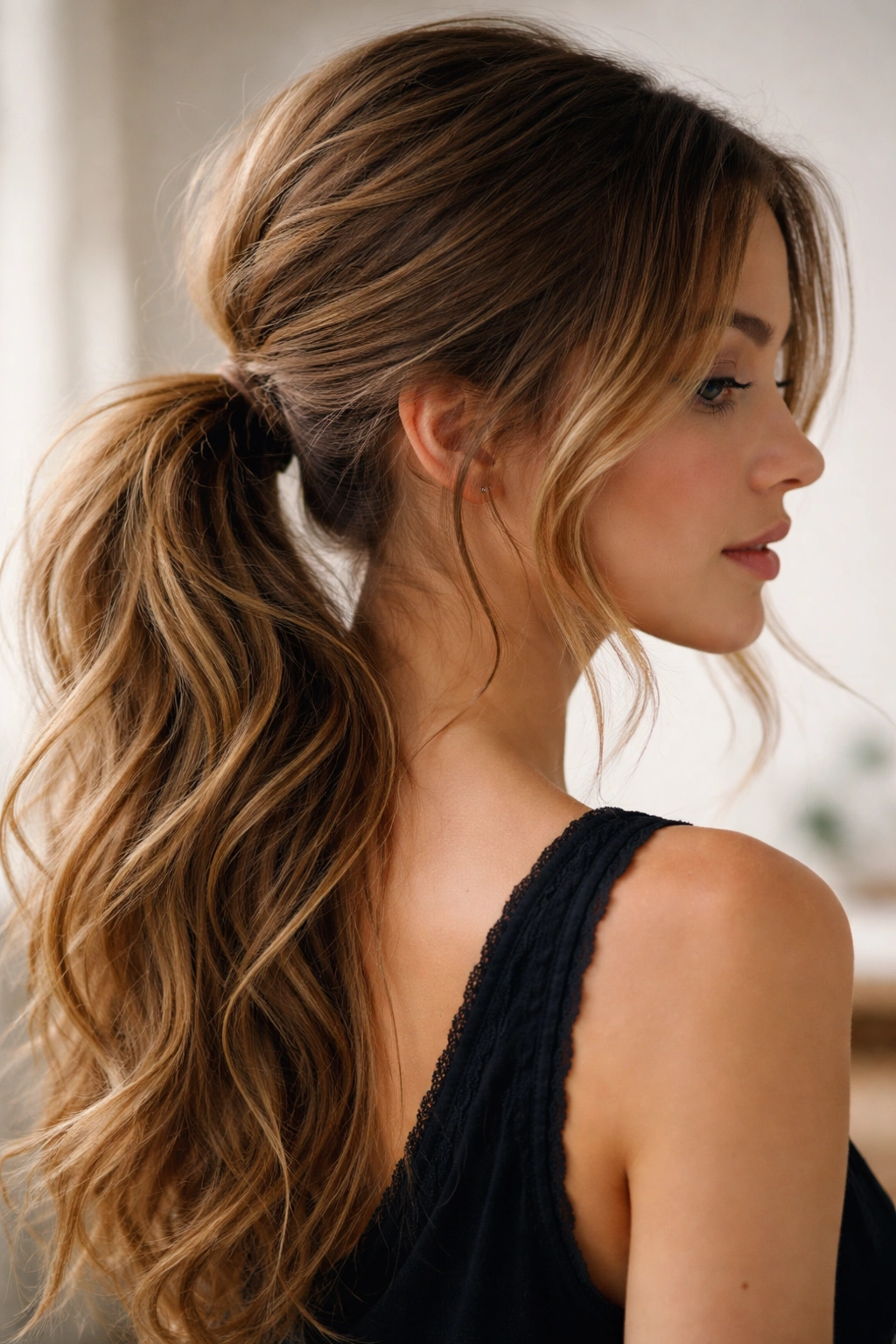
If the sleek look is about control, this style is about embracing chaos. The messy low ponytail works best on day-two or day-three hair when your natural oils have provided a bit of grip. If your hair is freshly washed, you absolutely must use a dry texture spray or a volumizing powder to create the grit necessary to hold the style. Without product, long hair will simply slide out of a messy pony, leaving you with a limp, sad-looking tail.
Building Volume and Depth
Start by teasing the hair at the crown of your head before you gather it back. You do not need to pull it tight. Let the hair billow slightly over the elastic to soften the profile. After securing it, gently tug on small sections of hair at the crown to loosen it further. Let a few shorter layers fall around your ears and temples. The goal is to look like you woke up with perfectly undone hair, even if it took ten minutes of strategic teasing and product application.
3. The Braided Wrap Base
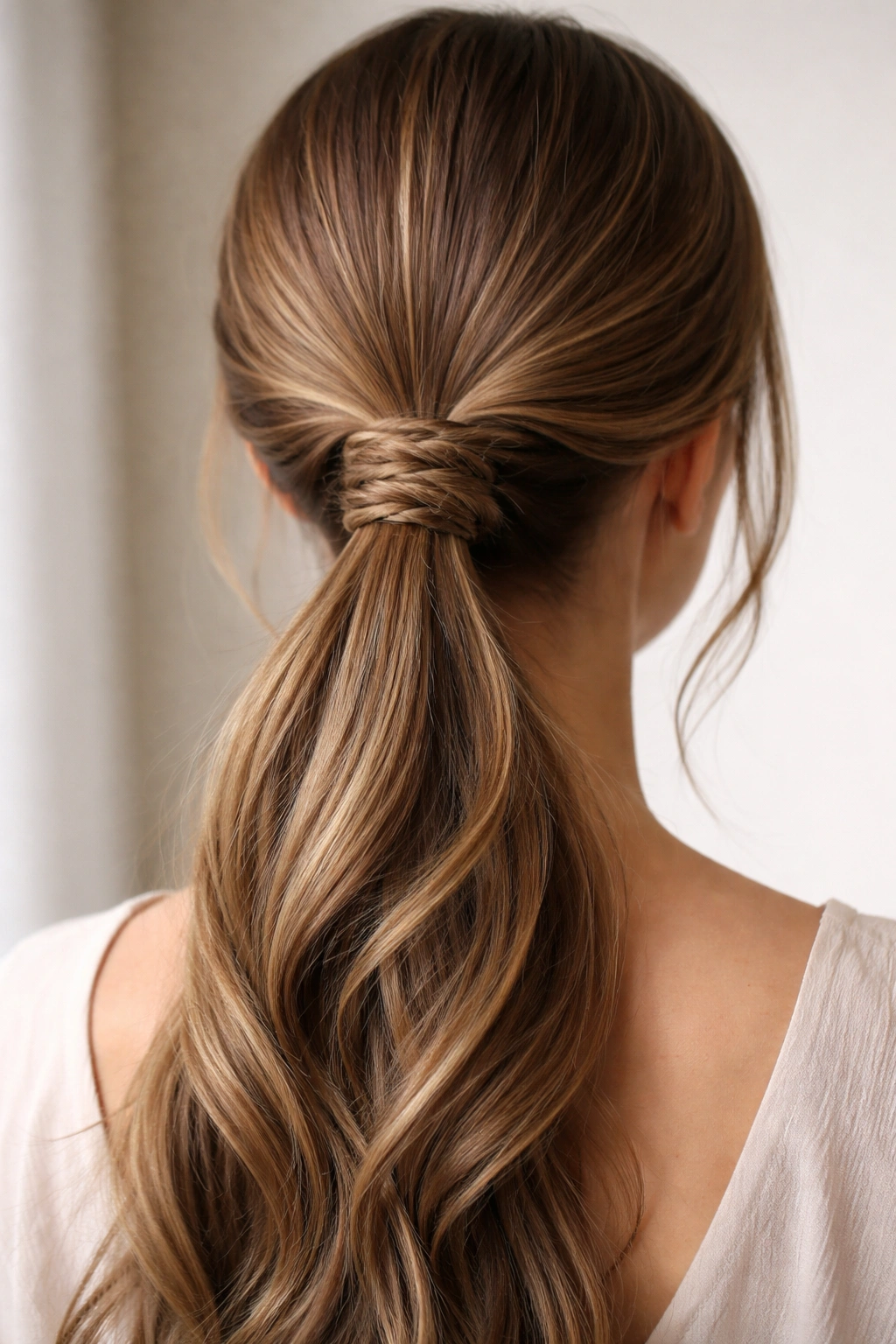
A standard elastic is functional, but it is rarely beautiful. Using a braid to cover the base of your ponytail is a sophisticated way to hide the hair tie while adding an intricate detail that draws attention to the nape of your neck. This is a fantastic way to dress up a basic ponytail without needing expensive clips or pins. It takes a little bit of coordination, but once you master the hand placement, it becomes second nature.
How to Execute the Wrap
Pull your hair into a low ponytail and secure it with a small, clear silicone elastic. Before you finish, pull out a one-inch section of hair from the bottom of the pony. Divide this section into three equal parts and create a standard three-strand braid. Once you reach the end, secure the braid with a tiny, clear rubber band. Wrap the braid tightly around the base of your ponytail to hide the original elastic, and tuck the end of the braid underneath the ponytail, securing it with a bobby pin pushed upward into the base of the pony.
4. The Romantic Loose Side Pony
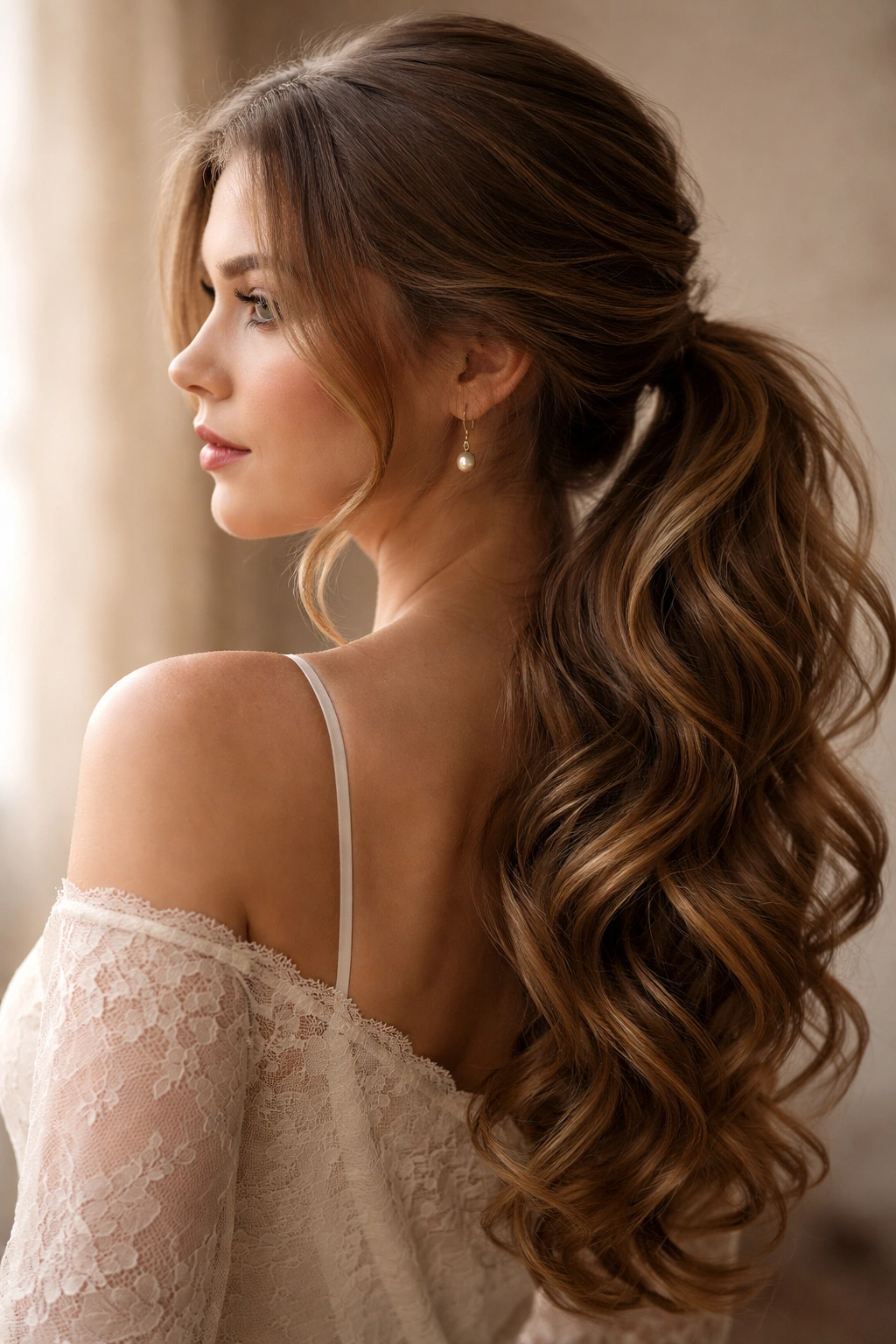
A side-swept ponytail naturally feels more whimsical and romantic than a traditional centered one. Because you are sweeping all that length over one shoulder, the hair becomes a focal point rather than a background element. This style is particularly effective if you have long, layered hair that can cascade in different lengths, adding visual interest to the side profile.
Creating the Soft Effect
Do not pull your hair back directly. Instead, gather it loosely in your hands and bring it over your shoulder before securing it. To keep the look soft, curl the ends of your hair with a large-barrel iron before you pull it back. The curls should be loose and flowing, not tight ringlets. Use a decorative ribbon or a silk scrunchie to tie the pony; a harsh elastic will ruin the romantic aesthetic you are trying to cultivate. Allow the hair to frame your face softly on the side opposite the ponytail.
5. The Embellished Clip Style
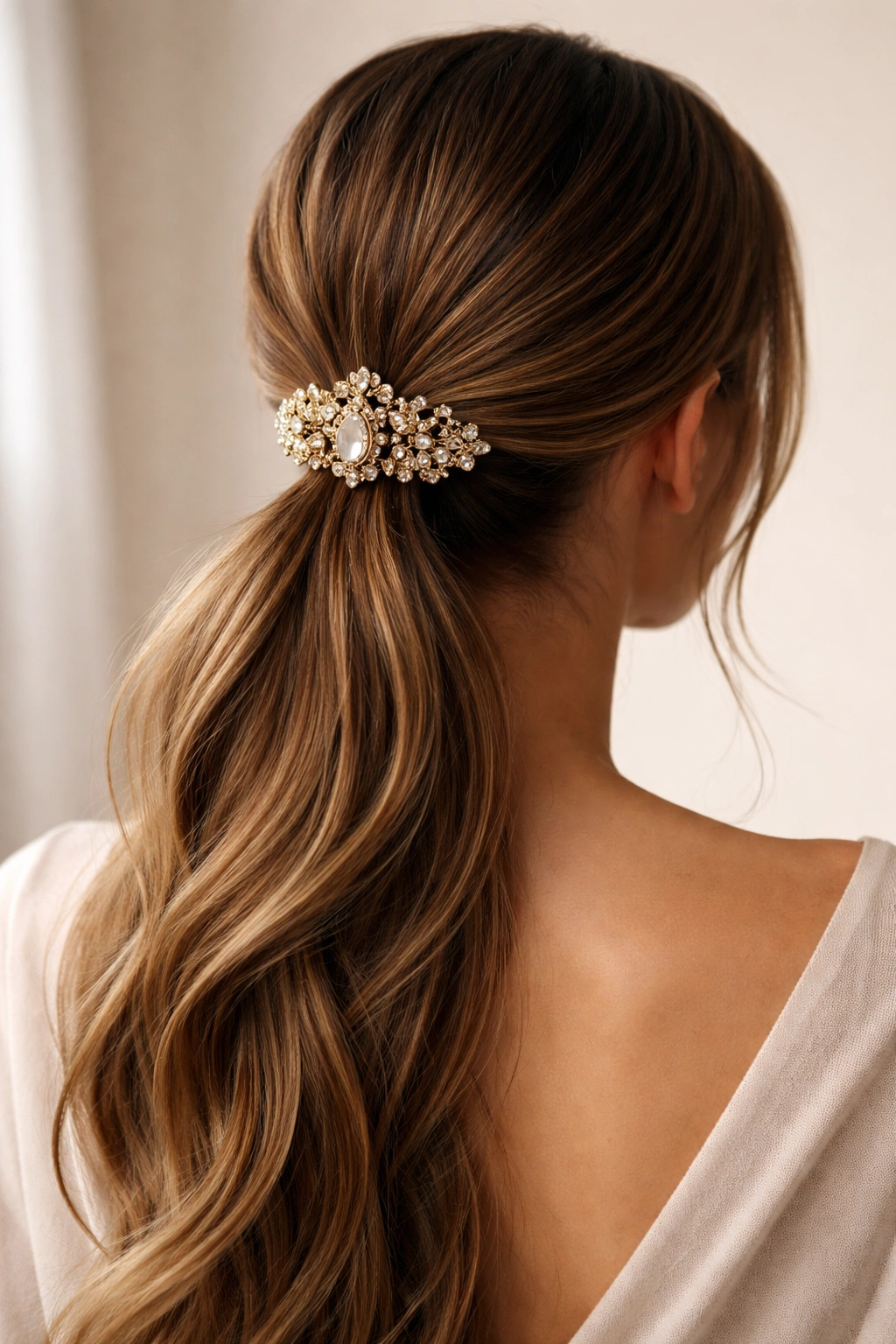
Sometimes the best way to elevate a ponytail is to ignore the elastic entirely and use a statement piece of hardware. Embellished clips—whether they are gold geometric shapes, pearl-encrusted bars, or vintage-inspired floral clips—do the heavy lifting for you. You do not need a complicated hairstyle when the accessory itself is the main event.
Choosing the Right Hardware
The key here is the weight of the clip. If you have very long, heavy hair, a cheap plastic clip will not hold the ponytail securely. Look for metal clips with a sturdy spring mechanism. You can pull your hair back into a low, slightly loose pony and simply clasp the ornament over the elastic. Or, for a more seamless look, skip the elastic and use a heavy-duty claw clip to gather the hair at the nape of your neck. It creates a slightly wider, more relaxed silhouette that feels effortless.
6. The Velvet Ribbon Tie
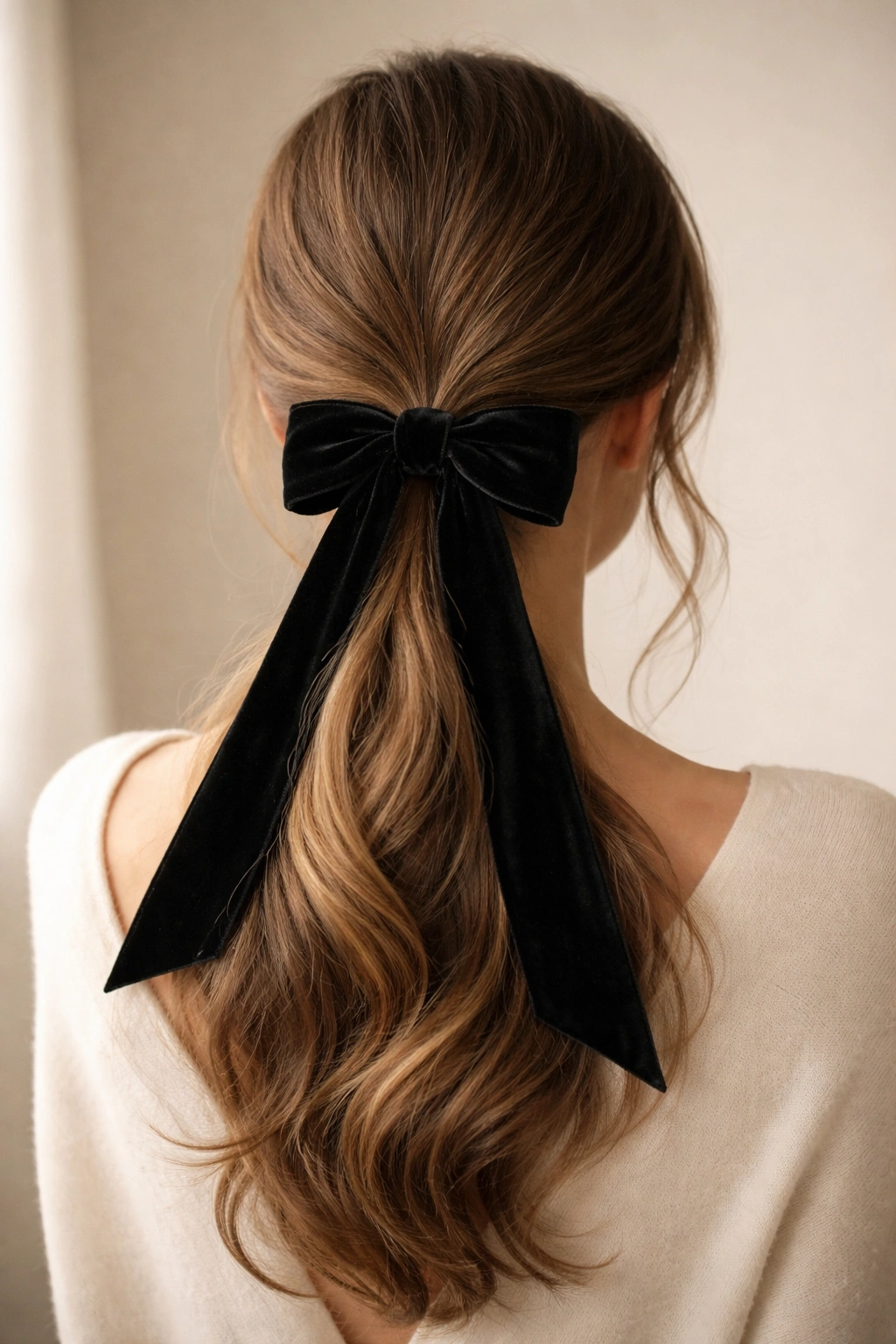
Velvet adds an instant sense of luxury and depth, especially when it catches the light. A long velvet ribbon is the perfect alternative to a hair tie for a low ponytail. It is gentle on the hair, preventing the breakage often caused by tight elastic bands, and it adds a touch of retro elegance that works just as well in a professional setting as it does for a dinner out.
Tying the Perfect Bow
Pull your hair back into a low, smooth ponytail. Secure it with a small, clear elastic first to ensure the weight of your long hair doesn’t pull the style loose. Take a long length of velvet ribbon and wrap it around the base two or three times, then tie it into a bow. Keep the tails of the ribbon long; having the velvet flow down your back alongside your hair creates a soft, feminine line that looks incredibly chic. If the bow starts to droop, use a bobby pin to anchor it to the base of the pony.
7. The Bubble Ponytail
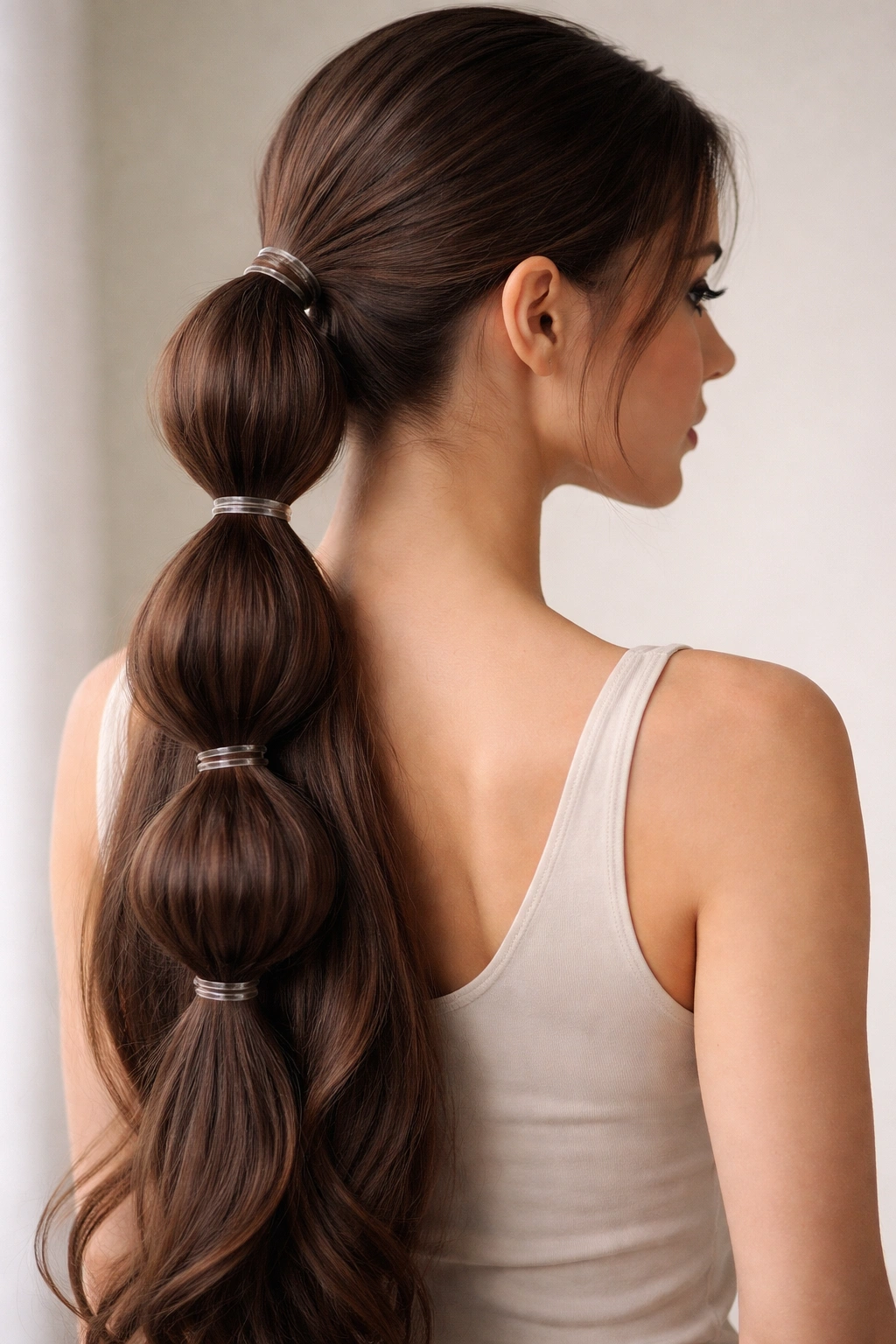
The bubble ponytail is a playful, structural style that makes long hair look even longer. It works by sectioning off the length of the ponytail with multiple hair ties, creating rounded “bubbles” between them. This is one of the few styles that actually benefits from having very long hair, as you need the length to create enough segments to make the bubbles pop.
Mastering the Technique
Secure your hair in a low ponytail first. Then, place a small, clear elastic about two inches down the length of the tail. Gently pull on the hair between the two elastics to puff it out into a sphere. Repeat this process, moving down the length of your ponytail, until you reach the ends. Make sure the elastics are evenly spaced; if they are not, the bubbles will look lopsided. This style is surprisingly durable and can last through a full day of activity without losing its shape.
8. The Twisted Scarf Ponytail
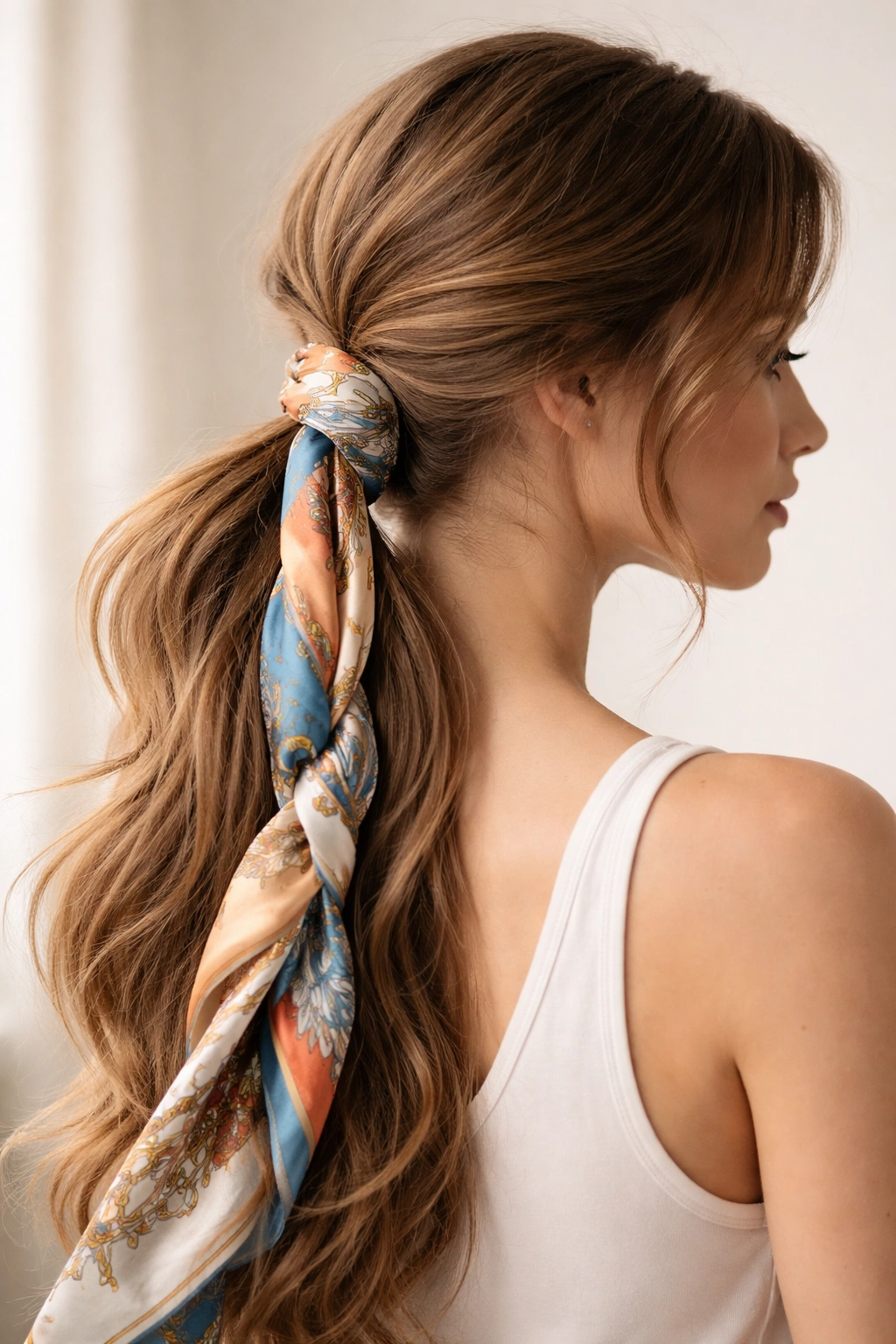
Scarves are the ultimate multi-taskers in hair styling. Incorporating a silk or satin scarf into a low ponytail adds color, pattern, and volume. This is an excellent choice for second-day hair when your roots might be a bit flat, as the volume of the scarf hides a multitude of sins and draws the eye away from the scalp.
Weaving the Scarf
Start by tying your hair into a basic low ponytail. Take a long, thin scarf and loop it around the elastic. You can then twist the scarf into the length of the ponytail, braiding it in as you go, or simply let the scarf hang down alongside the ponytail. If you choose to braid it, make sure the scarf is woven loosely so that the ponytail remains full. The ends of the scarf can be left to dangle or tied into a loose knot at the bottom of the tail.
9. The Polished Low Pony with Volume
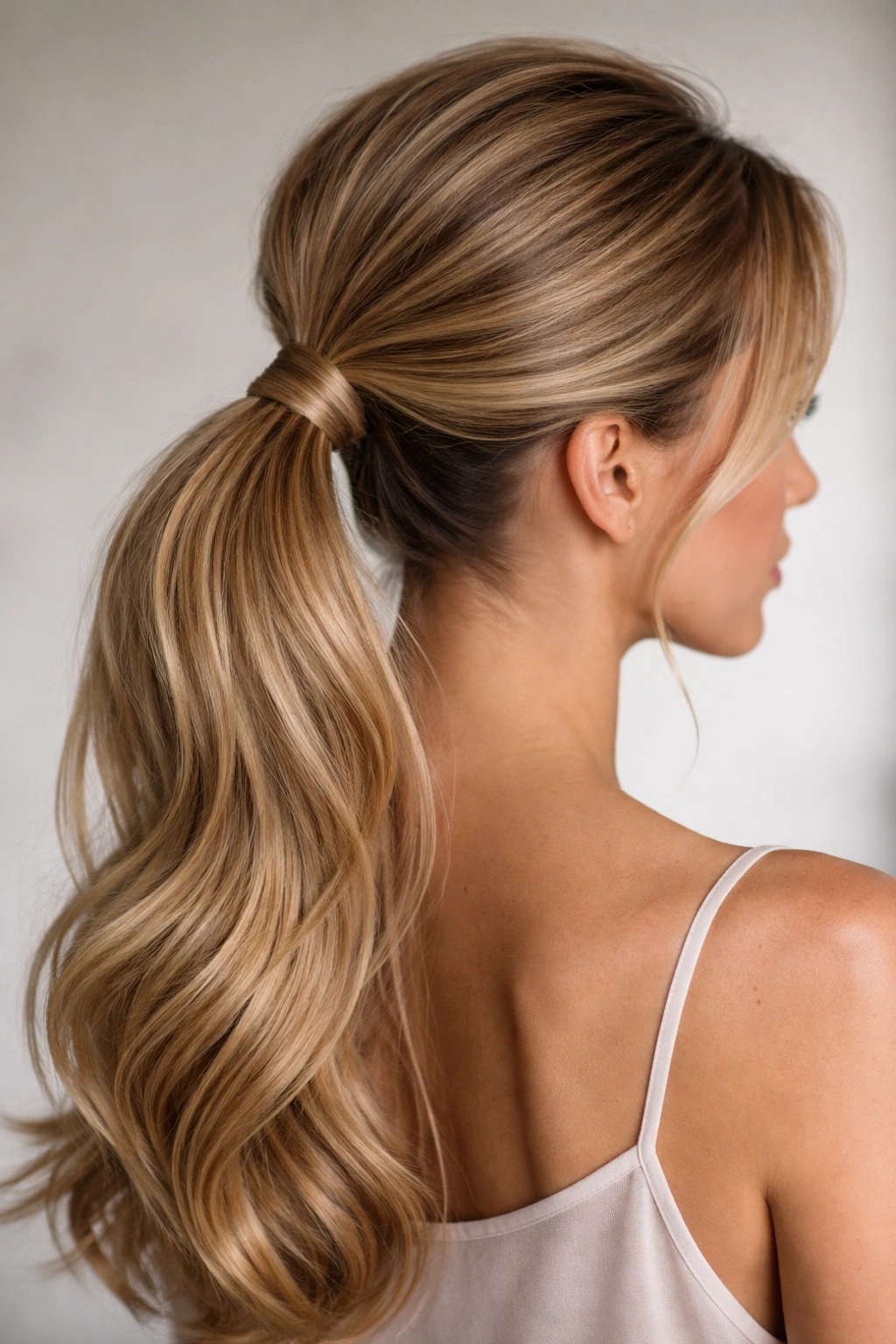
This look is all about the “oomph” at the crown. It is the sophisticated cousin of the messy pony, offering a more formal, polished appearance while still maintaining that enviable lift at the roots. This style is fantastic for anyone with thin or fine hair who wants to create the illusion of density and fullness.
The Secret to Sustained Height
Before pulling your hair back, use a teasing comb at the crown of your head, working from the roots outward. Once you have built a small mound of volume, gently smooth the top layer of hair over the tease so it looks seamless. When you secure the ponytail, do not pull it so tight that you flatten the teased area. Use your fingers to lift the hair upward at the crown after it is secured, adjusting the tension until you have the exact amount of lift you want. Finish with a medium-hold hairspray to ensure the volume doesn’t collapse an hour later.
10. The Fishtail Braid Combo
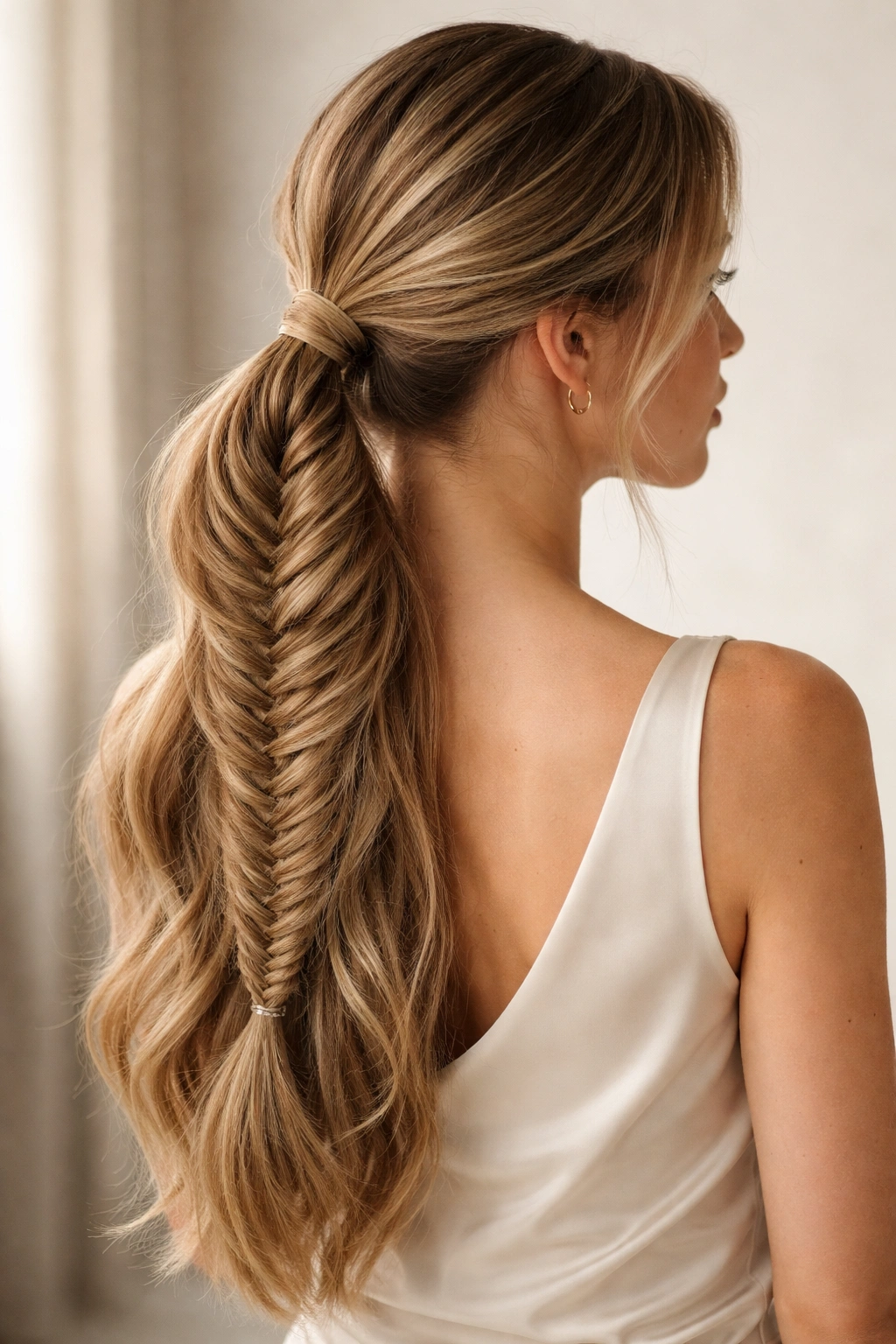
Combining a ponytail with a fishtail braid creates a look that is complex and visually stunning. This style works best with very long hair because the braid consumes a significant amount of length. It feels bohemian and intricate, perfect for events where you want your hair to look like it took hours of preparation, even if you can whip it together in ten minutes.
Executing the Fishtail
Start by securing your hair into a low ponytail. Separate the ponytail into two equal sections. Take a tiny strand of hair from the outside of the left section and cross it over to the inside of the right section. Repeat this on the other side. Continue this process all the way down. The key to a great fishtail is keeping the tension consistent. If you pull too tightly, the braid will look thin. Once you reach the end, gently pull the edges of the braid outward to loosen it up and make it look thick and textured.
11. The Minimalist Metal Cuff
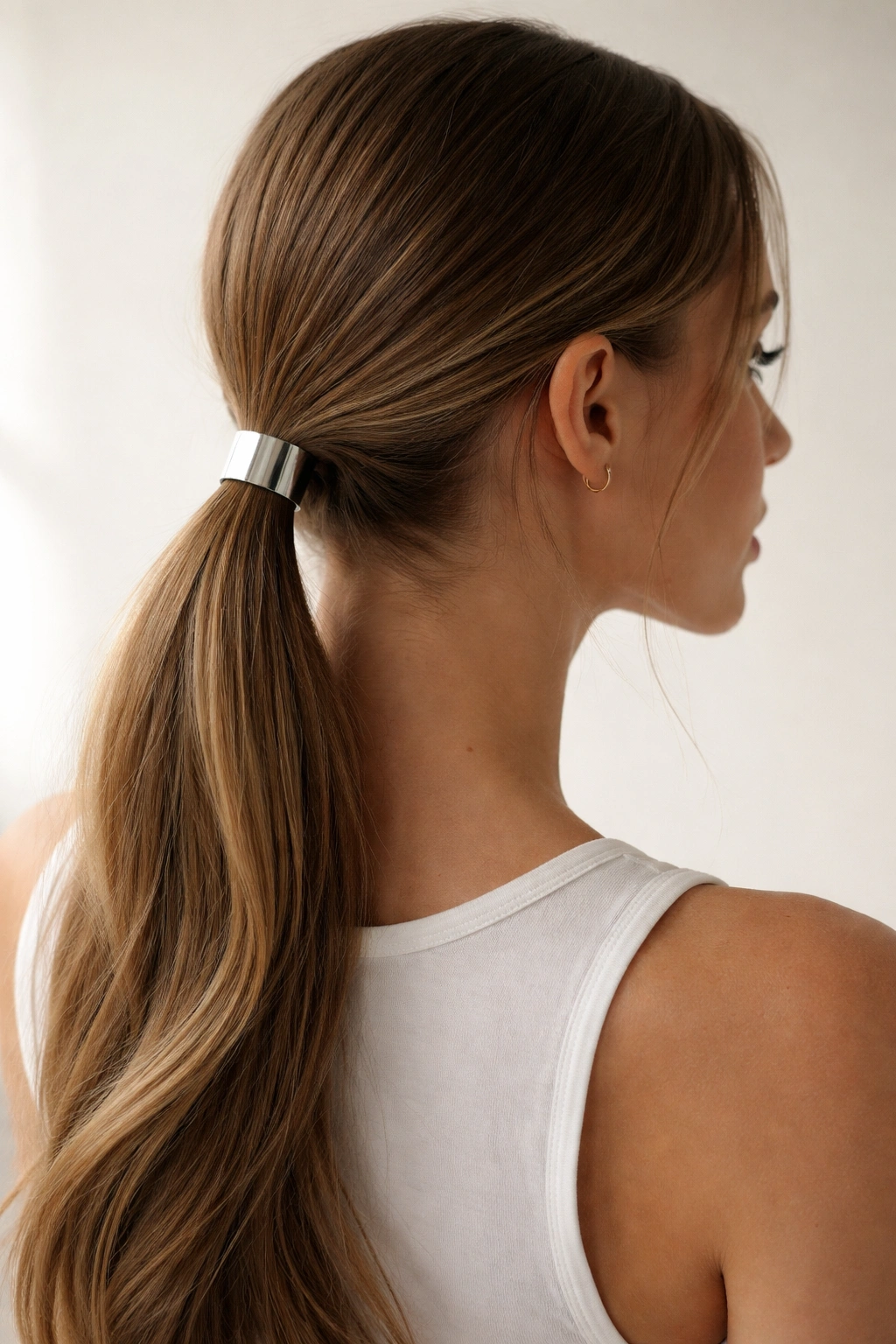
If you prefer a clean, modern aesthetic, the metal cuff is your best friend. It is an accessory that acts as a structural element, replacing the elastic band entirely. These cuffs come in various finishes, from brushed gold to matte black, and they instantly elevate a plain ponytail into something that looks like an intentional design choice.
Ensuring a Secure Hold
Many of these cuffs have an internal elastic, which is helpful, but the weight of the metal can cause them to slide down if your hair is heavy. To prevent this, secure your hair with a strong-hold elastic first, then place the metal cuff over it. If your hair is particularly fine or slippery, apply a bit of dry shampoo to the roots before you pull it back. The added grit will help the cuff stay in place against the scalp.
12. The Wavy Beachy Pony
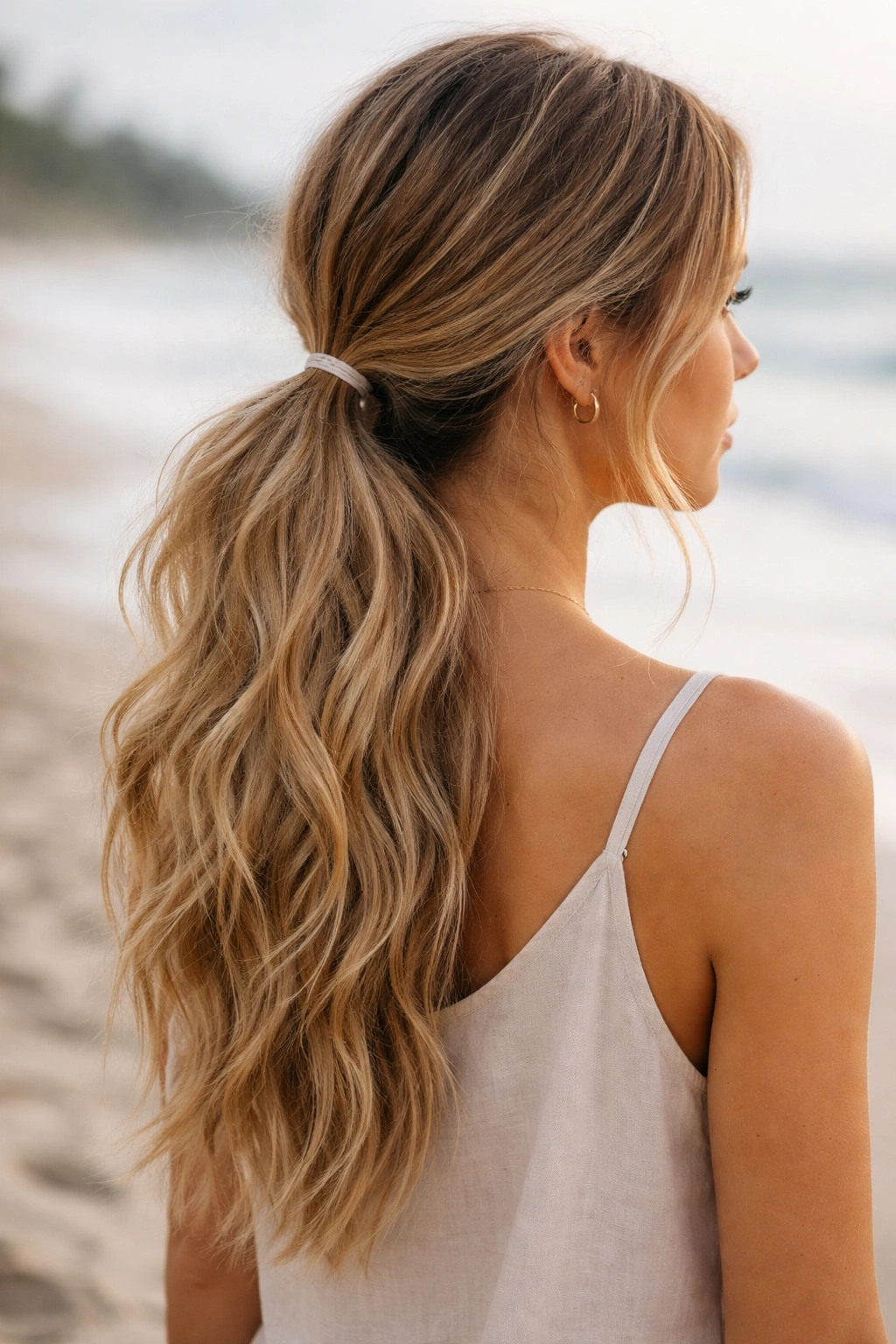
There is a distinct difference between “curly” and “beachy.” A beachy wave is loose, slightly flattened, and has a matte, salty texture. A beachy low ponytail leverages this texture to create a style that feels relaxed and effortless, as if you’ve spent the day by the ocean.
Getting the Texture Right
Use a sea salt spray on damp hair and let it air dry, or use a large-barrel curling wand to create soft, irregular waves. Do not curl the entire length; leave the ends straight to keep the look modern. Gather the hair at the nape of the neck, but do not smooth it out. Let the waves dictate the shape of the ponytail. Secure it with a fabric-covered elastic that matches your hair color, then use your fingers to gently pull out pieces around your hairline to soften the face.
13. The Half-Wrapped Section Pony
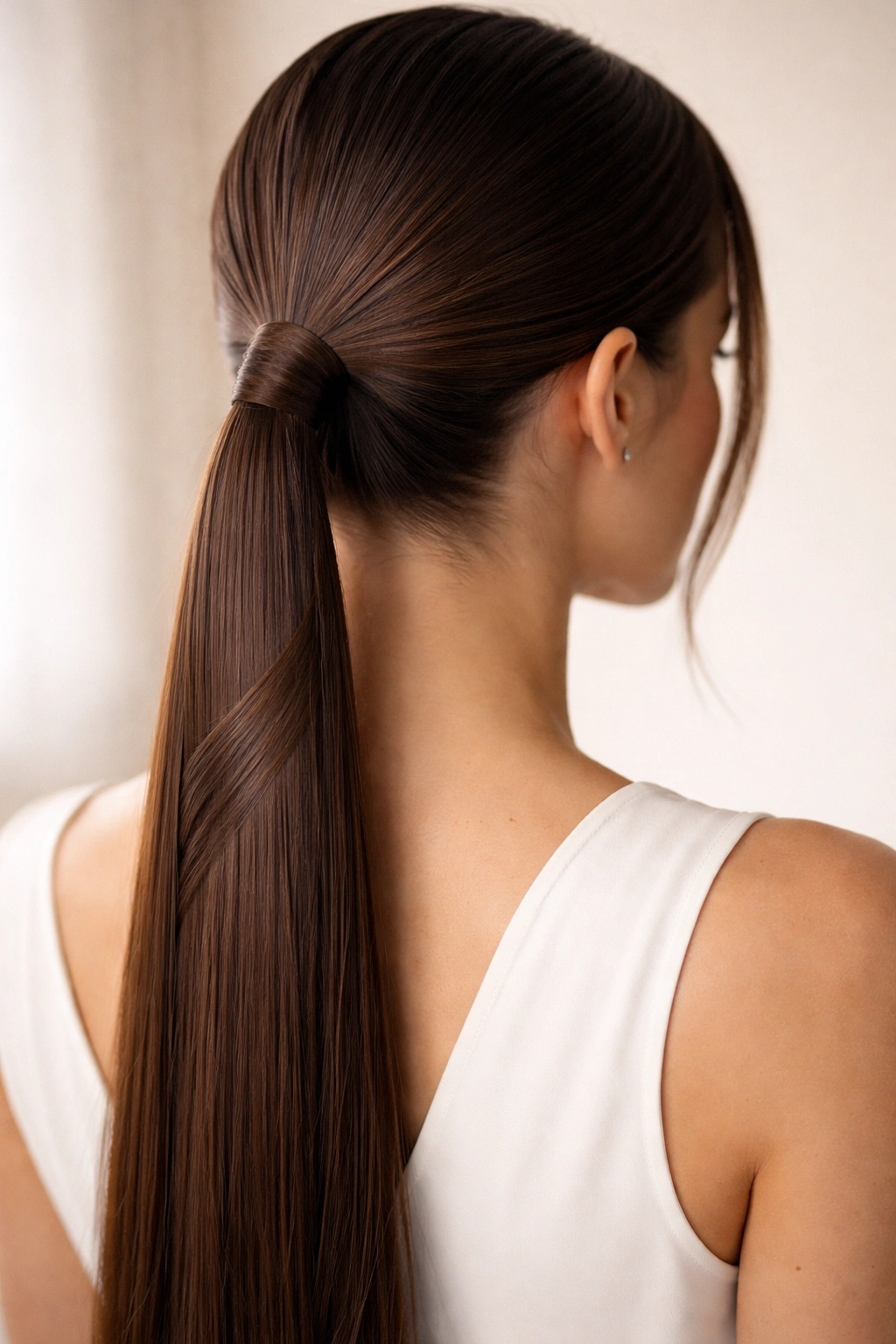
This is a variation on the standard ponytail wrap, but instead of wrapping the hair around the base, you wrap it further down the length of the ponytail. It’s a subtle detail that breaks up the monotony of the ponytail length and creates a more interesting silhouette. It looks best on very sleek, straight hair where the wrap can sit smoothly against the rest of the tail.
How to Section It
Gather your hair into a low ponytail. Take a one-inch section of hair from the top of the ponytail. Wrap it around the ponytail twice, then secure the end underneath with a small, clear elastic or a bobby pin. You can do this once for a minimalist look, or repeat it every three inches down the length of your ponytail for a more stylized, tiered effect. It keeps the hair contained and adds a touch of visual geometry to an otherwise simple style.
14. The Low Ponytail with Face-Framing Tendrils
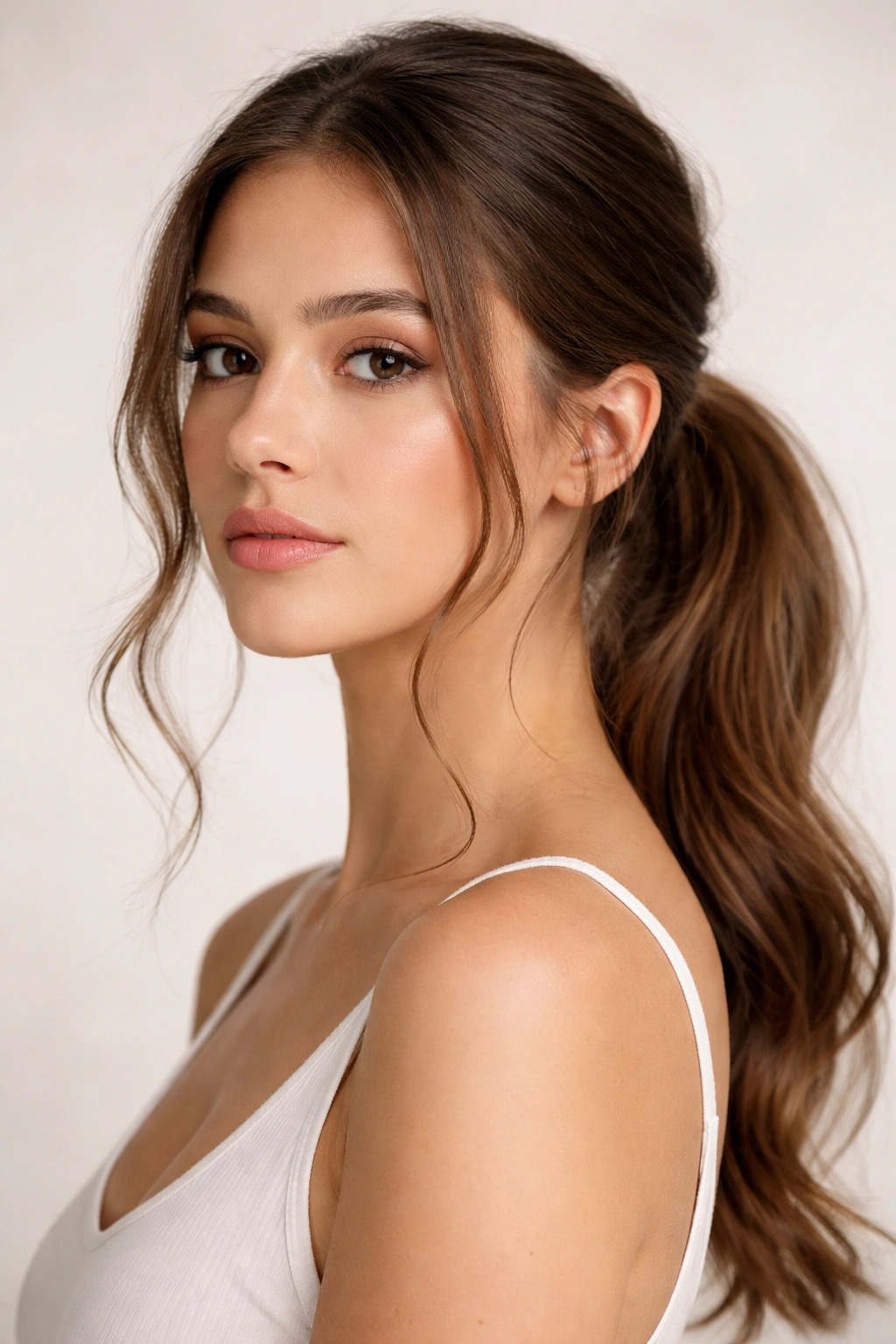
This style is all about balance. The severity of a pulled-back low ponytail is offset by the softness of loose strands around the face. This is incredibly flattering for almost every face shape, as it softens the jawline and draws focus to the eyes.
Choosing Your Tendrils
Before you pull your hair back, pull out the sections you want to leave loose. A common mistake is to grab too much hair; you want thin, wispy strands, not chunky pieces. Focus on the hair around your temples and the nape of your neck. If your hair is naturally straight, you can add a slight bend to these tendrils with a flat iron to give them a bit of movement. The rest of the hair should be secured neatly, ensuring that the contrast between the tight pony and the loose pieces is intentional and well-defined.
15. The Double-Twist Base
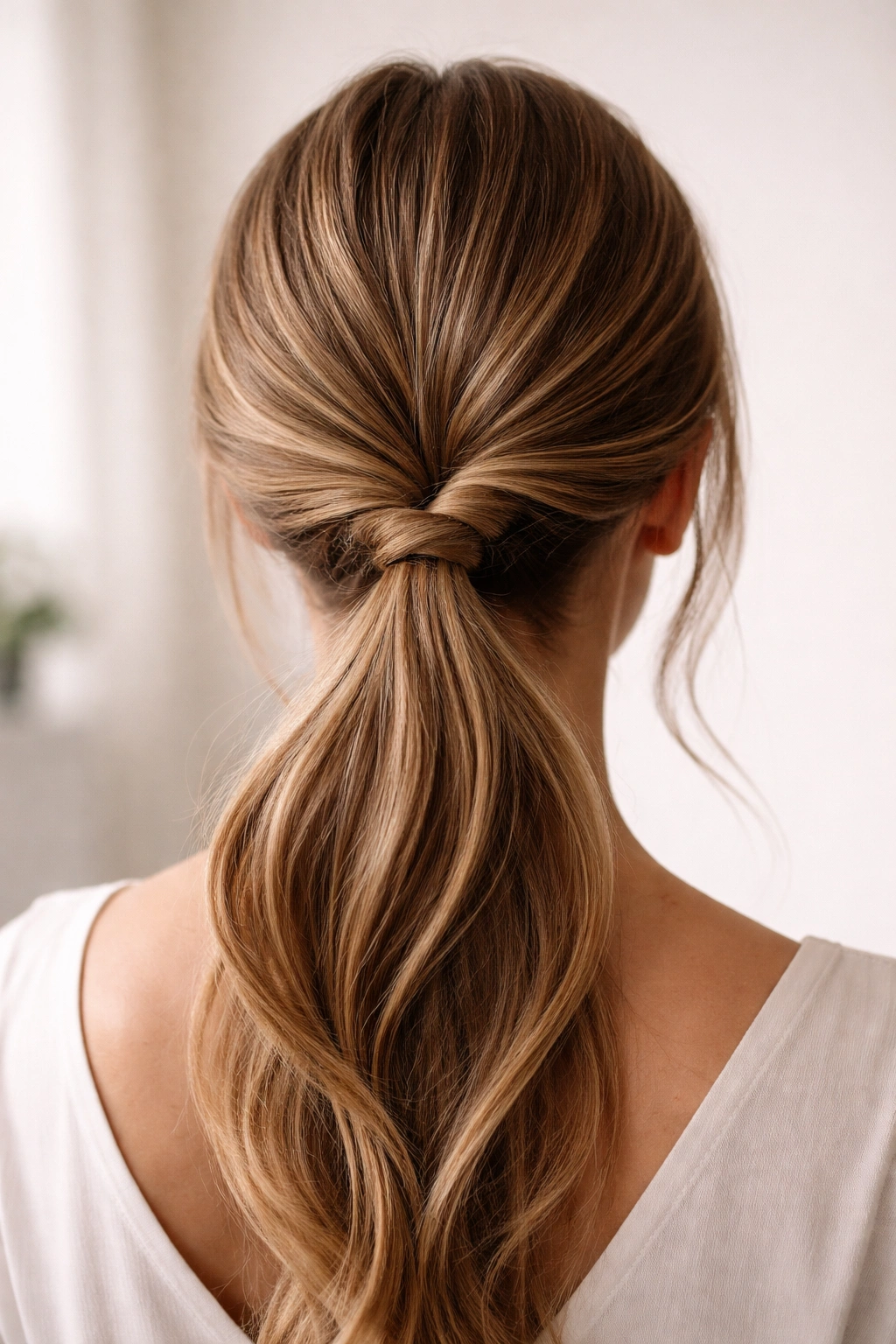
A double-twist is an easy way to add texture and complexity to the base of your ponytail without needing to braid. It creates a spiraled, elegant look that makes a basic ponytail appear much more intricate than it actually is. It is perfect for when you want a “polished but not too done” vibe.
The Twisting Process
Divide your hair into two sections at the back of your head. Twist the left section away from your face and hold it. Twist the right section away from your face. Cross the two sections over each other so they begin to intertwine, then bring them together into a single low ponytail at the nape of your neck. Secure with a strong-hold elastic. You can slightly pull at the twists to loosen them, giving the base a thicker, softer appearance.
16. The Sleek High-Gloss Look
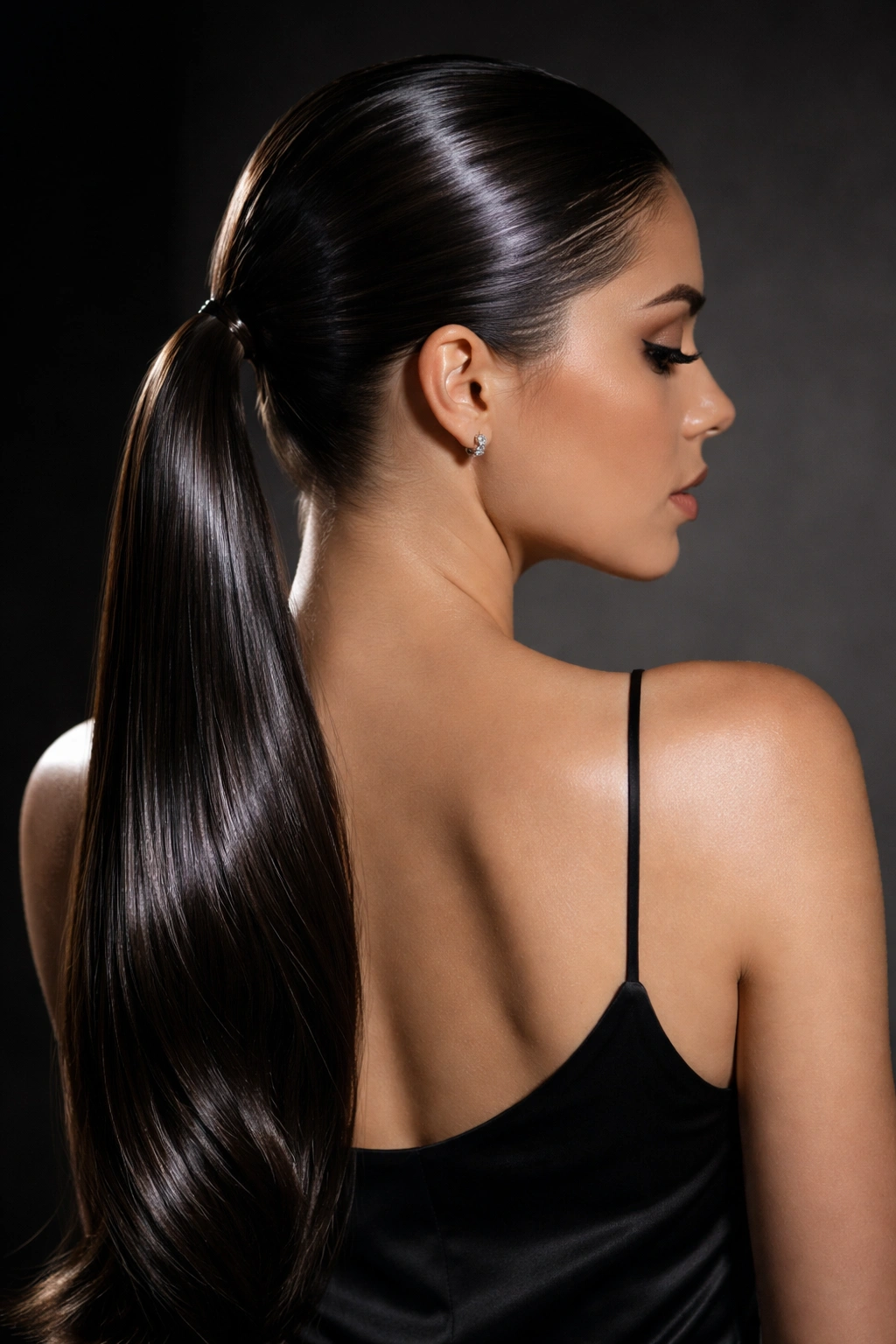
This style is for when you want to make a statement. It is the “wet look” refined for a low ponytail. It requires a high-quality styling gel or a strong-hold pomade to achieve that mirror-like finish. This is a very popular look for evening events or when you want your hair to look exceptionally healthy and well-groomed.
Achieving the Shine
Start with dry hair. Apply a generous amount of styling gel to the roots, using a boar-bristle brush to distribute it evenly and pull the hair back tight. You want the hair to be perfectly smooth against your scalp, with zero bumps or flyaways. Once the ponytail is secured, run a tiny bit of hair oil through the length of the tail to boost the shine. The contrast between the matte, controlled roots and the glossy, flowing length creates a very sophisticated and high-contrast look.
17. The Boho Knot Pony
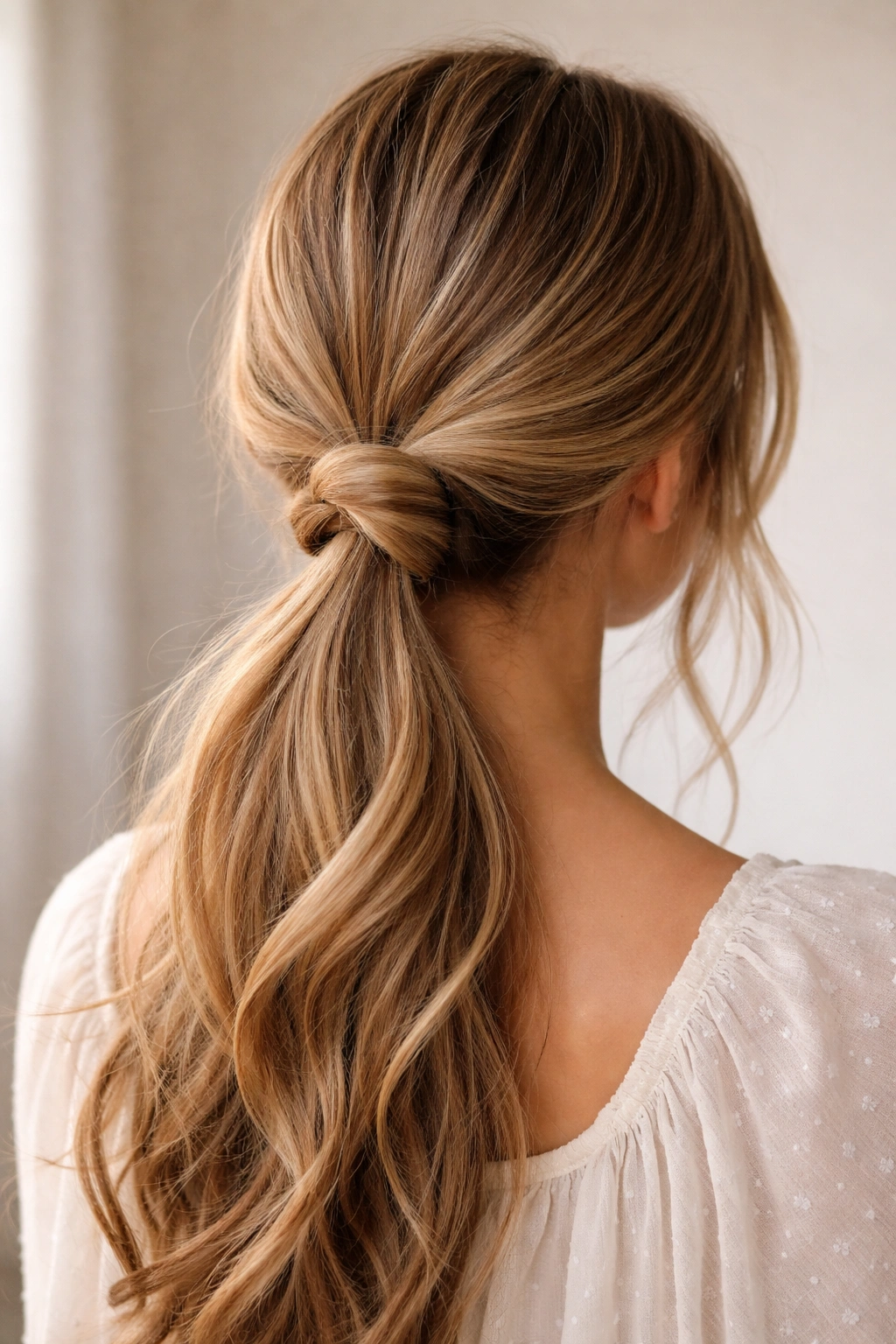
A knot is a fun, textured alternative to a twist or a braid. It has a slightly more “undone” feel that works perfectly for casual days. By knotting your hair, you are essentially creating a sculptural element at the base of your ponytail that holds its own shape.
Knotting Your Strands
Separate your hair into two sections at the nape of your neck. Tie them together in a simple overhand knot—the kind you’d make with a shoelace—and then tighten it gently so it sits flush against your scalp. Secure the ends of the knot with a clear elastic tucked underneath the pony, or use bobby pins to keep the knot from unraveling. This style looks best when the hair has a bit of natural wave to it, as the texture helps the knot hold together better than it would on pin-straight hair.
18. The Pearl-Studded Style
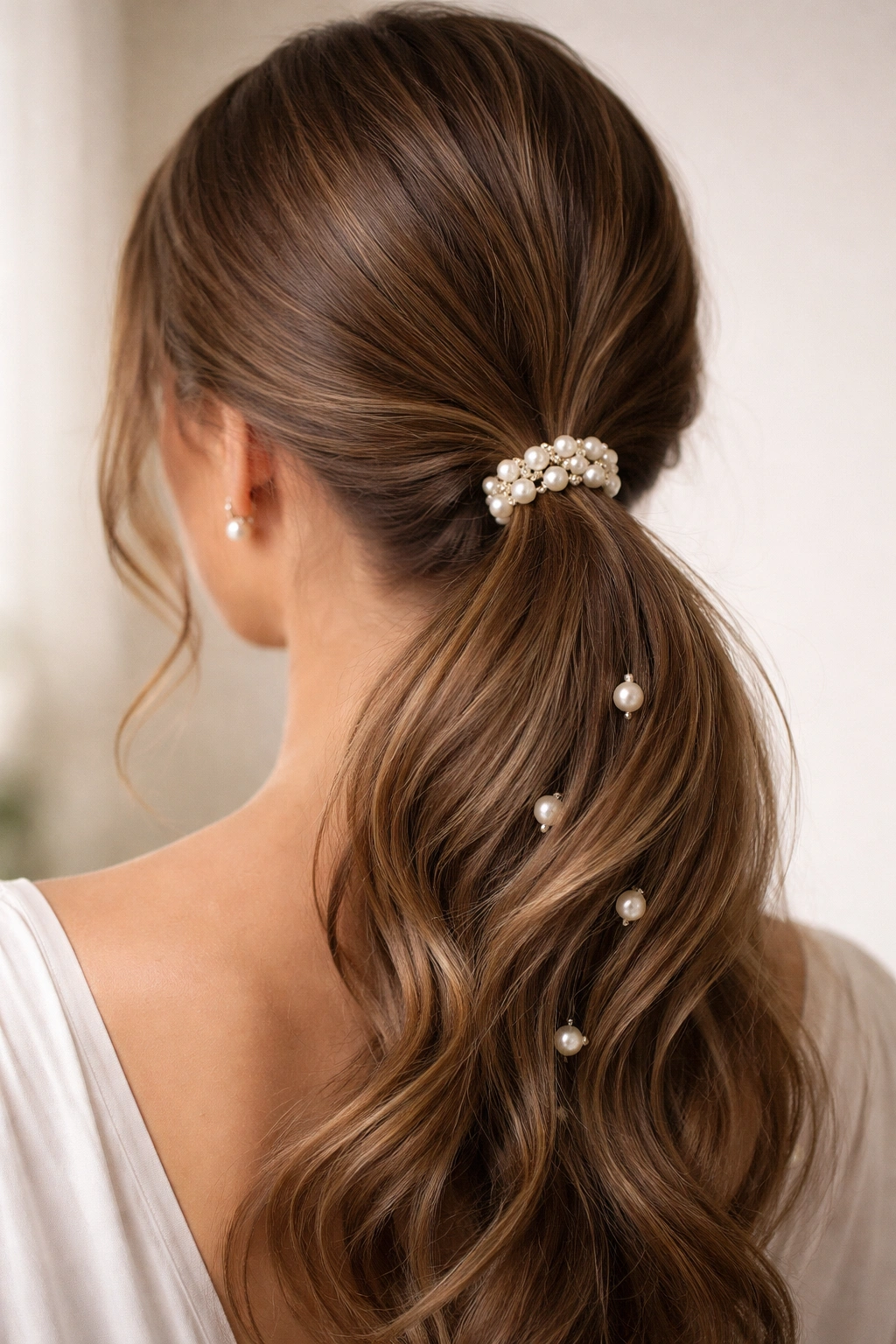
Hair accessories have evolved far beyond the humble hair tie. Pearl-studded pins or pearl-encrusted elastic bands are a fantastic way to turn a low ponytail into a formal style. The key here is balance; if you use a lot of pearls, keep the rest of the style simple.
Placement Matters
If you are using pearl bobby pins, insert them into the base of the ponytail or scatter them along the length of the tail. If you are using a pearl-adorned elastic, place it at the base. Because pearls reflect light, they add a beautiful, soft luminosity to the hair. Ensure your ponytail is smooth and controlled, as the pearls provide a refined, classic aesthetic that works best when the hair itself is not looking too messy or disheveled.
19. The Low Side Sweep
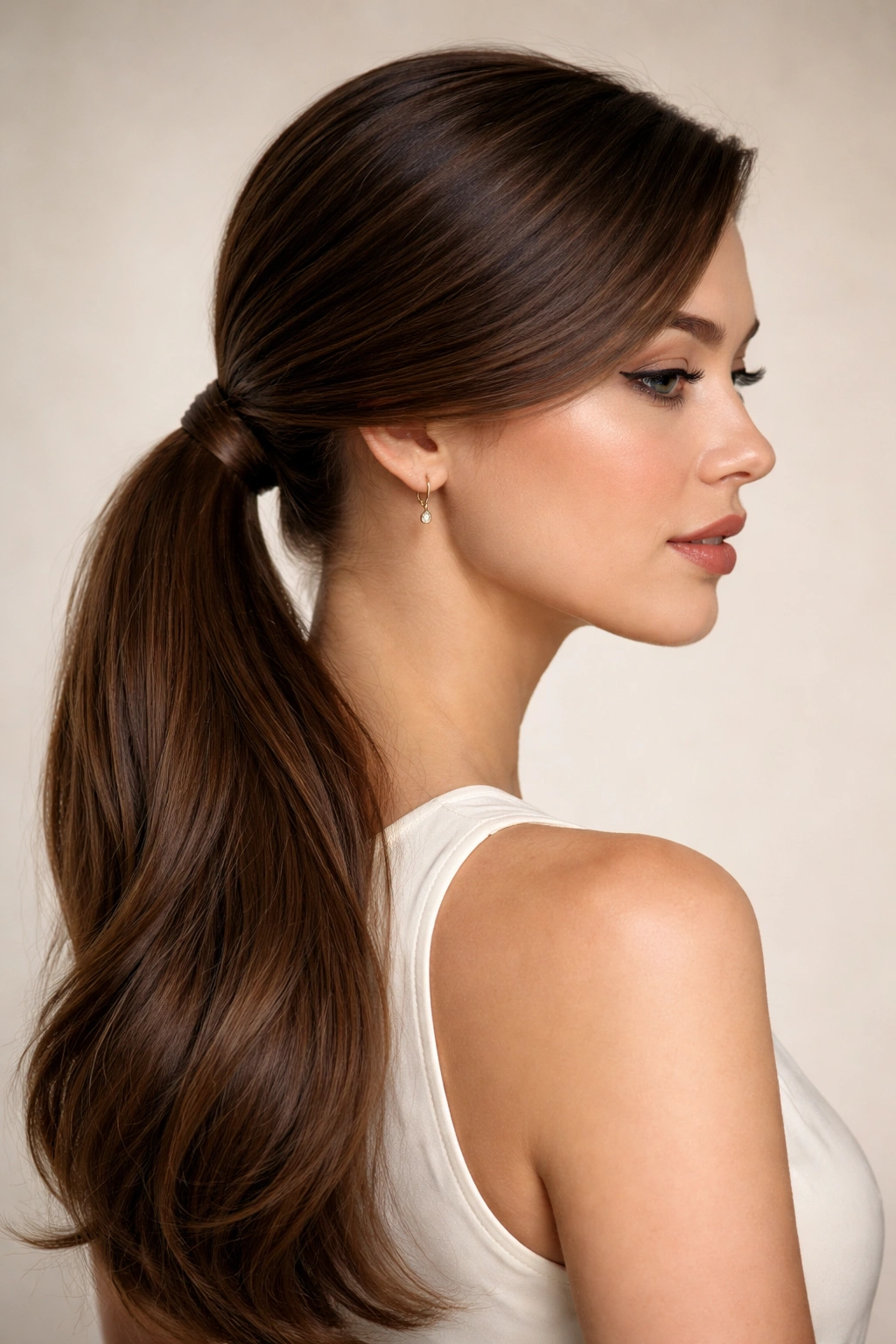
Unlike the loose romantic side pony, this version is more about a structured, clean sweep. It’s a great way to show off a dramatic side part and keep all your hair over one shoulder, which is both practical and stylish. This is a classic look that has stood the test of time because it frames the face so beautifully.
Directing the Flow
Start by creating a deep side part. Sweep all your hair to the side you prefer. Instead of pulling it back into a standard pony, ensure all the hair stays to the side as you secure it at the nape. If your hair is very long, you might want to use a slightly larger, stronger elastic so the weight of the ponytail doesn’t cause it to droop or shift during the day. The hair on the side opposite the part should be tucked neatly behind your ear for a clean, sophisticated profile.
20. The Tucked-In Loop Ponytail
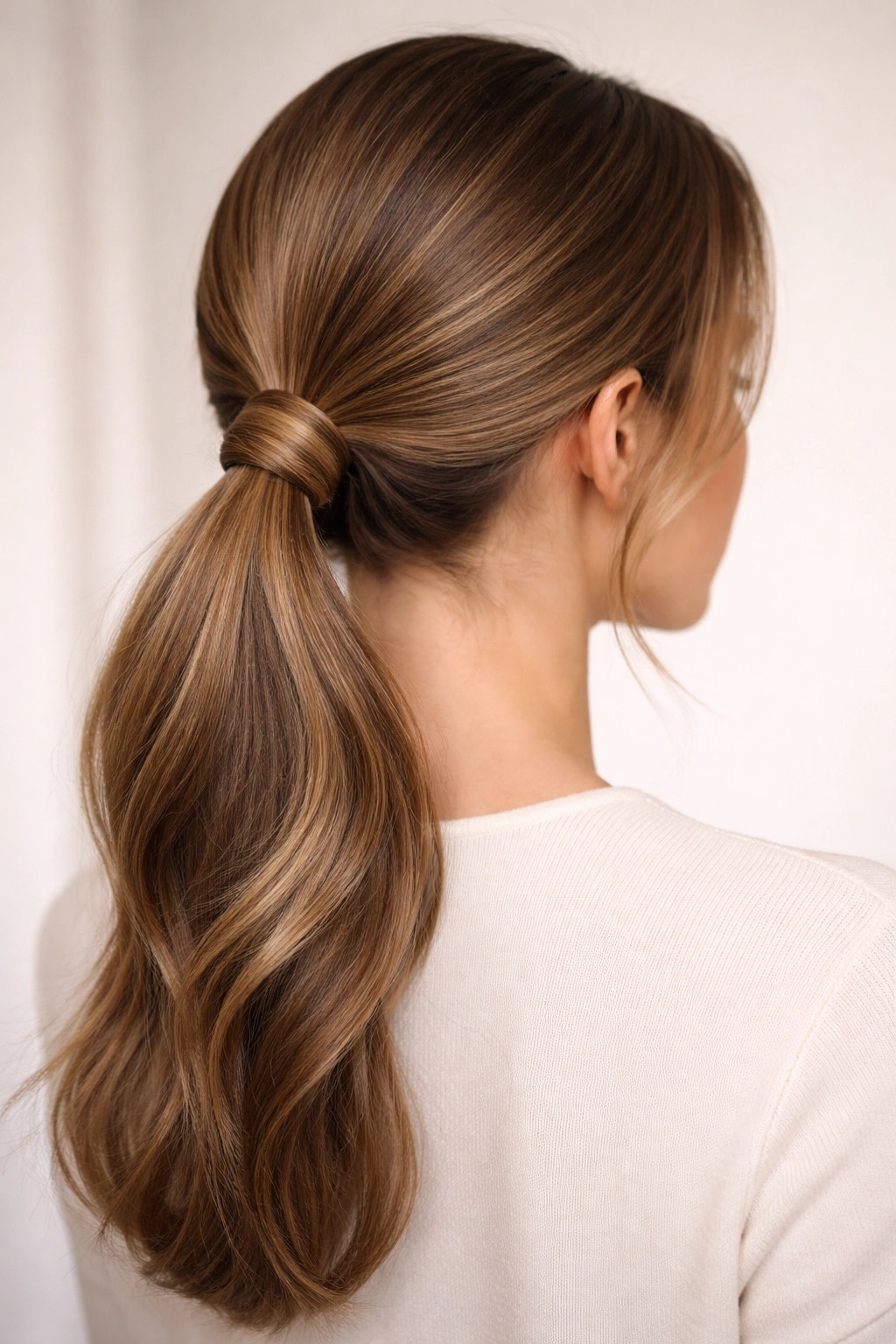
This is a classic technique often referred to as a “topsy-tail,” but updated for a more modern, minimal look. By creating a loop at the base, you tuck the bulk of your hair inward, creating a sophisticated, rounded shape that looks like a mini-chignon but with the length of a ponytail hanging below.
The Tucking Motion
Secure your ponytail with a small elastic, but leave it just slightly loose. Use your fingers to create a hole in the hair right above the elastic. Grab your ponytail and flip it up and through that hole. Pull the tail through until it’s tight. This creates a twisted, knotted effect at the base that hides the elastic and adds instant volume. It is a very simple trick that makes a ponytail look significantly more styled with almost no extra effort.
21. The Crown Braid Integration
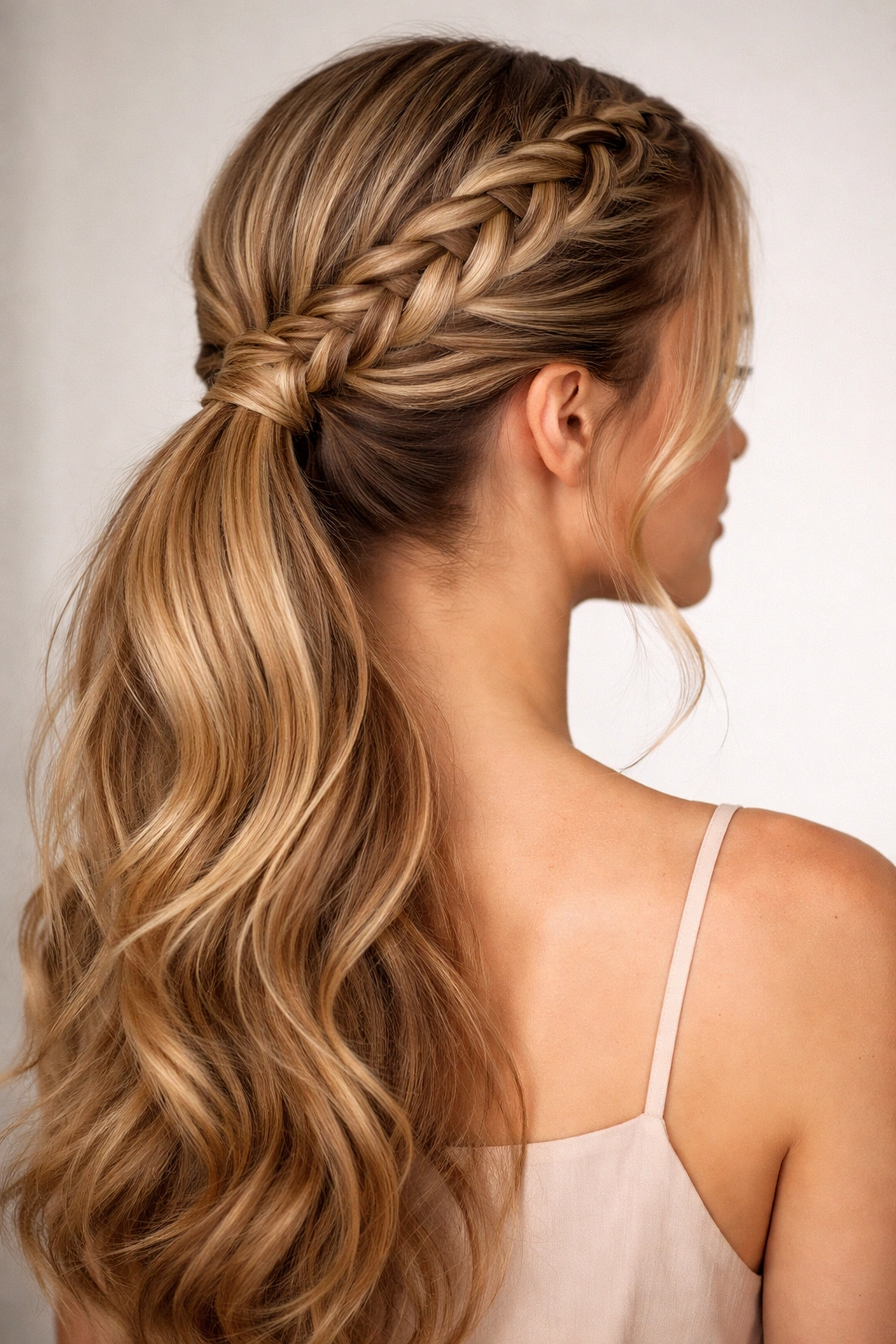
Why stop at the ponytail? Incorporating a braid along your hairline or crown into a low ponytail is the perfect way to add detail while keeping your hair off your face. This style is especially useful if you have shorter layers around your face that you want to keep under control.
Building the Crown
Start a French or Dutch braid near your part, working your way back toward the nape of your neck. Once you reach the nape, join the braid with the rest of your hair and secure everything into a low ponytail. The braid adds a sense of structure to the whole look. If you want a softer appearance, gently pull the braid apart (pancake it) after you’ve secured the ponytail to make it look fuller and more relaxed.
22. The Scrunchie Statement
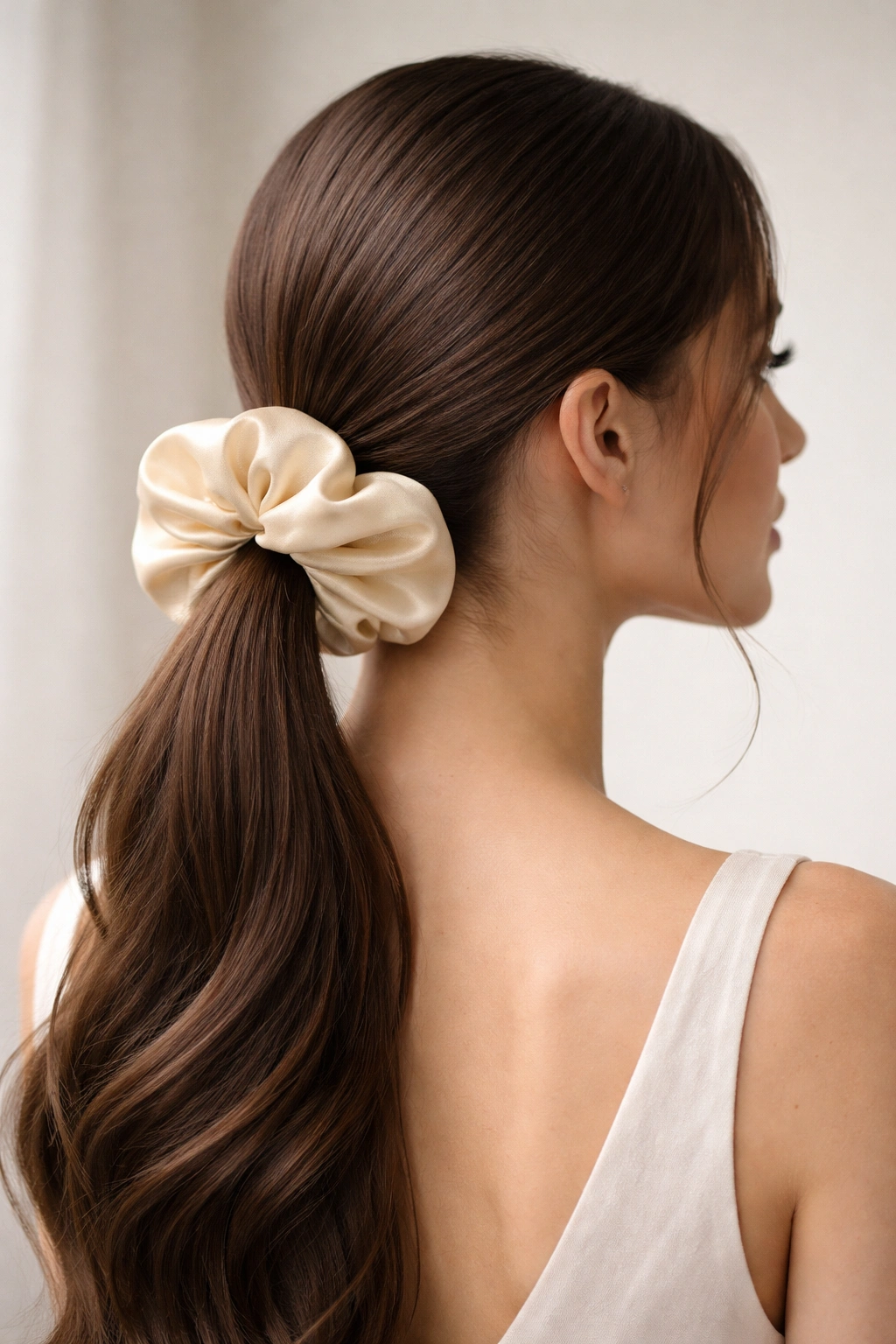
Scrunchies are no longer just for sleep or gym sessions. In silk, velvet, or linen, they are a powerful accessory. Using an oversized or textured scrunchie is the fastest way to turn a low ponytail from “bland” to “outfit-defining.”
The Rule of Proportions
When using an oversized scrunchie, make sure the rest of your hair is relatively sleek. If you have a messy, teased pony and an oversized scrunchie, the style can look a bit overwhelming. Let the scrunchie be the centerpiece. A simple, smooth low ponytail allows the fabric of the scrunchie to really stand out. Match your scrunchie to an element of your outfit—a color in your blouse or your shoes—to tie your entire look together effortlessly.
23. The Hidden Elastic Technique
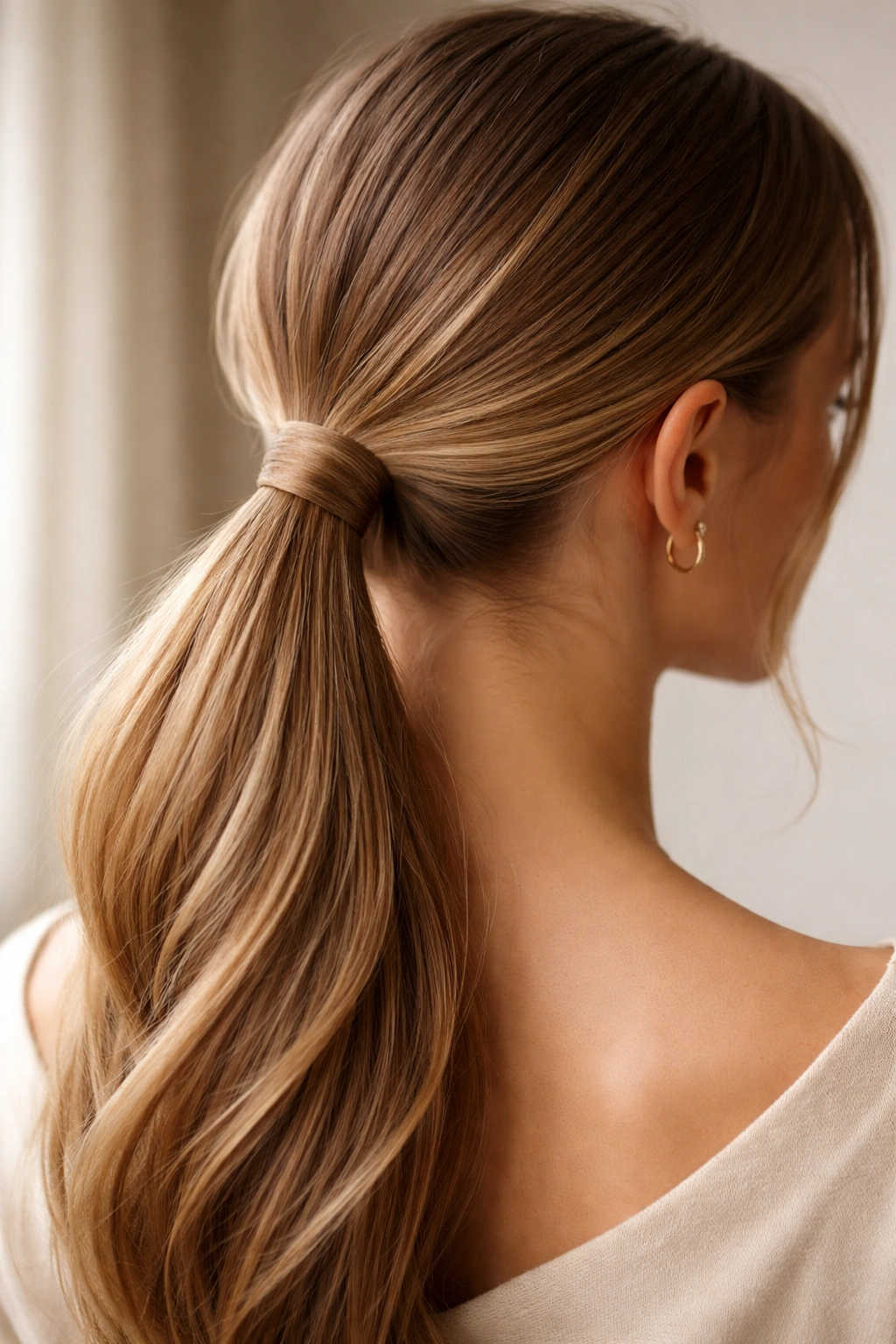
The “hidden elastic” is the hallmark of a professional-looking ponytail. It is the difference between a style that looks like you pulled it together in the car and a style that looks like you spent time on it. The technique is simple but highly effective for making any ponytail look more expensive.
Executing the Concealment
After you have secured your ponytail with a standard elastic, take a small, quarter-inch section of hair from the bottom of the ponytail. Wrap it around the elastic until the elastic is completely covered. Use a bobby pin to secure the end of the small section. Push the pin upward into the ponytail itself so it is hidden. This covers the rubber band and creates a seamless, wrapped look that is timeless and incredibly polished.
24. The Crimped Texture Pony
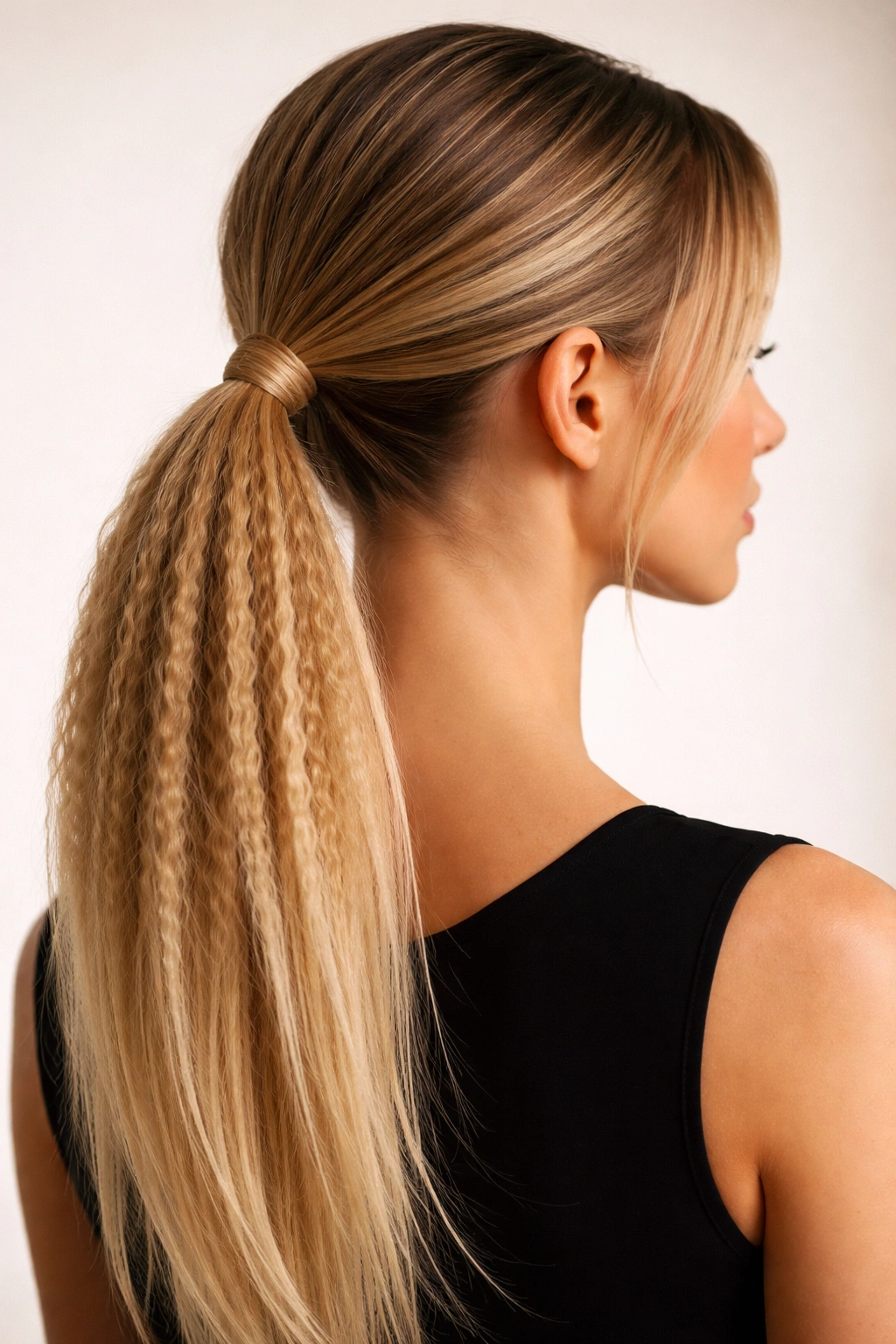
Texture is a powerful tool in hair styling. Crimping—a technique that was once synonymous with a certain era—has made a comeback as a way to add grit, volume, and a unique, lived-in feel to long hair. A crimped low ponytail is edgy and visually distinct.
Strategic Crimping
You do not need to crimp your entire head. Start by crimping only the mid-lengths of your hair, leaving the roots and the ends straight. This creates a concentrated band of texture that adds a surprising amount of volume. Pull the hair into a low ponytail and use your fingers to fluff the crimped sections. The contrast between the crimped mid-lengths and the straight ends adds a modern, almost avant-garde vibe that breaks up the uniformity of long hair.
25. The Triple-Sectioned Ponytail
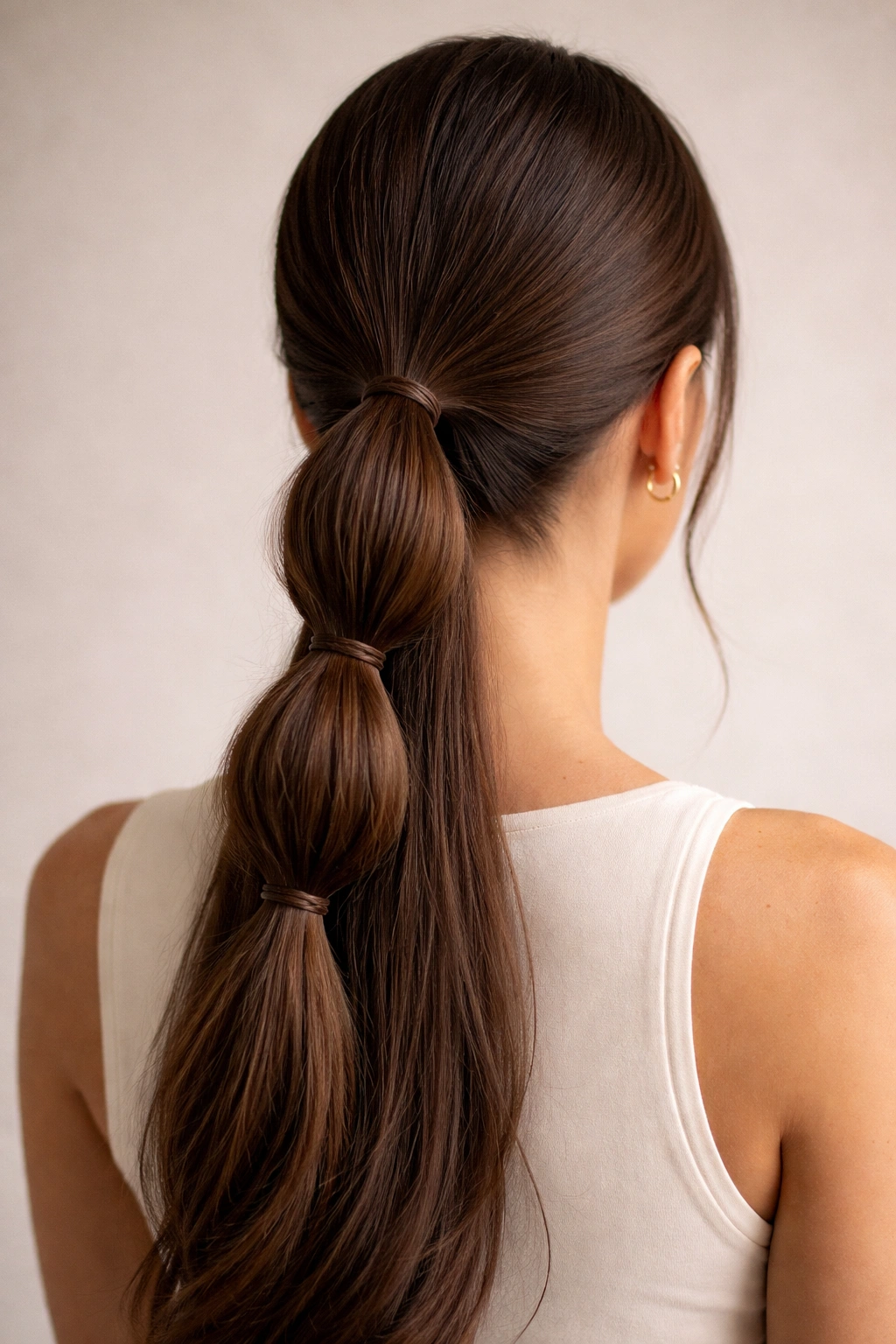
This is a slight variation on the bubble ponytail but relies on tight, separate sections rather than loose, rounded bubbles. It is a fantastic way to deal with very long, thick hair that tends to get tangled when left in a standard ponytail. It keeps the hair contained while looking intentional.
Segmenting the Length
Create your first low ponytail. Then, place an elastic two inches down. Take the next two inches of hair and place another elastic, then another two inches down, place a third. Between each elastic, gently pull at the hair to create a uniform, smooth cylindrical shape. This style keeps the hair incredibly organized and prevents it from whipping around in the wind, making it a great choice for windy days or active outings.
26. The Elegant Low Chignon-Pony Hybrid
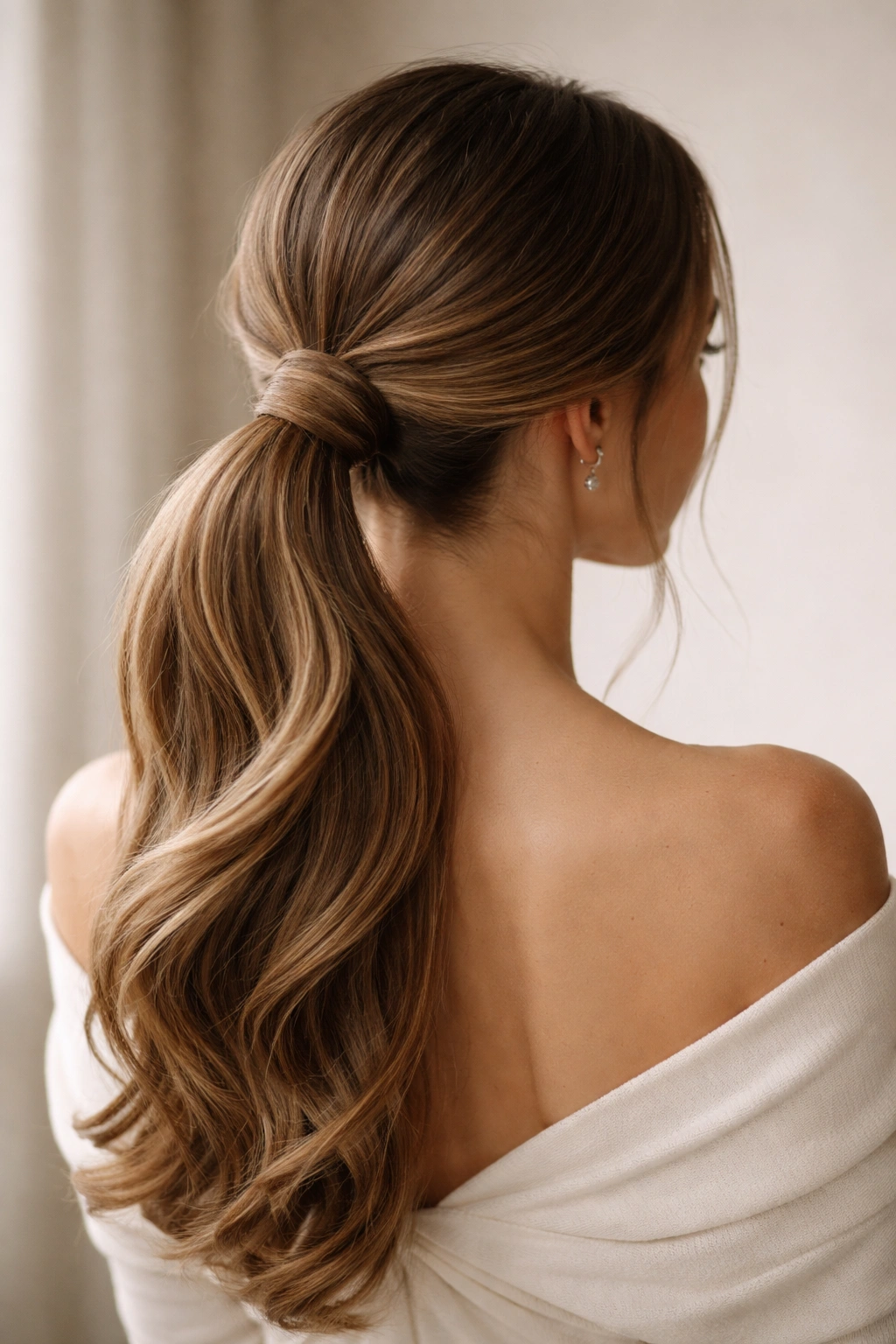
If you are torn between a bun and a ponytail, this hybrid is the perfect middle ground. It gives you the neatness of a chignon at the nape of the neck but allows the long ends of your hair to hang loose, showing off the length. It is sophisticated, balanced, and perfectly suited for formal occasions.
The Hybrid Construction
Gather your hair into a low ponytail. On the final loop of your elastic, do not pull your hair all the way through; pull it halfway, creating a loop or “bun” at the nape. Take the remaining length of the ponytail and wrap it around the base of the loop to hide the elastic. Secure with a bobby pin. This leaves you with a small, elegant bun at the base and a cascading tail of long hair hanging from it. It looks much more intricate than a standard ponytail and keeps the hair weight off your neck.
27. The Deep Side Part Drama
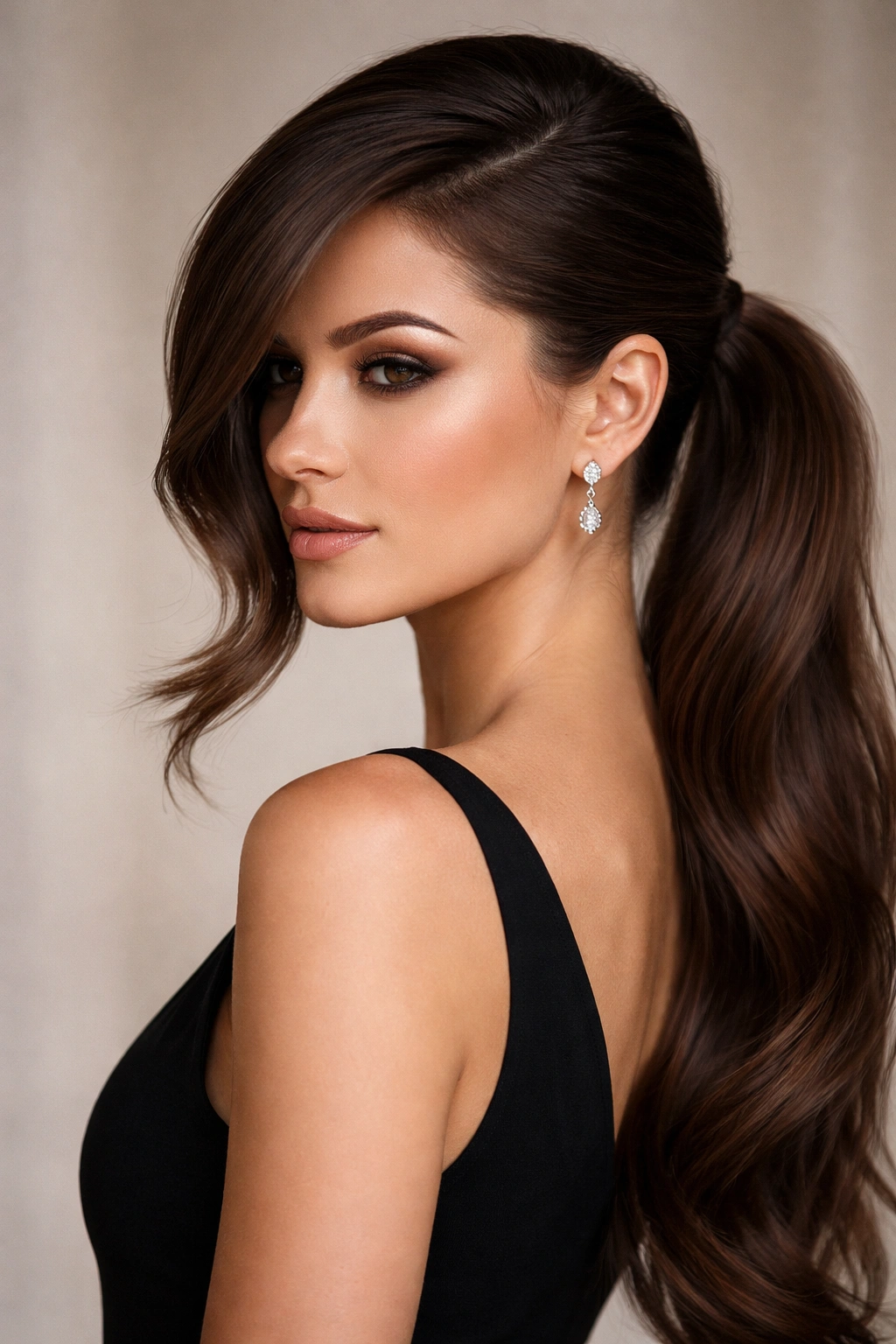
Sometimes, all you need to change a style is to move the part. A deep side part is inherently more dramatic and sophisticated than a center part. It sweeps a large section of hair across the forehead, which can be incredibly flattering, especially for round or square face shapes.
The Power of the Sweep
Use a tail comb to create a part that begins above the arch of your eyebrow. Sweep the larger section across your forehead before bringing it back into the low ponytail. Ensure the smaller side is pulled tight and clean. The weight of the hair sweeping across the forehead adds a sense of luxury and mystery. Because the hair is pulled back, the focus remains on the dramatic sweep, making this an excellent choice for a night out or a more formal event where you want to emphasize your facial features.
Final Thoughts
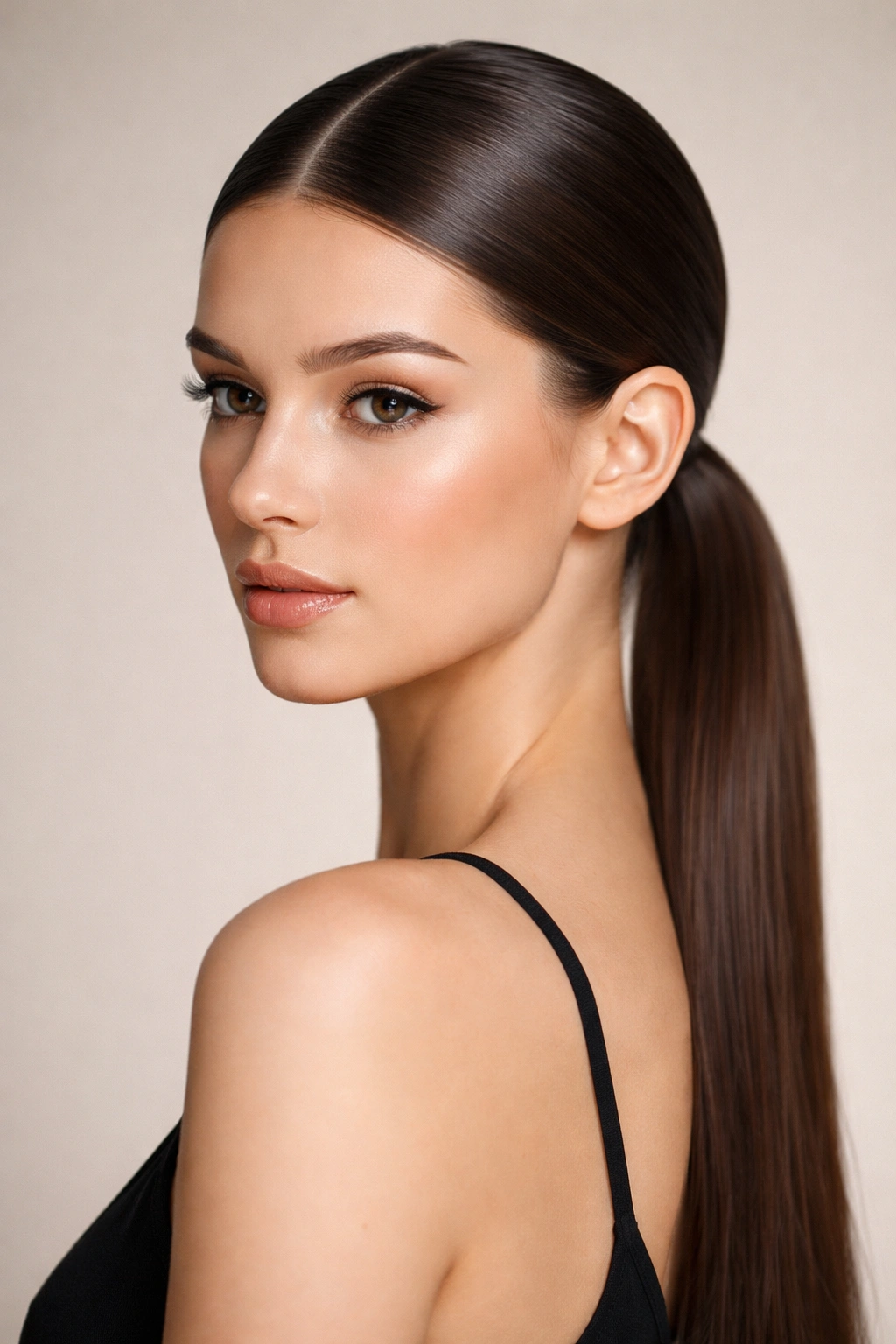
The beauty of the low ponytail lies in its adaptability. It is a style that respects the health of your hair by avoiding high-tension pulling, yet it offers infinite room for creativity through accessories, texture, and parting. Whether you are using a silk ribbon to add a soft, romantic touch or a metal cuff to create a sharp, modern line, the ponytail is never just a ponytail—it is a frame for your face and an extension of your personal style.
Do not worry about making every strand perfectly symmetrical. The most attractive ponytails are often the ones that look like they have a bit of life to them. Play with the tension at the crown, experiment with how tightly you secure the base, and do not be afraid to use product to get the texture you need. Long hair is an asset, and the low ponytail is arguably the most versatile way to show it off without the hassle of a full-blown updo.
