



A good swoop ponytail on locs does a few jobs at once. It clears the face, gives the hair a shape, and makes the whole style feel polished without asking your locs to do anything awkward.
That last part matters more than people admit. Locs have weight, movement, and a personality of their own, which is why a ponytail that looks neat in a mirror can feel completely different after an hour if the base is too tight or the front section is fighting the part.
The sweet spot is a style that respects the bulk of the locs and still gives you that clean side sweep across the forehead or temple. Some versions are sleek and sharp. Others are soft and loose. A few lean dramatic. All of them work best when the parting is intentional and the hairline isn’t being bullied into submission.
1. High Swoop Ponytail with a Deep Side Part
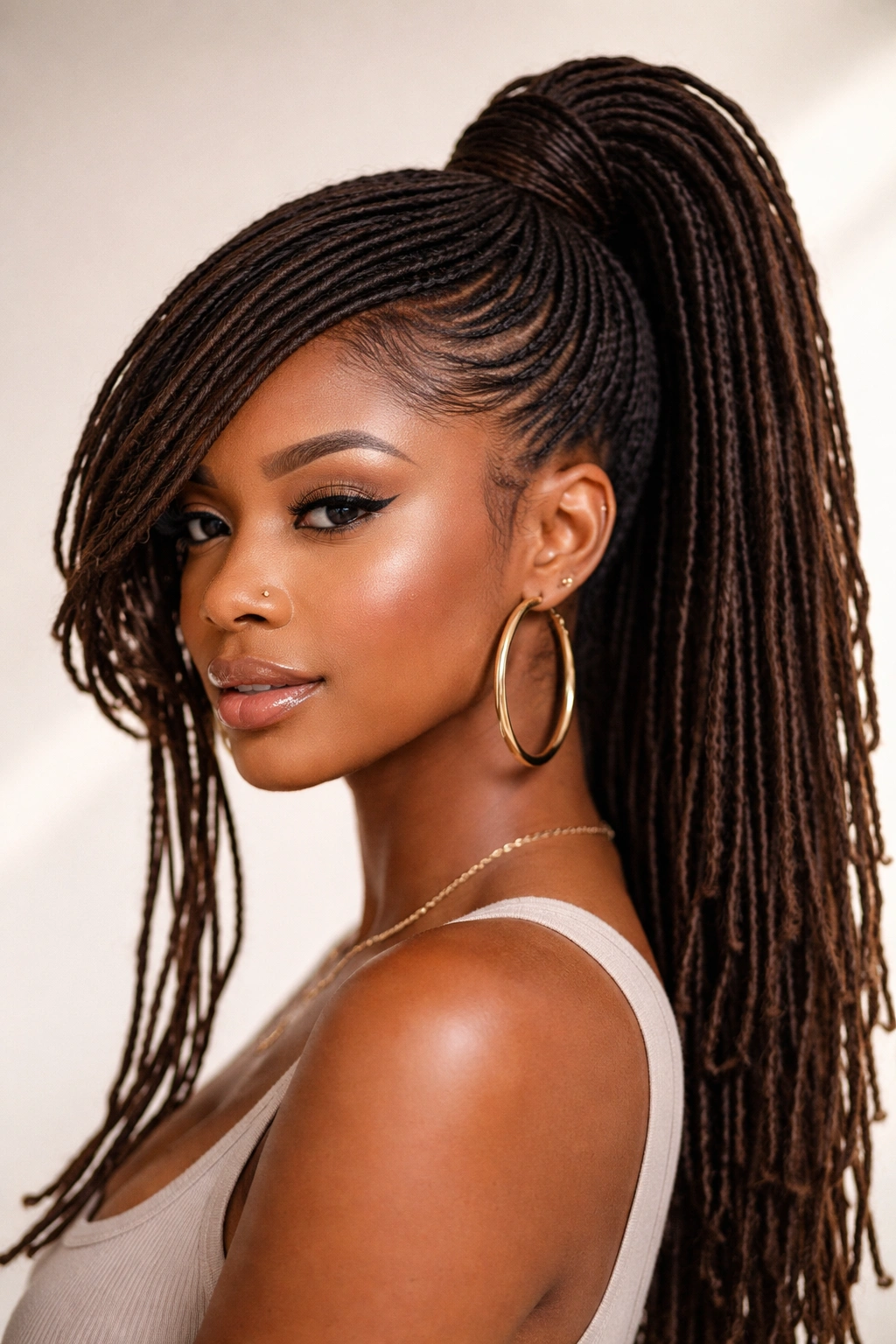
A deep side part gives a high ponytail real shape. Without it, the style can look like every other pulled-back look; with it, the whole face opens up and the front sweep becomes the star.
Why This One Keeps Getting Worn
The high placement lifts the locs off the neck, which is useful when you want movement and a little drama. The deep side part adds direction, so the style doesn’t feel like a plain top knot with locs hanging from it. It feels deliberate.
- Use a rat-tail comb to carve the part cleanly.
- Brush the front section toward the heavier side before tying the ponytail.
- Wrap one loc around the base if you want a cleaner finish.
- Keep the ponytail secure, but do not pull the front so tight that the temple area starts to crease or sting.
A style like this works especially well when your locs are medium to long and you want height without a full updo. The result is sharp, but not stiff.
Tip: If the swoop wants to puff up, smooth it with a small amount of mousse, then tie a satin scarf around the front for 10 minutes before you head out.
2. Low Swoop Ponytail at the Nape
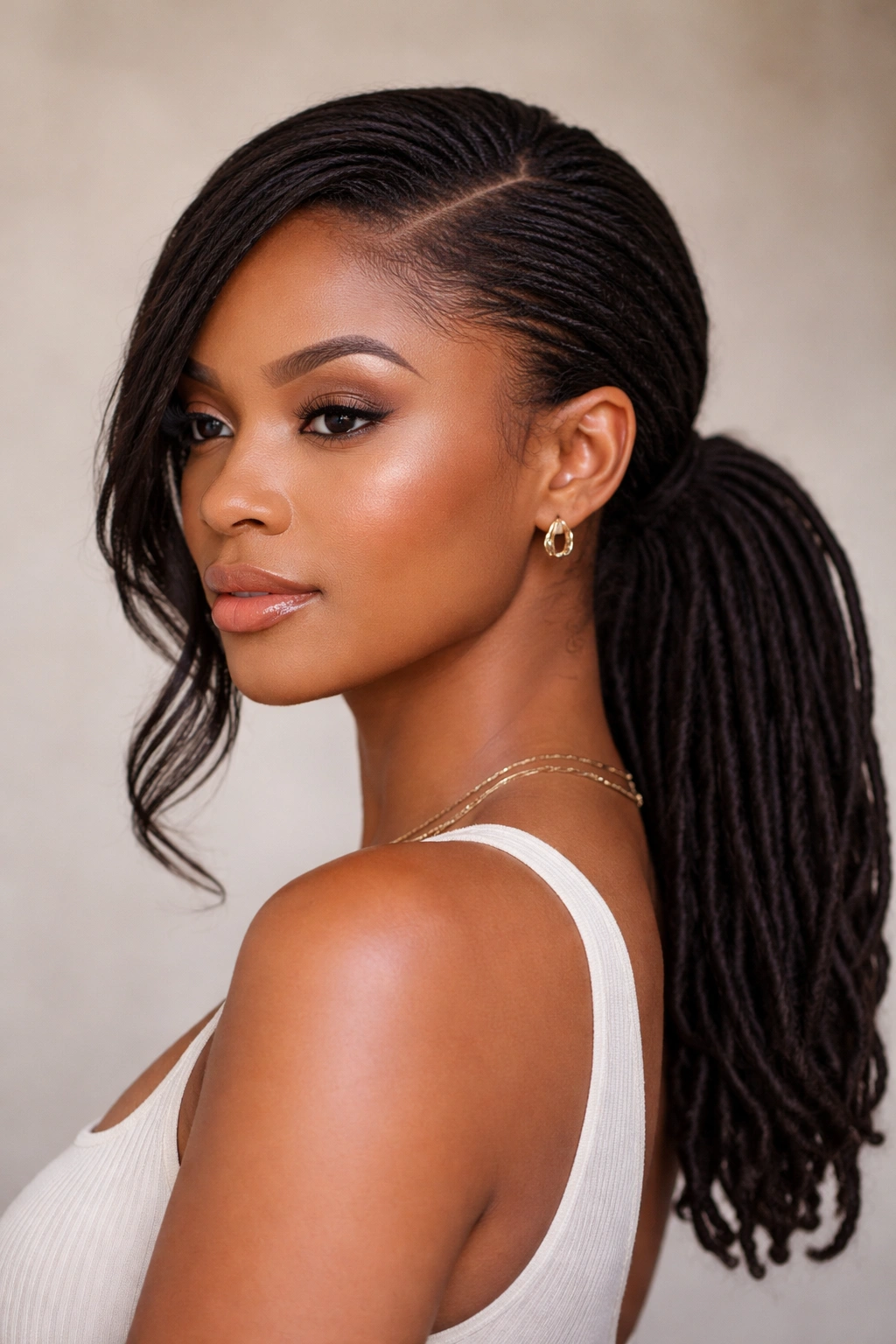
Want something softer? A low swoop ponytail sits closer to the neck and feels calmer right away.
The face-framing section can sweep across the forehead or skim the eyebrow line, which gives the style a gentle shape without pulling all the attention upward. That makes it easy to wear with simple earrings, a clean neckline, or a strong lip color.
This version is a good pick when your locs are thick and you want the weight to sit lower. The ponytail feels more grounded, and the front sweep usually stays in place better because it’s not fighting gravity as hard as a high version.
One small thing: the nape can get tender if the base is too tight. Keep the elastic snug, not strangling. Big difference.
3. Jumbo Loc Swoop Ponytail with a Wrapped Base
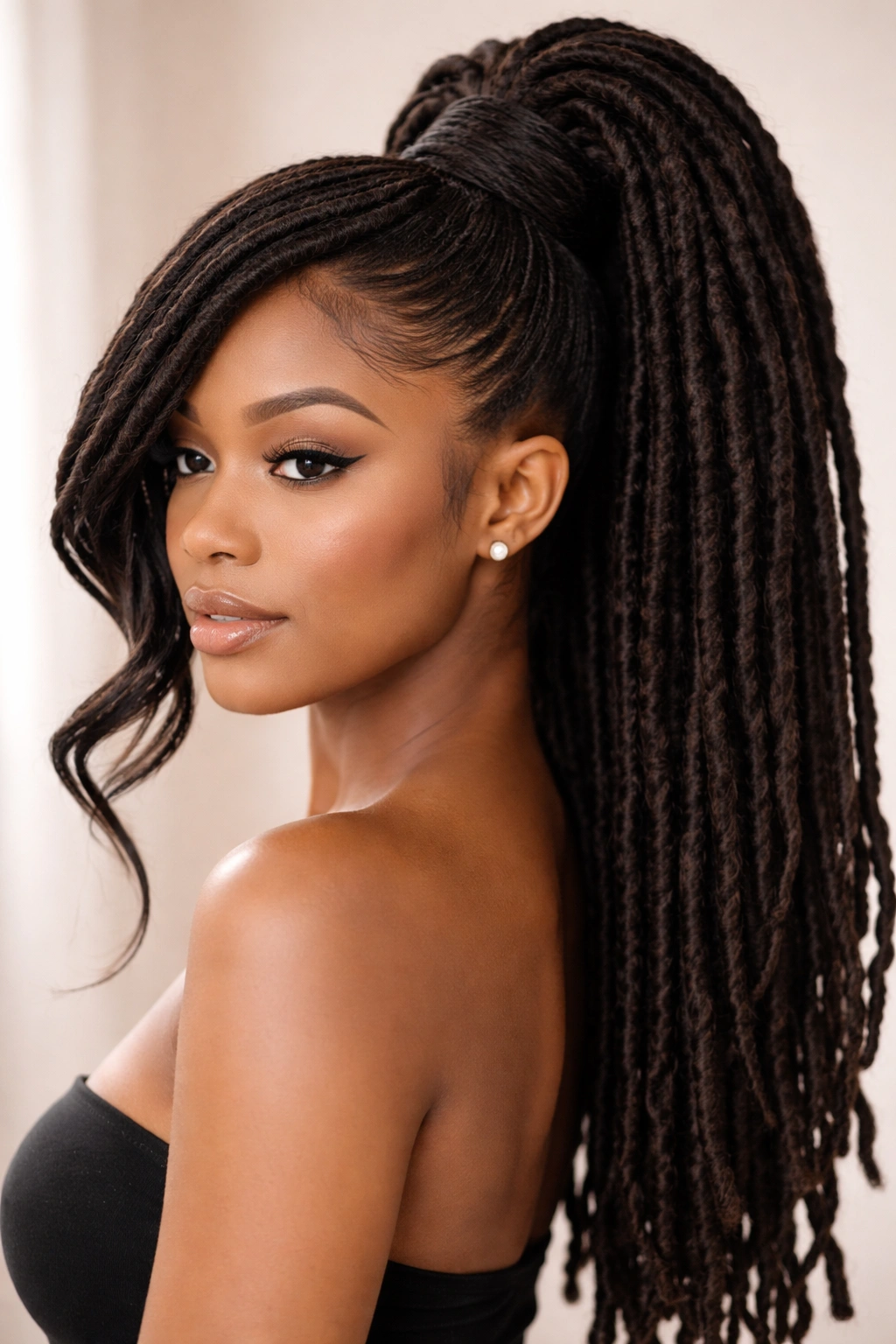
Thick locs look expensive when the base is wrapped well. That’s the whole story here.
A jumbo ponytail creates a heavier silhouette, so the wrapped base matters more than usual. Use one or two locs to cover the elastic, then pin them under the ponytail with bobby pins that match your hair. The finish looks cleaner and helps the style read as one piece instead of a bundle tied together in a hurry.
What Makes It Work
The front swoop should be wide enough to balance the size of the ponytail. Tiny side pieces get swallowed fast when the rest of the style is big. A longer, fuller sweep keeps the proportions right.
This is one of those styles that looks best when the locs have a little movement at the ends. Not frizzy. Just not over-controlled.
4. Half-Up Swoop Ponytail for Long Locs
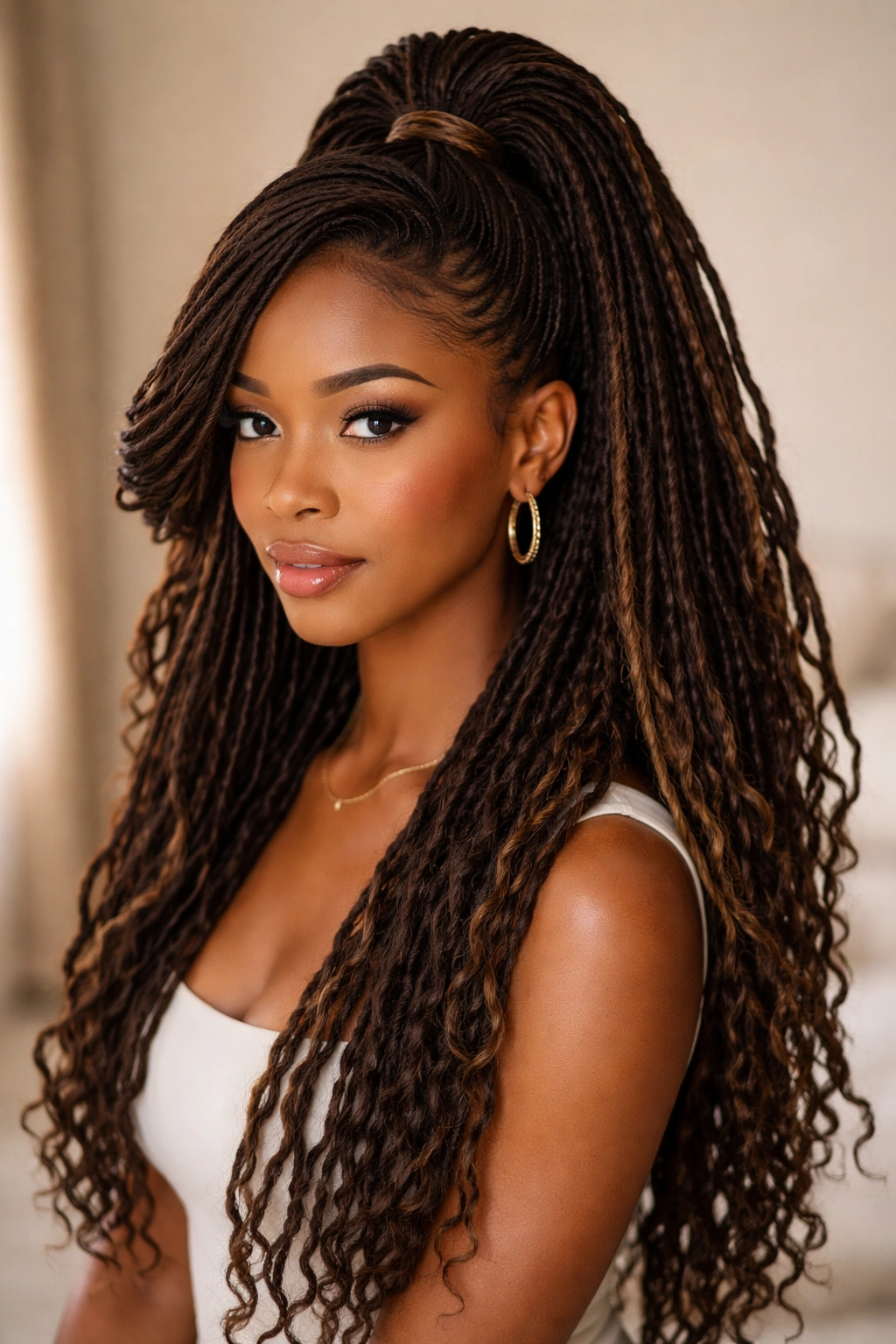
Half-up styles solve a problem people don’t always say out loud: sometimes you want your locs up, but not all the way up.
The top section gets gathered into a ponytail, while the rest hangs loose. That gives you lift at the crown and keeps some length moving around your shoulders. The swoop in front makes the top half look intentional instead of clipped together.
How to Keep the Lower Half from Fighting Back
Use a section that’s wide enough to hold its shape, usually from temple to temple and back to the crown. If the top section is too small, the ponytail disappears into the weight of the locs.
A satin scrunchie helps here because it grips without leaving a hard crease. And if your locs are long, pin the lower half away from the base so it doesn’t drag the top down by the end of the day.
It’s a good middle ground. Not too formal. Not too casual.
5. Center-Part Swoop Ponytail with Balanced Front Pieces
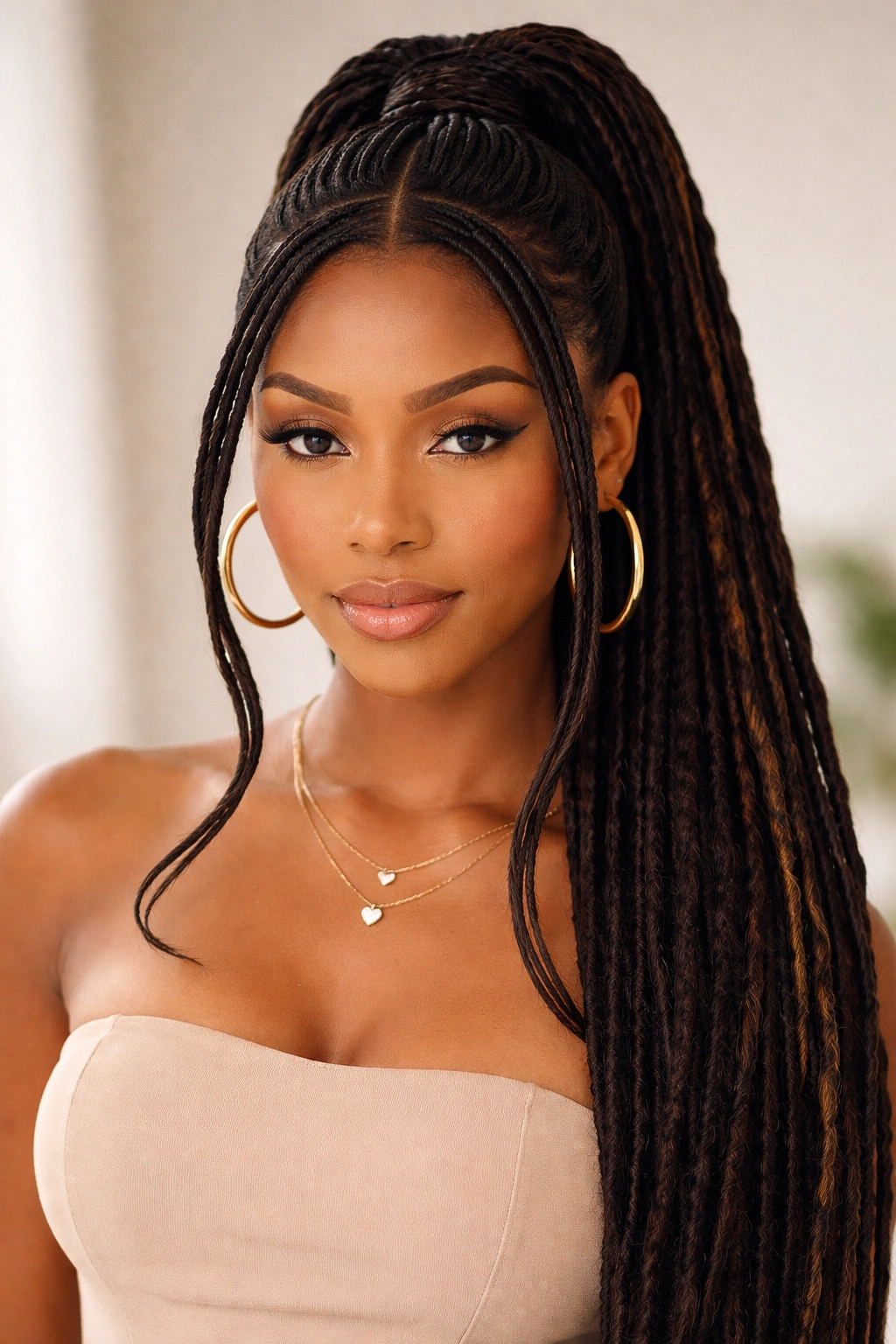
A center part changes the mood fast. Instead of one strong side sweep, you get two front sections that curve inward and then feed into the ponytail.
That symmetry can look very clean on locs, especially when the parts are straight and the front pieces are shaped with a comb before they dry. The ponytail itself can sit high, mid-height, or low. The part does the heavy lifting.
This style suits people who like neat lines and don’t want the whole look to lean too far to one side. It also helps when your face shape benefits from balance around the forehead and cheeks.
The trick is keeping both front sections even in thickness. If one side is heavier than the other, the style will feel off, even if you can’t explain why at first glance.
6. Braided Swoop Ponytail with a Flat Front
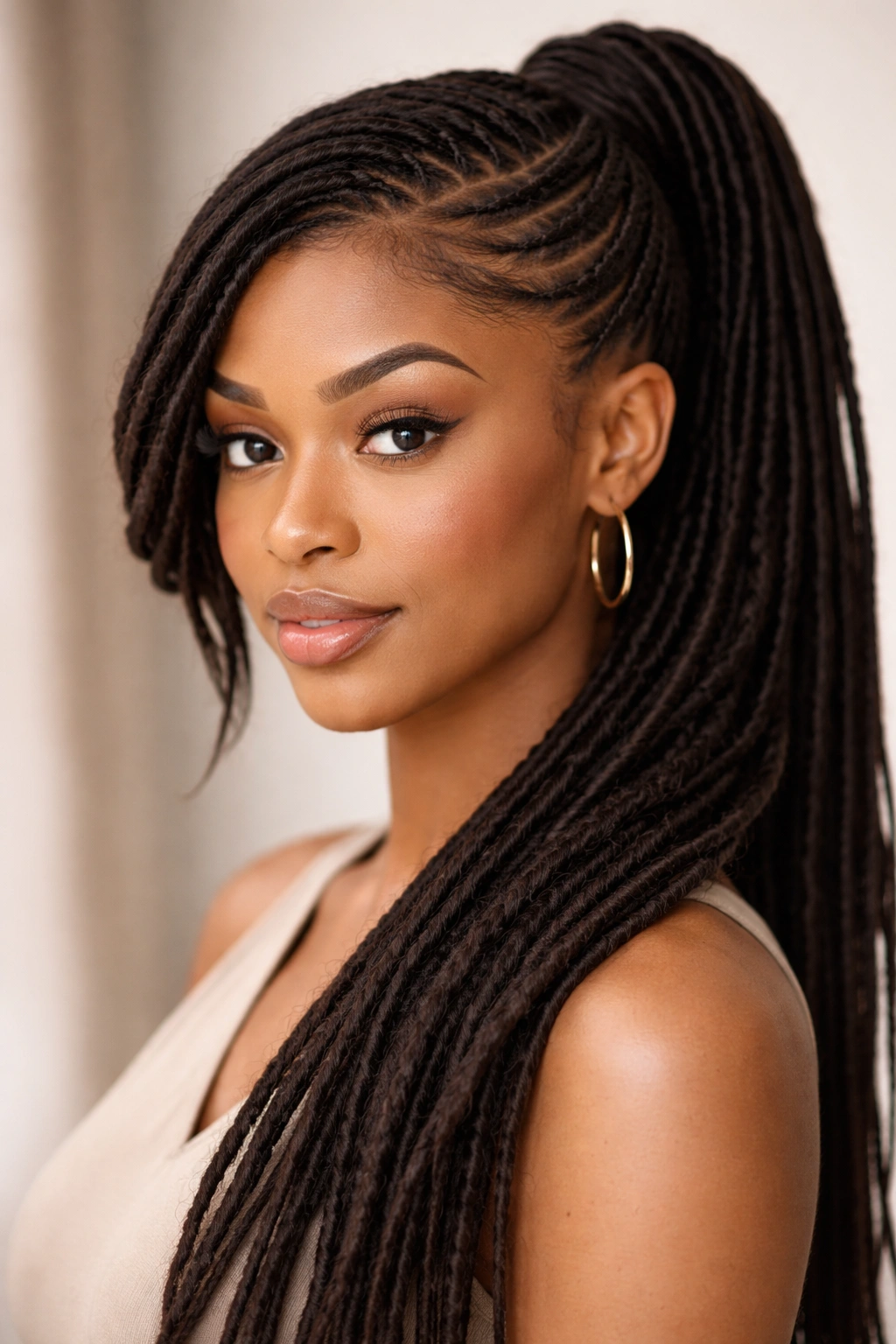
A braided front gives the swoop more control. Instead of just brushing the hair over, you braid one or both front sections close to the scalp, then feed them into the ponytail.
That’s useful when you want the front to stay neat for hours. Braids hold the direction better than loose styling, and they stop shorter locs from slipping out around the temples.
This version also has a little more texture at the front, which keeps the style from looking too slick. If you like contrast, this one does the job. Smooth base. Braided sweep. Full ponytail.
Take your time with the braid tension. Too loose and it puffs. Too tight and your scalp will tell on you before lunch.
7. Feed-In Cornrow Swoop Ponytail
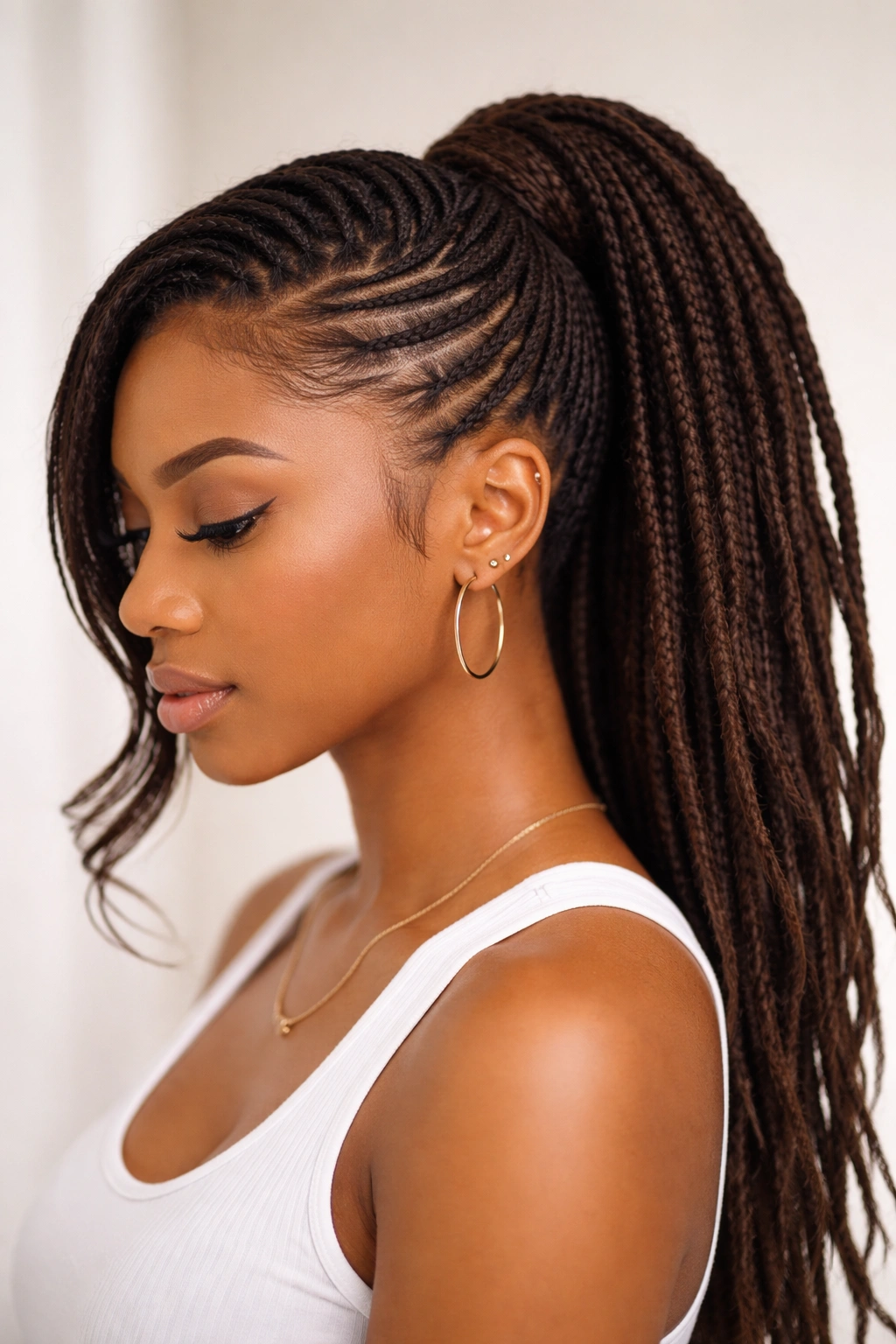
A feed-in base makes the style look built, not just tied up.
That matters because locs can get bulky fast. Small cornrows or feed-in rows along the front help flatten the hairline and guide the swoop into place before everything gets gathered at the back. The finish is neat, and the ponytail sits more securely because the front has structure.
Best on Medium to Thick Locs
- Start the feed-in rows with small sections so the front lies flat.
- Blend in your locs gradually rather than stuffing too much hair into the braid at once.
- Tie the ponytail low enough that the rows aren’t being pulled backward.
- Finish with a light mist of holding spray, not a heavy coat that flakes.
This style has staying power. It also gives you room to play with accessories later, because the base already looks finished.
8. Curled-End Swoop Ponytail
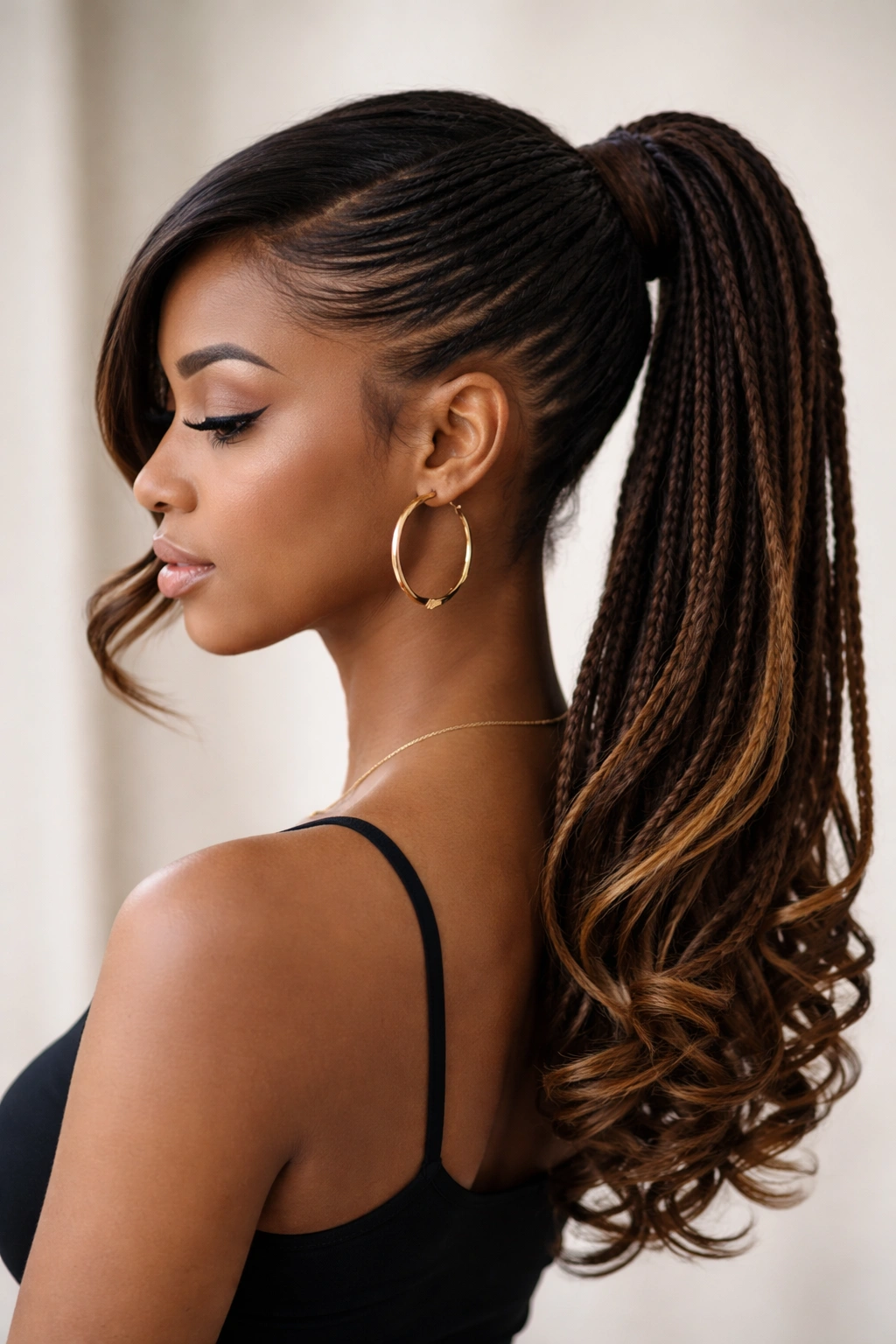
Straight ends can work, sure. Curled ends feel softer.
You can set the ends on perm rods, foam rollers, or flexi rods if your loc length allows it. A little bend at the bottom makes the whole ponytail look fuller and more styled, especially when the front swoop is sleek and the ends have some shape.
The contrast is what makes it appealing. The top is smooth and controlled. The bottom has movement. That combination keeps the look from becoming too severe.
If your locs are long, curl only the last few inches. That’s enough. Trying to curl the entire length can make the ponytail look overworked and stiff, which defeats the point.
9. Bubble Ponytail with Swooped Locs
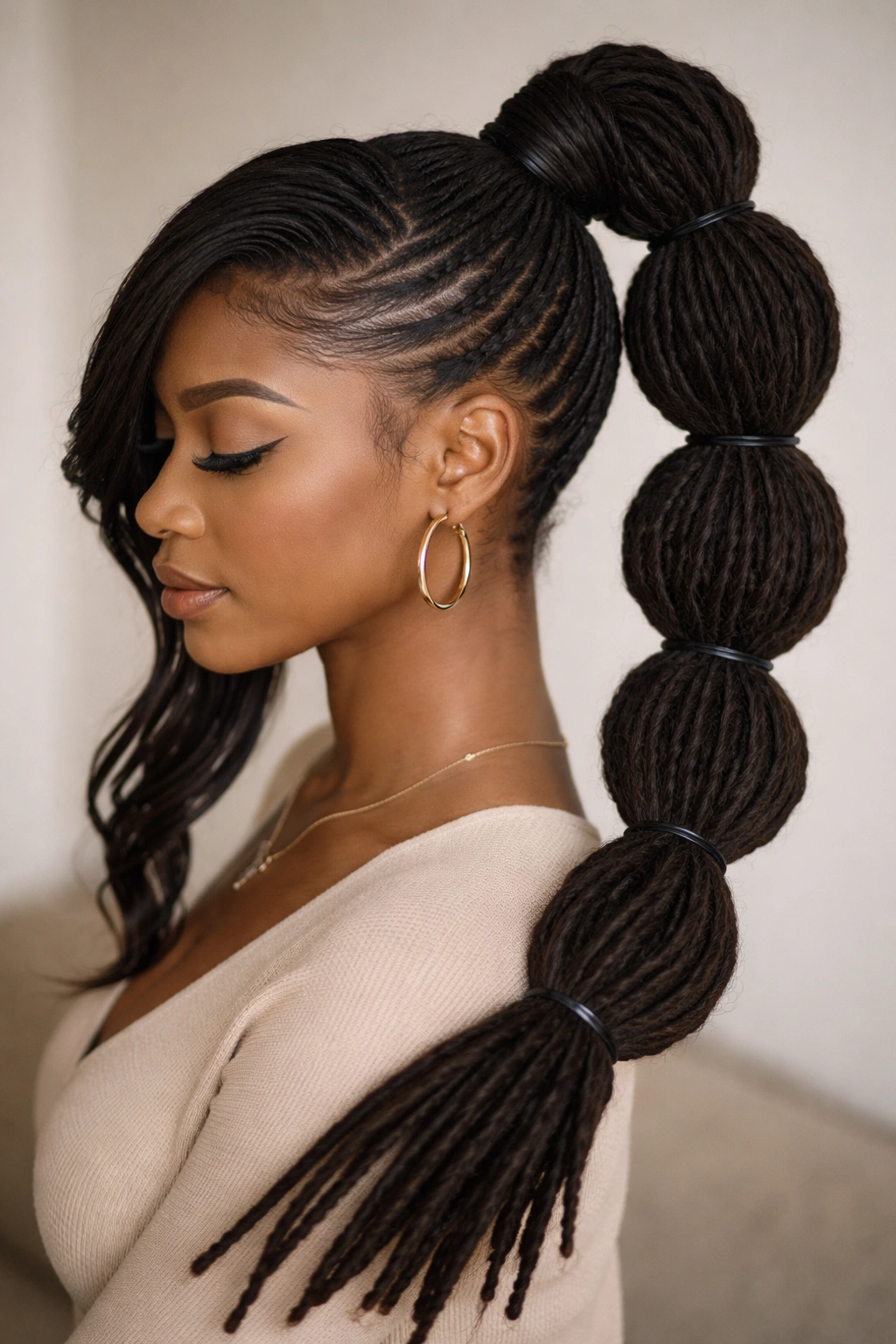
A bubble ponytail gives locs a fun shape without asking them to behave like straight hair.
The style uses several small elastics spaced down the length of the ponytail, creating rounded sections. With a swooped front, the look gets a polished top and a playful body. It’s a nice way to keep long locs contained while still showing off the thickness.
The surface should look slightly puffed between each elastic. If the bubbles are too tight, the style loses its charm. Too loose, and the sections collapse into each other.
This one works best when the locs are consistent in length. If you have a mix of shorter and longer locs, pin the shorter ones into the base first so the ponytail doesn’t get patchy halfway down.
10. Side-Swept Ponytail with Gold Cuffs
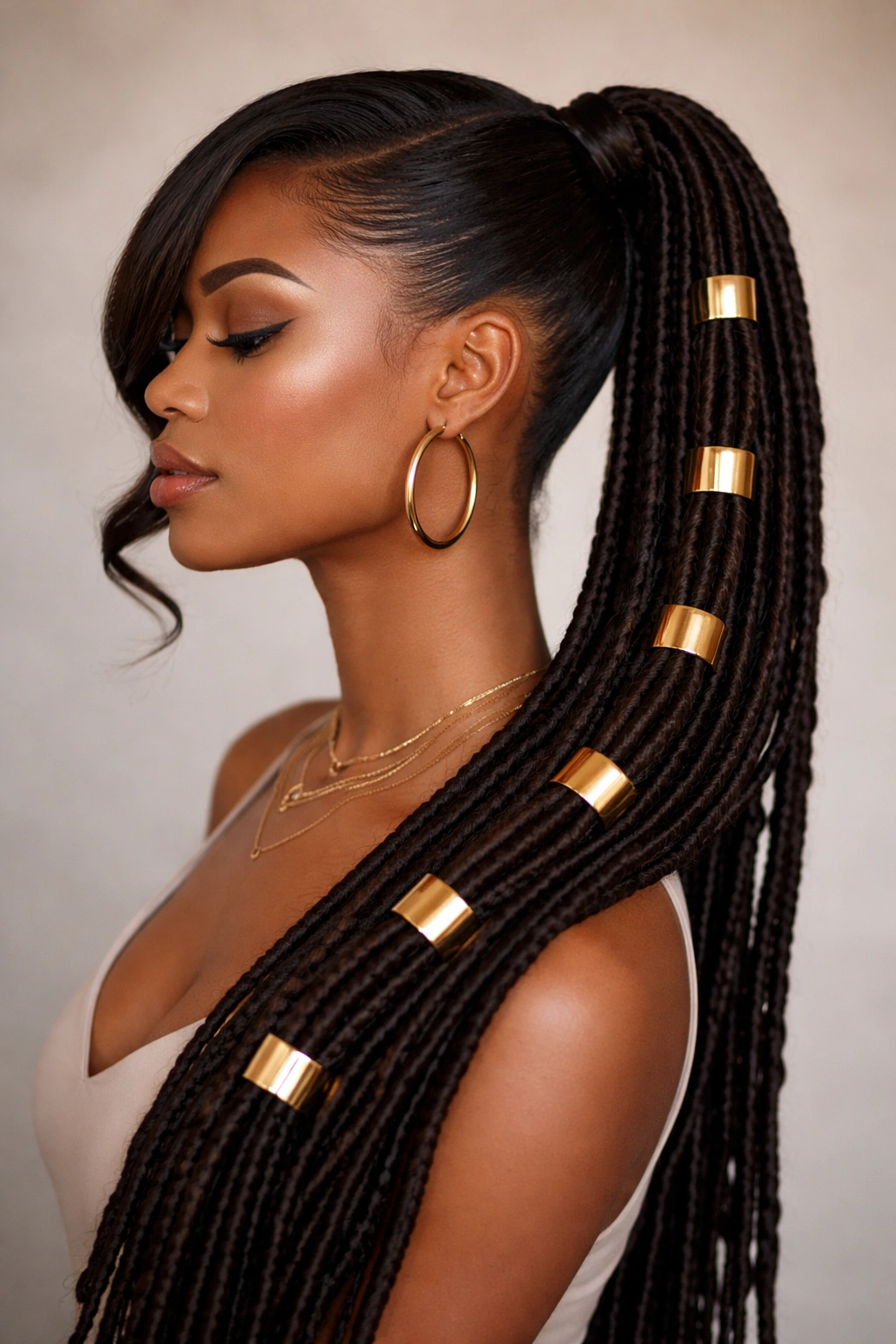
Gold cuffs change the tone fast. Suddenly the style feels dressed, even if the base is simple.
The side sweep gives the cuffs a place to shine without overloading the whole head. Put the accessories on the ponytail itself, not the front swoop, so the eye moves from the face to the length of the locs in one smooth line.
Where the Cuffs Should Sit
- Place the first cuff close to the base if you want a clean, tailored look.
- Space the next few cuffs evenly, about 1 to 2 inches apart, so the pattern doesn’t look random.
- Keep the front swoop plain if the cuffs are bold; too much happening at once can make the style look crowded.
This is a good option when you want the ponytail to do the talking. The accessories give it polish without adding much effort.
11. High Ponytail with a Twisted Swoop Fringe
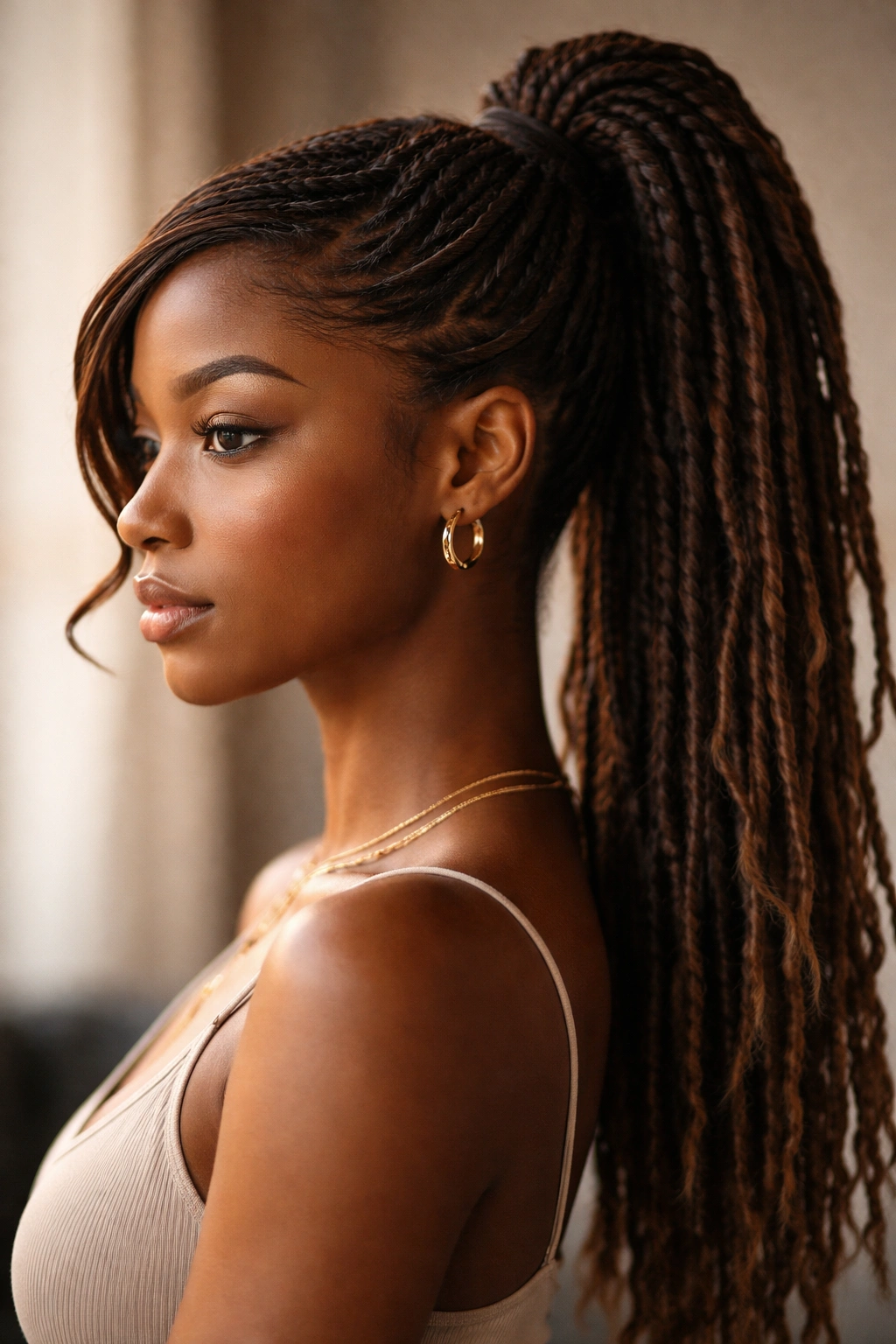
A twisted fringe gives the front of the style a little more shape than a simple brushed swoop.
Instead of leaving the front section flat, twist it softly away from the face before pinning or tucking it into the ponytail base. That creates a sculpted line across the temple and forehead, which reads as intentional even when the rest of the style is easygoing.
This version is especially nice when your locs are dense and you want the front to feel lighter. A twisted front can look cleaner than a heavy drape of hair, and it keeps the eye moving upward toward the ponytail.
Do not twist so tightly that the front starts to look ropey. The goal is smooth motion, not a hard spiral.
12. Scarf-Wrapped Swoop Ponytail
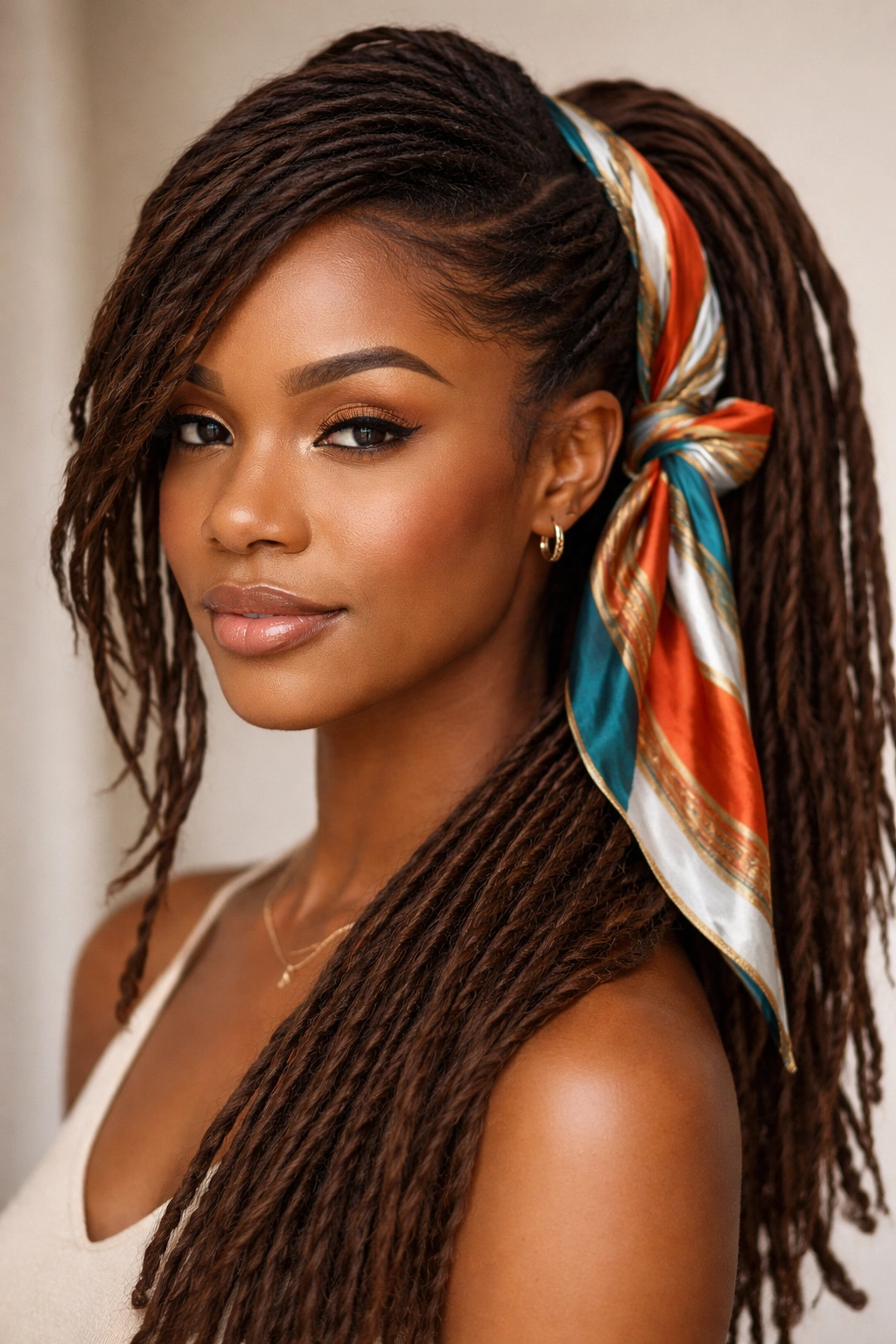
A scarf can save a style that feels a little plain.
Wrap a silk or satin scarf around the base, let the knot sit off to one side, and keep the swoop visible in front. That gives you color, texture, and a bit of personality without changing the whole structure of the ponytail.
When This One Makes Sense
- Use it on days when the front needs help staying in place.
- Choose a scarf with enough width to cover the elastic cleanly.
- Keep the rest of the locs loose so the scarf stays the focal point.
- Pick satin or silk if your hairline gets dry easily.
This style has a nice old-school feel. Not costume-y. Just thoughtful.
13. Asymmetrical Swoop Ponytail Over One Shoulder
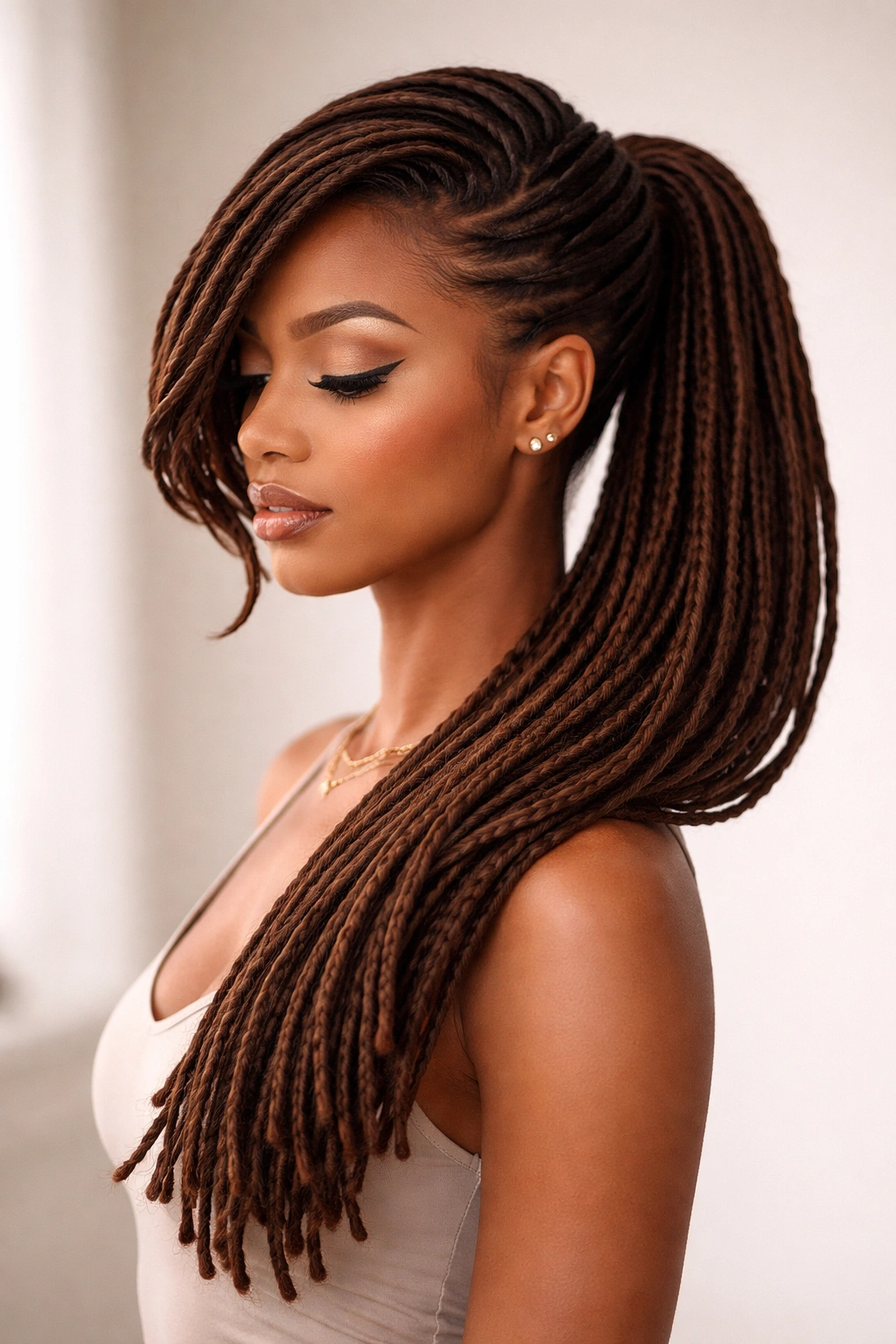
Not every ponytail needs to sit dead center.
An asymmetrical version lets the ponytail fall over one shoulder while the swoop pulls the eye the other way across the face. That push and pull creates motion, which is exactly why the style feels fresh without being loud.
It’s also practical. Wearing the locs over one shoulder keeps them from bumping the back of your neck, and it shows off the length in a way that a centered ponytail sometimes hides.
The key is keeping the base slightly off-center too. If only the length moves and the base stays straight down the middle, the style can look accidental. A small shift in placement changes the whole read.
14. Double Swoop Cornrows into One Ponytail
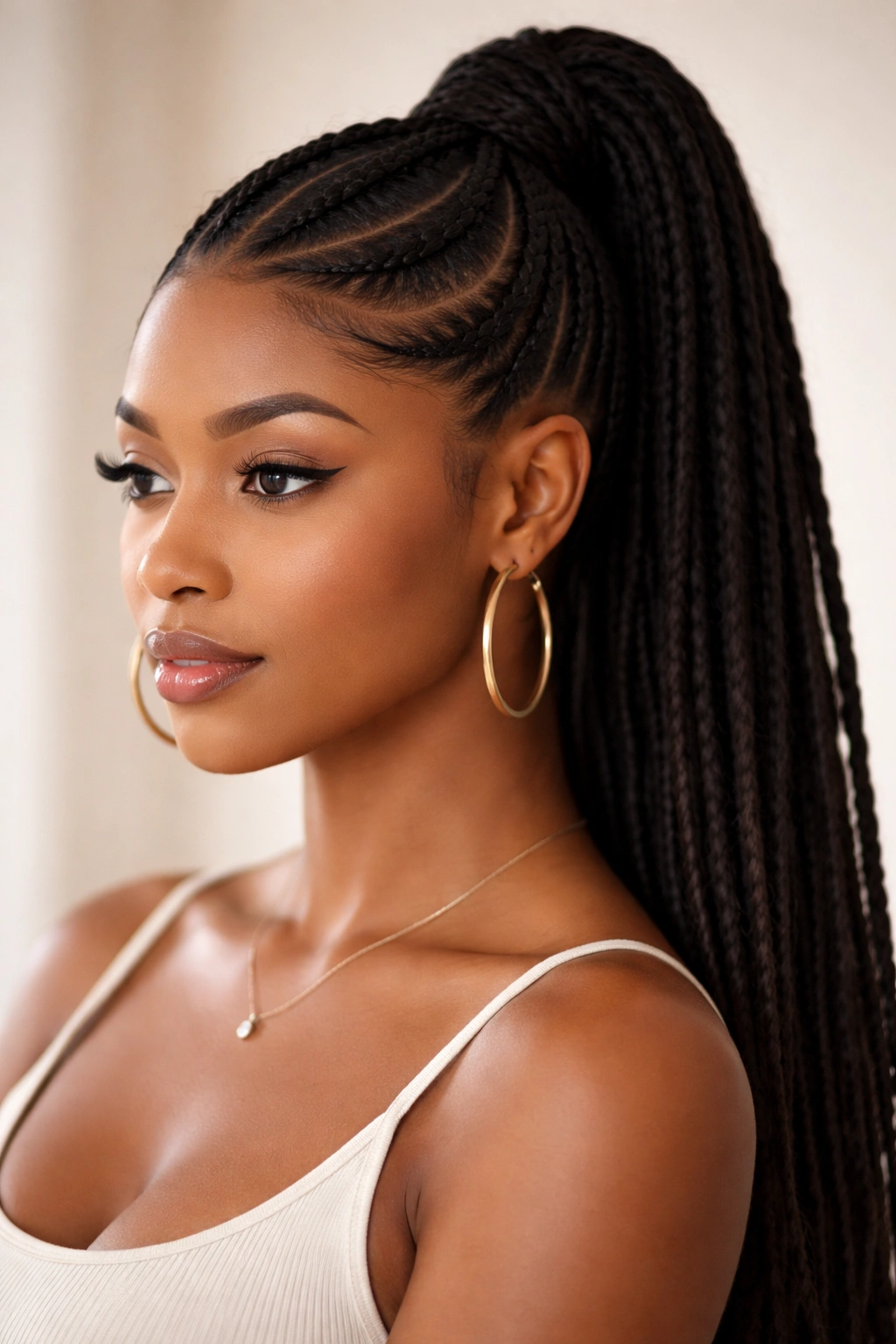
Two braids can work harder than one.
Split the front into two curved cornrow sections that flow back toward the crown, then gather everything into a single ponytail. The result is neat, sporty, and very secure. It also gives the front more dimension, since each braid has its own line and shape.
This is a strong choice when you want the swoop to last through a long day. The braids keep the front anchored, and the ponytail base feels much more stable than a loose sweep.
A tiny detail matters here: braid the front curves with the same angle on both sides. If one row curves sharply and the other barely curves at all, the symmetry falls apart.
15. Sleek Low Swoop with Laid Edges
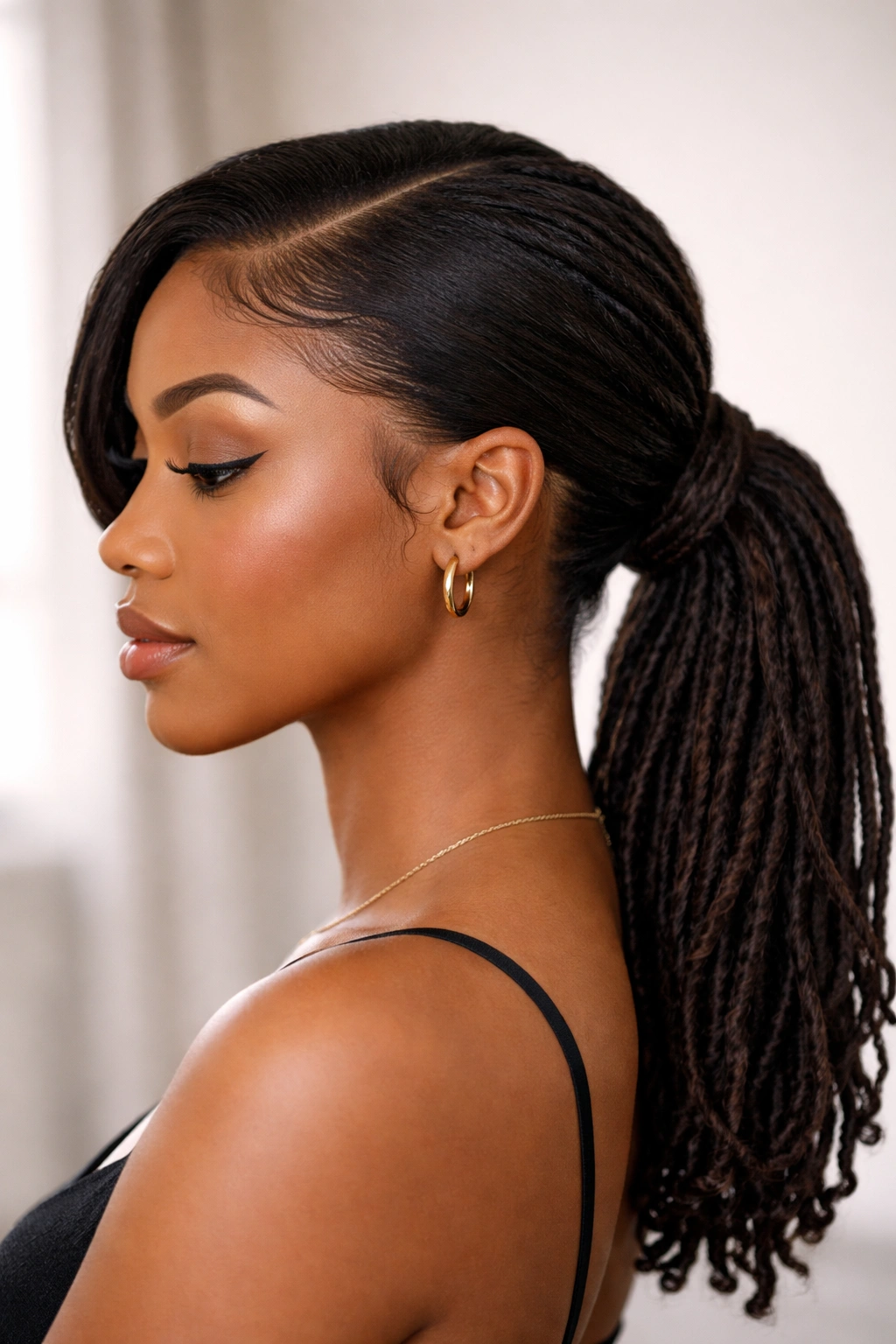
A sleek low swoop can be elegant, but only if the edges are handled with restraint.
A light touch with edge control is enough. You want the hairline to look smooth, not frozen. Soft waves near the temples often look better than thick, painted-on swoops, especially with locs, because the texture already gives the style enough body.
This version works well for meetings, dinners, and any situation where you want to look pulled together without looking overdone. The low base keeps the profile clean, and the laid edges sharpen the whole thing.
One honest note: if your hairline is sensitive, skip heavy gelling and use a little mousse plus a scarf instead. Your scalp will thank you.
16. Textured Swoop Ponytail with a Soft Finish
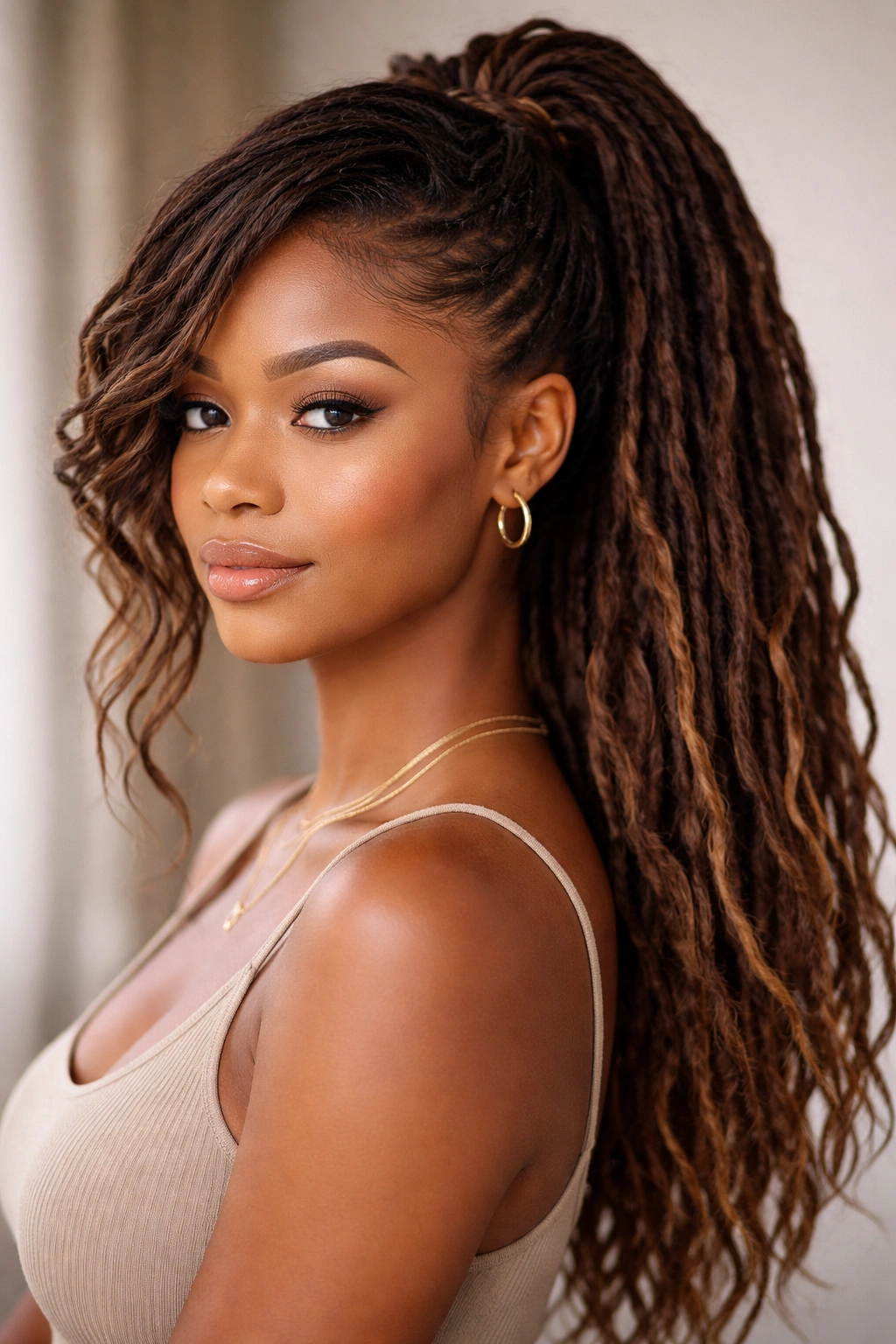
Sometimes the strongest choice is not the sleekest one.
A textured swoop ponytail keeps a little of the natural fluff and bend in the front, which feels more relaxed on locs than a glassy finish. The look still has shape, but it doesn’t pretend the hair is something it isn’t. That honesty is part of the appeal.
Use a light mousse or setting lotion on the front sections, then smooth them with your hands rather than a stiff brush. The result should feel touchable, not crunchy.
This style pairs well with everyday outfits because it doesn’t look fussy. It also grows out gracefully, which is more useful than people think. Styles that fall apart elegantly are underrated.
17. Crown Puff Swoop Ponytail
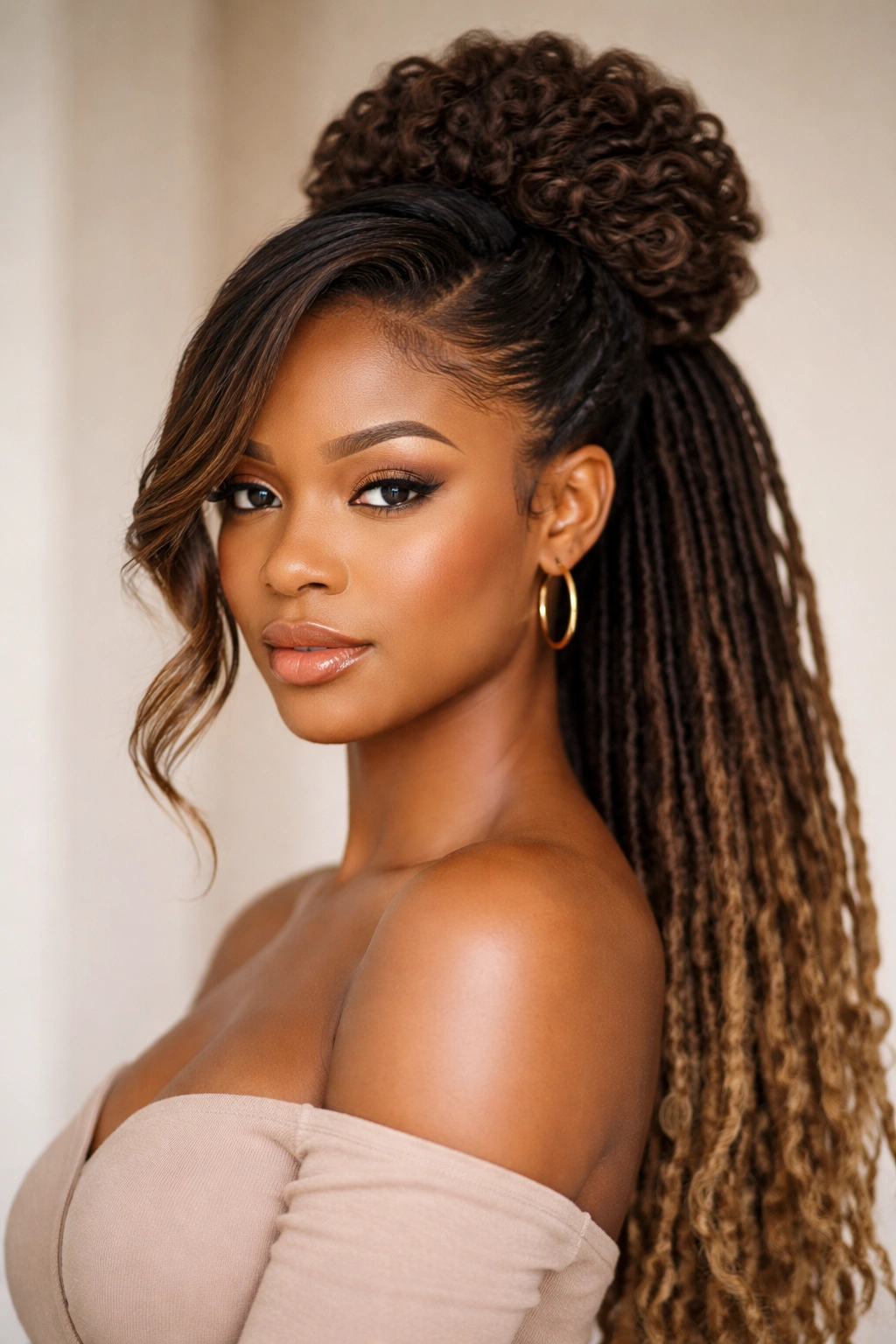
A crown puff gives you height without forcing every loc straight up.
The front swoop frames the face, while the top section puffs slightly before dropping into the ponytail. That little lift at the crown adds shape, especially if your locs are medium length and you want a fuller silhouette without piling everything into one tight knot.
Why It Feels Different
Unlike a slick high ponytail, this style keeps some softness at the top. That softness makes the whole look less severe and gives the front swoop room to breathe.
It also helps if your locs are uneven in length. The puff hides a lot. Handy, honestly.
18. Wrapped-Base Swoop Ponytail with Extra Volume
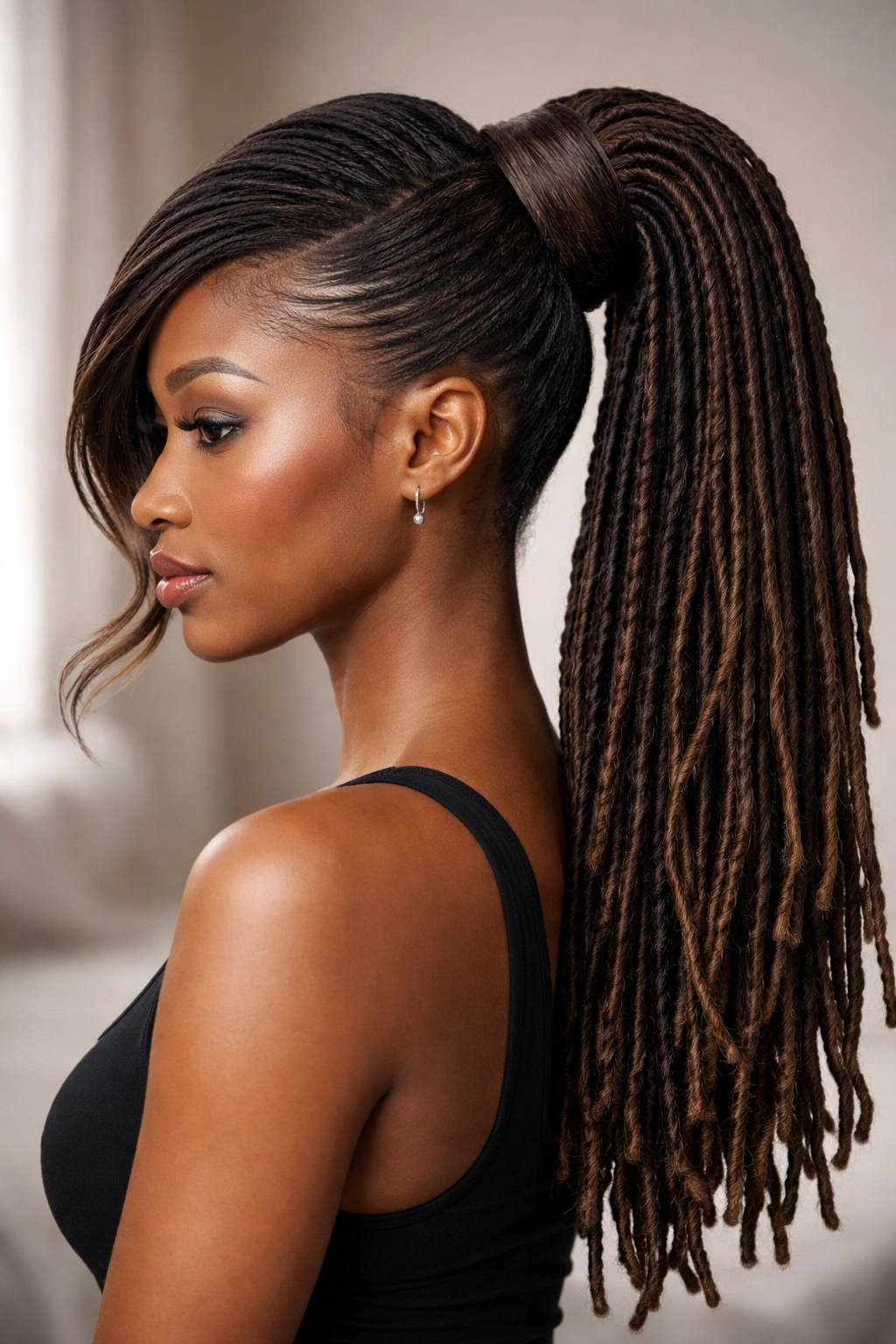
When the base needs a little help, padding is your friend.
Use a satin scrunchie, a bun form, or a few wrapped locs to build a fuller base before you gather the ponytail. Then cover the elastic with one or two locs so the whole thing looks finished. The extra volume at the crown helps the swoop balance the weight of the locs behind it.
This is a smart move for people with thinner loc sections or for anyone who wants the ponytail to sit higher without drooping. The style stays lifted longer because the foundation has some support.
Skip bulky accessories that fight the shape. You want volume, not clutter.
19. Dramatic Arc Part Swoop Ponytail
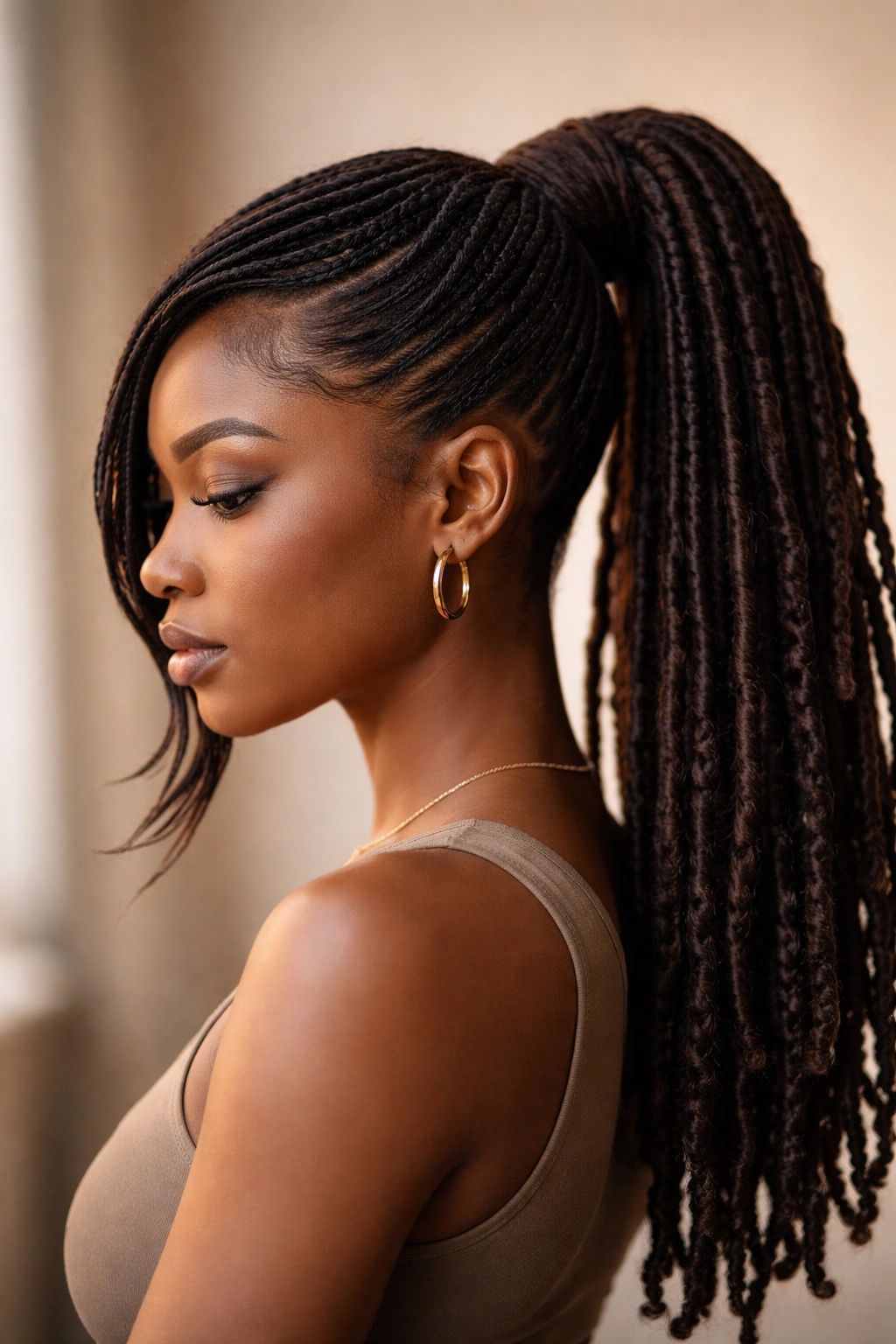
A curved part can make a ponytail look custom.
Instead of drawing the front section straight back, shape the part in a long arc from one temple toward the crown. That arc gives the swoop a stronger line to follow, which makes the front look sculpted before the ponytail even comes into play.
What Makes the Arc Work
The curve should be smooth and even. Jagged parting shows immediately, especially on locs where the texture catches the eye. A clean arc also helps the ponytail sit slightly off-center, which gives the style a bit more movement.
This is a good pick when you want something a little bolder than a standard side part. It has shape. It has attitude. And it still behaves like a ponytail.
20. Office-Ready Mid-Height Swoop Ponytail
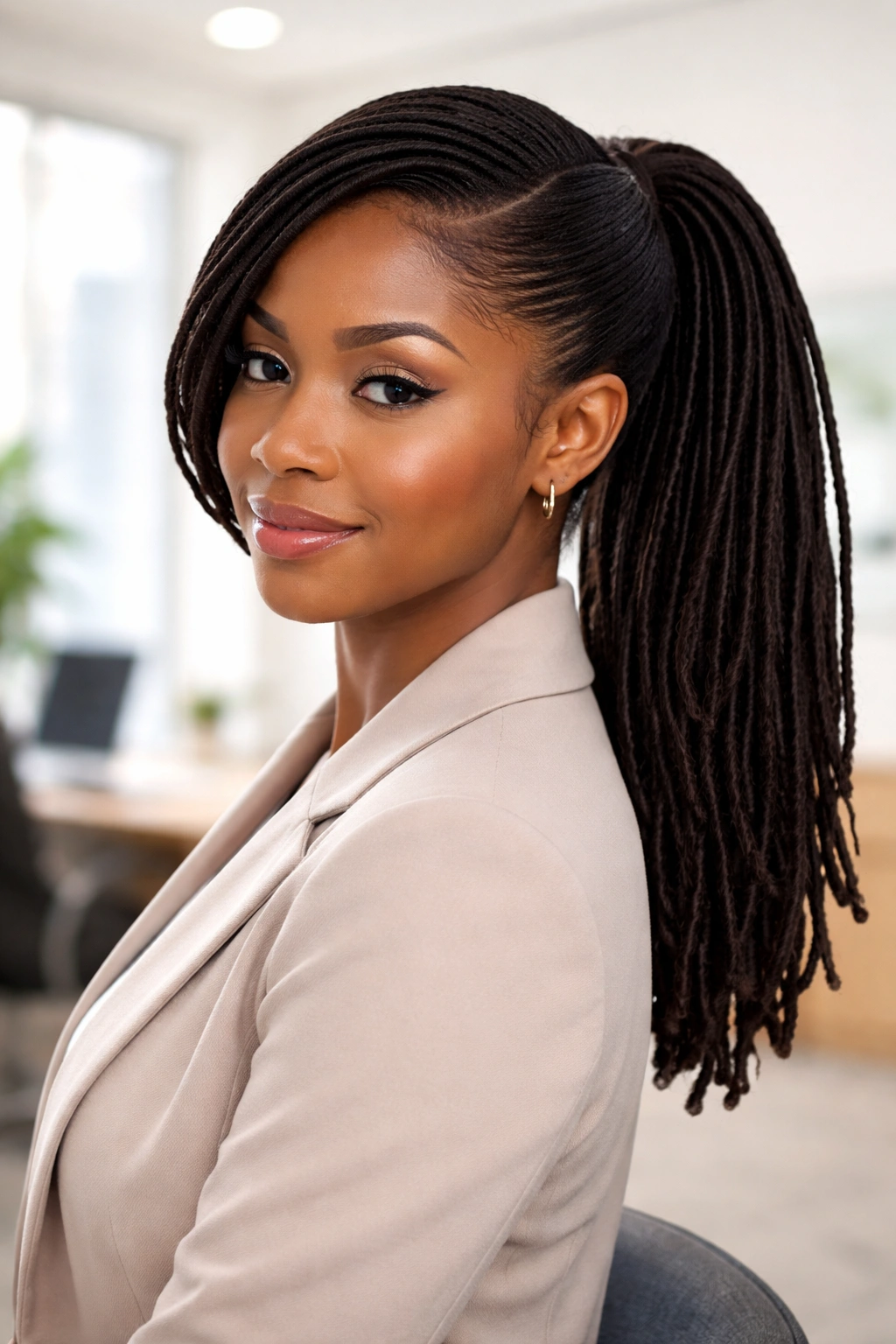
If you need something neat for a workday, mid-height is the safest height for a reason.
It sits high enough to feel styled, but low enough to stay practical through long stretches of sitting, typing, or running errands. The swoop should be smooth and not too wide, so the style stays tidy under a blazer or a simple collar.
This version also ages well through the day. A ponytail at this height tends to sag less than a very high one and bounce less than a low one. That matters when you don’t want to touch your hair every hour.
Keep accessories minimal here. One cuff or one wrapped loc at the base is enough.
21. Event-Ready Sculpted Swoop Ponytail
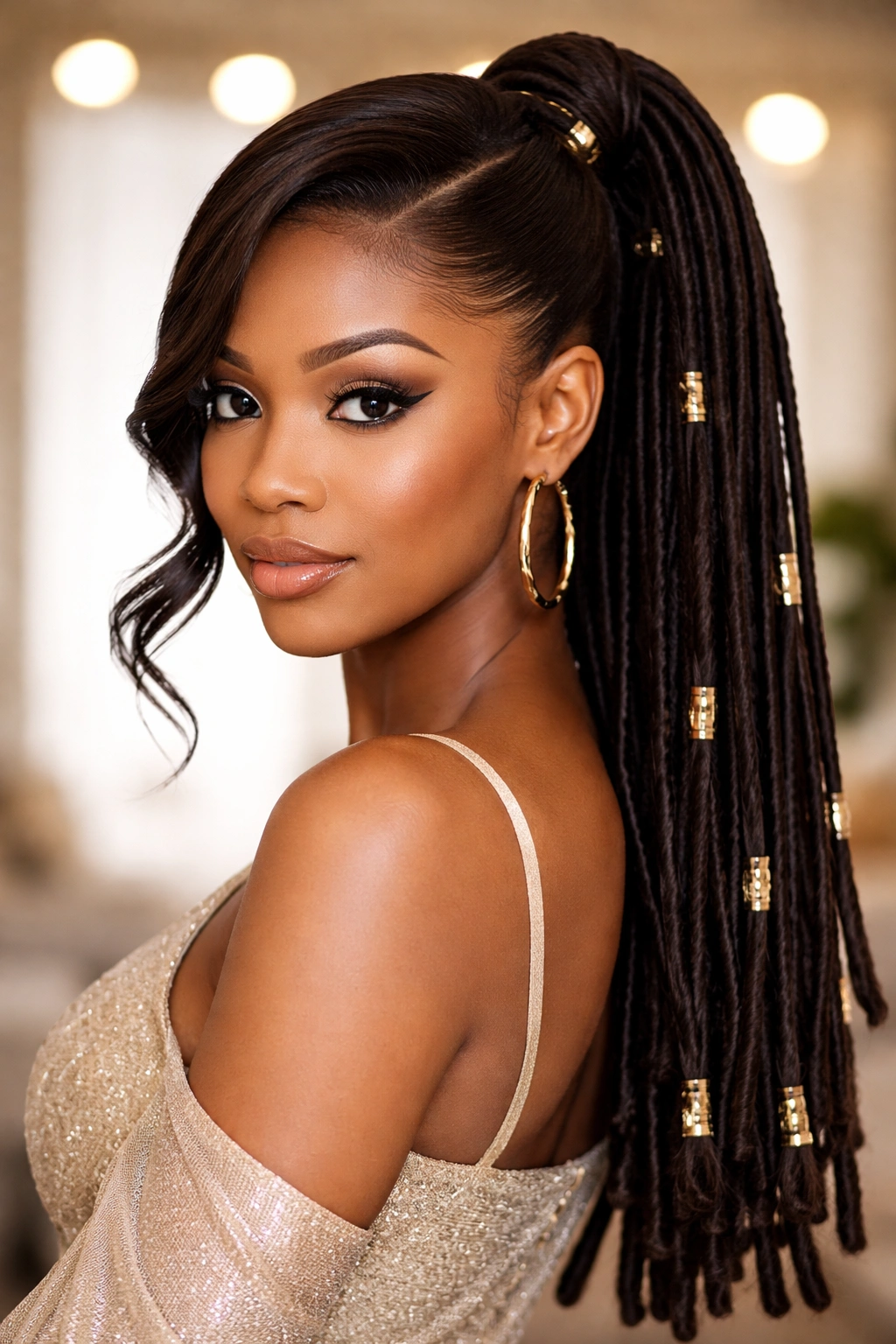
Some styles need to look like they were thought through under bright lights.
A sculpted swoop ponytail gives you that feeling. The front section is shaped carefully, the base is smooth, and the ponytail itself can be dressed up with cuffs, wraps, or curled ends. The whole look should feel crisp from the front and full from the back.
This is where a stylist’s instincts matter, but you can do a strong version at home if you take your time. Smooth the front in small passes, secure the base in stages, and stop checking the mirror every ten seconds. Constant fiddling makes the surface worse.
A final mist of hold spray helps, though too much turns the hair into a shell. That is not the goal. Movement still matters.
22. Sport-Friendly Low Swoop Ponytail
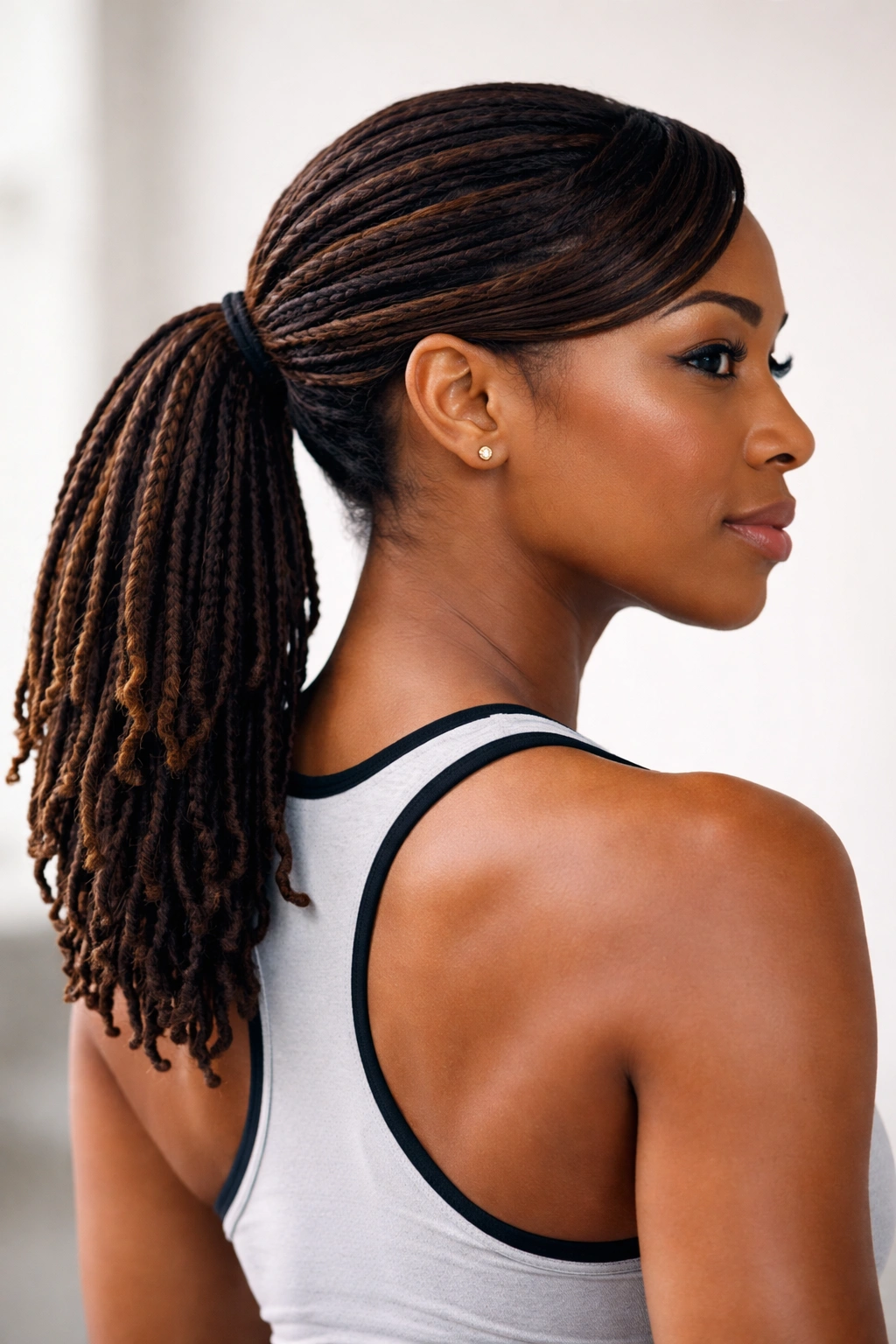
A sport-friendly style has one job: stay put.
Keep the ponytail low, anchor it with a snag-free elastic, and make the swoop simple. Skip heavy cuffs, skip loose charms, skip anything that can bounce or pull. You want the front to stay controlled and the back to lie close to the head.
What Keeps It Comfortable
- Tie the base at the nape so the weight spreads out.
- Use a satin-lined or soft elastic if your locs are thick.
- Smooth the front with mousse rather than a thick gel layer.
- Tuck stray ends into the base with bobby pins if they poke out.
This one is practical, plain, and useful. That’s not a complaint.
23. Shoulder-Length Swoop Ponytail for Shorter Locs
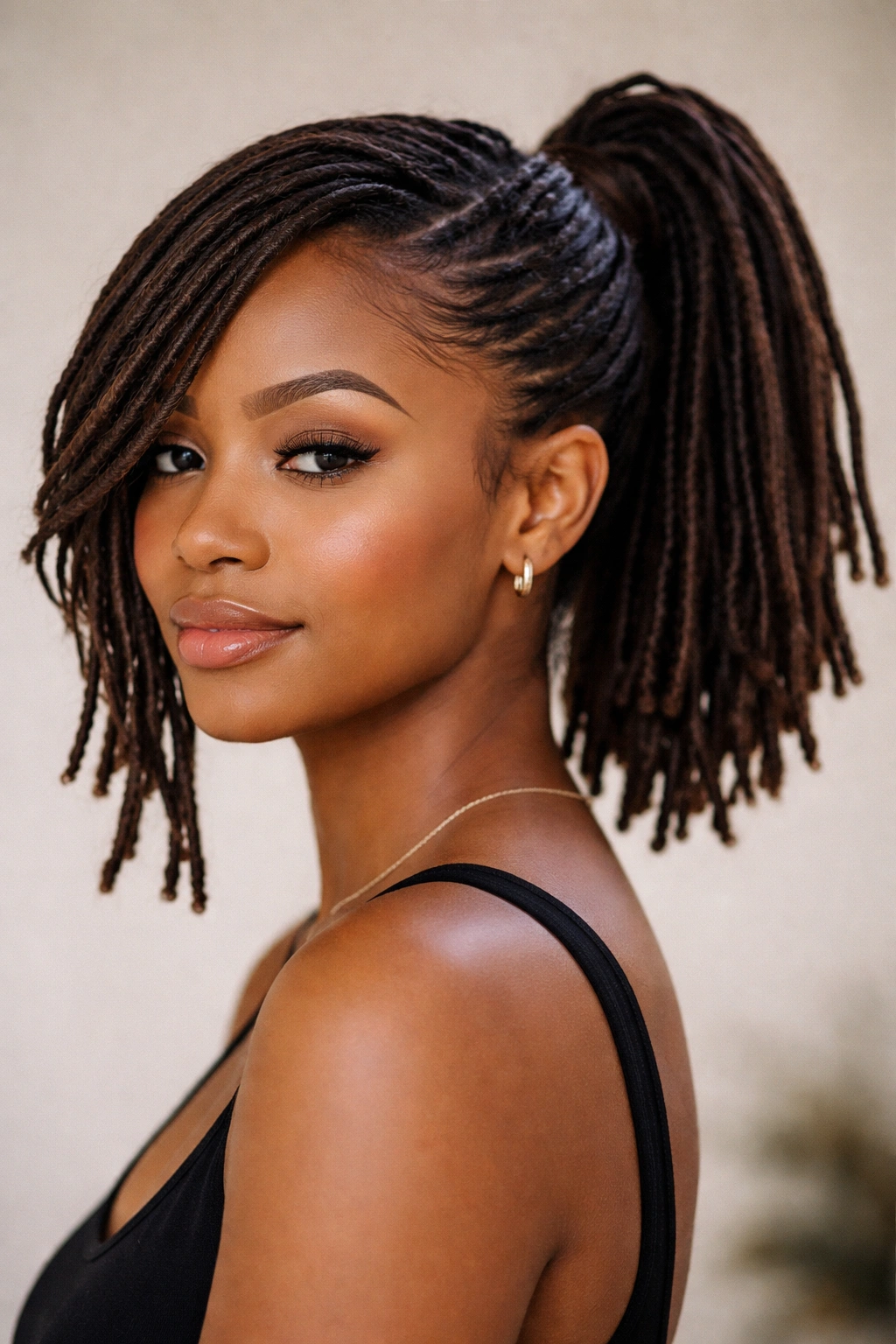
Shorter locs can still do a nice swoop ponytail. They just need a little more help with balance.
A shoulder-length ponytail usually sits better when the swoop is smaller and the base is tighter. If the front section is too big, it can overwhelm the rest of the style. Keep the shape compact and let the locs fall in a neat cluster instead of trying to force a huge silhouette.
If your locs barely reach the base, you can still create the illusion of a ponytail by pinning the back upward and letting the ends fan out slightly. That reads as intentional. It also keeps the hair from collapsing.
This is one of those situations where less hair in the front is often better. The style looks cleaner when the proportions match the length.
24. Long Heavy Loc Swoop Ponytail with Extra Support
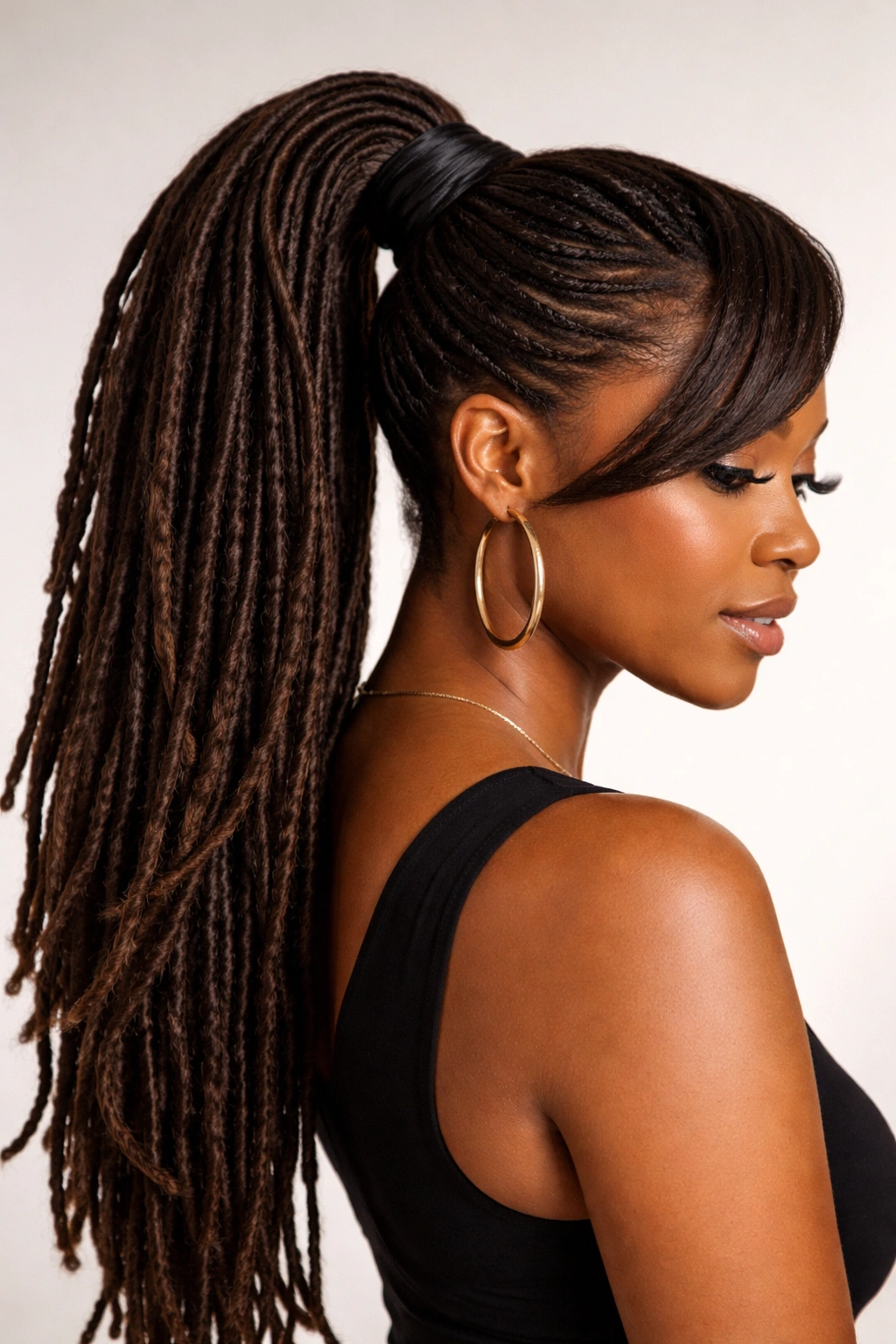
Heavy locs need better support than people assume.
A single elastic can slip, stretch, or dig in when the hair is long and dense. Two secure bands, a padded base, or a hidden bungee can make the difference between a style that lasts and a style that starts sagging by midday. The swoop in front should stay light so the weight sits where it belongs—in the back.
This version is all about control without strain. Place the base high enough to show the length, but not so high that the roots are fighting the pull. If the ponytail feels like it’s hanging from the scalp, it’s too much.
Take a minute to spread the locs evenly around the base before you tighten. Uneven weight is what causes that lopsided slump.
25. Minimalist Side-Swoop Ponytail for a Clean Finish
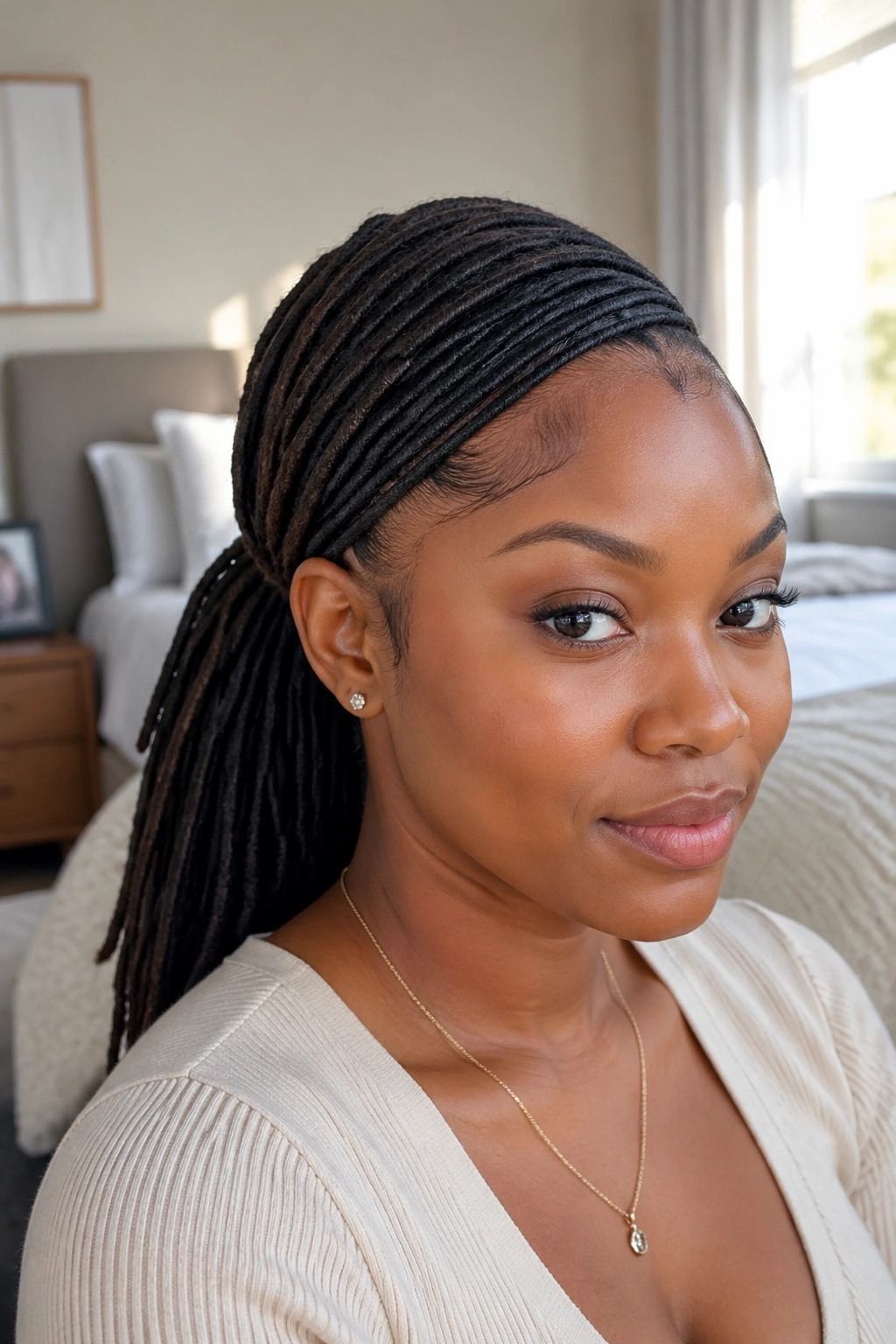
A clean side swoop does not need a pile of accessories to work.
Sometimes the strongest version is just a smooth front curve, a neat base, and locs that are left to fall naturally. That restraint can look sharper than a style loaded with cuffs, wraps, and braids, especially when the locs already have a good shape on their own.
This is the one I’d reach for when I want the style to look calm. Not empty. Calm. The side sweep gives the face a line, the ponytail keeps the shape practical, and the lack of extras lets the loc texture stay front and center.
That’s the part people forget. A ponytail can be polished and still feel easy.
