
A curly ponytail can look polished or flat in about five minutes, and the difference usually comes down to two things: the base and the bangs.
With weave ponytails with bangs for curly hair, you get both structure and softness in one move. The ponytail gives height, length, and fullness. The bangs keep the face from feeling bare or pulled back too hard. Done well, the style looks like you meant it. Done badly, it looks like the front and back had two different conversations.
The part people miss most is texture balance. A curly ponytail works best when the bang section and the ponytail section feel related, even if they are not identical. A tight coil beside a loose wave can look disconnected unless the style has a clear reason for being that way. And if the front is too tight, the whole thing starts to feel strained instead of chic.
So the real question is not whether weave ponytails with bangs look good on curly hair. They do. The better question is which version matches your curl pattern, your hairline, and the kind of day you want to have.
1. High Curly Ponytail With Thick Curtain Bangs
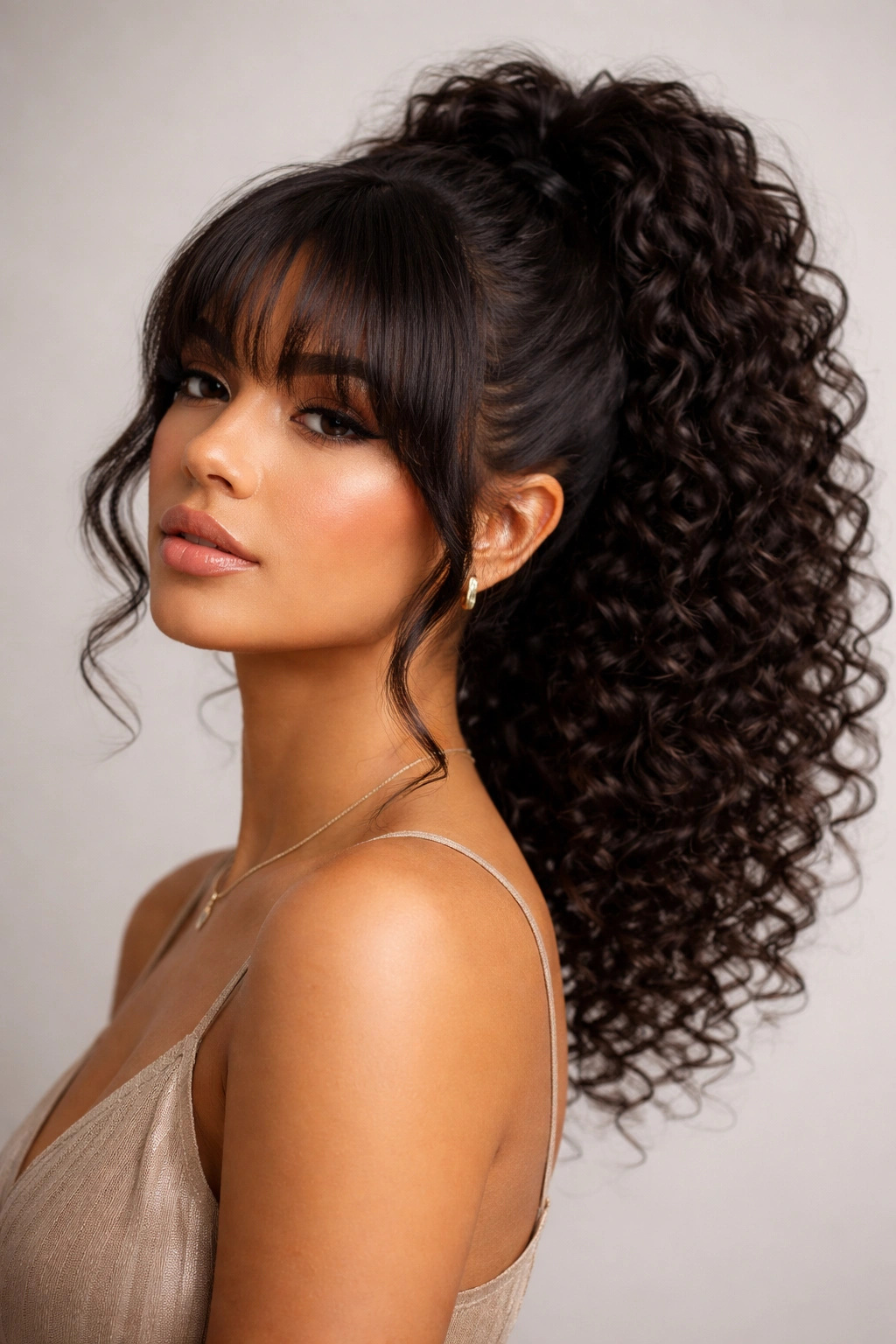
A high curly ponytail with thick curtain bangs is the style people notice first. It lifts the face, opens the cheekbones, and gives curly hair a shape that feels bold without needing a sharp cut.
Why It Works
The height does most of the flattering work. By sitting the ponytail at or just above the crown, the style pulls the eye upward and gives the whole look a cleaner line. The curtain bangs soften that lift so it does not feel severe. That mix matters.
This version works especially well when the curls are medium to tight and the bangs have a little weight to them. Thin bangs can disappear into the forehead. Thick ones hold their shape better, especially when the hair has bounce.
- Best for round, oval, and heart-shaped faces
- Works well with 3B to 4A curl patterns
- Looks strongest when the bang section is cut or shaped while dry
- Usually needs a strong base wrap to keep the ponytail from sliding
Pro tip: keep the bang length just below the brows when stretched. Curly hair shrinks, and that extra half inch saves you from accidentally losing the whole fringe.
2. Sleek High Ponytail With Side-Swept Bangs
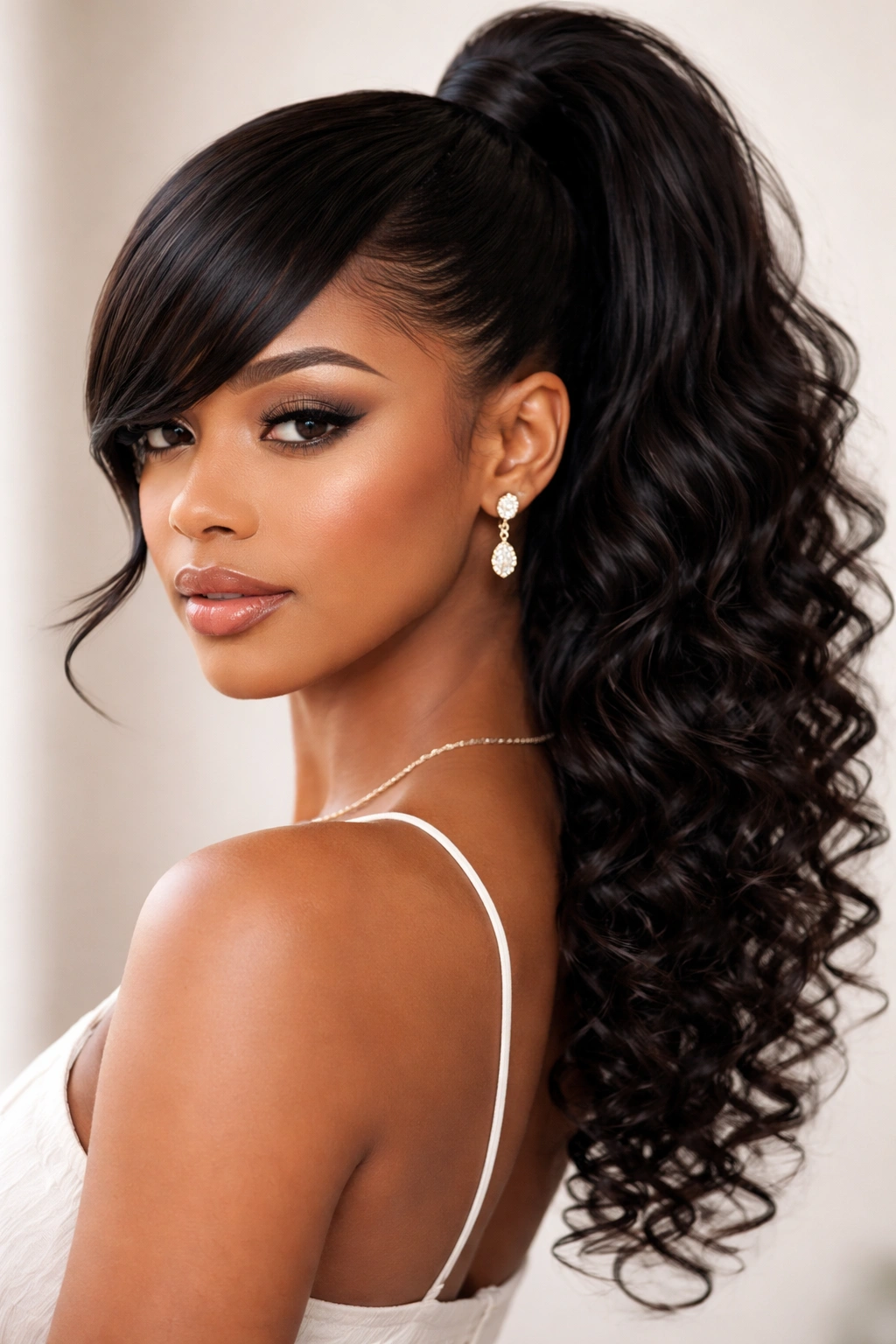
This is the cleanest version of weave ponytails with bangs if you like a polished finish. The ponytail is tight and smooth, and the side-swept bangs stop the style from looking too severe.
The contrast is what sells it. The base stays glossy and controlled, while the front keeps a little movement. That small bend across the forehead makes the style easier to wear for formal events, dinners, or any day you want your hair to look expensive without looking stiff.
If your natural curls are thick, this is one of the better options because the weave does the heavy lifting. You can smooth the front with mousse or a light edge product, then brush the bangs into a soft side fall before they set. A silk wrap for 10 to 15 minutes helps the shape hold.
What I like here is the restraint. It does not try to do too much. That is rare.
3. Braided-Base Ponytail With Soft Tapered Bangs
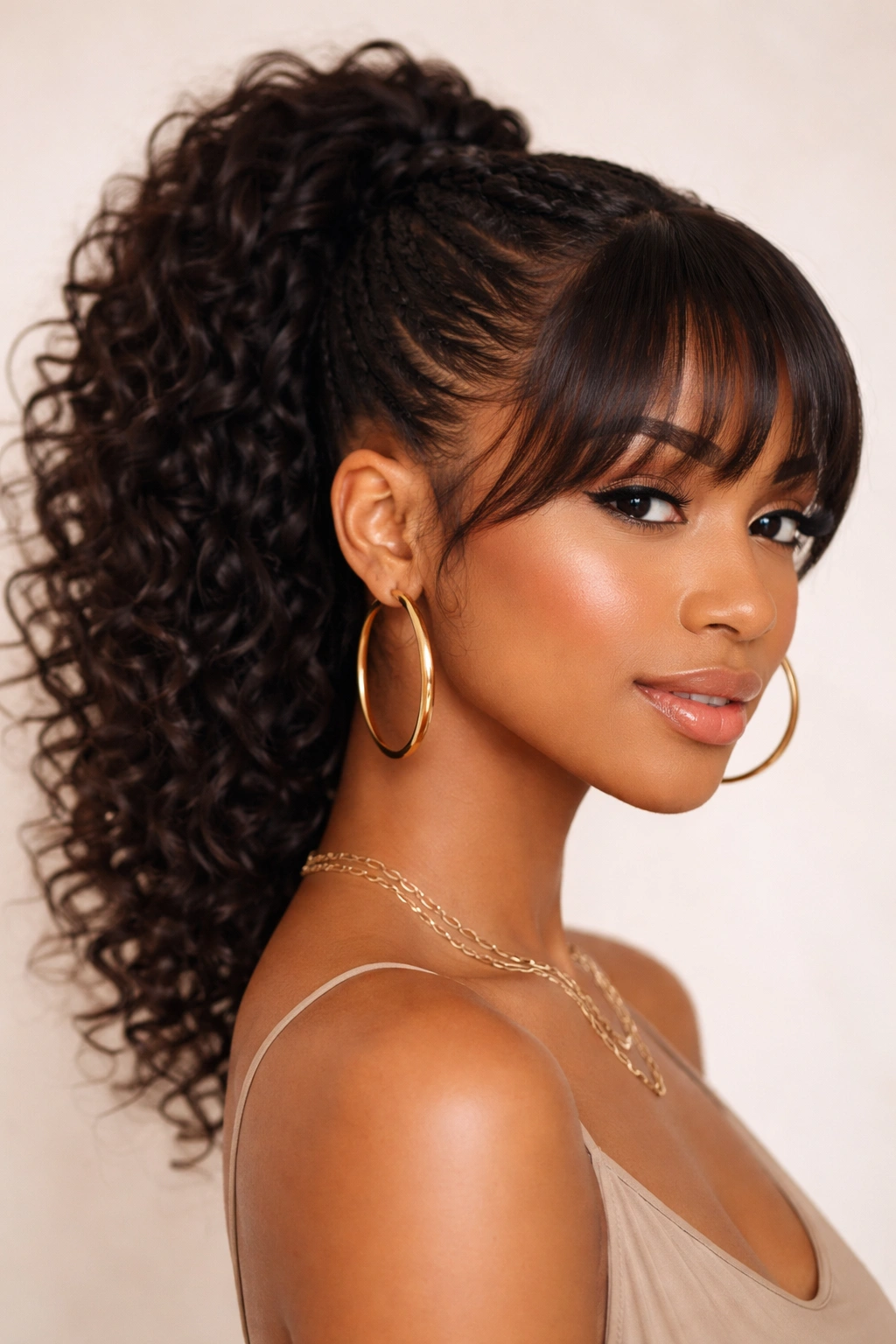
Why does this one hold so well? Because the base is doing real work instead of just pretending to. A braided foundation spreads tension more evenly, which matters a lot when you are wearing a weave ponytail for more than one event.
The tapered bangs make the whole style feel lighter. Instead of a dense block at the forehead, you get a soft curve that follows the shape of the face. That is a useful trick if your features are sharp or if you want the ponytail to look less dramatic from the front.
How to Wear It
Choose this style when you want staying power. It handles movement, weather, and long days better than a looser wrap ponytail.
- Add a middle part for symmetry
- Pull a few temple curls forward if the bang area feels too neat
- Use a satin scarf to smooth the braid base before leaving the house
- Ask for the bangs to be tapered at the ends, not chopped blunt
The whole style feels practical, but it still reads as finished. That is a nice sweet spot.
4. Bubble Ponytail With Fluffy Curly Bangs
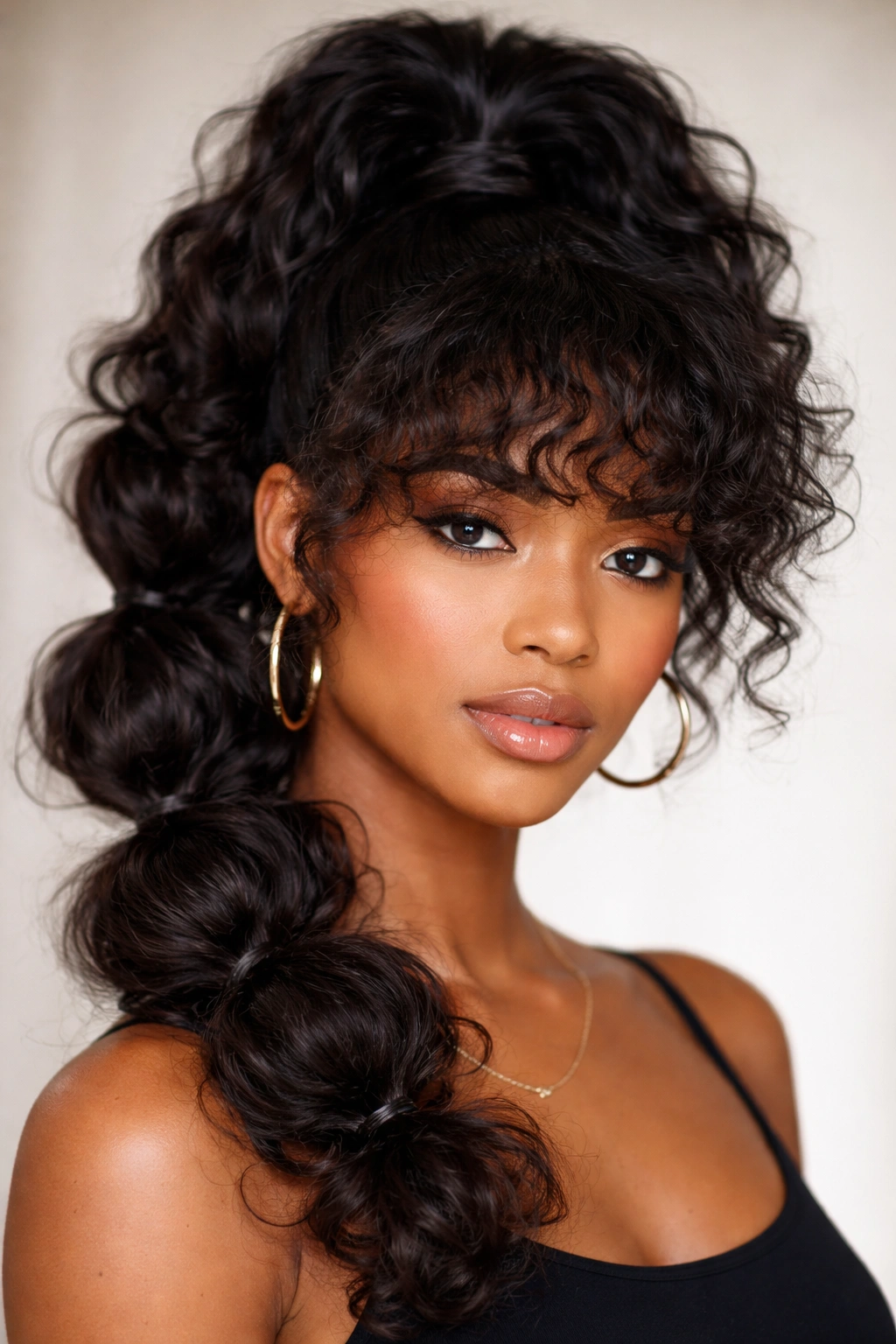
If you want a ponytail that still looks intentional after the day gets messy, the bubble version earns its keep. The bubbles break up the length so the ponytail never feels heavy, and the fluffy bangs keep the front from looking too structured.
The trick is spacing. Keep the elastics evenly placed, usually 2 to 3 inches apart depending on the ponytail length. Then gently pull each section outward so the bubbles look full but not lumpy. Curly bang pieces work best here when they are loose and airy, not sprayed into a helmet.
You do not need a perfect curl pattern for this one. In fact, a little variation makes it better. One section can be a tighter coil, another a soft bend, and the style still reads as deliberate.
Bubble ponytails can look childish if the bangs are too short. Leave enough length at the forehead to balance the playful shape. That keeps the whole look grown-up.
5. Low Ponytail With Long Face-Framing Bangs
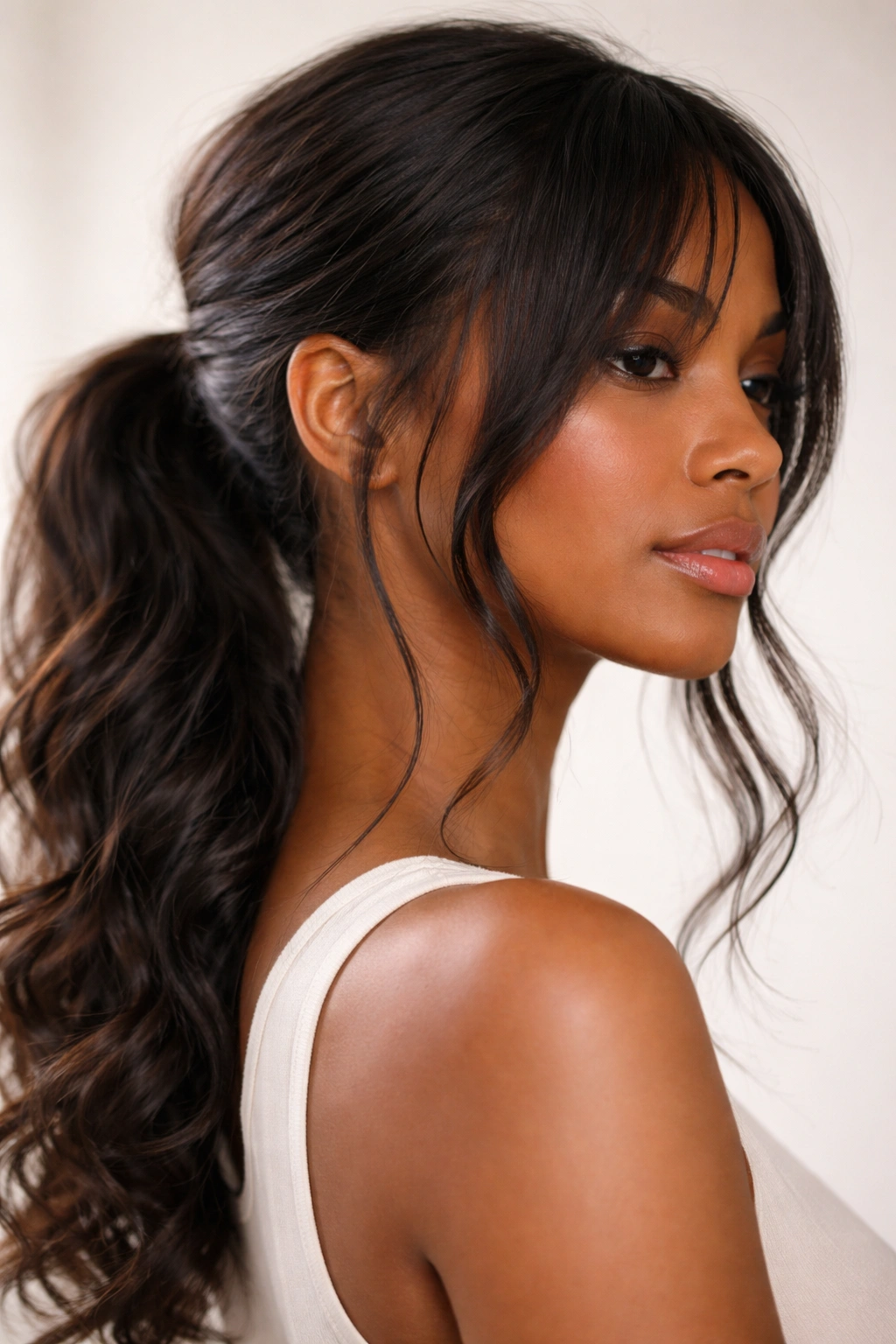
A low ponytail changes the mood completely. It feels calmer, softer, and easier on the scalp, which is exactly why so many people end up loving it more than the high versions.
The long face-framing bangs are the part that keeps it from falling flat. They can blend into the sides of the ponytail or sit like a curtain around the cheekbones. Either way, they make the front of the style feel lived-in instead of rigid. On curly hair, that softness matters because a low base can otherwise make the face look a little boxed in.
This is a smart option if you wear glasses, work in an office, or simply want something you can keep on without thinking about it every five minutes. It also works well when the weave is long and heavy. A lower anchor point helps the style feel secure.
One small detail: keep the bang pieces long enough to tuck behind the ear if you want. That gives you flexibility without changing the whole look.
6. Half-Up Weave Ponytail With Curly Bangs
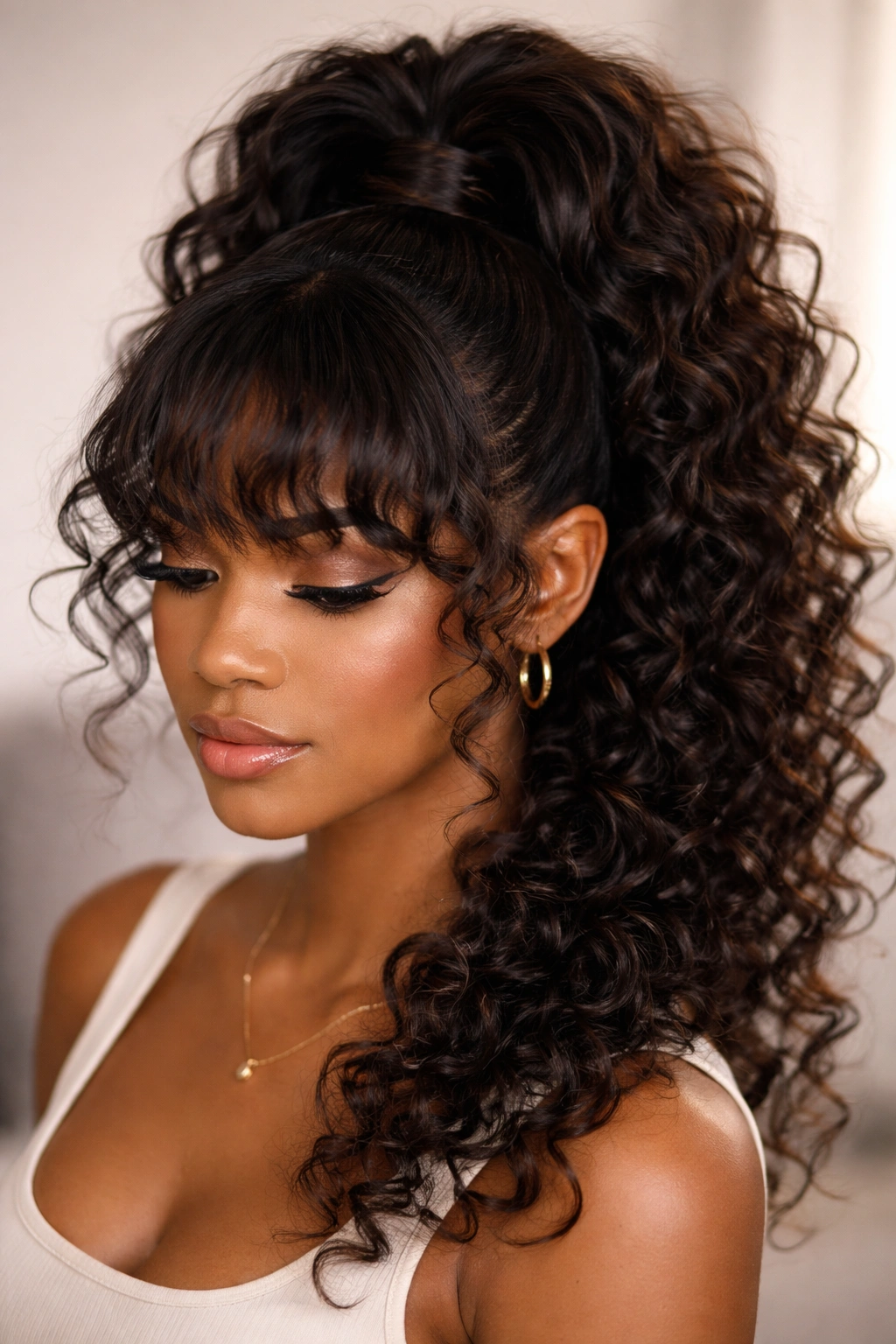
A half-up ponytail gives you the best of both worlds, and I say that without much hesitation. You get lift at the crown, movement in the back, and enough hair left down to keep the style soft.
Compared with a full ponytail, this version feels lighter on the head. That makes it a solid pick if you do not want all the volume sitting in one place. The bangs help bridge the top section and the loose back, which is why the style looks more blended than you might expect.
The curly bangs can be short and full or longer and brushed to the side. Both work. The big thing is keeping the top section smooth enough to support the ponytail without flattening the rest of the hair. A small braid base at the crown helps the shape stay put.
Best use? Weekends, brunch, or any day you want your hair to say “I tried,” without saying it too loudly.
7. Side Ponytail With Deep Side Bangs
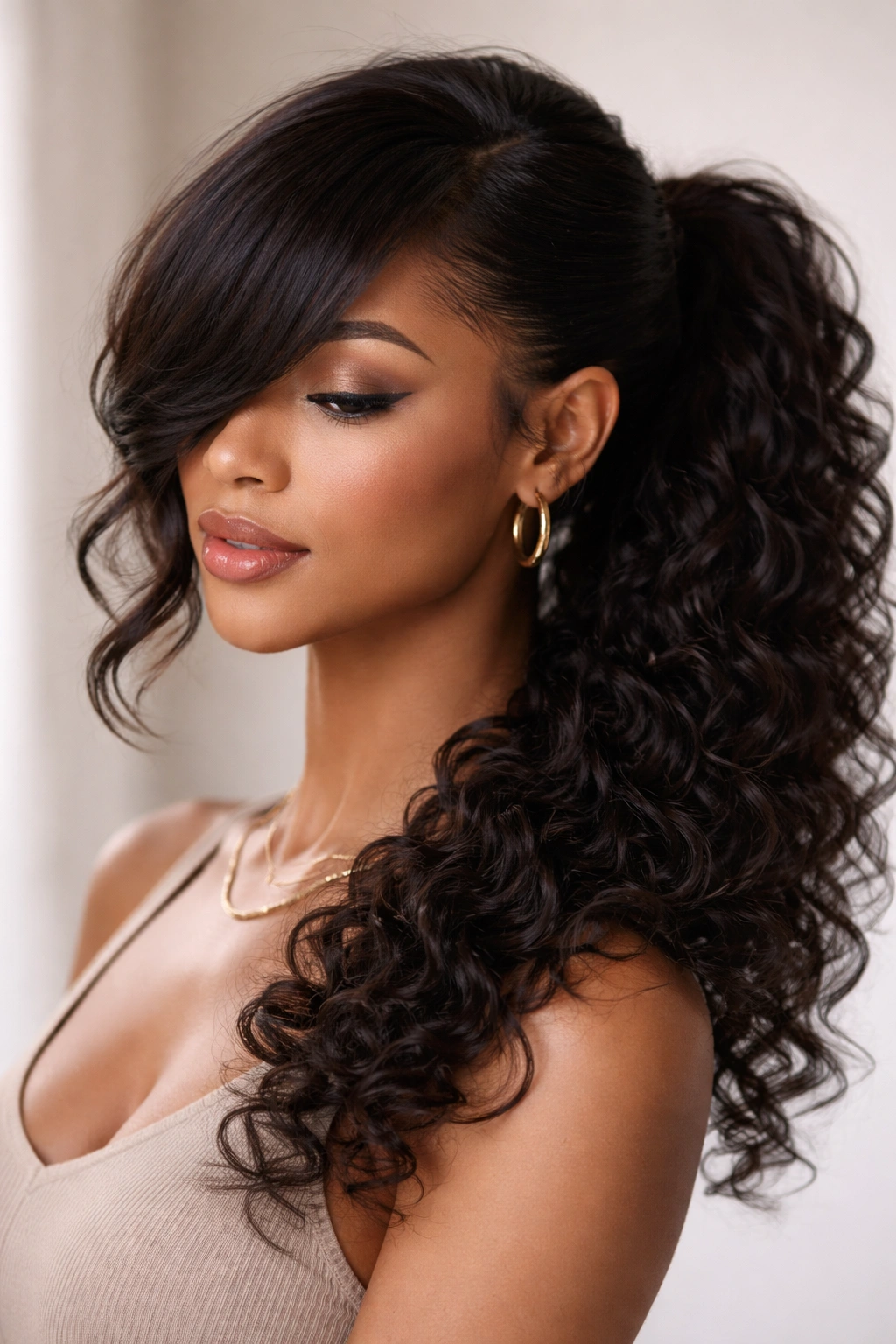
A side ponytail changes the whole geometry of the face. It shifts the weight off center, which makes the style feel a little flirtier and a little less formal.
Why It Works
The deep side bangs are doing more than decorating the forehead. They create a diagonal line that breaks up roundness and adds movement before the eye even gets to the ponytail. That is useful if your face is broad through the cheeks or if you want a softer jawline effect.
This style also gives the ponytail more drama without needing extra length. The ponytail can sit low at one shoulder or higher just behind the ear. Either way, the side sweep keeps the front from feeling unfinished.
Quick Details
- Works well with medium-density curly bangs
- A side part looks better than a center part here
- Use a pin near the temple if the bang section keeps slipping
- Fluff the ponytail on the heavier side for balance
Tip: keep the side bang long enough to move. Short side bangs tend to fight the style.
8. High Ponytail With Wispy Curly Bangs
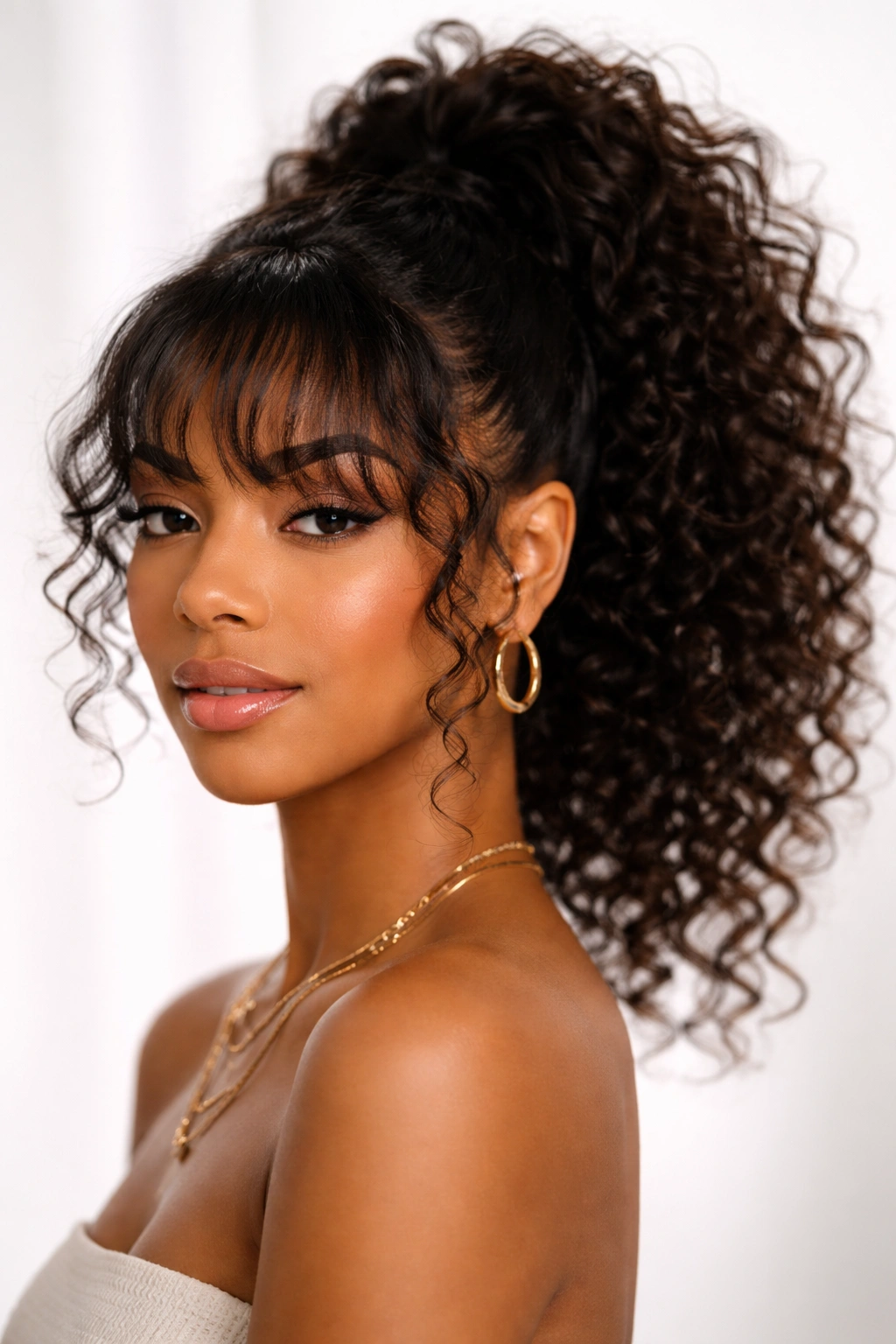
This one looks airy, not heavy. That is the whole point.
The high ponytail gives you lift and stretch, while the wispy bangs stop the forehead from feeling exposed. Unlike a thick fringe, these bangs sit lightly across the front and let some skin show through. That little bit of spacing makes a big difference on curly hair because the texture already brings enough presence.
You want the bangs shaped with restraint. A few thinner sections are better than one dense chunk. If the curls are tight, let the front sit a little longer so it does not spring up too high. If the curls are loose, a small bend with a flexi rod can help the bangs keep their shape.
This style is one of the easier ones to wear every day because it does not feel heavy. It also looks good with hoop earrings and a clean neckline, which is no small thing.
9. Crisscross Base Ponytail With Rounded Bangs
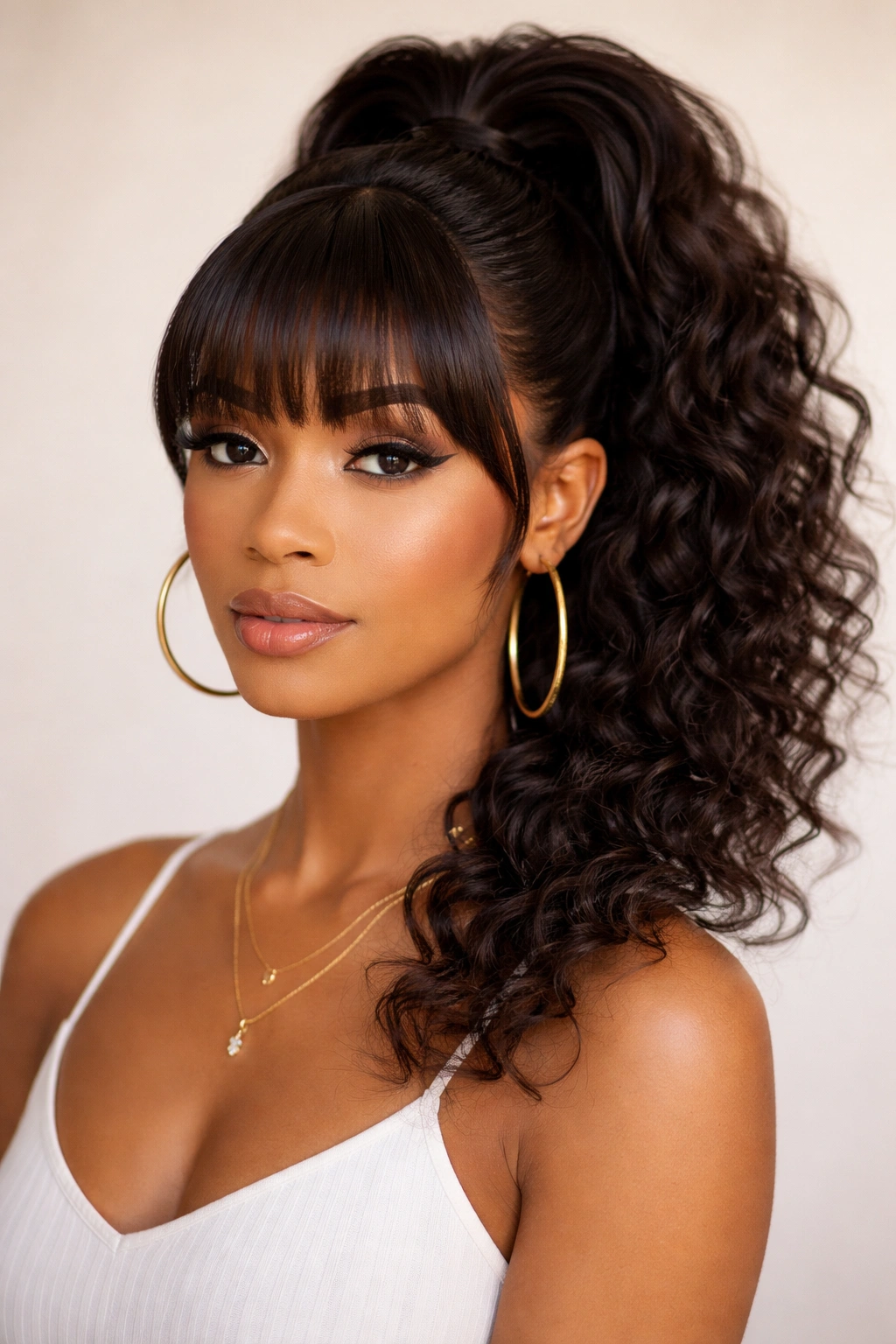
Why does this style read so polished? Because the base has structure before the ponytail even starts.
A crisscross base uses small sections or wrapped pieces to create a clean intersection at the crown. That detail gives the ponytail a sculpted look, which pairs nicely with rounded bangs. The bangs echo the curve of the ponytail and make the front feel balanced rather than split.
If you want the style to hold its shape, keep the crossing sections snug but not tight. Tight is not the same as neat, and your scalp knows the difference fast. Rounded bangs should sit just above the brows when dry, then loosen a bit as the day goes on.
How to Wear It
This one likes a little glamour. Gold hoops, glossy lips, a strong brow line — it all fits.
- Keep the base smooth with a soft brush and setting gel
- Shape the bangs into a half-circle, not a straight line
- Pin the crossing pieces flat so they do not puff up
- Use a light shine spray on the ponytail length only
The result is clean, but not cold. That is a nice balance.
10. Sleek Low Ponytail With Blunt Bang Finish
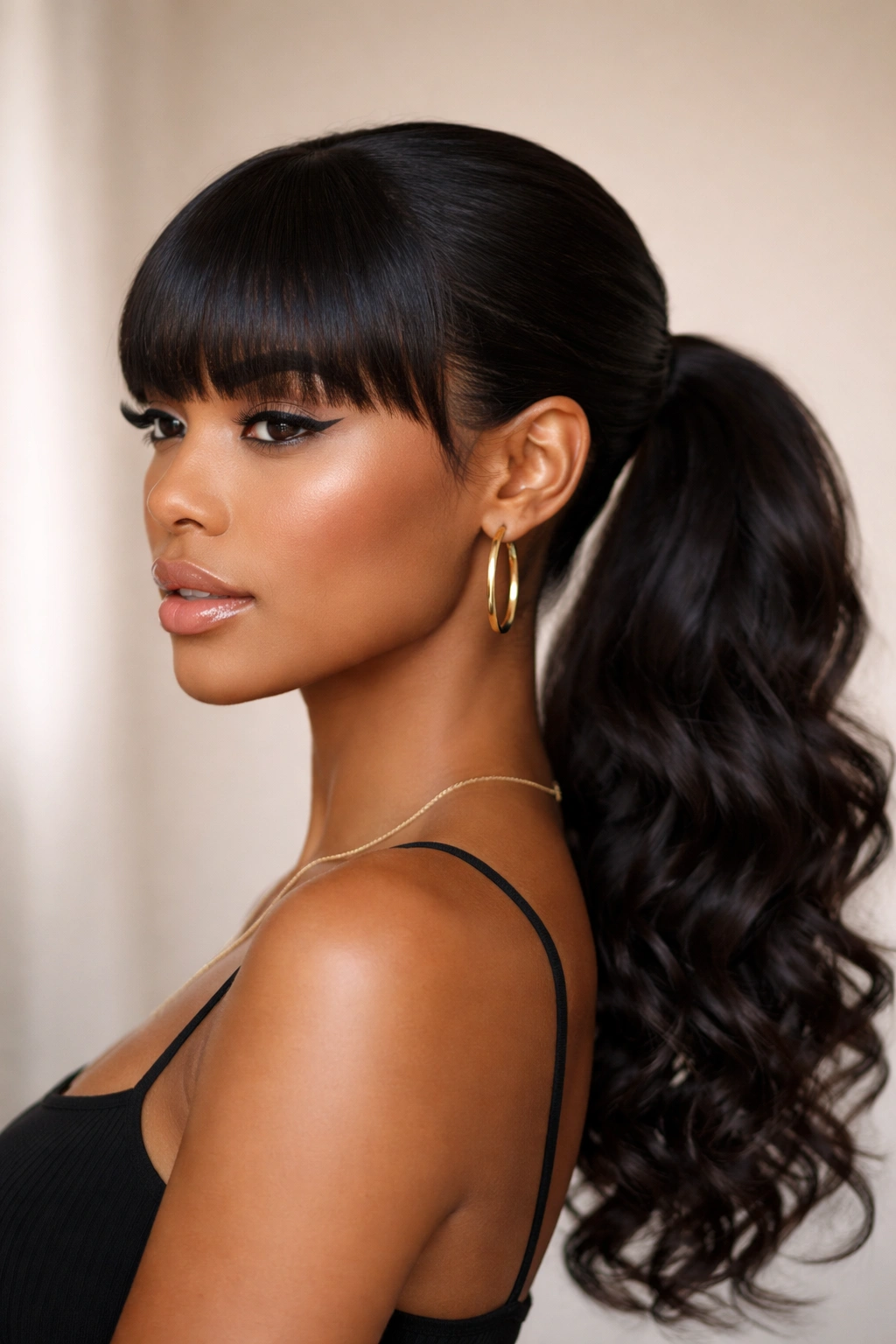
This is the style I reach for when I want neat, not fussy.
The low ponytail stays close to the nape, which helps the whole look feel grounded. The blunt bang finish gives it a stronger front line, even when the bangs are curly or softly waved. On curly hair, “blunt” does not have to mean stiff. It can mean fuller and more even across the forehead.
The main job here is control. Smooth the front, flatten the perimeter, and keep the ponytail base tucked low. If the bang section gets too separated from the rest of the style, the look starts to feel like two separate pieces. A little blending at the temple solves that.
This version works well for evening wear, but it is also surprisingly good for workdays. It stays out of the way, and that matters more than people admit.
11. Extra-Long Ponytail With Feathered Bangs
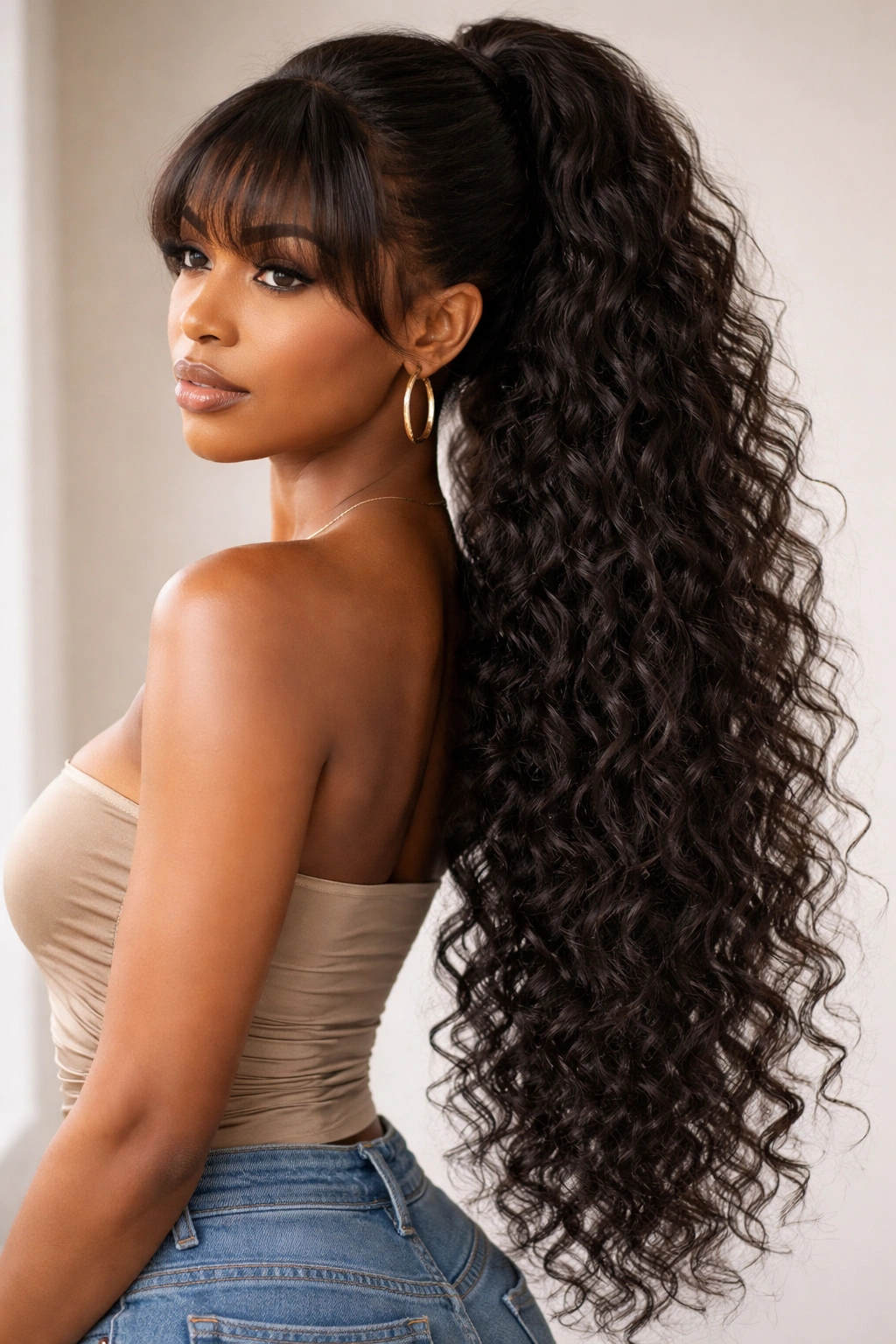
Extra-long ponytails look dramatic, but they can also get heavy fast. That is why feathered bangs matter here. They keep the front light so the length does not overwhelm the face.
Feathered bangs are softer at the ends and usually a little longer on the outer edges. That shape helps the eye move outward instead of stopping at the forehead. It is a small thing, but it makes a long ponytail feel more wearable.
What to Watch For
A long weave ponytail needs balance. If the bang section is too dense, the style starts to feel top-heavy. If it is too sparse, the forehead looks bare next to all that length.
A few practical details help:
- Choose a ponytail texture that matches your leave-out or bang texture closely
- Keep the base wrapped tightly enough to support the weight
- Use a small amount of oil on the bangs so they do not frizz by midday
- Let the ends of the bangs taper naturally instead of cutting them blunt
This style looks best when the ponytail swings a little. Too much stiffness kills the point.
12. Feed-In Cornrow Ponytail With Curly Fringe
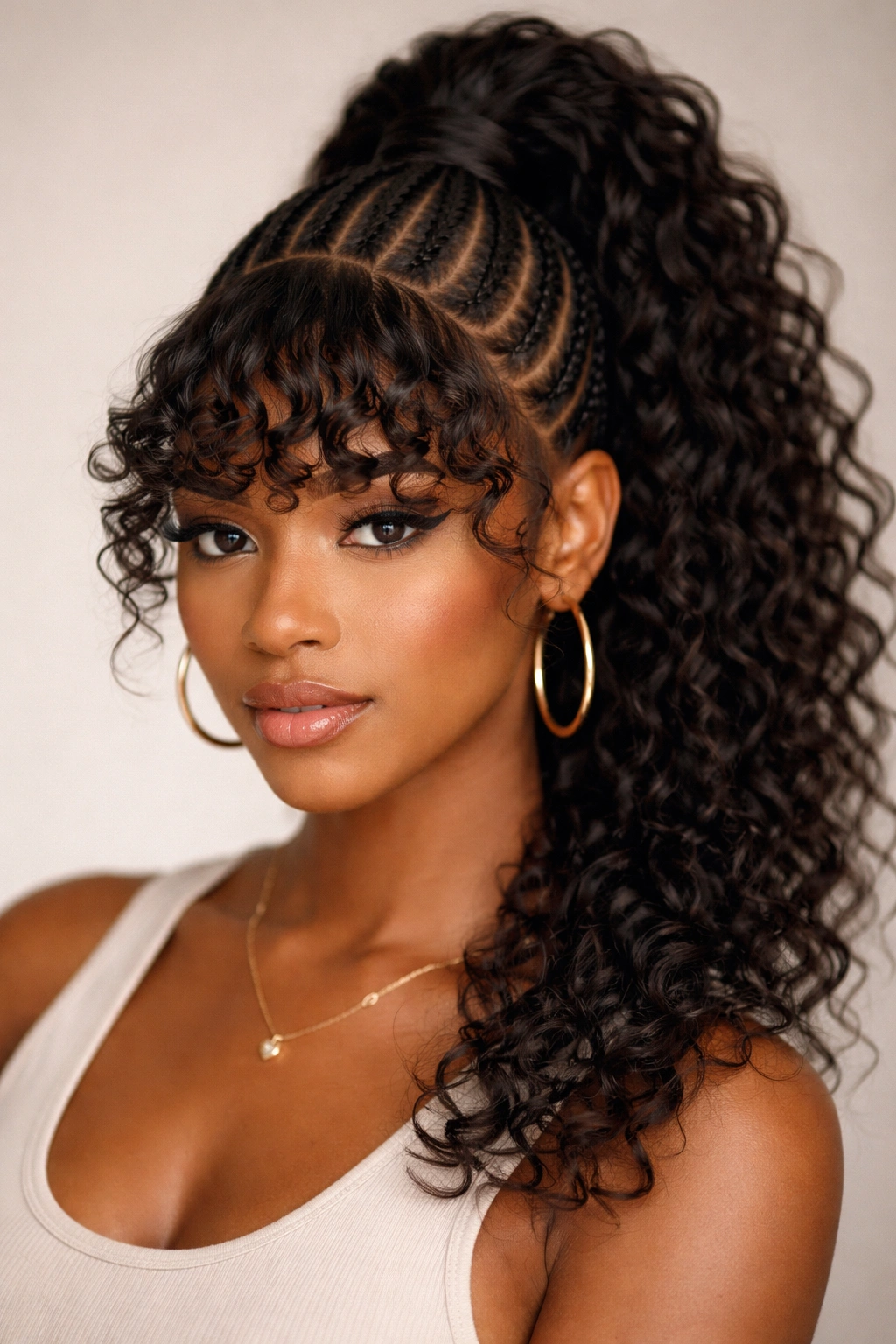
Feed-in cornrows make sense when you want the style to stay put and look clean from every angle. The braids start small and build gradually, which gives the scalp a smoother look than a bulky base.
The curly fringe softens all that neatness. Without it, the style can read a little too severe. With it, you get contrast: tight at the scalp, loose at the front, full in the ponytail. That contrast is what makes the whole style feel modern without trying too hard.
This version is a good pick for people who want less daily fuss. The braid foundation keeps the ponytail anchored, and the fringe gives you face shape without a lot of maintenance. You can leave the fringe curly, define it with mousse, or let it dry with a few finger coils.
If your scalp is sensitive, this is usually kinder than a very tight slick-back style. The install still needs care, though. Tension is tension, no matter how pretty the braids are.
13. Faux-Hawk Ponytail With Short Bang Layers
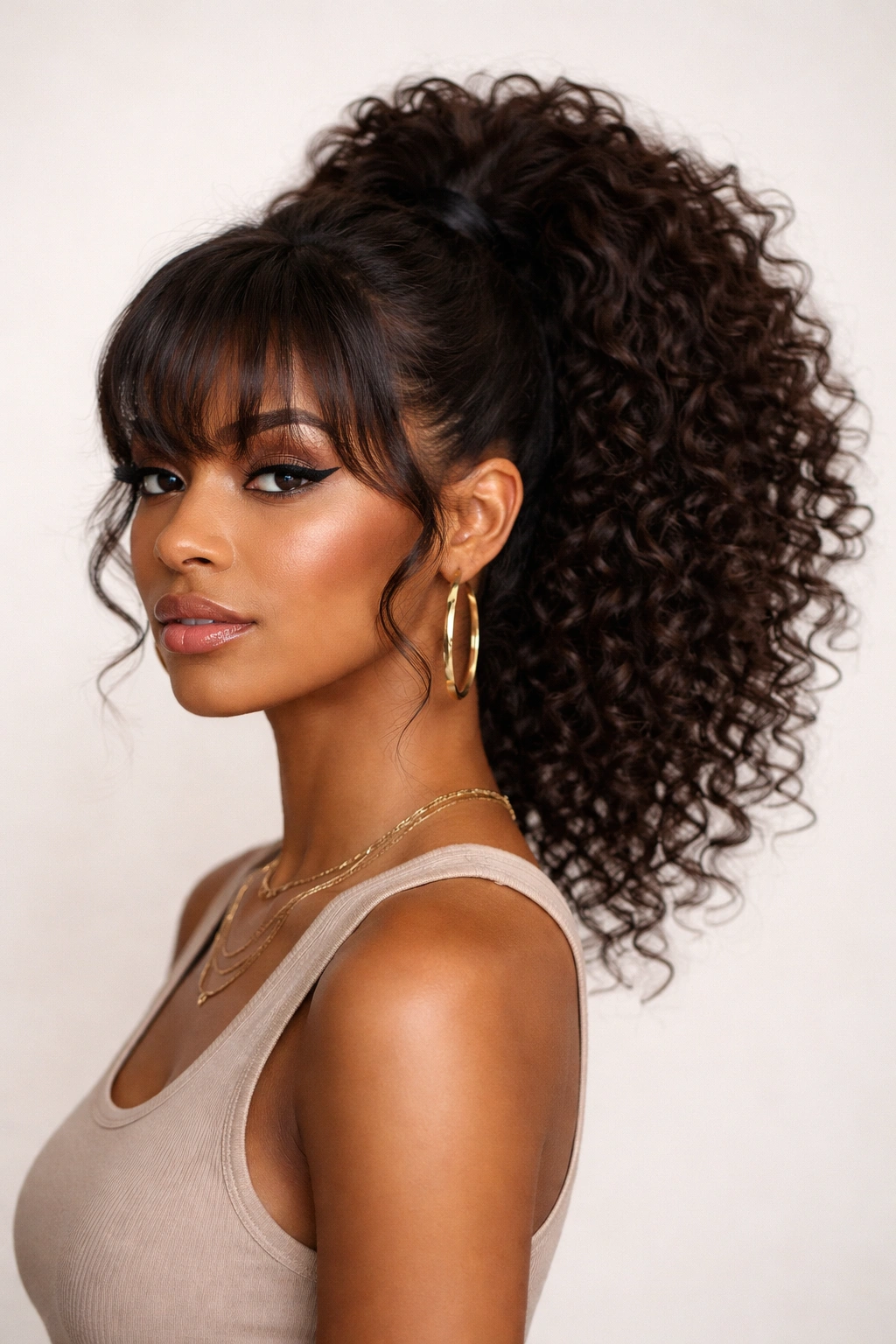
A faux-hawk ponytail has attitude. That is the cleanest way to say it.
The center strip of height gives the style a lifted spine, while the sides stay tighter and lower. Short bang layers at the front keep the look from becoming too aggressive. They soften the face without stealing the shape. If the bangs are too long here, the faux-hawk effect gets lost.
Why It Works
The style creates a strong vertical line. That line can be dramatic, but the short front layers break it up just enough to keep it flattering. Curly texture makes this even better because the volume adds shape without needing extra teasing.
- Works well with tighter curl patterns
- Best when the sides are smooth and the center has lift
- Short bang layers should land around the brow or slightly above
- A small amount of mousse helps the front stay separated
Tip: keep the sides neat, not crunchy. A stiff faux-hawk looks older than it should.
14. Side-Part Ponytail With Spiral Bangs
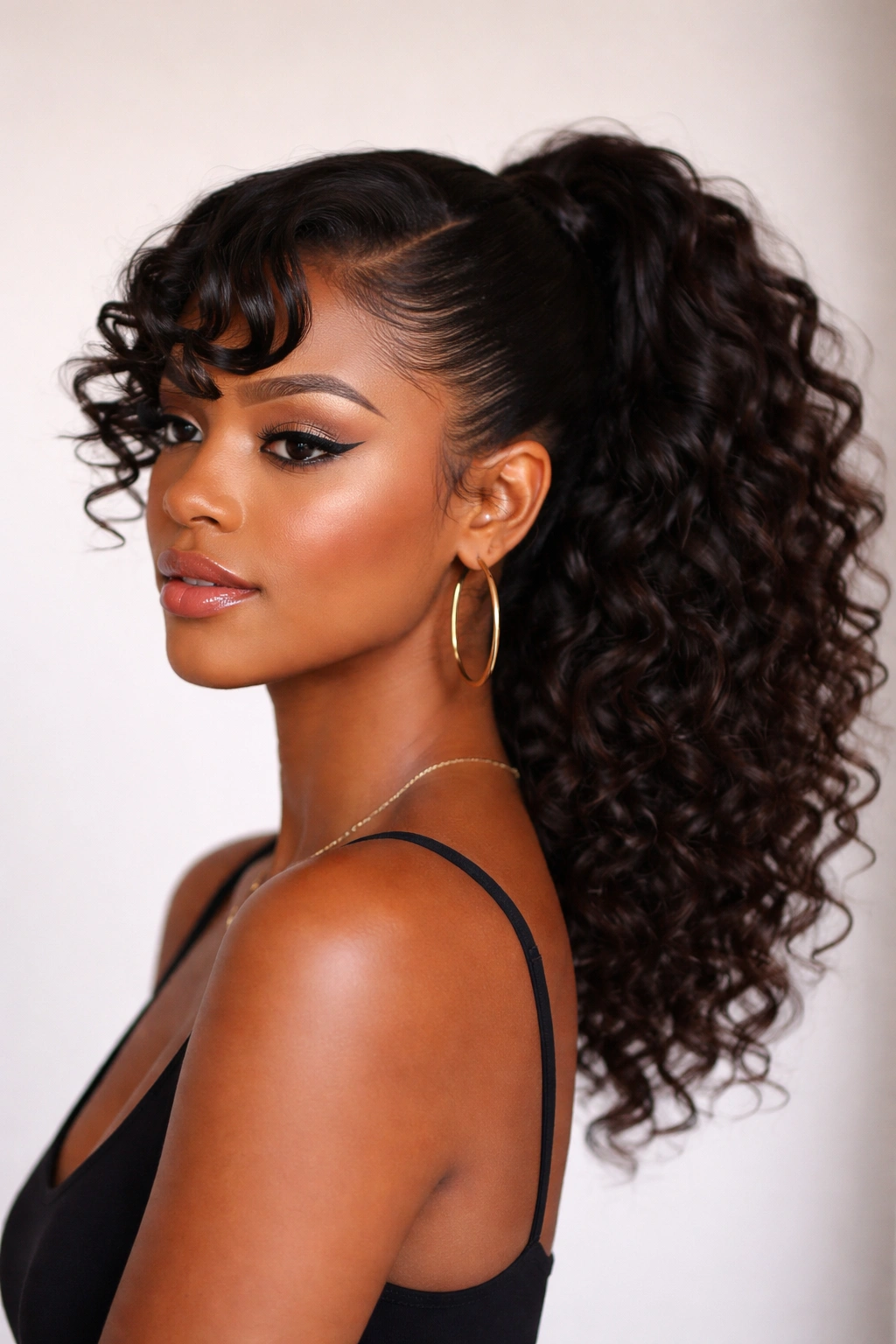
A side part can change a whole hairstyle without changing the actual structure much. That is why I like this one so much.
The spiral bangs are the focus. Instead of lying flat across the forehead, they move in defined curls that echo the side part. The effect feels soft and a little glam, especially when the bangs are separated into a few clean curls rather than one blended mass.
This style works beautifully for people whose curls already have a spiral shape. You do not need to force much. A setting foam, a small roller, or even a flexi rod overnight can be enough to sharpen the front. If the bangs fall too close to the eye, pin them while they cool or dry. That saves you from fighting them later.
It suits broader cheekbones well because the side part draws attention diagonally. The face looks less centered and more sculpted. Small shift, big payoff.
15. Braided Crown Ponytail With Soft Curtain Bangs
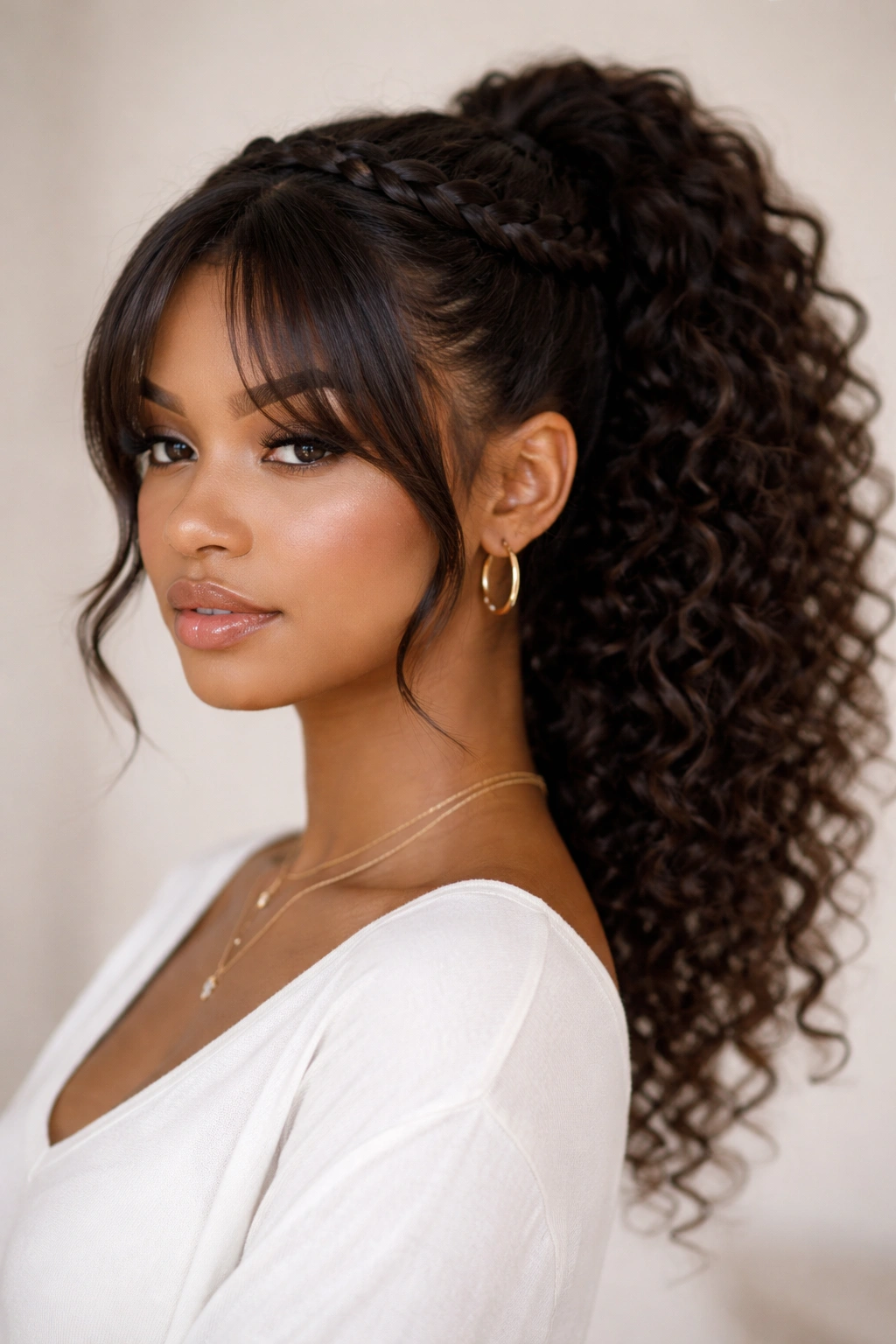
A braided crown changes the ponytail into something more dressed up without making it stiff. It frames the top of the head and gives the base a built-in detail that reads as thoughtful.
The curtain bangs make that crown feel less formal. They split gently at the forehead and keep the style from looking too structured. On curly hair, that softness helps the crown braid and the ponytail feel like one design instead of separate parts.
How to Wear It
This style likes balance. If the crown braid is too thick, the bangs should stay light. If the braid is slim, the bangs can carry a little more weight.
A few practical choices help:
- Keep the crown braid low enough to sit flush against the head
- Let the bangs open at the center and sweep toward the temples
- Use a soft-hold spray so the front does not freeze in place
- Pair it with earrings that sit close to the ear, not oversized pieces
The result feels romantic without leaning sugary. That matters.
16. Pineapple Ponytail With Halo Bangs
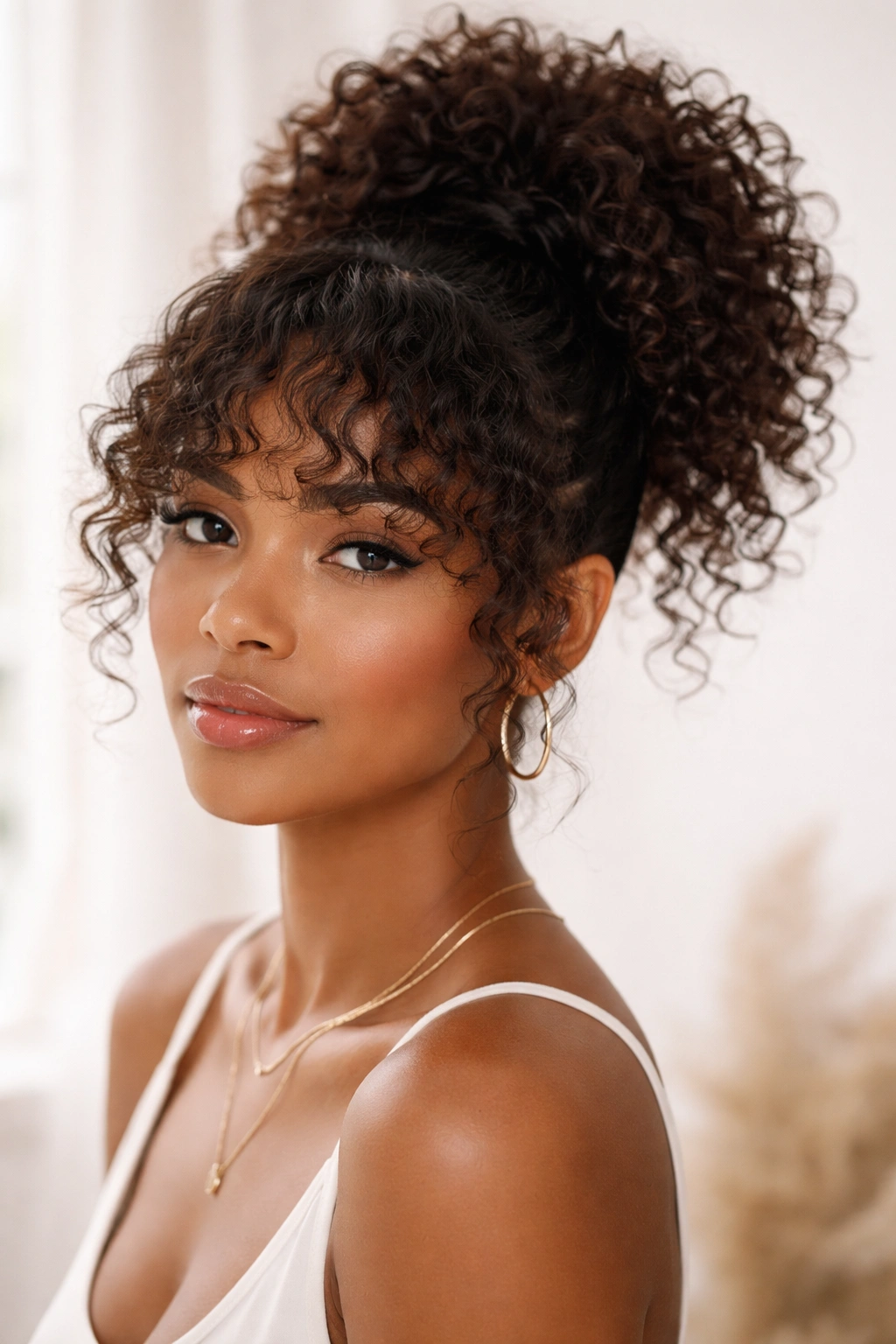
If your curls puff up the second the air gets damp, a pineapple ponytail is a friend, not a trend.
The high loose base keeps the curls from getting crushed, and the halo bangs circle the forehead with that soft, rounded shape people love in curly styling. This is not a tight style. It should look airy, almost spontaneous, even if it took some work to get there.
The loose base also keeps the ponytail from dragging on the scalp. That makes this one feel easier to wear for long stretches. The halo bangs can be left separated into a few defined curls or brushed lightly for a fluffier frame. Both work, but the front should still look intentional.
This style is a nice choice when you want volume without a hard edge. It has a relaxed feel that suits weekend plans, travel days, and any moment when you want your hair out of the way but not flattened.
17. Knotless-Braid Base Ponytail With Face Pieces
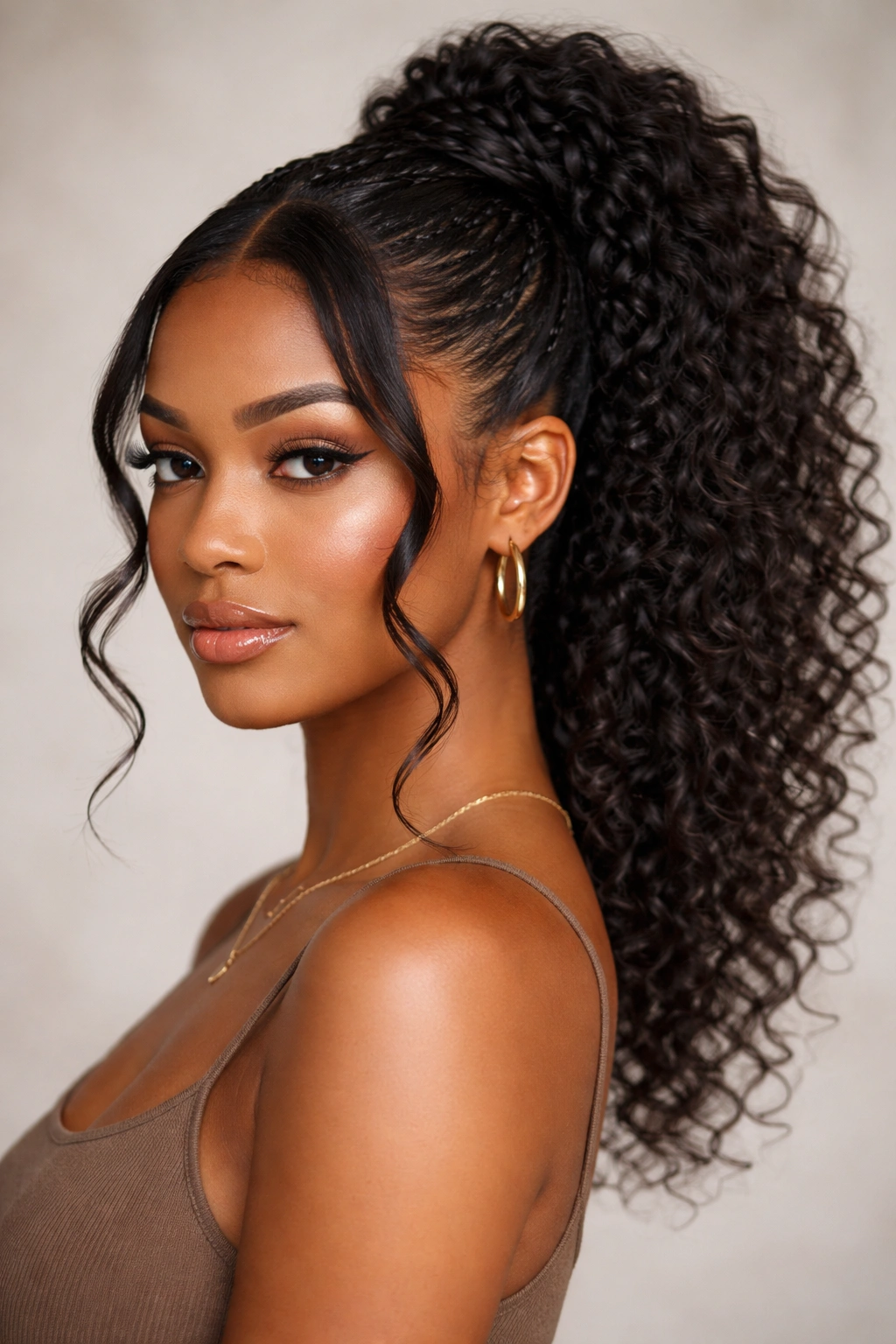
A knotless-braid base is one of the smoothest-looking ways to anchor a weave ponytail. There is less bulk at the root, so the scalp line stays neat and the whole style feels lighter.
The face pieces do the job that bangs usually do. They frame the forehead and cheekbones, but they do it with a softer, more flexible shape. You can curl them, braid them, leave them loose, or set them with rods so they sit exactly where you want. That flexibility is the best part.
This style works especially well if you are sensitive to tension or if you want a ponytail that still feels wearable after a full day. The knotless base helps with comfort, and the face pieces stop the style from looking too severe. It is a clean look, but not a harsh one.
One thing: keep the face pieces long enough to move. Too-short pieces can poke awkwardly and ruin the line.
18. Wrapped-Length Ponytail With Center Bangs
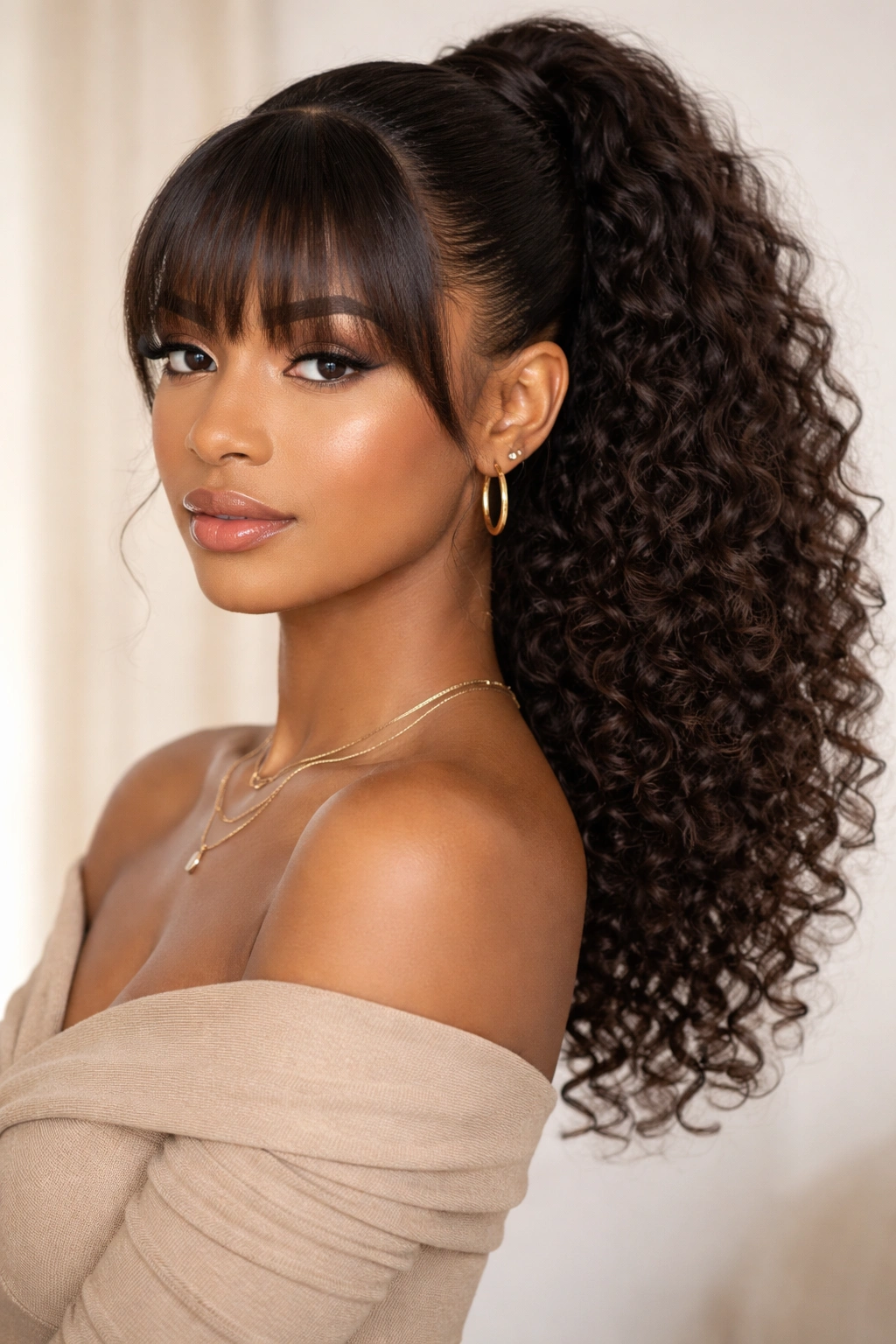
Unlike a loosely tied ponytail, a wrapped-length ponytail hides the base completely. That makes the whole style look more finished from the back and side.
The center bangs give it symmetry. They sit evenly on both sides of the forehead and create a straight visual line that pairs well with the wrapped base. If your parting naturally leans center, this style will feel easy. If you usually wear side parts, it can still work, but the bangs need a little more shaping.
What Makes It Different
The wrap around the base can be a strip of hair or a matching extension piece, depending on the look you want. Either way, the finish is sleek and deliberate.
This style is good for dressy events because it photographs in a clean way, but it is not only for special occasions.
- Best with medium to long ponytail lengths
- Works well when the bangs are slightly longer at the temples
- Needs a polished wrap so the base does not unravel
- Looks strongest with smooth edges and minimal flyaways
My favorite part is the symmetry. It feels calm.
19. Glam Ponytail With Barrel-Curled Bangs
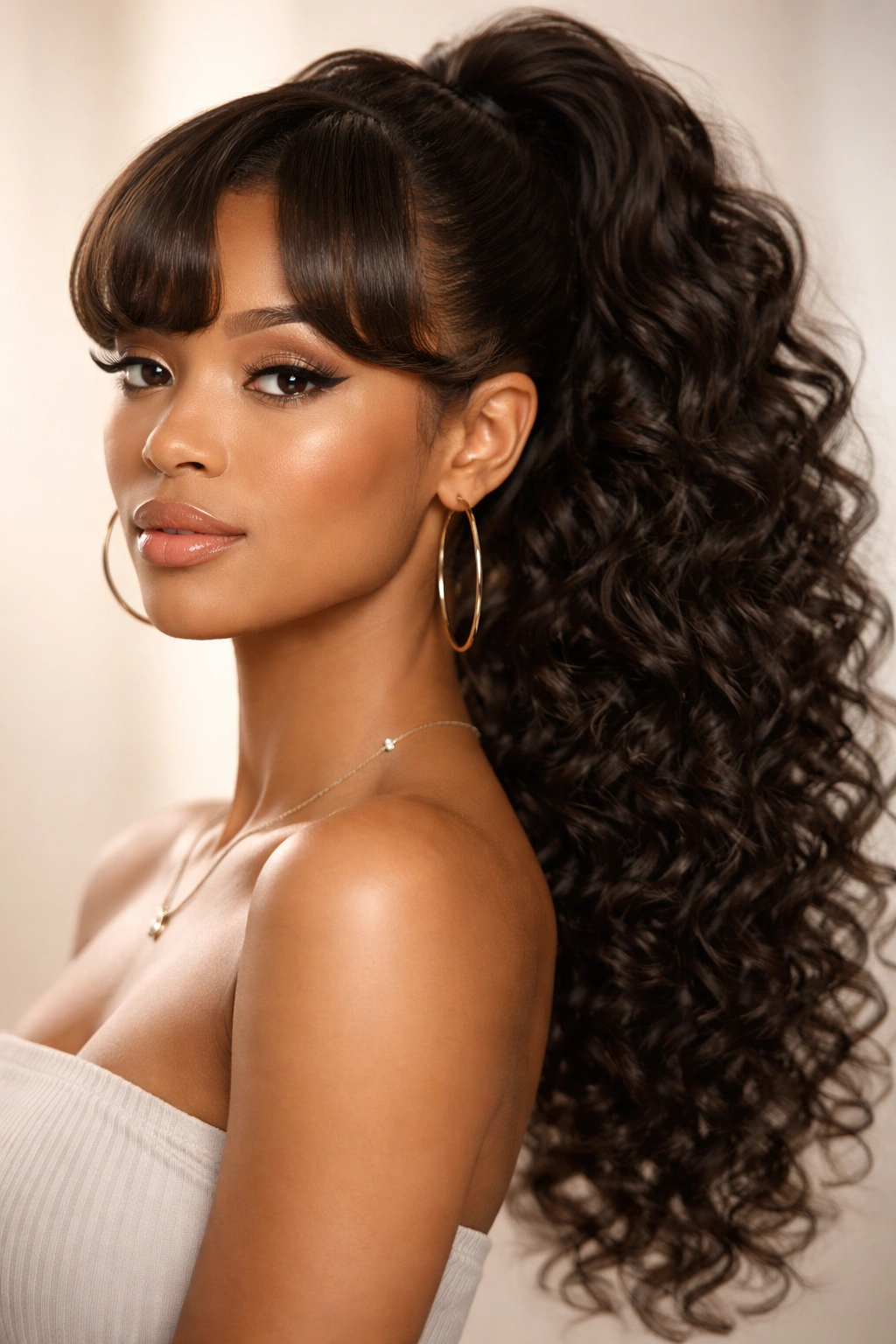
Barrel curls on the bang section change the mood completely. They make the front look plush, almost sculpted, while the ponytail can stay long and loose behind it.
Why It Stands Out
The barrel-curled bangs hold a defined curve instead of collapsing into the forehead. That shape gives the face a polished frame, especially if the ponytail itself is curly and full. You get structure up front and movement in the back. That contrast sells the glam effect.
You want the curls in the bang area to be set with enough heat or roller support to keep their shape. Soft curls are fine, but they should still read as deliberate sections. A little shine spray on the front helps too, though not so much that the hair looks oily.
This style suits evenings, photos, and any event where you want the hair to feel dressed up without adding a complicated updo. It is not subtle. That is the point.
20. Sporty High Ponytail With Light Fringe
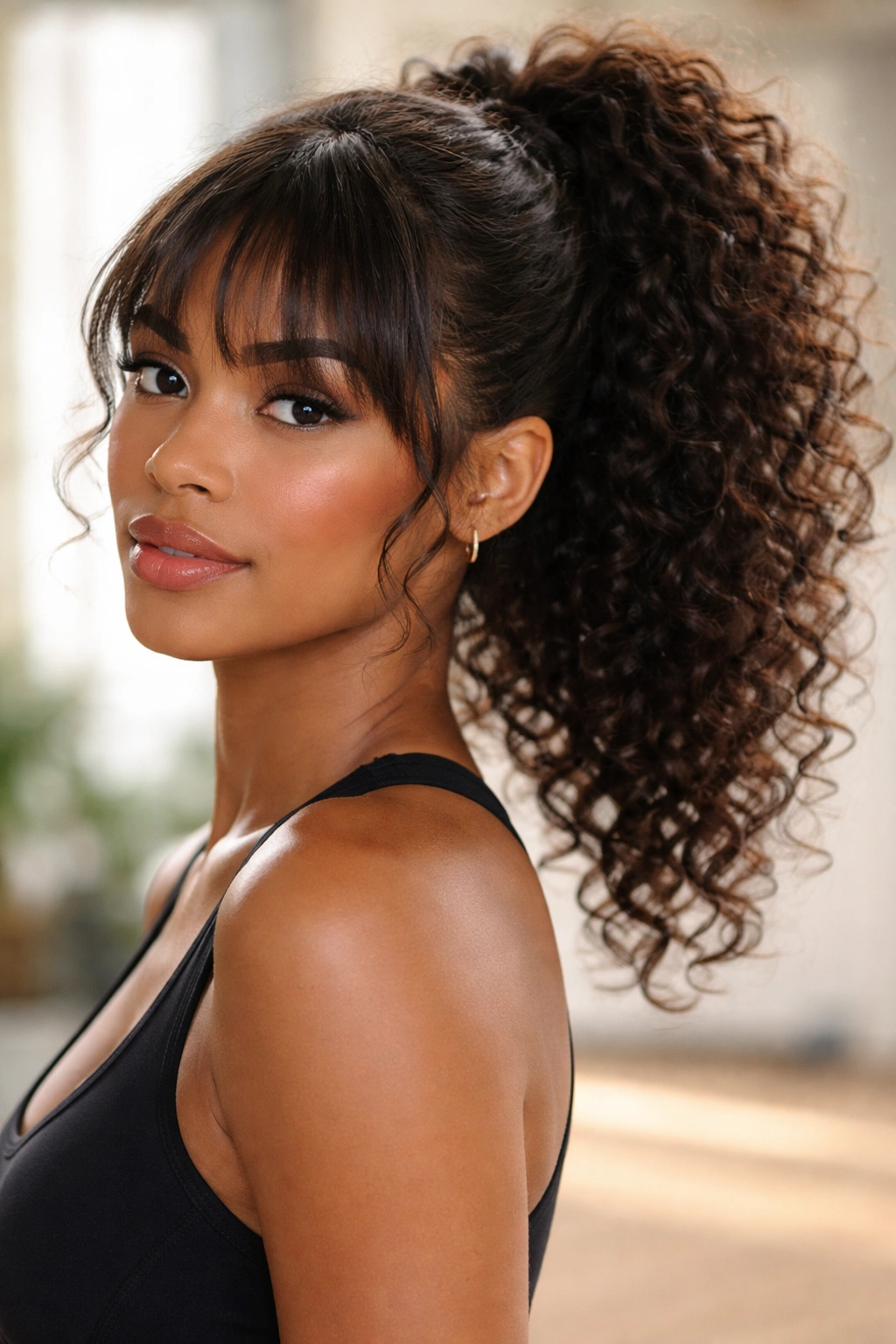
Not every curly ponytail has to act like formalwear.
A sporty high ponytail with light fringe is the easier, cleaner version you can wear when you want your hair secured and still cute. The base sits high enough to feel lifted, but the fringe stays light so it does not trap heat around the forehead. That matters if you are moving around a lot.
This style works well with curly extensions that are not overly dense. You want bounce, not bulk. The bangs can be kept short and wispy, or shaped into a narrow fringe that brushes the brows without covering them. A little gel at the perimeter keeps the style neat, but it should never feel lacquered.
The best thing about this one is how low-maintenance it is. It does not need constant fixing. And honestly, that is probably why so many people end up wearing it more than the fancier styles.
21. Full-Volume Curly Ponytail With Rounded Bangs
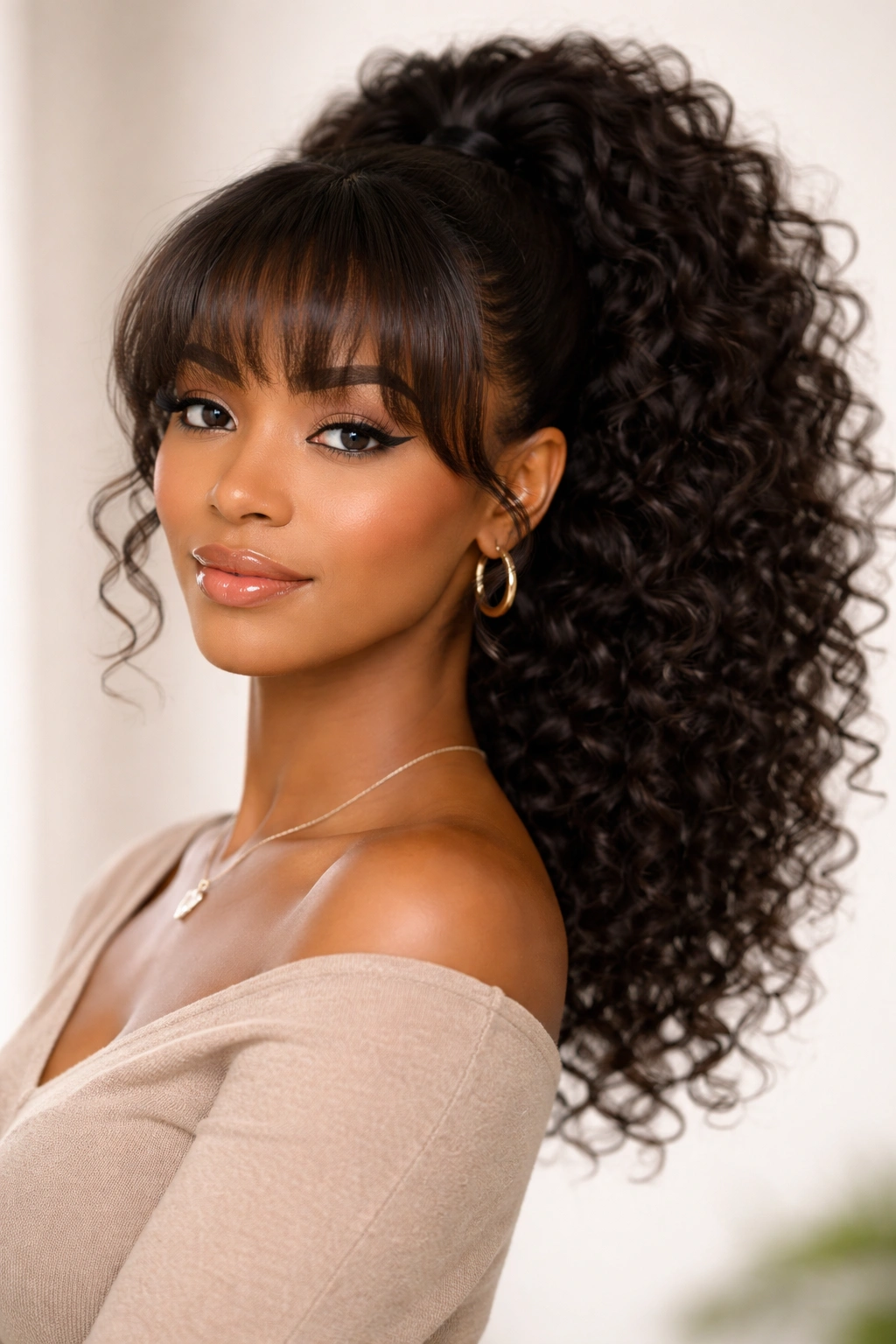
Why do some curly ponytails feel richer than others? Usually because the volume is balanced from front to back.
The rounded bangs give this style its frame. They follow the curve of the forehead and echo the fullness of the ponytail, which keeps the whole look from tipping too far in one direction. If the ponytail is dense and the bangs are thin, the style feels unfinished. If both are full, it feels intentional.
How to Keep It From Looking Too Wide
Volume is great until it starts swallowing your face. The fix is shape, not less hair.
- Ask for the bangs to follow a soft arc, not a straight line
- Keep the sides slightly tighter than the center
- Use curl cream sparingly so the front does not puff out too much
- Let the ponytail fan out, but keep the crown smooth
This style is ideal if you like curly hair to look big and alive. It has presence. Plenty of it.
22. Tucked-Ends Ponytail With Uneven Bangs
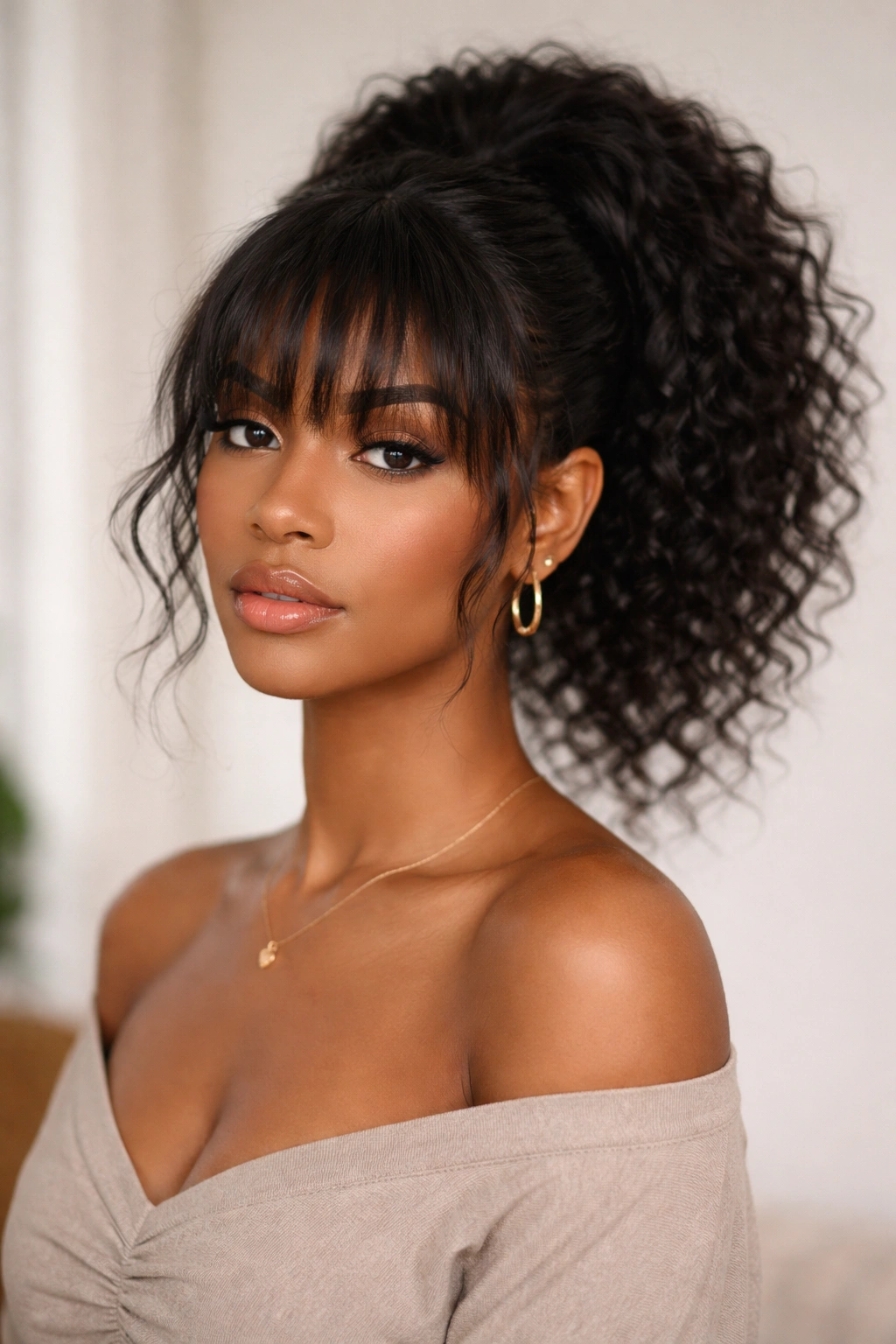
A tucked-ends ponytail gives the style a cleaner finish because the hair is folded or pinned in a way that hides the raw end of the extension. The look is neat, but it does not feel stiff.
Uneven bangs are the interesting part. They break up the symmetry and make the style feel more modern. One side can sit slightly shorter, the other can fall lower into the cheek. That little imbalance keeps the front from looking too set.
What to Watch For
This style needs restraint. Too much unevenness and it starts to look accidental. Too little, and the effect disappears.
- Keep the tucked ends secure with pins or a wrapped section
- Let the bangs vary by only a small amount
- Use the unevenness to soften strong jawlines or broad foreheads
- Finish with a light mist, not heavy spray
It is a good choice if you like styles that look a little editorial without feeling costume-like. Strange sentence, maybe, but true. The uneven front gives it life.
23. Romantic Low Ponytail With Loose Ringlet Bangs
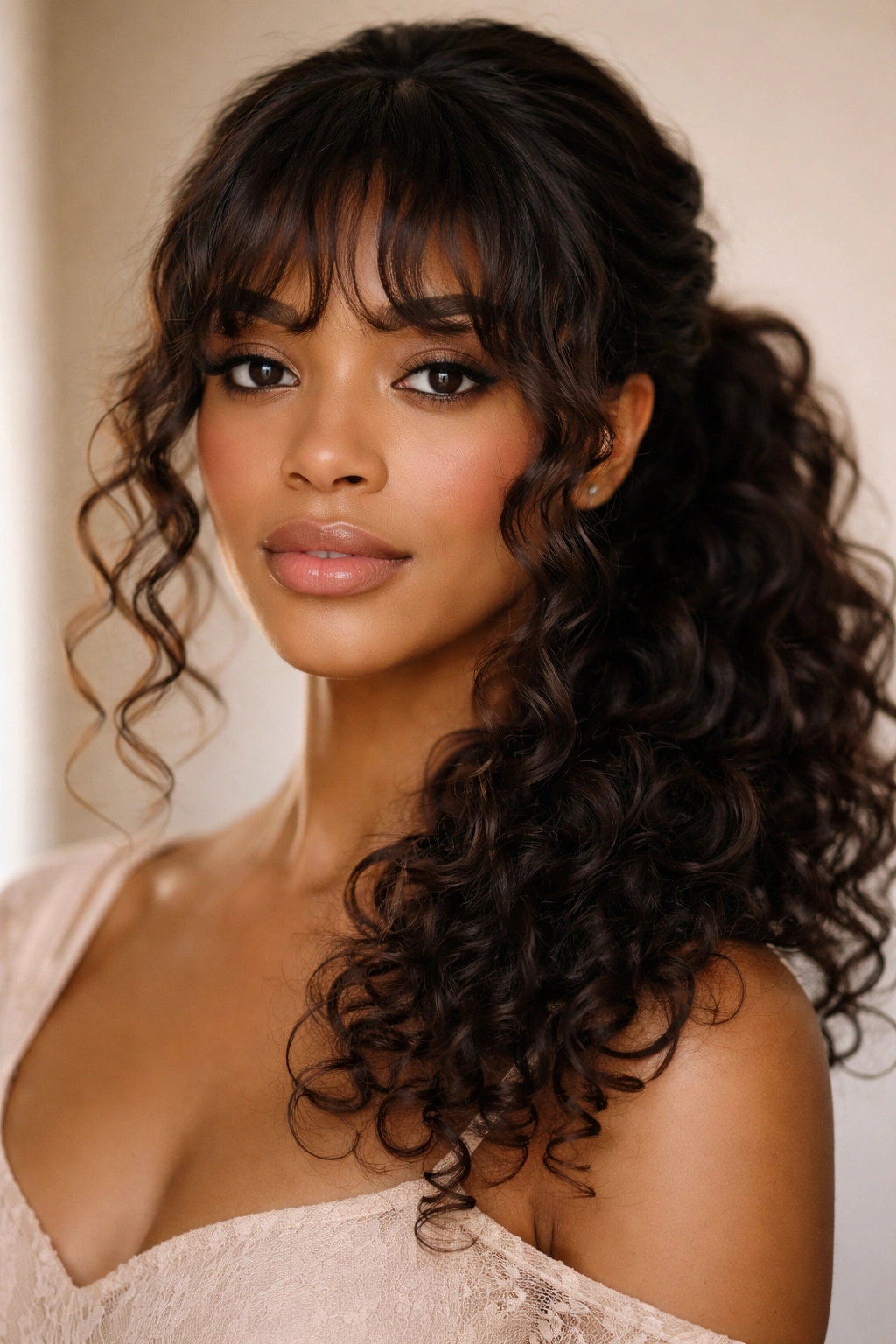
A romantic low ponytail is the softest ending point for this whole lineup. It sits low, moves gently, and lets the curly bangs do the framing instead of the structure.
Loose ringlet bangs are the reason it works. They fall in little spirals around the forehead and temples, which gives the face a warmer, less rigid shape. If the ponytail is long, the ringlets balance it by keeping the front light and touchable.
This style likes a bit of softness elsewhere too. A few face-framing curls near the jawline, a slightly loosened base, and a ponytail that is full without being overpacked — that is the formula. It is especially good for softer makeup looks and dresses with open necklines because nothing fights the neckline.
The best part is how forgiving it is. If a curl drops, it still looks right. That is a nice place for hair to be.
Final Thoughts
The strongest weave ponytails with bangs for curly hair do three things at once: they protect the hairline, shape the face, and match the texture instead of arguing with it. That is the real difference between a style that looks styled and one that looks thrown together.
If you are stuck between two versions, choose the one that is kinder to your scalp first. Pretty hair is not worth a sore hairline, and a ponytail that tugs at the front will stop feeling cute long before the day is over.
Start with the bang shape that feels easiest to live with, then adjust the ponytail height from there. That small order change saves a lot of regret later.