

Braided styles for mixed curly hair look easy in photos and a little more opinionated in real life. The braid slips where the hair is silkier, puffs where the curl is springier, and the front sections have a habit of doing their own thing if you rush. That is not a flaw. It is the texture talking.
The best braids for mixed-texture curls work with that contrast instead of fighting it. Some styles need a clean part and tight grip at the scalp. Others look better when the braid is a little loose, a little fluffy, and not polished to death. A tight, shiny braid on hair that naturally wants volume can look stiff fast, while a softer braid can look intentional and still hold for hours.
I’m picky about tension here. If a braid pulls at the temples or leaves a sore spot behind the ears, it is too tight, even if it looks neat. A good mixed-curl braid should feel secure, not like a test of endurance. And yes, prep matters: a small amount of leave-in conditioner, a dab of curl cream, and a rat-tail comb usually make the difference between a braid that parts cleanly and one that frays before you finish the second side.
So the real question is not whether mixed curly hair can be braided. It absolutely can. The better question is which braid matches the shape, density, shrinkage, and mood of the hair that day.
1. Crown Braid That Keeps the Curl Pattern in View
A crown braid is one of my favorite braided styles for mixed curly hair when you want structure on top and movement everywhere else. It lifts the front and sides away from the face, but it does not bury the curls under a helmet of hair. That balance matters. A lot.
Why it flatters mixed curls
The braid sits along the hairline or just behind it, which means the curl pattern still shows through at the back and ends. On mixed-texture hair, that works well because the braid gives the looser sections some definition while the springier sections still keep their bounce. It also helps when the crown area gets flat faster than the rest of the head.
A crown braid looks best when the parting is clean and the braid is not yanked tight. Leave a little softness around the temples. That tiny bit of slack keeps the style from looking severe.
- Best for medium to long hair
- Works with a center part or deep side part
- Hold the braid with 1 to 2 small pins at the back, hidden under curls
- Use a light gel only on the first inch near the scalp
Tip: braid the crown about half an inch farther from the hairline than you think you need. It gives the style room to breathe and saves the edges.
2. Side Dutch Braid into a Low Puff
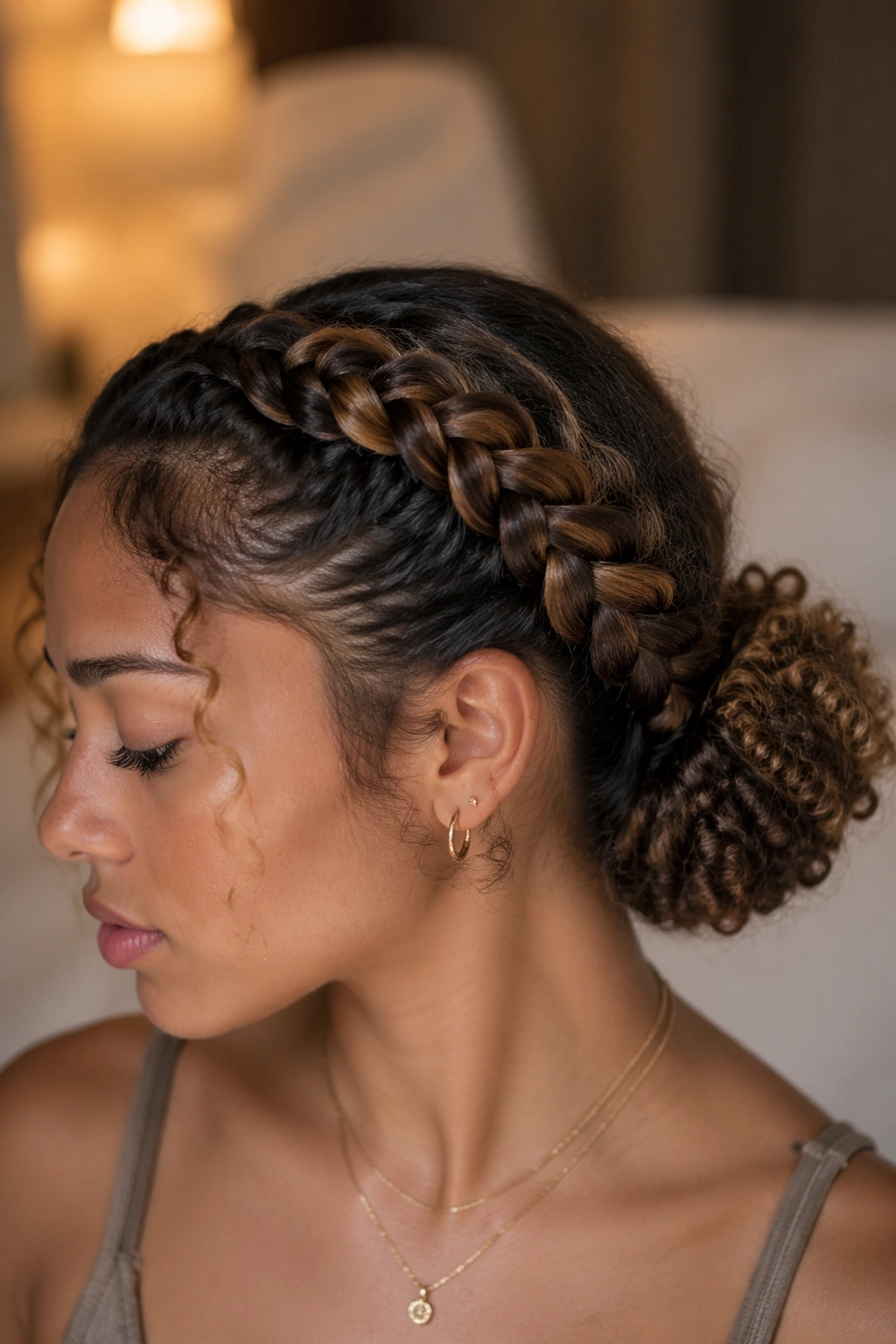
A side Dutch braid is one of the few styles that keeps two textures from arguing with each other. The braid starts near the front hairline, drops diagonally across the head, and then feeds into a low puff or curly ponytail. The result looks polished without flattening the whole head.
What I like about this one is the shape. The braid gives the scalp area a crisp line, while the puff at the nape keeps the curl pattern alive. If your hair has tighter curls underneath and looser waves near the crown, the braid helps everything meet in the middle instead of splitting into separate personalities.
It also survives a long day better than people expect. A side Dutch braid keeps the front pieces in place, which matters if your roots puff up faster than your ends. The low puff can be refreshed with a little water and leave-in, then scrunched back to life in under a minute.
The one thing to watch: do not drag the braid too close to the ear. A little distance makes the whole style look softer and keeps the tension off the scalp. And if the puff feels too sleek, loosen the braid loops with your fingertips after you secure it. That tiny move changes the whole look.
3. French Braid Pigtails with Soft Ends
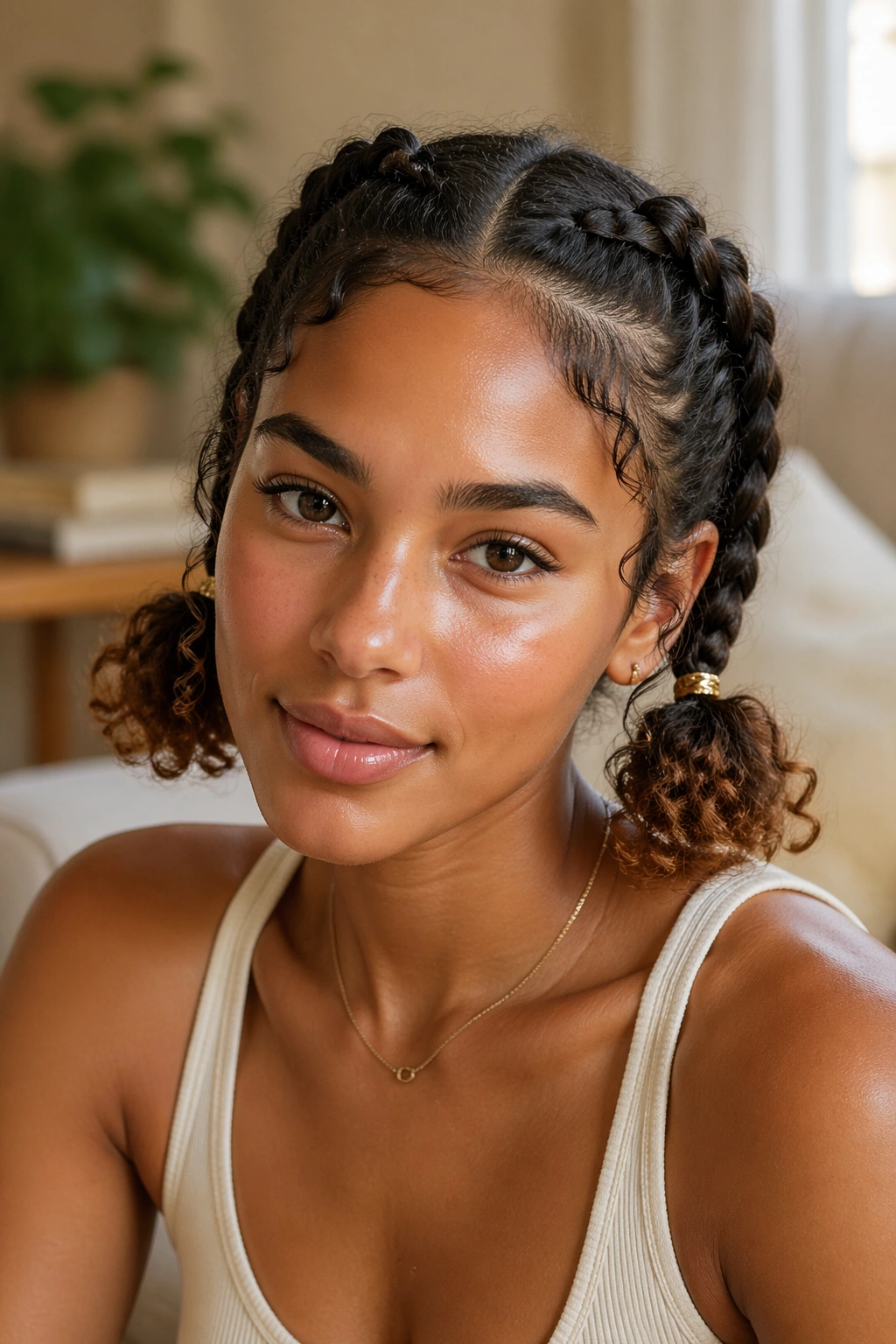
Why do pigtail braids work so well on mixed curly hair? Because they let you divide the texture instead of forcing the whole head into one shape. Two French braids can tame density at the crown, keep the middle of the head neat, and still leave the ends curly enough to look alive.
How to wear them without looking too stiff
The trick is to stop the braid around ear level or just below it, then let the remaining lengths hang in curls, coils, or a stretched wave pattern. If you braid all the way down to the ends, the style can get bulky and a little too school-uniform. Stopping early keeps it modern and more forgiving.
This style is especially handy on busy days. It keeps hair off the face, protects the crown from frizz, and still leaves you with movement at the bottom. If your curls shrink a lot, use a tiny amount of styling cream on the last loose section so the ends do not puff out into a fuzzy halo.
- Works well on shoulder-length hair and longer
- Use a center part for symmetry
- Start each braid with a firm grip at the scalp, then loosen slightly as you go down
- Secure the ends with small elastics that match your hair color
Watch for: if one side has much tighter curl than the other, keep the braids slightly looser on that side so the finished look feels balanced.
4. Halo Braid with Loose Ringlets at the Nape
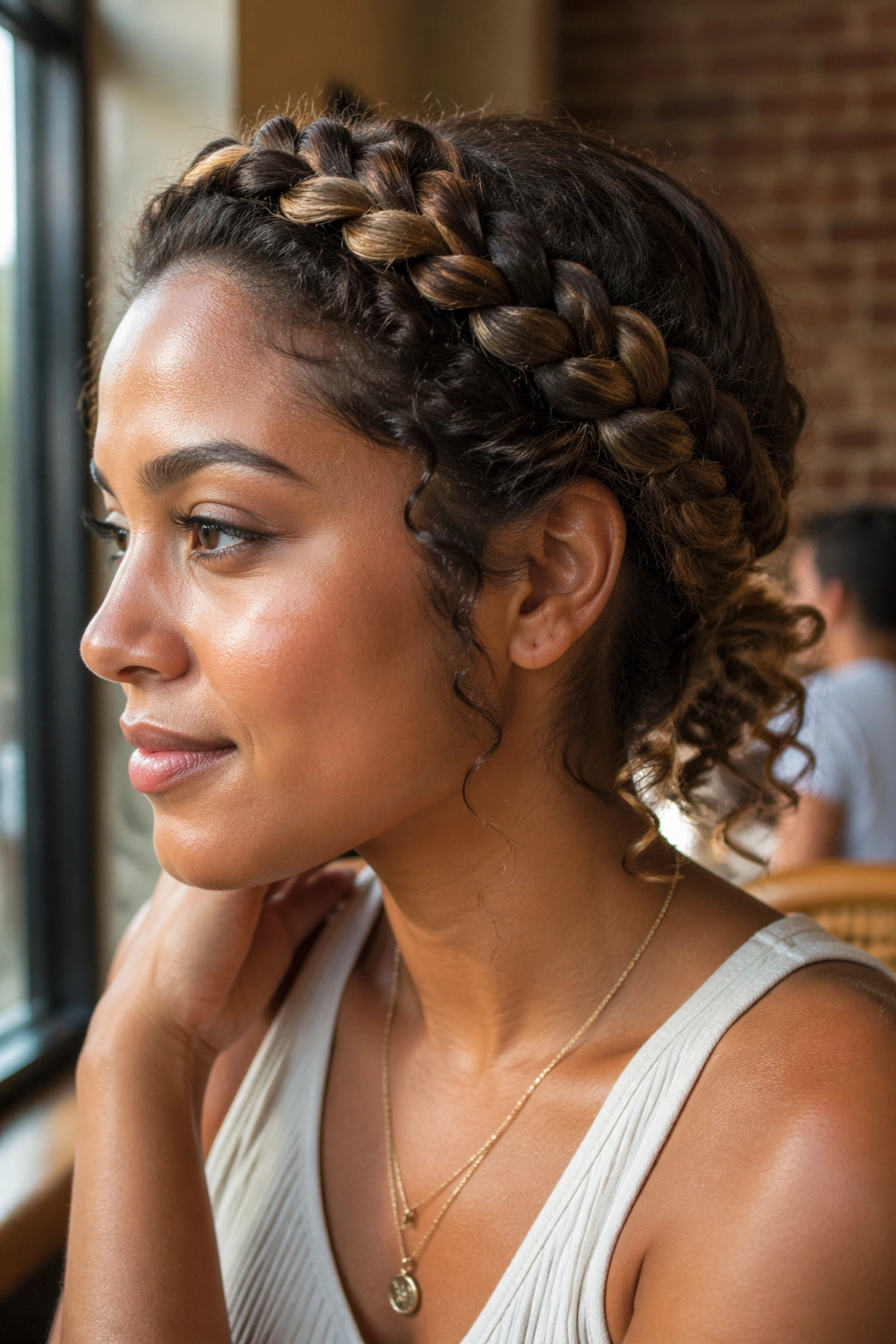
A halo braid can feel a little fancy, but on mixed curly hair it has a practical side too. It takes the front and sides off the face, shows off the texture at the back, and creates a soft frame that works for dinners, events, or any day when you want hair out of your eyes without putting it all up.
The style works best when the braid travels around the head instead of sitting too high. That lower placement leaves the curl pattern visible at the nape, where mixed curls often look richest. You get a clean line at the front and a softer, fuller finish at the back.
Do not braid it too tightly. A halo braid should lie close to the head, yes, but it should not drag the roots flat. If the braid feels hard and lifted away from the scalp, the shape gets stiff. A few tucked pins help more than extra tension ever will.
I also like this style because it hides uneven growth. If one side of your hair has a different texture or a few shorter layers, the halo braid makes that look intentional. A small curl cream or foam around the front sections helps the braid stay smooth without getting crunchy.
5. Half-Up Braided Crown with the Rest Left Free
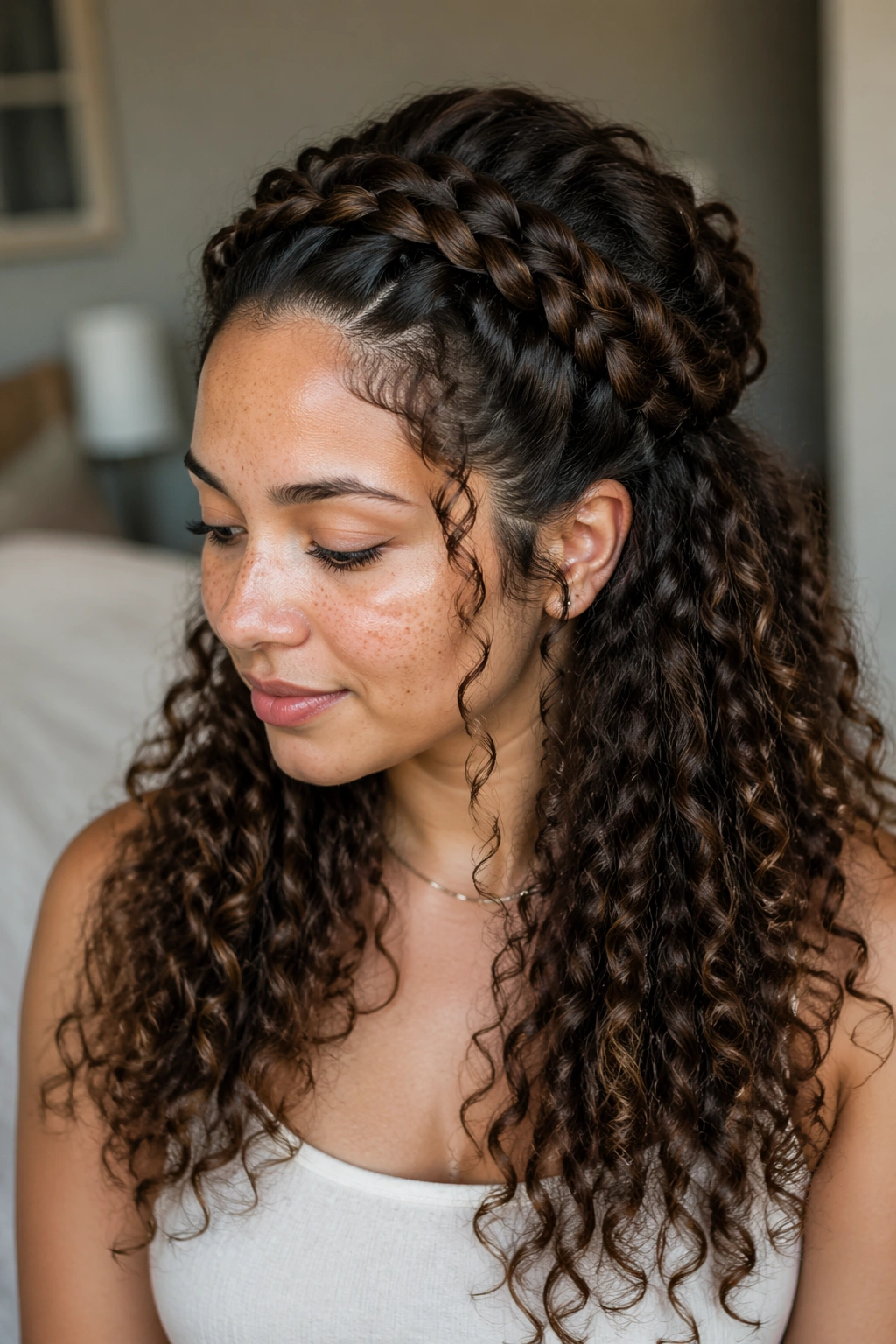
This is the one I reach for when I want the hair to look styled without looking controlled. A half-up braided crown takes the top section, braids it across the head or from temple to temple, and leaves the rest of the curls loose. It is part braid, part volume, and that mix suits mixed-texture hair unusually well.
The reason it works is simple. The top section is usually where frizz and flyaways show first, especially if the crown has looser waves or finer strands. The braid handles that area. The loose lower section keeps the curl pattern front and center, so the style still feels like curly hair rather than a braid wearing curly hair as a costume.
I prefer this style on second-day hair. Freshly washed curls can be too slippery, especially if they have a lot of slip from conditioner. A little lived-in texture gives the braid grip. The loose lengths also hold shape better when they are not freshly soft.
Use two bobby pins crossed in an X shape to anchor the braid at the back. That small detail matters more than most people think. One pin slides; two pins stay put. And if the ends look flat, mist them lightly with water and scrunch from the bottom up.
6. Waterfall Braid on Shoulder-Length Mixed Curls
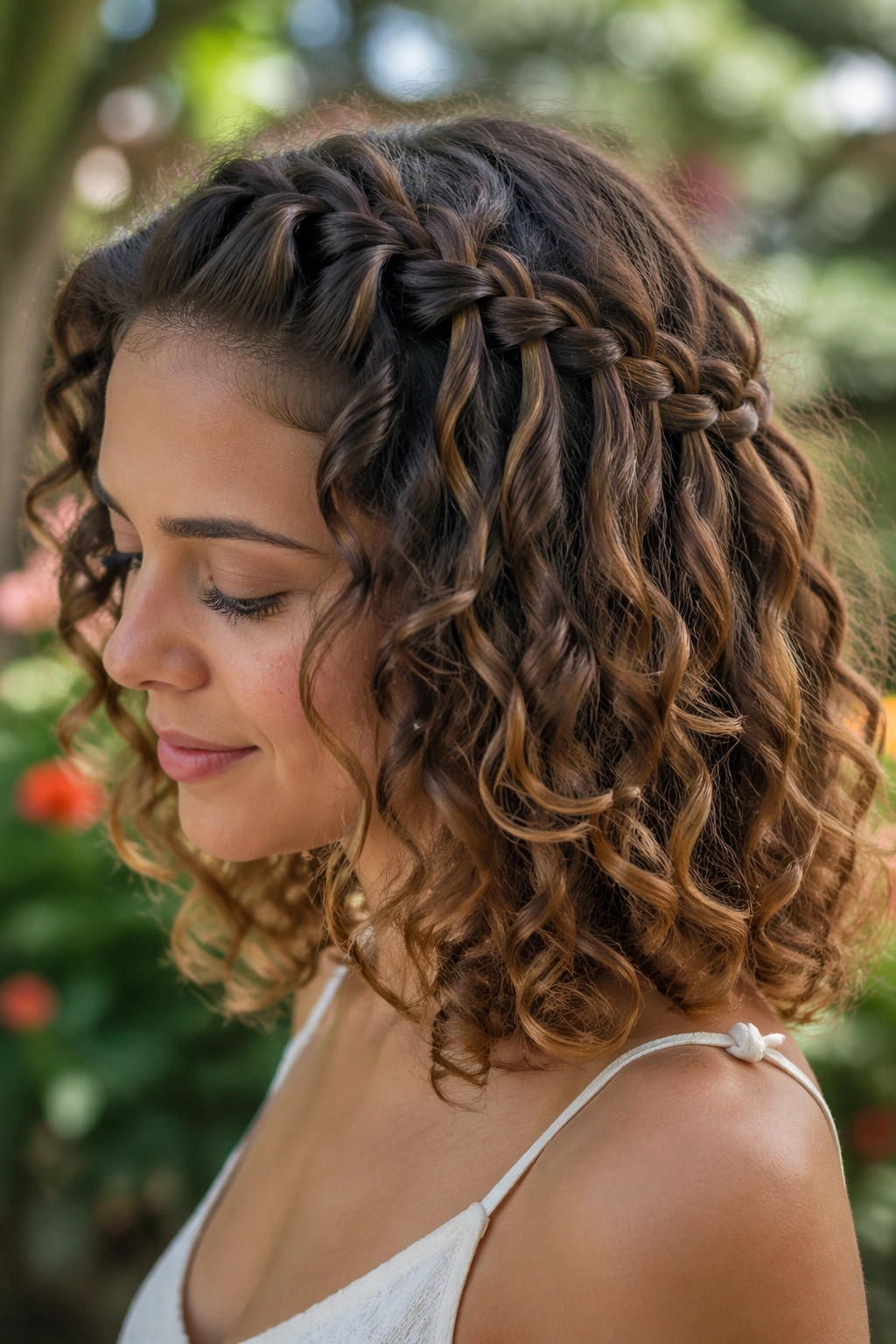
Unlike a straight-hair waterfall braid, this version depends on texture. Mixed curly hair gives the braid something to grab, and the curls that drop out of the braid look fuller because they already have shape. That is why waterfall braids can look especially good on shoulder-length hair with layers.
The style is basically a moving braid across the head, where one strand drops out and new hair replaces it. That falling strand creates a soft, lacy effect. On curly hair, the “lace” is less tidy and more dimensional, which is a good thing if you like a softer finish.
What to watch for
The braid can get lost if the hair is very tight or very short. In that case, the dropped strands may spring away before they show the pattern. If that happens, stretch the hair slightly with a diffuser or a low-heat blow-dry on the cool setting before braiding.
A fine-tooth comb helps here, but only for the top section. Do not comb the loose curls into submission. A little frizz at the ends is fine; it keeps the style from looking flat and fake. I would rather see a few stray curls than a braid that looks like it was pressed with a ruler.
This one shines when you want something pretty but not heavy. It leaves the length visible, and the braid itself acts like a frame rather than a cage.
7. Boxer Braids That End in a Puff or Bun
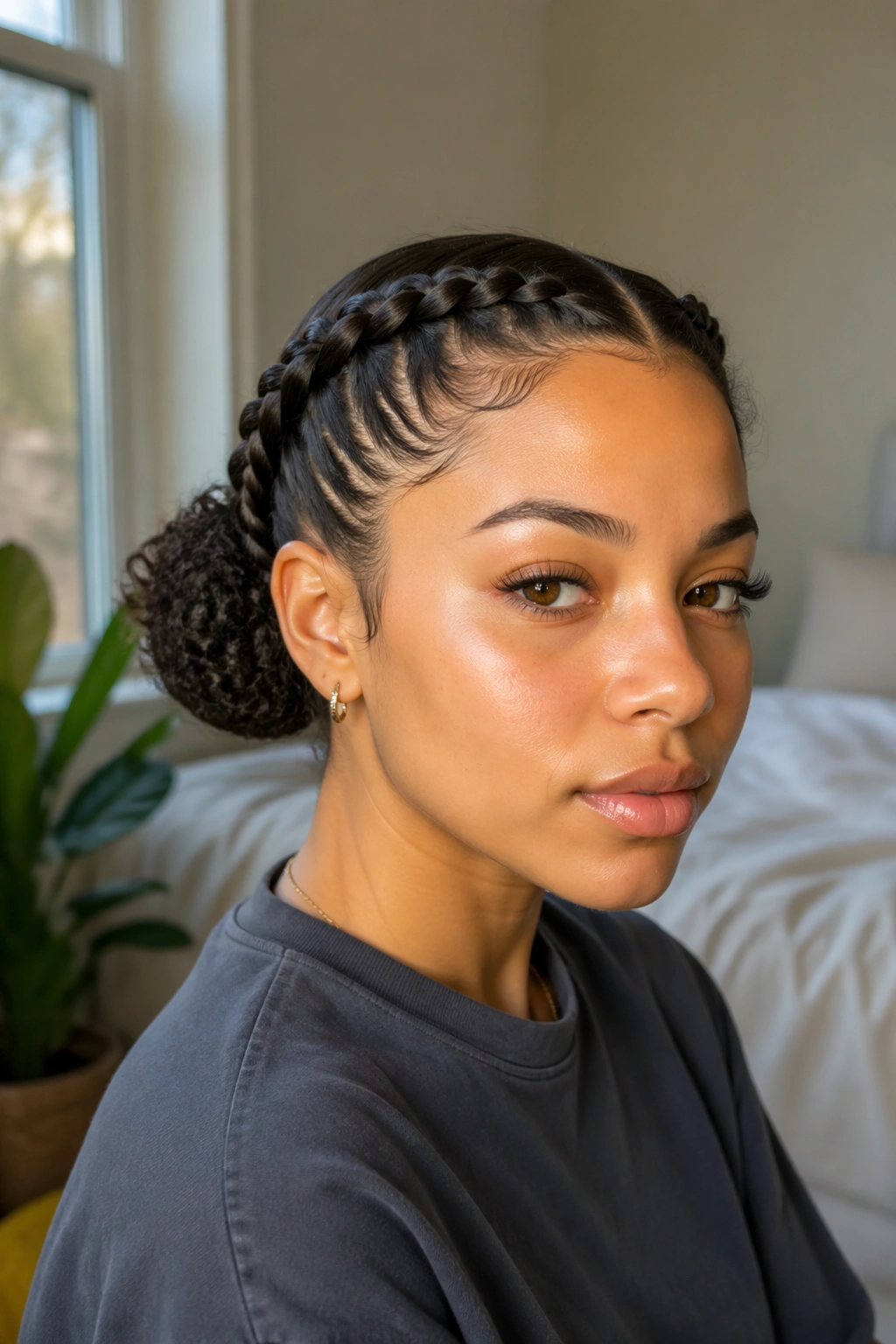
Boxer braids are not just for gym days. On mixed curly hair, they give you a clean scalp line, a lot of control at the root, and freedom at the end if you stop the braids at the nape and gather the rest into a puff or bun. That makes the style practical without turning it severe.
The real strength of boxer braids is grip. Two tight braids, one on each side of the head, keep the front sections neat when curls want to expand at different rates. If the top layer is smoother than the underneath layers, the braids help the whole shape stay balanced.
Keep the braid sectioned cleanly, but do not make every strand microscopic. That tends to show every mismatch in texture. Medium sections usually look better because they create a braid with enough thickness to match the rest of the hair. Small sections can work too, but they take longer and can pull harder.
- Best for dense curls and active days
- Secure the braids with small elastics before joining them
- Use edge control sparingly, only on the first half-inch of hairline
- Wrap the finished puff or bun with a satin scrunchie if you want less breakage
My opinion: if a boxer braid gives you a headache, it is too tight. Neat is good. Pain is not.
8. Fishtail Braid with Fluffed-Out Texture
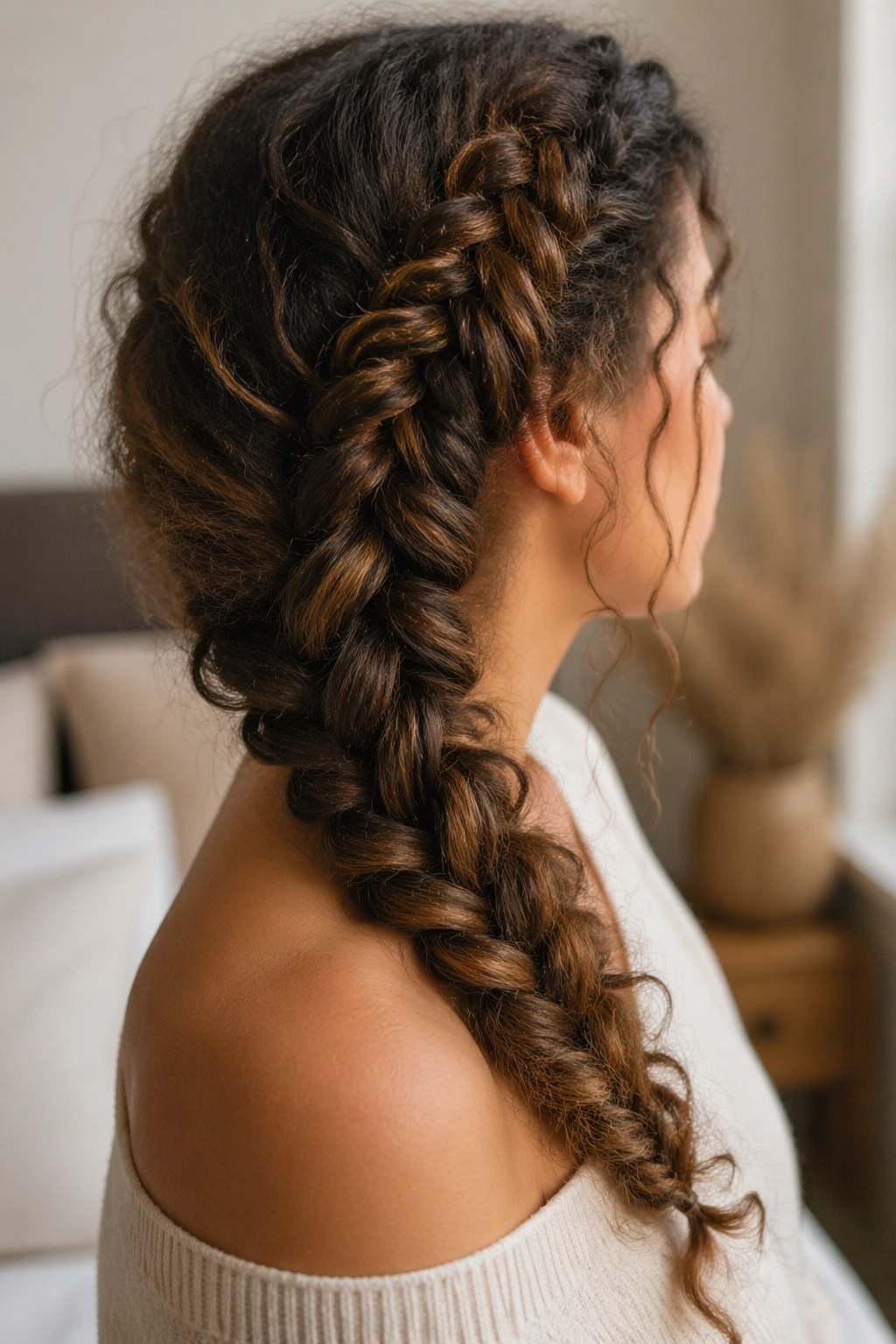
A fishtail braid looks more intricate than a three-strand braid, but on mixed curly hair it actually plays to the texture’s strengths. The pattern becomes clearer when the hair has a little grit, and mixed curls usually bring enough natural grip to keep it from slipping apart before you finish.
The best version of this braid is not sleek. It is softly pulled apart after it is secured. That fluffed-out finish lets the braid widen and gives the different curl types room to show. If your hair is a mix of waves and spirals, the fishtail captures both and makes the contrast part of the style.
Start with dry or mostly dry hair. Wet hair can be too soft for a clean fishtail, and the sections may collapse while you work. A small amount of styling cream helps the outer layer stay smooth, but too much product makes the braid gummy and hard to separate.
People sometimes think fishtail braids need perfect symmetry. They do not. On curly hair, a little irregularity gives the braid character. Pulling a few loops wider near the middle and leaving the ends loose keeps it from feeling too formal.
9. Rope Braid Ponytail for Shorter Curly Lengths
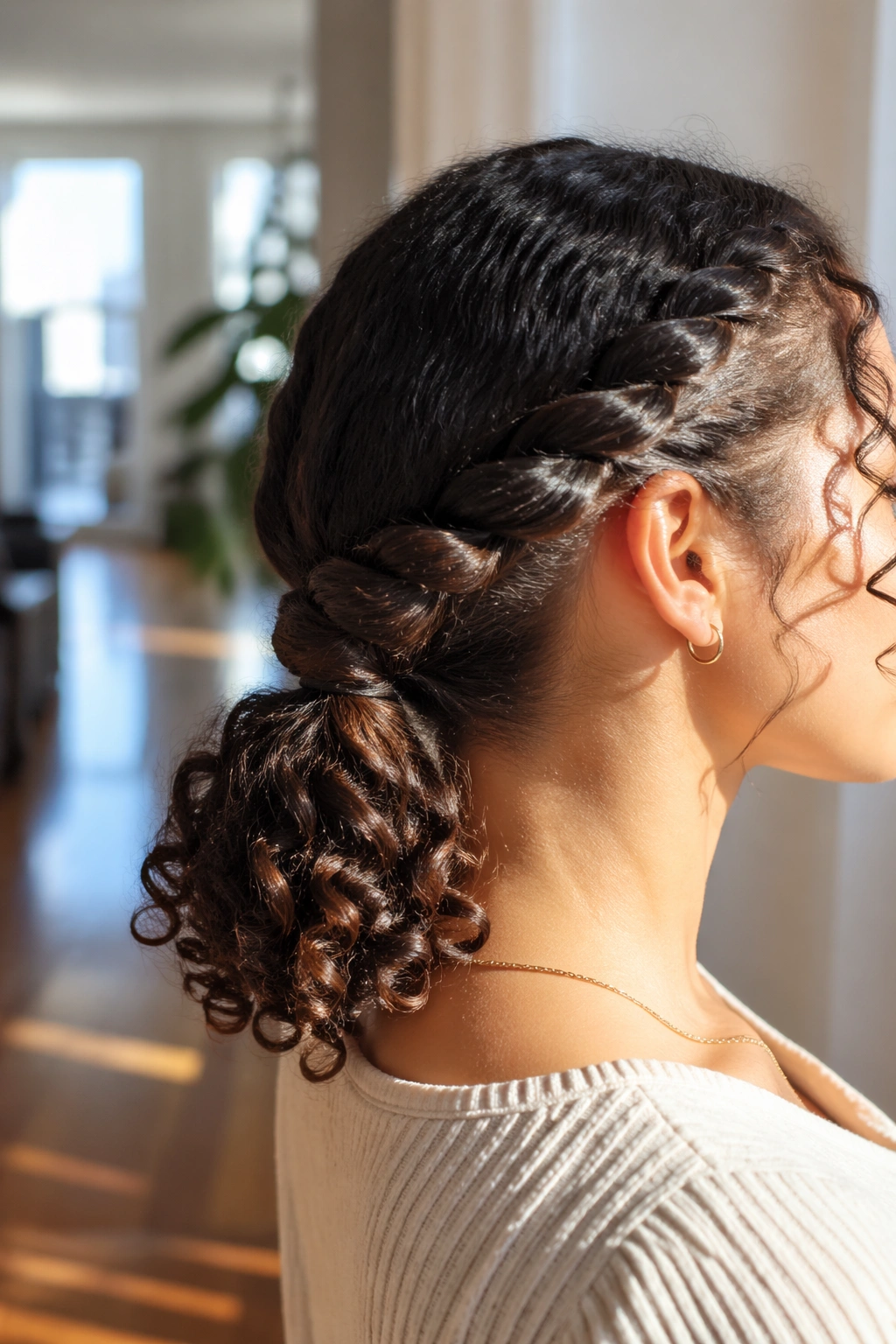
A rope braid is the style I recommend to people who want the look of a braid without the fuss of three strands crossing back and forth. It uses two sections twisted around each other, which makes it quick, clean, and surprisingly good on shorter mixed curly hair where a traditional braid might unravel too soon.
Why it holds up
The twist pattern grips well because the two sections keep tightening as you work downward. On hair with mixed textures, that matters. The looser strands help the rope braid stay visible, while the tighter curls add a bit of spring so the braid does not collapse into a rope-shaped string.
This style works especially well gathered into a ponytail first. You can tie the hair low, split the ponytail in two, twist each side, then twist them around each other. The finished look is simple, but not boring. It also takes less time than a full braid crown, which makes it a good weekday option.
A small clear elastic at the end keeps the twist from springing apart. If the ends are drier than the rest, rub a drop of oil between your palms and smooth only the last inch. That keeps the shape neat without making the whole style greasy.
10. Braided Mohawk for Big, Dense Curls
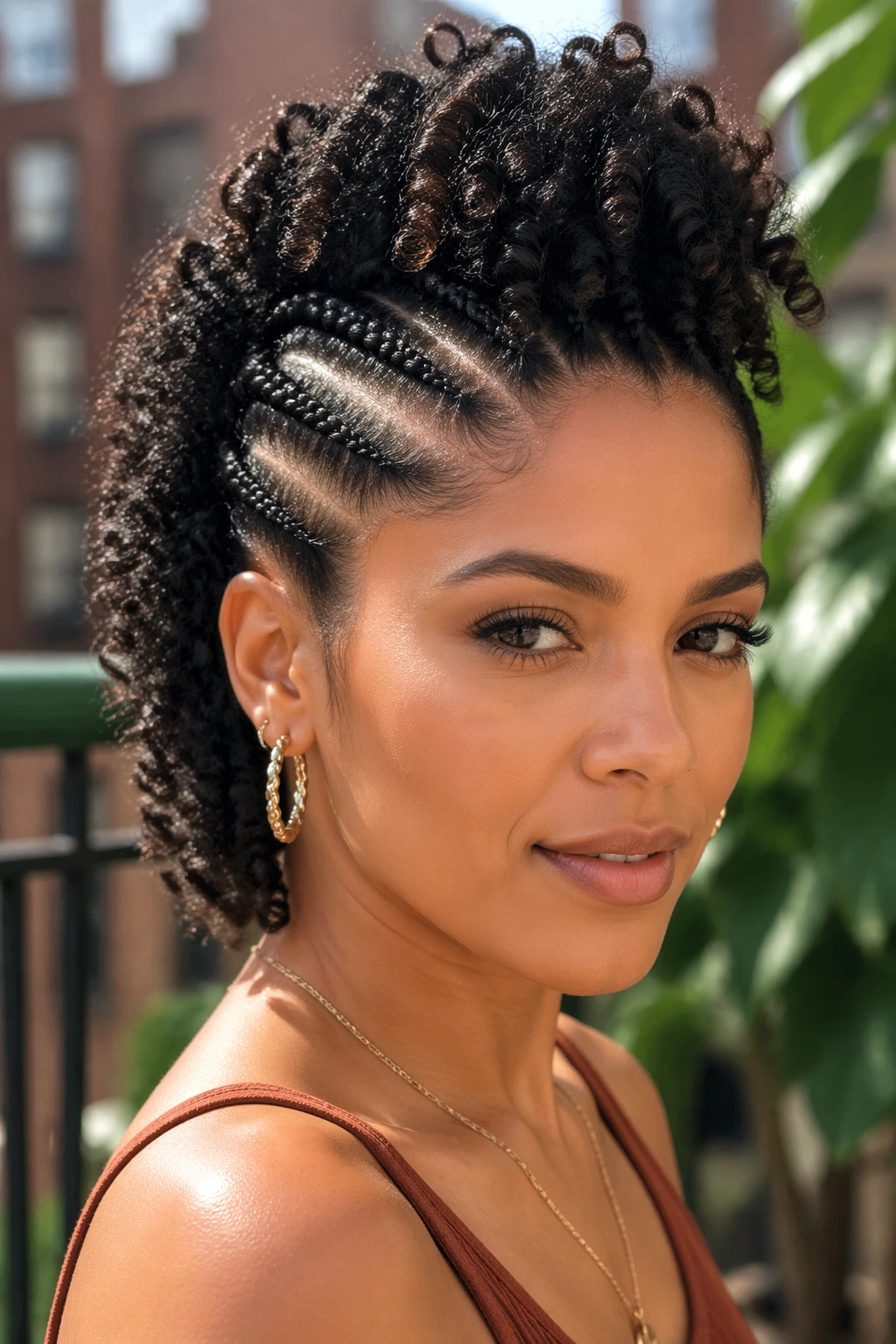
A braided mohawk works because it does not try to calm the curls down. It uses the center strip of hair as the main event, then leaves the sides smoothed, pinned, or cornrowed back so the middle can stand tall. If your mixed curly hair has serious volume, this is the style that stops apologizing for it.
The shape is bold, yes, but it is also practical. It keeps the sides controlled while allowing the center section to show density and curl pattern. That makes it a smart choice when the hair is thick enough that a smaller braid would disappear into the texture.
You can build the mohawk with one central braid or several small braids down the middle. I prefer the second option if the hair is very dense, because multiple braids create a cleaner ridge and hold better through the day. The side sections can be pinned back flat or braided tightly toward the back.
Do not over-smooth the sides. A little texture at the temples keeps the style from looking glued on. If you want extra hold, use a light gel at the roots only, then stop. The rest can stay fluffy. That contrast is the point.
11. Tiny Accent Braids Woven into a Curly Puff
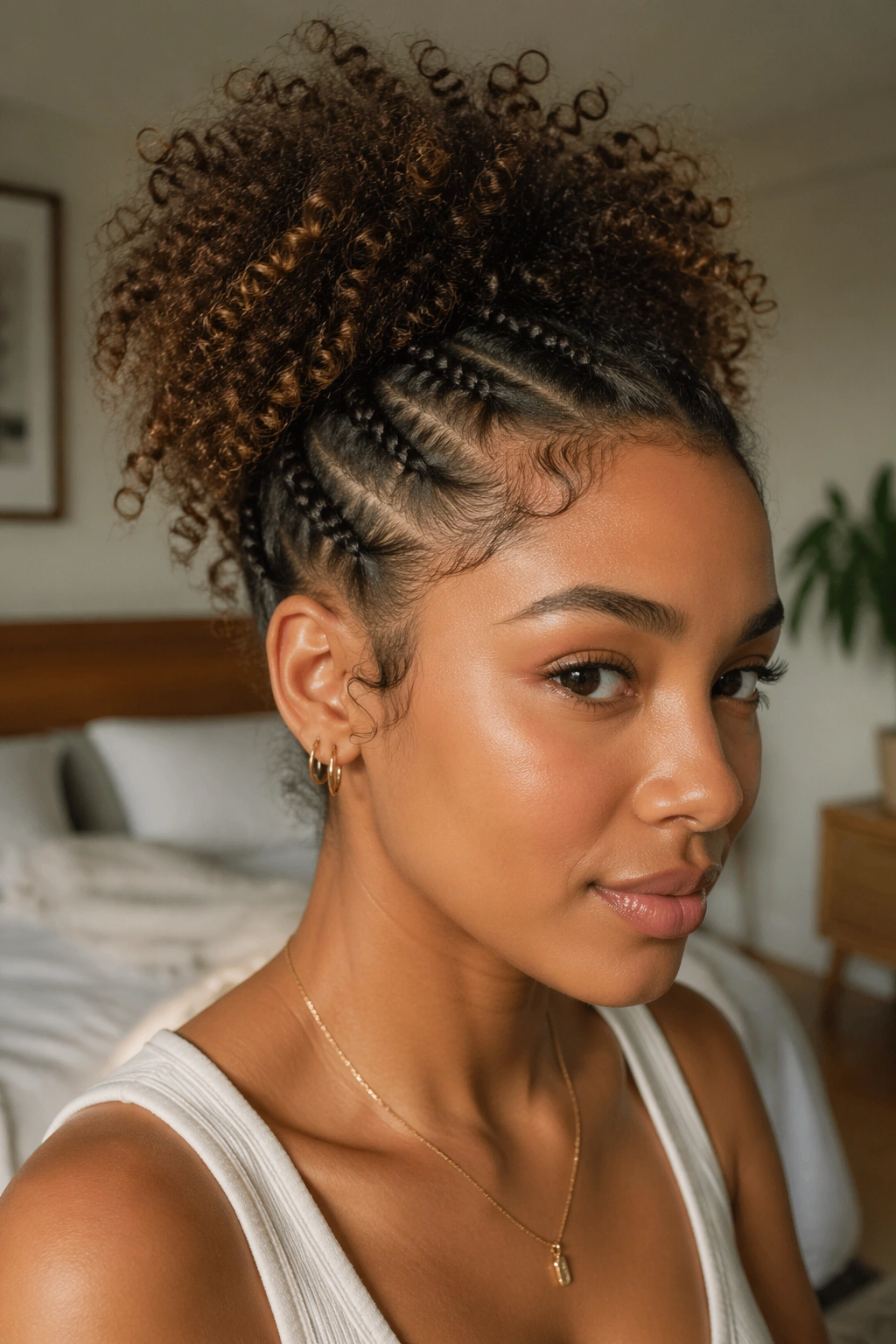
A curly puff with a few tiny accent braids can rescue a day when your hair feels too wide, too soft, or just a little unruly. The braids do not need to take over the whole head. A couple of slim braids at the front, or along one side, can add enough structure to make the puff look intentional.
What I like about this style is how little it asks from the rest of the hair. The curls stay free. The braids handle the front. That split makes sense for mixed-texture hair, especially when the roots are flatter than the lengths or when one side has a looser pattern than the other.
Keep the accent braids small and neat, but not paper-thin. Tiny braids can place too much stress on the hairline if you repeat them often or pull them too tight. Two or three visible braids are enough. You do not need a dozen.
How to make it look finished
Pull the puff high or mid-height, depending on the curl length. Then wrap a small section of hair around the elastic so the tie disappears. That one move matters more than extra accessories. A wrapped elastic makes the style look complete, not improvised.
A puff like this is also one of the easiest styles to refresh. A mist bottle, a little leave-in, and five seconds of scrunching at the back usually bring the curls back into shape.
12. Feed-In Braids That Melt into Loose Ends
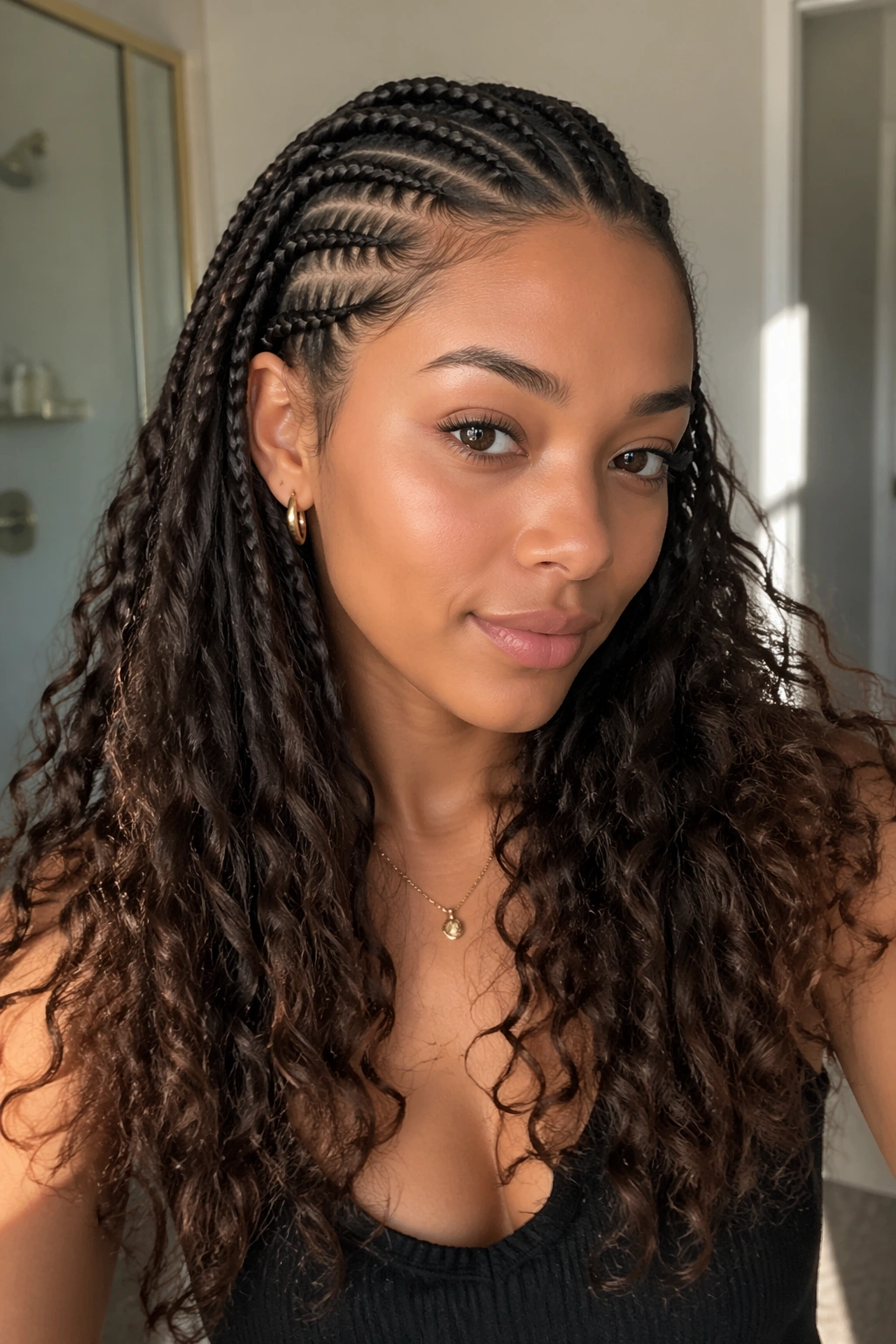
Feed-in braids are a smart middle ground when you want a polished scalp line but do not want the whole head locked into a heavy braid pattern. The hair is added gradually as you move down the head, which creates a smooth start and a more natural-looking thickness. On mixed curly hair, that gradual build helps blend different textures instead of spotlighting them.
What makes them different
Unlike a box braid or a full cornrow set, feed-in braids can stay lighter at the scalp and finish with loose curls or stretched ends. That makes them easier to wear if your hairline is sensitive or if you do not want a style that feels dense all the way through. They also give the front a clean shape without hiding the curl pattern at the ends.
They are best when you want a style that looks neat from the front and still has movement. If your curls are tighter near the roots and looser at the ends, the braid helps bridge that change in texture. It makes the whole head look more even.
I would recommend this style for anyone who likes a little polish but does not want a rigid finish. Keep the added sections small at the start, then gradually widen them as you braid. That gradual shift keeps the braid from looking blocky.
13. Braided Bun with a Curly Fringe
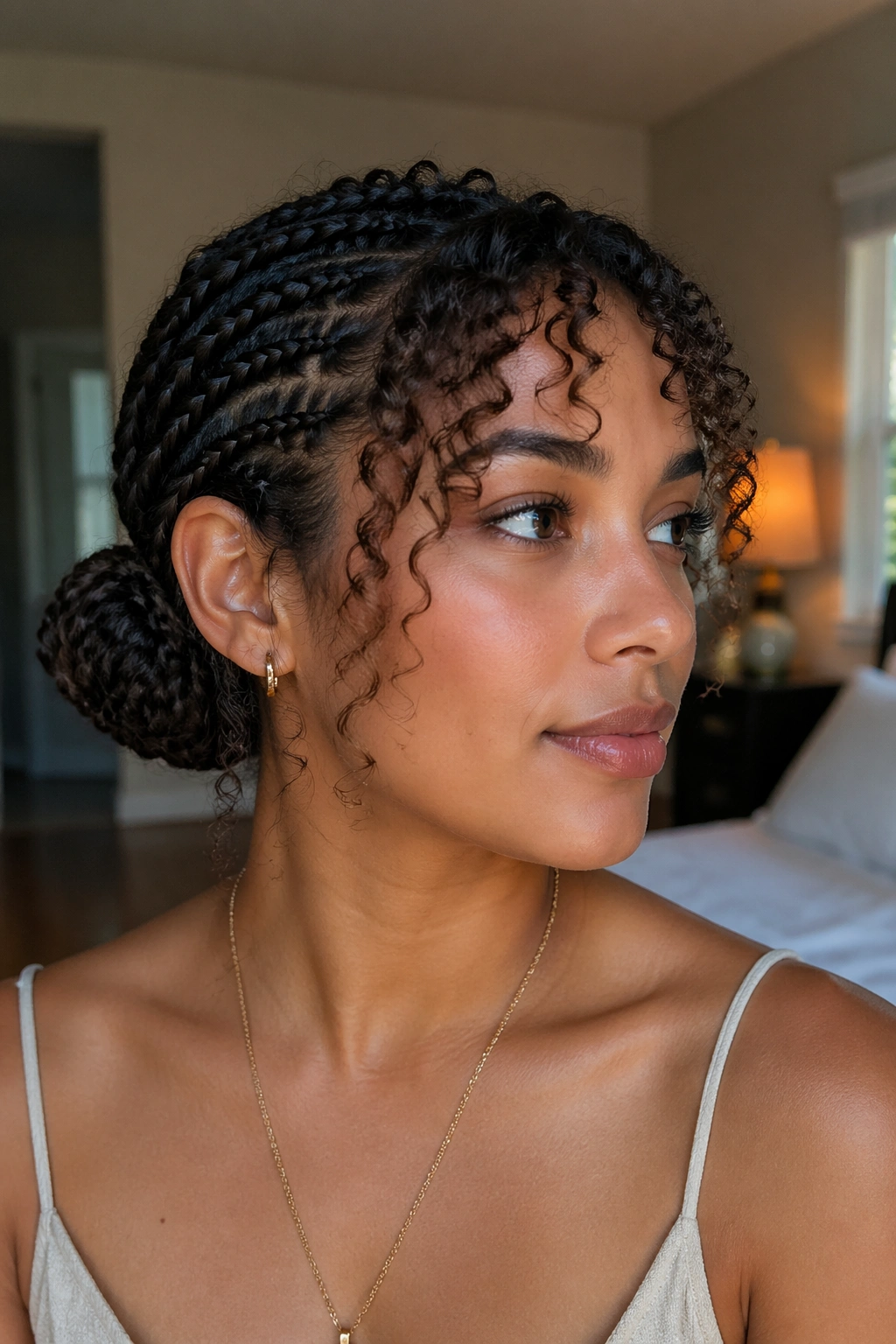
A braided bun with a curly fringe is one of those styles that solves three problems at once: hair off the neck, structure around the face, and enough softness to keep the look from feeling severe. It works especially well when the front pieces have their own pattern and the rest of the hair needs a clean place to land.
Picture a braid running from one side or both sides into a low bun at the back, while a few curls or a textured fringe stay out front. That small release of hair makes the style feel more natural on mixed curly hair, where the front often behaves differently from the rest. The fringe gives you movement. The bun keeps the shape tidy.
- Good for formal events and long workdays
- Secure the bun with pins, not just one elastic
- Leave the fringe slightly separated with your fingers, not brushed flat
- Works well on hair that has already been stretched a little
One detail that saves this style: pin the bun from different angles, not all from one side. Crossed pins grip better and keep the bun from sagging after a few hours. If the fringe is too tight against the forehead, tug one or two curls loose. That softness makes the whole thing feel less stiff.
14. Side-Swept Braid-Out for Soft, Stretchy Definition
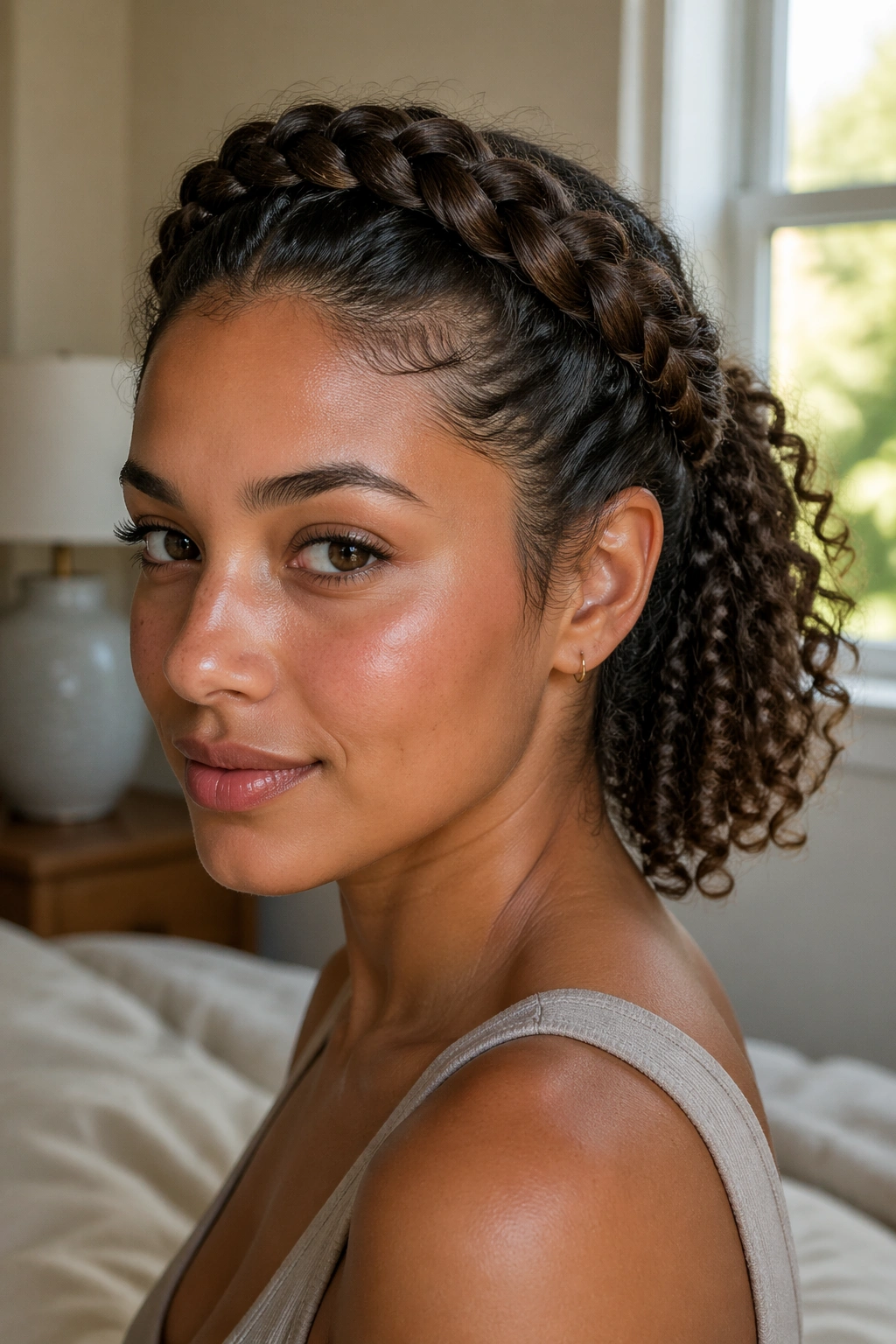
Some days the best braid is the one that barely looks braided. A side-swept braid-out does exactly that. You braid the hair to one side, let it set, and then take it down for a soft wave pattern that still has shape. On mixed curly hair, that can be a very good trade: less rigidity, more texture, and a finish that looks like the hair decided to cooperate on its own.
This style is useful when you want definition without a hard line. The braid sets the front and top, then the take-down gives the lengths some stretch. That stretch helps reduce shrinkage, which is a big deal if your curls can jump up several inches once dry. The result feels relaxed, but not messy.
I like this as a low-pressure option for people who are still figuring out how their curl types behave together. If one section is looser, the braid-out can blend it in. If another section is tighter, the braid gives it a little extra length before the shape is released. Use a light cream before braiding, sleep on a satin scarf, and separate the strands with dry hands in the morning.
If I had to pick one braid for mixed curly hair that wants softness more than control, it would be this one. It is not fussy. It does not need perfect parts. And when it comes undone, the hair looks lived-in in the best way.