


Tight curls are one of the most striking and versatile features in natural hair — compact, springy, and full of personality. Tight curl styles for natural hair celebrate everything that makes 4a, 4b, and 4c textures so extraordinary: the incredible density, the spring-loaded coil formation, the way tight curls create volume and presence that looser textures simply can’t replicate. There’s a boldness to wearing tight curls that feels like a statement — a declaration that Black hair in its most natural, tightest, most condensed form is exactly as beautiful as it should be. And the styling possibilities are genuinely vast.
Embracing the Natural Behavior of Tight Curls
Tight curl textures behave differently from looser curl patterns in ways that are important to understand before you start styling. Shrinkage, density, and moisture retention are the three factors that define tight curl styling — and getting comfortable with all three is the foundation of any great tight curl style.
Shrinkage is a feature, not a problem. Tight curl hair can shrink to thirty, forty, or even fifty percent of its stretched length when wet — which means shoulder-length hair can shrink to appear ear-length on a wash day. This isn’t damage, it isn’t unhealthy, and it isn’t something that needs to be “fixed.” It’s the natural behavior of tightly coiled hair, and it’s actually a sign of healthy, well-moisturized hair with excellent elasticity.
That said, there are ways to work with shrinkage intentionally to create styles that show more length when you want it — and styles that fully embrace the compact, dense quality of shrunken tight curls when that’s the aesthetic you’re going for. Both approaches are valid and beautiful. The key is choosing intentionally rather than fighting the hair’s nature.
Density in tight curl textures means that product has to work harder to reach every strand — which is why product distribution technique is especially important. A dime-sized amount of leave-in that would be plenty for fine, loose curls might cover a fraction of a section of dense 4c hair. Adjust your product amounts accordingly and don’t assume that because something worked with minimal product in a tutorial, minimal product will work for you.
Moisture: The Foundation of Every Tight Curl Style
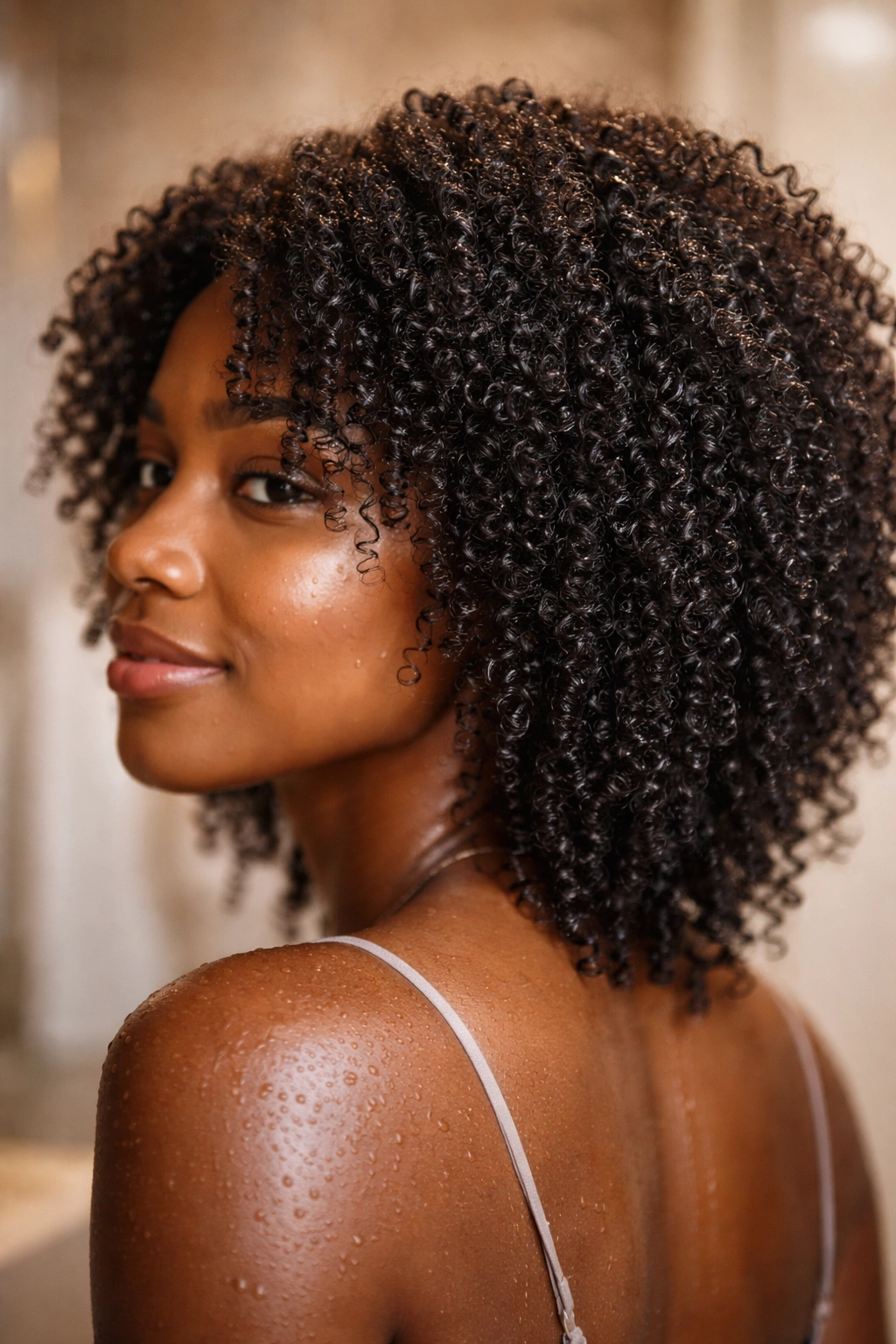
Tight curl textures have more surface area per unit length than any other curl pattern — because of the tight coiling, the cuticle layers are more exposed, and the natural oils from the scalp have a harder time traveling down the curl shaft. This makes tight curls the most moisture-hungry of all natural hair textures.
No tight curl style looks or performs well on dry hair. This isn’t an overstatement — it’s a baseline fact that determines whether a style succeeds or fails. Dry tight curls frizz, shrink excessively, refuse to clump, and lose definition within hours. Well-moisturized tight curls are plump, defined, springy, and beautiful.
Deep conditioning is the most important thing you can do for tight curl styles. A genuine deep conditioning treatment — one with penetrating conditioning agents, applied under heat or steam for at least twenty minutes — provides the internal moisture that makes tight curls behave beautifully. Don’t skip it. Don’t substitute it with a regular conditioner left on for five minutes. Do it properly every wash day.
The LOC method (liquid, oil, cream) is particularly effective for tight curl textures because it creates multiple layers of moisture and sealing. The liquid layer penetrates, the oil seals, and the cream provides definition and additional moisture. Each layer builds on the one before it, creating a moisture barrier that keeps tight curls hydrated through days of wear.
Handling and Detangling Tight Curl Textures
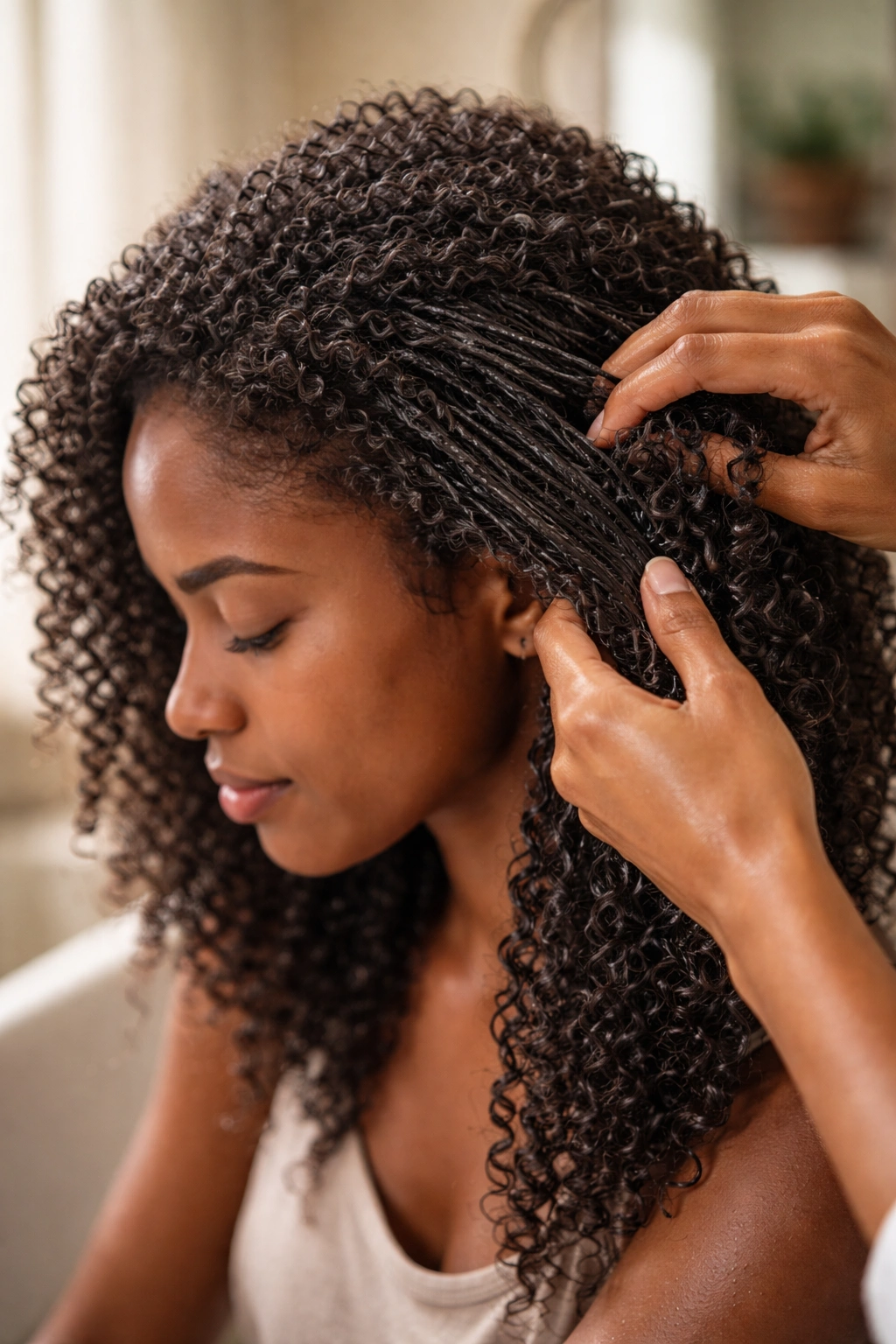
Tight curls require specific handling practices to prevent the breakage and damage that aggressive styling causes. Understanding the right way to handle tight curl hair is as important as knowing how to style it.
Always detangle on wet, conditioned hair. Detangling dry tight curl hair — or even damp hair without conditioner — is a fast path to breakage and setback. Wet hair with conditioner or a detangling product applied has slip and elasticity that allow the comb or your fingers to move through without snagging.
Work from tip to root — always. Start detangling at the ends of each section where tangles accumulate, and work your way upward to the roots. Going root to tip drags tangles further down the hair shaft, tightening them rather than loosening them.
Finger detangling before using any tool reduces tension and breakage. Your fingers can feel and gently work through tangles in a way that combs can’t — they sense resistance and adjust pressure accordingly. Follow finger detangling with a wide-tooth comb if you want a smoother, more thoroughly detangled section.
The Best Styling Techniques for Tight Curl Definition
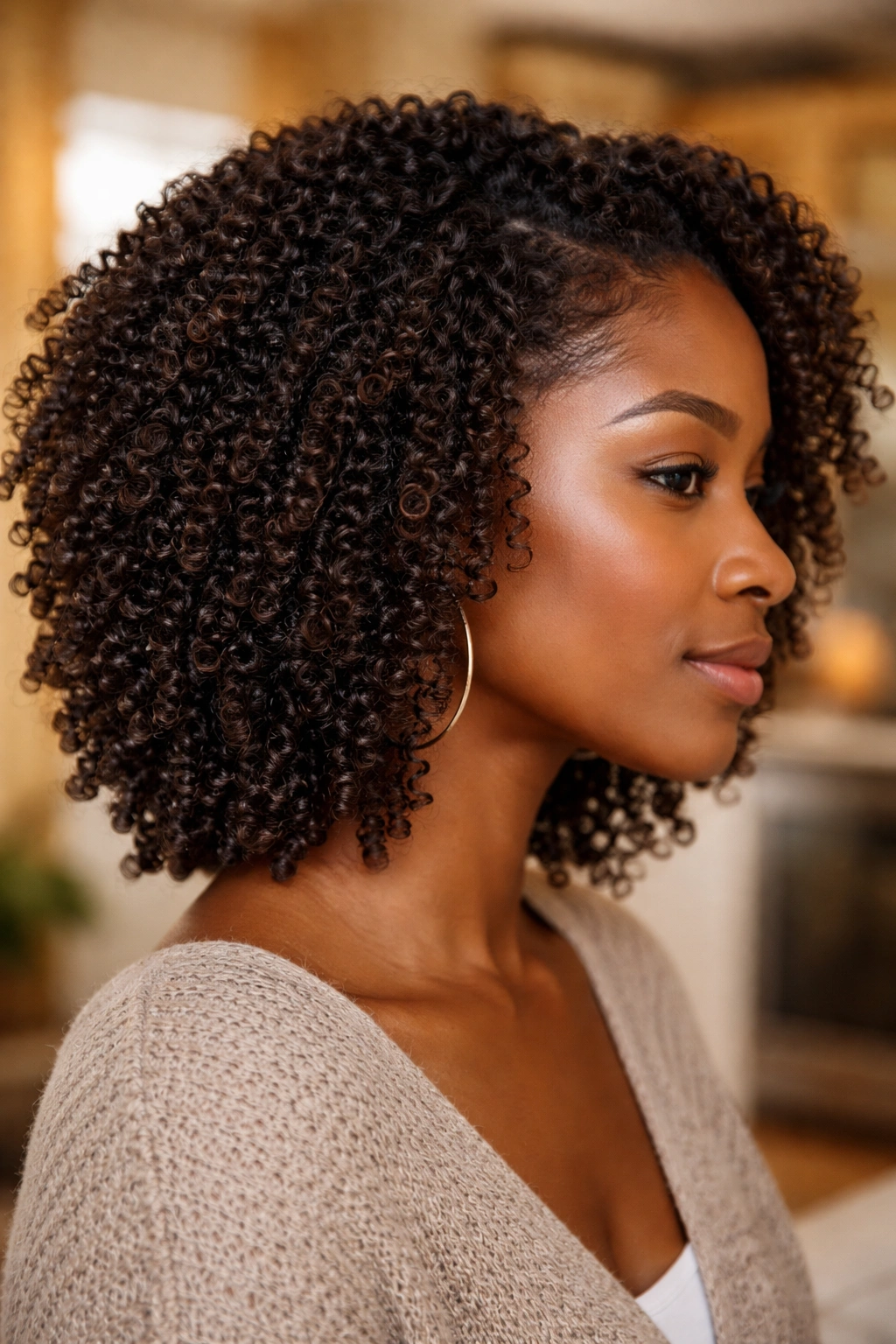
Several techniques work particularly well for creating definition on tight curl textures — and most of them involve less manipulation than you might expect.
The wash-and-go on tight curl textures is the most low-manipulation option. Apply your products on wet hair, section by section, and let the hair dry into its natural pattern. The resulting style may not have the precise definition of a finger coil set, but it has a natural, effortless beauty that many naturalistas love.
Finger coiling is the precision option. It takes time — sometimes two to four hours on dense hair — but the resulting individually defined coils are some of the most beautiful tight curl styles possible. Every coil is perfectly formed, and the uniform definition across the entire head is stunning.
The sponge method gives you curl definition much faster than finger coiling with surprisingly beautiful results. The curl sponge’s circular motion creates uniform coils across the head in a fraction of the time finger coiling requires.
1. Tight Curl Wash-and-Go
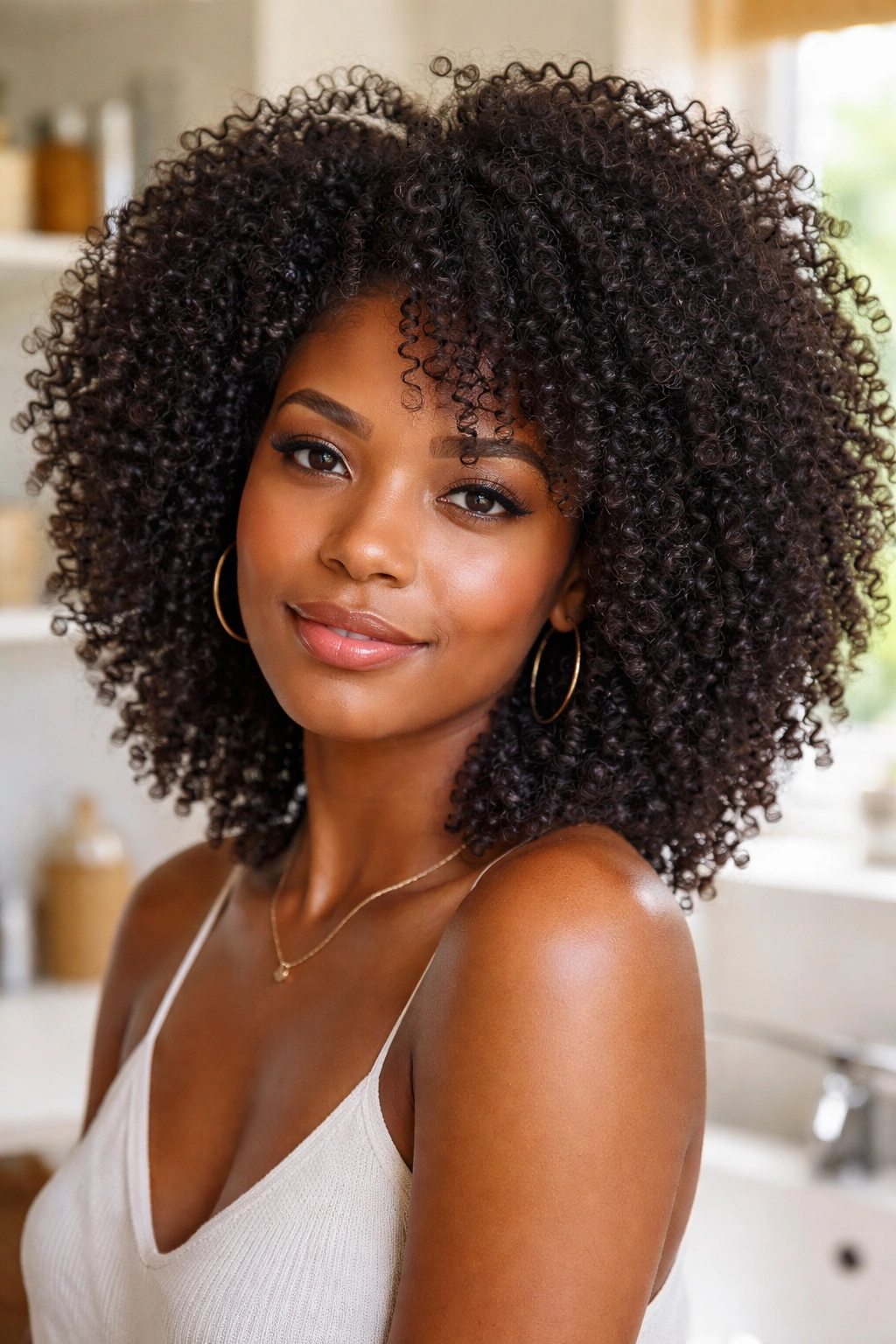
The wash-and-go on tight curl textures requires more product and more patience than on looser textures — but the results are genuinely beautiful. The natural coil pattern of tight curl hair, when properly moisturized and defined, creates a rich, densely textured look with incredible volume.
Wet the hair completely, section into four to eight parts, and apply products generously. Don’t be conservative with your leave-in — tight curl hair needs more product than you think. Layer your cream on top, then a gel for hold. Let the product-coated sections fall into their natural coil pattern.
Tight Curl Wash-and-Go Steps
- Deep condition thoroughly with heat
- Section hair into manageable parts
- Apply leave-in conditioner generously to dripping wet sections
- Layer curl cream section by section
- Seal with a defining gel
- Diffuse or air dry — don’t touch until completely dry
2. Tight Curl Finger Coil Set
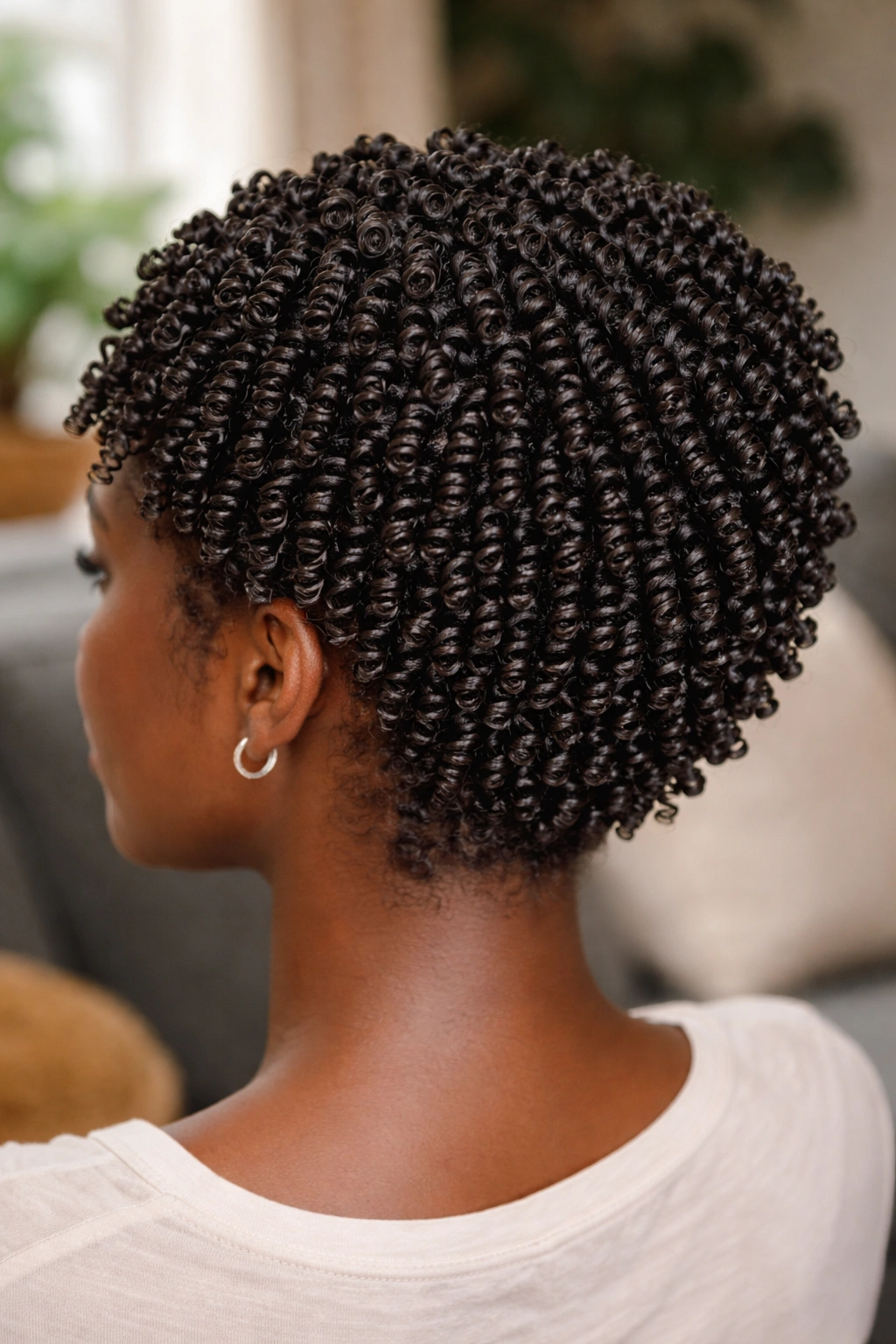
Finger coiling is the definitive technique for tight curl definition. On tight textures, finger coiling reveals the natural curl pattern in its most precise, defined form — each individual coil perfectly formed and consistent with the next.
Work on thoroughly product-applied wet hair. Take sections the width of a pencil, apply extra custard or gel, and wrap each section around your finger from root to tip. Be consistent with the tension and direction of each coil.
A full finger coil set on dense hair takes significant time — plan for two to four hours — but the result lasts a full week with proper protection and is worth every minute.
3. Sponge Curl Style on Tight Textures
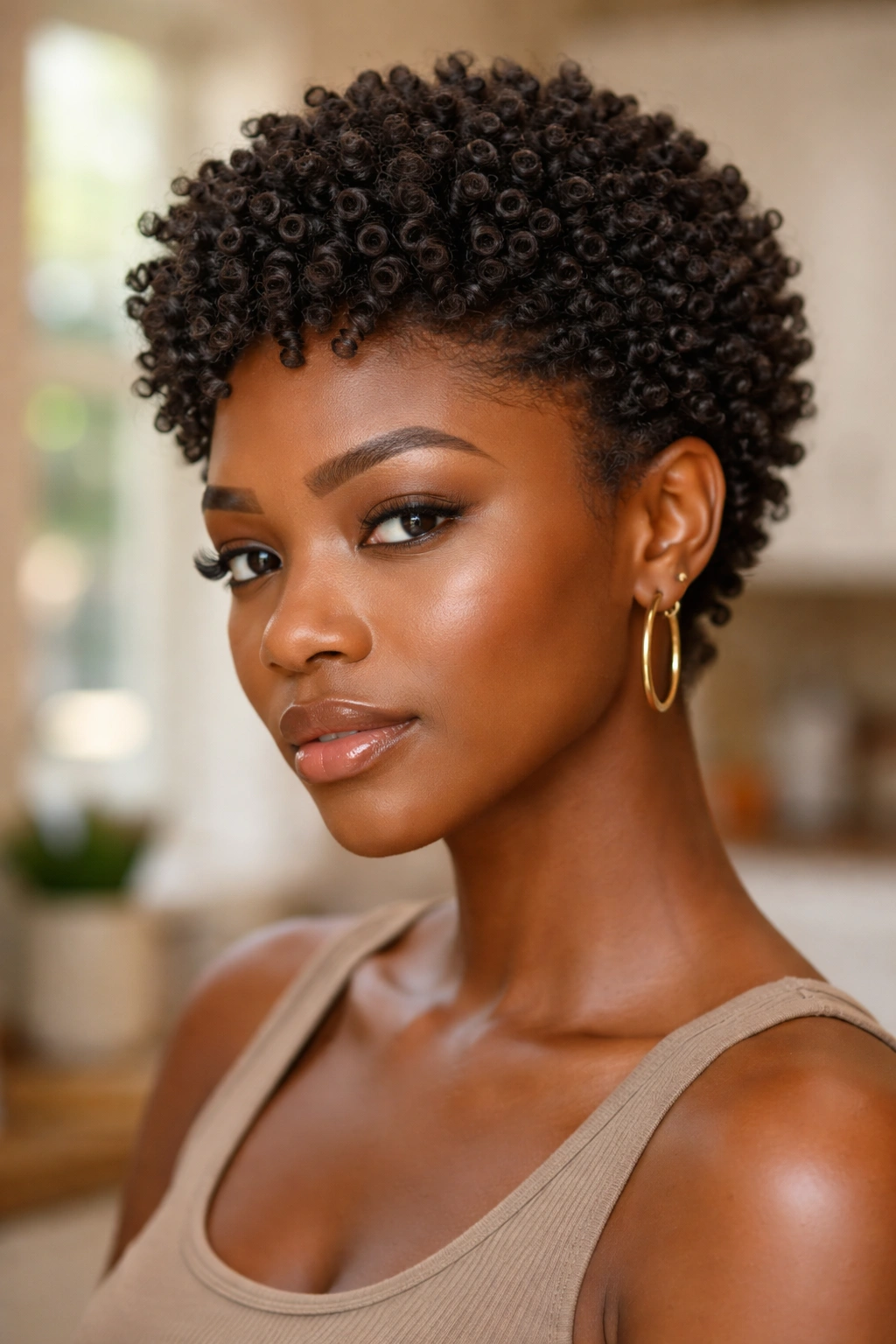
The curl sponge is the time-efficient alternative to finger coiling for tight curl textures. Apply products to each damp section, then use the sponge in circular motions across the head to create uniform coils.
Sponge Curl Steps for Tight Textures
- Dampen hair with water and leave-in spray
- Apply curl cream to each section
- Use sponge in circular motions over each section
- Apply gel with a final sponge pass for hold
- Let air dry completely
Tight curl textures are actually the ideal type for sponge styling — the natural coil structure catches in the sponge holes easily and forms coils quickly and uniformly.
4. Tight Curl Twist-Out
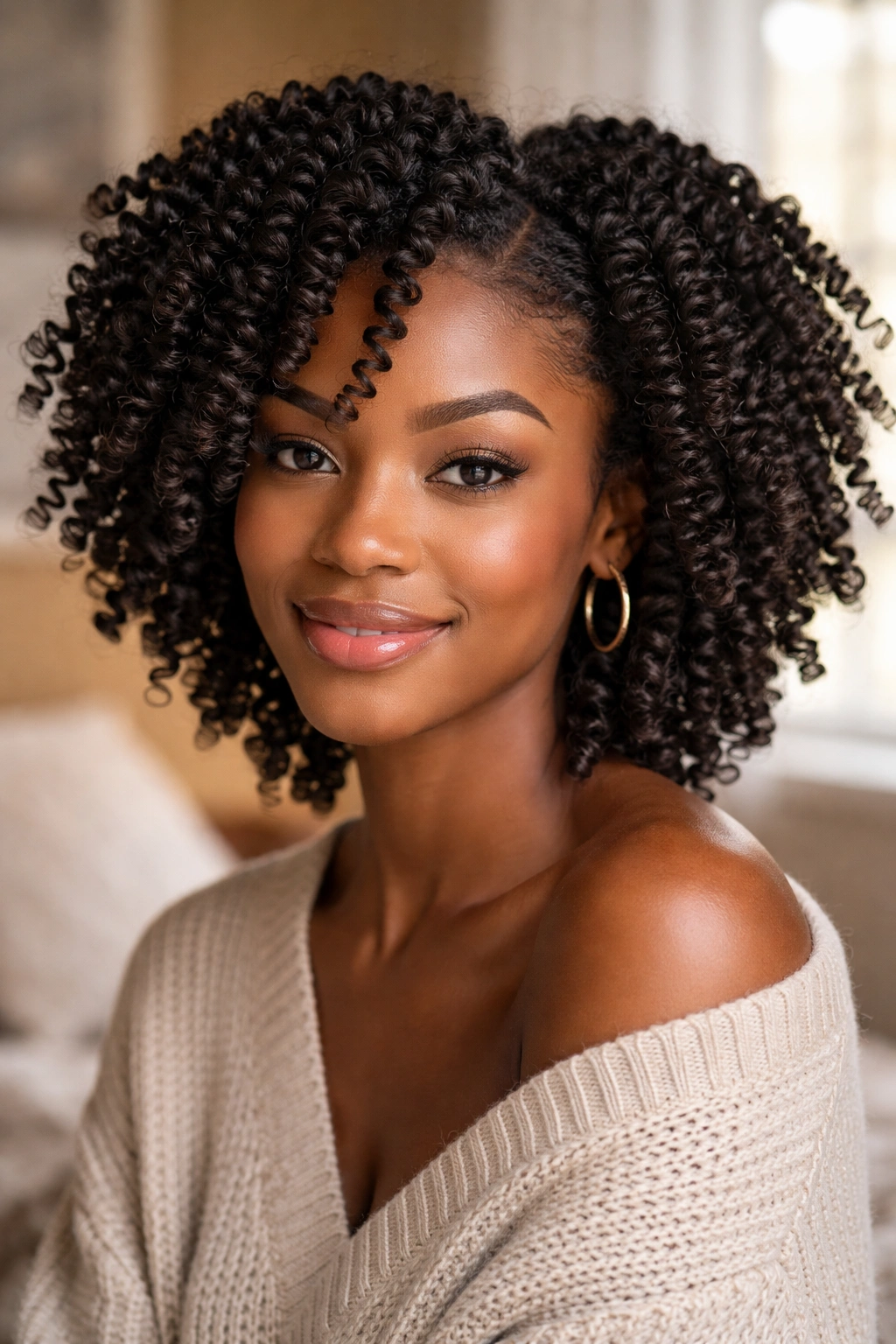
The twist-out on tight curl textures creates a curl pattern that’s uniquely different from what looser textures produce — the resulting curls are springy, defined, and incredibly bouncy with genuine presence.
Apply generous amounts of cream to each section before twisting tightly from root to tip. The tighter you twist, the more defined the resulting curl pattern. Sleep in the twists, let them fully dry (if they’re not dry by morning, let them sit longer rather than unraveling wet), then unravel slowly with oiled fingers.
5. Tight Curl Braid-Out
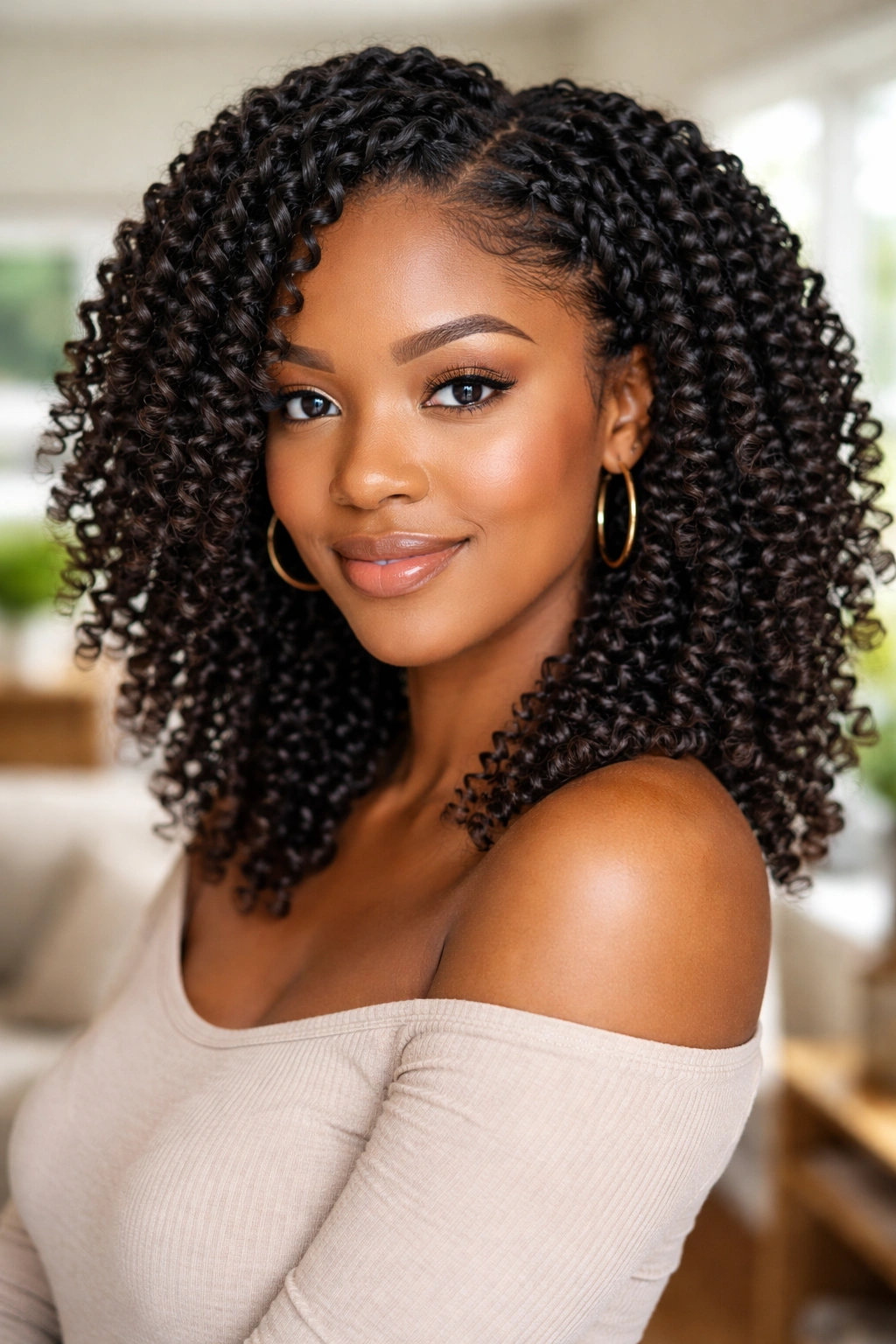
A braid-out on tight curl hair produces a wave and curl pattern that’s distinct from both a twist-out and a natural coil style. The braided pattern imprints a smooth, elongated wave that opens into a defined curl when unraveled.
On tight curl textures, small to medium braids work best — they create a curl pattern that’s still distinctly coil-like rather than the loose waves that large braids produce on these textures.
6. Tight Curl Protective Puff
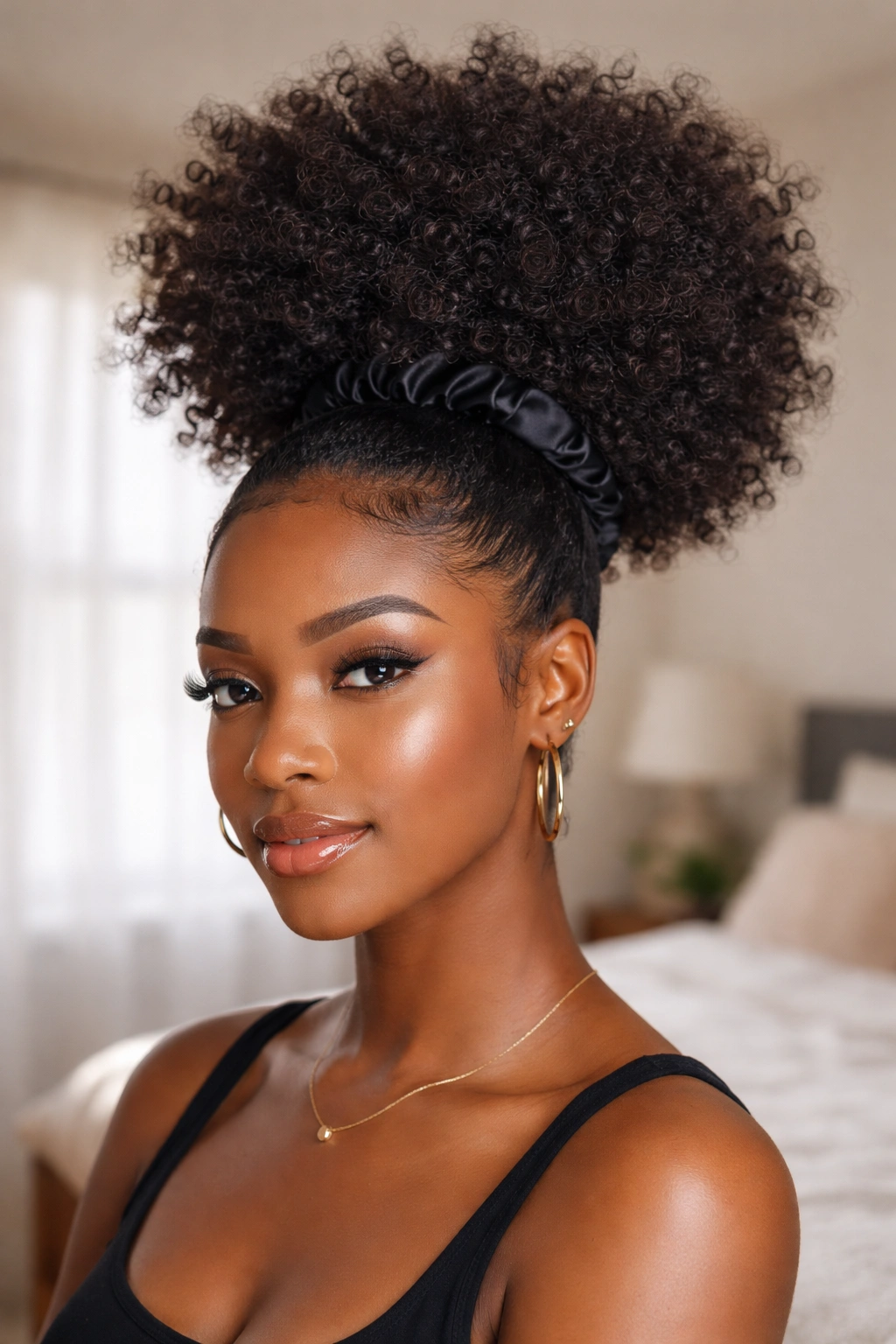
Pull a tight curl wash-and-go into a high protective puff secured with a satin scrunchie. The natural density and volume of tight curl textures means the puff has incredible presence and height — a truly magnificent silhouette.
Apply extra edge control to the hairline before pulling the puff up. The edges in a tight curl puff can be the most striking part of the style — define them beautifully with a fine brush.
7. Tight Curl Afro
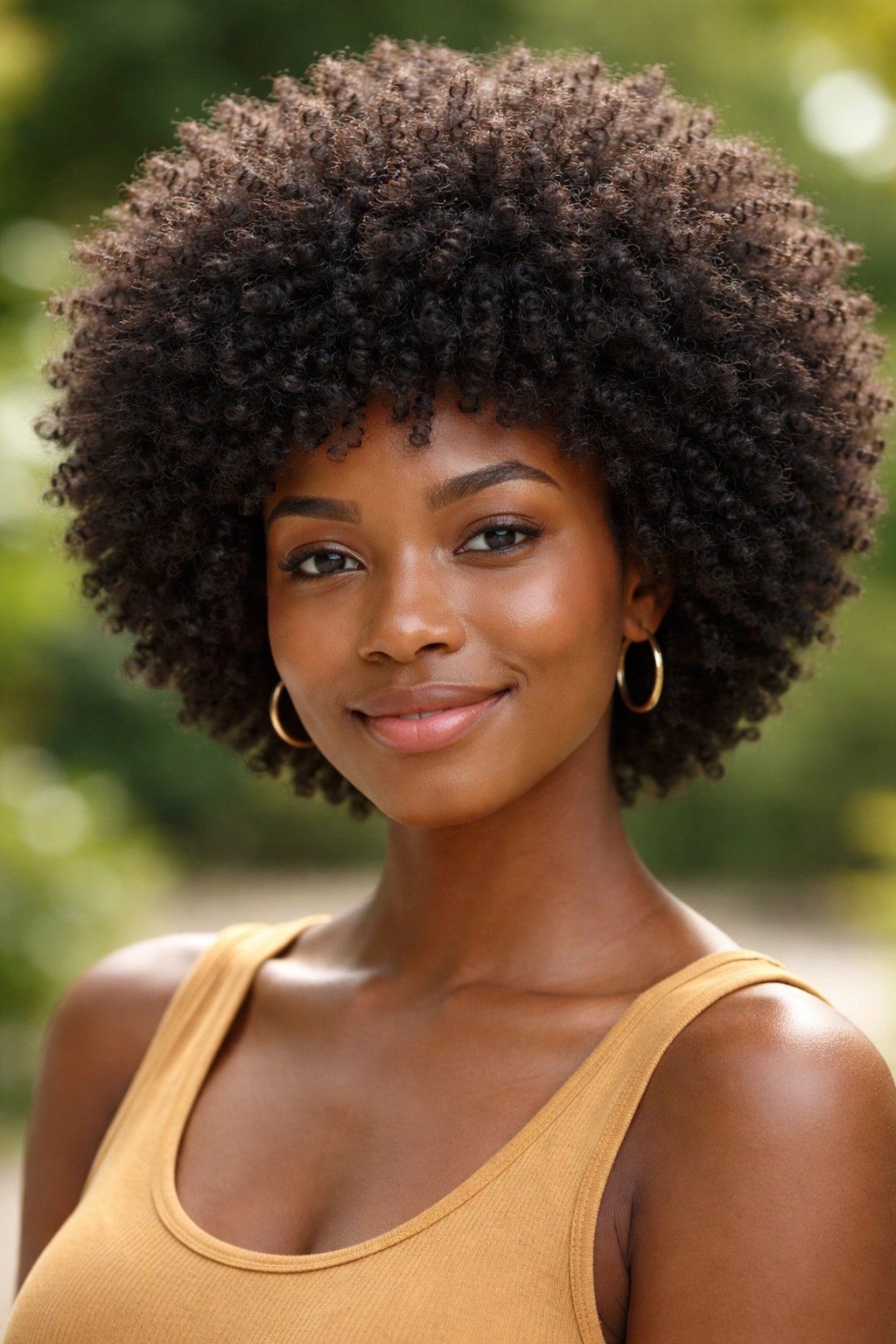
Let tight curl hair air dry into its fully shrunken, natural afro shape. Pick gently from the roots outward with a wide-tooth afro pick to achieve a round, full shape without disrupting the curl pattern too aggressively.
The tight curl afro is one of the most iconic and beautiful natural hair styles in existence. It’s bold, it’s unapologetic, and it makes a statement about the beauty of Black hair in its natural state that no other style quite matches.
8. Tight Curl Bantu Knot-Out
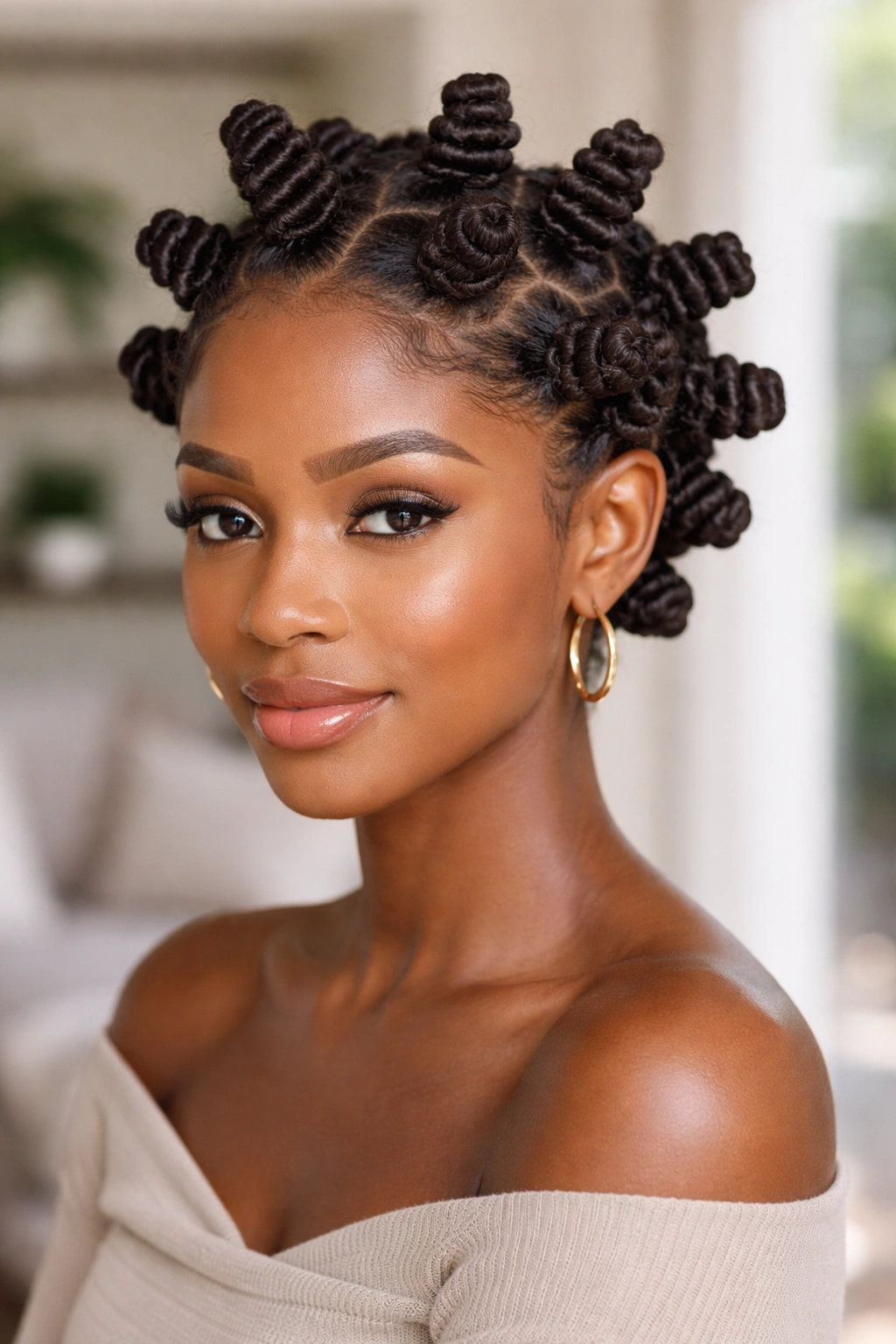
Bantu knots set on tight curl textures create a spiral coil pattern that’s absolutely stunning when unraveled. The tight coil base means the Bantu knot pattern is set firmly, and the unraveled knot reveals a perfectly formed spring coil.
Apply generous products and twist each knot tightly — the tighter the knot, the more defined the resulting spiral. Let dry completely under a hooded dryer or overnight at room temperature before unraveling.
9. Tight Curl Tapered Style
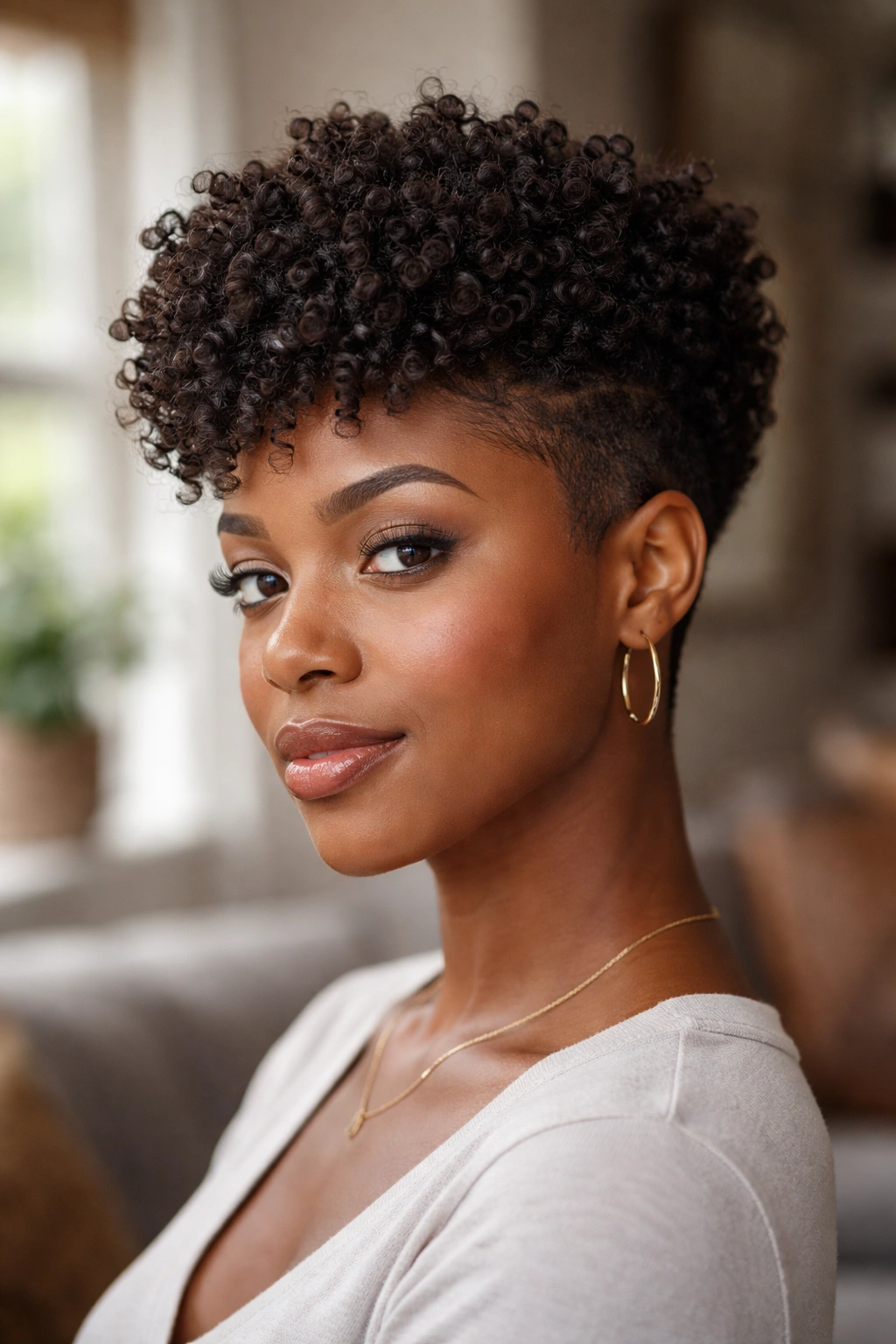
A tapered cut on tight curl textures creates one of the most architecturally beautiful natural hair silhouettes possible. The closed-cut sides and back contrast with the fuller top section, creating a shape that’s clean, graphic, and incredibly flattering.
Define the top section with finger coiling or sponge styling for maximum coil definition. The shorter sides show the natural tight curl texture close to the scalp, which pairs beautifully with the coil-defined top.
10. Tight Curl Mohawk Style
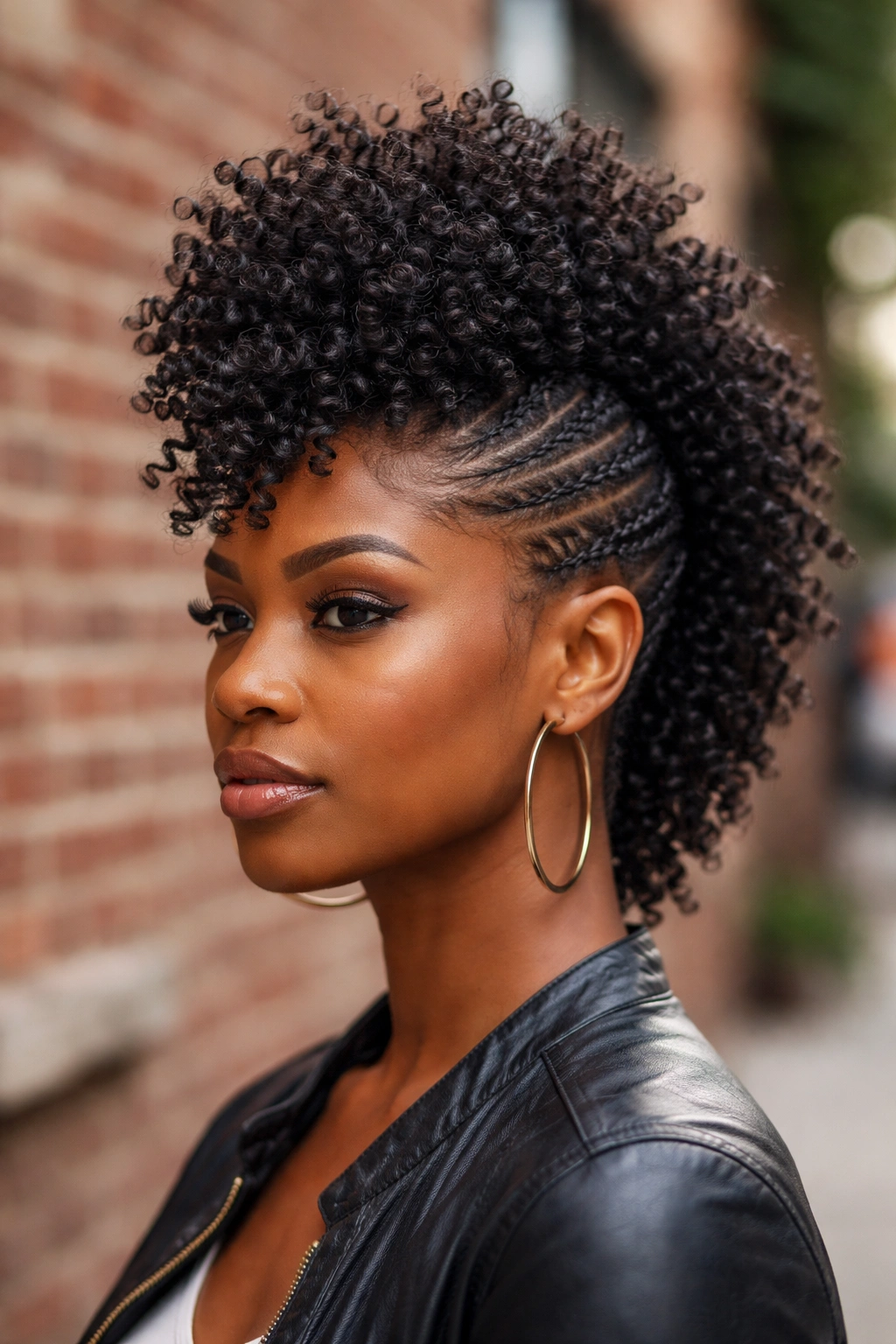
Define the entire head with tight curl styling — wash-and-go, sponge coils, or finger coils — then pin or braid the sides flat while the center strip stands in a mohawk formation. The tight coils in the center strip create a bold, textured mohawk with genuine presence.
Tight curl mohawks have a particularly striking quality because the density and volume of tight curl hair gives the center strip impressive height and fullness.
11. Tight Curl Defined TWA
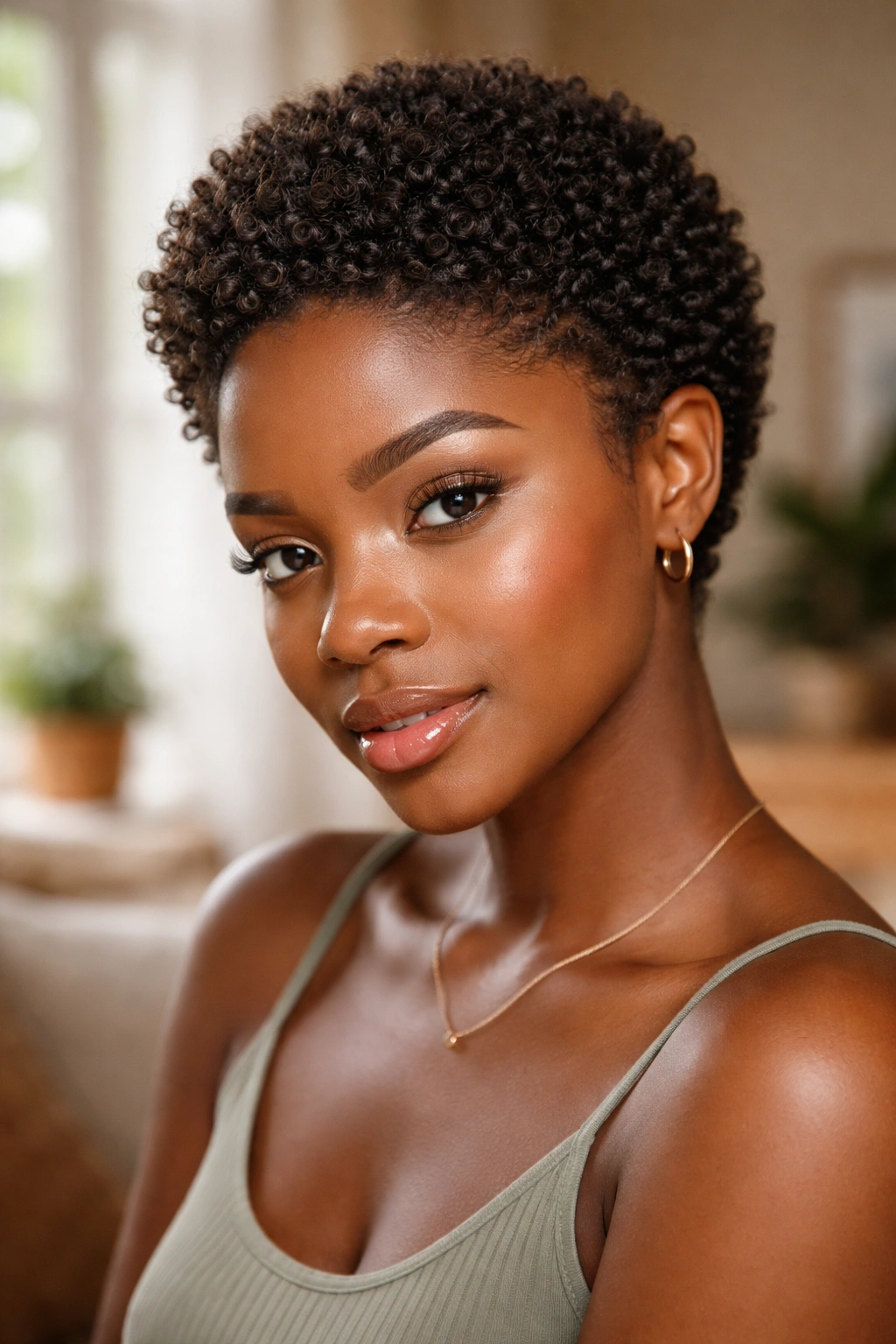
The teeny weeny afro on tight curl textures is a genuinely beautiful style — not a transitional or temporary look, but a deliberate, stunning aesthetic choice. Close-cut hair that shows the tight curl pattern near the scalp has a clean, sculptural quality.
Use the sponge or a small amount of curl cream and gel to define what little length you have for a style that looks intentional and polished rather than simply short.
12. Tight Curl High Pineapple
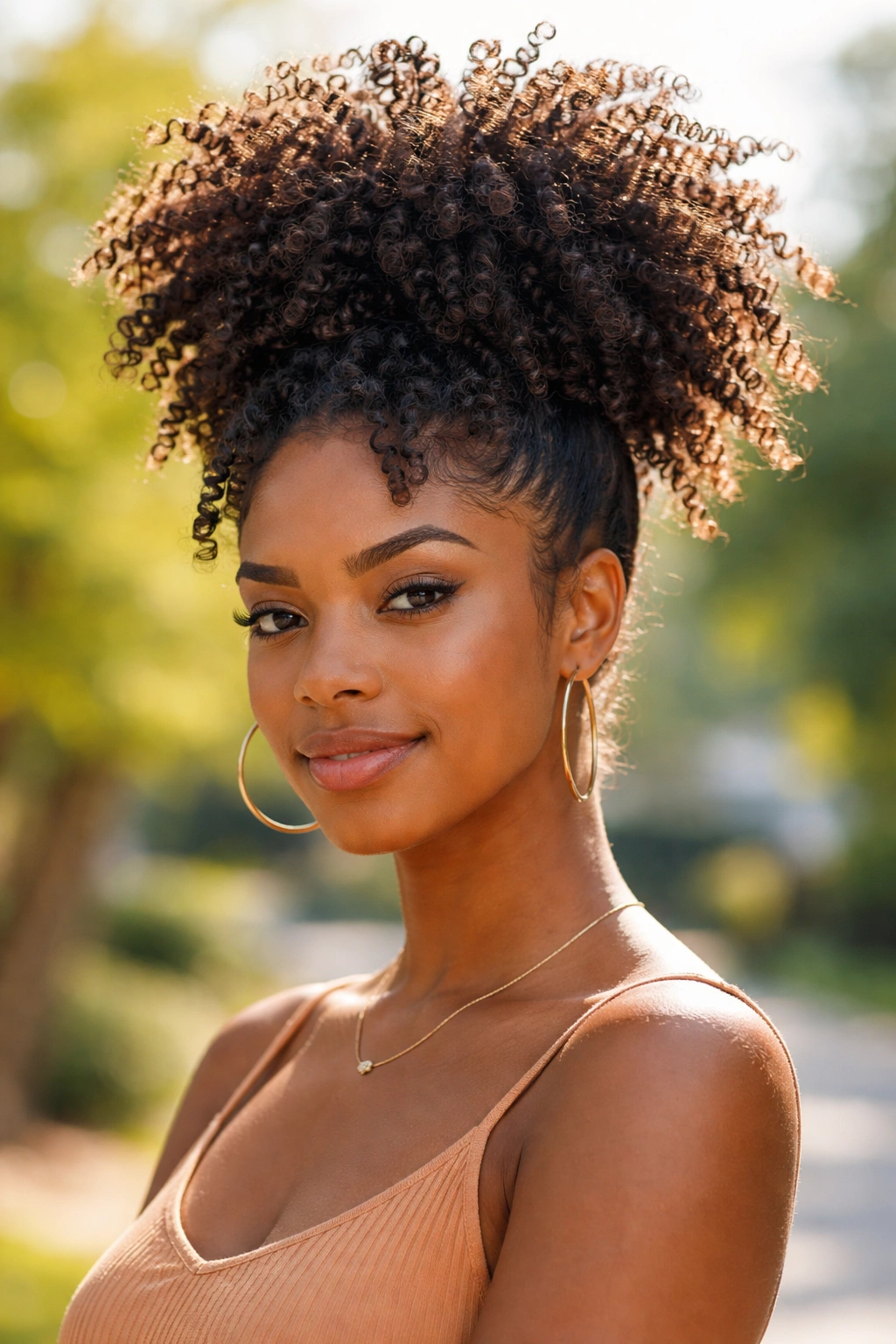
Gather tight curls loosely into a high pineapple — very loosely, because tight curls lose their definition when gathered too tightly. Let the curls fan outward from the top of the crown in a fountain of texture and volume.
As a deliberate daytime style, the tight curl pineapple is bold and eye-catching. The density of tight curl textures means the pineapple has extraordinary volume — it stands high and fans wide in a way that genuinely commands attention.
13. Tight Curl Half-Up Style
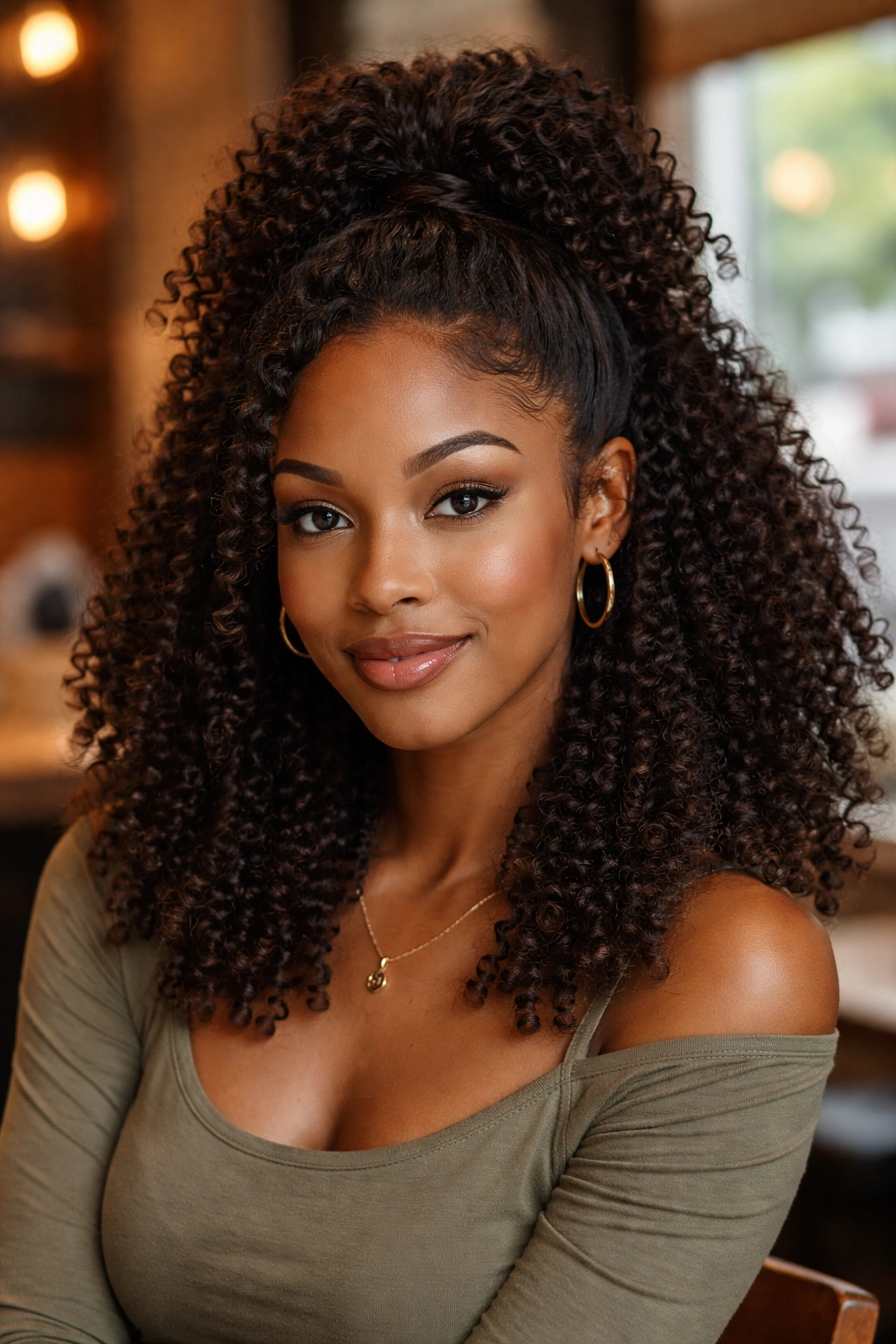
Gather the top section of a tight curl wash-and-go or coil set into a half-up pony or bun, leaving the bottom section free. The free-hanging bottom section on tight curl textures has a density and richness that’s genuinely beautiful — tight coils hanging together create a look of incredible fullness and life.
14. Tight Curl Side Part Style
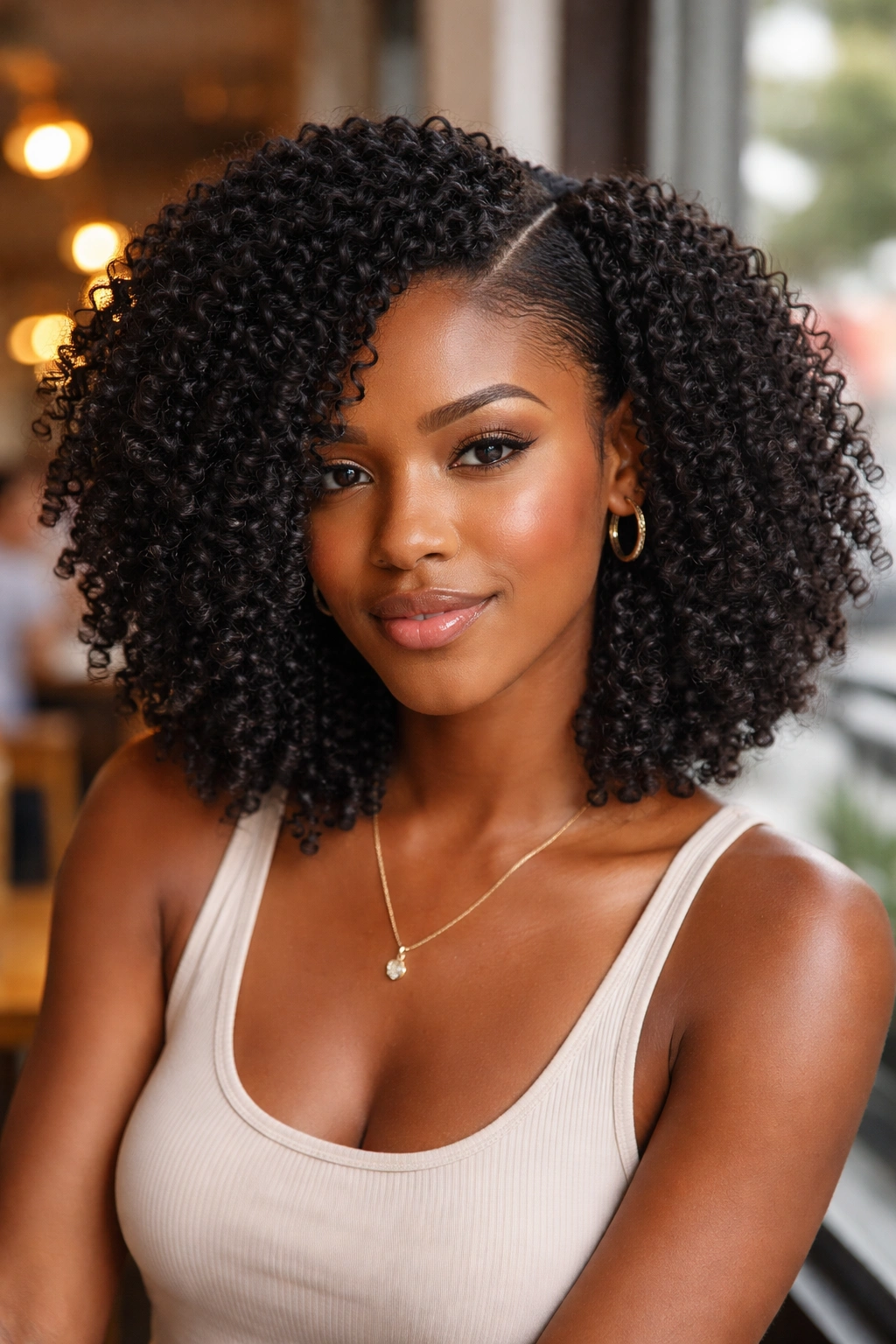
Create a deliberate deep side part using a rat-tail comb before or after styling, then define each side in a slightly different direction. The side part creates visual asymmetry that feels intentional and fashion-forward on tight curl textures.
Apply edge control along the part line to keep it crisp. The contrast between the defined part line and the dense, textured curl pattern on either side creates a graphic, deliberate look.
15. Tight Curl Updo
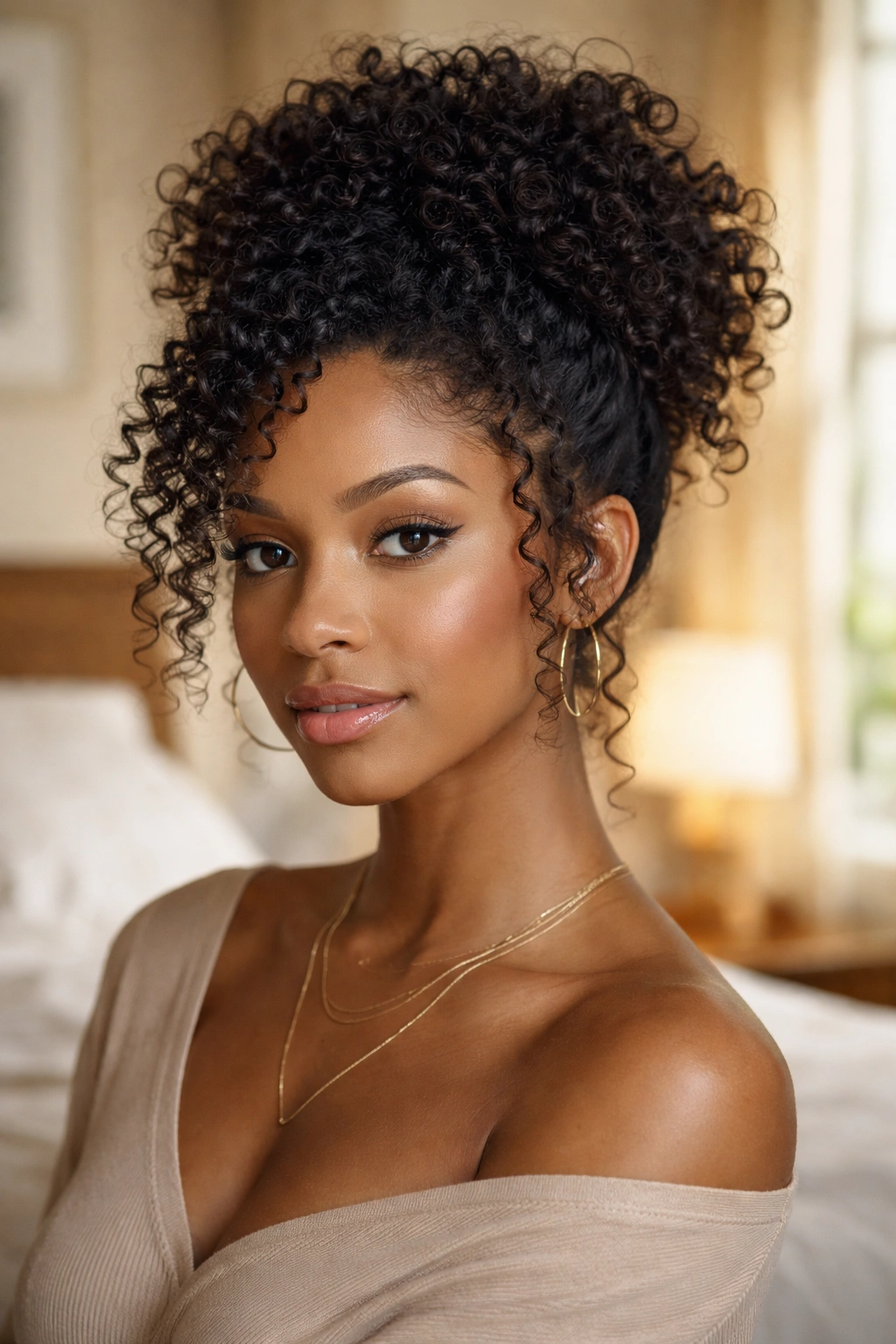
Pin tight curl coils into a loose, textured updo where individual coils are still visible at the edges. The density of tight curl textures means even a loose, casual updo has substantial volume and presence.
Pull individual coils loose at the temples and nape to soften the overall look and showcase the natural curl pattern in the most visible areas of the style.
16. Tight Curl Elongated Style
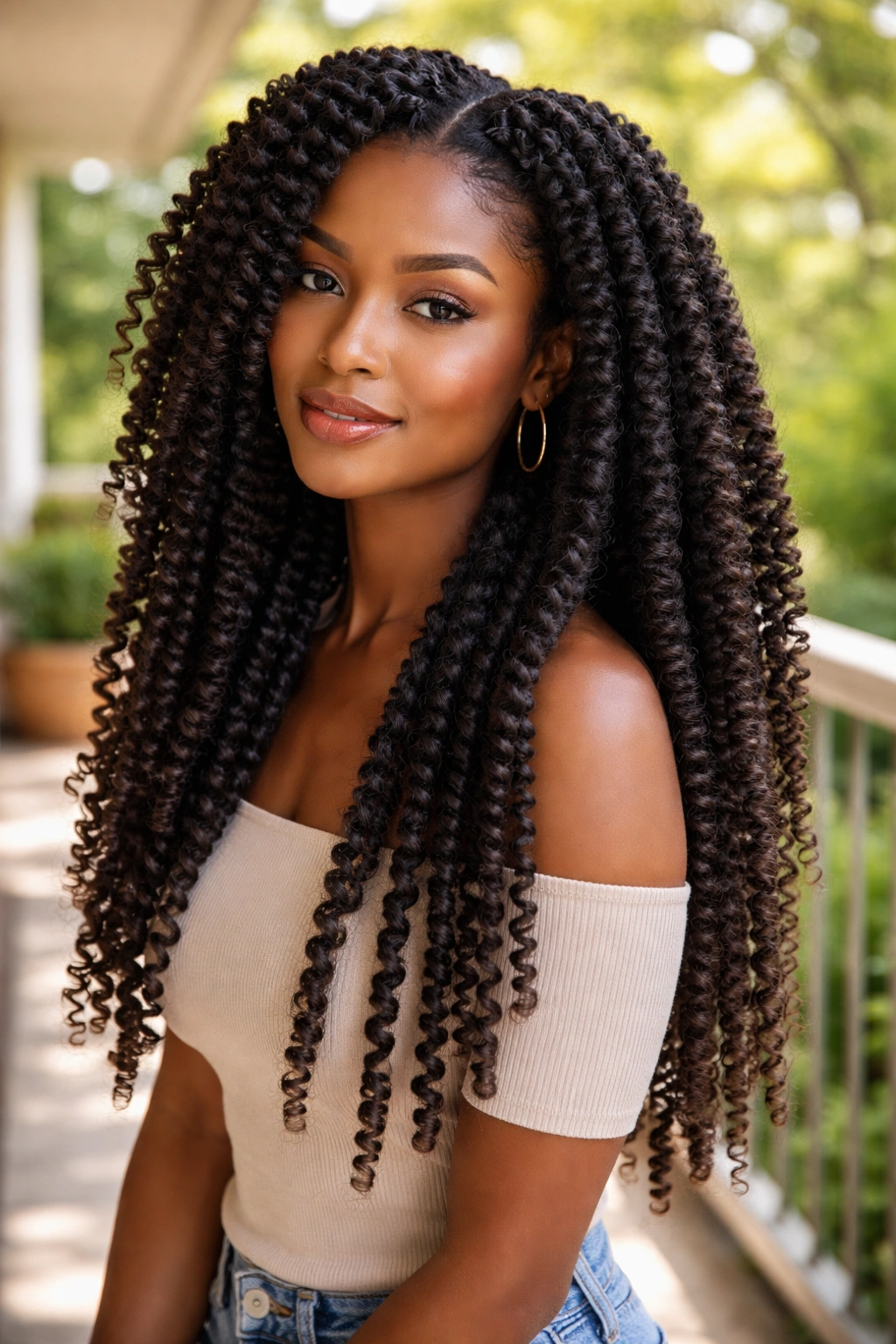
Stretch tight curls using the banding or threading method, then style on the stretched base for a look that shows more length while still maintaining coil character. The resulting style has more elongation than an unstretched wash-and-go but more texture and personality than heat-stretched hair.
Elongated tight curl styles are particularly striking because the length that becomes visible is a genuine revelation — tight curl textures often have significant length hiding in their shrinkage.
17. Tight Curl Defined Edges Style
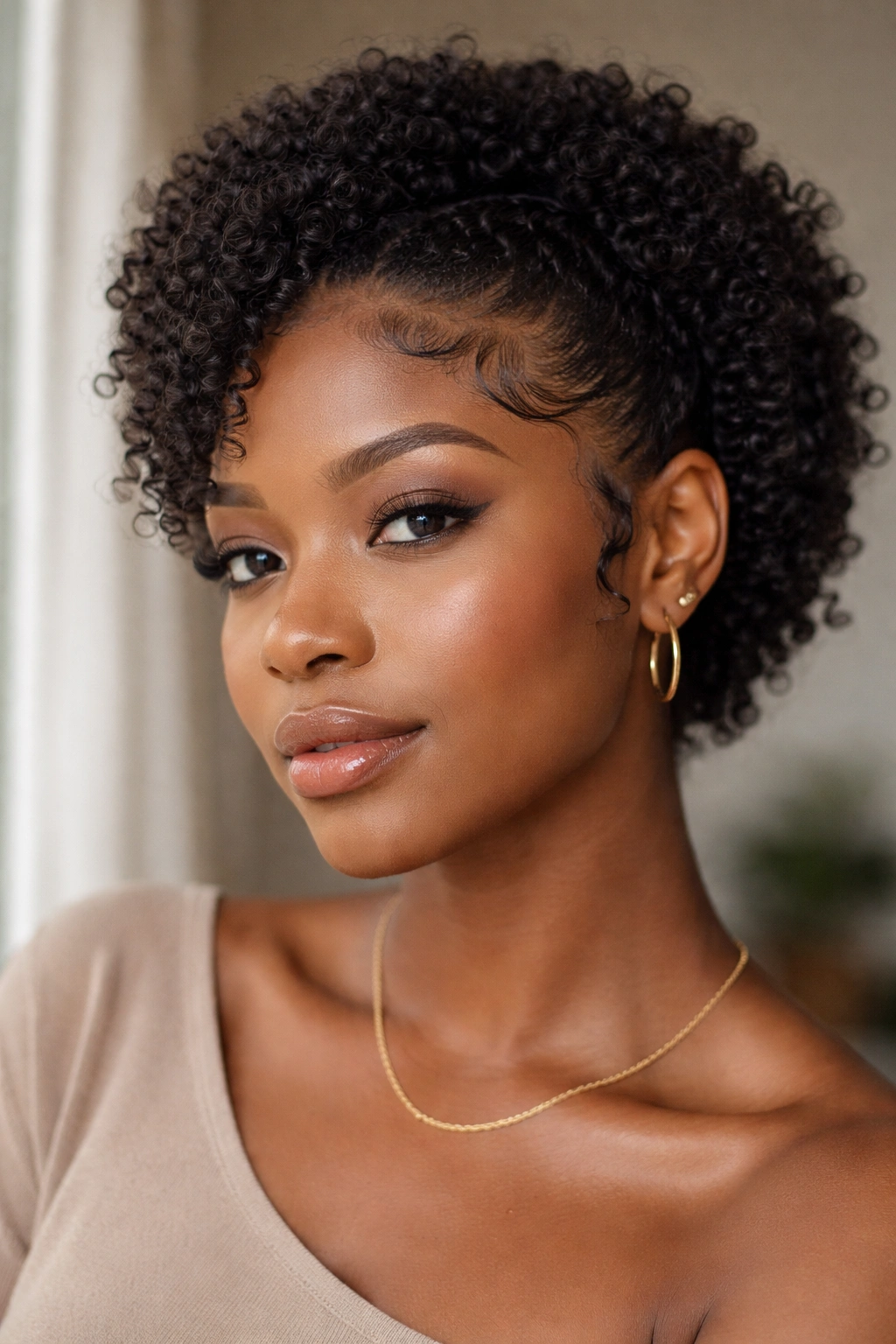
Let the edge definition be the focal point of your tight curl style. Apply gel or edge control along the entire hairline and use a fine-tooth brush to lay and define each baby hair with precision — swirls, waves, S-patterns, or geometric designs.
Well-defined edges on tight curl textures are genuinely breathtaking — the baby hairs on tight curl hairlines are often very fine and detail-able, allowing for intricate edge patterns that become a form of hair artistry.
18. Tight Curl Frohawk
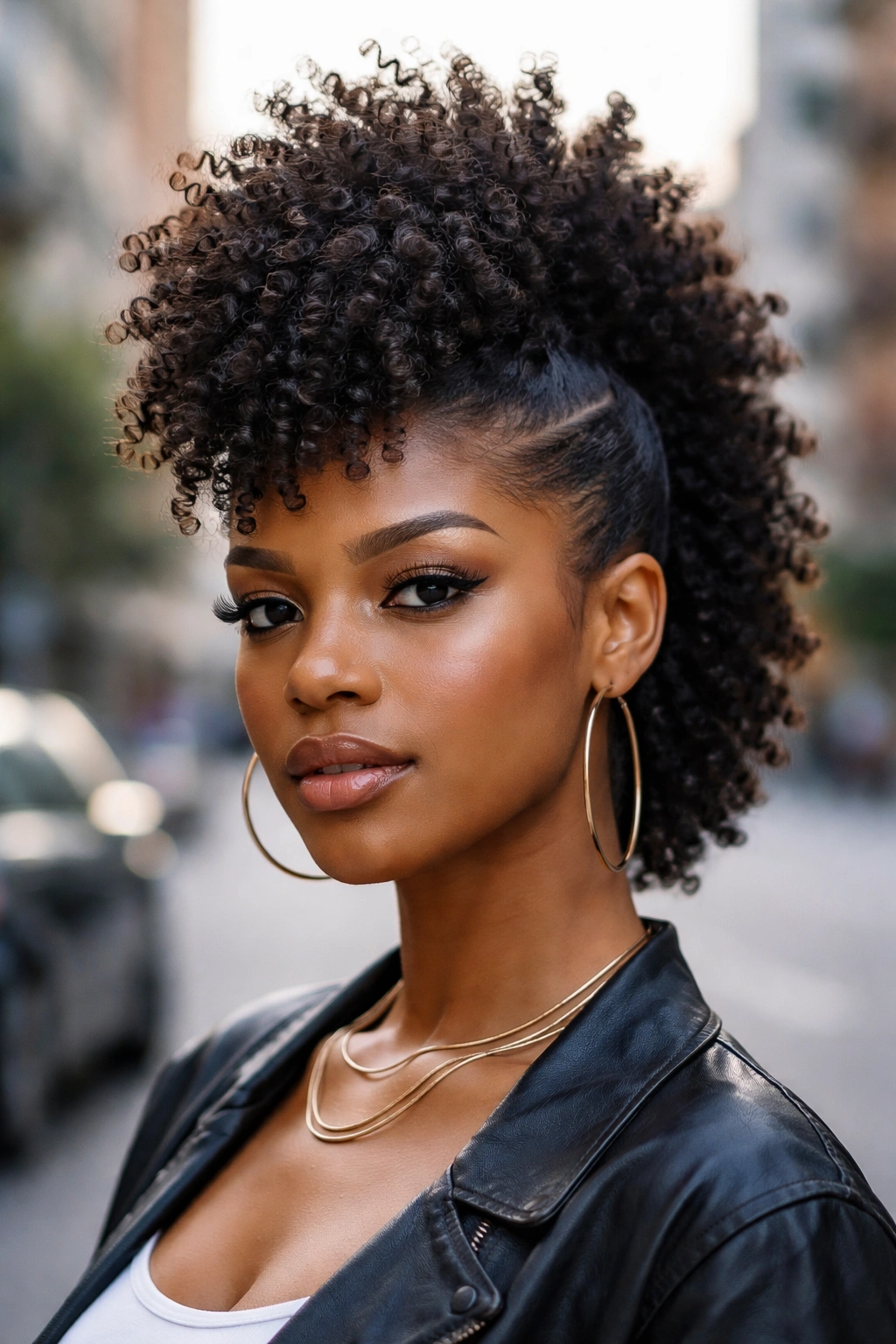
Sweep tight curls upward from the sides toward the center in a frohawk formation. On tight curl textures, the frohawk has exceptional height and volume — the dense, springy curls stand tall in the center strip and hold the swept-up shape beautifully.
Apply a little extra gel or holding cream to the center strip for maximum definition and staying power in the most visible section.
19. Tight Curl with Gold Accessories
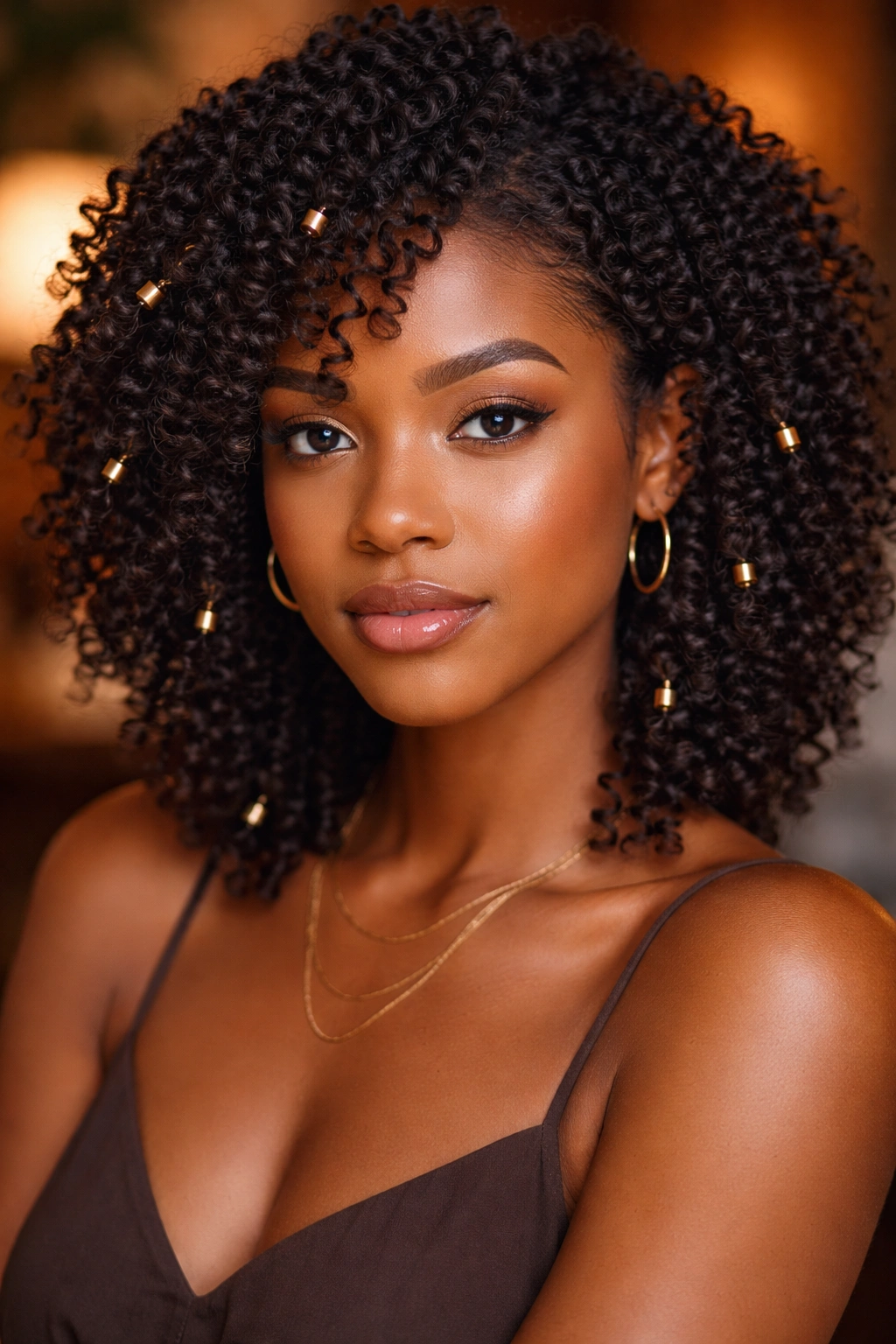
Slide gold hair cuffs onto individual tight coils — at the ends, at the mid-shaft, or near the roots — for a luxurious, decorative effect. On tight curl textures, the small scale of the coils means cuffs sit very close to the individual strands and create a beautiful, dimensional accessory look.
Scatter cuffs thoughtfully rather than clustering them all in one section. A few well-placed cuffs have more visual impact than covering the entire head.
20. Tight Curl Protective Updo
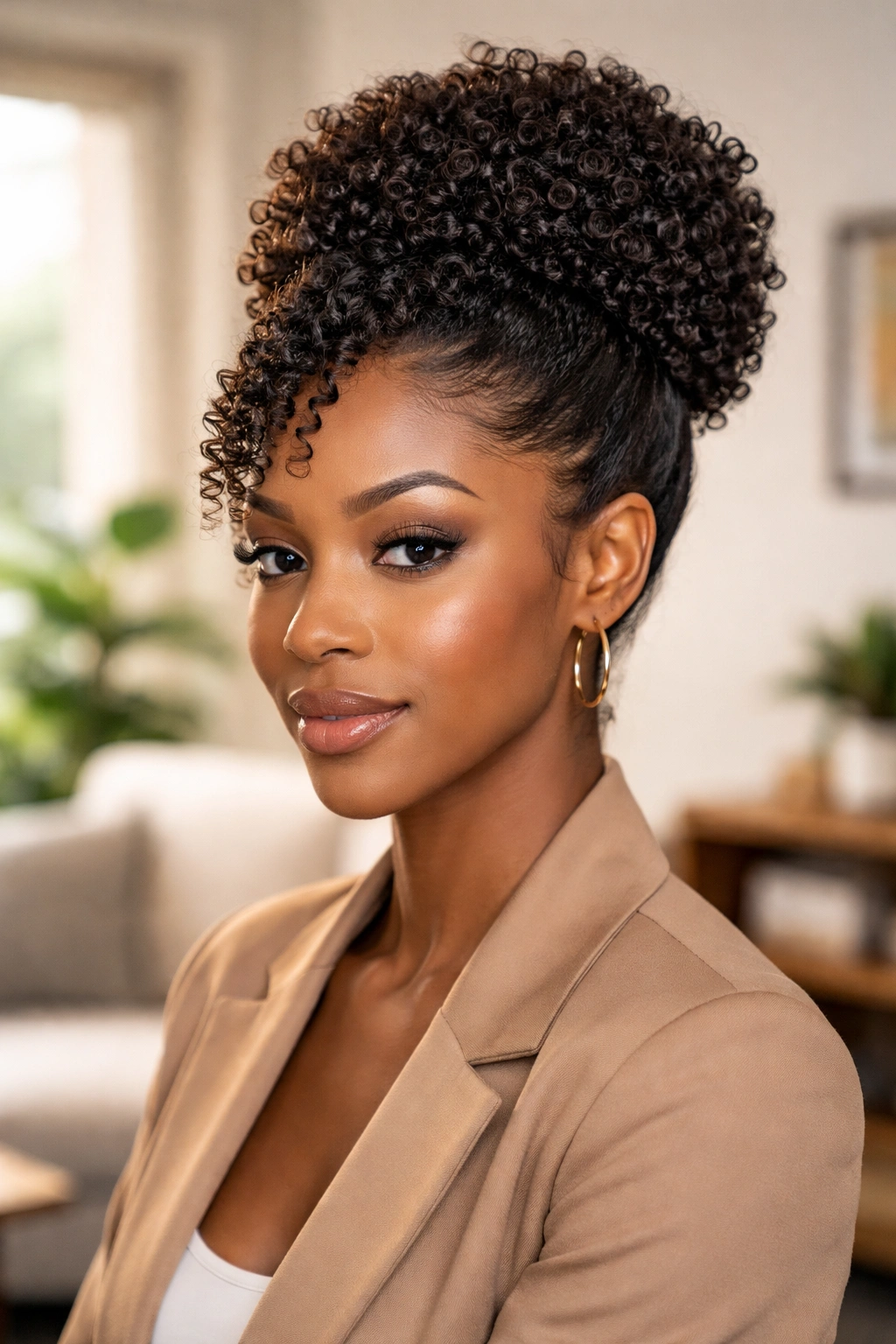
Gather tight curls into a loose protective updo that tucks the ends away while still showing coil definition at the crown and hairline. The protective element keeps the ends from being exposed to friction and dryness, while the visible coils at the edges make the style look intentional and beautiful.
This style works beautifully for workweeks when you want your hair to look polished without doing a full wash day — the protective updo keeps the existing curl style intact while protecting the ends from daily manipulation.
21. Tight Curl Statement Afro
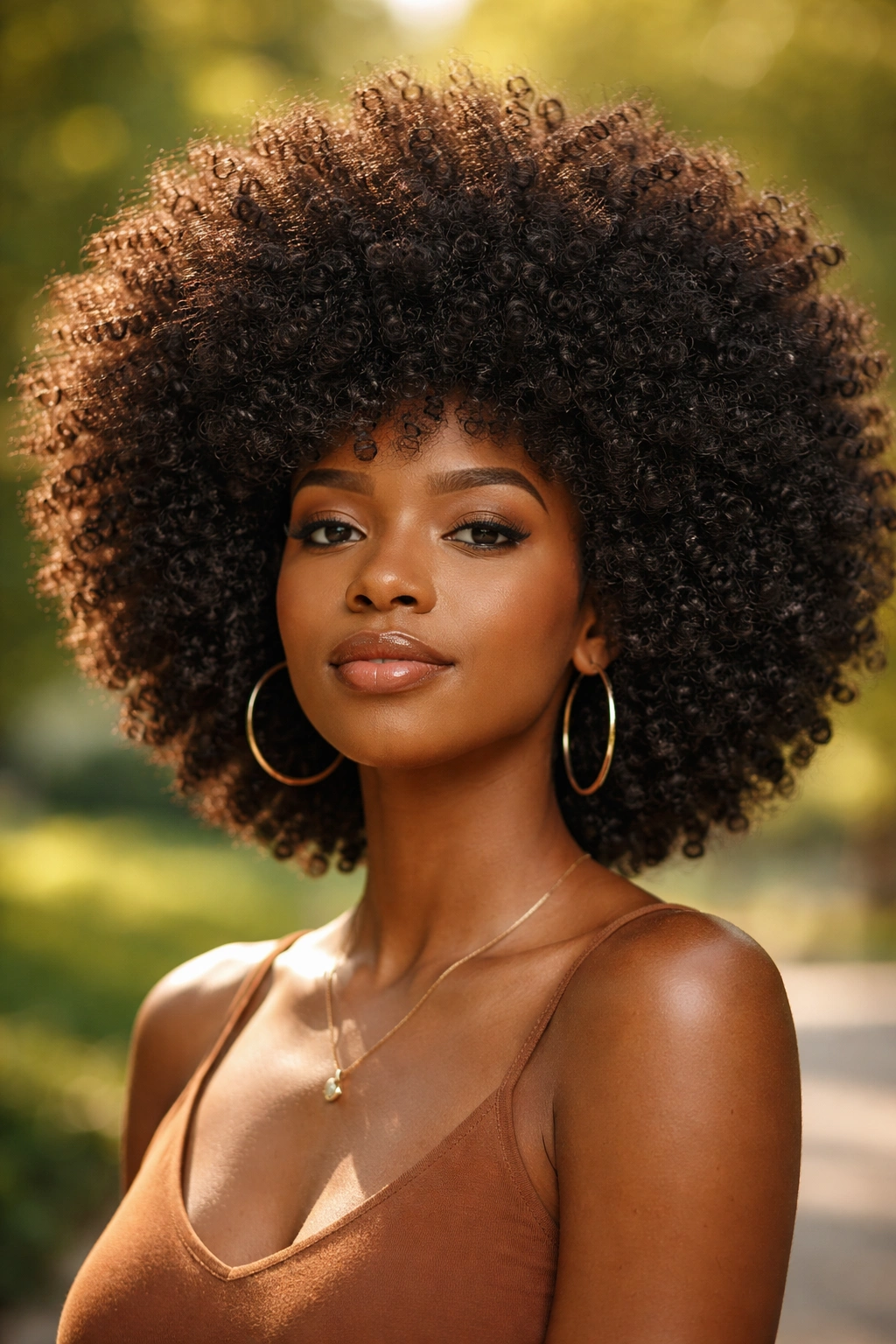
The statement afro is the tight curl style that requires the least technique and the most confidence. Let the hair dry naturally, pick for maximum volume and roundness, and walk out into the world with a full, glorious, unequivocal natural afro.
This style works at every length — from a close-cut TWA to a shoulder-length full afro. What makes it a “statement” isn’t size; it’s the deliberate decision to wear your tight curl hair in its most natural form without apology and without modification.
The tight curl afro has a history and a cultural weight that no other natural hair style carries quite the same way. It’s a style that’s been worn as protest, as joy, as political declaration, and as purely personal aesthetic expression. Wearing it is a statement whether you intend it to be or not — and for many naturalistas, that’s exactly the point.
Keeping Tight Curls Healthy Over Time
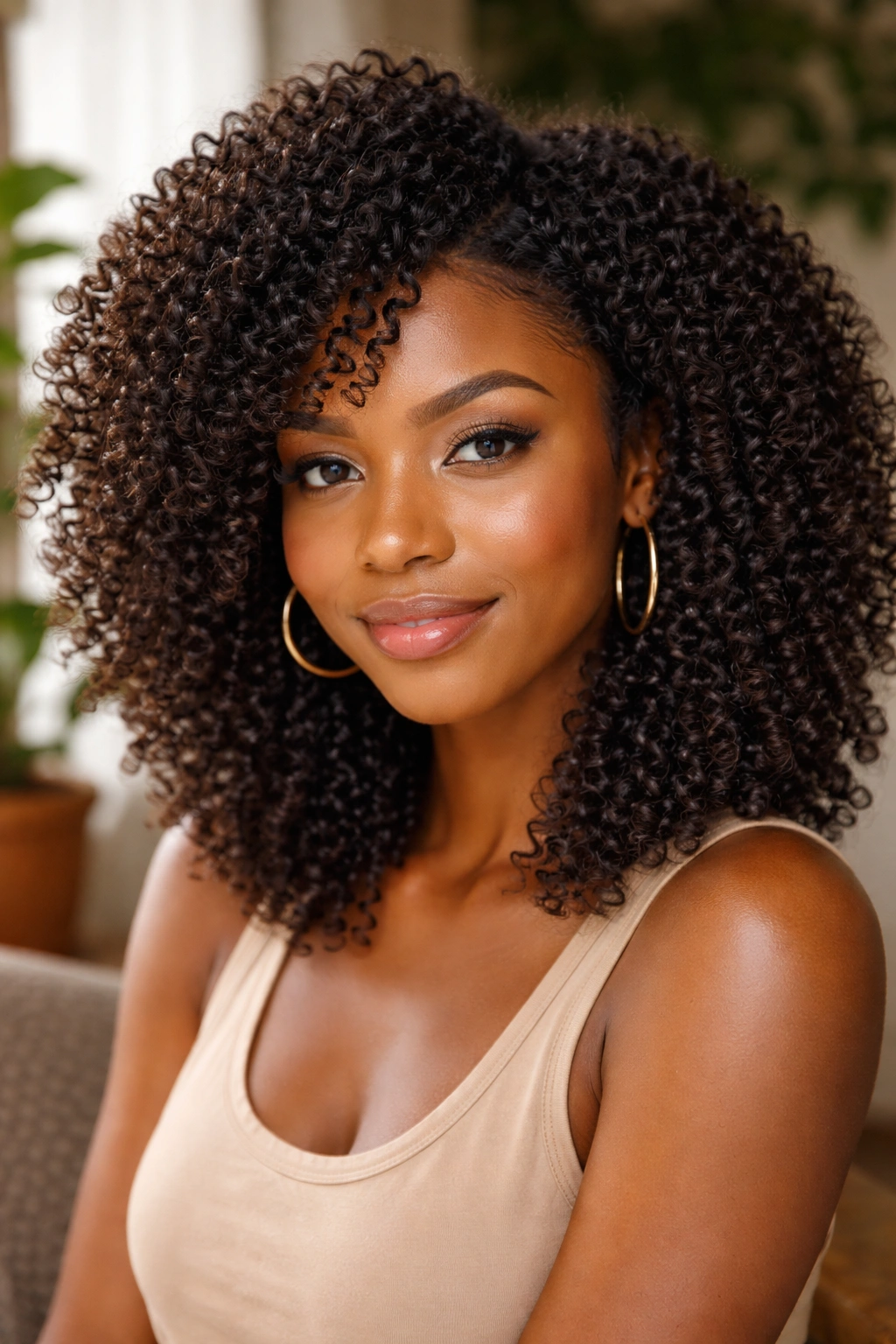
Long-term tight curl health is built on consistency — not in following any particular routine exactly, but in consistently showing up for your hair’s core needs: moisture, gentle handling, and regular scalp care.
Protective styling is a valuable part of tight curl care for naturals who struggle to retain length. Styles that keep the ends tucked away — braids, twists, buns — reduce daily manipulation and help hair grow without breaking off at the ends. But protective styles need moisture maintenance too — neglecting hair under a protective style for weeks is how you end up with damage rather than growth.
Trimming matters on tight curl textures. Split ends on tight curls tangle into the rest of the hair easily, causing knots and single-strand knots (fairy knots) that can cause breakage higher up the shaft. Regular trims — even just a quarter inch every few months — keep the ends clean and tangle-free.
Celebrating the Diversity of Tight Curl Styles
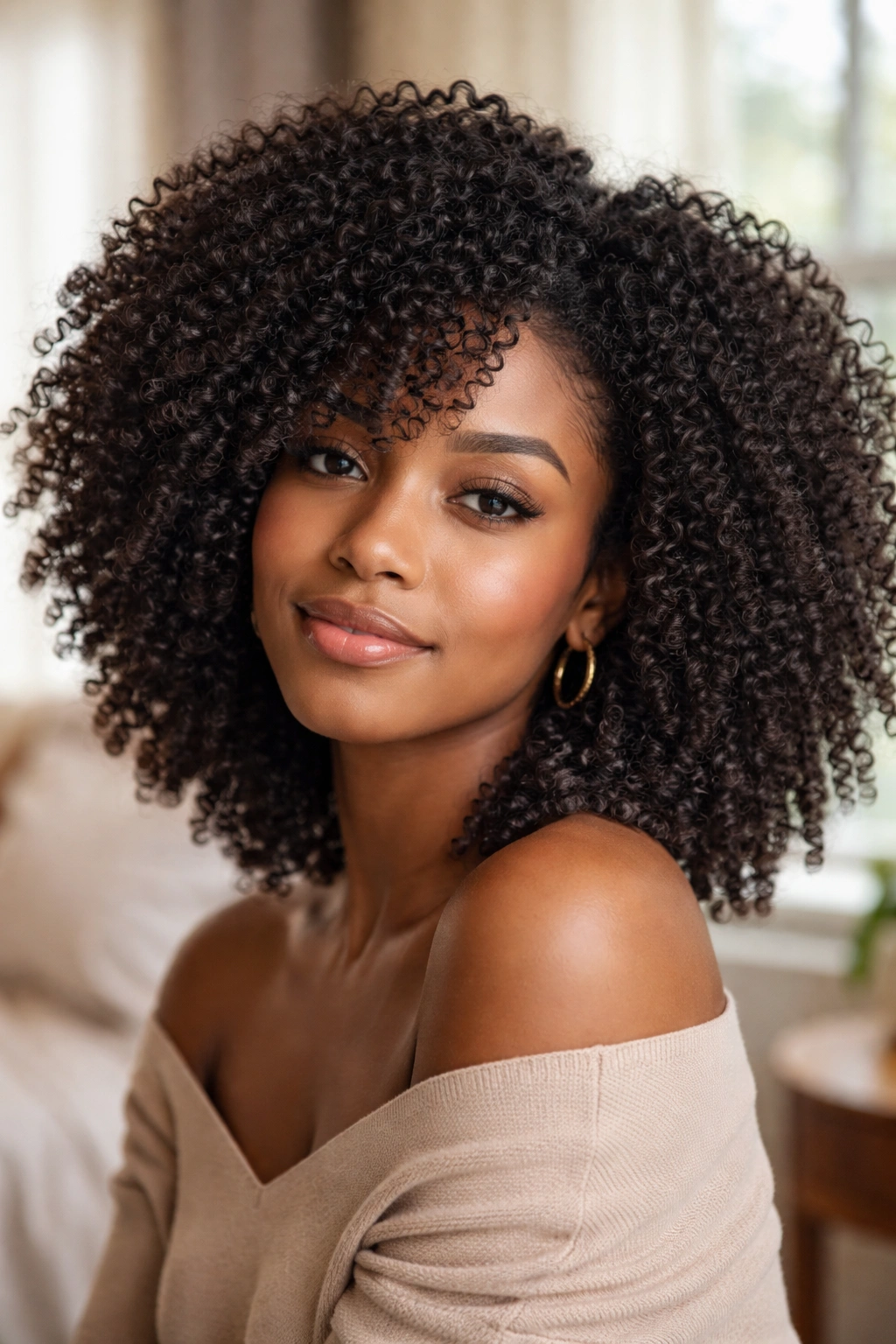
One of the most beautiful things about tight curl natural hair is how many different things it can be. The same texture can produce a close-cropped TWA on Monday and a fully stretched, elongated style on Friday. A finger coil set on one week and a fluffy, picked-out afro the next.
Tight curl textures don’t have just one look. They have dozens. The naturalistas who discover this — who experiment freely with different techniques, products, and styles — tend to be the ones who fall deepest in love with their own hair. That love shows in how they wear it, how they care for it, and how they talk about it.
Your tight curl hair is capable of more than you’ve probably tried yet. Give yourself permission to experiment, to fail occasionally, to find your favorite techniques through trial and experience. The journey is genuinely part of the joy.