



Shoulder-length wavy shag cuts have a rare talent: they make hair look deliberate even when it’s a little messy. That’s the whole charm. The right shag gives waves room to move, stops the ends from hanging like a curtain, and keeps the length in that sweet spot where you can still tuck it behind your ears, clip it up, or let it fall naturally without fighting it all day.
What makes this cut work so well is the shape. Shorter pieces around the crown give lift, longer pieces around the face keep the style soft, and the shoulder-skimming length keeps waves from turning into a heavy triangle. Too many people think a shag has to look extreme to count. It doesn’t. A good one can be subtle, airy, and wearable enough for regular life, which is usually the whole point.
The tricky part is getting the balance right. Go too choppy and the hair can puff out in all the wrong places. Keep it too blunt and the waves lose that broken-up movement shag hair depends on. The best versions have a little swagger, a little softness, and just enough edge to keep the style from feeling flat.
1. Soft Curtain-Bang Shag
This is the shag I’d hand to someone who wants movement without drama. The curtain bangs split softly in the middle, graze the cheekbones, and melt into shoulder-length layers that bend instead of spike. It’s flattering because the eye goes upward first, then follows the face-framing pieces down. That keeps the cut light around the face, which matters more than people think.
Why it works
The layers should start high enough to lift the crown, but not so high that the hair looks hollow at the ends. A good curtain-bang shag keeps the perimeter soft and the front pieces long enough to tuck behind the ears on a lazy day. It’s one of those cuts that looks like you spent ten minutes on it when you probably spent three.
- Best with loose, S-shaped waves
- Easy to grow out from a shorter fringe
- Needs only a round brush or a bend from a 1.25-inch iron
My take: if you want the safest entry point into shoulder length wavy shag cuts, start here.
2. Grown-Out Fringe Shag
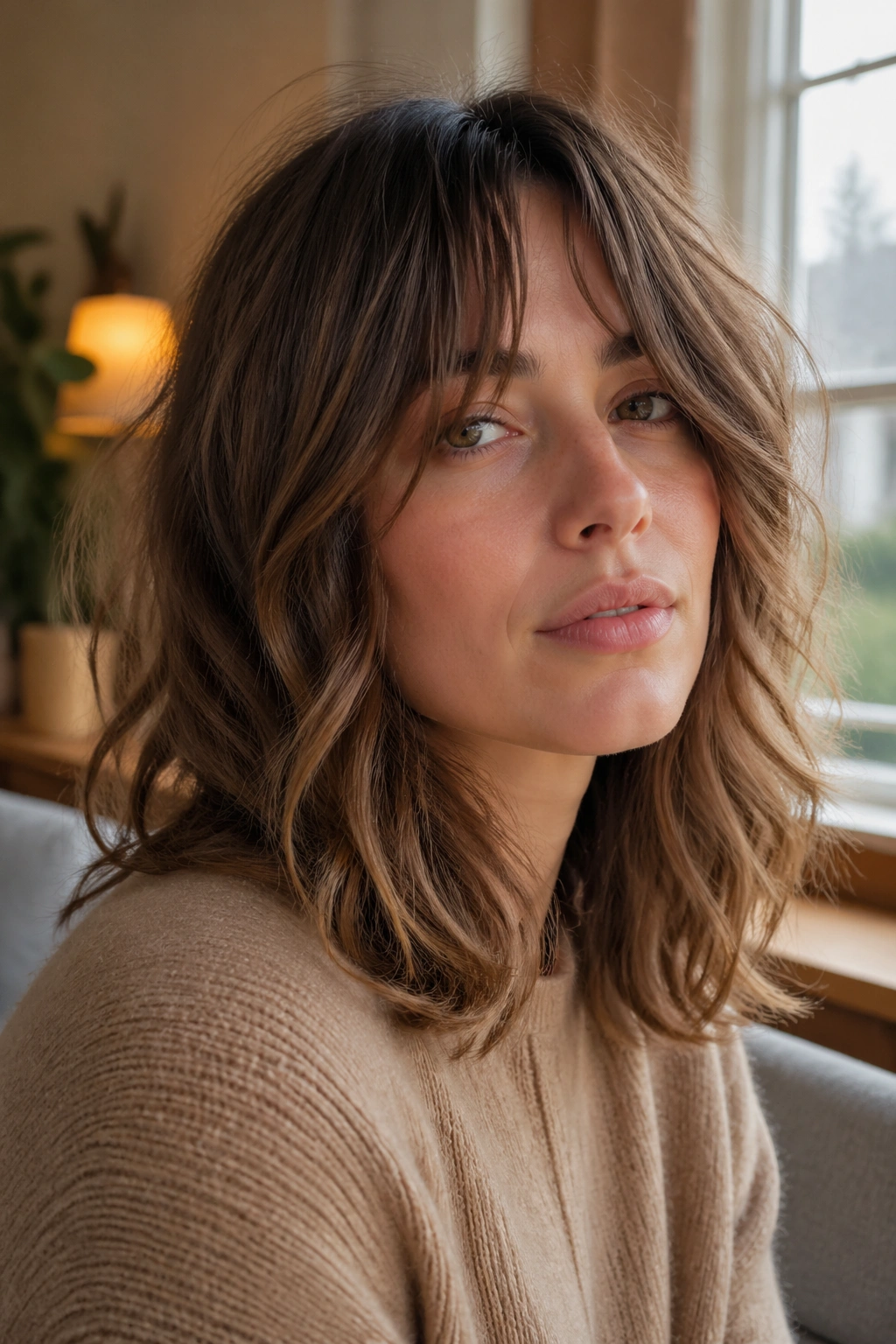
A grown-out fringe shag gives you the texture of a shag without forcing you to live with a strict bang line. The front pieces are long enough to blend into the cheek and jaw, so the haircut feels relaxed rather than styled to death. That’s a relief if your waves already do their own thing.
The nice part is how forgiving it is between trims. When the fringe starts to grow, it still reads as part of the cut instead of looking like an accident. Keep the shortest front layers around the lip or cheekbone area, and let the rest fall softly toward the shoulders. It’s low-maintenance in the best way.
3. Razor-Shattered Shag
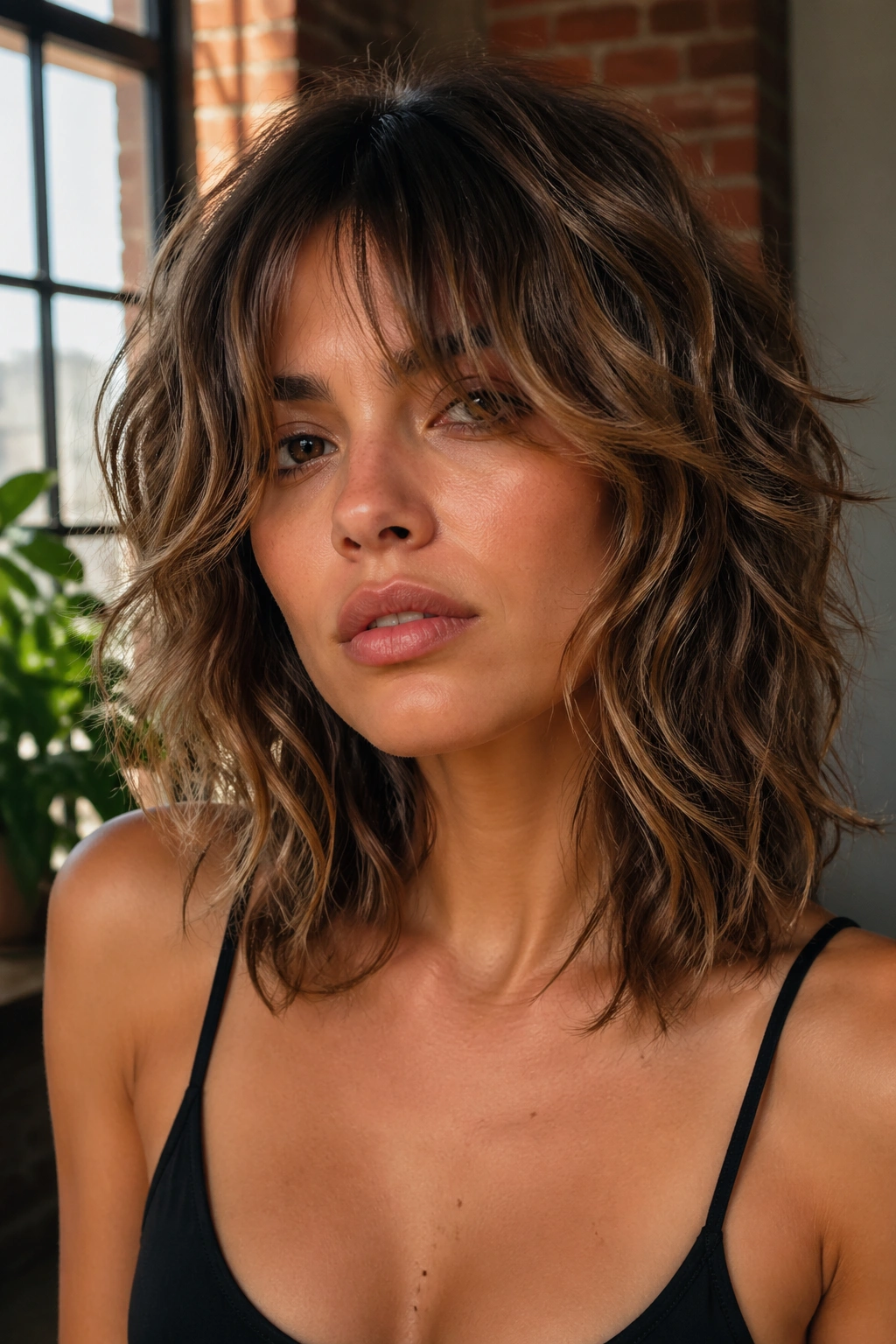
A razor cut changes everything here. Instead of blunt, chunky ends, you get feathered pieces that move when you turn your head. On medium to thick waves, that broken edge removes bulk and gives the hair a lighter swing. On very dry hair, though, a razor can make things frizz faster, so this version wants a careful hand.
The best razor-shattered shag has a little edge near the face and a softer finish at the back. It should look airier than a scissor-cut shag, not scraped to bits. If your waves tend to sit heavy at the bottom, this is one of the smartest fixes.
4. Wolf-Lite Shoulder Shag
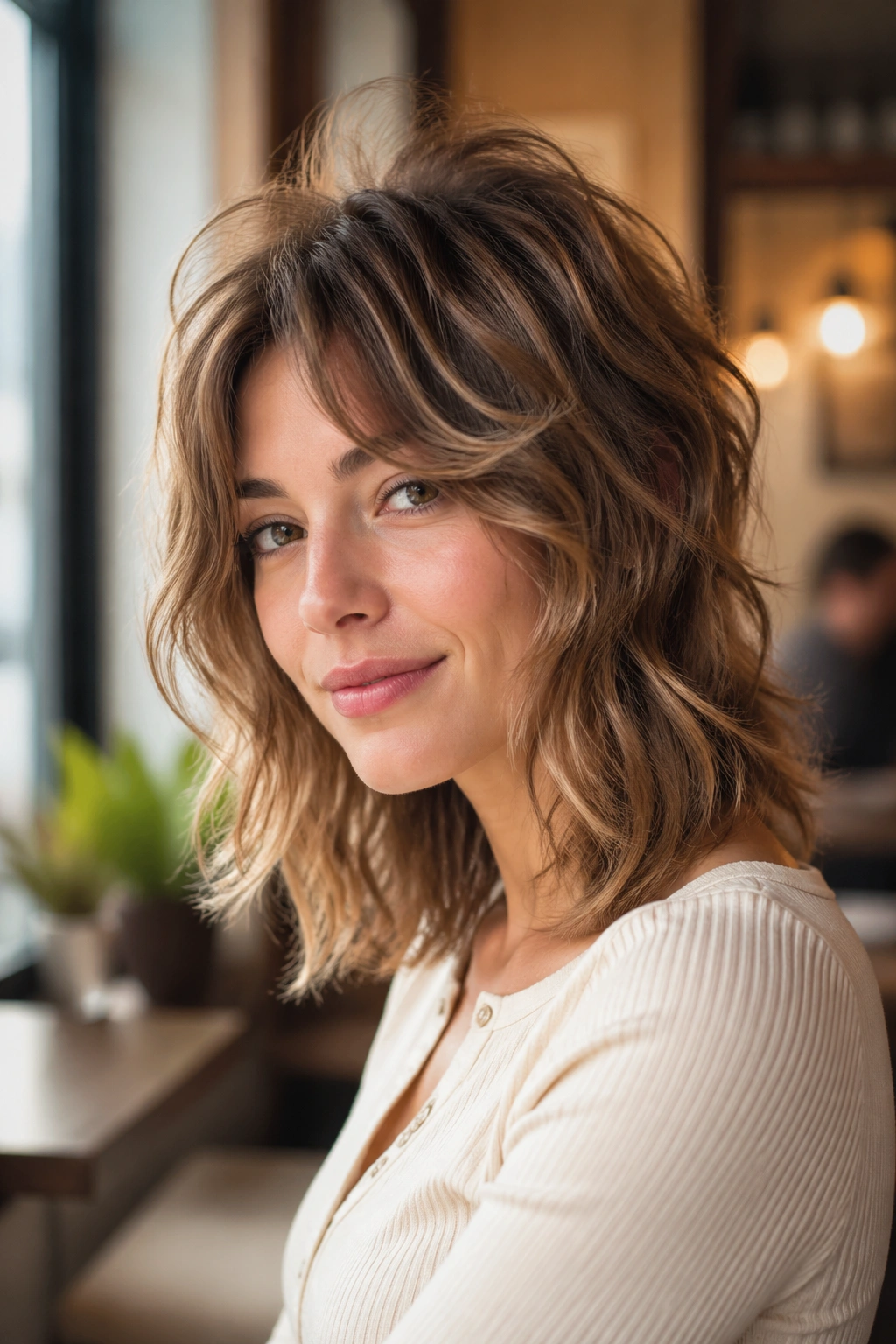
The wolf-lite shag sits between a shag and a wolf cut, which is a useful place to live if you want some attitude but not full-on chaos. The crown is shorter and more lifted, the sides are softer, and the ends still skim the shoulders instead of collapsing into a mullet shape. Good. That distinction matters.
It’s the version I’d pick for someone who wants the idea of a wolf cut but not the commitment. The silhouette is narrow at the top, wider through the cheek and shoulder area, and a little messier on purpose. It looks best when the wave pattern is left a little undone, not brushed into submission.
5. Bottleneck Bang Shag
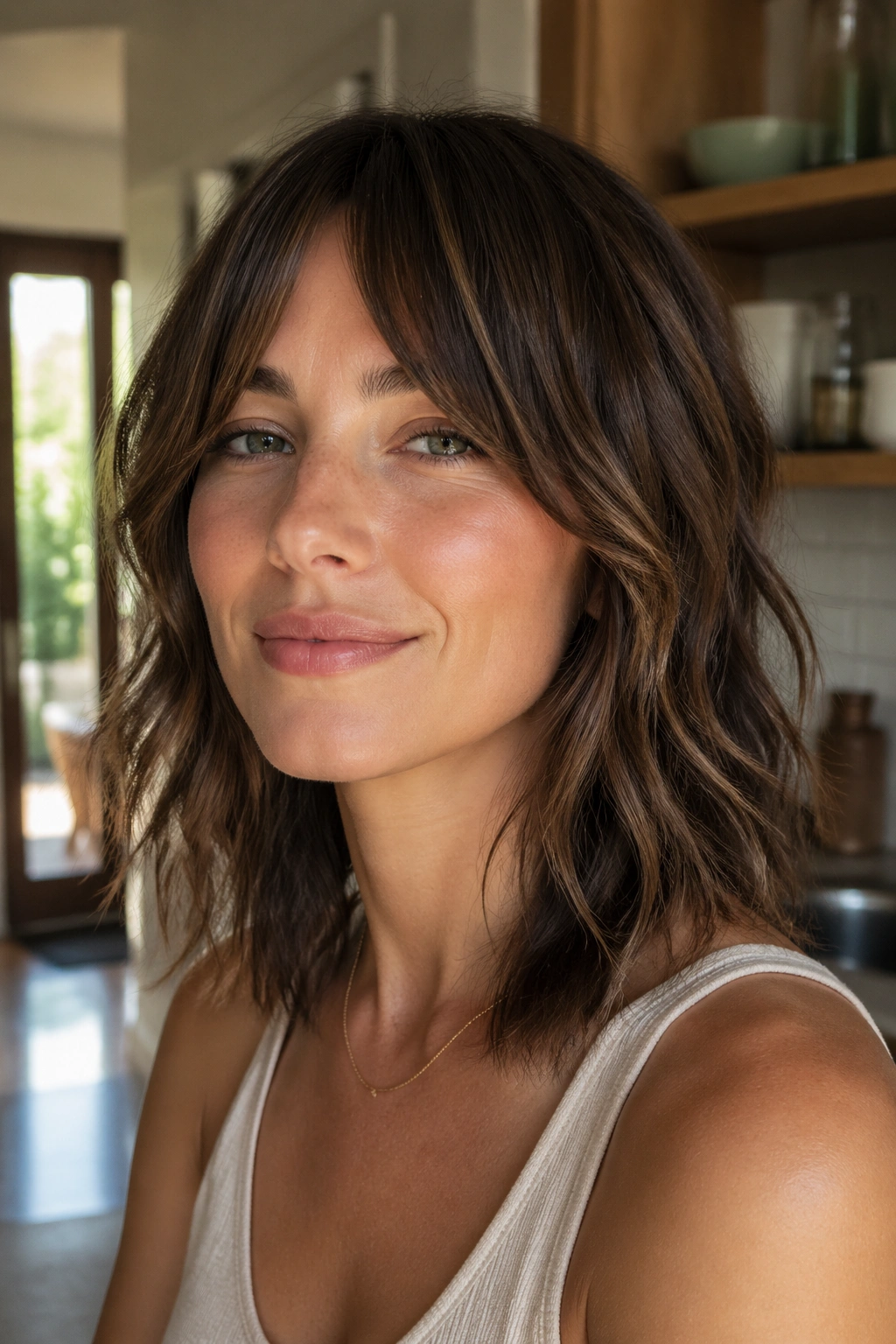
Bottleneck bangs are one of those details that make a shag look expensive without trying too hard. They start narrow between the brows, then widen as they move toward the temples and cheekbones, which gives the face a soft frame. On shoulder-length waves, that shape keeps the top of the haircut from feeling heavy.
Styling note
This version likes a middle part, but not a severe one. Slightly off-center works too. Keep the bangs light at the roots and let them curve with a brush or finger-drying. If they sit too flat, the whole cut loses its lift. If they’re too piecey, the fringe starts to feel disconnected, and that’s a mess I’d skip.
6. Side-Swept Shag
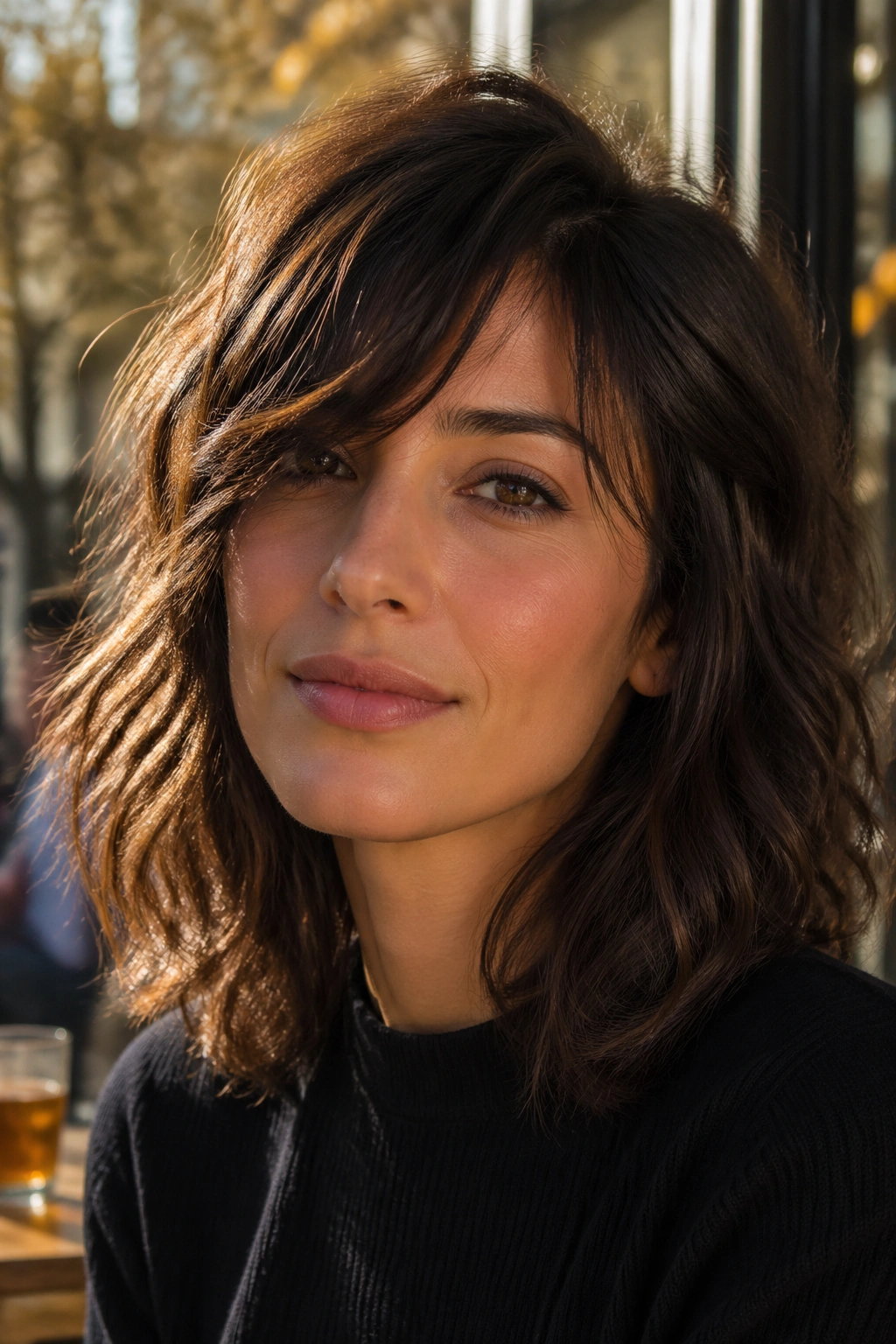
A side-swept shag is a smart fix for anyone who hates the fuss of center-part bangs. The fringe moves diagonally across the forehead and merges into the rest of the layers, which gives the haircut a softer angle. It’s especially nice if you’ve got a cowlick or your hair naturally wants to fall to one side anyway.
The cut reads a little more elegant than the messier shag shapes, but it still keeps plenty of texture around the shoulders. I like it for people who wear glasses too. The diagonal fringe leaves space around the frames instead of crowding the face.
7. Thick-Hair De-Bulked Shag
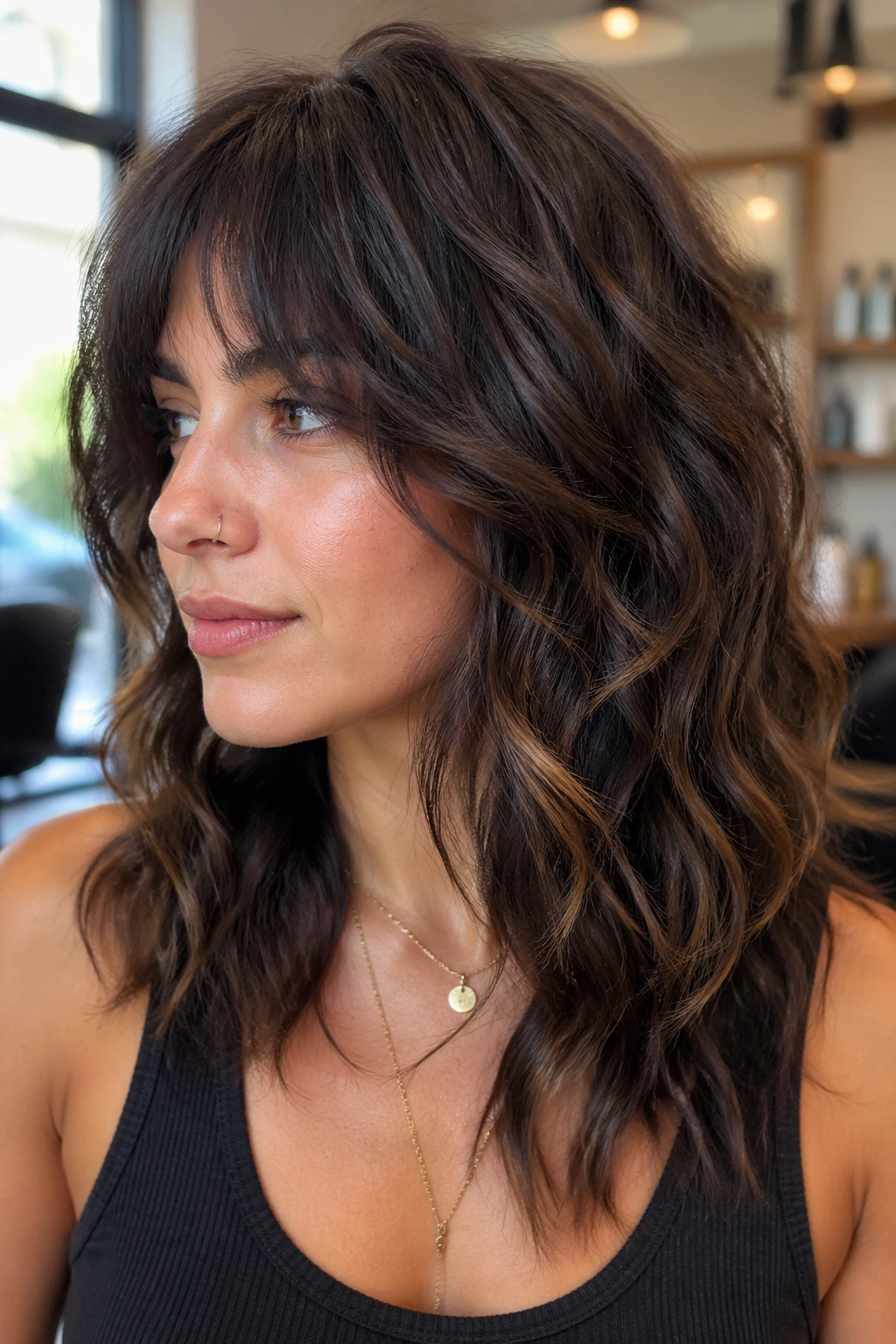
Thick waves can turn into a triangle fast if the bulk isn’t removed in the right spots. A de-bulked shag solves that by taking weight out of the mid-lengths and leaving the outline clean enough to keep the shape from puffing out. The trick is not to shred the ends to pieces. You want movement, not fray.
Ask for internal layering and careful point cutting around the outer edge. That keeps the bottom line from looking heavy while still preserving enough density to make the waves look rich. This cut is a workhorse. It gives thick hair a chance to breathe.
8. Fine-Hair Illusion Shag
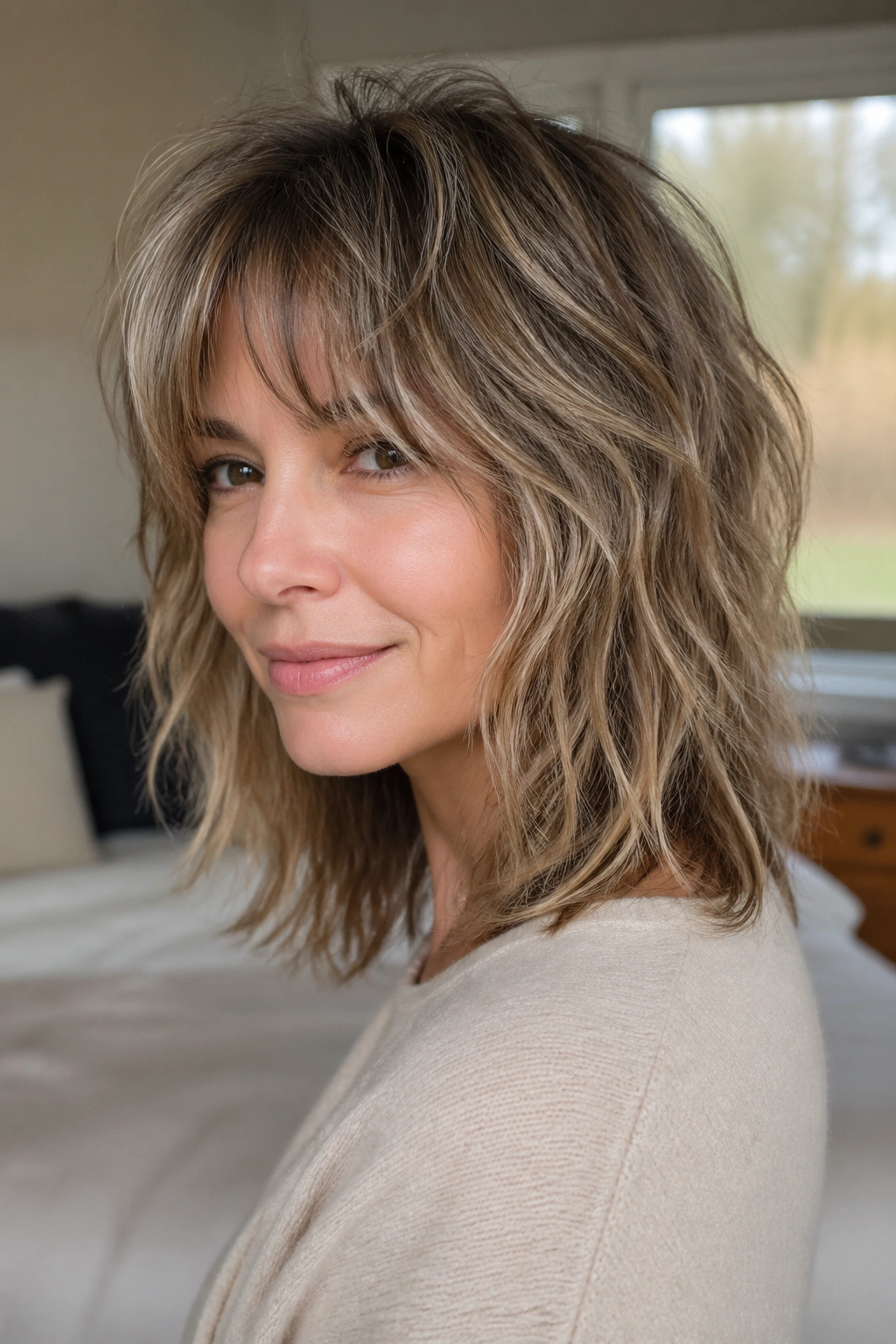
Fine wavy hair needs a different trick entirely. Too many short layers and it goes limp. Too few and it lies there like a sheet. The illusion shag keeps the perimeter a touch stronger, then adds subtle crown layers that give the impression of body without sacrificing the ends.
What to ask for
- Keep the shortest layers high, near the crown
- Leave the bottom line around shoulder level
- Use soft texturizing, not aggressive thinning
A little root lift spray goes a long way here. So does a rough dry with your fingers instead of a brush. The goal is movement that looks built in, not teased into place.
9. Blunt-Perimeter Shag
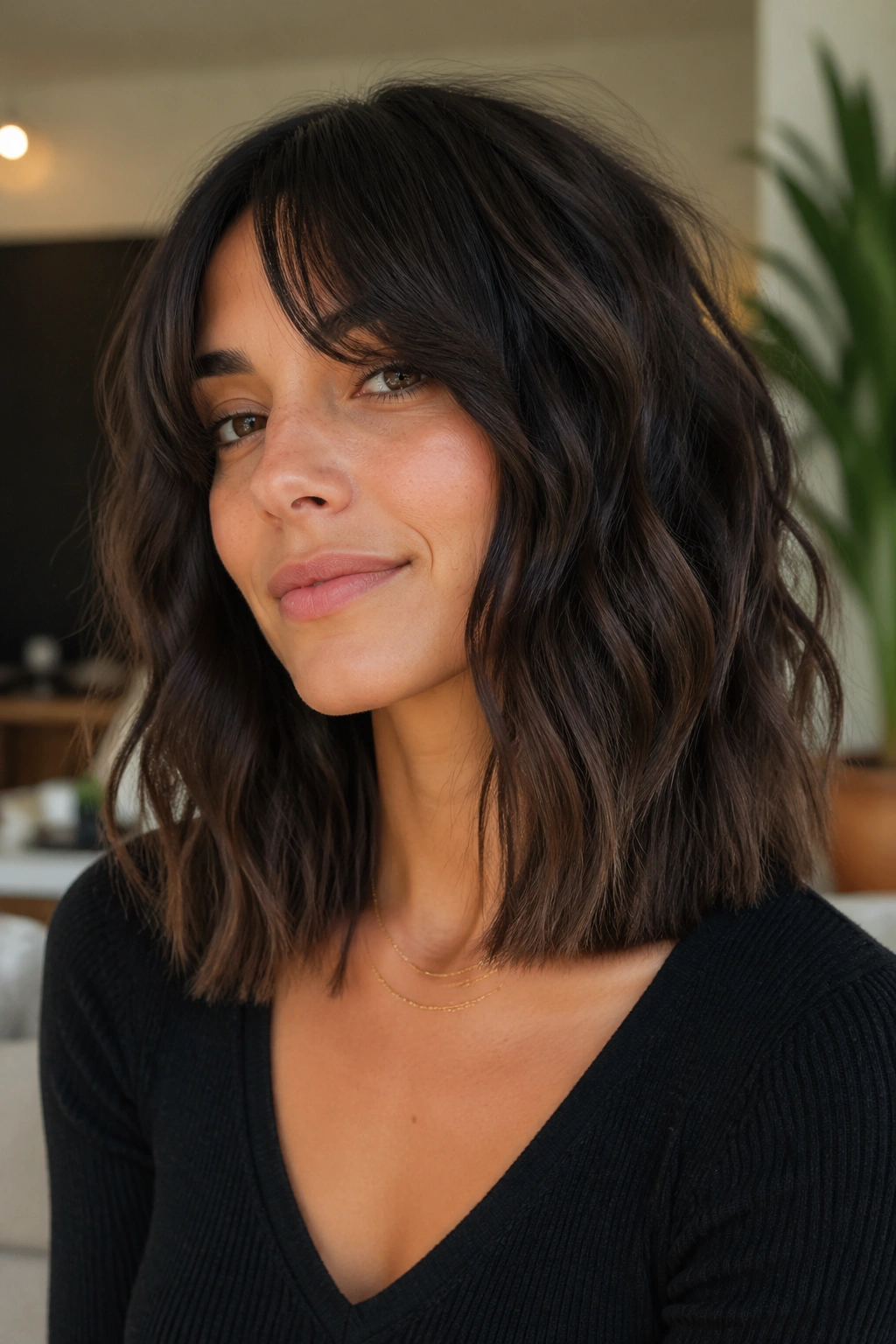
This one has a nice contradiction in it: shaggy layers inside, bluntness at the edge. That clean perimeter keeps shoulder-length waves from feeling wispy, especially if your hair is on the finer side or tends to separate at the ends. The inside does the airy work. The outside keeps things grounded.
I like this version because it looks tidy even when the texture isn’t perfect. The cut can survive a bad hair day better than a highly layered shape, which is saying something. If you want texture but still like a visible line at the bottom, this is the one to save.
10. Cheekbone-Frame Shag
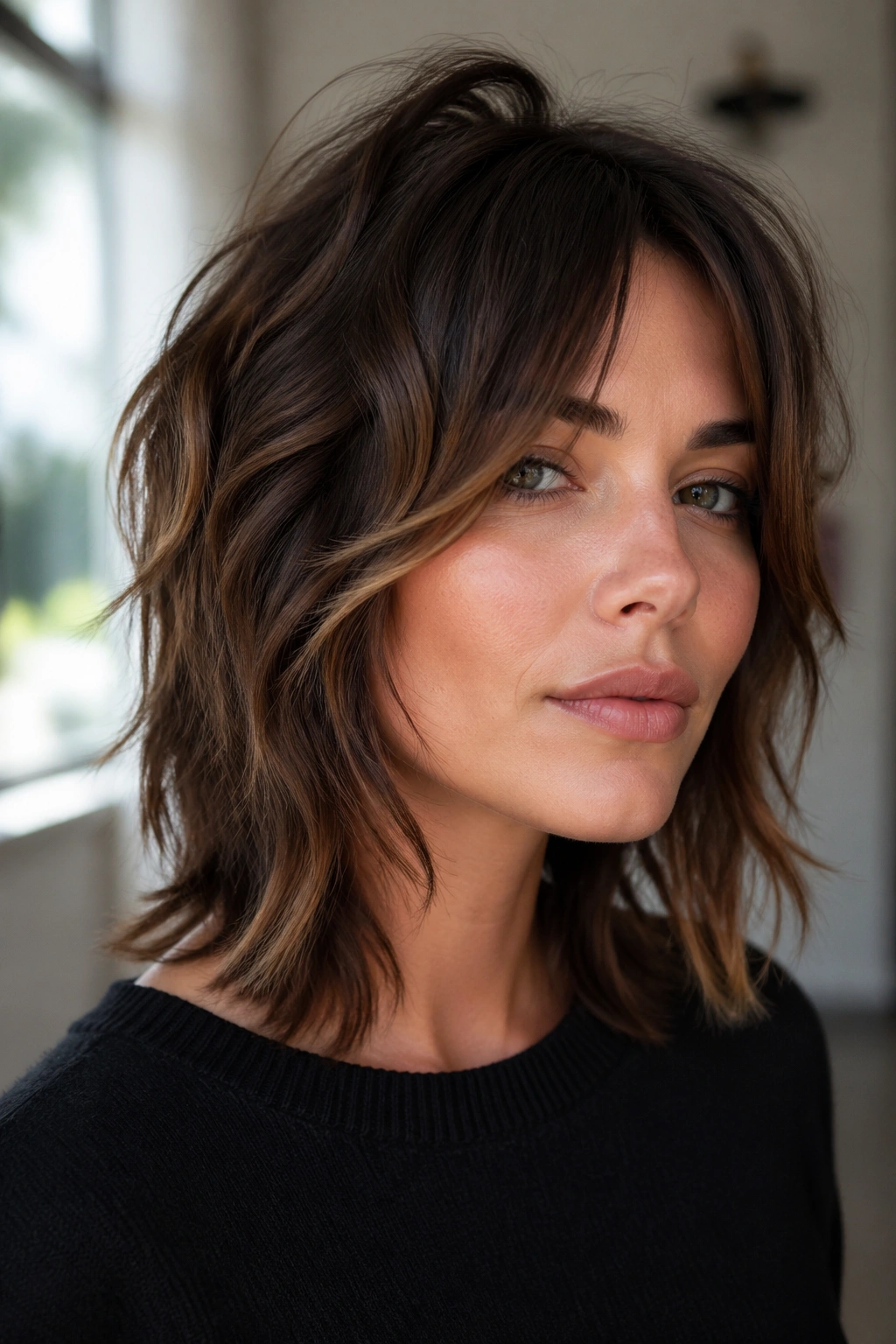
A cheekbone-frame shag puts the action where the face needs it most. The shortest face-framing pieces sit around the cheekbone, then soften into longer layers that skim the jaw and shoulders. That little lift near the center of the face can do more than heavy bangs ever will.
Why it feels flattering
The eye catches the cheekbone first, then moves down to the waves. That gives the face a little structure without making the haircut stiff. If your waves naturally bend away from your face, this shape helps them stay there. If they tend to fall forward, a quick twist while drying usually fixes it.
11. Flipped-End Shag
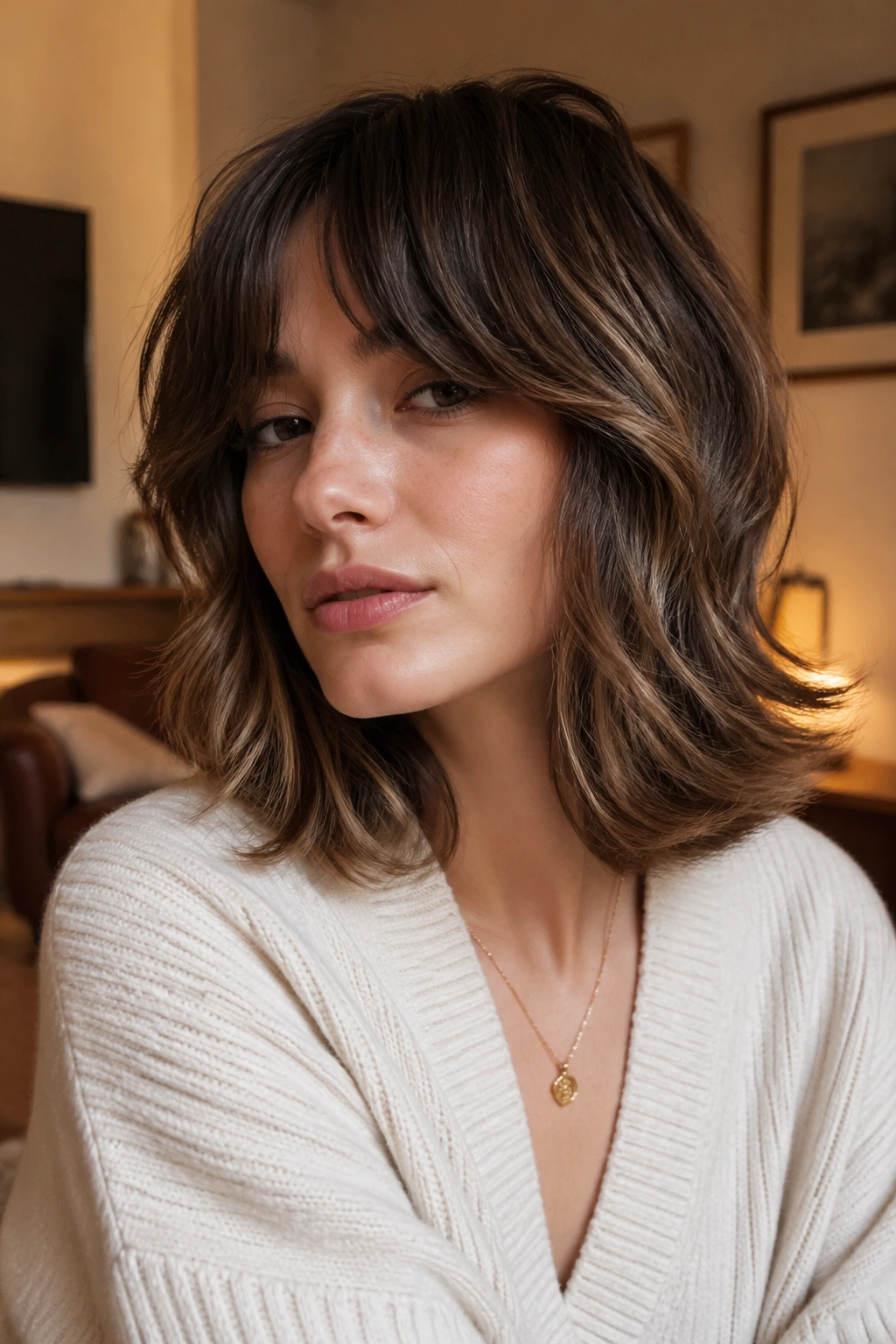
Some shag cuts want tousled waves. This one wants a bend at the ends. The layers are cut so the bottom pieces can flip slightly outward with a blow-dryer brush or a curling iron. It has a touch of retro energy, but it doesn’t turn costume-y if the flip stays soft.
The best version keeps the top layers loose and the perimeter notched just enough to catch movement. I’d use this on hair that feels too straight at the bottom. A little flip keeps the shoulder line from sitting dead still, and dead still is the enemy here.
12. U-Shaped Shag
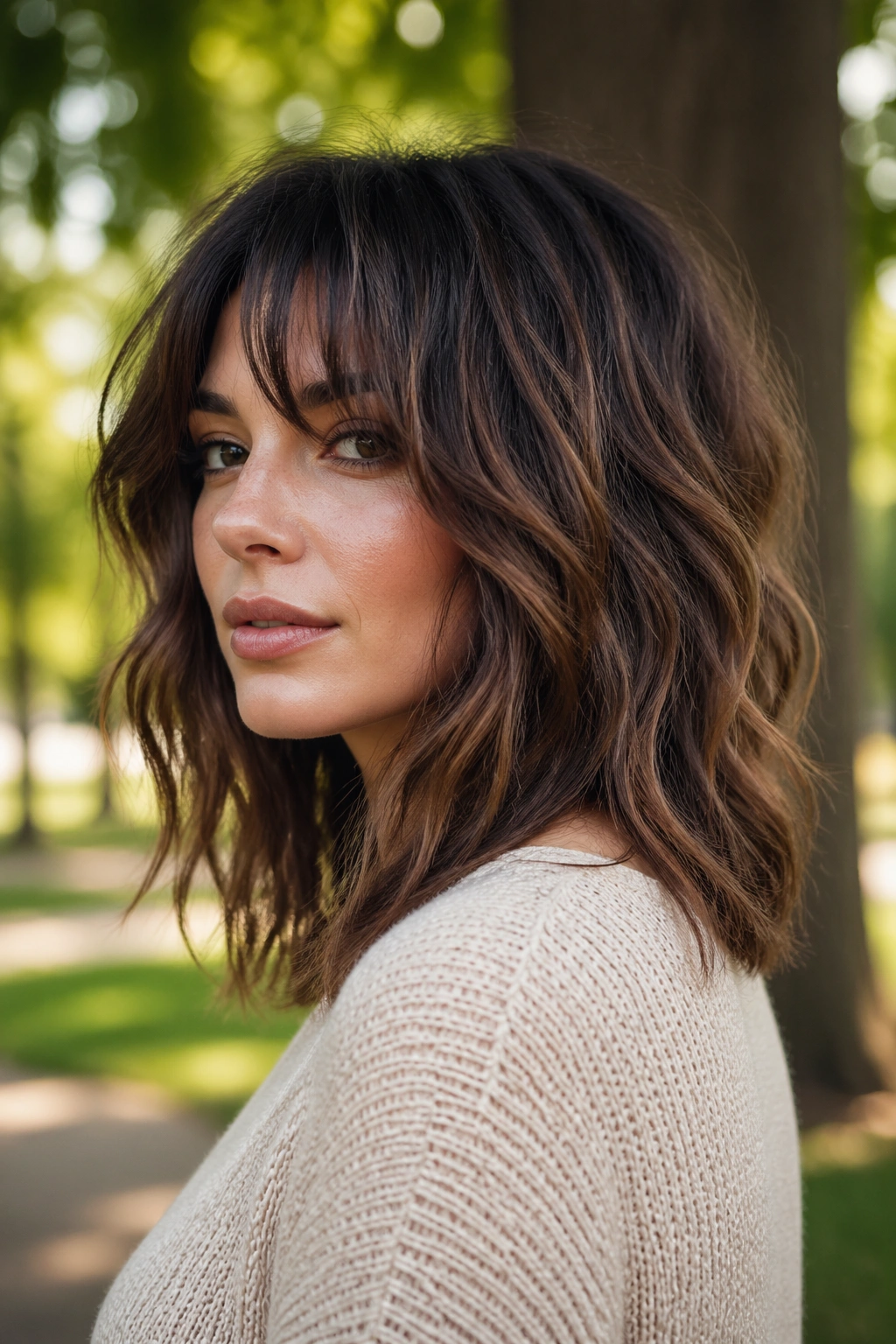
A U-shaped shag has a softer back than a blunt straight cut, which makes it easier on waves that need a bit of flow. The curve in the back gives the haircut a rounded finish, while the front pieces can stay long enough to keep the style from ballooning. It’s gentle, but not boring.
This shape also grows out nicely. That matters. A lot of layered cuts lose their charm once they’re a little overdue for a trim, but the U-shape keeps the silhouette readable for longer. If you like hair that still looks intentional on a rushed morning, there’s something to that.
13. Round-Face Elongating Shag
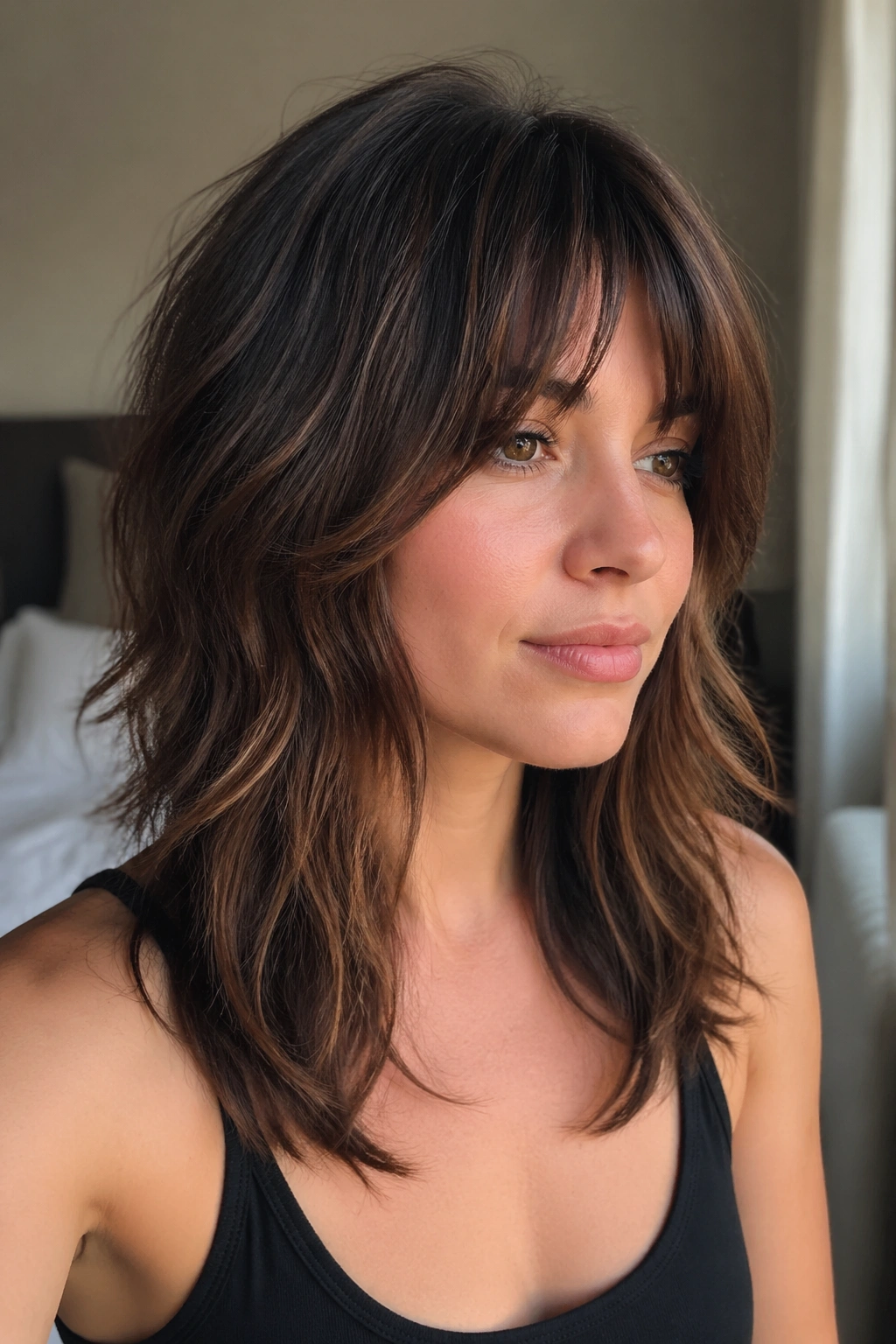
The point of this version is simple: pull the eye vertically, not horizontally. Longer front layers, a bit of crown lift, and a fringe that doesn’t sit too wide across the face all help. Keep the shortest pieces below the cheekbone if you want the face to feel longer.
A deep side part can help too, though it doesn’t have to be dramatic. What you want to avoid is too much width at the sides, because that’s where round faces can feel crowded. This cut should move downward in a loose line. Clean, not bulky.
14. Square-Face Softening Shag
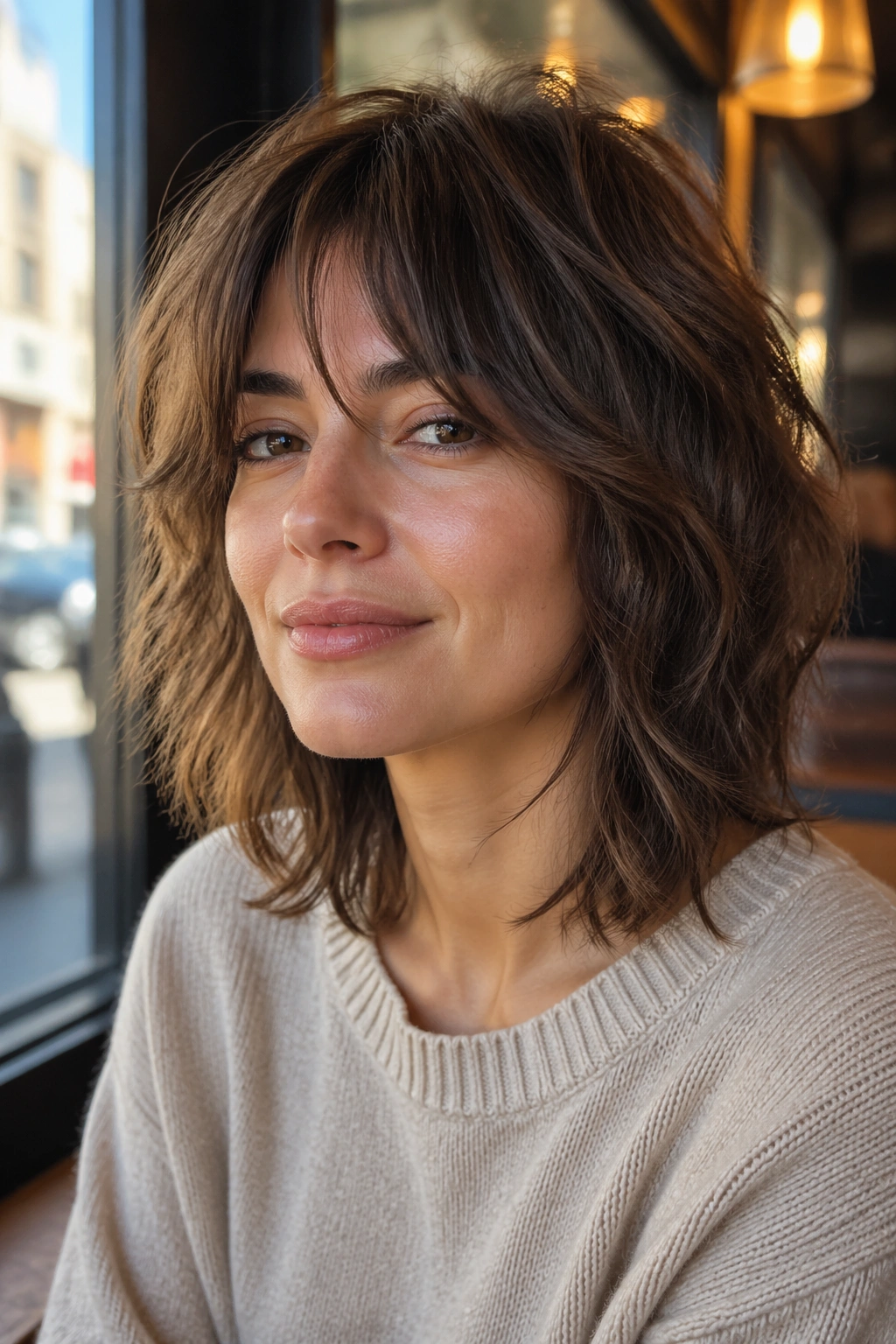
Square faces usually look best when the haircut softens the jaw instead of drawing a hard box around it. A shoulder-length shag can do that beautifully if the layers are broken up around the lower face and the fringe stays airy. Heavy, straight-across bangs tend to fight the shape. Softer pieces usually win.
The longest layers should brush the jaw or sit just below it, and the texture should stay a little irregular near the sides. That keeps the haircut from echoing the angles of the face too closely. Think softened edges, not sharp corners. That’s the whole game.
15. Oval-Face Balanced Shag
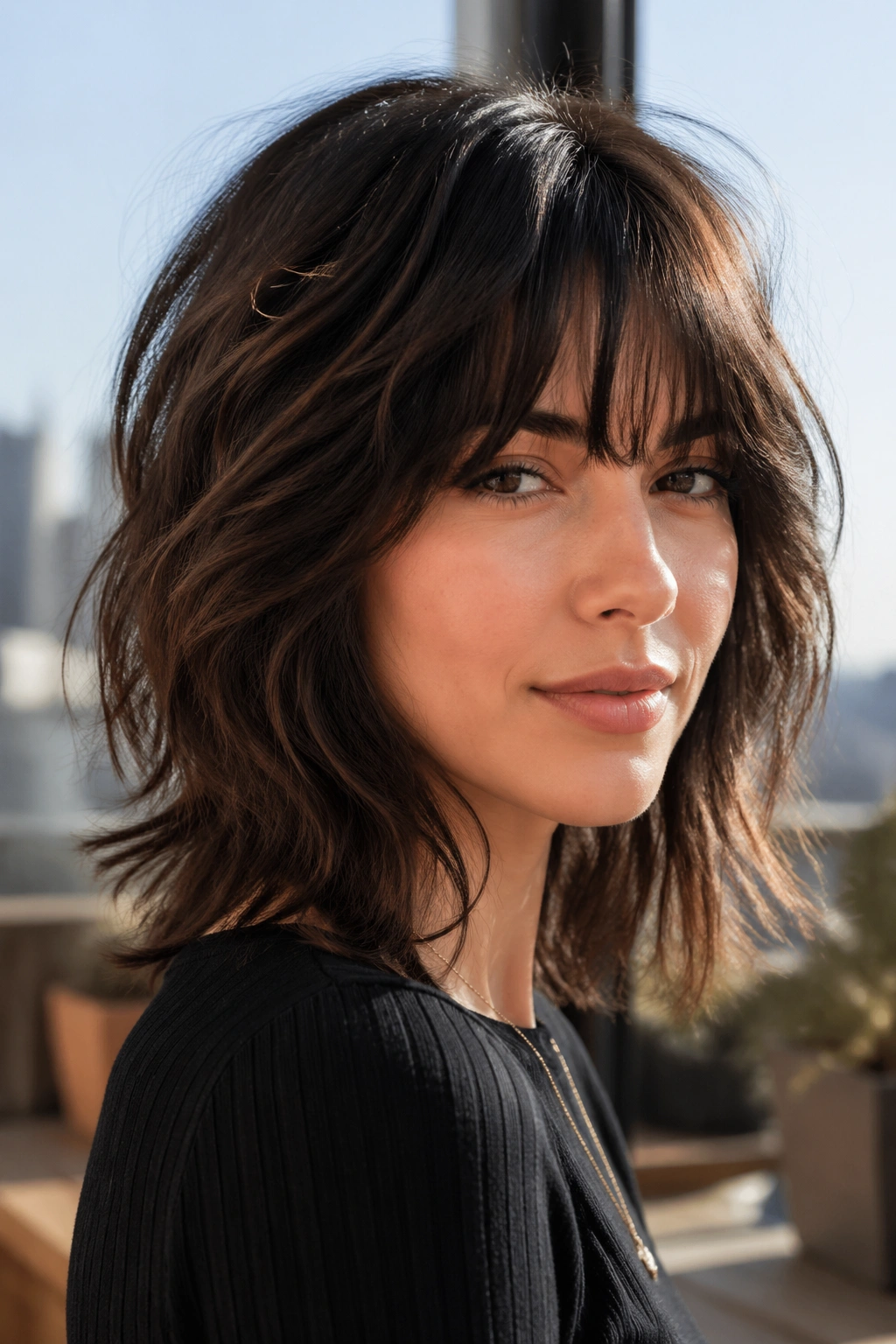
Oval faces get a lot of freedom here, which is both a blessing and a trap. You can go with curtain bangs, a side fringe, shorter crown layers, or a more muted shag shape. The risk is choosing a cut that’s technically fine but has no point of view.
So give the cut one clear detail. Maybe it’s a stronger fringe. Maybe it’s a deeper crown layer. Maybe it’s a sharper perimeter with loose texture inside. Oval faces don’t need rescue; they need personality. A balanced shag does best when it has one thing to say.
16. Air-Dry Shag
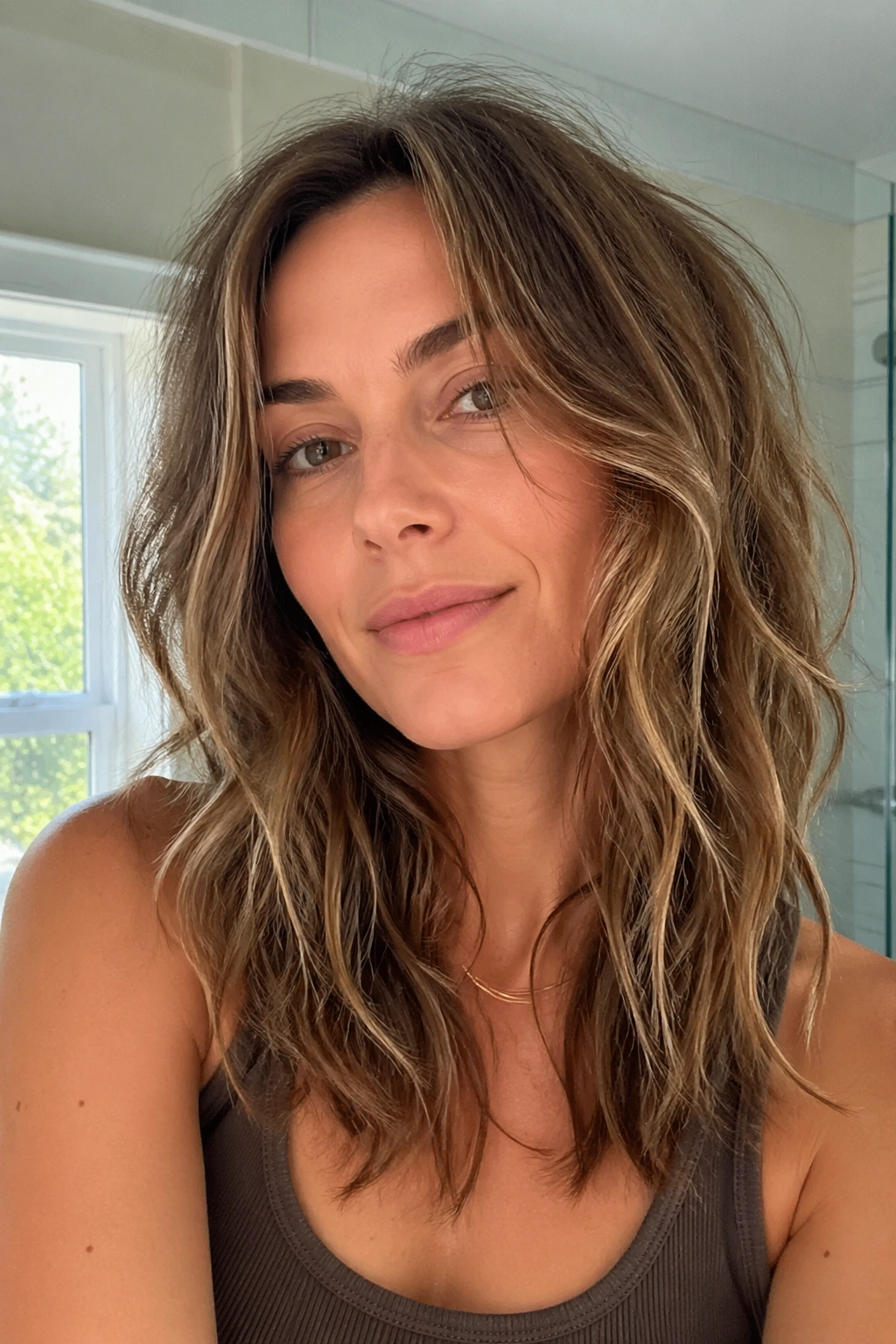
If you hate blow-drying, build the haircut around that fact. An air-dry shag is shaped so the wave pattern can do most of the work on its own. The crown sits a little shorter for lift, the front pieces are long enough to fall softly, and the ends are textured enough to keep from hanging straight.
The dry-down trick
Scrunch in leave-in conditioner and a light mousse while the hair is damp. Then either leave it alone or twist a few front pieces around your fingers as it dries. Do not over-touch it. That’s how you lose the wave pattern and end up with frizz instead of shape.
17. Diffuser-Friendly Shag
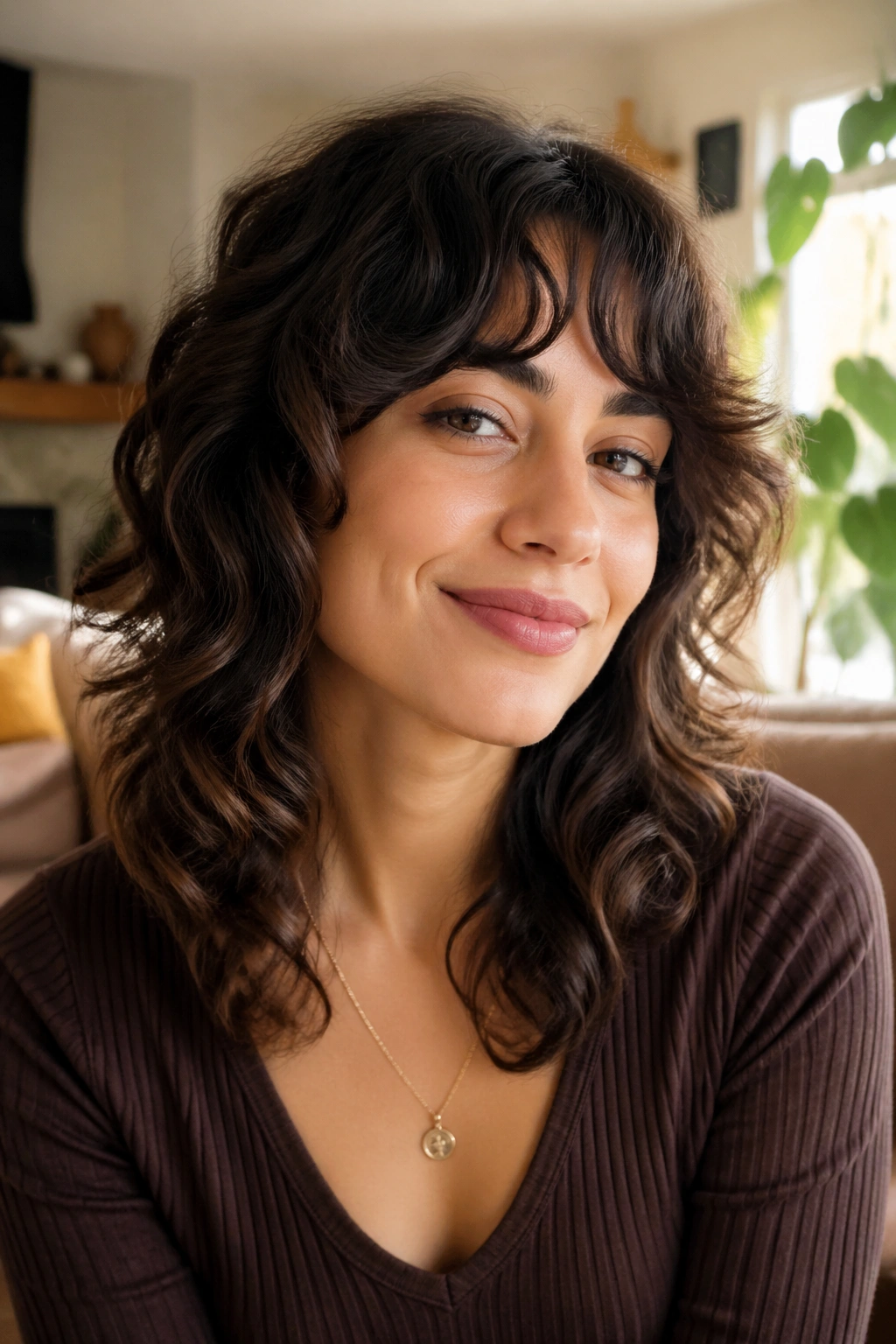
This is the shag for people who want definition, not collapse. The layers are cut so waves can bunch together in clean clumps, which a diffuser helps preserve. If the cut is too blunt, the wave gets weighed down. If it’s too shredded, the hair starts looking cloudy. You want the middle road.
How to style it
- Use a curl cream or light gel on damp hair
- Diffuse on low heat and low speed
- Cup the ends, then move the diffuser to the roots
- Stop when the hair is about 80 percent dry
That last bit matters. Over-drying makes waves break apart and puff up, and nobody wants that.
18. Long Veil-Layer Shag
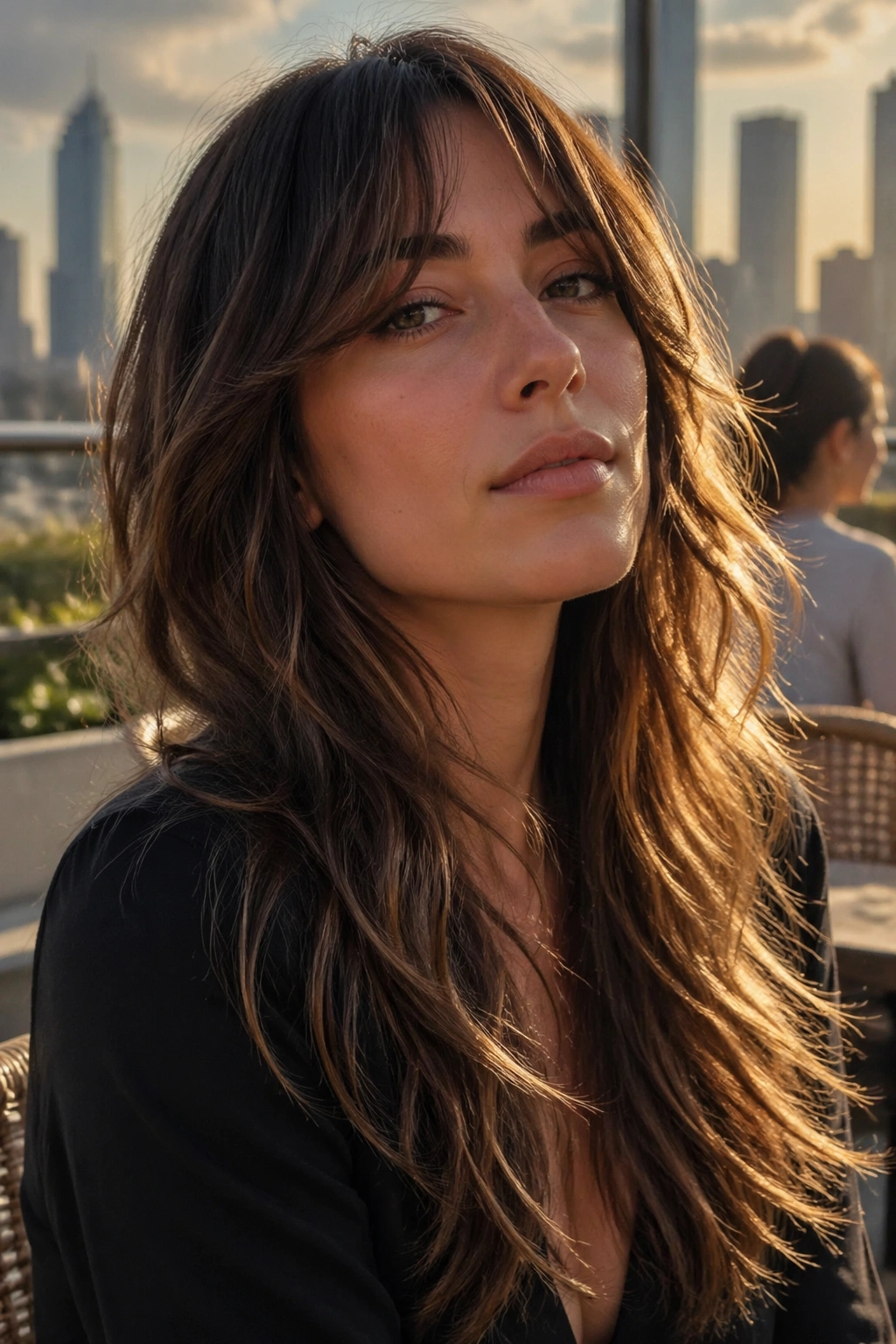
A long veil-layer shag is softer than the more choppy versions, which makes it useful if you want texture that still feels polished. The layers drape over one another like thin sheets, so the cut moves without looking aggressively layered. It’s a good bridge between a classic layered cut and a true shag.
This style is nice for work settings or anyone who likes their hair to read a little calmer. The texture is there, but it doesn’t shout. The shoulders get enough length to keep the style grounded, while the crown layers keep it from falling flat in pictures or in real life.
19. Heavy Fringe Shag
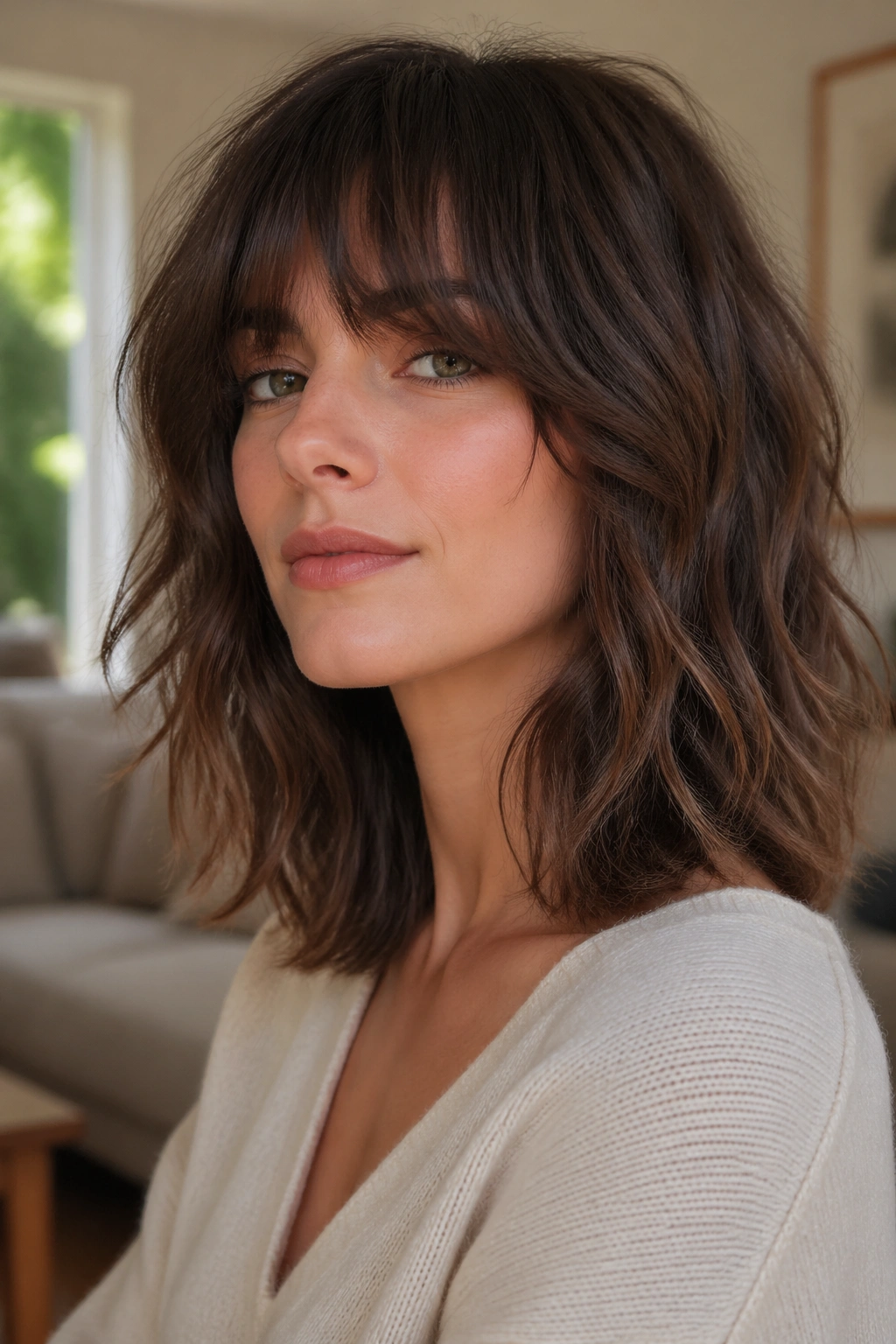
Heavy fringe changes the whole mood of a shag. Instead of whispery bangs, you get a stronger curtain of hair across the forehead, then layered length below. On shoulder-length waves, that contrast can look dramatic in a good way. It gives the haircut a clear front.
The key is keeping the fringe thick but not boxy. The edges should still move, even if the bang line feels fuller. This cut suits people who don’t mind daily styling. A heavy fringe looks best when it’s dried with a small round brush or a flat brush and a bit of bend at the ends.
20. Wispy Fringe Shag
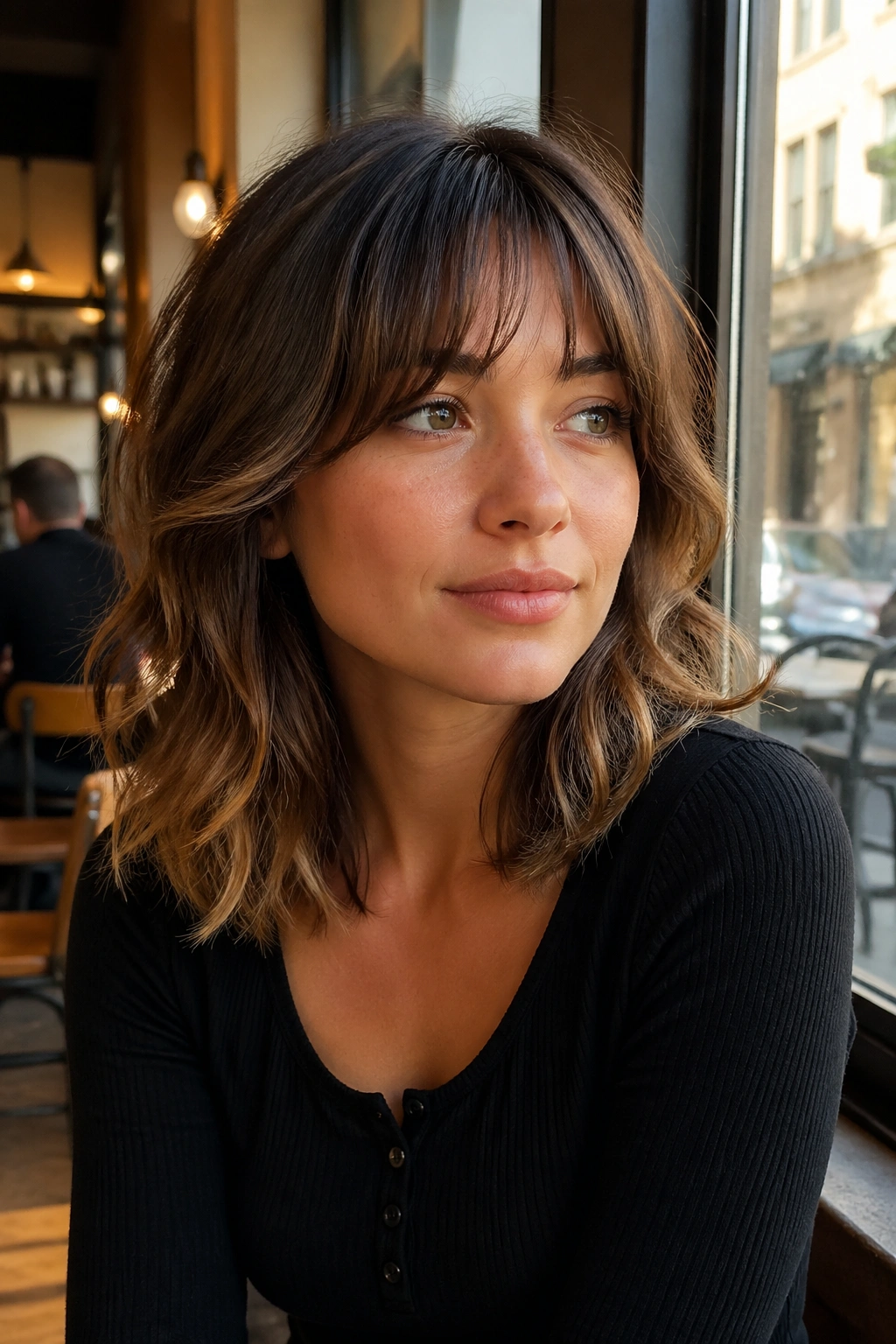
Wispy fringe is the lighter cousin of the heavy bang look. The front pieces are broken up, see-through, and feathered just enough to sit softly on the forehead. It’s a good choice if you want bangs but don’t want the maintenance of a dense fringe.
What makes it different
The fringe should feel airy, not sparse. That’s a real distinction. A wispy shag works when the bang section is cut with care and left long enough to move with the rest of the layers. It pairs especially well with softer waves and a little face oil or styling cream on the ends, because the whole look depends on texture that feels lived-in rather than stiff.
21. Lob-Shag Hybrid
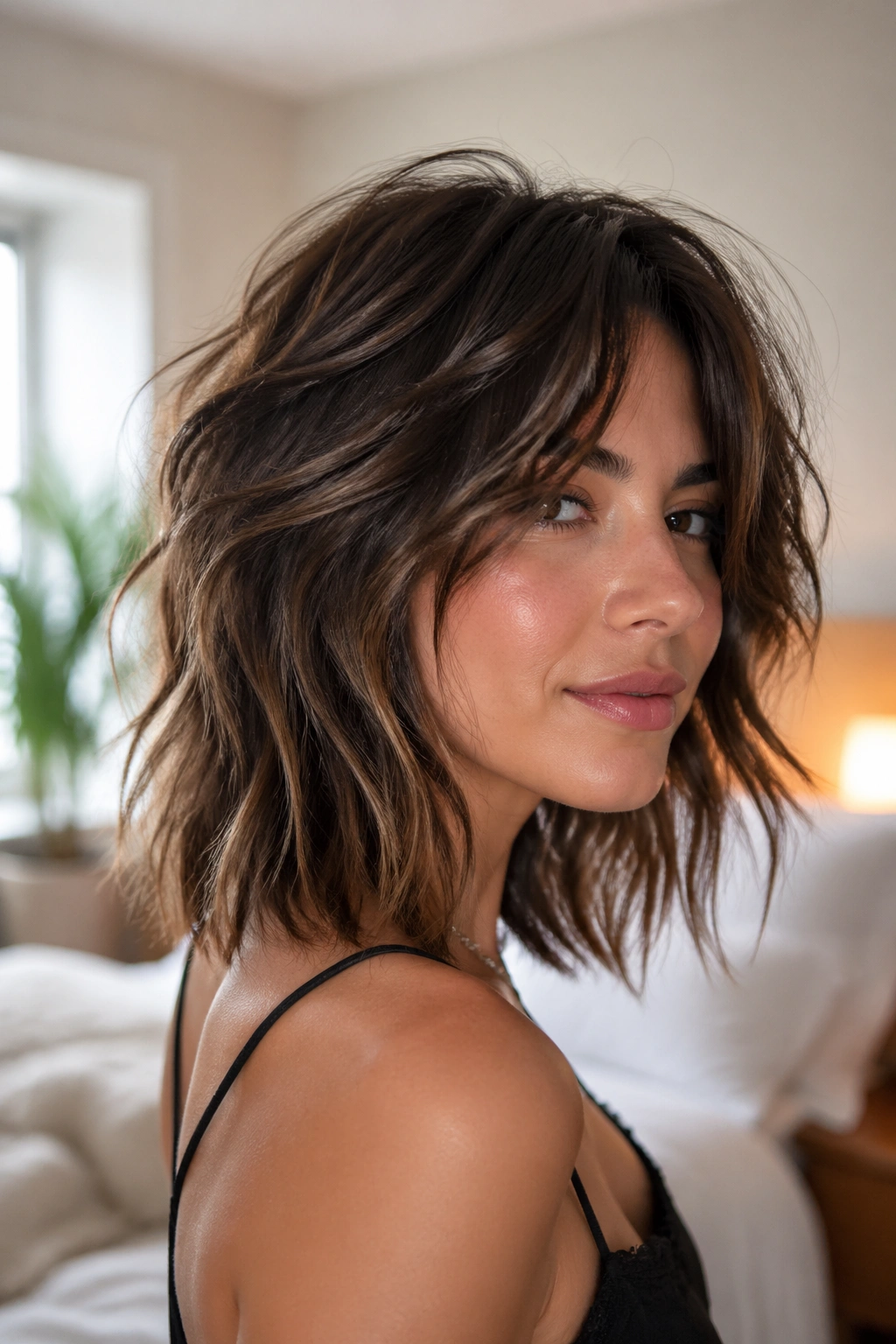
A lob-shag hybrid keeps a little more length than a pure shag, which makes it friendly for people who aren’t ready to give up the cleaner outline of a lob. The shoulder-length base gives you that dependable shape, while the shaggy crown and face-framing layers bring in movement.
This cut sits in a useful middle place. It can look neat when you want it to, but it can also get messy in the right way. If you’ve ever liked a layered lob but wanted more personality, this is the version to try. It doesn’t ask for much, and that’s part of its appeal.
22. Deep Side-Part Shag
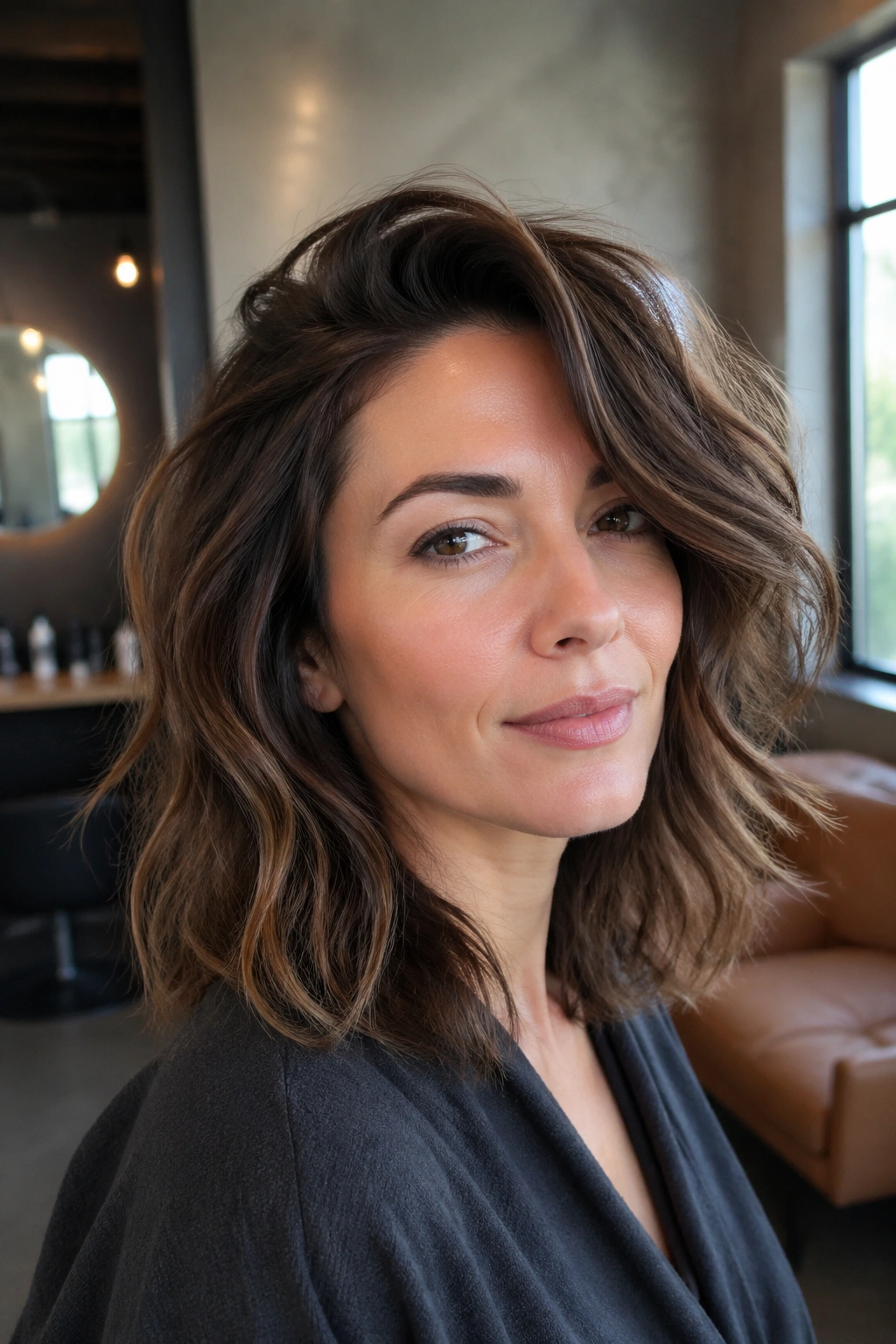
A deep side part gives a shag instant lift at the roots, especially if your waves tend to fall flat at the crown. The heavier side creates a little sweep and a little drama, while the shorter side keeps the face open. The result looks fuller without needing a lot of product.
I like this on hair that needs body fast. You can flip the part while it’s still damp, let it dry in the new direction, and get a shape that feels built-in. It’s a small change with a big payoff. Tiny shift. Big difference.
23. Seventies-Crown Shag
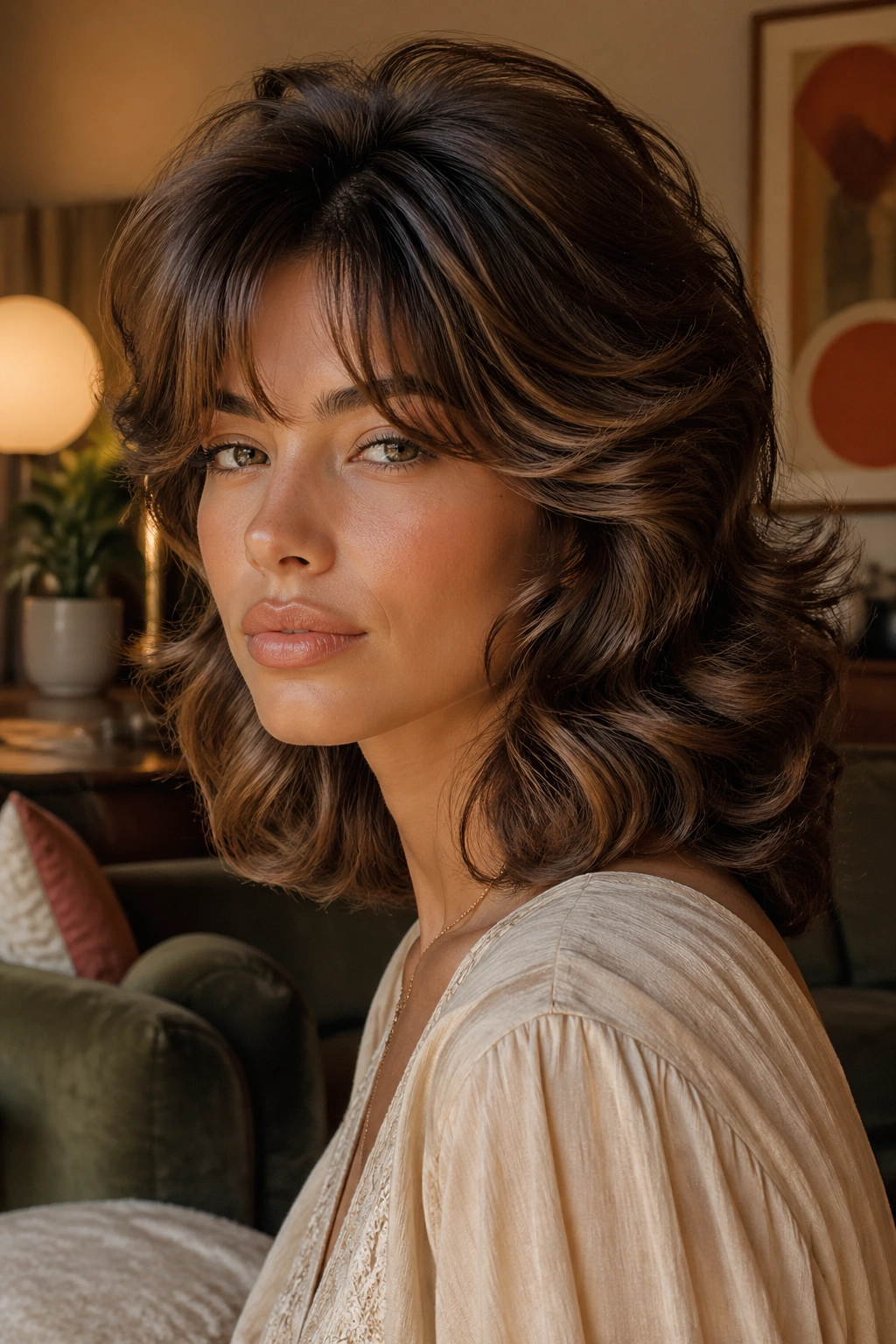
This one leans into volume at the top, and I mean real volume, not just a vague lift at the roots. The crown layers are shaped to sit higher, the sides feather back, and the overall silhouette feels rounder and a little glam. It’s the shag that looks like it belongs with a big sweater and sunglasses.
Styling idea
Use a round brush at the crown or set the top section on a large roller for a few minutes while you finish the rest. That helps the lift stay soft instead of crunchy. The look should feel airy, not helmet-like. If you can picture the hair moving when you turn your head, you’re in the right place.
24. Minimal Texture Shag
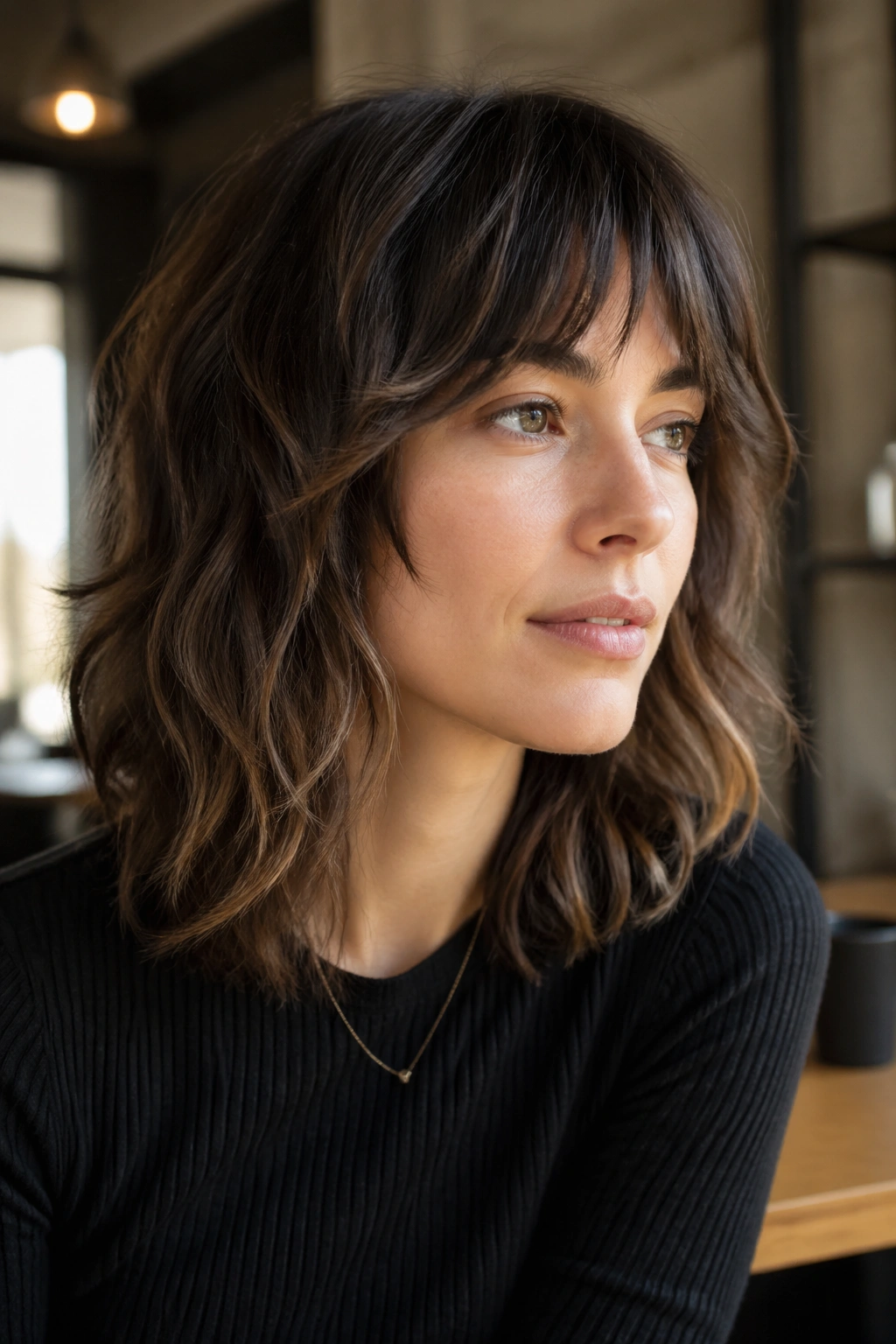
Not every shag needs to look chopped to pieces. A minimal texture shag keeps the layering subtle and the movement controlled, which is good news for people who want the shape of a shag without a wild finish. The haircut still has lightness through the crown and around the face, but it doesn’t scream for attention.
This version is especially nice if you wear your hair to work, school, or anywhere that doesn’t love chaos. It gives you wave and lift, but the outline stays calm. That’s harder to do than people think. Too many texture cuts swing too far into messy territory.
25. Tucked-End Shag
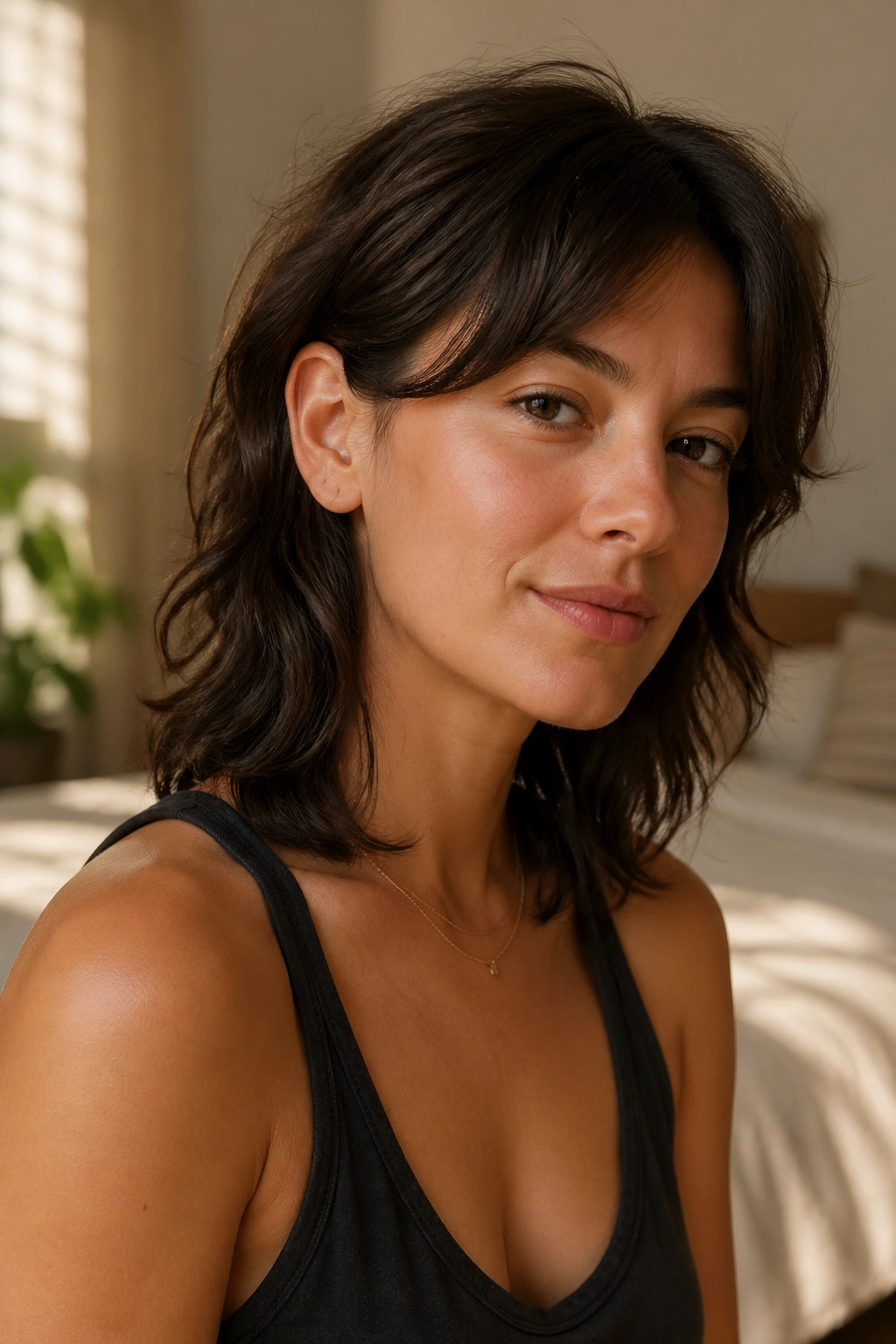
A tucked-end shag is built for hair that lives behind ears, clips, and sunglasses. The shoulders get just enough length to tuck cleanly, while the shorter front layers stop the style from looking too square. It’s practical in a way that feels underrated.
The cut works best when the ends are lightly feathered, not blunt. That way the tuck doesn’t create a hard line at the jaw. If you wear glasses or like pushing your hair back often, this is one of the more useful shoulder-length wavy shag cuts on the list. It behaves well. Refreshingly so.
26. Soft Crown-Volume Shag
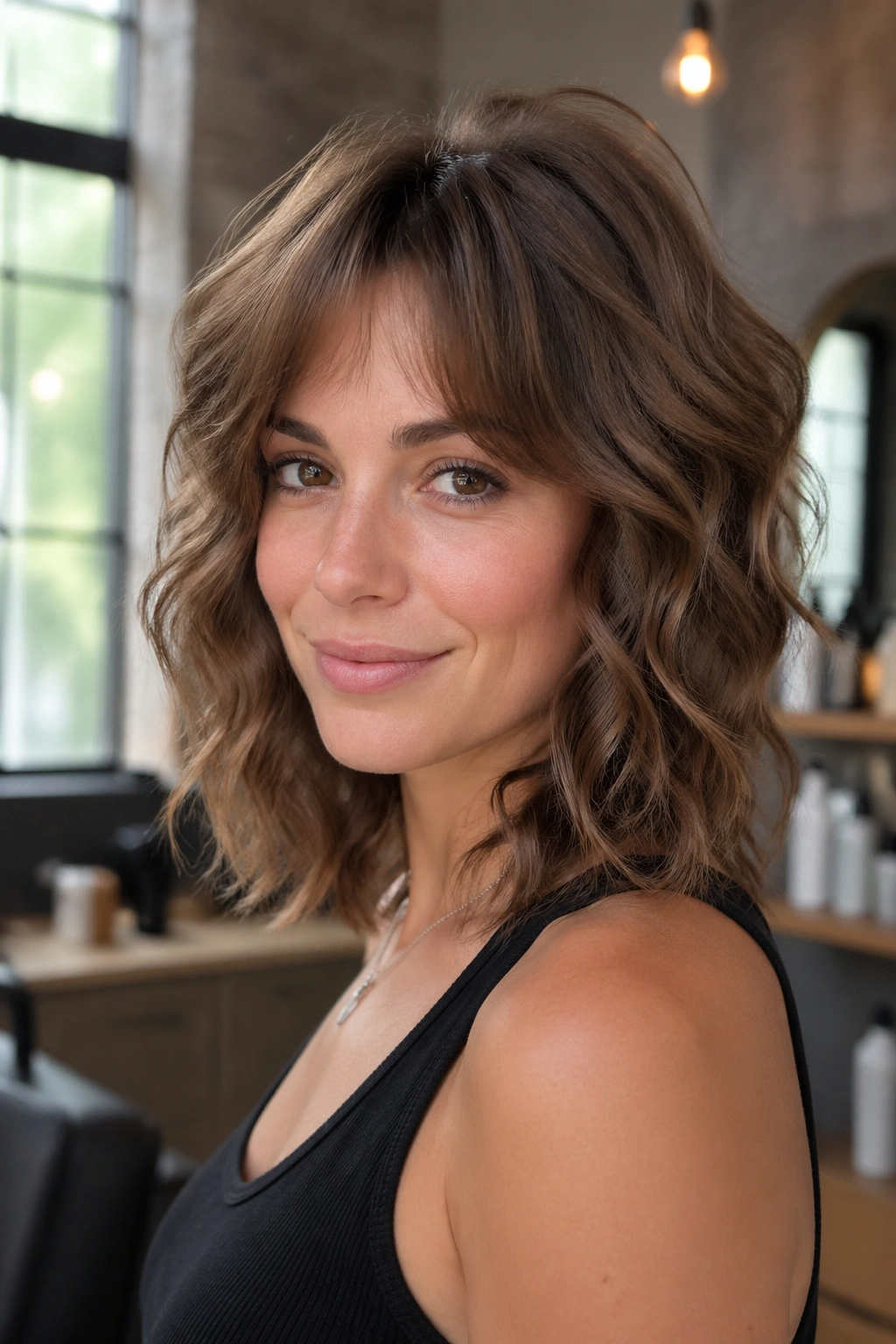
Flat roots can drain the life out of wavy hair, and this cut is built to fix that. The crown layers are lifted enough to create shape at the top, while the lower lengths stay long enough to keep the silhouette from getting too airy. It’s a better answer than loading the ends with layers and hoping for the best.
The volume sits where it should: up top, not wide at the sides. That keeps the haircut from ballooning. A little root spray and a quick blow-dry at the crown usually do the trick. After that, the waves can do their own thing.
27. Curl-Converted Wavy Shag
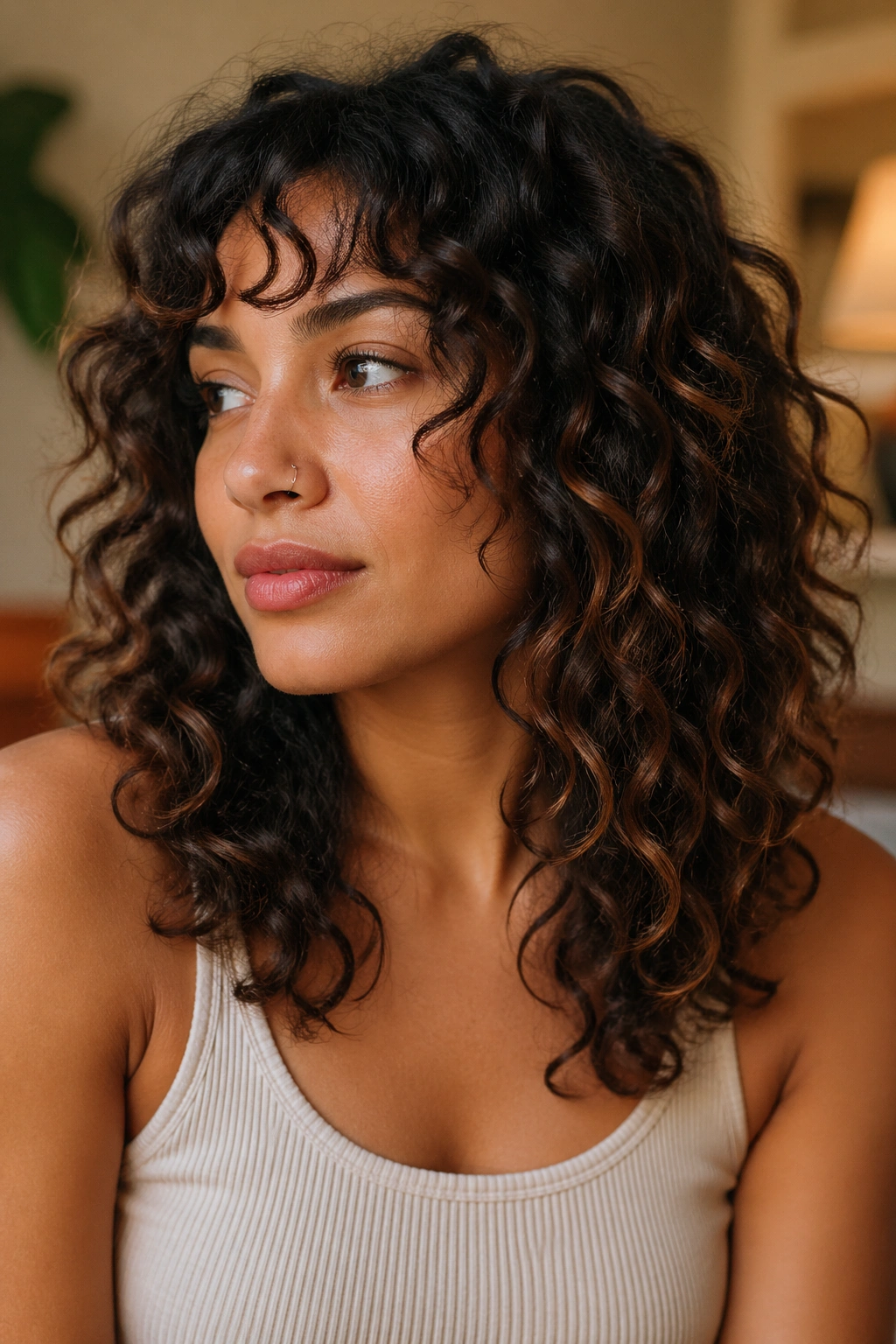
This is for hair that’s naturally curly but gets worn in looser waves, or hair that bends more after a scrunch than a straight blow-dry. The cut has to respect shrinkage, which means cutting the shape in a way that still makes sense when the hair springs up. Dry cutting helps a lot here.
The layers should follow the natural pattern instead of fighting it. If the hair has uneven wave sections, that’s not a problem to erase; it’s part of the charm. Keep the shape soft around the shoulders and make sure the front pieces don’t disappear into the rest of the cut.
28. Asymmetric Shag
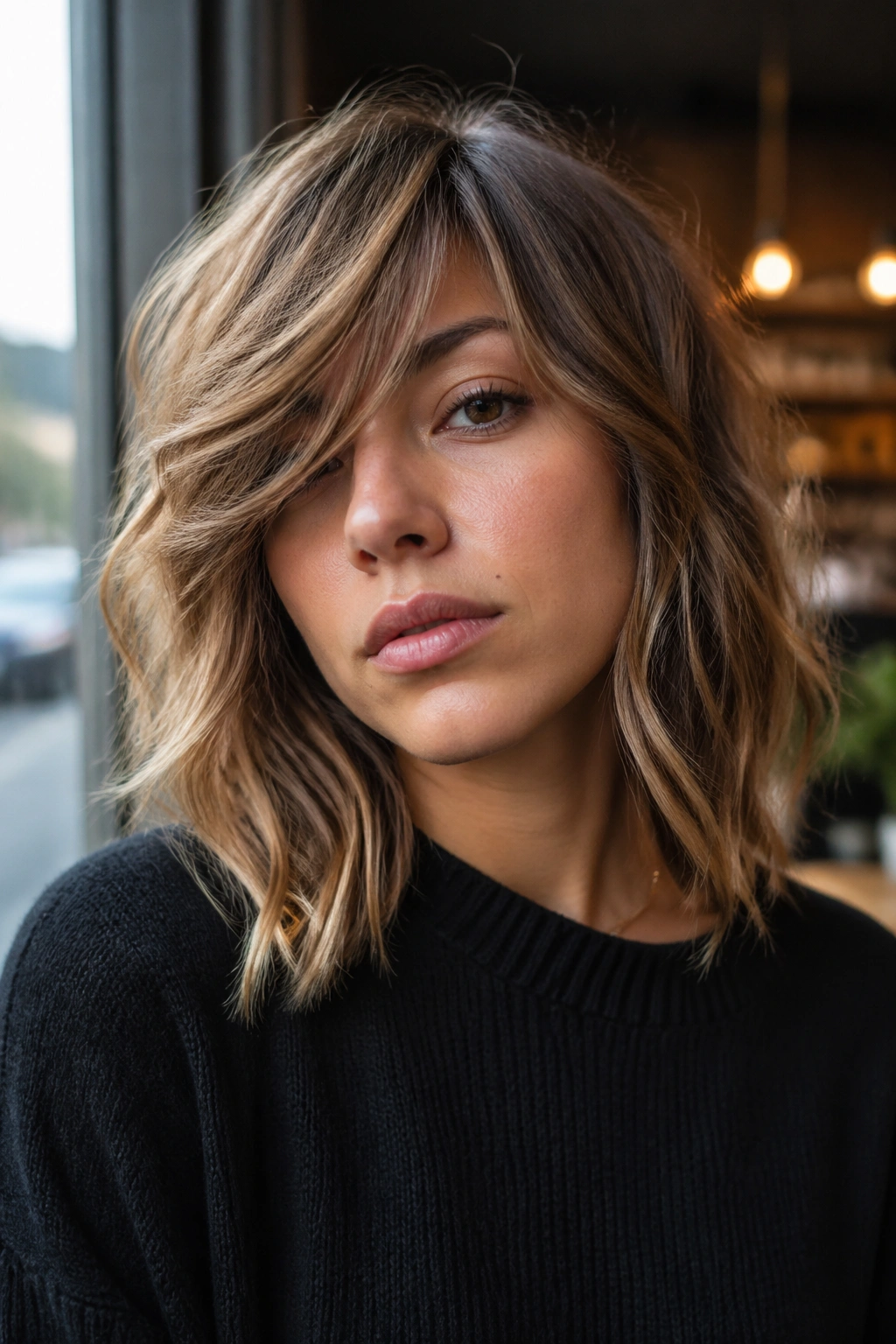
An asymmetric shag gives the haircut a little tension, which is useful when you want texture with edge. One side can sit a touch longer, or the fringe can sweep heavier to one side while the other side stays lighter. That small imbalance keeps the style from looking too sweet.
It’s a good choice if you like a haircut that feels a bit less predictable. The asymmetry shouldn’t be loud enough to look accidental, though. It should read as intentional when the hair moves. That’s the difference between cool and awkward. A thin line, but a real one.
29. Feathered Nape Shag
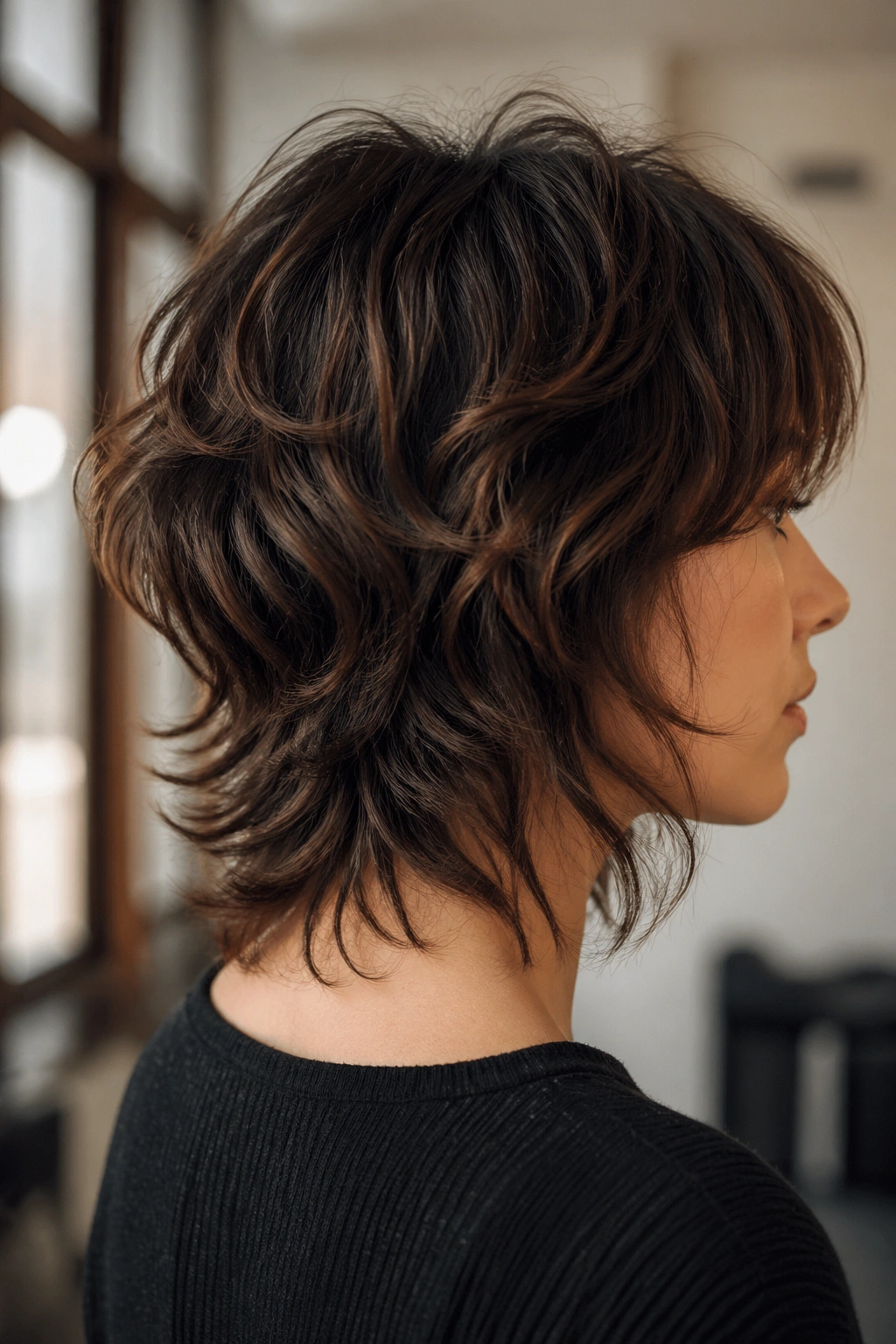
A feathered nape shag gives the back of the haircut some air, which helps a lot when shoulder-length hair starts to feel heavy on the neck. The layers at the nape are softened and lifted, while the front stays long enough to frame the face. It’s especially nice on thicker hair that needs room to move.
This version has a pleasant little detail you can feel when you wear it. The back doesn’t sit like a block. It shifts. That keeps coats, collars, and high-neck tops from making the haircut look bulky. Small thing, but not a minor one.
30. Polished-Undone Everyday Shag
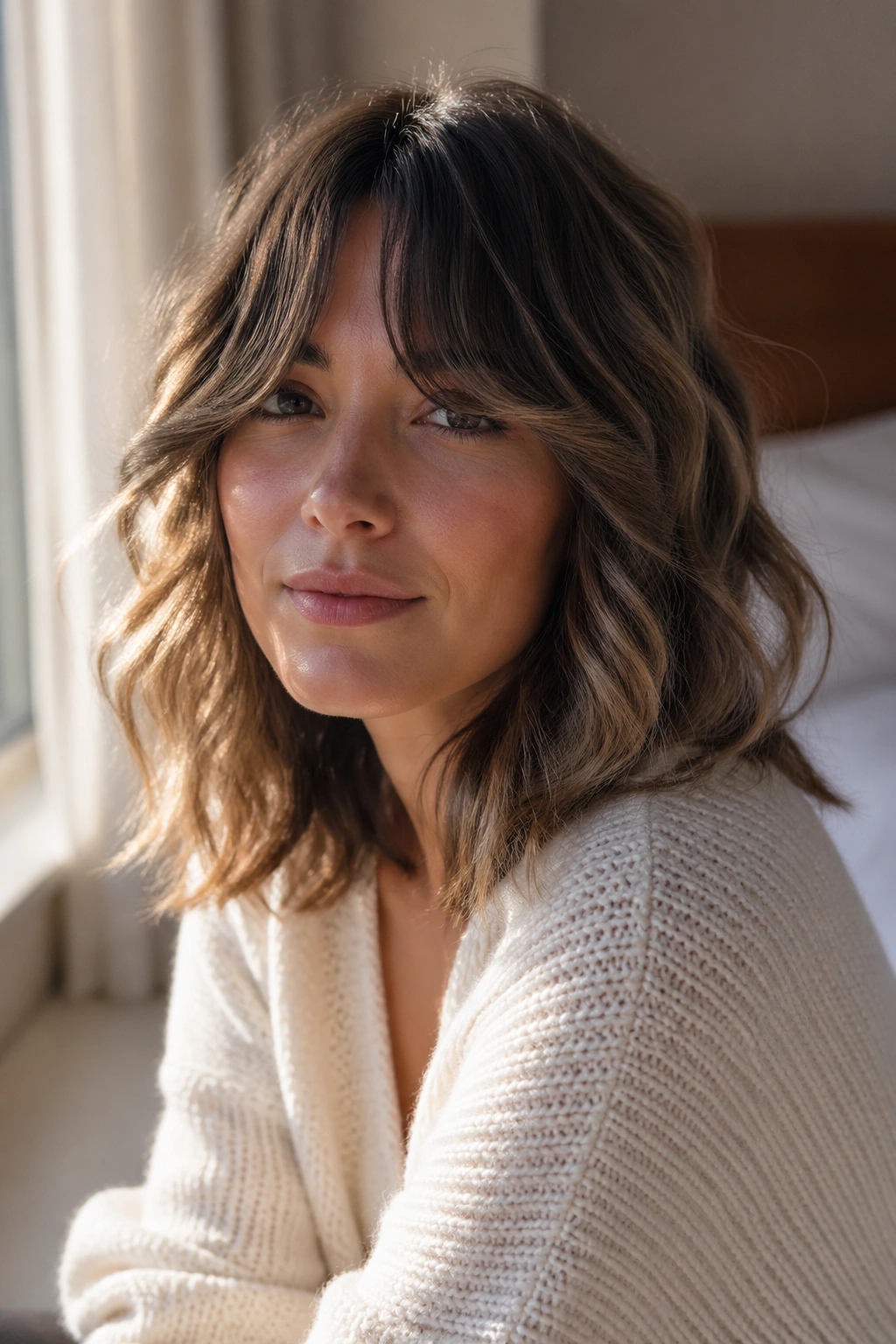
This is the version I’d call the safest all-rounder. The crown has enough lift to keep the roots alive, the face-framing pieces are soft instead of sharp, and the shoulders still carry enough length to keep the cut from feeling too playful. It looks like you know what you’re doing, even when you’ve done very little.
The shape that holds up
The best everyday shag doesn’t depend on one styling trick. It should air-dry decently, take a brush without collapsing, and still look good when you tuck one side behind your ear. That’s a tall order, but it’s the one most people actually need. If you want a shoulder-length wavy shag cut that won’t box you into one mood, this is the one to show your stylist first.
Final thought: pick the version that matches your real routine, not the version that looks coolest in a photo. Hair has to live through wind, sleep, and bad timing. The smart cut is the one that still looks like itself after all three.
