



A wedding ponytail sounds simple until you try to make it survive vows, hugs, cake, and a few hours of dancing without collapsing into a sad little knot. The best wavy ponytails for weddings don’t look like a backup plan. They look soft, deliberate, and held together with a little bit of skill and a few good pins.
Waves do a lot of heavy lifting here. They soften the face, hide uneven layers, and give a ponytail movement that straight hair rarely has. When the hair is tied back, the style feels cleaner than loose curls, but it still has swing. That’s the sweet spot most brides are chasing.
There’s also a practical upside that gets overlooked. A ponytail keeps hair off the neck, sits well with veils and earrings, and tends to stay neater through long events than a fully down style. If your hair is thick, fine, frizzy, glossy, or somewhere in between, there’s a version that can work without turning into helmet hair.
The styles below run from soft and barely there to full, glossy, and camera-ready. Some are better with a high neckline. Some love a veil. A few need extensions. And a couple are for brides who want the room to move around the dance floor without worrying about one bobby pin at a time.
1. Soft Low Wavy Ponytail With Face-Framing Pieces
This is the one I reach for when someone wants wedding hair that feels gentle, not staged. The pony sits low, usually right at the nape, and the waves are brushed just enough to look relaxed without losing shape. A few face-framing pieces keep it from looking pulled back too tight.
Why It Flatters So Many Dresses
The low placement works with square necklines, V-necks, lace backs, and gowns with detail at the shoulders. It also gives you room for earrings without competing with them.
- Keep the pony about 1 to 2 inches above the nape for a soft drop.
- Leave two front pieces no wider than a finger on each side.
- Curl those front pieces away from the face so they open the cheekbones.
- Use a satin ribbon or wrapped hair section if the elastic feels too plain.
Best part: it still looks good after a long day, even when the waves loosen a little.
2. Polished Mid-Height Wavy Ponytail
A mid-height ponytail sits in that sweet spot between formal and easy. It lifts the hair enough to look intentional, but it does not feel severe. With brushed-out waves, it gets a clean shape that looks especially nice with strapless gowns and open backs.
Start by smoothing the crown with a light cream or spray, then gather the hair around the middle of the back of the head. The key is not to flatten the top too much. You want control, not helmet-shine.
What makes it work is the balance. The crown looks neat, the tail still moves, and the whole style reads polished in photos without looking stiff in person. If your hair has layers, leave the lower lengths a little imperfect. That tiny bit of breakup keeps the ponytail from looking like a school recital style dressed up for the ceremony.
3. Wrapped-Elastic Wavy Ponytail
You know that moment when the elastic disappears and the whole style suddenly looks more expensive? That’s this one. A wrapped base hides the band and gives the ponytail a finished edge, which matters more than people think.
Gather the hair low or mid-height, secure it with a clear elastic, then take a 1-inch section from the tail and wrap it around the base. Pin the end underneath with 2 bobby pins crossed in an X. Done well, the wrap should look seamless from the front and still feel secure when you tug lightly.
A little detail goes a long way here.
- Wrap with hair that’s already curled so the section blends in.
- Pin underneath, not at the side, if you want a cleaner look.
- Use a matte pin if the gown has a soft finish; use a glossy pin only if the whole look is more polished.
4. Side-Swept Wavy Ponytail
Why does a side part change everything? Because it gives the style direction. A side-swept wavy ponytail feels romantic without needing a lot of volume, and it is especially good for one-shoulder gowns or asymmetrical necklines.
Pull the hair to one side at a low or mid placement, then let the waves fall over the shoulder. Keep the opposite side smoother so the style has contrast. If both sides are equally full, the whole thing starts to look busy.
How to Wear It
Use a deep side part and keep the roots near the part a touch flat so the shape stays elegant. Curl the tail in the same direction, then brush the ends just enough to soften the curl pattern. A soft side-swept tail also plays nicely with a long veil that starts higher on the crown, because the hair itself stays low and out of the way.
5. Bubble Wavy Ponytail With Soft Sections
A bubble ponytail can look playful fast, which is why the wavy version matters. The waves cut down the toy-like effect and make the bubbles feel softer, especially when the sections are spaced evenly and not pulled too tight.
Use small clear elastics every 2 to 3 inches down the tail, then gently pull at each section to create fullness. The hair between the elastics should still show movement, so don’t brush it into submission. That’s where the charm lives.
This style works best when the bubbles are subtle. Big, hard bubbles can fight with a bridal dress. Soft ones feel easier, and easier usually looks better here. If the hair is thick, make the bubbles a little smaller. If the hair is fine, backcomb each section lightly before tying it off.
6. Half-Up, Half-Down Ponytail Hybrid
I know, technically this sits in a gray zone. It still behaves like a ponytail, though, and for a lot of brides that’s the whole appeal. The top half is lifted and pinned back, while the lower half stays loose in waves that drape down the back.
The style gives you the face lift of an updo without giving up length or softness. That matters if you want the dress back to show, but you also want hair that moves when you turn your head.
It’s especially nice for thinner hair because the lifted top section creates the illusion of more volume. Add a tiny twist at each temple, pin them back, and let the loose lengths do their thing. No need to overbuild it. The charm is in the balance between pulled-back shape and undone wave.
7. Sleek Crown, Loose Wave Tail
Not every bride wants texture at the roots. Some want the crown smooth, almost glassy, with the waves starting lower down where the ponytail begins. That contrast looks sharp in a clean, modern way.
Use a smoothing cream or light serum on the top section, then brush the hair flat before gathering it into a low ponytail. The tail itself can be loose and full, with the wave pattern starting around the ears or cheekbones. That gives the style a neat top and a softer finish below.
This is a strong choice if the dress has a structured neckline or a lot going on at the shoulders. The ponytail becomes the quiet part of the outfit, which is useful when the dress already has a lot to say. And yes, quiet can be the right move.
8. High Glam Wavy Ponytail With Volume
This is the loudest style on the list, and that’s the point. A high wavy ponytail gives lift, energy, and a bit of drama the second you turn sideways. It works especially well with strapless gowns, fitted bodices, and bold earrings.
Tease the crown lightly before gathering the hair high, but stop before it starts looking puffy. You want height, not a nest. Curl the tail in medium sections, then brush the waves apart so they look full and soft instead of tight.
A high ponytail has one job: make the face look awake. It does that by pulling the eye upward and opening the jawline. If you have strong cheekbones or like a lifted silhouette, this is a smart pick. If your dress is already very ornate, keep the ponytail simpler so the two do not compete.
9. Braided-Base Wavy Ponytail
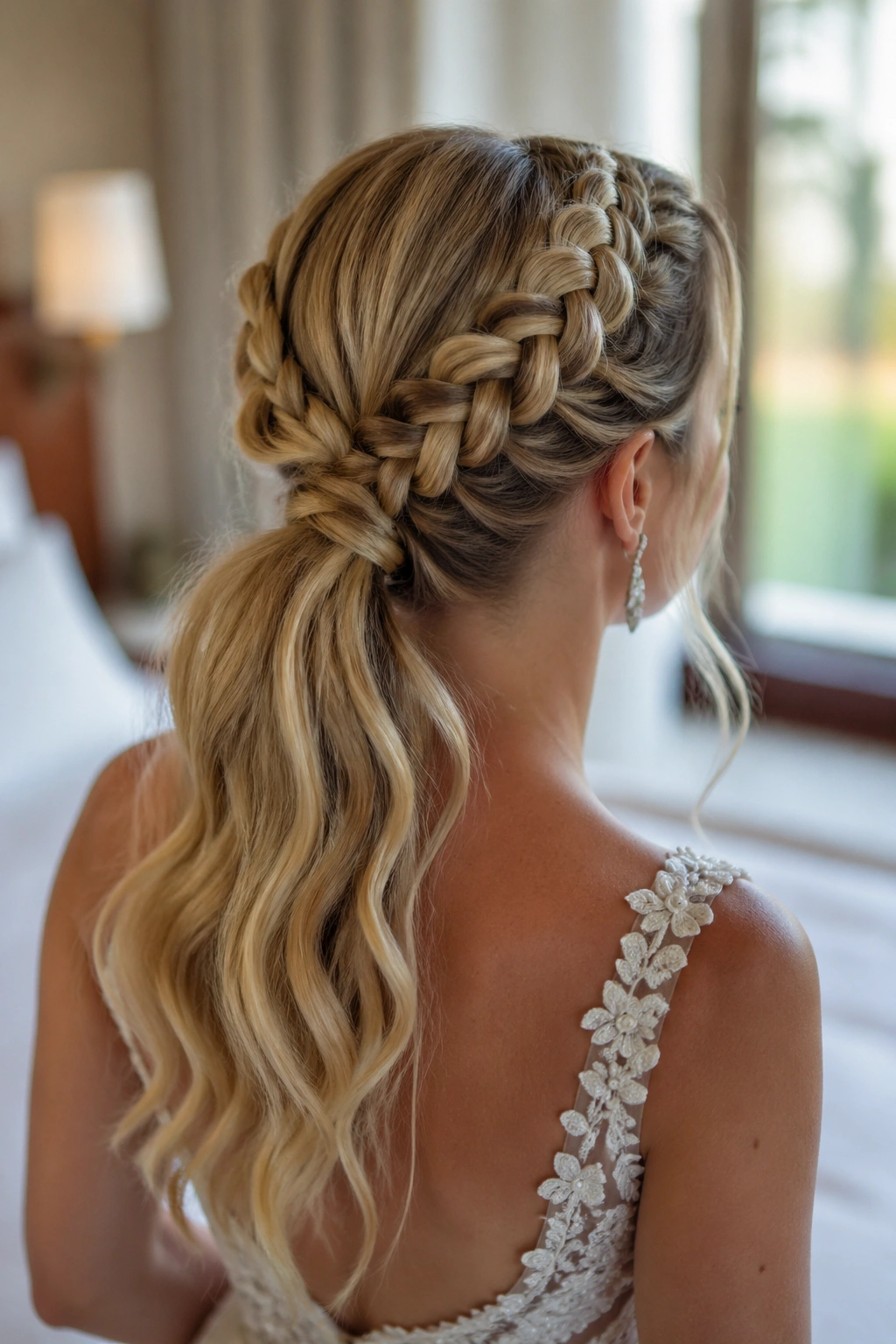
A braid at the base is one of those tiny details guests notice even if they cannot name it. It gives the ponytail structure and makes the style feel more finished from the back, which is important because wedding guests do spend time looking at the back of a dress.
What the Braid Does
A small Dutch braid, French braid, or rope twist across the crown can help anchor the ponytail and keep short layers in place. It also gives the base a little texture, so the style does not rely only on the curl pattern.
- Use a braid that follows the head shape rather than sitting on top of it.
- Stop the braid where the ponytail begins so the transition stays smooth.
- Pin flyaways into the braid before you add the tail.
- Keep the braid soft; tight braiding can flatten the crown.
That little woven detail looks especially good on brides who want something prettier than a plain elastic but less decorated than pearls or flowers.
10. Pearl-Pin Wavy Ponytail
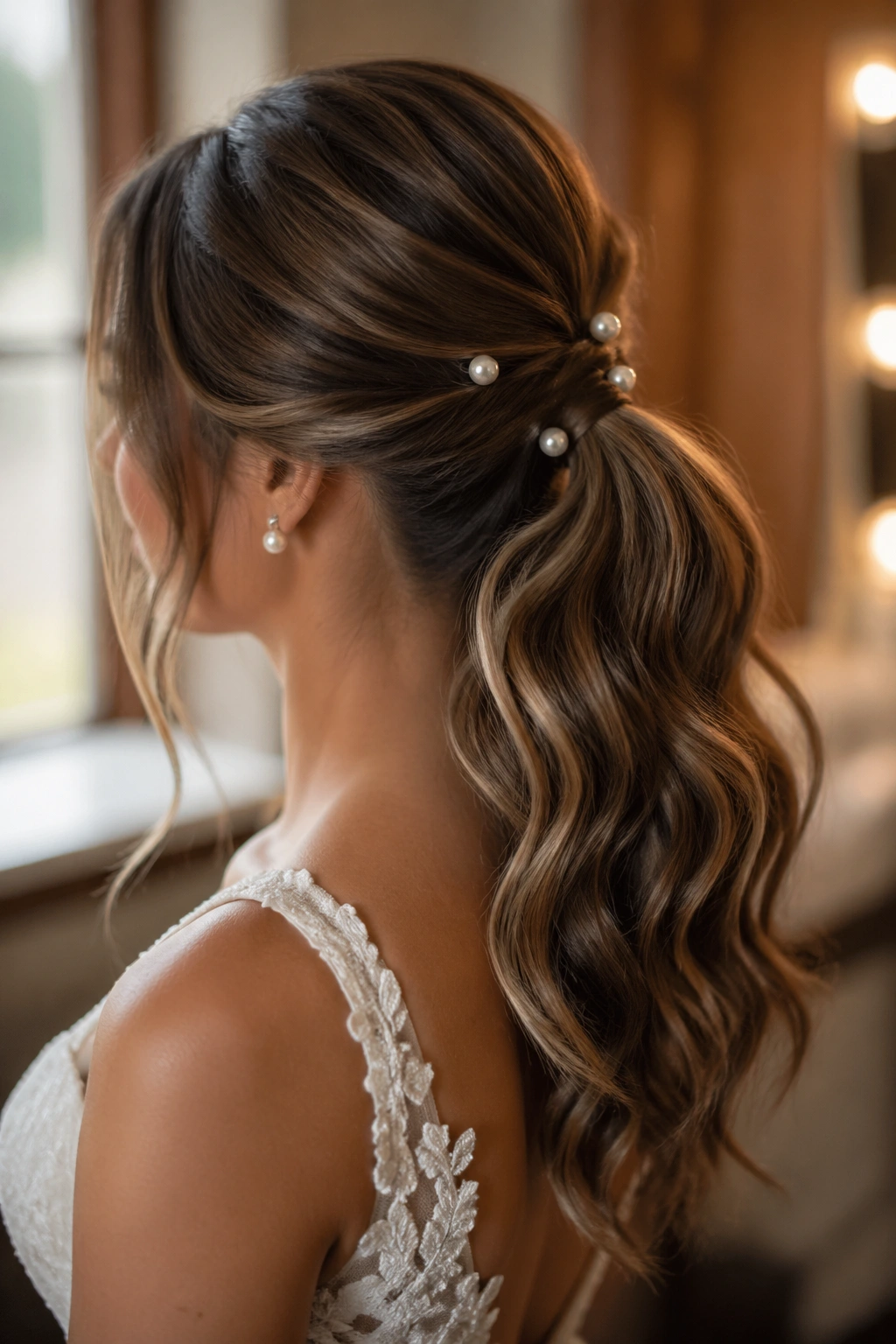
Pearl pins are the hair version of a clean white shirt. They do a lot without shouting. Scattered through a wavy ponytail, they add a soft bridal note that feels classic rather than fussy.
The trick is not to cover the whole style in pearls. Three to seven pins is usually enough. Place a few near the wrapped base, then let one or two trail farther down the side of the ponytail. If the dress already has beading, keep the pearl placement sparse. If the gown is plain, you can let the pins do a little more work.
The size of the pearl matters too. Small pearls read delicate; oversized ones can look costume-y fast. I like them best when they’re mixed with a low or mid ponytail and the waves are brushed into soft ribbons. The hair becomes the backdrop, and the pins get to be the accent.
11. Ribbon-Tied Wavy Ponytail
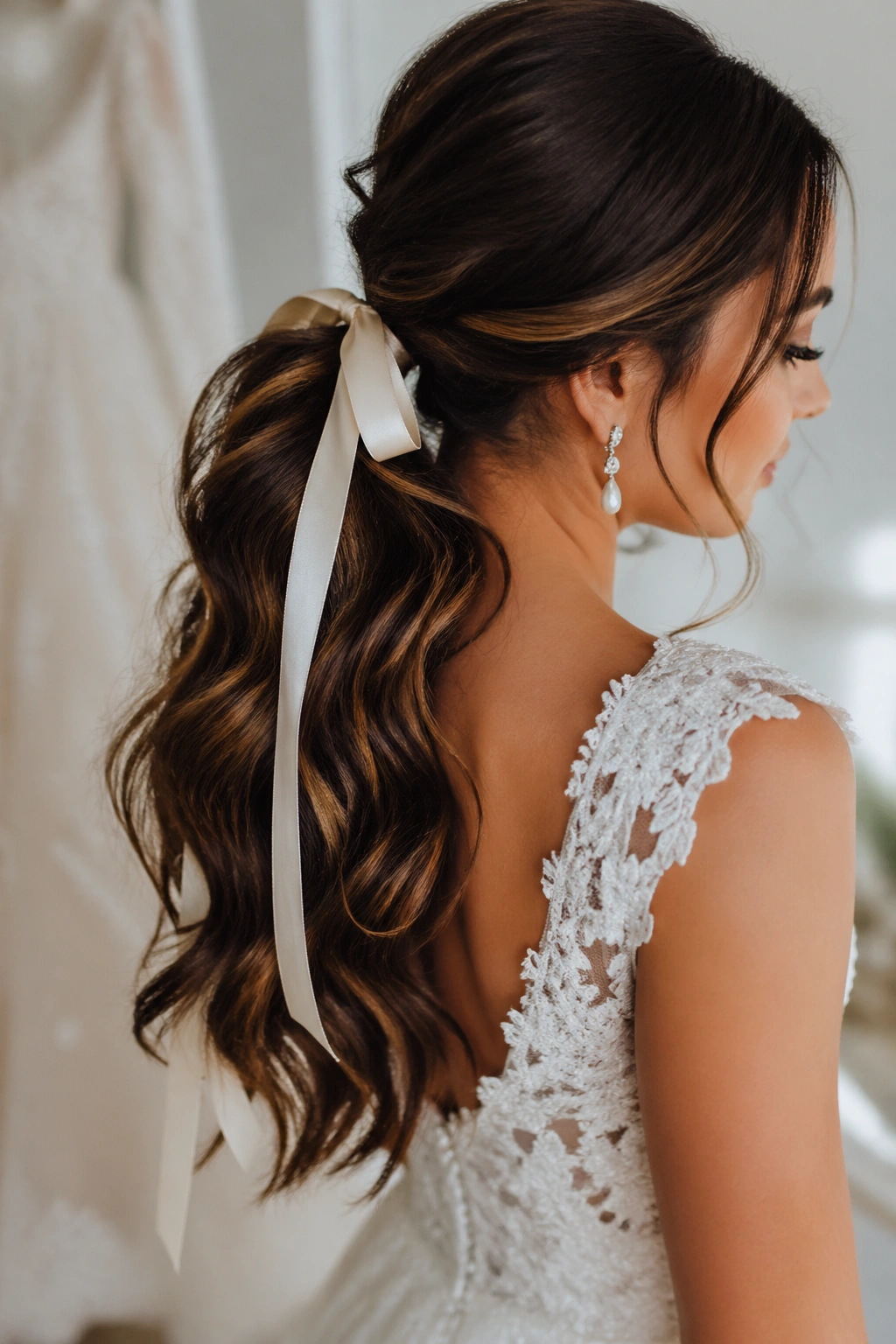
A ribbon changes the mood faster than almost anything else. It softens the ponytail instantly and gives it a romantic edge that works with lace, satin, tulle, and older family jewelry that deserves a quieter hairstyle around it.
Choose a ribbon that feels like part of the dress, not a craft supply. Satin, silk, and velvet all work depending on the seasonless look you want. A length around 18 to 24 inches is enough for a bow or long trailing ends, depending on the thickness of the ribbon.
The best part is movement. As the ponytail swings, the ribbon shifts with it and creates a soft line down the back. If you want the style to feel more delicate, tie the ribbon directly over the elastic. If you want more polish, wrap the elastic first and then add the bow slightly off-center. It sounds small. It isn’t.
12. Minimalist Low Wavy Ponytail for a Clean Neckline
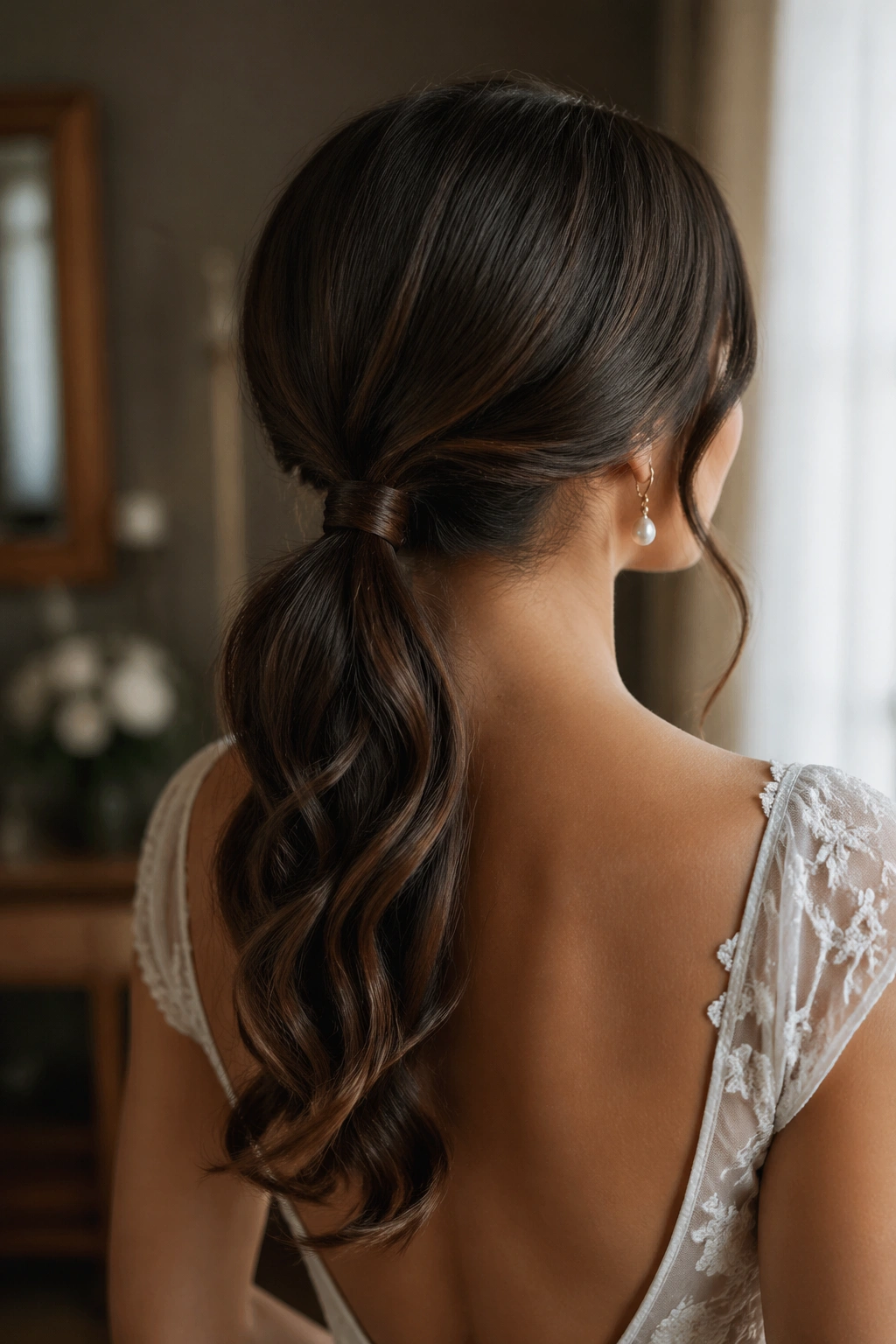
Sometimes the smartest choice is the quietest one. A minimalist low ponytail with soft waves lets the neckline, earrings, or back detail do the talking without fighting the hair for attention.
Keep the crown smooth, gather the hair near the nape, and let the tail fall in loose, brushed waves. No extra braids. No flowers. No loud texture at the root. The whole point is restraint.
This style is especially good when the dress has a high neckline, a strong collar, or a lot of lace around the chest and shoulders. The ponytail needs to disappear a little so the outfit can breathe. Less is the point here. If you still want a bridal note, hide the elastic with a thin wrapped section or one small pin at the base.
13. Wavy Ponytails for Weddings With Curtain Bangs
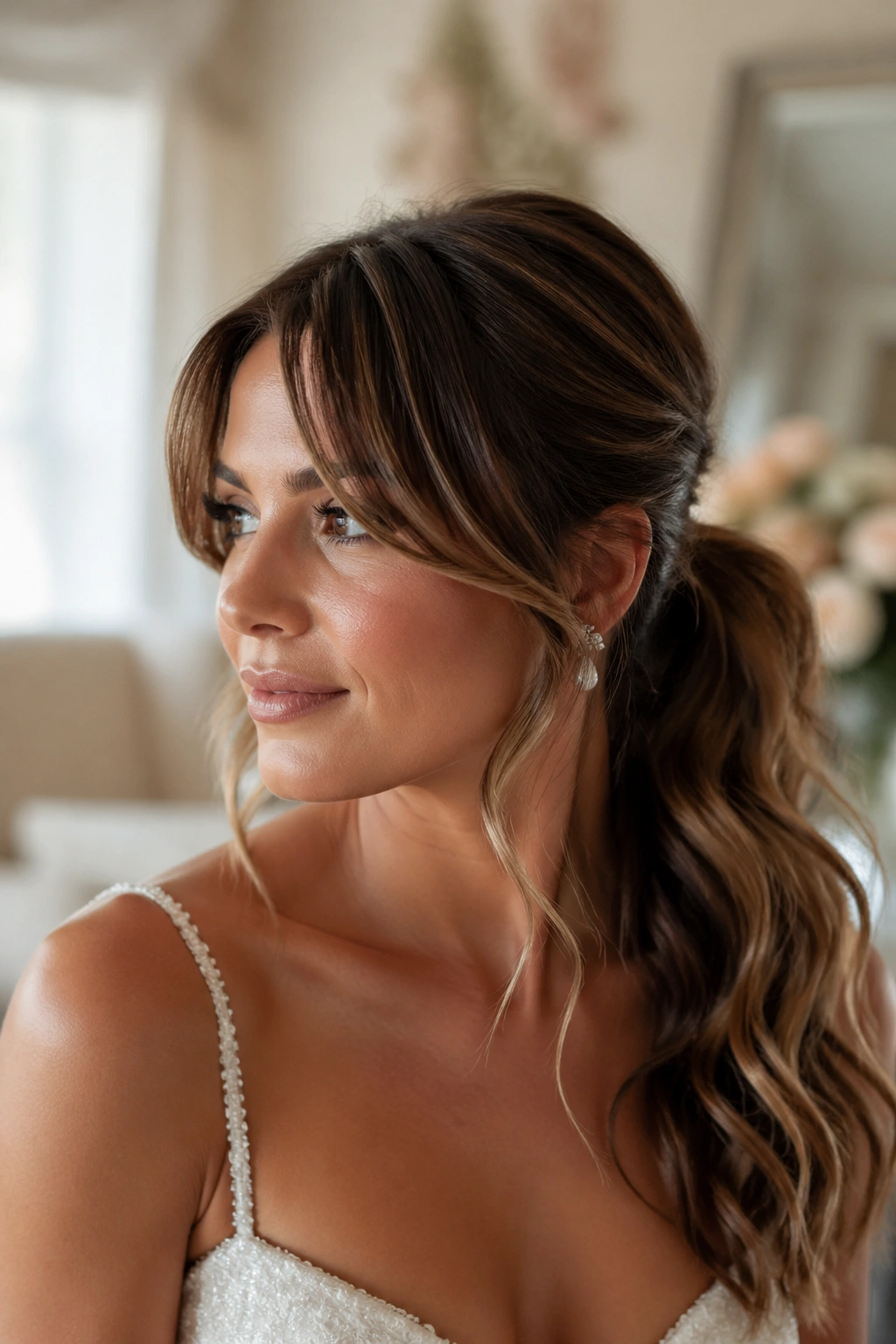
Curtain bangs change the whole shape of the face, so they deserve a ponytail that supports them instead of fighting them. A low or mid wavy ponytail lets the bangs frame the eyes while the rest of the hair stays soft and wearable.
The Bang-to-Ponytail Balance
Keep the curtain bangs airy and slightly separated. If they get curled too tight, they start competing with the rest of the style. The goal is a bend, not a little sausage curl near each temple.
- Blow-dry or iron the bangs away from the face, then let them fall naturally.
- Blend the front pieces into the ponytail instead of forcing a hard line.
- Keep the ponytail full enough to match the softness of the bangs.
- Use a light mist of spray at the roots, not a stiff layer.
This is one of the most flattering wavy ponytails for weddings because it adds shape around the face without making the style feel overbuilt. If the dress is soft and floaty, the bangs keep the whole look from drifting into plain territory.
14. Boho Wavy Ponytail With Micro Braids
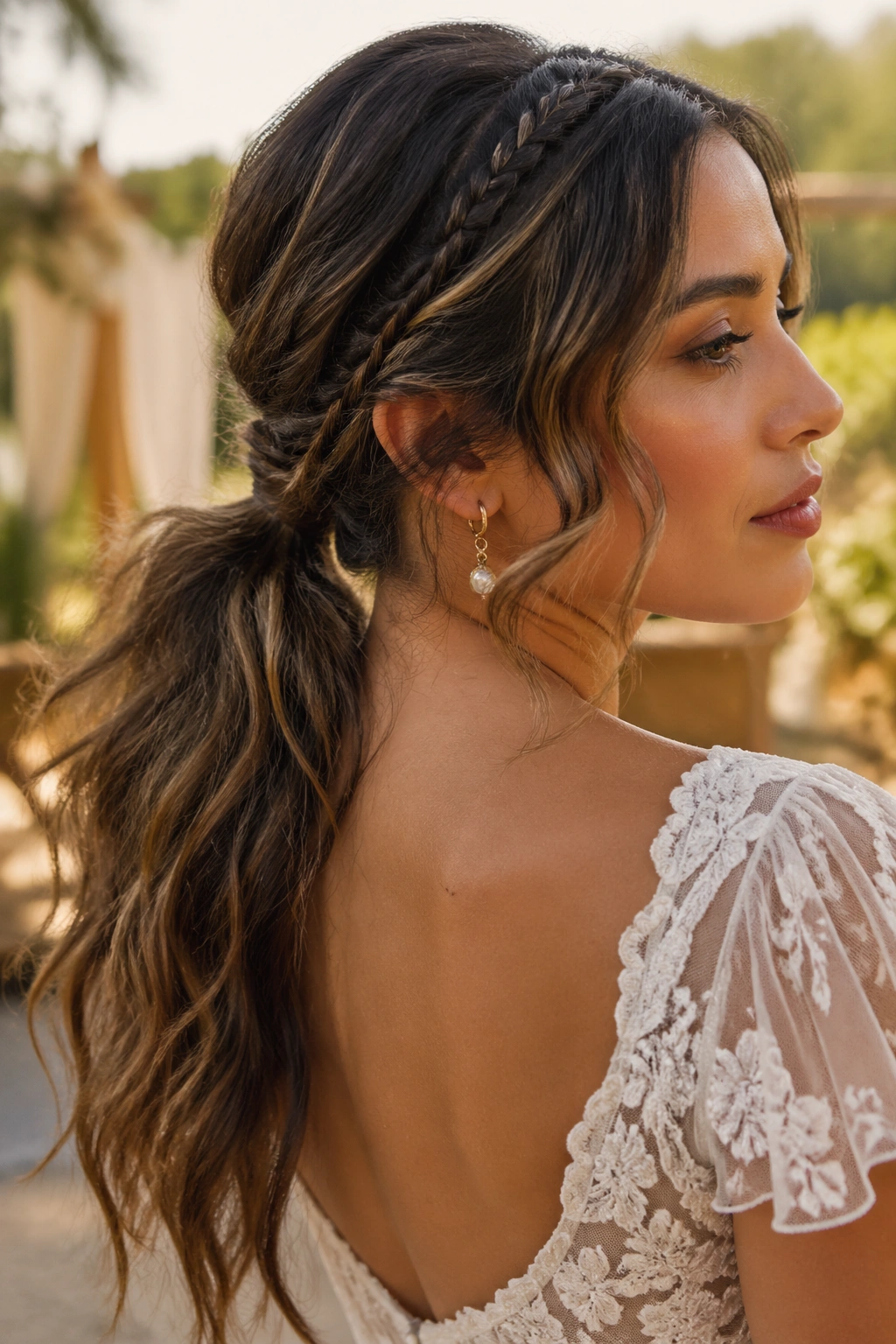
Boho hair can go wrong fast when there are too many extras. A few micro braids, though, give a wavy ponytail texture and movement without tipping into festival territory.
Work 1 or 2 tiny braids near the temples or along the outer crown, then gather the rest into a low ponytail. Let the waves stay loose and slightly piecey. The braids should feel like a quiet detail, not the main event.
This style is especially nice with dresses that have crochet lace, flutter sleeves, or a softer neckline. It also plays well with natural hair texture, because the mix of braid and wave feels less polished in a good way. Use texture spray sparingly. Too much and the whole thing turns dry. A little grip is enough. The hair should still move when you walk.
15. Retro Brushed-Out Wavy Ponytail
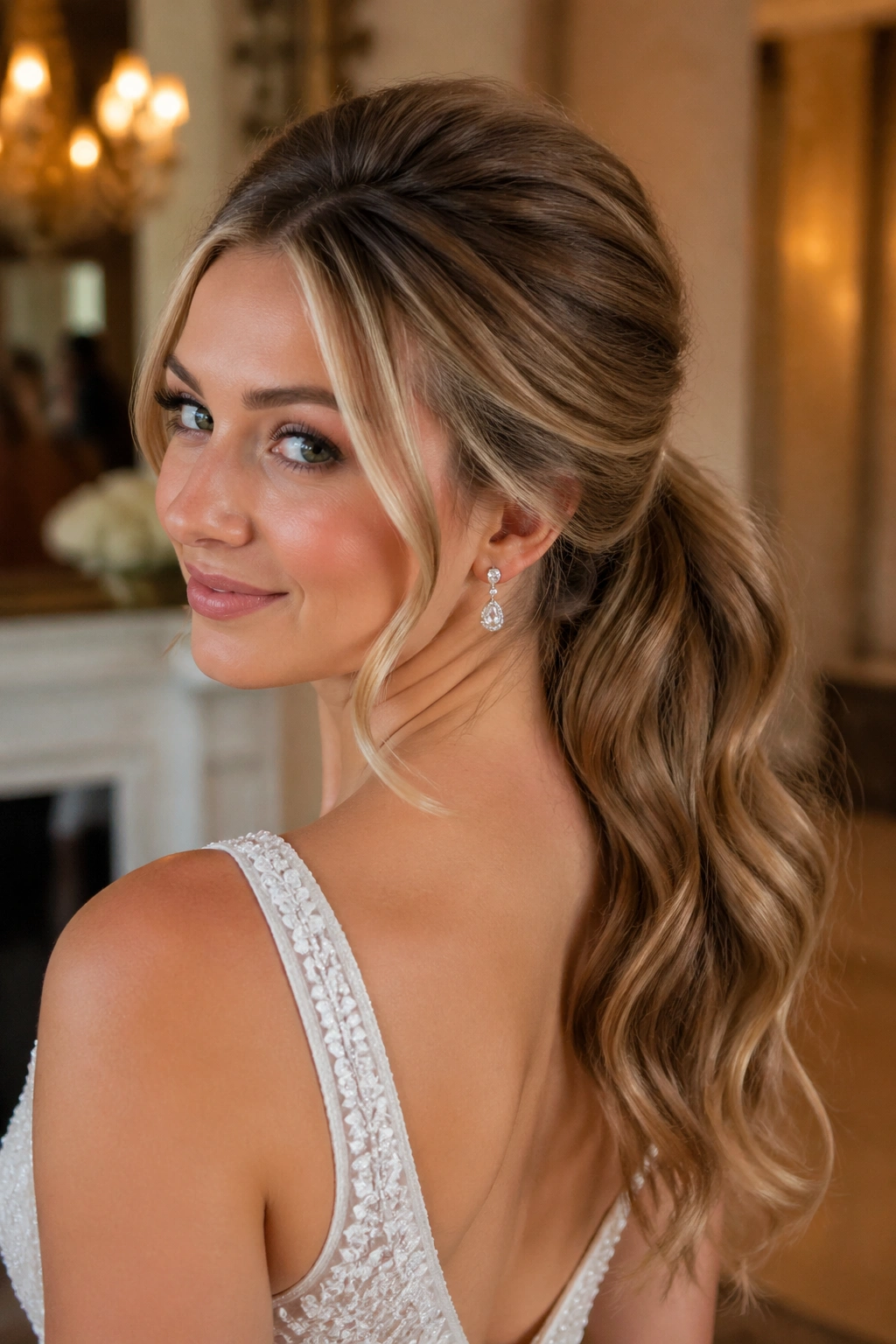
Tight curls can look a little fussy in wedding hair. Brushed-out waves are easier on the eye. They have more body, fewer hard lines, and a softer finish that feels a bit retro without becoming costume hair.
Start with loose waves or curls, let them cool completely, then brush through them with a paddle brush or a wide-tooth comb. Gather the hair into a mid or low ponytail and keep the crown slightly lifted. The tail should look full but touchable, not crunchy.
I like this version for dresses with clean lines. It gives shape without stealing the show. A side part makes it feel even more throwback, while a center part keeps it tidy. Either way, the movement is what makes it good. You can see it in the back when the hair shifts, and that matters more than a lot of people admit.
16. Textured Ponytail for Fine Hair
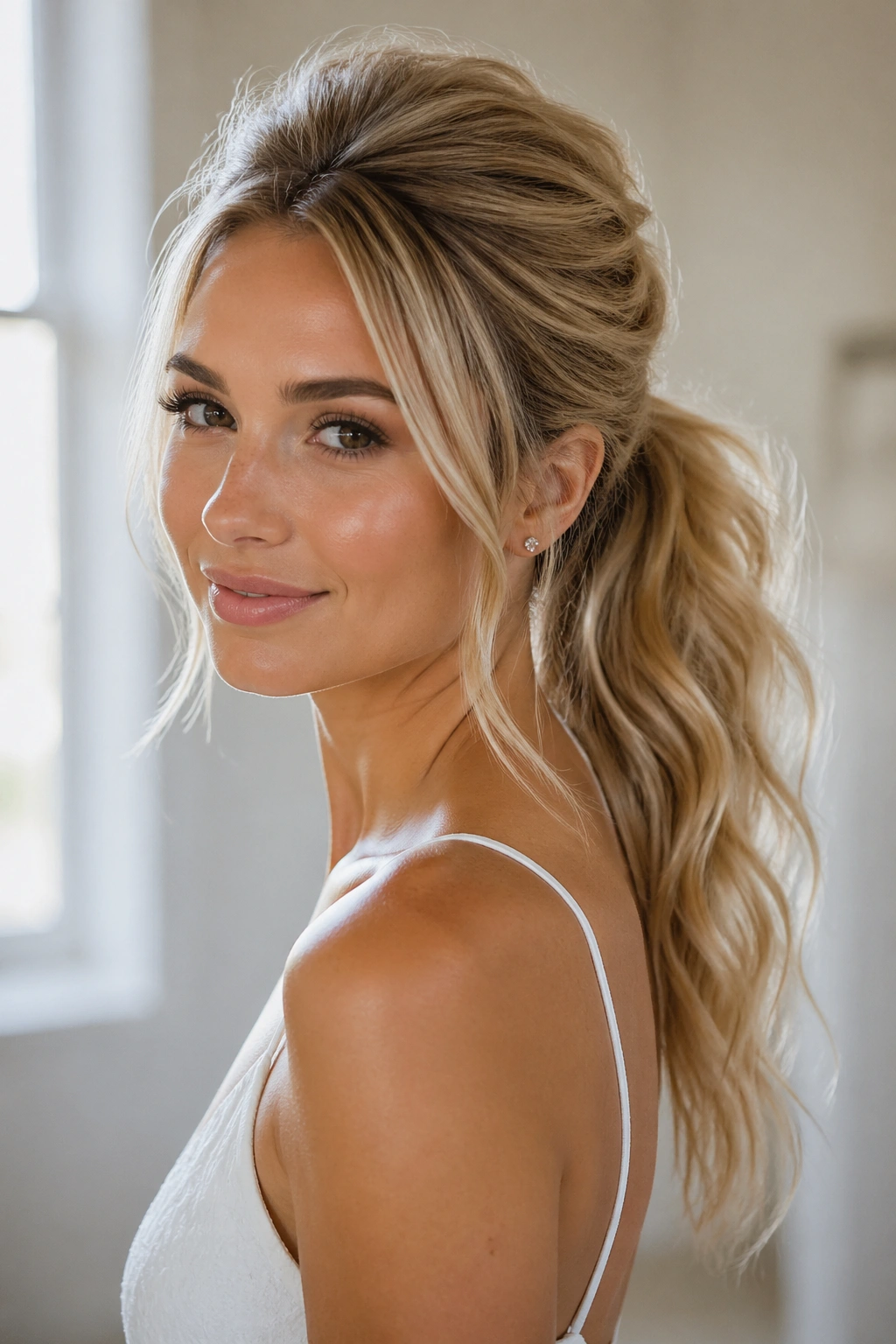
Fine hair needs a different plan. If you treat it like thick hair, the ponytail can flatten before the portraits are even done. Texture at the roots and a lighter wave pattern through the tail usually works better.
Use mousse or a root-lifting spray on damp hair, then dry it with a round brush or upside-down blow-dry for a little lift. Curl the lengths with a smaller iron, around 3/4 to 1 inch, so the wave holds enough shape to look full after brushing. A soft backcomb at the crown helps too, but keep it light.
The mistake people make is loading fine hair with heavy cream or too much oil. That makes the ponytail slip. Use powder or dry shampoo at the roots if you need grip. Then stop. A fine-haired ponytail can look gorgeous when it has air between the strands. It does not need to be huge to look good.
17. Full Ponytail With Clip-In Extensions
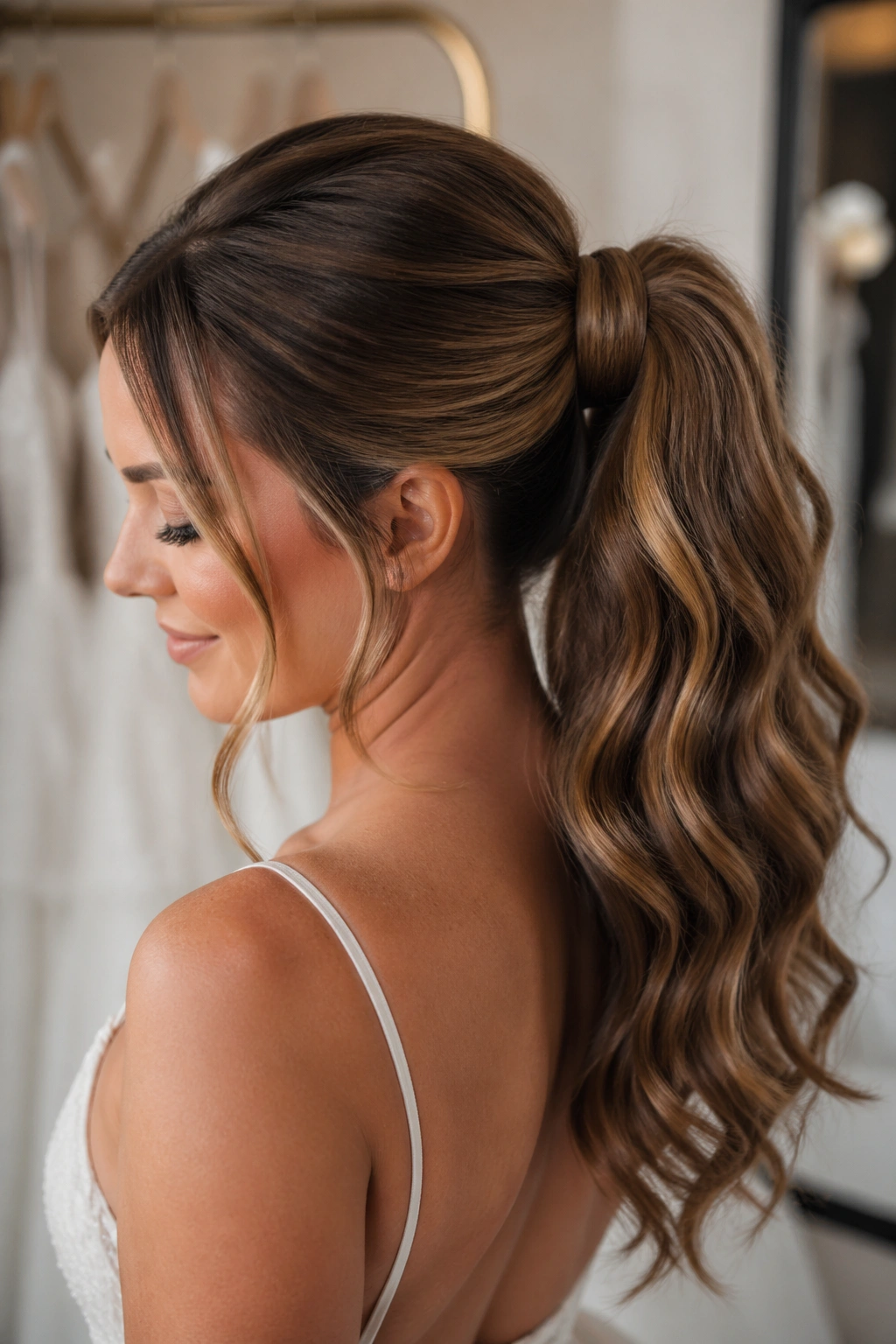
How to Keep the Base Believable
Extensions can be a lifesaver if you want a fuller ponytail than your natural length allows. The trick is matching more than color. Match the wave pattern, density, and finish, or the ponytail will read as attached rather than grown out of the head.
Start by clipping the extensions in low enough that the base still sits snugly. Then secure the real hair into a ponytail and wrap a small section around the elastic. If the extensions are very thick, split them into two layers instead of one bulky block. That helps the tail fall more naturally.
A believable extension ponytail moves in a soft curve, not a stiff curtain.
- Place the heaviest wefts low and slightly behind the ears.
- Blend the top layer before you curl the tail.
- Curl your natural hair and the extensions together if possible.
- Pin the base with more than one anchor point so the weight stays put.
18. Low Ponytail With Veil Placement in Mind
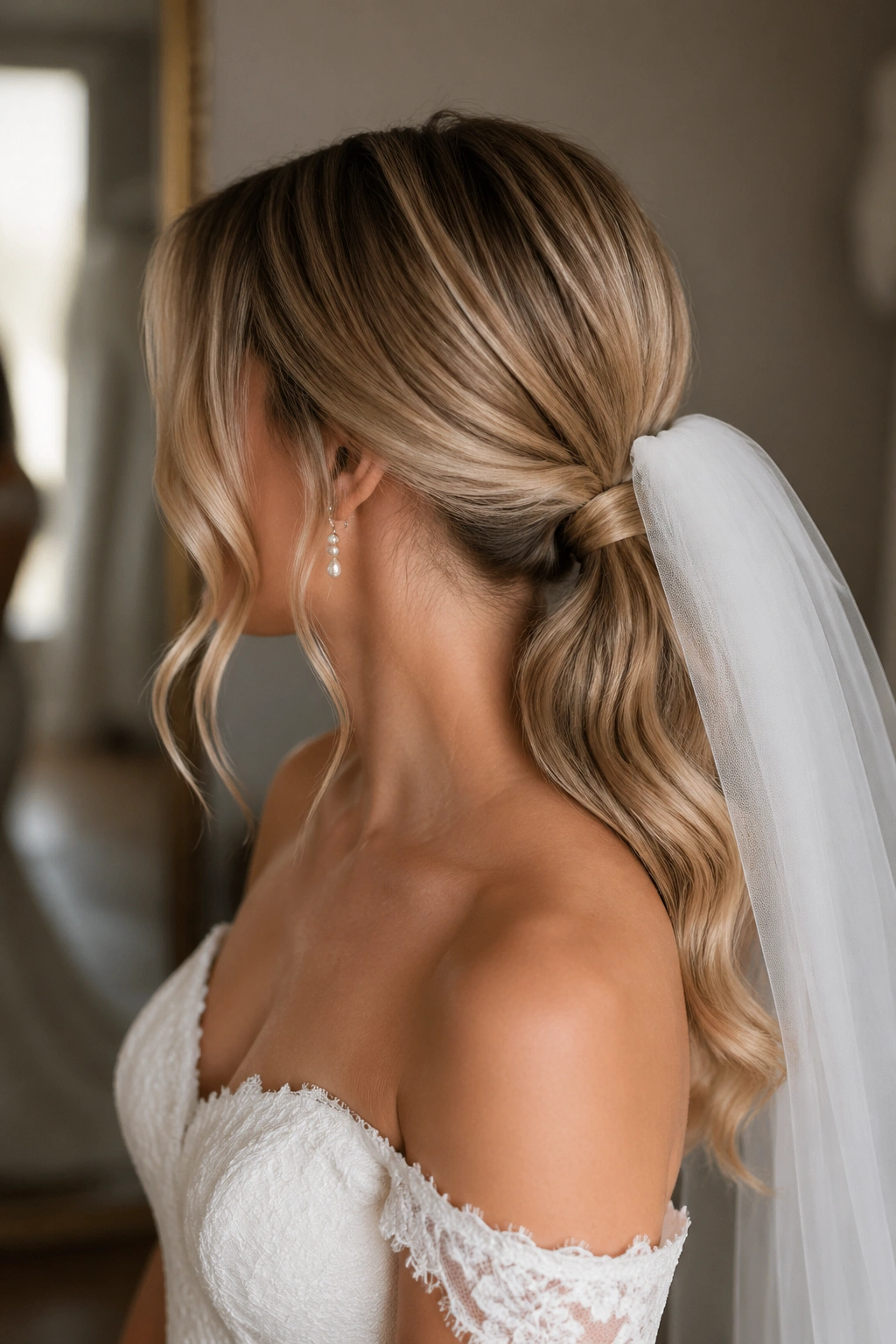
Where does the veil go? That question changes the whole style. A low wavy ponytail gives you room to place a comb above the ponytail, below it, or tucked just behind the wrap, depending on how much of the hair you want the veil to cover.
If the veil is heavy, keep the ponytail compact and secure. If it’s light, you can afford more wave and a little looseness around the face. The base should be smooth enough that the comb sits without wobbling. That part is boring. Still necessary.
A lot of brides worry that a ponytail and veil will fight each other. They won’t, if the style is planned around both from the start. The veil can sit over the top for the ceremony and then come out cleanly for the reception. A low ponytail makes that transition easy. No wrestling. No awkward dent in the back.
19. Floral-Accent Wavy Ponytail
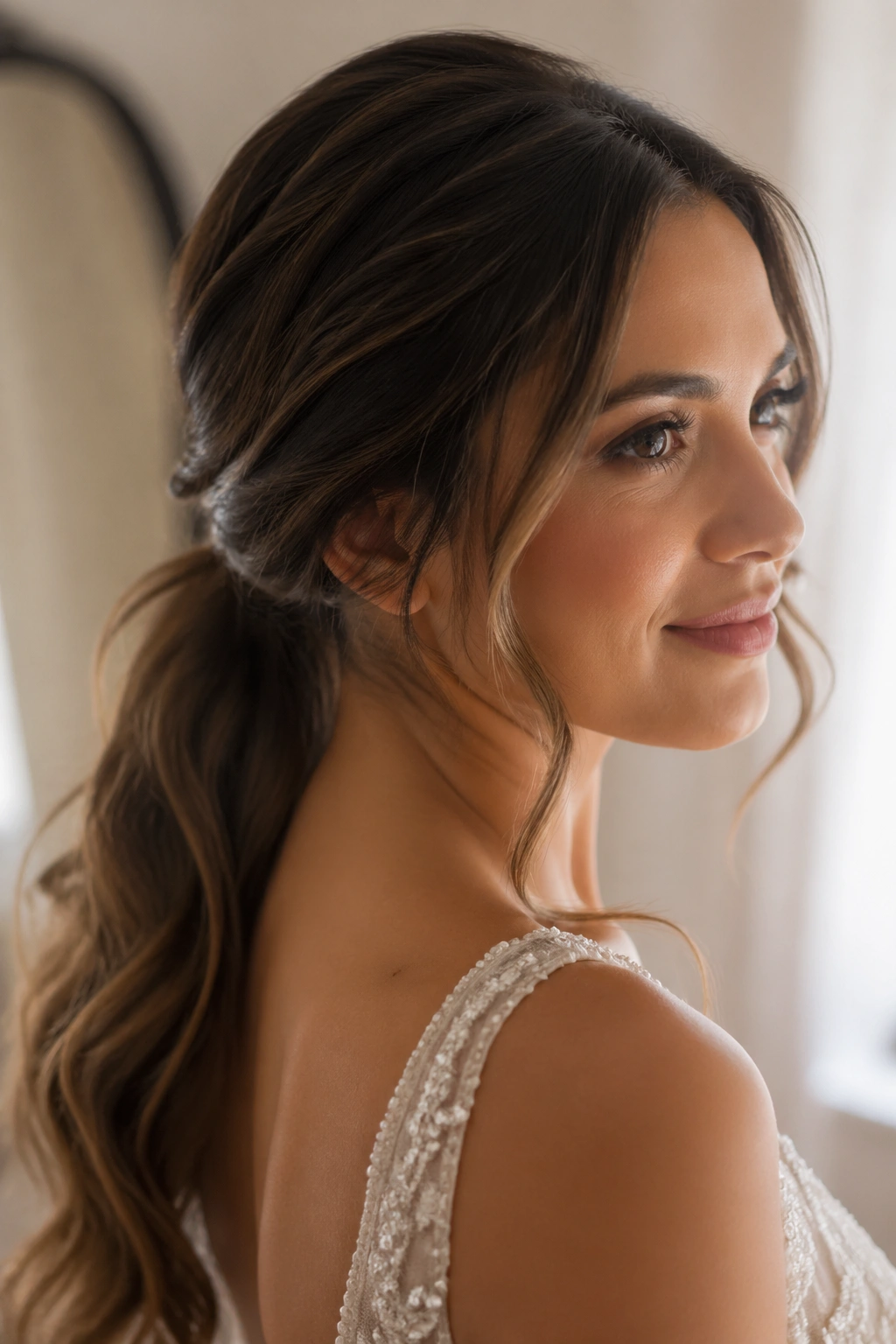
Flowers in the hair can be lovely or can look like they’re trying too hard. The difference is scale. A floral-accent ponytail works best when the blooms are tiny, spaced well, and tied into the rest of the look instead of floating on top of it.
Baby’s breath, spray roses, tiny orchids, and small wired buds all work. Fresh flowers need to be secure, so wire them or pin them into a wrapped base. If you want less risk, use high-quality faux flowers that mimic the real shape closely. They stay put and don’t wilt during a long day.
I’d keep the flowers near the base or on one side of the tail, not scattered everywhere. That keeps the ponytail readable. Too many blooms and the waves vanish. One or two well-placed accents, though, can make the style feel personal in a way hairpins sometimes can’t.
20. Fishtail-Wrapped Wavy Ponytail
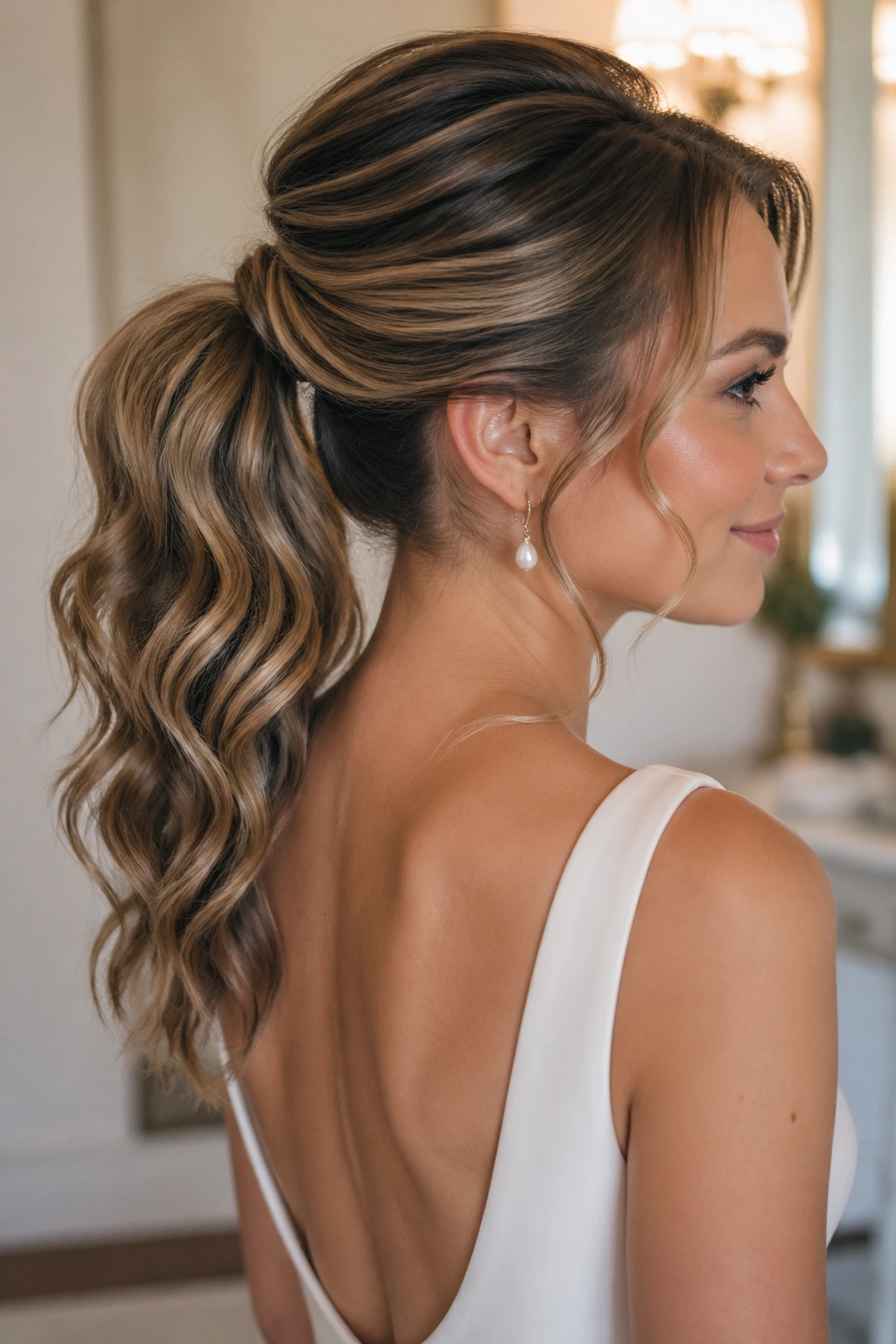
A fishtail braid around the base gives a ponytail texture without adding bulk. It looks detailed, but not fussy, which is exactly why it works for weddings. The braid becomes a built-in accessory, and the waves handle the softness.
Make the ponytail first, then braid a small section into a loose fishtail and wrap it around the elastic. You can also braid one side of the crown and feed it into the tail if you want more pattern. Keep the braid soft. Pancaked too wide, it can overwhelm the waves.
This style suits boho dresses, garden settings, and anything with handworked detail. It also works when the hair needs a little more interest from the back. A fishtail gives you that woven look without demanding a lot of extra decoration. Sometimes that’s enough. Sometimes it’s more than enough.
21. Wavy Ponytails for Weddings That Hold Up in Humidity
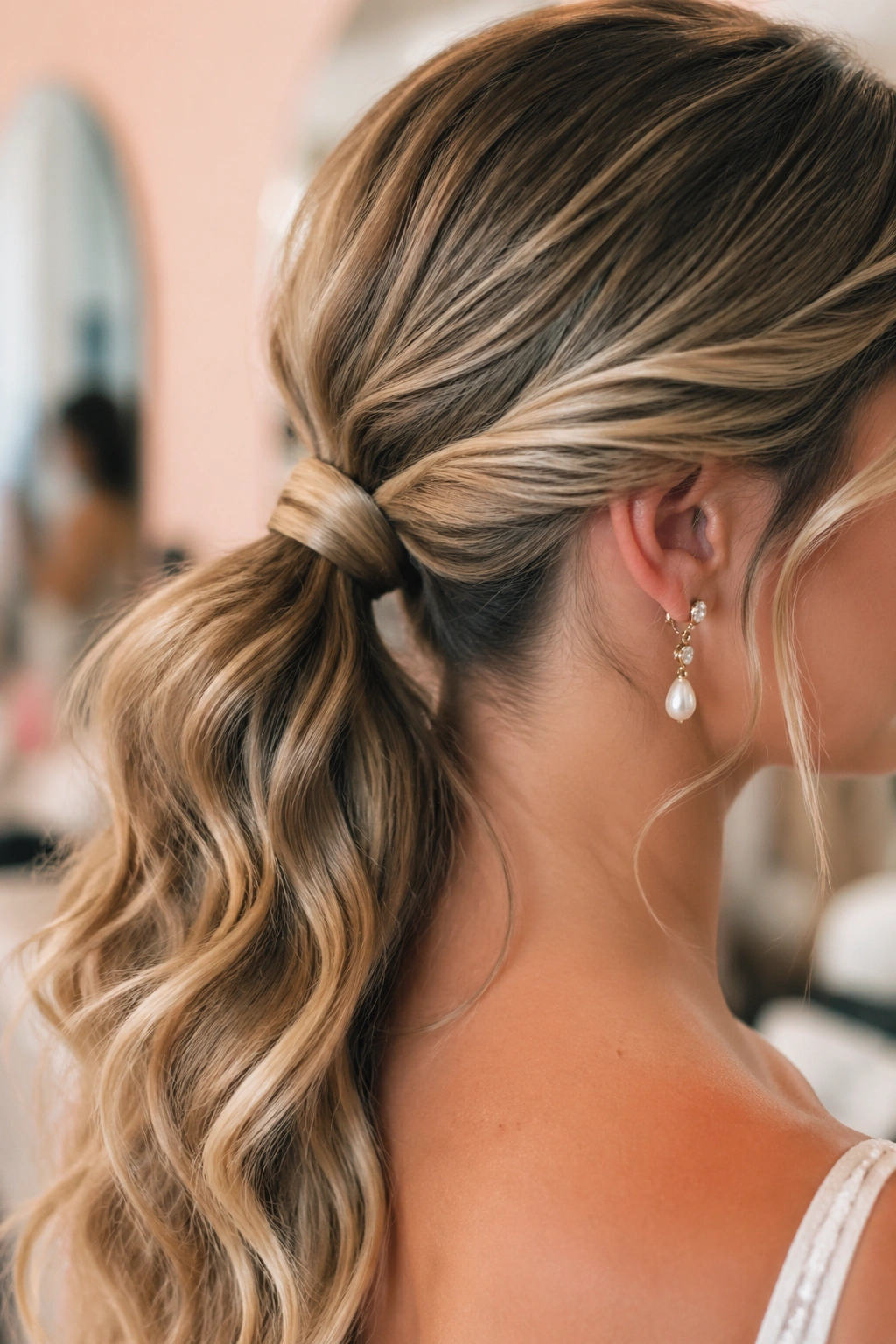
Humidity does not care about your plans. Hair that looks polished inside can puff, bend, or frizz the second it meets damp air, so the styling has to be a little smarter from the start. For wavy ponytails for weddings, that usually means tighter prep and looser finishing.
What Matters Before You Tie It Back
Use a lightweight anti-humidity spray before heat styling, then curl the hair a touch tighter than you want the final wave to look. Once the curls cool, brush them out gently. That gives you room for the hair to soften later without collapsing completely.
- Keep serum off the roots; it can flatten the crown.
- Use flexible hairspray, not a stiff shell.
- Secure the base with extra pins if the air feels heavy.
- Avoid over-brushing the tail once it’s styled.
If your hair frizzes fast, start with slightly smaller sections. The wave pattern lasts longer that way. The final look should still move, just not puff out the second you step outside.
22. Deep Side Part Wavy Ponytail
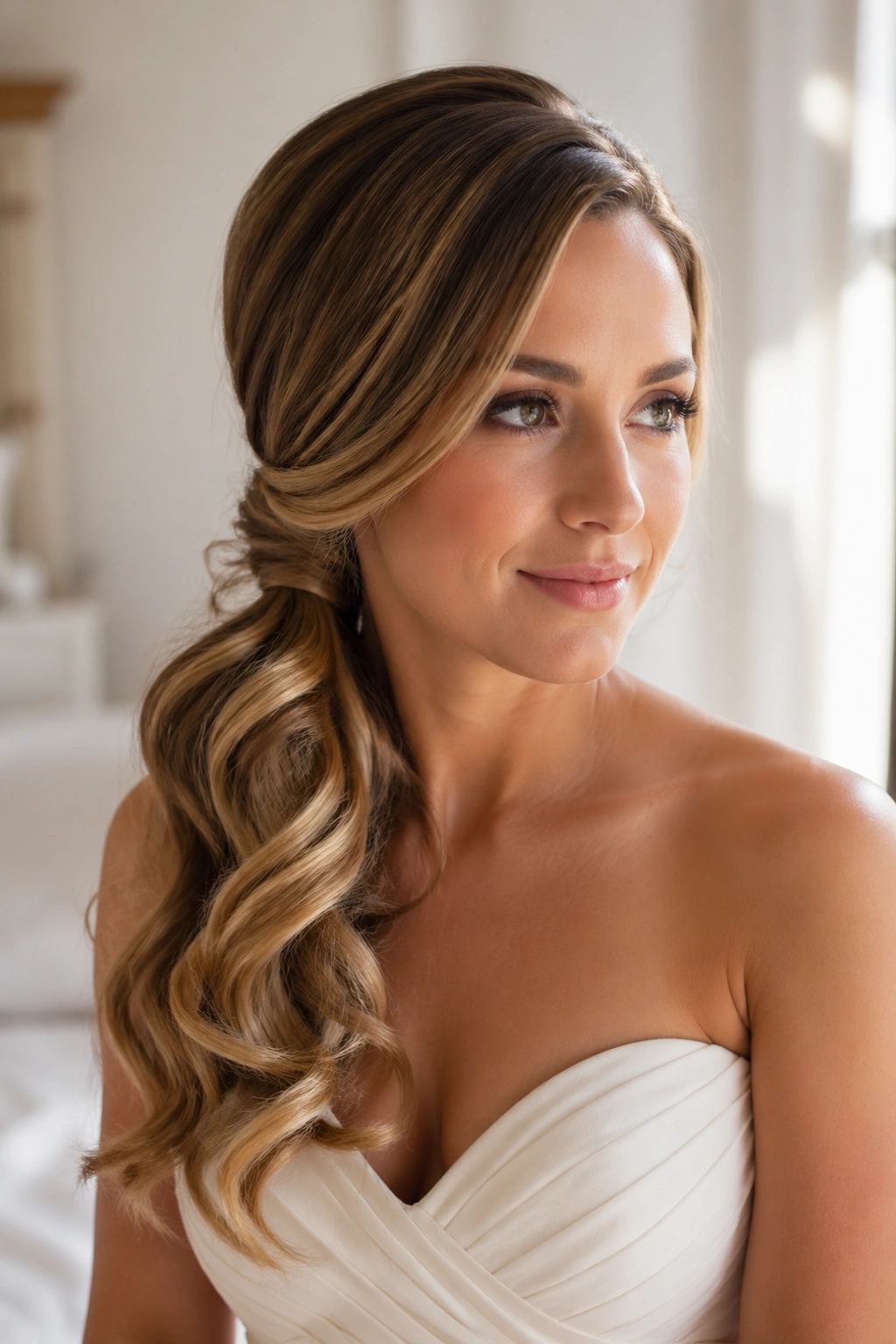
A deep side part does more than most people think. It changes where the eye starts, which can make the face look longer, softer, or more sculpted depending on the shape of the waves. With a ponytail, that part gives the style instant direction.
This is a strong choice for one-shoulder dresses, asymmetric necklines, and brides who like a little drama without extra height. Pull the hair over from the heavier side and let the waves tumble in one line down the back or shoulder. Keep the opposite side cleaner so the part has room to breathe.
A center part is tidy. A deep side part has attitude. That sounds dramatic, but it’s true. The part line itself becomes part of the style, not just a place where the hair happens to split. If the goal is a ponytail with presence, this is a good place to start.
23. Twisted Crown Wavy Ponytail
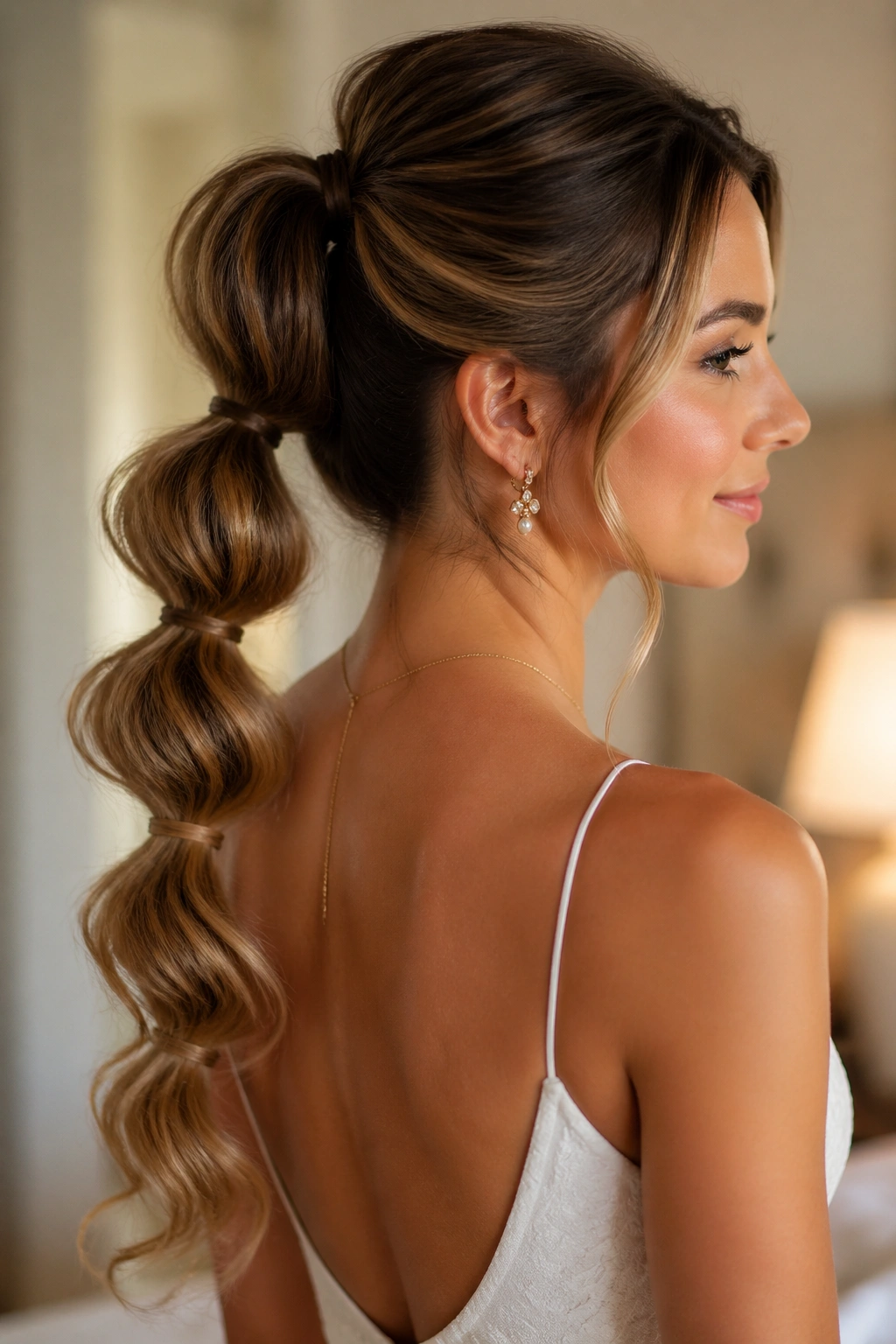
Can a ponytail look delicate and secured at the same time? Yes. Twists at the crown give you that effect. They keep shorter layers in place, open the face, and add a little shape without requiring a full braid.
Take two sections from the temples, twist them back toward the crown, then pin them into the base of the ponytail. Leave the rest of the hair wavy and soft. The front should look lifted, not slicked.
This style is especially handy if the front layers are in that awkward in-between stage where they want to fall out of everything. Twists are kinder than heavy hairspray. They also feel nice with a low or mid ponytail because the shape moves from the sides into the tail in one smooth line. The whole thing ends up looking considered, which is really what people want from wedding hair.
24. Ultra-Long Wavy Ponytail With Extensions
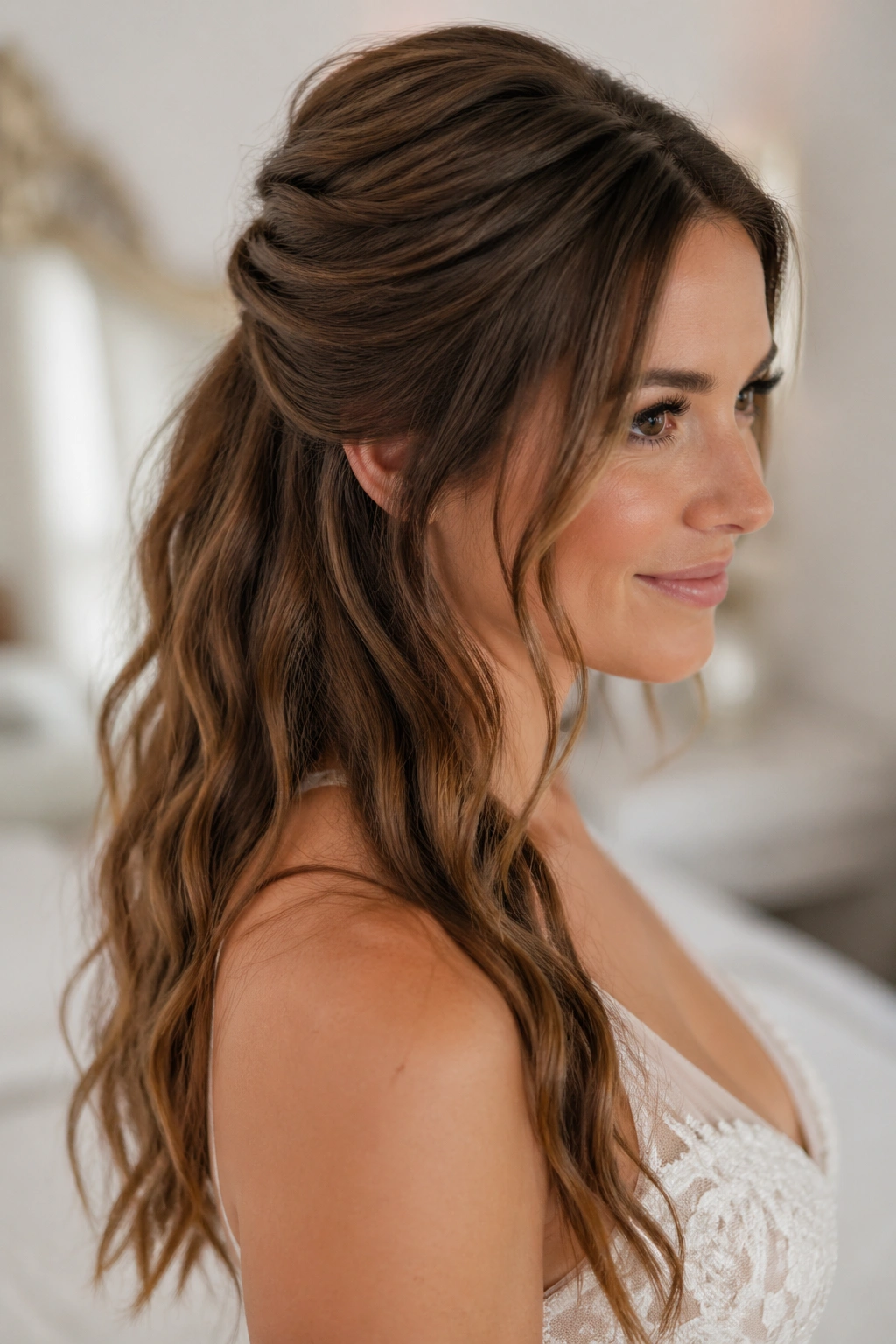
Extra length changes the mood fast. A very long wavy ponytail has movement, presence, and a little bit of fantasy to it. It works when you want the hair to become part of the outfit rather than just something that sits on top of it.
The main challenge is weight. Too much hair at the base and the ponytail can drag down the crown. That’s why placement and support matter more than sheer length. Use extensions that match the wave pattern and pin them in a way that spreads the weight rather than stacking it all in one spot.
How to Keep It from Looking Heavy
- Anchor the ponytail low enough that the scalp does not look stretched.
- Blend the extensions before you add the final wave.
- Leave the ends slightly irregular so they don’t look cut with a ruler.
- Use 2 or 3 hidden pins at the base if the hair is thick.
The payoff is movement. Long waves swing beautifully when they’re built right.
25. Messy-Luxe Wavy Ponytail With Loose Tendrils
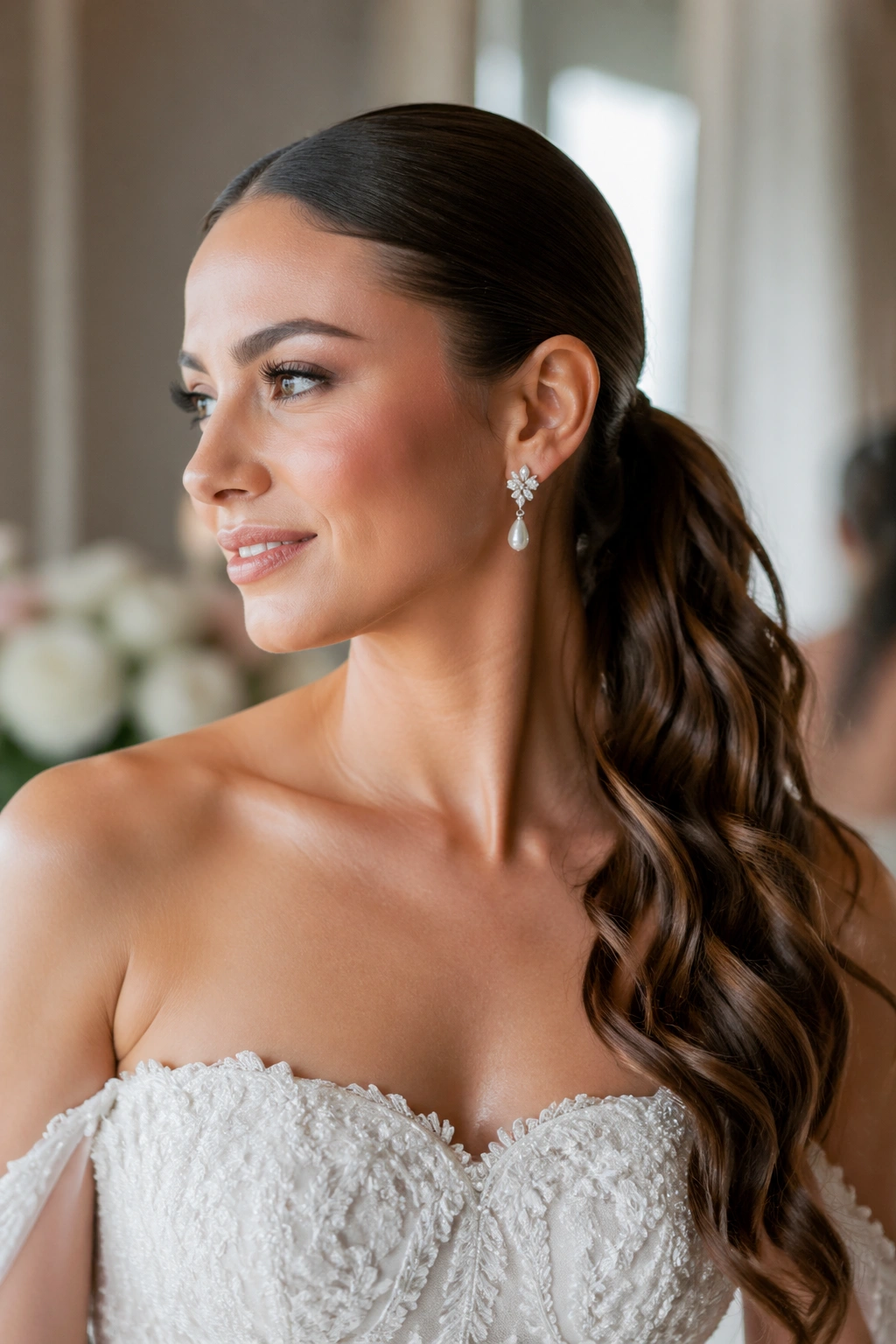
This is for the bride who wants her hair to look touchable, not armored. A messy-luxe ponytail keeps the structure of an upstyle but leaves enough looseness around the face and neck to feel relaxed. It works best when the mess is controlled. That part matters.
Pull out a few soft tendrils near the temples and behind the ears, then loosen the waves in the tail so they sit in soft bends instead of hard curls. The crown can have a little texture, but not so much that it frays. The hair should look like it was arranged by someone who knows when to stop.
The trick is restraint. If you over-pull the front pieces or rough up the waves too much, the style stops looking bridal and starts looking unfinished. Keep one section neat, another section loose, and let the ponytail sit somewhere between the two. That tension is what makes it work.
Final Thoughts
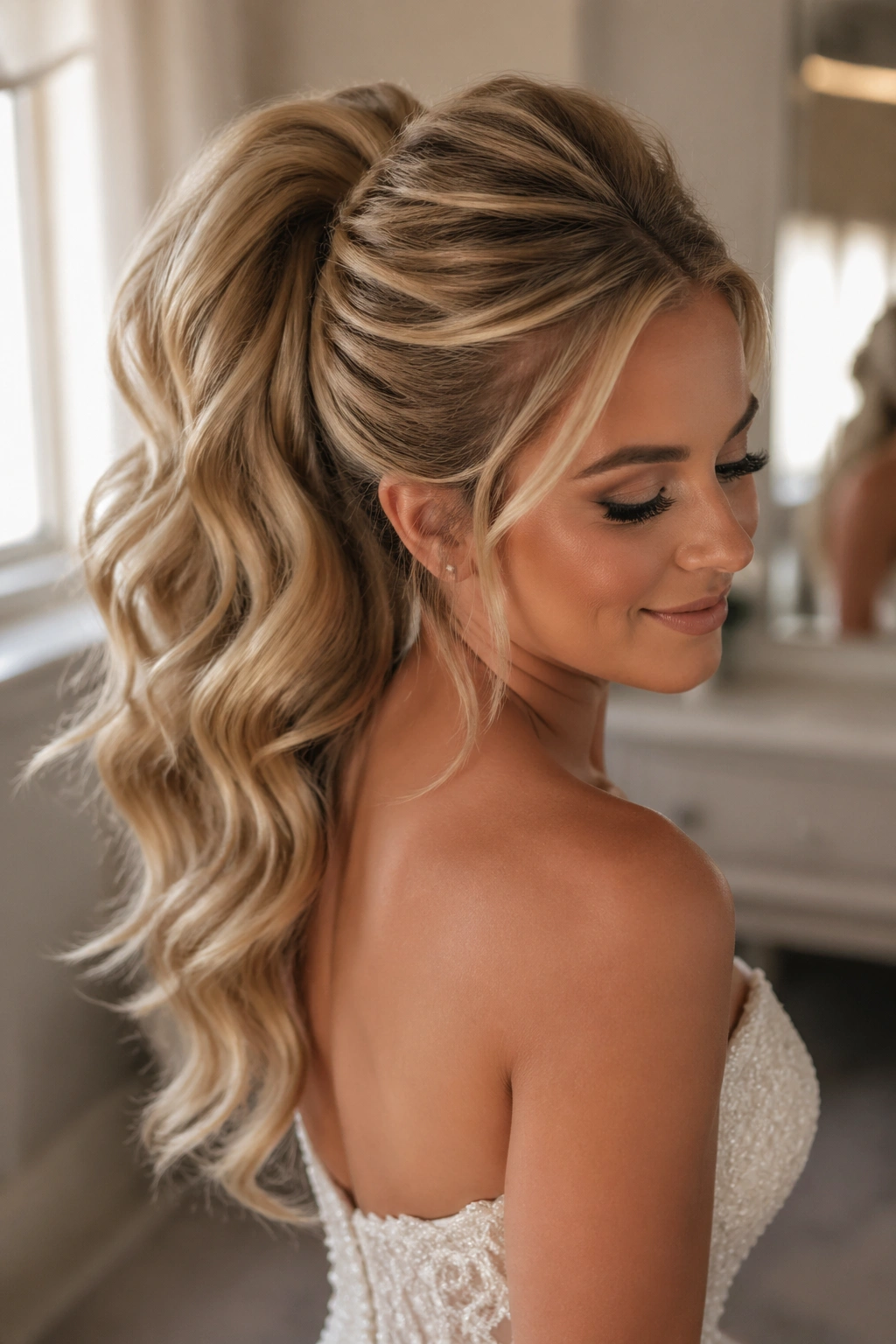
The strongest wedding ponytails all do the same basic job: they hold shape, flatter the face, and still move when you walk. The differences are in the details. Height changes the mood. A braid changes the back view. A ribbon, a pearl pin, or a veil changes the whole story.
If you’re choosing between two styles, look at your neckline first, then your earrings, then how much hair you want off your face. That order saves a lot of second-guessing. A test run with the same dress or at least the same neckline is worth the time, because some ponytails feel elegant on a hanger and completely different once the hair is actually pinned.
The best version is the one that still feels like you after an hour of photos and a few spins on the dance floor. And if it stays put without asking for constant fussing, even better.
