



Shoulder-length wavy wedding styles have a sweet spot that long hair can’t always hit. There’s enough length to sculpt, pin, twist, and tuck, but not so much that the style collapses under its own weight by the second hour of dancing. That matters. A wedding hairstyle has to survive hugs, photos, a veil, a meal, and whatever the dance floor turns into after the speeches.
Wavy hair also has a built-in advantage: it already gives movement. Straight hair often needs more coaxing to feel soft, and very long curls can start to look heavy if the bride wants something airy. Shoulder-length waves sit right in the middle. They can look relaxed, modern, romantic, or polished, sometimes all in the same style if the hands that shaped them knew what they were doing.
The trick is choosing a style that works with the hair’s length instead of fighting it. A good shoulder-length wedding look doesn’t try to fake extra inches. It uses what’s there: clean parting, a little lift at the crown, pins placed where they won’t show, and waves that still look like hair rather than helmet. That’s the whole game.
Some styles lean soft and unfussy. Others feel more dressed up, with braids, pearl pins, or a tucked bun that keeps the neckline clear. A few are the kind of styles I’d recommend only if the bride is wearing a veil or statement earrings, because those details change the whole balance. The best ones are below, and they all work especially well on shoulder-length wavy hair.
1. Soft Half-Up Twist for Shoulder-Length Wavy Hair
This is the style I reach for when the dress is pretty, the hair should feel romantic, and nobody wants anything stiff. The half-up twist takes just enough hair off the face to keep the front clean, while the waves still move around the shoulders.
Keep the twist low and loose, not tight and formal. A good version uses two 1-inch sections from each temple, twisted back, then pinned where they meet at the back of the head. Leave the crown with a small lift. Flat roots make the whole thing look sleepy.
Best details:
- Works well with medium-thickness hair that holds a bend.
- Looks especially good with a square neckline or soft off-shoulder dress.
- A matte texture spray helps the twist stay put.
Watch out: if the twist sits too high, shoulder-length hair can look like it’s trying too hard to be long. Keep it close to the head.
2. Low Side Pin-Back with Loose Waves
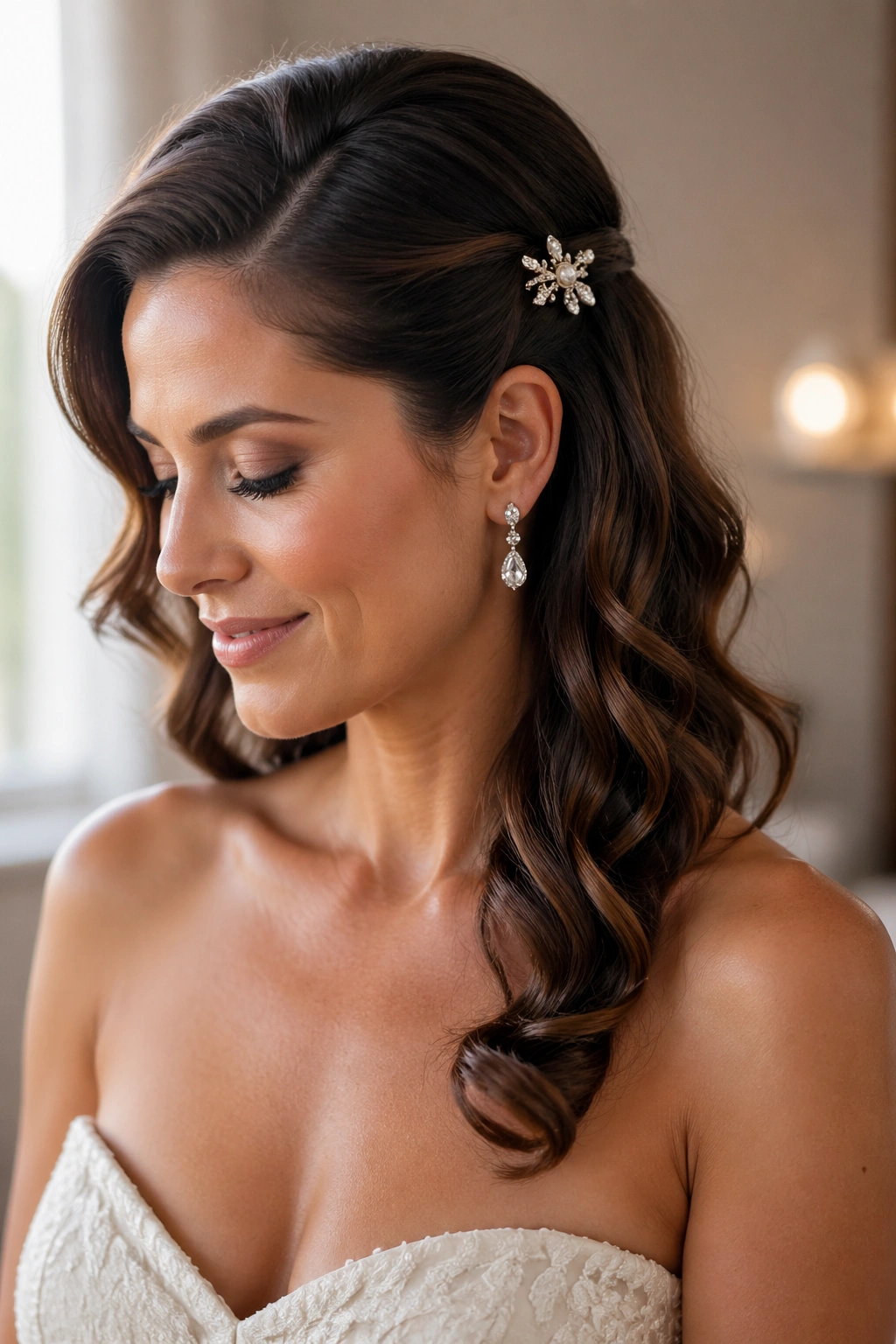
A deep side pin-back is one of those styles that looks expensive even when it’s not fussy at all. You keep most of the waves down, then sweep one side behind the ear and secure it with 3 to 5 pins hidden under a decorative clip or comb.
The reason this works so well on shoulder-length hair is simple: it gives the face some shape without hiding the cut. You still see the waves, still get movement, and still have enough hair to show off a pretty earring. It’s quiet, but not boring.
I like this look for brides wearing structured dresses or high necklines. It creates a little asymmetry, which keeps medium-length waves from feeling too safe. If the hair is fine, lightly tease the pinned side before setting it. That tiny bit of friction makes a huge difference.
3. Polished Center-Part Waves
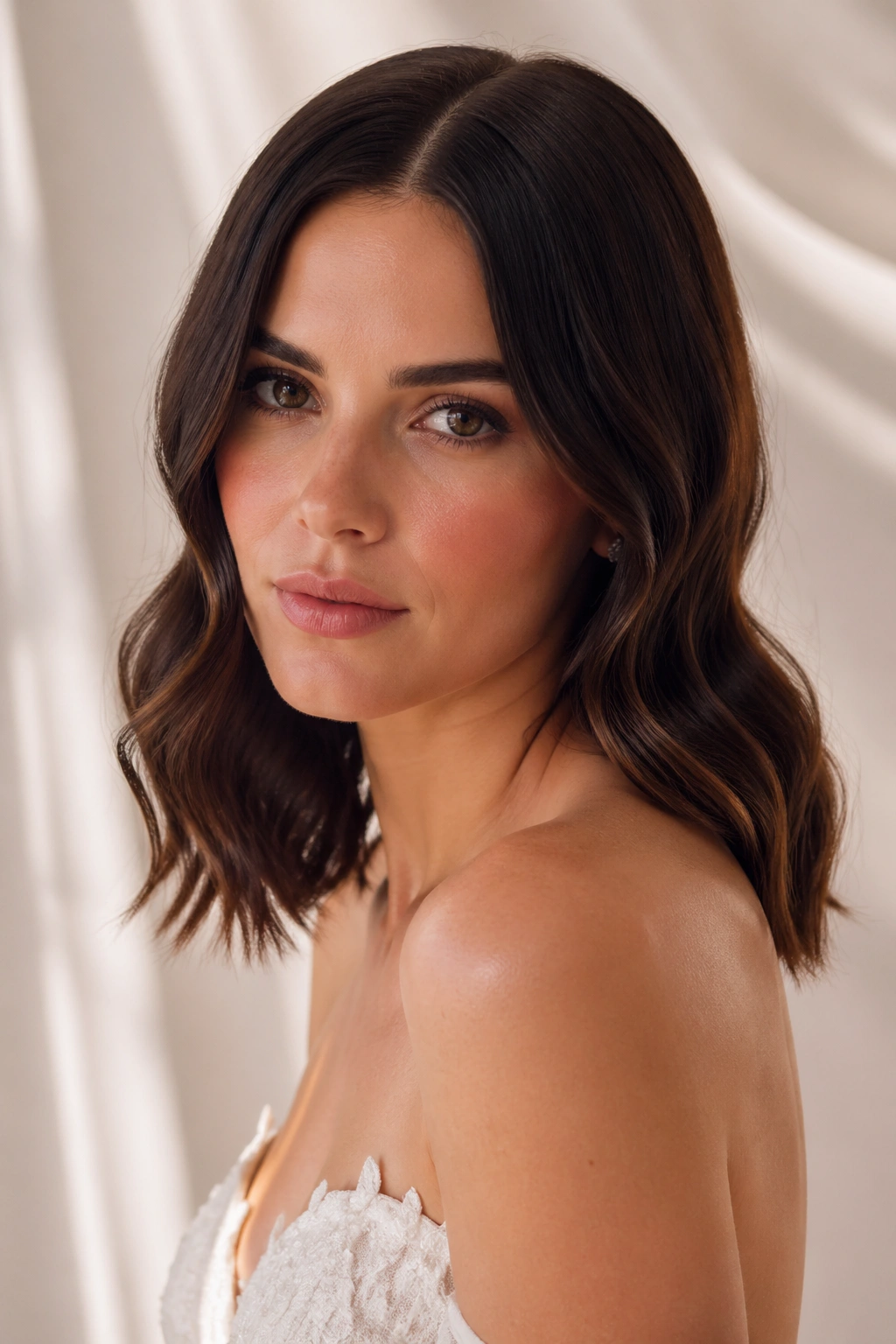
Clean center parts can be beautiful on wedding day hair, but only when the waves are smooth and intentional. Shoulder-length hair is a good match here because the cut frames the jaw and collarbone instead of dragging everything downward.
Start with a neat middle part, then curl the hair away from the face with a 1-inch iron. Once the hair cools, brush the curls into soft waves so they sit in gentle ribbons. A drop of lightweight serum on the ends keeps them from frizzing out in photos.
This style suits minimalist dresses, sleek satin, and brides who hate anything overly sweet. It has edge, but it still reads bridal. The part does a lot of the visual work, so the rest can stay simple.
4. Braided Crown Accent
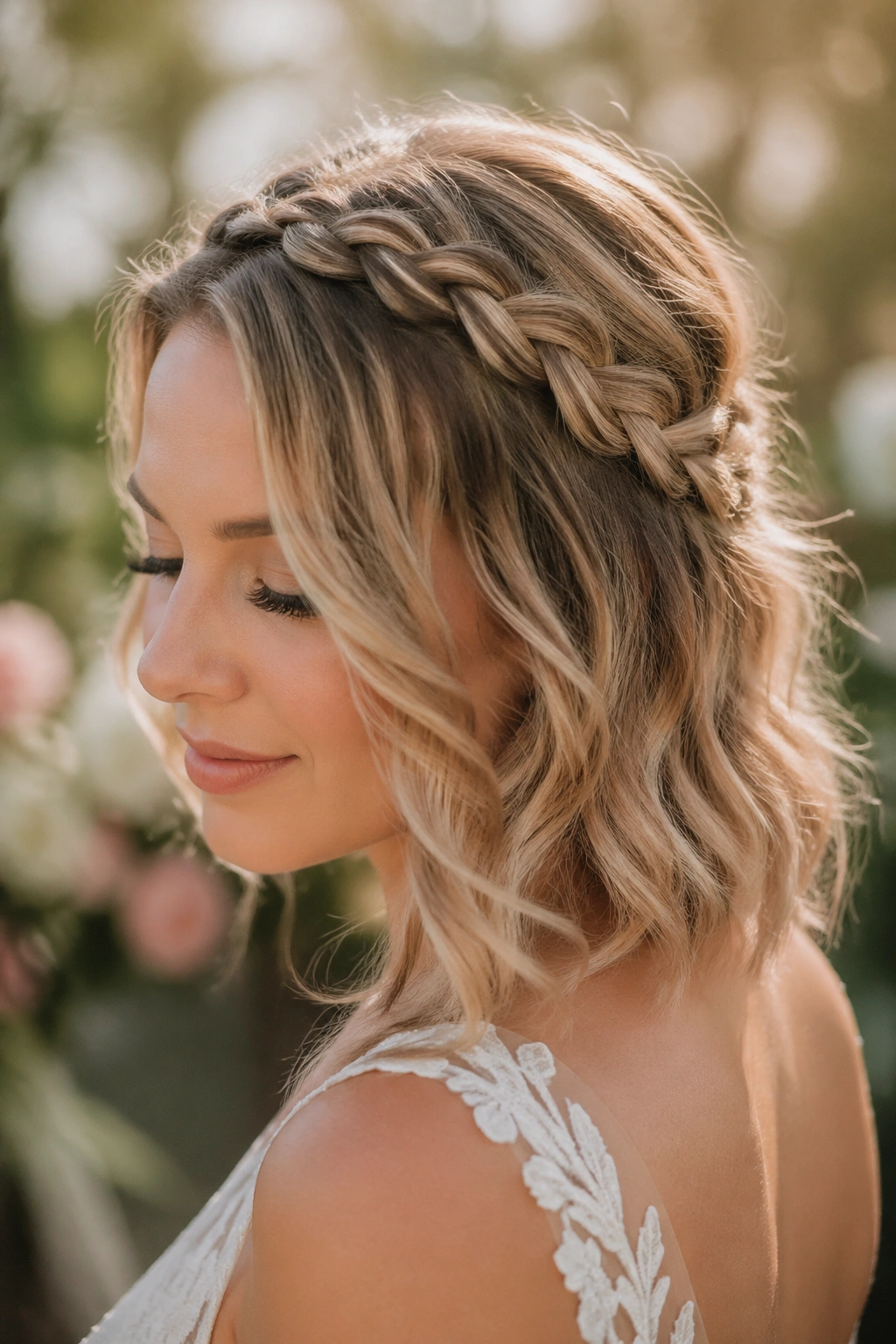
A thin braid along the hairline changes shoulder-length waves in a way that feels deliberate, not overdone. The braid can start near one temple, travel back toward the ear, and disappear into the waves. It doesn’t need to be thick. In fact, a braid that’s too chunky can overpower the hair.
The best version uses a narrow section, about the width of a pinky finger, then gets gently pulled apart so it looks soft. That little bit of looseness matters. Tight braids can make medium-length hair feel severe, and nobody wants that on a wedding day unless the rest of the outfit is doing something very sharp.
This style is a strong choice for boho dresses, garden settings, or brides who like a little texture near the face. It also works well when the veil is short or absent, because the braid acts like its own detail.
5. Pearl-Pin Scattered Waves
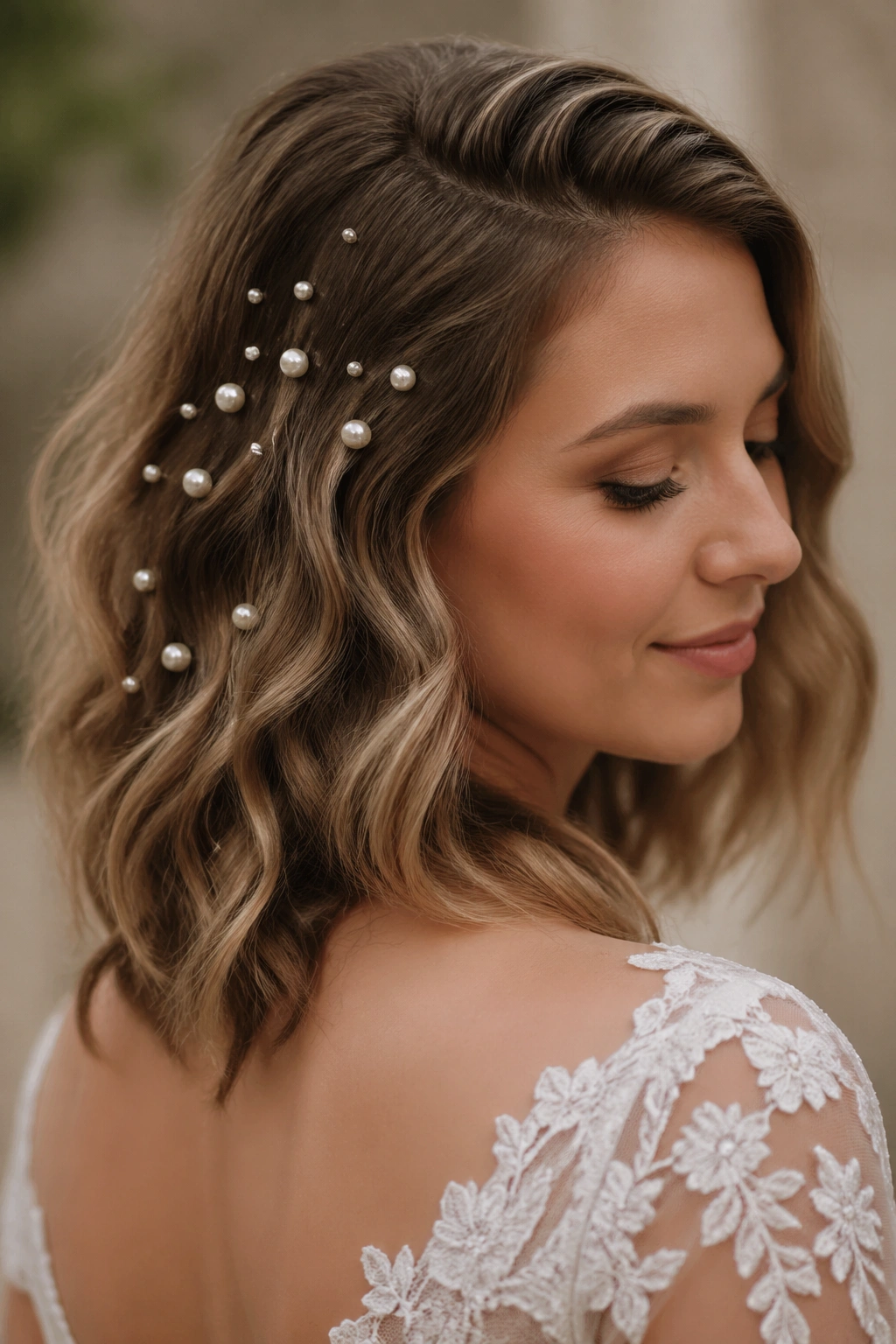
Some styles try to do too much. This one doesn’t. Pearl pins placed through loose shoulder-length waves look fresh because the shape stays simple and the accessory carries the polish.
I like to scatter the pins asymmetrically along one side, usually starting near the temple and moving back toward the ear. Five or six pins is often enough. More than that, and the hair starts to look dotted instead of styled. The waves should stay soft and touchable, with the pins acting like punctuation marks.
This is a good option if the dress already has lace, embroidery, or beading. The hair does not need to compete. Pearl pins are also kinder than many sparkly clips because they blend into the hair instead of shouting from it.
6. Twisted Half-Up Knot
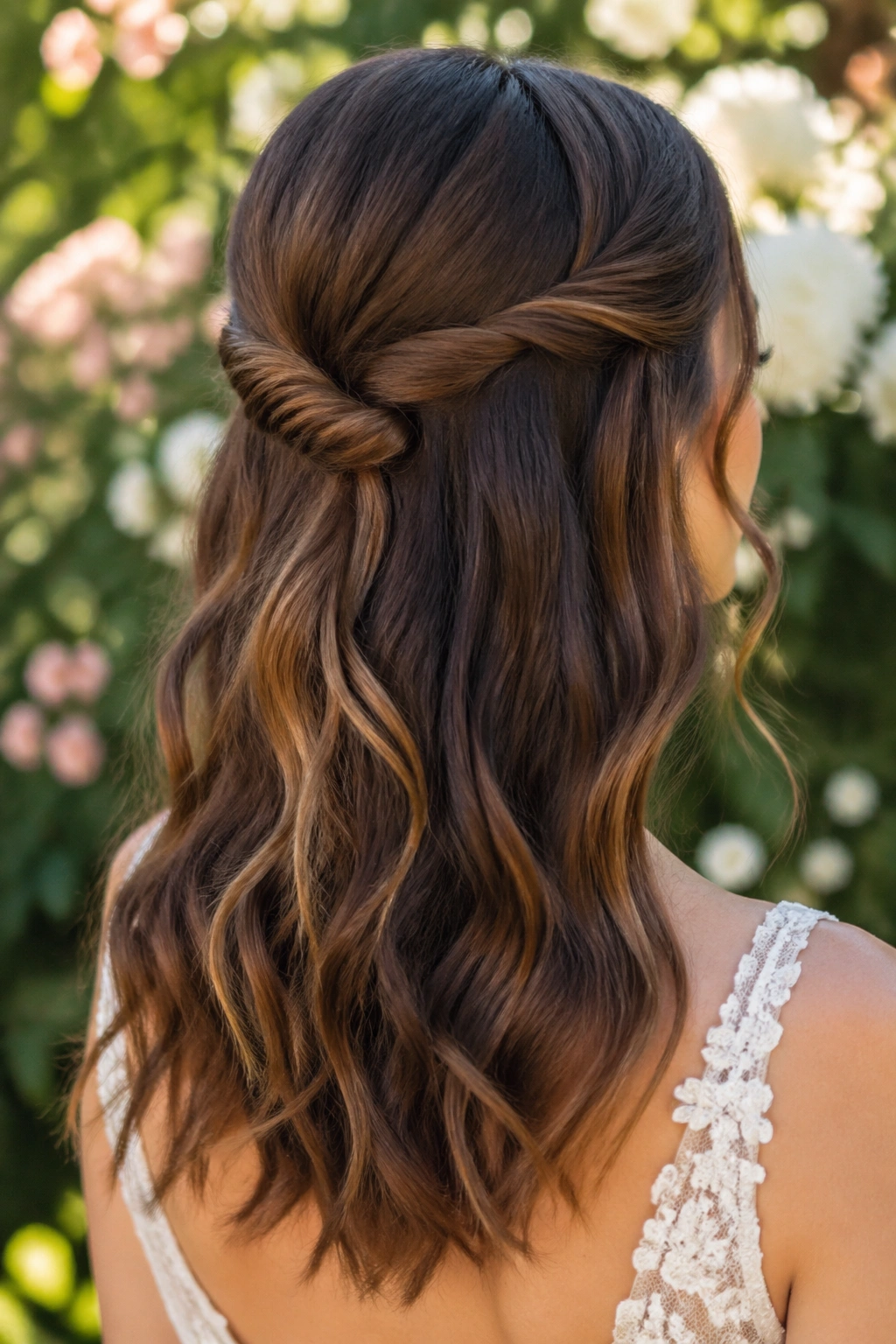
A twisted half-up knot gives shoulder-length waves a little lift at the back without turning the style into a full updo. You take two side sections, twist them toward the center, and knot them together or pin them into a compact loop.
The key is keeping the knot small. Medium-length hair can look bulky fast if the twist is too thick or too tight. A neat knot about the size of a plum is plenty. Leave the ends hidden under the twist, then soften the hair around the crown with your fingers.
This look has a lovely balance: tidy at the top, loose through the lengths. It’s one of the best choices for brides who want their hair off the neck just a bit but still want the softness of waves. If the gown has a detailed back, this style keeps the view open.
7. Deep Side Part with a Tucked Side
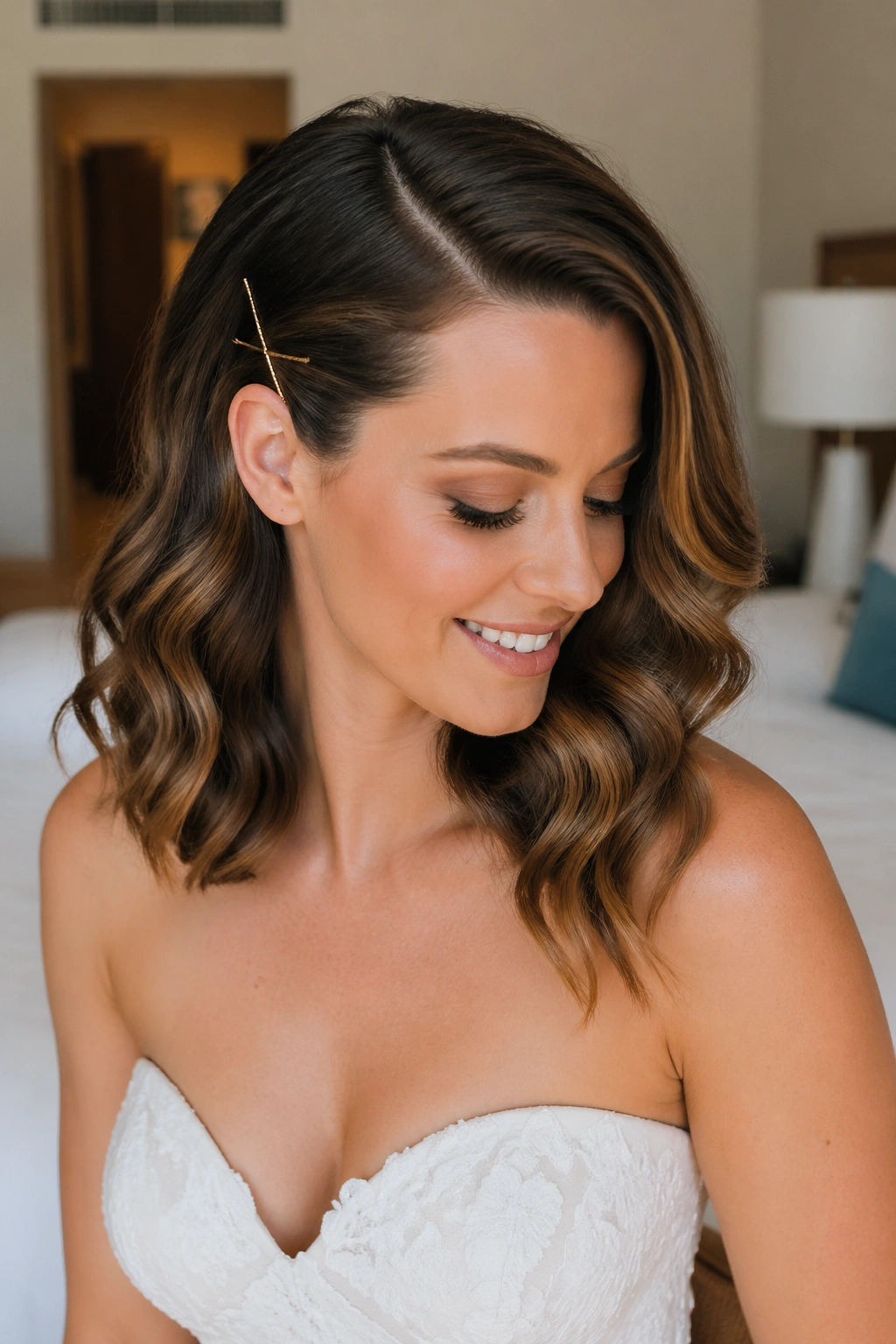
A deep side part changes everything. Seriously. It gives shoulder-length waves a more dramatic shape without adding a single accessory, and that makes it a smart option when the dress or makeup already has a lot going on.
Tuck the smaller side behind the ear and pin it flat with two crossed bobby pins. The bigger side stays loose and full, which creates a sweeping line across the face. If the hair has a strong bend, this style looks especially rich because the movement lands in one direction instead of scattering everywhere.
I like this one for brides who want glamour but don’t want curls that feel formal. It also photographs well from the side, which matters more than people think. A lot of wedding pictures are profile shots, or close enough to profile that a good part makes a real difference.
8. Low Chignon with Loose Tendrils
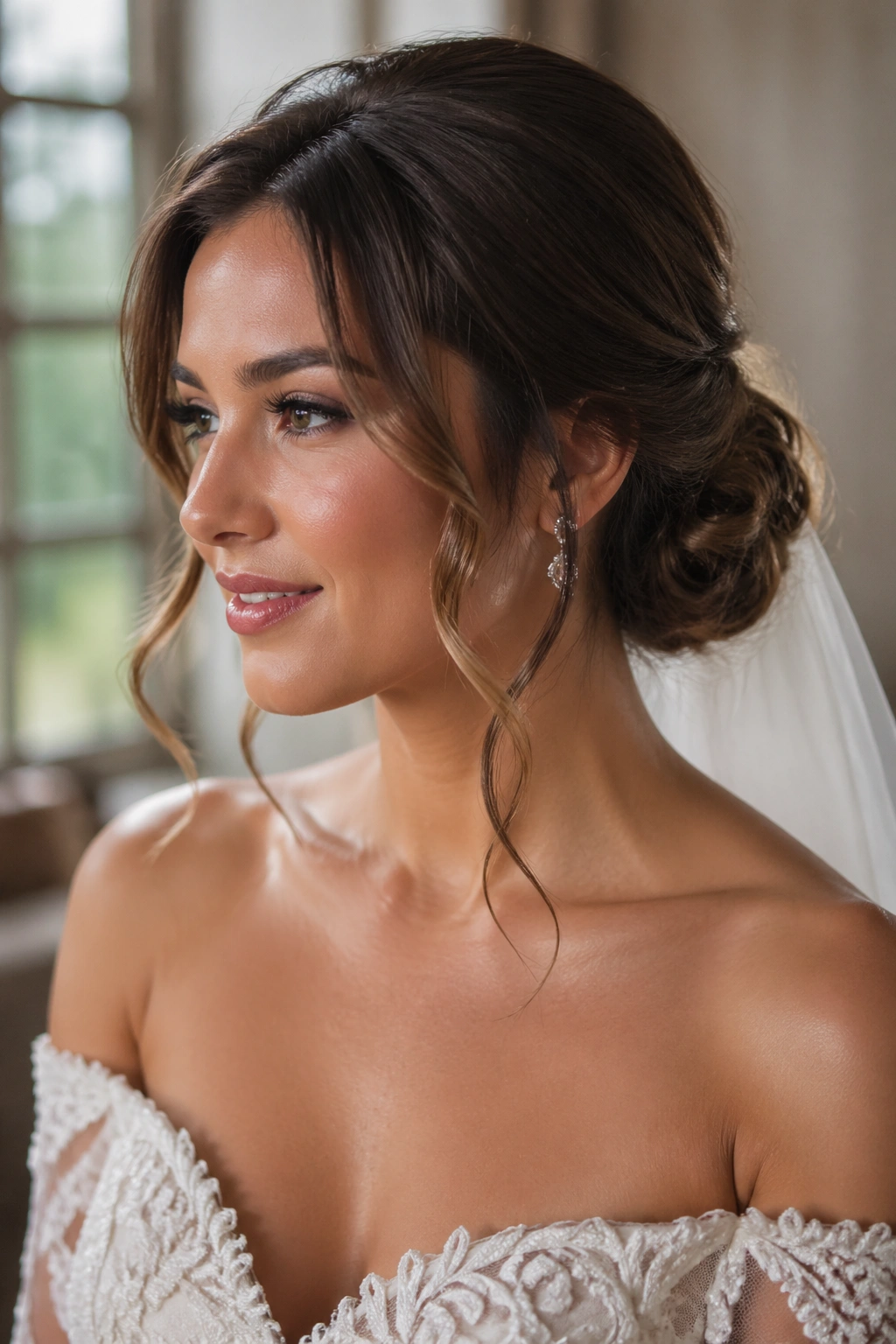
The low chignon is a classic for a reason: it clears the neck, shows the gown, and still leaves room for soft face-framing pieces. Shoulder-length hair can absolutely do it, though the bun will be more compact than on longer hair. That’s fine. Compact can look elegant.
Pull the hair into a low ponytail, twist it into a small bun, and pin the ends securely. Then leave out a few thin tendrils near the temples and jawline. Those strands keep the style from feeling too severe. Curl them lightly with a small iron so they bend, not crimp.
This is a strong choice for veils, especially when the veil sits lower at the back of the head. It also works with earrings that need open space around the jaw. If the hair is very layered, mist it with a flexible hairspray before pinning so the shorter pieces don’t escape.
9. Old-Hollywood Wave Set
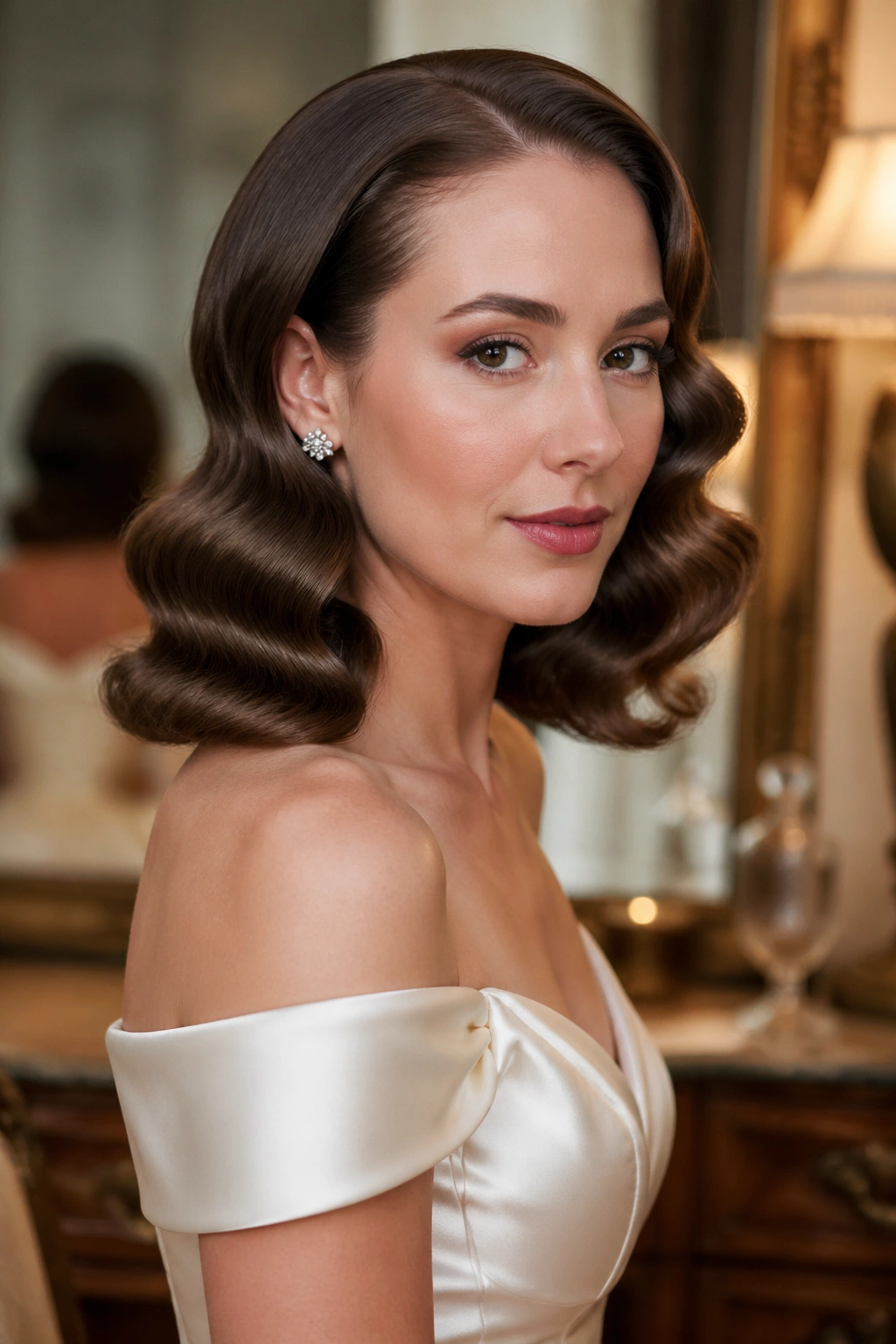
Old-Hollywood waves on shoulder-length hair look dramatic in a good way. The trick is to keep the waves smooth, polished, and mostly moving in one direction. This is not the place for messy texture or random bends.
A side part works best here. Curl the hair away from the face in even sections, let the curls cool, then brush them into a uniform wave pattern. Clip the front wave into shape while it sets if you want that sculpted look around the cheekbone. The finish should feel glossy and deliberate.
This style loves satin gowns, bare shoulders, and bold lipstick. It also suits brides who want something with a little old-film energy. The best part? Shoulder-length hair makes the wave pattern visible all the way through, instead of letting it disappear into a long curtain of hair.
10. Half-Up Knot with Airy Volume
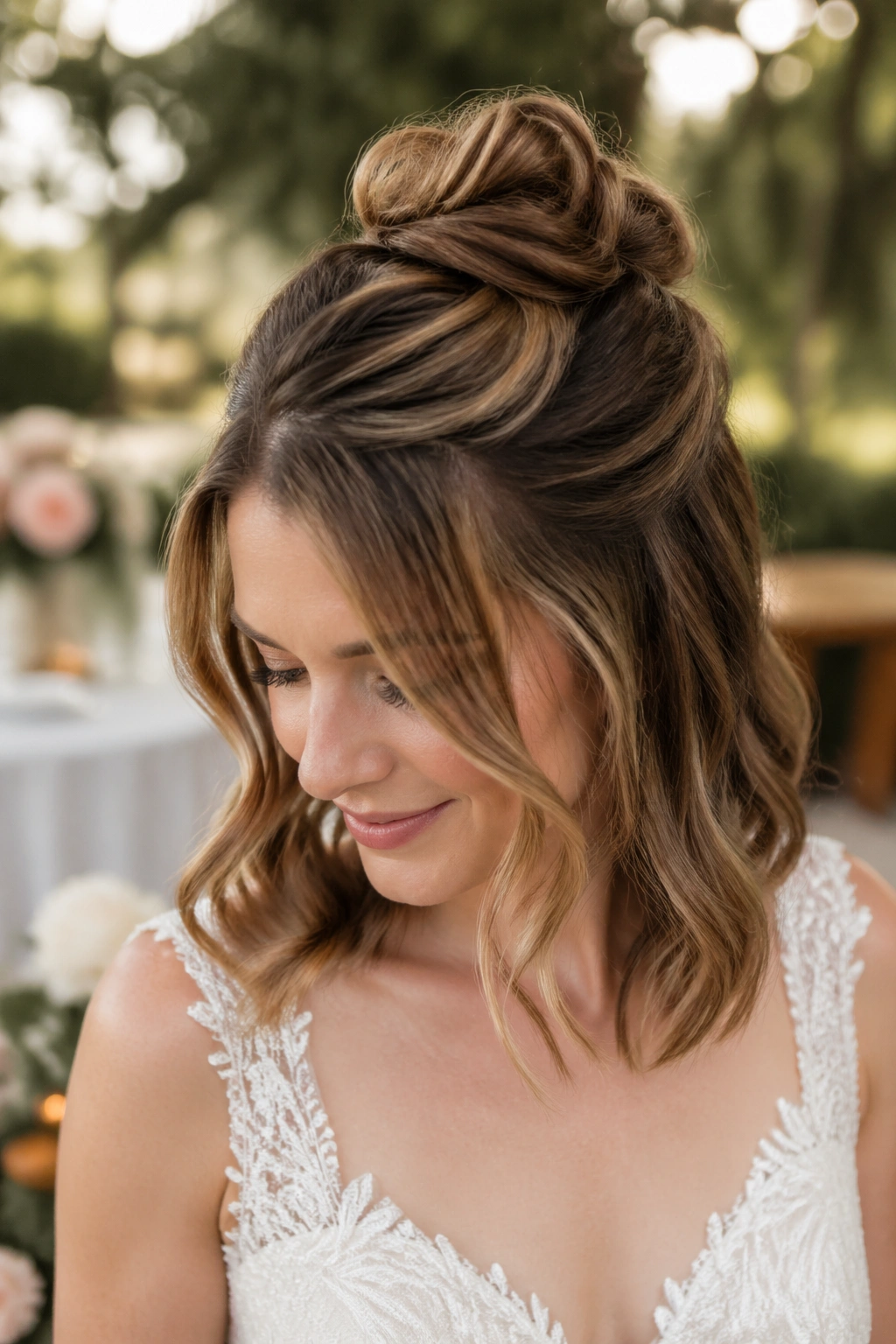
A small knot at the crown can give wavy hair a lift without making the style stiff. The idea is to take two sections from above the ears, tie them into a soft knot, and pin the knot flat so it looks like a polished twist rather than a literal knot.
This style needs volume at the crown, but not a giant bump. A finger-width of lift is enough. Too much height makes shoulder-length hair feel dated, and that’s a hard no for most modern bridal looks. The ends should stay loose and wavy, with a slight bend through the mids.
It works especially well with dresses that have open backs or simple necklines. The knot keeps the silhouette clean, while the waves do the rest. I like it for brides who want something that reads relaxed from far away but still has detail when people lean in.
11. Fishtail Accent Braid
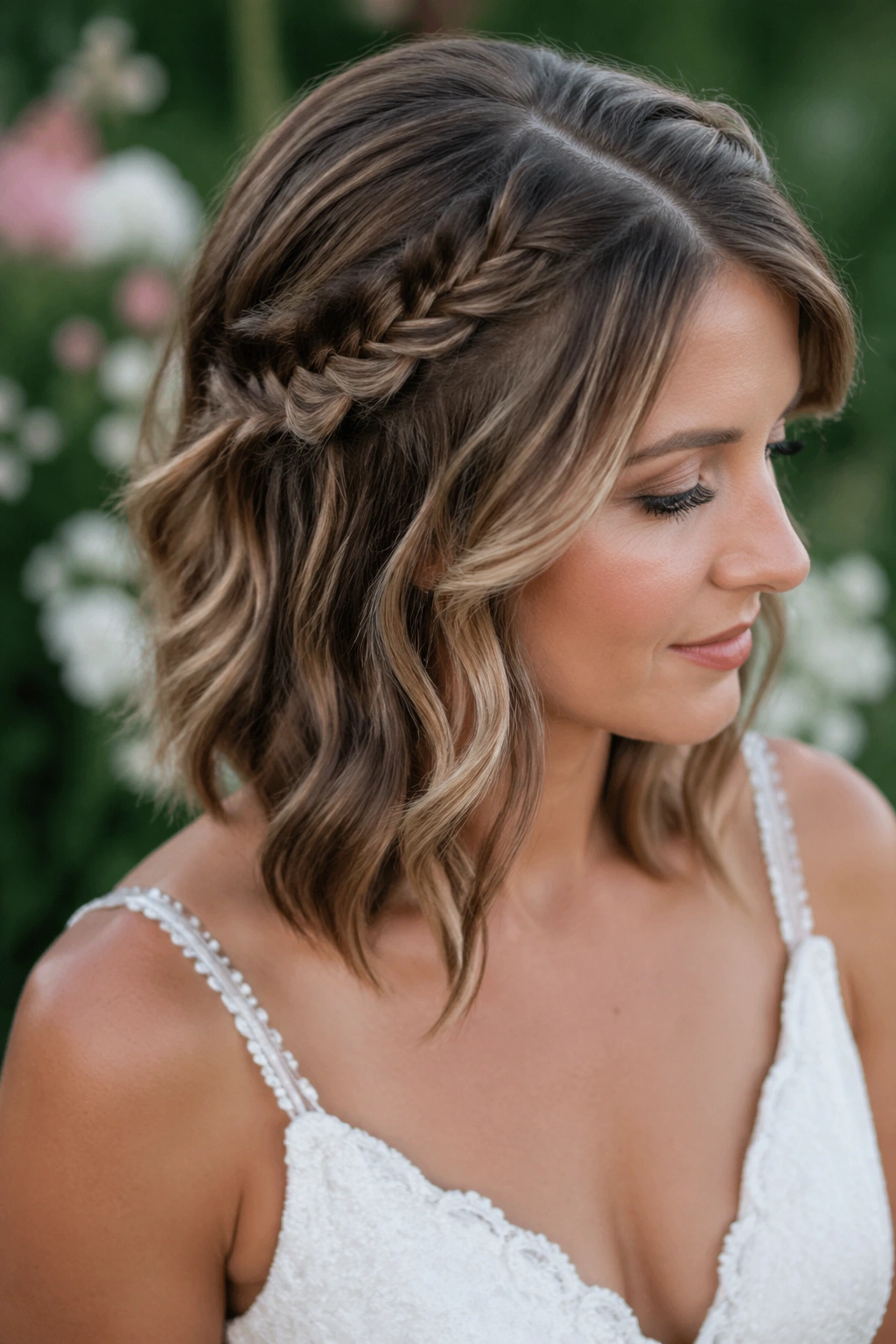
A fishtail braid isn’t just for long hair. On shoulder-length waves, a narrow fishtail braid can sit like a decorative strip across the back or along one side, then fade into the loose lengths.
Keep it small and slightly undone. A braid that’s too precise will look heavy against wavy hair, while a soft braid blends into the texture. Pull the braid apart gently after securing it so the pattern opens up a little. That gives it more presence without making it bulky.
This style works nicely when the bride wants a hint of detail but doesn’t want a full braided crown. It also handles movement well, which matters if the day involves a lot of dancing or a dress with an open, airy feel. The braid gives structure. The waves keep it from feeling formal.
12. Soft Faux Bob
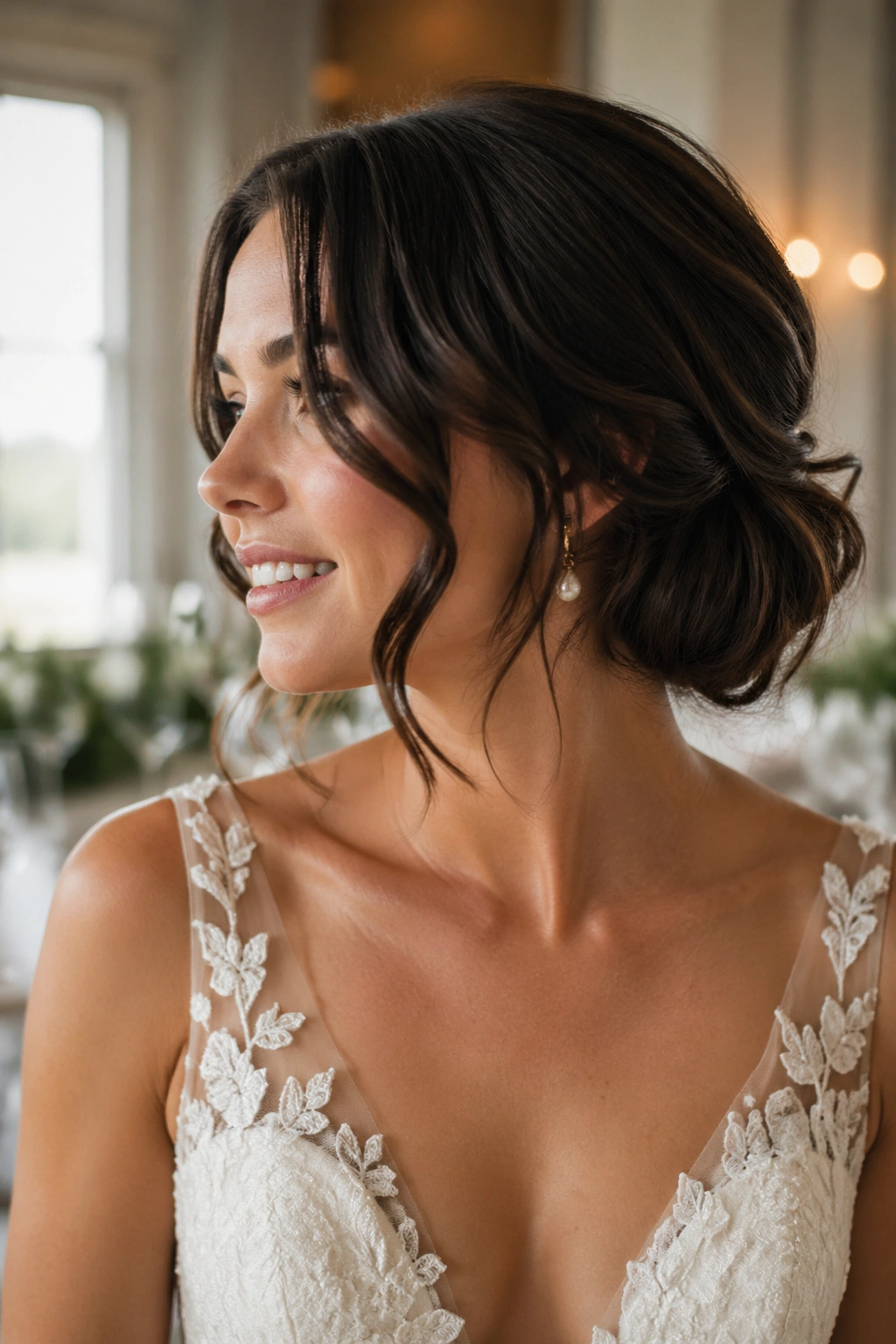
Shoulder-length hair is perfect for a faux bob because the length is already halfway there. You tuck the ends under at the nape and pin them up so the hair looks shorter, rounder, and more finished.
The important part is keeping the roll loose enough that it still feels like hair, not a tucked napkin. Leave the front pieces a touch longer, curl them softly, and let them brush the jaw. That bit of movement keeps the style from looking severe or costume-like.
I like faux bobs for vintage dresses, tea-length gowns, or brides who want a little surprise from the back. They also keep the neck open, which is practical on warm days or under a high collar. If your hair is layered, a little texturizing spray will help the ends stay hidden.
13. Romantic Clip-and-Wave
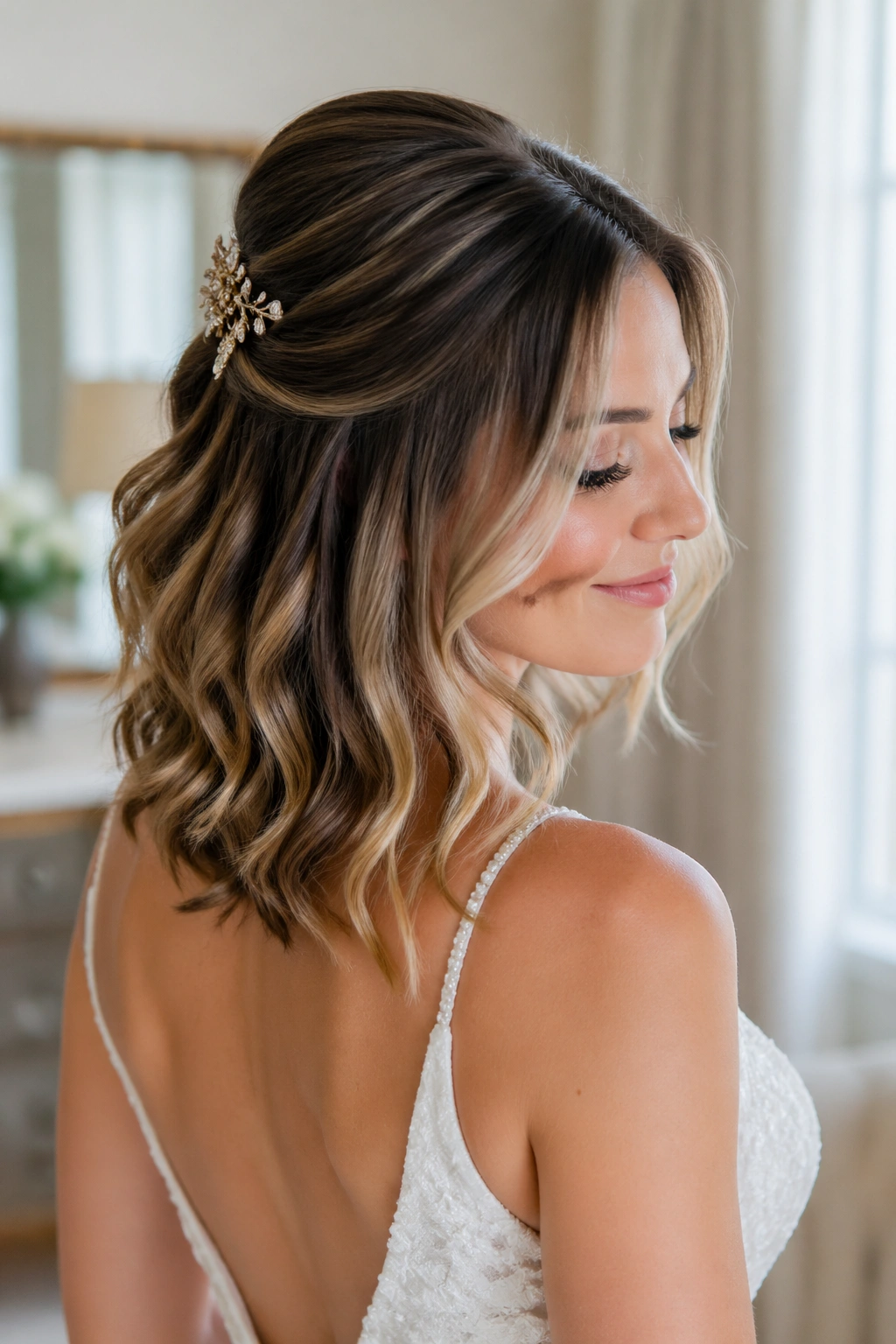
A decorative clip can do more work than people expect. Place it at the back of the head, where the top section of waves is lightly gathered, and let the rest fall loose around the shoulders. The clip becomes the anchor, not the whole show.
This style is especially good when the waves themselves are pretty enough to stand on their own. Think soft bend, brushed-out curl, and a little separation between pieces. The clip adds one strong detail without asking the hair to become a full updo.
For brides who like simple styling but still want a bridal cue, this is one of the easiest wins. It pairs well with pearls, crystal combs, or a satin ribbon clip. Honestly, that ribbon can be enough on its own if the waves are glossy and the part is clean.
14. Low Braided Bun
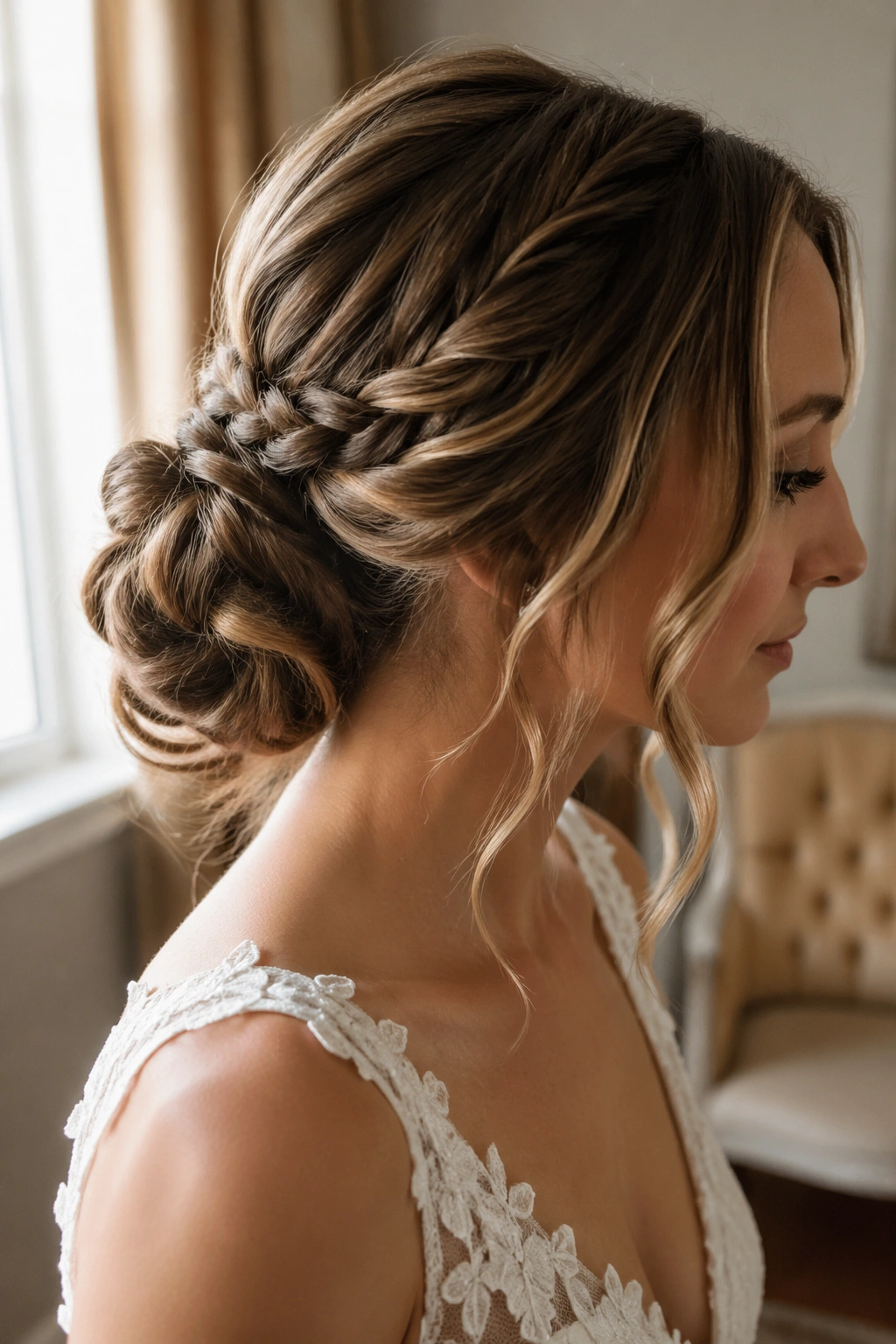
A low braided bun gives medium-length hair more texture than a plain bun, which is helpful because shoulder-length waves can sometimes look too compact when they’re gathered at the nape. Braiding first adds grip and shape.
Start by making a low braid, then wrap it into a bun and pin it in a circle. Leave a few ends slightly loose if the hair doesn’t reach cleanly; that little bit of softness is fine. The style should look contained, not tight.
This one is a strong match for gowns with intricate backs, because the hair stays off the shoulders and leaves the details alone. It also works well for brides who want a more traditional shape without sacrificing the movement that wavy hair brings. The braid gives the bun texture. The bun gives the braid a reason to be there.
15. Flipped-Under Ends with a Veil
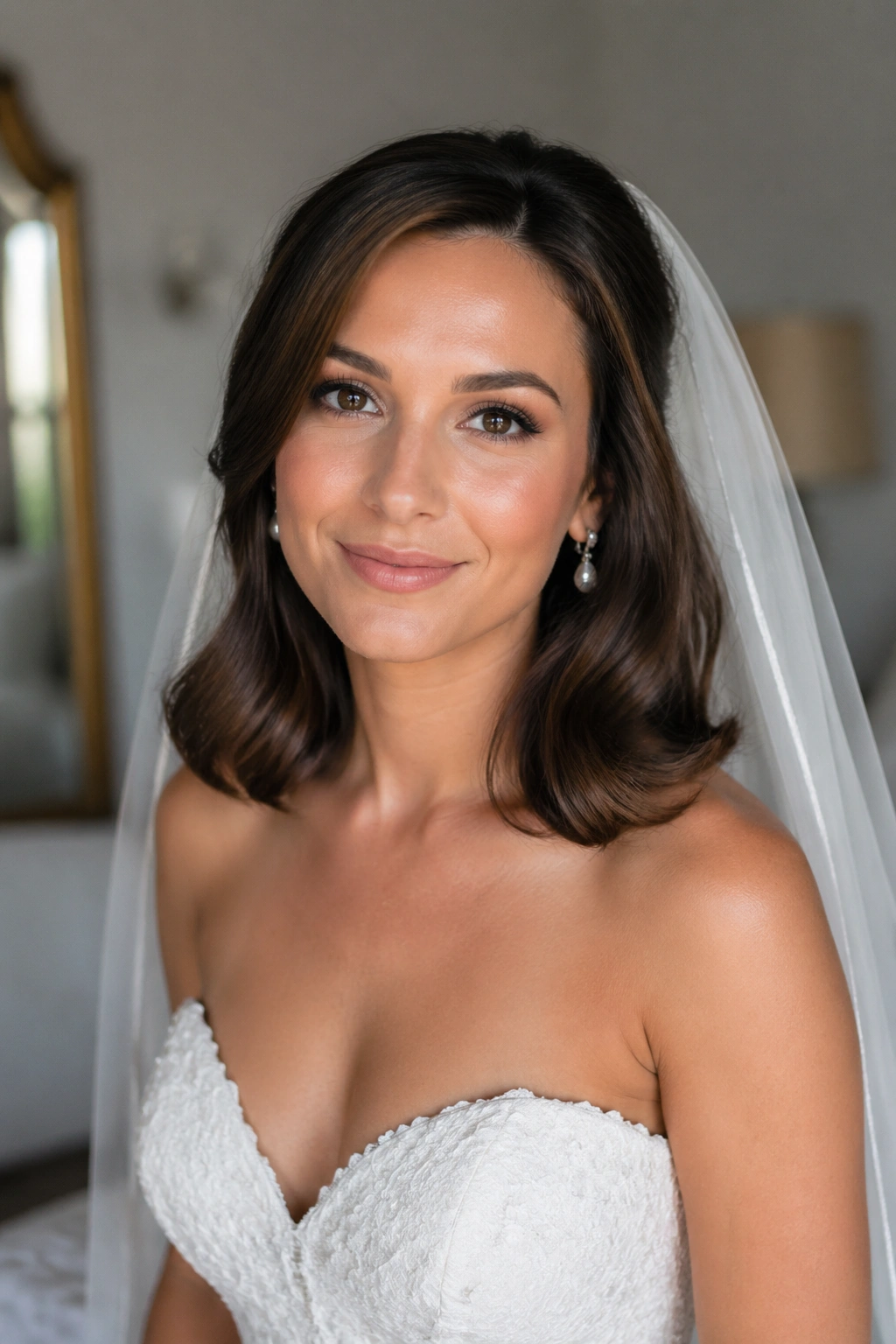
Flipped-under ends have a cleaner, more finished shape than loose curls, and they sit beautifully beneath a veil. Instead of curling the hair outward, turn the ends under with a round brush or large-barrel iron so the line feels rounded and neat.
This style is a smart choice when the veil attaches low or when the dress has a lot of structure. Loose ends can tangle with tulle. Flipped-under ends behave better and keep the silhouette tidy from the side.
There’s also something nice about the simplicity. Shoulder-length waves do not always need braids or pins to feel special. Sometimes the best move is making the shape look deliberate and letting the veil do its job. A satin-finish spray helps here, because overly crunchy hair can kill the soft edge.
16. Asymmetric Tuck
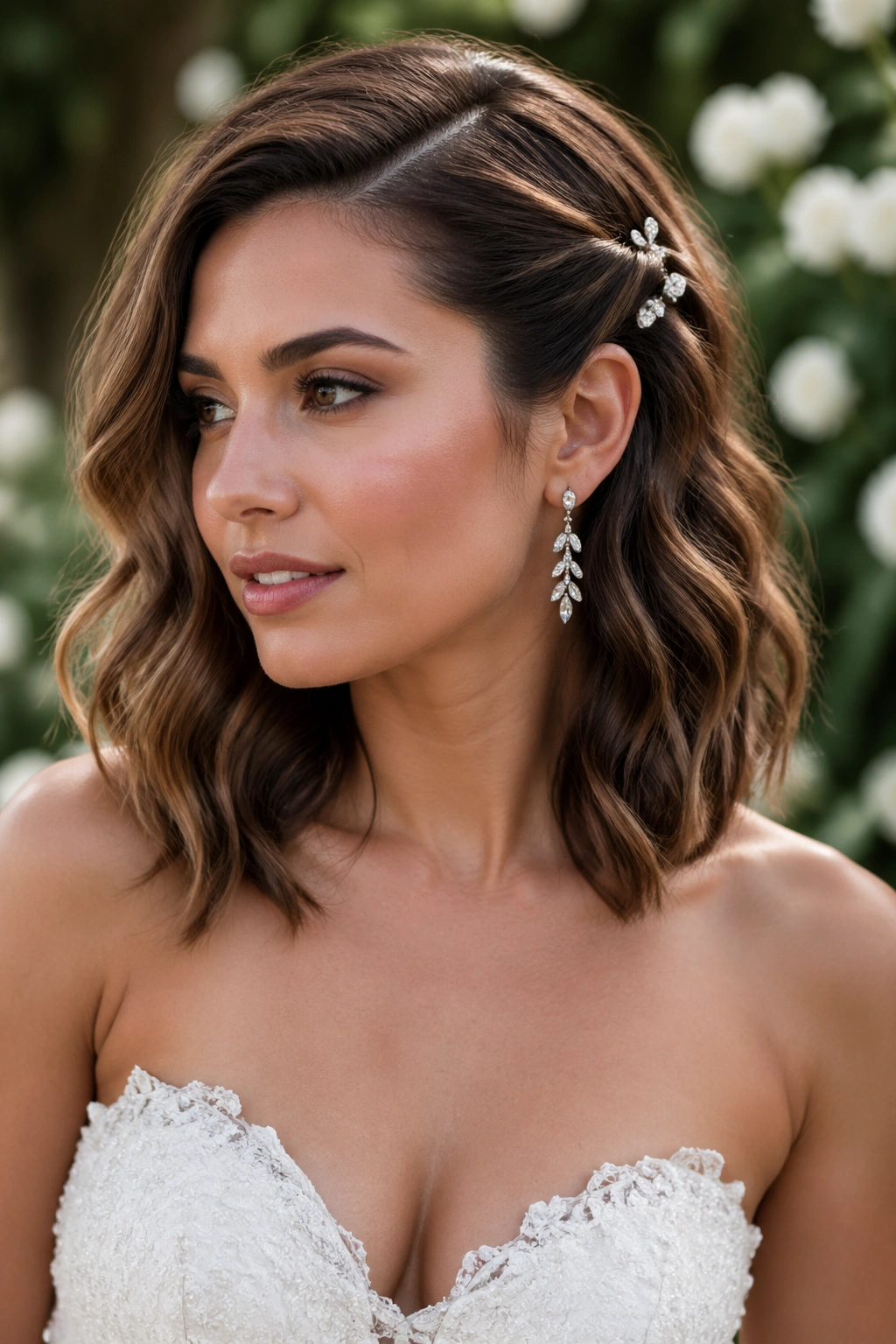
An asymmetric tuck is the kind of style that looks casual at first glance and then oddly sophisticated once you notice the shape. One side gets tucked behind the ear and pinned close to the head, while the other side stays loose and fuller.
What makes this work on shoulder-length hair is the contrast. The tucked side creates a clean line. The loose side gives movement. The eye naturally follows the shift, which makes the whole style feel a little more designed than a standard loose wave.
It’s a strong choice for brides wearing one-shoulder dresses or gowns with heavy detail on one side. The hair echoes that imbalance instead of fighting it. If you want the style to hold through a long event, spray the tucked side first, pin it flat, then add the waves after. That order matters.
17. Floral Vine Waves
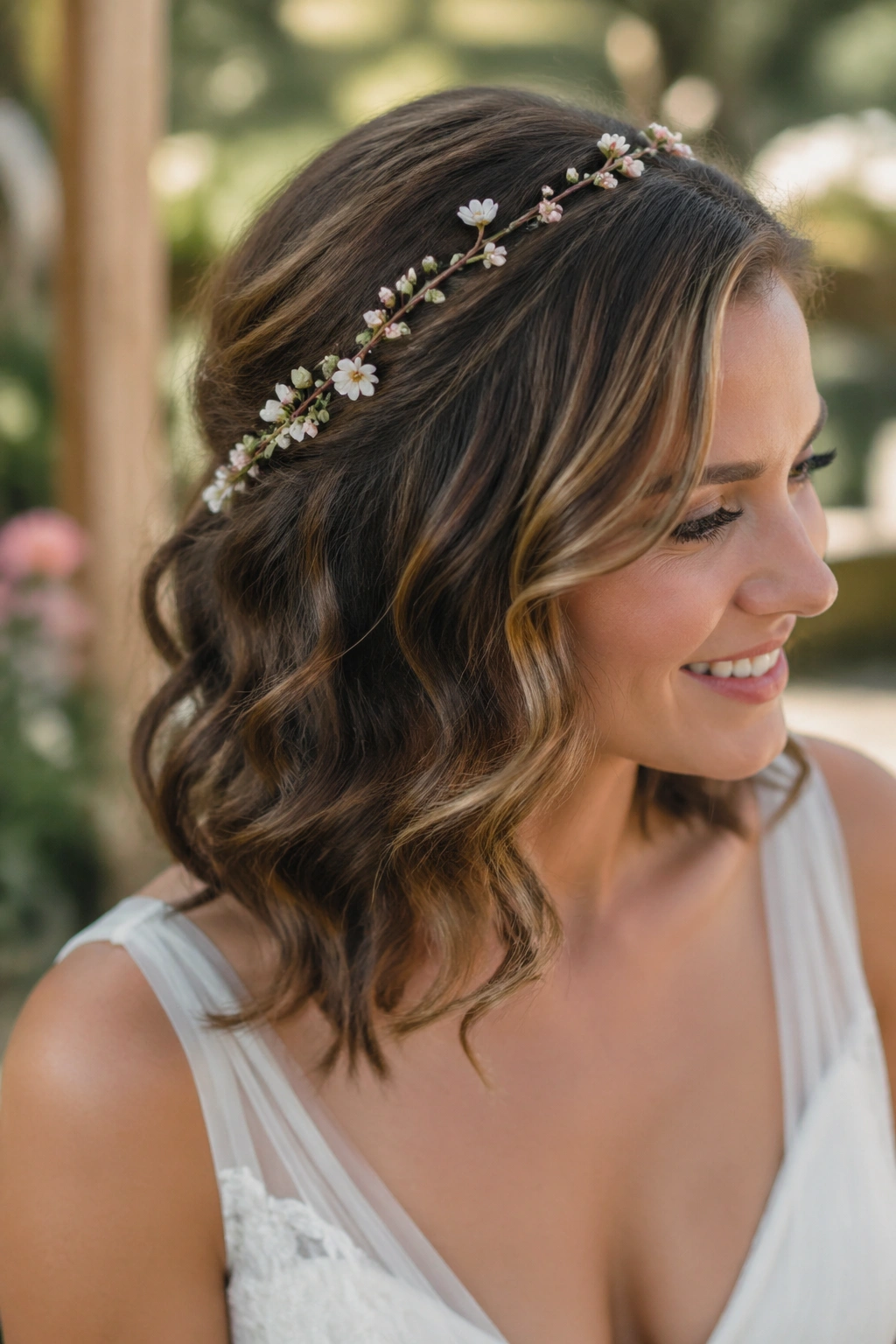
Floral accessories can look sweet in the wrong hands. The trick is using them as a line, not a bouquet. A thin floral vine tucked into shoulder-length waves works best when the blooms are small and the spacing is irregular.
Run the vine from one side of the crown into the back, then anchor it with hidden pins at two or three points. Keep the waves soft and not too tight, so the flowers sit inside the hair rather than on top of it. Fresh flowers are beautiful, but they need to be sturdy enough to survive the day. Faux blooms often hold up better.
This style suits outdoor weddings, garden settings, or brides who want a softer, more natural look. I like it most when the dress is simple and the hair needs one gentle detail. Too many florals can tip into costume territory. One line of flowers usually says enough.
18. Vintage Pin Curl Blend
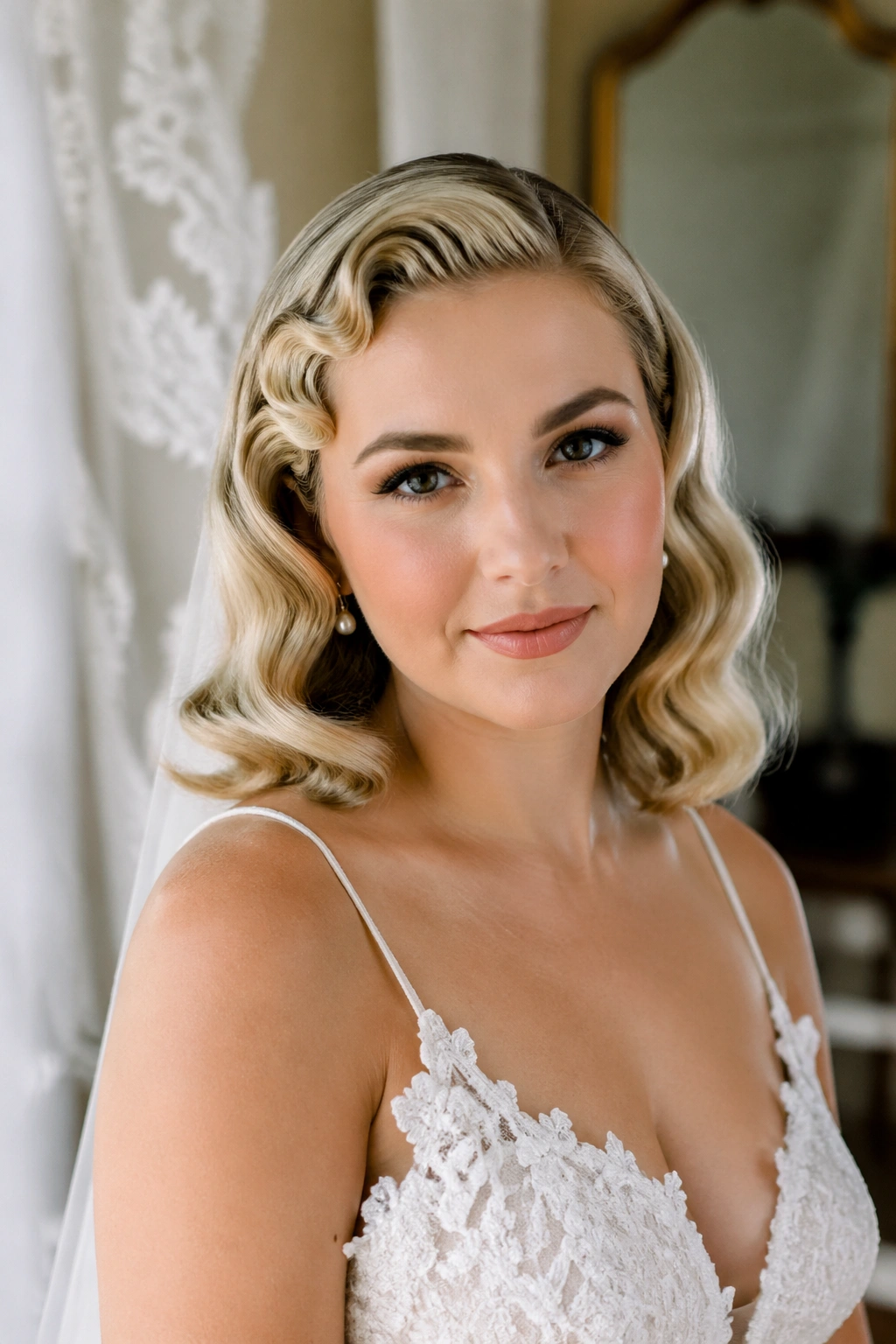
Pin curls give shoulder-length wavy wedding styles a little old-school structure, and they can be mixed with looser waves so the final look feels layered rather than stiff. The front sections are the best place to use them.
Set one or two face-framing curls into rolled shapes, pin them flat while they cool, then brush the rest into soft waves. The contrast between the sculpted front and the looser lengths is what makes this work. It’s a little more styled than a regular wave set, but not as rigid as a full vintage updo.
This is a lovely choice for brides who love retro details, especially with cat-eye liner or a lace dress that nods to another era. The style also behaves well in photos because the front stays defined. That matters. A lot of bridal hair looks fall apart at the face first.
19. Sleek Root, Loose Wave
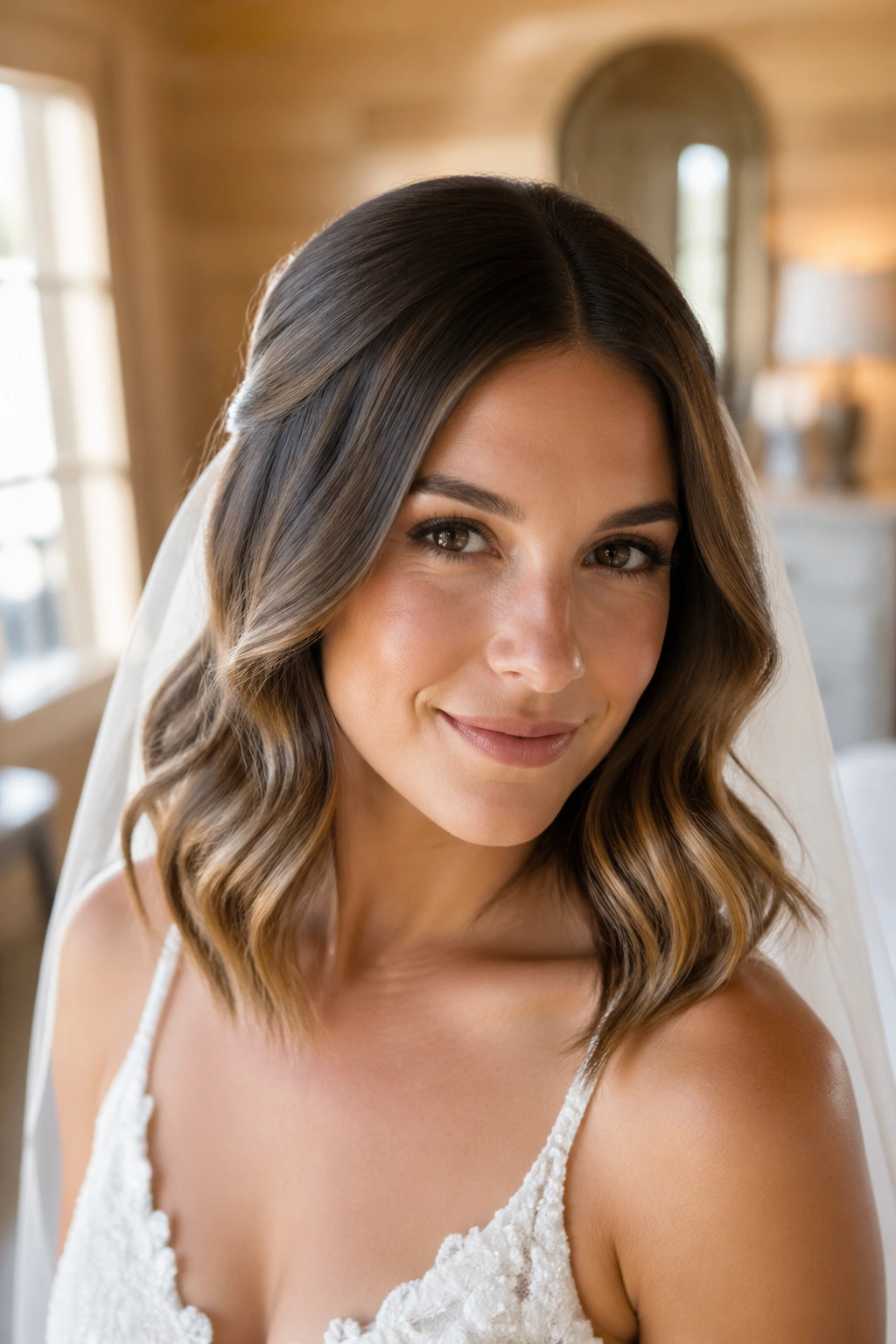
This one is all about contrast. The roots stay smooth and controlled, while the mid-lengths and ends carry soft waves. On shoulder-length hair, that mix can look clean and expensive, though I dislike using that word unless the hair is actually polished.
Blow-dry the crown flat, add a touch of serum, then wave the lower half with a curling wand. Brush the waves out so they sit in broad bends rather than tight curls. The result should look intentional, not overworked.
It pairs well with minimalist dresses, sharp tailoring, and brides who want makeup or jewelry to do more of the talking. Also, if the hair tends to puff at the roots, this style is a lifesaver. Keep the top smooth and you remove half the battle before it starts.
20. Rope Braid Half Halo
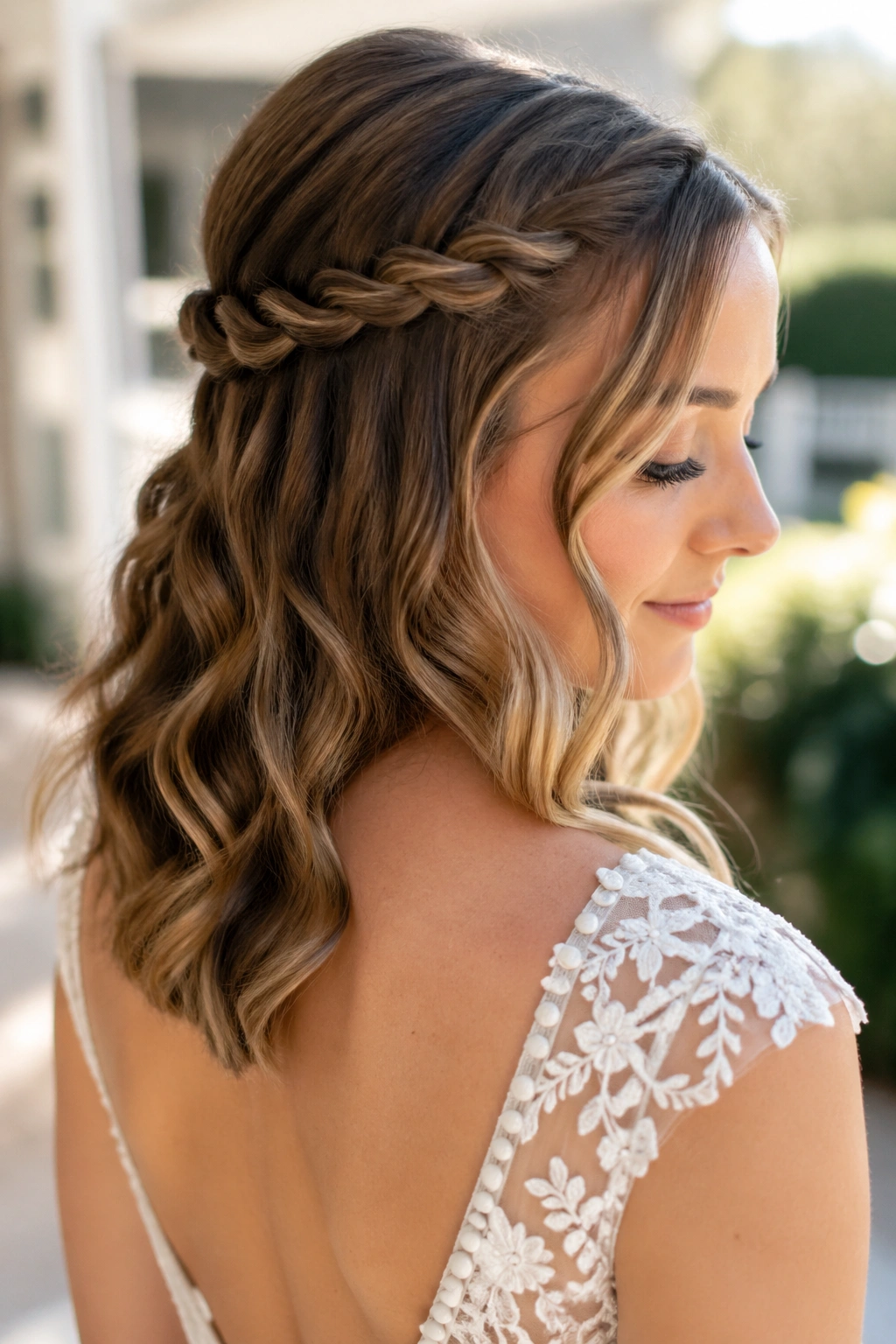
A rope braid half halo is a nice compromise between fully braided and fully loose. You twist two sections around each other from one side of the head to the other, pin them at the back, and let the waves fall below.
The rope twist has a softer look than a tight braid, which suits shoulder-length hair well. It keeps the upper half neat while leaving the rest open. That makes the neckline visible, but not bare.
This style works beautifully with slightly textured waves because the braid and the lengths share the same relaxed mood. If the hair is too silky, prep it with a light dry texture spray before twisting. Otherwise the rope braid can slide out. It’s one of those small details nobody sees, but you’ll feel the difference if you skip it.
21. Messy Polished Bun
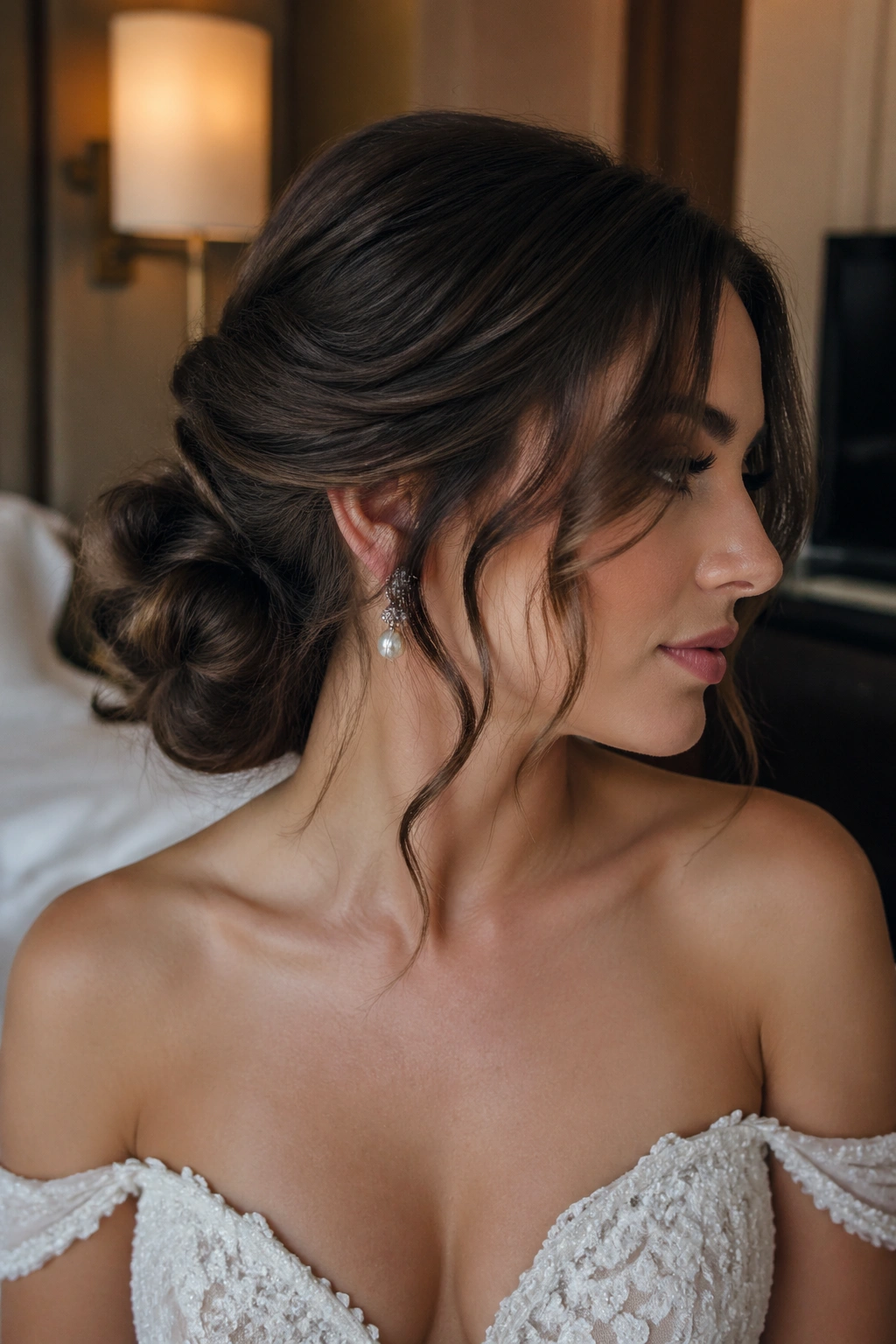
A messy polished bun sounds contradictory, and that’s what makes it useful. The bun itself should be secure and shaped, but the outer pieces are left soft so the style doesn’t look frozen in place.
Gather the hair low, twist it into a bun, and pull out a few wave pieces around the face and ears. The bun should have visible texture, not a smooth doughnut look. On shoulder-length hair, the natural bend helps a lot here because the pieces don’t have to be forced into shape.
This is a good choice for brides who want movement but need the hair off the shoulders for a dress detail. It also works when the weather is a little humid, because the slightly undone finish hides small frizz better than a perfectly sleek bun would. Perfection, in this case, is overrated.
22. Side-Swept Glam Fringe
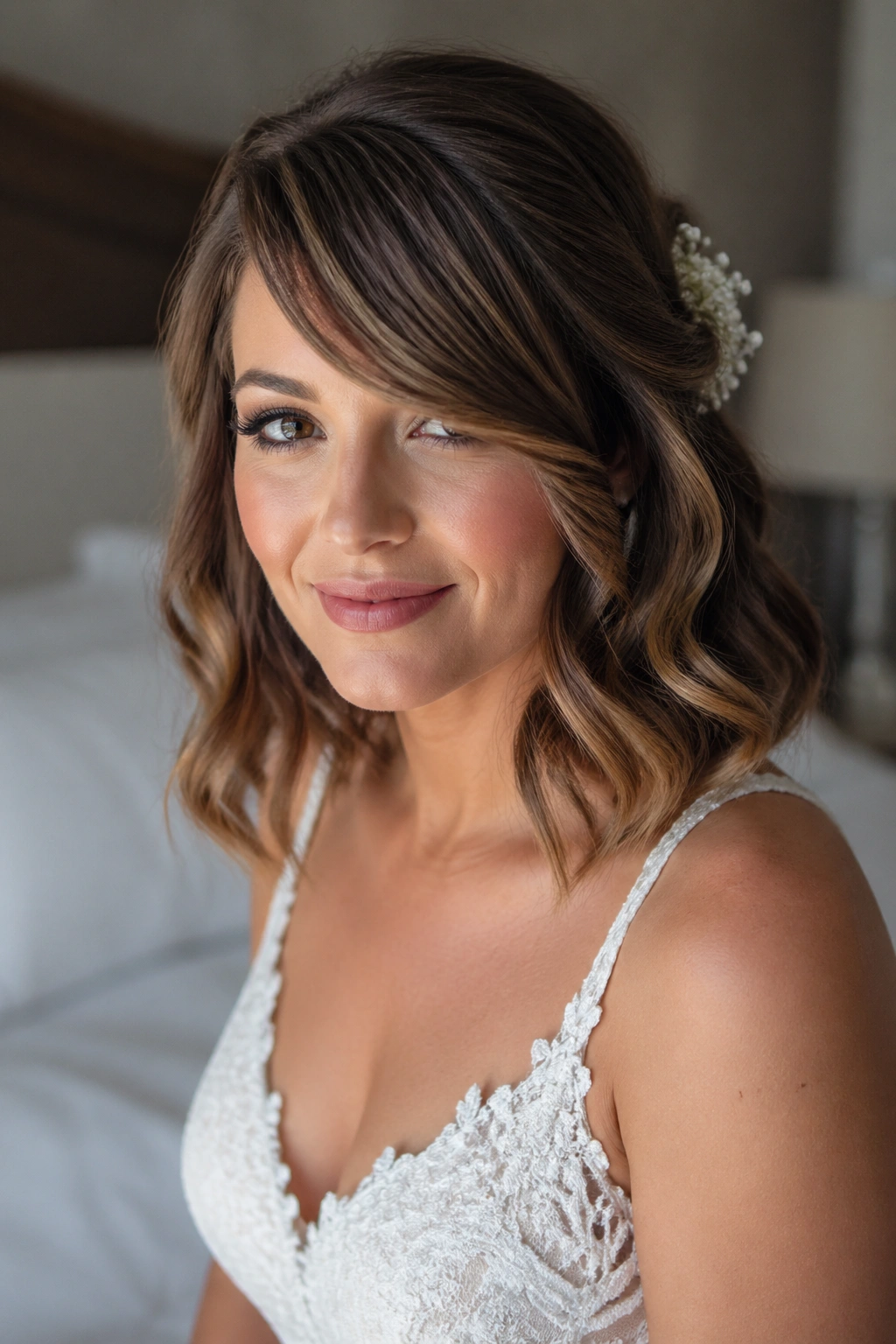
A side-swept fringe can turn shoulder-length wavy hair into something softer and more dramatic at the same time. The front section crosses the forehead at an angle, then blends into the side waves so the whole style feels connected.
This works especially well if the bride has curtain bangs, grown-out fringe, or face-framing layers. Those pieces get a lot of mileage on a wedding day. Curl them away from the face, then brush them across so they sit in a long sweep instead of breaking into separate chunks.
The payoff is clean structure around the eyes. It draws attention upward, which helps if the dress has a lower neckline or if you want the eyes and cheekbones to carry the styling. I’d keep the rest of the hair medium-soft, not too glossy, so the fringe remains the focal point.
23. Minimalist Bobby-Pin Architecture
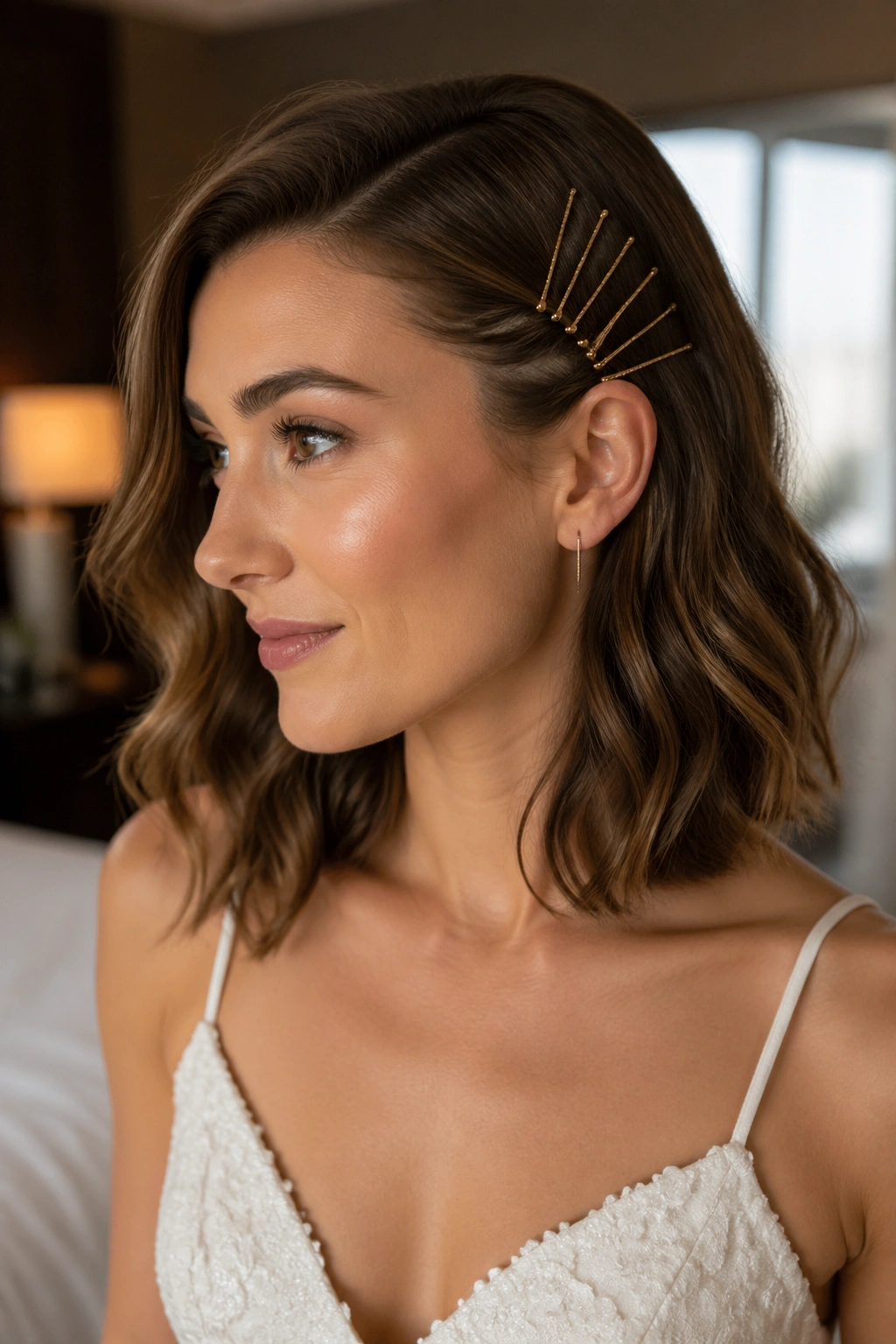
If pearls and flowers feel too sweet, bobby pins can become the design. Place a few gold or silver pins in a deliberate line or crisscross pattern above one ear, then let the rest of the shoulder-length waves fall loose.
The trick is spacing. Pins need room to breathe. A tight cluster looks like an afterthought; a geometric arrangement looks like a choice. This style is especially good on hair with a smooth wave pattern because the pins get to stand against that movement.
I like this for modern dresses, city weddings, or brides who want something subtle but not plain. It’s also practical. The pins actually hold the hair, which is more than can be said for some decorative clips that look lovely and do very little. Style and function don’t have to fight here.
24. Loose Waterfall Braid
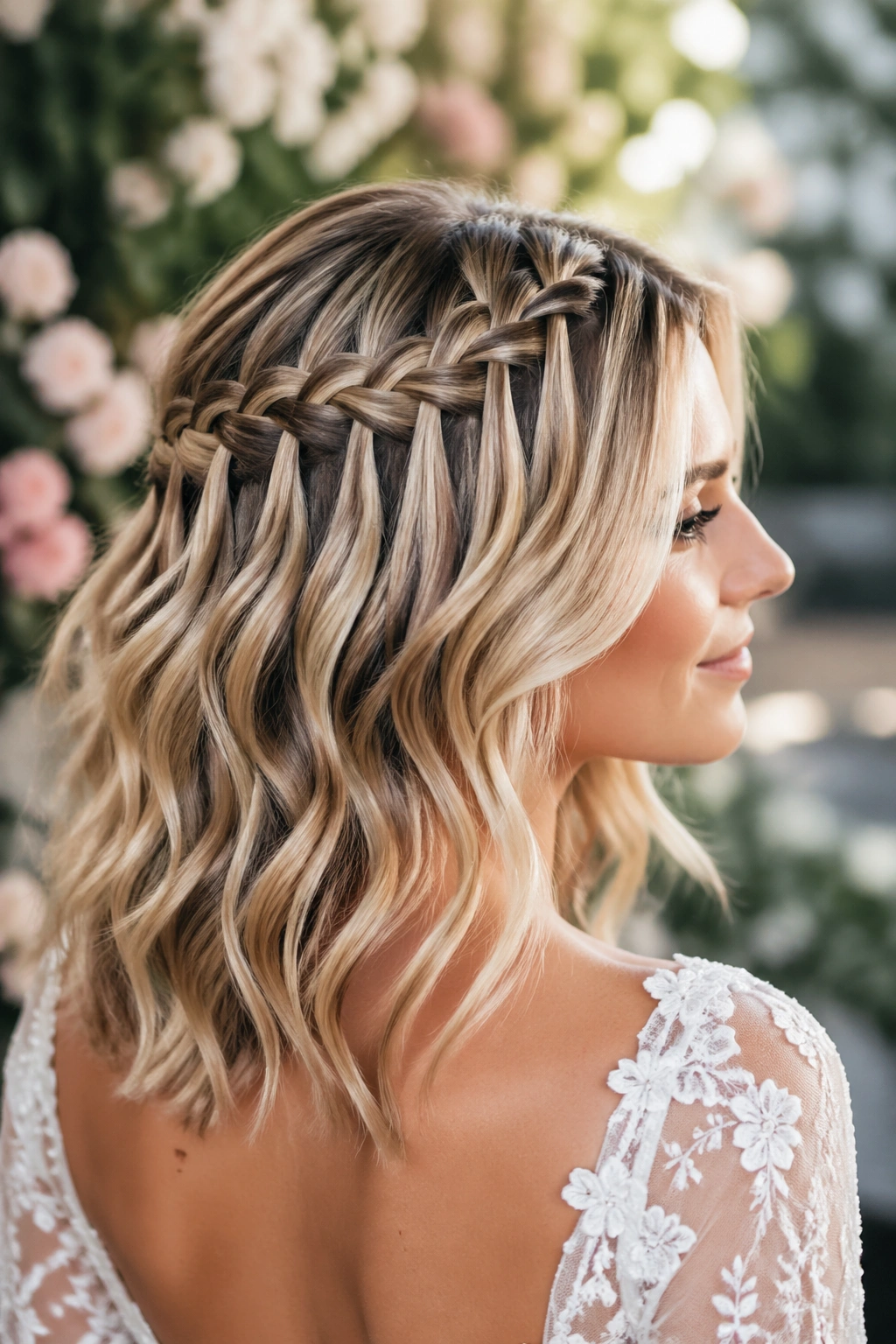
A waterfall braid brings motion to shoulder-length wavy hair without taking away too much length. That matters, because a heavy braid can swallow a medium cut whole. A loose waterfall pattern keeps the crown detailed and the ends free.
Braid across the back or slightly off-center, dropping small sections through the weave so the hair falls like a soft curtain. The braid should stay airy and slightly imperfect. If it’s pulled too tight, the effect gets fussy fast.
This style is especially pretty for brides who want a romantic look with a little visible technique. It works with floral dresses, soft sleeves, or any gown that already feels a bit dreamy. The braid is the frame. The waves are the painting, if you want to be a little poetic about it.
25. Veil-Ready Smooth Waves
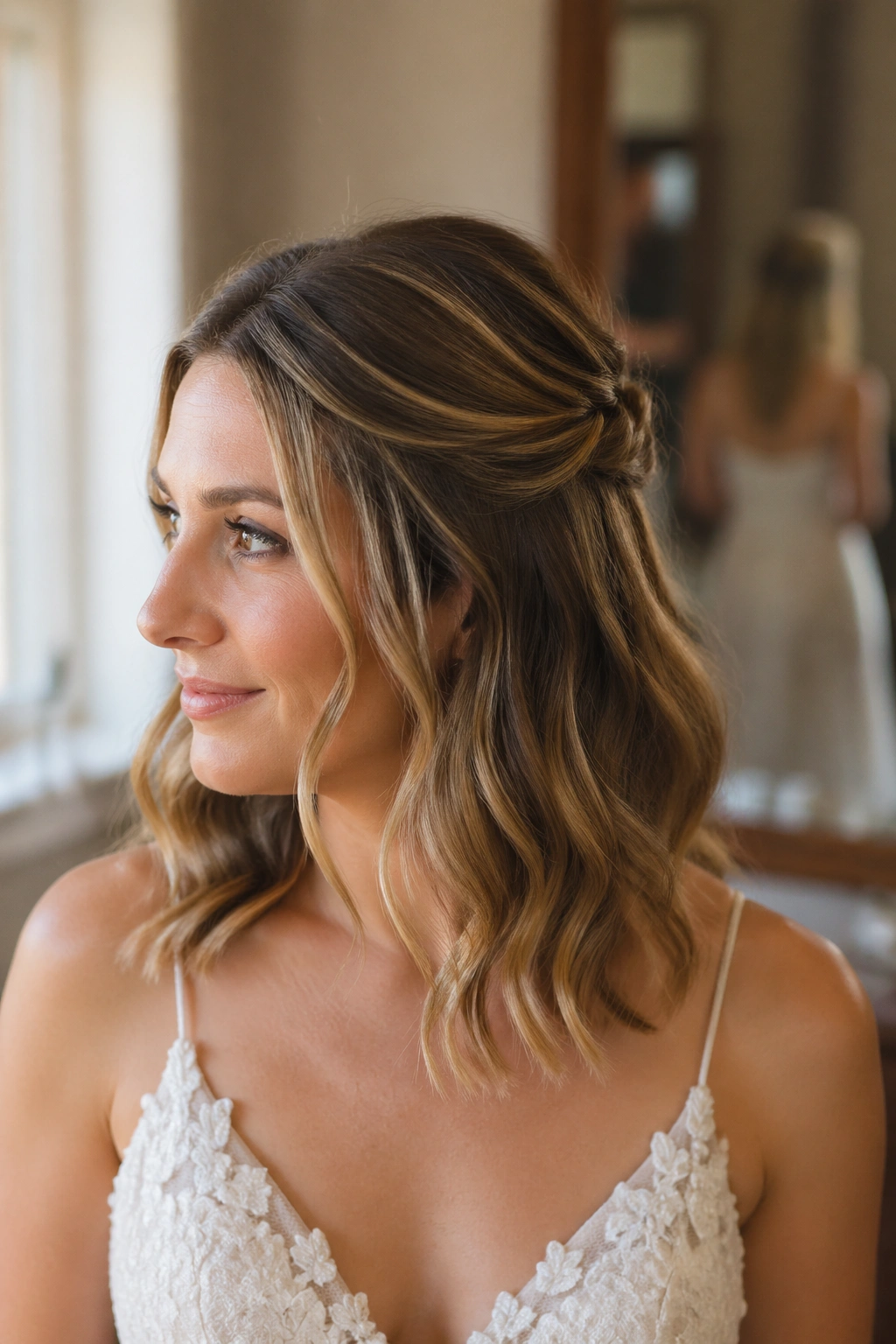
When the veil matters, the hair needs to cooperate. Smooth shoulder-length waves are one of the best answers because they leave a clean anchor point at the crown and still look lovely once the veil comes off.
Set the waves with a medium barrel, brush them into broad bends, and keep the top section smooth so the veil comb can sit securely. If the veil is heavy, a hidden backcombing pad or a few crossed pins under the attachment point will stop slippage. That part is boring, but boring is good when the veil has to stay put.
This style works for brides who want flexibility. It can look formal with the veil in place and soft afterward, which is a nice change during the reception. Shoulder-length hair doesn’t need a giant structure to feel bridal. Sometimes the cleanest shape is the strongest one.
