



A sleek middle part ponytail can change a face fast. On Black women, it sharpens cheekbones, lengthens the neck, and makes the whole look feel intentional without asking for a full install or hours in the chair. The part matters more than people think. If it drifts even a little, the style loses that crisp, centered line.
What makes the look work is not stiffness. It is a neat center part, a smooth base, and a finish that matches your hair — silk-pressed, blown out, braided down, curly, coily, or built with extensions. A rat-tail comb, edge control, a light mousse, and a satin scarf can do more for this style than a pile of random products.
Some ponytails sit low and quiet. Others sit high and sharp. A few lean braided or curly, which is where the style gets fun. The best version is the one that works with your density, your hairline, and how much time you want to spend smoothing the roots.
The 30 looks below cover the clean basics, the dressier versions, and the ones that are easier than they look. One of them is probably the one you’ll keep coming back to.
1. Classic Low Sleek Middle Part Ponytail
The classic low sleek middle part ponytail is the one style that never looks like a compromise. It sits at the nape, keeps the face open, and lets your earrings, neckline, or makeup do some work without competition.
Smooth the roots in sections with a soft brush, then press the center part flat with a small amount of edge control or gel. Tie it low with a snag-free elastic, wrap a thin strip of hair around the base, and mist the length with a light shine spray. You want polished, not helmet-hard.
That tiny wrapped base matters more than people expect.
2. High Snatched Middle Part Ponytail
Want the same clean middle part with more lift? Pull it higher, right to the crown, and the whole look changes. Your cheekbones seem sharper, your jawline gets a little more space, and the style picks up a bit of attitude.
Use a tail comb to map the part first, then brush the hair upward in small sections so the sides stay smooth. A high ponytail needs tension, but not the kind that makes your temples ache by lunchtime. If your edges are tender, set the crown with mousse and give yourself a softer pull.
- Best when you want your face to look lifted.
- Works well with hoop earrings or a high-neck top.
- Keep the elastic about 1 to 2 inches above the crown for balance.
3. Waist-Length Straight Middle Part Ponytail
Picture a waist-length ponytail brushing the back of a blazer. That’s the mood here. Long, straight length makes the center part look even cleaner because the eye follows one straight line from forehead to ends.
A silk press gives the smoothest blend, but a good straight extension ponytail can do the same job if your roots are neatly laid down. The trick is blending the first 2 inches at the base so it does not look pasted on. I like a flat iron pass only where it helps the crown sit flat. The ends can stay sleek and blunt.
Keep a heat protectant on hand. It’s not optional.
4. Curled-Ends Center Part Ponytail
Straight ends are not the only polished finish, and sometimes they feel a little stiff. Curled ends soften the whole ponytail without messing up the clean middle part, which is why this version shows up so often for dinners, weddings, and big meetings.
A 1-inch to 1.25-inch curling iron gives the ends a neat bend. If you are using extensions, you can set the last 4 to 6 inches on flexi rods or pin curls and let them cool before brushing lightly. The front stays smooth; the tail gets a little bounce.
Why It Works
The curl at the bottom keeps the style from looking heavy. It also makes longer ponytails move better when you walk, which sounds small but matters a lot in person.
5. Bubble Middle Part Ponytail
The bubble ponytail has a springy feel the minute the elastics start going in. It still reads sleek at the roots, but the sections along the length give it shape and a little rhythm.
Tie the ponytail first, then add clear elastics every 3 to 4 inches down the length. Tug each section gently so it rounds out instead of hanging flat. Keep the crown smooth and flat before you start; if the roots puff, the bubbles look messy instead of playful.
- Use small, clear elastics if you want the cleanest finish.
- Space the ties evenly so the bubbles look balanced.
- Pinch each bubble from the sides, not the front, to keep the shape round.
6. Braided Low Ponytail
Braids change the whole mood. A sleek middle part feeding into a single thick braid gives you a ponytail that feels neat, secure, and a little more grounded than loose lengths.
This works especially well when you want a style that lasts through a long day without falling apart at the ends. Braid the tail all the way down once the base is tied, then secure the bottom with a small elastic. If your hair is thick, keep the braid sections even so it does not twist to one side.
It is one of the best choices when you want tidy, not fussy.
7. Feed-In Braid Ponytail
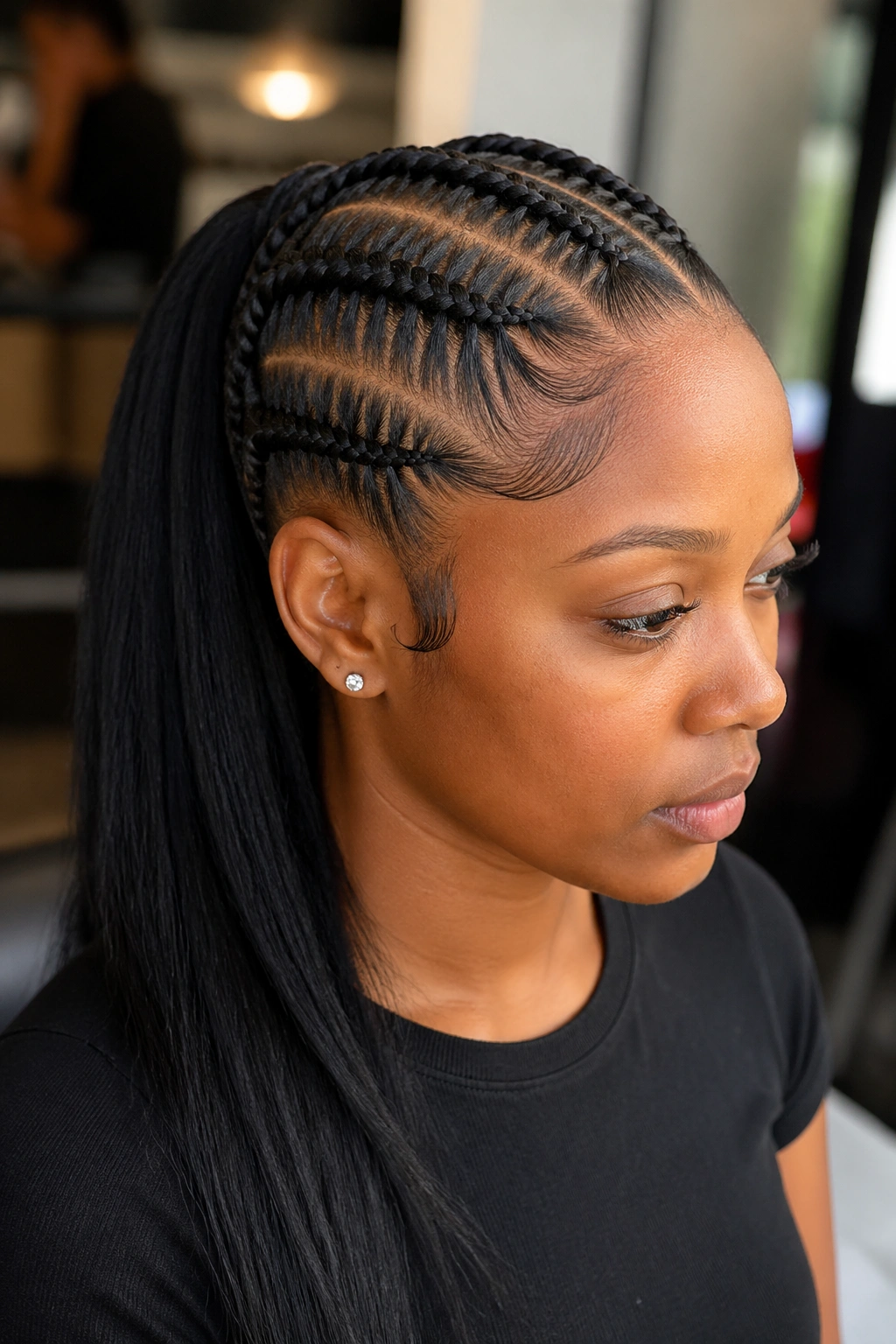
Three neat cornrows and a ponytail can carry a whole look. Feed-in braids give the middle part a sculpted feel, and they protect the hair while keeping the crown smooth.
Start with small sections at the front, then add hair gradually so the braids stay slim at the hairline and fuller as they move back. That gradual build is what makes feed-ins look clean. You can stop at two braids or go with four, depending on how much detail you want.
What to Watch For
- Keep the braids close but not tight enough to pull at the edges.
- Use mousse on the finished braids to calm flyaways.
- Wrap the ponytail base with a piece of braiding hair if you want extra polish.
8. Kinky Straight Ponytail
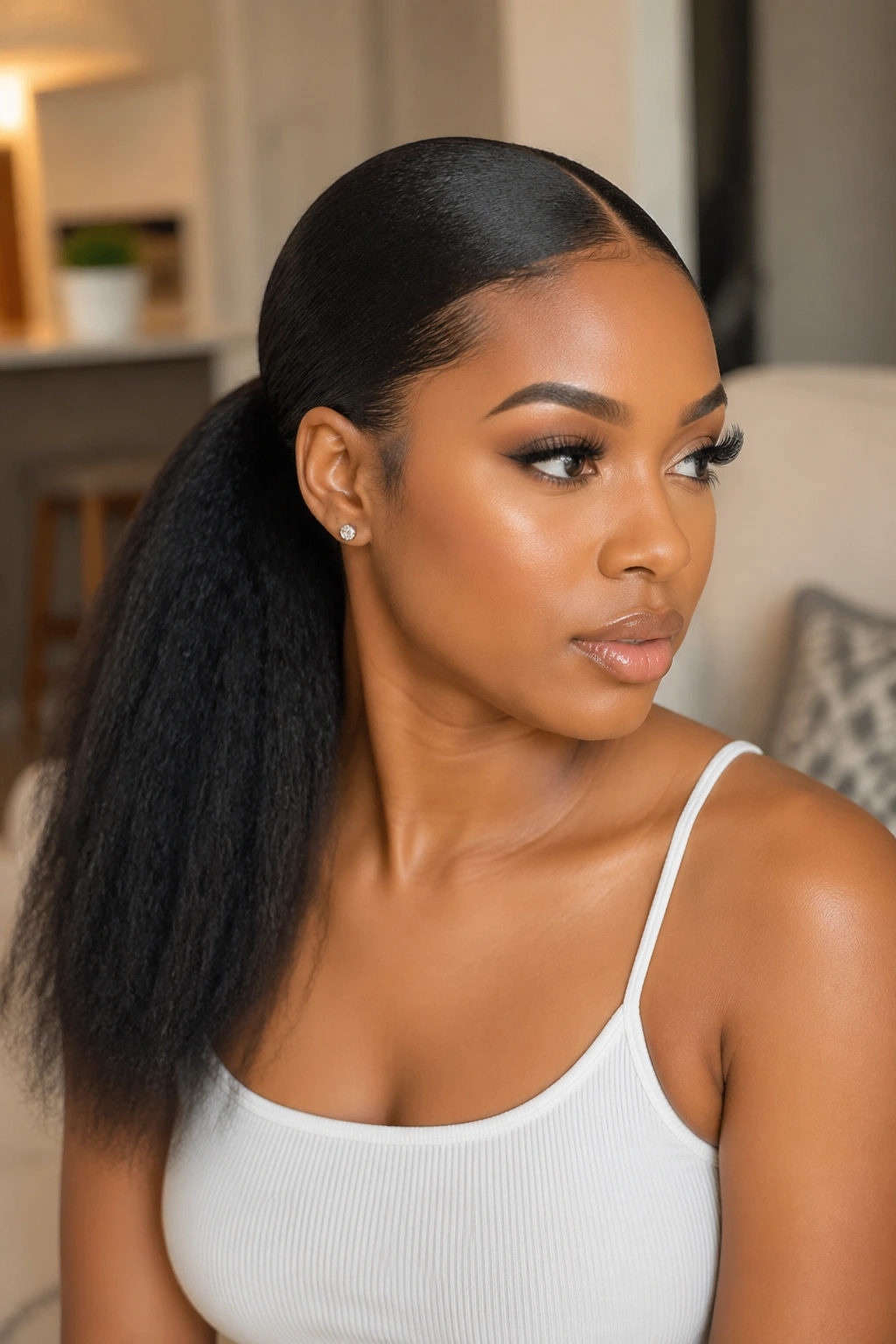
I reach for kinky straight ponytails when I want movement more than mirror shine. The texture looks closer to blown-out natural hair, which makes it easier to blend for Black women who do not want a pin-straight finish.
Why It Feels Different
Kinky straight has a soft, airy look that sits between polished and natural. It does not scream “silk press,” and that is the point. The hair moves more freely, and the finish feels less rigid than bone-straight extensions.
How to Style It
Use a light serum on the crown, not heavy oil. Heavy oil makes the texture collapse and look greasy at the part. If your own hair is blown out, match the extension texture to that dryness and fluff instead of trying to flatten everything beyond reason.
9. Defined Curly Middle Part Ponytail
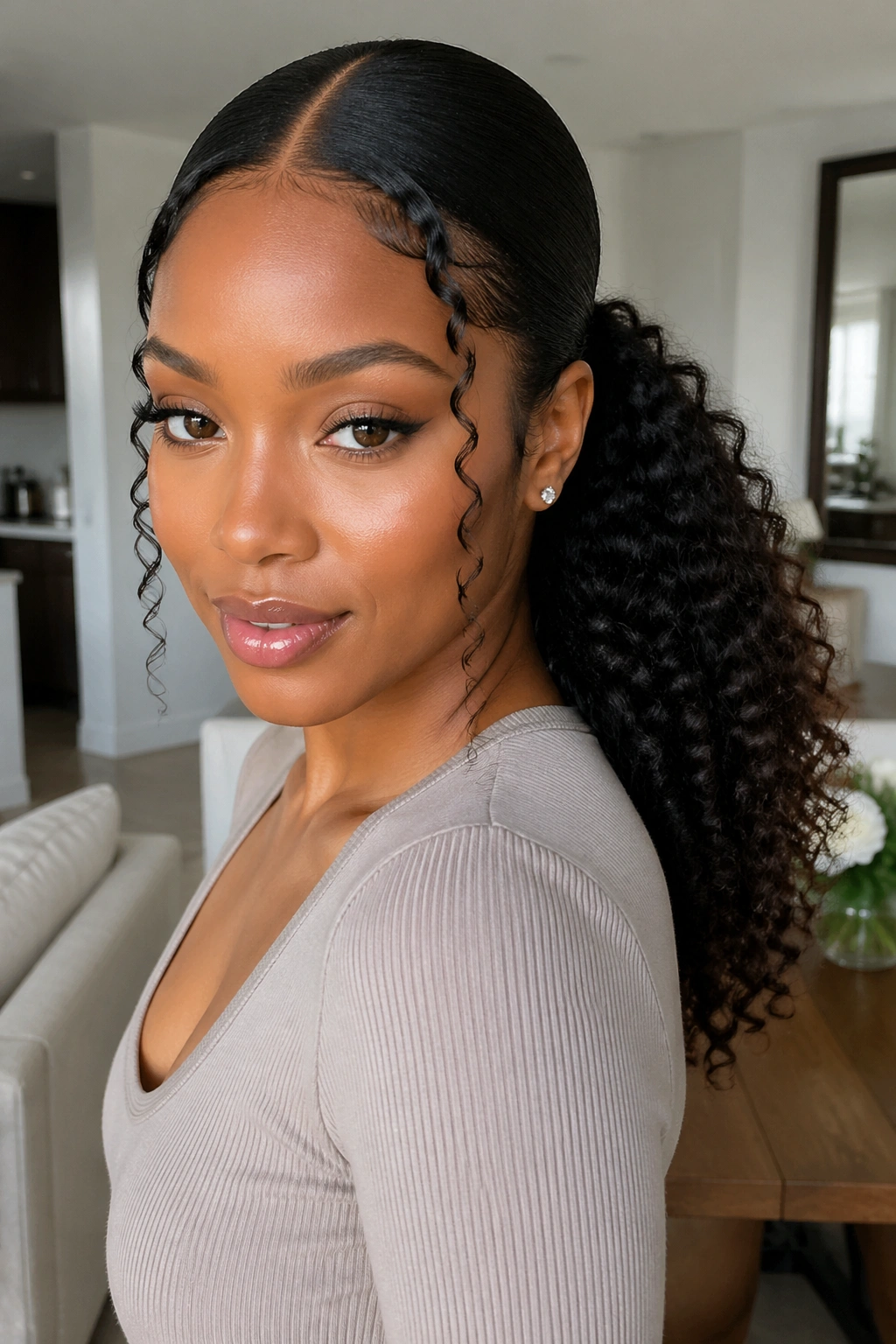
A defined curly ponytail gives you softness without losing the clean line at the front. That contrast is what makes it such a strong choice for special occasions, but honestly, it works any time you want the ponytail to feel fuller.
Keep the roots smooth and let the ponytail itself carry the curl pattern. If you are using extension hair, set the curls with a wand or small flexi rods so the ringlets are even. Do not brush the curls dry. That’s the quickest way to turn a crisp style into a frizzy one.
The top should look deliberate. The tail should look alive.
10. Wet-Look Middle Part Ponytail
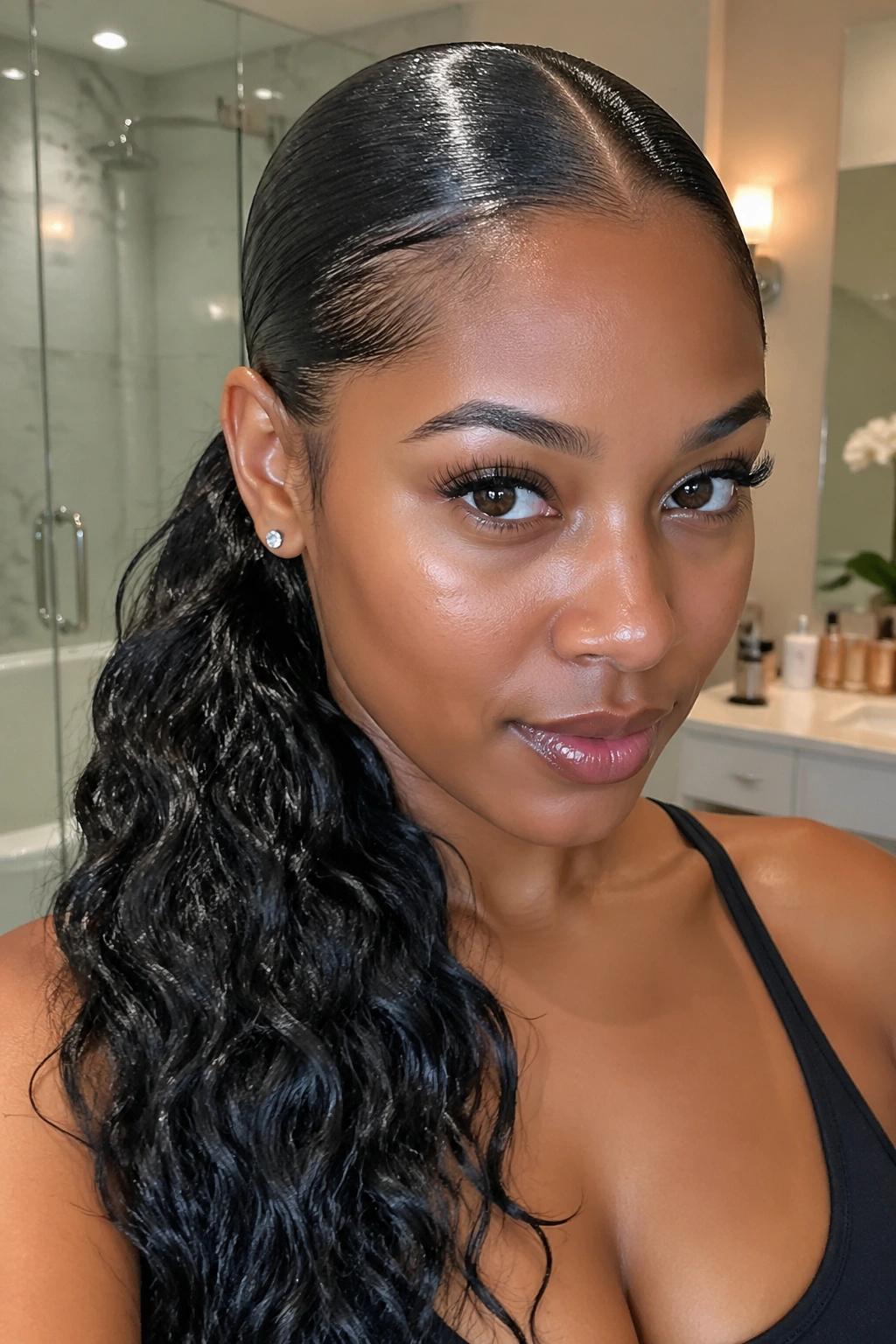
Want a finish that looks glossy and a little dramatic? The wet-look ponytail does that without needing extra length or fancy hair.
Start with a clean middle part, then work gel through the top section in thin layers. Add mousse after the gel if you want the front to stay soft rather than crunchy. A shine serum on the ponytail itself gives the length that slick, glassy look. Let it set under a satin scarf for 10 to 15 minutes before you move around.
- Gel first, then mousse if your hair likes softer hold.
- Use a toothbrush or tiny edge brush near the part.
- Keep the shine product away from the roots if your scalp gets oily fast.
11. Wrapped-Base Sleek Ponytail
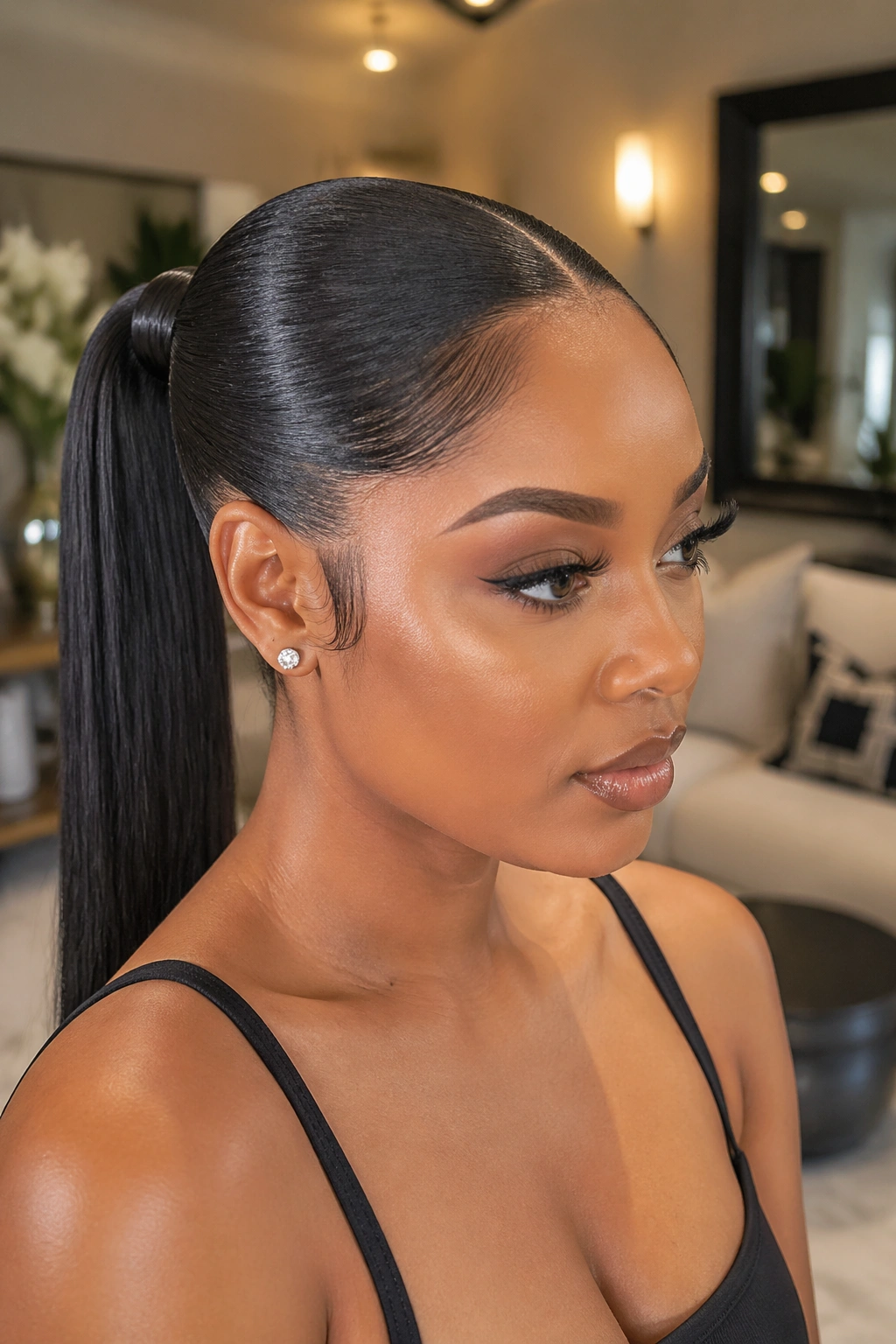
A wrapped base solves the little problem that makes many ponytails look unfinished: the elastic. Once the base is hidden, the style reads cleaner and more expensive, even if the rest is simple.
Use a narrow strip of hair from beneath the ponytail, wrap it around the elastic 2 or 3 times, and pin the end underneath with a bobby pin. If you want the look to stay tight, mist the wrap with a touch of holding spray before pinning. The wrap should sit flush, not lumpy.
A neat base changes everything. It really does.
12. Gold Cuff Middle Part Ponytail
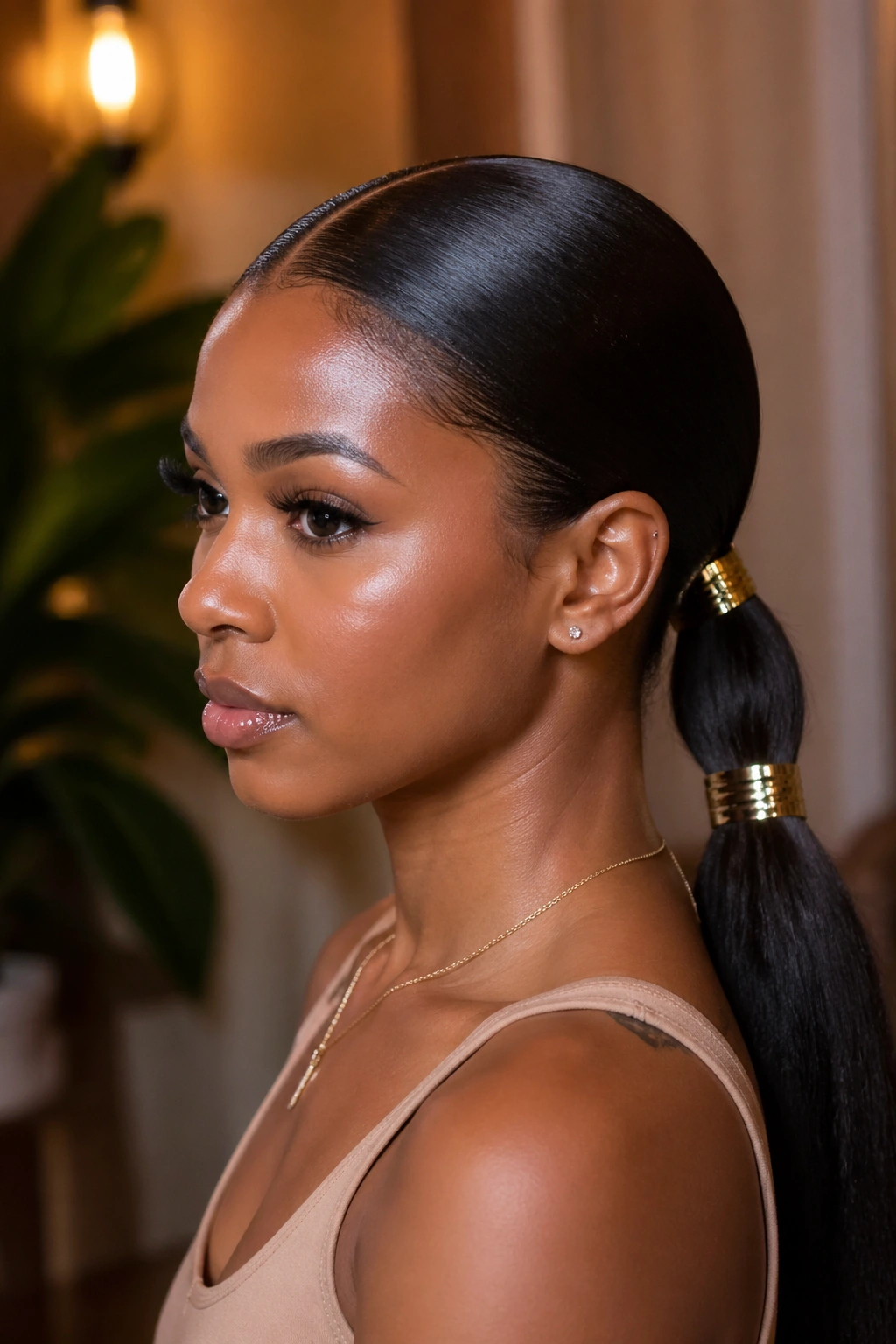
Gold cuffs can look expensive, or they can look crowded. The difference is usually restraint. One or two well-placed cuffs on a sleek middle part ponytail is enough to make the whole style feel finished.
This version works best on longer ponytails with a smooth surface, because the cuffs need something clean to sit against. Space them evenly, about 1.5 to 2 inches apart, and keep the rest of the style plain. If the base already has a wrap, skip extra jewelry there. Too many details near the scalp can make the look feel busy.
Use this when your outfit needs one sharp accent and nothing else.
13. Face-Framing Tendril Ponytail
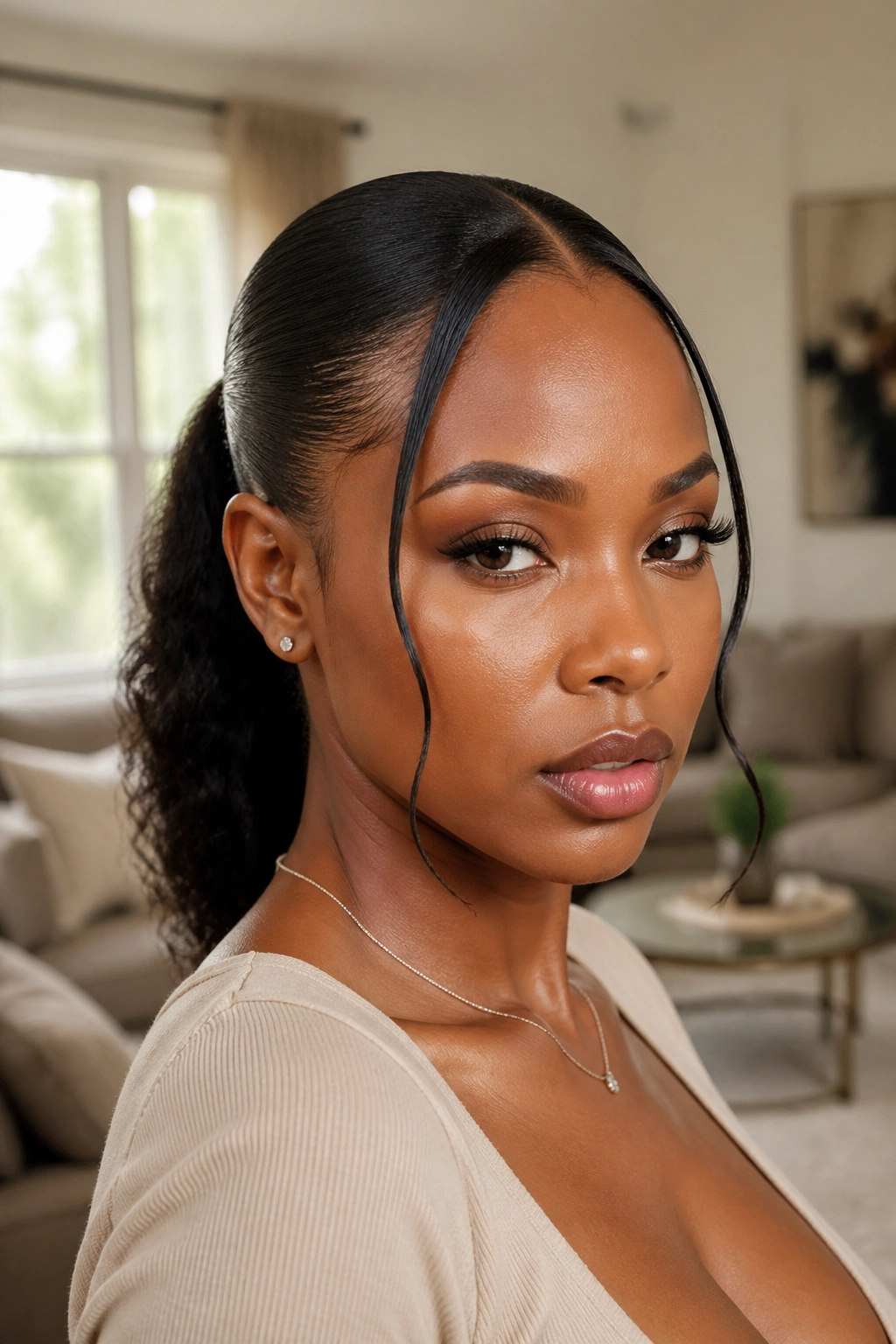
A few loose tendrils near the cheekbones soften the whole face. That small choice can take a strict middle part and make it feel friendlier, less severe.
Keep the center part clean, then leave two narrow pieces out at the front. Curl them with a small wand, or bend them with a flat iron if you want a softer wave. The tendrils should be slim, almost pinky-width. Big front pieces start stealing the spotlight and the style loses its polish.
This look is nice when you want structure, but not a hard line.
14. Blunt-Cut Ponytail
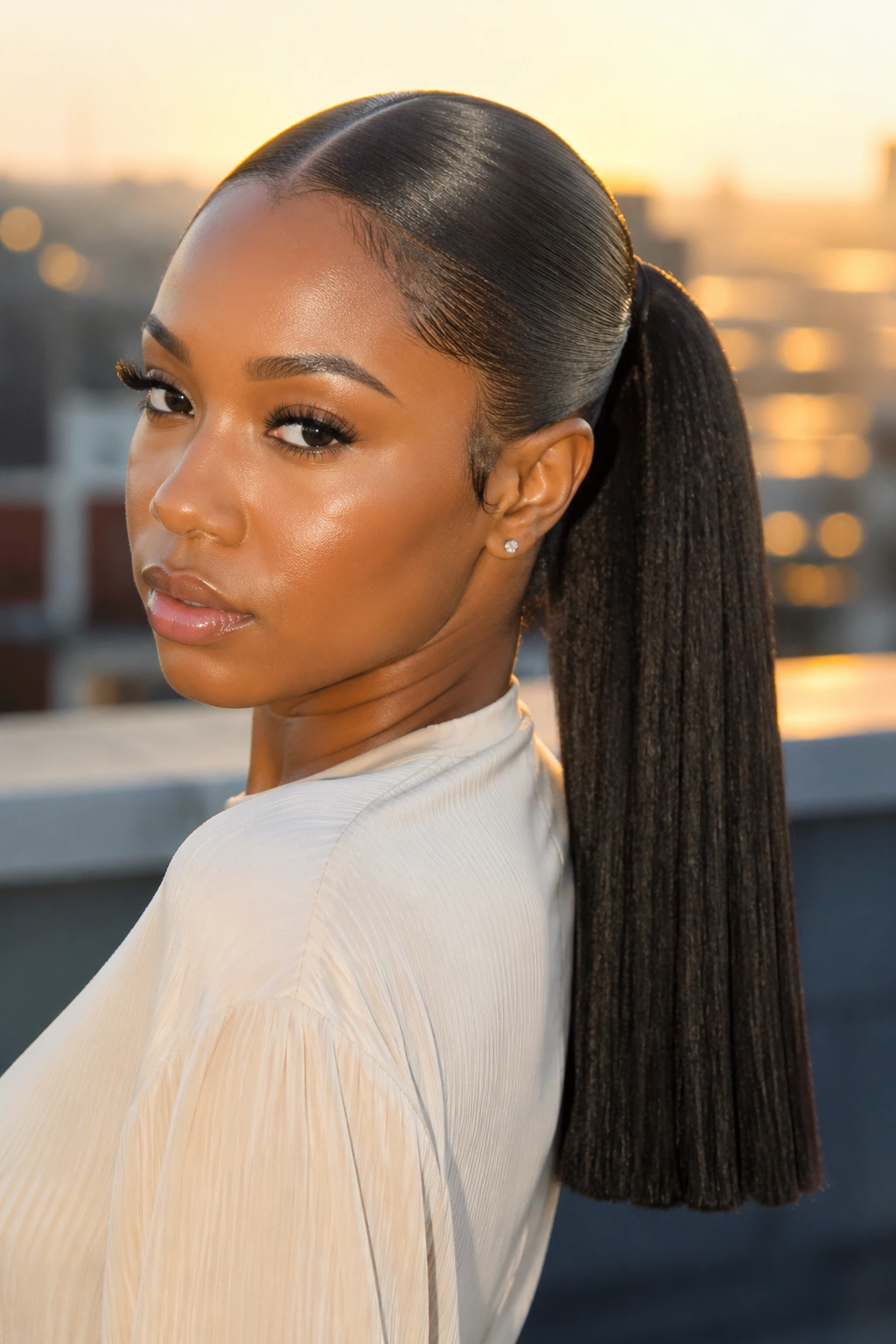
Sharp ends matter. A blunt-cut ponytail gives the style a graphic edge that feels strong, especially when the length is long and the roots are smooth.
The ends should be trimmed straight across, or at least shaped to look like they were. That clean finish makes the ponytail appear thicker and more deliberate. It is a good move for extensions, but it works on natural hair too if the length is even and healthy.
Best Pairings
- Clean neckline tops.
- Simple makeup with a defined lip.
- Large earrings that can hold their own against the straight shape.
15. Layered Extension Ponytail
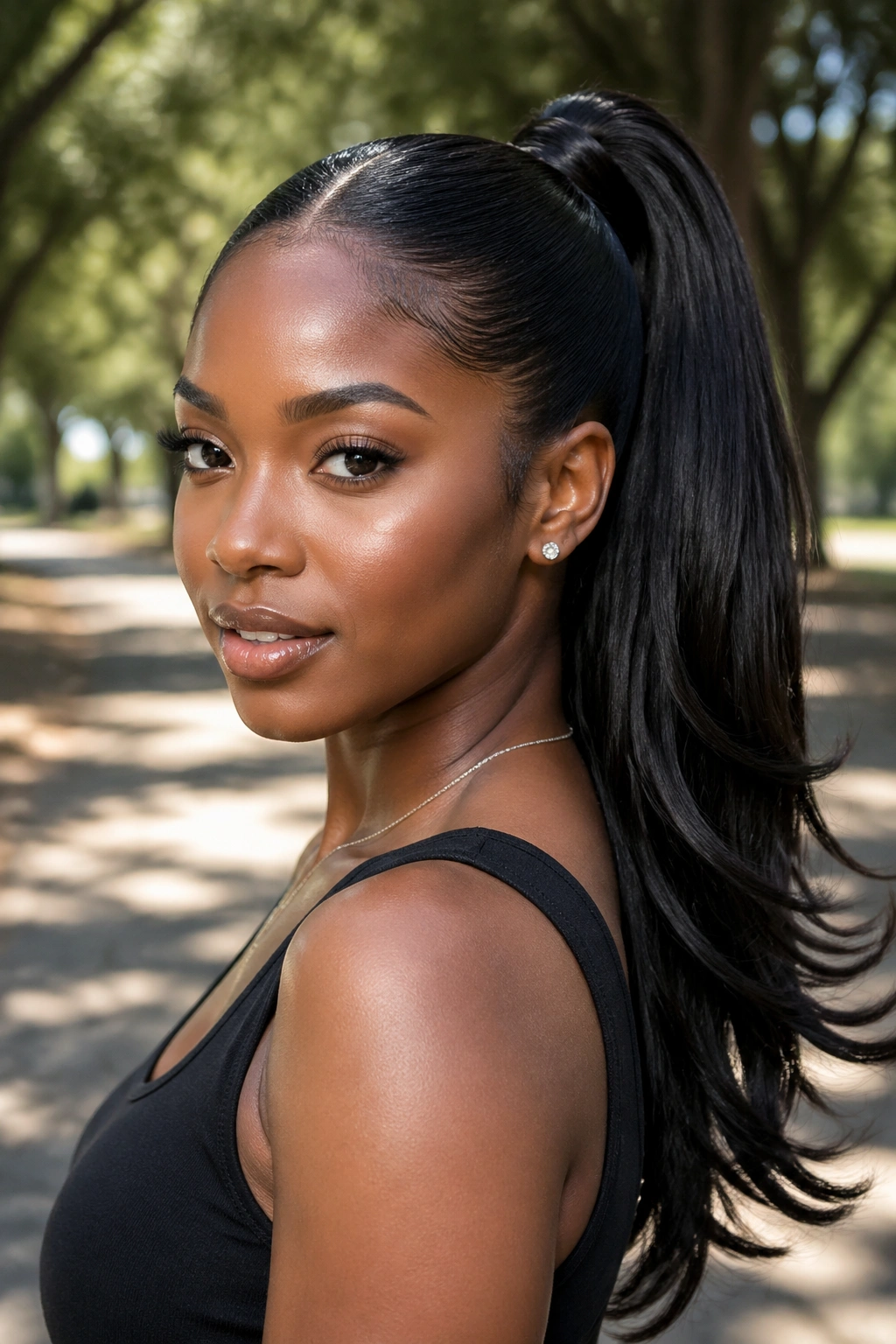
Two lengths are enough to change the shape. Layering inside a ponytail keeps it from hanging like one heavy curtain, and that tiny bit of movement makes a big difference when the hair is long.
Ask for internal layers that are a few inches shorter than the outer length if you are building the ponytail with extensions. That keeps the ends feathered instead of blunt all the way through. The crown still stays sleek, but the tail gets more swing when you turn your head.
The Trick
Layers work best when the base is smooth and the lengths are separated just enough to move. If the hair is too stiff, the layers disappear. If it is too thin, the style looks stringy.
16. Mid-Height Sleek Middle Part Ponytail
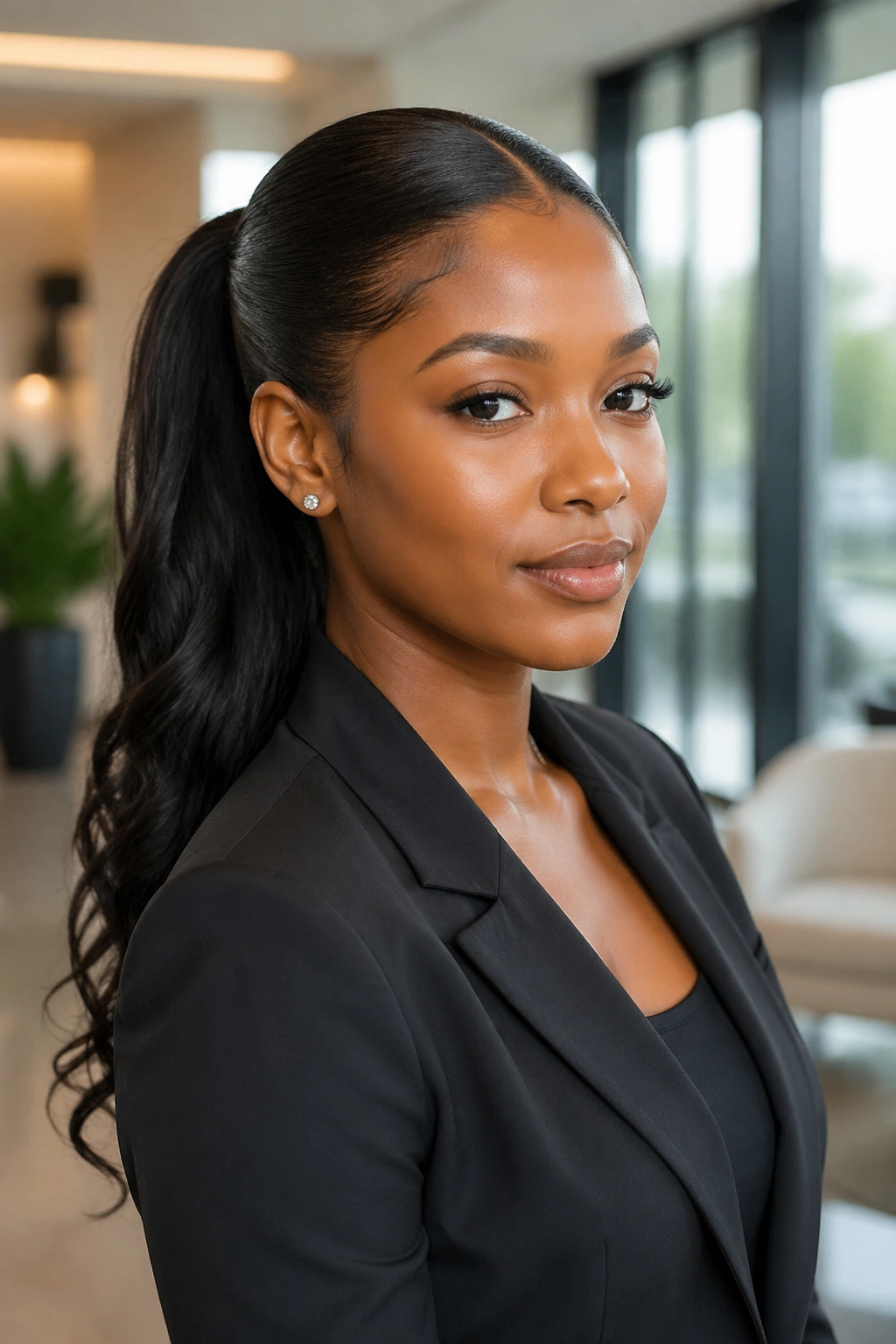
This is the one I recommend when somebody wants polish but does not want the drama of a high ponytail. Mid-height sits somewhere between the crown and the nape, which makes it easy to wear for a long stretch of time.
It is also kinder to the hairline than a super-snatched version. Brush the hair up from the sides and back, but stop before you yank the roots flat against your head. The shape should lift the face a little, not pull it tight.
- Good for workdays and events alike.
- Easier to keep comfortable for hours.
- Looks balanced with both bold necklaces and plain tops.
17. Cornrow Crown Ponytail
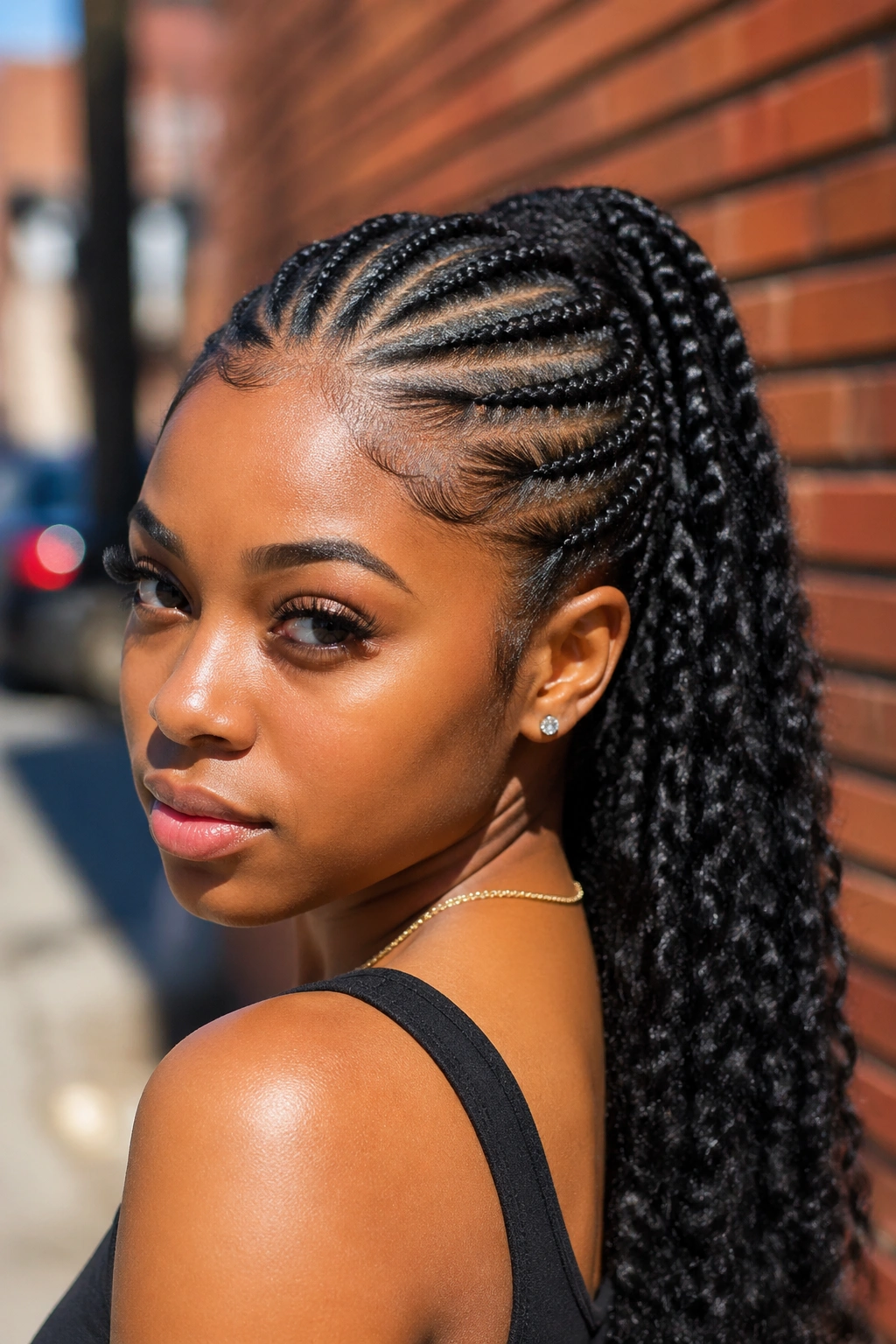
A cornrow crown ponytail is the most secure style on this list. The braids lock the front into place, the middle part stays visible, and the whole thing can handle movement better than a loose slick style.
Two to four cornrows can curve back toward the ponytail base, or you can run them straight back from the part. Either way, the look stays close to the scalp and keeps the edges tucked away. It is a solid choice for travel, dance, long events, or any day you do not want to think about your hair again.
That kind of reliability is underrated.
18. Rope-Twist Middle Part Ponytail
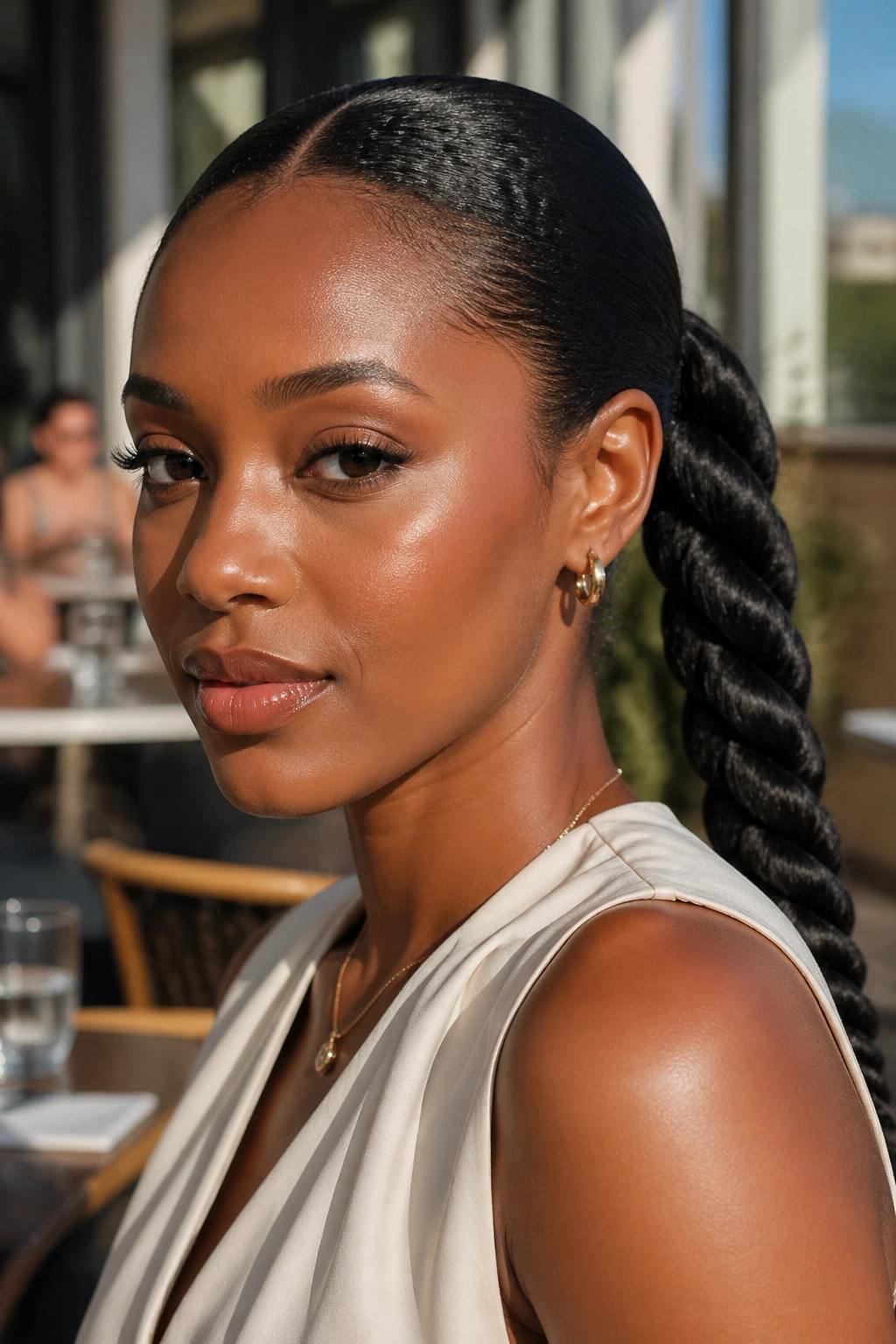
Could a twist look cleaner than a braid? Sometimes, yes. A rope-twist ponytail has a softer surface, a little less bulk, and a neat finish that feels calmer than a tight plait.
Split the tail into two sections, twist each section in the same direction, then wrap them around each other in the opposite direction so the twist holds. Keep the tension even all the way down. If one side goes tighter than the other, the twist starts to lean and the whole thing looks off.
It is a nice choice when you want structure without too much density.
19. Ribbon-Wrapped Sleek Ponytail
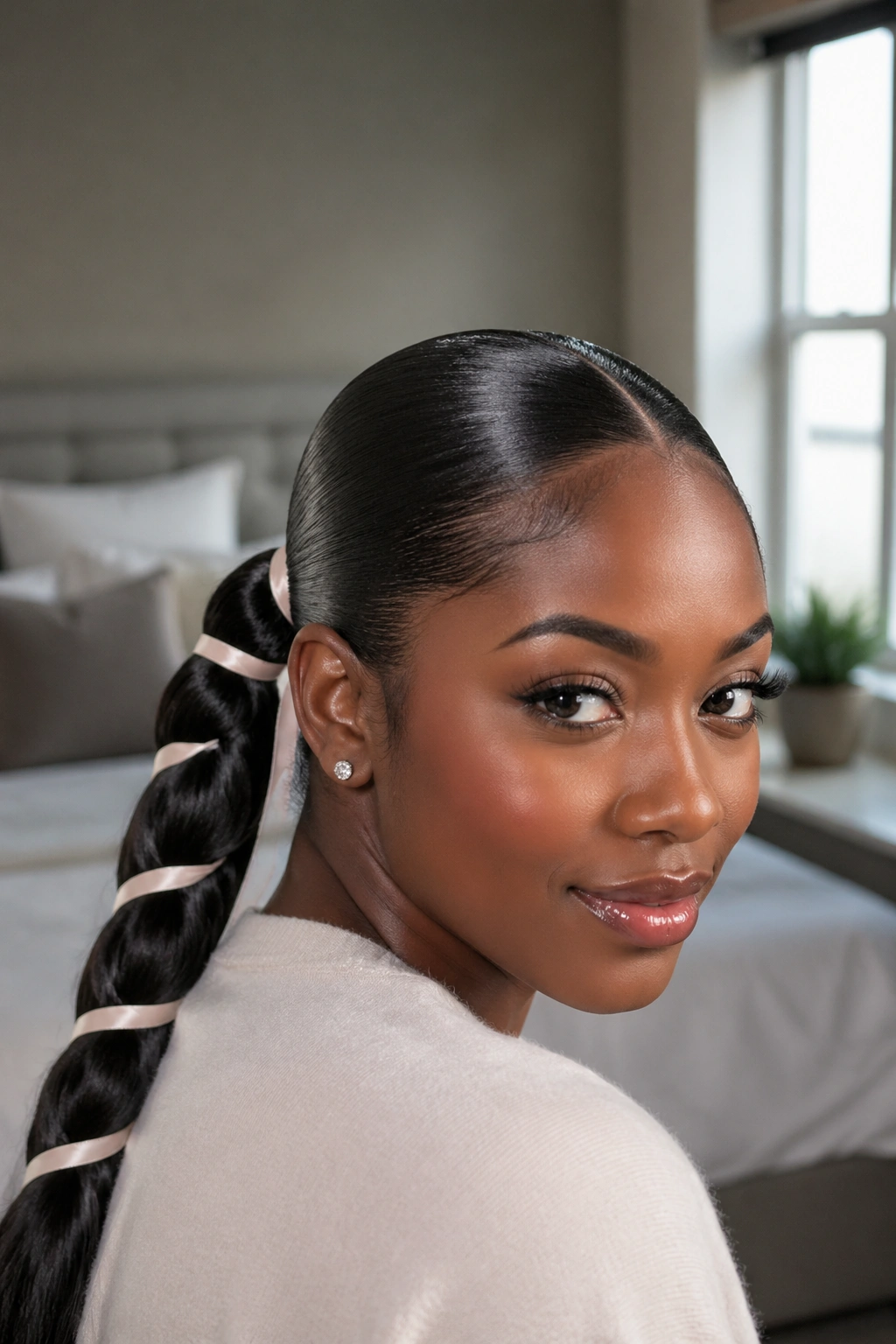
Ribbon does not have to look childish. A thin satin ribbon, tied neatly around a middle part ponytail, can make the style feel dressy without adding heavy accessories.
Choose a ribbon about 1 inch wide if you want it visible but not bulky. Tie it around the base, or weave it through the length if the ponytail is long enough to hold the lines. Matching the ribbon to your outfit is safe, but a small color contrast can be better when you want the hair to stand out on purpose.
A ribbon is one of the easiest ways to make a basic ponytail feel considered.
20. Drawstring Middle Part Ponytail
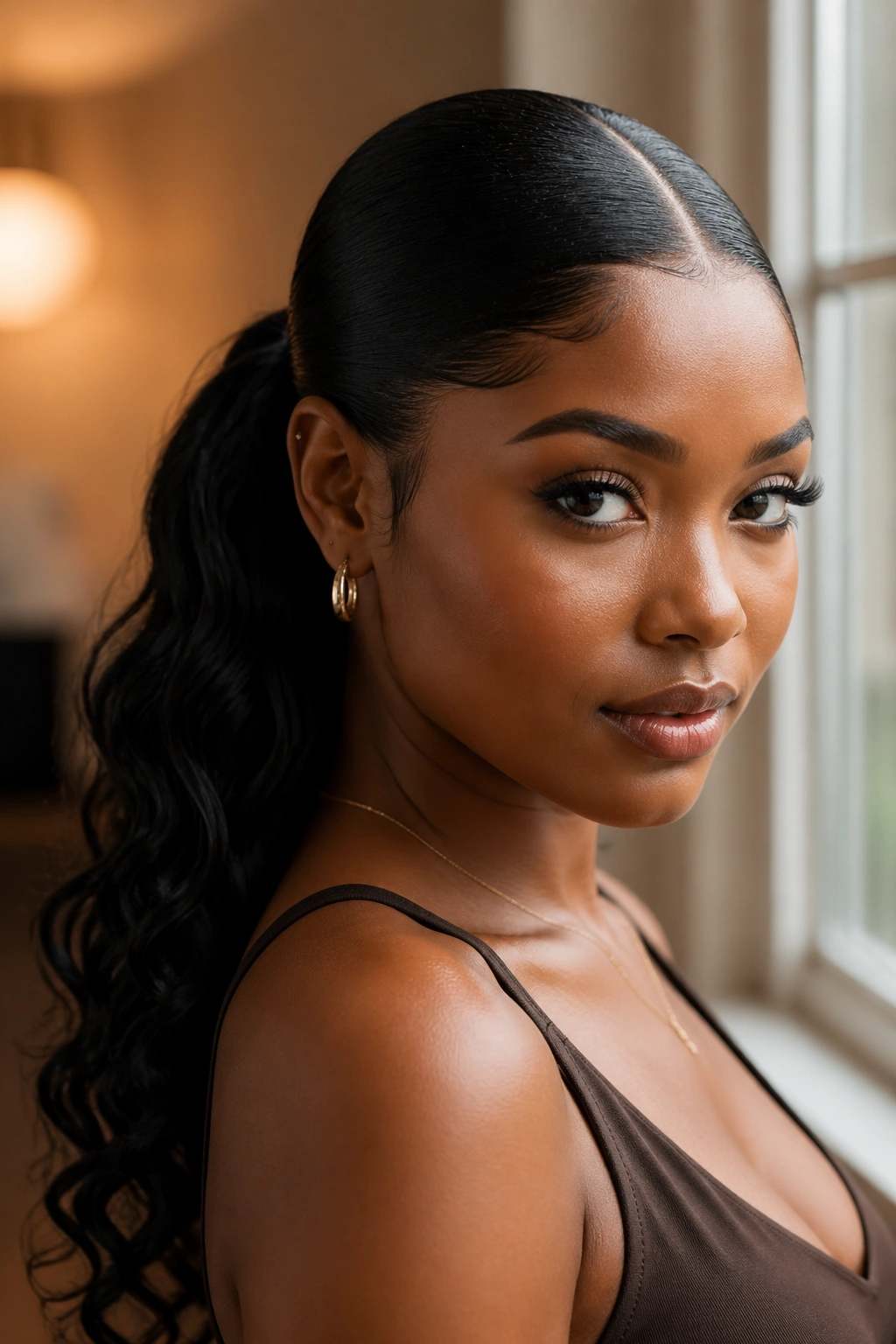
Drawstring ponytails get dismissed as quick hair, which is unfair. When the base is smoothed properly, they can look clean, full, and far more polished than people expect.
Pull your natural hair into a low bun or flat base first, then secure the drawstring piece and cover the join. The part should be crisp before the attachment goes on. If the front is messy, the whole look reads that way. A little gel at the part and a scarf set for 5 to 10 minutes make a real difference.
This is the style I’d pick when time is short and the finish still has to look neat.
21. Clip-In Volume Ponytail
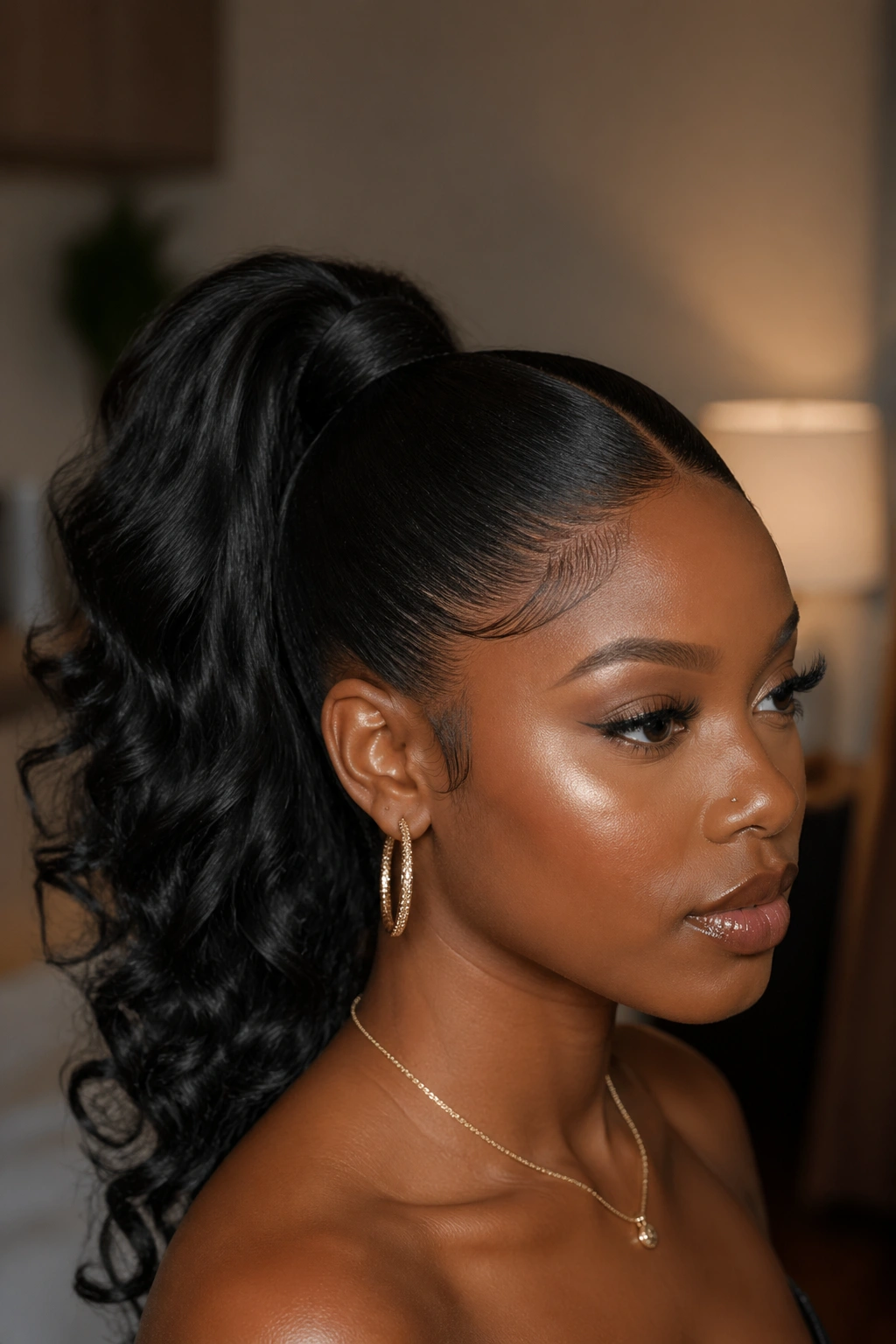
A clip-in ponytail feels like instant volume in a box. It is especially useful if your own hair is shoulder-length, fine at the ends, or just not long enough to give the shape you want.
Smooth the base first, then clip the piece as close to the elastic as you can get it. Hide the tracks with a thin wrap of hair or a matching strand from the tail. The style works best when the crown is already flat, because clip-ins are happiest on a tidy foundation.
- Use two bobby pins to anchor the base if the piece feels heavy.
- Choose a texture that matches your own hair or your press.
- Brush the length after clipping so the blend looks seamless.
22. Silk-Scarf Middle Part Ponytail
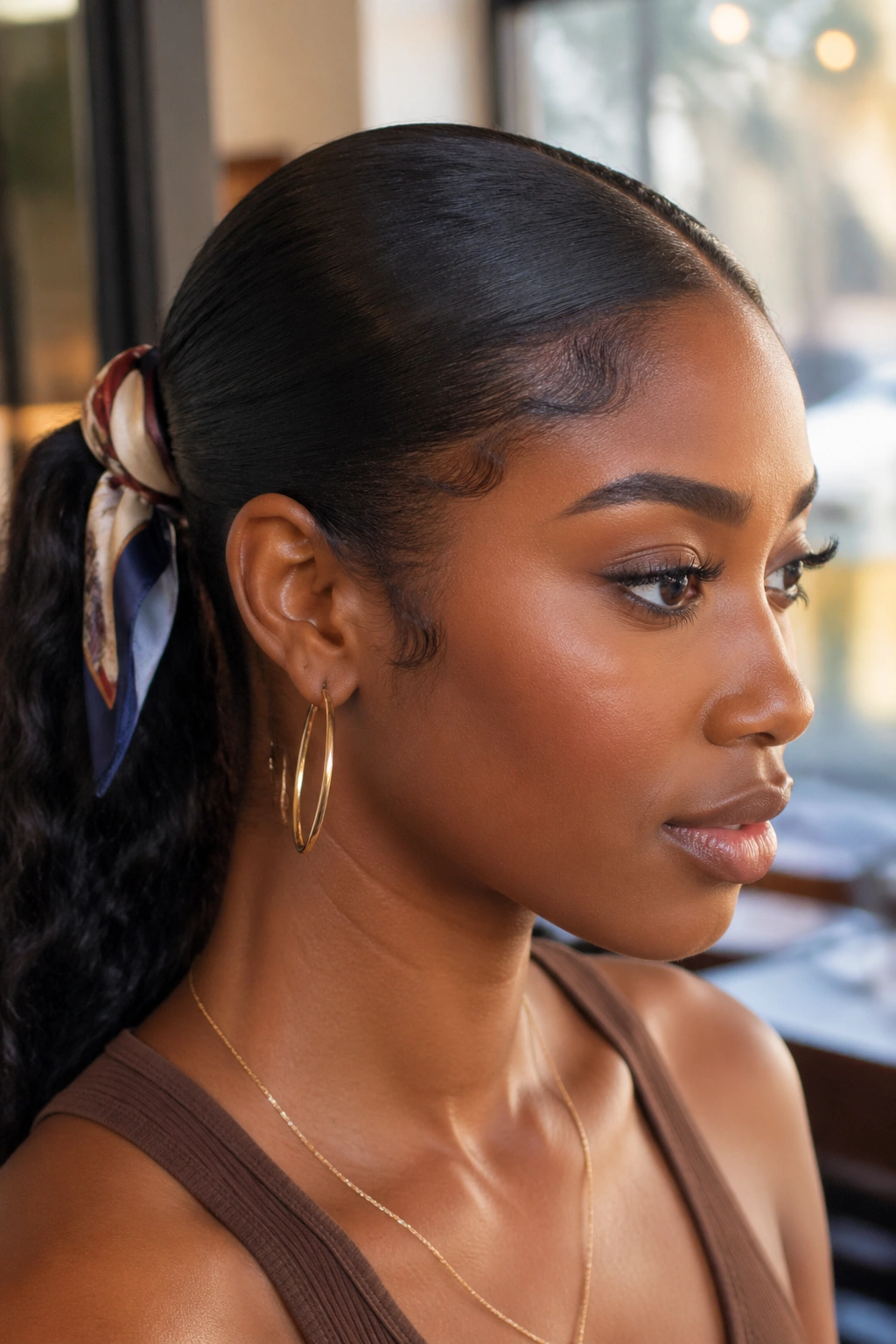
Silk is practical. A scarf tied around the base or wrapped near the hairline protects the style, hides flyaways, and gives the ponytail a little personality without clutter.
Fold a square scarf into a narrow band, or choose a long skinny scarf if you want more tail to hang down. Tie it just above or just below the elastic, depending on what you want to show. The best part is that the scarf can rescue a ponytail that is still good but not quite fresh enough to wear plain.
Where to Tie It
At the base, it reads classic. Near the ends, it feels more playful. Around the edges, it protects the front while keeping the middle part visible.
23. Swooped-Edge Middle Part Ponytail
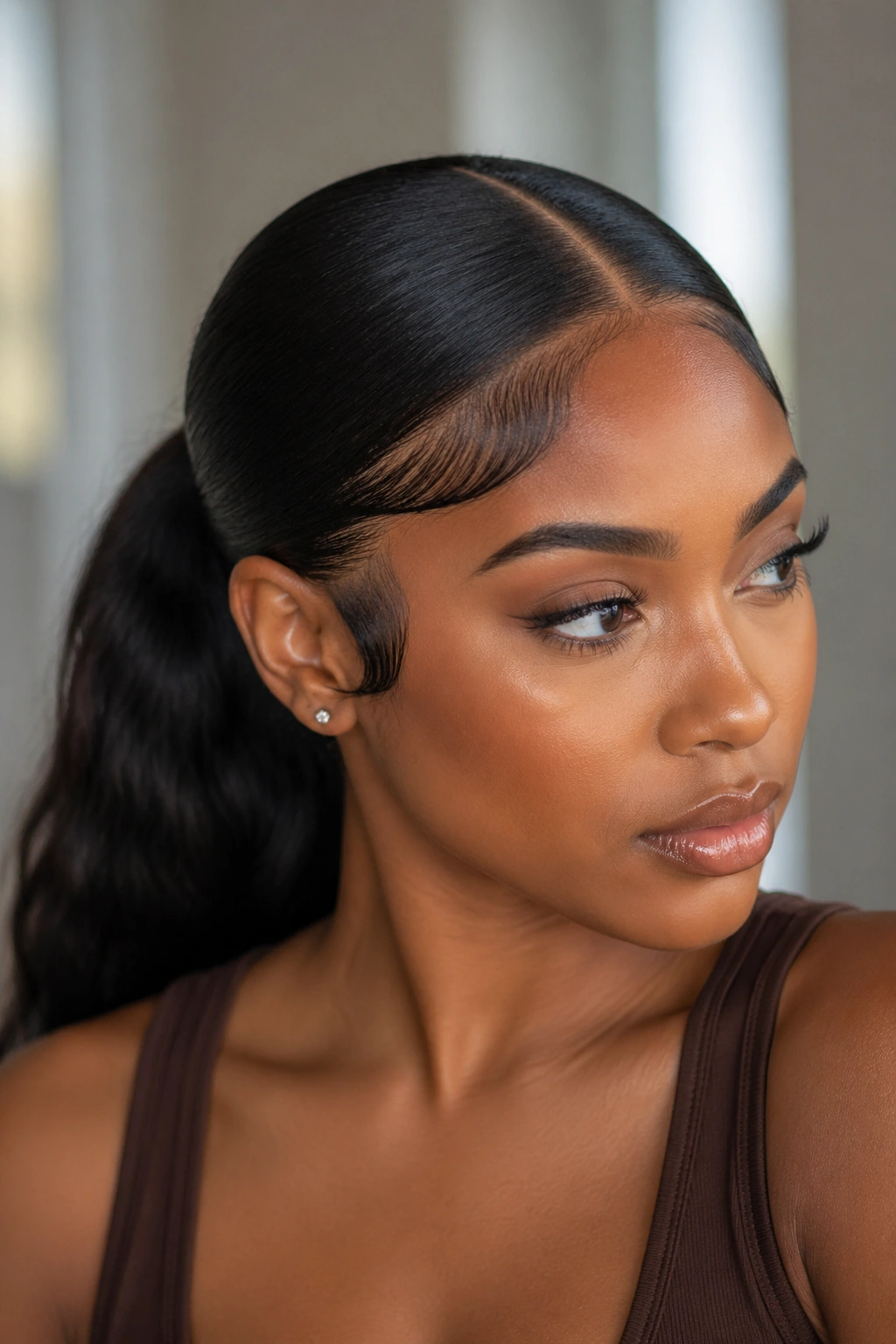
Two swoops at the temples can change the whole face shape. They soften the middle part, add a little curve, and keep the style from feeling too severe.
Use an edge brush and a small amount of gel to shape the edges into soft waves, not stiff little loops. A scarf pressed over the front for 5 to 10 minutes helps the swoops stay put without getting crunchy. Keep the design simple. Once the edges get too detailed, the ponytail starts fighting with them.
This is the style for people who like a little shape near the face.
24. XXL Sleek Middle Part Ponytail
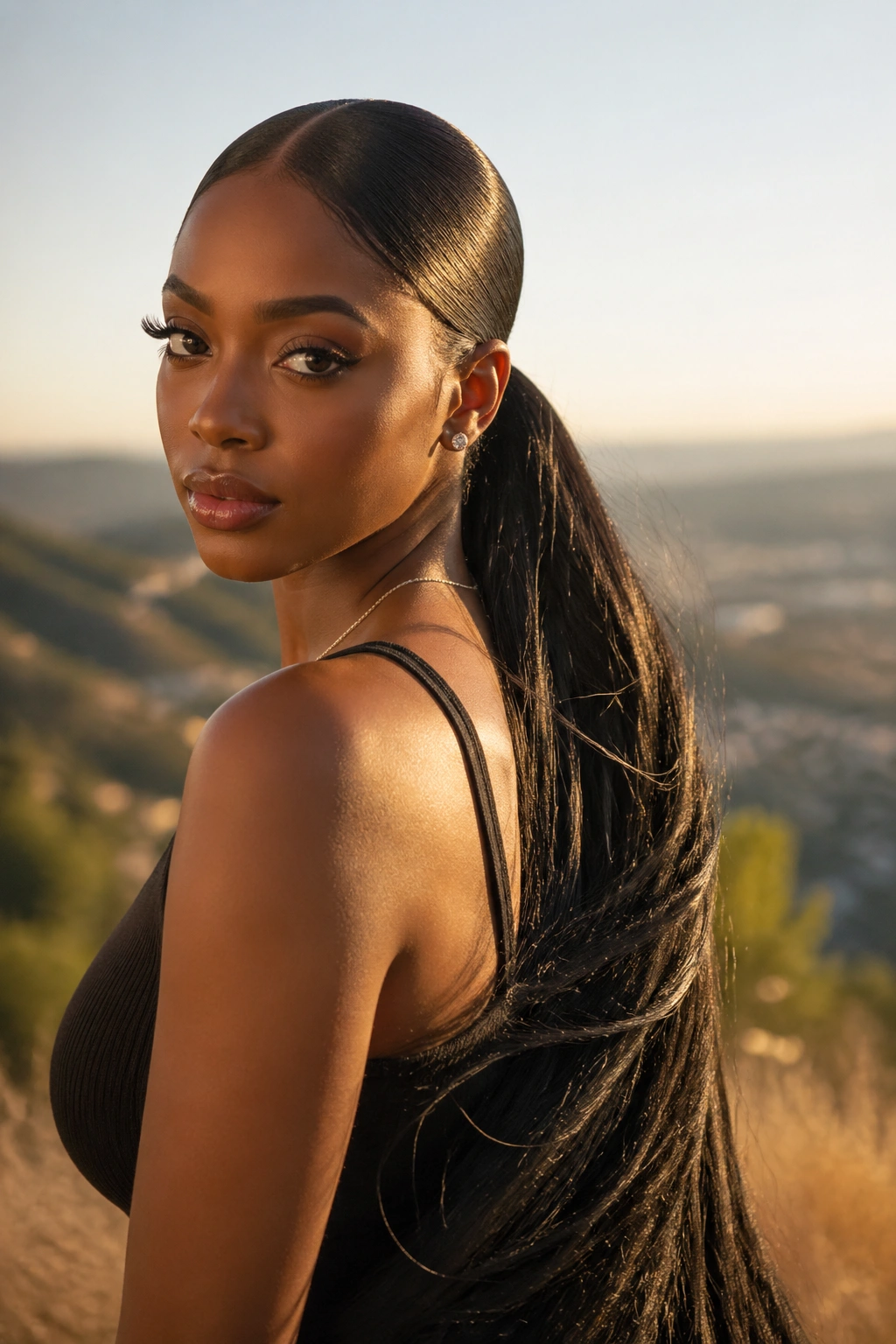
When somebody says they want a lot of hair, this is the version I picture. XXL ponytails bring weight, swing, and a bit of drama that you can feel every time you turn your head.
Because the length can pull, the base matters even more here. Keep the ponytail secure, but do not over-tighten the front to make up for the weight at the back. A low or mid-height anchor usually feels better than a very high one. Three or four bobby pins around the wrap can help hold the base if the hair is heavy.
This one is not subtle. That’s the point.
25. Short Sleek Middle Part Ponytail
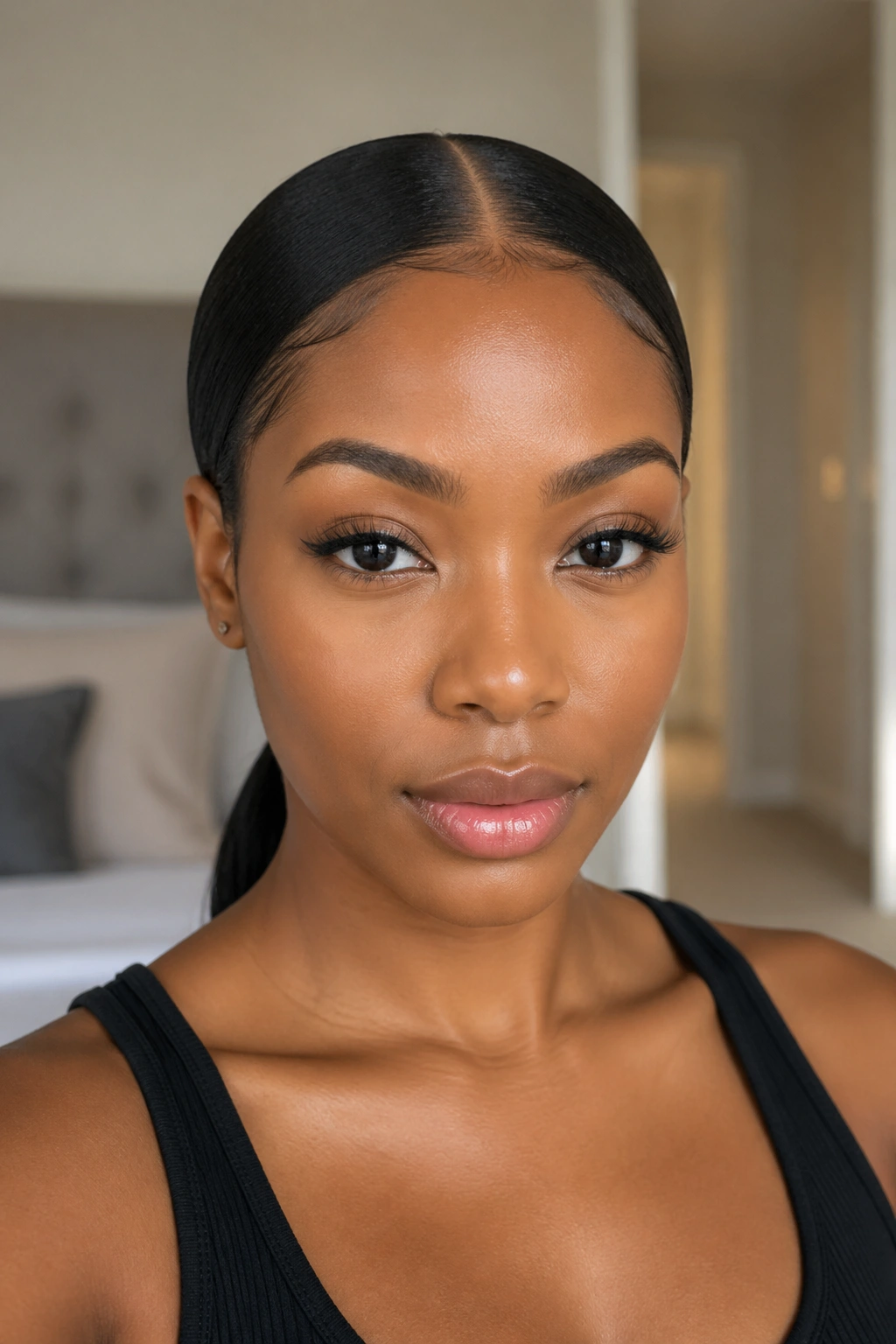
Short ponytails can look cleaner than waist-length ones. A shoulder-grazing middle part ponytail feels sharp, easy, and a little more modern because the shape is easier to read.
The length exposes the line of the cut, which means the finish matters even more. Keep the ends blunt or softly curved, and make sure the crown is smooth so the shorter length does not look accidental. It is a good option for people who want less weight, less tangling, and less time spent fussing with the tail.
Sometimes shorter hair wins.
26. Natural Puff Middle Part Ponytail
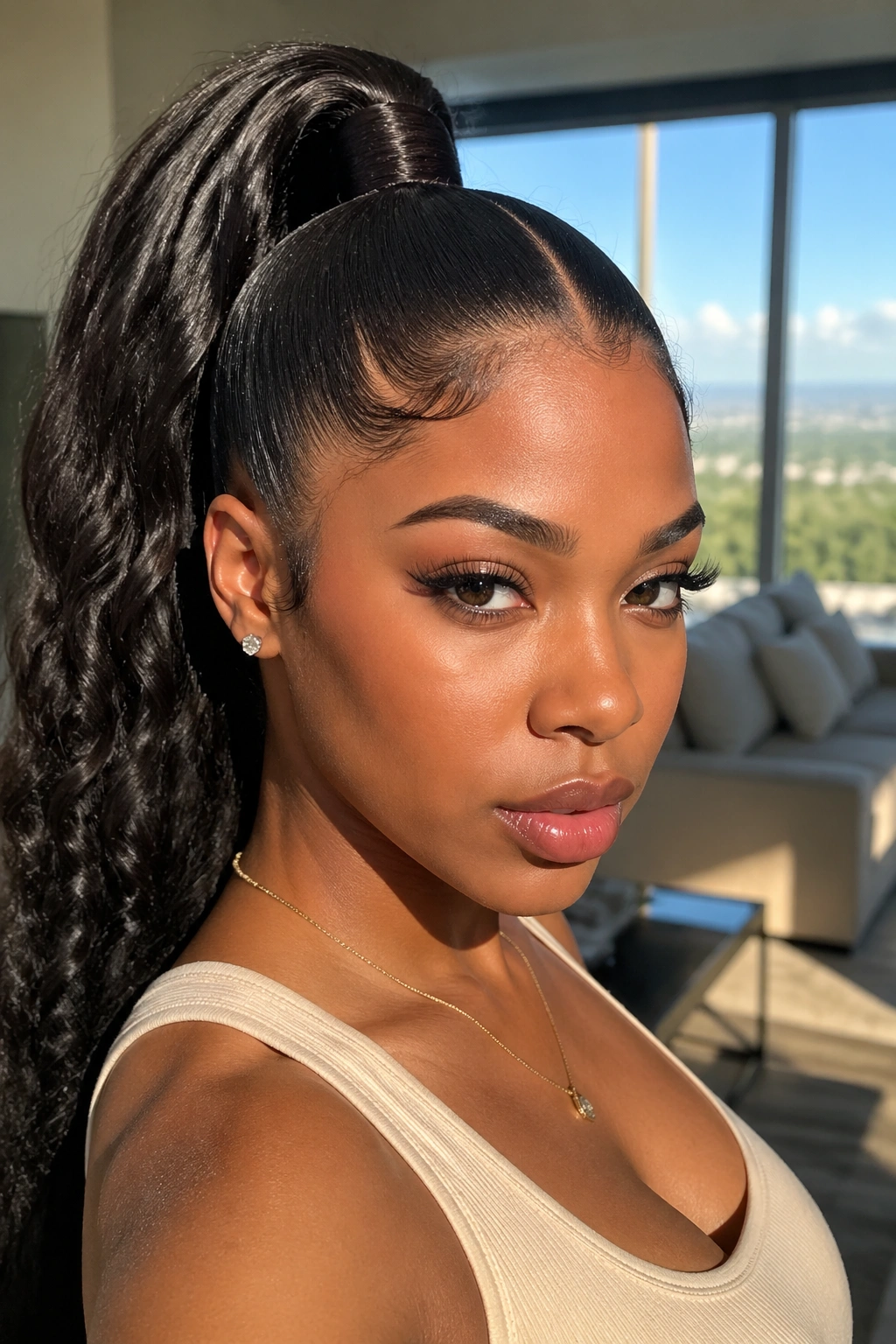
Want a ponytail that still shows your curl pattern? This is the one. Slick roots with a textured puff or curly tail give you the contrast of a polished front and a soft, natural back.
The key is leaving enough length in the tail to hold its shape. If your hair is short, a curly extension or puff piece can help. Keep the roots smooth, but do not over-manipulate the length. A little moisture cream at the tail is fine; soaking it down is not.
- Great for type 4 hair that wants definition without full straightening.
- Keep the puff moisturized, not wet.
- Use a satin strip or soft elastic at the base so the crown stays flat.
27. Braided-Accent Sleek Ponytail
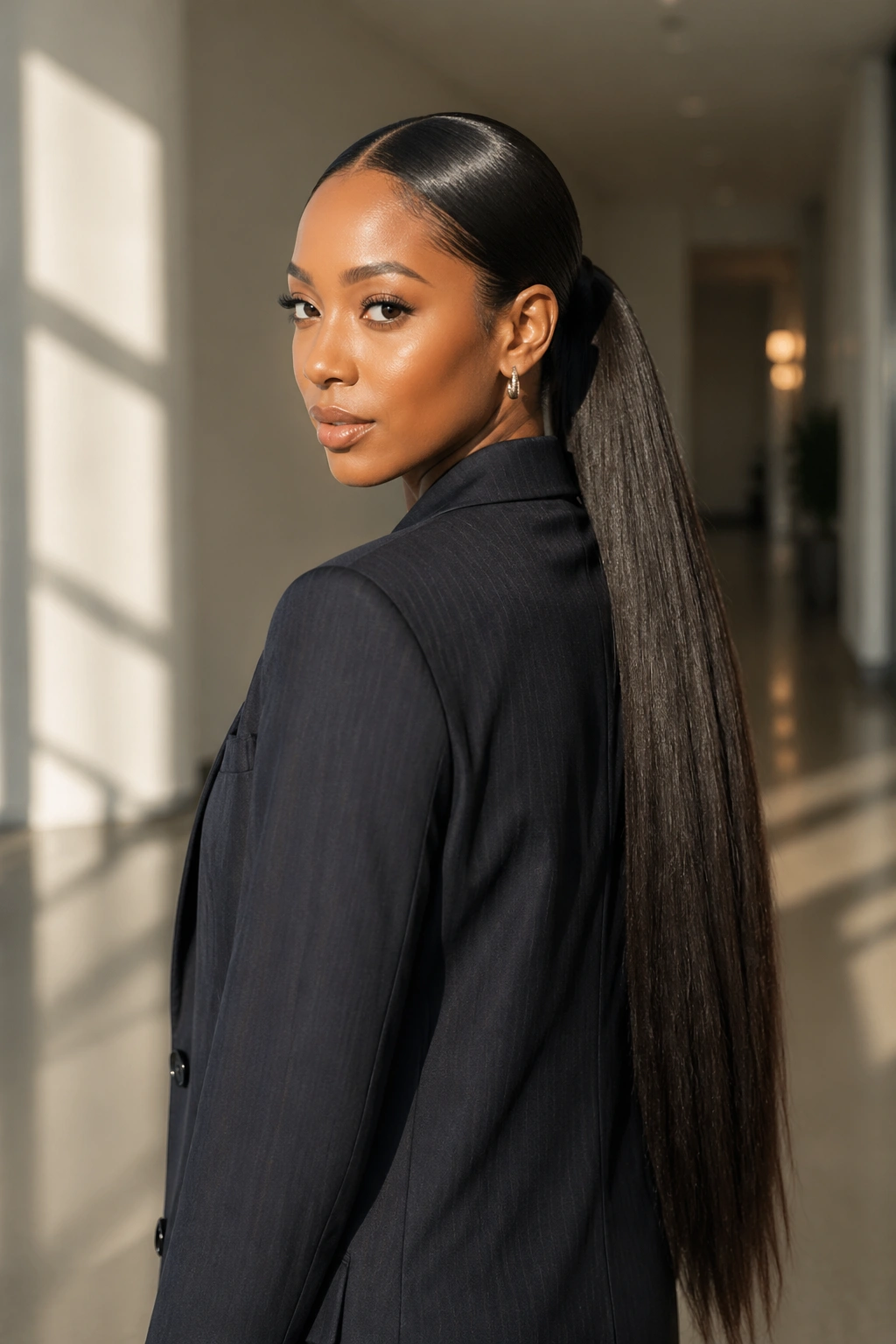
A single braid at one temple can make a plain ponytail feel finished. Two slim braids can do the same thing, as long as you keep them narrow enough to stay in the background.
Pull the braid(s) into the base so they disappear into the ponytail instead of floating separately. That keeps the middle part readable while giving the style a little detail near the face. The accent should look like a choice, not a leftover from another hairstyle.
This is one of those small touches that photographs well in real life because the texture is obvious from the side.
28. Low Tucked Middle Part Ponytail
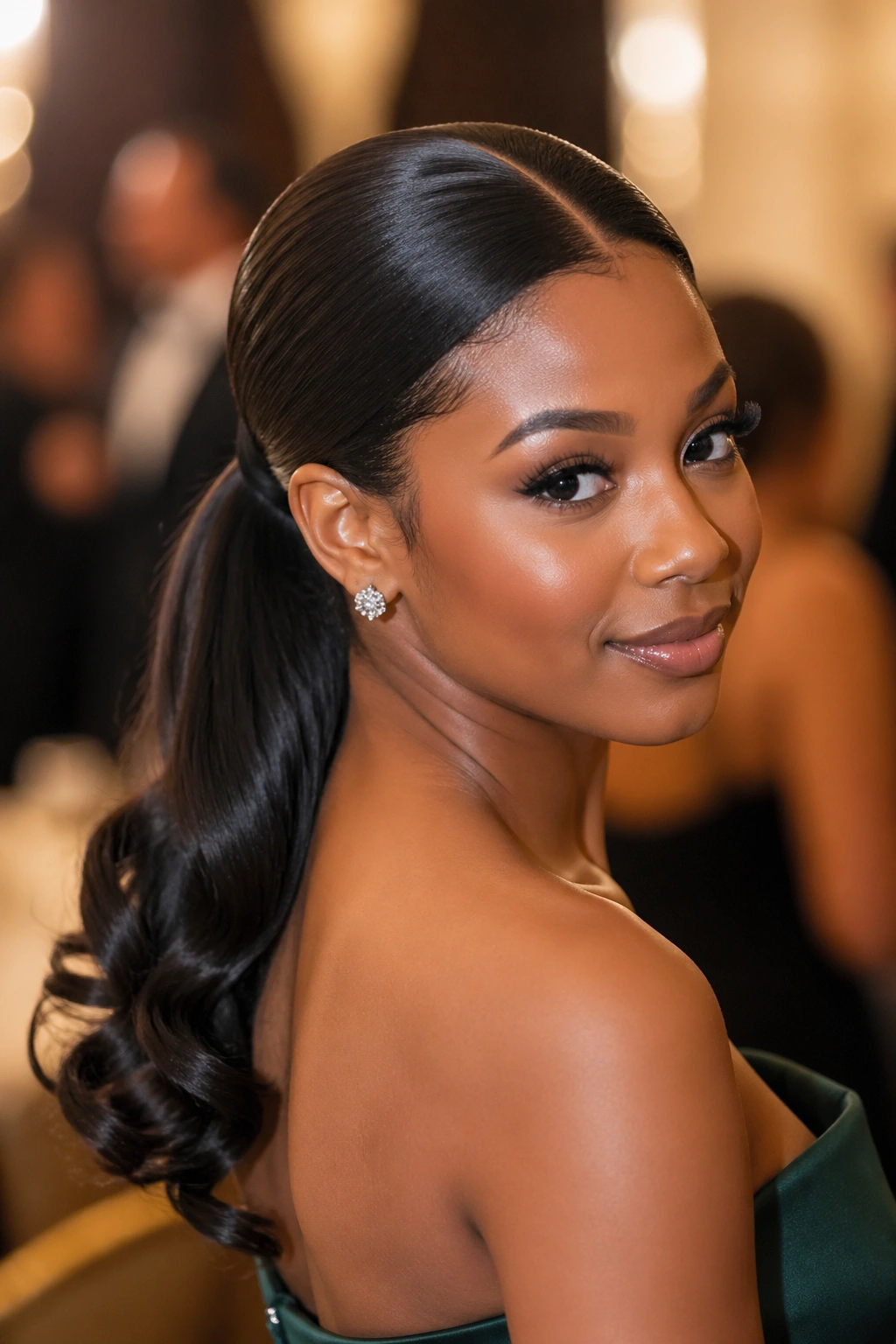
A tucked finish often looks more intentional than a loose tail. Instead of letting the ends hang, fold them under the base and pin them so the silhouette stays compact.
That shape works well for formal settings, but it is also useful if you want a shorter-looking ponytail without cutting the length. Use U-pins or small bobby pins to secure the tuck, then smooth the surface with a light mist. If a few ends peek out, leave them. A little softness keeps it from looking too stiff.
It is neat. It is controlled. And it does not try too hard.
29. Wet-to-Wavy Middle Part Ponytail
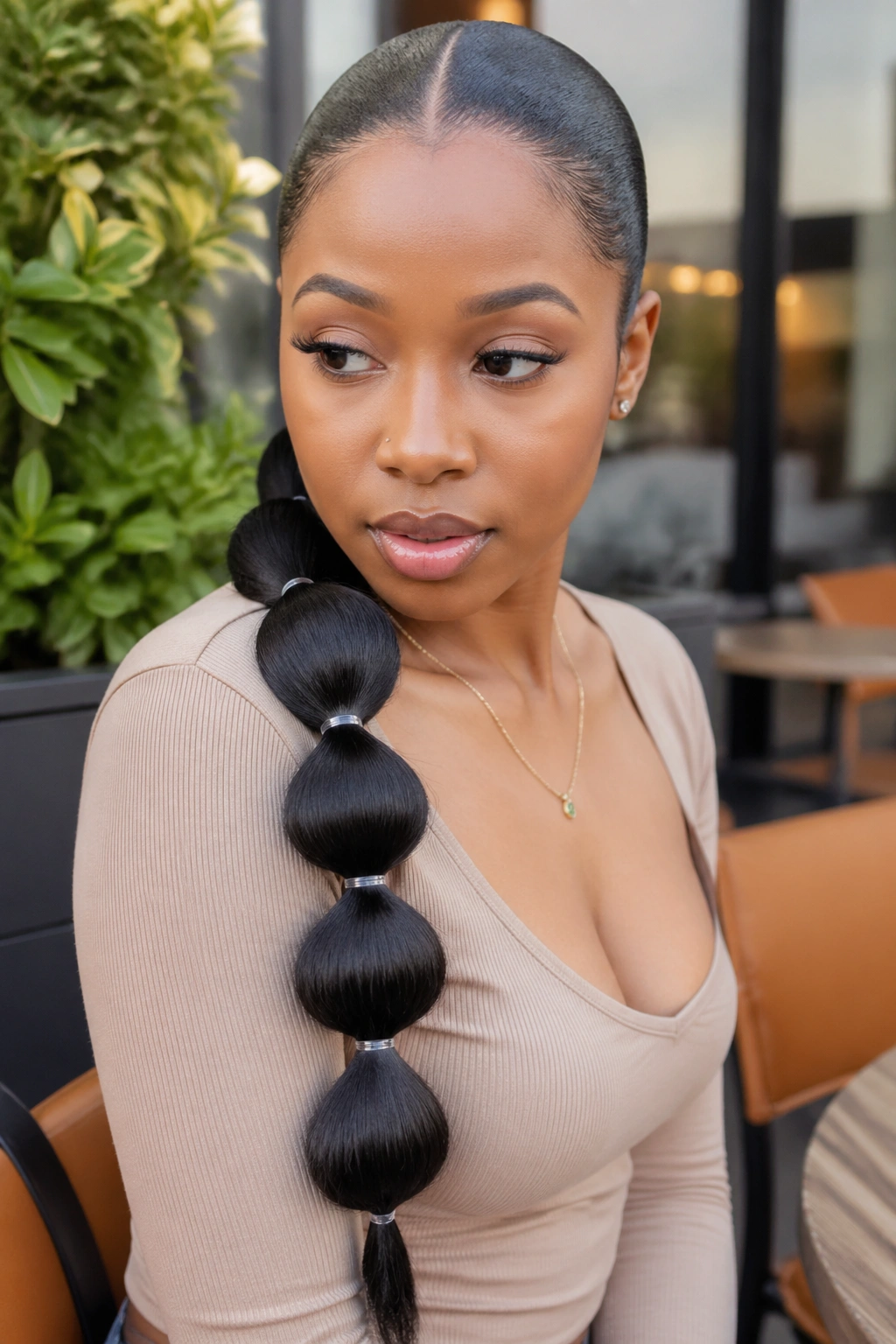
The crown is glassy; the length moves like soft water. That contrast is what gives a wet-to-wavy ponytail its appeal, especially when you want something sleek at the top and loose through the tail.
What to Ask For
Tell your stylist you want the roots smooth and the tail set in loose waves, not curls that look overdone. A 1-inch wand usually gives enough bend. Once the waves cool, brush them lightly so they fall into a softer pattern.
When It Shines
It works well for evening events, photos, and outfits with clean lines. Just keep the front product under control. Too much gel at the part can make the style look greasy instead of glossy.
30. The Minimal Clean Ponytail
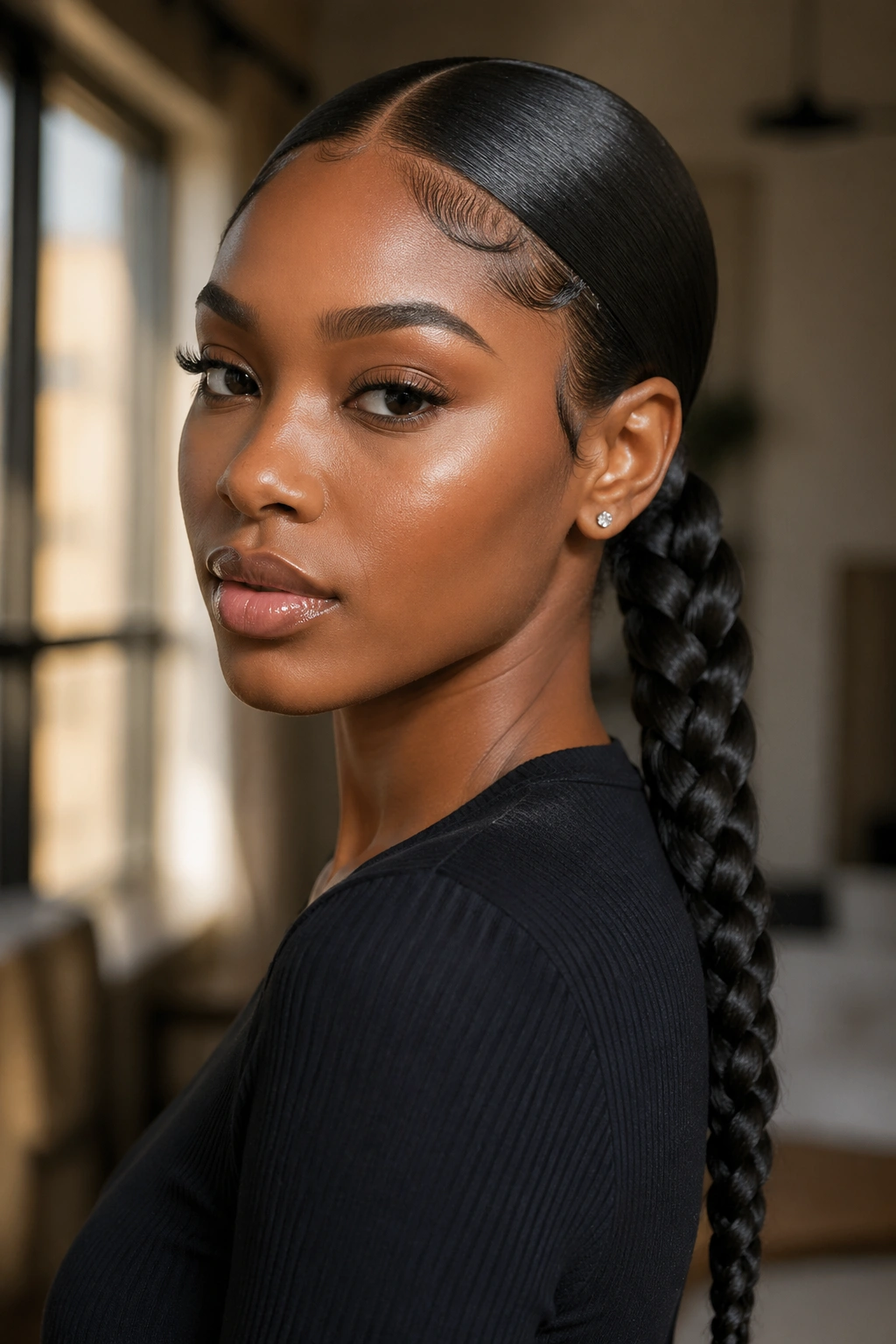
Simple wins. A middle part, a flat crown, a low or mid-level base, and no extra decoration can look more refined than a pile of accessories if the lines are clean enough.
This is the version I would trust on a busy morning, on a travel day, or when the outfit already has enough going on. The part should be straight, the sides smooth, and the base wrapped so neatly that nobody notices the elastic unless they are looking for it. If you are short on time, stop after the wrap and a quick shine mist. That’s enough.
A polished ponytail does not need noise. It needs balance, a steady hand, and a part you trust.
