



A sleek updo ponytail can do more for an outfit than a fussy blowout ever will. Clean part. Smooth crown. A tail that sits where it should, not where it happened to land after you grabbed a hair tie and hoped for the best.
The best ones look controlled without looking stiff. That’s the whole trick. A polished ponytail isn’t about piling on product until your hair feels shellacked; it’s about getting the shape right, then calming the flyaways just enough so the style reads intentional from every angle.
And yes, the details matter. A low ponytail at the nape sends a very different message than a high ponytail with lifted roots. A wrapped elastic looks finished. A barrette changes the mood. A braid tucked into the base can make even the simplest ponytail feel dressed up. Tiny changes. Big payoff.
1. Wrapped Low Ponytail
A wrapped low ponytail is the one I reach for when I want the safest kind of polish. It sits at the nape, keeps the profile clean, and looks more thoughtful than a plain elastic because the hair itself hides the hardware.
Why It Looks So Clean
A small strand wrapped around the base does two jobs at once: it conceals the tie and gives the style a finished edge. I like this on straight or lightly waved hair, especially when the ends still have a little swing.
- Start with a deep side or center part, depending on what flatters your face best.
- Smooth the roots with a paddle brush and a pea-size amount of styling cream.
- Secure the ponytail right at the nape, not up on the middle of the head.
- Wrap a 1-inch strand around the elastic and pin the end under the ponytail with a bobby pin.
Tiny tip: Pull the wrap strand snug, not tight. If it’s too loose, it looks accidental.
2. Deep Side-Part Low Ponytail
A deep side part changes the whole attitude of a ponytail. It gives the style weight, shape, and a little drama, which is useful when you want sleek hair that still feels soft around the face.
The reason this works is simple: the side part creates a visible line, and visible lines look deliberate. Brush the heavier side across the forehead and down into the ponytail so the front stays smooth instead of puffing out at the temples.
This version looks sharp with tailored clothes, drop earrings, or a collarbone-grazing neckline. I’d skip heavy teasing here. You want the hair to lie flat and glossy, not lifted into a helmet. A light mist of hairspray on the brush is enough to keep the front in place without making it crunchy.
3. Glass High Ponytail
Why does a high ponytail look so polished when it’s done well? Because the shape is clean from root to end. The crown is flat, the lift is obvious, and the ponytail itself falls like a clean line instead of a lump.
How to Nail the Lift
The base matters more than the tail. If the crown is bumpy, no amount of shine spray will save it.
- Apply a small amount of gel or smoothing cream to damp roots.
- Blow-dry with a brush, pulling hair straight back for tension.
- Gather the hair high, around the crown line or slightly above it.
- Secure with a strong elastic, then smooth the surface with a boar-bristle brush.
- Run a flat iron through the tail if you want a sharper finish.
A glassy high ponytail looks especially good when the ends are straight and the base is tight. If your hair is fine, use two elastics stacked together for hold. If it’s thick, anchor the first elastic firmly, then add a second one right over it.
4. Bubble Ponytail
The bubble ponytail reads playful, but when the bubbles are even and the crown is sleek, it still counts as polished. It’s one of those styles that looks harder than it is, which is always a nice surprise.
The key is spacing. Use clear elastics every 2 to 3 inches down the tail, then gently tug each section outward to form round, even bubbles. Don’t overpull. You want shape, not puff.
This style works well for long hair because the length gives you more than one bubble to work with. If your hair is layered, mist the tail lightly before you start; it keeps the shorter pieces from sticking out like little flags. The top should stay smooth, almost severe, so the bubbly length feels intentional instead of cute-for-the-sake-of-cute.
5. Twisted Crown Ponytail
A twisted crown ponytail is what happens when you want the front of your hair to look styled without committing to a braid. Two sections are twisted back from the temples and joined into a low ponytail, and the result feels tidy without being plain.
I like this one when the hair has a little texture, because the twists grip better than silkier strands. The finish is especially nice if you keep the twists tight against the head and pin them flat before gathering the rest. Loose twists can look pretty; tight twists look expensive.
The other thing I like here is how well it hides day-two hair. If the roots are a little flat or the lengths need help, the twists give the eye something to focus on before it ever gets to the ponytail. That’s useful. Hair doesn’t need to be perfect to look put together.
6. Braided-Base Ponytail
Unlike a plain ponytail, a braided-base version gives the bottom of the style some structure. That small braid around the base acts like a frame, and it’s a smart move when the hair is thick, heavy, or prone to slipping.
You don’t need a big braid. A narrow three-strand braid from a small front section is enough. Wrap it around the elastic, pin it underneath, and the whole ponytail suddenly looks more considered.
Best for:
- Hair that holds shape well
- Medium to long lengths
- Anyone who wants a clean style without using accessories
I’d recommend this for days when you want polish but don’t want the hairstyle to announce itself. It sits in that nice middle ground. Not plain, not fussy. Just finished.
7. Fold-Under Ponytail
A folded-under ponytail gives you that tucked, almost chignon-like shape without giving up the ease of a ponytail. The tail disappears under itself, which keeps everything neat at the nape and makes the style feel a little more formal.
Start with a low ponytail. Then fold the length upward and inward, pinning it so the ends are hidden under the base. If your hair is long, you may need two or three bobby pins crossed in an X shape to keep it in place. Use pins that match your hair color, because the wrong metal finish can ruin the whole effect.
This one is handy when the ends aren’t freshly trimmed. It hides a lot. And that’s not laziness; that’s strategy. Hair that looks smooth at the top can get away with a lot less perfection at the bottom.
8. Mid-Height Center-Part Ponytail
A center part with a mid-height ponytail is probably the most underestimated polished look on this list. It’s calm. Balanced. A little severe in a good way.
The part does half the work. Once it’s clean and straight, pull the hair back to the middle of the head, around the space between the crown and the nape. That height is low enough to stay refined, but high enough to keep the style from feeling sleepy.
I like this one for office wear because it doesn’t fight with glasses, collars, or earrings. It also flatters straight hair especially well, since the clean line from forehead to ponytail keeps everything tidy. Use a fine-tooth comb at the roots, then finish with a light mist of flexible hairspray. Heavy spray makes the whole thing look overbuilt.
9. Rope-Braid Ponytail
Why does a rope braid look so sleek? Because it uses twist tension instead of a loose weave, and that tension makes the ponytail feel tight and smooth all the way down.
How to Get the Most From It
After securing the ponytail, split the tail into two sections. Twist each section in the same direction, then wrap them around each other in the opposite direction. That opposite motion is what gives the braid its neat, coiled look.
- Best on longer hair, since short ends can spring loose.
- Works well with straight or softly wavy textures.
- Keeps the tail compact, which helps with fine hair.
- Finish the ends with a small clear elastic.
The rope braid is one of my favorites for evenings because it looks precise without being stiff. If you want, you can keep the braid at full tension for a sharp finish, or gently tug the twists to make it a touch fuller.
10. Knotted Low Ponytail
A knotted low ponytail looks like something a stylist spent more time on than they actually did. That’s a good thing. It’s one of those styles that reads tailored, especially when the knots sit flat and the crown is smoothed back.
The basic version uses two small sections from either side of the head, tied once or twice above the ponytail base, then pinned underneath. If your hair is long enough, you can fold the remaining tail under the knot for extra structure. If it isn’t, keep the tail straight and sleek.
This style loves medium to long hair, but it can work on shorter lengths too if you keep the knot small. I’d avoid chunky layers near the front, since they tend to slip out and make the knot look messy. A little pomade on the fingertips helps tame the sides without flattening the whole head.
11. Hair-Cuff Ponytail
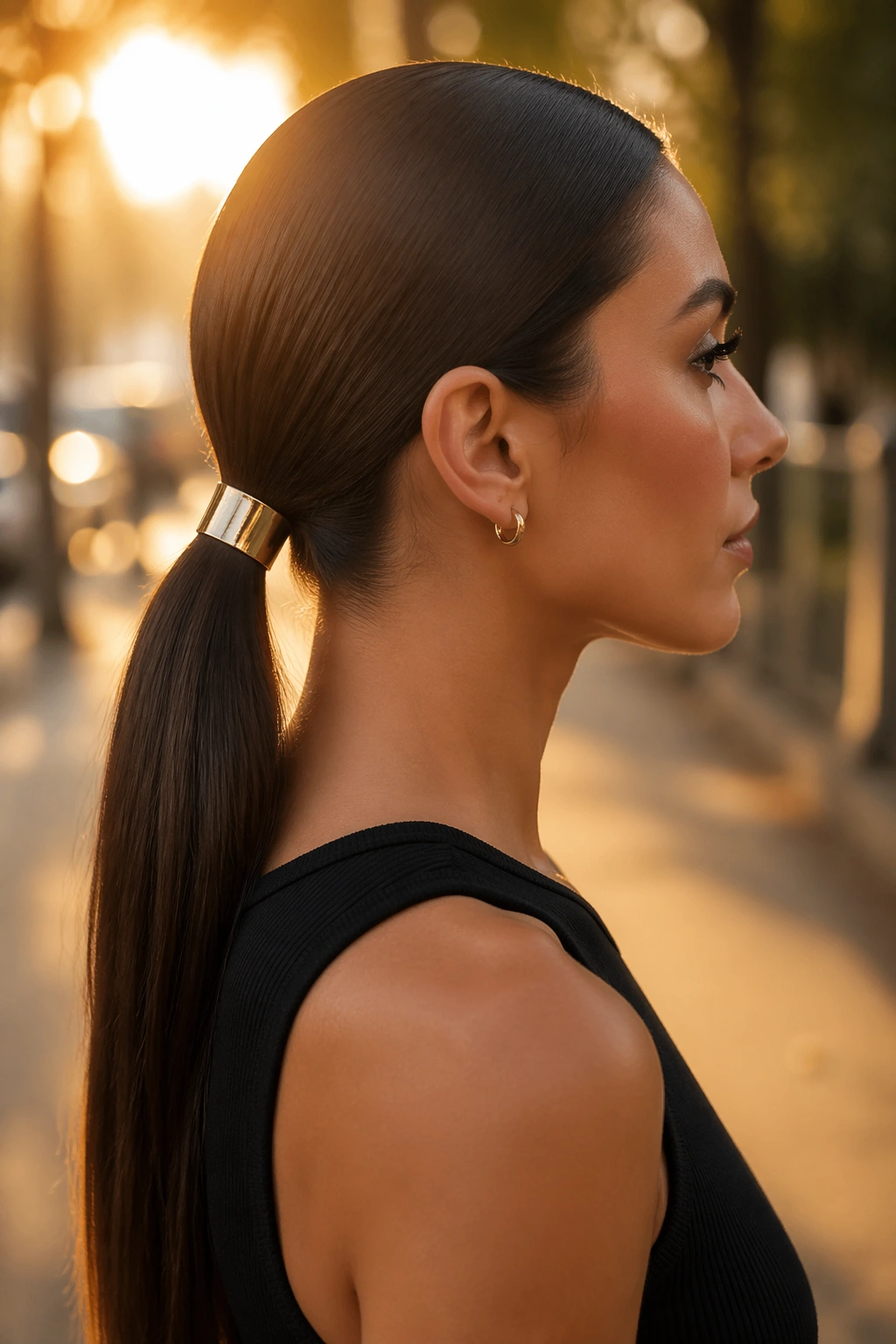
A hair cuff does something plain jewelry can’t: it gives the ponytail a hard, clean edge. It’s the fastest way I know to make a low ponytail look deliberate without adding braids or twists.
The style itself is simple. Smooth the hair back, secure it tightly, then slide a cuff over the elastic so it sits flush against the base. The cuff should fit close. If it rattles or hangs, it looks off. Thin cuffs tend to work best because they don’t overpower the shape of the hair.
I like this for minimal outfits. Black knit, silk blouse, sharp blazer. The cuff becomes the one strong detail, and everything else gets to stay quiet. If your hair has a lot of texture, smooth only the top and sides; the tail can keep a little movement. That contrast can actually look better than forcing every strand into the same flat finish.
12. Side-Swept Low Ponytail
A side-swept low ponytail has a softer mood than a straight-back style, but it still reads polished because the sweep creates direction. It’s especially flattering when you want the hair to frame one shoulder instead of sitting squarely down the back.
Compared with a center-part ponytail, this version feels more relaxed and a little more romantic. The sweep gives the face some shape, and the ponytail itself can be tucked over one shoulder or left to rest behind it.
I’d use a side part here if you want even more movement at the front. Keep the roots smooth, then guide the length toward the chosen side before securing it low. A thin veil of shine spray over the finished style helps the hair look glossy rather than heavy. If you’re wearing statement earrings, this is one of the best ponytails for showing them off.
13. Sculpted High Ponytail with Sleek Edges
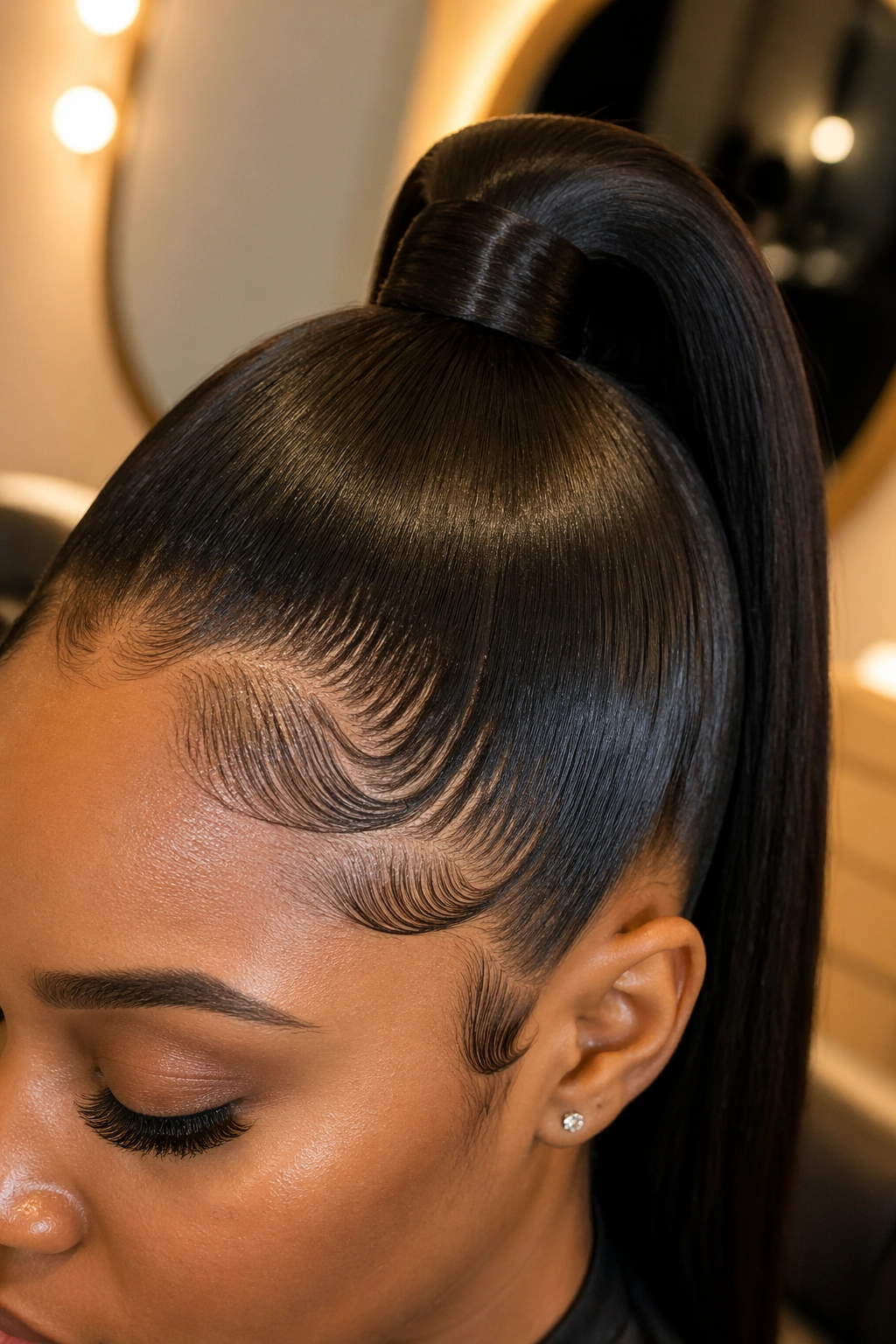
A sculpted high ponytail is not the same thing as a basic high ponytail. The difference is in the front: the edges are refined, the lift is controlled, and the crown has shape instead of random bumps.
Where the Shape Comes From
You want the base to sit high and the sides to sweep back in a clean arc. Use a tail comb to draw the part or flatten the front, then smooth a tiny amount of edge control or gel along the hairline if that suits your texture.
- Anchor the ponytail with a strong elastic.
- Brush the top from the hairline back toward the crown.
- Use bobby pins to secure any loose side sections.
- Wrap a strand around the base if you want a cleaner finish.
This version is the one I’d pick for a dressier night out. It can handle bold makeup, a high neckline, or big earrings without competing with them. Sharp. Controlled. No loose ends to fuss over.
14. Braided Accent Ponytail
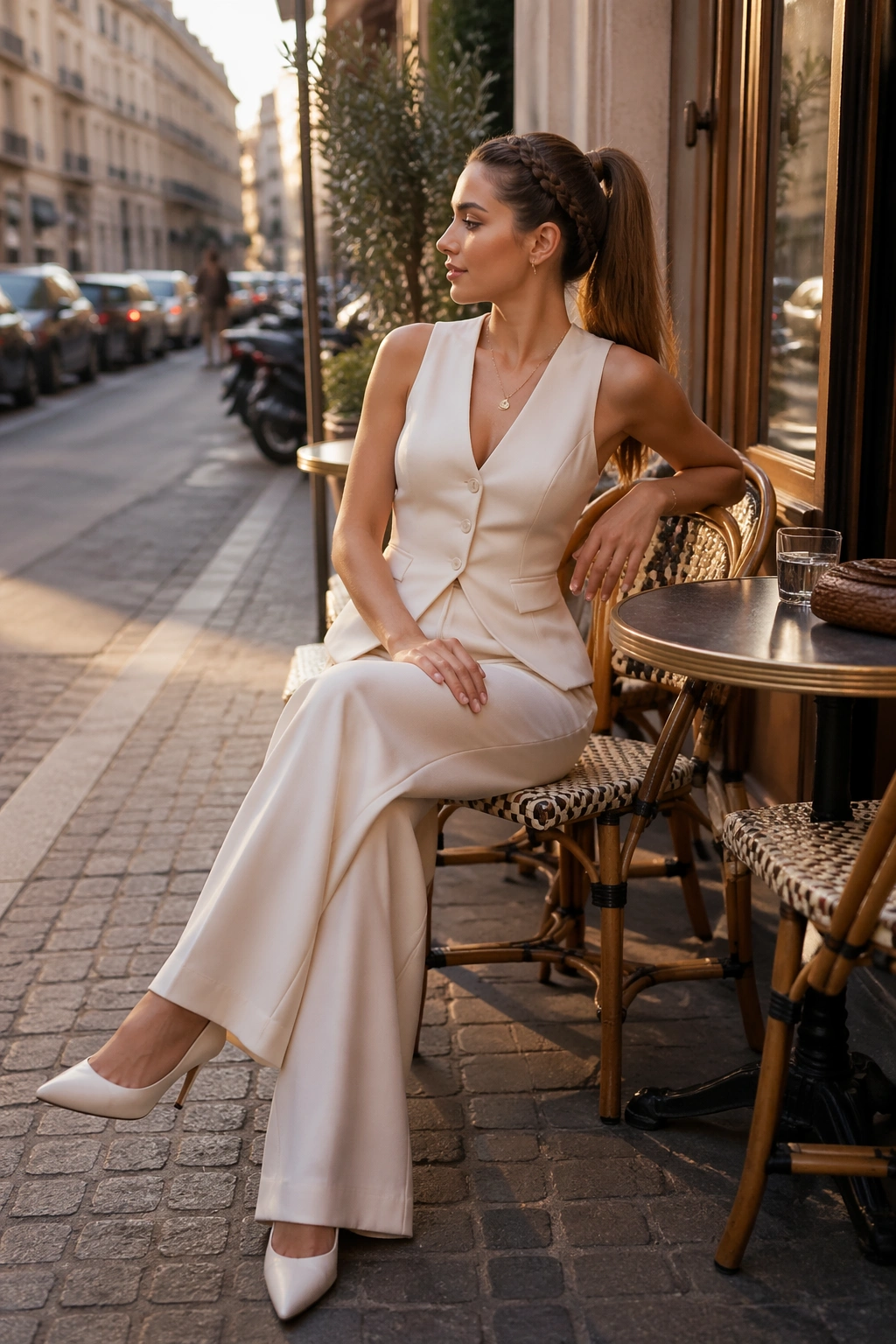
A braided accent ponytail proves that a small detail can carry the whole style. You don’t need a full head of braids. One narrow braid along the temple, hairline, or side part can be enough to change the mood completely.
The braid works like a visual line. It pulls the eye toward the ponytail and gives the front something structured to do. I prefer a tiny braid at the side for a clean, modern feel, but a braid that slips into the base can look just as good if you want a smoother transition.
This is the sort of style that helps when your hair is clean but slightly too soft to hold a severe ponytail on its own. The braid adds grip. It also keeps the style from feeling flat. If you’re not in the mood for full decoration, this is a nice middle road.
15. Inverted Ponytail
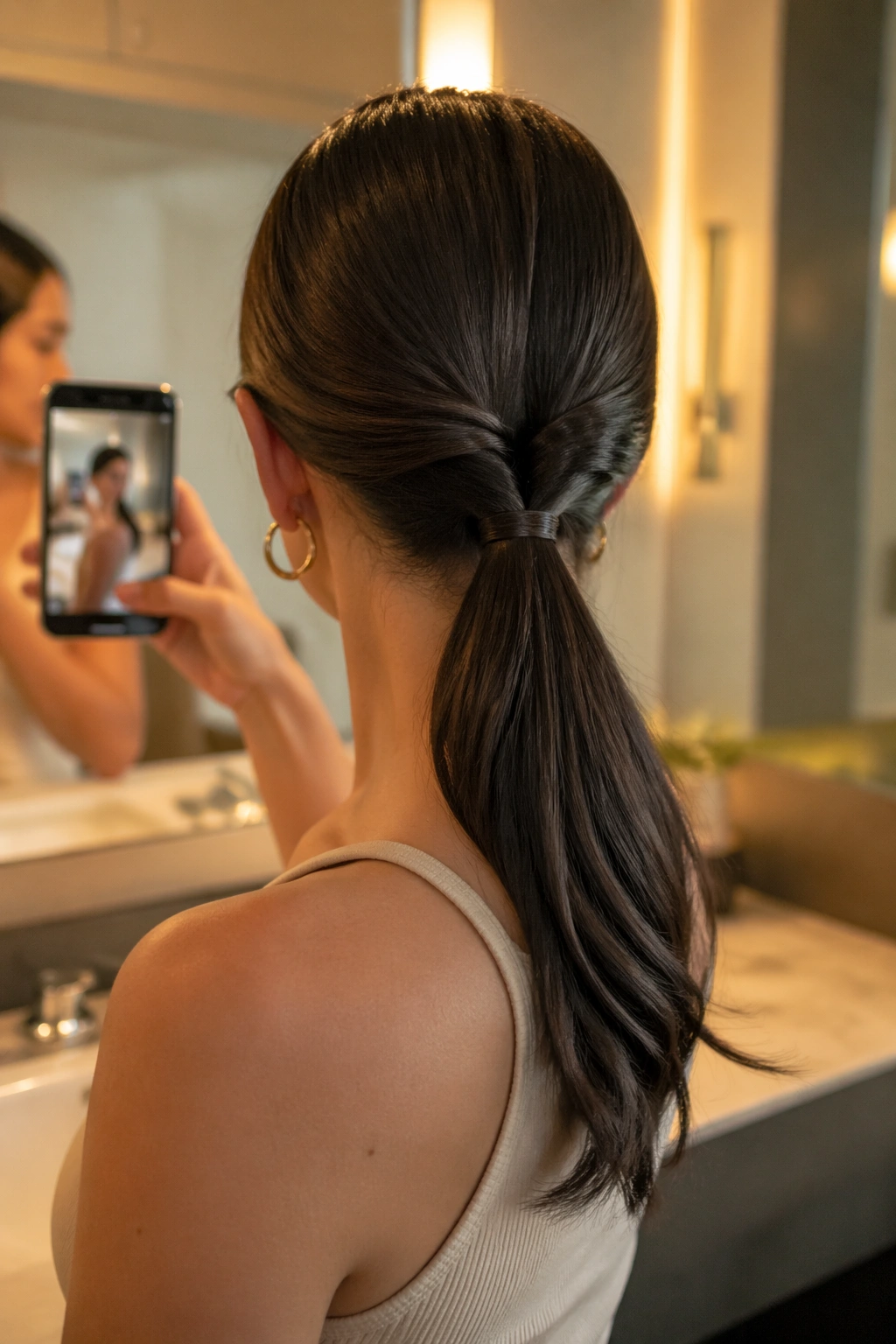
Why does flipping the ponytail through itself make it look more finished? Because the twist builds a neat opening at the base, and that little detail makes the style feel structured without adding clutter.
How to Use It
Start with a low or mid-height ponytail. Split the hair above the elastic just enough to create a gap, then pass the tail through the opening. Pull gently until the twist sits snug.
This style is useful when you want something clean that doesn’t rely on accessories. It also works well on thicker hair, since the inversion gives the base some visual interest even when the tail is simple.
A few things to watch:
- Don’t split the hair too wide, or the base will gape.
- Keep the first ponytail tight so the twist stays secure.
- Smooth the top before you flip, not after.
I like this one because it has a little old-school elegance to it without looking formal in a stiff way.
16. Tucked Loop Ponytail
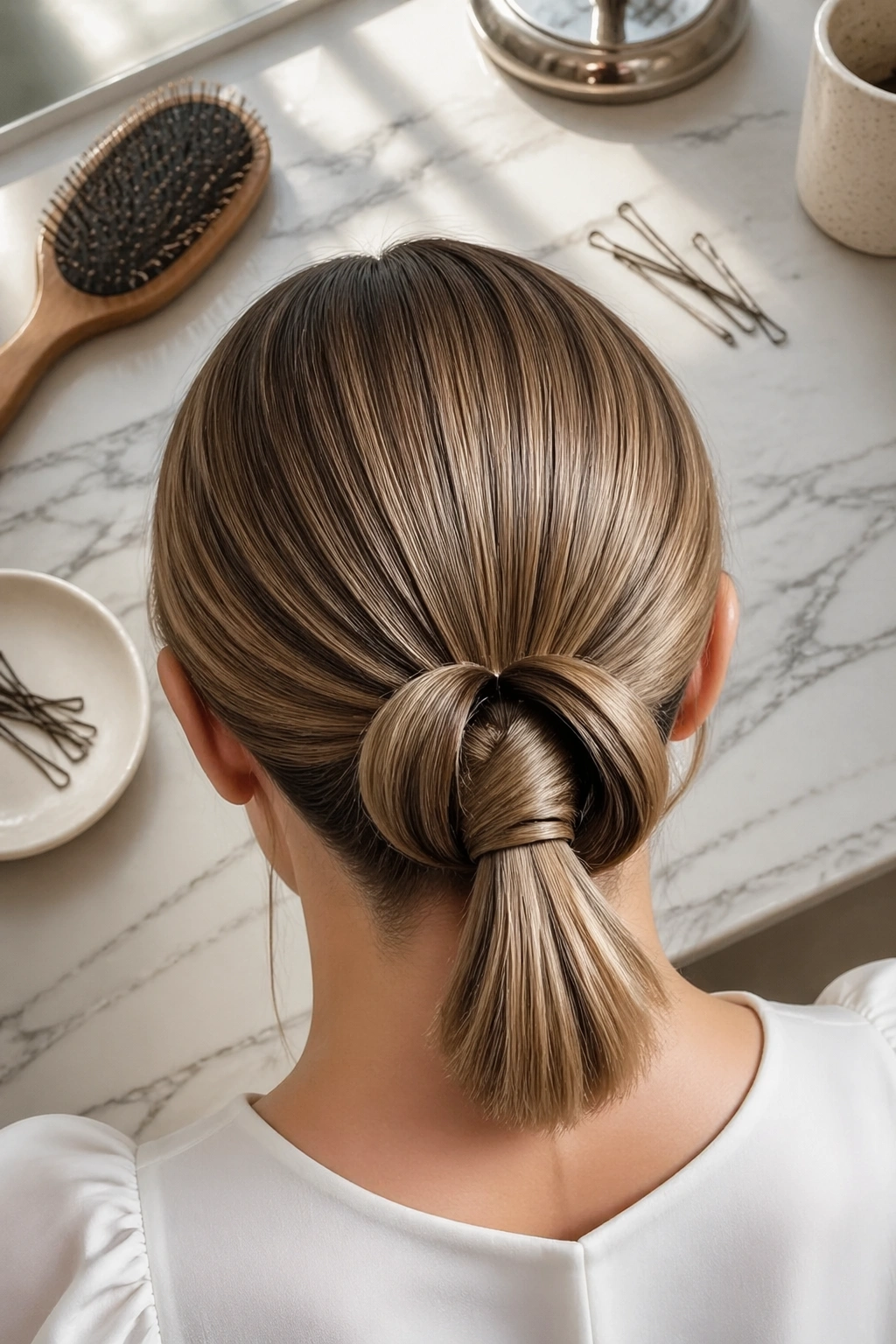
Picture a low ponytail that has been folded into a neat loop and pinned so the ends disappear. That’s the tucked loop version, and it’s one of the easiest ways to get a more dressed-up shape from very little effort.
The mechanism is simple. Secure the ponytail low, fold the tail upward or inward, then pin the fold so it sits just above the elastic. Leave the loop slightly soft if you want a gentler shape, or pull it tighter for a cleaner profile.
I like this for shorter to medium-length hair because it doesn’t need a ton of length to work. It can also hide a blunt cut pretty well, which is handy if the ends need a break from being on display. Use U-pins or strong bobby pins, and press them in along the direction of the fold so they disappear more easily.
17. Satin-Ribbon Ponytail
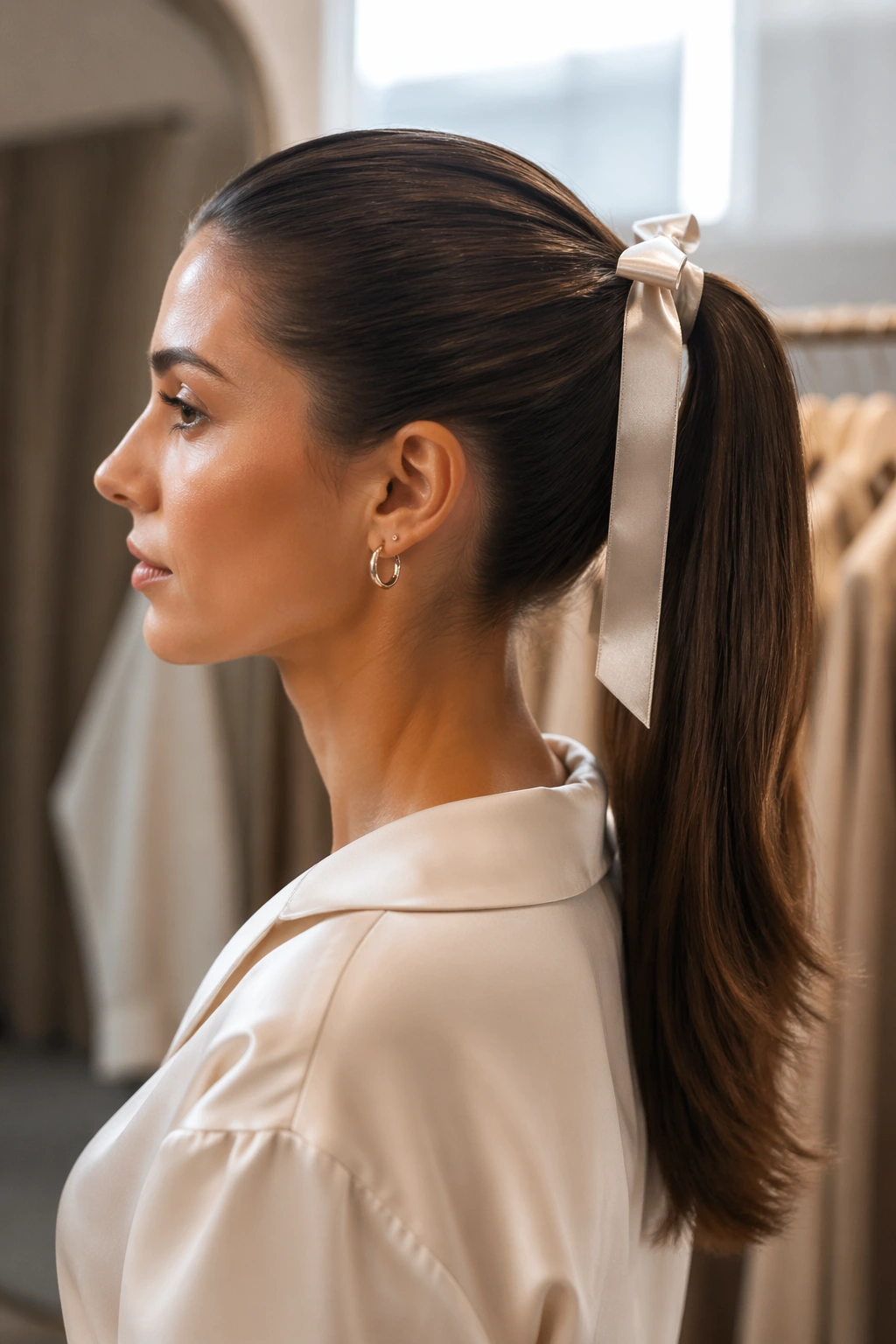
A satin ribbon changes the whole feel of a ponytail. It softens the line of the elastic, adds a little shine, and gives even a plain low ponytail a more finished face.
I prefer a ribbon that’s about 1 inch wide. Thin enough to feel neat, wide enough to show. Wrap it around the base once or twice, then tie it into a small bow or let the ends fall straight down the ponytail. Black, ivory, deep navy, and muted jewel tones are the easiest to wear because they don’t fight with the outfit.
The trick is to keep the rest of the hair tidy. If the crown is fuzzy, the ribbon won’t save it. If the hair is smooth, though, the ribbon looks intentional and a little old-world in a nice way. It’s one of the few accessories that can make a ponytail feel dressed up without making it loud.
18. Crown-Braid Ponytail
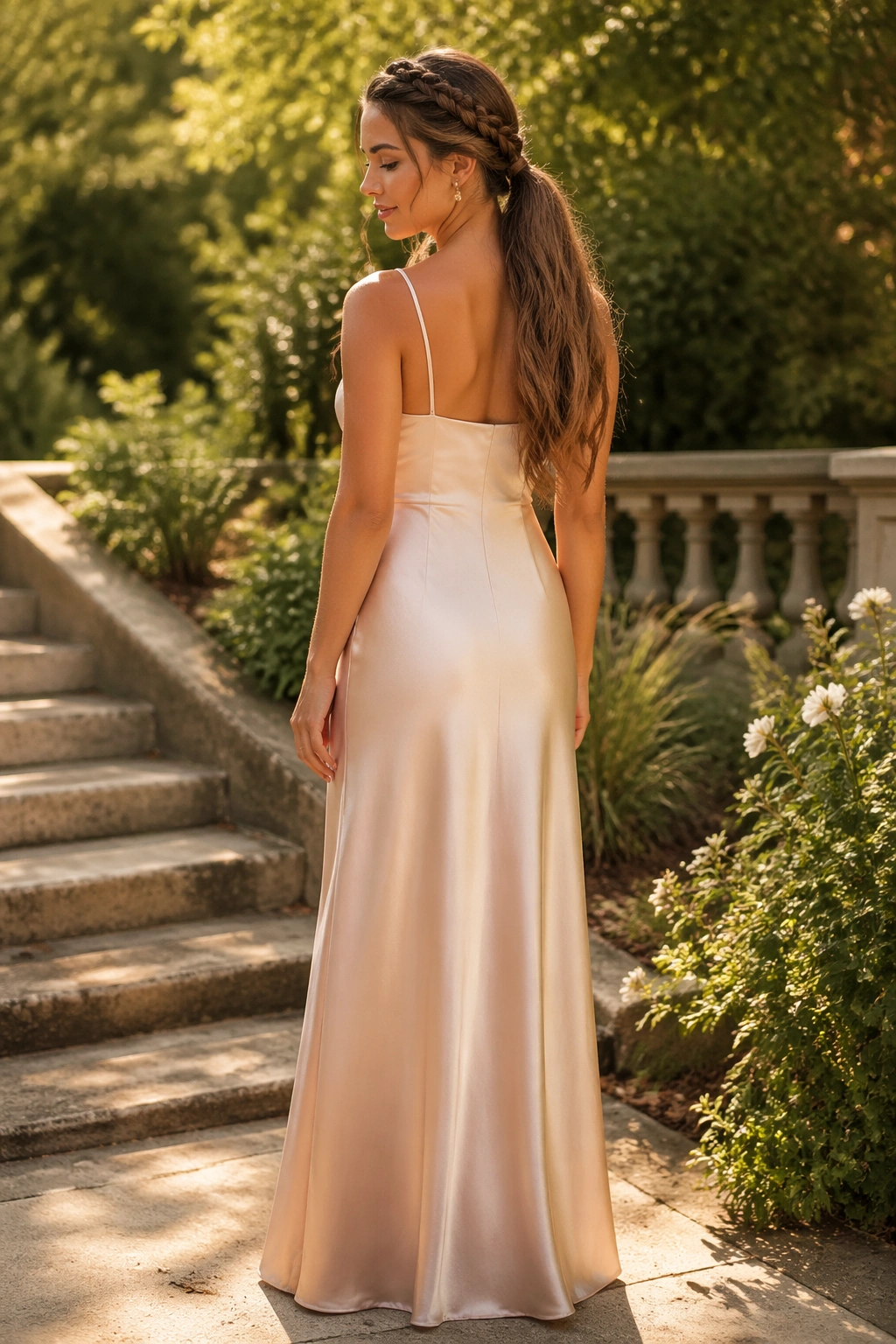
A crown braid leading into a ponytail gives you two styles at once: the structure of a braid and the clean drop of a ponytail. It’s more elaborate than a simple wrapped base, but it still sits in polished territory rather than costume territory.
Unlike a full head braid, this version leaves most of the length free, which keeps it lighter. That makes it a smart choice if you want the front to stay controlled but still like the movement of a ponytail. It’s also easier to wear for a long stretch because the weight gets carried by the ponytail, not by braids pinned all over the scalp.
Best for medium to long hair. I’d choose this if I wanted something formal without going all the way to an updo. It looks especially nice with clean, tucked ends and a low base.
19. Double-Wrapped Ponytail
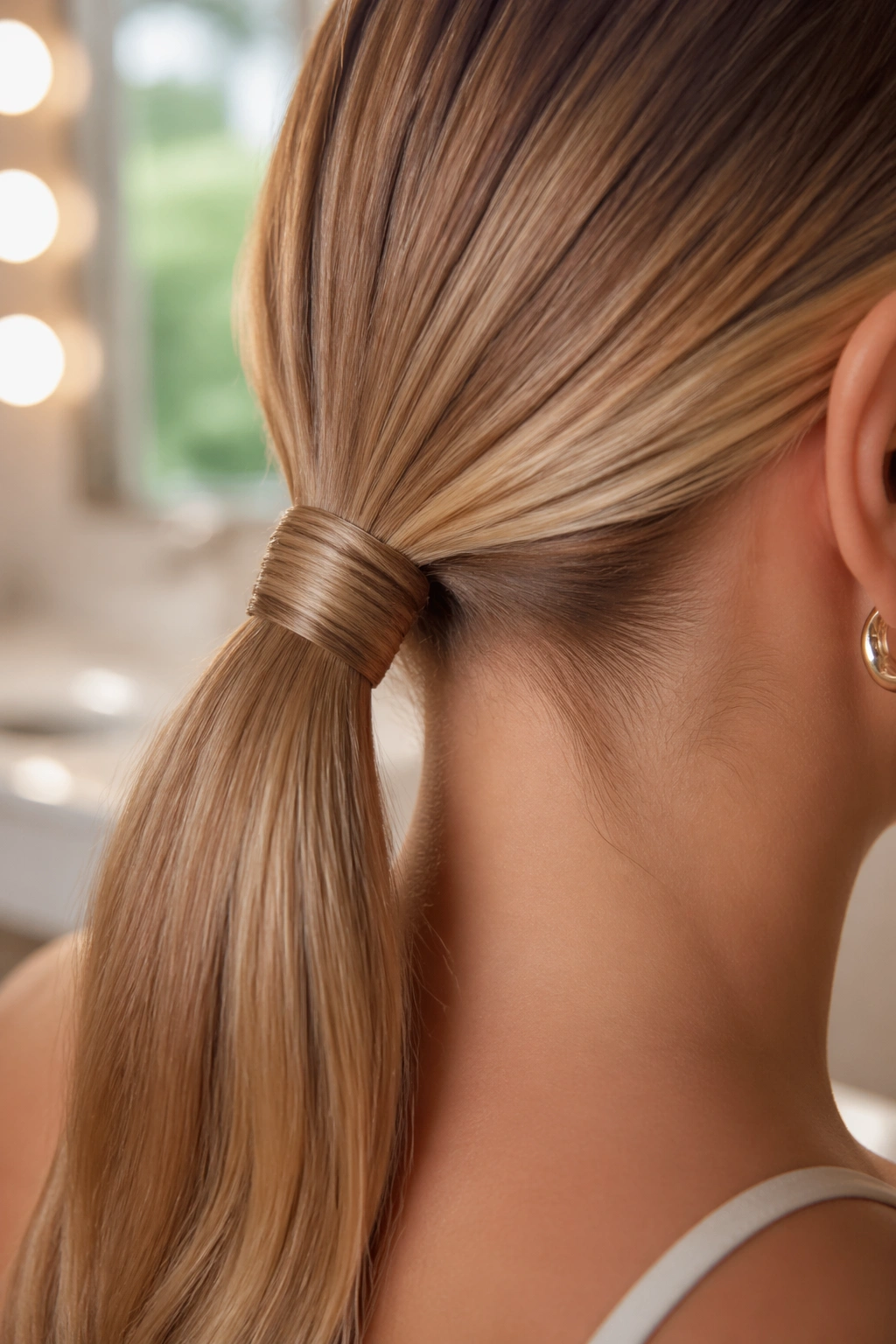
A double-wrapped ponytail uses two strands to hide the elastic instead of one, and that small change makes the base look tighter and more polished. It’s one of those details people notice without always realizing why.
You pull a section from either side of the ponytail, wrap them in opposite directions around the base, and pin both ends underneath. The crossed wraps create a subtle X shape, which is neat if you like a little geometry in your hairstyles.
Why It Works
- It disguises the elastic from more than one angle.
- It adds a bit of grip at the base.
- It looks more tailored than a single wrap.
- It helps medium-length layers stay controlled.
I’d use this when a single wrapped strand feels too plain but a braid feels like too much. The double wrap lands right in between.
20. Hidden-Elastic Ponytail
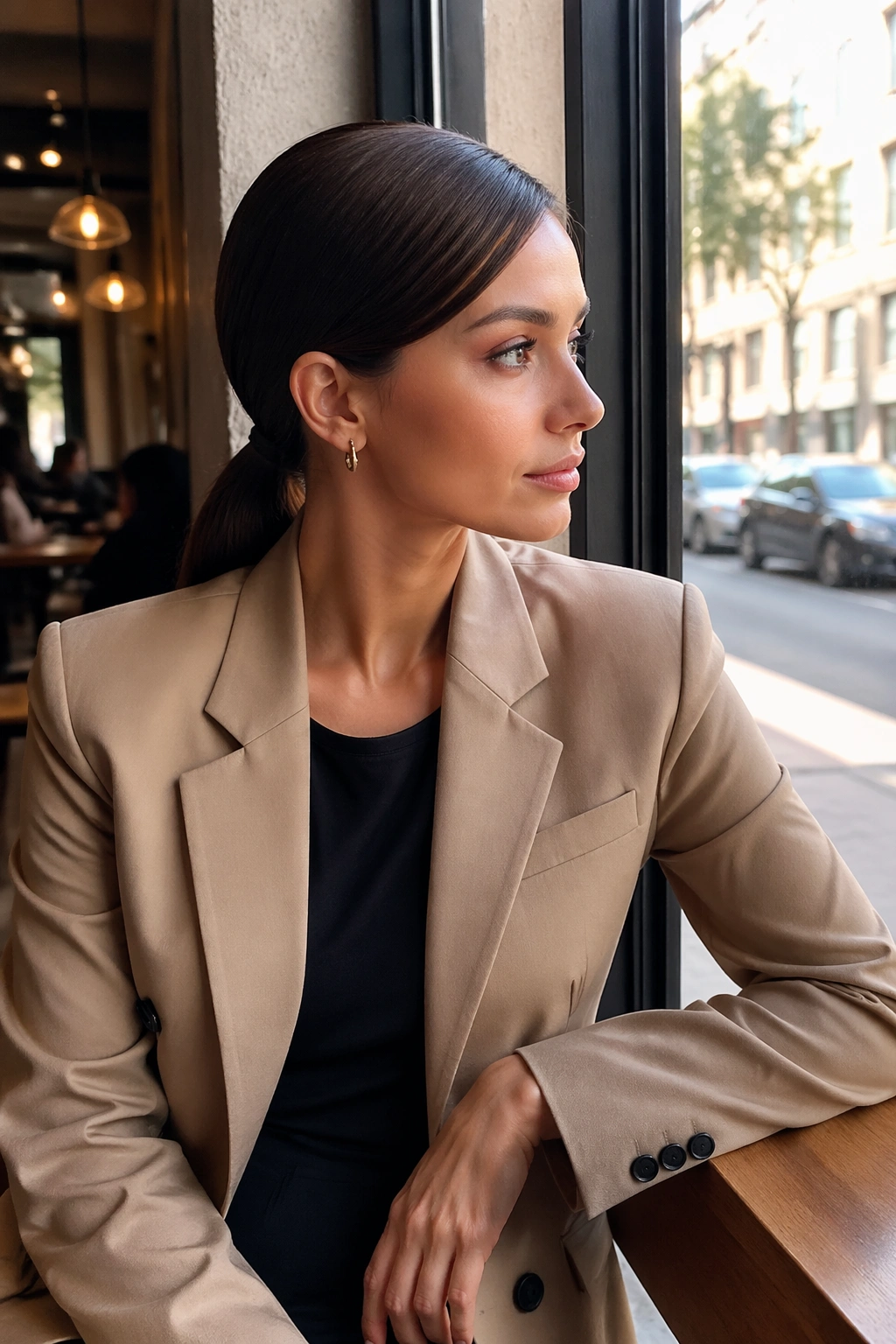
A hidden-elastic ponytail is all about clean construction. You stack the hold where no one can see it, then smooth the visible part until the base feels nearly seamless.
The easiest way is to place one elastic under a small section of hair, then secure a second elastic just above or below it so the support is hidden behind layers. That extra anchoring matters if your hair is thick, slippery, or too heavy for one tie to hold all day.
This style is for people who hate the look of a ponytail that seems to buckle at the base. I’m one of them. If the elastic shows, the style can look unfinished even when the rest is fine. Keep the top sleek, use a fine-tooth comb to flatten the roots, and finish with a light mist of flexible hairspray so the surface stays calm.
21. Low Ponytail with Soft Face-Framing Pieces
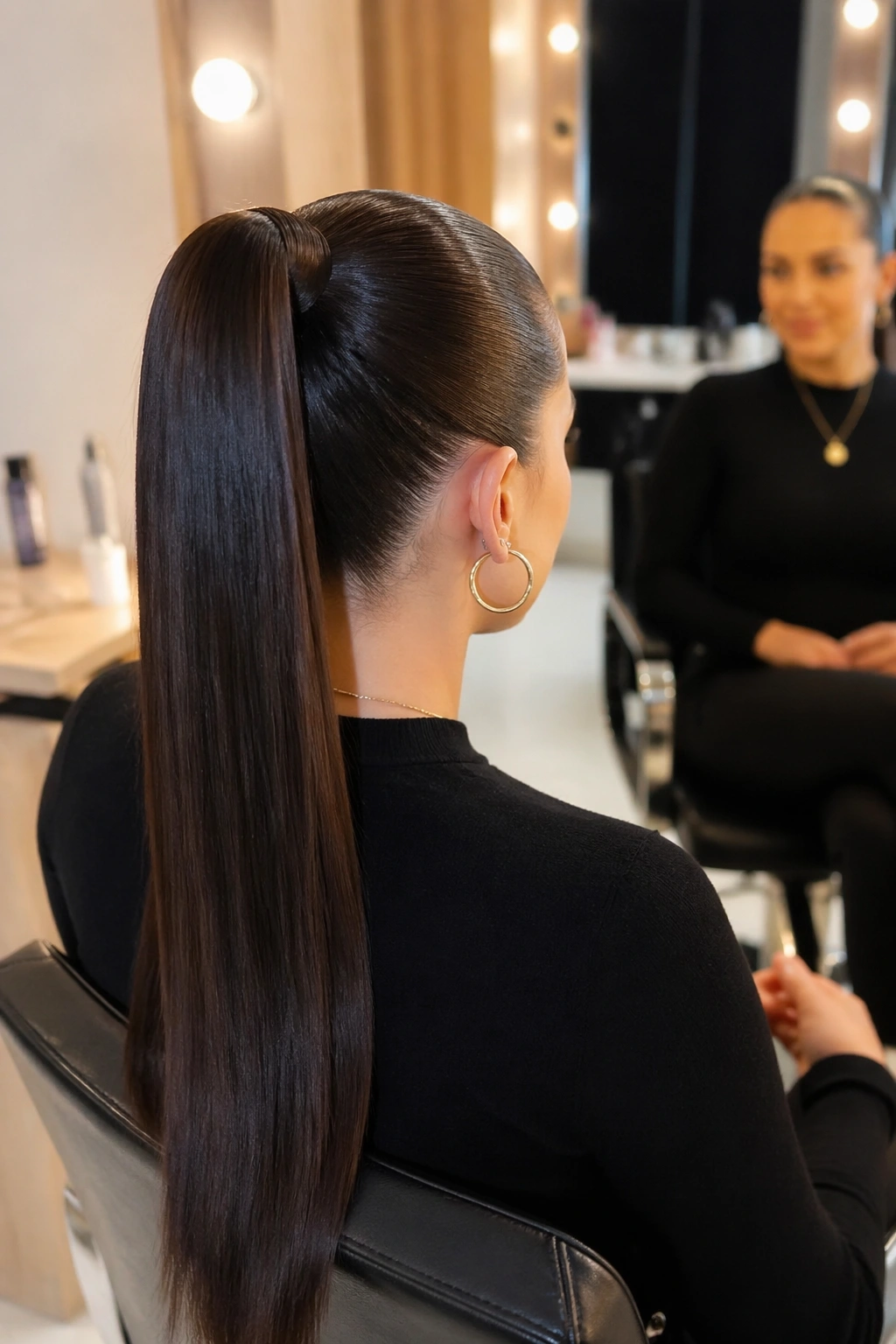
Can a sleek style still leave hair around the face? Absolutely, and this is the version I’d point to when someone wants polish without a hard pullback.
The front pieces should be thin and deliberate, not chunky. That matters. Leave out just enough to soften the jawline, then smooth the rest into a low ponytail. If the pieces are wavy, let them stay that way. If they bend too much, pass a flat iron once over them for a cleaner line.
What to Leave Out
- Two narrow front pieces at the temples
- A little softness around the ears
- Enough length to tuck behind one shoulder if needed
This style is useful when you want to look dressed up but not severe. It works well for dinner, meetings, and events where a fully slicked-back look might feel too strong.
22. Wrapped Bubble Ponytail
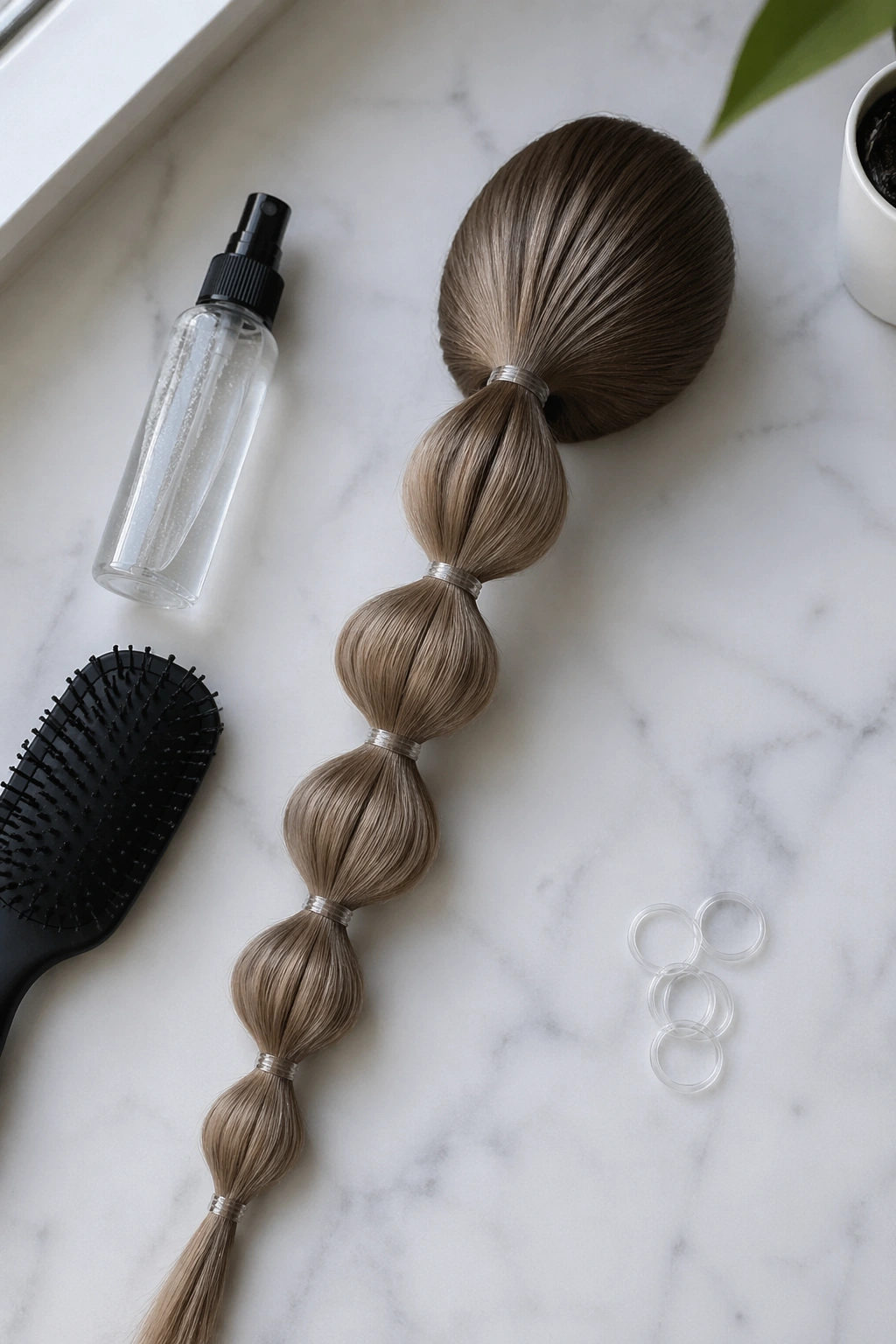
A wrapped bubble ponytail adds one extra step to the standard bubble look: the base gets hidden with a wrap, so the whole thing feels more finished. That matters more than people think.
The bubbles should stay even, and the wrap should sit tight at the top. I usually place the first clear elastic a few inches below the base, then continue down the tail at even intervals. Once the bubbles are shaped, wrap a small strand around the first elastic so the style doesn’t look like it started with a school-gym ponytail and wandered into evening wear.
This one is best for long hair because the bubbles read more clearly when there’s enough length between them. It also works well if you want texture without loose waves. The structure does the talking.
23. Polished Ponytail Bun Hybrid
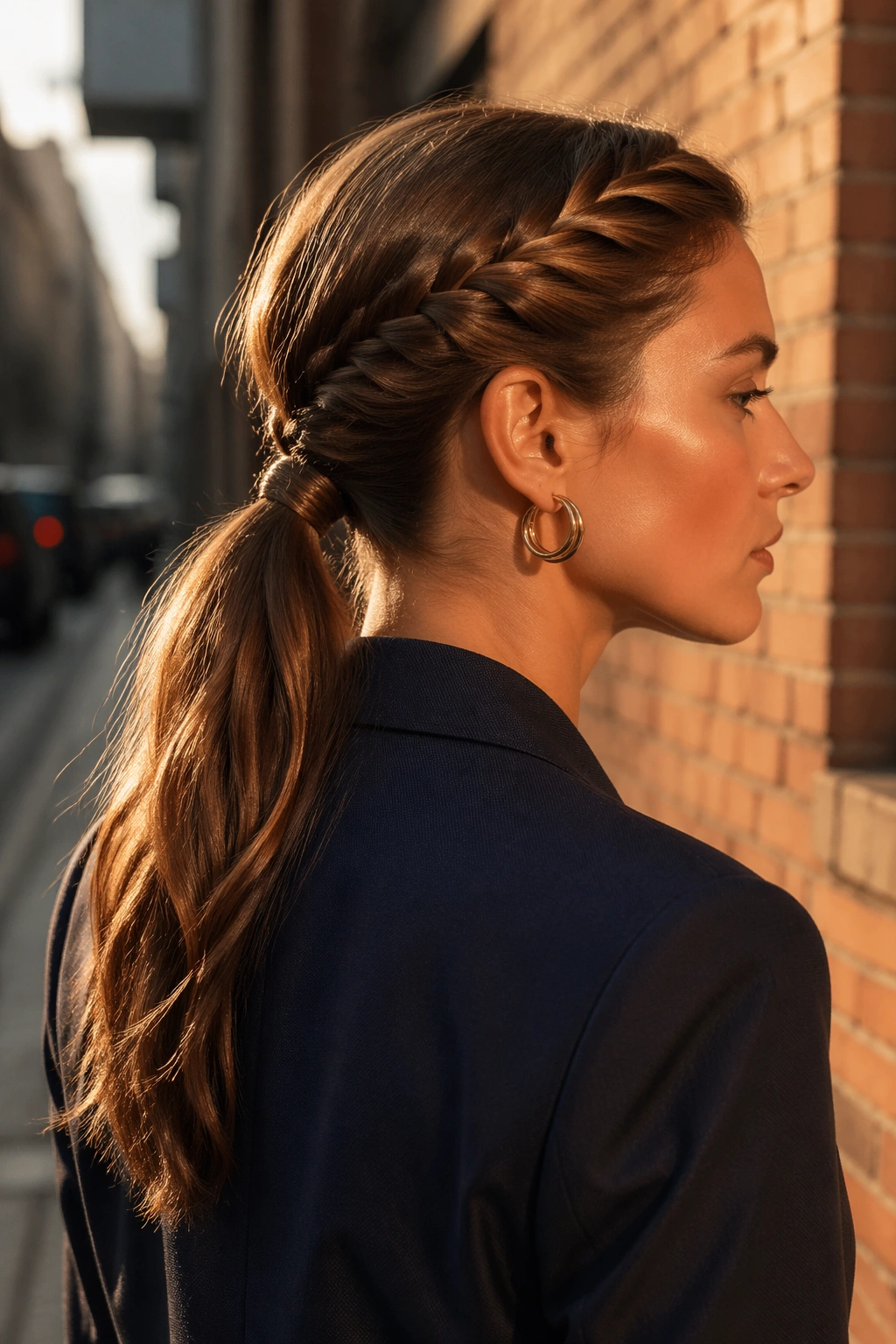
A ponytail bun hybrid is what happens when you let the tail loop or twist into a compact knot instead of leaving it hanging free. It gives you the neatness of an updo with the simplicity of a ponytail base.
The beauty of this style is that it handles shorter lengths better than people expect. You don’t need all the hair to make a full bun. Gather the ponytail low, twist the tail, fold it into itself, and pin the ends under the knot. Leave a small amount of tail peeking out if you want a softer shape.
This works especially well when the hair is freshly smoothed and the ends are blunt. A few hidden pins, some shine spray, and you’re done. It’s not flashy. That’s the point. It looks tidy, and tidy can be elegant when the rest of the look is doing its job.
24. Off-Center Part Ponytail
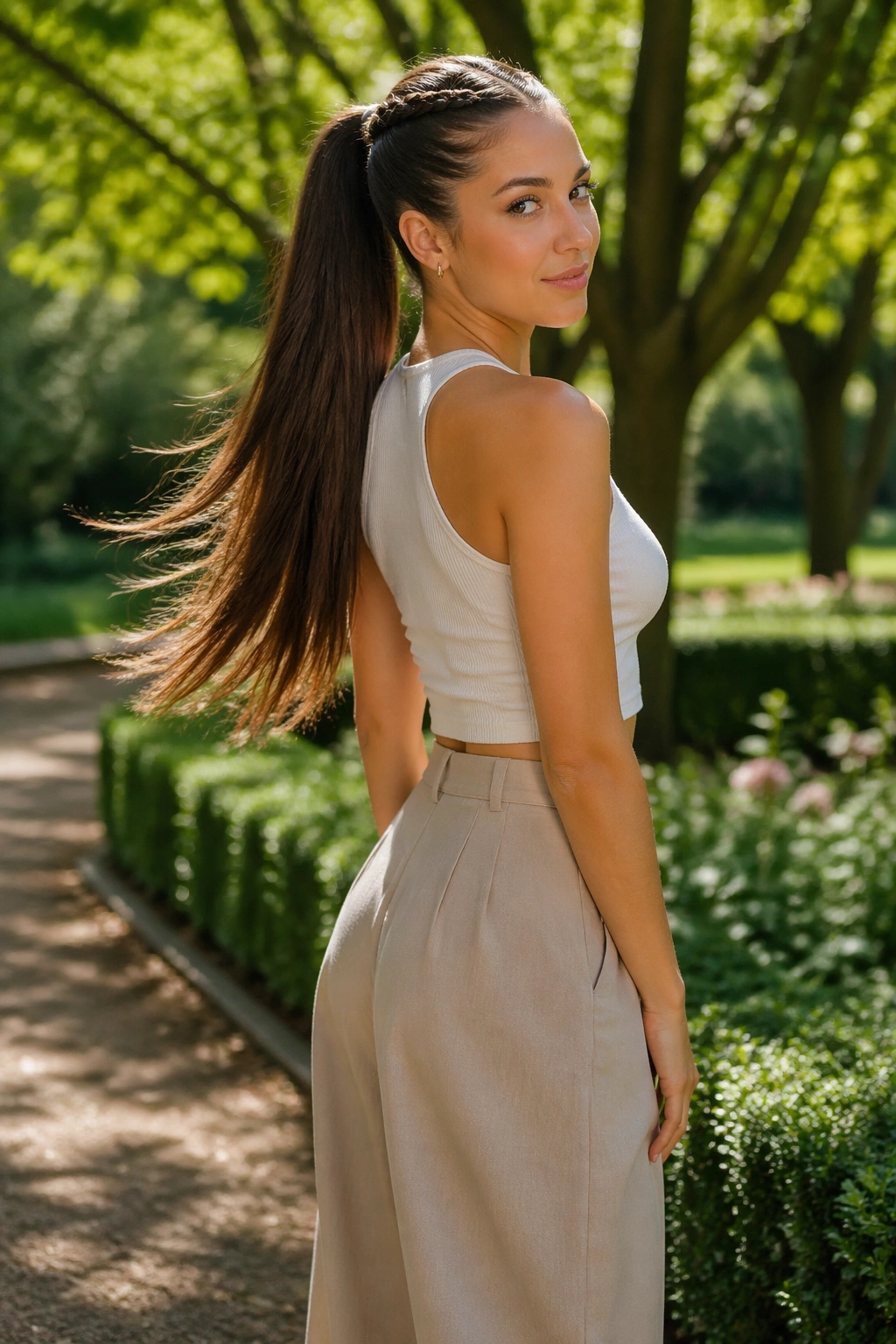
An off-center part is a smart compromise when a center part feels too strict and a deep side part feels too dramatic. It gives the ponytail movement without skewing the whole face in one direction.
Compared with a straight center part, this version feels a little warmer and softer. Compared with a deep side part, it’s easier to wear every day. That’s why I like it for daytime events or long workdays. It doesn’t demand attention, but it still looks intentional.
Keep the part just a few centimeters off the middle, then smooth both sides back evenly. The ponytail can sit low or mid-height; the part does the real work. If your hair tends to split or puff at the roots, dampen the line slightly and comb it flat before it dries.
25. Minimalist Barrette Ponytail
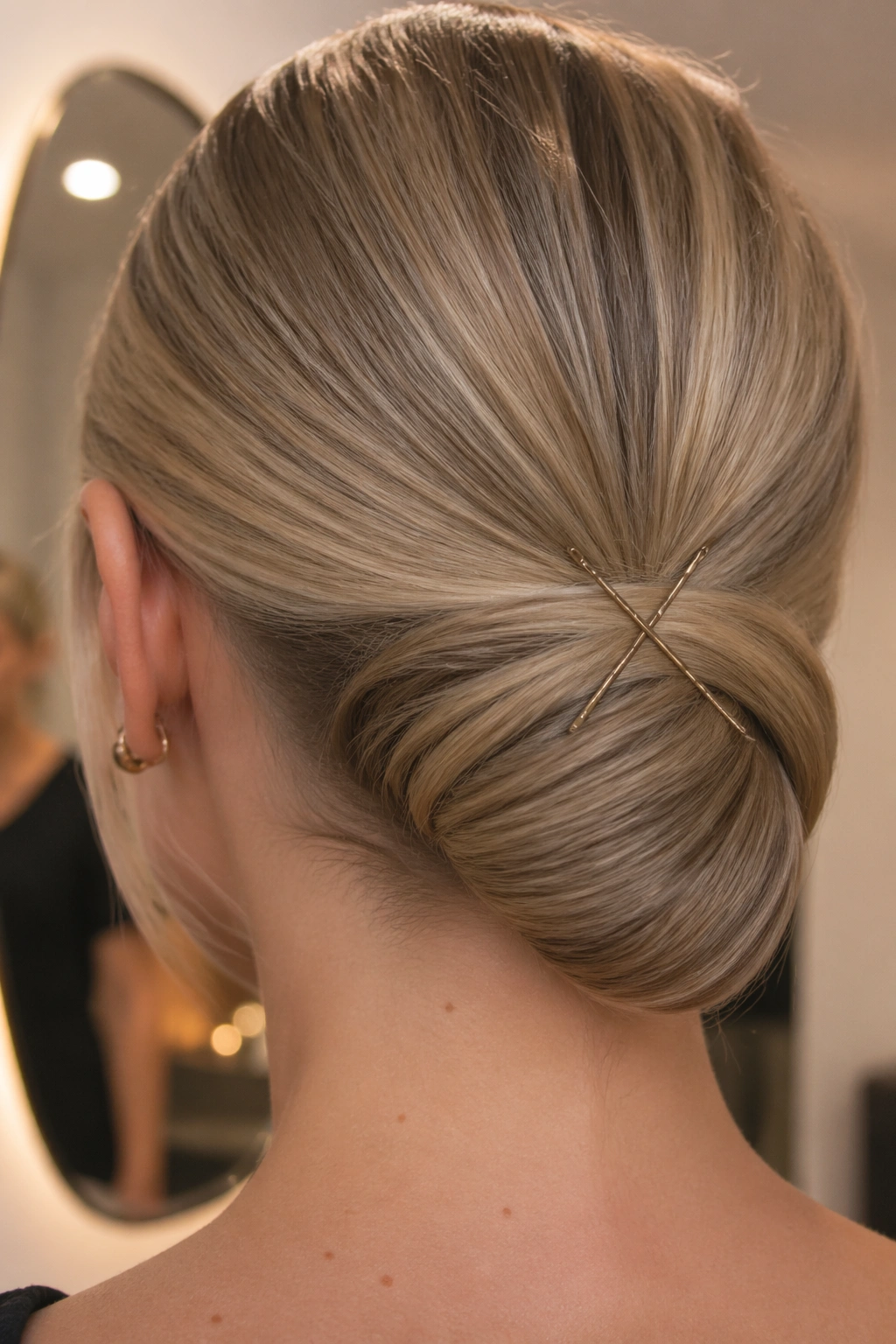
A minimalist barrette ponytail is proof that one piece of hardware can carry a whole hairstyle. The barrette should be slim, clean, and metallic or matte rather than sparkly and oversized.
How It Differs From a Decorated Ponytail
This style is about restraint. The ponytail itself stays plain and sleek, while the barrette sits near the base or slightly above it like a quiet signature. It’s not there to shout. It’s there to finish.
I like this for shirts with collars, because the barrette gives the eye a stopping point. It also works well if your hair is very straight and tends to look too simple on its own. The trick is placement: too high, and it feels random; too low, and it gets lost.
A good barrette ponytail looks crisp, not crowded. That’s why a small piece often beats a bigger one.
26. Side-Knot Ponytail
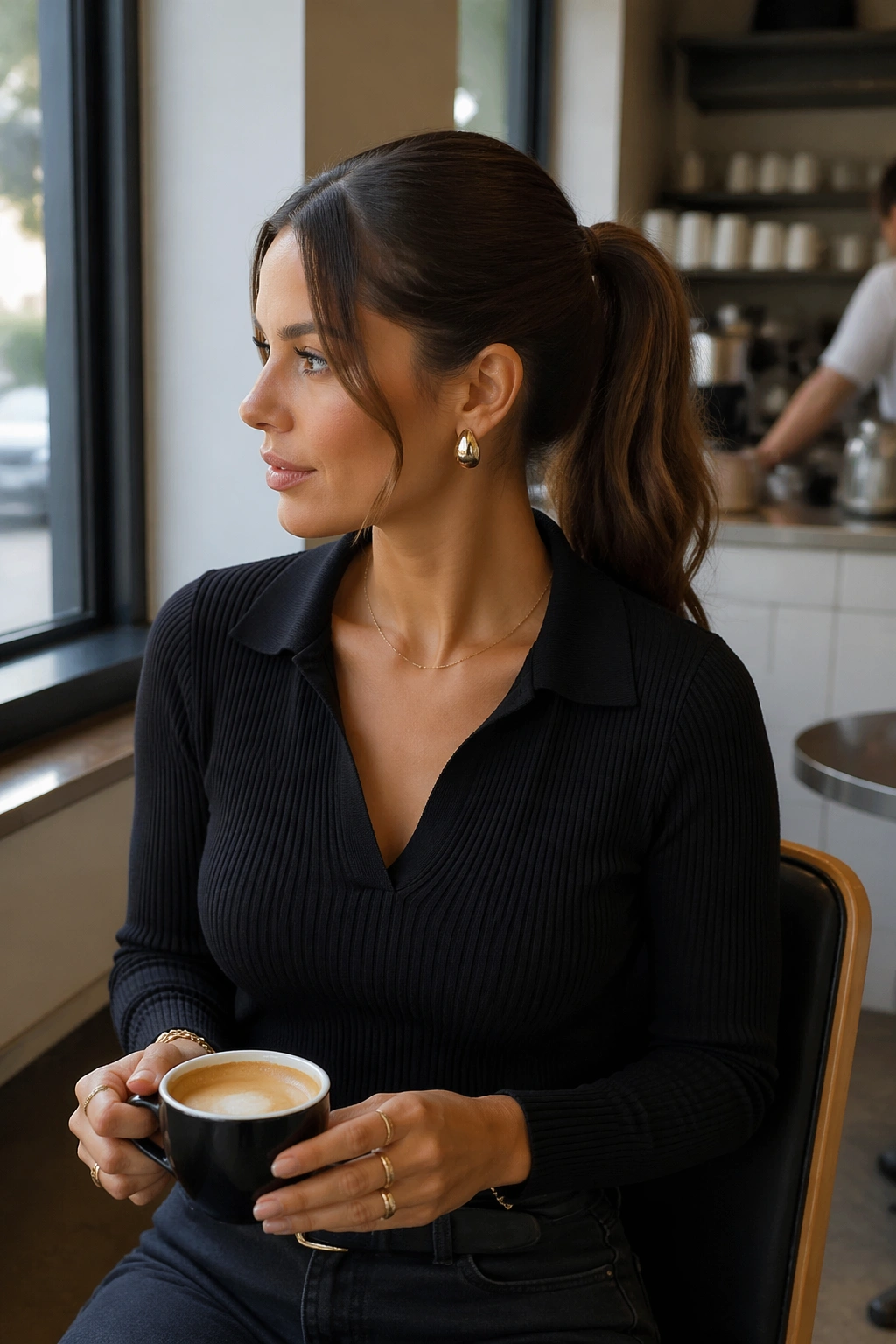
A side-knot ponytail looks like a twist on formal styling, but it’s easier than it seems. The knot sits off to one side, just behind the ear or near the lower temple, and the rest of the ponytail follows from there.
Boldly put, this is a cheat code for looking styled fast. The knot gives the hair a focal point, so even if the tail itself is simple, the overall effect feels intentional. It’s especially useful for medium-length hair that doesn’t want to stay in a dramatic updo.
I’d keep the knot small and secure it with pins from underneath. If it gets bulky, the whole style starts to feel clumsy. A smooth side part can help, but it isn’t required. What matters more is keeping the knot close to the head so the ponytail flows from it cleanly.
27. Wrapped Braid Ponytail
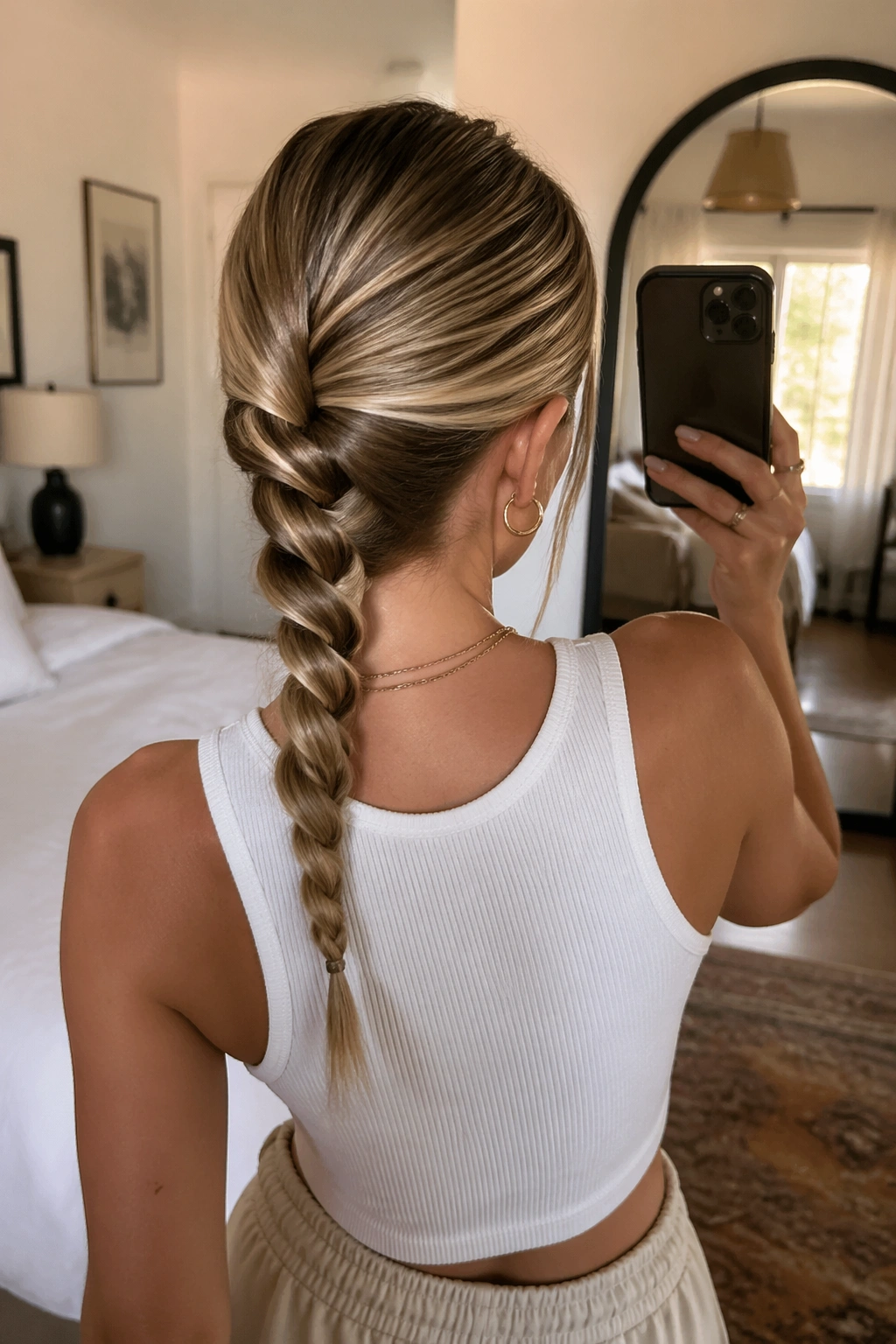
A wrapped braid ponytail takes a small braid and uses it like a built-in accessory. Instead of just hanging there, the braid circles the base and hides the elastic with a little more texture than a plain wrap.
How to Style It
Start with a low or mid-height ponytail. Pull a narrow section from the tail, braid it tightly, then wind the braid around the base and pin it underneath. If you want extra hold, coat the braid lightly with a small amount of pomade before wrapping.
This version is good when you want a ponytail that looks detailed up close but still smooth from a distance. It also lasts well because the braid gives the wrap some grip. People with thick hair will like the stability. People with fine hair will like the illusion of fullness at the base.
The style works best when the braid is neat and narrow. A chunky braid can overwhelm the ponytail.
28. Low Twisted Ponytail
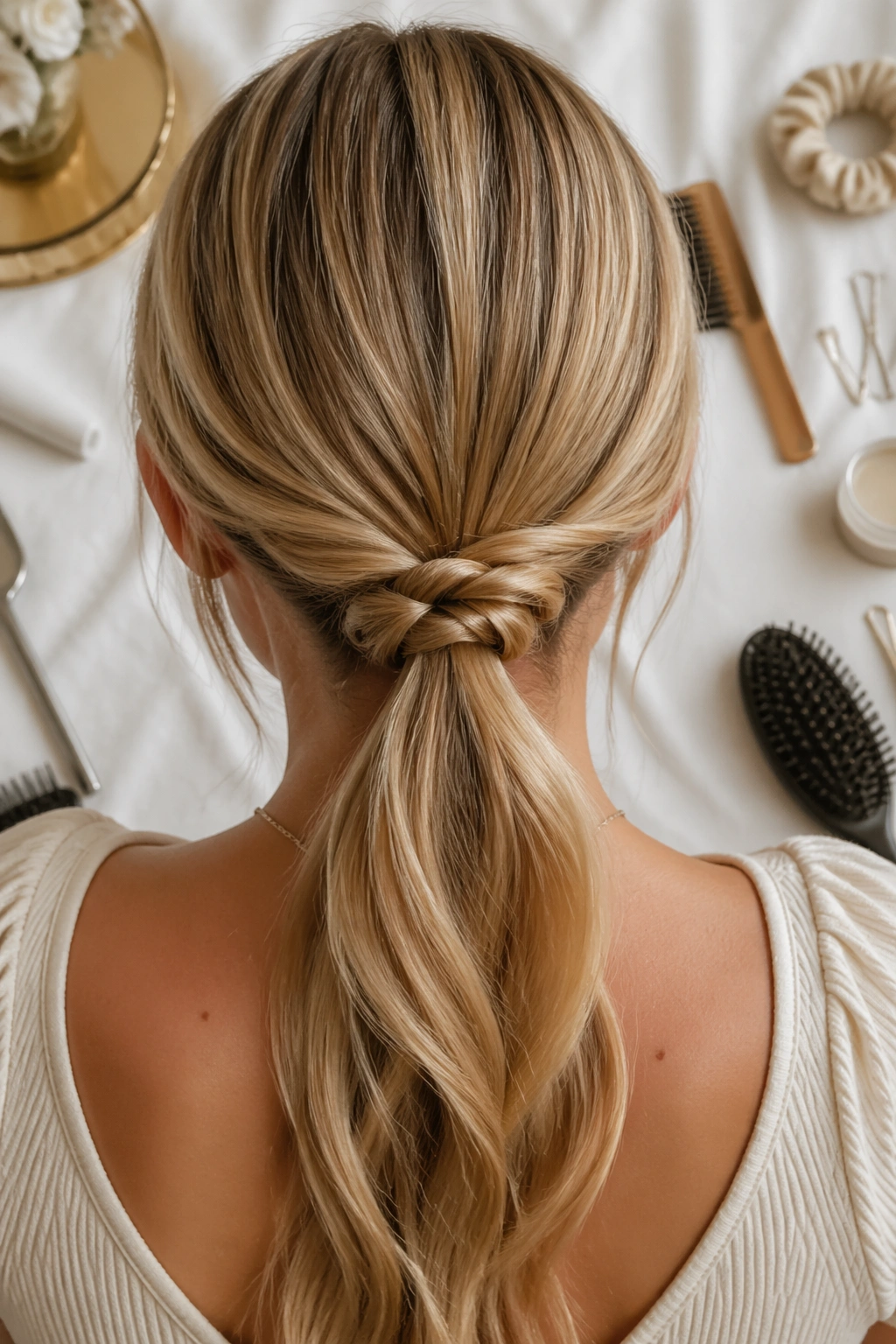
A low twisted ponytail feels softer than a fully braided version and more interesting than a straight one. Two side sections twist back toward the nape, where they join the ponytail base, and the rest of the hair stays clean and simple.
Picture a calm, symmetrical shape with just enough detail to keep it from going flat. That’s the appeal. The twists give the sides structure, while the ponytail keeps the overall look wearable. If you have long layers, pin the twists first and then secure the ponytail so the shorter pieces don’t escape.
I like this for dresses with open backs or simple necklines. It leaves the focus on the shape of the hair, not on any one accessory. And because the twists sit close to the head, the style stays tidy even if the day runs long.
29. High Ponytail with Curled Ends
A high ponytail with curled ends gives you the neatness of a pulled-back style and a little softness at the bottom. The crown stays sleek, but the tail finishes with movement instead of a blunt line.
The contrast is what makes it work. If the top is too soft, the ponytail loses its clean shape. If the ends are too straight, the style can feel sharp in a way that isn’t always flattering. A medium barrel iron or hot rollers on the tail can fix that fast. Curl only the lower half if you want the root area to stay tidy.
This style is one of the best choices when you want a polished ponytail that still feels a bit alive. The curls catch the eye at the ends, which keeps the style from looking flat or harsh.
30. Event-Ready Chignon Ponytail
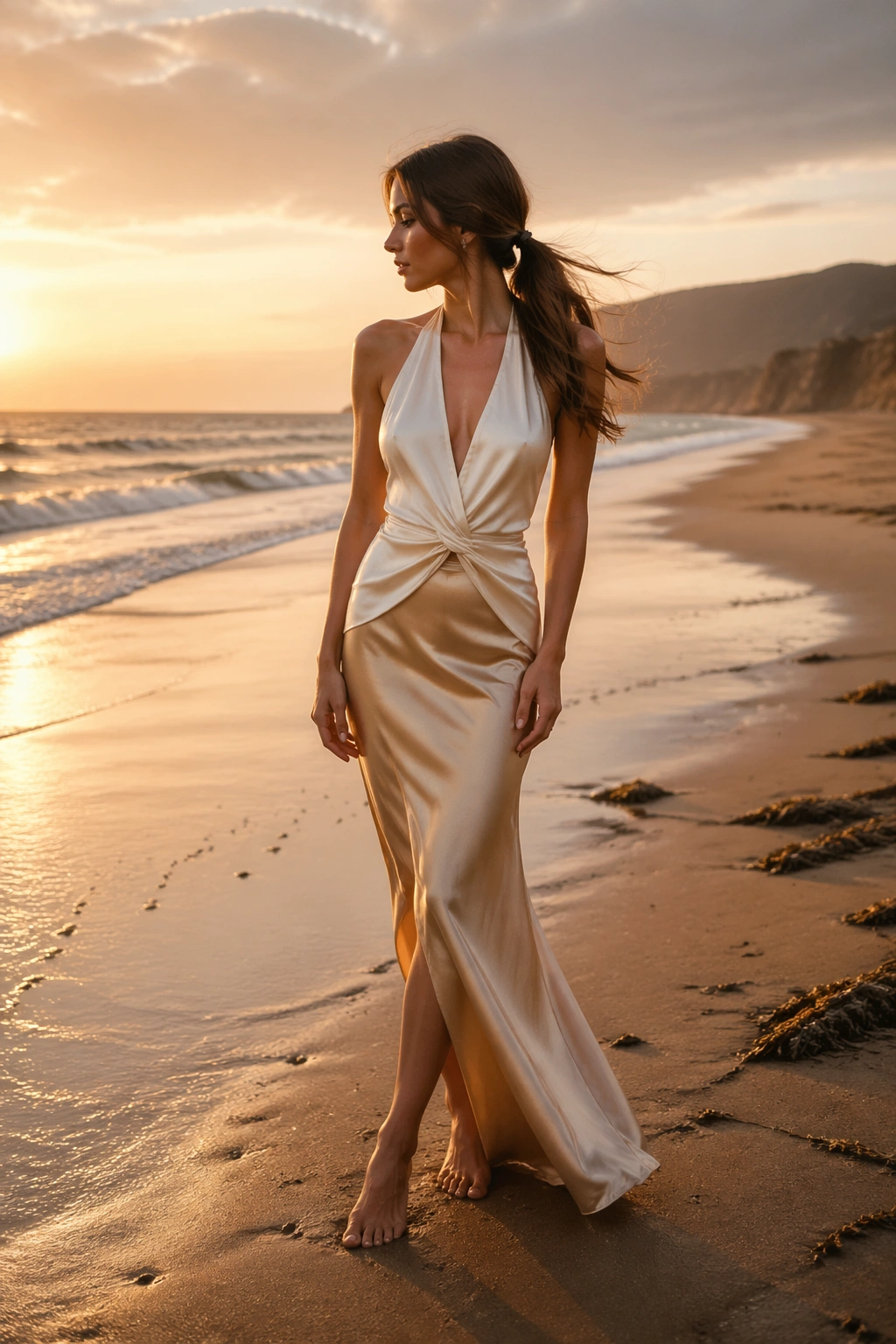
A chignon ponytail sits between a ponytail and a bun, which is why it works so well for formal events. The base is smooth, the shape is compact, and the tail disappears into a tucked knot instead of hanging loose.
Compared with a standard low bun, this version keeps a little more softness. Compared with a ponytail, it feels more finished. That middle ground is useful when you want something that can handle a long evening without looking overworked.
I’d choose this for weddings, dinners, or any event where you want your hair to stay neat from the first photo to the last. Use a strong elastic, a few hidden pins, and a fine mist of hairspray on the surface only. Keep the silhouette close to the head. That’s what gives it the clean, polished line.
