



Long wavy layered cuts over 50 have a way of making hair feel like it belongs to you again. The right cut doesn’t fight your wave pattern or flatten it under too much weight; it gives the hair room to bend, move, and fall in a softer shape around the face.
Hair after 50 can change in odd, annoying ways. One section may turn finer, another may get coarser, and the crown can lose lift while the ends still look full. A blunt one-length style often exaggerates that mismatch. It hangs. It drags. It can even make the face look harder than it really is.
A good layered cut fixes the balance without taking away the length you still want. Long layers, face-framing pieces, and a little internal shaping can make wavy hair look lighter, more polished, and easier to style on a regular morning with normal lighting and normal time.
The best part is that these cuts are not trying to make you look younger. That’s tired advice anyway. They’re trying to make your hair work better with what it already does, which is a much more useful goal. Start with the first cut below, and you’ll see how much range long wavy layered hair really has.
1. Soft Face-Framing Layers With a Side Part
This is the easiest place to begin, and honestly, one of the most flattering choices for long wavy hair over 50. A soft side part plus layers that start near the cheekbones gives the face lift without turning the whole cut into a choppy mess.
Why It Works
The side part shifts volume away from the center, which helps if the crown has started to lie flatter than it used to. The face-framing pieces soften the jaw and bring attention up toward the eyes. No drama. Just shape.
- Best for medium to thick wavy hair that needs direction.
- Keeps the length long while removing bulk around the face.
- Works well with gray blending because the lighter pieces around the front look intentional, not accidental.
Ask for the shortest face frame to hit around the cheekbone or just below it. Anything shorter can get too fluffy once the wave springs up.
2. Feathered Long Shag
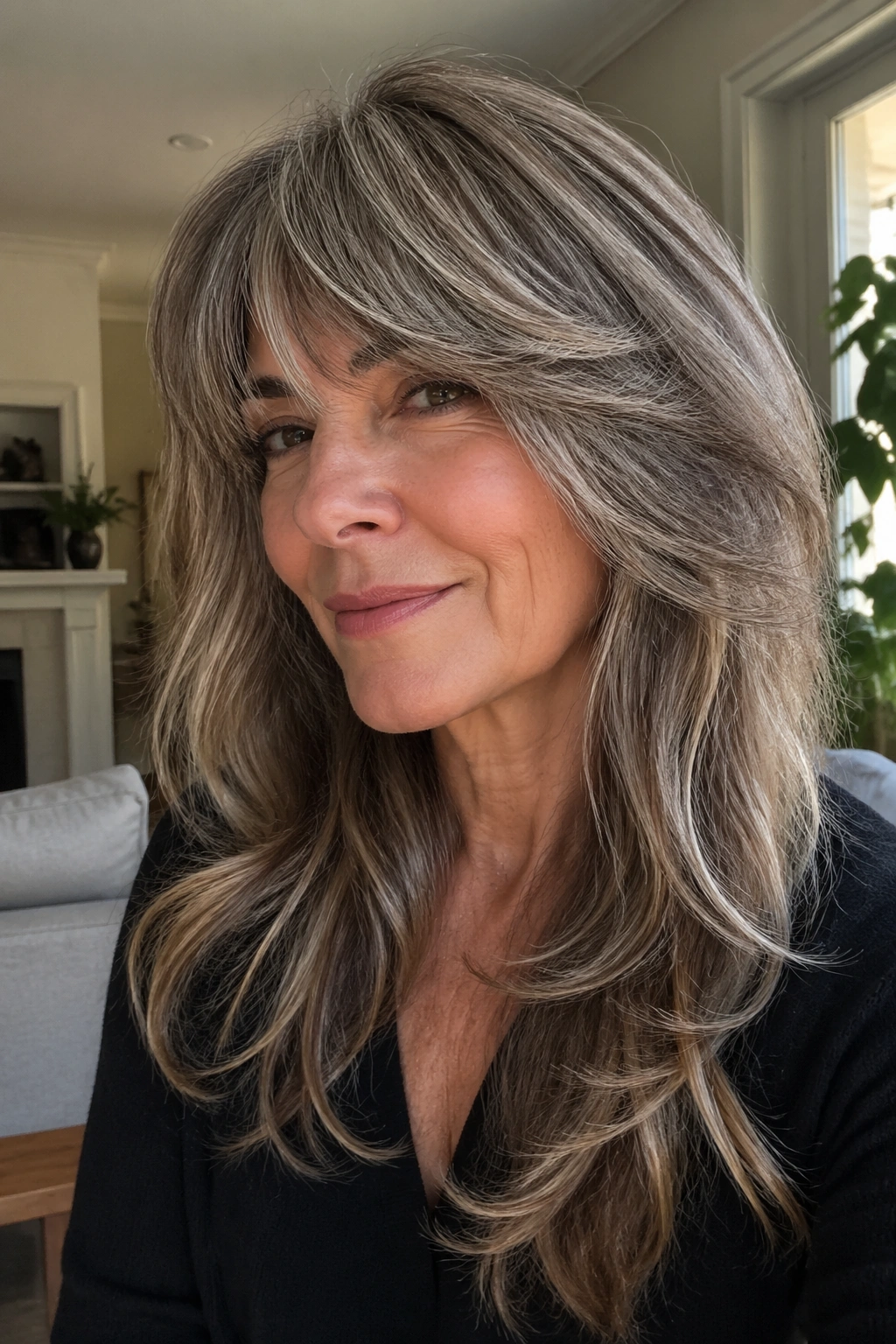
A long shag sounds bold, but the feathered version is gentler than people think. It gives movement at the crown and along the sides without making the ends look thin or ragged.
That matters on wavy hair, because waves already create texture. You do not need to pile on more texture just for the sake of it. A feathered shag keeps the silhouette airy, which is nice if your hair feels heavy when it’s all one length. It also works well when you want a cut that can air-dry with a little mousse and still look shaped.
The best feathered shags have long, blended layers and a few soft pieces that fall forward. They should look touched by scissors, not attacked by them.
3. Butterfly Layers With Lift at the Crown
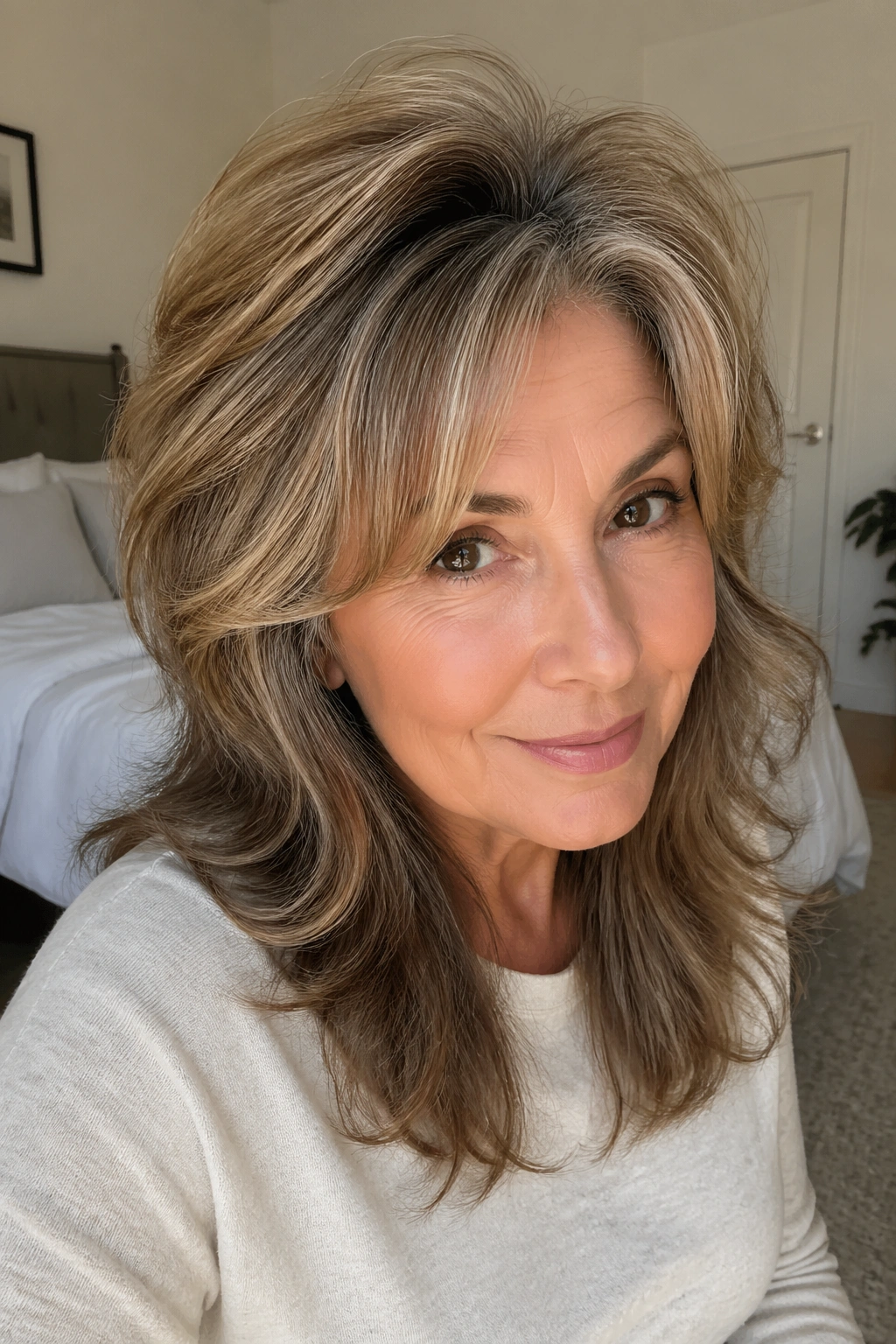
Want volume up top without losing the feeling of long hair? Butterfly layers are built for that exact problem. The crown gets shorter, floating layers while the length stays in place below the shoulders.
How to Style It
Use a round brush or a large Velcro roller at the crown for a few minutes after blow-drying. That small bit of lift changes the whole haircut. The rest can stay loose and wavy.
Butterfly layers are smart for women over 50 because they create movement where hair often starts to fall flat. They’re also forgiving if you don’t style every section perfectly. The shape does most of the work.
A small note: ask for soft blending through the top, not a severe disconnect. Too much contrast can look trendy in the chair and awkward at home.
4. Curtain Bangs With Long Waves
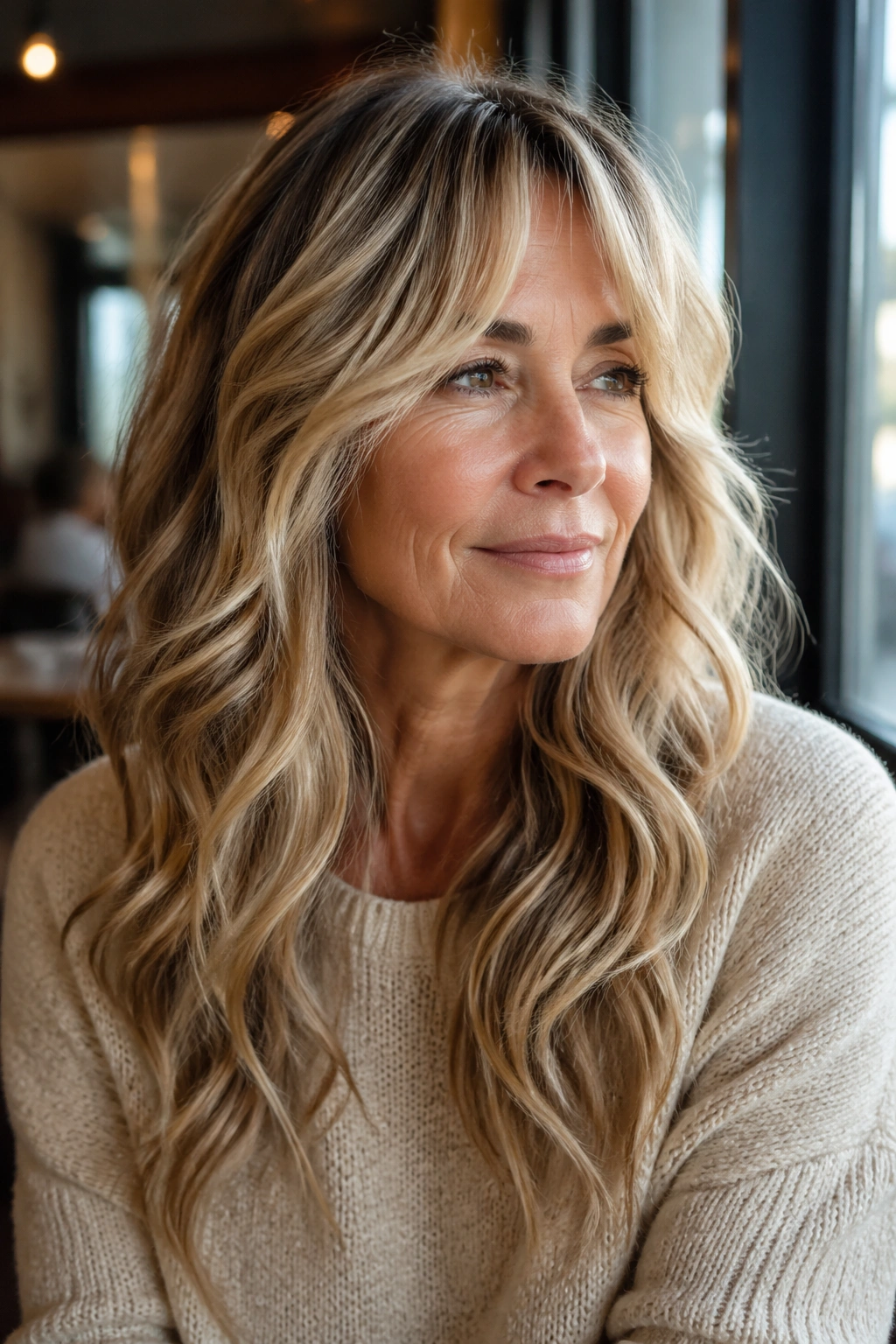
Curtain bangs are one of those cuts that look casual but do a lot of quiet work. They soften the forehead, skim the eyes, and connect beautifully into long layers, especially when the wave pattern is loose.
Picture hair that falls open around the face instead of sitting in one heavy sheet. That’s the effect here. The bangs blend into the front layers, so the cut feels intentional even on day two hair.
- Good if you want forehead coverage without a straight fringe.
- Easy to pin back on busy days.
- Works with glasses better than many full bangs.
- Grows out more gracefully than blunt bangs.
If your waves are strong, keep the curtain pieces a little longer than you think. They spring up.
5. A U-Shaped Cut With Soft Layers
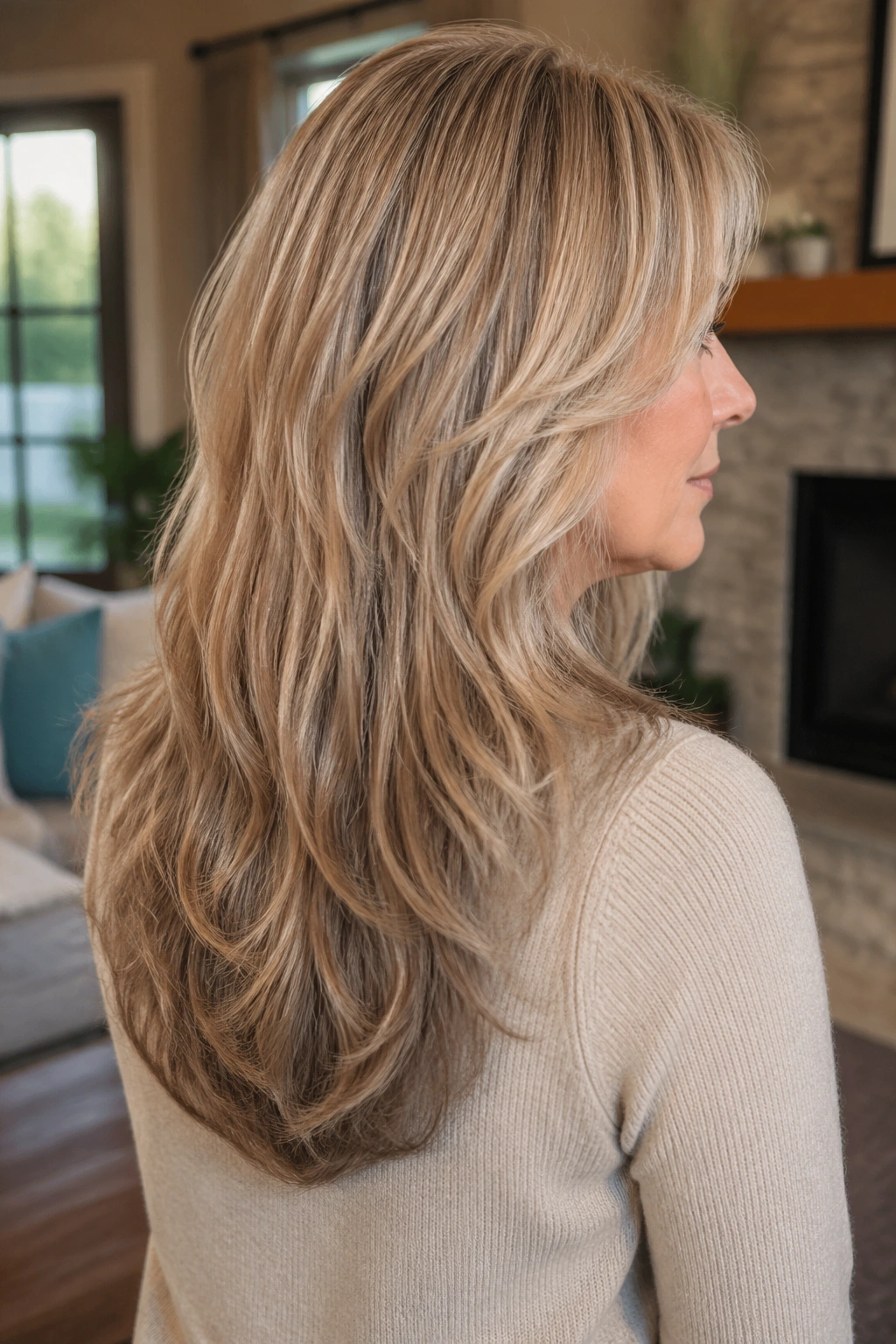
A U-shaped long cut is quietly elegant in the most practical sense of the word. The back keeps more length, the sides taper a little, and the silhouette looks soft instead of boxy.
For wavy hair over 50, that shape helps the ends look full. A straight line across the bottom can make long hair feel heavy and flat. A U-shape avoids that. It gives the illusion of more body without stealing inches everywhere.
This cut is especially nice if you still like pulling your hair into a low ponytail or a loose clip. The shape stays pretty even when it’s up. That may sound minor, but it matters on real mornings.
6. Swoopy Layers That Open Around the Jawline
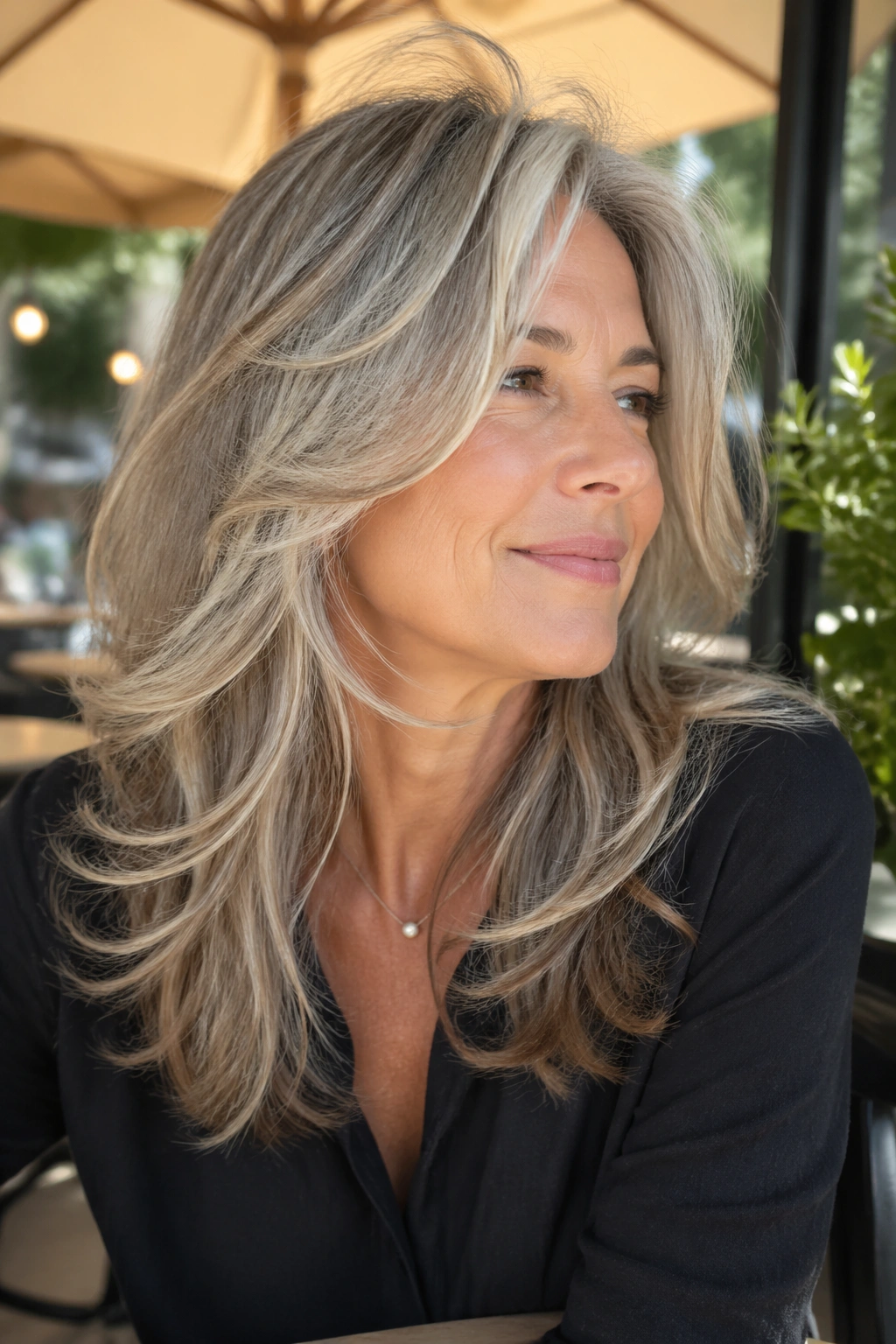
Swoopy layers are the haircut version of a good soft-focus lens. They move diagonally around the face, which helps if the jaw feels sharper than you want or if you just like a gentler line.
Unlike blunt face-framing pieces, swoopy layers don’t stop and start abruptly. They slide into the rest of the cut. That makes them feel modern without looking too styled.
This shape suits round and square faces especially well, though plenty of oval and heart-shaped faces wear it too. The key is keeping the longest face frame below the jaw and letting the wave do the rest. No stiff edges. No helmet shape.
7. Layers That Let Gray Hair Look Intentional
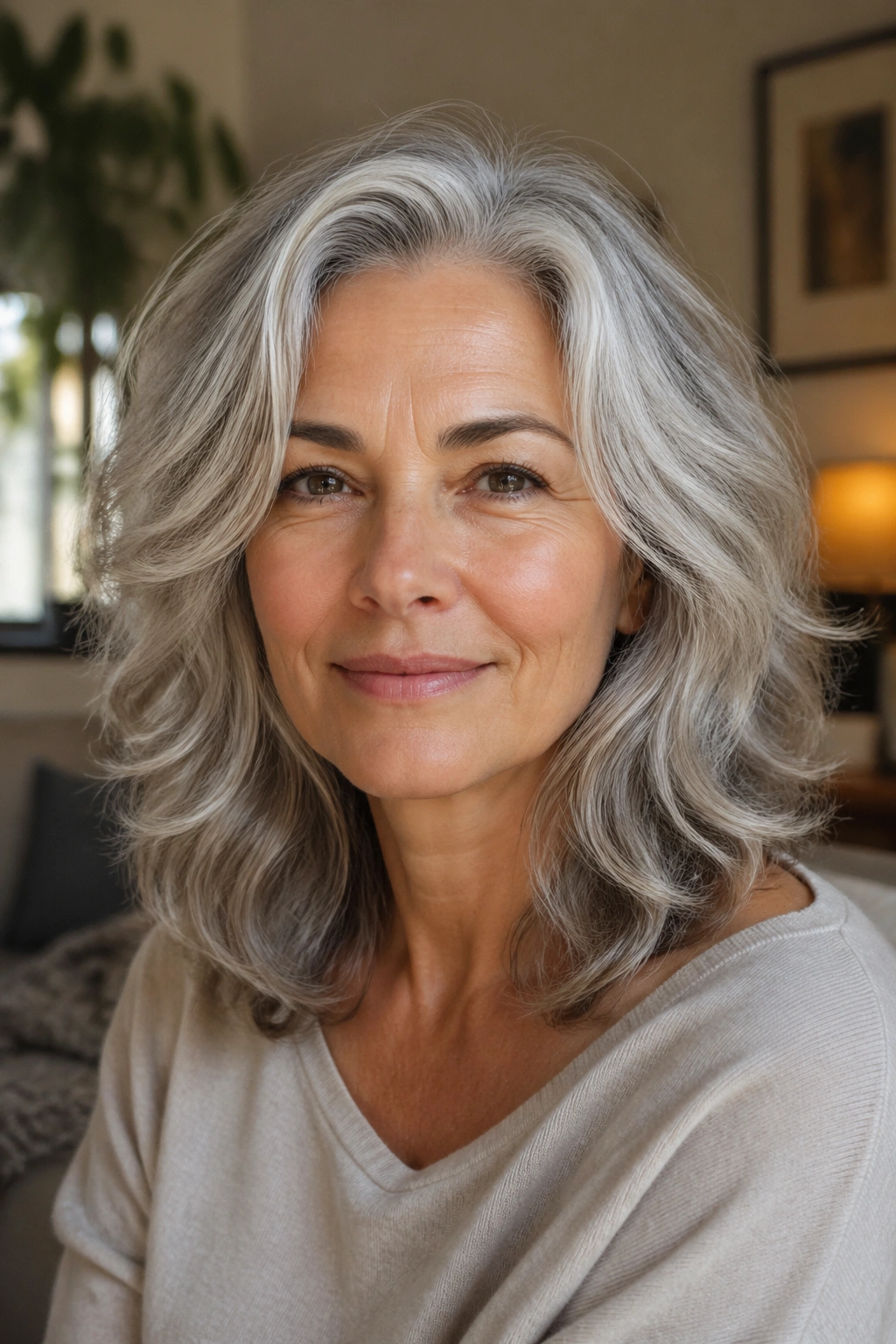
Gray hair can be gorgeous in wavy layers, but it needs movement. A single long block of silver or salt-and-pepper hair can look flat if the cut is too blunt. Soft layers break up that mass and show off the different tones.
What to Ask For
Ask for layers that move through the mid-lengths, not just the ends. That keeps the hair from puffing out too much while still giving the silver strands room to show.
- Soft layering around the front for brightness.
- Longer internal layers through the middle for flow.
- A blunt-enough perimeter so the ends don’t fray out.
A little gloss or clear glaze can help, too, but the cut matters more than the finish. Gray hair with shape looks polished even when it’s air-dried and slightly imperfect.
8. Choppy Ends for Fine Wavy Hair
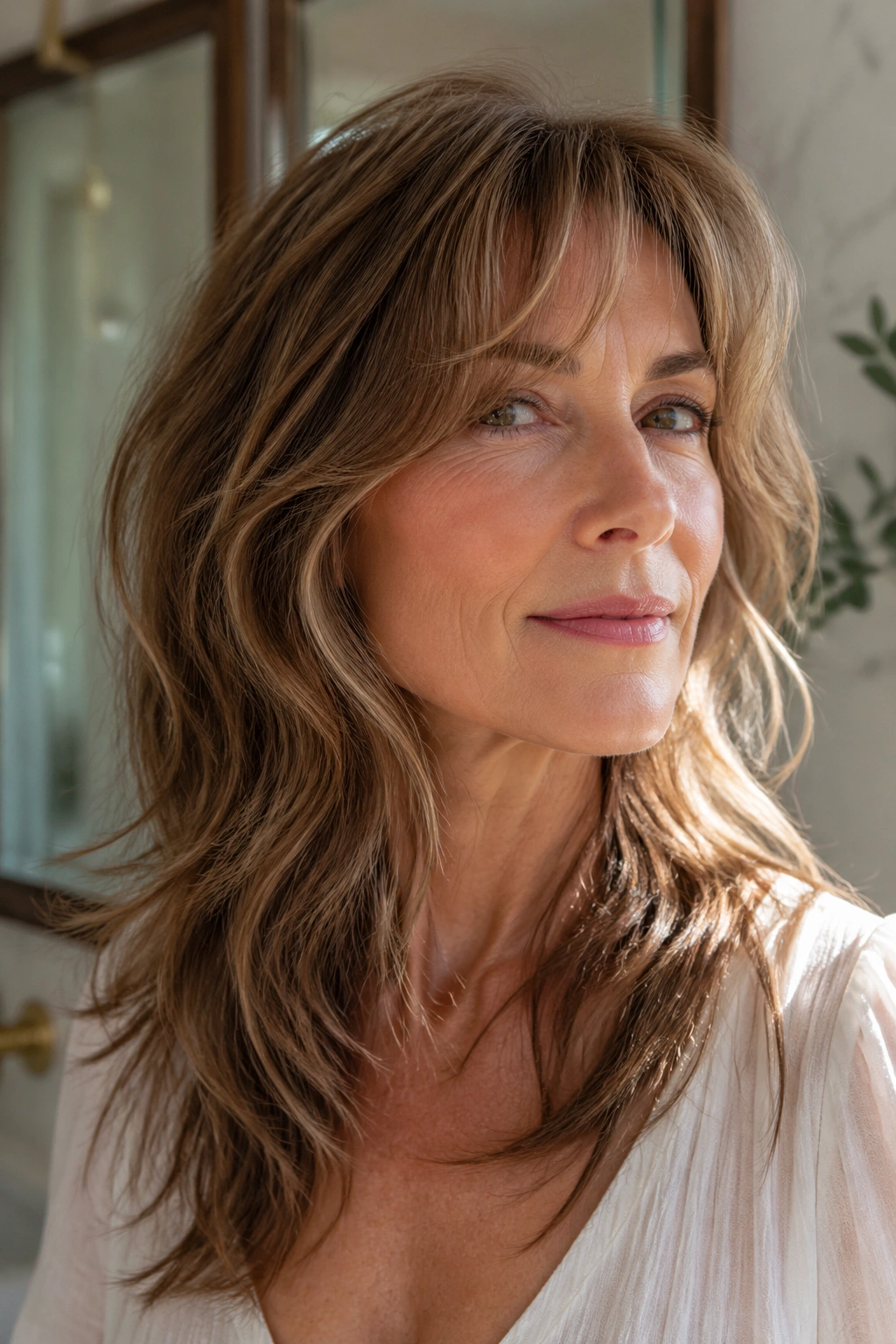
Can fine wavy hair wear long layers? Absolutely. The mistake is making the layers too short or too thin, which leaves the ends looking wispy and tired.
What Not to Do
Do not let the stylist carve too much out of the bottom. Fine hair needs enough weight to keep its shape. A few controlled choppy ends create movement; too many can make the hair fall apart by noon.
Choppy ends work best when the layers stay long and the texturizing stays light. Think of it as removing a little stiffness, not shaving off all the substance. A dab of lightweight mousse and a diffuser can make this cut look fuller fast.
If your hair is fine and wavy, this is one of those times where restraint wins.
9. Rounded Layers for Thick Waves
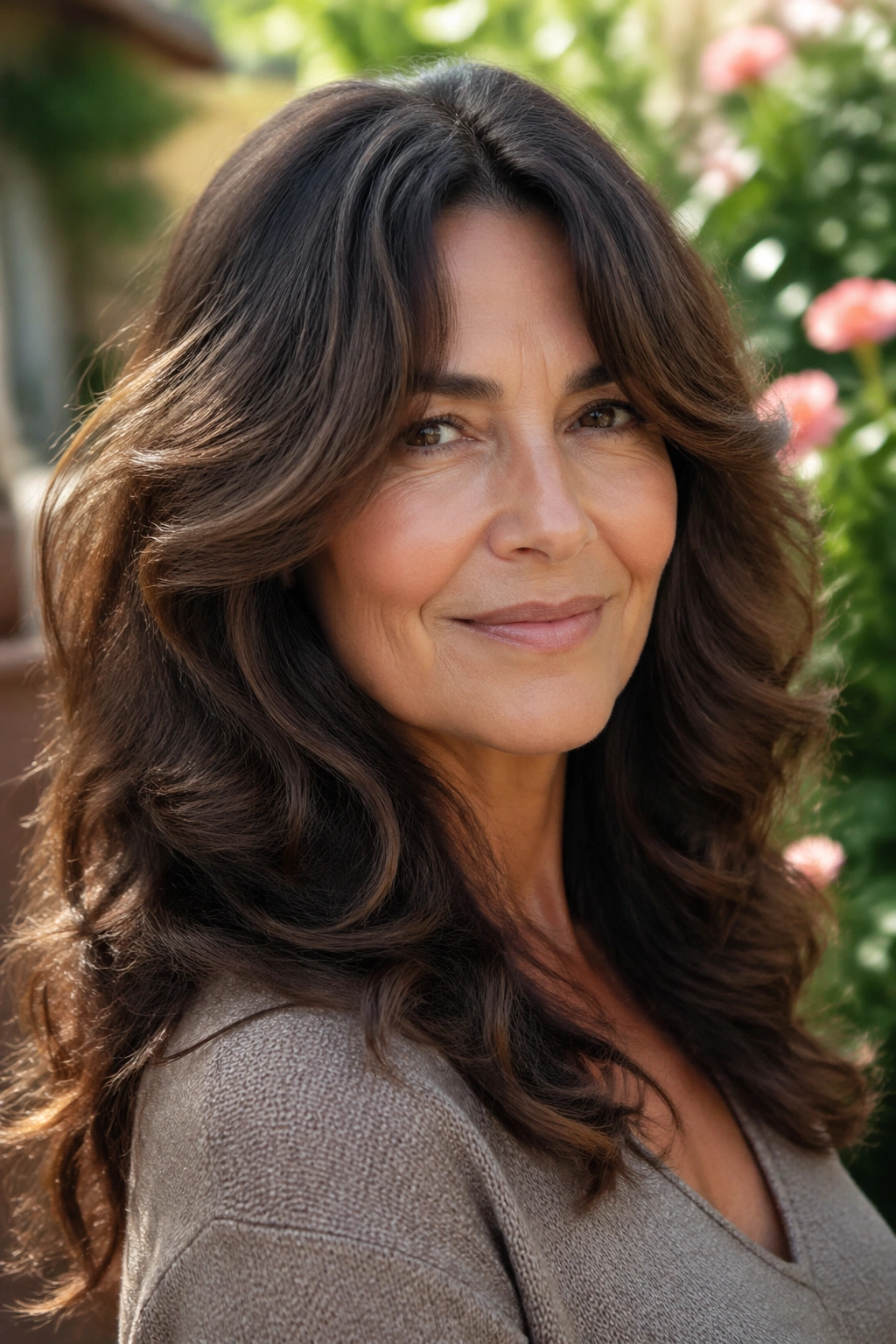
Thick wavy hair can take over a haircut if the shape is too square. Rounded layers solve that by softening the outline and reducing bulk where it gathers at the sides.
The goal is not to make the hair flatter. It’s to make it breathe. Rounded layers give thick hair a more graceful fall, especially if the ends tend to kick out or mushroom at the bottom.
This style usually looks best when the layers are cut to follow the curve of the head rather than creating sharp stairs through the lengths. It’s a nicer shape for long hair that needs control, not punishment.
A good round brush blow-dry helps, but even a quick rough dry can look decent if the cut is clean.
10. Bottleneck Bangs With Long Waves
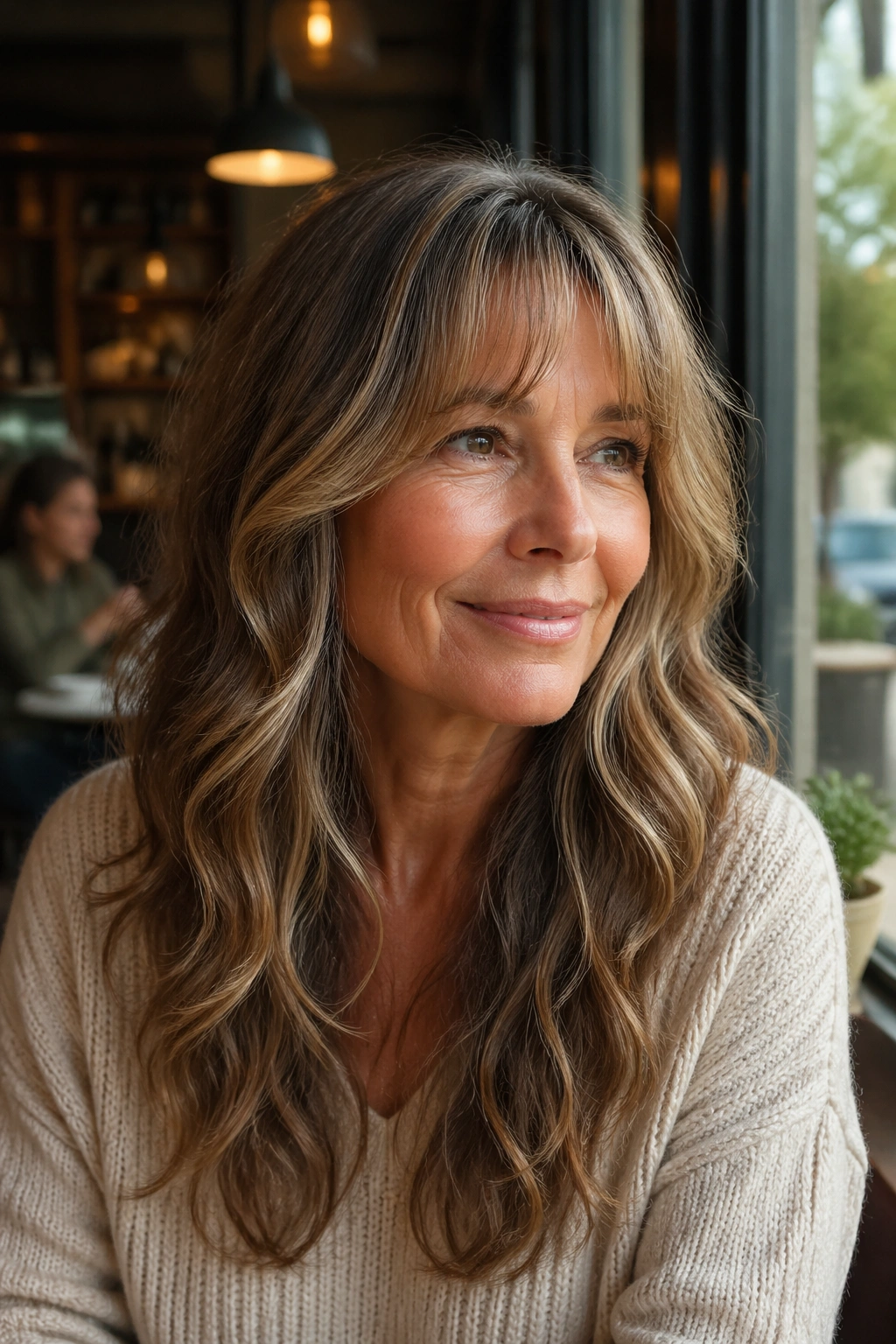
Bottleneck bangs are a smarter option than straight fringe for many women over 50. They start narrower at the center, then open wider near the temples, which softens the face without closing it in.
Unlike blunt bangs, bottleneck bangs can blend into long wavy layers instead of sitting on top of them like a separate piece. That matters. The cut looks more relaxed, and the grow-out is far less annoying.
They’re a strong choice if your forehead feels a little more prominent than it used to or if you want to shift attention toward the eyes and cheekbones. Keep them light. Heavy bangs can fight with waves in a hurry.
11. Subtle Layers for the Woman Who Hates Fussy Hair
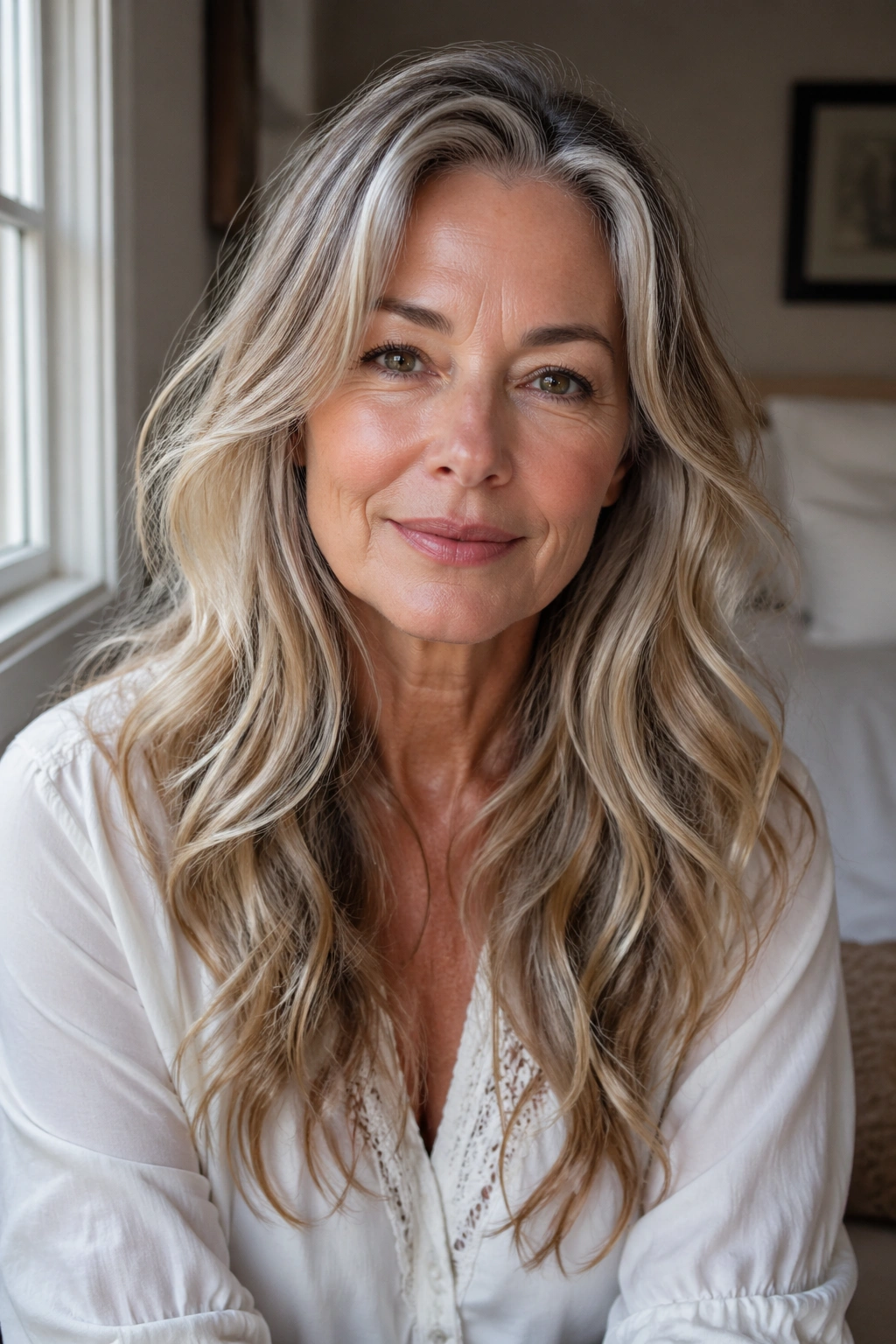
The least dramatic cut is often the smartest one. Subtle layers give you movement without forcing you into a blowout every time you wash your hair.
This is the cut for someone who wants long wavy hair that still feels like long hair. The layers are there, but they’re tucked into the shape instead of shouting from the ends. That makes the style easier to live with if you air-dry, scrunch, or use a diffuser for ten minutes and call it done.
Ask for soft internal layering, not big visible steps. If the stylist understands wavy hair, they’ll know that long layers below the chin often behave better than short ones around the cheekbones. Less fuss. Better payoff.
12. Deep Side-Swept Layers for Extra Lift
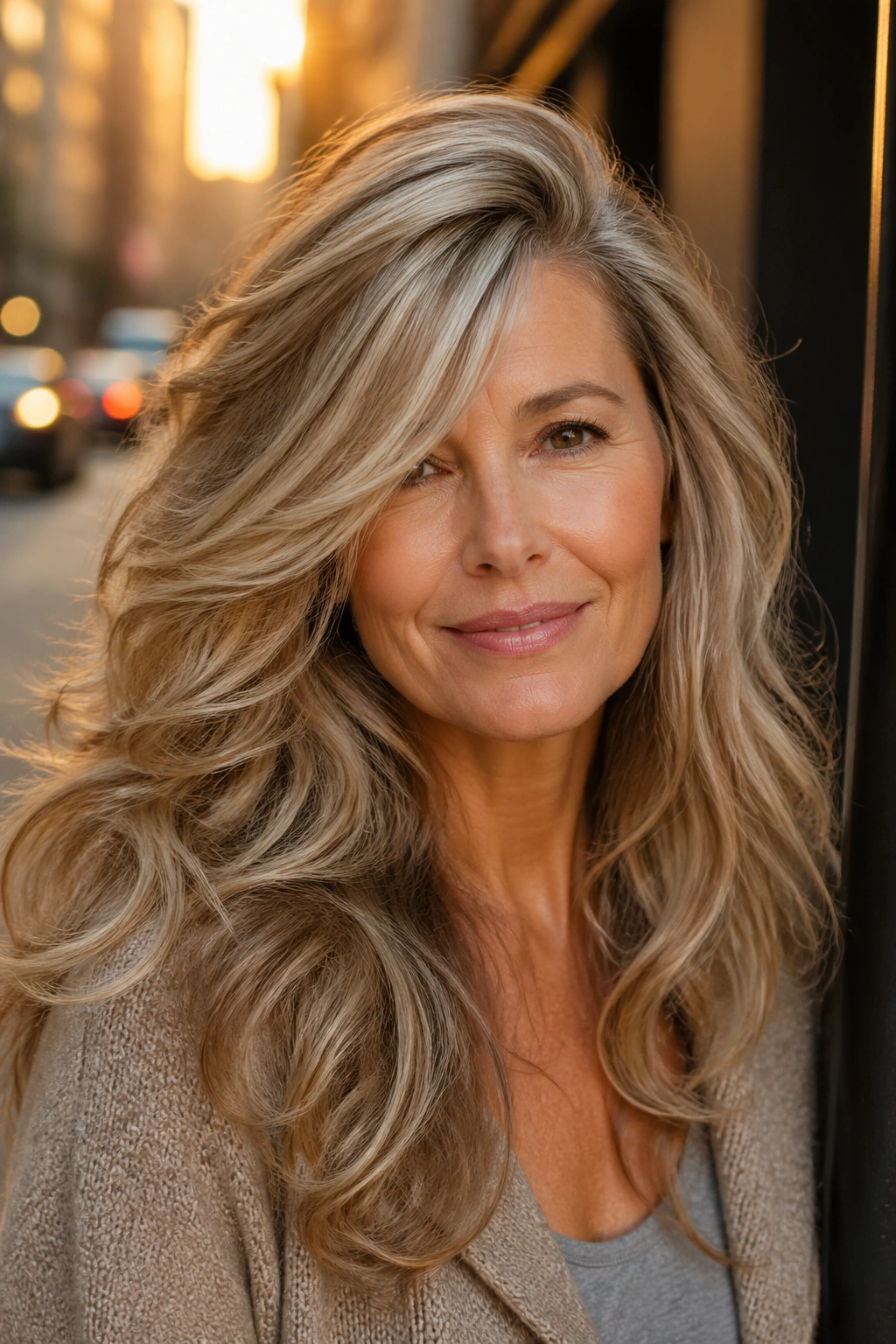
A deep side sweep can change the whole attitude of a haircut. Push the part over, let the front layers fall across one side, and the face gets instant softness and a little lift at the temple.
This is a useful trick for hair that has started to flatten at the top or sit too close to the head on one side. The asymmetry breaks up that heaviness. It also plays nicely with waves because the bend in the hair keeps the side-swept shape from looking stiff.
You do need enough length in the front to make this work. If the shortest pieces are too short, the style collapses back into a puff. Keep the front pieces long enough to move.
13. Invisible Layers That Keep the Surface Smooth
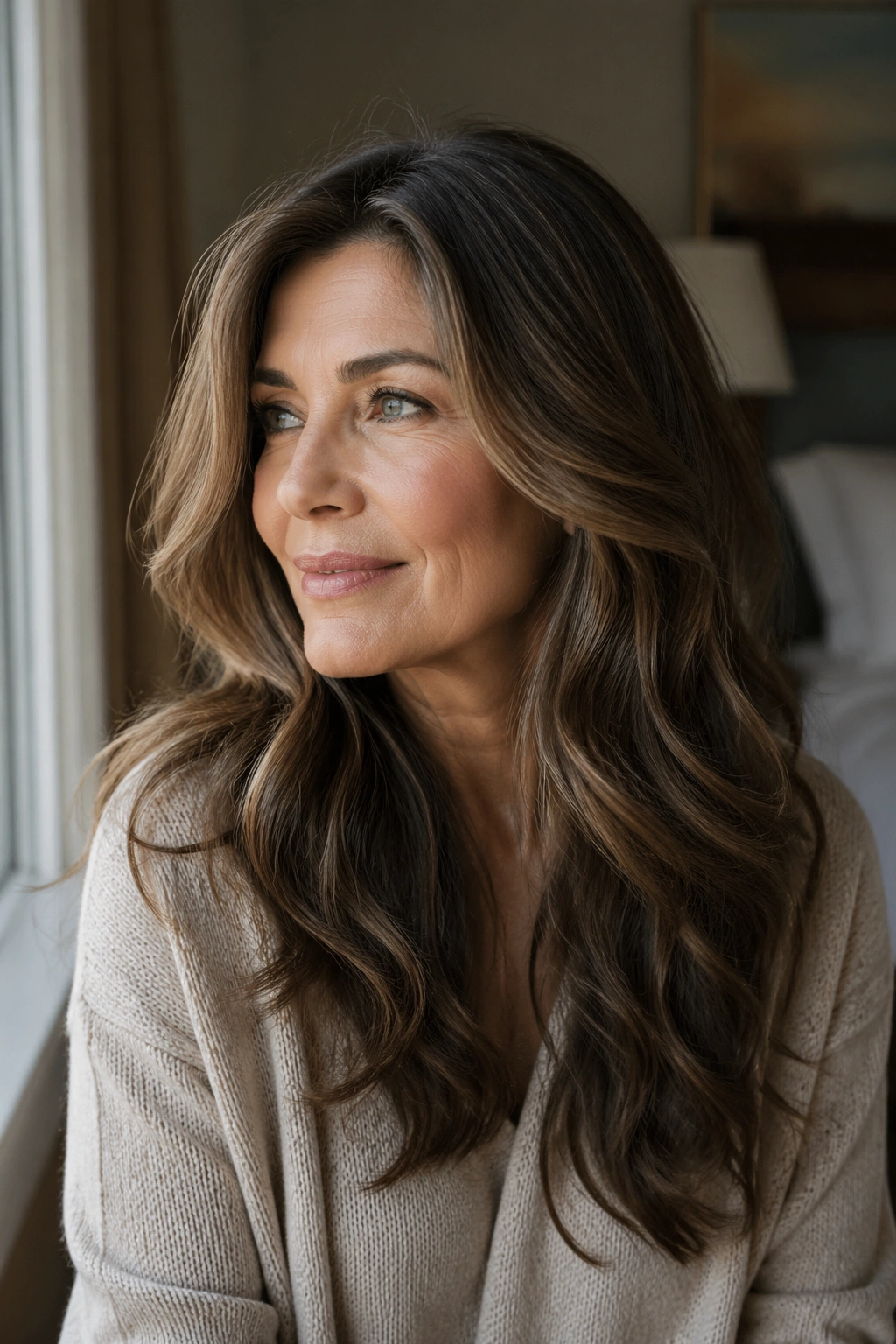
Invisible layers are the quiet ones. You do not see them immediately, which is the point. They live inside the haircut and remove weight without messing up the outer line.
That makes them a favorite for women who like hair that looks polished but not obviously layered. The surface still reads as long and soft, yet the hair behaves better because the heavy spots have been thinned out in a controlled way.
These layers are especially useful if you’ve had one too many cuts that turned your ends stringy. Invisible layering preserves density at the bottom. The shape stays calm. The wave pattern gets room to move.
14. Beachy Layers That Air-Dry Well
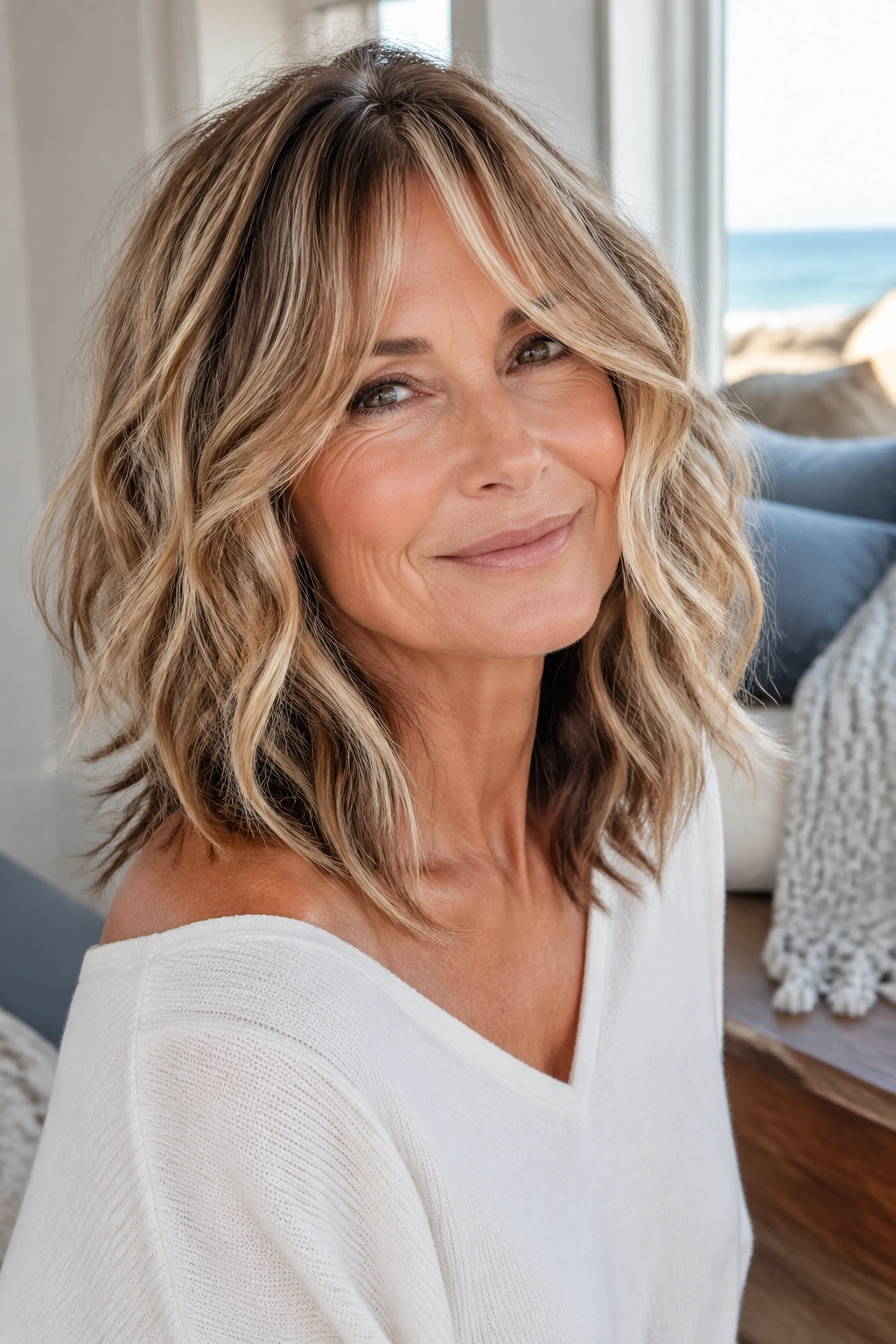
Beachy does not have to mean crunchy or over-sprayed. A good beachy cut is just a layered shape that looks good when you scrunch in a little cream and let the hair dry on its own.
The advantage here is simple: the layers encourage soft bends instead of one large, sleepy wave. That’s useful if your hair tends to dry into a flat curve around the shoulders. Beachy layers break that up.
A light mousse at the roots and a wave cream through the mids can be enough. Skip heavy serums unless your hair is coarse or very dry. Too much product weighs down the ends fast.
A diffuser helps, but so does patience. Let the waves set before you touch them.
15. Layers That Keep Length at the Back
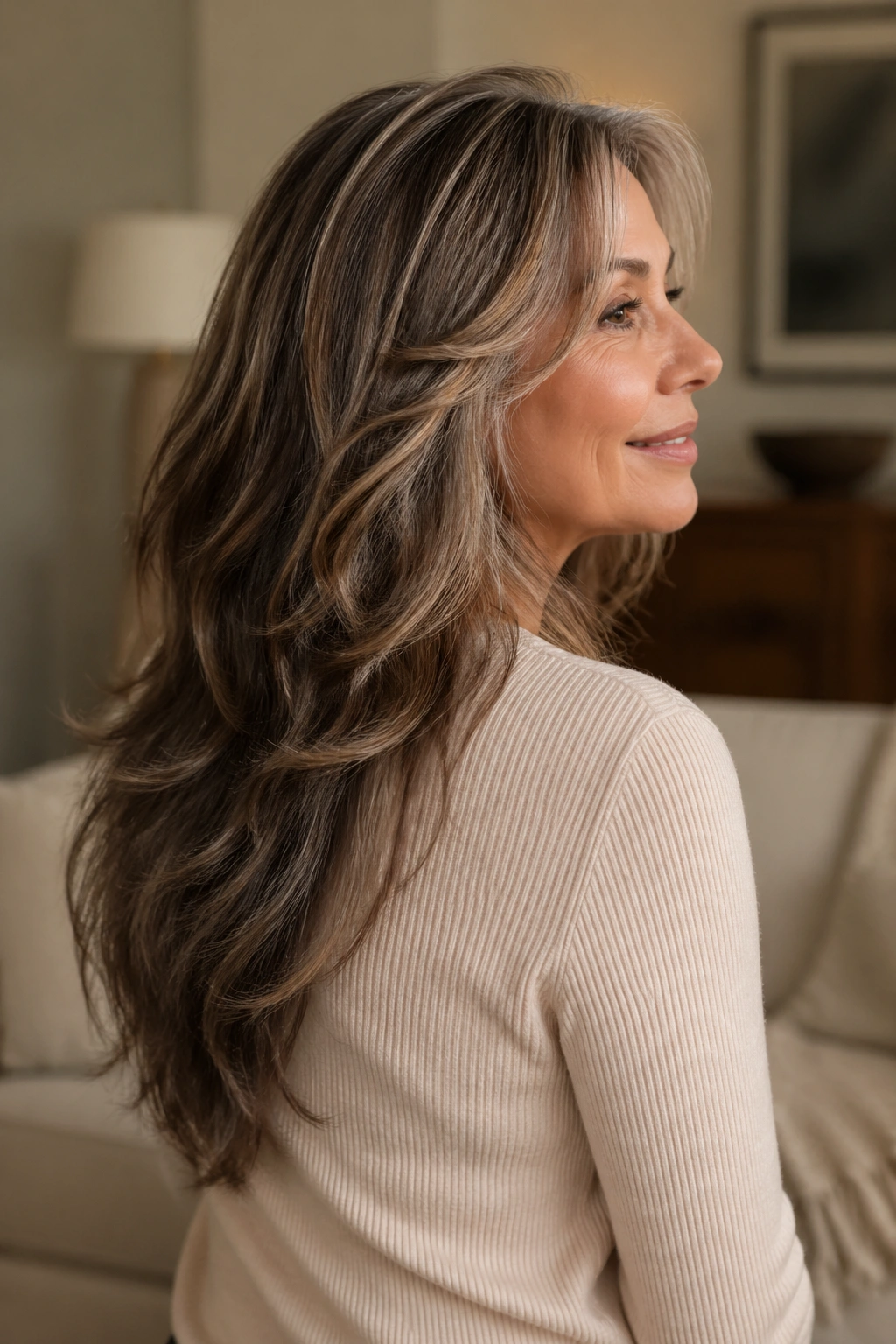
Some women want movement without sacrificing the length they’ve spent years growing. Fair. This cut keeps the back fuller and longer while gently shaping the sides.
The look is softer than a sharp V and less bulky than a blunt line. It works well when you like wearing your hair down, half-up, or clipped low at the nape. The length still feels like length.
This shape also helps when your hair looks thinner near the front than the back. By keeping more weight where the hair naturally wants to fall, the cut avoids that odd see-through effect around the shoulders. It’s practical, and it photographs well in real life, not just in salon mirrors.
16. A Soft V-Cut for Movement Without Losing Shape
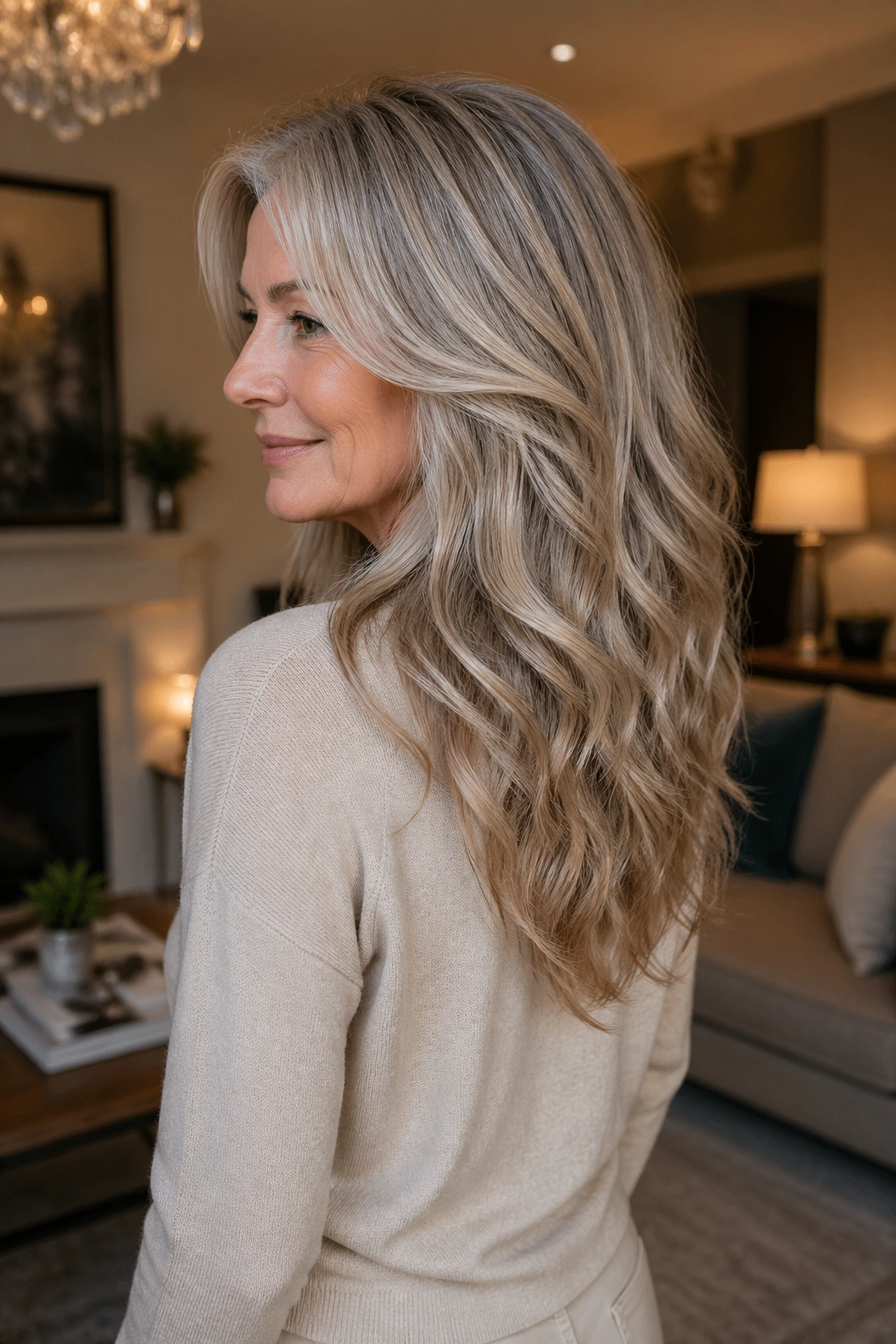
A soft V-cut gives long waves a little direction in the back. The center stays slightly longer, and the sides taper gently. The result is movement that doesn’t feel blunt or boxy.
This shape is useful if your hair is dense and you want the length to look more fluid. It can also make a ponytail look fuller from the back, which sounds small until you try a cut that feels flat in every updo.
The key word is soft. A hard V can look severe and dated on wavy hair. A gentle one keeps the ends full enough to look healthy. That balance matters more than people think.
17. Glamorous Blowout Layers That Still Behave
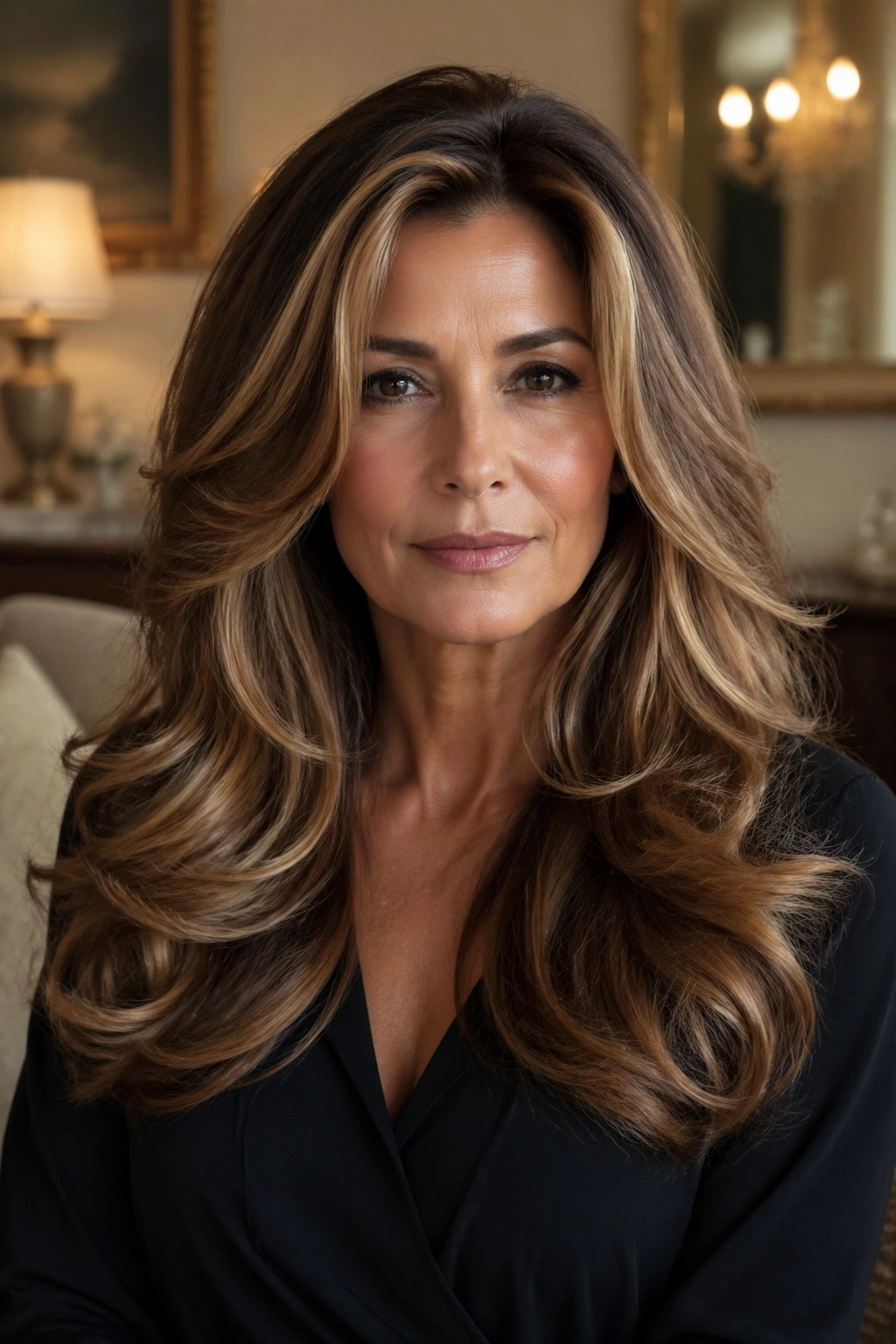
There’s a difference between a cut that needs a round brush every day and a cut that simply looks better with one. Glamorous blowout layers belong in the second group.
They create that swishy, lifted shape around the face and through the lengths, with enough body to make the hair look styled even when you keep the waves loose. Think movement, not stiffness. The layers should fall away from the face and curve around the shoulders in a way that feels rich but not fussy.
A heat protectant, a medium round brush, and a few clips at the crown can do a lot here. If your hair holds a bend, even better. Just keep the layers long enough that the style doesn’t collapse into separate pieces.
18. Long Layers for Oval Faces
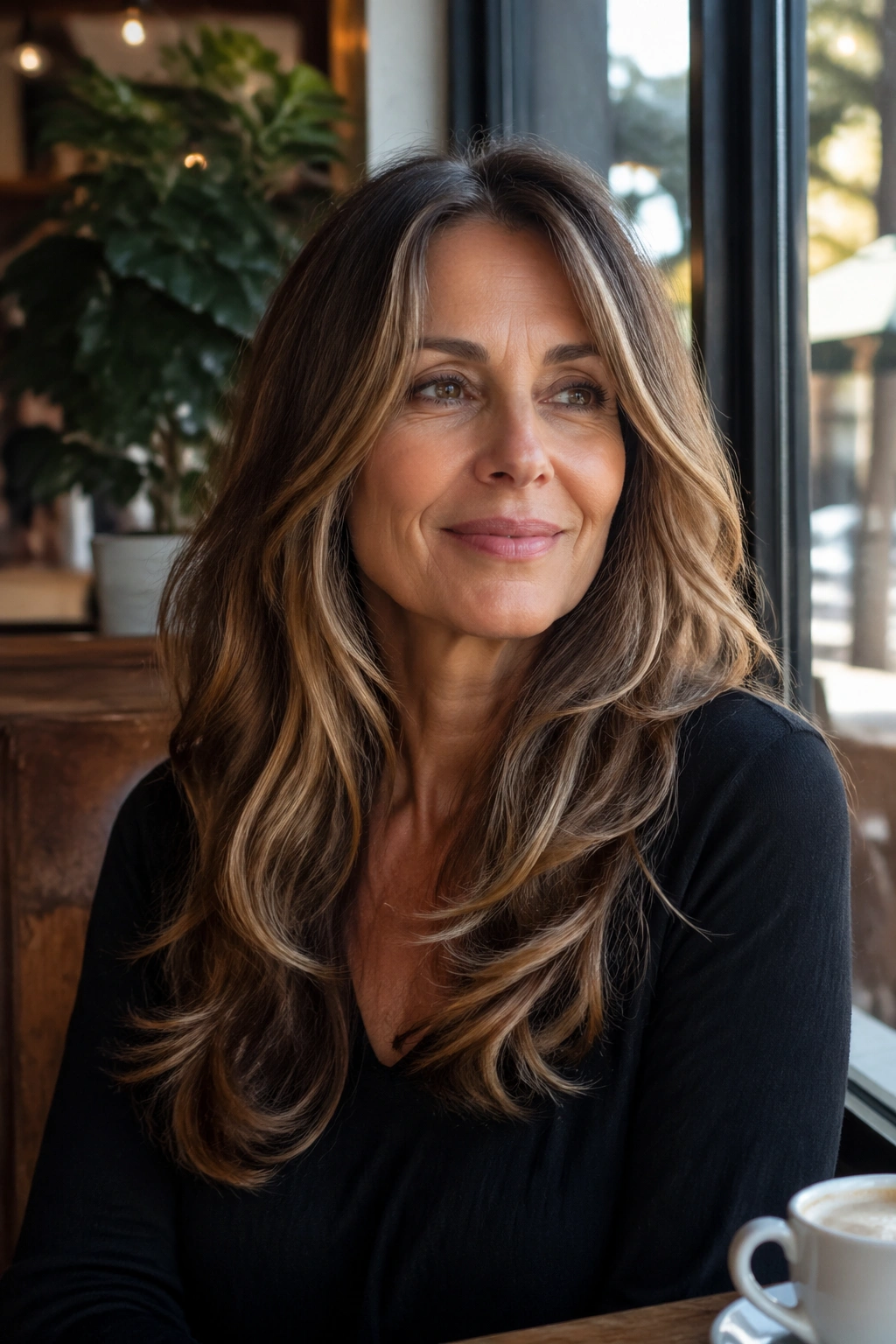
Oval faces get called “balanced” all the time, which is convenient and a little boring. The real advantage is that they can wear a lot of layered shapes without fighting the face.
Long layers work best here when they keep the hair from dragging straight down. You want motion through the sides and around the shoulders, not a curtain that hides the face. Face-framing pieces can start around the chin or a touch lower if your waves are strong.
This is one of the easiest face shapes to experiment with, but long wavy hair still looks best when the layers add energy rather than clutter. Too many short pieces can make an oval face look longer than intended. Keep the balance soft.
19. Long Layers for Round Faces
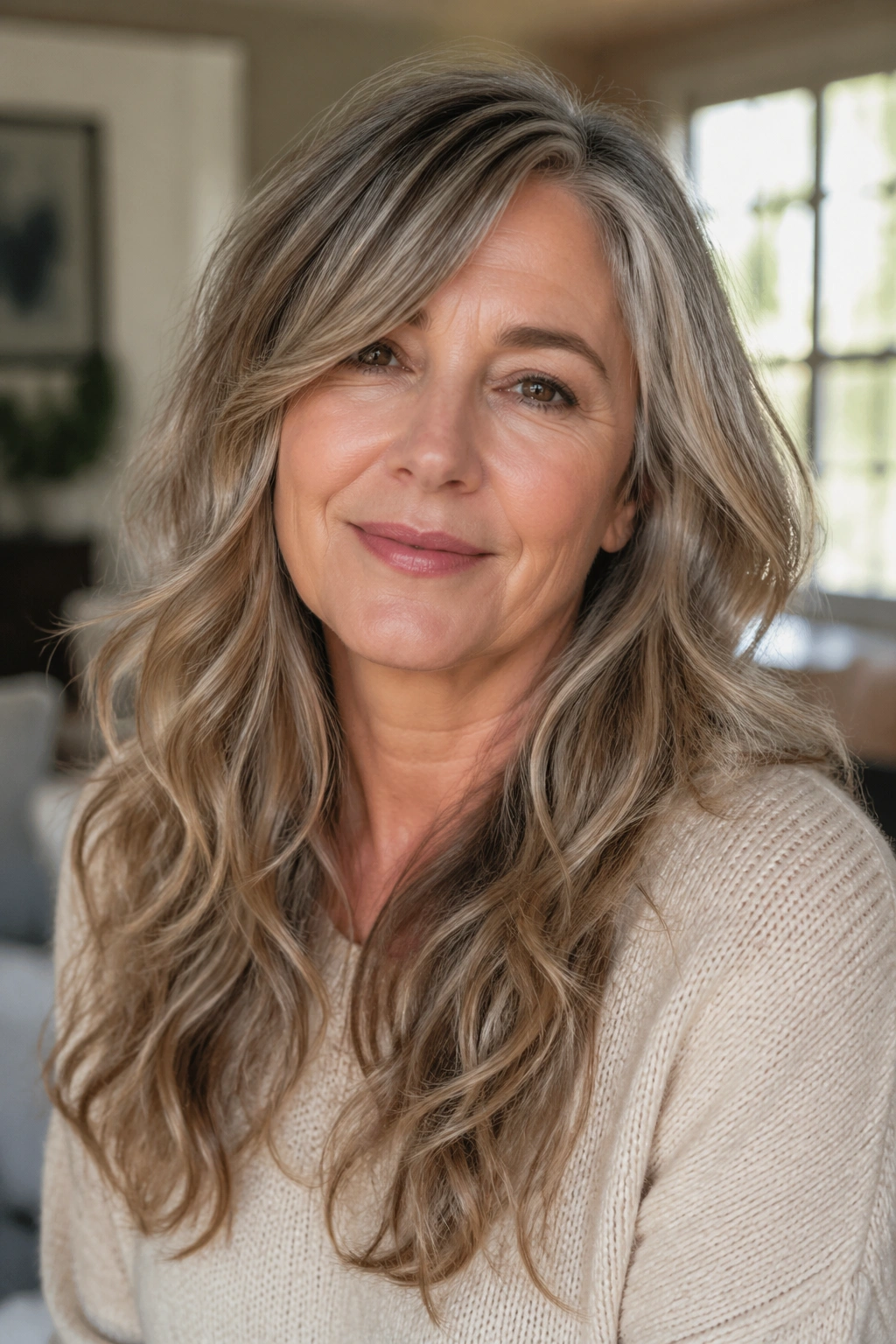
Round faces do well with long layers that create vertical movement. That means pieces that fall below the cheek line and a little extra length around the front to stretch the silhouette.
A blunt cut at the same length all around can make the face feel wider. Long layers avoid that by pulling the eye down instead of across. The effect is subtle, but it matters.
Side parts help here. So do layers that start under the chin, where they skim the jaw instead of sitting on top of the cheeks. Keep the ends full. Skinny, over-thinned layers can make the style feel unfinished.
20. Long Layers for Heart-Shaped Faces
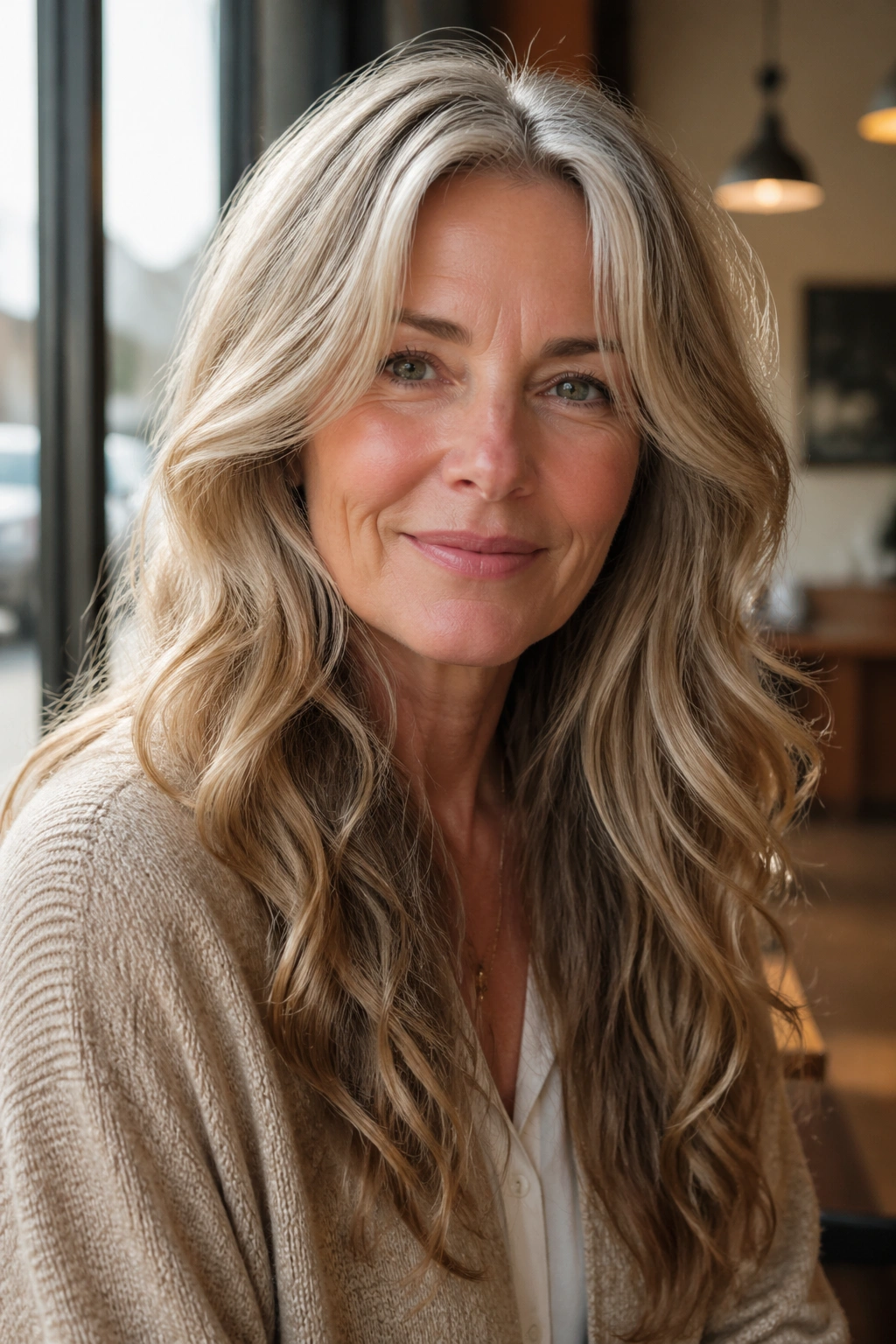
Heart-shaped faces often need softness around the chin area. Long layers do that well when the front pieces are not too short and the ends carry enough weight to balance the forehead.
Curtain-like movement works especially well here. It narrows the top a touch and gives the lower half of the face some presence. That makes the whole style feel calmer.
If your hair is wavy, avoid face-framing layers that stop high on the cheekbones. They can bounce outward and widen the upper face. Longer pieces below the jaw tend to behave better and look less busy.
21. Long Layers for Square Faces
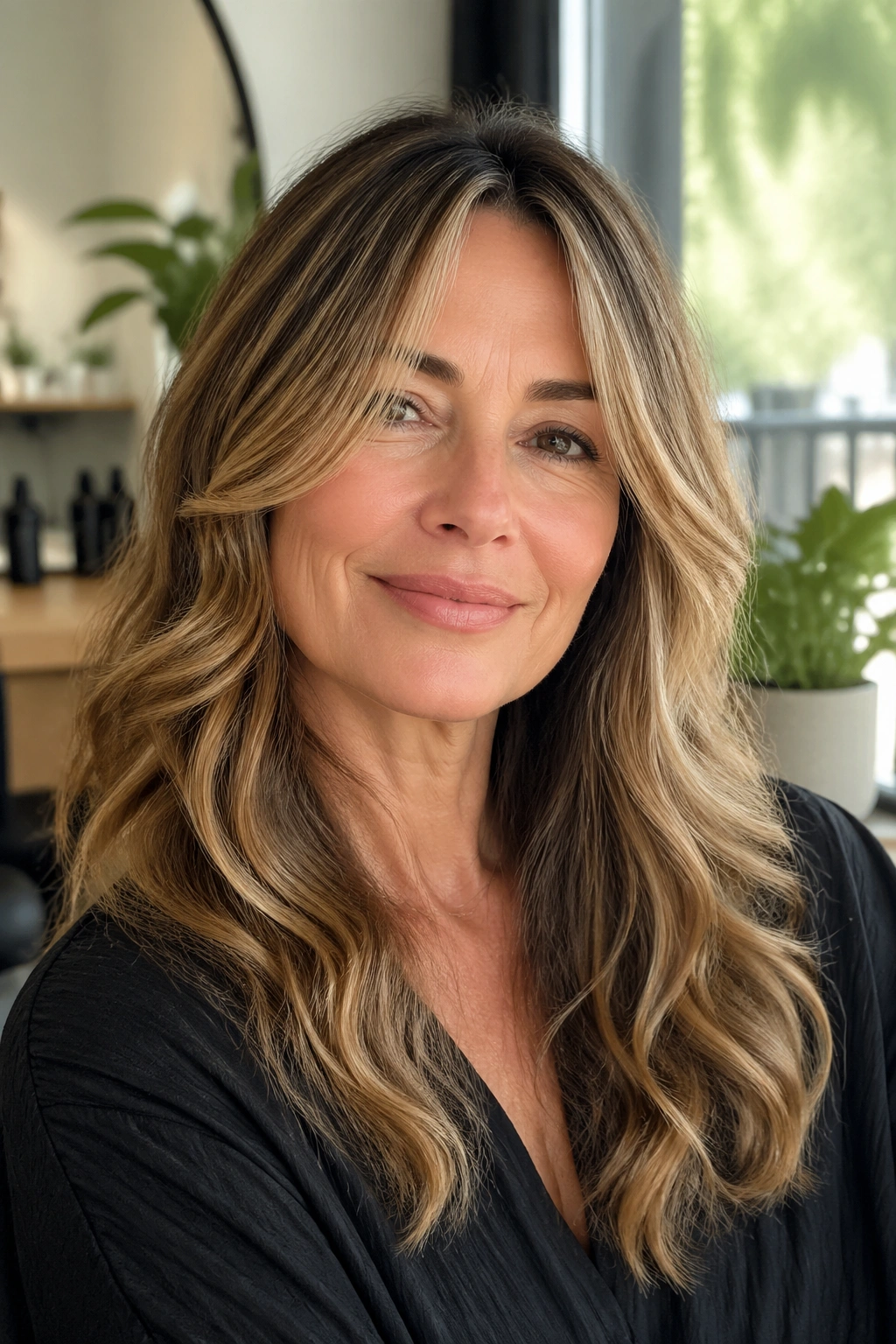
Square faces usually look best in cuts that soften strong angles without hiding them. Long wavy layers do exactly that when the front pieces curve instead of stopping in a hard line.
The goal is to blur the corners a little. Layers that start lower on the face and move diagonally across the jaw help a lot. Wavy texture makes the shape even better, because the bends keep the haircut from looking severe.
A side part can be useful here, too, especially if you want a bit more softness around the forehead. Skip blunt edges near the chin. They can sharpen the face in a way that feels harsher than necessary.
22. Salt-and-Pepper Waves With Wispy Layers
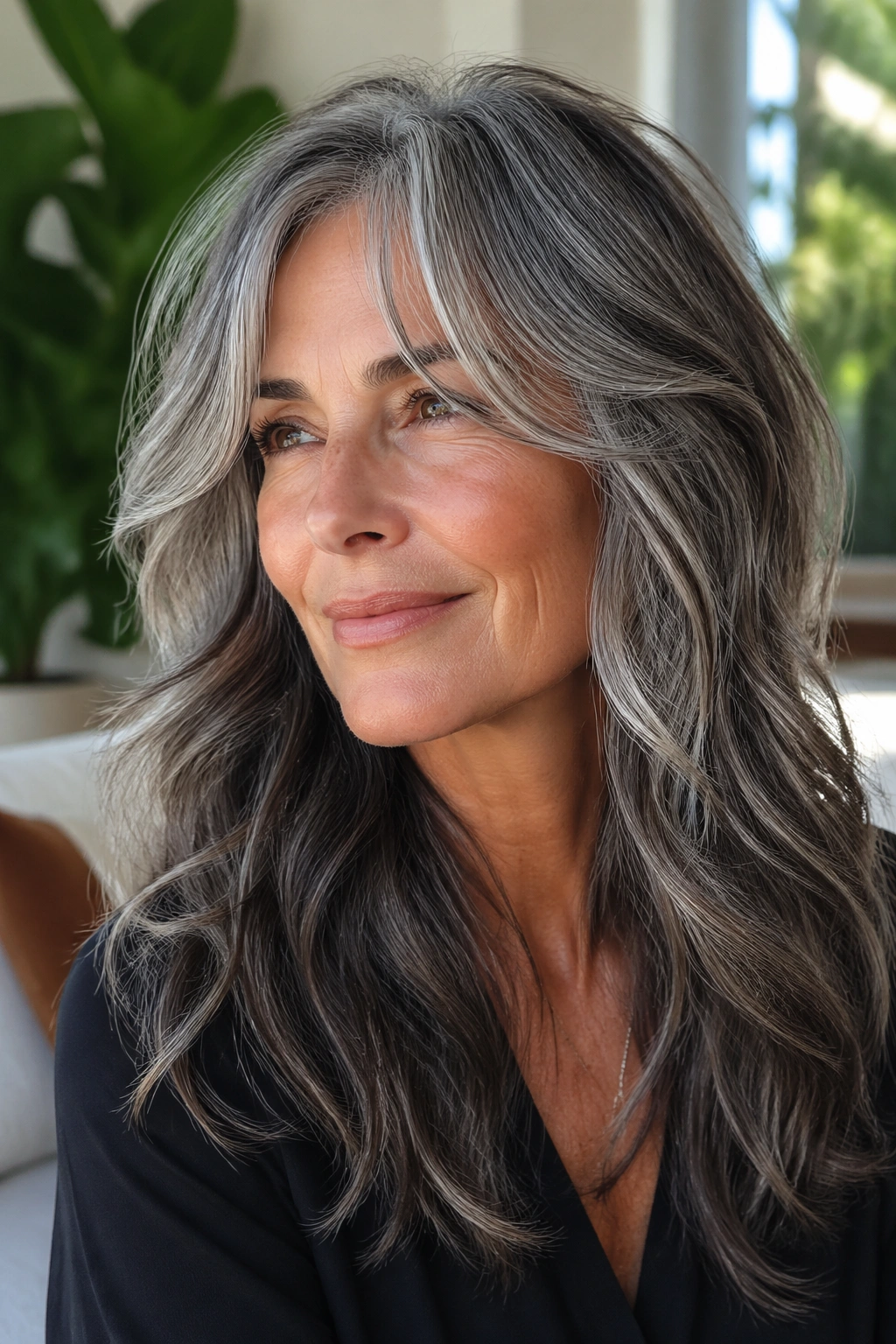
Salt-and-pepper hair is one of the best canvases for long layered cuts, partly because the color already has depth. Wispy layers let those mixed tones show through without making the hair look sparse.
The trick is not to over-thin the ends. You want softness, not frizz. A little airiness around the face is enough to keep the color from reading as one flat block of gray and brown.
This kind of cut looks especially good when the wave pattern is loose and a little imperfect. That texture makes the color shifts feel deliberate. Add a light cream or serum at the ends if they start to puff in dry air.
23. Collarbone Front Pieces With Long Back Length
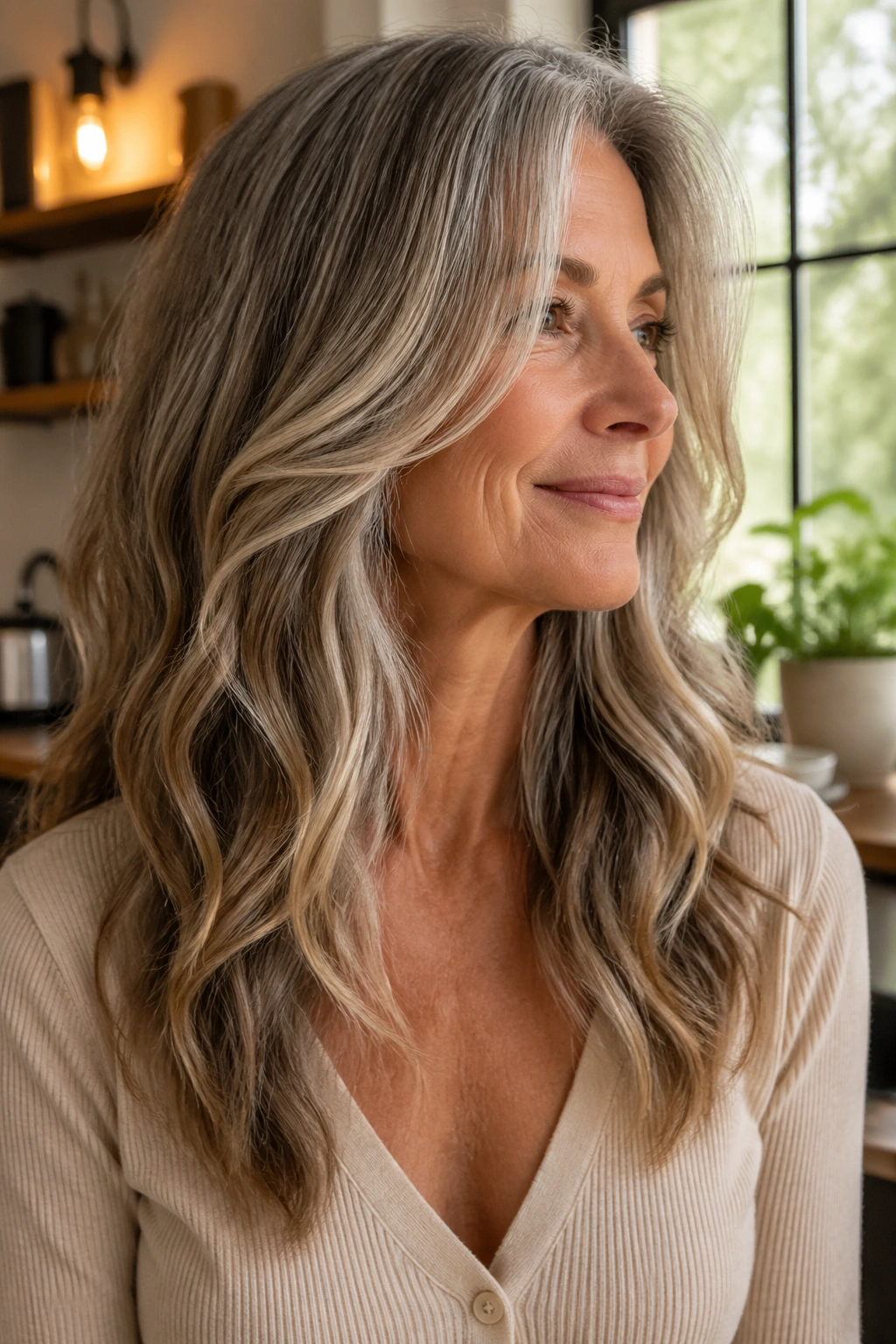
A lot of women want movement near the face without giving up their length in the back. Collarbone-skimming front pieces solve that neatly.
The front pieces open the face and make waves fall in a pretty diagonal line, while the back stays long enough for clips, braids, and low buns. It’s a practical shape, which is one reason it works so well after 50. The haircut gives you options instead of boxing you into one look.
Keep the front pieces soft. If they’re too heavy, they drag the whole style down. If they’re too short, they spring up and lose that easy fall you want. Somewhere around the collarbone usually lands in the sweet spot.
24. Big-Volume Layers for Dense Hair
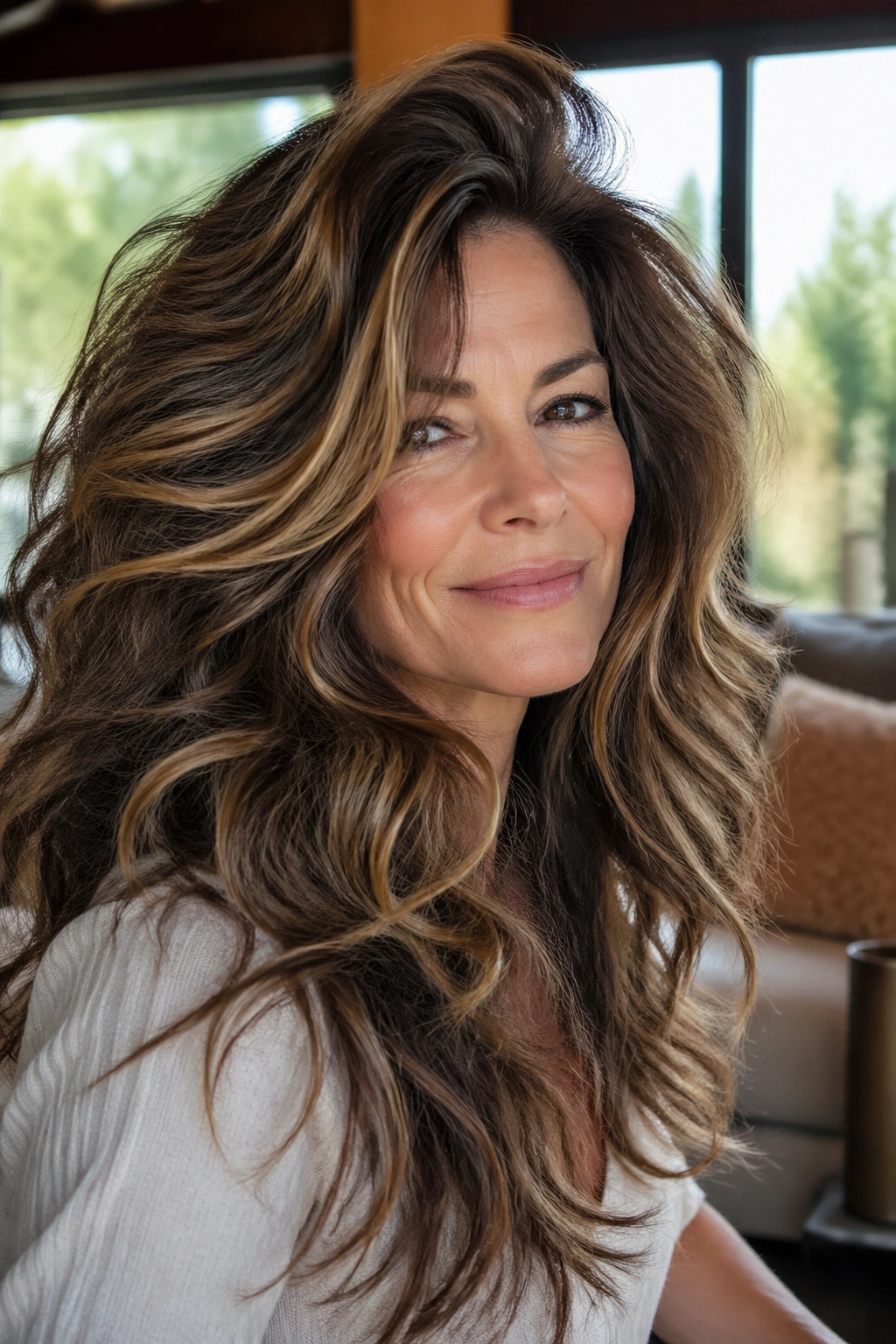
Dense wavy hair needs a different strategy. It already has body, so the job is to remove weight without making the silhouette look patchy.
The Shape Matters
Ask for interior layers that take bulk out of the mid-lengths and a clean perimeter at the bottom. That keeps the ends looking full while giving the waves a chance to separate.
- Remove weight from the inside, not the outer line.
- Keep the longest pieces blunt enough to hold shape.
- Use a diffuser on low heat if you want the crown to lift without frizz.
Big-volume layers can look glamorous, but they can also go wrong fast if the stylist slices too aggressively. Thick wavy hair needs control. It does not need to be chopped to bits.
25. Airy Layers for Fine Hair
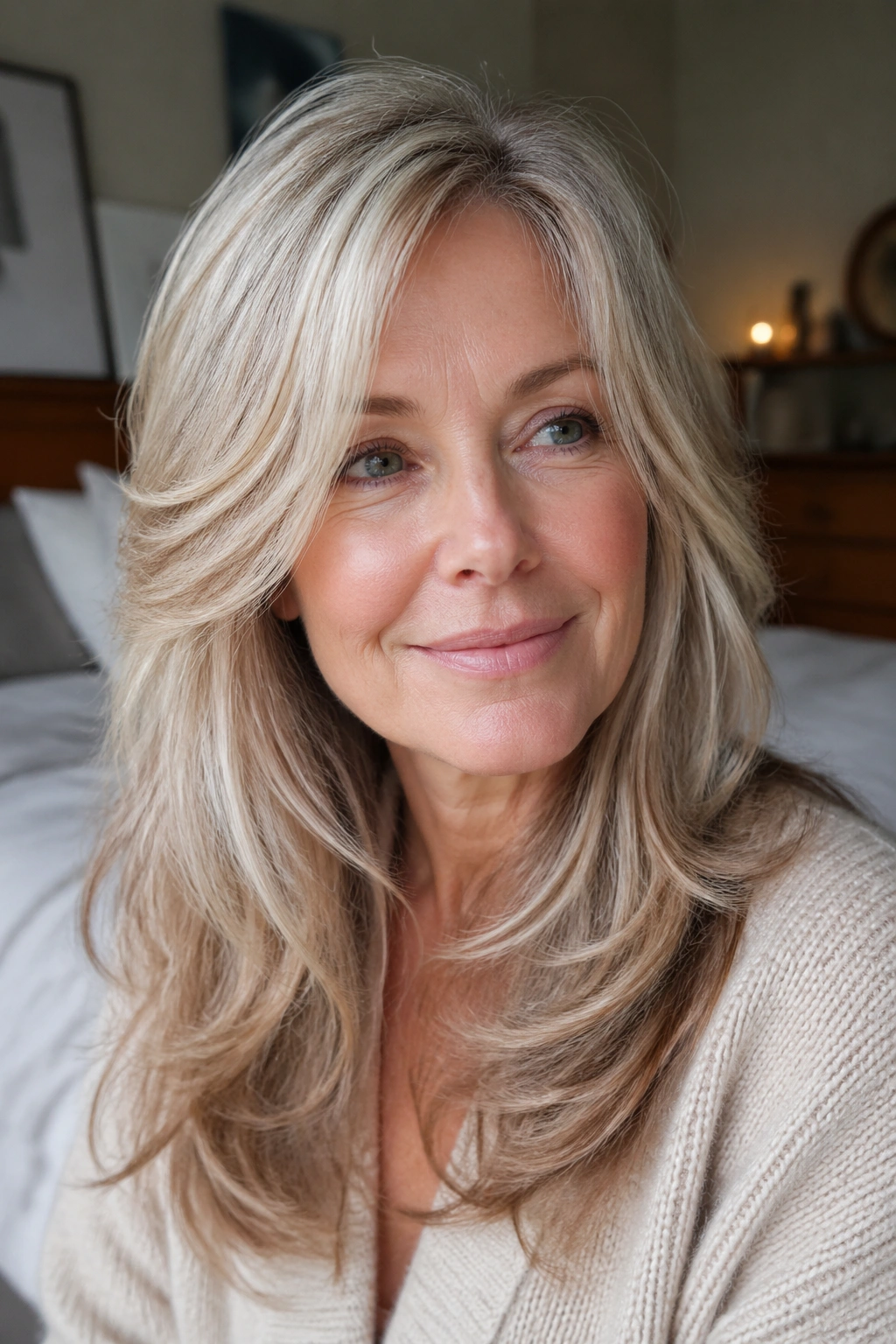
Fine hair can wear long wavy layers, but the cut has to be careful. Too much layering and the ends disappear. Too little and the hair hangs flat.
The best approach is soft, airy layers that add motion without removing the weight that gives fine hair its body. A little lift at the crown helps, and a slightly stronger perimeter at the bottom keeps the style from looking stringy.
What to Avoid
Avoid razor-thinning the ends unless your hair is unusually full for its texture. Avoid too many short face-framing pieces. And avoid overloading the hair with oil, because that can make already-fine waves collapse.
A volumizing mousse at the roots and a light mist of wave spray through the mids usually does more good than a pile of heavy products.
26. Loose Spiral-Wave Layers
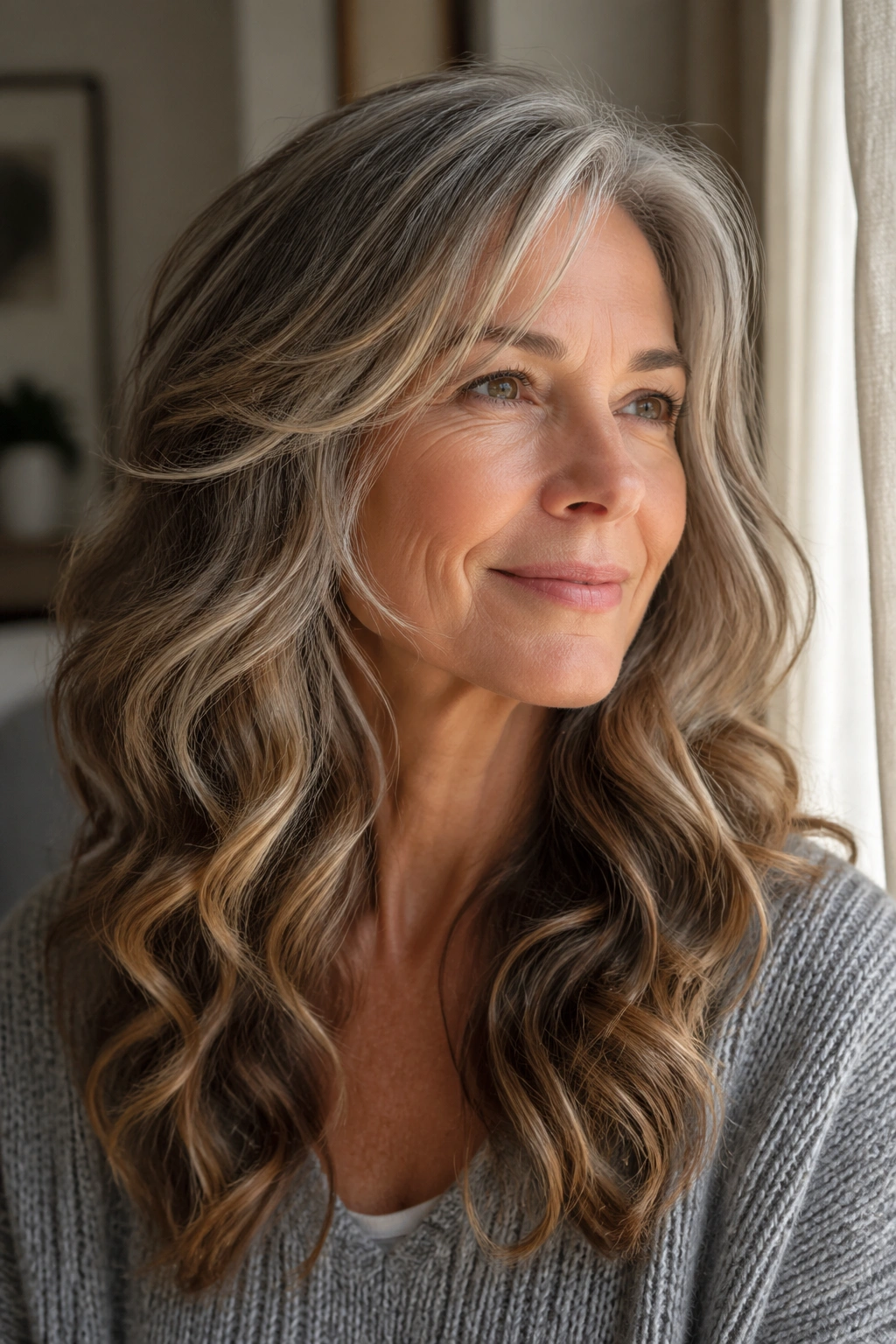
Loose spiral waves need a haircut that respects the bend pattern. If the layers are too blunt, the waves stack up and create a triangular shape. If they’re too short, the hair can look puffy.
A long layered cut keeps the spiral movement stretched out and soft. The lengths should fall below the shoulders, with shaping that follows where the waves want to bend naturally. That makes the style easier to air-dry and far easier to refresh on day two.
This works especially well when the front pieces are a touch longer than the rest. It draws the eye downward and keeps the face frame from blooming outward. Small adjustment. Big difference.
27. Razor-Soft Ends for a Lighter Finish
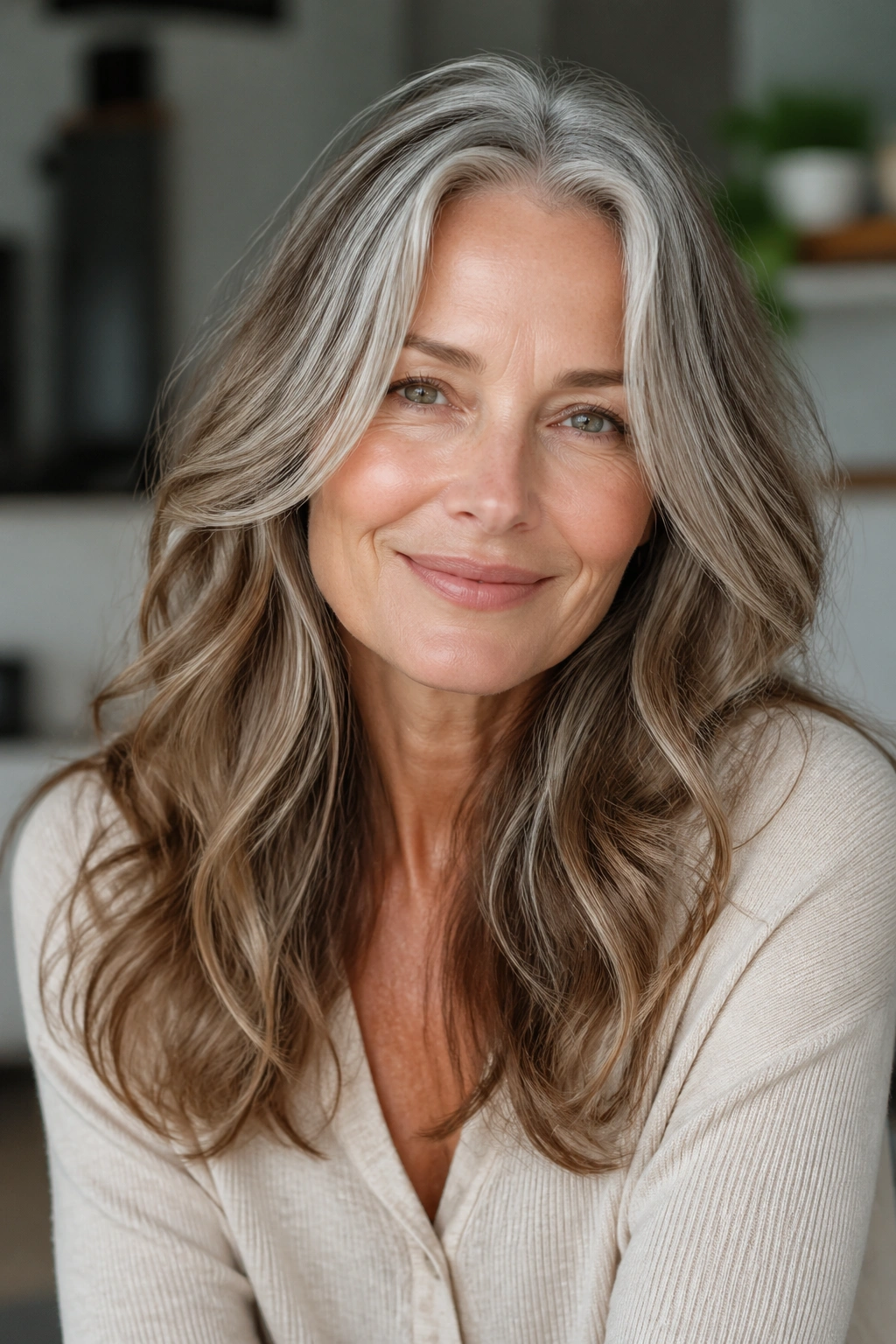
Razor-soft ends can be lovely on the right hair. They add movement and keep long waves from looking too blunt or heavy at the bottom.
But this is one of those cuts that needs a careful hand. On dry or coarse hair, too much razor work can leave the ends fuzzy and difficult to smooth out. On finer hair, it can take away the little bit of fullness you still want.
The best version uses the razor sparingly, mostly to soften the edge of the cut rather than shred it. If your stylist loves razors, ask how they’ll keep the perimeter full. That question is worth asking.
28. Tucked-Back Sides With Long Length Through the Back
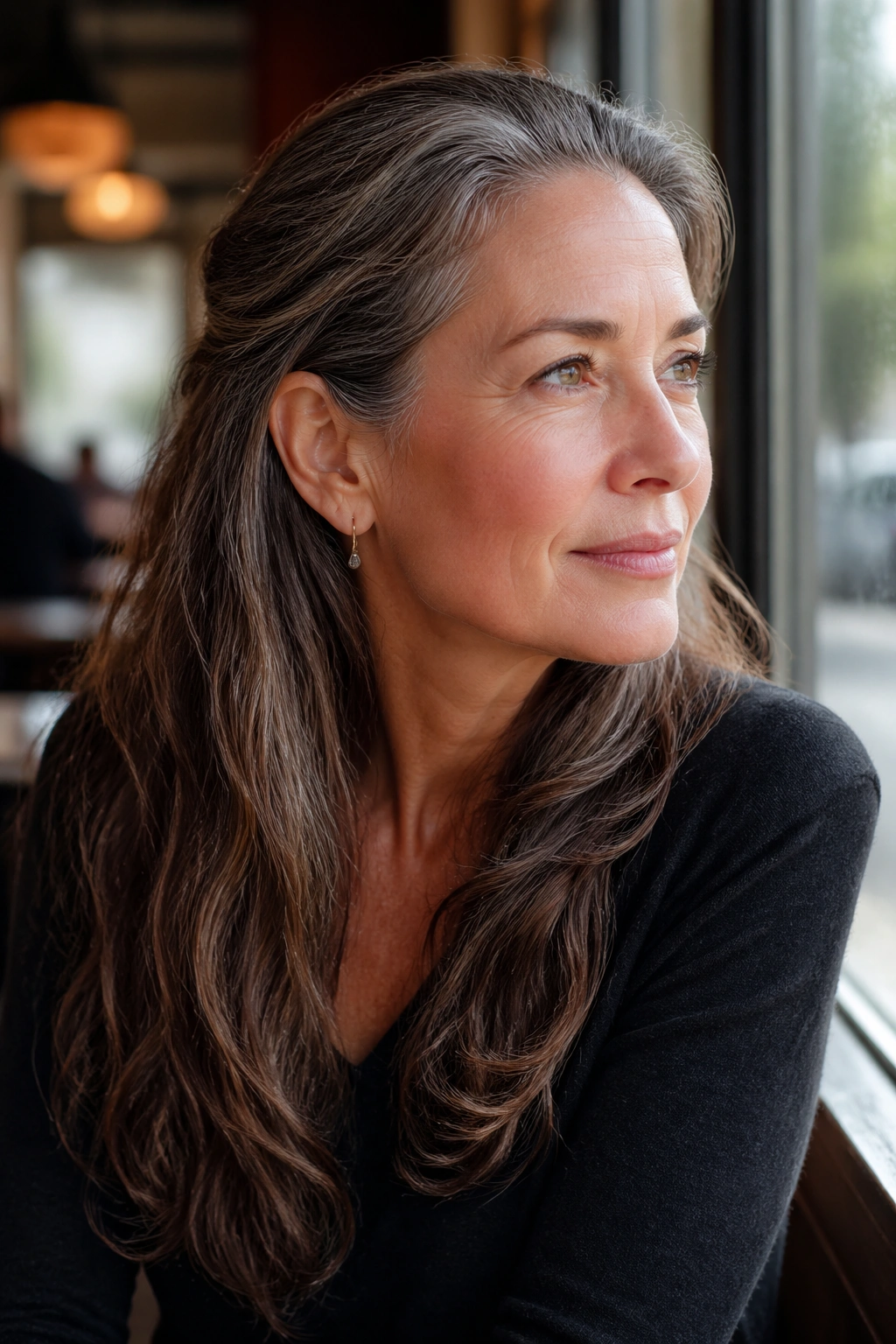
Some haircuts look good only when the hair is down. This one gives you room to tuck the sides behind the ears, clip one side back, or wear earrings without losing the shape.
Why It Works With Accessories
The front pieces stay long enough to tuck cleanly, while the back keeps the long wavy line intact. That makes the cut practical for readers, glasses, earrings, and everyday life. Nice little bonus.
- Front layers should fall just past the jaw for easy tucking.
- Keep the ends soft so the hair doesn’t pop out awkwardly.
- A touch of texturizing cream helps the tucked side stay neat.
It’s a small thing, but small things make a haircut wearable.
29. Glasses-Friendly Fringe With Long Layered Waves
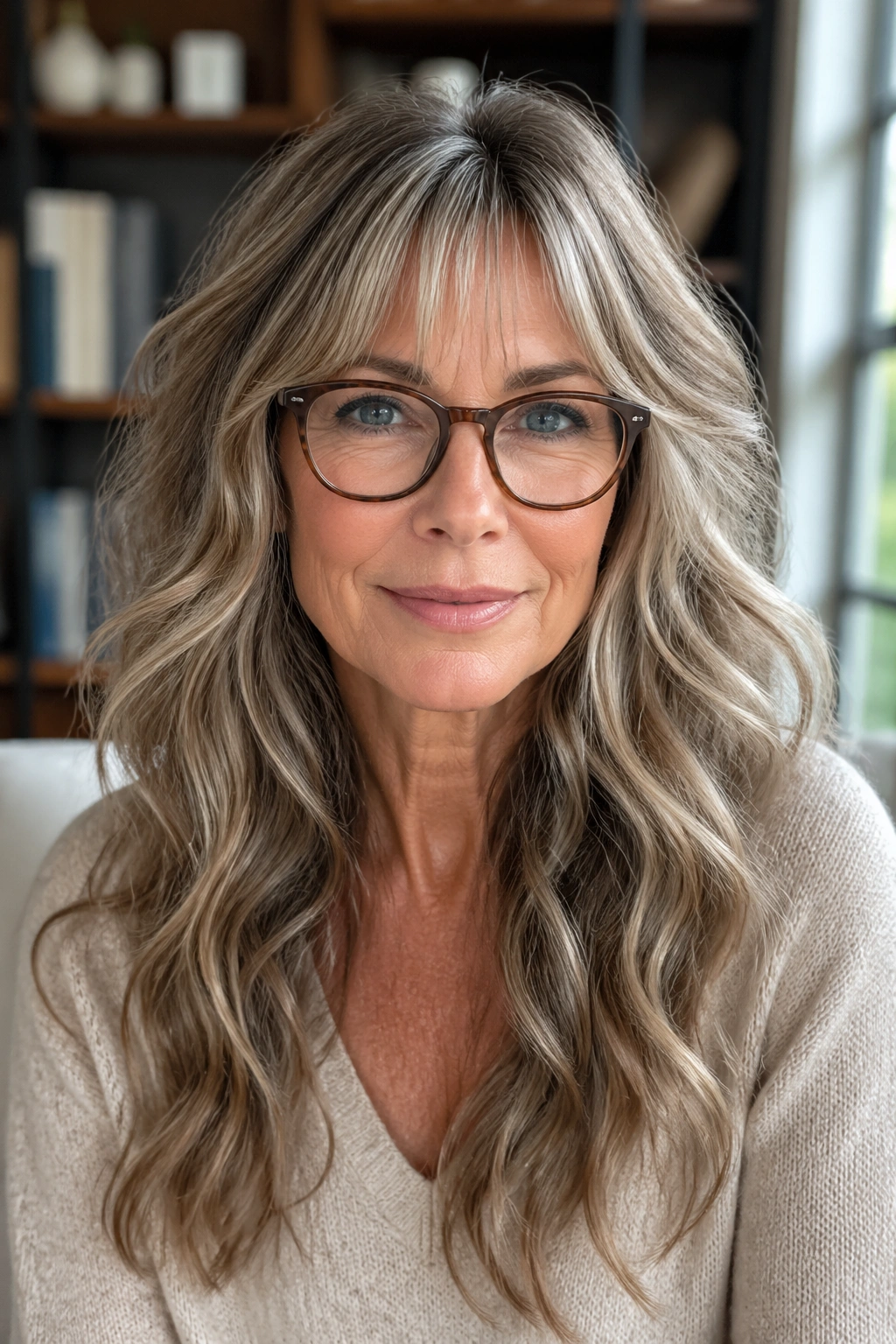
Glasses change how a haircut sits on the face. A fringe that hits the frames wrong can make everything feel crowded. A glasses-friendly fringe solves that by staying light, open, and a little longer at the sides.
This is where long wavy layers earn their keep. The fringe can blend into the front pieces instead of fighting them. The result is a haircut that frames the eyes without pressing into the frames.
What to Ask For
Ask for a soft fringe that clears the top of your glasses and lengthens into the cheek pieces. That way, the front of the haircut keeps moving even when the rest is pulled back or tucked away.
If you wear larger frames, keep the fringe more open. Smaller frames can handle a bit more coverage. Either way, the fringe should feel like part of the haircut, not an extra piece pasted on top.
30. The Most Wearable Long Wavy Layered Cut
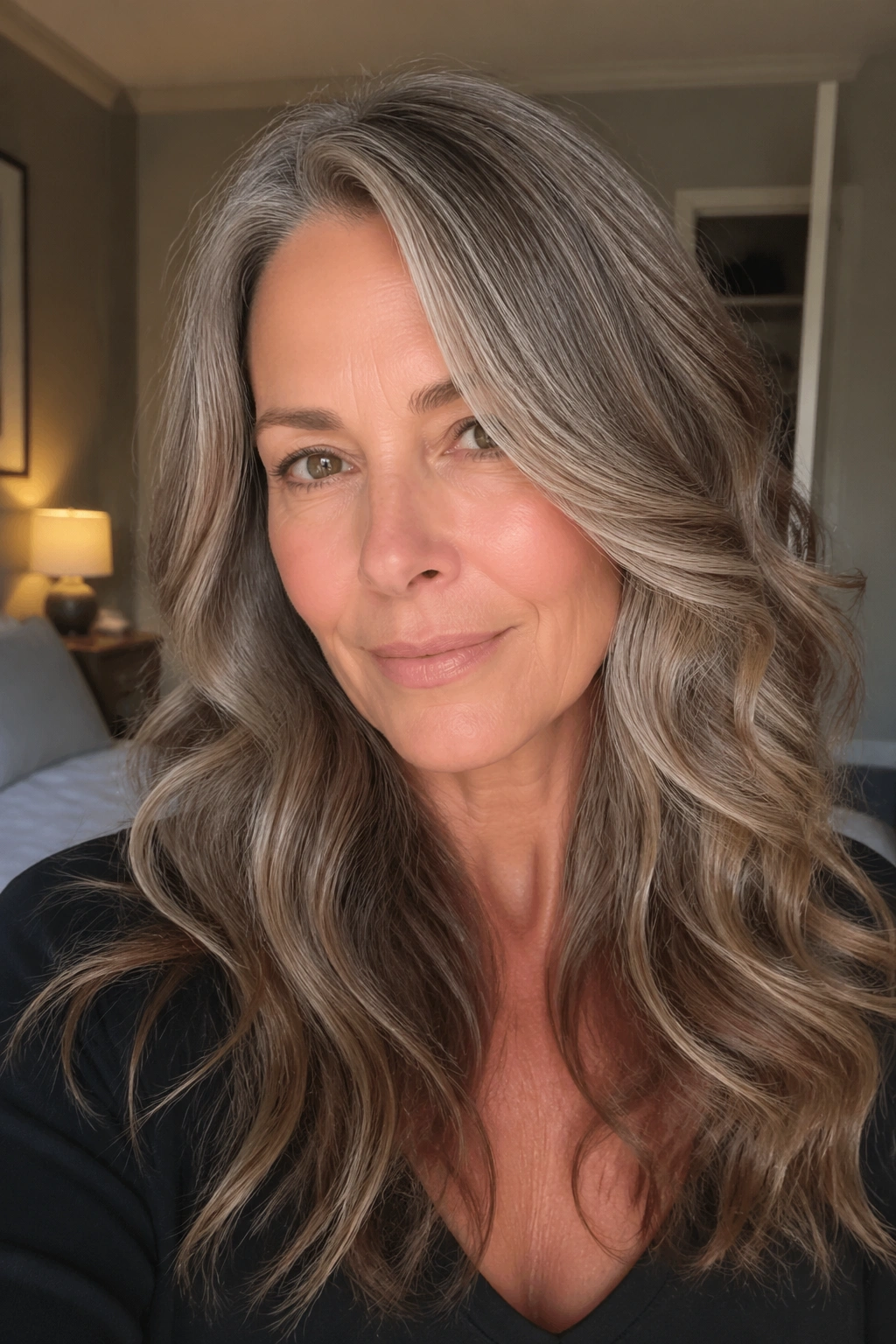
If you want the safest, most forgiving version of long wavy layered hair over 50, this is it: long layers that begin below the chin, soft face-framing pieces, a gentle side or center part, and an ends line that still feels full.
It’s the haircut that gives you movement without demanding a perfect blowout. It works with gray, with highlights, with air-drying, with a diffuser, and with the days when you throw your hair into a clip and call it done. That flexibility is the real luxury here.
Keep the layers long enough to respect the length, and resist the urge to over-thin the bottom. That one choice usually separates a haircut that looks expensive from one that looks tired. Strong shape. Soft finish. That’s the formula that keeps long wavy layered cuts looking fresh, wearable, and easy to live with.
