



Long curtain bangs can be a gift for wavy and curly hair, but only when the cut respects what your hair actually does after it dries. A fringe that looks perfect when wet can spring up two inches higher once the wave pattern wakes up, and that’s how people end up with bangs that feel too short by dinner.
The sweet spot usually lives somewhere between the cheekbone and the top of the lip, though that range changes with density, curl tightness, and how much heat styling you want to do. Straight hair and textured hair do not behave the same way. Not even close.
What makes long curtain bangs for wavy curly hair so useful is the way they break up width at the temples, soften a strong jaw, and give the front of the cut some motion without swallowing the rest of the length. When they’re done well, they look easy. When they’re done badly, they either hang like wet rope or puff out like a triangle. There’s not much middle ground.
The styles below lean into that reality. Some are airy and barely there. Others are glossy, heavy, and dramatic. A few need a brush and a diffuser. A few are better left alone and just coaxed with cream and hands. That range matters more than people think.
1. Cheekbone-Skimming Long Curtain Bangs
Cheekbone length is the safest starting point for textured hair. It gives the front pieces enough weight to swing, but not so much that they fall into your eyes every time the humidity changes. On wavy hair, this length frames the face without fighting the natural bend.
Ask for the shortest point to land around the cheekbone when dry, not wet, and let the outer corners fall toward the jaw. That small difference keeps the fringe from shrinking into a puff. If your hair is coarse or springy, leave the front slightly longer than you think you need.
- Works best when the rest of the hair has long, soft layers.
- Looks especially good with a center part that opens just a little.
- Needs only a light mousse or curl cream at the front.
- Avoid heavy oils near the roots; they flatten the lift fast.
My favorite part: this shape still works on second-day hair after a quick mist and a scrunch.
2. Bottleneck Curtain Bangs With a Narrow Center
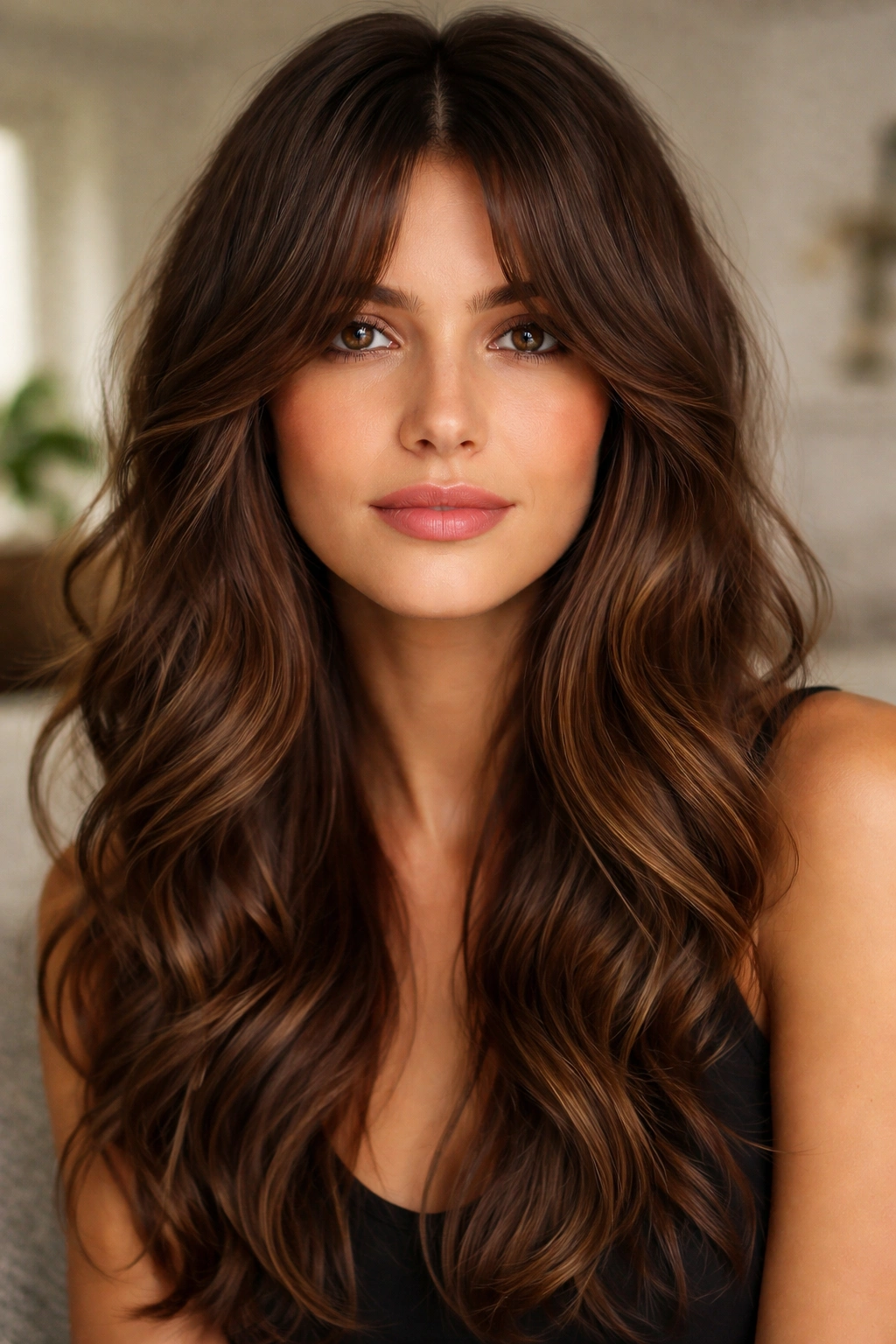
People hear “bottleneck bangs” and assume they’re dramatic. They don’t have to be. On wavy curly hair, the narrower center opening can be surprisingly gentle, especially if the front pieces taper out slowly instead of dropping in a hard line.
The trick is the balance. The middle sits shorter, while the outer edges grow longer and melt into the rest of the hair. That creates a little opening at the nose bridge or between the brows, then the shape widens as it reaches the cheekbones. On curls, that widening effect keeps the face from feeling boxed in.
This style is a smart pick if your hair has a loose wave at the front but tighter curl underneath. The narrow center stays neat, while the longer sides can twist, bend, and separate without looking messy. A pea-sized amount of curl cream is usually enough. More than that, and the front can get stringy.
It’s a clean shape. Very wearable. Not boring.
3. Shaggy Curtain Bangs That Melt Into Layers
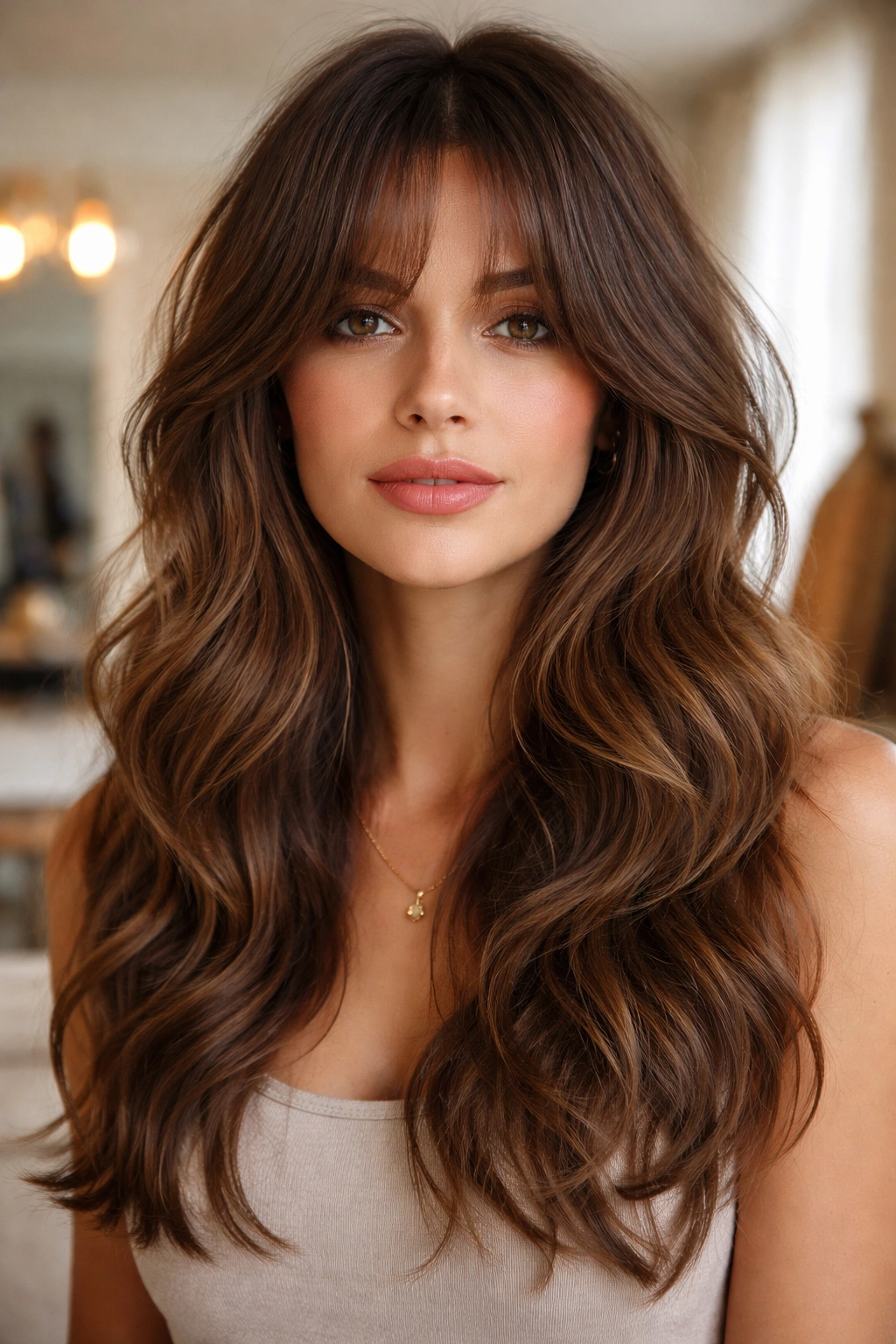
If your hair already likes movement, the shaggy version is where things get fun. The front pieces are cut so they don’t sit like a separate fringe. They blend into the face-framing layers and then keep traveling into the rest of the cut.
Why It Works
Wavy curly hair has a built-in messiness that a shag can use instead of fighting. The bangs don’t have to lie perfectly flat, which means the styling effort drops a little. That alone makes this shape worth a look if you hate spending ten minutes fixing one section of hair.
Ask for soft, broken-up ends and a long connection into the sides. The front should still be recognizable as curtain bangs, but not so crisp that it looks disconnected from the cut. A diffuser helps, but finger-drying is fine too if you like a looser finish.
- Best for medium to thick hair
- Great with a wolf cut or shag haircut
- Needs a touch of mousse at the roots
- Should never be razor-thinned into fuzz
Tip: keep the shortest pieces long enough to tuck behind the cheekbone, or the shape can get too choppy too fast.
4. Rounded Curtain Bangs That Follow the Curl
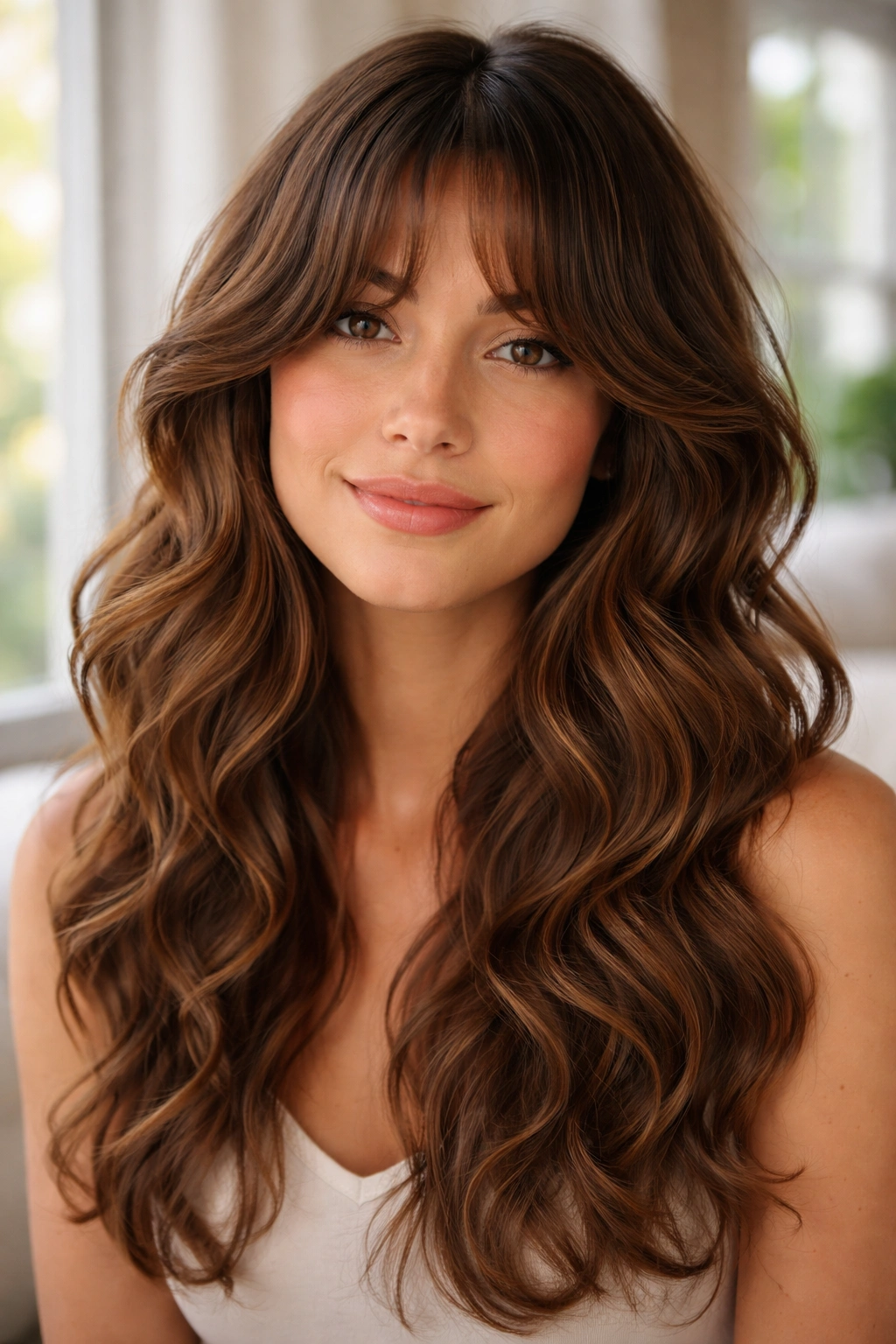
A rounded fringe sounds old-fashioned until you see it on curly or wavy hair. Then it makes perfect sense. The curve softens the forehead area and gives the front of the haircut a little dome of movement instead of a flat split.
I like this shape for medium-density hair, especially when the waves sit in clean S-bends rather than tight coils. The front pieces are cut so they arc gently outward, then drift down into the sides. It feels a bit softer than a sharp, center-open curtain bang.
The rounded shape also helps if your waves tend to puff at the temples. A straighter bang can exaggerate that. A curve smooths it out. Keep the ends soft, not blunt. If the edge gets too heavy, the whole thing loses the airy feeling that makes curtain bangs work in the first place.
There’s a certain ease to it. Not polished to death. Just balanced.
5. Air-Dried Curtain Bangs With Loose Bend
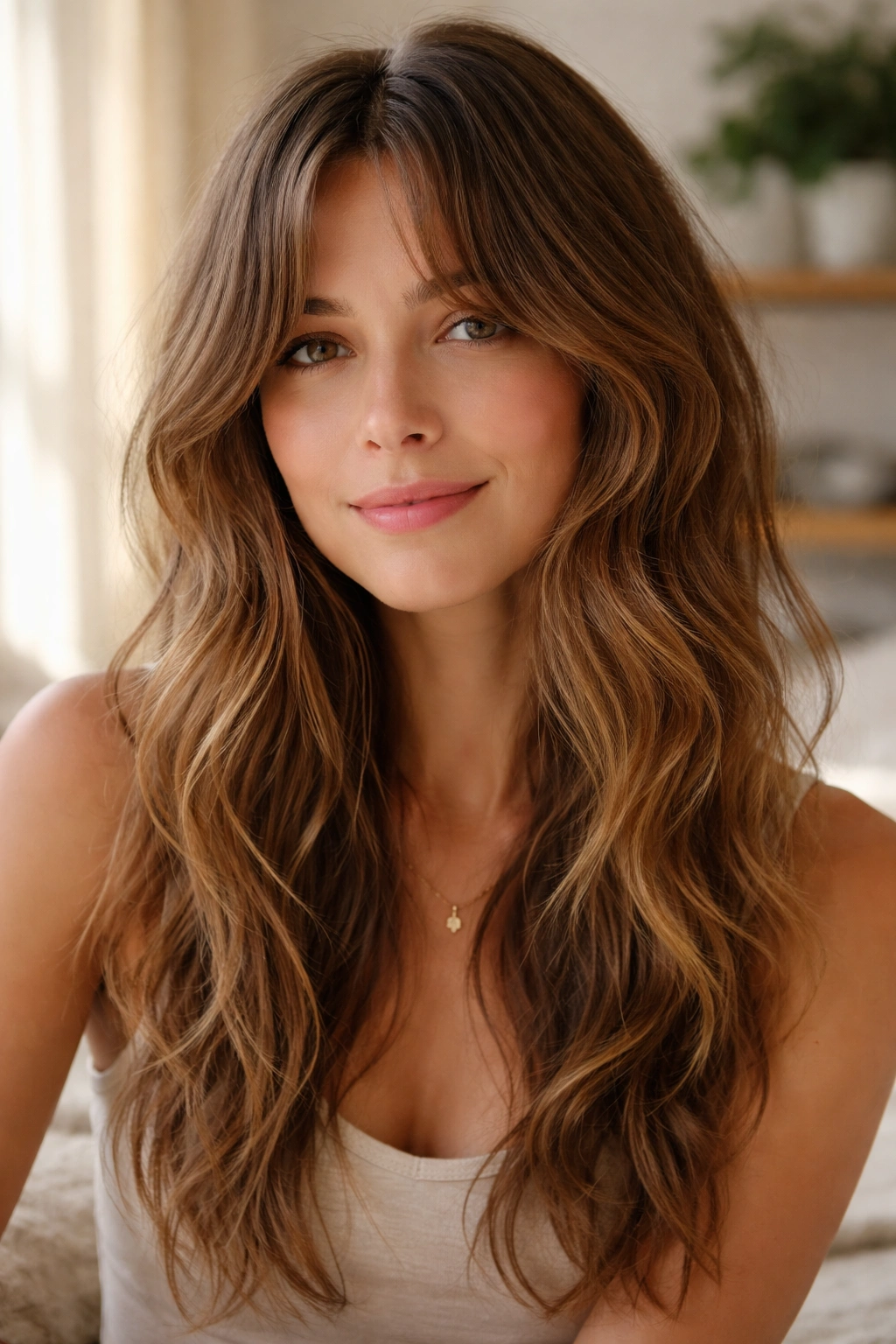
Air-dried curtain bangs can look lazy in the best way. They don’t try too hard, and that’s exactly the point. On wavy curly hair, a little leave-in conditioner, a small amount of mousse, and a careful scrunch can be enough to shape the front pieces into something flattering.
The key is restraint. Don’t keep touching the bangs while they dry. That’s how wave clumps break apart and turn frizzy. After applying product, twist each front section once or twice, then let it sit. If the roots need help, clip them up for a few minutes so they don’t dry flat against the forehead.
Airdried bangs are forgiving on busy mornings, but they do ask one thing from you: leave them alone. The front often looks better after it’s fully dry and gently separated with your fingers. Not brushed. Fingers. Brushes can pull the wave too straight and make the ends flare in odd directions.
This is the kind of fringe that looks a little better after lunch than it did at breakfast.
6. Blowout Curtain Bangs With Soft Ends
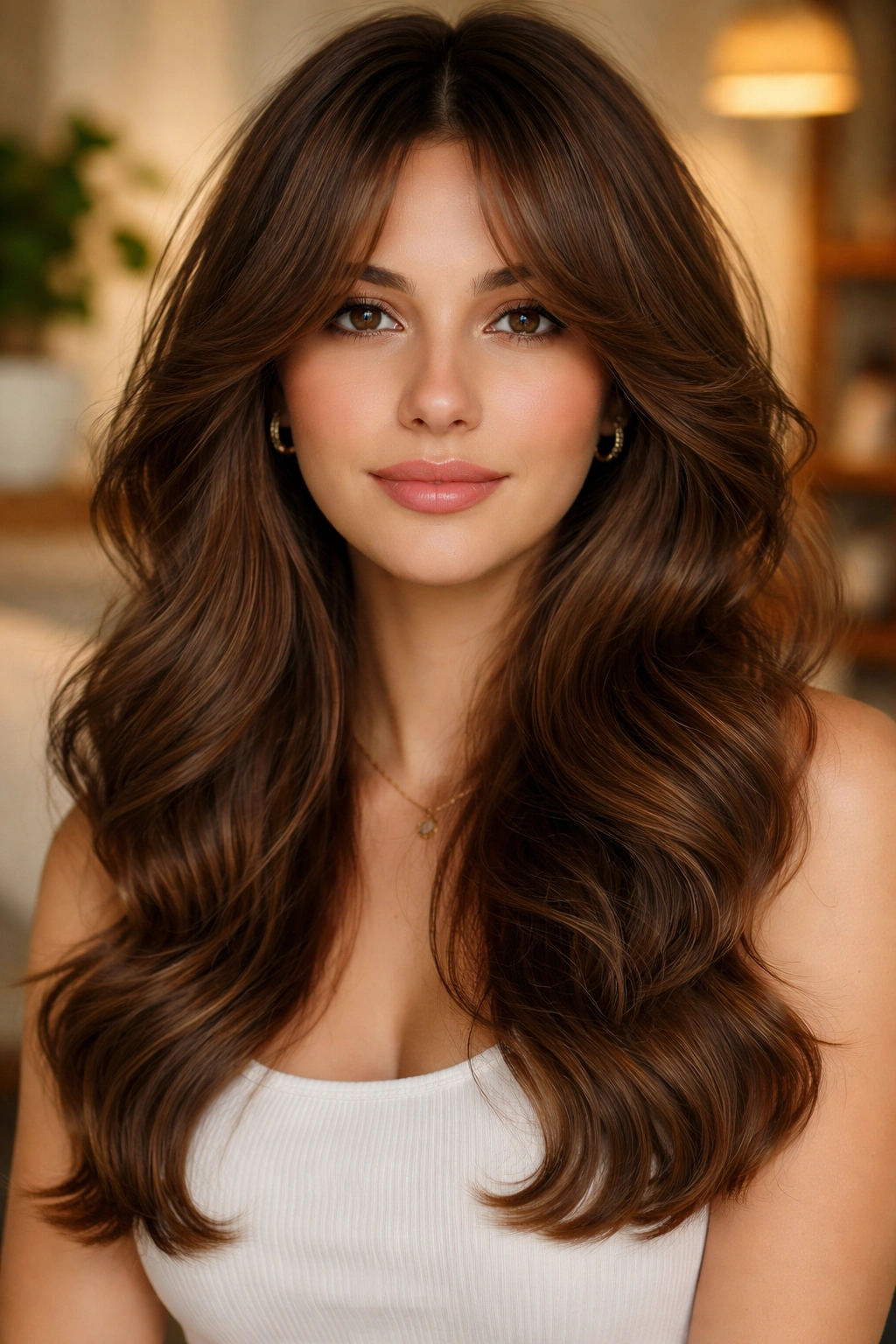
A blowout version is the opposite of the air-dried look, and sometimes that’s exactly what you want. The front gets lifted at the roots with a round brush or hot brush, then bent away from the face so the ends curl softly outward.
What Makes It Different
This style gives wavy curly hair a smoother, more controlled shape at the front without erasing all the texture. The bangs still look like yours, just a bit more polished. It’s especially useful if your waves are uneven or your front pieces dry in strange directions.
A heat protectant is non-negotiable here. Use a medium round brush, not a giant one, and roll the hair away from the center part as you dry. Finish with a cool shot to lock in the bend. If you skip the cool air, the shape tends to drop faster.
Who it suits best:
- People who like a salon finish
- Medium to dense waves
- Hair that holds a bend for several hours
- Anyone willing to spend a few extra minutes with tools
Specific recommendation: keep a small can of flexible hairspray nearby and mist from 10 to 12 inches away. Too much, and the front turns stiff.
7. Long Curtain Bangs Blended Into Face-Framing Layers
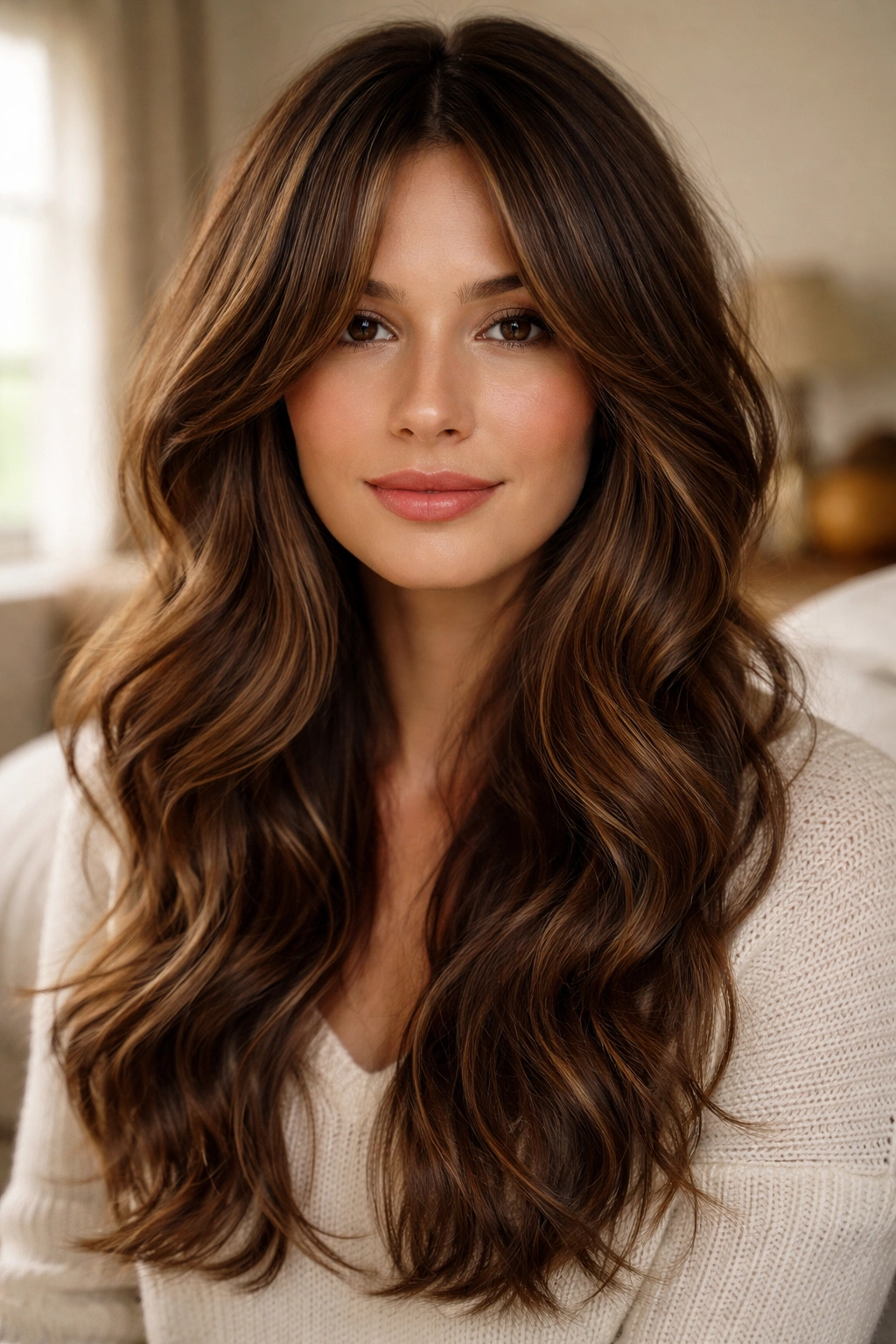
This is the style for people who want bangs without the “I have bangs” moment. The front pieces start near the part, then slide into longer face-framing layers that keep traveling past the cheekbones. It’s subtle, but not invisible.
For wavy curly hair, this shape is gold because it makes the whole haircut feel connected. You don’t get a bang sitting on top of the hair like an afterthought. You get a front section that belongs to the rest of the cut. That matters more on textured hair than it does on straight hair.
Ask your stylist for a long transition from the fringe into the first set of layers. The difference between this and a standard bang is mostly in the blending. The more abrupt the cut line, the more maintenance the fringe needs. A softer merge means fewer bad hair days.
It’s one of the easiest styles to grow out, which is a nice bonus.
8. Chin-Grazing Curtain Bangs for Bigger Waves
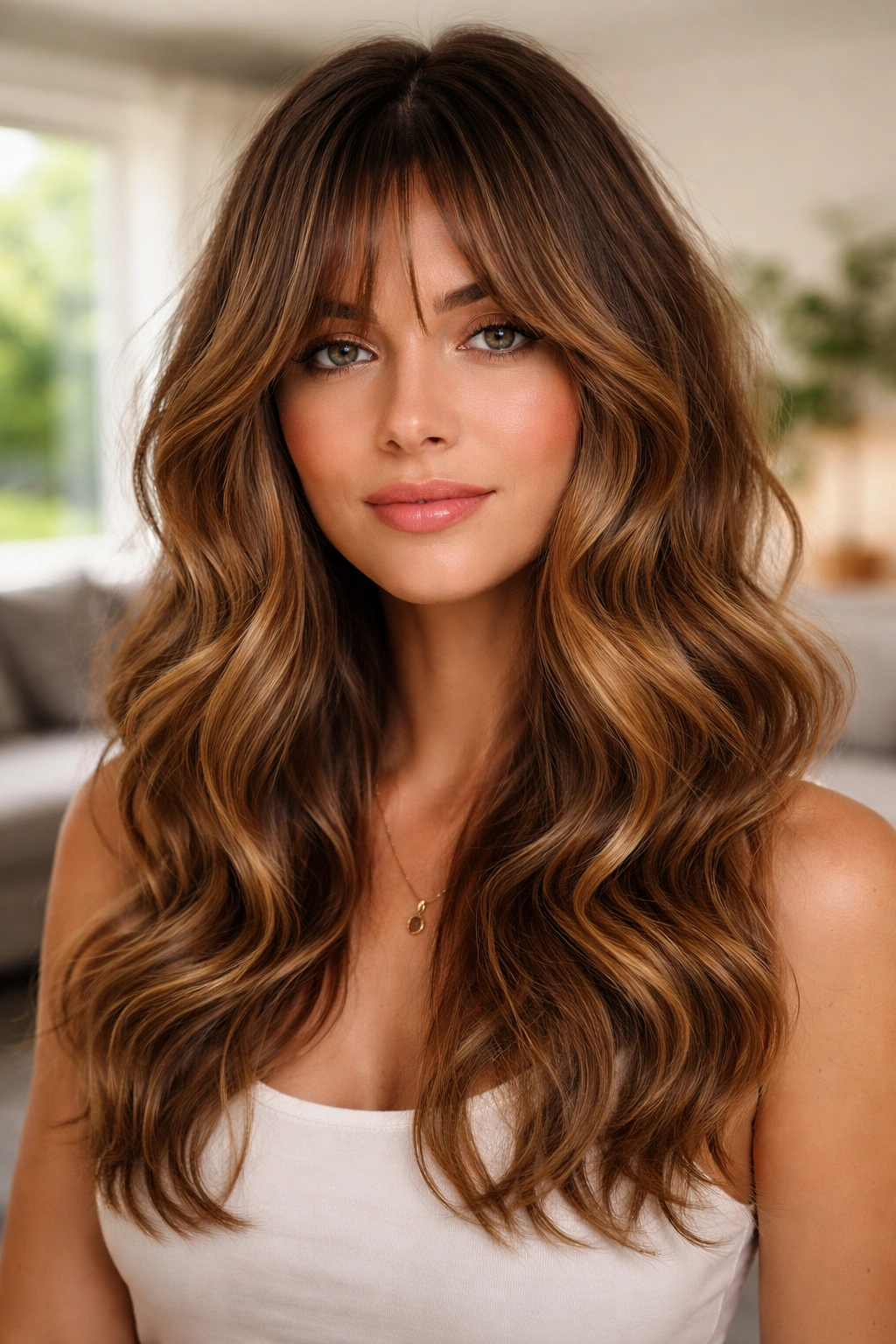
Chin-length bangs are bold. They also happen to work beautifully on hair with big waves or loose curls because that extra length gives the front enough weight to hang instead of bouncing into a shorter shape.
When the shortest point reaches the chin, the fringe can move almost like a separate layer of hair, which is useful if your texture has a strong spring factor. It feels dramatic without being fragile. And unlike shorter fringe, it won’t vanish the second your hair dries.
A center part helps, but a soft off-center part can be even better if your face shape wants a little asymmetry. Keep the ends sloped, not square. A square edge on curly hair can turn bulky fast, and no one enjoys that helmet effect.
The mood here is softer than it sounds. Less blunt statement, more long sweep.
9. 70s Curtain Bangs With Crown Lift
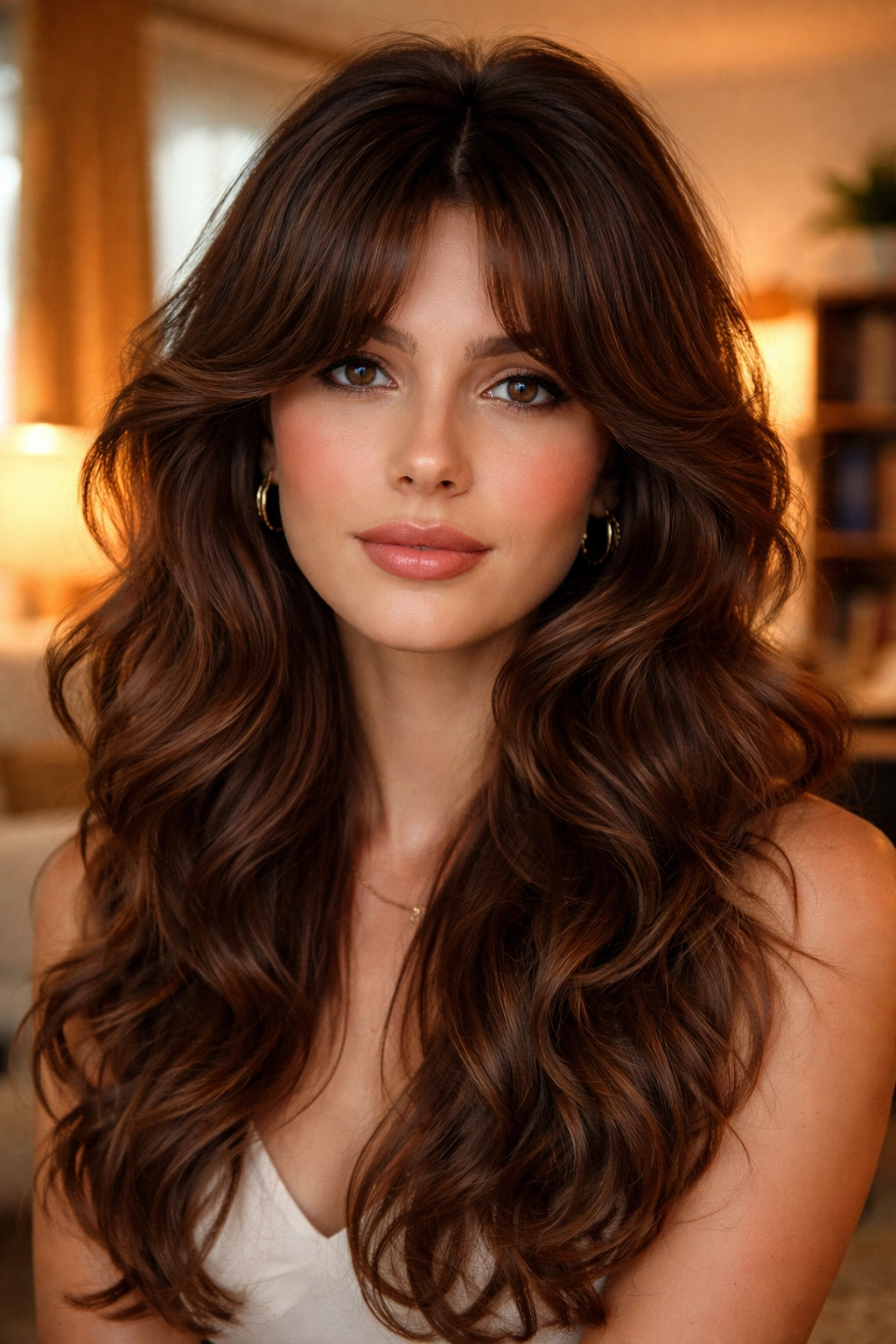
Do you want the fringe to feel a little glamorous? Then this is the version to look at. The 70s-inspired shape uses height at the crown and a smooth, airy bend through the front, which gives wavy curly hair a very specific kind of movement.
How to Get the Lift
Start at the roots. That’s where the shape lives. Clip the top section upward while it dries, or use a round brush to direct the hair away from the face. A little root lift powder at the part can help, but don’t pile it on. Texture at the roots is good. Chalky build-up is not.
The front pieces should angle out and down, not hang straight. That outward movement is what makes the style feel vintage instead of flat. If your hair is thick, keep the bangs lighter through the center so they don’t collapse.
This style loves:
- Velcro rollers
- Blow-drying with tension
- Light shine spray on the ends
- A center part that isn’t perfectly exact
It’s a bit theatrical. In a good way.
10. Piecey Curtain Bangs for Defined Texture
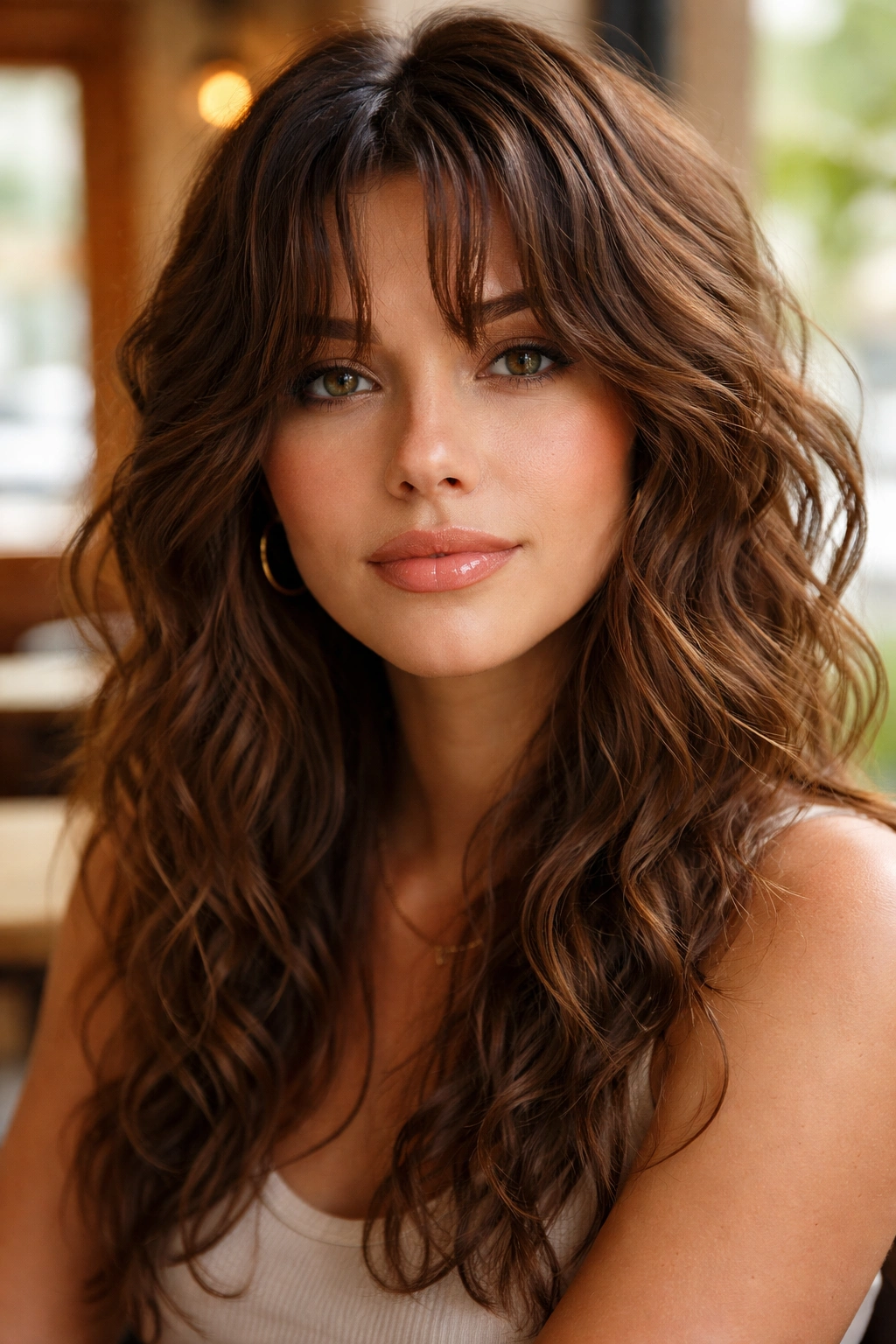
Piecey bangs give you that separated, lived-in look people either chase on purpose or accidentally get after a nap. On wavy curly hair, the style works because the texture already wants to clump. You’re just shaping the clumps so they fall in a flattering pattern.
The best version uses a light gel or curl jelly at the front, then a quick finger twist on two or three sections. That creates visible strands instead of one blanket of hair across the forehead. It looks modern without being sharp.
If your waves are fine, go easy on the product and stop before the front feels wet. If your hair is denser, you can use a little more hold. The goal is separation, not crunch. Crunch belongs in cereal, not bangs.
The look can lean casual or dressed-up depending on how much you stretch the front with your fingers after it dries.
11. Deep Side-Part Curtain Bangs
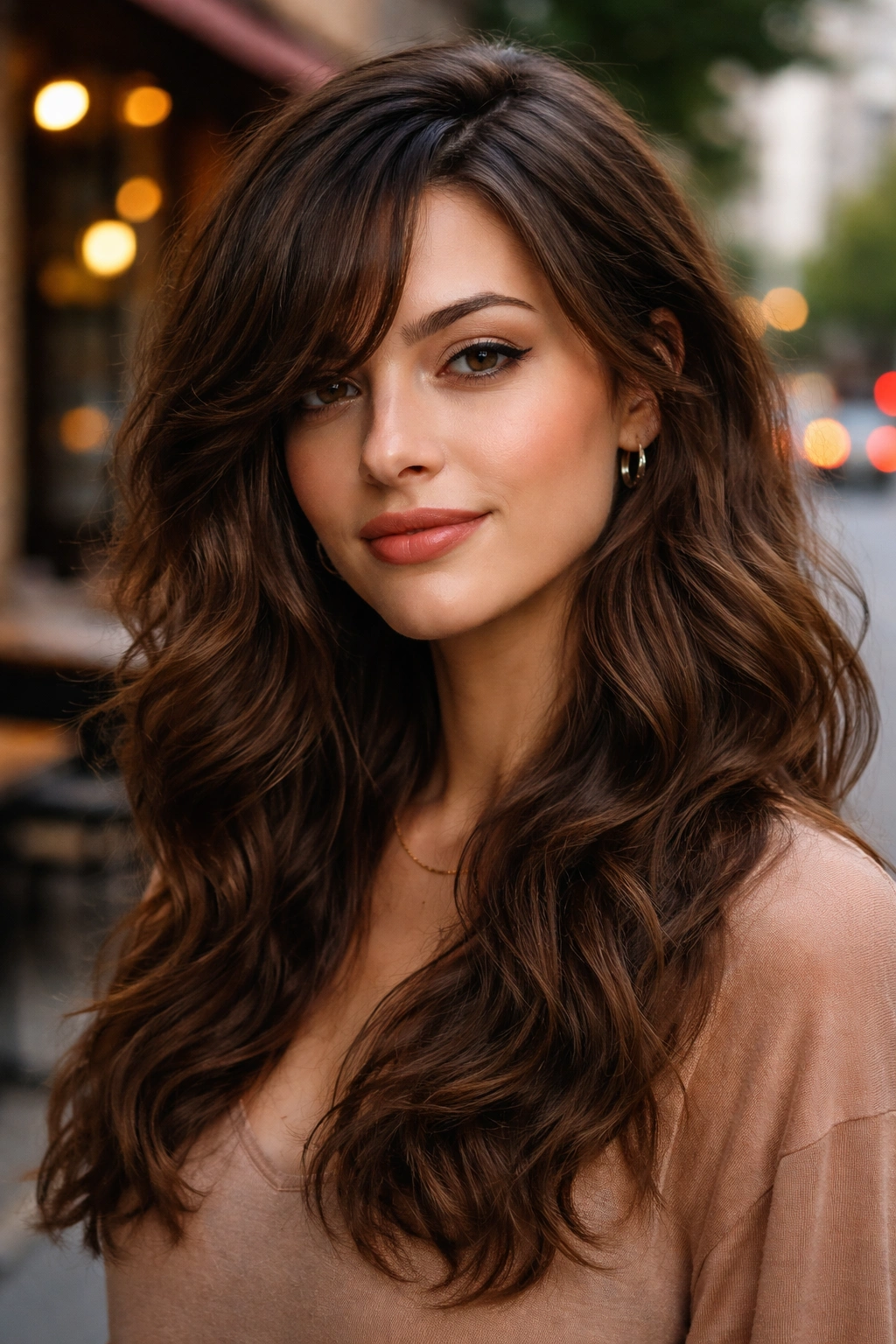
A deep side part changes everything. Sometimes the center part is too severe for the face, or it exposes a cowlick that refuses to behave. Moving the part over by an inch or two softens the whole front of the haircut and lets the bangs sweep naturally across the forehead.
Wavy curly hair often settles better with this shape than people expect. The longer side gets a little extra weight, while the shorter side lifts and curves back. That unevenness can make the face look more open and the hair look fuller at the root.
I’d choose this version if your bangs tend to split unevenly anyway. Instead of fighting the pattern, you’re using it. A side part also helps if one temple is flatter than the other, which is a small issue that somehow makes a big visual difference.
The result is gentle, not fussy. That’s the whole appeal.
12. Butterfly-Cut Curtain Bangs
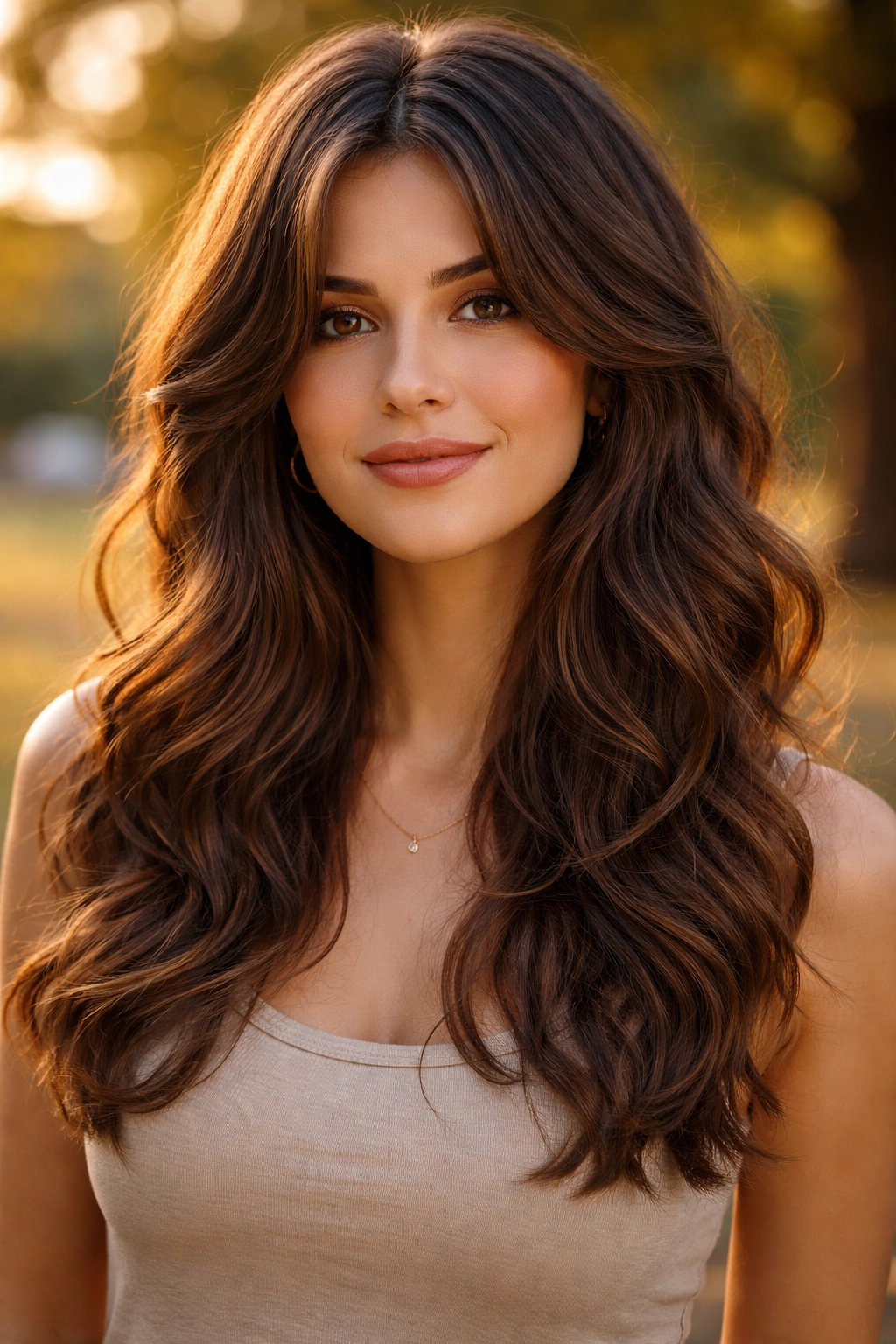
Unlike a standard curtain fringe, the butterfly version makes the front feel lighter by pairing short face-framing pieces with longer layers that keep going underneath. It’s a smart move for thick wavy hair because it removes visual heaviness without chopping off much length.
The short pieces near the face create the bang effect. The longer layers do the rest. Together, they give you movement around the cheeks and jaw while leaving the body of the hair long and soft. If your hair gets bulky near the front, this is one of the best ways to tame it without flattening the shape.
Best for:
- Thick waves and loose curls
- Hair that needs shape around the face
- People who like big, swinging layers
- Anyone who wants bangs that don’t look separate
Ask for a dry cut if your texture changes a lot when it dries. That extra step can save you from ending up with a fringe that sits too short.
13. Wispy Curtain Bangs for Fine Wavy Hair
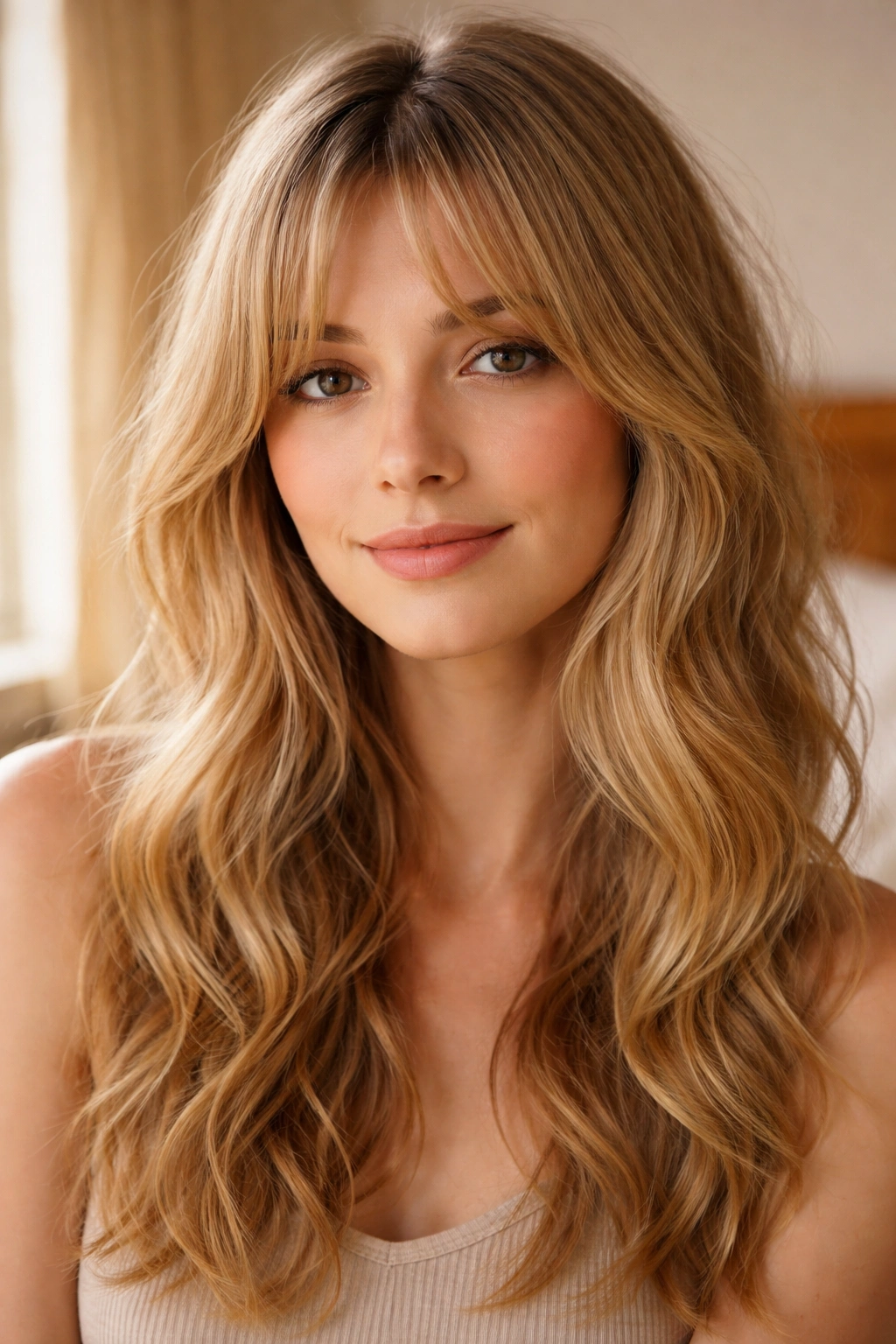
Fine hair needs a lighter hand. A wispy curtain bang can keep the front from looking heavy or stringy, which is a real risk when the fringe is cut too dense.
What to Ask For
Ask for soft density, not a blunt block of hair. Your stylist should remove bulk carefully so the bangs can bend without collapsing. If the front gets thinned too hard, though, it can look see-through in a bad way. There’s a difference between airy and sparse. You want airy.
This style works well when the longest pieces blend into the sides and the shortest point stays just under the brows or at the cheekbone. The front can still frame the face, but it shouldn’t overpower it. A light mist of volumizing spray at the roots can help, though you’ll want to keep oils and heavy creams far away from the fringe.
It’s the kind of bang that looks delicate in the mirror and better from six feet away. That’s usually a good sign.
14. Thick Curtain Bangs for Dense Curls
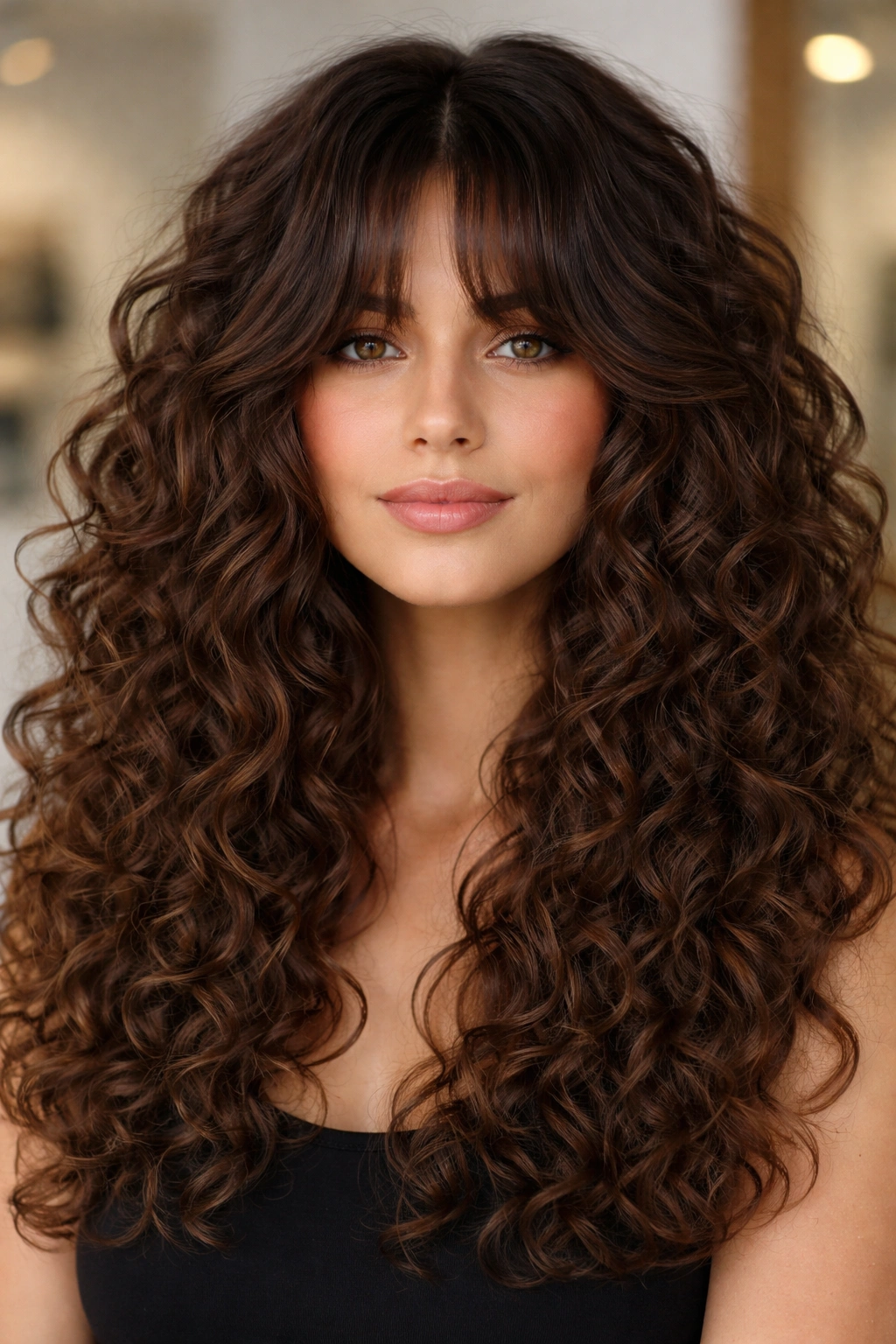
Dense curls can carry a heavier bang than people think. The mistake is cutting the front too blunt and too full. The better version keeps the density, but removes bulk inside the shape so the bangs can split and move.
The front should still feel substantial. That’s the point. But the ends need some layering so they don’t sit like a curtain rod across the forehead. A good stylist will cut into the shape from underneath and then check how the pieces fall when dry. That dry check matters a lot with dense curls.
This style is useful if you like a rich, full look and don’t mind a little extra styling. It can make the hair feel lush and expensive-looking without actually needing much more length. The front just has to be shaped well.
Heavy bangs are not the enemy. Badly cut heavy bangs are.
15. Defined Ringlet Curtain Bangs
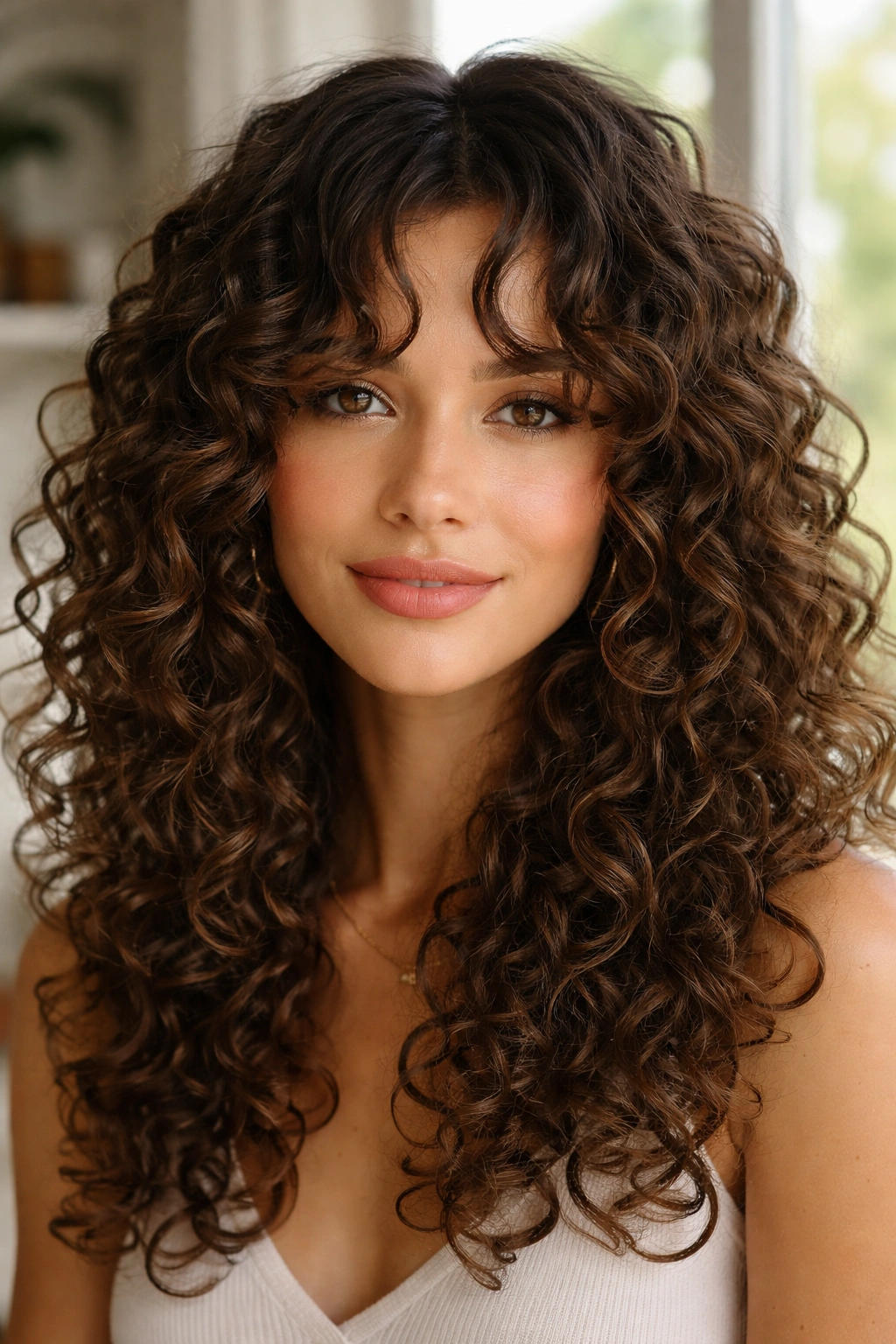
Can curtain bangs work on tighter curls? Absolutely. They just need more respect for the curl pattern. Instead of forcing the hair into a brushed curtain shape, this version lets the front form its own ringlets and fall apart down the middle.
How to Style It
After washing, apply a curl cream or gel to the front sections and finger-coil the pieces that sit closest to the part. Then let the curls dry without messing with them. Once they’re fully dry, separate only the big clumps that want to stick together. Don’t rake through everything.
The result is a fringe that feels sculpted but still soft. The ringlets do the framing work on their own, which is honestly nicer than trying to train them into something they don’t want to be. If one side dries tighter than the other, that’s normal. Curl patterns are rarely twins.
A little asymmetry here looks natural, not sloppy.
16. Face-Hugging Curtain Bangs
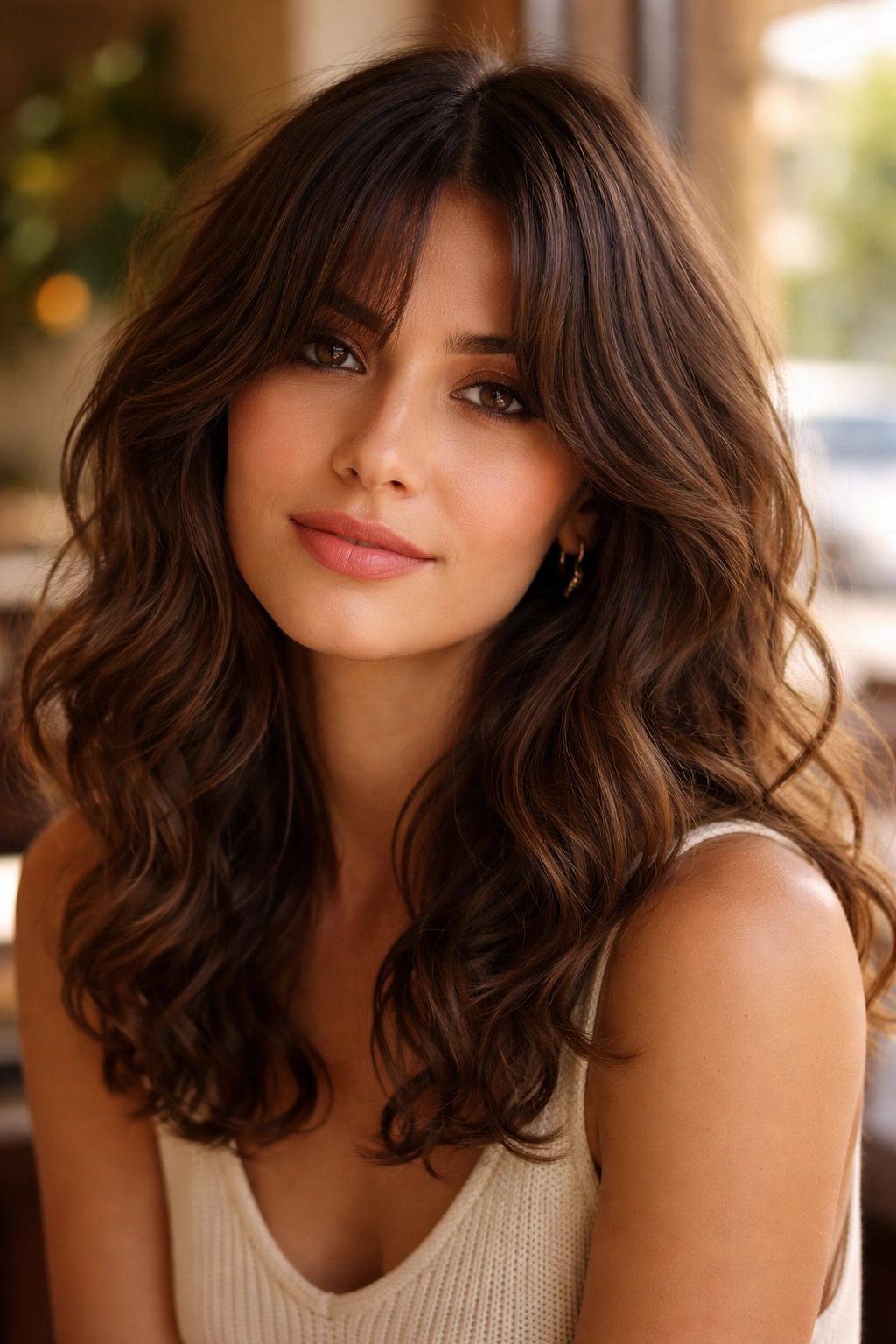
This version is all about the curve around the cheekbones. The front pieces are cut so they skim the sides of the face, then swing inward just enough to make the eyes and cheekbones stand out. It’s a flattering shape for a lot of face types because it doesn’t add width where you don’t want it.
I like it on wavy hair that has a bit of body but not too much bulk near the temples. The hair should bend, not puff. If your texture is coarse, ask for slightly longer pieces so the fringe can soften instead of hovering.
This is a very “looks better as the day goes on” kind of bang. The first ten minutes may look a little too neat, especially if you blow-dry it. Give it time. Once the wave settles and the ends separate a bit, the whole front opens up.
There’s a reason this shape keeps showing up on textured hair. It’s flattering without screaming for attention.
17. Soft S-Curve Curtain Bangs
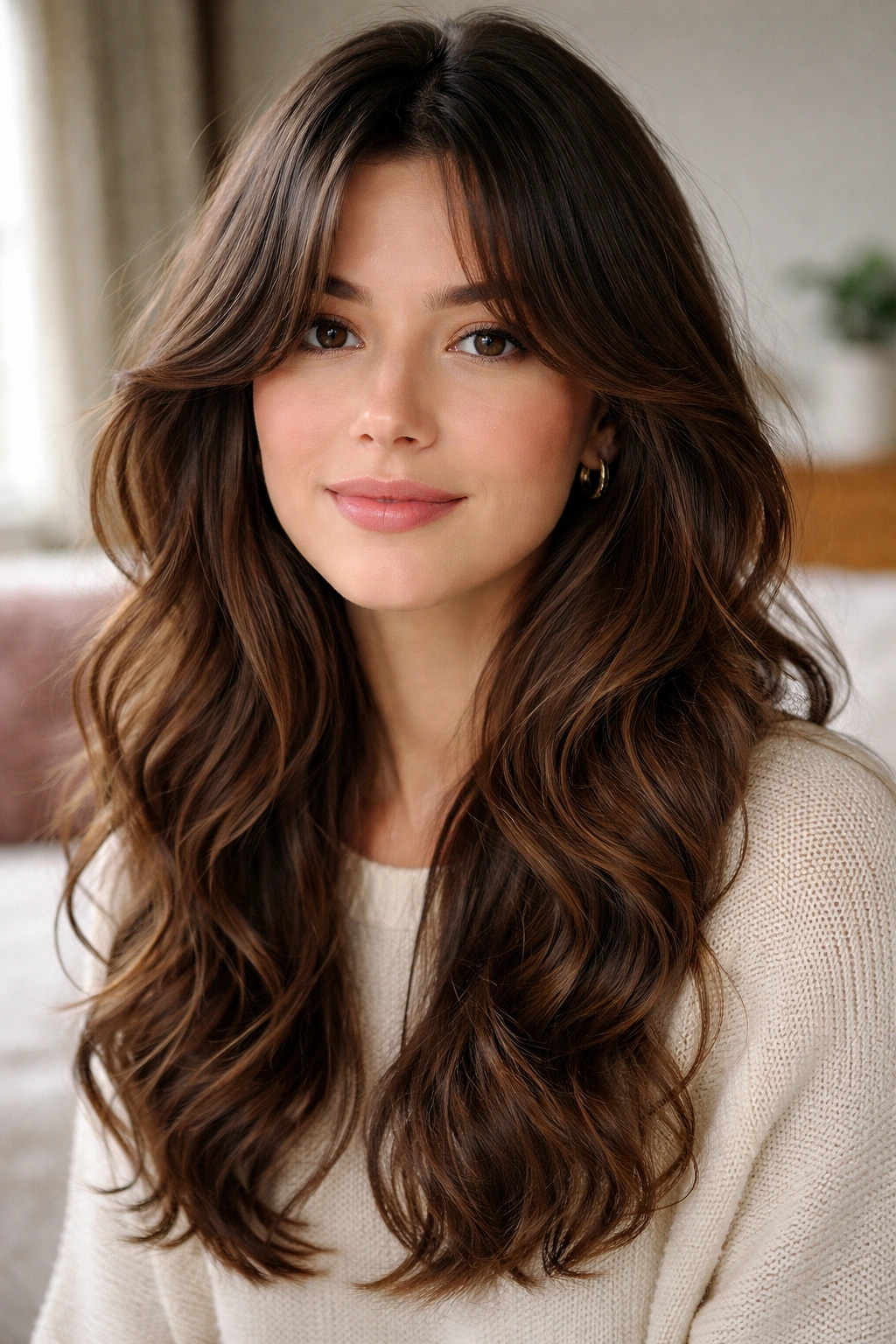
The S-curve shape is underrated. It gives the front of the hair a gentle bend that starts near the part, arcs outward, then comes back in toward the cheek. On wavy curly hair, that curve can happen almost naturally if the cut is done well.
The styling part is simple enough. Use a round brush or even a Denman brush to guide the bangs away from the face first, then curve the ends back in slightly. You’re not trying to make them poker-straight. You’re guiding the wave into a shape that reads clean and soft.
The best thing about this style is how much it flatters movement. The hair doesn’t sit in one line. It sways. That sounds like a small detail, but it changes the whole mood of the haircut.
A soft S-curve also hides a bad root day better than a blunt fringe ever will.
18. Low-Maintenance Grow-Out Curtain Bangs
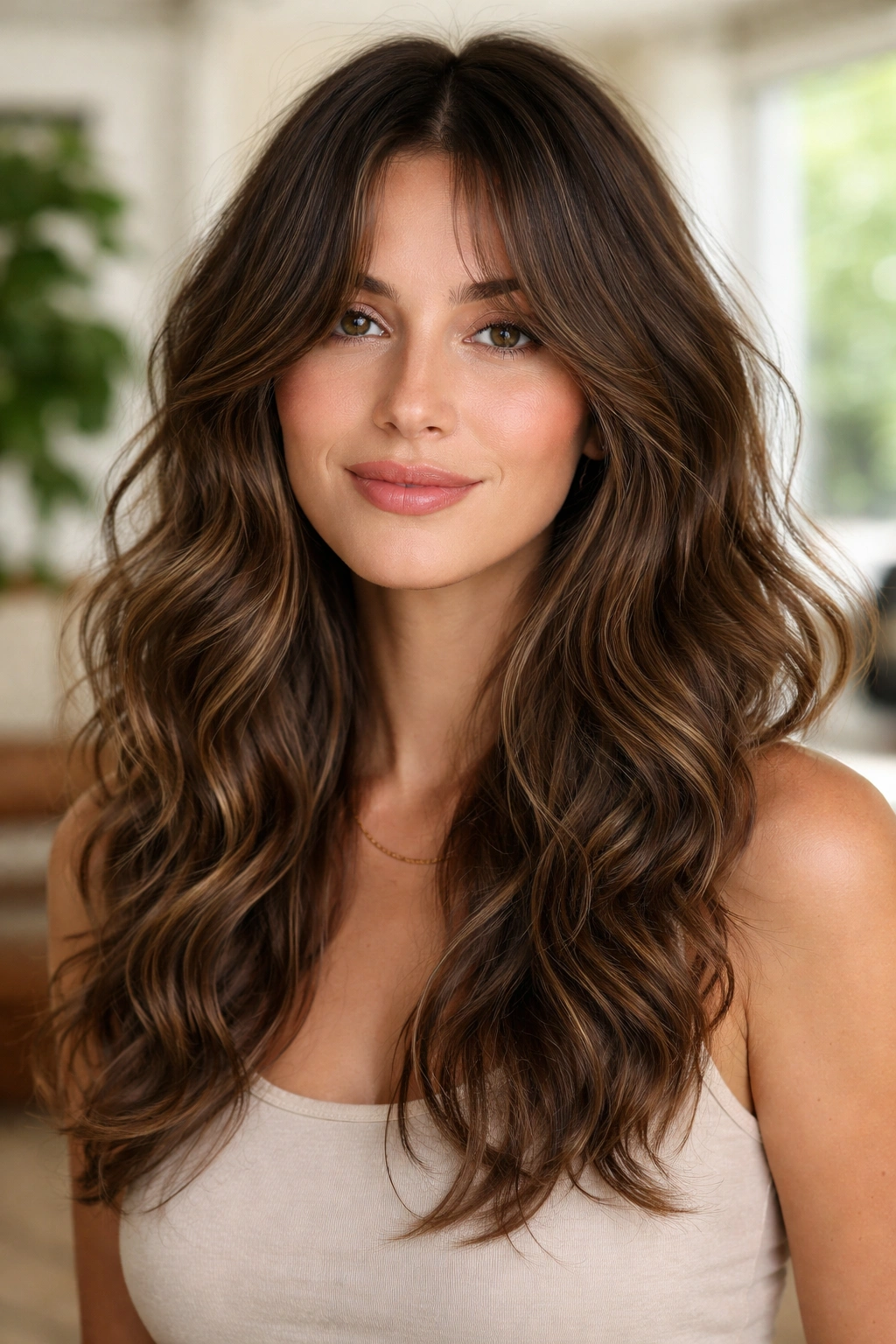
Some curtain bangs are built to look good for exactly one salon-fresh afternoon. This isn’t that. A low-maintenance grow-out version uses long front pieces and soft edges so the fringe still looks intentional when it gets a little longer.
That makes it a strong choice if you’re wary of committing to bangs. The shape starts at the front, but it quickly blends into the sides, which means the grow-out phase feels less awkward. Wavy curly hair helps here because the bend makes the fringe feel part of the haircut even after it passes the original length.
Who it suits:
- People who air-dry most days
- Anyone who trims bangs less often
- Hair that changes shape in humidity
- Busy routines with limited styling time
If you’re unsure about curtain bangs, start here. It’s the least bossy version of the group.
19. Curly Shag Curtain Bangs
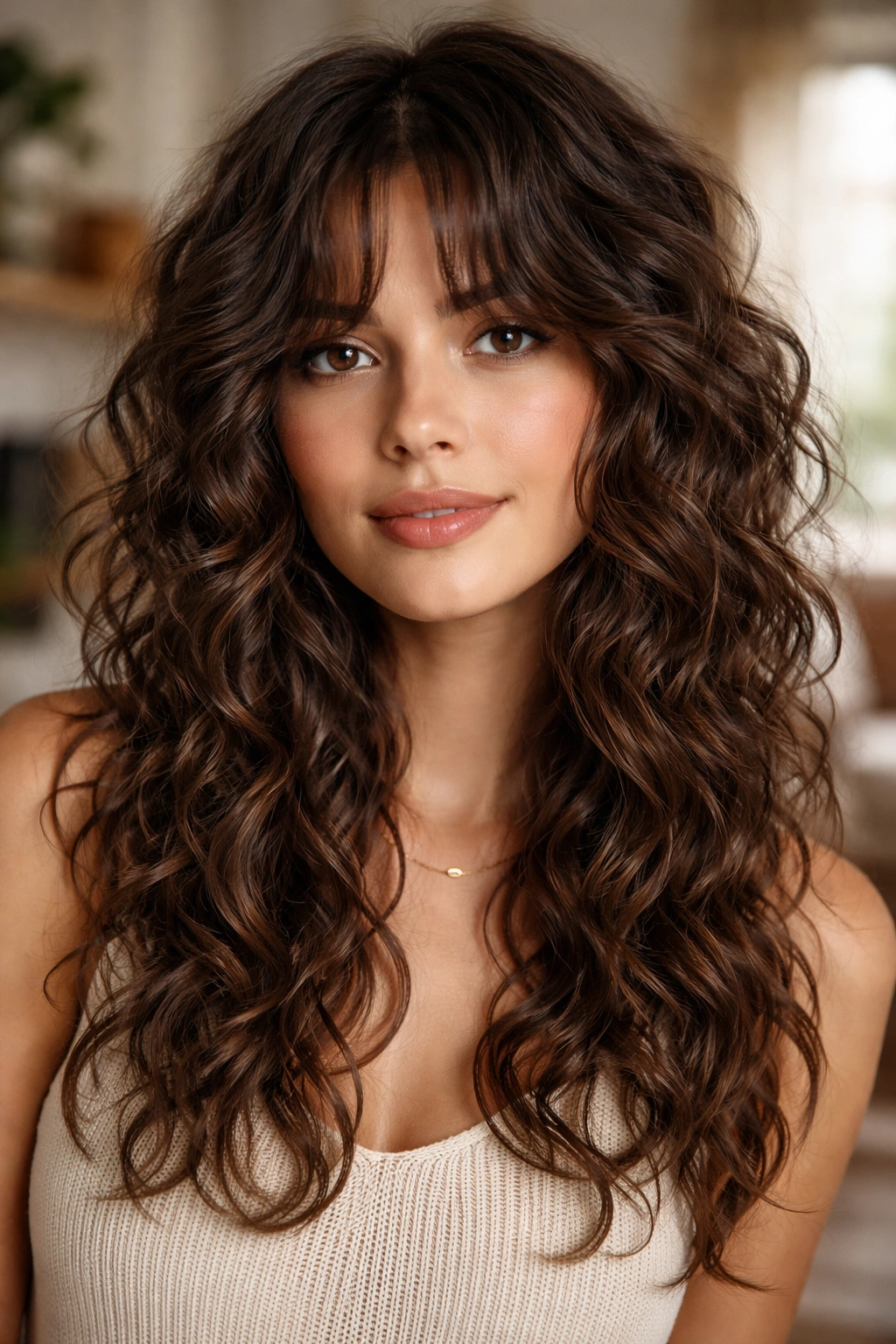
Wavy curly hair and a shag often get along better than people expect. The front pieces stay long enough to curtain, while the overall cut carries plenty of layers for movement and air.
Why It Feels So Easy
A shaggy curtain bang doesn’t need every piece to behave. That helps curly texture, which usually looks better when it’s allowed to break apart a little. The bangs can be loose, uneven in a controlled way, and still look deliberate because the rest of the cut has the same energy.
This style loves texture spray, curl cream, and a diffuser set on low speed. It does not love straightening everything into submission. If you try to smooth it too much, the whole point disappears. The charm is in the motion.
It’s a good pick if your hair has a thick mids section and you want the front to feel lighter. The layers carry the shape; the bangs just help direct the eye.
20. Polished Blowout Curtain Bangs for Formal Days
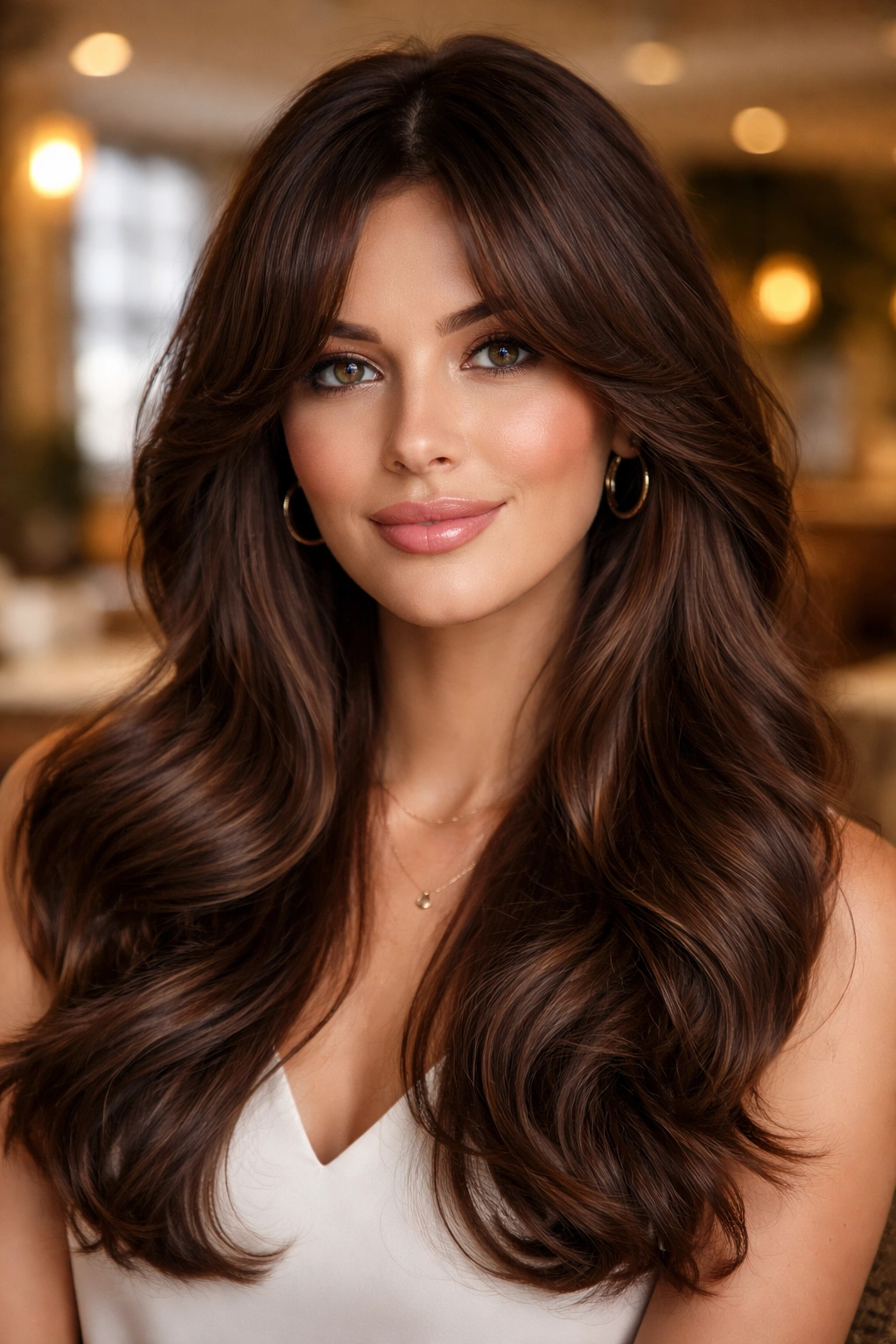
A polished version of curtain bangs can be useful when you want the front to look sleek for a dinner, event, or work setting. The shape starts soft, but the finish is smoother and glossier than an air-dried fringe.
How to Make It Last
Start with a heat protectant, then use a small to medium round brush to direct the bangs away from the face. Once they’re dry, clip them in place for a few minutes while they cool. That cooling step matters more than most people think. It helps the bend stay put instead of drooping within an hour.
A tiny bit of serum at the ends can keep the front from looking frayed, but don’t load the roots with shine product. That’s how the lift disappears. If your hair is humid-prone, finish with a flexible spray instead of a stiff one.
This version feels dressy without turning the fringe into a separate event. Which is nice. Hair should not be harder than the clothes.
21. Flipped-Out Curtain Bangs
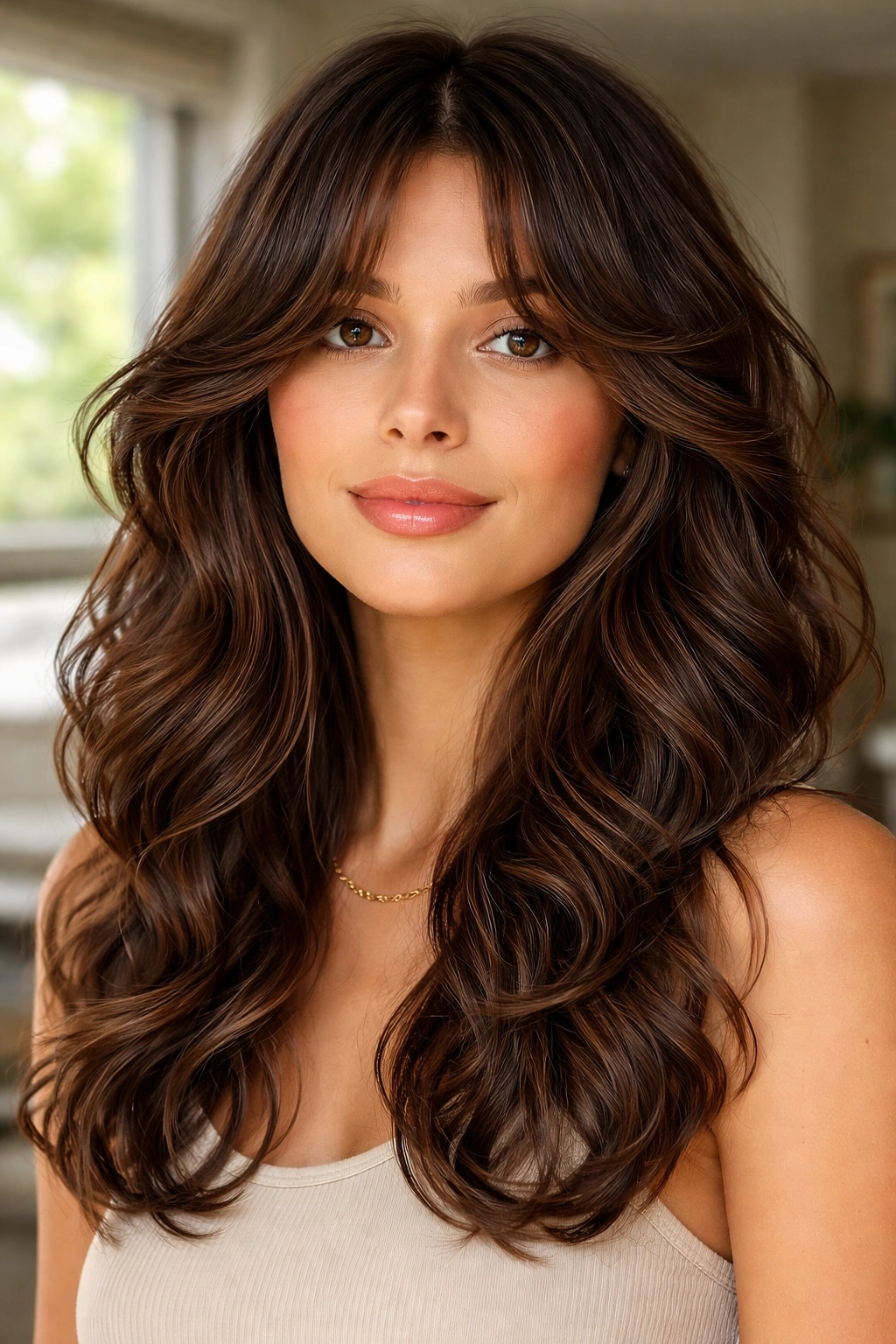
Flipped-out ends give curtain bangs a little kick. Instead of curling inward toward the face, the pieces bend away from it, which creates a lifted, airy edge that works well on wavy hair with a natural bounce.
The style is especially good if your bangs tend to stick to your forehead when they’re too short. A flip-out finish keeps the front from looking heavy or damp. You can get it with a round brush, a flat iron bend, or even by twisting the ends while they cool after a blow-dry.
- Best on medium-density waves
- Nice for long hair that needs movement near the face
- Works with a center or slightly off-center part
- Needs a light finish spray to keep the turn visible
It’s a little playful. Not childish. Just lively.
22. Invisible Curtain Bangs
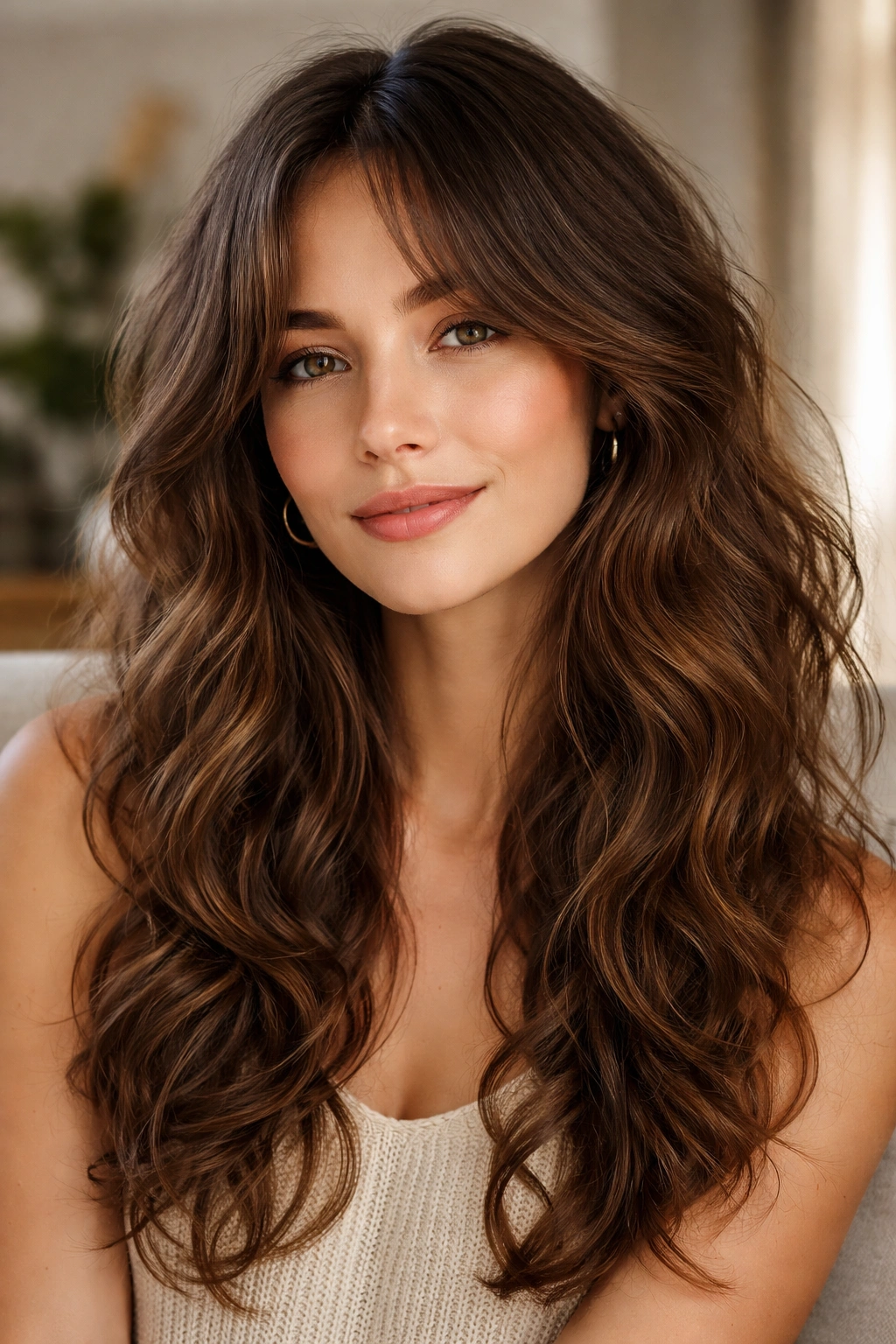
The best bangs are sometimes the ones you barely notice as bangs. This invisible version uses very long front pieces that blend almost fully into the rest of the haircut, giving the face a soft frame without a strong fringe line.
That makes it a smart choice for people who want the effect of curtain bangs but not the commitment of obvious bangs. On wavy curly hair, the shape reads best when the front pieces are long enough to move with the side layers. The haircut feels open, not chopped.
This is also one of the easiest versions to wear if you like to pin hair back, tuck sections behind the ears, or switch between a center part and a side part. The bangs don’t fight those changes. They adapt.
If your style leans understated, this is probably your lane.
23. Long Curtain Bangs With Halo Layers
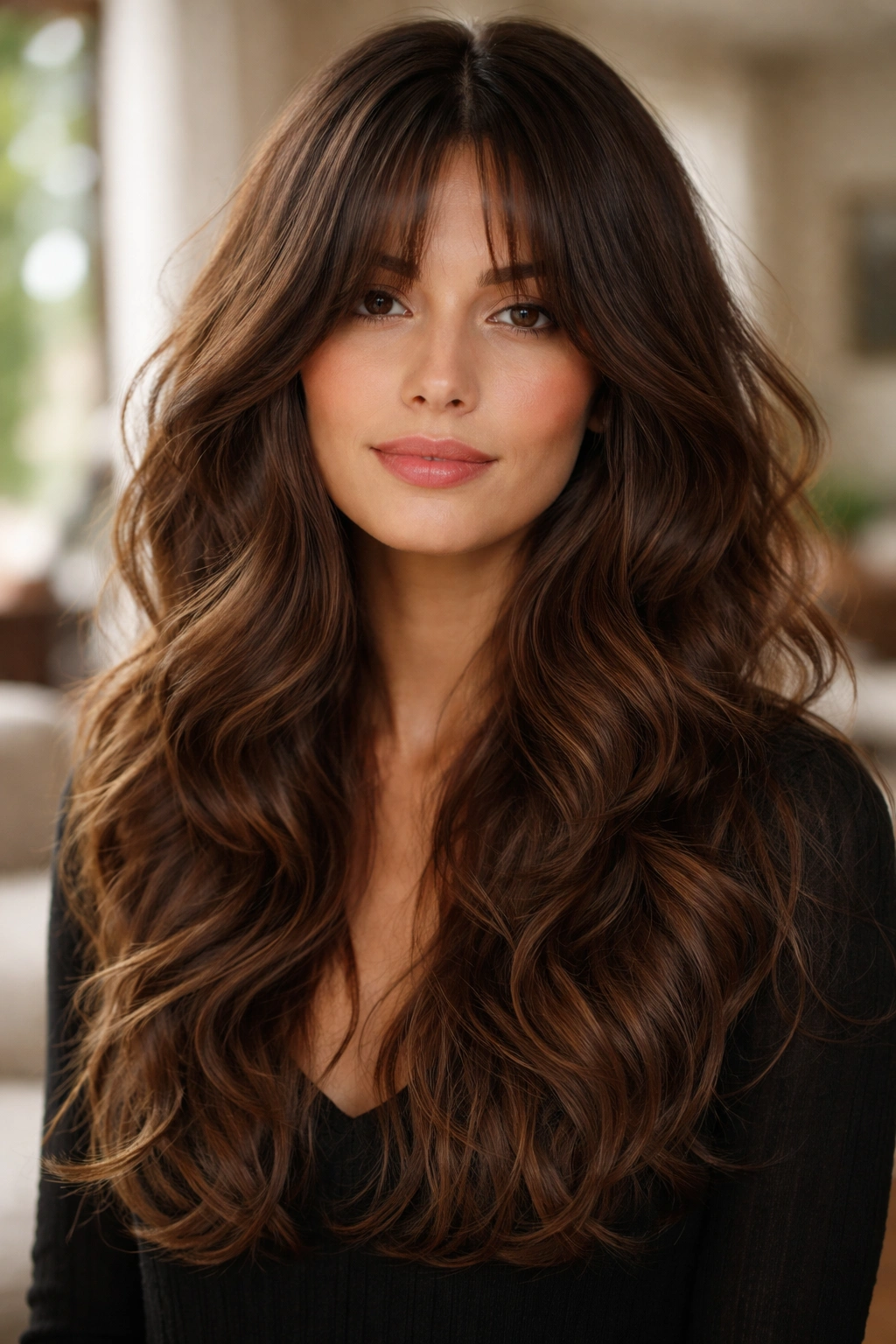
Halo layers are all about softening the outline around the face and crown. Paired with long curtain bangs, they create a rounded, airy frame that works especially well on thick waves and curls that need some lightness near the top.
The layers around the face should be cut to move together, almost like a cloud shape around the front section. That keeps the bangs from looking disconnected. It also helps the hair fall into a nicer silhouette on days when you don’t feel like styling every strand.
The shape can be dramatic if you want it to be, but it does not have to be. A gentle halo effect can make the haircut feel cleaner and more expensive-looking without losing texture. That is a rare win.
It’s a good option when the hair gets bulky near the temples and crown at the same time.
24. Mullet-Inspired Curtain Bangs
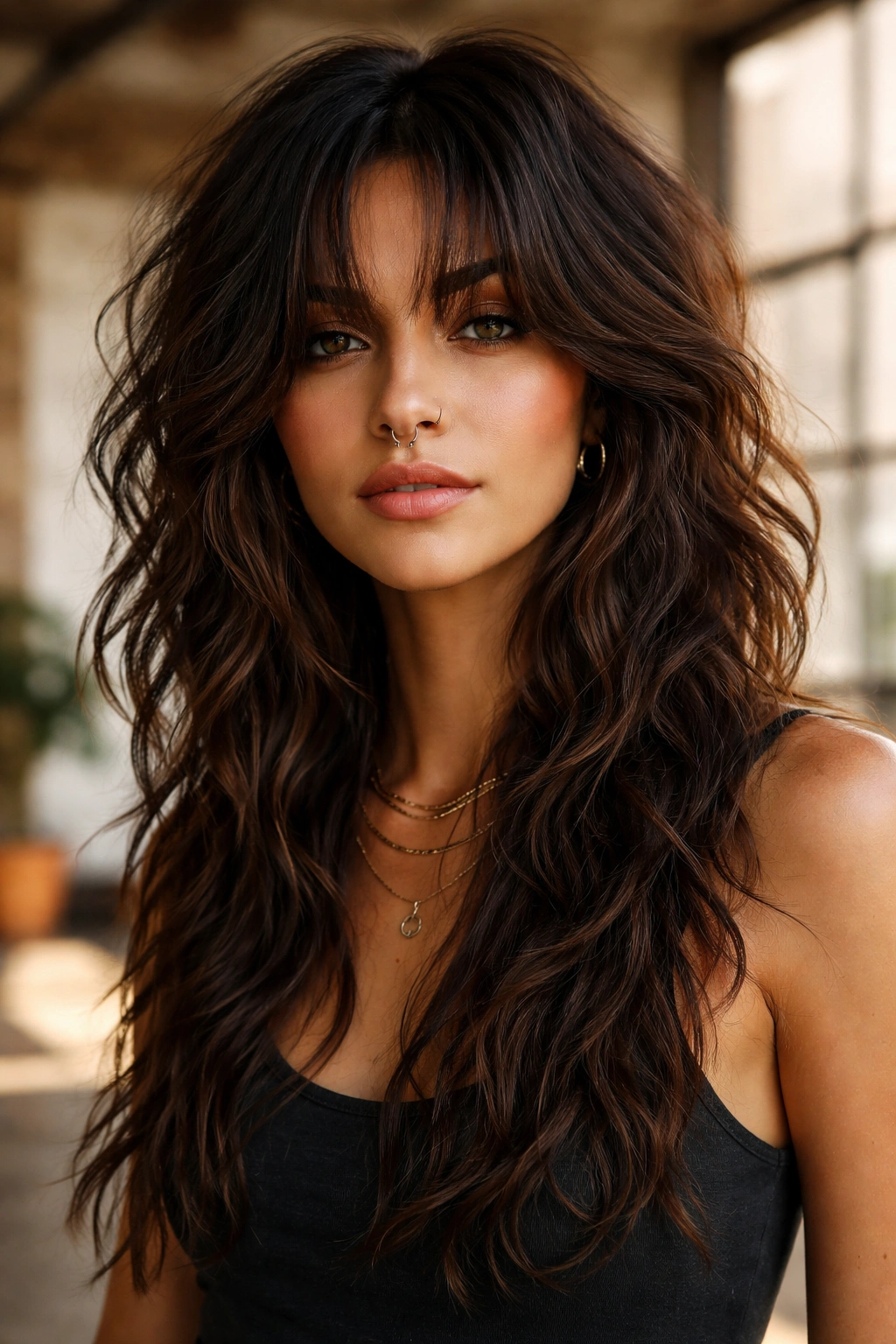
Not every curtain bang needs to play nice. A mullet-inspired version keeps the front long and soft, but adds a sharper edge through the layers so the haircut feels a little rockier and more directional.
Compared with a classic curtain bang, this one has more attitude. The front may split at the center, yet the sides travel into longer, choppier layers that give the whole cut a looser outline. Wavy curly hair is a strong match here because the natural texture keeps the look from feeling too hard or too styled.
Who it suits best:
- People who like a more fashion-forward haircut
- Medium to thick texture
- Hair that holds shape without much effort
- Anyone who likes a little edge around the face
It’s not a shy haircut. That’s the fun of it.
25. Center-Part Curtain Bangs With Soft Ends
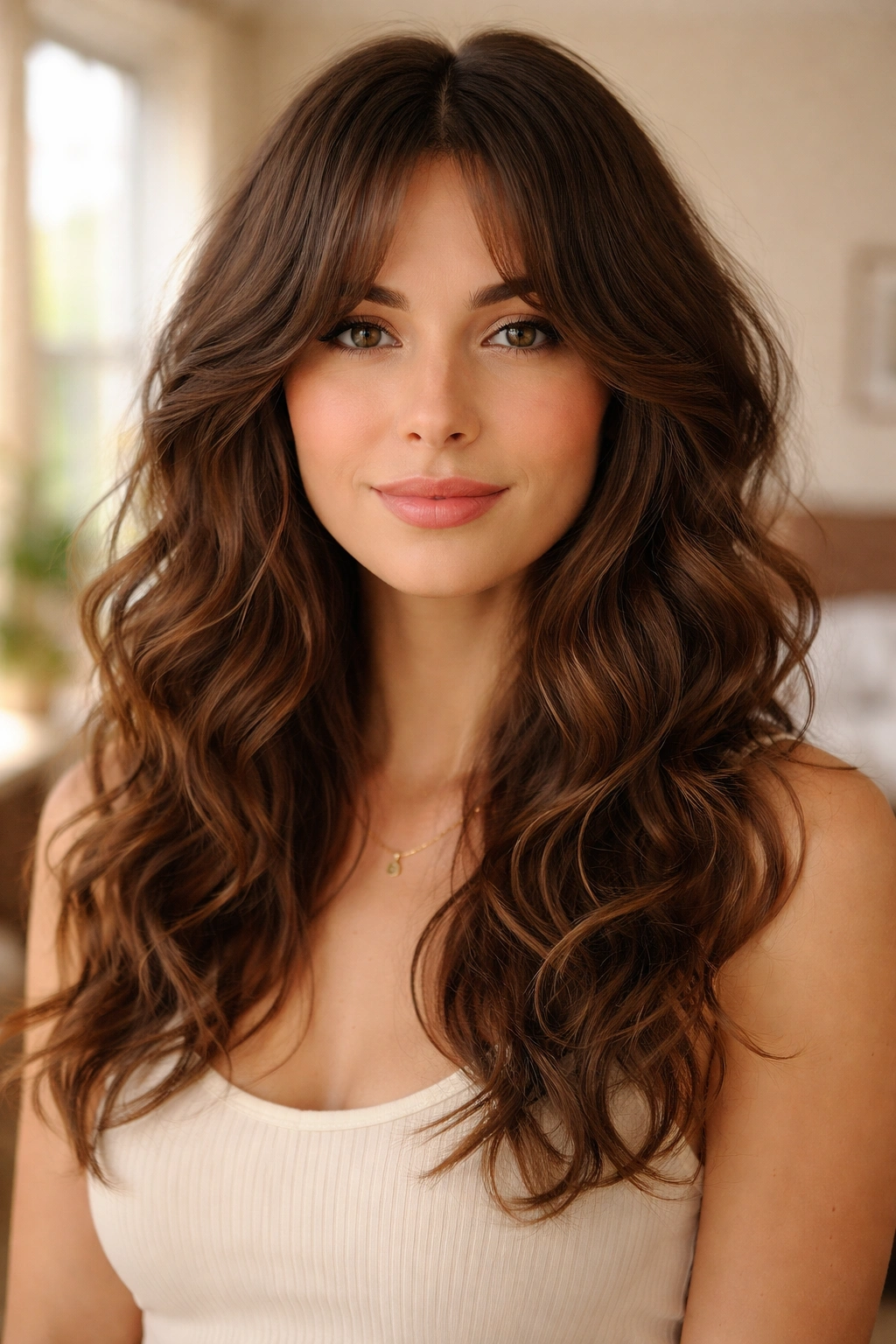
A center part can feel severe on some faces, but soft ends change the equation. This version keeps the classic split at the middle and lets the front pieces taper gently instead of ending in a blunt point.
That softness matters on wavy curly hair because the front sections can otherwise bunch up and look too heavy. With soft ends, the fringe falls open more naturally. You still get the symmetry of the center part, but it doesn’t feel stiff or formal.
This is one of the easiest bangs to pair with long hair because it doesn’t demand a new identity from the rest of the cut. The ends can be tucked, flipped, or left alone. They’re not precious. Good hair should have a little flexibility.
The style feels calm. Clean. Easy to live with.
26. Diffused Curtain Bangs With Root Lift
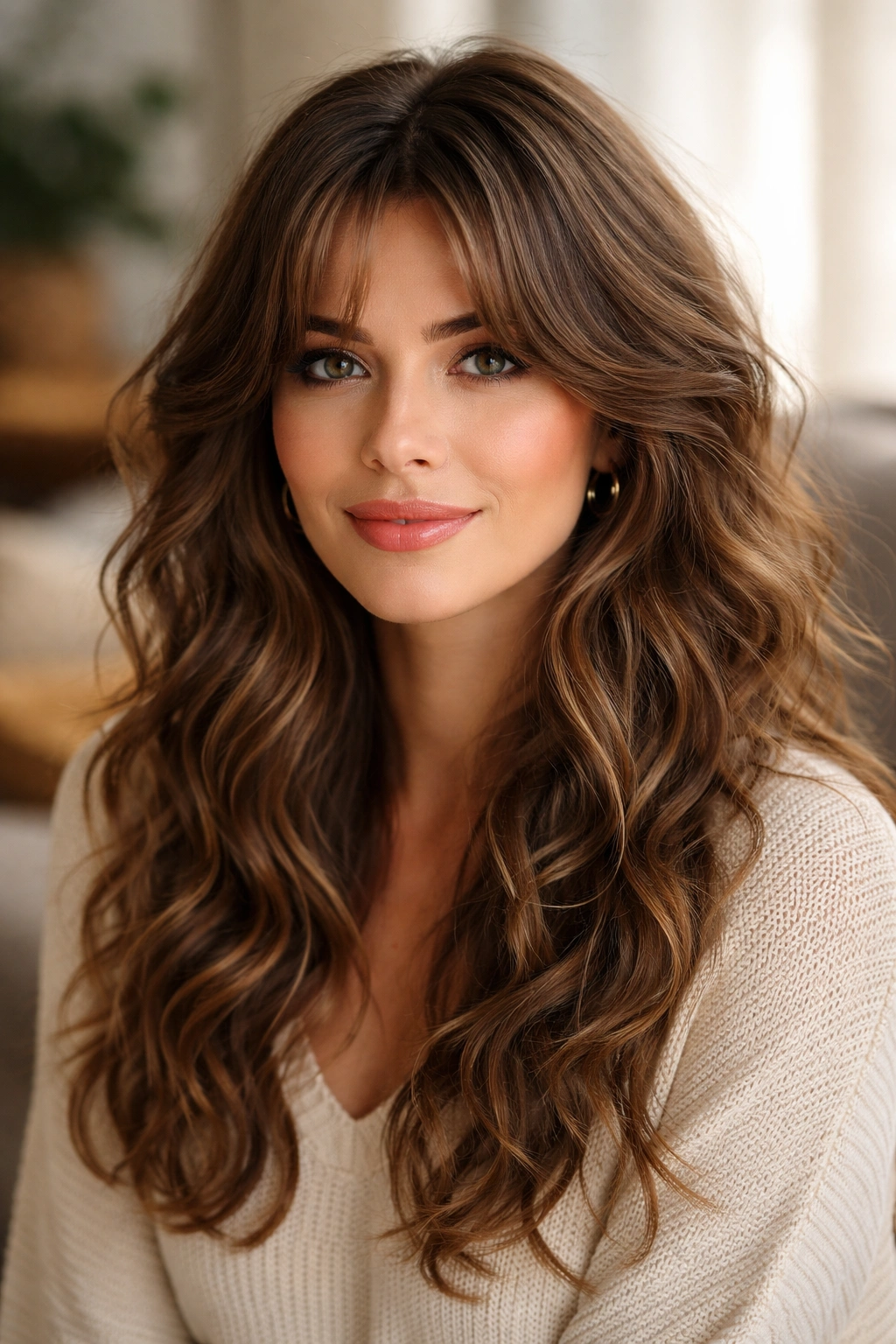
A diffuser can turn a good curtain bang into a better one, especially when your waves or curls need lift at the root. The goal here is volume at the top and softness through the lengths, not a blown-out finish.
How to Dry It
Apply mousse near the roots and a lighter curl cream through the ends. Then place the diffuser underneath the bangs and lift upward in short rounds rather than blasting the area nonstop. High heat can make the front frizz before the shape sets. Medium heat is usually enough.
Once the roots are 80 percent dry, stop fussing. Let the rest air-finish if needed. That keeps the front from getting overworked. If the bangs fall flat by midday, use a few clips at the roots for ten minutes before drying. That small reset can make a big difference.
The result is volume without chaos. Which is the dream, really.
27. Tucked-Behind-the-Ears Curtain Bangs
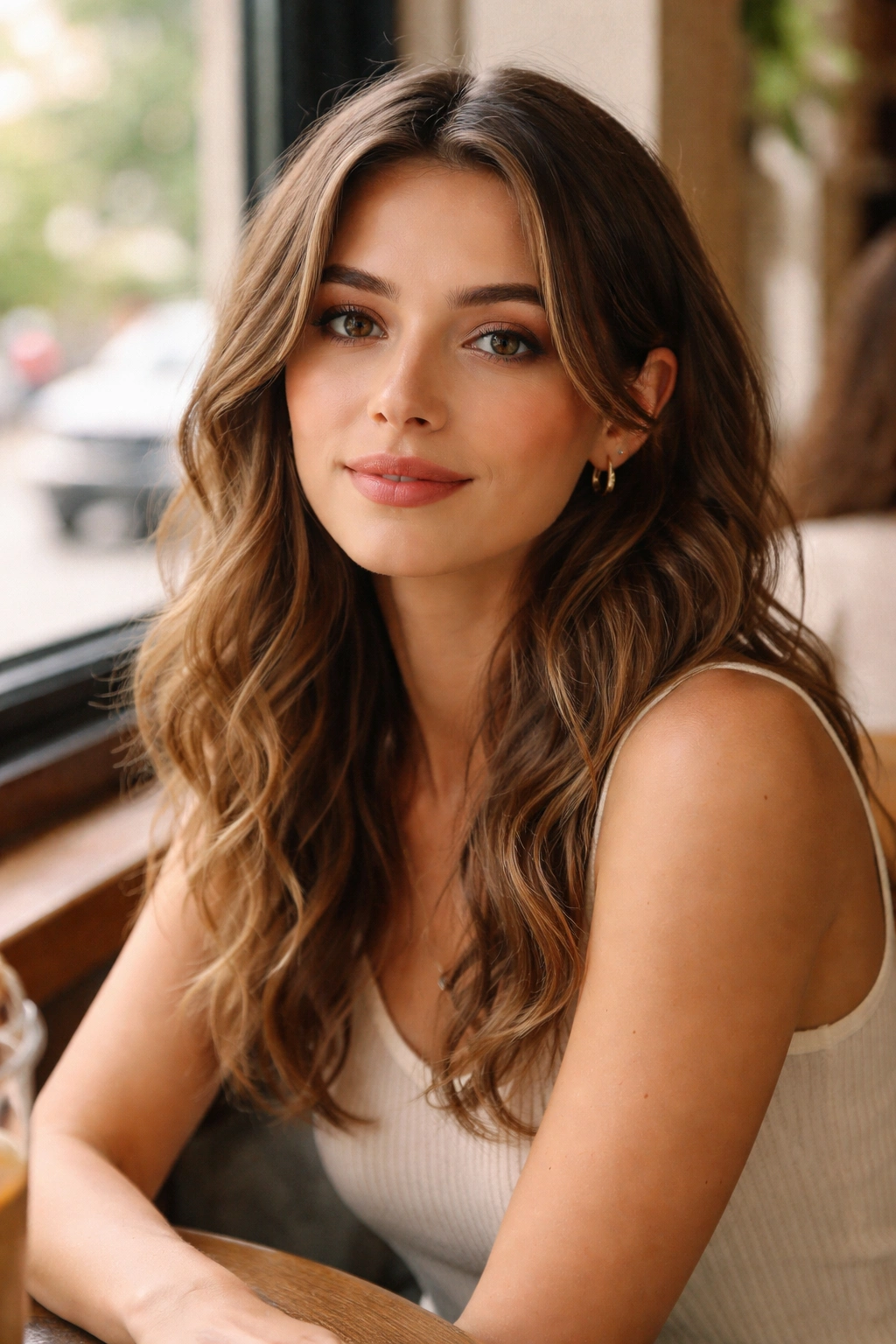
Long curtain bangs that can tuck behind the ears give you options, and options matter. This style keeps the front pieces long enough to frame the face when worn loose, but not so short that they refuse to stay back when you want them out of the way.
For wavy curly hair, the front should land below the cheekbone and drift toward the jaw. That allows the pieces to tuck neatly without springing into awkward bends. A little smoothing cream at the ends can help, but don’t flatten the whole front section.
This is a practical choice if you wear glasses, work on your feet, or just get tired of hair in your face. It also looks nice with clips. A small barrette or pin can change the shape fast.
It’s not the flashiest curtain bang. It might be the most useful one.
28. Asymmetrical Curtain Bangs
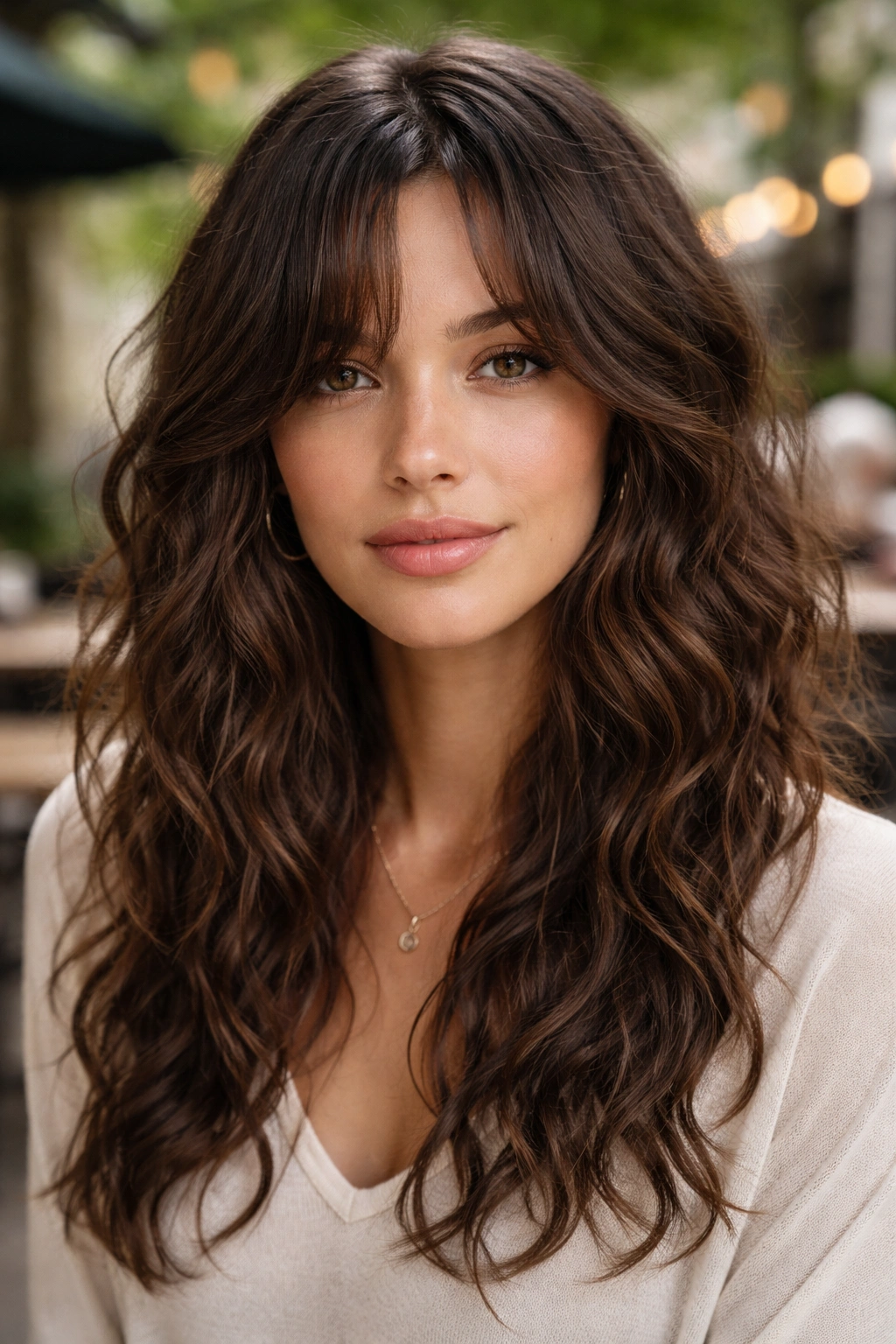
A slight asymmetry can be a gift for textured hair. One side stays a touch longer, the other lifts a bit more, and the result is a fringe that feels deliberate instead of perfectly centered.
That unevenness helps if your waves don’t split evenly or if one side of your face benefits from a little extra length. The longer side can soften the jaw or cheek, while the shorter side adds lift near the eye. On wavy curly hair, the asymmetry often hides the natural irregularity that already exists in the pattern.
This isn’t about making the haircut look off-balance. It’s about making it feel alive. Hair rarely falls in mirror images. A slight difference at the front can make the entire cut look more natural.
If you want subtle drama, this is one of the smarter ways to get it.
29. Soft Glam Curtain Bangs
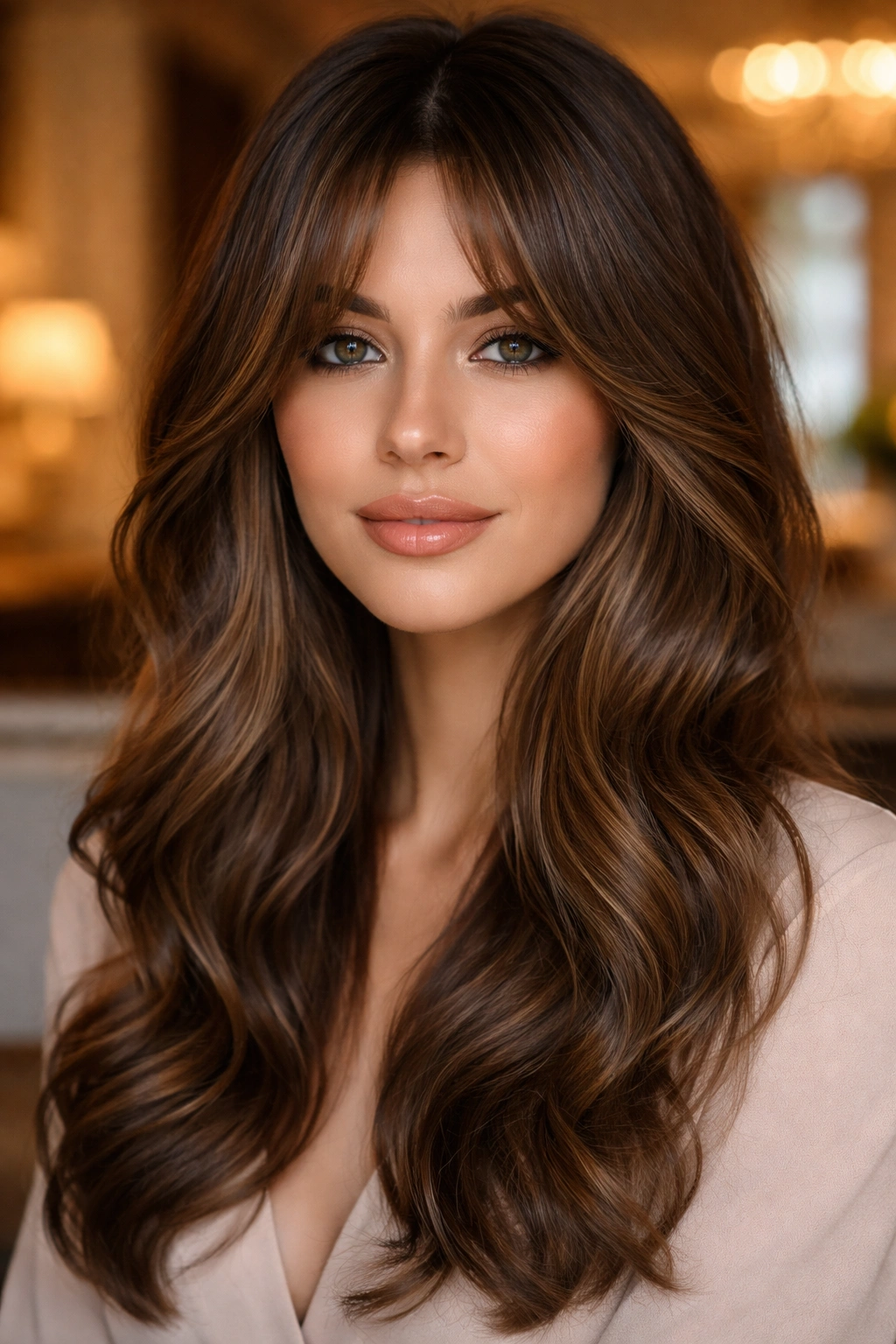
Soft glam doesn’t need pin-straight hair. On wavy curly textures, the idea is to keep the front glossy, brushed into a smooth bend, and full of movement rather than freeze it into a shellacked shape.
The bangs should be long enough to sweep cleanly, then lightly curved away from the face. A round brush, a touch of shine cream on the ends, and a flexible spray are usually enough. You want separation at the front, not stiffness. If the hair starts to feel crunchy, too much product has entered the chat.
This style works especially well for dinners, events, or any day when you want the hair to look deliberate without losing softness. It’s polished, but not rigid. That balance is hard to get, and it’s why this version has staying power.
There’s a nice little contrast here: smooth roots, textured ends.
30. Everyday Curtain Bangs That Wear Well
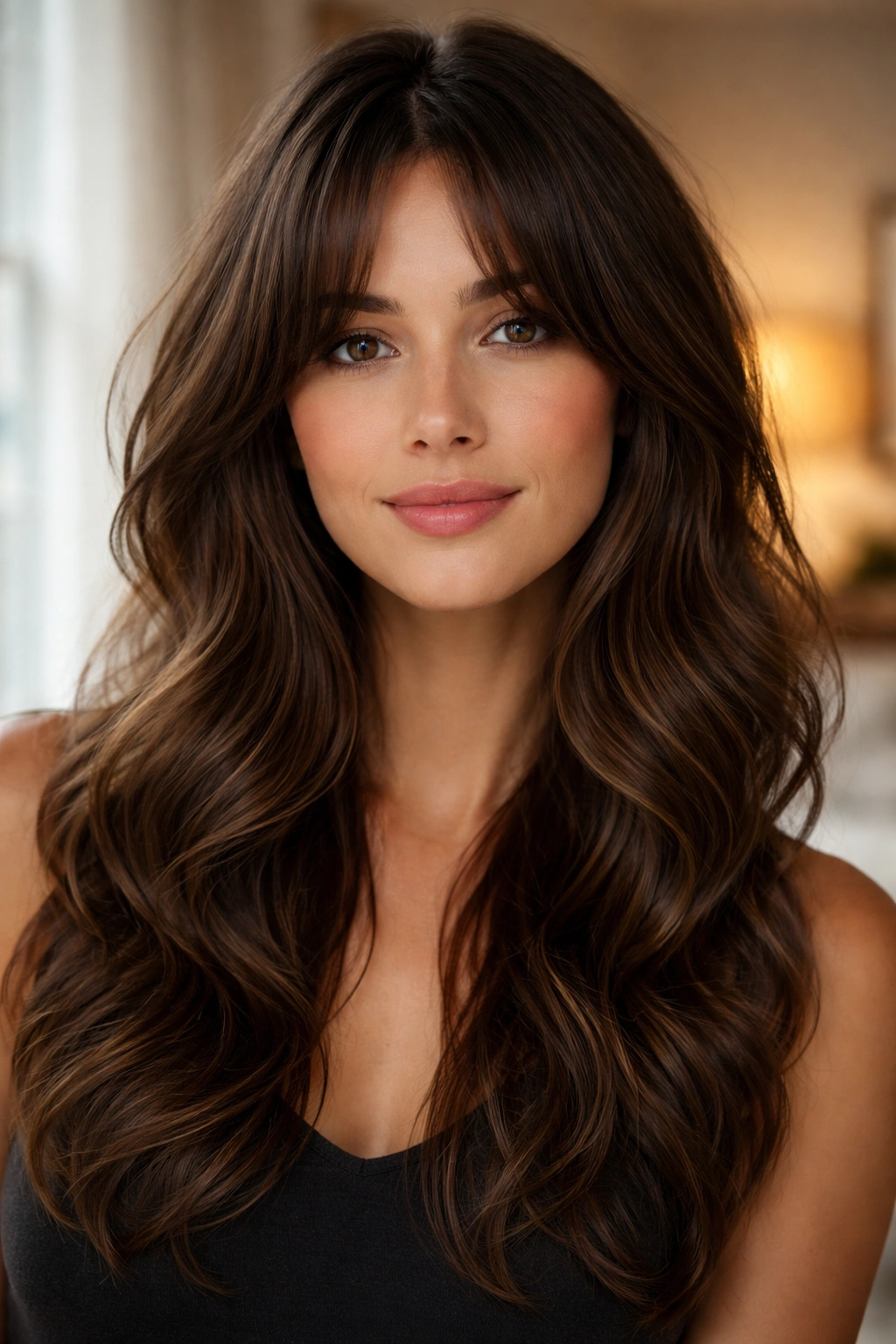
The most useful curtain bangs are the ones that still look fine when you do almost nothing to them. This everyday version sits between polished and undone, which is exactly where most people actually live.
The cut should be long enough to handle air-drying, brushing, clipping back, and the occasional blowout without losing shape. On wavy curly hair, that usually means the shortest point stays around the cheekbone or a little lower, with the sides blending softly into the rest of the hair. If the line is too short, you spend more time fixing it. If it’s too long, the fringe disappears. There’s a narrow sweet spot there.
Choose this if you want one bang shape that can work on grocery-store mornings and nice-dinner evenings. It’s not flashy. It’s just good hair with a decent amount of flexibility, which is honestly the part that matters most.
Long curtain bangs on wavy curly hair work best when the cut respects shrinkage and the style matches your routine. A fringe that suits your actual morning habits will always beat one that only looks good after thirty minutes with a brush.
And if you’re unsure which one to ask for, start with the softer, longer versions. Hair grows. Badly cut bangs take longer to forgive.
