Blonde hair tells on you fast. A crooked part, a dry crown, a frizzy halo from one humid bus ride — all of it shows up the second you pull it back. That’s exactly why blonde sleek ponytails have such a following: when they’re done well, they look clean, expensive-looking in the simplest sense of the word, and completely intentional.
The catch is that blonde shades can be a little demanding. Pale blondes reflect light, so every ridge on the scalp shows. Golden blondes can look greasy if you pile on too much serum. Highlighted blondes? They can go patchy if the smoothing step is sloppy. So the style itself matters, but the prep matters just as much.
What I love about a truly smooth ponytail is that it doesn’t need volume everywhere to feel finished. It needs control in the right places — the hairline, the part, the base, and the tail. Get those four spots right and the rest can be simple.
A good brush, a light hand with product, and a clean elastic go a long way. A tiny bit of edge control or styling cream on a toothbrush-sized brush is usually enough. Too much oil near the roots, though, and even the prettiest blonde ponytail starts to look flat and tired. Keep that in mind as you work through the styles below.
1. Glass-Smooth Low Center Ponytail
A low center ponytail is the kind of style that looks calm on purpose. No fuss, no drama, no weird lumps hiding behind one ear. It sits close to the nape, splits the face neatly in the middle, and lets the blonde shade do the talking.
Why it stays smooth
The middle part is doing a lot of the work here. It creates symmetry, which makes the hairline look cleaner, and it gives the eye one straight line to follow from forehead to ponytail base. On blonde hair, that straight path picks up light in a way that feels neat rather than flat.
For the smoothest finish, brush the hair back while it’s still slightly pliable, not bone-dry and static. A dab of lightweight cream on the palms helps, but keep it off the last few inches of the tail. You want the roots sleek and the length glossy, not coated.
- Best with: straight hair, soft blowouts, or second-day hair smoothed with a flat brush
- Base position: just above the nape, not low enough to collapse
- Finish: a 1-inch wrap section around the elastic looks cleaner than a bare band
Best move: mist the brush, not the head. That one habit saves a lot of crunchy roots.
2. Deep Side-Part Sleek Ponytail
Why does a side part look so good on blonde hair? Because it gives the color more shape. The lighter pieces near the part line catch the eye first, and the whole ponytail feels richer without needing extra volume.
A deep side part also softens a slick finish. That sounds odd until you see it in the mirror. The ponytail still feels polished, but the diagonal line across the forehead keeps it from looking severe. If your face is angular, this is one of the easiest ways to soften the effect without losing the clean look.
Keep the lower side flatter than the higher side. That little difference matters. It creates a small lift at the crown, then lets the ponytail fall smoothly down one side of the back or shoulder.
If your blonde has darker roots, a side part is especially kind. The root shadow looks deliberate instead of grown-out. That’s a small thing, but small things are what make a sleek style look expensive in real life.
3. Wrapped-Base Low Ponytail
The elastic is the part people usually rush, and it shows. A plain band can make an otherwise beautiful ponytail look unfinished, especially on fine blonde hair where every detail stands out. Wrap the base, and the whole style changes.
This one works because the wrapped section hides the hardware and makes the ponytail look anchored instead of tied on. You take a narrow strip of hair from underneath, wrap it around the elastic once or twice, and pin the end flat under the ponytail with a bobby pin that matches your hair color. Simple. Clean. Better than it sounds.
What to watch for
- Use a section that’s wide enough to cover the elastic, but not so thick that it bulges
- Smooth the wrap piece with a tiny bit of cream before you start
- Pin the end underneath, not on top, so it disappears
A wrapped base is also nice if your blonde is highlighted. It breaks up the color just enough to make the ponytail base look polished instead of busy.
4. High Crown-Lift Ponytail
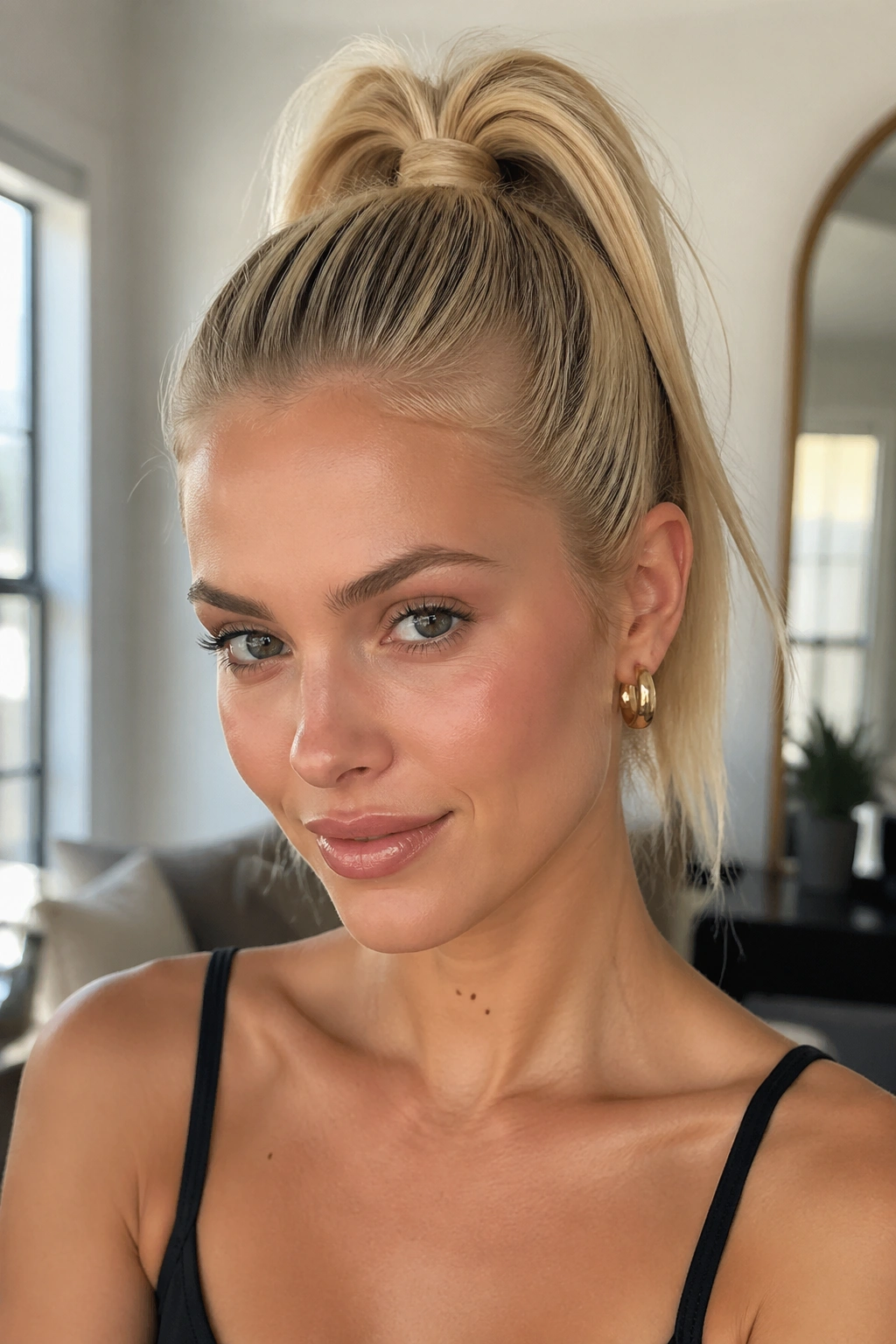
A high ponytail can look sharp in a way a low one never quite does. It lifts the face, shows the cheekbones, and gives blonde hair a kind of built-in brightness because more of the length sits away from the neck.
The trick is not to drag the crown too hard. That’s where people go wrong. If the hair is pulled tight from the front all the way to the band, the style can start to look harsh. Leave a whisper of softness at the hairline, then smooth the top with a brush and set the ponytail high enough to clear the crown without making the head look stretched.
This is the ponytail I reach for when the outfit is simple and the hair needs to carry the whole look. A white shirt, gold hoops, clean liner, this ponytail. Done.
If your blonde is cool-toned, the high lift makes the shine read icy. If it’s warm, the raised shape gives the color more warmth and glow. Either way, it looks intentional.
5. Rope-Twist Ponytail
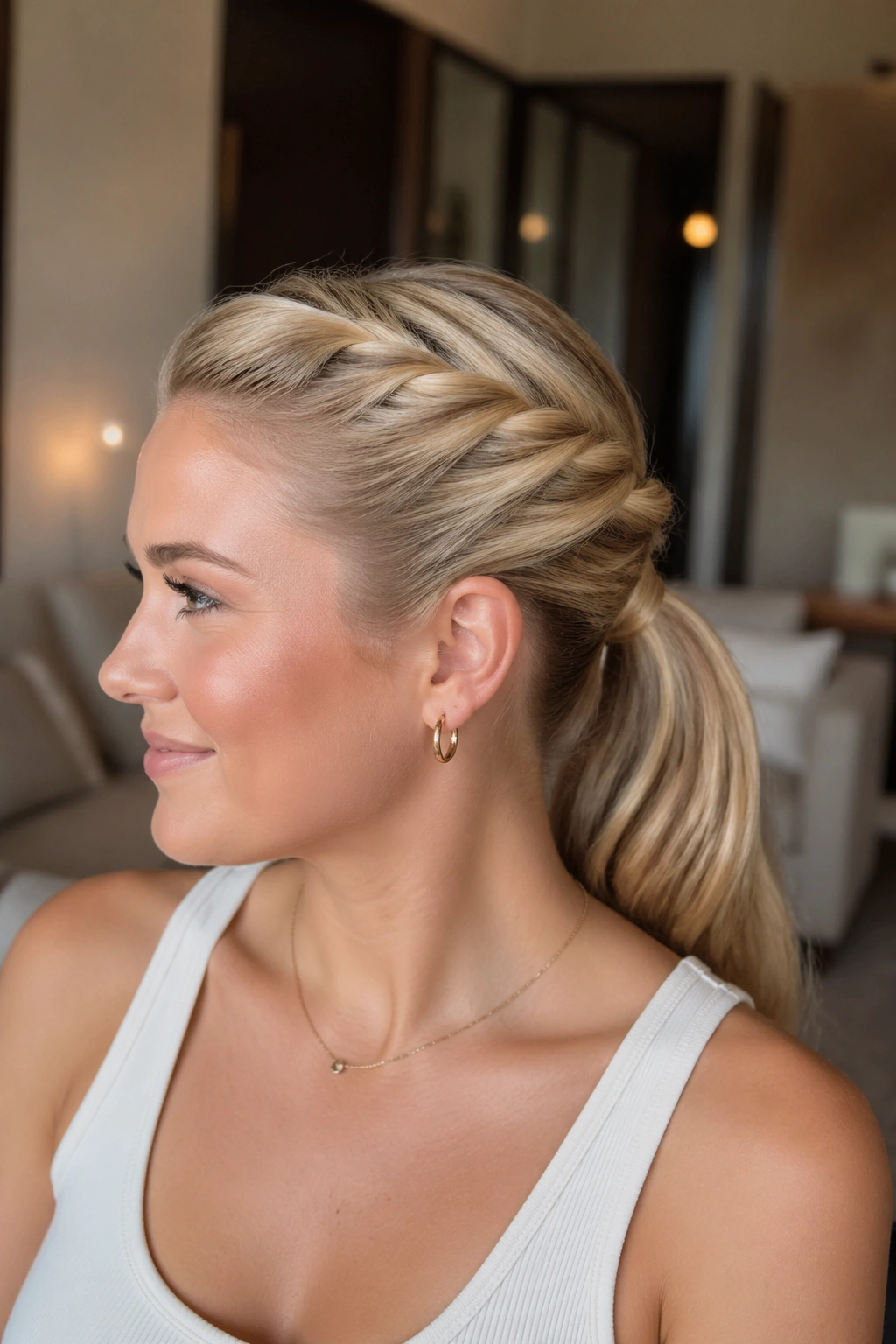
A rope twist is one of those little tricks that looks fancier than it is. You split a section into two pieces, twist each one in the same direction, then wrap them around each other the other way. The result is a neat, cord-like base that feels tidy without being stiff.
This style is good when you want sleek but not severe. The twist breaks up a long sheet of blonde hair, which can otherwise look too straight and a little flat at the back. It also keeps the top smooth because the twist itself works like a built-in anchor.
A rope-twist ponytail looks best when the twist starts right from the front and disappears into the ponytail base. Don’t leave the twist loose. That’s when it starts to wobble and frizz around the edges.
One small detail matters here: use fingers to shape the twist, then switch to a brush only for the surface hair. If you try to brush the whole twist flat, it loses the rope effect.
6. Bubble Ponytail with Slim Bands
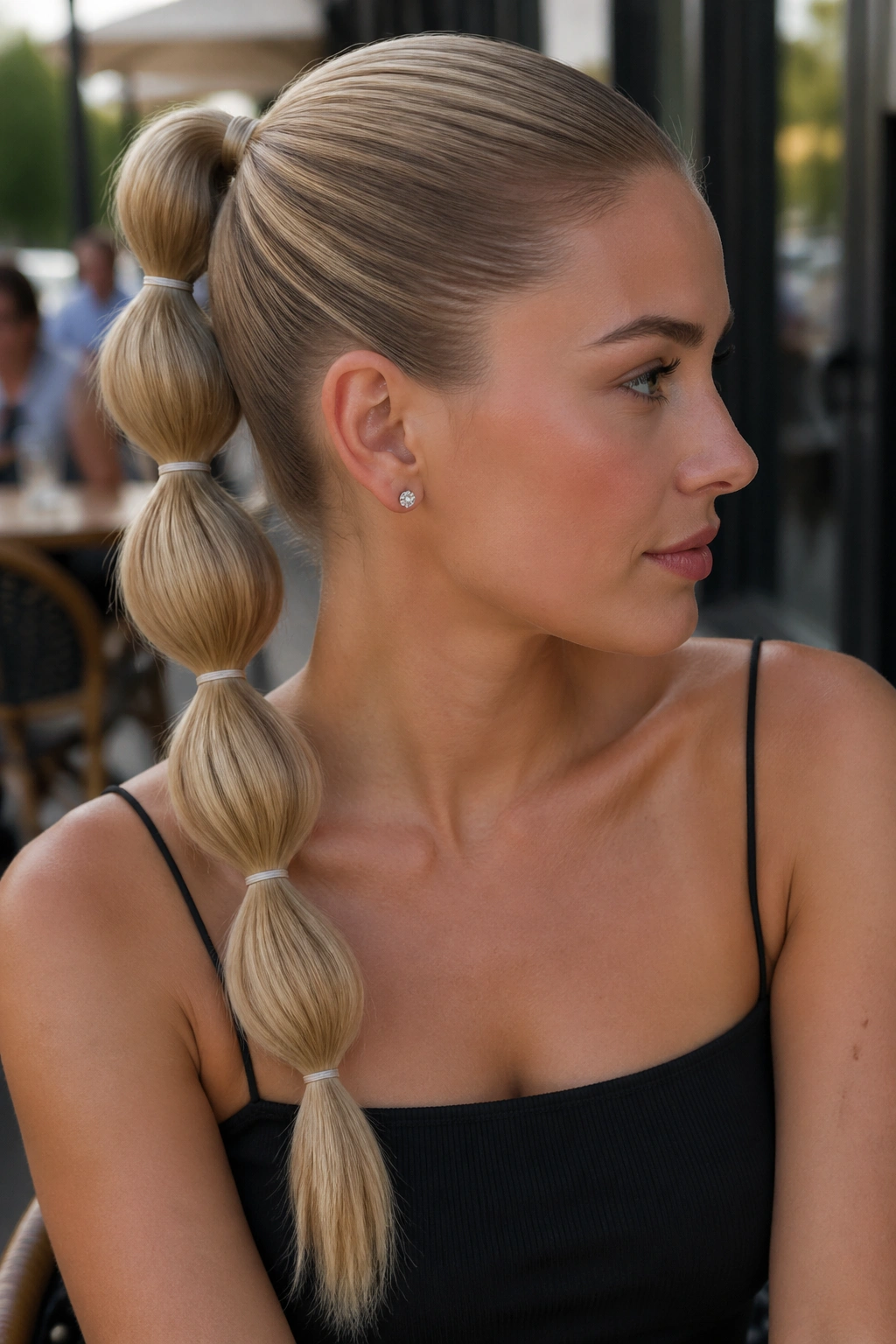
A bubble ponytail is one of the easiest ways to make a long blonde ponytail look deliberate. The bands divide the length into sections, and that structure stops the hair from hanging there like a single plain rope.
Why the bubbles work
The sections create shape. That’s the whole trick. On blonde hair, every bubble catches light a little differently, so the style gets texture without needing curls or waves. It’s tidy, playful, and still sleek at the scalp.
Keep the bands about 2 to 3 inches apart if your hair is medium length. Longer hair can take a wider gap. After each band goes in, pinch the section gently from the sides to round it out. Don’t yank the bubbles too hard or they go uneven fast.
- Best bands: tiny clear elastics or slim blonde bands
- Best placement: mid-back or low ponytail base
- Best finish: a light mist of flexible-hold spray, then smooth any flyaways with fingertips
This is a smart choice for layered blonde hair too. The bubbles help shorter pieces settle into the shape instead of escaping every which way.
7. Braided Tail Ponytail
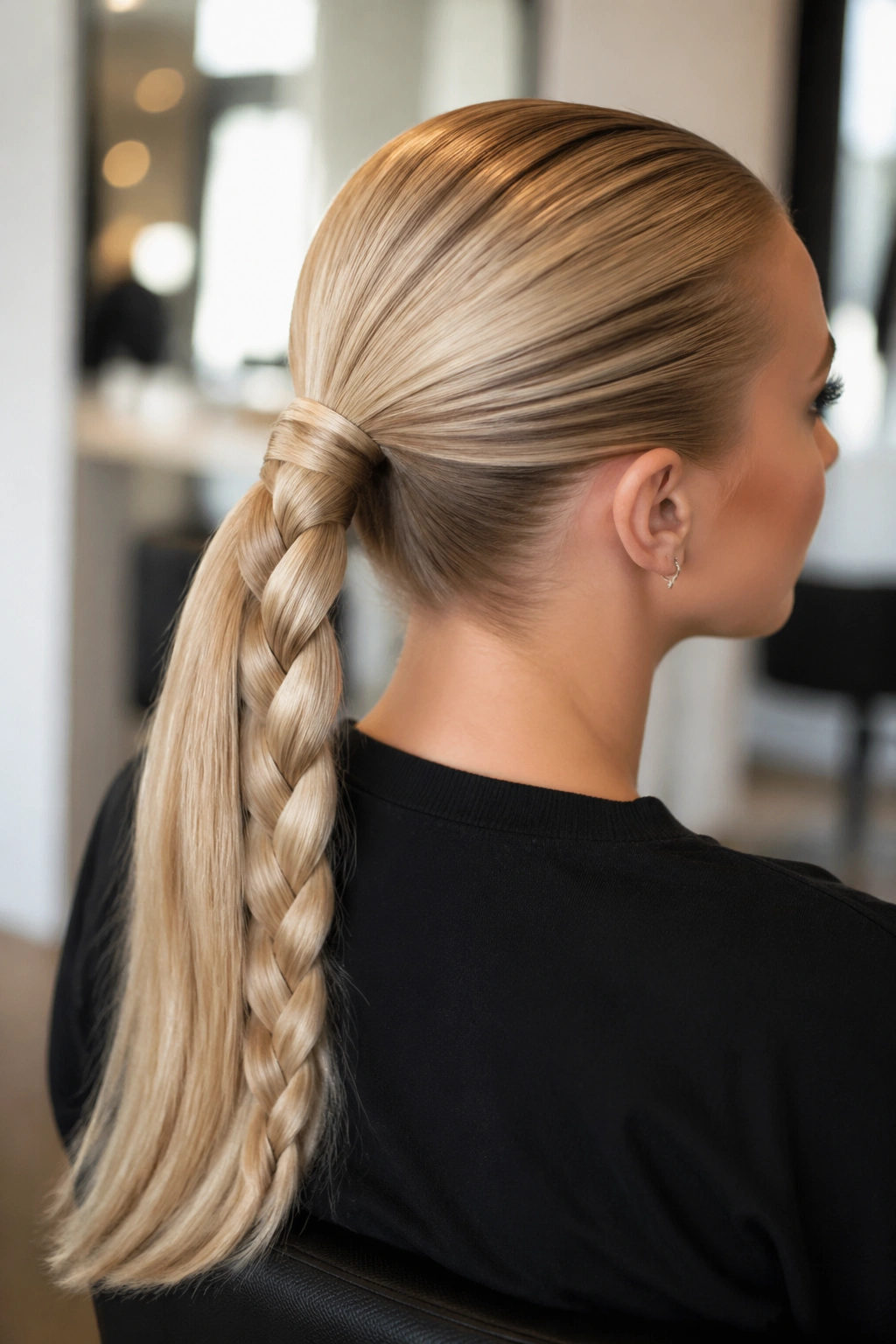
What’s the easiest way to keep the ends of a sleek ponytail from looking messy? Braid them. That’s the answer, and it’s one I keep coming back to because it works on thick hair, fine hair, and everything in between.
A braid at the tail gives the style a cleaner finish. The top stays smooth, the base stays neat, and the ends don’t fray into a little sad fan by lunchtime. On highlighted blonde hair, the braid also shows the color shifts in a nice, striped way that looks more interesting than plain straight lengths.
How to get the braid neat
Start the braid only after the ponytail is fully secured and brushed smooth. Use three equal sections, keep your hands close to the band, and braid firmly enough that the tail holds together but not so tight that it looks rope-hard. Secure the end with a tiny elastic and, if needed, tug the braid edges out by a few millimeters for a fuller finish.
This style is especially useful for long days. It survives movement better than a loose tail, and it still reads polished.
8. Side-Swept Low Ponytail
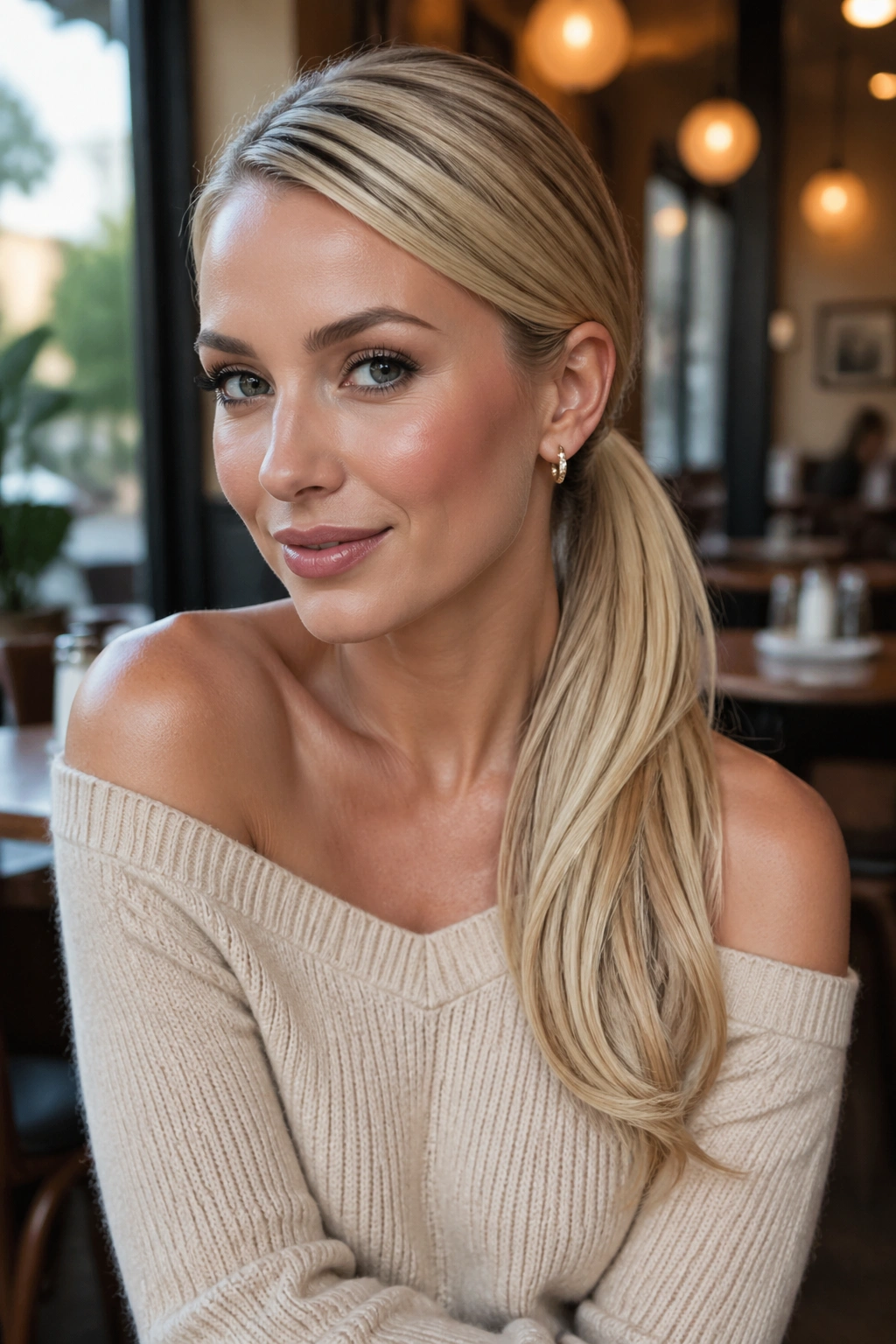
Some ponytails feel a little too formal when they sit dead center. A side-swept low ponytail fixes that without losing the smooth line. It moves the length over one shoulder or just off-center down the back, which makes the style feel softer right away.
I like this version for evenings when the outfit has some detail near the neckline. A side-swept ponytail clears space for earrings, collars, and shoulder lines. It also flatters blonde hair because the curve of the length shows off tone changes more clearly than a straight drop.
The hair at the crown should still be sleek. Don’t let the side-sweep turn into loose volume on top. The whole point is contrast: smooth roots, controlled base, easy movement in the tail.
If you have long layers, tuck the shorter ones back with a hidden pin before you bring the ponytail to one side. That keeps the surface flat and stops the whole look from puffing up.
9. Wet-Look Blonde Ponytail
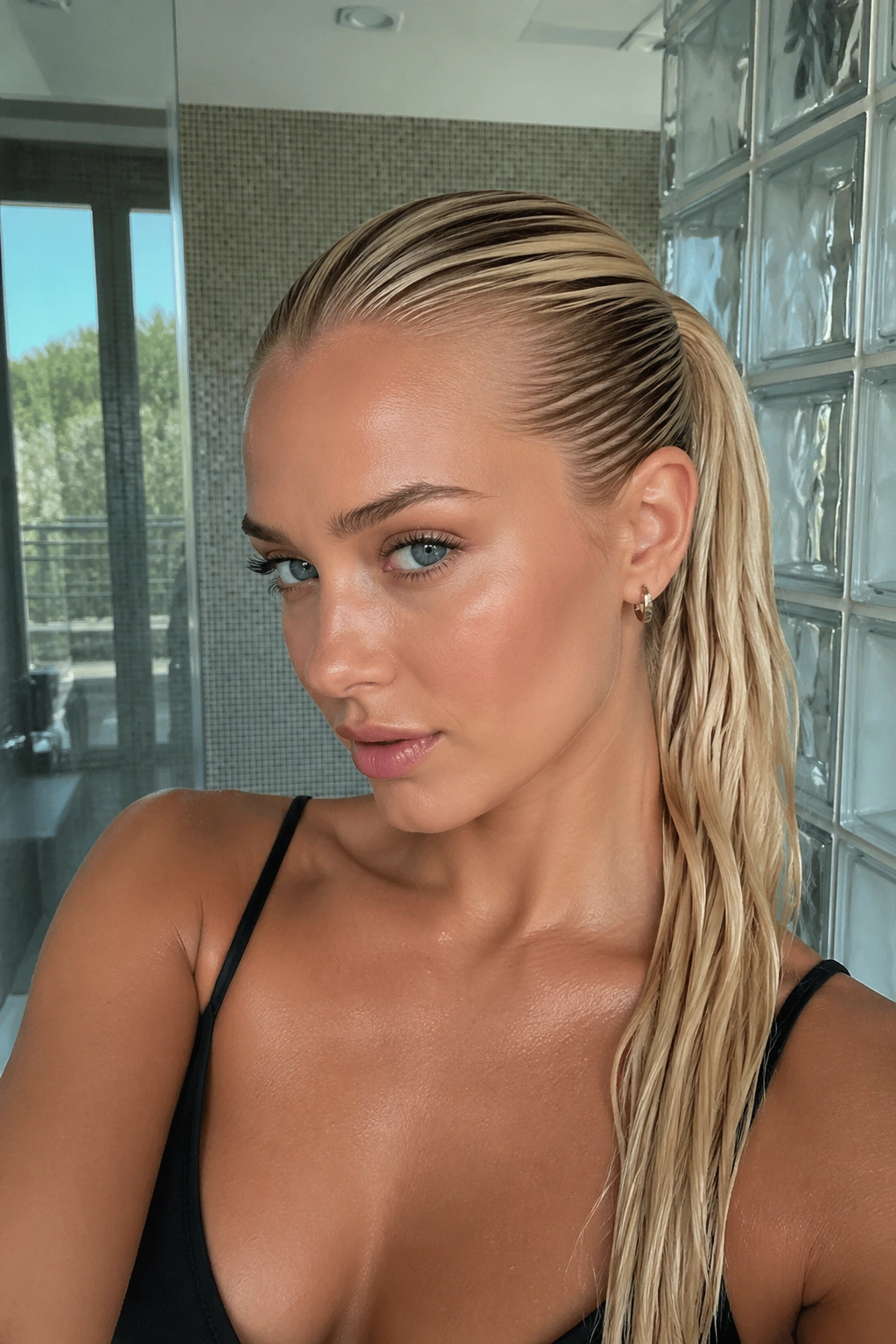
Wet-look hair scares people for no good reason. Done badly, yes, it can look sticky. Done well, it looks bold, glossy, and almost glass-like at the crown.
This style works especially well on platinum, ash blonde, or very light balayage because the shine reads so sharply against pale color. You need a strong-hold gel near the roots, then a lighter serum through the tail so the length stays slick without turning stringy. The ponytail should look damp and controlled at the top, not soaked through the whole head.
The texture matters. You want the surface smooth enough to reflect light, but not so wet that it drips. That means combing the gel in with a fine-tooth comb and then stopping. Walk away from it. The temptation is to touch and adjust, and that’s usually how the clean finish gets ruined.
This is not the style for someone who likes airy softness. It’s for clean edges, clear shine, and a little attitude.
10. Satin-Ribbon Ponytail
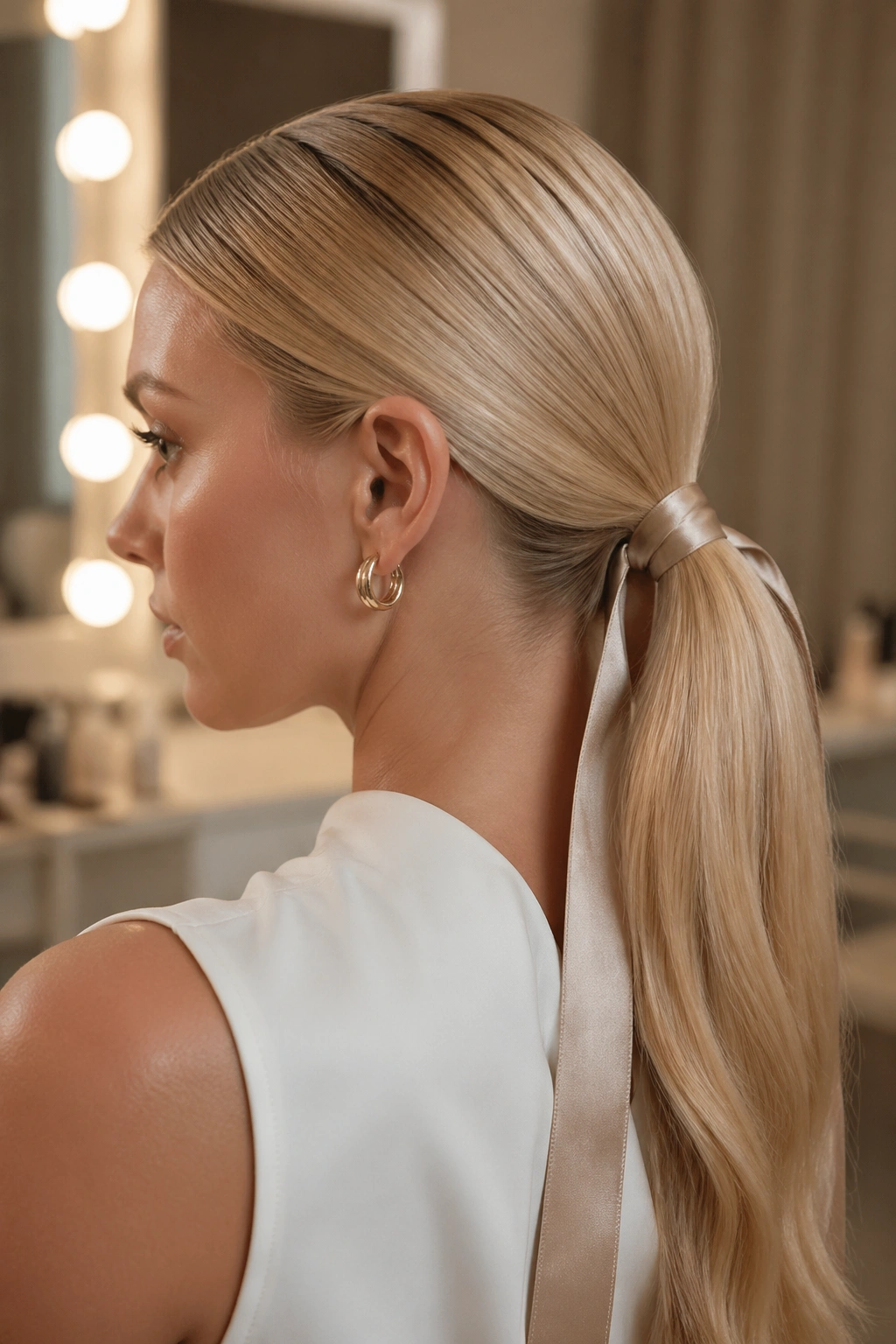
A satin ribbon changes the whole mood of a ponytail. Without it, the style can feel sharp and utilitarian. With it, the look softens a touch and suddenly feels more finished.
The ribbon also solves a practical problem: it hides the elastic without needing a thick wrap of hair. That matters on fine blonde hair, where too much wrapping can make the base look bulky. A narrow ribbon tied under the ponytail keeps the silhouette neat while adding a bit of color or contrast.
Choosing the ribbon
- Use a ribbon about 1/2 to 1 inch wide for a clean look
- Pick matte satin if you want a softer sheen
- Tie it low and flat so the bow or tails don’t sit up like antennae
I prefer this style when the outfit is simple and the hair needs one small detail. Black ribbon on icy blonde looks crisp. Cream ribbon on honey blonde feels warmer. Either way, keep the ponytail itself sleek first, then add the ribbon last.
11. Micro-Braided Accent Ponytail
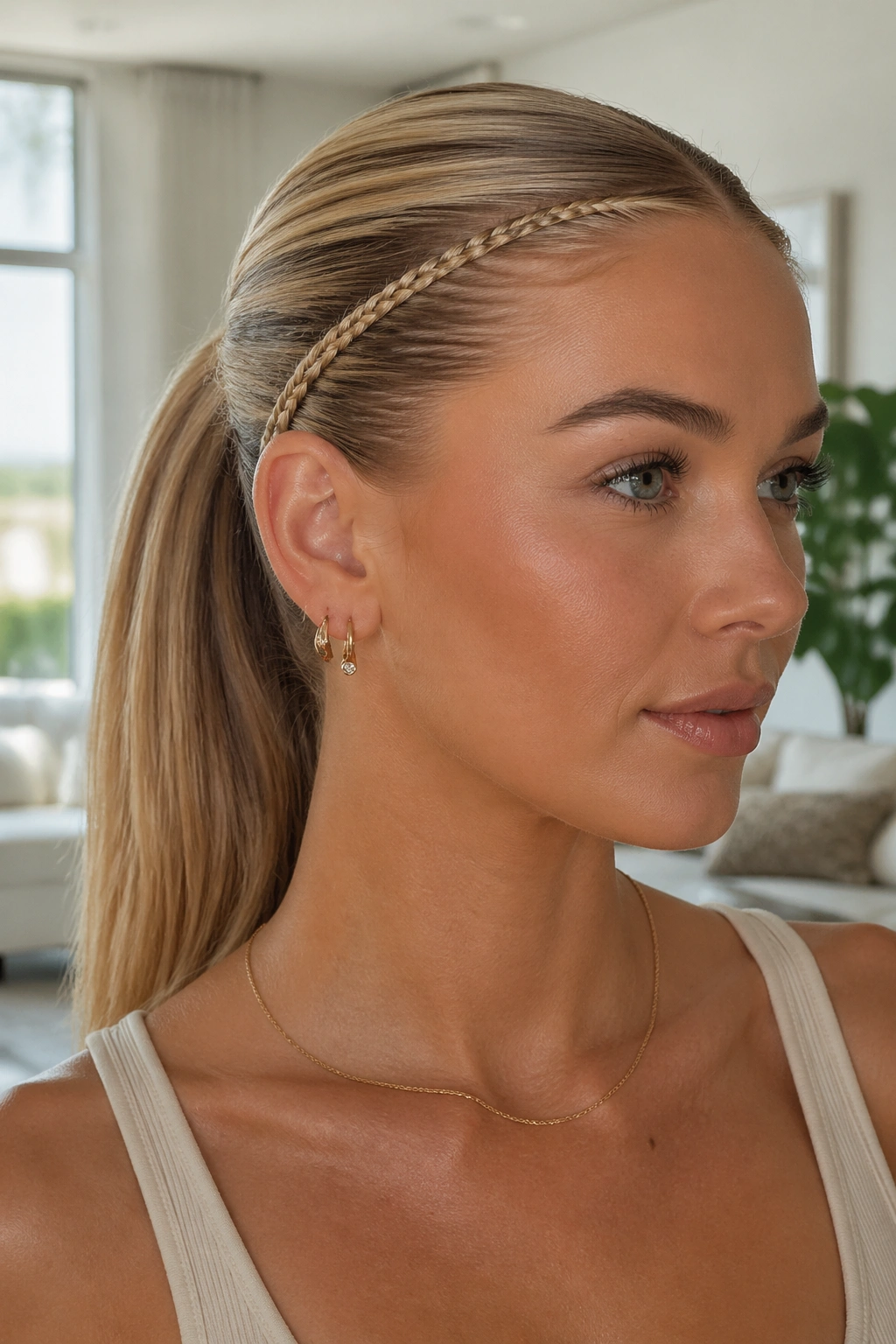
One tiny braid can change the whole ponytail. That’s not an exaggeration. A micro-braid near the temple or just behind the hairline gives a sleek blonde ponytail a little structure without making it feel heavy.
The braid works because it breaks the surface in a controlled way. You still get the smooth top and the clean base, but now there’s a small detail that keeps the style from looking too plain. On highlighted blonde hair, that tiny braid can show both light and dark pieces in a way that feels deliberate.
This is one of my favorite tricks for second- or third-day hair. If the crown is smooth but not freshly washed, a micro-braid can distract from the fact that the roots have a little texture. Not dirty. Just lived-in.
Place the braid where it naturally fits the head shape. Too close to the center part and it can look forced. Too far back and it disappears. One braid is enough. More than that and the style starts to lose the sleekness you wanted in the first place.
12. Mid-Height Polished Ponytail
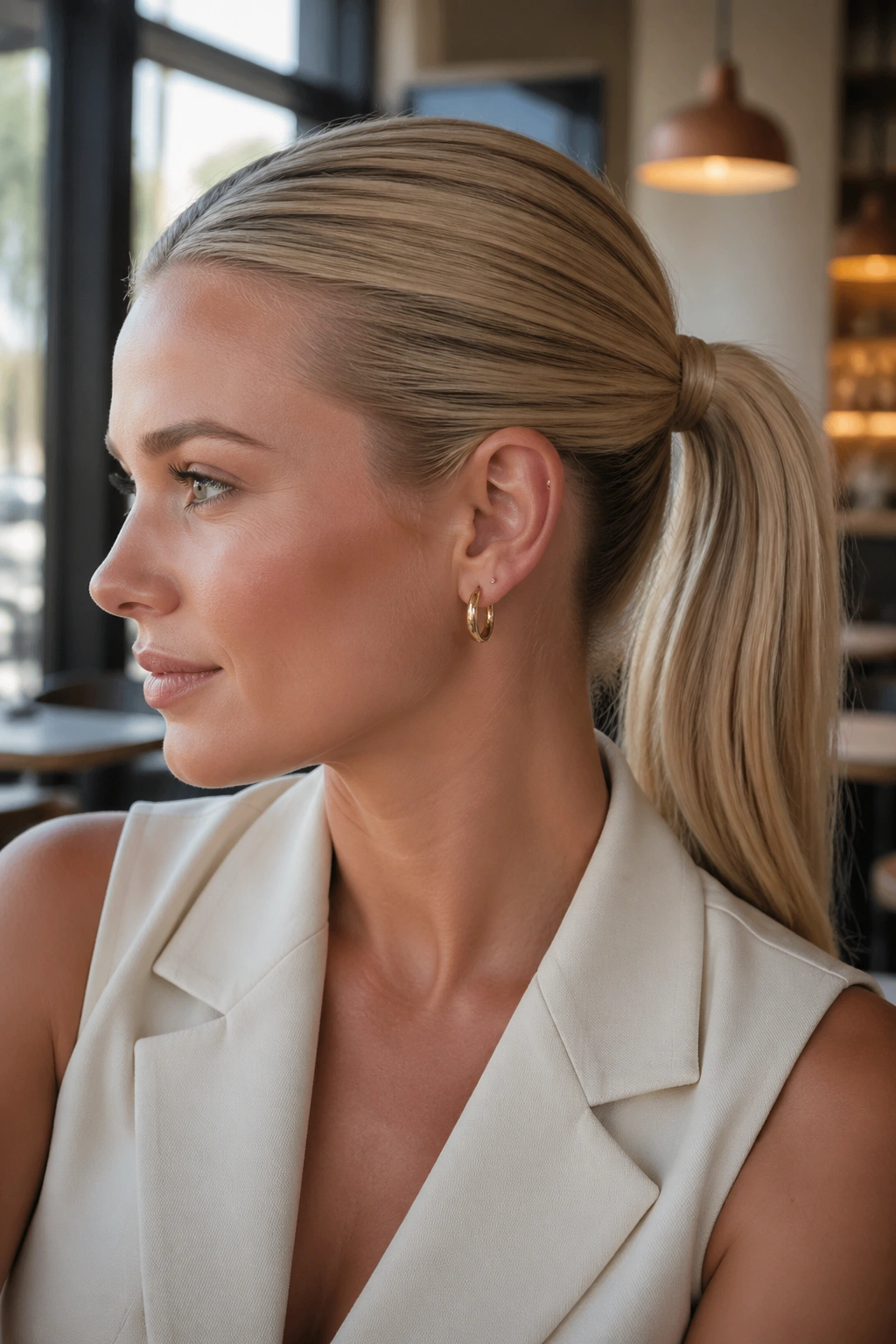
A mid-height ponytail sits in that useful middle ground where it feels neat but not severe. It clears the neckline, flatters most face shapes, and gives blonde hair a smooth line that works for both daytime and evening.
What makes this one worth saving is balance. A high ponytail can feel sporty. A low ponytail can feel restrained. Mid-height sits right between the two, which means it’s easy to wear with a blazer, a knit top, or a dress with a lower back. The hair doesn’t fight the clothes.
Keep the top flat and the base centered. That’s the entire game. If the crown gets puffed up, the style drifts into casual. If the tail sits too low, you lose the lift that makes this version feel fresh.
A good mid-height ponytail should look like it took five clean decisions, not fifteen frantic ones. Brush, secure, wrap, smooth, done. That’s the rhythm.
13. Knotted Ponytail
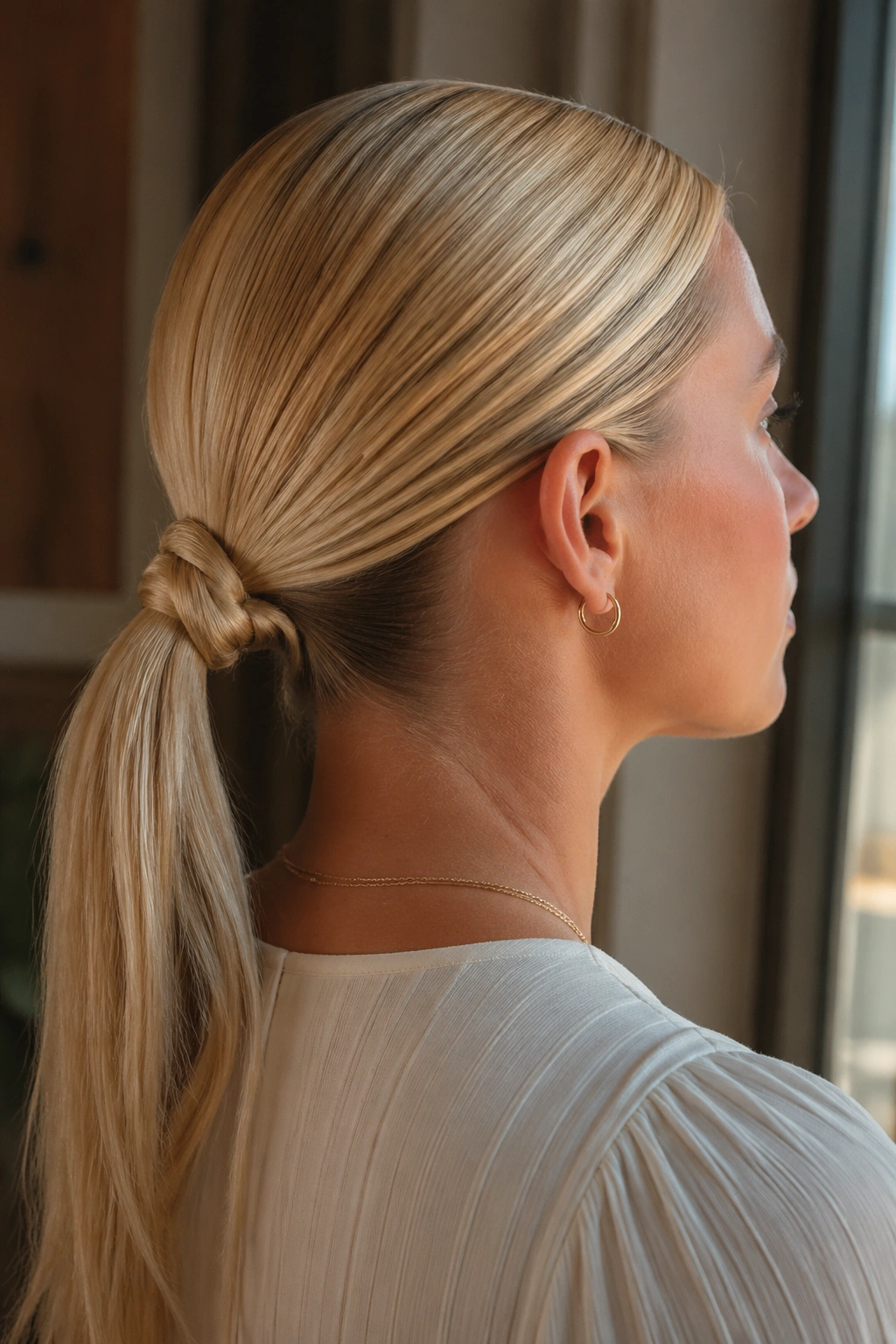
Can a knot look sleek? Yes, if you keep it small and controlled. A knotted ponytail replaces the usual wrap with a simple knot at the base, and the effect is cleaner than people expect.
How to knot without lumps
Take two narrow sections from the front, cross one over the other, then tie a single knot just above the ponytail base. Don’t pull hard enough to cinch the hair into a ridge. The knot should sit flat, almost like a detail stitched into the style.
The reason this works so well on blonde hair is that the knot breaks up the shape without adding bulk. The light catches the crossing points, and the base looks designed rather than merely tied back. It’s a nice option when you want something different from the usual wrapped strand.
- Best on: medium to long hair
- Skip if: your hair is extremely layered and the front pieces are too short to hold
- Finish with: a tiny bit of hairspray on fingertips, not directly on the knot
A knotted ponytail reads modern without needing a lot of accessories. That’s part of its charm.
14. Curved-Ends Ponytail
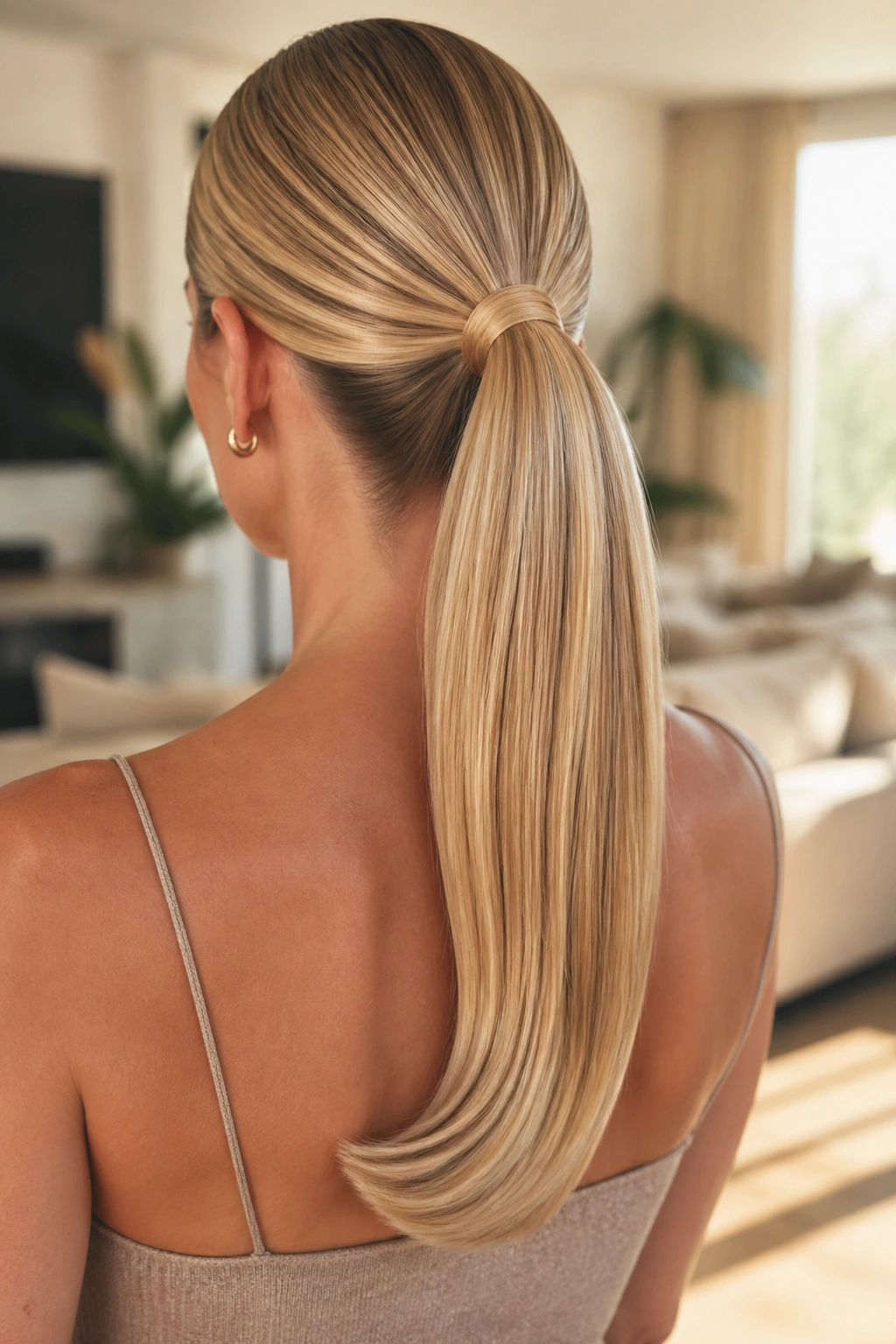
Straight ends can be a little blunt, especially when the rest of the hair is polished. Curving the tail under or outward softens the whole ponytail and gives blonde lengths a more finished shape.
This is the style I reach for when the tail itself is long and heavy. A slight bend at the ends stops it from hanging like a stick. It also makes layered blonde hair look fuller at the bottom, which helps if the cut has been thinned out.
You can get the curve with a round brush and blow-dryer, a large-barrel iron, or even by pinning the ends into shape while they cool. The point is not a curl. It’s a bend. That small difference matters. A full curl can fight the sleekness on top, while a curved finish keeps the ponytail elegant and controlled.
If your blonde is very shiny, the soft bend gives the style movement without breaking the smooth surface. It’s a quiet little fix, and it works.
15. Face-Framing Sleek Ponytail
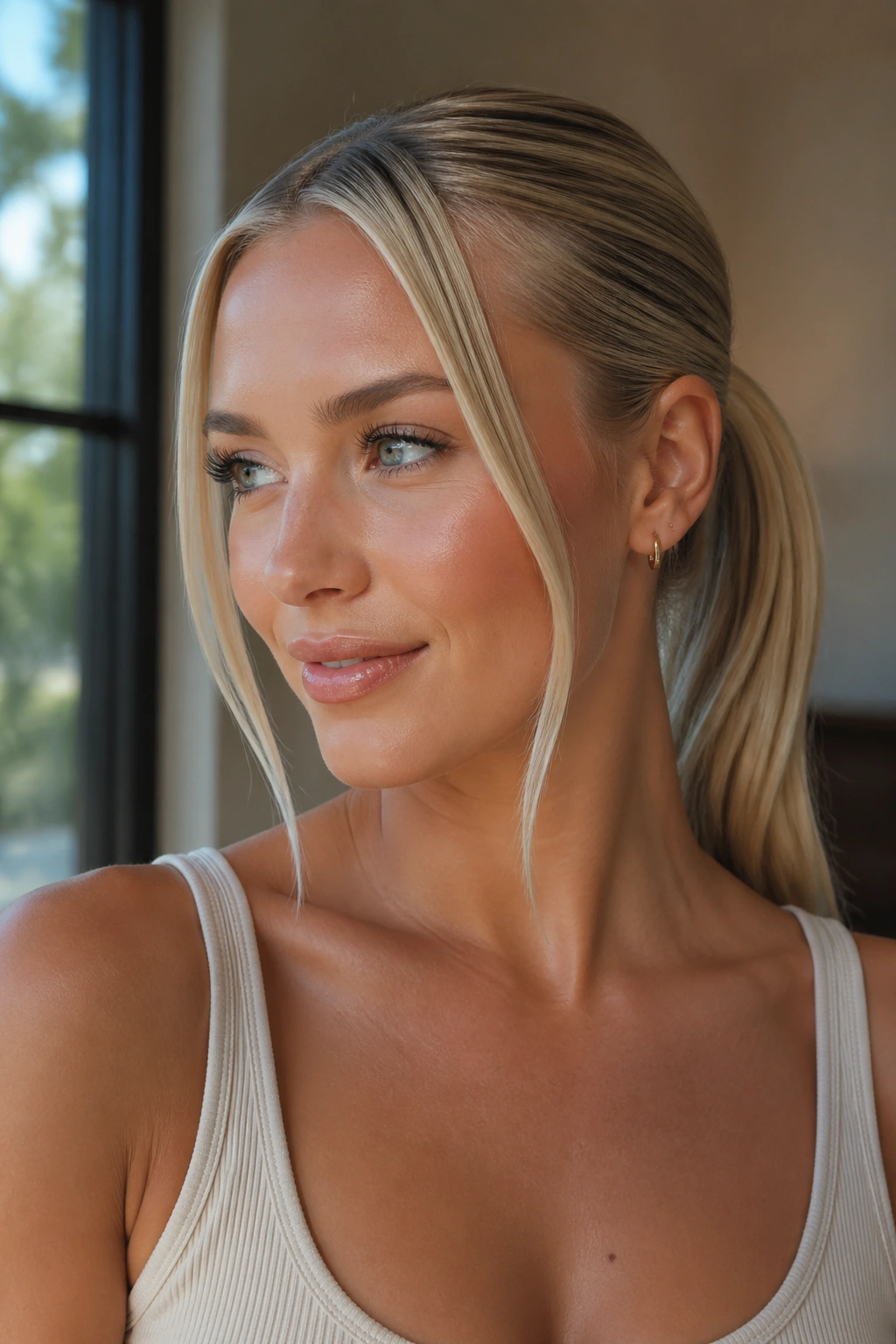
A sleek ponytail does not have to pull every strand straight back. Two slim face-framing pieces can make the style look more finished, especially on blonde hair where the contrast between polished roots and soft front pieces feels balanced.
The trick is restraint. Keep the pieces narrow, smooth them with a little cream, and let them bend naturally around the cheekbone. They should frame, not flop. If the strands are too thick, the style stops looking sleek and starts looking loose.
This ponytail suits anyone who finds a fully slicked-back look a bit severe. It gives the face some movement and makes the hairline feel less stark. On warmer blondes, those front pieces can soften the tone. On cooler blondes, they add a little texture near the face, which helps avoid that too-flat finish.
One small warning: don’t let the side pieces get frizzy. If they are going to exist, they need to be intentional. Half-done pieces are worse than none.
16. Tucked-In Tail Ponytail
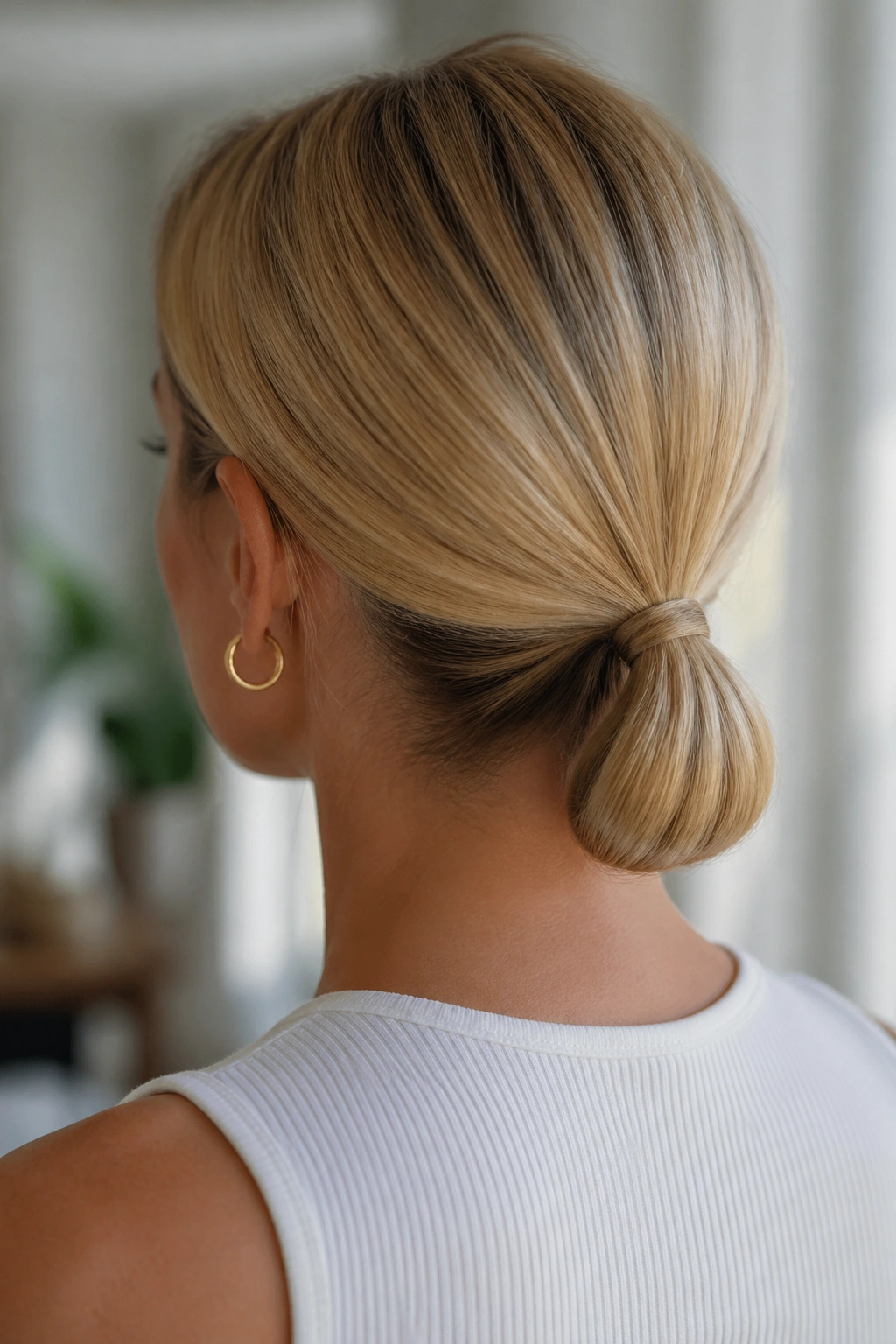
A tucked-in tail ponytail is neat in a slightly clever way. The base stays smooth, but the length is folded under or tucked back so the style looks contained instead of long and loose.
It’s a strong choice for shorter blonde hair, layered cuts, or anyone who wants the clean look of a ponytail without a lot of hanging length. The tucked finish keeps the shape compact, which is nice when the hair is thick enough to puff out but not long enough to fall in a tidy sheet.
Why it works better than a regular tail
Unlike a standard ponytail, this version hides the ends. That means less fraying, less movement, and less chance of flyaways turning the whole back view fuzzy. It’s also easy to wear with high collars or structured clothes because the shape stays close to the head.
Use discreet pins that match your blonde tone, and set the tucked section with a light spray. If the ends peek out, fold them again. No drama. Just tidy hair.
17. Barrette-Stack Ponytail
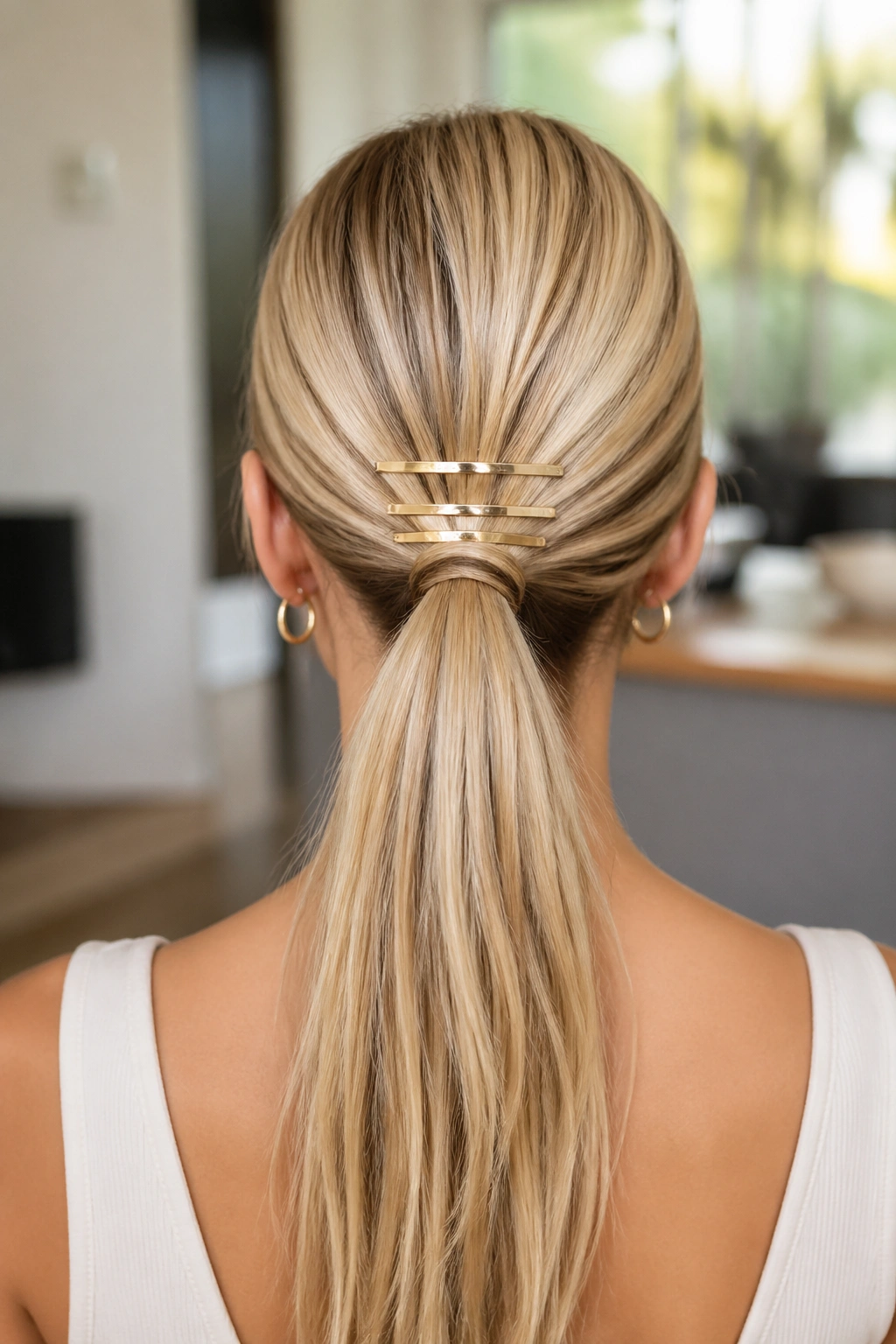
A barrette stack sounds a little much until you see it on sleek blonde hair. Then it makes sense. Two or three slim barrettes placed above the base add structure and visual interest without making the ponytail feel heavy.
The reason I like this approach is that it works with the ponytail, not against it. The hair stays smooth, the base stays low-key, and the accessories sit where they can actually be seen. On blonde hair, metallic clips — gold, pearl, brushed silver — stand out just enough to feel intentional.
Keep the barrettes narrow. Big decorative clips can drag the eye away from the ponytail itself and make the style feel costume-y. This look is better when the hardware looks clean and almost architectural.
If you want the ponytail to look polished in a hurry, this is an easy win. Smooth hair, neat base, two or three clips. Done.
18. Honey-Blonde Soft-Gloss Ponytail
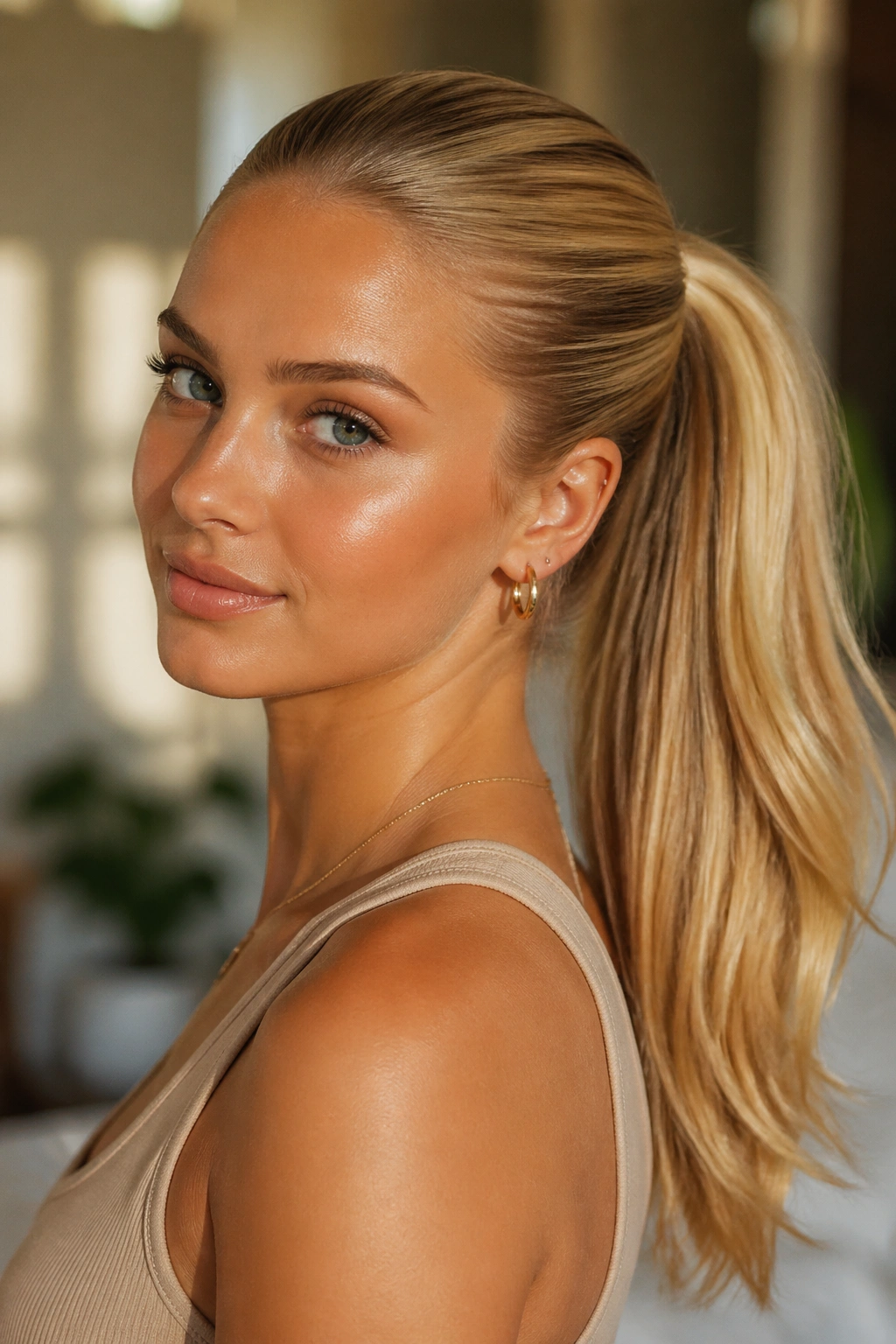
Warm blonde shades look especially good in a smooth ponytail because the color itself has warmth built in. Honey blonde, caramel blonde, and butter blonde all do that lovely thing where the light seems to sit on the hair instead of just bouncing off it.
This ponytail should not be bone-flat. A soft gloss finish is better. You want the crown sleek and the length smooth, but with enough movement that the warm tones can show through. A little shine serum through the mid-lengths helps, though too much will collapse the shape. That’s the line to watch.
Best finish products
- Lightweight serum for shine on the tail only
- Flexible-hold spray for the top
- Creamy edge control for the hairline if needed
This style is especially good for daytime wear because the warmth makes it feel softer than a high-shine platinum ponytail. It’s polished, but it doesn’t feel severe.
19. Ice-Blonde Glass Ponytail
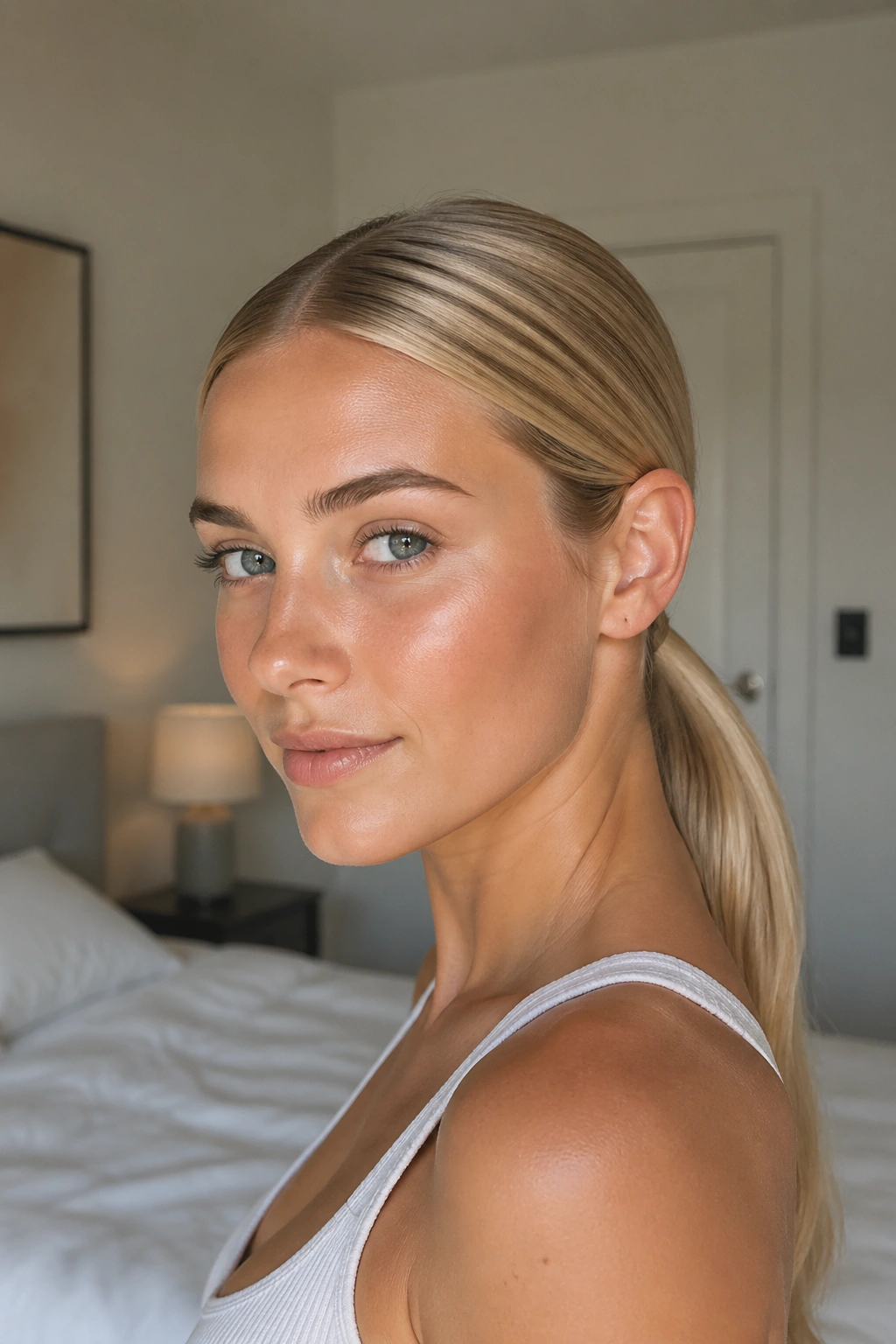
Ice blonde and glassy shine are a strong pair. The color is cool, the finish is reflective, and the whole style has that crisp, almost polished-stone look when it’s done properly.
The danger is overdoing the product. Pale blonde hair shows every heavy swipe of oil, and it does not forgive greasy roots. Use just enough smoothing product to flatten the crown and keep the tail glossy, then stop. The hair should move when you turn your head. If it doesn’t, you’ve gone too far.
This is the version that looks best when the blonde is evenly toned and the part is clean. A precise middle part or a razor-straight side part works better than anything soft and fuzzy. The cleaner the line, the stronger the finish.
It’s sharp. That’s the appeal. Not soft, not fluffy, not a little bit done. Sharp.
20. Sculpted Side-Swoop Ponytail
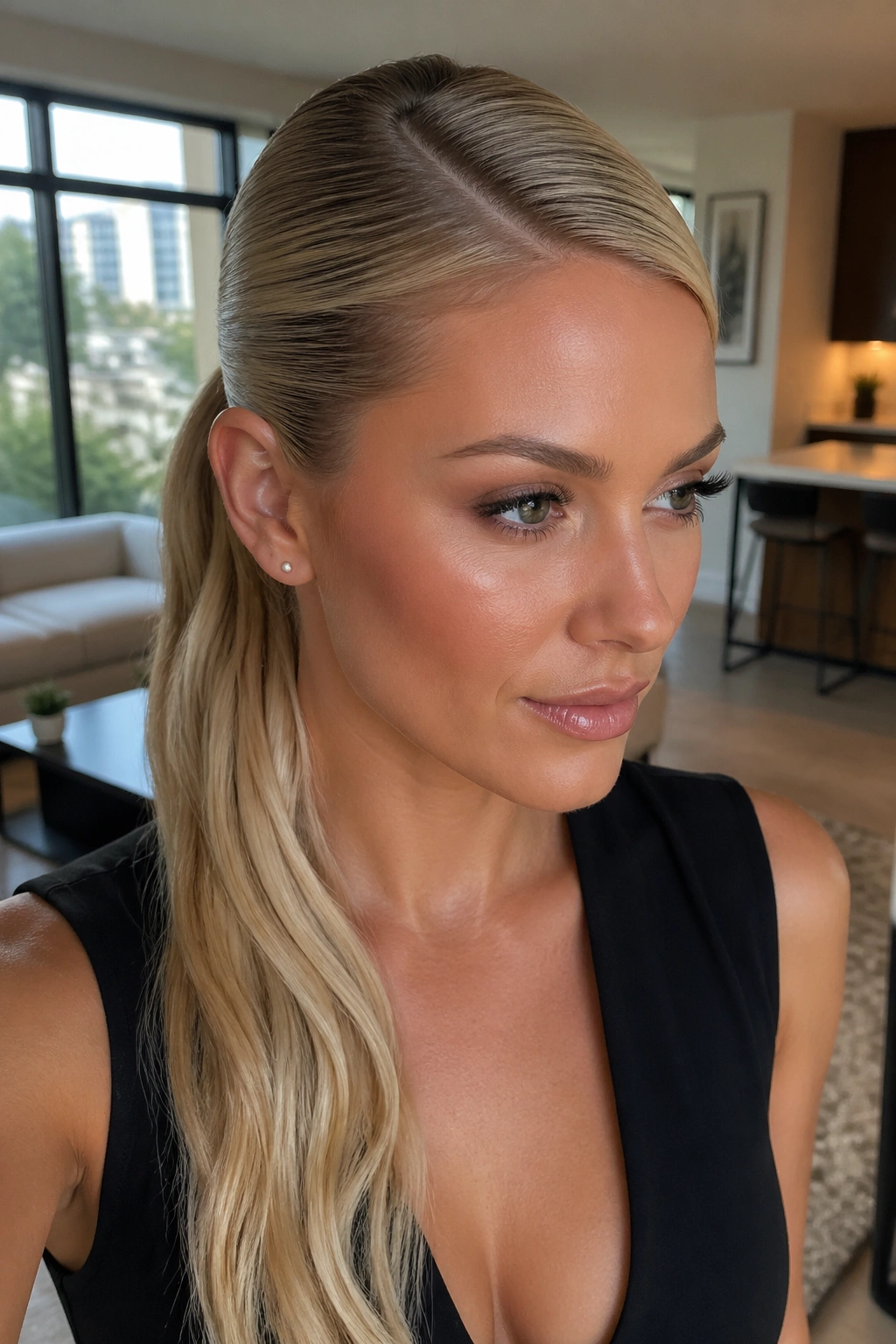
Why choose a side-swoop instead of a straight-back ponytail? Because it gives the front of the style a shape before the tail even starts. That matters when you want the hair to feel designed, not just gathered.
The swoop should travel across the forehead in one smooth curve, then disappear into a low or mid-height ponytail. On blonde hair, that curve is flattering because it creates a stronger line near the face and lets the color gradation show along the sweep. Highlights often look brightest where the hair bends, which is a nice bonus.
How to keep the swoop pinned flat
- Smooth the front section with a brush before pinning
- Secure the hidden side with two crossed bobby pins
- Mist the area lightly, then press it down with the back of a comb
This style works especially well for events or dressier outfits. It has a little drama, but the ponytail itself stays neat and wearable.
21. Clean-Lift Power Ponytail
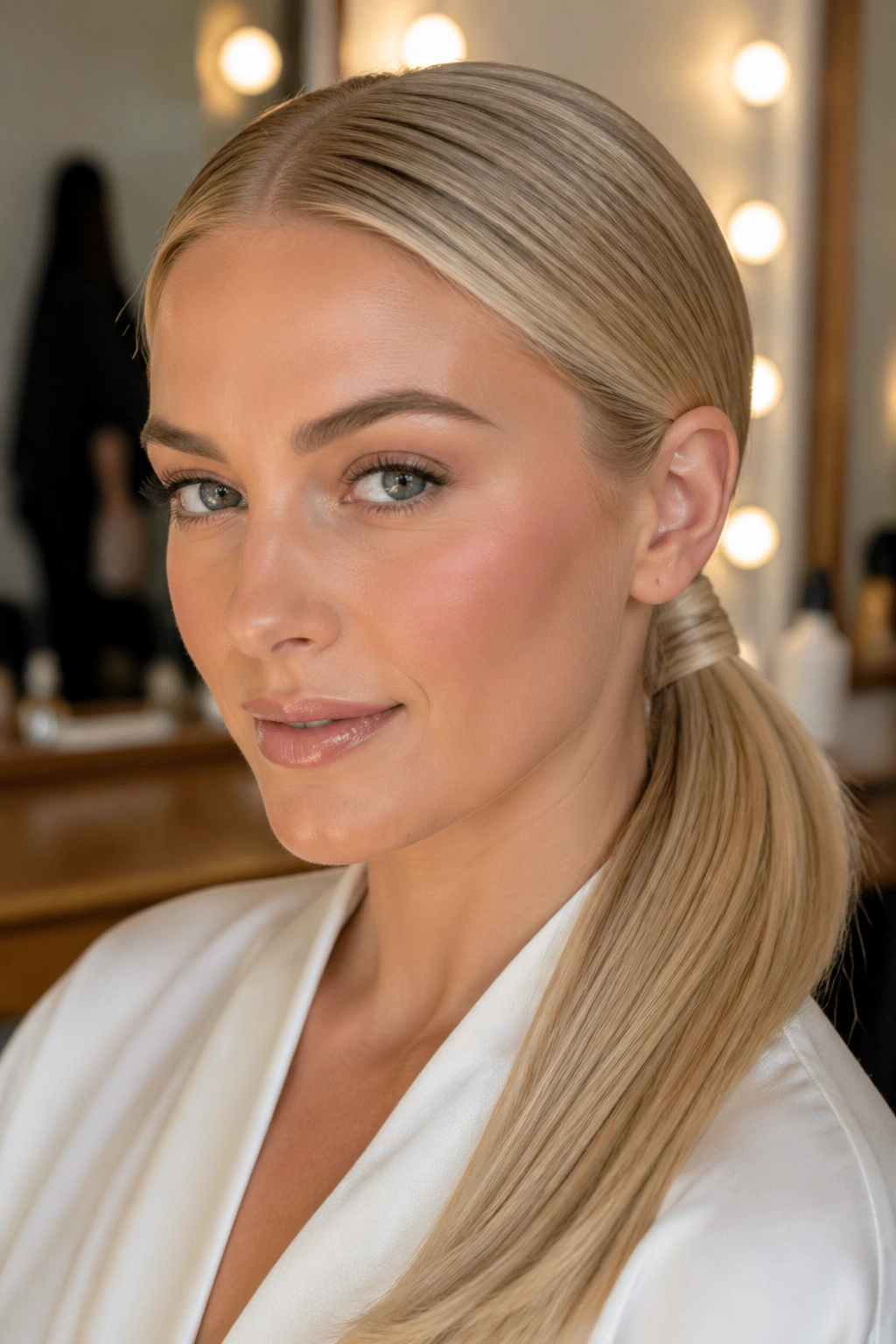
This is the ponytail you choose when you want the whole look to feel crisp from root to tail. The crown is lifted just enough, the base is tight but not painful, and the blonde hair falls in one smooth line that holds its shape.
A clean-lift ponytail works because nothing is fighting for attention. No extra braid, no ribbon, no soft tendrils taking over the face. Just clear structure. That makes it a strong everyday option if you like a polished look without the bother of too many moving parts.
The best version starts with a flat, brushed crown and a secure elastic that doesn’t slip. Use a styling cream sparingly, then finish with a quick pass of hairspray on a brush to catch flyaways around the hairline. Keep the tail itself smooth but touchable. You do not want it frozen.
It’s plain in the best way. And sometimes plain is exactly what makes blonde hair look sharp.