



Low ponytails for locs have a way of looking polished even when the rest of the morning feels a little chaotic. The hair sits low and calm at the nape, the parting does half the work, and the texture of the locs does the rest.
The shape matters more than people think. A center part gives a clean line, a side part softens the face, and a wrapped base can make the whole style look finished without adding much time. For locs, that matters because the style has to hold weight, protect the roots, and still look like you meant to do it.
I keep coming back to this style because it solves a practical problem and still looks good in photos, at work, at dinner, or on a day when you want your hair off your shoulders. The trick is using low tension, the right tie, and a base that matches the size and length of your locs. The 27 looks below stay in that lane, but each one changes the shape in a different way.
1. Sleek Center-Part Low Ponytail for Locs
A center part is the cleanest way to make locs look deliberate without doing much else. The line runs straight back, the face opens up on both sides, and the ponytail sits low enough to feel calm instead of fussy.
Why It Works
The middle part creates balance fast. If your locs are medium to long, the style keeps the front neat and lets the tail carry the drama. If your locs are thick, this is one of the easiest ways to show their density without adding extra bulk at the crown.
- Use a rat-tail comb and a light mist of water to mark the part.
- Smooth the roots with a small amount of gel or edge balm, not a heavy cream.
- Secure the ponytail with a covered elastic or bungee, not a tiny tight band.
Tip: keep the part sharp, but don’t chase slickness so hard that the roots feel painful by lunchtime.
2. Deep Side-Part Low Ponytail
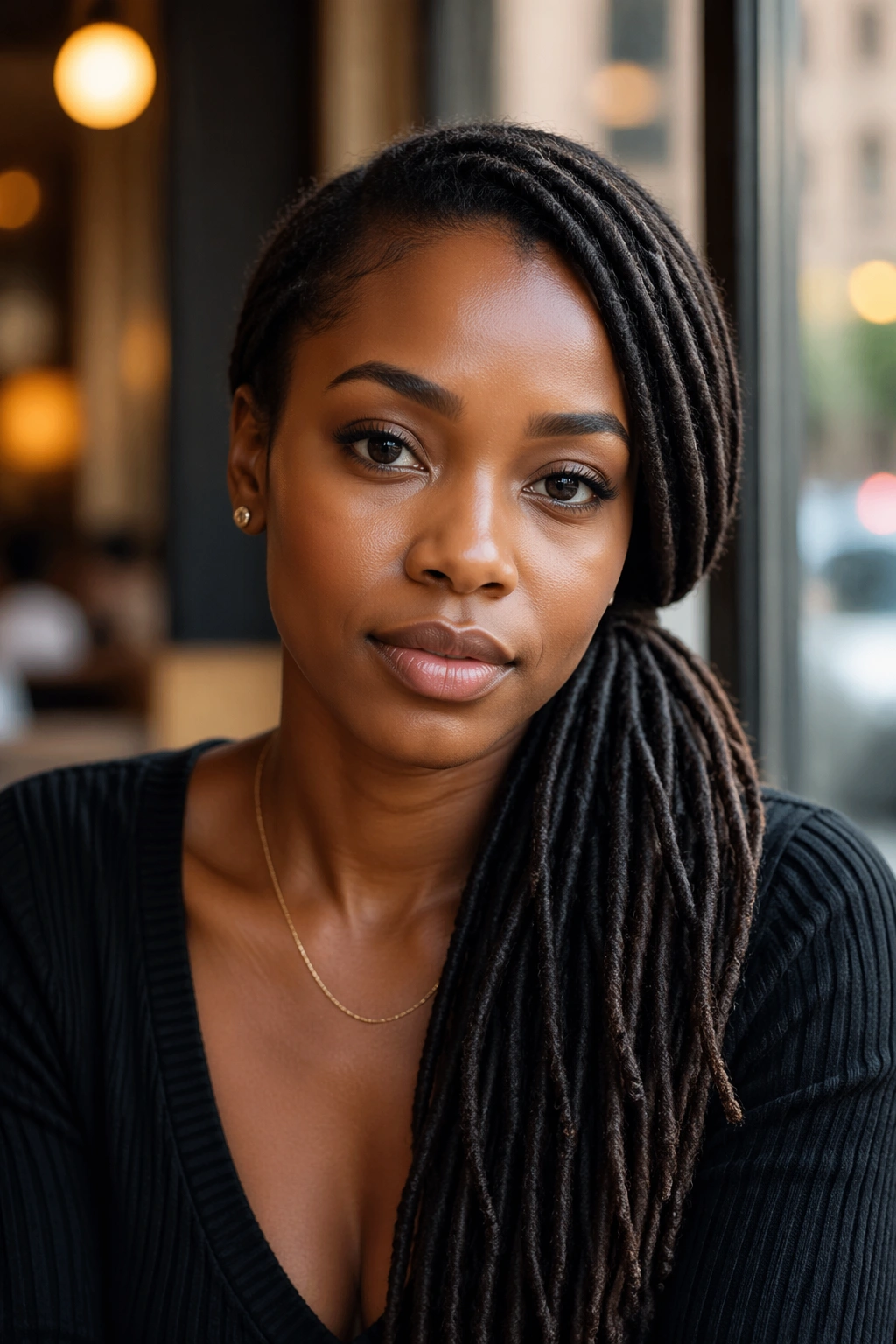
A deep side part changes the whole mood instantly. The style feels softer and a little more relaxed than a center part, and it gives you room to let the tail fall across one shoulder if you want that uneven, lived-in shape.
The side part also helps if your locs are bulky at the crown. A strong diagonal line can break up the weight and make the style feel lighter on the head. I like this on round faces, square faces, and anyone who wants the ponytail to feel less formal without looking undone.
Use the part from the arch of one brow back toward the crown. Keep the ponytail low, but don’t force it dead center at the nape if the part is already doing the visual work. Let the tail sit slightly off to the side. That small shift matters more than people expect.
3. Wrapped-Base Low Ponytail
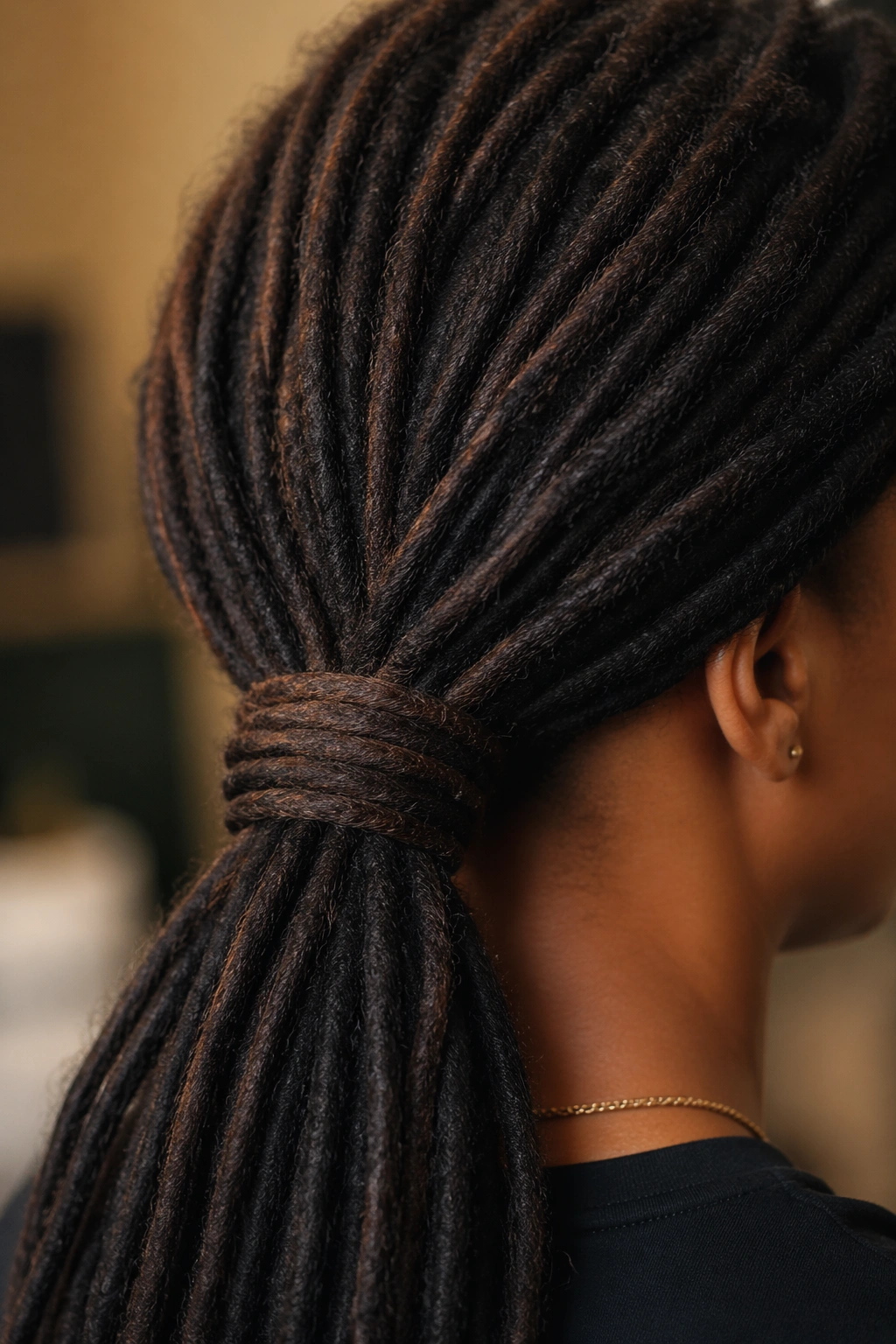
Want the base to look finished even without a cuff or clip? Wrap one loc around the elastic and hide the tie completely.
The style looks simple, but the little wrap changes everything. It clears away the obvious hair tie, smooths the transition from roots to tail, and gives the ponytail a more deliberate finish. On locs, that hidden wrap is often enough. You do not need extra decoration if the wrap is neat.
How to Wear It
Take one loc from underneath the ponytail, wind it around the base two or three times, and pin the end beneath the tail with a small U-pin. If the loc is short, tuck the end under the elastic and secure it flat.
This one works especially well for medium and long locs because the wrapped base stays visible. Clean. Tight. Quietly polished.
4. Bubble Low Ponytail
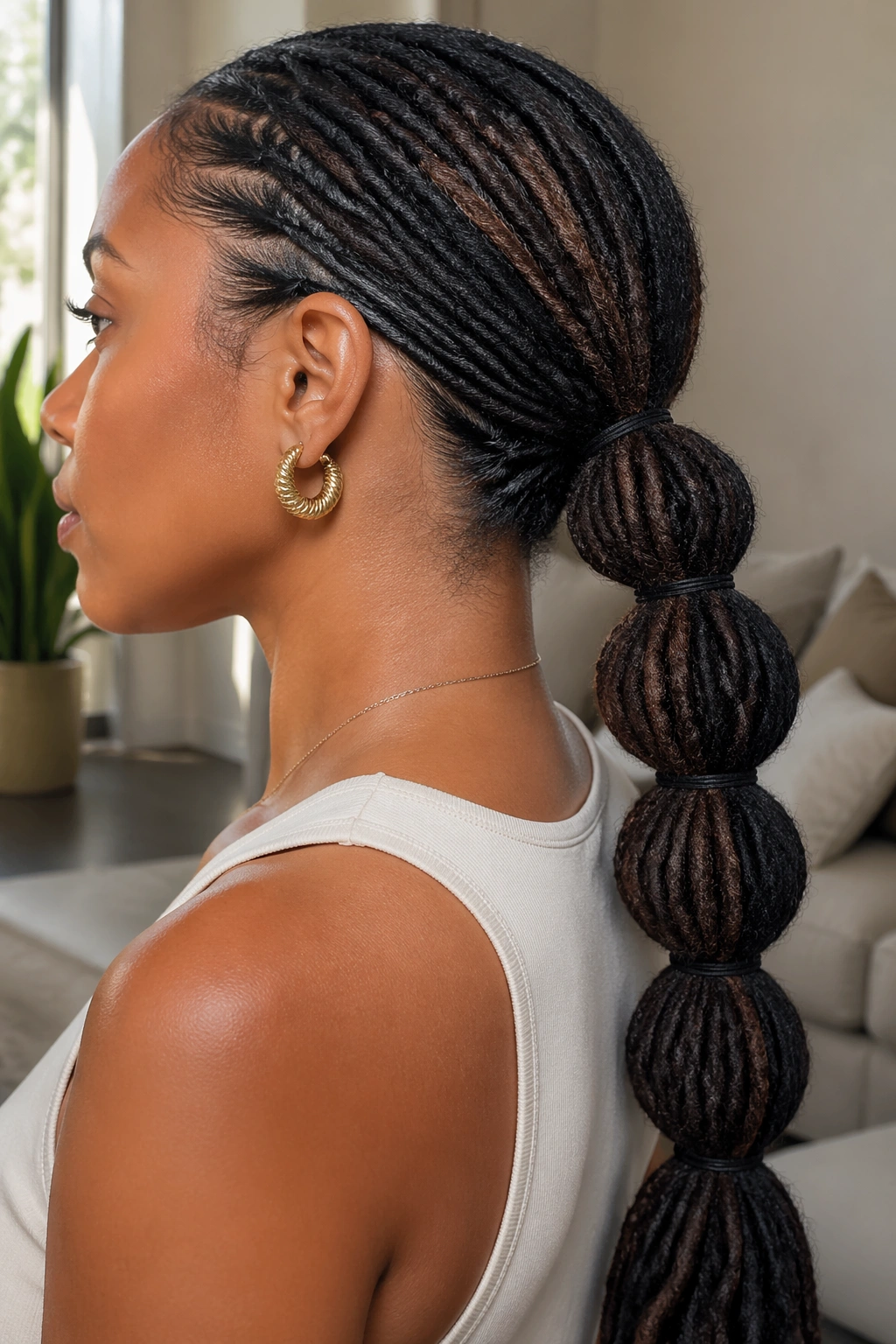
Bubble ponytails give locs a playful shape that still sits low and tidy. Instead of one long loose tail, you create a series of rounded sections with small bands spaced a few inches apart.
It is a smart choice when your locs are long enough to show movement but you do not want them hanging loose all day. The bubbles keep the tail contained, and the sectioning makes the style feel intentional rather than random. If your locs are thick, use bands that stretch a little wider so they do not bite into the strands.
- Space each band about 2 to 3 inches apart.
- Puff each section gently with your fingers for roundness.
- Keep the base low and smooth so the shape starts cleanly.
A bubble ponytail is a good pick for weekends, trips, and any day when you want something with energy.
5. Braided-Base Low Ponytail
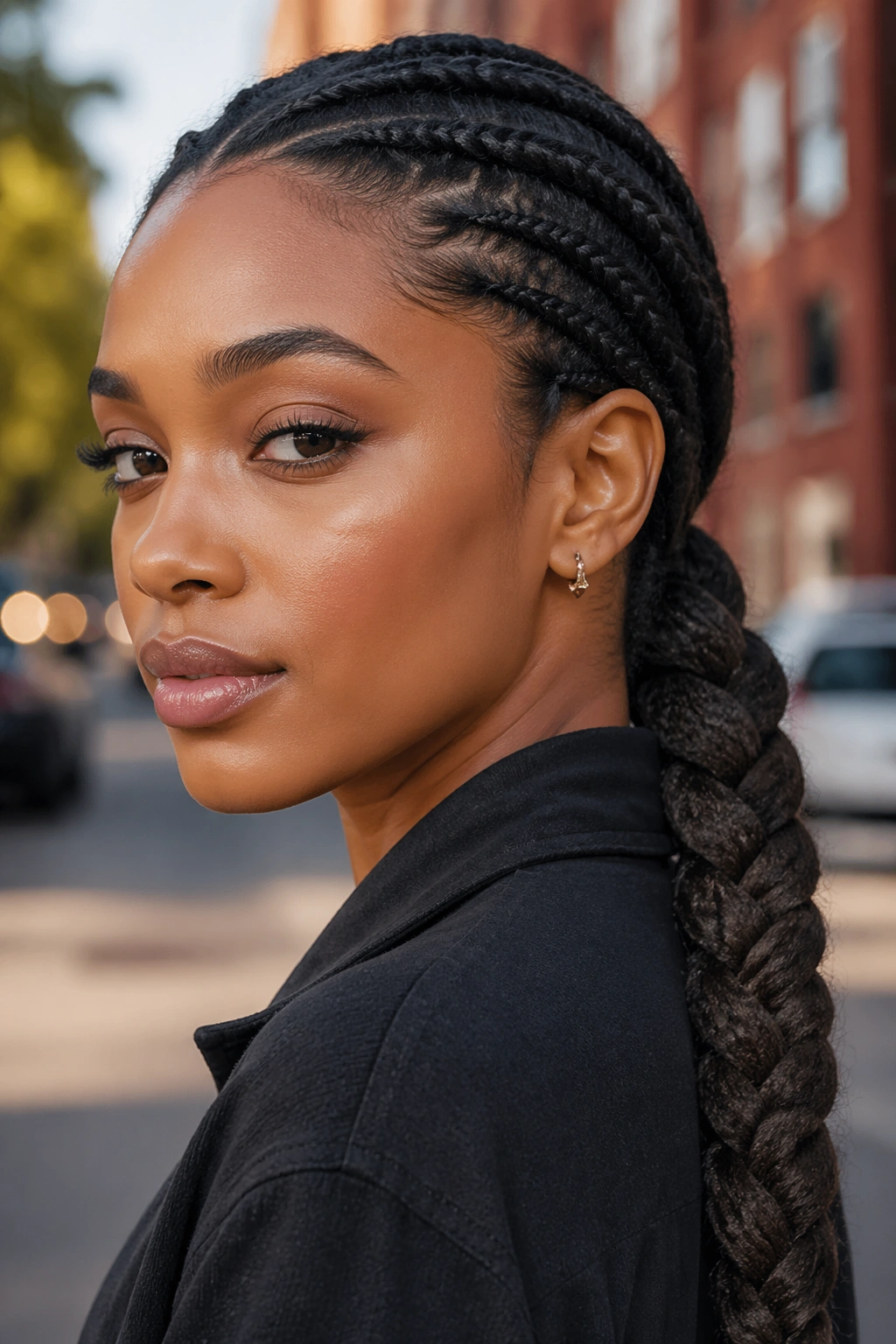
A braided base gives a low ponytail real structure. Once the locs are gathered at the nape, you braid the tail into one heavy plait, and the whole style suddenly feels grounded.
This is one of my favorites for long locs because the braid keeps the length under control. The tail does not swing everywhere when you turn your head, and that makes the style easier for busy days. It also works well if the roots are a little puffy and you want the texture to look intentional instead of unfinished.
The braid can be loose or tight, depending on the look you want. Loose gives you a fuller, chunkier shape. Tighter makes the ponytail feel cleaner and more compact. Either way, the base should stay low and close to the neck so the braid feels anchored, not floating.
6. Twisted Crown Low Ponytail
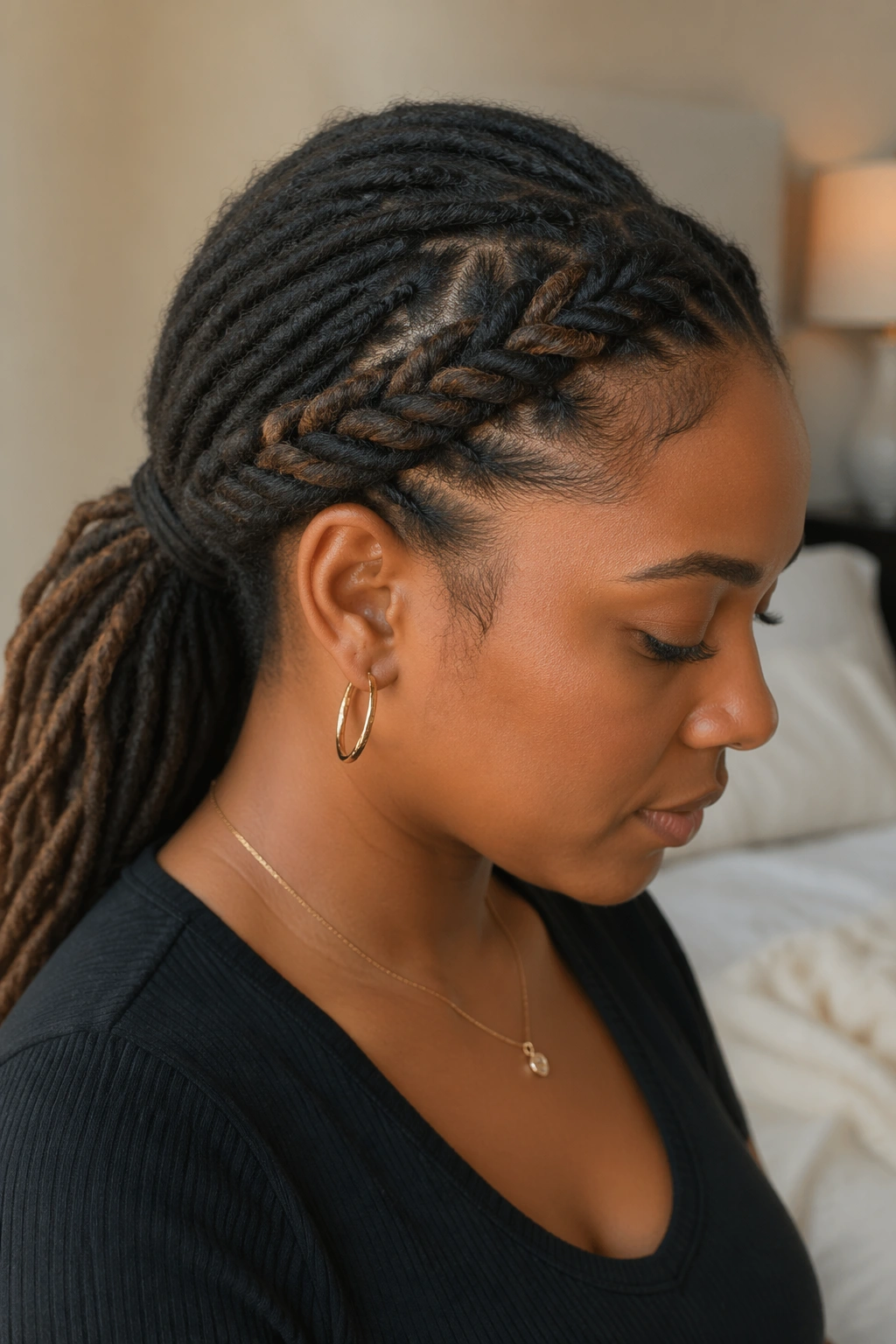
Unlike a plain gathered ponytail, a twisted crown adds shape before the tail even begins. That’s the part I like. It gives the style a bit of movement at the hairline and makes the nape feel like a designed feature, not just a stopping point.
Two strands from each side can be twisted back toward the center, then joined into the ponytail at the nape. It reads softer than cornrows and less formal than a full braid, which makes it useful for everyday wear. If your locs are medium thickness, the twist detail gives the front enough interest without turning the style heavy.
This one suits people who like texture but do not want a lot of accessories. The twist itself carries the look. Keep the strands smooth, follow the curve of the head, and let the ponytail stay simple.
7. Loc Cuff Low Ponytail
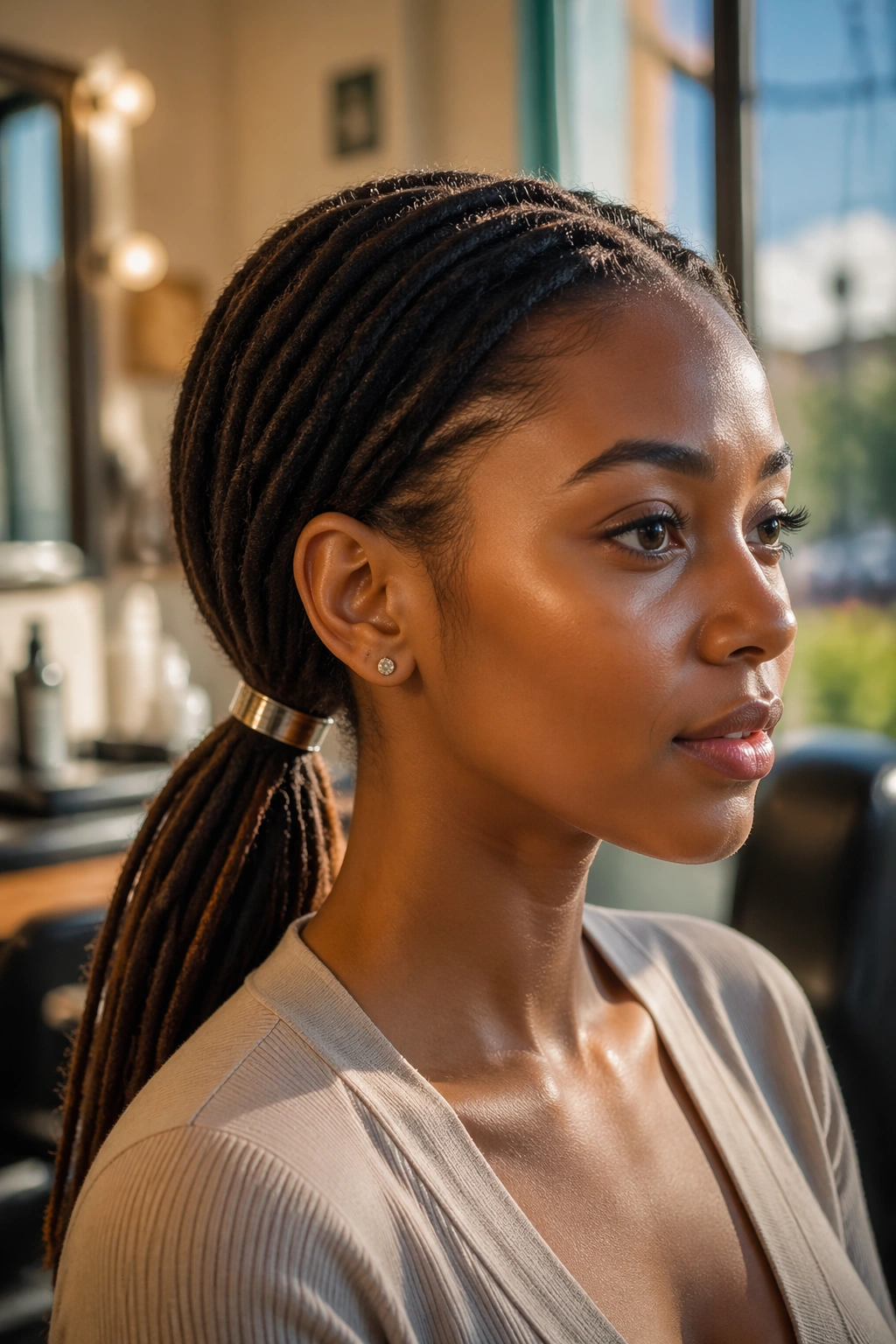
A loc cuff is small, but it changes the whole line of the ponytail. The metal or wood ring sits around one or more locs, and that tiny shine makes the tail look styled instead of merely tied back.
What Makes It Different
The cuff works best when the ponytail itself is clean and restrained. If the base is messy, the accessory gets lost. If the base is sleek, the cuff stands out in a nice way. I like using one cuff near the elastic and leaving the rest of the tail bare so the detail does not feel crowded.
- Choose a cuff size that slides on without forcing the loc.
- Place it on a thicker loc near the front of the tail so it’s easy to see.
- Pair metal with dark locs, wood with warmer tones, or mix both sparingly.
Tip: one cuff is enough for most looks. More than that starts to look busy fast.
8. Scarf-Wrapped Low Ponytail for Locs
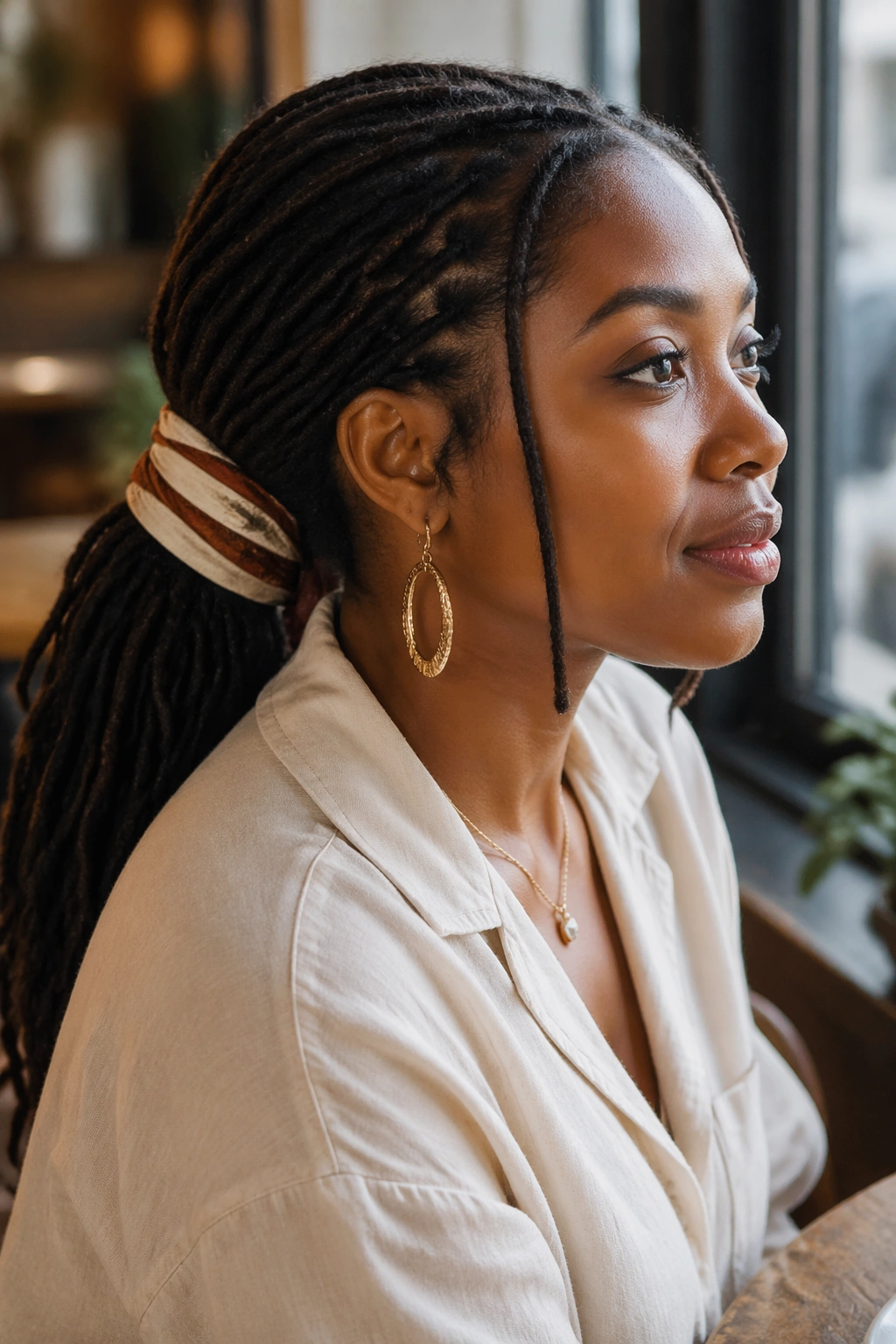
A scarf is the quickest way to make a basic low ponytail feel like an outfit choice. Folded wide, it can frame the base; tied narrow, it can sit like a band. Either way, it adds color and softens the shape.
I prefer a scarf when the locs are clean but the edges are not behaving. A silk or satin scarf can cover the front hairline, protect it from friction, and still look sharp. Cotton works too, but it grabs more and can flatten the style too much. The scarf should feel like part of the design, not an afterthought tied on top.
Use a square scarf folded into a strip about 2 to 4 inches wide. Tie it just above the elastic, then let the ends hang short or tuck them underneath. The ponytail stays low, the neck stays clear, and the whole look feels a little more finished.
9. Face-Framing Low Ponytail
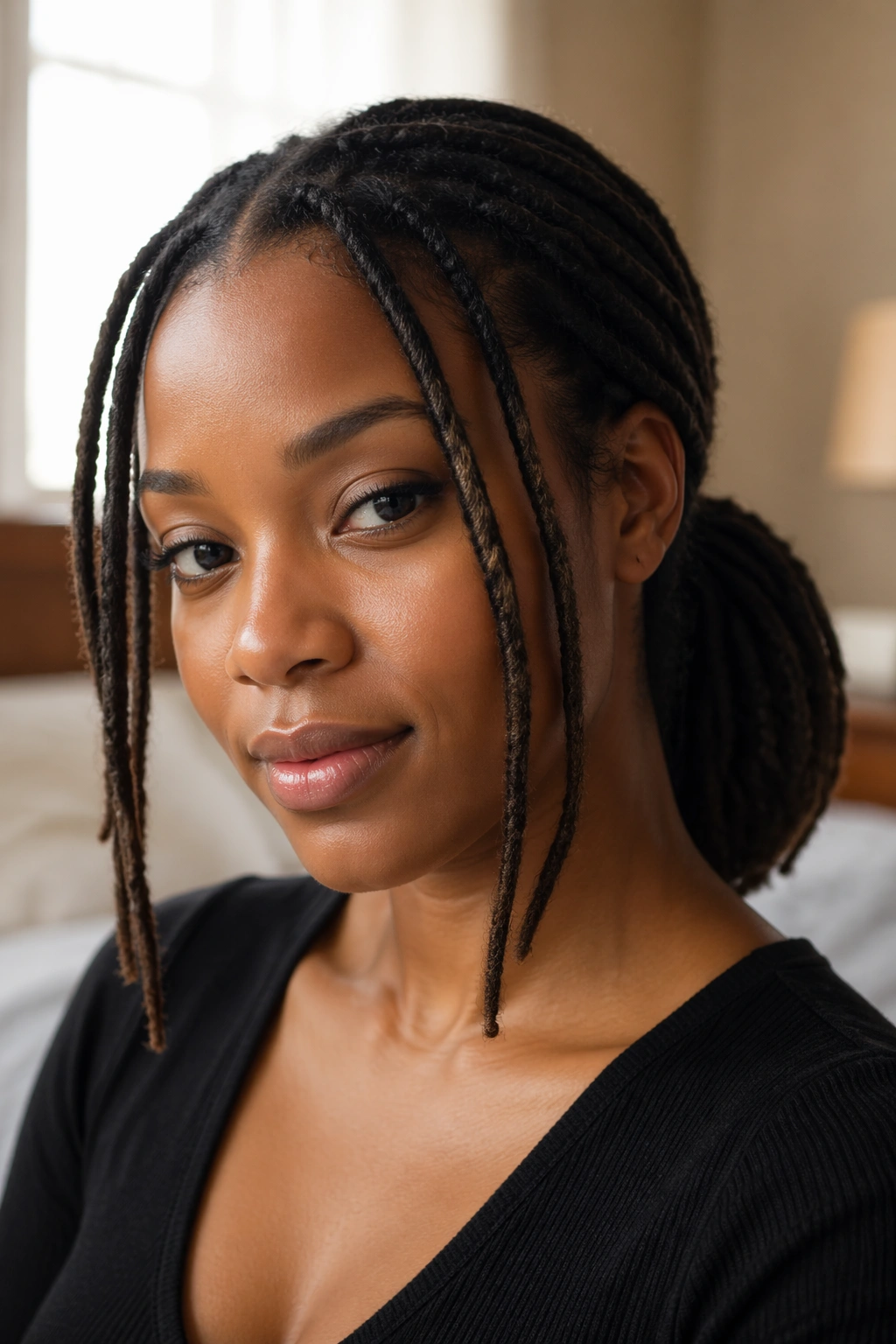
Do you want the ponytail to feel neat without pulling every single loc away from your face? Leave a few pieces out. That’s the whole trick.
Face-framing locs soften the look and stop the style from reading too severe. This works especially well when the ponytail is sleek at the base, because the loose pieces give the eye somewhere to move. If the locs around your temples are a little shorter, even better. They naturally create shape without much effort.
How to Wear It
Gather most of the locs low at the nape, but leave 2 to 4 locs loose on each side, depending on density. Smooth the gathered section first, then decide how much to leave out. That order matters. If you pull everything back first, the face-framing pieces usually end up looking accidental.
This is a nice choice for softer makeup, gold hoops, and days when you want movement near the cheeks.
10. Side-Swept Low Ponytail
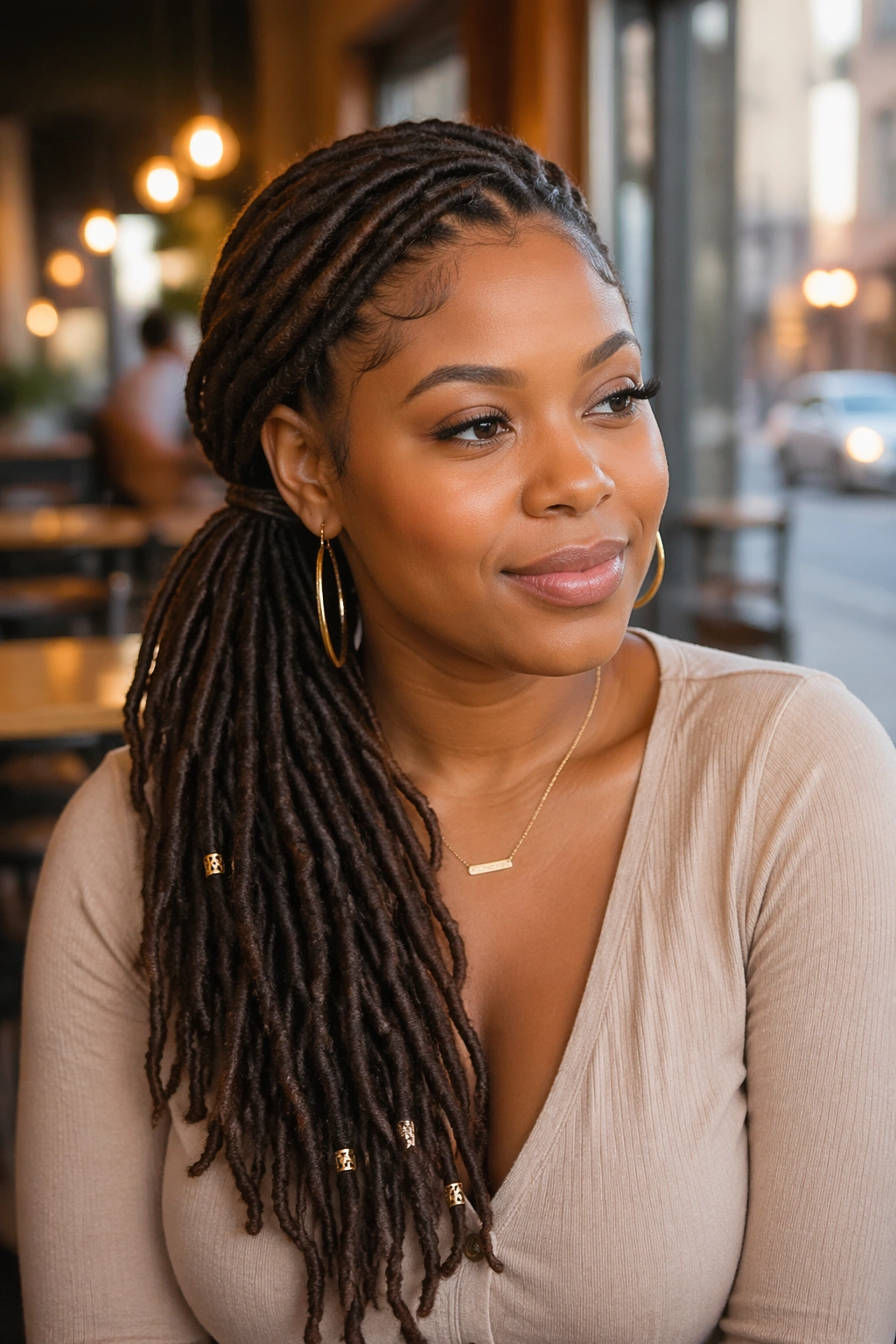
A side-swept low ponytail gives heavy locs somewhere to go. Instead of forcing the tail to fall straight down the back, you guide it across one shoulder or slightly off the nape line.
That small shift changes the whole profile. It feels easier, less rigid, and a little more relaxed than a straight-back style. If your locs are thick or long, this can also save you from that awkward back-heavy feeling that sometimes happens with low ponytails. The hair rests where it wants to rest.
A side-swept version looks especially good with a clean side part or a soft diagonal part. Keep the crown smooth, then let the tail sit across the collarbone. It is one of those styles that looks best when it is not overworked. A little asymmetry goes a long way.
11. Crisscross-Front Low Ponytail
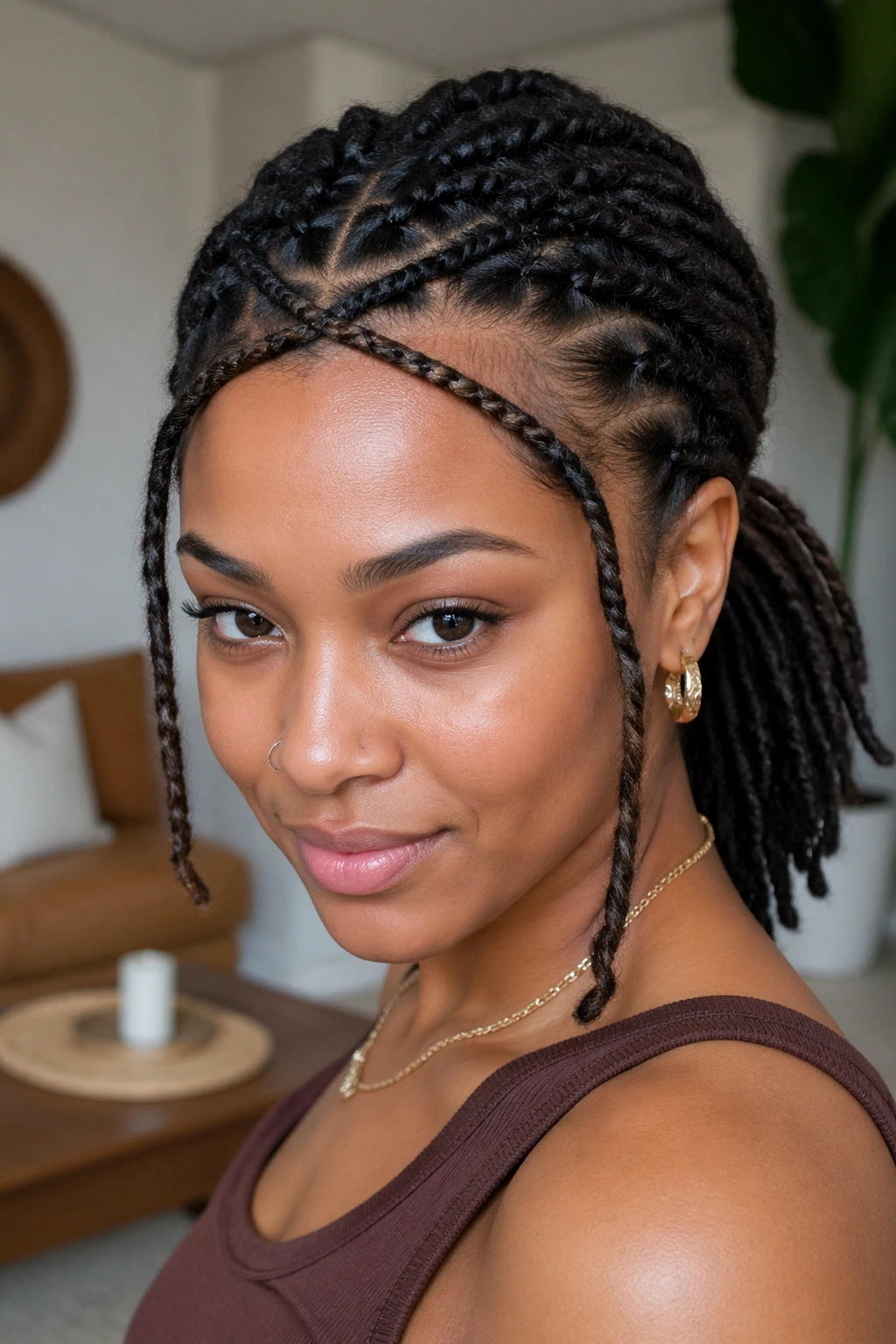
A crisscross front gives the style a tailored look before the ponytail even starts. Two small sections from the front are crossed over each other at the hairline, then pinned or tucked before the rest of the locs are gathered low.
The result is tidy without feeling stiff. It also hides a tricky grow-out line if your roots are a little fuzzy. I like this more than a full slick-back when the hairline needs a bit of camouflage but you still want the finished shape to stay soft.
The key is keeping the crossed sections flat against the head. If they puff up, the whole front gets bulky. Pin them where they meet, then secure the ponytail at the nape. The style works on medium and long locs, and it gives a plain low ponytail enough detail to feel complete.
12. Flat-Twist Front Low Ponytail
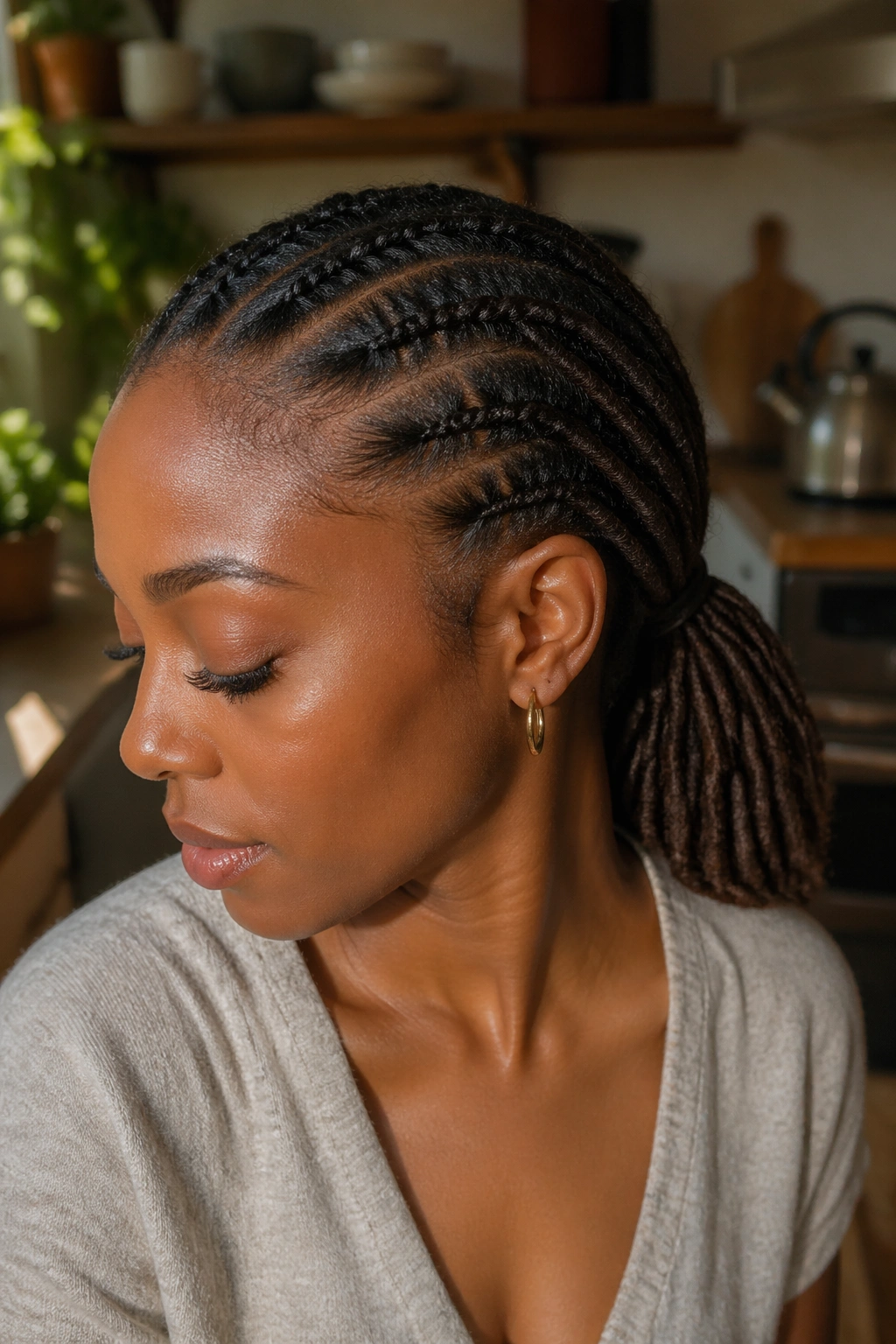
Flat twists are gentler than a tight braid, and that matters at the hairline. They pull the front back in a smooth line, but they do it with a softer hand, which makes the style easier to wear for long stretches.
If the roots are fresh, the twists stay crisp. If the roots are a little older, the texture gives the style more life. Either way, the front lands in the same place: neat, controlled, and close to the head. The ponytail itself can stay simple, because the twist work already gives the eye enough detail.
How to Get the Most From It
Part the front into two or four sections, twist each one back toward the nape, and join them into the low ponytail. Keep the twists even, not tiny. Tiny twists can disappear into thick locs.
This version is good when you want polish without the sharp look of cornrows.
13. Beaded Low Ponytail
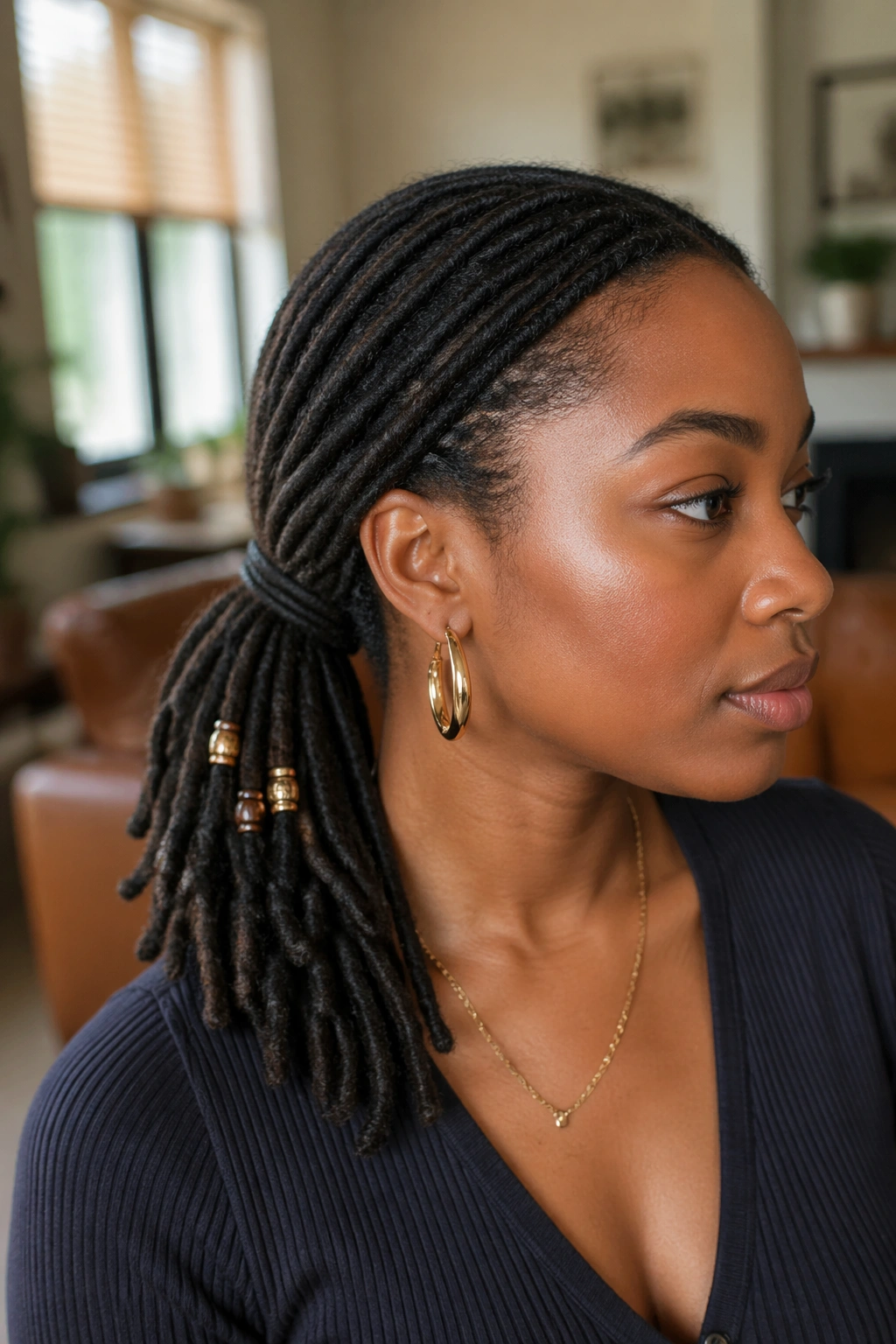
Beads change the sound and weight of a ponytail in a way nothing else does. Add them to the ends or scatter a few through the tail, and the whole style starts moving differently.
That extra weight works especially well with long locs. The beads help the tail hang in a straight line and keep it from ballooning out too much. I would not overload thin locs with huge beads, though. That can pull the ends down in a clunky way. A few well-placed beads look better than a dozen random ones.
- Use 3 to 6 beads if you want a subtle finish.
- Choose larger beads for thick locs and smaller ones for finer locs.
- Keep one color family, or the tail starts to look busy.
The nice thing here is control. One detail, not a pile of them.
14. Gold-Thread Low Ponytail
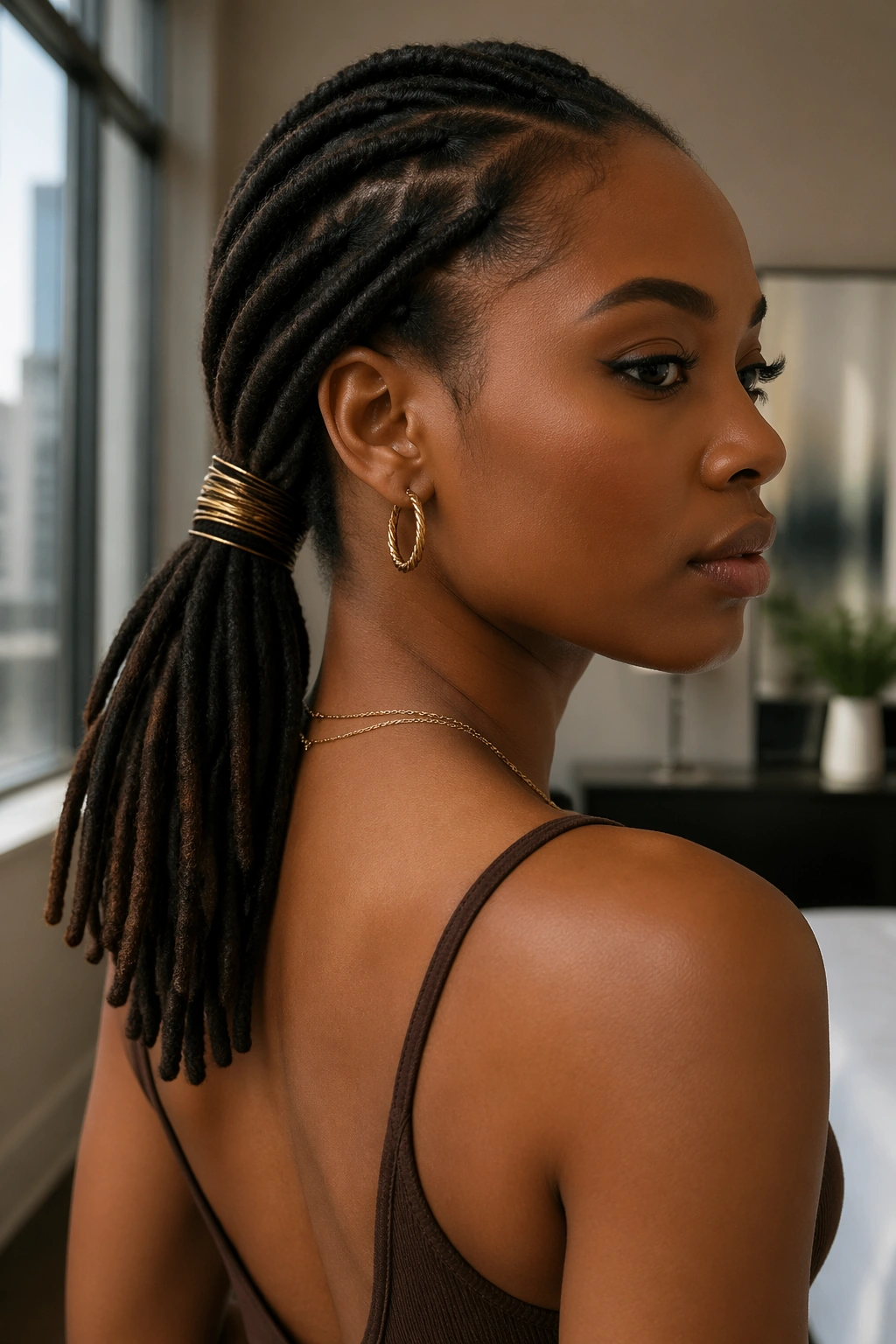
Gold thread changes the silhouette more than the color. A wrap of metallic thread around a section of locs catches the eye, but it also gives the tail a tighter, more finished line.
I like this on dark locs because the contrast reads clearly, even from a distance. You can wrap the thread around the base, around the tail, or around just the last few inches if you want a quieter finish. The trick is to keep the wrap neat and even. Loose thread can fray fast, and that looks untidy in a hurry.
Use a short length first, maybe 6 to 8 inches, then see how it sits. If it feels too shiny, stop there. That restraint is part of the charm. Gold thread should accent the ponytail, not swallow it.
15. Barrel-Roll Front Low Ponytail
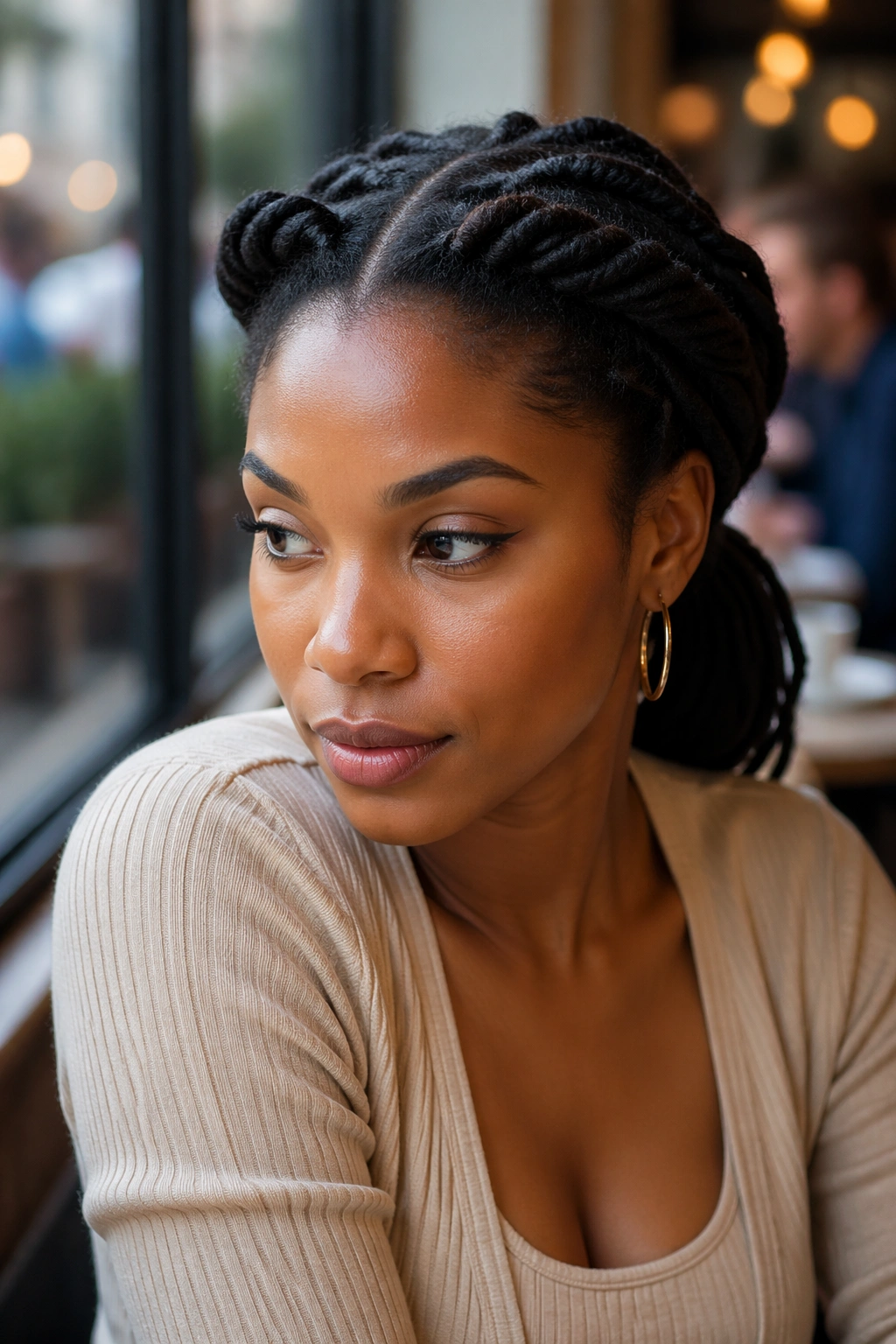
Need a front style that holds grown-out roots without turning stiff? Barrel rolls do that job well.
The sides are rolled back in smooth loops or columns, then secured low into the ponytail. The shape looks controlled, almost tailored, and it works nicely when you want the front to look intentional without using a lot of product. On thicker locs, the rolls can sit a little fuller and make the crown look balanced.
How to Wear It
Divide the front into two sections per side, roll each one backward along the head, and pin them flat before gathering the rest. Keep the rolls smooth and close to the scalp. If they sit too high, the style gets bulky fast.
This is a strong option for events, but it also works on a regular workday if you like structure. It gives the ponytail a little formality without asking too much of the rest of the hair.
16. Triangle-Part Low Ponytail
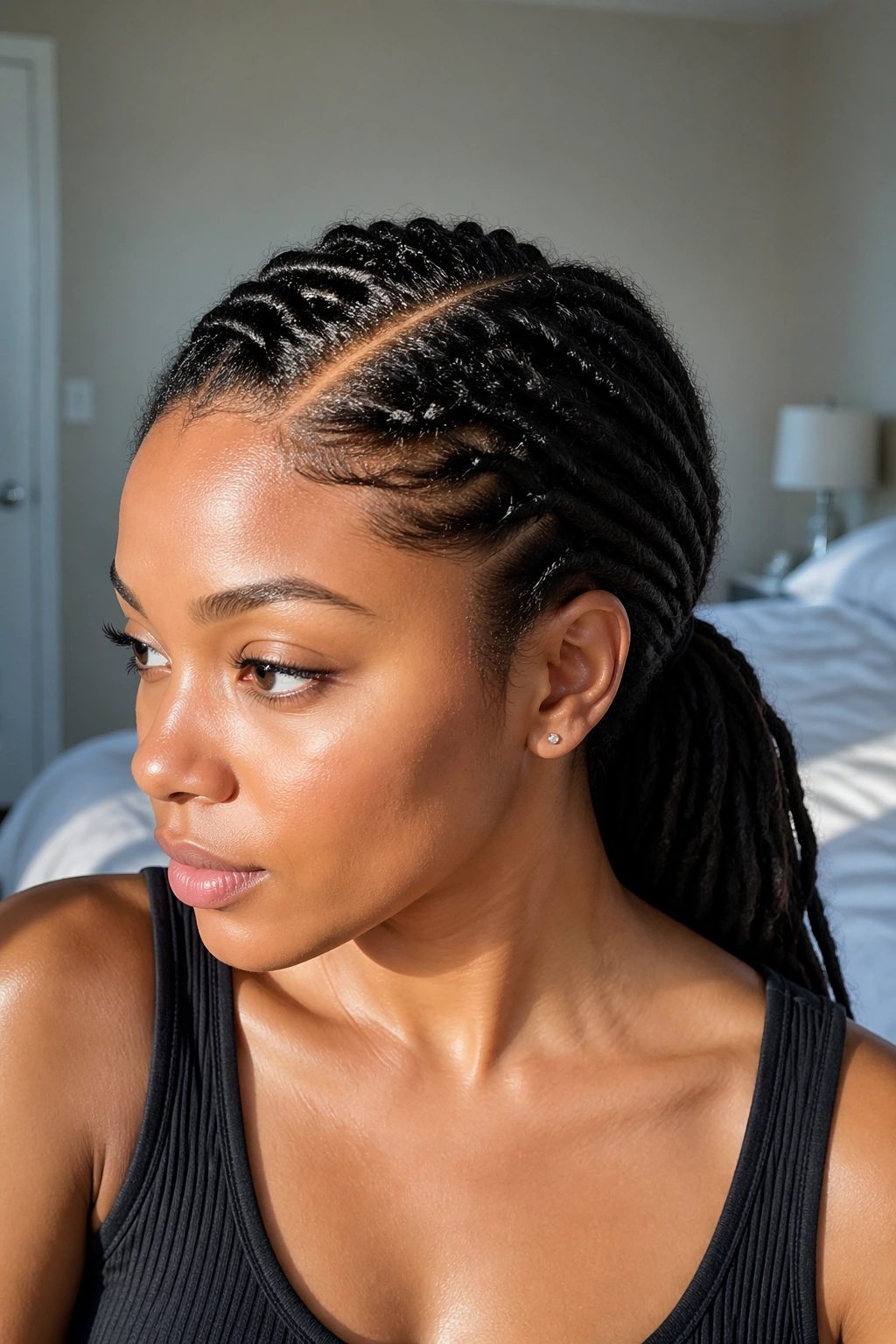
A triangle part gives the ponytail a sharper edge than a straight line. Instead of one plain part, the sections fan out from small triangle shapes, which changes the way the scalp pattern reads.
That geometry matters. It makes the style feel deliberate and a little more graphic, especially on fresh locs or neat retwists. If you like parts that show from across a room, this one delivers. It also looks good when the ponytail itself is simple, because the parting already carries the visual weight.
- Best on medium to long locs that can show the parting clearly.
- Works well with a sleek base and little or no accessory.
- Looks strongest when the triangles are even, not tiny and cramped.
Triangle parts ask for patience, but the payoff is real. The head itself becomes part of the style.
17. Zigzag-Part Low Ponytail
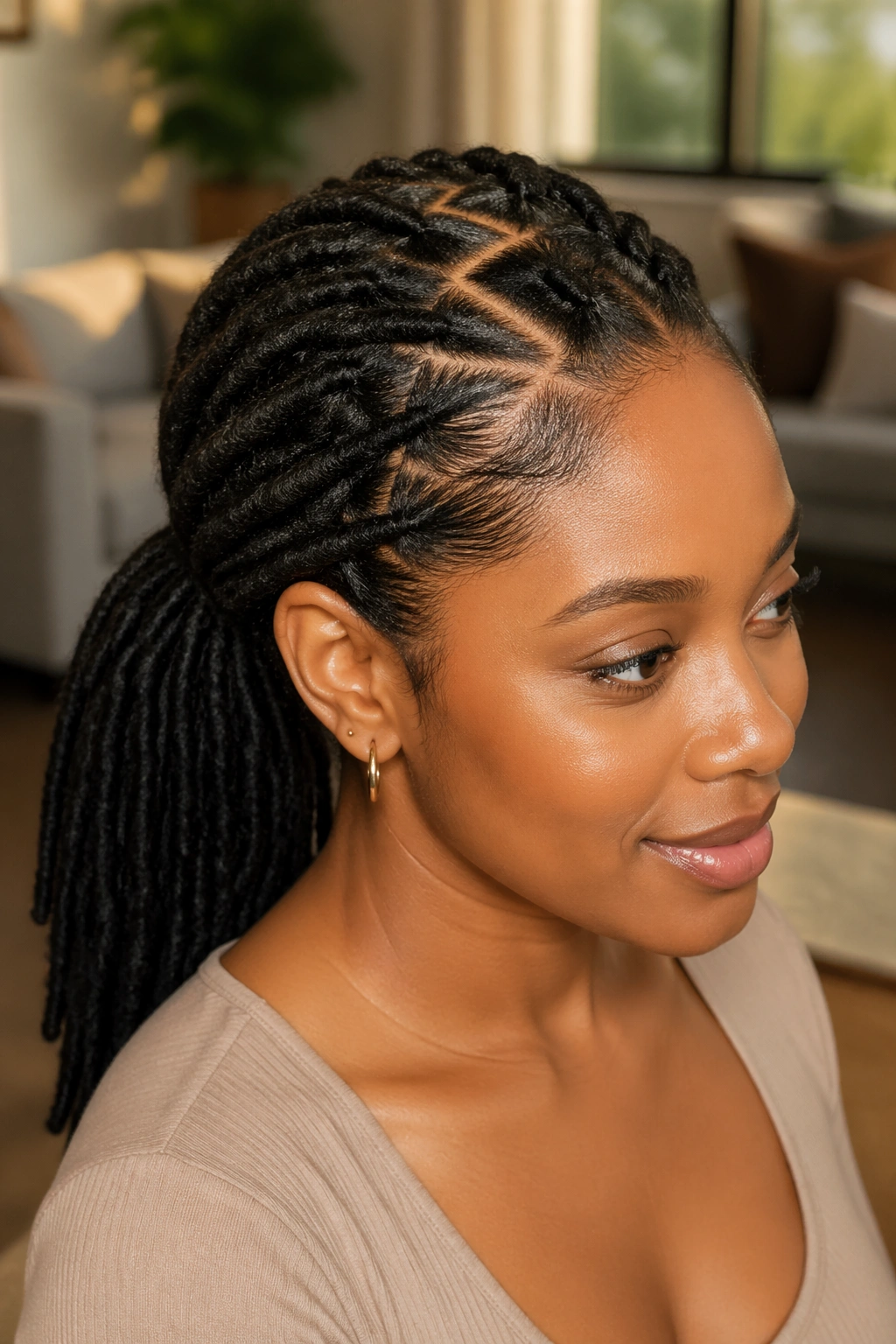
A zigzag part brings energy to a low ponytail without needing beads, cuffs, or scarves. The line is playful, but it still stays neat enough for everyday wear.
This is a good choice when a straight part feels too serious. The zigzag breaks up the scalp line and gives the front a little motion before the hair is even gathered. It also hides small growth patterns well, which is useful when your roots are not freshly redone but you still want the style to look planned.
Use a tail comb and work slowly. A clean zigzag looks better than a dramatic one. Keep the teeth of the comb shallow so the line feels crisp, then smooth the rest into the ponytail at the nape. That’s enough. Anything more starts to compete with the part itself.
18. Double-Tie Low Ponytail
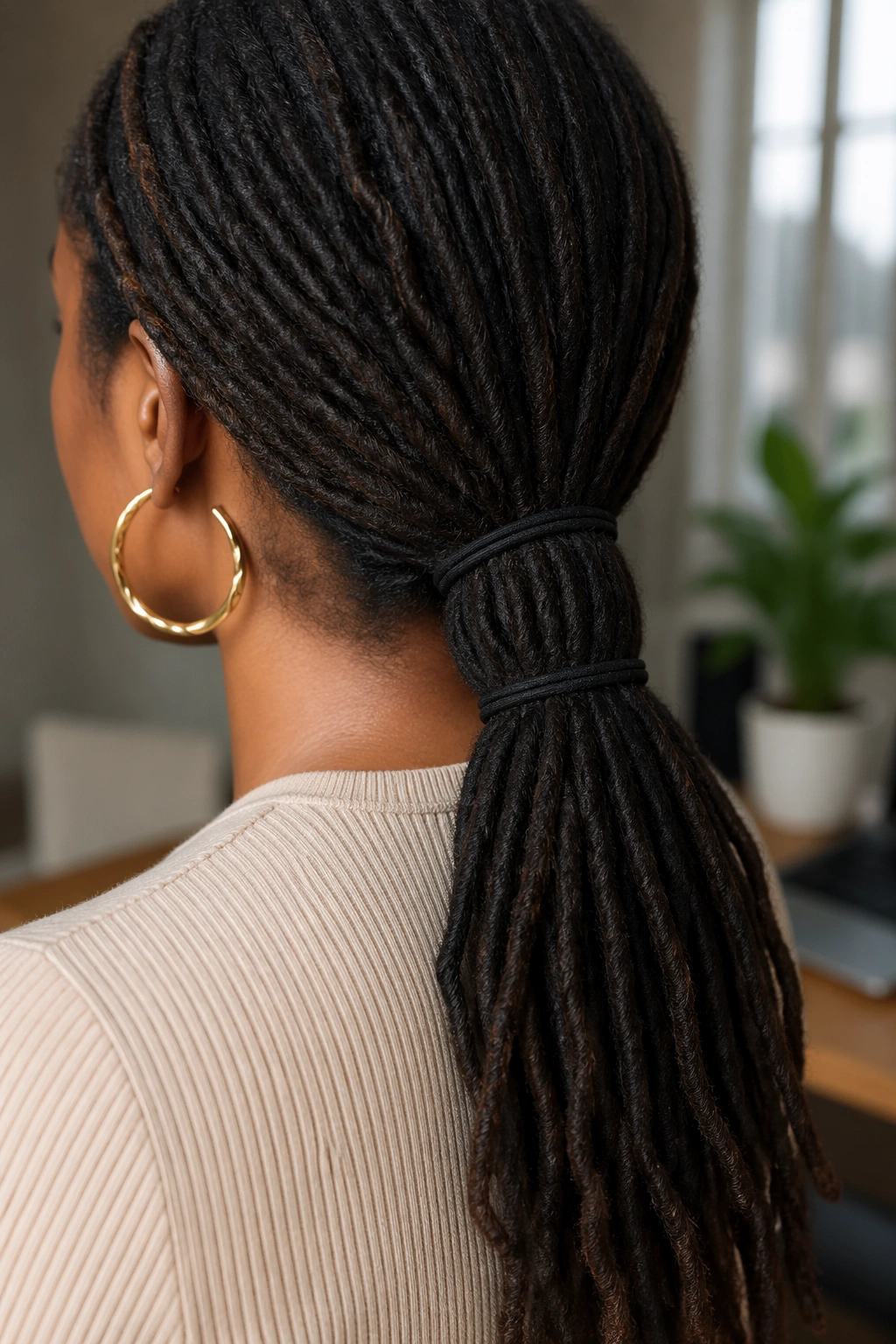
Heavy locs behave better when the weight is spread out. A double-tie low ponytail does exactly that by securing the tail in two spots instead of one.
The first tie gathers the locs at the nape. The second tie, placed a little lower, keeps the tail from sliding or sagging. That extra anchor point helps when the locs are thick, long, or freshly washed and still a bit slippery. It also reduces that annoying feeling where the whole ponytail slowly loosens after a few hours.
Use two snag-free elastics, spaced about 1 to 2 inches apart. The second tie should support the first, not crush it. This is a practical style, not a decorative one, and I mean that in a good way. It simply holds.
19. Tucked-Under Tail Low Ponytail
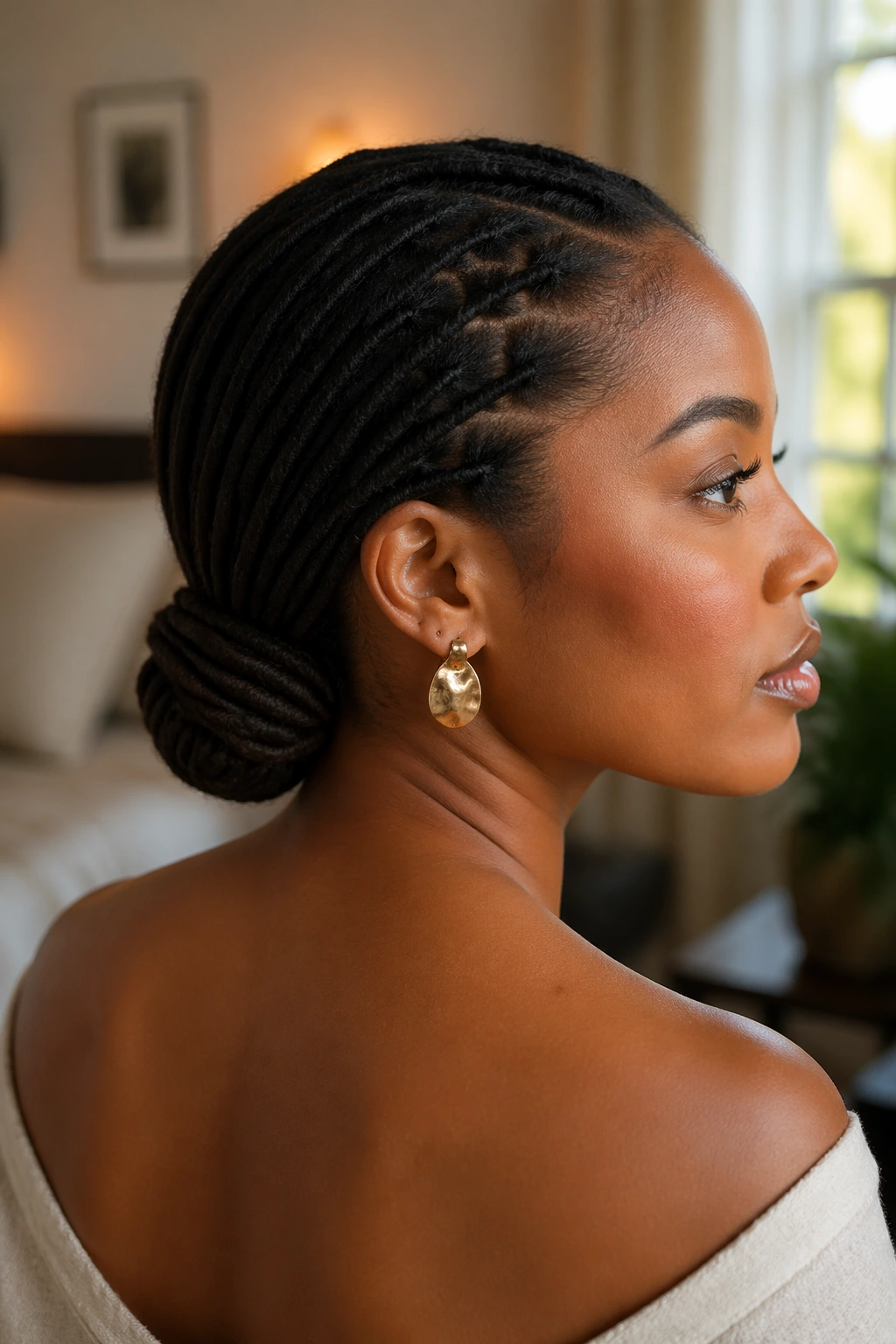
A tucked-under tail gives the ponytail a cleaner, shorter shape without cutting any length off. The locs are gathered low, folded upward or inward, and pinned so the tail sits close to the neck.
That tucked shape works well for formal settings because it removes swing and keeps the silhouette compact. It also suits locs that are long enough to overwhelm the back if left loose. The tuck reins that in. You still have the texture of the locs, but the tail reads more like a sculpted shape than free-hanging hair.
What to Watch For
Use U-pins or long hairpins that can sit hidden under the fold. Don’t cram too many pins in one spot, or the base will feel lumpy. If the locs are thick, fold them in two layers and anchor the inner layer first.
The result is quiet, neat, and surprisingly sturdy.
20. Braided Tail Low Ponytail for Locs
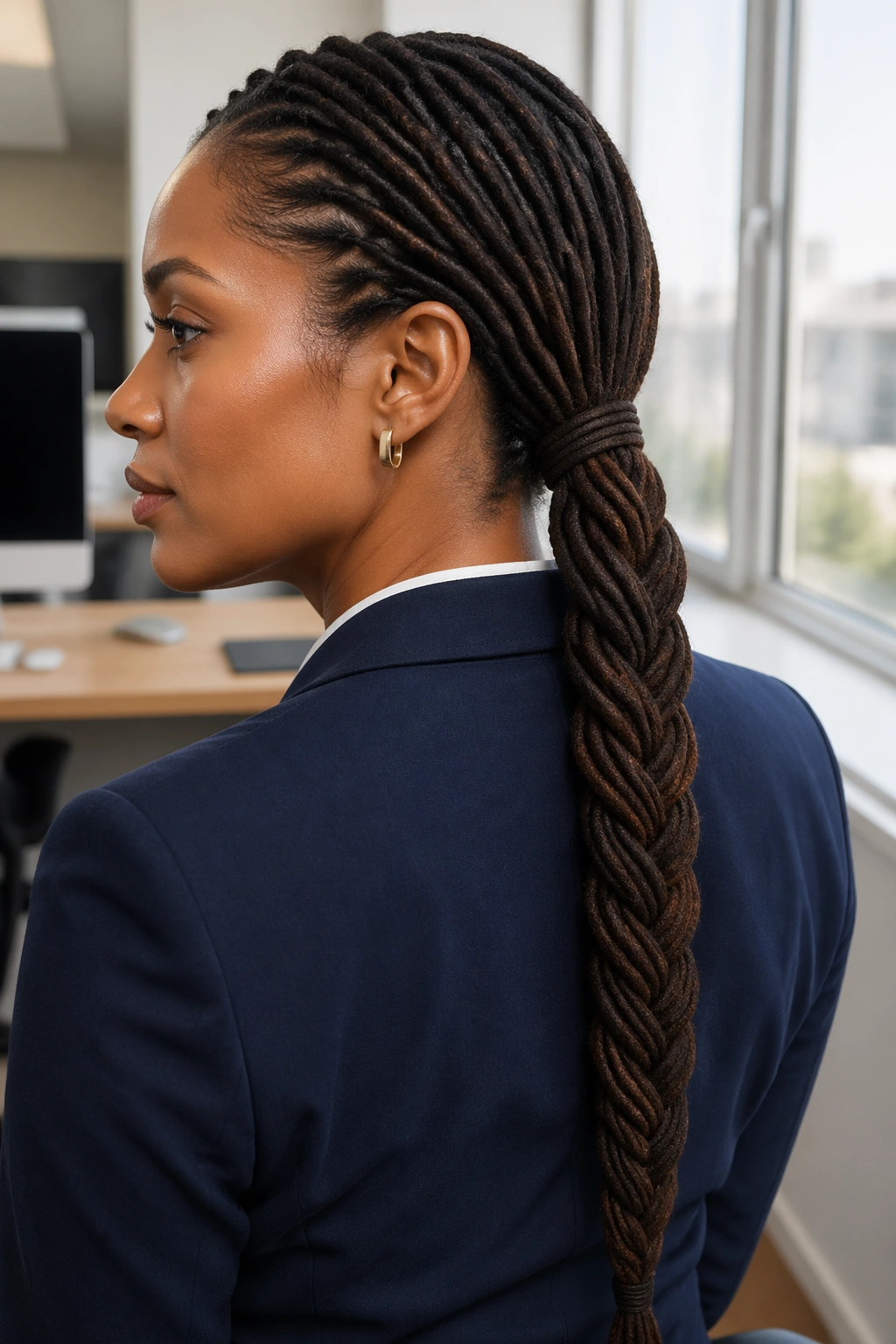
Braiding the tail gives locs a longer, tidier line. It also makes the ponytail feel finished from root to tip instead of stopping halfway between loose and styled.
Unlike a loose tail, a braided one stays put when you move around. That makes it a strong choice for work, travel, or any long day where hair brushing your neck gets annoying fast. If your locs are thick, keep the braid a little loose so it doesn’t turn into a hard rope. If they’re finer, a tighter braid can add some body.
Start the braid just below the elastic, keep the tension even, and stop before the ends get too thin. You can tie off with a small band or tuck the end under. It’s a simple finish, but a good one. No fuss. No stray pieces everywhere.
21. Twisted Tail Low Ponytail
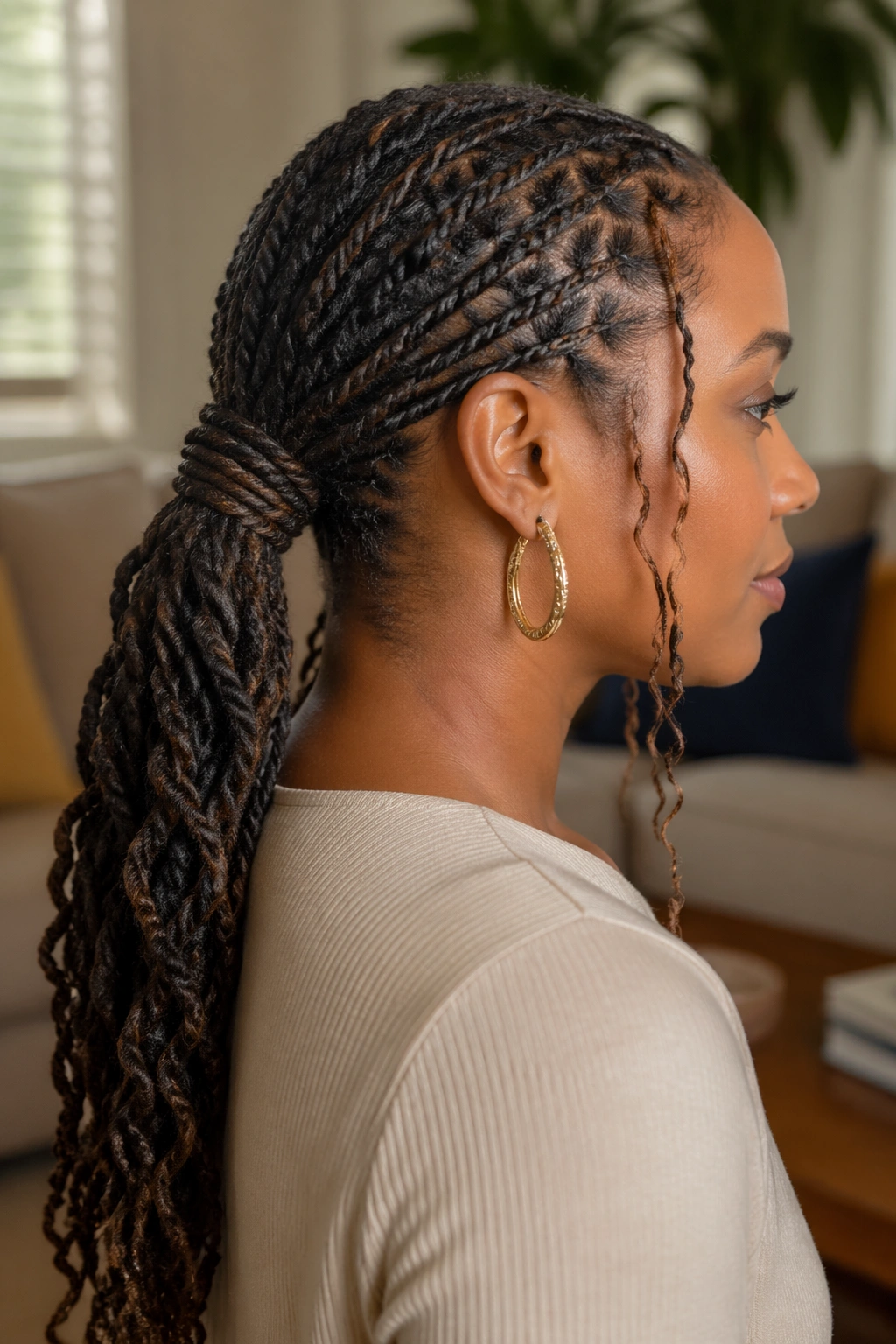
Want texture without the bulk of a braid? Twist the tail instead.
A two-strand twist down the length of the ponytail keeps the locs compact while still showing off their individual shape. It has a slightly looser look than braiding, which I like when the roots are slick and you want the back to feel less rigid. The twist also moves nicely when you walk, but not in a way that takes over the whole look.
How to Wear It
Split the ponytail into two equal sections and twist them around each other from top to bottom. Keep the tension even, and smooth each section as you go so the twist doesn’t puff out unevenly. If your locs are very long, secure the end with a covered elastic or tuck it under.
This is a good middle ground between plain and styled. It does enough, but not too much.
22. Cornrow-Feed Low Ponytail
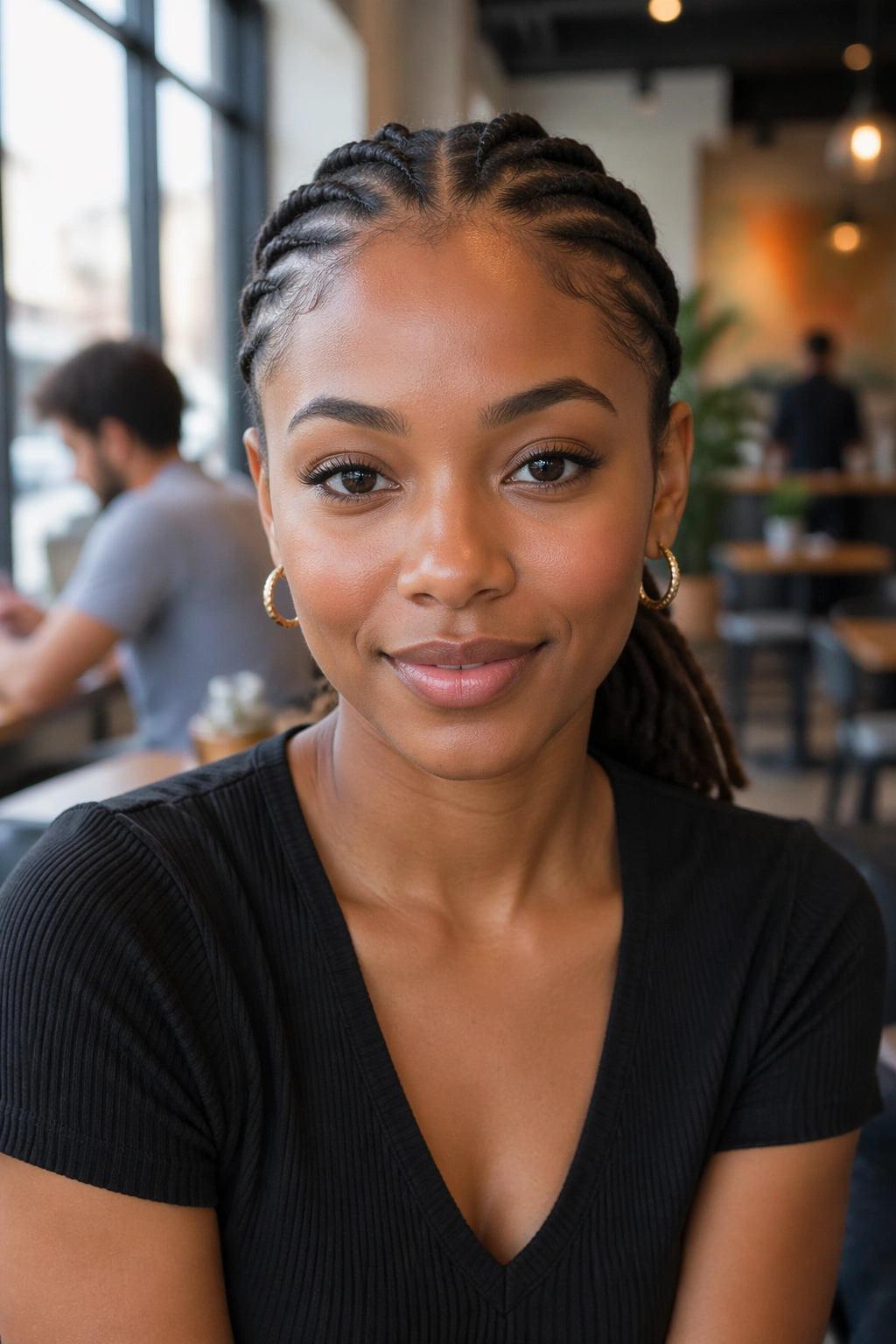
A cornrow-feed low ponytail is the style I’d choose when I want the front locked down and out of the way. The braids feed toward the nape, where the locs are gathered into one ponytail.
The reason it lasts is simple: the braid pattern holds the roots in place from the start. That means less shifting, less puffing, and less fussing throughout the day. It also gives the front a sharper finish than loose gathered styles, which can help if your locs are dense and you want a smoother shape around the face.
- Keep the feed-in braids medium-sized so they don’t pull too hard.
- Use a small amount of gel only at the edges and part lines.
- Gather the ponytail low enough that the braid ends disappear into the base.
This one feels especially strong on long wear days.
23. Rolled-Sides Low Ponytail
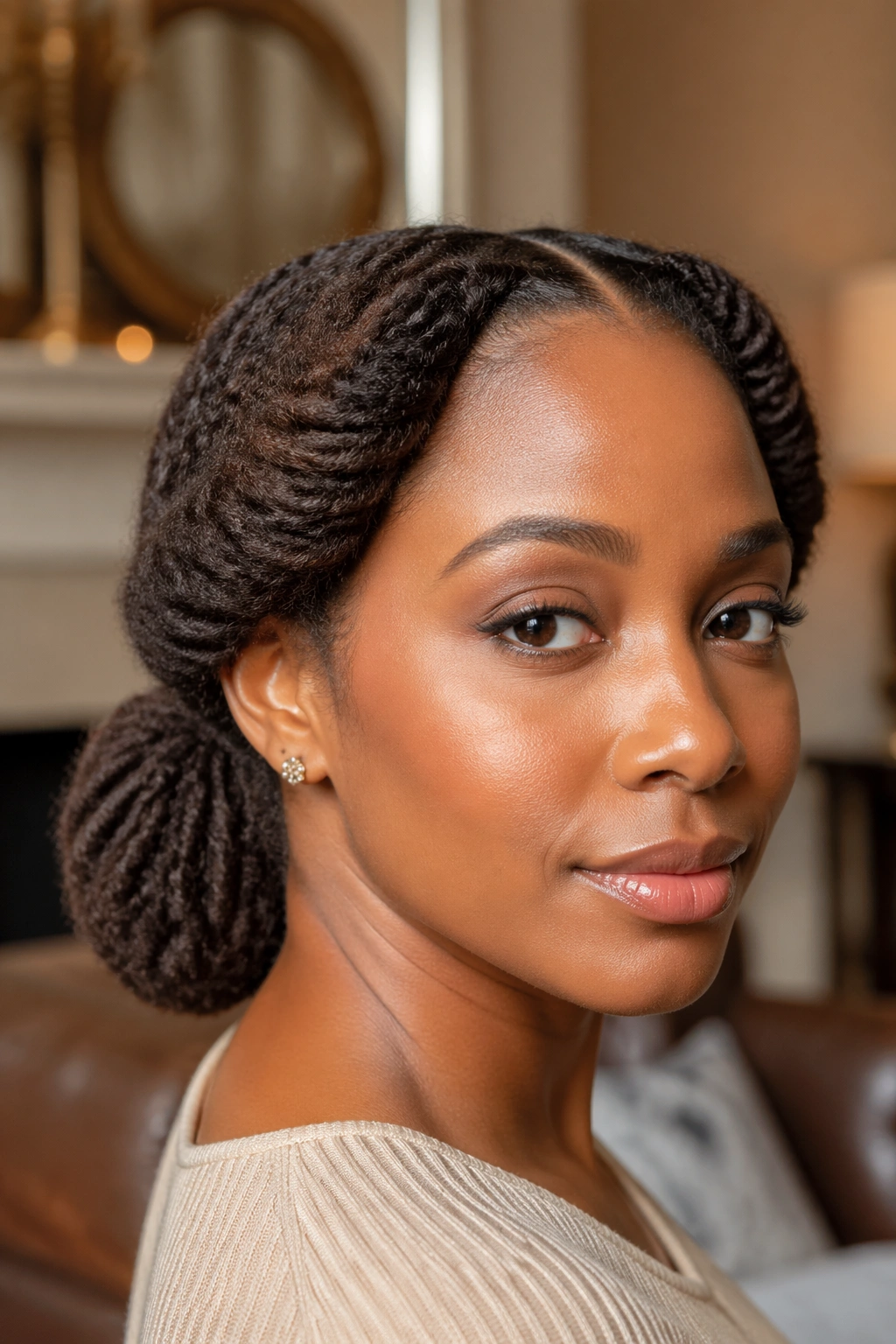
Rolled sides give the ponytail a clean, vintage shape that still works with locs. The hair on each side is rolled inward toward the nape, then pinned so the whole front looks smooth and rounded.
The style is useful when you want the face open but the hairline not completely slicked flat. It has a softer outline than cornrows and a more dressed-up feel than simply brushing everything back. On locs, the rolls also help gather stray growth along the sides, which can be handy when the roots are a little fluffy.
Keep the rolls low and even. If one side sits higher, the style looks lopsided fast. A middle or side part can work here, but the rolled shape should stay the star. It’s one of those styles that looks calm without being boring.
24. Off-Center Sleek Low Ponytail
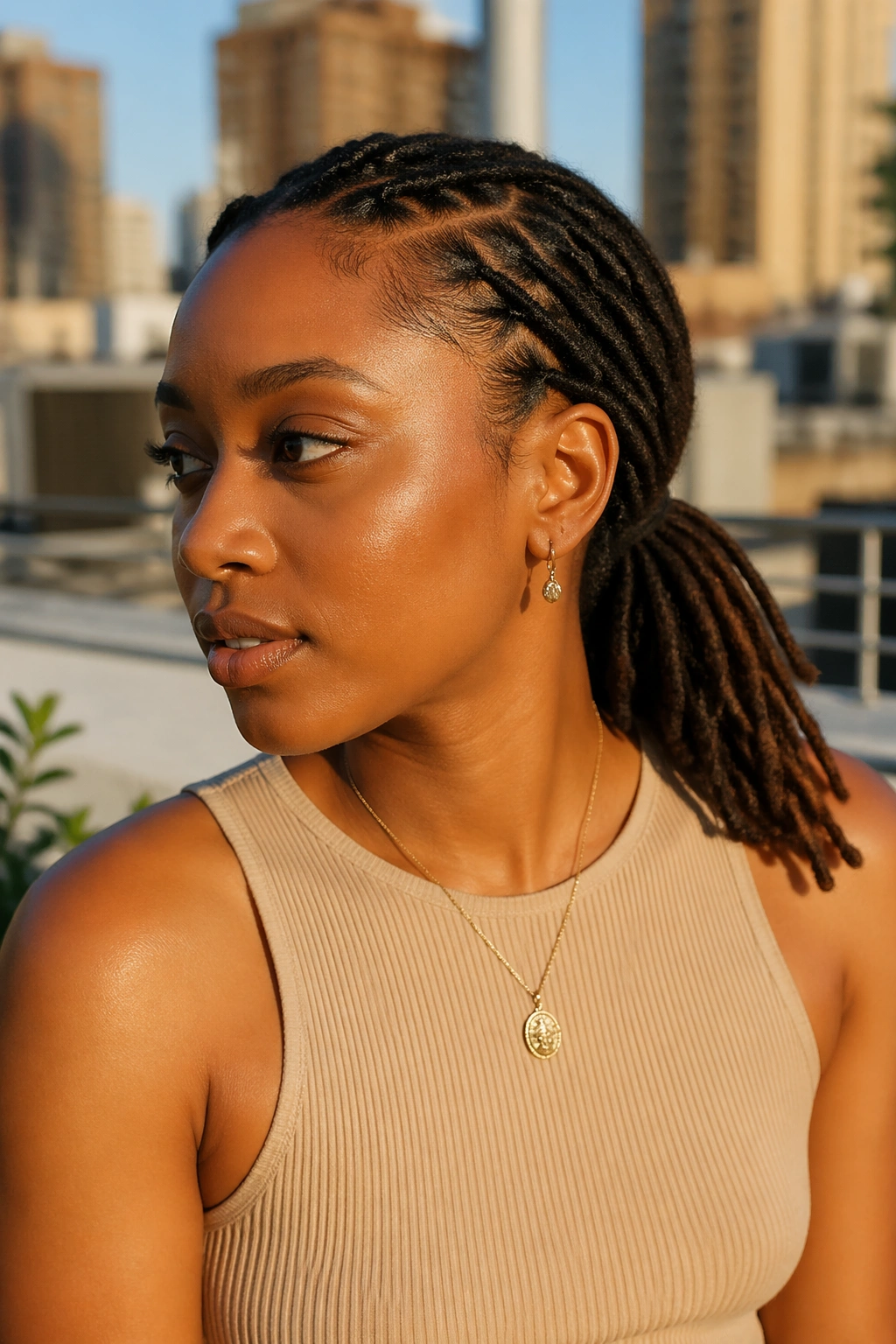
An off-center part is a nice compromise when a center line feels too strict and a deep side part feels too dramatic. It nudges the ponytail just enough to one side to soften the shape.
That small shift makes a difference with locs because the weight of the hair already gives the style plenty of presence. You do not need a dramatic part to create interest. Sometimes 1 or 2 inches off center is enough. The ponytail still sits low, still looks smooth, but the whole style reads less symmetrical and a bit more relaxed.
This works especially well if you have a strong jawline or a face shape that looks sharper with a little asymmetry. Keep the front smooth, let the tail sit at the nape, and avoid crowding the part with too much product. A little off-center polish goes a long way.
25. Long-Loc Low Ponytail with Body
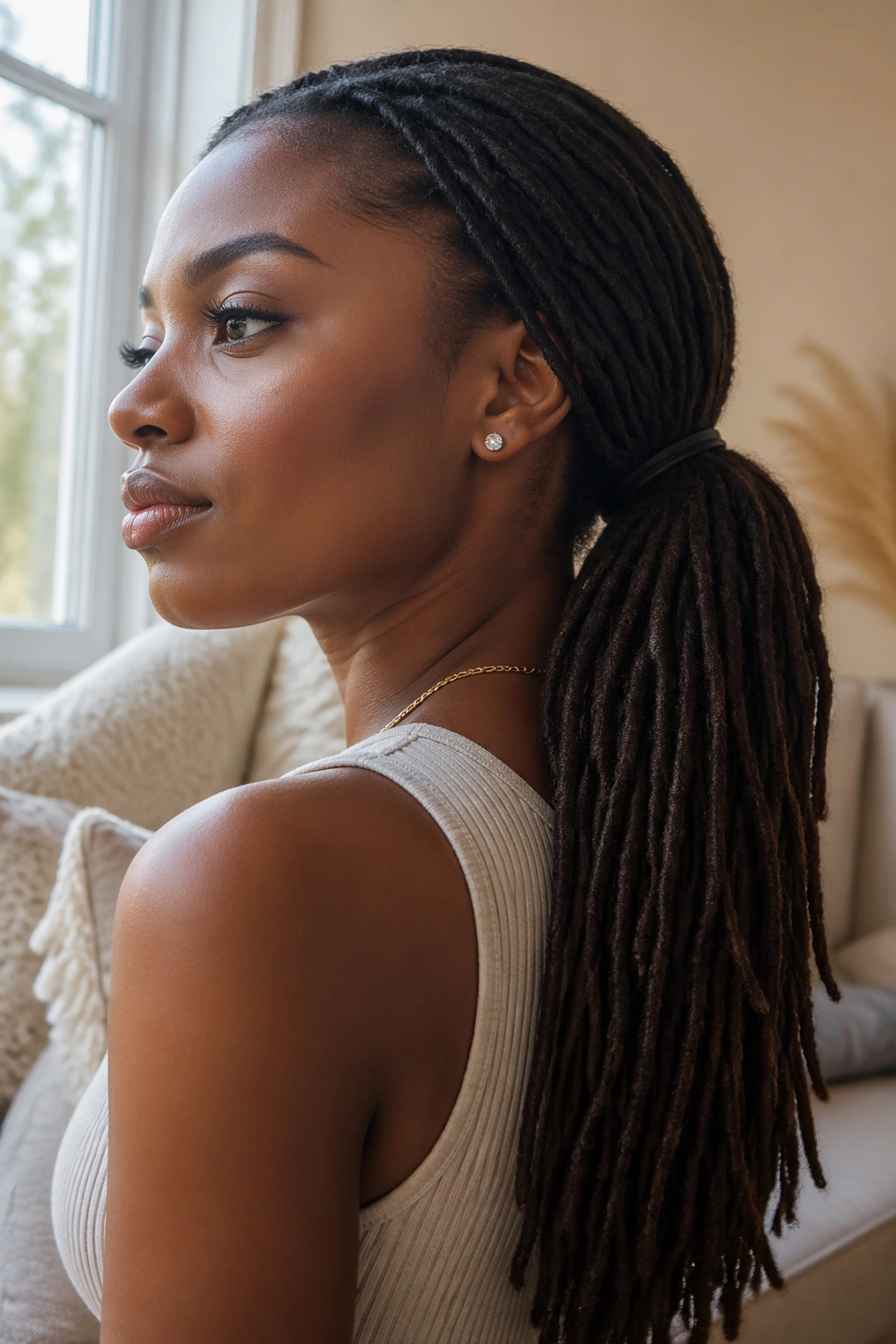
Long locs can make a low ponytail look heavy in a good way, but only if the base is secure enough to carry the length. This style leans into that weight instead of fighting it.
The key is not trying to flatten every strand. Let the tail have body. If the locs are waist length or close to it, the ponytail should drape rather than hang stiffly. A bungee cord helps here because it holds the base snugly without creating a bulky knot that keeps pressing into the head.
What Changes When the Tail Is Heavy
- Use a stronger elastic or bungee at the nape.
- Keep the roots smooth, but don’t force the tail into a thin line.
- Let the length fall naturally; too many accessories will make the base look crowded.
A long-loc ponytail with body looks expensive only because it has balance. Heavy, but controlled.
26. Short-Loc Low Ponytail
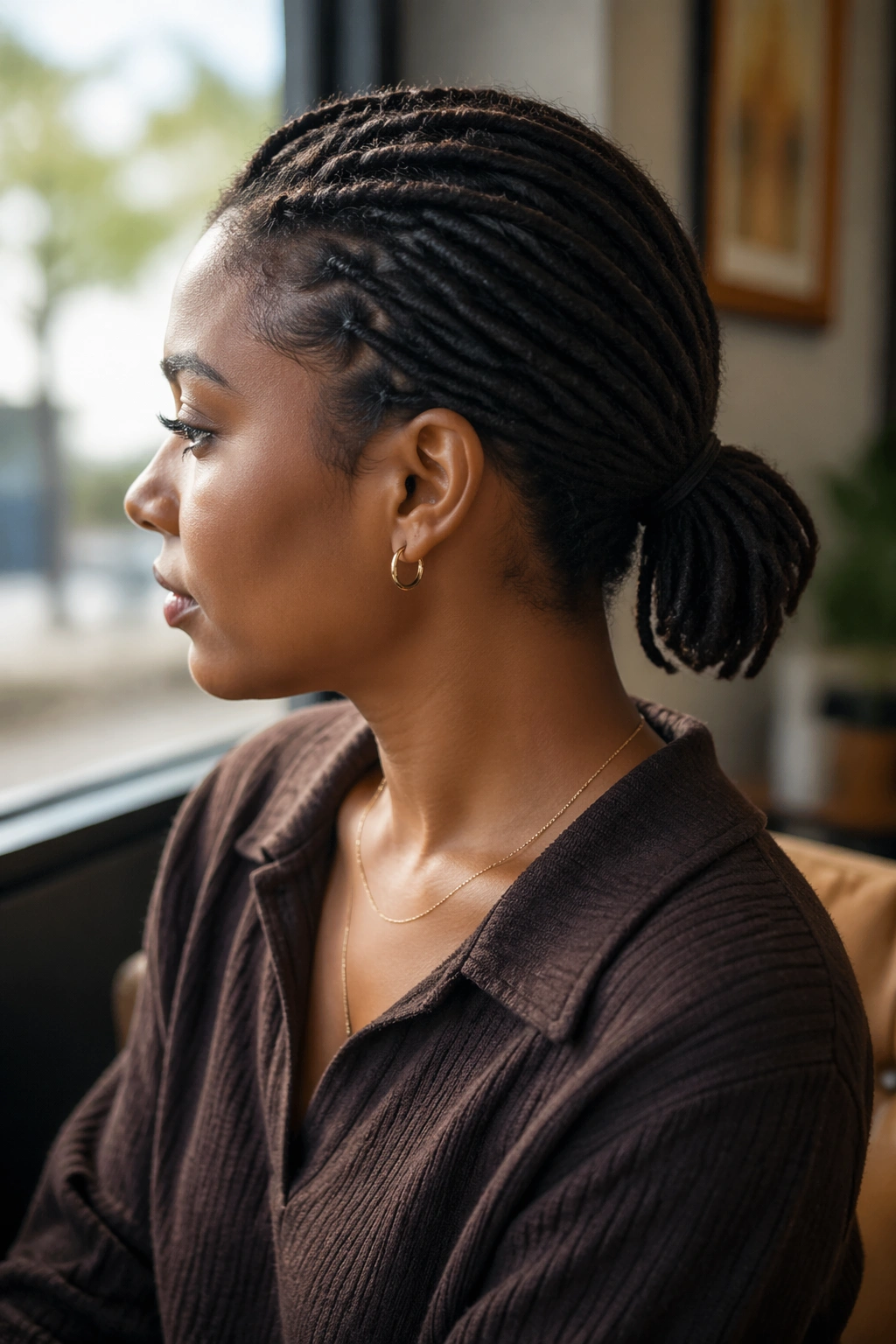
Short locs can absolutely do a low ponytail, and the style usually looks better when you stop expecting a long swinging tail. The charm is in the compact shape.
With shorter locs, the ponytail sits closer to the neck and reads more like a neat gathered bundle than a dramatic cascade. That’s not a flaw. It can look sharp, especially when the roots are clean and the line at the nape is tidy. If the locs barely reach the ponytail base, use a small elastic and keep the gather low and snug.
The best part is how easy this version is to wear. Less weight. Less pulling. Less fuss. You can add a cuff, a scarf, or nothing at all. The style still works because the shape is honest about the length it has.
27. Soft Everyday Low Ponytail
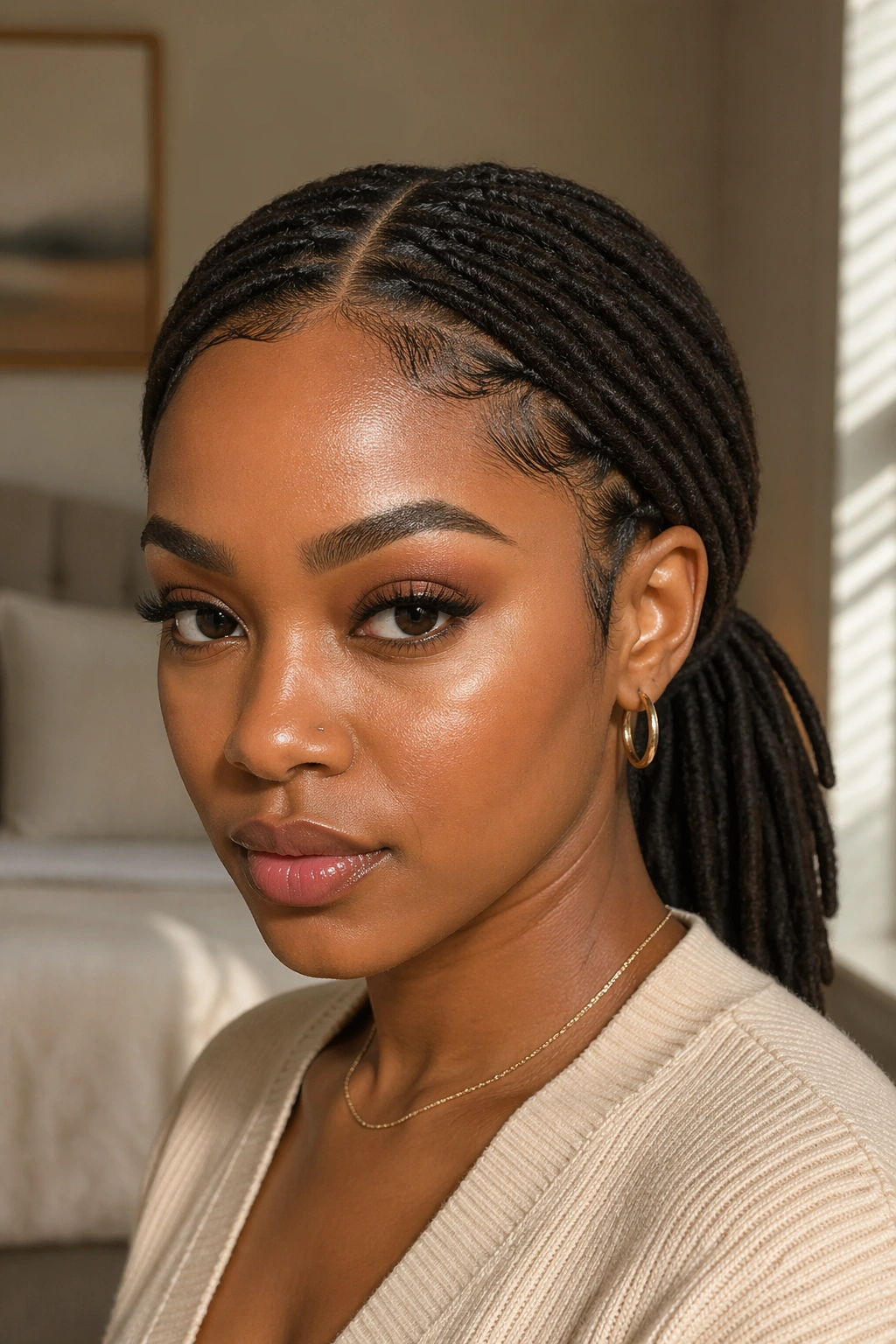
A soft everyday low ponytail is the one you keep coming back to when you want your locs to look cared for without looking staged. No dramatic part. No heavy accessory. No extra drama.
The style starts with a clean nape, a gentle part if you want one, and a tie that holds without biting into the roots. Let a few locs stay a little looser around the face if that helps the shape feel less severe. If the hair has a little frizz at the roots, that can stay. Sometimes that softness is what makes the style feel wearable instead of overdone.
The version I reach for most often is the one that looks good from every angle and still feels comfortable after a full day. That’s the real test, isn’t it? A low ponytail on locs should sit low, stay put, and let the texture do the talking.
