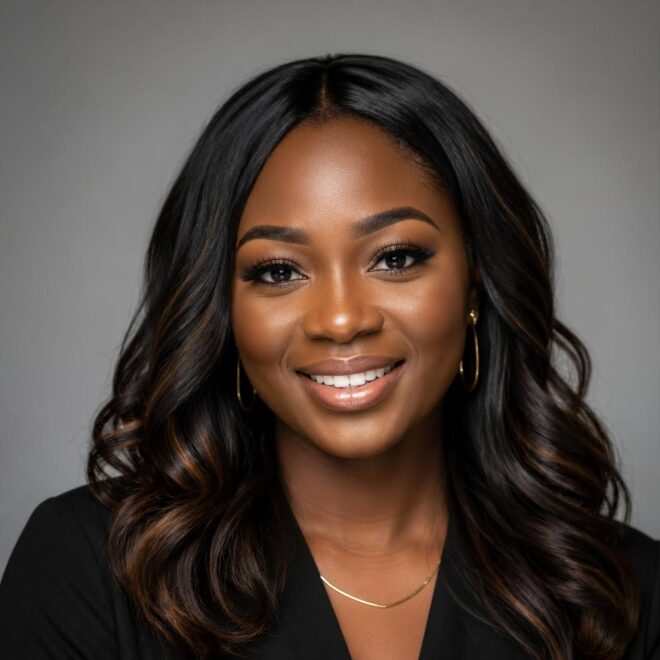


A short wavy shag can do more for a round face than a blunt cut ever will. The trick is not length alone; it’s where the volume sits, where the front opens up, and how much the ends are broken up so they don’t puff out at the cheeks.
When a shag is cut well, the hair bends in soft ridges instead of sitting in one round halo. That matters on a round face because the eye needs somewhere to travel. A little lift at the crown, a diagonal fringe, and cheekbone-skimming pieces can make the whole shape read longer without looking severe.
I also like that wavy hair takes to a shag so naturally. You do not need glassy blowouts or constant round-brush work; a decent mousse, a diffuser, and a stylist who knows how to point-cut can give you movement that looks lived-in rather than overworked. The bad version is easy to spot — too much width at the sides, blunt ends, or bangs that stop exactly at the widest part of the face.
The best short wavy shag styles for round faces usually borrow from the same idea: open the cheeks, lift the top, and keep the perimeter a little broken. Different shapes do that in different ways, and that’s where the fun starts.
1. Chin-Grazing Shag with Curtain Bangs
This is the safe bet I recommend first, and “safe” here is not a bad word. Chin-grazing length gives the face a little vertical line, while curtain bangs split the front and pull the eye down the center instead of across the cheeks.
Why It Flatters a Round Face
The curtain bang matters more than people think. If it starts around the cheekbone and sweeps away from the face, it creates a soft V shape that trims down the widest part of the face without looking harsh. The chin-length perimeter also keeps the hair from ballooning right at the jaw.
Ask for soft, point-cut layers through the crown and front, not a blunt line. The shortest front pieces should sit just below the cheekbone if your waves spring up a lot. That tiny detail changes everything.
A little mousse at the roots and a diffuser on low heat will keep the crown lifted. No need to overcook it. You want airy, not crunchy.
2. Jaw-Length Razor Shag with Side-Swept Fringe

A jaw-length shag with a razor-cut edge has a looser, cooler feel than a classic bob, and that looseness helps round faces a lot. The side-swept fringe breaks symmetry, which is exactly what a soft, circular face shape needs.
The razor work keeps the ends light, so the cut doesn’t sit like a helmet. That matters most if your waves are thick or springy, because blunt ends can make the lower half of the face look wider than it is. A side part also gives you a little extra height on one side, and that upward lift helps stretch the whole silhouette.
I’d wear this one with a touch of wave cream and then rough-dry it with your fingers. Skip the perfectly curled finish. The messier shape is the point.
3. French Shag with Cheekbone Bangs
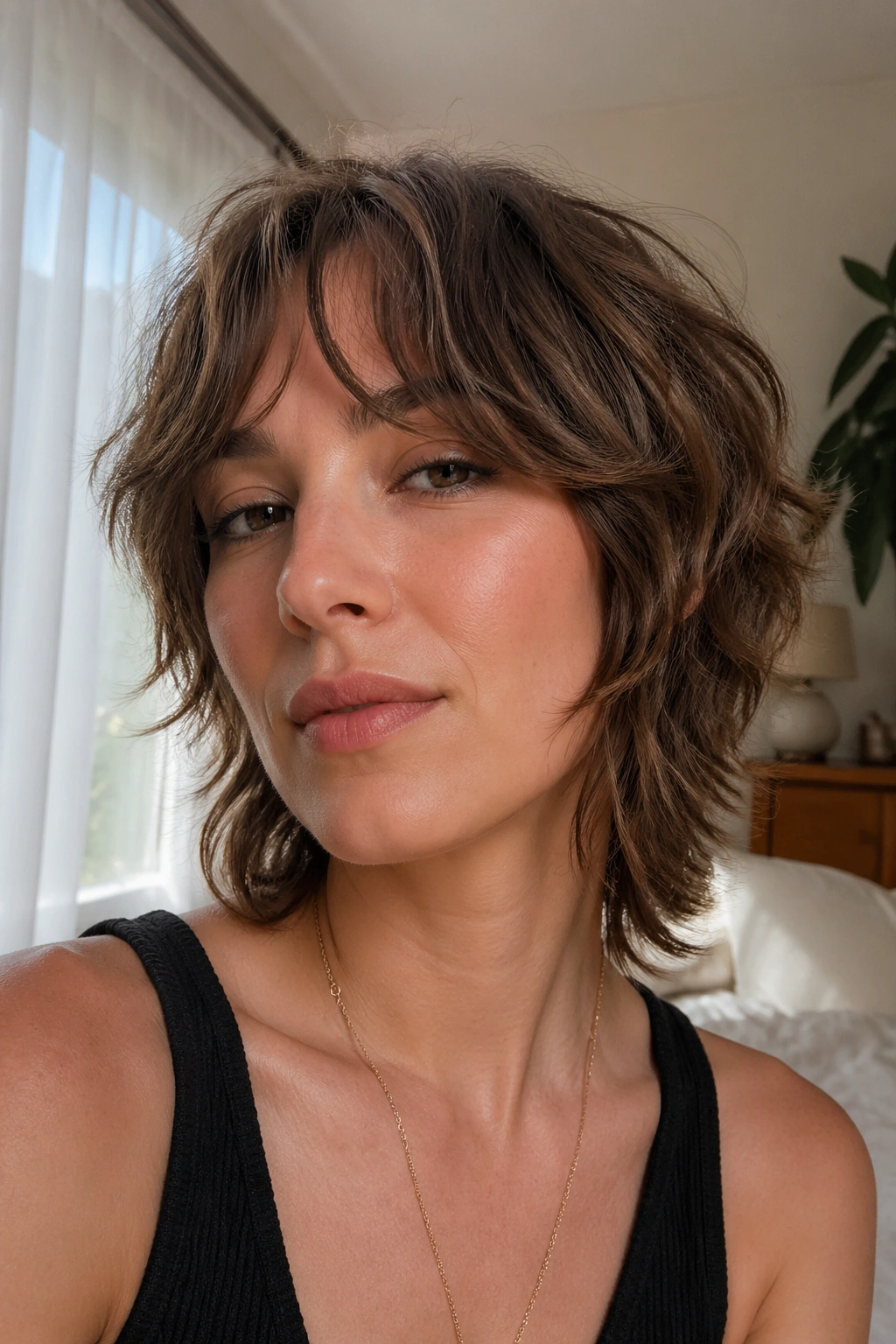
Why does this work so well on round faces? Because it puts the attention where you want it: at the cheekbones, not the cheeks themselves.
Cheekbone bangs are short enough to show some forehead, but long enough to bend away from the center of the face. When the fringe hits at the high point of the cheeks and then drops into shattered layers, the face reads a little longer and a little slimmer. It’s a smart cut, not a flashy one.
How to Style It
Use a small round brush only at the front. The rest can air-dry or diffuse.
- Mist the roots with a lightweight volumizing spray.
- Twist the fringe away from the face while it dries.
- Keep the sides piecey, not puffy.
- Finish with a pea-sized bit of paste on the ends.
This one looks best when the bangs are soft, not dense. Heavy bangs can shut the face in fast.
4. Cropped Pixie Shag with Longer Top Layers
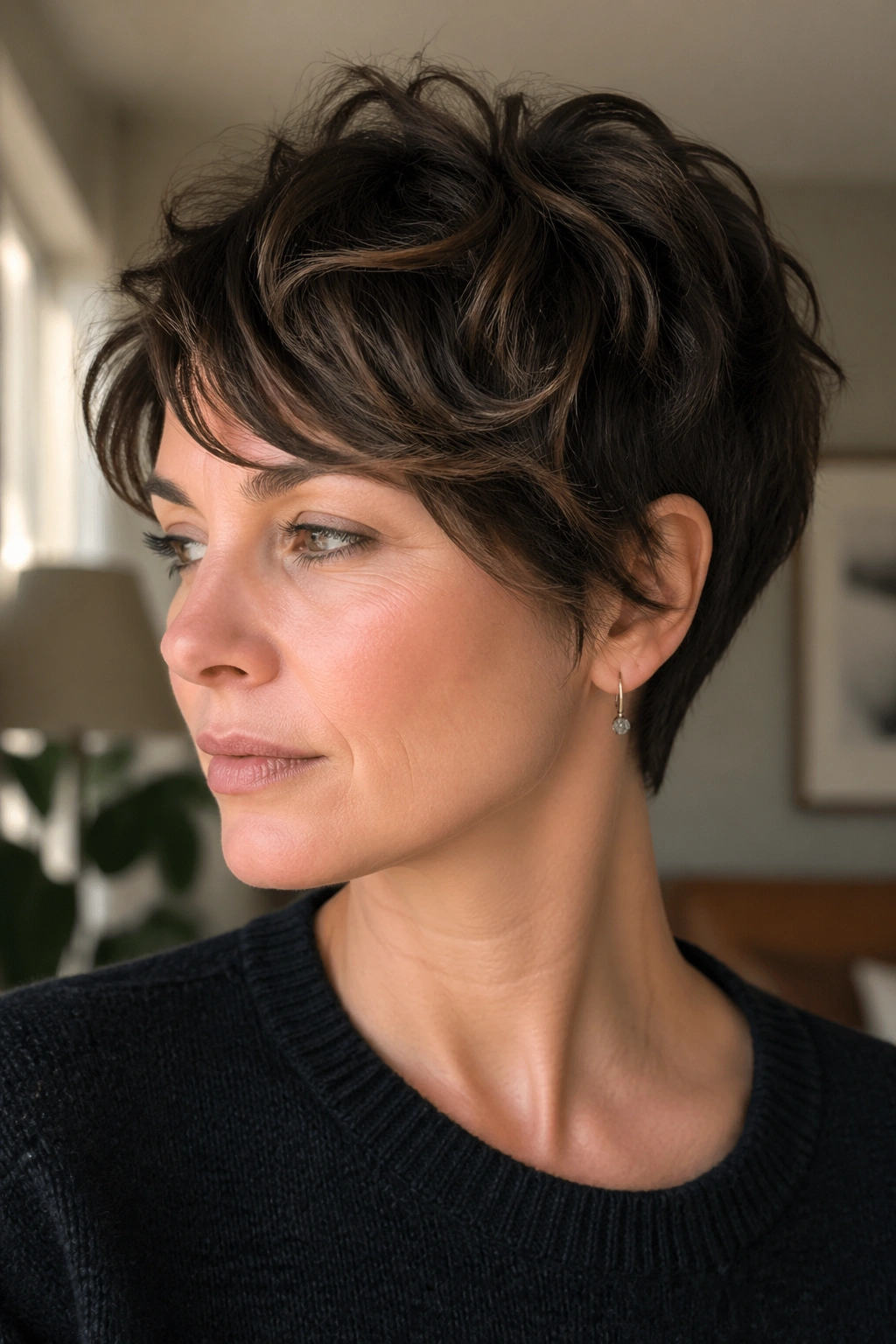
This is the shortest style on the list, and it’s a good one if you want your hair off your neck but still want movement. The secret is keeping the sides neat and the top a little longer, almost like a tousled cap of texture.
Round faces benefit from height on top. A cropped pixie shag gives you that height without dragging attention to the jaw. The top layers can be pushed up, forward, or to the side, which means you can change the shape day to day. That flexibility helps a lot when your face already has soft curves.
It’s also a nice choice for glasses wearers. The cut clears the frames and keeps the whole look intentional. Very short, yes. Flat, no.
5. Collarbone-Lite Shag Bob with Broken Ends
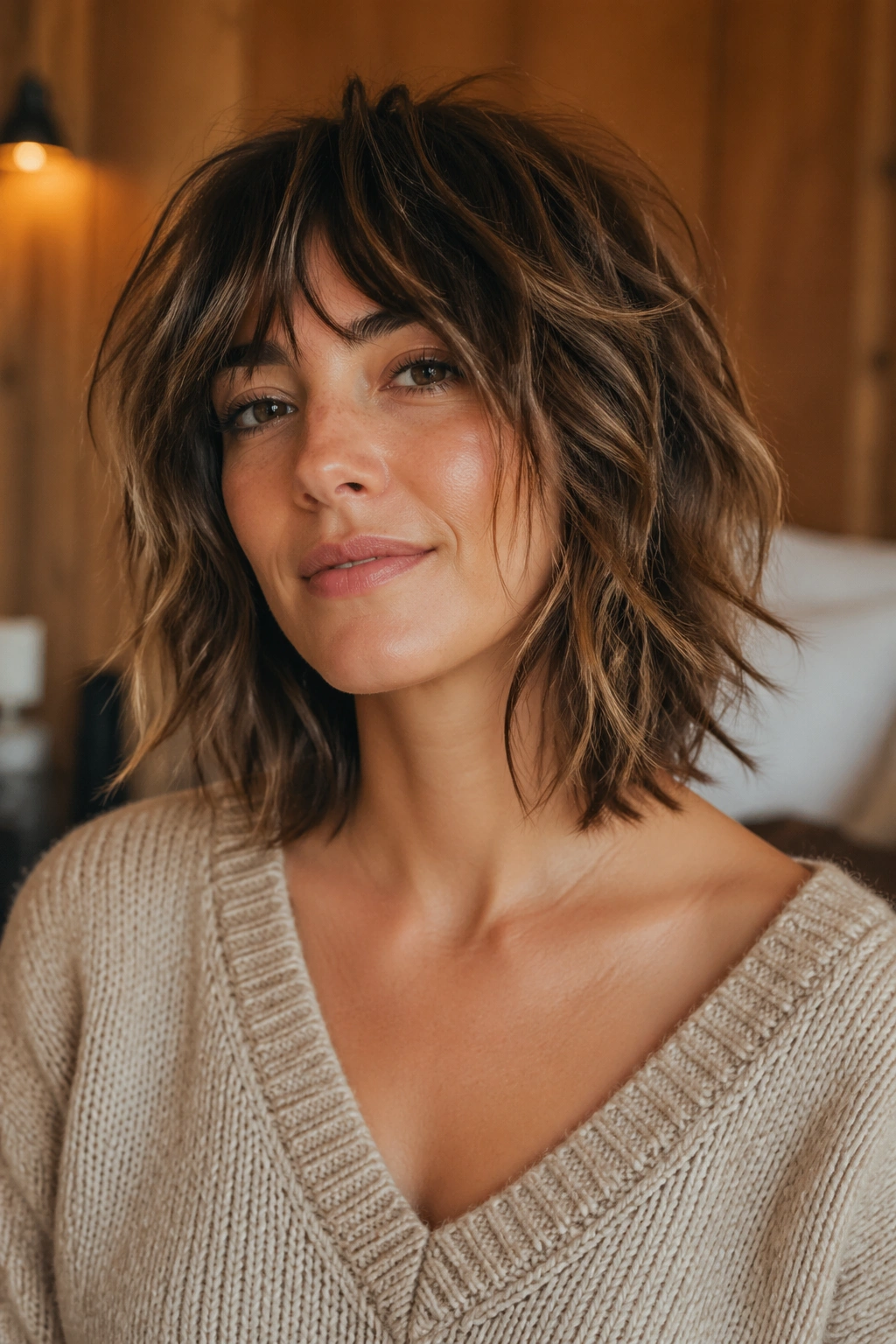
Not every “short” shag has to stop at the jaw. A collarbone-lite version gives you a little more length, and that extra inch or two can be a gift on a round face. The front pieces trail below the chin, which pulls the eye downward instead of outward.
This is the style I’d pick if you like your hair to feel touchable and not overly styled. The broken ends keep the outline soft, and the longer front prevents the cut from spreading across the widest part of the face. It’s the kind of haircut that looks good with a knit sweater, a sharp blazer, or a plain T-shirt. Easy. No drama.
If your waves are loose, ask for layers that start around the mouth and melt downward. If your waves are tighter, keep the layers a bit longer so the shape doesn’t puff.
6. Micro-Bang Short Wavy Shag
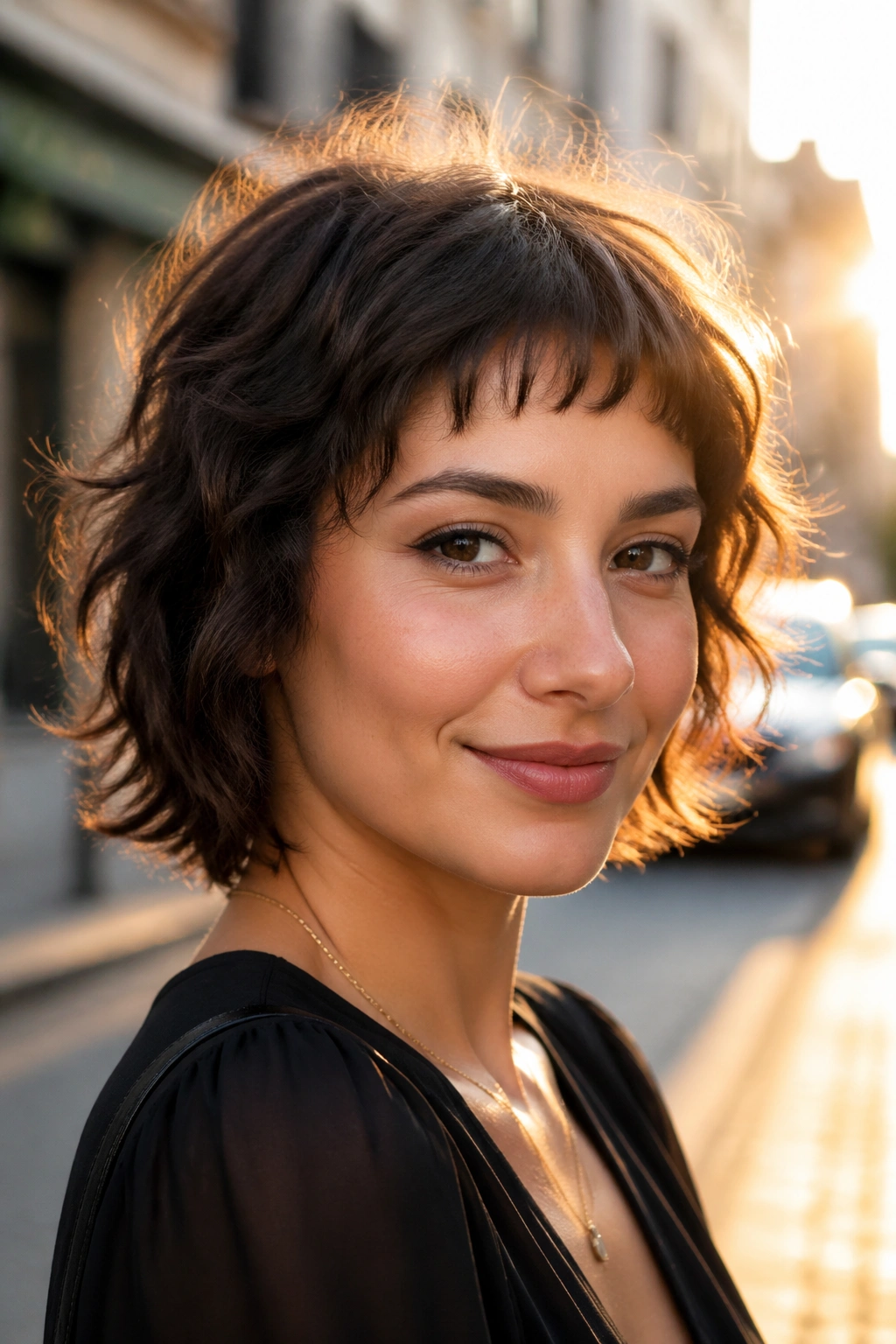
Micro bangs can work on round faces, but only when the rest of the cut is airy enough to balance them. A thick, boxy fringe is a bad idea here. A wispy, broken micro bang is something else entirely.
The short bang opens up a lot of the face, which keeps the cheeks from feeling boxed in. Meanwhile, the shaggy sides and top add height and movement, so the face doesn’t look shortened. That contrast is the whole trick. It’s edgy, a little artsy, and much more wearable than people assume.
The important thing is restraint. Ask for soft ends, not a hard little shelf. If the fringe is sparse and the crown has lift, the look feels cool. If the fringe is dense and blunt, it can turn fussy fast.
7. Deep Side-Part Shag Bob
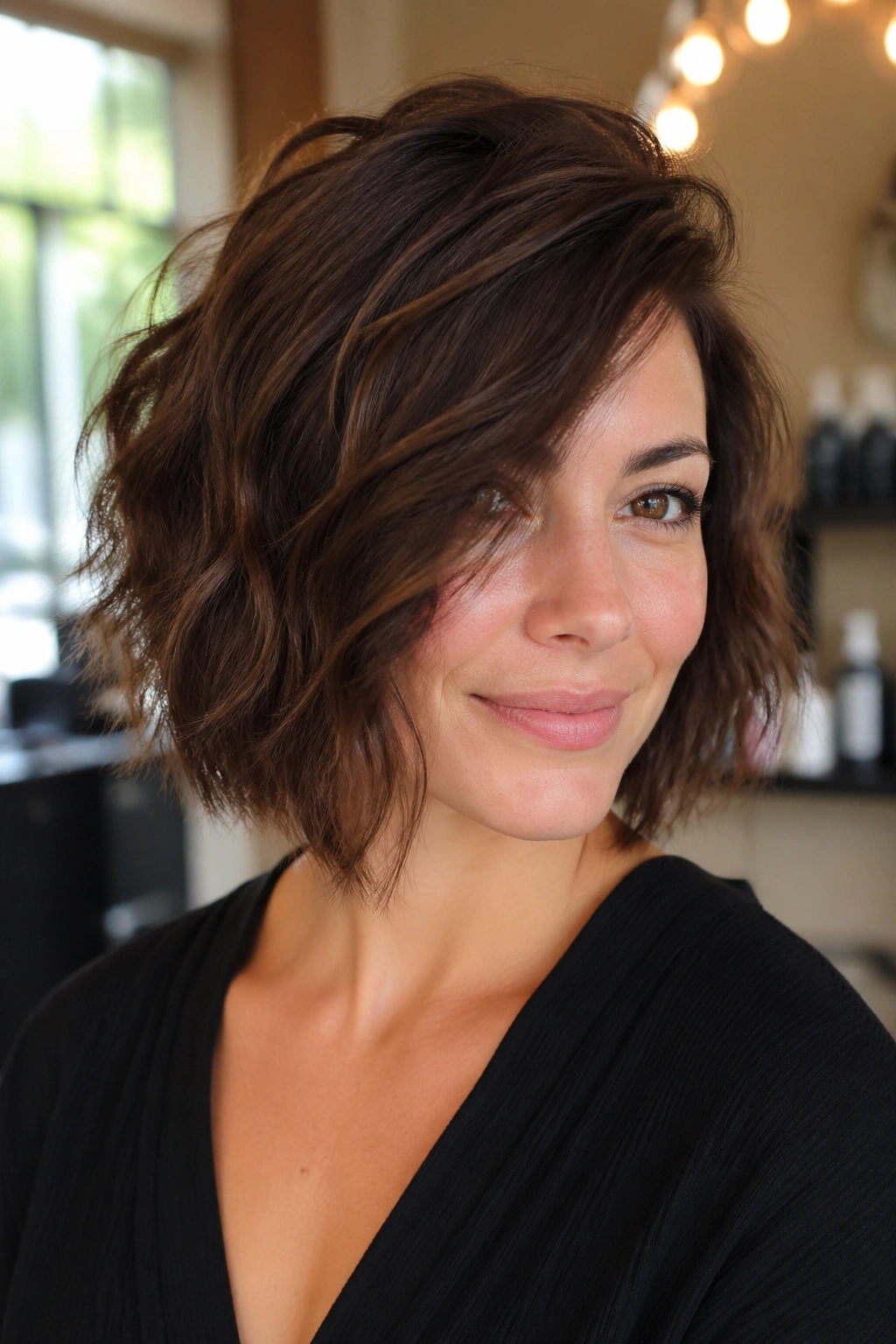
A deep side part changes the whole mood of a short wavy shag. Suddenly the face looks less symmetrical, and that asymmetry is useful on a round face because it interrupts the circular outline.
The part creates a strong line from the scalp down across the forehead, while the heavier side drops softly along the cheek. That diagonal direction does real work. It makes the eye travel, and anything that makes the eye travel is doing you a favor here.
This is one of the easier styles to wear if you like second-day wave. You can mist the roots, flip the part, and scrunch the mids with a tiny bit of texture spray. Done. It does not need a lot of fuss to look finished, which I appreciate.
8. Wolfy Crop with a Tapered Nape
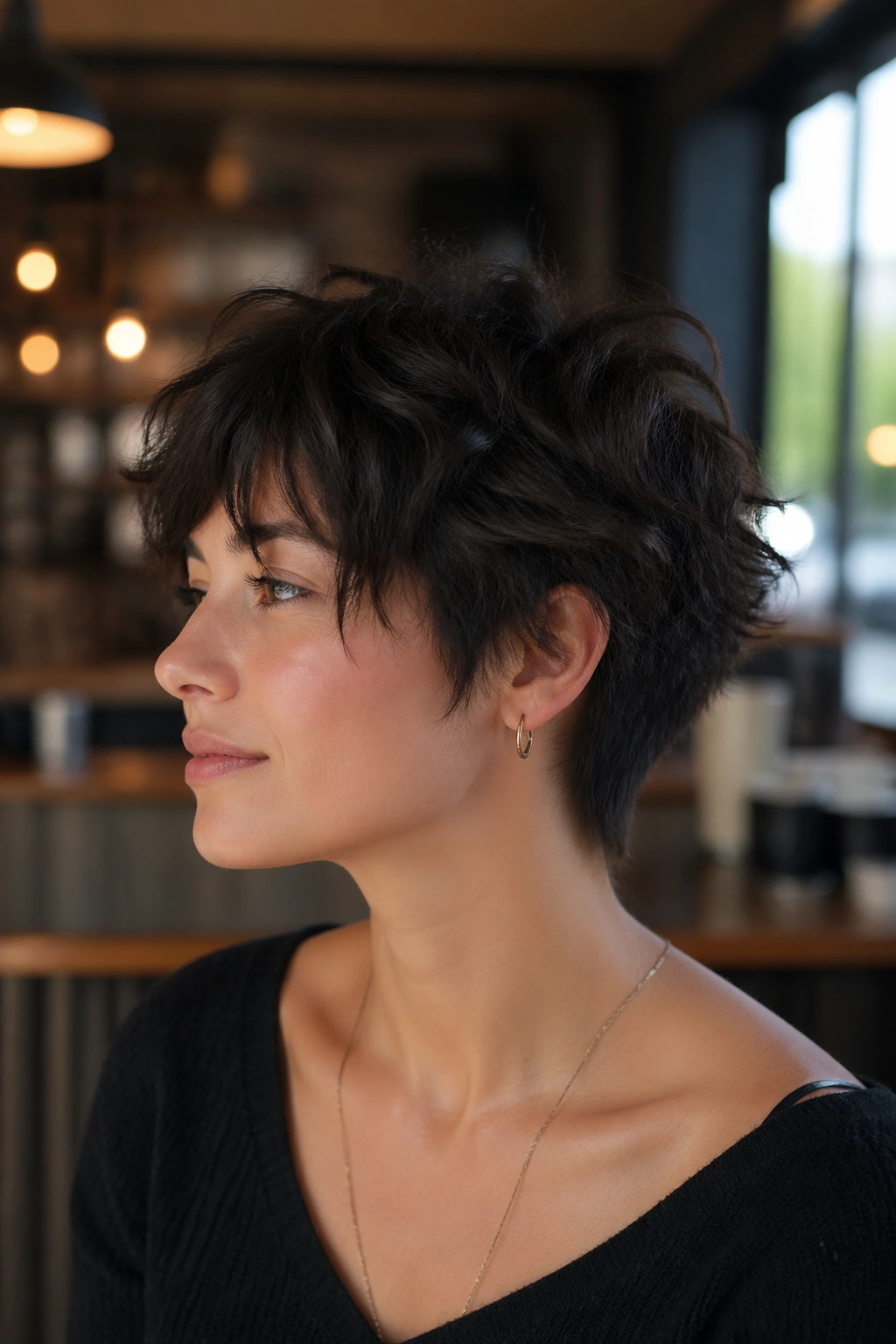
The wolfy crop sounds bold, but the short version is surprisingly wearable on a round face when the nape is tapered. That tighter back keeps the shape from turning puffball-shaped, which is the last thing you want.
What makes this cut work is contrast. The top stays a little wild, the sides stay controlled, and the back gets snug to the neck. That mix keeps the silhouette narrow through the lower half of the face and gives the crown some lift. It’s especially useful if your waves have a loose bend that likes to expand when they dry.
What to Ask Your Stylist
- Keep the nape snug and clean.
- Leave enough length on top to push forward or to the side.
- Use soft layering around the temples.
- Avoid over-thinning the ends.
That last point matters. Too much thinning can make the cut fray out.
9. Feathered Short Shag with Lifted Crown
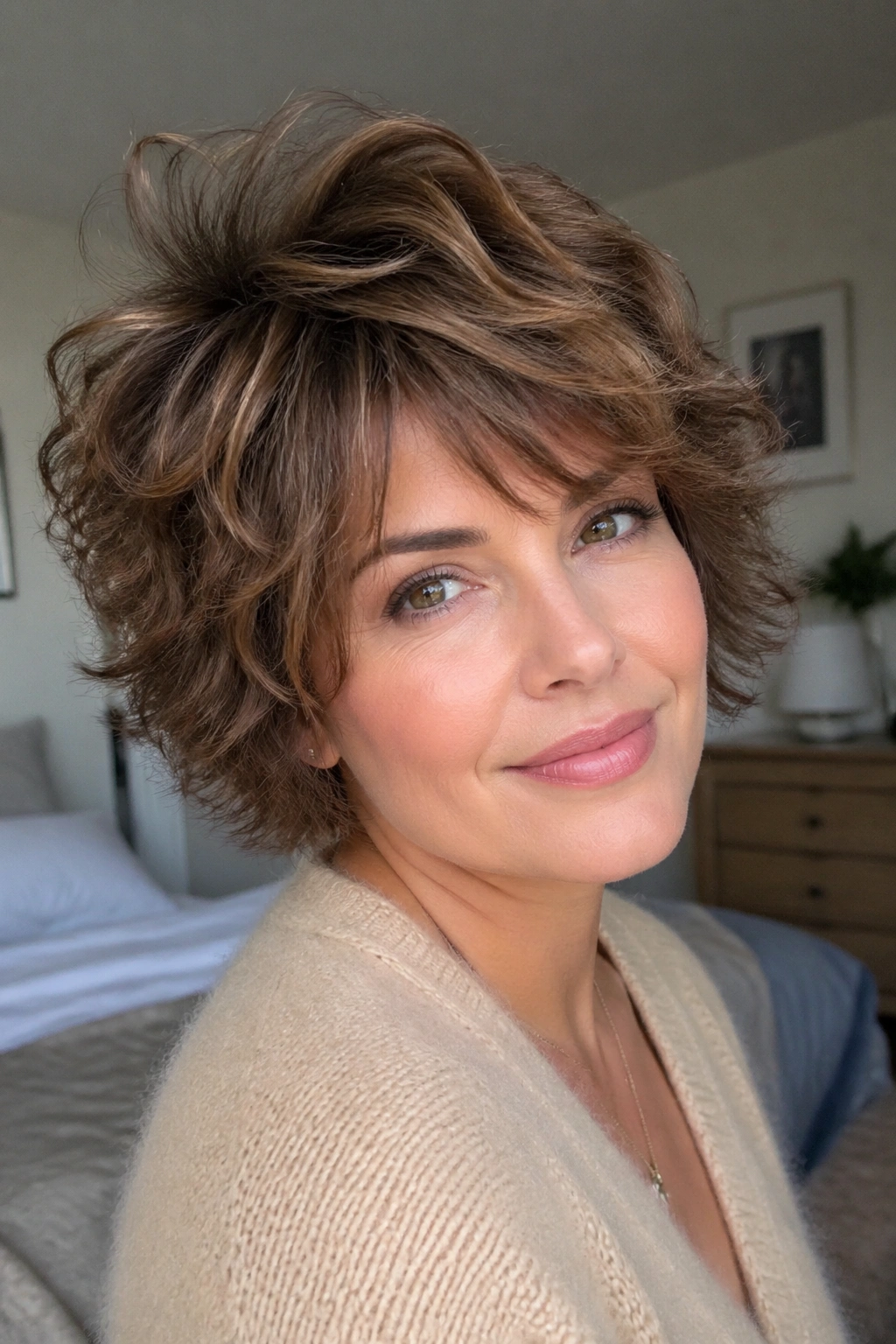
Feathered layers are one of the smartest tools for round faces because they remove bulk without making the haircut look harsh. The layers slip past each other, so the overall shape stays light and narrow instead of wide and heavy.
This style is especially kind to thick wavy hair. Thick waves can get too triangular when they’re cut into a heavy line, and feathering stops that fast. The crown gets a little lift, the mids stay soft, and the ends don’t sit in one blunt block. That combination gives you movement even when the hair isn’t freshly styled.
If you want this cut to look good on day two and day three, use a light leave-in and let the waves fall where they want. The pieces should move. If they look stiff, the haircut loses its charm.
10. Bottleneck Bang Shag
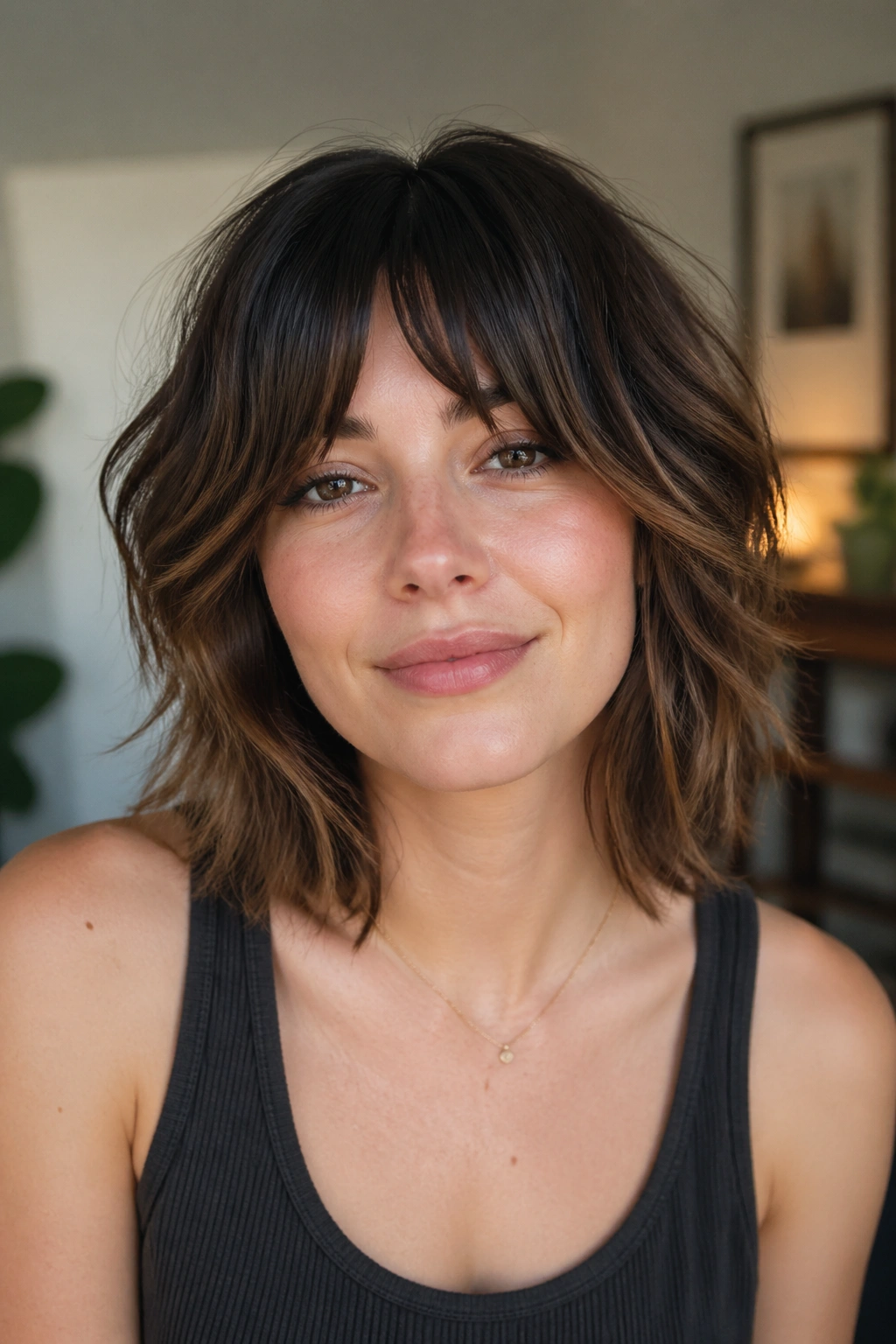
Bottleneck bangs are one of those shapes that looks complicated but makes perfect sense once you see it. The center of the fringe sits shorter, then it widens as it reaches the cheekbones, which makes the face look longer and more sculpted.
On a round face, that widening-and-dropping shape matters. It frames the center of the forehead without creating a hard line across the face. Then the longer sides connect into the shag layers, so the whole cut feels connected instead of chopped up.
Why It Feels Softer Than Regular Bangs
Regular straight bangs can cut a round face in half. Bottleneck bangs do the opposite. They open from the middle outward, which lets the eye move down the face in a more natural way.
They also work well with waves because the bend helps the fringe settle into that soft flare shape. I’d style them with a small brush and a quick twist away from the cheeks. Not much more.
11. Face-Framing Shag Bob
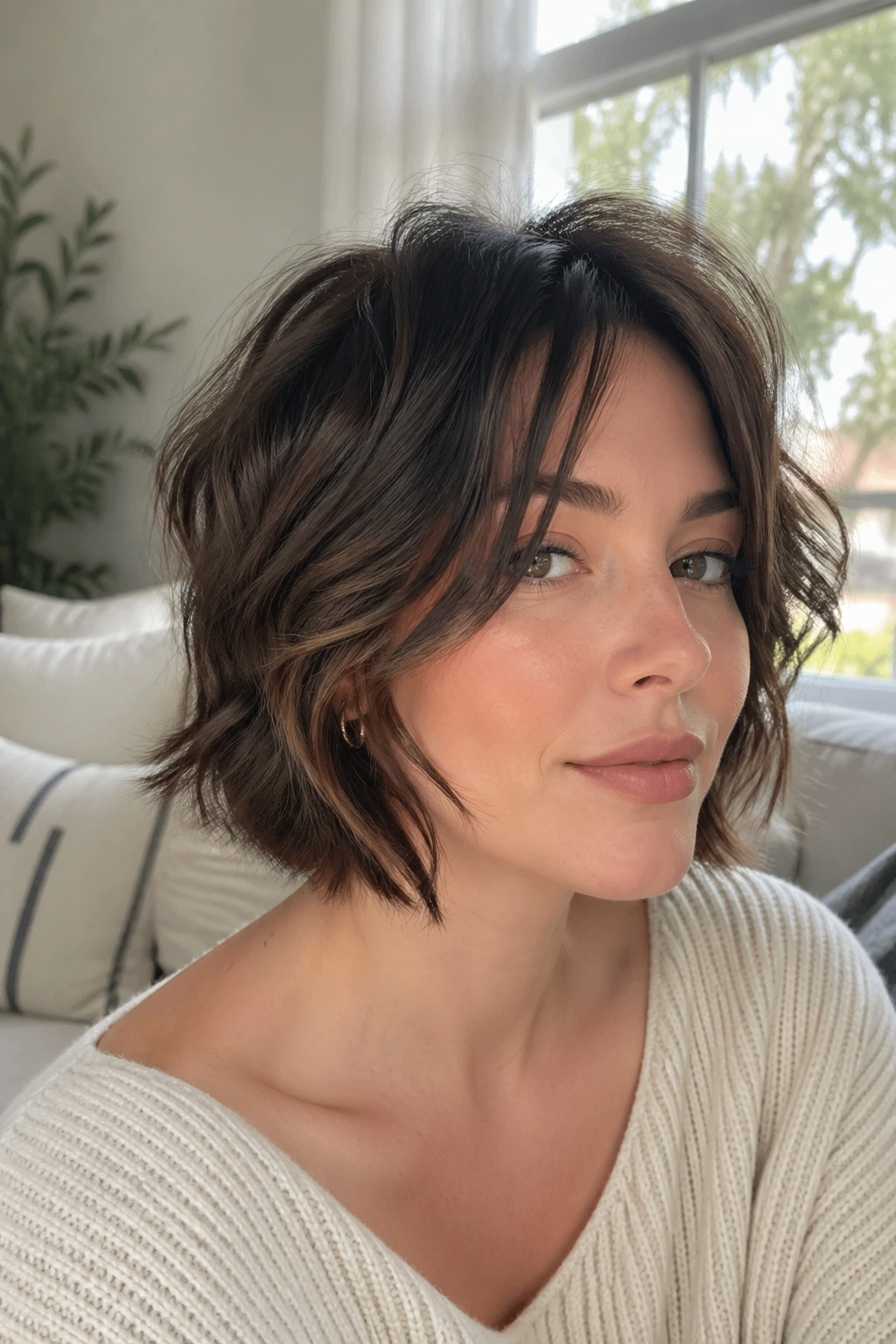
This is one of the most useful short wavy shag shapes because it gives you structure without weight. The front layers are the star here, and they should begin below the cheekbone so the cheek area stays open.
If the layers start too high, the face can feel crowded. If they start too low, you lose the slimming effect. The sweet spot is that narrow band between the mouth and the jaw, where the hair can skim the face without sitting on it. That little strip of open space matters.
A face-framing shag bob also plays well with most partings. Center part, side part, soft zigzag — all of them can work. Keep the ends rough and the front a little longer than the rest. That’s the formula.
12. Asymmetrical Wavy Shag
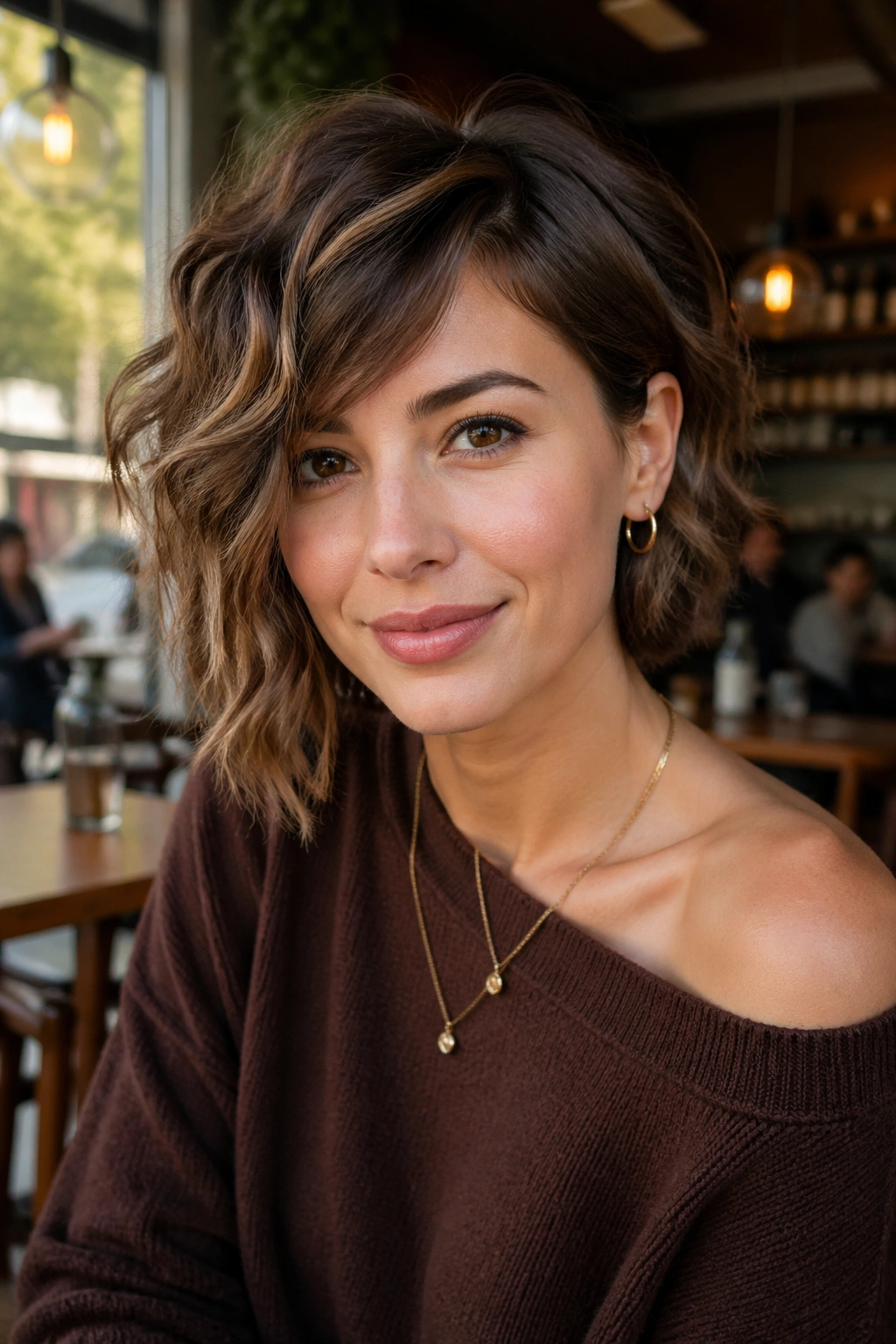
A slight asymmetry can be a lifesaver on a round face. Not a dramatic one, not a lopsided haircut that shouts for attention. Just enough difference from side to side that the shape stops reading as a perfect circle.
One side can sit a touch longer around the jaw while the other side lifts near the cheek. That uneven line tricks the eye in the best possible way. It gives the face angles it didn’t have before, and angles are your friend here.
This style looks especially nice when one side tucks behind the ear. That little move exposes the cheekbone and breaks up the width. The trick is to keep the asymmetry soft, because hard asymmetry can start to feel costume-y fast.
13. Crown-Lifted Crop Shag
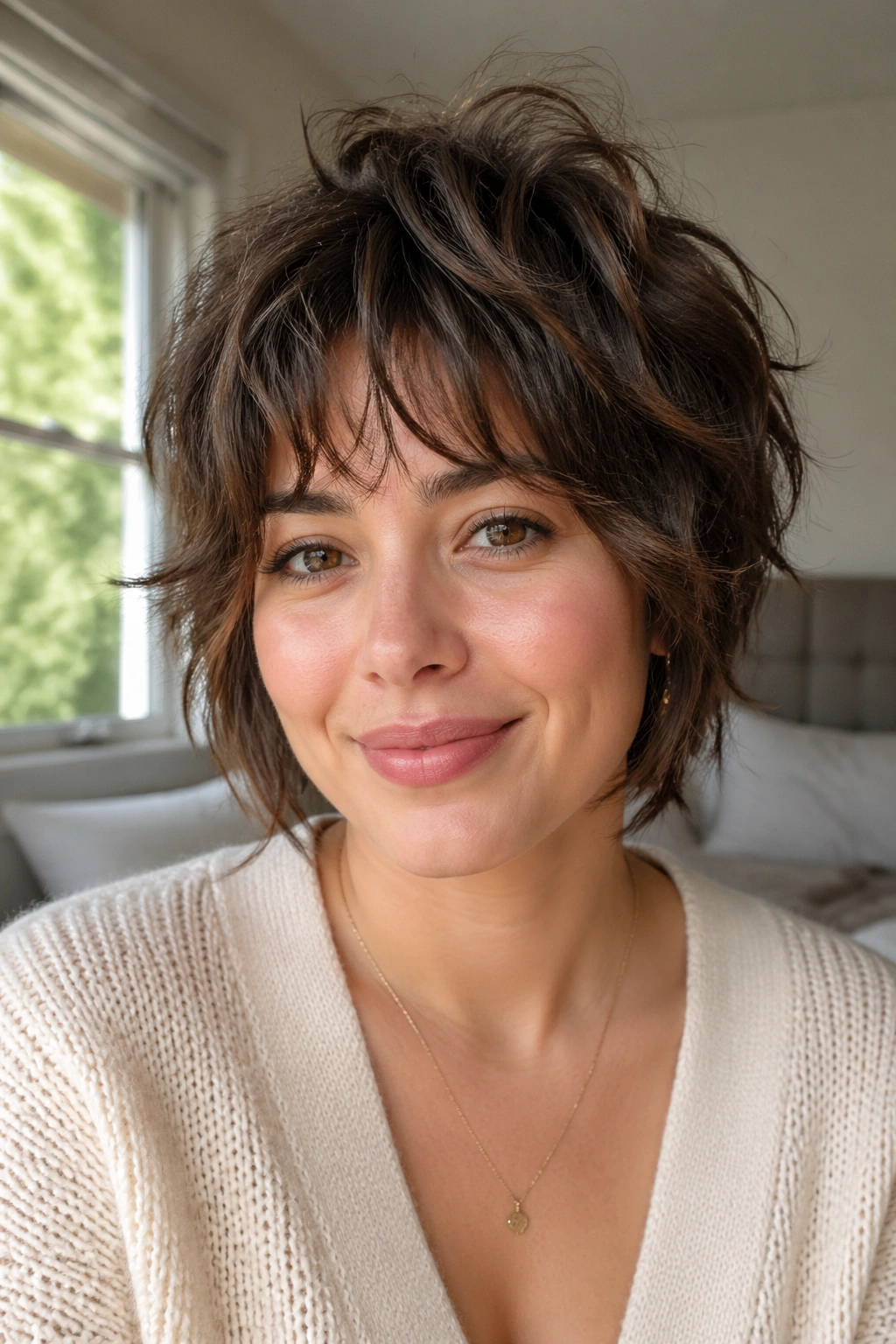
A crown-lifted crop shag is all about vertical space. You keep the sides fairly close and build most of the visual interest at the top, which stretches a round face in a very clean way.
The Shape That Does the Work
Think of it like this: the eye starts at the lifted crown, then travels downward through the face-framing pieces. That line creates length, and length is what keeps a round face from reading wider than it is.
This cut is a good fit if your hair is fine or medium-fine, because it can look fuller without needing a lot of length. Use a root-lifting spray or a mousse at the base, then dry the roots up and away from the scalp. The ends should stay soft, not stiff.
Blunt volume at the sides is the enemy. Lift at the top, softness at the edge. That’s the whole game.
14. Piecey Fringe Shag
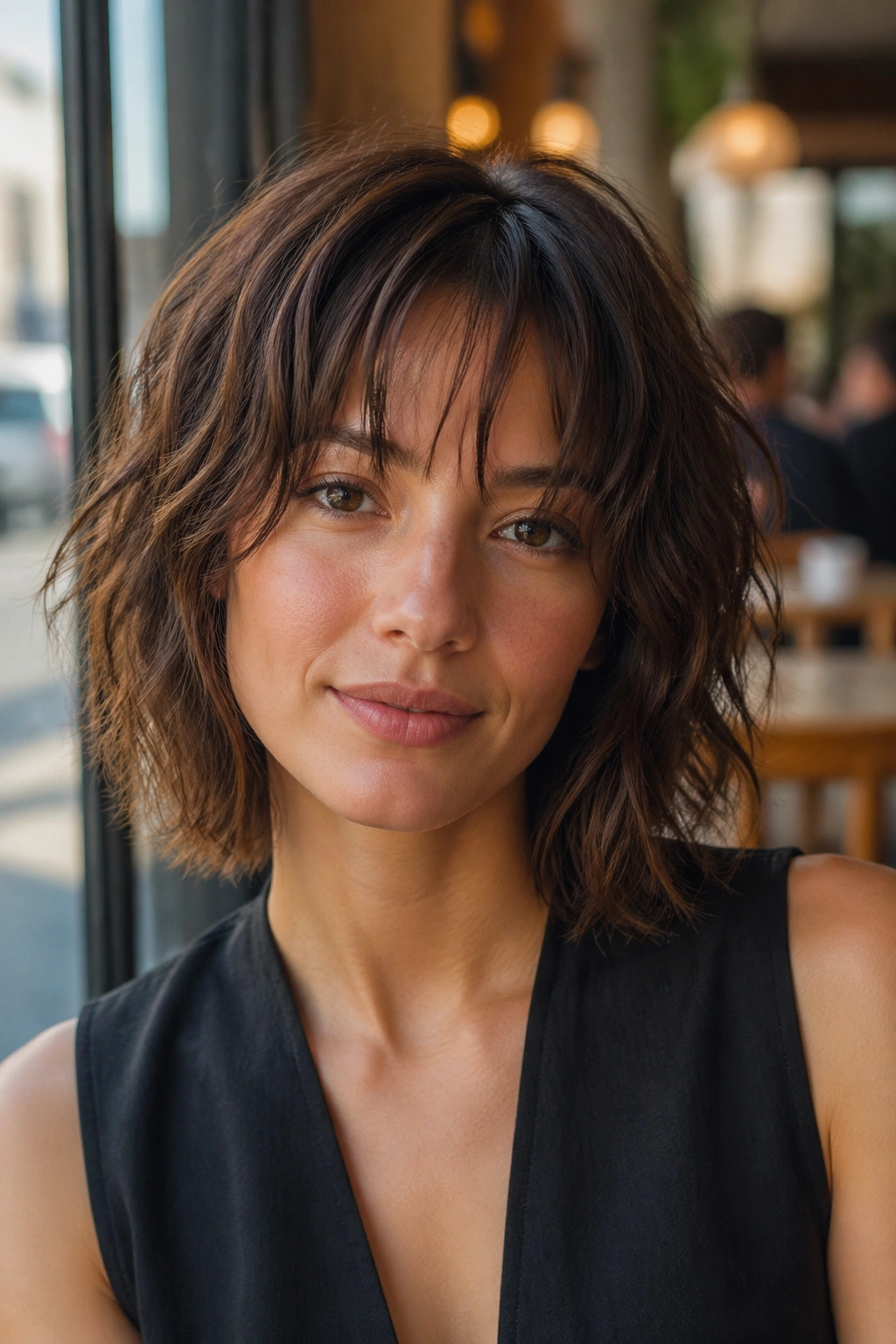
Piecey fringe is the opposite of a heavy, one-piece bang, and that difference matters a lot on round faces. Instead of one solid bar across the forehead, you get little separated strands that let the face breathe.
The fringe can be cut a little longer in the center and shorter near the temples, which gives it movement and keeps it from widening the face. On wavy hair, this kind of fringe settles in quickly because the natural bend helps break it up. That’s a nice bonus. Less fighting, more wearing.
I like this look most when the hair is lightly tousled, not polished. A matte paste or dry texturizing spray works well. Too much shine, and the fringe starts to clump. Keep it feathered and you’re fine.
15. Wet-Texture Short Shag
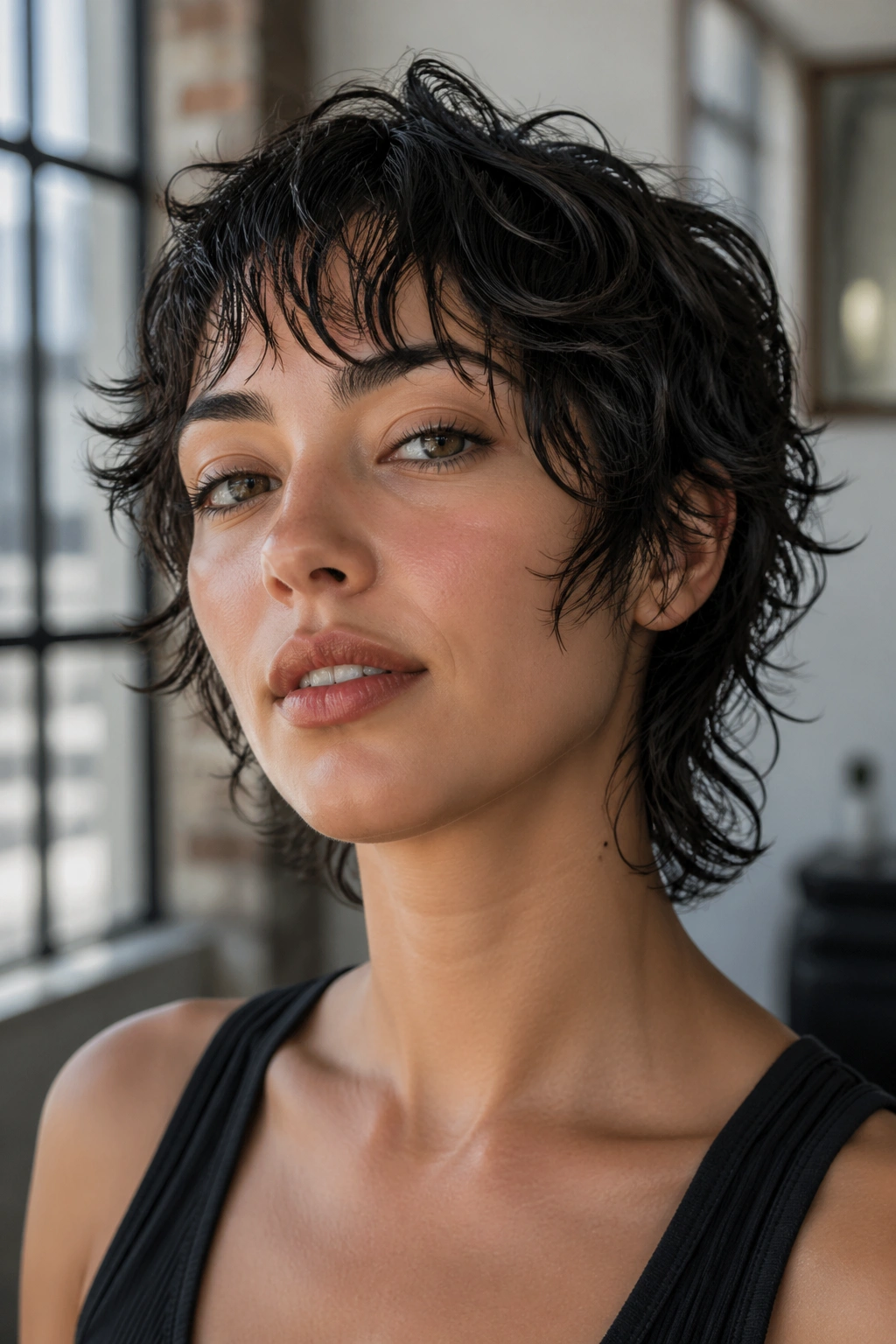
A wet-texture shag has a sharp, almost editorial feel, but it can still flatter a round face because it keeps the sides close to the head. The shape reads longer when the waves are defined and controlled instead of blown wide.
This is one of the few short shag looks that can lean sleek and still feel current. Use a gel-cream mix or a light curl gel on damp hair, rake it through, then scrunch just enough to coax the wave pattern. The result should look glossy and piecey, not crunchy. If you see flakes, you used too much.
Best Use for This Look
- Evening events.
- Humid weather, when loose waves get puffier.
- Shorter cuts that need a more sculpted outline.
- Hair that holds shape well.
It’s not the easiest daily style, but it does make a round face look a touch longer because the hair doesn’t fan outward.
16. Mullet-Leaning Short Shag
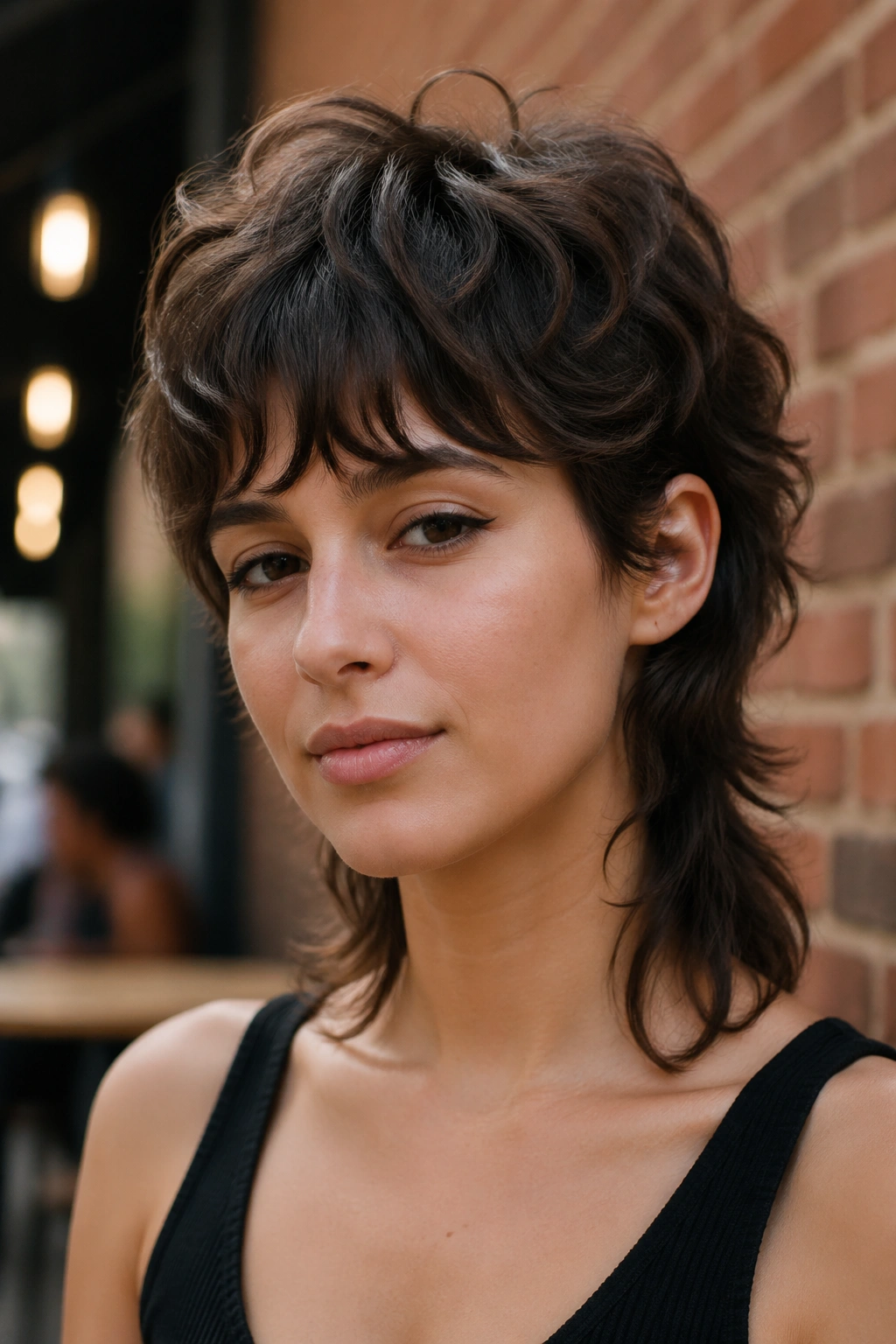
A mullet-leaning shag is not for everyone, and I think that honesty helps. Still, on a round face, the shape can be excellent because it keeps the front and sides more compact while letting the back carry length.
That back length gives the eye somewhere to go. The front stays light and broken, so the face doesn’t get trapped inside a wide frame. If you want something with personality, this is one of the stronger choices. It’s got edge, but it can still be soft when the waves are loose and the transitions are blended.
The key is not to overdo the contrast. If the front is too short and the back too long, it can feel costume-like. Keep the shift subtle, and it becomes a very flattering shape.
17. Flipped-End Shag Bob
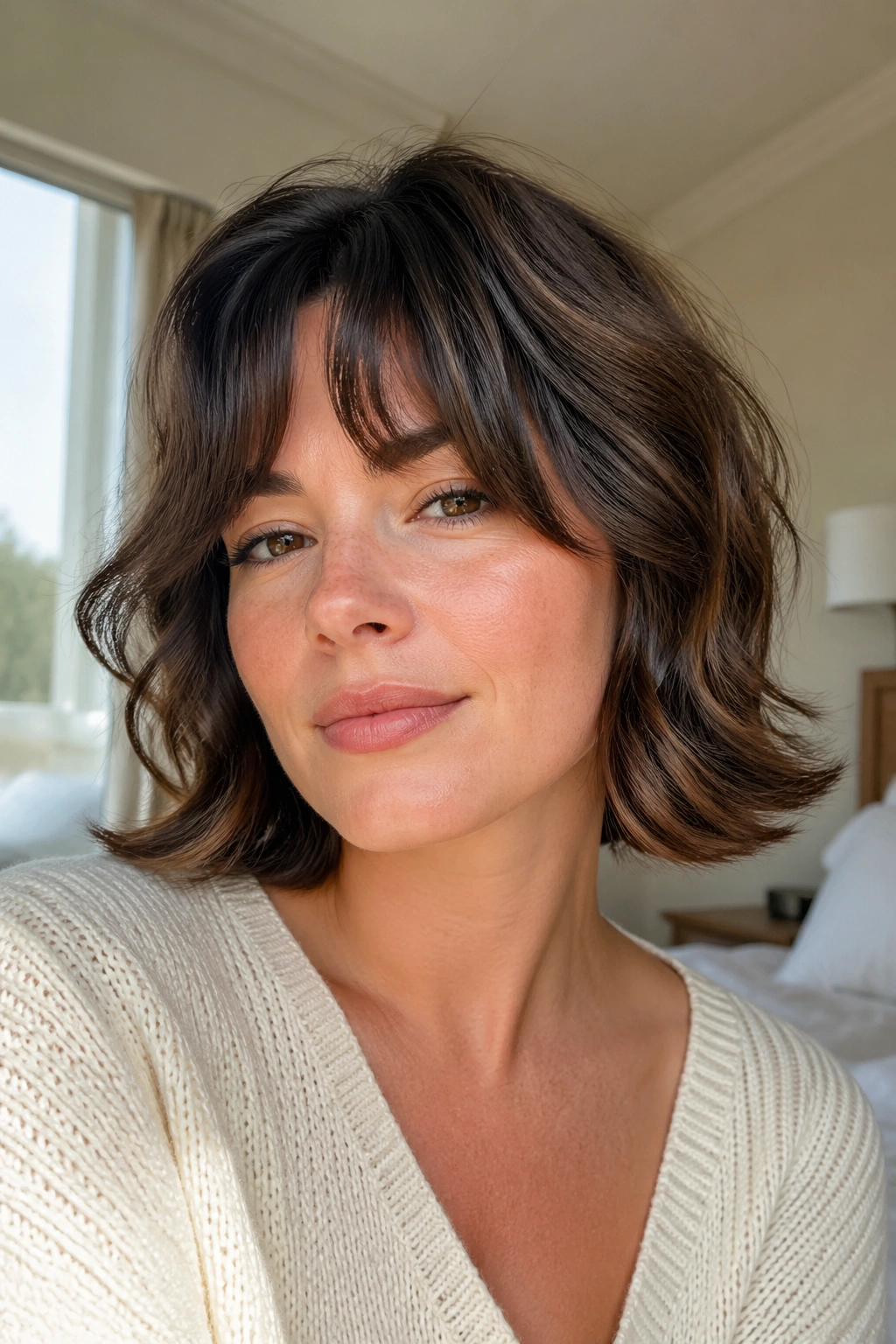
Flipped-out ends sound old-school until you see them on a shag. Then they make sense. The little outward bend at the ends adds movement below the jaw, which helps round faces look a bit longer.
The flip should be soft, not a hard retro curl. Think of it as a light outward kick at the edge of each layer. That small detail keeps the lower half of the haircut from sitting in one rounded mass. It also makes wavy hair look more alive, especially if the texture is a little uneven from day to day.
I like this style on hair that sits between chin and neck length. Shorter than that, the flip can get too busy. Longer than that, it loses its punch.
18. Razor-Cut Side-Part Shag
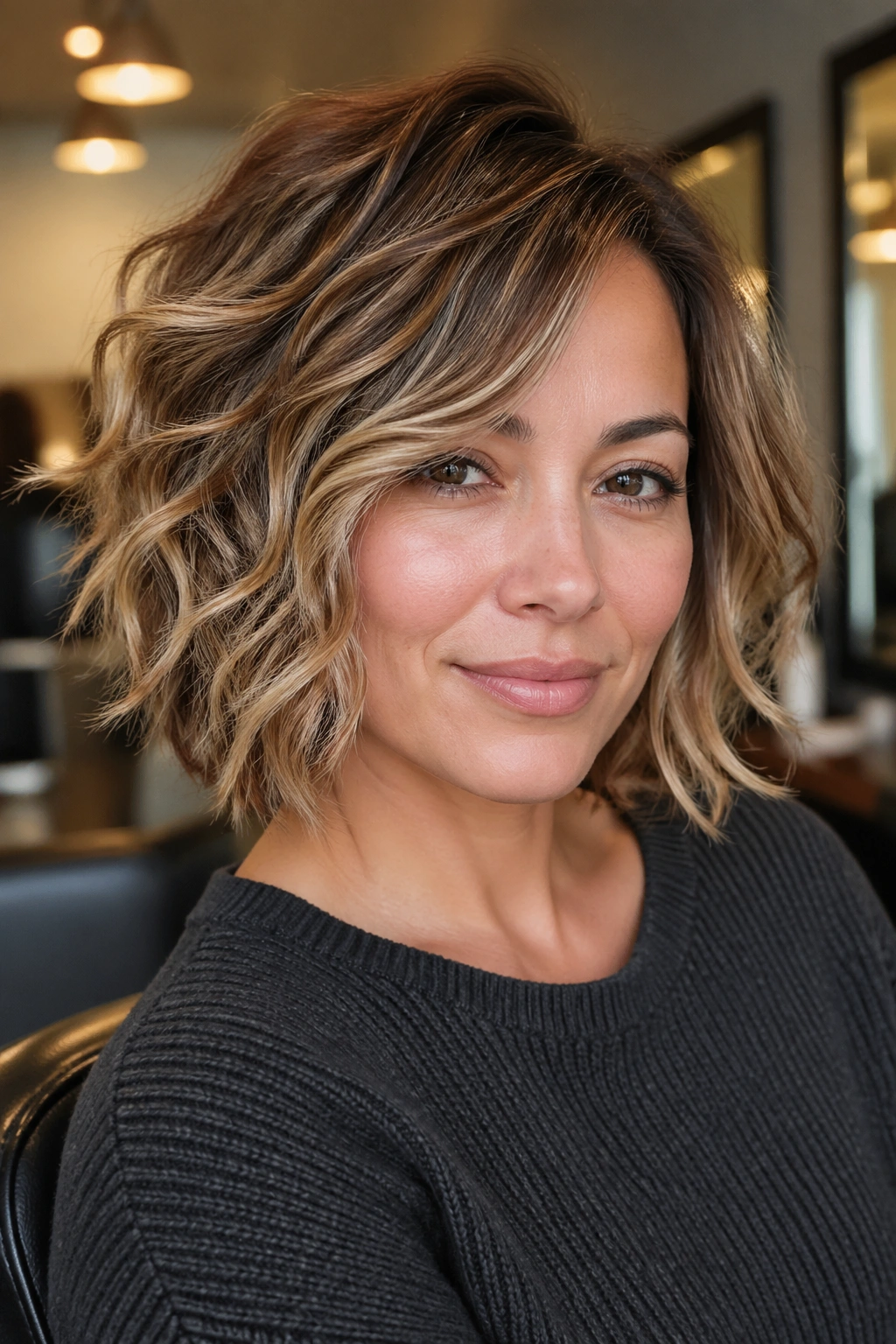
Razor-cut layers can be a blessing on wavy hair because they thin out the edges without killing the movement. On a round face, that airy feeling matters. You want softness, not bulk.
The side part adds a diagonal line across the forehead, and the razor finish keeps the ends from building width around the cheeks. Together, those two things make the face look more oval than round. It’s subtle, which is one reason I like it. Not every flattering cut has to shout.
What Makes It Different
The difference is in the texture of the ends. Scissor-cut layers often sit heavier. Razor-cut layers fall a little more freely and bend more easily into a wave. That lighter edge is handy if your hair tends to puff when it dries.
If you want a low-fuss cut that still has movement, this is a smart one.
19. Money-Piece Shag
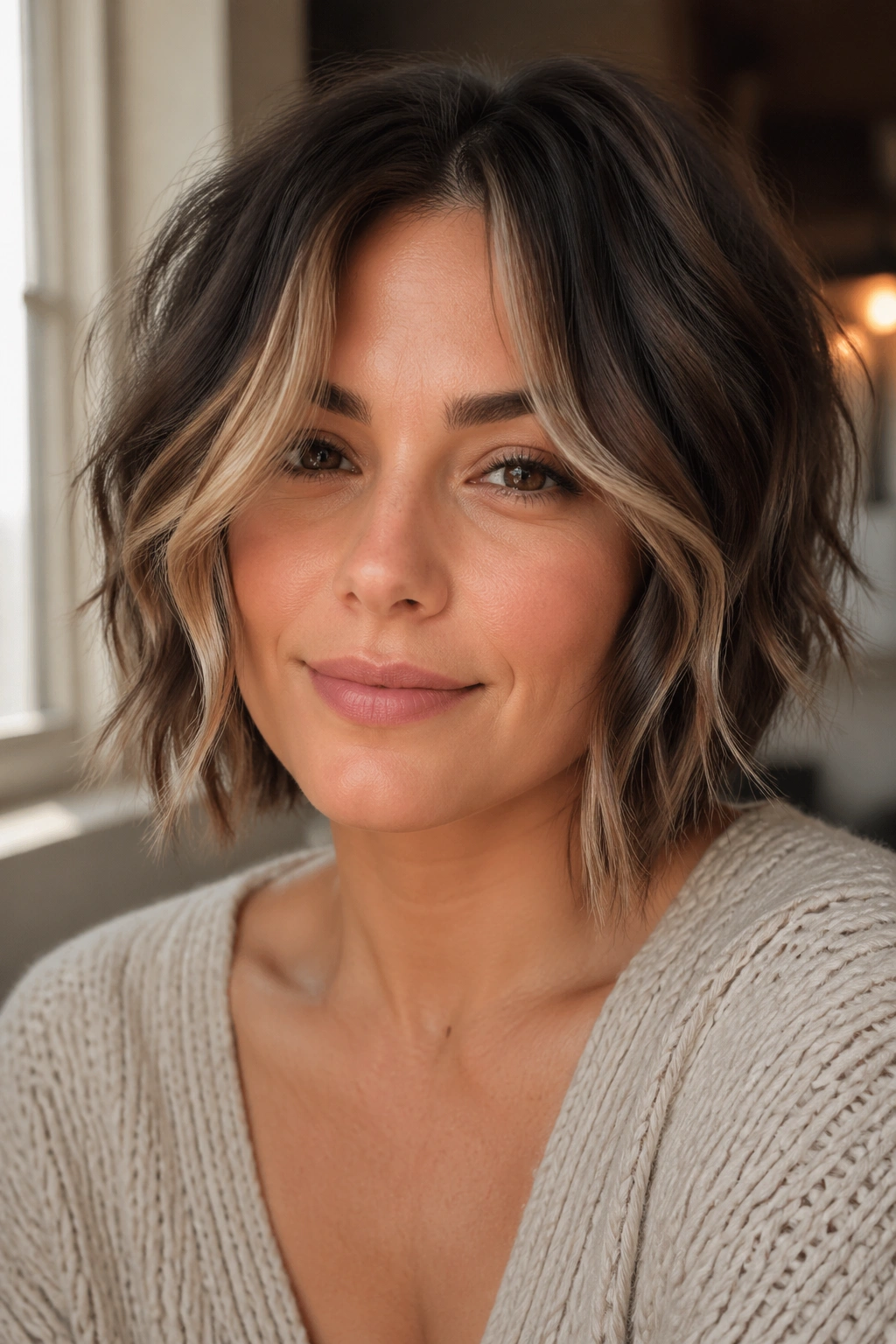
Money-piece highlights can make a short wavy shag look sharper on a round face because they pull the eye straight to the front edges. Lightened pieces around the face create vertical contrast, which helps narrow the face visually.
This is not about going bright all over. A few lighter ribbons around the front layers are enough. Too much contrast can start to overwhelm the cut and take attention away from the shape. Keep the color concentrated where the waves fall along the cheeks and jaw. That’s where it does the most work.
If your natural color is dark, even a soft caramel or a shade lighter than your base can do the job. The point is separation, not loudness. And yes, the cut still needs good layers. Color alone won’t rescue a bulky shape.
20. Wispy Baby Bang Shag

Baby bangs can be tricky on round faces, so I’m going to say this plainly: they only work when they’re wispy and the rest of the haircut is open. A thick baby bang can shorten the face fast.
When the fringe is airy, though, it gives the cut a sharp little edge without crowding the forehead. The key is keeping the sides soft and the crown lifted. That combination makes the bang feel intentional instead of severe.
This is one of the more fashion-forward options on the list, and it’s not meant to be the most universally flattering. But if you like unusual shapes and don’t want your hair to look sweet or predictable, it has a nice bite. Keep it light. Keep it broken. That’s the difference between chic and awkward.
21. Neck-Length Shag with Hidden Layers
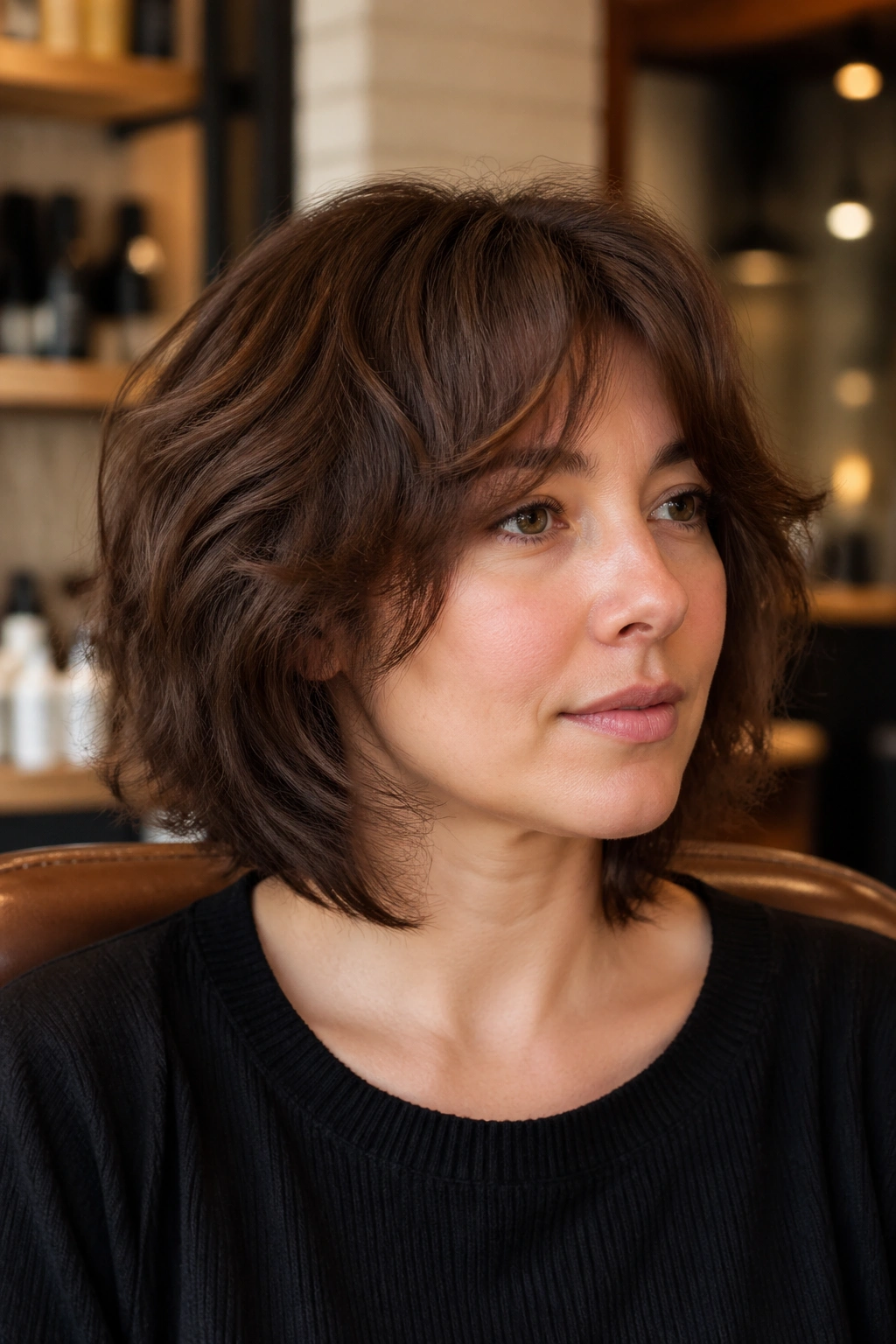
Hidden layers are underrated. Instead of obvious chopped-up pieces, the cut keeps the outside shape smooth while removing weight inside the haircut. On a round face, that’s a smart move because the perimeter stays clean.
This style works especially well for dense wavy hair that likes to spread out. The neck-length outline gives a bit of length, and the hidden layers keep the bulk from sitting at the sides. You get movement without that over-layered, fluffy look that can make round faces seem wider.
Ask For This at the Salon
- Internal weight removal, not razor-thin ends.
- Length that brushes the neck.
- Face-framing pieces that start below the cheekbone.
- Soft blending through the crown.
It’s one of the most practical shags on the list. Quiet, but effective.
22. Air-Dried Choppy Crop

An air-dried choppy crop is the haircut I’d hand to someone who wants low maintenance and zero blow-drying guilt. The shape depends on texture, so wavy hair gives it a head start.
Choppy layers keep the silhouette from getting too round. They break up the sides and let the ends fall in different directions, which is useful on a round face because it stops the cut from forming one big curve. A little leave-in conditioner, a touch of mousse, and some scrunching are enough.
If your waves are frizz-prone, don’t overload the hair with product. Use enough to define the pattern, then stop. The roughness is part of the charm. Too much smoothing and the crop loses its edge.
23. Swept-Back Shag

A swept-back shag opens the face in a way that straight-down bangs never can. By moving the front pieces away from the cheeks and temples, you expose more of the face and create a longer line from hairline to jaw.
This one looks especially good when the hair has soft bend rather than tight curl. The back-swept front layers can be pinned, tucked, or blow-dried away from the face, and the rest of the shag stays loose. It gives a polished shape without flattening the texture.
I like this style for people who want their hair off the face but do not want a slick, severe look. The sweep keeps it relaxed. The shag layers keep it interesting. That’s a solid trade.
24. Thick-Hair Shag with Internal Weight Removal
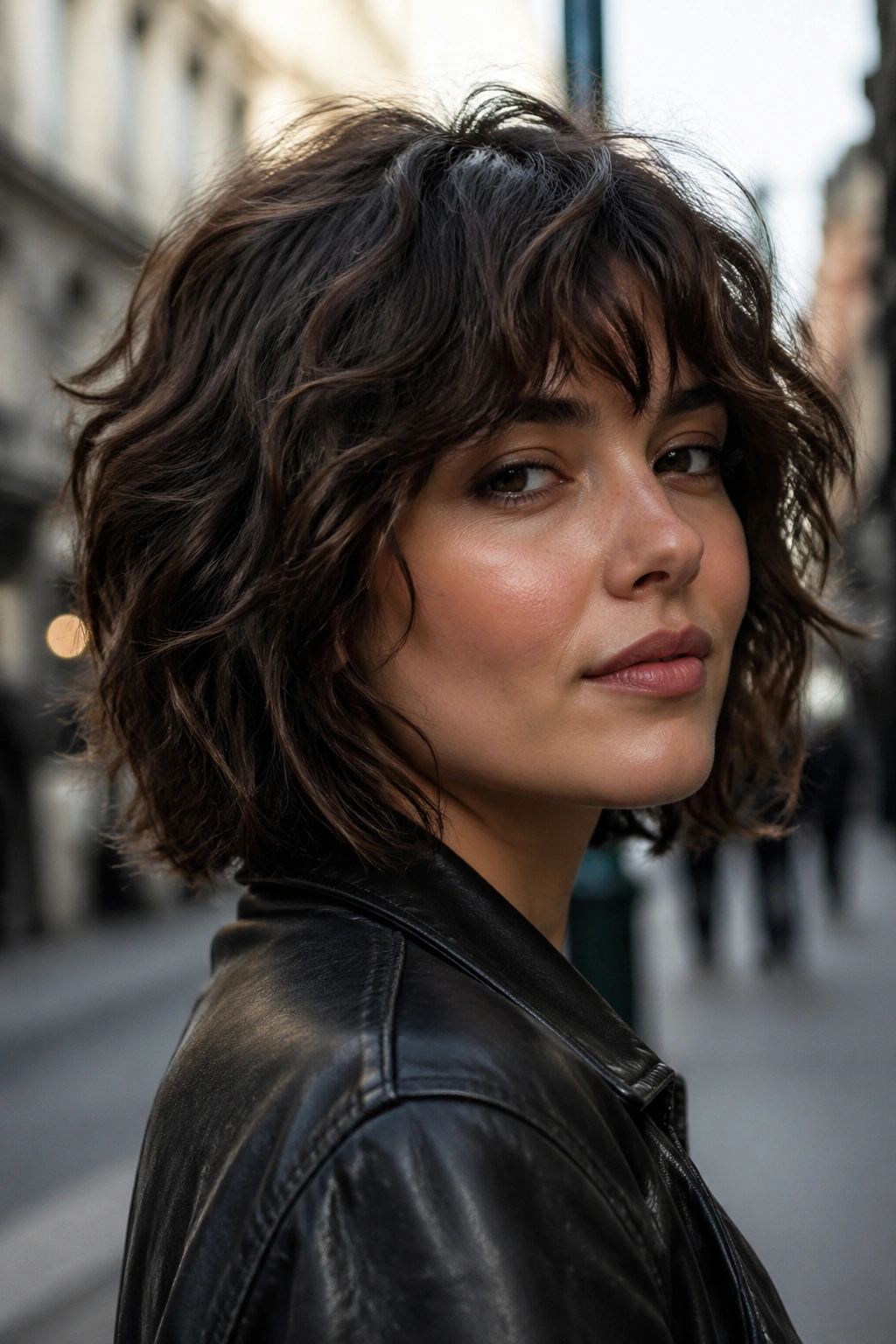
Thick wavy hair needs a different kind of attention. The goal is not more layers for the sake of it. The goal is removing weight where it causes puff, especially around the cheeks and lower sides.
What to Tell Your Stylist
Ask for internal weight removal and soft, movable layers. That means taking bulk out from inside the cut instead of shaving down the outline until it frays. A good stylist will keep the shape clean on the outside and lighter on the inside.
That matters on a round face because thick hair can widen fast if it’s cut too bluntly. Once the sides start flaring out, the face reads broader. A well-built shag avoids that by keeping the strongest movement at the crown and through the lower lengths, not right at cheek level.
Use a cream with a little hold, not a heavy butter. Heavy products can collapse the wave and make the cut sit wide again.
25. Fine-Hair Shag with Lifted Ends
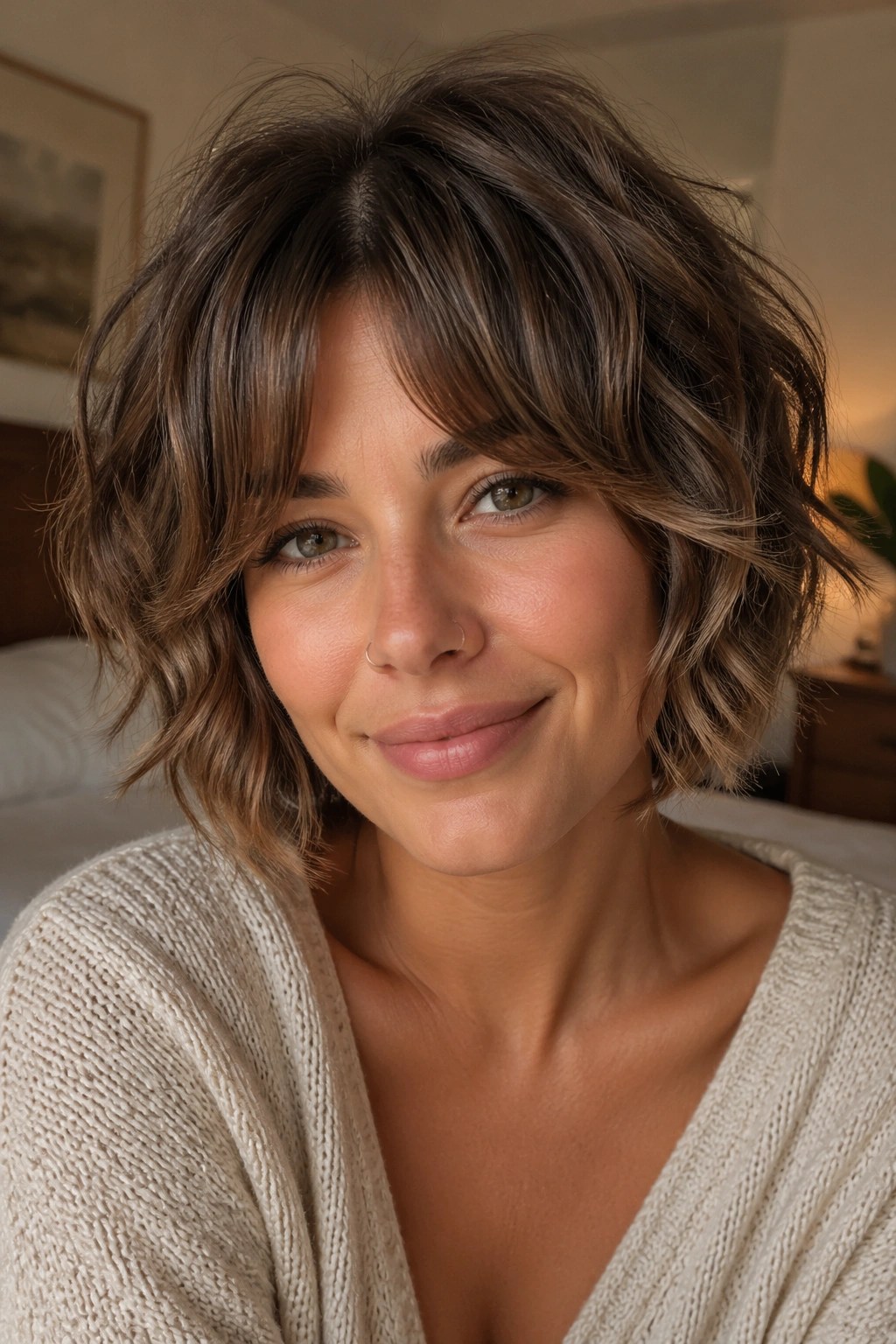
Fine hair needs a lighter hand, which is why this version is so useful. Too many short layers can make fine waves look thin, but the right shag gives body without stripping out all the density.
The trick is to keep the layers longer and the ends a little lifted. That creates the look of fullness without a bulky outline. On a round face, the lift at the ends helps pull the eye downward, while the crown gets enough volume to stretch the shape. I’d keep the front pieces soft and avoid anything too blunt around the jaw.
A small root spray, a quick scrunch, and a little drying time upside down can make a big difference. Fine hair often falls flat faster than people expect, so the cut has to do some of the work for you. And if you want the simplest version of all, this is the one I’d pick: airy crown, broken ends, soft front pieces, done.