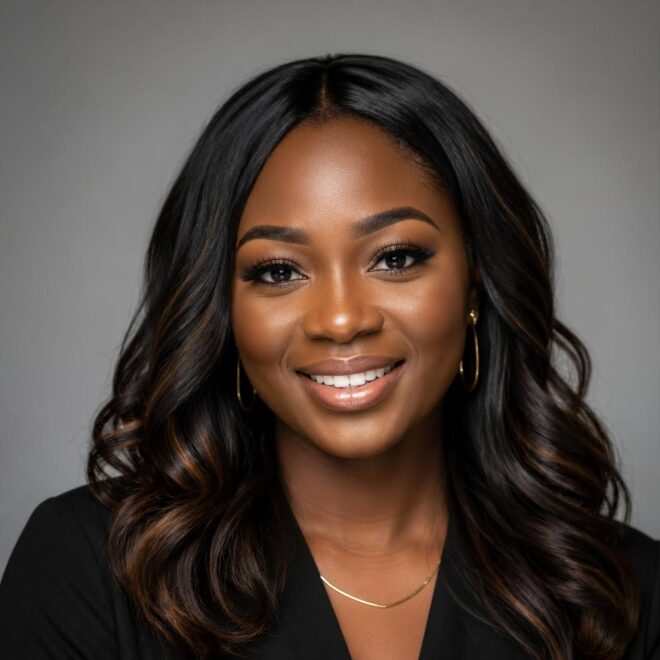


Waves do not retire at 50. They usually get better once the cut stops arguing with them.
That’s the quiet truth behind the most flattering wavy hairstyles for women over 50: the right shape gives your hair room to move, softens the face, and makes the whole head look lighter. Hair changes a bit with age — sometimes finer, sometimes drier, sometimes silver in a way that changes the texture completely — and the best cuts respect that instead of trying to force the old routine to work.
The sweet spot is usually a style that keeps some lift at the crown, keeps the ends from hanging too heavy, and lets the wave pattern do at least half the work. No helmet hair. No stiff curl. Just shape, balance, and enough movement to make the hair look alive.
1. Long Layered Waves With Soft Face-Framing
Long layers are the easiest way to keep wavy hair from feeling bottom-heavy. When the shortest layers start around the cheekbone and the longest pieces stay past the shoulders, the hair keeps its swing without turning into one thick curtain.
What to ask for
- Layers that begin below the chin, not right at it.
- A soft frame around the cheekbones and jaw.
- Very light texturizing at the ends if the hair is dense.
Best for: medium to thick waves that need movement.
Styling tip: Use a mousse at the roots, then a 1.25-inch iron only on the middle lengths. Leave the ends a little imperfect. That’s where the style gets its softness.
2. Shoulder-Length Waves With a Deep Side Part
A side part does more than cover a flat spot. It gives wavy hair instant lift at the crown and makes the whole style look a little fuller without adding extra bulk around the face.
Shoulder length is a smart stopping point because it’s long enough to feel feminine, but short enough to keep the wave pattern from dragging downward. If your hair has thinned a bit at the temples, this cut can be especially kind.
Use a root-lifting spray before blow-drying, then flip the part to the heavier side and set it with a cool shot. Tiny move. Big difference.
3. Collarbone Lob With Loose Bends
Why does the collarbone lob work so well? Because it sits in that sweet zone where the hair can still tuck behind the ears, but it’s long enough to show off wave and movement.
The bend should look relaxed, not curled into perfection. Ask for soft internal layers and keep the perimeter fairly clean so the cut doesn’t fray out at the bottom. That makes styling easier on busy mornings.
How to wear it
Dry the hair about 80 percent, then wrap random sections around a barrel iron for only 5 to 8 seconds each. Brush through once with a paddle brush. Done.
4. Chin-Length Wavy Bob With Tapered Ends
Picture this: your waves puff out at the bottom and make the jaw look wider than it is. A chin-length bob with tapered ends solves that fast.
The trick is to keep the outline close to the face while removing weight through the lower layers. That keeps the bob from turning into a triangle, which is a shape most people do not want unless they’re going for very specific retro hair.
- Great for finer hair that still has a little wave.
- Works well with a side part or center part.
- Needs a trim every 6 to 8 weeks to stay clean.
5. Curtain Bangs With Soft Waves
Curtain bangs can save a face-framing style from feeling too plain. They break up forehead width, soften a strong brow line, and give wavy hair a little swing right where people look first.
The best version is not heavy. It should split easily in the middle and drift to each side with a bend, not sit there like a thick block of fringe. That matters a lot on hair that has lost density, because too much bang can swallow the face.
Keep them a touch longer than you think. Bangs that hit around the cheekbones are easier to live with than bangs that stop at the eyebrows and demand daily repair.
6. The Modern Shag With Airy Wavy Layers
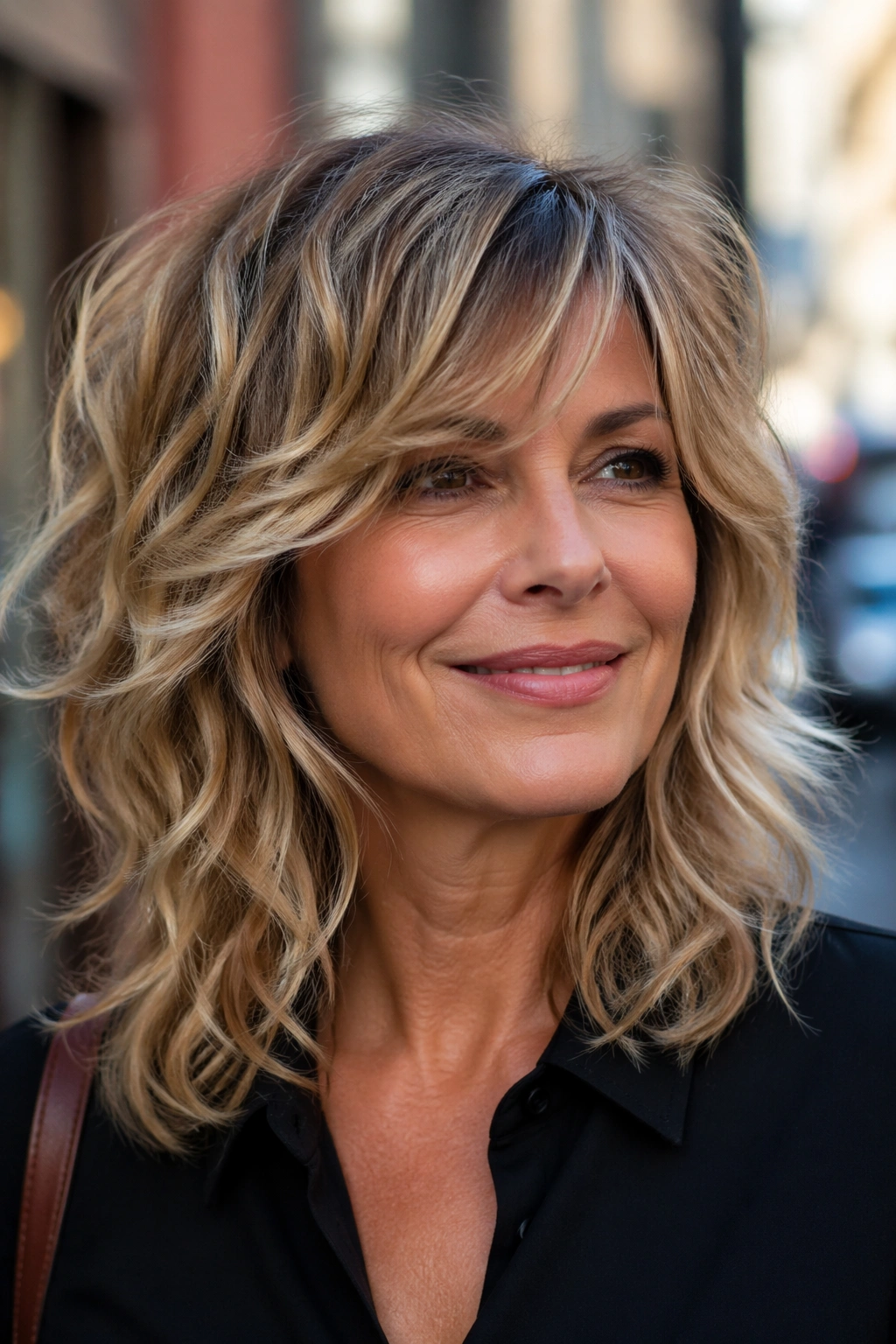
Compared with a one-length cut, a shag gives wavy hair room to breathe. The layers take weight out of the middle, the crown gets a little lift, and the whole cut looks less stiff.
This is one of the better options for thick hair that tends to puff when it’s blunt-cut. A good shag should feel soft, not choppy. You want movement around the sides and a little lift at the top, not shaggy ends that look like they were cut in the dark.
A curl cream or lightweight styling lotion is usually enough. Too much product and the shape goes flat fast.
7. Silver Waves With a Center Part
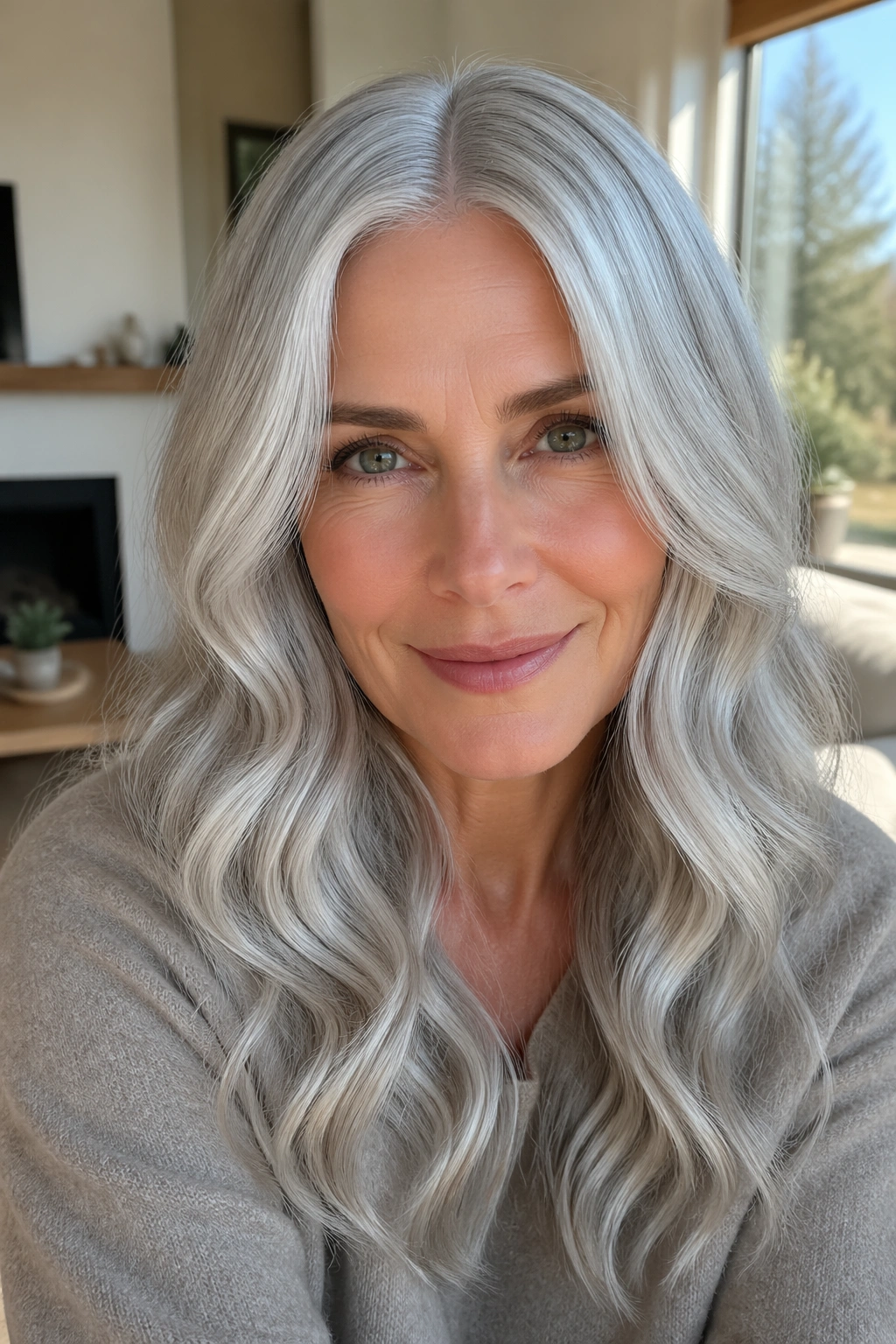
Silver hair looks sharp when the wave pattern is even and the part is clean. A center part gives the face a calm, balanced frame, and on naturally silver strands it can make the texture read as polished instead of frizzy.
What makes it work
- A clean line through the center of the scalp.
- Moisture-rich styling cream instead of heavy oil.
- A glossing rinse or toning shampoo used lightly, not every wash.
The goal is shine, not purple hair with a dull finish. Silver waves love a little softness at the ends and a smooth root area. If the hair is wiry, a wide-tooth comb and a low-heat diffuser help more than brute-force brushing ever will.
8. Tousled Pixie With Soft Wave at the Crown
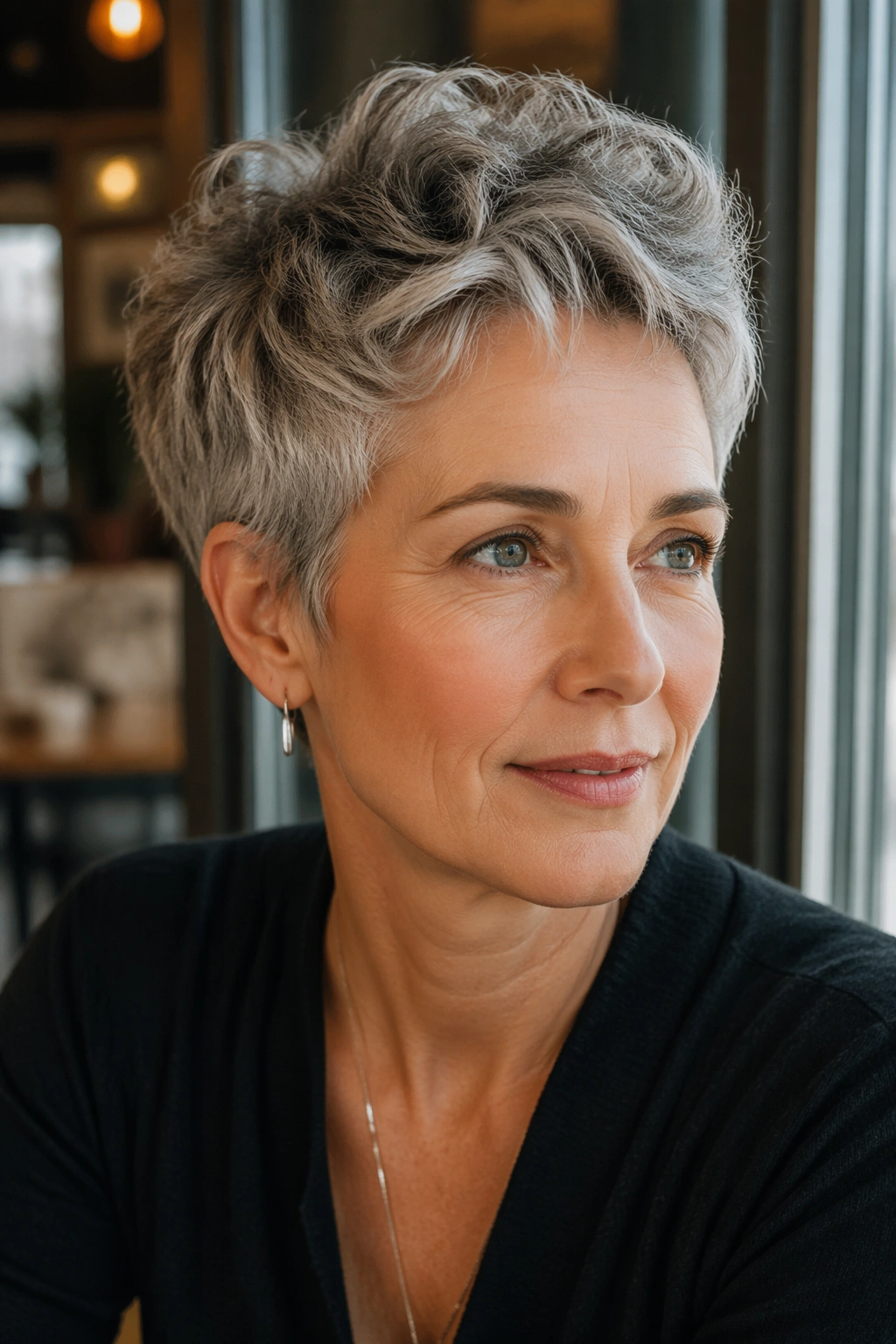
A short cut can still feel soft. In fact, on the right head shape, a wavy pixie can look fresher than a longer style that’s being dragged down by its own weight.
The key is to leave enough length on top — usually about 2 to 3 inches — so the wave has something to bend with. The sides can stay neat and close, which keeps the haircut from looking bulky around the ears.
Use a pea-sized amount of paste or cream, warm it between your fingers, and push the top forward, then slightly up. The style should look touched, not shellacked.
9. Flipped-Out Lob With Gentle Movement
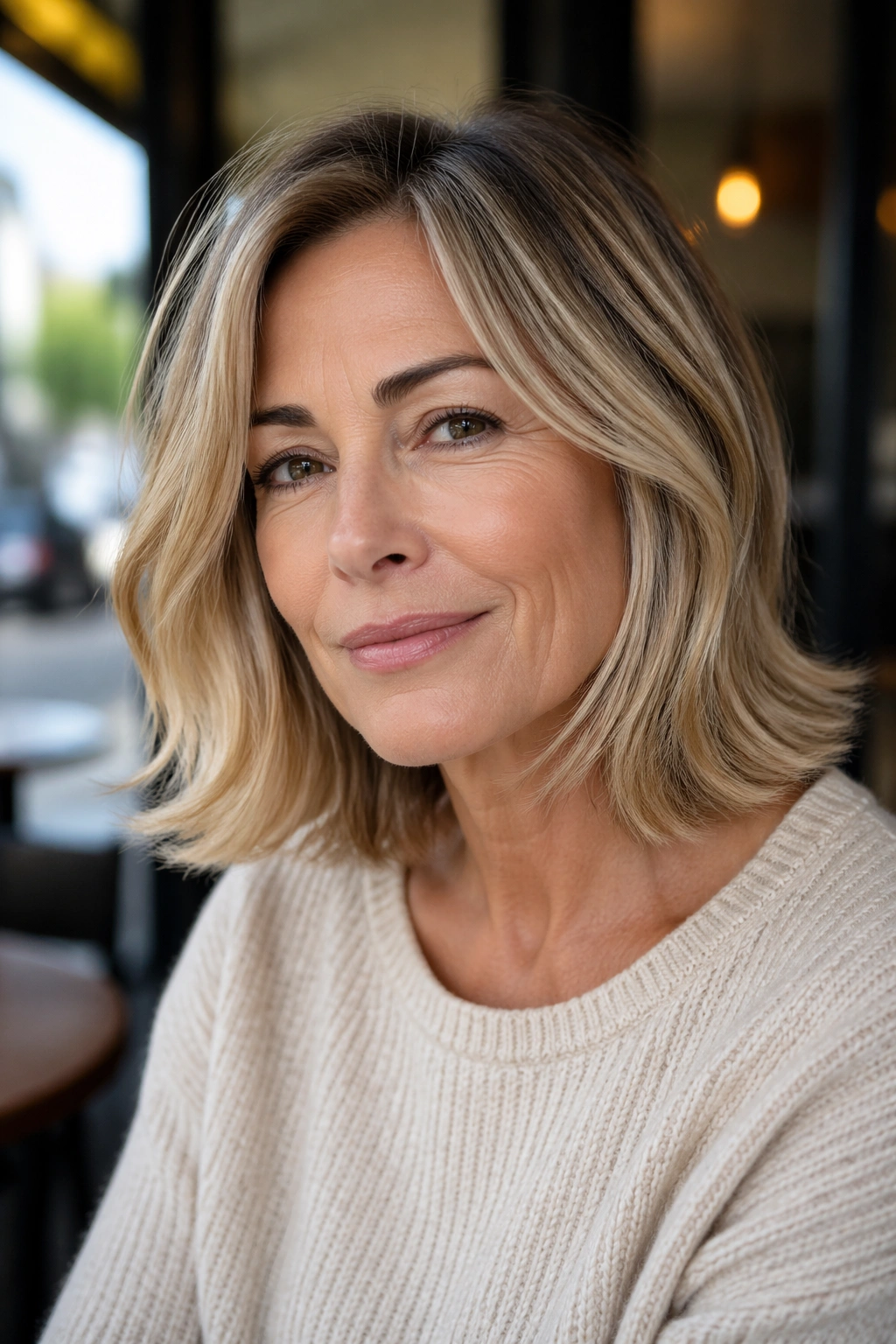
Why does this work? Because the outward flip gives the ends motion without making the whole haircut look too styled. It’s playful, but not fussy.
A flipped lob is especially nice if your hair tends to curve inward and cling to the neck. Turning the ends out opens up the neckline and makes the cut feel lighter. That can be a relief, honestly.
How to style it
Start with a smooth blow-dry. Then bend the ends outward with a round brush or the outer edge of a flat iron. Keep the flip modest. Big flips can tip into costume territory fast.
10. Face-Framing Layers That Start at the Cheekbones
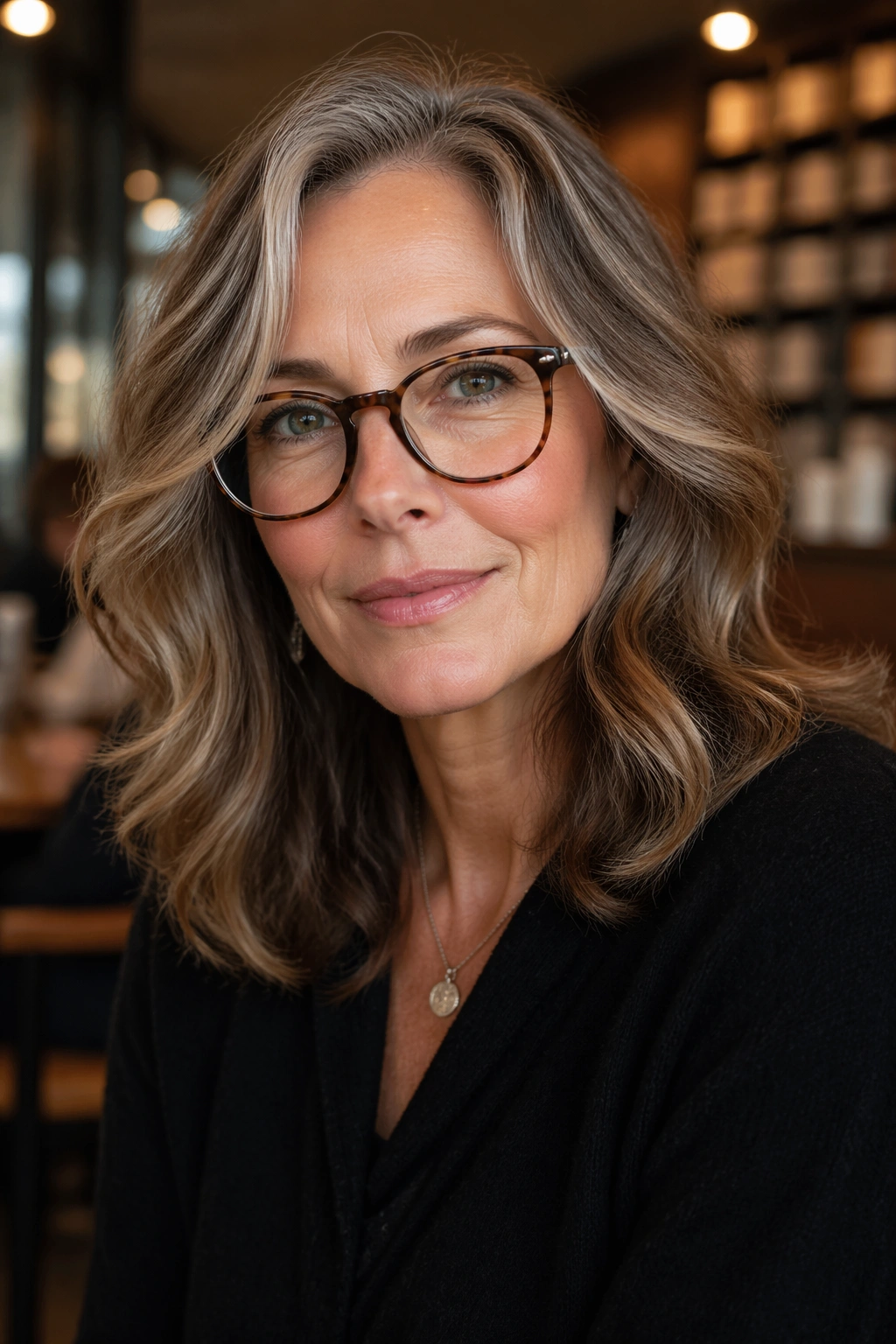
A brief scenario: you’re growing out a heavier cut, and the front keeps falling flat against the face. Cheekbone layers fix that by creating movement right where the hair needs it most.
These layers are one of the easiest ways to make a wavy hairstyle feel current without losing length. They’re especially flattering if you wear glasses, because the front pieces can sit around the frames instead of fighting them.
- Shortest piece at the cheekbone.
- Longer pieces around the jaw and collarbone.
- Keep the back slightly fuller so the cut doesn’t look thin from behind.
11. Old Hollywood Side-Swept Waves
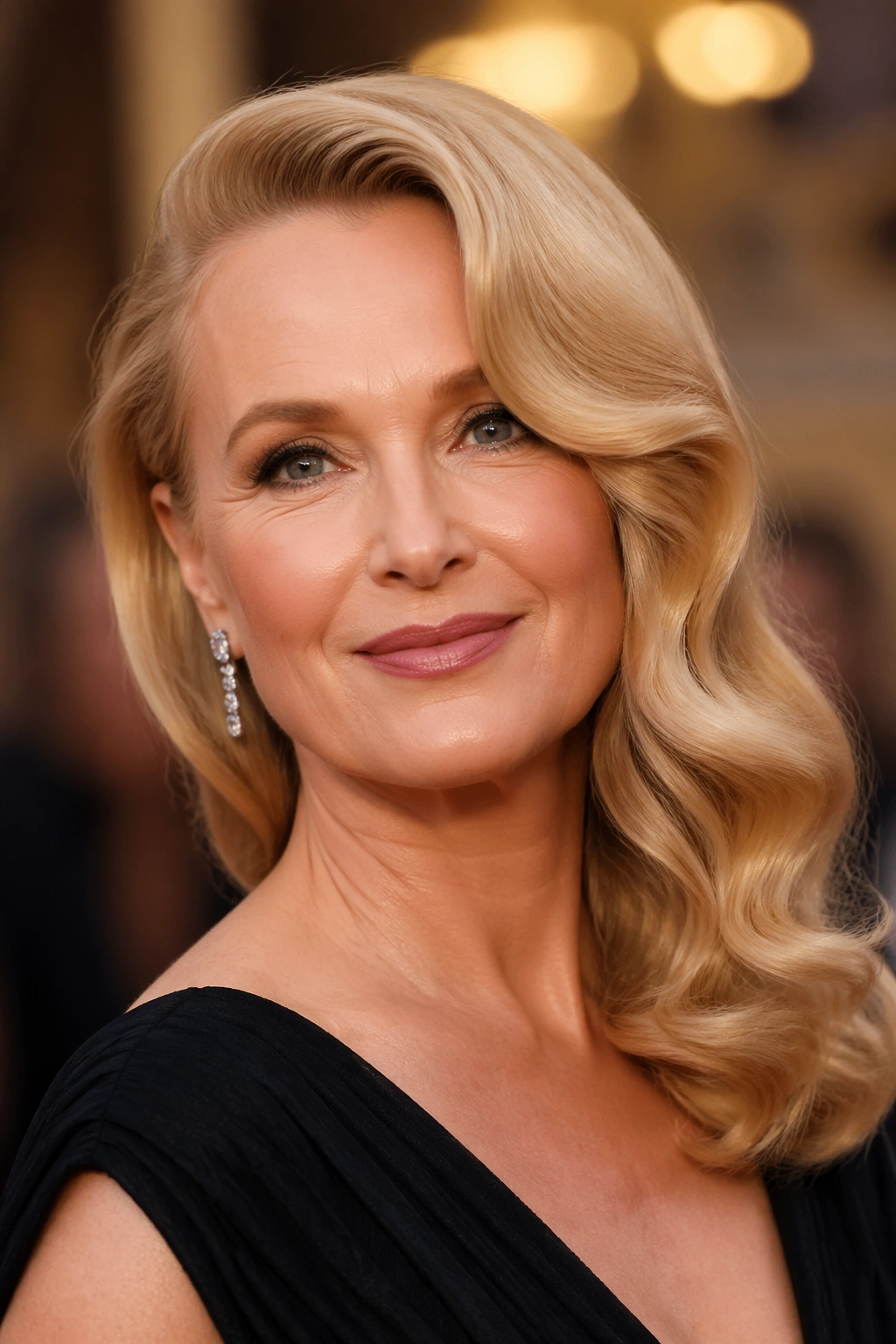
A side-swept wave pattern brings instant polish, and it’s one of the rare styles that can make fine hair look richer without adding a lot of bulk. The trick is in the direction: everything flows across the head instead of dividing it down the middle.
This style likes a large barrel iron, a set of clips for cooling, and a light brush-out once the hair is fully cool. If you brush too early, the wave collapses into fluff. If you use too much spray, the hair loses that soft curve and starts looking stiff.
It’s a strong choice for dressy dinners, formal events, or any day when you want the hair to carry some presence.
12. Half-Up Twist With Loose Waves
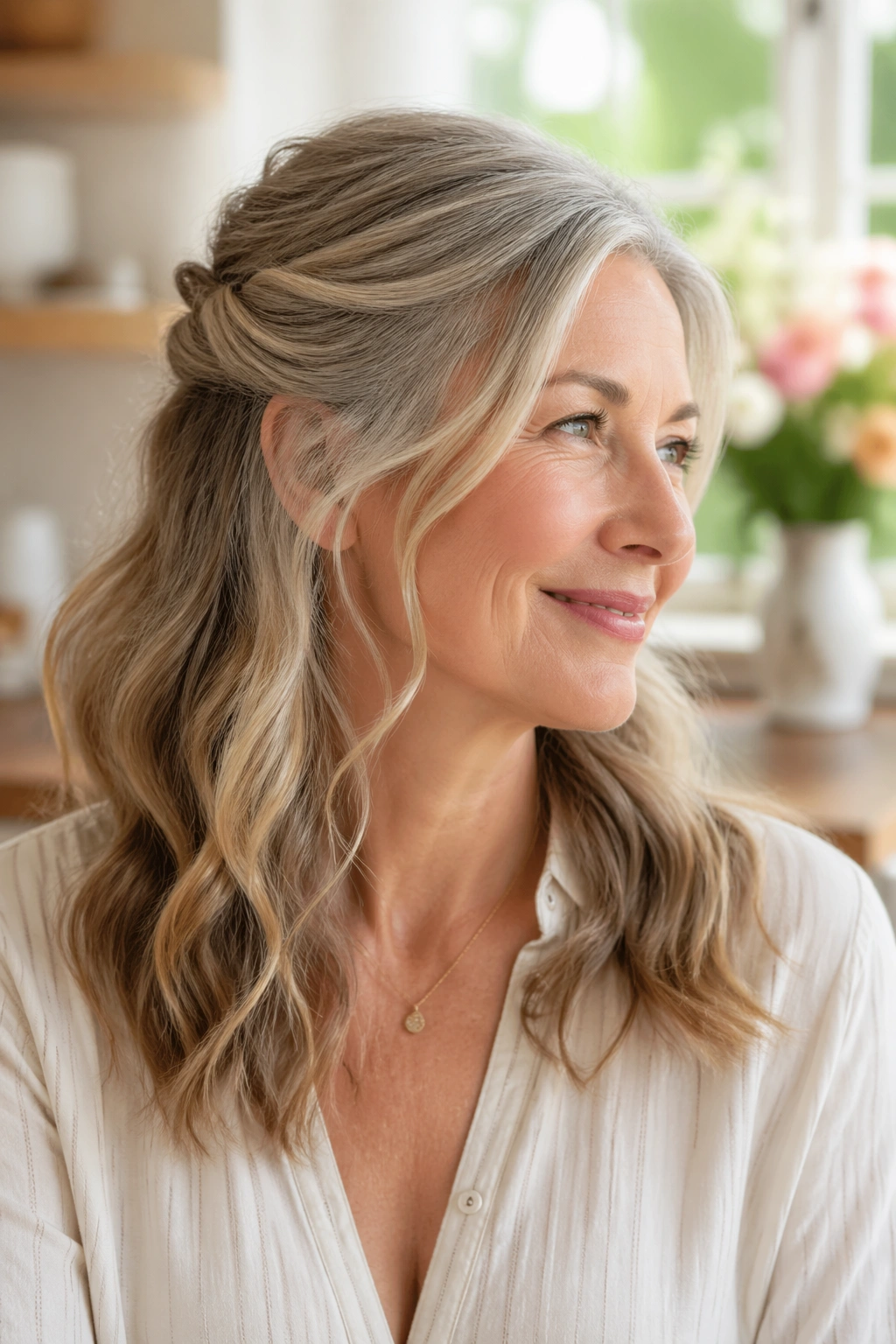
Unlike a full updo, a half-up twist keeps the length visible. That matters if you like your waves but want the front pulled away from the face for a few hours.
This style works best when the top section is lightly backcombed or misted with texture spray before twisting. The lower half stays loose, so the ends can still move. A polished version can look elegant; a looser version feels easy and relaxed.
It’s a good option for lunch dates, family gatherings, or days when you need your hair out of your eyes but don’t want the hard look of a tight bun.
13. Braided Crown With Wavy Length
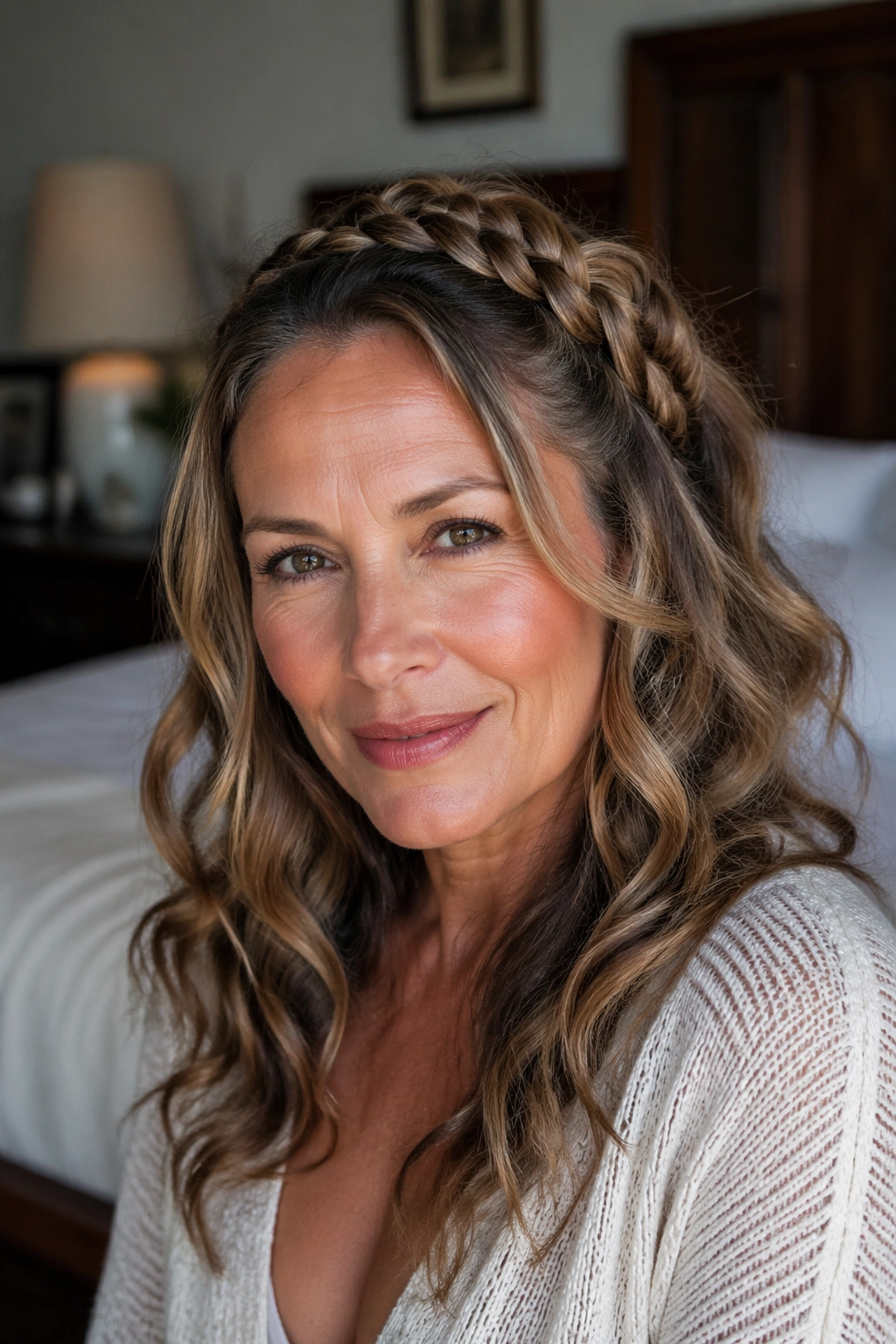
Braids and waves are a smart pairing because the braid gives the hair structure while the rest of the length stays soft. That contrast keeps the style from feeling too precious.
What to know
- Use second-day waves for better grip.
- Braid along the hairline, not too far back.
- Loosen the braid slightly after pinning so it doesn’t look tight.
This is one of those styles that helps when bangs are growing out. It also hides a little frizz at the temples, which is useful on humid days. A soft braid crown can look tidy without looking severe.
14. Stacked Bob With Loose Wavy Ends
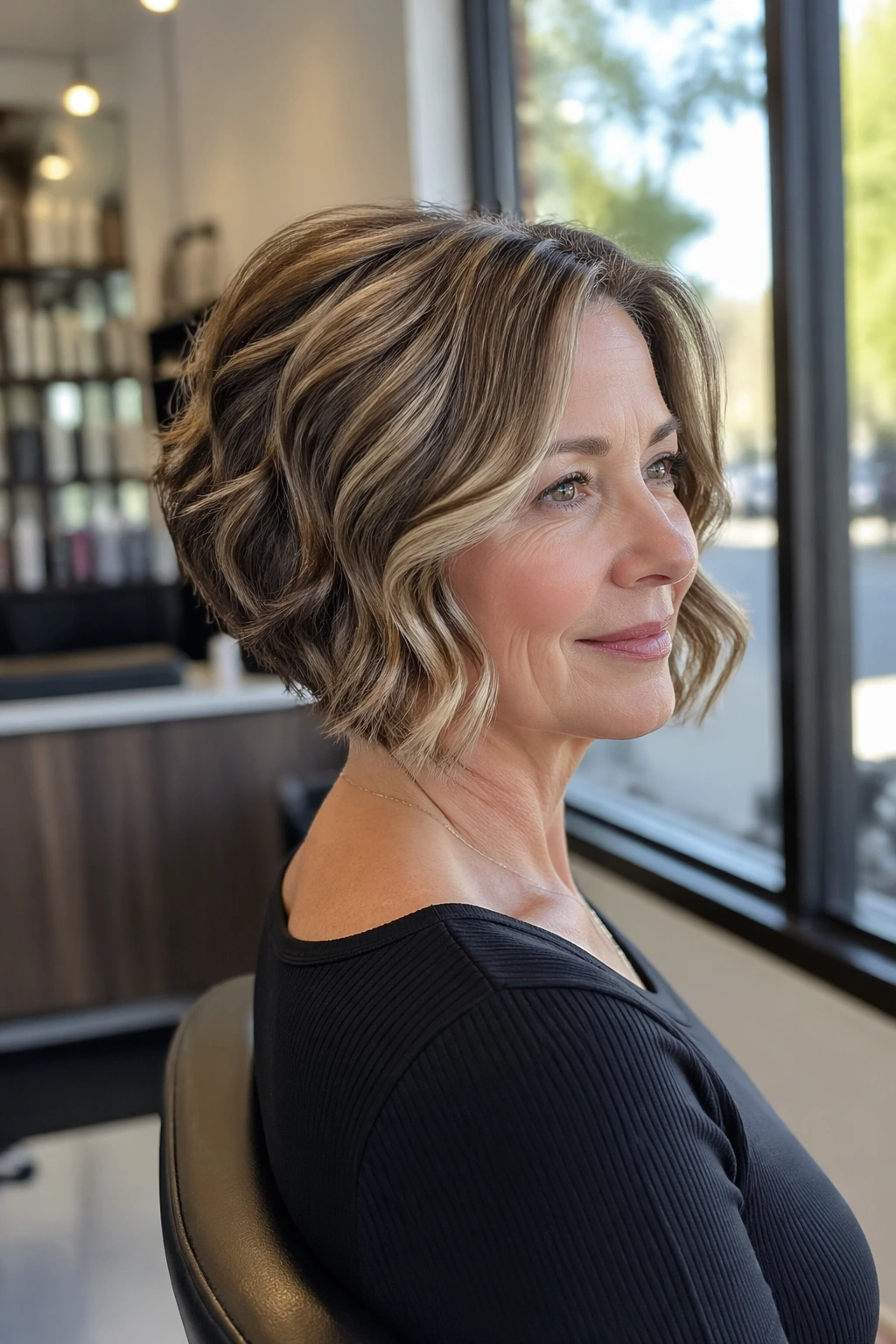
A stacked bob lifts the back of the head and keeps the shape off the neck. That’s a good trade if the hair has started feeling heavy or flat near the crown.
The stacking should be subtle. Too much graduation and the cut can puff in the wrong place. What you want is a little roundness at the back and softer, looser wave through the front pieces.
For finer hair, this cut gives the illusion of fullness. For thicker hair, it keeps the lower section from mushrooming. It’s a practical cut, and practical is underrated.
15. Blunt Lob With Soft Interior Texture
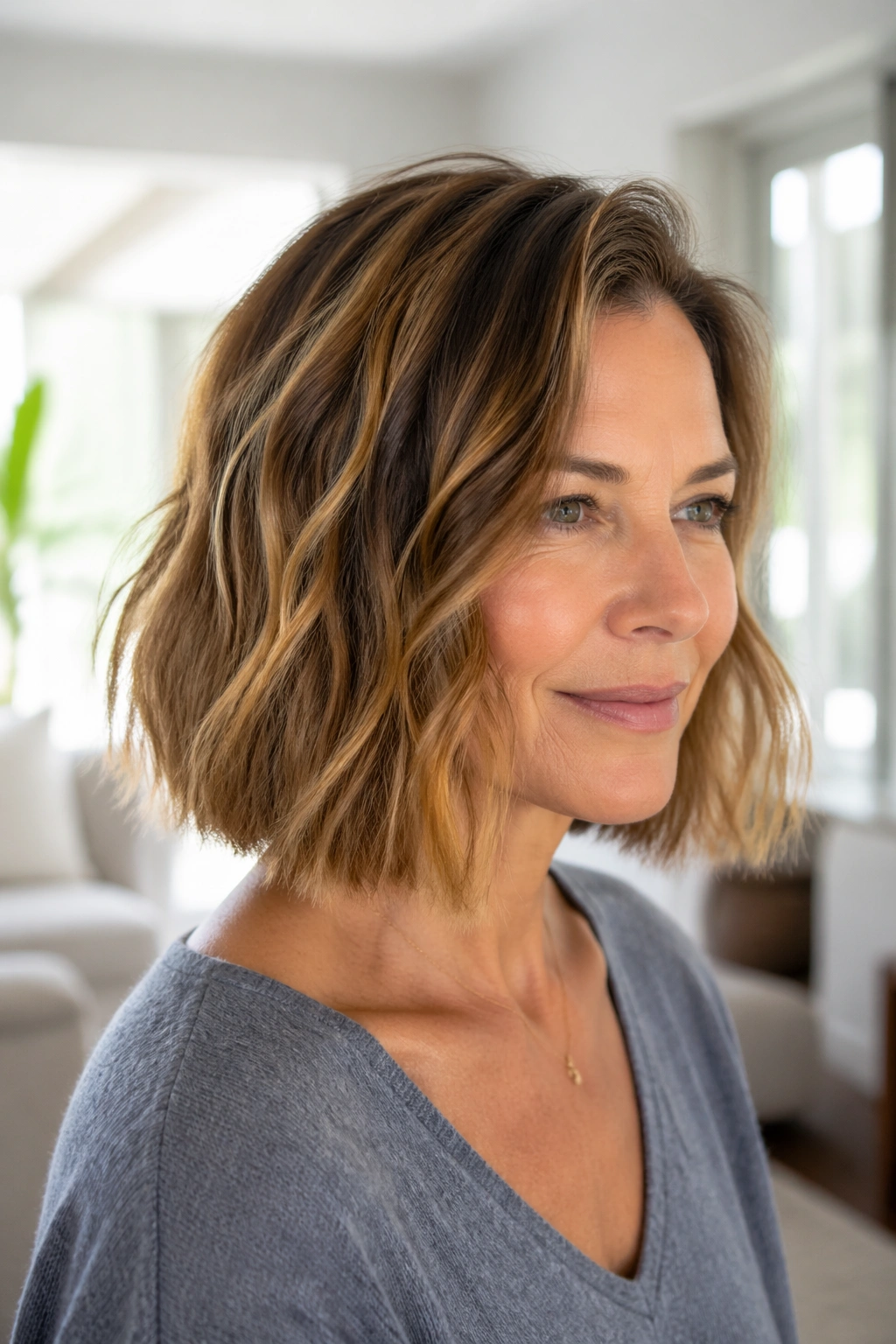
Can a blunt cut still work on wavy hair? Absolutely. In fact, a clean edge can make the hair look thicker at the perimeter, which is handy if the ends have started feeling wispy.
The interior texture is the quiet part of this style. You keep the outline straight, but a stylist removes a little weight underneath so the wave has room to bend. That keeps the cut from feeling like a box.
How to wear it
Air-dry with a light cream, then touch up just the top layer with a large iron if needed. The goal is a line that reads strong at the bottom but still moves when you do.
16. Salt-and-Pepper Feathered Waves
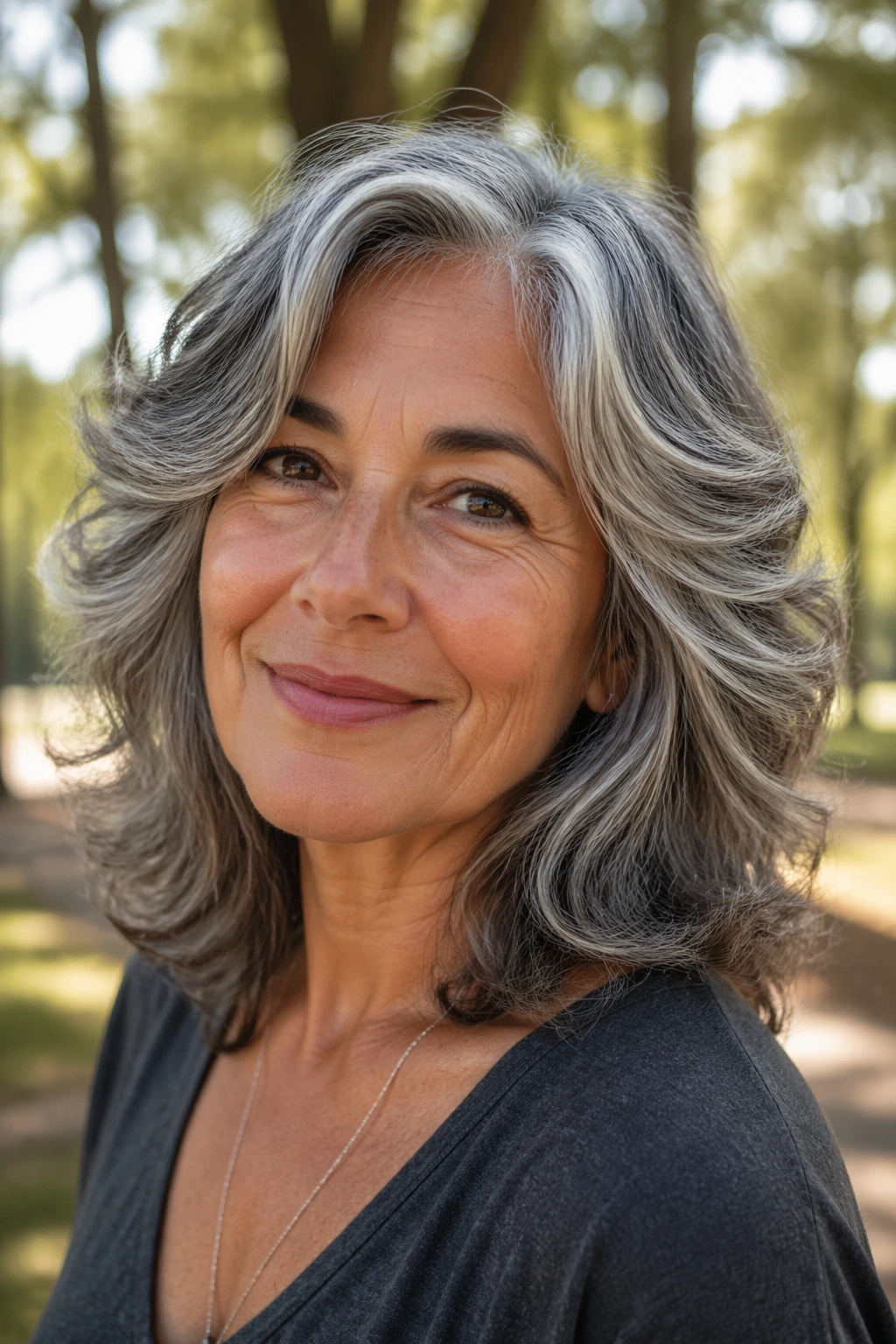
Salt-and-pepper hair has a lot going for it, especially when the cut is feathered around the temples and cheekbones. The light and dark strands show off the wave pattern in a way flat color never quite can.
This style feels best when the layers are soft and the ends are broken up a bit. Heavy layers can make mixed-color hair look stringy. Feathering, by contrast, keeps the shape airy and helps the silver pieces catch the eye in a natural way.
Use lightweight cream instead of a heavy oil. Heavy products can darken the lighter strands and make the hair look greasy before lunch. No one wants that.
17. Low Ponytail With Polished Waves
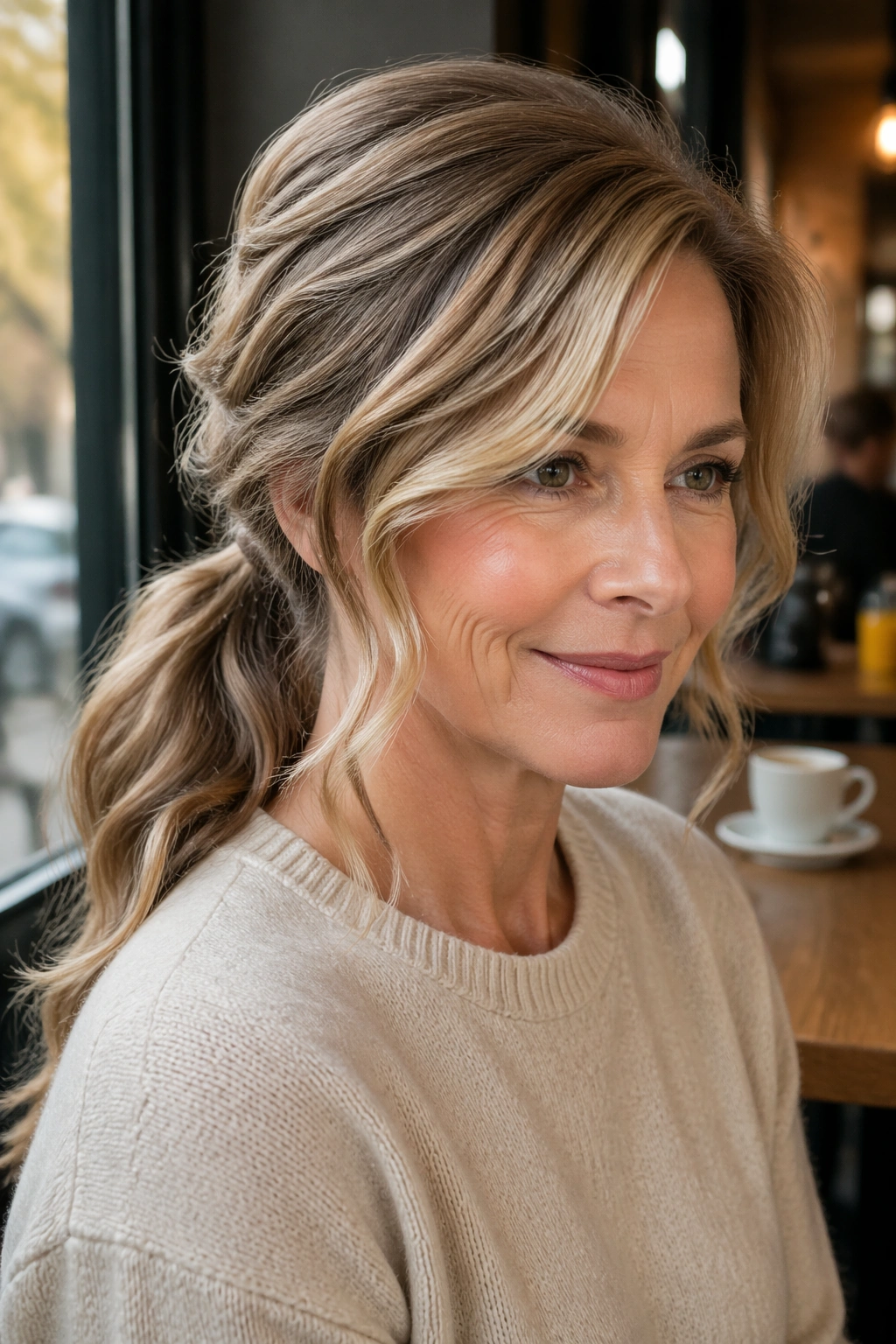
A low ponytail does not have to look plain. When the waves are left in the lengths and the crown is smoothed softly, the style reads neat but not severe.
The difference between a good low ponytail and a dull one is the top section. Leave a little lift at the crown, then wrap a strand around the elastic so the base looks finished. Curl the ends lightly if they need shape.
It’s one of the best low-effort styles for long or midlength wavy hair. Fast, tidy, and still flattering. That’s a useful combination.
18. Textured Crop With Longer Top Layers
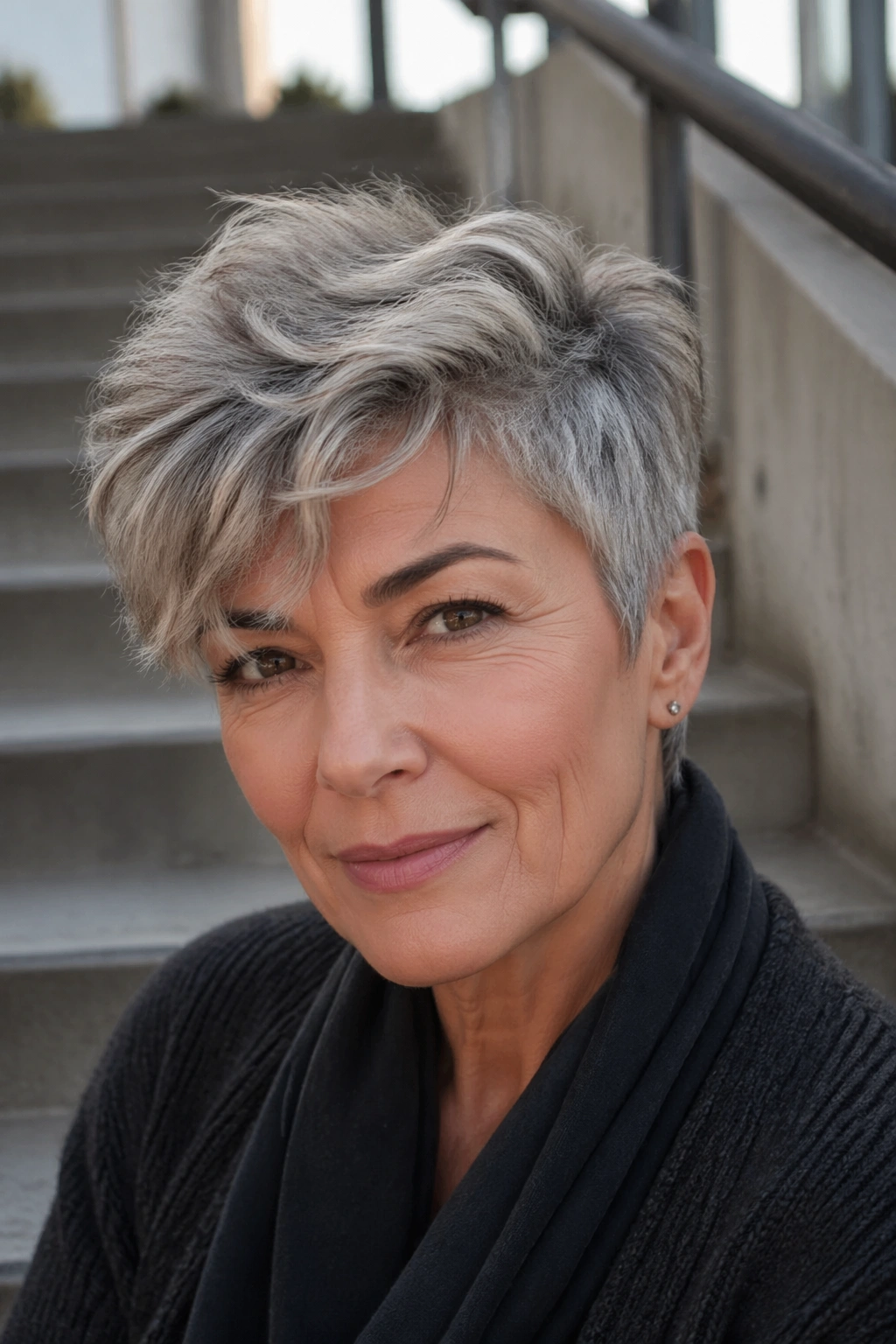
A short crop with longer top layers gives wavy hair somewhere to go. The sides stay clean, the top keeps movement, and the whole cut looks softer than a standard close crop.
Why it’s different
Compared with a traditional pixie, this version leans less severe and gives the wave a little height. It’s a strong choice if you want short hair but still like some styling freedom. It also works nicely with cowlicks, because the longer top can be trained in the direction it wants to move.
A dab of mousse or cream is usually enough. Push the top forward, then slightly sideways, and let the texture do the rest.
19. Waterfall Waves on Medium-Length Hair
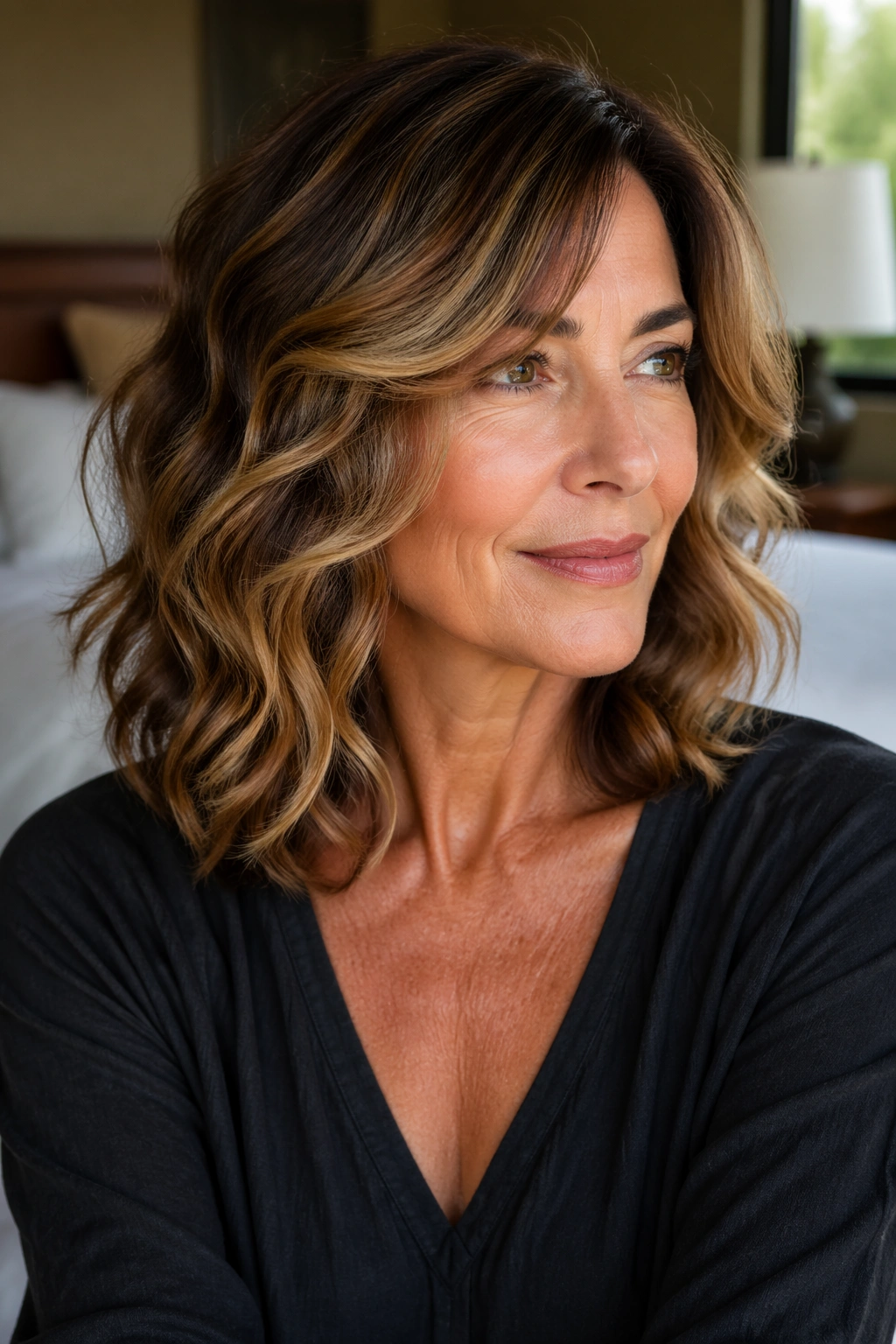
Waterfall waves look like they’re falling in layers, which is exactly what makes them appealing on shoulder-grazing lengths. The motion starts near the middle of the strand and softens toward the ends.
This style likes medium-density hair best, especially if there are a few face-framing layers to keep the front from hanging too straight. Curling away from the face on one side and toward it on the other gives the hair more shape and keeps it from looking copied and pasted.
A soft hold spray is enough here. Strong spray turns the whole thing into a crisp shell, and that is not the look.
20. Deep Side-Part Glamour Waves
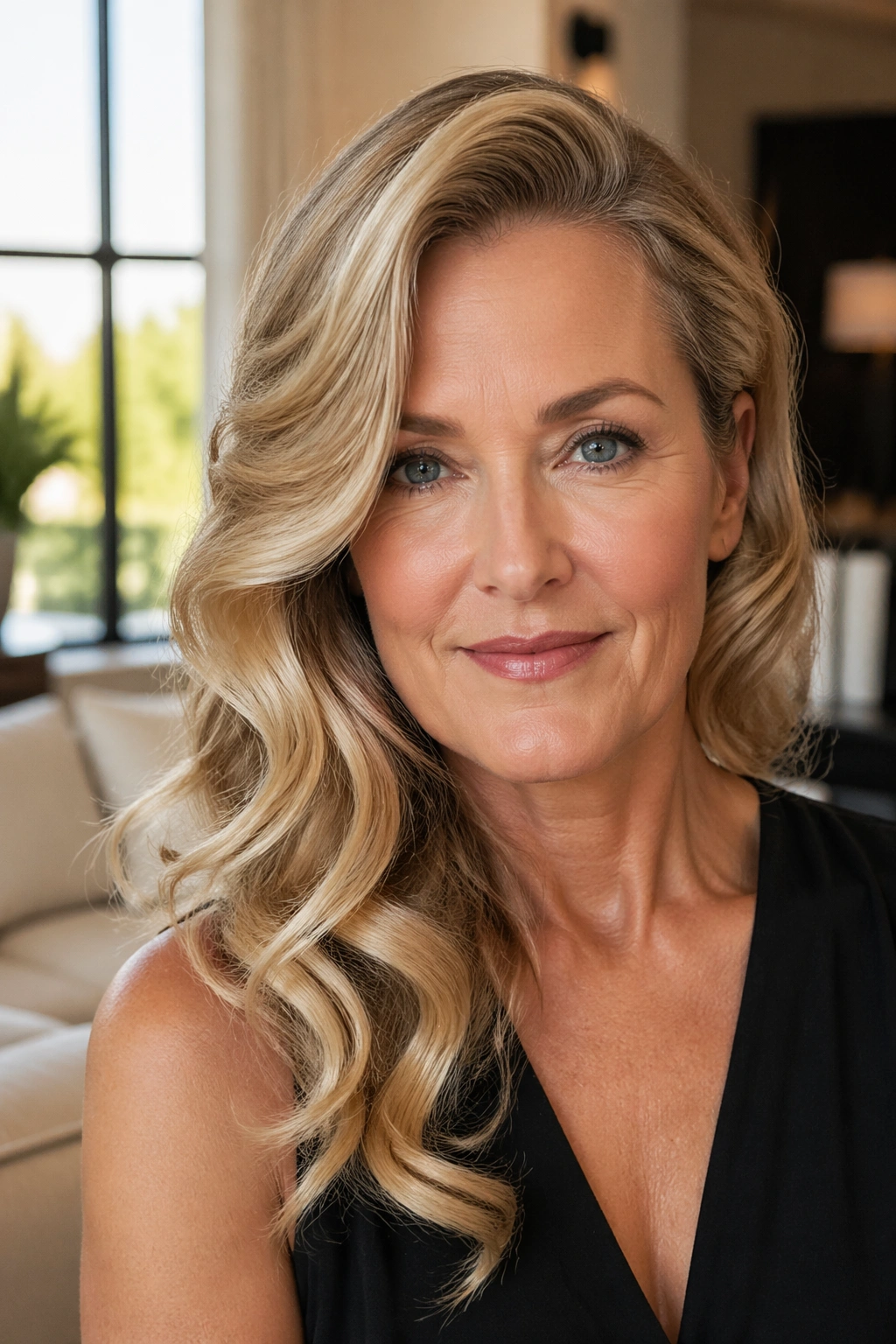
A deep side part changes the whole mood of wavy hair. It lifts one side, narrows the face a bit, and gives the style a little drama without requiring a giant haircut.
The best version starts with clean root volume. Clip the lifted side at the roots while it cools, then brush the wave into a smooth S-shape. That small cooling step matters more than people think. Warm hair forgets its shape fast.
This cut is especially useful if your crown lies flat or if one side of your hair naturally wants more body. Lean into it.
21. Razored Wavy Bob With Piecey Ends
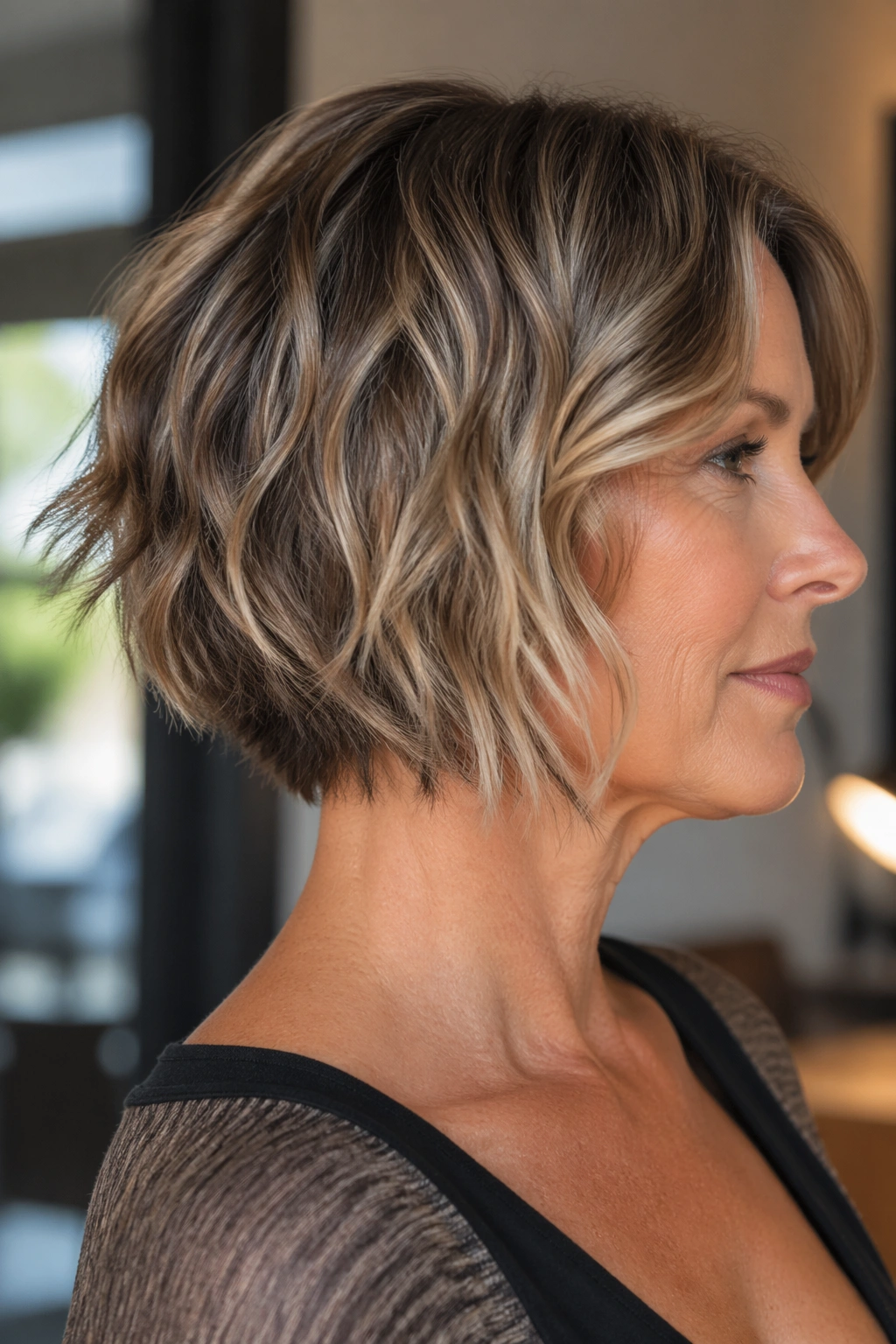
Why choose a razored bob? Because hair that feels too dense at the bottom can look sharper and lighter with a bit of blade work. The piecey ends keep the bob from sitting like a heavy block.
That said, razor cutting is not for every head of hair. If the strands are fragile or overly dry, too much razor work can make the ends look frayed. A light hand is the whole point.
How to get the most from it
Ask for razoring only through the interior and very little at the perimeter. Then style with a texturizing cream and finger-comb the waves instead of brushing them into submission.
22. Long Layers With Bottleneck Bangs
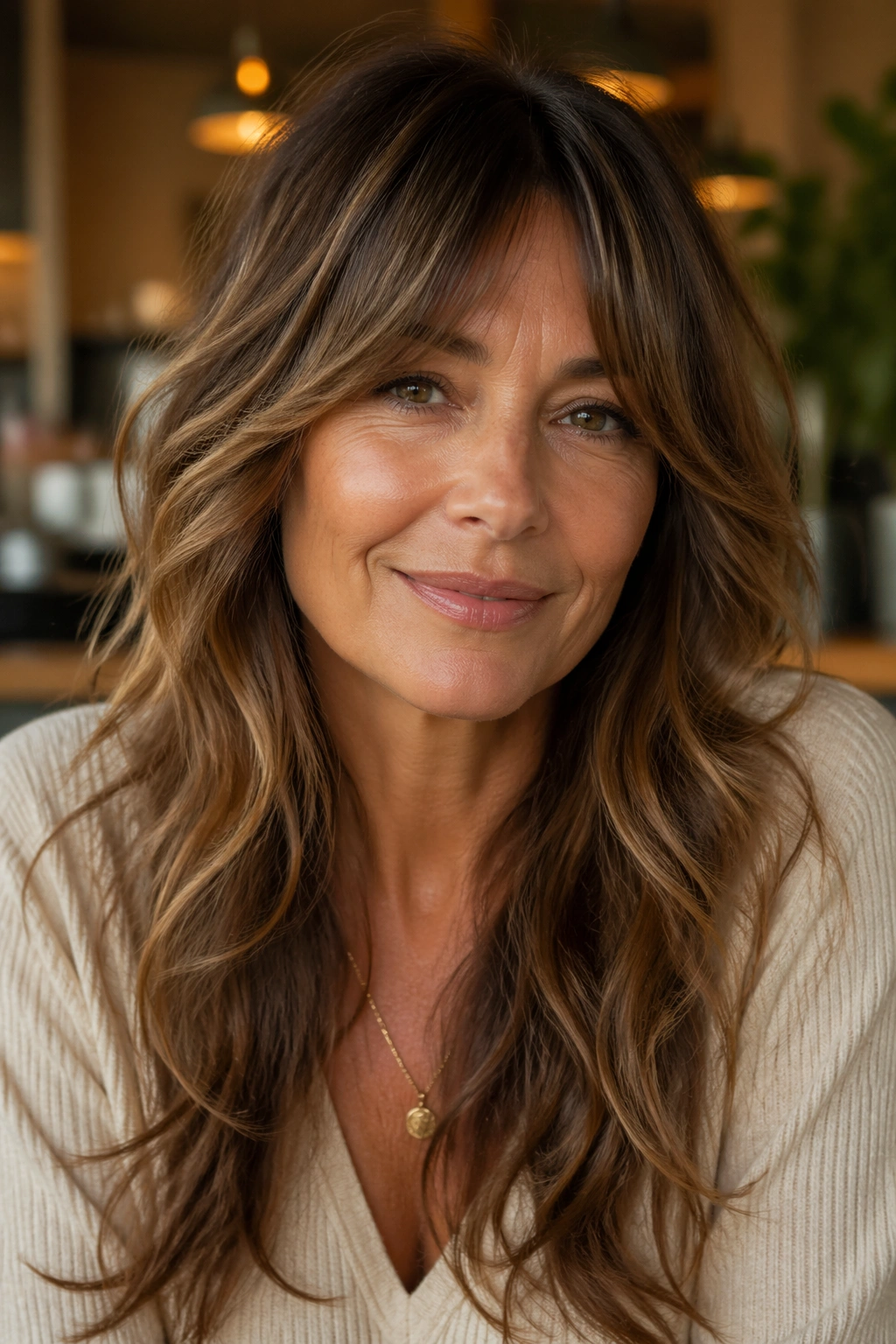
A short forehead fringe can be tricky. Bottleneck bangs are easier because they start narrow between the brows and widen gently near the cheekbones, which gives the face a softer frame.
This style works well with long layers because the bangs and the wave pattern support each other. The front has shape, the length keeps movement, and the cut avoids that “all fringe, no balance” problem that happens with heavier bangs.
- Best for longer faces or broad foreheads.
- Easy to grow out because the sides are already longer.
- Needs a quick round-brush pass or a Velcro roller set.
23. Perm-Inspired Waves With a Soft Finish
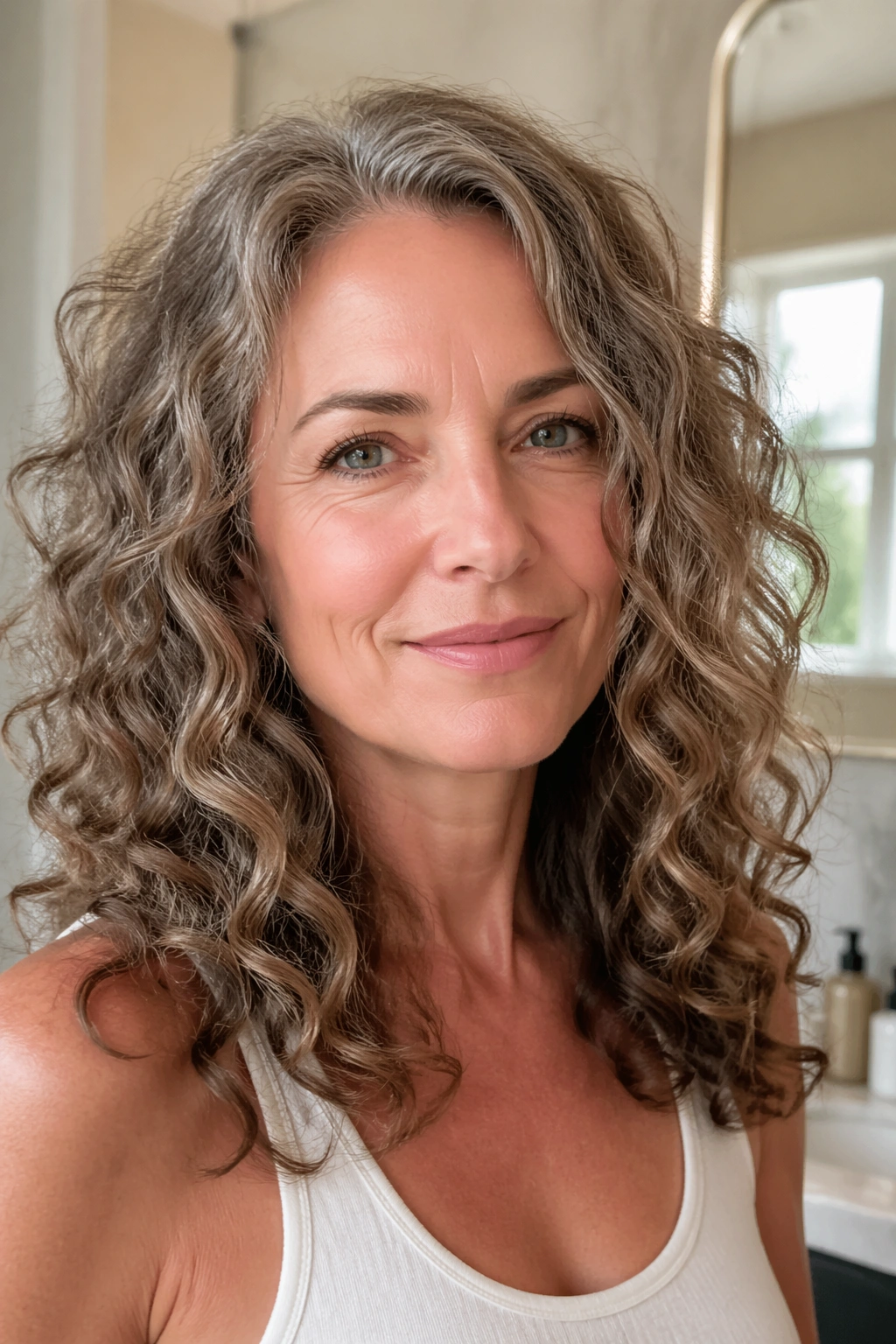
A full curl set is not the point here. The point is a controlled wave pattern that gives the hair body from roots to ends without looking overdone.
This can come from a modern body wave service, flexi rods, or a careful heat set, depending on how much commitment you want. The finish should stay soft and touchable. Tight, springy curls can age the look fast unless that’s specifically what you want.
Use a moisturizing leave-in and let the hair cool fully before touching it. That cooling stage matters. Warm waves fall apart when you start fluffing too soon.
24. Messy Bun With Face-Framing Tendrils
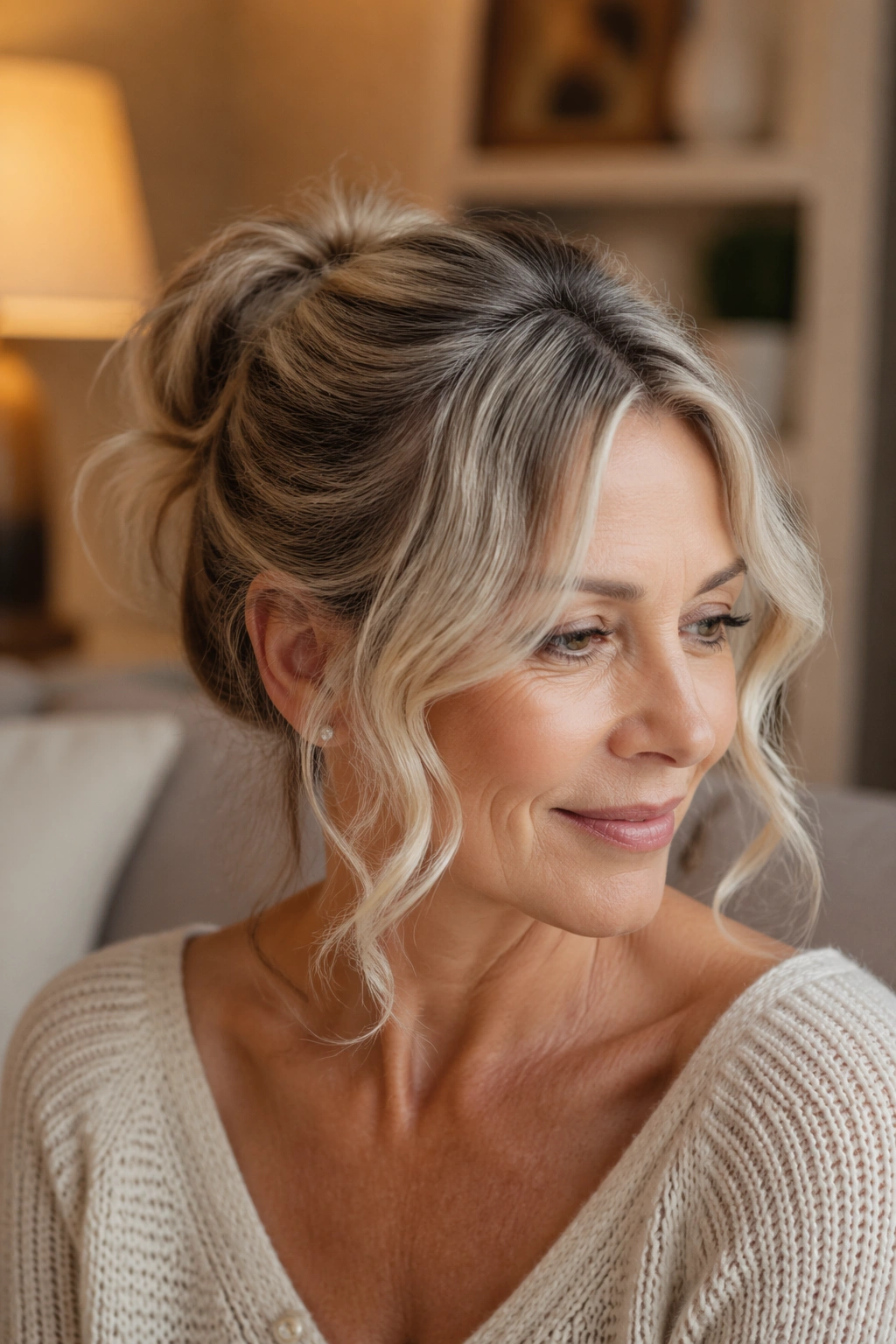
A messy bun is only messy if the shape is thought out. The trick is to keep the bun low or mid-height, leave a few tendrils loose at the temples, and let the wave pattern show through the front.
Unlike a slick bun, this version keeps the face soft. That’s useful when you want your hair up but don’t want the lifted, severe effect that a tight knot can create. It also works on hair that’s a little dirty, which is useful in real life and not just on mood boards.
Pin the bun loosely, then pull a few strands free. Not too many. You want texture, not a collapse.
25. Shoulder-Length Razored Shag
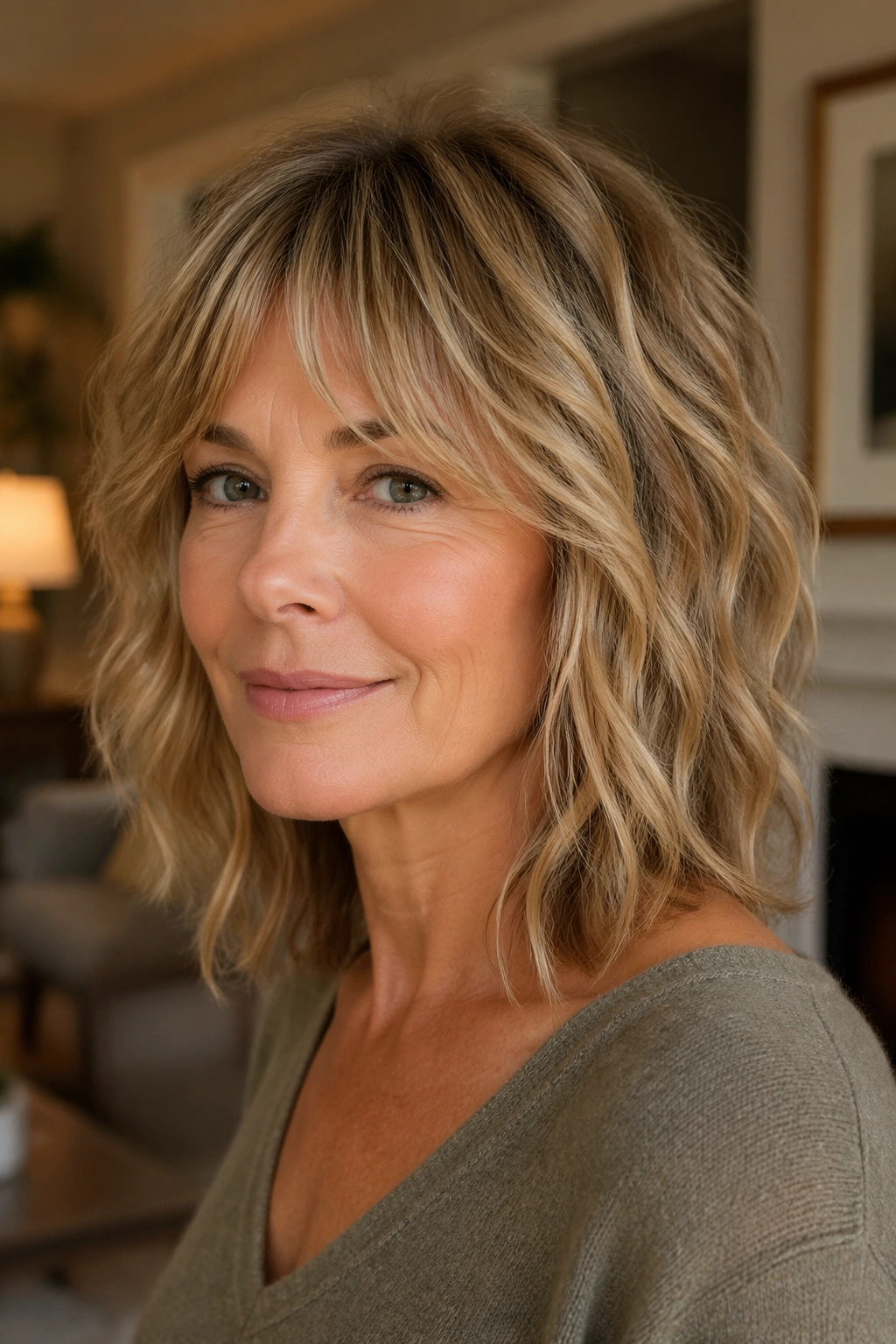
A razored shag at shoulder length is the haircut for hair that wants to move. It breaks up bulk, keeps the crown from sinking, and makes the ends swing instead of hanging.
What makes it useful
- The layers remove weight through thick or coarse waves.
- The shoulder length keeps it wearable, not wild.
- A diffuser helps the top keep shape while the ends dry softly.
This style is forgiving on days when the wave pattern looks uneven. That’s part of its charm. It doesn’t ask for perfect curls, only a little texture and a decent blow-dry.
26. Smooth Polished Waves for Fine Hair
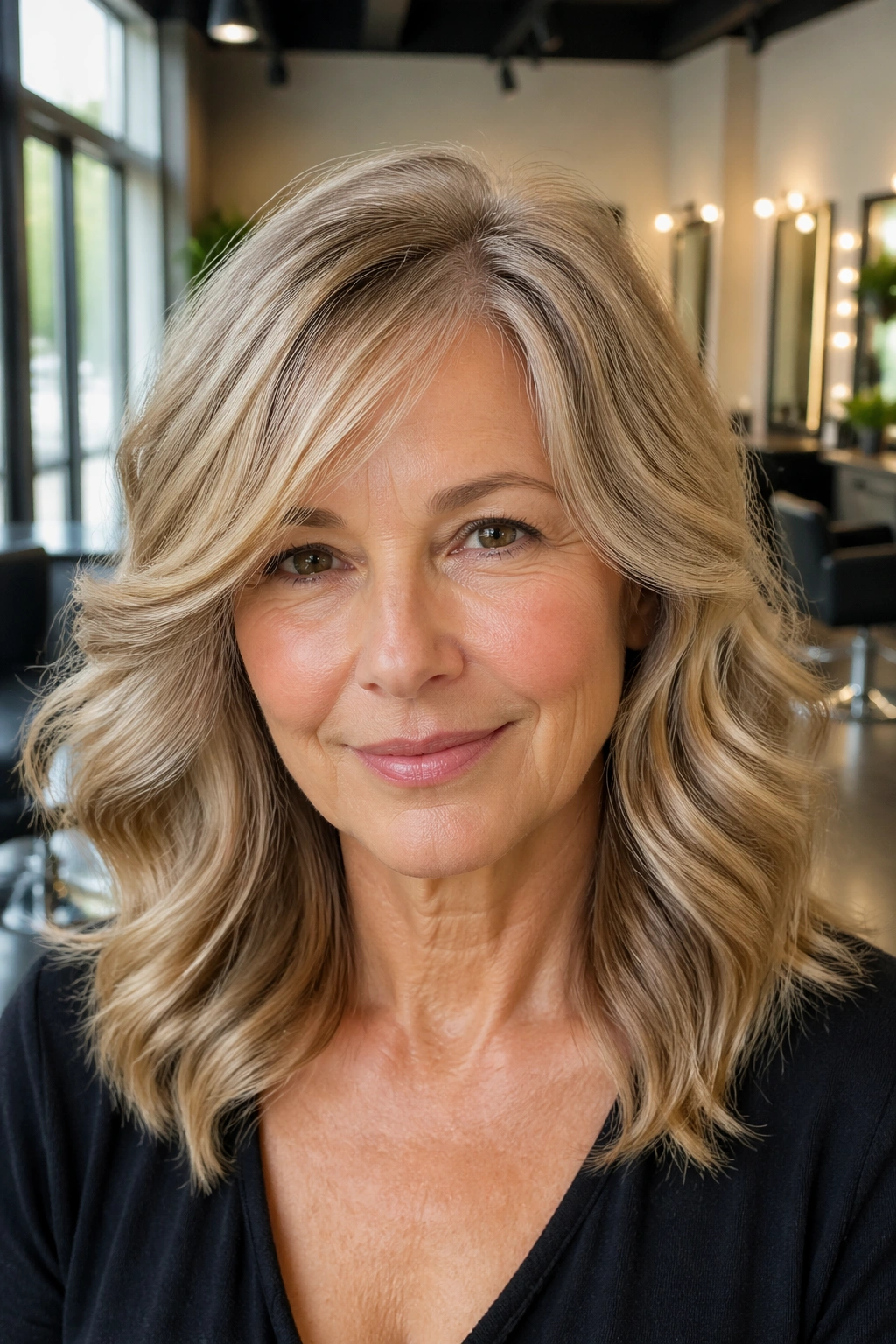
Fine hair often looks better when the wave is brushed into a smoother shape. Too much separation can make it look thin. A polished wave fills in the gaps.
Start with mousse at the roots, then blow-dry with a round brush to build the base. After that, use a medium barrel iron on large sections and brush them out only after they cool. That brushed finish gives the hair a denser look along the length.
A little shine serum on the ends helps, but keep it light. Fine hair gets weighed down fast, and once it goes limp, the whole style loses its point.
27. Asymmetrical Bob With Wavy Movement
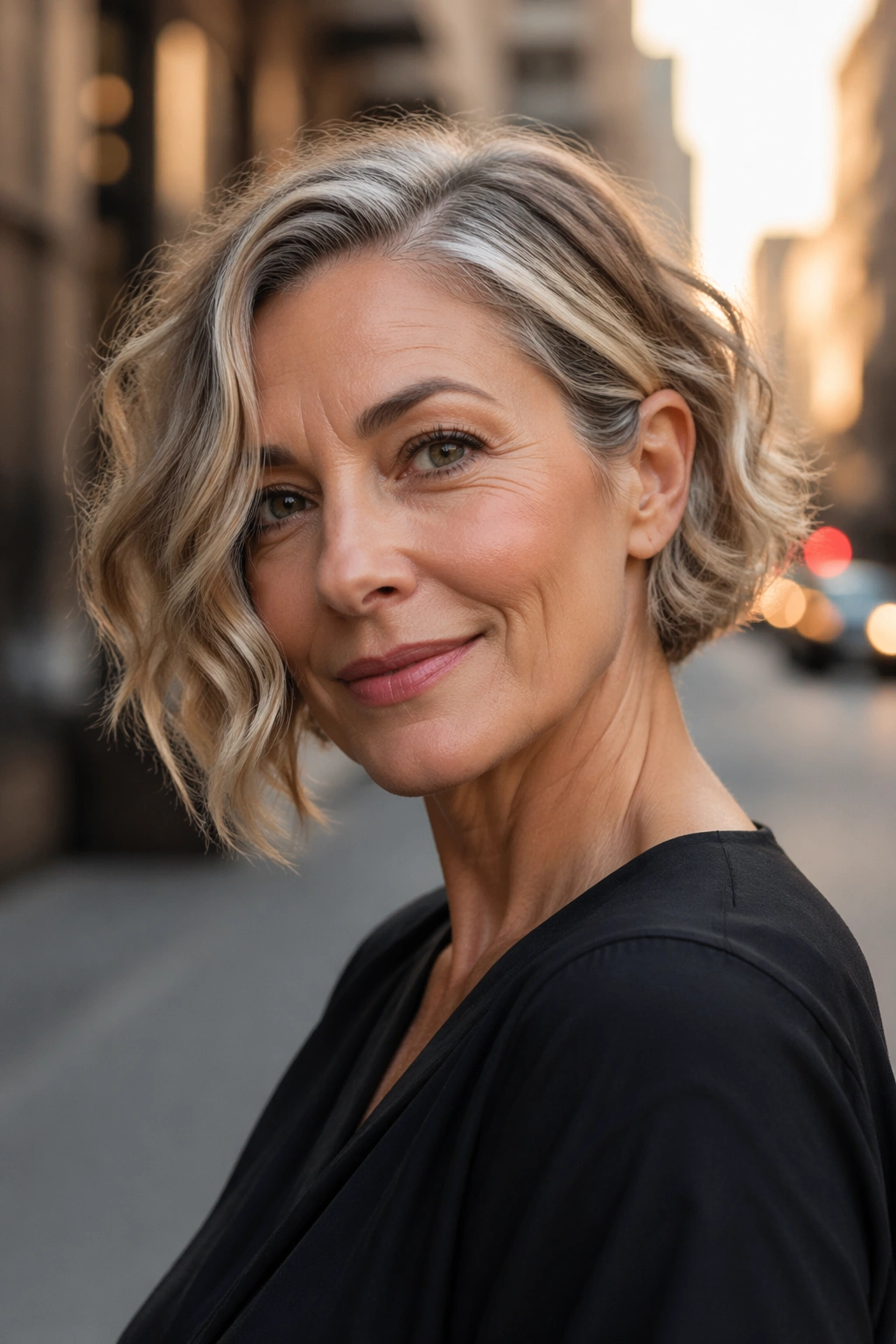
Why does an asymmetrical bob work? Because the slight difference in length makes the eye move. One side feels a touch longer, which gives the haircut a built-in line and a little edge.
Keep the difference subtle. A dramatic angle can be hard to live with, especially if you wear glasses or prefer low-maintenance hair. A small shift — maybe half an inch to an inch — is enough to make the bob feel modern without becoming fussy.
Styling note
Use a side part on the shorter side for extra lift, then let the longer side curve inward naturally. That contrast is what makes the shape interesting.
28. French Bob With Soft Wave
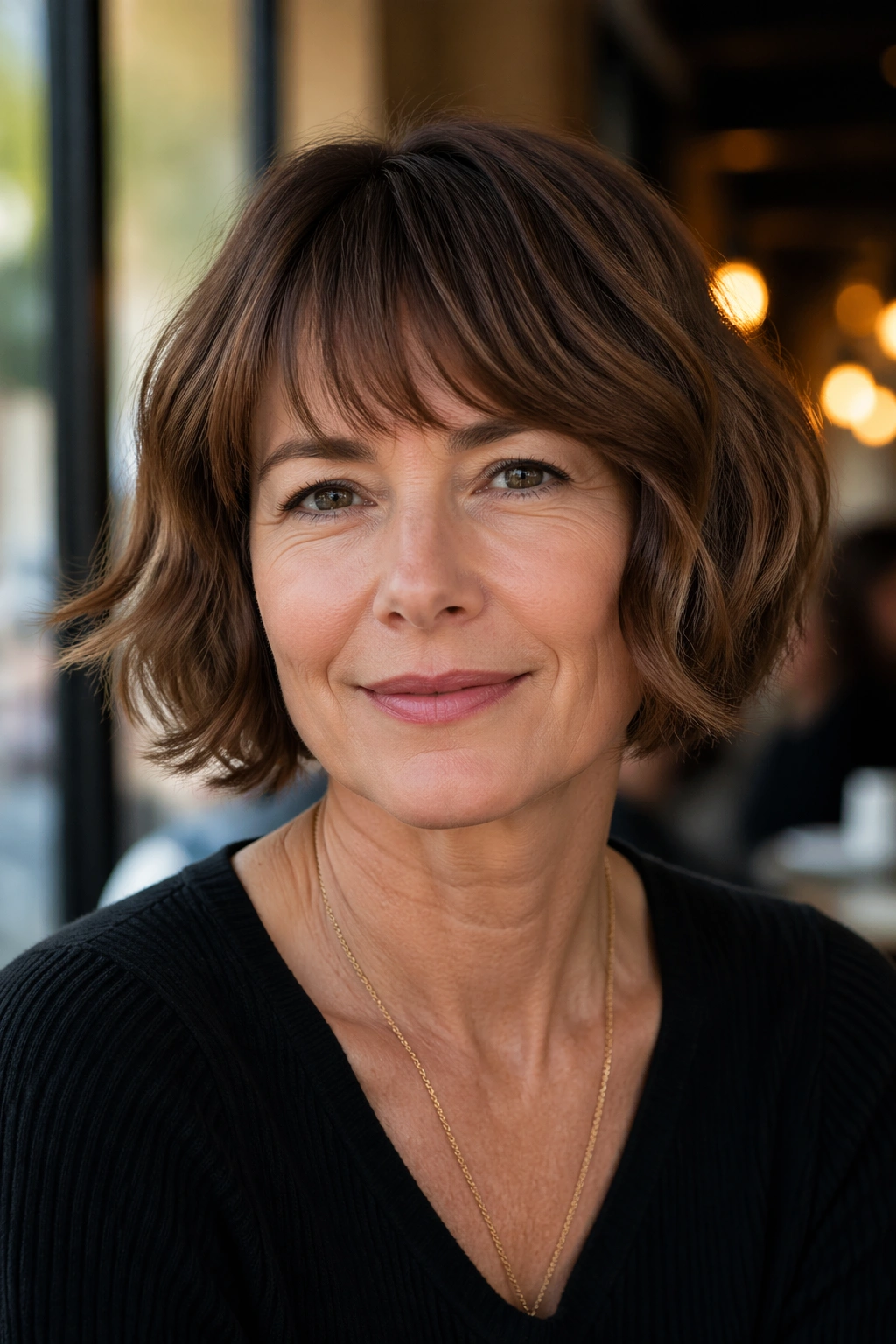
A French bob sits near the jawline or just above it, which means the wave pattern has to do some work. The good news: when it’s cut right, the shape looks sharp and easy at the same time.
This is a good fit for women who like shorter hair but do not want a severe crop. A tiny bend at the ends and a bit of piecey texture around the face keep it from feeling too strict. Add a fringe only if you want one; the cut stands on its own.
It also plays well with glasses and statement earrings. Small frame, strong line. Nice balance.
29. Soft Spiral Waves on Gray Hair
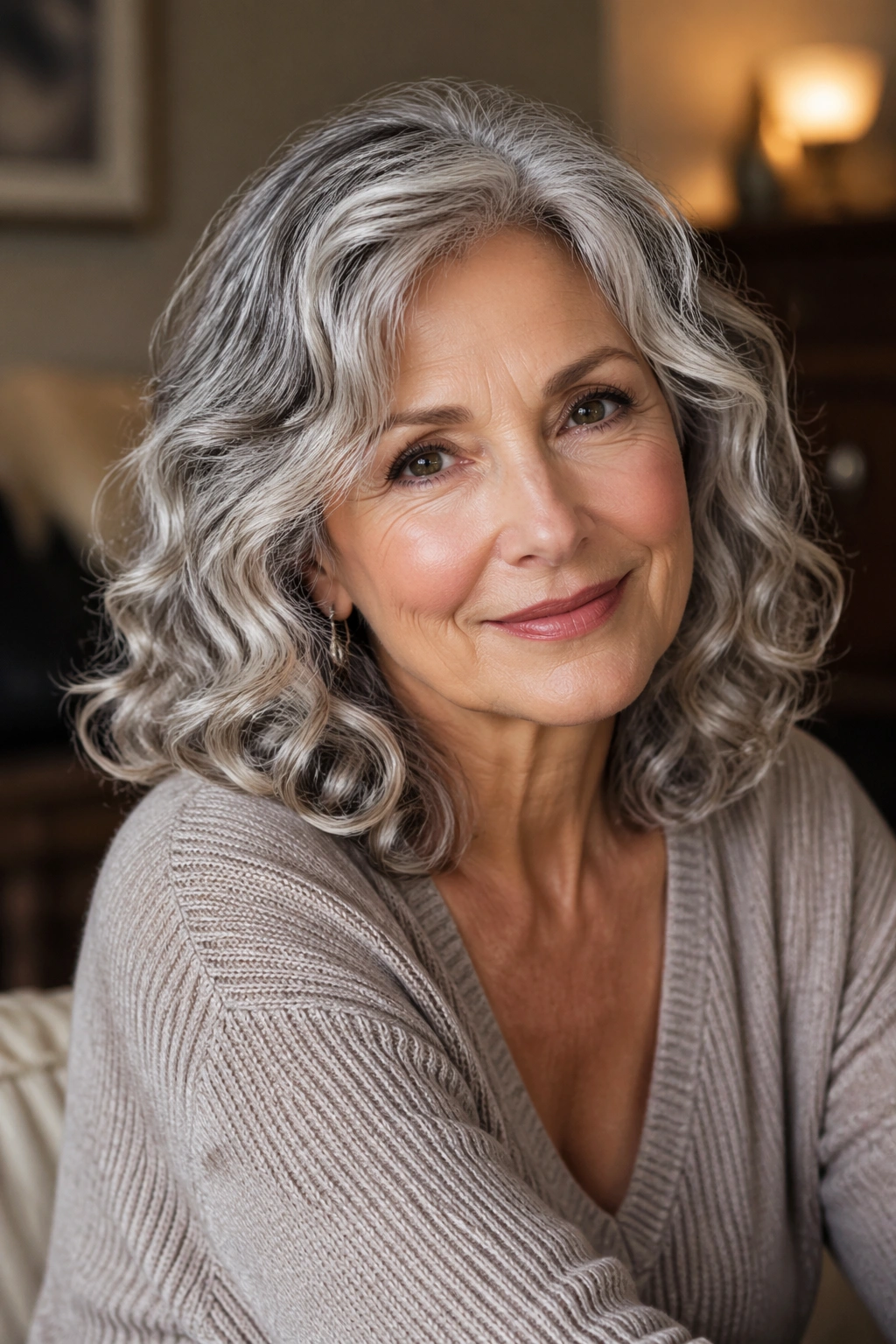
Gray hair can take on a different texture — often coarser, sometimes drier, sometimes a little wiry. Soft spiral waves help organize that texture instead of fighting it.
A smaller barrel or set rods can give the wave more shape, but the finish should stay loose. If the spirals are too tight, the style starts to feel busy. A little separation through the fingers is enough.
Moisture matters here. A leave-in conditioner, a light cream, and patience with cooling time will usually do more than heavy spray or constant brushing. Gray hair likes calm handling.
30. Pinned-Back Waves for Dressy Days
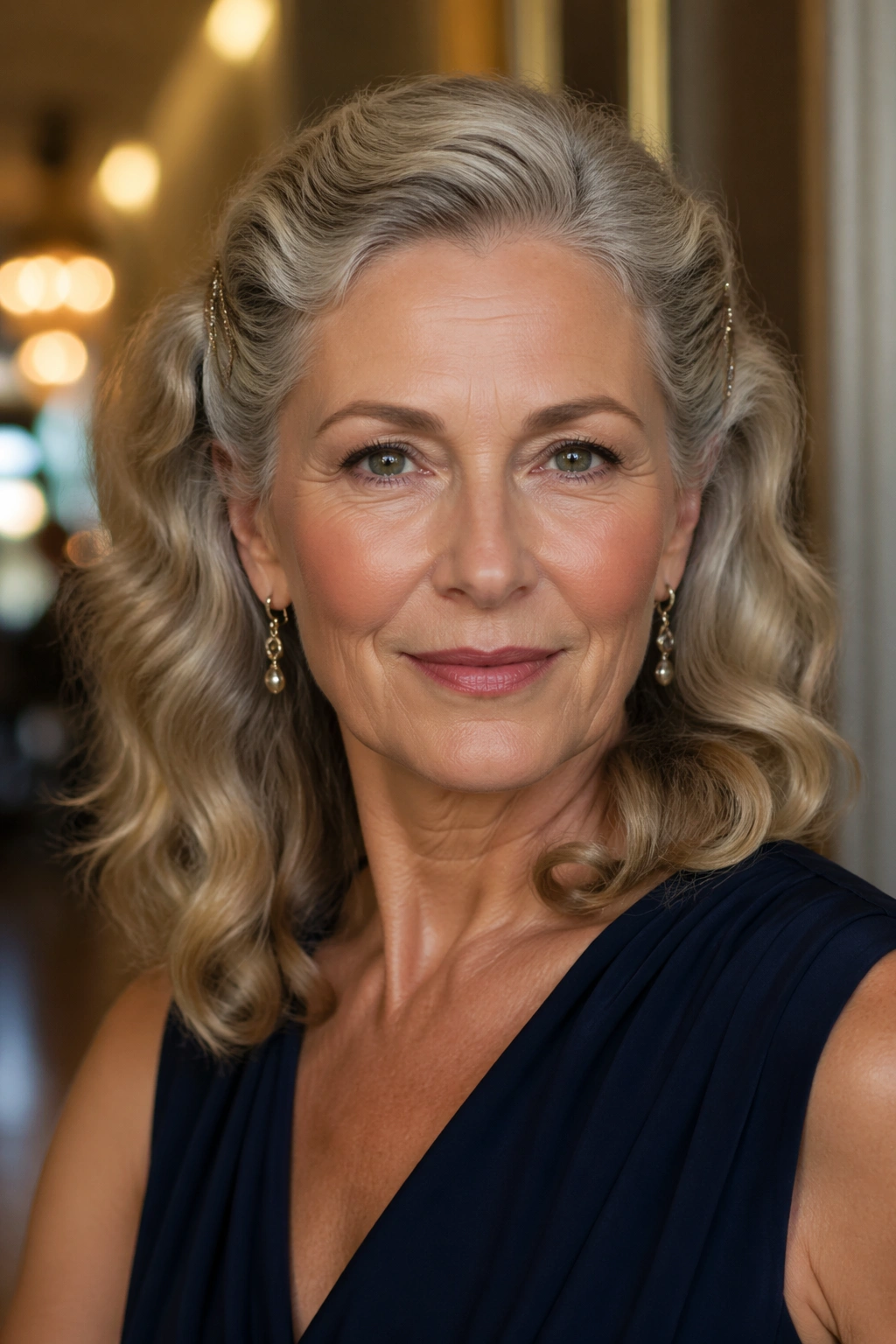
A pinned-back style gives you the polish of an updo without losing the wave pattern you already have. That’s the difference from a full chignon: some of the texture stays visible.
The best version uses 2 to 4 pins at the temple or just above the ears, with the rest of the hair left loose and brushed back softly. It’s tidy, but not stiff. If the front needs a little extra control, use a tiny amount of cream on the surface only.
This is the one to reach for when you want something dressy that still feels like hair, not architecture.
31. Highlight-Friendly Layers With Loose Waves
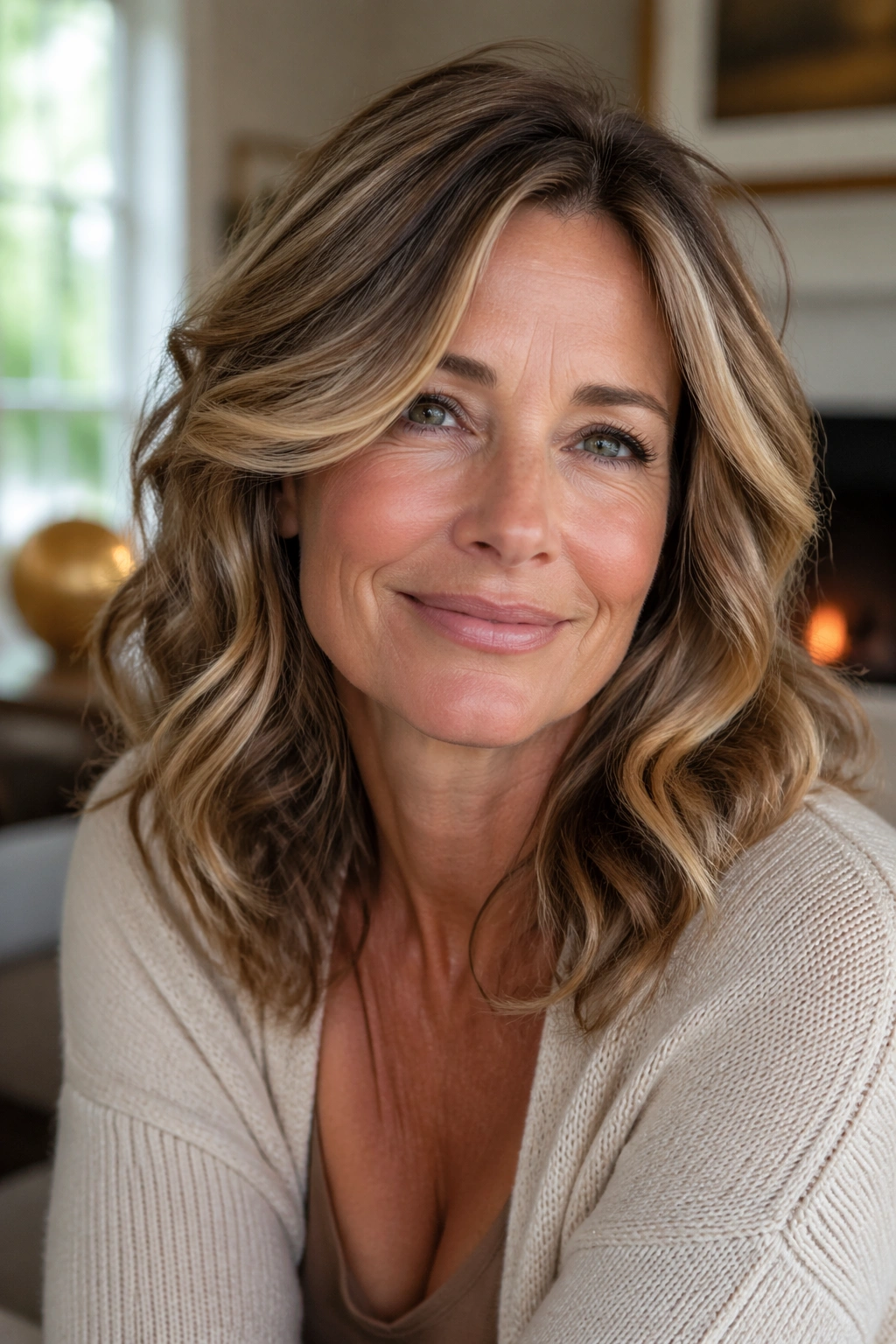
Layers and highlights are a good pair because the cut gives the color a place to show up. The wave pattern moves the lighter pieces around the face and through the ends, which makes the whole style feel more alive.
Where this shines
Ask for brighter pieces around the face and a few softer lowlights underneath. That keeps the hair from looking striped. The waves then show the color in motion instead of in one flat block.
This is a smart choice for women who want dimension without a drastic haircut. The cut does a lot of the visual work, and the color follows along.
32. Ends-Turned-Out Midlength Waves
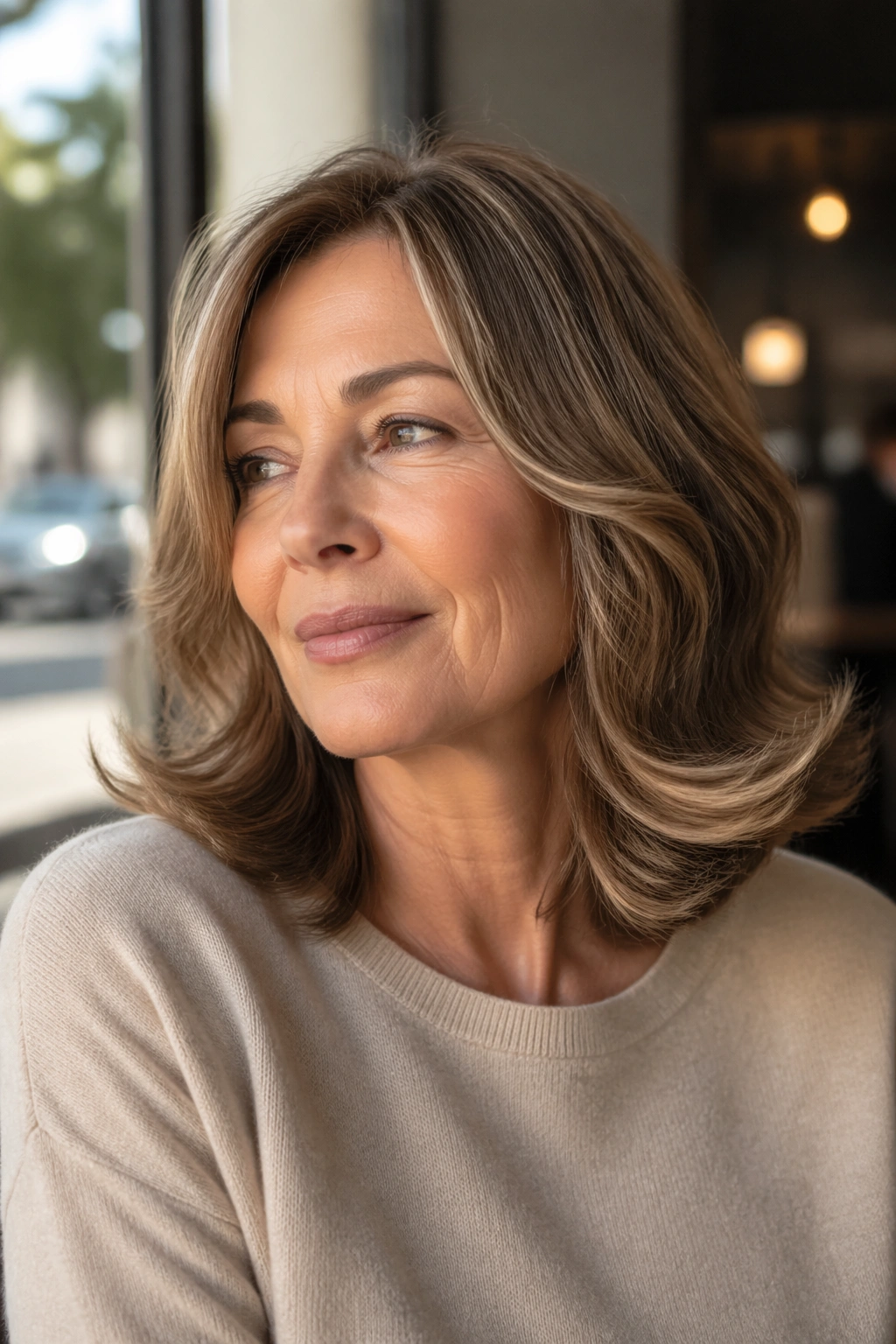
A slightly turned-out end can make midlength hair feel playful instead of plain. The flip opens the neckline and stops the style from clinging too closely to the shoulders.
Compared with inward-curving ends, this look feels lighter. It also helps if your hair tends to tuck awkwardly under a coat collar or sweater neckline. The outward bend keeps the line visible.
Styling note
Use a round brush or flat iron to nudge the last inch outward. Keep the bend soft. If every end flips the same way, the haircut starts looking too styled.
33. Pixie With a Wavy Mohawk Top
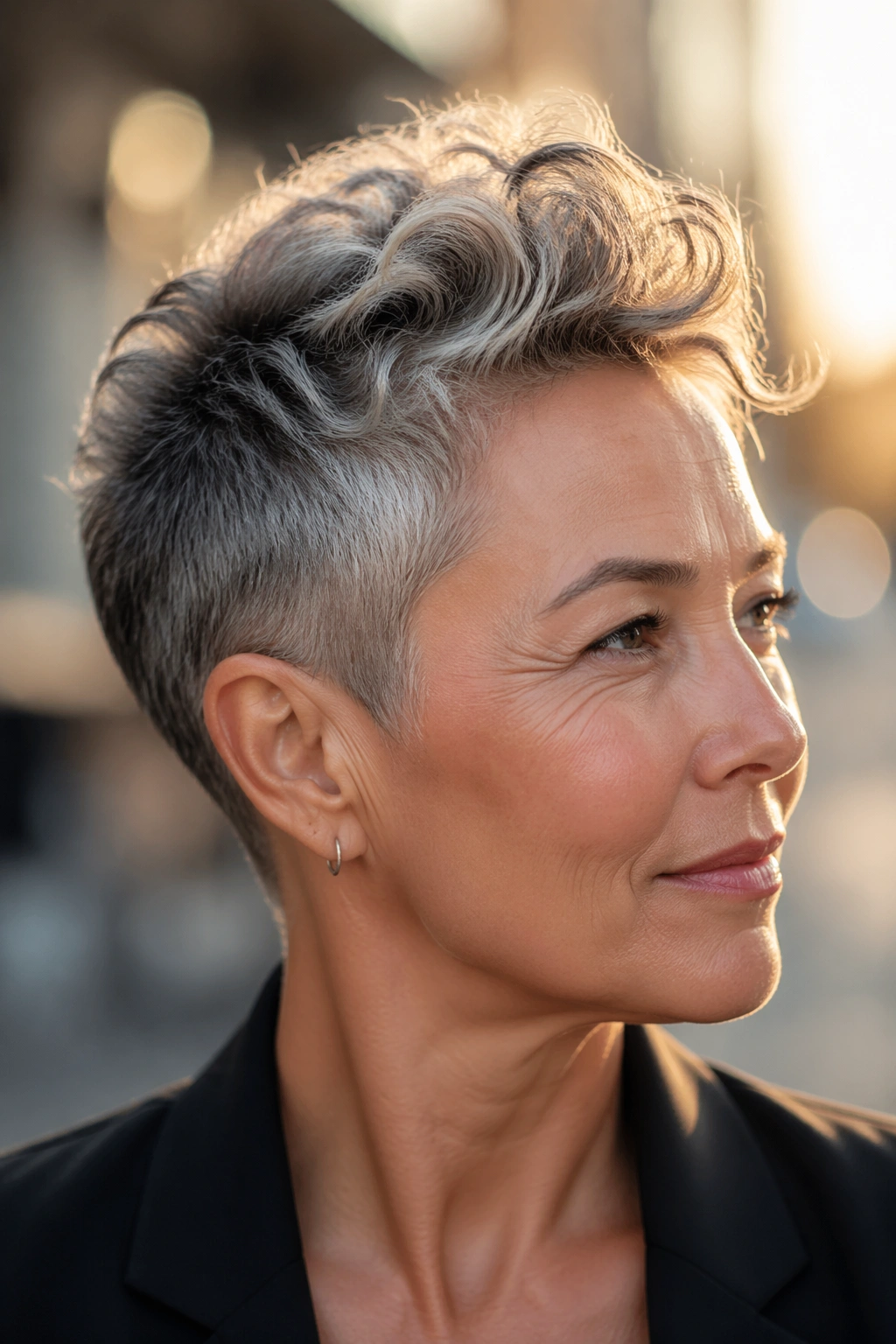
A wavy pixie with a longer top ridge is not as daring as it sounds. The short sides keep the shape neat, while the top has enough length to show texture and movement.
This cut is especially good for women with natural wave or a strong cowlick on top. Instead of fighting the growth pattern, the haircut uses it. That alone can save a lot of daily fuss.
How to wear it
Work a small amount of mousse into damp hair, then lift the top with your fingers while drying. Finish with a light paste on the ends of the top section. The goal is lift, not spikes.
34. Side-Swept Lob With Lift at the Crown
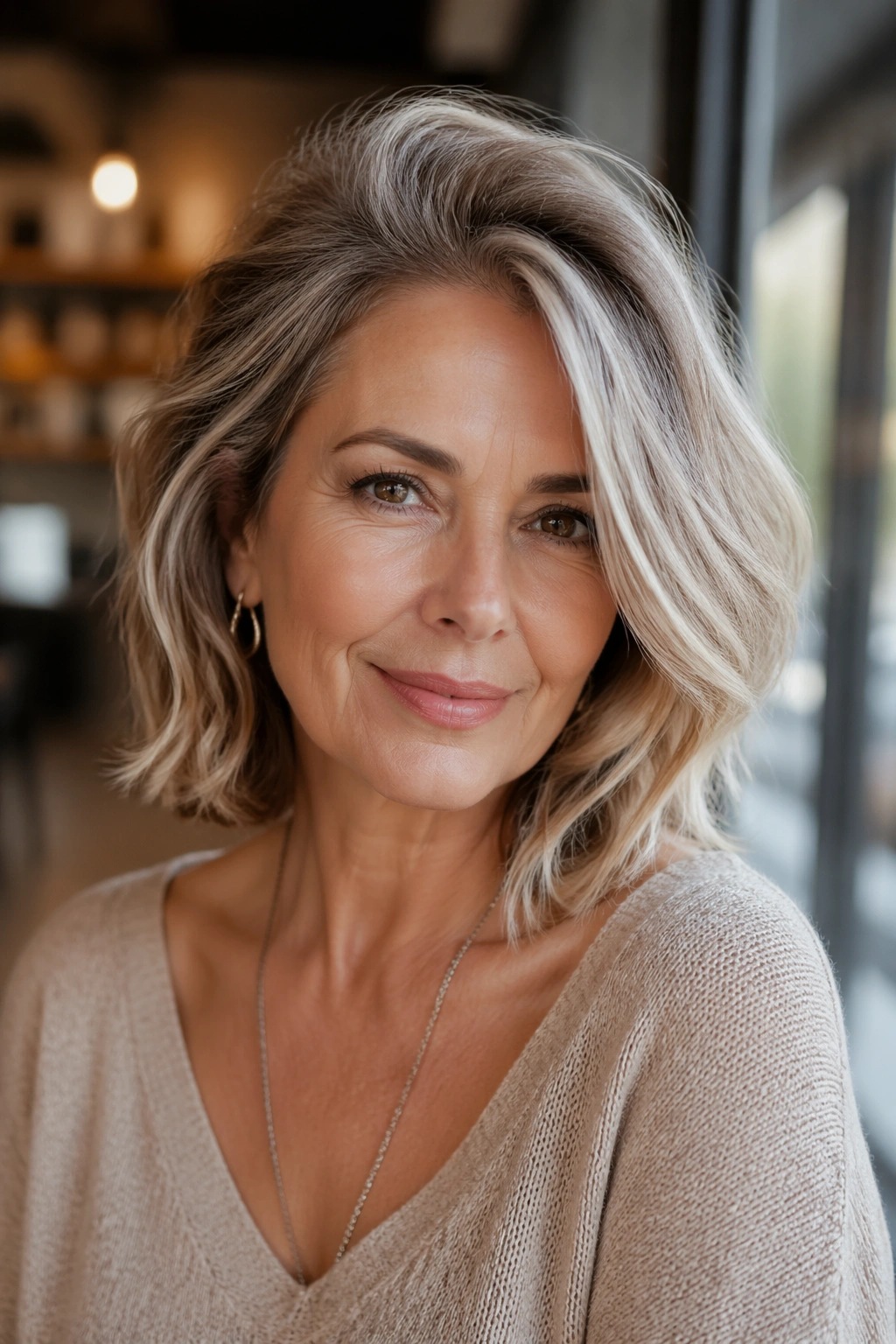
A side-swept lob gives wavy hair a soft diagonal line that feels flattering on almost everyone. The lifted crown keeps the style from falling flat, while the sweep creates a clean line across the forehead.
This cut works nicely if your hair wants to go limp at the roots but still has good movement through the lengths. The side sweep draws the eye upward, which is handy for fine hair and for faces that need a little vertical balance.
- Great when one side naturally lies flatter.
- Easy to tuck behind one ear.
- Looks good with glasses or simple earrings.
35. Long Wavy Layers With Minimal Styling
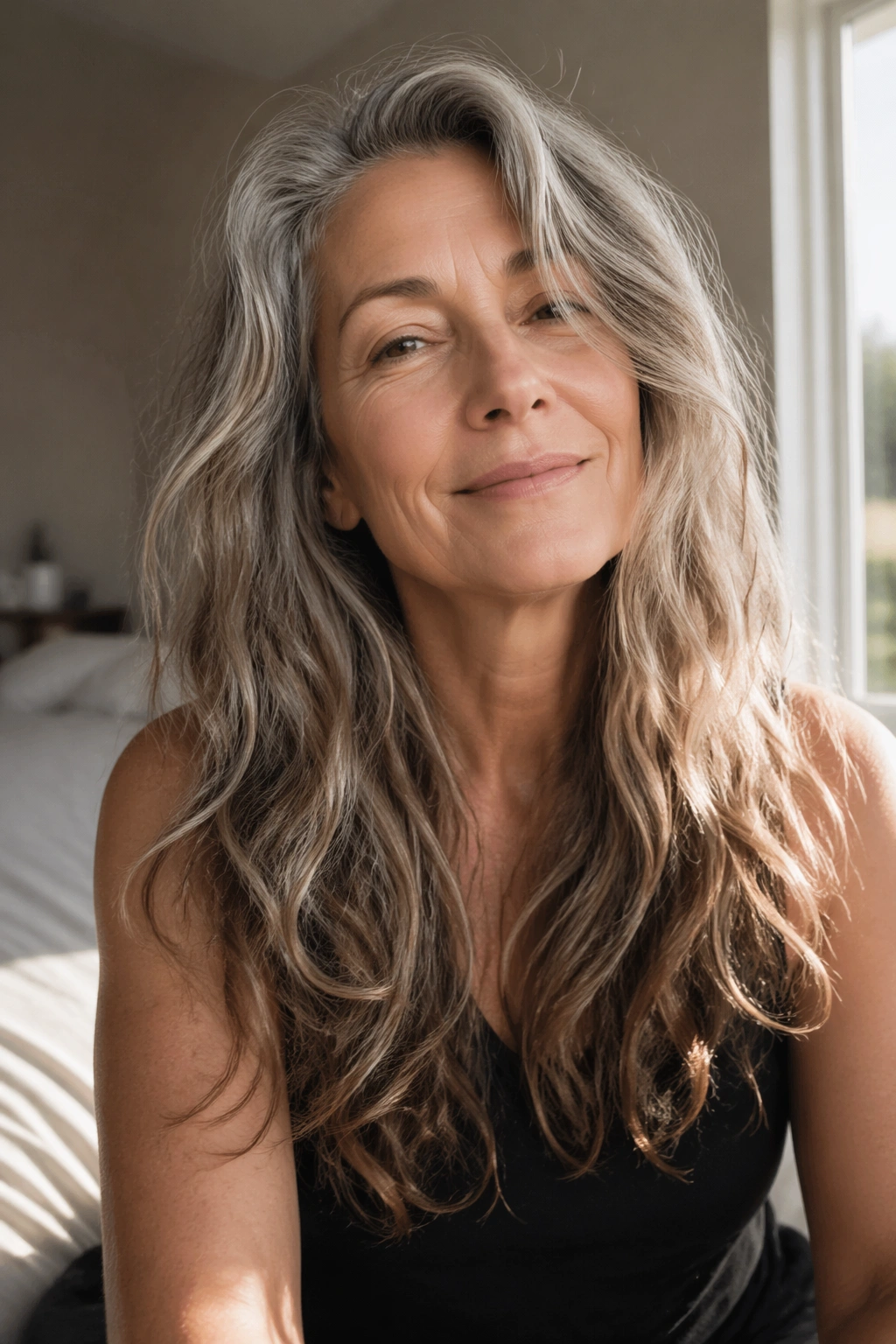
Some women do not want a haircut that needs a daily routine. Long layers with a low-maintenance finish are the answer for that.
The cut should keep enough shape to prevent the ends from looking heavy, but not so many layers that the hair loses fullness. Air-drying with a bit of cream or leave-in is often enough. If the texture is good, you may not need heat at all.
This style rewards hair that already has a wave pattern and does not need much coaxing. It’s calm, easy, and useful. That matters more than people admit.
36. Rounded Bob With Airy Ends
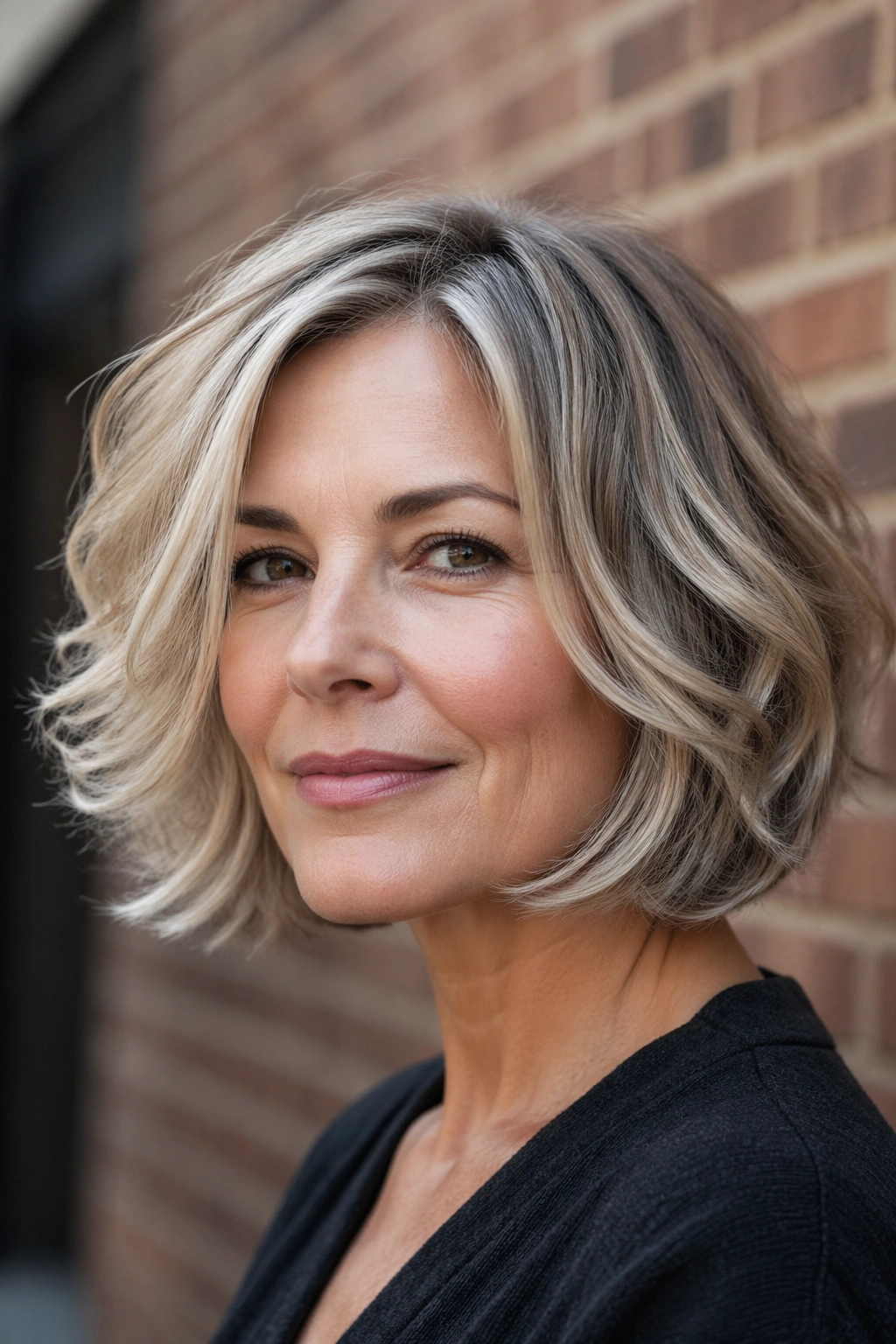
Unlike a boxy bob, a rounded bob follows the shape of the head and softens the lower face. The airy ends keep it from feeling dense, which is a real concern when wave and volume start piling up in the wrong spot.
This cut is a solid choice for women who want something neat but not rigid. The silhouette has enough curve to feel gentle, but it still looks intentional. Ask for internal layering rather than heavy thinning, because too much thinning can leave the bob wispy.
A little movement at the ends goes a long way here.
37. Low Chignon With Wavy Texture
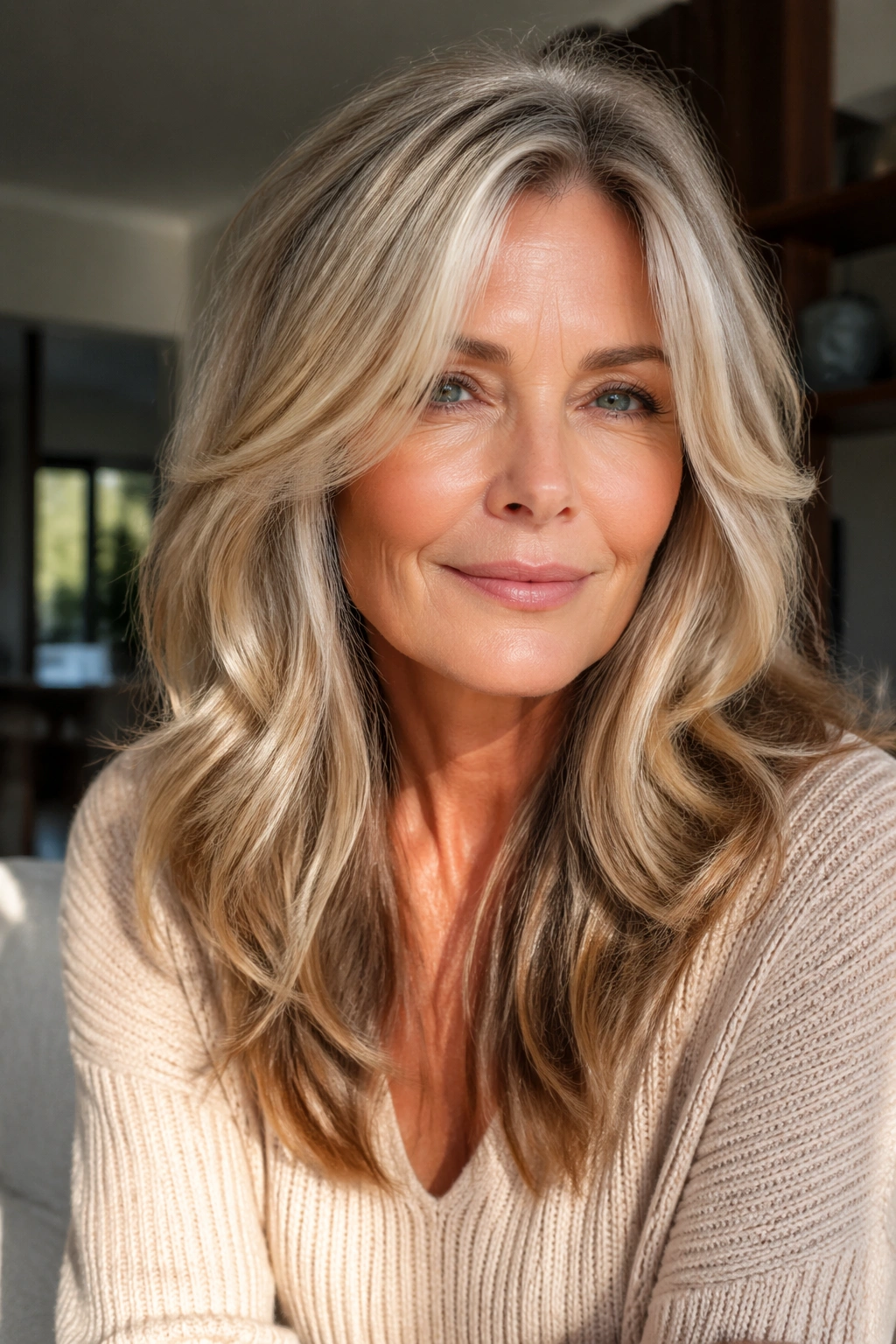
A low chignon can look fancy without looking overworked. The secret is to keep the wave texture visible around the bun so the style doesn’t flatten into a tight knot.
What to do
- Gather the hair low at the nape.
- Twist it loosely and pin it in place.
- Leave a few soft pieces around the ears and temples.
This works well for events, dinners, or days when you want the neck clear but still want the hair to look like hair. A sleek chignon can feel severe. A textured one feels warmer.
38. Half-Up Claw Clip Style for Wavy Hair
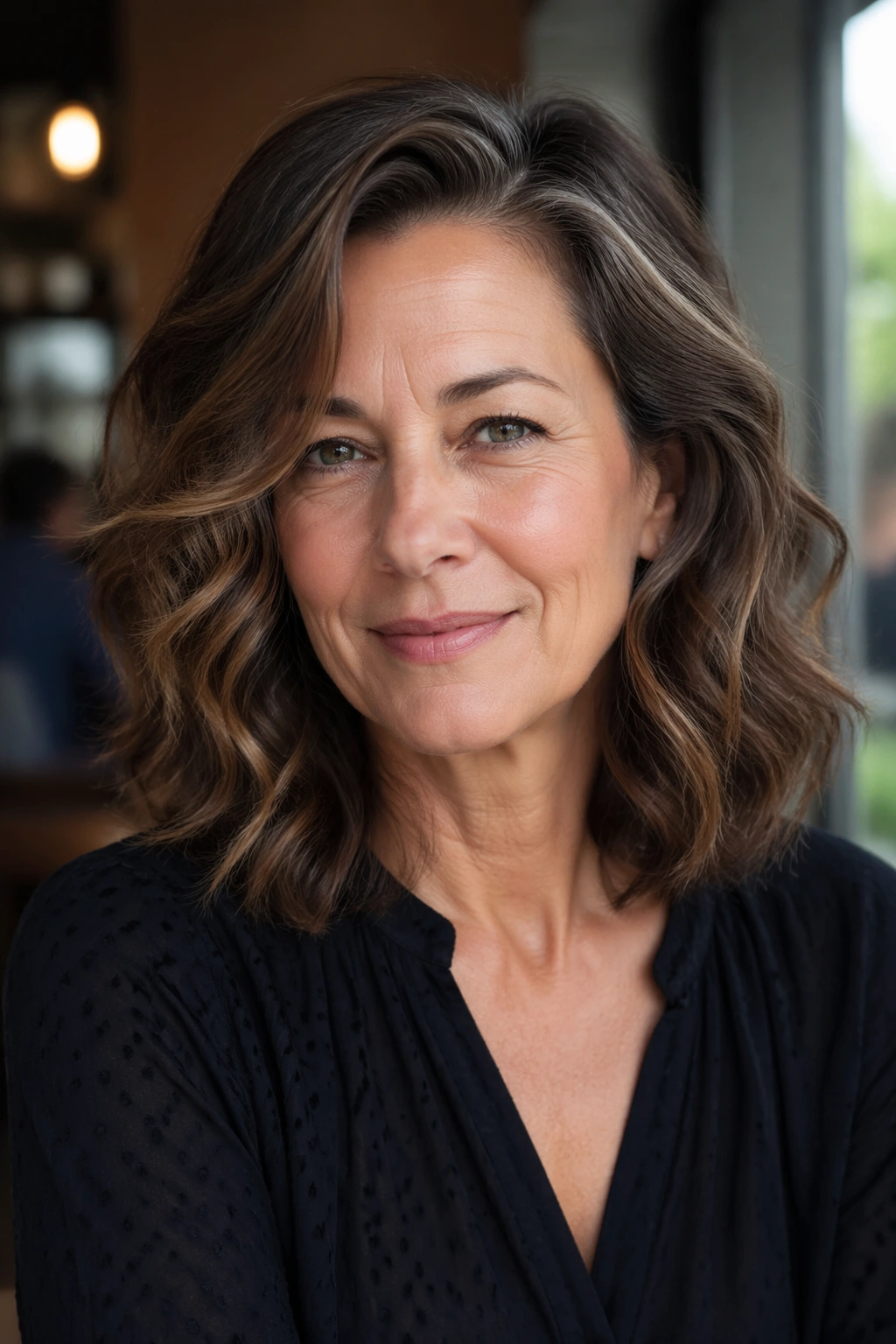
A claw clip style can look polished if the clip is the right size and the top section keeps a little lift. The old mistake is pulling the whole crown tight and flattening the wave pattern.
Keep the bottom half loose and let a few pieces fall around the face. A medium clip usually works better than a giant one because it holds the shape without making the back look bulky. If the hair is long, twist only the top section and leave the rest to fall naturally.
It’s fast, practical, and easy to reset after a windy day. That alone makes it worth keeping in rotation.
39. Shoulder-Grazing Wolf Cut With Waves
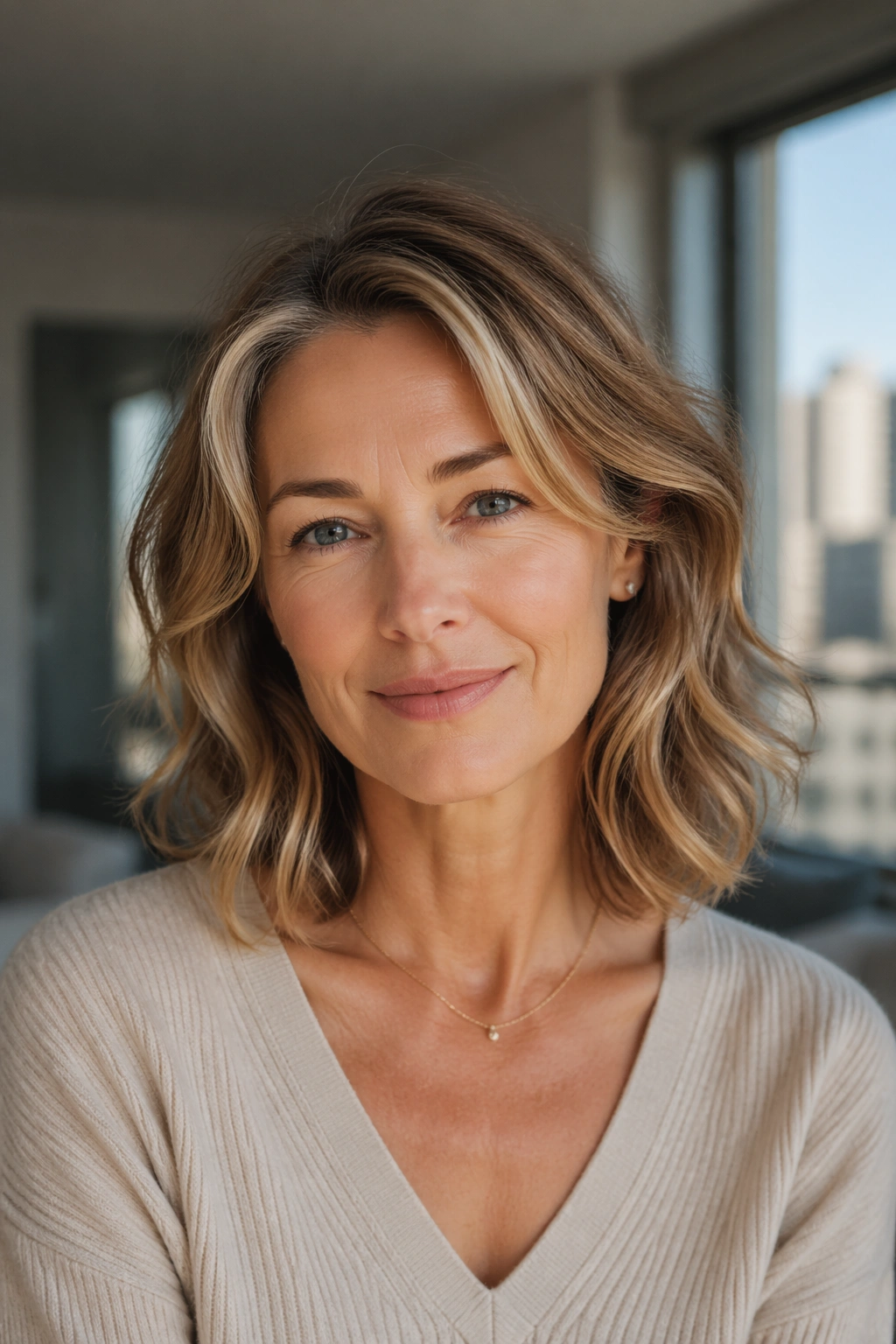
Can a wolf cut work after 50? Yes, if the layers are softened and the fringe is kept airy. The rougher versions can feel too young or too choppy, but the right version has movement without noise.
This cut suits thicker wavy hair that needs weight removed around the crown and through the sides. The shoulder-grazing length keeps it wearable, while the layers keep it from turning into one heavy mass. It’s a good match for people who like texture and do not mind a little attitude.
Ask for softer transitions between the layers. That part matters more than the name.
40. Air-Dried Natural Waves With a Glossy Finish
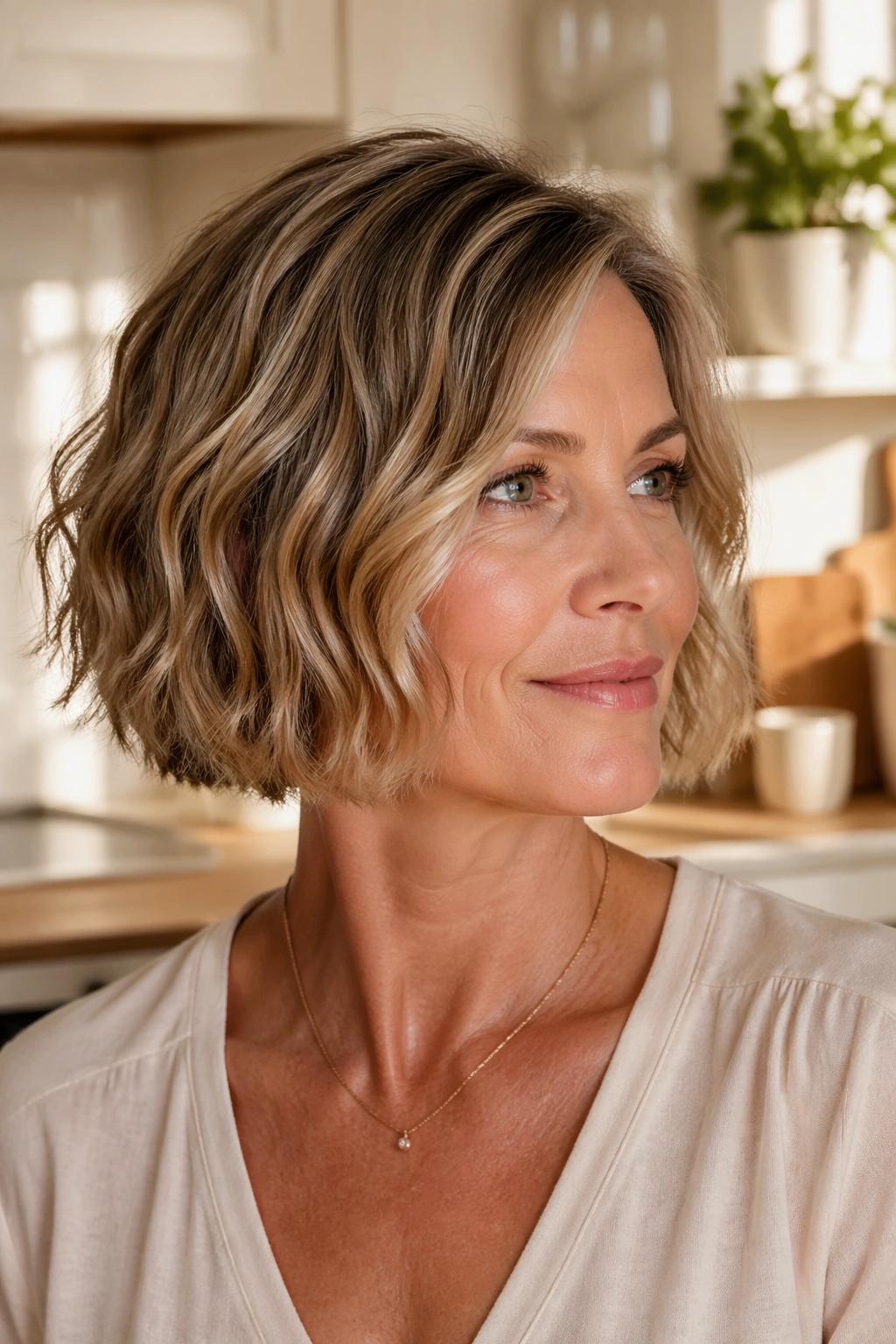
If you want the least amount of effort, let the waves do what they already know how to do. Air-dried hair with a glossy finish can look clean, modern, and easy, especially when the cut underneath is shaped well.
A leave-in conditioner and a light cream usually give enough control. Scrunch the hair, part it where it naturally falls, and avoid touching it while it dries. If the ends feel dry, smooth a tiny bit of serum there only. Not the roots. Never the roots.
The healthiest-looking style is often the one your hair can repeat tomorrow without a fight.
Final Thoughts
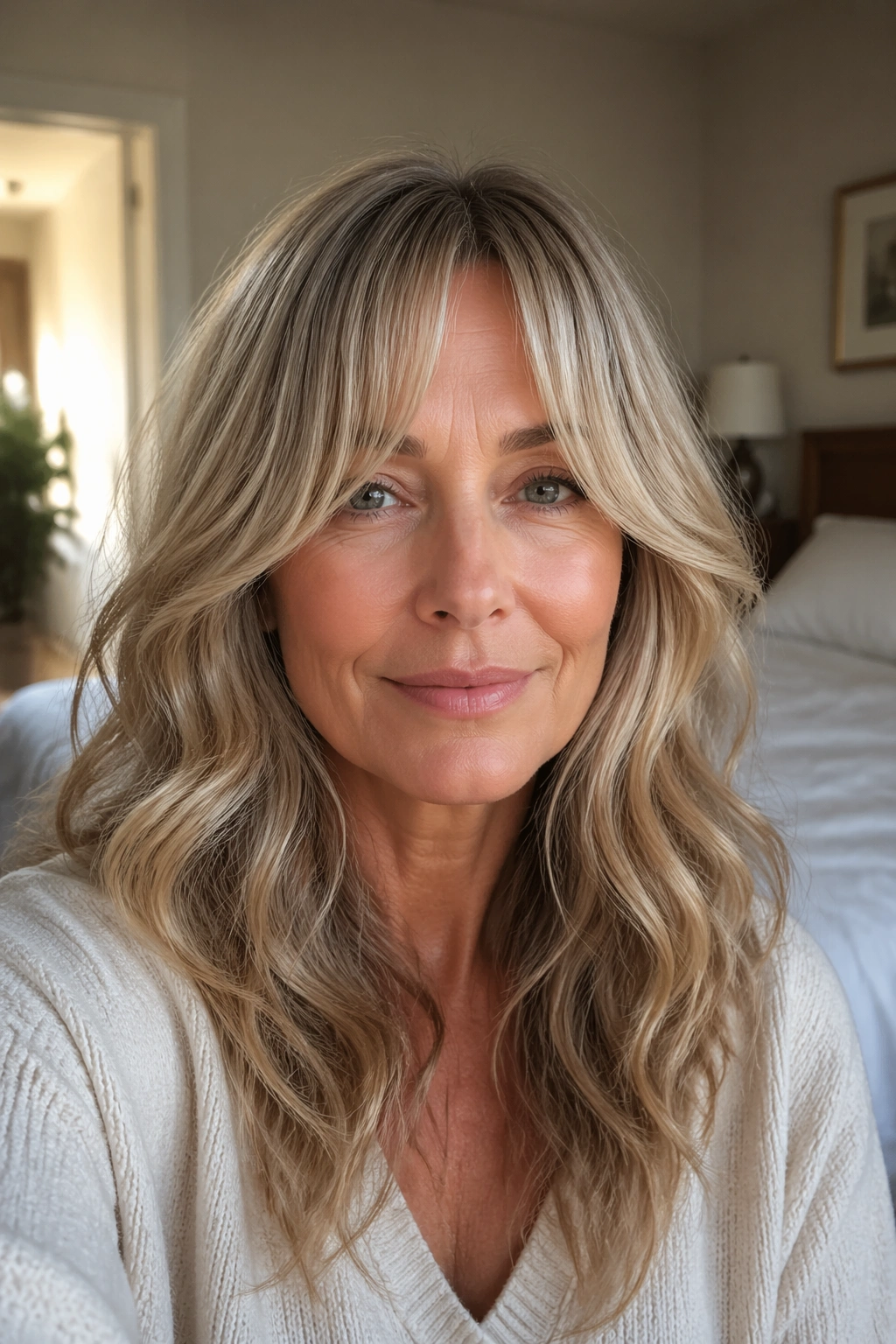
The best wavy hairstyle is not the one that looks most dramatic on a salon wall. It’s the one that gives your hair a shape it can keep on a normal Tuesday.
If your hair has gotten finer, choose a cut that builds lift at the crown and keeps the ends from looking stringy. If it’s thick, ask for layers that remove weight without shredding the outline. And if your silver strands are changing the texture, treat that as part of the design instead of a problem to hide.
A good haircut should make the wave pattern easier to live with, not harder. That’s the whole point.