



Long curly hairstyles with layers can fix a shape problem in a hurry. A blunt bottom line on dense curls often turns into a triangle, and nobody needs that surprise when the hair dries. Layers change the silhouette, lighten the bulk, and let the curls stack instead of fighting each other.
But layers are not one-size-fits-all. A chin-grazing layer on loose curls behaves differently from the same cut on tight coils, and a stylist who ignores shrinkage can carve away far more length than you wanted. Dry cutting, curl-by-curl shaping, and a clear idea of where you want the volume to sit matter more than most people think.
The best part is that layered curls do not all read the same. Some cuts make the face look softer, some keep the length heavy and rich, and some go after bounce and lift with a bit of attitude. If your curls have ever gone flat at the crown and wide at the ends, you already know why shape matters before shine ever enters the picture.
1. Long Curly Hairstyles With Layers and Curtain Bangs
Curtain bangs are one of the easiest ways to make layered curls look finished. They open the face without cutting off the length, and they give the whole haircut a softer front edge.
The real win is how they blend into the sides. When the shortest pieces land around the cheekbones and then slide into longer layers, the haircut stops looking like a shape and starts looking like motion. That matters a lot on curls, where one harsh line can feel heavy fast.
Why they work so well on curls
- They soften a high forehead without hiding the face.
- They work with a center part or a slightly off-center part.
- They keep the ends of the hair long and full.
- They let the front curl into the rest of the haircut instead of sitting on top of it.
Tip: ask for the bangs to be cut dry. Curly fringe shrinks more than people expect, and a wet cut can leave you with pieces that jump way too short once the hair dries.
2. A Deep Side Part With Cascading Curls
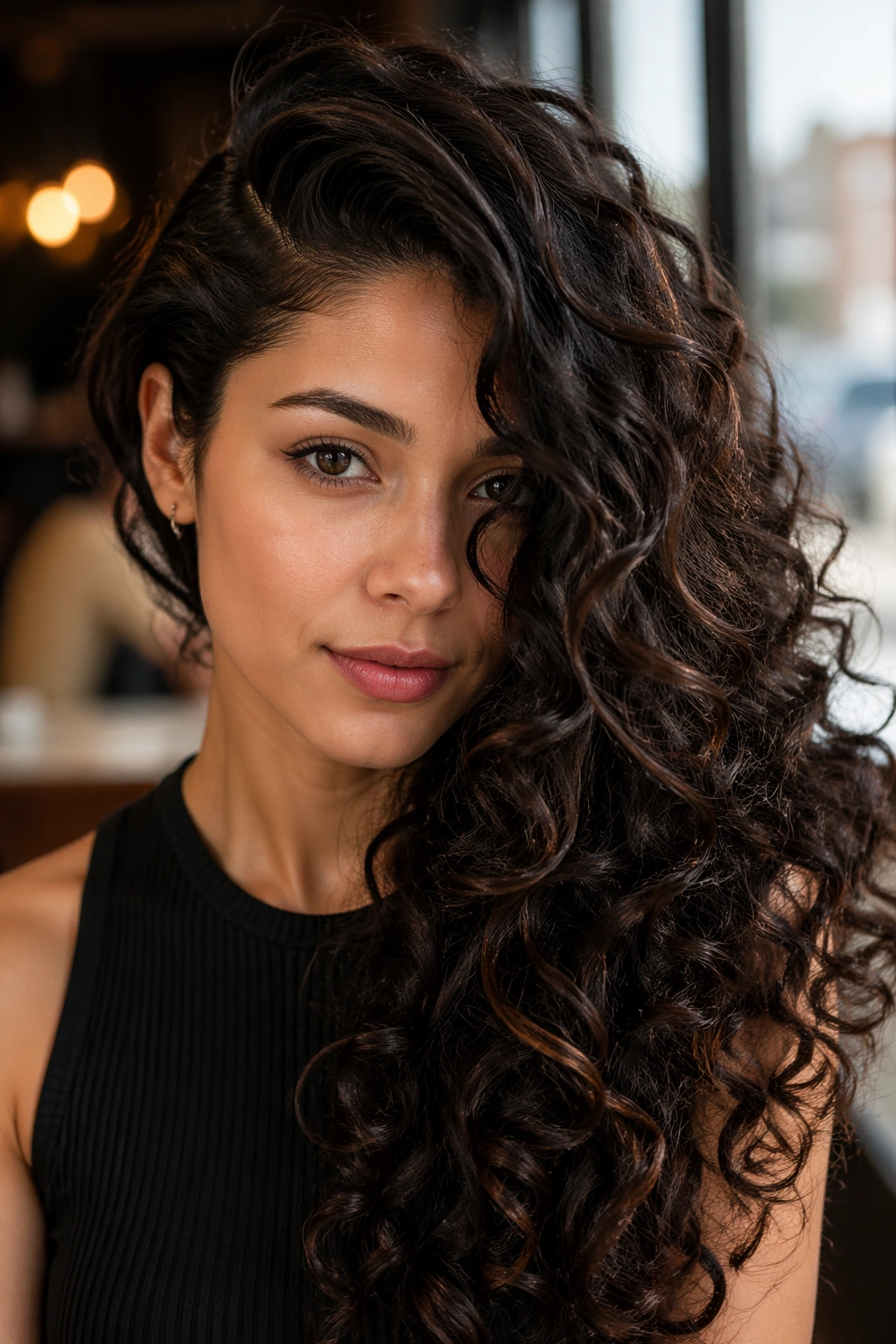
Why does a deep side part look so good on layered curls? Because it creates height at the crown and lets one side fall heavier across the face.
That shift does a lot of work without much effort. It breaks up width around the cheeks, gives long curls a little drama, and makes even simple layers look more styled. The part line also changes how the curls stack, so the whole haircut feels less round and more stretched out in a flattering way.
This is one of those looks that helps when your curls are thick and need a little direction. It also works when you want a longer profile without actually cutting more length. The side with more hair will feel weightier, and the lighter side picks up movement almost on its own.
3. V-Shaped Layers That Keep the Back Long
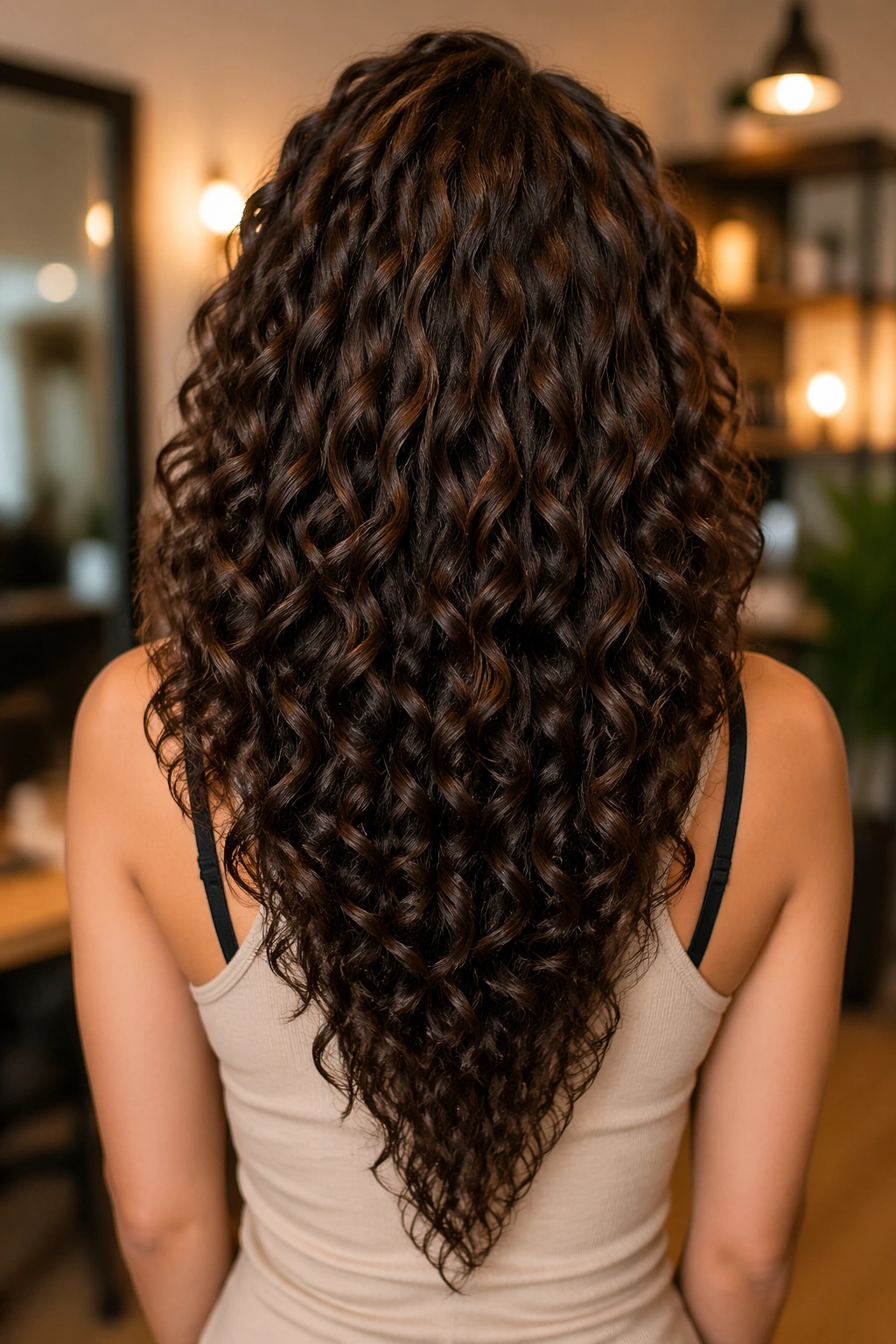
Picture thick curls falling into a sharp, soft point down the center of the back. That is the V-shape, and it’s a strong choice when you want long hair to feel lighter without losing the length you love.
The V-cut makes the back look narrower at the ends, which helps if your curls spread out in a wide hemline. It gives the silhouette a clean finish, and the shape shows off the natural spring of each curl as the pieces taper toward the bottom.
What to ask for at the salon
- Keep the top layers long enough to avoid a choppy crown.
- Let the back taper gradually instead of cutting a hard point.
- Ask for the shortest face-framing pieces to connect into the back.
- Skip aggressive thinning if your curls already feel frizzy.
A V-shape looks best when the stylist leaves the perimeter strong. Too many short layers and you lose the whole point.
4. U-Shaped Layers for a Softer Hemline
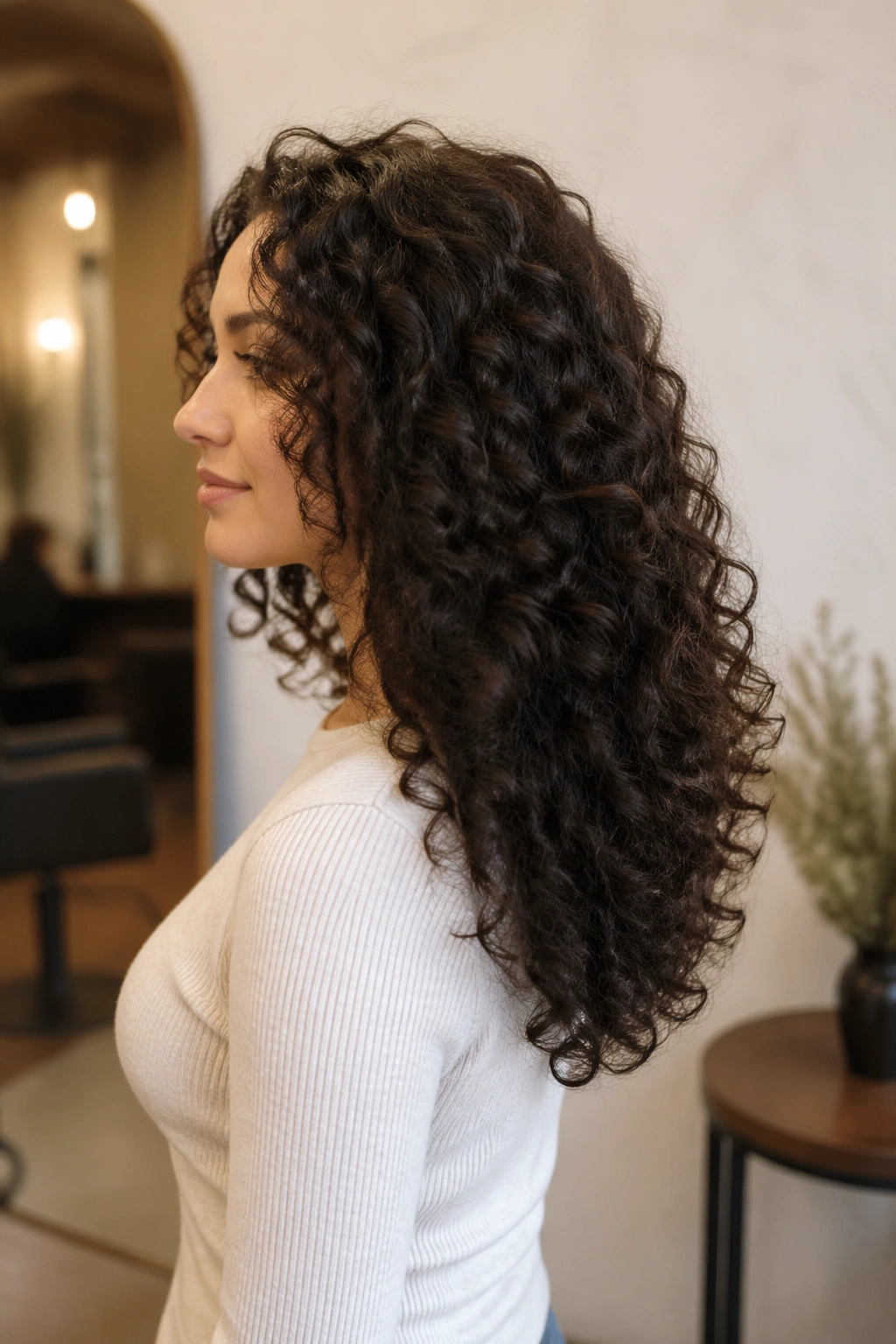
A U-shape is gentler than a V-shape, and that softness matters when you want long curls to feel lush rather than sharp. The back keeps a rounded curve, which makes the haircut look full from every angle.
This shape is especially good when your curls are medium to thick and you want the ends to stay dense. A U-cut can keep weight at the bottom while still removing enough bulk through the interior to keep the curls from puffing out in the wrong places. It’s calm, clean, and a little more polished than a dramatic point.
I like this shape on hair that already has a lot of personality. It doesn’t try to turn curls into something edgy. It just lets them sit in a more balanced frame.
5. Face-Framing Layers That Start at the Cheekbones
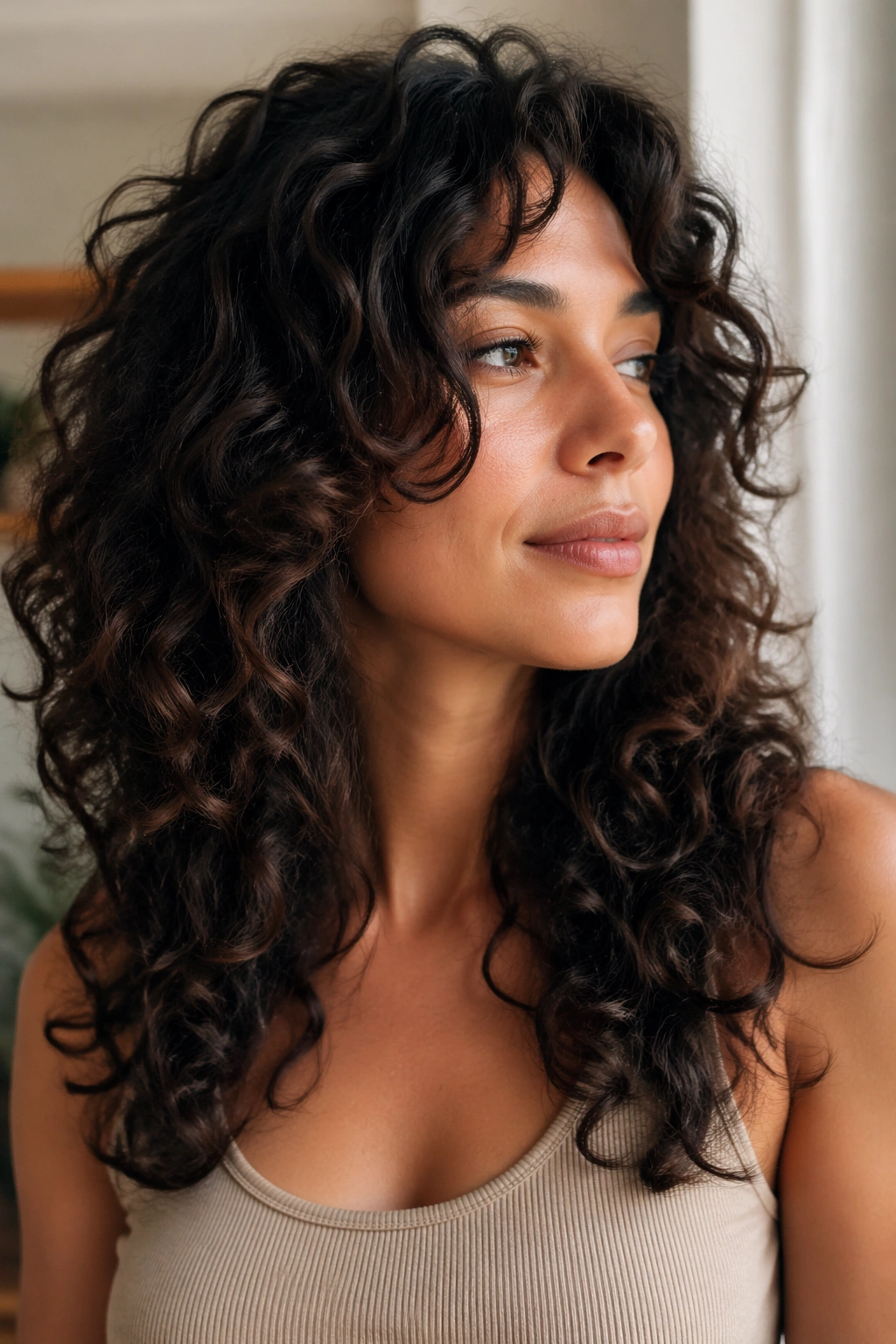
The first thing you notice is the way the curls land near the face. Cheekbone layers pull the eye upward, which can make long curly hair feel brighter and more open.
These layers are a smart move if you like wearing your hair loose most of the time. They keep the front pieces from disappearing into the rest of the length, and they give definition even when the back is doing all the heavy lifting. On loose ringlets, the effect is soft. On tighter curls, it can be a real shape-shifter.
Best matches for this cut
- Round faces that want a bit more vertical line.
- Heart-shaped faces that need balance around the chin.
- Thick curls that can handle shorter front pieces.
- Long layers that need a little face focus.
The one catch is overcutting the front. If the shortest pieces land too high, they can bounce up and sit awkwardly. Cheekbone length usually feels safer than anything cut straight up to the eyes.
6. Waterfall Layers With Soft Steps
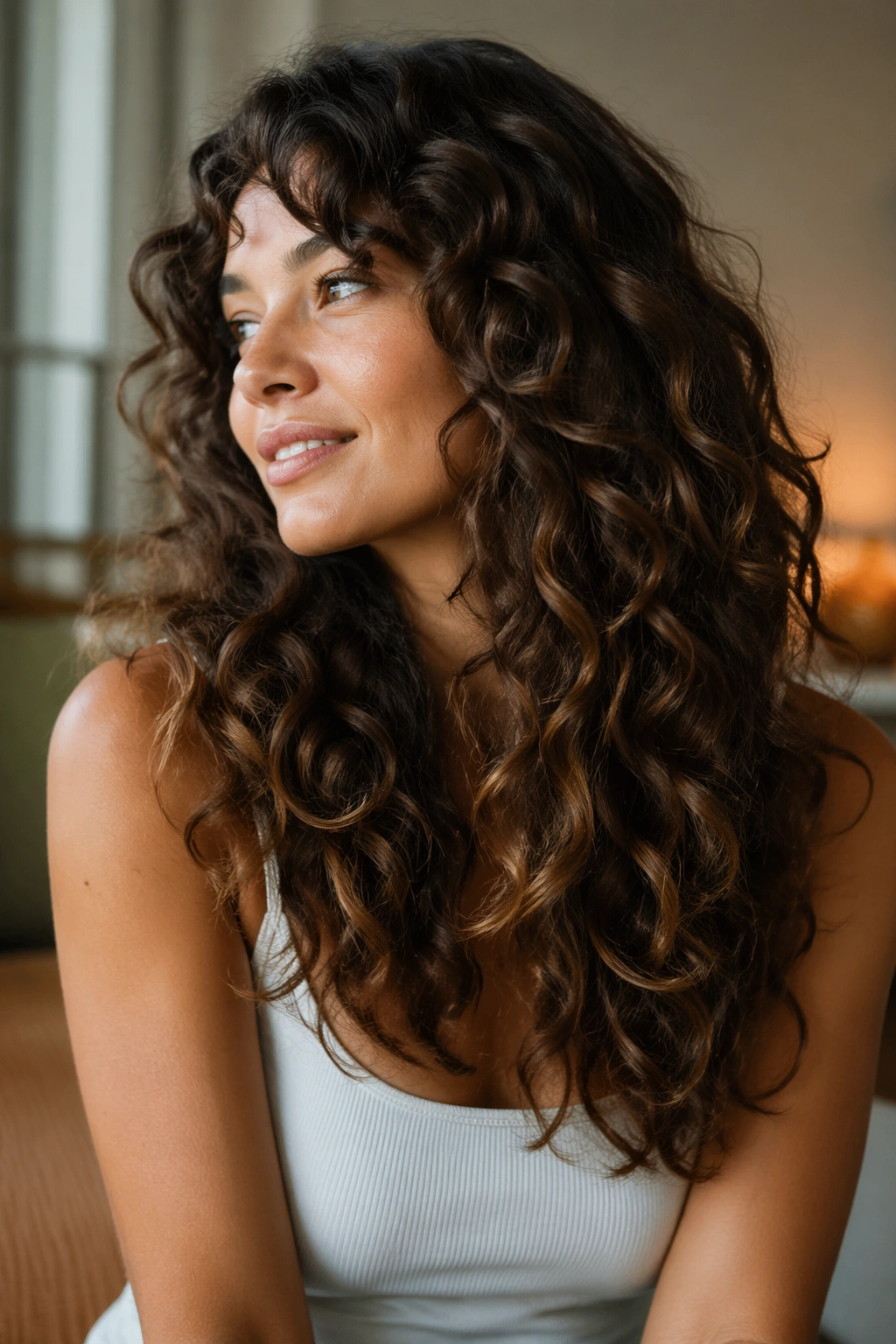
If you want movement without a chopped-up look, waterfall layers are a strong answer. The layers fall in soft steps, so the eye reads flow instead of obvious sections.
That matters with curls because curls already have texture. They do not need extra noise. Waterfall layers give the hair places to bend and lift, but they keep the outline smooth enough that the length still looks generous. The result is airy without looking thin.
This is a good shape for curls that feel flat in the middle but bulky at the bottom. The layers spread the weight more evenly, and the hair moves when you turn your head. Simple idea. Good payoff.
7. The Curly Shag With Long Length
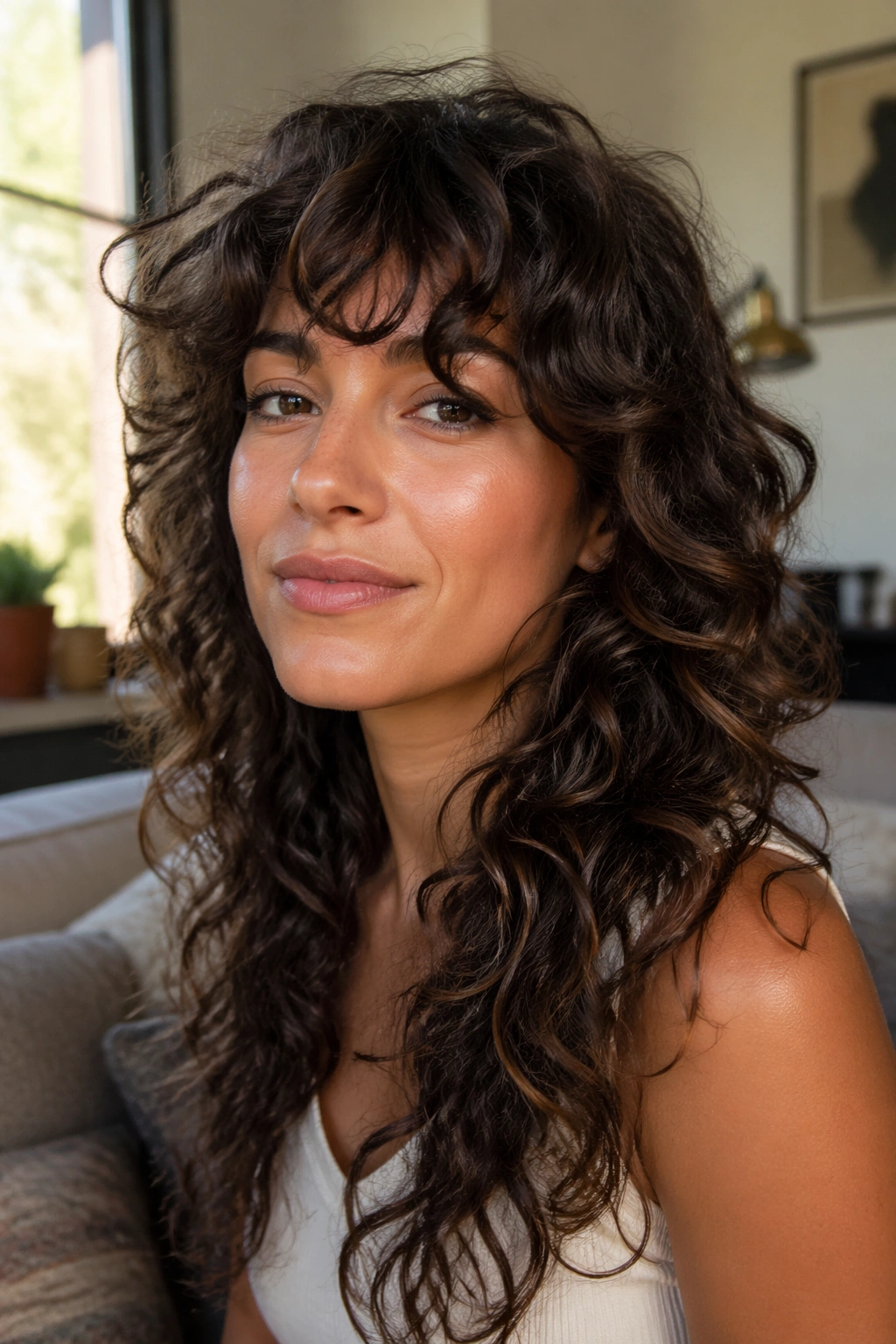
The curly shag has a little attitude, and that is the charm. It keeps the length, but it refuses to look precious.
The shorter crown layers make the top feel light, while the longer pieces underneath keep the haircut from going too short or too wild. That combination works beautifully on curls that like to spring up and live a little. It’s also forgiving on days when the styling is not perfect, which, honestly, is most days for most people.
Where it can go wrong
- Too many short layers can create frizz.
- A heavy fringe can crowd the eyes.
- Fine curls may need a softer version of the cut.
- Very tight curls need careful sectioning so the shape does not collapse.
The best curly shag has room to breathe. It should look textured, not hacked apart.
8. Invisible Layers for Heavy Curls
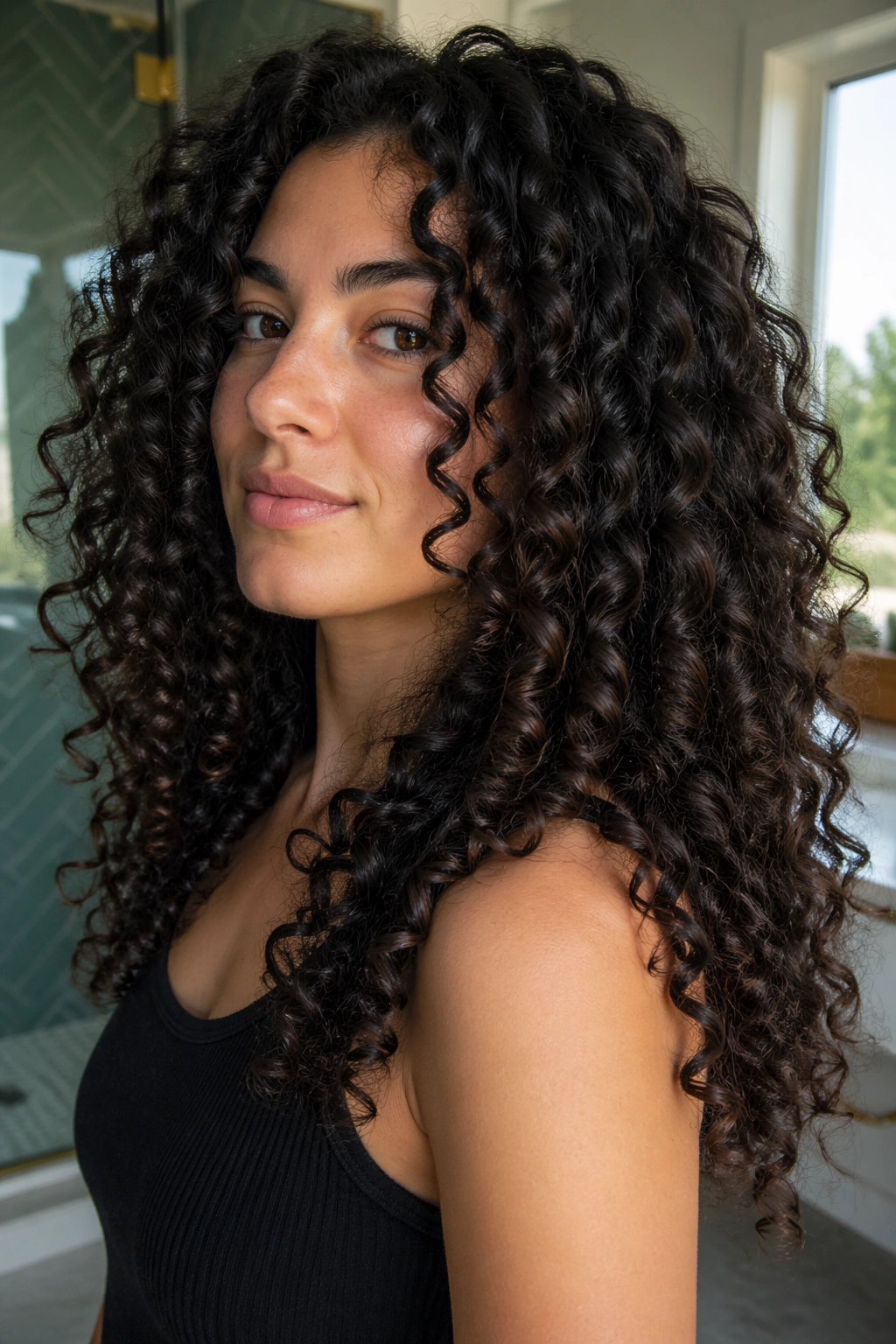
Invisible layers are the quiet fix for curls that feel too heavy but still need to look long. The layers sit inside the haircut, so the outside line stays smooth while the inside gets lighter.
That makes this cut a favorite for people who want length to show from the back. You do not get a dramatic staircase effect. You get a shape that seems to float more easily, especially once the curls dry and expand. The haircut reads polished from the outside and freer underneath.
Ask for layers that remove weight without changing the perimeter too much. If the stylist starts cutting up into the top too hard, the trick falls apart. The whole point is to keep the outside edge calm.
9. A Rounded Halo Shape for Dense Hair
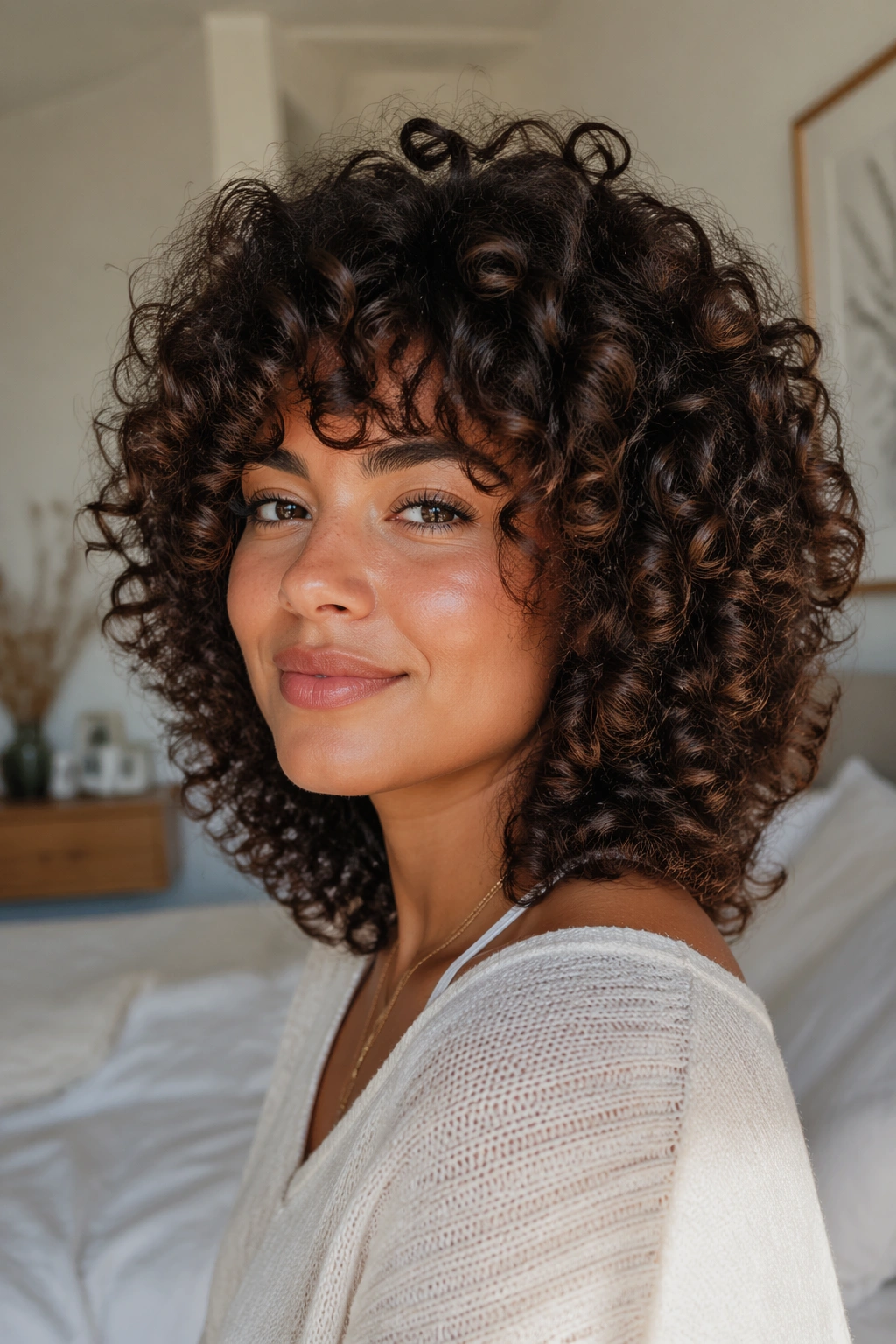
Can long curls look round instead of wide? Absolutely, and a halo shape is how you get there.
This style keeps the outline full but controlled, almost like the hair is sitting in a soft dome around the head. It works well for dense curls that tend to spread out at the sides, because the cut encourages the curls to stack upward and inward instead of pushing outward in a triangle.
The shape feels especially nice when you want body without a lot of obvious layering around the face. It’s a smart choice for people who love volume but hate the mushroom effect. A rounded halo cut gives you lift at the crown and weight in the right places, which is harder to find than it should be.
10. The Long Curly Wolf Cut
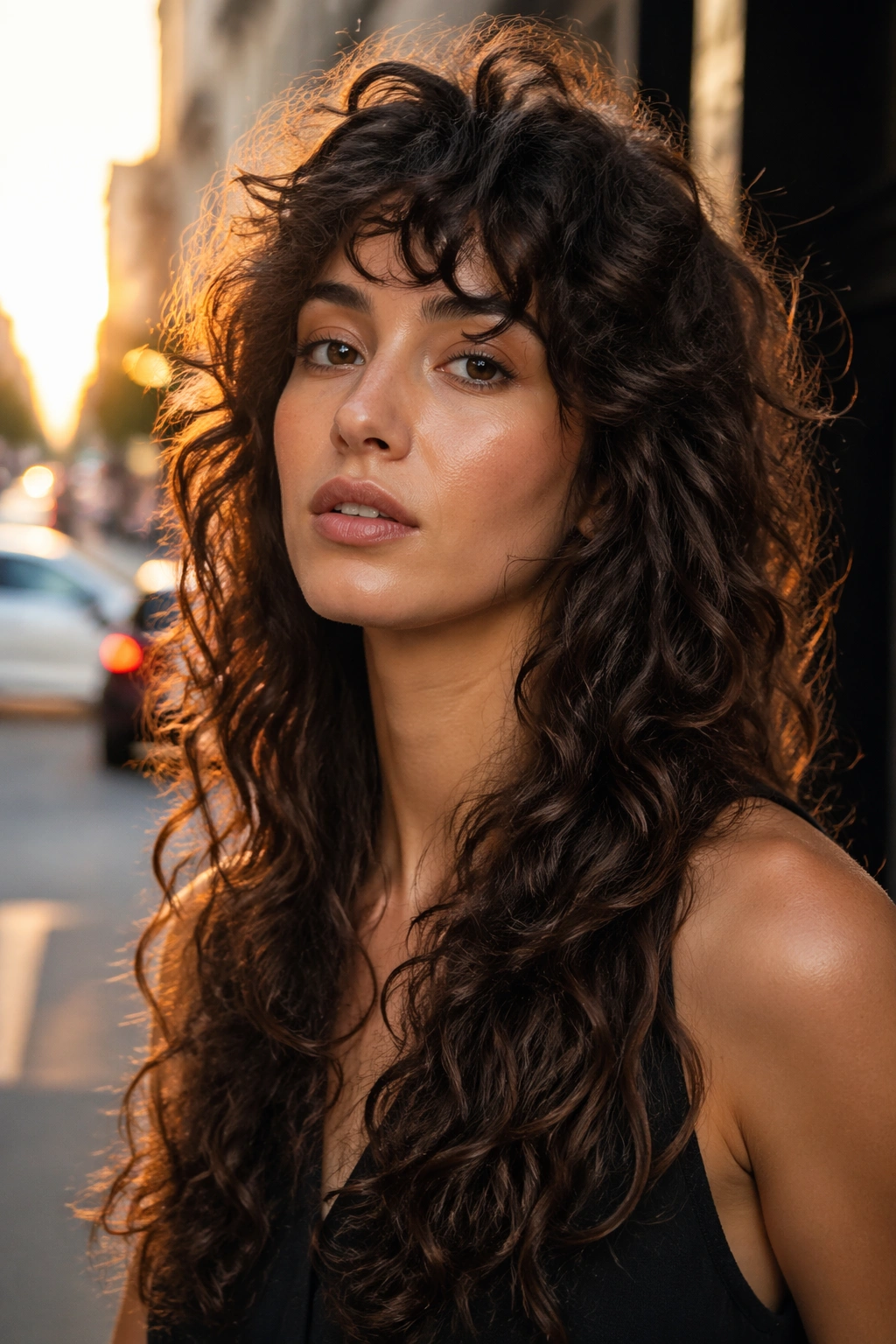
If you want something a little rougher around the edges, the long curly wolf cut brings the energy. It mixes shag shape with longer ends, so the haircut feels lived-in instead of neat.
That looseness works because curls already have texture. The cut makes the top look lighter, adds height near the crown, and lets the lower length stay visible. On the right head of hair, it looks cool without trying. On the wrong one, it can look too broken up, so the curl pattern really matters.
Who should try it
- People who like airy crowns.
- Curls that need movement on top.
- Hair that takes well to diffusing.
- Anyone who wants a softer version of a mullet without going all the way there.
A wolf cut needs confidence. If you prefer a smooth, classic finish, pick something gentler.
11. Long Curly Hairstyles With Layers and a Deep Side Sweep
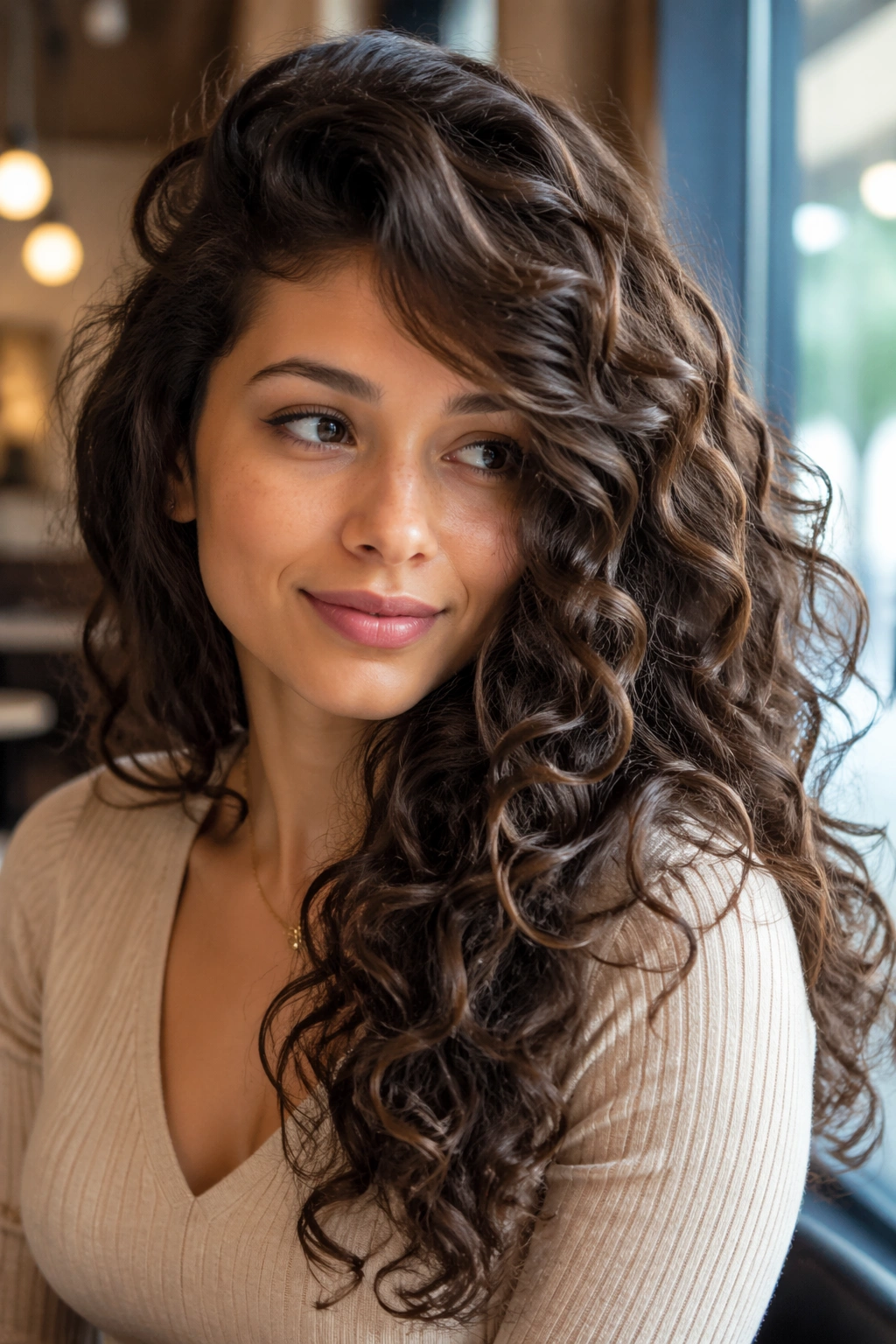
A side sweep is not the same thing as a side part. The part changes where the curl falls; the sweep changes how the front section behaves.
This look is useful when you want your layered curls to feel glamorous without pinning half of them up. The heavier front section can skim across the forehead or cheek, while the rest of the hair keeps its movement. It’s a nice option for long faces, because the sweep brings width back toward the center.
Styling note
Use a wide clip or a loose tuck to hold the sweep if the curls keep falling back. No need to flatten the front. You want the bend, not a helmet.
The cut itself should keep the front layers long enough to move into the rest of the hair. Too short, and the sweep becomes a puff. Too long, and it disappears.
12. Blunt Ends With Internal Layers
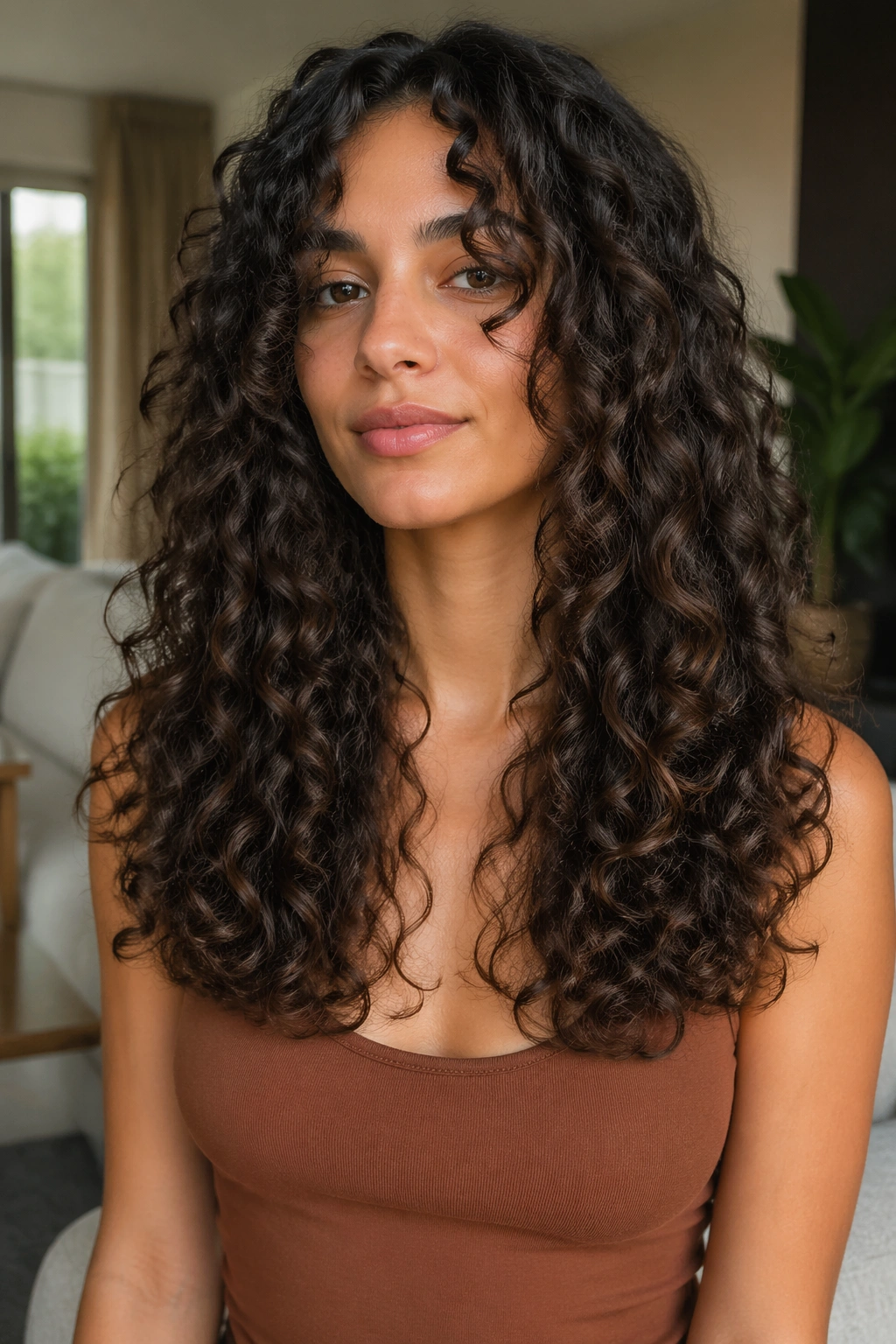
Blunt ends and layers sound like they should fight each other. They don’t, not when they’re handled well.
The blunt edge keeps the hair looking thick, especially on the bottom where curls can sometimes get wispy. Internal layers remove the weight that causes the triangle shape, but the perimeter still looks full and rich. That balance is the reason this cut looks expensive in a plain, unfussy way.
It’s a smart choice if you hate seeing stringy ends in photos. The hair still has texture and movement, but the outline looks intentional. On curls with medium density, this shape often looks better than a heavily graduated cut because it keeps the bottom line strong.
13. Feathered Layers for Fine Curls
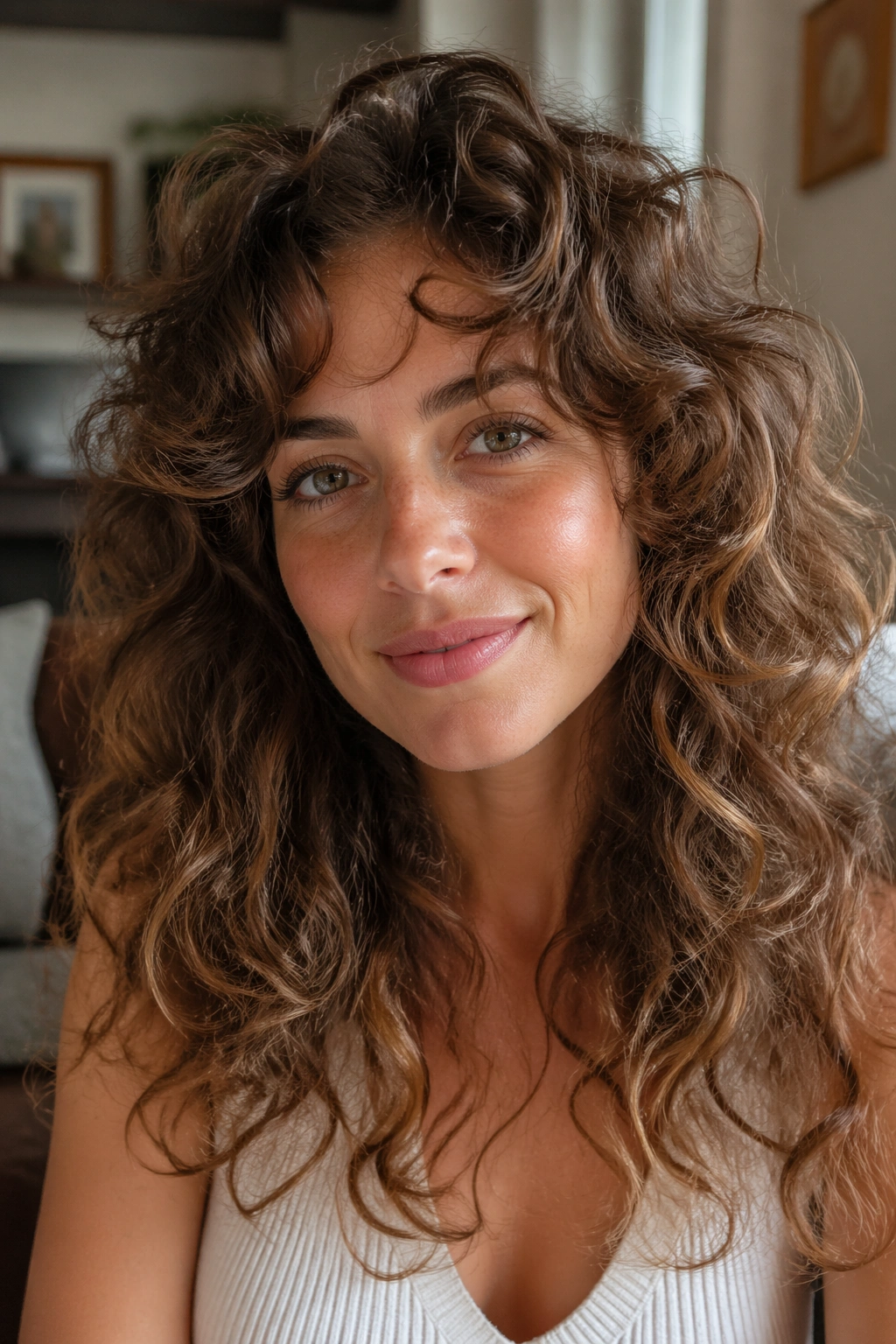
Do fine curls need fewer layers or more? Usually, they need careful layers, not a lot of them.
Feathered layers take weight off just enough to create lift, but they avoid stripping the hair down so much that the ends look see-through. The texture feels lighter, and the curls separate in a softer way. That can be a lifesaver when fine curls droop under their own weight.
What to watch for
- Avoid slicing too much out of the perimeter.
- Ask for feathering, not aggressive razoring.
- Keep the longest pieces long enough to hold shape.
- Use a light styling cream instead of heavy butter-like products.
A feathered cut on fine curls should feel airy, not sparse. If you can see too much scalp or the ends start looking stringy, the layers went too far.
14. Side-Swept Fringe With High Volume
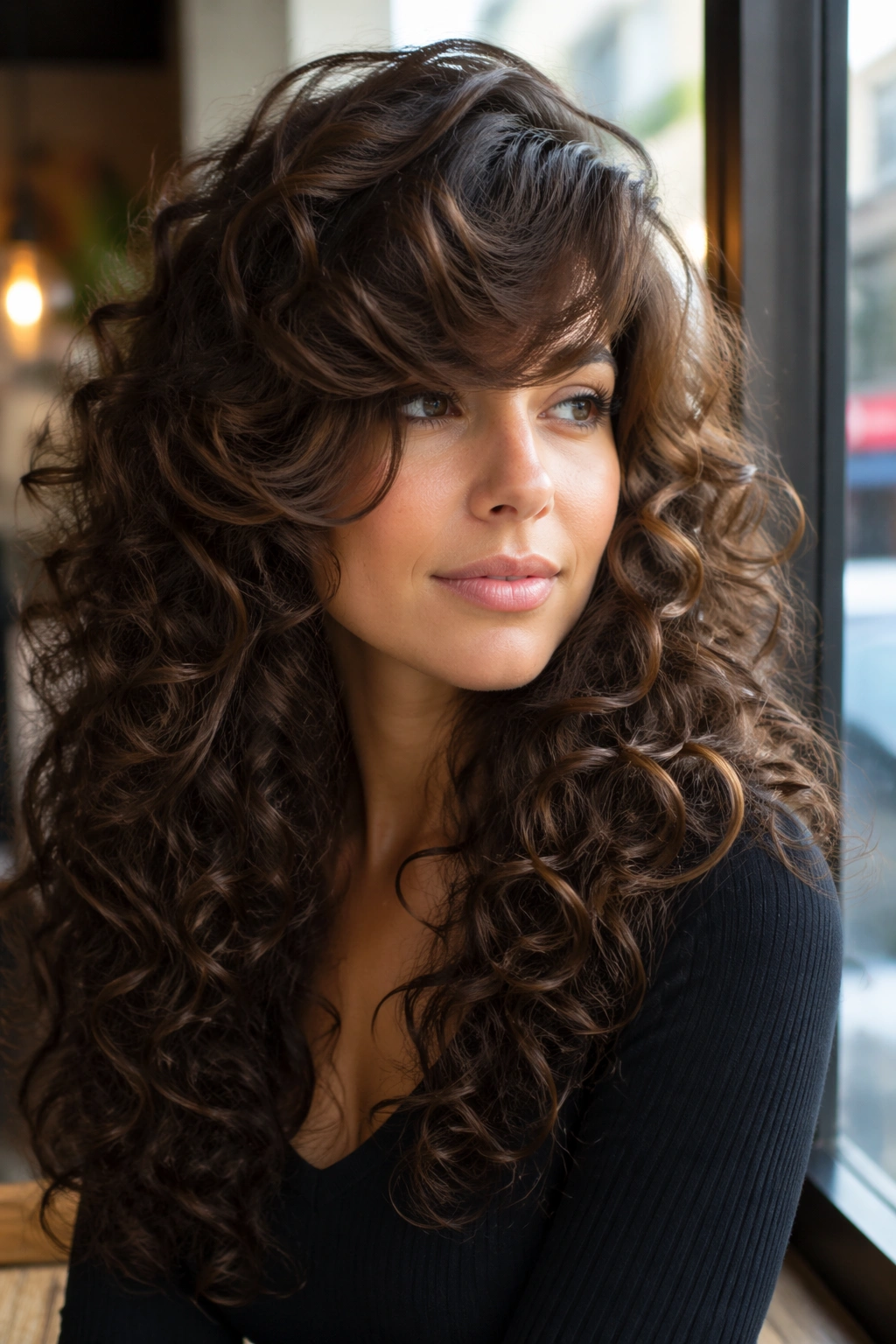
A side-swept fringe changes the whole mood of long layered curls. It gives the haircut a little glamour and a little softness at the same time.
The fringe works best when it falls into the strongest curl group near the front. That keeps it from looking separate from the rest of the hair. The rest of the layers can stay long and full, which gives you volume everywhere without that stiff, over-shaped feel. It’s a good pick for evenings out, sure, but it also works on an ordinary day when you want the hair to feel more deliberate.
The cut should leave enough length in the fringe to bounce back. If it’s too short, the curl opens up and sits strangely high. Longer is safer. It almost always is with curly fringe.
15. Half-Up Layered Curls
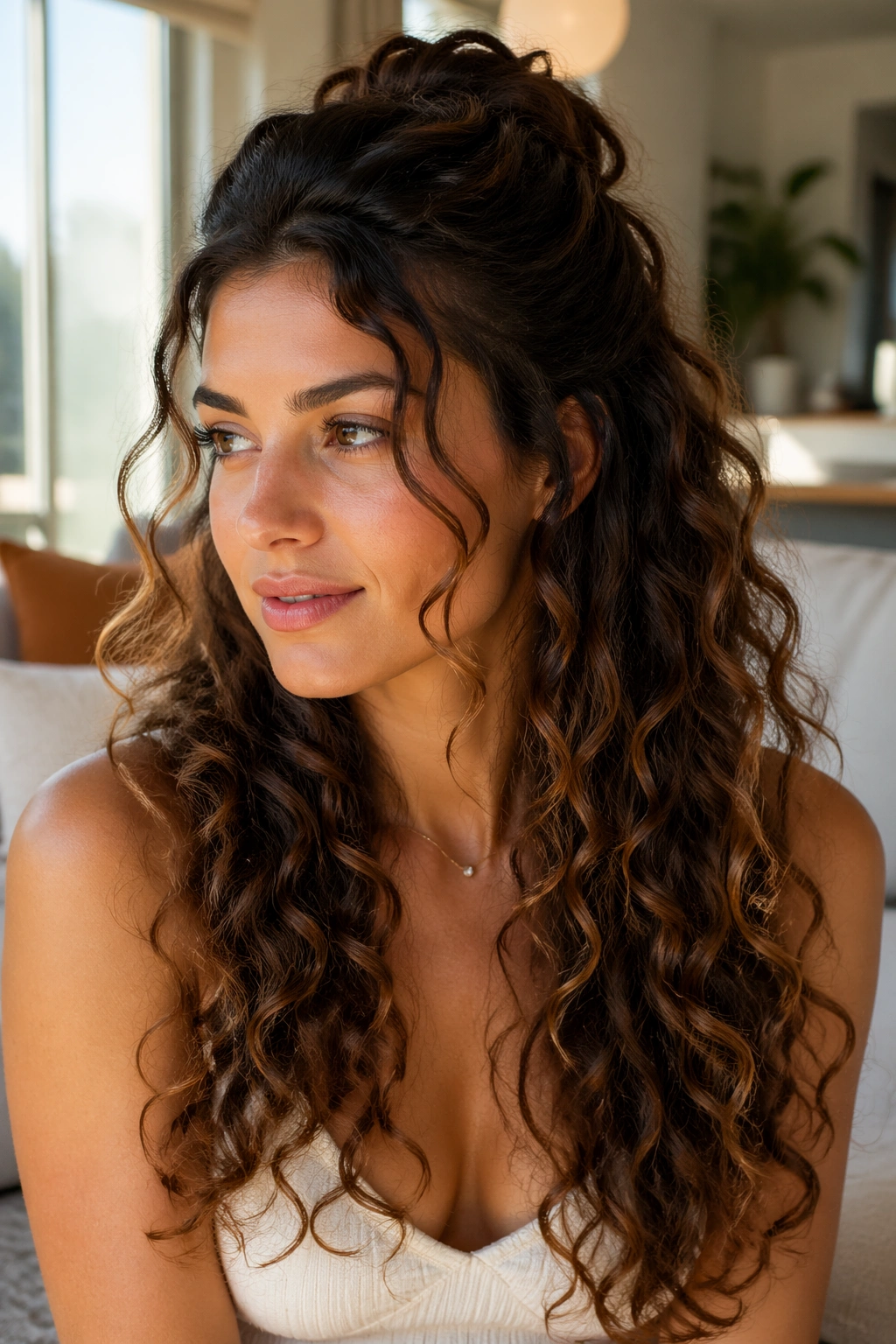
Half-up styles are a gift for layered curls because they show off two things at once: the lift at the crown and the movement in the lengths.
When the top section is pinned back, the layers underneath spill down with more shape than a single-length curl pattern usually gives you. That makes the hairstyle feel bigger and more romantic, especially if a few face-framing pieces are left loose. It’s a very easy way to make the hair look styled without spending half the morning on it.
A claw clip works well here, but so does a soft tie if you want a sleeker top. The main thing is not pulling the crown too tight. You want the back to keep its bounce.
16. Braided Accents on Long Layered Curls
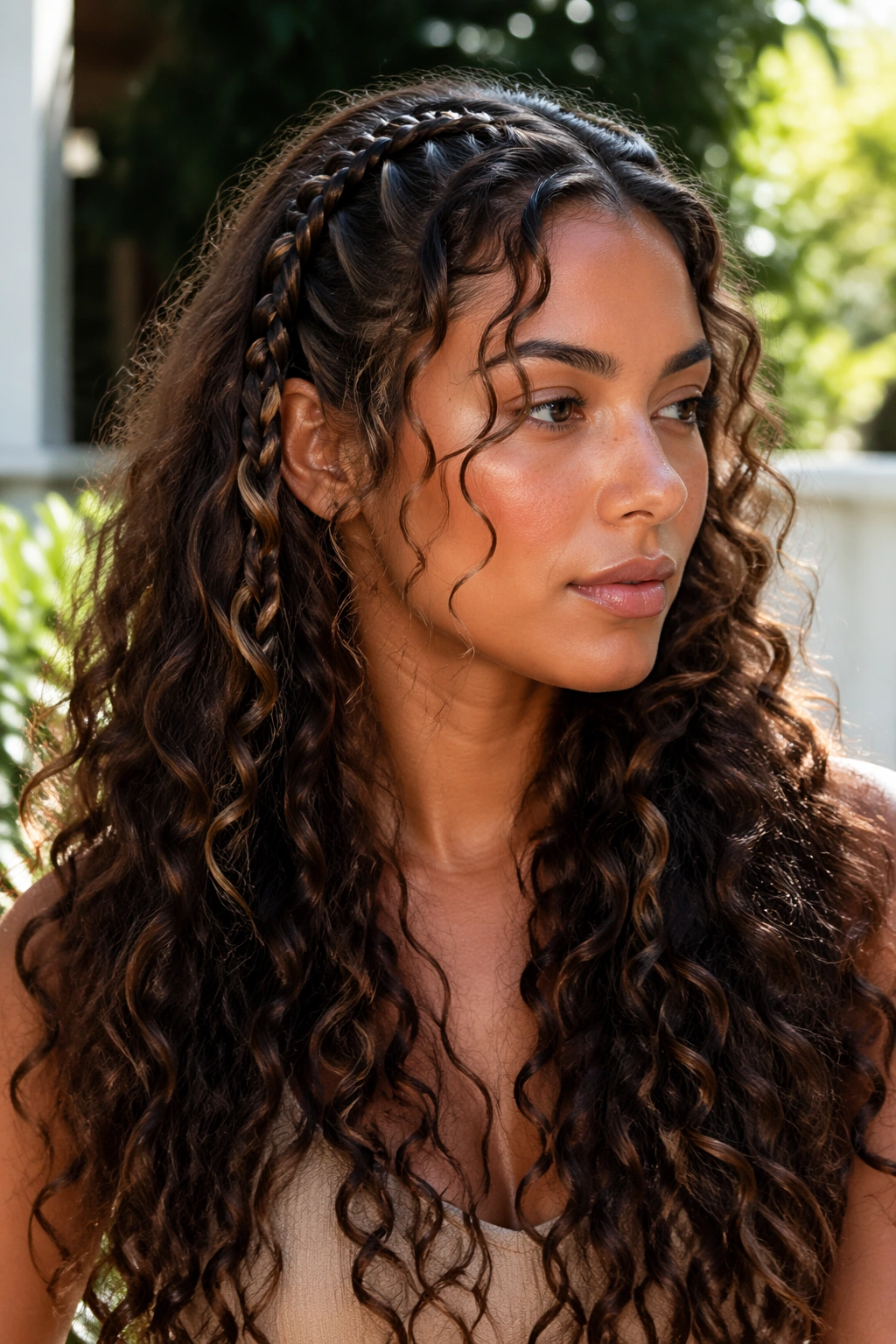
Braids can feel predictable if you use them the same way every time. A small braid tucked into layered curls changes that fast.
The braid gives the haircut a little structure while the rest of the hair stays loose and soft. It works best when the braid is small enough to act like an accent, not a second hairstyle. One braid near the temple, or two slim braids pulled back from the front, can show off the layers around the face without hiding the length.
This is a good option for days when you want your curls to stay out of your eyes but still look like curls. The braid catches a section of the hair, and the layers around it do the rest. Keep the braid loose. Tight braids pull the curls flat and make the style feel stiff.
17. Money-Piece Layers That Brighten the Front
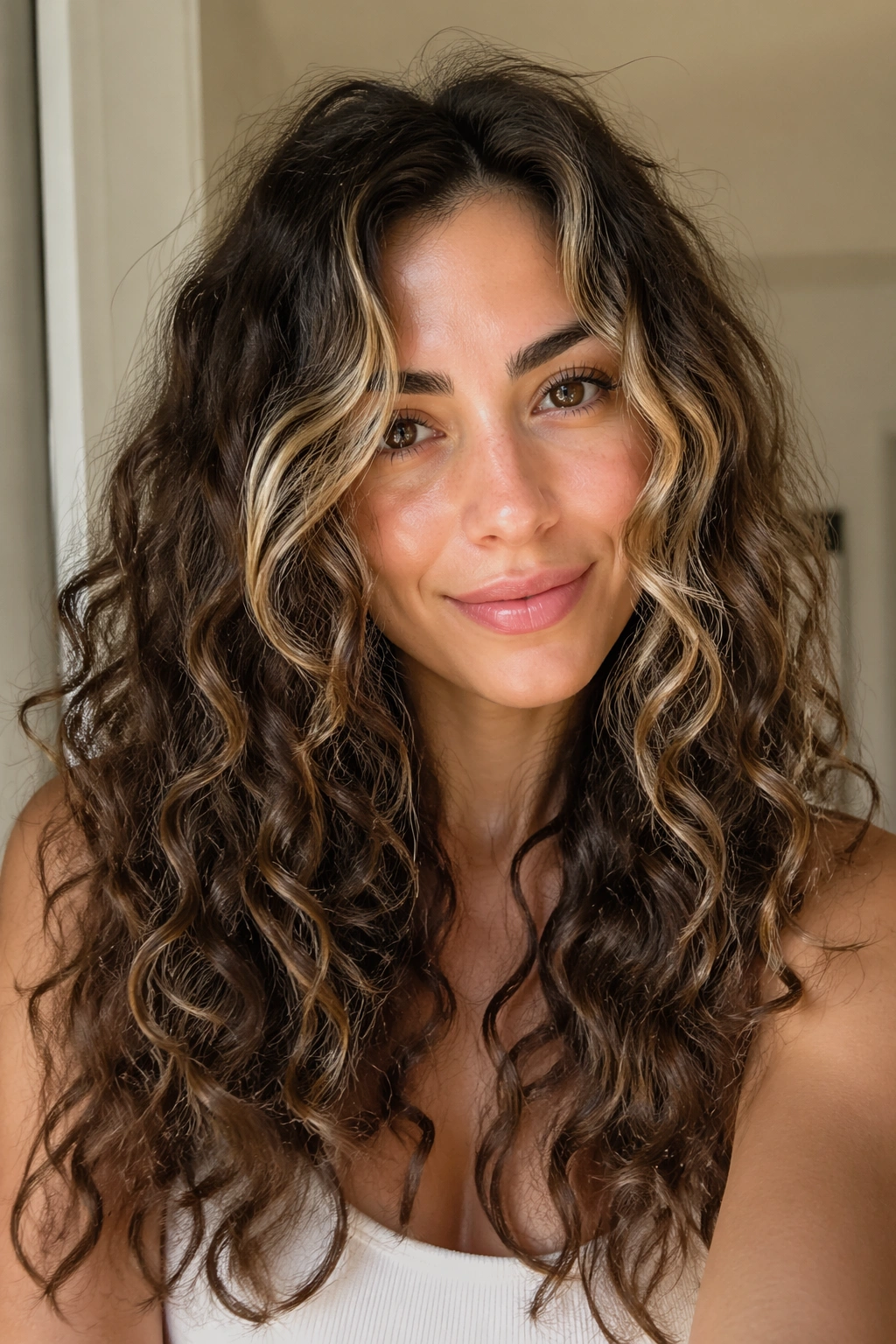
A bright front section changes how layered curls read from across the room. The eye goes straight to the face, which makes the layers look more defined and the haircut feel more dimensional.
The money-piece idea works even if the color contrast is mild. A few lighter front curls or a softer frame around the face can make the haircut pop without making it loud. That is useful on long curls, where a lot of the shape can disappear if everything is the same tone. The front gets the focus, and the layers suddenly make more sense.
Best way to wear it
- Keep the front layers long enough to curl together.
- Let the color follow the part and the temples.
- Avoid chunking the front too hard.
- Use the brighter pieces to guide the eye downward.
If you like a more polished finish, this is a strong choice. It gives movement and a little shine, which curls can use in a way straight hair just cannot.
18. Soft Boho Ringlets With Long Layers
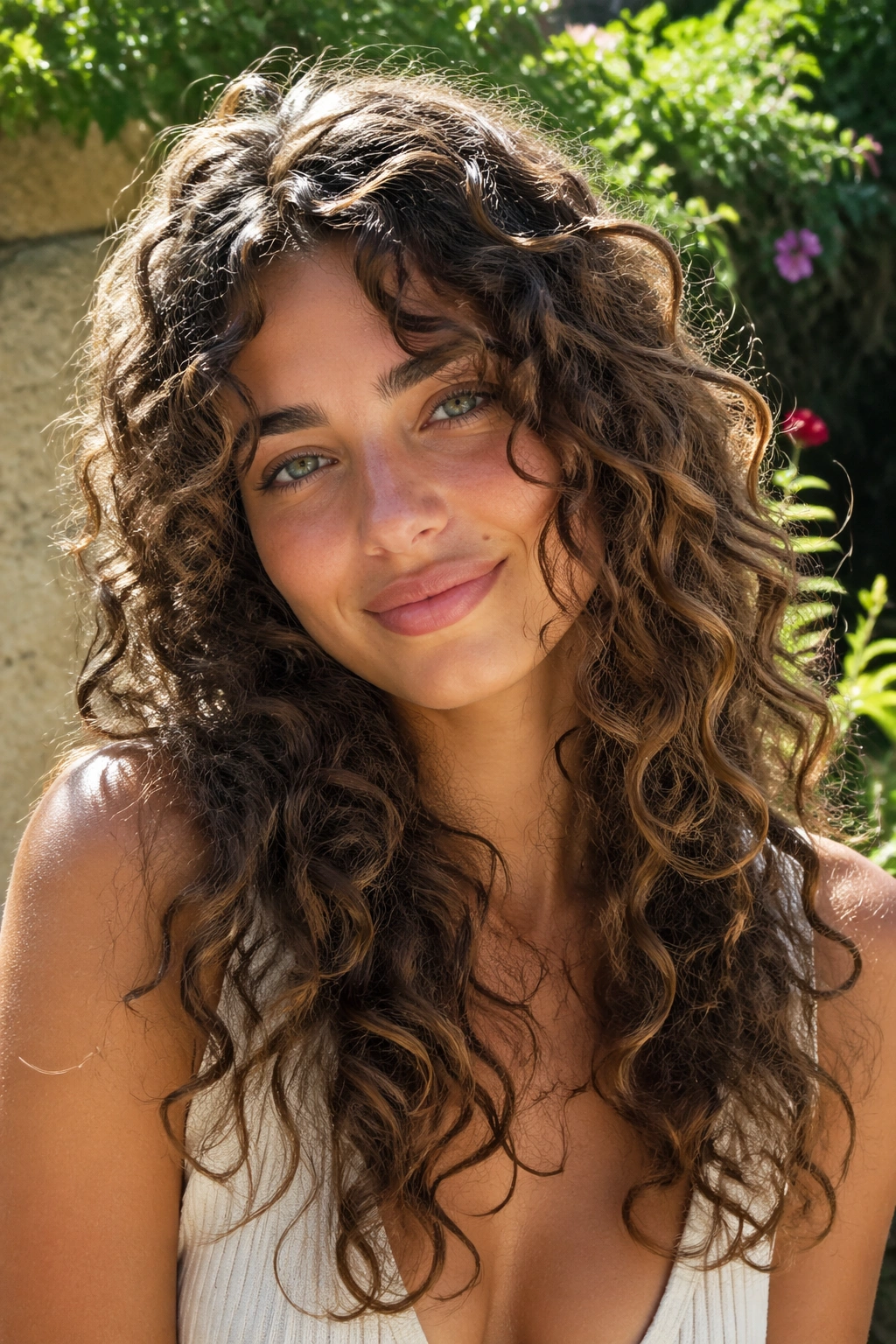
Want curls that feel soft instead of sculpted? The boho ringlet look is a good place to land.
The layers here are meant to support loose, touchable curls that fall in a relaxed pattern. The shape should feel romantic, not overworked. That means the cut needs enough length to keep the ringlets from bouncing up into a cloud, but enough layering to keep the ends from looking flat and heavy.
A diffuser helps, but so does restraint. Don’t shake the curls apart too much while they’re drying. Let them form. Let them settle. The style works because it looks easy, and if you fuss with it too hard, that easy feel disappears fast.
19. A Low Curly Ponytail With Face Framing
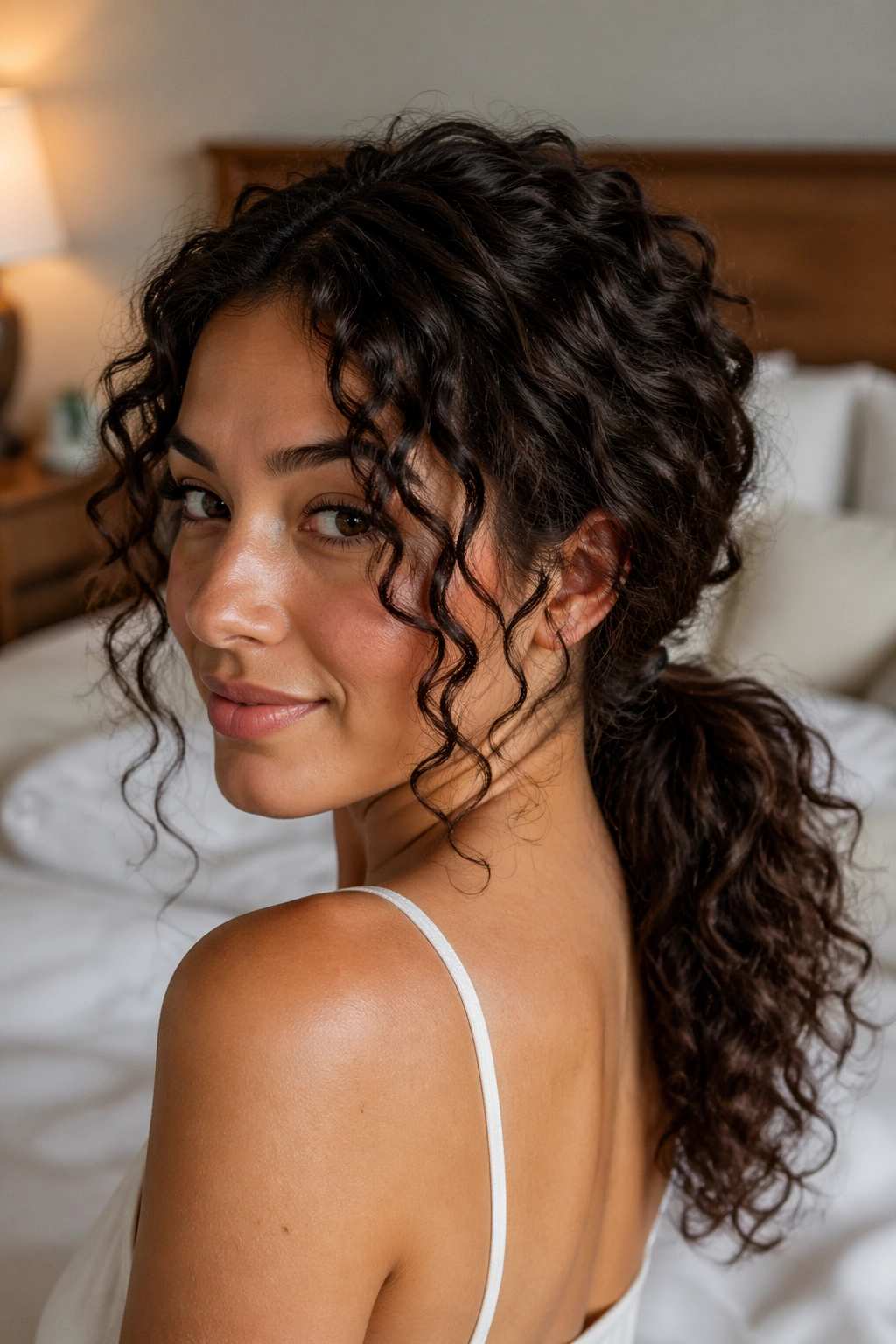
A low ponytail on layered curls has one job: keep the shape visible. It’s simple, but not plain.
The layers around the face matter here because they stop the ponytail from looking severe. Those front pieces soften the hairline, and the longer layers in the back create a fuller tail instead of a skinny rope. If your curls are thick, this style can hold a lot of texture and still feel tidy.
What makes it work
- Leave a few curls out near the temples.
- Secure the ponytail low at the nape.
- Pull gently at the crown for a little lift.
- Wrap a curl or two around the elastic if you want a cleaner finish.
The style is good for work, dinners, and days when you need the hair off your neck. It is not flashy. That’s exactly why it works.
20. Crown Twists That Let the Layers Fall
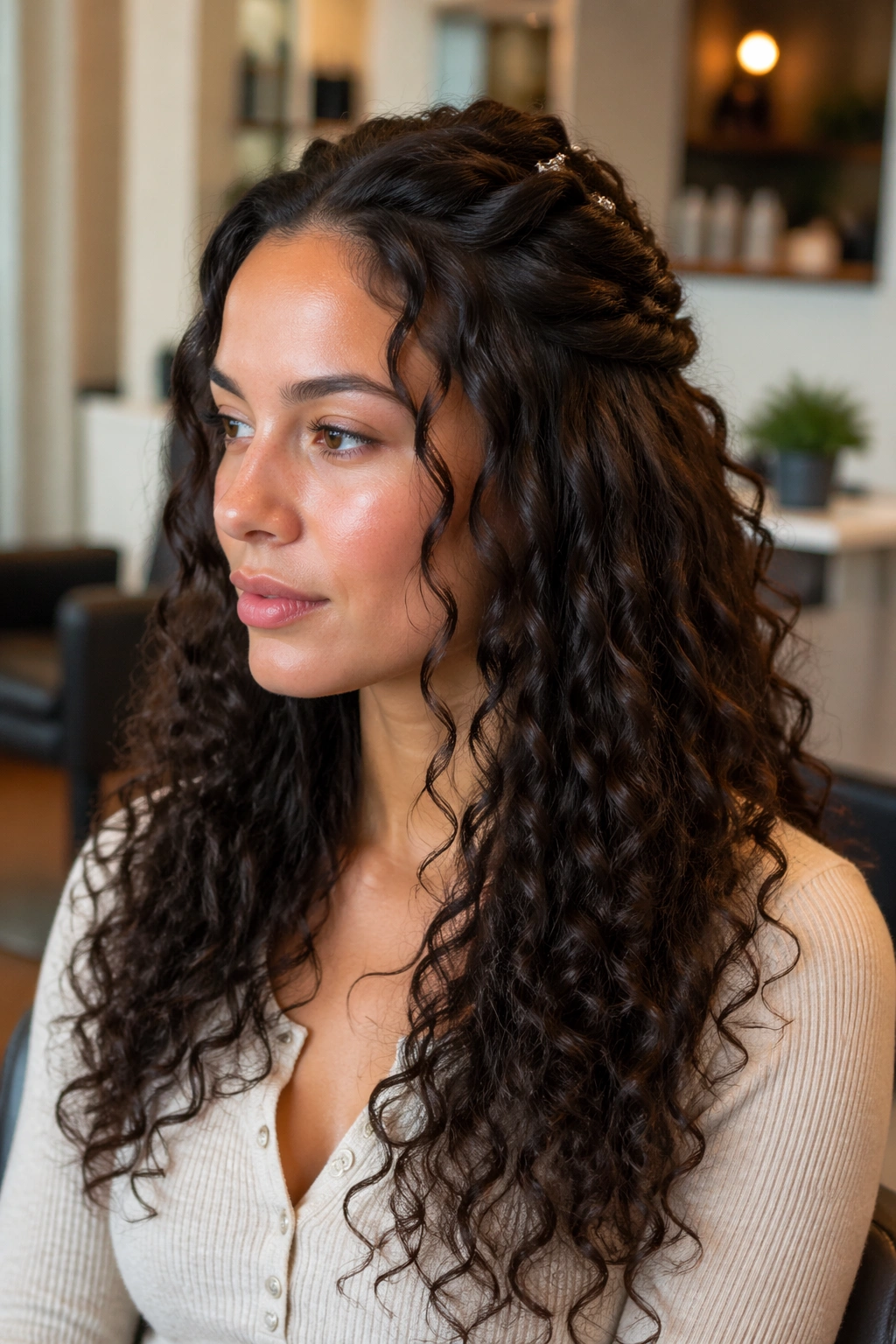
Twists at the crown are a fast way to show off the rest of the haircut. They lift the front, keep hair out of the eyes, and let the long layers fall freely underneath.
The look feels neat without being stiff. A twist from each temple can feed into the back, or you can do one larger twist on one side for a softer, looser finish. Either way, the layers in the lengths keep the style from looking flat, which is the main reason it works so well on curly hair.
How to keep the crown from collapsing
- Twist on damp hair if you want better hold.
- Use small pins instead of heavy clips.
- Keep tension light so the roots stay lifted.
- Let the ends dry fully before touching them.
This is a strong choice when you want shape at the top and a waterfall of curls below. The contrast is the whole point.
21. A High Puff Ponytail With Long Layers
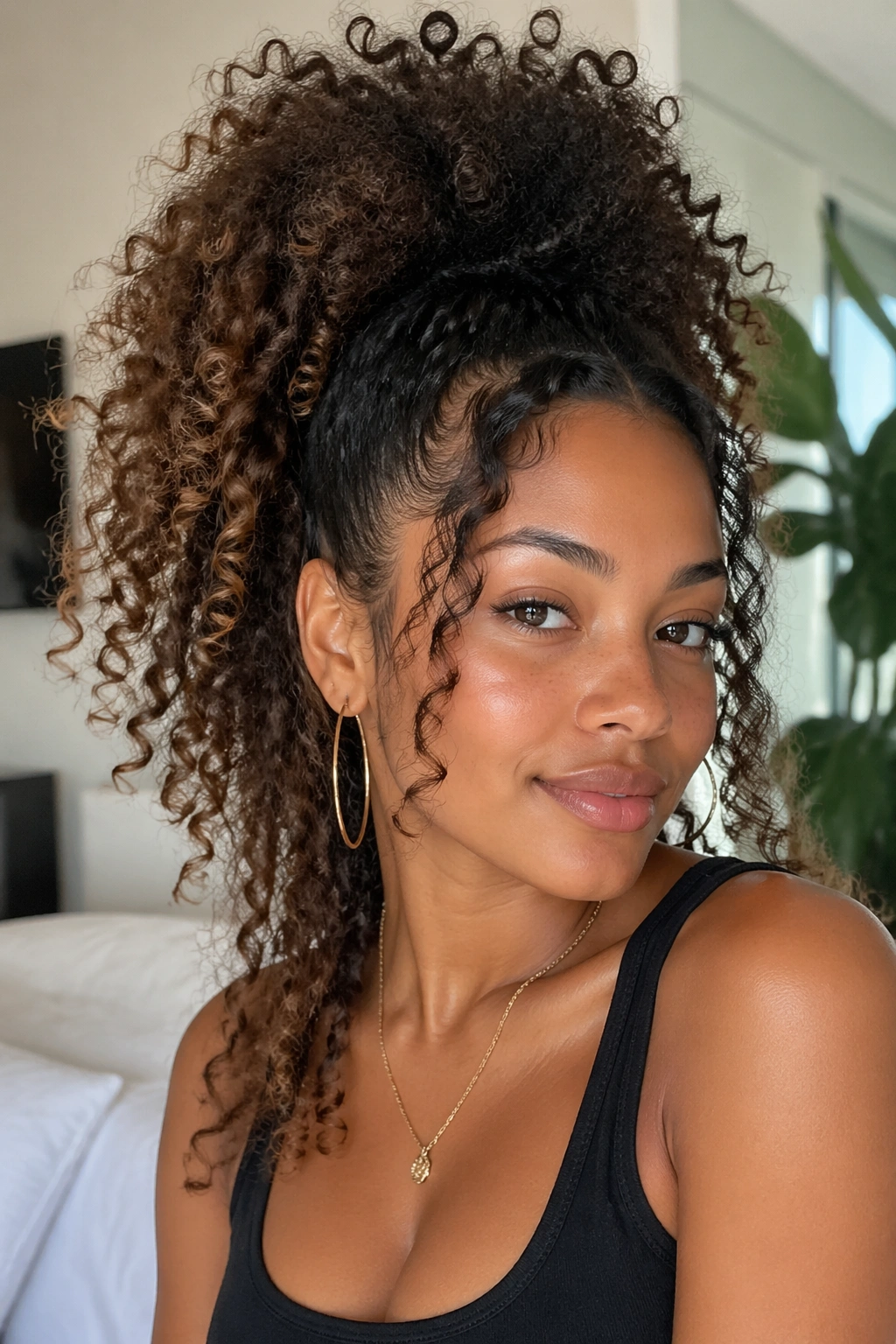
A high puff ponytail is not subtle. That’s why it’s fun.
With long layered curls, the lift at the crown becomes the headline, and the layers give the tail enough movement to keep it from feeling like a lump. The style opens up the face, shows off cheekbones, and gives the whole look a clean line from the front while keeping texture at the back. It suits denser curls especially well, because the hair has enough body to make the shape feel full rather than flimsy.
This is also a useful style when you want the ends protected but still visible. A satin tie or a coil-friendly elastic helps keep the base comfortable. If the puff sits too tight, the whole style loses its bounce. Loose is better than forced here.
22. Long Curly Hairstyles With Layers and a Polished Middle Part
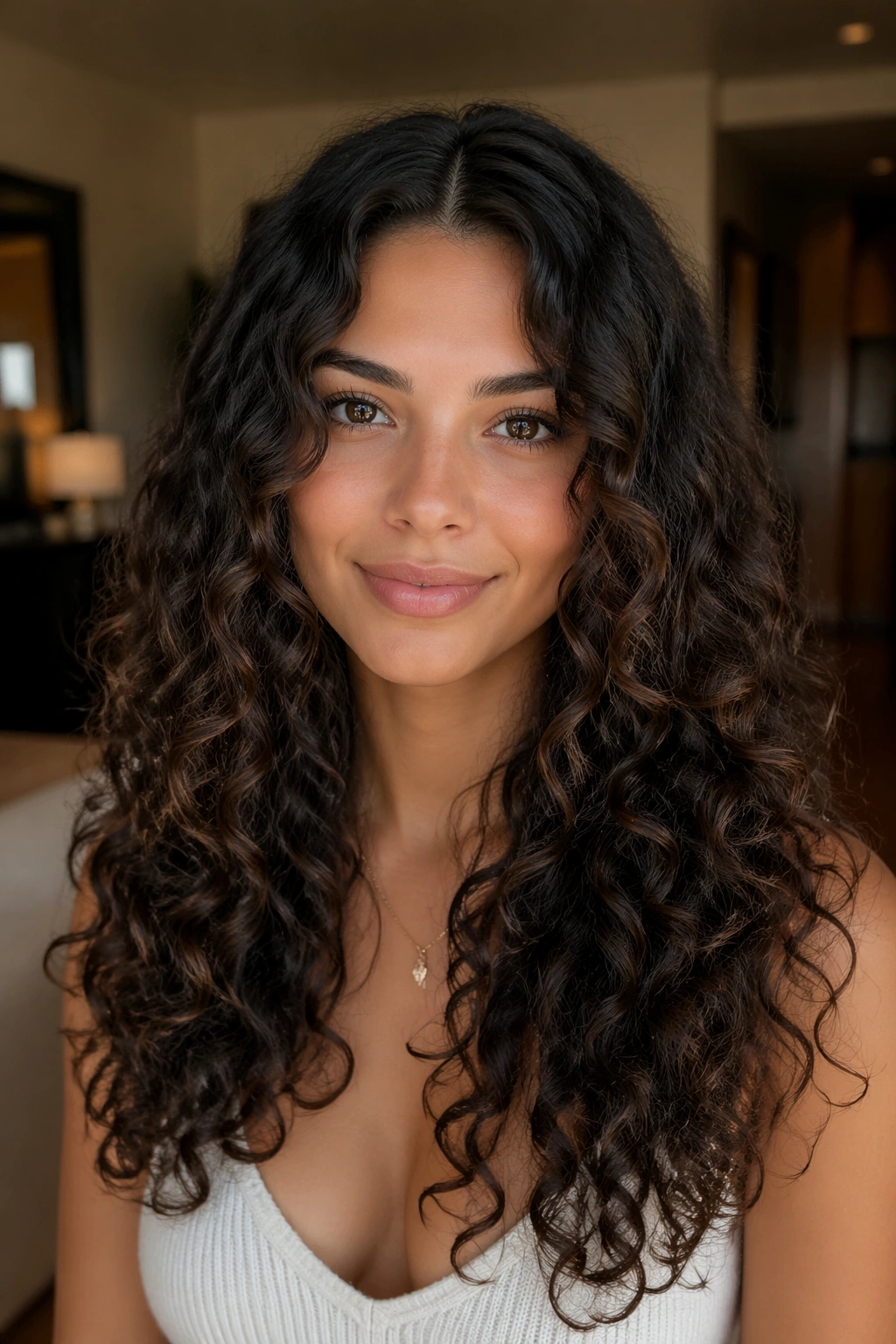
A center part makes layered curls look longer because the eye runs straight down the face before it takes in the rest of the shape. It’s clean, calm, and a little more formal than a side sweep.
The style works especially well when the layers are soft rather than choppy. You want the curls to fall evenly on both sides, with the front pieces grazing the cheekbones and the longest layers landing low around the ribs or waist. That symmetry can make the hair feel sleek without needing to flatten any of the curl pattern.
If you bring photos to a stylist, bring ones with the same curl density and length goal, not just the same mood. That little detail makes a difference. A polished middle part on layered curls can look elegant one day and too flat the next, and the cut has a lot to do with that.
Final Thoughts
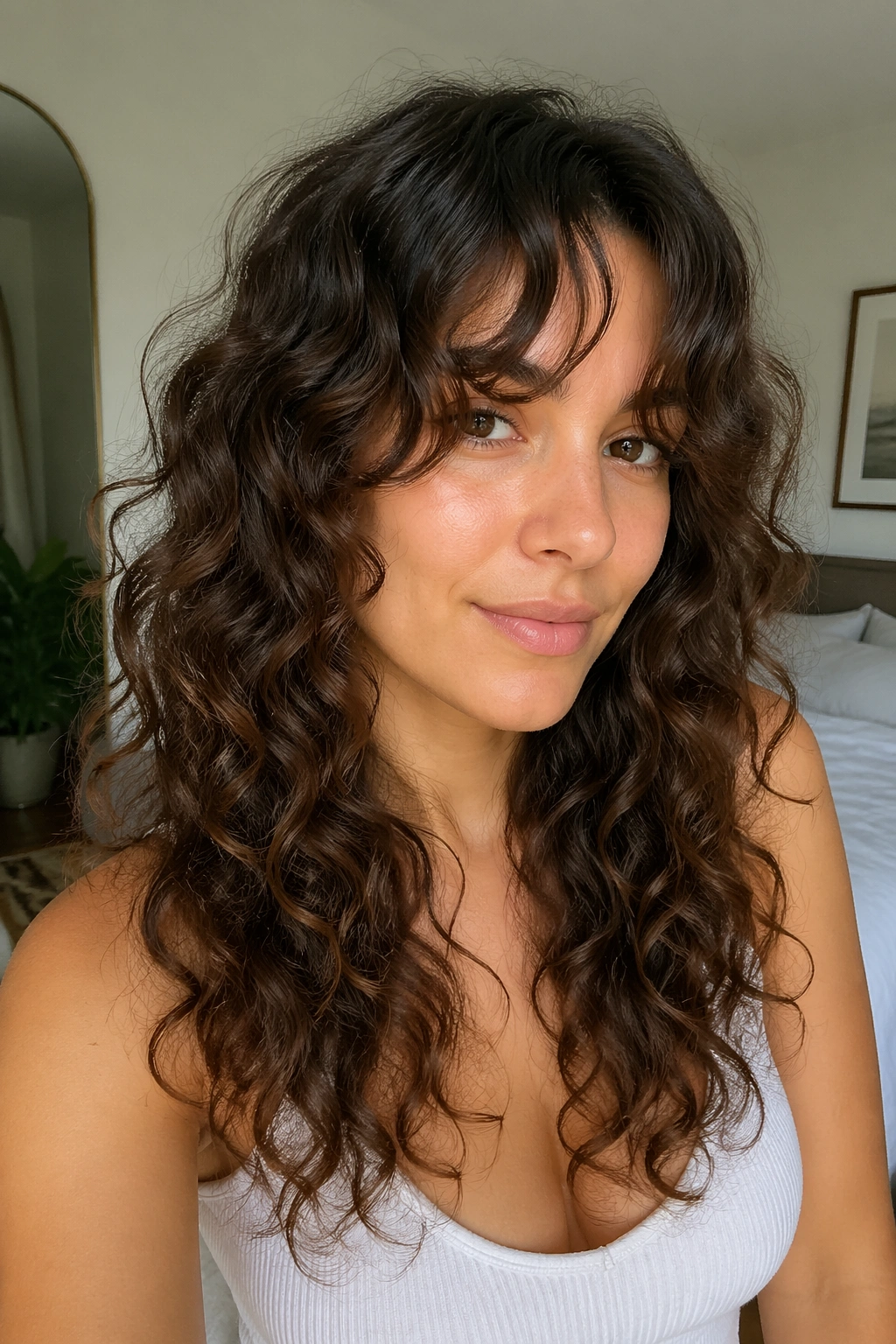
Long curly hair looks its best when the cut respects the curl instead of fighting it. Layers can keep the length, remove the bulk, and shape the face, but the exact result depends on where those layers start and how much weight you want left at the bottom.
If you’re choosing between two ideas, keep the longer version. Curls shrink, bounce, and change shape once they dry, and a little extra length gives you room to live with the cut before you decide on more. That one choice saves a lot of regret.
Bring a photo, yes, but bring one that shows texture as close to yours as possible. That matters more than the lighting or the outfit or the pose. A good layered curl cut should feel like your hair, only better behaved.
