



A curly closure wig looks its best when the style works with the lace, not against it. A center part can make the whole unit look calm and clean; a bad high ponytail can make the front lift, crease, or show the closure line in the worst possible way.
That’s why curly closure wig hairstyles matter more than people admit. With a closure, you’re not fighting a full lace frontal, but you are working inside a smaller parting space — usually 4×4, 5×5, or 6×6 — so the style has to respect that limited real estate. Get the parting and tension right, and the curls do the heavy lifting. Get them wrong, and even nice hair can look a little off.
I’ve always thought curly wigs are the easiest to overdo. Too much gel, too much brushing, too much pulling, and the whole shape turns stiff. Leave the curls alone too much, though, and the base can puff up or the closure can sit in plain view. The sweet spot is a style that gives the hair movement while keeping the front believable.
If you’ve ever stared at a curly closure wig and thought, It’s good hair, but what do I actually do with it?, that’s the right question. The styles below are the ones that keep the lace believable, protect the shape, and give you enough range to wear the same wig in very different ways.
1. Curly Closure Wig Hairstyles Start With a Clean Center Part
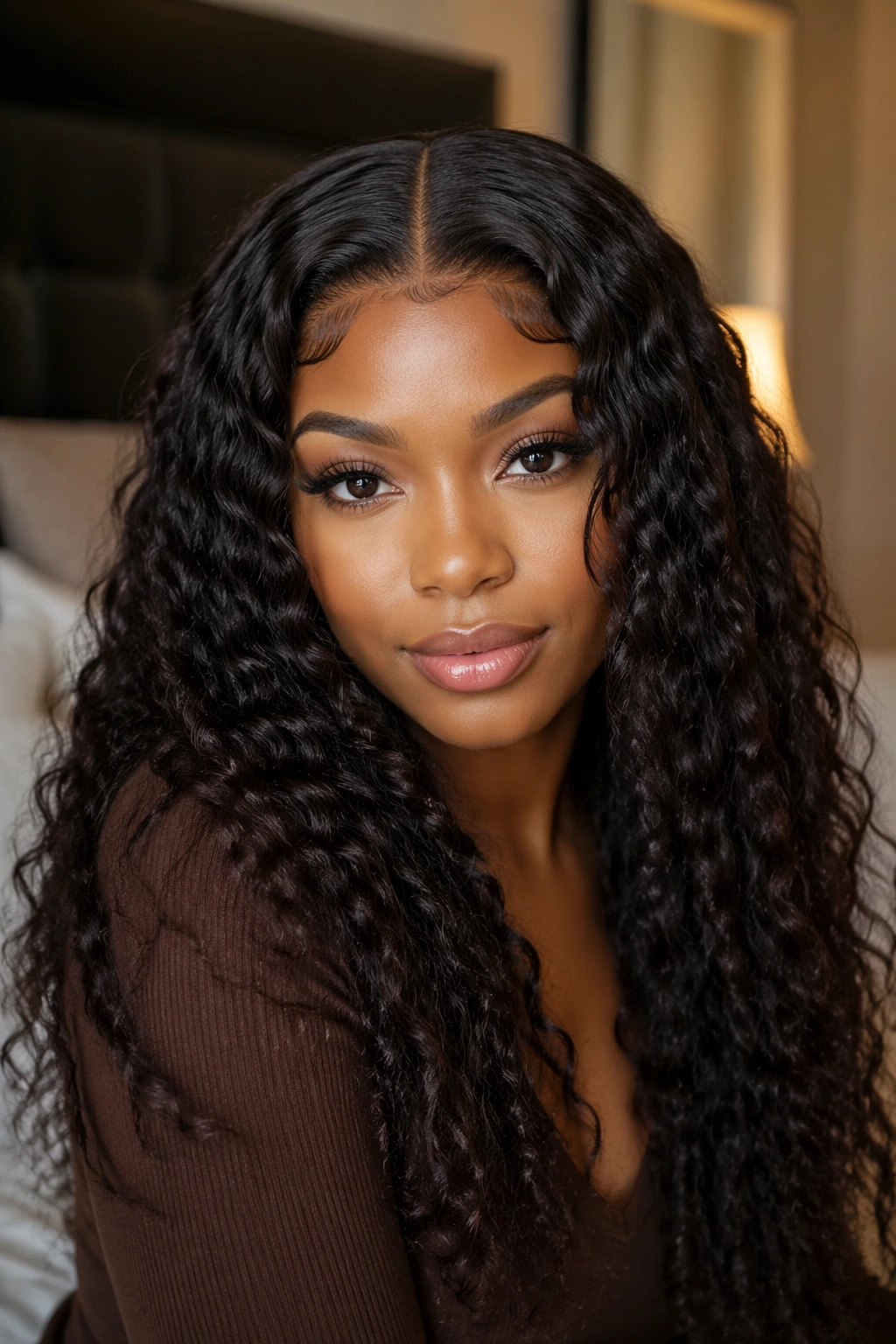
A clean center part is the easiest way to make a curly closure wig look calm, balanced, and expensive without trying to do too much. It works especially well on a 4×4 or 5×5 closure because the parting space is used in the most natural way possible: straight down the middle, no drama, no strange diagonal gaps. If the curls are defined and the roots are flat, this style does half the work for you.
Why the center part looks so right
The middle part gives the eye a clear line to follow. That matters on a closure wig because it helps the lace blend into the scalp area instead of fighting it. A center part also lets the curls fall in even curtains on both sides, which is useful when the hair has a lot of body and you do not want one side to look heavier than the other.
A little root prep goes a long way here. Smooth the base with a light mousse, a brush, and a warm comb at the part, then leave the rest of the curls alone. You want the roots flat and the lengths fluffy. If the part is too wide, it starts to look open. If it’s too narrow, the hair can sit on top of the closure and make the lace obvious.
My blunt advice: do not overpluck a center part just because you can. A closure that’s thinned out too much at the part looks tired fast.
2. Deep Side Part That Gives the Front a Soft Sweep
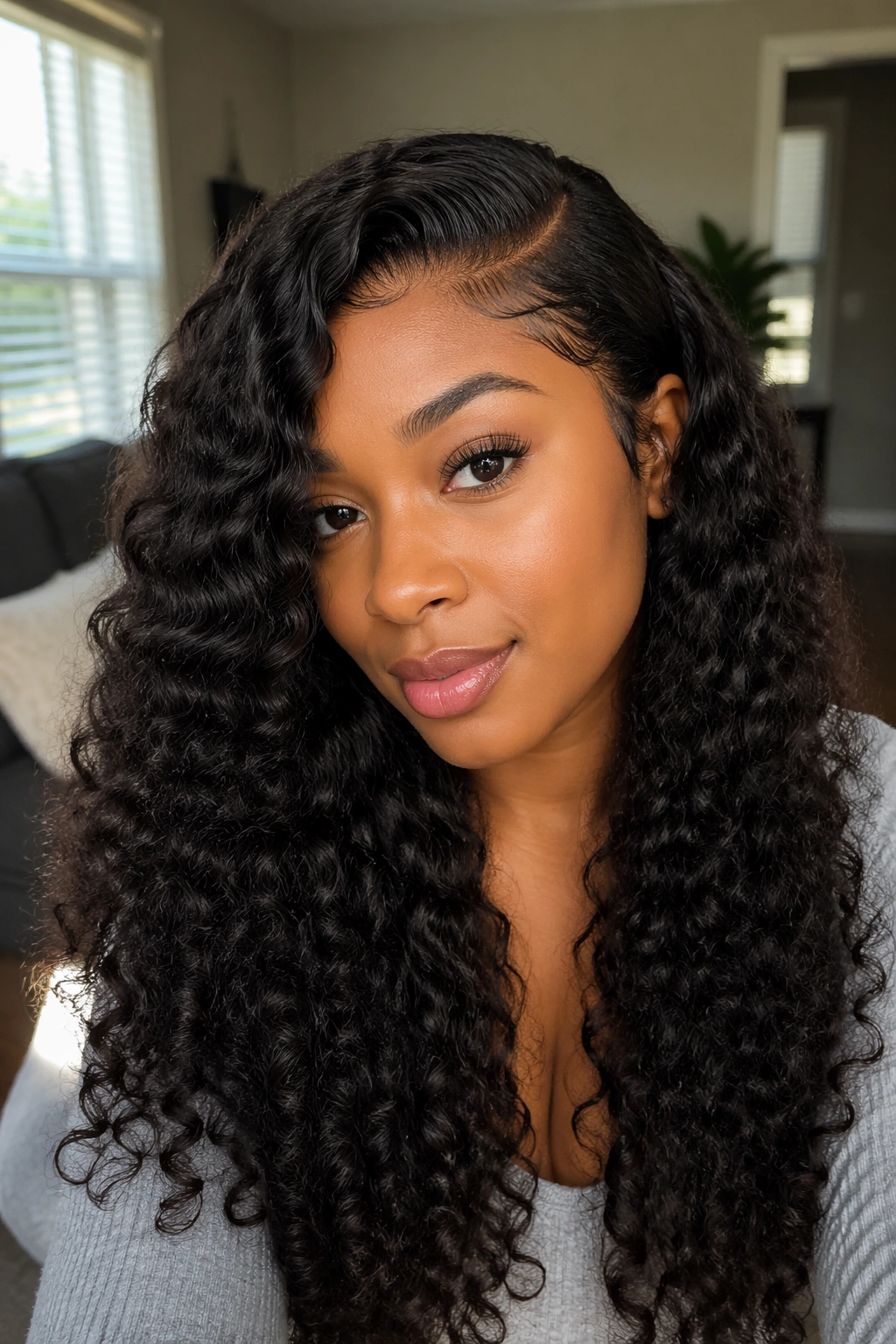
A deep side part is the quickest way to make curly closure hair feel less formal and more alive. It shifts the weight of the curls to one side, and that little imbalance does a lot of visual work. The style also helps if your closure line needs a break, because the part doesn’t sit directly in the center where every flaw gets noticed.
Here’s why I like this one: it gives instant height at the crown and softness at the temple. The front curl sweep can hide a slightly thick knot area, a lace edge that wants to shine, or a part that never quite sits straight. That doesn’t mean it’s a cover-up trick. It means the style is forgiving, which is often what you need from a wig you plan to wear more than once.
Make the part about 1 to 1.5 inches off center. That small shift is enough. Then brush the heavier side back just a little so the curls fall diagonally across the face instead of hanging flat. The shape should look intentional, not like you flipped the hair in a panic.
One quick thing: if the curls on the parted side are too crisp and separated, the whole look can get busy. A soft side part wants movement, not tiny ringlets competing for attention.
3. Half-Up, Half-Down Pineapple With Loose Curls
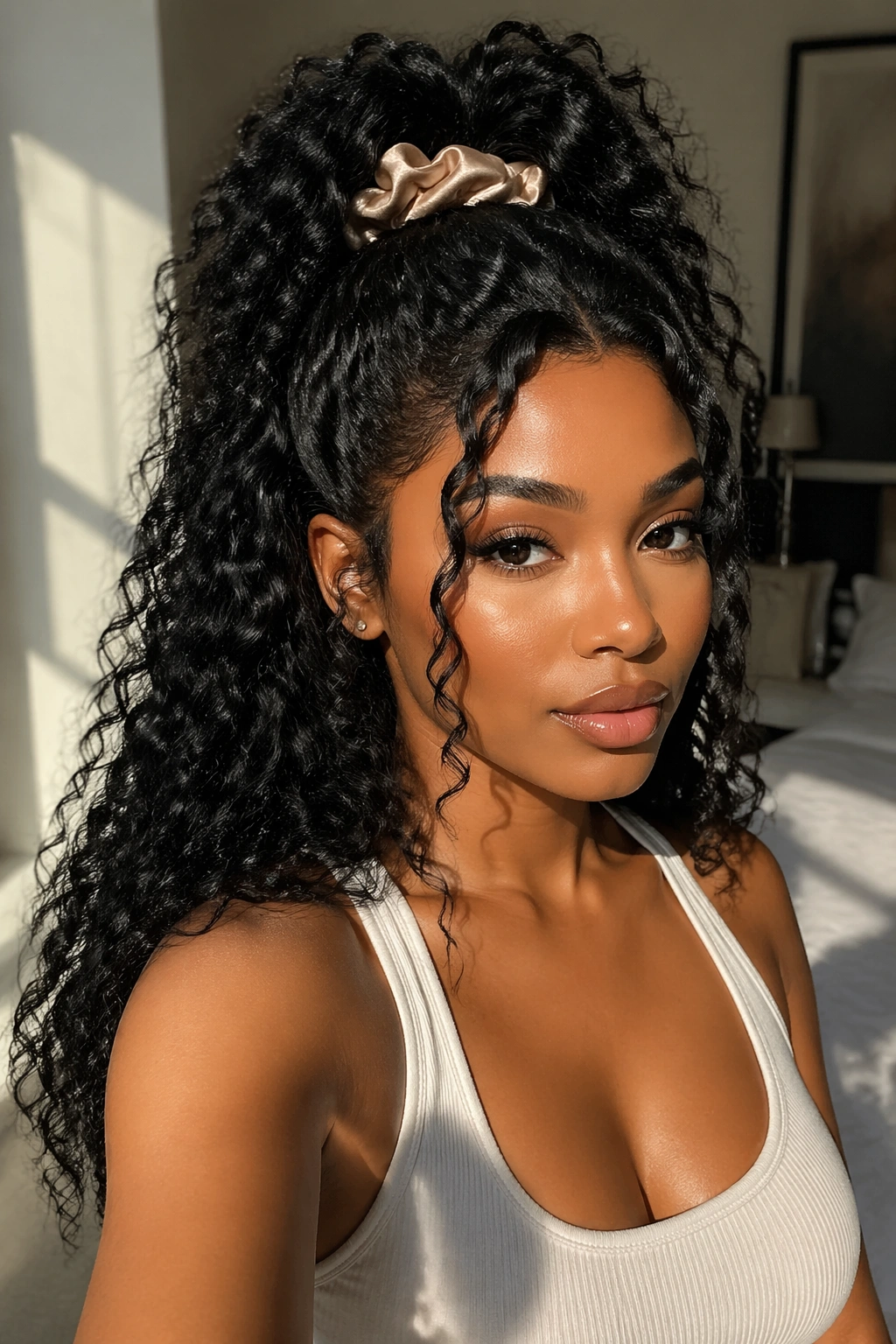
A half-up, half-down pineapple is the style I reach for when I want the curls off my face but I still want the length to show. It keeps the front controlled and lets the back stay full, which makes it one of the easiest curly closure wig hairstyles to wear without constant mirror checks.
The trick is placement. Don’t shove the top section straight up to the crown unless you want a very lifted shape. A softer pineapple sits a little lower, with the top section gathered loosely using a satin scrunchie, a small clip, or a narrow elastic. The curls should still move. If they look pinned in place, the style loses its charm fast.
Where the tie should sit
- Place it about 2 to 3 inches above the ears, not right on the hairline.
- Keep the front edges smooth so the closure stays flat.
- Let a few curls fall forward instead of forcing every strand back.
- Leave the back section loose enough that the curl pattern doesn’t get crushed.
This style is also kind to longer curly units because it redistributes the weight. That helps if the wig starts feeling heavy after a few hours. And no, it doesn’t have to be perfect. The whole point is a soft, lifted shape with a little looseness around the face.
4. High Curly Ponytail With a Wrapped Base
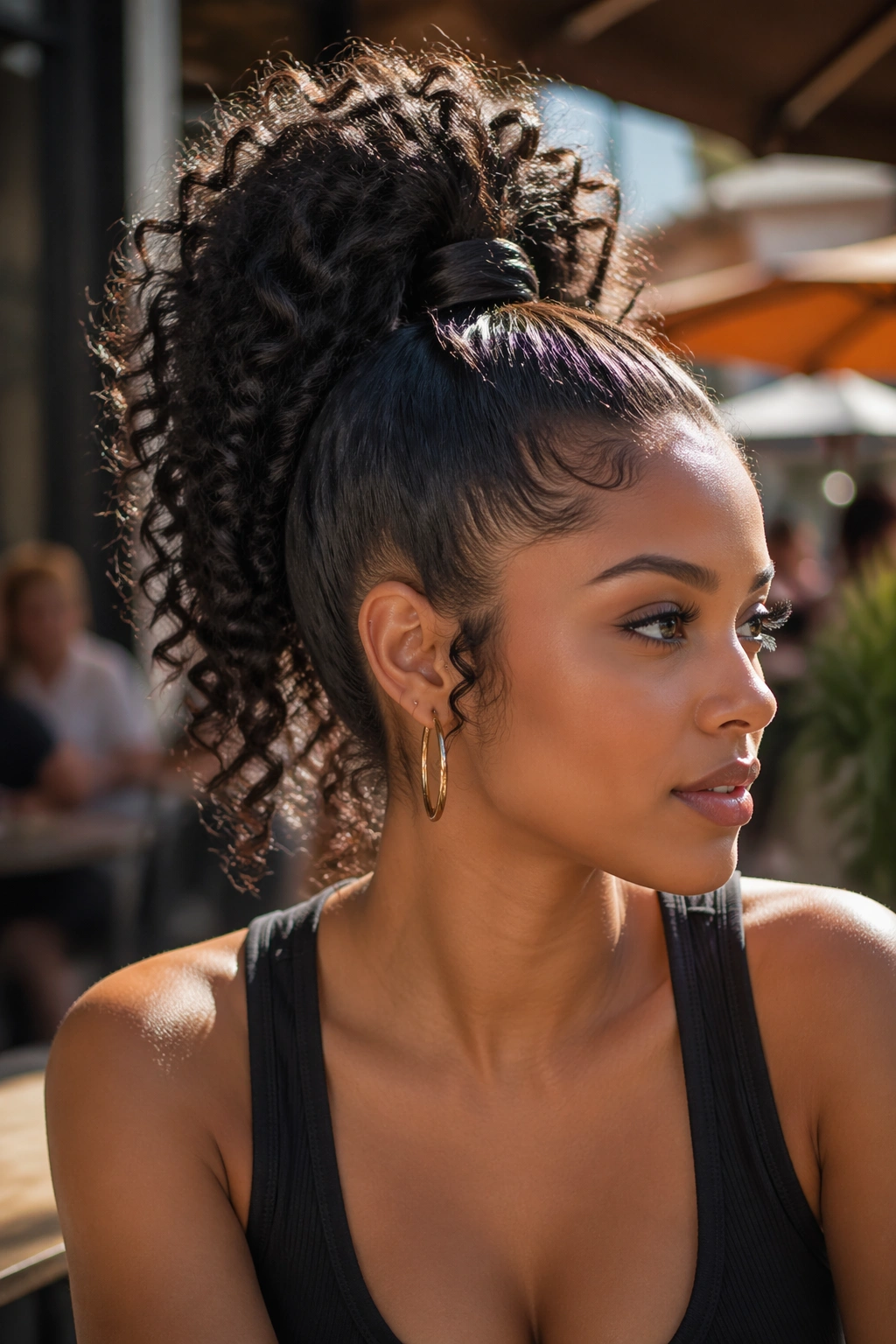
A high curly ponytail is drama without too much effort. It gives lift, shows length, and turns a closure wig into something a little sharper and more playful. If the unit is secured properly, the ponytail can look polished. If it isn’t, the whole base can shift, so the prep matters more than the ponytail itself.
Start by making sure the wig is flat at the crown. A high ponytail pulls upward, and that tension can expose a weak install or a bulky closure. Use a wig band or the built-in security of the cap before you even think about gathering the curls. Then pull the hair into a ponytail with your hands, not a brush, so the curl pattern doesn’t get stretched into a frizzy cloud.
Tight is not cute here.
A wrapped base makes the ponytail look finished. Take a small curl or a narrow strip of hair from the ponytail and wind it around the elastic. Pin the end underneath with a bobby pin. That tiny move hides the tie and makes the style feel cleaner, which matters more than people think.
If you want extra lift, place the ponytail slightly above the crown instead of directly on top of the head. That keeps the shape airy. Too high and too tight can make the front tug. You want bounce, not tension.
5. Low Curly Ponytail With Soft Face-Framing Pieces
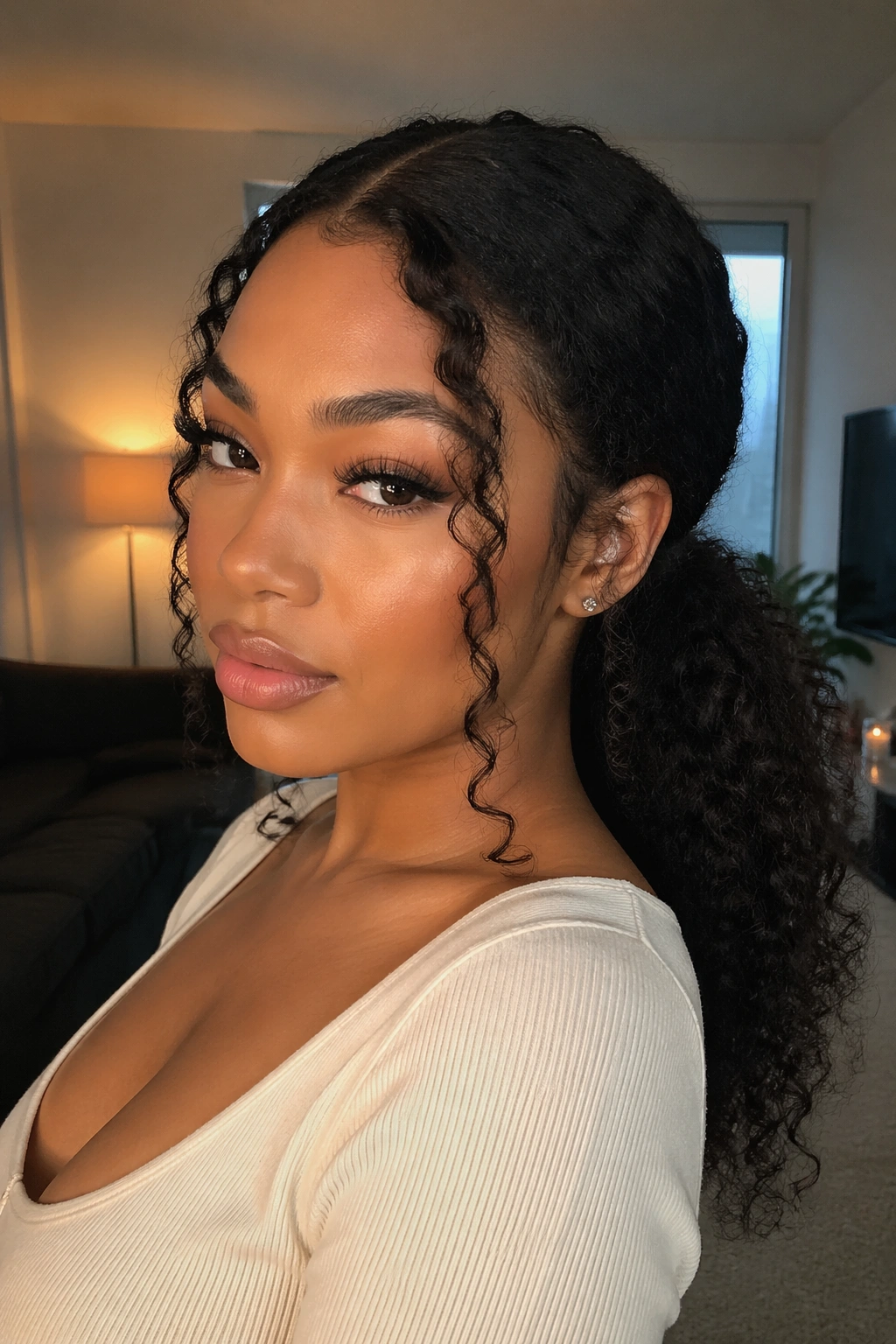
The low ponytail is the grown-up cousin of the high one. It is calmer, easier on the scalp, and usually friendlier to a closure because the crown stays flatter. If the high ponytail is about energy, this one is about control.
What makes it work is the front. Leave out two small face-framing pieces, and suddenly the style stops feeling strict. Those tendrils soften the jawline, hide any hard edge near the temple, and make the wig read as styled instead of simply tied back. The curls in the tail should still have room to move, so don’t over-comb the lengths trying to make them sleek. Sleek and curly is a tricky mix. Usually, one wins.
Why this version is easier to wear
A low ponytail puts less pressure on the closure area, which means less chance of the lace lifting or the part shifting. It also lets you keep the top smoother with less product. A small amount of mousse at the root and a light mist of water on the ponytail are usually enough.
If you want it to feel more put together, wrap the elastic with one curl and tuck the end under the ponytail. If you want it softer, skip the wrap and let the texture do the talking. I prefer the wrapped version when the wig has dense curls, because it stops the whole back from looking like one big puff.
6. Shoulder-Length Curly Bob With Layers
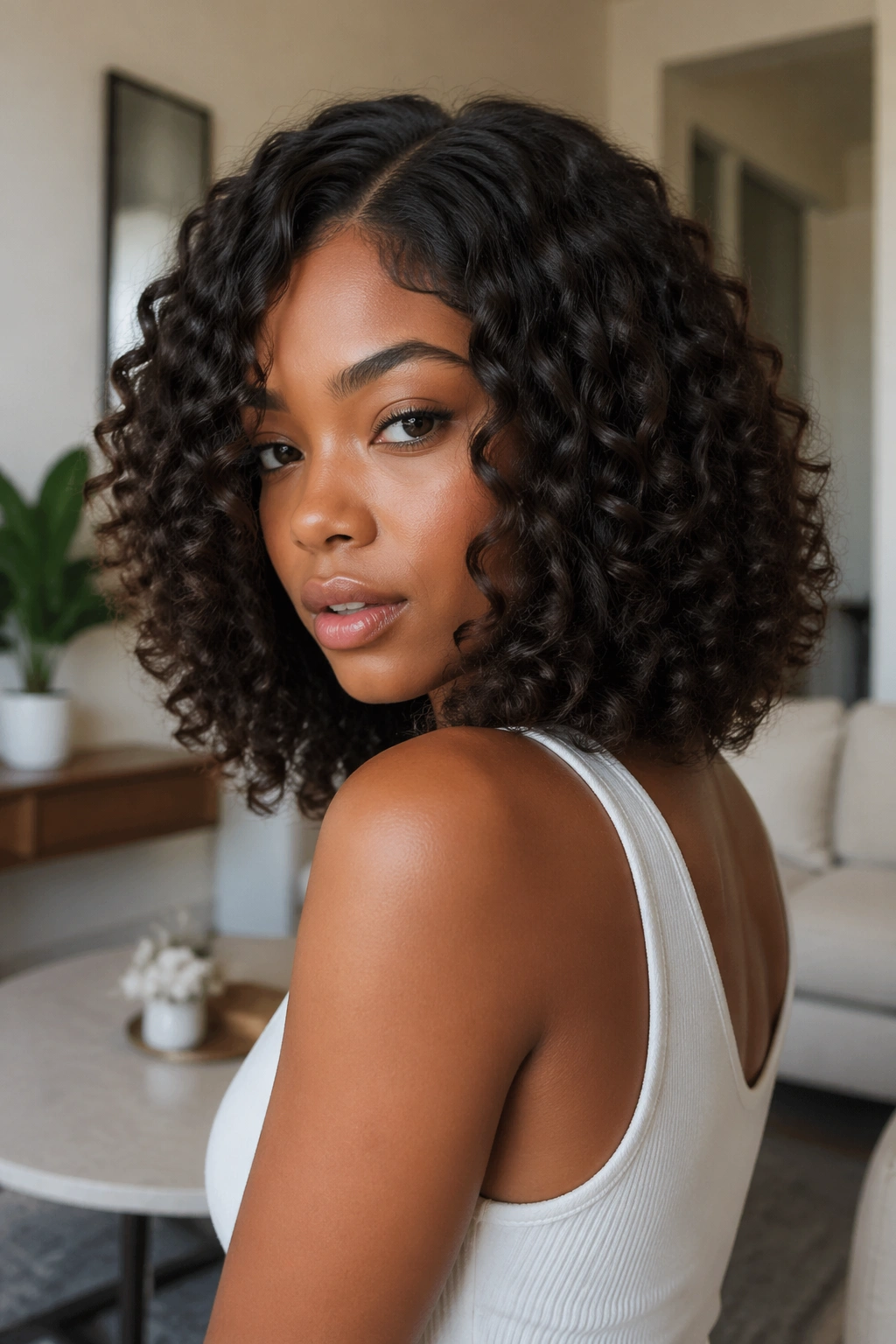
A shoulder-length curly bob feels lighter before you even finish styling it. That’s part of the appeal. Less length means less weight on the closure, less pull on the cap, and less chance of the front getting dragged out of shape over the course of the day. It also gives the curls a sharper outline, which I love on a wig that needs a little structure.
Layering matters here. A blunt bob can work, but on curly hair it can also balloon out in an awkward triangle if the density is high. A few soft layers let the curls sit on top of each other instead of out to the sides. The effect is fuller at the top, cleaner at the ends, and much easier to style with just water and mousse.
This is one of those styles that looks better when you stop messing with it. Finger-coil the pieces around the face if they need a little direction, then leave the rest alone. The curls should bounce, not fray. If the bob feels too wide at the cheeks, tuck one side behind the ear for a minute and let it fall back naturally. That small shift can fix the whole shape.
A curly closure bob also makes the lace easier to forget about, which is the real win. The shorter frame keeps the eye on the curl pattern instead of the cap.
7. Wet-Look Definition With a Sharp Part
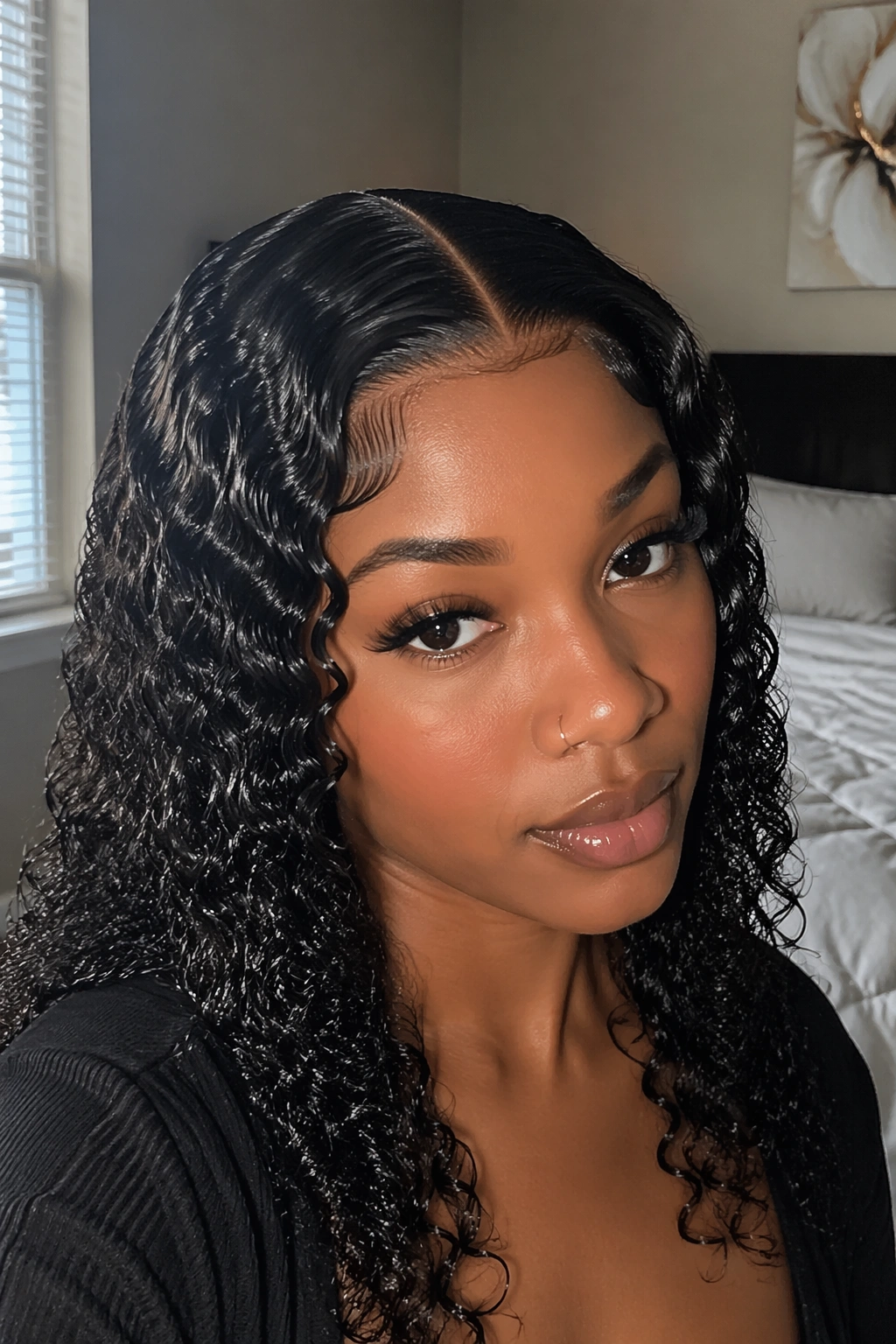
Wet-look curls are a smart move when you want the wig to read sleek but still curly. The goal is not to soak the hair. The goal is to make the curls clump into glossy ribbons with a sharp part and a tidy front. Done right, this style looks deliberate in a way that dry, fluffy curls sometimes don’t.
The product order matters. Start with water or a water-based mist, then add a light leave-in, then seal the curl clumps with gel or styling foam. Work in small sections. If you dump product over the whole head and rake it through, the curls lose shape and the closure can look greasy. That is the wrong kind of shine.
How to get the sheen without crunch
- Use a rat-tail comb to define the part first.
- Apply product from mid-length to ends before touching the roots.
- Smooth the front with your fingers, not a dense brush.
- Let the curls dry in clumps before you separate anything.
A sharp part makes the look feel finished, but the rest of the style should stay soft. If the curls dry too stiff, scrunch them once with clean hands to break the cast. If they dry too fluffy, you probably used too much water and not enough hold. The best version looks glossy, touchable, and a little bit cool.
8. Curly Closure Wig Hairstyles With a Side-Swept Glam Finish
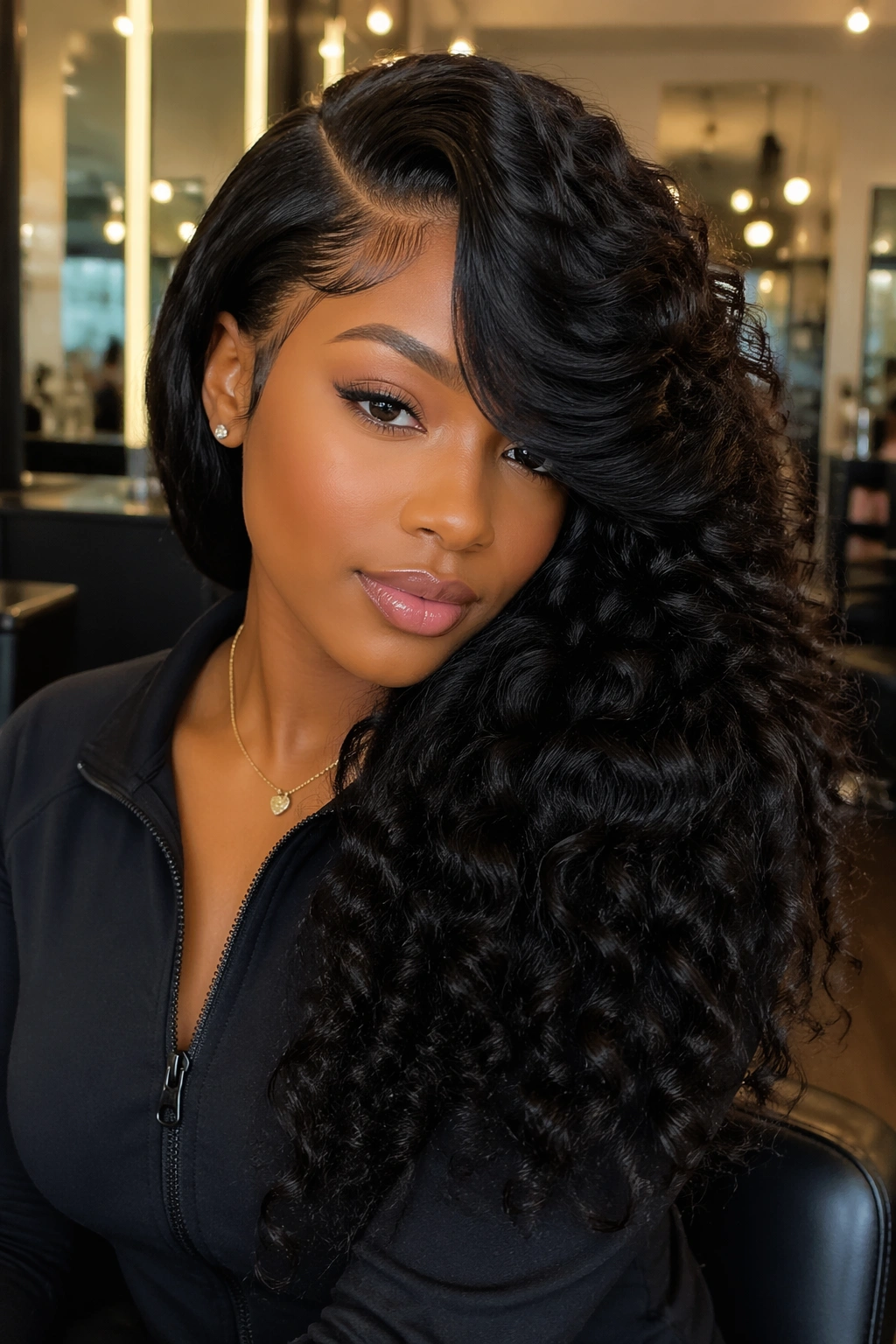
A side sweep can hide a lot, and I mean that in the nicest way. It gives you one strong focal point, lets the curls spill over one shoulder, and makes the closure line feel less exposed. If the center part looks too rigid on a given day, this style is the fix I’d reach for first.
The sweep should start at the part and arc across the forehead in one clean motion. Not a dramatic wall of hair. Just enough movement to soften the face. The side that stays fuller can be pinned lightly underneath the top layer, which keeps the shape from collapsing. Two bobby pins in an X pattern usually hold better than one big clip.
This style really shines when you want your earrings or neckline to matter. The hair no longer sits evenly on both sides, so the eye goes straight to the sweep and the exposed side. That asymmetry makes the curls look lush even if the unit itself is not especially dense.
If your closure is a little smaller, the side sweep is especially useful. It asks less of the parting space and more of the curl shape. That is a good trade.
9. Curly Space Buns With Loose Ends
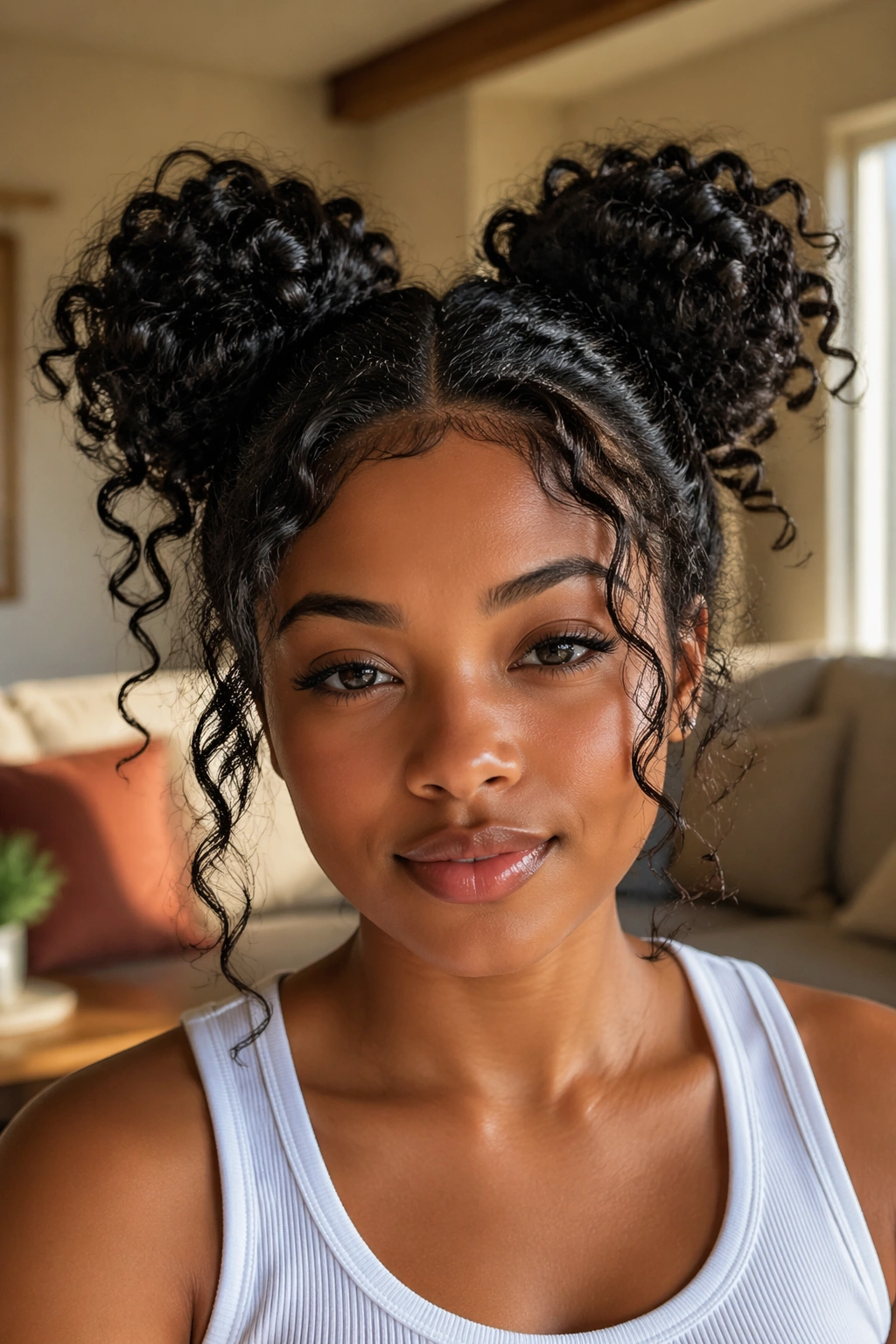
Two buns, a little chaos, and a lot of curl texture. That’s the appeal here. Curly space buns feel playful, but they also give you a practical way to keep the wig off your neck and out of your face without flattening every curl into nothing.
The best version is not tight and severe. Split the hair into two high sections, twist each section just enough to form a bun, and let the ends stick out a little. That messy little tail gives the style life. If you smooth the buns too hard, they start to look like costume hair. Leave a bit of softness around the hairline and the whole thing feels more wearable.
A few placement details matter
- Keep the buns slightly behind the top of the ears so they don’t pull the closure forward.
- Use small elastics or pins instead of yanking the hair tight.
- Leave the front curls loose if you want the style to stay soft.
- Choose this look on a unit with decent density; very thin curls can make the buns look flat.
The style can be a little tricky on a smaller closure because the front still needs to lie flat. If the cap is secure and the part is set first, though, it’s one of the easiest ways to make curly hair feel fresh without touching the length much.
10. Braided Crown Into Free Curls
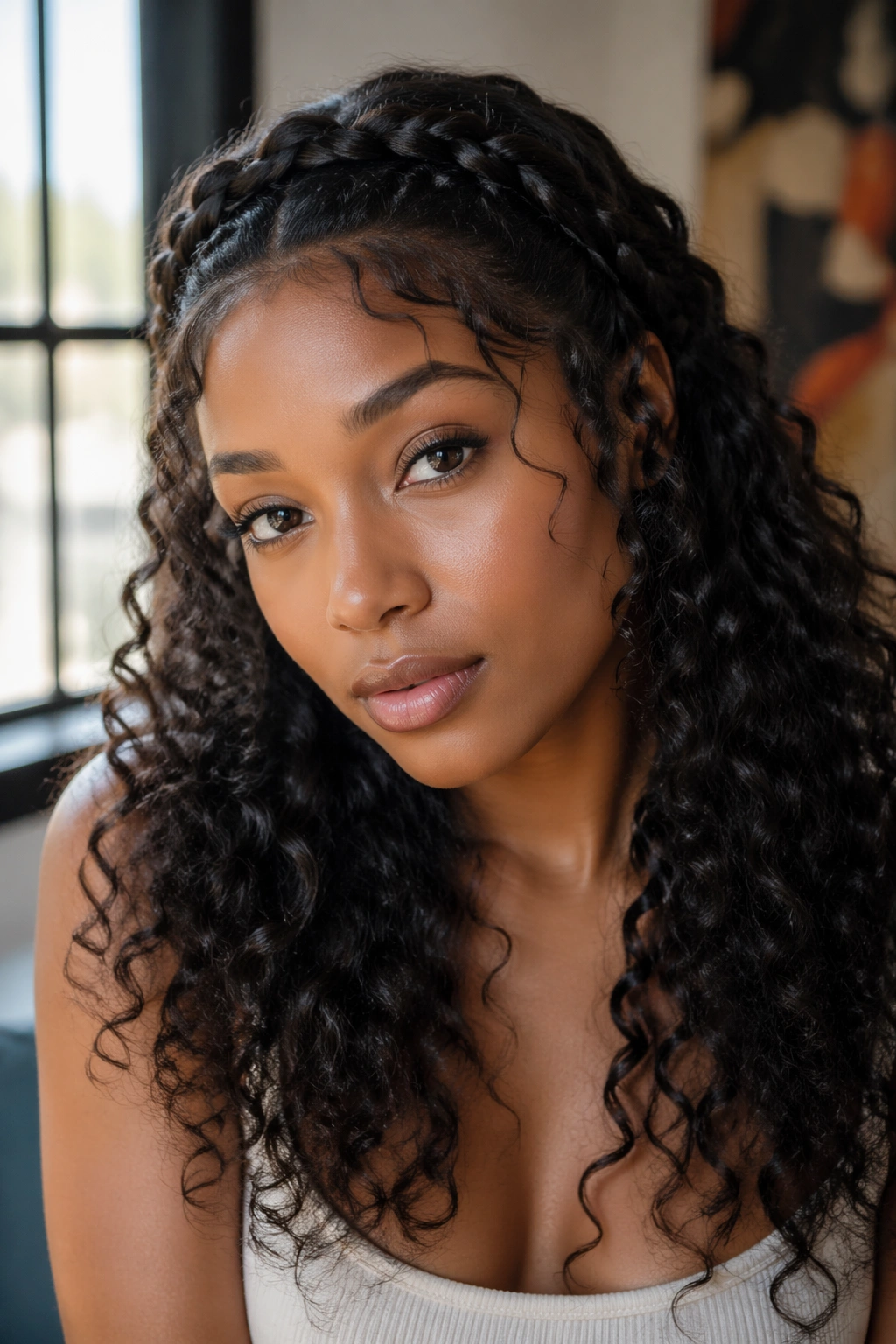
Braids are not only for taming hair. On a curly closure wig, they can frame the front so the curls look more finished and less random. A braided crown gives the style shape, keeps the hairline controlled, and leaves the rest of the curls loose, which is a nice balance when you want structure and volume at the same time.
You can do this with two slim braids starting near the temples and meeting toward the back, or with flat twists if the hair is too thick for neat braids. The point is to create a lifted frame around the face. Once the front is anchored, the curls underneath fall into a cleaner shape.
This style is also useful when the closure needs extra help blending. Braids draw attention away from any small mismatch at the part or temple area. That doesn’t mean they hide bad installation — they just keep the eye moving. Small difference. Big payoff.
If you like your curly wig to feel a little romantic, this is one of the strongest choices in the group. It works especially well with medium-density curls that still have room to bounce under the braid line. Too much bulk at the front, and the crown can look crowded. Keep the braid slim and the curls loose. That combination is hard to beat.
11. Tucked-Behind-Ear Volume With a Bold Clip
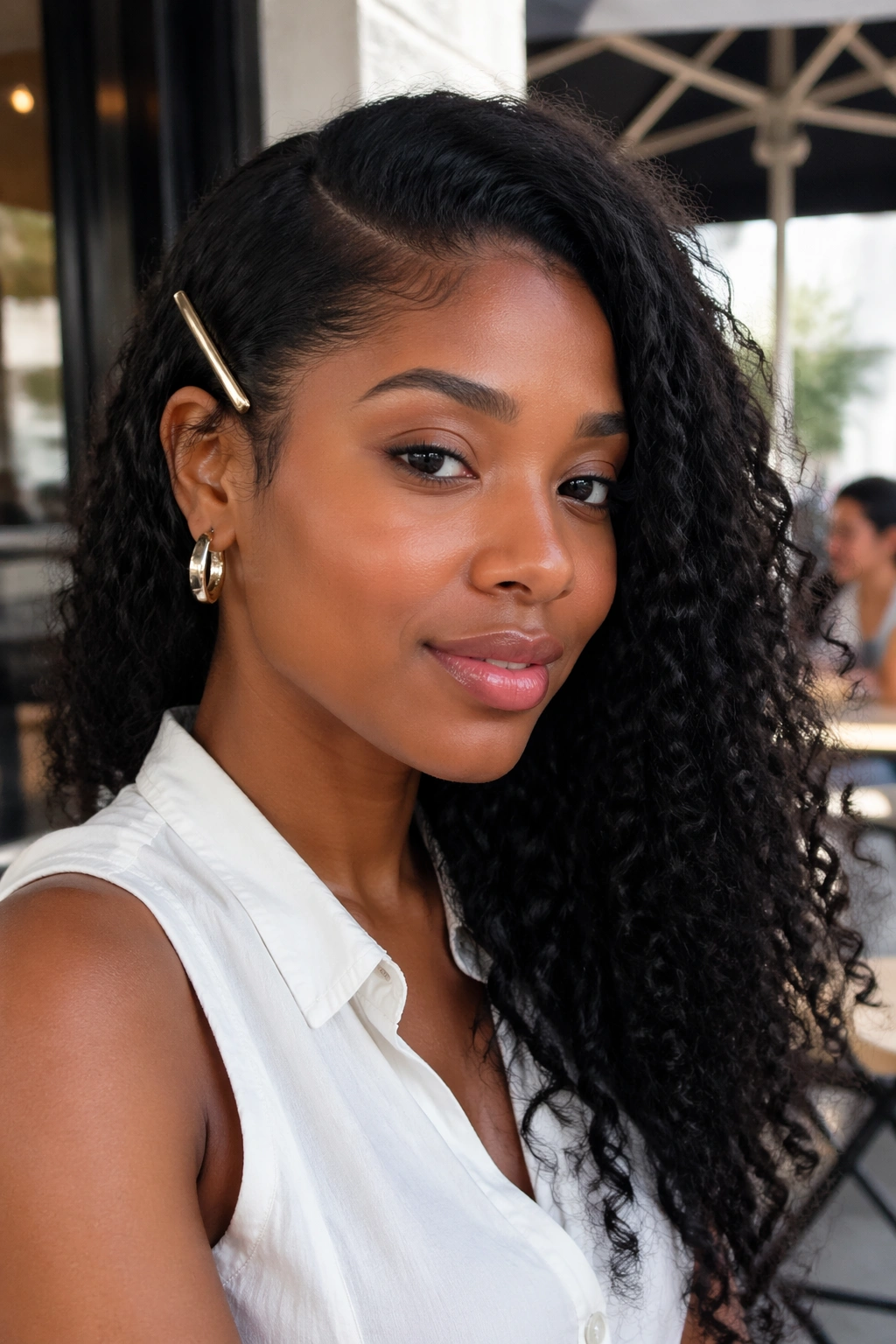
Sometimes the smartest style is the one that barely looks styled at all. Tucking one side behind the ear and securing it with a bold clip gives the wig a clean, asymmetric shape without making the front feel overworked. It’s one of those styles that looks casual from a distance and very considered up close.
The ear tuck opens the face, shows off earrings, and helps keep curls from falling into your eyes. On a closure wig, it also helps the part read more clearly because the front isn’t competing with a wall of hair. If your unit has a side part, this style becomes even easier. If it has a center part, the tuck creates a small shift that keeps the look from going flat.
I like a flat clip here better than a huge claw clip. A bulky clip can sit awkwardly on a smaller closure unit and make the top feel heavy. A slimmer clip holds the section back and lets the curls fall naturally over the shoulder.
This is the style I use when a wig is cooperating but not quite enough to leave alone. One tuck. One clip. Done.
12. Fluffy Afro-Textured Middle Part
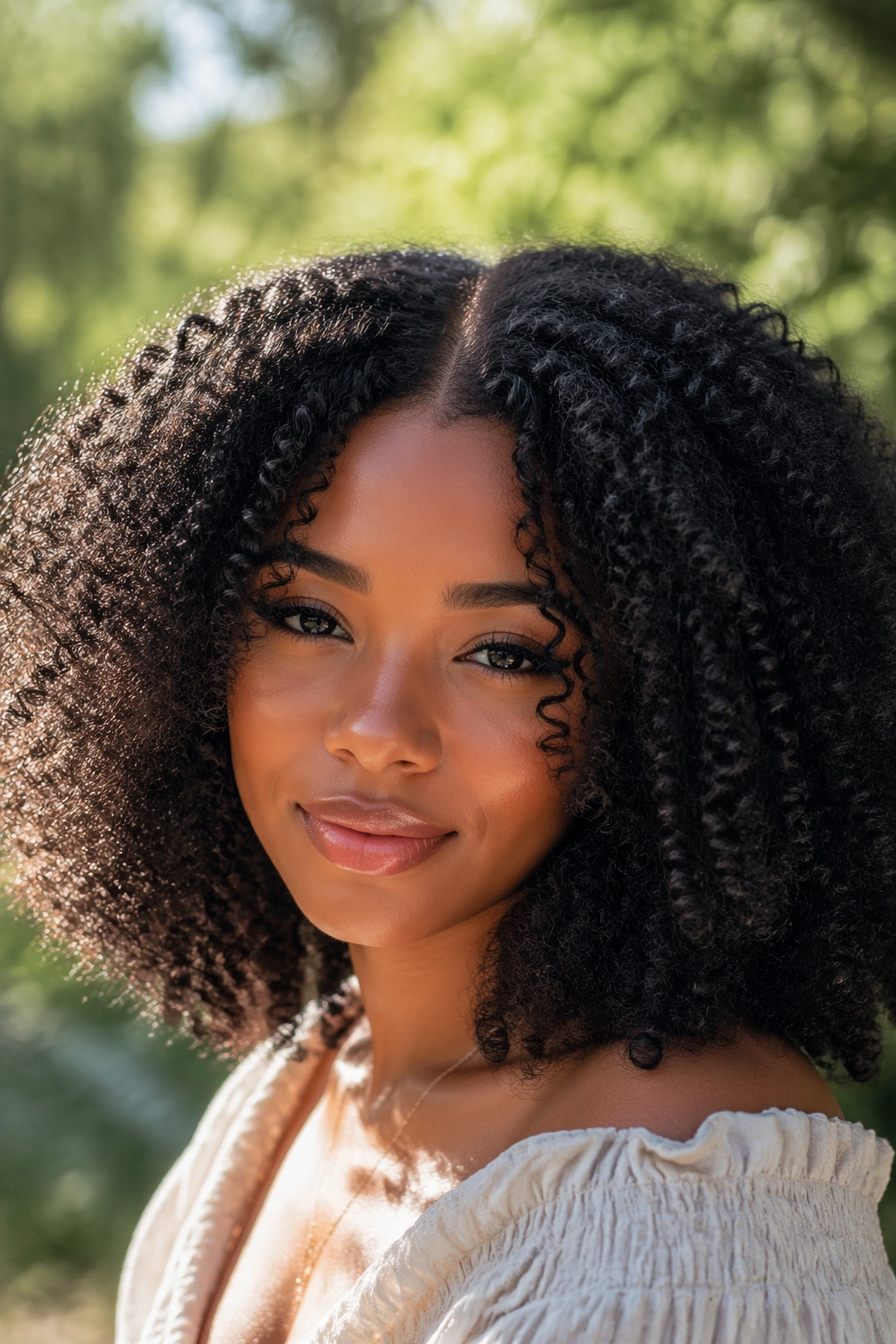
A closure wig does not have to stay neat to look good. In fact, one of the strongest ways to wear curly hair is to let it get a little fluffier and more open around the edges. A fluffy middle part gives you shape at the top and volume through the sides, and it looks especially good on tighter curl patterns that hold body well.
The mistake people make here is over-defining every curl. Don’t. That can make the hair look stringy and over-separated, which steals the softness. Instead, start with a middle part, shape the roots flat, and then lift the body of the hair with a wide-tooth comb or an afro pick only at the base. Leave the ends mostly alone.
How to keep it airy, not messy
- Mist the hair lightly, then let it dry before fluffing.
- Pick the roots in small sections instead of one big sweep.
- Avoid heavy creams that weigh the curls down.
- Stop separating once the shape looks full and balanced.
This style rewards restraint. The more you chase perfect curl definition, the less natural it can look. A good fluffy middle part has body, softness, and a little edge. It should look like the hair knows what it’s doing even when you barely touched it.
13. Curly Updo With Leave-Out Tendrils
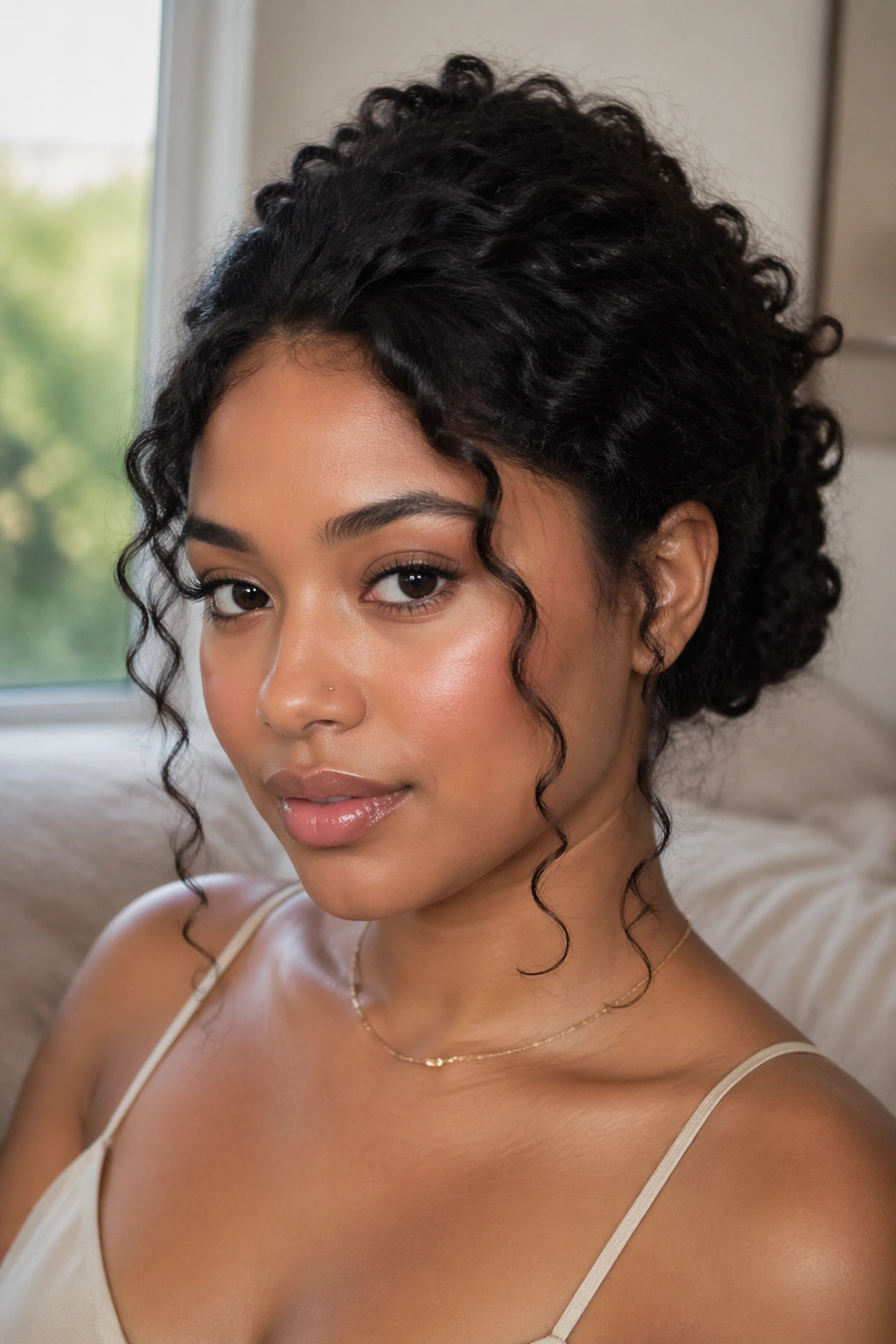
Why do an updo on curls that already look good? Because sometimes you want the neck free, the front light, and the wig base out of the way. A curly updo does exactly that. It also makes a closure wig feel more secure, since most of the hair gets pinned back and the eye stops looking for a perfectly full frame.
The secret is the tendrils. Leave two small curly pieces out near the temples or jawline, and the whole style softens immediately. Without those pieces, the updo can look too tight or too formal. With them, it feels wearable. That’s a big difference.
Pin the hair from the bottom upward in small sections, keeping the bun or roll low enough that it does not press directly on the closure. A twisted chignon works well, but so does a loose pinned coil. The point is to keep the front balanced and the back tidy. If the front is stretched too far back, the lace can show its edges. Better to keep the lift gentle.
This is one of the few styles that can make a wig feel almost lighter the moment it’s done. The curls are still there. They’ve just been put in a more controlled shape.
14. Headband or Scarf Styled Curls
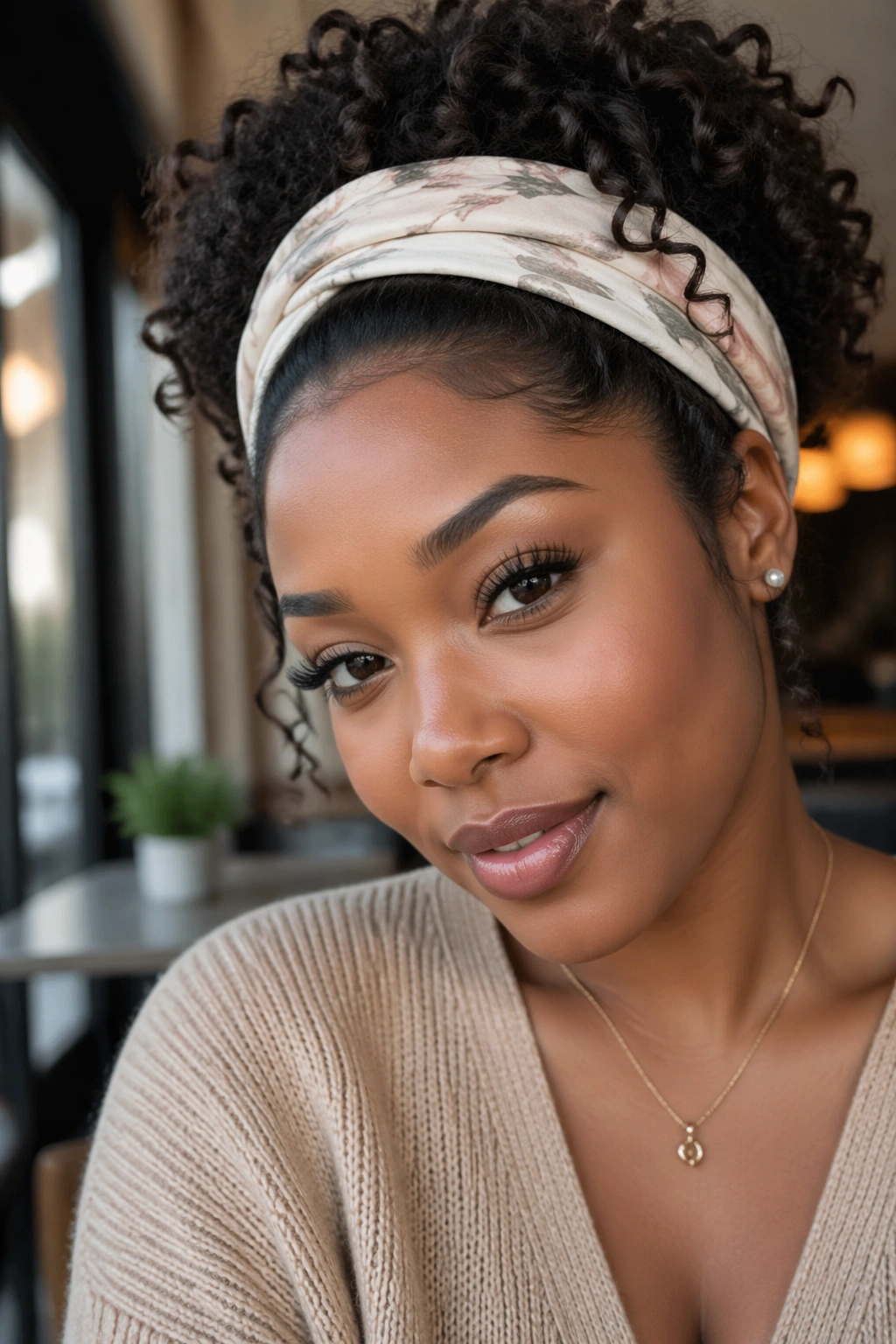
A soft band over curls can change the whole mood in two seconds. It’s the easiest rescue move when the closure part needs a break or when the front just doesn’t want to sit as neatly as you hoped. A wide headband or a folded scarf can hide a tricky lace edge and give the style a cleaner line across the forehead.
The width of the accessory matters. A narrow band tends to dig in and can leave a ridge at the front. A wider band spreads the pressure and sits more smoothly across the hairline. Scarves do the same thing, but they also give you a chance to add color or texture. I prefer soft fabric over anything stiff, because stiff bands fight the curls instead of working with them.
How to keep the band from bunching the lace
- Set the closure flat before you add the accessory.
- Place the band slightly behind the hairline, not on top of it.
- Fluff the curls above the band so the top doesn’t collapse.
- Use bobby pins only if the fabric slides.
This style is especially handy when the wig has a part that looks a little tired. The accessory takes attention away from the top and shifts it to the overall shape. Quick, clean, useful. That’s the whole deal.
15. Curly Closure Wig Hairstyles That End on a Soft Off-Center Part
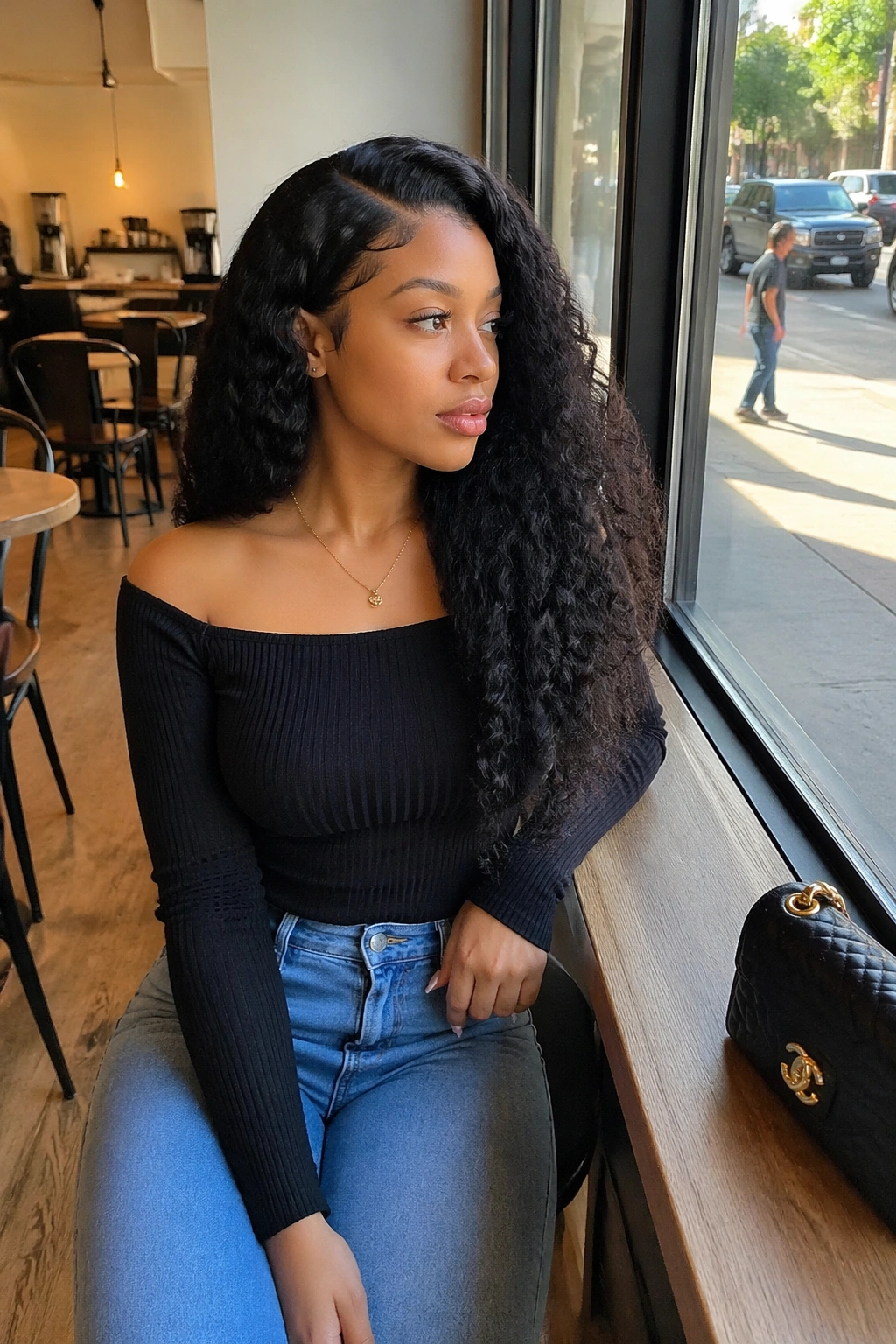
This is the style I reach for when I want the wig to look expensive without looking staged. A soft off-center part sits somewhere between the strict center and the full side sweep, which gives you enough symmetry to feel balanced and enough shift to feel relaxed. It also flatters a lot of closure units because it doesn’t demand a perfect line all the way down the middle.
The front curls should curve gently toward the face on the heavier side and fall a little looser on the lighter side. That curved shape makes the wig look lived-in in a good way. Not messy. Just easy. If you’re wearing a 5×5 closure, this is one of the nicest ways to use the extra parting space without showing off the lace too much.
I like this style because it gives you options. You can wear it with a soft middle bias, move the part a touch deeper for more drama, or tuck one side back if the mood changes. The style does not lock you into one look, which is part of the reason it works so well on curly hair.
And maybe that’s the real theme with curly closure wigs: the best styles do not fight the unit. They make the closure disappear, let the curls stay curly, and leave you with hair that feels planned but not stiff. That’s the sweet spot, and it shows up more often than people think.
