



Curly hair already carries half the dark academia mood. It has texture, movement, and a little built-in mystery, which is exactly why dark academia styles for curly hair can look so convincing without forcing the hair into a straight-haired shape.
The mistake people make is flattening everything. Bad call. Dark academia wants shape, shadow, and a bit of restraint at the top, not a helmet of lacquered hair that fights every ringlet. If your curls frizz a little, that can actually help; if they clump in the right places, even better.
A good version of this aesthetic usually comes down to three things: a controlled part, a deliberate silhouette, and one small detail that feels old-world. Think ribbon, barrette, braid, pin, or a tucked twist. Think cardigans, wool coats, collared shirts, and that slightly moody feeling you get from a hallway lined with books.
The styles below work because they respect curl pattern instead of pretending it isn’t there. Softness stays. Structure shows up where it counts. And the result feels like it belongs with a heavy novel, a trench coat, and a rainy walk home.
1. Low Twisted Chignon With Face-Framing Ringlets
Picture this: you’ve got curls gathered low at the nape, a twist pinned close to the head, and two front pieces left out on purpose. It looks neat from the back and a little romantic from the front. That balance is doing a lot of work.
Why It Fits the Mood
The chignon is one of those styles that never tries too hard. On curly hair, it gets even better because the twist has natural texture instead of that slick, formal stiffness that can feel too polished. Leave the front pieces loose. Really loose. They should skim the cheekbones and move when you turn your head.
How to Keep It From Collapsing
- Gather the hair into a low ponytail first.
- Twist the length into a compact coil.
- Pin it with 4 to 8 bobby pins, depending on density.
- Leave two small face-framing curls out before you pin anything.
- Mist the finished shape with a light-hold spray, not a heavy shell of product.
Best for: medium to long curls that can hold shape for a few hours without going limp.
A lot of people overpack the bun and make it look blunt. Don’t do that. Let a few curls live their own life at the edges. That’s where the style gets its charm.
2. Velvet Ribbon Half-Up Crown
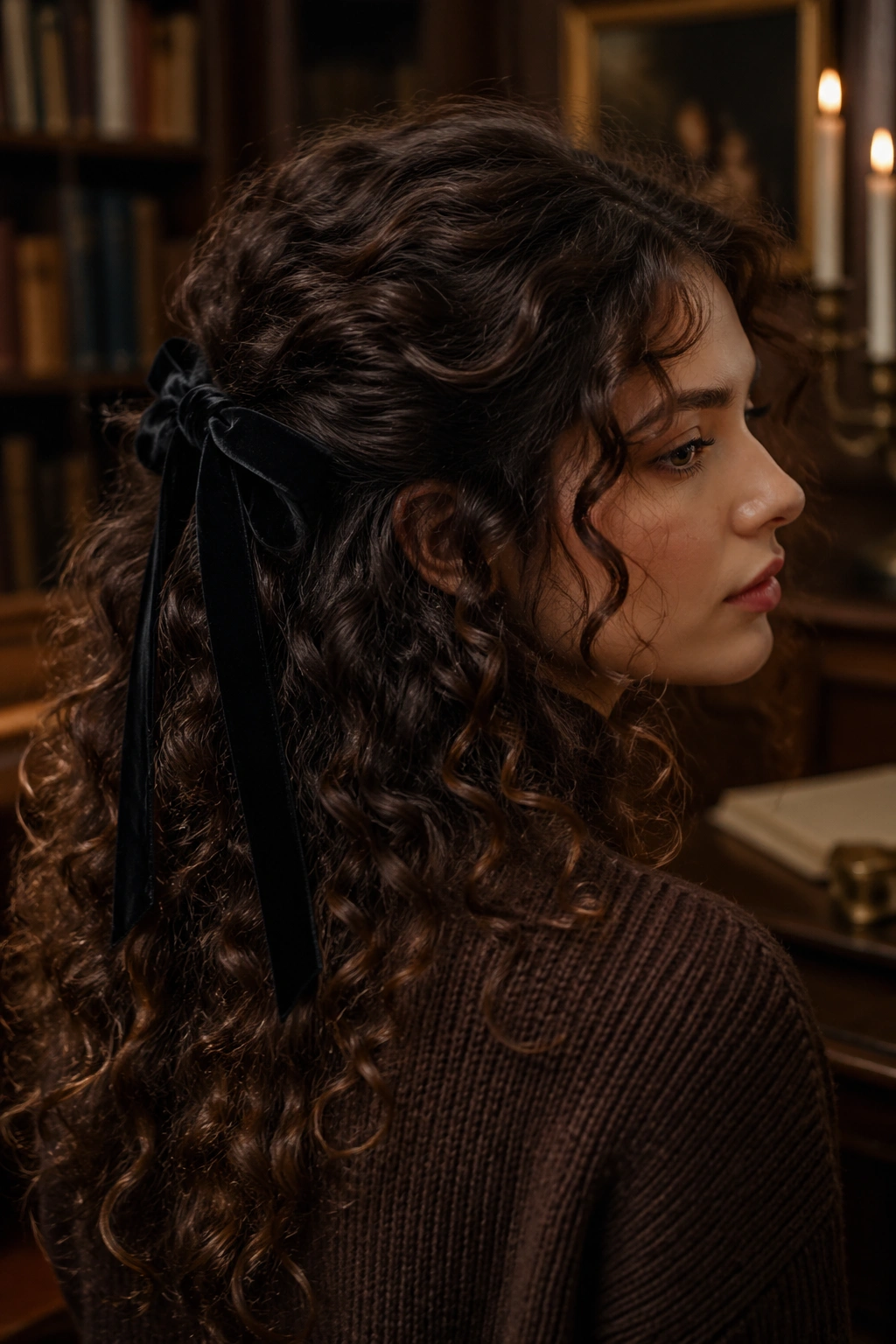
A ribbon can do more for curly hair than a stack of accessories ever will. Especially in a deep color — black, oxblood, forest green, navy — it turns a simple half-up style into something that feels intentional instead of decorative for the sake of it.
The reason this works is simple. The half-up section creates order at the crown, while the loose curls below keep the style from looking too rigid. That contrast is what gives it the dark, bookish feel. If your curls are fine, keep the ribbon narrow. If they’re thick, go for a wider velvet strip so it doesn’t disappear into the hair.
The ribbon should sit low enough that it doesn’t look like a school recital bow. Better to tie it under the gathered section and let the ends drape down the back. A satin finish can slide around too much, so velvet usually stays put better. And if your hair tends to puff at the crown, smooth just the top inch with a little cream before you gather it.
This one is easy to wear with a high-neck sweater or a buttoned shirt. It also photographs nicely in real life, which is rarer than people think. The ribbon catches the eye; the curls do the rest.
3. Side-Parted Loose Curls With a Tortoiseshell Barrette
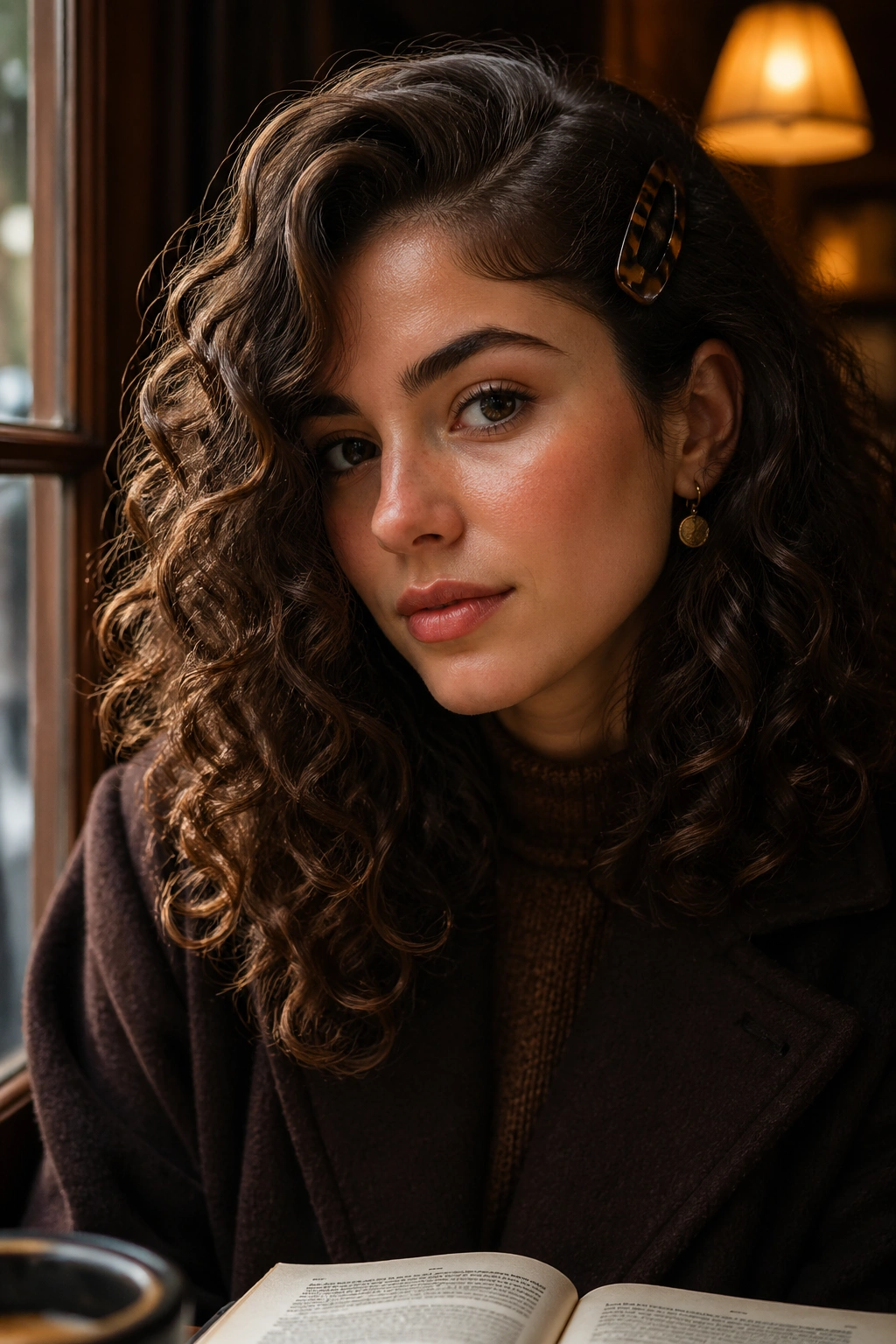
A side part changes the whole attitude of curly hair. Suddenly it feels less casual and more composed, like you meant to arrive looking slightly mysterious. Add a tortoiseshell barrette near the temple and the style reads as classic rather than fussy.
Why the Side Part Matters
Curly hair has a way of building its own volume, and a deep side part gives that volume somewhere to go. It also opens up one side of the face, which makes cheekbones and brows stand out more. That matters here because dark academia styling likes contrast: soft texture against hard lines, loose shape against a clean part.
Where the Barrette Should Sit
- Place the part about 1 to 2 inches off center.
- Clip back a small front section, not half the head.
- Keep the barrette above the temple, not near the ear.
- Choose a clip around 2 to 3 inches long so it can hold curls without crushing them.
A small mistake here is pulling the clipped section too tight. That turns the style severe, and not in a good way. You want the barrette to look like it’s helping, not restraining. Leave the rest of the curls full and touchable.
One rule: if the clip disappears into the hair, it’s too small; if it dominates, it’s too big.
4. Braided Crown on Stretched Curls
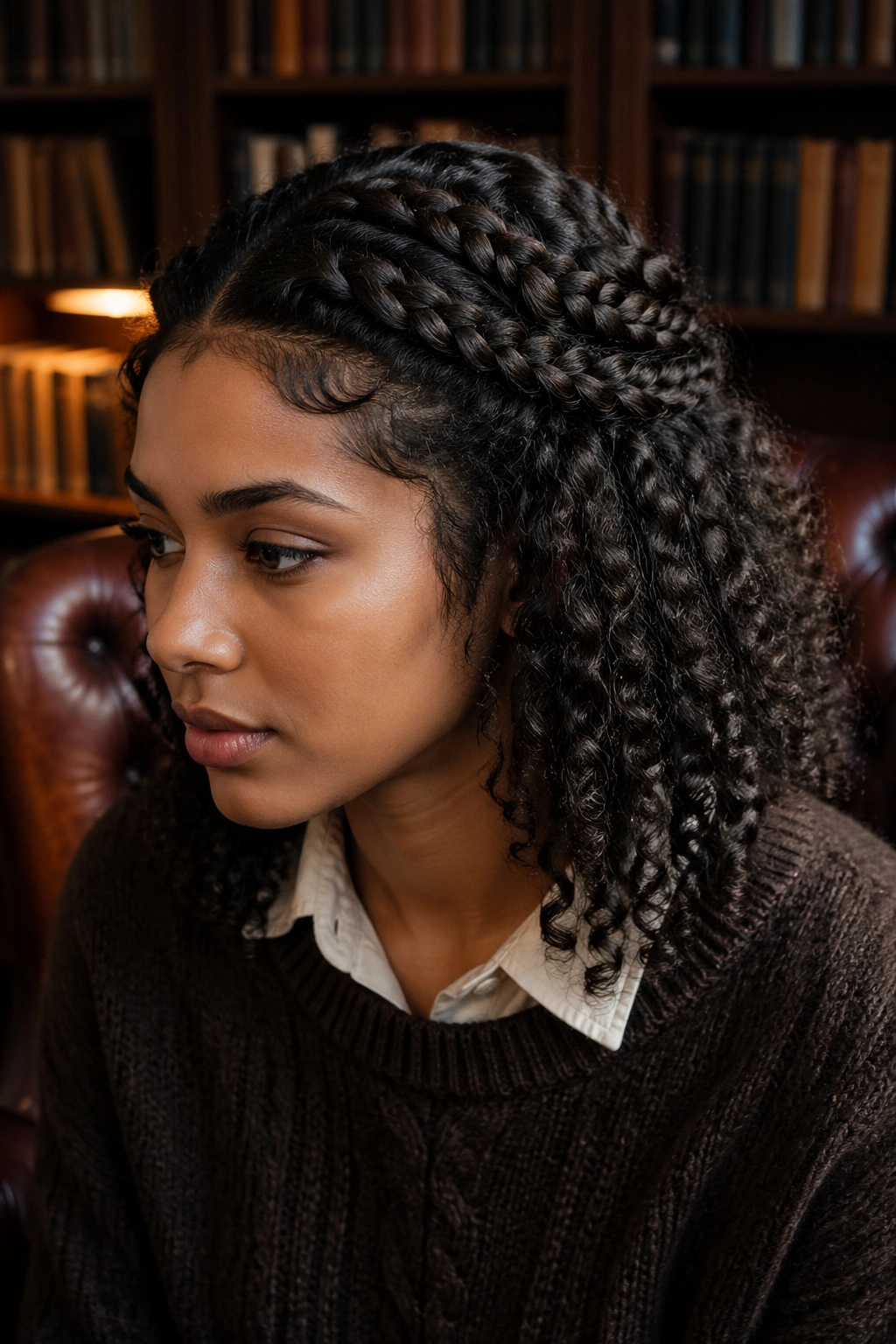
Why does a braided crown feel so right for this aesthetic? Because it puts a clean line across the head while still letting the rest of the hair stay textured and alive. That little bit of structure makes the whole look feel older, quieter, and more deliberate.
The best version on curly hair usually starts with curls that have been stretched a bit — not blown out straight, just softened enough that the braid doesn’t puff out before you finish it. A diffuser on low heat, a twist-out, or even overnight braiding can give you that extra length. Then take two sections from each temple and braid them back toward the nape, pinning the ends under the rest of the hair.
How to Wear It
If your curls are tighter, keep the braid narrow so it doesn’t overpower the style. If your hair is longer, let the braid travel farther back and tuck it into a low bun. Either way, the front should stay clean while the rest keeps its body.
This one looks best with a dark sweater, a collared shirt, or a coat with a strong neckline. It has a very “late afternoon in a quiet library” kind of energy. Which sounds dramatic, sure, but the style really does carry that mood.
Don’t over-braid the hair. One compact crown is enough.
5. Claw-Clip French Twist
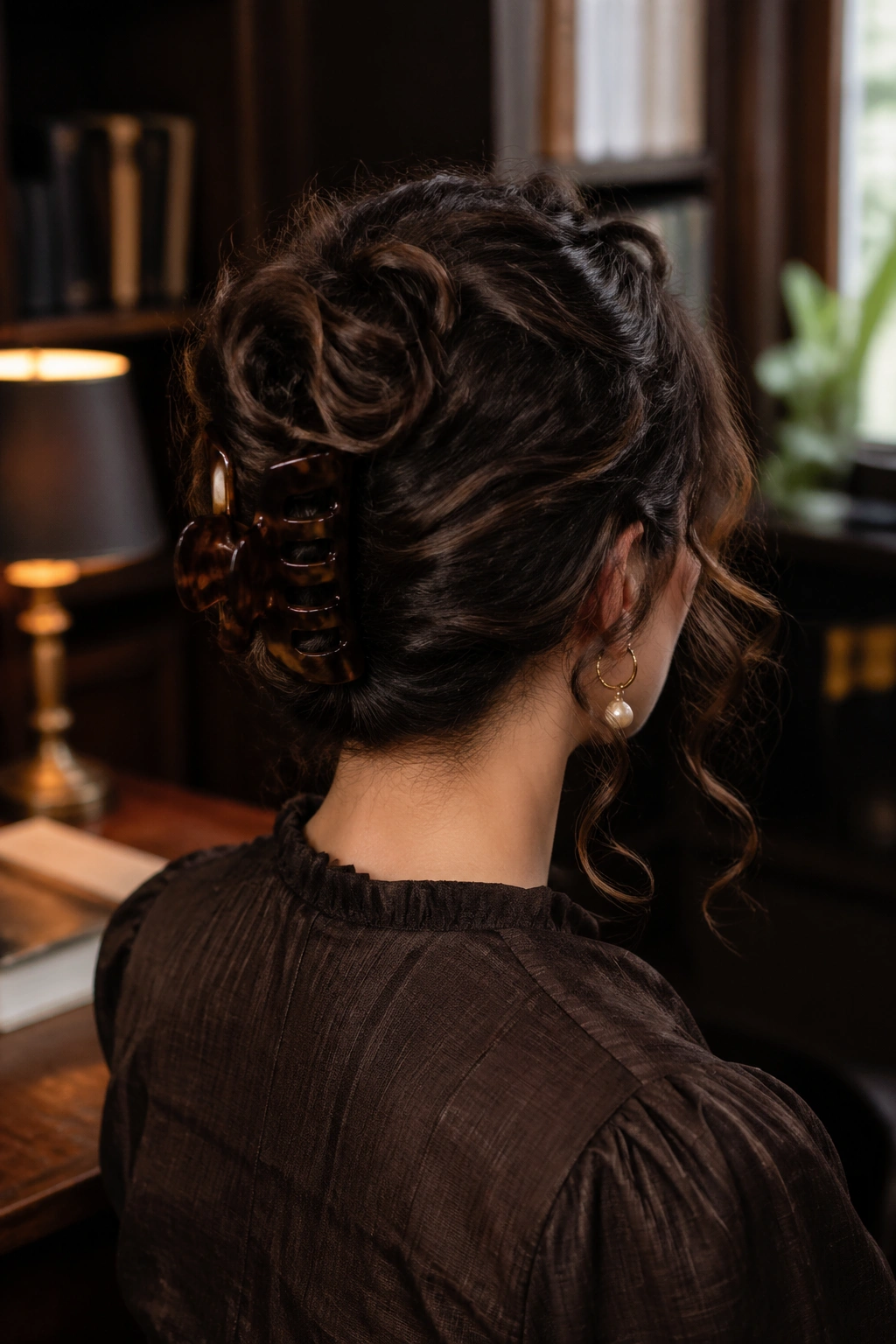
The claw clip earns its keep here. Not the oversized, flimsy kind that slips out by lunch. A sturdier clip with teeth that actually grip curls can hold a French twist in place and still let some texture spill at the edges, which is exactly where this style gets interesting.
Start by gathering the hair at the back and twisting upward so the length folds over itself. The point is not perfection. You want the twist to look secure, but not glued to the head. On curly hair, a few tendrils will naturally escape near the temples and the nape, and that is a feature, not a flaw. If every strand is trapped, the style loses its character.
Use the clip low, near the occipital bone, where the head curves in slightly. That gives the twist a better anchor. For dense curls, a second smaller clip can help hold the lower fold. I prefer that over stacking pins everywhere, because too many pins start to make the style look overworked.
The nice thing about this one is the shape. It gives you height at the back without stretching your curls into something unfamiliar. It’s tidy. It’s practical. And it has that slightly serious, all-black-book-covers feeling that makes it fit the aesthetic so well.
6. Low Puff With a Center Part
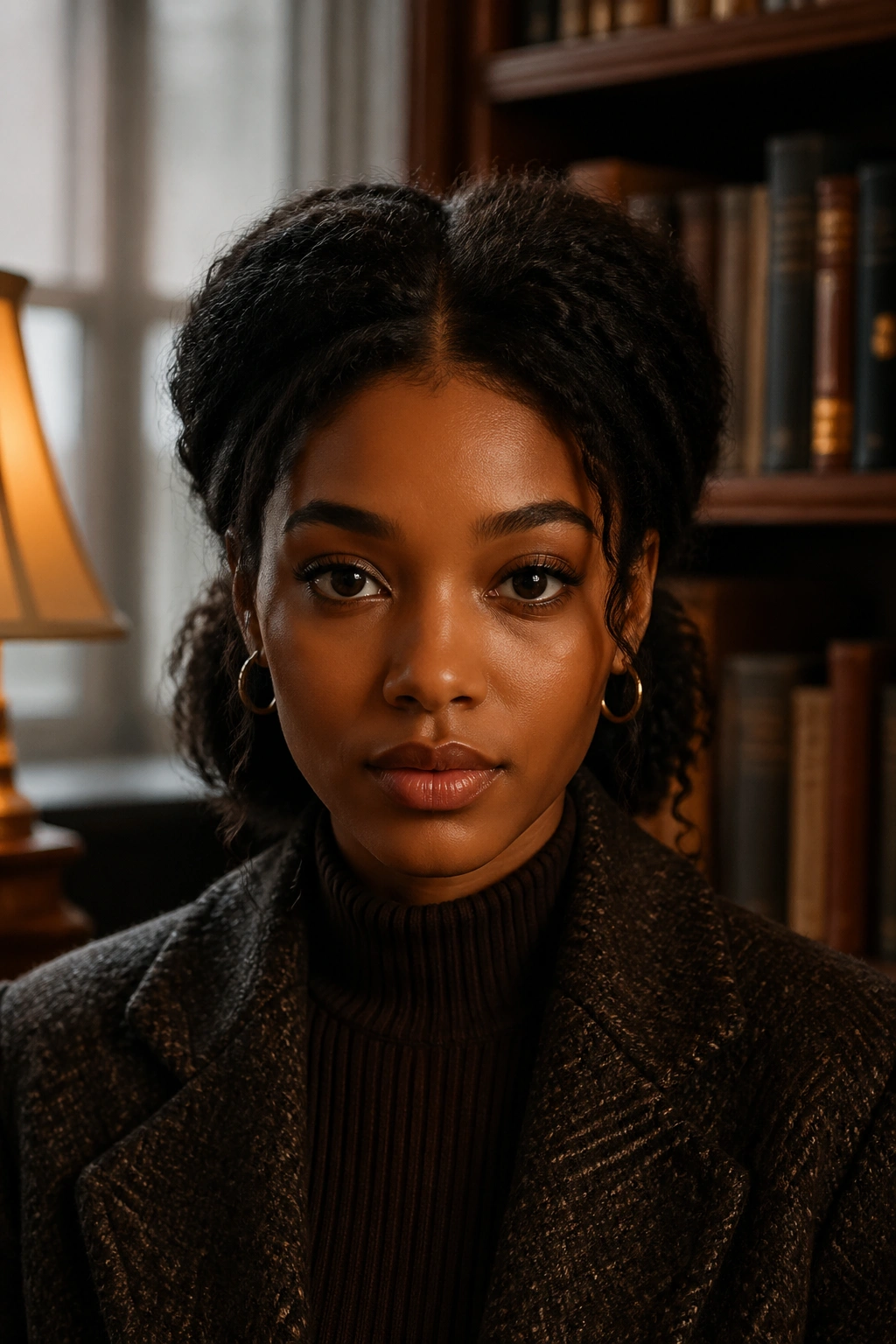
Unlike a sleek bun, this style keeps the volume where you actually want it — at the crown and in the body of the puff. The center part adds order. The puff brings the drama. That combination is far more interesting than forcing every curl flat.
This works especially well if your hair has a lot of density or a tighter curl pattern that naturally builds upward. Smooth the front a little with a soft brush or your fingertips, then gather the rest low and leave the puff rounded instead of compressed. You want shape, not a tiny knot pretending to be a bun.
The center part matters more than people think. It creates symmetry, and symmetry pairs well with the heavy, tailored feel of dark academia clothes. A puff with a center part looks especially good with a buttoned cardigan, a collared blouse, or anything with a high neckline. The hair becomes part of the outfit instead of sitting on top of it.
If your roots get frizzy fast, a little edge control can help, but use it sparingly. Too much and the style starts looking stiff around the face, which kills the softness that makes curls work here.
Strong shape. Soft edges. That’s the sweet spot.
7. Loose Side Braid With Ribbon Ties
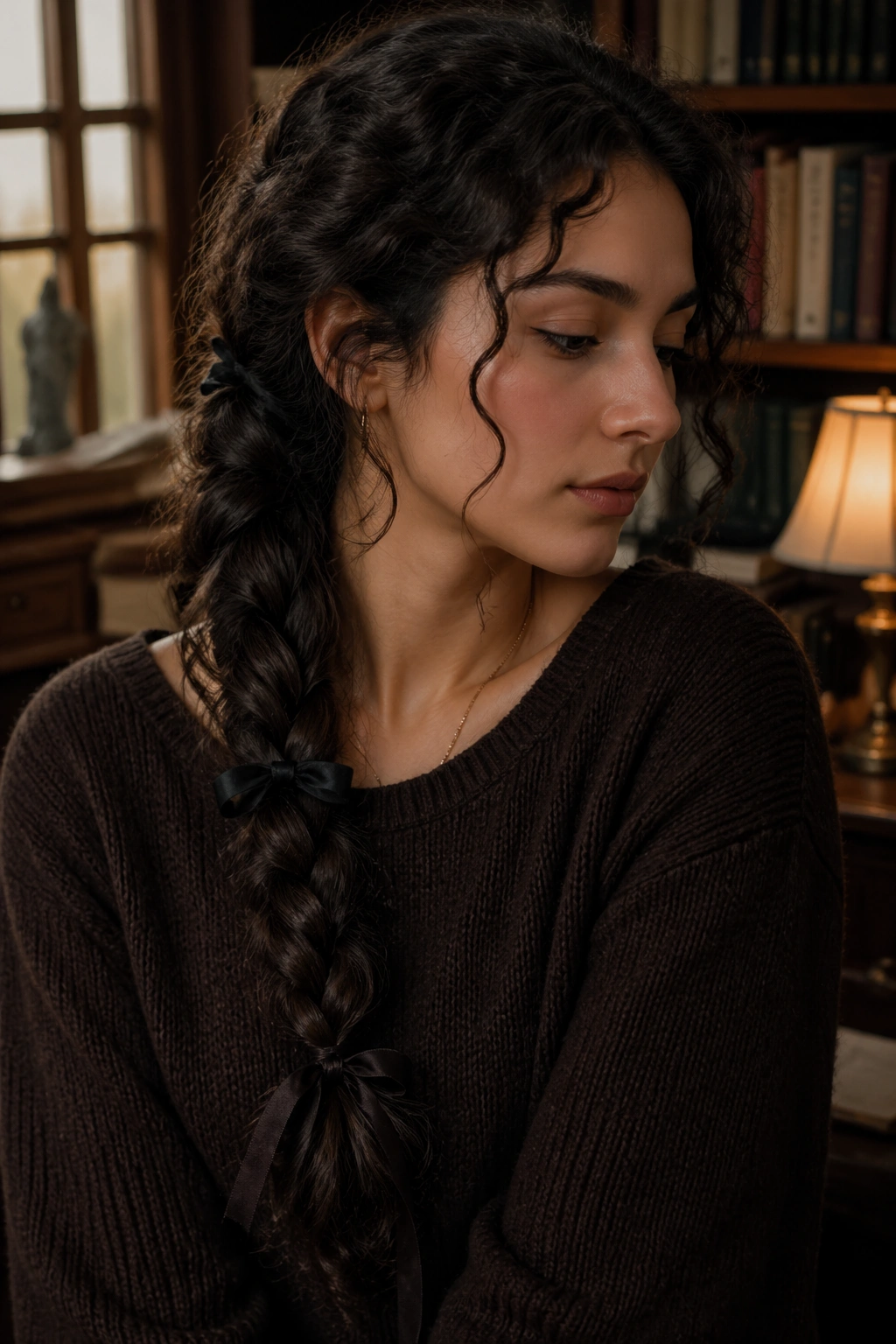
Some curls don’t want to be pinned into submission. Fine. Let them braid. A loose side braid gives you that slightly untidy, literary feel without making the hair look messy in a careless way.
The braid should start just behind one ear and hang over one shoulder. Keep the tension soft so the curls can widen inside the braid instead of getting crushed flat. Then tie a narrow ribbon at the end — or, if you want a little more visual weight, add one ribbon near the middle and one at the end. That small detail changes the whole effect.
Where the Ribbon Goes
- Use a ribbon about 1/4 to 1/2 inch wide for medium hair.
- Choose a longer length if your braid falls past the chest.
- Knot it once, then let the ends trail.
- Stick to darker shades or muted neutrals so the braid stays in the same visual lane as the rest of the look.
This style is especially good for day-two curls, because the braid can absorb a little frizz and still look intentional. It also works when you want your hair off your neck but don’t want a full updo. Practical. Not boring.
I like this one with an oversized coat or a wool scarf. It feels lived in, which is half the point.
8. Twisted Low Knot With a Soft Crown
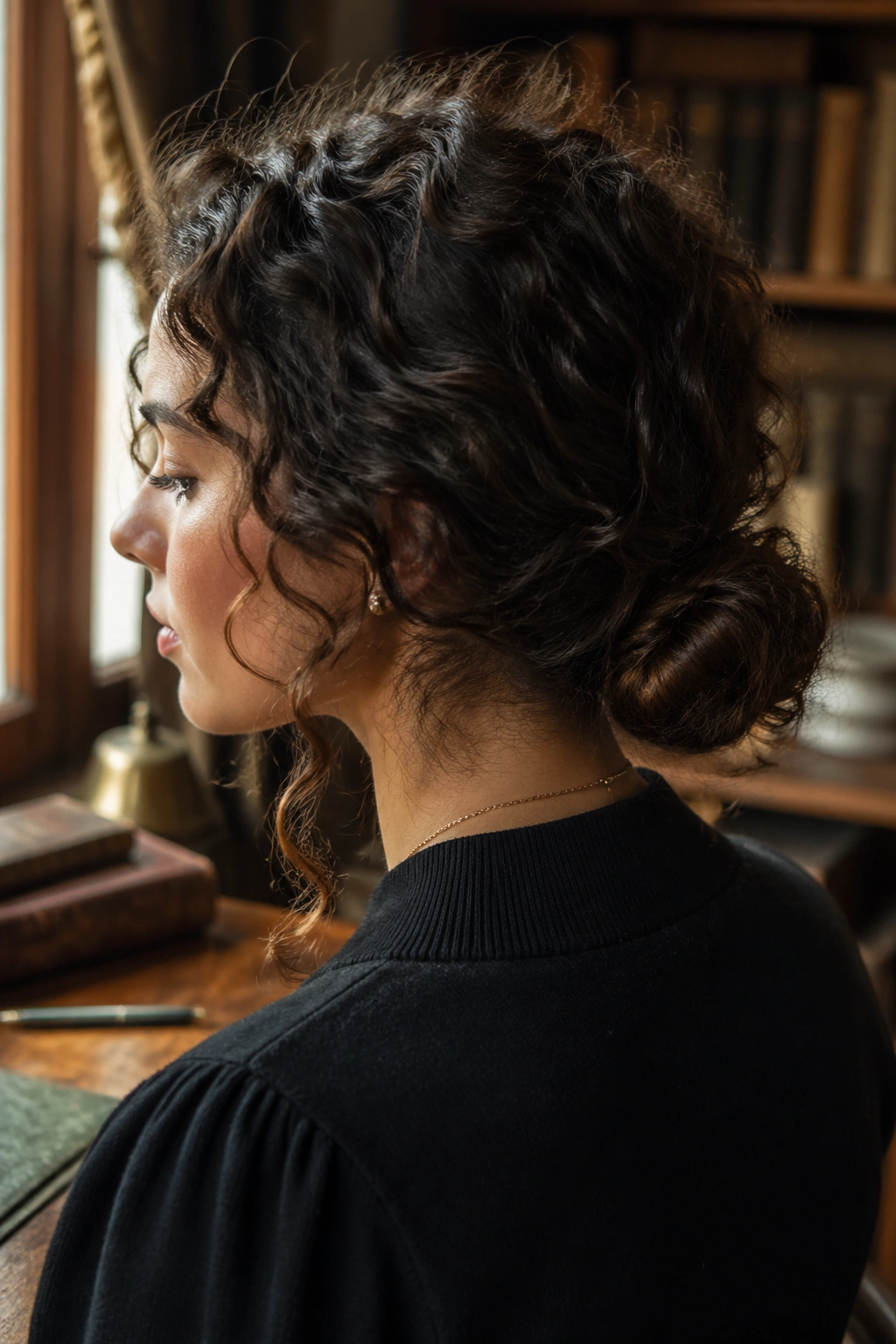
A low knot can go very wrong on curly hair if you squeeze it flat. The better version keeps the root area calm while letting the actual knot stay textured and a little imperfect. That little contradiction is what makes it fit the aesthetic.
Start by smoothing just the top section — no need to attack the whole head. Pull the curls into a low ponytail, twist the length, and wrap it once around itself. Secure with pins so the knot sits just above the nape. Don’t yank the ends in too tight. If the knot feels too neat, tug a few curls free around the crown and temples until it looks softer.
This style works well with outfits that already have a lot going on around the neck, like a turtleneck or a collared coat. The hair stays out of the way, but it doesn’t disappear. And that matters. If the whole head is too flat, the curls stop doing their job.
What to Watch For
- Keep the knot low, not centered.
- Leave a little lift at the crown.
- Let a few ends peek out.
- Use pins that match your hair color if you want the finish to feel quieter.
One small note: this style looks better after a little time has passed. Freshly pinned, it can seem stiff. Ten minutes later, it loosens up and settles into place.
9. Twin Micro Braids Into Loose Lengths
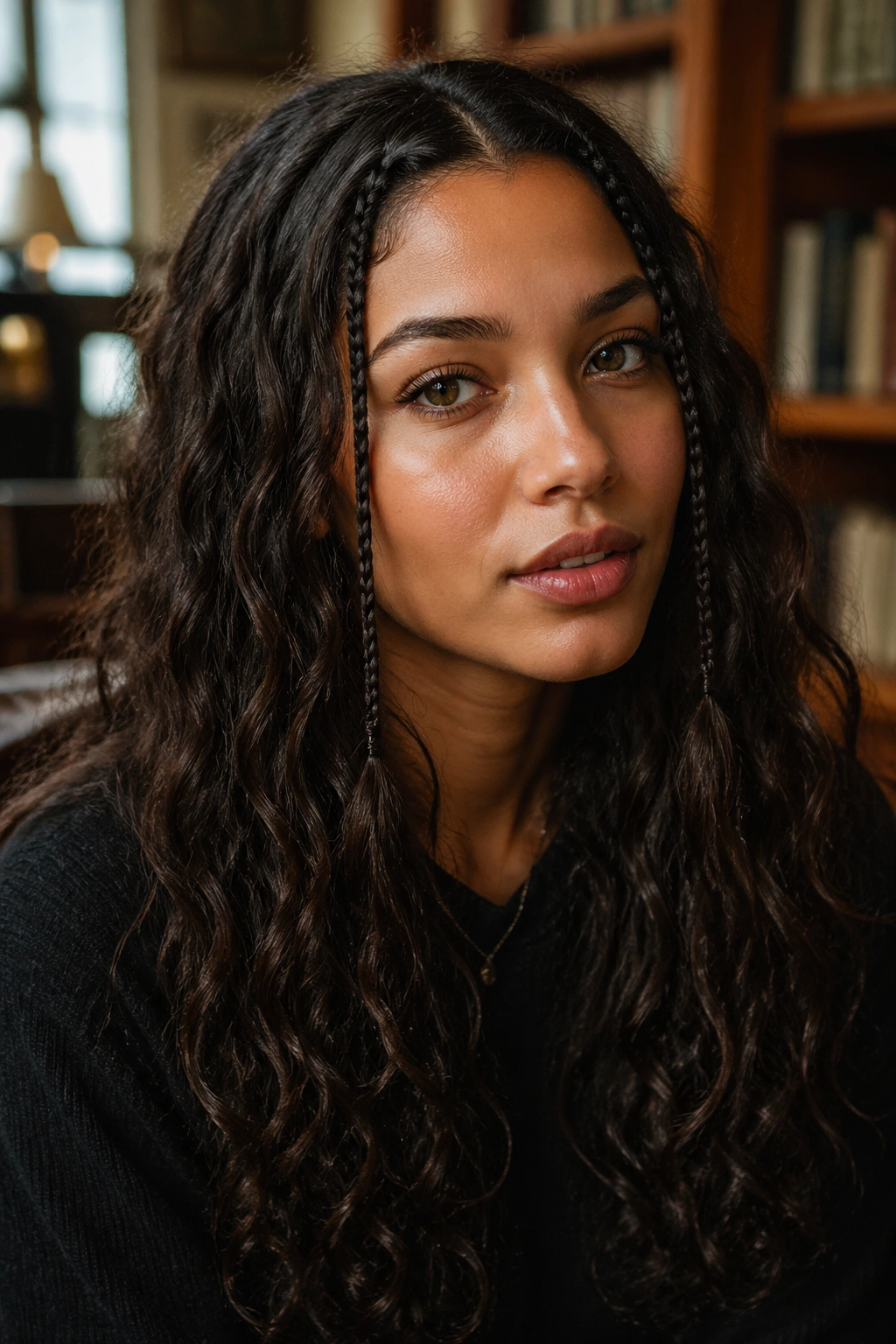
Twin micro braids can go childish fast if you make them too thick or too perfect. Keep them narrow. Keep them close to the hairline. Then let the rest of the curls fall loose, and the whole thing shifts into something sharper and more editorial.
Why does this work for dark academia? Because it gives the face a framed, studied look without taking away the texture underneath. The braids act almost like underlining in a book — small, precise, and easy to miss if you aren’t looking. That’s the appeal.
How to Keep It From Looking Too Sweet
Braid only a slim section from each temple, then stop around jaw level or just below the cheekbone. Tie off with tiny elastics or tuck the ends discreetly under the loose curls. If your hair is very thick, start the braid with a small twist first so the braid doesn’t balloon out.
This style suits shoulder-length curls and longer hair, though it can work on shorter cuts if the front pieces are long enough to braid. It also works well when you want a little detail but not a full updo. Quiet, but not plain.
And honestly, it looks best when the rest of the hair has some movement. A little frizz is fine. A lot of frizz can make the braids disappear.
10. Pin-Curled Faux Bob
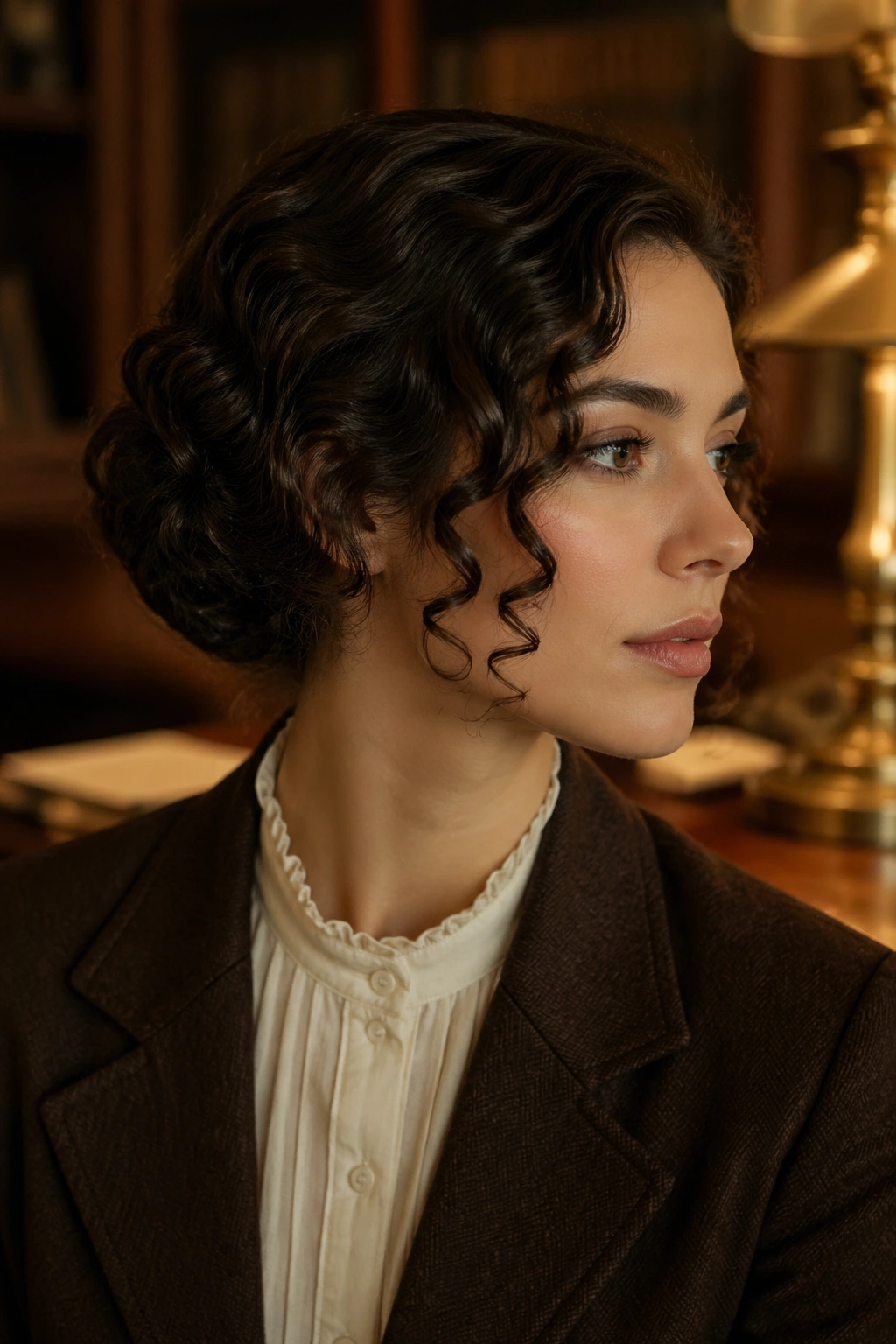
There’s something deliciously old-fashioned about a faux bob, and on curly hair it has a sharper edge because the texture stays visible even when the length is pinned away. It feels a bit like stepping out of a black-and-white portrait, only with better volume.
The trick is to tuck the length under in sections, pinning the ends upward and inward so the hair rests higher on the neck. You do not want a hard, obvious fold. The best faux bob has a soft shape at the back and just enough looseness around the face that people can still see the curl pattern. If your hair is long, work in smaller sections. Big handfuls tend to make the inside bulge.
A side part helps here, especially if you leave one front curl slightly longer than the other. That asymmetry keeps the style from feeling too costume-like. Add a few discreet pins, maybe one decorative clip if you want a hint of shine, and stop before it gets too precious.
This is the kind of style that pairs well with a fitted jacket or a button-up blouse because it draws attention to the neck and collar line. It also holds up better on hair that has been lightly stretched first. Fully shrunken curls can be harder to tuck cleanly.
Not the easiest look. Worth the effort when you want something with character.
11. Wrapped Low Ponytail With a Bookish Ribbon
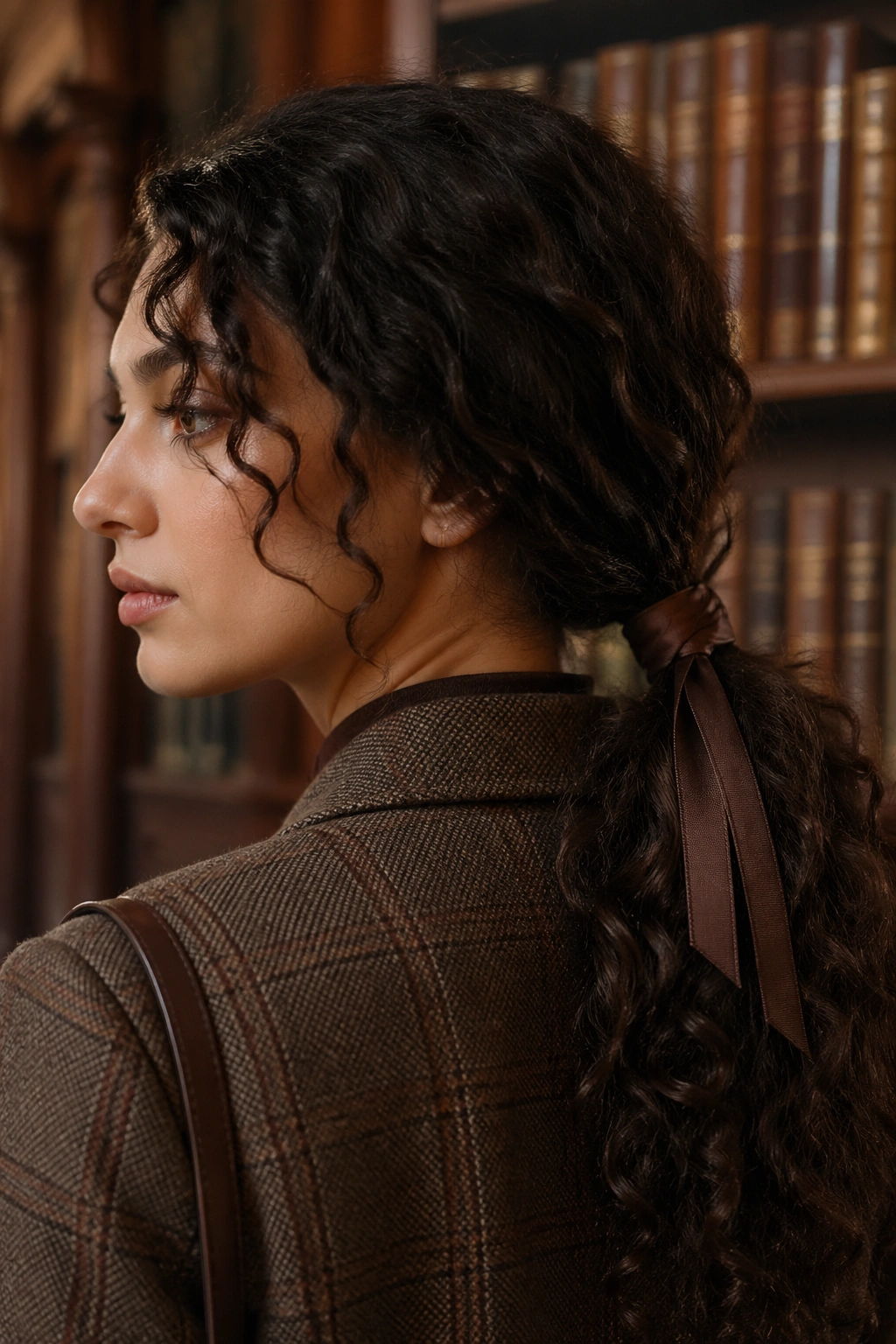
A ponytail can absolutely belong in this aesthetic, provided you stop treating it like gym hair. The difference is in the base, the wrap, and the way the curls fall. A low ponytail with a wrapped ribbon feels composed, almost studious, while still letting the ends hang loose.
Use a soft elastic first, then take a small strip of hair or a narrow ribbon and wrap it around the base until the tie disappears. That detail matters more than people expect. It shifts the style away from casual and into something more deliberate. If your hair is thick, secure the ribbon with a pin underneath so it doesn’t slide.
Let the ponytail sit low and slightly off center if you want a less formal feel. Centered works too, especially with a crisp collar, but the off-center version has more movement. You can also lightly twist the ponytail before tying it if the curls need a little extra direction. Not much. Just enough to keep the shape from looking flat.
This style is one of the easiest to wear all day because it keeps the face open and the curls contained without hiding them. It’s the kind of look you can wear with a blazer, a long coat, or a simple sweater and still feel finished.
Simple. Not basic.
12. Gibson Tuck With Soft Escape Curls
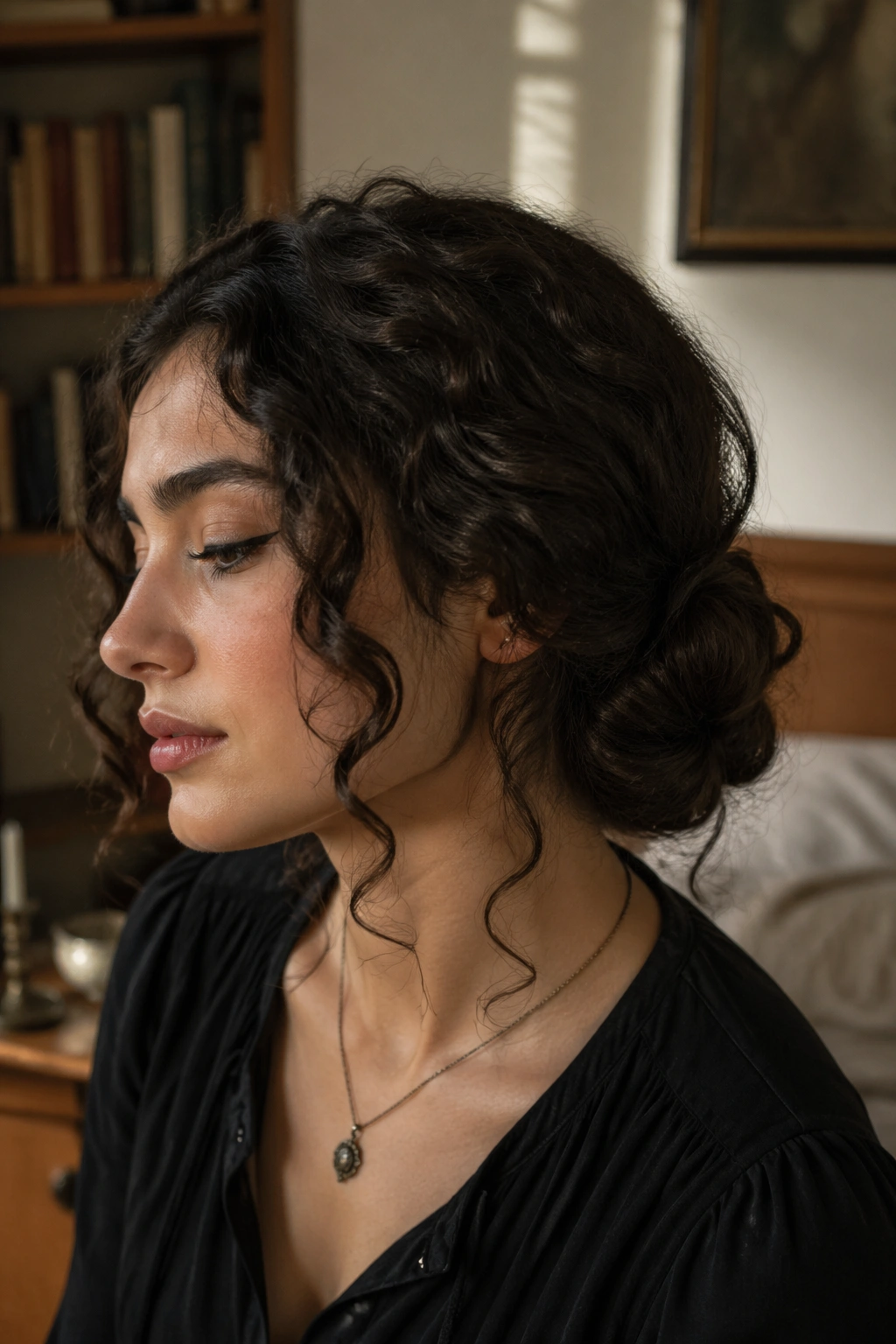
A Gibson tuck sits somewhere between a half-up style and a full updo, which is part of why it works so well for curly hair. It gives you that old-world shape at the back while leaving enough softness around the face to keep the style from feeling severe.
Start by gathering the hair low at the back and creating a pocket above the nape. Tuck the length upward into that fold, then pin it across the seam so the curl pattern still shows at the edges. On curly hair, the tuck should never look sealed shut. A few ringlets can spill out at the sides or near the temples. That little looseness keeps the style human.
This one loves textured hair because it has a natural softness that straight hair often has to fake. If you have tighter curls, stretch the length a little first so the tuck sits cleanly. If your hair is looser, let the ends fan out slightly for volume. Either way, the silhouette stays low and graceful without feeling stiff.
It’s a strong choice for formal dinners, lectures, or any outfit with a high collar and a serious face. Add a single barrette or leave it plain. Either way works.
If you’re choosing only one style from this list, choose the one that leaves your curls some freedom. That’s the part people remember.
