

Curly hair and cheer are a better match than people think. The trick is not flattening the hair into submission. The best cheer hairstyles for curly hair work with the curl pattern you already have, then hold through jumps, stunts, warmups, and the moment when everyone’s trying to look neat at once.
A lot of cheer styles fail for one boring reason: they ask curly hair to behave like straight hair. That usually means too much brushing, too much tension, and not enough support at the roots. The result is a style that looks polished for ten minutes and frizzy by the first chant.
A smarter approach starts with the shape of the curl, not against it. A little leave-in on damp hair, a firm but flexible gel near the hairline, and snag-free elastics do more work than a mountain of hairspray ever will. Tiny details matter here, because the difference between a hairstyle that stays put and one that slides out of place is often just an inch of placement or one tie that’s too tight.
Some styles are fast. Some are better for practice. A few look polished enough for game day without making the scalp feel like it spent the afternoon in a vise. The first one is the easiest place to start, and it’s still one I keep coming back to.
1. High Puff with Sleek Front
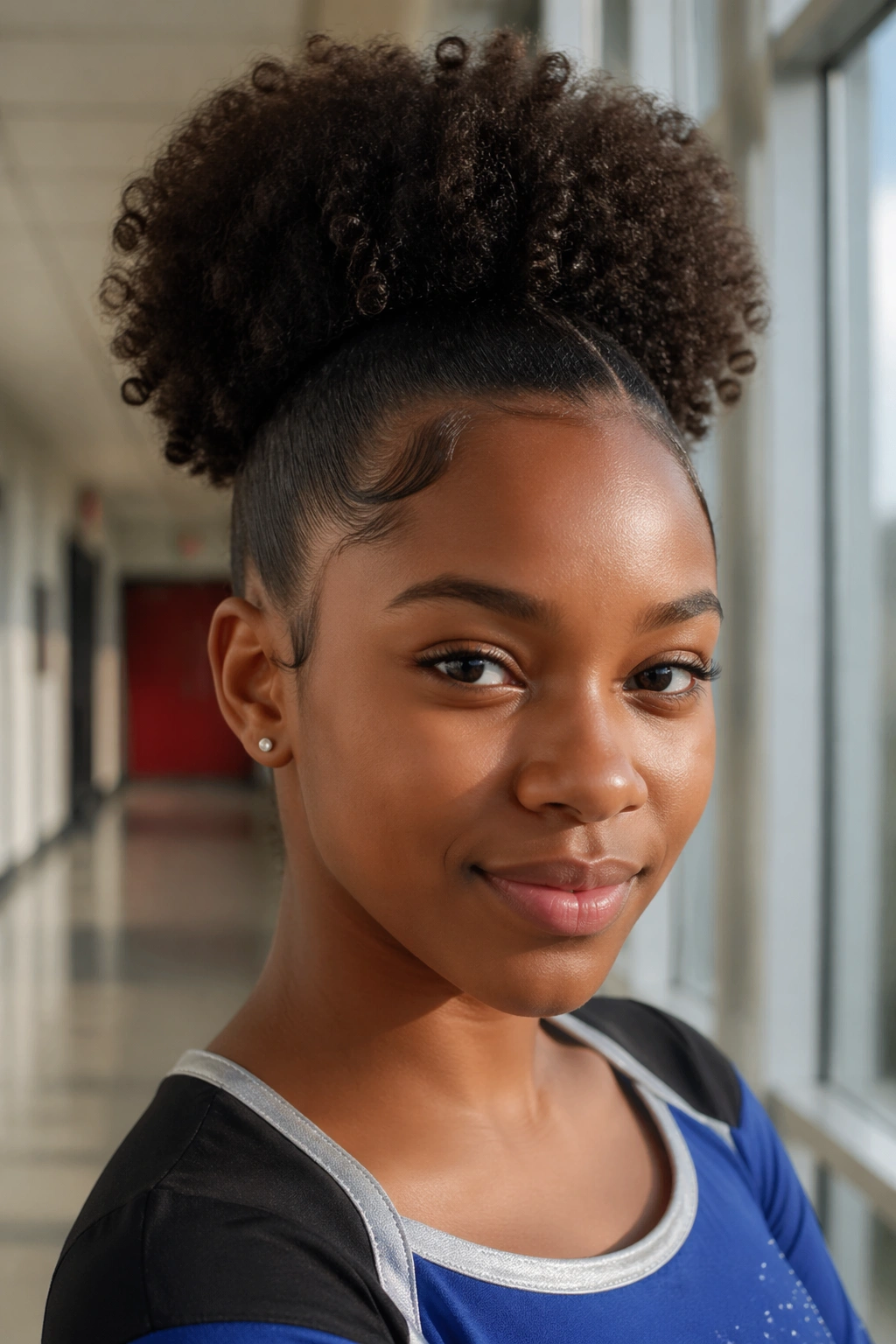
The high puff is the workhorse of curly cheer hair. It gets the curls off the neck, keeps the face open, and still lets the texture show instead of hiding it under a hard shell of product. That matters more than people admit. When the hairline is smooth and the puff sits high, the whole style reads clean from the stands and still feels like real curly hair up close.
Why It Works So Well
A high puff gives you height without forcing every curl into the same shape. That means less breakage, less puffing at the ends, and less drama when you take it down later. If your curls are dense, this style also keeps the weight from dragging the whole look flat by halftime.
How to Build It
Start with damp or lightly misted hair and work a small amount of leave-in conditioner through the front section. Smooth the edges with a soft brush or your fingertips, then gather the hair high at the crown or just above it. Use a satin scrunchie or a covered elastic so the base doesn’t snag.
- Smooth the front with a little gel, not a heavy layer.
- Keep the puff centered or slightly forward for balance.
- Wrap a small curl around the elastic to hide it.
- Use two bobby pins in an X if the puff leans backward.
A lot of people pull too tight here. Don’t. The style needs support, not force. If the hairline feels sore before practice even starts, the pony is too tight.
Small Fixes That Help
If your curls are tight, smooth only the top inch of hair and leave the rest textured. If they’re looser, a bit of mousse can help the puff hold its shape. Either way, this style is fast, solid, and easy to dress up with a bow.
2. Curly High Ponytail with a Braided Base
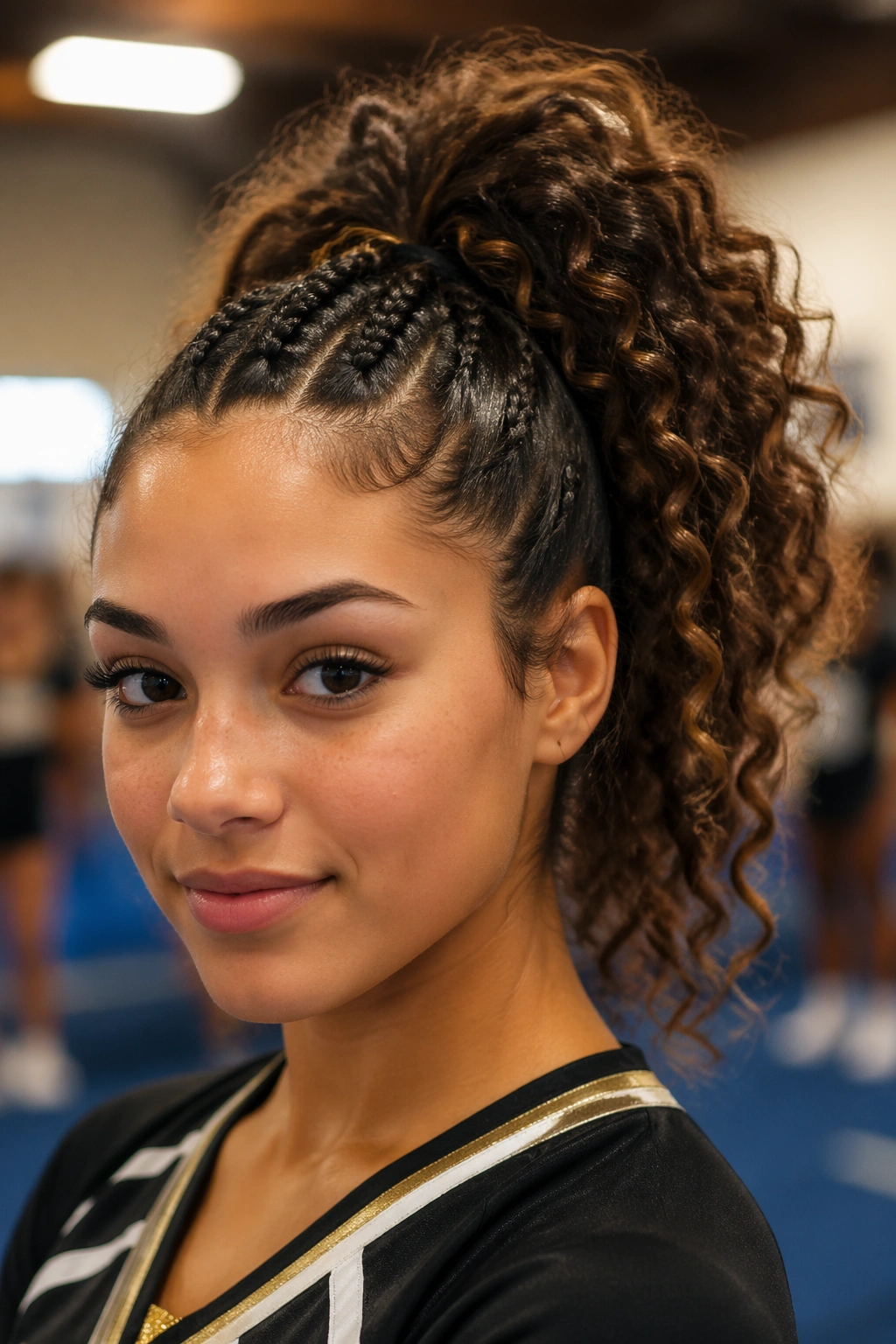
Need a ponytail that still looks alive after warmups? This is the one. A curly high ponytail gives you swing, height, and movement, while a braided base keeps the front from collapsing the second the routine gets busy. It’s one of those styles that looks simple on purpose, which is usually a good thing.
The key is placement. Set the ponytail at the crown or just above it so the curls fall in a clean cascade instead of hanging low and heavy. If your hair is thick, split the top section into two mini sections before gathering it; that gives the base more grip and keeps the pony from sagging.
A small braid right at the front hairline, or a single braid wrapped around the pony base, adds a little structure without making the style feel stiff. I like this look for long curls because it keeps the shape obvious. The bounce stays. The tail moves. The style does not fight the hair.
One smart move: secure the pony with a first elastic, then go back with a second one an inch lower if the hair is heavy. That tiny bit of backup keeps the base from slipping during jumps and turns. If the ends frizz, scrunch in a touch of curl cream after the pony is set, not before.
3. Braided Pigtails with Curly Ends
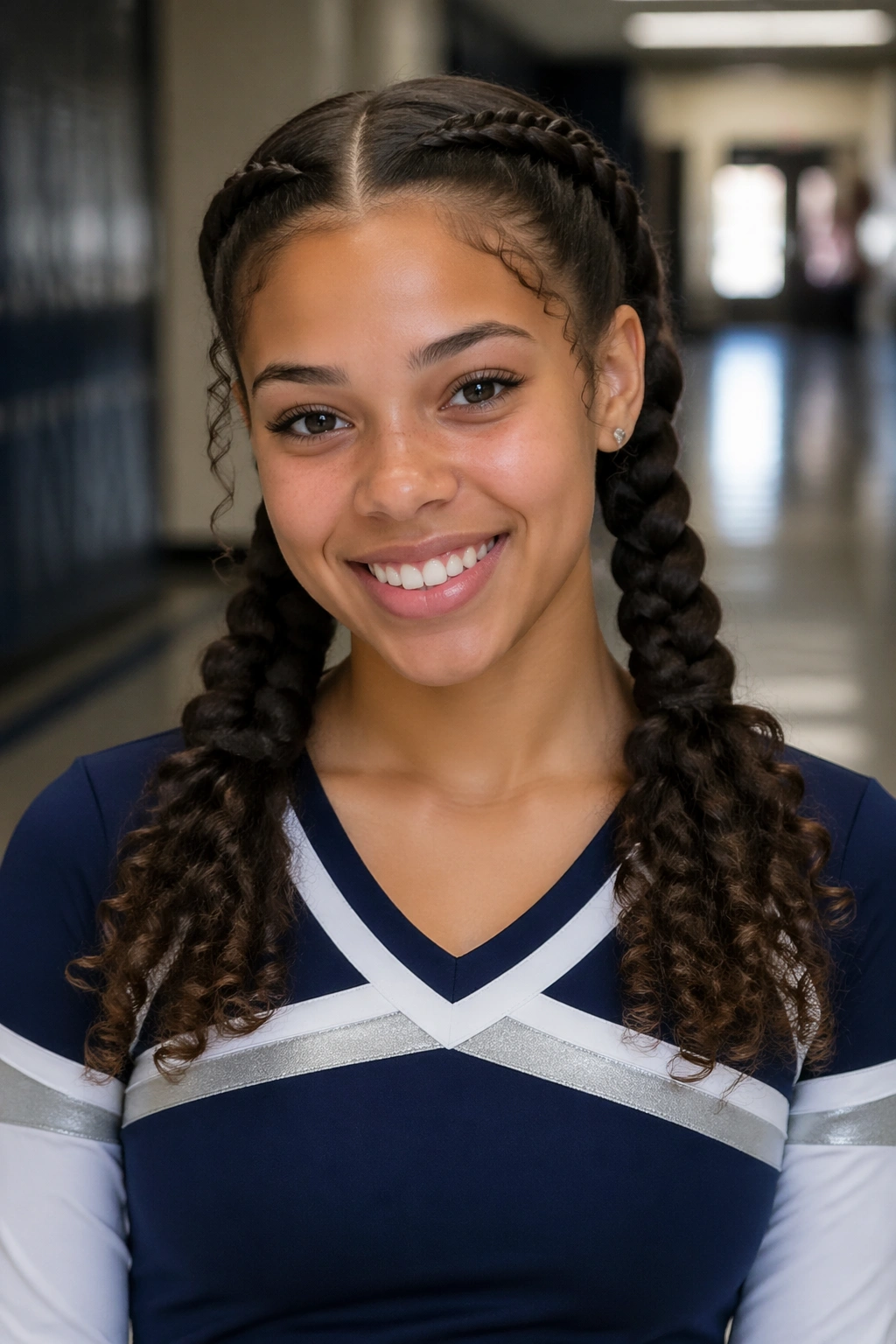
For younger cheerleaders, or anyone who hates hair on the neck, braided pigtails with curly ends solve a real problem. They split the weight evenly, keep the front tidy, and still leave room for the curls to show off at the ends. It’s practical first. Cute second. That order matters.
Where to Start the Braids
Make a clean center part and section the hair into two equal halves. Braid each side from the front hairline down to just below the ear, then stop and let the rest fall into curls. If the hair is layered, keep the braid slightly tighter at the top so shorter pieces don’t slip out.
Why Cheer Hair Loves This Style
The pigtails stay balanced, so one side does not drag more than the other. That helps during jumps, quick head turns, and anything that makes loose hair swing into the face. It also makes the bow placement easy if your team uses one, because the center part stays visible and the style looks symmetrical from the front.
- Use small, clear elastics at the braid ends.
- Smooth the roots with a light gel before braiding.
- Keep the curly ends moisturized so they don’t puff up too fast.
- Place bows just above the braid ends if the team wants a polished finish.
This is one of the few styles that works well on hair that is too short for a full ponytail but too thick to just pin back. The curls do the rest of the work.
4. Half-Up Bow Style
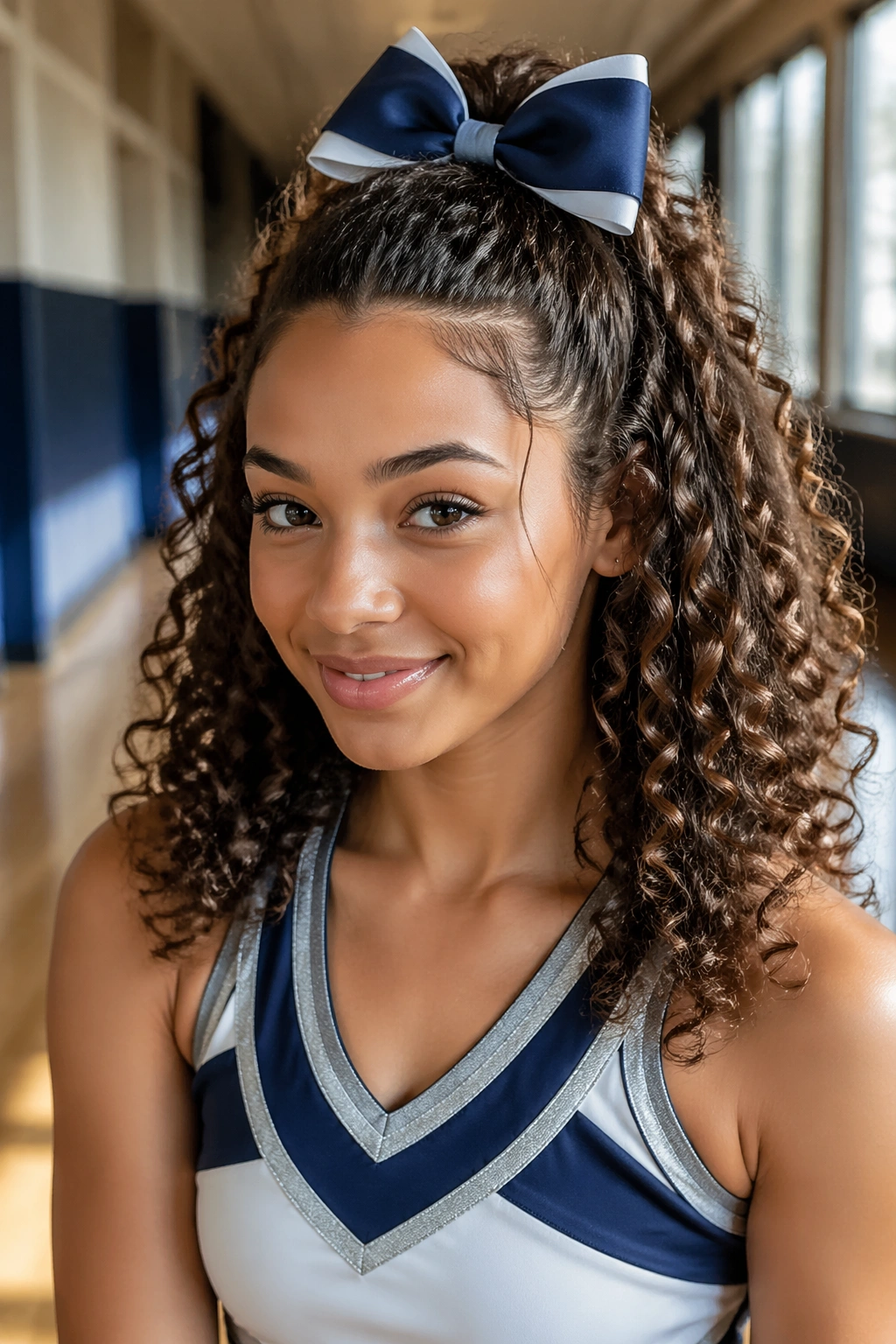
Half-up styles get called casual, and that sells them short. A half-up bow style can look sharp, stay secure, and keep the curls visible in a way a full ponytail sometimes cannot. It’s a good choice when the team wants a bow but the hair still needs to move a little.
The smartest version starts with a horseshoe section from temple to temple. Smooth just the top layer, not the whole head, and gather it into a small pony or puff at the crown. That leaves the lower curls free, which is exactly why the style works. The eye goes up to the bow, but the hair still has body underneath.
A bow sits best when it’s pinned over the elastic with two bobby pins crossed underneath. If the hair is thick, use a small clear elastic first, then anchor the ribbon on top. That gives the bow a cleaner line and stops it from twisting sideways.
- Best for medium-length curls and layered cuts.
- Good on days when full updos feel too strict.
- Works well with one statement bow or two smaller ribbons.
- Needs a little edge smoothing at the front, not full helmet-level hold.
This is one of those styles that looks softer than it is. Done well, it holds plenty of structure.
5. Double Space Buns
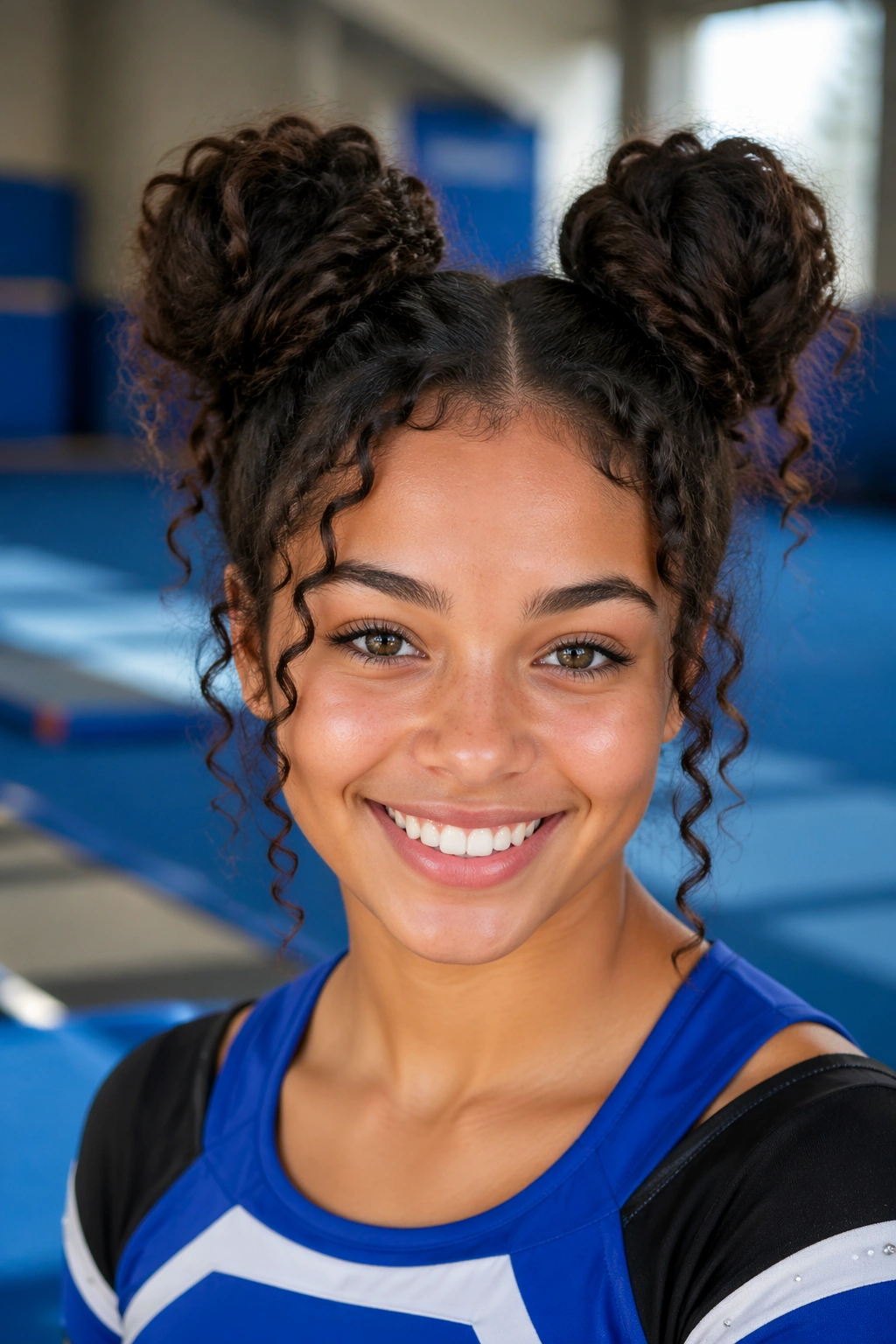
Space buns have a little mischief in them. On curly hair, though, they stop looking playful in a kid’s-section way and start looking crisp, energetic, and oddly polished. Double space buns are a strong choice for medium-length curls that need to stay off the neck but still have some shape.
Start with a center part and make two high puffs, one on each side. Twist each section loosely before wrapping it into a bun so the curls keep some texture instead of turning into flat knots. If your hair is long, leave the ends peeking out a little; that gives the buns a fuller, more lived-in look.
The buns should sit high enough to be seen from the front but not so high that they wobble. I usually think of them as sitting just above the ears and a little back from the hairline. That placement keeps the style from feeling cartoonish and helps the headgear, if there is any, sit better.
One short note: this style can tug if the part is too sharp or the buns are too tight. Keep the base secure and the twist relaxed. That balance is the whole trick.
6. French Braids into Loose Curls
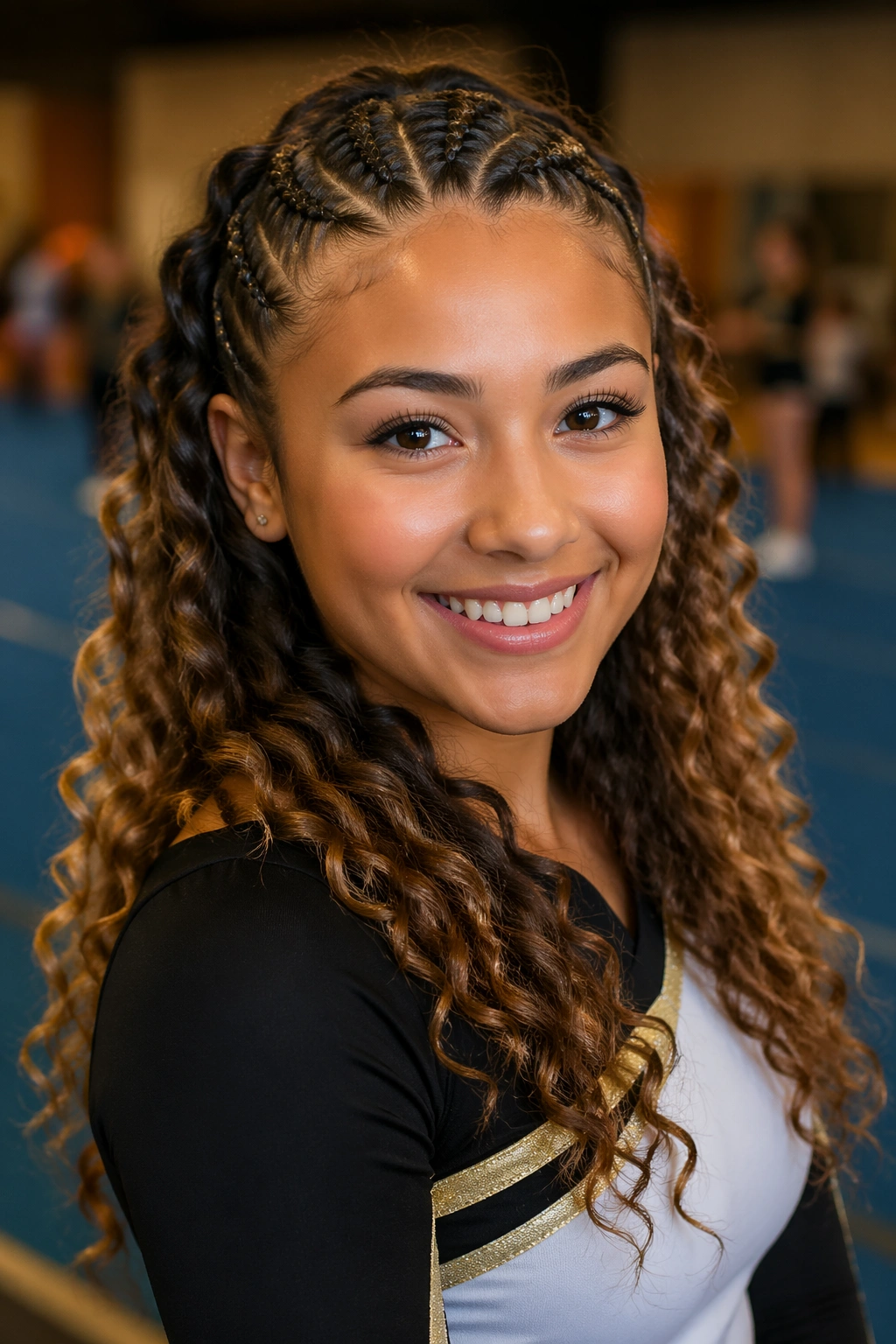
Picture a practice day with wind, a full warm-up, and a coach who wants every strand tucked away. French braids into loose curls are what I reach for there. They keep the front under control from the first count, then let the curls show at the ends instead of disappearing completely.
A clean center part makes the style look intentional. Braid each side from the hairline back toward the nape, feeding in small sections as you go. If you want a softer look, stop the braid around the middle of the head and let the rest fall into curls. If you want more hold, braid all the way down and tie off close to the ends.
What Makes It Hold Better
Braiding on slightly damp hair gives the sections more grip. A touch of gel on the part line helps, too, but don’t overload the strands. Too much product makes the braid heavy and the curls sticky, which is a bad trade.
- Use a rat-tail comb for a clean part.
- Keep the braid tension even from top to bottom.
- Secure the ends with small clear elastics.
- Scrunch the loose curls after the braids are in place.
This style is especially good when the front pieces are always the first to fall into the eyes. It keeps them where they belong without flattening the whole head.
7. Cornrows into High Puff
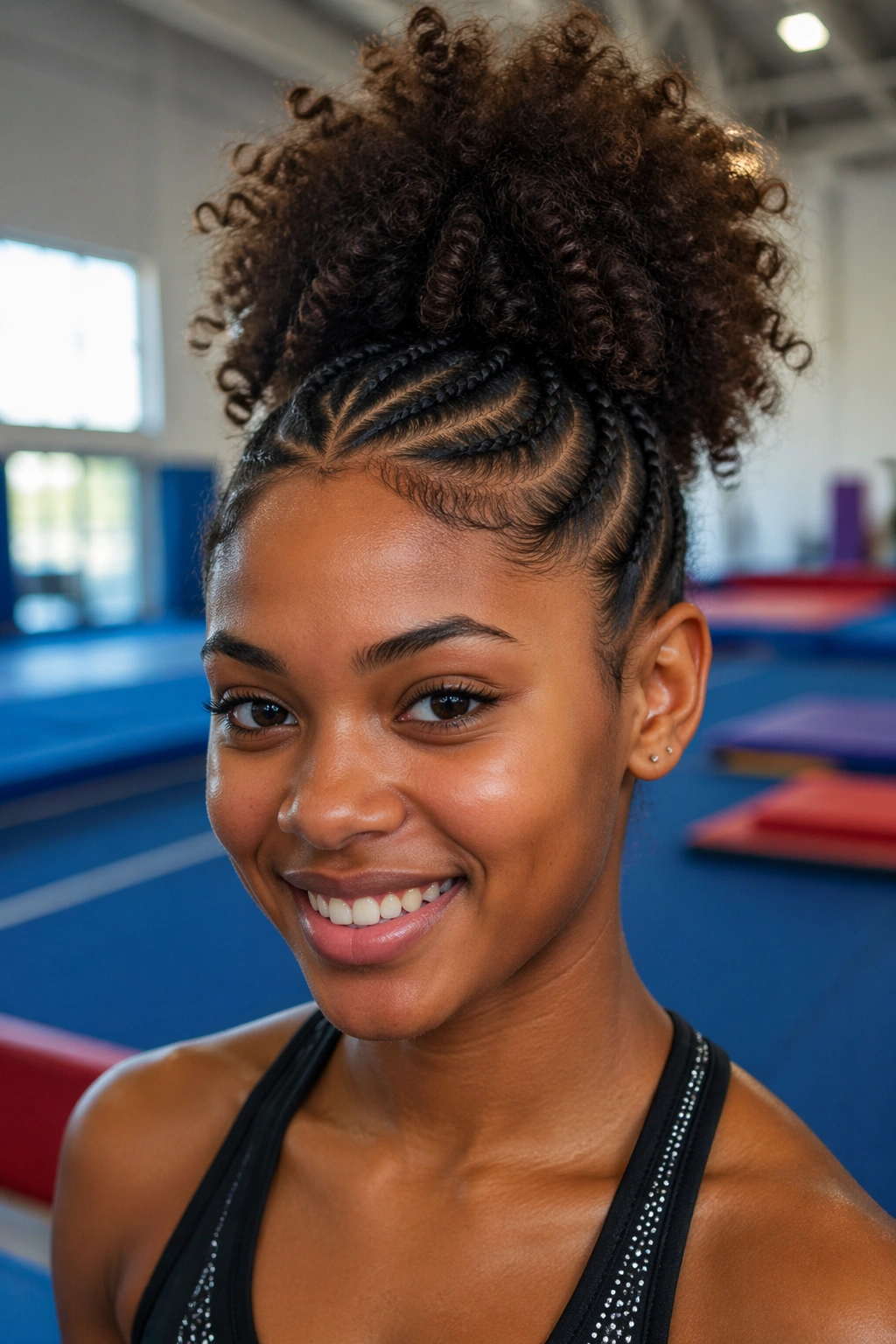
Dense curls usually look best when the scalp gets the first say. Cornrows into a high puff give you that kind of control. The braids lock the front and sides close to the head, while the puff keeps the crown full and lifted. It is a strong look, and a practical one.
This style takes more time than a simple ponytail, so it makes sense when you want something that will stay steady through a long practice or a full performance. The cornrows do not need to be tiny to work well. In fact, for cheer, medium-sized rows often look cleaner and are faster to do. A few straight-back braids can make the style feel crisp without turning it into a salon project.
The puff sits best when the rows stop at the crown and the remaining hair is gathered high with a satin scrunchie. If the puff feels lopsided, use your fingers to push the base upward before tightening the elastic. That tiny lift changes the whole shape.
A small bow at the back of the puff can look better than one sitting over the rows, because it leaves the braiding visible. And yes, the style needs a little scalp care afterward. Take it down gently. The braids should feel firm, not painful.
8. Bubble Ponytail with Curly Sections
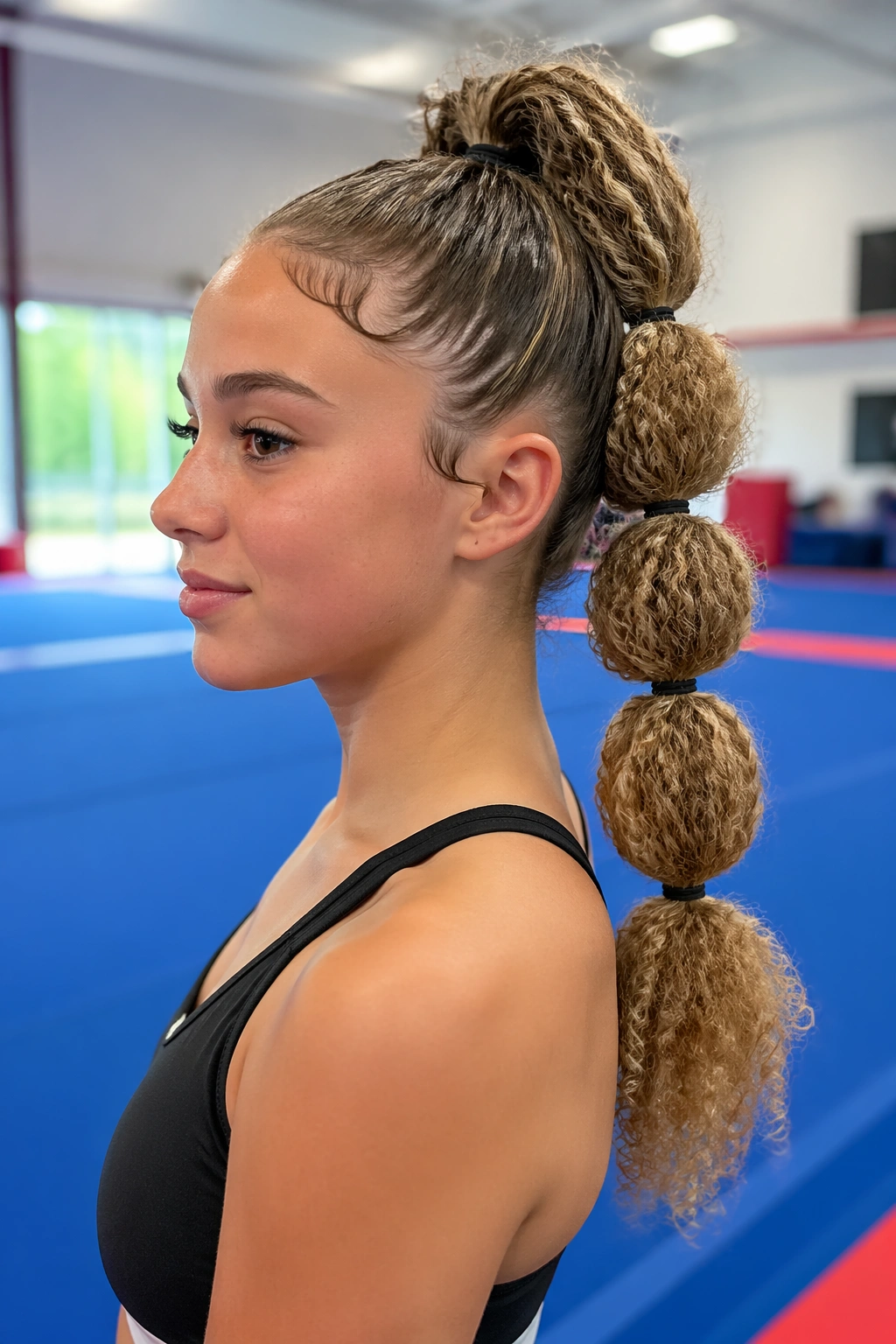
Want something structured without ironing the life out of the hair? A bubble ponytail is a good answer. On curly hair, it looks even better because the sections keep their own shape and the bubbles feel fuller than they do on straight hair. It’s one of the few styles that makes volume part of the design instead of a problem to solve.
Start with a high or mid ponytail and secure it with a strong elastic. Then add more elastics every 2 to 3 inches down the length, gently puffing each section into a rounded bubble. Don’t tug so hard that the curl pattern disappears. You want shape, not flatness.
How to Space the Bubbles
Long hair can handle five or six sections. Shoulder-length hair usually looks better with three or four. If the tail is especially thick, keep the spaces a little shorter so the bubbles stay even.
- Mist each section lightly before shaping it.
- Use snag-free elastics so curls do not break.
- Pinch the sides of each bubble outward, not downward.
- Add narrow ribbon between sections if the team colors call for it.
This style looks polished from a distance and holds up well when the ponytail is heavy. It also gives you a little visual interest without asking for complicated braiding.
9. Twisted Crown Half-Up
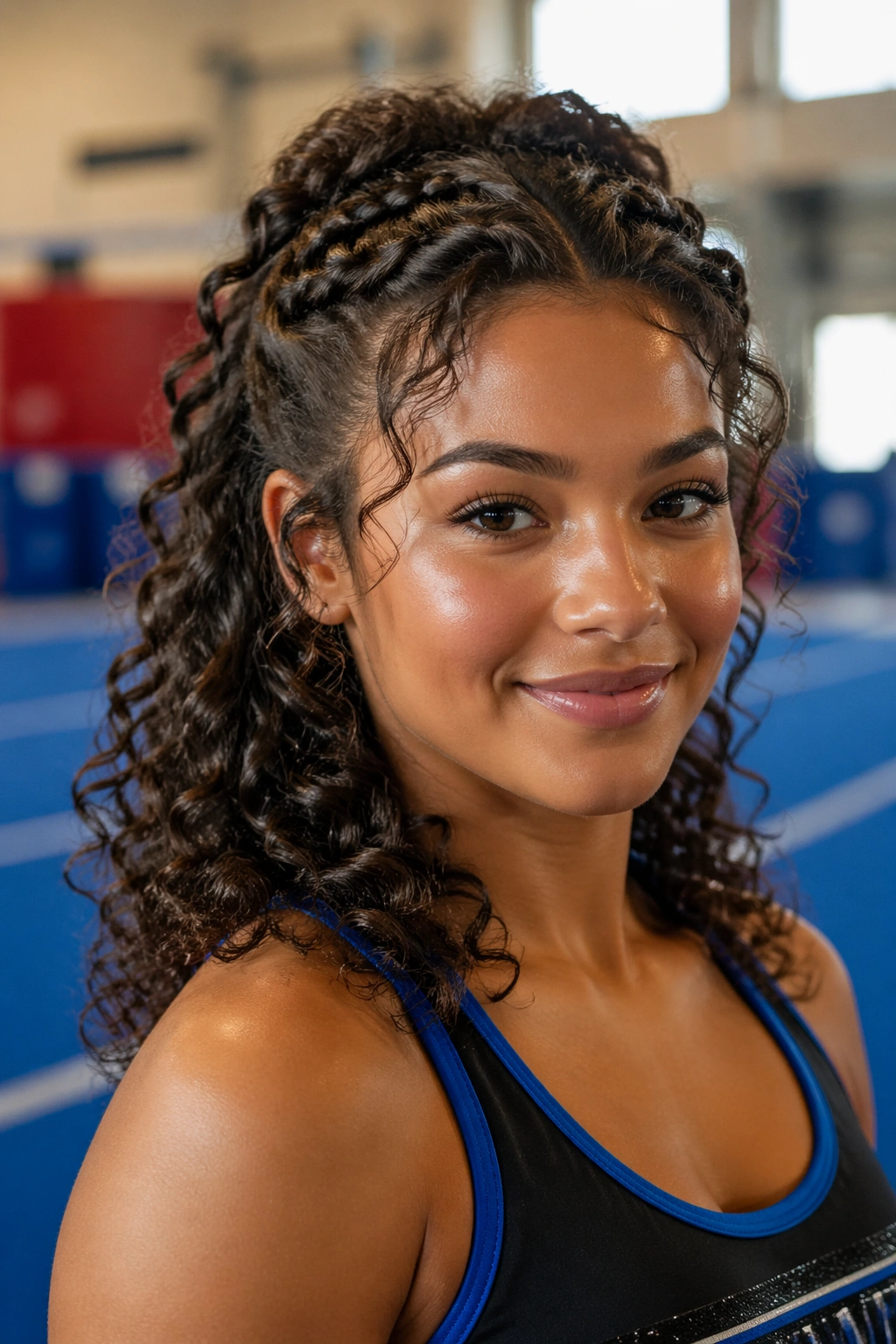
Twists are underrated. A twisted crown half-up style proves it. Unlike a braid, a twist does not compress the curl pattern as much, so the front still has movement and softness. That makes it a smart choice for curls that frizz fast or lose shape when they get overhandled.
Take a section from each side of the face, twist it back toward the crown, and pin the two pieces together under the top layer of hair. Leave the rest of the curls loose. If you want the style to feel more secure, gather a small middle section at the back and pin the twists into that instead of just crossing them.
This look is especially useful when the front layers are short. Twists catch the pieces that would otherwise fall forward, but they do it without making the style look too stiff. They also sit nicely under a bow if your team uses one.
Unlike a braid, a twist gives you a softer line along the sides of the face. That can be a relief if the rest of the uniform is already sharp and structured. A few hidden pins are usually enough here. Stack them in an X if the hair is slippery.
10. Side-Swept Curly Ponytail
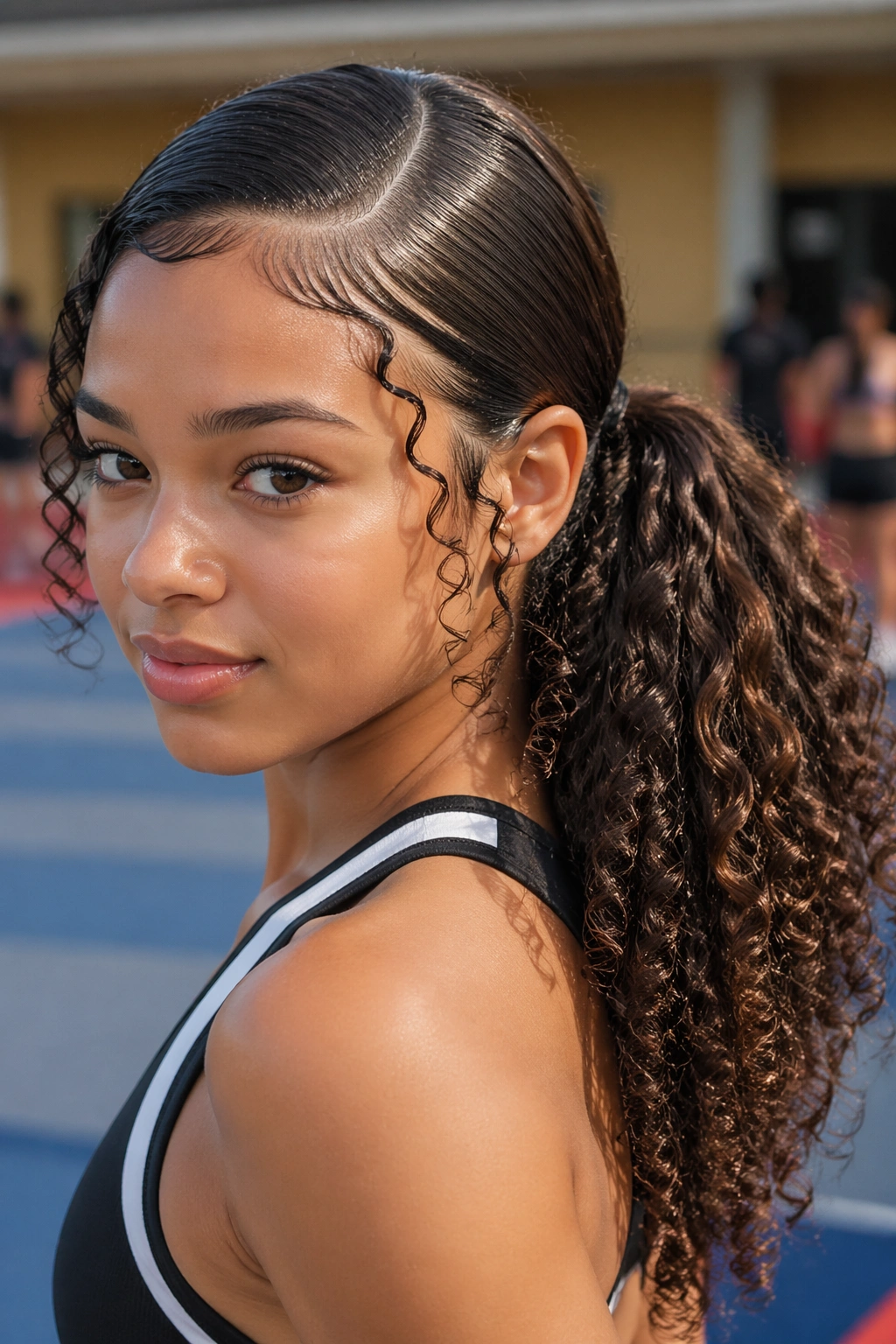
A deep side part changes the whole mood of the style. A side-swept curly ponytail feels more dramatic than a centered one, but it still plays well with cheer because it keeps the hair controlled and off the face. The asymmetry is the point.
Sweep most of the hair to one shoulder and secure it low or mid-height on that side. If the curls are layered, smooth the front with a light gel first so the shorter pieces do not spring out in every direction. One small braid along the side part can help hold the shape and keeps the part from shifting when the head moves a lot.
This style shines when the uniform has one-shoulder details or when you want the hair to echo the line of the costume. It also works for hair that is too full to sit neatly in the center. Side placement takes some of the bulk away from the nape, which can make the whole head feel lighter.
Where It Helps Most
- Long curls that need to fall over one shoulder.
- Practice days when you want a cleaner shape than a loose down style.
- Athletes who prefer one side tucked away from the face.
- Hair that frizzes fast at the crown and needs a little part-line control.
Keep the base secure, but don’t flatten the crown hard. The style depends on movement.
11. Low Curly Bun with Face-Framing Pieces
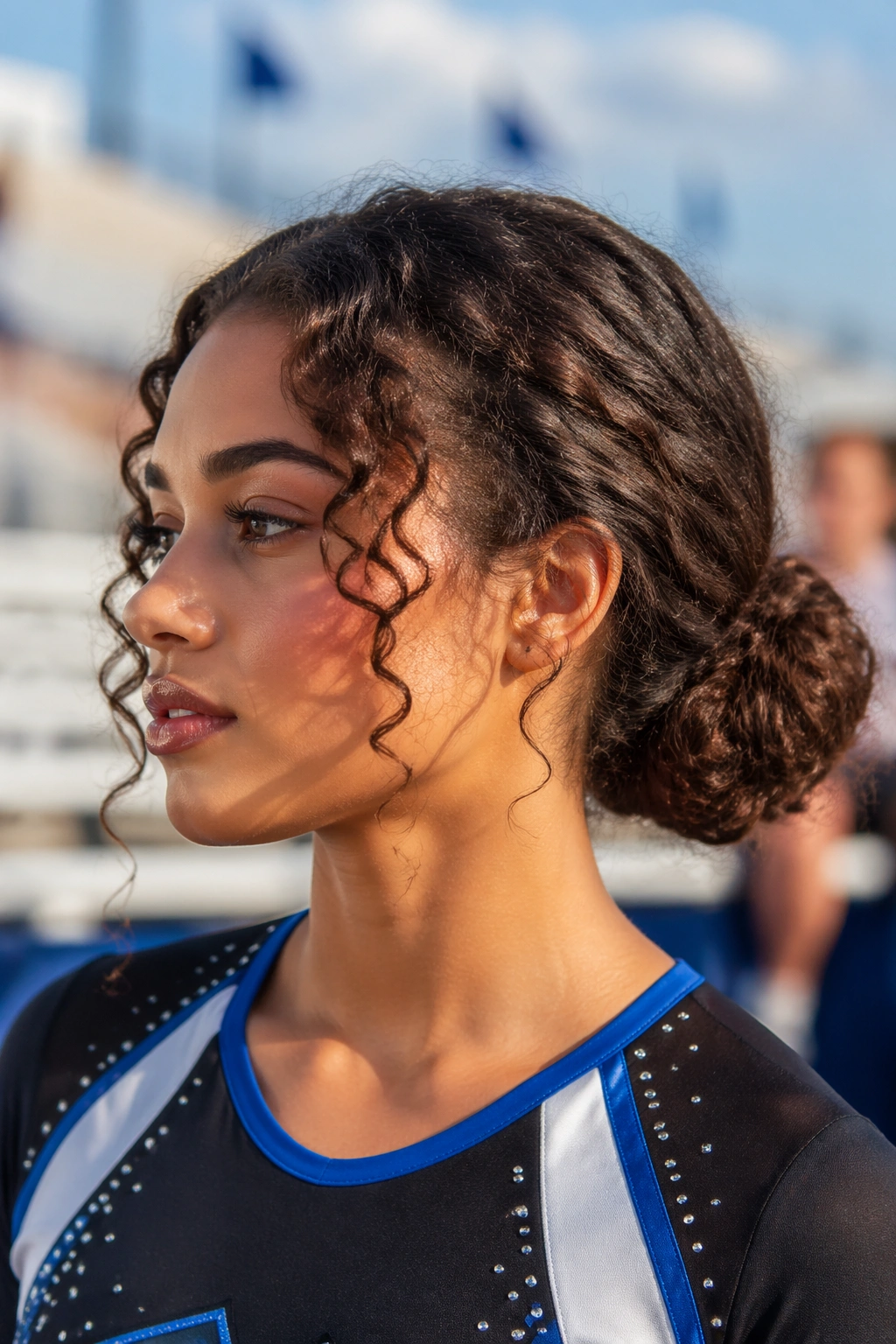
A low bun can feel strict if you yank every curl into place. A low curly bun with face-framing pieces fixes that. It gives you the clean outline cheer often asks for, but leaves enough softness around the face that the hair still feels like itself.
Gather the hair at the nape and twist it into a loose bun, then pin around the outside instead of stuffing every strand into the center. If the hair is thick, split the bun into two stacked loops. That keeps the shape neat and stops the center from bulking up like a knot. A few curls around the temples or cheekbones help the style look less severe.
This one works especially well for formal performances, windy outdoor events, or any routine where you do not want a swinging ponytail. A small net over the bun can help if the team wants a very tidy silhouette, but you do not always need one. Good pinning goes a long way.
One thing I like here is the contrast: tidy at the back, soft at the front. It feels grown-up without looking stiff. That balance is hard to fake if the bun is over-tightened, so keep the tension even and use enough pins to hold the shape without pulling the scalp.
12. Wrapped Ponytail with Ribbon Detail
Use the ribbon for structure, not decoration. A wrapped ponytail with ribbon detail works because it adds a clean visual line while still letting the curls move. It also gives you a chance to bring team colors into the style without hiding the texture underneath.
Start with a high or low ponytail, depending on the look you want. Secure it tightly with a covered elastic, then wrap a satin ribbon around the base or weave it down the length in a simple crisscross pattern. If the ribbon is slippery, anchor the first pass under the elastic and pin the tail underneath with one bobby pin before you start wrapping.
The ribbon should sit flat. If it twists or bunches, the whole style looks fussy fast. Shorter ribbons are easier to manage, especially on thick curls that already have a lot going on visually. Longer tails can be braided loosely after the ribbon is in place, which helps everything stay together.
- Choose satin or grosgrain instead of stiff plastic ribbon.
- Match the width of the ribbon to the thickness of the ponytail.
- Keep the ponytail smooth at the base and textured at the ends.
- Tie off the ribbon securely so it does not loosen mid-routine.
If there is one rule worth keeping from all twelve styles, it’s this: start with the curl pattern you have, then build the shape around it. That’s what keeps cheer hair looking clean without turning it into something stiff and uncomfortable.