



Curly ponytail quick weave styles have a funny way of exposing everything. If the base is flat and clean, the whole look feels expensive. If the base is bumpy or the wrap is sloppy, even the prettiest curls start looking tired fast.
That is why these styles work so well when they’re done with care. A good quick weave ponytail gives you lift at the crown, movement through the length, and a shape that reads polished from across the room. The curls do not need to be stiff. They need room. They need a base that stays out of the way and enough length to swing instead of bunch.
Some versions are sharp and sleek. Others are soft, full, and a little romantic. A few are playful enough for a night out, while others are the kind of style you can wear with a blazer and still feel put together. The trick is matching the ponytail shape to your face, your bundle length, and how much drama you actually want on your head.
And yes, the details matter. A quick mist of water, a light foam, the right anchor point, and a wrap that hides the seam can make the difference between “nice hair” and “who did your hair?” The styles below cover the clean, the full, the soft, and the extra — all with enough practical detail to help you choose one that makes sense for your hair, not just your mood.
1. High Sleek Curly Ponytail Quick Weave With a Wrapped Base
Height changes everything. A high curly ponytail pulls the eye upward, opens the face, and gives even a simple outfit some shape. When the crown is smooth and the base is wrapped cleanly, this style looks sharper than most people expect from a quick weave.
The best version starts with a flat mold and a ponytail placed close to the crown, not halfway down the back of the head. That small shift gives you lift without making the style feel top-heavy. I like this one with 18- to 22-inch curly bundles, especially if the curl pattern has enough bounce to hold shape after a light mist.
What to ask for at the chair
- A smooth crown with no bumps under the ponytail base.
- A wrap section that hides the hair tie and any track edges.
- A ponytail placed high enough to lengthen the face, but not so high that it feels unstable.
The wrapped base matters more than people admit. A thin section of hair or a small strip of bundle hair around the tie keeps the whole look neat and keeps the quick weave from screaming for attention.
Best for: round faces, fuller cheeks, and anyone who likes a lifted profile.
Tiny warning: if the crown is too slick, the style can slide through the day. Keep the hold firm, not soaked.
2. Deep Side-Part Curly Ponytail Quick Weave With Face-Framing Pieces
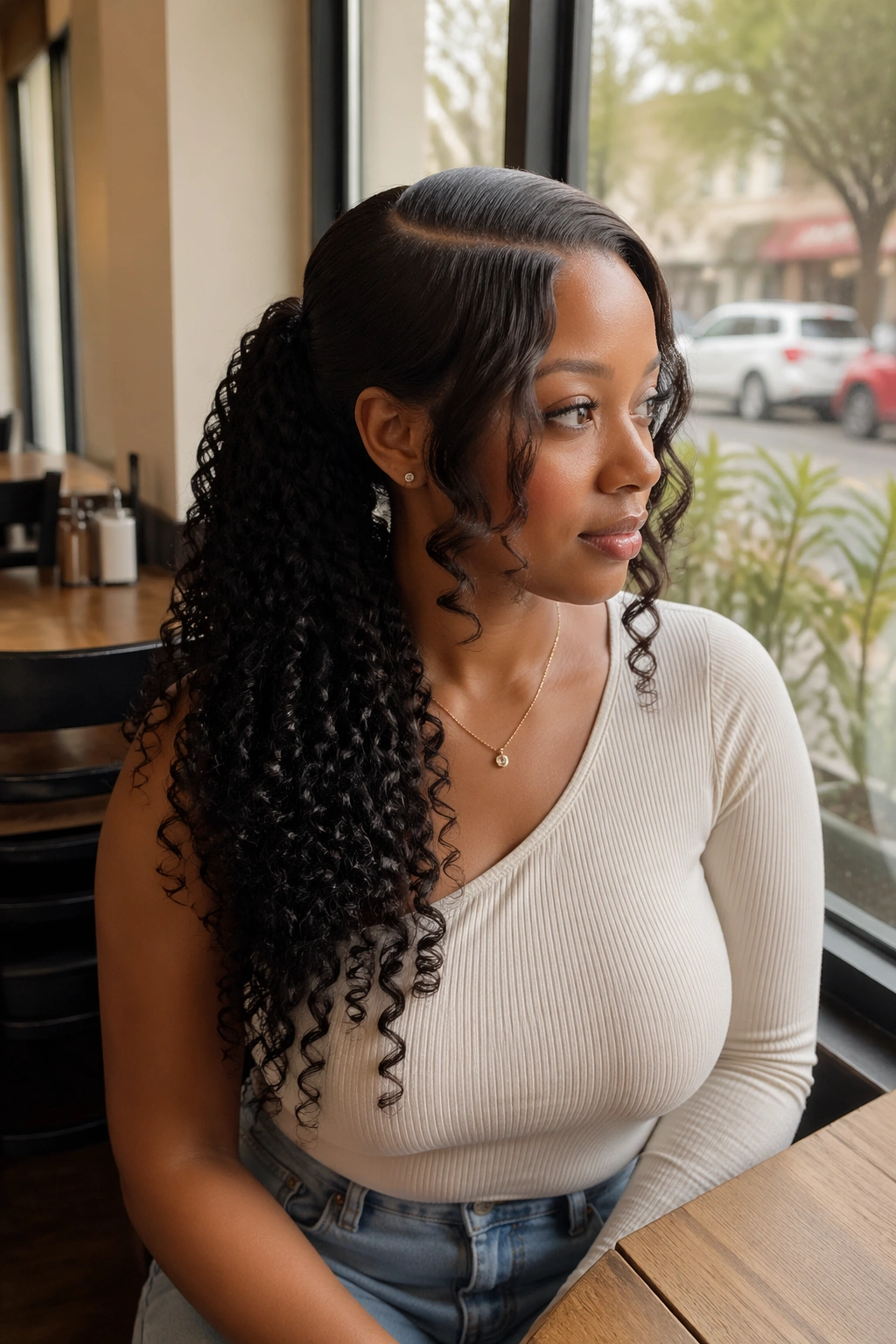
Why does a side part change the whole mood? Because it gives the eye somewhere to land before the ponytail even starts. A deep side part adds movement at the front, and that little bit of imbalance makes the curls feel softer and less formal.
This style works well when you want one side smoothed close to the head and the other side left with a little more air. The front pieces can skim the cheekbone, or they can stay longer and blend into the tail. That depends on how much framing you want. Heart-shaped and square faces often look especially good with this shape because the angled front softens the forehead and jaw.
Why the side part works
The part creates a diagonal line, and diagonal lines are flattering on hair because they break up the straight-down look that can make a ponytail feel plain. The ponytail itself can sit mid-height or high. I prefer mid-height when the curls are long, because the side part already does enough work on its own.
A light touch on the front is smarter than heavy gel. You want the hair to lay flat, not painted to the scalp. If the face-framing pieces are left soft, the whole look reads cleaner.
Best for: people who want a little softness around the face without giving up a polished finish.
Watch for: too much product at the part. It makes the hair look hard and can flake once the curl cream goes in.
3. Half-Up Curly Ponytail With Leave-Out Curls
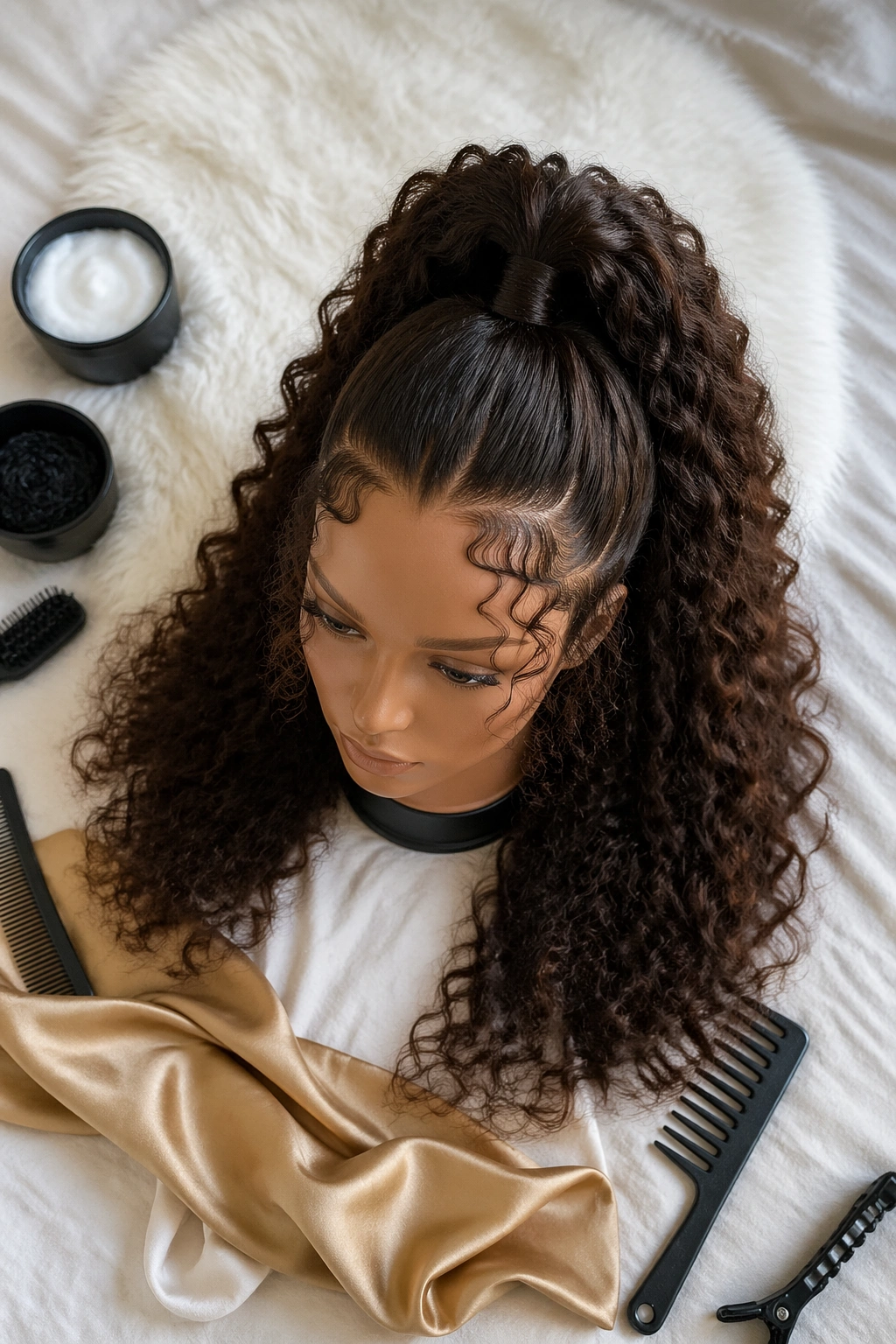
You want the ponytail, but you do not want your whole front pulled back. That is where the half-up version earns its place. It leaves room for curls around the hairline while still giving you the lifted tail that makes quick weave styles feel fun instead of flat.
This one is especially good when your natural texture is curly or coily and you want the front to blend instead of fight the bundles. The top section can be smoothed into a small ponytail, while the rest of the hair around the temples and sides stays loose. The result feels airy. Less strict. More lived-in, in the best way.
I like this style when the bundles have a loose curl or a wave that can be stretched a bit with fingers. If the curls are too tight, the top section can start to look like it belongs to a different hairstyle. That mismatch is what ruins it.
A little foam at the roots and a satin scarf for a few minutes can help the leave-out settle without flattening the movement. Then finger-separate the curls instead of combing them apart. Comb marks show here. Badly.
Best for: people who want volume around the face and less tension at the hairline.
Good detail: keep the top ponytail compact. If it gets too thick, the half-up look starts reading like two separate hairstyles glued together.
4. Low Nape Curly Ponytail With a Soft Wrap
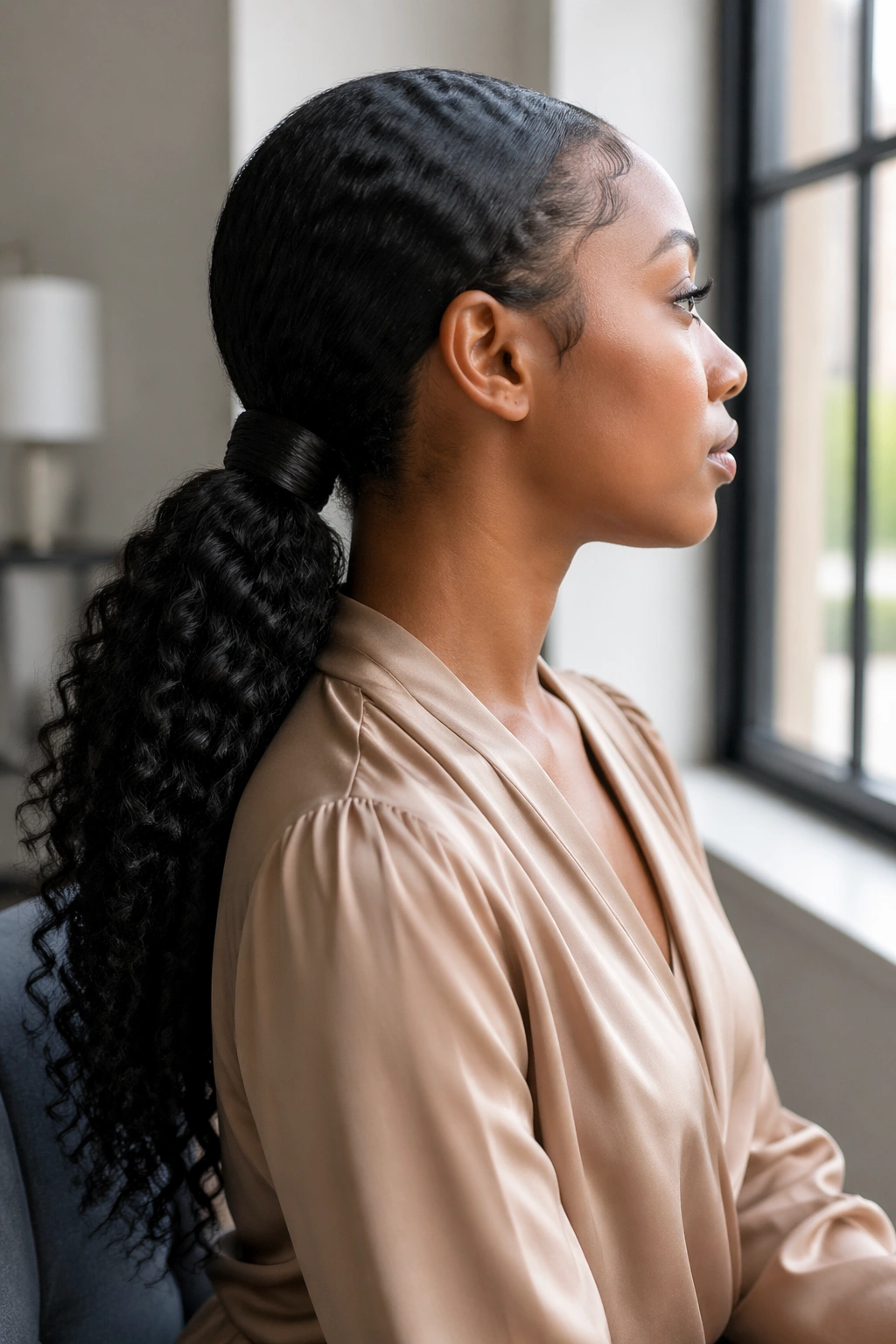
Low ponytails are the easiest to wear and the hardest to make look boring. A low nape curly ponytail sits close to the neck, so the curls can drape down the back in a way that feels calm and neat. It’s the version I’d pick when I want polish without a lot of height.
This style works especially well with longer bundles, around 20 to 24 inches, because the length has room to fall instead of bunching at the shoulder blades. A soft wrap around the base keeps the attachment hidden and gives the ponytail a finished look. The wrap does not need to be thick. In fact, a slim wrap looks better because it keeps the neck area clean.
Why it stays neat longer
The lower placement reduces pulling at the crown, so the base usually feels more secure over time. That does not mean you can ignore the install. It only means the style is a little less demanding on the scalp than a high ponytail.
I also like low ponytails for people who wear turtlenecks, collars, or statement earrings. The hair stays out of the way and still looks intentional. There’s a quiet confidence to it.
Best for: long wear, formal settings, and anyone who prefers softness over height.
Be careful with: a wrap that is too bulky. It sits like a bump and makes the back of the head look heavier than it should.
5. Bubble Curly Ponytail With Elastic Sections
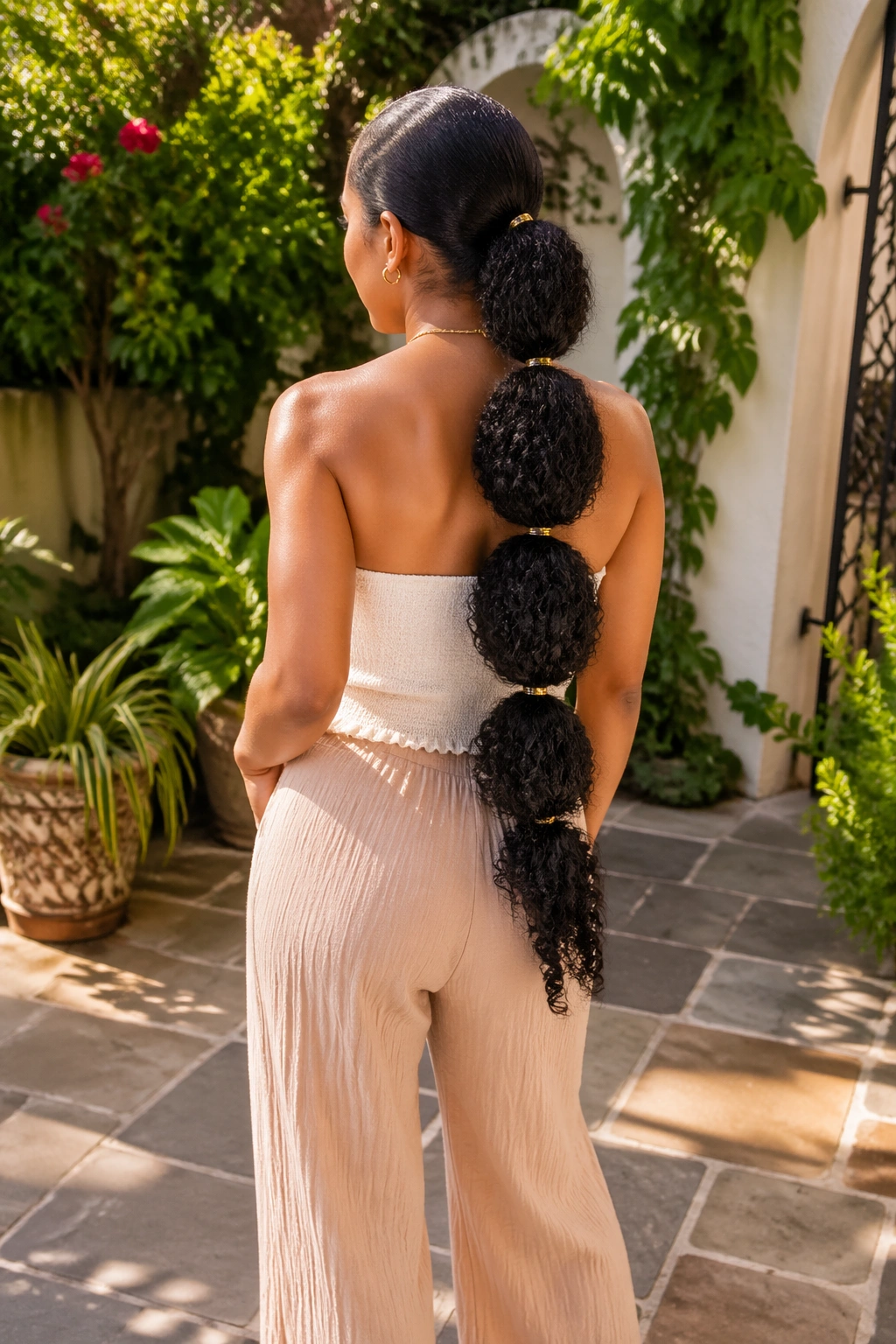
One ponytail. Four shapes. That is the charm of the bubble version, and it’s why it keeps showing up in curly ponytail quick weave styles. Instead of one long, uninterrupted tail, the length gets divided with small elastics every few inches, creating round sections of curl that puff between the ties.
It works best when the curls have enough body to fill each bubble without collapsing. I’d reach for this with medium-density bundles and a length that lands somewhere around 16 to 20 inches. Too short, and the bubbles look cramped. Too long, and they start pulling the shape downward.
- Space the elastics about 3 to 4 inches apart.
- Use snag-free ties so you do not chew up the curl pattern.
- Tug each section gently after tying to round it out.
- Mist the ends lightly so the curl stays defined.
The style feels playful, but it also has structure. That’s rare. Most curly looks lean one way or the other. Bubble ponytails give you movement and shape without needing a ton of extra styling, which is probably why they photograph well in real life, not just in a mirror.
Tiny warning: don’t over-tease the sections. If you pull too hard, the bubbles start looking messy instead of full.
6. Braided Crown Into Curly Ponytail
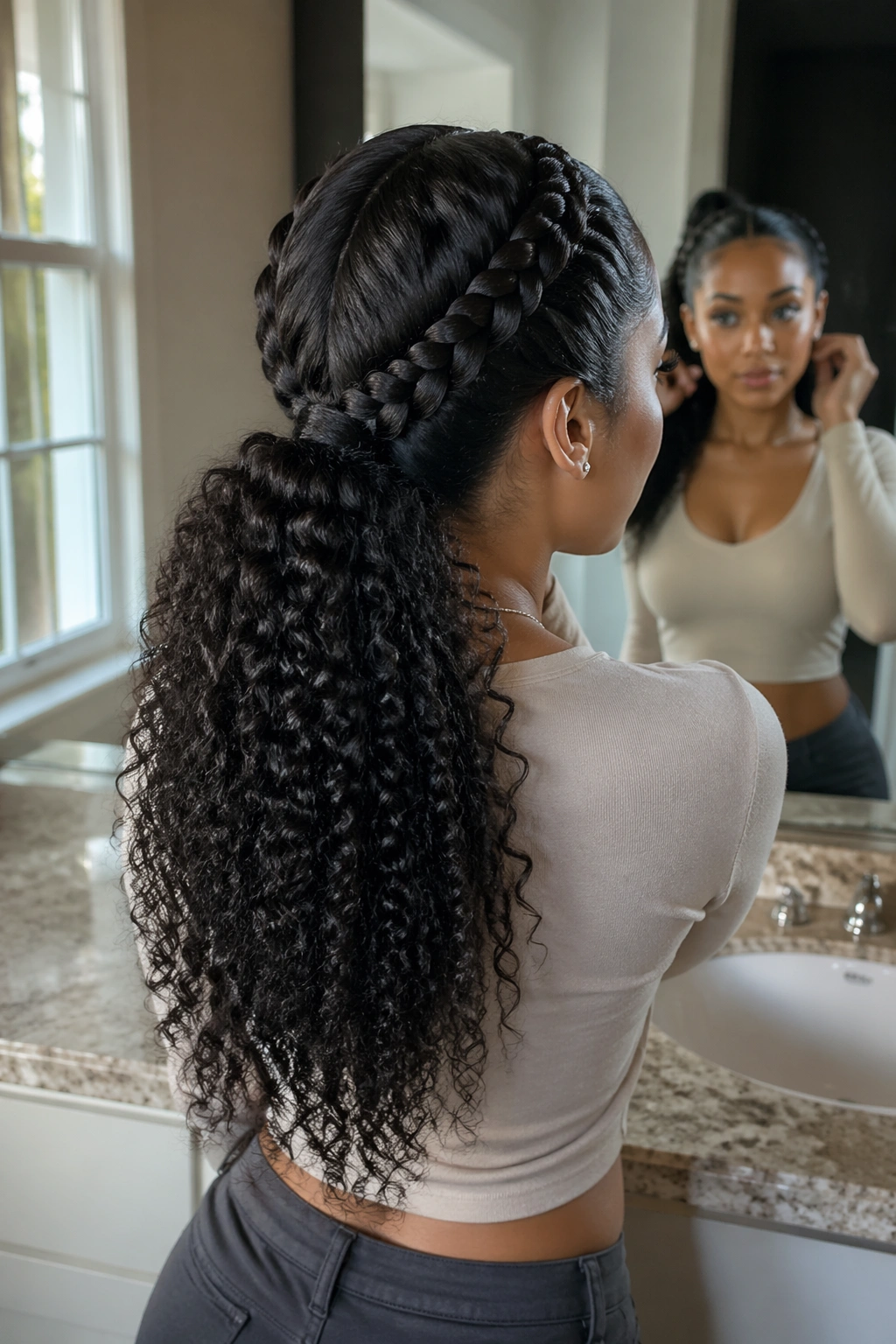
Picture a braid tracing the hairline like a headband, then dropping into curls. That’s the whole appeal here. The braid adds a built-in frame, and the ponytail gives the style its softness. Together, they make a quick weave ponytail look more finished without asking for a complicated install.
This is one of my favorites for anyone who wants the front of the hair to stay tidy. A small braid or two along the crown keeps the face open and gives the style a little tension where it needs it. The ponytail can sit high or low, but I think it looks best when the braid leads cleanly into the base instead of stopping awkwardly at the side.
What the braid changes
It gives the style a clear starting point. That sounds small, but it matters. Without a crown detail, a ponytail can feel like it just appears out of nowhere. With the braid, the eye follows a line and the whole style feels planned.
This version also helps if you do not want a lot of hair left loose around the temples. The braid does the framing, so the curls can stay focused in the tail. It’s neat without getting stiff.
Best for: long events, warm weather, and anyone who wants the hairline to look controlled.
Keep in mind: the braid should lie flat. A thick, chunky braid at the front can overpower the curls and make the style feel heavier than it should.
7. Jumbo Curly Ponytail With Extra Volume
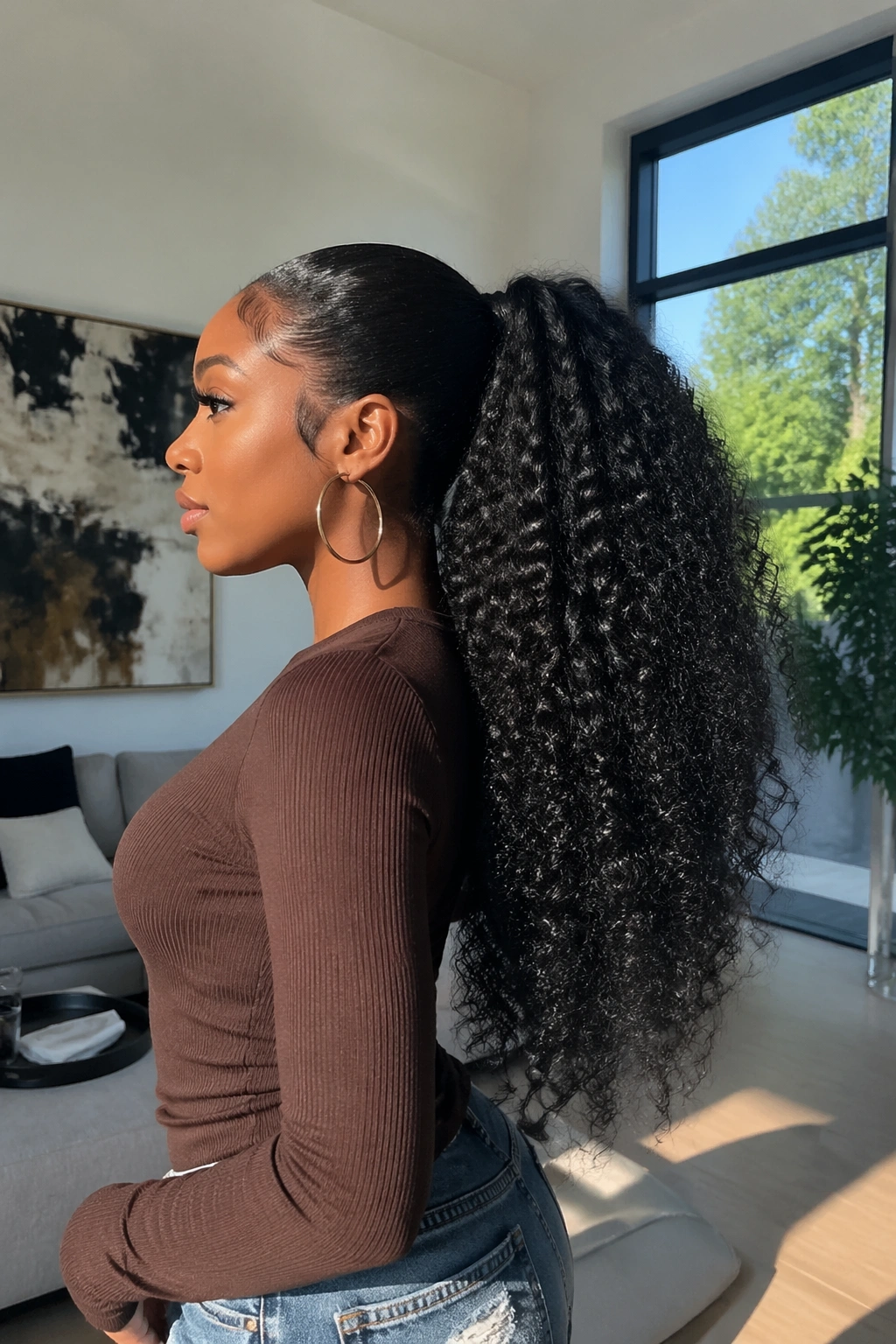
Bigger isn’t subtle. That’s the point. A jumbo curly ponytail leans all the way into fullness, with the curls brushed out just enough to make the tail look wide, dense, and a little dramatic. If you like hair that makes a room notice you, this one earns its keep.
The trick is volume without frizz. I like using two to three bundles of curly human hair here, depending on how thick the bundles are and how long you want the tail to fall. A wide-tooth comb can help open the curls, but fingers are safer if the pattern is delicate. Start at the ends and work upward. Don’t attack the root area first. That’s how the tail turns into a puffball.
This style looks especially good when the base is kept narrow and the tail gets all the attention. The contrast matters. A slim crown makes the ponytail look even fuller.
It also helps if you know your curl type. Tighter curls hold a bigger shape near the top, while looser curls stretch more and drop lower. Neither is better. They just behave differently.
Best for: bold looks, high-volume styling, and people who like a lot of hair in one place.
One honest note: if the bundles are too soft or too silky, they can look flat by the end of the day. Fuller curl patterns usually hold this shape better.
8. Side-Swept Curly Ponytail With Off-Center Drama
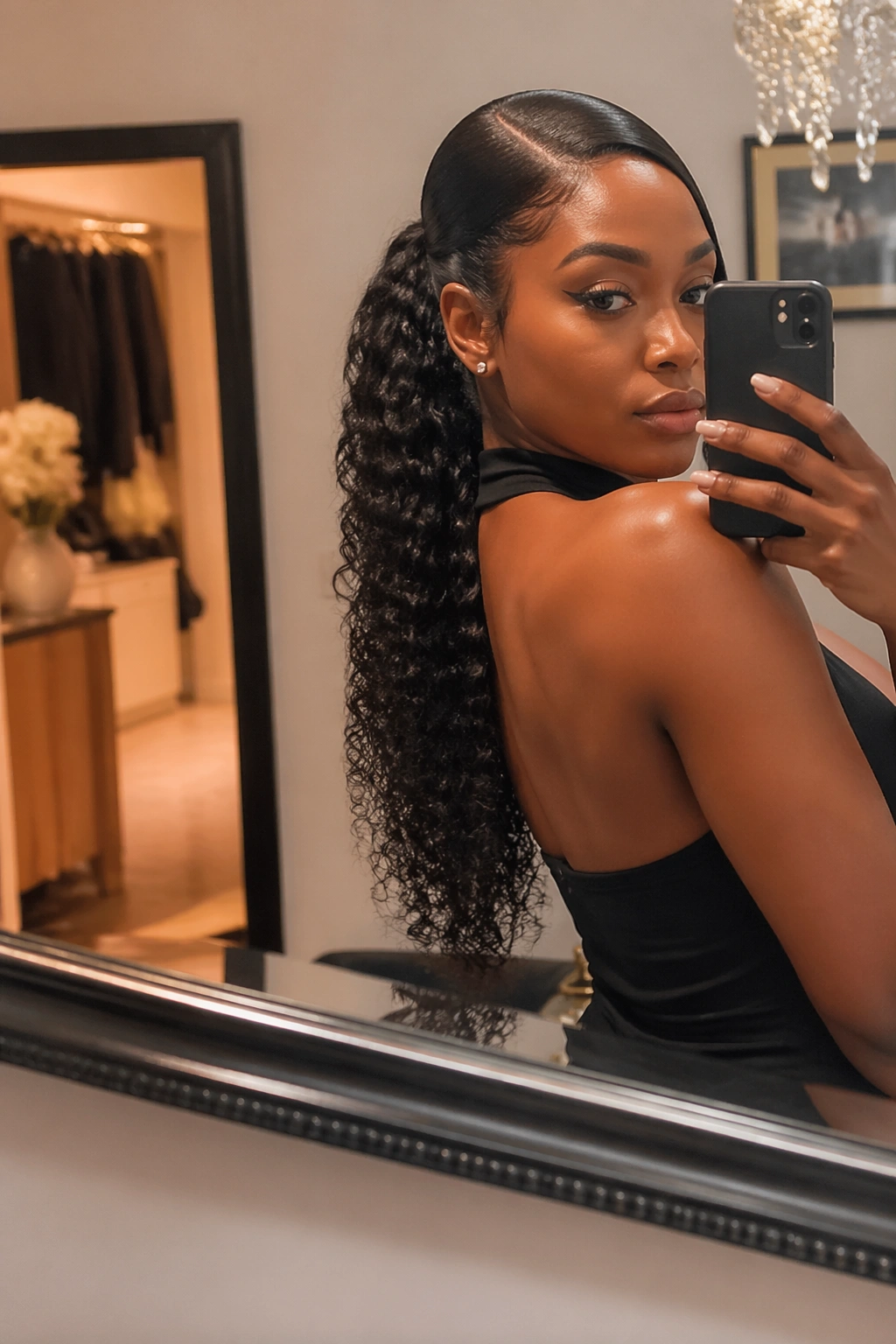
What happens when the ponytail sits off-center? It suddenly feels more styled. That slight shift can change the whole read of the look, making it feel softer, less expected, and a little more expensive in the best sense of the word.
A side-swept curly ponytail works beautifully when you want the length to fall over one shoulder. The anchor usually sits just behind one ear or a little above it, depending on how much sweep you want. If the tail is long, the weight of the hair helps it stay draped. If the tail is shorter, you need a firmer base so it does not drift back toward center.
Where to place the anchor
A ponytail placed too low loses the side-swept effect. Too high, and it can feel unstable. The sweet spot is usually around the upper side of the head, where the curls can swing forward without crowding the face.
This style is a smart choice when you want one side of the face open and the other side softly covered. It gives instant balance to strong jawlines and can make a wide forehead feel less exposed.
- Use a smooth front with one clean side part or no part at all.
- Keep the sweep controlled so the tail does not split.
- Let the curls fall over the shoulder instead of fanning out flat.
Best for: date nights, photos, and anyone who likes a little asymmetry.
9. Curly Ponytail With Swoop Bang and Tapered Temples
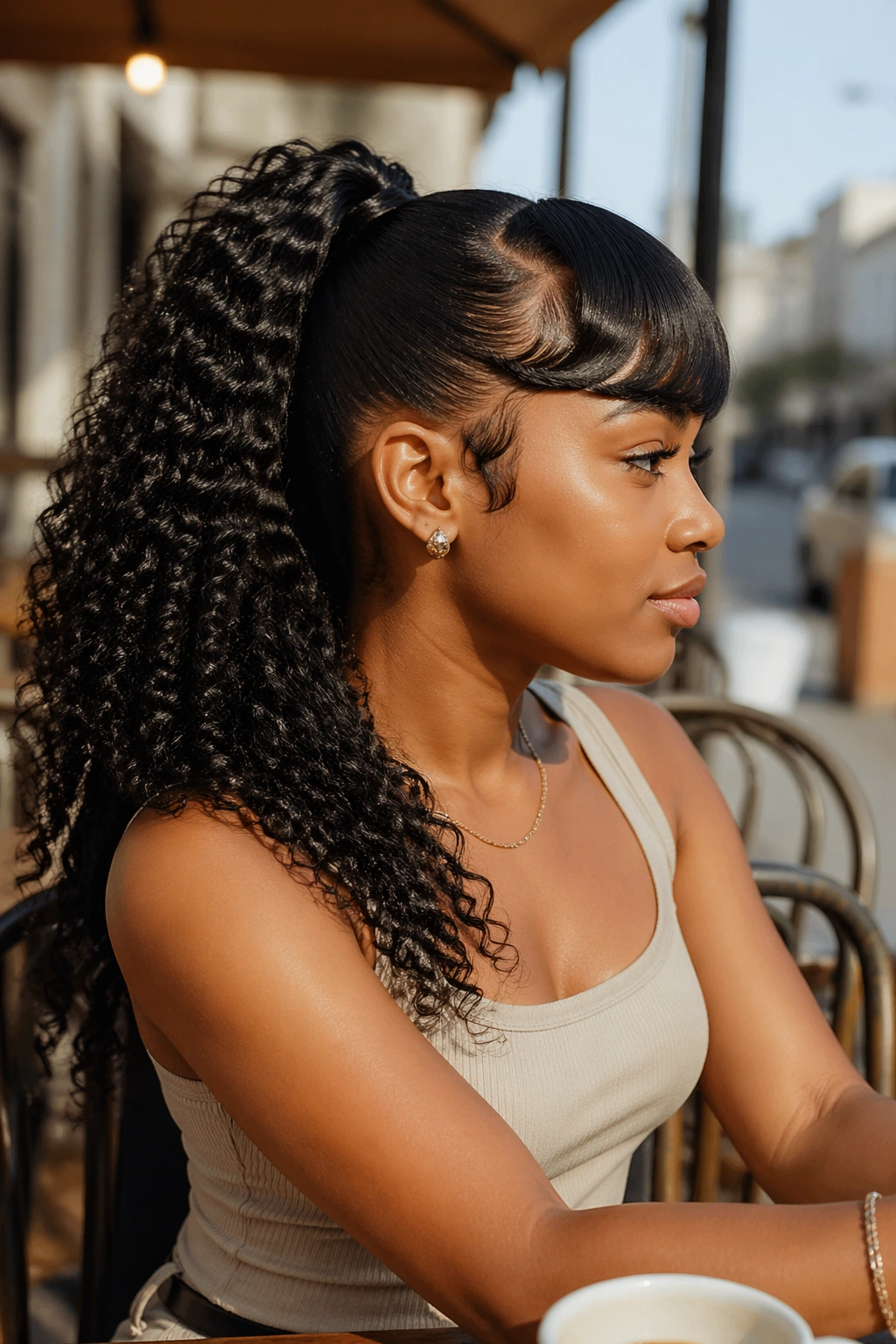
The swoop is the whole story here. A curly ponytail with a side bang or swooped front section feels softer than a fully slicked-back style, and the tapered temples keep the face from looking boxed in. It’s a good middle ground when you want polish but still want some movement near the forehead.
This style is especially useful if you like your hairline to look finished without being too severe. The bang can be curled with a small flexi rod or shaped with mousse and fingers so it matches the ponytail texture. If the front is too straight and the tail is too curly, the contrast looks accidental. Better to blend them on purpose.
Less product, more shape.
That is the whole rule here. A swoop bang only looks right when it has a soft bend and a little air. If it is plastered down, it loses the point. If it is too full, it starts swallowing the eye and the ponytail stops mattering.
Best for: soft glam looks and anyone who wants the front of the style to feel lighter.
Small detail that helps: keep the temple hair tapered, not heavy. A dense side panel can turn the whole style into a curtain.
10. Mid-Height Curly Ponytail With a Clean Middle Part
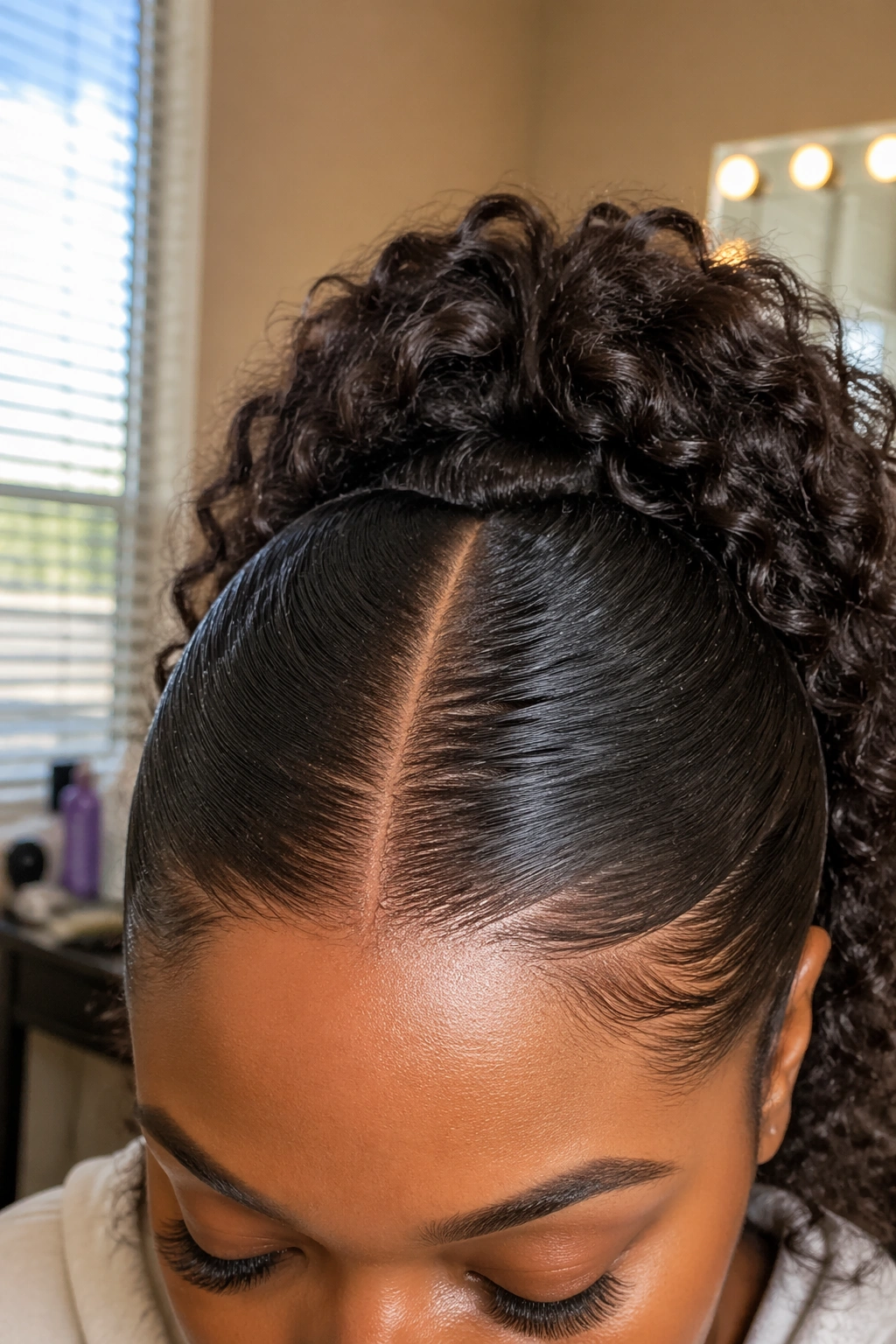
Middle parts are honest. They show every bump, every uneven section, and every lazy mold job under a quick weave. That is exactly why a clean middle-part curly ponytail looks so satisfying when it’s done well. It has nothing to hide behind.
This version sits between formal and casual. The ponytail is lifted enough to show shape, but not so high that it becomes rigid. I like it with medium-length curls because the tail lands neatly without dragging the head backward. The middle part keeps the top half symmetrical, which gives the style a sharp, simple finish.
A good middle part needs a flat foundation. No shortcuts here. If the crown is puffy, the part draws attention to the problem instead of fixing it. Use a fine-tooth comb, map the part carefully, and smooth the front with a light foam rather than a heavy gel that can flake later. If your hairline is delicate, keep tension even on both sides.
This one suits people who like clean lines and a neat frame around the face. It’s not the flashiest style in the group. It doesn’t need to be.
Best for: polished everyday wear and people who like symmetry.
11. Curly Ponytail With a Twisted Rope Base
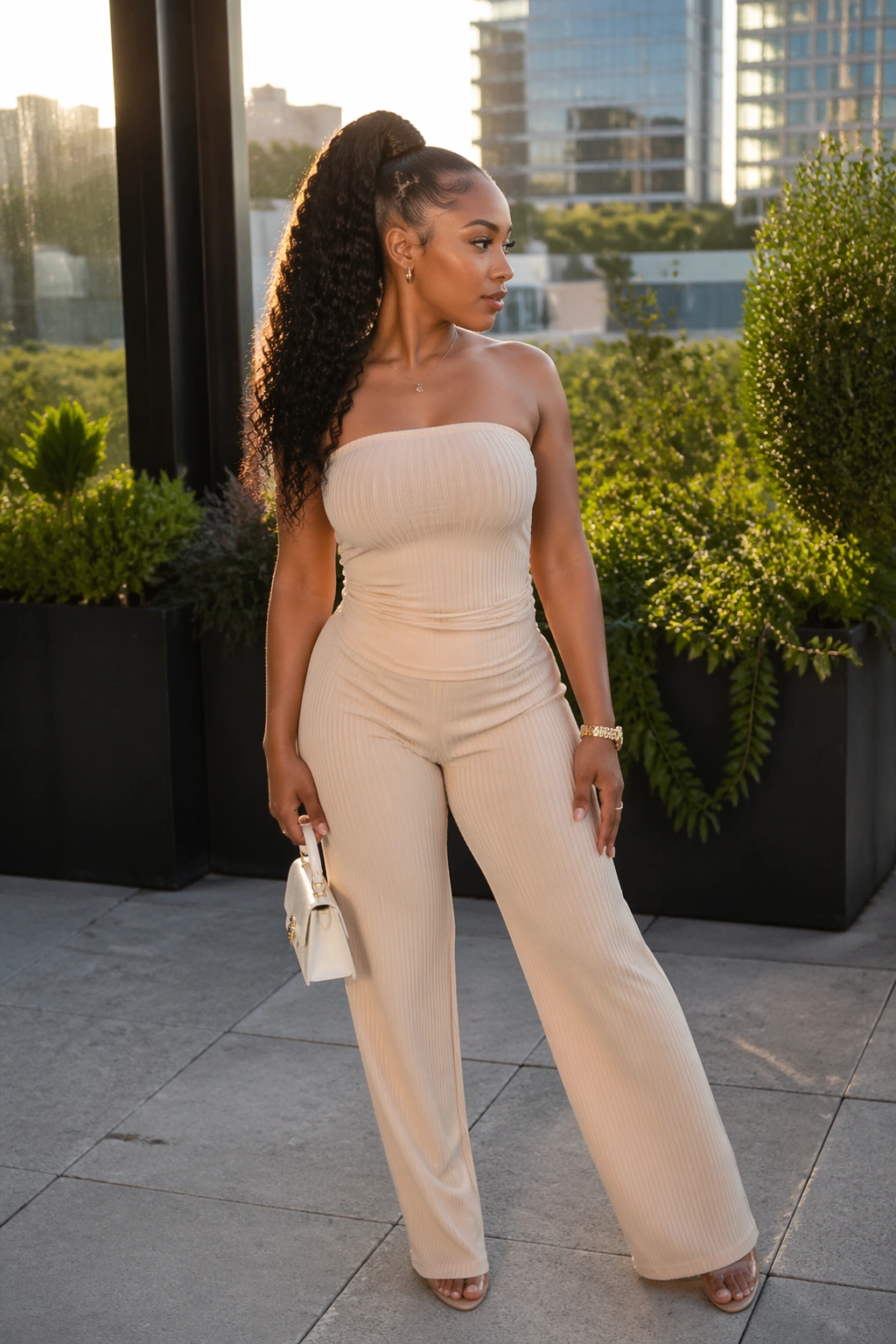
A rope base changes the whole read of the style. Instead of a plain wrap around the ponytail tie, the front section gets twisted in a rope-like pattern before it disappears into the curls. That extra detail adds texture at the base without making the style feel fussy.
This is a smart choice when you want the ponytail base to do some visual work. The twist creates a cleaner transition between the flat molded hair and the tail itself. It also helps hide the anchor point, which is useful if your quick weave style leaves very little room to work with at the crown or nape.
Why the twist matters
A flat wrap can look elegant, but a rope twist gives you dimension. Not the vague, empty kind. Actual shape. You can see where the hair is moving, and that little bit of movement makes the whole style feel more handmade.
If your hair is thick, twist two sections tightly and pin them neatly before the curls go in. If your hair is finer, keep the rope slim so it does not overpower the ponytail. The goal is balance, not decoration for its own sake.
Best for: people who like detail at the base and a cleaner line from scalp to tail.
Avoid this: twisting so tightly that the base starts to pull. A pretty ponytail should not hurt by lunchtime.
12. High Curly Ponytail With Curly Bangs and Baby Hairs
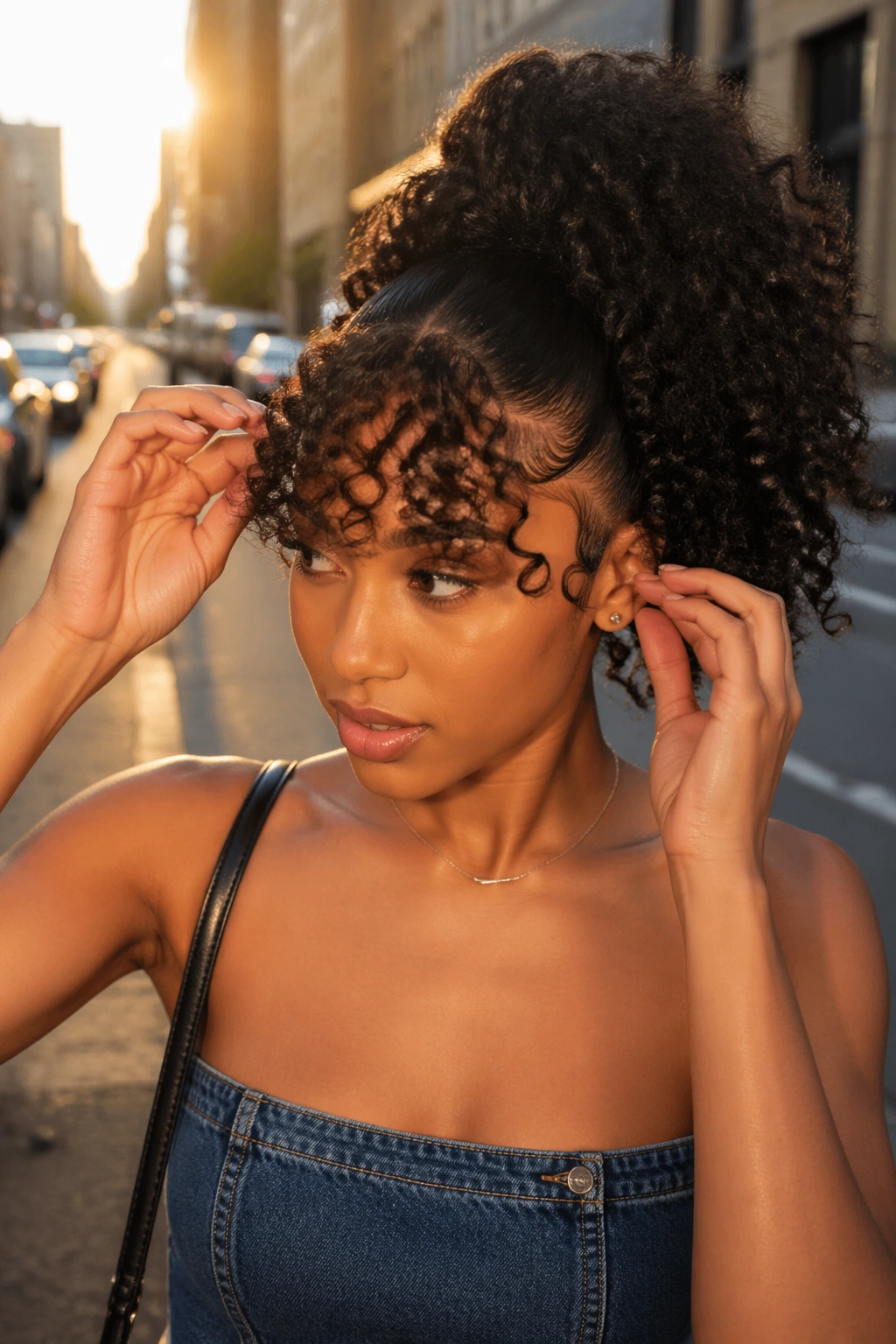
This is the flirtier version of the high ponytail. Add curly bangs, keep the ponytail lifted, and use baby hairs sparingly around the edges, and the whole style gets a softer, more playful finish. It’s a lot of look, but the good kind.
The bangs matter most here. They should look like they belong to the ponytail, not like an afterthought. If the bundles have a loose curl, shape the bang to match that pattern. If the curls are tighter, a small rod set or finger coil at the front helps the bang blend instead of sticking out. The baby hairs should stay small and close to the hairline. Big swirls can take over fast.
- Keep the bang pieces light and movable.
- Use a tiny edge brush, not a heavy hand.
- Let the curls around the temples stay soft.
- Keep the ponytail base high and secure.
This style flatters people who want a bit more softness around the forehead and cheeks. It can also reduce the hard look that a full slick-back sometimes gives. The curls around the face do the work.
Best for: full-glam days, photos, and anyone who likes a little attitude in the front of the style.
13. Low Curly Ponytail With a Center-Part Sleek Crown
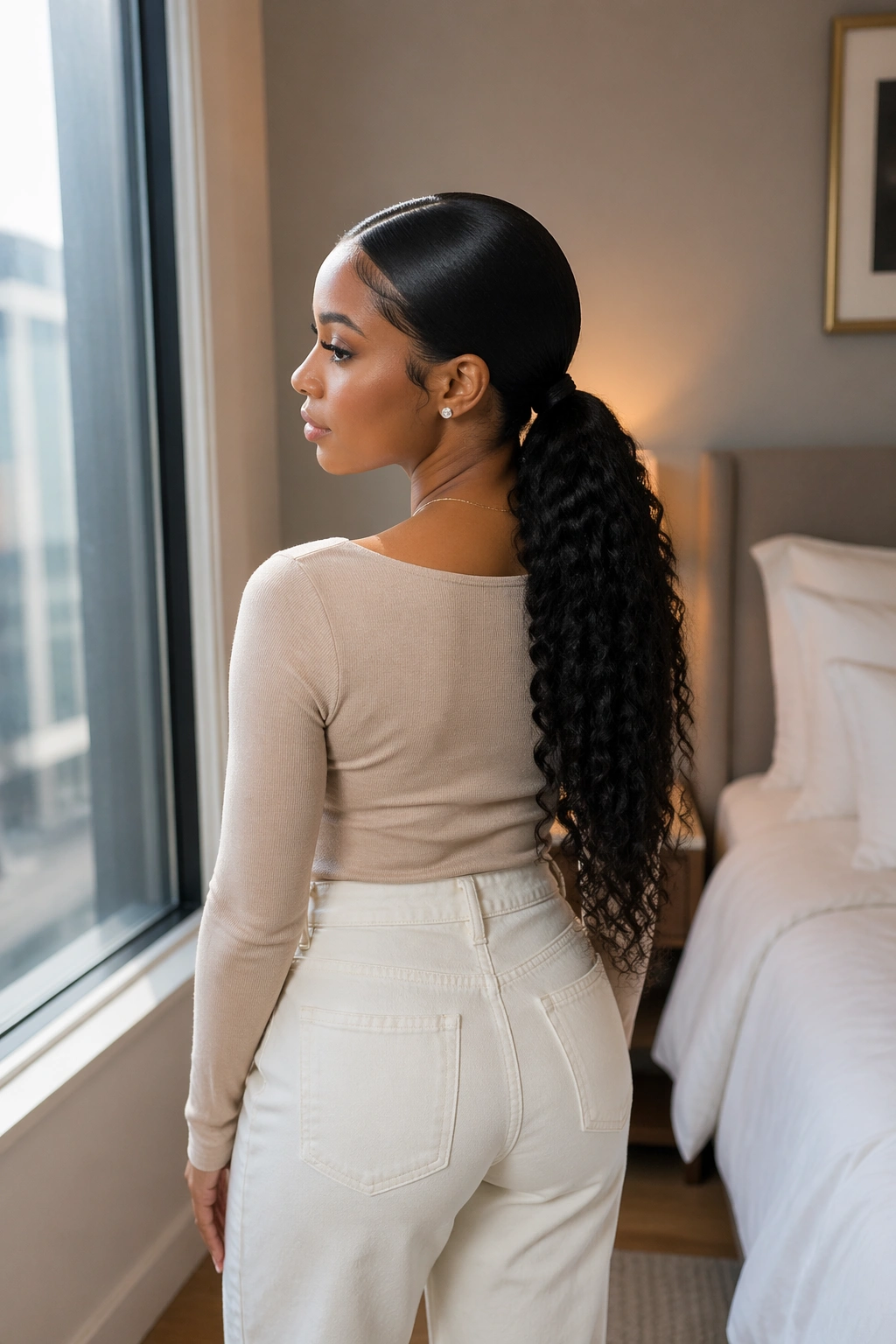
Same middle part, different mood. When the ponytail drops to the nape and the crown stays sleek, the look turns quieter and more grounded. It still feels polished, but it has less height and less noise.
This version is one of the easiest ways to make curly ponytail quick weave styles feel grown and deliberate. The center part keeps the top neat, while the low placement lets the curls fall naturally down the back. It works especially well with long bundles that have a soft spiral or loose curl, because the length helps the style stay elegant without needing extra lift.
The crown has to be very smooth. If the part is clean but the sides are puffy, the whole style loses its edge. Keep the front flat, tuck the ponytail low, and let the curls carry the interest. A satin scarf overnight helps the top stay neat and keeps the part from opening up too much.
This is the style I’d choose for anyone who wants something calm, clean, and not overly styled. There’s no need to overcomplicate it.
Best for: long days, dressier clothes, and people who like a neat finish.
One caution: a low ponytail can drag if the bundles are too heavy. If the hair feels like it’s pulling backward, move the anchor up a half inch.
14. Curly Ponytail With Accessories: Cuffs, Scarf, or Ribbon
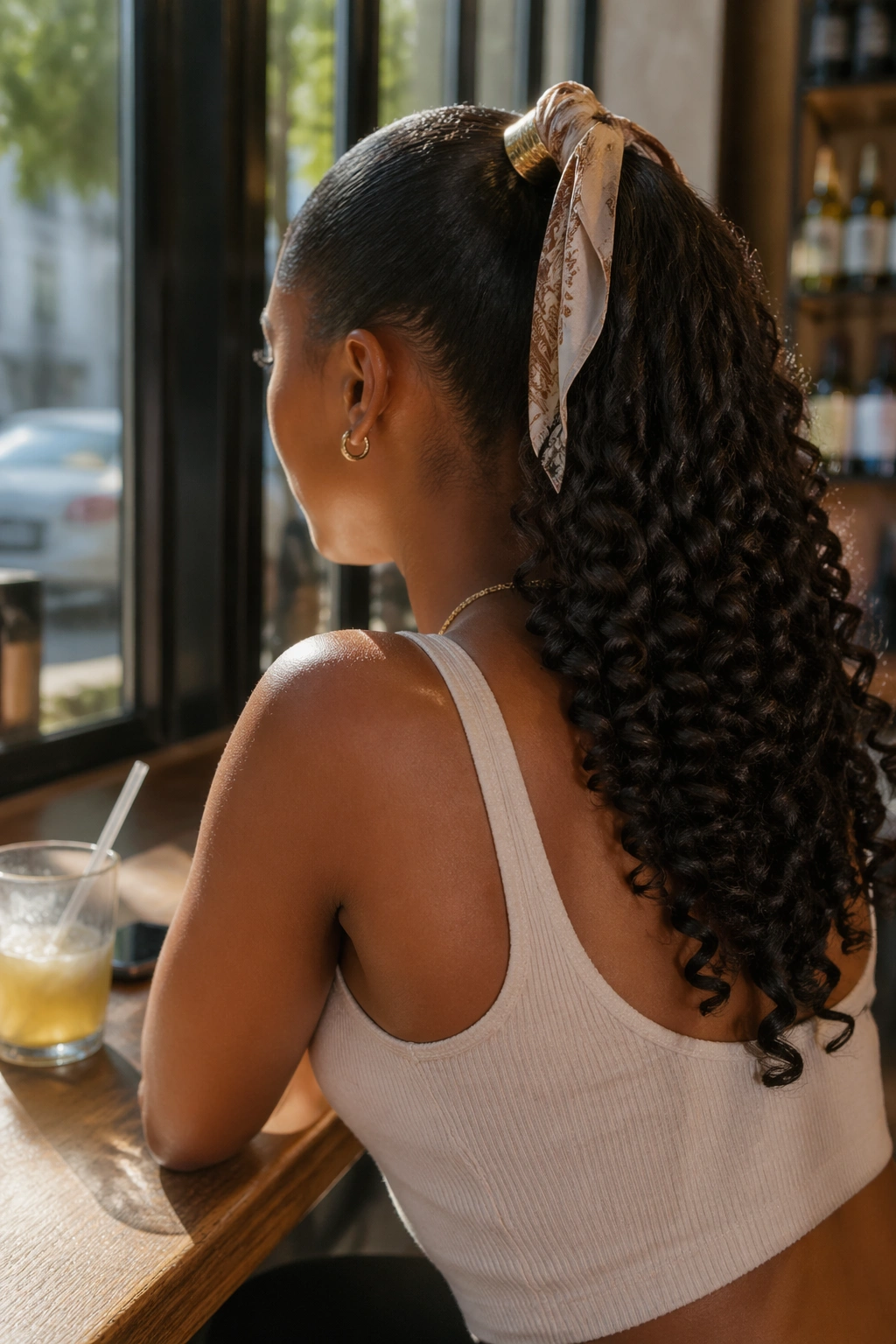
Need the style to look finished in five seconds? Add something small. A gold cuff, a thin scarf, or a ribbon around the base can change the mood of a curly ponytail quick weave without forcing you to rework the whole install.
The trick is choosing one accent and letting it stay small enough to play nice with the curls. A gold cuff reads sharp and clean. A printed scarf feels softer and a little more relaxed. A narrow ribbon gives the style a more feminine, almost old-school finish. Any of them can work. All three at once? Usually too much. The curls should stay in charge.
What not to do
- Don’t use oversized clips that weigh the tail down.
- Don’t wrap so much fabric around the base that the ponytail disappears.
- Don’t choose an accessory that fights the curl pattern.
Accessories are useful when the style itself is simple and you want one point of interest. They’re also handy when the install is already neat and you just need a small change in tone. That’s the real job here.
Best for: parties, photos, and anyone who wants a quick way to change the look without changing the structure.
15. Long Cascading Curly Ponytail Quick Weave With an Invisible Base
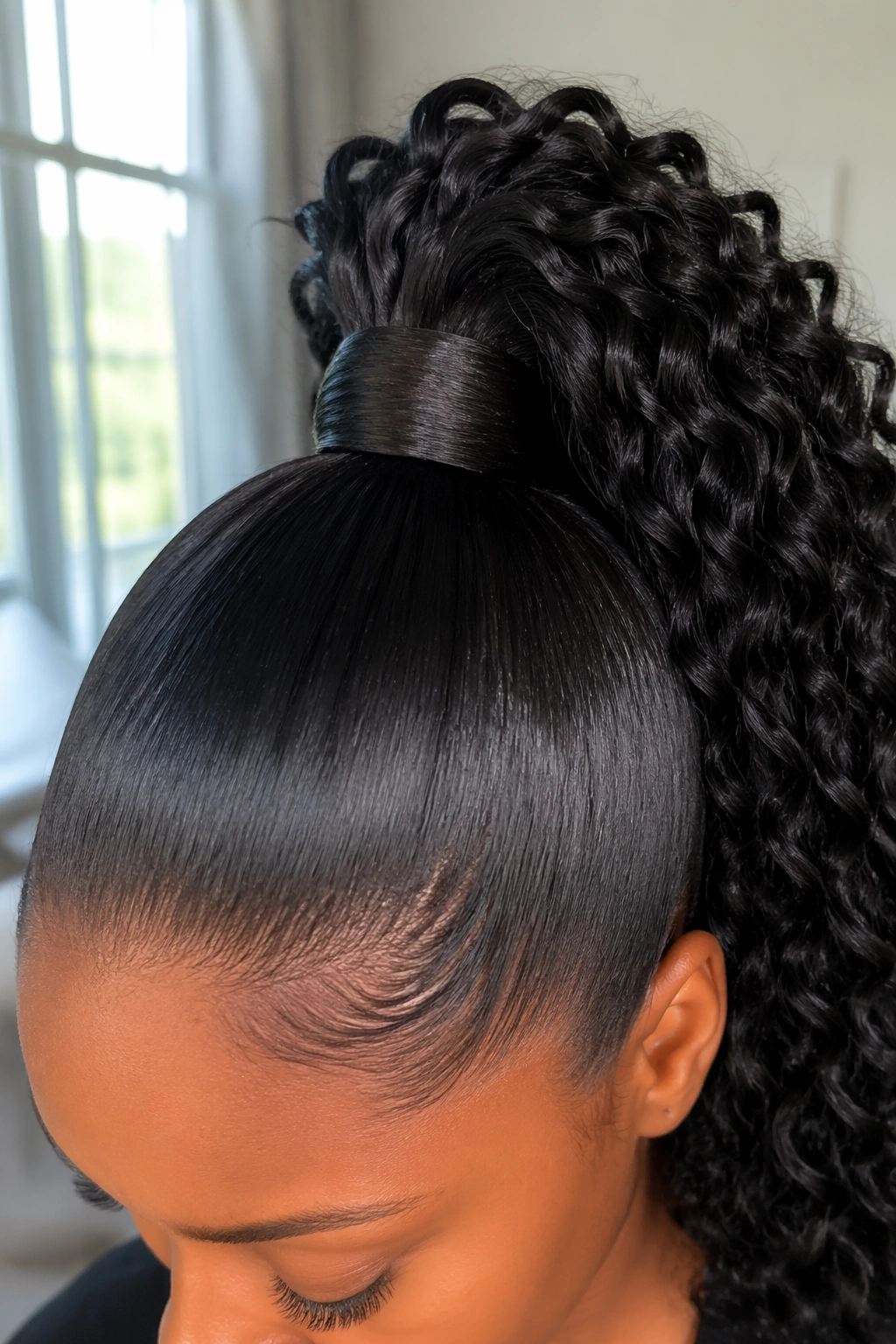
The prettiest trick is the one you do not notice. A long cascading curly ponytail with an invisible base keeps the attachment as hidden as possible so the eye goes straight to the length, the curl pattern, and the swing of the tail.
This style works best when the ponytail starts just above the occipital bone or at the upper nape, depending on how much height you want to keep. The base should be slim, clean, and wrapped in a way that disappears into the first coil of hair. If the base is too thick, it cuts the line of the ponytail in half. If it is too loose, the whole style starts looking unfinished. There’s a narrow lane here, but it’s worth staying in it.
I like this version with 22- to 24-inch bundles because the length creates that soft cascade that people notice from the side and from the back. It also works beautifully when the curls are left with enough separation to show movement, not so much that they puff up into a cloud.
This is the style for someone who wants the ponytail itself to do the talking. Clean top. Long tail. No extra noise.
Best for: dramatic length, smooth finishes, and any quick weave ponytail that needs to look sleek up close and full from a distance.
The best curly ponytail quick weave styles usually have the same quiet strength underneath them: a flat base, a curl pattern that holds shape, and a ponytail placement that matches the face instead of fighting it. Fancy details help, sure. But the foundation is what keeps the style looking good after the first hour.
If you want the safest bet, start with the shape that fits your life, not the one that looks the loudest on a screen. A high ponytail gives lift, a low ponytail gives calm, and a side-swept version brings movement fast. The rest is just choosing how much volume, wrap detail, and face framing you want to live with.
