



Blonde and blue box braids have attitude. Not the loud, try-too-hard kind. The good ones shift depending on where the part falls, where the blue starts, and whether the blonde leans honey, caramel, ash, or platinum.
The color pairing works because the shades pull in opposite directions. Blonde throws light. Blue cools it down. On box braids, that contrast stays crisp because each braid gives the color a hard edge, so the tones do not melt together the way they can on loose hair.
Placement matters more than people think. Put blue at the ends, tuck it underneath, frame the face with a few cobalt pieces, or split the head into clean color blocks — each choice changes the whole mood without changing the basic palette. And if you have ever seen a braid style go muddy after install, you already know how fast the wrong blonde tone can flatten the whole look.
Some versions feel polished. Some feel playful. A few lean so graphic they almost read like wearable art, which is a fancy way of saying they will turn heads in a grocery store aisle. The first style below is the easiest place to start if you want the combo to look sharp without turning your whole head into a neon project.
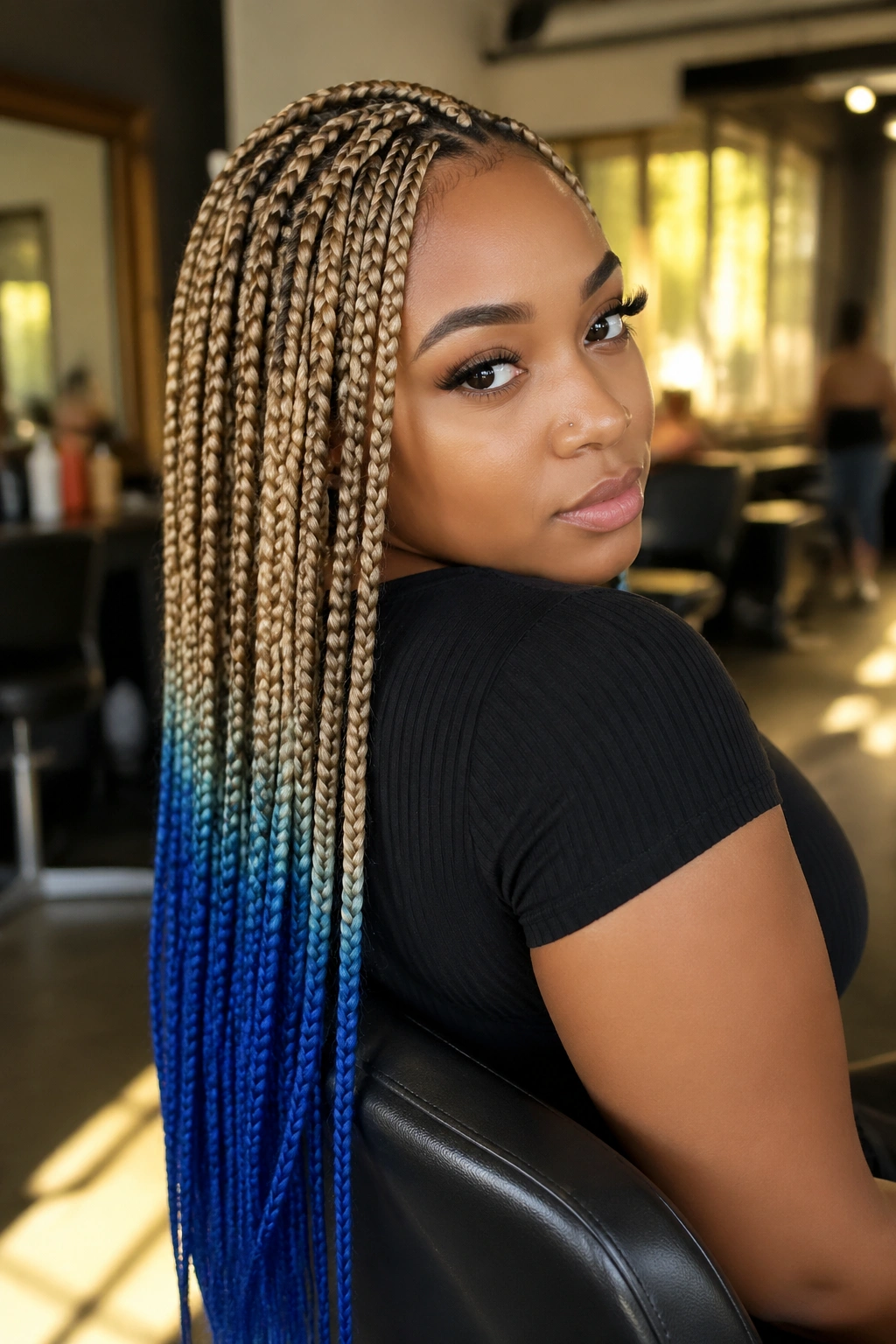
1. Electric Blue Ends on Honey Blonde Braids
This is the easiest blonde-and-blue box braid style to wear well. Honey blonde near the root keeps the look soft, while electric blue on the last few inches gives you the hit of color without making the whole head feel busy. The braid length does a lot of the work here. Medium to waist-length braids let the blue swing and flash as you move.
The reason this combo keeps working is simple: the blonde warms the face, and the blue sharpens the finish. The style feels finished even when the rest of your outfit is plain. That is harder to pull off than it sounds.
Why It Works
- Keep the blue to the final 20 to 30 percent of each braid.
- Use a warm blonde, not a pale yellow blonde that reads flat.
- Ask for the same blue tone on every end so the finish stays clean.
- Let one or two face-framing braids end a little higher for a softer line.
My favorite detail: the blue looks best when it is concentrated, not scattered randomly through the whole head.
2. Royal Blue Money Pieces on Blonde Box Braids
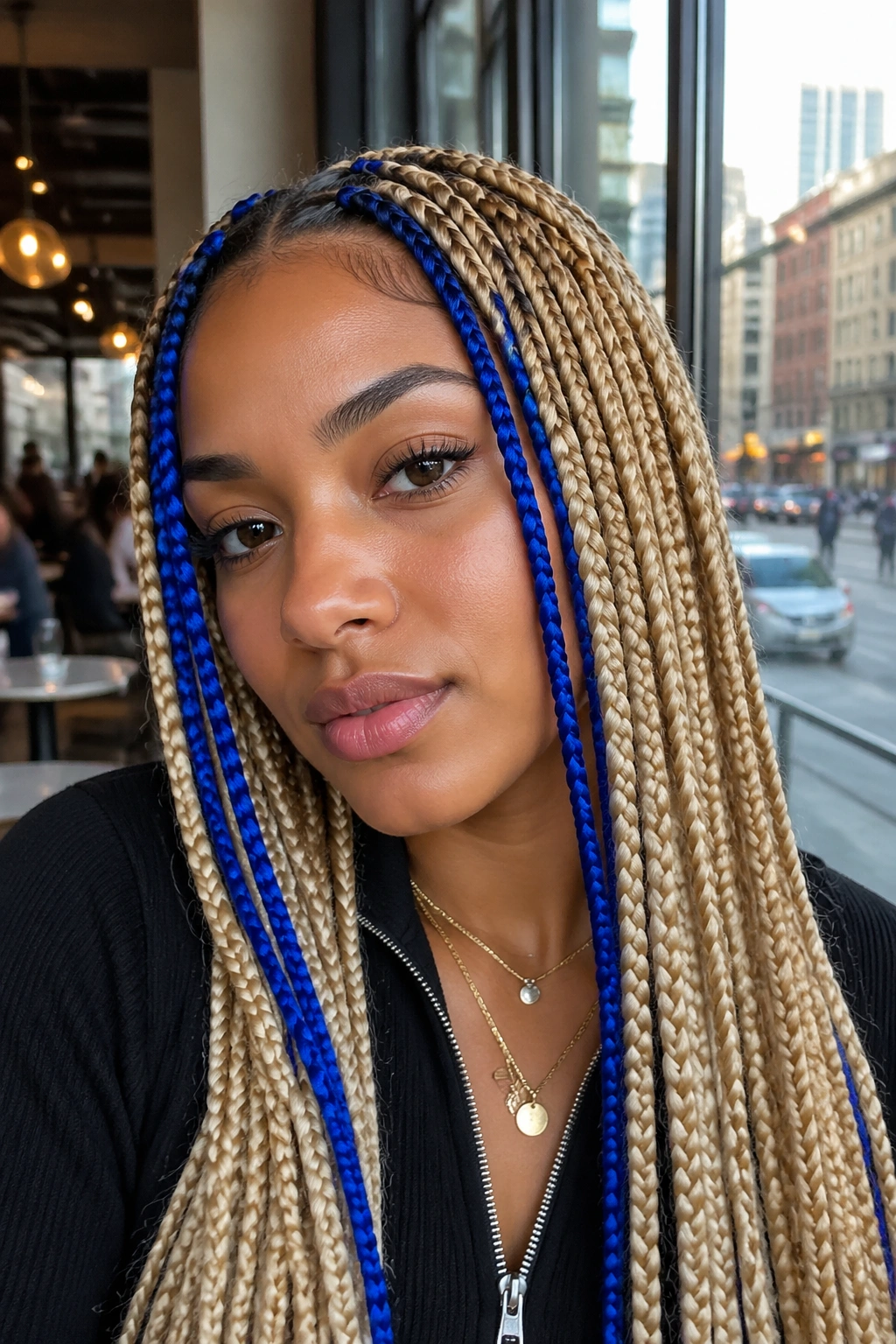
What if you want the blue to show up first?
Then put it where people actually look. A few royal blue braids at the temples or along the front part change the whole mood of blonde box braids, especially if the rest stays bright and neutral. The effect is a little like strong eyeliner: small area, big impact.
This version works well if you wear your braids down most days. The blue pieces frame the face, pull attention to the eyes, and still let the blonde stay dominant. It also gives you a little flexibility later, because the color is concentrated near the front instead of spread everywhere.
How to Ask for It
- Bring one photo that shows the front pieces clearly.
- Bring a second photo that shows braid size and length.
- Tell your stylist how many blue braids you want near the hairline.
- Ask for a clean middle part or side part so the placement stays balanced.
You do not need a dramatic amount of blue here. Two or four pieces can do the job.
3. Platinum Blonde with Cobalt Underlayers
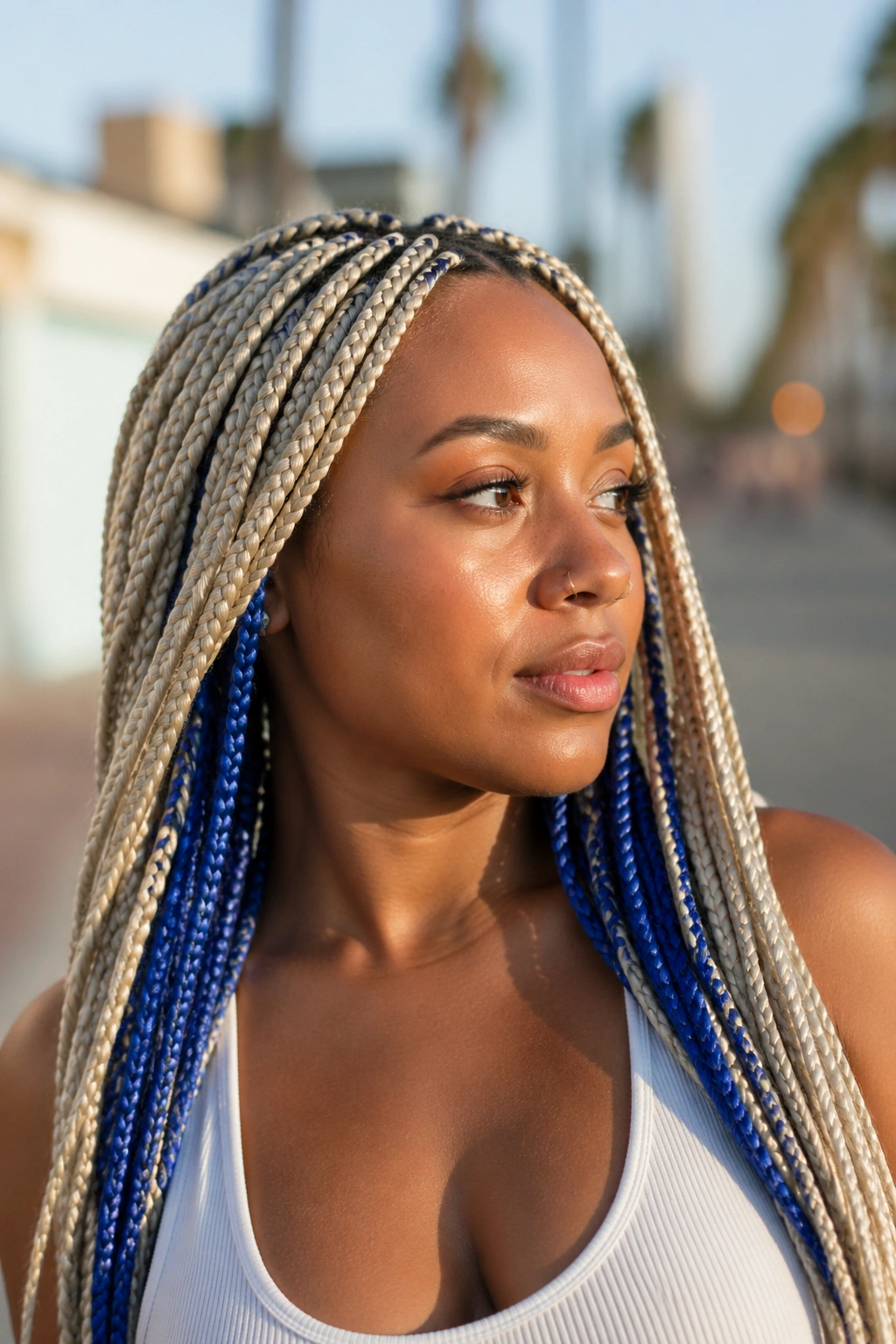
You only see the cobalt when the braids move. That is the whole point.
Platinum blonde on top keeps the style bright, while cobalt hidden underneath turns the hair into a moving color reveal. Pull it into a ponytail, twist it into a bun, or flip it over one shoulder, and the blue flashes out in strips instead of sitting there like a billboard. It feels sneaky in the best way.
This is a smart choice if you like your braids to look clean most of the time and dramatic only when you want them to. The underlayer also buys you some forgiveness. A few weeks in, when the top rows still look fresh and the back has softened a bit, the hidden blue keeps doing work where people least expect it.
- Best with medium or small braids.
- Works well when cobalt is packed into the lower third of the head.
- Keep the nape rows tidy; that area rubs the most.
- A satin scarf matters here. A lot.
One small warning: do not overload the neckline with too much braid bulk. That is the first place to look messy.
4. Ash Blonde to Navy Ombré Box Braids
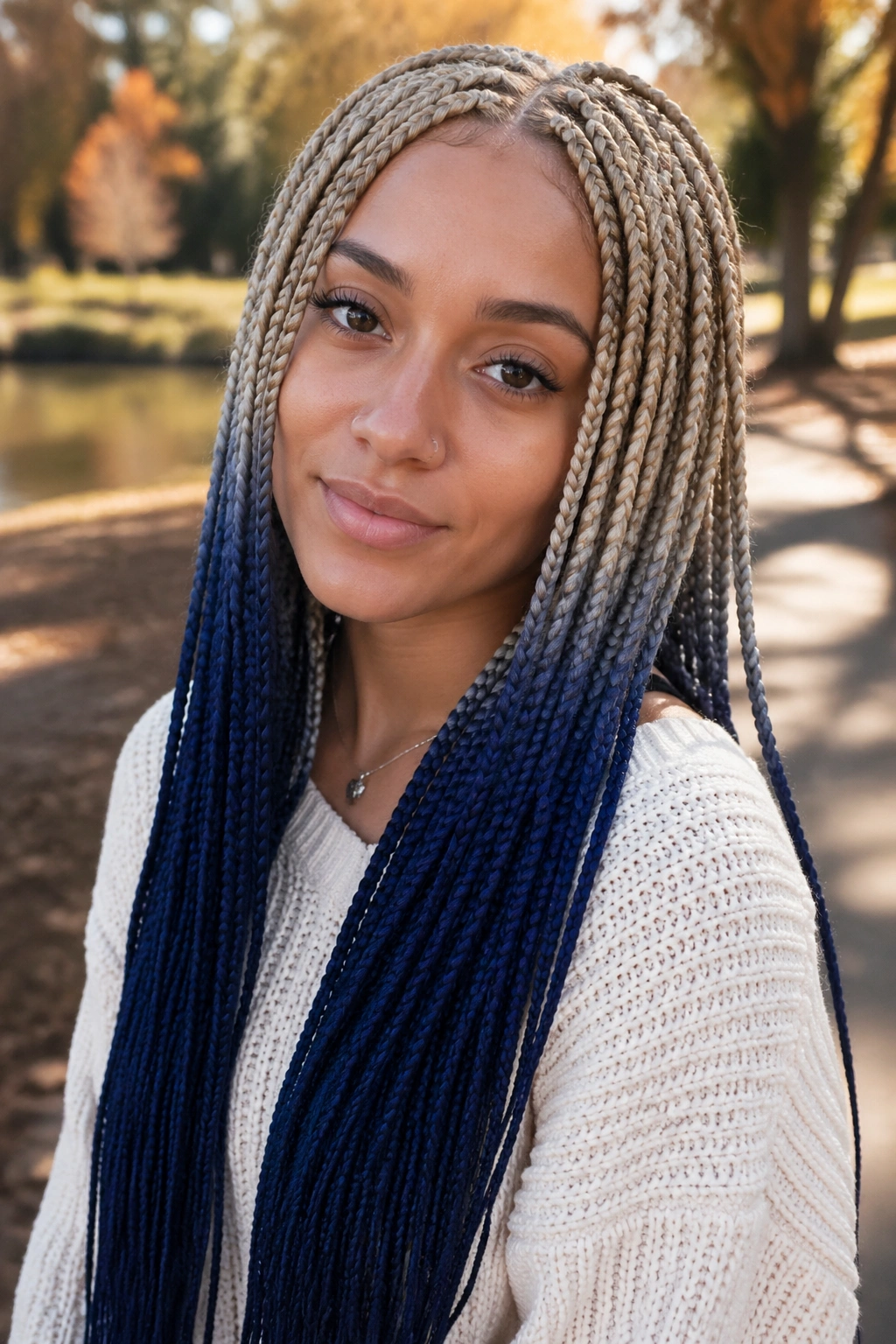
Ash blonde and navy sound like opposites, and that is exactly why they work. The blonde keeps the braid looking light; the navy grounds it so the ends do not drift into that washed-out zone some color mixes fall into. I like this combination more than bright yellow blonde with a loud blue. It feels sharper.
The ombré part matters more than people think. A slow shift from ash blonde into navy gives your eyes somewhere to travel, which keeps long box braids from looking flat. If the color change happens too fast, the braid can look chopped up. Too slow, and you barely notice it. The sweet spot usually sits around the middle third of the length.
This style does especially well on waist-length braids, where the darker blue can settle toward the bottom without making the whole head feel heavy. It also pairs nicely with knotless installs because the top stays clean around the scalp. That little airy start makes the darker ends feel intentional instead of bulky.
If you like a cooler palette, this is the one I’d put near the top of the list. It has edge, but not noise. And that distinction matters.
5. Split-Color Parting on Blonde and Blue Box Braids
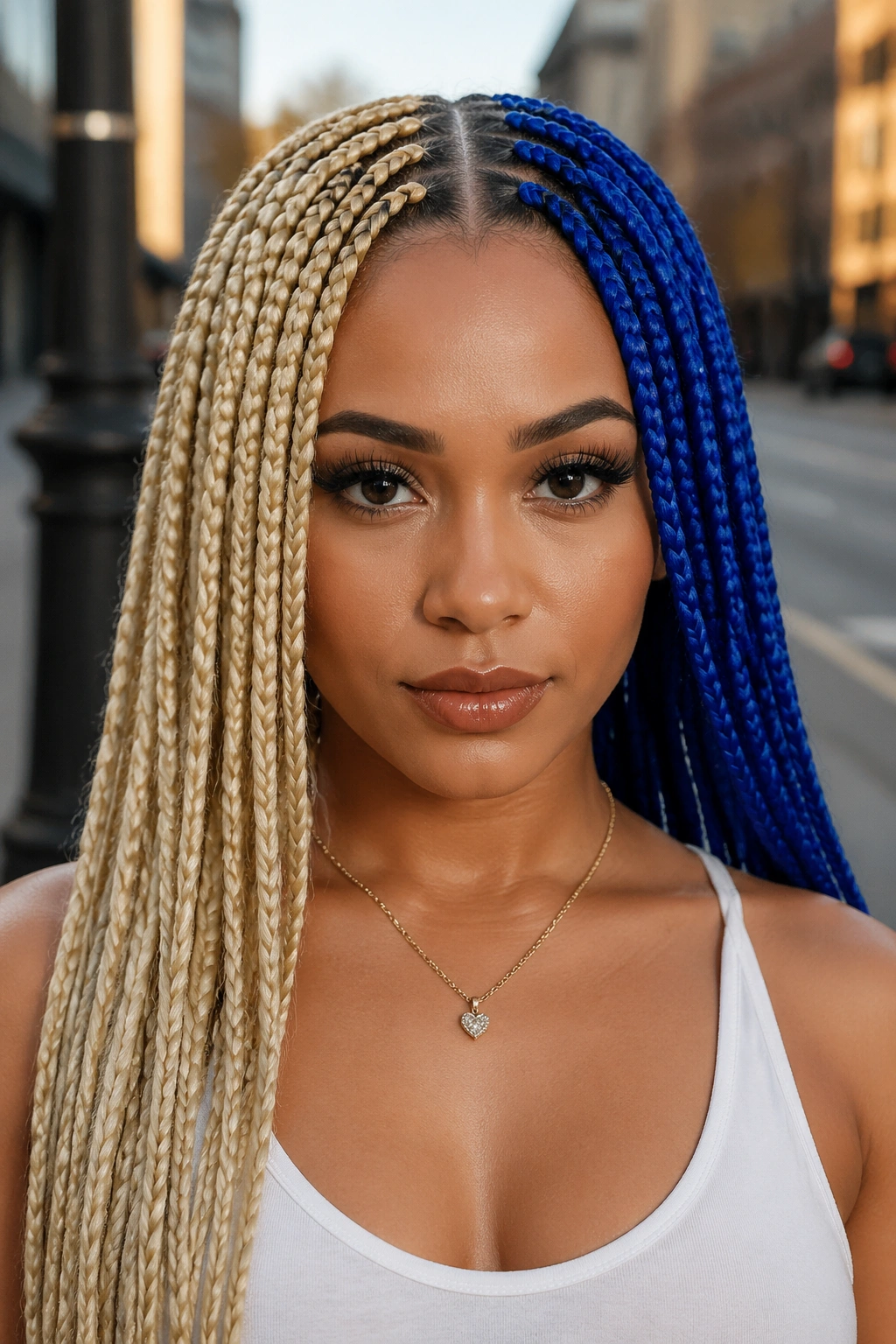
Unlike ombré, a split-color install makes the difference obvious from the first glance. One side blonde, one side blue. No guessing. No slow reveal. The parting line becomes part of the design, which is why this look feels more graphic than soft.
The best version uses a clean center part and the same braid size on both sides. If the plaits are mismatched, the split can look accidental. Keep the blonde warm and the blue saturated, and the color boundary reads deliberate instead of messy. If you want an even sharper finish, ask your stylist to mirror the braid direction on both sides so the two colors feel like they belong together.
This is the style for people who like high-contrast hair and do not mind being noticed. It works from the front, the side, and even in a low ponytail, which matters more than people admit. A style that only looks good from one angle gets old fast.
I’d pick this for events, photos, or any day you want your braids to do the talking before you do.
6. Jumbo Knotless Blonde and Blue Box Braids
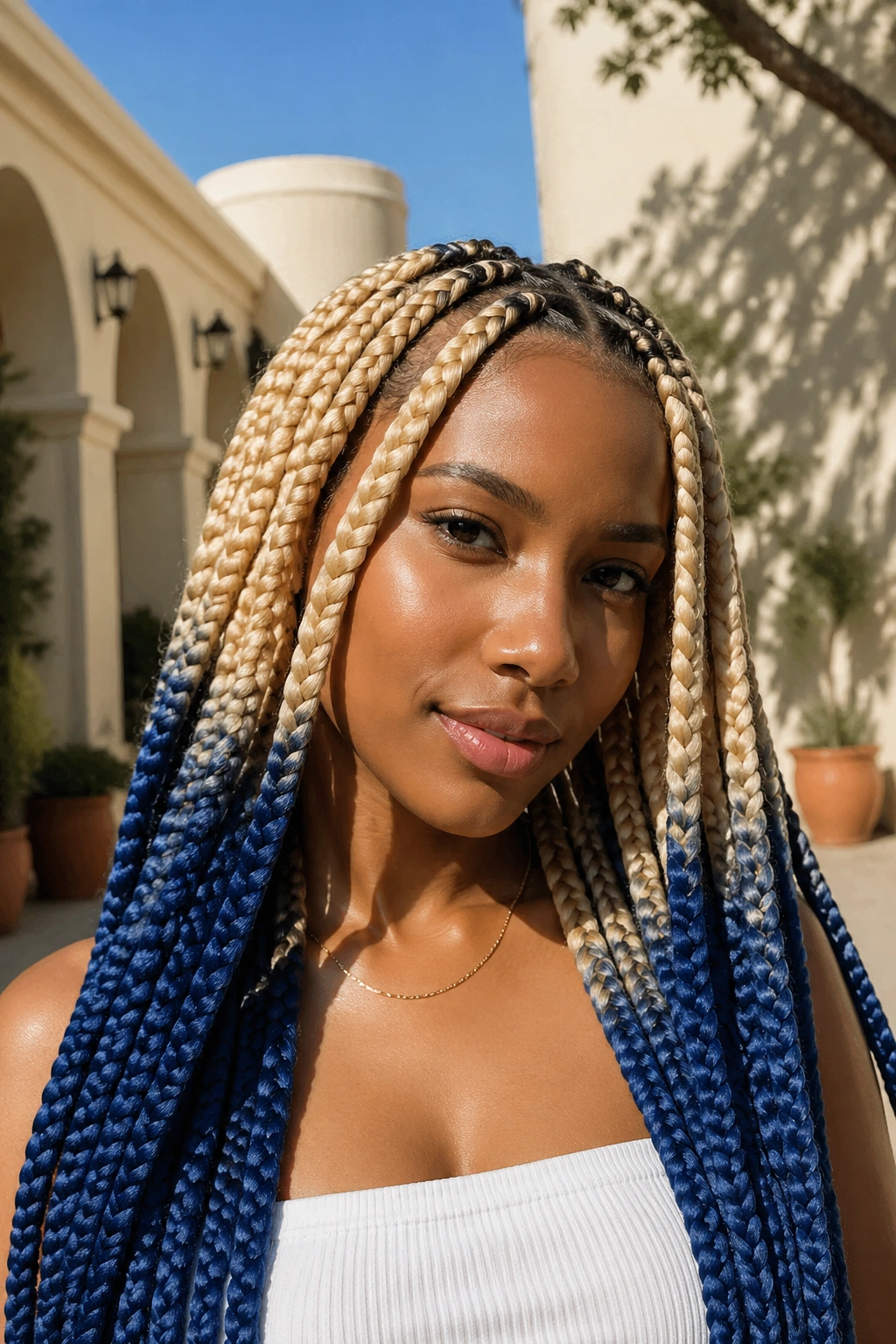
Jumbo knotless braids show color better than almost any other size. Big sections give the blonde and blue room to read as blocks instead of tiny stripes, so the whole style lands faster and looks cleaner from a distance. Knotless roots also help the braids sit flatter, which keeps the heavier color mix from feeling bulky.
That flatter start is not only about looks. It also feels lighter at the scalp, especially if you like braids that are large enough to finish quickly but not so huge they slump by day two. The color stands out because there are fewer braids fighting for attention. Less visual clutter. More shape.
This version is good if you want a strong style without a ton of tiny sections. It holds up well with a middle part, a side part, or even a deep swoop pulled over one shoulder. The blue can sit in the middle of each braid, show up only at the ends, or repeat in alternating blocks.
My take: jumbo knotless is the fastest way to make blonde and blue feel polished instead of overworked.
7. Medium Box Braids with Blue Face-Framing Pieces
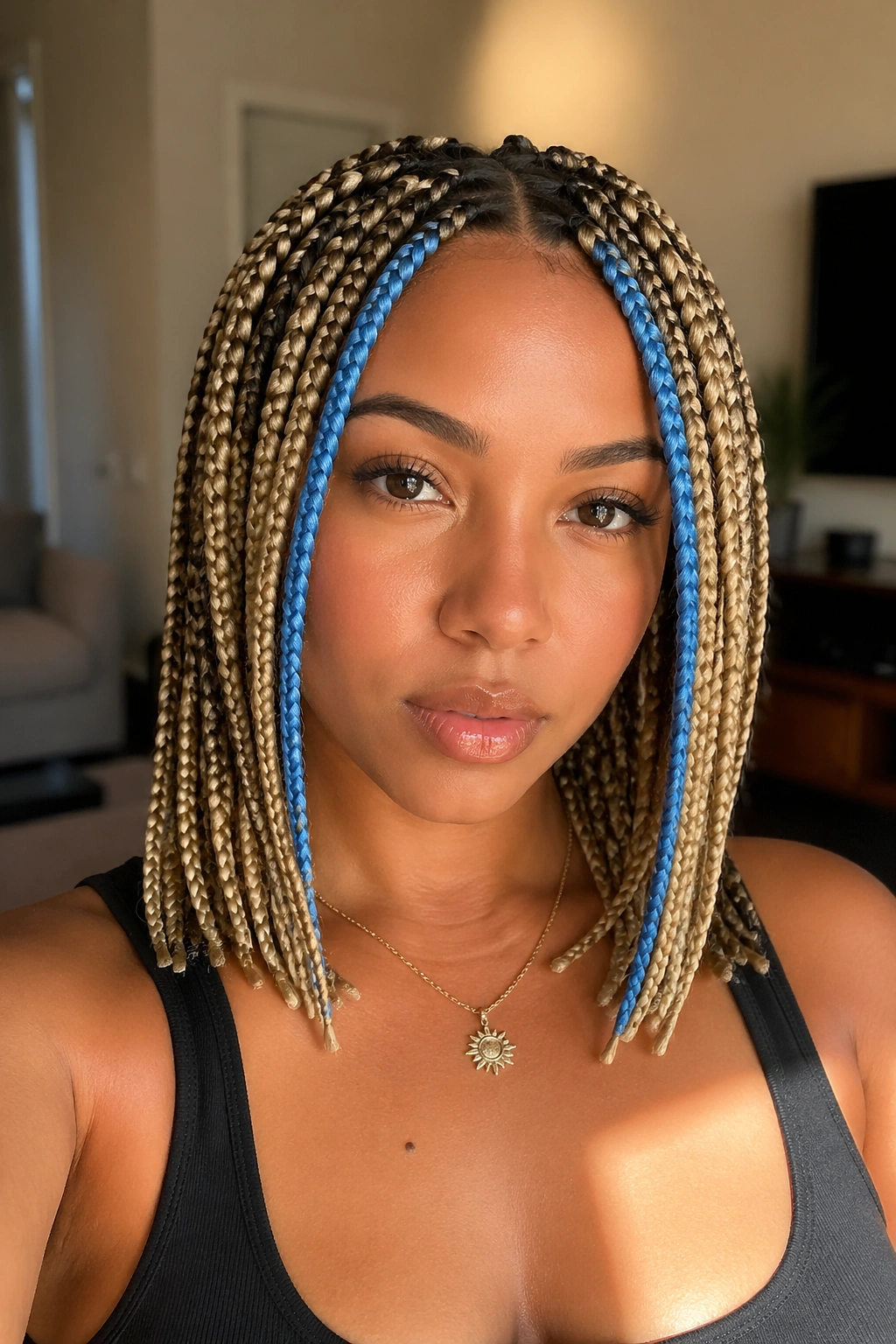
What if you want the blue to feel lighter around your face?
Then keep it close to the front. A few blue braids at the hairline or temple area change the mood of medium blonde box braids without taking over the whole install. The rest can stay blonde, which keeps the look easy to wear if you do not want full-head contrast.
Medium braids are a nice middle ground because they show the color clearly without feeling heavy. They also give your stylist enough room to place the blue pieces in a way that flatters your face shape. A braid on each side of the part can soften strong features. Four braids across the front can make the color feel more obvious. Two can keep things subtle.
How to Wear It
- Let the blue braids fall closest to the cheekbones.
- Keep the part crisp so the color framing stays obvious.
- Pull the front pieces into a half-up style when you want the blue to pop.
- Use mousse lightly on the ends; too much product can make the color look dull.
The whole idea is simple. Give the blue a job, and it works harder for you.
8. Small Boho Blonde and Blue Box Braids
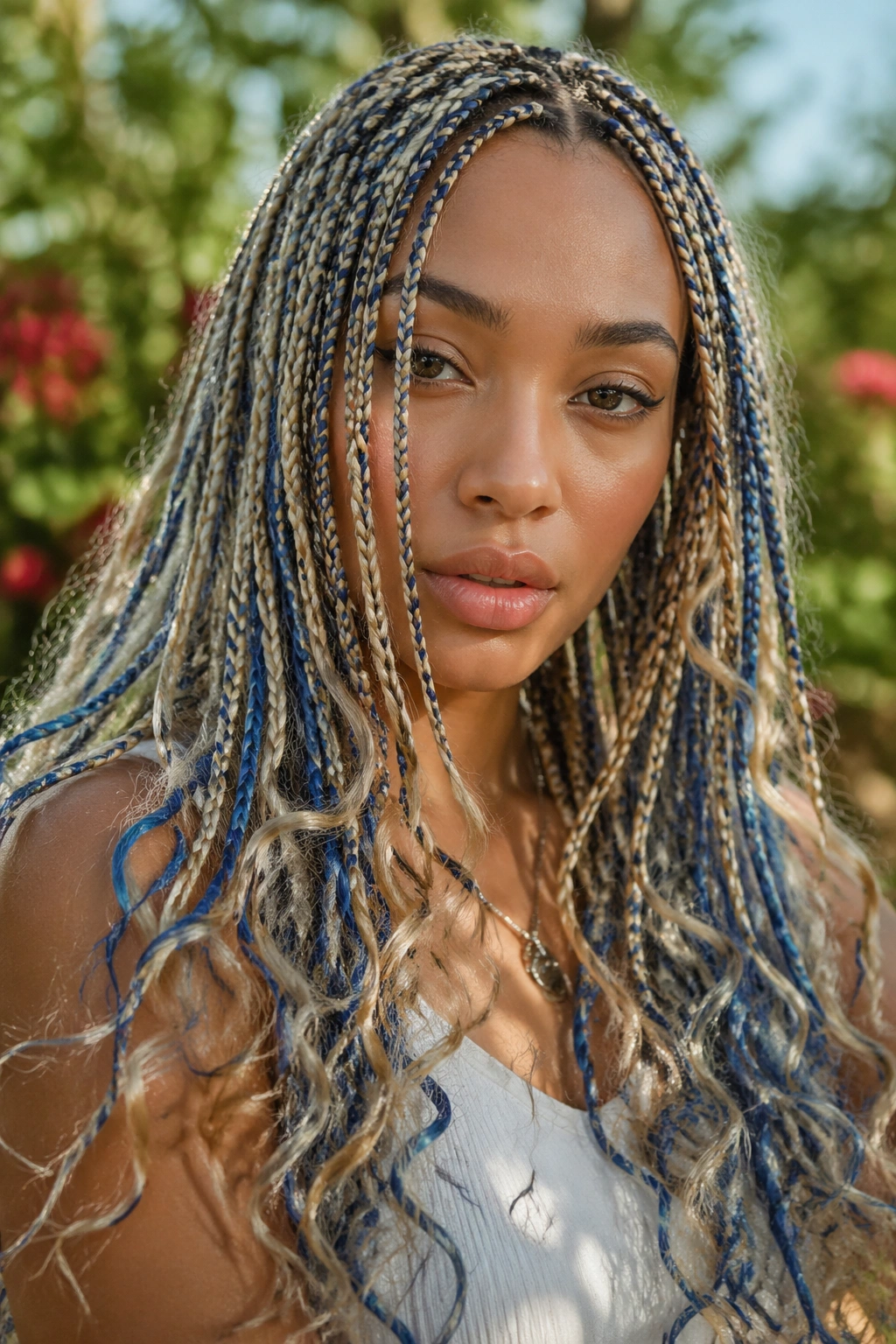
This style looks soft at first glance. Then the loose curls start moving, and the whole thing wakes up.
Small boho box braids give blonde and blue a lot of texture to play with. The braids themselves stay neat, but the loose pieces around the ends break up the color so it feels less rigid. Blue can hide in the curls, show up at the tips, or appear in alternating strands that only catch your eye when the hair shifts.
The boho look works especially well if you like hair that feels a little undone on purpose. Not messy. Just relaxed. Small braids take longer to install, though, so this is not the style to pick if you want speed. You choose it because you like the finish, not because it is quick.
- Best with long braiding hair.
- Keep the curls concentrated near the ends.
- Use a lighter touch with accessories so the texture stays visible.
- A soft mousse helps the loose pieces stay bouncy instead of frizzy.
The charm here is movement. If you want the style to look alive, this is a strong pick.
9. Blonde Braids with Blue Beads and Shells
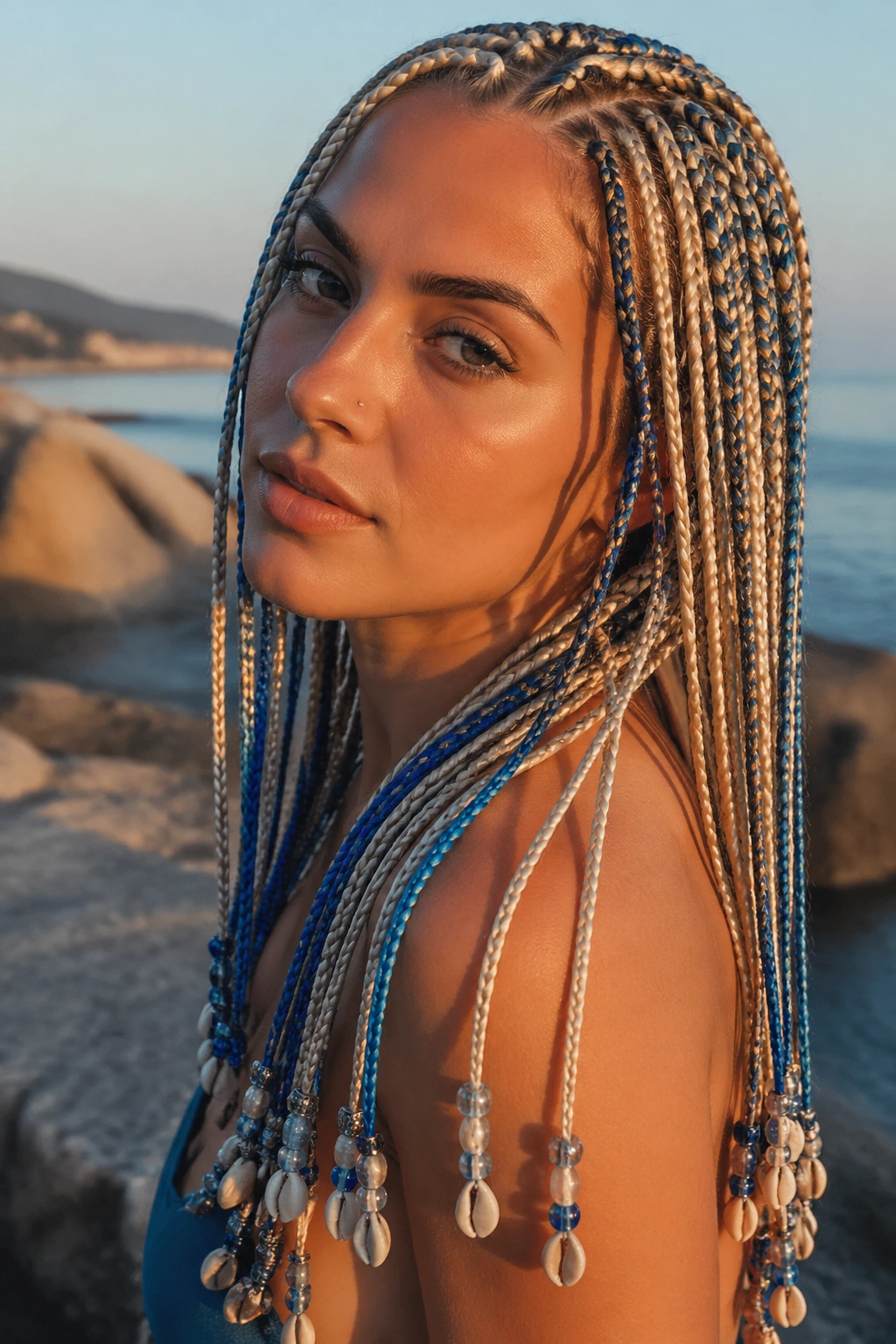
Beads change the rhythm of the whole style. You hear this look before you even fully notice it.
On blonde and blue box braids, beads and shells give the color a second layer. A clear bead over a blue braid looks sharper than the same bead on blonde. A matte bead on the blonde side can calm things down. Mix them carelessly and the hair starts to feel cluttered, so placement matters. A few pieces near the ends are usually enough. You do not need to load every braid.
What I like about beads is how they change movement. The braids swing differently when there is weight near the bottom, and the blue ends feel even more deliberate when they are capped with small details. Shells push the look toward beachy. Silver cuffs make it feel sharper. Wooden beads lean earthy. Same braids, different attitude.
A small note. Put heavier beads away from the nape if you plan to wear the style for a while. That area takes the most friction, and loose hardware down there gets annoying fast.
10. Shoulder-Length Blonde and Blue Bob Braids
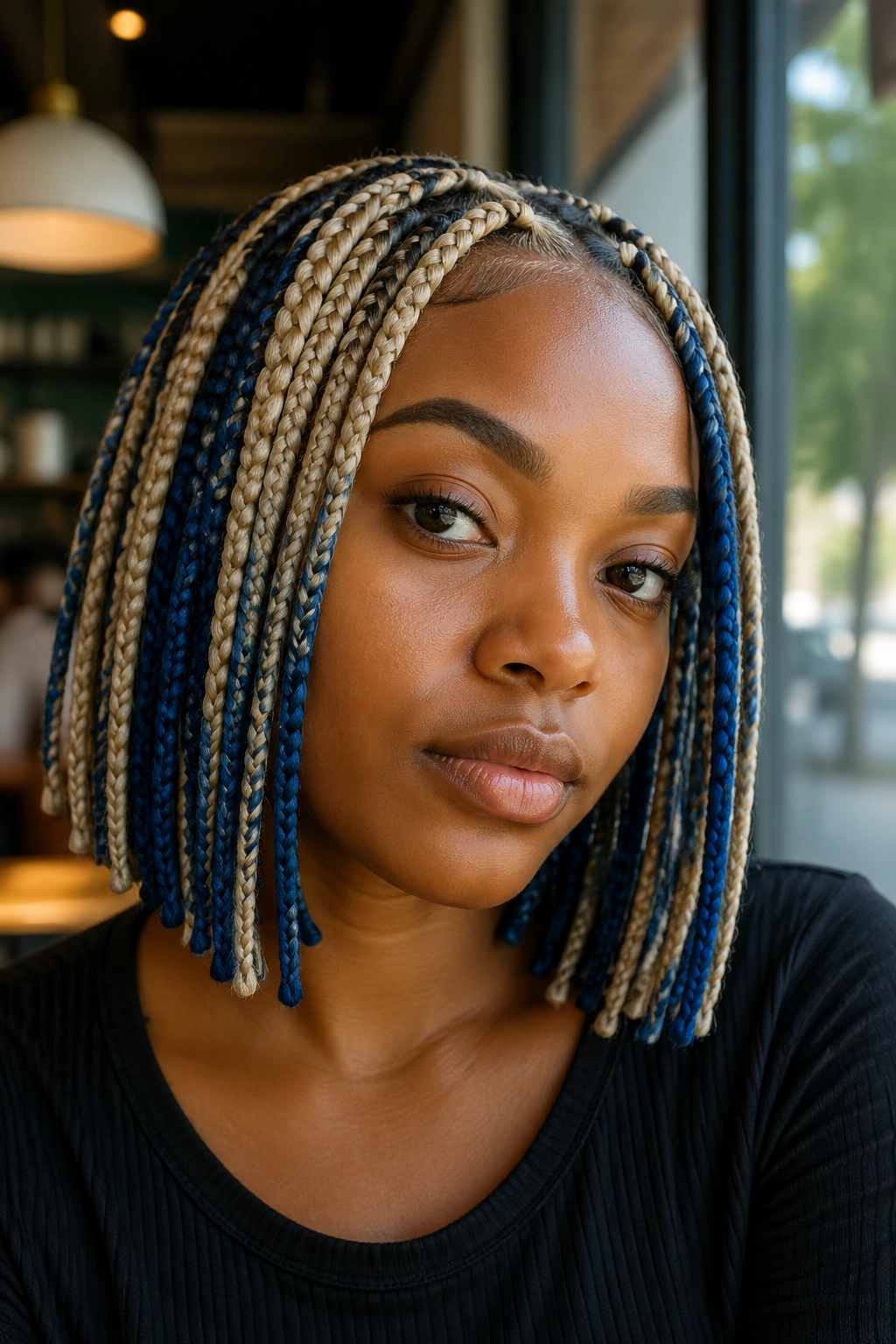
Waist-length braids get attention. Bob-length braids get respect.
A shoulder-length bob keeps blonde and blue right in the frame of the face, which makes the color read crisp and modern. You do not lose the contrast just because the hair is shorter. In some ways, the colors look better because there is less length competing with the face, the neck, or the outfit. The whole shape stays neat.
This is also one of the easier versions to live with. Shorter braids dry faster after washing, sit lighter on the scalp, and do not tangle in a coat collar the way longer styles do. If you like the color but hate hair brushing your ribs all day, the bob gives you a cleaner answer. It feels polished without being fussy.
I’d pick this for someone who wants a strong color story in a more tailored shape. It works with hoops, turtlenecks, blazers, and simple tank tops. The cut does the framing for you. The color finishes the job.
11. Triangle-Part Blonde and Blue Box Braids
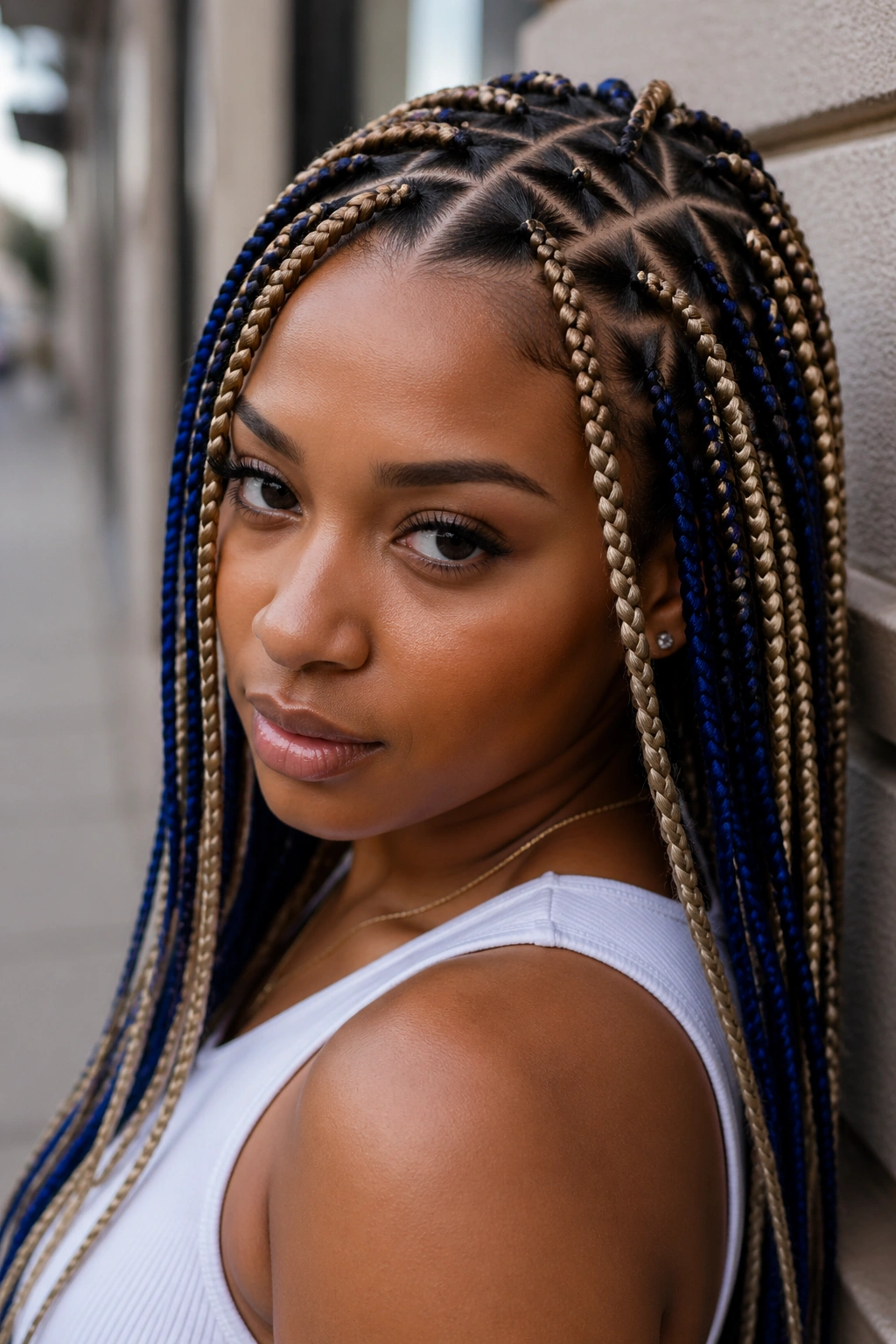
Parting pattern changes the whole style. Triangle parts make blonde and blue box braids look more designed because the angles soften the grid-like feel you get from standard square parts. The color starts to seem more layered, even when the braid sizes stay the same.
That matters most when you want the style to feel intentional from the scalp down. With triangle parts, your eye keeps moving. The sections catch light at different angles, and the blonde and blue don’t sit in such a stiff pattern. It is a small detail that changes the mood more than a lot of people expect.
This works especially well with medium braids, where the parting is visible enough to matter but not so large that the head looks crowded. If your blue is deep and your blonde is warm, triangle parts can keep the whole style from feeling flat.
One sentence can say it cleanly. The parting is the decoration.
12. Goddess Box Braids with Blonde and Blue Curls
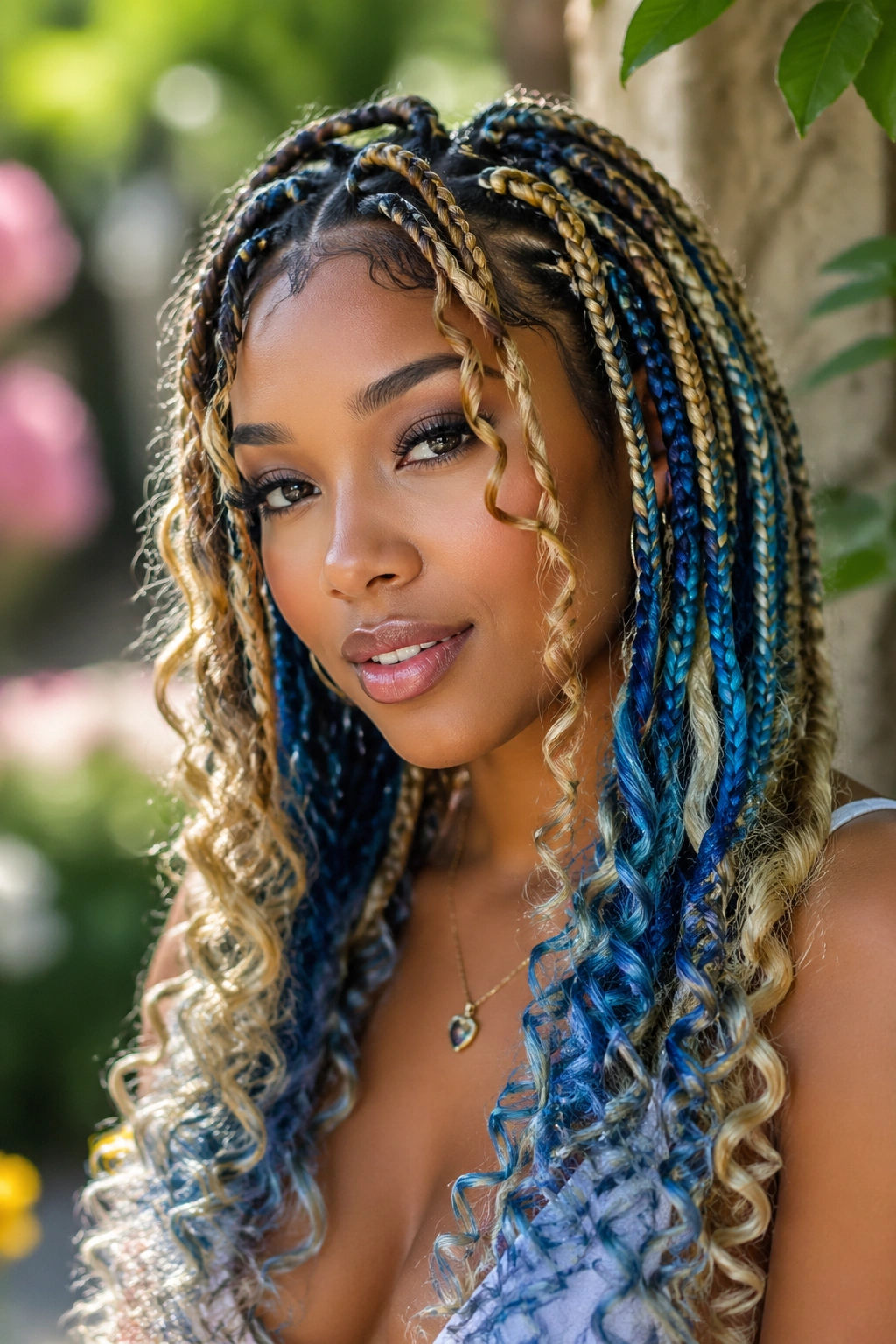
Curly ends or plain braids? For this look, the curls win.
Goddess box braids soften the hard lines of blonde and blue by adding loose curls or tendrils through the lengths and at the ends. That extra texture keeps the color from looking too rigid, which matters when both shades are already doing a lot. The result feels lighter around the face and a little more romantic than standard box braids.
The curls work best when they are placed with some restraint. If every braid has a huge curl mass at the bottom, the style can tangle and lose shape fast. A few well-placed spirals do more than a heavy pile of loose hair ever will. I like curls near the front and at the lower third of the hair, where they can move without fighting the braid itself.
Best Places for the Curls
- Around the face to soften strong color contrast.
- Near the ends so the blonde and blue both stay visible.
- Along the outer layer, not buried deep in the center.
- On medium to long lengths, where the curls have room to fall.
This style is prettier than plain braids, sure, but it is also a little higher maintenance. That tradeoff is real.
13. Denim Blue and Caramel Blonde Mixed Braids
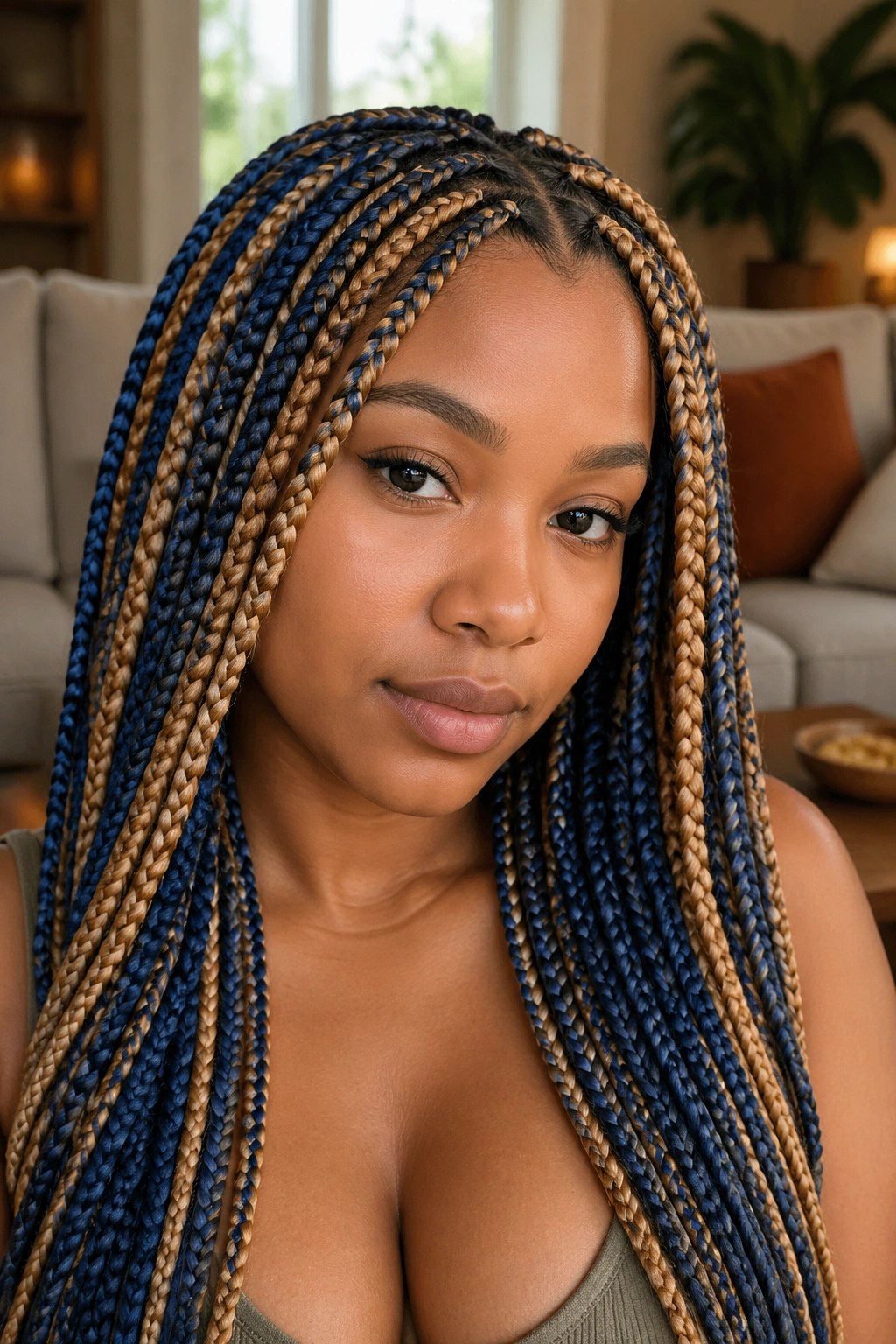
This is the version for people who want color, but not the kind that shouts from across the room.
Denim blue and caramel blonde feel lived-in in a way cobalt and platinum do not. The blue is softer, more washed, and easier on the eye. The caramel blonde warms everything up so the style keeps a touch of brightness. Together, they make box braids look rich without looking overstyled.
The mix works best when the stylist alternates the colors in a steady rhythm instead of tossing them in randomly. A braid with a little denim woven into a caramel base looks different from one that is fully blue. That small rhythm keeps the head from looking patchy. It also gives the style depth when it is worn in a ponytail or bun.
- Try 24 to 30 inch braiding hair for enough color movement.
- Ask for the blue to repeat in a pattern, not at random.
- Keep the finish low-shine so the denim tone stays soft.
- A middle part or a deep side part both work here.
There is a calmness to this color pairing. It still has personality. It just does not need to yell about it.
14. Side-Swept Blonde and Blue Box Braids
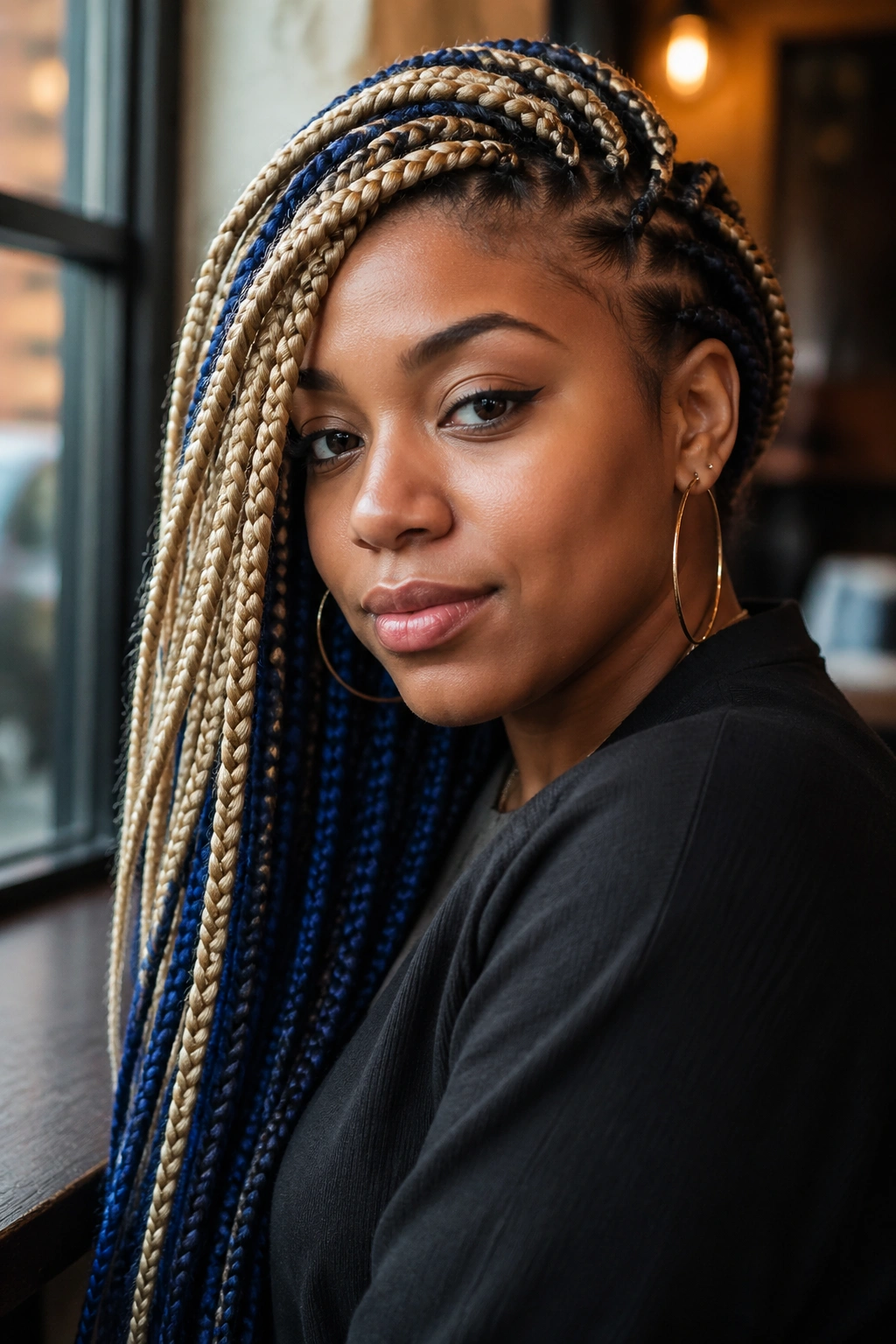
A side sweep can rescue almost any braid style.
With blonde and blue box braids, the asymmetry makes the color feel intentional even if the palette itself is simple. One side carries the weight. The other side gets tucked back or pinned away. That shift gives the eye a place to land, and the blue ends up looking stronger because the silhouette is doing half the work.
This is one of my favorite ways to wear mixed-color braids when I want the hair to look styled without much fuss. The sweep opens up the face, shows off earrings, and makes collars or necklines look more interesting. It also keeps the blue visible in a different way than a straight-down style does. The contrast lands diagonally instead of vertically, which feels fresher.
Use a few discreet pins or braid cuffs if the sweep keeps slipping. Heavy-hold spray helps, but too much makes the braids stiff. Nobody wants crunchy braid hair. That ruins the whole point.
15. Lemonade-Inspired Blonde and Blue Box Braids
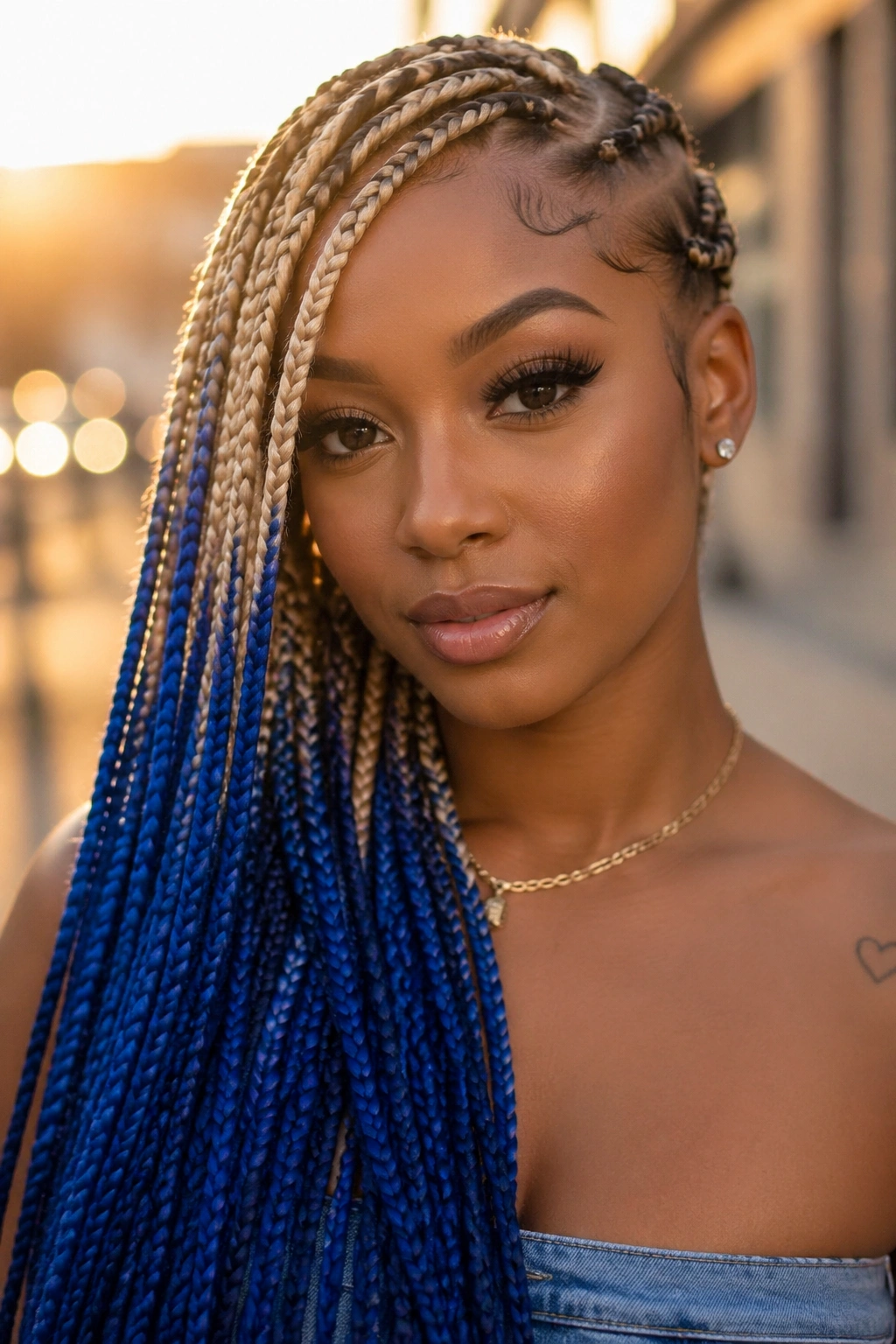
If side-swept braids are a gentle curve, this is the sharper line.
Lemonade-inspired blonde and blue box braids lean into a deep side part and a strong directional fall, often sweeping across one shoulder with a clean frame at the hairline. The look borrows the energy of side-swept cornrow styles, but the box braid texture gives it more weight and more movement. That combination feels deliberate from the first glance.
The blue placement matters here. Put the darker blue toward the outer side or the ends, and the blonde near the front, and the whole style becomes easier to read. The eye starts at the face and follows the braid line downward. That is what gives this version its clean shape. It is a good choice if you like dramatic parting, sharp angles, and a style that plays well with statement earrings.
I would ask for braid directions that angle toward the shoulder at about 30 to 45 degrees. That kind of detail sounds tiny. It is not.
16. Layered Blonde and Blue Feed-In Braids
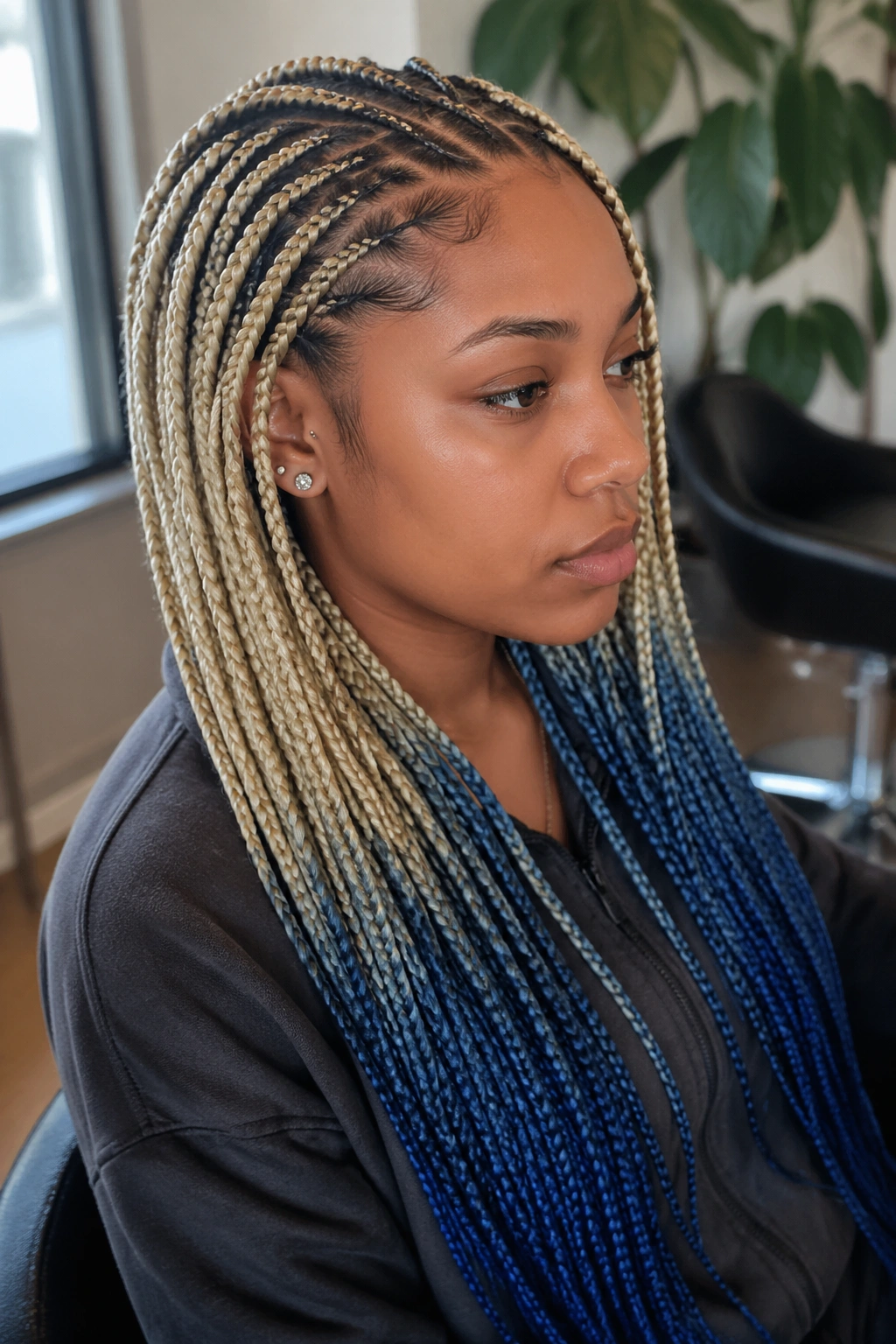
Layers stop the color from looking flat. Feed-in braids let the install start lighter at the scalp and build thickness as the braid moves down, which gives blonde and blue more shape to work with. The result feels lighter, neater, and more intentional than a uniform braid set.
This is a smart choice when you want movement without piling on extra length. The top rows stay close and clean. The lower rows can be thicker or slightly longer, so the blue has somewhere to sit without overwhelming the blonde. It is also a nice answer if you like a style that looks detailed up close but still reads smooth from across the room.
You can play with the layering in a few different ways. Put the blue in the lower layers only. Alternate blonde and blue by row. Or keep the top sections mostly blonde and let the color build as the braids descend. Each version changes the balance, and none of them feel like a carbon copy of the others.
Best move: keep the front layers narrower if you want the face to stay open.
17. Turquoise, Sapphire, and Blonde Box Braids
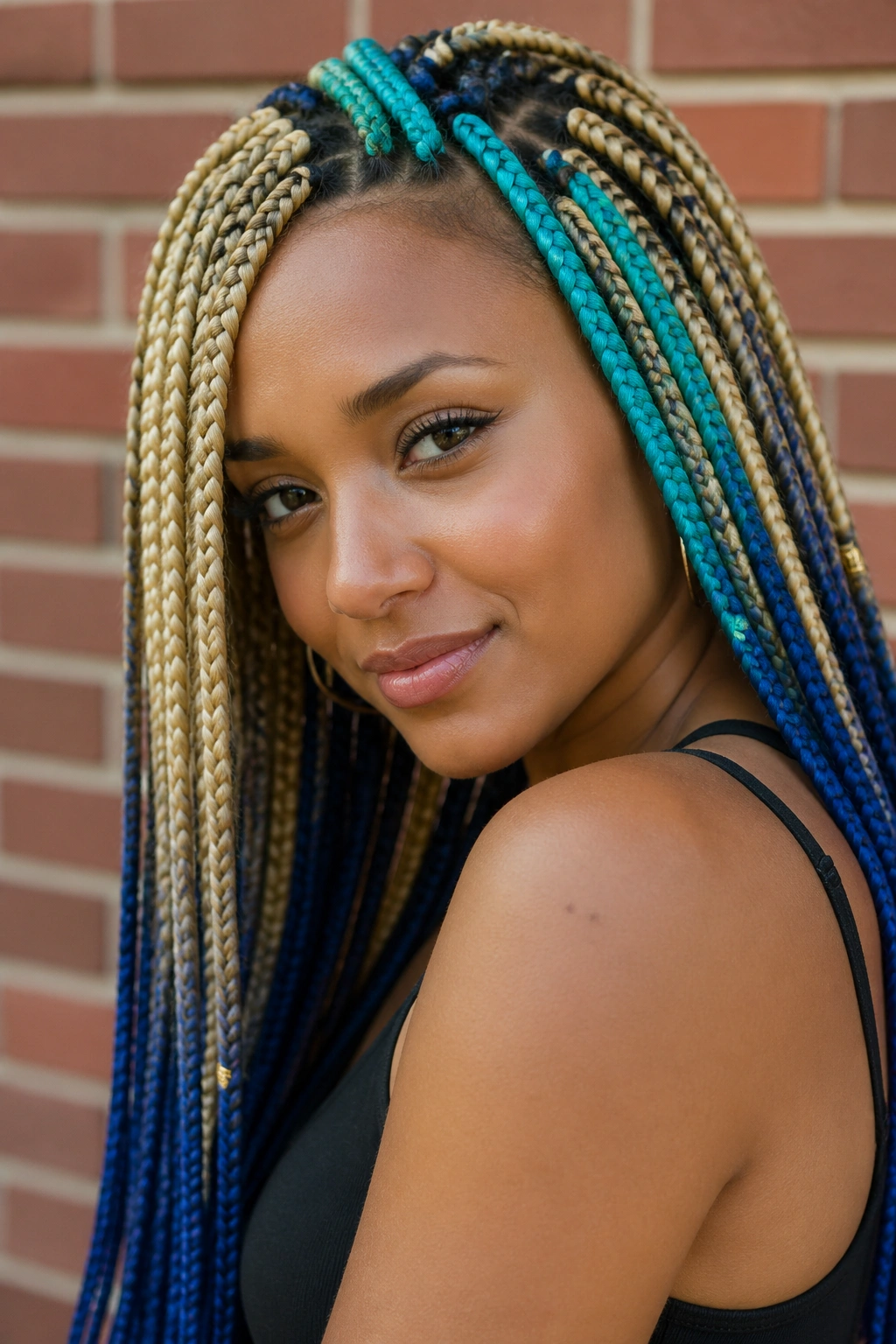
Is one blue enough? Not always.
Mixing turquoise and sapphire with blonde gives the braids depth that a single blue shade cannot always deliver. Turquoise brings brightness. Sapphire adds weight. The blonde sits between them and keeps the whole thing from turning into one flat block of color. If you like color that looks layered instead of loud, this is the version to notice.
How to Keep the Mix Clean
- Pick one blue to dominate and let the other act as an accent.
- Repeat the same ratio through the whole head so it does not look scattered.
- Keep the blonde tone warm enough to separate both blues.
- Ask for the two blues to stay in separate strands, not blended into a muddy mix.
This style works best when the blue tones are clearly different. If they are too close, the braid loses its shape. If they are too far apart, the head can look busy. The right balance sits in the middle. A few braided sections with turquoise near the front and sapphire toward the ends can make the style feel layered without becoming chaotic.
18. Festival-Ready Blonde and Blue Braids with Cuffs
This one leans playful, and there is no point pretending otherwise.
Blonde and blue box braids with cuffs, thread wraps, and a few small charms are built for movement. The accessories catch the eye, the color does the rest, and the style ends up looking finished even if the outfit is simple. I like this version because it lets you add personality without changing the braid structure itself. A clean install can go a long way once the hardware comes in.
The trick is restraint. Too many heavy cuffs near the nape will snag on shirts and get annoying fast. A few pieces near the front or along the outer layers usually do more than a crowded row of charms ever will. If you want the style to last longer, keep the heaviest accessories away from the spots that rub against pillows, collars, and straps.
A final practical note: the smartest festival braids still sleep well. Wrap them with a satin scarf, keep a light mousse on hand for flyaways, and do not overload the ends with weight. Pretty hair that fights you every night stops feeling pretty pretty quickly.
Blonde and blue box braids work because they give you contrast without needing a complicated shape. Once you choose the right placement — ends, front pieces, underlayers, split halves, or color blocks — the style starts doing the heavy lifting on its own.
The real decision is not whether the colors work. They do. It is whether you want them to whisper, frame, sweep, or hit from every angle at once.
