

Twist braids with curly ends have a very specific charm: they look neat from the scalp, then soften at the bottom in a way that keeps the style from feeling stiff or severe. That contrast is the whole appeal. Clean parting, smooth twists, and a little curl at the tips can make a protective style feel lighter, more playful, and a lot more lived-in.
I’ve always liked styles that do two things at once. These twists keep the hair controlled and tucked away, but the curly ends give you movement, texture, and a bit of personality the second you turn your head. They also solve a real styling problem: straight, blunt ends can make twists look heavy or unfinished, while curly ends add shape and help the style read as intentional from every angle.
The catch is that curly ends are not all the same. A soft spiral, a brushed-out curl, and a tight rod set all change the mood. So do part sizes, twist thickness, and length. One style can feel polished enough for work; another looks better loose and boho; another gives off that bold, full, dramatic look people love on fuller twist braids.
1. Classic Shoulder-Grazing Twist Braids With Soft Curly Ends
This is the style I’d recommend to anyone who wants a clean starting point. The twists fall around the shoulders or just below them, and the curly ends keep the whole look from feeling boxy. It’s tidy, easy to wear, and flattering on a lot of face shapes because the curls create a soft frame near the collarbone.
Why This Version Works
The shoulder length matters more than people think. When twists stop around that area, they don’t drag on the neck, and the curls at the ends get enough room to bounce instead of flattening against clothing. That means less frizz at the tips and a style that still looks fresh after several wears.
I also like this length because it’s practical without looking plain. You can wear the twists down, tuck one side behind the ear, or pull half of them back with a small clip. The curly ends do the talking. They give the style motion, and that motion keeps the look from reading as too rigid.
Best details to ask for
- Part size: medium, about 1/2-inch to 3/4-inch sections
- Curl finish: soft flexi-rod curls or medium perm rods
- Hair used: human hair, water wave, or synthetic curly tips depending on the look you want
- Best face shape match: almost any, but especially oval and heart-shaped faces
Tip: Keep the curls loose. Tight ringlets at the bottom can look busy; a softer curl usually looks more expensive and wears better.
2. Boho Twist Braids With Face-Framing Curly Pieces
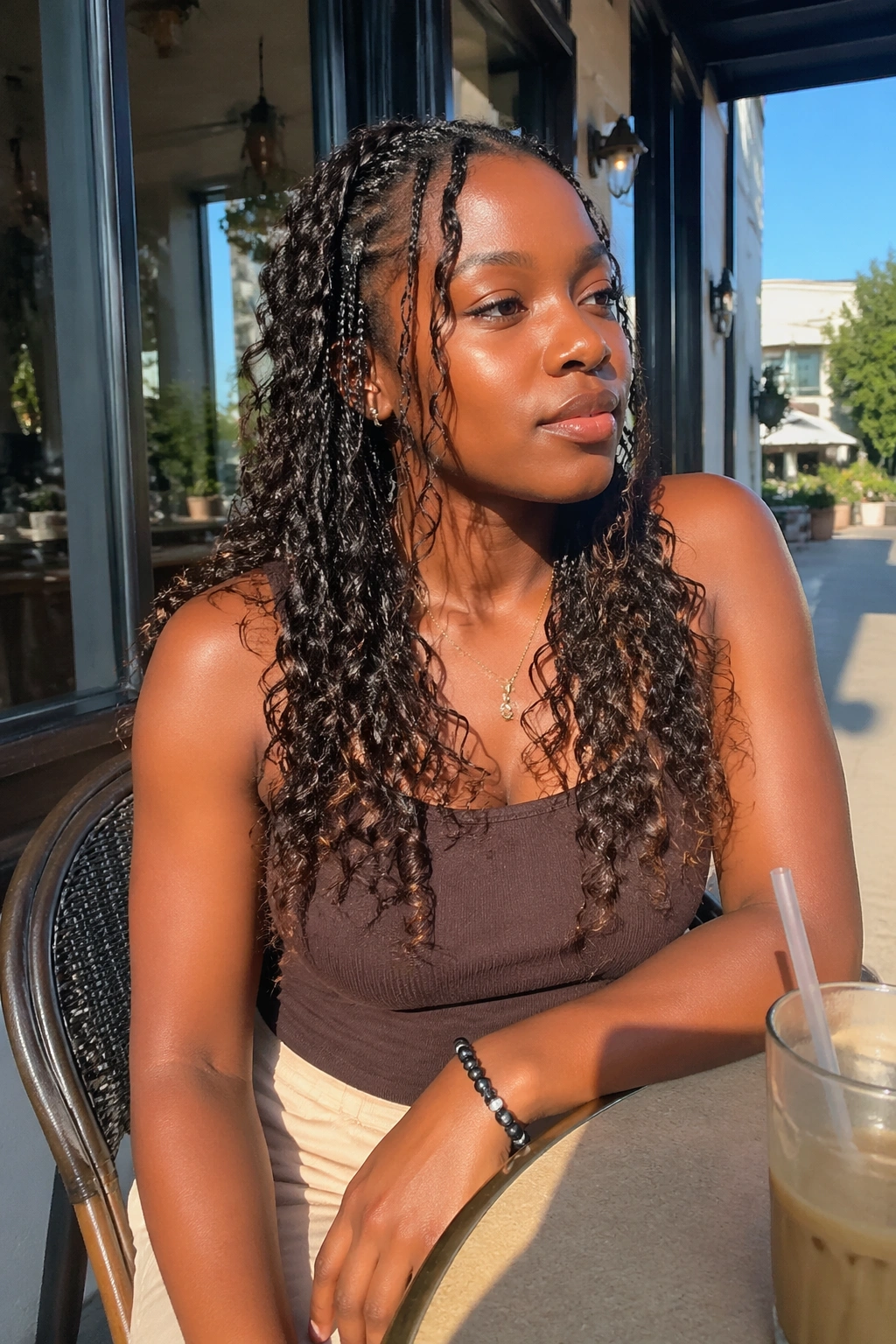
Why do these look so good even when they are slightly messy? Because the style is built to look a little undone. Boho twist braids with curly ends mix neat twisting with scattered curly pieces, and that mix gives the hair movement even when the rest of the style is pulled back.
The face-framing curls are the part people notice first. A few soft pieces near the cheeks can break up a heavy hairline and make the whole style feel more relaxed. I like this look for anyone who wants twist braids but doesn’t want them to feel too structured or too “done.”
How to Wear It
Keep the front curls shorter than the rest so they land around the cheekbone or jawline. That small detail matters. If every curl is the same length, the style can look flat. A little unevenness feels more natural, and it gives the twist braids with curly ends that loose, lived-in texture people try to fake with too much product.
Use a light mousse on the curls, not a heavy cream. Heavy product makes the curls clump and lose that airy look. If the hair starts to puff up after a few days, finger-coil only the front pieces. Leave the back alone unless it needs real help.
This style is especially good if you like a hairline with some softness. It doesn’t have to be fussy. That’s the point.
3. Long Senegalese-Style Twists With Curly Tips
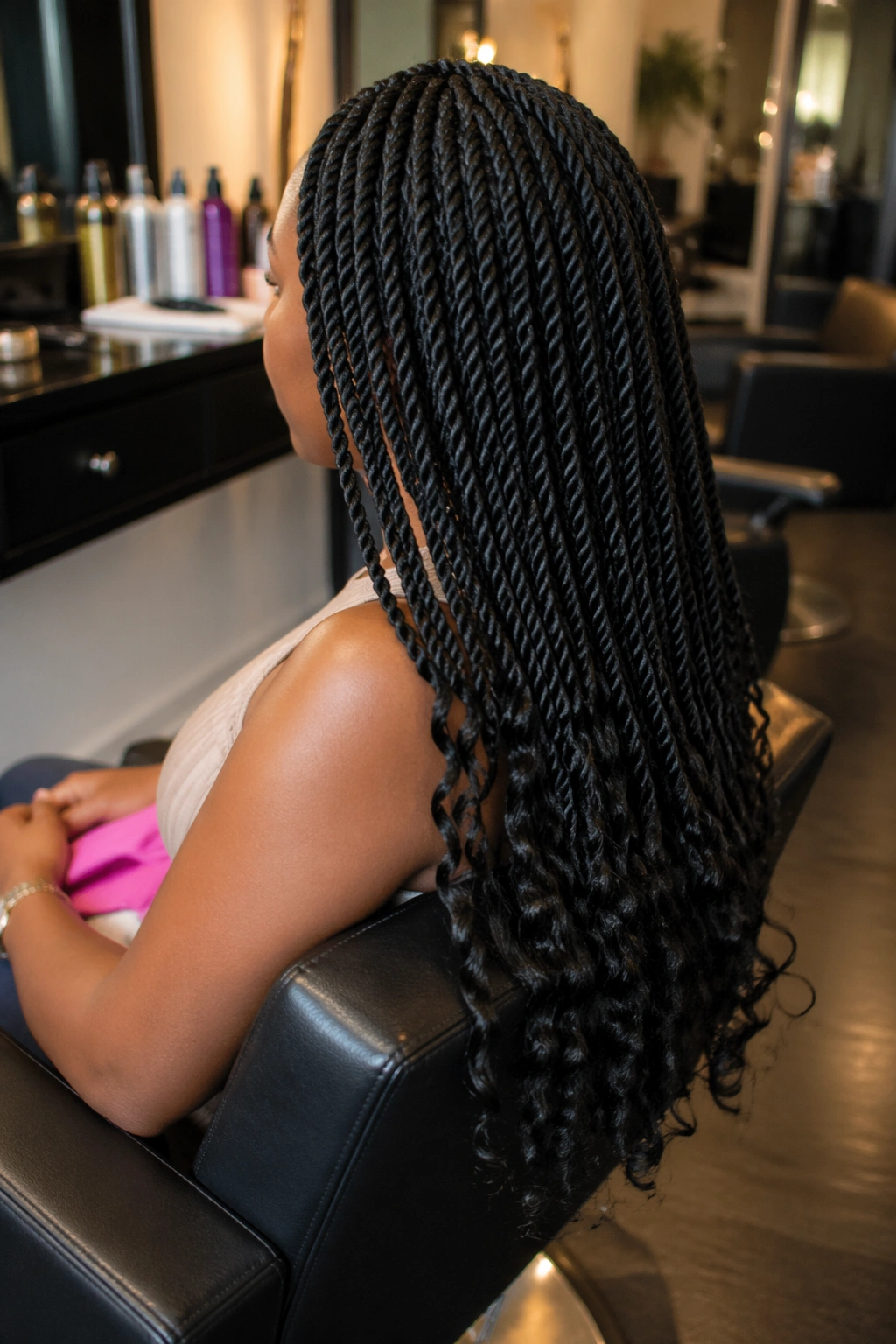
Long twists are not subtle. They swing, they move, and they make a statement before you even finish walking into a room. Add curly tips to Senegalese-style twists, and the style gets a softer ending instead of that straight, blunt finish that can look a little severe on longer lengths.
The key here is balance. Long twists can get heavy fast, so the curly ends should feel like a release, not an afterthought. If the twists are very thick, the curls need enough length to show up. If the twists are slimmer, the curls can be tighter and a bit more compact. Either way, the tips should look deliberate.
What Makes It Different
Senegalese twists tend to have a smoother, sleeker rope-twist finish than some other twist styles. That polished base contrasts nicely with curly ends because the texture shift is obvious. Straight at the scalp, springy at the bottom. Clean and a little playful.
This style suits people who want length without giving up shape. The curls at the ends keep the hair from looking like one long block of rope. They create a visual break, which is useful when the twists pass the bust or reach the waist.
- Good for: formal looks, sleek outfits, and anyone who likes dramatic length
- Better with: medium-to-large rods for the ends
- Watch for: weight at the roots if the twists are too chunky
- Maintenance note: sleep in a long satin bonnet so the ends do not get crushed
A little shine spray helps. Too much, though, and the curls can go limp.
4. Jumbo Twist Braids With Big Curly Ends
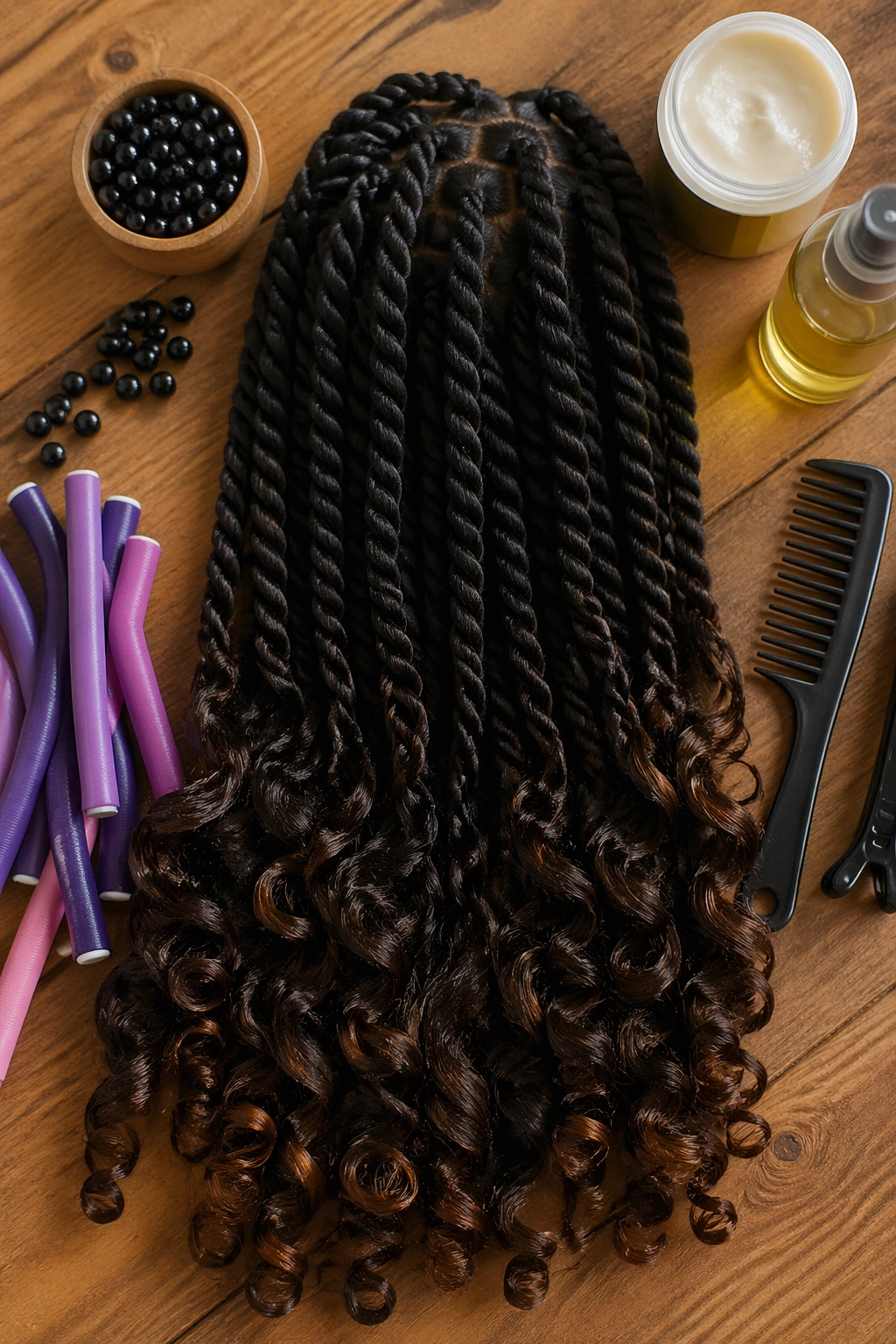
Jumbo twist braids with curly ends are for people who want the style to read from across the room. Big twists make a strong shape near the scalp, and the chunky curled tips soften that shape just enough so it doesn’t feel blocky. The whole look is bold, but not harsh.
I’m a fan of this version because it saves time without looking rushed. Fewer parts mean a faster install, and the large twists hold their shape nicely if the hair is prepped well. The curly ends add the detail that keeps the style from feeling too simple.
What to Ask Your Stylist For
Ask for twists that are dense at the root and slightly lighter toward the ends. That helps the curls move. If the entire twist is too heavy, the curl at the bottom won’t show much once the hair settles.
The rod size matters here. A larger rod creates a loose bend, which matches the scale of jumbo twists. Tiny curls can look disconnected on big hair. That mismatch is one of those things that sounds minor until you see it in the mirror.
Jumbo twists also work well with beads or cuffs, but you do not need extra accessories. The shape already does a lot of the work.
One warning: if your hair is fine or your scalp is tender, keep the parting a little larger and avoid pulling the roots tight. A chunky style should still feel wearable.
5. Twist Braids Bob With Flipped Curly Ends
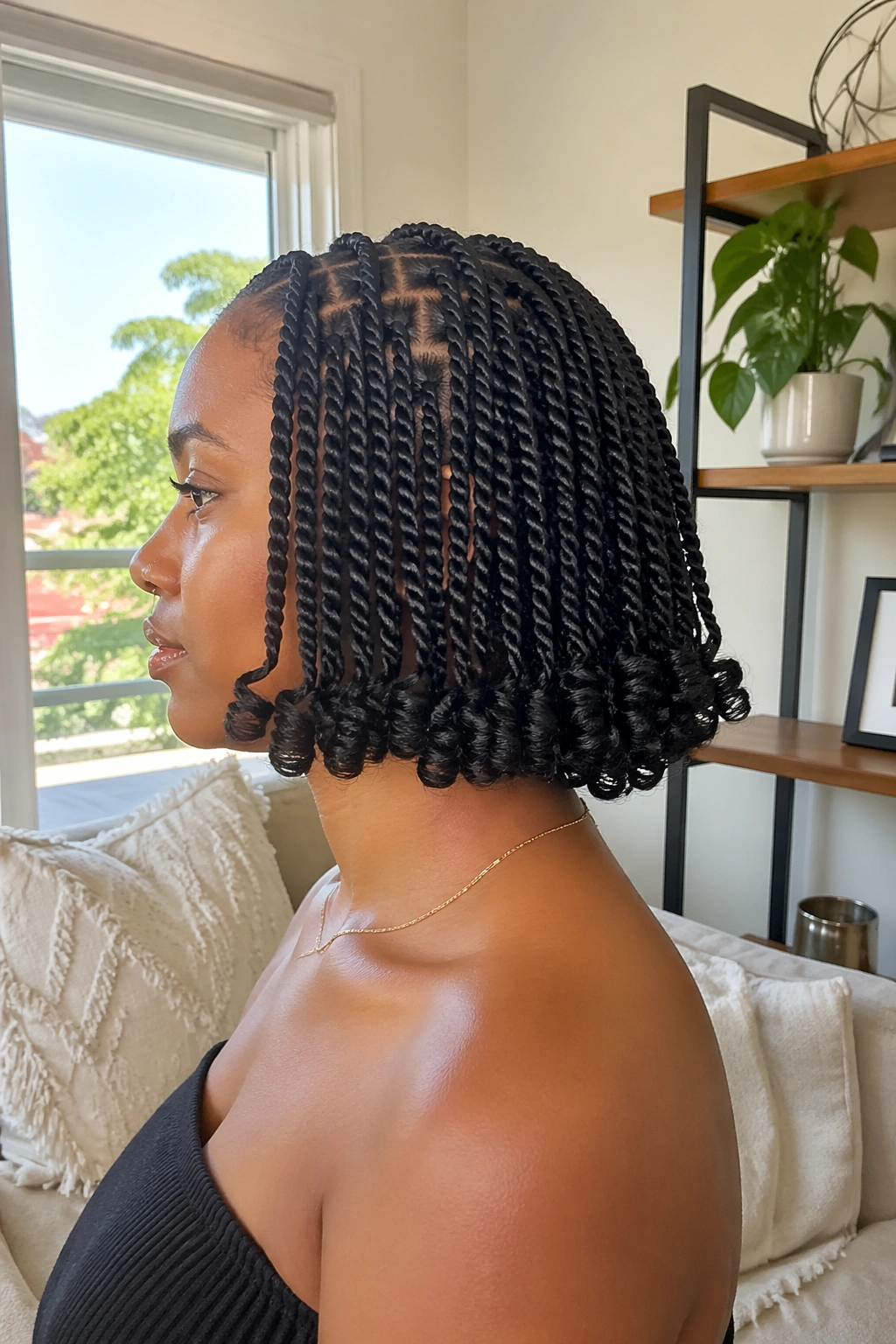
A twist-braids bob is such a good reset when you want something shorter and lighter. The curls at the ends keep the cut from looking blunt, and the shorter length makes the style easy to toss, tuck, and wear without that constant tug you get from long braids.
This version works especially well when the ends flip out instead of hanging straight down. That tiny flick changes the whole mood. It makes the style look youthful and a little cheeky, but not childish. The shape sits close to the head, so the curly ends become the main feature.
What to Look For
A bob with curved ends needs clean spacing between the parts. If the rows are crooked, the style shows it fast because the hair is short. Tight, even parting keeps the bob looking sharp. The curls can be loose and soft; they don’t need to be perfect.
This is one of those styles that actually benefits from a bit of movement. Don’t overcoat the ends with foam or gel. Let the curl breathe. If the tips flip upward on their own, even better. That bounce gives the bob a lived-in shape instead of a helmet effect.
For face shape, a bob with curled ends can be flattering on round faces because it adds vertical movement. It also works nicely on longer faces if you keep a little width at the sides.
Short hair, in general, likes structure. This one gives it structure without stiffness.
6. Half-Up Half-Down Twist Braids With Cascading Curls
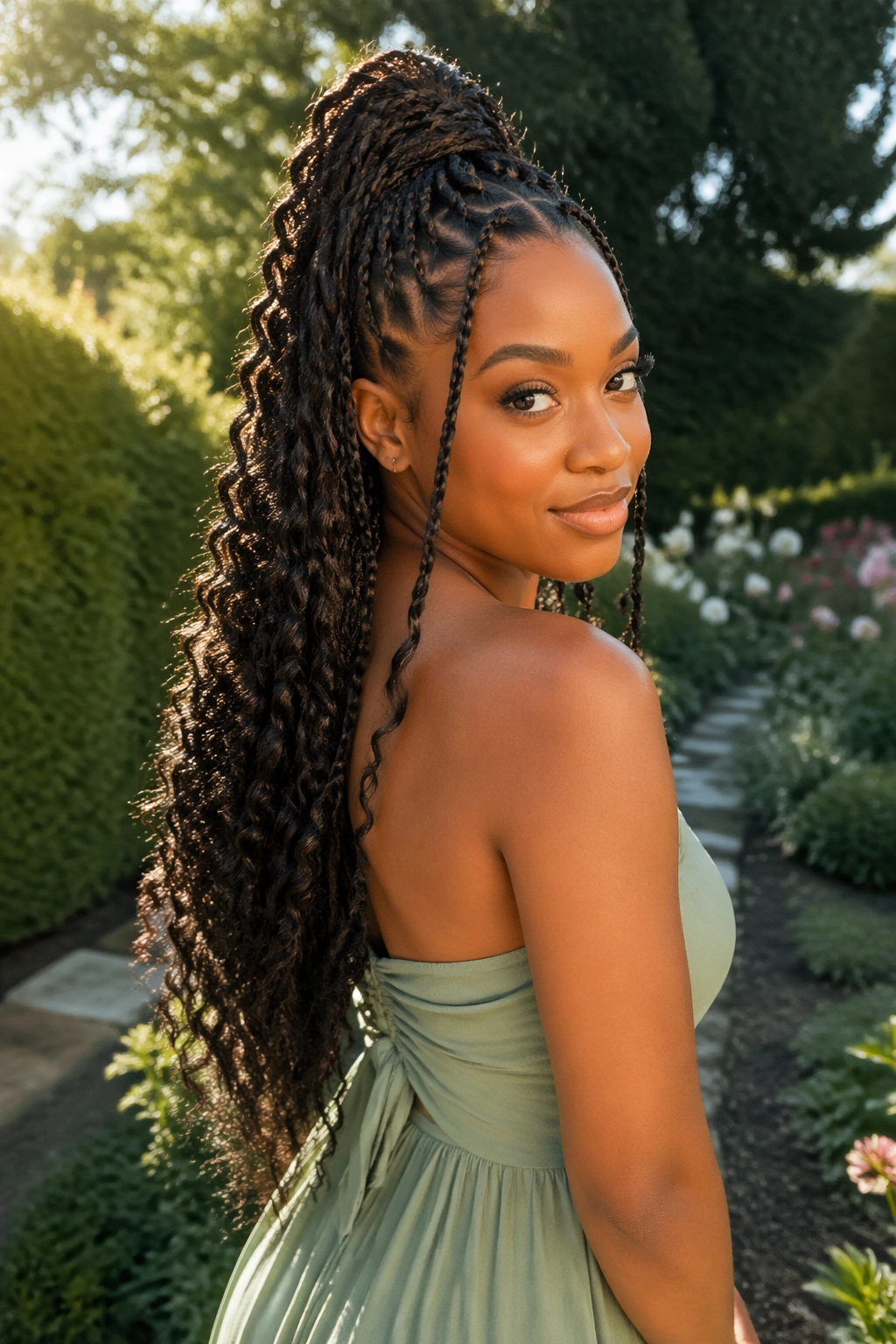
The half-up half-down version is a favorite for a reason. It gives you the polish of an updo without taking away the length and curl drama at the bottom. The top is gathered neatly, then the rest falls loose so the curly ends can do their thing.
I like this style when a client wants versatility. You can wear it to work, to dinner, or to a casual weekend thing, and it never feels overdone. The top section keeps hair off the face, which is useful on warm days or when you just want less fuss around your cheeks and forehead.
How the Shape Changes the Look
The lift at the crown matters. If the half-up section is too small, the style looks accidental. If it’s too big, it can flatten the rest of the twists. A clean section from temple to temple usually gives a good balance, then the curls at the ends bring softness to the lower half.
Use a small elastic or a few pins, but do not yank the top too tight. That kills the shape and can leave the roots sore by the end of the day. A little looseness at the crown actually looks better because it makes the style feel airy.
This is also a smart choice if your curls at the ends are more delicate. They stay protected on the lower half, where they are less likely to rub against jackets, collars, or seat backs.
You get structure up top and movement down below. Hard to beat that.
7. Side-Part Twist Braids With Clean Edges and Curly Ends
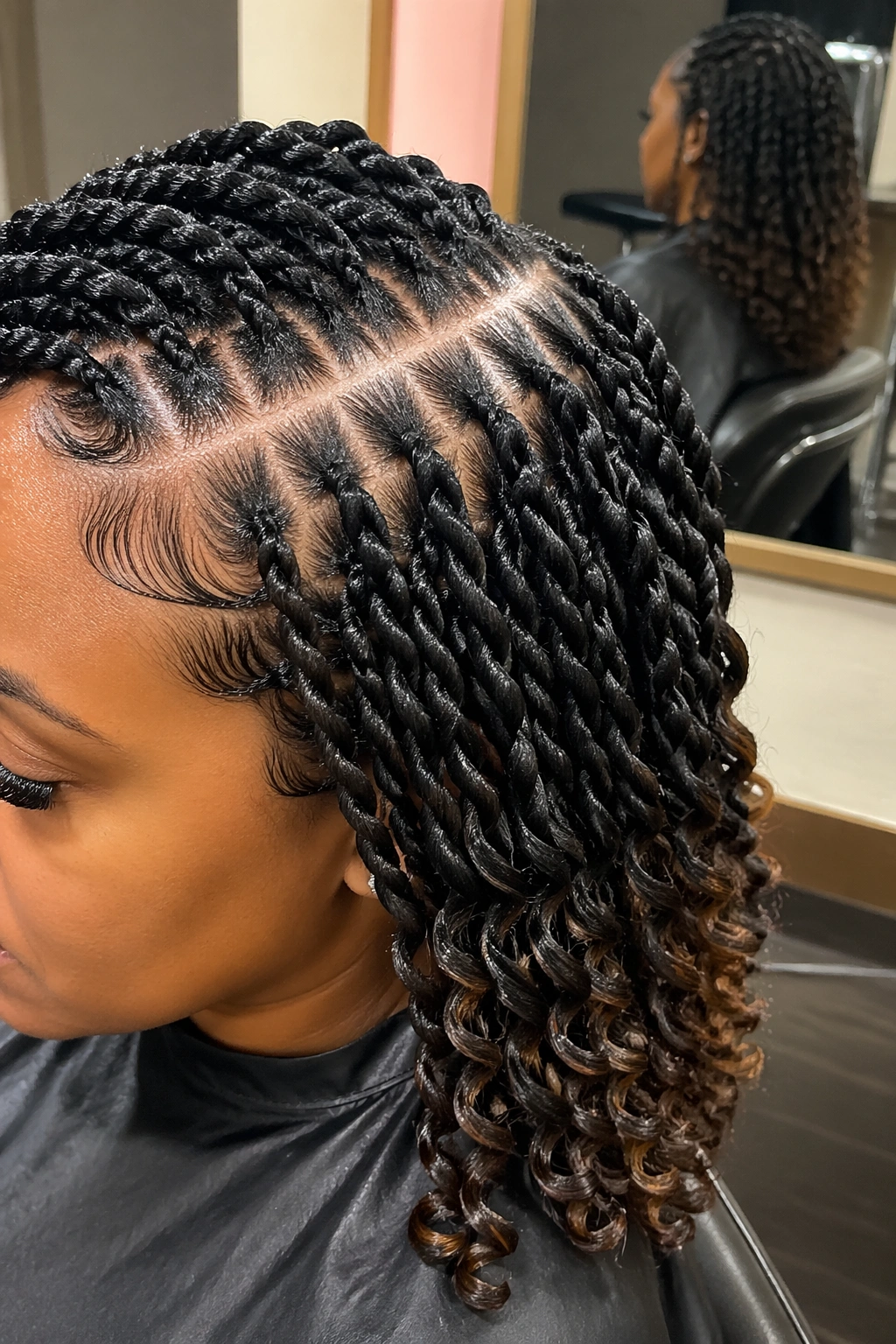
A side part can change twist braids more than people expect. It adds direction. It gives the style a little drama without needing extra length, color, or accessories. When the twists end in curls, the side part makes those curls fall in a more deliberate sweep, which looks especially nice if you want the hair to frame one side of the face.
This version is for people who like a polished finish. Not stiff. Polished. There’s a difference. The scalp should look neat, the parts should be crisp, and the edges can be laid if that is your thing, but the curly ends should still move.
A Small Detail That Matters
Keep the part deep enough to read from across the room, but not so deep that the style starts collapsing to one side. A part that lands just above the arch of the eyebrow usually gives enough drama without making the style lopsided.
The curly ends can be slightly longer on the heavier side of the part. That small asymmetry helps the style look intentional. If both sides are exactly equal, the part can feel too rigid.
A side-part version is also a smart option when you want the twists to look a little dressier. Add a little sheen to the scalp, keep the twists smooth, and let the ends be the softest part of the style.
That contrast is what sells it.
8. Triangle-Part Twist Braids With Defined Curly Ends
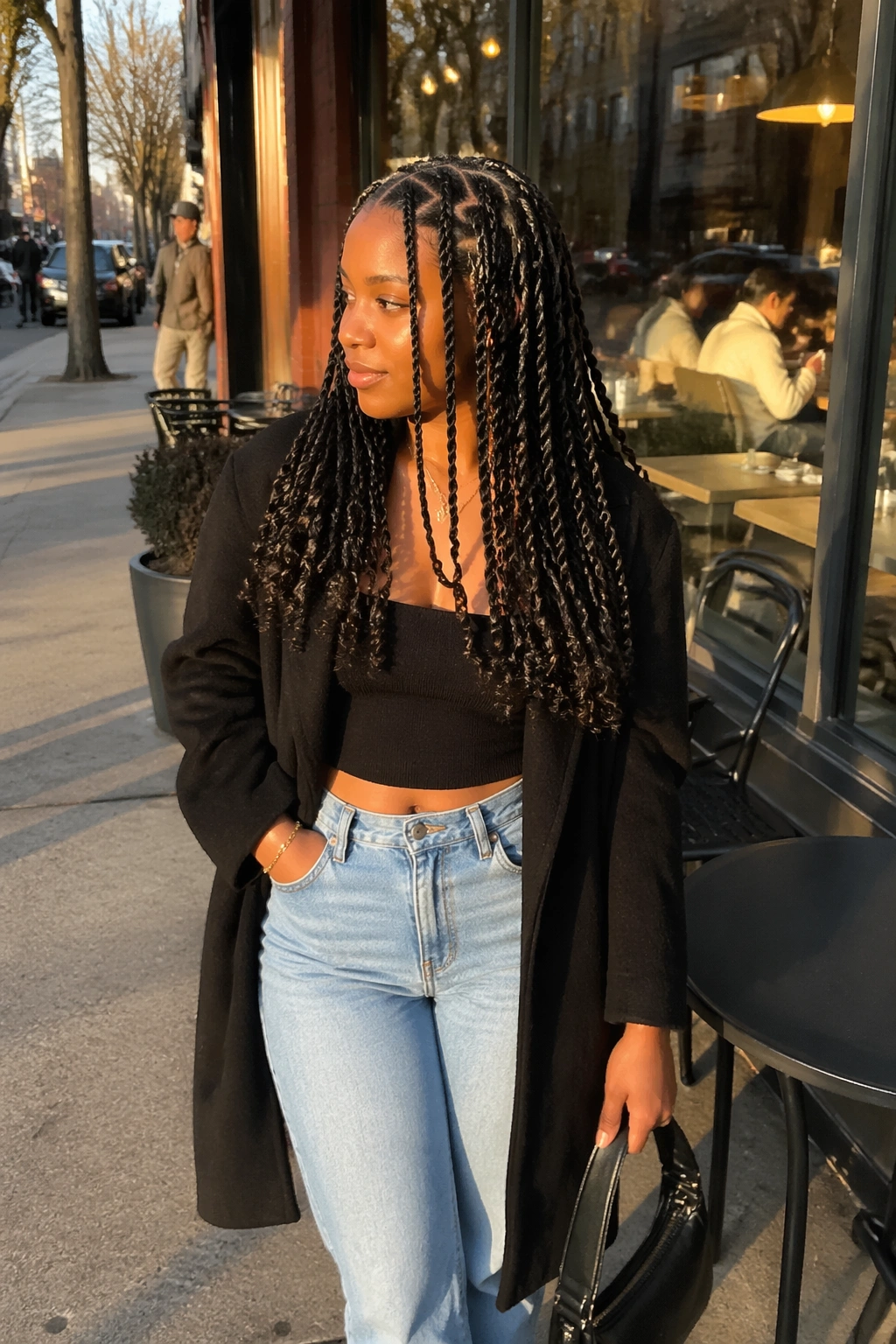
Triangle parts are for people who like their hair to have a little edge. The shape is geometric, clean, and a touch unexpected. When you combine that with curly ends, you get a style that feels sharper at the root and softer at the finish, which is a nice contrast.
A triangle part really shows off the sectioning. That means the base work has to be neat. If the parts are uneven, the whole look is harder to save because the shape itself is so visible. But when it’s done well, it looks sharp in a way that round parts never quite match.
What Makes It Different
Triangle parts change the way light hits the scalp. They create little angles and visual breaks, so the style has more texture before the twists even begin. The curly ends then soften all that structure and stop it from feeling too graphic.
This style is a good fit for medium-length or longer twists. Short twists can work too, but the triangle pattern tends to shine more when there’s enough length for the pattern to be seen and the curls to hang below it.
- Best with: medium or large twist sizes
- Style note: keep the ends hydrated with a light foam or curl refresher
- Scalp care: clean part lines matter here, so wipe away product buildup as you go
- Mood: modern, sharp, a little artistic
I prefer this look when the curls are uniform but not too tight. Tight curls can fight the hard shape of the parts. A looser curl gives it breathing room.
9. Knotless Twist Braids With Layered Curly Ends
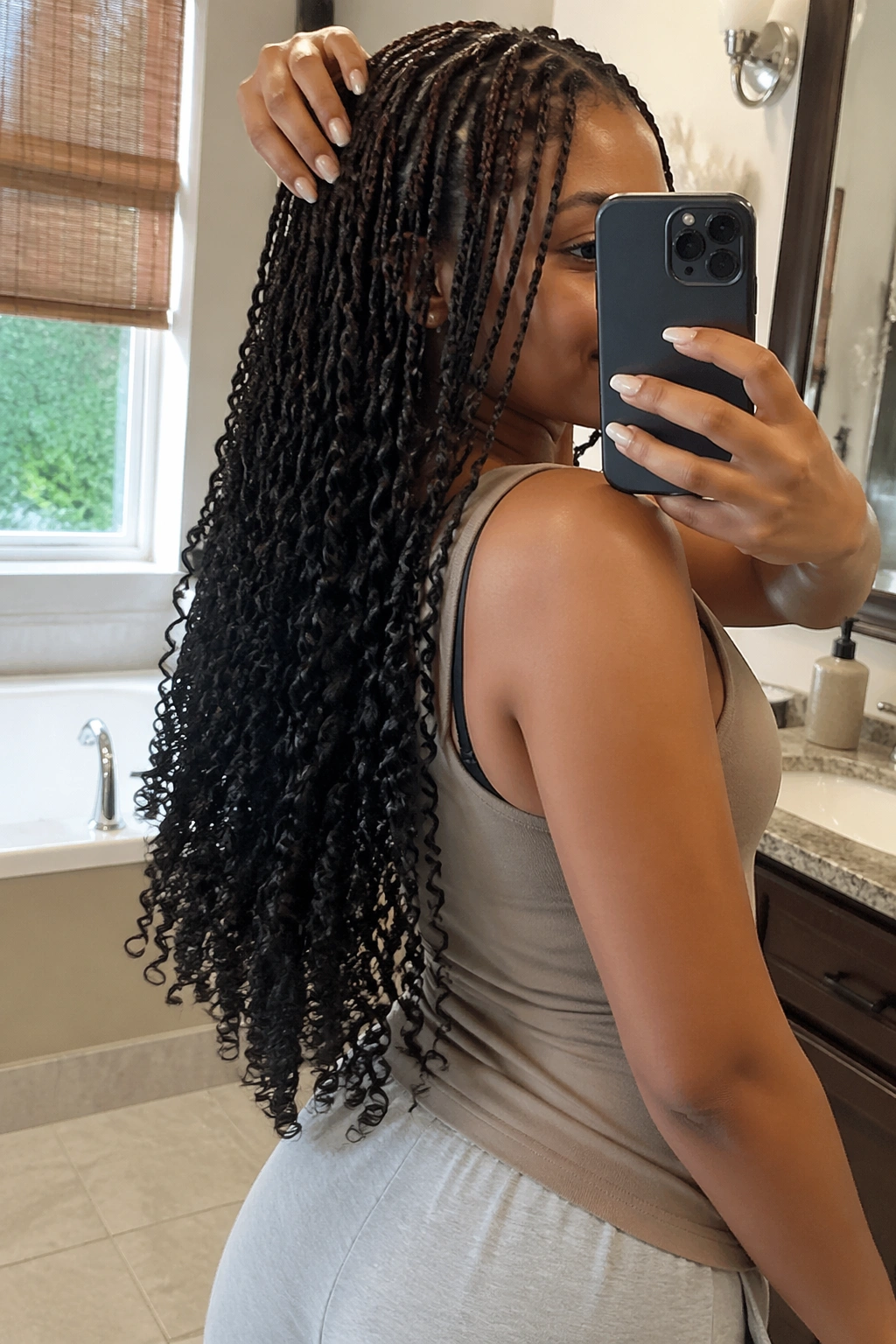
Knotless twist braids are one of those styles that look expensive even when they are not trying to be. The base blends into the natural hair more softly, which gives a smoother start near the scalp. Add layered curly ends, and the whole style gets a gentler drop at the bottom instead of one flat curtain of hair.
This is the version I’d pick if scalp comfort matters. Knotless tension is easier on the head for a lot of people, especially when the twists are medium-sized and not packed too tightly. The curly ends also help the style feel lighter because the movement distracts from the visual weight of the twists.
How to Get the Layering Right
Layering at the ends means not every twist should finish at exactly the same point. Some can stop a few inches higher, and some can hang lower. That staggered finish creates depth. The curls then sit at different levels, which gives the style more life.
You do not need super precise layering. In fact, perfect symmetry can make knotless twists look flat. A little variation helps. The important part is that the longest pieces still land cleanly and the shorter pieces do not stick out awkwardly.
This style is especially good if you wear your hair down most of the time. The movement at the ends does a lot of the styling work for you. And if you pull it into a low ponytail, the layered ends still show.
That’s a useful trick, not just a pretty one.
10. Faux Loc-Inspired Twist Braids With Curly Ends
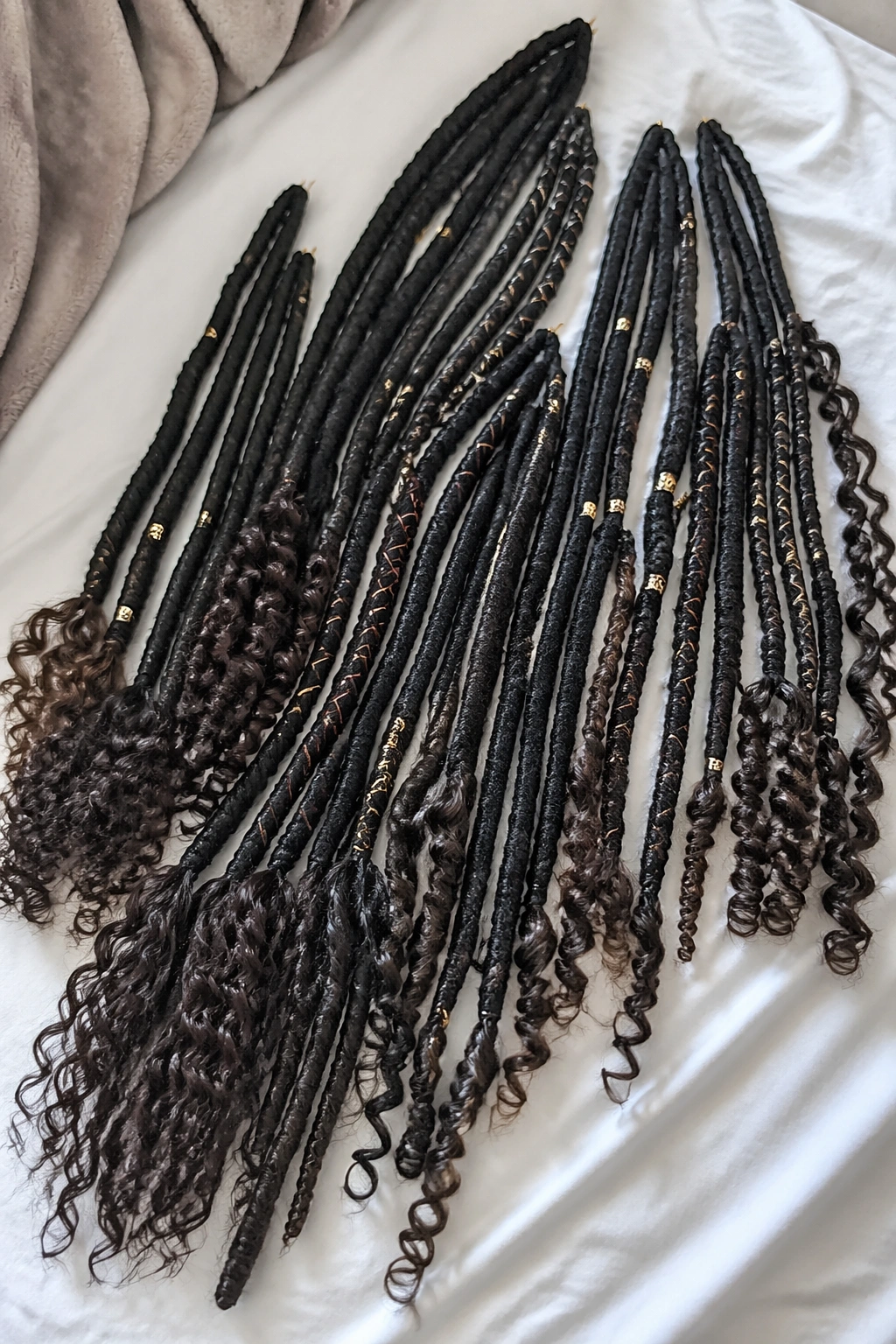
If you like the look of faux locs but want a twist-based version, this style sits in a nice middle ground. The wraps or twists give you that rope-like body, while the curly ends keep the finish softer and less heavy than a fully wrapped loc style.
I like this look because it has texture all the way through. The root area feels controlled, the mid-lengths feel dense, and then the curls at the ends break everything open. That final texture shift makes the style feel less closed off than faux locs sometimes do.
Where This Style Works Best
It works well on medium to long lengths, especially if you want the braids to look fuller without needing tiny sections. The curls can be placed at different levels, too. Some stylists leave the very ends free, while others add a curl starting a little higher so the finish feels more layered.
This style can lean earthy, edgy, or dressy depending on the wrap pattern and the curl size. Use a finer curl for a tighter, more textured finish. Use a looser curl if you want the style to read softer and more romantic.
A lot of people forget that faux loc-inspired styles need maintenance at the ends. The curly parts get frizzy first. A quick finger twist and a light mist of water-based refresher usually helps more than piling on oil.
Keep the roots clean. Keep the ends soft. That’s the whole formula.
11. Crochet Twist Braids With Curly Ends
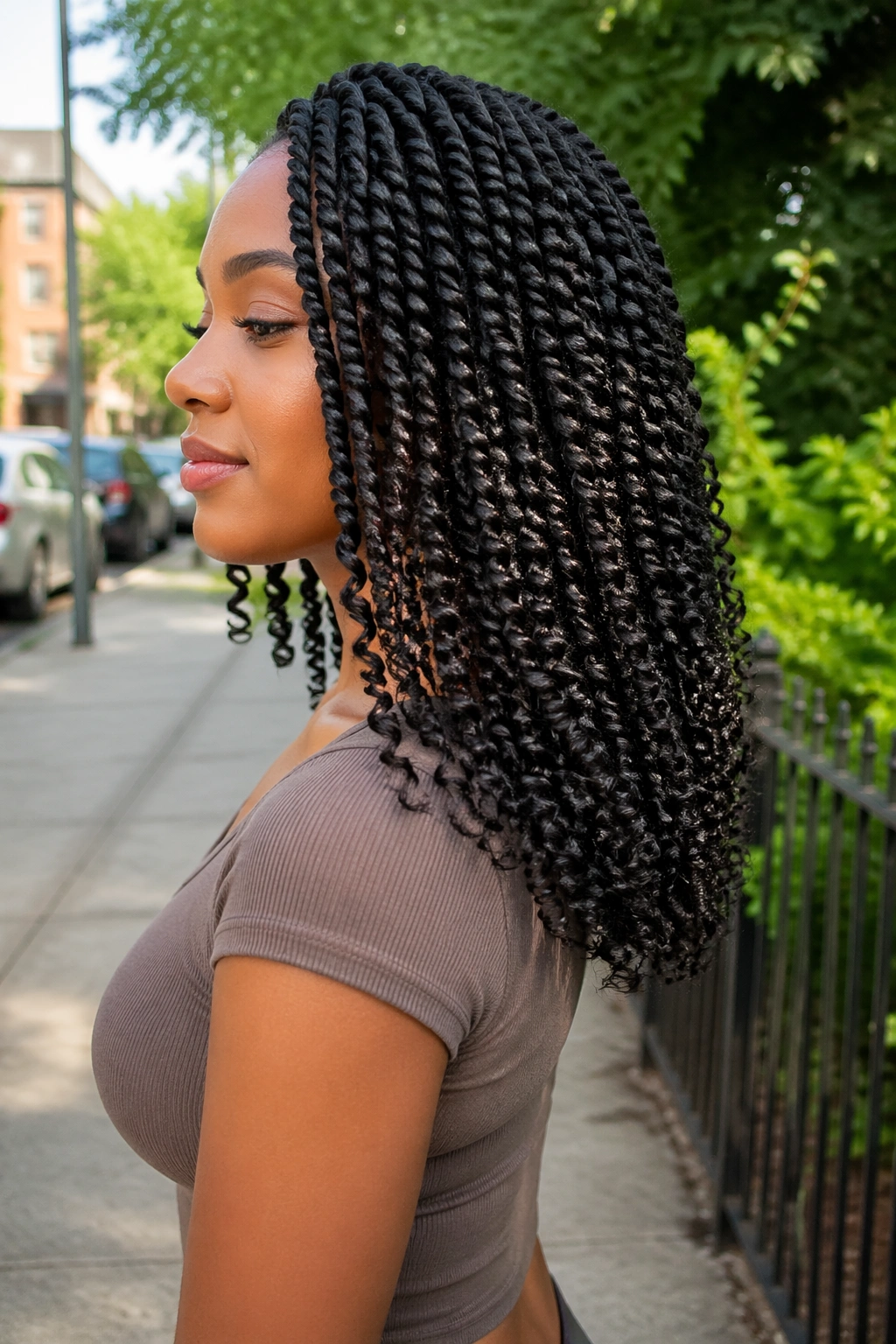
Crochet twist braids are the answer when you want the look without sitting for hours. The install is faster because the twists are added through cornrows, which makes this style a solid choice for anyone who likes to switch things up without a long salon day.
The curly ends are what keep crochet twists from looking too uniform. Since the base is installed quickly, the finish needs a little personality. Curls at the bottom do that job well. They soften the line between the braided base and the hanging length.
Why I’d Pick This Over a Full Install
The biggest advantage is speed. Another one is access. Crochet styles can be easier to remove and refresh than some hand-twisted styles, which is useful if you like changing your hair often. The curly ends can also be pre-made, which means more consistency from one section to the next.
- Install note: the cornrows underneath should lie flat, but not be braided so tightly that the scalp feels pulled
- Length choice: shoulder length gives a lighter feel; longer lengths give more drama
- Maintenance: separate the ends gently with your fingers, not a fine comb
- Styling option: wear them down first, then move to a half-up style on day two or three
This style can take product well, but don’t overdo it. Too much foam can make the curls stringy, and too much oil can make the crochet base look greasy. A little restraint goes a long way here.
12. Twist Braids With Beads and Curly Ends
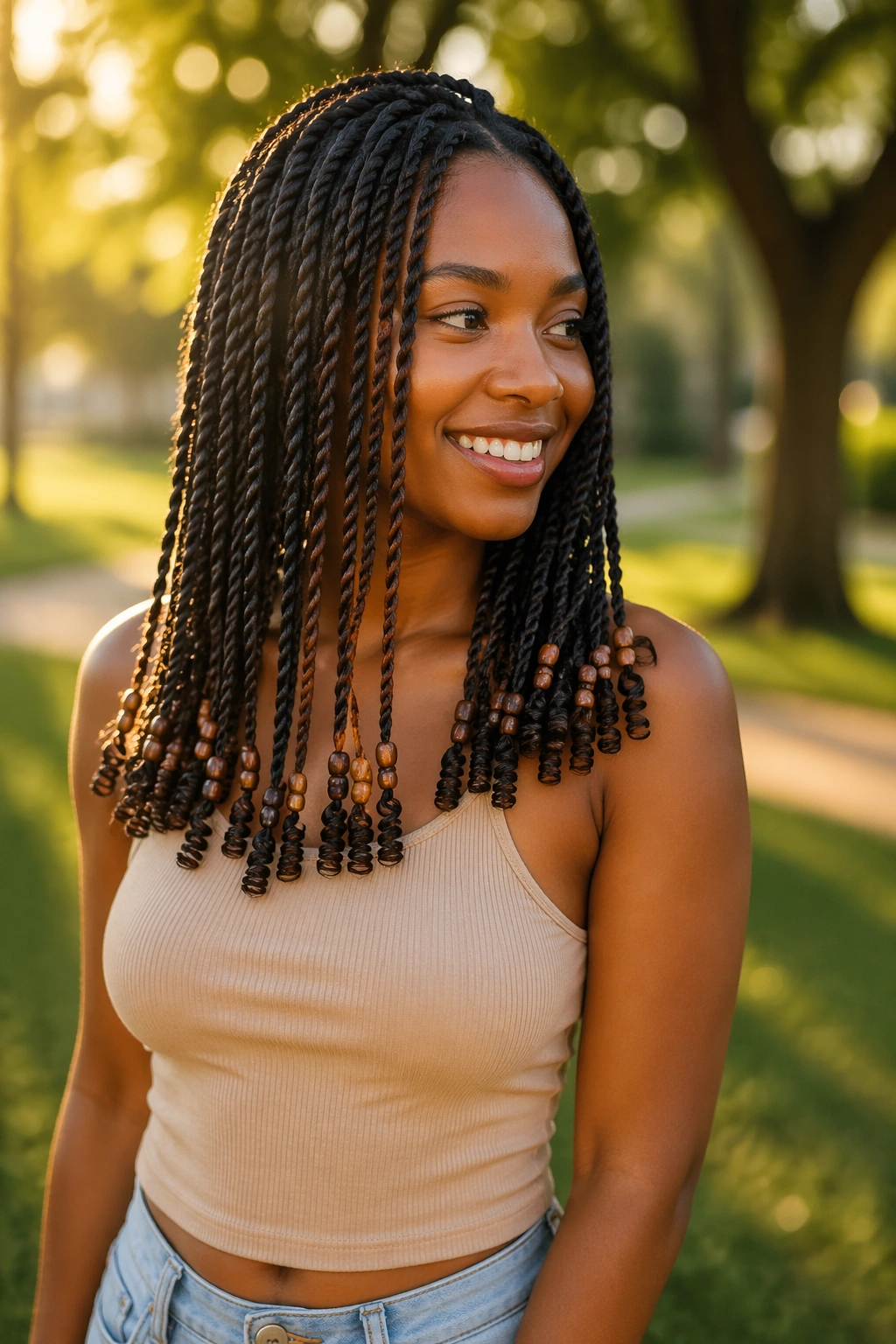
Beads change the whole energy of twist braids. Put them near the ends or cluster them on a few front pieces, and the style gets rhythm. Add curly ends, and the hair stops looking purely decorative and starts looking thoughtfully styled.
This is one of those looks that can go playful or elegant depending on bead size. Small wooden beads feel earthy. Clear or gold-toned beads feel more polished. Larger beads make a louder statement, so I usually keep them limited to a few sections rather than every twist.
A Good Way to Balance the Look
The curly ends should stay visible. If the beads are stacked too far down, they can hide the curl and make the finish feel heavy. Leave enough length below the beads for the curl to show, even if it is only 2 or 3 inches.
You also want to think about weight. Beads are small, but a full head of them adds up. Place them strategically. The front and side sections usually give you the most visual return, and you do not need a bead on every twist to make the style work.
This look suits casual outfits well, but it can still look polished with the right accessories. A hoop earring, a simple lip color, and a clean part go a long way.
The curls and beads should not fight. They should trade attention.
13. Ombré Twist Braids With Curly Ends
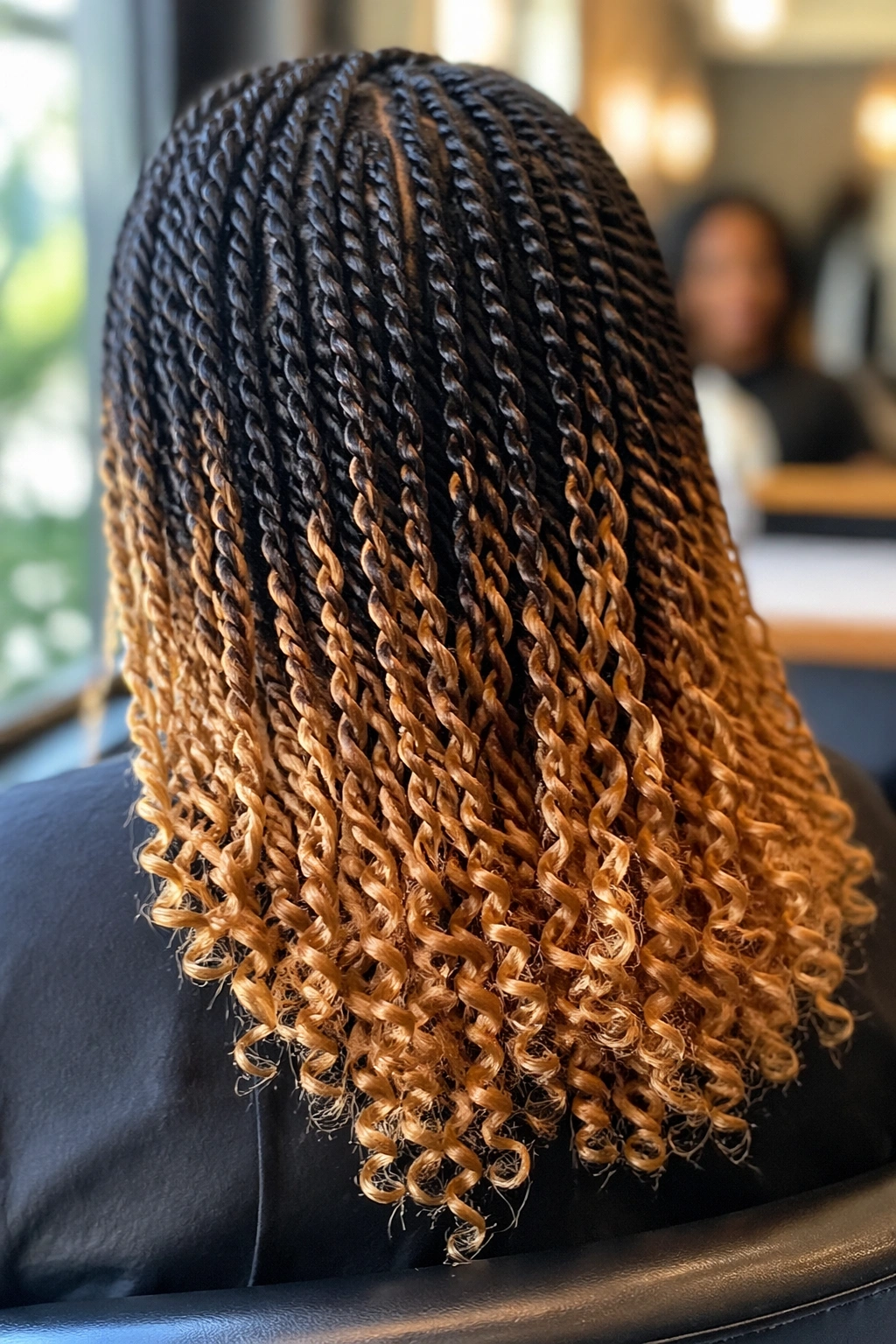
Color can make twist braids with curly ends feel even more dimensional. Ombré lengths are especially good here because the color shift helps define the twists, and the curly ends show off the lighter or brighter bottom tone in a way straight ends never quite do.
A darker root fading into honey, auburn, burgundy, or blonde at the tips can make the curls pop. That’s because the curl itself creates shadow and light. On solid-color twists, the shape has to do all the work. On ombré twists, the color helps too.
Why Color Changes the Whole Style
The lighter the ends, the more the curls stand out. That can be a good thing, but it also means the curl pattern needs to stay tidy. If the ends get frizzy, the color can make the frizz more noticeable. Use a satin bonnet at night and keep friction down.
You do not need a dramatic color shift to get the effect. Even a subtle two-tone blend can make the style look richer. I tend to like color that moves in a smooth fade rather than a harsh jump, because the curl finish looks cleaner that way.
If you are choosing colored synthetic hair, test how it holds shape after a few days. Some fibers keep a curl better than others. The better ones bounce back after being separated. The cheap ones can go fuzzy fast, and there is no hiding that.
Color is fun. Cheap fiber that mats at the ends is not.
14. Twist Braids Updo With Curly Ponytail Ends
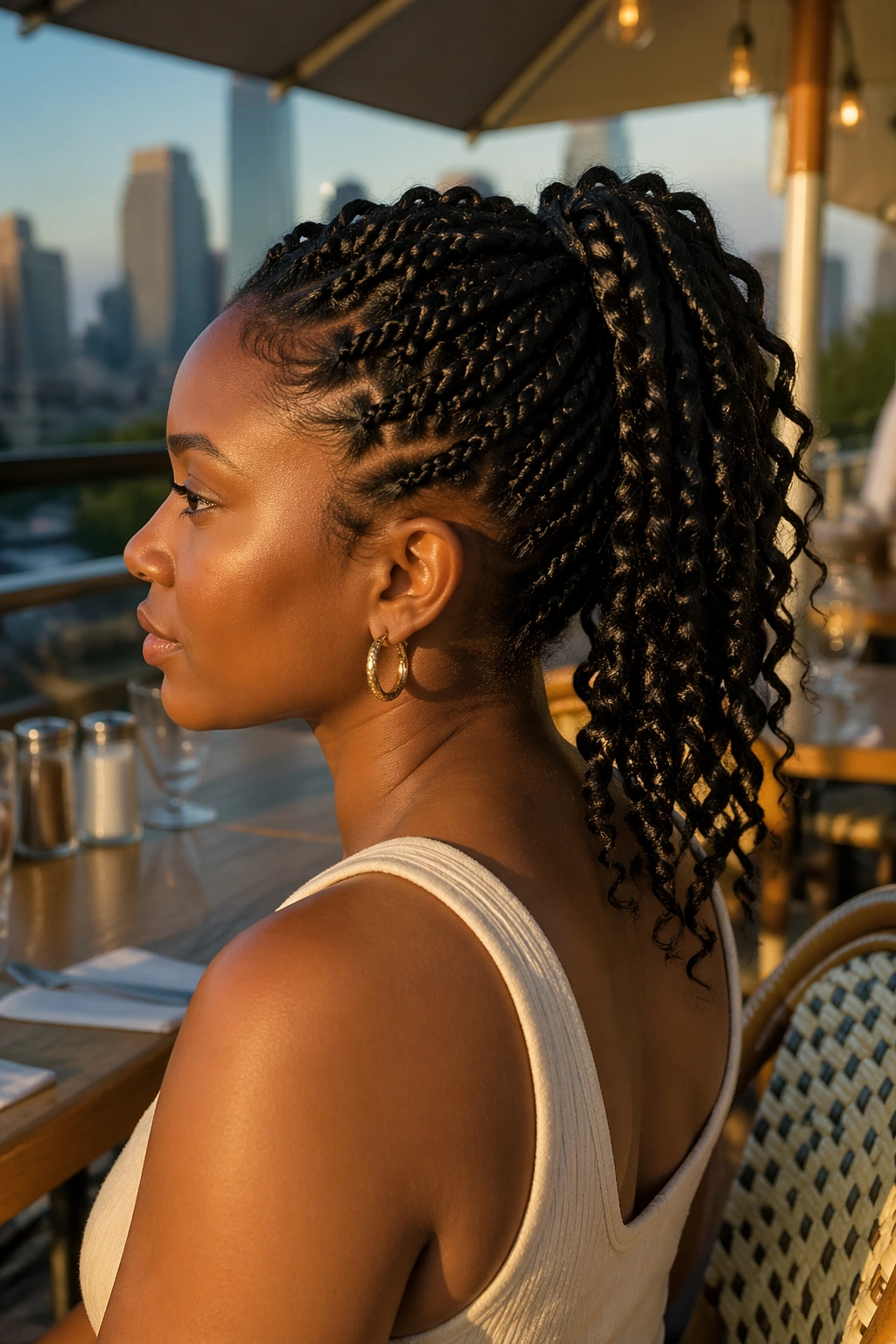
An updo with twist braids and curly ends is one of the most useful styles in the whole bunch. It gets the hair off the neck, opens up the face, and still gives you enough texture at the back or crown to keep the style from feeling plain.
This one works especially well when you want the elegance of an updo without losing all the softness that curly ends bring. The gathered base gives structure. The loose curly ponytail section keeps it from looking too formal. That tension is what makes it pretty in a wearable way.
How to Shape the Updo
A low bun, a high puff, or a twisted crown can all work. What matters is the transition from the pinned section to the curly tail. You want a clean lift, not a lumpy pile of hair with a random curl hanging off the back.
A few loose face pieces help. Not too many. Just enough to keep the front from feeling tight. If the curls in the ponytail are long, let them sit over one shoulder for a softer finish. If they are shorter, let them spring upward a little so the shape doesn’t collapse.
This style is practical in warm weather, but I’d wear it beyond that too. It photographs well from the back and looks refined in person because the curls add texture where a plain bun would feel flat.
A little shine at the roots helps. The ends should stay airy.
15. Mini Twist Braids With Tiny Curly Ends
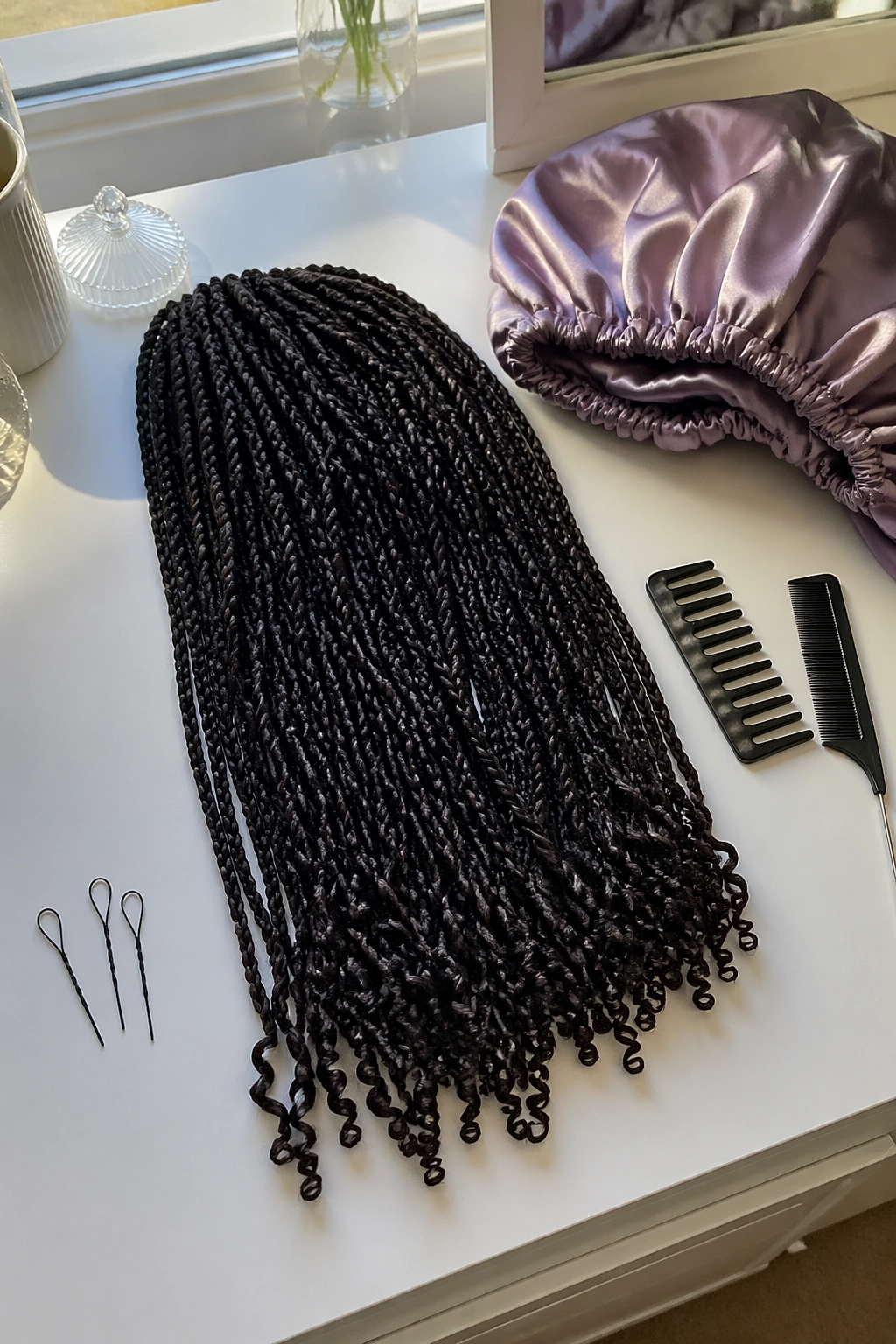
Mini twists with curly ends are for people who like detail. Lots of it. This style takes longer to install, but the result has a fine, intricate look that feels very different from jumbo twists or bob lengths. The smaller sections create more movement overall, and the curly ends can look almost cloud-like when done well.
I like this version because it gives you softness without bulk. The twists can fall close to the head, which makes the style lighter to wear. The curly ends then spread out just enough to keep the look from disappearing into the scalp. It is a delicate balance, and that’s why it works.
What to Watch For
Mini twists can frizz faster because there are more ends to manage. That does not mean they fail sooner. It just means they need a cleaner routine. Sleep protection matters here more than with larger styles. A silk scarf and a bonnet together can help keep the tiny ends from rubbing flat overnight.
The curl size should be small enough to match the scale of the twists, but not so small that it turns into fuzz. A soft micro curl or a skinny rod set usually works well. If the ends look too busy, the style loses the crispness that makes mini twists appealing in the first place.
This is a good style for people who like a refined, textured look and don’t mind putting in the time. The payoff is a head of hair that feels detailed from every angle. There’s a lot happening here, and that’s the point.
Final Thoughts
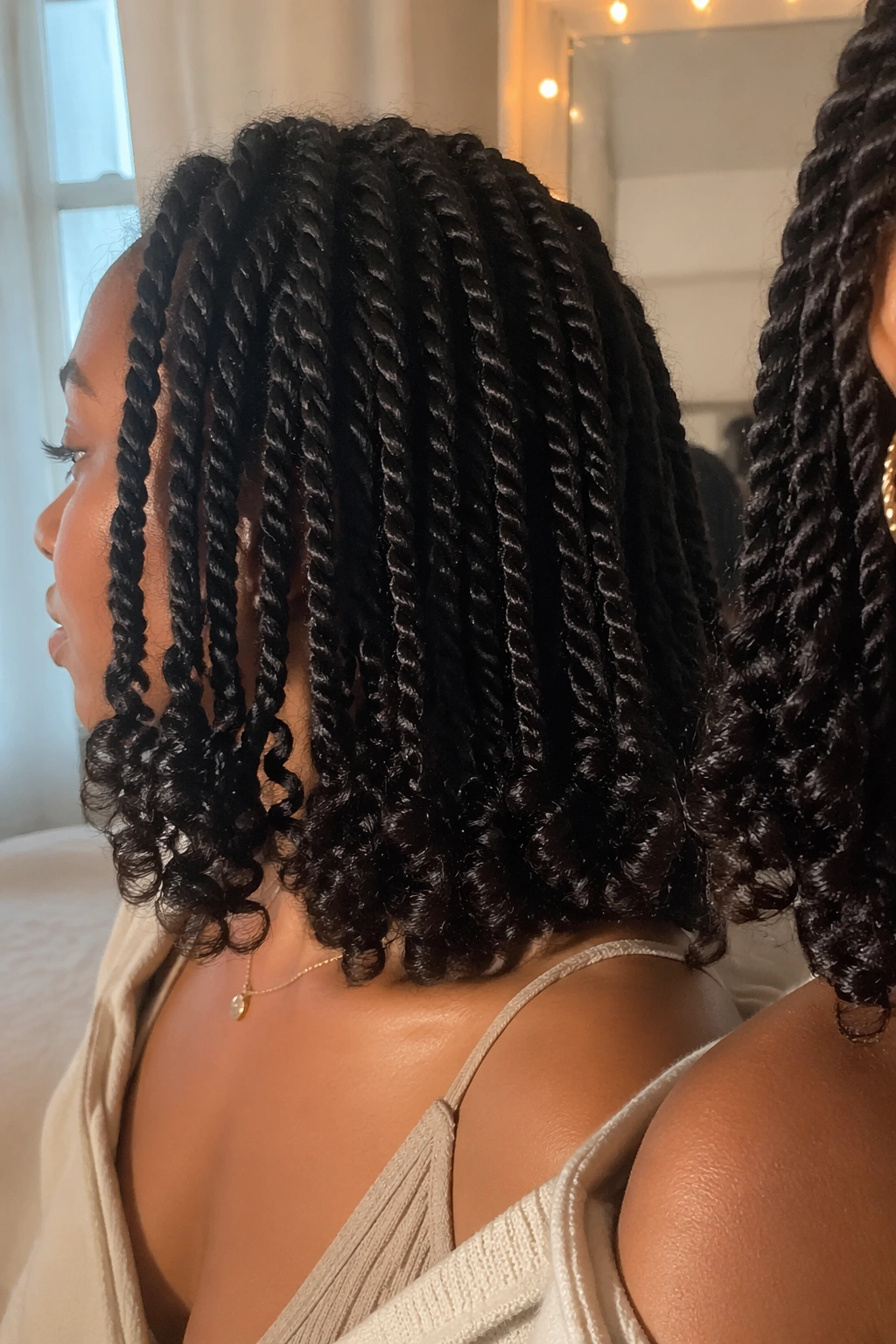
Twist braids with curly ends work because they soften the hard edges that braided styles can sometimes have. The curls make the finish feel alive. They keep the hair moving, and they give you room to adjust the mood of the style from neat to playful, polished to loose.
The best version is the one that fits your actual life. If you want low maintenance, go shoulder length or crochet. If you want drama, choose long Senegalese twists or ombré ends. If you want shape without heaviness, a bob or mini twists will probably suit you better.
One practical thing I always come back to: protect the ends at night. That tiny habit makes a big difference. Curly finishes are often the first part of the style to flatten, fuzz, or tangle, and a satin bonnet plus a light touch in the morning will keep the whole look cleaner for longer.