

Round cheeks do not need hiding. They need shape. Short curly hairstyles for round faces work best when the cut gives the eye a reason to travel upward or diagonally instead of stopping right at the widest part of the face. That can mean height at the crown, a side part that breaks symmetry, or longer pieces that skim the cheekbones instead of sitting right on them.
Curls make this more interesting, because they bring their own volume. Sometimes that volume helps. Sometimes it makes a round face look fuller than you wanted, especially if the cut is blunt, boxy, or all one length at the exact wrong spot. The trick is not to “flatten” curls. That usually backfires. The trick is to place them.
A good curly cut on a round face usually feels a little lighter around the sides, a little longer where it counts, and a little more deliberate at the top. A skilled stylist will talk about the curl pattern, shrinkage, and where your hair wants to spring up on its own. That last part matters more than people think. A bob that lands at chin length when wet may sit a couple of inches shorter once it dries, and that can change the whole face shape.
1. Curly Pixie with Crown Lift
A curly pixie is one of the easiest ways to make a round face look a touch longer without losing the playful feel of short hair. The reason is simple: shorter sides and more height at the crown create a vertical line, and that line pulls the eye upward.
Ask for the top to stay longer than the sides, with soft texturing instead of a hard, choppy edge. The best version of this cut usually keeps some length around the hairline and temples so the whole thing doesn’t look too severe. That little softness keeps the face from feeling boxed in.
A mousse or light foam works better than a heavy curl cream here. You want lift, not weight. Diffuse upside down for the first few minutes, then flip upright and shape the top with your fingers while it’s still damp. A few curls at the front can fall forward, but don’t let the fringe sit flat across the forehead. That’s the part that tends to make a round face look wider.
One more thing. Keep the neckline neat. A soft taper in the back gives the cut shape between salon visits, and it keeps the pixie from turning fluffy in all the wrong places.
2. Tapered Curly Crop with Soft Sides
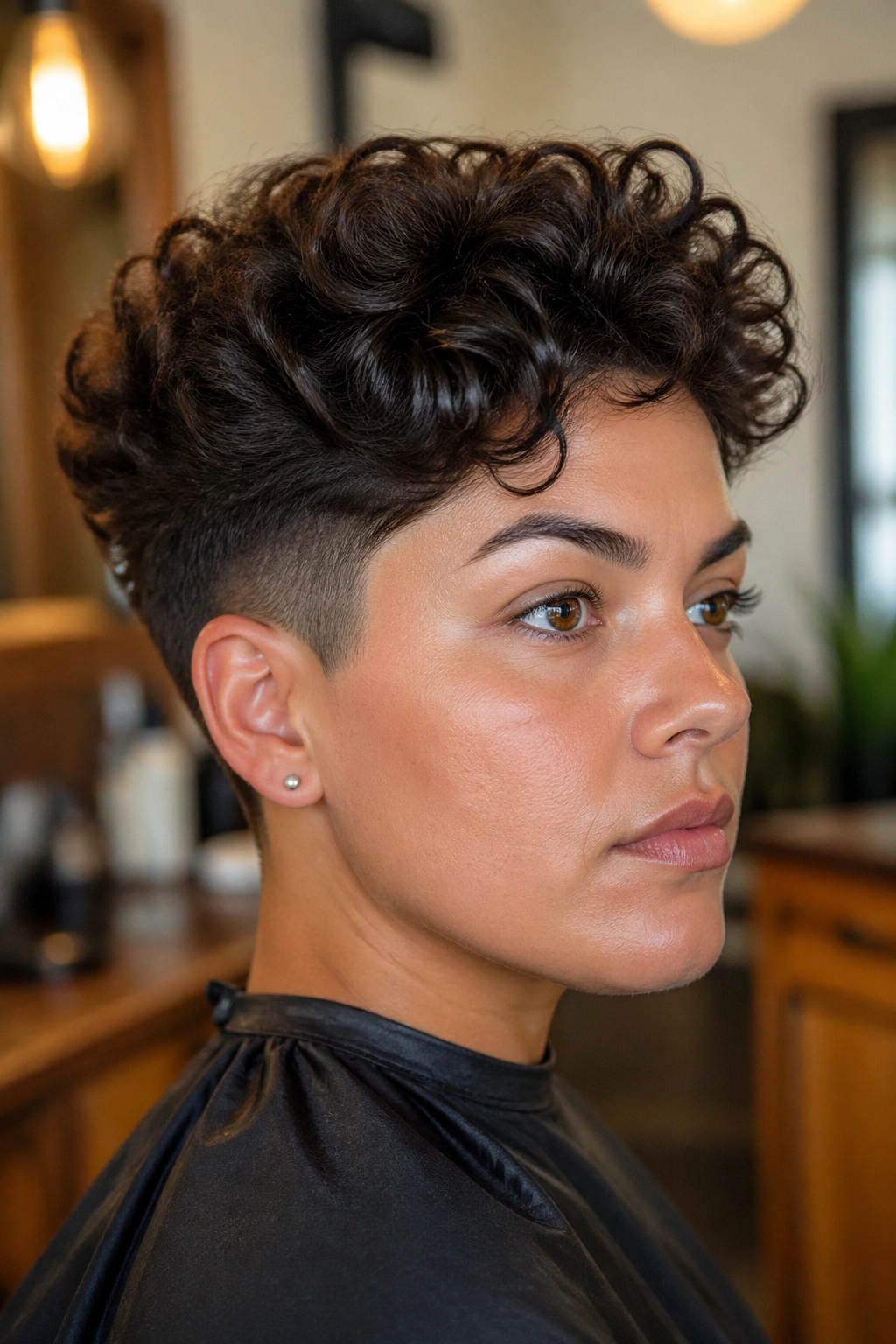
Why does this one work so well? Because it trims bulk where round faces usually do not need it. A tapered curly crop keeps the sides close and lets the top do the talking. The result feels tidy, but not helmet-like. That distinction matters.
What to Ask Your Stylist
Tell them you want a tight taper at the nape and around the ears, with enough length on top for your curls to spring up naturally. If your hair is dense, ask for internal debulking rather than aggressive thinning. Thinning shears can chew up curls and leave frizz that looks wider, not leaner.
This cut is especially good if your curls are springy and your face is widest at the cheeks. The short sides create breathing room, and the taller top section gives the face a longer outline. It also grows out in a fairly forgiving way, which is nice because not every short cut behaves that politely.
- Keep the top about 2 to 4 inches longer than the sides.
- Use a root-lifting spray or mousse on damp hair.
- Diffuse until the crown is about 80 percent dry, then let the rest air-dry.
- Ask for point cutting, not blunt cutting, on the top layers.
A tapered crop can look polished or casual depending on how much product you use. That flexibility is half the charm.
3. Side-Part Curly Bob
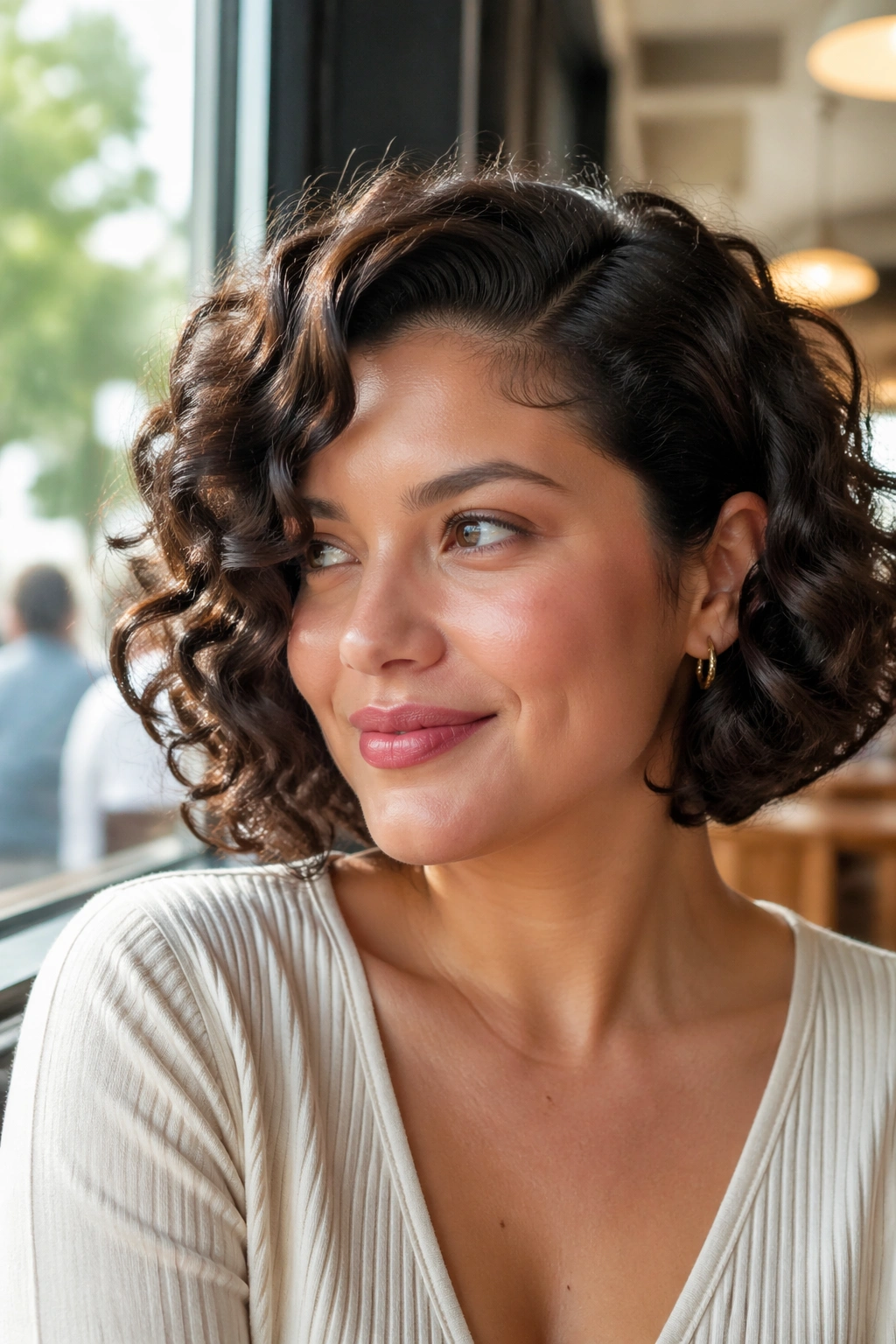
A deep side part changes everything. It breaks the symmetry that can make a round face look broader, and it gives the curls a slope to follow instead of a straight line to sit on. That small shift can be more flattering than a dramatic haircut.
The best side-part curly bob usually lands somewhere between the mouth and the collarbone, though curly shrinkage can pull it up a bit. You want the front pieces to skim the cheekbones or jawline, not end right on the fullest part of the cheek. A little length in front helps the face look narrower, especially when the part is clean and intentional.
I like this cut for people who want something short enough to feel easy but not so short that it loses softness. It also works when your curls have different textures in different spots, because the asymmetry helps hide uneven spring patterns instead of fighting them. That’s useful. Very useful.
Styling Notes
Use a curl cream through the mid-lengths, then clip the heavier side at the root while it dries. The clip gives lift right where the part begins, which keeps the style from collapsing into the face. If you wear glasses, this cut can sit nicely above the frames without feeling crowded.
4. Curly Bixie Cut
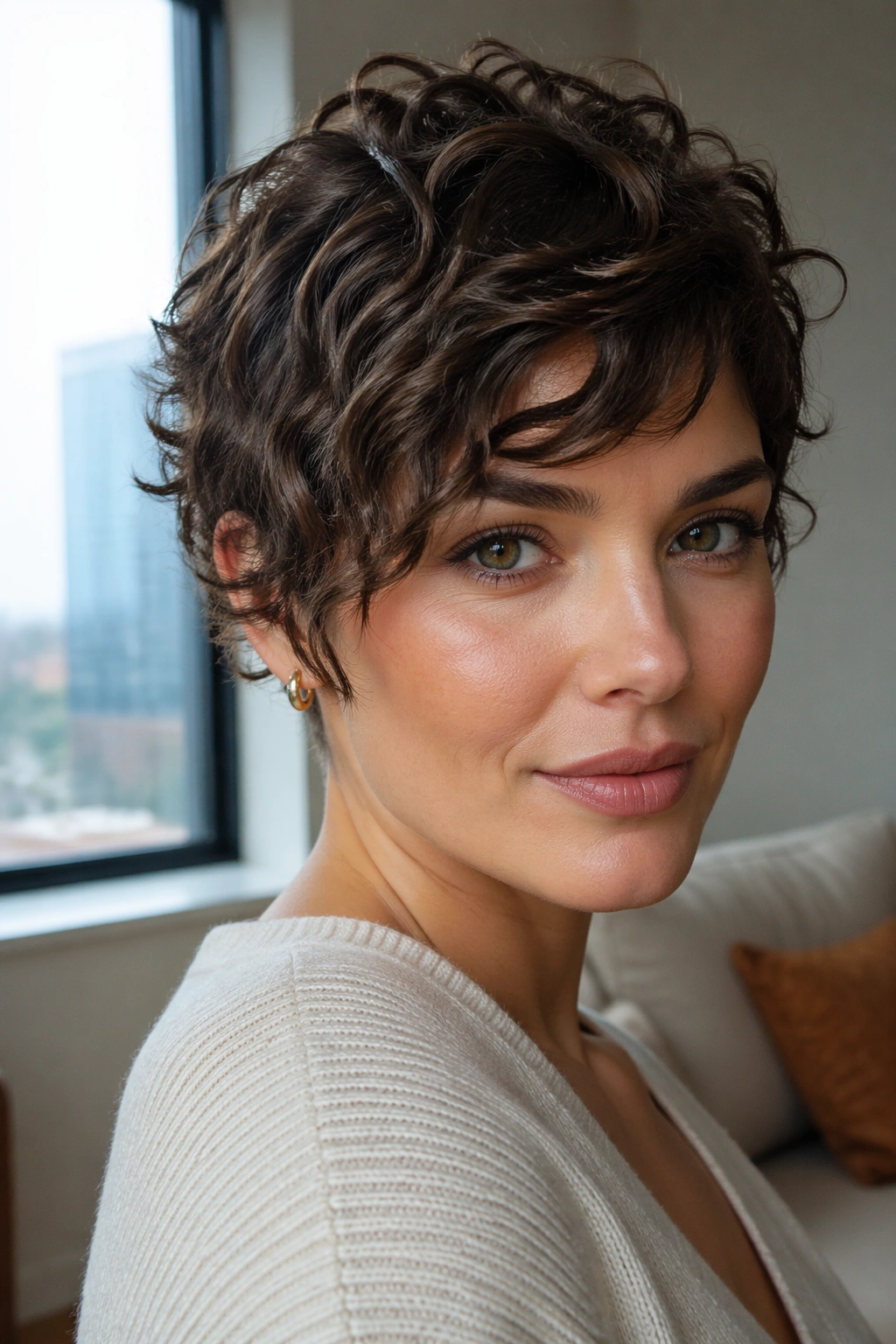
The bixie sits between a bob and a pixie, and that middle ground is exactly why it flatters so many round faces. You get the shape of a pixie with a little more length around the ears and cheeks, which softens the transition and keeps the style from looking too blunt.
What makes the bixie different from a plain pixie is the movement through the front. The best version leaves enough length for the curls to fall diagonally, not straight across. That diagonal line matters because it stops the face from feeling as wide as it is.
Think of this cut as a good compromise for people who want short hair but still like a bit of softness around the jaw. It’s also one of the better options if your curls are loose to medium-tight and you don’t want a style that needs perfect definition every morning.
A bixie can be worn messy, polished, or somewhere in between. That’s the appeal. It looks especially nice with a side-swept fringe, but keep the fringe light. Heavy bangs on a round face tend to close the face in, and that is not the effect you want.
5. Rounded Shag with Face-Framing Pieces
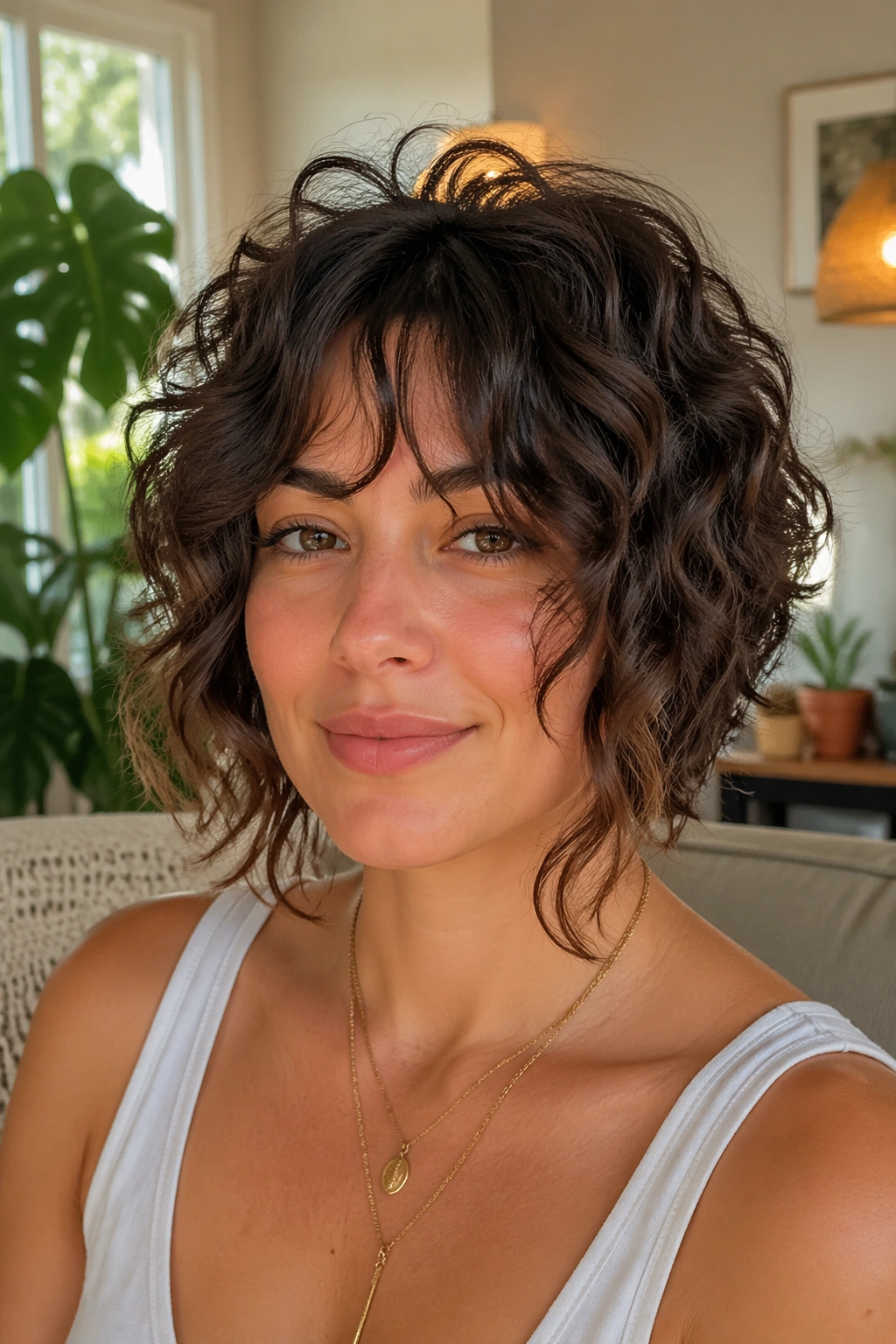
A shag sounds casual, but on curls it can do a lot of quiet face-shaping work. The trick is keeping the layers controlled so the cut has movement without ballooning out at the cheeks. A rounded shag with longer front pieces gives you texture on top and softness around the face.
Why It Flatters a Round Face
The crown layers add a little height, while the front pieces skim down past the widest part of the face. That gives the eye a path to follow. If the shortest layers sit too high on the cheeks, though, the whole cut can puff outward. That’s the mistake people make when they ask for “a shag” without any specifics.
Ask for layers that start higher at the crown and longer face-framing sections that hit around the mouth or just below the chin. Point cutting is better than blunt chopping here, because it lets the curls stack in a softer way. A clean perimeter matters too; otherwise the cut can look fuzzy instead of shaped.
This is a good style if you like a little edge but still want the haircut to move with your curls, not against them. It also grows out nicely, which matters more than most people admit. Nobody wants a haircut that only looks good for ten days.
6. Asymmetrical Curly Bob
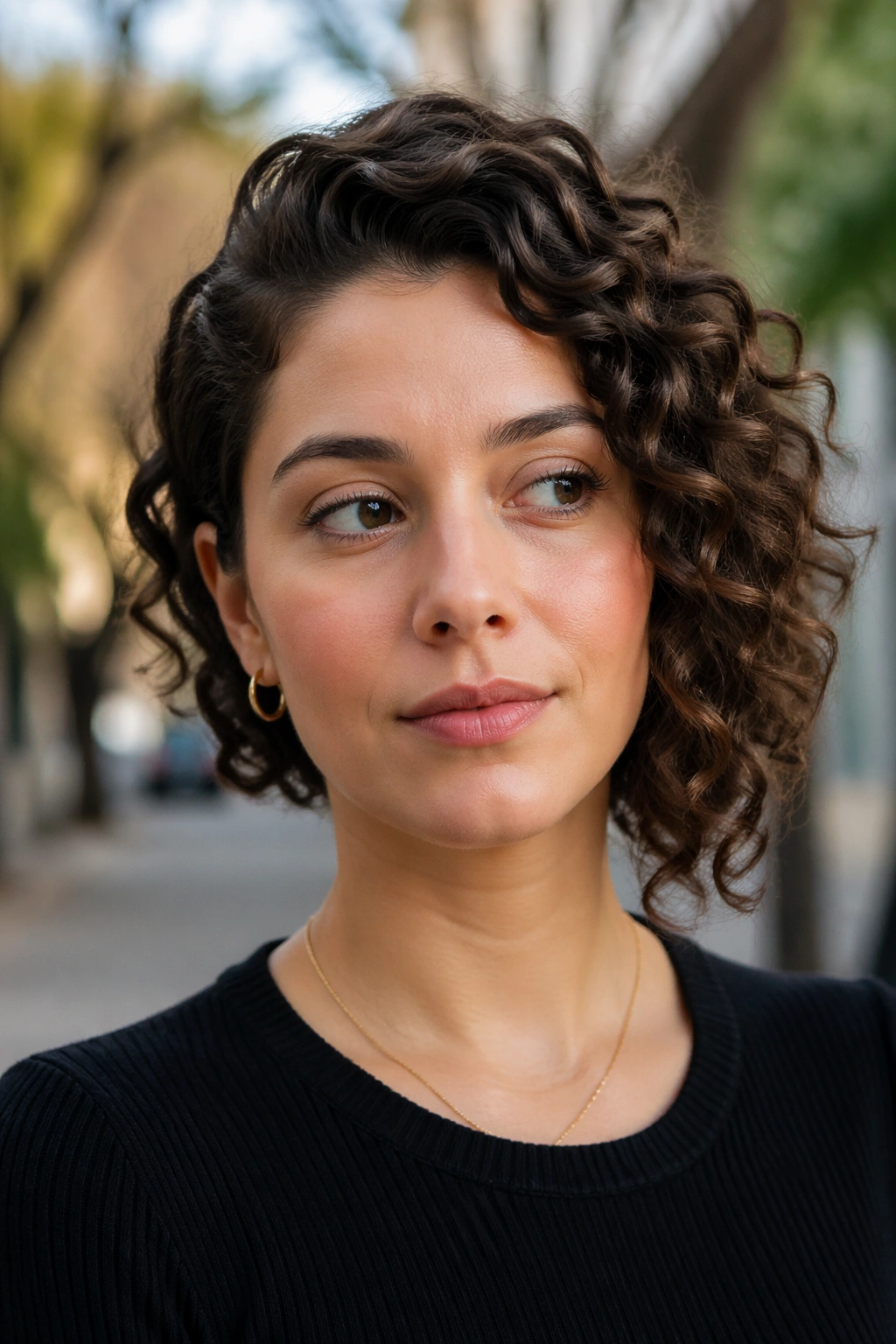
Asymmetry is your friend. A bob with one side slightly longer than the other creates a diagonal line across the face, and that line does a lot of work for round shapes. It keeps the haircut from reading as a neat circle around the head, which is exactly what you want to avoid.
Keep the difference subtle. One to two inches of length difference is usually enough. If the longer side is much longer than that, the style can start to feel costume-like instead of flattering. The goal is not drama for its own sake. The goal is shape.
This cut feels especially strong on looser curls and soft spirals because the bend in the hair makes the asymmetry look natural. On tighter curls, the effect is still good, but the stylist needs to account for shrinkage on both sides so the shape stays balanced when dry. Dry cutting helps a lot here.
Use a side part, even if it’s not deep. The part line and the uneven hemline work together, and that combination is what keeps the style from looking too symmetrical. Round faces usually benefit from that slight refusal to match on both sides.
7. Curly Wolf Cut
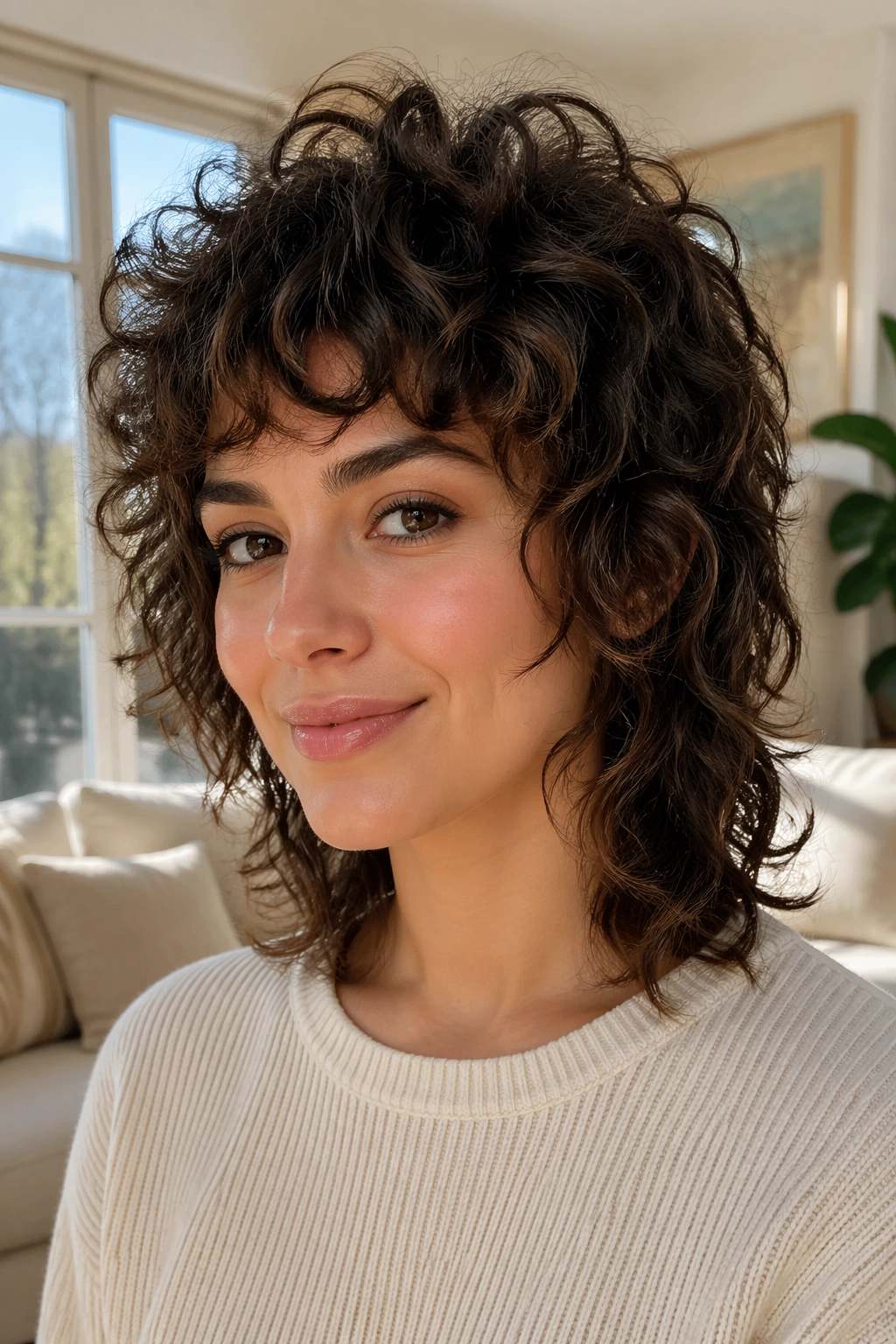
The wolf cut has a rougher edge than a classic shag, and that’s part of why it can look so good on round faces. The layers are shorter at the crown and longer through the ends, which means the cut builds height up top while leaving the lower half lighter.
This is not a style for someone who wants neatness. It’s a style for someone who likes movement and a little attitude. The texture should look lived in, not staged. If your curls are thick, the wolf cut can take out a lot of heaviness without making the silhouette bulky at the cheeks.
What Makes It Different
The crown sits higher. The face-framing pieces are usually softer and more broken up. The ends are intentionally uneven. All of that helps redirect attention upward and away from width.
- Works best with medium to dense curls.
- Needs a stylist who understands curl-by-curl shaping.
- Looks better when the top has lift and the sides stay light.
- Can be air-dried for a messier finish or diffused for more definition.
If you like your hair to look a little wild, this cut is a strong fit. If you want something sleek and predictable, skip it. The wolf cut has a personality, and it does not whisper.
8. Long Pixie with Sweeping Fringe
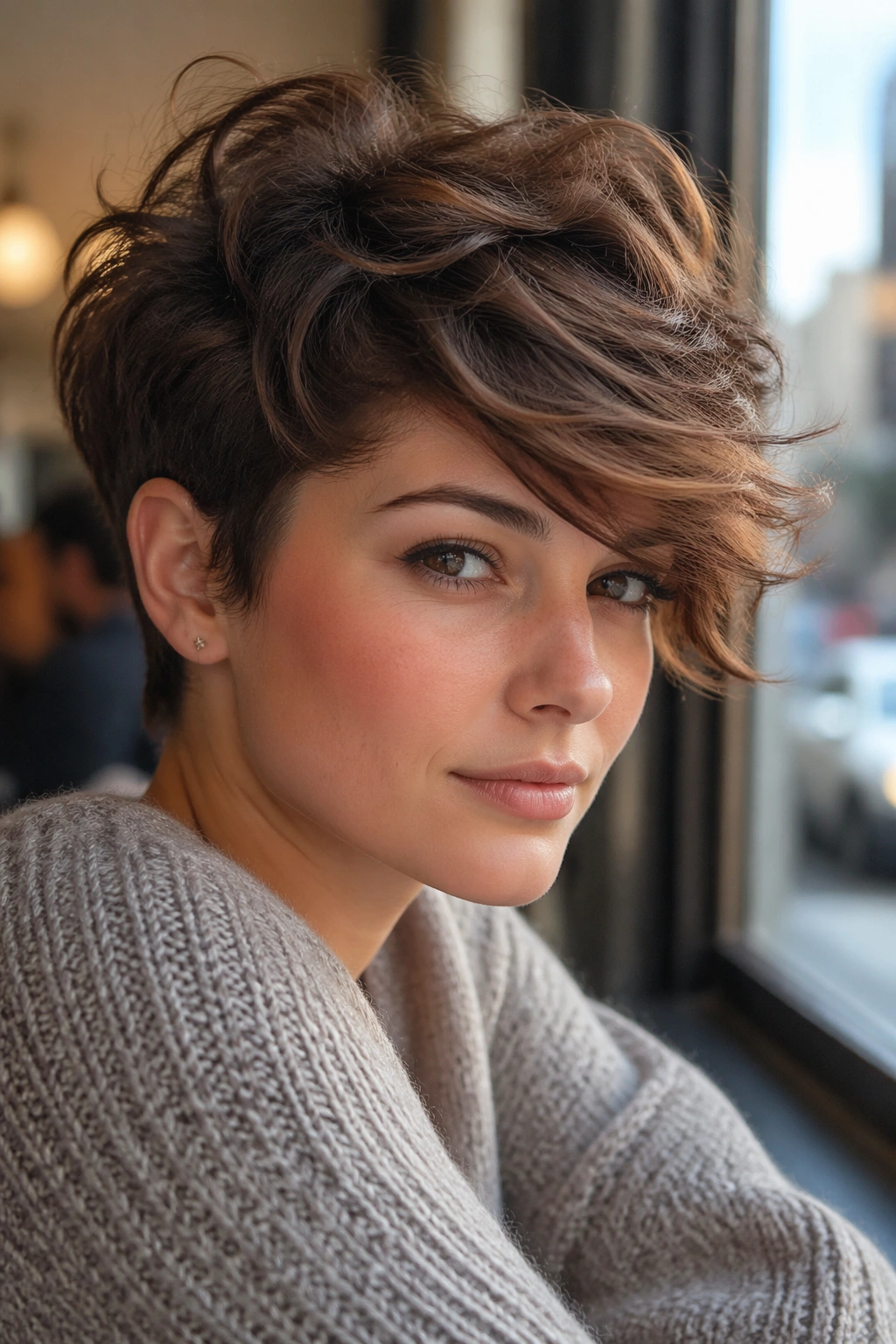
A long pixie gives you the ease of short hair without the sharpness of a super-short crop. On a round face, that extra length matters because it lets the front pieces sweep diagonally instead of stopping abruptly at the temples.
Keep the fringe long enough to tuck behind one ear. That sounds small, but it changes the whole effect. A sweeping fringe can narrow the face visually, especially when it starts higher on one side and falls across the forehead with a soft bend. The line should feel intentional, not heavy.
Styling Trick
Use a tiny amount of styling cream, then direct the fringe with your fingers while it’s still damp. A clip at the root on the heavier side can help the hair remember the direction you want. If you diffuse, keep the heat low and stop before the fringe gets too puffy. Puffy fringe is not the goal.
This cut also works well for anyone who likes to switch between polished and casual. Tuck the sides in. Tousle the top. Pin the fringe back on busy mornings. It has range, which is one reason I keep recommending it.
9. Chin-Length Ringlet Bob
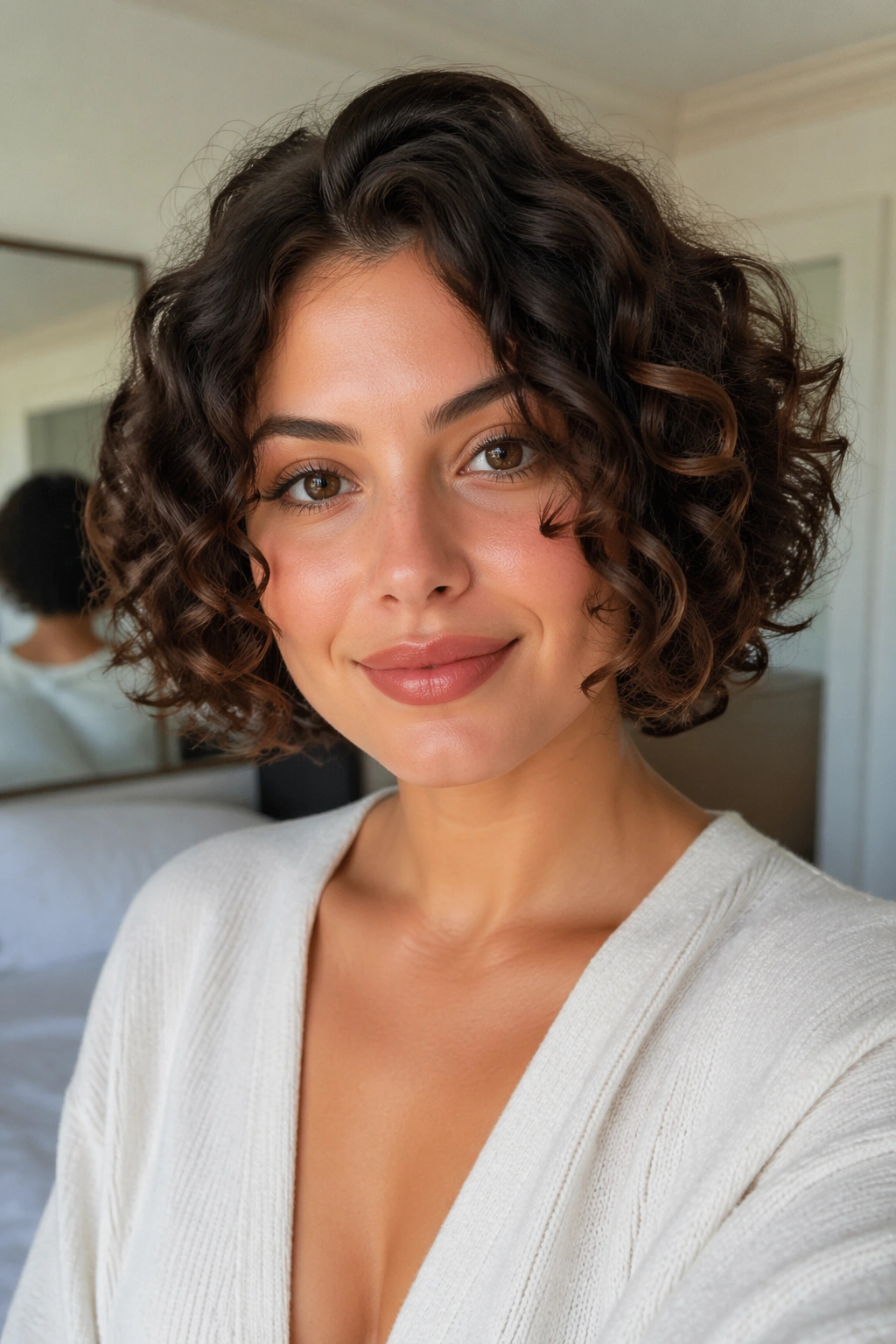
Chin-length curls can be gorgeous on round faces, but only when the cut is placed with real care. The ringlets need room to spring, and the stylist has to account for shrinkage before the first snip lands. If they don’t, the bob can bounce up and sit higher than expected.
The beauty of this cut is that it frames the jaw while still leaving the face open. A bob that ends exactly at the chin can sometimes emphasize roundness, so I usually prefer one that skims just below the jaw or is cut a touch longer in front. That gives you structure without making the face look boxed in.
This style looks especially good when the ringlets are defined enough to show shape inside the cut. Each curl becomes part of the outline. That’s why it feels clean even though the texture itself is soft.
Dry cutting is worth asking about. Wet curls can trick even a good stylist, and chin length is one of those spots where half an inch changes the whole mood. A cautious cut is better than an overconfident one here.
10. Tapered Cut with Nape Detail
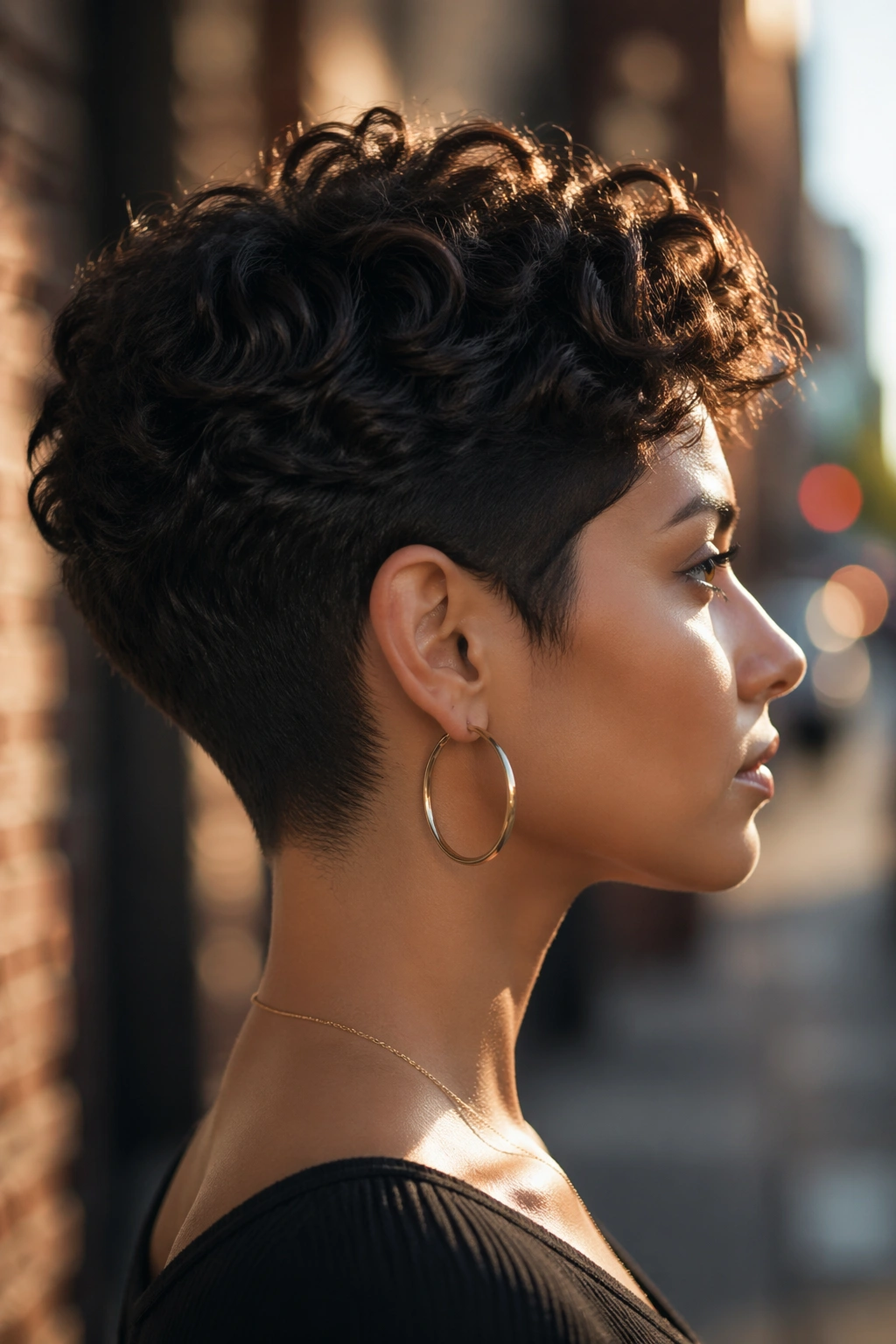
A tapered cut with a neat nape creates one of the cleanest outlines for a round face. The back stays close, the sides stay controlled, and the top keeps enough curl to bring softness and height where you want it. That contrast is the whole point.
Why It Stays Neat
The short back keeps bulk off the neckline, which makes the face look less crowded. The length on top adds movement, and the transition between those two areas keeps the head shape from reading as too wide. It is a practical cut, but not boring.
Ask for a soft taper rather than a hard fade unless you want a more dramatic look. A soft taper blends better with curls and gives you a little more shape as the cut grows out. The nape can be detailed with a razor or carefully clipped, but the top should remain textured enough to avoid a flat cap effect.
This style is good if you wear collared shirts, earrings, or glasses and want the haircut to stay out of the way. It’s also easier to keep tidy than a fluffy all-over crop, which is why people with dense curls often end up liking it more than they expected.
11. Curly Crop with Micro Fringe
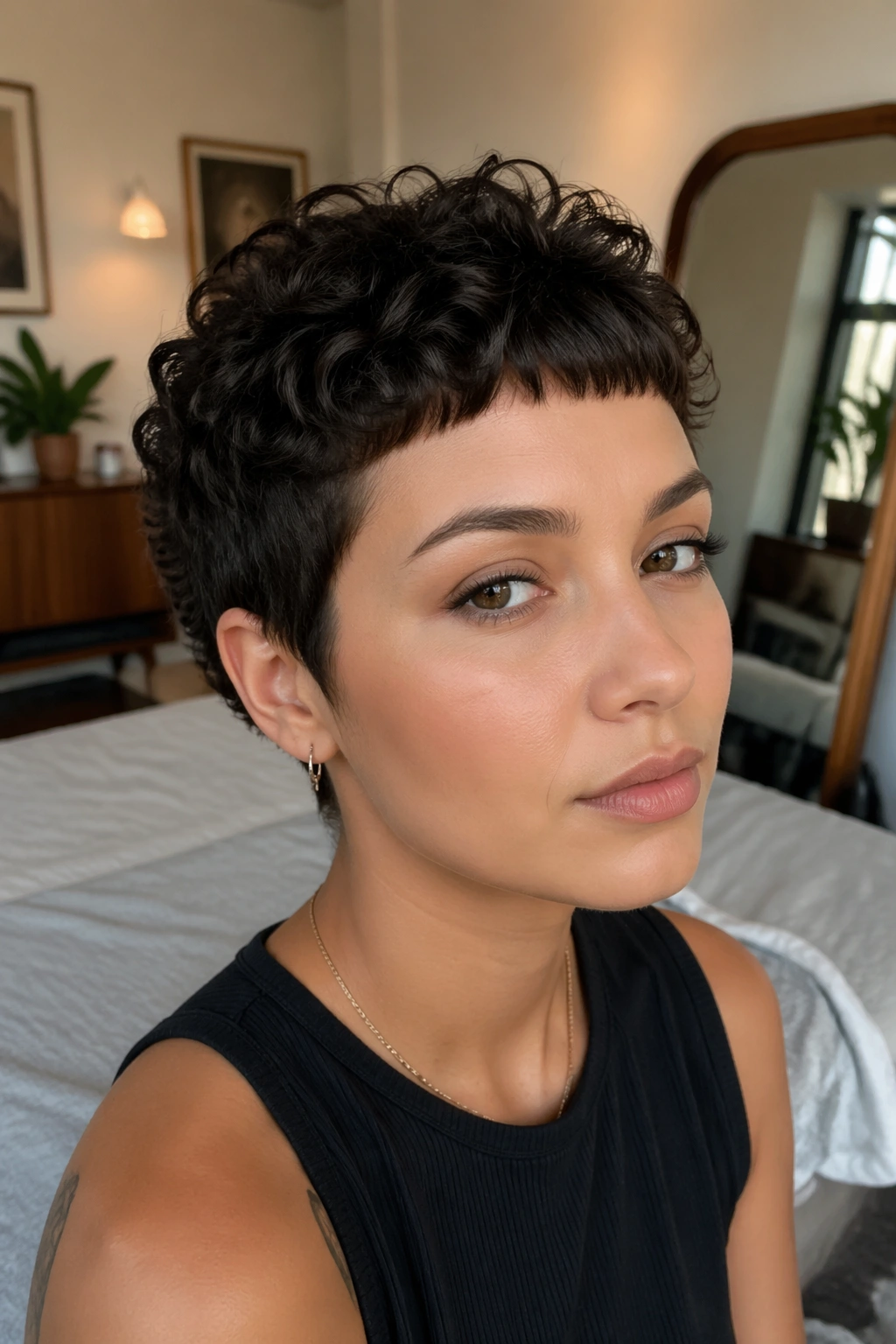
A micro fringe is a bold move. On the right curl pattern, though, it can look sharp and very fresh on a round face because it opens the upper part of the face while the cropped sides keep the width under control.
The catch is that this cut needs confidence and maintenance. A micro fringe sits high on the forehead, so it works best if you like your eyebrows and like showing them off. It also looks strongest on tighter curl patterns or coils that hold their shape well, because loose curls can turn a micro fringe into something that looks accidental.
Ask your stylist to keep the fringe soft at the edge, not blunt like a straight-across bang. The rest of the crop should stay tight enough to keep the overall shape compact. Too much bulk near the ears will fight the fringe and make the face look fuller.
This is one of those styles that either feels right or doesn’t. If you like fashion-forward hair that still has a short, easy base, it’s worth trying. If you want a safe cut, this is not the one.
12. Layered Ear-Length Cut
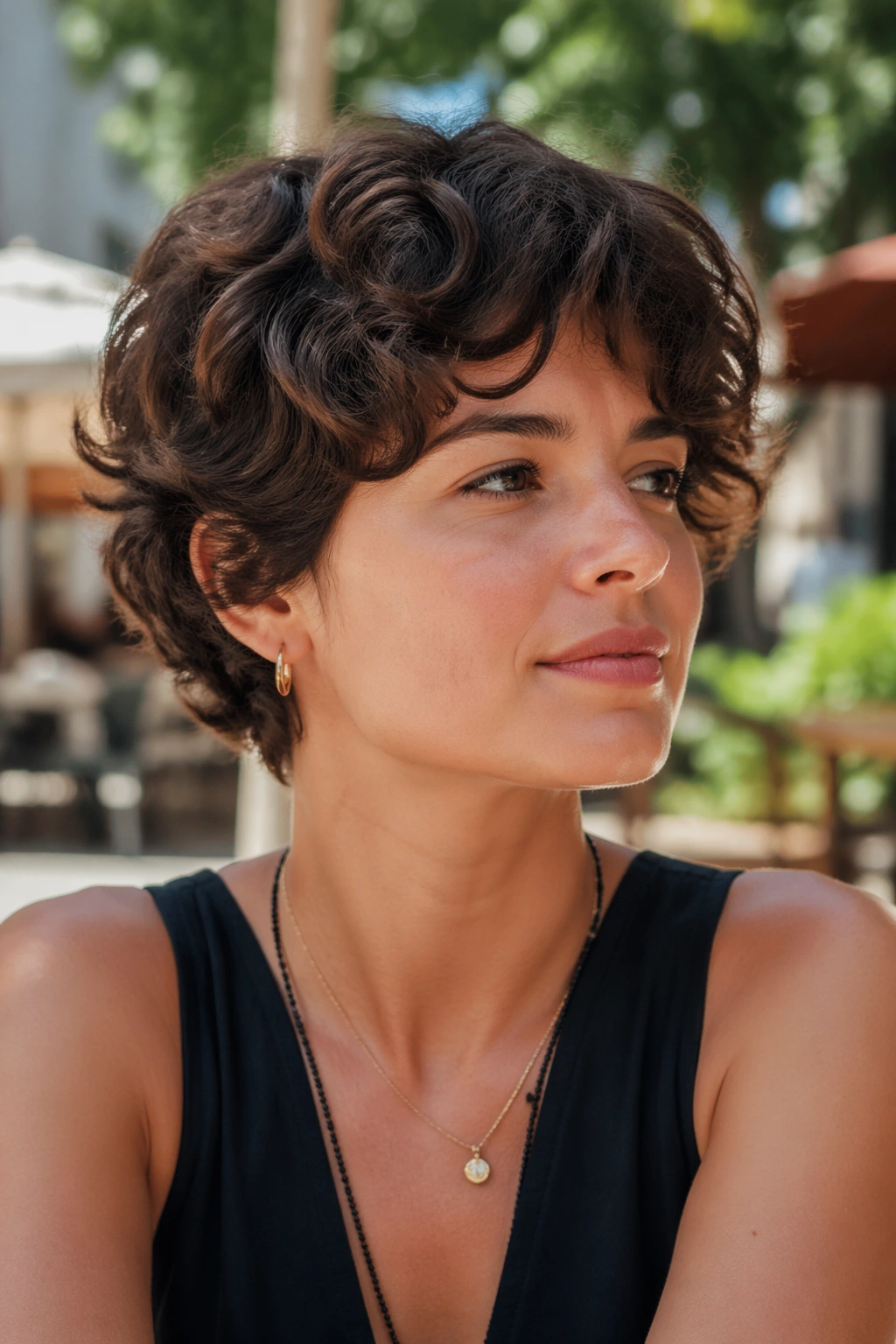
An ear-length curly cut can be surprisingly flattering because it keeps the bulk off the lower cheeks while letting the curls lift and move around the temples. The length sits in a sweet spot: short enough to feel fresh, long enough to keep softness.
The layering is what saves it from looking boxy. Without layers, a short curly cut at ear length can spread sideways. With layers, the curls stack upward and inward a little, which makes the face feel less wide. That subtle inward movement is doing more work than most people realize.
I like this cut for softer curl patterns, but it can work on tighter curls too if the stylist shapes it carefully. The perimeter should not be cut into a hard circle. A softened edge keeps the cut from reading as helmet-shaped.
If you wear earrings, this is one of the nicest lengths. The hair sits close enough to show them off, and the curls still have room to move. Small detail, big payoff.
13. Side-Swept Curly Faux Hawk
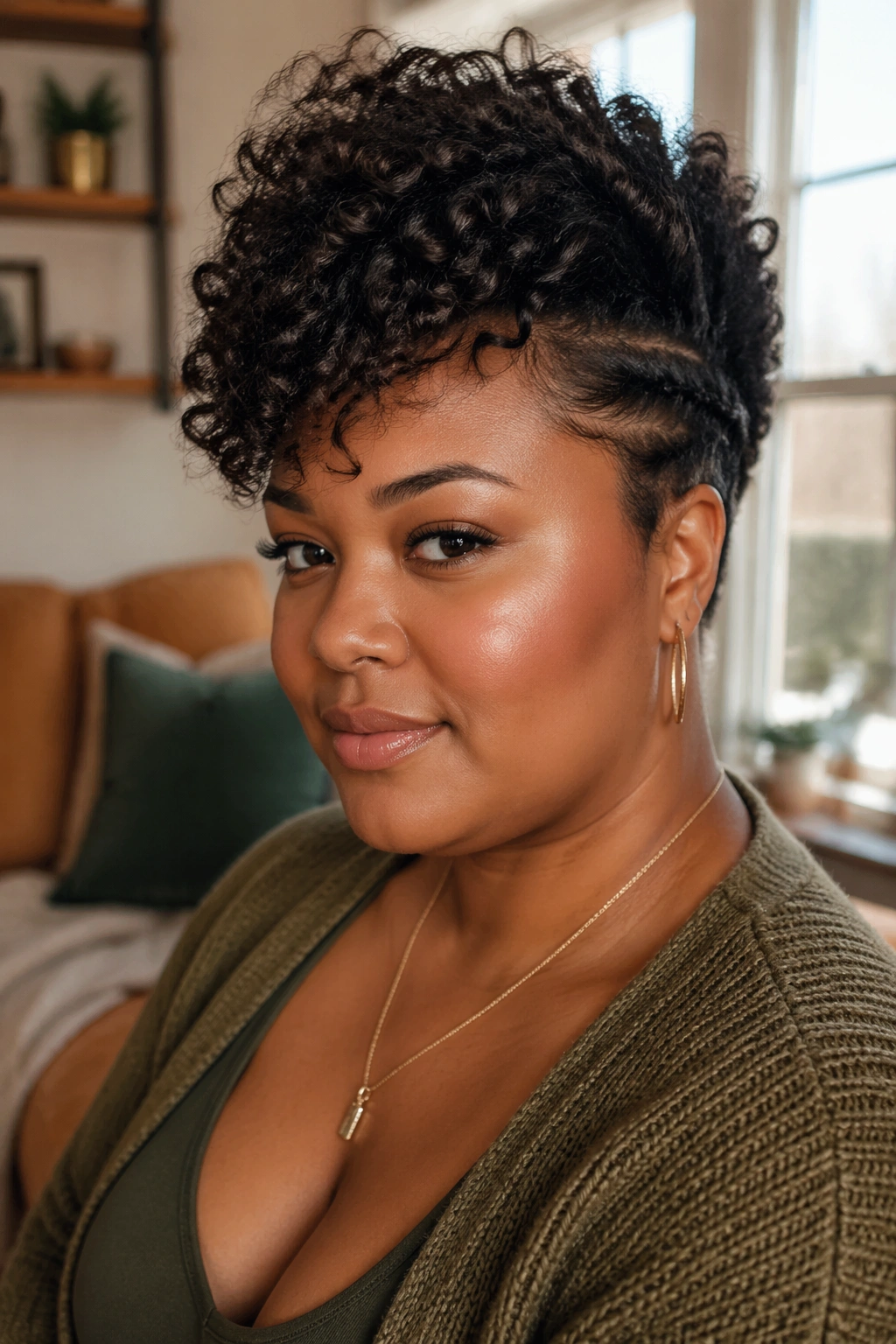
A curly faux hawk gives you height straight through the center of the head, which is exactly what can balance a round face. The sides stay controlled, tucked, or clipped close, and the curls pile up along the middle in a way that draws the eye upward.
This cut does not have to look edgy in a punk way. A softer version can be worn with enough length on the sides to tuck behind the ears, while the top stays lifted and textured. The shape still reads as a faux hawk because the center ridge is higher than the rest.
How to Wear It
Use a strong mousse or light gel on damp hair, then direct the top upward with your fingers as it dries. A diffuser helps keep the curl pattern intact while adding height. If the curls collapse, a few root clips at the crown can rescue the shape fast.
This style is good for people who want a noticeable cut that still feels practical. It’s also a clever choice if your curls are dense and you want to take width out of the sides without making the whole head look too small. That balance is hard to get, and this cut does it well.
14. Soft Undercut with Loose Curls
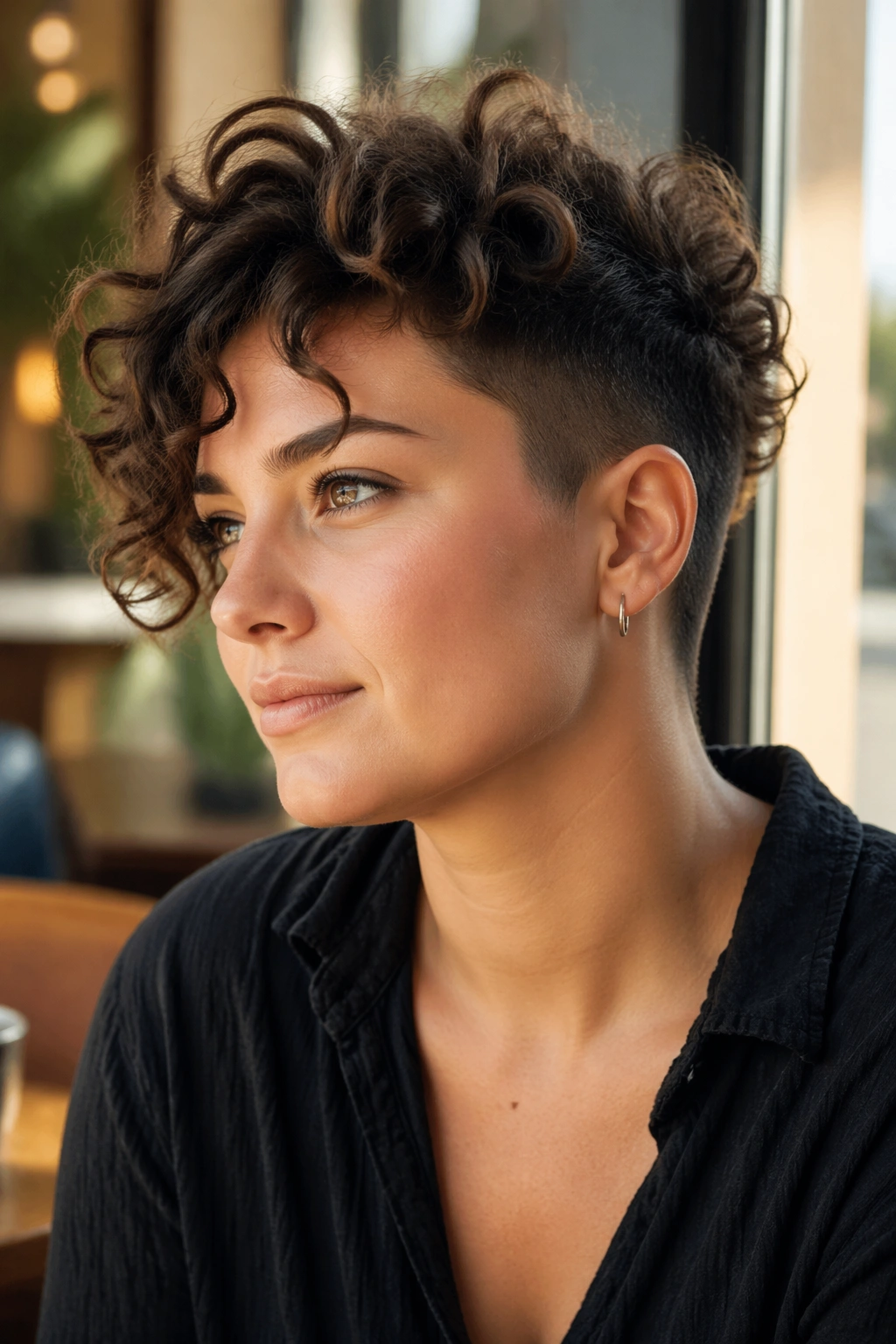
An undercut sounds dramatic, but a soft undercut can be almost invisible until the hair moves. That makes it useful for round faces with dense curls, because it removes hidden bulk without forcing the top to look severe.
The main idea is to reduce weight underneath while keeping the outer layer long enough to sit softly around the face. The curls on top fall more freely when the lower layers are trimmed back. That extra space can make a huge difference if your hair tends to puff out at the sides.
This is not the same thing as shaving half your head and hoping for the best. A soft undercut can be subtle. It can hide beneath the top layers and simply make the shape lie better. If you have thick hair that gets triangular when it grows out, this is one of the smarter fixes.
It pairs well with a side part or a slight off-center part. Center parts can work too, but the off-center version usually gives the face a little more length and keeps the style from feeling too even on both sides.
15. Jaw-Skimming Curly Bob with Deep Side Part
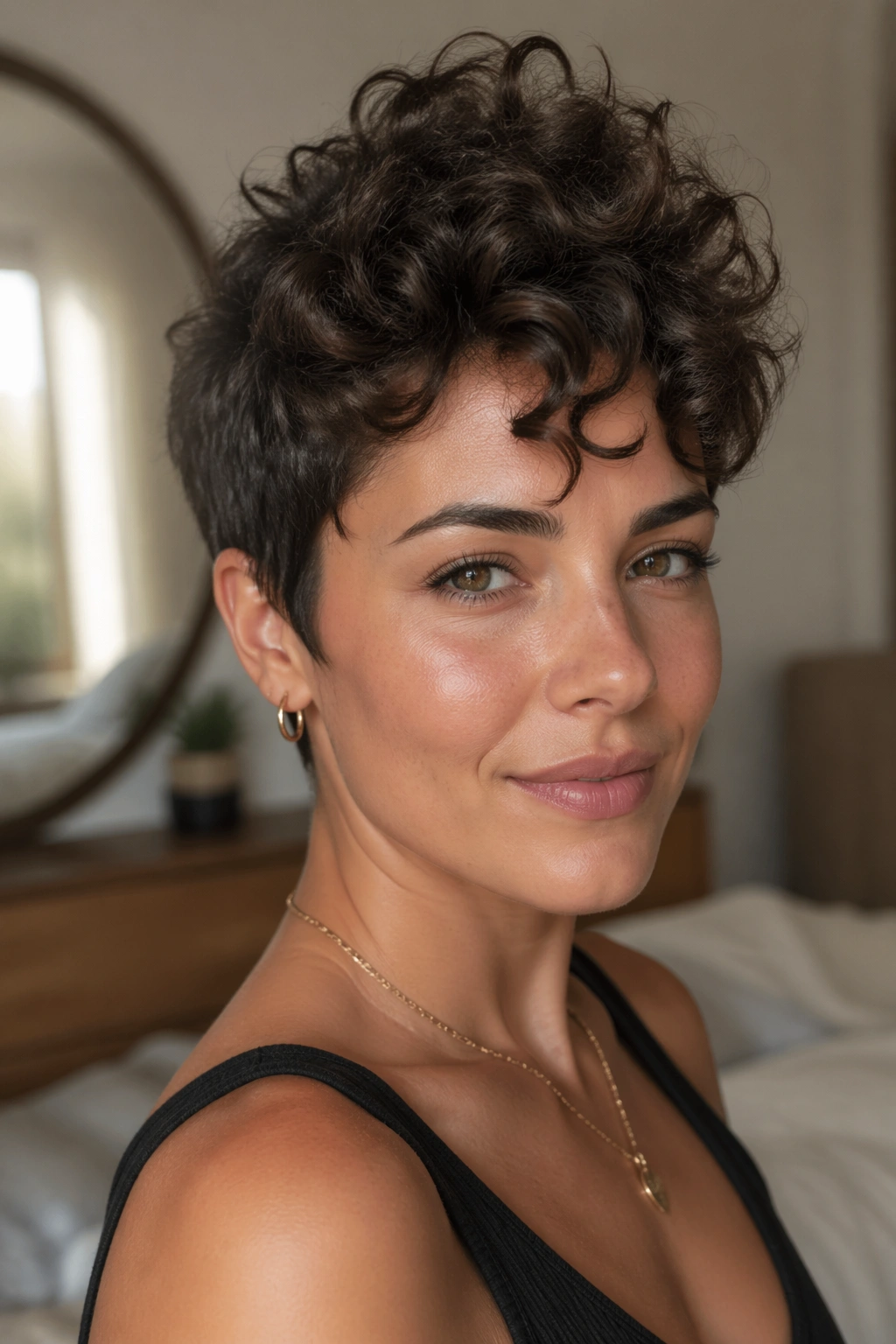
This is the safest short curly hairstyle for round faces if you want something polished, flattering, and easy to live with. The bob skims the jaw instead of sitting right on it, and the deep side part keeps the whole shape from looking too circular.
The key is placement. You want the longest pieces to fall just below the chin or angle slightly forward toward the jawline. That little bit of extra length in front keeps the cheek area from feeling boxed in, while the part line breaks up the width across the top of the face. It sounds subtle because it is subtle. That’s why it works.
A cut like this also plays nicely with curl patterns that vary from one side to the other. The side part hides small differences, and the jaw-skimming shape gives the curls room to land where they want. If you like clean lines but do not want the haircut to feel stiff, this one hits a sweet spot.
If you’re torn between several styles, start here. It’s the one I’d send someone to when they want short curls, a round face, and a cut that still looks good after a long day, a few pin twists, and one reluctant second-day refresh.