

Medium shag cuts for curly hair are one of the few styles that can add shape without stealing length. That matters more than people think. Curly hair has its own little geometry, and when a cut respects that, the whole head looks lighter, fuller, and easier to live with.
Shrinkage changes everything. A medium shag that looks shoulder-grazing when wet can bounce up a full inch or two when dry, and that is exactly why curl-aware layering matters so much. A good shag doesn’t fight the curl pattern. It works with it, then gives it some edge.
The bad versions are easy to spot. The layers sit in clumps, the crown goes flat, the sides puff out, and the ends turn fuzzy because someone cut the hair like it was straight. The good versions move. They keep a little length in front, let the curls stack naturally, and avoid that dreaded pyramid shape.
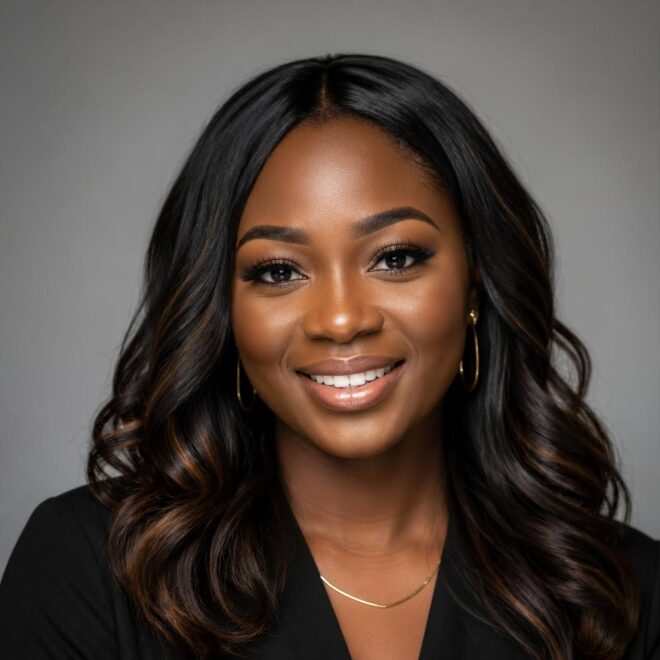
1. Collarbone Shag with Long Face-Framing Layers
If you want to try a shag without giving up much length, start here. This version keeps the perimeter near the collarbone and uses long face-framing pieces to soften the outline, which makes it one of the easiest medium shag cuts for curly hair to wear every day.
Why It Works
The biggest win here is balance. You get the movement of a shag, but the cut still feels familiar because the longest layer stays low and the front pieces never get too short. That makes the style friendly for people who like to tuck hair behind the ear, clip one side back, or wear their curls stretched a little longer on wash day.
Ask for the shortest face-framing layer to start around the cheekbone, then let the next pieces fall gradually toward the jaw and collarbone. That keeps the shape soft instead of chunky. If your curls spring up hard, have the cut checked dry before the stylist gets too ambitious with the front.
Quick things to ask for
- Longest layer: collarbone length when dry
- Shortest face frame: around cheekbone level
- Crown: light layering, not a big chop
- Finish: soft ends, not razor-thin wisps
Pro tip: bring one photo that shows the front, one that shows the side, and one that shows the back. One picture is never enough for curls.
2. Medium Curly Shag with Bottleneck Bangs
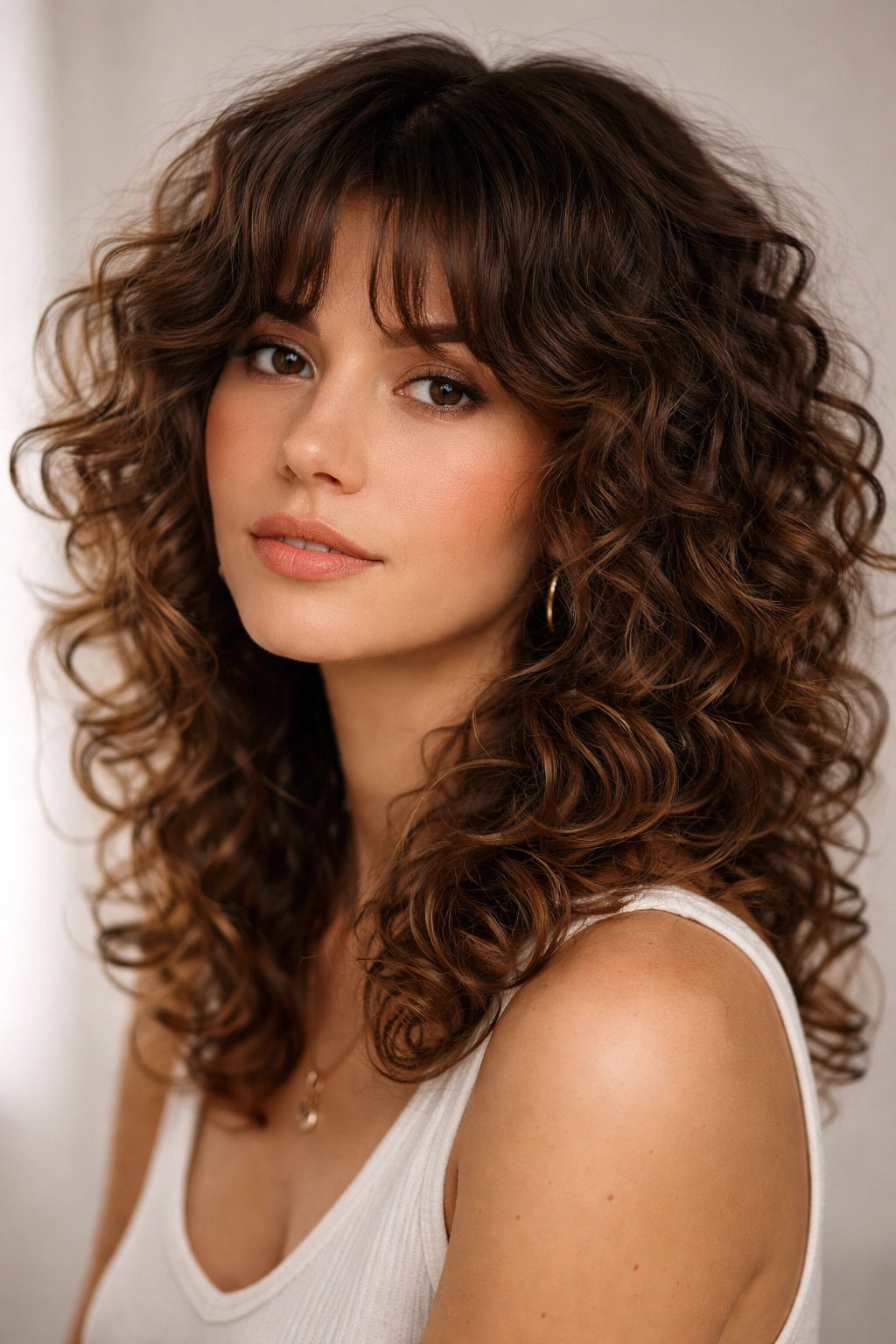
Bottleneck bangs are one of those details that can change the whole haircut without making it feel loud. The center sits shorter, the sides stretch longer, and the result is a fringe that blends into the rest of the cut instead of sitting there like a little wall across the forehead.
That shape is kind to curls because it allows for shrinkage. The middle can curl up a bit more, the side pieces can fall into the face, and the fringe still reads as part of the cut rather than a separate section. It also plays well with a medium shag because the bangs help pull the eye upward while the layers around the cheeks keep the silhouette loose.
I like this version on people who want movement near the face but do not want a heavy bang commitment. It works especially well if your forehead feels wide or if your curls tend to split in the middle. The fringe can be styled with a small dab of gel and a quick diffuse, or you can leave it to air-dry and let the curl pattern do the work.
The trick is not to cut it too short. Curly bangs need room to bounce.
3. Rounded Shag for Dense Curls
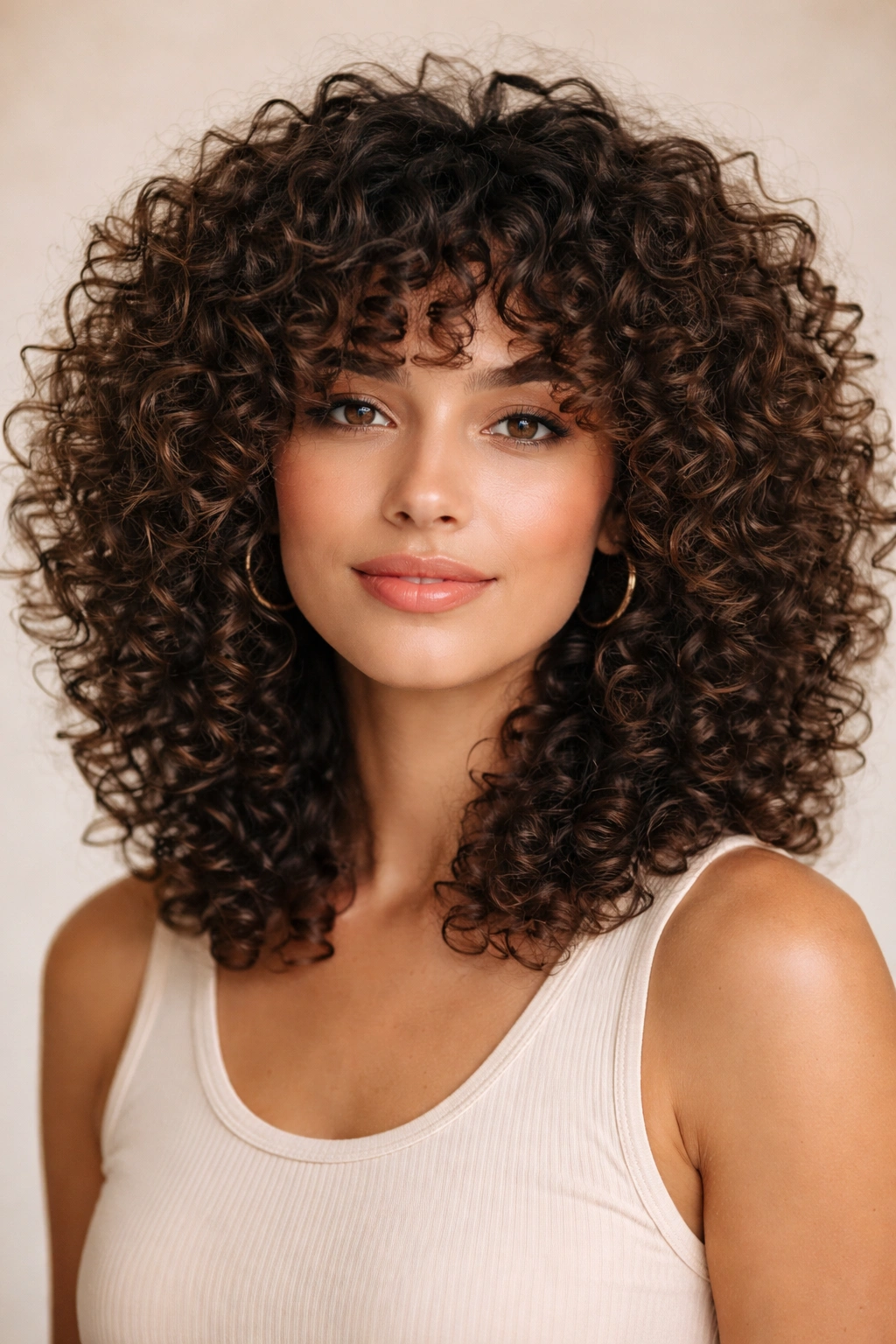
Why do some shag cuts make dense curls look bigger instead of lighter? Because the layers are carved in the wrong places, and the outline never gets shaped back into a curve. A rounded shag fixes that by removing bulk from the inside while keeping the outer edge full and smooth.
This cut is excellent for thick 3B, 3C, and mixed curl patterns that expand at the sides. The goal is not to shred the hair into pieces. It is to let the curls sit in a rounded silhouette so the shape hugs the head a little more instead of flaring out at the shoulders. When done well, it looks expensive in the plainest sense of the word: the cut feels intentional, and the hair moves instead of fighting itself.
What to ask for at the salon
- Dry cutting or curl-by-curl shaping so shrinkage is visible
- Interior weight removal below the ear and around the back
- A curved perimeter that follows the head shape
- No heavy thinning shears near the crown unless your hair is truly dense
Dense curls can handle structure, but they hate sloppy layering. That’s the whole game. If the shape keeps ballooning out at the sides, the cut needed more internal balance, not more length.
4. Wolf-Inspired Medium Shag
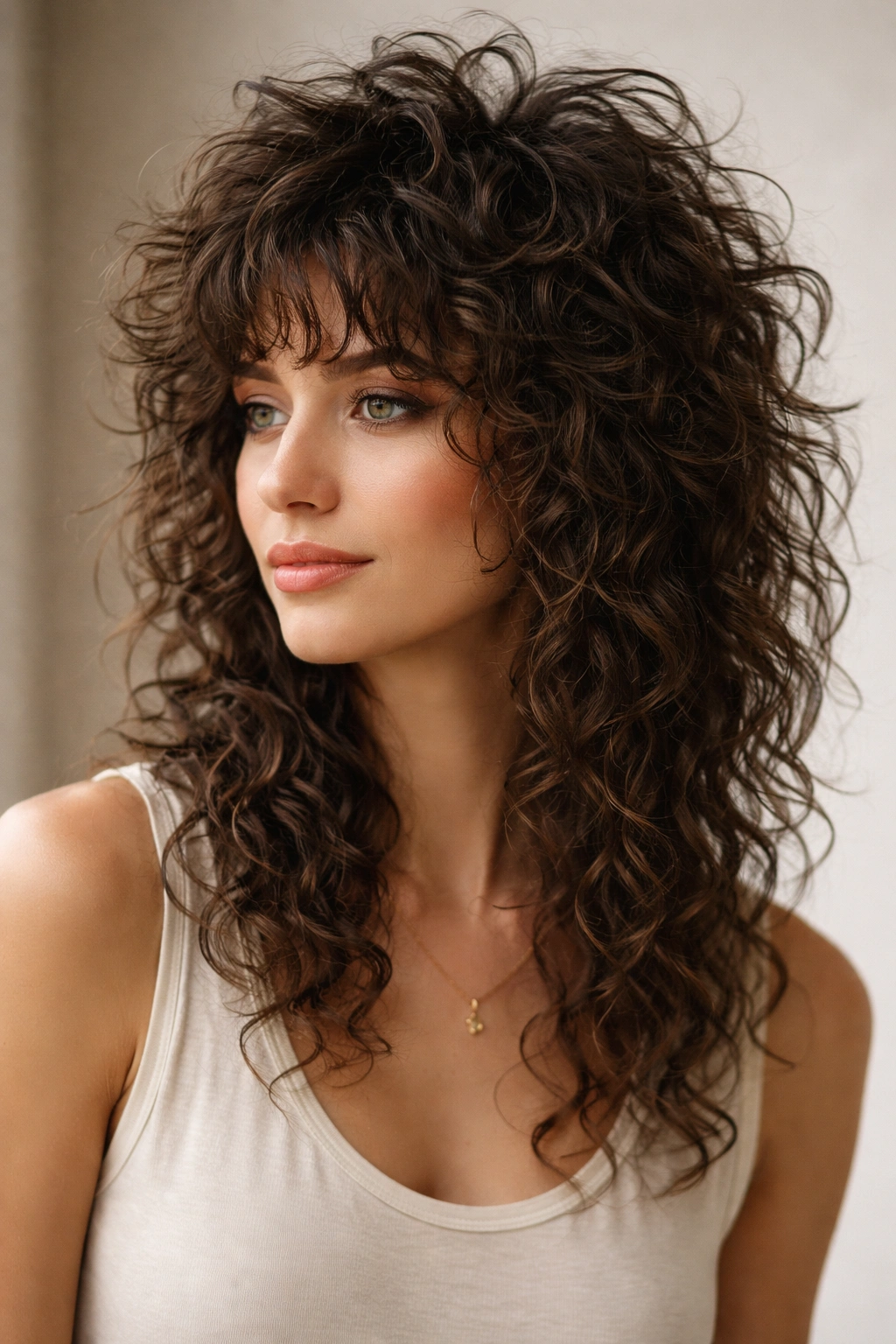
A wolf-inspired shag has a little more attitude. The crown sits higher, the top layers are shorter, and the neckline often tapers down a touch more than a classic shag. On curly hair, that can look sharp in a good way — a little wild, a little deliberate, never boring.
Picture this: someone walks out of the salon with hair that looks almost too piecey at first glance, then it dries and the curl pattern takes over. The layers separate, the crown lifts, and the whole cut gets this lived-in shape that plain medium haircuts rarely have. That is the appeal. It looks a bit undone even when the styling is clean.
This version works best if you like volume and don’t mind a more noticeable shape around the head. It’s also a smart choice if your curls are dense at the back and flatter on top, because the shorter crown pieces can create lift without turning the ends into a triangle. A diffuser helps, but so does air-drying with a light gel cast left intact until the hair is fully dry.
If you like hair with personality, this one brings it.
5. Layered Lob Shag for Loose Waves
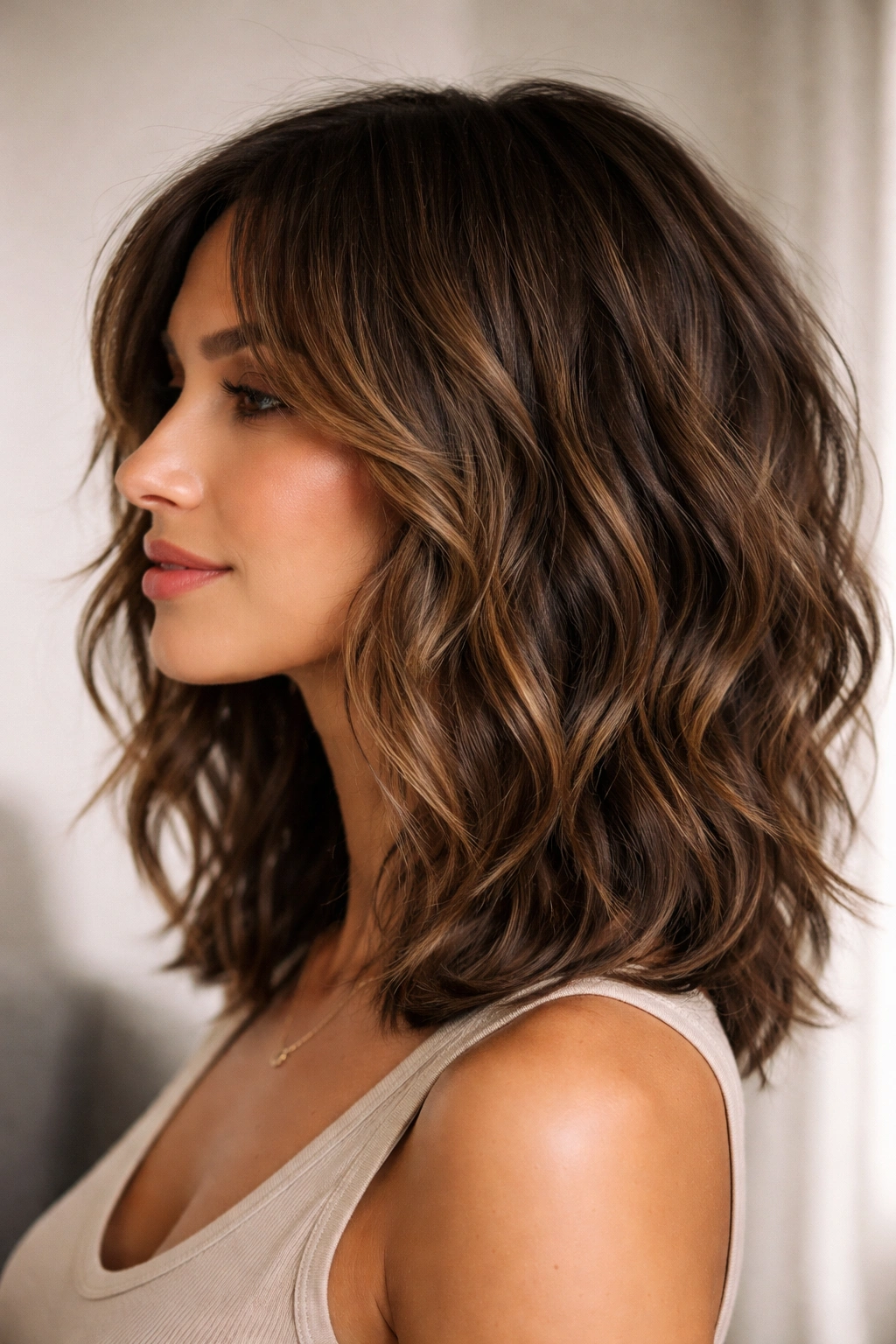
Unlike a blunt lob, this cut does not sit politely at one length and hope for the best. The layered lob shag keeps the overall shape clean, but the interior has enough movement to stop loose curls and waves from collapsing into a flat sheet.
It’s a smart middle ground for 2B to 3A textures. You get the ease of a lob, which means the length still feels manageable, but the shag layers keep the ends from looking heavy. That matters a lot on looser curl patterns, where too many short layers can make the hair flip out in weird places. Here, the trick is restraint.
The best version usually starts with softer layers around the cheekbones and a slight break in length through the midsection. Nothing needs to be dramatic. The whole point is to give the waves room to bend. If you wear your hair with a side part, this shape can be especially nice because the front pieces fall in a relaxed way instead of pushing straight forward.
If you want a shag but don’t want anyone to call it “edgy” in a dramatic voice, this is a clean answer.
6. Airy Shag for Fine Curly Hair
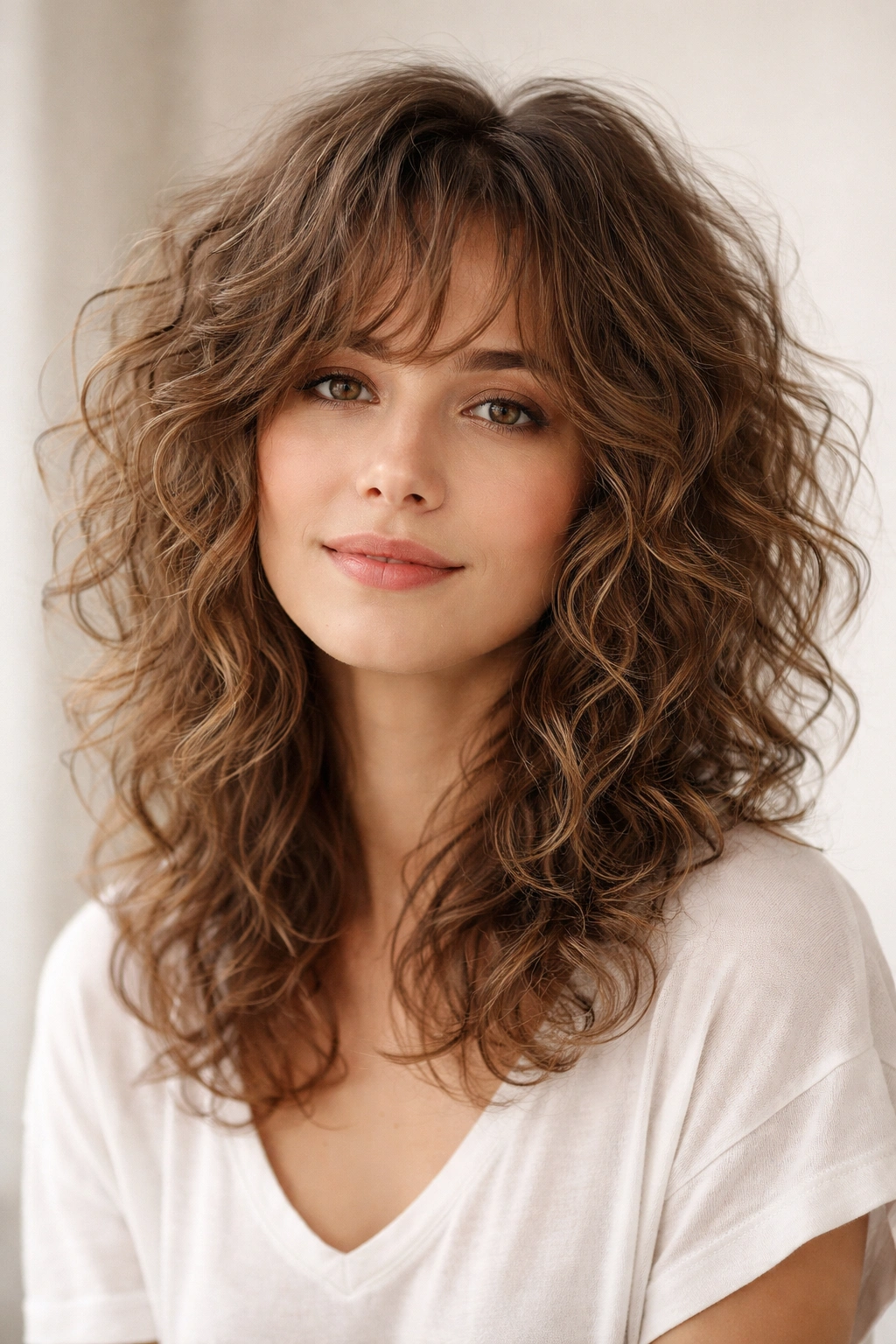
Fine curls do not need more layers. They need smarter layers. That’s the whole difference between a fluffy, lifted shag and a cut that turns into see-through ends by the third week.
An airy shag keeps the outline soft and the weight distributed carefully, which is exactly what fine curly hair needs when it wants movement without collapse. The best version uses light internal layering and leaves enough length at the perimeter so the curls can still stack together. Too many short bits near the top, and the hair starts looking thin where you want it to look full. Too little layering, and the curls hang flat at the sides. It is a narrow path.
How to style it
- Use a light mousse at the roots and mid-lengths
- Scrunch in a small amount of gel for curl hold
- Diffuse on low heat and low speed
- Stop drying when the roots are about 80% dry, then air-dry the rest
This cut works best when the stylist resists the urge to over-texturize. Fine curls usually look better with clean shape and controlled lift than with tons of slicing. A little air around the layers is enough. More than that often reads as frizzy, not airy.
7. Medium Shag with a Curved Fringe
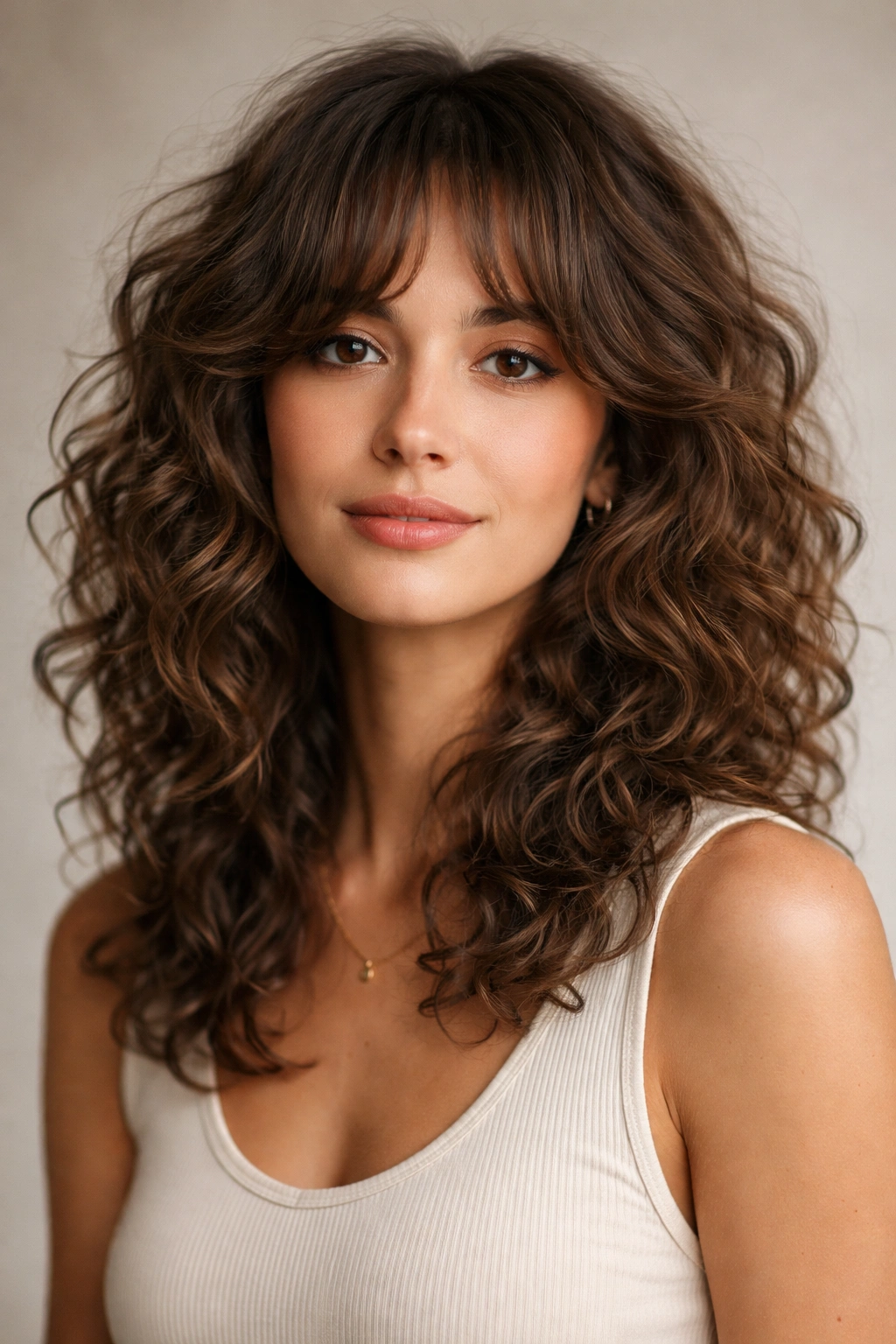
A curved fringe changes the mood of a shag fast. Instead of a straight line across the forehead, the bangs arc gently from the center outward, which gives curly hair a softer frame and a more flattering top line.
This shape is especially good if your forehead feels broad, your face is longer, or your hair likes to split where bangs should sit. The curve helps the fringe curl into the rest of the haircut instead of fighting it. That means less daily fuss and fewer mornings spent wetting down one stubborn section that insists on doing its own thing.
How the fringe should sit
The center can sit just above or right at the brow when dry, while the outer pieces sweep toward the temples and cheekbones. That spacing gives the hair room to bounce up. If the fringe is cut too tight, it can sit awkwardly high and make the rest of the cut look heavier. Nobody wants that.
Who it flatters
- Oval faces that want a little more shape
- Long faces that need width near the eyes
- Round faces that want softness without a blunt line
A curved fringe does need maintenance, though. Not a terrifying amount. Just enough trim work to keep it from sliding into the eyes and swallowing the face frame.
8. Tapered Crown Shag for Flat Roots
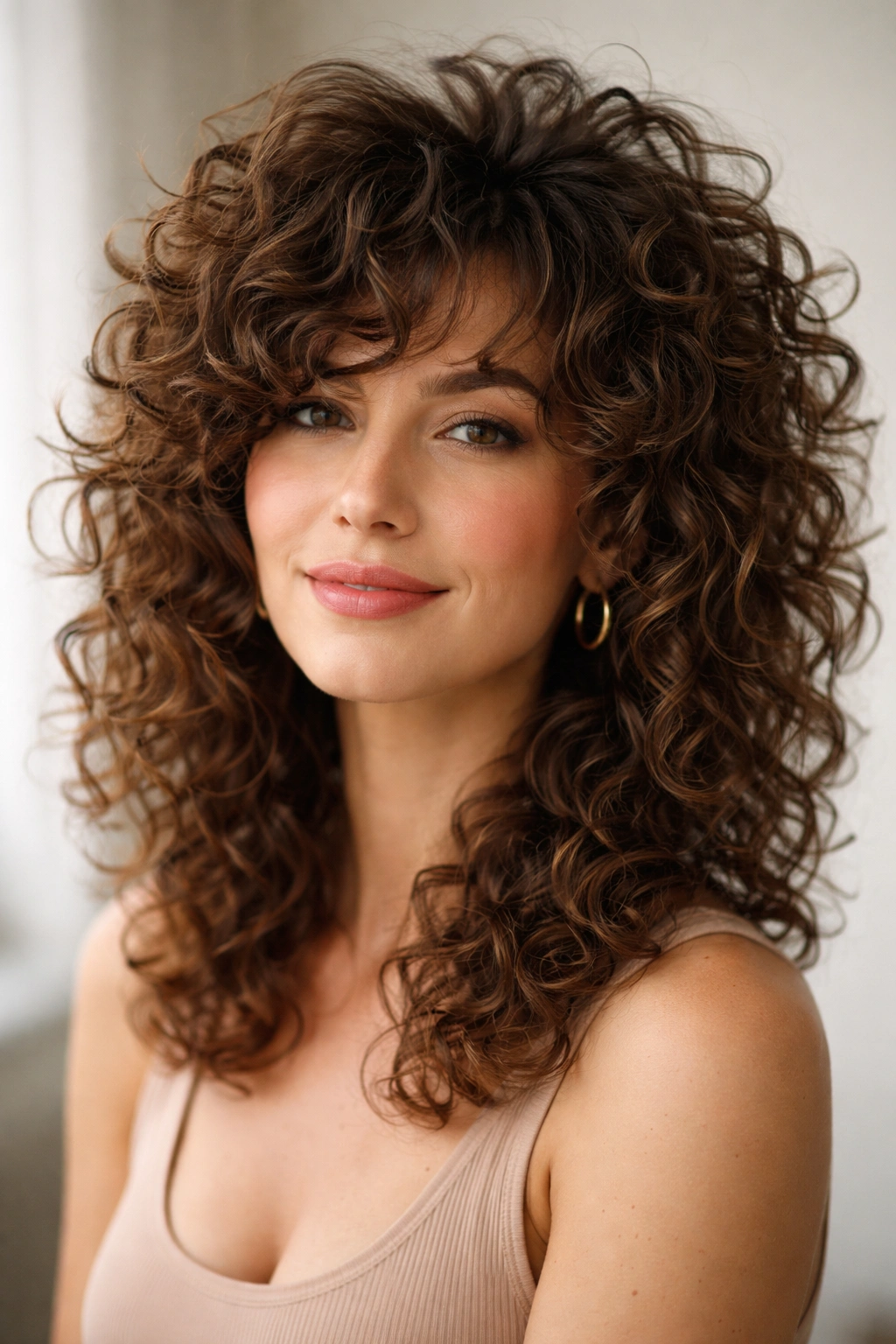
What if your roots collapse by noon, but your ends already have enough width? Then the crown needs the attention, not the whole head. A tapered crown shag solves that by building lift on top while keeping the lower layers controlled.
This is one of my favorite medium shag cuts for curly hair that goes flat at the scalp and wide at the bottom. The crown layers are shorter and more active, but the length stays intact through the sides and back so the silhouette still feels medium, not spiky. It gives the eye a place to land at the top of the head, which is a small thing until you see how much better the whole cut looks.
The styling part matters here. Use clips at the roots while the hair is damp, then diffuse upside down for a few minutes before flipping back. That little trick gives the crown room to lift without forcing it. A heavy cream can weigh the whole thing down, so go easy if your hair is already prone to collapse.
Best for: people whose curls flatten at the roots and puff out at the cheeks.
Less ideal for: very small curls that already stand away from the head in a strong halo.
9. Piecey Shag for Wavy-Curly Texture
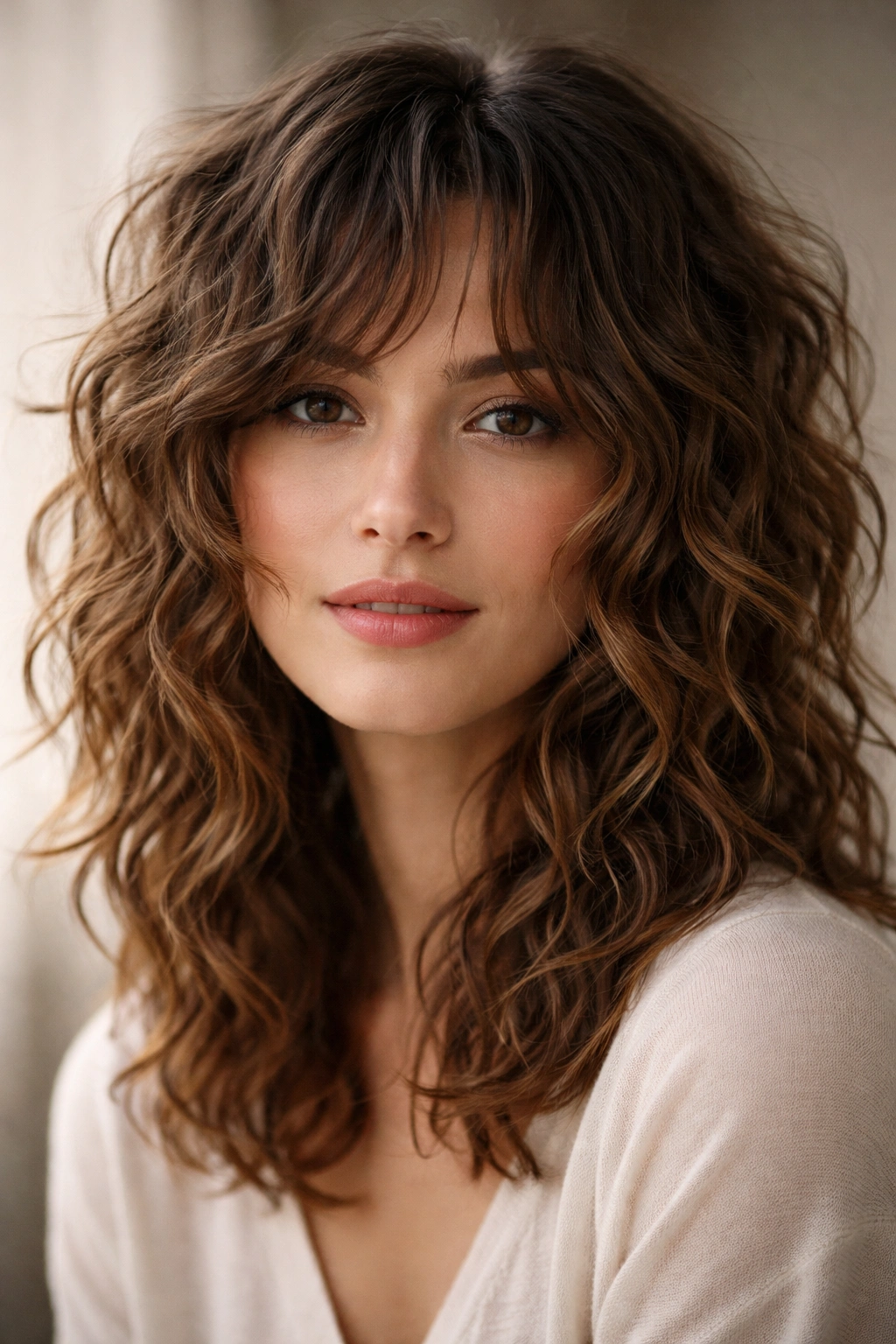
Some curl patterns live in the middle. A little wave here, a curl there, a few sections that bend hard and a few that barely bend at all. A piecey shag works with that uneven texture instead of pretending everything is the same.
The cut relies on separation. Not frizz. Separation. Those are not the same thing, and anyone who styles wavy-curly hair knows the difference instantly. The layers should look defined enough to let each clump do its own job, but not so chopped that the ends feel scattered. When it lands right, the hair has movement that looks casual in a very controlled way.
A piecey shag also makes styling easier. A light curl cream, a touch of gel, and finger-coiling just the front pieces can be enough. You do not need to perfect every strand. In fact, trying to make every curl match is usually the fastest way to lose the charm of this cut.
Good details to ask for
- Soft point cutting through the front
- Minimal layering at the very nape
- Enough length to encourage curl clumps
- A face frame that breaks up the bulk near the cheeks
This one is for people who like a little texture and do not want their hair to look too polished.
10. Heavy-Layer Shag for Thick 3B-3C Hair
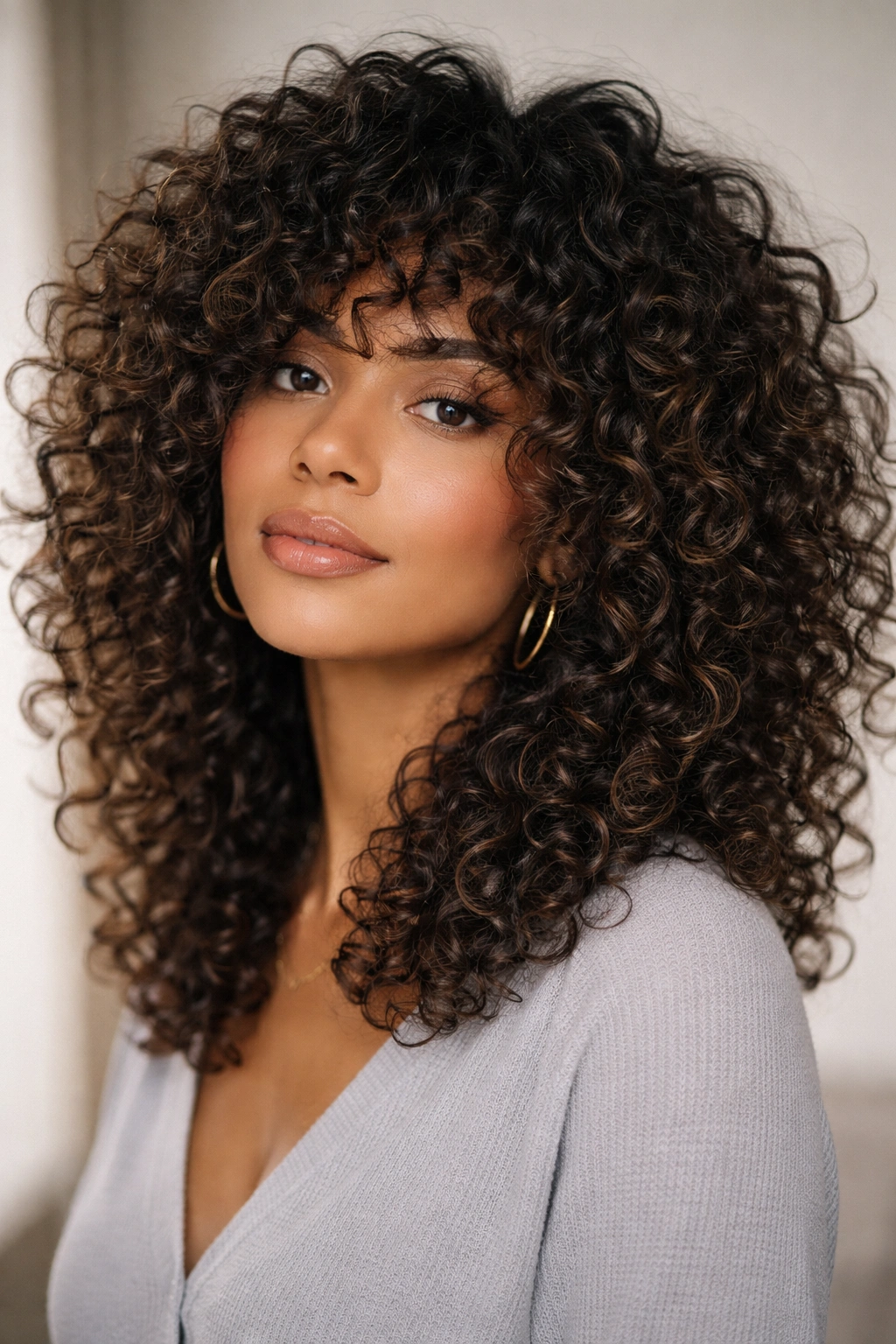
Thick curls can carry more layers than people think. The trick is knowing where to take the weight out, because a good heavy-layer shag should make the hair move, not make it fray.
This cut is built for density. The stylist works through the interior and removes bulk below the visible top layer, which helps the hair fall in a cleaner shape. The outline stays stronger than you might expect, because that outer shell is what keeps the haircut from turning into a puffball. If your curls expand sideways and sit wide at the shoulders, this is the kind of structure that helps.
What you want to avoid: too many short pieces around the temples and crown all at once. That can make thick hair look jagged, and once that happens, styling becomes a daily negotiation. The better move is controlled layering with a clear shape at the bottom.
I also like this cut for people who wear their curls natural most of the time. Dense hair can look heavy when it’s one solid block, and a layered shag gives it air. It still needs moisture, of course. Thick curls are not magically low-maintenance just because they look fuller. But they usually respond well to a cut that respects their volume instead of trying to fight it.
11. Side-Swept Curly Shag with a Deep Part
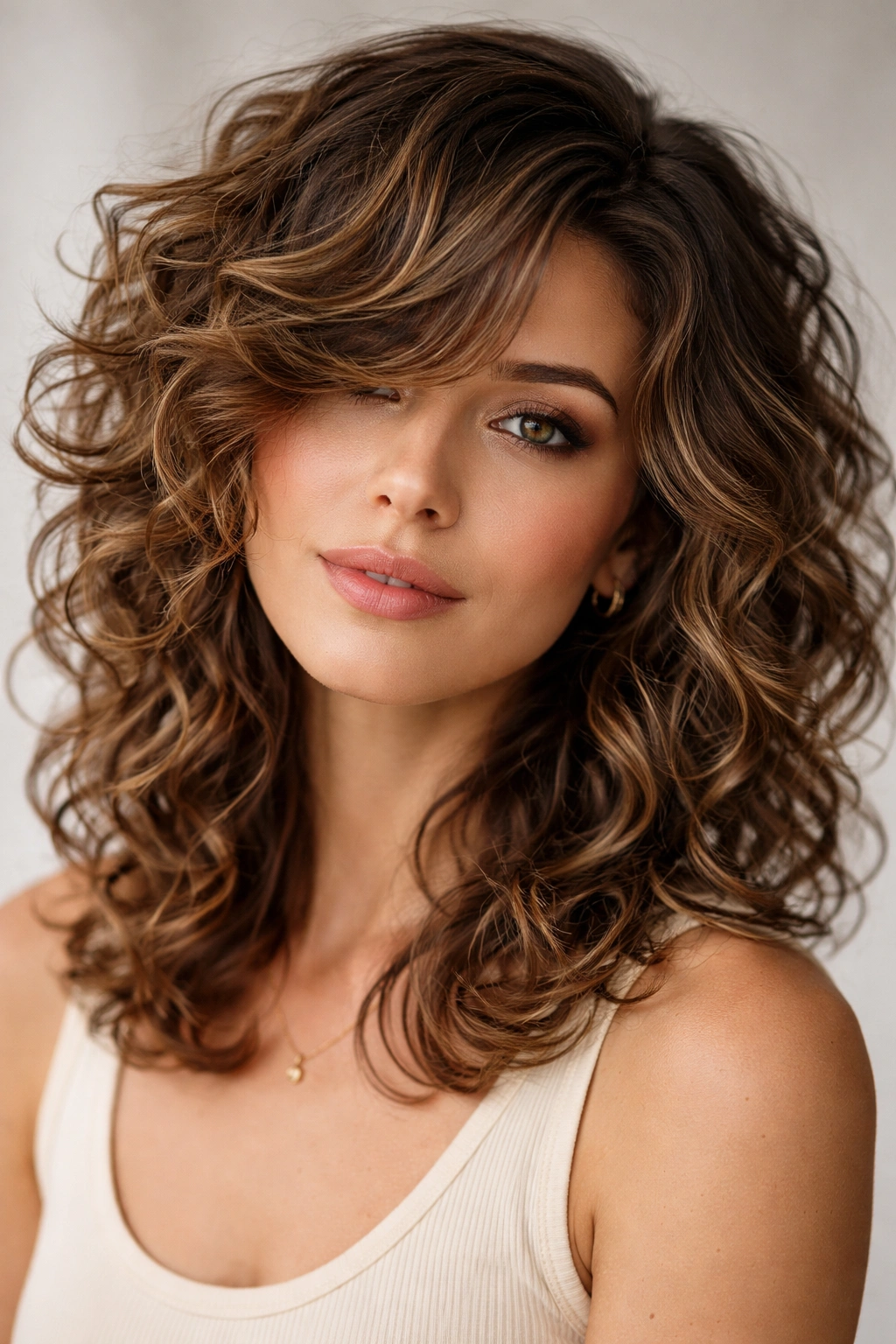
Unlike blunt bangs, a side-swept fringe gives you softness first and attitude second. The part shifts the whole haircut off-center, which can make a medium shag look longer, looser, and a little more tailored without becoming formal.
This is a smart choice if you have a round face, a strong jaw, or just want your curls to fall away from the forehead instead of straight down it. The side-swept front pieces can hit around the brow or cheekbone, and the rest of the shag can taper behind them. That creates a nice visual line. The eye moves across the face instead of stopping in one blocky place.
Why the part matters
A deep part adds height at the crown and breaks up symmetry. That matters with curls because a center part can sometimes exaggerate width at the cheeks, especially if the layers are a little too even. A side part changes the whole feel of the cut without requiring a big chop.
If you want this look to hold, set the part while the hair is still damp and clip the front section in place for a few minutes. It helps train the curl direction before the hair dries. A small amount of mousse at the root can also keep the lift from collapsing.
This cut is polished, but not stiff. That’s the appeal.
12. Shoulder-Length Razor Shag
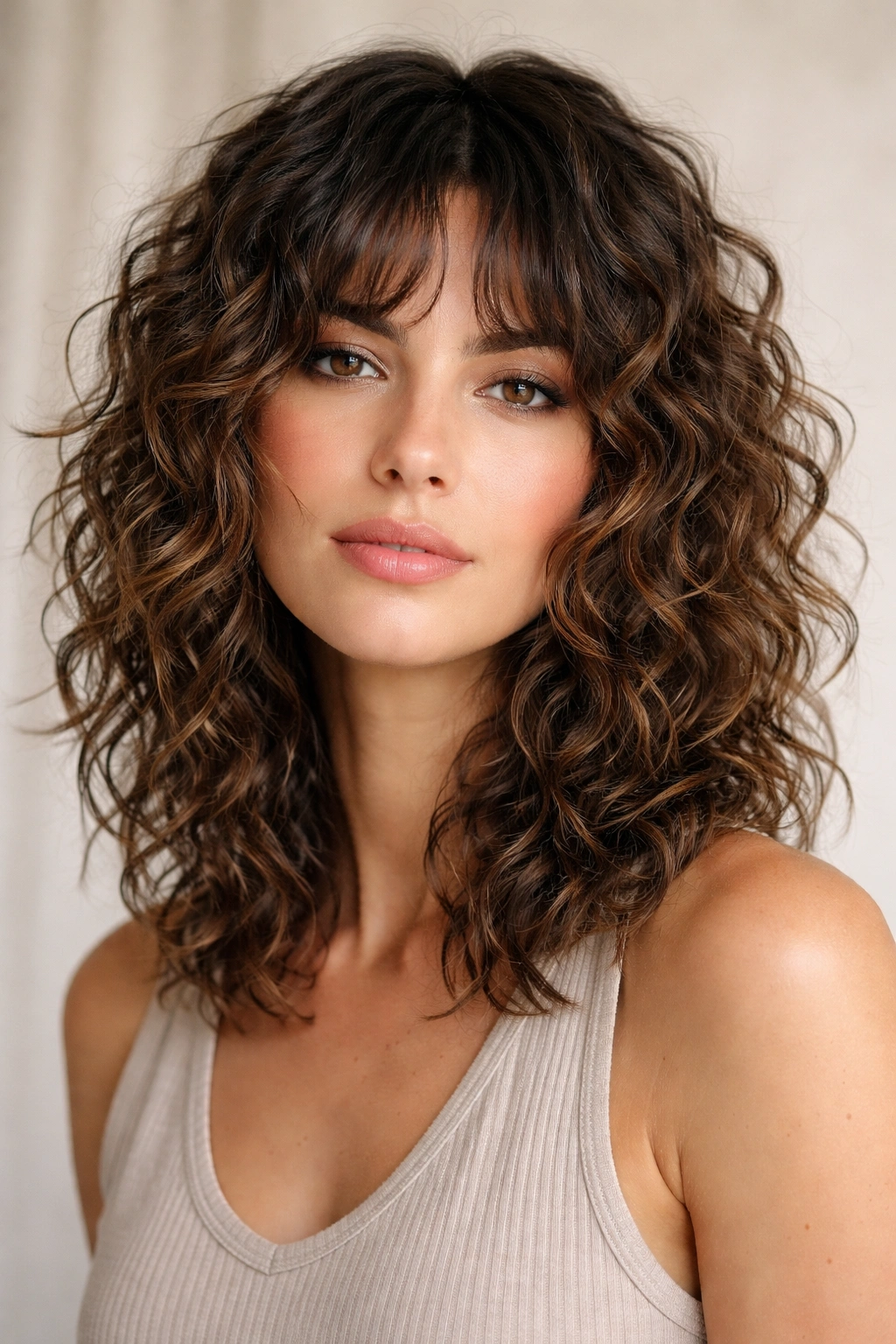
Can a razor cut work on curls? Yes, but only when the stylist knows where to stop. On healthy medium curls, a razor shag can soften the ends and create a lighter edge that scissors sometimes miss.
The razor’s job is not to shred the hair. It’s to remove some of the heaviness in a way that lets the curl pattern breathe. That works best on stronger strands with enough elasticity to handle a softer cut line. If the hair is fragile, over-processed, or already frizzy at the ends, the razor can make things worse fast. Curls need respect here.
Where a razor helps
- Softening blunt edges that feel too heavy
- Creating a lighter face frame
- Adding movement to thicker mid-lengths
- Breaking up a blocky shoulder line
A shoulder-length razor shag looks especially good when the curls are defined and the perimeter has some swing. It keeps the cut from feeling static. The shape is still medium, but the finish is looser and a little more airy around the ends.
Skip this version if your hair is prone to split ends or if your stylist reaches for the razor before talking about curl pattern. That should make you pause. A good razor cut on curls is a controlled move, not a shortcut.
13. Wash-and-Go Shag for Low-Maintenance Styling
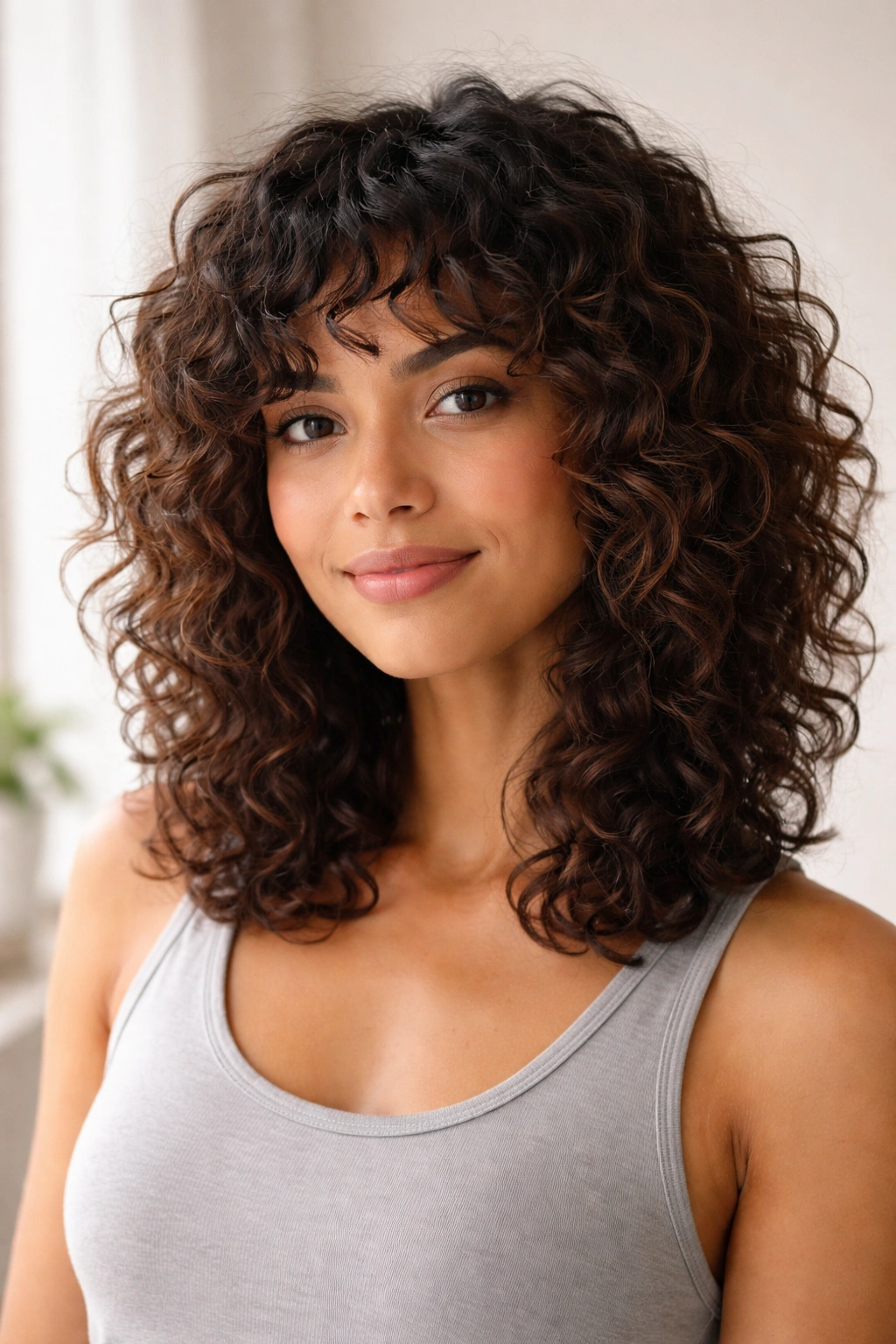
Some people want a haircut that looks decent after 15 minutes in the bathroom. This is that haircut. A wash-and-go shag is built so the curls fall into place with very little heat, little brush work, and almost no morning drama.
The shape matters more than the styling. Layers should encourage the curl pattern to stack naturally, with enough space around the face and crown that the hair doesn’t need constant rescue. If the cut is done well, you can wash, rake in product, scrunch, and go. That sounds simple because it is. The hard part happens in the chair, not at the sink.
A routine that works
- Apply a leave-in conditioner to soaking-wet hair.
- Smooth in a curl cream or light gel, using a small amount so the hair doesn’t get heavy.
- Scrunch upward for a few seconds, then stop touching it.
- Air-dry or diffuse until the hair is about 90% dry.
- Break the cast with dry hands only when the curls feel fully set.
This cut is great for people who do not want to fight their hair every morning. It still needs a decent trim cycle, though, because grown-out layers can mess up the wash-and-go balance fast.
14. Rounded-Ends Shag with a Soft Bottom Line
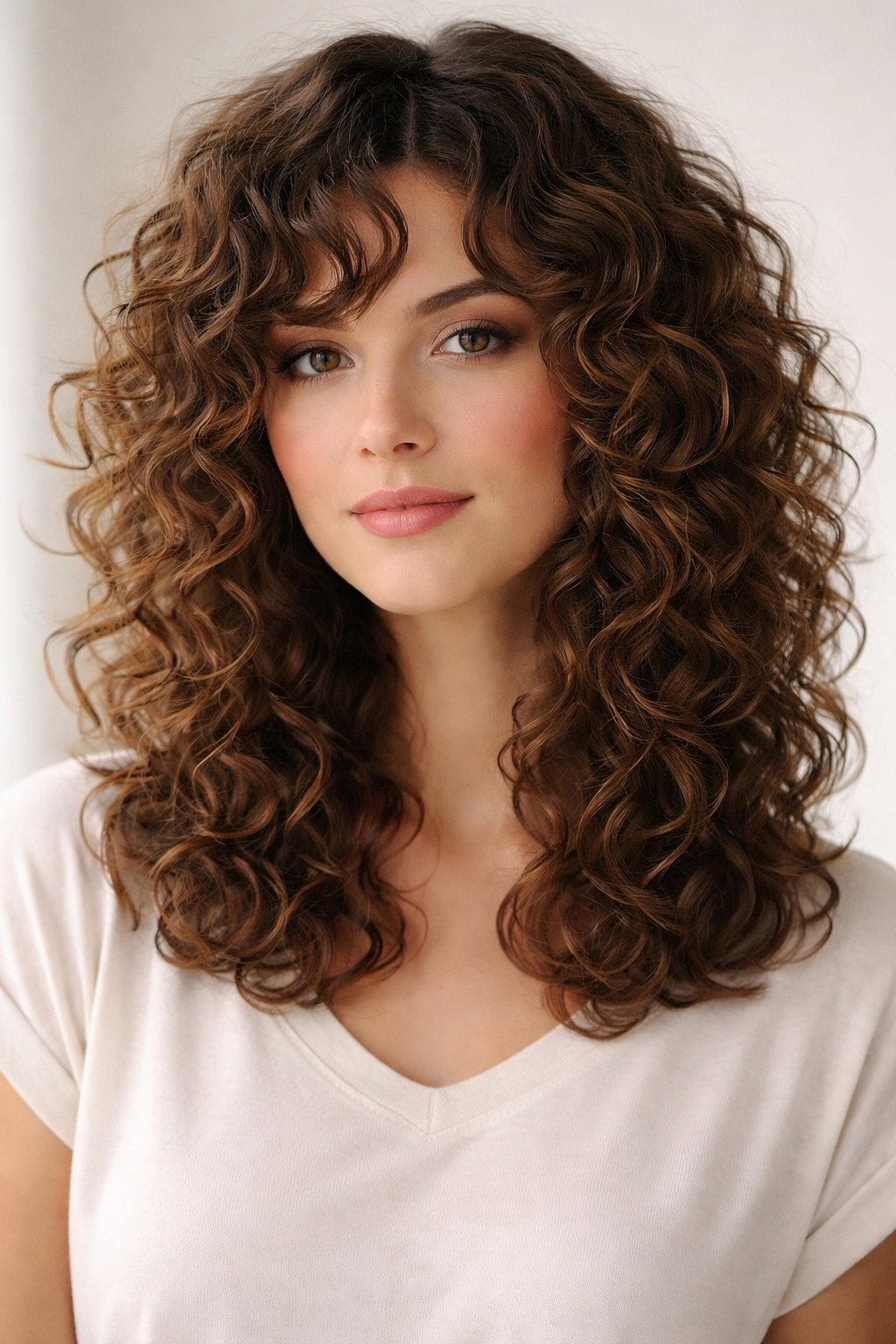
A shag does not have to look sharp to work. A rounded-ends version keeps the movement, but the bottom line stays soft and curved, which makes the whole haircut feel a little more finished.
That shape is especially nice if you want your curls to look full but not wild. The ends are guided into a gentle arc instead of sitting in broken, uneven bits. It’s a subtle difference in the chair and a big difference in the mirror. The haircut looks calmer. More controlled. Less like you wrestled with it and more like it decided to cooperate.
This cut is also kind to people who wear sweaters, collared shirts, or jackets a lot. A harsh bottom edge can snag and flip oddly against clothes. A rounded hemline usually sits better. That sounds minor, but hair lives in the real world, not a studio shoot.
I’d call this the “polite shag” if that term didn’t sound too cute. It still has layers and movement. It just doesn’t shout.
15. Curly Shag with a Mullet Edge
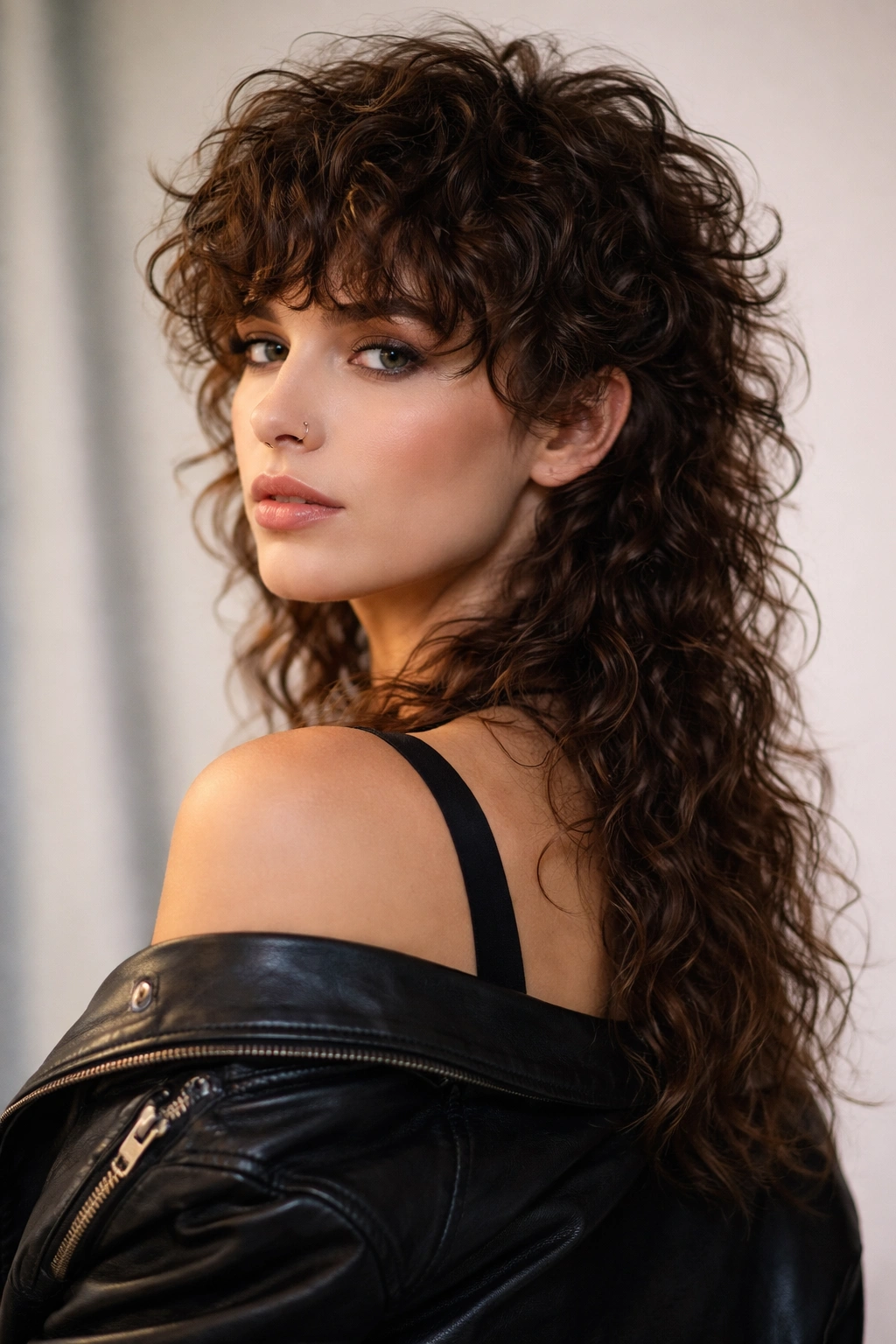
This is the boldest version, and that is exactly why people love it. A mullet-edge shag keeps the medium length in the back while the crown and front sit shorter, giving the haircut a little more contrast and a lot more personality.
On curly hair, the look softens in a nice way. The curls blur the hard lines, so what could look severe on straight hair reads as playful and a bit rock-and-roll instead. The front can be broken up with layers around the cheekbones, while the back keeps enough length to move when you turn your head. It’s not for someone who wants a shy haircut. It is for someone who likes shape that people notice.
The best version avoids a harsh disconnect. You want the transition from crown to back to feel deliberate, not choppy for its own sake. Ask for a soft mullet influence, not a split cut that ignores the curl pattern. That difference matters more than the label.
This style also grows out with a bit of attitude. Some cuts just get messy when they grow. This one often gets better for a while, then needs a trim before the balance tips too far. That’s a fair trade if you like hair with a little edge.
Final Thoughts
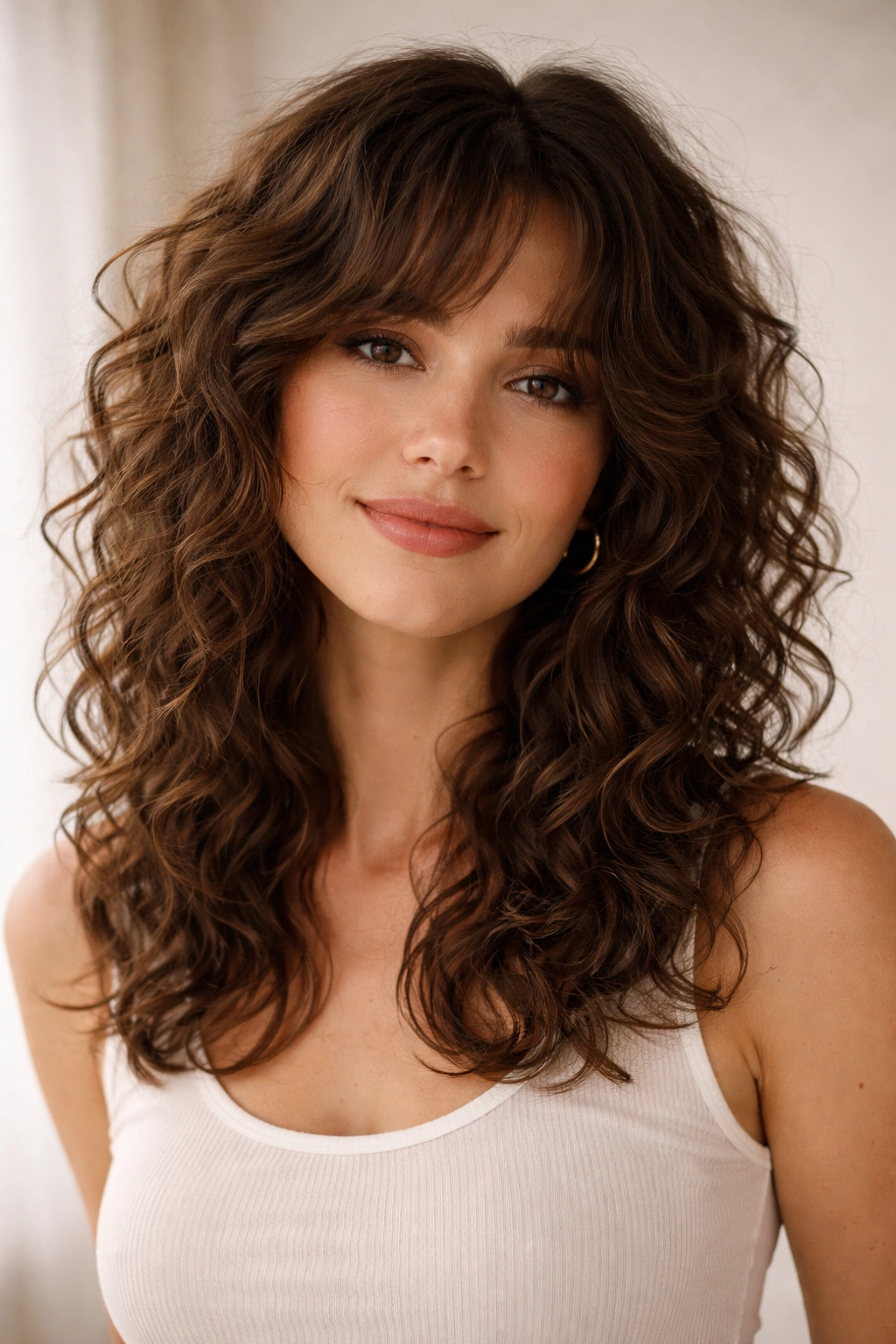
The smartest medium shag cuts for curly hair do two things at once: they keep the curl pattern alive, and they shape the head in a way that feels easy to wear. That means thinking about where the weight sits, how much length you want to keep, and whether your curls need lift, softness, or both.
Bring reference photos that show the front, side, and back. That part helps more than people expect, because curls change the outline from every angle. A stylist also needs to know whether you want a dry, airy finish or a fuller, rounded shape with more weight left in place.
One last thing. Ask where the shortest layer will land when the hair is dry. That single question can save you from a cut that looks lovely in the chair and awkward two hours later.