


Purple and red box braids have a way of looking richer than you expect. Put plum near the roots and cherry at the ends, and the style feels deep and expensive; push violet through the middle and the whole set starts to look sharper, almost graphic. The color combo can be soft, loud, moody, or bright enough to stop traffic, and that range is the reason people keep returning to it.
The placement matters as much as the shades. A center part gives the colors a clean split. Triangle parts make the braids feel bolder. Waist-length braids let the tones blend slowly as they move, while a bob keeps everything close to the face and a little more dramatic. Even the finish changes things — matte braiding hair reads darker and smoother, while shinier synthetic fibers make the red flash sooner.
That’s the fun of this palette. Purple and red sit close enough to blend, but far enough apart to keep the eye moving. You get contrast without needing neon, and you get color that still feels wearable when the braid size, parting, and length are chosen with a little care.
1. Deep Plum Roots with Cherry Red Ends
This is the easiest purple-and-red box braid look to wear every day. Plum at the crown keeps the scalp line calm, while cherry red at the ends gives the braids movement every time you turn your head.
Why the color melt works
The trick is to let the purple do the anchoring and the red do the announcing. That way, the style doesn’t shout from the scalp, but it still has enough heat to feel lively once the braids fall over your shoulders.
- Best on medium or long braids, especially anything past the collarbone.
- Looks cleaner when the red starts around the mid-length point, not right at the root.
- Works well with square parts if you want a classic braid grid.
- Stays readable even when the braids are gathered into a ponytail or bun.
Tell your braider you want the fade to feel gradual, not striped. A hard line halfway down can make the braid look chopped in two, and that usually feels less polished than a slow melt.
2. Split-Color Center Part Purple and Red Box Braids
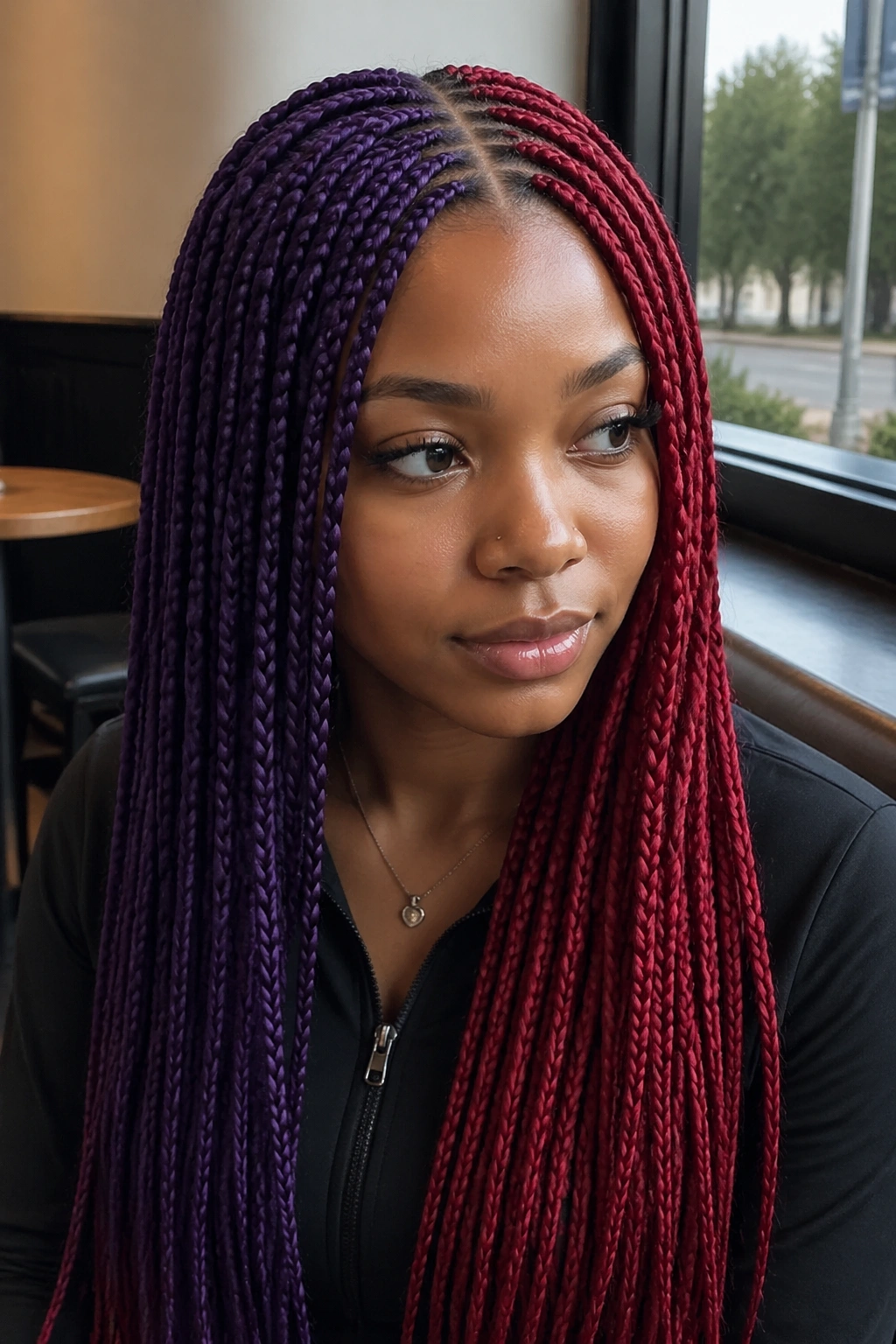
Want the contrast to feel sharp instead of blended? A split-center braid set does exactly that. One side stays purple, the other side goes red, and the center part gives the whole style a neat, deliberate edge.
The look works because your eye reads the symmetry first. Then the color takes over. It’s clean, graphic, and a little bold in the best way — the kind of braid style that looks good with simple hoop earrings and a plain outfit because the hair already does plenty.
This version tends to suit people who like structure. A straight middle part keeps the split looking crisp, and shoulder-length or longer braids help the two colors settle into distinct panels instead of looking crowded. If you want a stronger effect, ask for a deep berry purple on one side and a vivid red on the other. If you want something softer, go with burgundy and wine.
3. Purple Braids With Red Peekaboo Layers
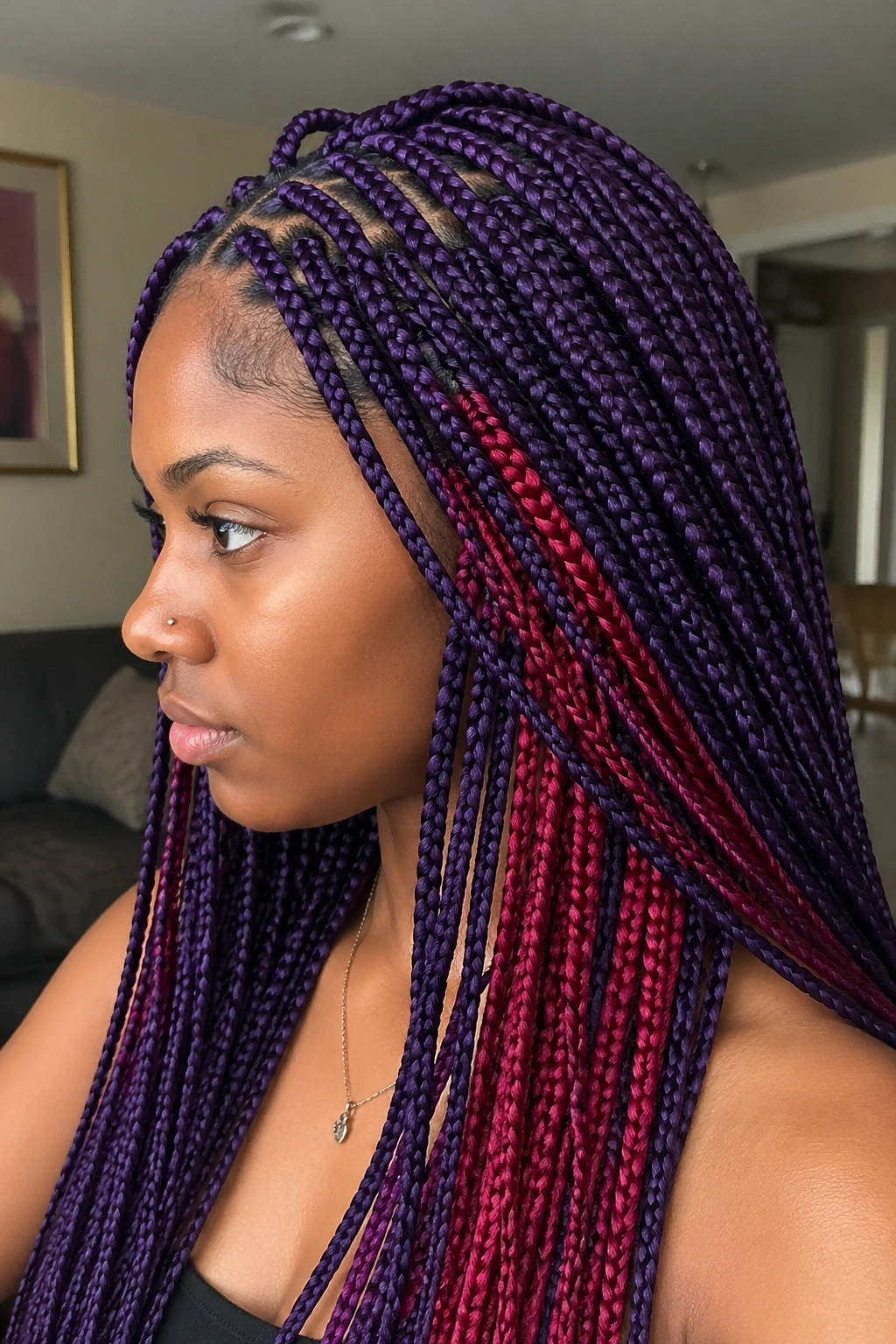
From the front, this style can look almost solid purple. Turn your head, and the red flashes underneath. That little reveal is half the charm, and it keeps the look from feeling busy all the time.
Peekaboo color works best when the red sits in the lower layers or just under the top rows near the nape. The result is a braid set that feels quieter at first glance, then more playful once the hair moves. It’s a smart pick if you want color without making every strand compete for attention.
I like this approach for medium-length box braids because the layers stay visible without turning into a tangle of shades. It also gives you room to wear the braids half-up, which lets the red slip out in the back while the top stays mostly purple. Simple. But not plain.
4. Burgundy Base With Violet Streaks Through Medium Braids
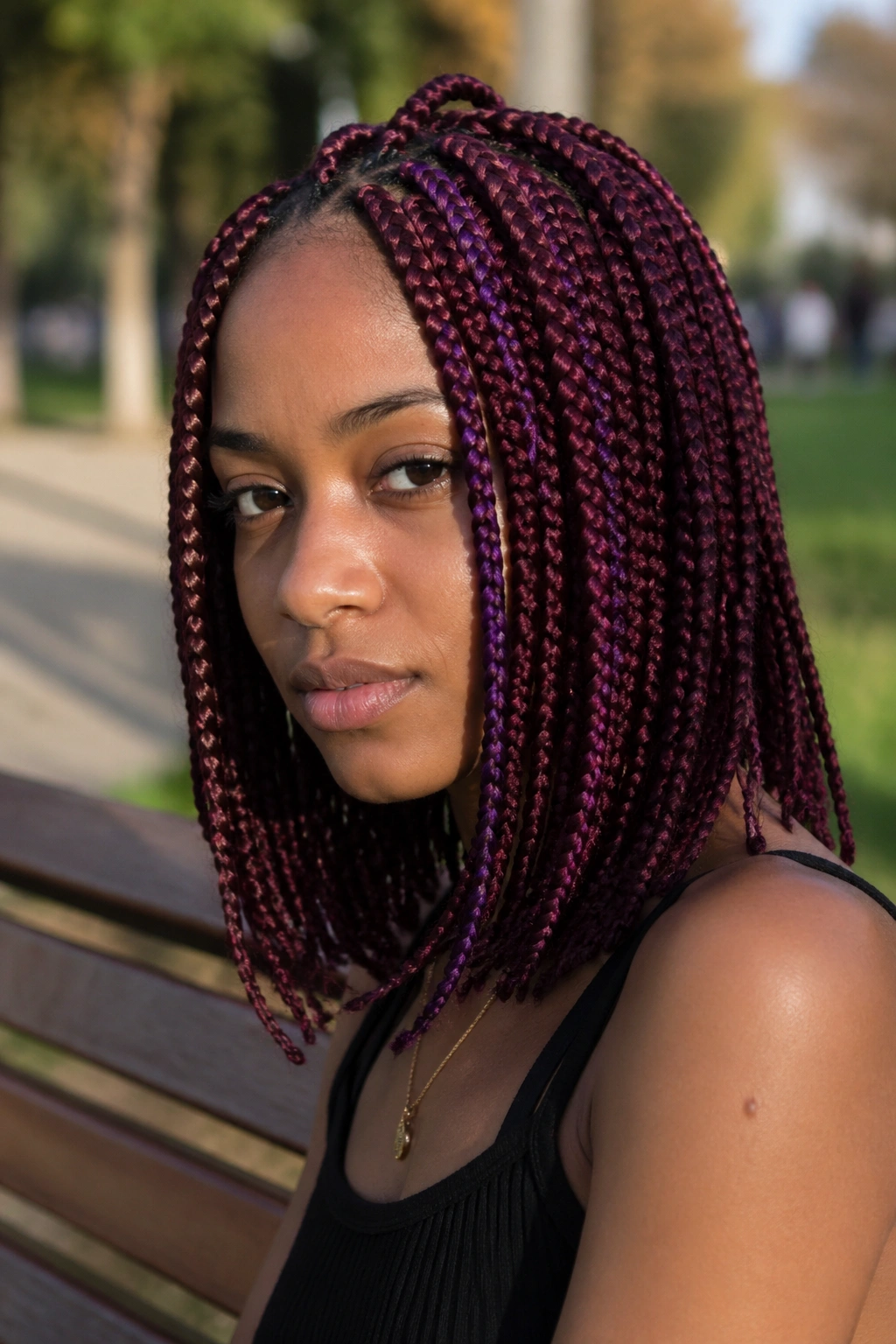
Burgundy and violet sit close enough to feel smooth, but not so close that the braid pattern disappears. That’s why this combo works so well on medium box braids. You get movement, but you don’t get color chaos.
How to keep it from going flat
The best version uses burgundy as the main color and threads violet through in thin streaks. Too much violet, and the whole head starts to look noisy. Too little, and you lose the point of the contrast.
- Use thin violet ribbons instead of full panels.
- Keep the burgundy a shade darker at the roots.
- Choose medium parts so each streak has room to show.
- Add gold cuffs near the front if you want a little warmth.
This is a good look for someone who wants the braid color to read polished from a distance and more interesting up close. It has depth without needing bright, high-contrast pieces everywhere.
5. Jumbo Triangle Parts in Wine, Plum, and Crimson
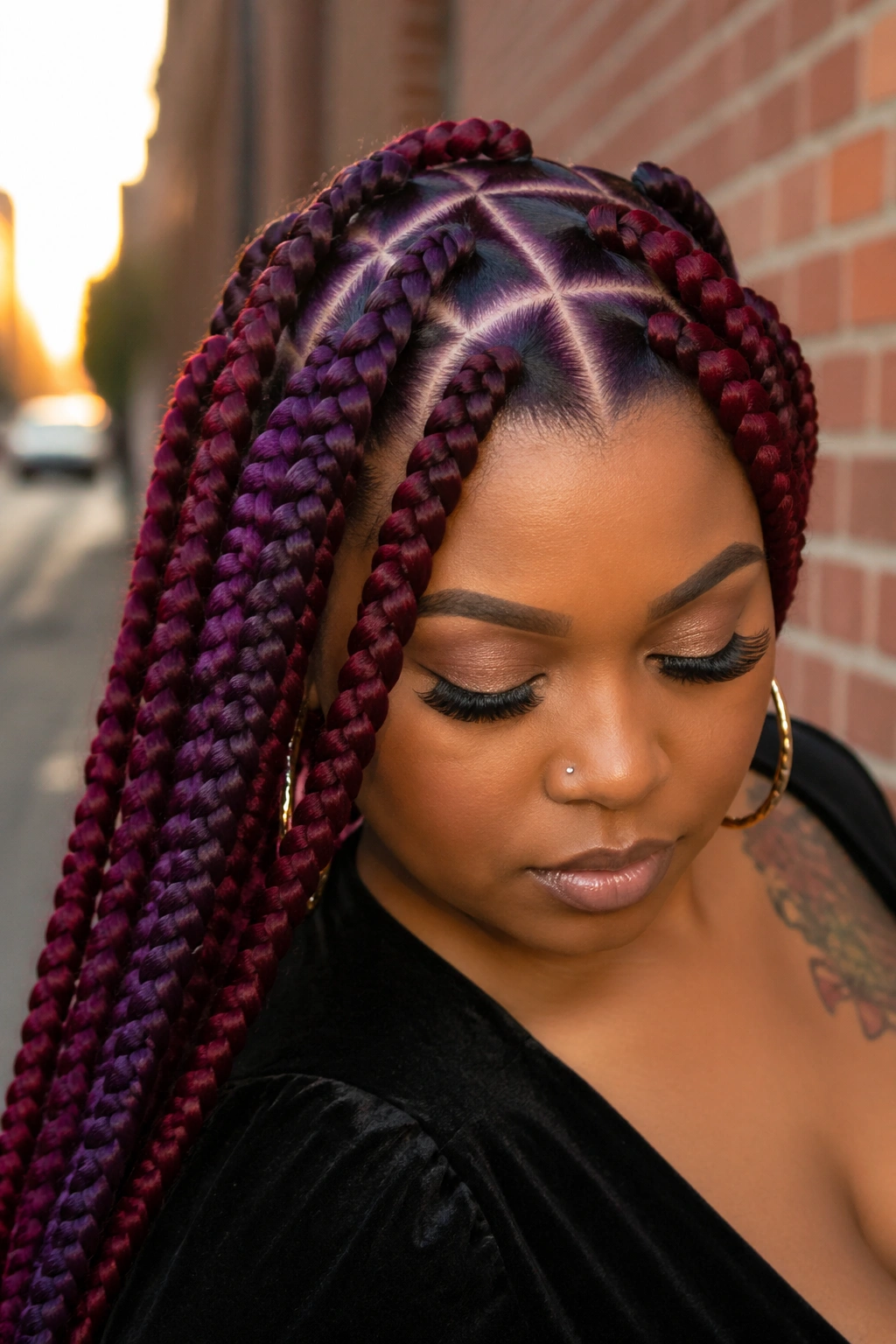
Triangle parts make every color block look sharper. On jumbo box braids, that geometric parting gives the purple and red palette more structure, so the style feels intentional instead of random.
The bigger braid size helps too. Each braid carries enough color to be seen on its own, which is exactly what you want if you’re using wine, plum, and crimson together. The mix feels rich and dark, not candy-bright, and the triangle sections give the scalp pattern a little extra personality.
- Jumbo braids show the color faster than tiny ones.
- Triangle parts make the roots look more styled, even before accessories.
- Best if you want fewer braids and a faster install.
- Works well with thick ponytails, half-up knots, and one-sided shoulder drapes.
This style has a strong shape. The color is part of it, but the parting does half the work.
6. Waist-Length Knotless Braids in Smoky Purple and Cherry Red
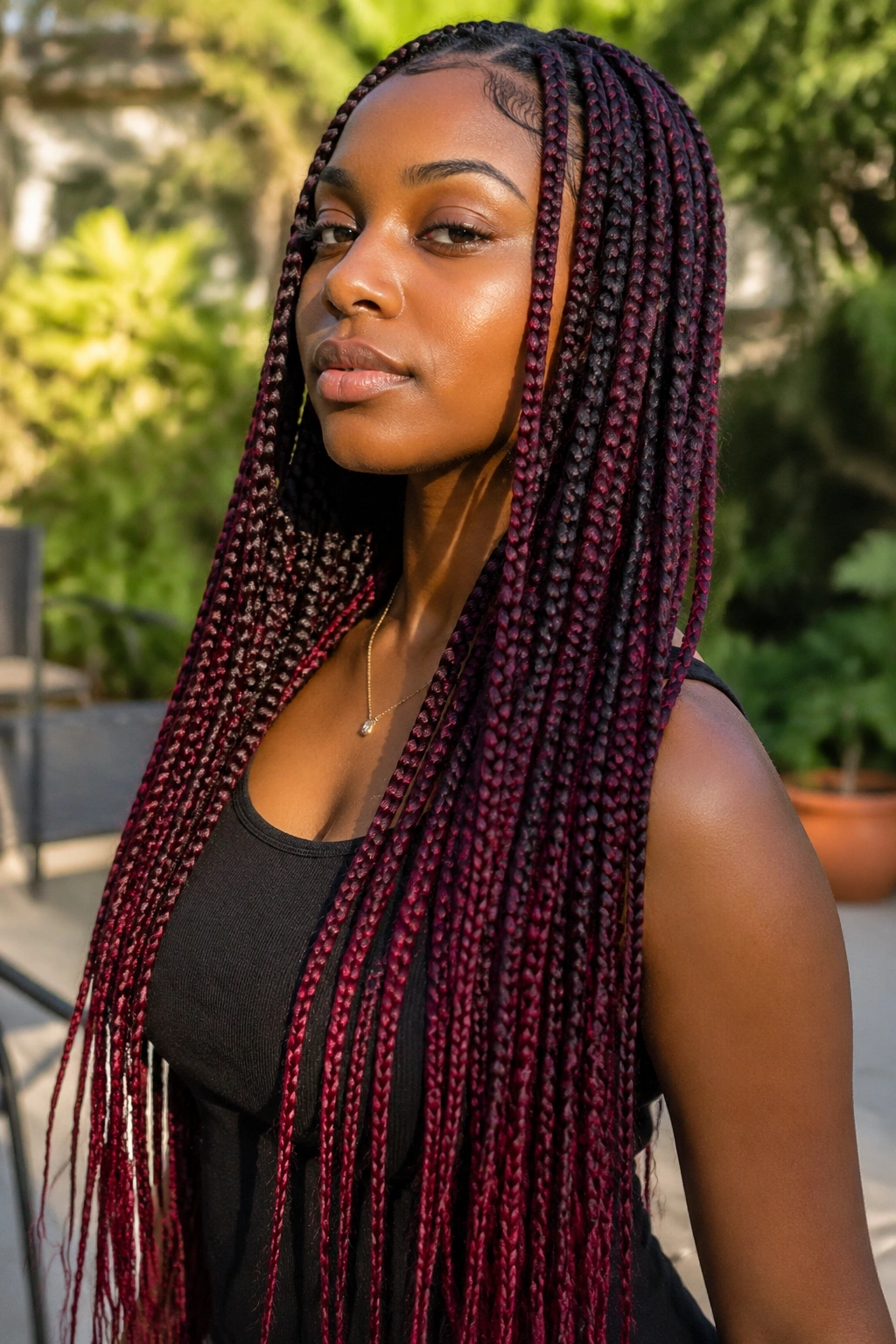
Knotless braids are a smart move if you want purple and red hair without a heavy scalp feeling. The flatter base gives the style a smoother start, and the waist length lets the colors shift slowly as the braids hang.
Smoky purple and cherry red make a good pair here because the length softens the contrast. The shades don’t need to fight for space. They can sit in the braid and unfold gradually as the hair moves, which is part of why this version feels so easy to wear for longer stretches.
I also like this look for people who tie their hair back often. The braids stay flexible in a ponytail, and the color still shows when they’re gathered up. If you want the shade to feel luxurious rather than loud, this is one of the strongest choices. Keep the sections medium-sized so the knotless base stays neat and the color blend reads clean.
7. Purple and Red Box Braids With Face-Framing Money Pieces
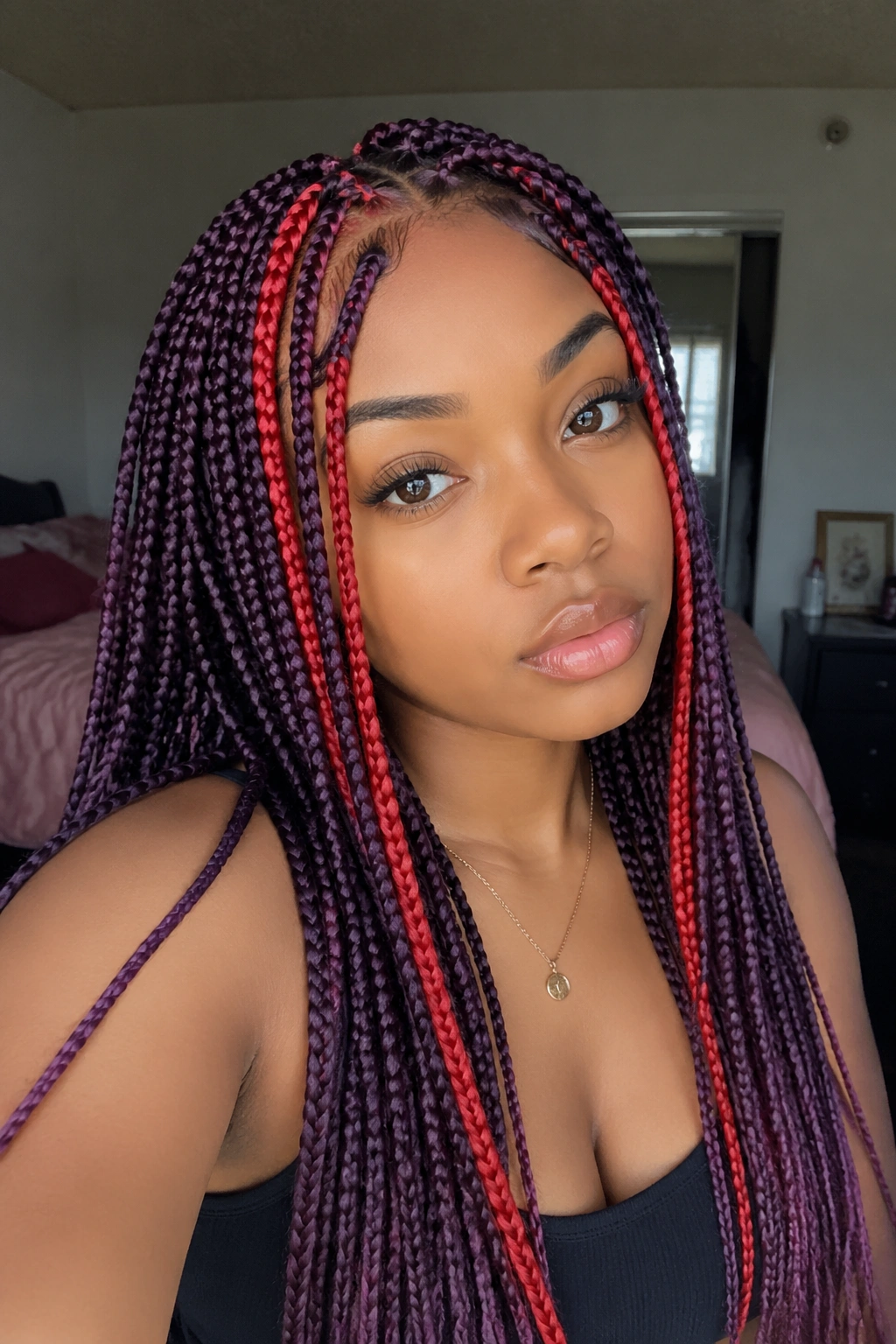
What if you want the color to show before the rest of the braids do? Face-framing pieces handle that beautifully. A pair of bright red braids at the front, or a wider purple-and-red frame around the cheeks, makes the whole style feel alive right away.
This is one of the easiest ways to lighten up a darker braid set. The rest of the hair can stay plum, wine, or deep violet, while the front pieces bring the heat near your face. It’s a clever move if you wear glasses, pull your hair back often, or just want the color to be visible in photos without needing a full split-panel install.
Where to place the red
- Put red on the two front braids if you want a subtle flash.
- Use a thicker red panel at each temple for a stronger frame.
- Keep the center braids purple if you want the face to stay the focus.
It’s a small detail, but it changes the whole read.
8. Purple and Red Boho Box Braids With Curly Ends
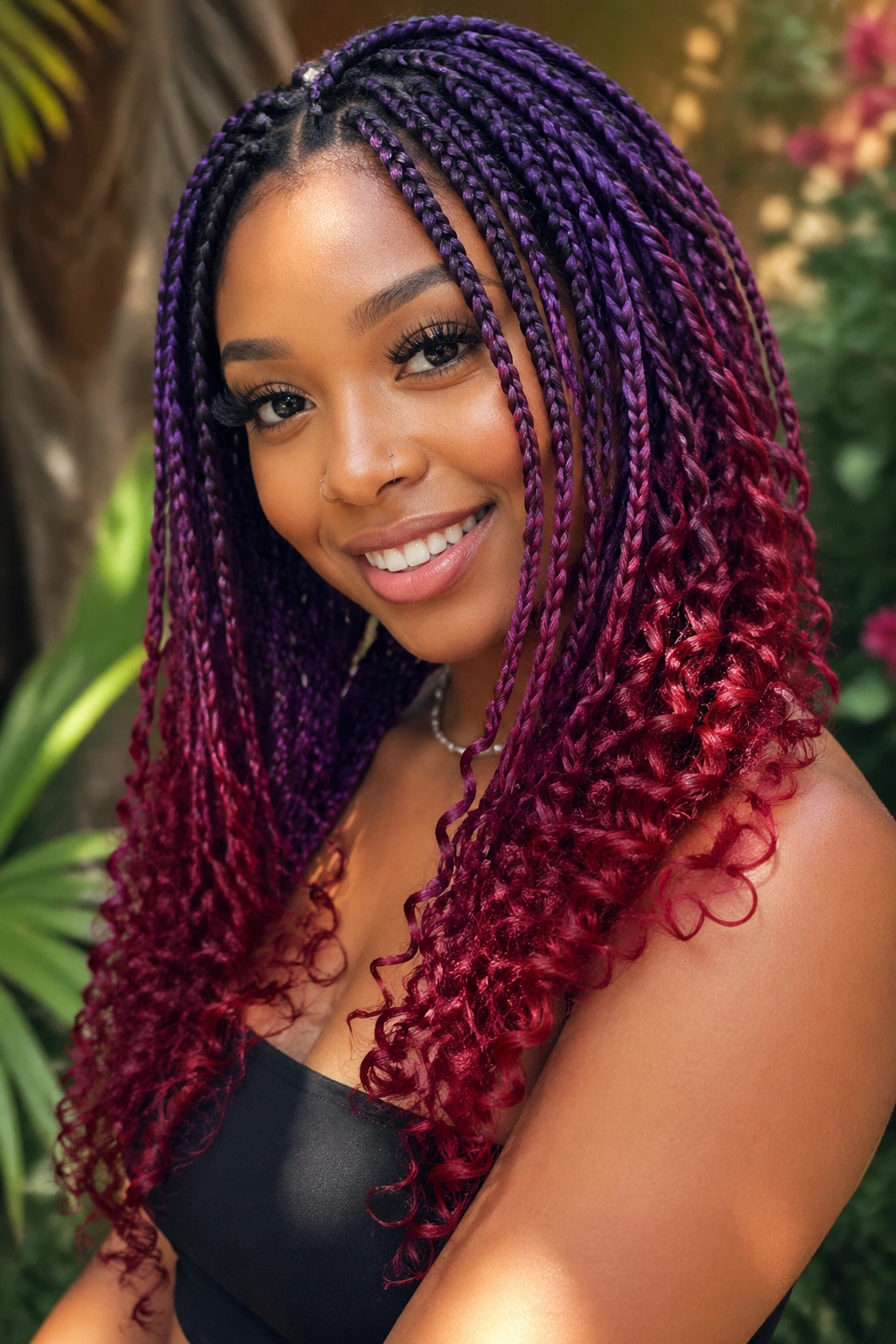
Boho braids already move a little. Add purple and red, and the whole style stops feeling stiff. The loose curls at the ends soften the braid shape, and the mixed color makes those curls stand out even more.
This version works best when the curls are concentrated at the lower half of the braid or left loose at the very ends. That keeps the top neat while the bottom has a bit of bounce. If you like styles that feel relaxed without looking unfinished, this is a strong middle ground.
The color pairing matters here because curls catch the eye fast. Deep purple at the top and red at the ends can make the texture look fuller than it actually is. A light mousse helps the loose pieces stay separated, and that matters more than people think — tangled curls can make even good color look tired. I’d choose this style for anyone who likes braid hair that feels a little softer around the edges.
9. Side-Swept Braids With Red Feed-In Accents
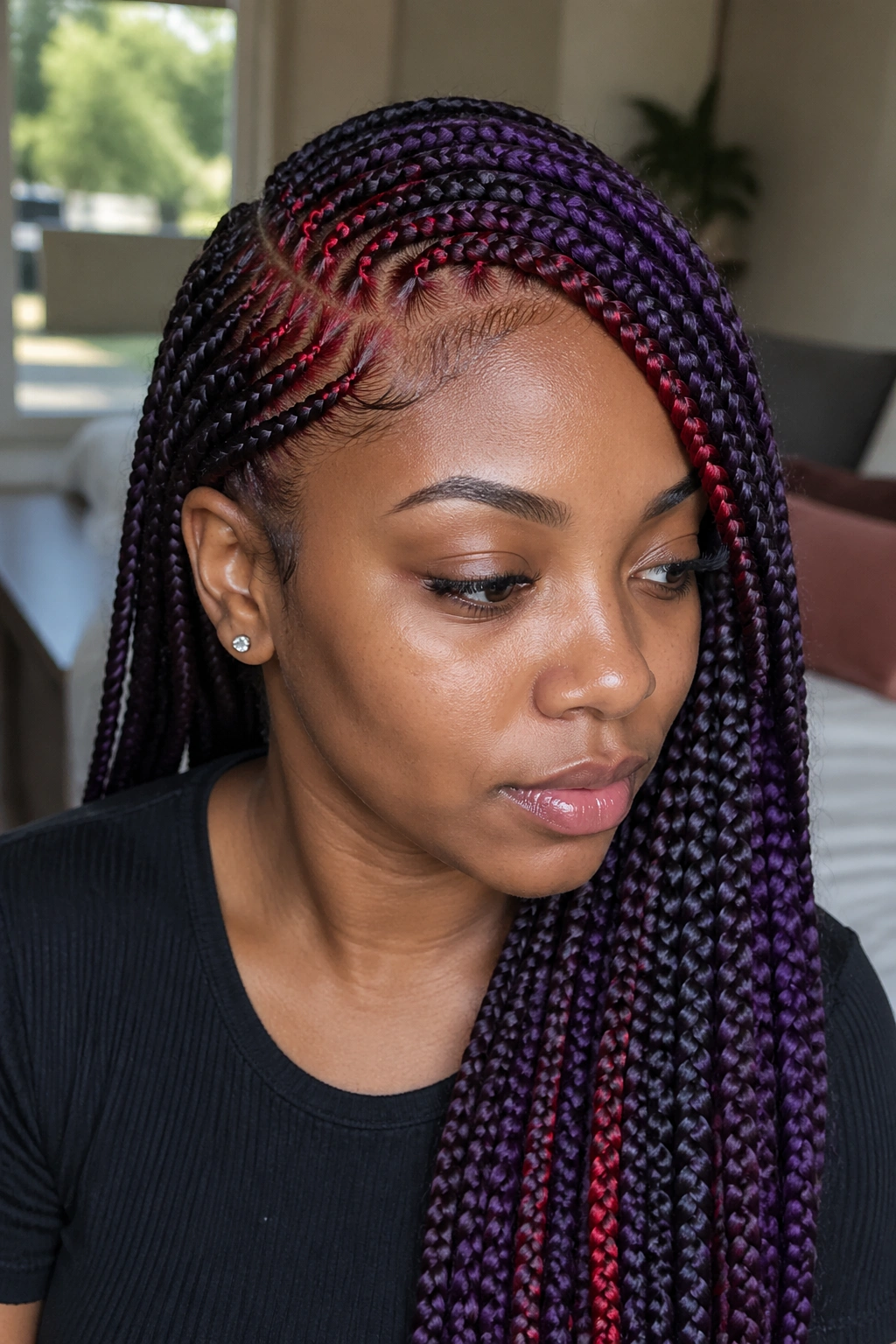
A side part can calm a loud palette better than cutting the length ever will. With red feed-in accents along one hairline and purple across the rest, the style gets movement without losing control.
Side-swept braids are especially good when you want one shoulder to do most of the styling work. The braids fall in a single direction, the red pieces show up near the front, and the purple fills in the rest like a deep backdrop. It’s elegant without trying too hard, which I appreciate.
Simple. But effective.
If you wear statement earrings, this is one of the better braid setups. The hair clears the opposite side of the face, so the color and jewelry can both be seen. It also works nicely on medium or long lengths because the sweep has enough weight to stay in place. A deep side part gives the whole thing a little tension, and that tension is what makes it interesting.
10. Small Box Braids in Alternating Purple and Red Rows
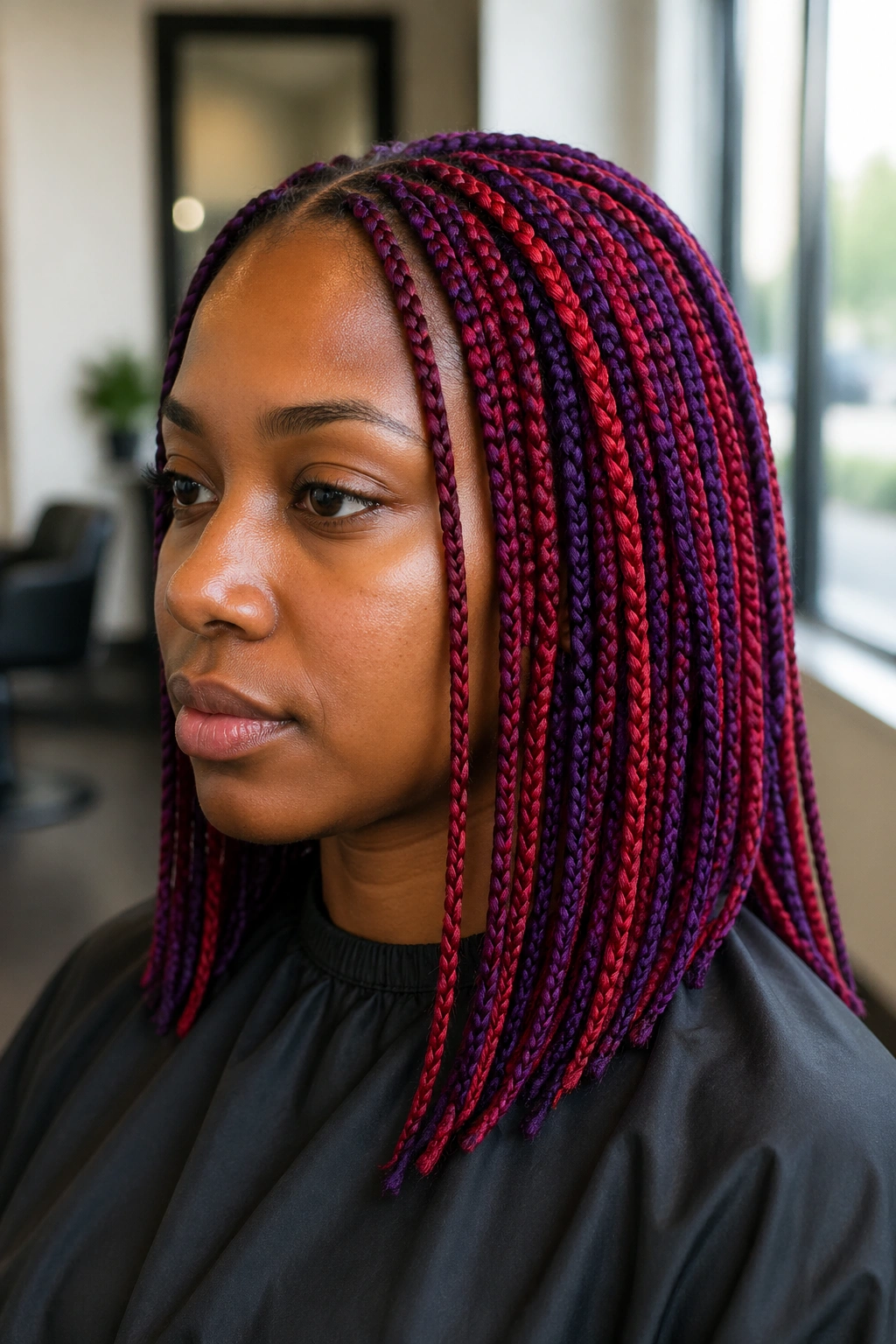
Small braids are patient work. They also give purple and red more room to breathe, because each strand gets its own tiny stage instead of being crowded into a thick section.
Alternating rows are the move here. Not every braid has to switch colors, and that’s a good thing. If you alternate too aggressively, the head can start to look like a checkerboard. A better approach is to place red rows between purple rows so the colors read in waves when the hair falls.
- Choose square parts if you want a neat grid.
- Keep the alternation in rows, not every single braid.
- Use this on shoulder-length or longer braids so the pattern stays visible.
- Great when you want the color to show from every angle.
This style takes time in the chair, but the payoff is steady. The color looks rich, and the smaller size gives you a lot of flexibility with buns, half-up styles, and wraps.
11. Magenta-to-Mulberry Ombre Box Braids
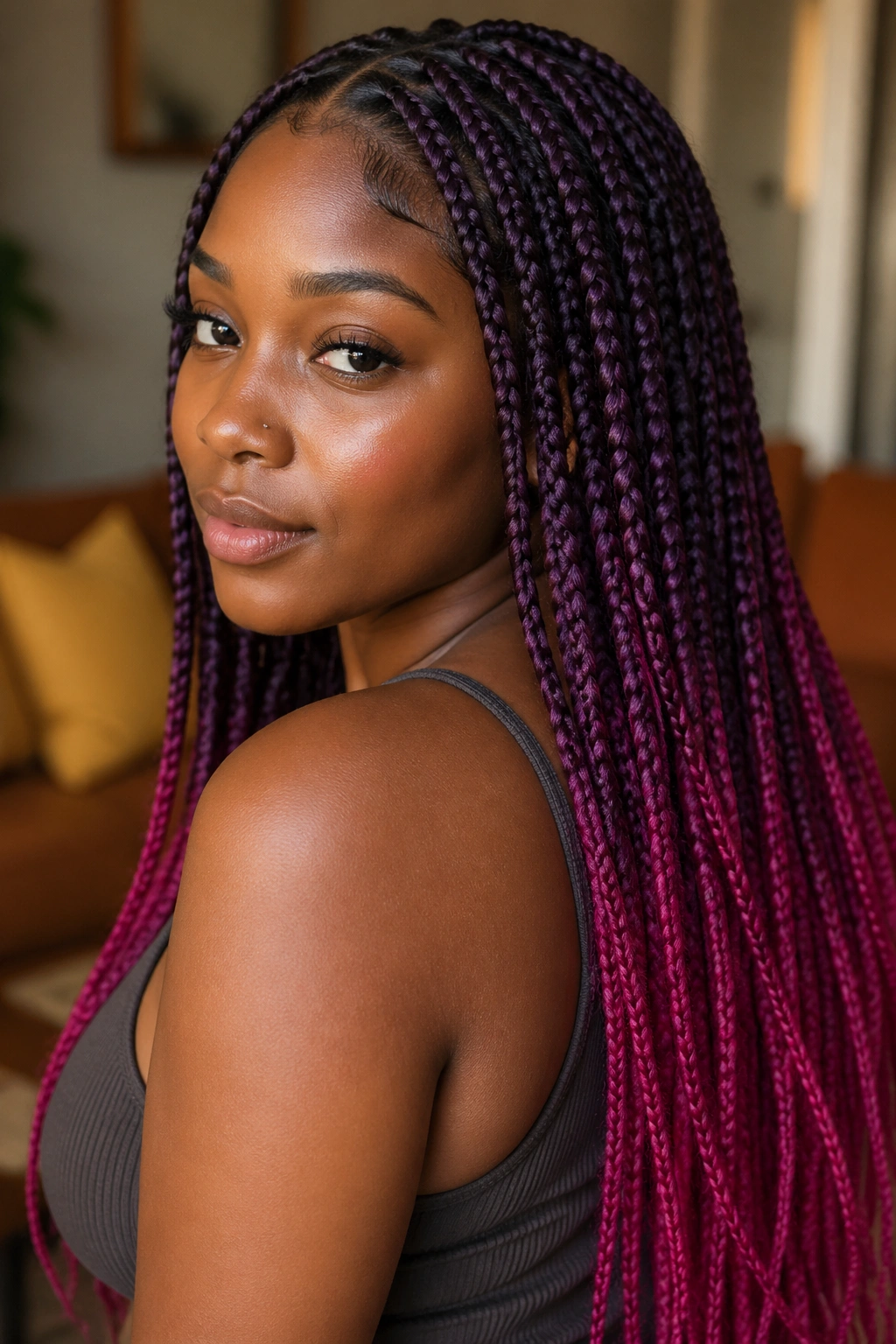
Do you want red to soften into purple instead of stopping at a hard line? Ombre handles that nicely. Magenta at one end, mulberry or plum at the other, and the shift between them can feel smooth instead of abrupt.
The fade should usually begin around the middle of the braid. Start it too high, and the scalp area can look too busy. Start it too low, and you lose the point of the gradient. When the fade lands in the middle third, the braid gets depth without looking chopped up.
Where the fade should begin
- Mid-shaft fades look the most natural on long braids.
- A brighter magenta tip can make the ends pop more.
- Darker mulberry near the scalp keeps the style grounded.
- Slightly larger braids show the fade more clearly than very tiny ones.
This is a nice option for someone who wants the color shift to feel smooth and blended. It’s not the loudest version of the palette, but it has a lot of dimension.
12. Purple and Red Box Braids With Clear Beads and Gold Cuffs
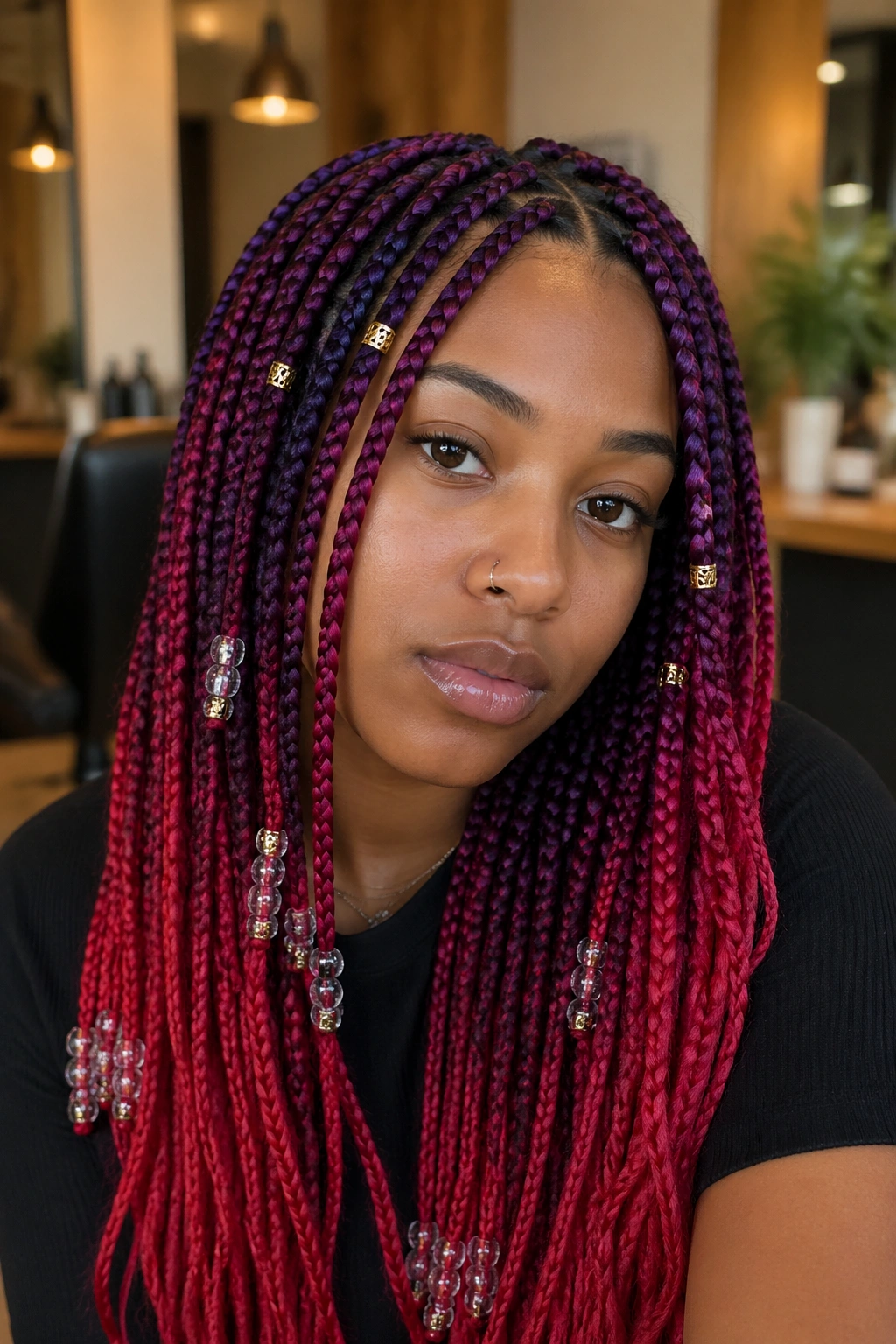
Put beads on a purple-red braid set, and the whole style feels more finished. Clear beads let the color show through, while gold cuffs bring a warmer note that sits nicely beside both shades.
I’ve always liked this kind of finish on braids that already have strong color. The accessories don’t need to compete. They just need to catch the eye at the right spots. A few cuffs near the front braids, or clear beads at the ends of the longest pieces, can make the style feel deliberate without turning it into costume hair.
- Use clear beads when you want the braid color to stay visible.
- Place gold cuffs near the front or along one side.
- Keep accessories limited if the color blend is already bold.
- Works well on long braids, where the ends have room to move.
Too many pieces can clutter the look fast. A handful of well-placed accents usually goes farther than loading every braid with hardware.
13. Shoulder-Length Purple and Fire-Red Box Braids
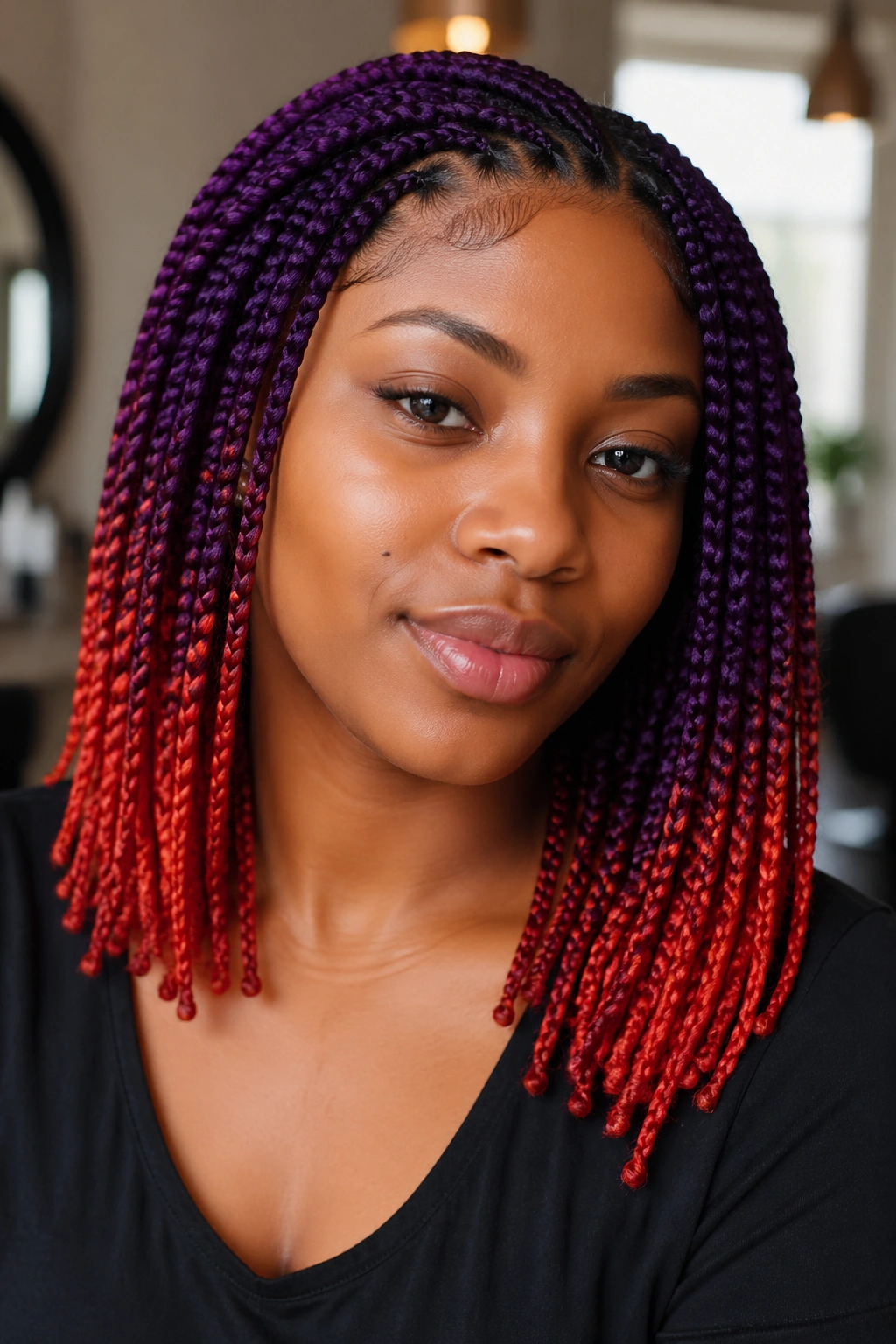
Shoulder length is the middle ground people forget. It keeps the braids close enough to the face for the color to matter, but it avoids the extra weight and maintenance that come with longer installs.
Purple and fire-red at this length feel brighter, because the eye doesn’t have as much braid to scan through. The colors hit fast. That makes the style a good choice if you want a strong look that still feels practical for daily wear. It’s also easy to tuck behind one ear, sweep into a half-up knot, or pin back on one side when you want the color to show in a different way.
A blunt end gives it a sharper, more modern feel. Slightly curled ends soften it a bit. I’d choose this length for anyone who likes color but doesn’t want to spend all day managing very long braids.
14. Braided Bob With Purple Base and Red Tips
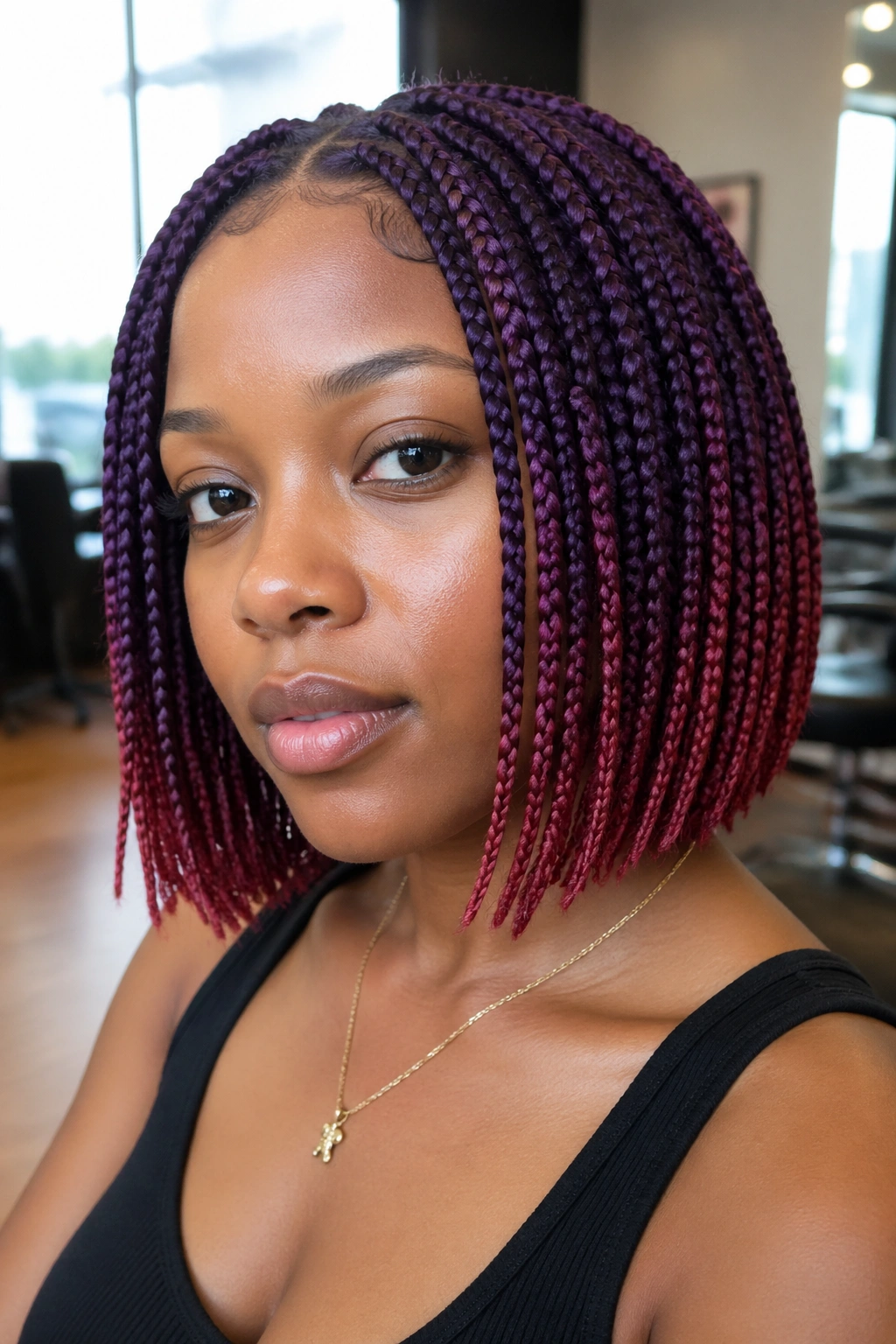
A braided bob makes purple and red feel chic rather than busy. The shorter length keeps the color close to the jawline and collarbones, which gives the whole style a clean shape.
The red tips are what make this version work. They bounce a little when you move, and because the braids don’t fall too far down the body, the color shift stays in view. That matters. If the color is good, you should be able to see it without searching for it.
The bob shape also gives you room to show off earrings, necklines, and makeup. There’s less hair covering everything up, which is a relief if you like a sharper silhouette. This is the version I’d pick for someone who wants purple and red box braids to feel neat, not heavy. It has enough color to stand out and enough structure to stay tidy.
15. Chunky High Bun Box Braids in Purple and Red
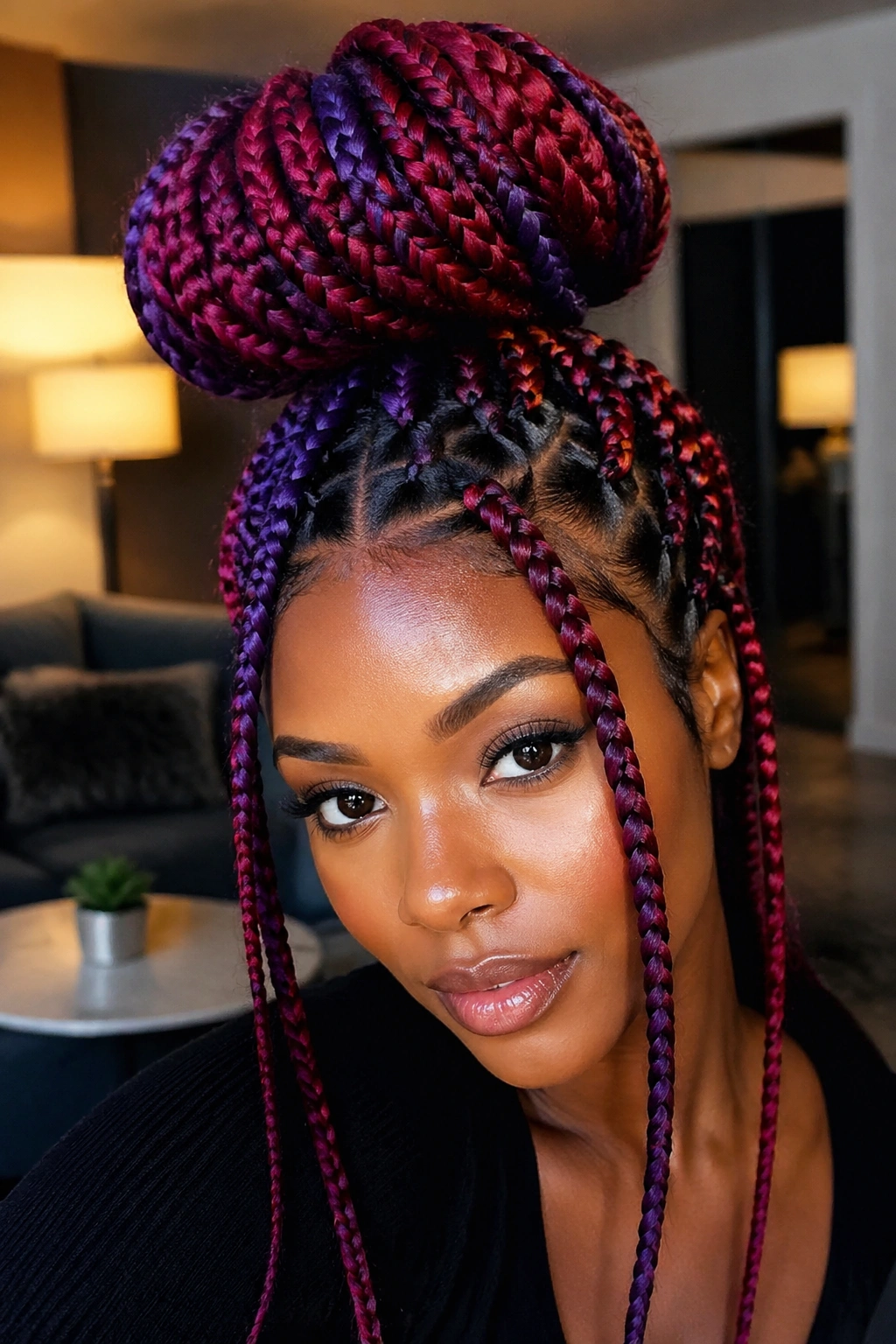
A high bun turns the color into a crown. The whole look lifts off the shoulders, and the purple and red braids stack into one big shape that feels polished without needing much else.
What to ask for at the chair
- Leave enough braid length to wrap the bun once or twice.
- Keep a few braids free so the color can hang down.
- Ask for a bun that sits slightly loose, not pulled into a hard knot.
- Use a satin scarf at night so the bun base stays smooth.
This style is useful when you want the hair up but still want the color to do something. The purple and red show in the base, in the wrap, and in the loose pieces around the bun. It also keeps the neck clear, which makes the color feel even more dramatic against the face and shoulders.
A high bun can look severe if it’s too tight. Letting a few braids fall out keeps it alive.
16. Deep Side-Part Split-Panel Braids in Plum and Scarlet
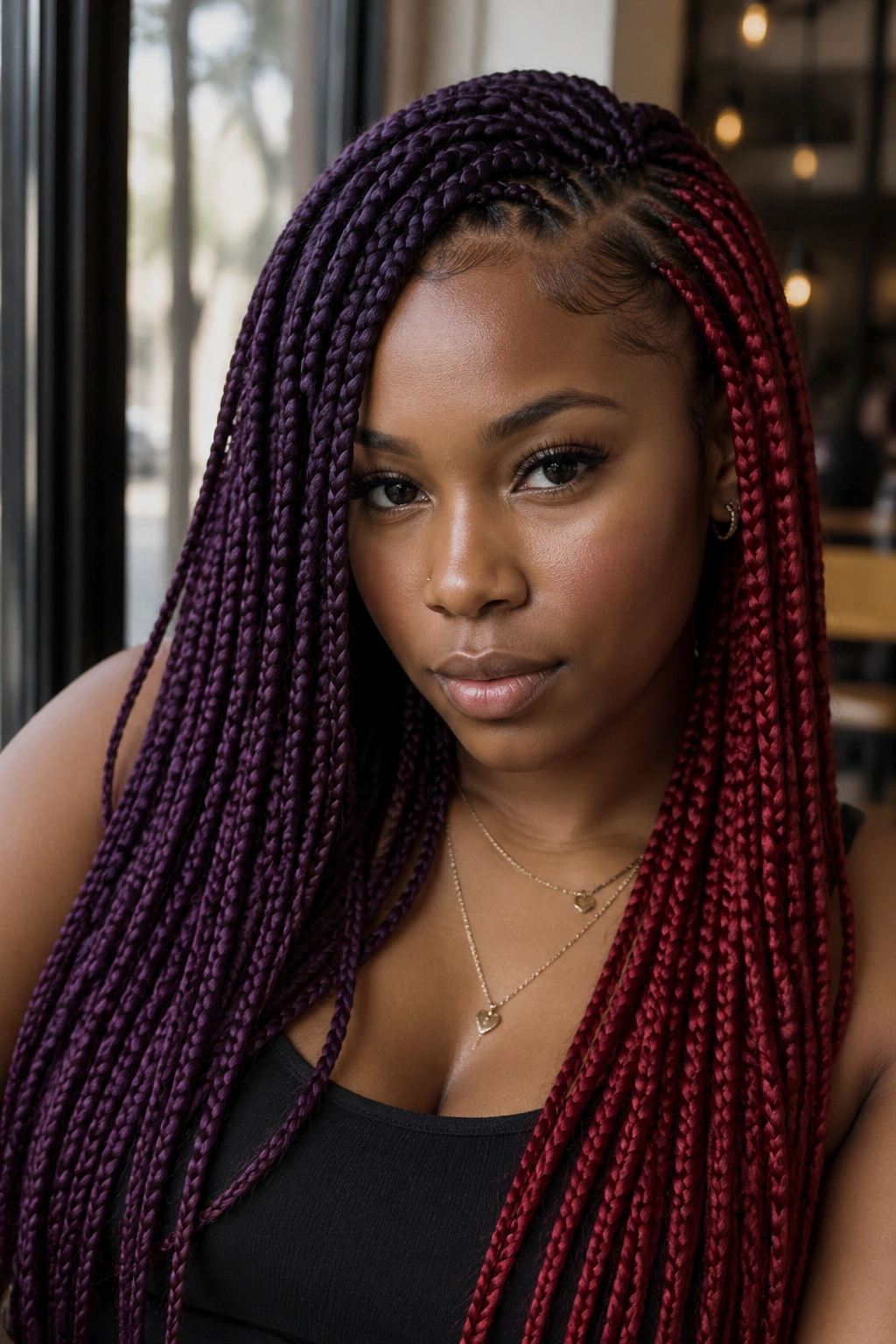
If symmetry feels too severe, try a deep side part instead. You still get the split-panel effect — plum on one side, scarlet on the other — but the offset part softens the line and keeps the look from feeling stiff.
This version works especially well when you want drama without a center seam running straight down the scalp. The heavier side of the part can fall over one eye a little, which gives the style movement and makes the color shift feel less mechanical. It’s the braid version of a strong silhouette with a little bend in it.
The side part also helps the face look longer, because the braids naturally fall farther to one side. That’s useful if you want the color to frame the face instead of splitting it down the middle. A clean part matters here. If the base is neat, the whole style looks sharper. If it’s sloppy, the split-panel idea loses its edge fast.
17. Long Layered Purple-Red Box Braids With Soft Ends
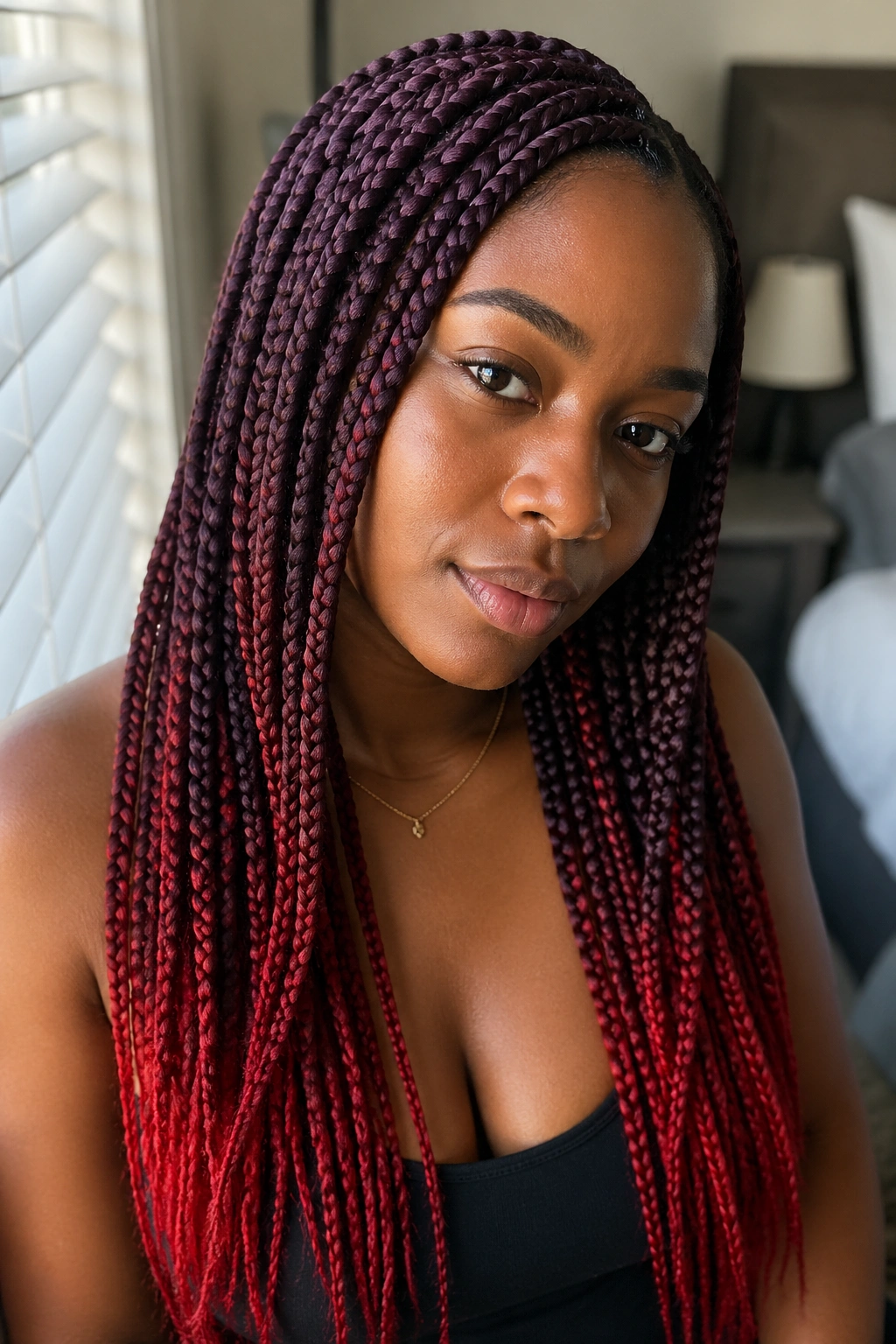
Long layered braids are the version I keep coming back to. The staggered lengths let purple and red move in and out of view, and the soft ends keep the whole set from looking too blocky.
This is the style to choose when you want the color to feel fluid. Some braids can stop a little higher than others around the shoulders or ribs, while the longest pieces fall farther down. That layering gives the install shape, and the mixed shades make the layers easier to read. You do not need a harsh contrast line when the lengths are doing some of the work.
It’s also one of the easiest versions to style in different ways. Half-up, low ponytail, one-sides drape, loose and down — all of it works because the length gives you options. If you want the most lived-in version of purple and red box braids, this is the one I’d save first. The color moves when you do, and that’s the point.