



Brown and red box braids do not play shy. The brown keeps the style grounded; the red gives it a pulse. When the mix is done well, it looks rich instead of loud, which is exactly why this color pairing works so well on braids that already have shape, movement, and a little attitude built in.
The real trick is shade placement. A chestnut base with copper ends reads warm and soft. Espresso with cherry red tips feels sharper. Burgundy tucked through brown braids can look almost velvet-like, especially when the parts are clean and the braid size is consistent. Small choices change everything.
Box braids are one of those styles where color does half the styling for you. You can keep the braids medium and neat, go jumbo and bold, or play with hidden red panels that only show when the hair swings. That flexibility is what makes brown and red such a smart combo, because the style can lean subtle, dramatic, or somewhere in that strange and lovely middle.
The 17 looks below each push the color story in a different direction. Some are loud. Some are low-key. A few are the kind of styles people notice only after they’ve looked twice, which is often the best kind anyway.
1. Chestnut Roots with Copper Ends
Chestnut roots with copper ends are the easiest way to make brown and red box braids feel warm without tipping into costume territory. The darker root keeps the style calm near the scalp, while the copper at the ends catches movement every time you turn your head.
Why it works
Copper sits in that useful middle zone between red and brown. It brings brightness, but it does not fight the base shade. On long box braids, that matters a lot, because the eye travels from root to tip and needs a little contrast to keep the style from flattening out.
I like this version on medium-size braids, especially when the parts are straight and tidy. The color shift feels intentional, not busy. If you want the look to read polished, ask for a soft fade instead of a hard line where the color changes.
Quick details to ask for
- A dark brown base with copper or ginger tips
- Medium box braids, about pencil thickness
- Long lengths, waist grazing or longer
- A smooth transition, not a sharp stripe of color
Best tip: keep the roots darker than you think you need. That little bit of depth makes the copper look richer.
2. Espresso Braids with Cherry Red Ends
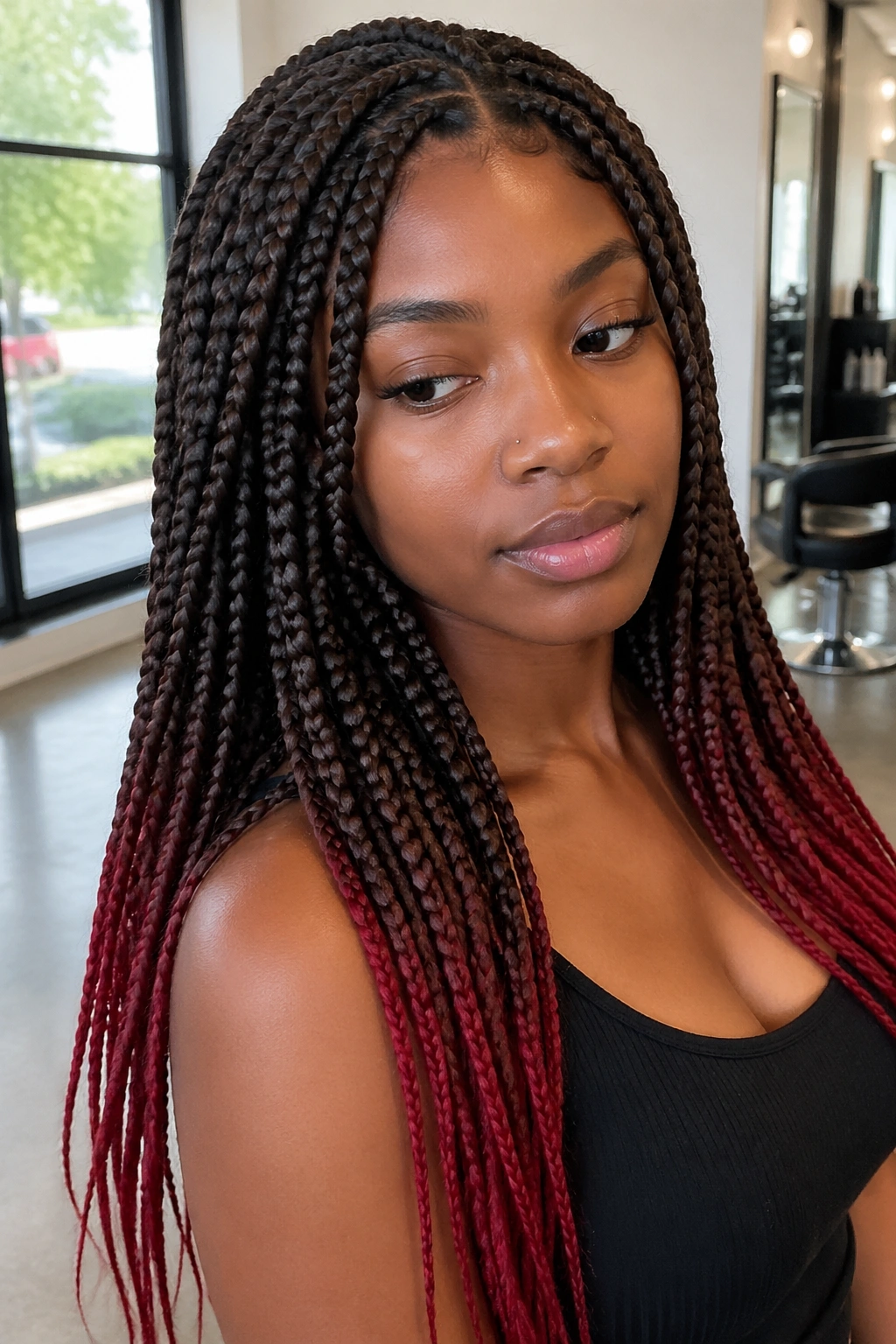
Cherry red at the ends is the fastest way to make brown braids look sharper. The contrast is bold, but the espresso base keeps it wearable, which is why this combo shows up so often in box braid hairstyles that want drama without losing control.
The color placement matters more than the color itself here. Cherry red near the scalp can feel intense fast. At the tips, it looks like the braids have been dipped in color on purpose, and that gives the style a cleaner finish. The movement is what sells it. Every swing of the braid pulls the red into view a little differently.
This version works especially well on longer braids, because the red needs room to breathe. Waist-length braids give the color enough surface area to do something. On shorter braids, the red can look compressed. Here, it stretches out and reads cleaner.
And yes, it’s a little louder. That’s the point.
3. Burgundy Box Braids with Brown Root Melt
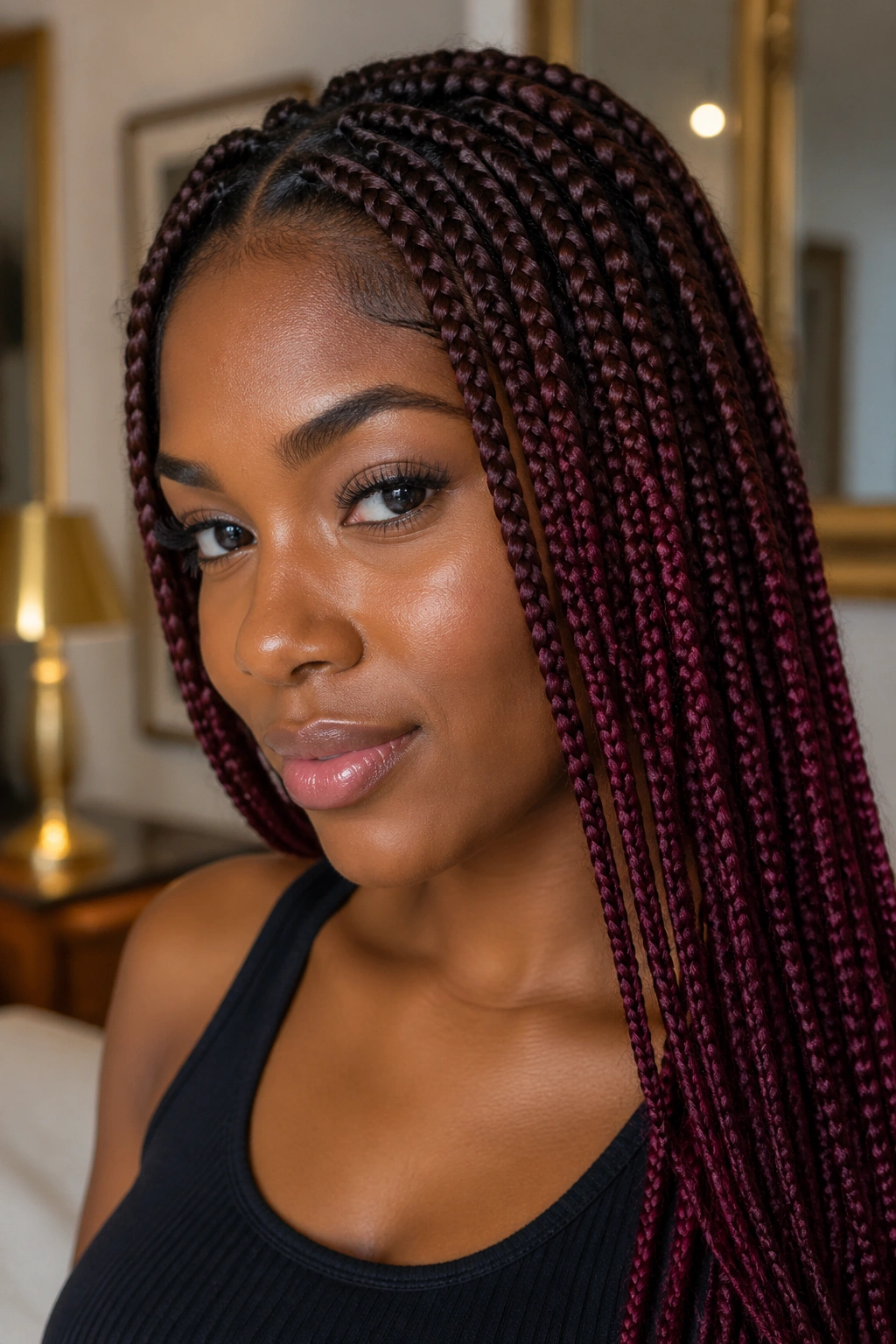
Why does this combo feel softer than a full red look? Because burgundy has more depth than bright red, and the brown root melt makes the whole thing feel gradual instead of abrupt.
That blend is one of my favorites for people who want color but do not want their hair to look like the main event from across the room. Burgundy has that wine-dark richness that stays elegant in indoor light, then looks deeper and more saturated outdoors. Put it against a brown base and the result is steady, not flashy.
How to wear it
A middle part makes the color look deliberate. A side part gives the burgundy more sweep and keeps the face from feeling boxed in by too much symmetry. If you like accessories, gold cuffs work here, but don’t overdo them. One or two near the front is enough.
This style also ages well. The root melt hides new growth better than a hard color block, so the look stays neat for longer without looking freshly installed every single day.
4. Cinnamon and Auburn Shoulder-Length Braids
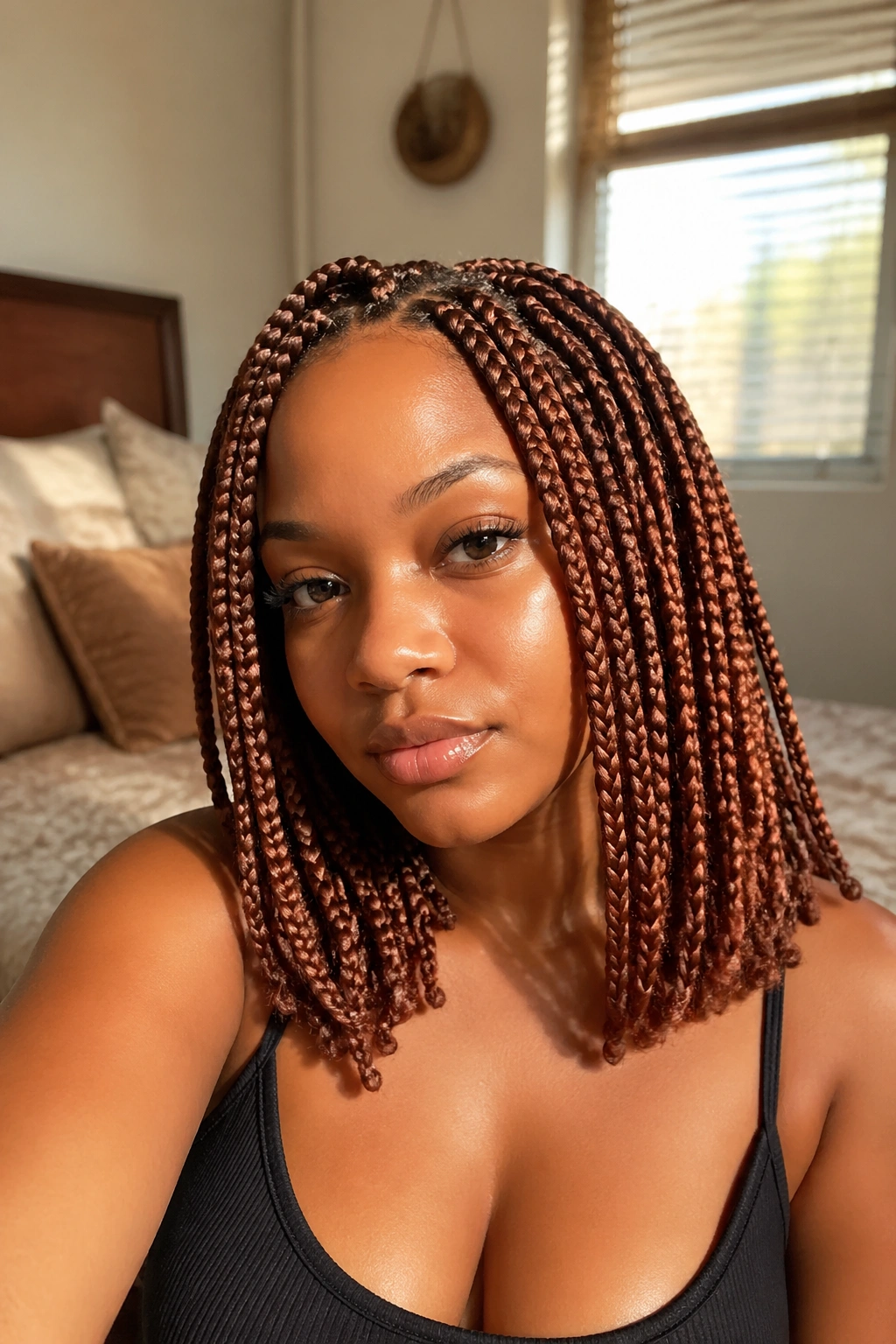
Shoulder-length braids change the mood completely. They feel lighter on the head, easier on the neck, and much less fussy when you’re sleeping, washing, or just trying to get on with the day.
Cinnamon and auburn together give brown and red box braids a softer burnished look. It is warm, but not hot. The color sits close to the skin and makes the whole style feel cozy, especially if the braids stop somewhere around the collarbone. That length does a nice job of showing color without asking your hair to carry a lot of weight.
A few useful notes
- Shorter braids dry faster after washing.
- Collarbone length keeps the style from feeling heavy at the nape.
- Auburn reads richer than bright red on deeper brown bases.
- The color shift shows faster because there is less braid length to hide it.
There’s also a small face-framing bonus here. Shoulder-length box braids move more around the jaw and cheek area, so the red tones have a better chance to warm up the face instead of just hanging there. That sounds small. It isn’t.
5. Mocha Braids with Red Face-Framing Pieces
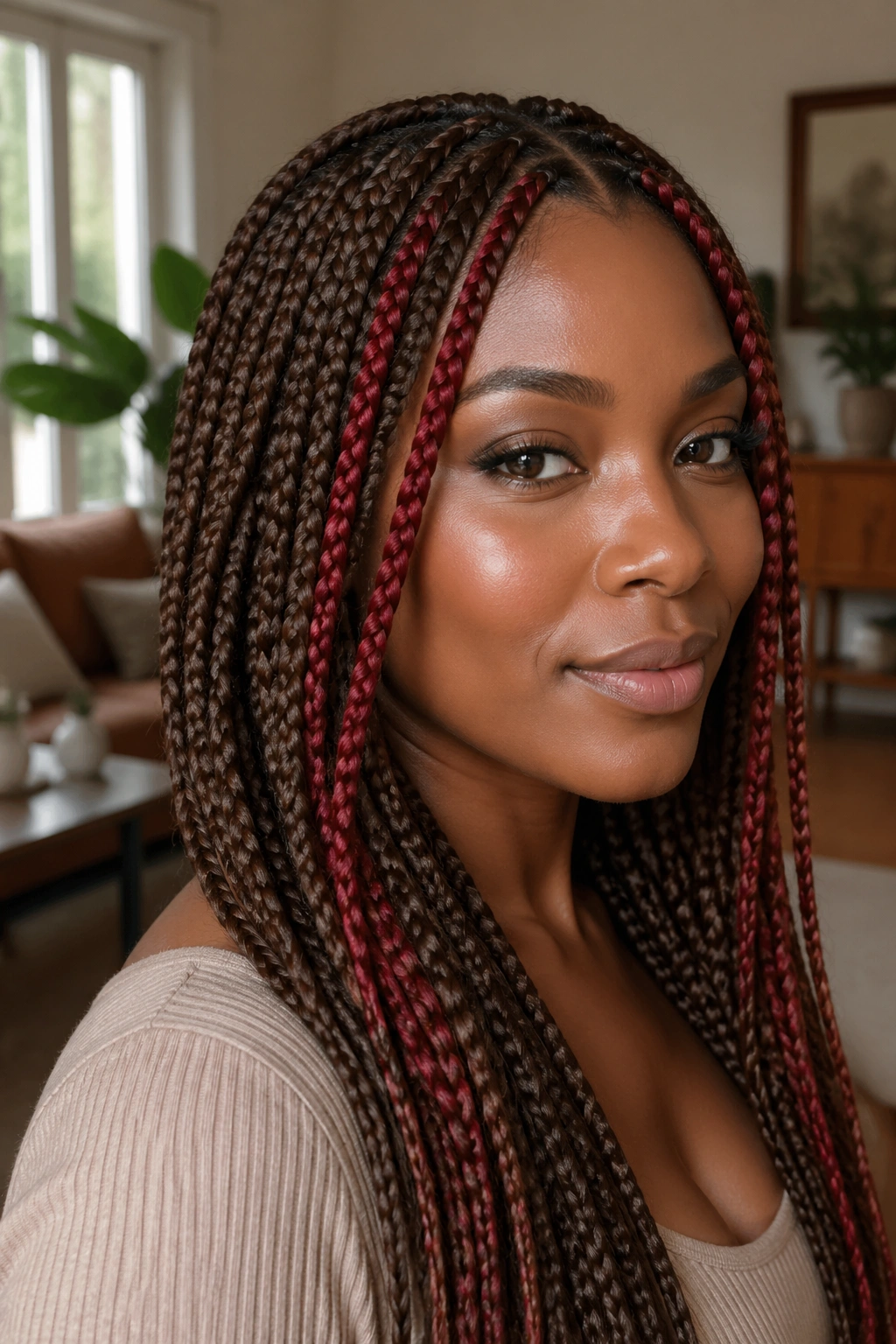
The front is where this style makes its case. Mocha braids keep the base soft and wearable, then a few red face-framing pieces do the talking right where people look first.
I love this setup because it gives you color without committing the whole head to brightness. The red pieces can be a shade or two lighter than the base, which creates a built-in highlight effect. You get contrast near the face, where contrast matters most, and the rest of the braids stay calm. No shouting. Just enough.
If you want this to look clean, keep the red pieces thin. Two or four front braids are usually enough. Thicker red panels can start to look chunky unless the rest of the braids are also large. Small front braids, a middle part, and a mocha base is the safer, better-looking combination.
This is one of those styles that works on the days you want a little personality without turning your head into a full color story.
6. Jumbo Brown and Red Box Braids with Clear Beads
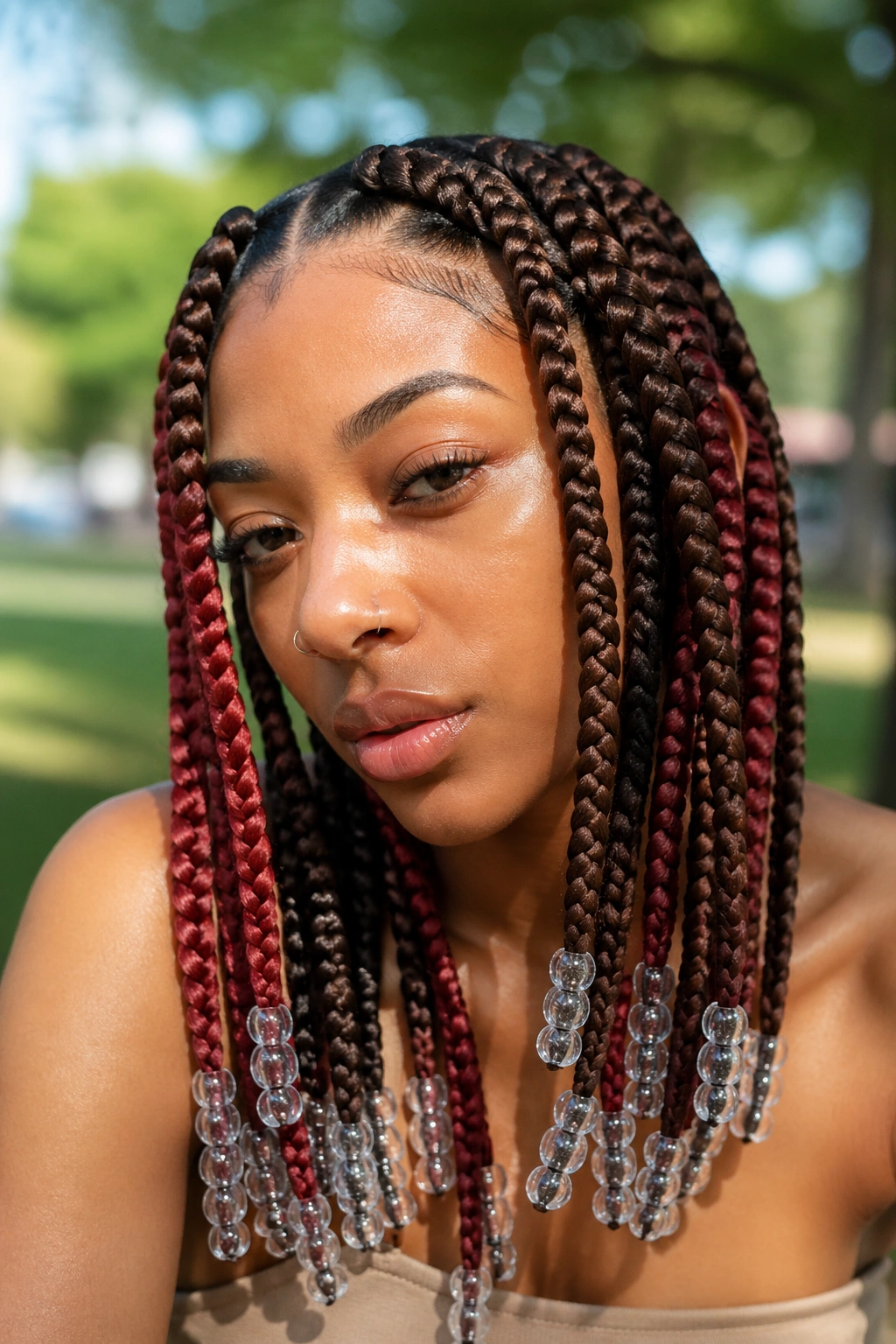
Jumbo braids make the color blocks easier to read, which is exactly why this style feels so direct. There’s less braid surface overall, so every strand matters more. The brown and red do not blend into the background. They sit there and show themselves.
Unlike medium or small braids, jumbo box braids give you a bigger visual hit with less effort. That also means the contrast between dark brown and red can be stronger. Burgundy, rust, or deep cherry all work here, but I’d keep the red on the darker side if the braids are extra thick. Bright red on jumbo braids can feel heavy fast.
Clear beads are a smart add-on. They don’t compete with the color and they let the braid itself stay the focal point. A few at the ends is enough. Too many, and the look gets noisy.
This version suits someone who wants a bold braid style that still feels structured. It’s confident. It knows exactly what it is.
7. Triangle-Part Braids in Dark Brown and Copper
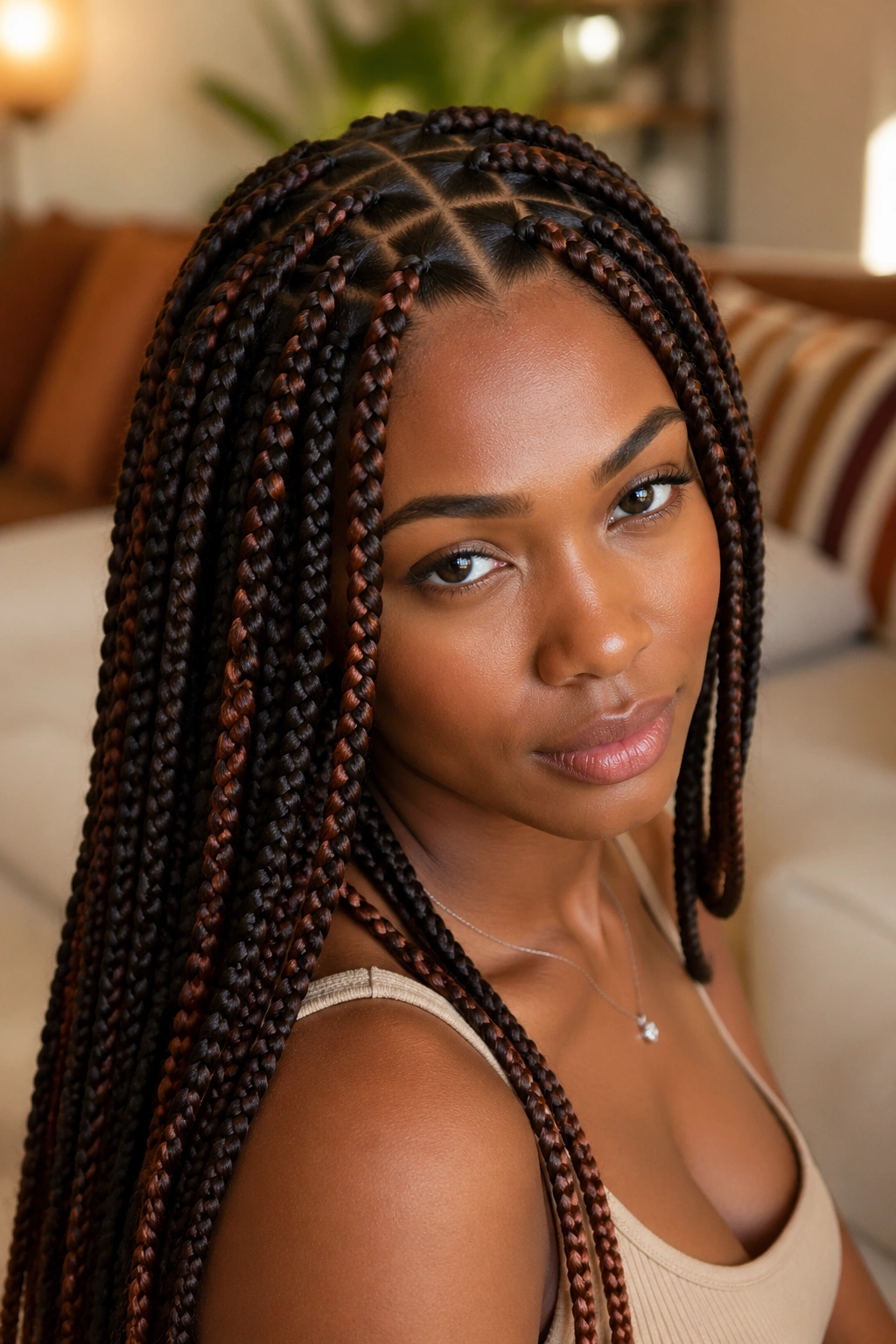
Triangle parts change the entire read of a braid style. The color still matters, of course, but the parting pattern becomes part of the design instead of just a backdrop.
Why the parts matter
Triangle sections make brown and red box braids feel sharper. The angles catch the eye before the color even does, and that makes copper streaks look more deliberate. On a dark brown base, the copper does not need to be loud. It only needs to be placed well.
A neat triangle parting pattern works especially well if the braids are medium size and installed close to the scalp. Loose parting can ruin the whole effect. The geometry needs to stay clean. That’s the whole point.
What to ask for
- Crisp triangle parts, not rounded ones
- Dark brown at the base
- Copper woven in at regular intervals
- Medium braids so the parting shape stays visible
My take: this is one of the best choices if you like your hair to look styled even when it’s just hanging down. The parts carry a lot of the design work.
8. Knotless Bob in Mahogany and Wine Red
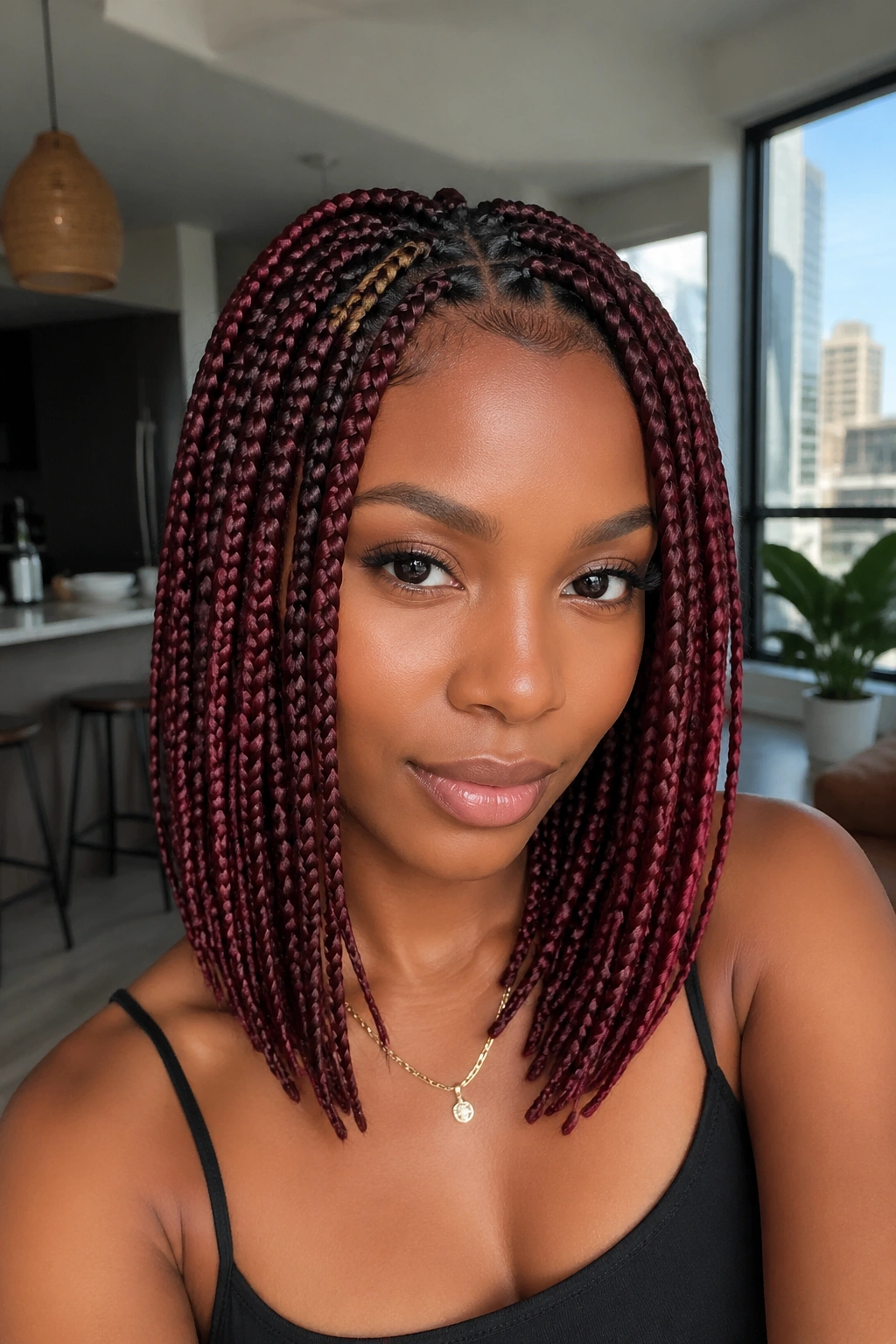
A knotless bob is a different animal from waist-length braids. It sits lighter, swings faster, and puts more attention on the shape of the cut than the length of the braid.
Mahogany and wine red are a strong pairing for this cut because both shades have depth. They’re rich, moody, and a little glossy-looking against dark brown. On a bob, that richness is easier to see because the color doesn’t disappear into long lengths. It lands right at the shoulders or just above them, where it feels compact and polished.
The knotless base matters here. It keeps the front looking smoother and makes the color transition feel less bulky near the hairline. If your scalp is sensitive, that matters even more. A bob already removes some weight. Knotless installation removes some tension too.
This style is the opposite of fussy. It dries faster, sleeps easier, and doesn’t drag on your shoulders. That sounds practical because it is practical.
9. Half-Up Top Knot with Multi-Tone Brown and Red
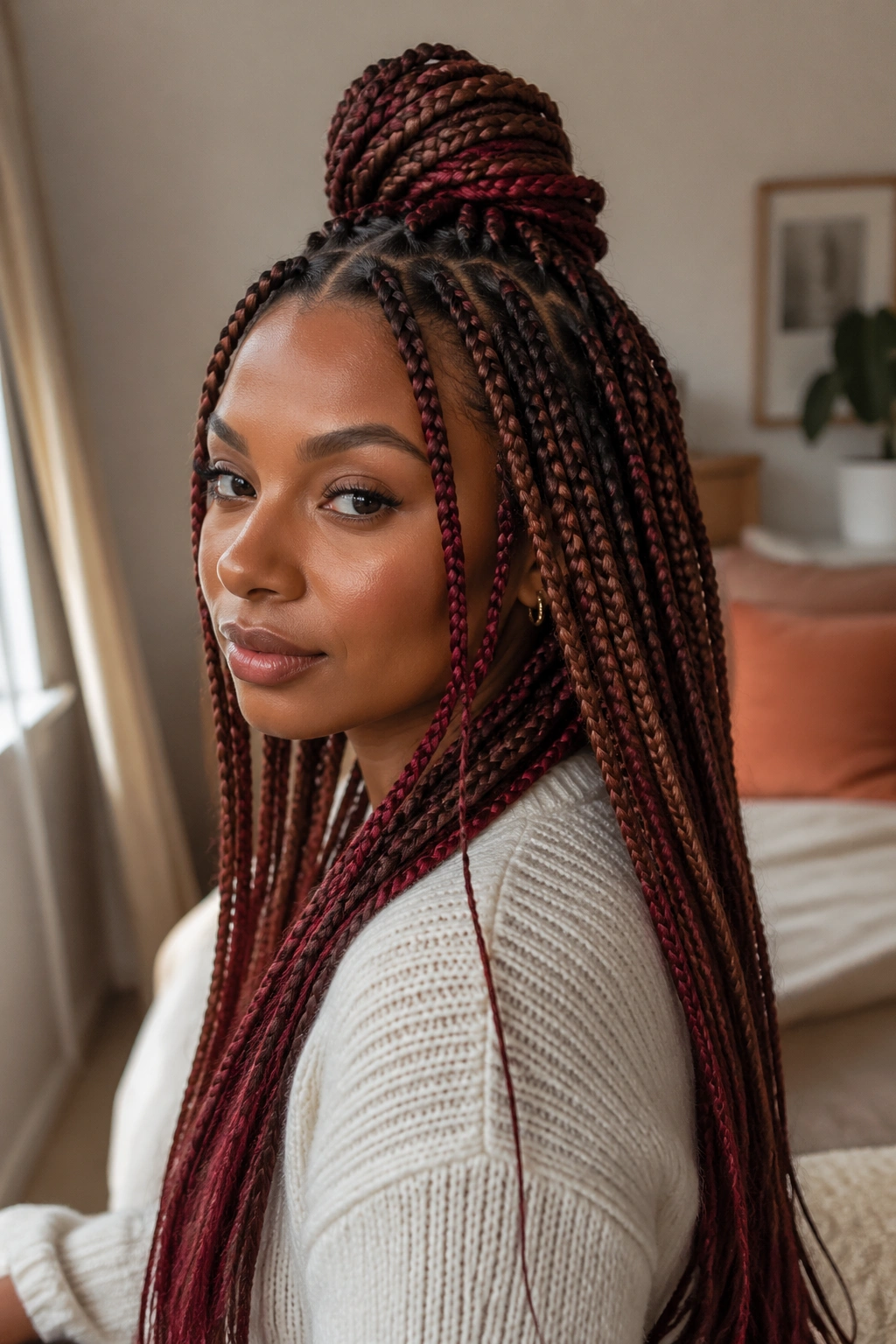
What happens when you want color to show, but you also want the braids out of your face? You pull them up and let the rest do the work.
A half-up top knot is one of the easiest ways to make multi-tone brown and red box braids look alive. The upper section gathers the darker shades together, while the loose lengths below show the red in motion. That contrast between controlled and loose is what makes the style interesting. It also gives the face a lift, which is useful if the braids are long or heavy.
How to wear it
A smaller top knot looks neat and keeps the style from getting top-heavy. A larger knot gives more height and lets the red pieces peek through from different angles. Both work. What you should avoid is making the bun so tight that the braids at the crown start to look strained.
Three good options:
- A high half bun with loose ends
- A wrapped top knot with a few tendrils left out
- A double-knot version for a more playful shape
This style is especially good when you want your color to move a little more than a standard down style allows.
10. Peekaboo Red Braids Under Deep Brown Layers
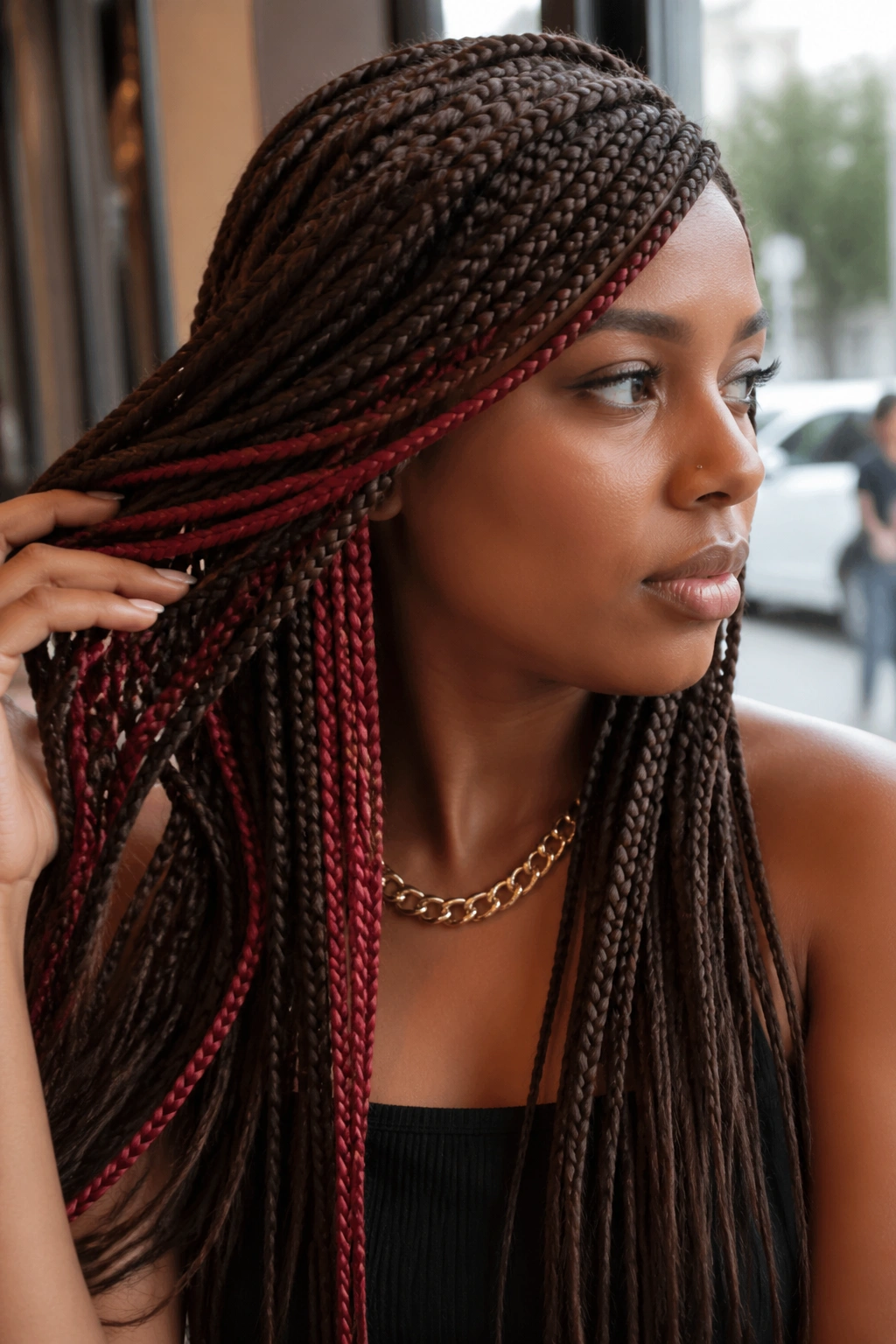
Peekaboo color is underrated. People think the best color has to sit on top, but tucked color can be smarter. It feels more secret. More personal.
With deep brown top layers and hidden red braids underneath, the color only shows when the hair shifts, lifts, or gets pulled into a ponytail. That surprise matters. It makes the style feel layered in a literal sense, not just visually. You get a clean outer look and a second story underneath.
Good places for the red
- The lower half of the head
- The nape area
- A few interior panels near the back
- Thin sections beneath a darker crown layer
This works well if you need a braid style that looks calm head-on but has more attitude from the side or the back. I also like it for people who wear their hair up a lot, because the red becomes part of the styling rather than a detail you lose.
It’s a quiet flex. And sometimes that’s the best kind.
11. Copper-Tipped Medium Box Braids
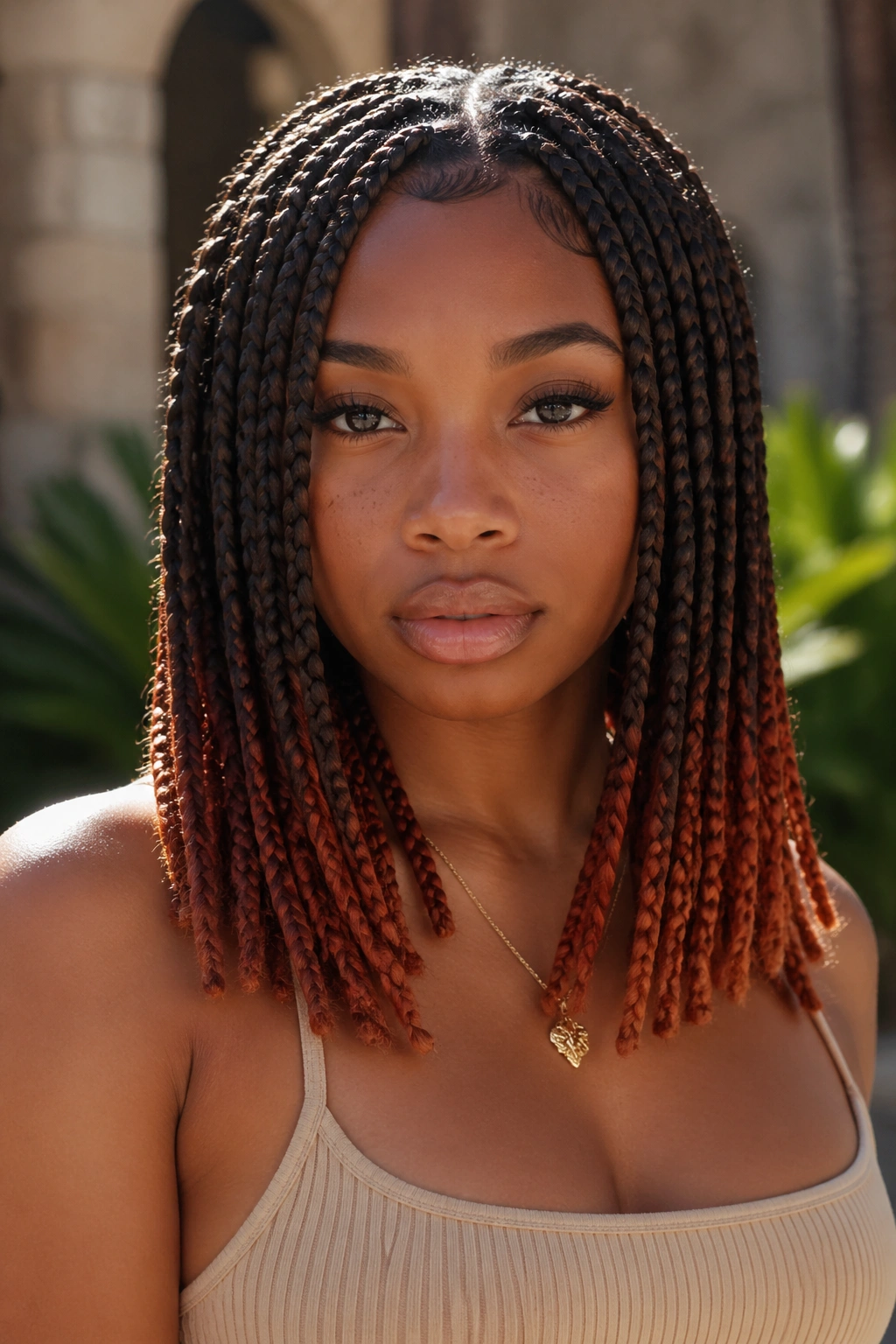
Copper-tipped medium box braids sit in a sweet spot. They are not too big, not too tiny, and the copper ends keep the whole style from feeling flat.
The medium size matters because it lets the color shift show without making the braids feel bulky. On tiny braids, copper tips can blur into the mass of the hair. On jumbo braids, they can feel too blocky. Medium braids let the tip color read like a finish rather than a patch.
I like this look on people who want a softer version of red. Copper is brighter than brown, sure, but it still looks grounded next to darker roots. It also pairs well with warm makeup, bare skin, and gold jewelry without fighting for attention.
If you want the cleanest finish, keep the ends even. Uneven tips can make the copper look accidental. A sharp finish makes the color placement feel more deliberate.
12. Side-Swept Brown and Red Braids with Gold Cuffs
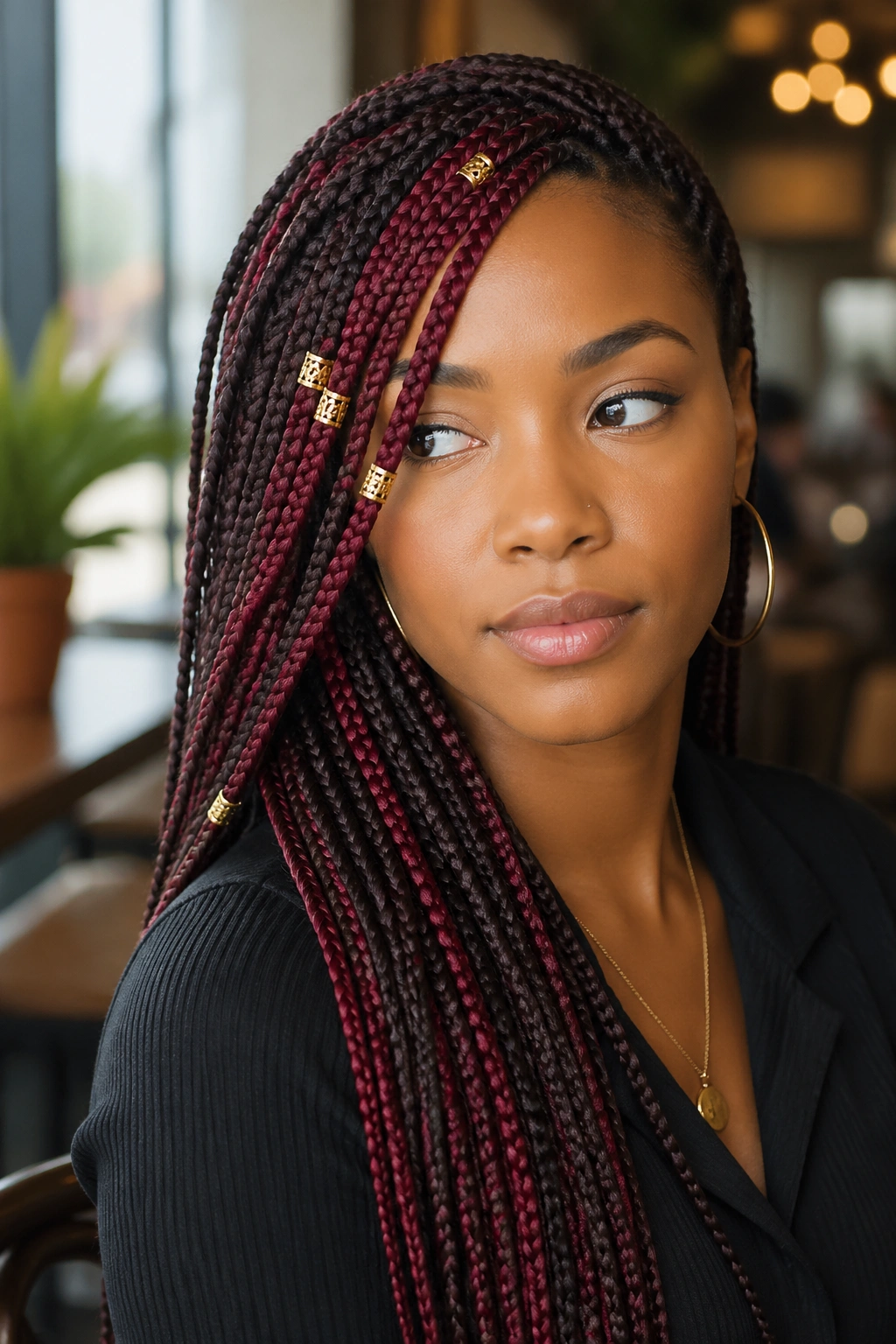
A side sweep changes the whole silhouette. The braids fall with more movement, the color shows in layers, and the face gets framed in a way that middle parts never quite manage.
Unlike a centered style, a side-swept braid set feels looser without actually being loose. That’s a nice trick. The brown base stays calm, while the red pieces arc across one side and draw the eye into the shape of the hairstyle. Gold cuffs fit here because they echo the movement without competing with it.
Where the cuffs should go
A few cuffs on the heavier side is enough. I would not scatter them on every braid. That starts to look overworked. Place them near the front and around the shoulder line, where they catch movement but do not overwhelm the color.
This style is a good pick if your face shape benefits from asymmetry. It softens angular features and gives rounder faces a little direction. More importantly, it makes the braid pattern look less rigid.
A side sweep can do that. It’s a small change, but it changes everything.
13. Chunky Feed-In Box Braids with Amber Panels
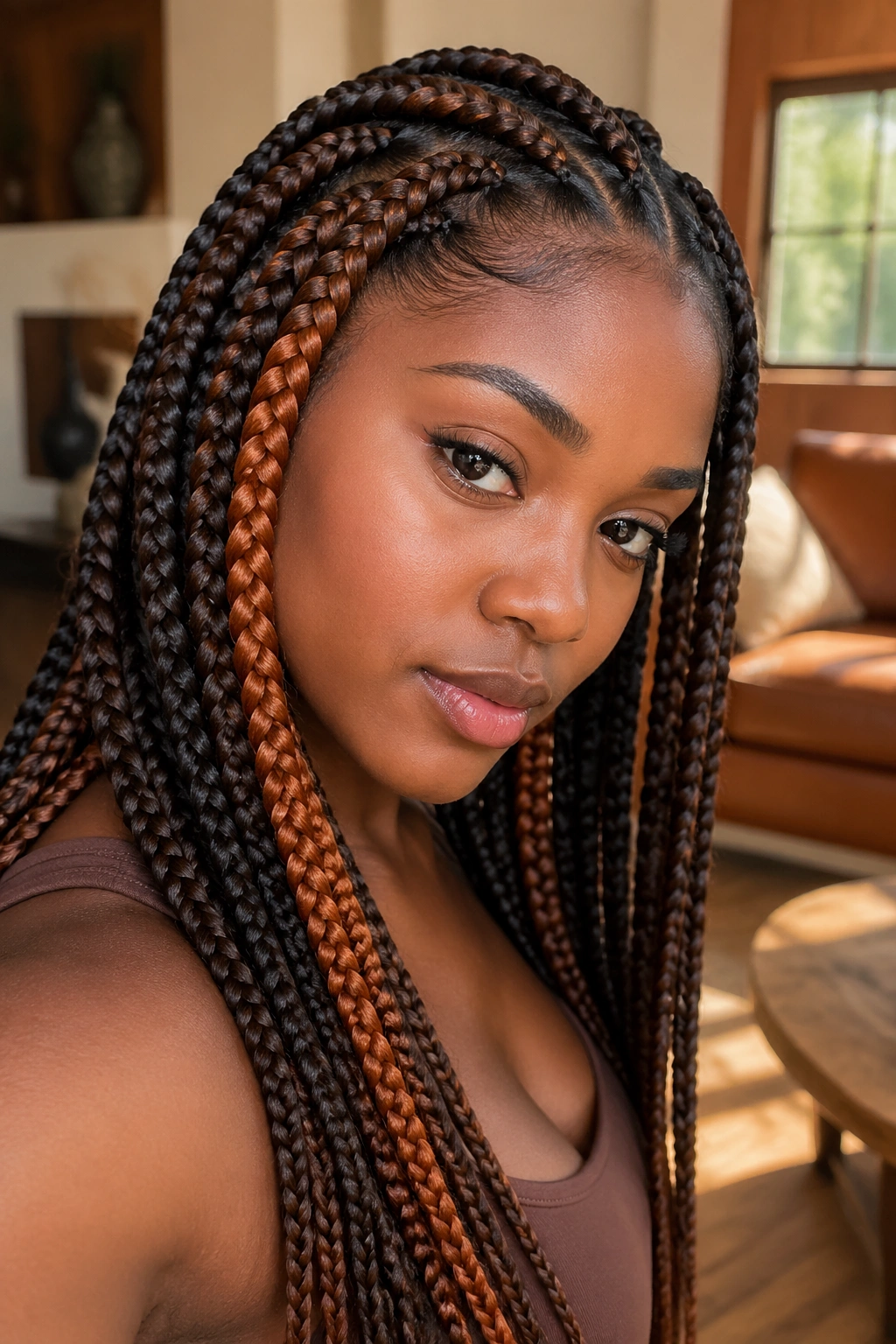
Feed-in braids give you a smoother start at the scalp, which matters if you want the color story to feel gradual instead of packed on top of itself. Amber panels add warmth without turning the whole look bright.
How to keep the color from feeling heavy
The easiest mistake with chunky braids is placing too many bright panels too close together. Space them out. Let a darker brown braid separate each amber section so the eye has somewhere to rest. That little pause keeps the whole style readable.
Feed-in braids also help the front line stay neat, especially if your braider is working with a softer brown root. The braid seems to emerge from the scalp instead of sitting on top of it. That makes the amber feel like a planned accent, not an afterthought.
Here are the key things to ask for:
- Soft feed-ins at the hairline
- Chunky sections, but not oversized
- Amber or honey-red panels every few braids
- A clean parting map so the color placement stays balanced
I like this style when the goal is warmth. Not fire. Warmth. There’s a difference.
14. Braided Ponytail with Crimson Ends
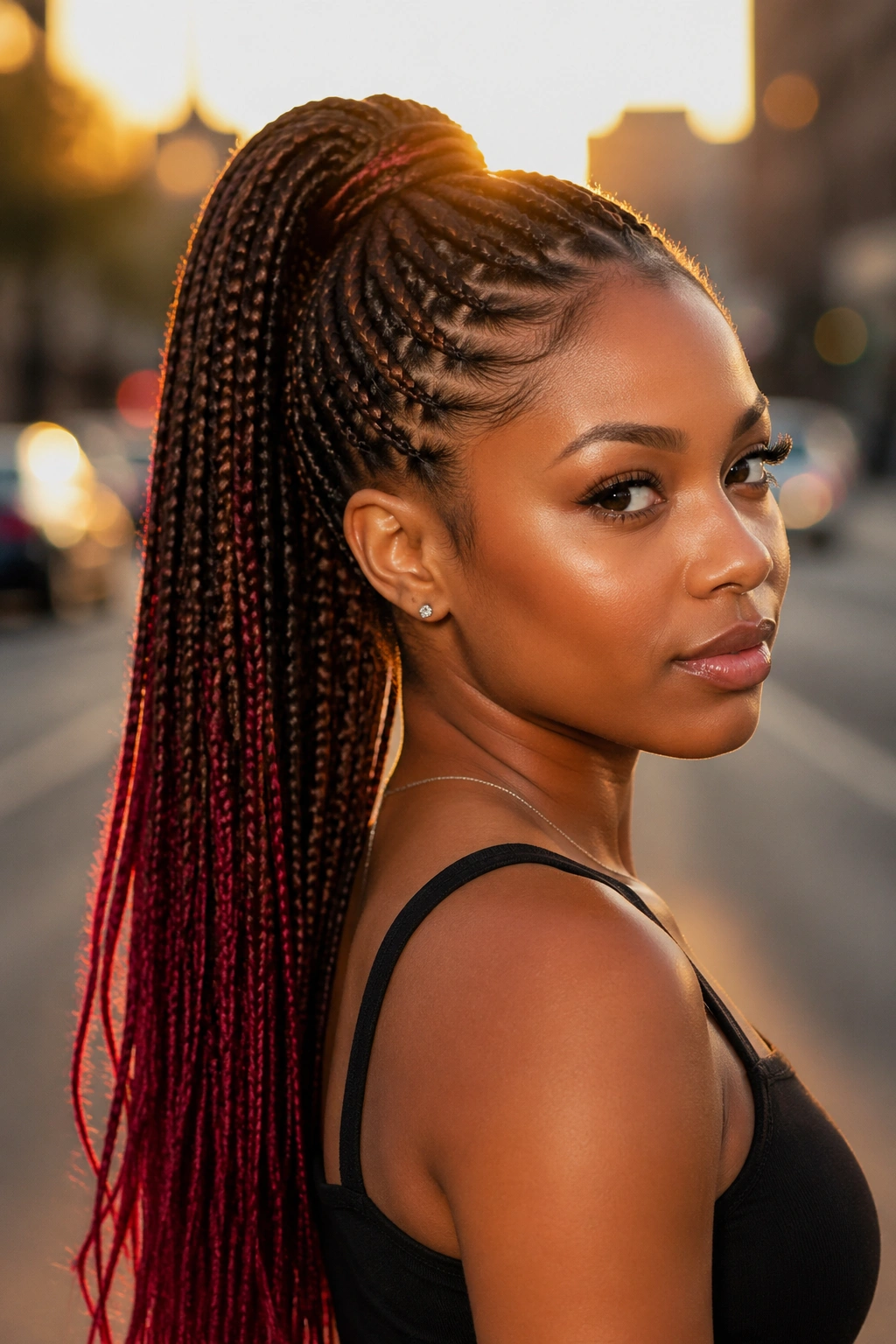
A high ponytail changes the whole weight of the look. It pulls the braids up, tightens the silhouette, and pushes the red ends into the spotlight.
Crimson works well here because the color gathers at the tail and moves like a brushstroke. The base can stay deep brown, maybe almost espresso, while the ends do the talking. That makes the style feel sharp from the front and energetic from the back. It’s one of the best ways to show off color on long box braids without leaving them hanging all day.
Keep the ponytail base comfortable. Too much tension at the crown is a bad trade for a good finish. A wrapped braid around the base helps hide the band and gives the style a cleaner finish. If the pony sits too high, the weight of the braids can pull on the edges over time.
This is the look for days when you want your hair to feel pulled together. Literal. Neat. A little bold.
15. Layered Collarbone Braids in Chestnut and Merlot
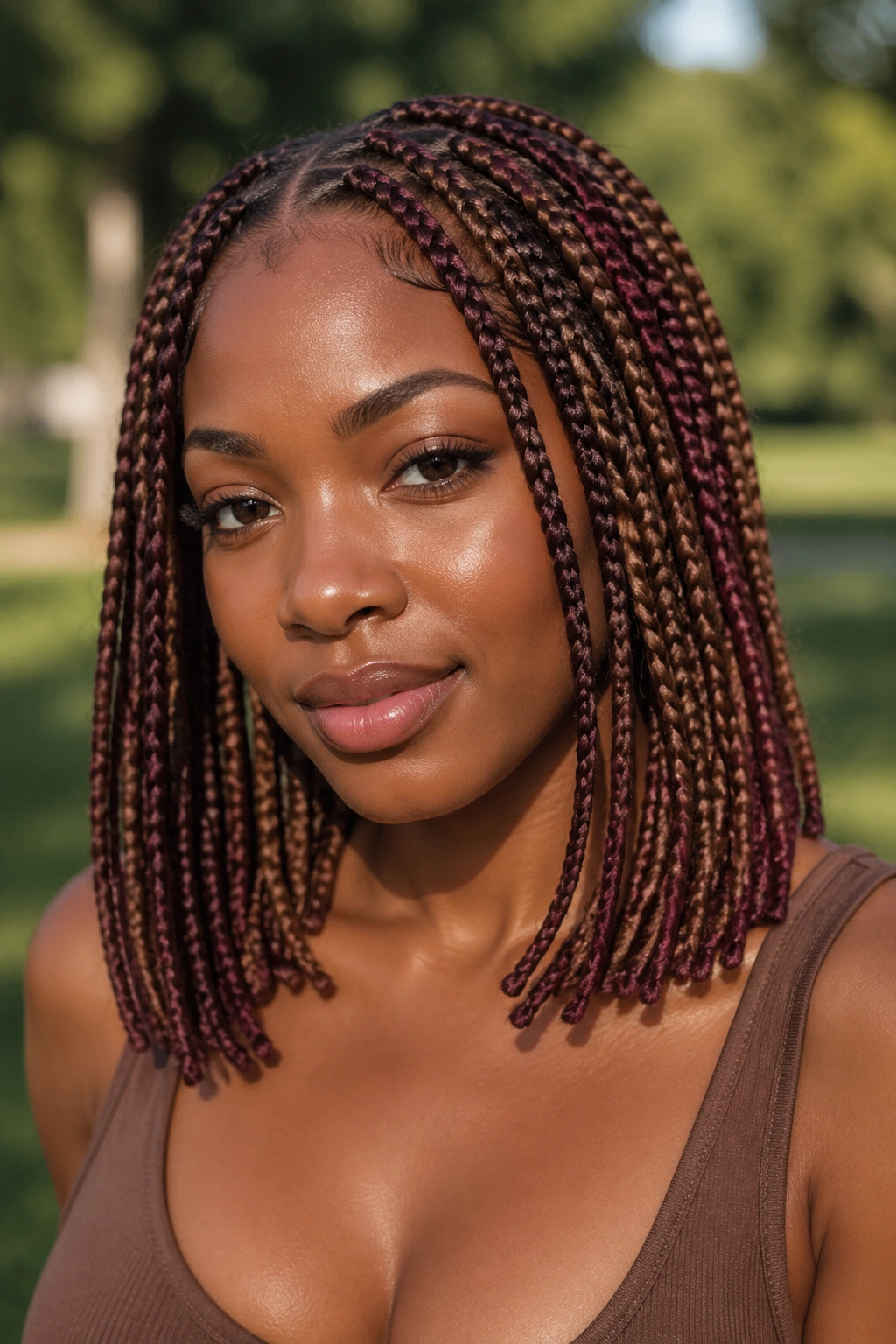
Why does collarbone length work so well with brown and red box braids? Because it gives the color enough room to shift, but not so much room that the style gets heavy.
Chestnut and merlot make a deep, layered combination that feels richer than bright red and softer than burgundy. The length helps too. Collarbone braids sit right in that zone where they move when you walk but do not keep getting caught in your coat, purse strap, or seatbelt. That makes them easy to live with, which matters more than people admit.
Best for
- People who want color without extra weight
- Round or oval faces that benefit from a shorter frame
- Anyone who likes to wear braids down most of the time
- A softer look that still has contrast
Layering the braids slightly—just enough to keep the ends from landing in one blunt line—makes the color show more naturally. The merlot peeks through as the braids turn. That movement is the whole point.
This one feels grown, if that makes sense. Not old. Just settled.
16. Boho Brown and Red Box Braids with Curly Ends
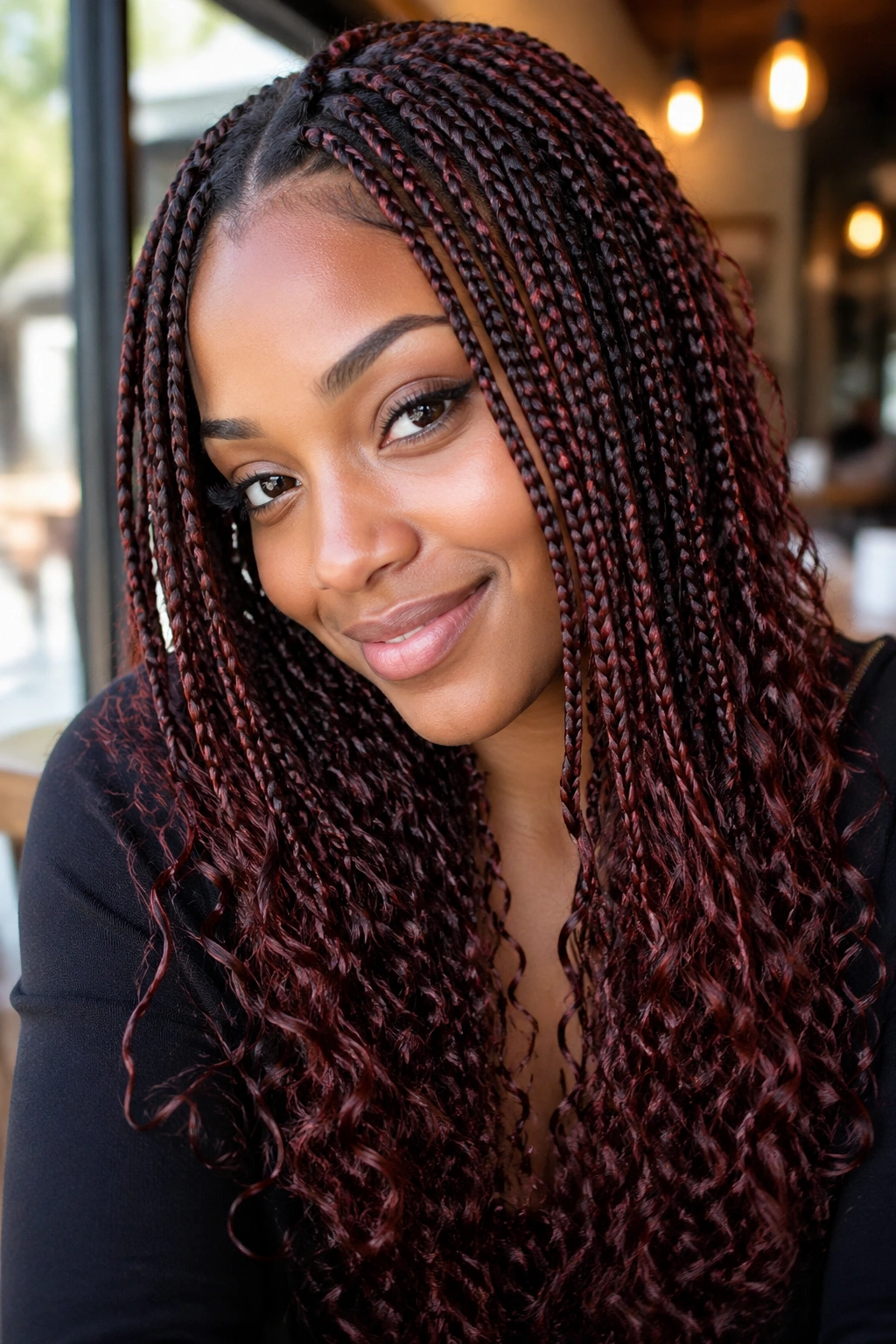
Boho braids give the style a little softness right where box braids can start to feel too structured. The curly ends break up the straight lines and let the brown-red mix breathe.
The trick here is balance. Too many curls, and the style stops looking like box braids and starts looking busy. A few curly ends placed evenly through the head create texture without losing the braid pattern. Red tones can be woven through the lengths or kept closer to the ends, depending on how loud you want the finish to be.
Things that help this style hold up
- Keep the curls small enough to bounce, not puff
- Use a mousse lightly on the loose ends
- Ask for red pieces in a few scattered braids, not all of them
- Let the brown stay dominant if you want the style to look softer
This version works well if you like braid styles that feel less rigid. The curls keep the look from going too uniform, which is helpful if your clothes and makeup are already doing a lot. There’s some movement here. That’s the charm.
17. Warm Brown Braids with Braided Red Highlights
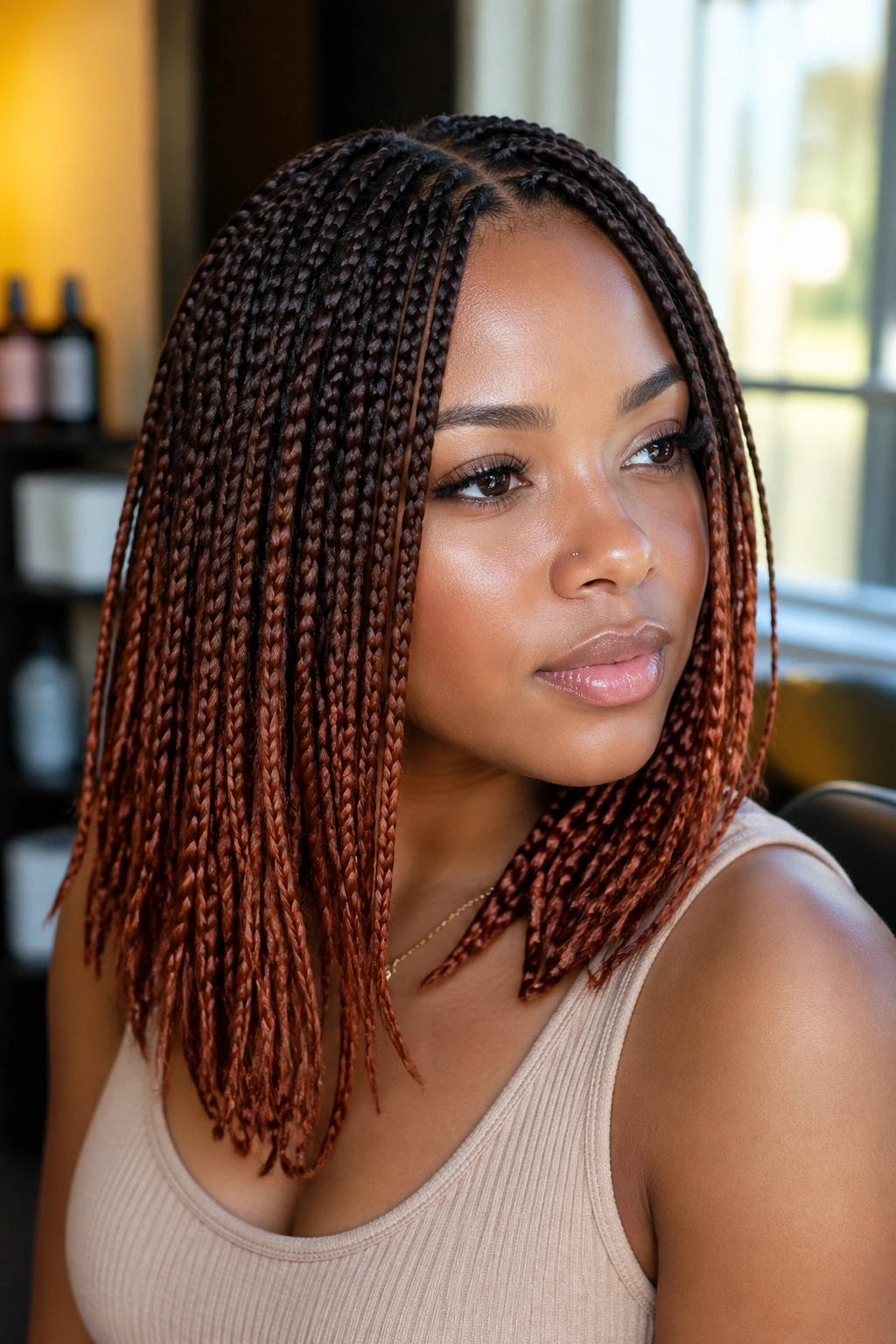
Warm brown braids with braided red highlights are the most wearable version of the whole bunch, at least in my book. The red is there, but it does not scream. It sits inside the braid pattern like a ribbon running through wood grain.
That makes this style a strong choice for anyone who wants color that looks considered from a few feet away and more interesting up close. The highlights can be thin red braids spaced through the head, or slightly thicker strands placed near the front and crown. Either way, the brown base stays in charge, which keeps the style grounded.
This look also gives you room to play with shine. A little braid mousse, a neat part, and clean ends are enough. You do not need accessories unless you want them. The color placement does most of the work.
If I had to point someone toward one safe starting point for brown and red box braids, this would be it. It has shape, depth, and enough red to feel alive without asking for attention every second.
