



Two-tone braids can go soft and rich in a second, or they can look busy if the shades fight each other. Blonde and brown box braids sit right on that edge, which is why the good versions look so polished and the bad versions feel off by a mile.
The trick is in the placement. Brown gives the braid weight and depth; blonde brings movement, brightness, and a little lift around the face. When the ratio is right, the style looks lived-in in a good way, not messy, and that matters more than people think when you’re wearing a protective style for weeks at a time.
I usually like the darker shade doing most of the work near the scalp, then the lighter pieces showing up where the eye naturally lands. It keeps the line of the hair softer, especially around the hairline, and it makes grow-out less awkward. Tight installs are still a bad trade, by the way. Pretty color does not excuse a tender scalp.
Some blends read sunlit. Others look grounded and glossy. The styles below move through that whole range, from subtle face-framing highlights to bolder, high-contrast braids that carry the whole outfit.
1. Honey Blonde and Brown Box Braids With Face-Framing Pieces
Honey blonde is one of the easiest shades to wear with brown because it warms everything up without screaming for attention. A few lighter braids near the front can change the whole mood of the install, especially if the rest of the hair stays in a deeper chestnut or espresso tone.
Why this combo works
The face-framing pieces pull light toward the cheekbones and eyes, which is why this style flatters so many people. You do not need a full head of bright blonde to get that effect. Two or four lighter braids near the front is usually enough.
- Ask for a 1B or dark brown base with 27 honey blonde around the face.
- Medium box braids show the color shift better than super-small braids.
- A center part makes the lighter pieces feel more balanced.
- A soft side part can make the blonde read even brighter.
Best tip: keep the blonde slightly narrower than the brown pieces so the front does not start looking striped.
2. Espresso Roots With Caramel Ends
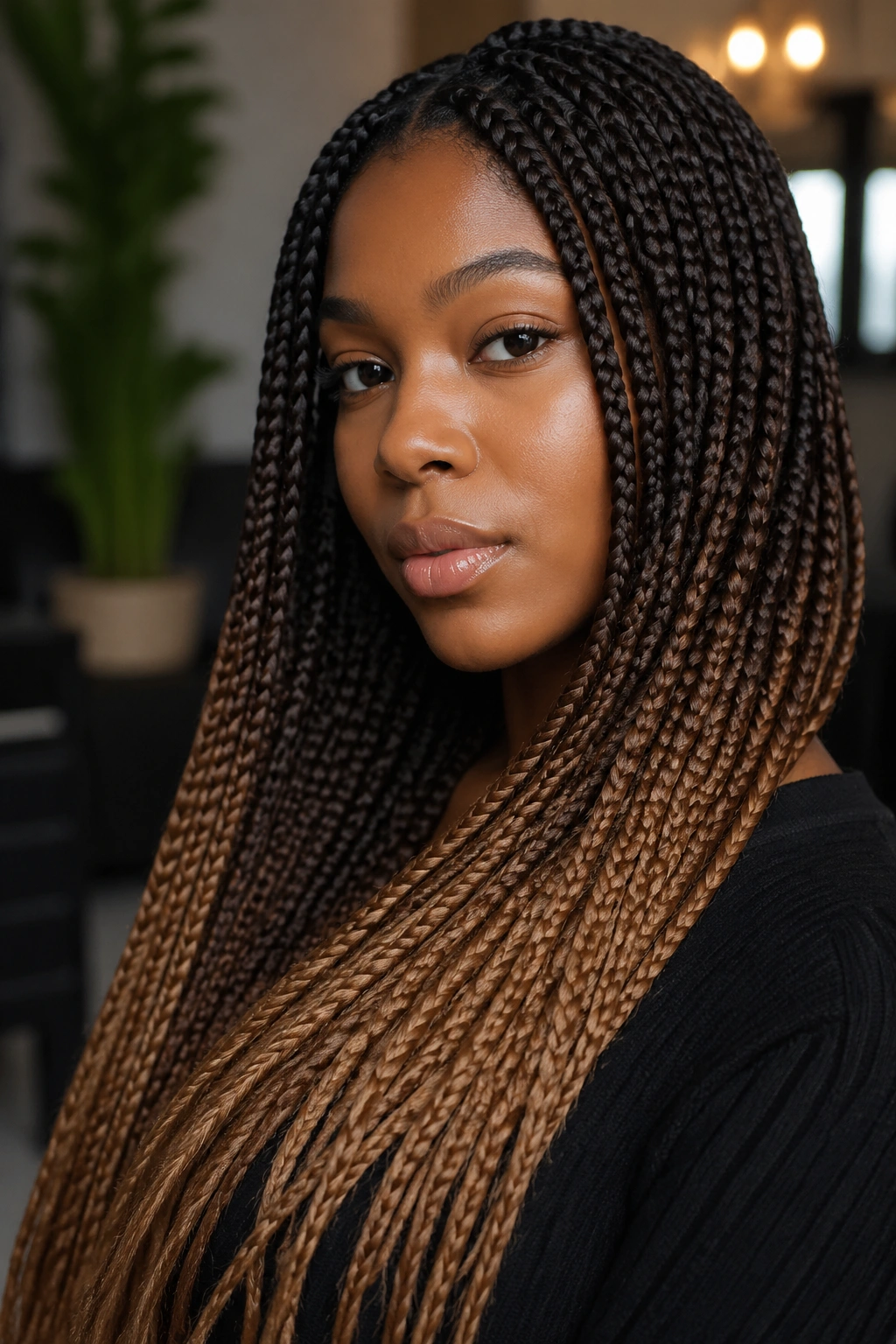
Caramel ends keep the style from looking flat. That is the whole appeal here. The brown starts deep and clean at the scalp, then slowly opens into a warmer shade that feels softer than a hard blonde change.
This works especially well if you want color but do not want your braids to shout from across the room. The fade feels easy on the eye, and it tends to age well because the darker root blends naturally as your own hair grows. That alone saves a lot of stress.
I like this version on longer braids, because the ombré has room to show itself. On very short braids, the change can feel abrupt. On waist-length braids, it looks intentional and smooth.
3. Golden Stripe Jumbo Box Braids
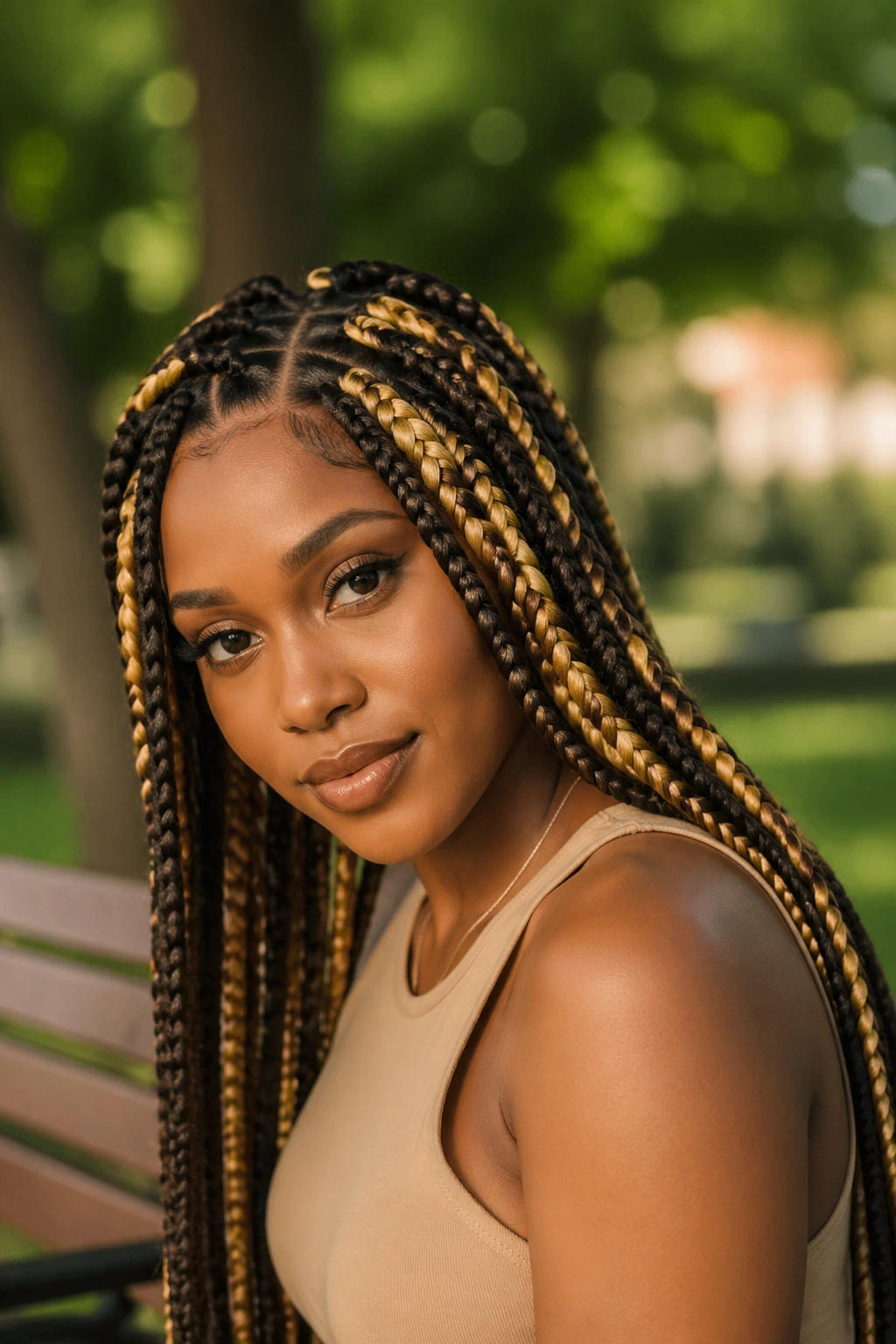
Why do a few blonde braids across a dark base work so well? Because jumbo braids already have a bold shape, so the color can be louder without making the whole style feel crowded.
How to wear it
This version is all about contrast. The blonde appears in wide stripes or alternating braids, while the brown stays in the background and keeps things grounded. It is a strong look, but not a fussy one.
- Use larger sectioning so the color bands are easy to see.
- A mix of 30 caramel and 613 blonde can give a high-contrast finish.
- Best on long braids, because the stripes show more as the hair moves.
- Works well with a high bun or half-up style.
One smart move: keep the parting clean and simple. With jumbo braids, the braid size already gives you enough drama.
4. Chocolate-and-Bronze Knotless Box Braids
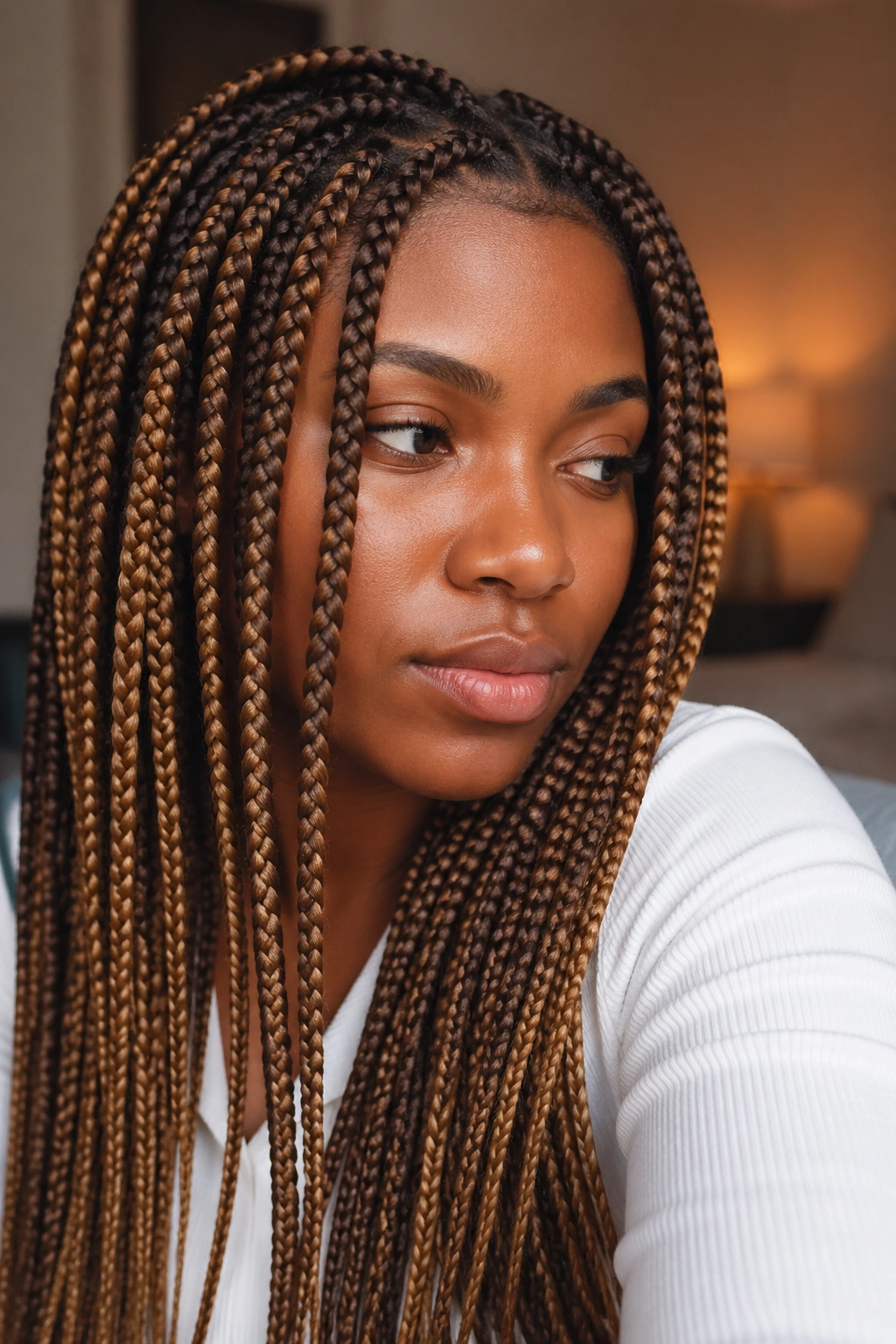
I keep coming back to knotless versions when I want the color to feel lighter at the scalp. The braid starts smoother, which means the blend reads less stiff and the install usually feels easier to wear the first few days.
Bronze is the part people underestimate. It sits between brown and blonde, so it gives you warmth without the brightness of a pale blonde braid. On deeper brown bases, that bronze flash looks especially good under indoor light.
- Great if you want a lightweight feel at the roots
- Nice with small to medium knotless braids
- Works well when the lighter shade is saved for the mid-lengths and ends
- Pairs nicely with gold cuffs or plain wooden beads
Do not pack too many shades into one braid. Two or three tones are enough. More than that can start to look fussy.
5. Beige Blonde Triangle-Part Braids
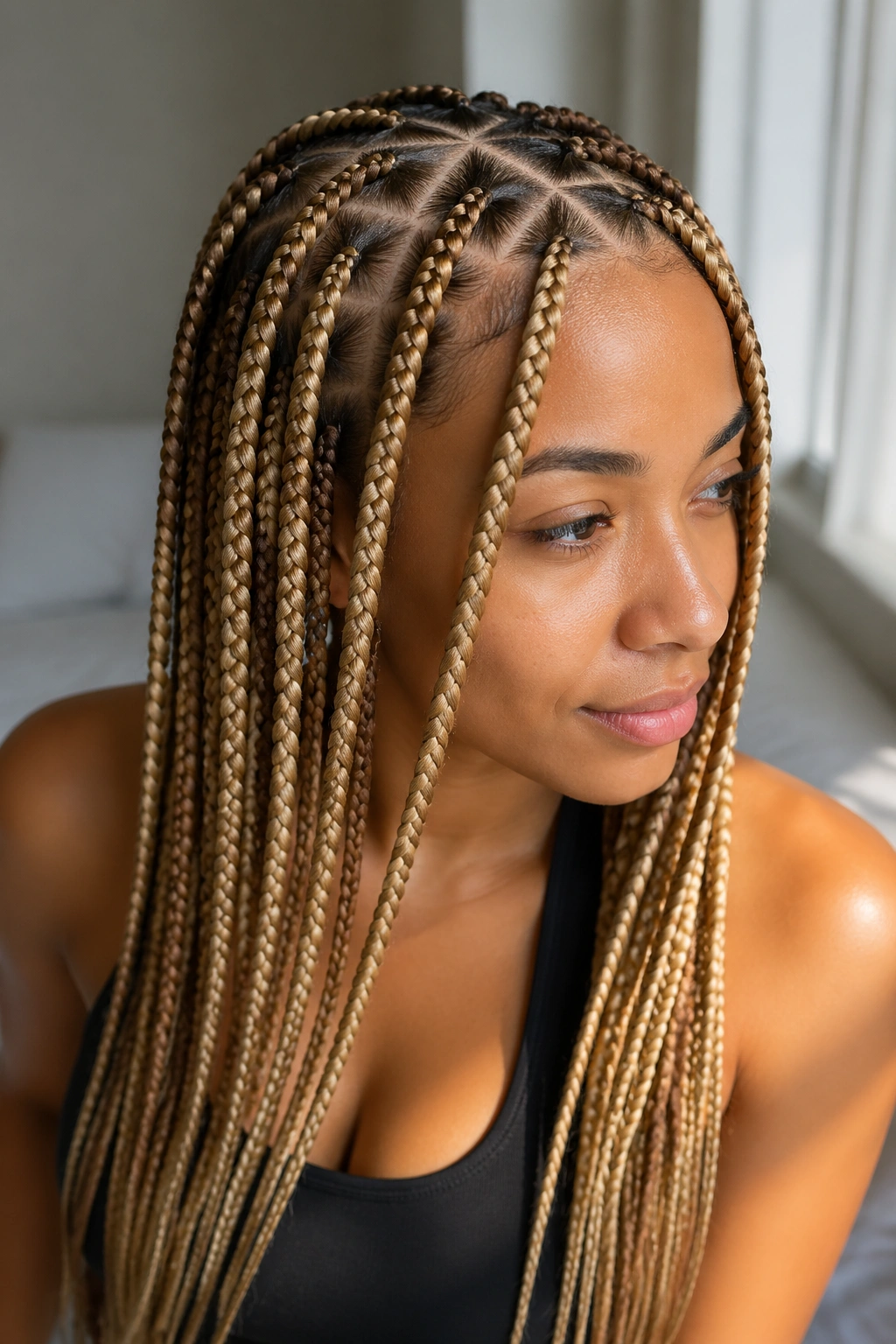
Triangle parts change the way color sits on the head more than most people expect. The shape makes each braid feel a little more graphic, so even a soft blonde reads with more definition.
Beige blonde is the smart choice here. Bright blonde can fight with the parting and make the scalp area look louder than you want. Beige keeps the whole style softer, almost creamy, and it sits nicely beside chestnut or medium brown strands. The braid itself becomes the focus, not the color alone.
I especially like this on shoulder-length or mid-back braids. The triangle parts show up fast, and the lighter pieces move well when the hair swings. If you want a style that looks neat in a low bun and still catches the eye when it’s down, this one earns its keep.
6. Cinnamon Swirl Mid-Back Braids
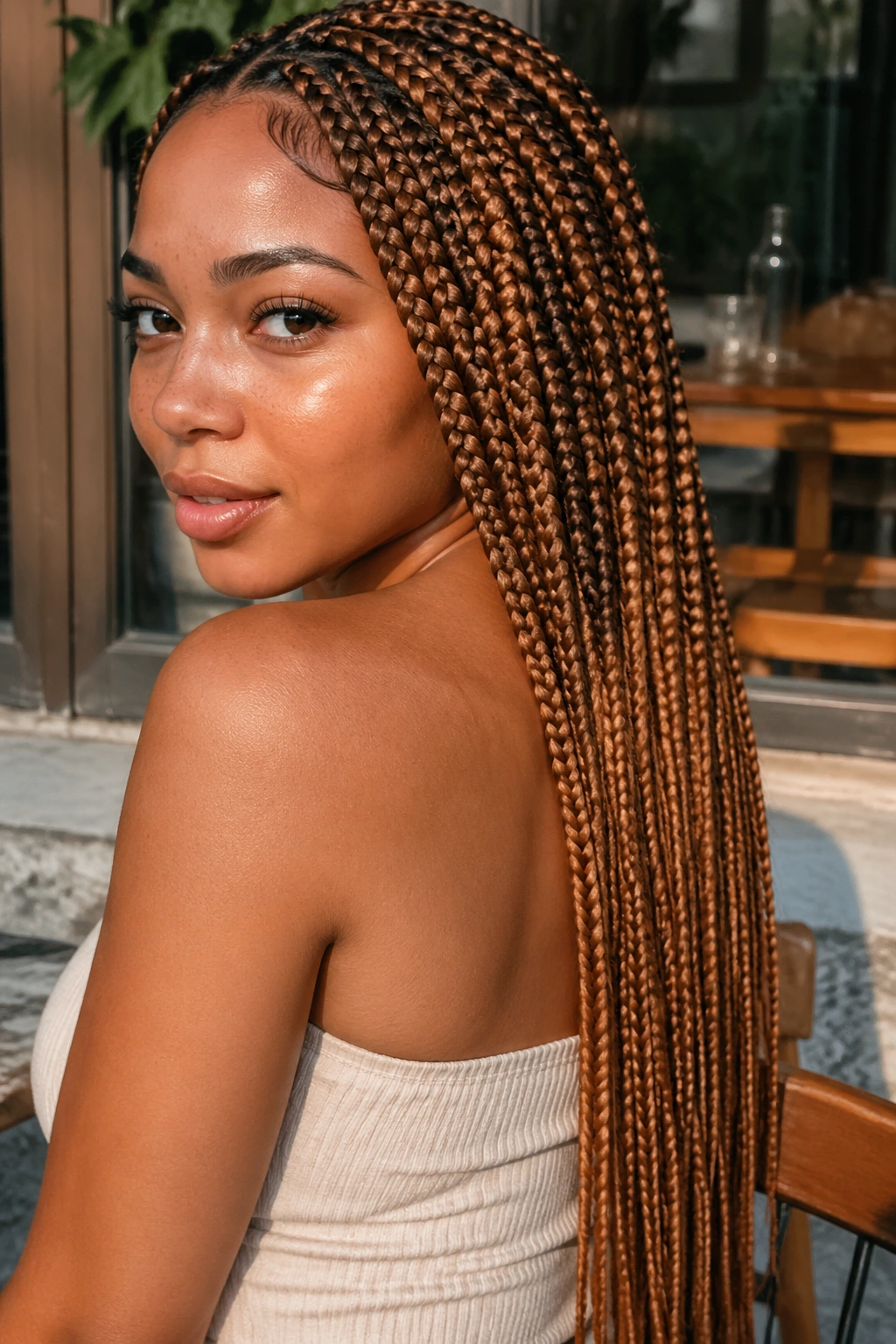
Compared with bright blonde braids, cinnamon-toned blends feel calmer and easier to wear. That is the main reason I reach for them when I want something dimensional but not loud.
The color story is warm throughout: brown, cinnamon, soft gold, maybe a little auburn if your braider likes mixing shades. The effect is less about contrast and more about richness. It works on almost any braid size, though I think medium braids show it best because the color changes stay visible without looking busy.
If you wear gold earrings, warm makeup, or even simple black clothing, this style does a lot of the lifting for you. It adds warmth without needing a big styling effort.
7. Smoky Brown Ombre Waist-Length Braids
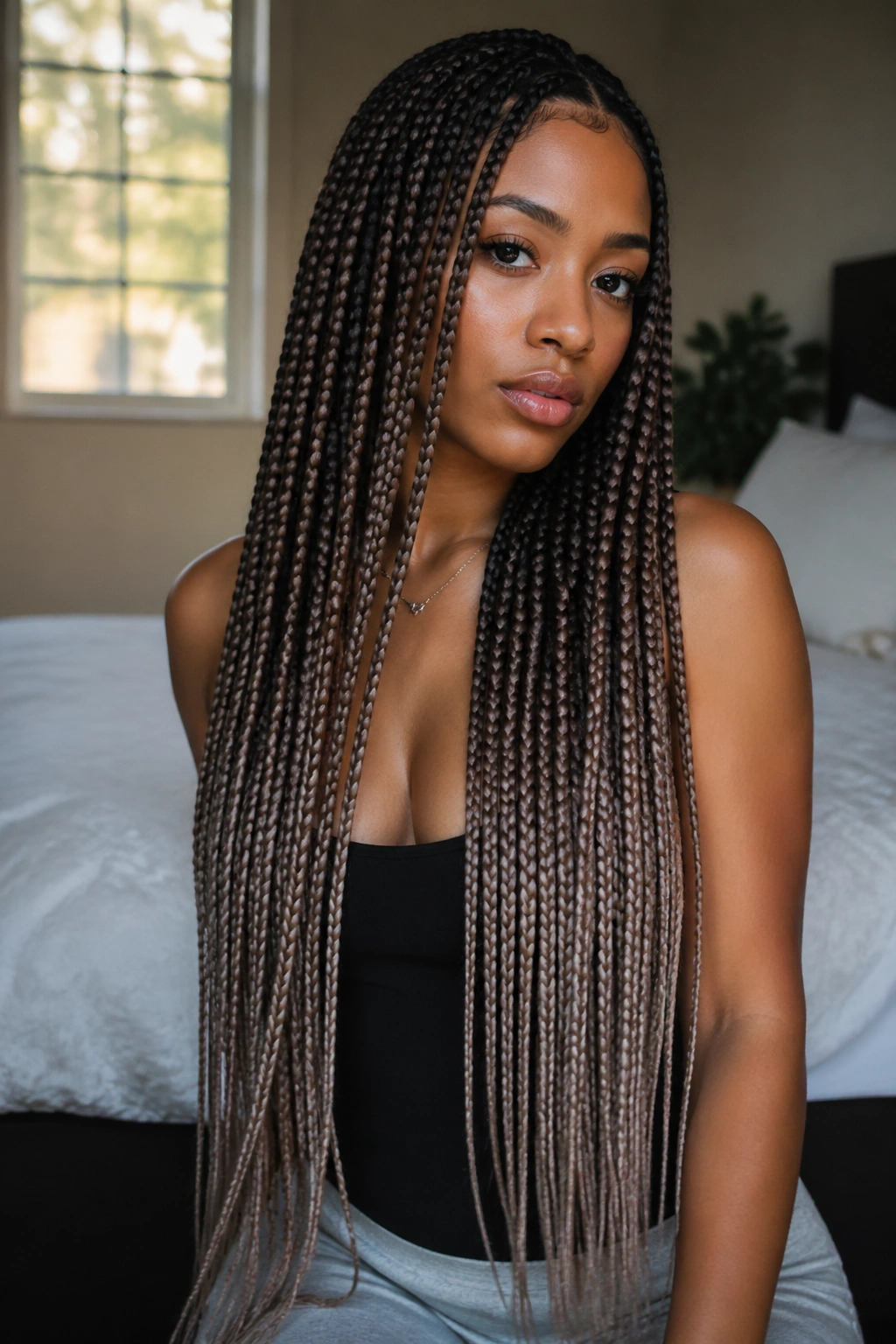
Smoky brown ombré is the move when you want light ends without the flash of full blonde. The darker root gives the braid some seriousness, and the smoky fade keeps the lighter color from feeling harsh.
How the fade reads in motion
The best part is movement. As the braids swing, the lighter ends peek through in a slow, layered way instead of all at once. That makes the style feel more expensive without needing a lot of extra detail.
- Start with deep brown at the root.
- Fade into taupe-brown or ash blonde through the middle.
- Keep the ends slightly lighter than the mid-lengths.
- Waist-length works better than short lengths for this look.
This one is for people who like contrast, but not too much of it. Nope, not if you want a soft finish. The fade has to stay gradual.
8. Chunky Blonde and Mocha Feed-In Braids
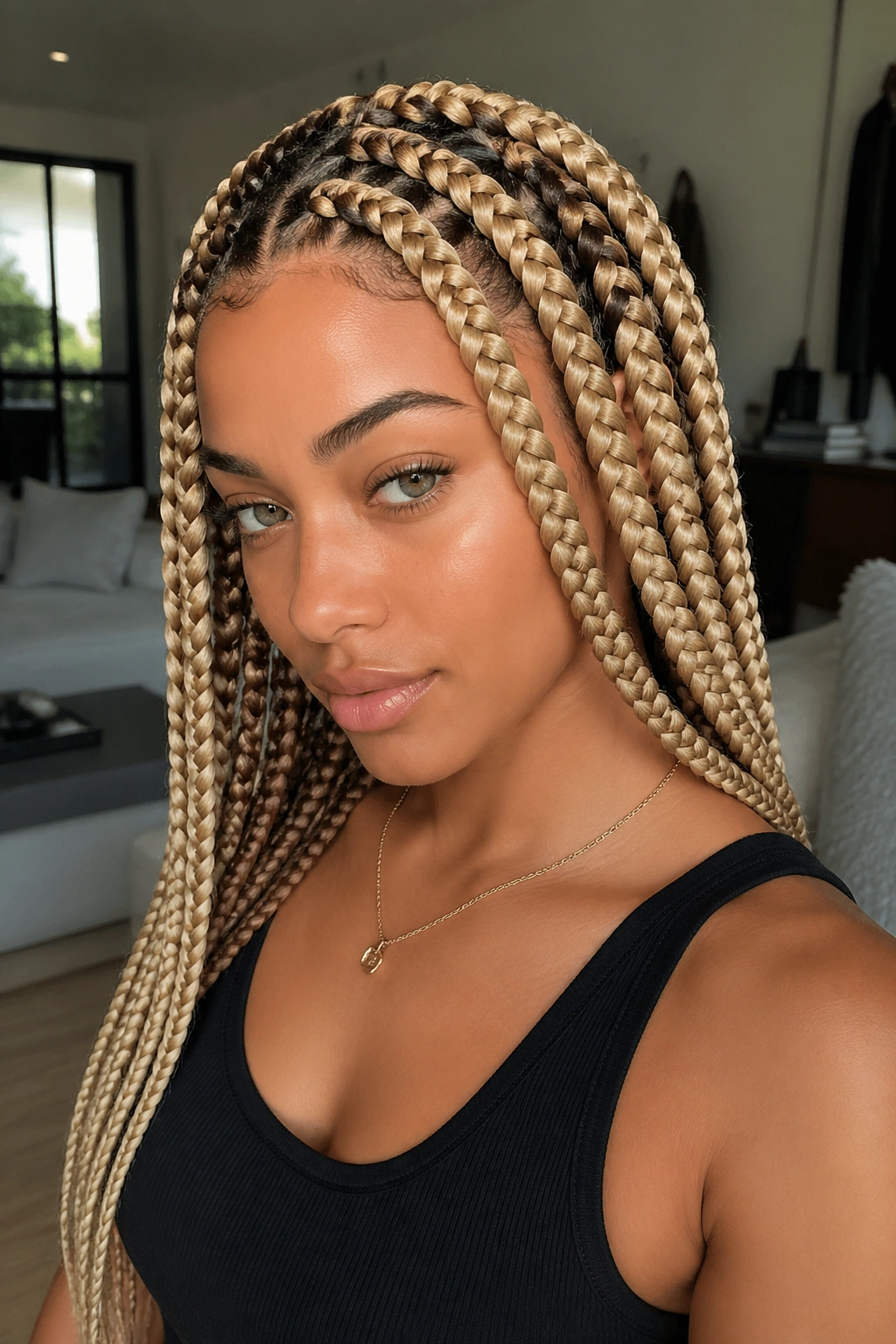
What happens when you save the blonde for only the top half of the braid? You get a style that feels bright up front and calmer as it falls.
That setup is smart for feed-in braids because the braiding pattern already builds a smooth line from the scalp. When mocha stays near the roots and blonde starts a few inches down, the eye reads movement instead of a hard color block. It’s a clean, modern look, and it holds up well in ponytails.
I like this for someone who wears their hair up a lot. The top half catches light, the lower half anchors the style, and the whole thing feels deliberate. If you want a braid style that looks neat from the front and still has enough contrast to feel interesting from the side, this is one of the easier wins.
9. Two-Tone Brown Bob Box Braids
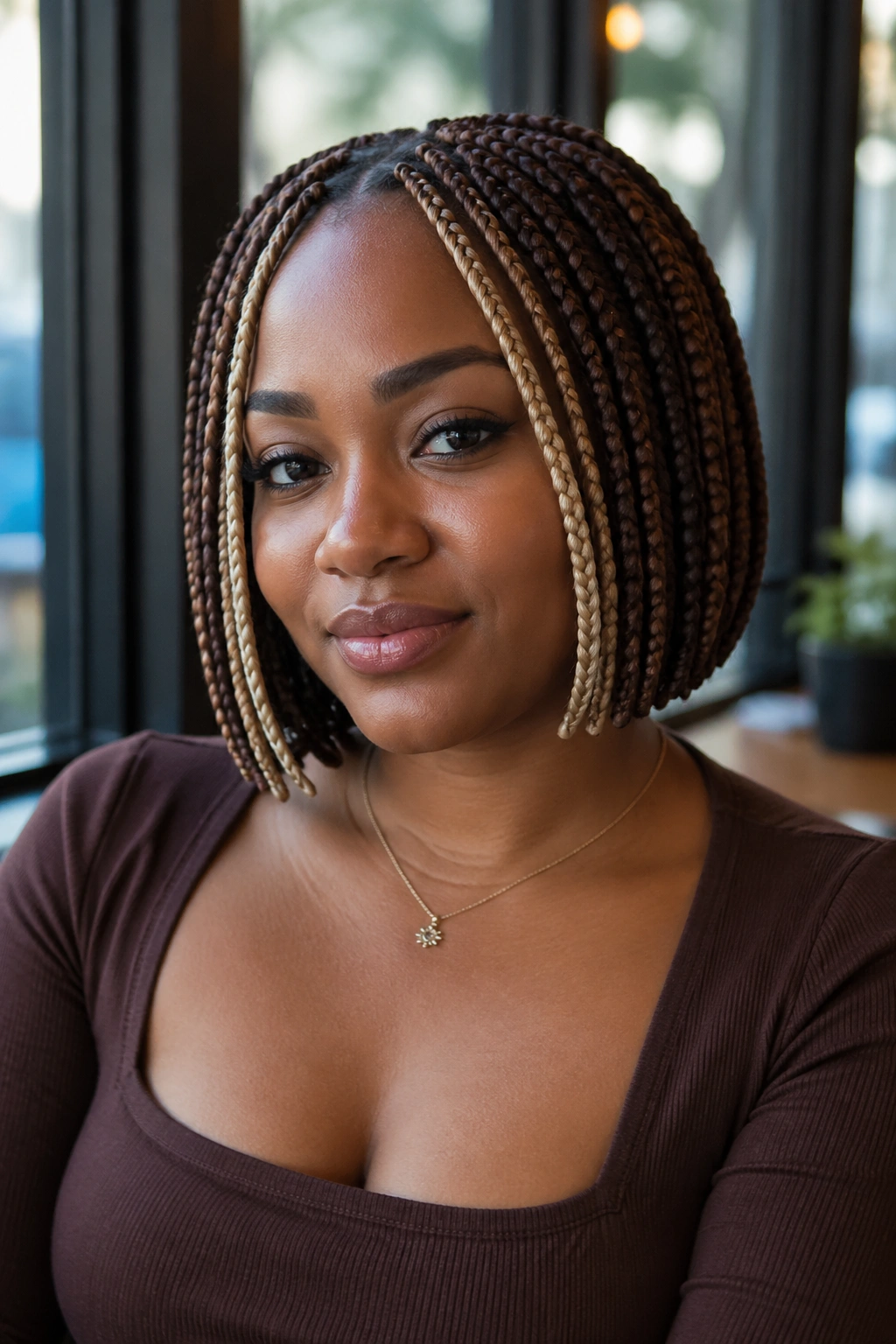
A bob changes everything because the color stays close to your face. That makes the shade mix matter more, not less.
Short box braids with brown and blonde can look very crisp when the blonde is used in small panels rather than across the whole head. The shorter length keeps the style from feeling heavy, and the contrast has less distance to travel before it reaches the eye. That is why bobs can look sharper than waist-length braids, even with fewer colors.
If you want a braid style that sits neatly on the shoulders and does not need a lot of daily fuss, this is one of my favorites. It also makes workwear and simple outfits look more finished without trying too hard.
10. Buttery Blonde Braids With Darker Root Shadow
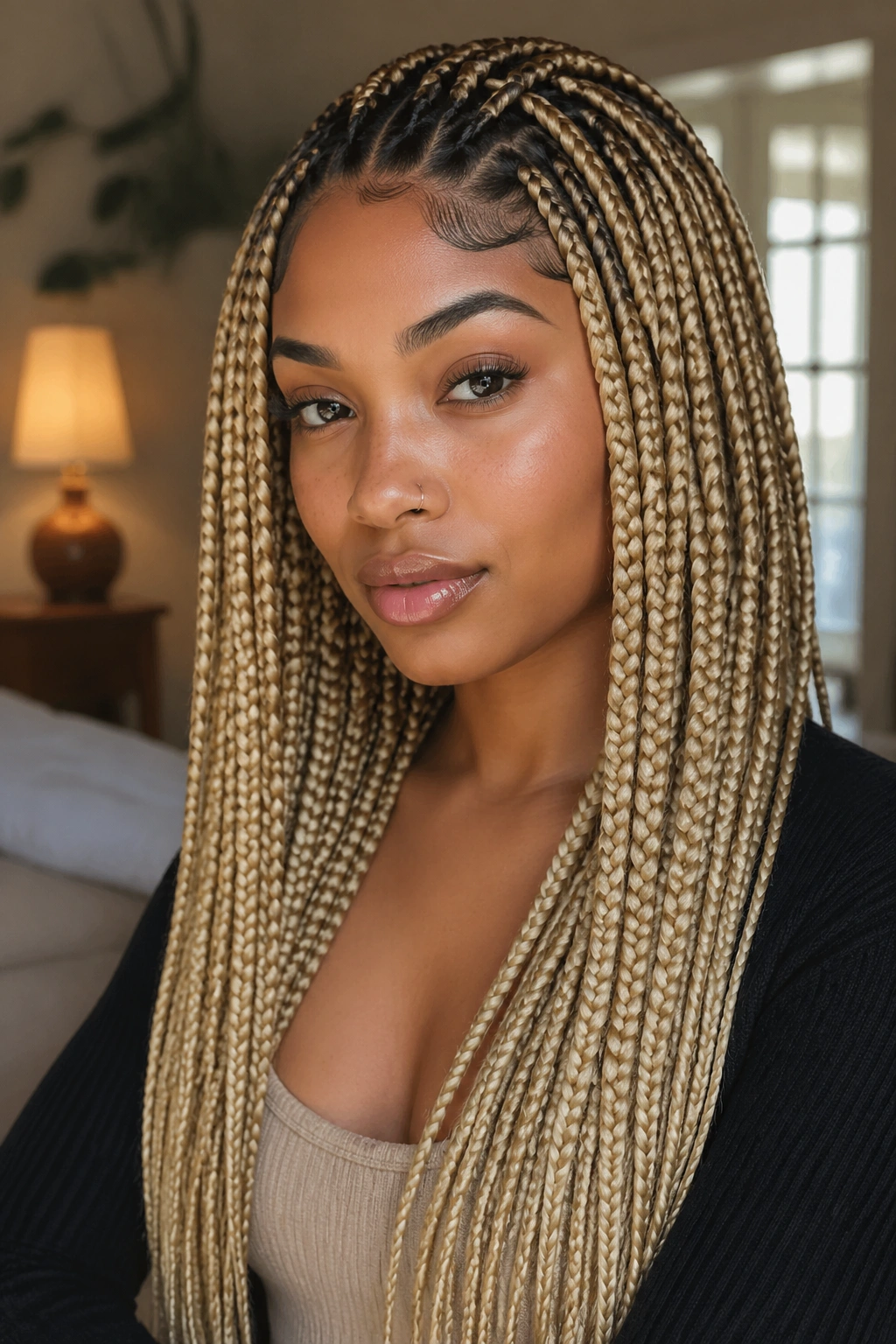
Shadow roots are doing more work than most people give them credit for. They keep blonde braids from looking flat at the scalp, and they make the style easier to live with once your natural hair starts growing in.
A buttery blonde base with a darker root shadow looks soft, but not washed out. The root area gives the eye a place to rest, which matters when the rest of the braid is bright. That little change also helps the style last longer before it starts to look tired.
This is a good option if you have been nervous about blonde because of grow-out. The darker root acts like a buffer. It also lets your stylist place a little brown deeper into the braid so the color blend feels intentional, not random.
11. Auburn Brown Box Braids With Golden Threads
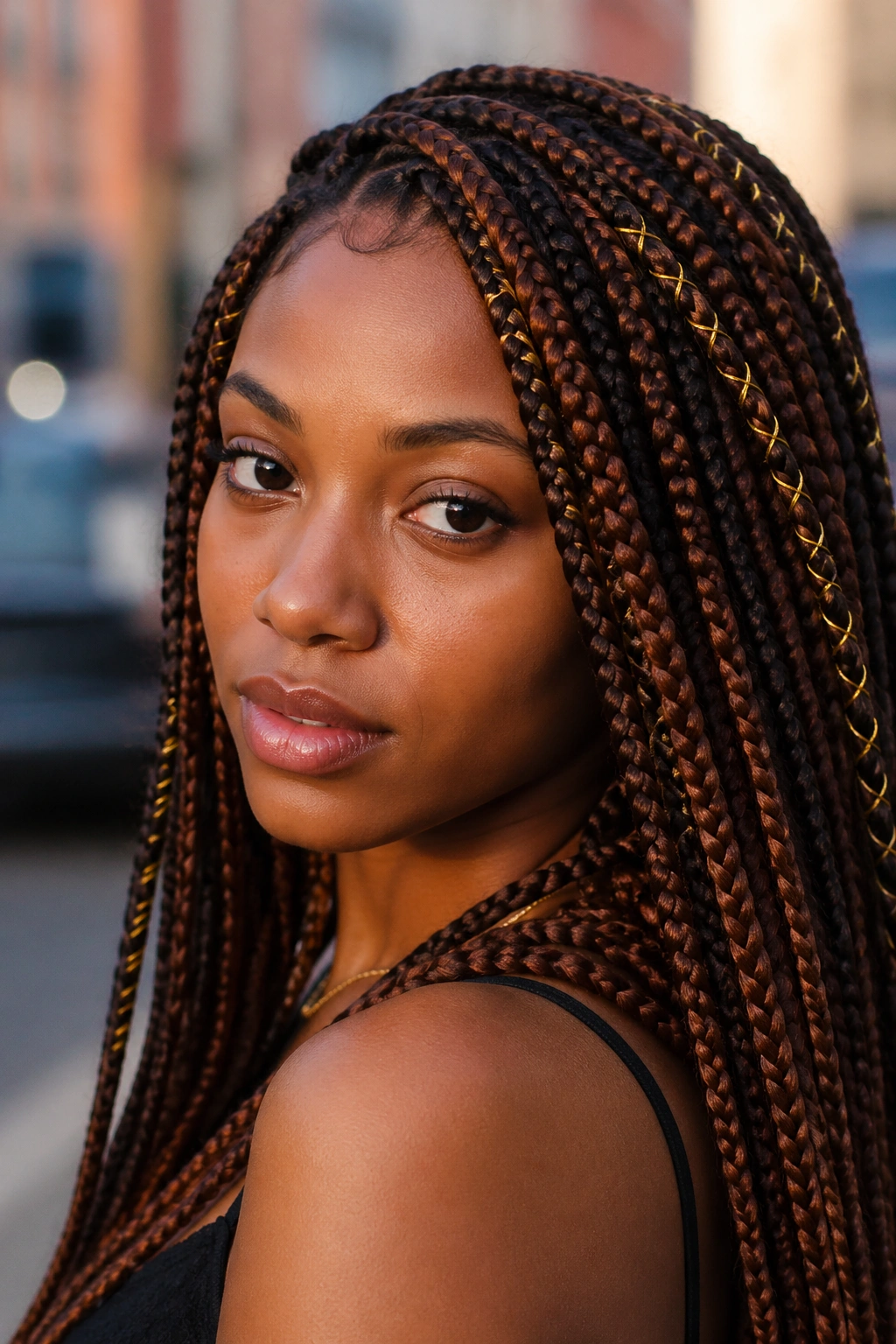
Auburn and gold is a different kind of warmth altogether. It has more heat than beige or honey blonde, and the result feels richer right away.
What makes it different
The magic is in the undertone. Auburn carries a reddish-brown note, so when gold threads run through it, the style doesn’t look icy or pale. It looks warm, full, and a little more polished than a standard brown-and-blonde mix.
- Best with 1B, 30, and 27 blended in small sections
- Looks strong with gold cuffs but does not need them
- Works especially well in medium-sized braids
- Pairs nicely with warm-toned makeup and neutral clothing
If your skin tends to glow in warm shades, this one is a keeper. It’s also a good choice when you want color that feels rich instead of bright.
12. Side-Part Blonde and Brown Boho Braids
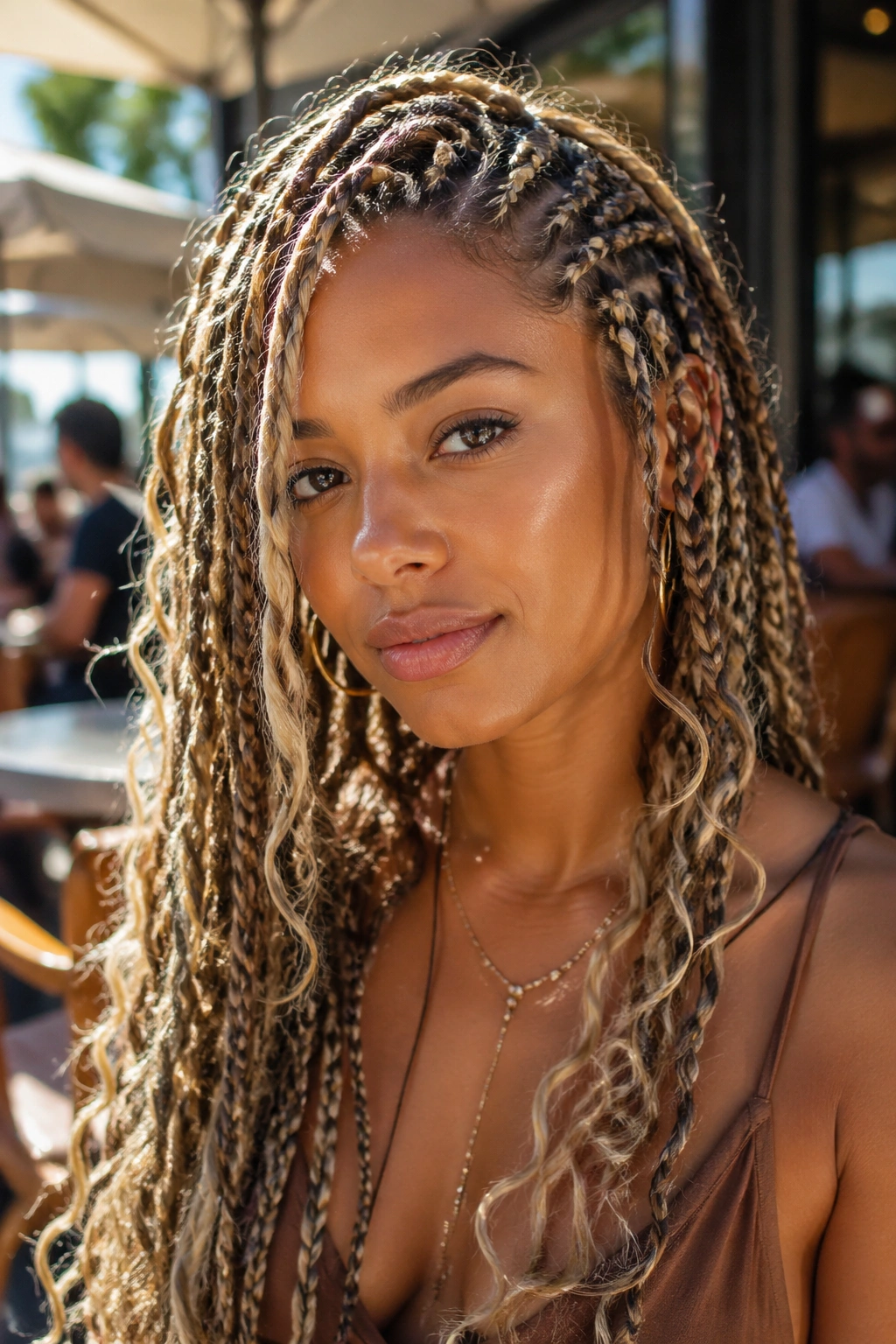
Side parts and loose curls make blonde and brown braids feel less rigid. That’s the whole point here. You still get the structure of box braids, but the finish is softer around the face and shoulders.
Boho texture gives the style some movement that straight braids can lack. A few loose curly strands woven through the lengths keep the blonde from looking too uniform, which is helpful when the color contrast is already doing a lot. I think this style works best when the curls are sparse, not packed in everywhere.
One small warning: boho braids need more upkeep. The curly pieces frizz faster, especially around the front, so they need a little mousse and a light hand. Still, if you want a braid style that looks relaxed and textured, this one has real charm.
13. Peekaboo Blonde Underlayer Braids
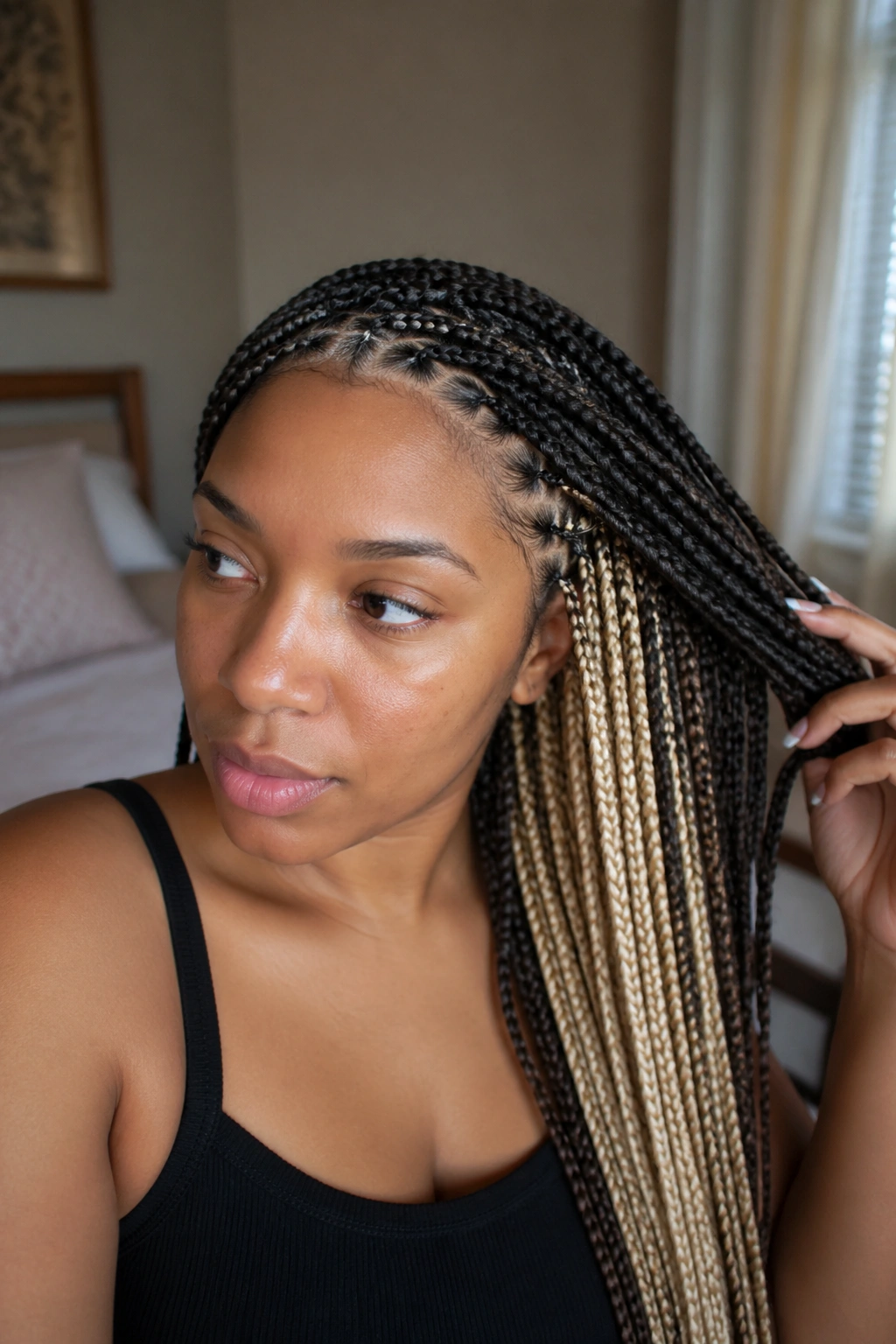
Peekaboo color is for the cautious ones — and I mean that as a compliment. The blonde stays hidden under the top layer of brown braids, so you get a surprise flash only when the hair moves or gets styled half up.
How to make it work
This style is at its best when the top layer stays darker and the lighter braids are tucked underneath. That way the blonde feels special instead of obvious. You can reveal it with a top knot, a half-up ponytail, or even a simple side sweep.
- Keep the outer layer mostly deep brown or mocha
- Place the blonde panels underneath
- Works well with medium or large braids
- Best if you like changing your hair without a full-color commitment
The nice part is that this style gives you both versions in one head of braids. Calm from the front. A little surprise from the side. That’s a solid trade.
14. Soft Beige and Chestnut Small Braids
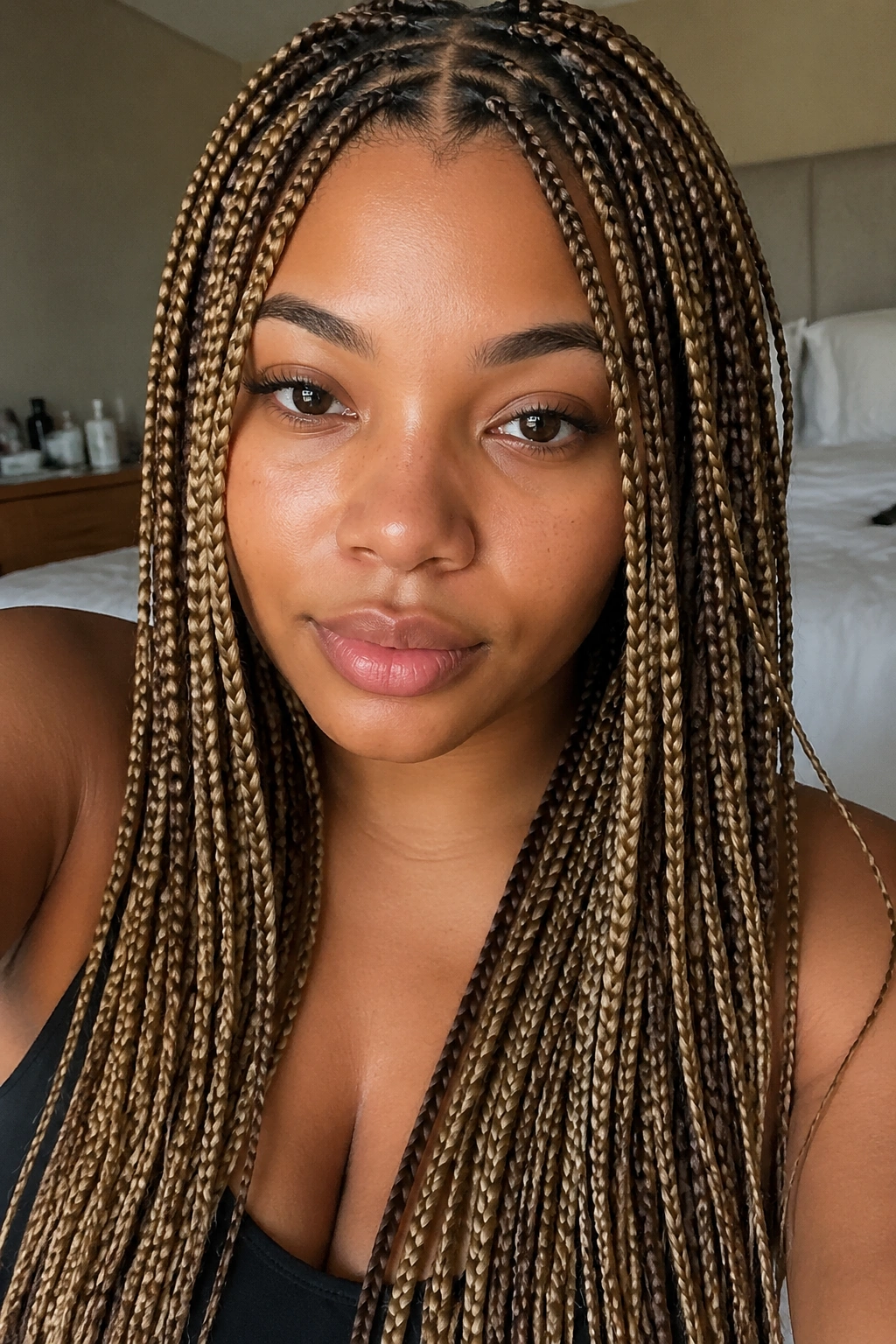
Small braids are where the color blend gets subtle, and that subtlety is the point. With more braids on the head, the shades don’t scream for attention. They melt into each other instead.
Beige and chestnut sit close enough together that the overall look stays soft, but there is still enough contrast to keep the style from going dull. On small braids, that matters because the detail is already doing a lot of visual work. You do not need a loud color formula on top of that.
This is the version I would choose if I wanted something neat, long-lasting, and easy to style into low buns or braided ponytails. It takes time to install, sure, but the finished result feels clean in a way bigger braids sometimes don’t.
15. Copper-Brown Box Braids With Blonde Ends
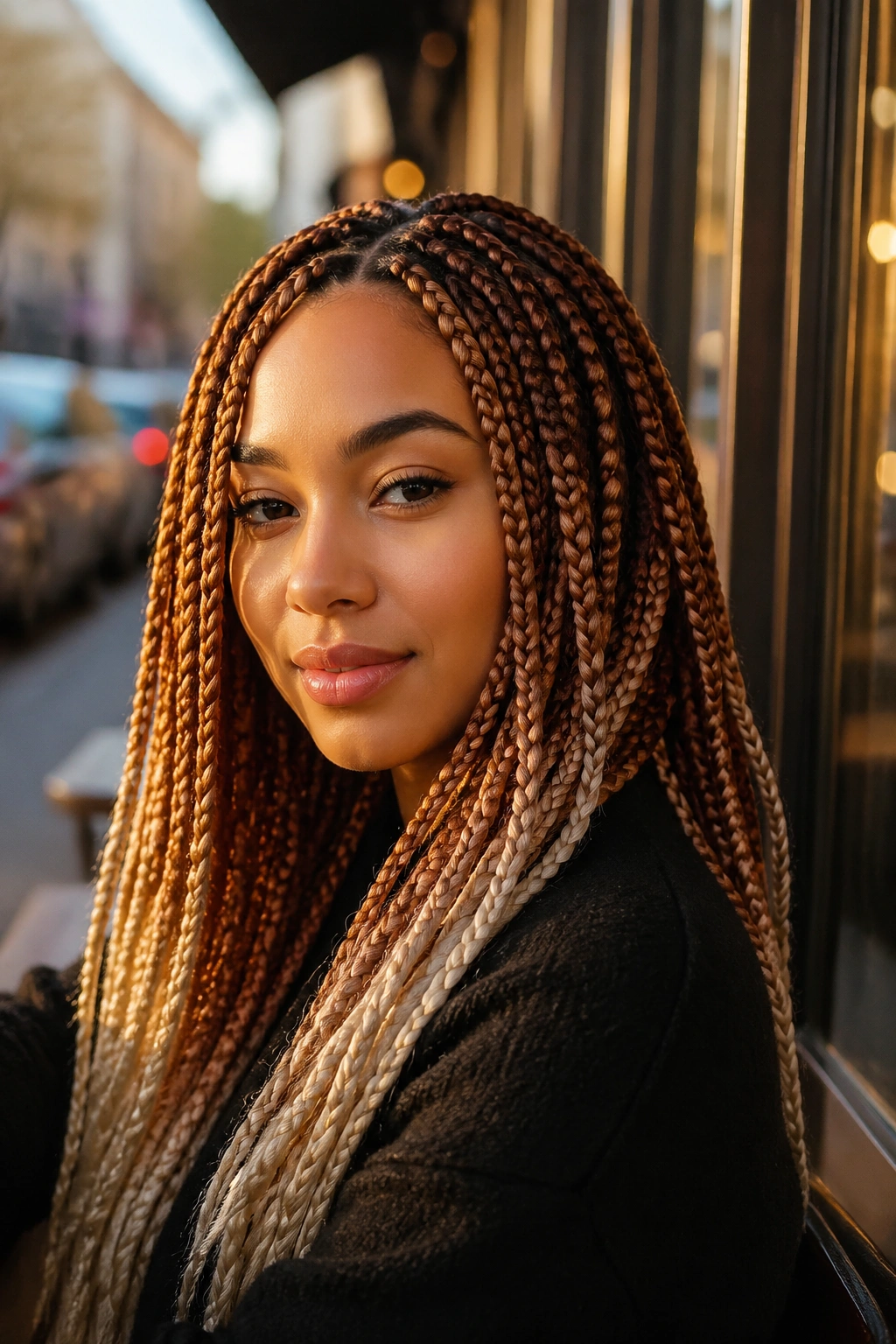
Copper brown with blonde ends reads warmer than the usual caramel fade. It has a little more energy, and the lighter tips feel brighter because the base color carries red in it.
That warmth makes a difference. On the head, copper brown can look almost glossy, especially when the braids are fresh and the parts are tidy. The blonde ends keep it from getting too dark, so the whole style still has movement.
This is a smart pick if you like color that feels rich but not muted. It works especially well with simple clothing because the braid color already does enough. Let the hair be the detail. No need to pile on more.
16. Curtain Bang Box Braids in Brown and Blonde
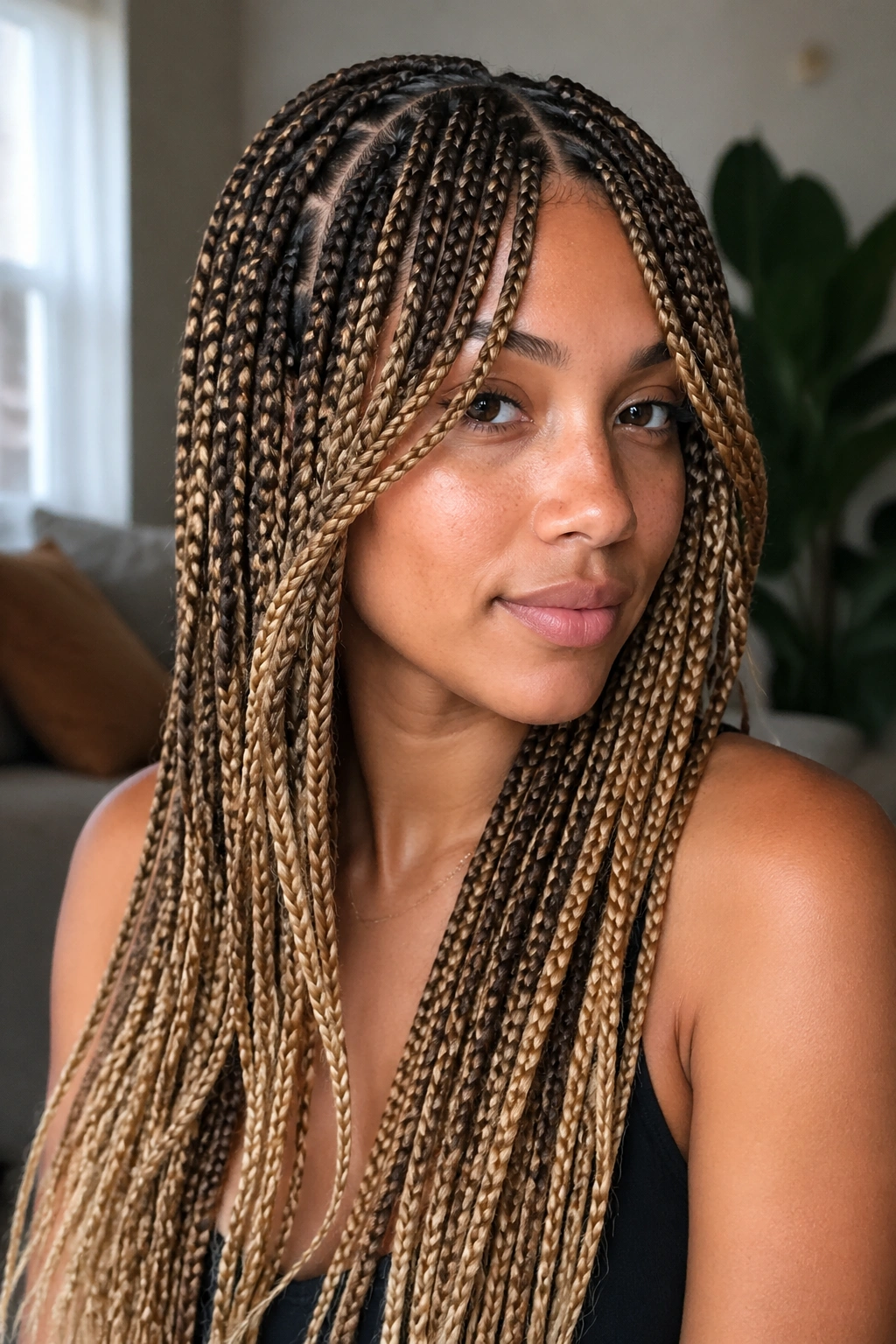
Do curtain-bang braids make the style look softer, or do they just get in the way? Done well, they soften the whole face shape and make the color placement feel less severe.
The front pieces need to be planned, though. If they are too thick, the look turns heavy. If they are too short, they stick awkwardly and lose the sweep that makes curtain bangs work. Brown at the roots and blonde through the lower half is usually the cleanest way to build the contrast.
How to wear it
These front pieces look best when they can fall away from the center and blend into the rest of the braids. A little mousse helps them sit, but too much product makes the front stiff.
- Keep the curtain pieces slightly thinner than the rest
- Let the blonde start below the cheekbone
- Works well with middle or soft side parts
- Best for people who want face framing without a full fringe
It’s a small detail, but it changes the whole shape of the style.
17. High Ponytail Braids With Blonde Money Pieces
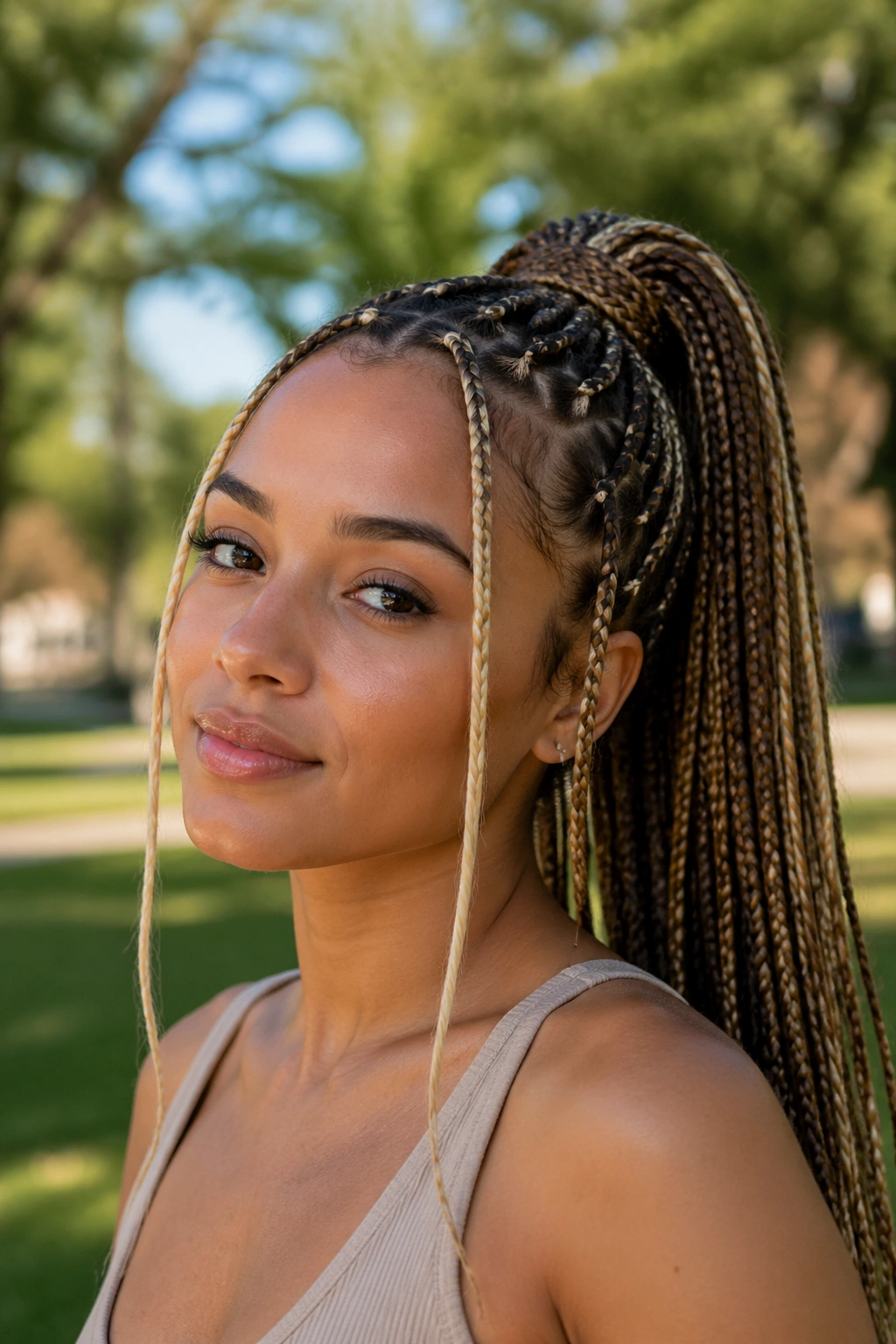
A high ponytail shows off color in a way loose braids never will. When the base braids are brown and the front pieces are blonde, the face gets a quick lift the second the hair goes up.
That is why money pieces matter here. The lighter front strands frame the forehead and temples, and the ponytail makes them pop even more. The look feels sporty, polished, and a little playful, which is a rare mix for box braids.
- Keep the ponytail braids a little longer so they swing well
- Place the blonde pieces closest to the face
- A wrapped base hides the elastic and keeps the finish neat
- Works best with medium or jumbo braids, depending on how bold you want it
If you wear your hair up often, this is one of the styles that gives you the most payoff for the effort.
18. Mixed-Tone Waist-Length Braids With Beaded Ends
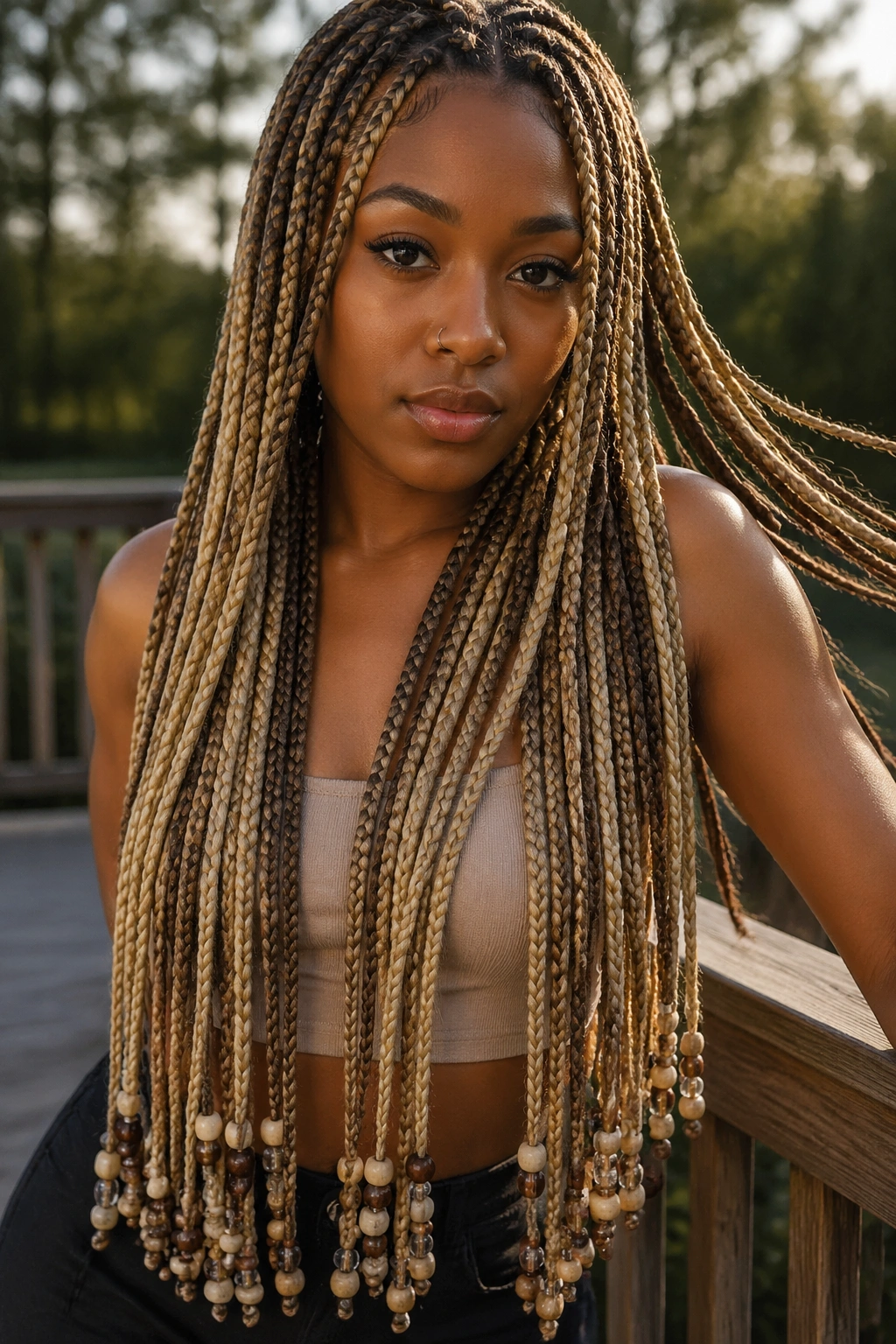
Beads change the rhythm of the whole style. When they’re added to waist-length blonde and brown box braids, the result feels finished in a way plain ends sometimes do not.
This style works because the braids already have movement, and the beads give each swing a little weight and sound. Brown and blonde strands can alternate through the length, then end in clear, wooden, or gold beads depending on the mood you want. I like wooden beads on warmer color mixes because they keep the look grounded. Gold makes it feel dressier. Clear beads can go either way.
The only thing I’d watch is weight. Too many large beads can pull on the ends and get annoying fast. Keep the beads in clusters, not all over every braid, and the style stays easier to wear.
Final Thoughts
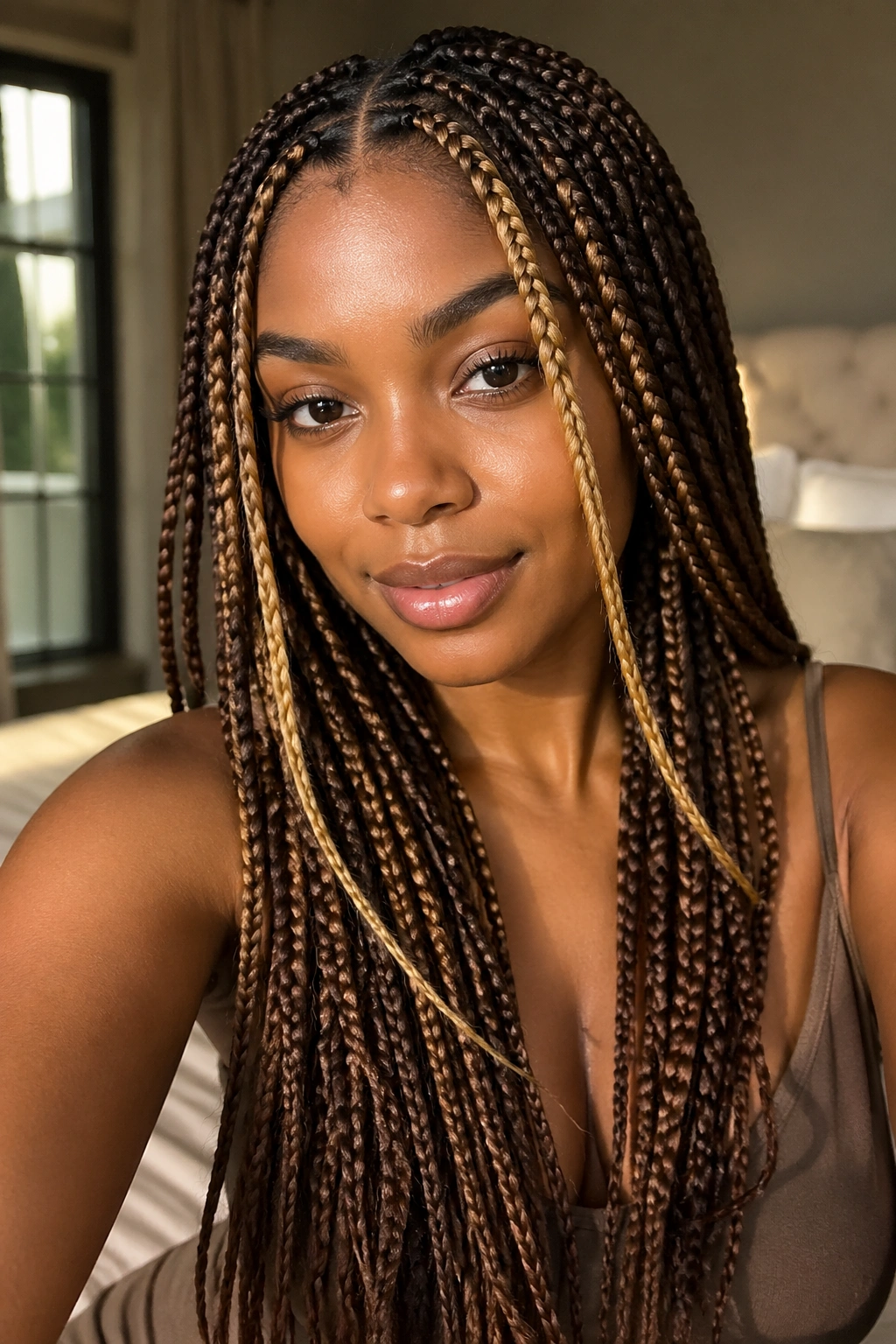
The nicest blonde and brown box braids usually do one simple thing well: they keep the color story clear. One darker base. One lighter accent. Maybe a third shade if the blend needs help. That is enough.
If you’re unsure where to start, ask for a test braid near the front before the full install goes in. You’ll see fast whether the blonde is too icy, too bright, or just right against your skin. That little check can save you from a style that looks good in theory and wrong in real life.
And if you already know you like contrast, lean into it. If you prefer something softer, keep the blonde lower, narrower, or tucked underneath. The best version is the one that still looks good when you catch it in the mirror three days later — not just on the day you leave the chair.
