

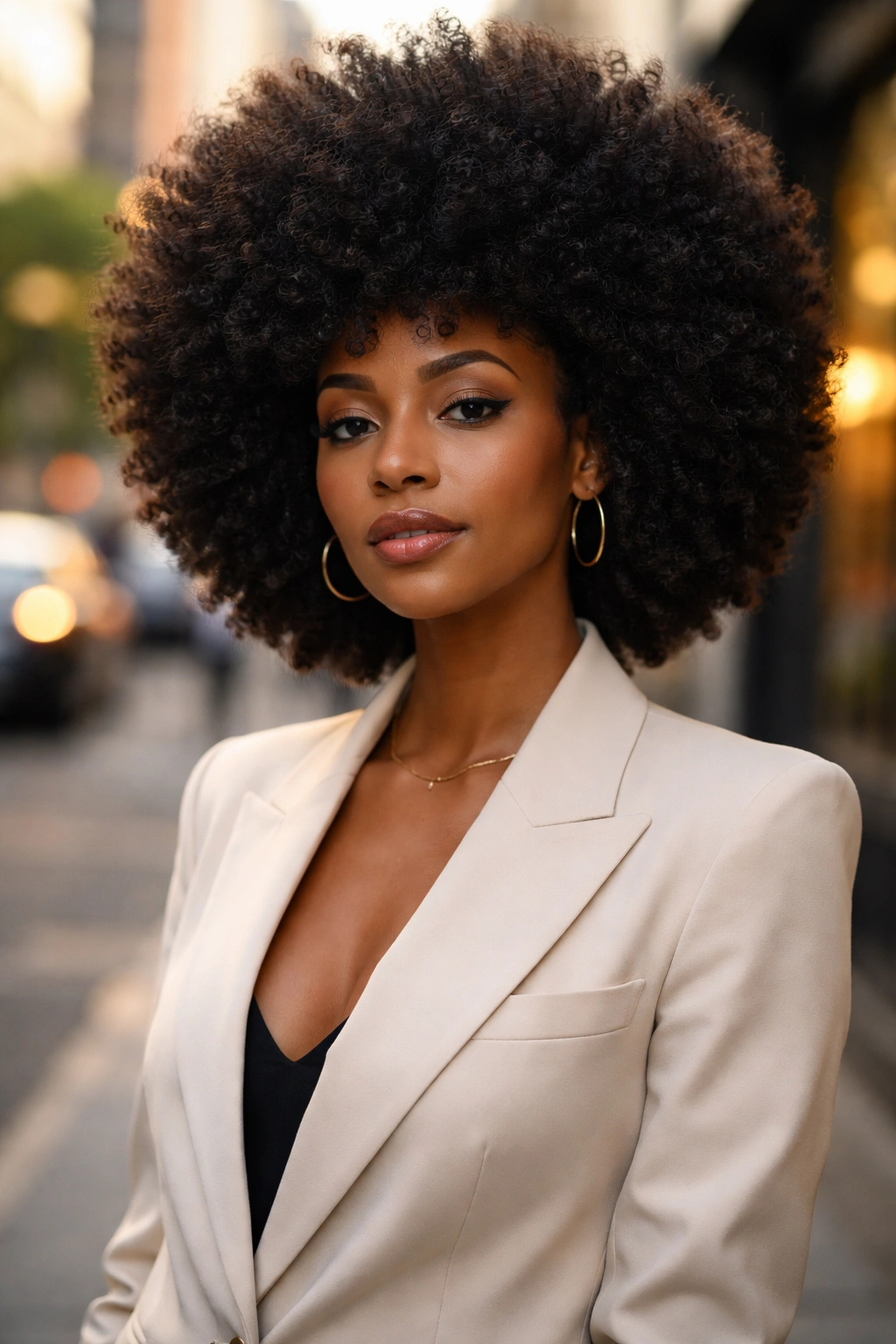
There’s a particular kind of confidence that comes with getting dressed in a way that feels entirely yours. Not borrowed from a runway. Not a copy of something you saw on someone else. Something that fits your body, your hair, your whole presence. Afro chic outfits hit differently because they’re built on that principle — the idea that your natural hair isn’t just an accessory to an outfit, it’s the centerpiece. Everything else has to be worthy of it.
The term “afro chic” gets thrown around casually, but what it actually describes is a very specific aesthetic intersection: the bold, defined presence of natural afro hair paired with clothing that carries equal visual weight. Structured silhouettes. Rich colors. Fabrics with texture. Prints that speak. Outfits that don’t compete with your hair but instead create a full picture.
This list covers 20 ways to build that picture for everyday life — not for the gala, not for the photoshoot. For the office on a Tuesday, for grocery runs that somehow turn into impromptu plans, for coffee dates and afternoons that turn into evenings. Wearable, specific, and genuinely distinct from each other.
What “Afro Chic” Actually Means as a Style Category
The phrase has roots in a broader cultural movement that centered Black aesthetics as the point, not the starting point. Afro chic isn’t dressing up a natural hairstyle to make it palatable to someone else’s idea of polish. It’s dressing in a way where your afro — whether it’s a full-on rounded shape, a puff, a stretched twist-out, or a high puff — reads as the anchor of the entire look.
What that means in practice: you want clothing choices that match the energy. High-volume hair works beautifully with clean lines and minimal accessories because the hair is already doing the work. Low-volume hair on a specific day can handle bolder prints and heavier jewelry without the look becoming chaotic. You’re always balancing visual weight — though that’s not a rule to obsess over, just something worth knowing.
The other half of afro chic is intentionality. These aren’t thrown-together looks. Even the simplest outfit — say, a white T-shirt and wide-leg trousers — reads as afro chic when the fit is exact, the edges are done, and you’ve made a deliberate choice about footwear. The intention is visible.
Understanding Your Hair Volume When Getting Dressed
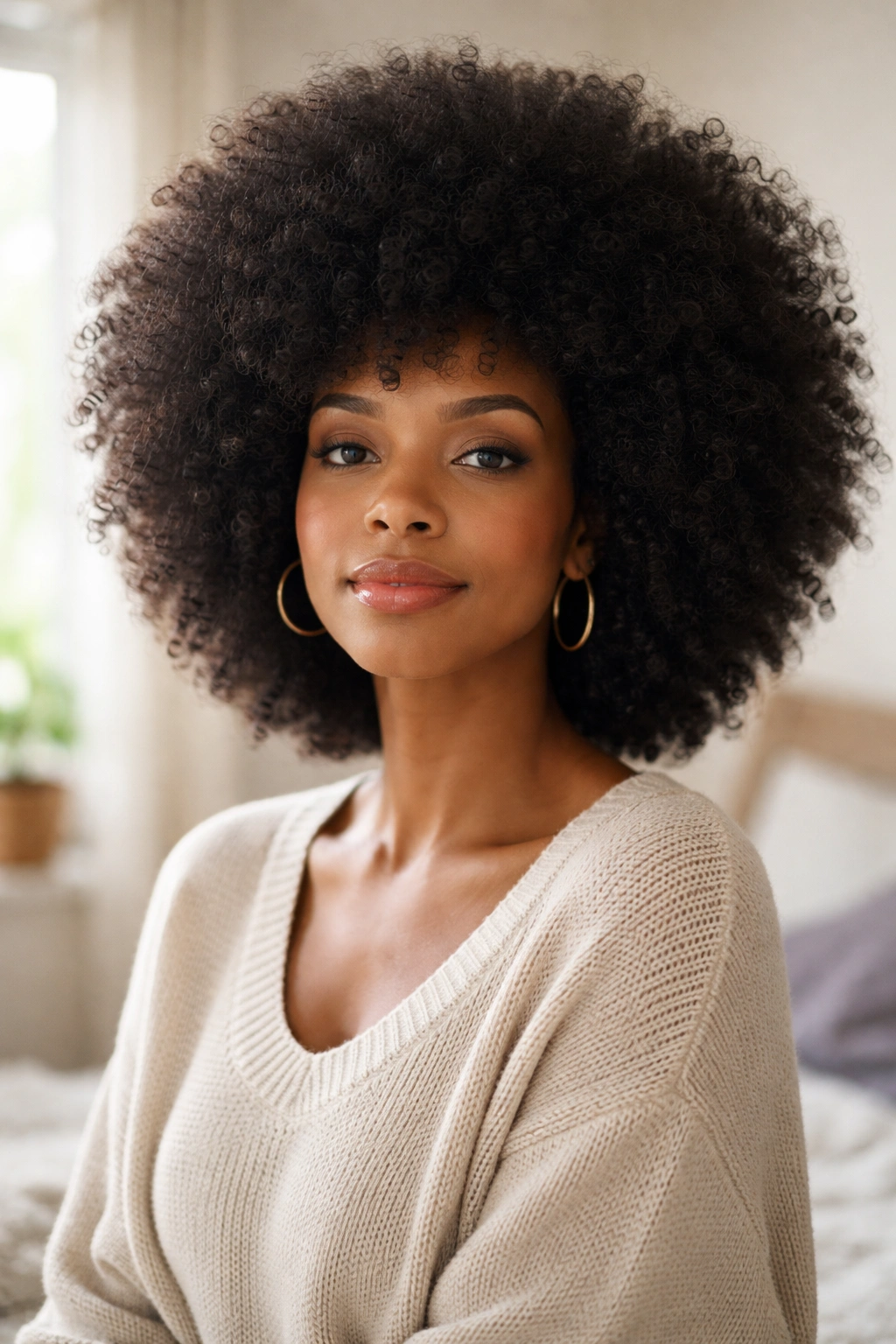
Your hair’s volume on any given day genuinely affects what reads well on your body. High-volume days — when your afro is at its fullest, maybe freshly washed and air-dried — naturally draw the eye upward. The top half of your silhouette becomes visually prominent. That’s the day to lean into fitted bottoms, clean-cut coats, and minimal neckline drama.
Lower-volume days, or days when you’re wearing a defined puff or freshly re-twisted style, give you more flexibility below the collarbone. You can go broader in the shoulders, bolder in the neckline, louder in the print, because there’s visual space to balance.
None of this is a hard rule — just a mental calibration. Once you’ve dressed for your hair texture and shape for a while, it becomes automatic. You stop thinking about it consciously.
The Foundation: Fit, Fabric, and Color Logic
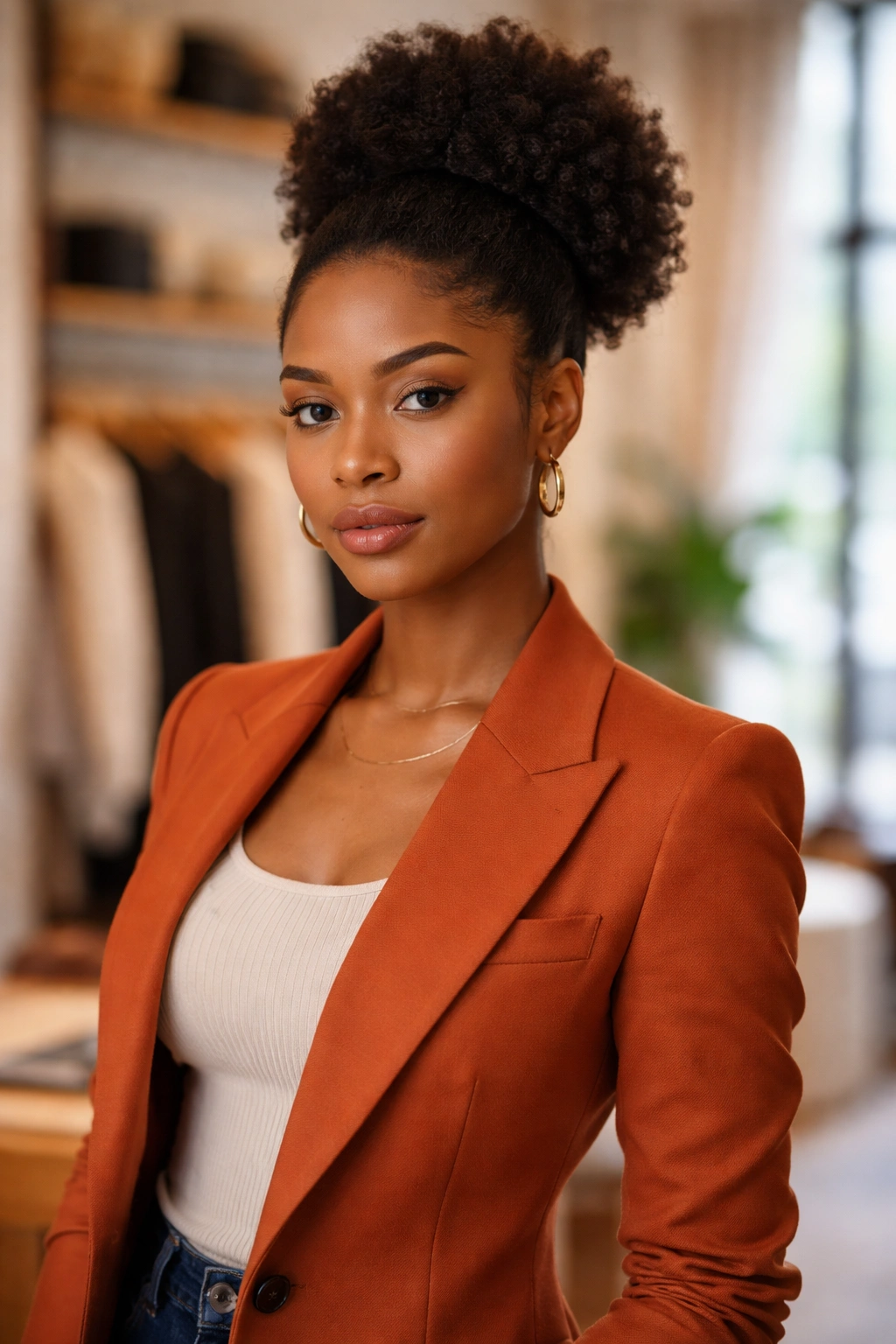
Every strong afro chic outfit rests on three things: fit that honors your actual body, fabric with enough presence to hold up visually, and a color choice that either grounds or expands the look.
Fit is non-negotiable. Clothes that don’t fit right will undercut every other choice you’ve made. This applies regardless of size. A blazer that pulls at the shoulders or trousers that sag at the seat creates visual discomfort — and it shows.
Fabric matters more than most people realize. Flimsy fabrics — thin polyesters, limp jersey — don’t read as chic. They read as underdressed. You want fabrics that hold their shape: medium-weight cotton, structured linen, denim with body, ponte knit, crepe. These fabrics have what stylists call “hand” — they drape with authority.
Color works in two directions. Neutrals (ivory, black, camel, chocolate) let your hair’s natural beauty be the loudest element in the look. Bold colors (deep emerald, burnt orange, cobalt, terracotta) compete intentionally — and when that competition is balanced, the result is electric.
The Everyday Question: Getting Dressed Without Overthinking It
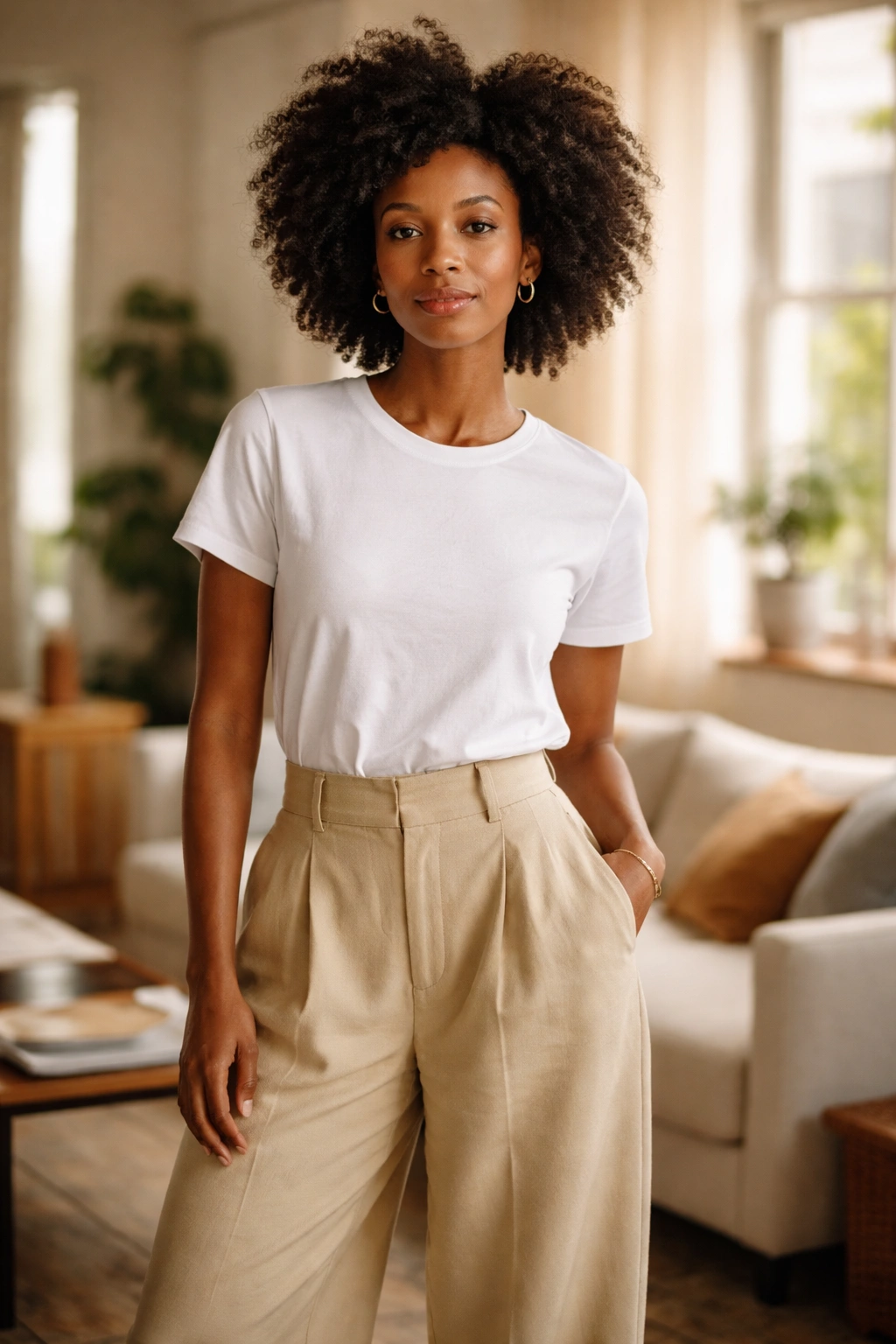
The goal of a working personal style isn’t to create a spectacular outfit every single day. That’s exhausting and ultimately meaningless. The goal is a wardrobe where your minimum effort still produces a look that feels like you — put-together, specific, intentional.
Building toward that takes time. But the fastest shortcut is deciding on three or four silhouettes that consistently work for your body and your hair, and then varying the fabric, color, and accessories within those silhouettes. The number of truly distinct outfits you can build from a small set of well-chosen pieces is higher than most people expect.
1. The High-Waisted Wide-Leg Trouser Set
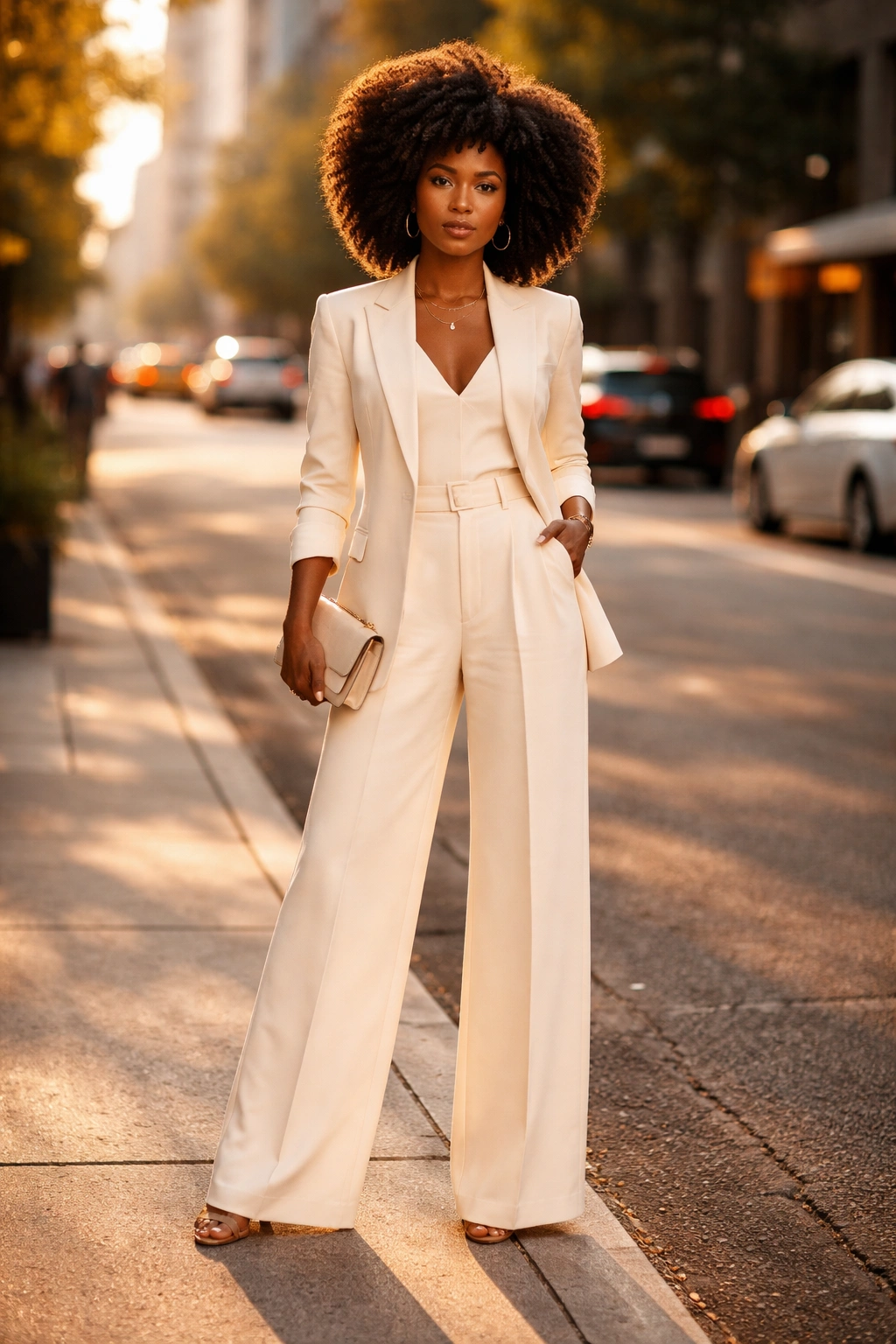
Wide-leg trousers have been a core piece in afro chic dressing for decades because they create a silhouette that balances high-volume hair naturally. Pair them with a matching blazer or structured crop top and you’ve got a full look before you’ve thought about accessories.
Why This Silhouette Works
The wide-leg cut adds horizontal mass to the lower half, which balances the vertical height that a full afro brings. You end up with an hourglass or rectangle silhouette depending on your proportions — both of which read as intentional and polished. This isn’t flattery language; it’s just shape math.
The best fabrics for this: crepe, ponte knit, or a medium-weight linen blend. Avoid fabrics so stiff they hold a cone shape, and avoid anything so fluid it loses structure when you move.
- For petite frames: A monochromatic set in the same shade keeps the eye moving vertically, preventing the look from appearing to cut your height in half.
- For taller builds: This proportioning concern disappears — play with contrast tones between top and trouser freely.
- For fuller figures: A high waist that sits just above your natural waist and hits your smallest point gives definition without constriction.
Practical note: If you’re buying the top and trouser separately, test the waistband match. Even half a shade off can make the set look like an accident rather than a choice.
2. Ankara Print Wrap Dress
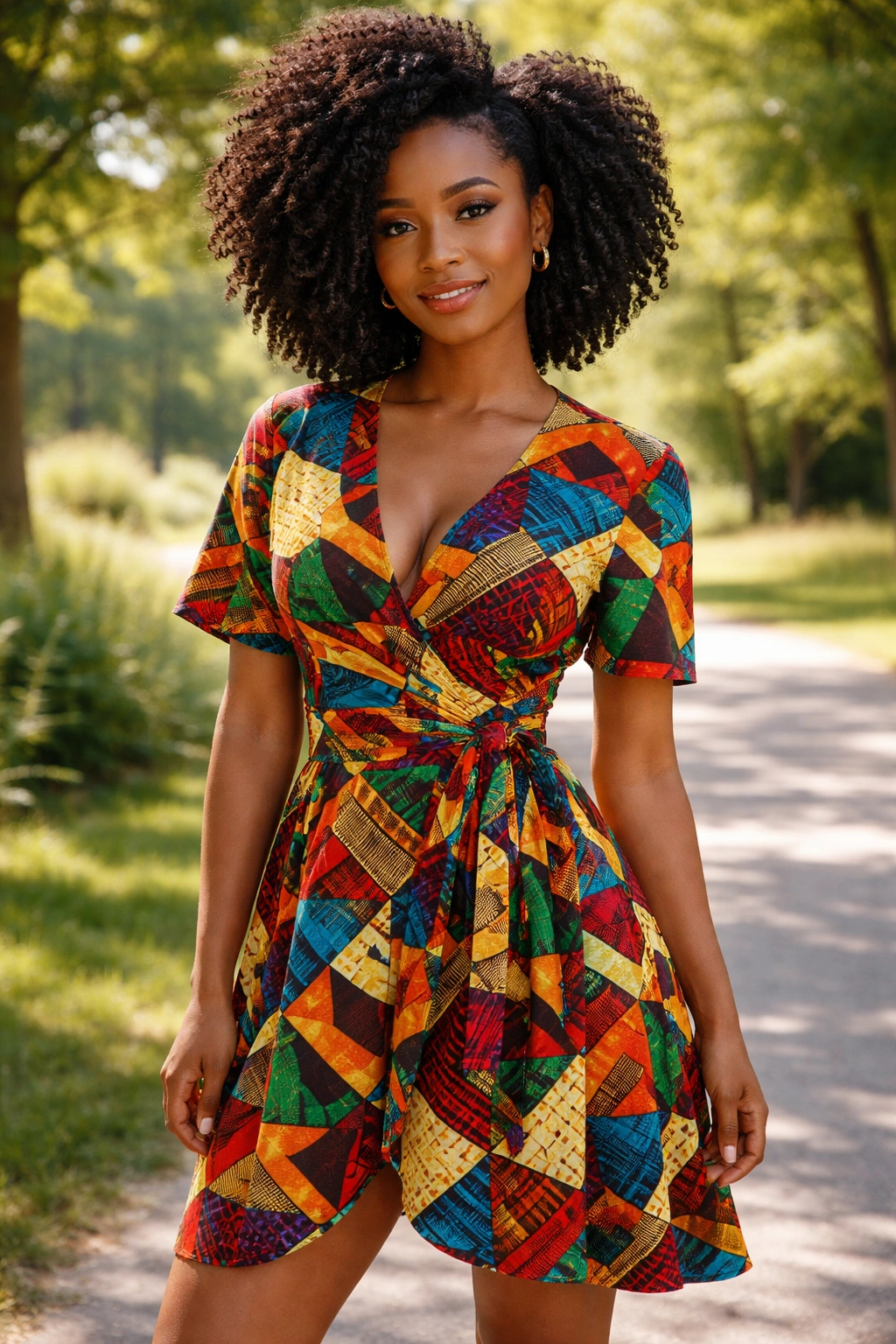
There’s no piece that reads afro chic more immediately than an Ankara-print wrap dress — and there’s also no piece that’s easier to get wrong. The size of the print matters. The placement of the pattern matters. And the wrap tie needs to actually hold.
The Ankara wax print fabric originates in West Africa and carries genuine cultural weight. Wearing it isn’t just a fashion choice; it’s a nod to a lineage of textile tradition. That context belongs in how you wear it — with intention, not as a costume.
The practical case for a wrap silhouette: It adjusts to your body rather than requiring your body to adjust to it. You control where the waistline hits and how the neckline falls. For women who carry weight differently on each side of their body — which is nearly everyone — this is genuinely useful.
Pair it with block-heeled sandals in a neutral that echoes one of the print’s background colors. Keep jewelry minimal: one statement earring pair, nothing on the neck. Your hair and the print are already in conversation. Don’t add a third voice.
3. White Linen Button-Down with Tailored Shorts
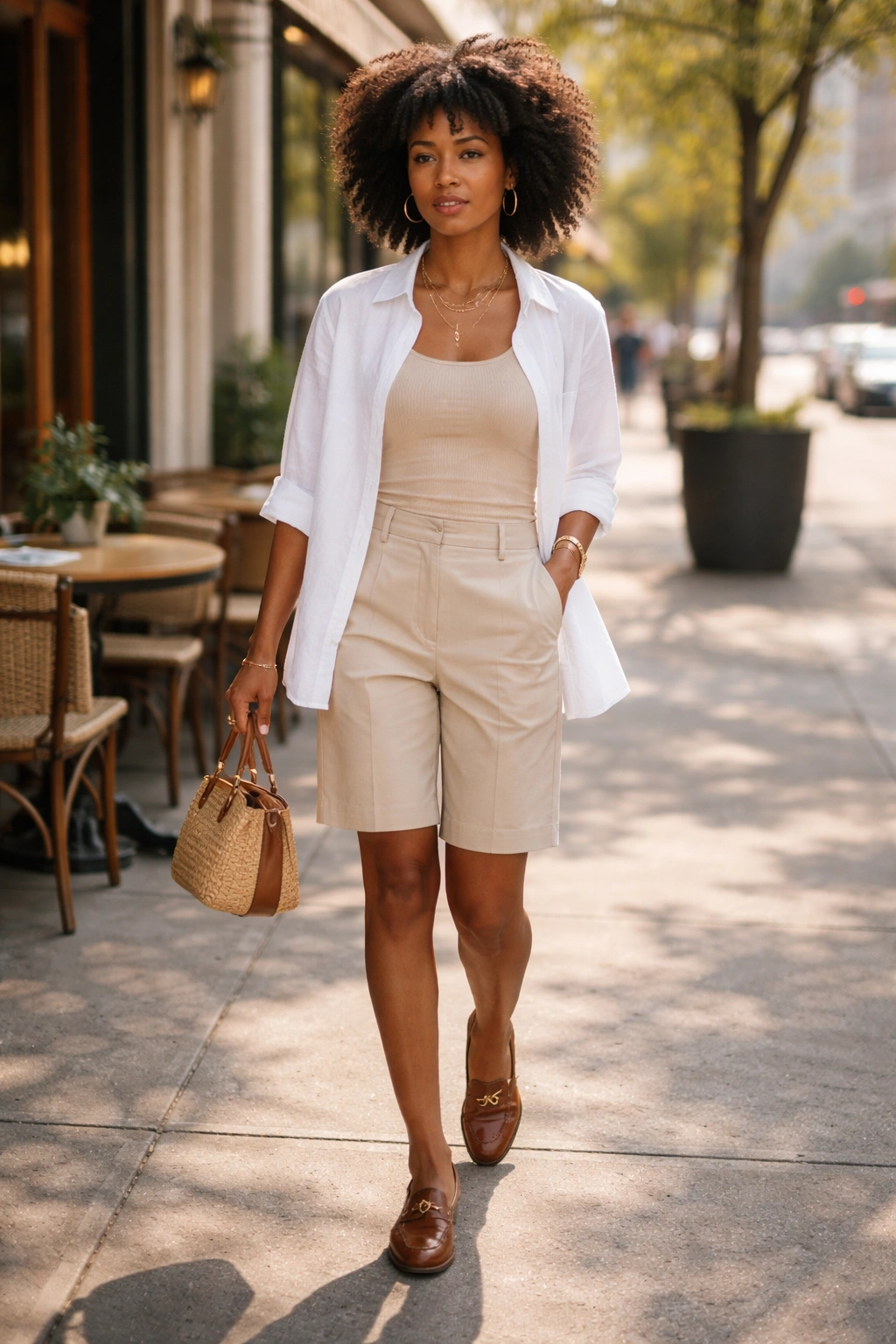
Deceptively simple. Genuinely effective. A crisp white linen button-down — not a casual camp collar but a structured shirt with collar stays — worn open over a fitted tank with tailored Bermuda or city shorts underneath is one of those daily outfits that takes five minutes to put on and looks considered.
How to Get It Right
The critical word here is “tailored.” Boxy shorts in heavy fabric will undercut the clean geometry of the linen shirt. You want shorts with a visible crease, a hem that sits just above the knee, and a waistband that lies flat.
For footwear: a leather loafer or clean leather mule reads more intentionally than a sneaker here, though a fresh white canvas sneaker can hold its own if the rest of the look is precise.
- Don’t skip the undershirt. A visible bra or bare skin under the open button-down can read sloppy rather than casual-chic — unless you’ve committed to that choice deliberately.
- Roll the sleeves to just below the elbow for a casual-but-put-together energy.
- White next to your natural afro creates a bright, airy visual frame. The contrast almost always works.
The thing that derails this look: worn-out or stained white fabric. Nothing undermines crisps linen faster. If your white shirts have yellowed, they’ve served their purpose.
4. Structured Blazer Over a Bodysuit and High-Rise Jeans
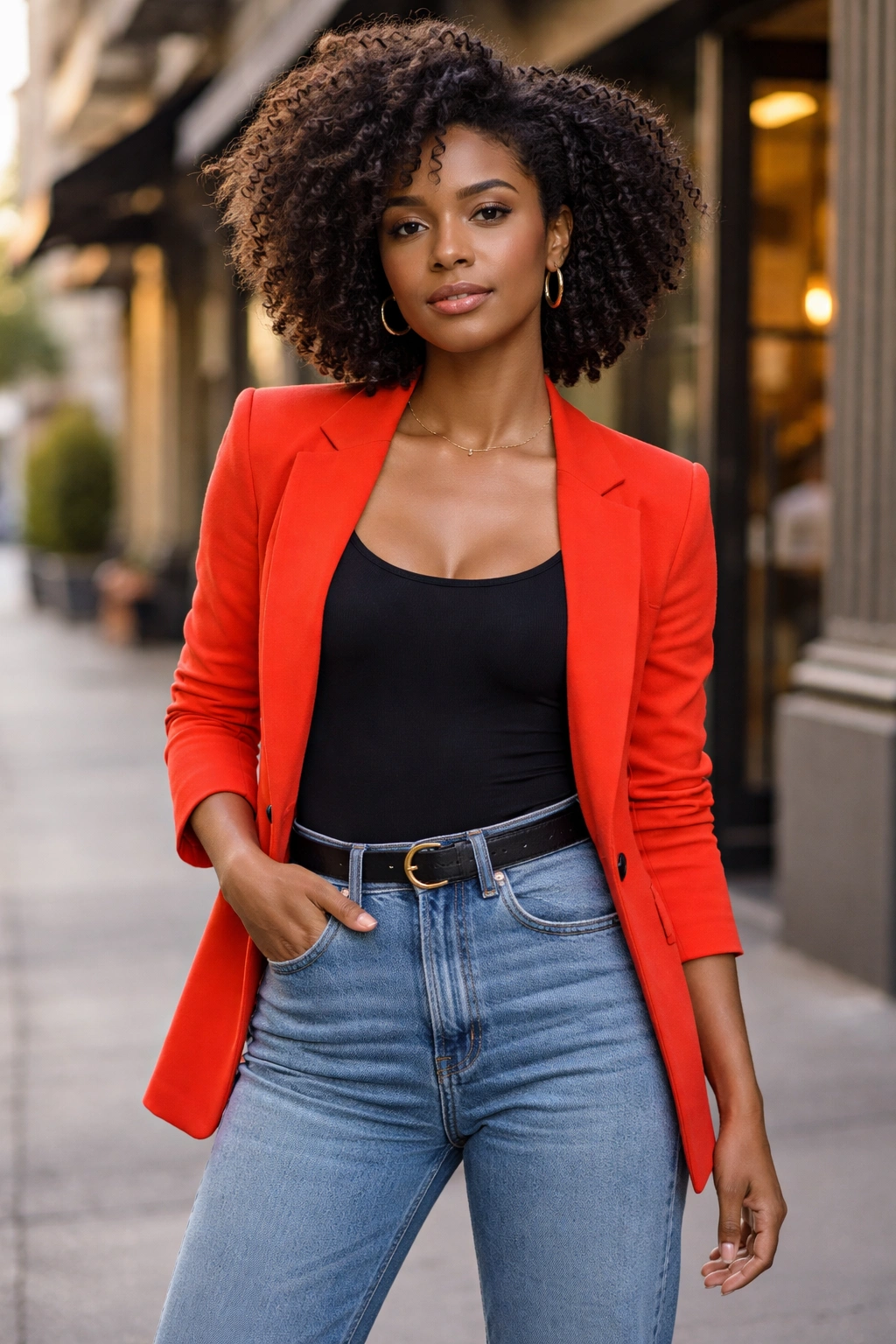
This is the workday uniform that crosses into weekend territory without effort. The blazer — preferably in a color outside the navy-black-grey trifecta: think tobacco brown, dusty sage, or deep burgundy — over a simple bodysuit with high-rise jeans that fit cleanly at the hip and ankle.
Unlike a blazer over a tucked-in top, the bodysuit eliminates the bunchiness at the waist. No fabric folds, no constant retucking. The line from blazer to jeans reads clean, and that cleanness is what makes the look land.
The jeans themselves need to do one thing well: fit your thighs and waist simultaneously, which is famously difficult. Straight-leg and barrel-fit styles in non-stretch denim tend to be the most reliable bet for holding shape throughout a full day.
What makes the blazer choice interesting: A blazer in a bold tertiary color — vermilion, ochre, teal — photographs dramatically against natural afro hair. If you’re going anywhere with cameras, file this away.
5. Midi Slip Dress with a Denim Jacket
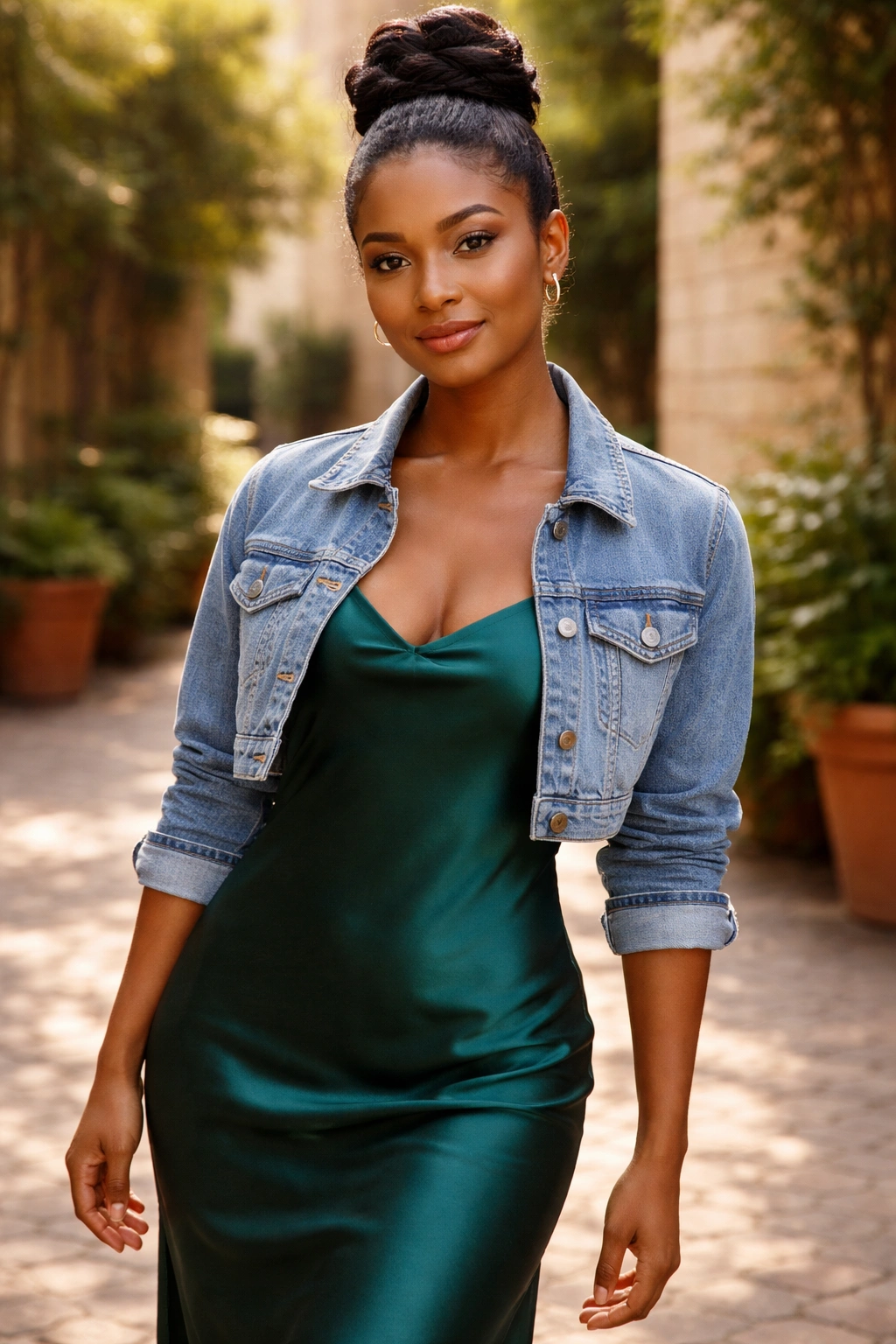
Slip dresses — the satin or silk-adjacent kind that falls to mid-calf — are deceptively versatile. Over a fitted white long-sleeve or under a cropped denim jacket, they transition from evening-adjacent to genuinely casual without losing their core appeal.
What gives this outfit its afro chic edge isn’t the pieces individually — both are wardrobe basics — but the choice of color in the slip. Deep jewel tones: amethyst, forest green, wine. Not blush, not nude (unless your skin creates the contrast), not pale yellow. You want the slip to register.
The denim jacket should be cropped enough to hit above the natural waist, and slightly oversized rather than fitted. A perfectly fitted denim jacket with a slip dress can read costume-y, as if each piece is trying too hard to be in the same outfit.
Who This Is Best For
This works particularly well on days when your hair is in a protective or low-manipulation style — a puff, a bun, flat twists pinned up. The elongated vertical line of the midi length draws the eye down, and the hair being pulled back or contained at the top creates a full-length silhouette that reads elegant without any fussiness.
6. Monochromatic Camel Outfit
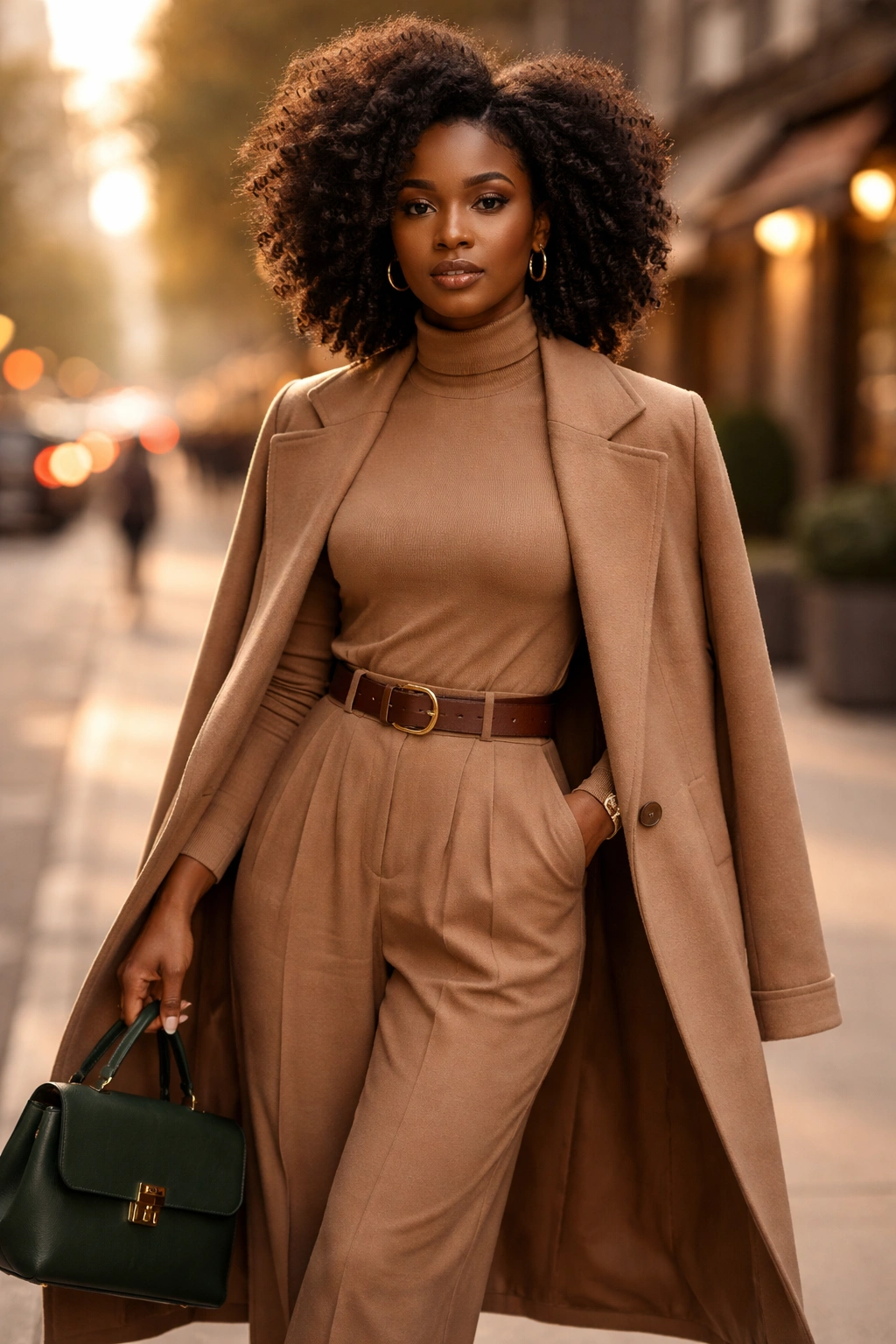
Wearing one color from collar to hem sounds like a styling school lesson, but done right, it’s one of the most powerful tools in a wardrobe. Camel — not beige, not nude, but the warm golden-brown of real camel — is particularly strong for this because it photographs warmly against deep and medium skin tones, and it creates a rich, editorial quality without requiring anything loud.
The pieces can vary in silhouette and texture: a camel turtleneck under a camel wide-leg trouser with a camel coat thrown over the top. The trick is keeping the shades within 1-2 degrees of each other. If your turtleneck goes beige while your trousers go orange-tan, the monochrome effect breaks down.
One deliberate contrast — dark brown belt, deep green bag — anchors the outfit to a moment in time rather than looking ethereal and unfinished.
7. Kente-Trimmed Blazer and Trousers
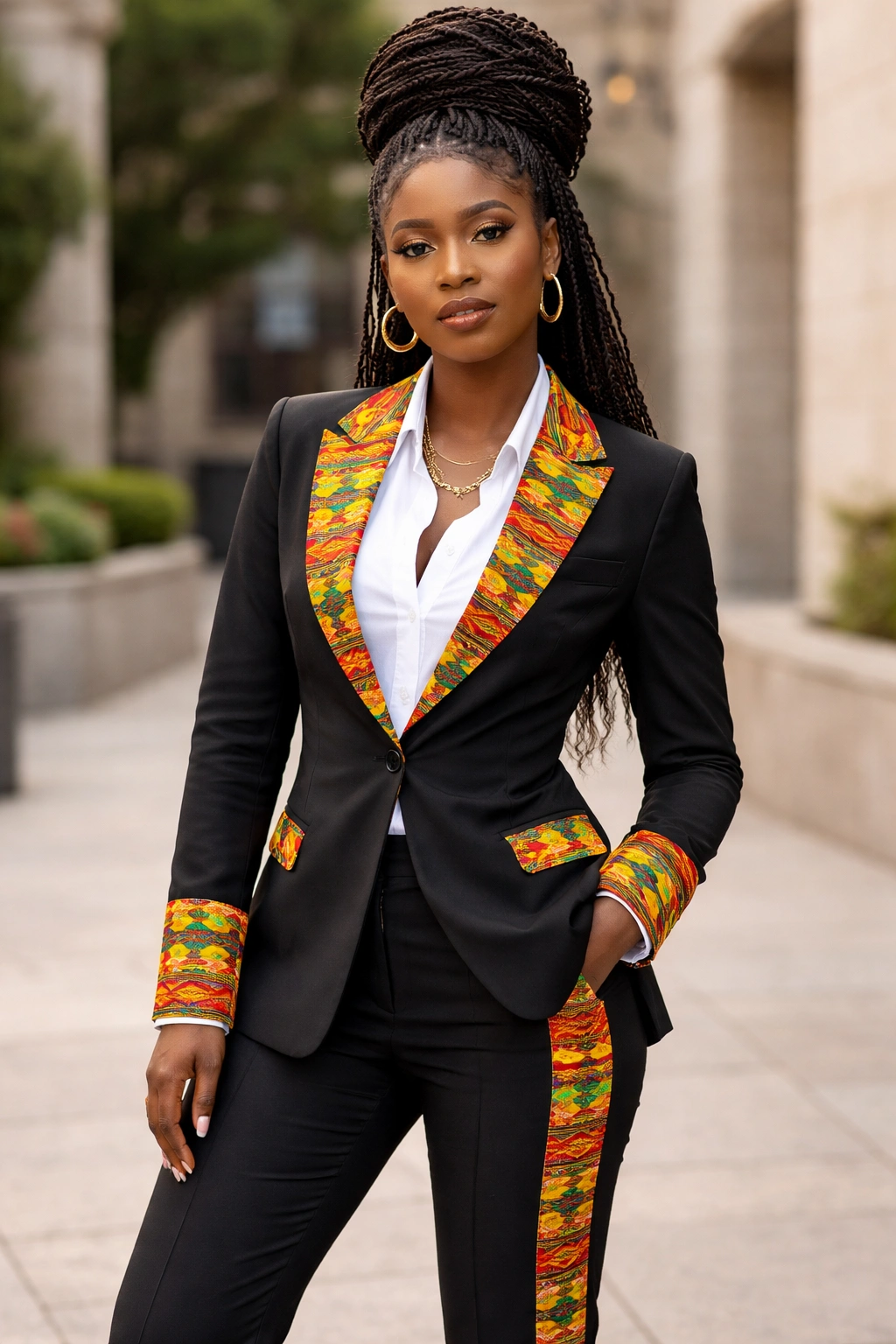
This is a look that draws from a specific visual tradition. Kente cloth — the handwoven fabric from Ghana, traditionally made by the Asante and Ewe people — is often used in accent form in contemporary fashion: trim on blazer collars, lapels, cuffs, or pocket squares. When a blazer and matching trouser feature coordinated Kente trim, the result is formal-adjacent but not stiff.
Wear it with a clean white spread-collar shirt underneath, dark leather derbies or loafers, and very little else. Let the fabric carry the statement.
What to Watch For
Kente is a culturally specific textile with meaning. The colors and patterns aren’t purely decorative — they carry symbolic coding within Asante and Ewe tradition. Wearing it with awareness of that history is part of what makes the look meaningful rather than extractive.
If you’re sourcing Kente-trimmed pieces, seek out brands that work directly with Ghanaian artisans rather than mass-market factories producing knock-off geometric patterns on polyester.
8. Fitted Turtleneck with a Leather Skirt
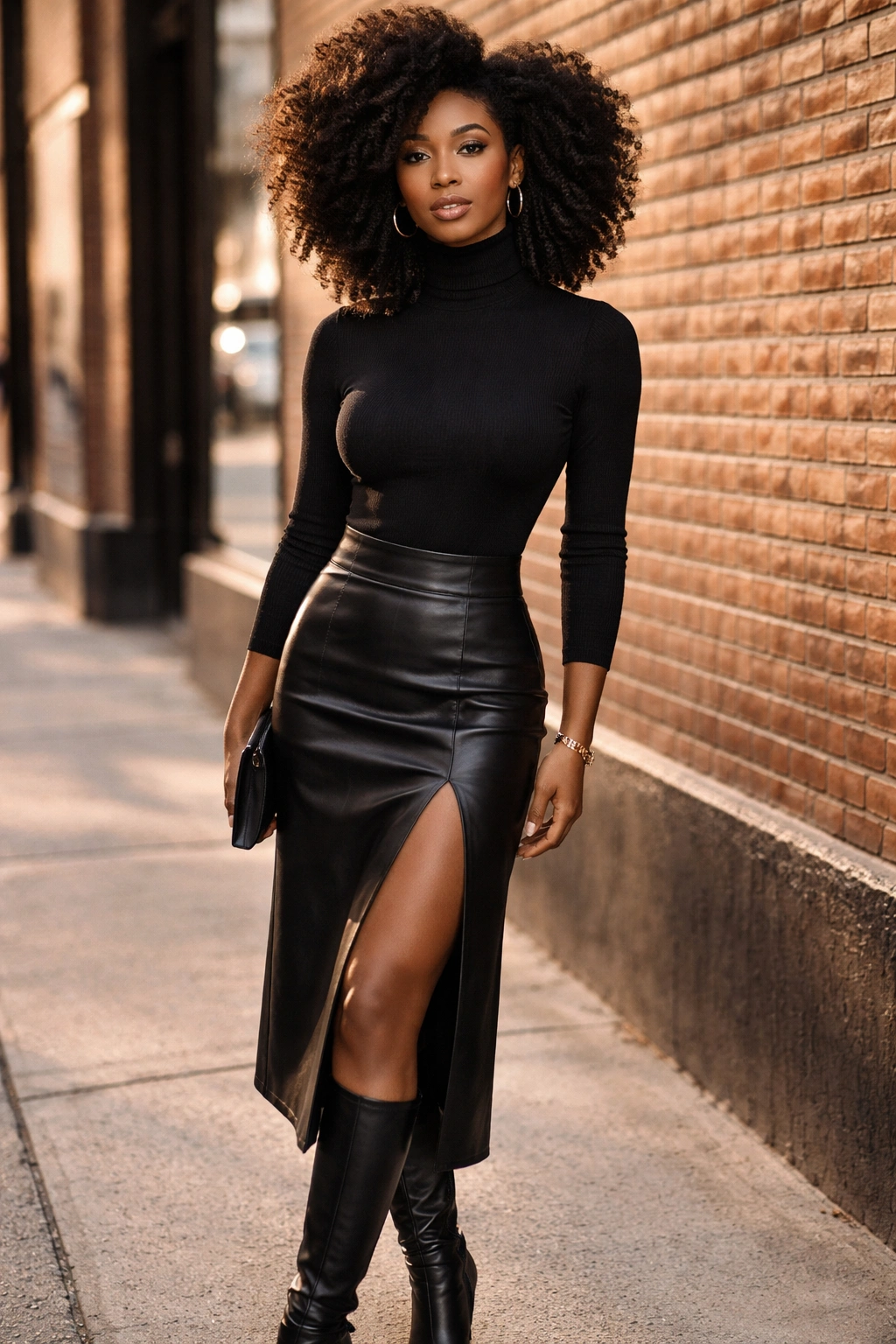
The combination of a tight, ribbed turtleneck — particularly in black or ivory — and a leather or leather-look midi skirt is quietly one of the most consistently striking everyday outfits possible. The turtleneck frames the face and neck in a way that’s particularly complementary to afro hair because it creates a clean neckline that extends upward without interruption.
A-line leather skirt if you want the silhouette to flare slightly at the hip. Pencil leather skirt if you want something more sleek. Both work; neither is categorically better.
Boots — flat to the knee or heeled to the ankle — complete this. A shoe silhouette with visual weight at the foot grounds the look.
The honest downside: real leather skirts require care and can run expensive. Faux leather has improved enormously in quality — look for vegan leather in a medium weight with some stretch. Avoid anything thin enough to show texture through it; it won’t hold the shape that makes this look work.
9. Off-Shoulder Blouse with Wide-Leg Jeans
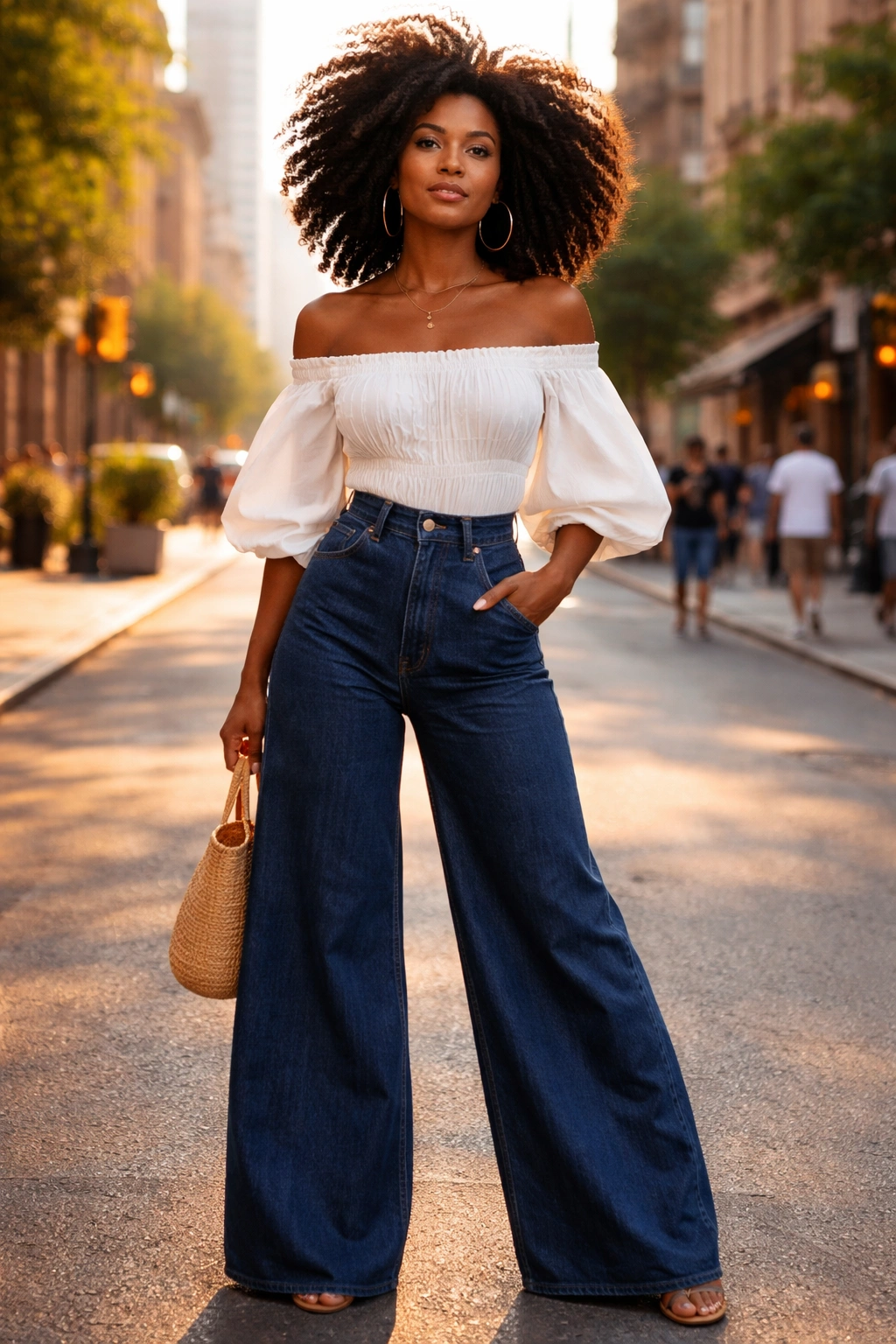
An off-shoulder neckline does something specific when worn with a full afro: it exposes the full width of the shoulders and collarbone while the hair extends upward and outward, creating a very distinctive silhouette. Broad at the top, elongated in the middle, wide again at the leg. It’s not for everyone, but it’s striking when it lands.
The blouse should have enough structure at the neckline to stay in place — a built-in elastic that grips rather than a fabric so heavy it constantly slides. Nothing derails this look faster than spending the evening adjusting your top.
Wide-leg jeans here, not skinnies. You want the lower half to match the visual breadth of the shoulders. Dark rinse or black denim keeps the jeans from fighting the blouse for attention.
10. Crochet Knit Top and Linen Trousers
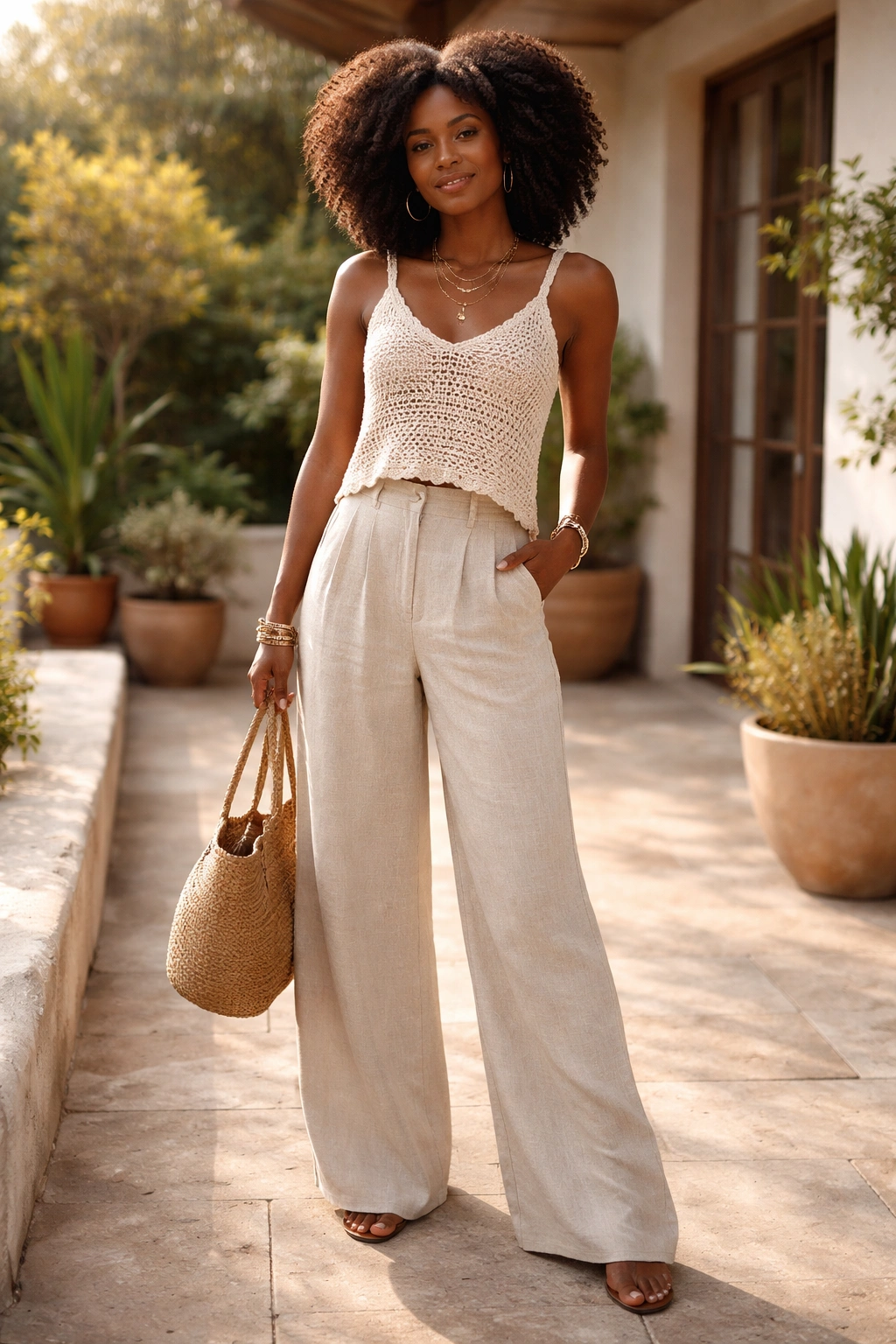
Texture is an underused tool in everyday dressing, and a crochet knit top — whether an open weave over a cami or a denser knit worn alone — brings texture to a look in a way that’s casual rather than formal, earthy rather than flashy.
Pair it with wide or straight-leg linen trousers in a natural color: flax, taupe, white, sand. The combination of organic textures — open knit against woven linen — creates visual interest through materiality rather than color contrast.
How to Use It
Your hair and the crochet knit share something: both are textured, both have visual density without heaviness. That mirroring creates cohesion without matching.
- Mules or sandals, not sneakers — the texture of the outfit calls for something with a clean, minimal shape at the foot.
- Keep accessories metal: gold rings, gold hoops. Wooden or beaded pieces would compete too much with the knit.
- This is a hot-weather or warm-weather outfit. In cooler temps, it reads unfinished unless layered under a structured jacket.
11. Bold Printed Jumpsuit
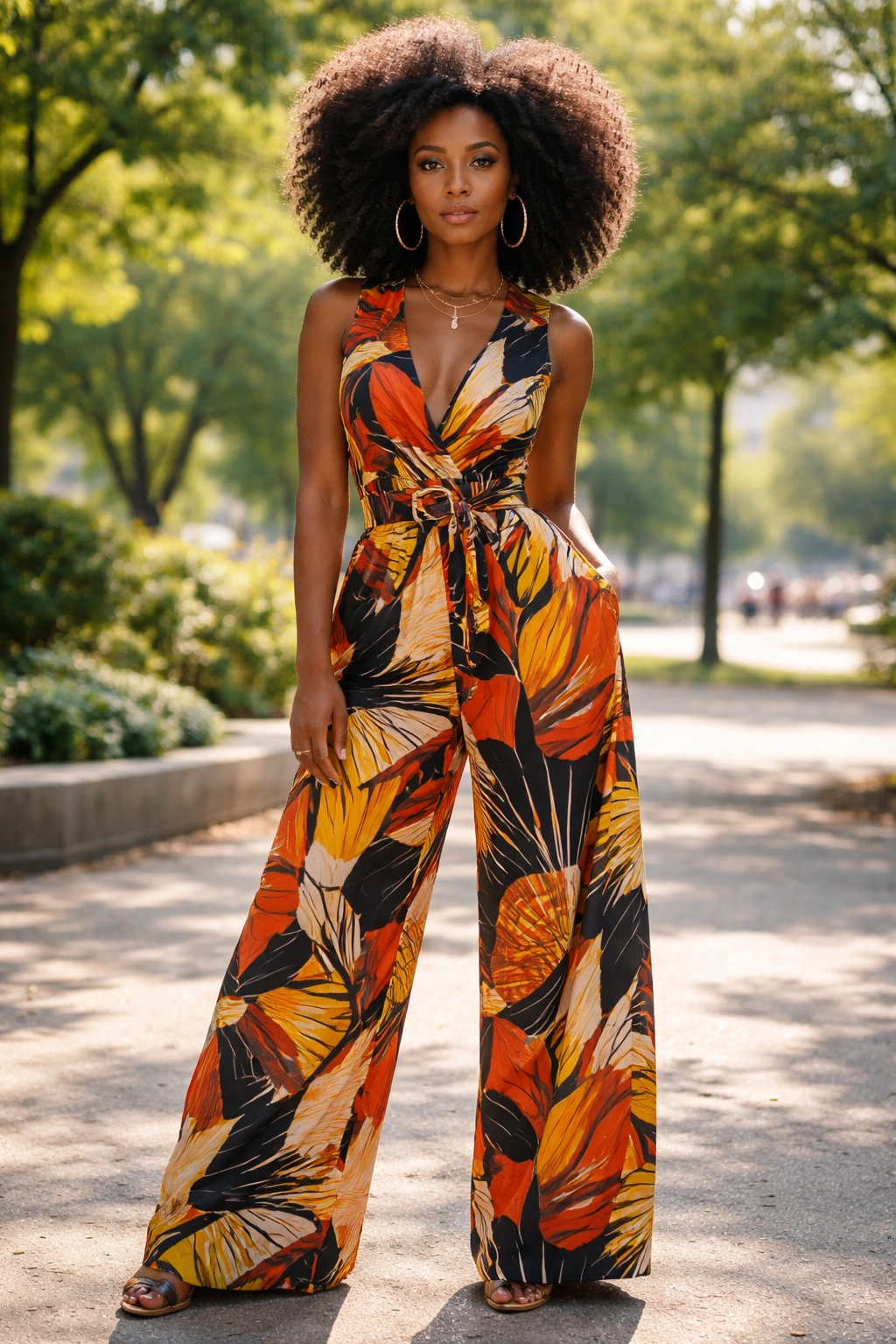
A jumpsuit in a bold print — geometric, abstract, or conversational — is the highest-efficiency single-piece outfit in everyday afro chic dressing. One decision and you’re dressed. The rest is just accessories.
The print does the visual work. Your hair and the jumpsuit create the entire composition. What trips people up is choosing a print that’s too busy at too small a scale — tiny repeating patterns create a visual vibration that competes with hair texture rather than complementing it. Go larger scale, bolder forms.
Belted at the waist or self-tied with a wide sash belt, this gives a defined waist without the print being the only visual anchor.
The practical consideration: jumpsuits and bathrooms are a complex relationship. This is real and worth thinking about before committing to one for a long day out.
12. Structured Trench Coat Over a Simple Base
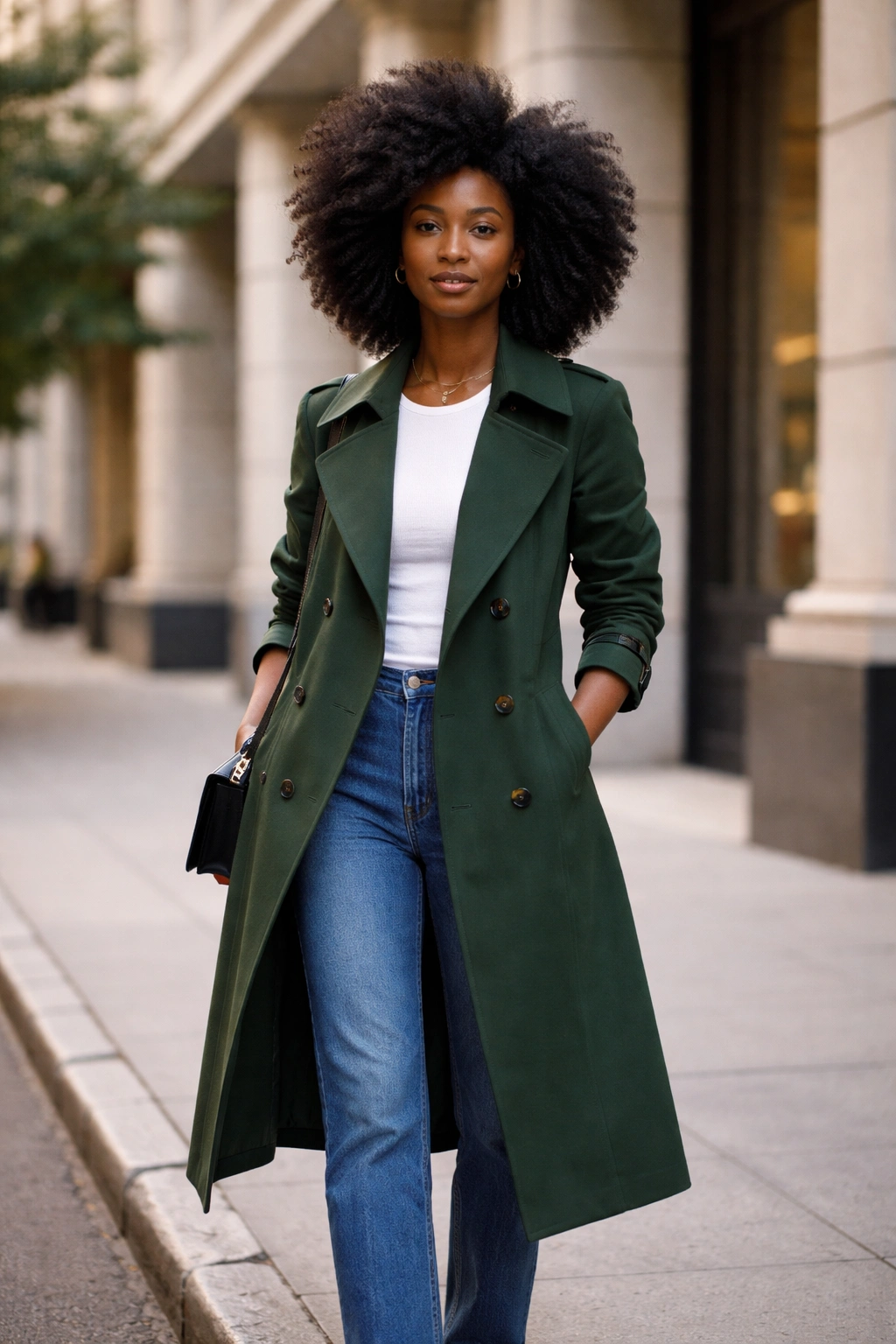
A well-made trench coat is the one outer layer that consistently elevates whatever is underneath it. A T-shirt and jeans under a double-breasted trench reads pulled-together. A printed slip dress under a belted trench reads editorial.
The key is a trench that fits at the shoulders and is long enough — at least to the knee, ideally midi length. Short trenches lose the structural authority that makes the coat work.
For afro chic dressing specifically, the trench’s collar and lapel create a strong geometric line that frames the afro beautifully. Colors beyond the classic camel: cherry red, burnt sienna, forest green. These read boldly and photograph with drama.
13. Maxi Skirt with a Fitted Crop Top
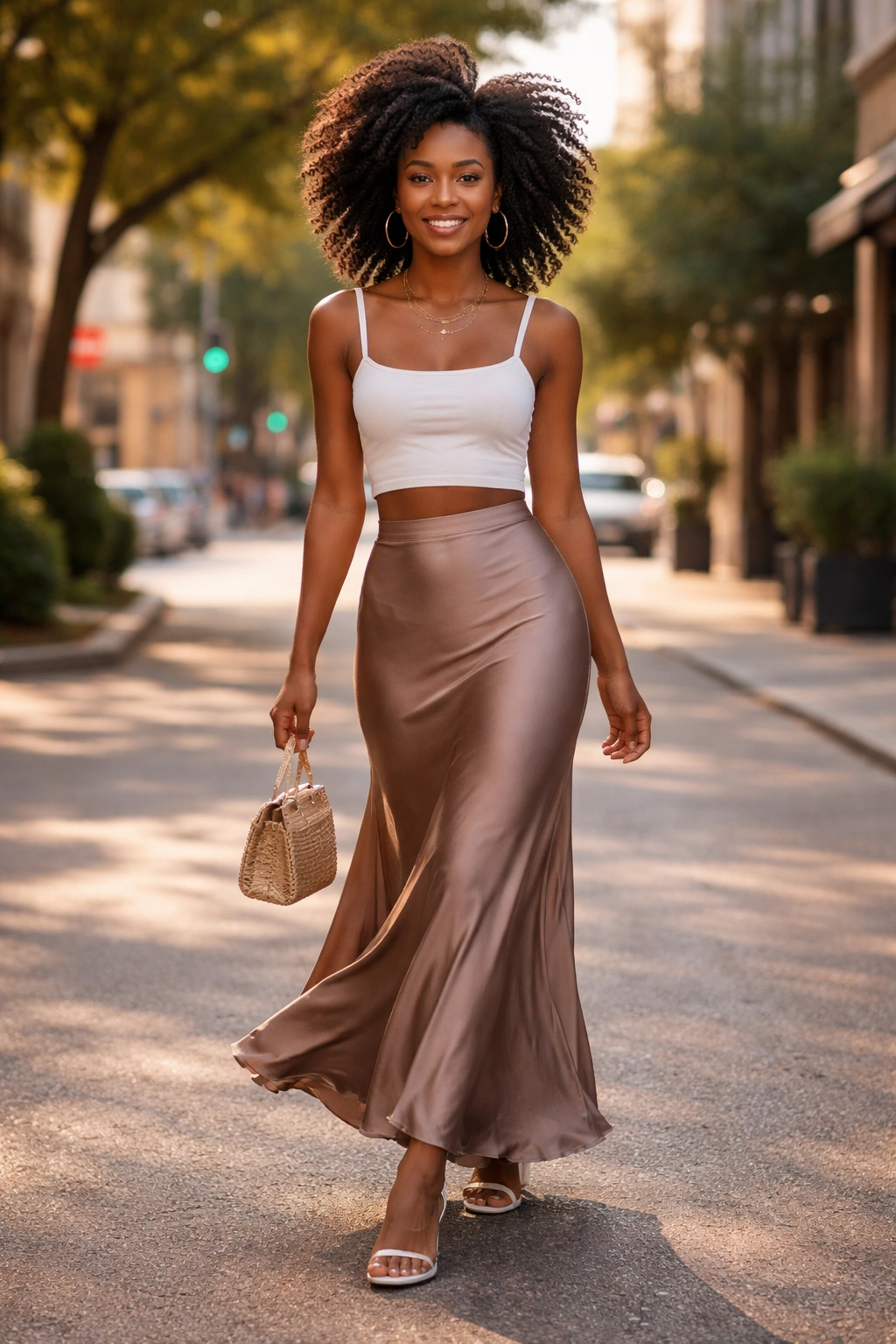
A maxi skirt — particularly a bias-cut skirt that moves when you walk — and a fitted crop top creates one of the most genuinely graceful everyday silhouettes. The crop top defines the waist; the maxi flows below. The result is both casual and deliberate.
Print or solid? Either. But if the skirt is printed, keep the crop solid. If the crop has a pattern, keep the skirt in a tonal base. Two competing prints below and above the waist is almost always too much visual information.
Footwear here matters. Sandals that peek out from a maxi skirt bottom look intentional. Hidden sneakers look accidental, unless the skirt has a front slit.
14. Dashiki-Inspired Dress with Clean Accessories
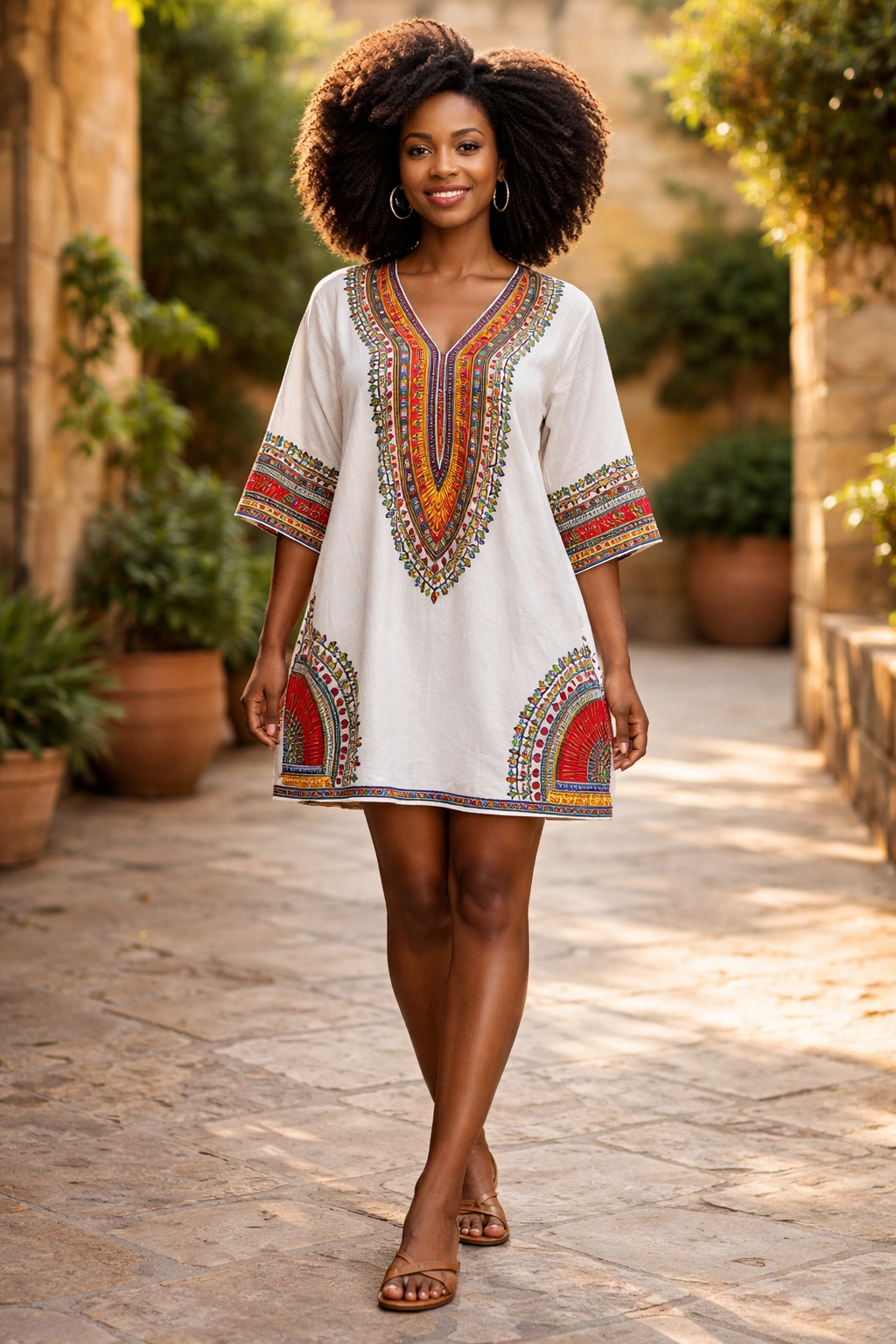
The Dashiki — and designs inspired by its characteristic V-neck collar, embroidered chest panel, and relaxed cut — occupies an important place in the afro chic wardrobe. It’s not just a garment; it carries a history of Black pride and cultural identity that became particularly visible in North America from the 1960s onward.
Wearing a Dashiki-inspired dress well in a daily context means understanding that its power comes from the embroidered panel and the drape of the fabric, not from piling on additional statement pieces. The dress is statement enough.
Clean gold earrings, simple sandals, your natural afro. That’s the outfit. Adding more dilutes everything.
15. Linen Coord Set in a Bold Solid
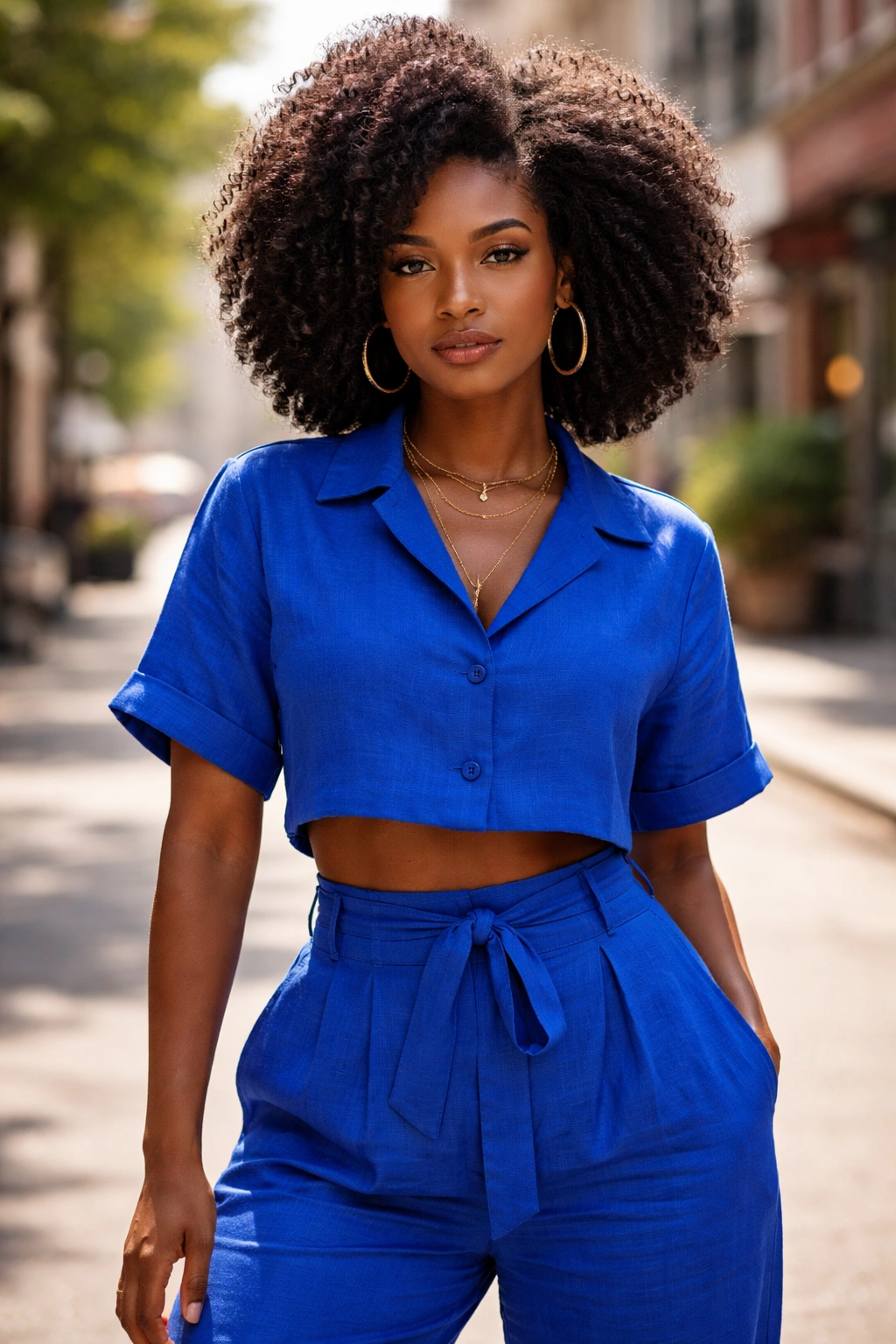
A matching linen coord set — top and skirt, or top and wide-leg trousers — in a non-neutral bold color is one of those purchases that seems like a risk and turns out to be one of the most-worn items in the wardrobe. Cobalt blue. Terracotta. Rich forest green. Deep magenta.
The matching nature of the set does all the work of looking curated. You don’t have to match anything to it because it already matches itself.
The Catch
Bold solid sets need care at the laundry stage. Linen in deep jewel tones is notorious for fading if washed on hot cycles. Cold water, gentle cycle, air dry. Keep it looking like the day you bought it.
Who this is best for: someone who finds mixing prints and textures overwhelming and wants a reliable system. This is that system. Buy three sets in different colors and rotate.
16. Statement Earrings, Simple Base, Done
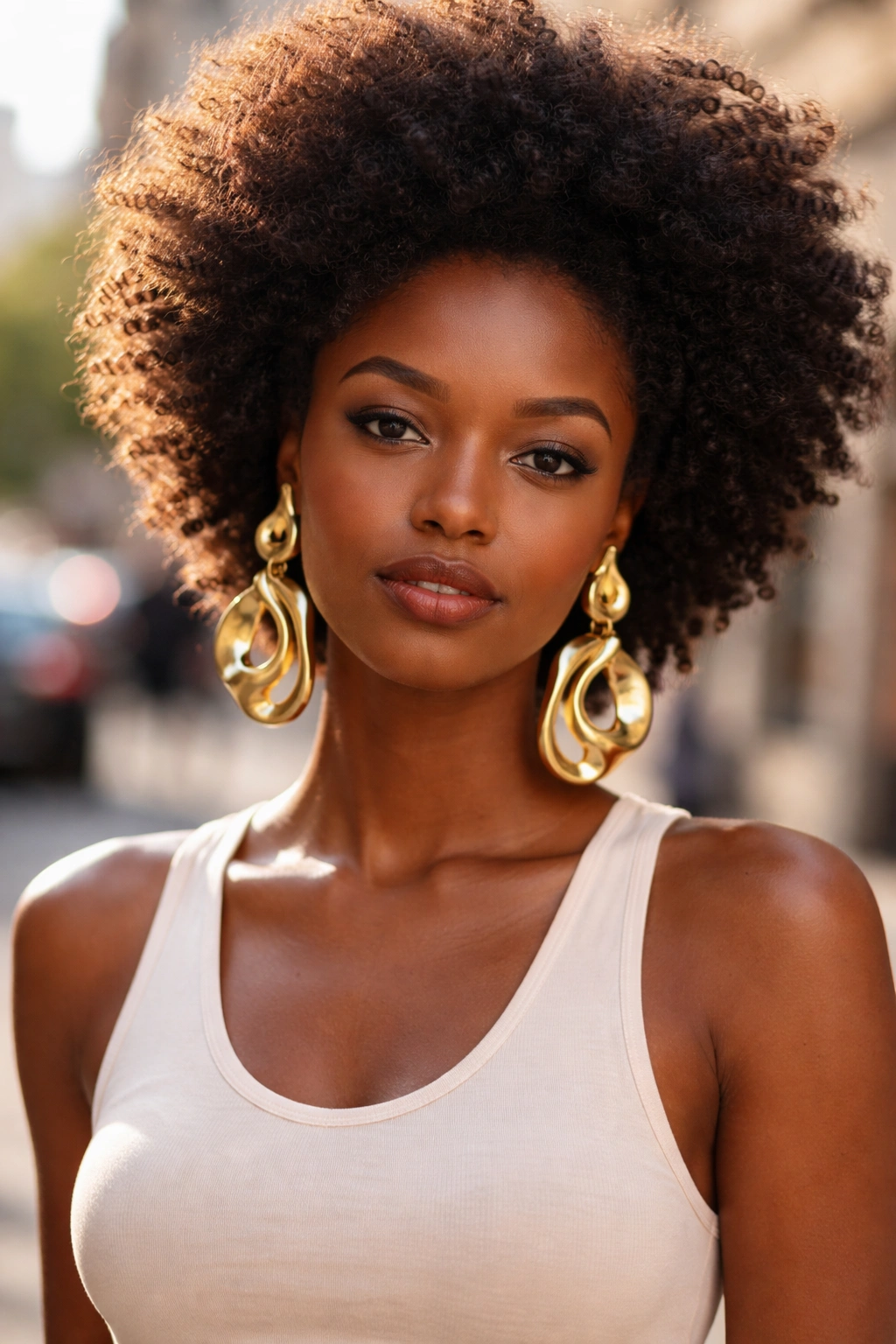
This is less a specific outfit than a principle. Statement earrings — the sculptural, oversized, architectural kind that command attention from across a room — are designed to work with afro hair in a way no other earring style can quite replicate. Your hair creates a visual backdrop. The earrings hang into that backdrop and create contrast.
The outfit beneath those earrings almost doesn’t matter if the base is simple enough: a solid fitted tee or clean V-neck, high-rise trousers, clean sneakers or loafers. The earrings and hair carry the look. The outfit is the support structure.
This is not a lazy approach. It’s an efficient one. Knowing that your hair and the right earrings together constitute a complete visual statement is one of the most useful style insights you can internalize.
17. Ponte Knit Blazer Dress
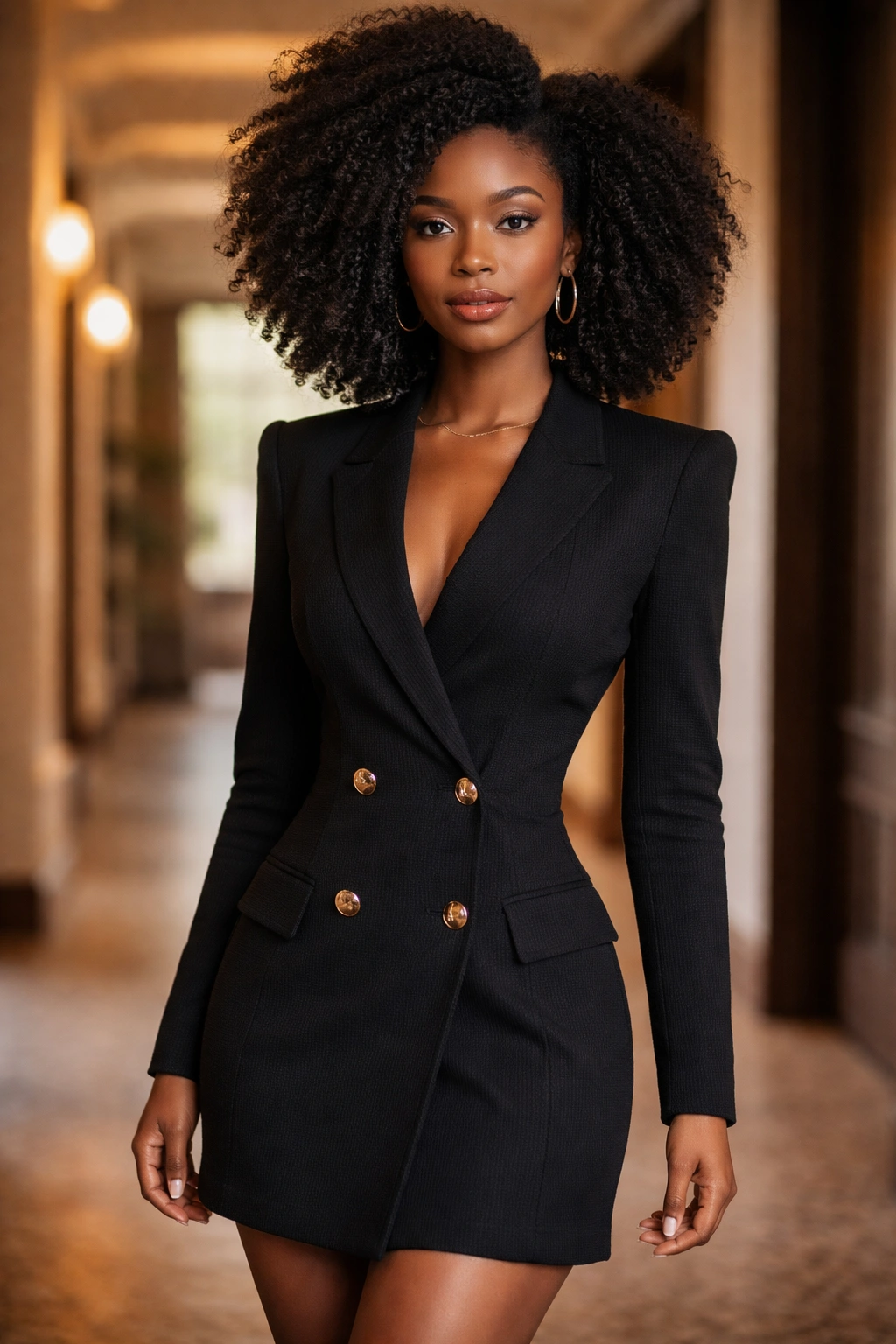
A blazer dress — the kind that’s cut as one piece, structured through the shoulders and chest like a blazer but falls as a dress rather than splitting into separate top and bottom — is one of the most efficient single-piece outfits for days requiring genuine polish.
Ponte knit holds structure without the stiffness of wool, doesn’t wrinkle in transit, and moves comfortably through a full day. Find one in a length you’re comfortable with — just above the knee reads smart-casual; midi reads more formal — and it will work harder than almost anything else you own.
Wear it with block heels or loafers. Flat ankle boots in autumn and winter. Keep the accessories restrained: a thin leather belt if the dress doesn’t have one built in, small gold hoops or studs, and nothing around the neck that breaks the clean vertical line.
18. Chambray Shirt Dress Belted at the Waist
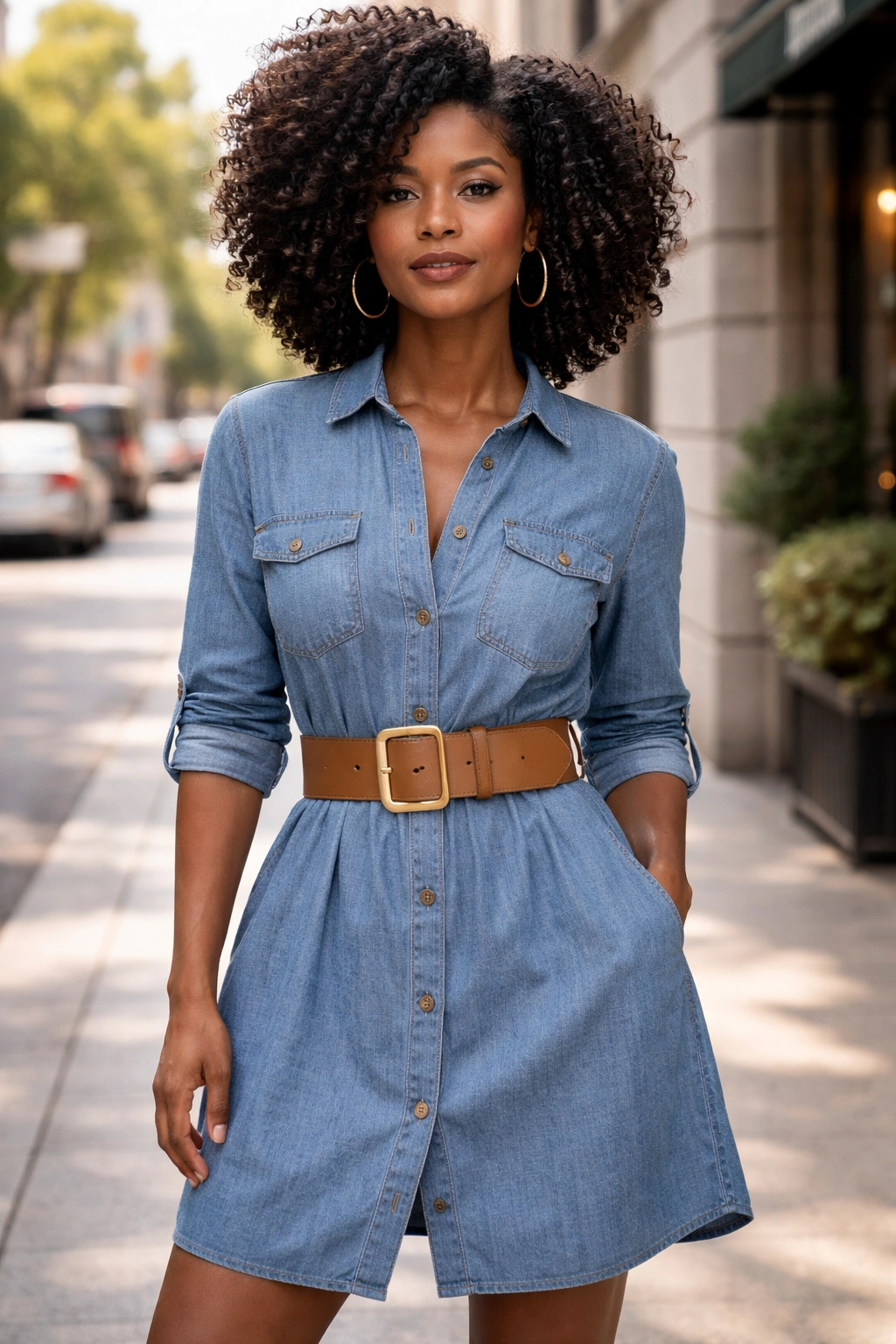
A chambray shirt dress — the lightweight woven cousin of denim, softer in hand and more fluid in drape — belted at the natural waist creates a dress shape that works across a genuinely wide range of body types. The belt defines the waist; the shirt collar frames the face; the length (aim for midi or just below the knee) creates a comfortable proportion.
This is a particularly good everyday piece because it doesn’t require much maintenance: hang it, shake out wrinkles, wear it. No ironing drama, no dry-clean-only anxiety.
The afro chic element here is the deliberateness of the belt. Not a thin canvas belt from the original garment — a wide leather or woven belt in a contrasting color that says the waist definition was a decision, not an afterthought.
19. Oversized Striped Shirt and Bike Shorts
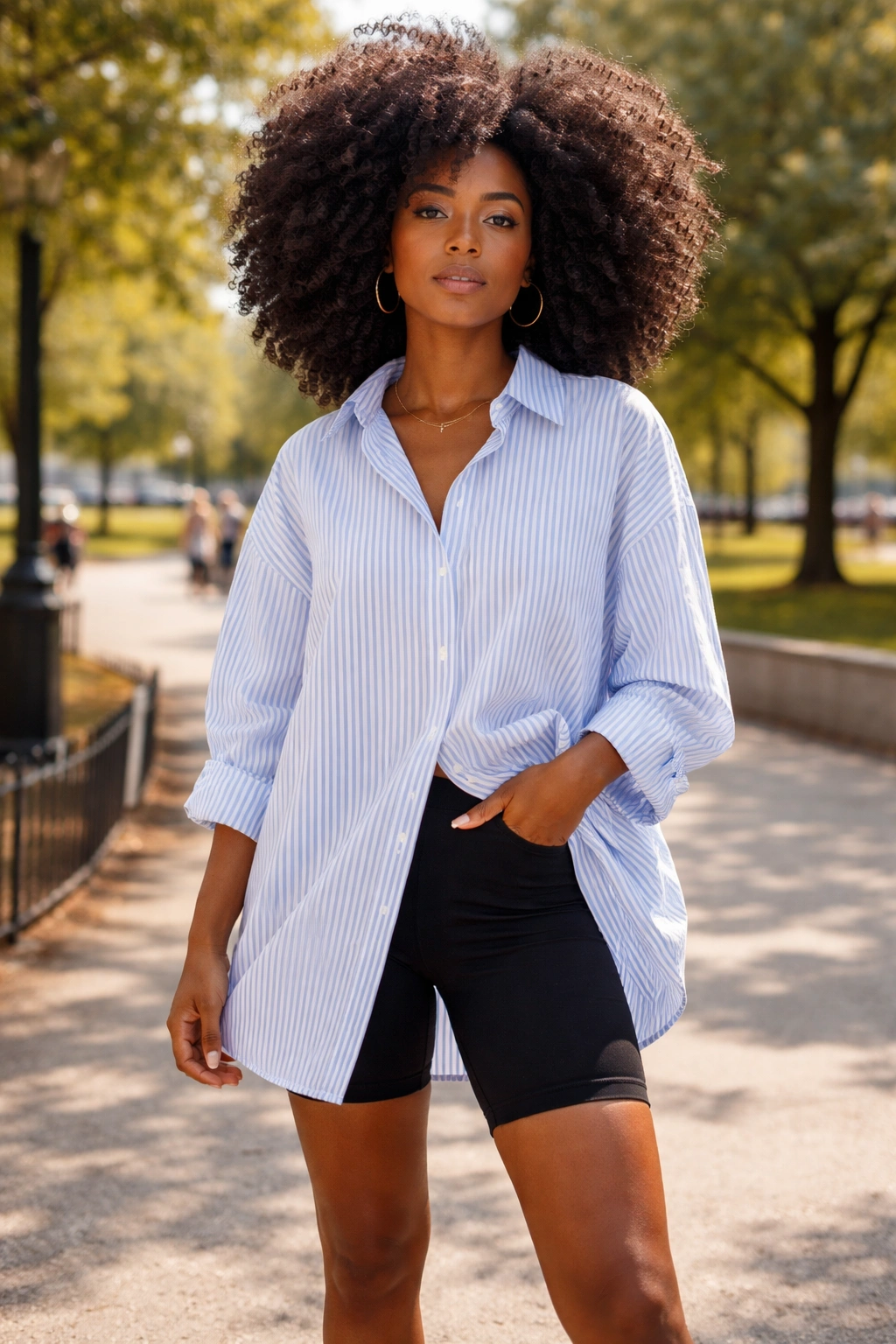
Hear this out before skipping past it. An oversized, men’s-cut striped button-down — the kind that hits mid-thigh — over fitted bike shorts with flat leather sandals or chunky sneakers is a silhouette that’s simultaneously casual and very deliberate. It reads as someone who knows exactly what they’re doing.
The proportions work because the oversized top creates a visual column from shoulder to mid-thigh, and the fitted bike short below adds a small element of defined leg without constriction. The whole look sits in a space between athletic and casual-chic that very little else occupies.
With a full natural afro, the volume at the top is echoed by the volume of the oversized shirt. The proportions align. Try this once and you’ll understand why it works better in practice than it sounds on paper.
20. Wrap Pants with a Fitted Mock-Neck Top
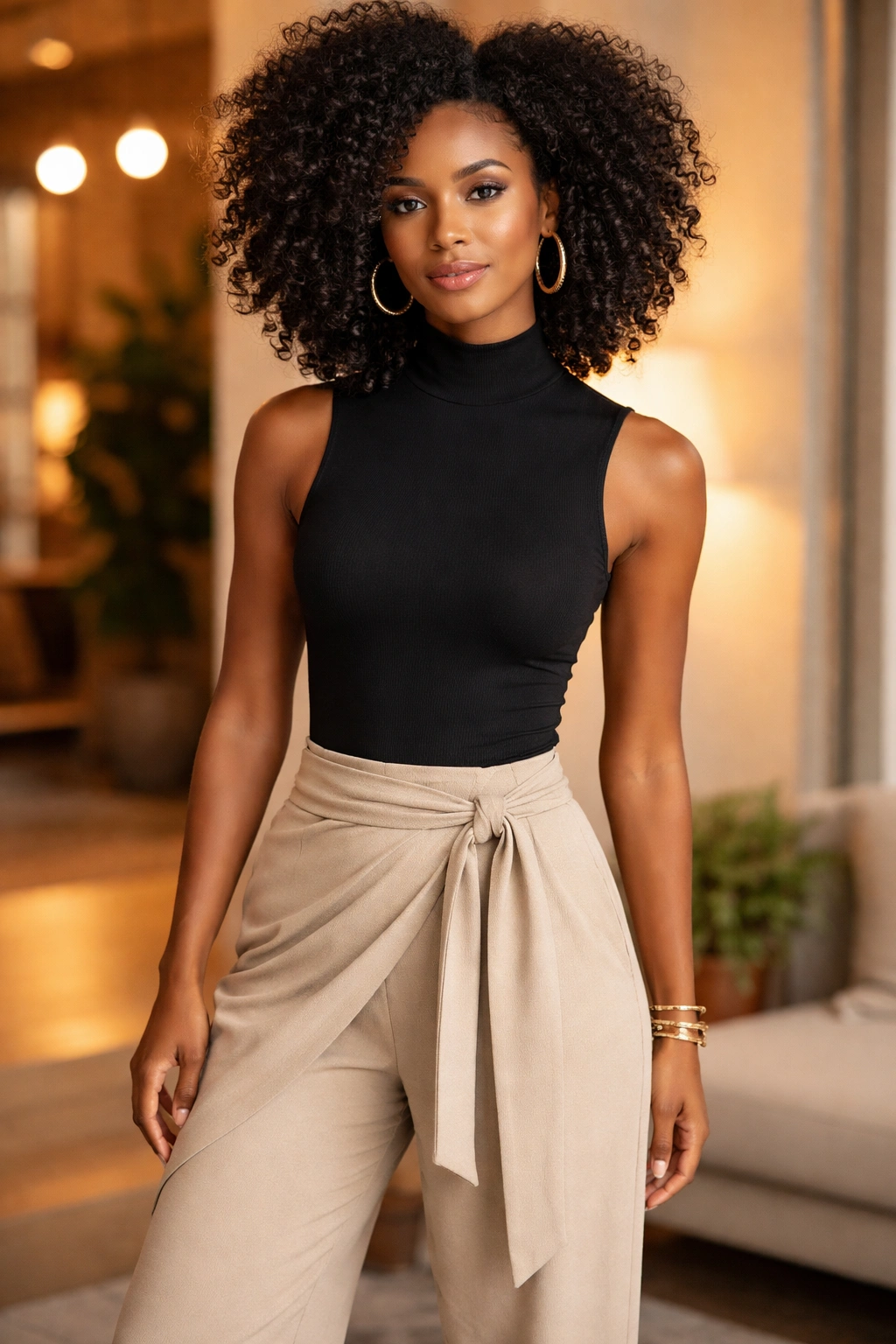
Wrap pants — a trouser cut that wraps around the waist and ties rather than using a traditional waistband — offer incredible silhouette versatility because the tie placement controls the visual waistline. Tie high and you get a long, elongated leg line. Tie at the natural waist and you get a more defined hip shape.
Pair them with a fitted mock-neck top in a solid color — the high neckline creates a vertical line from collarbone to chin that echoes upward into your afro’s height. The combination of the structured neckline and the fluid trouser creates a balance between control and ease that’s rare in an everyday outfit.
The Finishing Details That Complete Any Afro Chic Look
Gold jewelry — and specifically gold’s warm, rich undertone — reads better against the warm palette of natural afro hair than silver in most cases. Not a rule, just a strong pattern. If you’re not sure where to start with jewelry, a pair of medium gold hoops and two or three thin gold stacking rings will work with nearly every outfit on this list.
Your footwear choice signals the formality level of the entire look more than any other single piece. Heels say one thing; flat sandals say another; white sneakers say a third. The clothes don’t decide the energy; the shoes do.
What to Actually Build Your Wardrobe Around
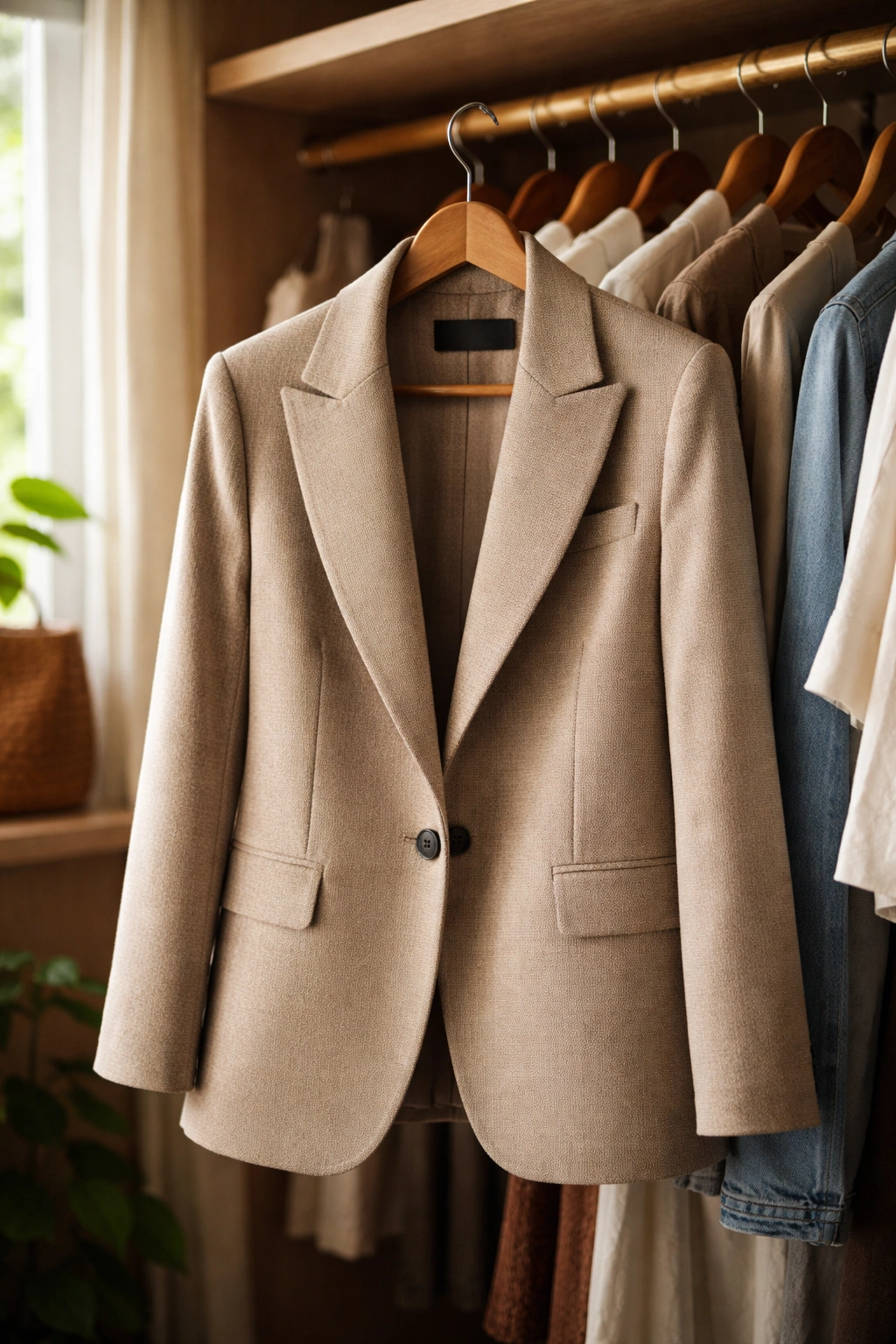
The outfits on this list come back repeatedly to a small set of anchor pieces: one or two well-made blazers, two to three trouser options (wide-leg, straight, and tailored short), a handful of quality tops in neutral and bold tones, two or three sets or coords, and footwear that covers both casual and smart-casual registers.
From that foundation, you get more than twenty distinct looks — without owning twenty different complete outfits. The mix-and-match potential of a coherent, curated wardrobe base is far greater than a closet full of complete looks that don’t cross-reference each other.
If you’re starting from scratch, prioritize fit and fabric over trend. A well-fitted, good-quality linen trouser in a classic silhouette will serve you longer than a trendy piece that fits awkwardly.
Maintenance: Keeping Your Pieces Working
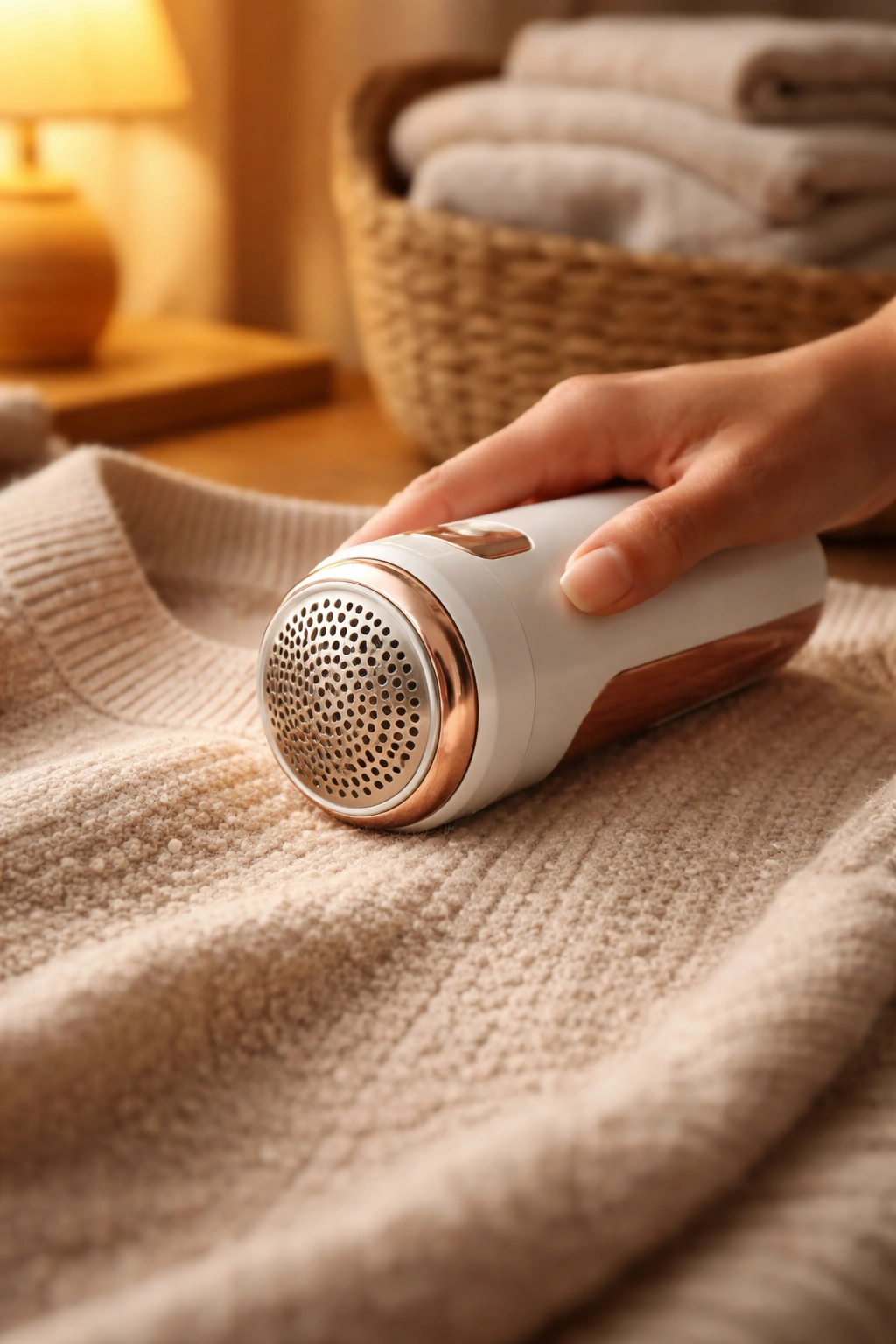
Clothes that look chic require clothes that look cared for. That means managing pilling on knits (a fabric shaver, about $15, is worth every cent), keeping whites actually white (cool wash, no bleach unless you want yellowing in three months), and hanging or properly folding structured pieces rather than stuffing them.
Linen wrinkles, and for everyday afro chic, either lean into the wrinkle as texture or steam before wearing — ironing linen often flattens the natural weave and creates a stiff look that misses the point of the fabric.
Store your bold-colored coord sets away from direct sunlight to prevent fading. Store leather pieces on hangers, not folded. These are small habits that extend the life of pieces significantly.
Common Mistakes to Avoid
The most common mistake in assembling afro chic outfits is choosing pieces that are individually interesting but don’t visually speak to each other. You end up with an outfit where the viewer’s eye doesn’t know where to land — which reads as confused rather than bold.
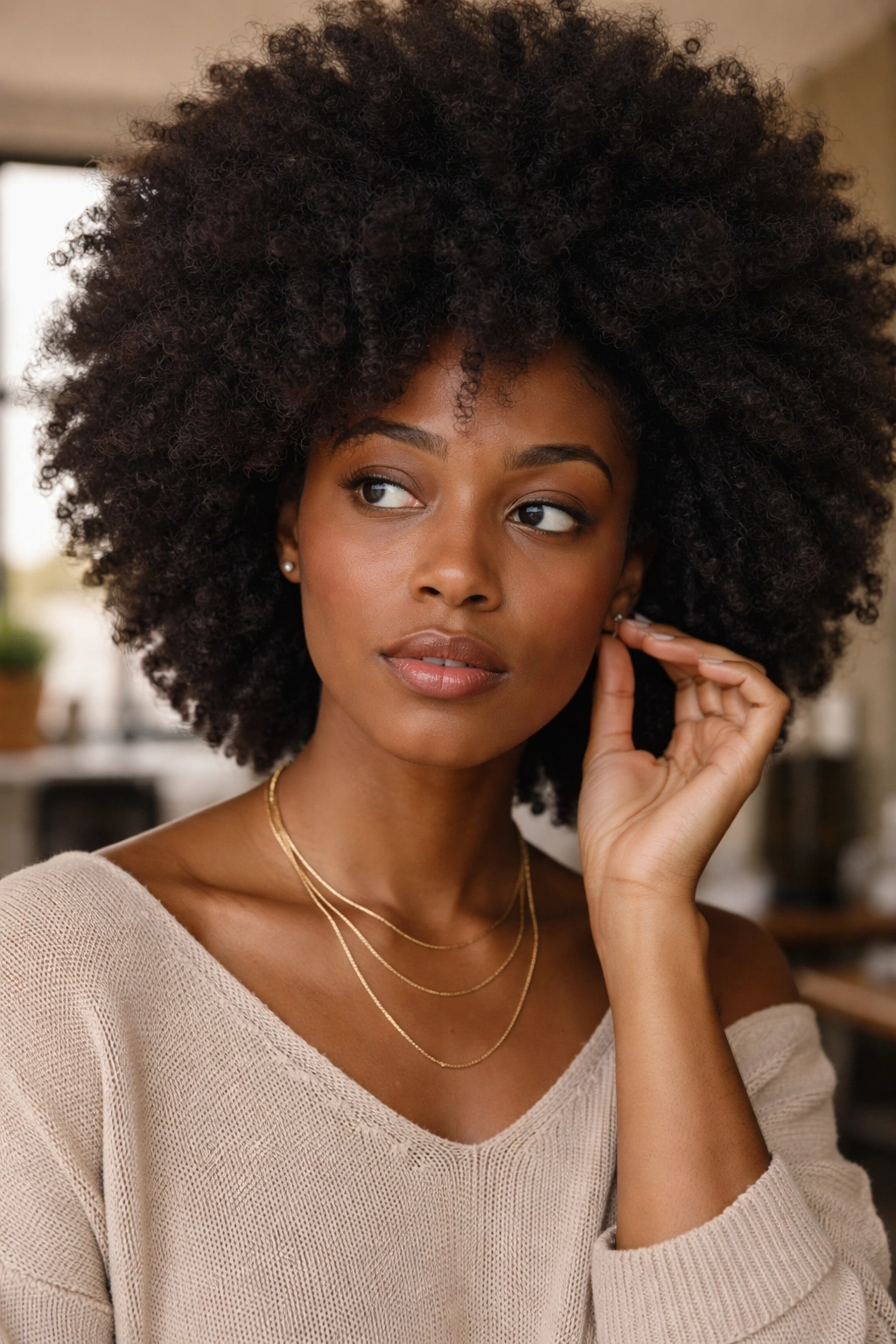
Second most common: undersized earrings or jewelry with a full natural afro. Small delicate jewelry disappears visually against the volume of the hair. You don’t have to go maximalist, but what you choose needs to register.
Third: shoes that work against the energy of the outfit. Wearing a structured blazer-and-trouser look with beaten-up sneakers isn’t intentional casual; it’s a mismatch. There’s a difference between deliberately breaking the formality of an outfit with footwear choice and simply not thinking about shoes.
Making It Actually Work Every Day
Style doesn’t happen in theory. It happens in the fifteen minutes before you need to leave. The outfits that work for everyday afro chic dressing are the ones that don’t require you to think too hard in that window — where the pieces are already pressed, organized, and visually sorted in your mind.
The investment isn’t time you spend getting dressed in the morning. It’s the time you put in beforehand: building the wardrobe deliberately, taking care of the pieces you have, and understanding what reliably works together. That’s the real practice. The getting dressed part becomes easy once the system is in place.