



The idea that a haircut needs to be matched to a face shape sounds more scientific than it actually is. In practice, what matters more than face shape categories is understanding what visual relationships the cut creates — where it draws the eye, what it emphasizes, how it interacts with the proportions of your specific face. Afro haircuts that flatter every face aren’t magic; they’re cuts that work across different facial structures because they’re built on principles that hold up broadly rather than rules that apply narrowly.
For women with natural afro hair, this question carries its own specific context. The afro creates volume that no other hair texture creates in quite the same way. A full natural afro adds height, width, and visual density above the shoulders — and those additions interact with every facial structure differently. Understanding that interaction gives you real information to work with, not just a list of dos and don’ts handed down from magazines that weren’t designed with your hair texture in mind.
The 25 cuts and styles on this list are genuinely distinct from each other — different in volume, shape, height, and how they frame the face. Some work best on specific face structures; many work broadly across several. The goal here is to give you enough specific information that you can find your own particular combination of face, hair texture, and desired style rather than just following a prescription.
Face Shape Is a Starting Point, Not a Prison
The classic face shape categories — oval, round, square, heart, diamond, oblong — are imprecise tools. Real faces don’t fit neatly into these boxes. Most faces combine characteristics of two or three categories. You might have the width of a round face with the jaw definition of a square, or the narrow forehead of a heart shape with the length of an oblong.
Rather than locking yourself into a single category, identify the specific features that you want to emphasize or that you prefer to balance. High, prominent cheekbones? You’ll want cuts that reveal them. A wide jaw? You might prefer cuts that don’t add width at that level. A narrow forehead? Cuts with more width at the top can balance that.
Those are specific, actionable observations. They’re more useful than “your face is round, avoid these three haircuts.”
How Natural Afro Texture Changes Everything
Afro hair’s natural behavior — its tendency to grow outward and upward, to create volume through its texture, to respond to moisture and dryness differently at different times — means that the same cut can look dramatically different from one day to the next depending on weather, product, and styling choice.
Understanding your specific hair texture (density, curl pattern, porosity) helps you predict how a cut will actually behave day-to-day rather than just how it looks in the salon. A cut that photographs beautifully on wash day might be completely unrecognizable by day four if your hair loses moisture quickly. That’s not a problem with the cut; it’s information about maintenance.
The Role of Edge Work in Face Framing
Edges — the baby hairs and lower hairline that frame the forehead and temples — play a specific role in afro hair cuts that has no real equivalent in other hair textures. Clean, defined edges create a natural border between your hair and your face that functions like a graphic element in the overall look.
Laid edges (baby hairs smoothed into shapes using a small brush and a light gel) take this further, creating actual design at the hairline. For women who want their haircut to do face-framing work, learning to lay edges consistently adds a level of finish to any cut on this list.
The key product warning: not all edge control gels are equal. Light aloe-based gels create clean definition without buildup. Heavy wax-based products create a crusty, artificial-looking finish that tends to flake through the day. Use a clean toothbrush or a specialized edge brush for precision.
Understanding Volume and Your Face
Volume placement — where the bulk of the hair sits — is the most significant variable in how an afro cut interacts with face shape.
Volume at the sides (wider than tall) adds visual width to the face. This can make a narrow face appear wider, which may be exactly what you want. On a wider face, it can accentuate that width, which may not be what you’re after.
Volume at the top (taller than wide) adds visual height and elongates the face appearance. This works well on round or square faces where added height creates a more oval appearance.
Even volume all around (the sphere) is the most forgiving general shape because it adds both height and width simultaneously, creating a balanced frame.
1. The Classic Rounded Sphere
The full, evenly rounded sphere is the most balanced volume distribution possible in an afro cut — equal height, equal width, consistent density all around. Because it adds both height and width in equal measure, it doesn’t push any specific facial dimension in one direction more than another.
Why It Works Broadly
The sphere works across oval, round, square, and heart face shapes because it doesn’t amplify a specific dimension. On a round face, the equal height addition balances the existing width. On a square face, the soft rounded edge of the sphere softens the angular jawline. On a heart face, the sphere below the ears adds width at the lower face to balance the wider forehead.
Where it works less naturally: very long or oblong faces, where the added height of the sphere can make the face appear even more elongated. But even here, a wider, flatter sphere shape (more horizontal than vertical) addresses this.
- Maintain the sphere shape with regular dry trims — rotate around the head in small sections, trimming to keep the circumference even.
- Deep moisture on wash day keeps the hair dense enough to hold the shape through the week.
2. The Tapered Afro
The tapered afro keeps the crown’s full natural volume while gradually shortening the hair at the sides and back. The result is a silhouette that’s taller than it is wide — a vertical emphasis that creates an elongating effect on the face.
This cut adds apparent facial length, which is ideal for women with round or very square faces. It creates a visual counterpoint to width: the eye naturally reads up and down the tall silhouette rather than across, making the face appear more oval.
On already-long or oblong faces, the taper’s vertical emphasis can push the length further. Counter this with a wider crown and a lower taper — letting more width stay near the ear level.
3. The High Top Fade
The high top fade is among the most deliberate silhouettes in natural hair cutting — a flat or slightly domed plateau of hair at the top, fading sharply on the sides. The flat top creates a very specific visual: it adds height without adding width, and the flat plane at the crown creates a horizontal line that’s architecturally precise.
Who benefits most: round and square faces. The added vertical height counters a round face’s width. The flat top’s horizontal line creates a visual cap that doesn’t add chin-level width, which can help balance a square jaw.
The high top requires regular maintenance. The top plateau naturally rounds as the hair grows in. Every two to three weeks, the top needs reshaping to maintain its flat profile.
4. The TWA (Teeny Weeny Afro)
The TWA puts face, cheekbones, jaw structure, and neck on full display. Nothing is obscured. For women with defined cheekbones, a clean jawline, or distinctive features, the TWA is one of the most face-forward cuts possible.
Because the TWA adds minimal volume — a tight, close-to-the-head texture rather than outward projection — it functions less as a face-framing device and more as a complete removal of the frame. The face is the look. This requires confidence in your features and willingness to stand in that exposure.
Works well across all face shapes specifically because it doesn’t try to manipulate visual proportions. It’s an honest cut. Whatever your face shape, the TWA presents it directly.
5. The Mohawk Afro
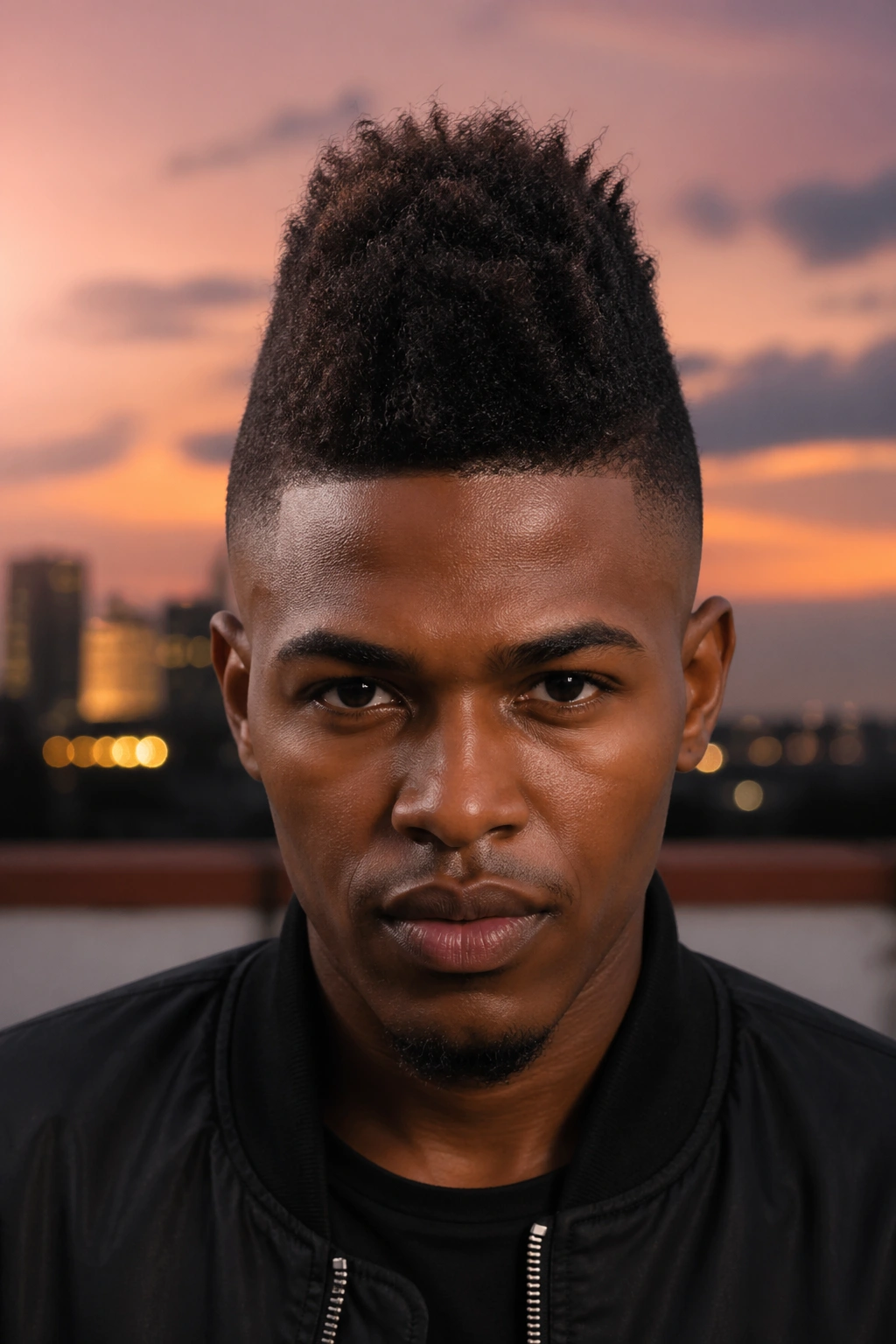
Volume concentrated in a central vertical ridge from hairline to nape, with close-cropped or faded sides. The mohawk creates a dramatic vertical line that immediately draws the eye from the center of the forehead upward.
The visual effect on face shape: it narrows the apparent width of the face by concentrating volume centrally rather than at the sides. This is specifically useful for wider face shapes — round and square — where side volume can feel like it amplifies existing width.
For narrow or elongated faces, the concentration of height without width can push length further. If you want a mohawk on a long face, allow some width at the crown of the central ridge rather than maintaining a strictly narrow ridge.
6. The Asymmetric Afro
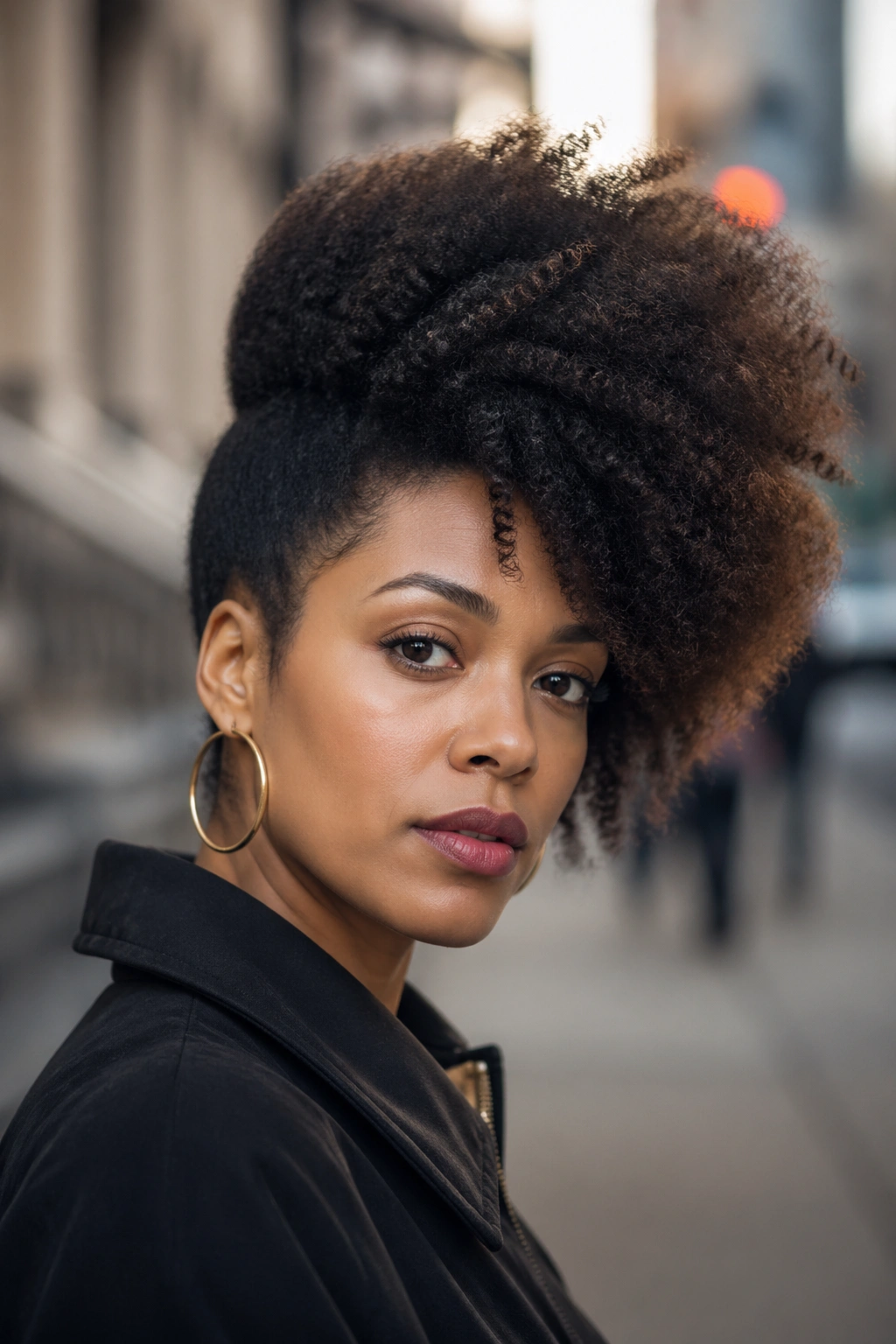
One side deliberately longer than the other. The asymmetry creates a visual diagonal — the eye follows the longer side down and the shorter side up, creating movement across the face rather than a static frame.
This is the most effective cut for faces that don’t respond well to symmetrical shapes. Symmetrical hairstyles on symmetrical faces can read as almost too perfect, a visual stillness. The asymmetric afro breaks that static quality.
Practical note: The length difference must be clearly intentional — visible enough from a reasonable distance that it reads as a design choice. A difference of half an inch or less may look like an uneven cut rather than a deliberate style.
7. The Elongated Oval Shape
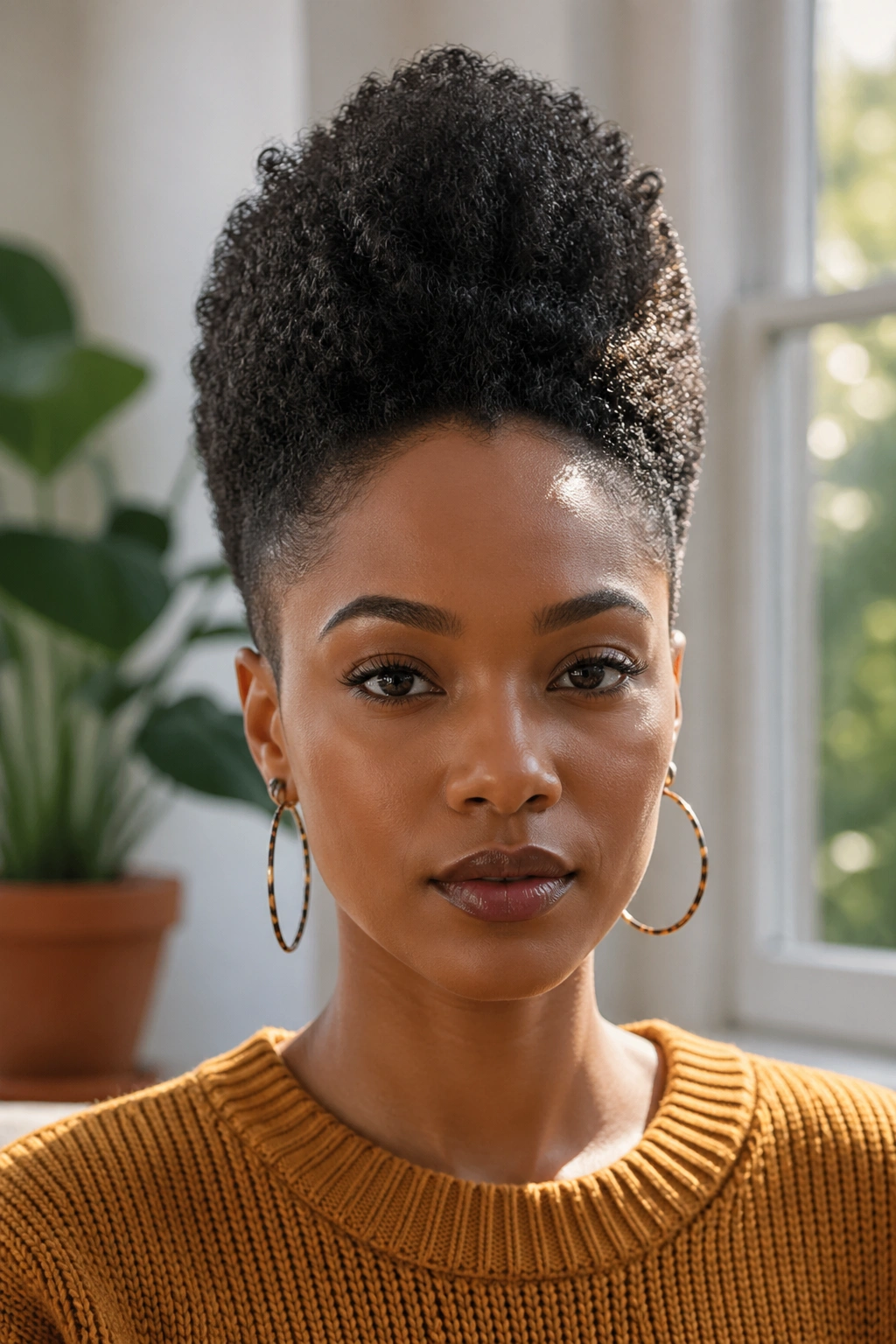
Taller than wide, slightly narrowed at the sides compared to the classic sphere. Created by trimming the sides a bit more closely than the crown and allowing the top to grow to a point of maximum height.
This is the most deliberate face-lengthening afro shape available. It works specifically well on round or square faces because it creates vertical emphasis that counters existing horizontal width. The shape echoes the proportions of an oval face, which is generally considered the most balanced facial structure — so creating an oval silhouette with your hair creates a naturally harmonious effect.
Not recommended for oblong or very long faces — the additional height exaggerates existing length.
8. The Frohawk with Braided Sides
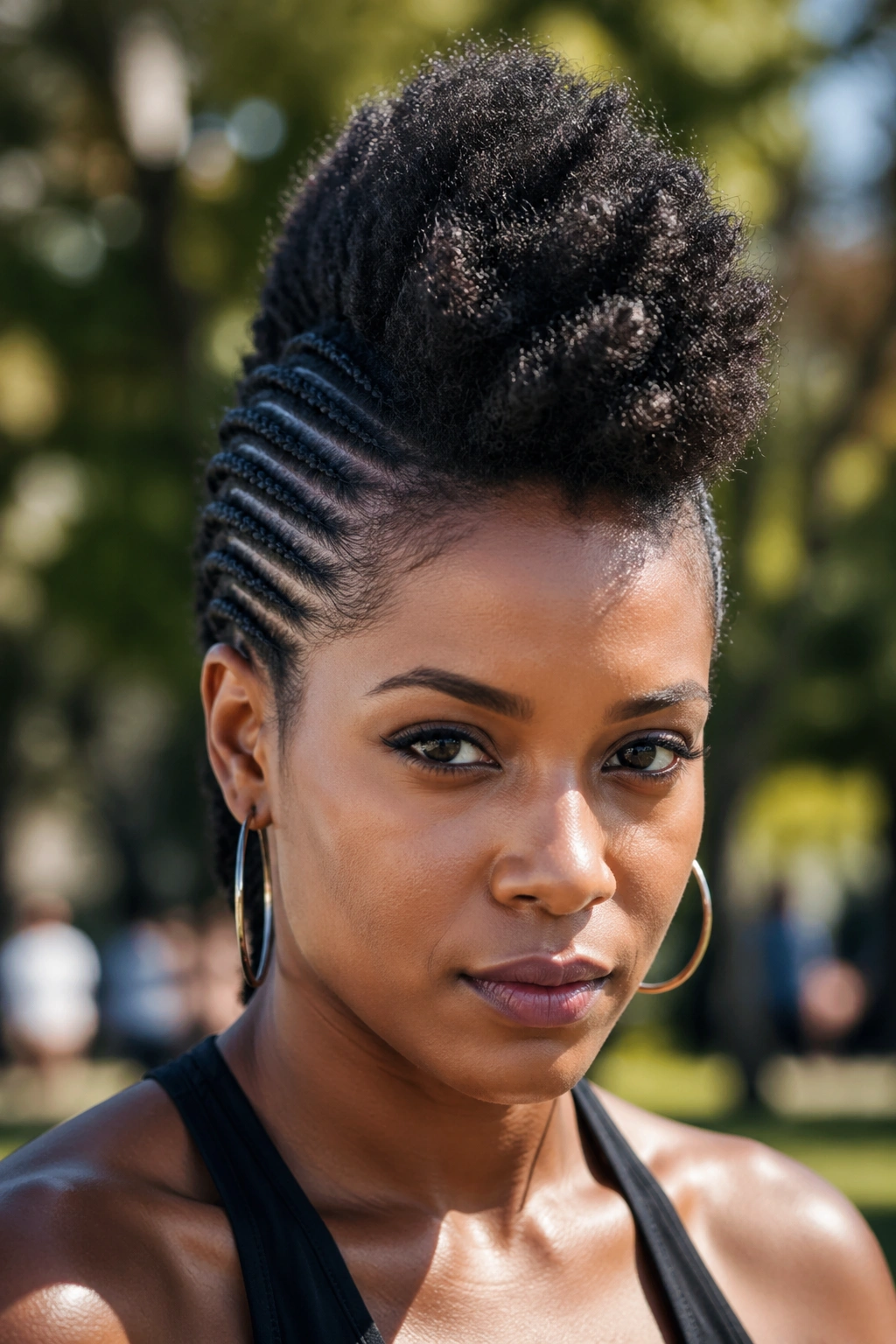
Flat braids (cornrows, flat twists, or feed-in braids) on both sides, with the central section left in its full natural afro state. The braided sides create a clean, tight surface that visually narrows the sides of the head; the natural center creates height.
Who This Is For
Because the braided sides lie flat and close to the head, this cut/style reduces apparent head width while increasing apparent height. For women with wider face shapes, this is an effective and visually interesting approach that doesn’t feel like it’s trying to hide anything — it’s a genuine style statement that happens to work well with wider proportions.
The braiding pattern can be varied: straight back, diagonal toward the center, curved designs. Each variation creates a slightly different visual line at the temples and sides.
9. The Defined Side Part Afro
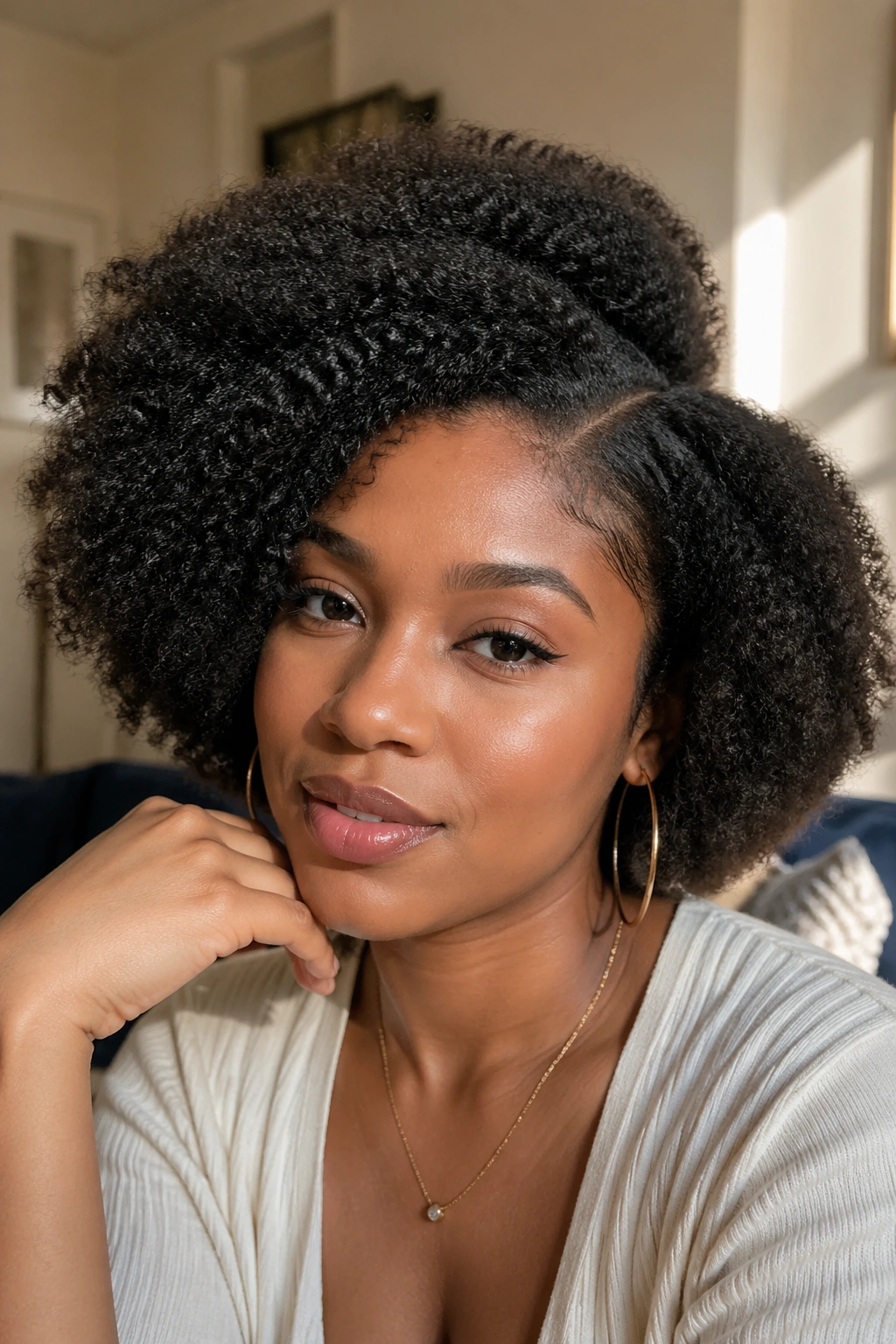
A hard part — a clean, razored line from hairline to crown on one side — shifts the visual center of the afro away from the center of the face. Most of the hair’s volume sweeps in one direction; the parted side stays lower and more contained.
This directional asymmetry creates a subtle diagonal visual across the face — one of the most flattering effects possible because diagonals naturally soften hard edges and create dynamic interest.
For square or angular faces, the sweep of volume across the face softens the jawline perception. For heart-shaped faces, volume swept to one side away from the wider forehead balances the upper and lower face proportions.
10. The Full Natural Afro with Crown Height
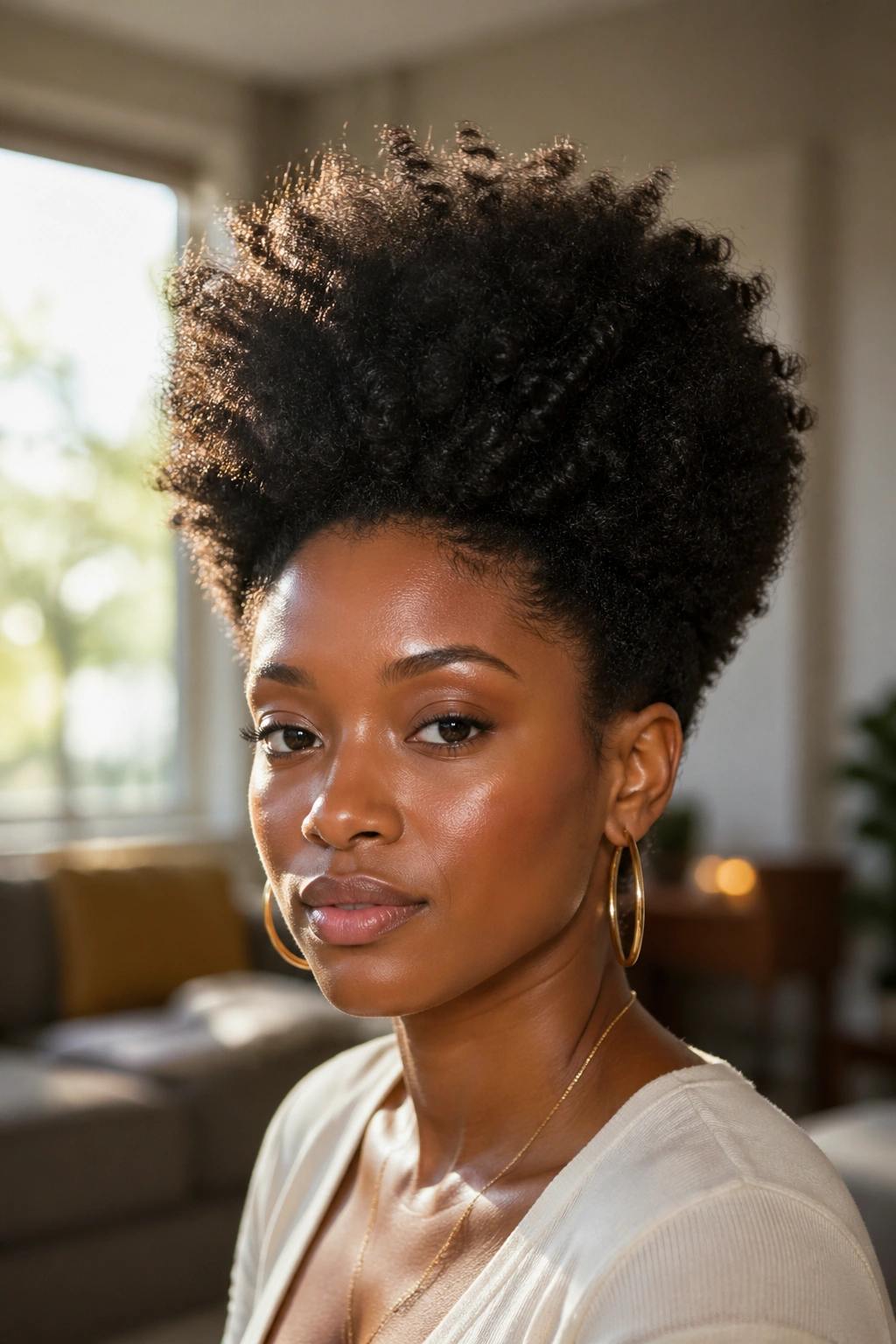
Distinct from the even sphere: this version allows the crown to grow significantly taller than the sides, creating a shape that’s specifically elongated at the top — like the sphere has been gently pulled upward at the center point.
The increased crown height adds apparent facial length without the strict geometric lines of the high top fade. It’s the organic version of the same principle.
This is the shape that occurs naturally if you consistently moisturize and protect your crown more attentively than your sides. Let it happen and then trim the sides to support the taller crown shape rather than evening everything out to a sphere.
11. The Afro Bob
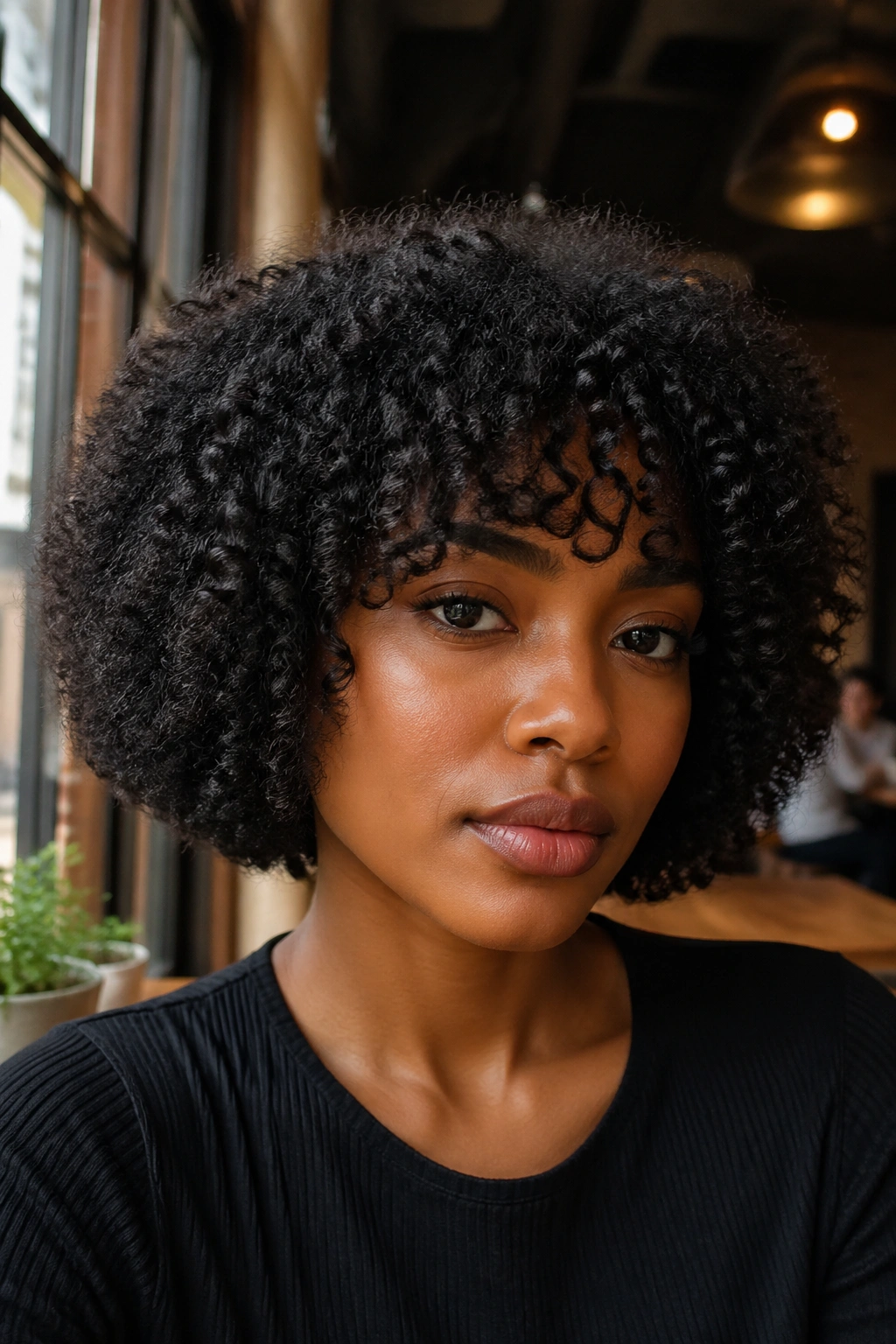
Grown to a length where — in its natural state — the hair creates a silhouette that references the bob: shorter at the back and sides, slightly longer framing the face at the chin-to-shoulder level.
The afro bob frames the face specifically at the jaw level, which creates emphasis at the widest point of many face shapes. For round faces, this can emphasize width. For oval or long faces, it creates a beautiful emphasis at the jaw that adds visual presence.
The bob shape requires more maintenance than many other afro shapes because the length differential between front and back needs to be preserved as the hair grows in. Trims every six weeks maintain the intentional shape.
12. The Wash-and-Go Natural Shape
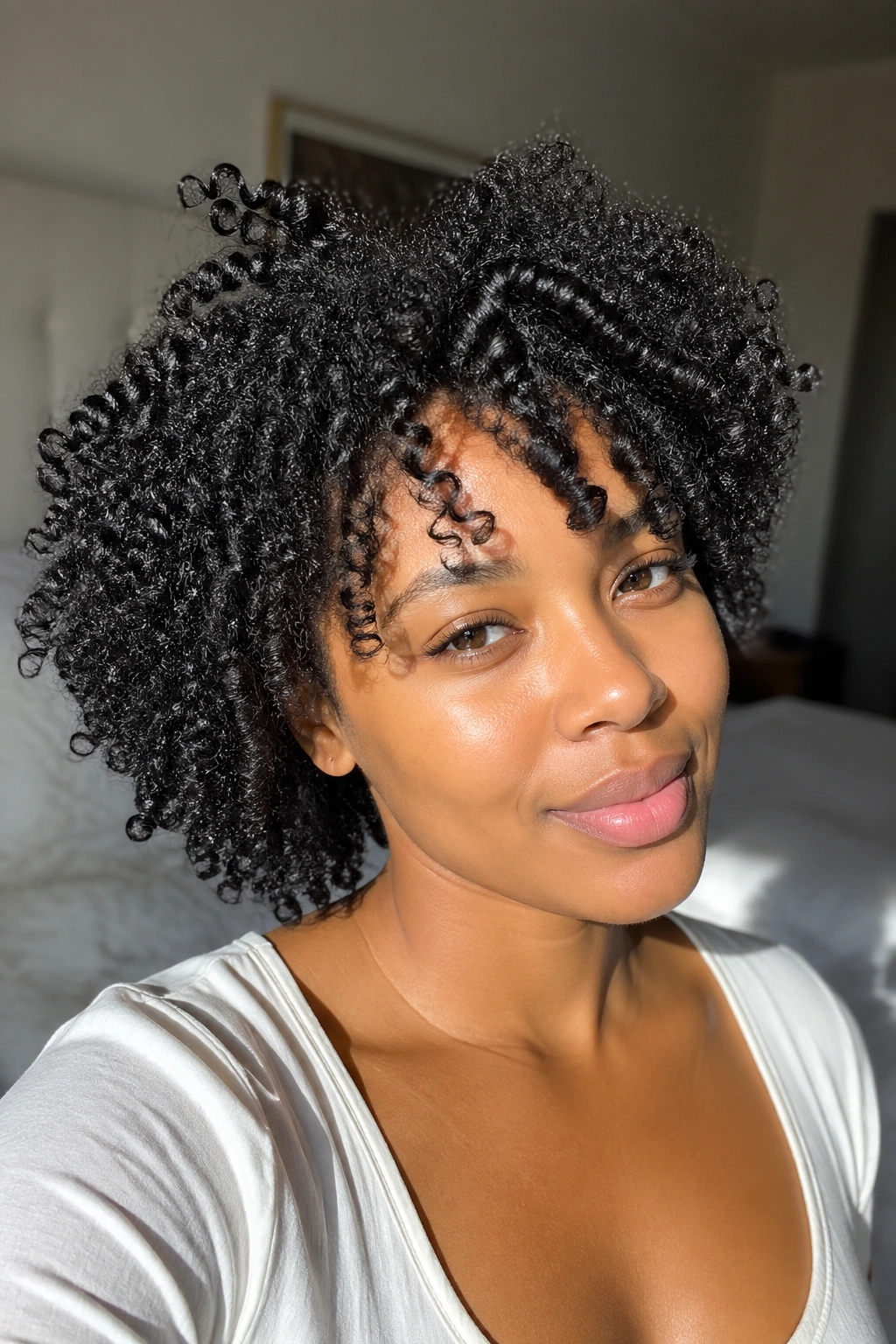
No styling intervention. Moisturized, sealed, and left to its own natural pattern — whatever your specific curl expresses without manipulation.
This is the most honest version of your hair and of your face. The natural shape your hair takes when well cared for is the one it wants to be in; it’s the one that grows from your specific scalp in your specific pattern. The wash-and-go reveals that.
For face shape purposes: this is the least prescriptive option because it’s not trying to create any specific silhouette. It’s the shape your hair decides on. Many women find that this natural default — after years of growing and understanding their hair — is exactly the most flattering shape for their face precisely because it’s the most authentic.
13. The Micro Afro
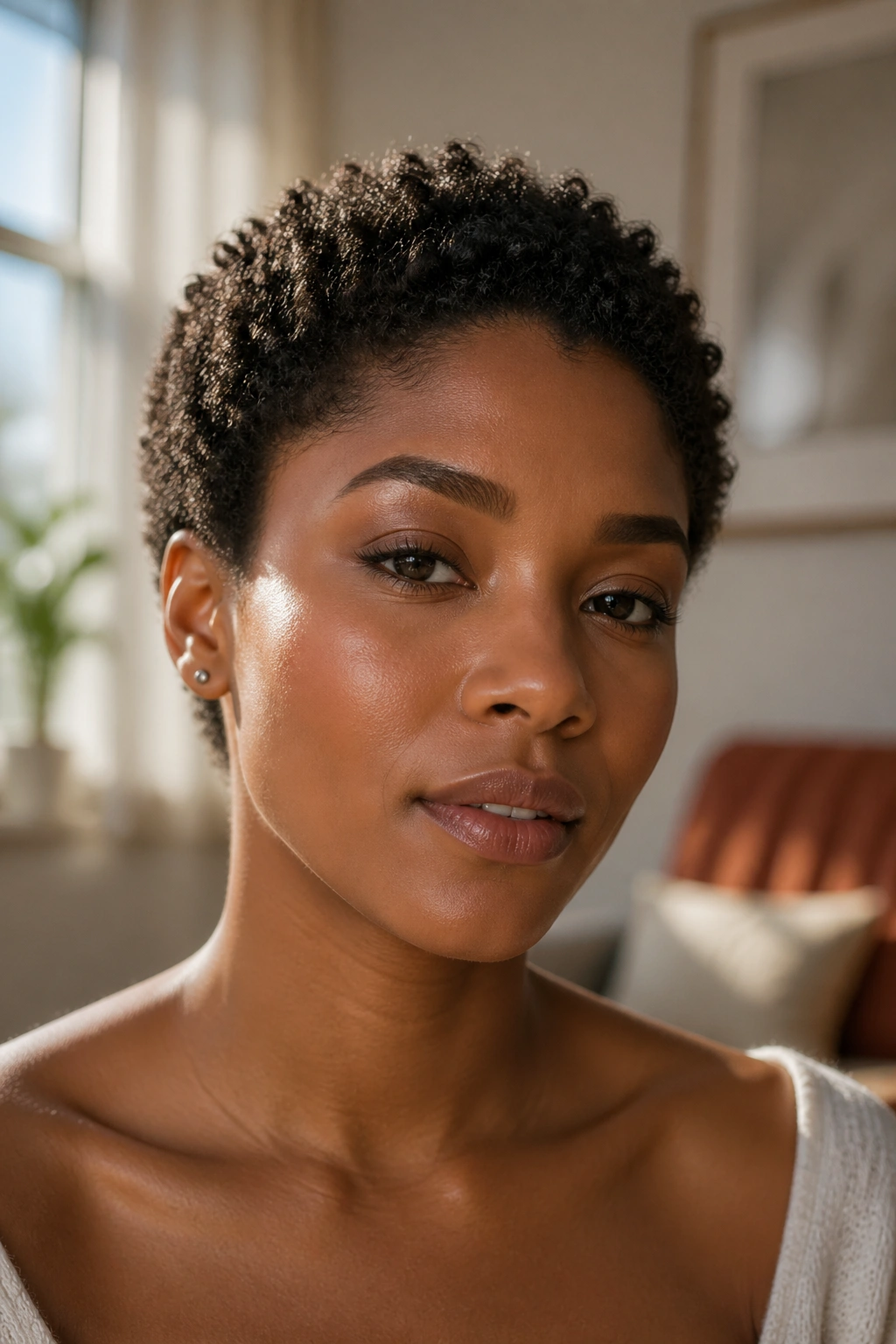
Shorter than the TWA, longer than a buzz cut — the micro afro at roughly one to two inches shows the beginning of natural pattern. The curl or coil is just starting to emerge. At this length, the hair has enough texture to show character without enough length to create significant volume.
The micro afro is minimally directional as a face shape tool. What it does is put emphasis on the facial structure, the eyes, and the bone structure with very little distraction. For women with very defined features they want to highlight — strong brows, defined cheekbones, distinctive lip shape — the micro afro lets those features speak loudly.
14. The Natural Curly Shag with Layers
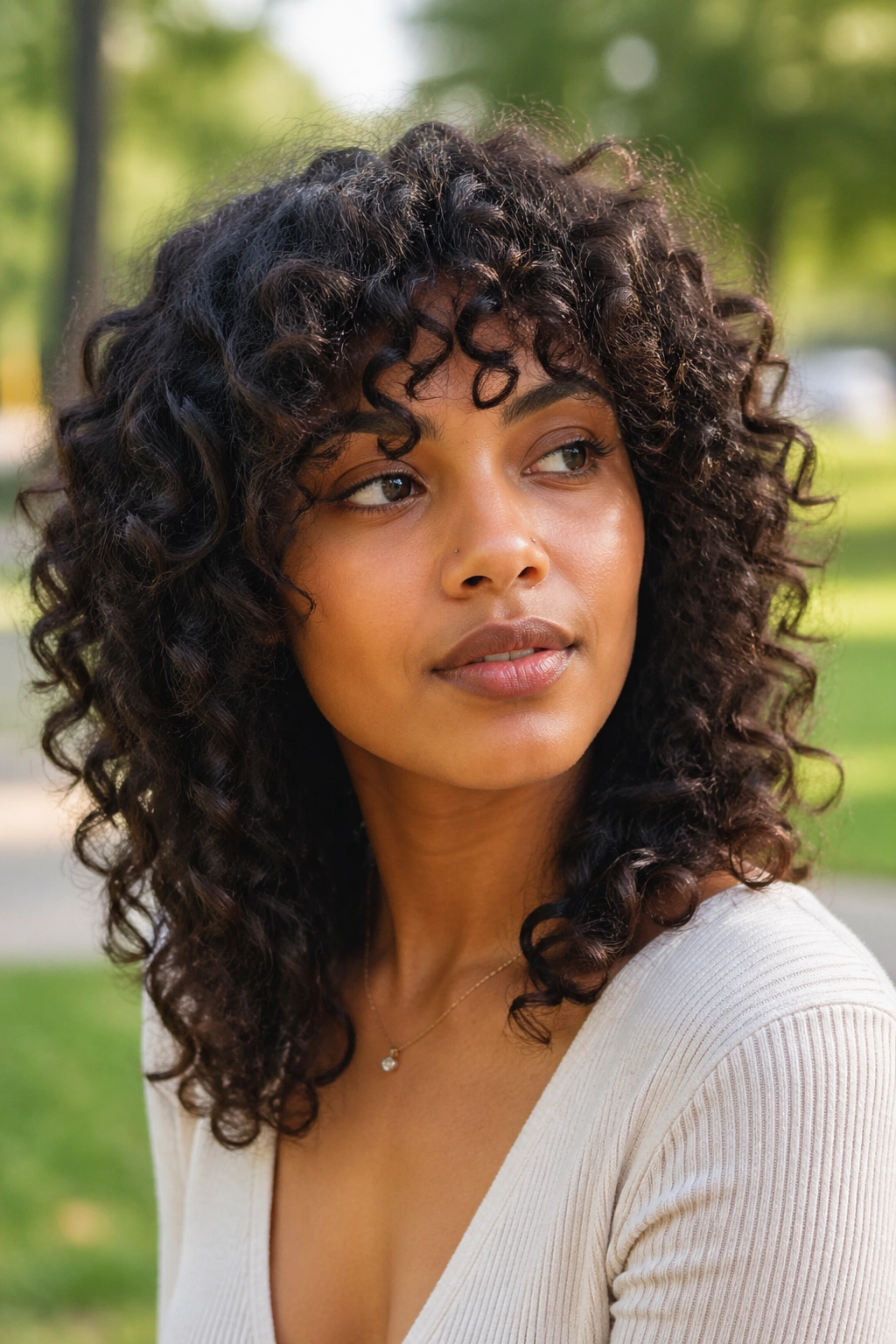
Layers cut into medium-length natural hair — each layer cut at the natural curl’s length, not stretched — create a cascading, multi-level volume that reads differently from every angle. From the front: a framing shape that’s widest at the sides and tapers upward. From the side: visible depth and movement. From behind: layers that show the hair’s natural length variability.
The layered shag shape works across face structures because the layers naturally adapt their visual effect to different features. On a round face, layers can be cut slightly longer at the sides (to avoid adding width there) and more voluminous at the crown. On an oblong face, layers at the sides create horizontal emphasis that counters vertical length.
The cut requires a stylist who understands how to cut layers in natural curl — not stretched, not blown out, but at the curl’s natural length. This is a specific skill set.
15. The Sculpted Crown Afro
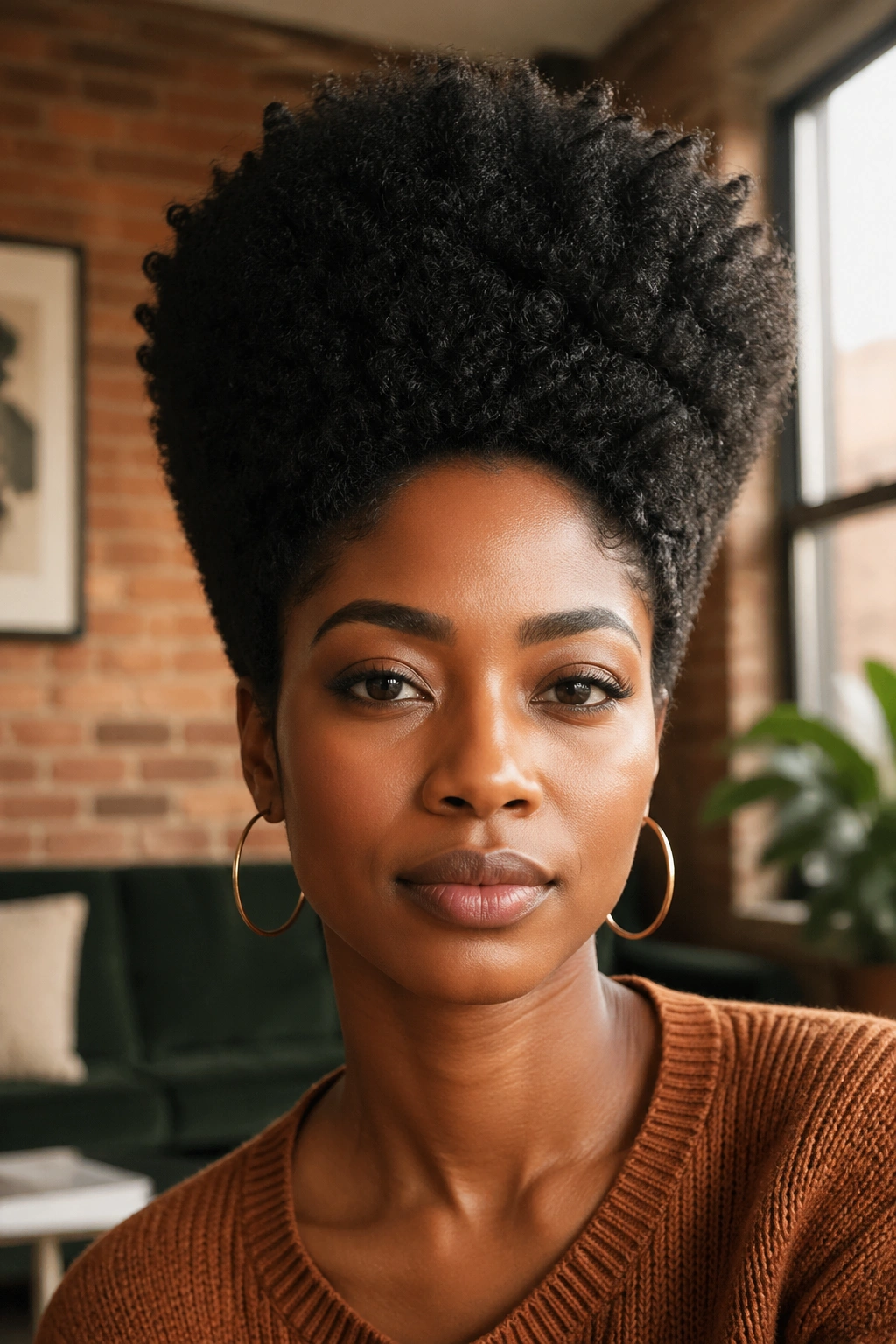
The afro shaped with more deliberate architectural intention than a natural sphere or oval — a higher, more dramatic crown that creates a sculptural effect. Not a high top fade’s flat plateau, but a pointed, rounded, or intentionally shaped crown that rises with visual purpose.
This is the cut for women who want their hair to read as an art form. It requires both the right density of hair and a stylist willing to think sculpturally rather than categorically.
Works best on oval and long faces where the additional crown height doesn’t create proportion imbalance. On round faces, the height can work if the sides are kept tight enough to prevent width amplification.
16. The Low Fade with Natural Crown
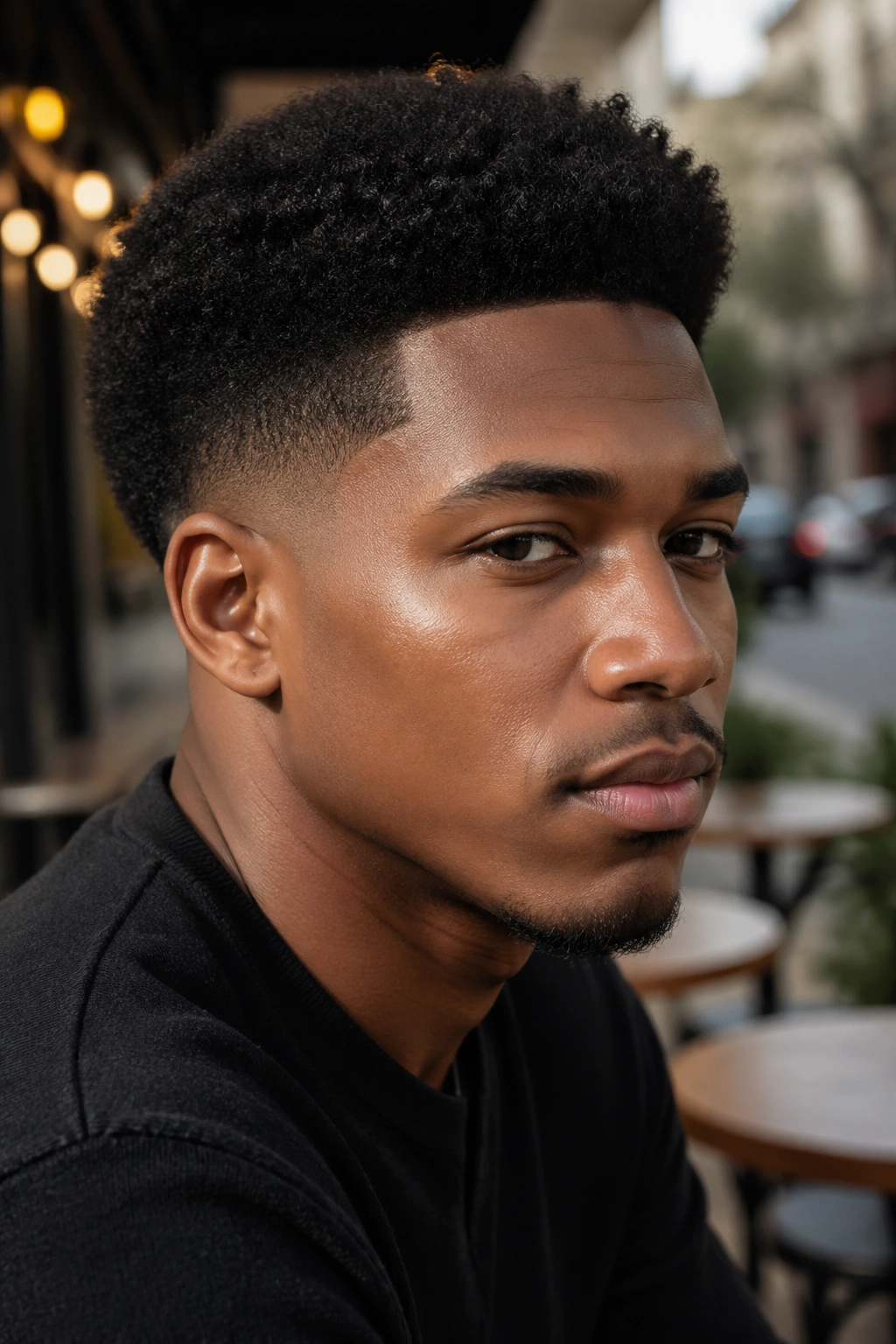
A very close fade — from skin to short natural at the lower sides and nape — transitioning to the full natural crown. The fade is low on the head, leaving more of the natural hair visible and creating a gradual rather than sharp transition.
The visual effect: the fade reduces apparent width at the sides and back, while the natural crown expands upward and slightly outward. For faces that are widest at the middle (cheek width exceeds both forehead and jaw), this structure can be particularly effective — the fade’s tightness at cheek level reduces the emphasis there.
For all face types: the low fade is one of the most universally flattering cut structures available for natural afro hair because it’s architecturally clean without being extreme.
17. The Flat Twist-Out Shape
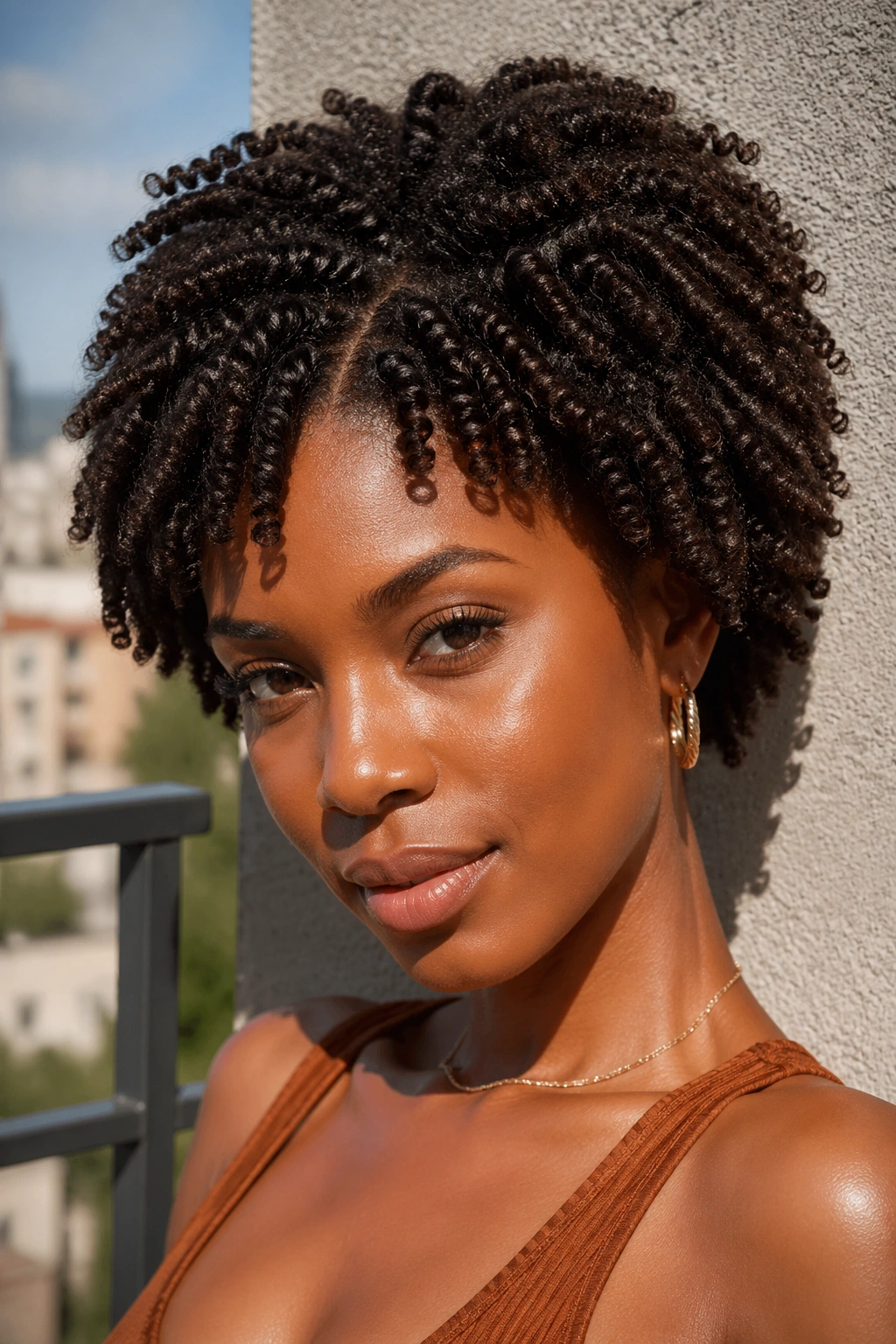
A cut and styling approach combined: the natural hair cut into a specific shape (even sphere, slight taper, or elongated oval), then styled using flat twists that are removed after drying to create a defined, stretched curl pattern.
The flat twist-out creates more length from the same amount of hair by stretching the curl — which changes the visual silhouette compared to a wash-and-go. More length means more control over the final shape, which can be particularly useful for very short hair that doesn’t have enough length to create the shape you want in its natural state.
For face shape purposes: the stretched curl of a twist-out creates a shape that’s between the natural shrunk state and the fully elongated stretched state — slightly taller, slightly less wide than the wash-and-go shape. On round faces, this elongation can help.
18. The Afro Puff as a Daily Silhouette
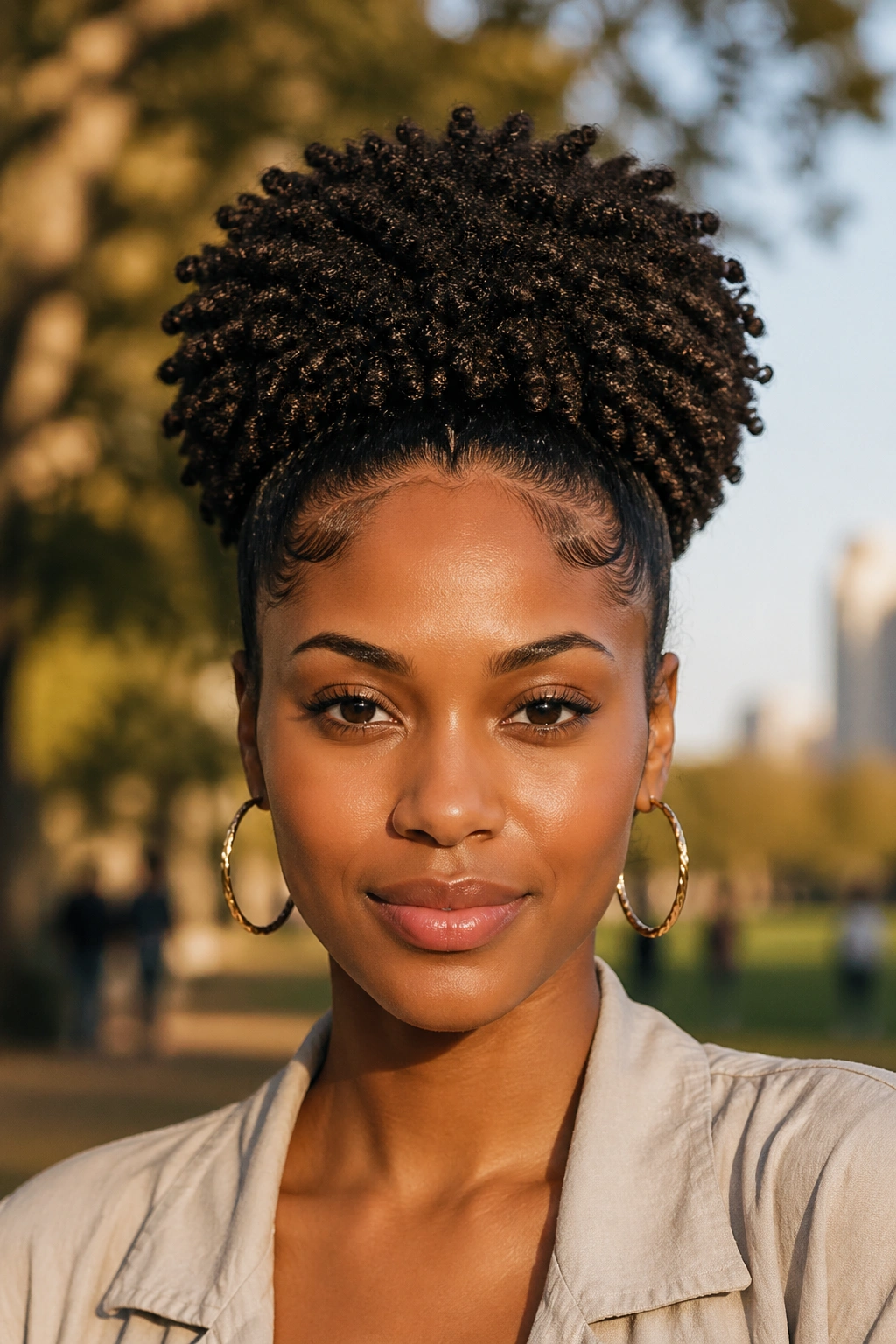
The afro puff — natural hair gathered and secured at the crown or back of the head, with the gathered hair fanning out in a cloud shape — is so often treated as a quick convenience style that it’s easy to forget it’s also a legitimately stunning shape that many women wear as their primary daily look.
The puff’s position changes its effect on face shape entirely:
High puff (at the very top of the head): dramatic height, lifts apparent facial length, emphasizes the face fully exposed beneath it. Best for round and square faces.
Mid-crown puff: balanced volume, less dramatic height, frames the face with a soft halo effect. Works across multiple face shapes.
Low puff or nape puff: more casual, less height, creates visual interest at the back. On long faces, this is the most balanced position.
19. The Big Chop Starting Shape
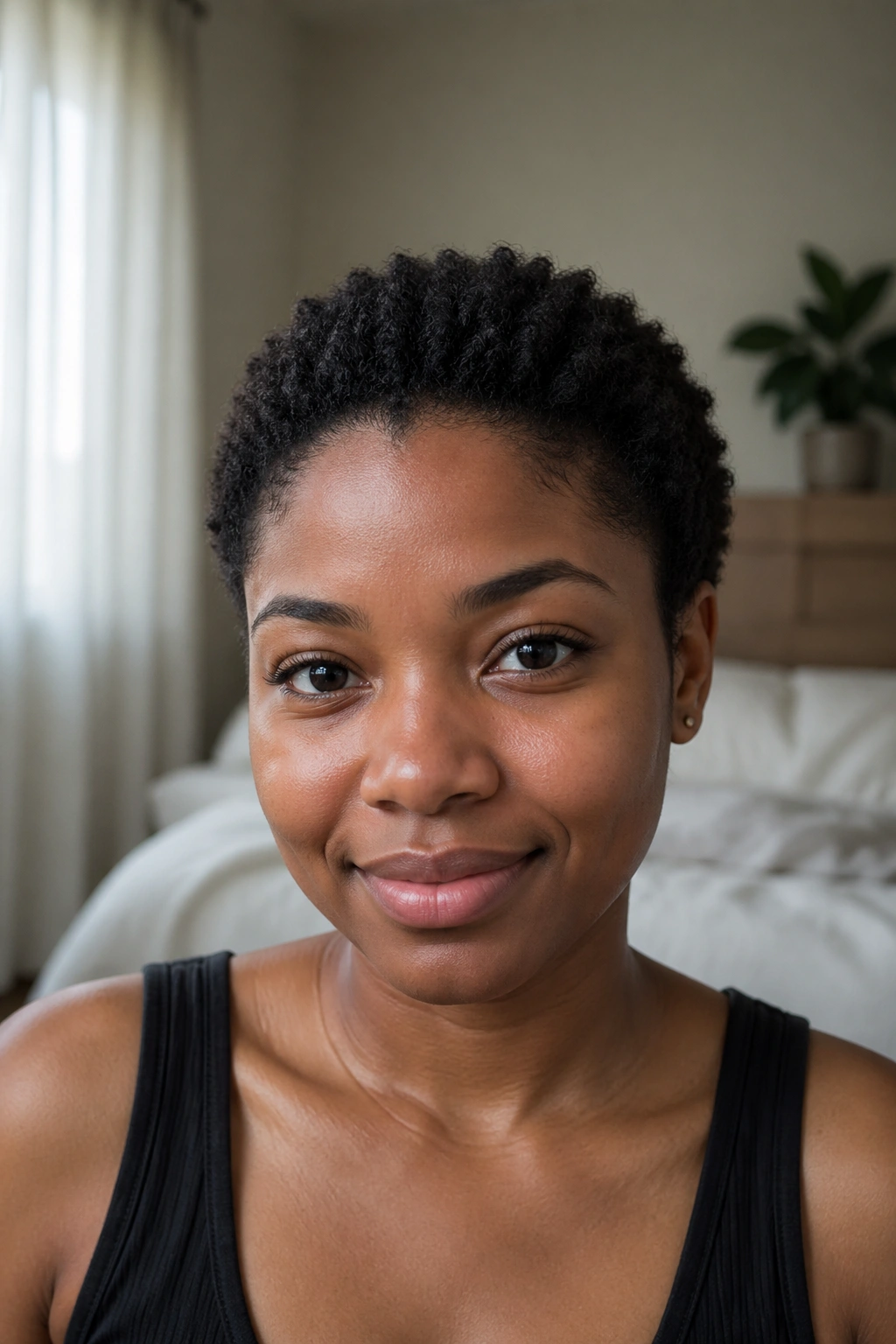
The big chop — cutting all chemically processed or heat-damaged hair away to start fresh with the natural new growth — results in whatever the natural root shape is at that length. For some women this is a tight TWA; for others with faster growth or a longer transition, it might be a few inches of defined curl.
The big chop is special because it’s the beginning of a relationship with your natural hair, and the shape that emerges isn’t chosen in the traditional sense. Your hair reveals itself. What makes it beautiful is the authenticity: the face shape you see in the mirror and the hair that frames it are both exactly what they are, without alteration.
As a face-shape consideration: the big chop’s minimal length is the most transparent option — no manipulation, no adjustment, just your face and your hair’s natural beginning.
20. The Cornrow Base with Natural Crown Release
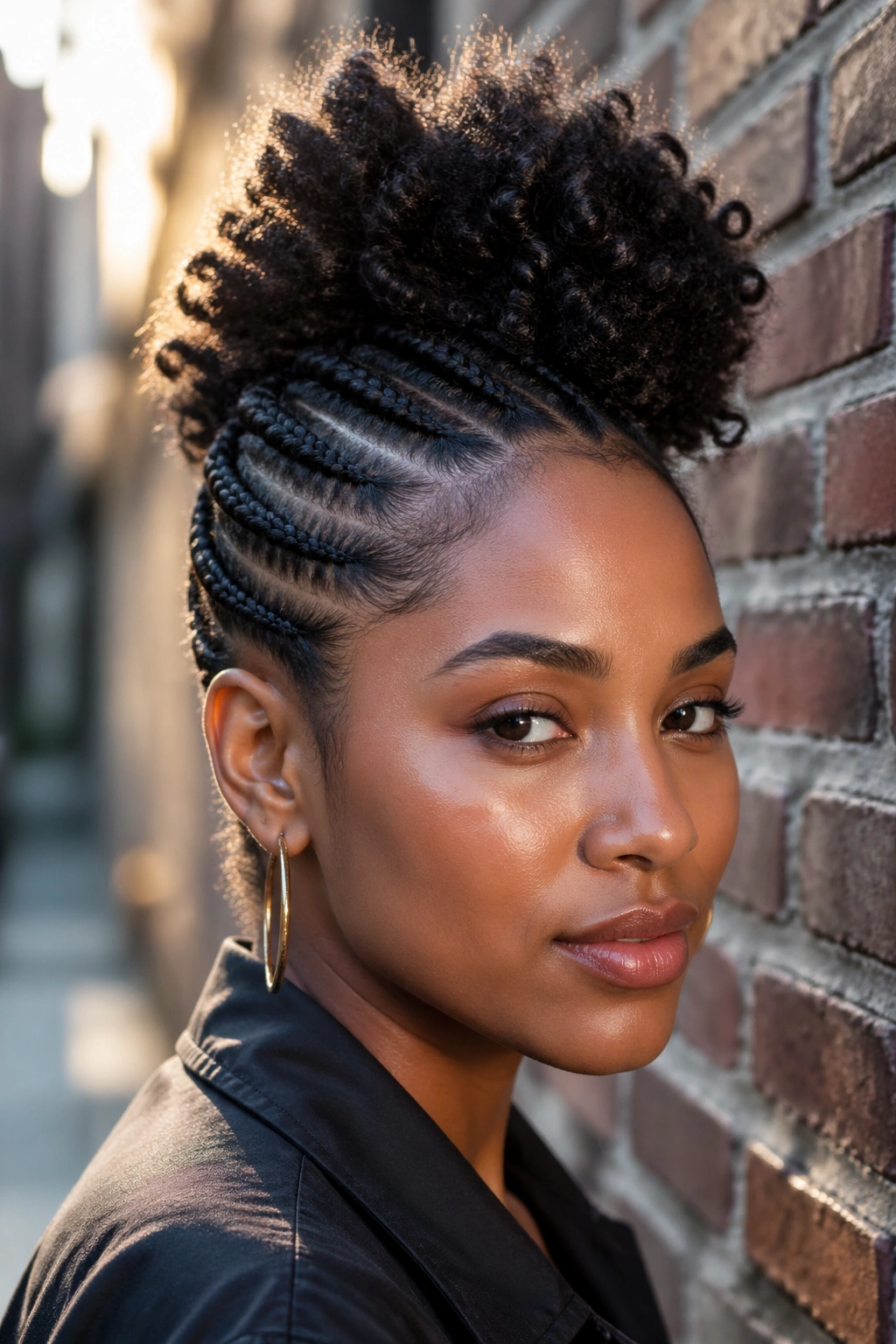
Cornrows — braids worked flat along the scalp in sections — covering the sides and back, with the top section of natural hair left unbraided and expressed in its full natural state. The cornrows create a clean, tight base that narrows the visual profile from the ears down; the released crown creates a puff or small afro above.
The visual effect is similar to the frohawk but with more pattern and texture at the sides, creating a richer, more complex look overall. The cornrow patterns themselves can be simple parallel lines or intricate designs — the level of artistry at the base changes the look’s formality.
For face shape: the tight sides reduce apparent width; the crown volume adds height. This is one of the strongest combinations for balancing round or square faces.
21. The Natural Afro with Front Length Variation
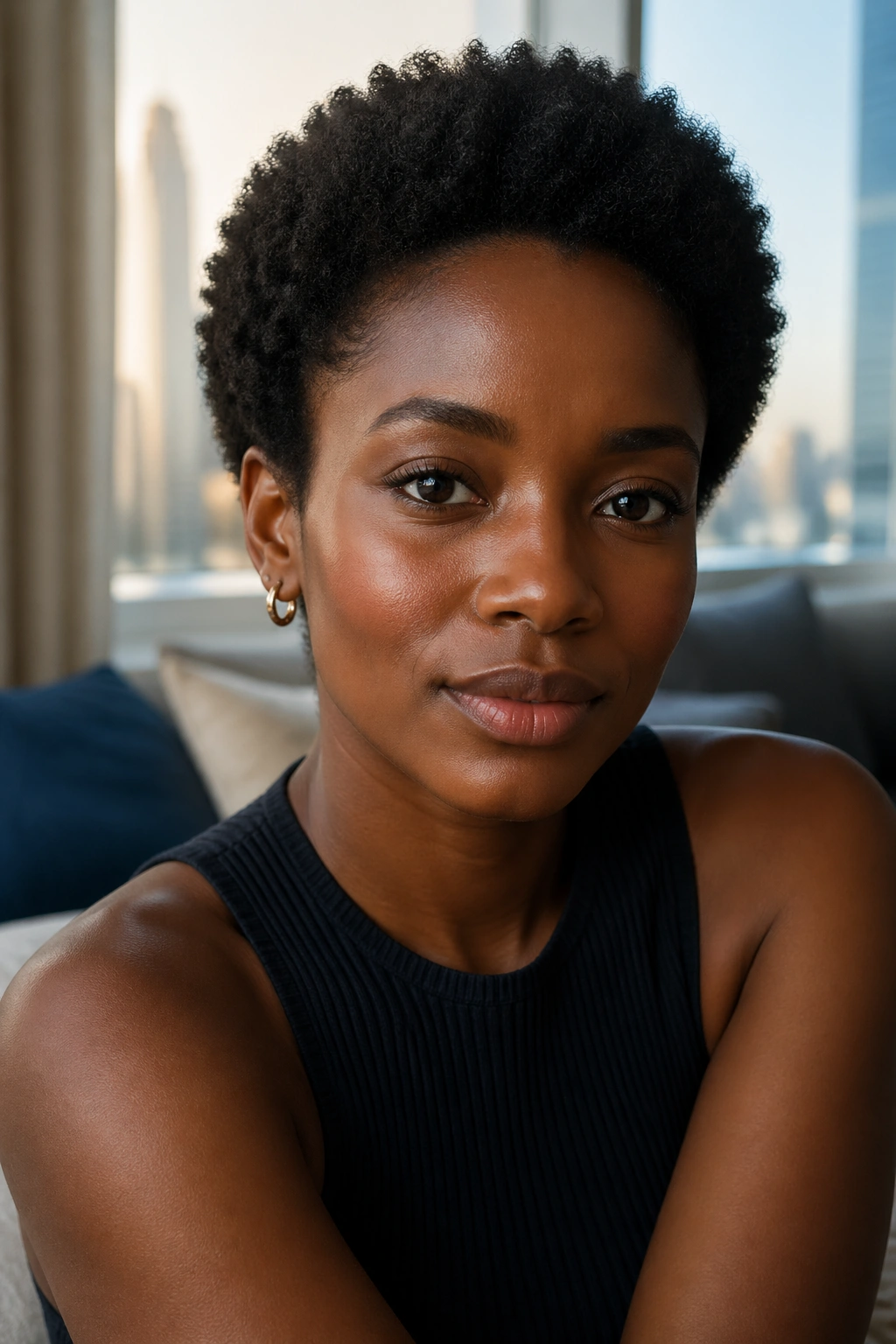
Growing the front sections of the hair slightly longer than the back and sides creates a shape where the front hair — visible from the front — frames the face at a longer length, while the overall silhouette remains more rounded and managed when viewed from the side or back.
This is a less common but highly effective technique for women who want face-framing length at the front without committing to the full grow-out that front length requires on all sections. The front-heavy length creates a subtle forward tilt to the shape that draws the eye toward the face from the front.
On oval and heart faces, this front-length variation frames the wider forehead and cheekbones with gentle volume at a longer length. On long faces, it can help balance length if the front sections frame the face at the widest jaw point.
22. The Defined Natural with Elongated Crown
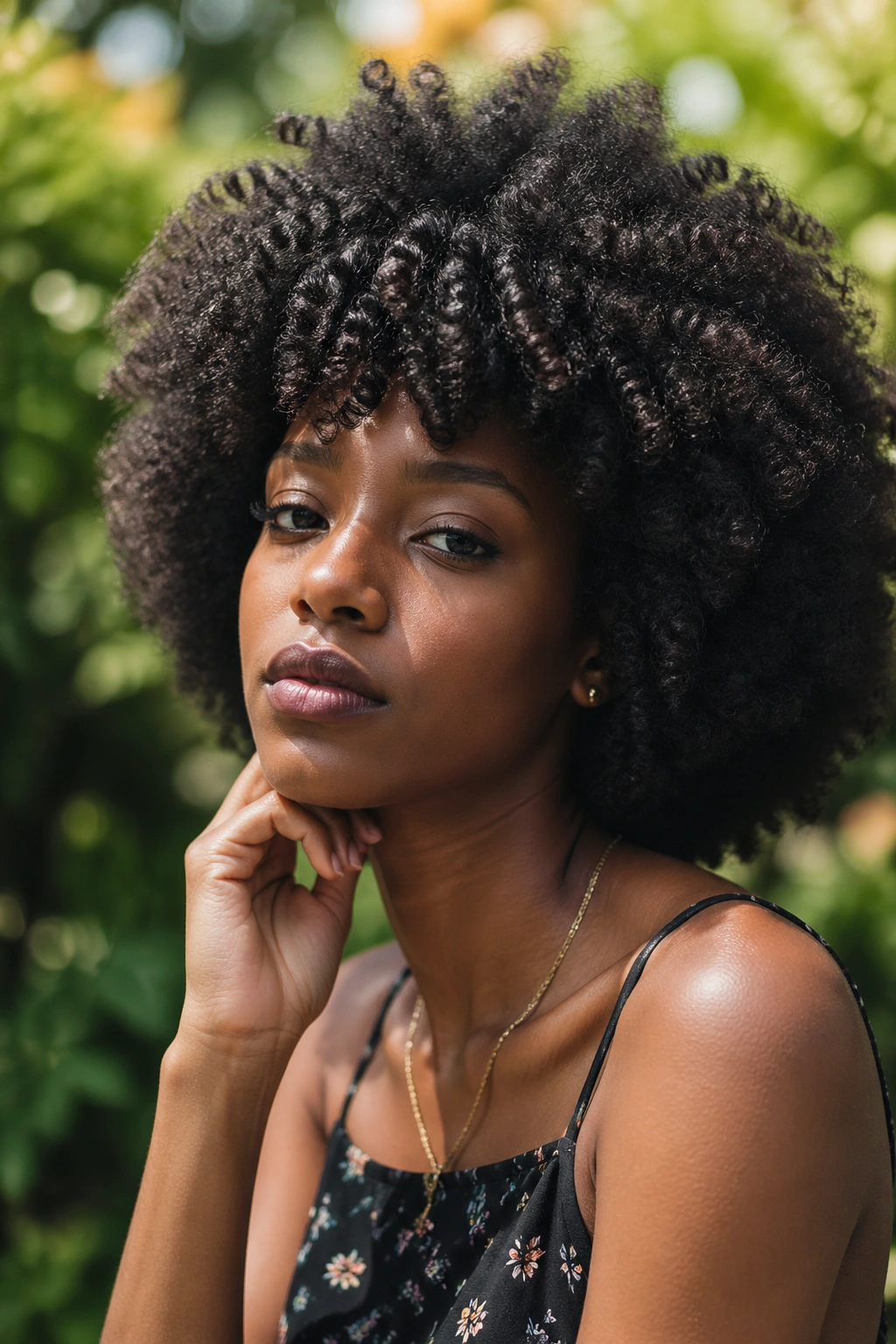
Distinct from the styled crown: the elongated natural is achieved through growth management and strategic maintenance rather than sculpting or cutting. You simply protect the crown height (pineapple nightly, avoid compression, keep moisturized) while trimming the sides and back more regularly to keep them from expanding outward to match the crown’s growth.
Over time, the crown becomes notably taller than the sides — not dramatically, but visibly. The shape that results is organic and reads as natural hair at its most fully expressed rather than a precision cut, which is an aesthetic in itself.
23. The Wide Sphere for Narrow Faces
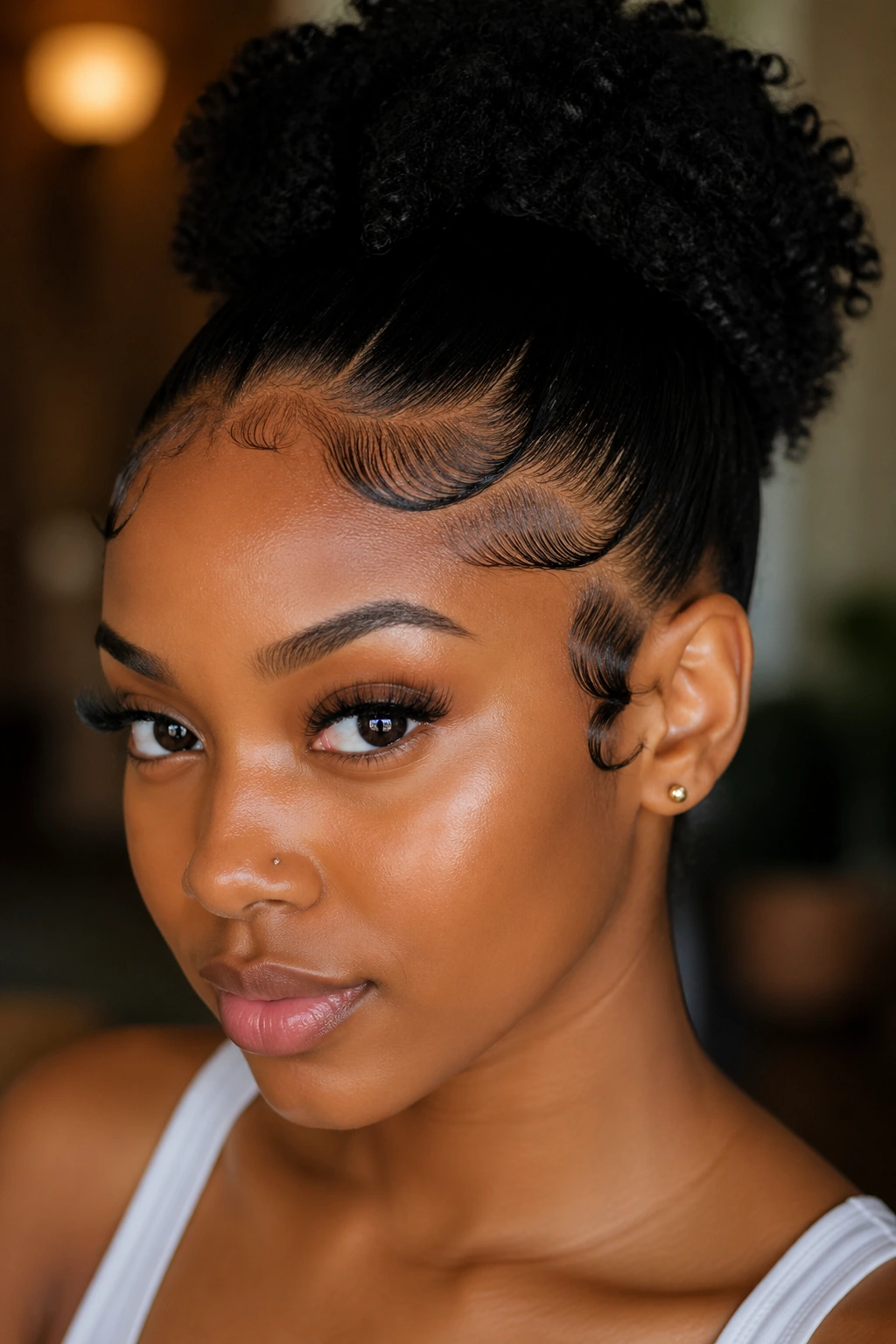
The intentional reverse of most face-shape advice: a deliberately wide afro sphere, grown to maximum width without added height, is specifically effective for narrow or oblong faces where the goal is to add apparent width rather than length.
Growing the natural afro wide requires protecting the sides from trimming while keeping the crown in check — the opposite of the height-focused maintenance most cuts need. It also requires maximum moisture retention to maintain the side volume rather than letting it collapse inward.
On a narrow face, a wide, flat sphere creates horizontal emphasis that adds the appearance of width — making the face read as more oval than elongated.
24. The Pompadour-Inspired Natural Afro
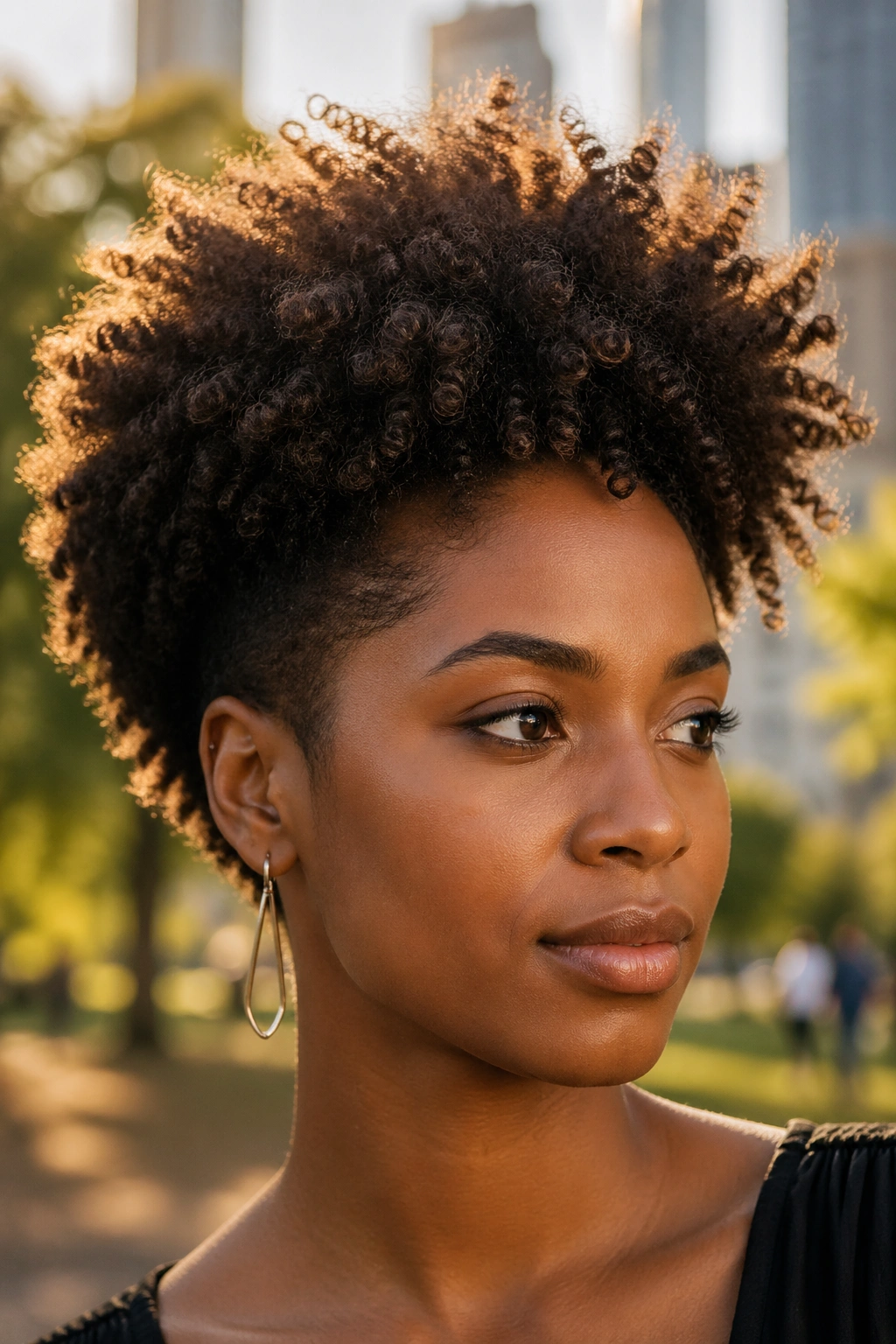
Volume swept forward and upward over the forehead — not product-stiffened like a traditional pompadour but created through the natural lift of the afro’s root — creates a shape with significant vertical emphasis at the front hairline.
The front sweep is achieved by moisturizing and defining the front section separately, then guiding it forward and upward while the rest of the hair is styled backward and outward. The result: a distinct front lift that creates height at the face’s center and draws the eye immediately to the facial features.
On round faces, the frontal height adds length appearance. On square faces, the softness of the natural hair’s forward sweep softens the forehead and jaw relationship.
25. The Textured Shaping with Edge Design
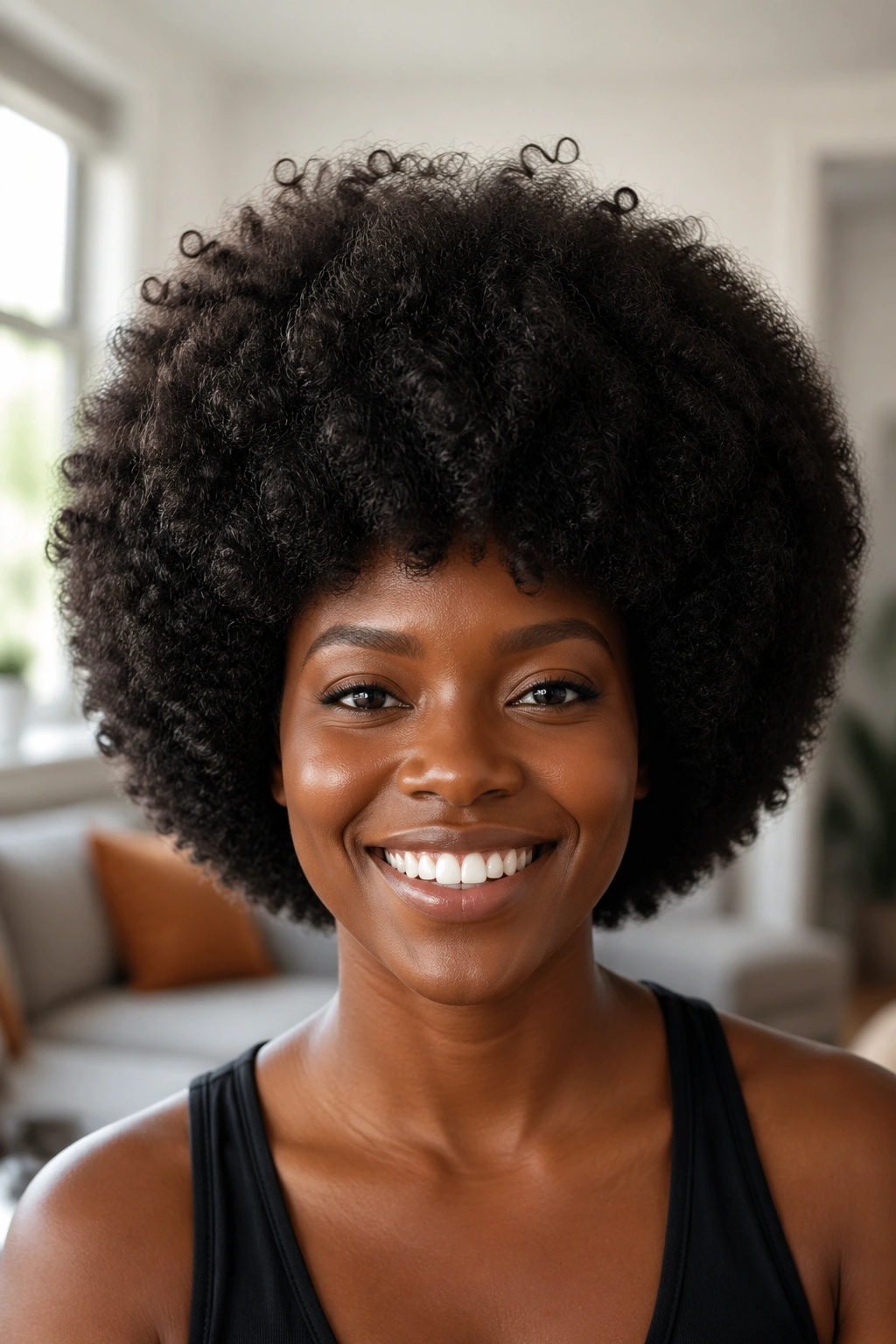
The last entry isn’t purely a cut shape — it’s a styling system that can apply to almost any afro cut: deliberate, designed edges combined with a shaping approach that creates an intentional overall silhouette.
Textured shaping means the cut is done with the intention of letting the natural texture of the hair be visible and organized rather than trimmed into perfect smoothness. Coils, curls, and kinks are preserved as visual elements of the shape. The styling edges — laid baby hairs in curved or geometric patterns along the hairline — create the frame around the shape.
The Complete System
This approach works across all face shapes because it’s ultimately about the quality of the finish rather than the specific silhouette. Clean edges and deliberate texture management can make a grown-out afro look as intentional as a freshly cut one. For women who go longer between appointments, mastering this finishing approach extends the polished life of any cut significantly.
The edge patterns themselves can mirror the face’s angles: straight diagonal edges for square faces, curved edges for round or oval faces, asymmetric patterns for faces that want visual interest rather than symmetry.
When the Rules Stop Applying
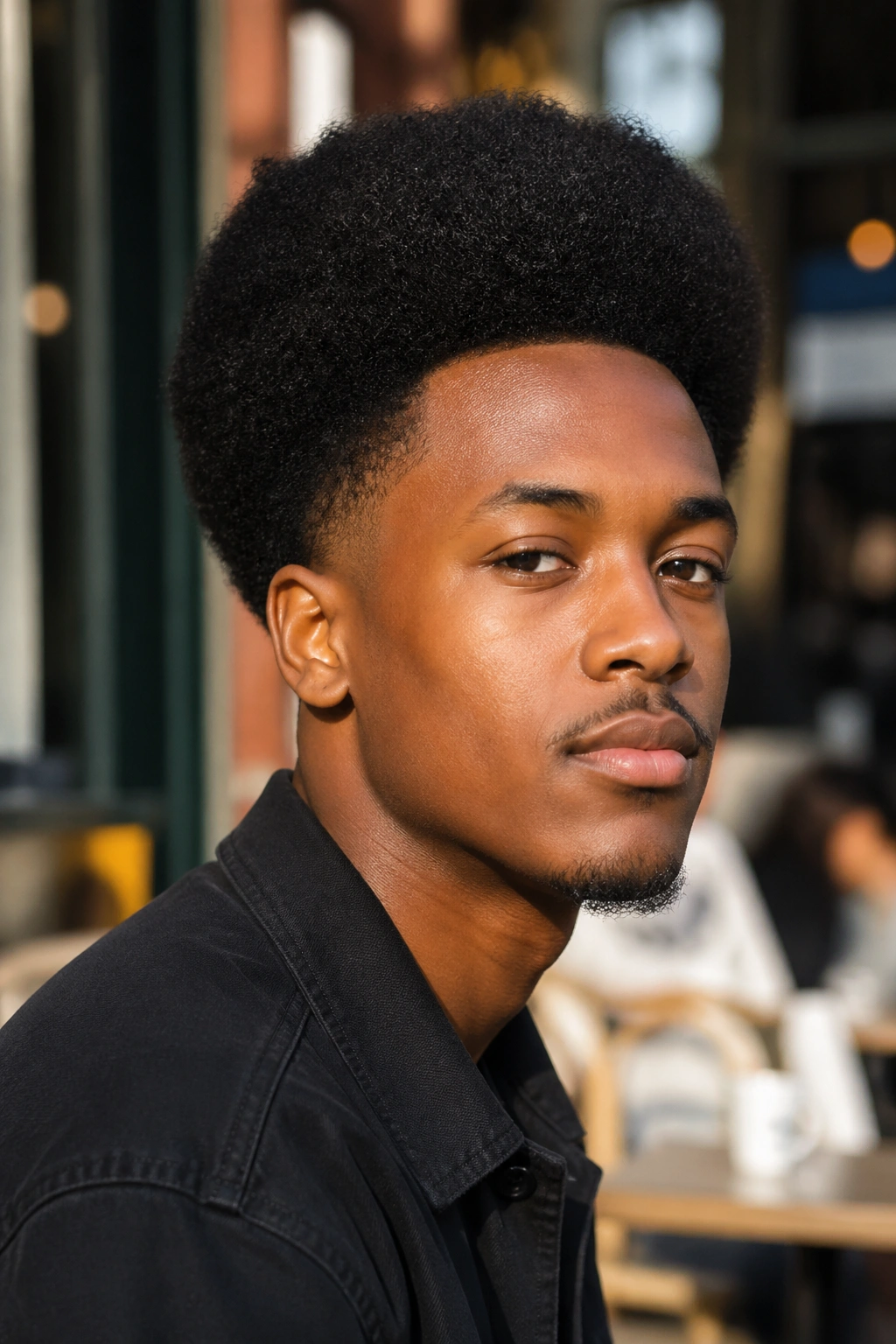
After all 25 options, the honest conclusion is this: the best afro haircut is the one you love wearing. The face-shape advice is a starting point for exploration, not a limitation. Some of the most striking natural hair looks come from women who ignored every conventional rule about their face shape and chose a cut because it felt right.
Style knowledge is most useful when it gives you information — about why something works or doesn’t, about what the visual relationships are creating. Not when it becomes a new set of restrictions.
Your natural afro hair has never followed someone else’s rules. Your haircut doesn’t have to either.
Working With a Stylist Who Gets It
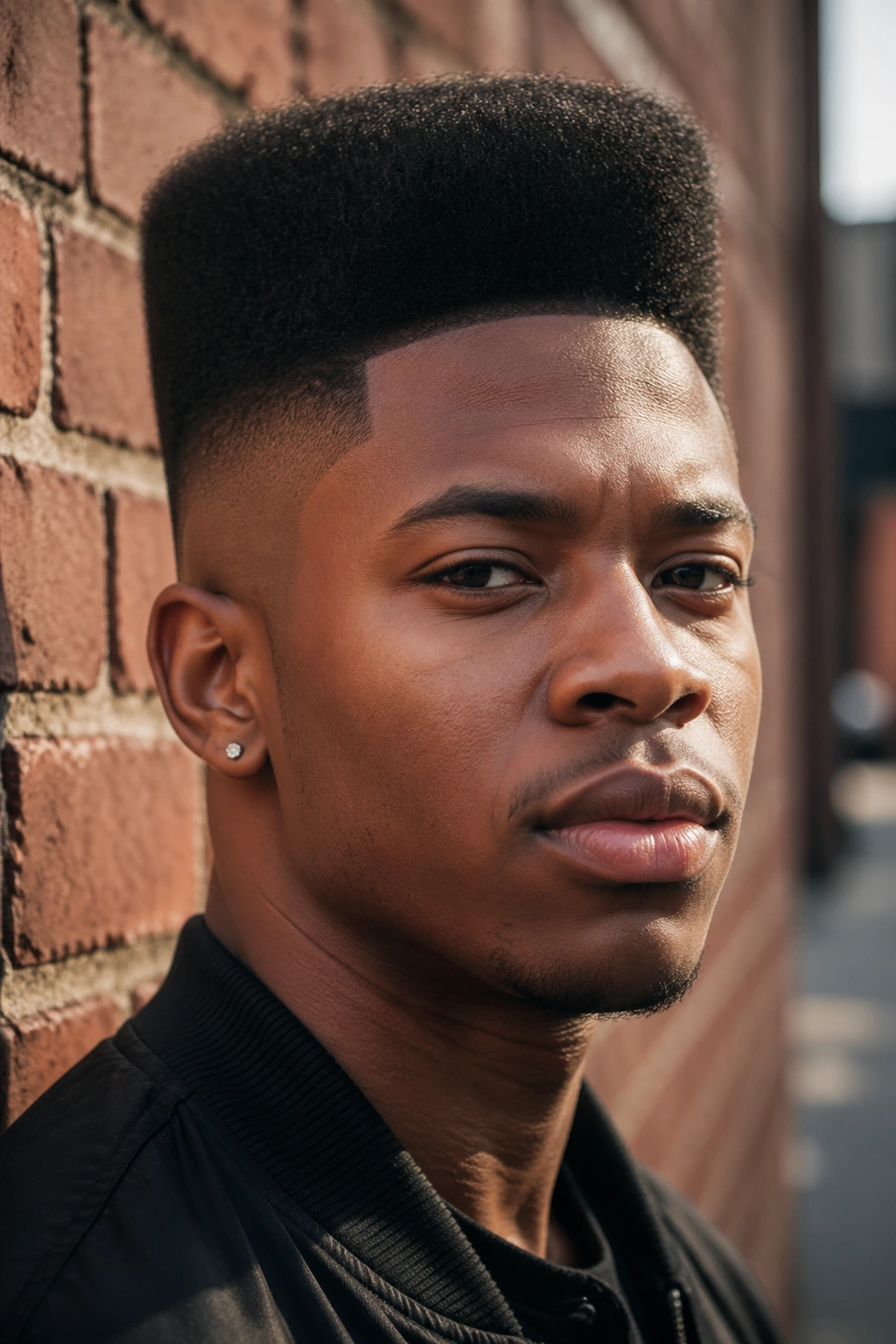
Finding a stylist who truly understands natural afro hair cutting — not just natural hair styling, but actually cutting the hair to create a shape that works with the texture — makes an enormous difference. Before committing to a significant shape change, have a conversation about the specific shape you want, your daily maintenance capacity, how your hair responds to moisture loss, and what your growth pattern is like.
A good stylist will ask questions rather than just proceeding. They’ll look at your hair in its natural state — not blown out, not stretched — and evaluate the shape with you rather than imposing one on you. That collaboration produces cuts that look like you chose them, because you did.
The Connection Between Hair Confidence and the Right Cut
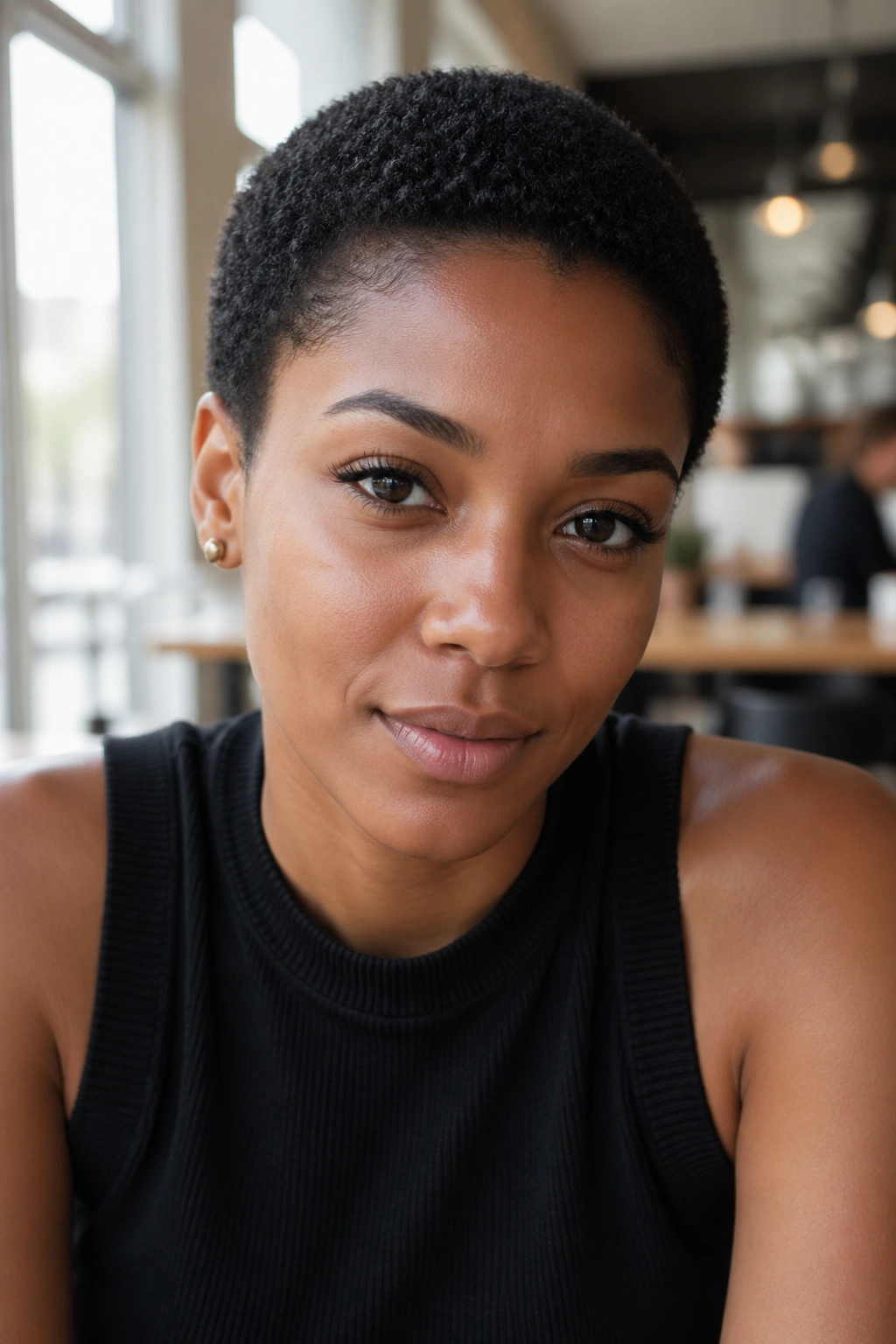
There’s a point that women who’ve been wearing natural afro hair for years consistently describe: finding the right cut changes how you move through the world. Not because other people’s perceptions change dramatically (though sometimes they do), but because the internal alignment of wearing your hair in a way that feels completely yours produces a confidence that’s physically felt.
That confidence is what this is really about. Face shapes and visual proportions are useful tools. But the cut that makes you feel undeniably, completely yourself — that’s the cut that flatters every face, including yours.
