



The 90s did something specific to Black hair culture that hasn’t been replicated before or since. It was a decade of unapologetic volume, graphic edge work, and a refusal to apologize for space — the bigger the better, the more defined the more respected. Afro hairstyles with a 90s vibe pull from that specific energy: bold silhouettes, visible texture, geometric shapes, and a confidence that borders on defiance. These are not quiet styles. They are not background styles. They are the whole point.
What makes a hairstyle feel distinctly 90s isn’t always obvious when you break it down. It’s a combination of elements: elevated crowns, flat tops, visible baby hairs styled into waves or swoops, high puffs, graphic braided designs, and color that didn’t try to blend into anything. The palette leaned into contrast — jet black against honey blonde, deep auburn against dark brown. The shapes were architectural. The edges were art.
None of this is dated. That’s the remarkable thing. When you wear one of these styles, it doesn’t read as costume — it reads as style confidence that knows exactly where it came from. And that’s a very different thing.
The Decade That Changed Natural Hair
The 90s were a turning point for Black hair culture in ways that are still being felt. Prior to this, mainstream media rarely celebrated textured hair at its most natural — the pressure to straighten, relax, and conform was intense and largely unspoken. But something shifted in that decade. Hip-hop, R&B, and Black film started centering natural textures, big afros, and protective styles as a deliberate aesthetic choice rather than a default. TLC, En Vogue, Brandy, Mary J. Blige, Janet Jackson — these women moved through the culture with styles that were intentionally textured, intentionally bold, intentionally visible.
It wasn’t just about what hair looked like. It was about what it meant. Wearing your coils full and round or your braids laid and long was a statement that took courage in an industry that still heavily rewarded conformity. That layered meaning is part of why 90s-influenced afro hairstyles still carry weight. You’re not just wearing a haircut — you’re wearing a cultural moment.
Key Elements That Define the 90s Afro Aesthetic
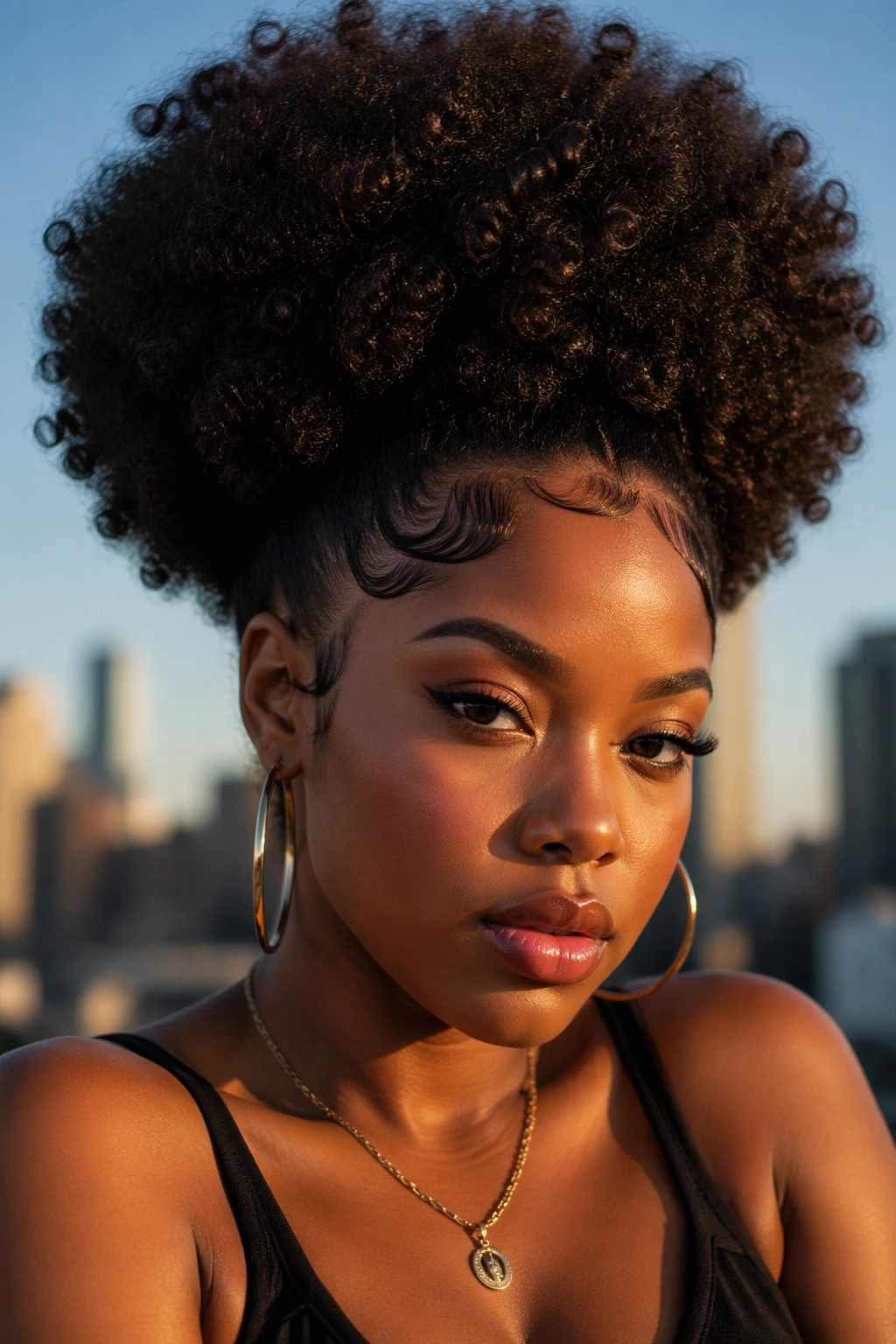
Before getting into specific styles, it’s worth identifying the handful of elements that make something feel authentically 90s rather than just “natural hair.” Volume is the first — the 90s rejected minimalism. Shapes with graphic edges come second. Baby hairs styled into defined swoops or finger waves along the hairline are a signature that appears again and again. High placement — crown puffs, top knots, upswept styles — creates that elevated silhouette that reads immediately as 90s-influenced.
Color contrast is important too. The era loved a honey blonde streak, a deep auburn rinse, a bright burgundy on dark brown hair. Single process or highlighted sections, usually placed at the front where they’d frame the face, were common choices. And braided patterns — whether in cornrows, individual braids, or flat twists — were used to create graphic lines and geometry that you couldn’t get from loose hair alone.
How to Source 90s Reference Looks
The best reference images aren’t from recent sources — they’re from the decade itself. Music video archives, DVD extras, old issues of Essence and Honey magazine, film stills from Love Jones, Set It Off, Waiting to Exhale, and Friday. These sources capture the exact quality of the 90s aesthetic without the filter of time. Look for the specific combination of elements rather than exact replications: the way the edges were laid, how the crown sat, what the perimeter looked like.
Once you have clear references, bring them to a stylist who works with natural hair and has familiarity with textured styling. A lot of what made 90s hair work required real skill — those precise cornrow parts, those sculpted high-top shapes, those laid baby hairs. You can’t fake it with approximations.
Styling Products That Help
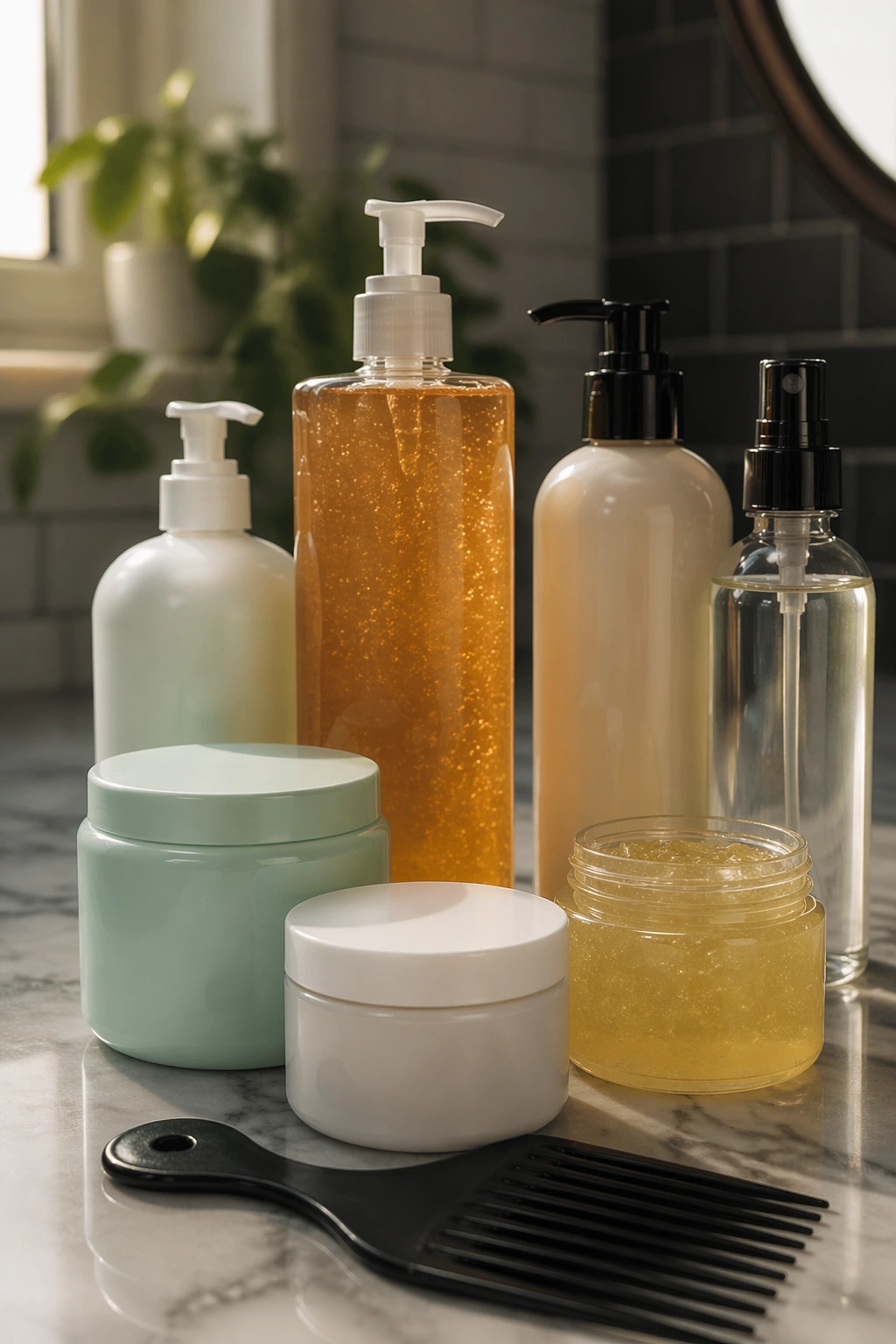
For a genuinely 90s-looking style, certain products create the right finish. Hard-hold gel for edges — something with strong hold but not excessive whiteness, like Eco Styler Olive Oil Gel. A firm styling cream for shape definition rather than shine. For baby hairs, a small amount of edge control applied with a soft toothbrush in careful strokes. For volume on afro sections, a pick comb starting at the roots and lifting gently outward — never starting at the ends.
The 90s finish wasn’t matte and it wasn’t aggressively shiny. It was defined. Clean. Each coil or curl sat visibly and distinctly, products keeping it in place without masking the texture underneath.
1. The High Puff with Baby Hair Waves
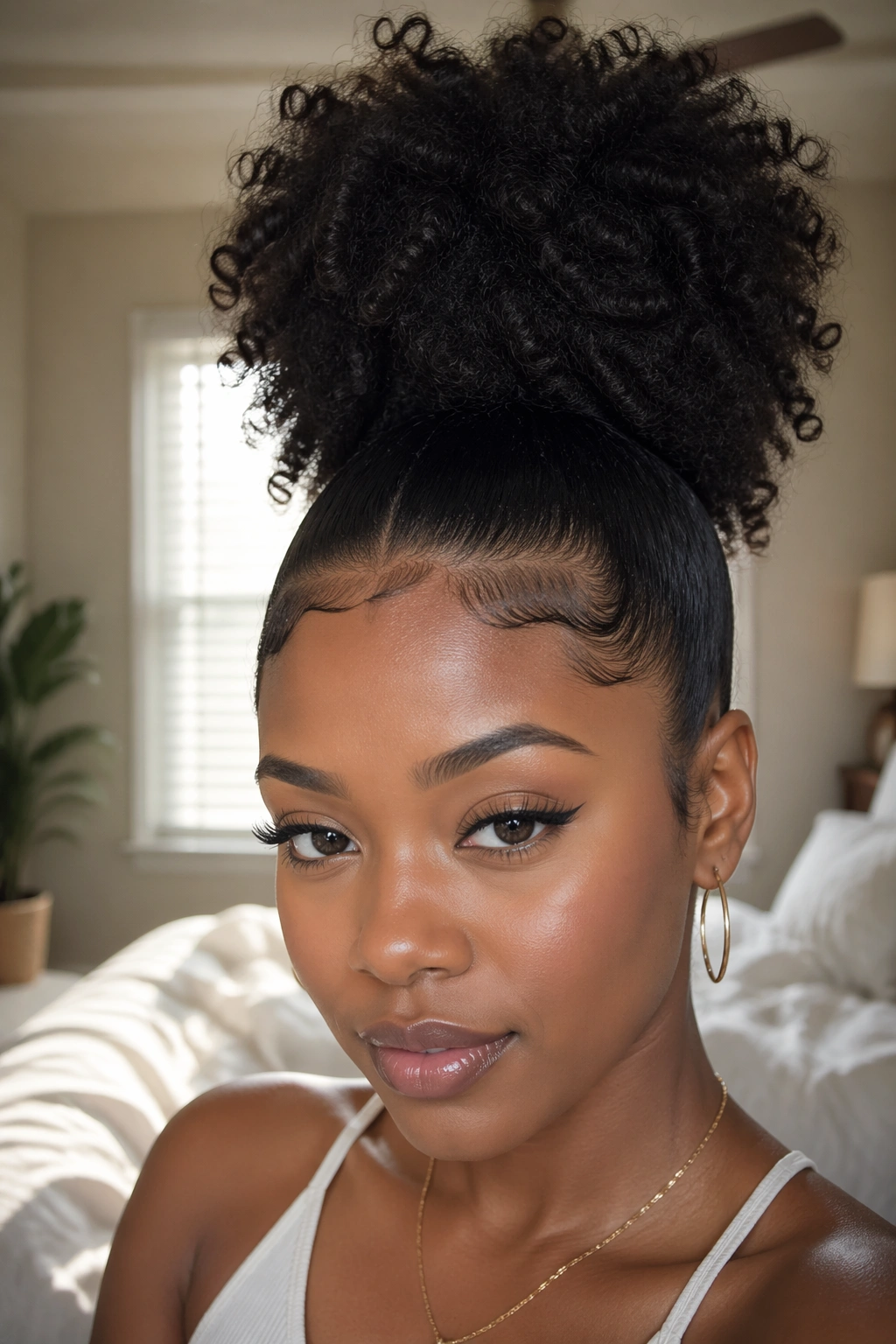
Nothing is more instantly recognizable as 90s Black girl hair than a high puff at the crown with baby hairs styled into intentional waves along the hairline. The puff sits as high and round as possible — sometimes with a pick through it to maximize volume — while the edges are laid with medium-hold gel into soft crescents, swirls, or the classic “C” wave shape along the forehead.
Why It Works
The contrast between the controlled edge work and the liberated volume of the puff is the whole visual argument. One is precision, the other is freedom. Together they create something that’s both intentional and joyful.
The baby hair styling takes practice. Apply a pea-sized amount of gel to your edges with a soft baby brush or toothbrush, lay them in your desired direction, then use a rattail comb to define the edges of each wave or swoop. Hold the shape with your hand for 30-60 seconds to let the gel set before releasing.
2. The Flat Top Fade
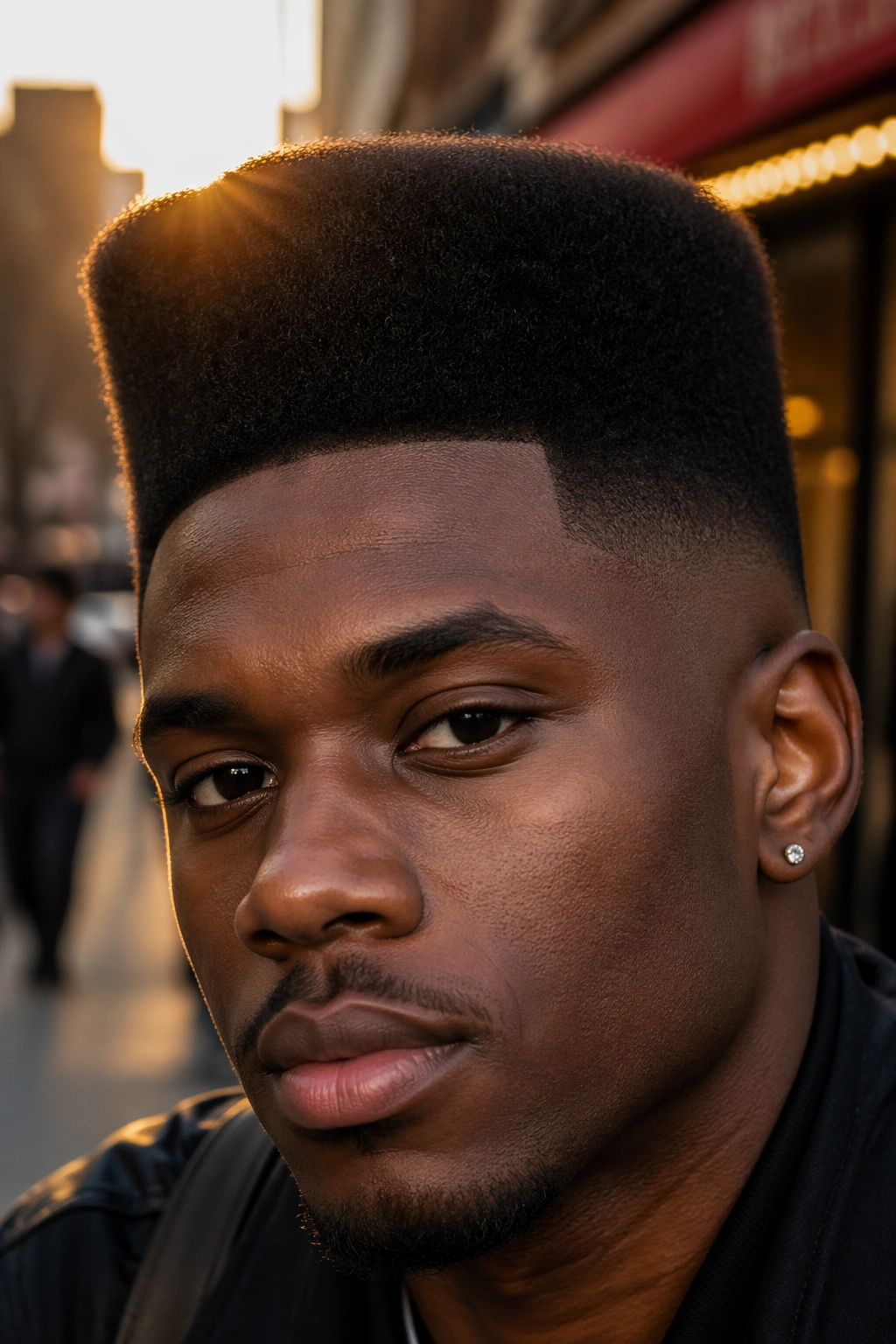
A squared-off, flat top on natural afro hair above a clean fade on the sides and back. On type 4 hair, the flat top isn’t perfectly flat — the coils create a slightly textured surface that sits level. That natural variation is part of what makes it look organic rather than stiff.
Getting the flat top right requires a specific comb technique. Your barber or stylist will use a level comb held parallel to the floor at your desired height, then cut or trim everything above that line. The sides are faded to whatever guard length creates the contrast you want — a high fade gives more drama, a medium fade keeps it cleaner.
This cut works best on hair with strong spring — when you press the coil it bounces back quickly. That elasticity is what makes the top sit level. On softer curls, it collapses in the center.
3. The Braided High Puff Combo
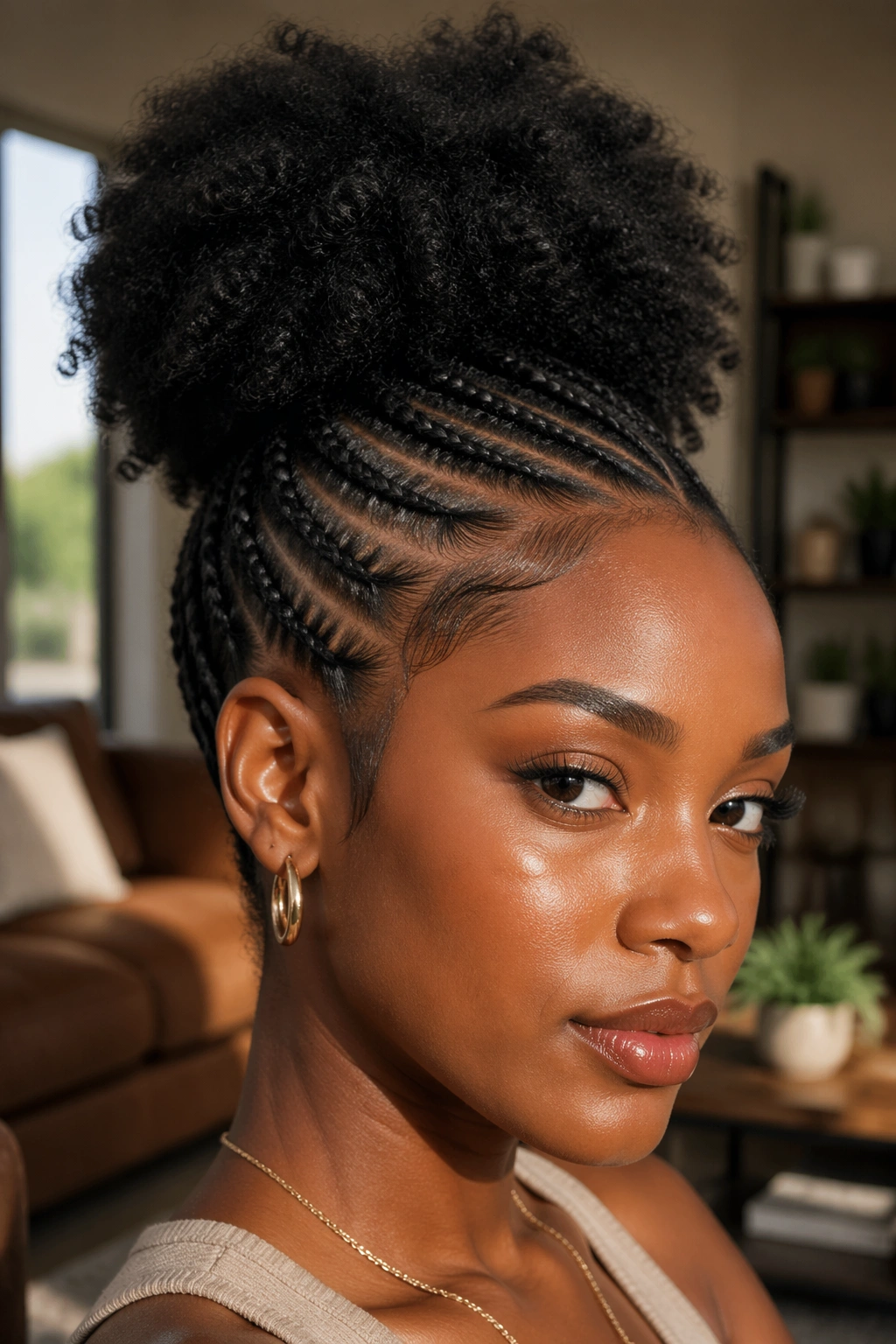
Half of the hair is braided back in cornrows — usually from the forehead to the crown in diagonal or curved patterns — and the other half (everything behind the crown) is gathered into a high puff. The juxtaposition of the graphic, geometric cornrows against the soft, full puff is instantly 90s.
Unlike a full head of cornrows, this style takes 30-45 minutes rather than hours. The braided front section stays neat for up to a week if you sleep in a bonnet, which makes this practical for busy schedules. The puff section gets refreshed on wash day or whenever it needs moisture.
The cornrow patterns can go straight back, in waves, in curved designs, or in any direction that frames your face shape well.
4. The Asymmetrical Puff
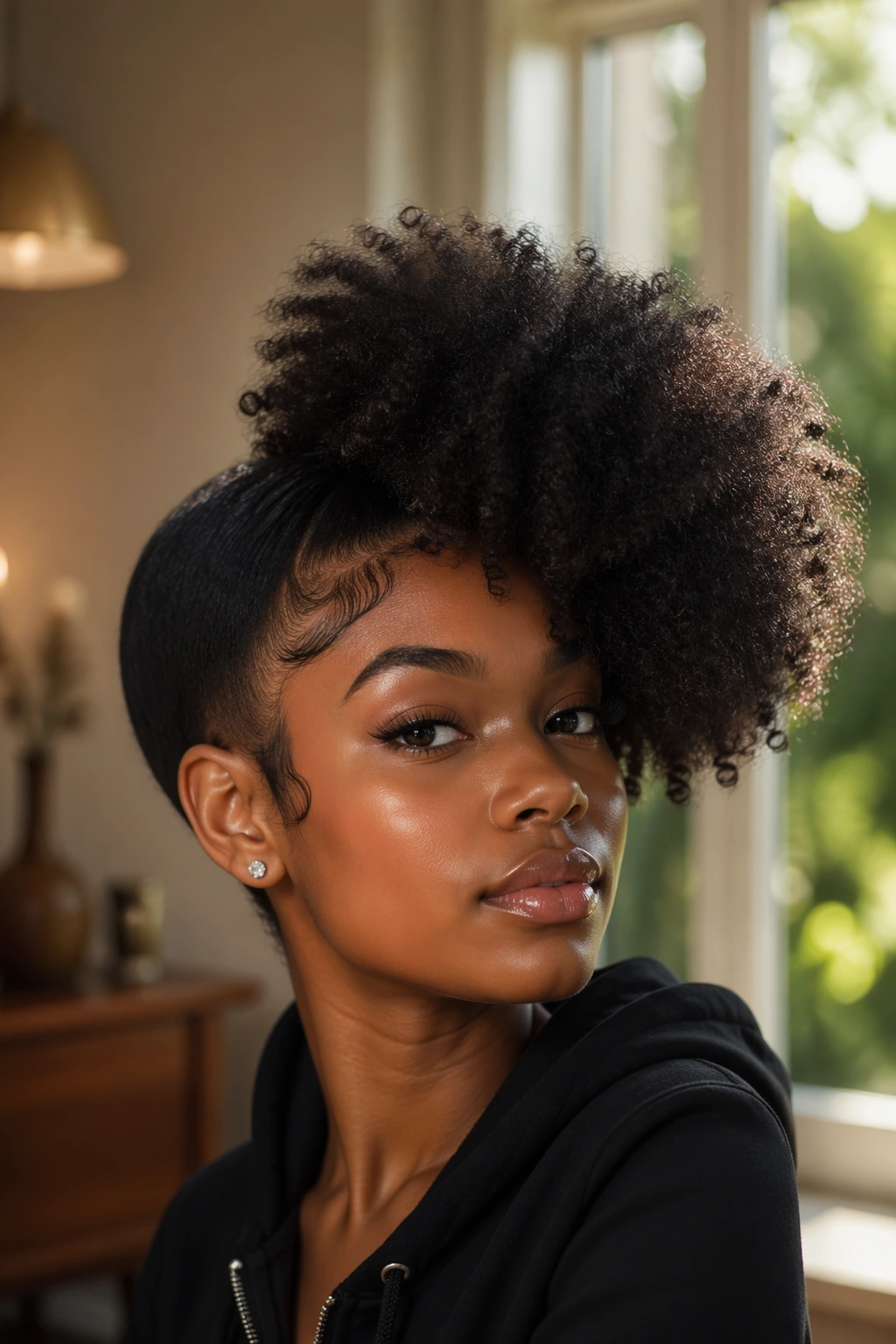
One of the quieter 90s signatures was asymmetry — styles that deliberately sat heavier on one side than the other, or placed volume off-center to create visual movement. The asymmetrical puff takes the high puff concept and places it off-center, or allows one side to fall at a different volume than the other.
This isn’t a mistake. It’s a design decision, and it has to look intentional to work. The rest of the styling — edges, perimeter smoothness, product finish — needs to be impeccable because asymmetry draws attention.
Who This Is For
Oval and heart-shaped faces carry asymmetrical styles without the face looking off-balance. On very round faces, the off-center volume can emphasize the roundness. On angular faces, it can soften the sharpness. Experiment with placement before committing — a trial with a hair elastic tells you a lot before you go in for any kind of trim.
5. The Pineapple Updo with 90s Volume
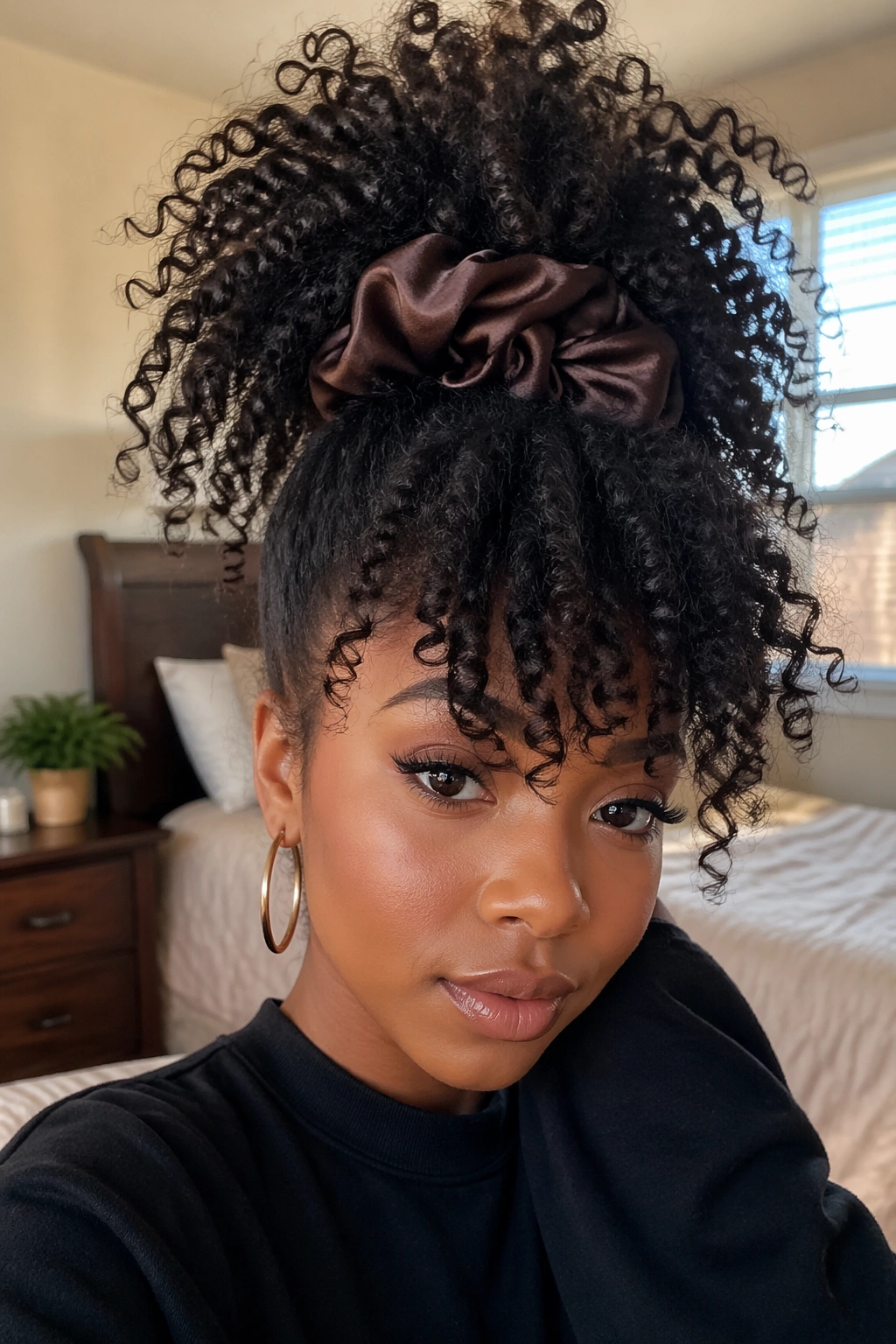
The pineapple is a sleep-protective technique turned daytime style: all the hair gathered at the very top of the head, held with a loose elastic or scrunchie — and crucially, a scrunchie in the 90s, because the fabric doesn’t crease the hair — and allowed to cascade forward and downward from the gathered point.
On short-to-medium length natural hair, the cascade effect creates a crown of volume that frames the face from above. On longer natural hair, the pineapple can reach halfway down the back. The 90s interpretation keeps it high, big, and slightly undone — not the tight, neat topknot, but something with movement and volume that feels alive.
A satin scrunchie rather than a rubber elastic prevents the breakage that comes from hair wrapped under a tight band.
6. The Honey Blonde Afro
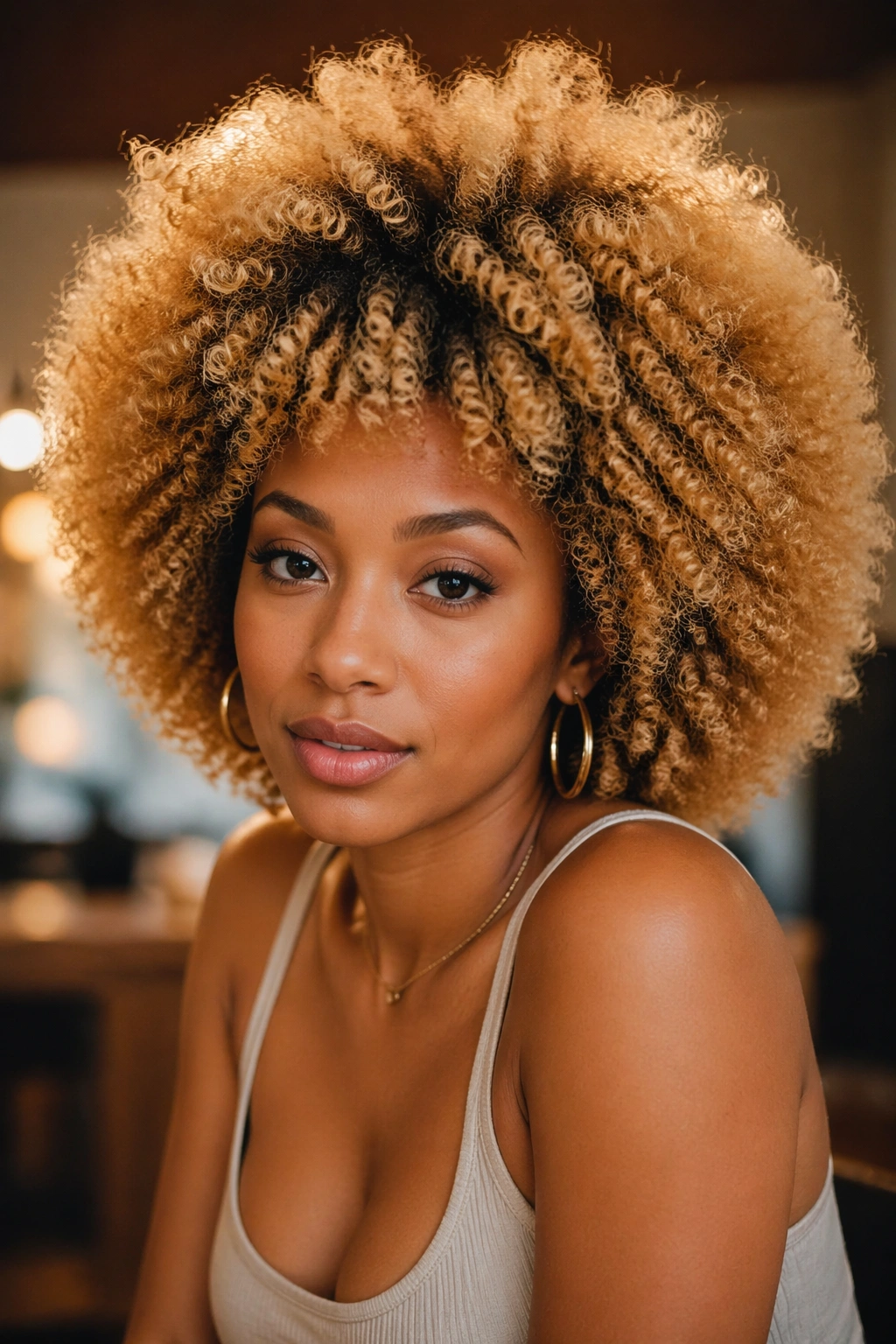
The honey blonde 90s afro — deep roots, warm golden length, and a rounded silhouette — is probably the most cinematically recognizable look from this list. Think of the warm amber color that appeared again and again in 90s films and videos: not yellow, not brown, but specifically that warm golden honey tone that creates depth because the roots remain darker.
This color works on almost every skin tone, which is why it dominated the decade. On dark brown skin, the contrast is warm and striking. On medium skin, the tone blends beautifully. On fair skin, it’s rich and saturated rather than washing the face out.
The maintenance reality: honey blonde requires regular touch-ups on the roots (every 6-8 weeks) and deep conditioning every two weeks minimum because bleaching and lightening any natural texture requires extra moisture intervention. Avoid any protein treatment with heat the same day as a bleaching session — always separate these by at least a week.
7. The Finger Wave Edges with Afro
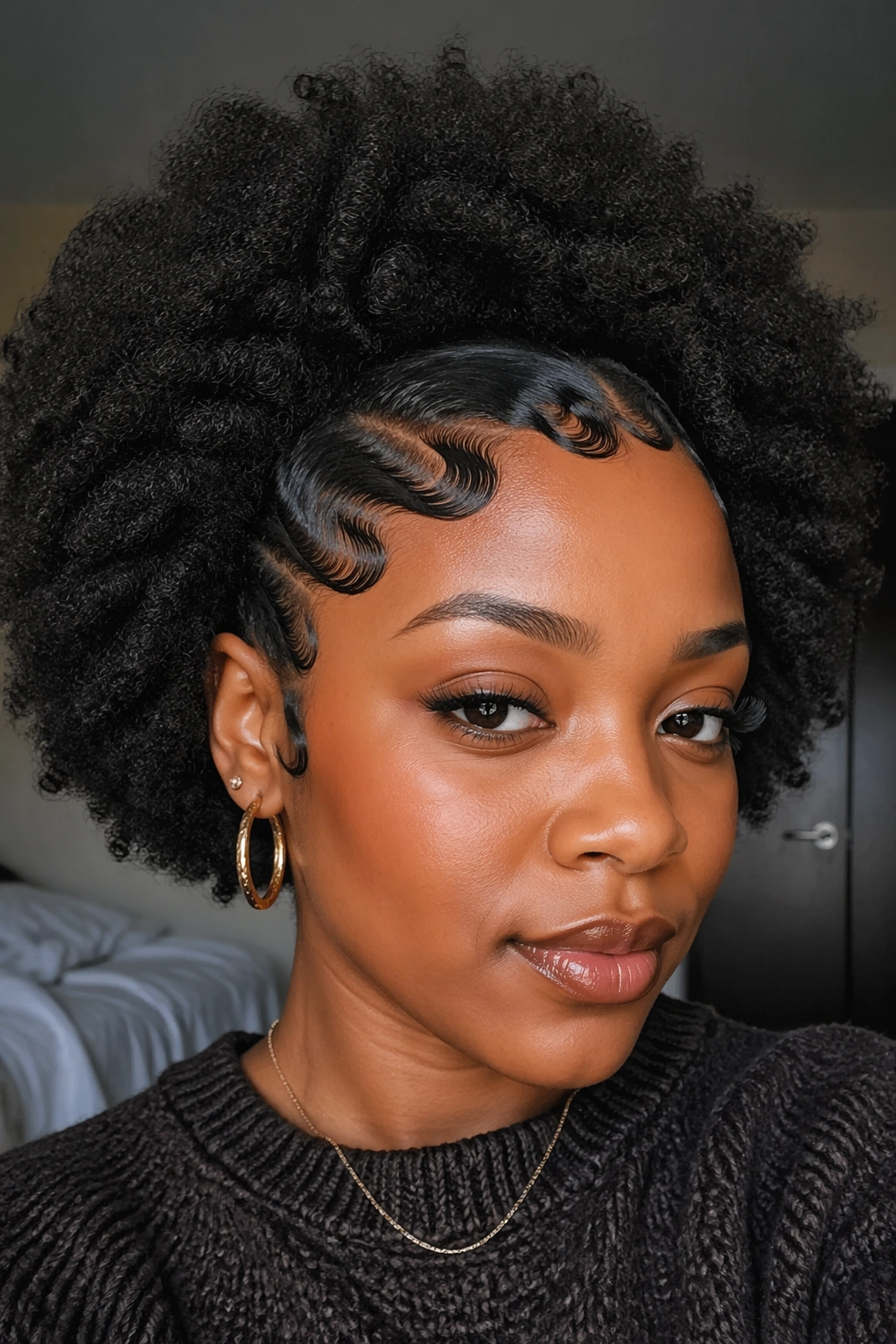
Beyond the typical baby hair waves, full finger waves along the hairline — going back an inch or two into the hair rather than just tracing the very edge — create a deep, defined wave pattern that frames the face dramatically before the hair opens into the full afro at the crown.
This is done on straightened or pressed sections of the hairline only, with the rest left in its natural state. The contrast between the pressed, waved sections and the coiled afro volume in the center is a distinctly 90s juxtaposition — controlled against free.
Setting the finger waves takes a firm-hold wave lotion, a hard-toothed comb, and either a dryer hood or careful air-setting to lock the pattern in place. They can hold 2-3 days on pressed hair before they need resetting.
8. The Cornrow Crown Updo
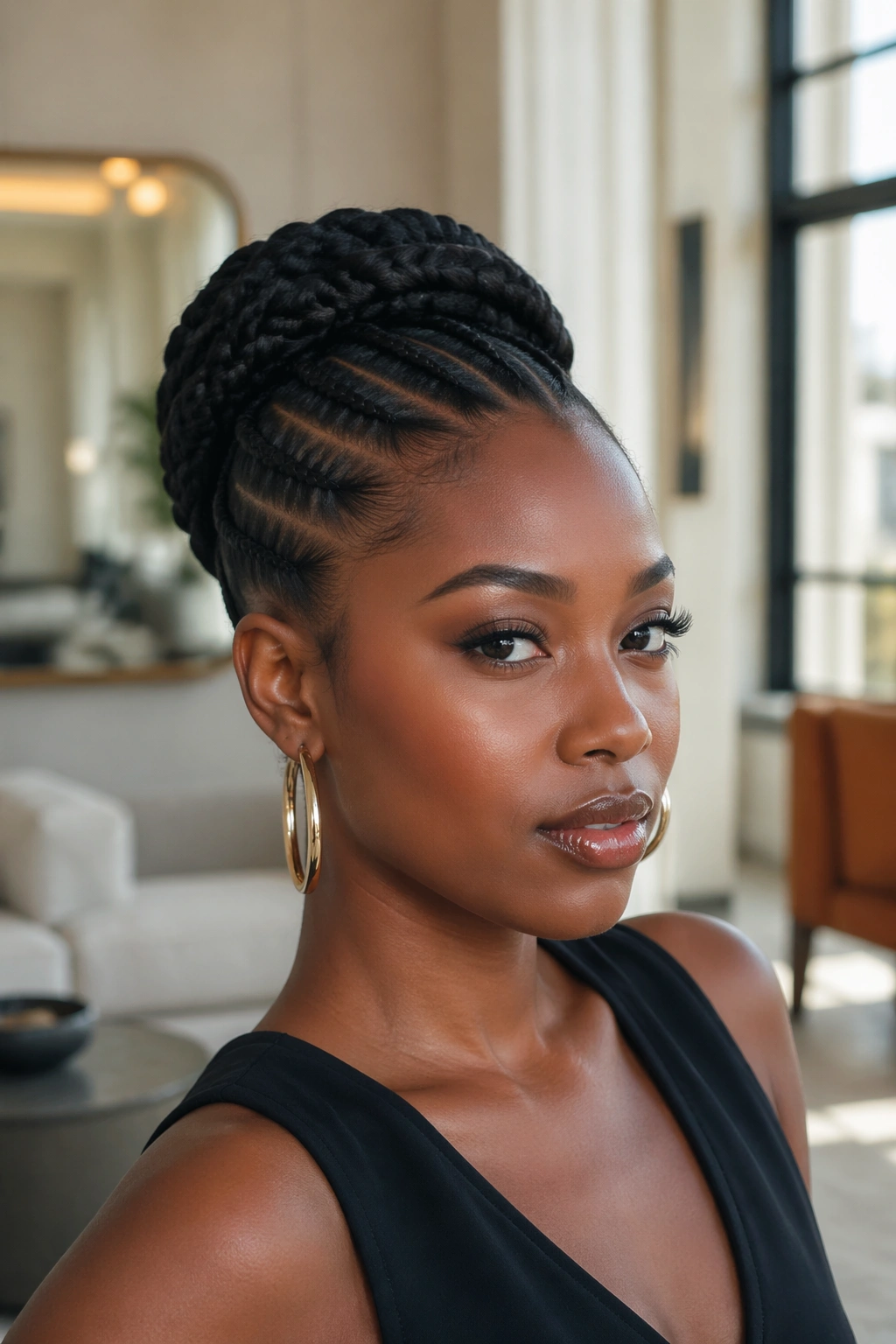
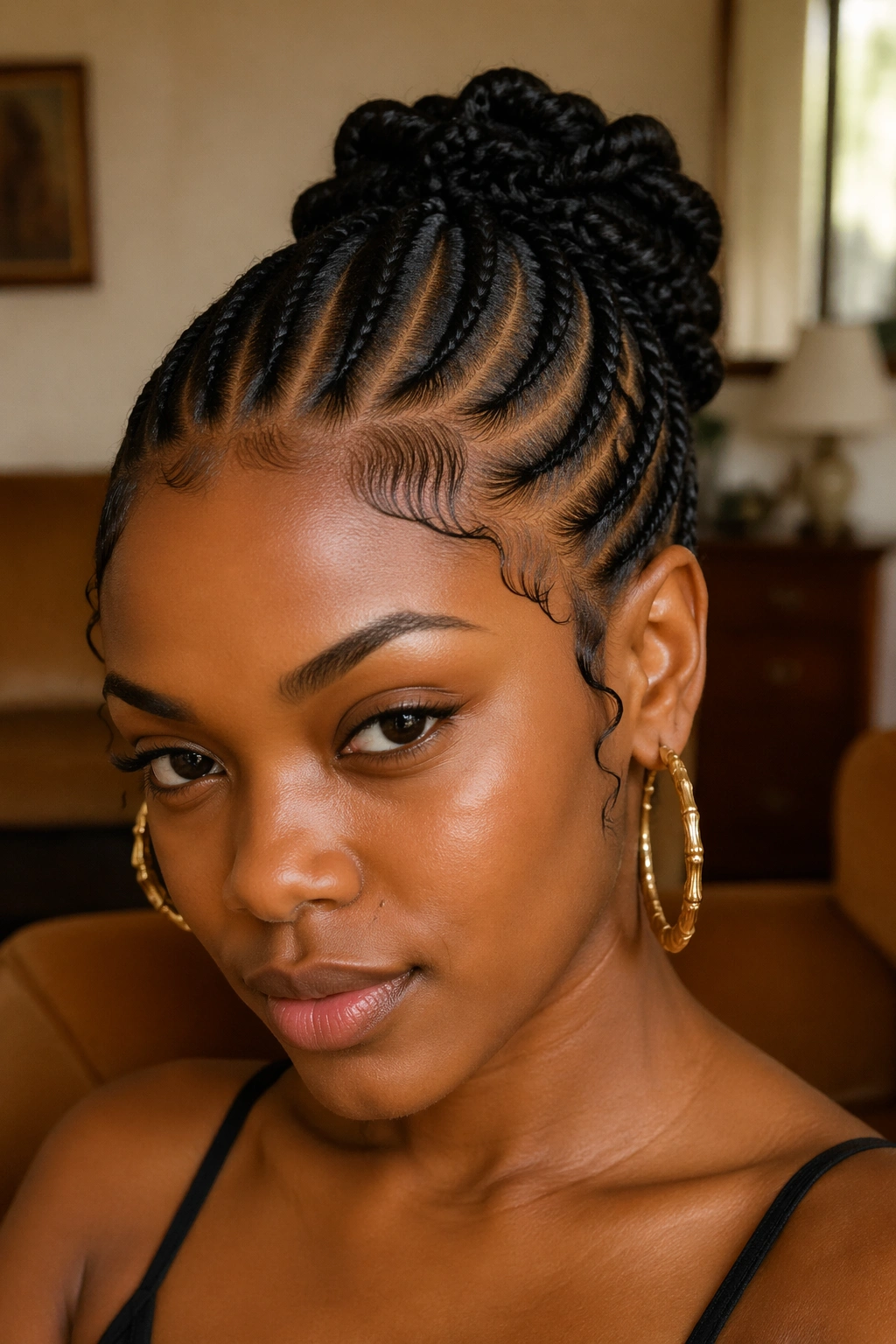
All the hair braided up and back toward the crown in cornrows, then wrapped or pinned into an upswept shape at the top. It’s a style with real elegance — the graphic lines of the cornrows trace across the scalp and then the up-pinned section creates a stacked effect at the crown.
The cornrow patterns can vary dramatically: simple straight-back rows create a clean, architectural look. Curved rows that swoop toward the center create movement. Diagonal rows create a windswept effect. Each pattern gives the same upswept shape a completely different personality.
Stay time: 2-3 weeks with proper moisturizing (light oil or braid spray applied to the scalp every 2-3 days) and sleeping with the hair wrapped in a satin scarf or bonnet.
9. The High Bun with Textured Edges
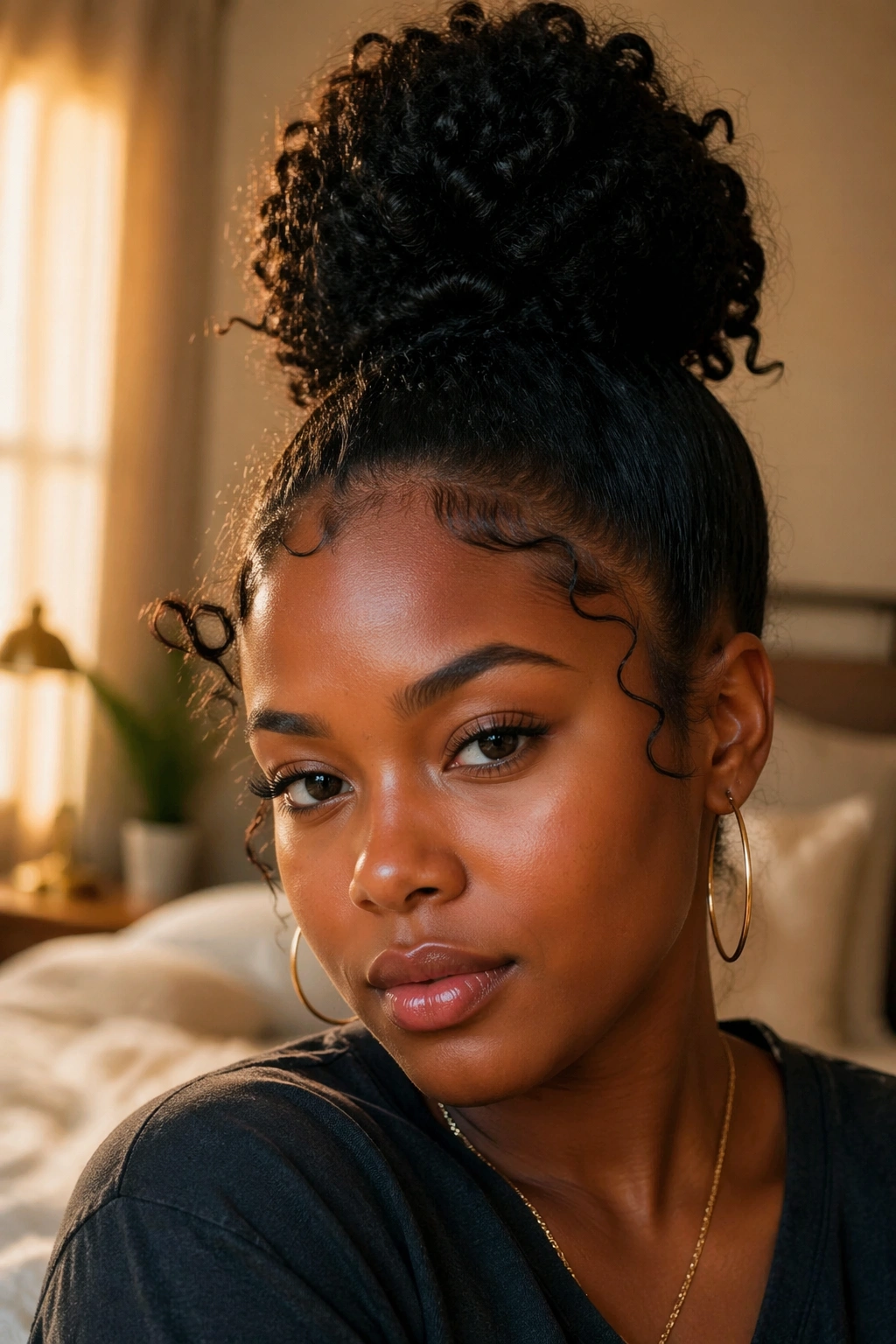
The high bun — hair gathered right at the top of the crown — with deliberately textured, non-smoothed edges is a 90s look that has never required updating. Leave some coils loose at the hairline rather than gelling them flat. Let the baby hairs do what they want, or set them into a very light, soft wave. The bun itself should be full and rounded, not compressed.
The difference between this and a modern slicked bun is the texture retention. The goal isn’t smoothness at the edges — it’s defined, intentional coil definition. Use a medium-hold gel that defines without eliminating the natural pattern.
10. The Double Puffs (Two-Puff Style)
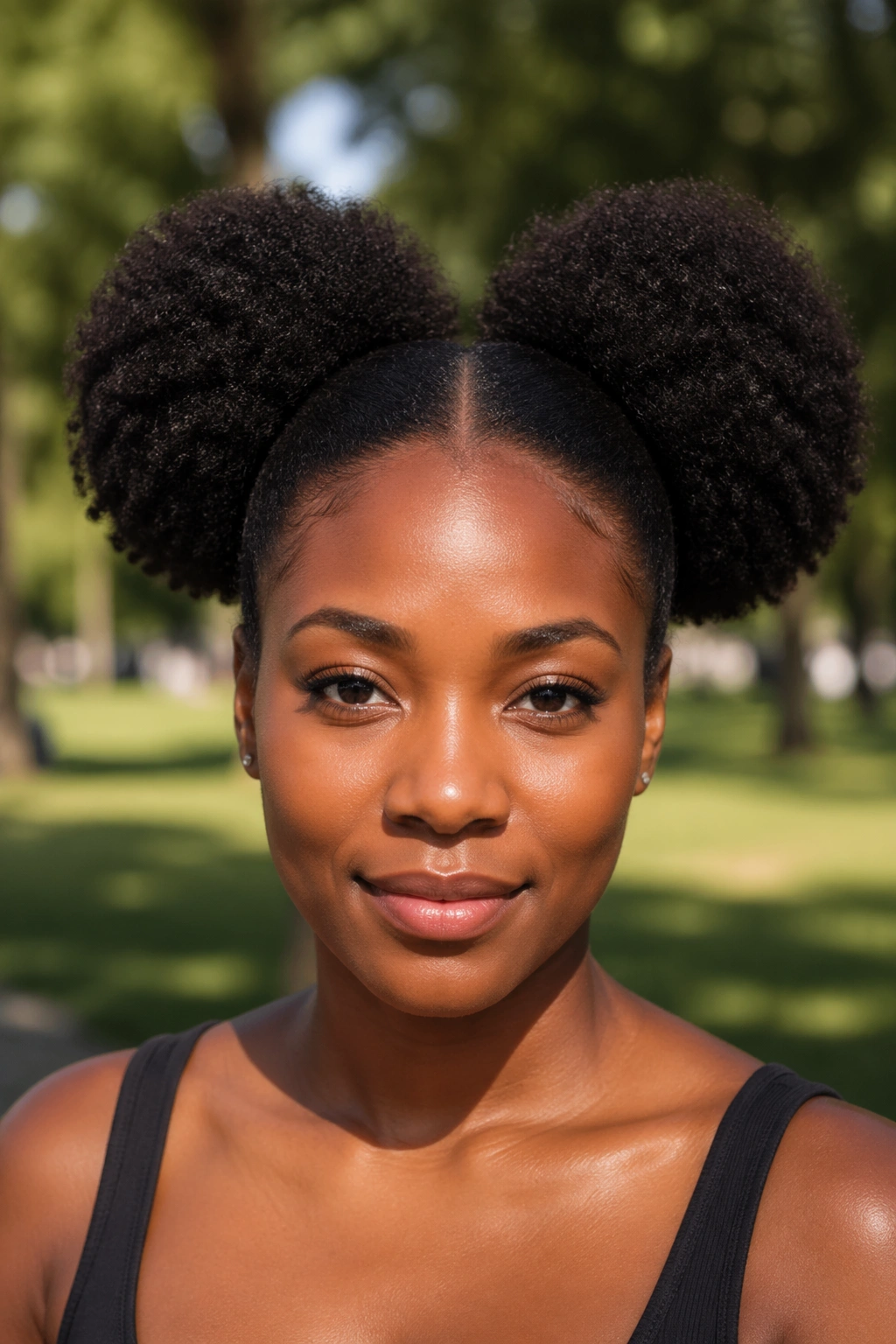
Two equal-sized puffs, one on each side of the head, parted down the center — this is childhood nostalgia and grown-woman energy at the same time, which is exactly why it works. On adult women, the double puff reads as playful confidence rather than juvenile.
The key is symmetry. Both puffs need to be the same height, the same volume, the same distance from the center part. Any asymmetry that’s accidental rather than intentional reads as a style that fell apart rather than a decision. Section the hair precisely, use the same amount of product on each side, and check the symmetry in a two-mirror setup before heading out.
Great with hoop earrings. Genuinely great.
11. The Crimped Afro
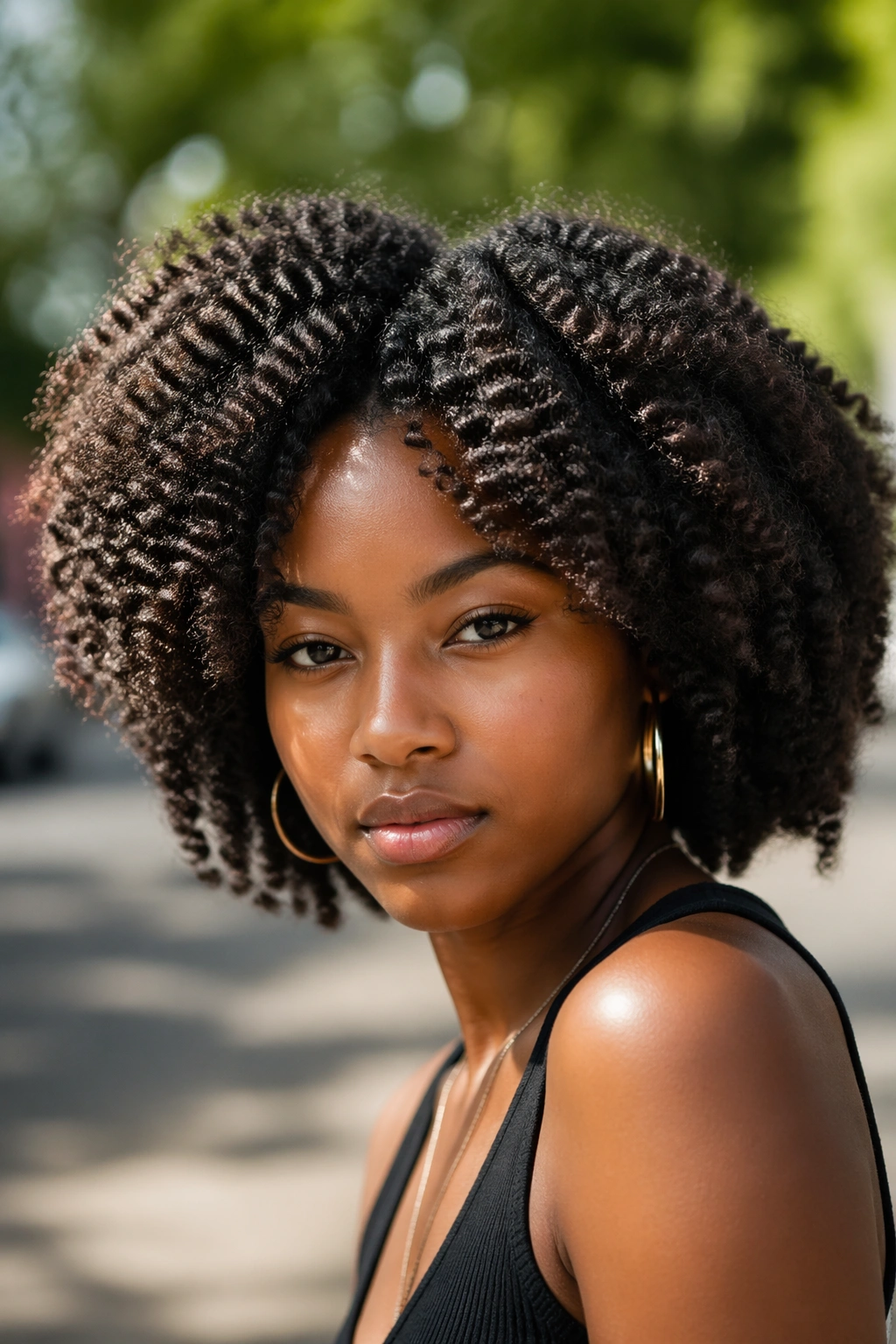
A crimper applied to natural hair before fluffing it out creates a uniquely textured afro that catches light differently than a standard coil pattern. The crimped texture creates a zigzag pattern through each section, and when the sections are picked out into an afro shape, the overall effect is a richly textured, multi-dimensional look.
The 90s crimper was a heat tool, and that’s still the most efficient method — but it requires heat protectant on every section first, and the temperature shouldn’t exceed 350°F on afro-textured hair. Lower heat takes longer but causes less cuticle damage. A flexi-rod set can create a similar (but less uniform) texture without heat.
The crimped afro is a special occasion style for most people — not a daily look, not something you do every wash day. It’s too good to waste on a Tuesday.
12. The Half-Up Half-Down Afro
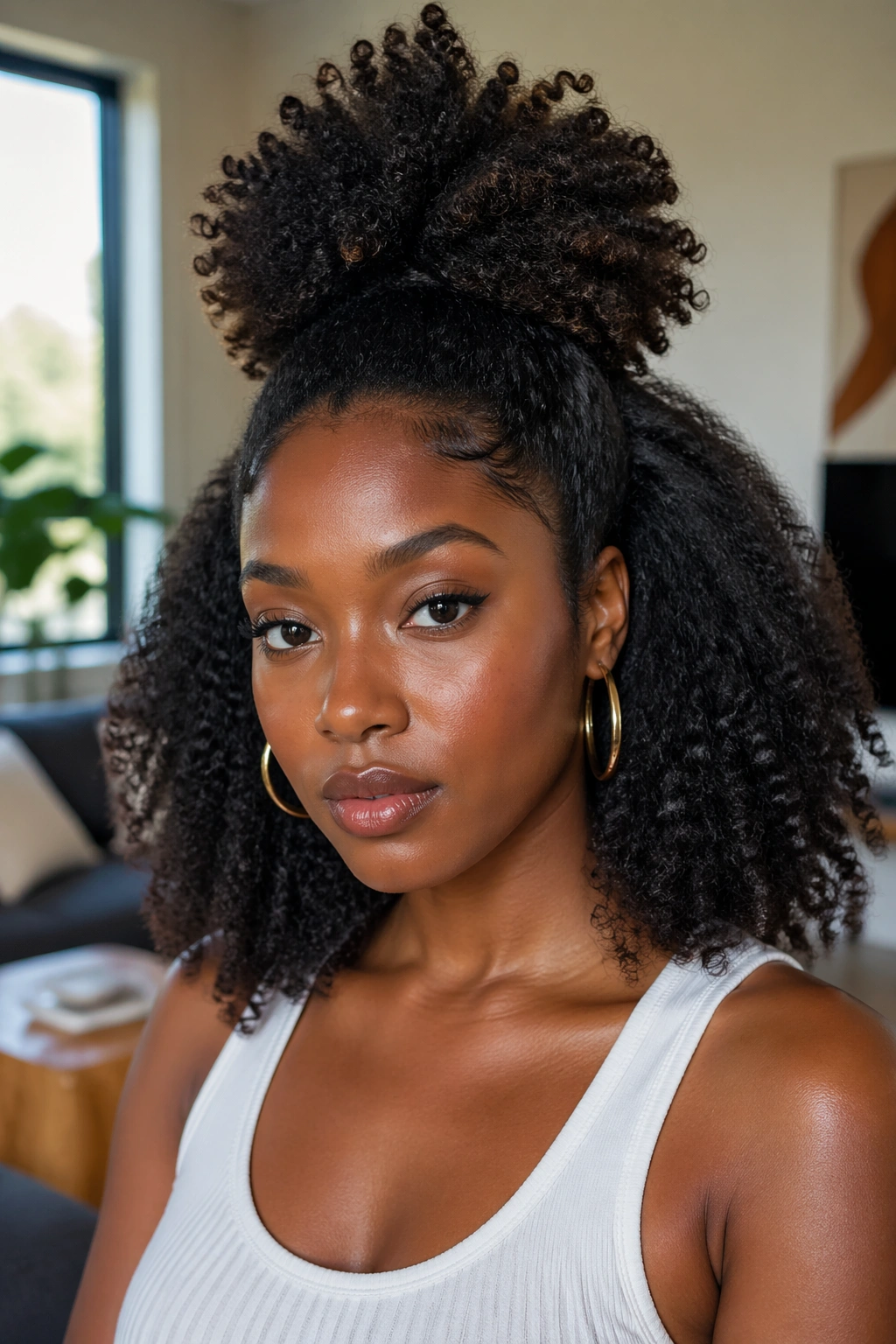
Half the hair gathered at the crown in a puff or loose bun, the other half left down in its natural state — simple enough, but the 90s interpretation was always about maximum volume on both halves. The up section was as big as possible, the down section was picked out fully.
The half-up creates a visual elongation — the eye travels from the crown puff upward — that works well on round and square faces. It’s also one of the fastest styles in any afro hair repertoire. Less than 5 minutes, no heat, no elaborate technique.
What makes it look good rather than thrown together is product consistency. Both halves need the same level of definition and the same finish — if the down section has dry, undefined coils while the up section is crisp and gelled, the contrast looks unintentional.
13. The Braided Afro Halo
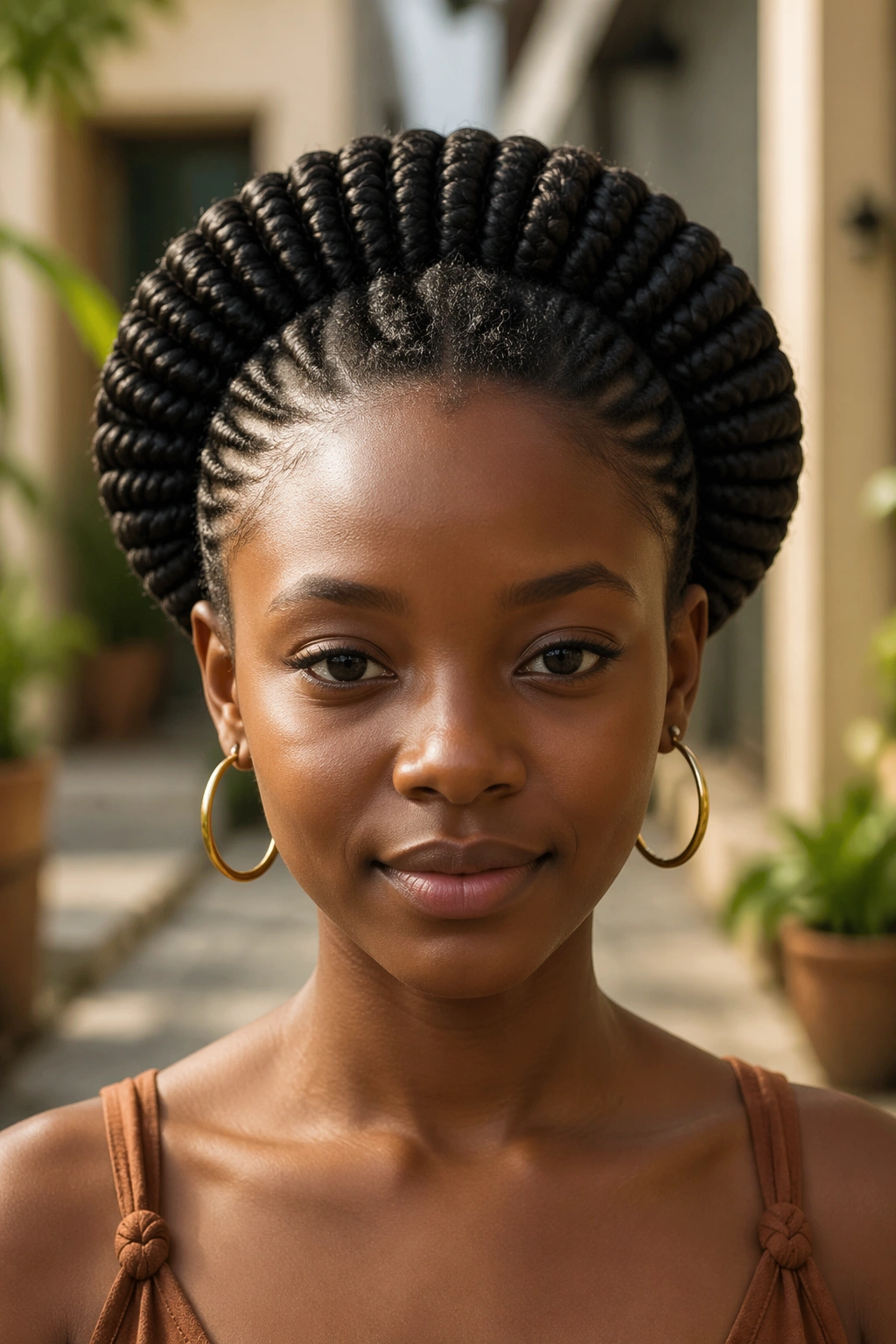
Cornrows braided in a circular pattern around the entire head, following the curve of the skull, creating a halo of graphic lines. Unlike the typical straight-back cornrow, the halo cornrow wraps around continuously, often with small natural hair left loose at the very crown for contrast.
This is a more advanced braiding technique — the braids need to curve consistently and maintain even tension throughout the circular pattern without creating gaps or lumpy sections. A skilled braider makes it look effortless; a less experienced hand leaves visible misalignment.
When done well, the halo cornrow is one of the most regal-looking styles in this list. No accessories needed. The geometry is the jewelry.
14. The Big Individual Braids
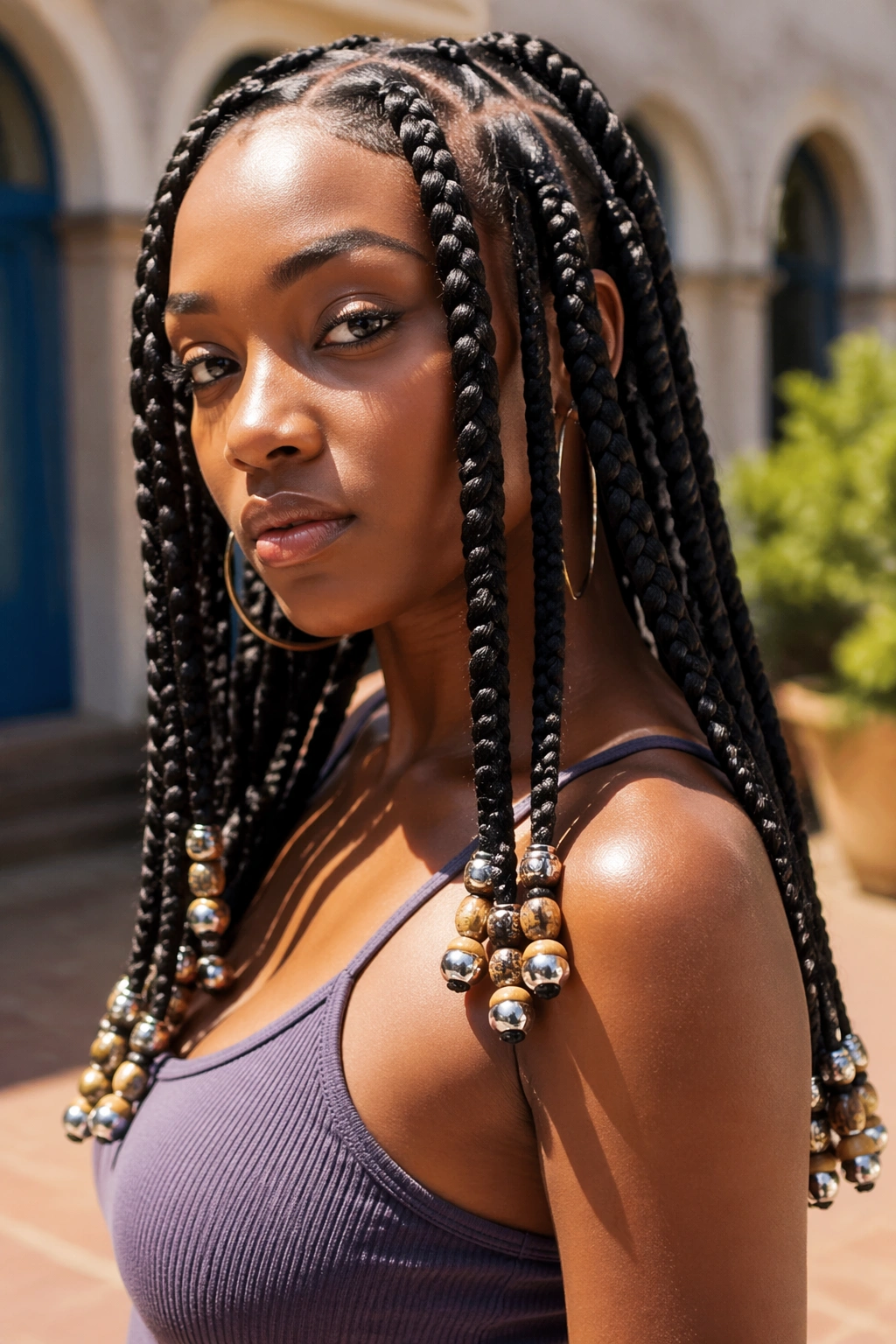
Not micro braids, not box braids — the large, thick individual braids that swung heavy through the 90s. Sections about the size of a square inch, braided with extension hair to whatever length you want, often finished with a spiral wrap at the end or small beads at the tips.
The bead detail is worth mentioning separately: barrel beads, wooden beads, and shell beads at the tips of large braids was one of the clearest visual signatures of 90s Black girl aesthetic. The beads click when you move. They catch the light. They add weight that makes the braids swing differently.
Installation takes 3-6 hours depending on the length and thickness. They last 4-6 weeks before the new growth at the root starts to look grown-out.
15. The Pulled-Back Natural with Twist Detail
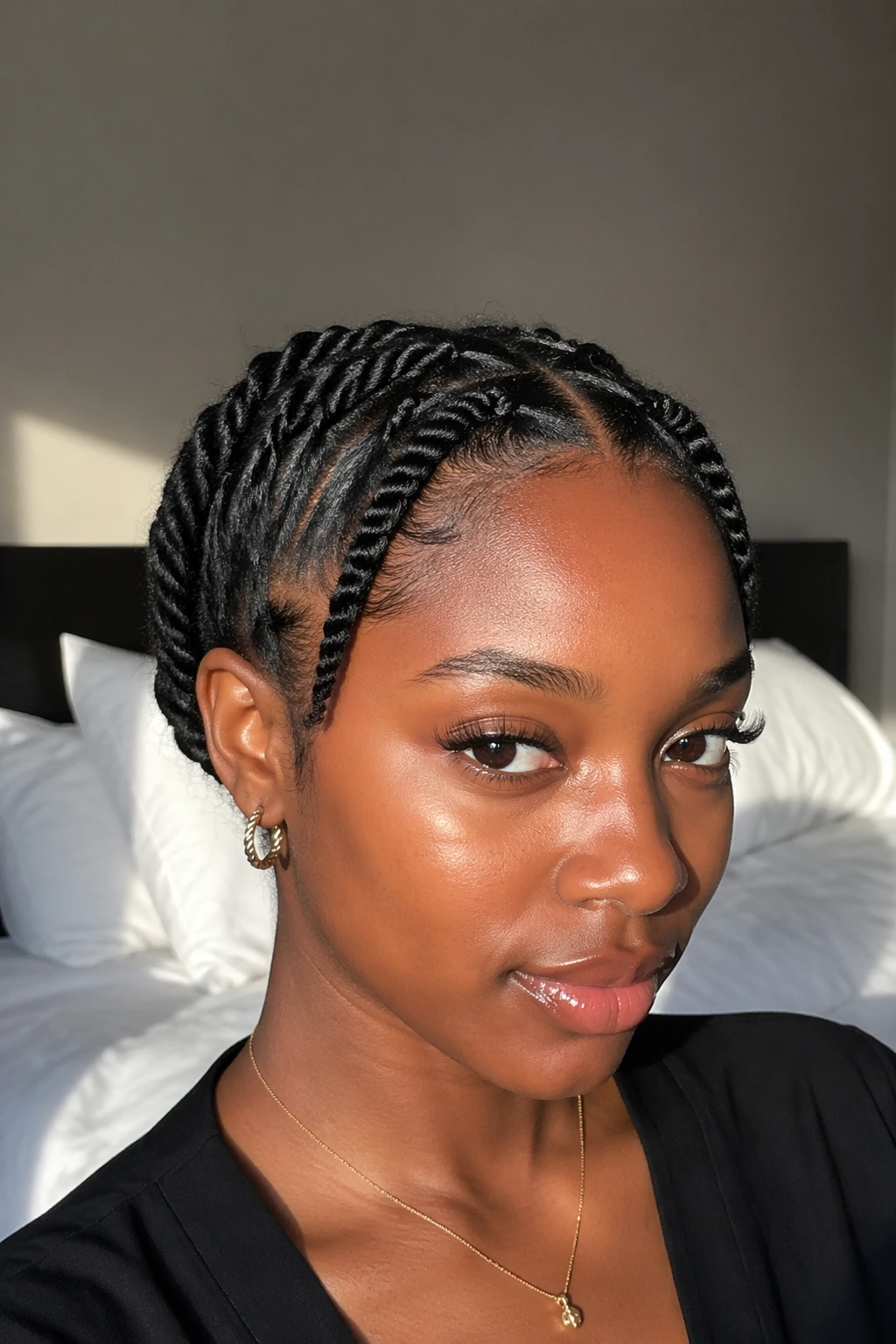
Everything gathered and pulled back, with two or three flat twists or regular twists at the crown framing the face before meeting the rest of the hair at the back. It’s a refined style — less about volume than about precision. The twists add graphic interest to a style that might otherwise read as a simple pulled-back look.
The front twists should be done on freshly moisturized hair — a small amount of leave-in conditioner and a lightweight twisting cream. They lie flat and smooth when the hair is properly hydrated, and they frizz and stand away from the scalp when they’re not.
16. The Natural Mohawk with Braided Sides
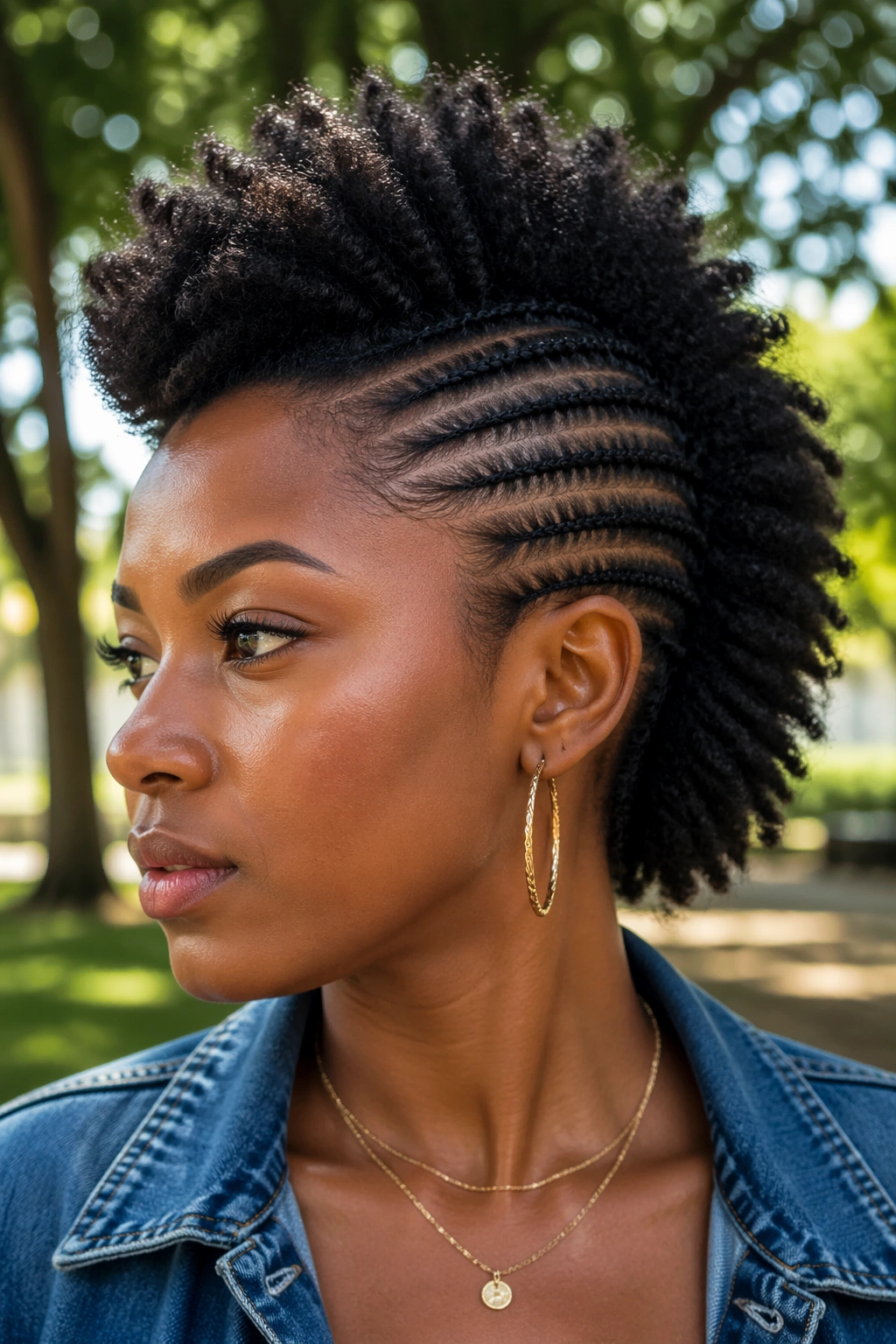
The center section of hair — a strip from the forehead to the nape — is left full and natural, picked out into an afro strip. The sides are cornrowed flat, either in straight patterns pointing toward the center or in curved designs. The effect is a mohawk silhouette without any cutting required.
This is a non-permanent style that can be taken down and reassembled as many times as you like. The cornrowed sides hold for about a week. The center section needs daily moisturizing because it’s fully exposed without the protection of a braid pattern.
How to Use It
Set the center section by washing, applying curl cream, and picking it out while damp. Then braid the sides in whatever cornrow pattern you’ve chosen. The center section will shrink slightly as it dries, which can look fuller — account for this when deciding how much hair to include in the center strip.
17. The Jumbo Cornrows
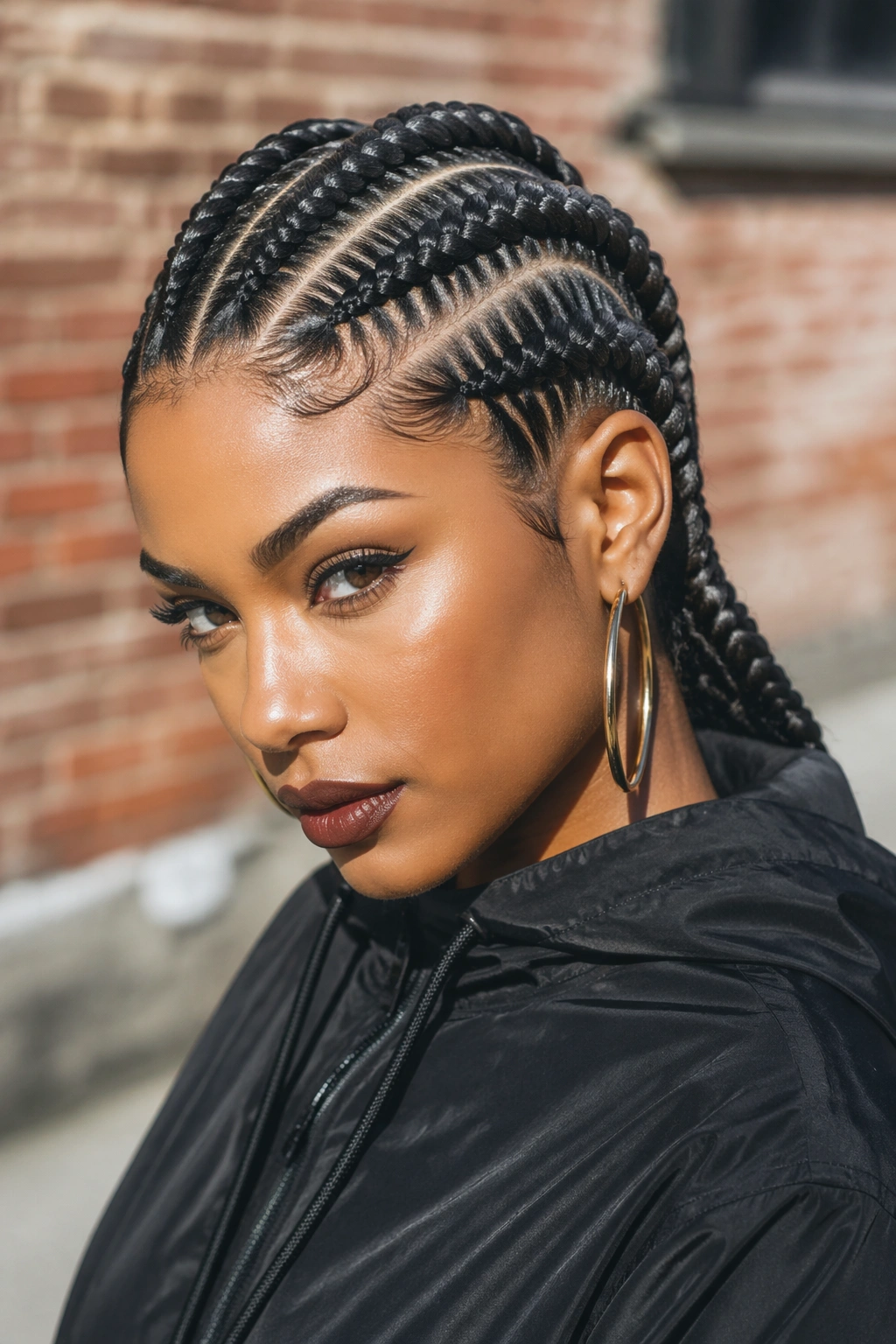
Six to ten large cornrows across the scalp, braided either straight back or in slightly curved patterns, done with extension hair for thickness and length or with just natural hair if you have enough density. Jumbo cornrows read bold — there’s no way to make them quiet — and they were absolutely everywhere in the 90s.
The thickness of each cornrow matters for the final effect. Very thick cornrows (only 4-6 across the whole head) look the most graphic and architectural. Slightly thinner cornrows (8-10 across) have more movement and flexibility. Both are legitimate choices.
Scalp health during cornrows: keep the scalp moisturized with a light oil — jojoba, grapeseed, or a dedicated braid spray — applied every 2-3 days. Do not braid too tightly at the edges; traction alopecia develops slowly and is genuinely difficult to reverse.
18. The Afro with Colored Highlights
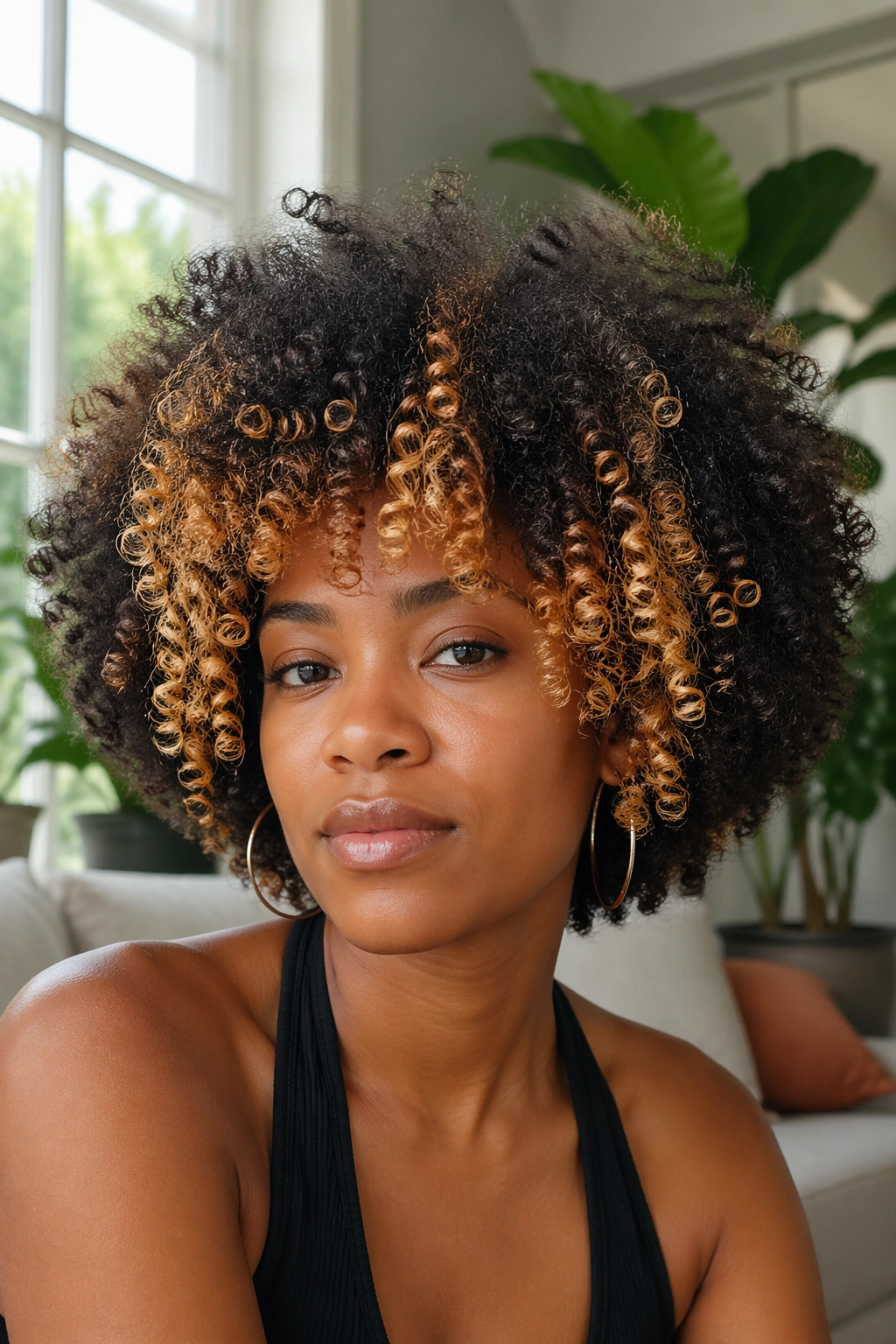
A natural afro with strips of color — highlighted sections in honey blonde, auburn, copper, or bright burgundy, placed strategically to frame the face or create a sunlit effect through the crown — was a defining 90s look that required no extra styling beyond picking out the afro.
The highlights do all the work. When light hits an afro that has both deep brown or black sections and golden or copper sections, the result is dimensional in a way that single-process color can’t replicate.
Highlights on natural hair require a careful hand — the highlighting technique must account for the curl pattern so that color doesn’t look spotty or uneven once the coils spring back. A natural hair colorist who understands how color sits on type 3-4 hair is essential for this.
19. The Bantu Knots Out Afro
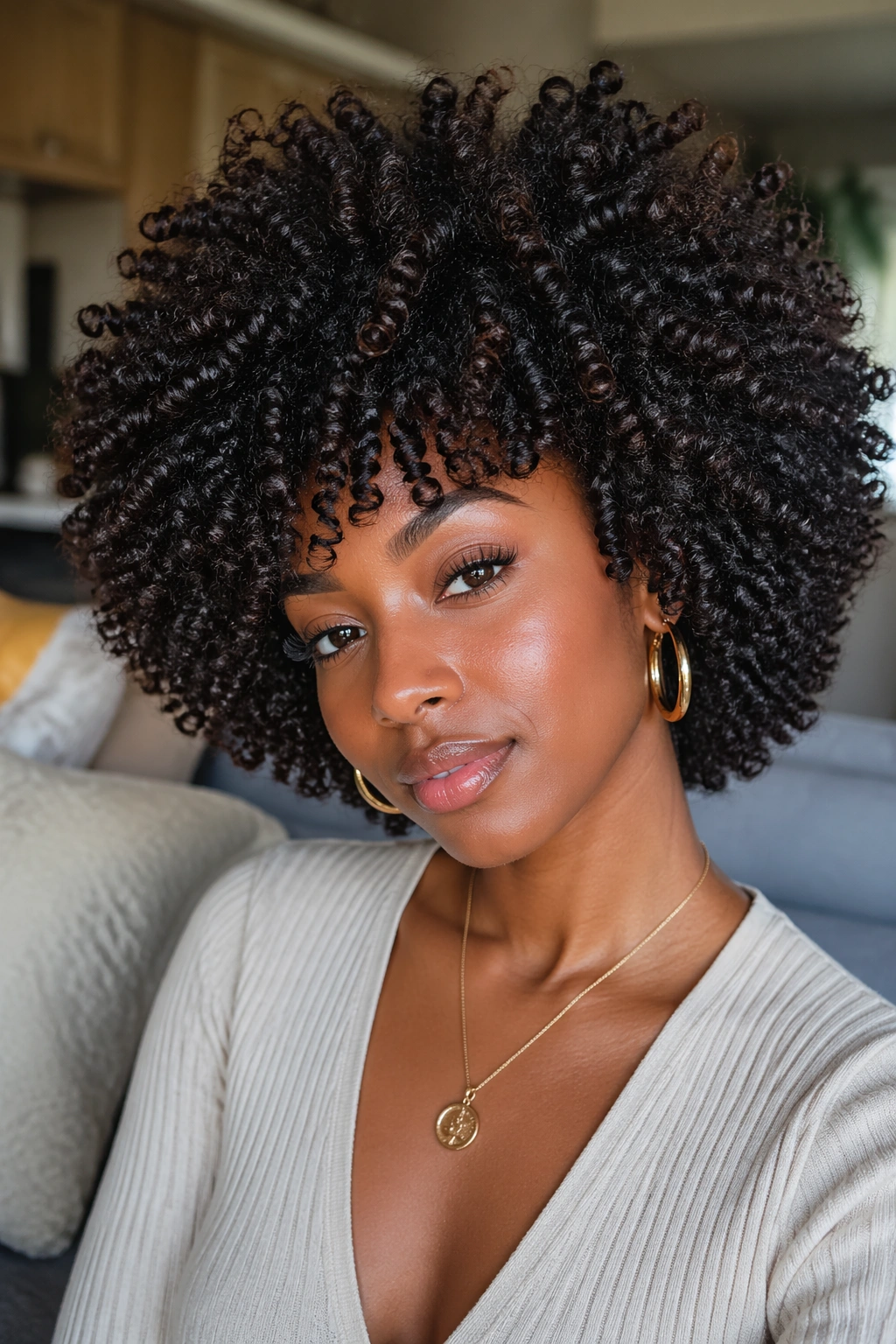
Set the hair in bantu knots and release them into a full, rounded afro. The released knots create a pattern of tight spirals that, when separated gently, create a voluminous, textured afro with visible curl definition rather than a fused or frizzy puff.
Apply a generous amount of curl cream to damp hair before knotting. Allow to dry completely — under a hooded dryer for 45-60 minutes or overnight. Release with dry hands and a small amount of oil on your fingertips to prevent frizzing as you separate. Pick gently to add volume.
The bantu knot-out on full afro hair creates a version of the rounded afro that has more interior texture than a wash-and-go — you can see the individual curl pattern, which adds visual depth.
20. The Space Buns on Natural Hair
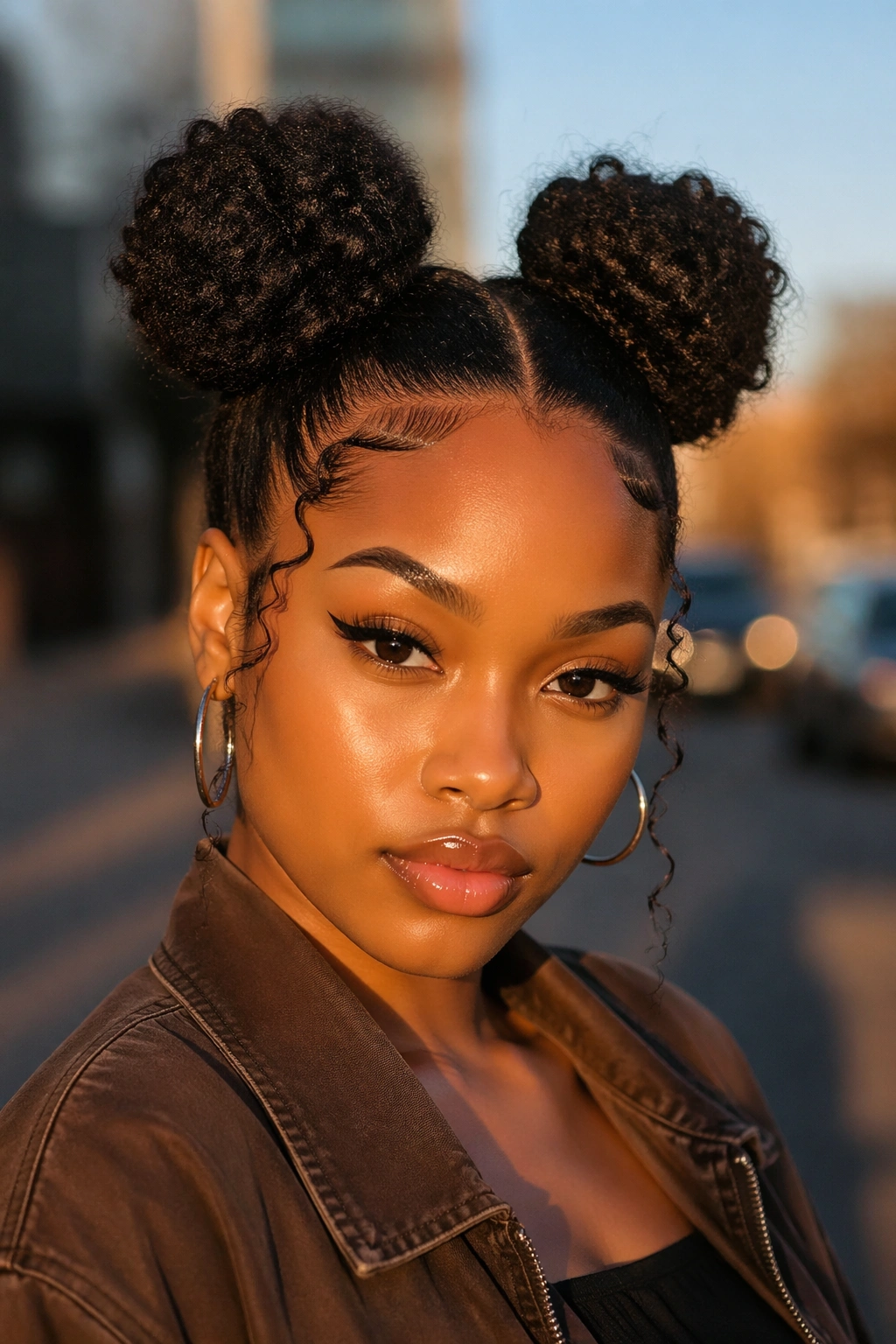
Two buns, one on each side, placed high on the head — more stylized than practical, but that’s exactly the point. Space buns on natural hair create two globes of afro texture sitting like satellites above the ears. They’re graphic, joyful, and unambiguous in their aesthetic reference.
To make natural hair space buns work, section the hair precisely at center crown and pull each section up with a gentle elastic before coiling it into a bun shape and pinning. Add a small amount of oil or curl cream to smooth the exterior of each bun before securing. The less smoothing you do, the more textured and voluminous the bun looks — which, for this style, is typically the goal.
21. The 90s-Inspired Afro Puff with Beaded Hairline
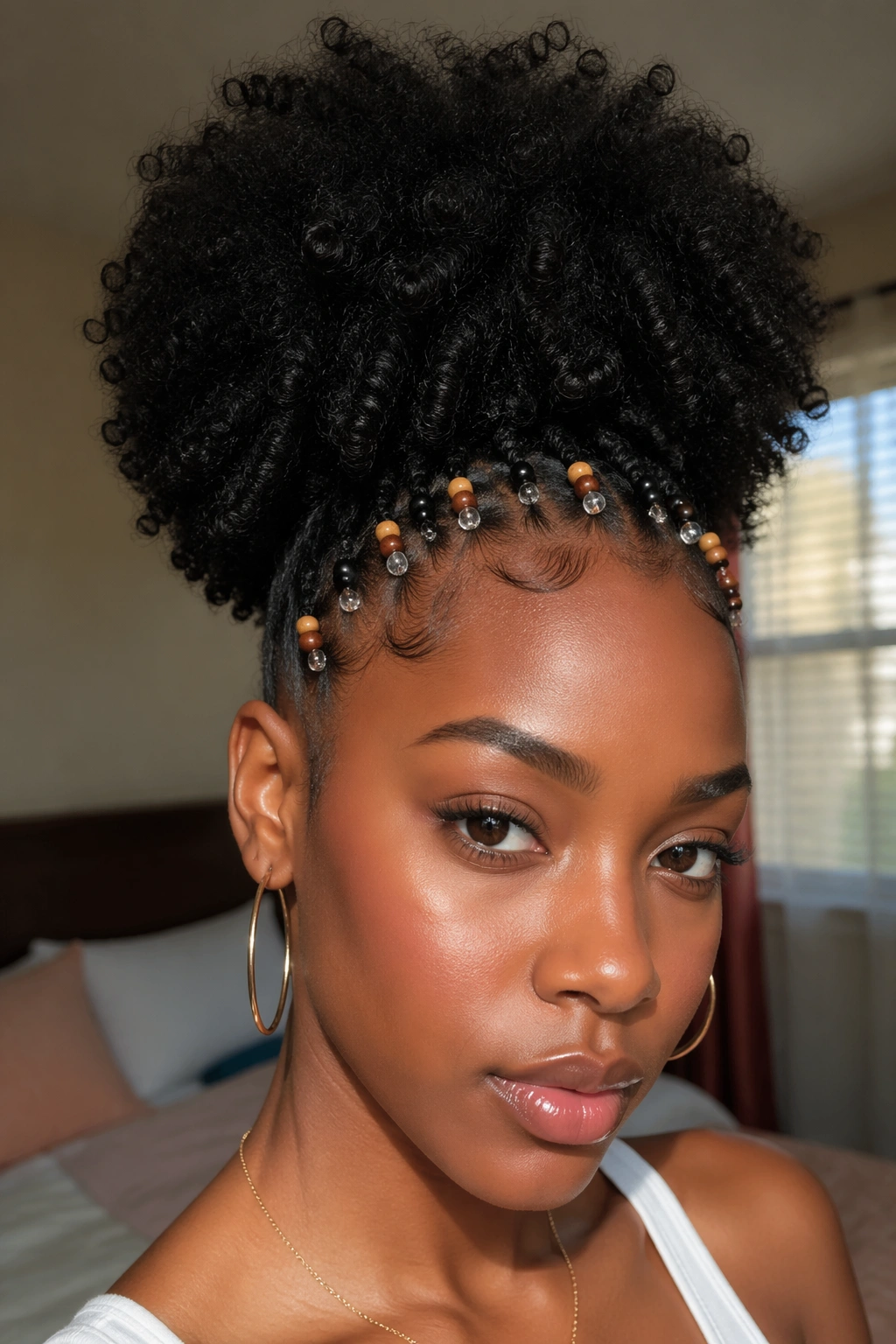
The classic puff, elevated with small decorative beads threaded onto baby hairs or small sections at the hairline. In the 90s, beads appeared everywhere in Black hair culture — on braids, at the scalp between cornrows, on individual strands. Placing them at the hairline on a puff look brings that element into a style that doesn’t require braiding.
Threading beads requires a specific beading needle or a small loop tool. Slide 3-5 beads onto a small section of hair close to the scalp, secure the bottom bead with a small crimp or a double knot, and let them sit. They should be loose enough to move and make sound but tight enough not to slide off.
22. The Twist-Out Crown Halo
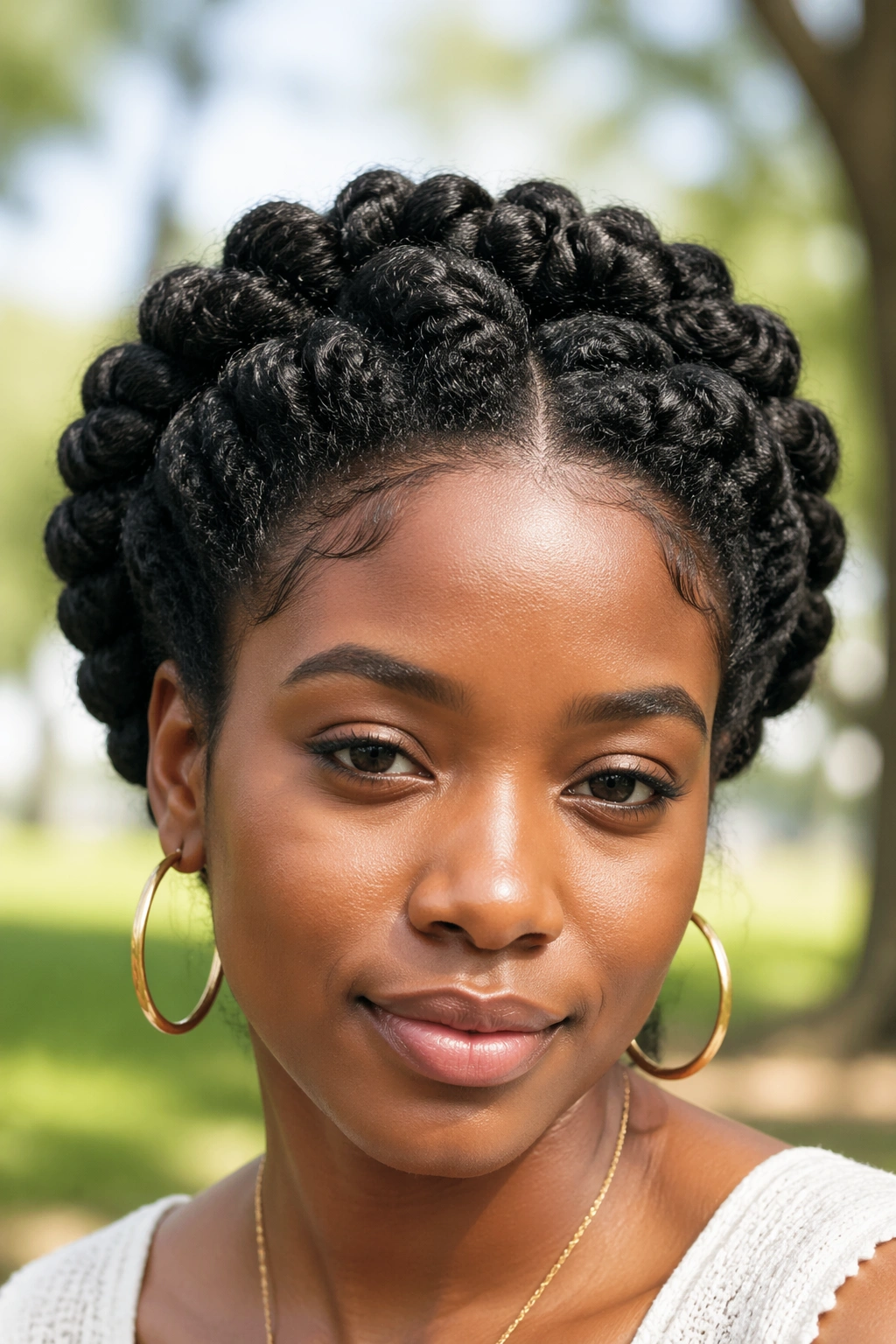
Natural hair twisted all around the head in a circular crown shape — twists that start at the front, wrap around the sides, and meet at the back, pinned into a halo of coiled twists that sits like a crown on the head. The center is left open or pinned up as well.
This is a protective style with a 90s silhouette — the elevated crown, the visible texture, the sense of height. It works on medium-to-long natural hair because you need enough length to reach from the front all the way around to the back while maintaining the circular shape.
The twists hold for about a week before they need to be taken down. Keep the scalp moisturized with a light oil spritz every 2-3 days.
23. The Pressed Natural with 90s Volume
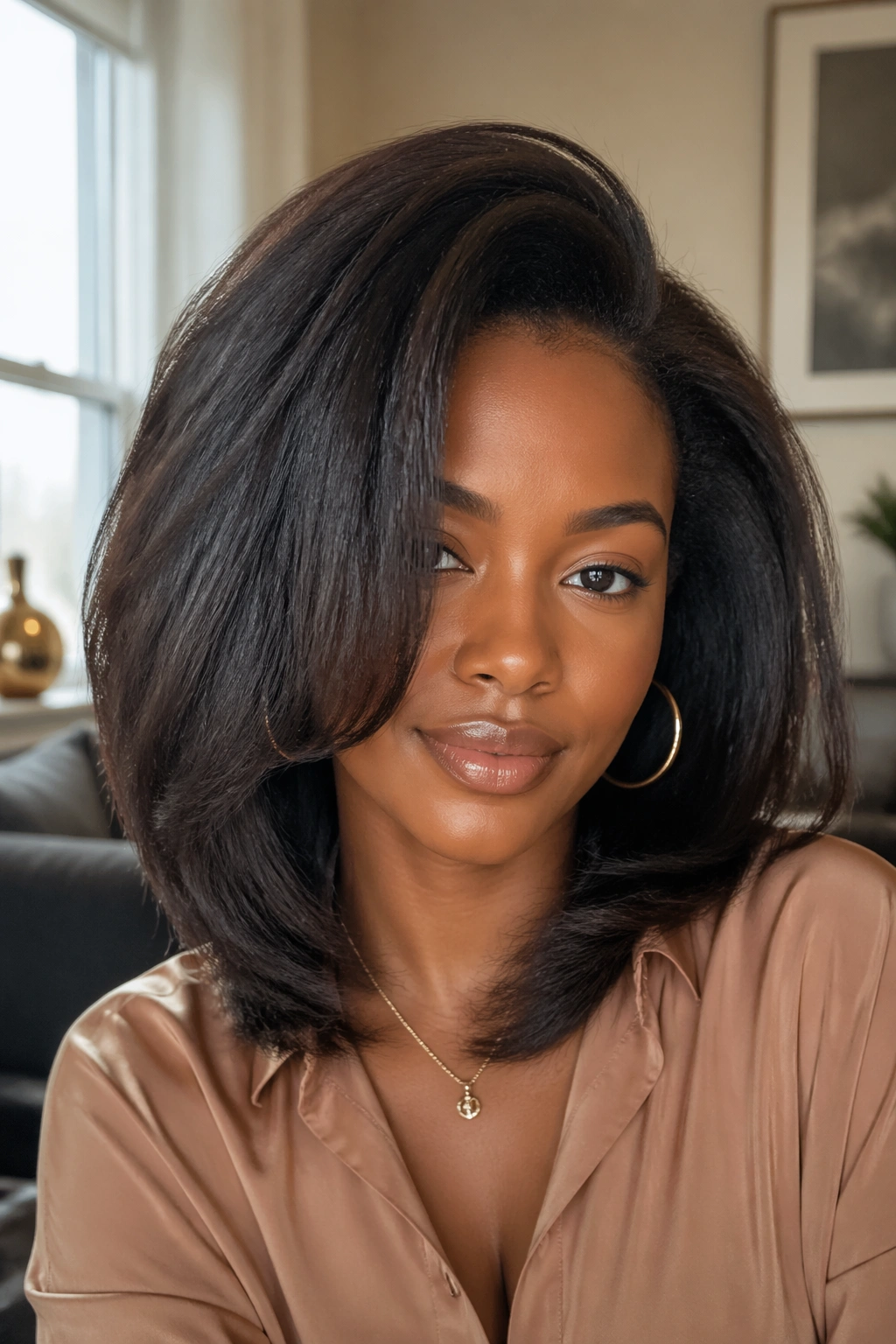
A professional press-out on natural type 4 hair creates a completely different texture — silky, elongated, moving differently — but volume can be added back via large-barrel curling iron wraps or simply by backcombing very gently at the roots. The 90s pressed look wasn’t the flat, sleek, bone-straight press — it was pressed with body. Movement. Life.
The pressing process: wash thoroughly, deep condition, blow-dry with a smoothing brush on medium heat, then use a pressing comb or flat iron at 380-400°F for type 4 hair. Work in small sections, one pass at a time. Apply a heat protectant — not optional, not a suggestion — before any heat tool touches the hair.
A pressed natural can last 1-2 weeks with protective nighttime wrapping and avoiding humidity, but reverting it with sweat or water doesn’t damage the hair as long as the press itself was done correctly.
24. The Bob Wig with Afro Edges
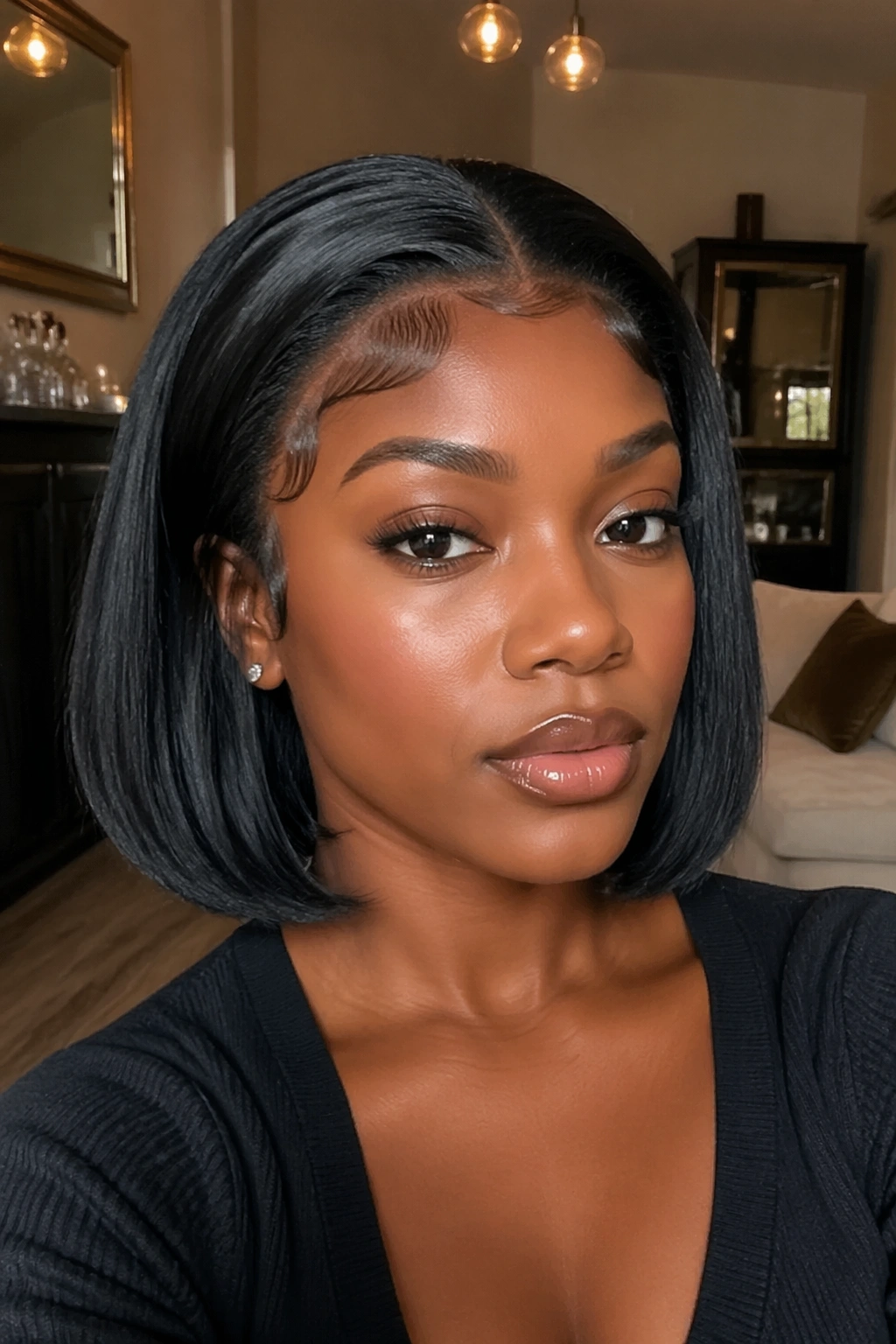
Wearing a bob wig over your natural hair while leaving your baby hairs exposed and styled at the perimeter — this is a 90s technique that creates the illusion of a pressed or relaxed bob while maintaining your natural hair underneath. The baby hairs styled onto the wig hairline in waves or swoops complete the look.
It’s worth saying: this isn’t cheating. Protective styling with wigs while maintaining your natural hair underneath is genuinely good for hair health. Your natural hair gets a break from manipulation while you still have a styled look every day.
The trick to making wig edges look natural: match the wig’s hairline to your actual hairline position. A wig worn too far back or too far forward immediately looks like a wig. Also, the baby hairs you expose need to match the density of the wig’s hairline — if they’re sparse, use a slightly darker edge product to fill them in visually.
25. The Bold Color Afro
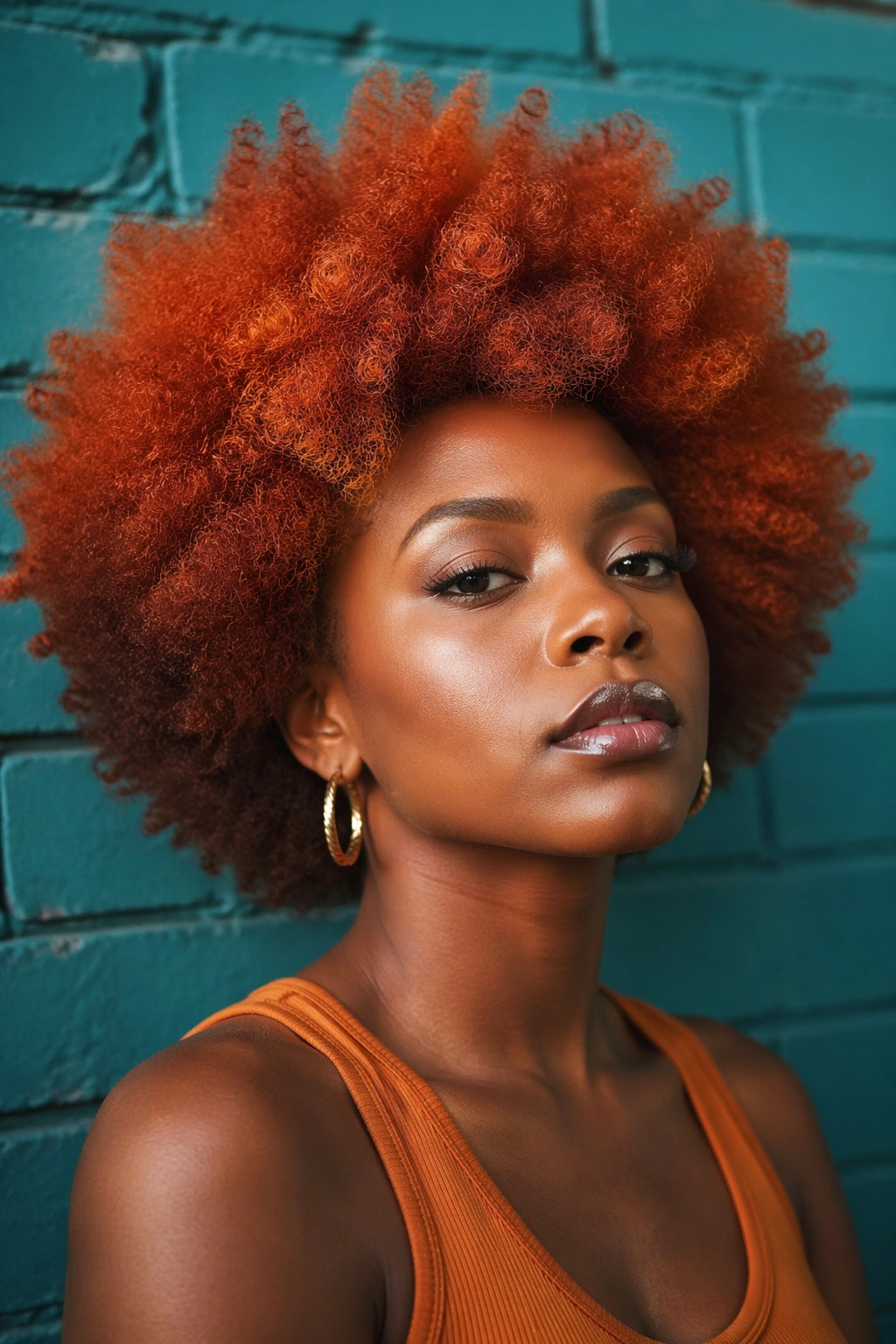
A fully colored afro — roots and all — in a shade that contrasts deliberately with your natural melanin. Deep copper on very dark skin. Bright auburn on medium brown skin. Platinum or ash blonde on deep brown, if your hair can handle the processing. The 90s was not afraid of this. And you shouldn’t be either.
The commitment here is real. Fully bleaching afro-textured hair to lift it to the level where copper or auburn shows up is a significant chemical process. Your hair needs to be in strong condition before you start, and it needs intensive care after. A protein treatment one week before, a deep conditioning mask the week after the color process, and sulfate-free shampoo from that point forward.
The payoff when it’s done right is a style that stops conversations.
How to Maintain 90s-Inspired Styles
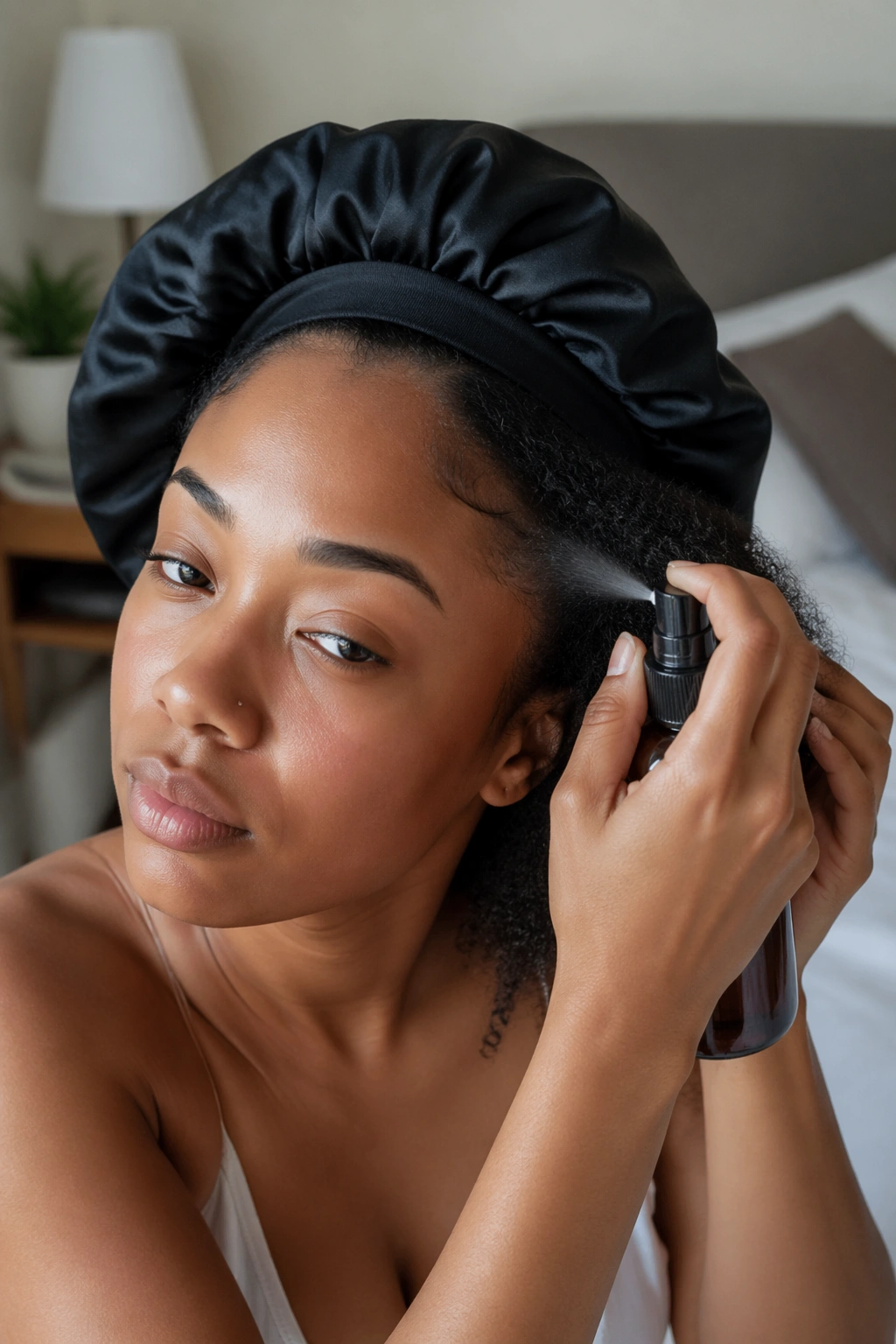
Most of the styles in this list — puffs, cornrows, braids, twist-outs — do best with a consistent moisturizing routine and careful nighttime protection. Satin or silk is non-negotiable. Cotton pillowcases absorb moisture from natural hair overnight; satin and silk don’t. This single difference in nighttime routine can extend any style’s lifespan by 2-3 days.
For styles that involve gel or hard-hold products, don’t layer new product over old — that creates buildup that makes hair look dull and heavy. Refresh with a spritz of water to reactivate the existing product first. If the style needs to be fully redone, start with a clarifying wash to remove the buildup before re-styling.
Adapting 90s Looks for Different Textures
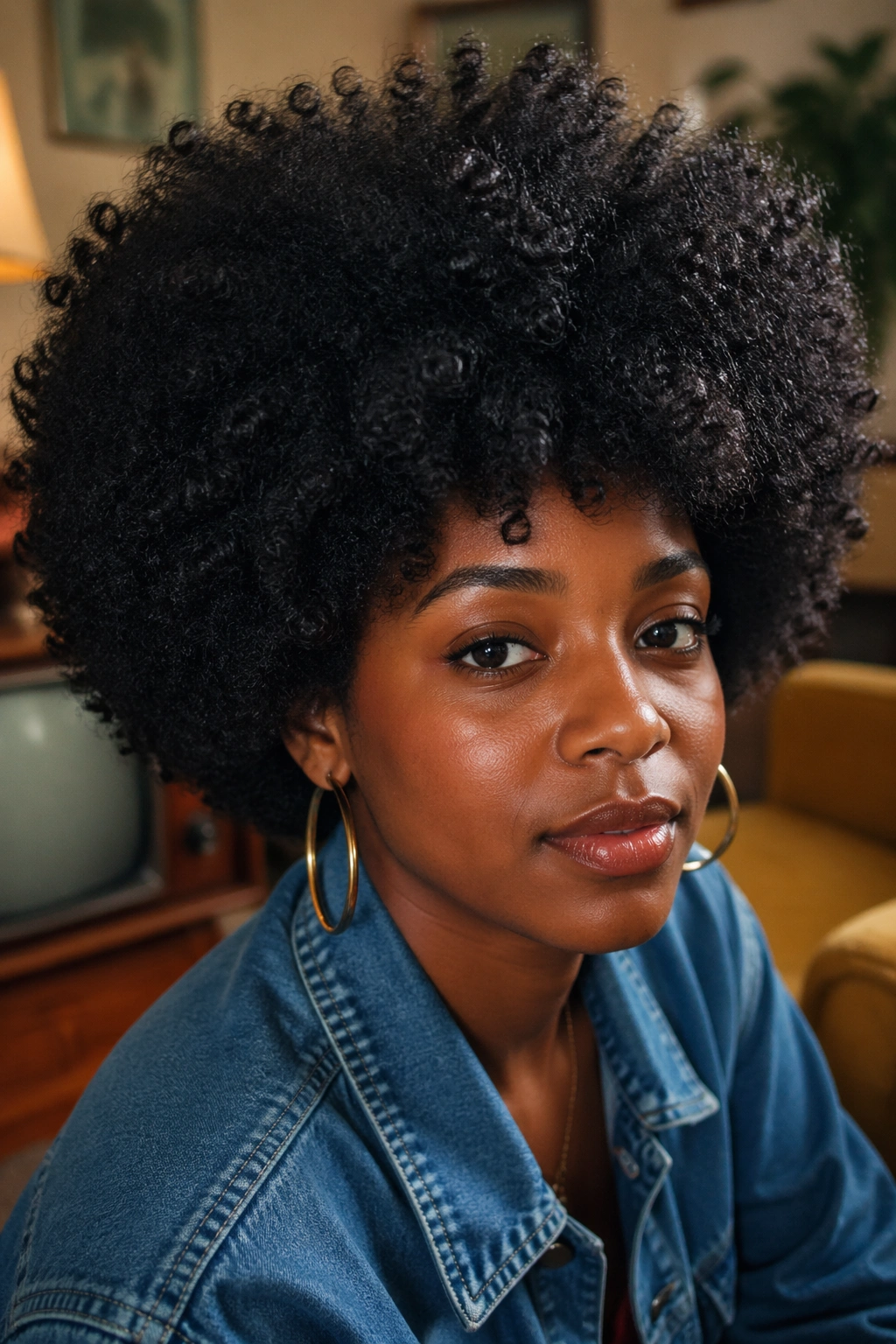
A 90s high puff looks one way on type 3B hair and completely different on type 4C hair. Neither version is wrong. The texture variation means the same styling approach produces different results — and that’s a feature, not a bug. Looser textures get more elongation with less manipulation. Tighter textures get more volume and height. Adjust the specific style to your texture rather than fighting it.
The 90s aesthetic was never about one specific texture doing one specific thing. It was about confidence and visibility. Those two things translate across every curl pattern.
