



Something shifts in how you think about your hair after 30. The experimentation of your twenties — the years of trying everything, some of it brilliant and some of it genuinely disastrous — starts to give way to a clearer sense of what you actually like. What works for your face. What fits the life you’re living. Afro haircuts for women over 30 occupy a particular and exciting space because the natural hair movement has brought these styles into full public visibility, and the generation of women who’ve been growing and cultivating their natural hair for a decade or more are arriving at thirty-something with real hair knowledge and a readiness to go further.
This isn’t a list about playing it safe as you get older. That framing is wrong. What changes after 30 is that the cuts and styles you choose become less about seeing what happens and more about making deliberate decisions. You know your curl pattern. You know your shrinkage. You know which products your scalp tolerates and which ones it protests. That knowledge is the foundation for some of the most interesting, intentional, and genuinely flattering afro haircuts you can wear.
What Changes About Hair After 30 (And What Doesn’t)
Your hair texture can shift slightly from your twenties — not always, but often enough that it’s worth paying attention. Some women notice finer individual strands, slight changes in curl pattern in certain zones, or a shift in how their hair responds to moisture. These aren’t problems; they’re data points that help you make better decisions.
What doesn’t change: the fundamental relationship between your hair’s density, curl pattern, and the way a cut falls on your head. A tapered cut that suited you at 25 will still work at 35. A full rounded afro that you love at 28 you’ll likely still love at 38. Style preferences shift; structural hair knowledge deepens.
The most significant practical consideration that many women notice: scalp health becomes increasingly important as a foundation for everything else. A cut that looks stunning requires hair that’s healthy enough to execute it well.
Scalp Health as the Foundation
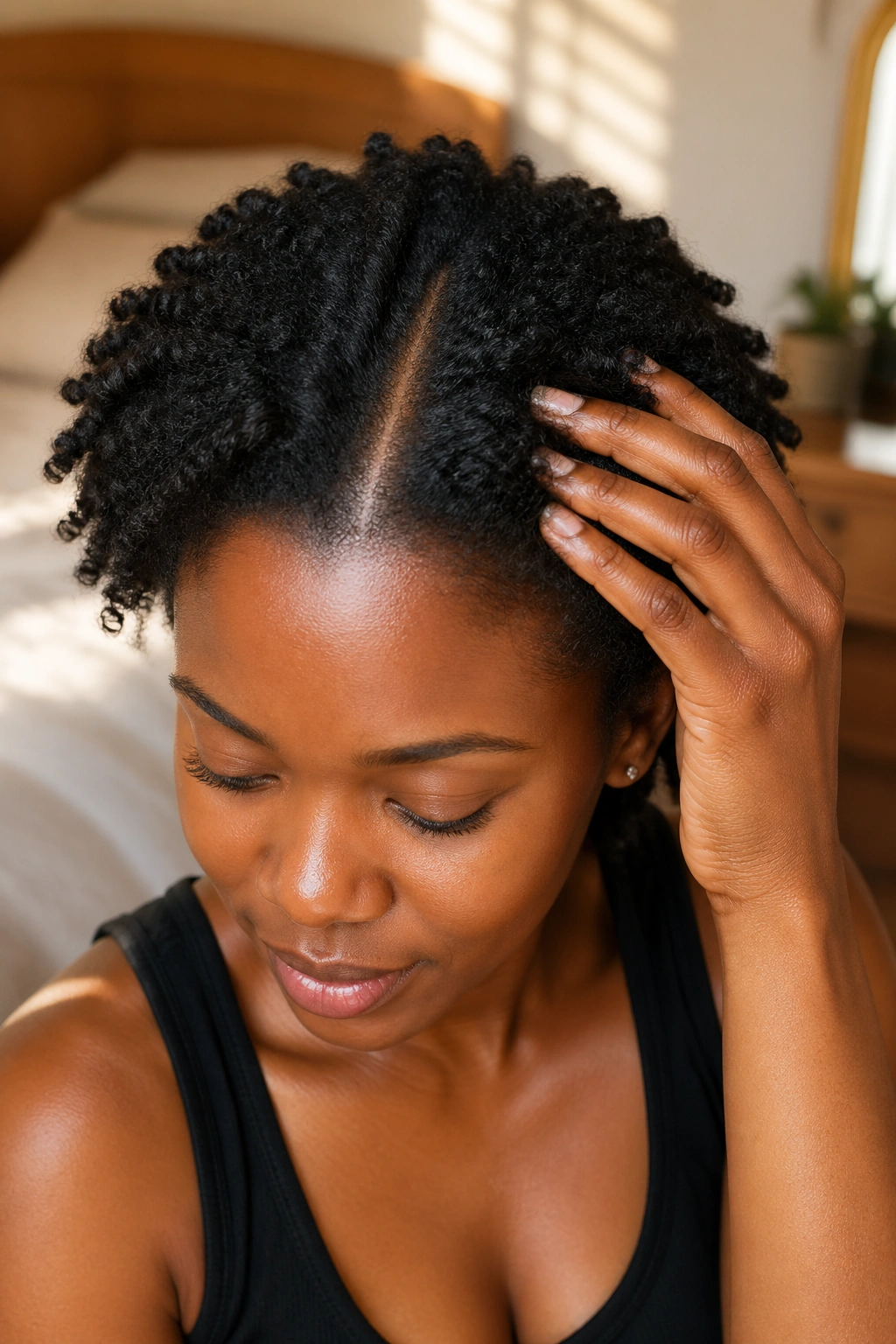
You cannot separate how a cut looks from the condition of the hair that wears it. Dry, brittle, or thinning hair will not hold a shape the way well-moisturized, strong, dense hair does. Before investing in a significant cut, invest in three to six months of deliberate scalp care: weekly scalp massages with a light oil like jojoba or rosehip (about a teaspoon worked into the scalp in small circular sections), a sulfate-free shampoo used no more than once a week, and a deep conditioning treatment every two weeks minimum.
The results aren’t dramatic in the first month. But at the six-month mark, you’ll see a visible difference in edge density, shine, and the overall fullness of your hair — which is exactly what makes a great afro cut look like a great afro cut.
Finding the Right Stylist for Natural Afro Cuts
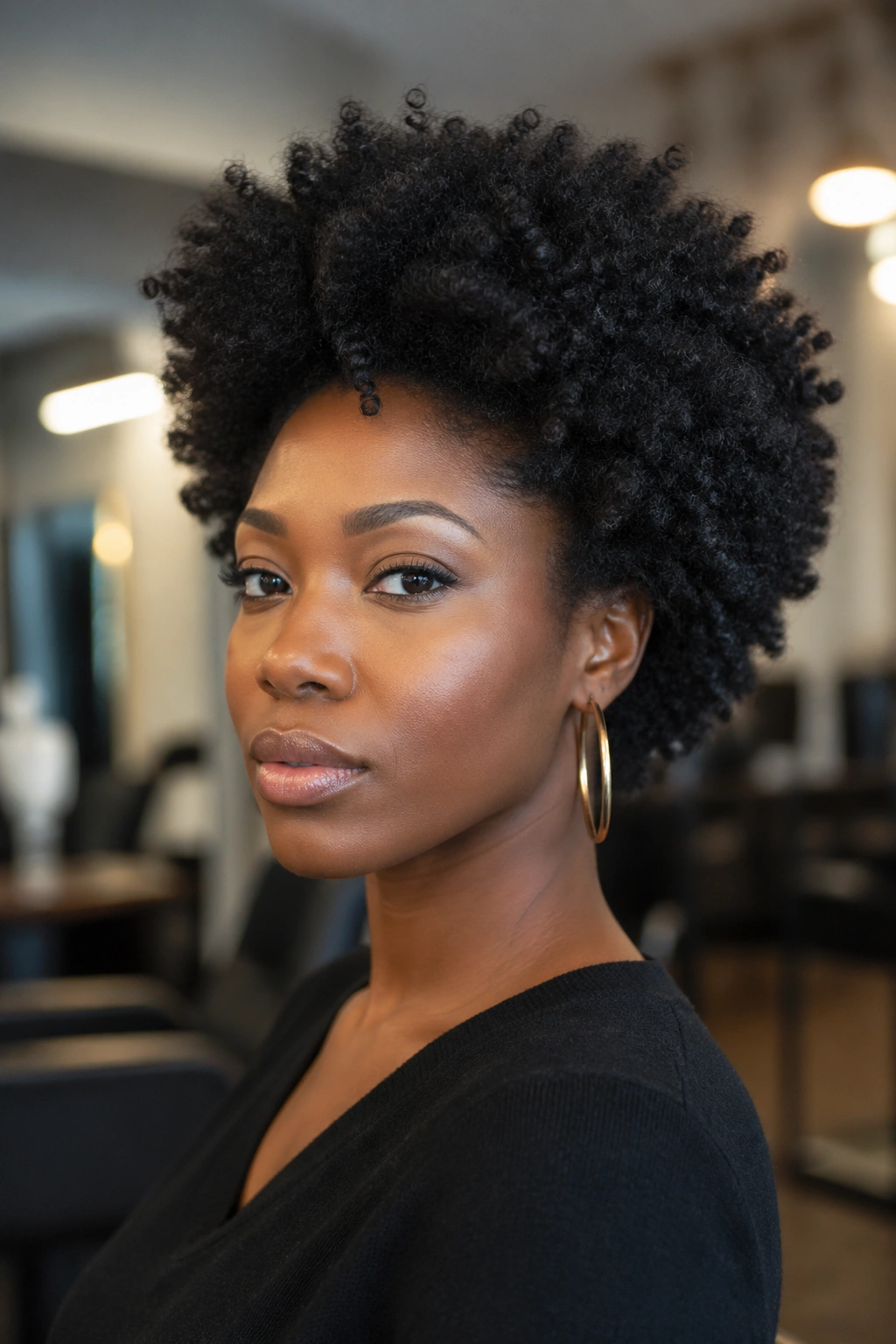
Not every stylist who says they work with natural hair has experience with the specific techniques that make afro haircuts for women over 30 look polished and intentional. Before booking a significant cut, ask specifically about their experience with cutting natural 4A, 4B, or 4C hair dry (as it’ll be worn, not stretched), their familiarity with tapering vs. fading, and whether they’ve done shape maintenance on grown-out natural hair.
Look at their portfolio specifically for shapes, not just length. Does the hair in their work photos have a defined silhouette? Are edges clean without being overcorrected? Do the cuts look like they’ll grow out gracefully or become unrecognizable within three weeks?
A consultation before committing to the cut — even a 15-minute conversation before the appointment — is worth the effort for any significant shape change.
Managing the Grow-Out Between Appointments
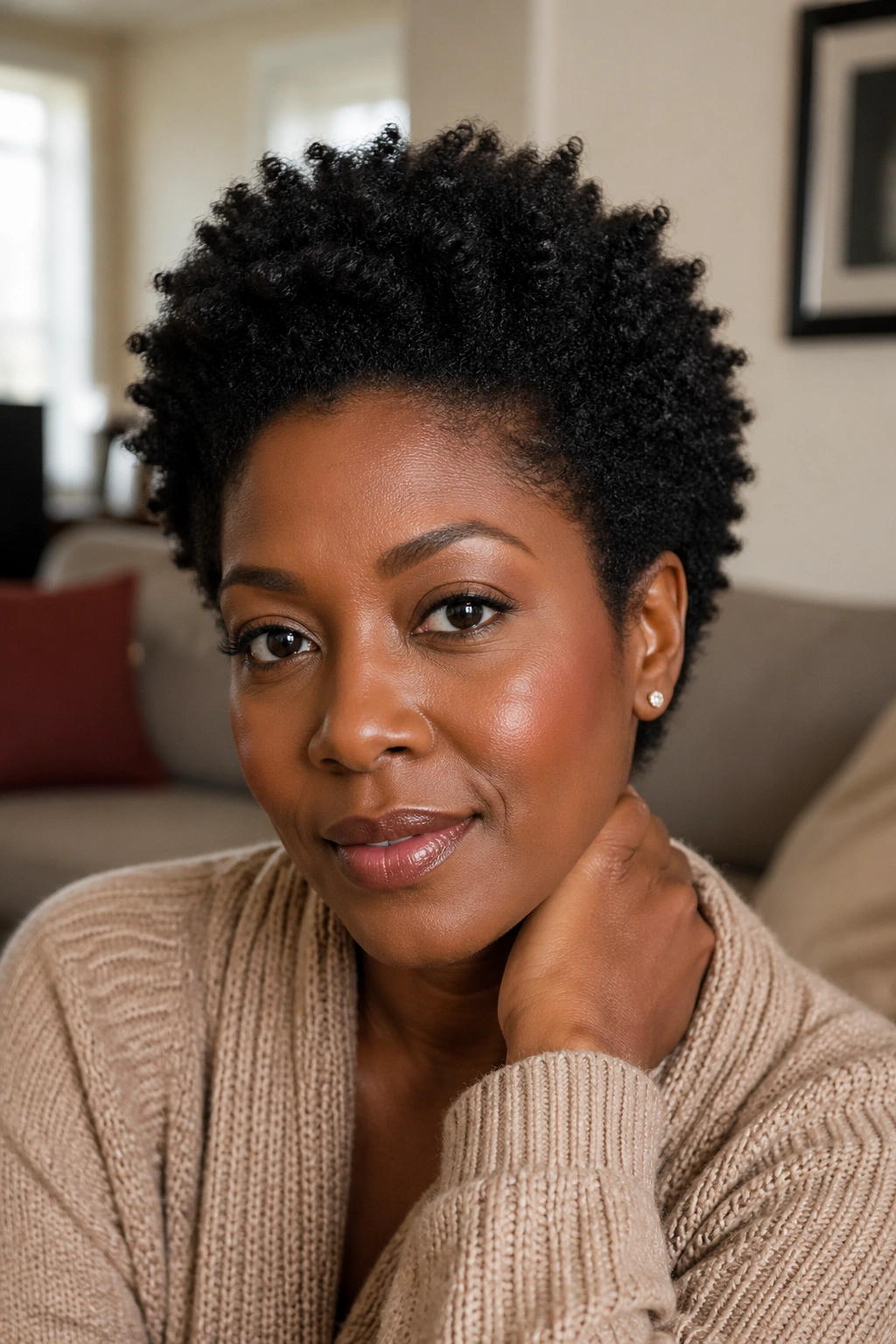
How you maintain the shape between stylist visits matters as much as the cut itself. Most natural afro shapes need reshaping every four to eight weeks depending on how quickly your hair grows and how defined the shape needs to stay.
Between appointments, the most effective tools are: a wide-tooth comb for definition, a good edge gel (look for one with aloe vera base rather than heavy wax — it holds without buildup), and a consistent moisture-sealing routine that keeps the hair from drying out and losing shape integrity.
For women with 4C hair specifically: shrinkage can compress a well-shaped cut into something unrecognizable within a week. Stretching techniques — banding, threading, or even sleeping with hair in a loose pineapple on a satin pillowcase — preserve the shape between washes.
1. The Classic Full Rounded Afro
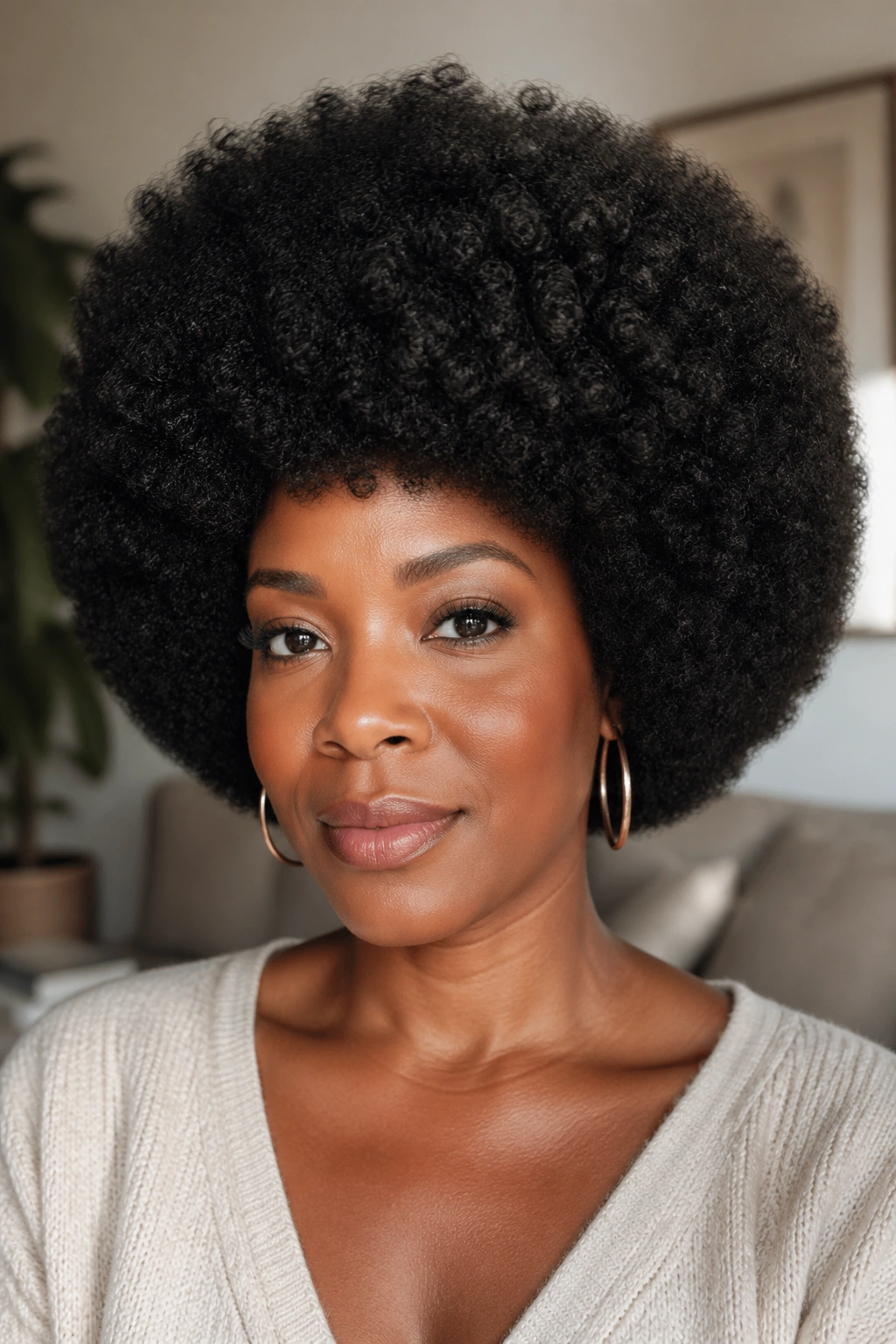
The shape that started a revolution. The full rounded afro — grown to its natural density, shaped into a consistent sphere or near-sphere, with edges that frame the face precisely — is not a default or a fallback. It’s one of the most technically demanding natural styles to maintain at its best, and one of the most visually powerful when it’s right.
Why It Works at Every Stage
What makes the full rounded afro particularly interesting for women over 30 is how it interacts with facial features that have become more defined with age. A full afro creates a frame that highlights cheekbones, jaw definition, and neck line in ways that are specific to this shape and no other.
The size of the shape is personal. Some women prefer a tight, fist-sized volume. Others grow full, palm-sized spheres that dominate a room. Neither is more correct; what matters is that the shape is deliberate and well-maintained.
- Edges should be defined with a light gel and a soft-bristle brush daily for maximum effect — not a heavy gel that produces a crust, but a clean defining product applied from front to back.
- Shape your hair dry, after moisturizing, when it’s at its natural volume. Trim with sharp shears in small increments, rotating around the head.
- Trim split ends every six to eight weeks to maintain density and shape integrity.
The honest maintenance reality: This style requires consistent effort. Daily moisture, weekly deep conditioning, regular shaping. If that feels like too much work for your current life, look further down this list.
2. The Tapered Afro
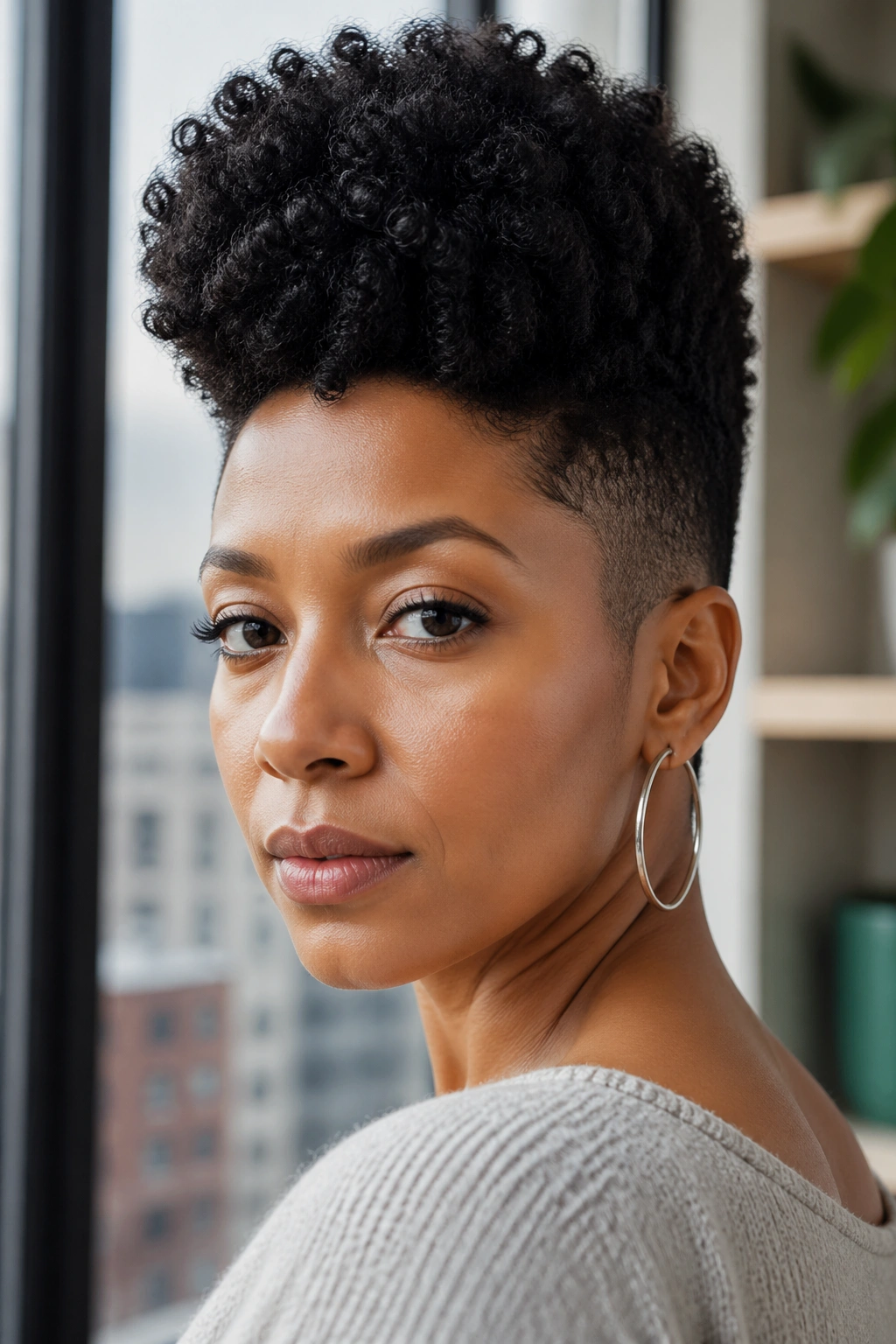
Unlike the full rounded shape, the tapered afro is shorter at the sides and back — transitioning from a closer cut near the temples and nape up to a taller, fuller crown. The taper creates a silhouette that narrows at the sides, which makes the crown volume more dramatic by contrast.
This is arguably the most versatile afro cut because it works across a wide range of densities and curl patterns. Fine 4A hair that might lose definition in a full sphere has enough structure at the tapered sides to look crisp. Dense 4C hair that would require significant maintenance at full volume becomes dramatically more manageable when the sides are tapered short.
The tapered afro has a sharpness to it that reads as polished. Professional environments where a full rounded afro might still face biases tend to respond more neutrally to the clean lines of a taper. That’s a real-world consideration worth naming honestly.
3. The Natural TWA (Teeny Weeny Afro)
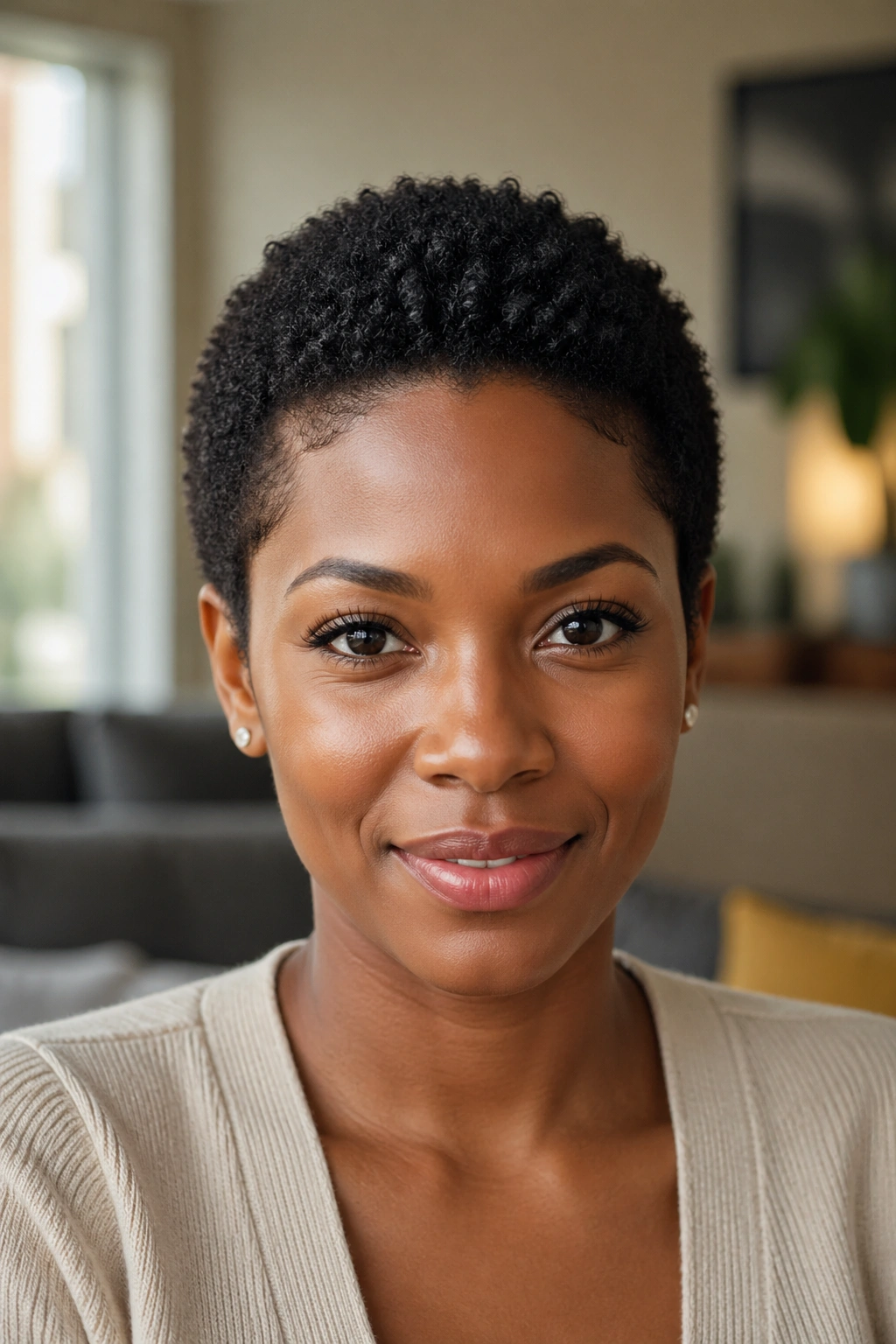
Don’t let the word “teeny” fool you. A well-shaped TWA — typically hair that measures somewhere between a quarter-inch and two inches in length — is one of the most striking haircuts on this list when executed with precision.
The TWA puts your facial structure completely on display. Cheekbones, jawline, the shape of your ears, the length of your neck — the cut offers nothing to hide behind, which is either terrifying or liberating depending on where you are with your face.
What makes a TWA genuinely great vs. just short: the edge work. Edges that are meticulously defined with a clean line, no ragged edges, and a fade or taper at the temples transform a short cut into a statement. Without that detail, a TWA can look unfinished.
The emotional journey of a TWA is real. Give yourself time to adjust to how differently you look. Most women who cut to a TWA go through a week or two of adjustment before falling completely in love with it.
4. The High Top Fade Afro
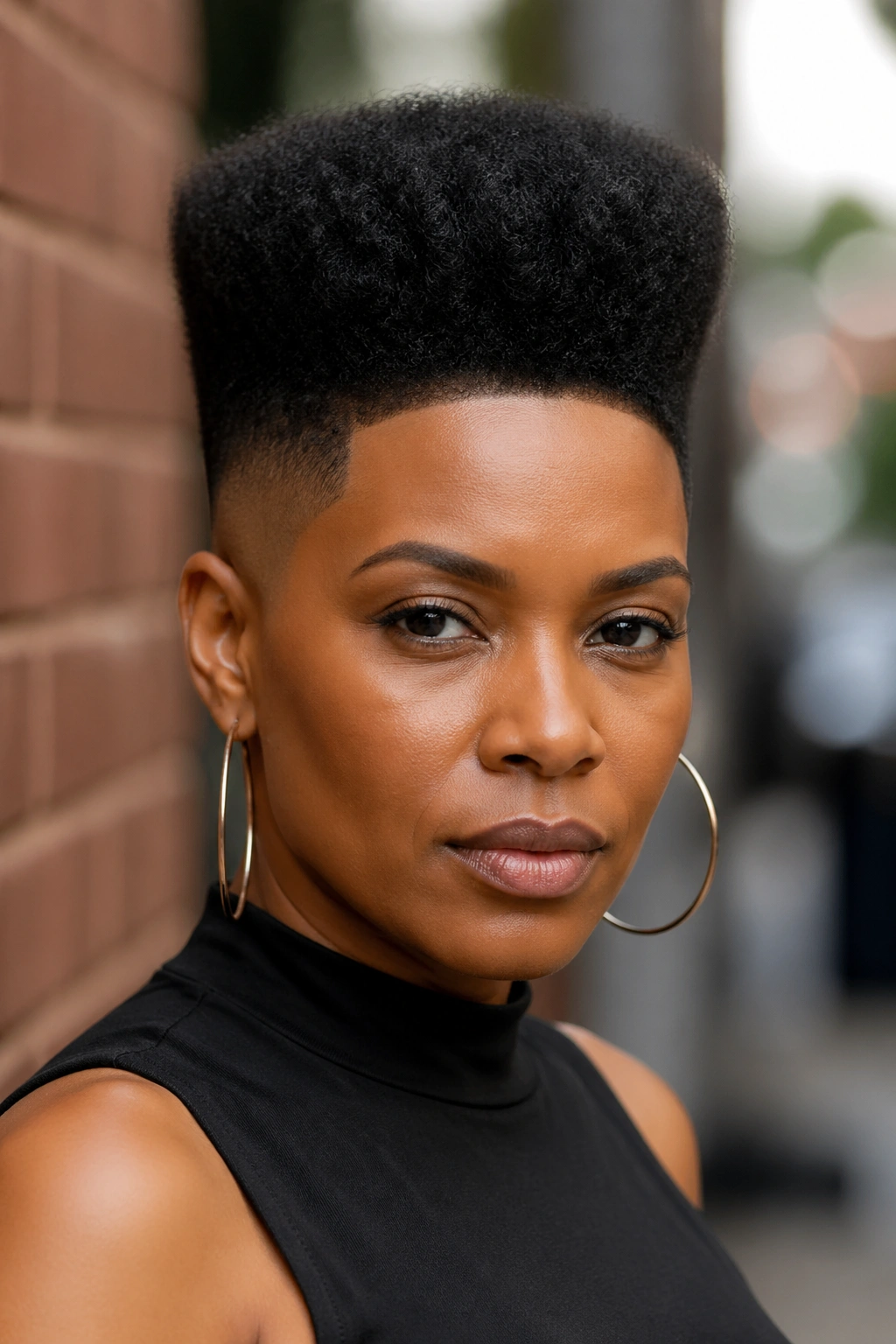
The high top fade — a style with deep roots in Black American style from the late 1980s and early 1990s, reimagined continuously since — is a cut that creates dramatic height at the crown while tapering or fading sharply on the sides and back. The flat or slightly domed top creates a geometric silhouette that is unmistakably deliberate.
For women over 30 who want something with real fashion edge, the high top fade is one of the most intentional and interesting options available. It’s not subtle. It’s not easy to maintain. But when you see it done right, on the right person, it’s genuinely arresting.
The top requires regular shaping to maintain its flat or domed profile — your hair will naturally grow toward its pattern, rounding or irregularly. Every two to three weeks, the top needs reshaping to maintain the intended silhouette.
5. The Afro with Defined Parts and Geometric Shapes
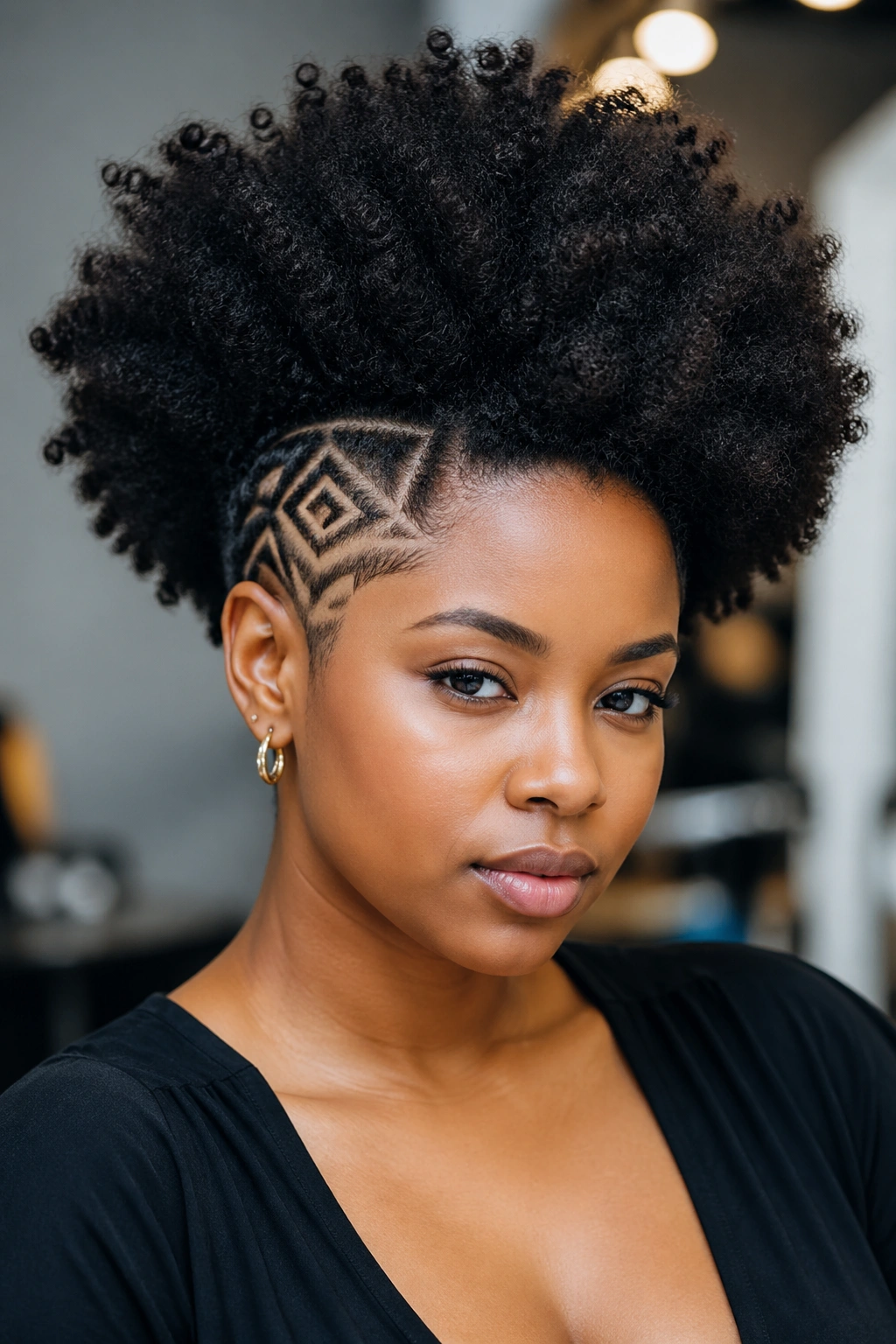
Cornrow-adjacent in some ways but also completely different: a full afro with deliberate geometric shaping cut into the sides or nape — diamonds, hard side parts, curved lines — is a style that merges sculpture with hair. The natural volume of the afro is the canvas; the geometric elements are the design.
How to Get It
A barber rather than a traditional stylist often does this specific kind of precision work better. Find someone who specializes in design cuts on natural hair — look for work with clean, sharp lines that don’t blur as the hair grows.
This works best on medium to dense afros where the hair has enough substance to make the shaved or clipped design visible against the fuller hair above it. Very fine hair may not provide enough contrast.
Who this is for: women who want their haircut to be genuinely artwork, and who are comfortable maintaining it every two to three weeks to keep the shapes crisp.
6. The Wash-and-Go Afro with No Defined Shape
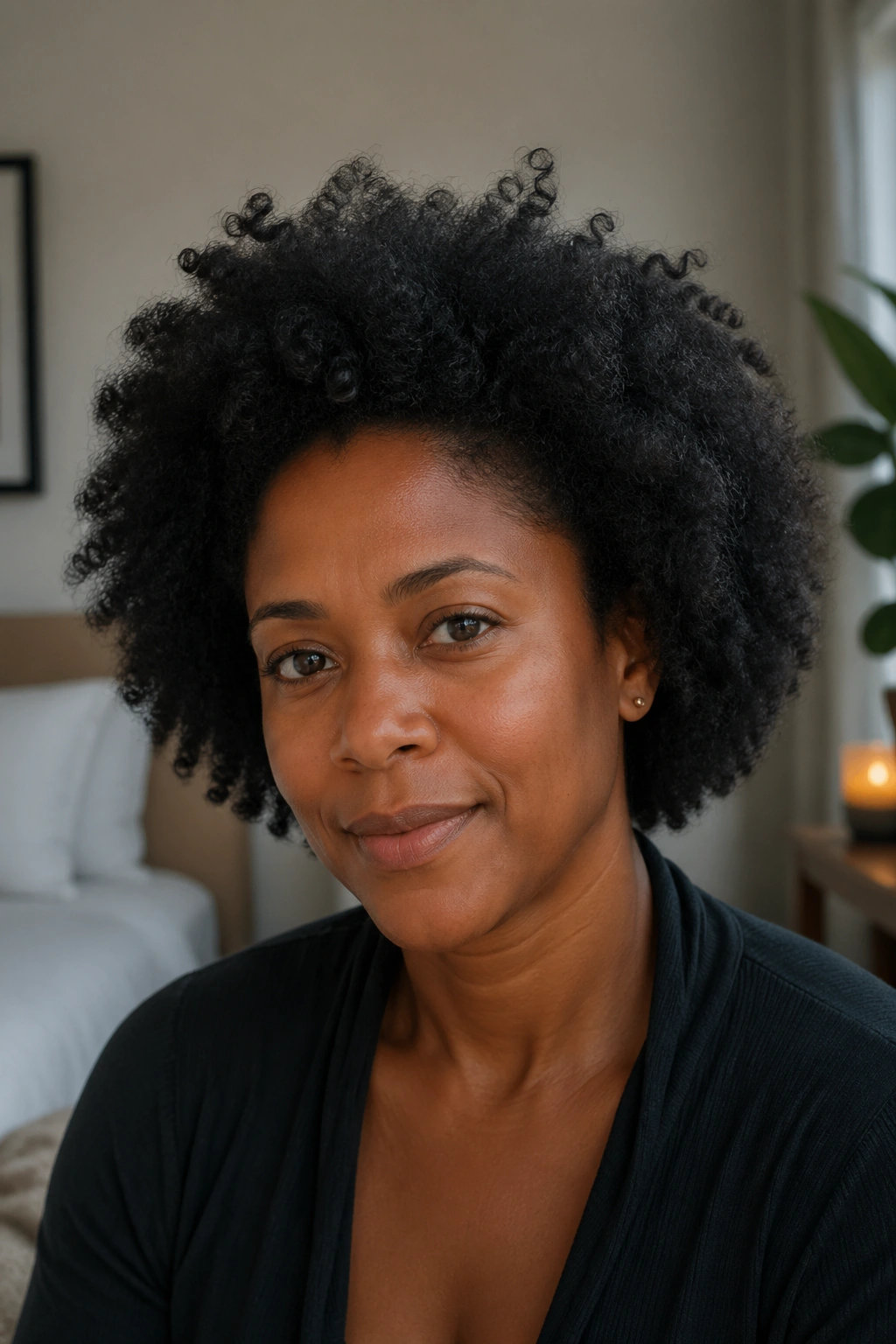
This one is specifically for women who’ve decided that defined shapes require more maintenance than they’re willing to commit to at this point in their lives. Valid. Completely valid. The wash-and-go afro — hair moisturized, sealed, and left to dry into its natural shape without any shaping intervention — is beautiful precisely because it’s uncoerced.
The “cut” here is minimal: just keeping split ends trimmed and removing any dead ends that break the natural shape of the curl. Nothing architectural, nothing requiring a stylist more than twice a year.
The style works because your hair knows what it wants to do. After years of growing natural hair, that want has become a clear pattern. The wash-and-go at 30 is the harvest of years of understanding your own hair. It’s not low-effort in the sense of careless — it’s highly informed ease.
7. The Curly Shag
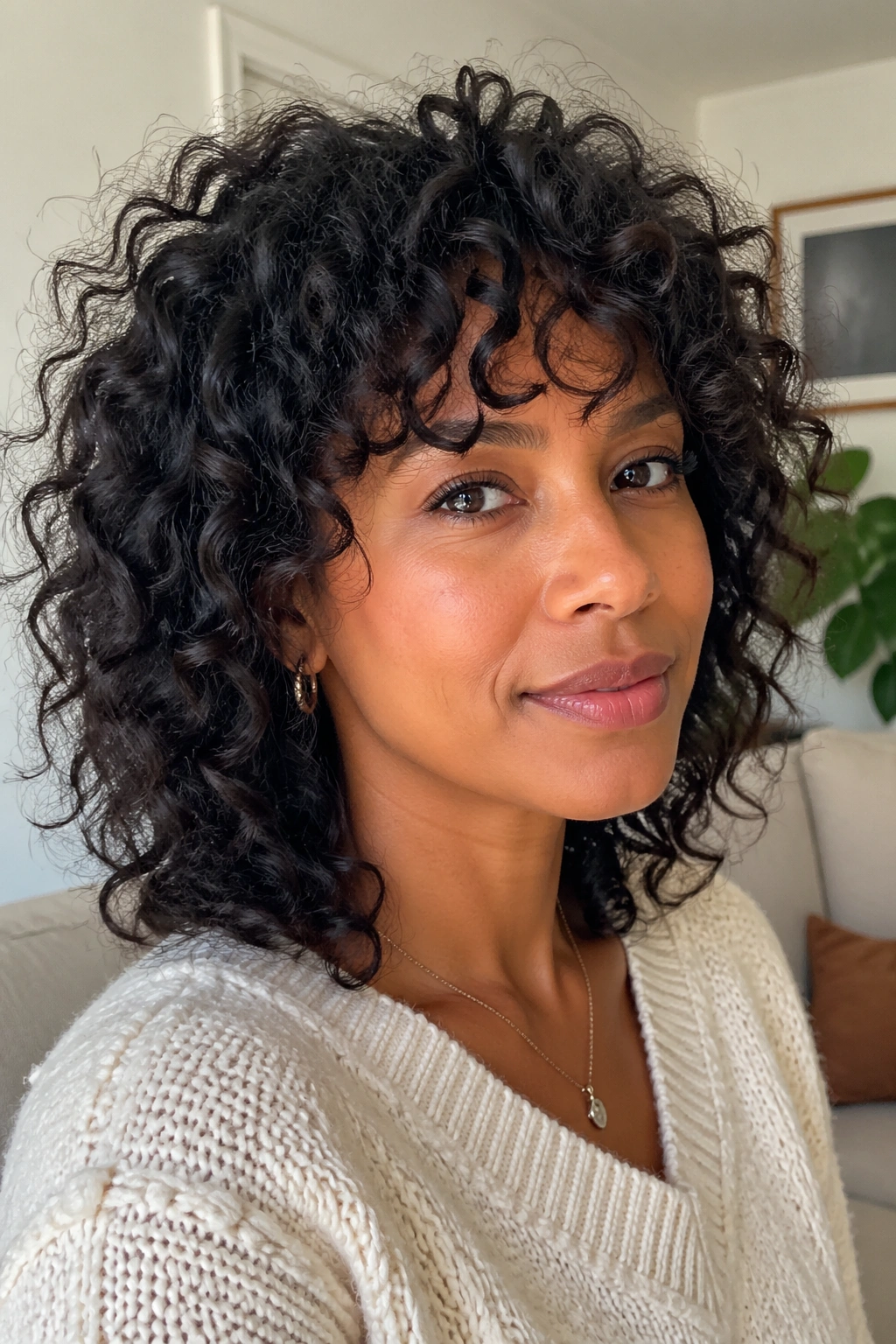
The shag cut — layered, with intentional volume at the crown and controlled shape at the ends — has its natural-hair equivalent in what some stylists call the curly shag: layers cut specifically to work with the hair’s curl pattern, creating movement, body, and a shape that looks different at every angle.
Unlike a traditional shag designed for looser curl patterns, the afro curly shag works in shorter curl lengths — 3C through 4B — where the layers create visible, defined separation rather than just internal weight removal.
This cut requires a stylist who understands how to cut curly and coily hair at length with purpose rather than just cutting straight across. The layers should create a cascading visual from root to end. When you shake your head, the hair should move as multiple distinct layers rather than as one solid mass.
8. The Mohawk Afro (Natural Faux Hawk)
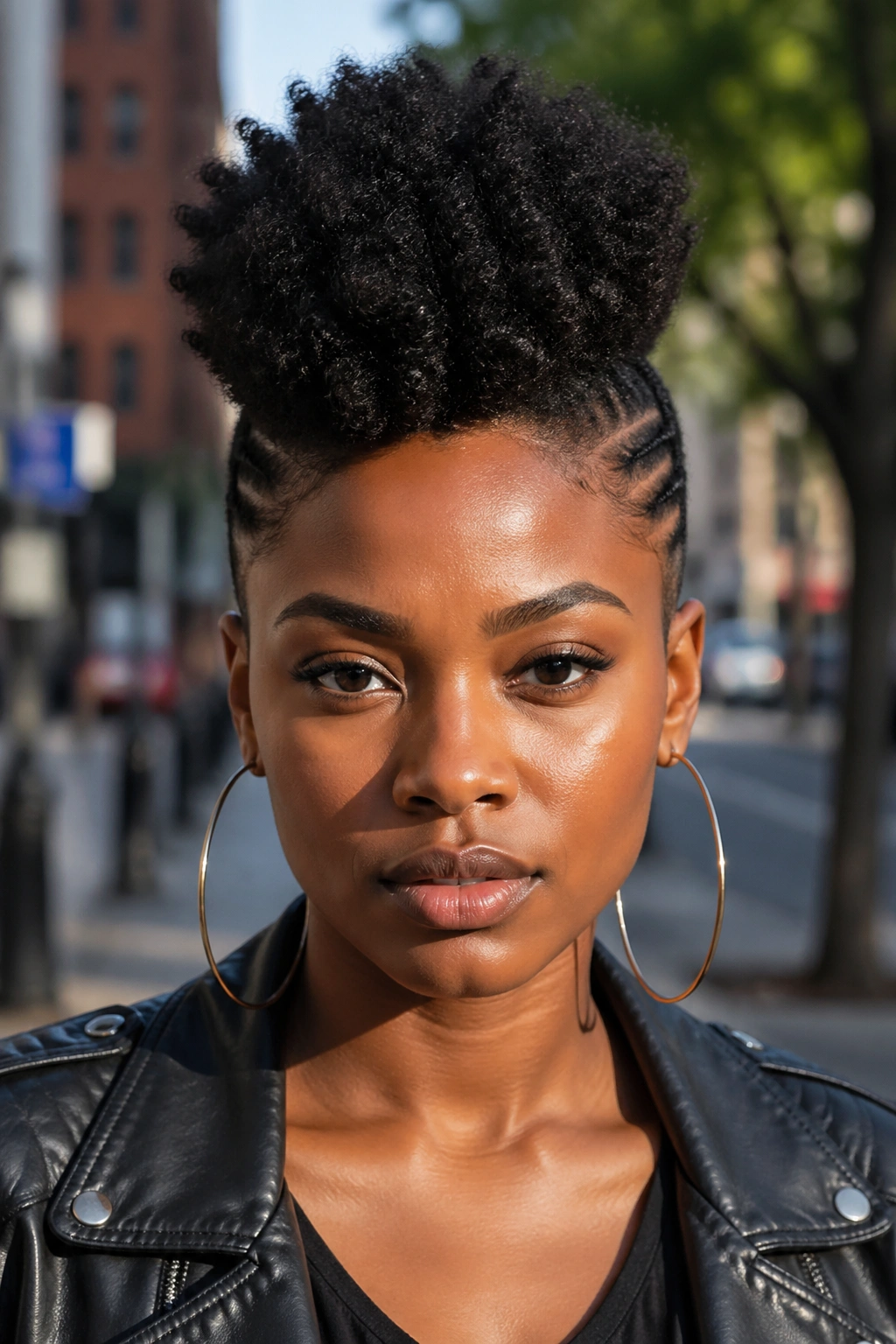
The natural mohawk afro takes the conceptual shape of a mohawk — the central raised ridge from hairline to nape — and creates it with the natural volume of afro hair rather than stiffening product. The sides are faded, tapered, or braided flat, while the central section is left in its full natural state.
It’s a striking silhouette. Bold without requiring product to hold it in place, structural without sacrificing the texture and integrity of the natural hair. The contrast between the close sides and the central volume creates a dramatic visual shape that photographs particularly well from the front.
For the faux version: the sides are styled flat with braids, flat twists, or a tight taper, while the center is worn out. The mohawk shape is achieved through styling rather than cutting, which makes it more versatile — you’re not locked into the shape every day.
9. The Defined Curl-Out Shape
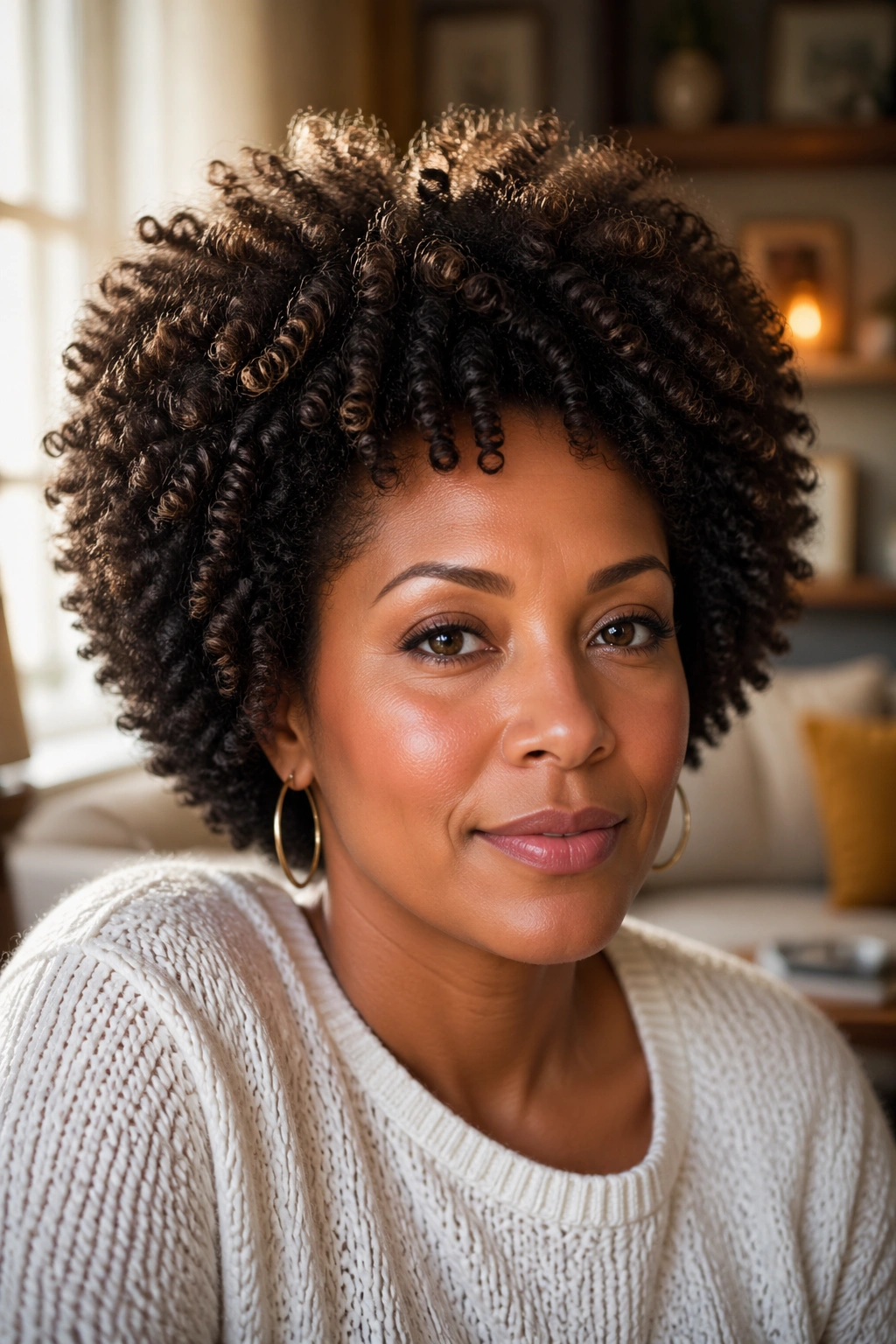
Not a cut that eliminates length — a cut that controls where length goes. The defined curl-out shape uses a long-layer technique to create a silhouette where the hair falls into a consistently defined curl pattern across the whole head: stretched ringlets for 3C-4A textures, loose coils for 4B, defined zig-zag patterns for 4C.
The effect relies entirely on the cut being done correctly at the curl’s natural length — not stretched, not with added tension. When the stylist cuts the hair as it sits in its natural pattern, each curl falls at the right length relative to its neighbors, and the shape holds consistently through wash cycles.
What Makes This Different
Most cuts are done on stretched or blown-out natural hair, then look different once the hair returns to its natural state. The curl-out shape is designed backwards from that — it’s cut to be worn in its natural, unmanipulated state.
10. The Asymmetric Afro
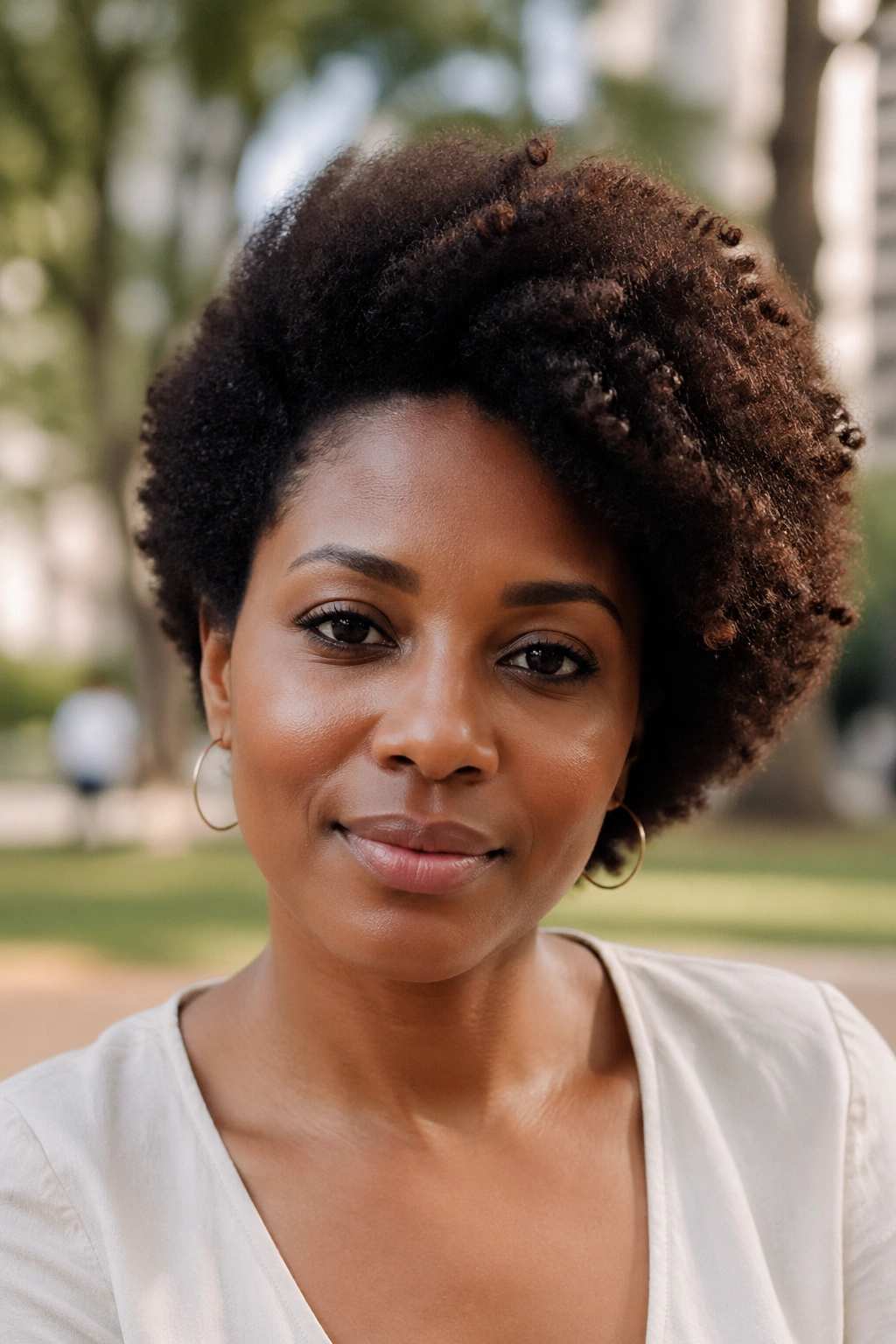
One side longer than the other. Not dramatically — a difference of an inch to an inch and a half in the outer silhouette, creating a subtle visual tilt that adds geometry to an otherwise spherical shape.
Asymmetry in a haircut is the difference between a shape that looks like it was designed and one that looks like it grew. On a full natural afro, this is a subtle but instantly noticeable distinction. The slight angle of the silhouette creates movement even when the hair is still.
The danger: overdo the asymmetry and it reads as uneven rather than intentional. The difference in length should be visible enough to be clearly a choice, not so large that it looks like a mistake or an uneven cut.
11. The Tightly Coiled Mini Afro
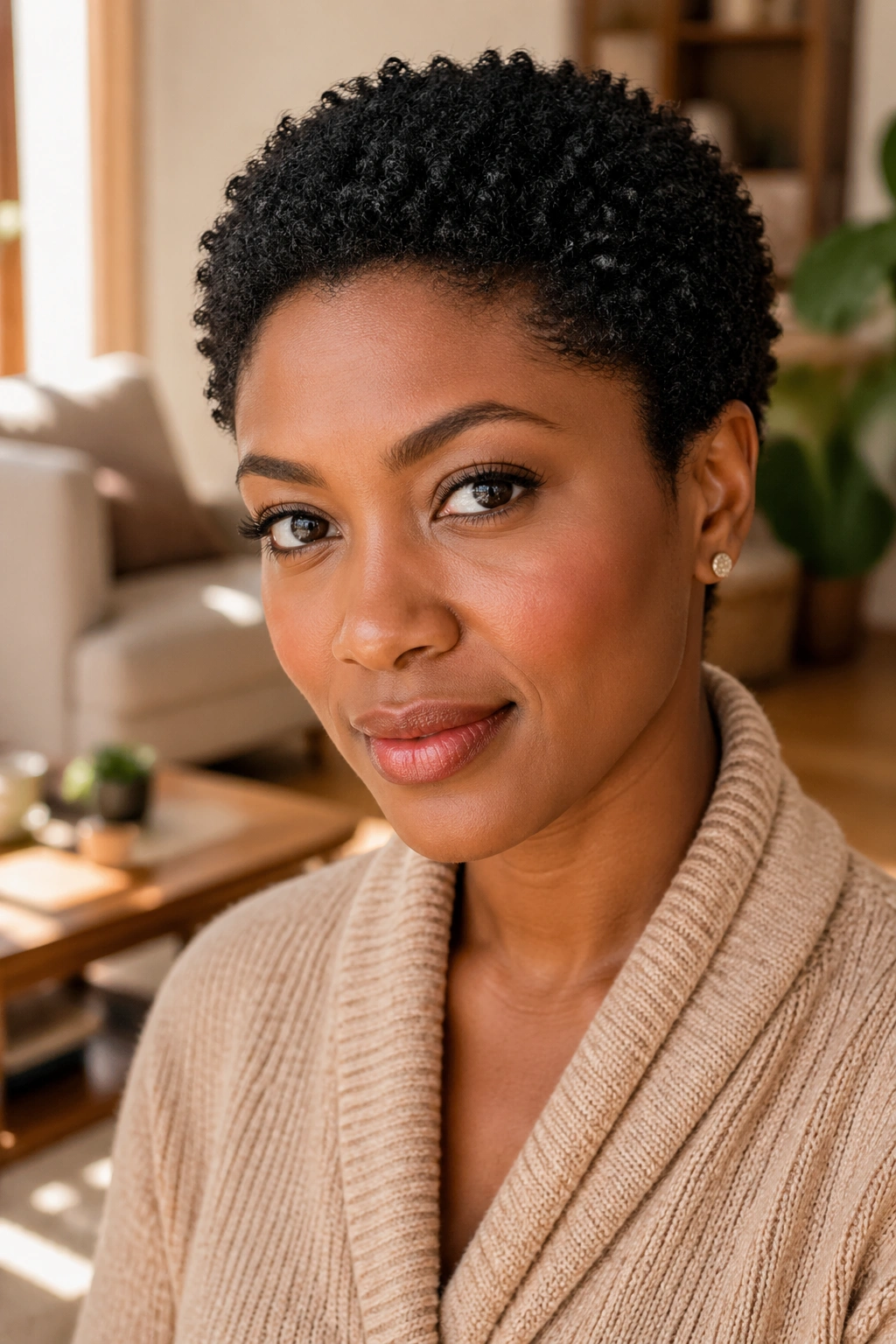
Different from the TWA in intent — the mini afro isn’t about being as short as possible. It’s about wearing hair at a length (roughly two to three inches) where the natural coil pattern is visible and defined at the surface of the hair, creating a texture-forward look that’s dense and rich.
At this length, 4B and 4C hair coils become visible in a way that longer length conceals because the coils clump together. Short enough to show the individual coil structure. Full enough to have dimensional shape.
This is a highly tactile style. The surface of the hair feels like a thick, springy texture — and that feeling is part of the appeal. It’s genuine, unmanipulated natural hair presenting itself exactly as it is.
12. The Sculpted Side Part Afro
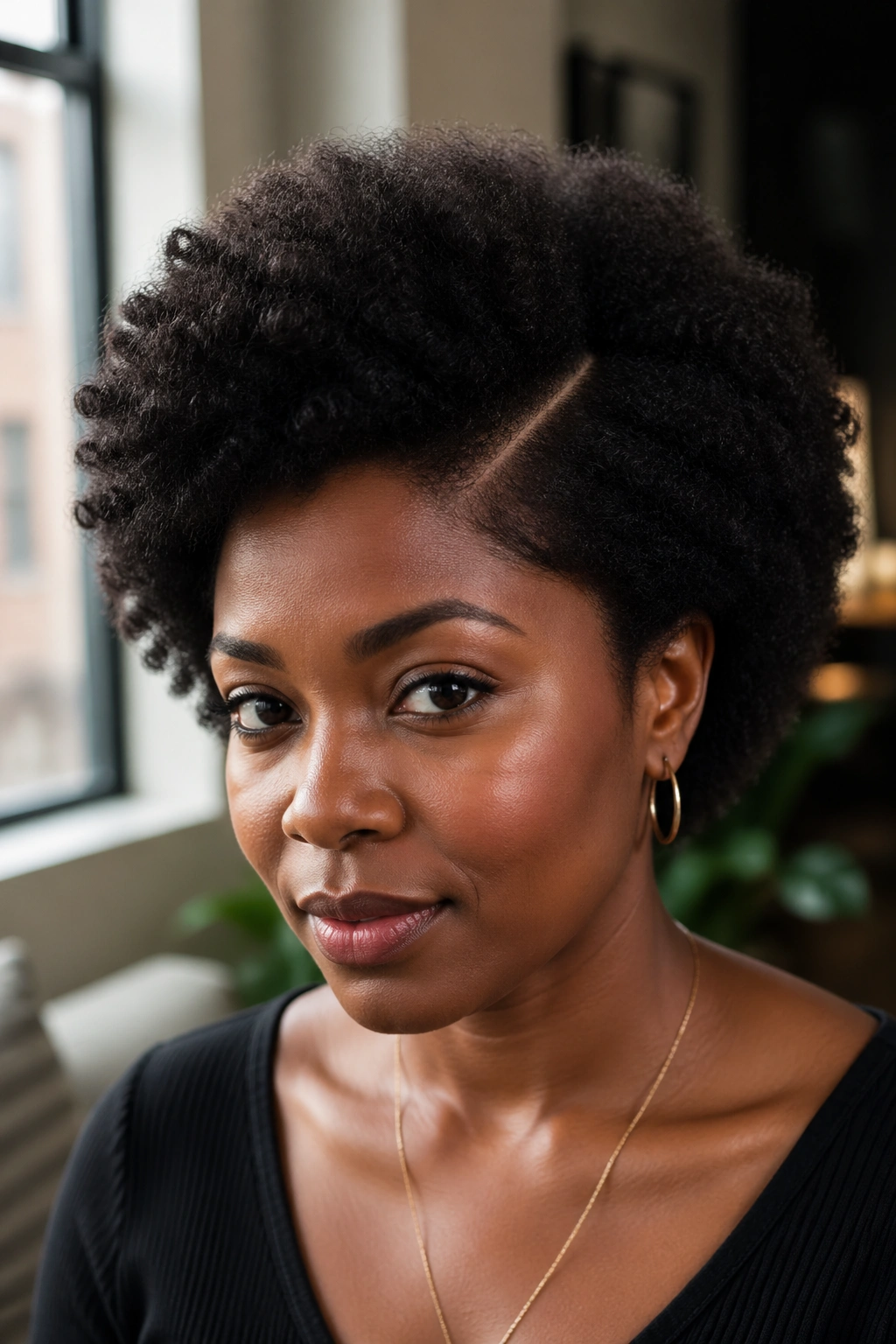
A hard part — a razored or clipped line at the side of the hair — creates a clean visual division that adds graphic sharpness to a naturally round afro shape. One side is lower and more controlled; the other sweeps up and over into the full afro volume.
This is one of the most wearable afro variations for professional and formal contexts because the geometric precision of the hard part communicates intentionality clearly. It doesn’t reduce the afro — it frames it.
The part can be straight, curved, or slightly angled. Straight reads most formal; curved or angled reads more artistic. The part needs to be re-drawn roughly every one to two weeks as the surrounding hair grows in and softens the line.
13. The Big Chop Shape
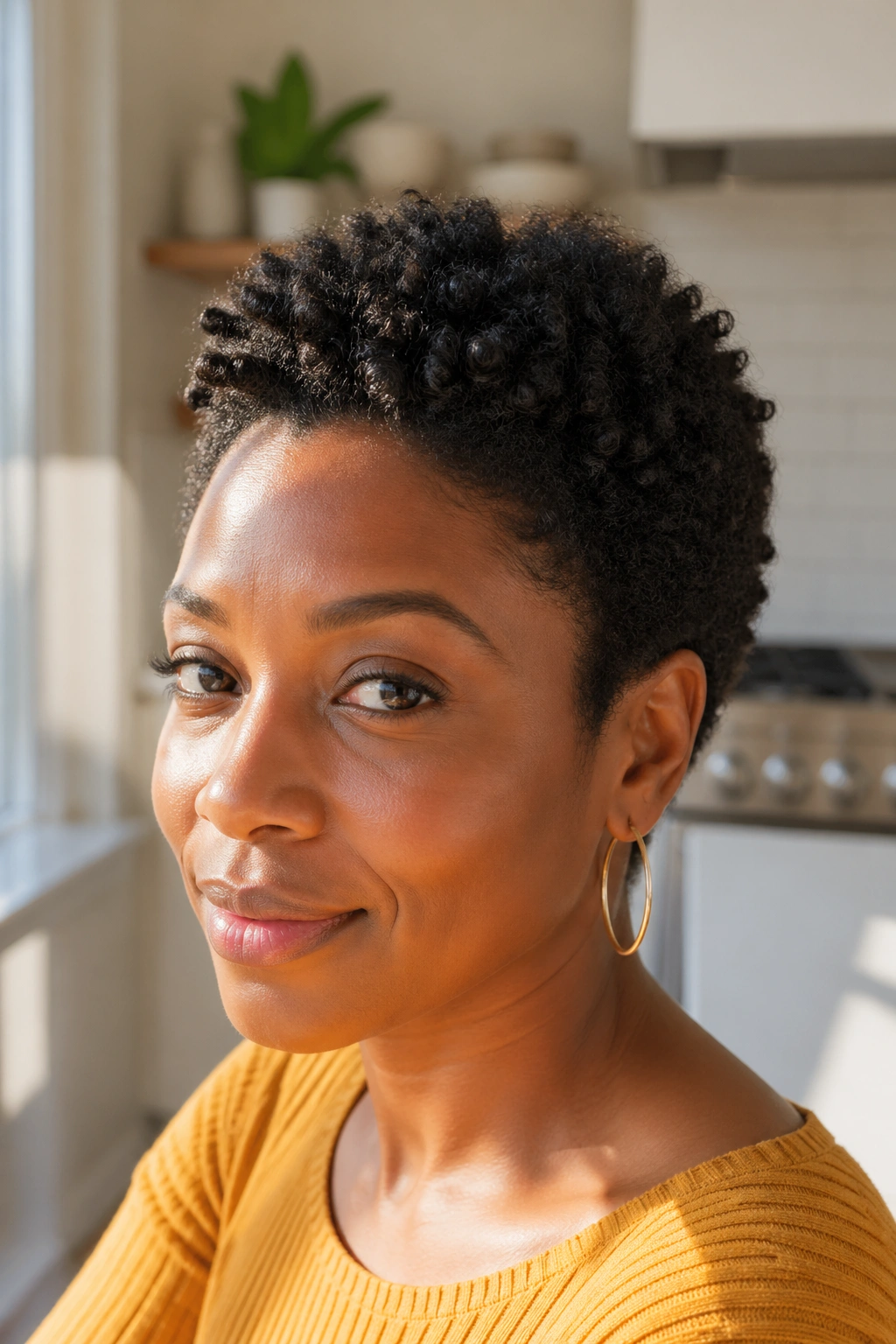
The big chop — cutting off all relaxed or chemically altered hair and starting fresh from the natural root — is a haircut decision as much as it’s a lifestyle decision. But the cut itself is a real shape choice, and doing it well matters.
The best big chop cuts are done by a stylist who shapes the newly natural hair as they cut — evaluating the natural curl pattern, working with the natural density, and creating a shape from what’s there rather than just removing what isn’t wanted. That requires skill and patience.
Women over 30 who big chop are choosing a clean break. The cut announces something. That announcement is more powerful when the resulting shape is deliberate and precise, not just a rough crop.
14. The Frohawk with Braided Sides
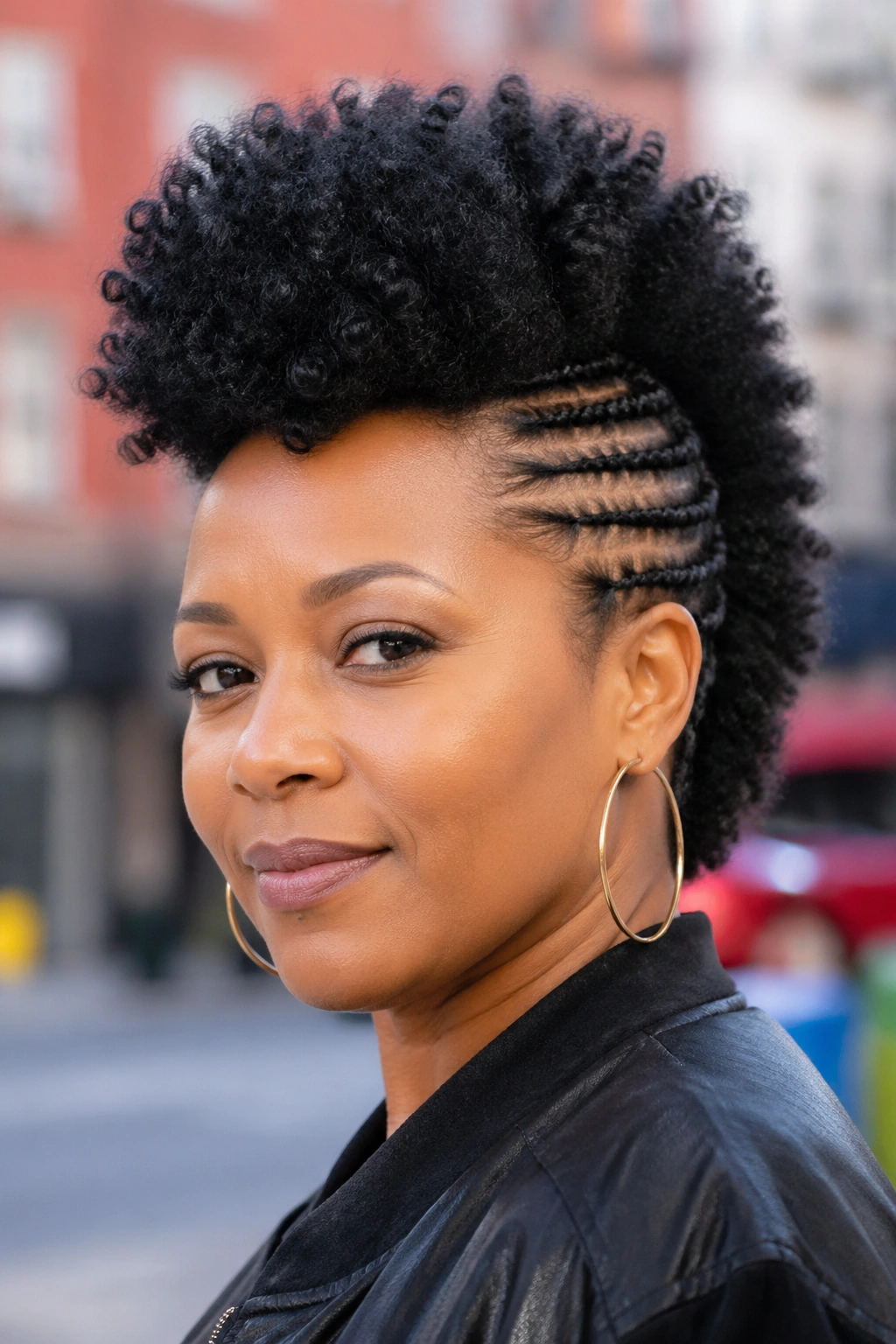
A variation on the mohawk shape where the sides are braided flat in a pattern — cornrows, flat twists, or a design that echoes the central volume’s energy — rather than simply tapered or faded. The braided sides add texture, visual complexity, and a cultural layer that a simple fade doesn’t.
The frohawk works as a transitional style: you can wear it out as described, or pull the central section into a high puff for a different look from the same cut. Two distinct styles from one foundation is genuine versatility.
Maintenance: the braided sides need to be redone every one to two weeks. The central afro section needs its standard moisture and shape routine. A fair bit of commitment, but the visual payoff is significant.
15. The Natural Afro Bob
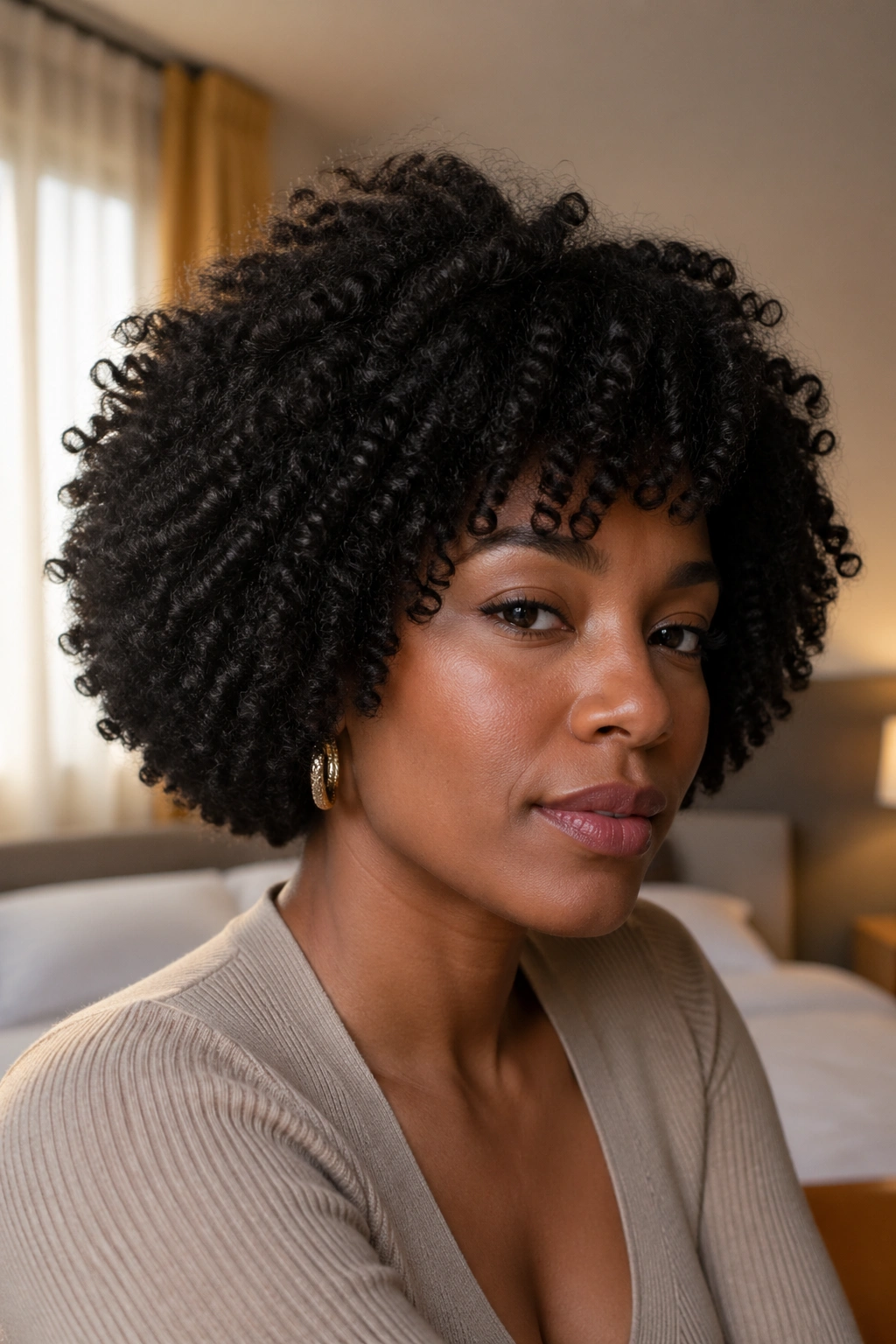
The afro bob is a style where the hair is grown or cut to a length where — when fully moisturized and at its natural volume — it creates a shape roughly analogous to a chin-length or shoulder-adjacent bob. Not through straightening or stretching, but through the natural density and volume of the hair filling that length range.
This works best on hair with more curl definition: 3C through 4A. Dense 4C at this length tends to create more of a rounded cloud shape than a recognizable bob, which is its own beautiful thing but different in concept.
The bob shape at natural length requires regular trimming to maintain evenness at the ends. Split ends will cause the shape to become scraggly — which is fine if that’s the look you’re after, but if you want the shape to read as intentional, keep up with trims.
16. The Stacked Afro with Tapered Nape
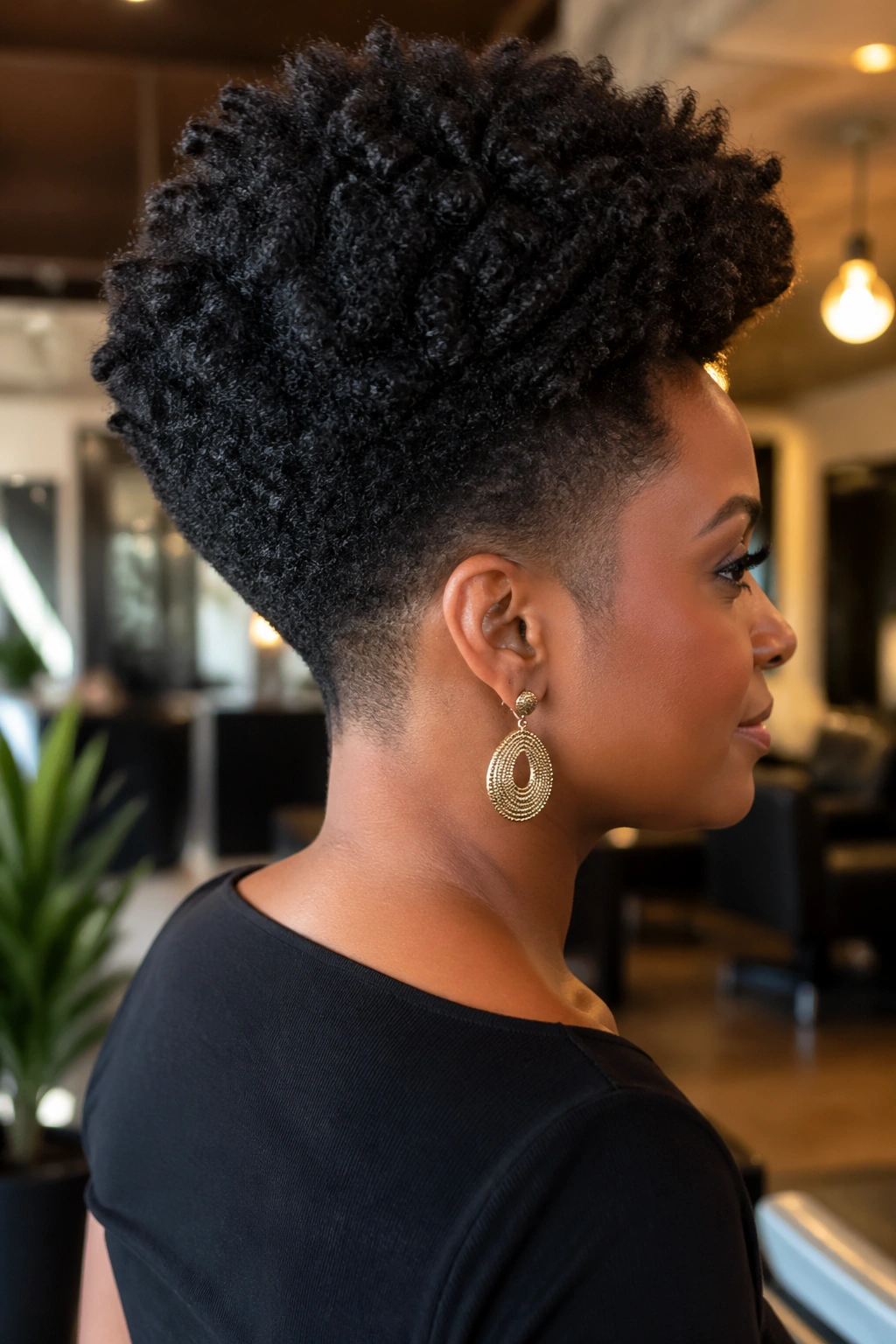
The stacked shape — where the hair is cut with more length at the crown and top, tapering progressively through the sides and then finishing with a close taper or fade at the nape — creates a vertical emphasis that’s different from both the full rounded sphere and the standard taper.
The stack effect is created by cutting the back sections shorter than the crown, which pushes the visible volume upward. The result is a silhouette that reads taller and more dramatic than the actual length of the hair. Good for women who want the visual impact of a large afro without the maintenance of growing significant length all the way around.
17. The Elongated Oval Shape
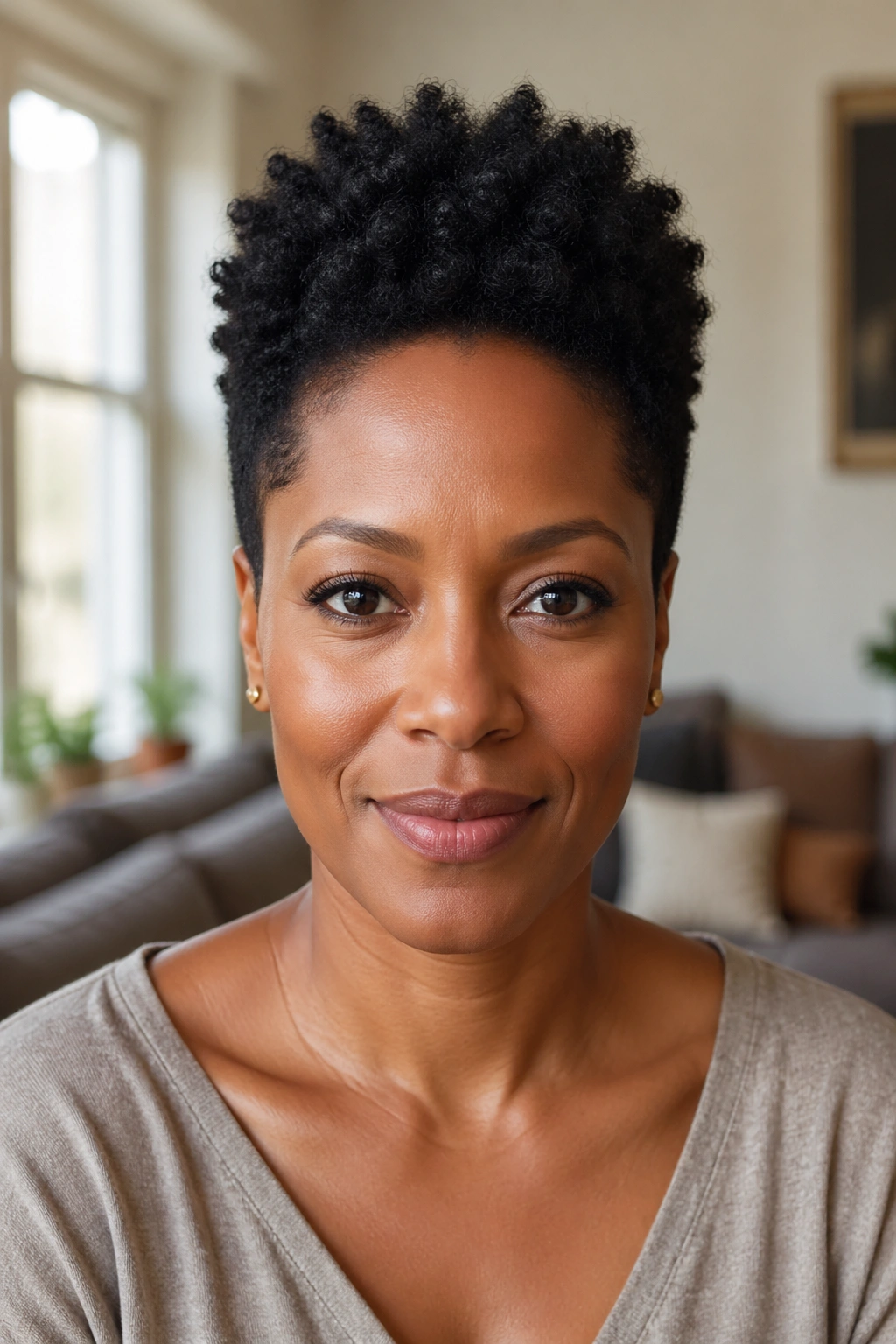
Instead of the sphere of the classic rounded afro, the elongated oval targets a shape that’s slightly taller than it is wide — almost an egg shape when viewed from the front. This is achieved by leaving the crown longer and trimming the sides slightly shorter than you would for a sphere.
The elongated oval is a specific choice for women with round facial structures, where the added vertical height creates a more elongated facial appearance. It’s subtle but effective. A pure sphere on a very round face can emphasize circularity; the elongated oval lifts the composition visually.
If you have an oval or long face, the classic sphere is probably the more flattering shape — the added height of the elongated oval can make a long face appear even longer.
18. The Low Fade with Natural Crown
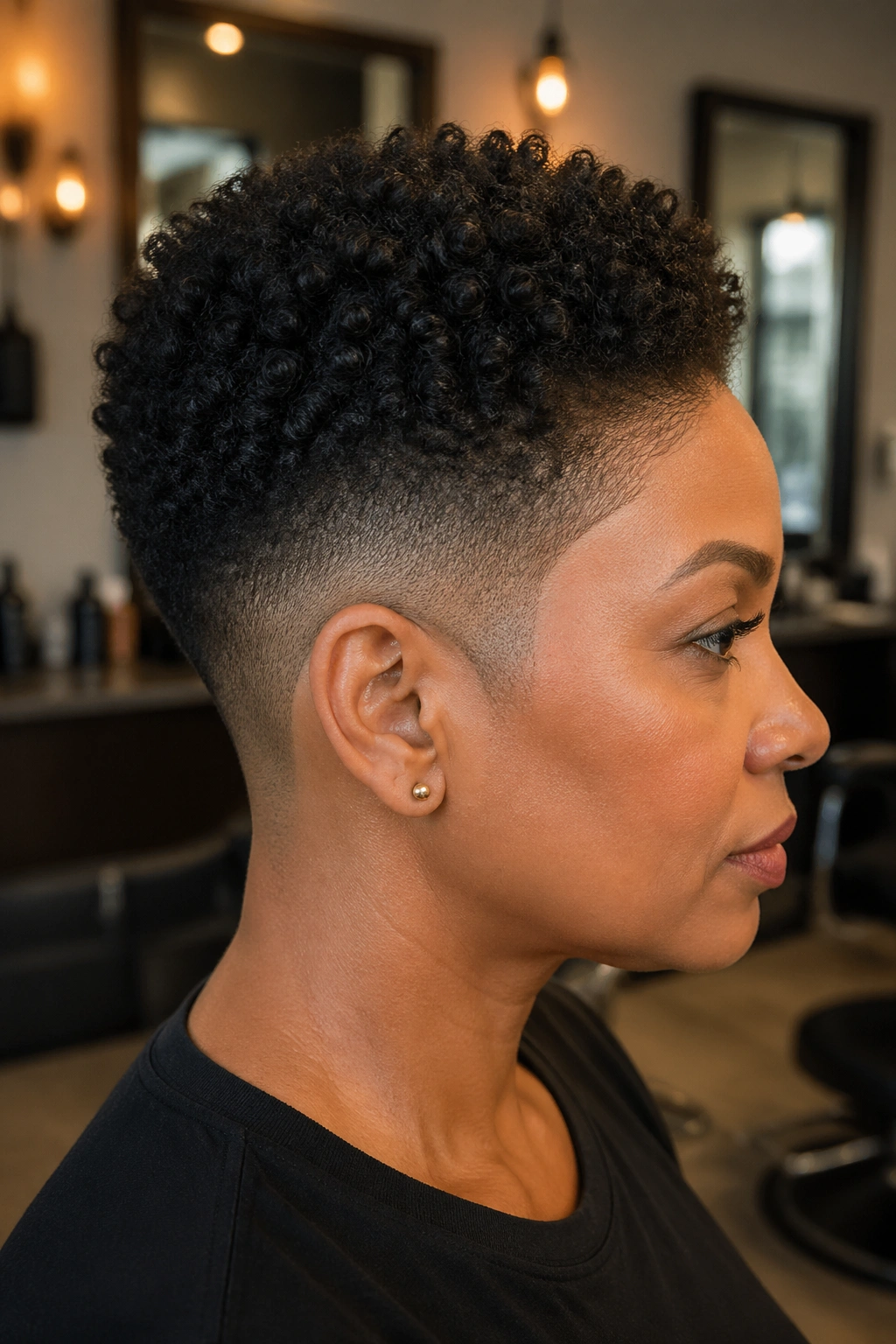
The low fade — a transition from skin or near-skin at the lower sideburn and nape area, graduating up to natural hair — with the crown left in its full natural state is one of the cleanest-looking combinations in natural hair cutting. The precision of the fade provides a crisp architectural foundation; the natural crown provides everything else.
The Technical Requirement
A good low fade on natural hair requires both barber technique and knowledge of natural hair texture. The graduation from skin to natural has to account for curl pattern — the tighter the coil, the more abruptly the fade needs to transition to avoid looking patchy. Find someone who specifically understands this.
19. The Afro Pixie
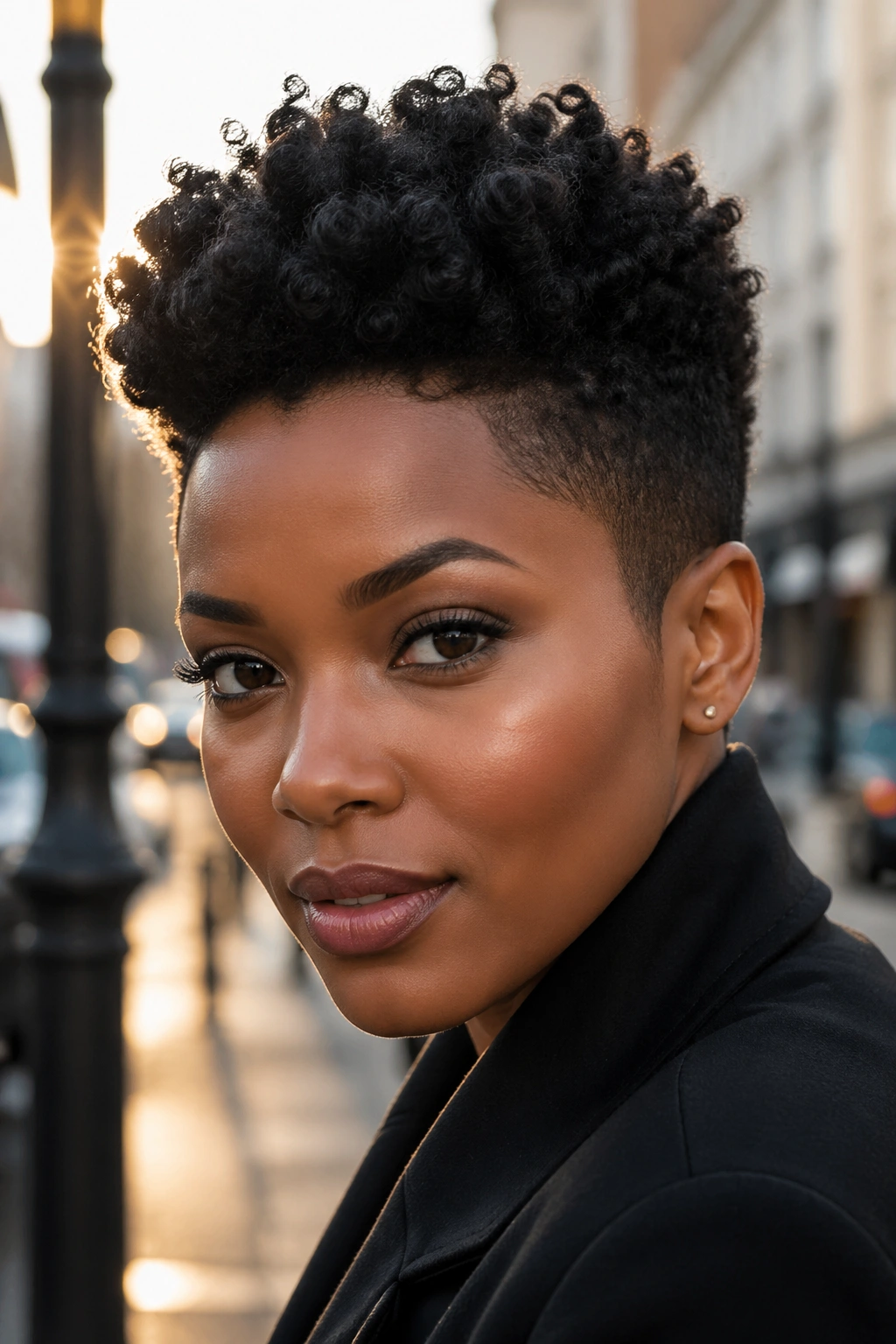
Shorter than the TWA at the sides and back, longer and more deliberately shaped at the crown — the afro pixie cut takes the classic pixie structure and executes it in natural afro texture. The result is a shape with real edge: a fashion-forward, sculptural cut that sits outside most conventional hairstyle categories.
The crown in an afro pixie can be a small, defined puff of natural coils, a swoop of texture across the top, or a deliberately wild, volume-forward statement. Different stylists will bring different interpretations. Be specific about what you want when you go in.
Who this is best for: women comfortable with a very close cut at the sides and back who want something they can wear with near-zero maintenance time on the top — just moisturize, define, and go.
20. The Defined Part With Volume Shift
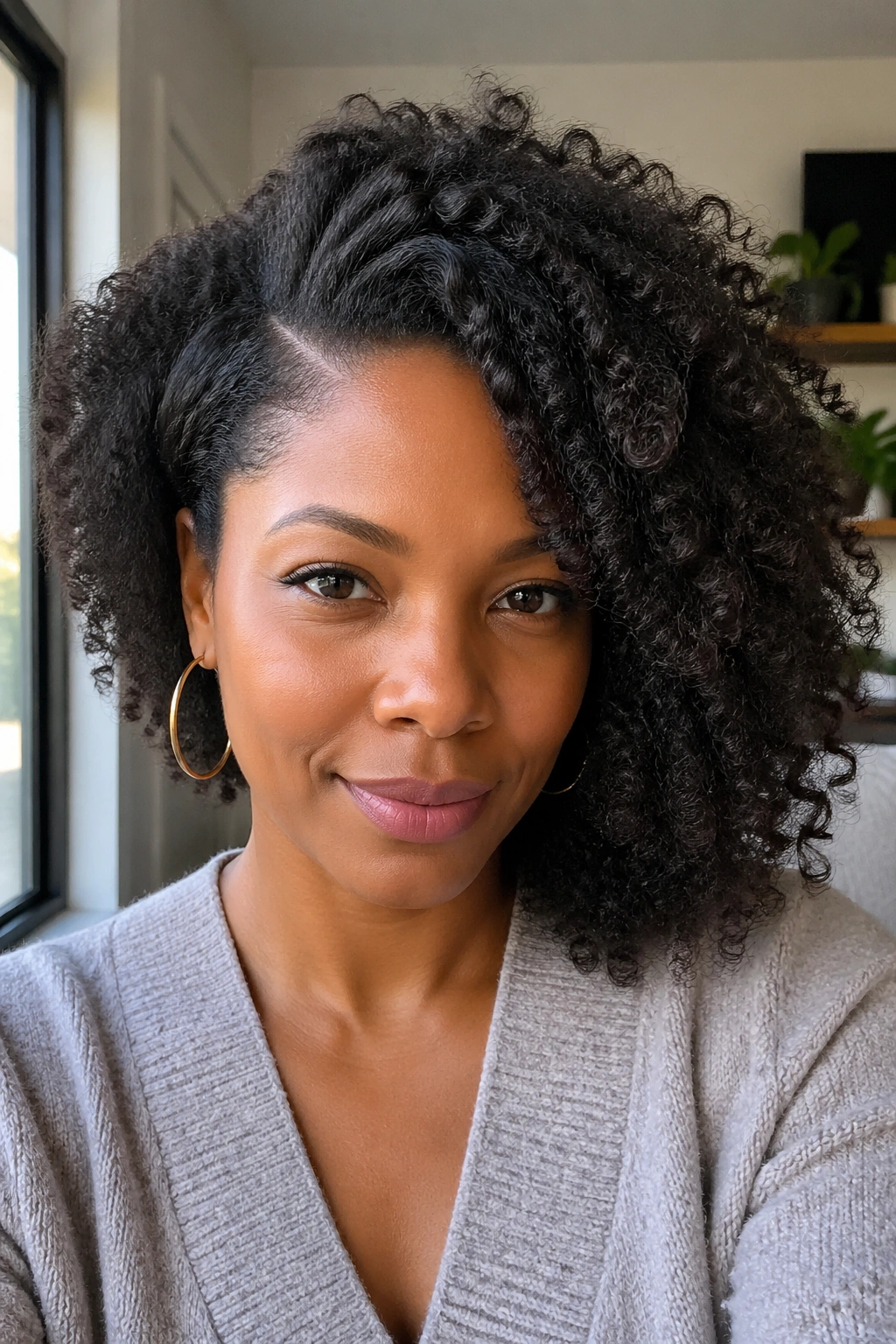
A style that plays with where the volume is concentrated rather than changing the length significantly: a defined part (either center or deep side) that shifts the mass of the afro to one dominant side. Most of the volume sweeps in one direction; the other side is lower and flatter.
This is one of the most wearable and least high-maintenance ways to add intentionality to a natural afro. The basic shape remains; the drama comes from volume direction. One part, one brush stroke in the right direction before the hair sets — and the whole look shifts.
21. The Grown-Out Shape with Sculptural Edges
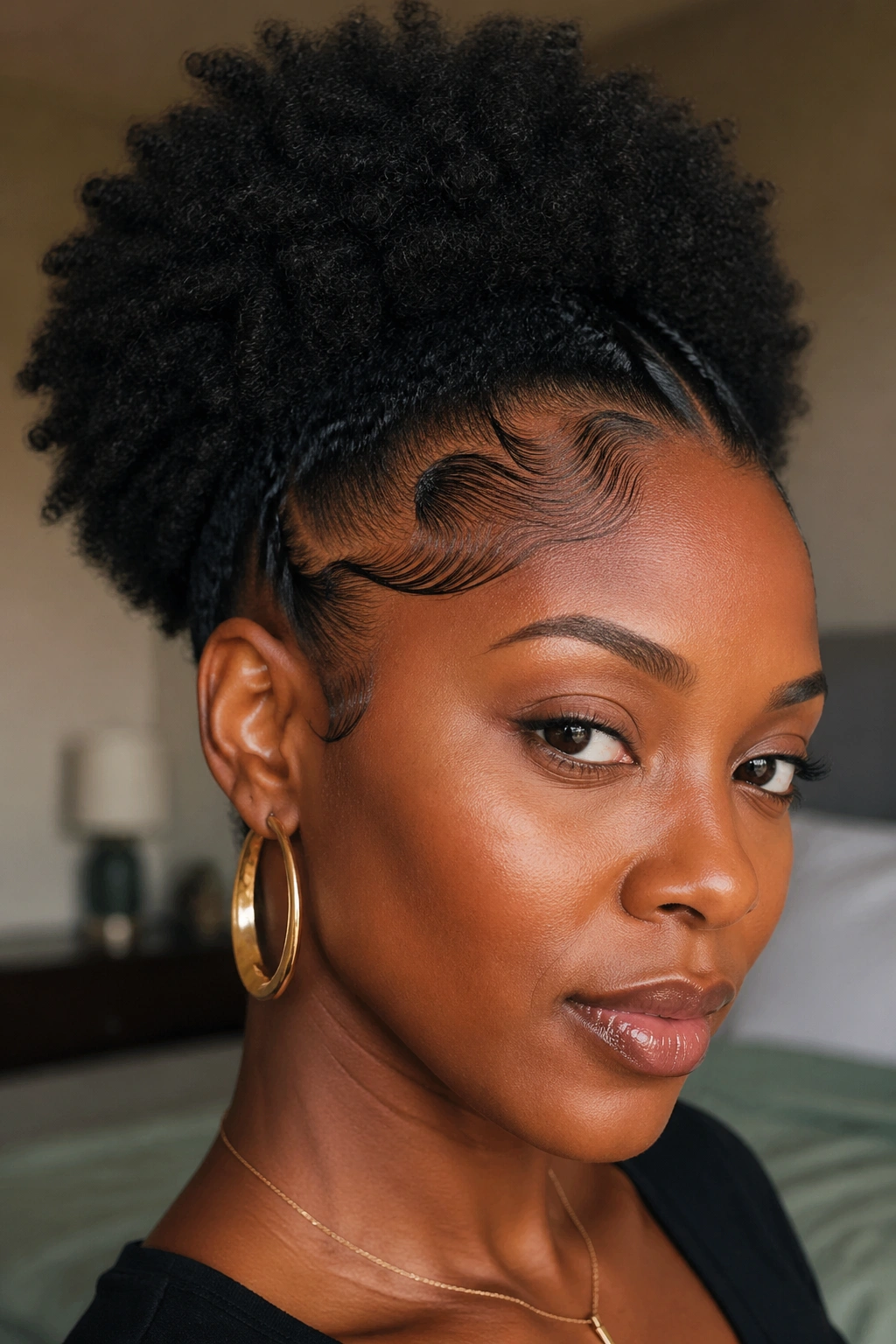
The last entry isn’t about a specific cut shape at all — it’s about the way deliberate, carefully maintained edges can transform a grown-out, between-cuts afro into a style that reads as completely intentional.
Sculptural edges — baby hairs laid in wave, curl, or geometric patterns along the hairline — are a specific skill with deep roots in Black hair culture. When done with a light edge gel (not a heavy wax that produces a helmet effect), a small toothbrush or edge brush, and genuine precision, they create a border for the afro that is artful in a way no cut can produce.
Combined with a shape that’s in the growing-out phase — maybe a week or two past its ideal cut — clean edges signal that the look is managed and deliberate, even when the overall silhouette has softened from its last appointment.
Protective Styling Between Cuts: What Counts and What Doesn’t
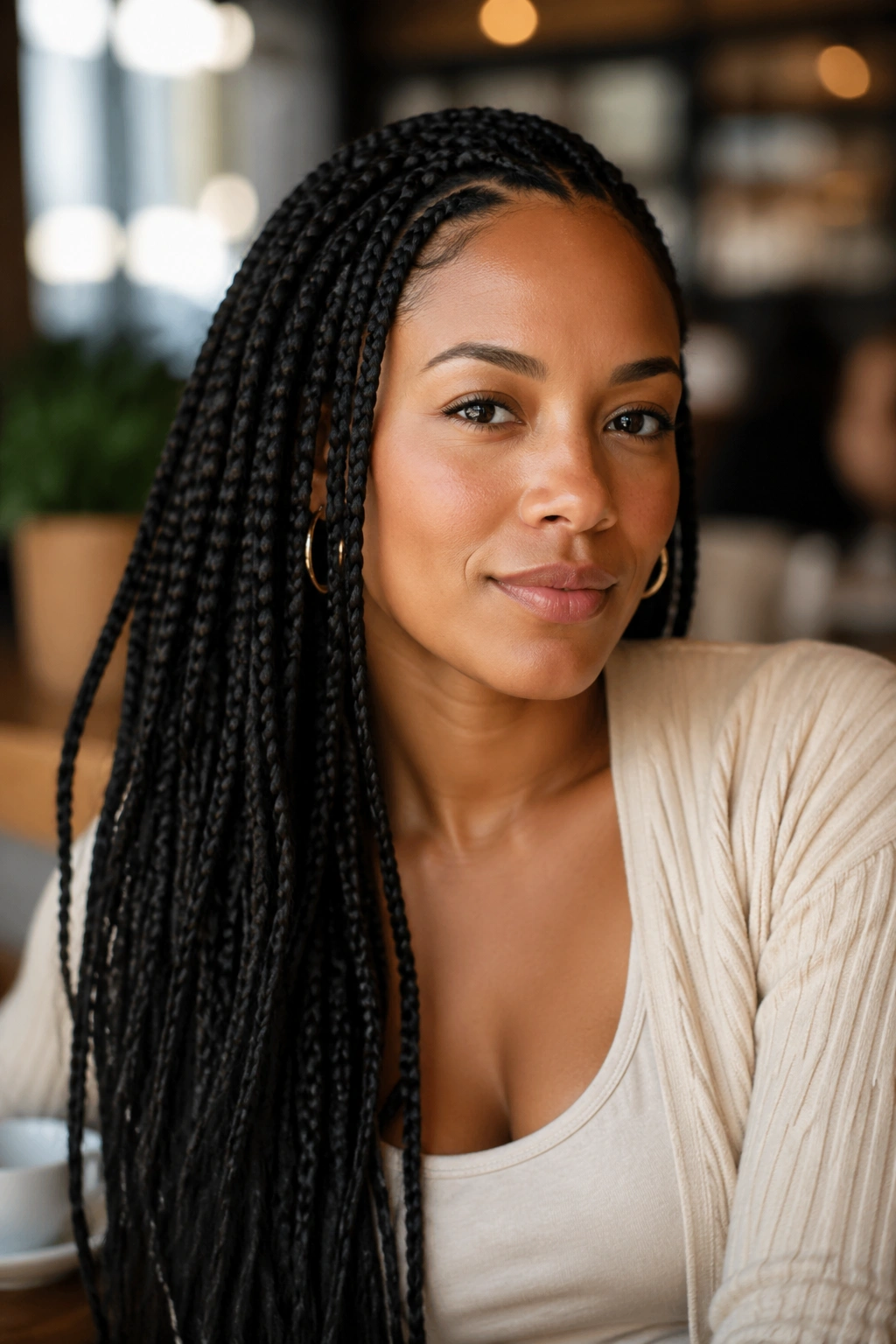
The conversation about protective styling and afro haircuts is a complicated one. Protective styles — box braids, cornrows, faux locs, flat twists — are genuinely useful for retaining length and reducing daily manipulation. But they’re not a substitute for a well-shaped cut, and returning to your natural afro shape after weeks in a protective style often reveals more growth than you expected along with the reality that your shape has grown out.
The smartest approach for women over 30 who alternate between protective styles and their natural afro shape: make sure your natural afro is in its best possible shape before installing a protective style, because that shape is what you’re returning to. A well-defined tapered afro or sculptured shape installed before going into braids will grow out more gracefully than an already-shapeless starting point.
When you take down a protective style, give yourself at least two weeks of moisturizing, deep conditioning, and gentle styling before making any cut decisions. Hair that’s been in a protective style for six to eight weeks needs time to rehydrate and reassert its natural pattern. Cutting it in the first few days after takedown often means cutting hair that isn’t behaving like it normally will.
The Tools Worth Owning for At-Home Maintenance
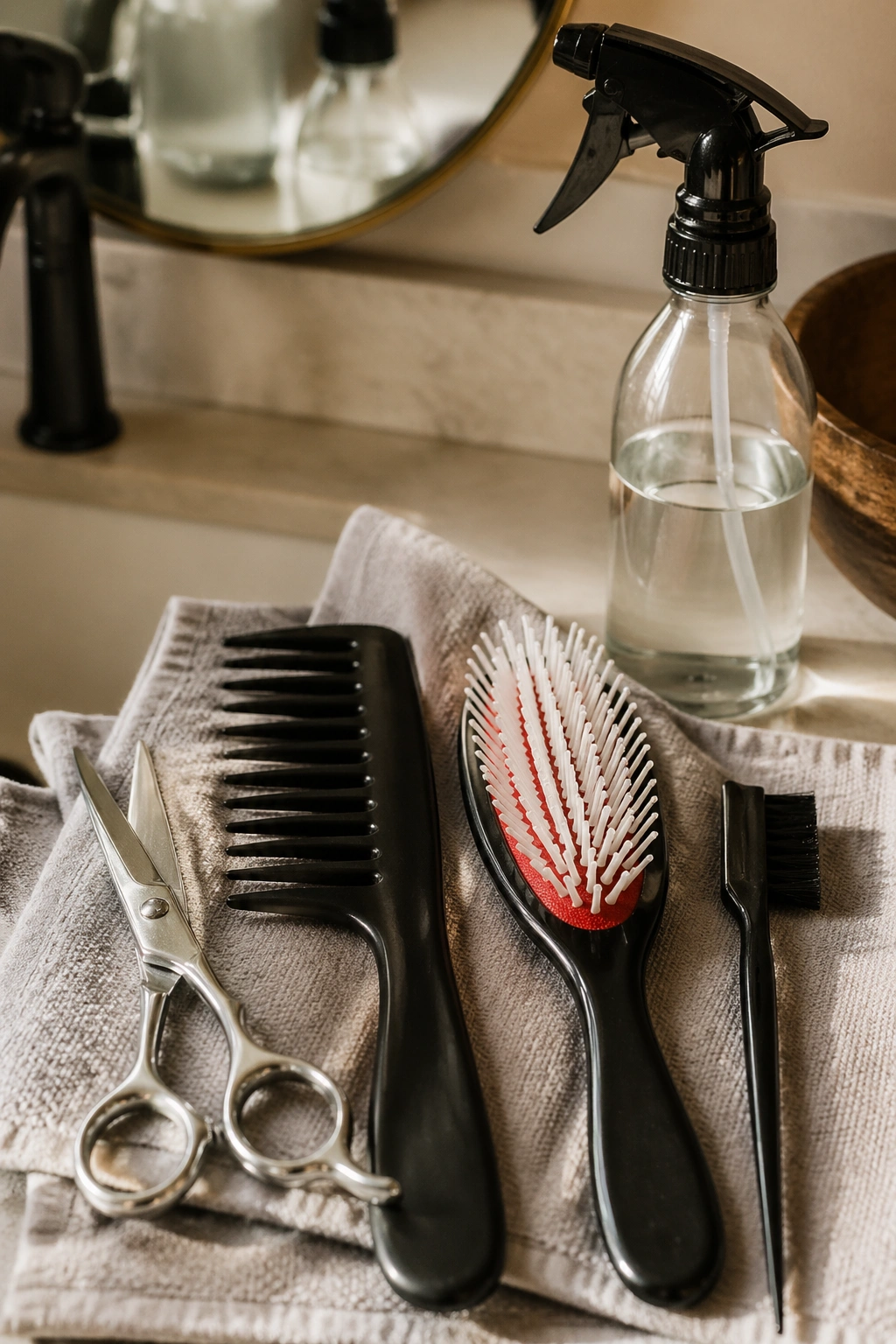
Between professional appointments, a small toolkit of the right tools makes maintaining your cut significantly easier. These don’t need to be expensive — they need to be right.
A pair of sharp professional hair shears — not craft scissors, not kitchen scissors, actual barber shears — is the single most important tool. Blunt scissors create split ends as they cut; sharp shears cut clean. A decent pair runs about $20 to $40 and lasts years if stored properly (wrapped, not loose in a drawer where the blades knock against other things).
A large wide-tooth comb for detangling after washing. A Denman brush or similar paddle brush with flexible pins for defining curl pattern during styling. A small edge brush or toothbrush dedicated to edge work. A spray bottle for water and product application. That’s the kit. Anything beyond that is personal preference, not necessity.
The one thing to avoid: excessive heat between professional cuts, particularly flat irons and high-heat blow dryers. Heat damage changes the curl pattern — permanently, in most cases — and the shape your stylist cuts for your natural pattern won’t behave the same way if sections of your hair have been heat-altered. Either commit to heat-free styling between appointments or commit to regular trims that manage the heat-altered ends.
Maintaining Your Cut Through Different Life Stages
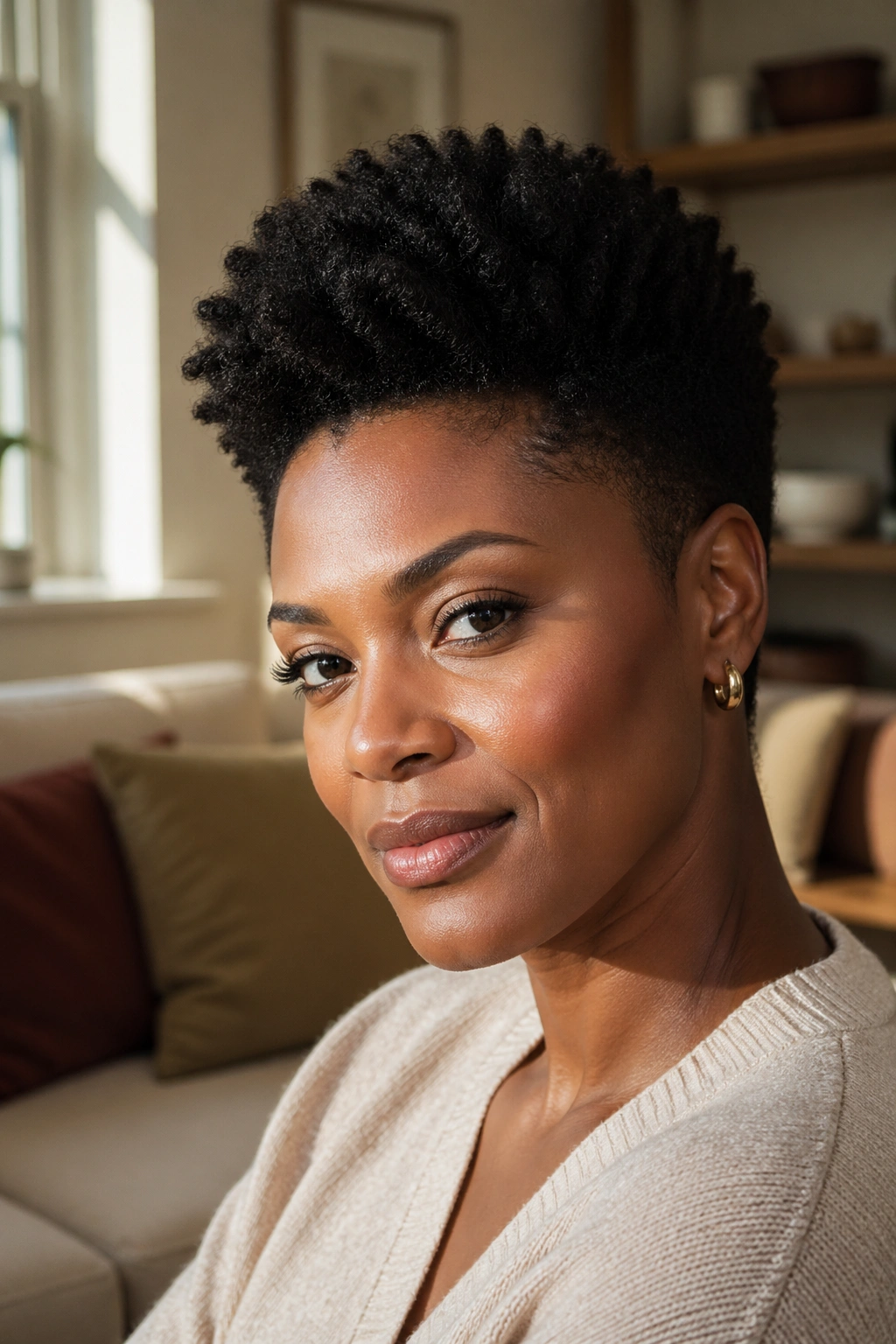
The afro haircuts that work best for women over 30 are the ones that can flex with changing schedules, stress levels, and life circumstances without completely falling apart. Some cuts are more forgiving in grow-out than others. The tapered afro, the elongated oval, and the frohawk all hold their general shape better through grow-out than the high top fade or the sculpted geometric shapes, which lose definition quickly.
Know which category your chosen cut falls into before committing. If you can only get to a stylist every eight weeks, choose a shape that still reads well at week seven. If you’re committed to every four-week appointments, almost anything on this list is maintainable.
When to Update Your Look
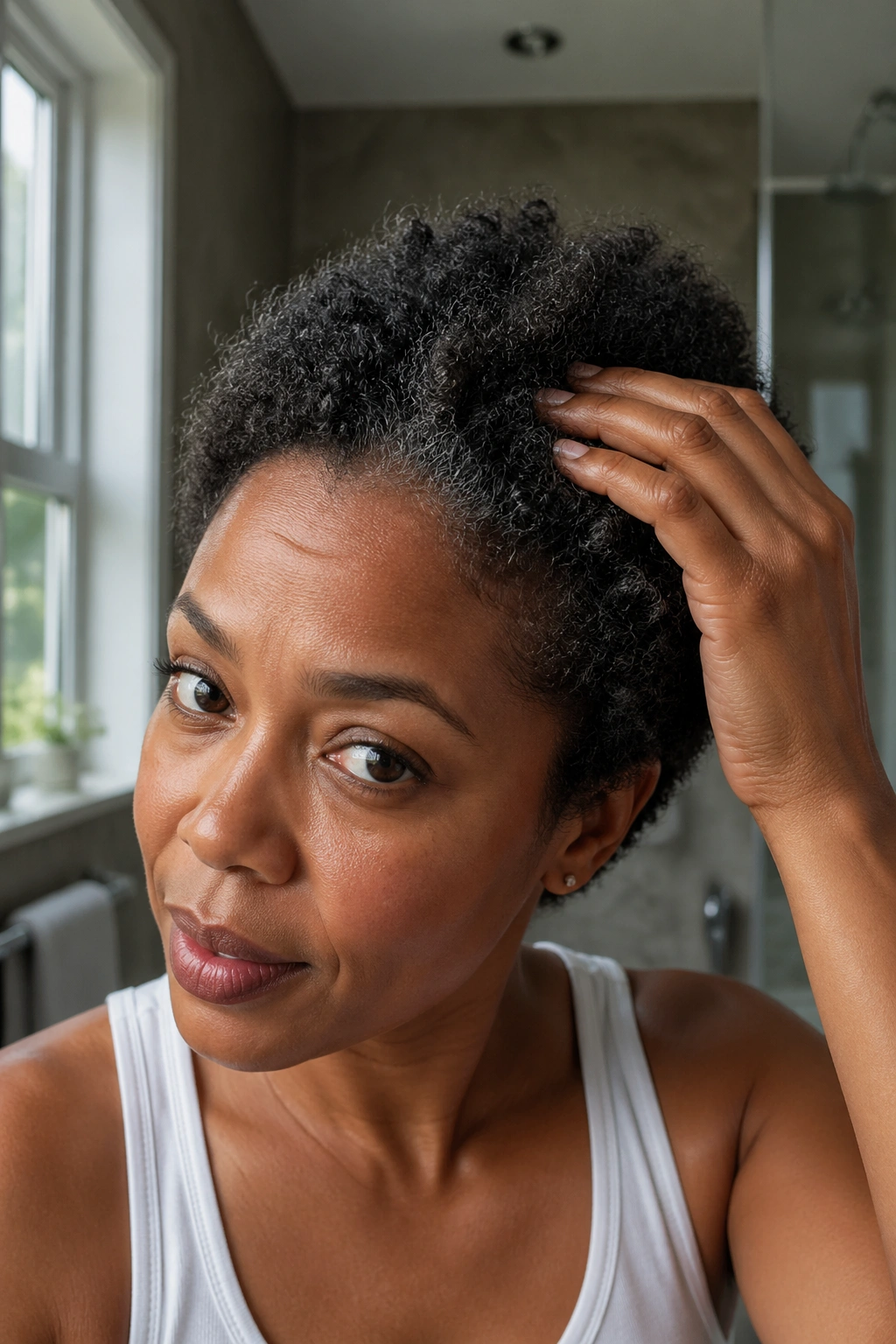
There’s no timeline for when you “should” change your afro cut. The right time is when your current style stops exciting you, or when you notice that your hair’s natural behavior has shifted in a way that your current cut no longer serves.
Some women over 30 find that the experimentation they resisted in their twenties becomes interesting precisely because they have more hair confidence now. The big chop that felt too drastic at 24 might feel exactly right at 34. The high-top fade that felt too theatrical at 22 might feel like exactly the statement you want at 38.
Your hair has context now. Use it.
