



Short hair gets underestimated in the updo conversation, and that’s a mistake. Short curly hair updos for natural curls open up a world of styles that longer hair actually can’t pull off — there’s a crispness, a boldness, and a freedom in styling short natural hair into updos that longer lengths simply can’t replicate. The precision required is different. The tools change. But the creativity? That expands.
Why Short Natural Hair Creates Stunning Updos
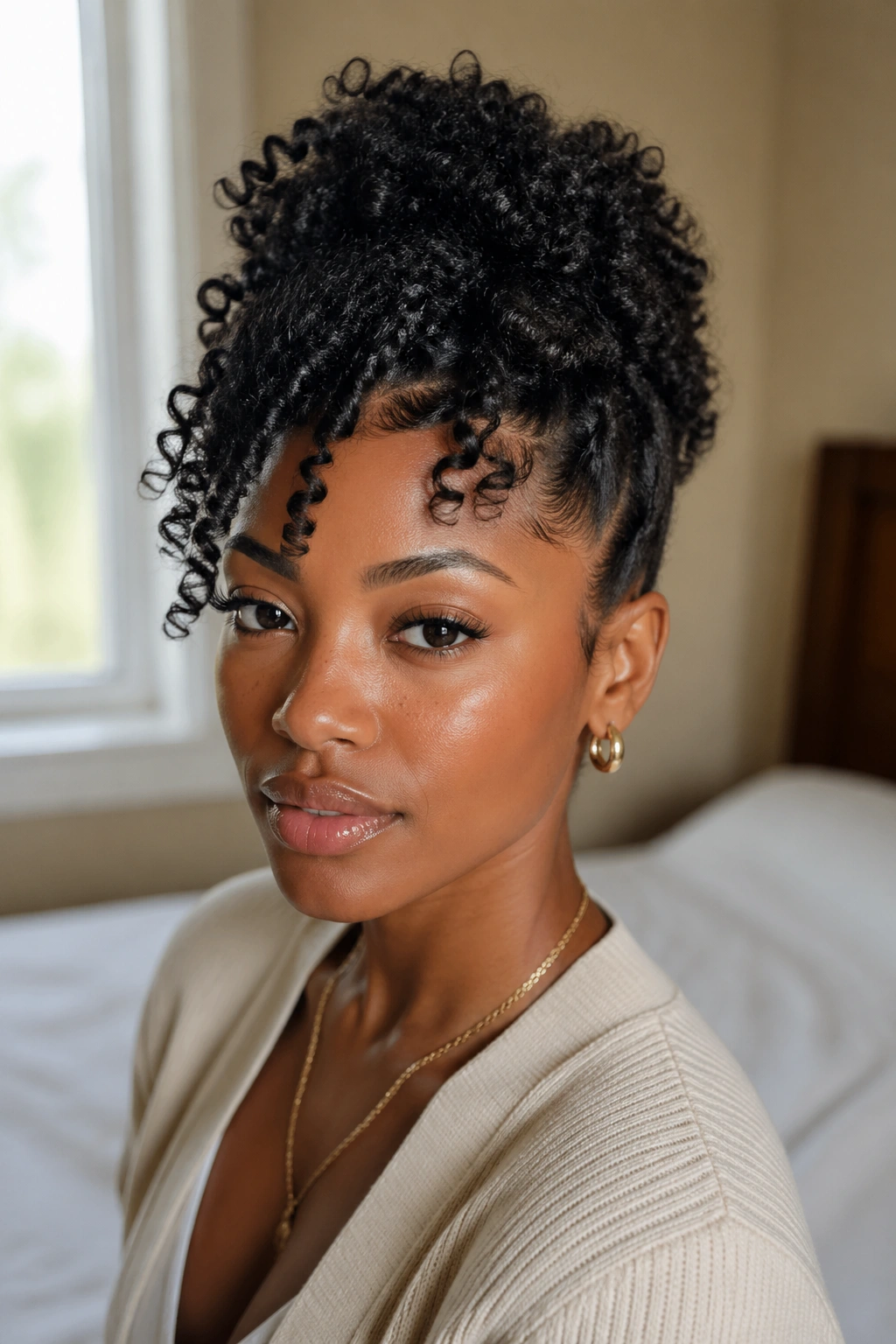
There’s a misconception — persistent and frustrating — that natural hair needs to be long to look beautiful in an updo. It doesn’t. Short natural curls create updos that are clean, sculptural, and striking in ways that longer styles can sometimes obscure. When your hair is short, every texture detail, every curl formation, every laid edge is visible and prominent. There’s nowhere to hide imperfection, but there’s also nowhere to hide beauty.
Short natural hair updos tend to emphasize bone structure more than longer styles. A neatly executed updo on short 4C hair brings the jawline, cheekbones, and neck into dramatic focus — a framing effect that longer hair drapes over rather than highlights. Many women who transitioned to shorter natural hair are surprised by how differently (and often more strikingly) their facial features read with less hair around them.
The other advantage of short updos is speed. Most short natural hair updos can be executed in five to twenty minutes. When you’re working with less hair, there’s simply less to manage — fewer sections, fewer pins, faster execution.
What Counts as “Short” for Updo Styling
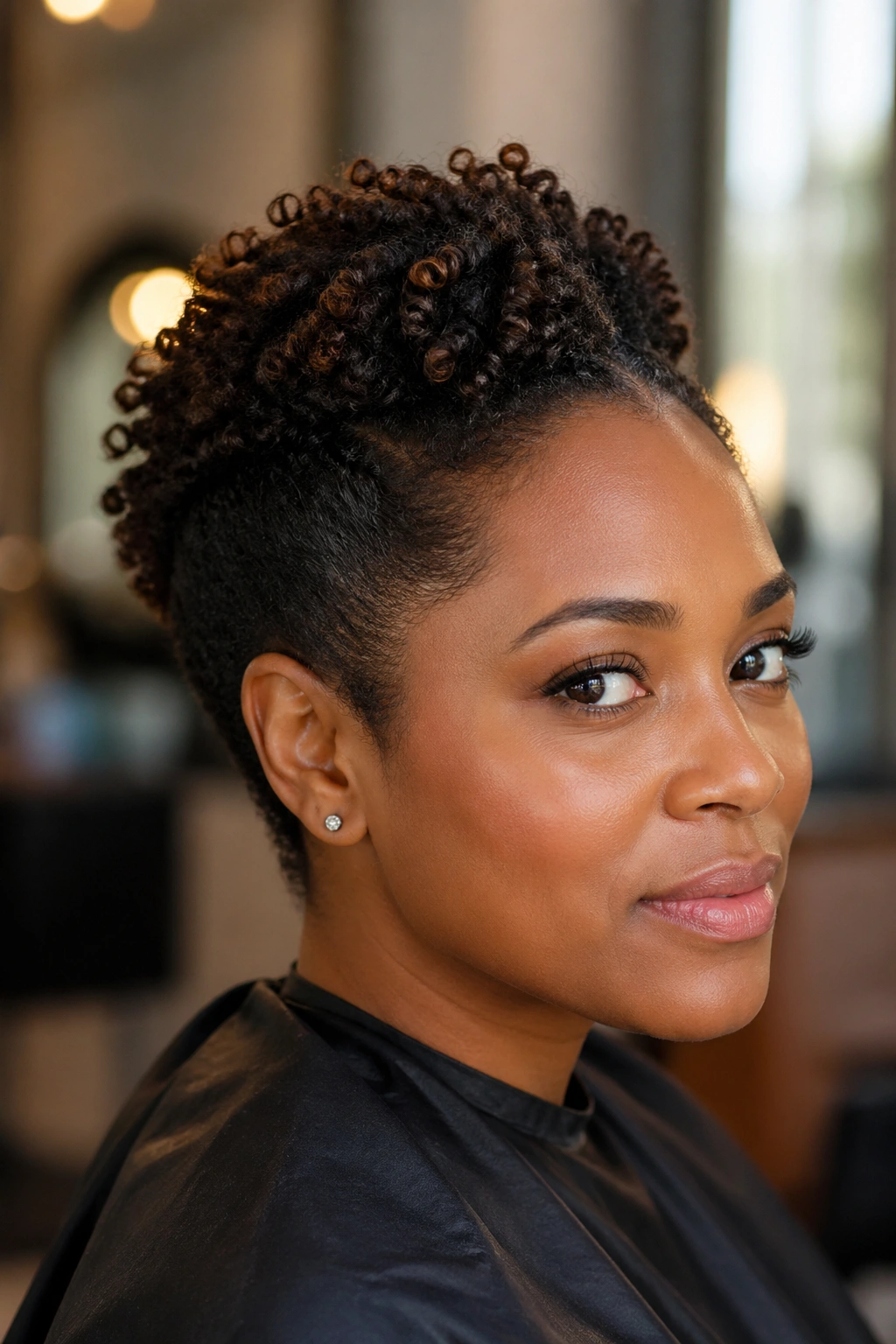
Short natural hair for updo purposes generally means hair that falls between the TWA (teeny weeny afro) stage — roughly half an inch to two inches of growth — and shoulder-grazing length. The sweet spot for most short updos is somewhere between three and six inches of actual length, though due to shrinkage, that might look like one to two inches of visible length on very coily textures.
The TWA stage itself does have some updo limitations — there simply isn’t enough length to gather into a traditional bun or puff. But even TWA hair has options: sculpted edges, shaped afros, pinned-back styles, and accessory-driven looks that still create the visual effect of an updo.
From two inches onward, the world opens up considerably. Four inches of 4C hair can produce a small but genuinely impressive puff, a twisted updo, a headband style, or a sculpted bantu knot arrangement. The key is working with the hair’s natural density and texture rather than trying to force it into a shape it’s not ready for.
Managing Shrinkage in Short Updo Styles
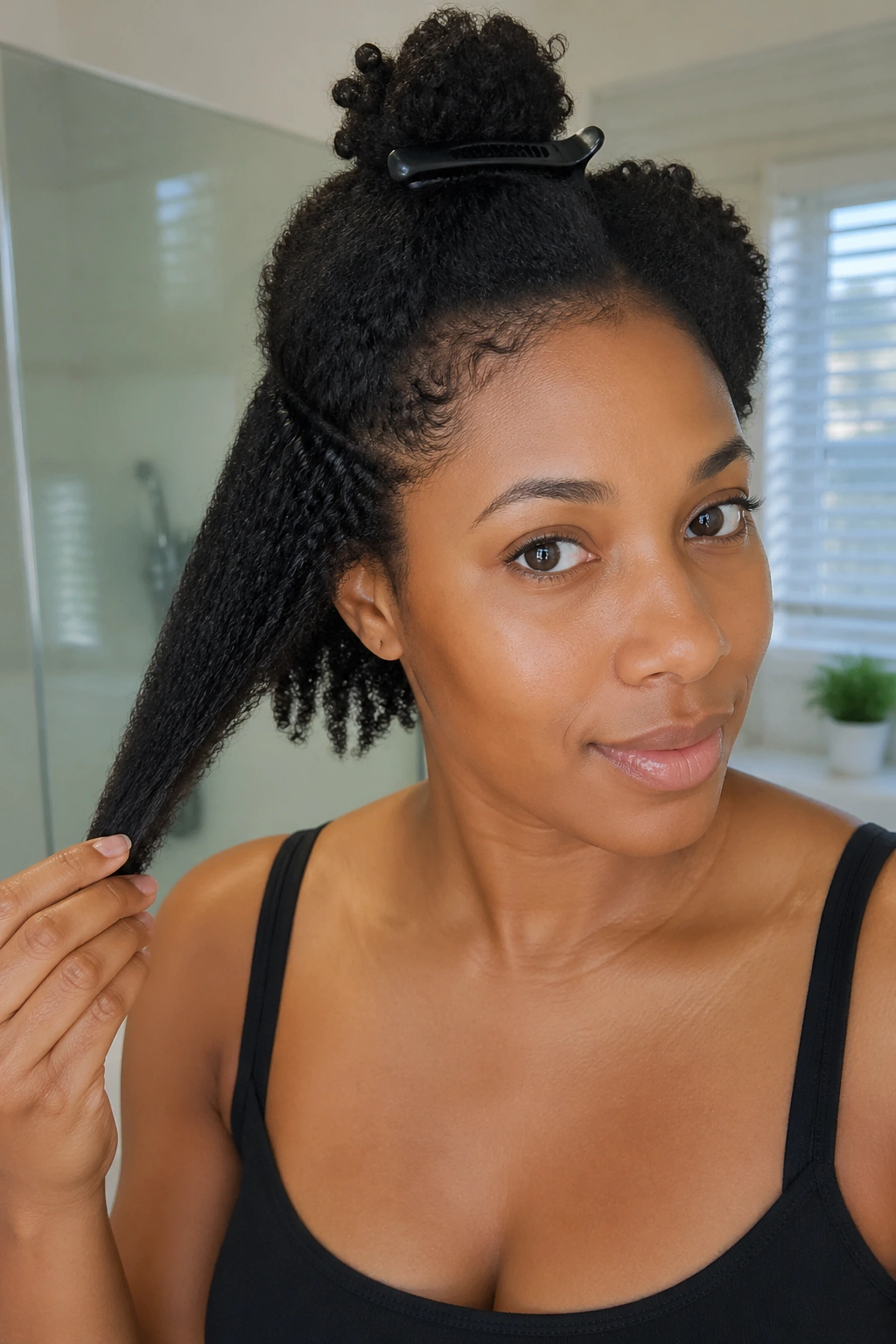
Shrinkage is the most significant factor in short curly hair updo styling. A curl with 70% shrinkage that appears to be two inches long is actually five or six inches of hair — and that extra length, properly stretched, opens up styles that seem impossible at first glance.
Stretching without heat is the natural hair community’s answer to shrinkage. Banding (using small elastics along the length of the hair), African threading, or simply braiding or twisting hair while it’s damp allows it to dry in a stretched state that dramatically increases workable length. A well-stretched wash done the night before a styling session can unlock updo options that wet, fully shrunken hair can’t achieve.
The important caveat: shrinkage is not the enemy. For many short updo styles — bantu knots, sculpted afros, edge-centric looks — fully shrunken hair is exactly what you want. The density and shape of fully shrunken 4C hair creates a natural structure that holds itself up with very little product intervention.
Products That Help Short Hair Updos Succeed
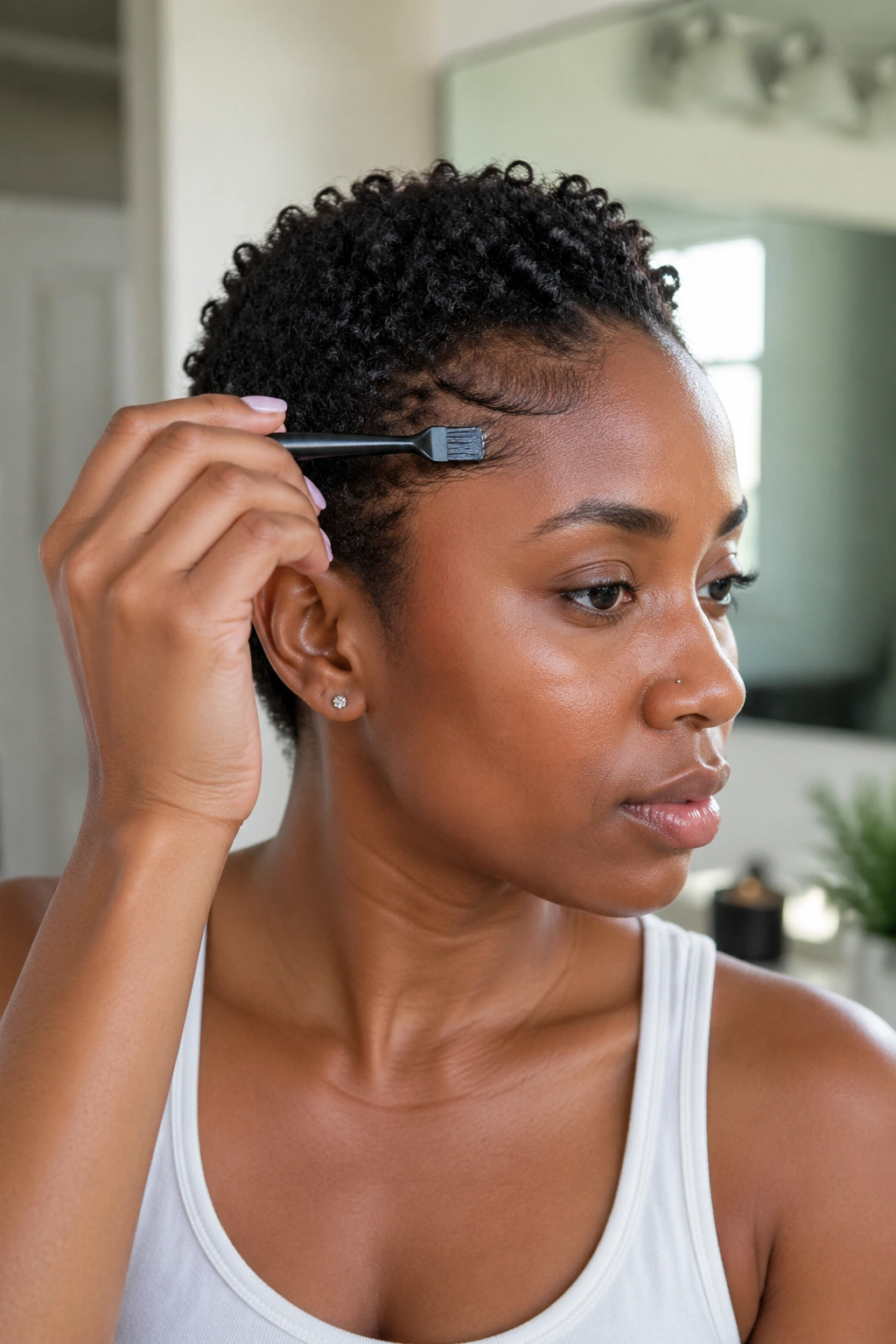
Short hair needs products that provide hold without weight. Heavy creams and butters can weigh down short curls and make them look limp rather than defined. Lightweight leave-in conditioners, water-based styling gels, and edge control products are the workhorses of short curly hair updo styling.
For any style requiring edges — which is most short updos — a good edge control is non-negotiable. Look for one that provides hold without leaving a white residue, doesn’t flake when dry, and doesn’t cause buildup with daily use. Apply with a soft-bristle brush, using small, precise strokes along the hairline.
For styles involving twisting or braiding, a moisturizing cream with some slip makes the process smoother and reduces breakage. Apply to damp hair for the best results.
1. Mini High Puff
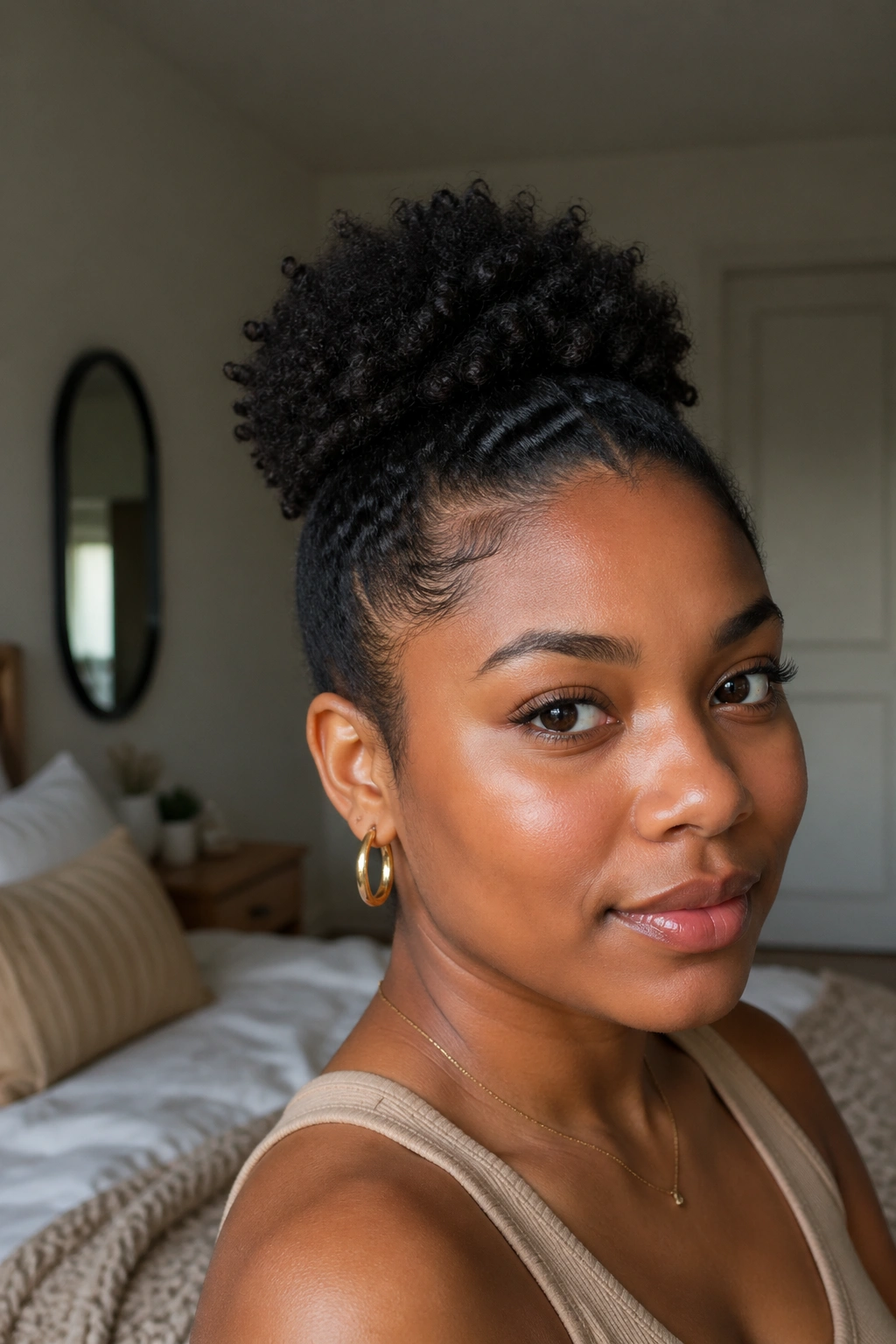
Even on short hair, the high puff works — it just looks different. A mini high puff on two to three inches of stretched 4C hair sits closer to the scalp but still creates that distinctive rounded shape at the crown. The trick is ensuring the puff has actual volume rather than just a flat gathered section.
How to Get This Look
Moisturize and lightly stretch your hair the night before. In the morning, use a soft brush to smooth all hair upward and toward the crown. Secure with a small, soft elastic or scrunchie. Lift and separate the gathered hair at the crown using your fingers to create as much height as possible. Apply edge control along the hairline and lay edges flat with a small brush.
- Works from about two and a half inches of stretched length
- A satin-wrapped elastic prevents breakage at the tie point
- The more you fluff from underneath, the bigger the puff appears
- Key: Focus product on the edges and leave the puff body dry for maximum volume
2. Bantu Knot Crown
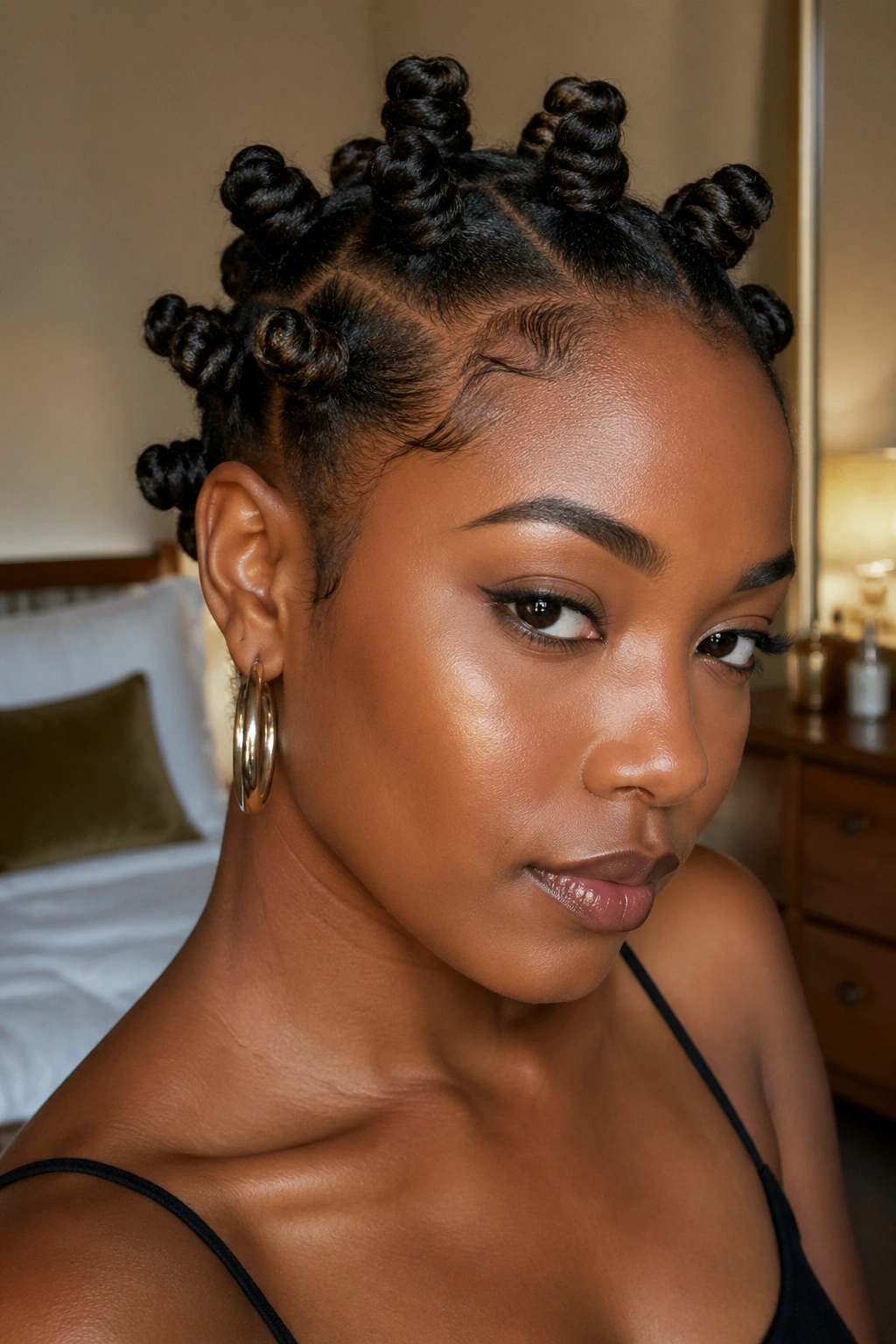
On short hair, bantu knots arranged across the crown area create a tiara-like effect that’s genuinely stunning. The knots sit close together, each one a neat coiled formation, forming a sculptural pattern across the top of the head. This works even on TWA-length hair because the knots are created with very small sections that don’t require significant length.
Section hair very cleanly. The neater the sections, the more polished the finished knots look. Apply a styling cream to each small section, twist it tightly, then coil it clockwise, pressing flat against the scalp. Tuck the end beneath the base. The knots should sit neatly without any loose, frizzy wisps poking out.
For the sides and back, you can leave the hair in its natural state — a small, shaped afro — or continue the bantu knot pattern all the way around for a full head of knots.
3. Sculpted TWA
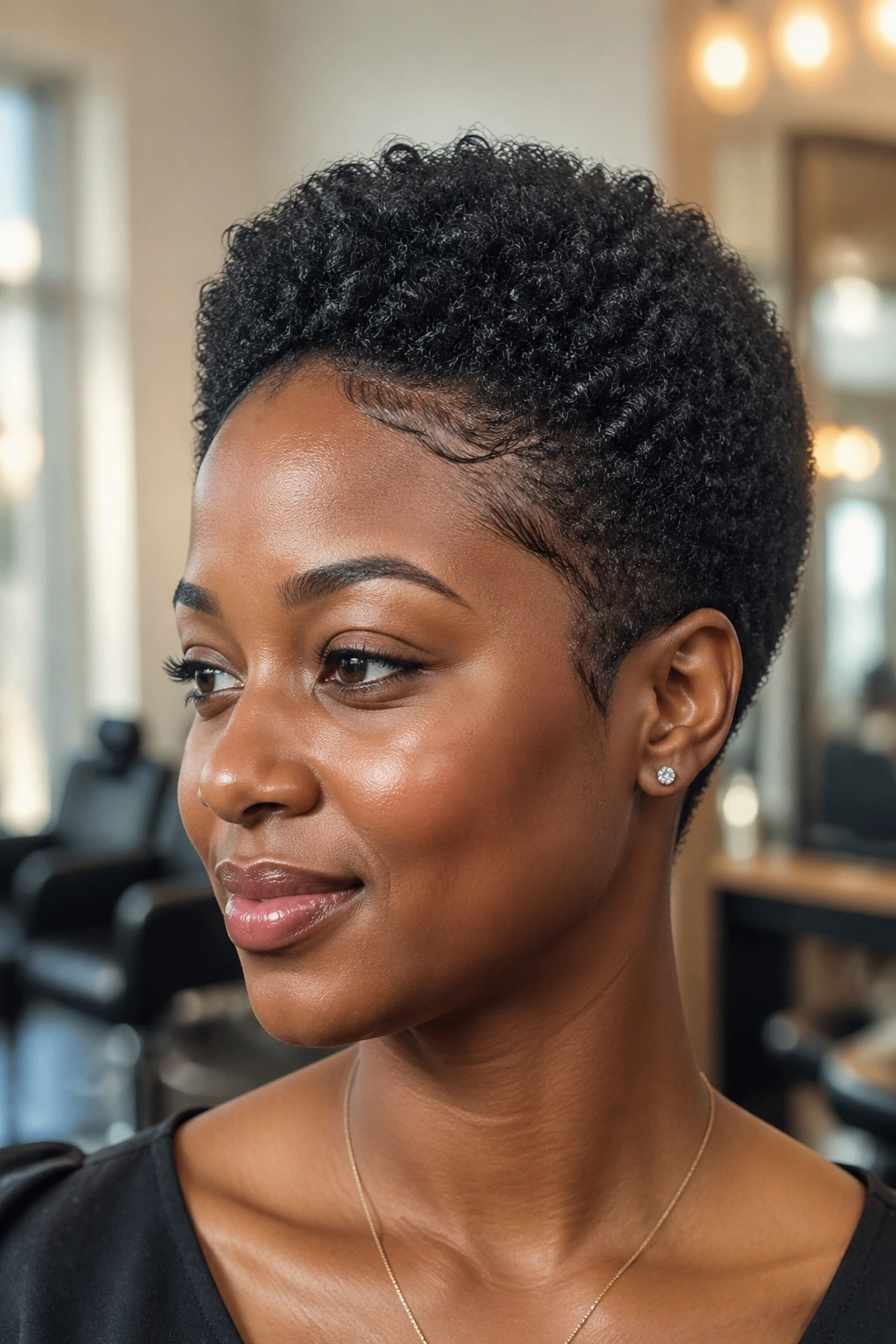
A shaped, sculpted TWA isn’t a traditional updo in the gathered-hair sense, but it functions as one visually — all the hair is controlled, shaped, and intentional. Using a small amount of curl-defining product and a light holding gel, shape the afro into a precise oval or round form. Lay the edges flat and use the product to direct the curl pattern upward and outward from the scalp.
This style is the short hair equivalent of a perfectly shaped full afro. The shorter the hair, the more every detail of the curl formation is visible — which means the texture itself becomes the design.
4. Flat Twist Into a Roll
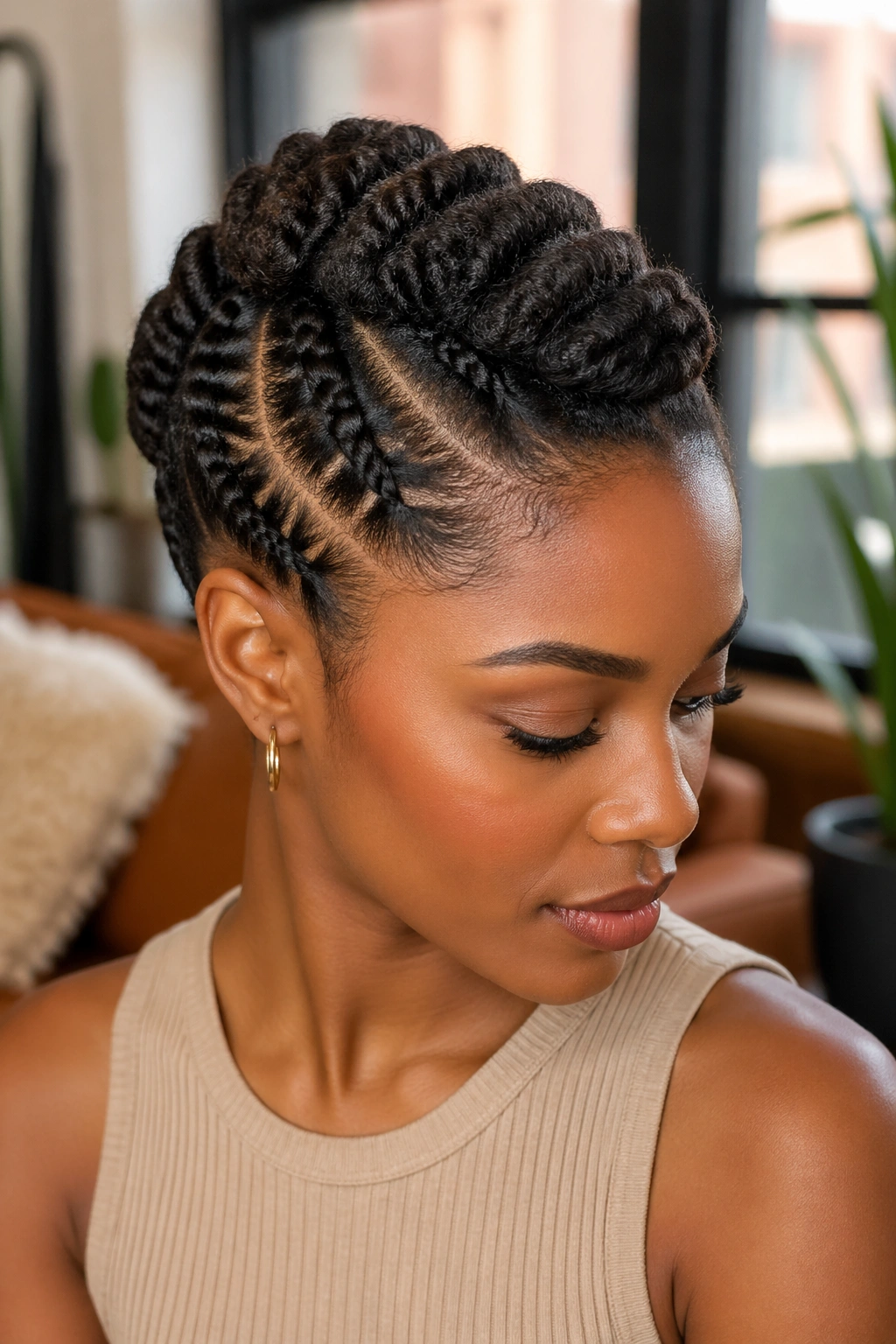
Take sections of short hair and flat twist them across the scalp, directing each twist upward and toward the center. When each twist runs out of scalp, continue twisting off the scalp and either tuck the ends under or coil them and pin. Multiple flat twists converging at the crown create a sculptural updo effect even with minimal length.
How to Get This Look
Start at the nape on each side, creating two flat twists that travel upward and meet at the crown. Pin the ends. If desired, add two more twists from the temples, also directing them upward. The result is a small, pinned updo that looks complex but takes about fifteen minutes.
5. Half-Up Style With Defined Curls Down
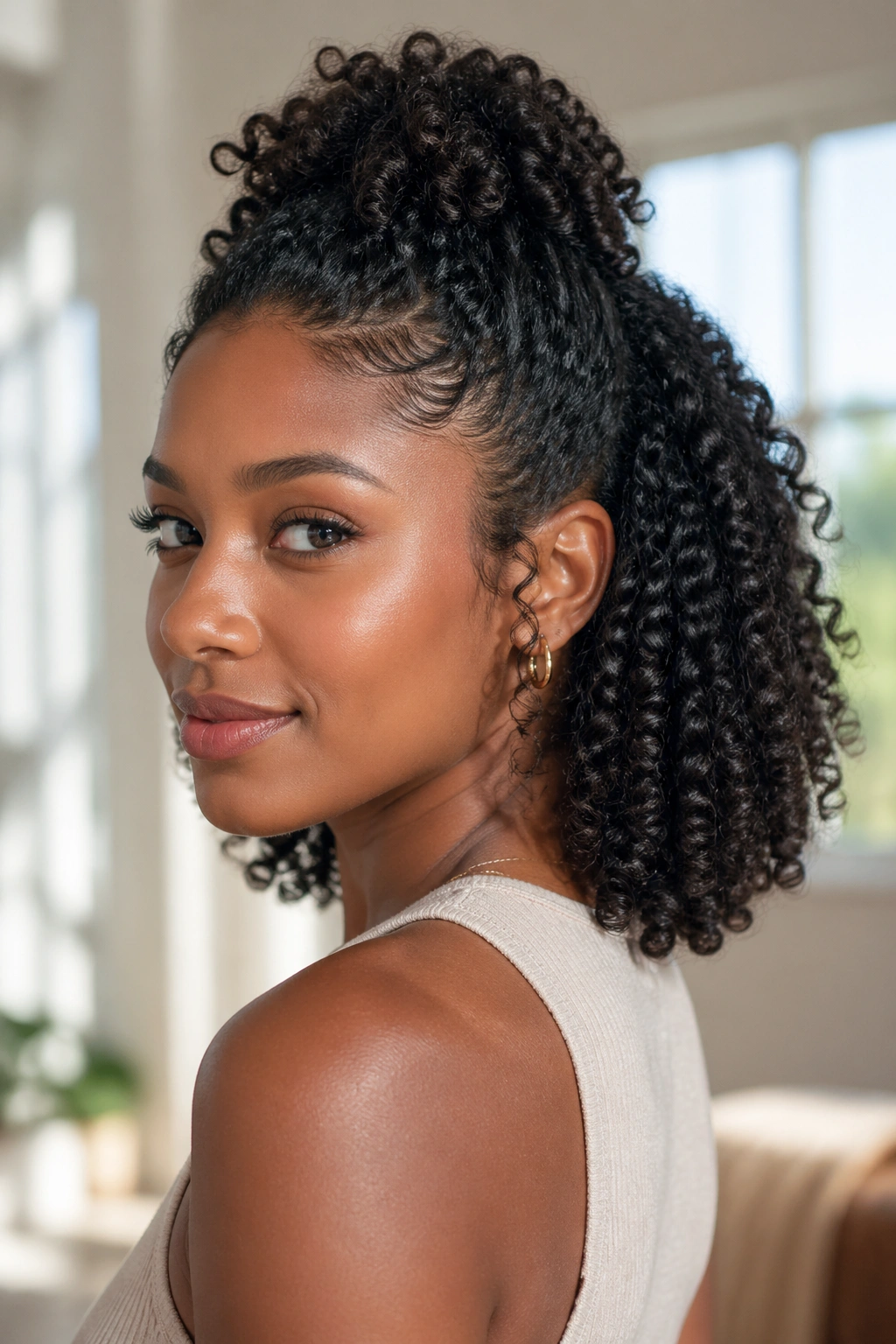
On short hair, a half-up style takes the top section — roughly from ear to ear — and gathers it at the crown, leaving the back section loose. This works well on short hair that has enough length to both gather and show visible curls in the loose section.
The defined curls in the loose section are the visual focus here. Apply a curl cream and a small amount of gel to the loose section, scrunch upward, and let air dry or diffuse. The defined, short curls at the back create a beautiful frame for the gathered crown section.
6. Headband Updo
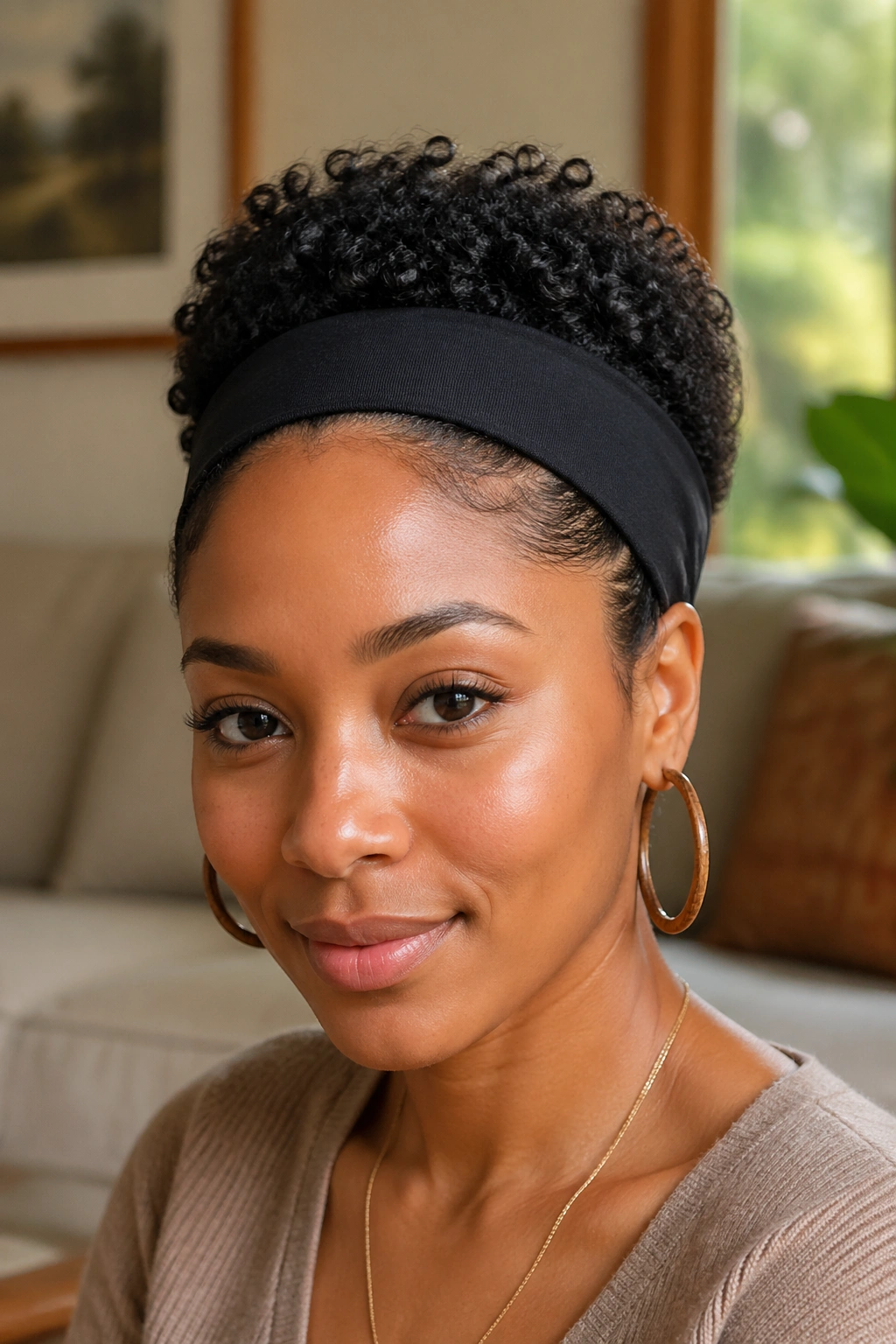
A wide headband — fabric, satin, or embellished — on short natural hair creates an updo effect without requiring any gathering. The headband compresses the hair above and behind it while the hair in front either lays flat or creates a small puff effect.
This is arguably the fastest “updo” on this list. Place the headband two to three inches back from your hairline. Apply edge control along the exposed hairline in front of the band. Use a small brush to smooth and shape. The result is a structured, intentional-looking style that takes under five minutes.
7. Pinned Twist Style
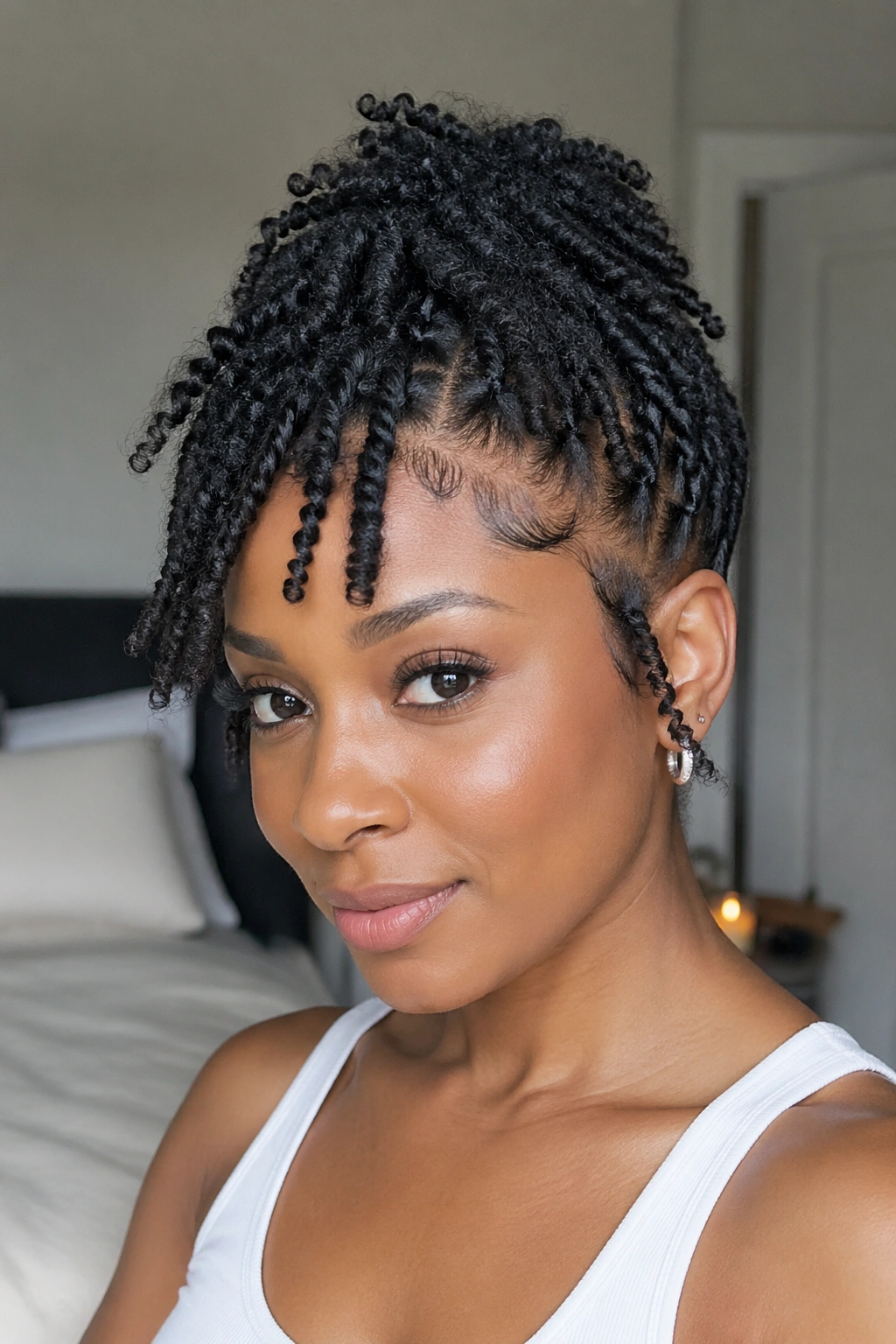
Create multiple small twists across the entire head, then pin selected twists upward and away from the face, leaving others to hang or coil naturally. The pinned twists create height and movement at the crown, while the unpinned ones add texture and interest. This style works beautifully on the two-to-four-inch range and looks incredibly thoughtful despite being relatively simple to execute.
8. Edge-Work Focused Updo
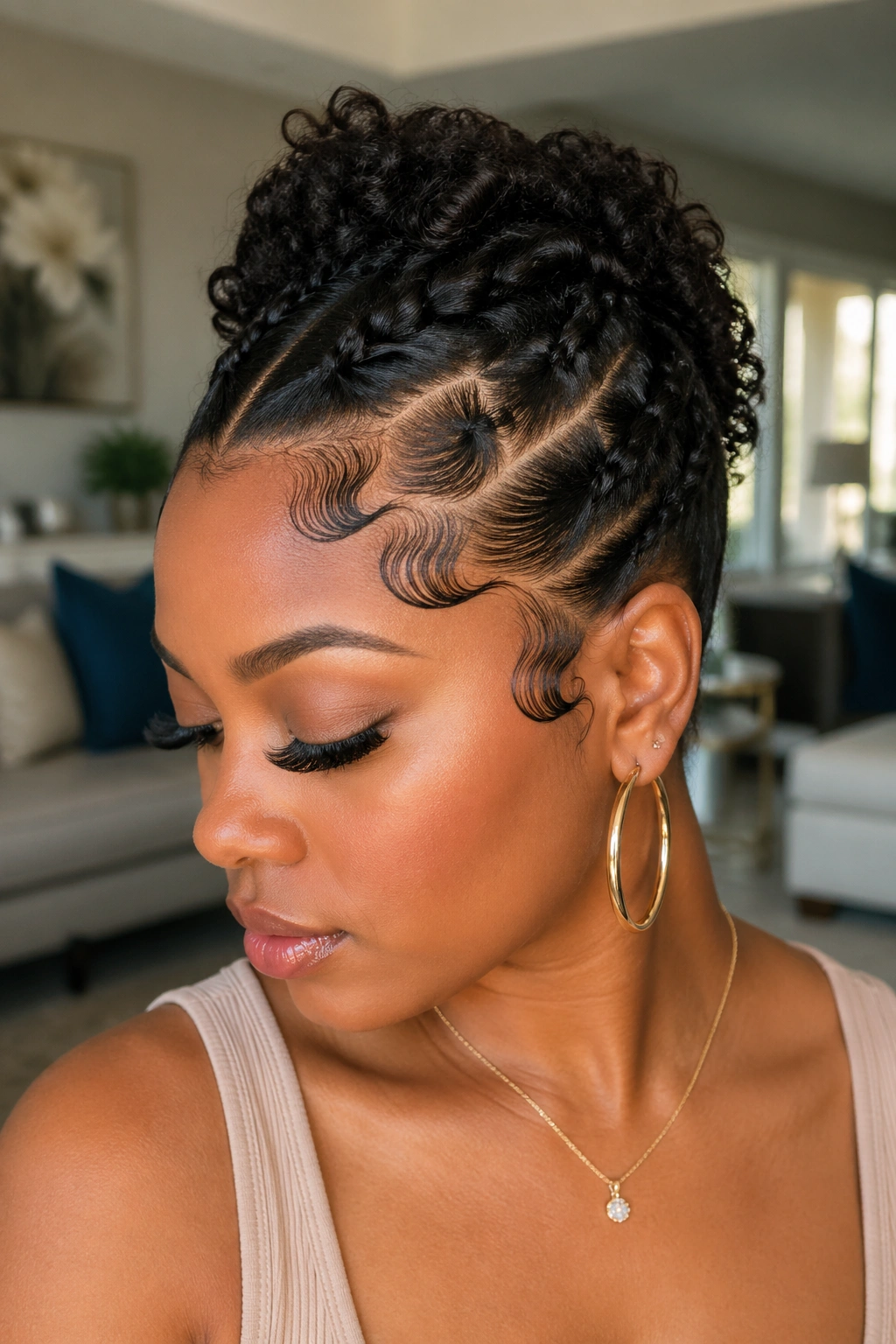
On short natural hair, edges can carry an entire style. An updo that relies on an intricate edge pattern — swoops, waves, curves, geometric designs — paired with simple slicked-back or minimal-product hair can be genuinely show-stopping.
Lay your edges with a quality edge control product. Use a soft brush to create swoops, S-curves, or other deliberate shapes along the hairline. This technique, sometimes called edge artistry, is its own distinct skill — and when done well, it transforms even the simplest short style into something striking.
9. Mini Space Buns
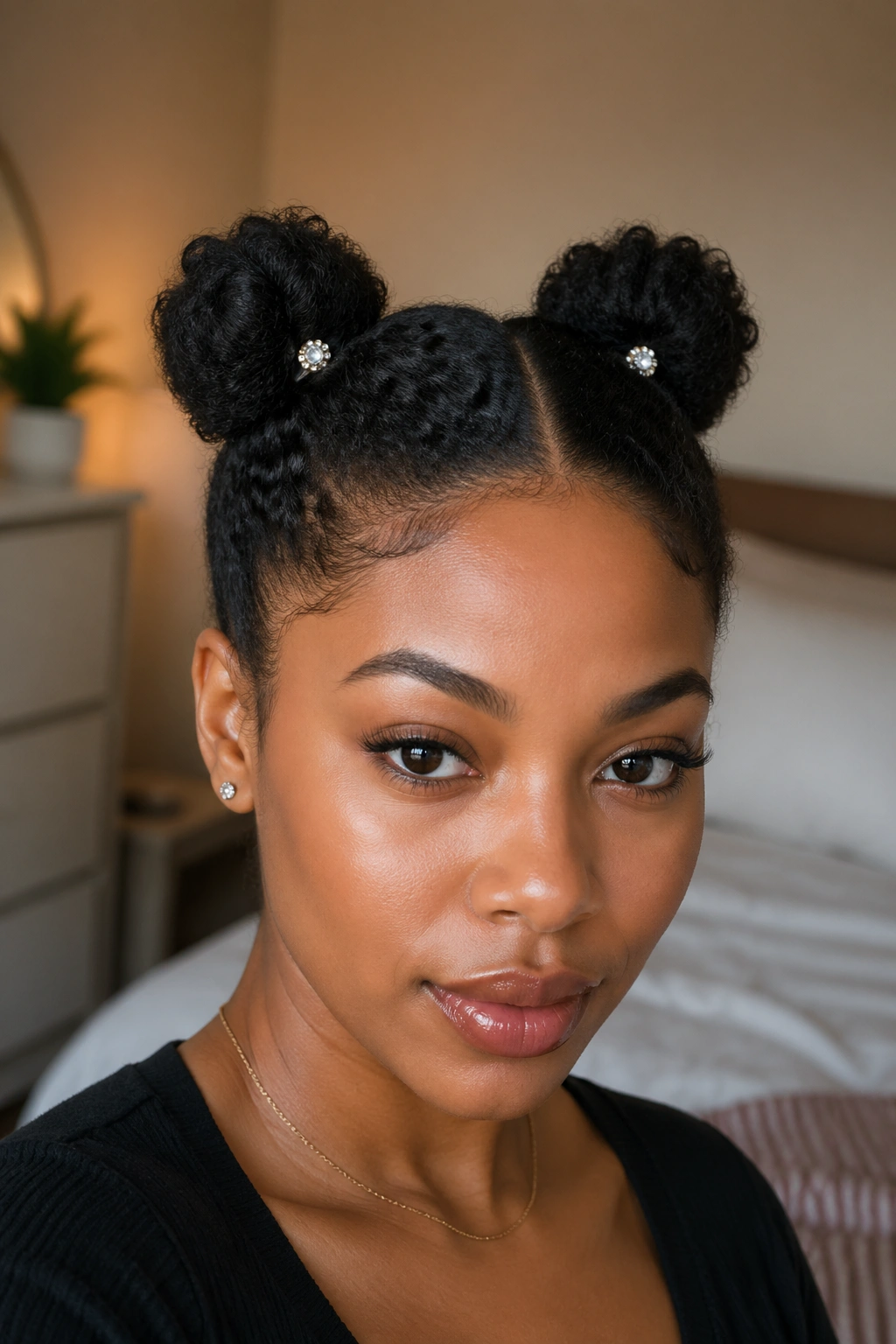
Two small buns, one on each side of the head, positioned high — space buns work on short natural hair when the hair is stretched enough to gather. They won’t be large or dramatic at short lengths, but two neat, textured mini buns with smooth edges look incredibly clean and intentional.
Divide hair with a center part. Gather each half with a small elastic. Coil and pin if the buns need help maintaining their shape. Add a small accessory — a jeweled pin, a satin ribbon — at the base of each bun to finish.
10. Single Front Puff With Braided Back
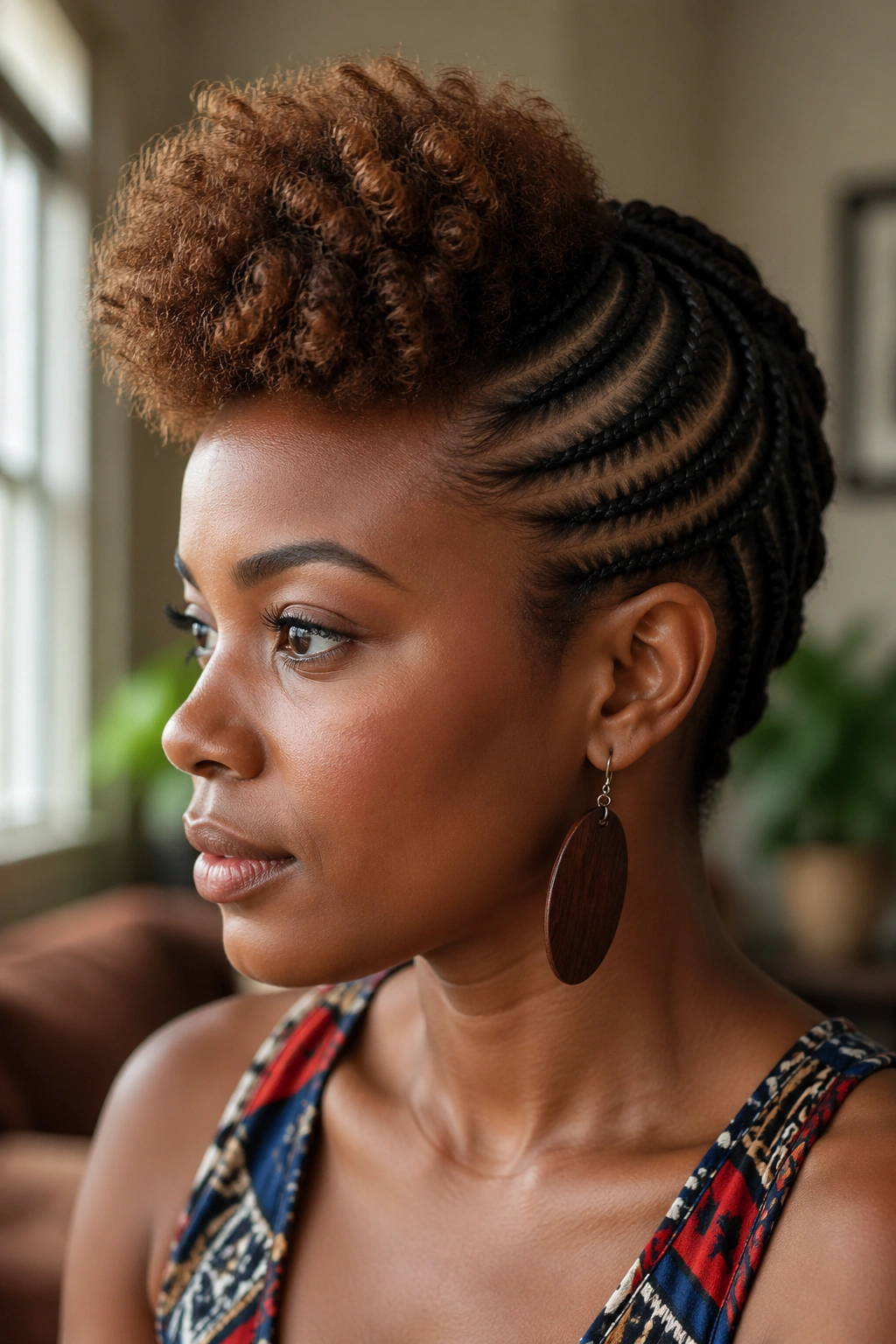
Section the front of the hair from ear to ear. Gather the front section into a small puff at the crown. Flat braid or cornrow the back section close to the scalp, working downward toward the nape. The contrast between the textured puff at the front and the braided nape at the back creates a layered, multi-dimensional updo that punches well above its length.
11. Jeweled Afro Pin Style
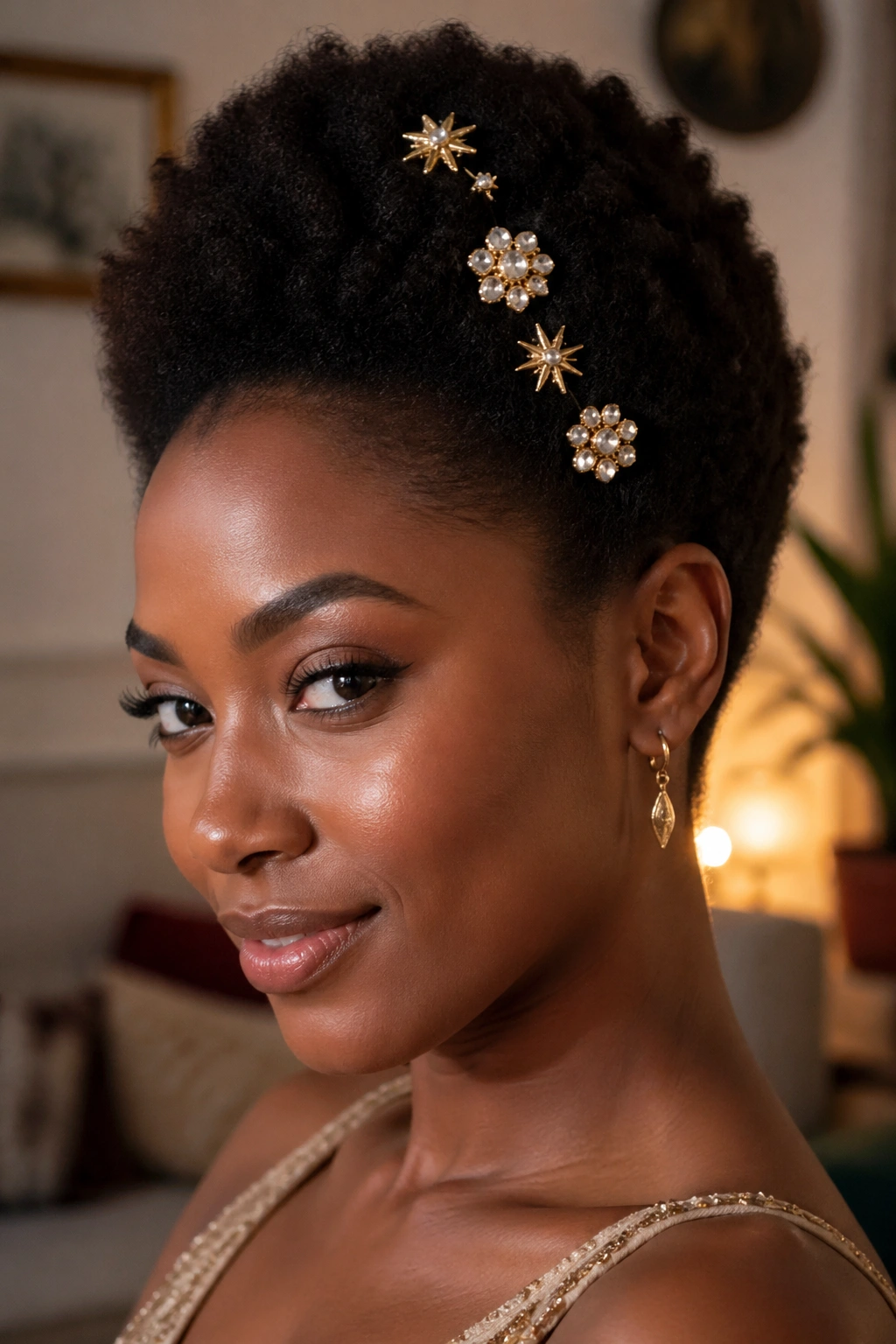
A small, well-shaped afro decorated with jeweled pins — gold star pins, floral gem pins, rhinestone clusters — is as much an updo as any bun. The pins add vertical dimension, catch light, and create deliberate visual interest throughout the style. This is particularly effective on short 4C hair, where the density of the texture holds pins securely in place.
12. Sculpted Side Part Slick-Back
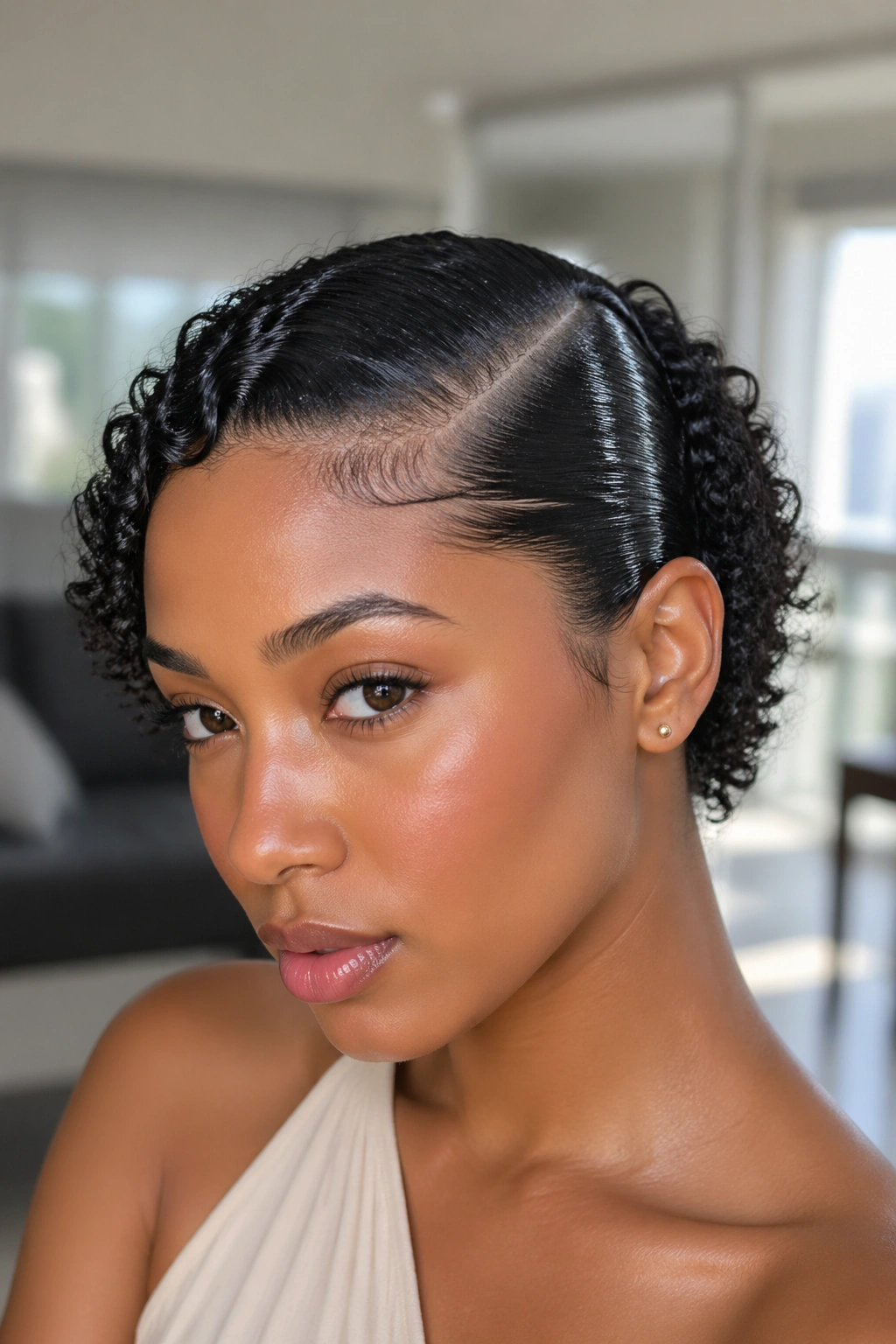
Take the entire hair section and smooth it using edge control and a holding gel, directing everything back and to one side of the head. Use a brush to lay the surface of the hair flat before the product sets. The result is a sleek, controlled look that emphasizes the curl pattern at the ends where the product ends and the natural texture begins.
How to Get This Look
Apply edge control and smoothing gel generously to damp hair. Brush backward and slightly to the right or left (whichever direction your natural growth pattern favors). Use a satin wrap or a silk scarf to compress the style for fifteen minutes. Remove and use a light serum to add gloss over the smoothed surface.
13. Finger Wave Updo
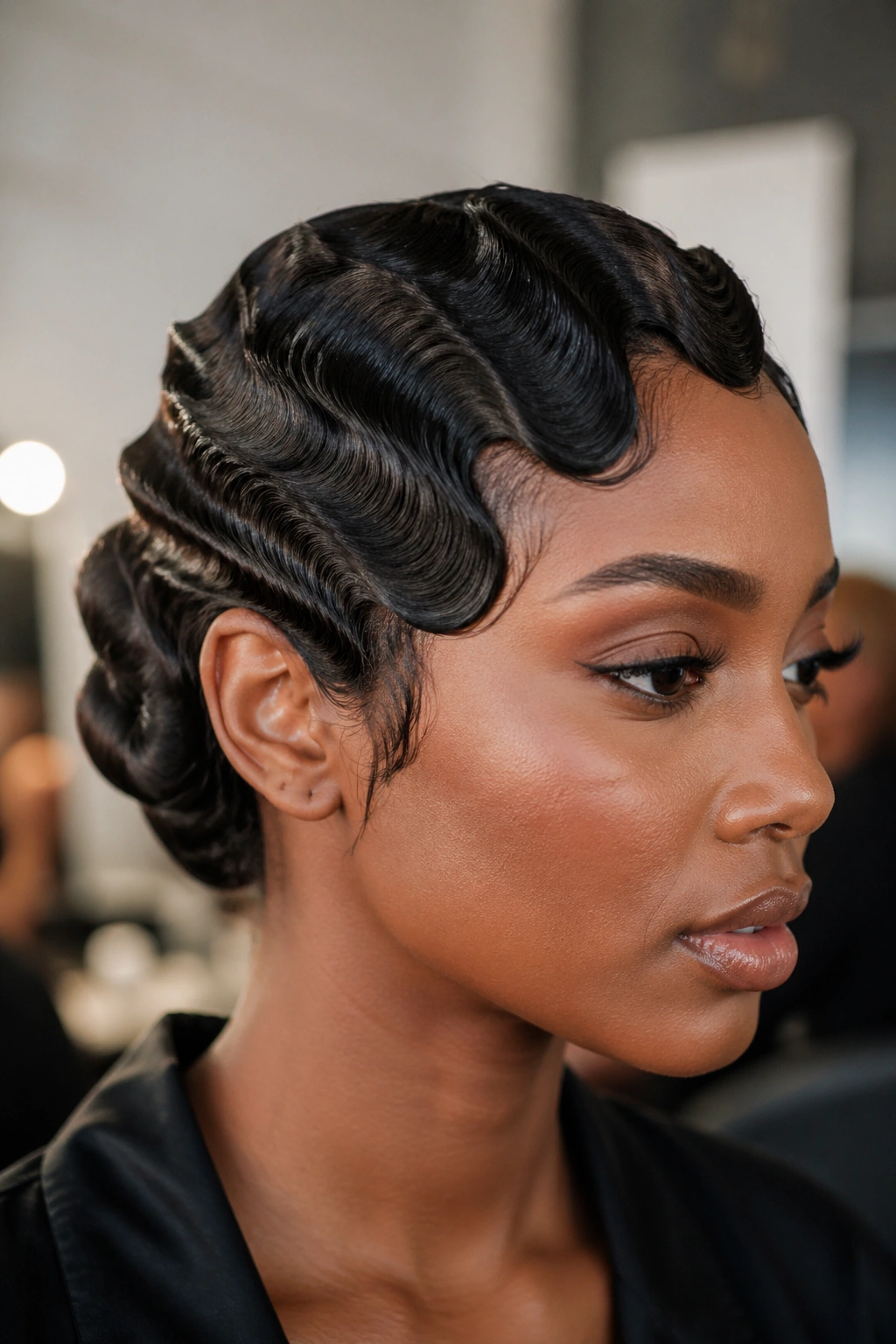
Finger waves were created specifically for short hair and look absolutely stunning on natural curl textures. Using a strong-hold gel and a comb, create S-curve wave patterns along the sides and front of the head, then pin the hair toward the nape at the back. The waves at the sides frame the face with graphic, sculptural precision.
14. Twisted Mohawk
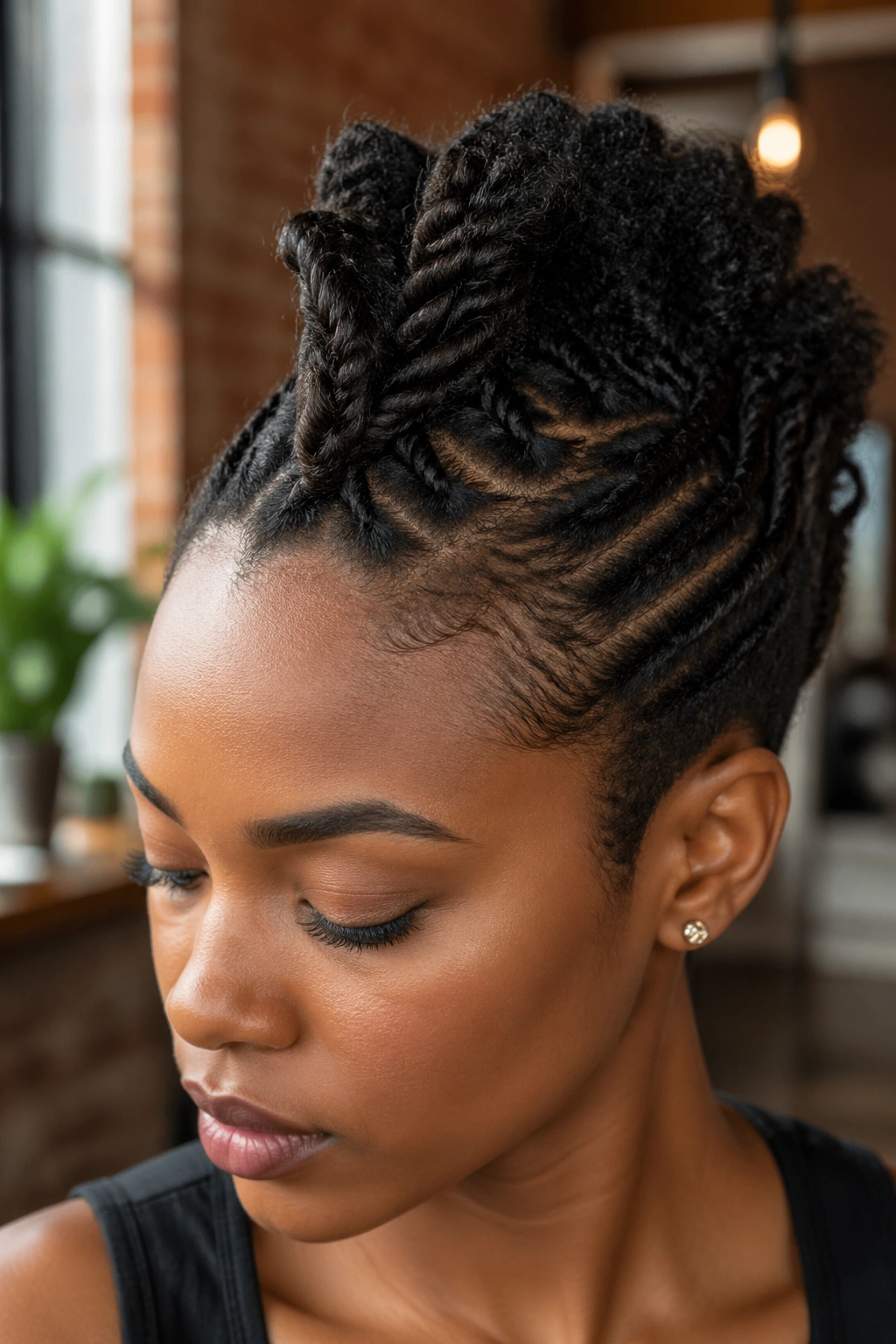
Create a central twisted section running from the forehead to the nape — either a flat twist or a series of two-strand twists — while pinning the sides of the hair upward and back. On short hair, this mohawk effect is compact but visually powerful. It emphasizes length in the vertical direction, which creates the illusion of more hair than there is.
15. Coiled Pin-Up
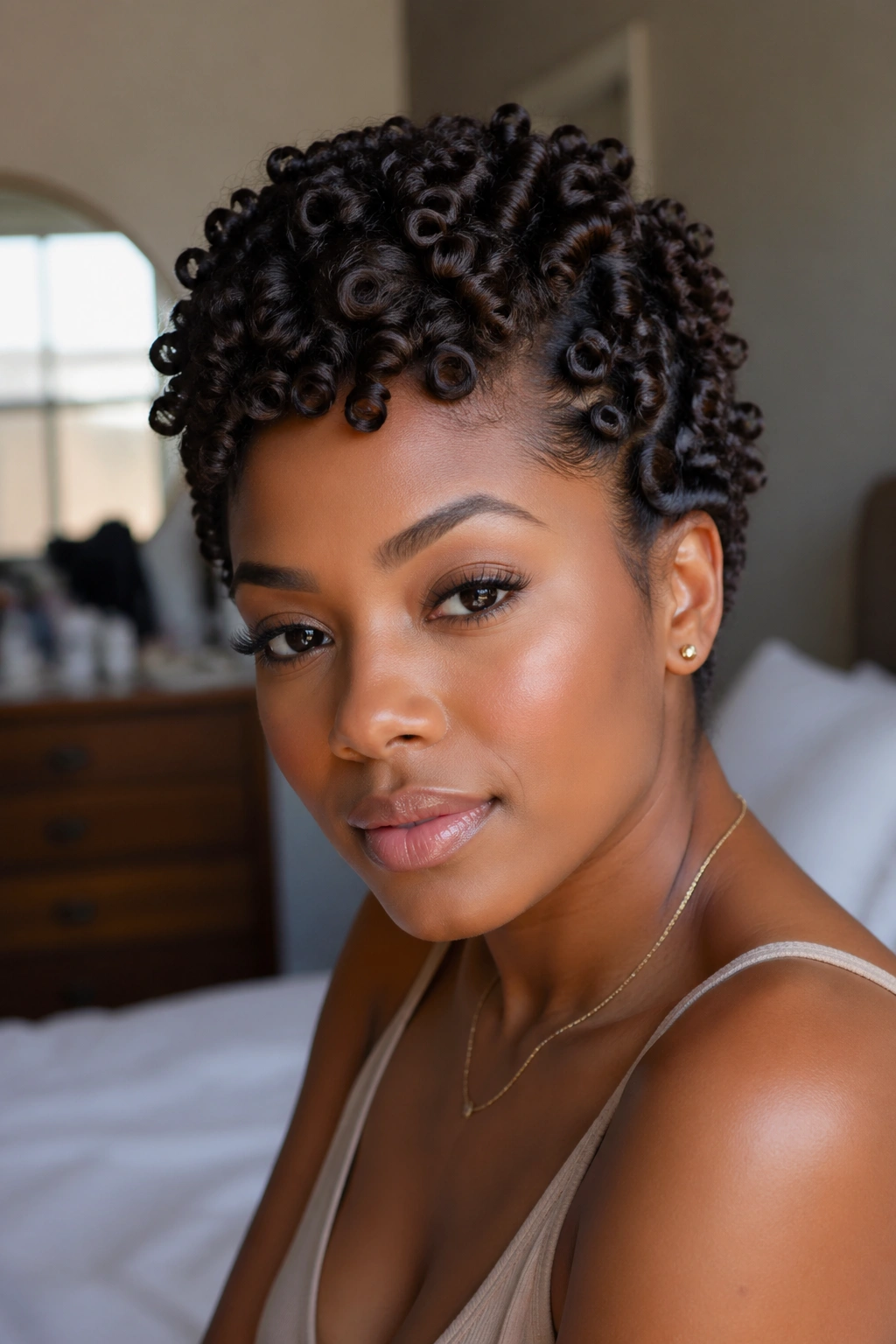
Create finger coils across the entire head. Once dry, take individual coils from the sides and back and pin them upward, overlapping them toward the crown. Leave the coils at the top of the head loose and free. The pinned coils create a textured, sculptural updo while the loose top adds volume and dimension.
16. Crown Flat Twist
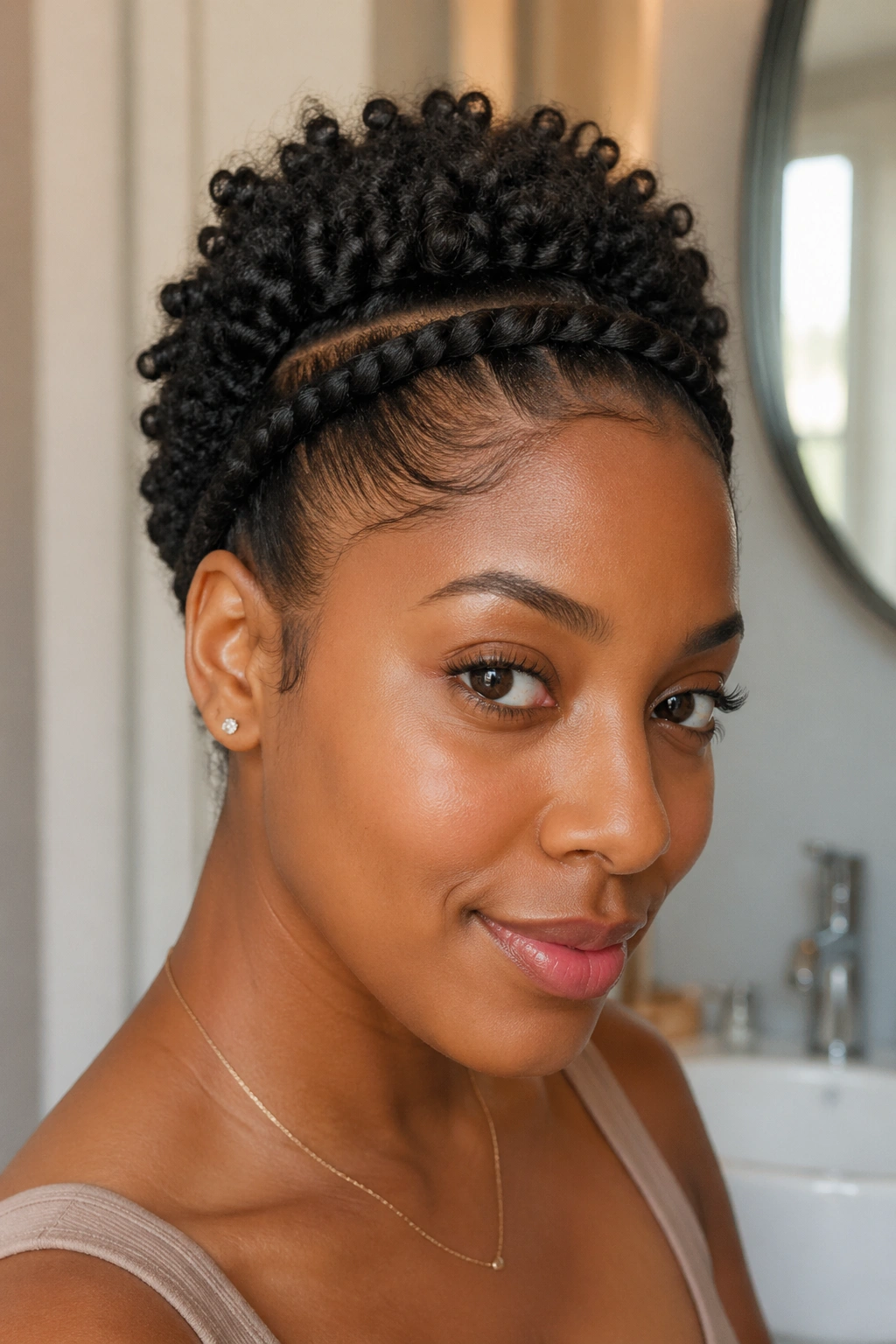
Do one flat twist along the entire perimeter of the hairline — starting at one temple, traveling around the forehead, the other temple, and around the back. The single perimeter twist acts like a crown, holding all the interior hair contained behind it. The interior hair can be fluffed upward into a mini puff or left flat.
17. Ribbon-Wrapped Updo
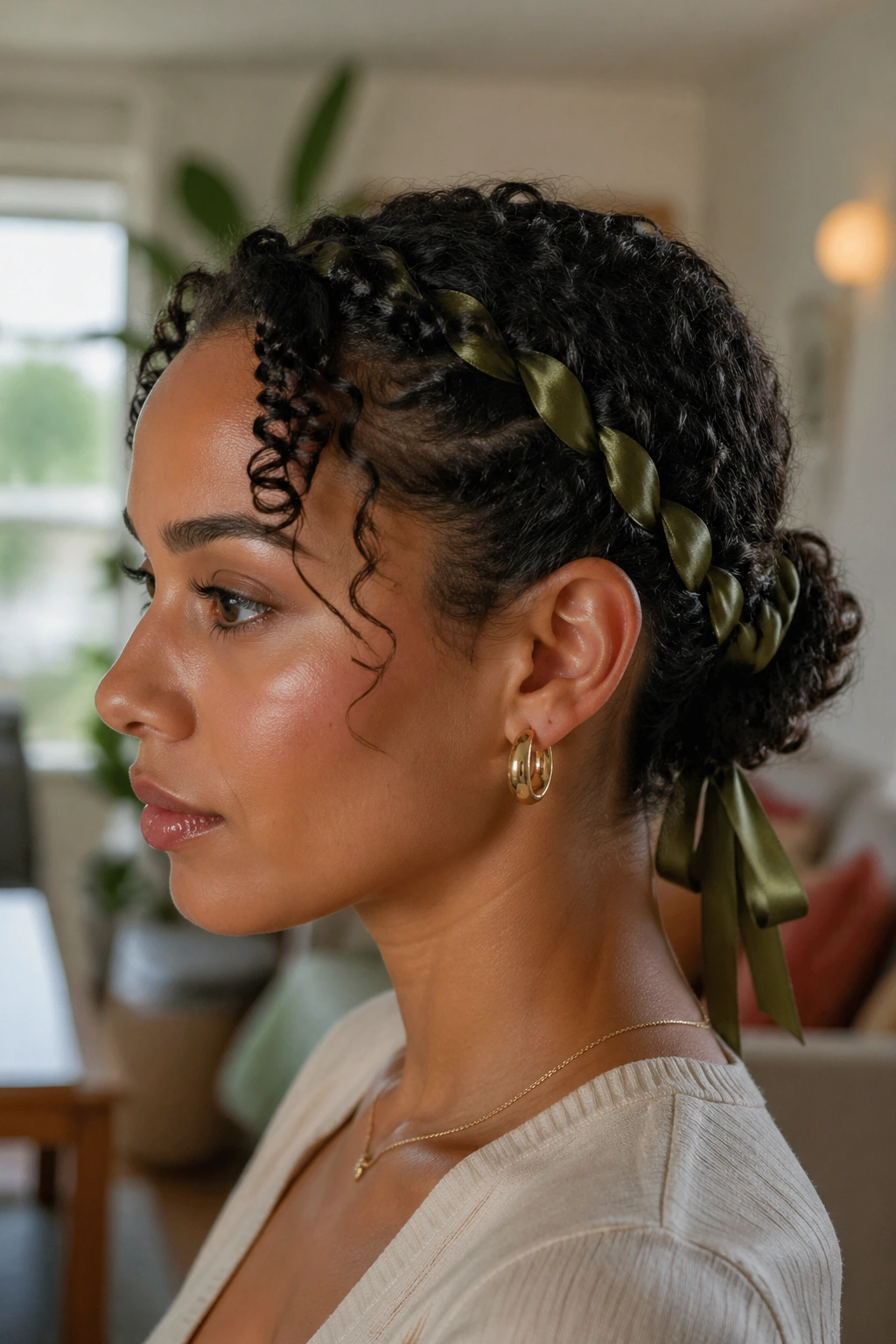
Wrap a length of satin or velvet ribbon around your hair — lacing it through sections, wrapping around a small bun, or tying it in a bow at the back. On short hair, the ribbon provides a significant amount of the visual structure that longer hair would otherwise supply through volume. The result looks romantic and deliberate with minimal styling effort.
18. The Sculpted Pineapple
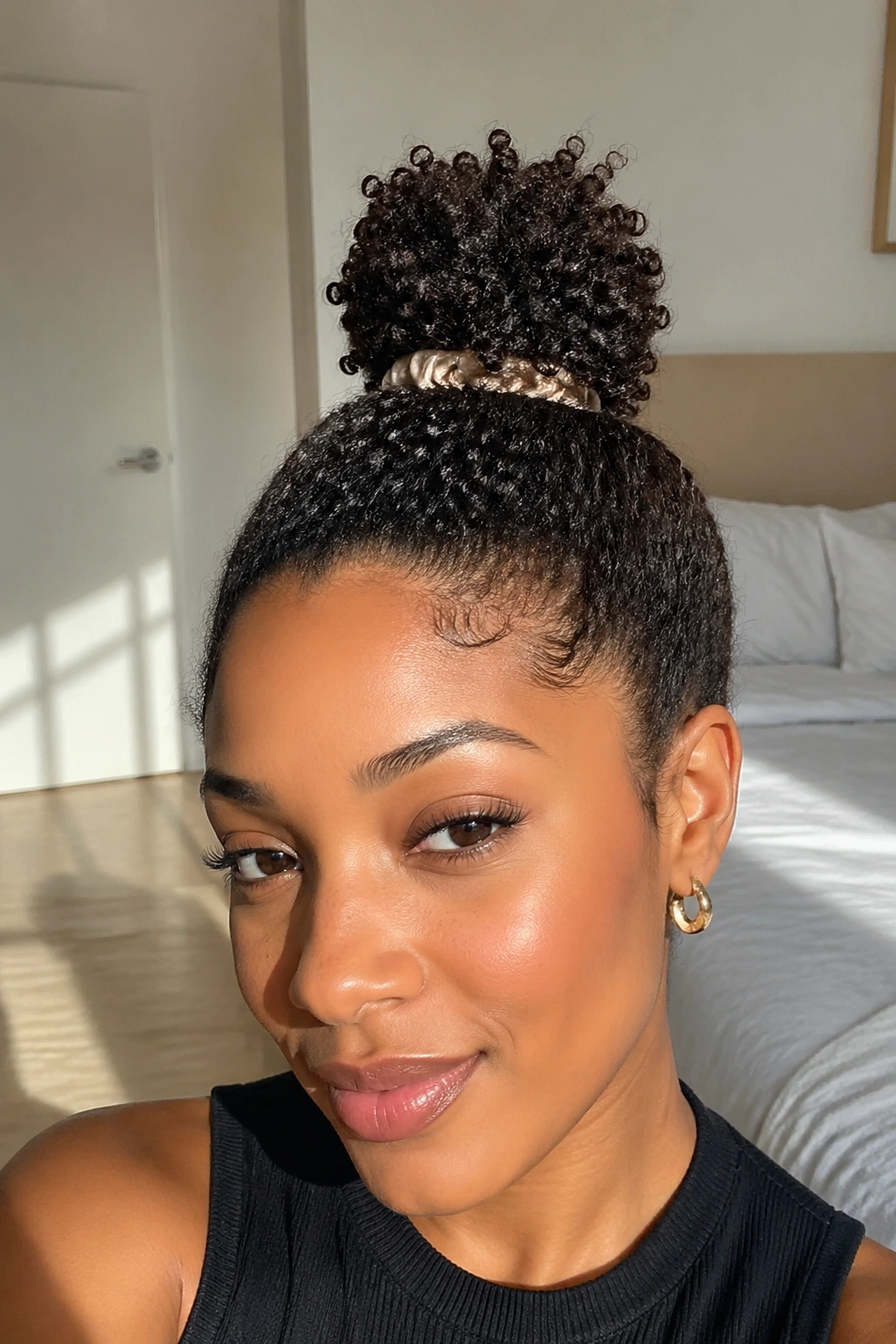
Even on short natural hair, a pineapple positioned at the very top of the head creates upward volume. The difference at short lengths is that the pineapple might only be two inches tall rather than a cascading fountain — but that compact shape still reads as a structured updo from the front and sides.
The secret is gathering everything upward rather than forward, and using a very small satin scrunchie that doesn’t overwhelm the scale of the style.
19. Back-Pinned Twist Style
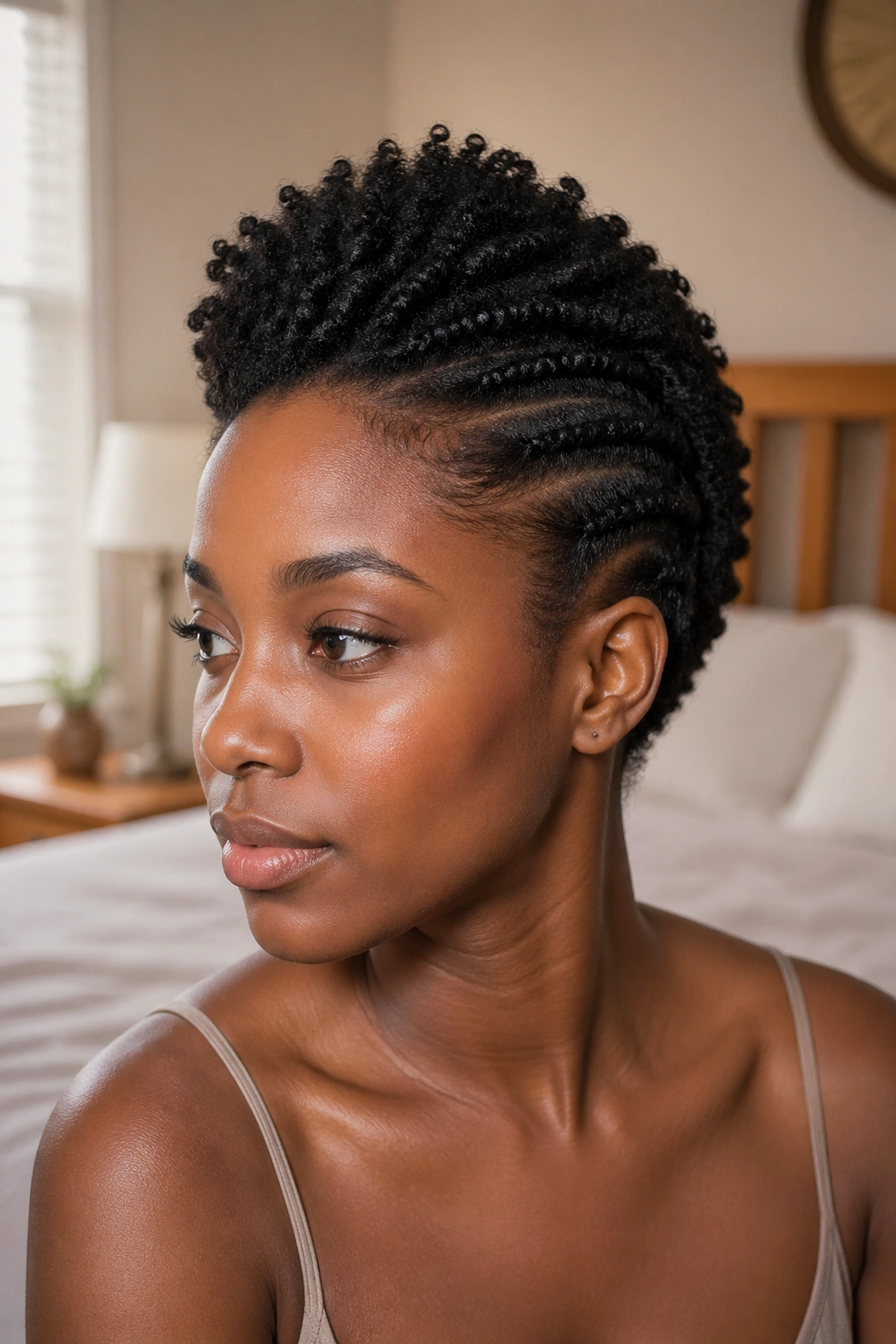
Take the hair on the sides and front of the head and create flat or two-strand twists directed straight back. Pin the ends at the nape or at the crown. Leave the crown area free or gather it into a small puff. This style is clean, geometric, and creates a defined parting pattern across the scalp that makes even very short hair look deliberate and styled.
20. African Threading Updo
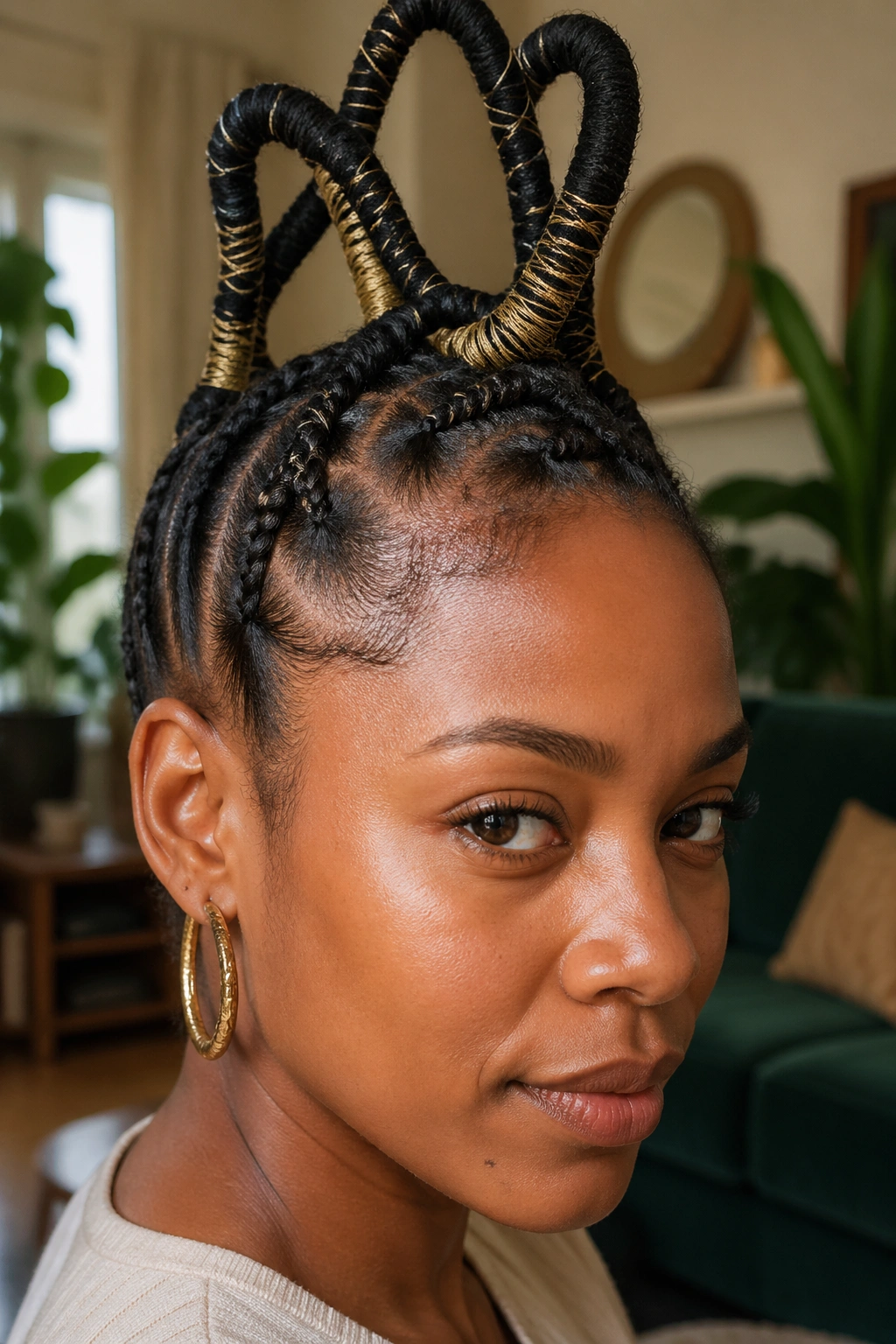
African threading wraps thread tightly around sections of hair, stretching them and manipulating them into specific shapes. On short hair, threading can extend the apparent length significantly, allowing for updo styles that wouldn’t otherwise be possible. Threaded sections can be directed upward, crossed, or pinned to create sculptural forms.
This technique is a protective style as well as a styling method. The thread protects the hair shaft from friction and environmental exposure while the style is worn.
21. Low Nape Twist Knot
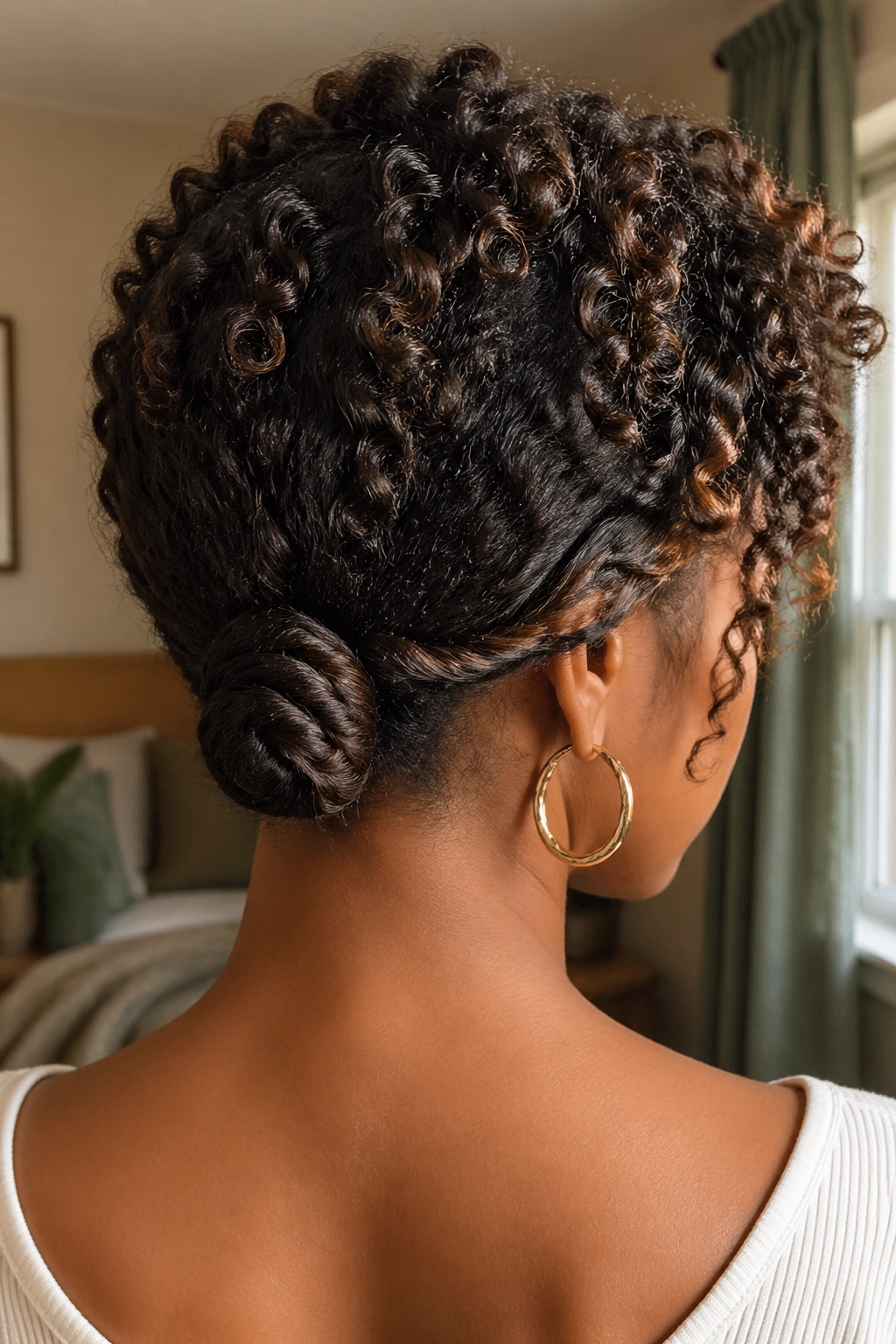
Gather the back section of hair toward the nape and create a single large two-strand twist. Coil the twist around itself and pin it flat at the nape, creating a single neat knot at the base of the head. Leave the front and crown sections in their natural state — either as a mini afro or with deliberate curl definition. The contrast between the natural crown and the structured nape knot is elegant and balanced.
22. Beaded Updo
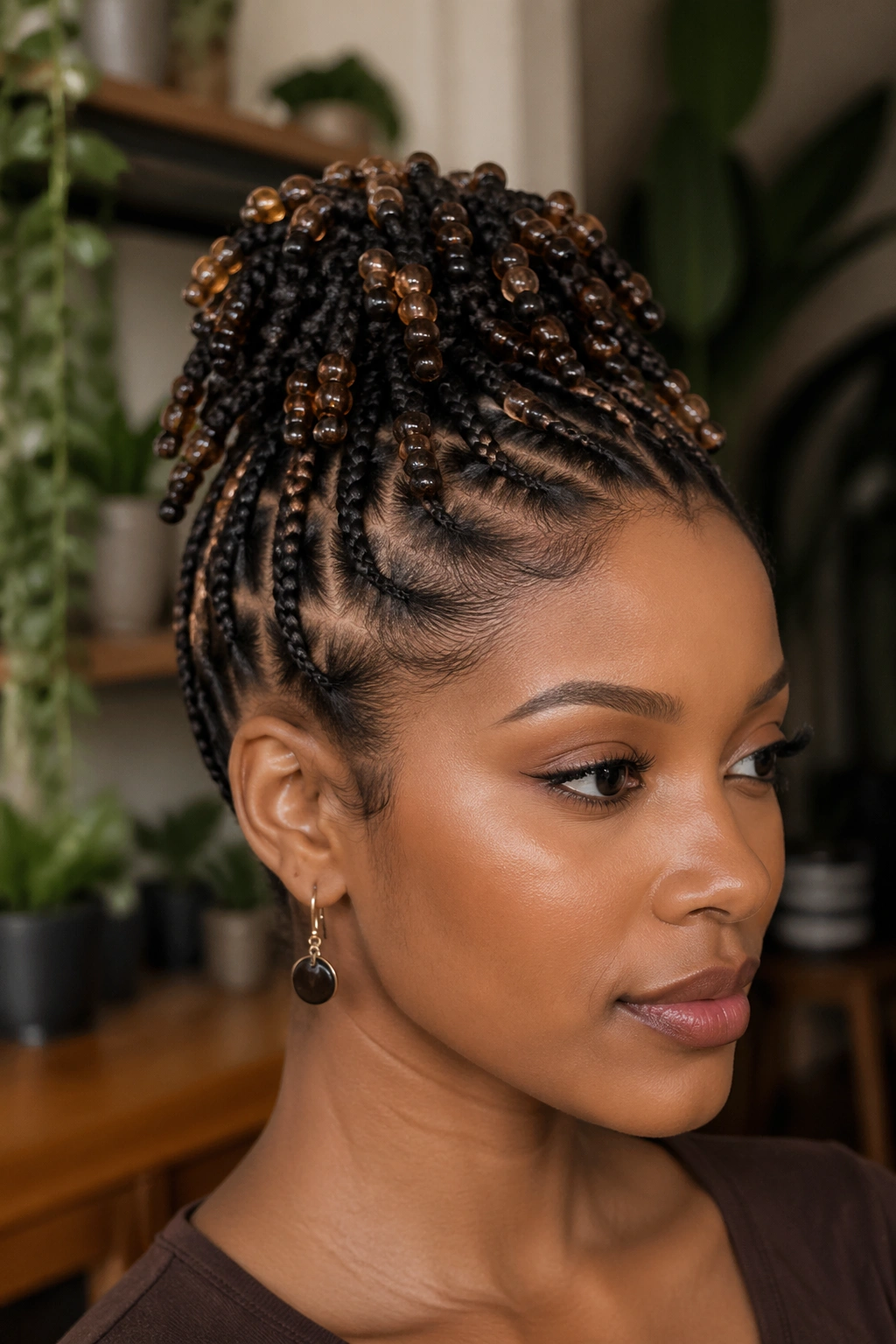
Add beads to the ends of small twists or cornrows, then gather those beaded sections upward and pin them into an updo arrangement. The beads add weight, movement, and visual interest to what might otherwise be a simple pinned style. On short hair, fewer beads are needed, but their effect is proportionally just as striking.
Building a Short Curly Updo Routine
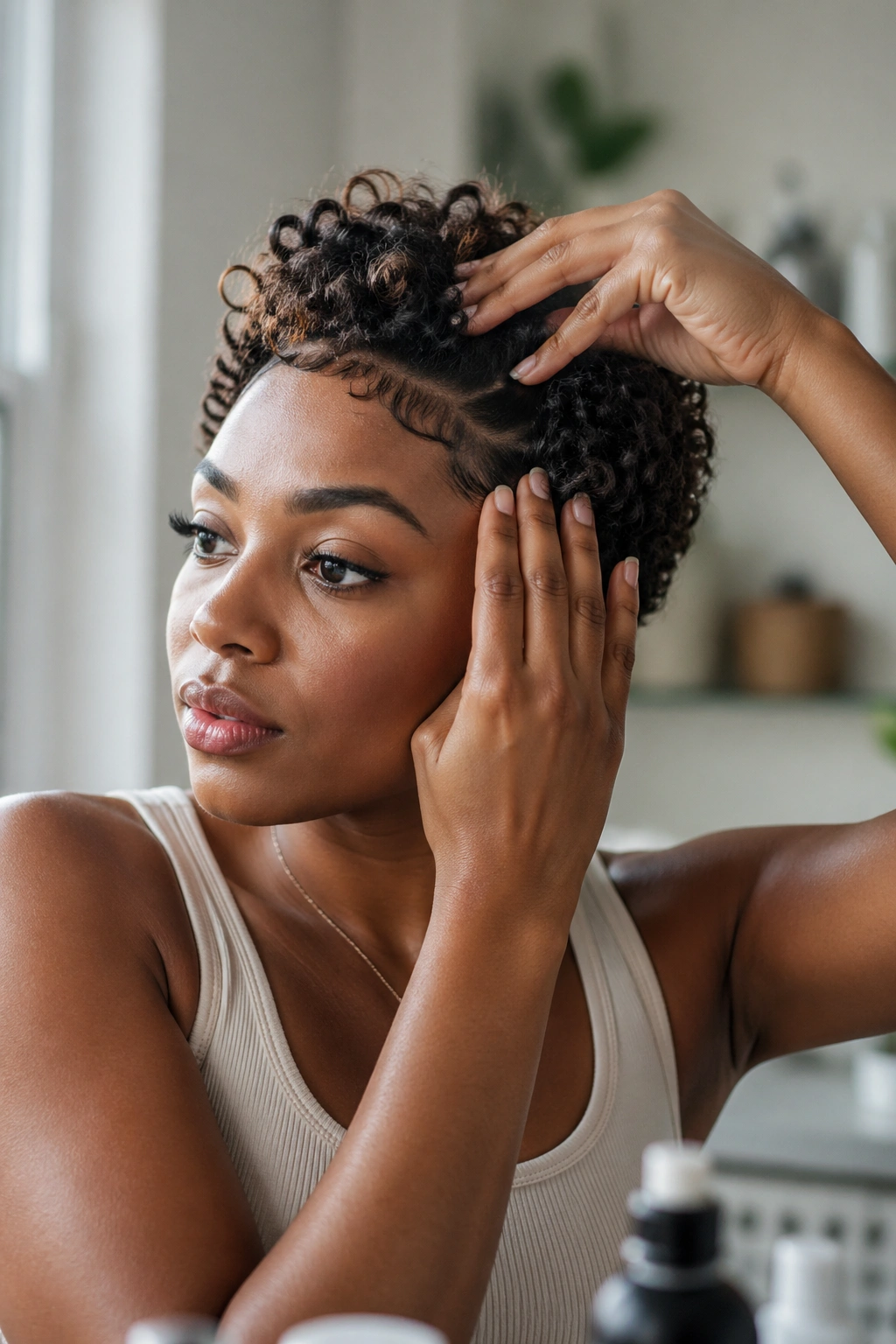
Short natural hair updos work best when you have a consistent, reliable prep routine. That means knowing how your hair behaves when it’s freshly moisturized versus two days post-wash, understanding which products give you the hold you need without making your hair stiff, and having your tools organized so you can work efficiently.
The biggest time investment with short hair updos is the edge work and the finishing details. These take patience, not length. Practice your edge laying, experiment with your holding products, and get comfortable with your brushes and combs. The styles themselves are quick once you master the prep.
Short curly hair is not waiting to become long curly hair. It’s its own complete thing. The updos available to it are its own complete category — and they’re more than enough to keep your styling life interesting, varied, and genuinely beautiful.
