



Blonde dyed curly hair has a way of looking effortlessly gorgeous — like sunlight decided to take up permanent residence in your coils. Whether you’re thinking about a few honey-tinted highlights or a full platinum transformation, blonde on natural curls is a combination that’s hard to get wrong. The texture does much of the heavy lifting: every curl creates shadow and light simultaneously, making a single blonde shade look like five. These 23 blonde dyed curly hair ideas cover the full spectrum from barely-there warm highlights to bright white-blonde all-over color.
The Appeal of Blonde on Natural Curls
Natural curly hair has a built-in advantage when it comes to blonde color: the texture makes it dynamic. Blonde on flat-ironed hair shows up in a single even layer. On curls, blonde sits in layers — some sections catching direct light and appearing bright, others falling into the shadow of adjacent curls and appearing deeper.
This is why blonde dyed curly hair always looks dimensional. The color itself doesn’t have to do all the work of creating depth and variation. Your curl pattern handles that automatically, which means even a simple single-process blonde looks like a carefully placed balayage.
There’s also the movement factor. Blonde curls catch light as they bounce and swing — which means the color is never static. Different parts of your hair catch light at different moments, creating a shifting, dynamic effect that’s completely unique to textured hair.
Understanding the Blonde Spectrum
Blonde is the widest color category in hair — it encompasses dozens of distinct shades that look and feel completely different from one another. Getting clear on which blonde you actually want is the most important step before any color consultation.
Honey blonde is warm, golden, and flattering on a huge range of skin tones. It’s bright without being harsh, and on natural curls it reads like sunshine running through each strand.
Caramel blonde is darker and richer — right at the border of brown and blonde. It’s one of the most wearable blonde shades because it requires less lifting and reads as an enhancement of dark hair rather than a dramatic departure.
Golden blonde is the warm, saturated blonde most people picture when they say “blonde.” It’s bright, rich, and glows in natural light.
Ash blonde sits on the cool side — it has gray or violet undertones that prevent brassiness and create a more editorial, muted look. Achieving true ash blonde on natural hair requires careful toning after lifting to neutralize the warm tones the lifting process naturally creates.
Platinum blonde is the brightest, lightest end of the spectrum — almost white. It requires the most lifting and the most maintenance, but the result on curly hair is extraordinary. Platinum amplifies every curl detail and creates a brightness that’s uniquely striking on textured hair.
Strawberry blonde mixes blonde with warm pink-red tones for a result that shifts between gold, peach, and pinkish depending on the light.
What Lightening Does to Curly Hair
Transparency is important here: lightening (bleaching) changes the protein structure of natural curly hair. It opens the cuticle to remove pigment, which can temporarily alter your curl pattern and increase porosity.
This isn’t a reason to avoid blonde. Millions of women with natural curls have beautiful, healthy blonde-toned hair. But it does mean that the process requires intentionality.
Pre-lightening care: In the 4-6 weeks before a bleaching appointment, focus on deep conditioning, protein treatments, and minimizing heat styling. The healthier your hair going in, the better it handles the process.
Porosity management: After lifting, your hair is more porous — it absorbs moisture quickly but also loses it quickly. Heavier leave-ins, sealing oils, and weekly deep conditioning treatments address this directly.
Curl pattern recovery: Some temporary curl loosening or frizzing after lightening is normal. As your hair recovers moisture and you work with a post-color moisture routine, the curl pattern typically returns. Give it time.
Protein-moisture balance: Color-treated curls need both protein (to rebuild the hair’s internal structure) and moisture (to maintain flexibility and definition). Too much protein causes stiffness; too little causes frizz. Rotate protein treatments monthly, keep the rest moisture-focused.
Finding the Right Colorist for Natural Blonde Hair
Not every colorist who does blonde also understands natural curls — and this combination matters enormously. A colorist who understands texture knows how to apply bleach to coily or kinky hair without overprocessing, how to account for the natural porosity variation in Type 4 hair, and how to assess readiness for lightening based on your specific hair history.
Ask to see their portfolio of blonde work on natural hair specifically. Ask about their approach to processing time and how they handle porosity testing. Ask whether they recommend a single-process or multi-session approach for your starting color and hair health.
These aren’t fussy questions. They’re the questions that determine whether your blonde dyed curly hair journey starts beautifully or with a setback.
Toning: The Step That Makes or Breaks Blonde
Toning is applied after lifting to neutralize unwanted warmth (brassiness) and achieve your desired blonde shade. On natural hair, toning is especially important because the lifting process leaves behind warm yellow-orange undertones that can make blonde hair look brassy rather than beautiful.
For ash blonde: use a violet or blue-based toner to neutralize yellow. For platinum: use a purple or silver toner to neutralize yellow-orange. For honey or golden blonde: use a warm golden toner to enhance and deepen the warmth. For champagne: use a beige or pearl toner for a soft, muted result.
Toning isn’t permanent — it fades with washing. Purple shampoo used weekly helps maintain cool or ash blondes between toning appointments.
1. Honey Blonde Highlights on Dark Curls
Honey blonde highlights on a dark natural base is the gateway to blonde — warm, glowing, and naturally dimensional without requiring an all-over commitment.
How to Achieve It
- Apply highlights in chunky ribbons rather than thin foils — they read better through the density of natural curls
- Concentrate on the top layers and face frame where light naturally hits first
- Tone with a warm honey gloss after lightening to unify and deepen the warmth
- Refresh highlights every 10-12 weeks
Bold tip: Have highlights applied to your hair in its natural state — what looks like even placement on stretched hair may cluster oddly when your curls spring back.
2. Golden Blonde All-Over
A full head of warm, saturated golden blonde on natural curls is luminous. This is the “I went to Greece for a month” look — warm, sun-infused, and unmistakably intentional.
Achieving this on dark natural hair typically requires lifting to a level 8-9 before applying a warm golden tone. The results last beautifully for 6-8 weeks before needing a root touch-up.
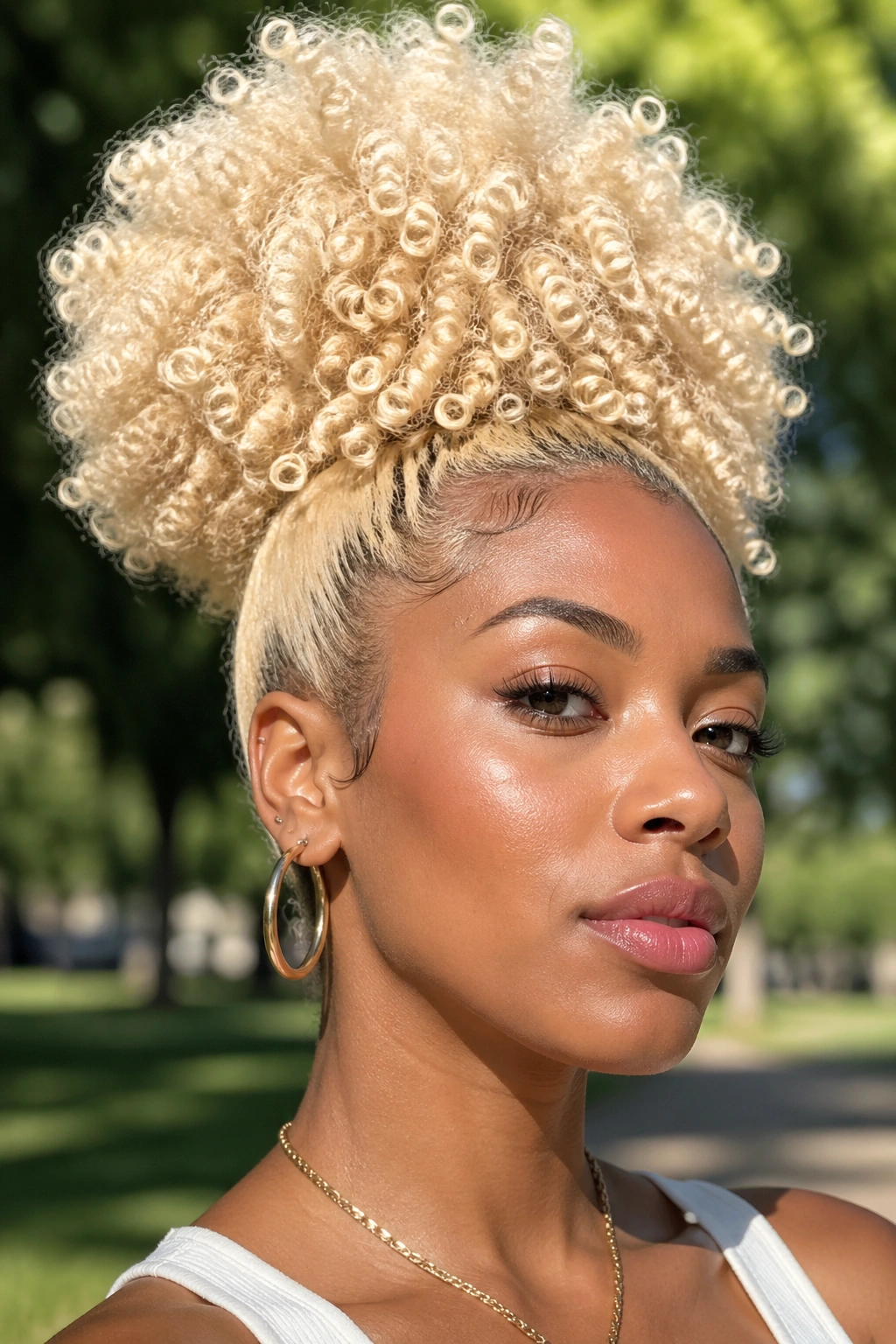
3. Platinum Curly Puff
Platinum on a high puff is visually extraordinary — the density and volume of natural hair, rendered in bright almost-white blonde. Every curl tip, every coil, every piece of volume reads against the background like a work of art.
This is the most committed option on this list. Getting to true platinum from dark natural hair requires multiple bleaching sessions, toning to neutralize brassiness, and intensive moisture maintenance. But the result is unlike any other look in natural hair.
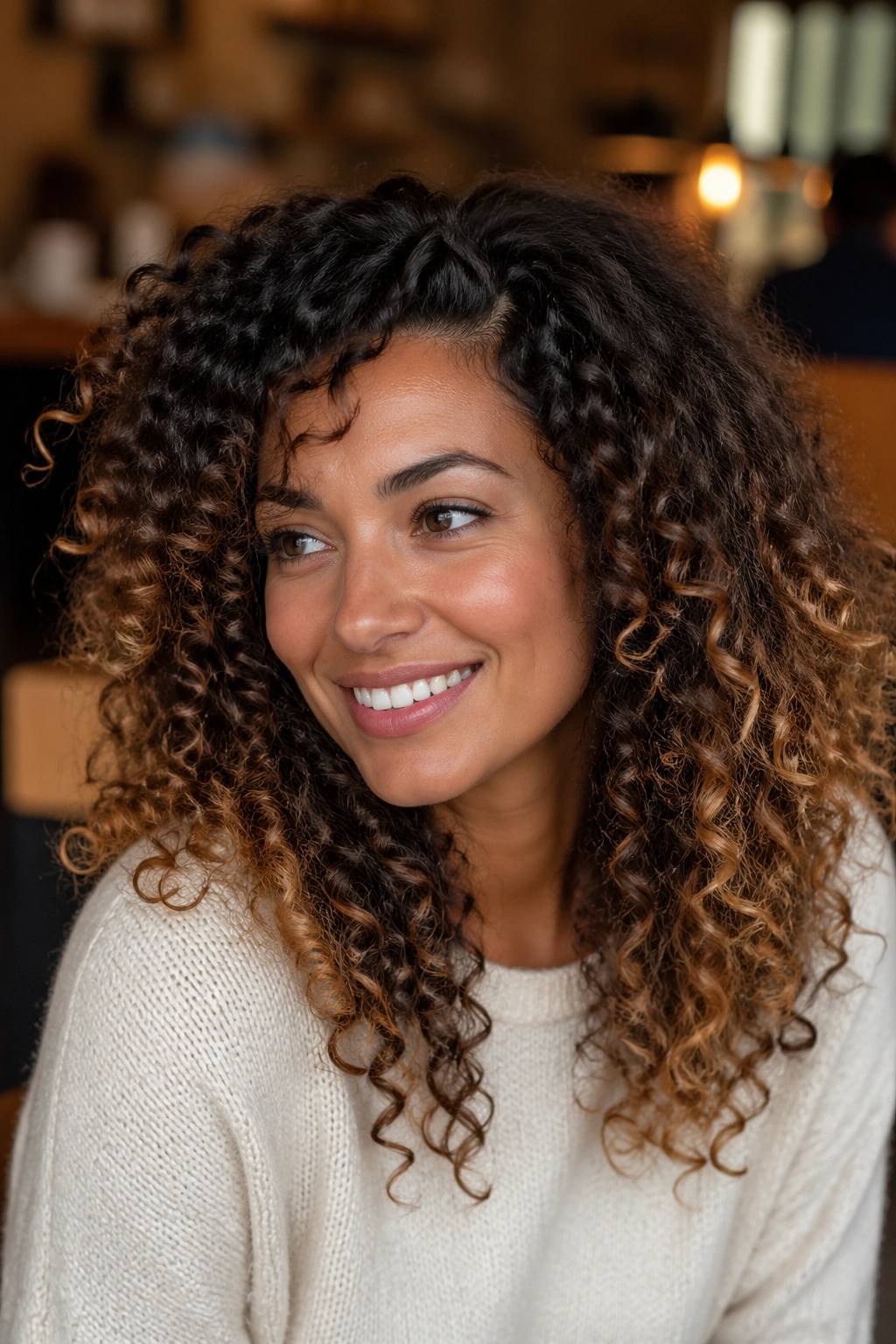
4. Caramel Balayage
Caramel painted through dark curls in a balayage technique creates rich, warm dimension without an obvious grow-out line. Caramel is the most low-maintenance blonde approach for dark naturals because the shade is close enough to the natural base that the transition is seamless.
The balayage technique places color on the mid-lengths and ends of individual curl sections, leaving roots dark. As the hair grows, the caramel migrates further down — looking intentional at every stage.
5. Ash Blonde on 3C Curls
Cool-toned ash blonde on 3C spiral curls creates an editorial, almost silver effect — cool, sophisticated, and genuinely different from warm blondes in both its aesthetic and the technique required to achieve it.
Ash blonde requires careful neutralization at every stage: toning after lifting to pull out warmth, and regular purple shampoo maintenance to prevent brassiness from creeping back in. But the payoff — silver-cool blonde spiral curls — is remarkable.
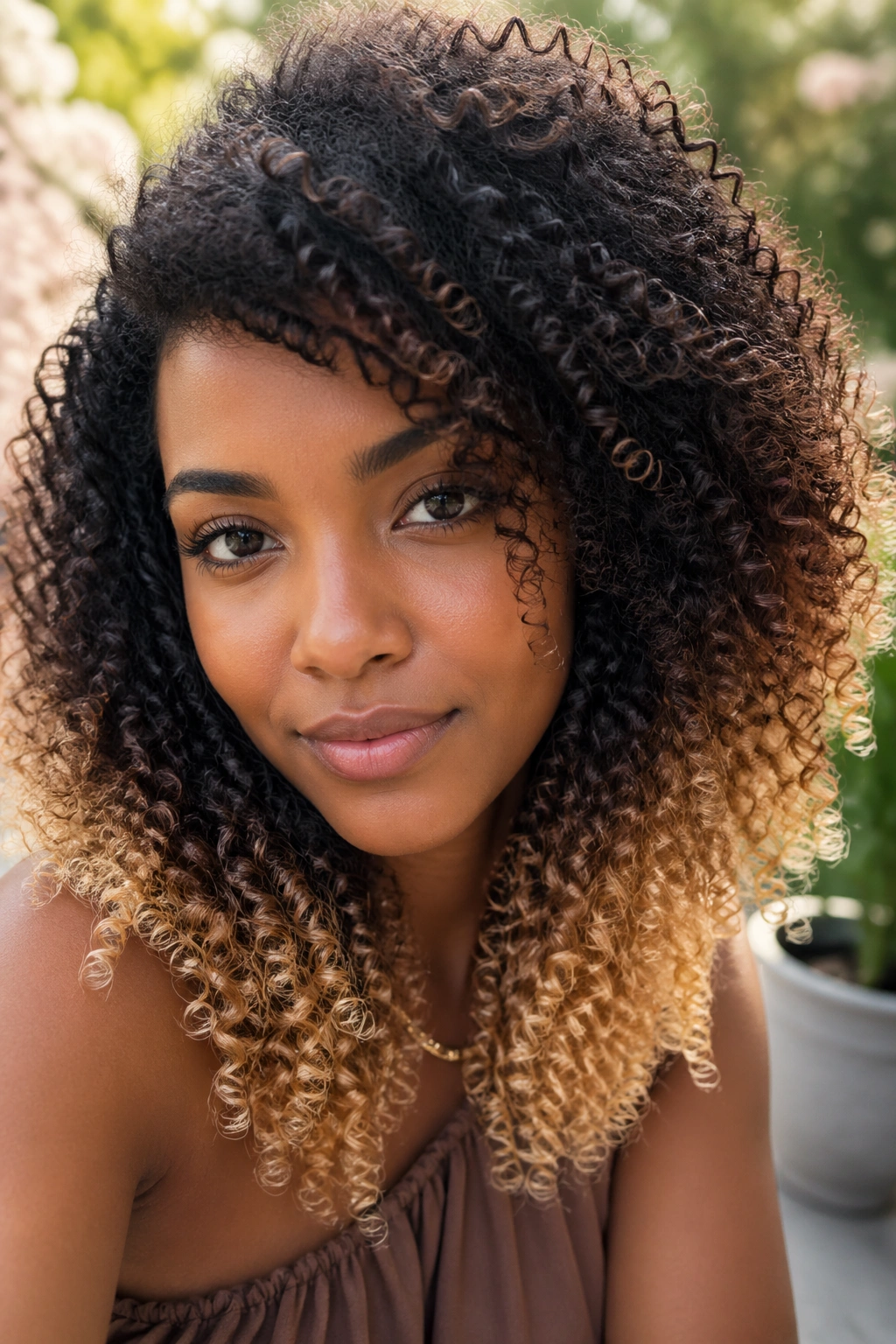
6. Blonde Tips on Natural Hair
Dark natural hair with bright blonde at the tips is a look that requires the least lifting while delivering maximum visual impact. Only the ends need to be lightened, which limits chemical exposure and damage significantly.
On curly hair, blonde tips highlight the ends of each curl — the tips that catch light and move most freely. The result is a look where your hair appears to glow brighter at the ends and fade into your natural depth at the root.
7. Sun-Kissed Highlights Throughout
Rather than concentrated highlights in specific zones, sun-kissed highlights scattered throughout the entire length of your curls create an all-over warmth that’s deeply natural-looking. Some sections lighter, some darker — no obvious pattern, just the impression of hair that’s been kissed by consistent sunlight.
On natural curls, this scattered placement looks especially organic because the curl pattern’s irregular arrangement means no two highlighted curls sit in exactly the same position.
8. Blonde Framing Pieces
Face-framing highlights in blonde — two to four sections on either side of the face, lightened several levels above your natural base — create brightness that draws attention to your face and eyes without committing to full highlights.
This is a targeted, relatively quick, lower-cost approach to blonde that delivers significant visual impact. On natural curls, the framing pieces are visible even when the hair is down because your curls naturally frame your face.
9. Champagne Blonde
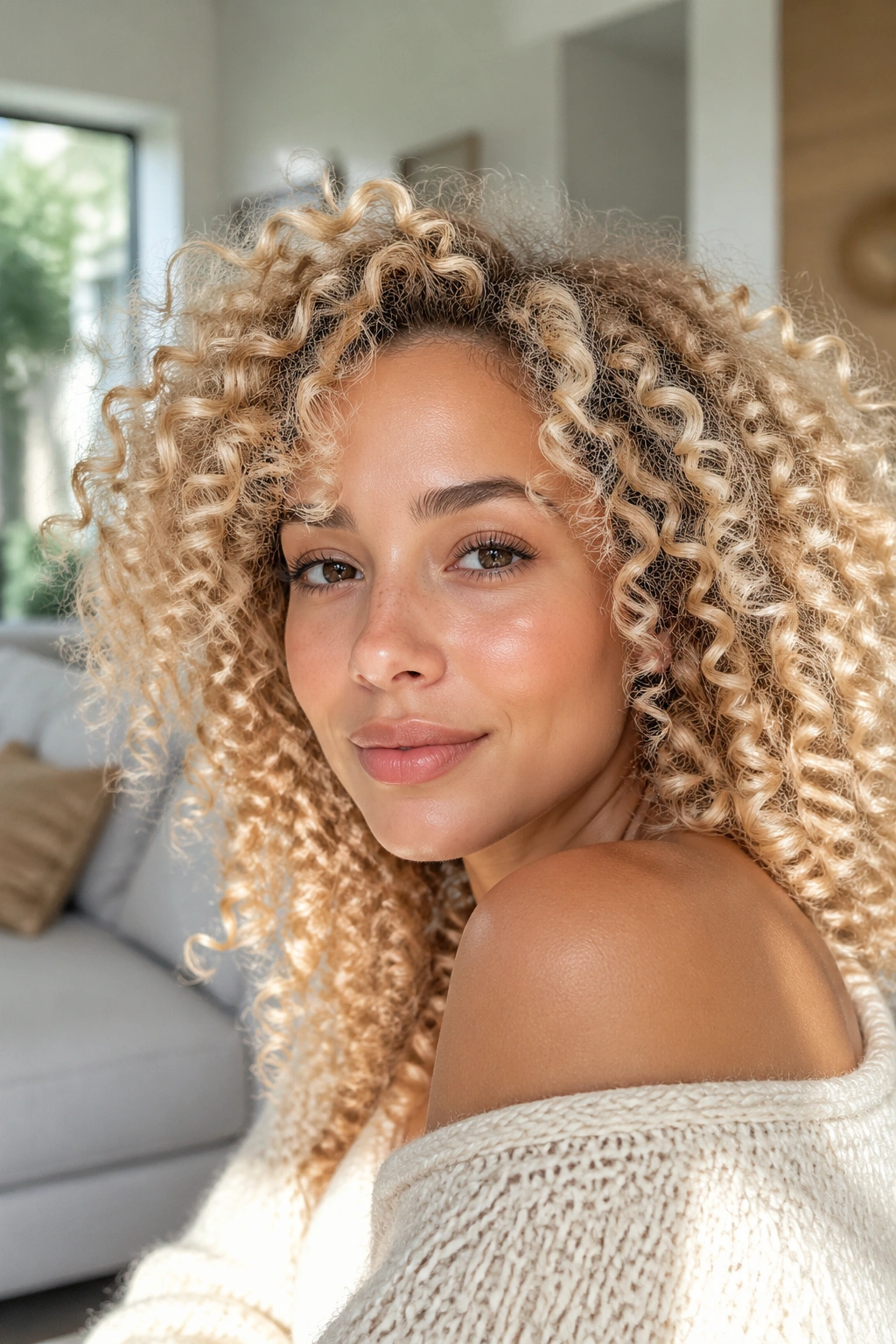
Champagne blonde is a soft, warm, slightly golden shade with enough neutralization to avoid true brassiness — it’s right between warm honey and cool ash. On natural curls, it reads as glowing without being garish.
The name captures the effect perfectly: it’s blonde with effervescence, warm with just enough sophistication to keep it from reading as simple or flat. A champagne gloss applied over a level 8-9 base achieves this beautifully.
10. Dirty Blonde
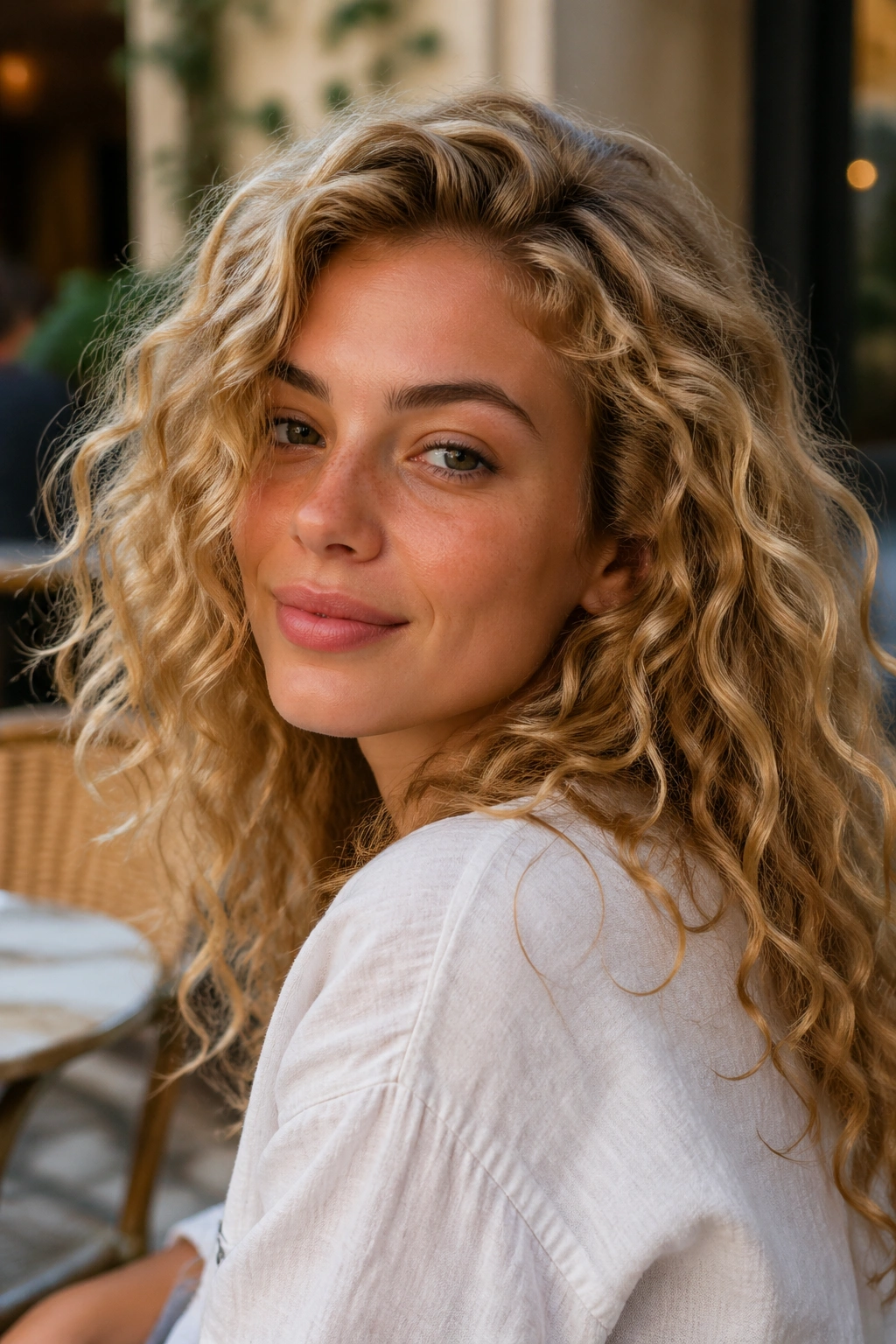
Dirty blonde sits between blonde and brown — not quite either, but with the warmth and richness of both. It’s possibly the easiest blonde shade to achieve and maintain on natural hair because the darker tone means less dramatic lifting and slower fade.
On Type 4 hair specifically, dirty blonde can sometimes be achieved with a single high-lift or permanent color application without going through a full bleach process — especially on hair that’s already medium brown.
11. Blonde Twist Out
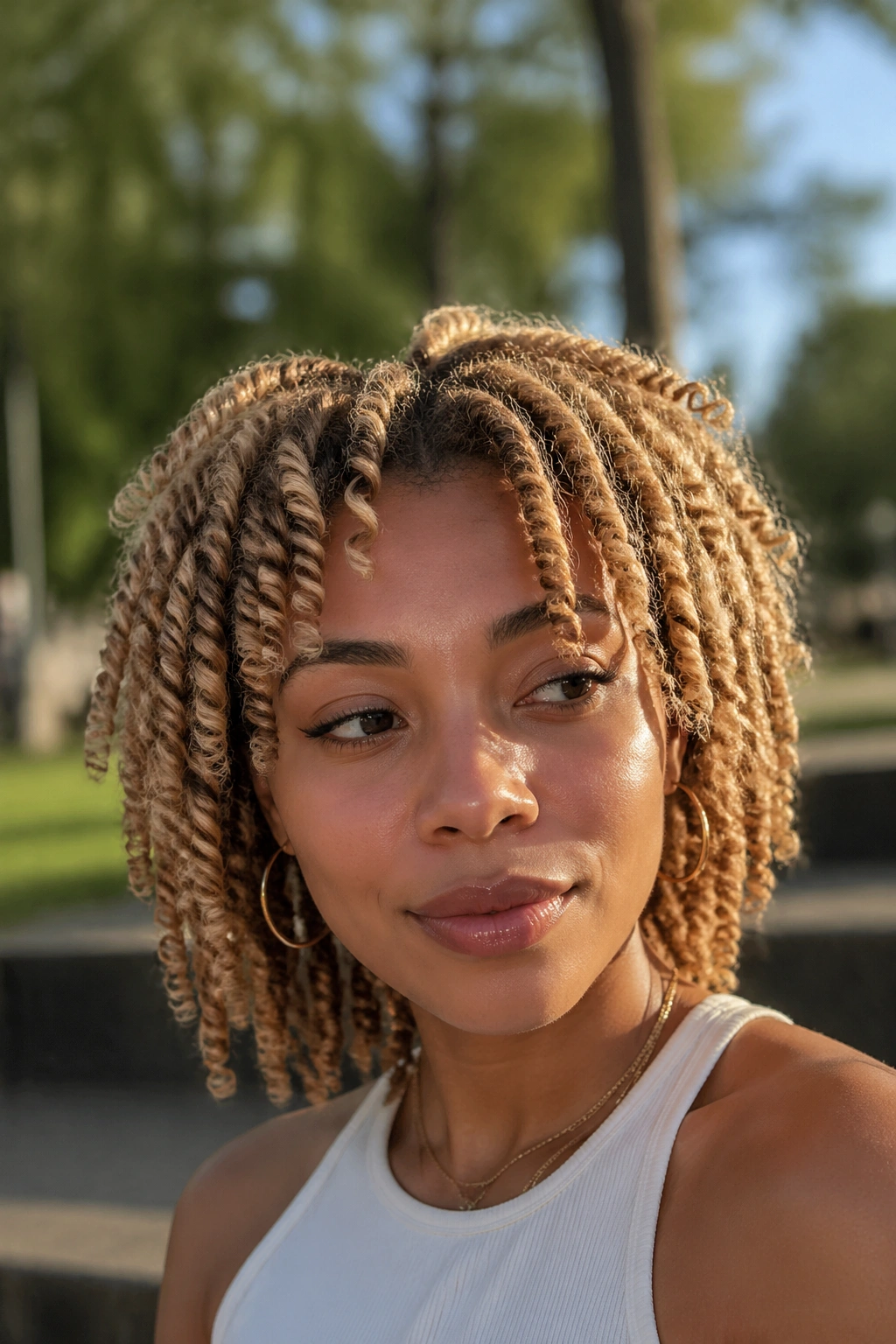
Color-treated hair in a twist-out style shows color in a different way than a wash-and-go. The waves and bends created by twisting create additional texture that interacts with blonde tones to create a look that’s simultaneously smooth and textured.
A blonde twist out — achieved by doing your twist out while hair is styled with a color-refreshing product or after a recent toning appointment — delivers a defined, polished look that shows off both your curl definition and your color simultaneously.
12. Honey Locs
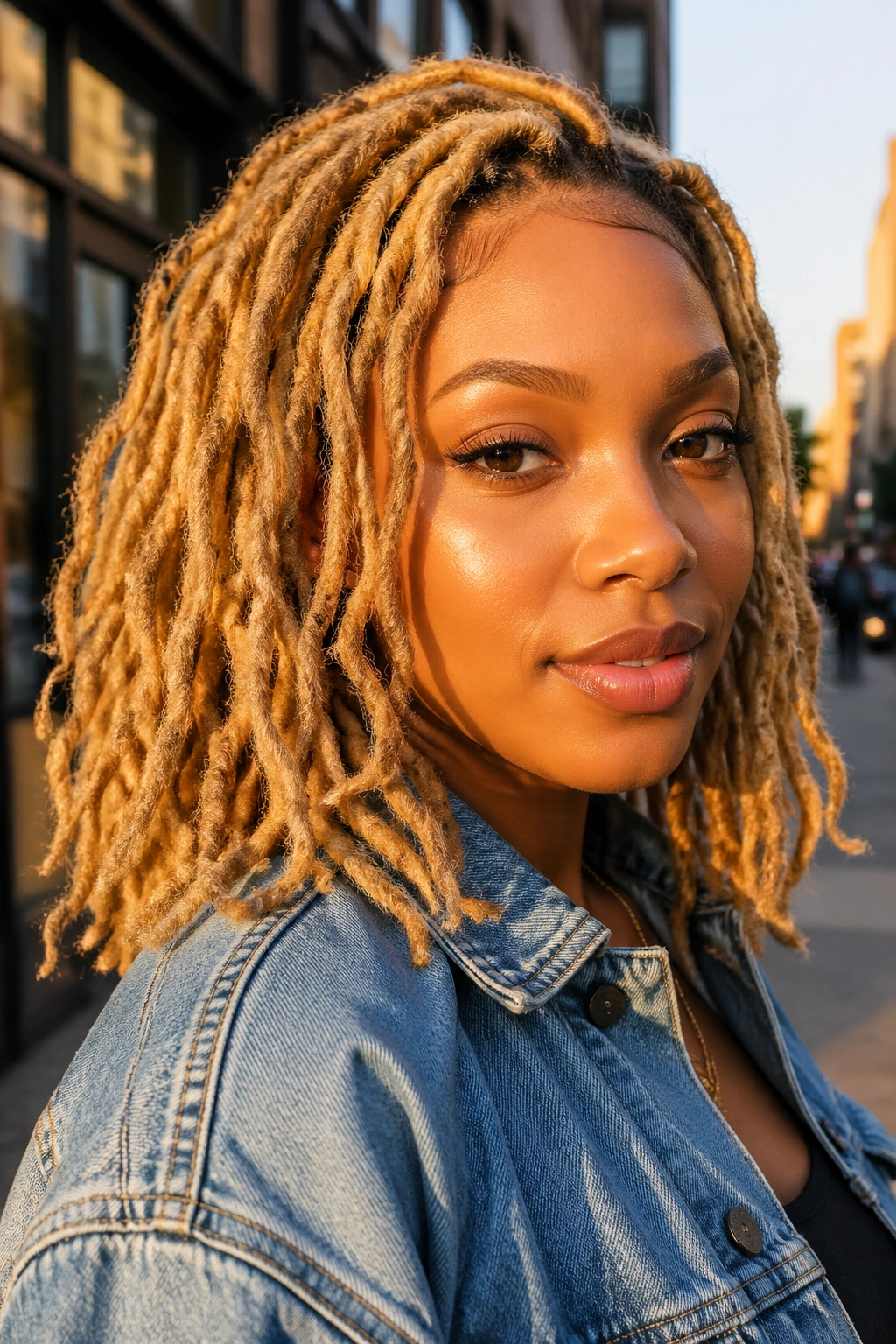
Honey blonde traditional locs or faux locs are a stunning protective style color combination. The structured, rope-like texture of locs shows honey blonde in a geometric pattern that looks graphic and modern.
For traditional locs: color can be applied with a direct dye or a developer-and-color formula painted section by section. For faux locs: use honey blonde hair extensions for the install, achieving the look without any chemical processing on your natural hair.
13. Two-Tone Blonde and Brown
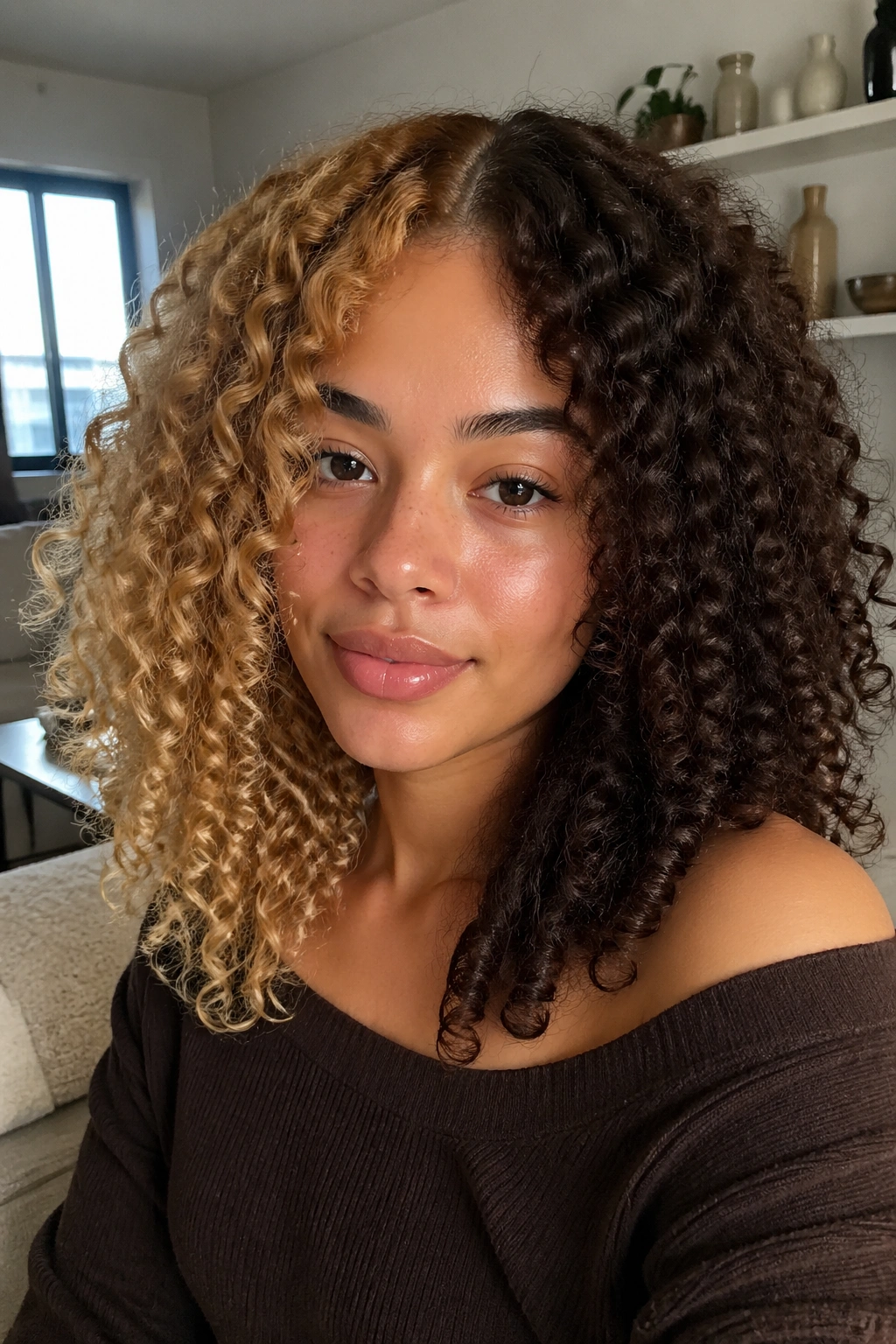
Half honey blonde, half deep brown — either as a split placement or as a deliberate two-section pattern. On curly hair, the clean separation between two tones softens as the curls mix at the crown and around the face, creating a naturally blended effect even with distinct placement.
This look works especially well as an underlayer technique: natural brown on top, honey blonde underneath — visible only when the hair moves or is pulled up.
14. Warm Copper-Blonde
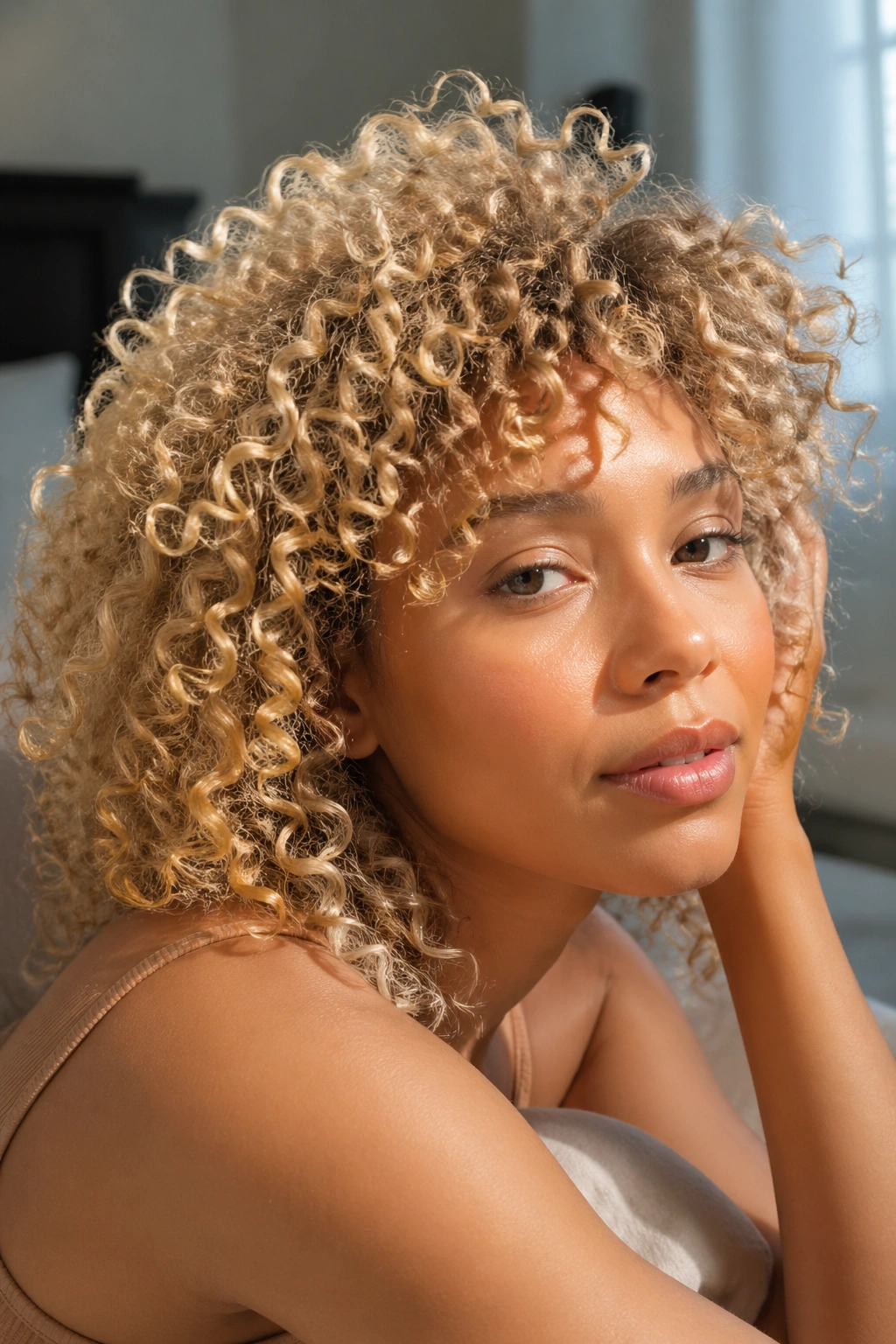
Copper-blonde sits right at the warm border between red and blonde — it has the warmth of copper but the brightness of blonde, creating a shade that reads as entirely its own. On natural curls, this metallic warmth shifts visibly as the hair moves — some sections look more copper, others more gold.
For dark natural hair, copper-blonde is achievable at a level 7-8 lift, which requires less processing than true platinum or ash blonde and results in less porosity change.
15. Blonde and Burgundy Color Melting
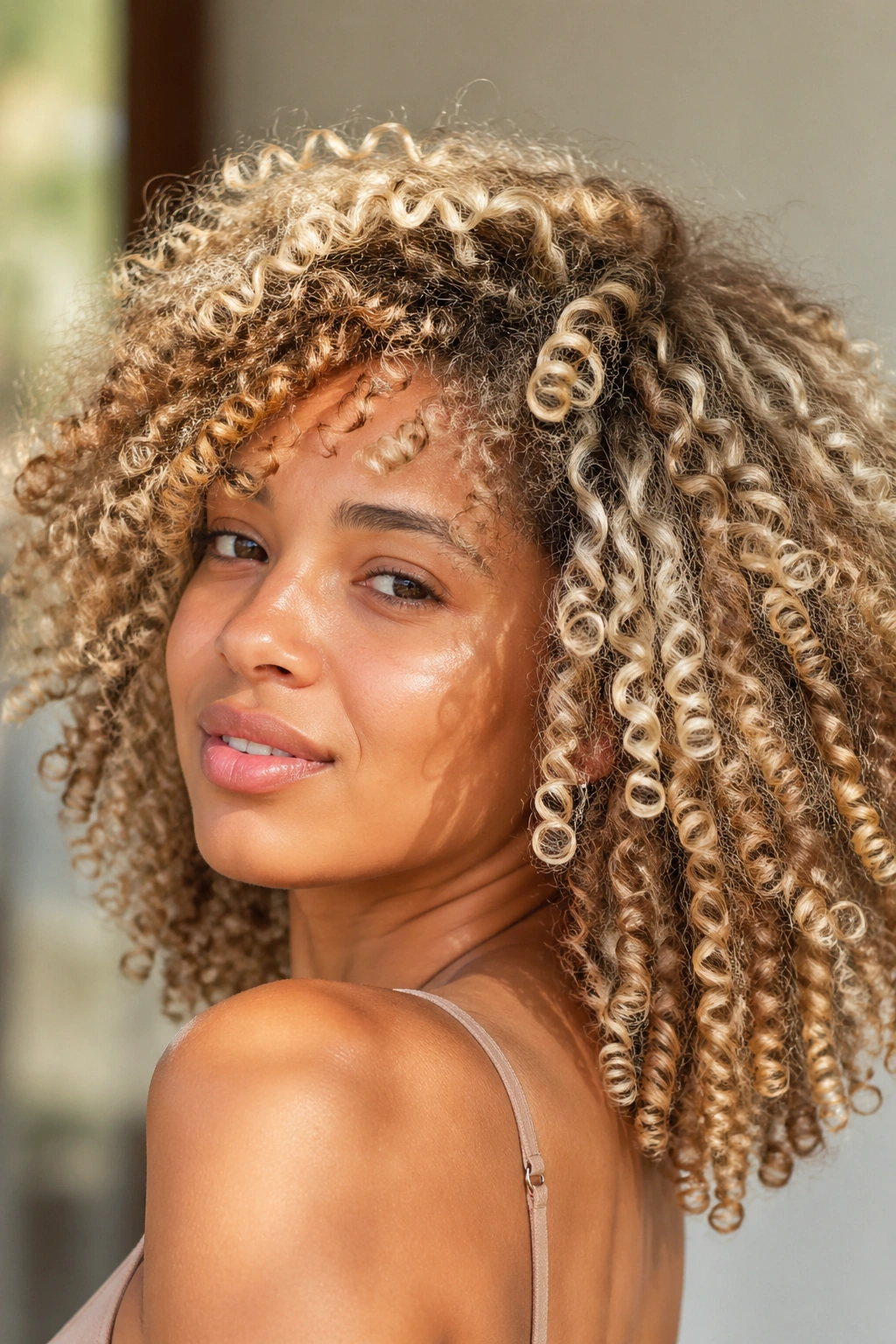
Warm blonde and rich burgundy don’t seem like obvious partners — but the way these two shades interact on natural curls is surprisingly harmonious. The warmth in the blonde pulls toward the red undertones in burgundy, and the curly texture blends the two into a complex, dimensional melt.
Apply the darker burgundy at the roots and allow it to melt into the lighter blonde toward the ends, using a brush to feather and blend the transition. The result is rich, warm, and unlike any single color on its own.
16. Bleached Blonde Tips on 4C Puff
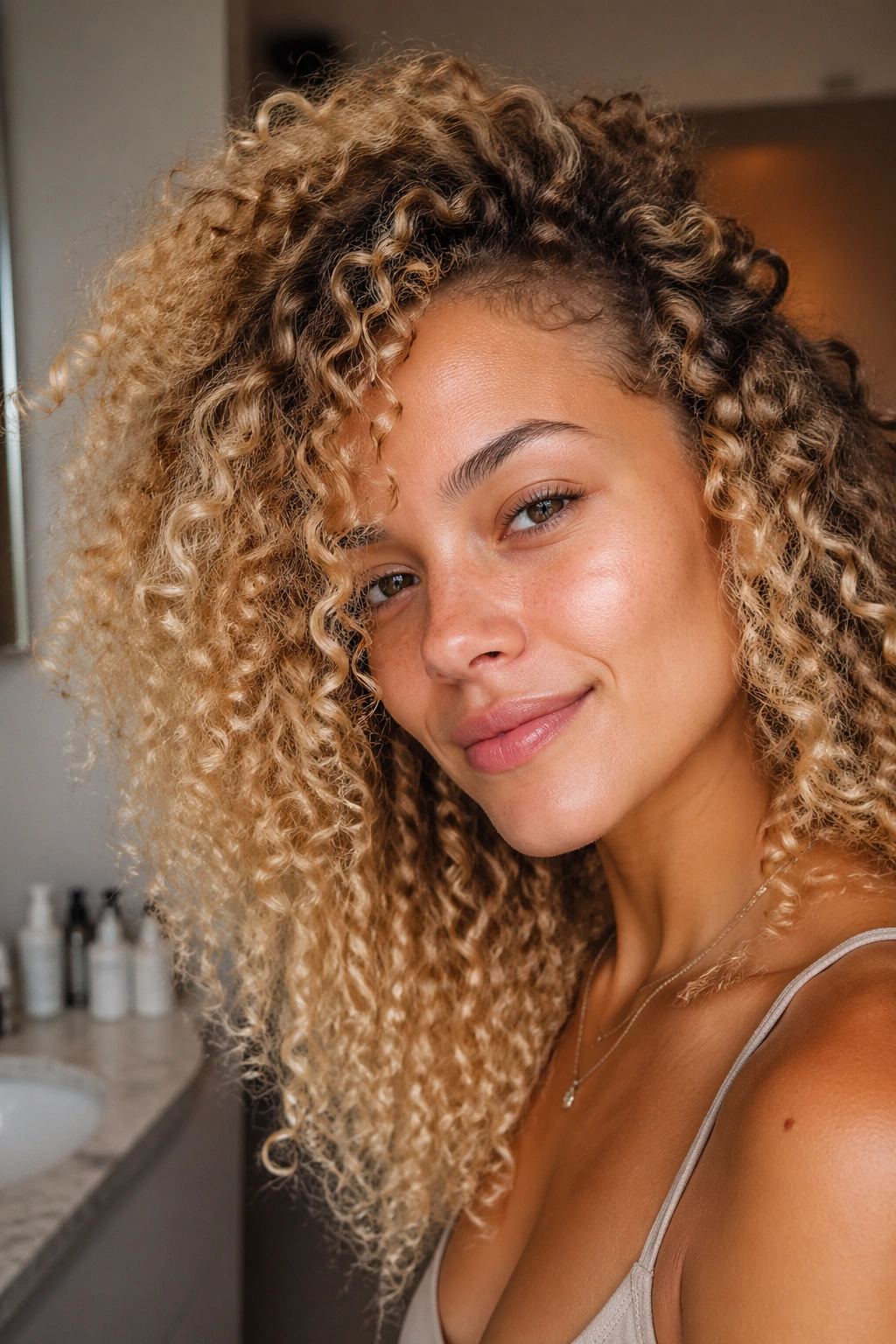
On a 4C puff or halo, blonde tips create a halo of lightness around the perimeter of the puff that catches light and creates a backlit effect. From the front, you see your natural color; from a slightly elevated angle or in side lighting, the blonde tips glow.
This is a practical approach for anyone who wants visible blonde without extensive processing — only the tips of the puff need to be lightened.
17. Sandy Blonde
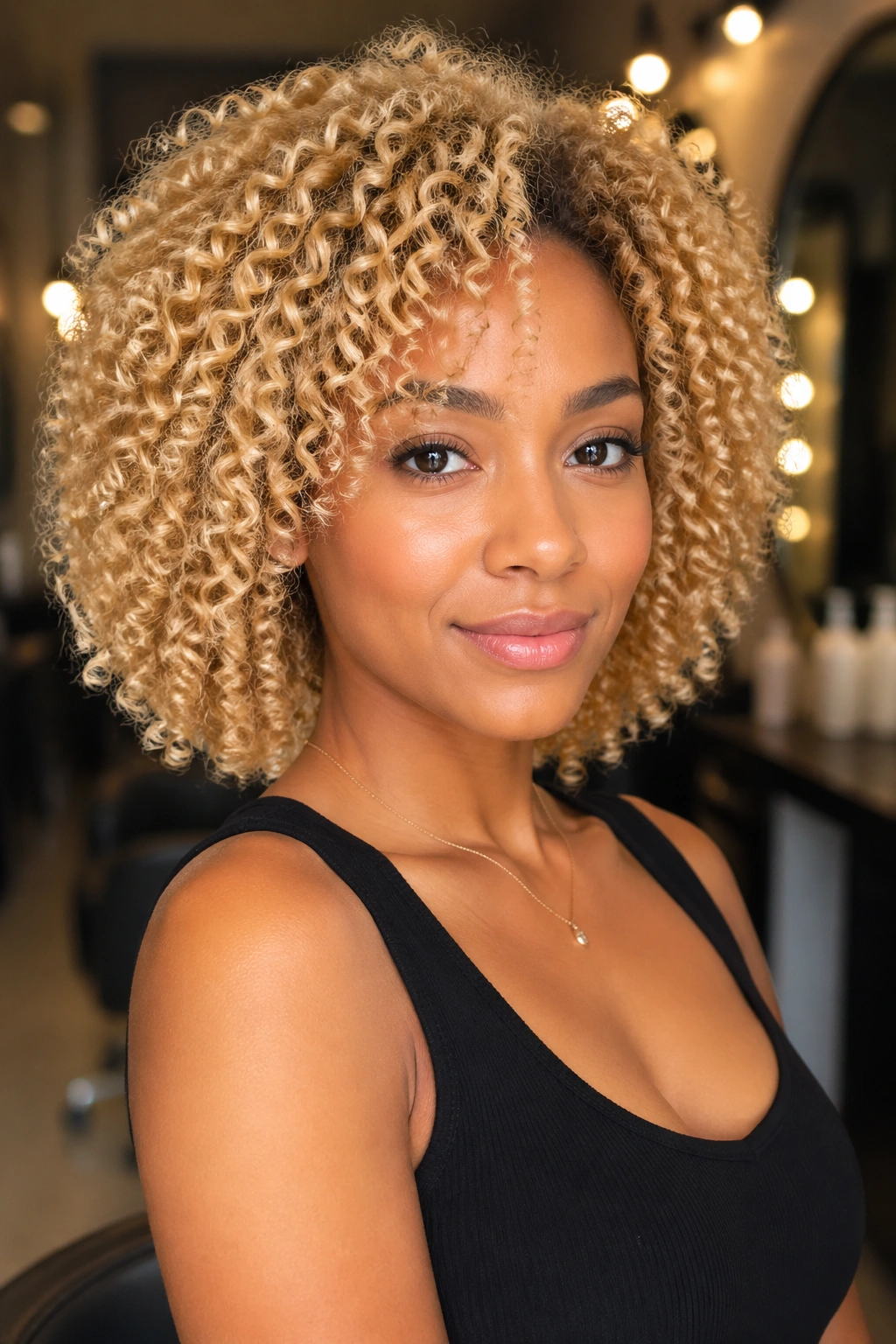
Sandy blonde is a warm, muted blonde with enough gold to feel warm and enough natural variation to feel organic. It’s the color of sand in afternoon light — not bright, not dark, just quietly beautiful.
On natural curls, sandy blonde avoids the “done” look that some brighter blondes can give — it reads as if the color might have happened naturally, which on textured hair feels especially appealing.
18. Blonde Highlights on Short Curly Hair
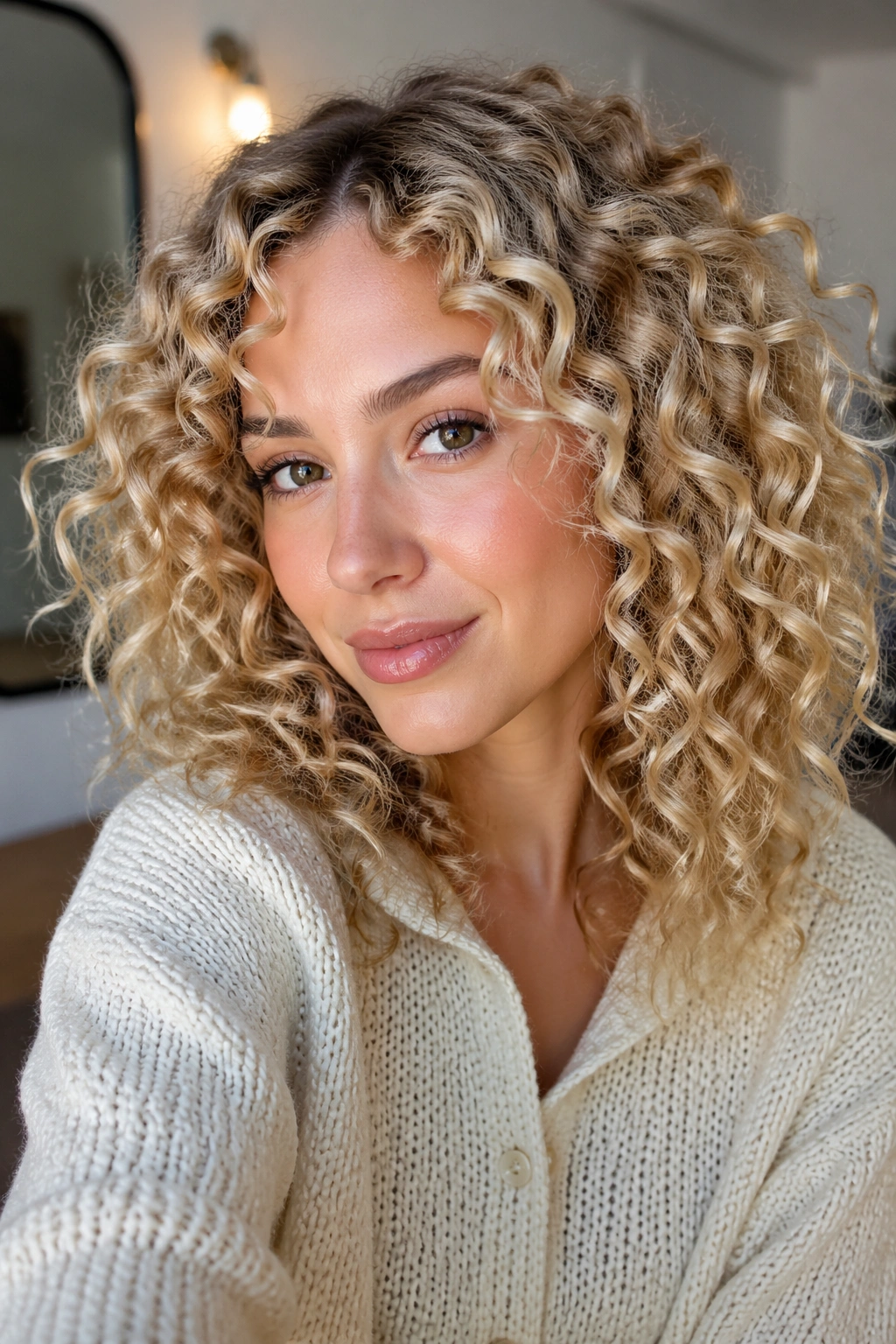
Short curly hair — whether a TWA, a tapered cut, or a short curly bob — takes on an entirely different personality with blonde highlights. The shortness of the hair means highlights cover a significant proportion of the overall length, creating more visible impact per highlighted section.
On a TWA specifically, blonde highlights turn a wash-and-go into a two-toned look that reads as styled rather than simply air-dried. The contrast adds definition to the curl pattern.
19. Peachy Golden Blonde
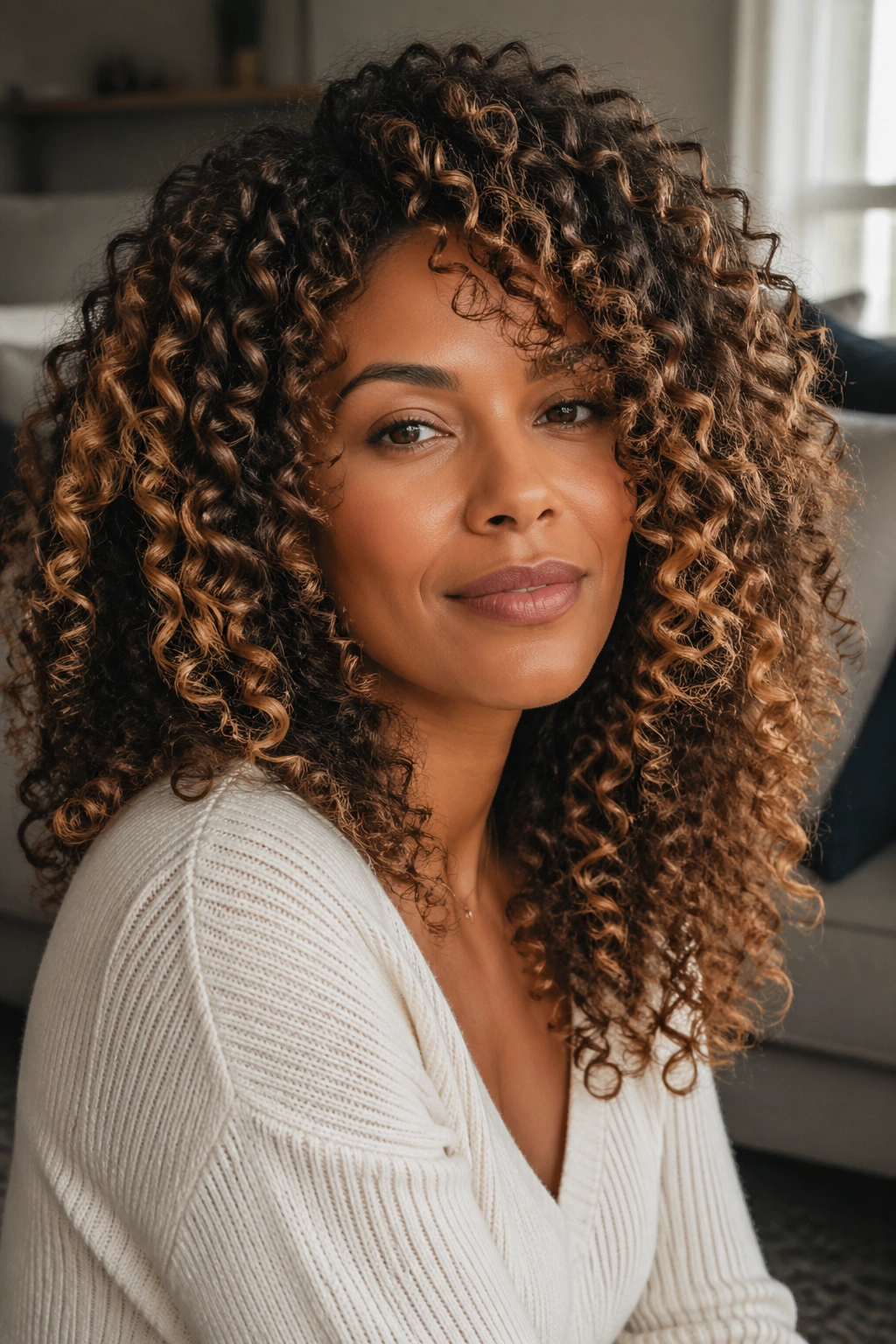
Peachy golden blonde sits between honey blonde and strawberry blonde — warm, peachy, with a hint of the pink-warm spectrum. On natural curls with warm undertones, this shade creates a glow that looks almost like the hair is lit from within.
This is a toner-dependent shade: lift to a pale warm yellow, then apply a peachy-gold toner that pulls the color toward a warm, rosy-golden result rather than a brassy orange.
20. Full Balayage on Type 4 Hair
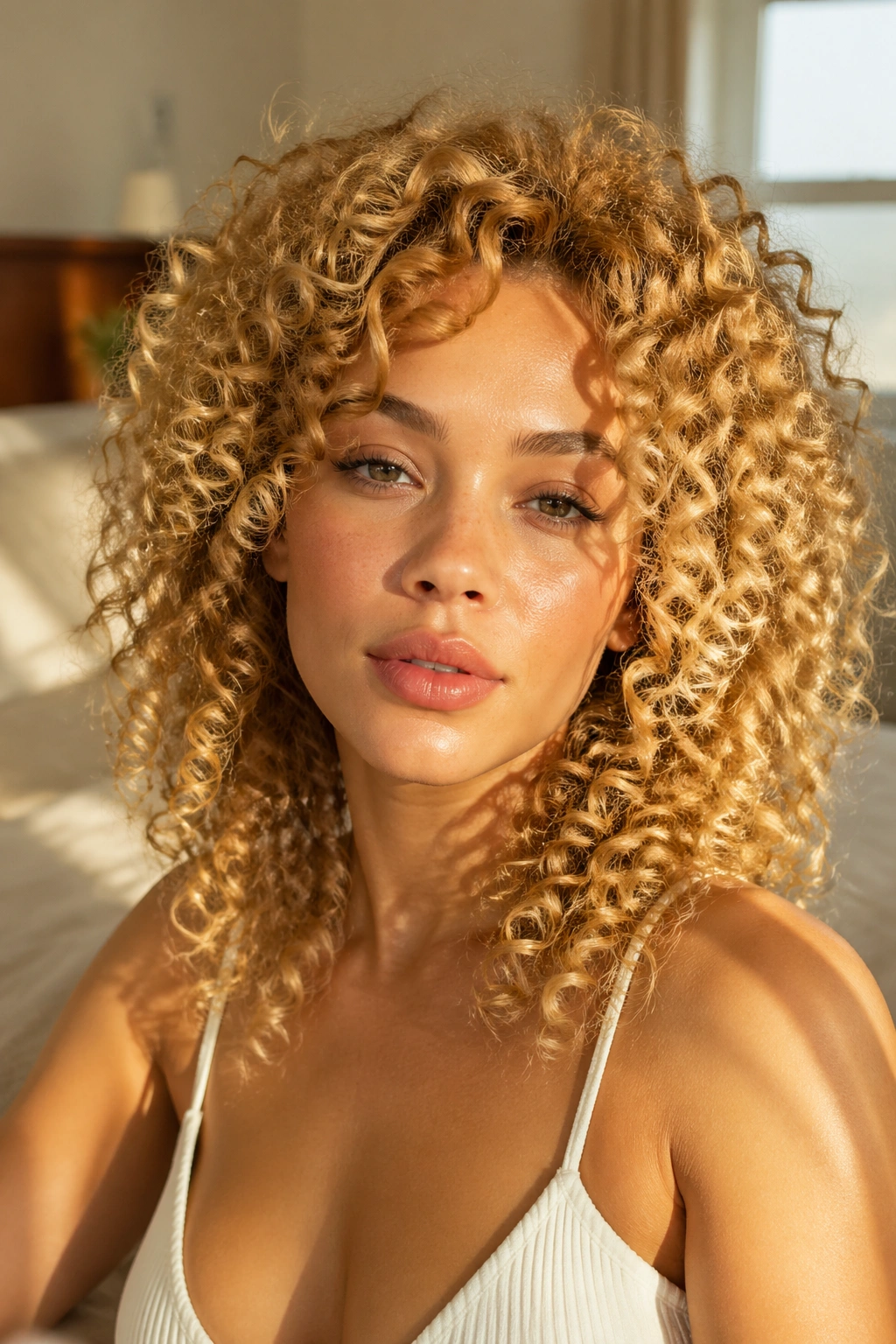
A full balayage on Type 4 hair — with chunky, visible painted sections throughout the entire head — creates a two-toned, sun-kissed effect that’s bold without being overwhelming. On 4C hair specifically, freehand balayage requires wider sections to achieve visible color through the density.
The key difference between balayage on Type 4 and other curl types is technique: colorists need to account for shrinkage when placing color, applying to stretched sections and allowing the curl to determine where the color ends up when it springs back.
21. Blonde Braid Pattern
Color can live in protective styles too. Blonde feed-in braids, cornrows with blonde weave incorporated, or blonde box braids give you the visual effect of blonde hair while completely protecting your natural strands underneath.
Blonde braided styles last 6-8 weeks and can showcase every shade from honey to platinum depending on the extension hair chosen. This is the lowest-commitment, highest-impact option on the entire list.
22. Golden Ombre on Locs
If you have locs, a golden blonde ombre — dark at the root fading to warm gold at the tips — creates a look that reads completely differently than an ombre on loose curls. The structured texture of locs makes the color gradient feel more geometric and graphic.
Color can be applied to locs using a direct dye brushed from the mid-length to the tips, or using a more traditional developer-formula dip for the ends. Protect the roots with a barrier cream to keep the gradient clean.
23. Creamy White-Blonde Curls
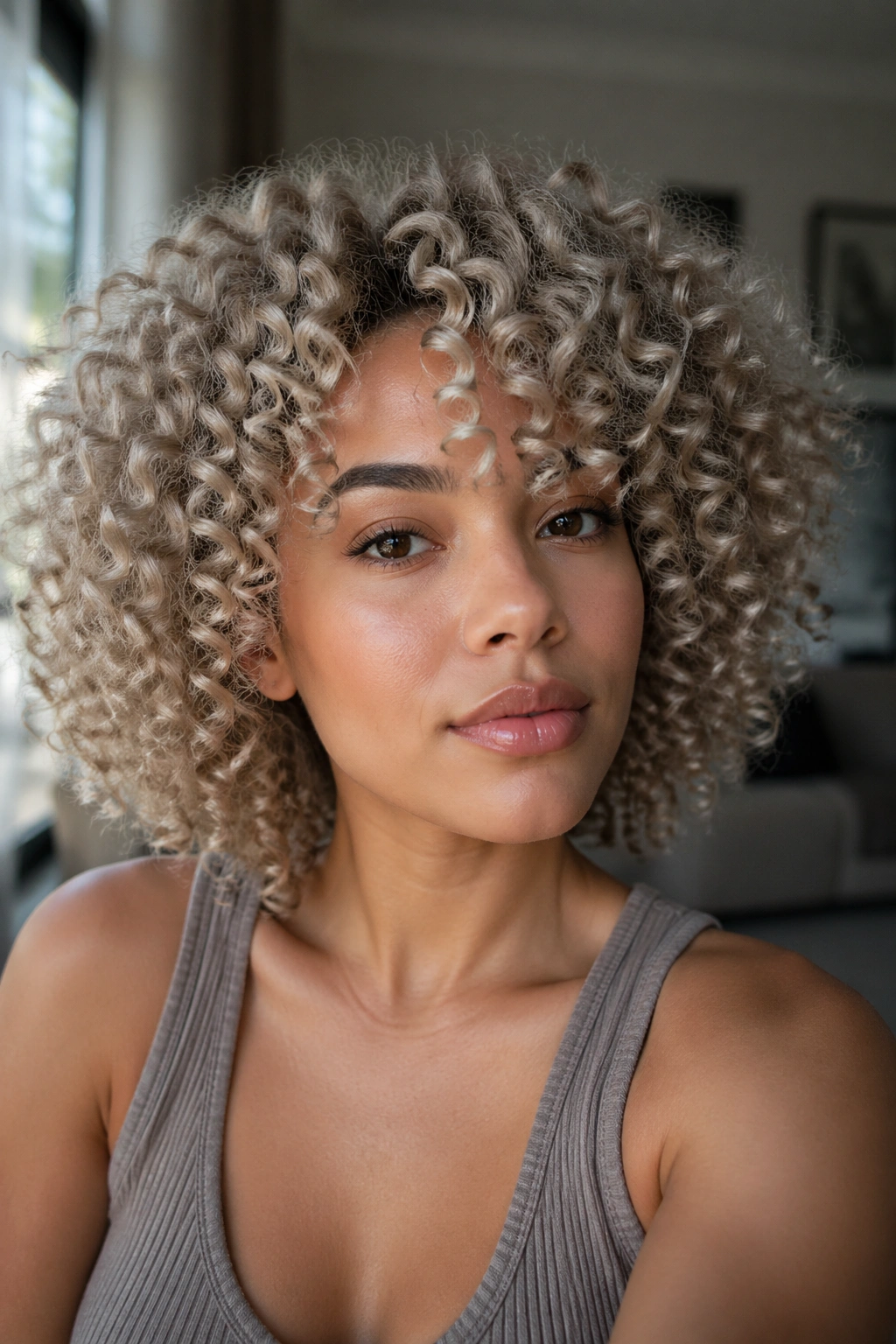
Between true platinum and warm blonde sits creamy white-blonde — slightly off-white, with just enough warmth to avoid looking gray or silver. On natural curls, this shade creates a look that’s simultaneously ethereal and grounded.
White-blonde requires lifting to the palest possible level and toning with a sheer violet or pearl formula to remove any remaining yellow. On very porous or bleach-lifted curls, the white-blonde tone fades quickly — weekly toning with a purple shampoo or pearl-tinted conditioner is essential to maintaining the crispness.
Keeping Blonde Curls Healthy Long-Term
The ongoing challenge of blonde dyed curly hair is the intersection of two care-intensive hair states: color-treated and naturally textured. Both require moisture. Both require protection from heat and UV exposure. Both benefit from protein treatments spaced appropriately and moisture treatments as the regular baseline.
The specific additions for blonde curly hair: purple shampoo once a week (or every other wash) for cool blondes to prevent brassiness; a color-depositing conditioner that matches your blonde tone for all blondes; and a deep conditioning mask after every wash rather than just once a week.
Bond-building treatments (like Olaplex or similar formulas) applied before, during, and after the lightening process significantly reduce the structural damage bleaching causes. These aren’t optional extras — they’re investment-level tools that protect the health of color-treated natural hair.
Trimming Keeps Blonde Curls Looking Fresh
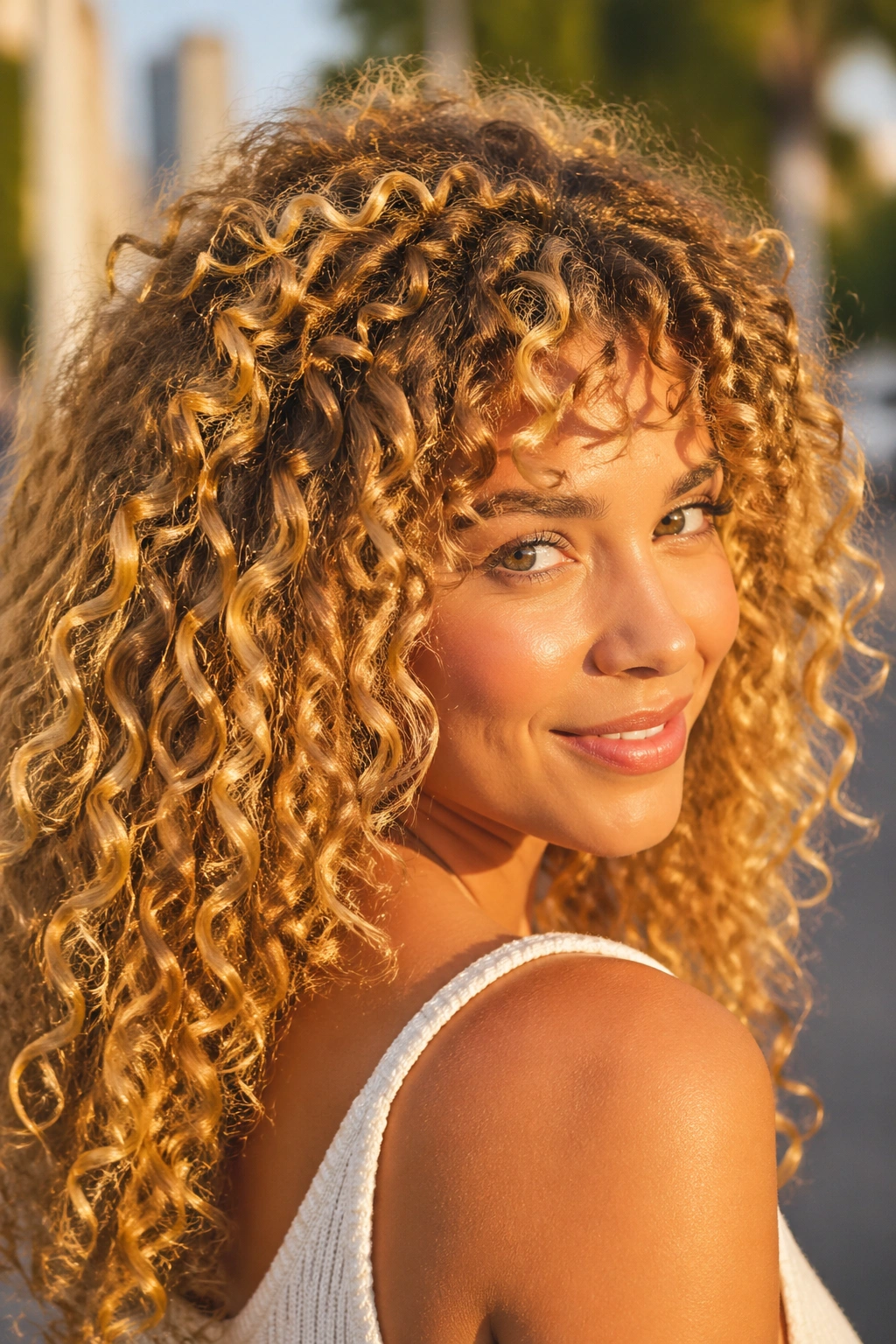
Lightened ends are more vulnerable than natural ends. They break more easily, split more readily, and can start to look thin and wispy if not trimmed regularly. A trim every 8-10 weeks keeps your blonde curls looking defined and full rather than thin and frayed at the tips.
Trimming color-treated natural hair doesn’t mean losing length dramatically — a small trim of half an inch removes the most damaged ends before the damage travels up the shaft. Think of it as maintenance that protects the length you have rather than sacrificing it.
The Blonde Curly Journey: Patience Pays
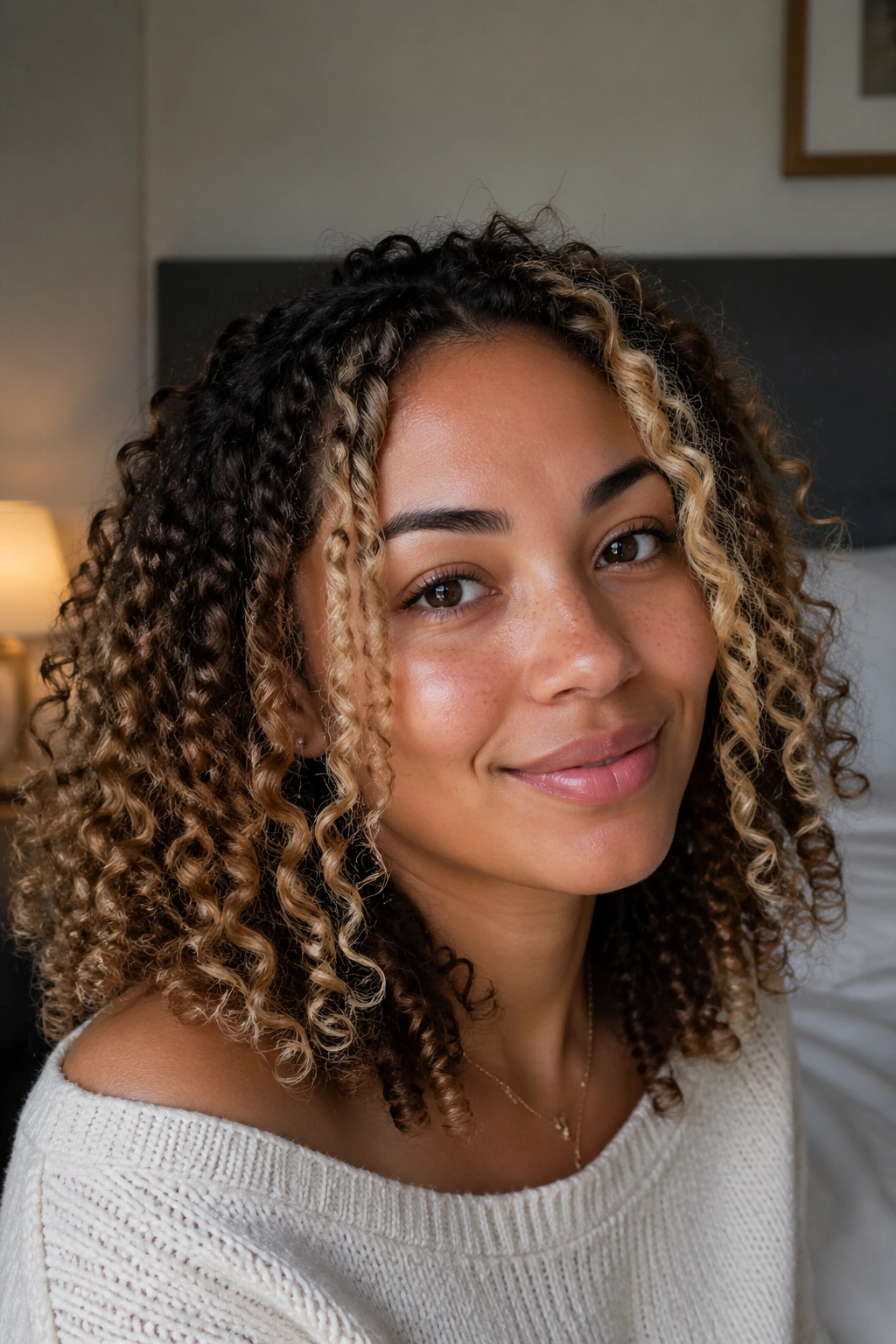
Going blonde on natural dark hair is rarely a single-appointment transformation — and that’s okay. The women with the most beautiful blonde natural curls are the ones who took the process slowly, cared for their hair intensively at each stage, and let their colorist make decisions that prioritized health alongside color.
The result — blonde dyed curly hair that’s vivid, bouncy, healthy, and completely your own — is worth every deep conditioning mask, every careful trimming appointment, and every purple shampoo session. Your curls make blonde look like it was invented specifically for your texture. And in a way, it was.
