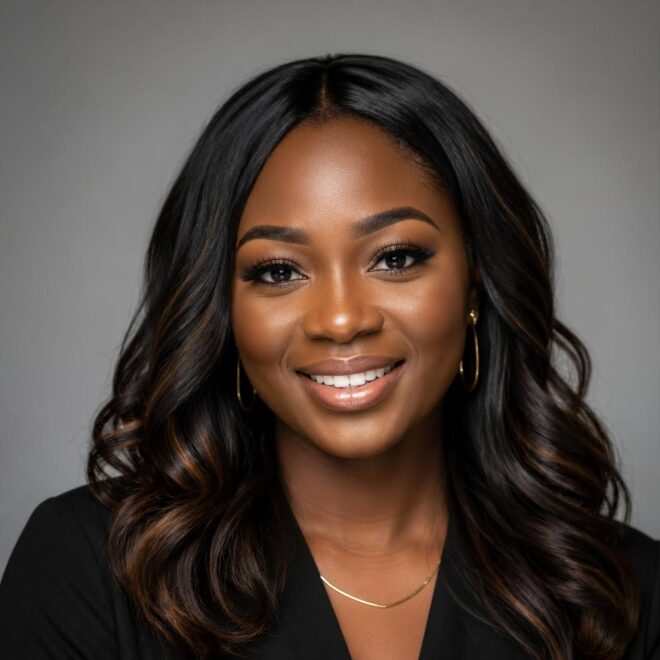

The ponytail has carried a reputation for being the default “I didn’t have time” hairstyle — but for Black women with curly natural hair, it’s anything but basic. Ponytail hairstyles for curly natural hair span from a quick five-minute puff at the crown to a sculpted, intentional style that takes real artistry to pull off. The texture, volume, and spring of natural curls mean that even the simplest ponytail reads differently — fuller, more dimensional, more alive — than straight hair versions of the same look.
The Natural Hair Ponytail Is Not One Thing
When people picture a ponytail, they often think of one look: hair pulled back, hanging smooth and flat. That image doesn’t account for the range of what a natural hair ponytail can actually be. A high-puff ponytail on 4C hair is a completely different beast than a stretched, elongated ponytail on 3B hair. A sleek ponytail achieved with edge control and gel is worlds apart from a fluffy, untamed puff. A faux ponytail with added length does things that short natural hair simply can’t do on its own.
Each of these is a legitimate variation. They all work differently, suit different occasions, and require different prep. But they all start from the same foundational idea: hair pulled back and secured, with the back or crown as the focal point. Natural hair just happens to offer a richer range of ways to execute that idea.
Curl Type and What It Means for Your Ponytail
Your curl type shapes what your ponytail will look like before you even pick up a product. Looser curl types — 3A, 3B — tend to create ponytails that hang and move, with individual ringlets visible and bouncy. The ponytail has weight and swing. For these curl types, the challenge is often frizz control and keeping individual curls defined rather than puffed.
Tighter curl types — 3C, 4A, 4B, 4C — create ponytails that are more puff than hang, unless the hair is stretched beforehand. Shrinkage is a real factor: 4C hair can shrink up to 75%, which means what looks like shoulder-length hair when straightened may only reach your ears when in its natural state. This affects how your ponytail sits, how much volume it has, and whether it hangs downward or fans outward.
For tighter textures, stretching the hair before putting it in a ponytail is a game-changer. Braid-outs, twist-outs, African threading, and blow-drying on low heat with a tension method all elongate the curl pattern so the ponytail has more visible length and movement.
Prep: What Your Hair Needs Before the Style
Dry hair and a ponytail are not friends. When natural hair is dry, it’s prone to breakage at the point of tension — exactly where you’re applying the elastic. Deep condition regularly if you wear ponytails often, and make sure your hair is properly moisturized before each style.
On wash day, a strong moisturizing routine — leave-in conditioner, cream, and a light sealant — gives your hair the hydration it needs to flex and hold without snapping. On non-wash days, a good spritz of water and leave-in refreshes the moisture without requiring a full routine.
Protecting Your Edges
This is non-negotiable. Ponytails pull on the edges, and repeated tension on the hairline leads to traction alopecia — one of the most common causes of hairline recession in Black women. Use a soft elastic or a satin scrunchie. Avoid pulling the ponytail too tight, especially at the temples. And rotate your ponytail placement — don’t put it in exactly the same spot every day.
If you wear ponytails several times a week, give your edges extra love with a castor oil or growth serum at the hairline, and take at least two days a week where your hair is completely down or in a loose, low-manipulation style.
Why Faux Ponytails Are Worth Knowing
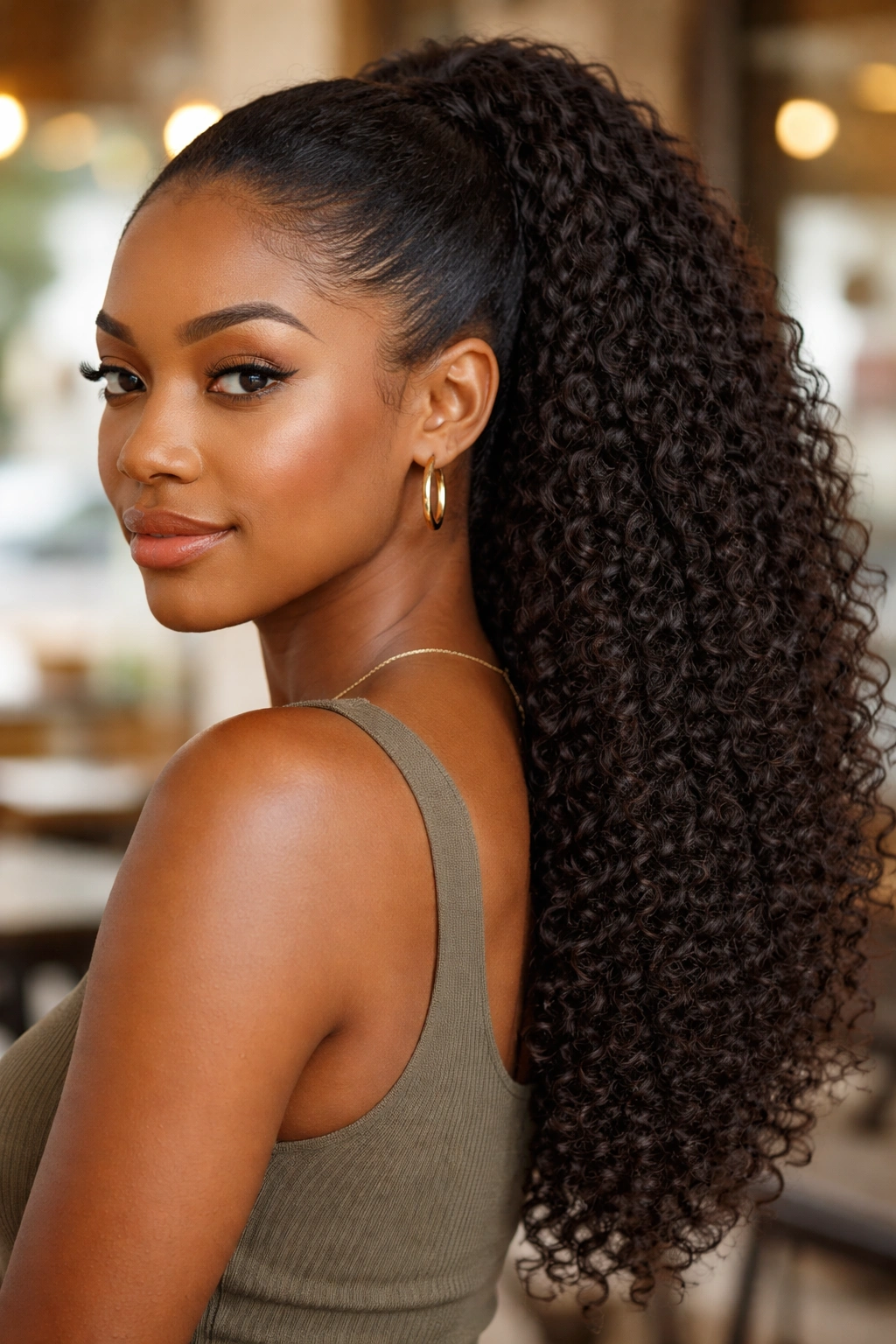
Sometimes your natural hair isn’t long enough, thick enough, or defined enough to create the ponytail you have in mind — and that’s completely fine. Faux ponytails using clip-in extensions, drawstring ponytails, or wrap-around ponytails are a legitimate styling tool, not a workaround or a cheat.
Extension ponytails can match your natural curl pattern, add significant length, and create a look your hair couldn’t achieve on its own. They’re also easier on your natural hair since your ends are tucked away and protected throughout the wear.
The key to a seamless faux ponytail on natural hair is matching the texture of the extension to your natural curl pattern as closely as possible, and blending the extension at the base by laying your natural hair over it or wrapping a section of your hair around the attachment point.
The Product Lineup That Matters
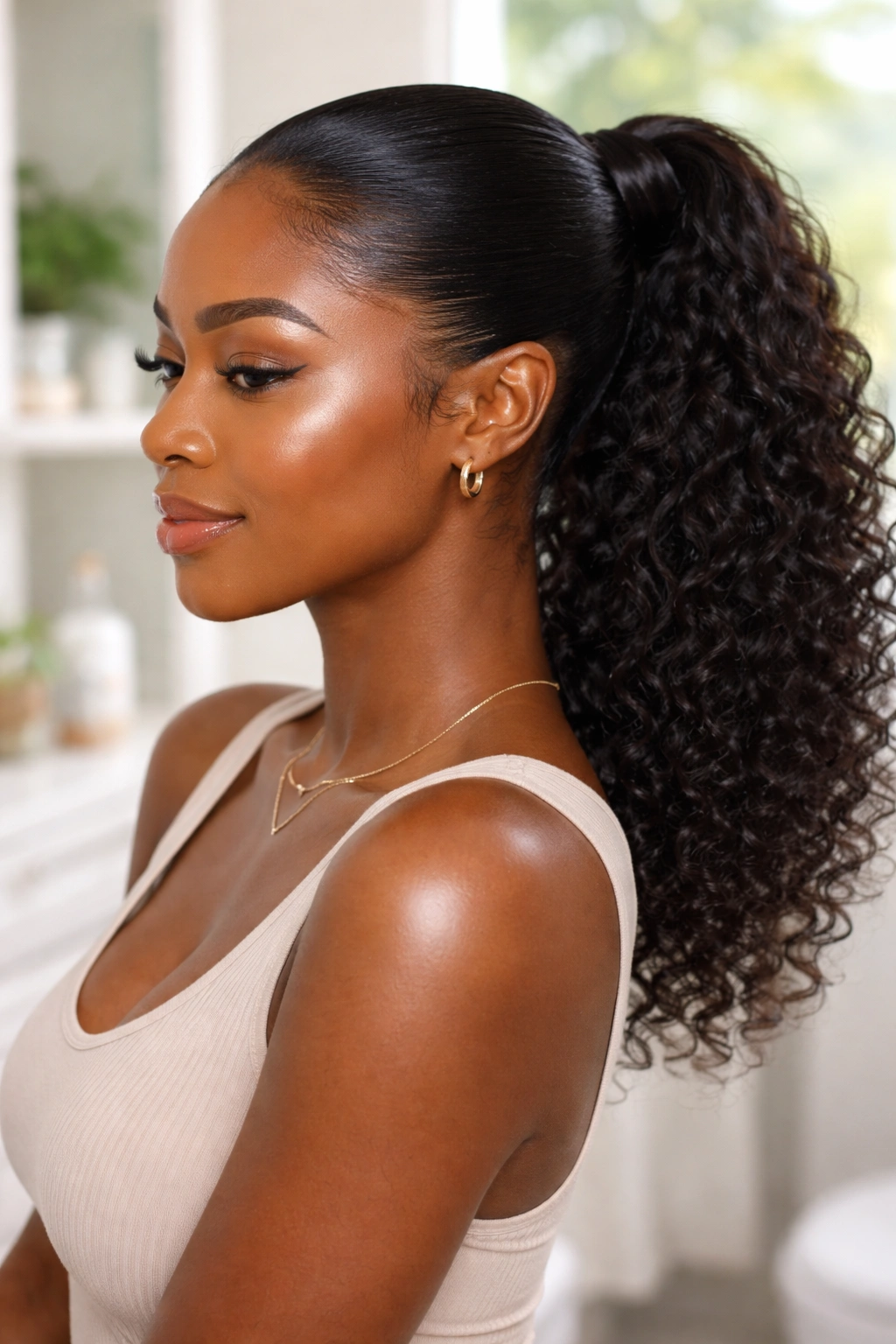
A natural hair ponytail — especially any version that involves sleekness, definition, or frizz control — relies heavily on the right products in the right order.
Gel is the MVP for sleek ponytails. Apply it to damp hair in sections, smooth with a brush or your hands, and let it set before pulling the hair up. The gel creates a film around each strand that reduces frizz and holds shape. Eco Styler and Gorilla Snot are both widely used favorites with strong hold formulas.
Curl cream handles definition for curlier, more textured ponytail styles. It doesn’t provide the same hold as gel but gives each curl more shape, shine, and moisture.
Edge control is for the hairline — use a small amount with a soft toothbrush or edge brush to smooth baby hairs and lay edges flat if that’s the look you’re going for.
Jamaican Black Castor Oil or another sealant applied to the ends of the ponytail keeps them from drying out, especially if you’re wearing the style for multiple days.
1. High Puff Ponytail
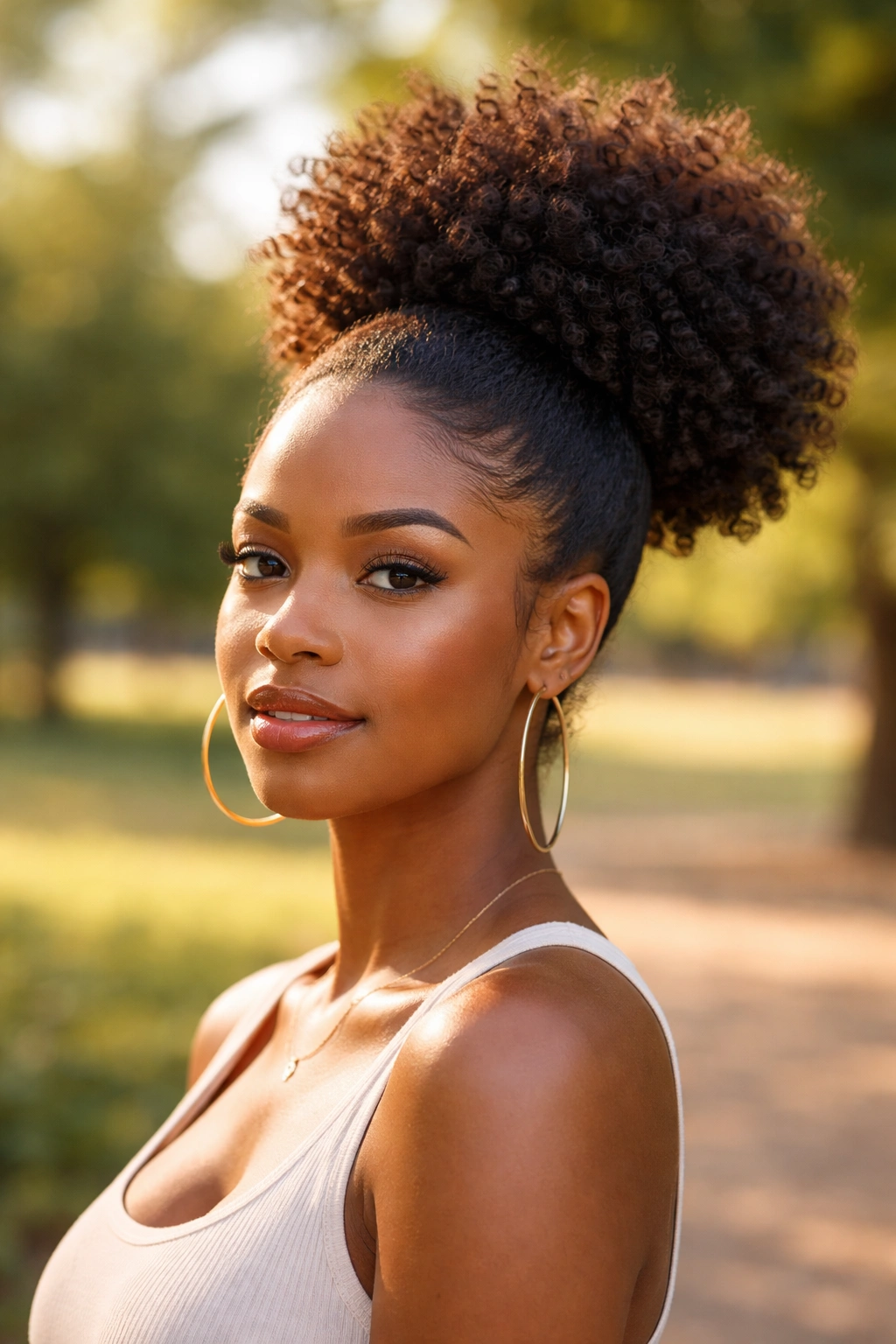
The high puff is the natural hair ponytail in its most iconic form. Hair pulled to the crown, secured with a soft elastic, and allowed to fan outward into a full, rounded shape. No smoothing, no stretched. Just volume and texture doing exactly what they want.
This is the go-to for wash days when curls are defined and fully moisturized. The puff looks best when the hair is left completely alone after securing — no fluffing, no separating. Let the curl pattern dictate the shape.
Add a satin headband at the base for a polished touch that also protects your edges from the elastic.
2. Sleek High Ponytail With Gel
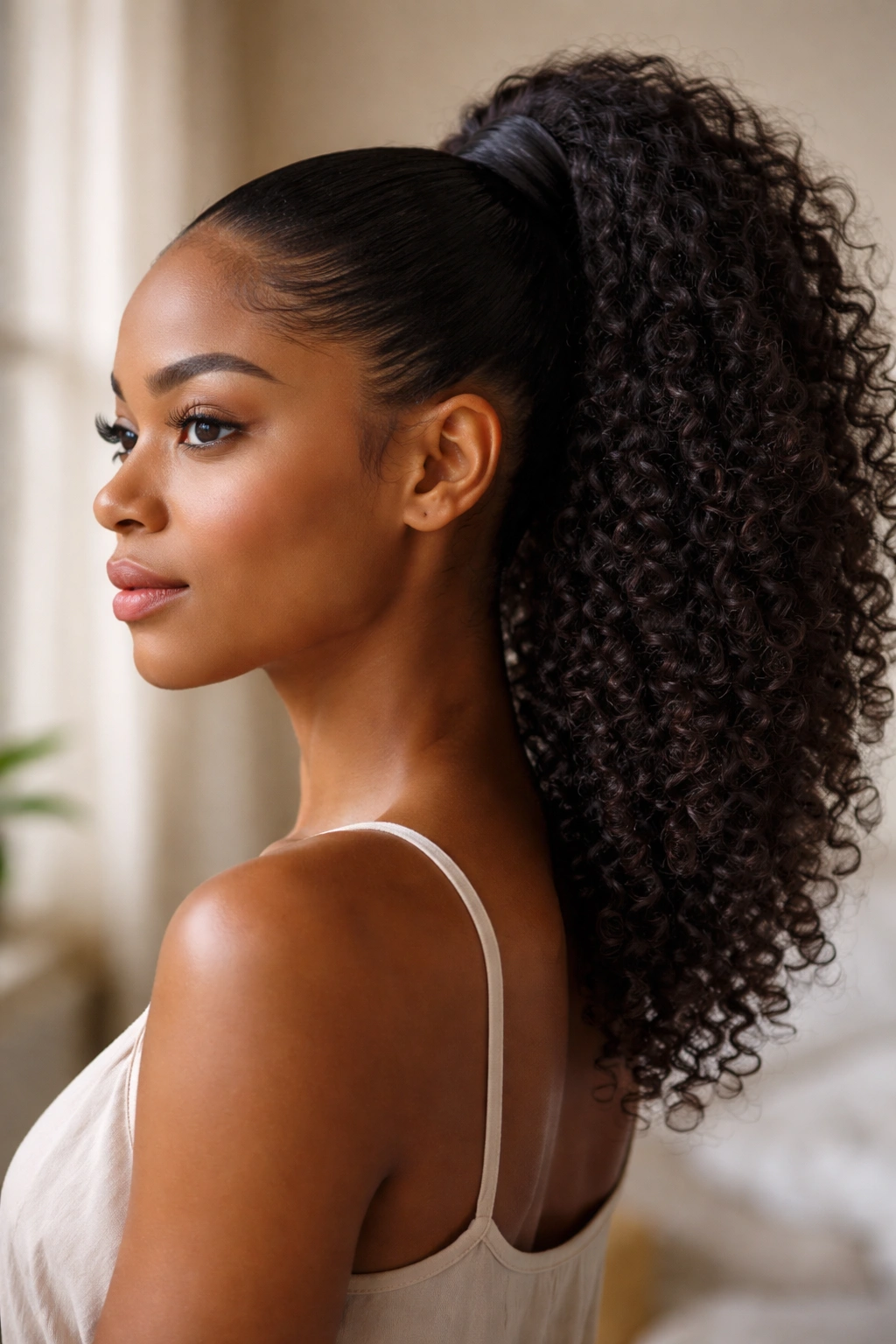
A sleek high ponytail on natural hair requires patience and product, but the result is sharp, polished, and makes a statement. Apply a generous amount of gel to damp hair in sections, using a brush to smooth each section back and up toward the crown. Tie with a soft elastic, then smooth over the surface with additional gel and a brush.
The Key Detail
Let the ponytail itself remain in its natural curly or coily state. The contrast between the sleek, gelled base and the voluminous, textured ponytail is the whole point. Don’t try to smooth the ponytail section — embrace the texture.
3. Low Ponytail at the Nape
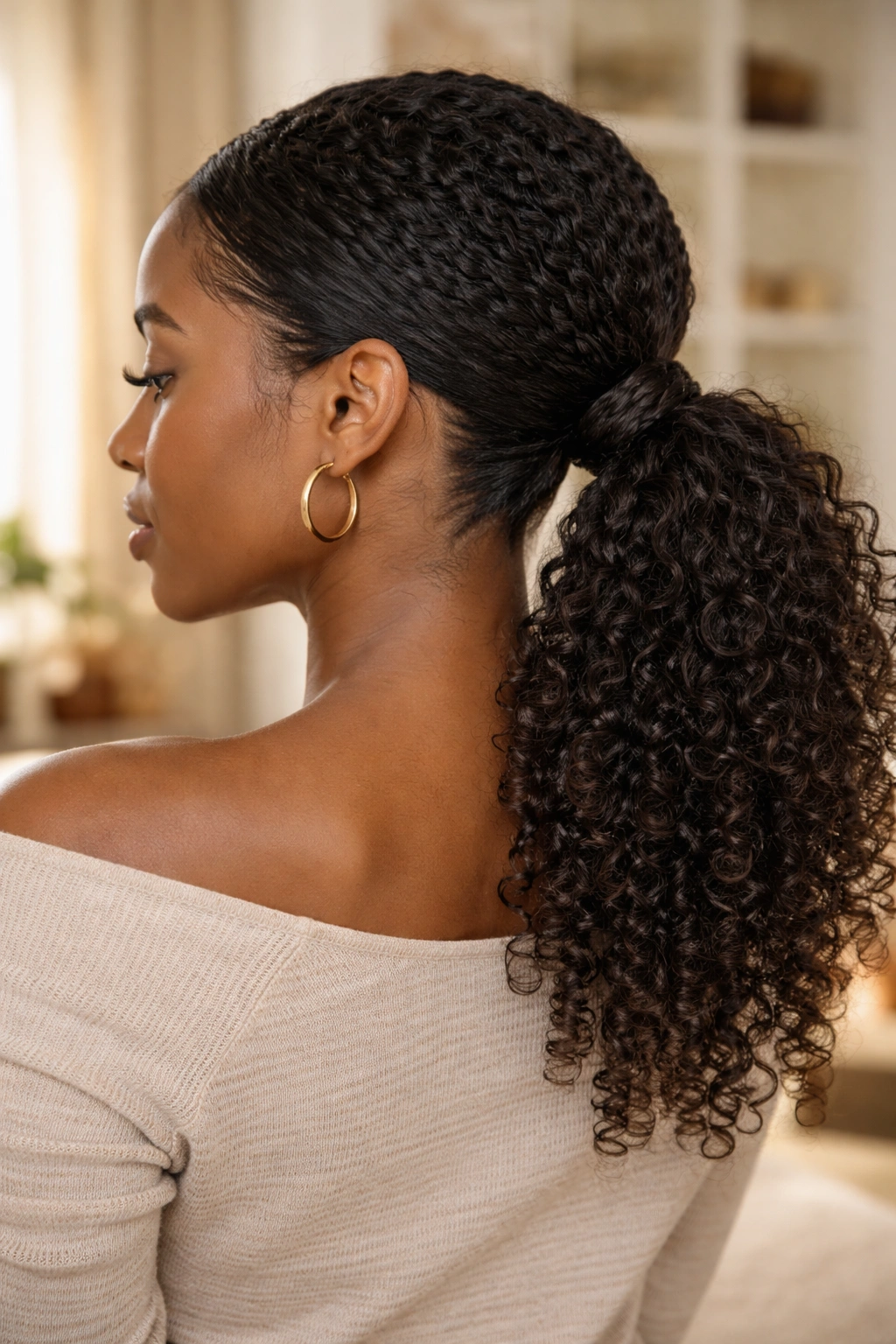
Sometimes the most elegant option is the lowest one. A ponytail at the nape of the neck, secured with a wrapped section of hair hiding the elastic, reads as refined and intentional. Let the curls hang freely below the elastic for soft movement.
This style is one of the most versatile in terms of occasions. It works for office environments, dates, weddings as a guest style, and everything in between. The lower placement is also gentler on the hairline than high styles.
4. Side Ponytail With Natural Texture
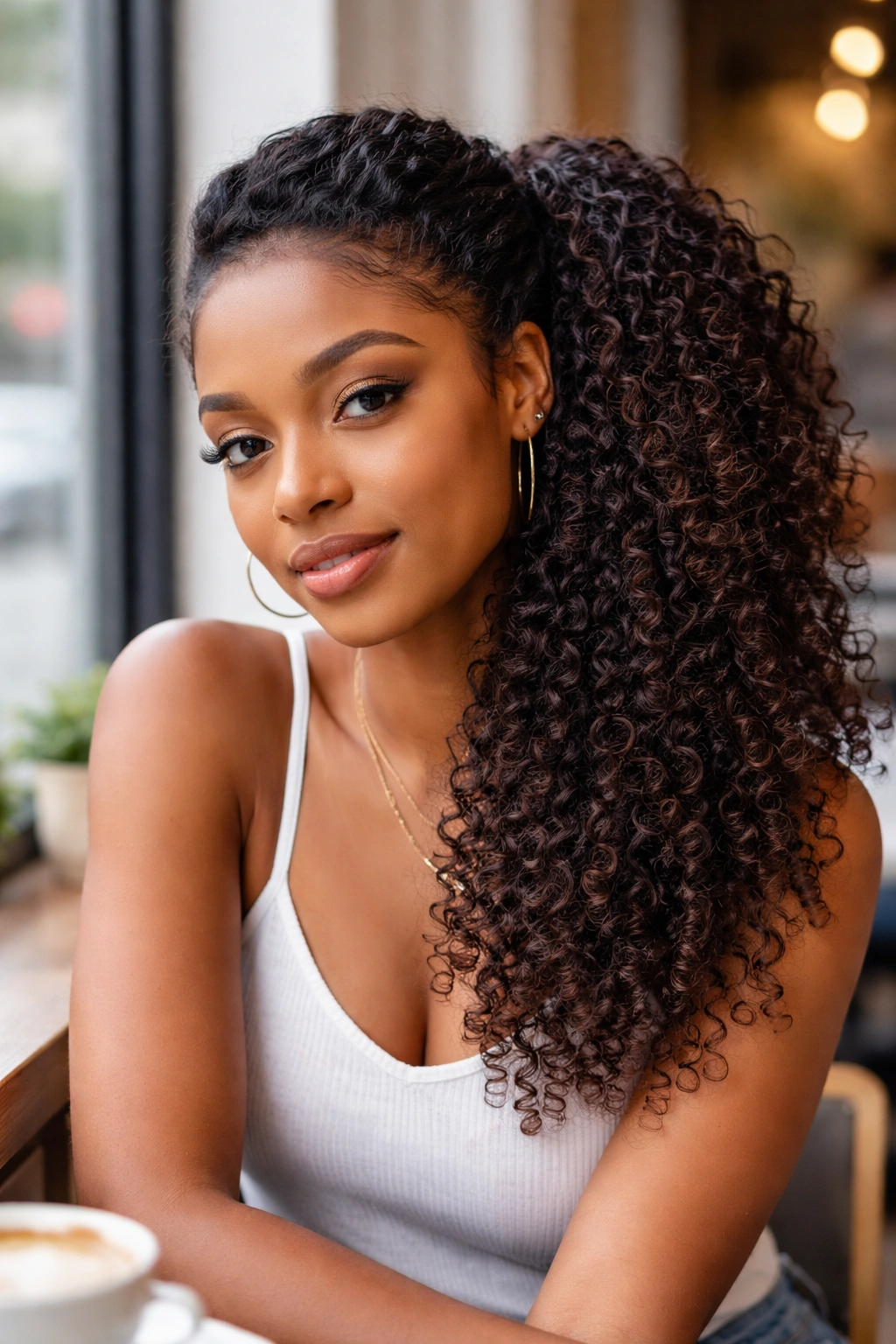
A side ponytail sweeps all the hair to one side and falls over the shoulder. On natural curly hair, this is genuinely beautiful — the curls cascade over the shoulder in a way that flat hair simply can’t replicate. The volume and spring of natural texture give this classic look a completely different energy.
Pull all hair to one side at the nape or slightly above the ear. Secure and let the curls flow naturally over the shoulder. Smooth the opposite side of the hairline with edge control for a clean contrast. One side sleek, one side curly — the visual tension is the style.
5. Stretched Ponytail on Type 4 Hair
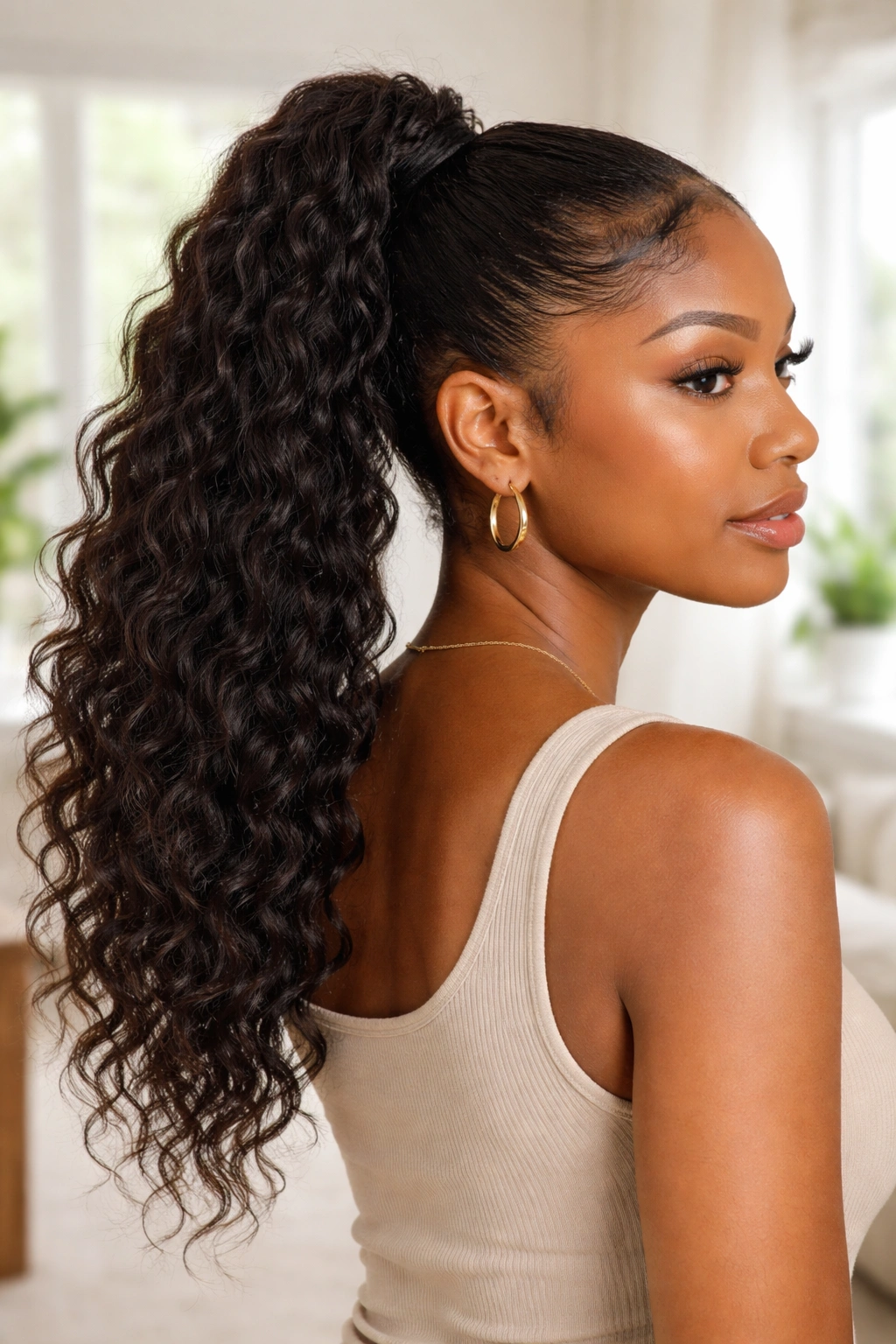
Shrinkage is natural, and it’s beautiful — but sometimes you want length, and a stretched ponytail delivers it. Stretch your hair before styling by braiding it in sections while damp, letting it dry completely, then releasing. The braid-out creates a stretched, wavy texture that hangs significantly longer than your hair’s natural shrunken state.
Pull the stretched hair into a ponytail and secure at your preferred height. The waves from the braid-out add texture and definition to the ponytail without the crunch that gel would create.
6. Defined Curl Ponytail With Wash-and-Go Base
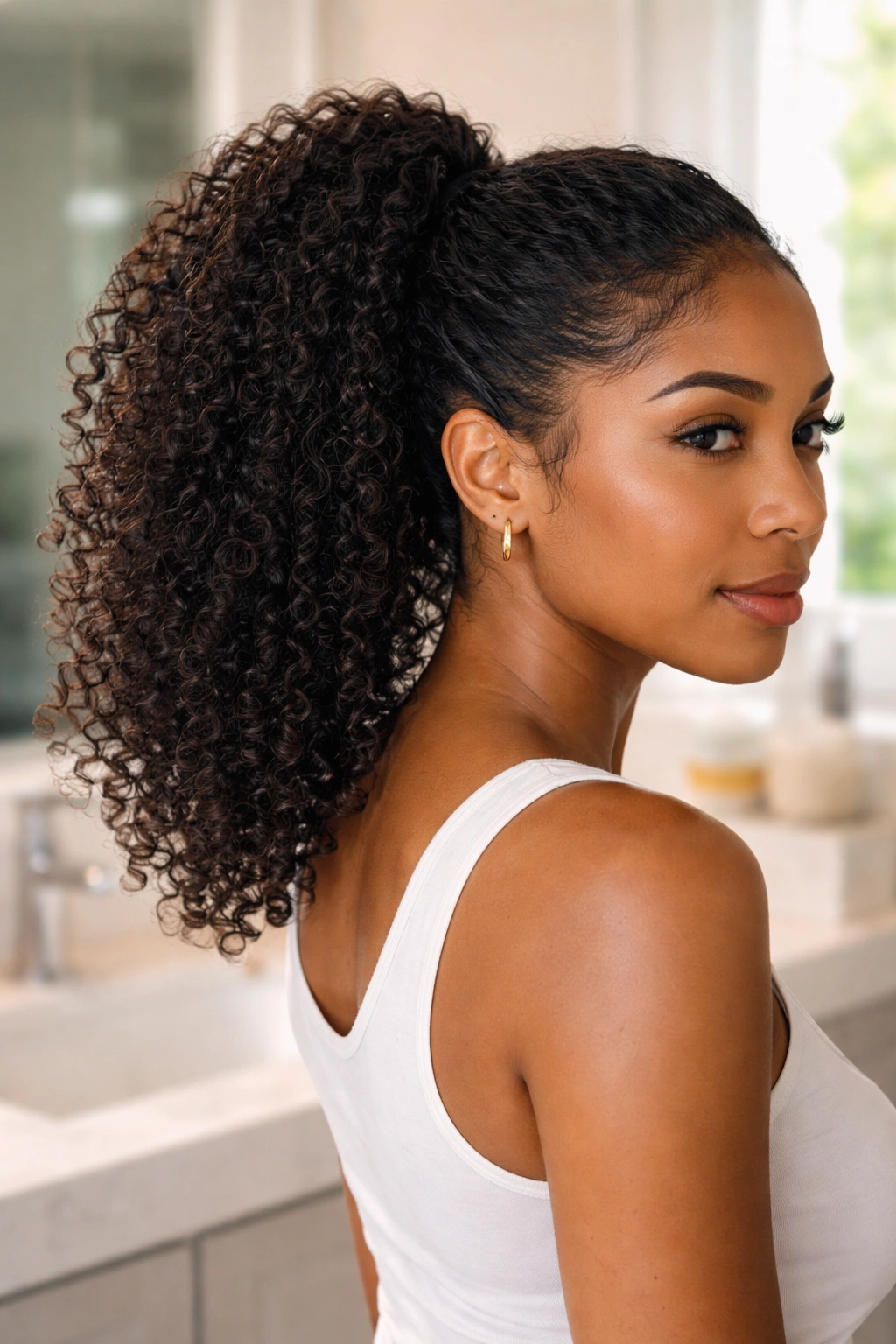
A wash-and-go ponytail is wash day made wearable. After washing and conditioning, apply your curl-defining products while hair is soaking wet, let curls clump and set, then once dry, pull the whole thing back into a ponytail. The defined curls from the wash-and-go create a ponytail that’s already textured and shaped.
Don’t brush or comb it. Use your hands only — pulling, gathering, and securing while keeping the curl clumps intact. The result is a full, defined ponytail with visible curl pattern throughout.
7. Wrap-Around Ponytail
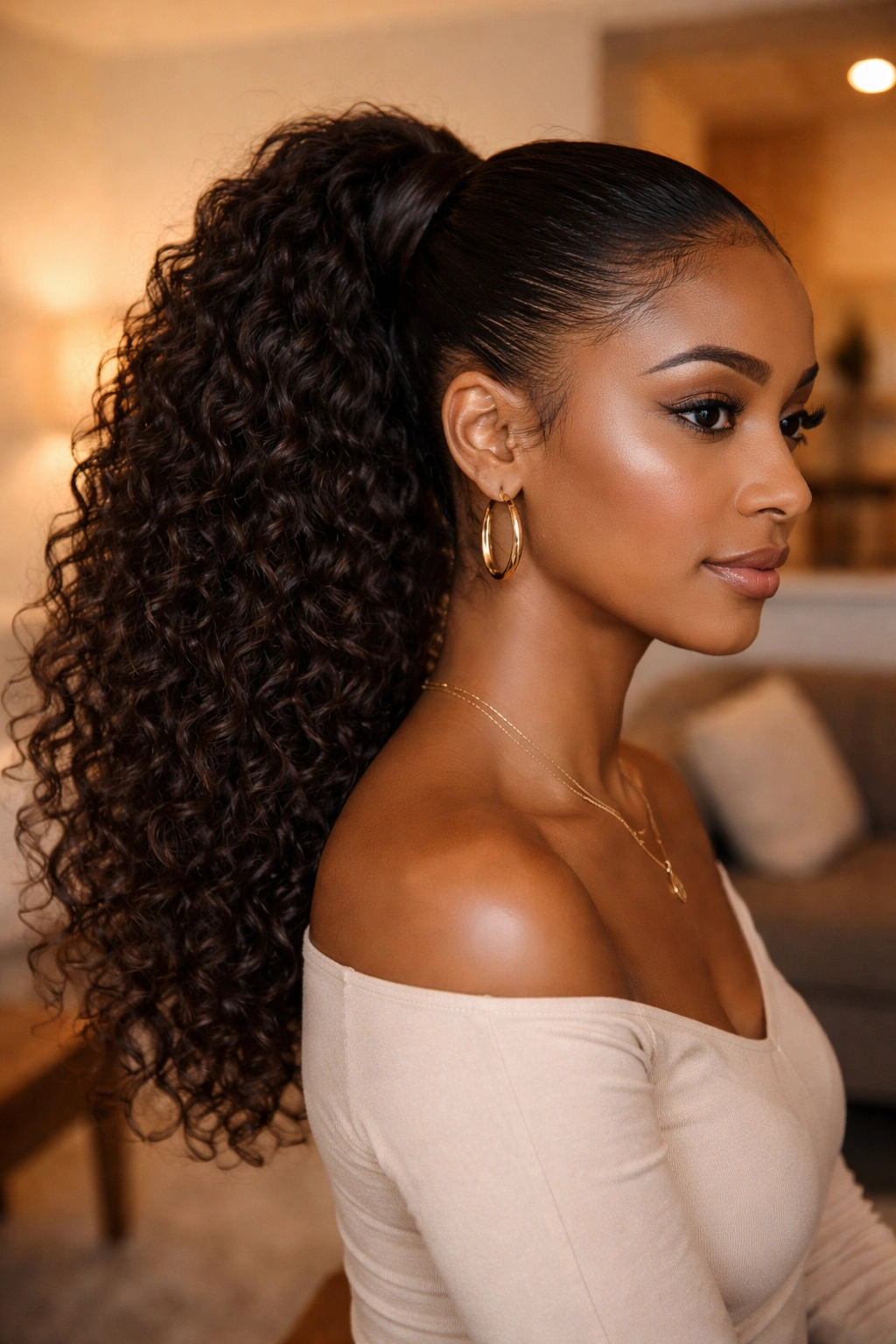
Take a small section of hair from the ponytail, wrap it around the elastic base until the hair tie is completely covered, then pin the wrapped section in place. This is a simple technique but it adds a finished, intentional quality to any ponytail. The hair-wrapped base looks expensive.
Works at any height — high, mid, or low. Works with sleek styles or textured ones. It’s one of those small details that elevates the whole look without adding any real time to the process.
8. Twist-Out Ponytail
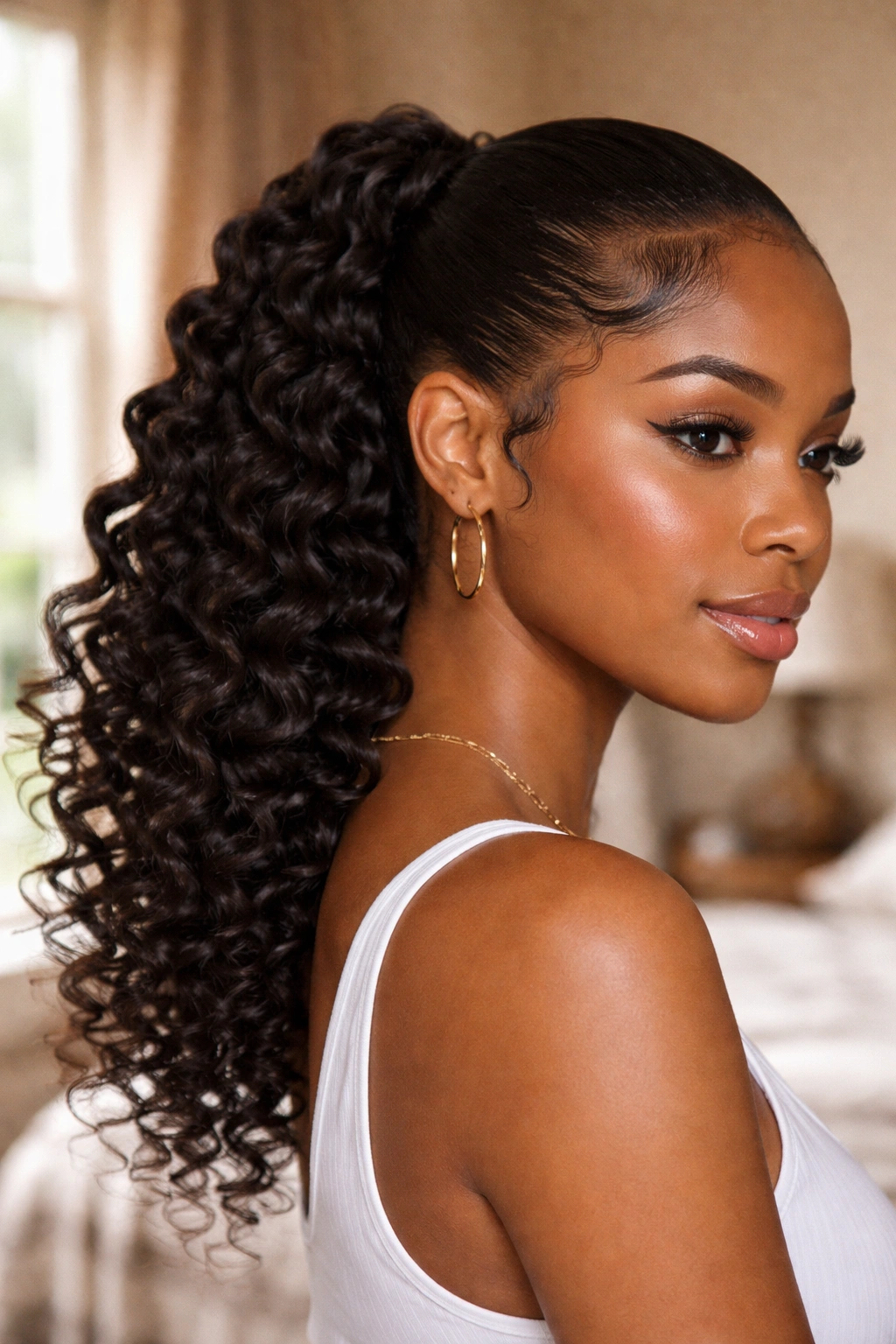
A twist-out ponytail combines the stretch and definition of a twist-out with the pulled-back clean lines of a ponytail. Do your twist-out the night before, let it set overnight, then release in the morning and pull back into a ponytail. The twist-out pattern creates visible S-waves or defined coils throughout the ponytail, depending on how tightly you twisted.
This is a particularly great option for 4A and 4B hair types that want definition and length without heat. The twist-out provides both.
9. Braid-Out Ponytail
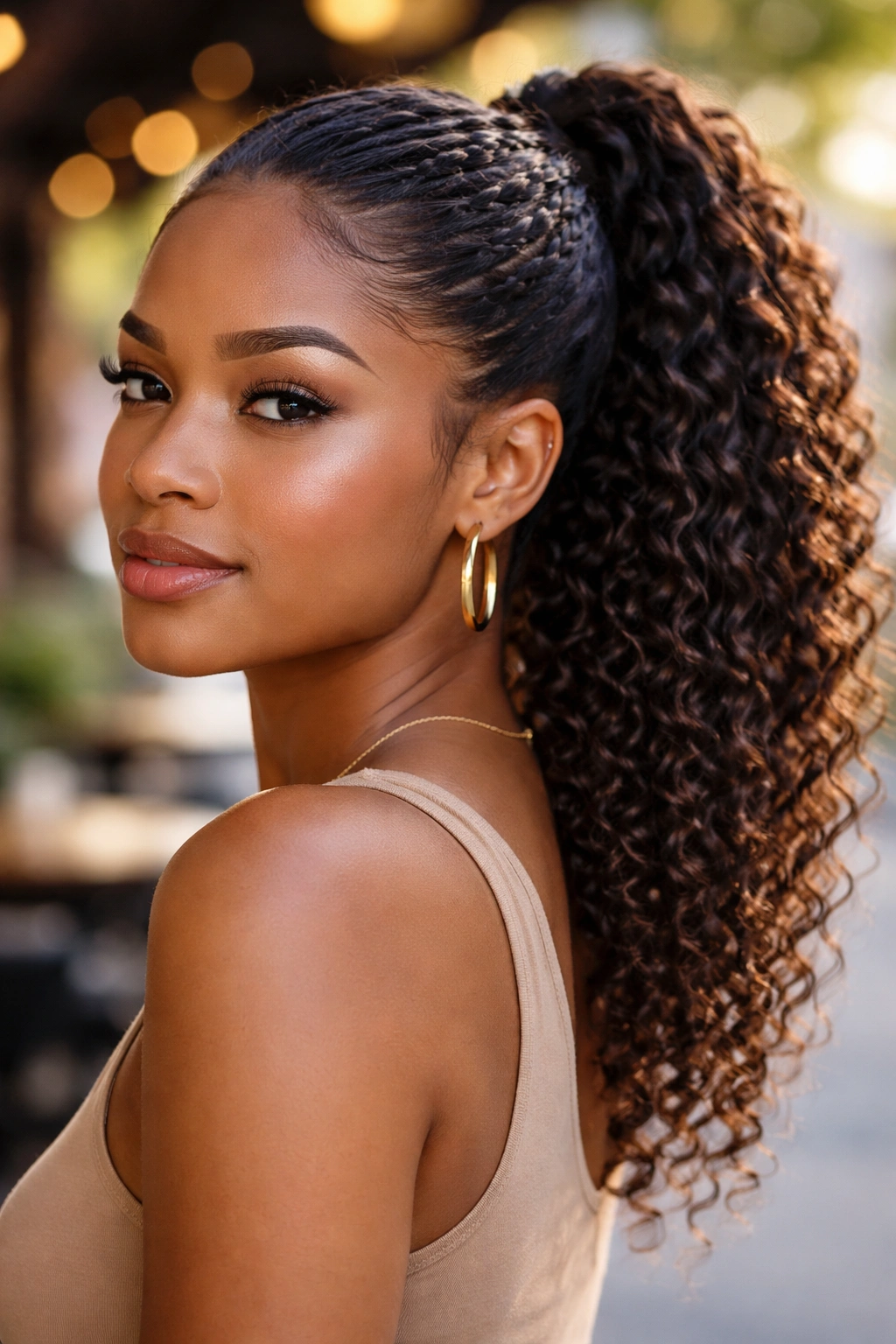
Similar principle to the twist-out version but uses braids instead of twists. Braid-outs tend to create a more defined, angular wave pattern compared to the softer S-curve of a twist-out. The ponytail will have more of a crimped, textured look with clear ridges from the braid pattern.
Great for humid climates — the set braid-out is more resistant to humidity-induced frizz than a wash-and-go because the hair has been physically trained into a shape.
10. Faux Ponytail With Curly Extensions
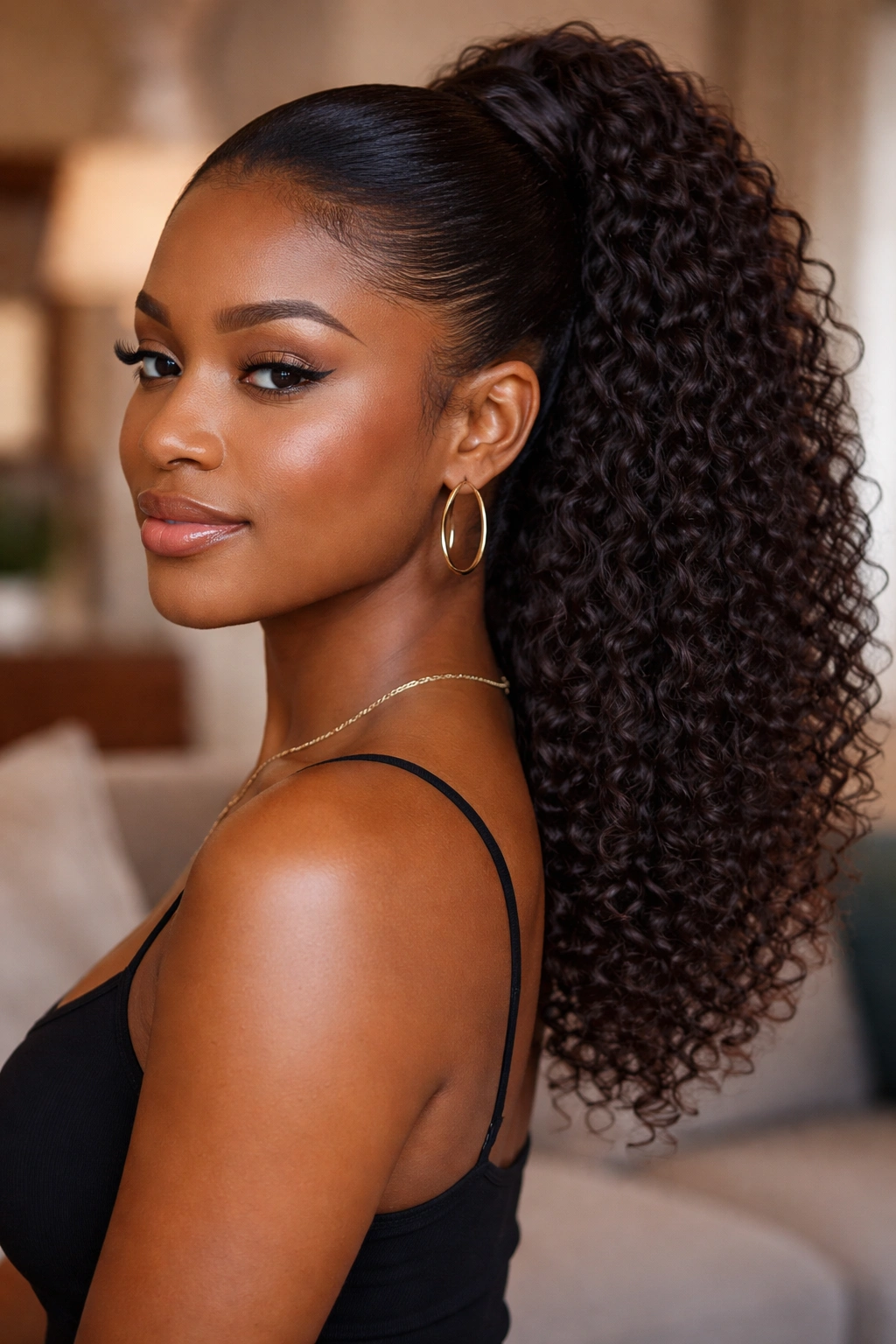
A faux ponytail with curly extensions opens up possibilities that your natural hair’s current length or density may not. Choose a drawstring or clip-in ponytail extension that matches your natural curl texture. Pull your natural hair into a small bun or ponytail at the point where you’ll attach the extension, secure the faux ponytail over it, and wrap a section of your natural hair around the attachment point to blend.
Length, volume, and definition — on demand. This is a legitimate style choice, not a compromise.
11. Afro Puff Ponytail
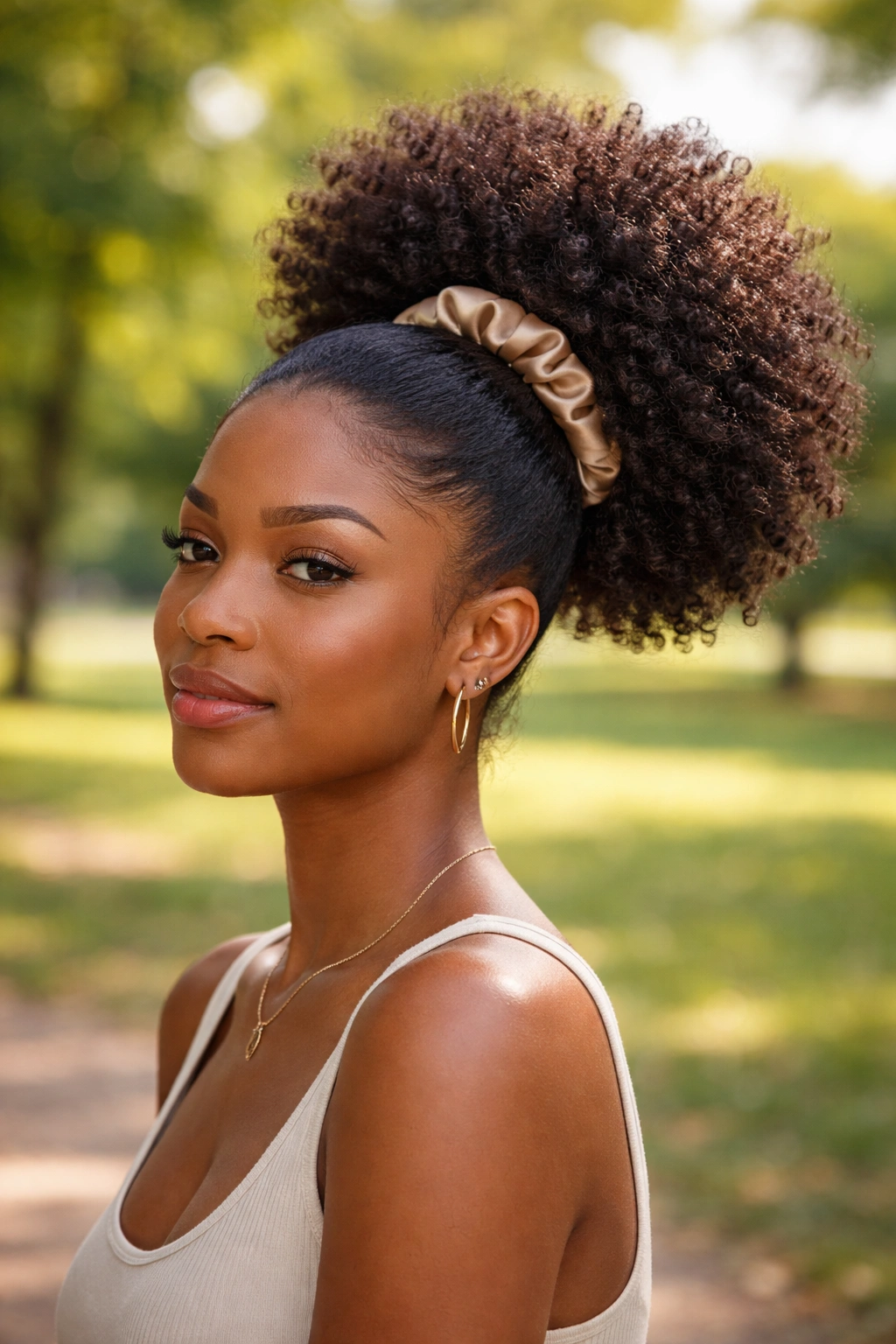
An afro puff ponytail is different from a standard high puff in that it’s larger, fuller, and rounder — more deliberately puff-shaped than ponytail-shaped. Stretch hair slightly before pulling up to maximize the size of the puff. Use a satin scrunchie that’s wide enough to hold the volume without creating a dent in the hair.
For extra volume, once the puff is secured, use your fingers to gently pull the outer edges outward and upward. This creates that iconic, spherical puff shape.
12. Curly Low Ponytail With Accessory
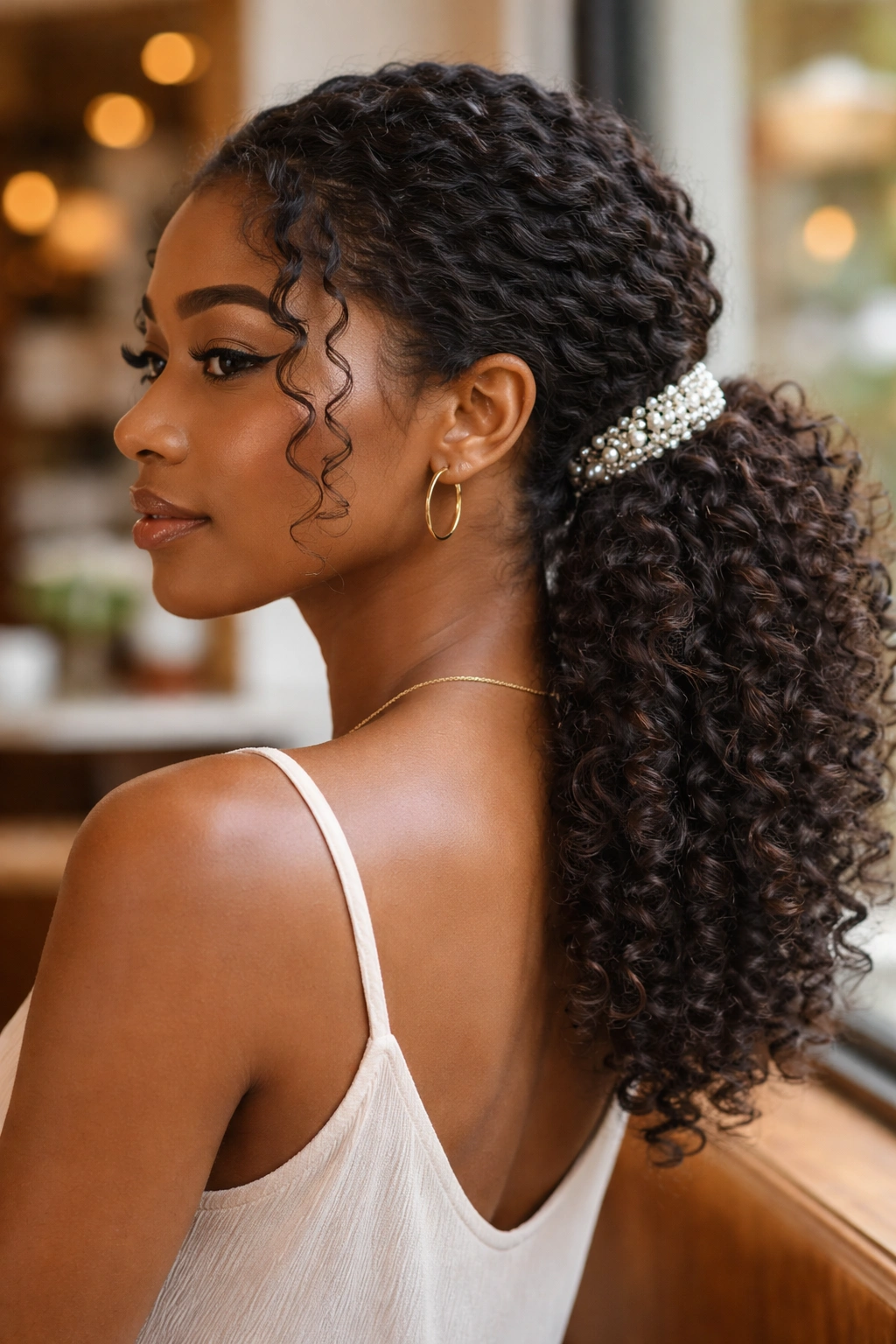
A low ponytail made interesting with the right accessory. A pearl-studded band, a gold cuff, a silk ribbon, or a rhinestone clip at the base of a curly low ponytail transforms a simple style into something intentional and polished. The curls do the work. The accessory does the announcing.
This is the easiest upgrade you can make to a basic low ponytail — and it takes approximately thirty seconds.
13. High Ponytail With Defined Curly Ends
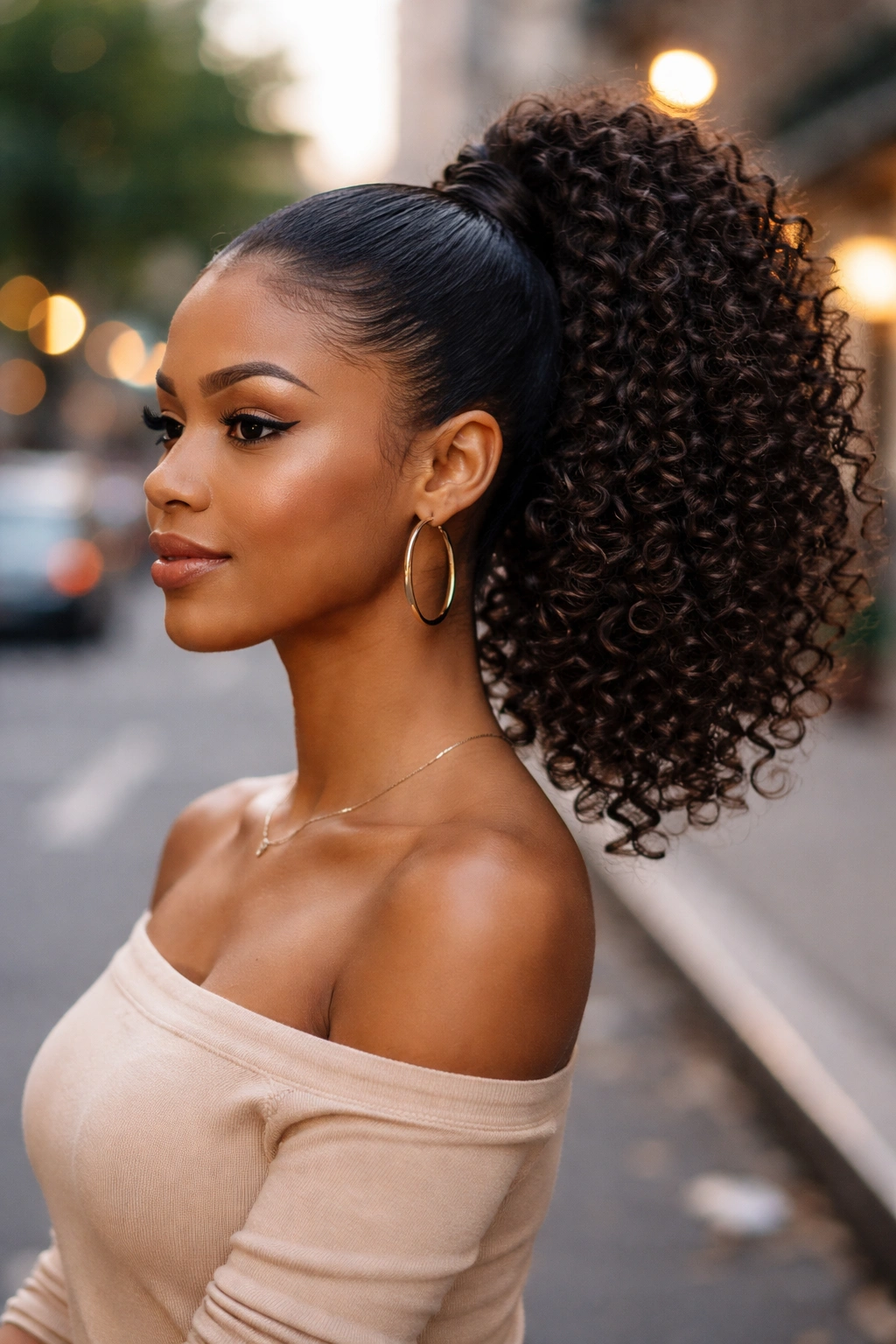
A high ponytail where the top and sides are sleek but the ponytail ends are defined, voluminous curls. You get the visual clean lines of a high pony with the textural richness of natural curls. Apply gel to the perimeter and the base while keeping the ponytail section moisturized with cream.
The ponytail ends spring outward and downward, creating a full, rounded finish at the back. From the side, this looks incredible — the sleek sides leading to a full, textured ponytail.
14. Banded Ponytail
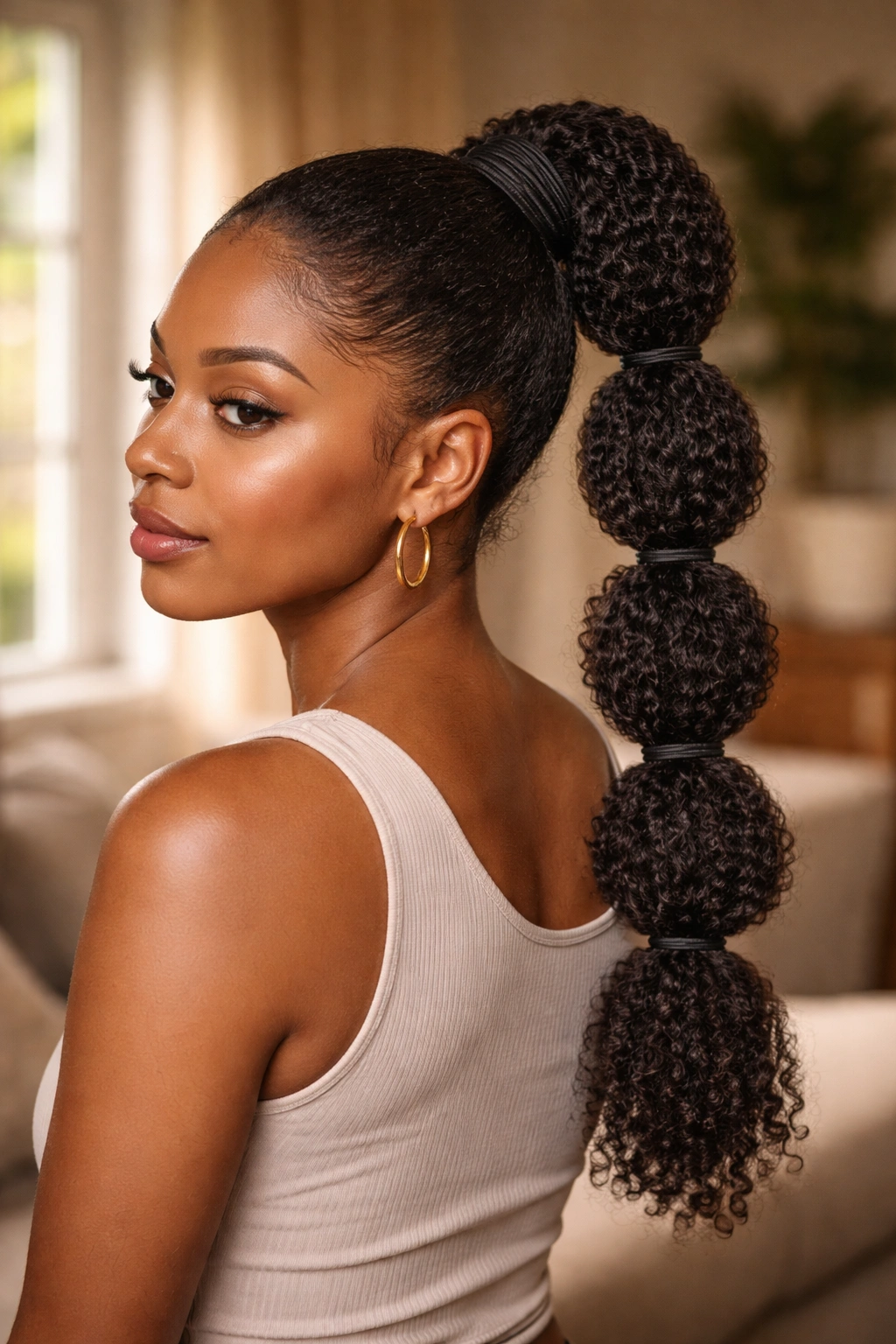
A banded ponytail uses multiple elastics or bands down the length of the ponytail to create a segmented, elongated look. Start with your natural hair in a ponytail at the crown. Use soft bands spaced 1–2 inches apart down the length of the ponytail, pressing gently to flatten each section between the bands.
This creates a visual elongating effect and is a popular style for stretching out type 4 hair without heat. The bands hold the ponytail in its stretched state while also serving as a style detail.
15. Curly Ponytail With Baby Hair Art
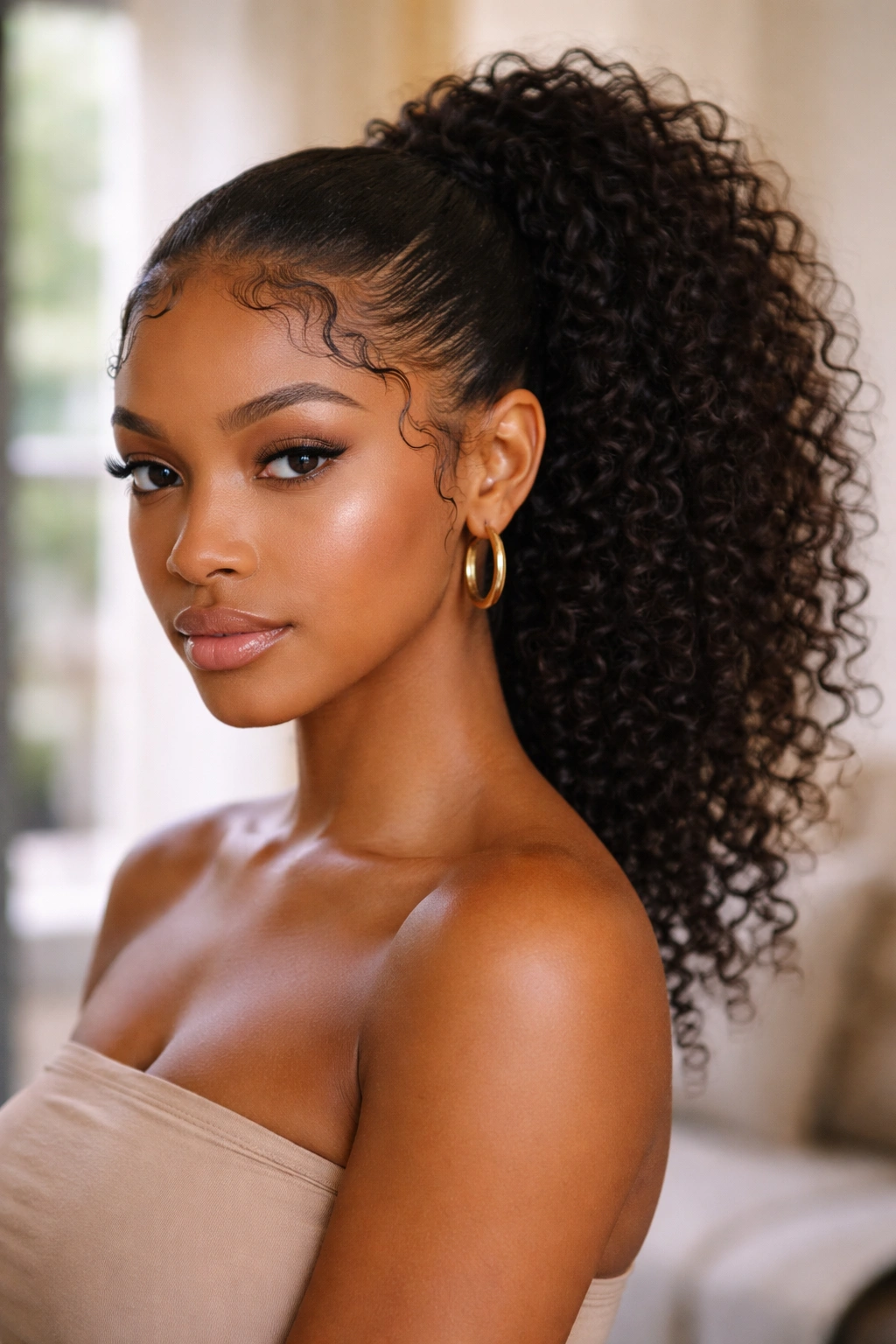
Baby hair art — deliberate, sculpted designs using the fine hairs at the hairline — transforms any ponytail from basic to editorial. Use a toothbrush or fine-tip brush with edge control to create swooping curves, waves, or letter-C shapes at the temples and forehead.
This is a style with deep cultural roots in the Black community and it’s had a sustained moment in mainstream fashion photography. When the rest of the hair is in a simple ponytail, baby hair art becomes the statement.
16. Pineapple Ponytail
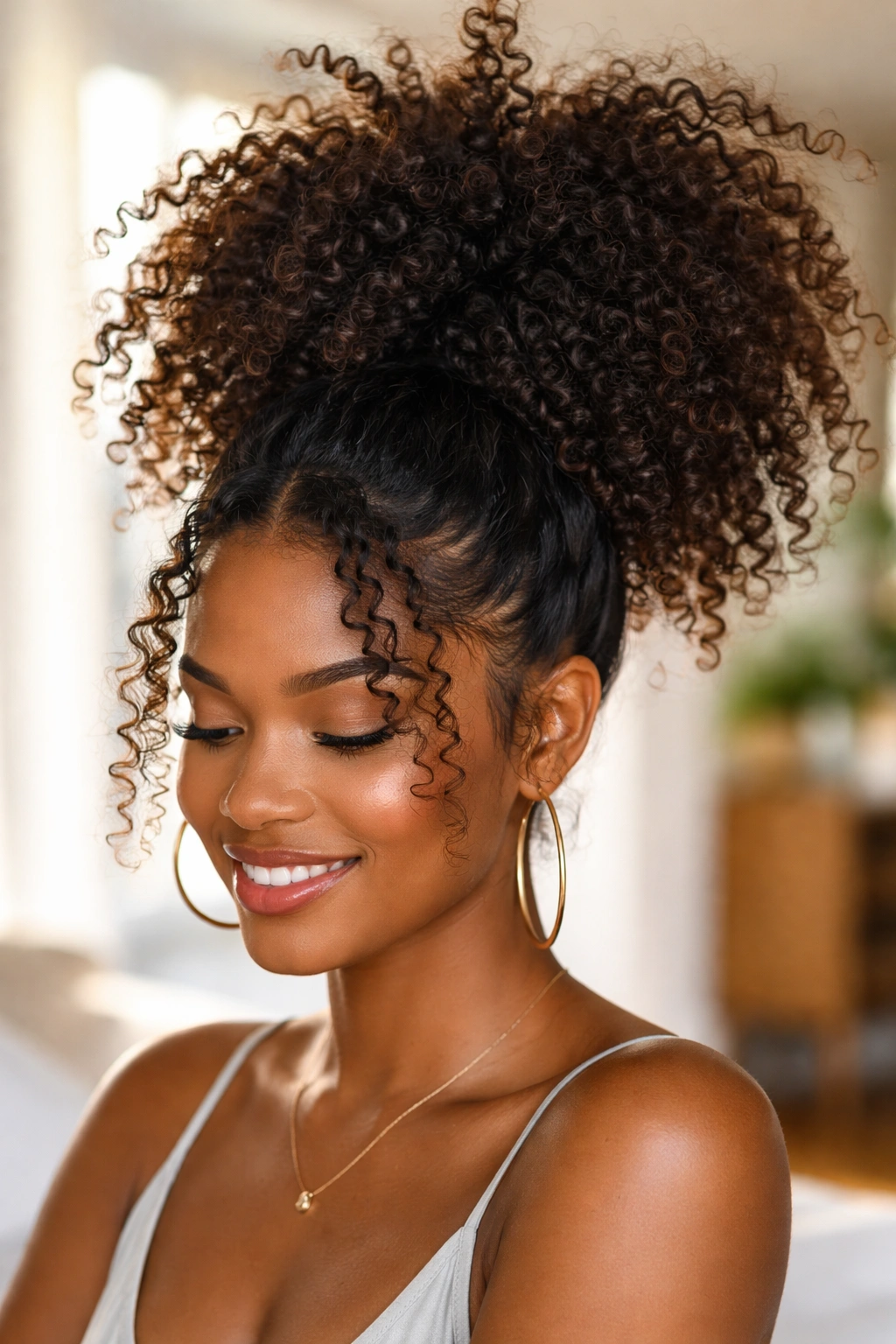
The pineapple is technically a protective nighttime style, but worn intentionally during the day with the right product and attitude, it becomes a style in its own right. Gather all your hair loosely to the very top of the head and secure with a wide, soft elastic. The result is hair that flips forward and fans out over the face before being swept back — creating a voluminous cascade.
Use a small amount of curl cream on the front pieces to define them. Let everything else stay loose and free. The pineapple is effortless because it’s supposed to be.
17. Protective Ponytail With Tucked Ends
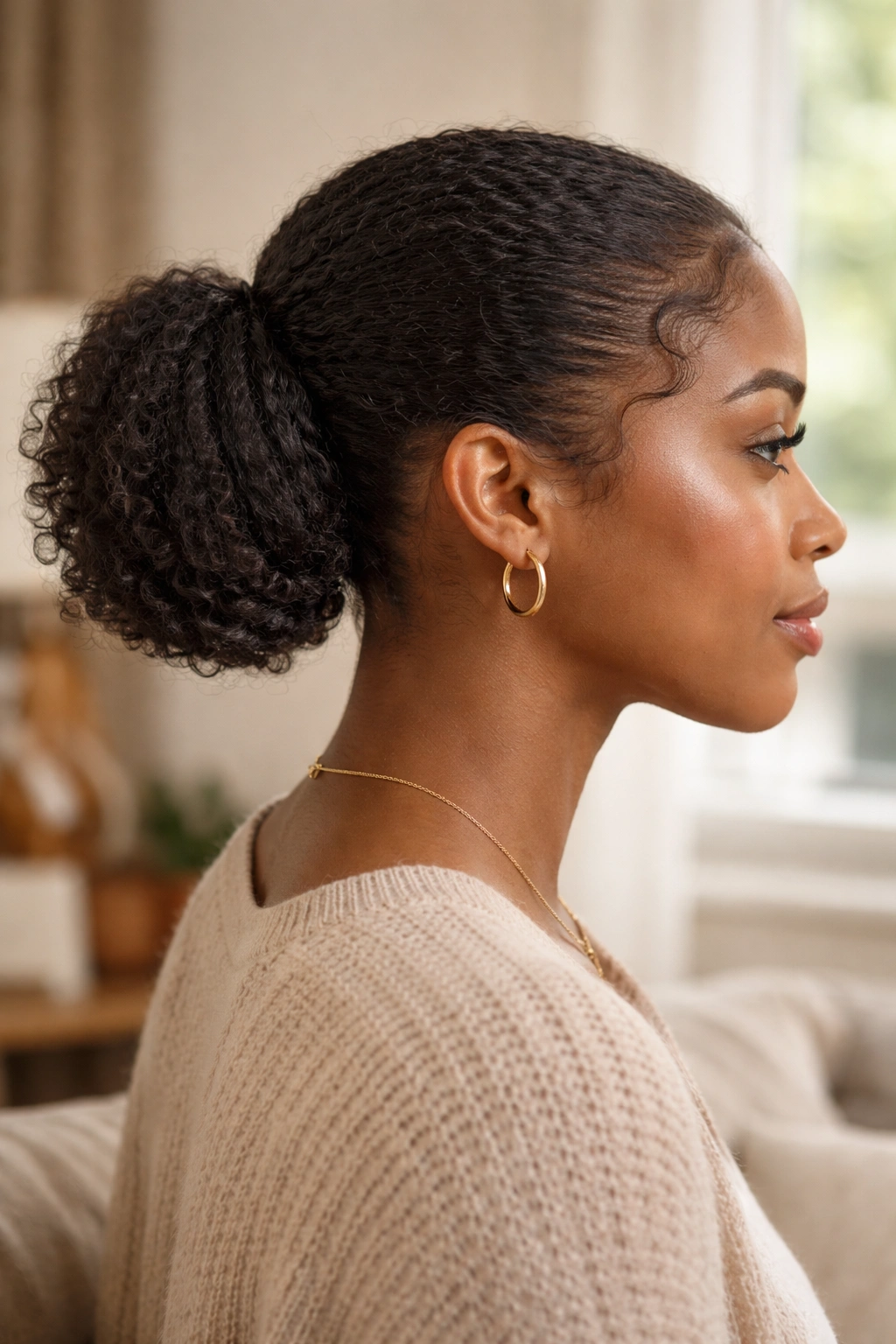
A protective ponytail version tucks the ends of your hair into the base of the ponytail so they’re not exposed to the elements. After securing the ponytail, fold the ends back toward the base and pin them in place. The result looks like a shorter, blunter ponytail — but your actual ends are safely tucked away.
This is technically a protective style that gives the aesthetic of a ponytail without the end exposure that can lead to dryness and breakage.
18. Chunky Curl Ponytail
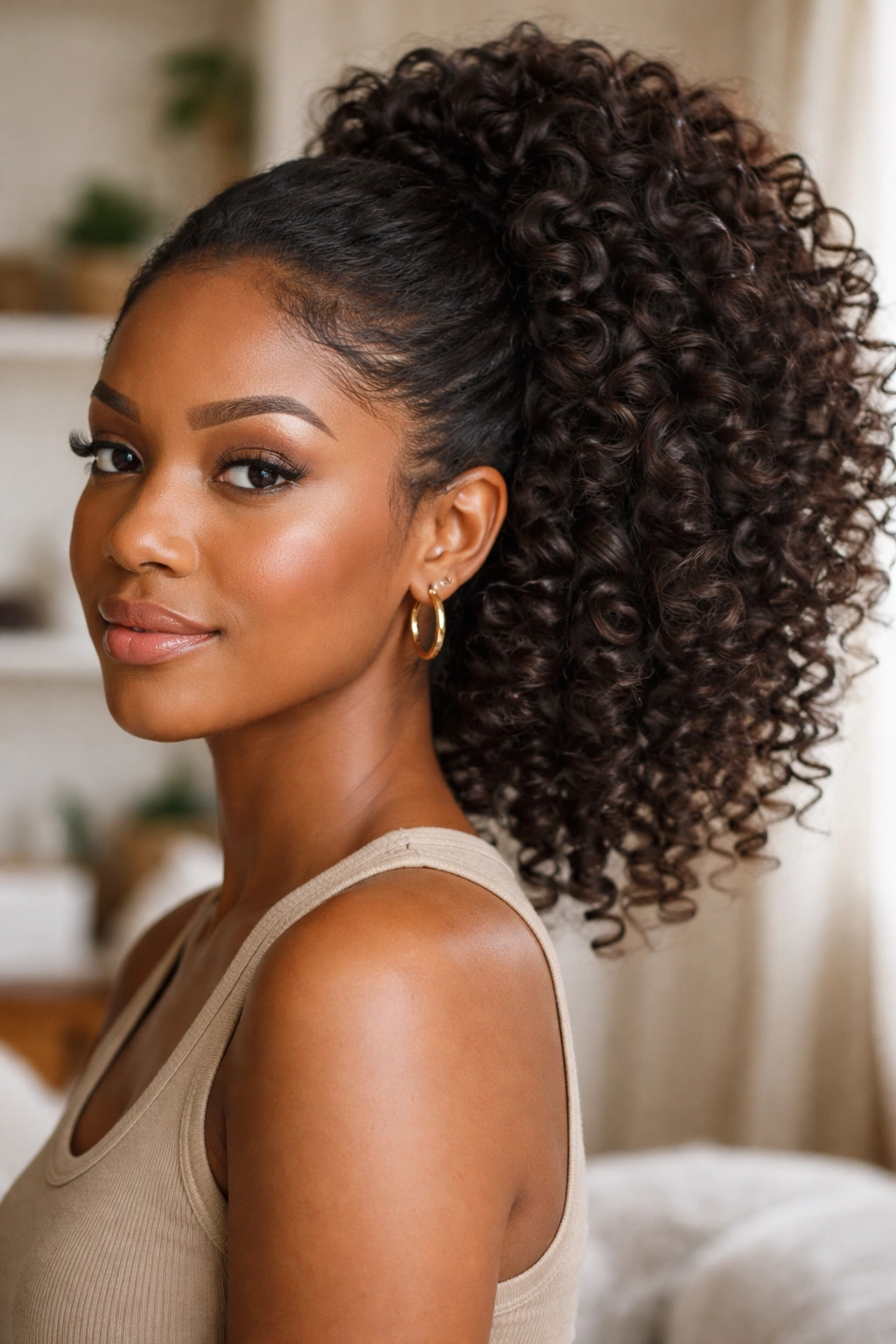
Not all ponytails are about tight, individual curl definition. A chunky curl ponytail embraces big sections of hair that clump together into large, chunky ringlets. To get this look, apply a generous amount of curl cream to large sections of damp hair, then pull loosely into a ponytail. Don’t separate or define individual curls — encourage chunky clumps.
The result is a full, textured ponytail with a bold, high-volume look. Best on type 3C to 4A hair that naturally tends toward chunky curl clumps.
19. Curly Ponytail With Headband
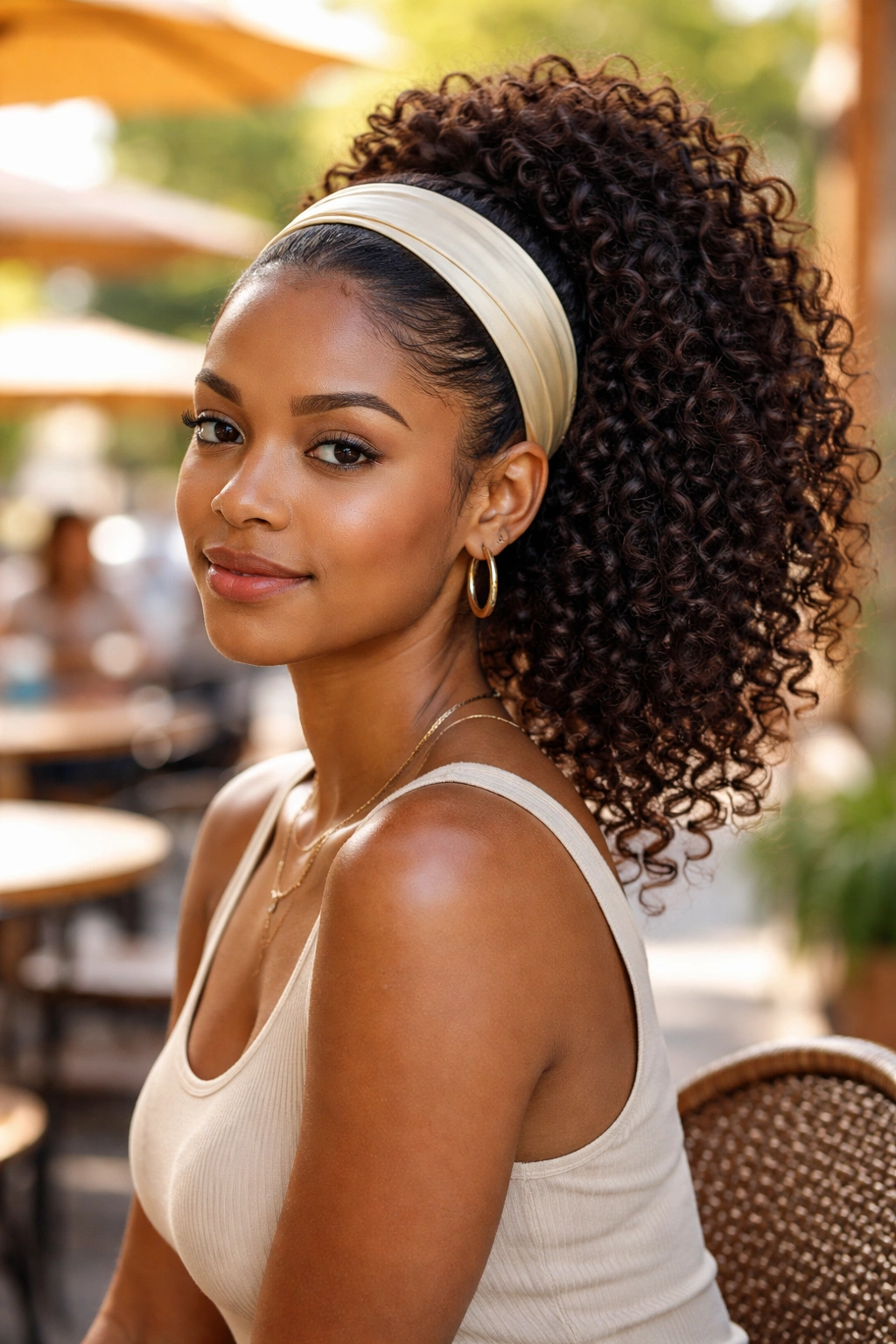
A simple, effective upgrade. A wide satin or fabric headband placed at the hairline — either flat or knotted at the top — paired with a curly ponytail at any height creates a retro-inspired look with minimal effort. The headband hides the elastic (if placed at the bun base) or adds a bold style element at the forehead.
Choose a headband that complements your outfit rather than matching it perfectly. A pop of color, a pattern, or a textured fabric makes the headband a statement piece rather than just a functional tool.
20. Twisted Front, Curly Ponytail Back
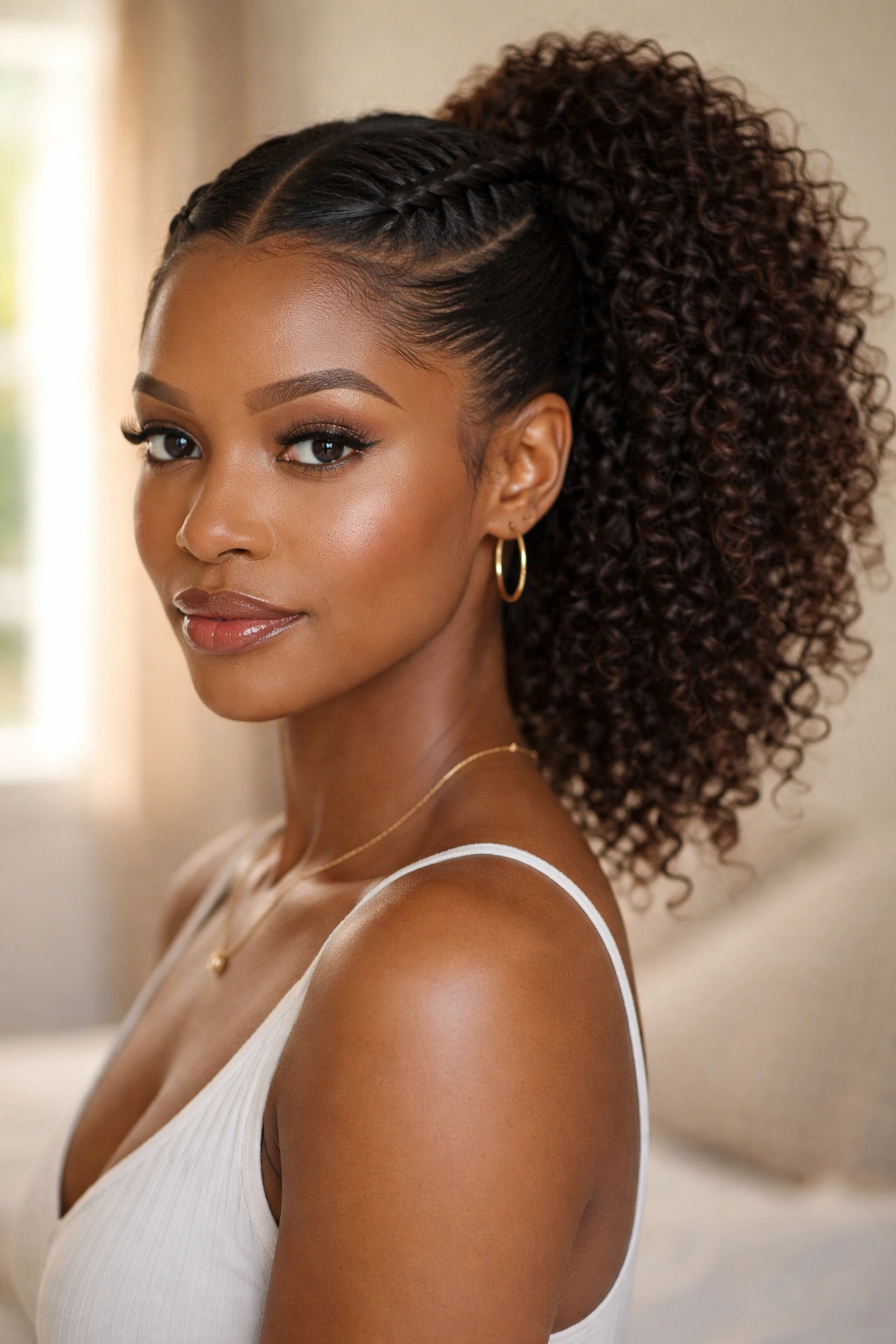
Two medium twists at the front of the hairline — pulled from each temple back toward the crown — join into a curly ponytail at the back. The front twists add structure and elegance to what would otherwise be a simple ponytail. The curly back section stays textured and natural.
This is a hybrid style that gives you the best of both techniques: the clean lines of a twist with the volume and texture of a natural ponytail.
21. Vol-Max Ponytail With Hair Donut
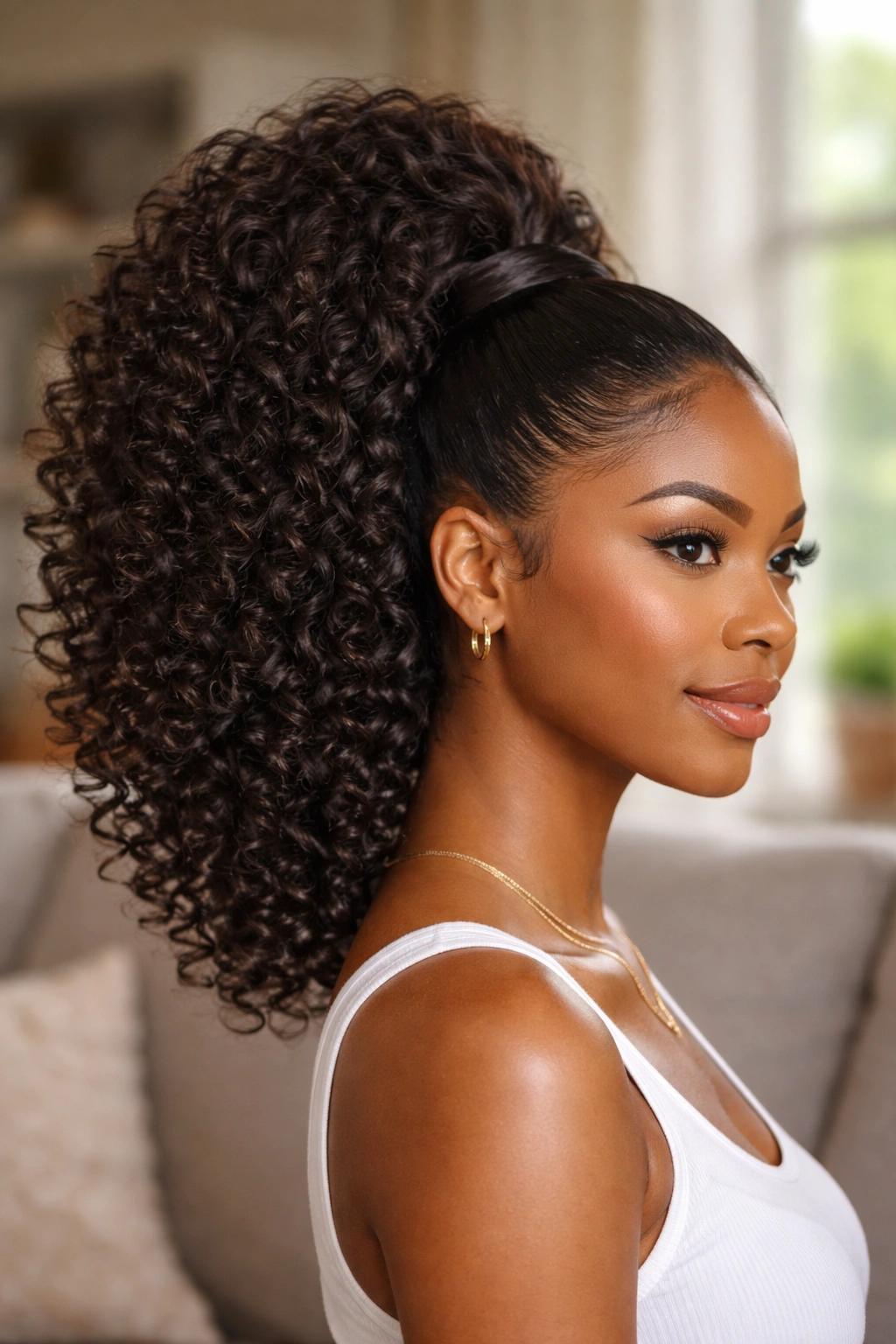
A foam hair donut — the same tool used for sock buns — can be used inside a ponytail to dramatically increase its volume. Thread the ponytail through the center of the donut, then spread your curls over the donut to cover it. Secure the outer edges with pins. The donut creates a round, full base that makes the ponytail look enormous.
This is a volume cheat that works, especially for naturalistas who feel like their ponytail looks flat or thin. The foam adds body without adding heat or manipulation.
22. Textured Ponytail With Flat Twist Sides
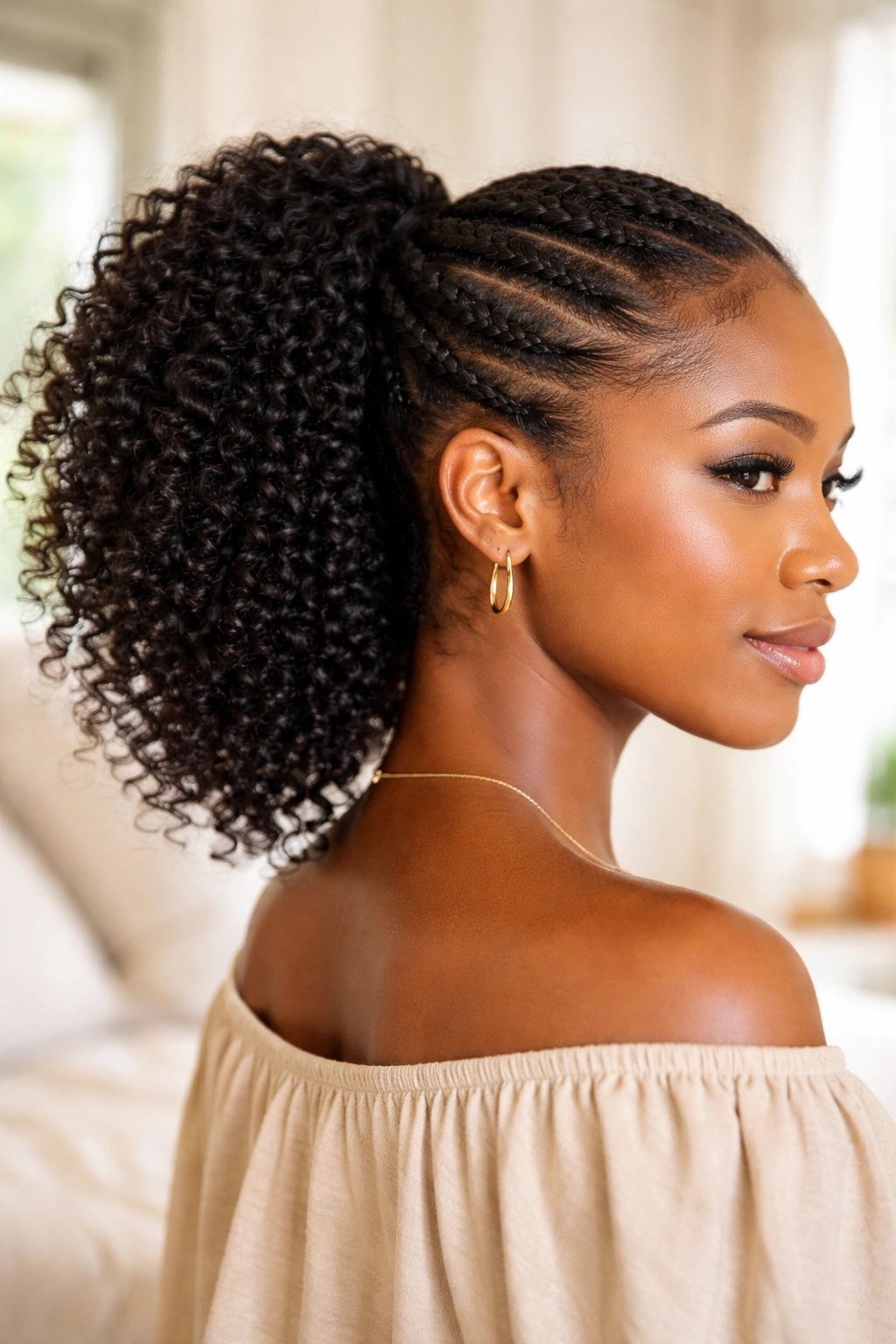
Flat twists along the sides of the head leading into a ponytail at the back create a defined, styled look that’s more structured than a plain ponytail. The flat twists add a geometric element to the style while keeping the hair off the face. Where the twists meet at the back, a textured, curly ponytail fans out.
This is a great wash-day style — the flat twists are easy to do on freshly washed, product-saturated hair, and the ponytail shows off your curl definition while the sides stay neat.
23. Glam Curly Ponytail With Volume Boost
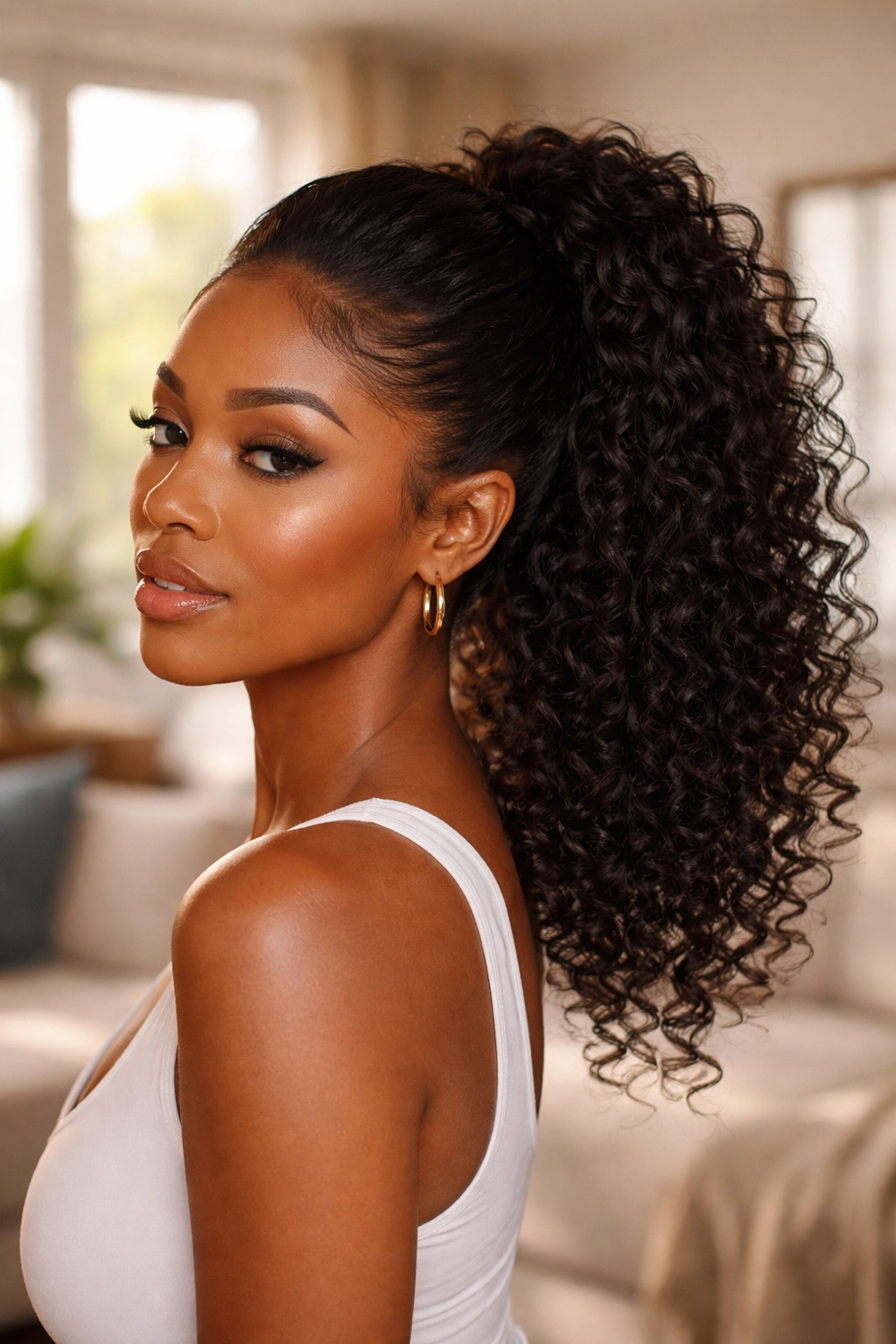
For special occasions, add a bump of volume at the crown before pulling into a ponytail. Backcomb a small section at the very top of the head before pulling everything back — this creates a lifted, glamorous silhouette at the crown that reads as deliberate and polished.
Smooth the surface over the backcombed section with a light brush before securing the ponytail. The lift stays in place. The natural curls flowing behind it look even more dramatic against the height.
24. Double Ponytail Stacked Look
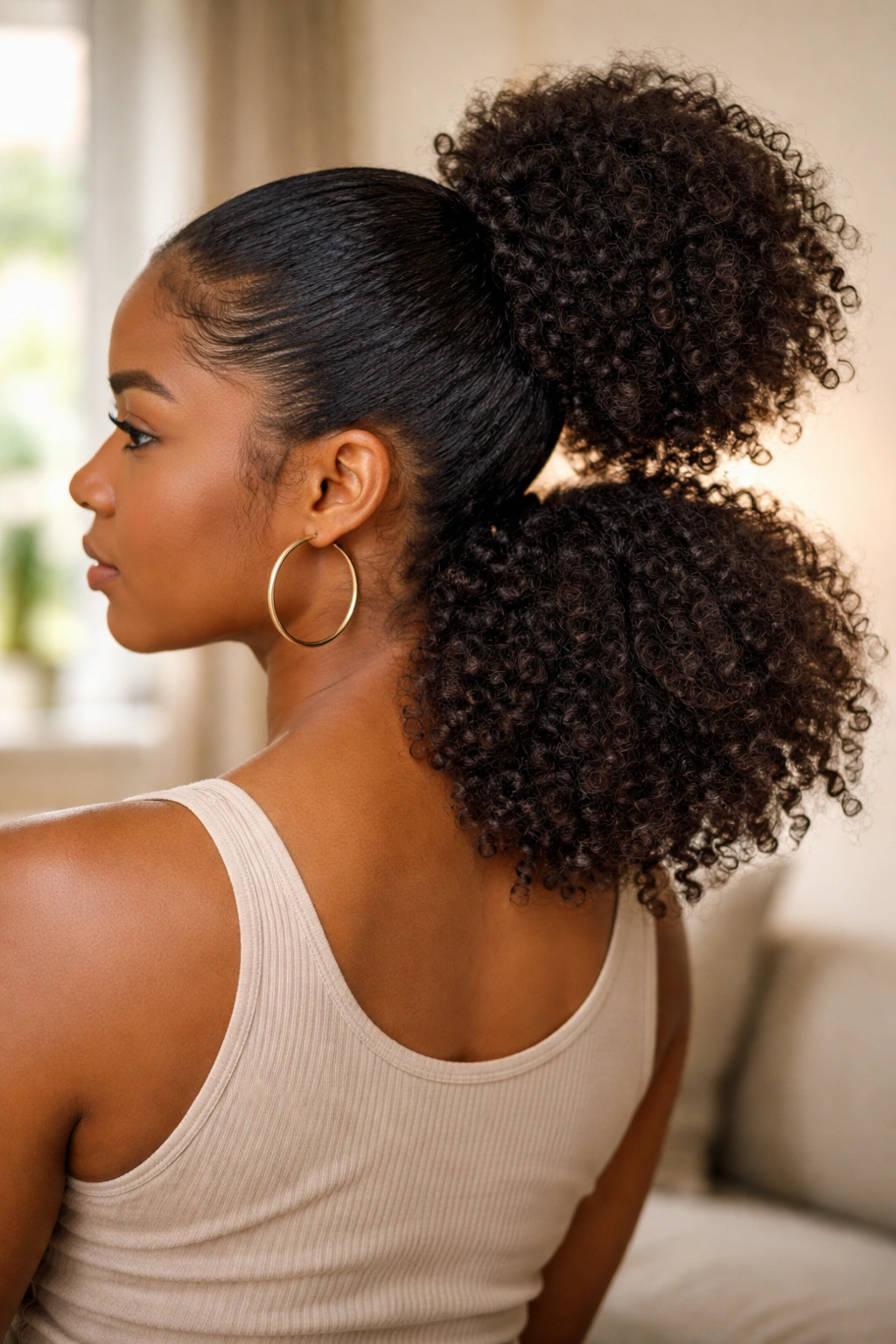
Two ponytails, one on top of the other. A high ponytail secured at the crown and a second ponytail secured just below it — both made from the same hair, creating the illusion of one very full, very thick ponytail. The stacking technique adds volume and prevents the lower ponytail from drooping under the weight of thick natural hair.
This works particularly well for 4C hair with significant volume — hair that, when pulled into one ponytail, might weigh down the elastic and droop forward. The stacked version distributes the weight and holds the silhouette upright.
Keeping Your Edges Safe for the Long Term
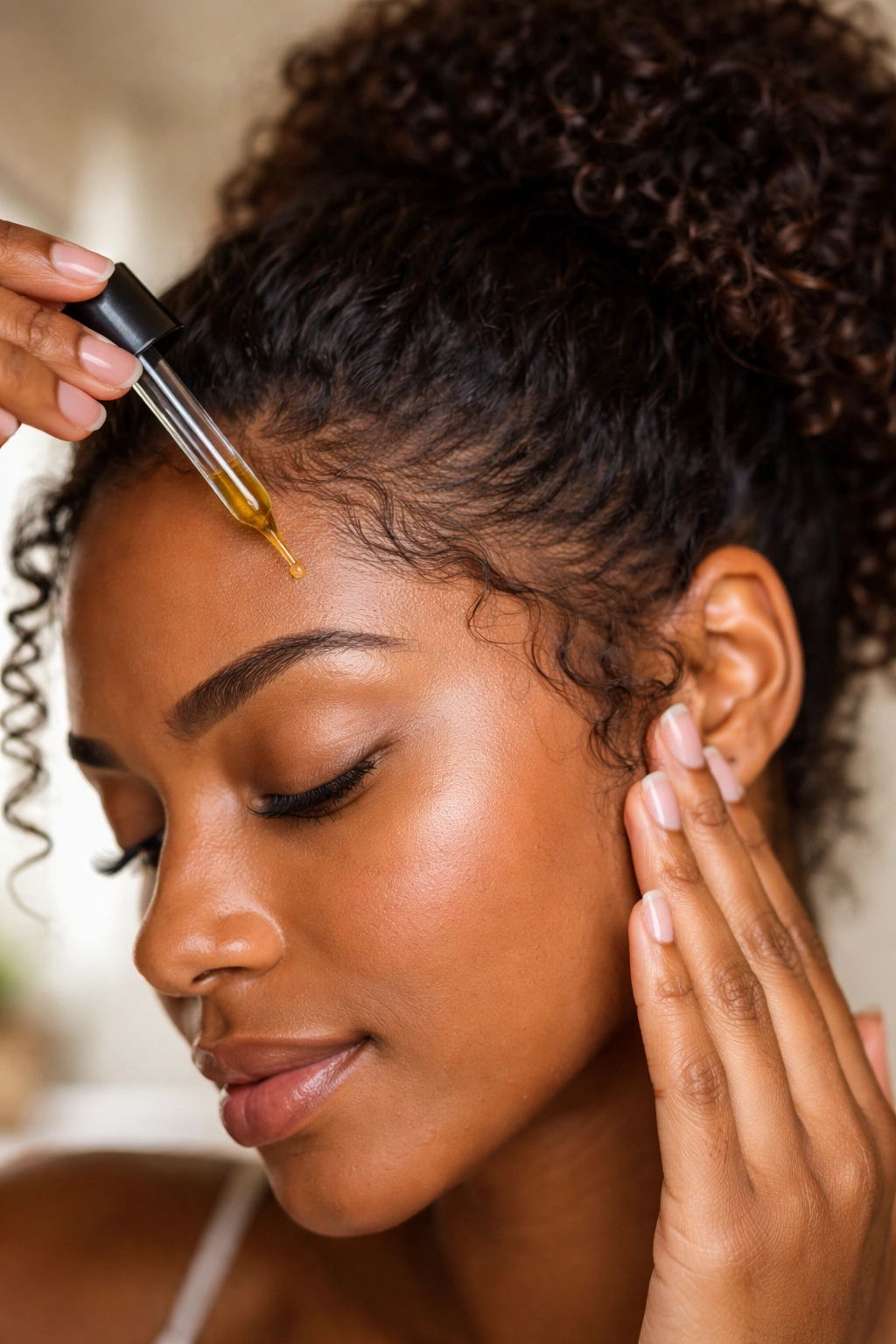
It bears repeating because it matters that much: edge care is not optional for regular ponytail wearers. The hairline is one of the most fragile parts of your scalp — the hairs there are finer, shorter, and more vulnerable to tension and breakage than the rest of your hair.
Avoid gels and edge controls with high alcohol content, which can dry out fine edges over time. Use a scalp oil or treatment at the hairline several times a week. Never pull a ponytail so tight that you feel tension in your scalp — that pulling sensation is a warning sign, not a sign that the style is secure.
When to Give Your Hair a Ponytail Break
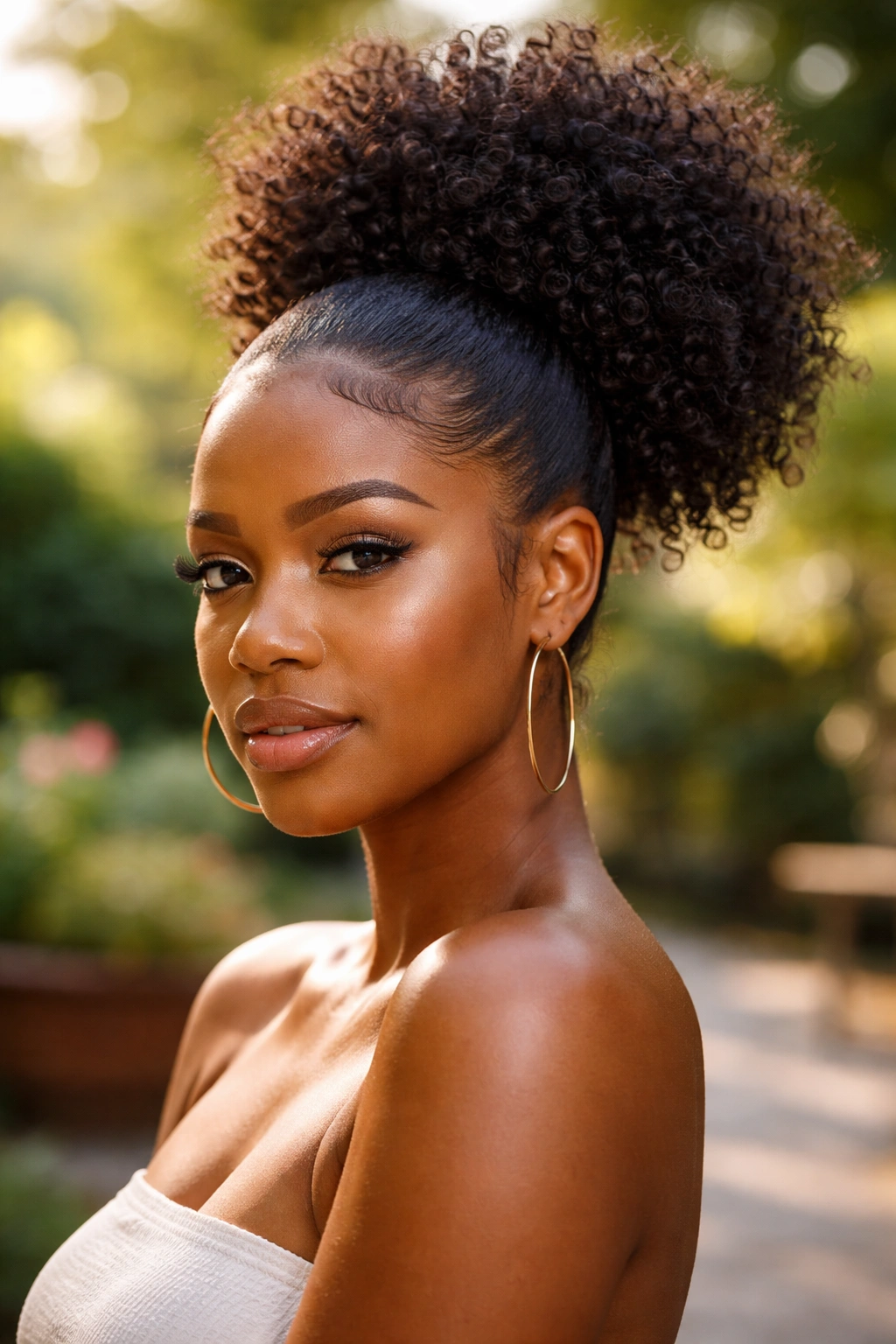
Even a properly done, properly moisturized, edge-safe ponytail can cause damage if worn every single day without a break. Your hair needs time in low-manipulation styles — loose wash-and-gos, bantu knots, twist-outs worn down — where there’s no constant tension at any point on the strand.
A good rule of thumb: wear ponytails no more than four days a week, and vary the placement. A high ponytail one day, a low one the next, a side ponytail after that. This distributes any tension across different parts of the scalp rather than concentrating it at one spot.
Nighttime Care for Your Ponytail Style
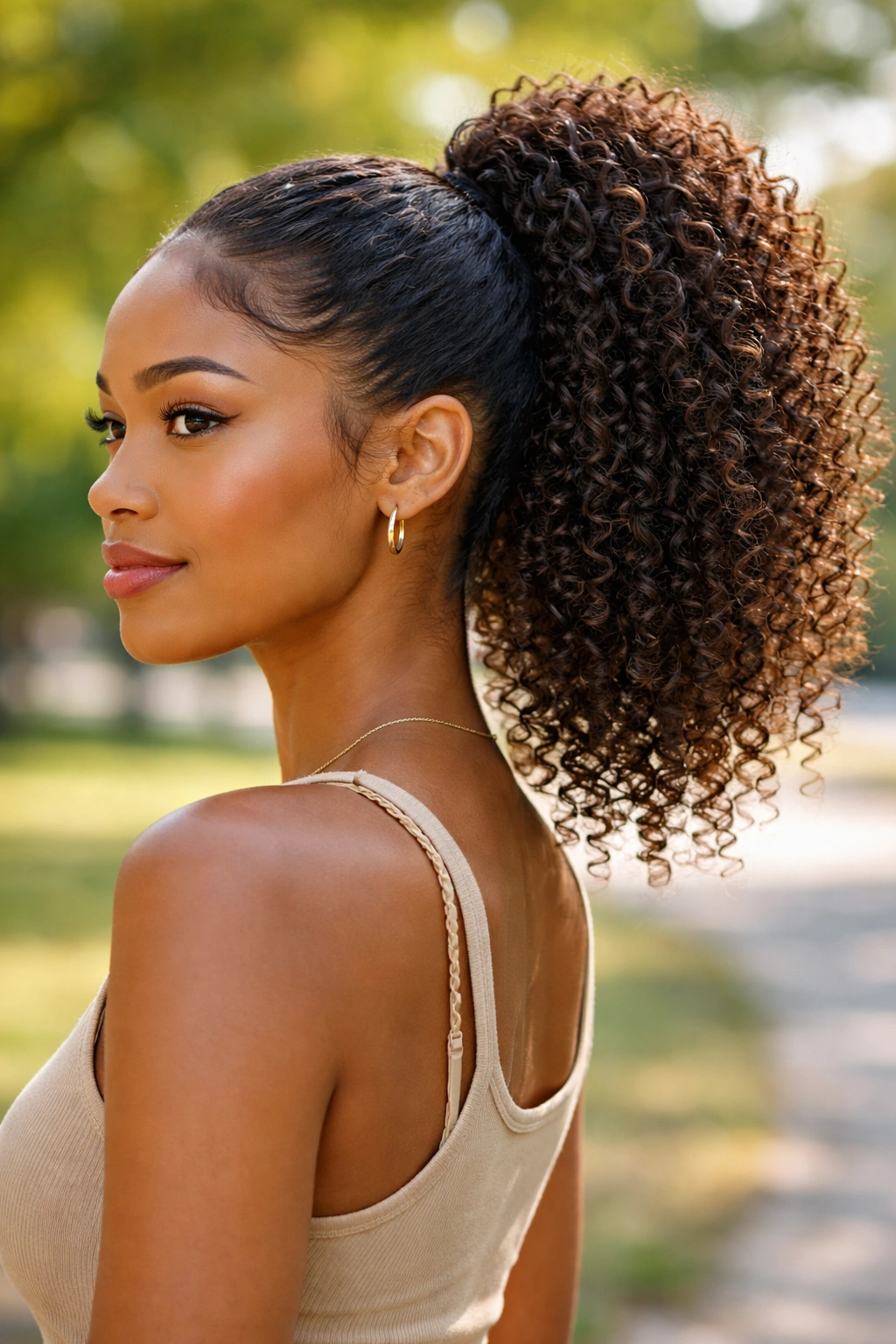
A curly ponytail doesn’t have to be taken down every night. Wrapping the ponytail loosely in a satin scarf before bed, or tying the whole thing into a loose pineapple on top of the satin scarf, preserves the style for the next day. A satin pillowcase provides secondary protection if the scarf slips during sleep.
In the morning, a light spritz of water and a small amount of curl cream refreshes any frizz or flattened spots. Smooth edges with a tiny amount of fresh gel if needed. The style should hold for two to three days with this kind of maintenance.
The Ponytail As a Canvas
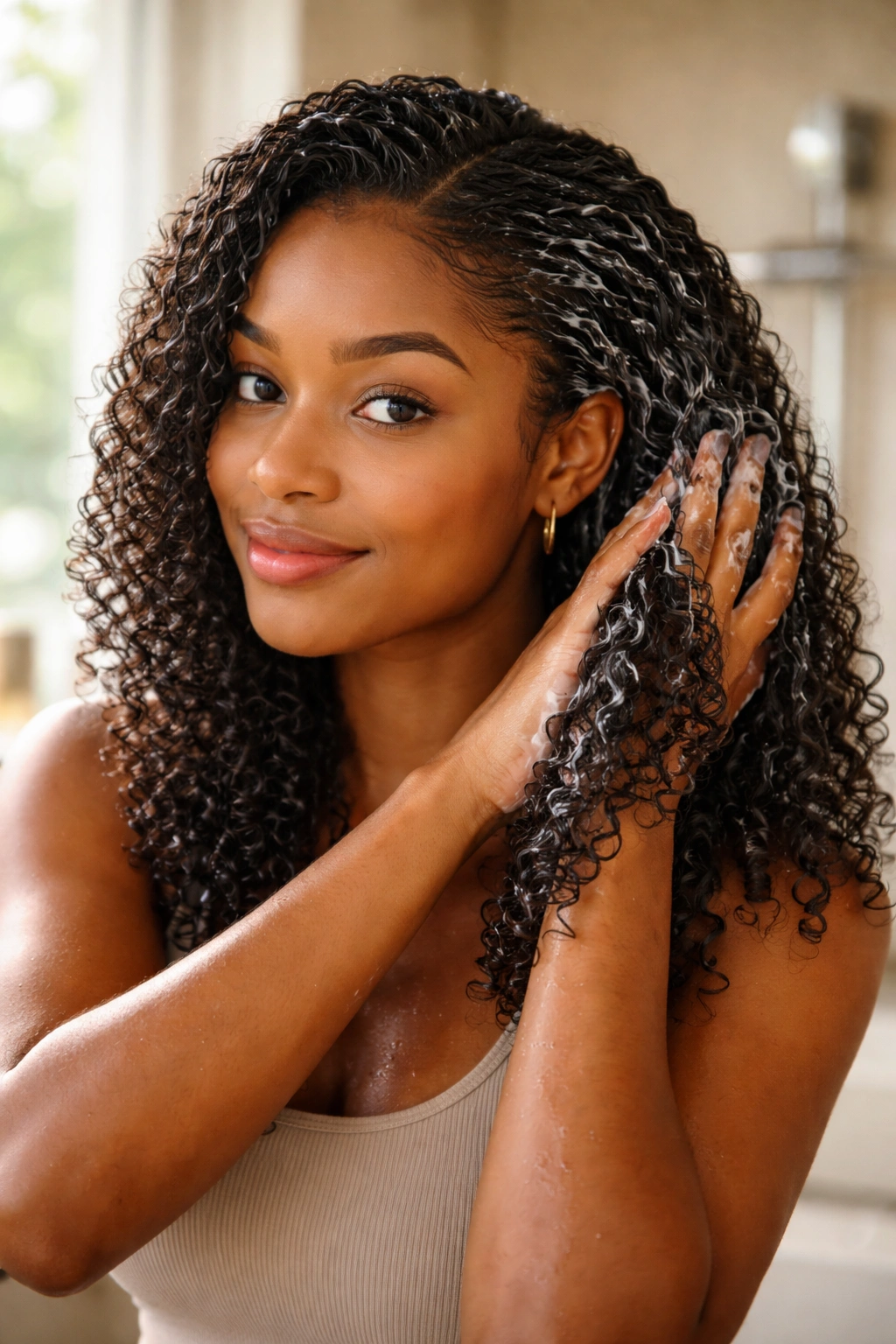
What these 24 styles show is that the ponytail isn’t a lazy default — it’s a canvas. The shape, height, texture, accessories, and technique are all variables you control. And natural curly hair gives you more variables to work with than any other hair type.
Every curl pattern brings something different. Every technique pulls something new out of the hair. The 24 styles above are starting points — what you do with your specific texture, your tools, and your creativity is the real style.