


Decorating a room with afro boho flair without draining your savings is more about knowing where to look than how much to spend. I’ve pulled together rooms for friends, redone my own living space twice, and helped my sister turn a studio apartment into something that felt like a West African gallery — all on budgets that would make an interior designer clutch their pearls.
The secret isn’t shopping cheap. It’s shopping smart, mixing textures deliberately, and knowing which pieces deserve the spend and which ones you can fake beautifully.
Afro boho decor pulls from West African textile traditions, Moroccan layering, Ethiopian wood carving, and a global bohemian looseness that lets everything coexist. The style thrives on imperfection. Symmetry isn’t the goal. Stories are.
What Afro Boho Actually Means
The phrase gets thrown around loosely, so let me pin it down. Afro boho is the meeting point of African heritage aesthetics — wax prints, mud cloth, beaded textiles, carved wood, woven baskets — and bohemian style, which embraces layering, pattern mixing, plants, and handmade objects.
It’s not about buying everything at once. It’s about collecting over time. A room that looks afro boho usually has pieces from four or five different sources, maybe more, gathered across months or years.
What makes it work on a budget is that the style inherently values handmade, secondhand, and imperfect. A thrifted rattan stool fits right in. A slightly-chipped brass bowl from a flea market looks intentional. Flawless matching furniture sets actually fight the aesthetic — they make the room feel sterile.
The Budget Framework That Actually Works
Before shopping for a single item, decide on your spending priorities. Most rooms benefit from putting 40 percent of the budget into one hero piece, 30 percent into textiles, 20 percent into smaller decor, and 10 percent into plants and living details.
The hero piece is usually one large item — a rug, a statement chair, a carved wooden bed frame, or a big piece of wall art. Textiles cover pillows, throws, curtains, and upholstery refresh. Smaller decor covers baskets, bowls, small sculptures, and picture frames. Plants bring life and movement.
Skip the temptation to buy a dozen small items at once. One good rug will do more for the room than twenty cheap trinkets.
Where to Actually Find the Good Stuff
Thrift stores are underrated. Flea markets are gold. Online marketplaces with “local pickup” filters will save you hundreds on rattan furniture and wood pieces. Estate sales in older neighborhoods often have brass, wood, and textiles priced to clear.
Avoid chain home stores for anything meant to look authentic — their mass-produced “global inspired” pieces are usually poorly made and obviously fake. But those same stores can be useful for basics like plain neutral curtains or simple picture frames.
Online, look for small African importers who ship directly from artisans. The prices are often lower than the mass market, and the quality is significantly better.
Starting With What You Already Own
Before spending anything, walk through your space and note what you already have that could work. Wood furniture in natural tones. Anything in rattan, wicker, or bamboo. Brass or copper items. Plants. Books with earthy-colored spines.
These pieces are your foundation. The new additions will layer on top.
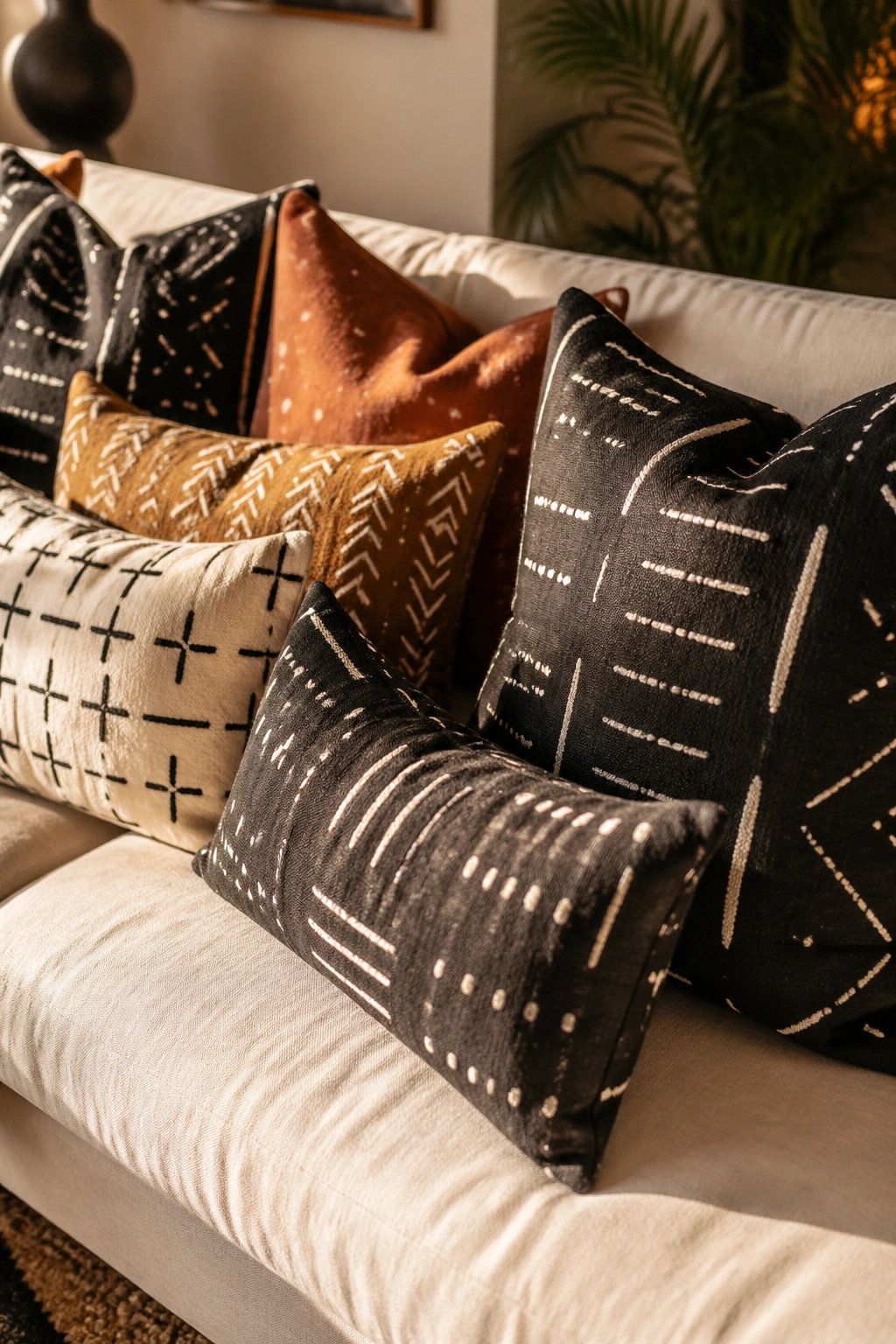
1. A Hand-Loomed Mud Cloth Throw Pillow Collection
Why It’s Worth It
Mud cloth — bogolanfini — is a Malian textile made from cotton, dyed with fermented mud and plant pigments. The traditional patterns carry meaning: lines for birth, circles for protection, zigzags for travel. A set of mud cloth pillows is the single fastest way to transform a plain sofa.
- Buy pillow covers only, not inserts — saves 60 percent on cost
- Look for authentic pieces with slight irregularities in the pattern
- Aim for three to five pillows in mixed sizes: two 20-inch, two 18-inch, one lumbar
- Mix mud cloth with solid linen pillows to avoid over-patterning
Budget move: authentic mud cloth pillow covers run $15-25 online from importers. The mass-market versions at chain stores cost twice as much and look flat.
2. Repurposed Vintage Baskets on the Wall
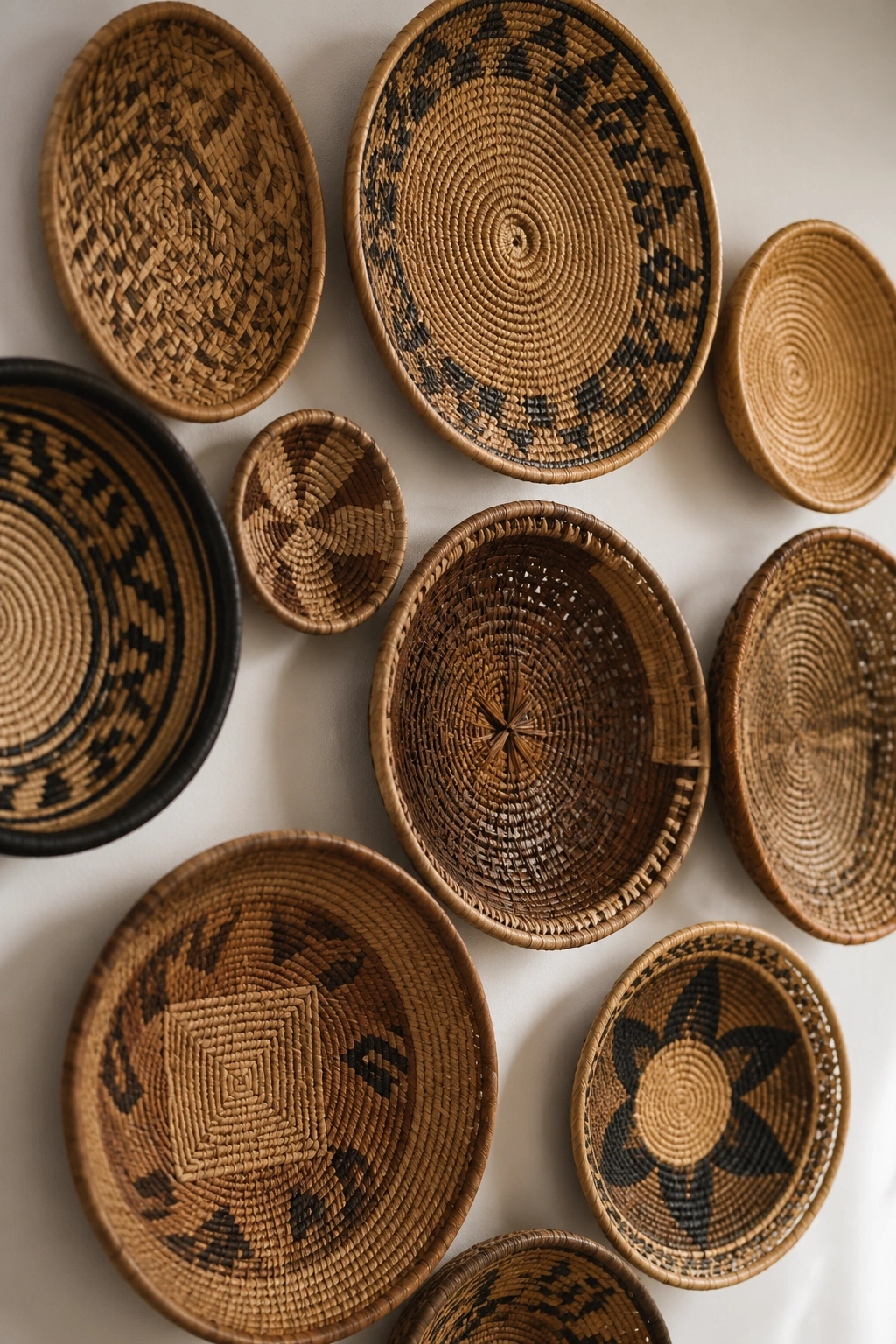
Woven baskets mounted as wall art cost almost nothing if you source them secondhand. Thrift stores often sell them for $2-5 each. A cluster of 8-12 baskets in different sizes — some round, some oval, some shallow, some deep — creates an installation that reads intentional and layered.
Arrange them asymmetrically. The point isn’t to make a perfect grid. Let the shapes overlap, vary the spacing, and hang them at different heights.
Use small nails or picture hooks. Baskets weigh almost nothing, so the mounting is easy. This trick works in any room — living room walls, bedroom above a bed, entryways, even hallways that need attention.
3. A Kente-Inspired Accent Wall
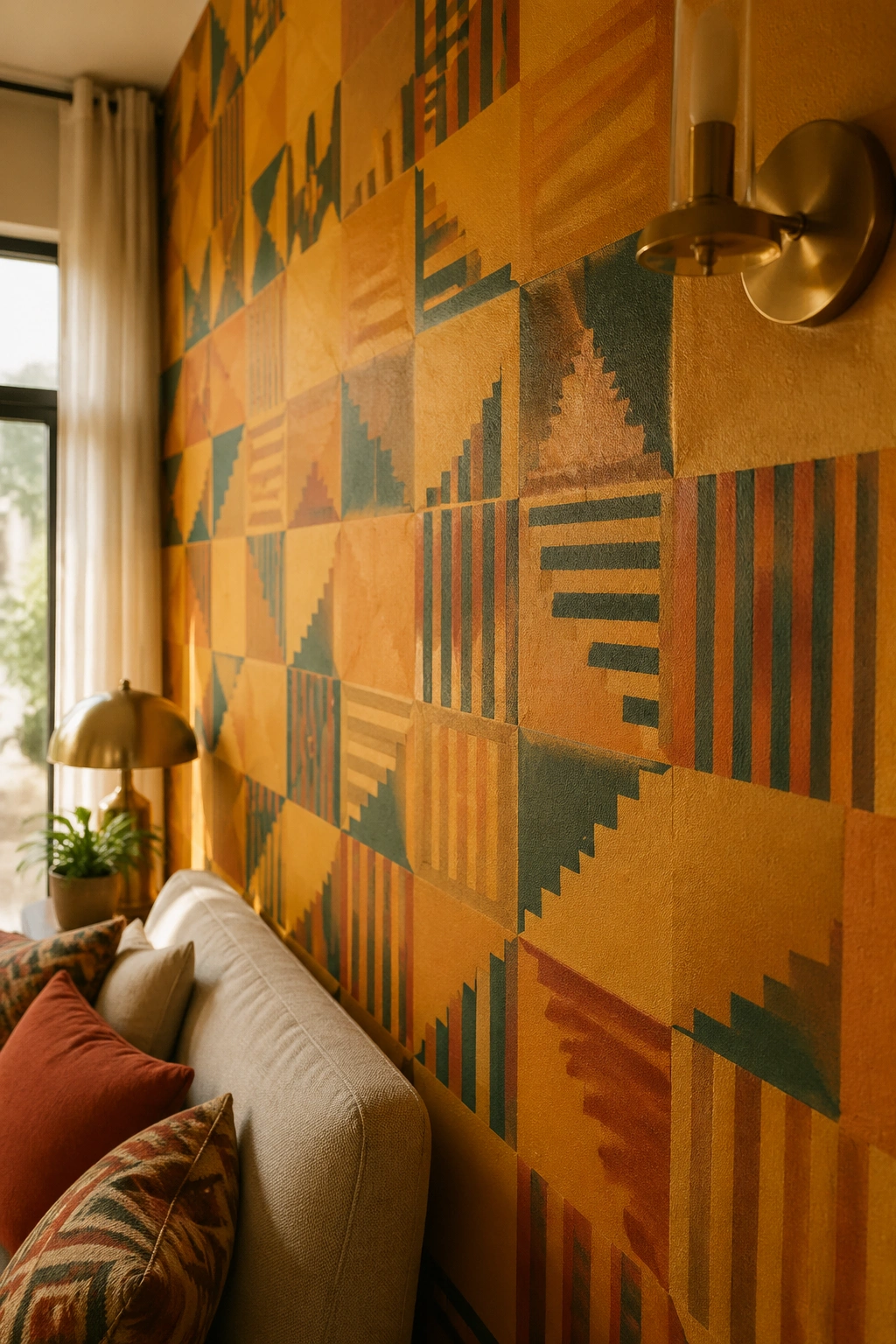
Painting one wall in a deep mustard, rust, or terracotta color is the cheapest way to shift the entire mood of a room. Kente cloth inspires the palette — rich golds, deep reds, forest greens, and saturated browns.
A gallon of quality paint runs around $40 and covers roughly 350 square feet. One accent wall uses less than half. The commitment is low, the impact is high.
Pair the accent wall with gold or brass hardware nearby for cohesion. Swap out plain door handles for brass ones. Add a brass floor lamp. Little metallic echoes tie the color into the rest of the room.
4. Carved Wooden Figurines as Bookshelf Styling
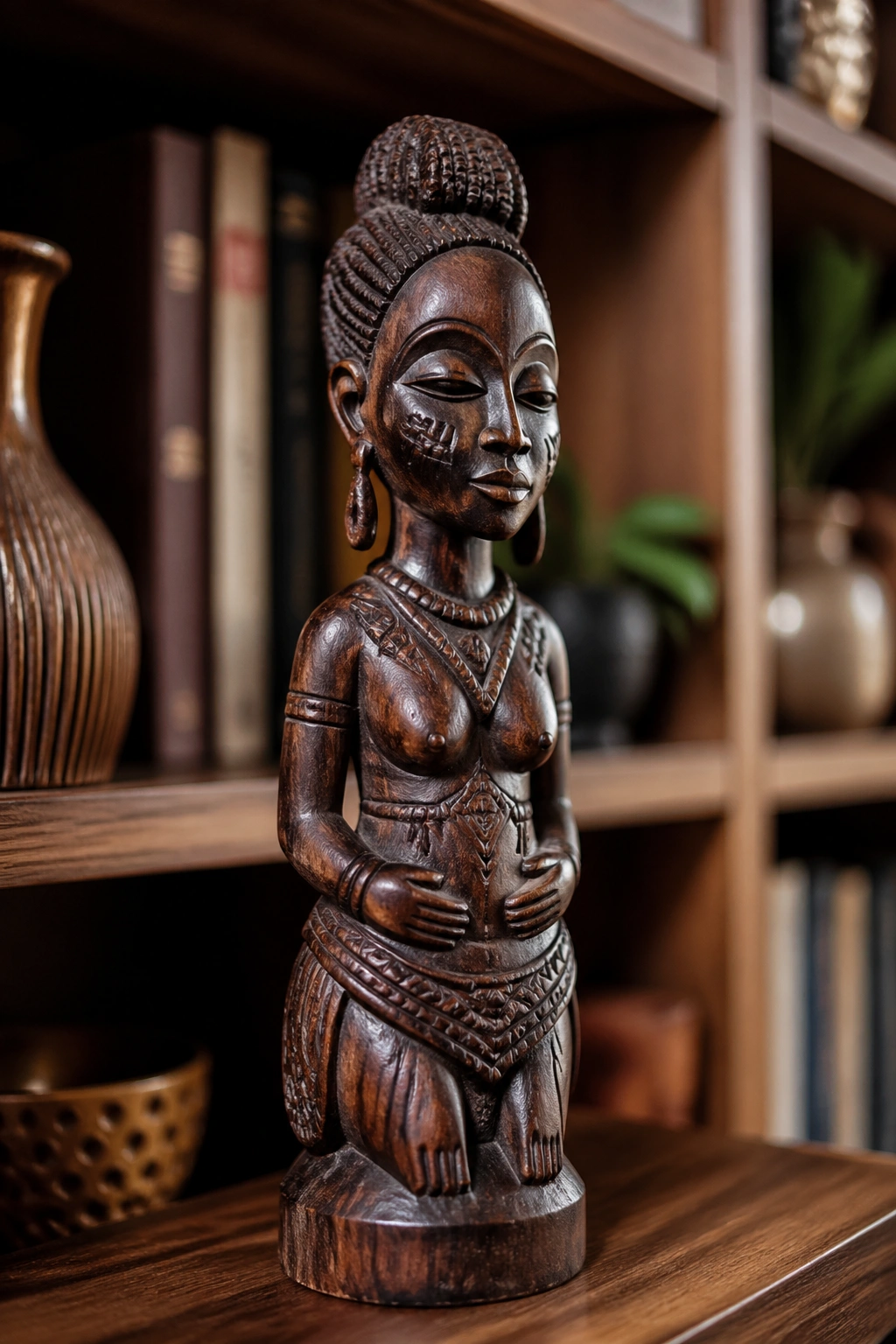
Unlike generic bookends or ceramic knickknacks, carved wooden figurines from West or East Africa carry weight and intention. They make a bookshelf look curated rather than cluttered.
What’s different about sourcing them: estate sales and antique stores often have them for under $15, especially if the seller doesn’t know their origin. Online, small importers sell them for $20-40 depending on size and craftsmanship.
Best for: open shelving, mantels, and side tables. Avoid cramming them together. Give each piece breathing room so the details show.
5. Jute Rugs as a Budget Layer Base
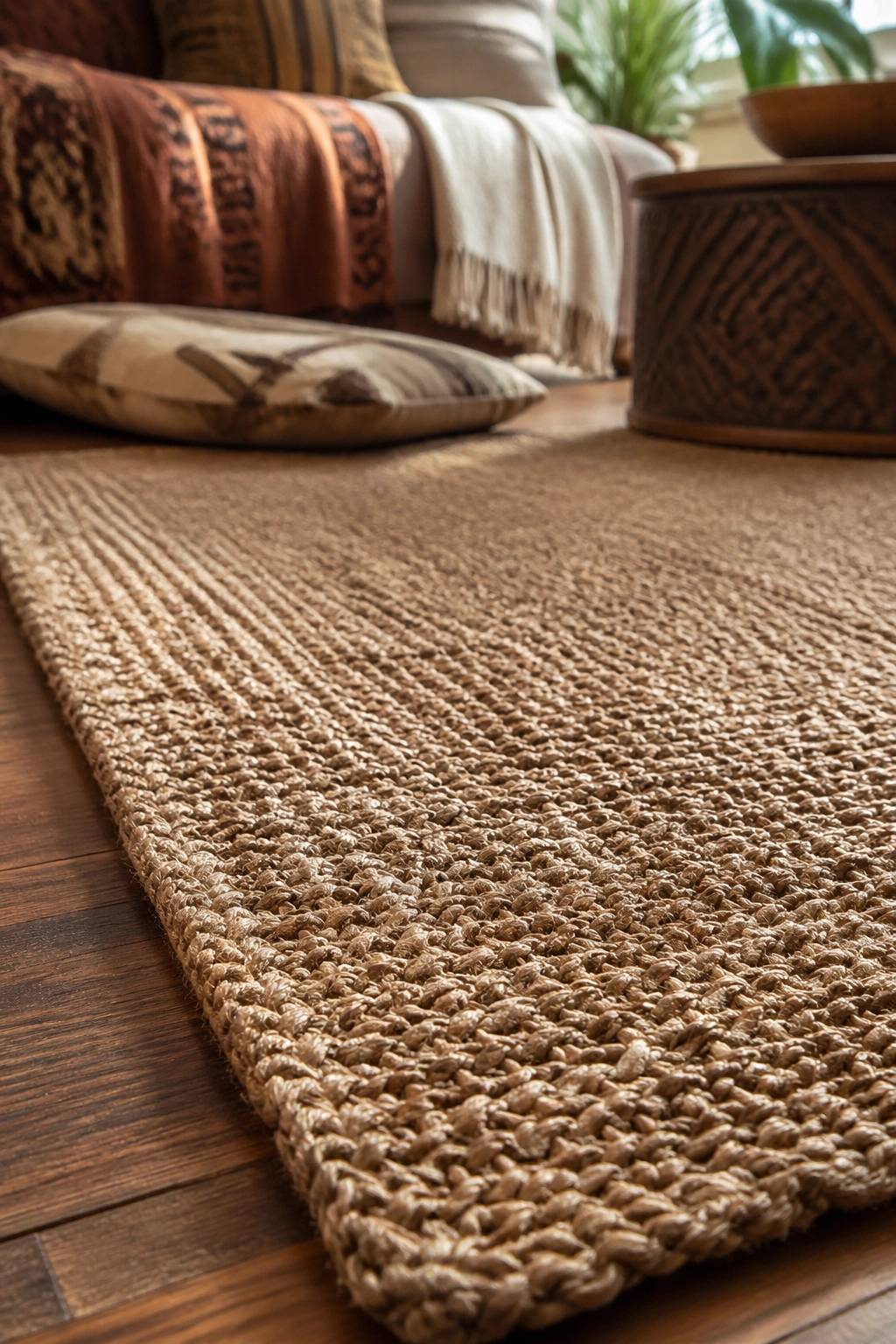
Large jute rugs serve as the anchor for layered rug styling — a technique that makes small spaces feel bigger and plain spaces feel collected. A 9×12 jute rug runs $150-250, which is the lowest cost per square foot you’ll find for a natural-fiber rug this size.
Layer a smaller patterned rug on top — a vintage kilim, a Beni Ourain reproduction, or a bold geometric. The jute shows around the edges and grounds the whole look.
Jute sheds at first. Vacuum it twice a week for the first month, and then the shedding calms down.
6. DIY African Wax Print Curtains
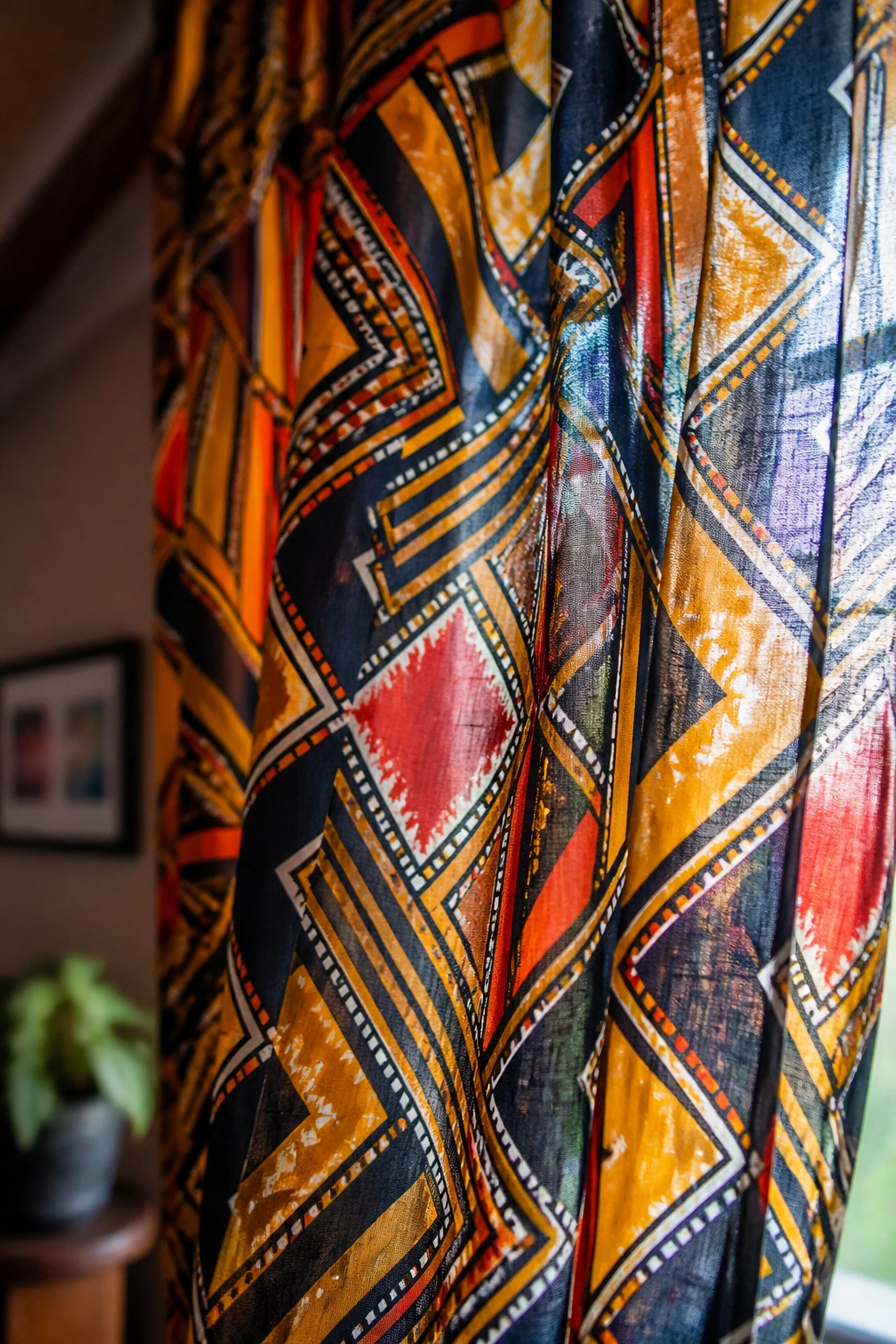
Have a friend with a sewing machine? Authentic wax print fabric costs $4-8 per yard at African fabric markets and online importers. Basic curtains need about 6 yards per panel for a standard window.
The sewing is straightforward — hem the sides, add a rod pocket at the top, hem the bottom. No lining needed for a casual look. If you don’t sew, most fabric stores will hem panels for $10-15 each.
Cost breakdown: 12 yards of fabric at $6 = $72. Sewing service = $30. Total for a full window treatment: around $100. Compare that to store-bought printed curtains at $150-250 per panel.
7. Thrifted Rattan Peacock Chair
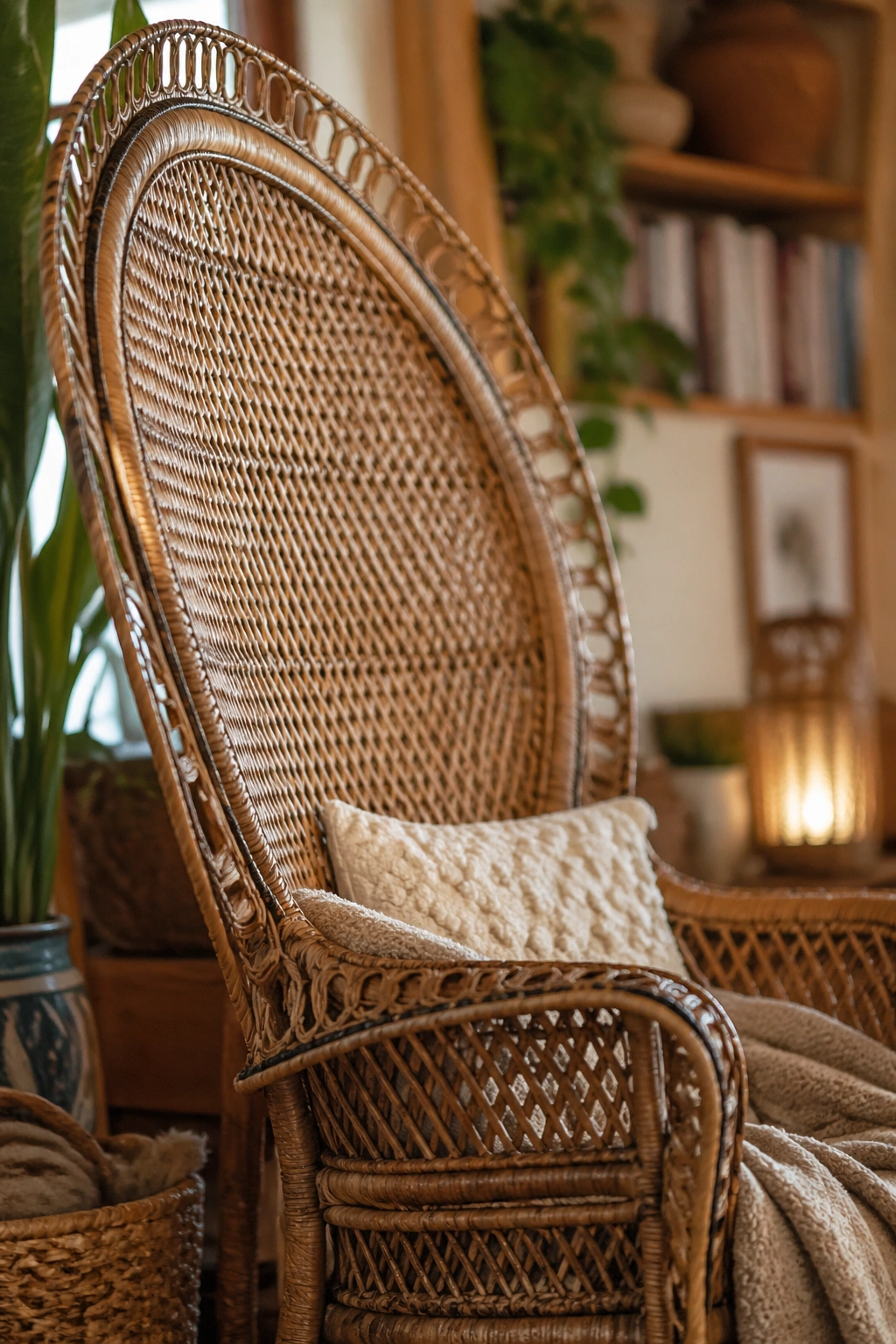
The peacock chair is a vintage icon that shows up constantly in thrift stores and estate sales, often for $30-80. A good one, cleaned up and paired with a textile throw, becomes the hero of a reading nook or bedroom corner.
Inspect the rattan carefully before buying — some repair is fine, but broken frames are hard to fix. Light cleaning with warm water and a soft brush removes years of dust. If the finish is faded, a coat of clear matte polyurethane restores the glow without changing the color.
Not the most comfortable chair for extended sitting, but as a styling piece, few things do more.
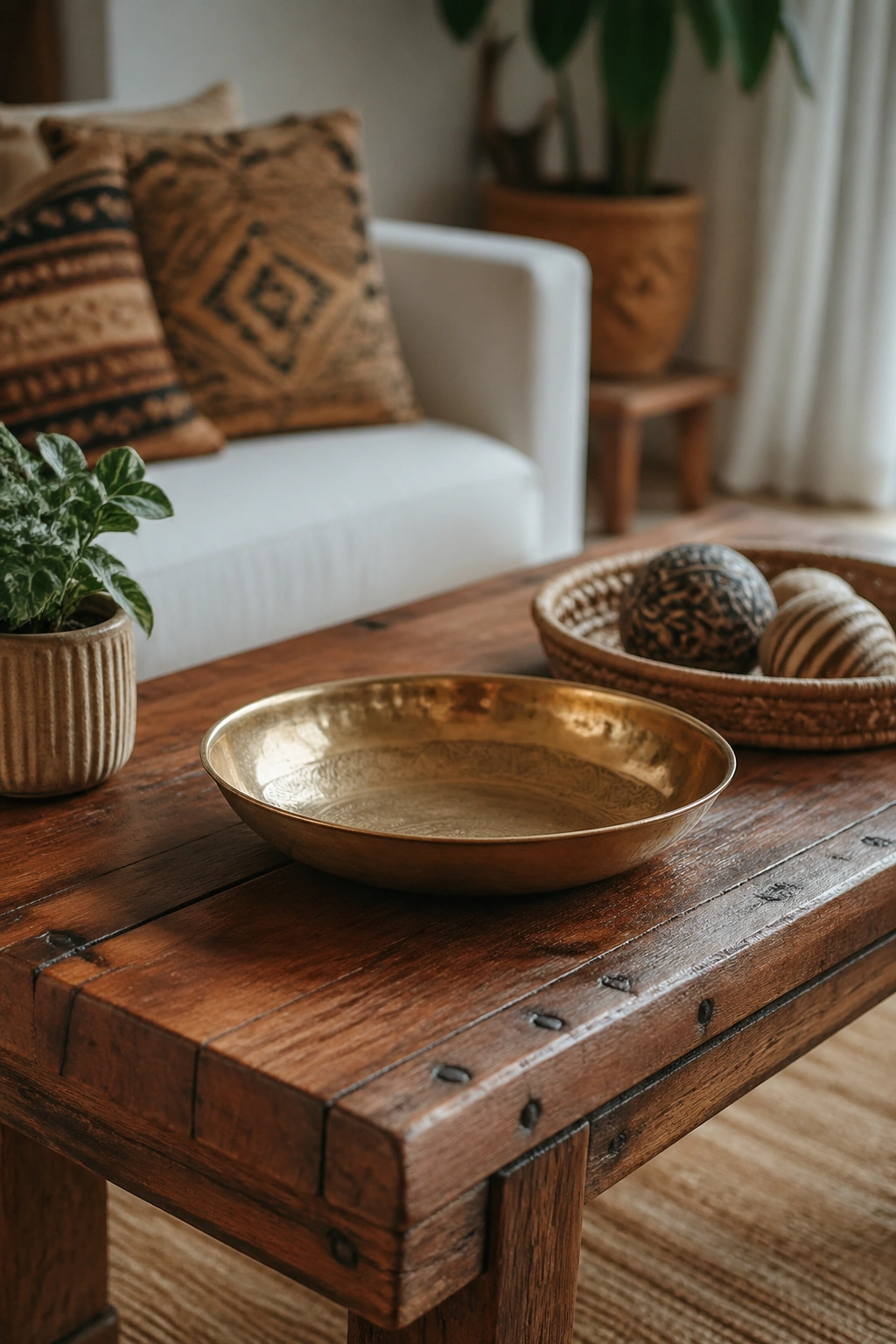
8. Brass Tray Tables From Estate Sales
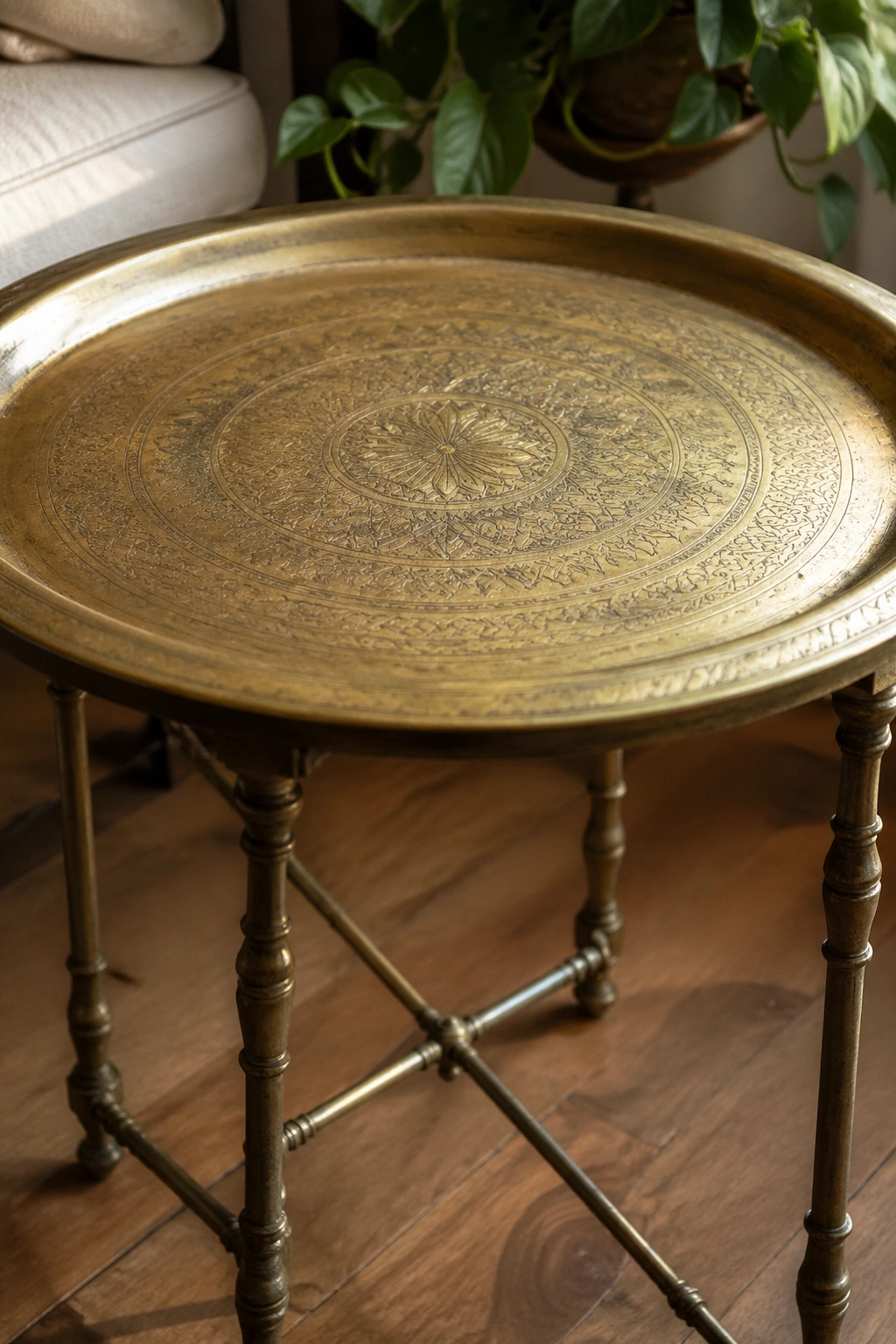
Is there anything more useful than a brass tray table? They work as side tables, coffee tables, plant stands, and drink tables all at once. Estate sales and flea markets often sell them for $25-75, depending on size and condition.
Look for authentic brass, not brass-plated. The difference: real brass develops a patina over time that adds character. Plated pieces chip and show the cheap metal underneath.
How to Clean Them
Wipe with a mixture of lemon juice and baking soda to remove tarnish. Leave the patina in the crevices — it’s what gives the piece its age and depth.
9. Macramé Wall Hangings
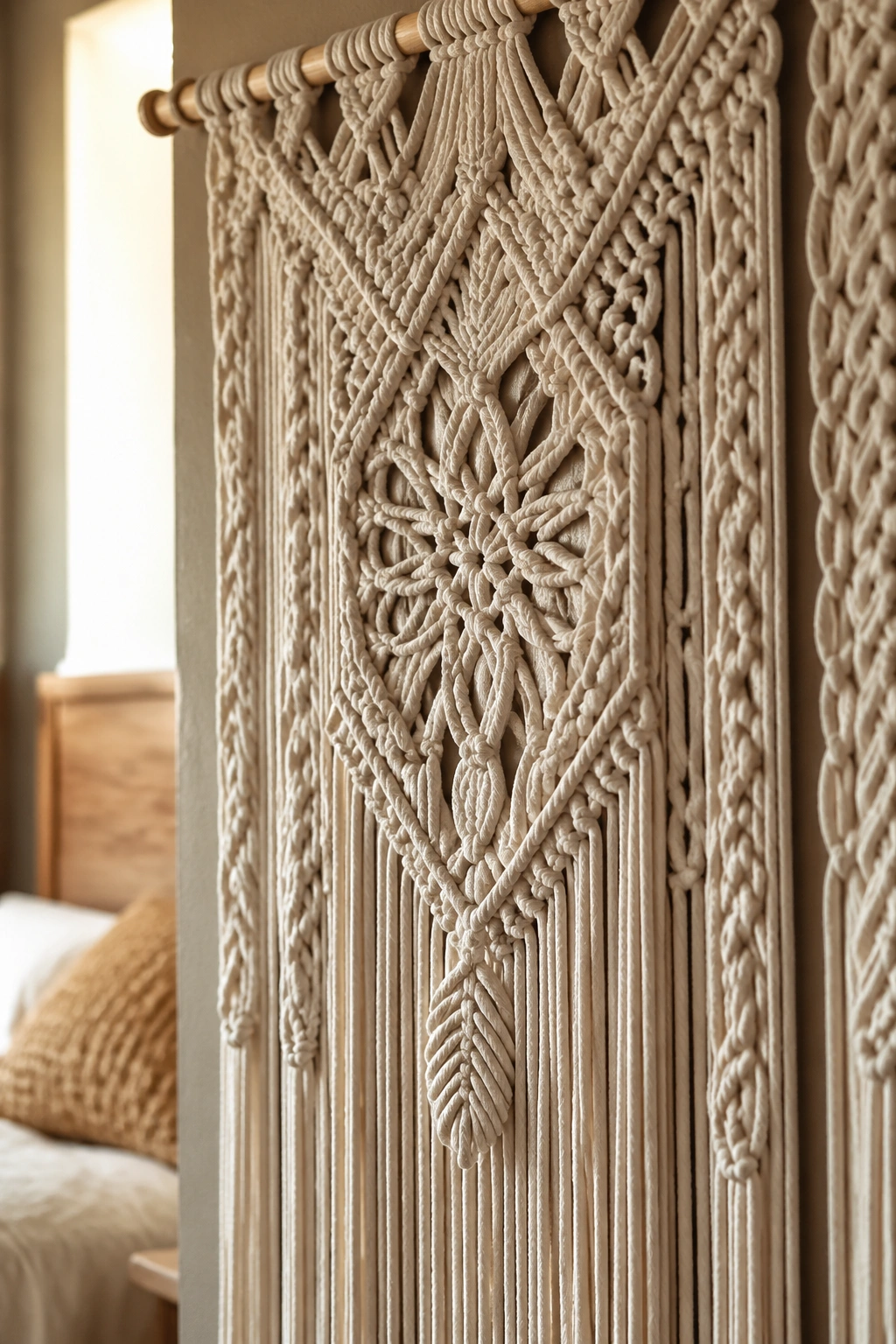
Macramé has boho roots but works beautifully in afro boho when paired with warmer textiles and wood tones. Simple pieces cost $20-40 at craft fairs or online. Making your own is also genuinely easy — basic knotting tutorials are free, and a $15 bundle of cotton rope produces multiple hangings.
Go for natural, off-white cotton rope rather than dyed versions. The natural tone plays better with the warmer palette of mud cloth and brass.
Hang over a bed, above a console table, or in an empty corner where you need softness and texture.
10. Secondhand Leather Poufs
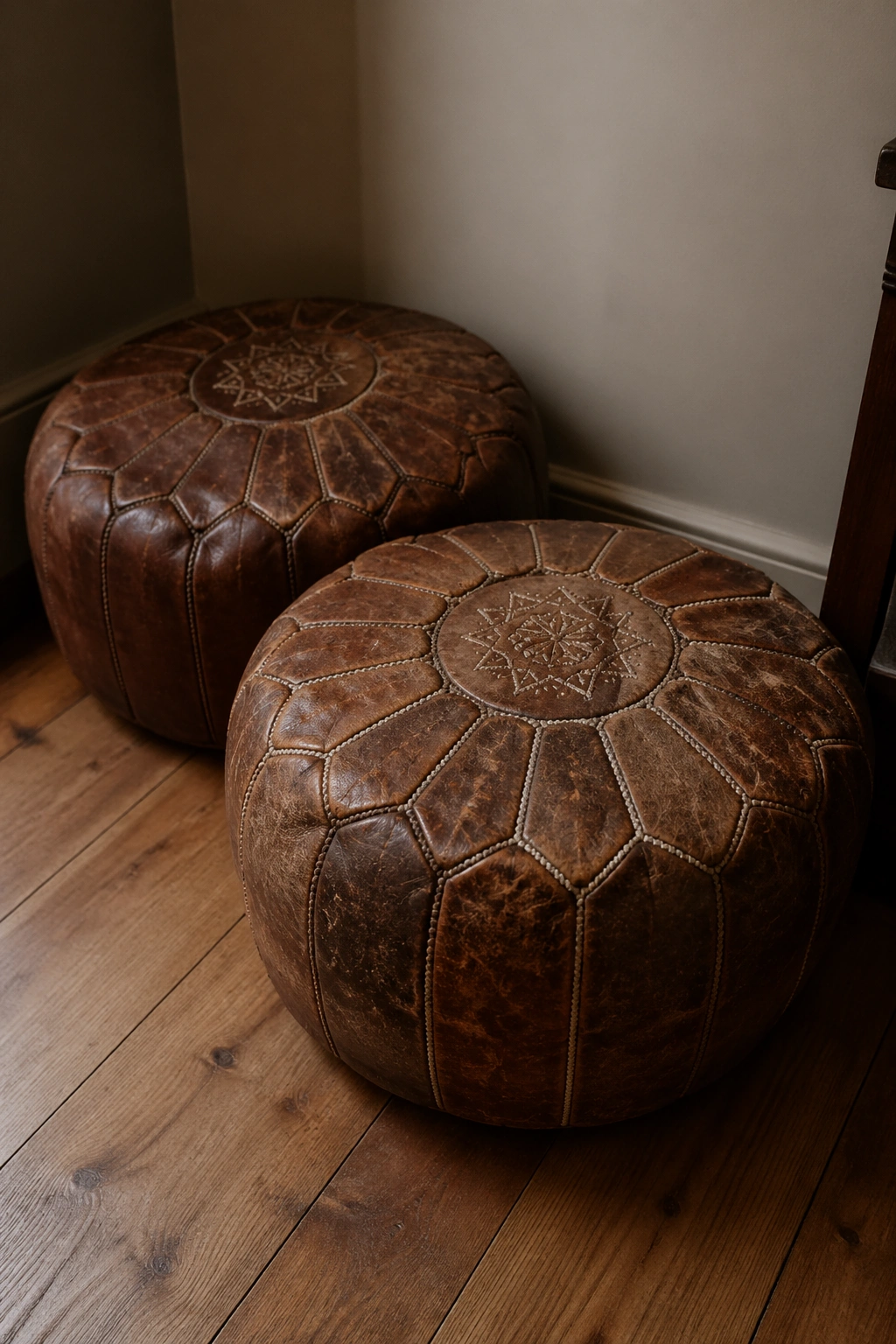
Moroccan leather poufs are expensive new — often $150-300. Secondhand, they run $30-80 and often develop the beautiful worn patina that new ones are trying to fake.
Check the stitching before buying. If the seams are holding up, the pouf will last for years. If the leather is cracking, skip it.
Poufs work as extra seating, footrests, side tables, or plant stands. Two in a corner create a casual conversation space that reads lived-in.
11. Framed Fabric as Wall Art
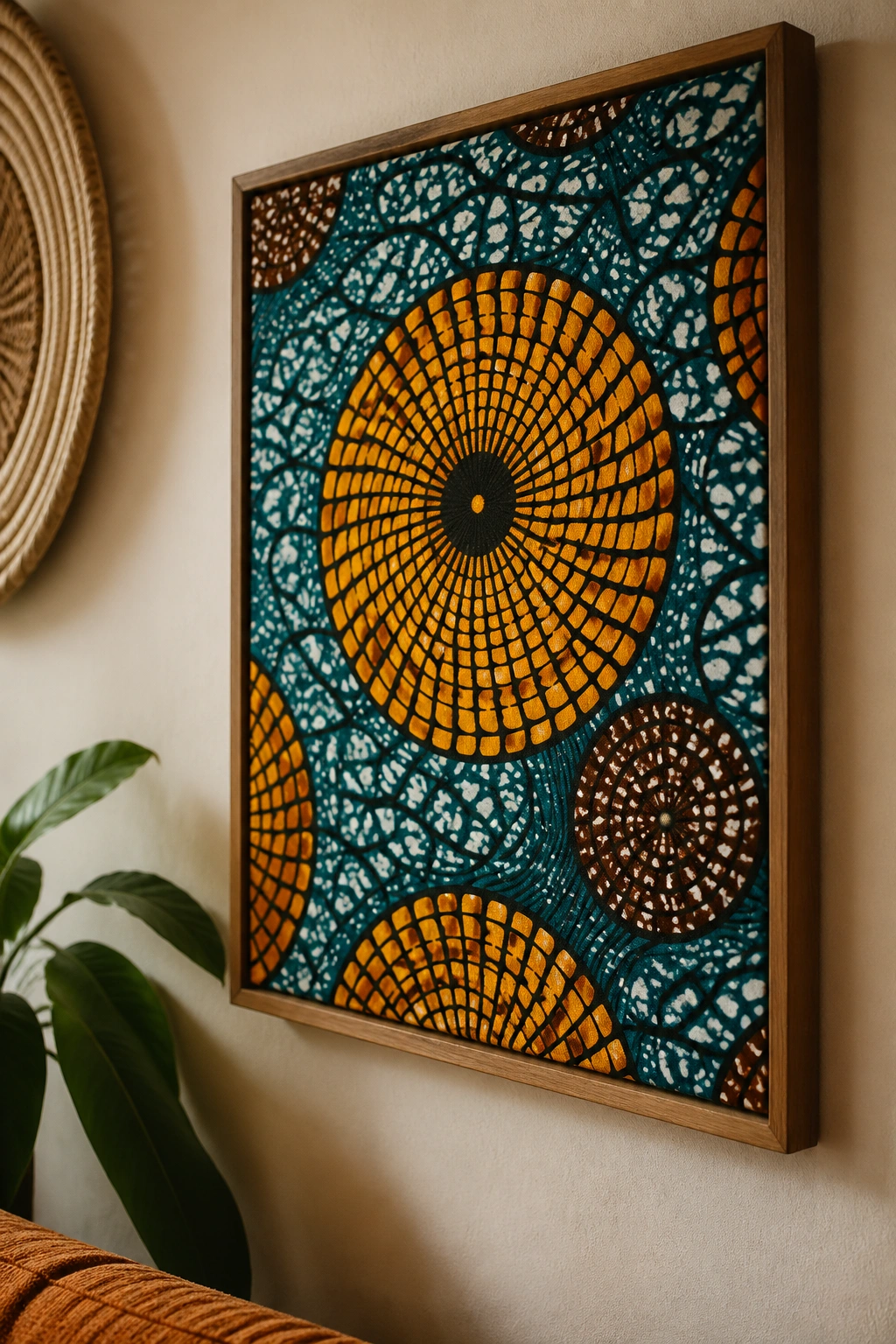
A single yard of beautiful wax print fabric, stretched over a canvas frame, becomes wall art for under $25. The frame costs $10-15 at craft stores. The fabric costs $4-8. The labor is fifteen minutes.
The result reads like gallery art. People assume you paid $150 for it.
Stretch the fabric over the frame, fold the corners neatly, staple the back. Add a thin wooden frame around it if you want a more polished look.
12. Plant Combinations That Match the Aesthetic
What Makes Them Fit
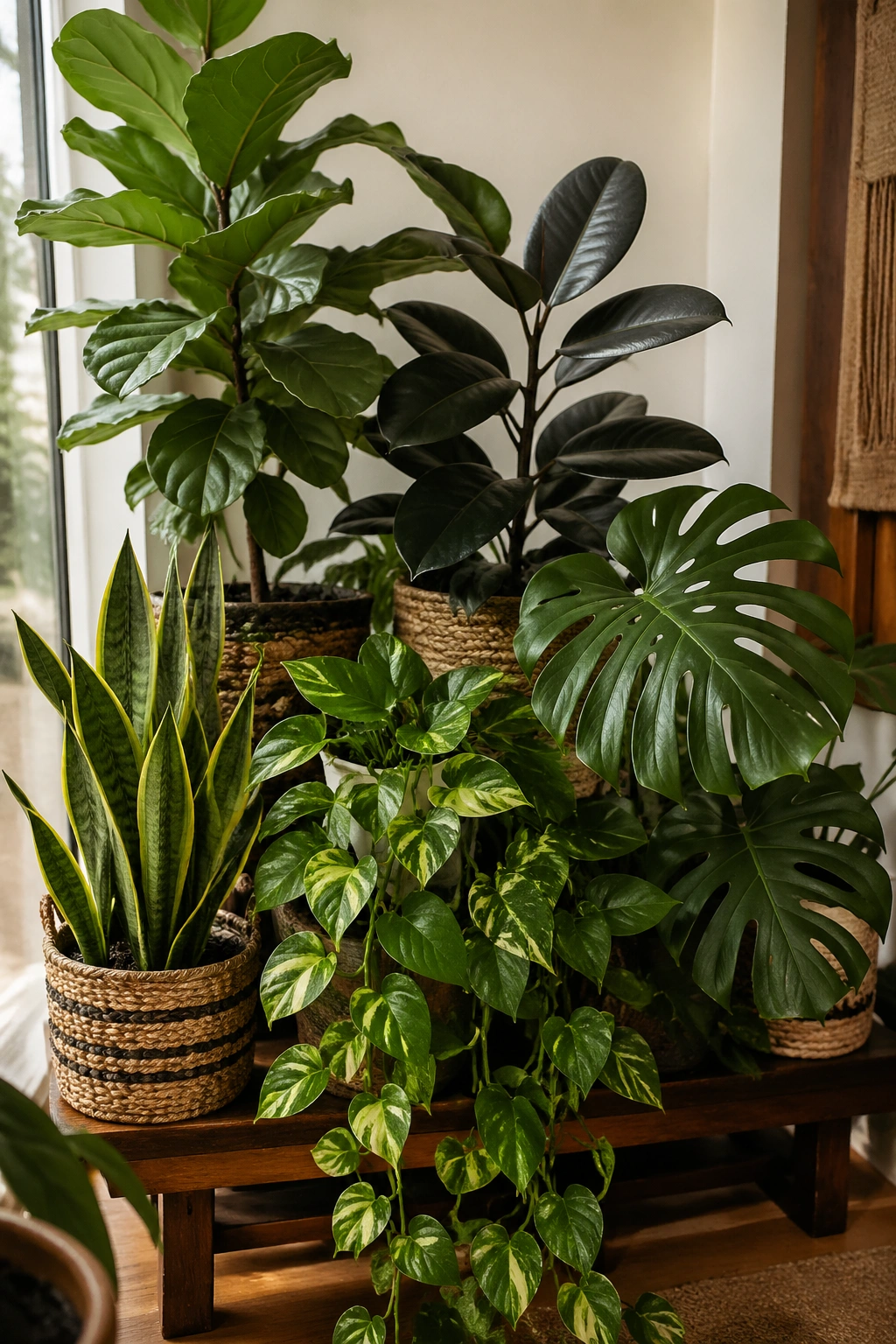
Plants pull the whole look together, but not every plant works. Succulents feel modern. Ferns feel too English cottage. The plants that sing in afro boho rooms are the dramatic, architectural kinds.
- Fiddle leaf fig or rubber plant for height
- Snake plant for structure
- Monstera for drama
- Palm varieties for softness
- String of hearts or pothos for trailing
Budget tip: propagate from friends. A single cutting becomes a full plant within months. Swap cuttings instead of buying new.
13. DIY Beaded Curtains
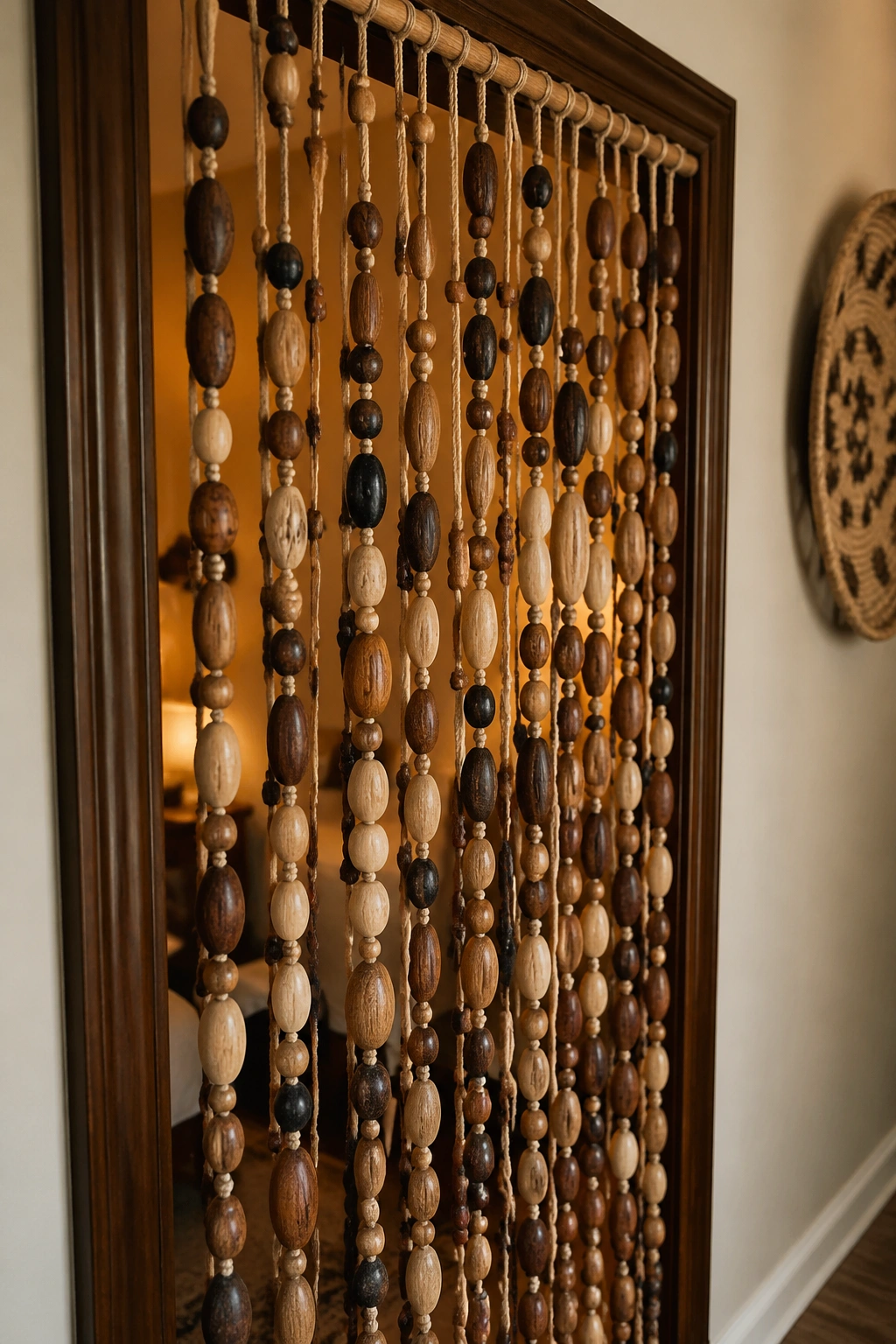
Beaded curtains carry a specific energy — bold, tribal-inspired, unmistakably boho. Making your own with wooden beads and jute cord costs around $40 for a doorway-size piece. Store-bought versions of comparable quality run $100-200.
Use large wooden beads, around 20mm in diameter. Vary the spacing for visual interest. Thread them onto jute cord cut to the height of your doorway plus six inches.
The sound of wooden beads as you walk through is part of the appeal.
14. Clay and Terracotta Pottery
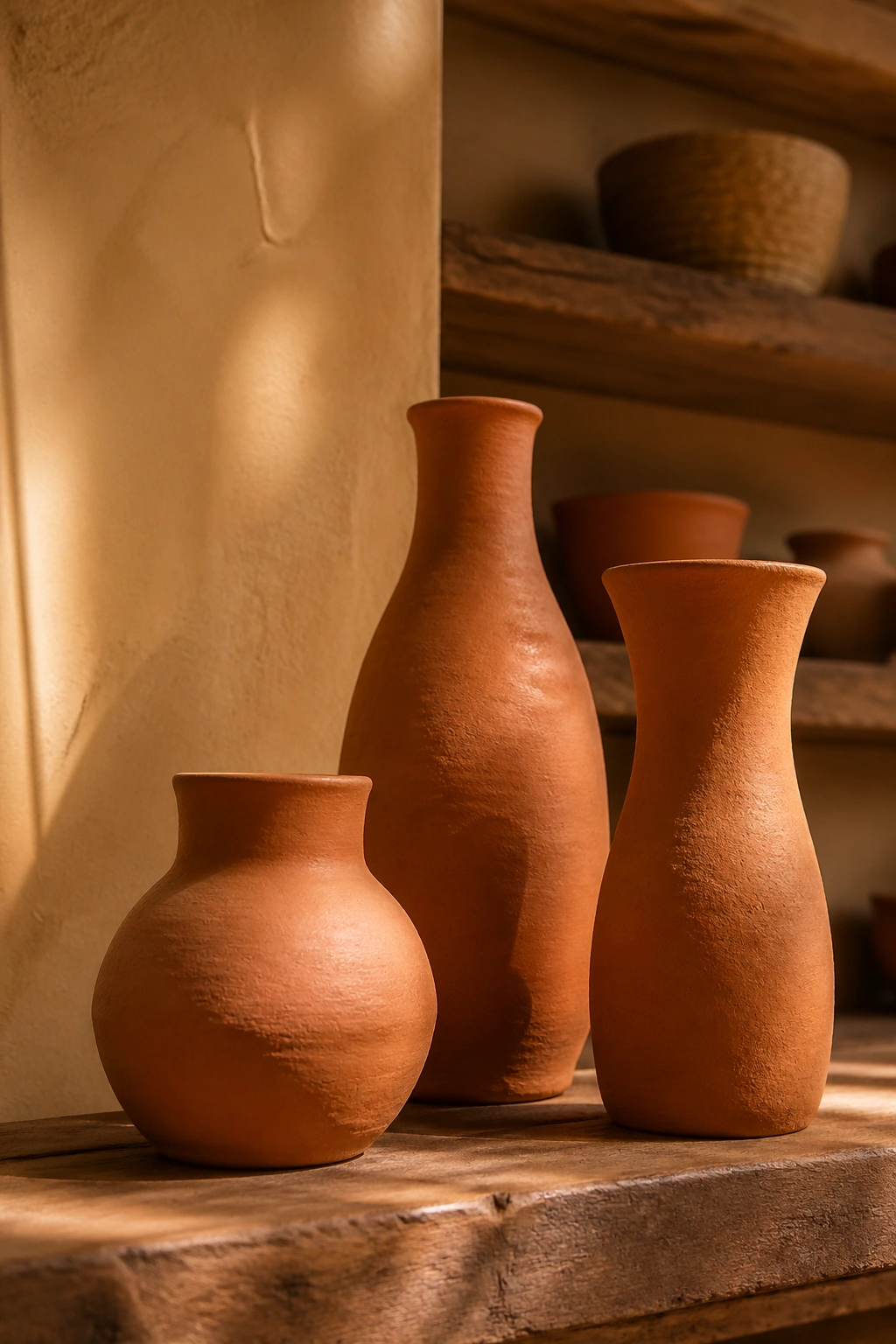
Unlike glazed ceramics that reflect light harshly, unglazed terracotta and hand-formed clay pottery absorb light and ground the space. Thrift stores sell them cheap — often $1-5 per piece.
Group them in odd numbers on shelves or mantels. Three pieces of varying heights. Five pieces of similar size but different textures. The imperfect finishes are the point.
Best for: mantels, open kitchen shelves, coffee table centers, and plant pot replacements.
15. Vintage Kilim Accent Pieces
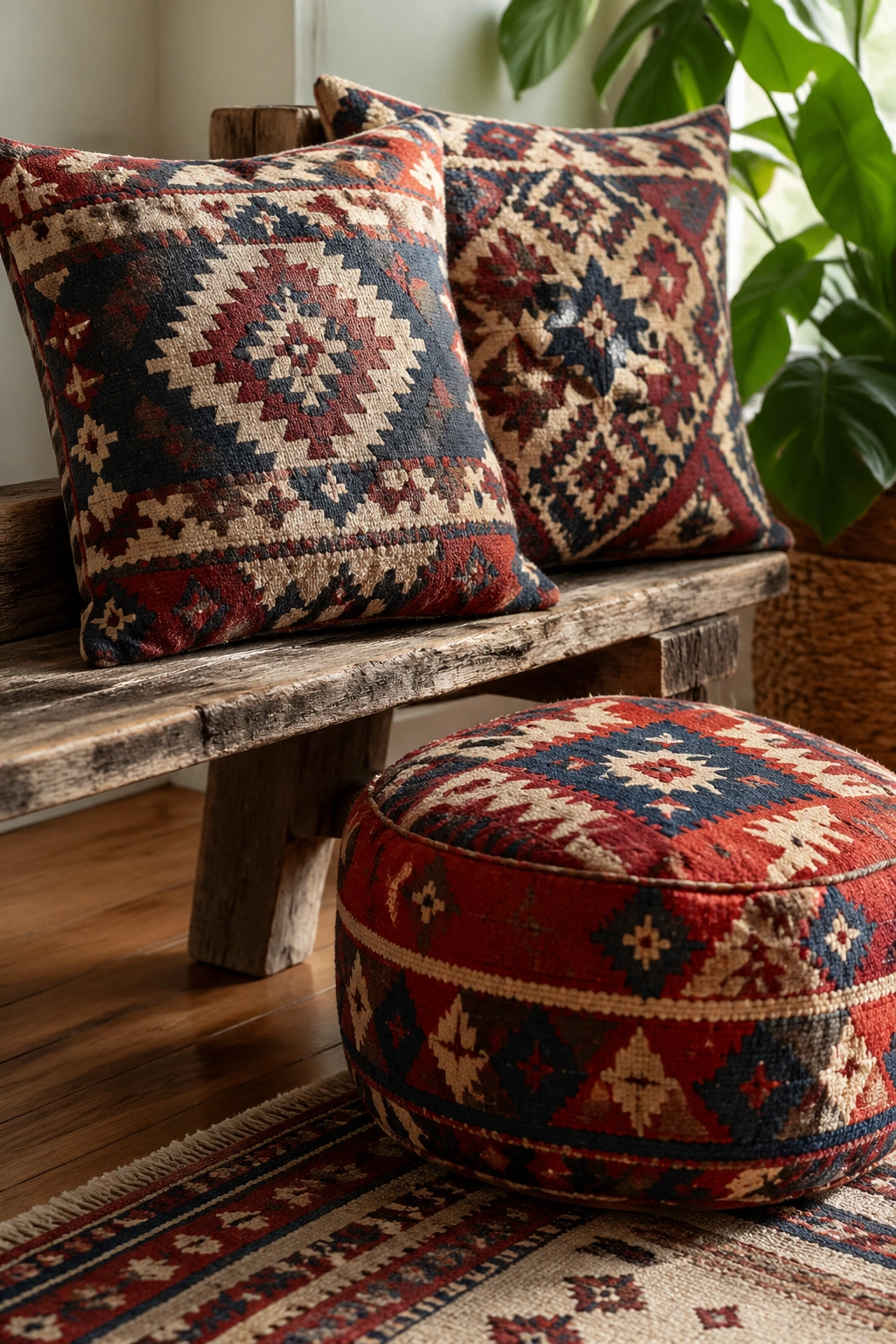
Kilim rugs, pillows, and poufs bring geometric pattern and rich color into the room. Vintage kilim pillow covers run $25-45 on resale sites, compared to $75-120 new.
Look for authentic wool with natural dyes. Synthetic kilims exist, and they don’t age the same way. Real wool kilims develop character; synthetic ones just get worn.
Mix them with mud cloth for a layered look that reads collected rather than themed.
16. Mirror Collections in Mixed Frames
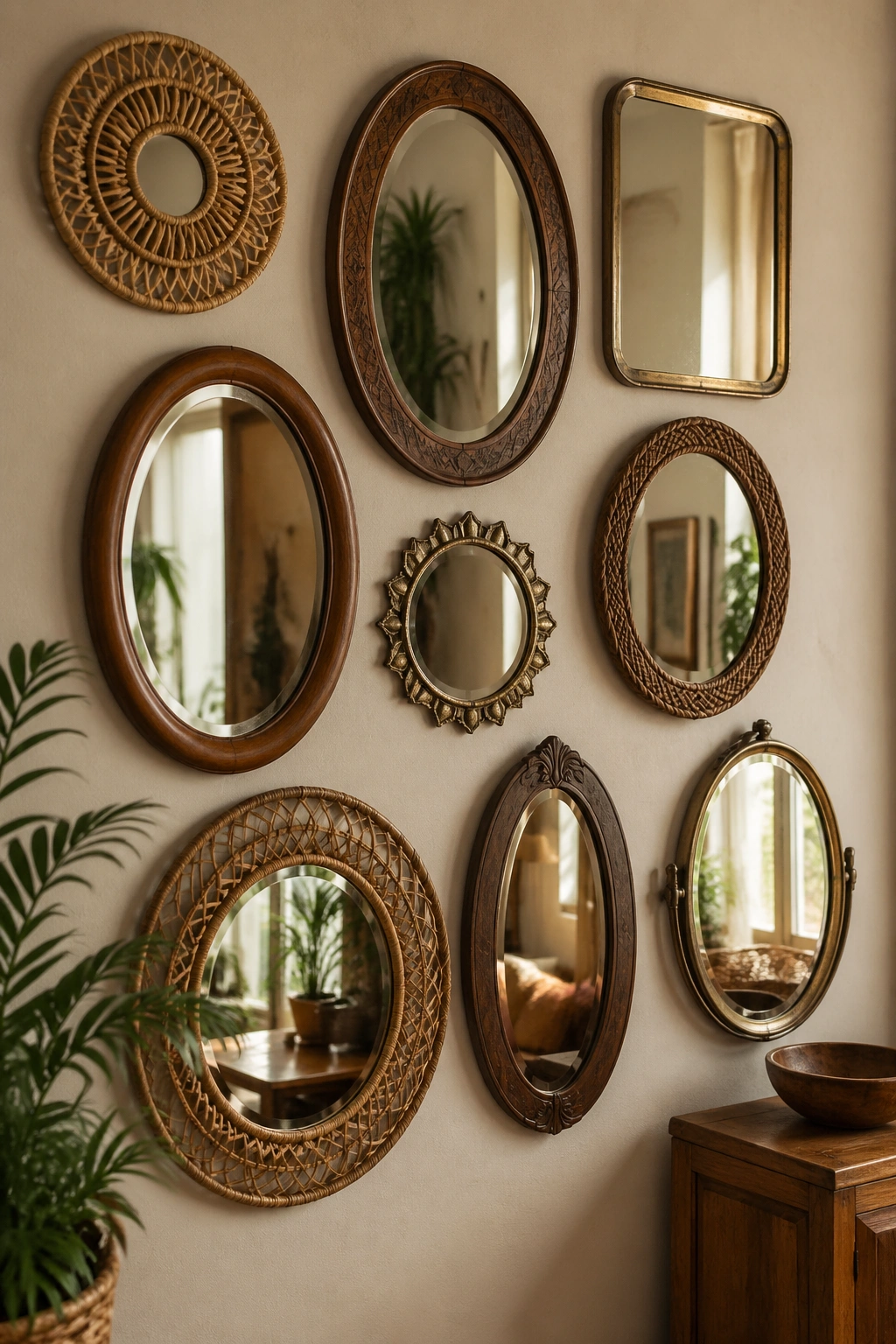
A wall of mirrors in mismatched frames creates depth and bounces light — which matters in small apartments and rooms without great natural light. Thrift stores sell old mirrors for $3-15 each. A collection of 8-12 mirrors in wooden, brass, and rattan frames costs under $100.
Paint mismatched frames in a single coordinating color if the variety feels too chaotic. Black, deep brown, or matte gold all work as unifying tones.
17. Handmade Paper Lanterns
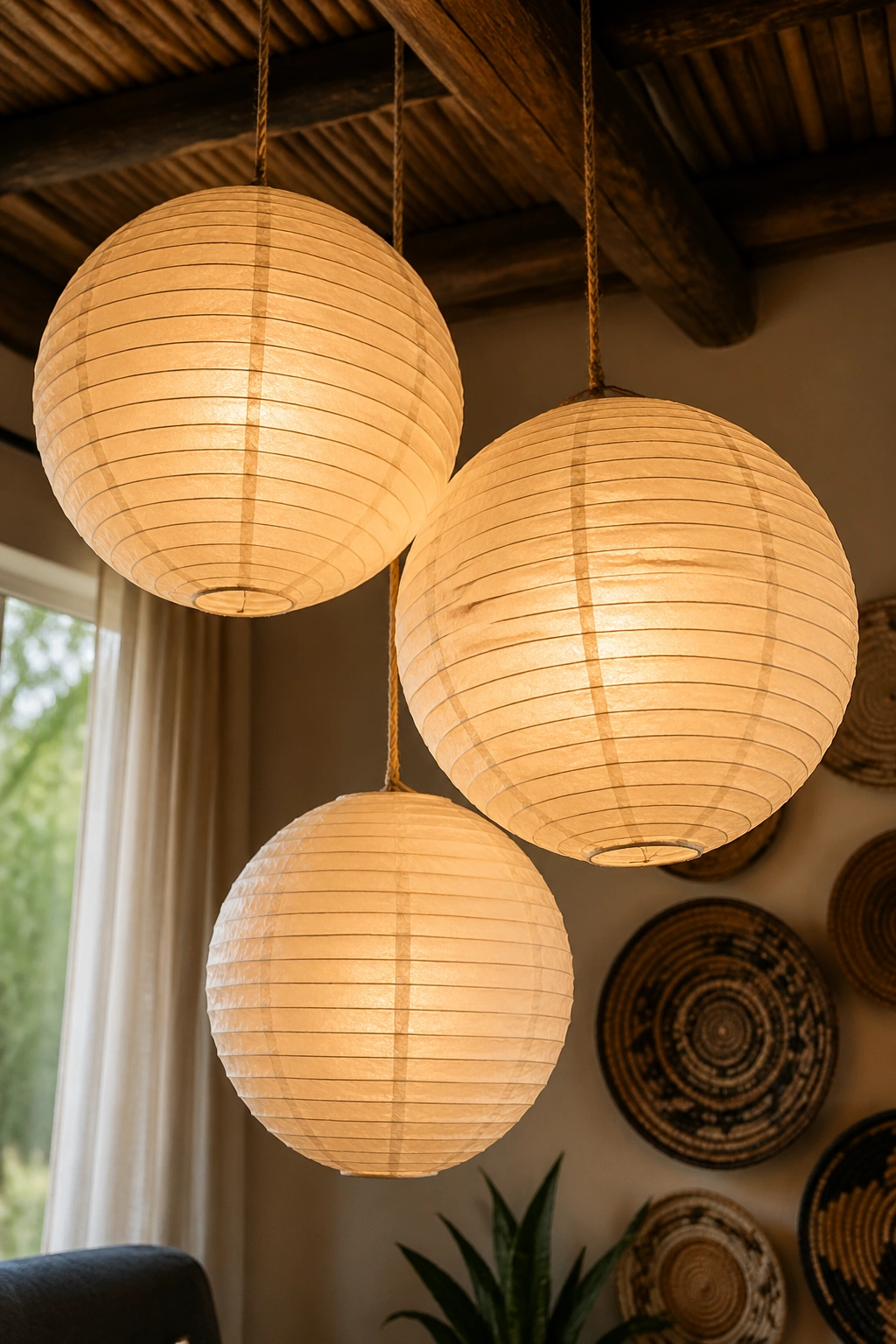
Paper lanterns in warm white or soft cream diffuse light beautifully and cost almost nothing. Large rice paper lanterns run $8-20 each. A cluster of three at different heights creates a cozy glow in any corner.
Pair them with Edison-style bulbs for a warm tone. Cold LED bulbs make the whole room feel clinical and ruin the mood.
String them across a balcony or hang them from the ceiling in a bedroom.
18. Raffia Ceiling Pendants
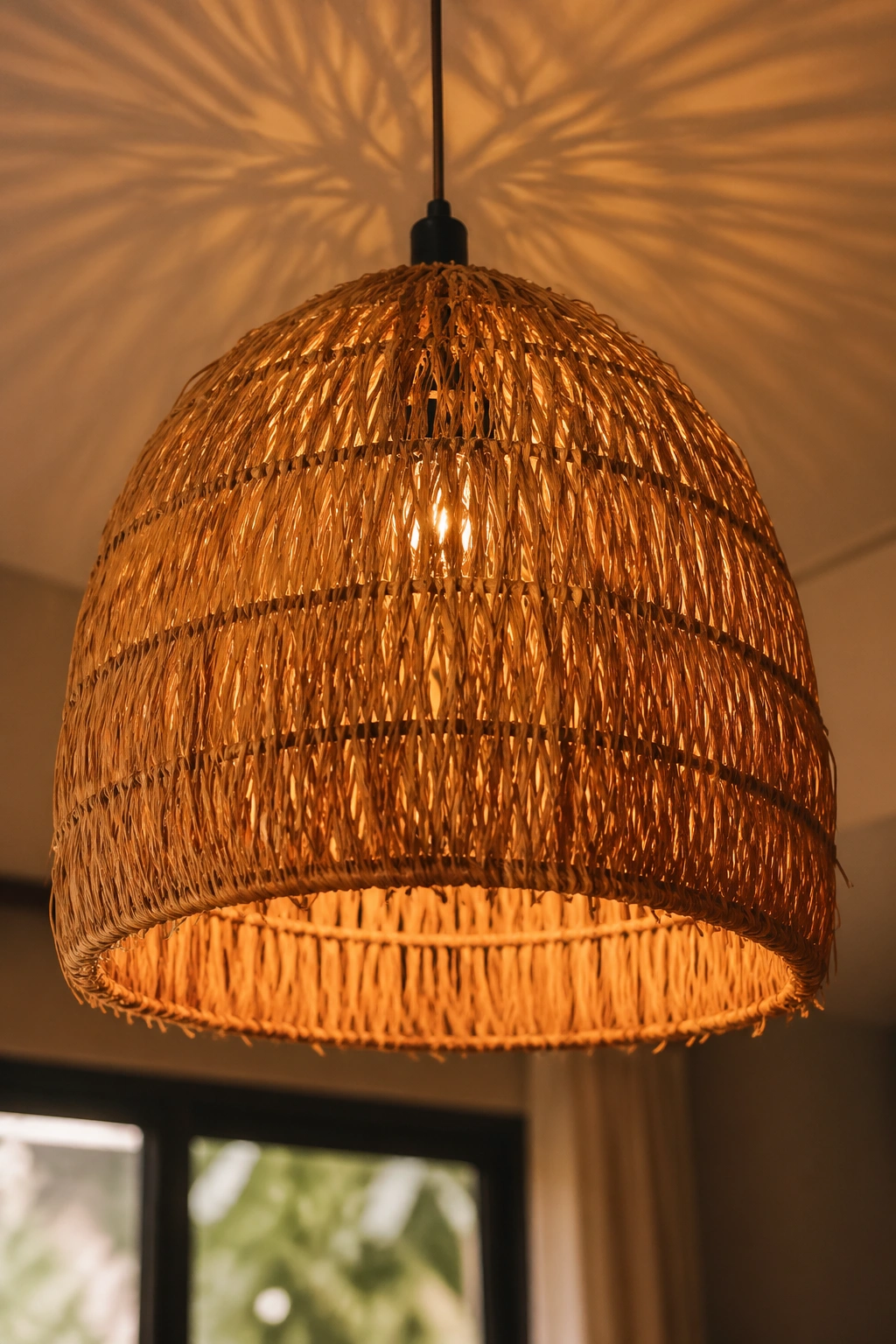
A raffia pendant light adds texture above a dining table or reading corner. Affordable ones run $60-120 — more than some other items on this list, but the impact justifies the cost.
What’s different about raffia: it casts a pattern on the ceiling and walls when lit, which turns the light itself into decor.
Best for: dining areas, bedrooms, and hallways that need a focal point.
19. Carved Wooden Stools as Side Tables
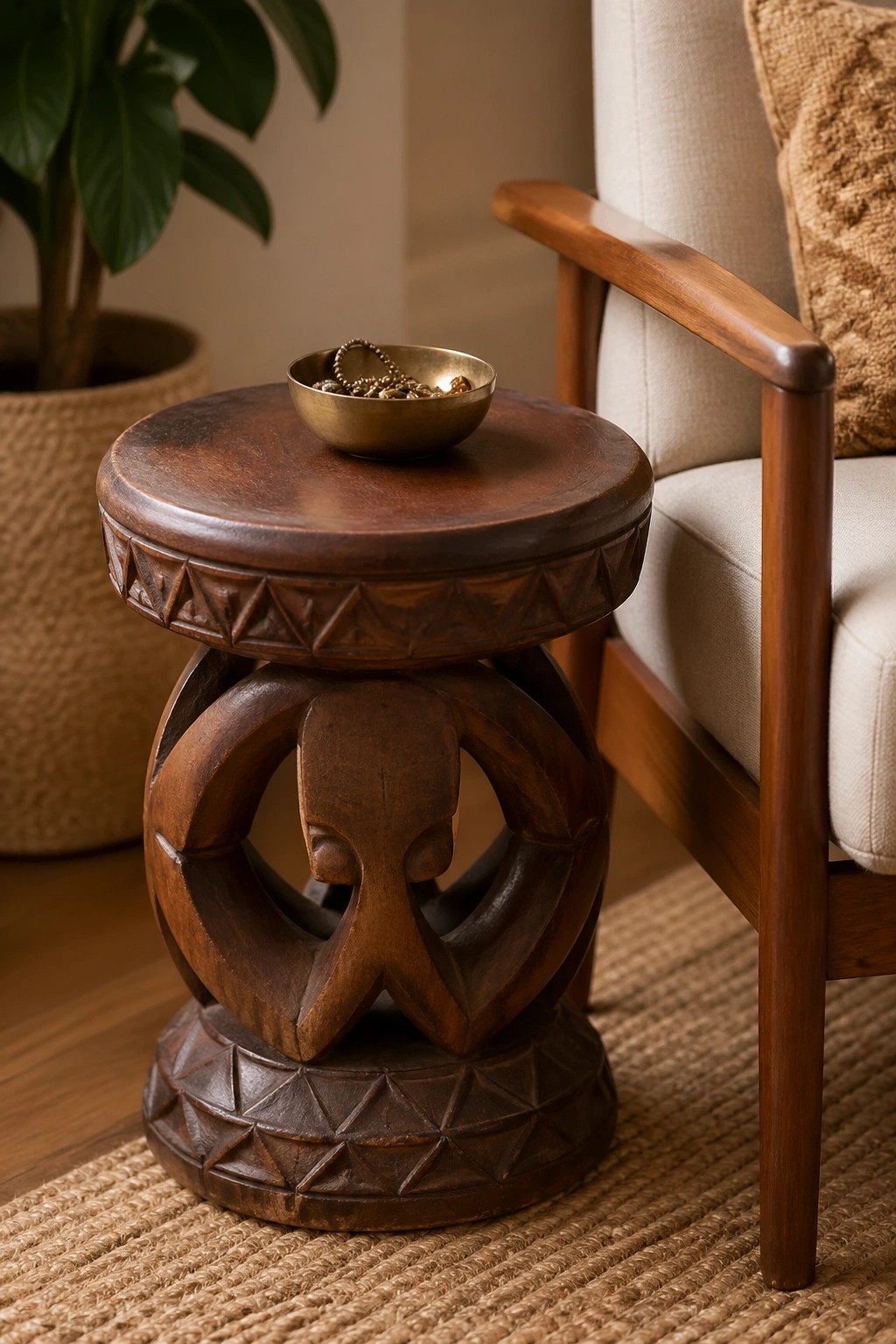
Hand-carved wooden stools from Ghana or Kenya work as side tables, plant stands, or extra seating. They run $40-100 from importers, less at estate sales.
Pick one with interesting carving — abstract patterns, animal motifs, or geometric designs. The detail is what makes it decor rather than just furniture.
Place one next to a reading chair with a small brass bowl on top for keys or jewelry.
20. DIY Abstract Canvas Art
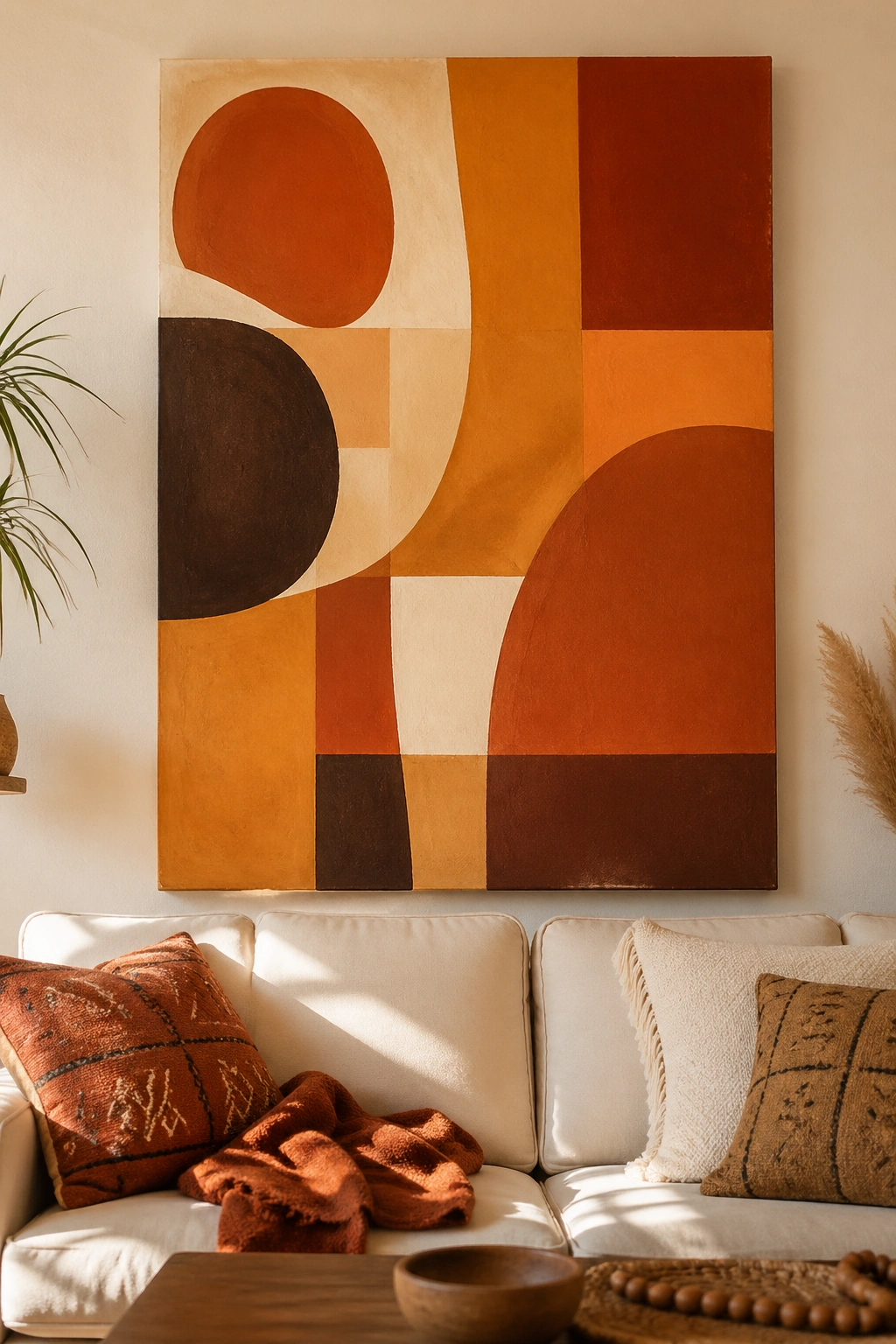
Large canvas art is expensive in stores but easy to make. Buy a blank canvas — a 30×40 inch canvas runs $20-30 at craft stores. Paint it with acrylic paints in warm earth tones: rust, ochre, deep brown, cream.
You don’t need to be a painter. Abstract shapes, bold brush strokes, and color blocking all work. The imperfection is part of the charm.
Hang a large canvas above a sofa or bed. It anchors the wall and creates an instant focal point.
21. Layered Textile Throws
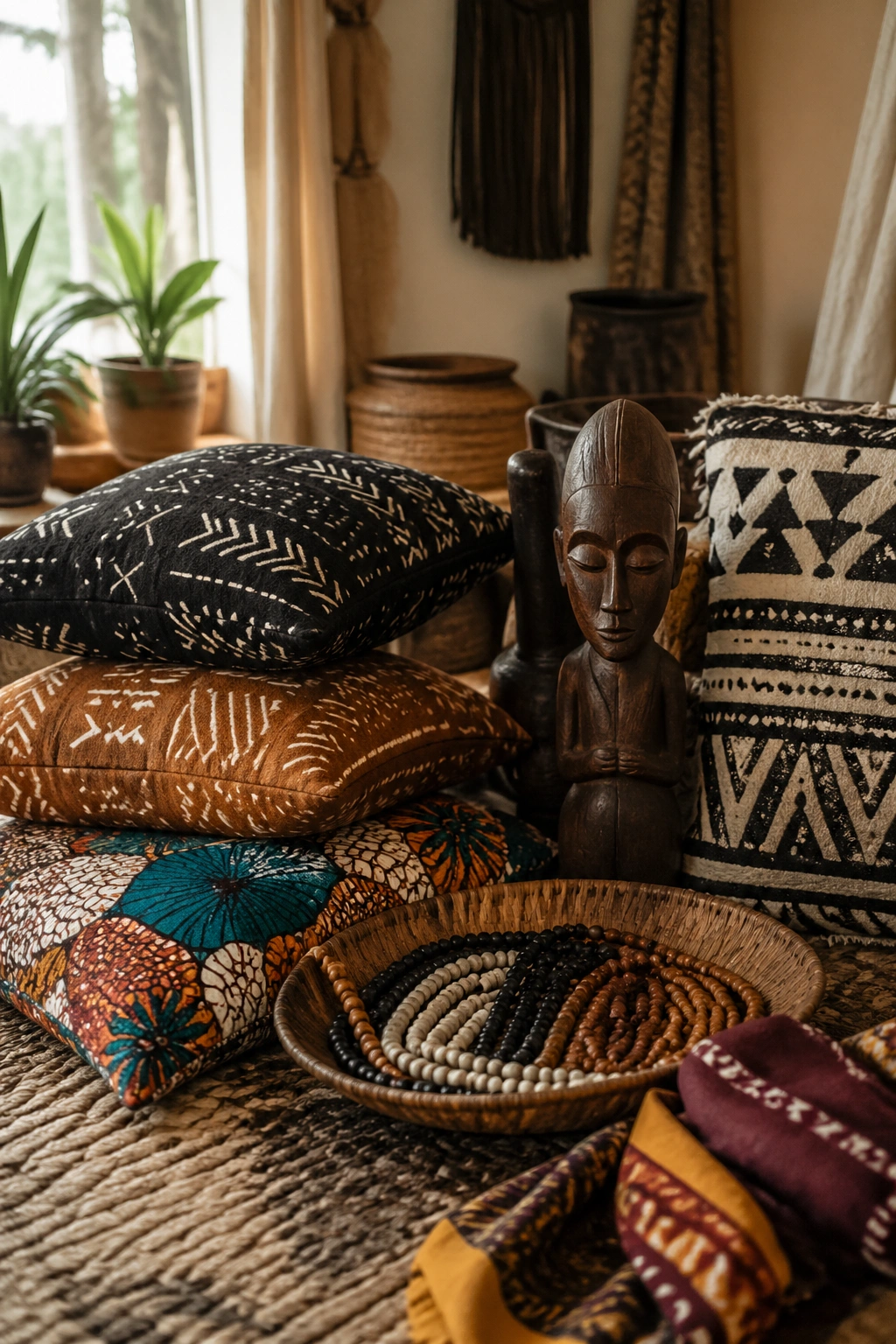
Unlike a single throw draped over a chair, layering two or three throws in different textures creates depth. A wool throw under a cotton one, topped with a mud cloth panel — the combination reads intentional and rich.
Thrift stores sell throws constantly. A collection of five or six different throws in coordinating colors costs under $50.
Rotate them seasonally. Warm wools in cooler months, breathable cottons in warmer months. The same chair looks completely different with different layers.
Mixing Without Matching
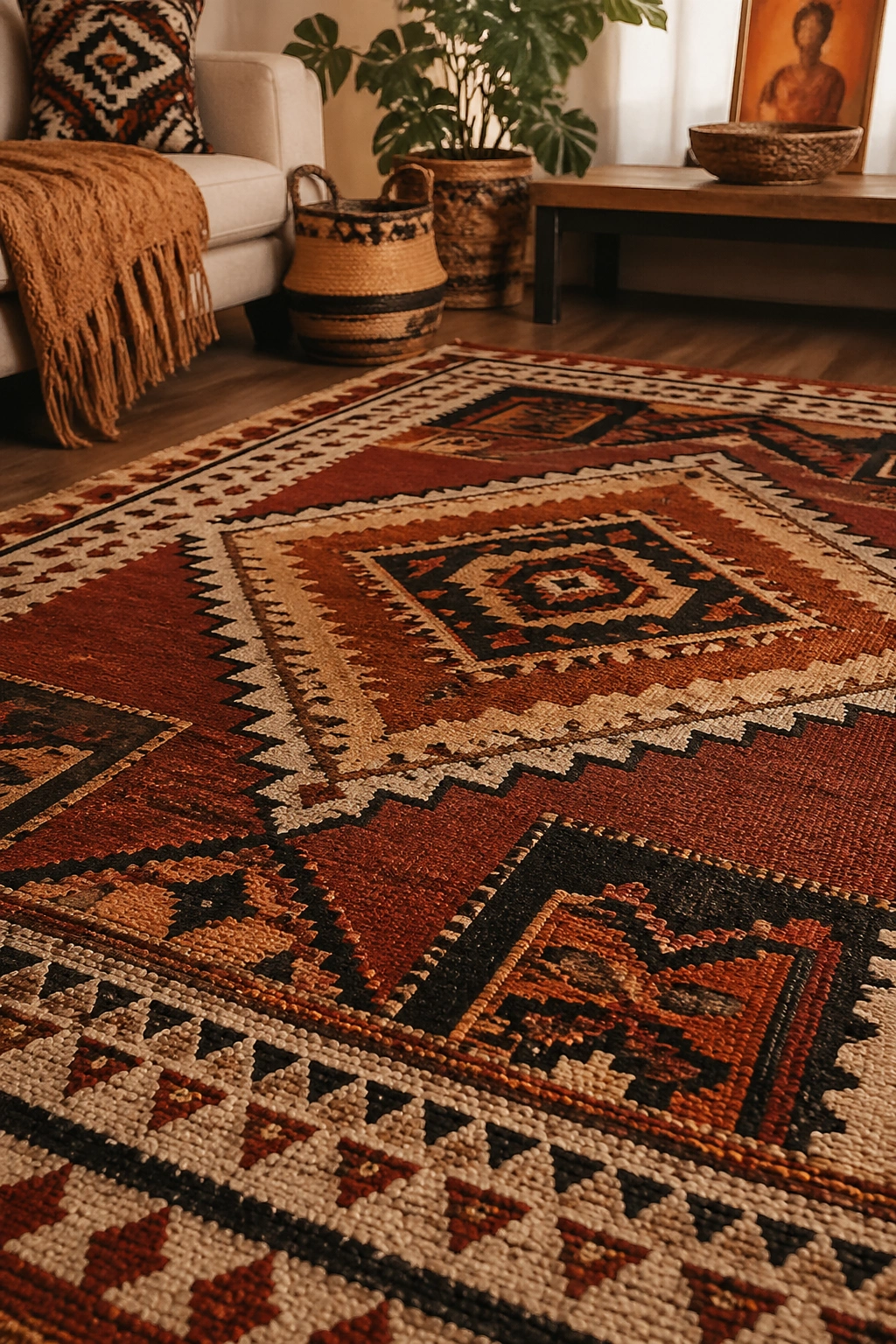
The thing afro boho gets right, and what beginners get wrong, is the mix. Everything shouldn’t match. Everything should coordinate.
Coordinate through color palette — stick to warm earth tones with maybe one bold accent color. Coordinate through material — wood, brass, natural fiber, textile. Coordinate through era — vintage and handmade rather than brand-new mass production.
Within those guardrails, let the patterns, shapes, and sources be different. That’s what creates visual interest and depth.
Maintaining the Look Over Time
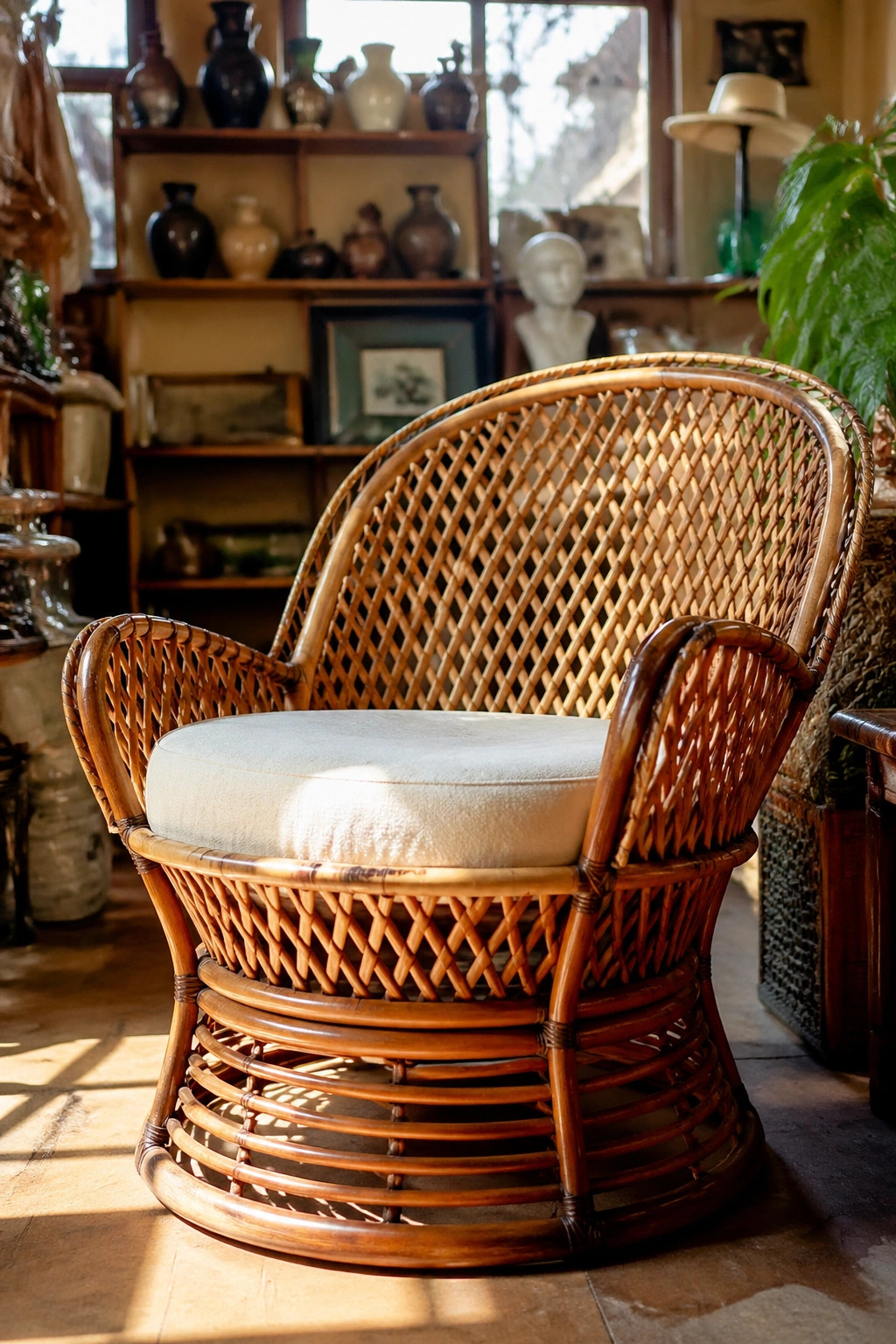
Afro boho rooms evolve. That’s a feature, not a bug. Add one new piece every few months. Rotate out things that no longer speak to you. Let your collection grow based on what you find rather than what’s on sale.
Clean regularly but don’t over-clean. Dust wooden pieces weekly. Spot-clean textiles instead of washing (washing kills the character of vintage pieces). Polish brass when it gets dull — but leave some patina.
The room should feel like a home that tells a story, not a showroom with a theme.
Mistakes to Skip
Don’t buy everything online at once from the same store. That’s the fastest way to make a room look like a catalog page. The magic of afro boho is in the mix of sources, and a single-order room can’t capture it.
Skip anything labeled “tribal inspired” at big-box stores. It’s almost always culturally flat and poorly made. If you want authenticity, buy from African artisans, importers, or secondhand sources.
Avoid over-styling. Empty space is part of the aesthetic. A room doesn’t need to be full to feel complete.
Final Thoughts on Budget Decorating
The best rooms I’ve seen built on a budget had one thing in common: the owner knew exactly what they were going for. They didn’t buy impulsively. They collected over time. They paid attention to quality where it mattered and saved where they could.
Start with the foundation pieces — a good rug, a statement textile, one hero item. Build outward from there. Let the room tell you what it needs next. Trust that afro boho style, more than almost any other, rewards patience and curation over quick purchases.
The style is about heritage, warmth, and a life well-lived in the space. Those aren’t things you can buy in one afternoon, and that’s exactly what makes the finished room feel so personal.