



Crochet braids are the closest thing to a hair styling shortcut that still delivers salon-quality results. You braid your own hair underneath, hook in pre-made extensions through a latch hook, and walk out the door with a full head of braids in a fraction of the time traditional braiding takes. Crochet afro braid styles have become a favorite for anyone who wants the versatility of braids without spending eight to ten hours in a chair.
What makes crochet braids specifically for afro hair so compelling is how well they mimic natural texture. The extensions are already curled, twisted, or coiled, and the installation process is forgiving enough that you can redo sections without starting from scratch.
I’ve worn crochet braids more times than I can count, through hot summers and dry winters, through gym sessions and long flights. I’ve also made every mistake possible — installed hair that was too heavy for my cornrows, picked textures that didn’t match my real hair, sealed the ends wrong and watched them unravel by day three.
This guide covers twenty-five crochet braid styles that work on afro hair, plus the practical details I wish someone had walked me through the first time.
What Crochet Braids Actually Are
Crochet braids use pre-braided or pre-twisted hair extensions attached to your cornrowed natural hair with a latch hook tool. The cornrows act as the base. The hook pulls a loop of the extension hair through the cornrow, secures it with a knot, and the result is a full head of extensions without individual hand-braiding.
The whole install takes one to three hours depending on the style, compared to four to twelve hours for traditional braids. And the hair is reusable — you can take it out carefully, wash it, and reinstall it several times if you choose quality extensions.
The cost is another big factor. Crochet braids run $30-80 in materials (or a couple hundred at a salon), versus $150-400 for a professional box braid install.
The Base Matters More Than You Think
Your cornrows set the foundation. If the cornrows are sloppy, lumpy, or too tight, the crochet style looks off and can cause breakage. A good base has:
Even sections with parts straight enough to see scalp. Cornrows that lay flat, no bumps. Direction that makes sense for the style you’re installing (straight back, into a bun base, or parted). Ends secured so they don’t unravel.
You can cornrow your own hair if you’re experienced, or have a friend do it. First-time installers sometimes pay $20-40 just for cornrow prep at a salon and then hook in the crochet themselves at home.
A gentle warning: tight cornrows cause traction alopecia. If the braids hurt as they’re being done, speak up. A cornrow should feel secure, not painful.
The Tools You’ll Need
A basic crochet install kit includes:
- A latch hook (the C-shaped tool with a small latch)
- Hair extensions in your chosen style
- Rat-tail comb for parting
- Small hair clips to section while working
- A spray bottle with water
- Light oil or mousse for finishing
That’s it. The whole kit costs under $30, and the latch hook lasts forever.
How Long Crochet Braids Actually Last
With proper care, crochet braids last four to eight weeks. The variables are how clean you keep your scalp, how well you secure the knots, and how rough you are with the extensions.
Six weeks is a realistic sweet spot. Beyond that, product buildup at the roots and natural hair growth start to compromise the look, and the risk of tangling increases.
1. The Classic Free-Style Curly Crochet
Why It’s a Starting Point
The free-style curly crochet install doesn’t require precise parting or a specific pattern. You cornrow your hair straight back, install curly extension hair across the entire head, and fluff the result into a full curly afro.
- Install time: 60-90 minutes for beginners
- Hair needed: 4-6 packs of curly crochet hair
- No sectioning required once the cornrows are done
- Works with any face shape
Why I love it: it’s the most forgiving style on the list. Even a slightly uneven install looks intentional because the curl pattern hides the knots.
2. Springy Afro Curl
Springy afro curl hair has tight, bouncy spirals that read as 4B natural hair. The texture holds up well in humidity, which matters more than most people realize — looser curl patterns frizz out fast, but springy curls hold their shape through weather that kills other styles.
Install straight back with the hair, then dip the ends in hot water to seal. The hot water sets the curl pattern and prevents unraveling.
Daily care: spray with a water-glycerin mix every morning to refresh. Skip heavy gels — they weigh down the springs.
3. Goddess Locs With Curly Ends
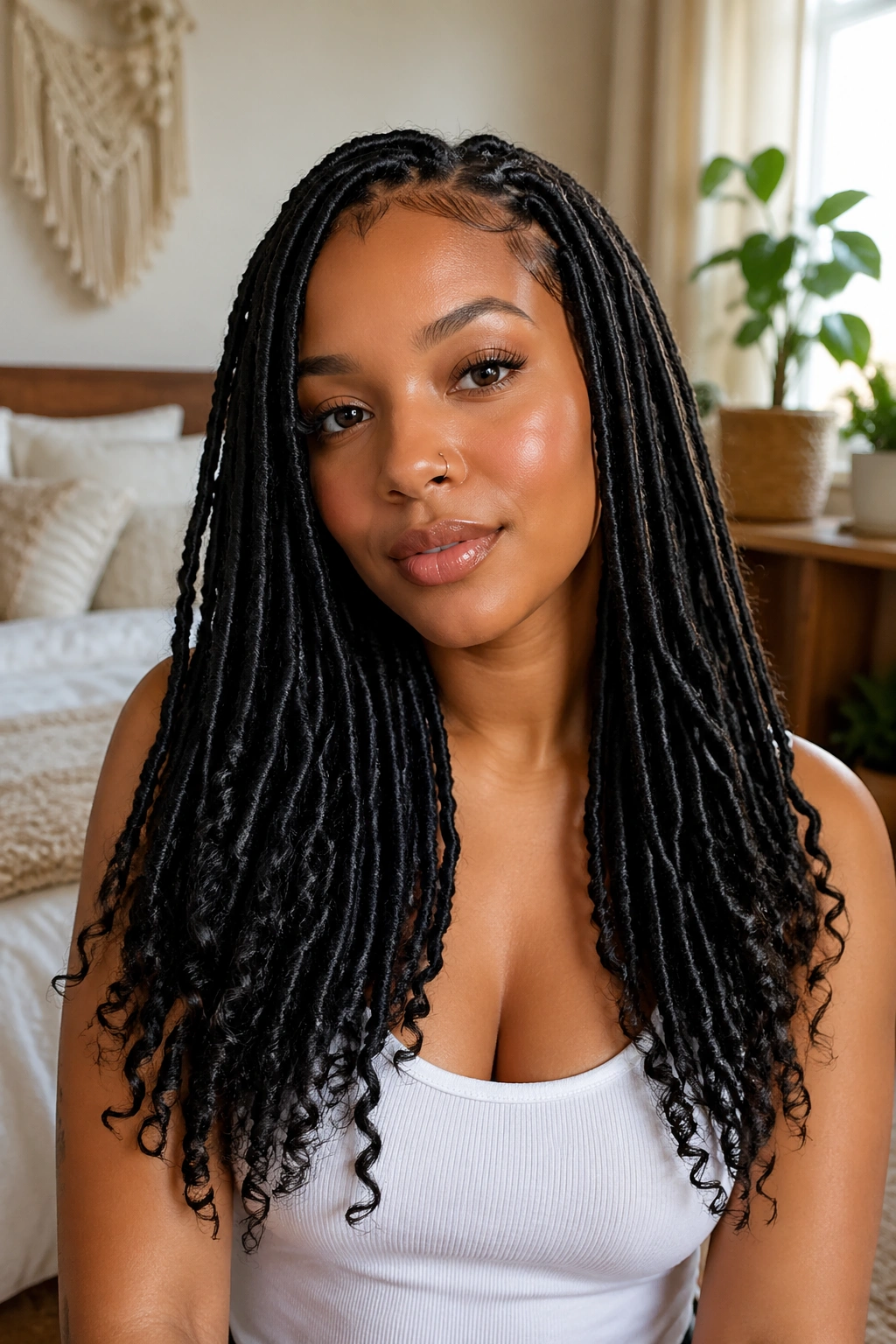
Goddess locs combine faux loc texture with loose, curly ends that peek out from the bottom of each loc. The style is romantic and bohemian, and the curly sections add softness to the structured loc shape.
Install individual locs rather than bulk. Each loc gets its own cornrow section. The curly ends are typically pre-attached to the locs or added separately.
Takes longer than basic crochet — plan for three to four hours. Worth it for the finished look.
4. Faux Marley Twists
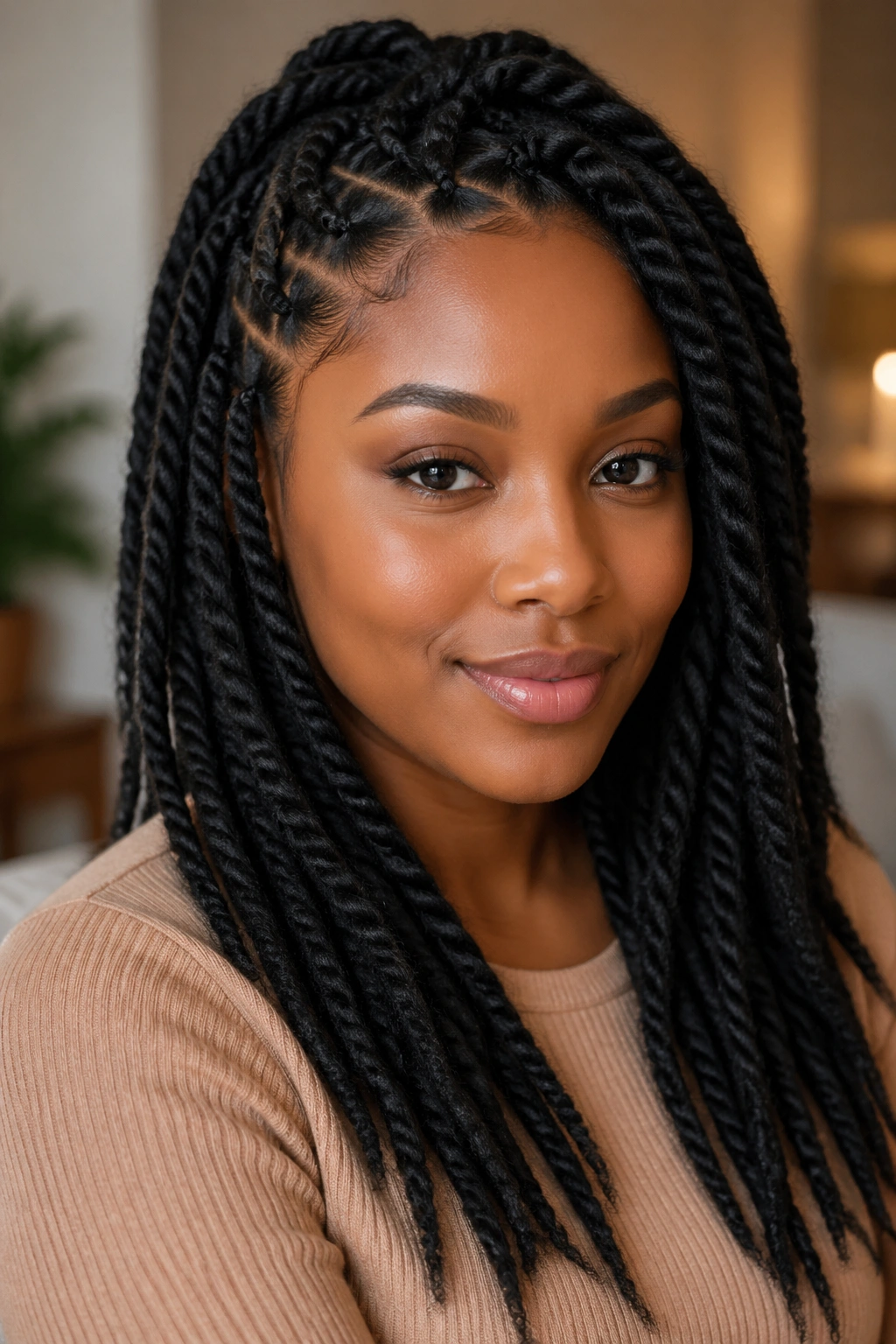
Marley hair has a kinky, matte texture that closely mimics natural afro hair. Crochet Marley twists are installed by looping pre-twisted Marley hair through cornrows, creating a full head of faux twists without individual hand-twisting.
Unlike individual twists done by hand, crochet Marley twists take two hours instead of eight. The look is nearly identical.
Best for: anyone who wants the Marley twist aesthetic without the time investment.
5. Passion Twists
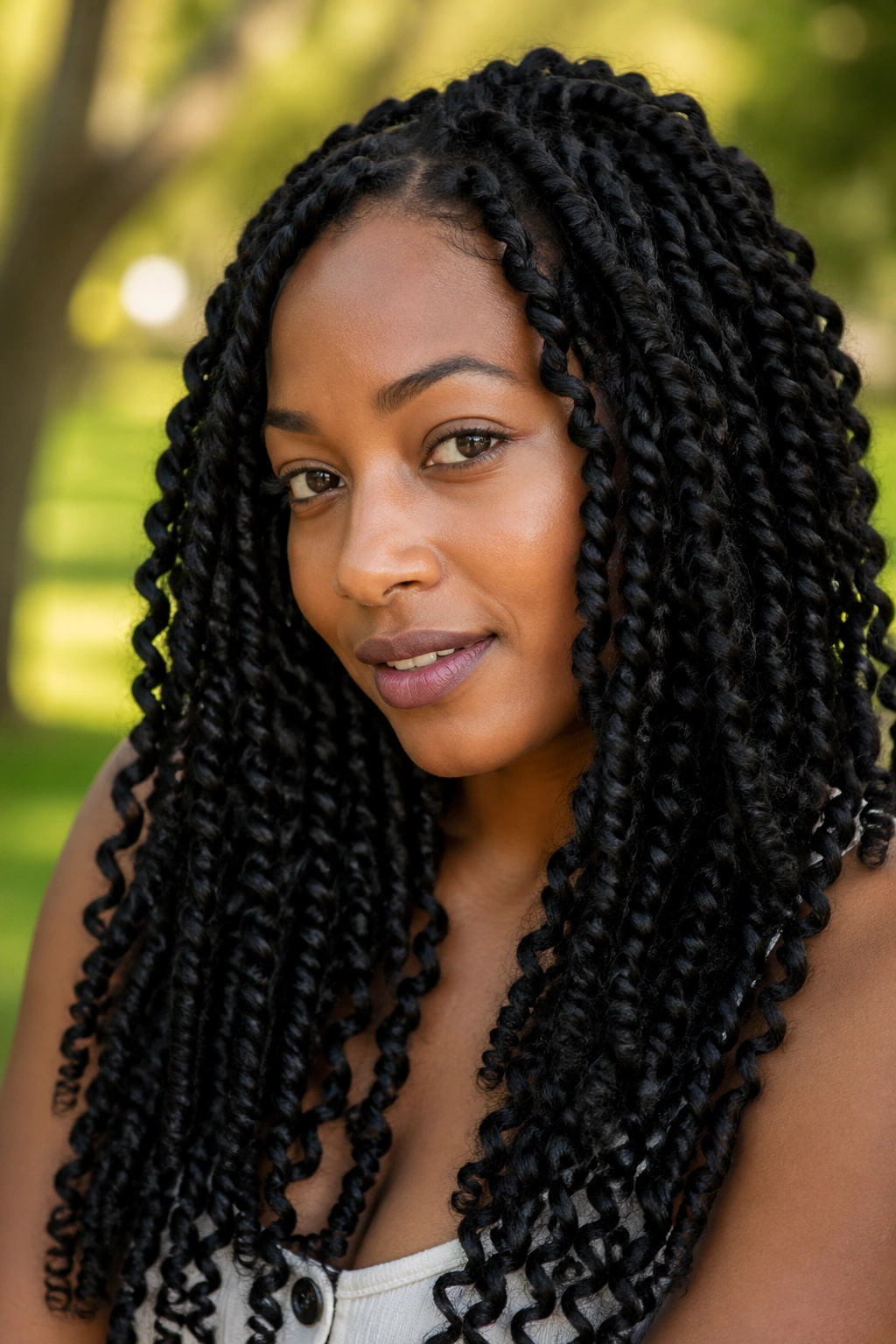
Passion twists use curly crochet hair twisted into rope-like sections. The texture is looser than Marley — more of a wavy curl than a tight kink — and the look is softer, more feminine.
The twist technique matters. Two-strand twist the hair tightly enough to hold but loose enough to see the curl pattern.
Passion twists are especially popular because they look good from day one through week six with minimal maintenance.
6. Butterfly Locs
Butterfly locs have an intentionally messy, layered look with loose tendrils escaping from each loc. The “butterfly” name refers to the way small pieces of hair flutter free rather than being tightly sealed.
These are trendy but also timeless — the distressed aesthetic reads both playful and grown.
Install individual butterfly locs and gently pull small sections loose after installation to create the butterfly effect.
7. Box Braid Crochet
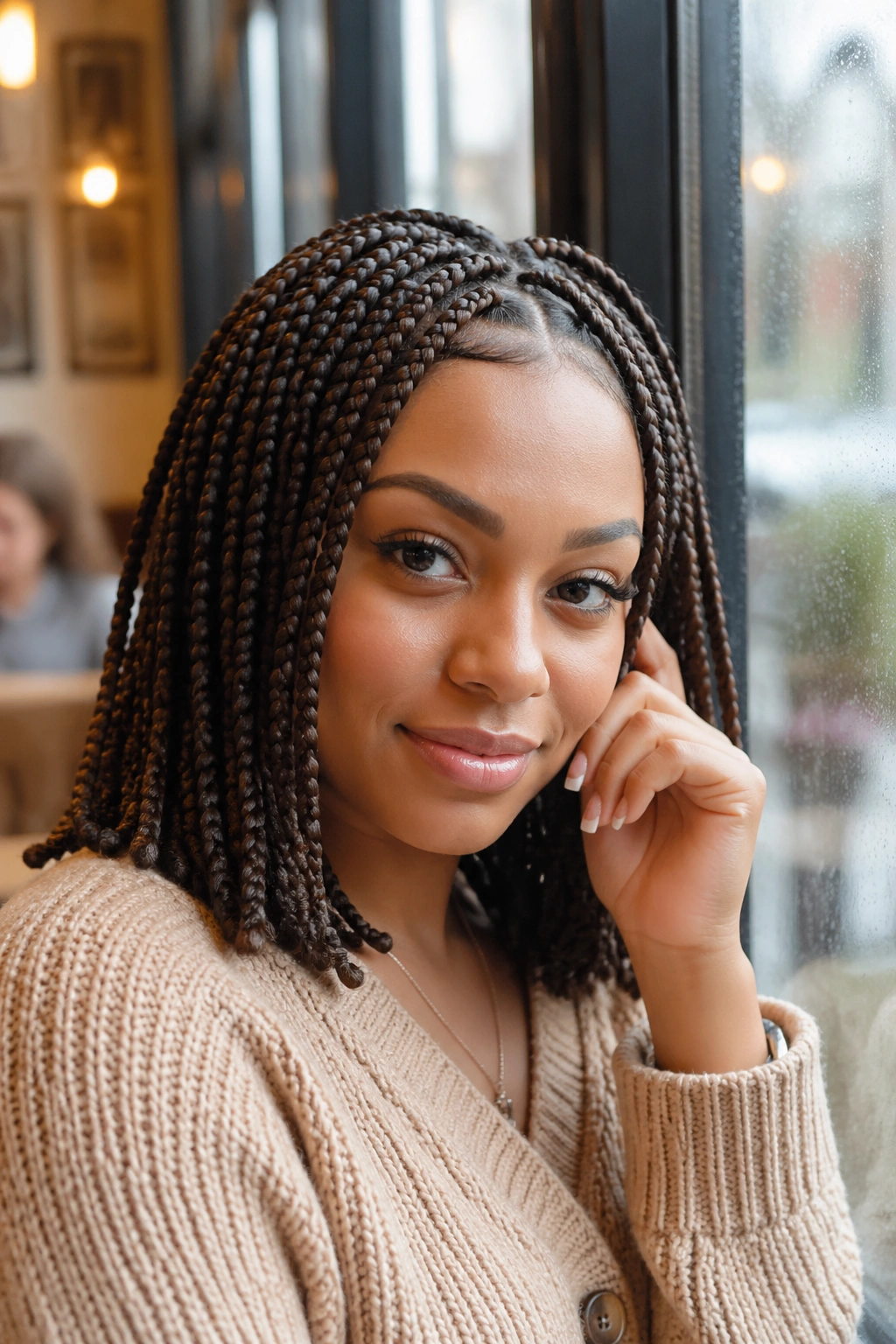
What Makes It Different
Pre-braided box braid extensions come already braided. You cut them into shorter sections and crochet them into cornrows, skipping the hand-braiding entirely.
- Install time cut by 80% compared to hand-braided box braids
- Looks nearly identical to traditional box braids
- Works in any length from shoulder to waist
- Significantly easier on the hands
The trade-off: traditional hand-braided box braids last slightly longer (8-10 weeks vs 4-6) because the knots are stronger. If longevity is the priority, hand-braid. If speed is the priority, crochet.
8. Senegalese Twists Crochet
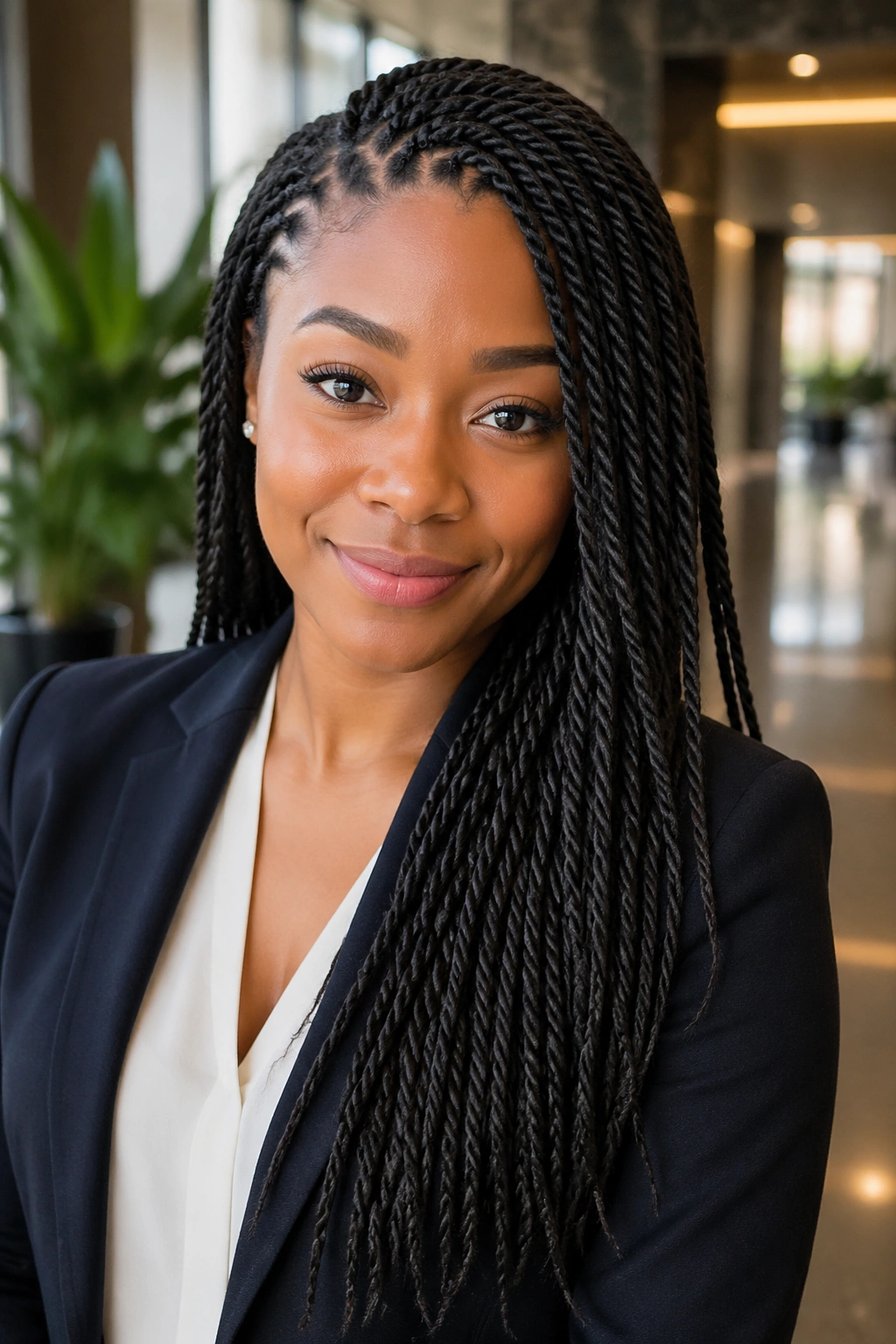
Senegalese twists use silky, sleek hair twisted into long, slim ropes. Crochet installation skips the individual twisting and installs pre-twisted Senegalese extensions into cornrows.
The silky texture stands out against the matte finish of Marley and passion twists. It reads more polished and dressy.
Best for: formal events, office settings, or anywhere you want a slicker look.
9. Havana Twists Crochet
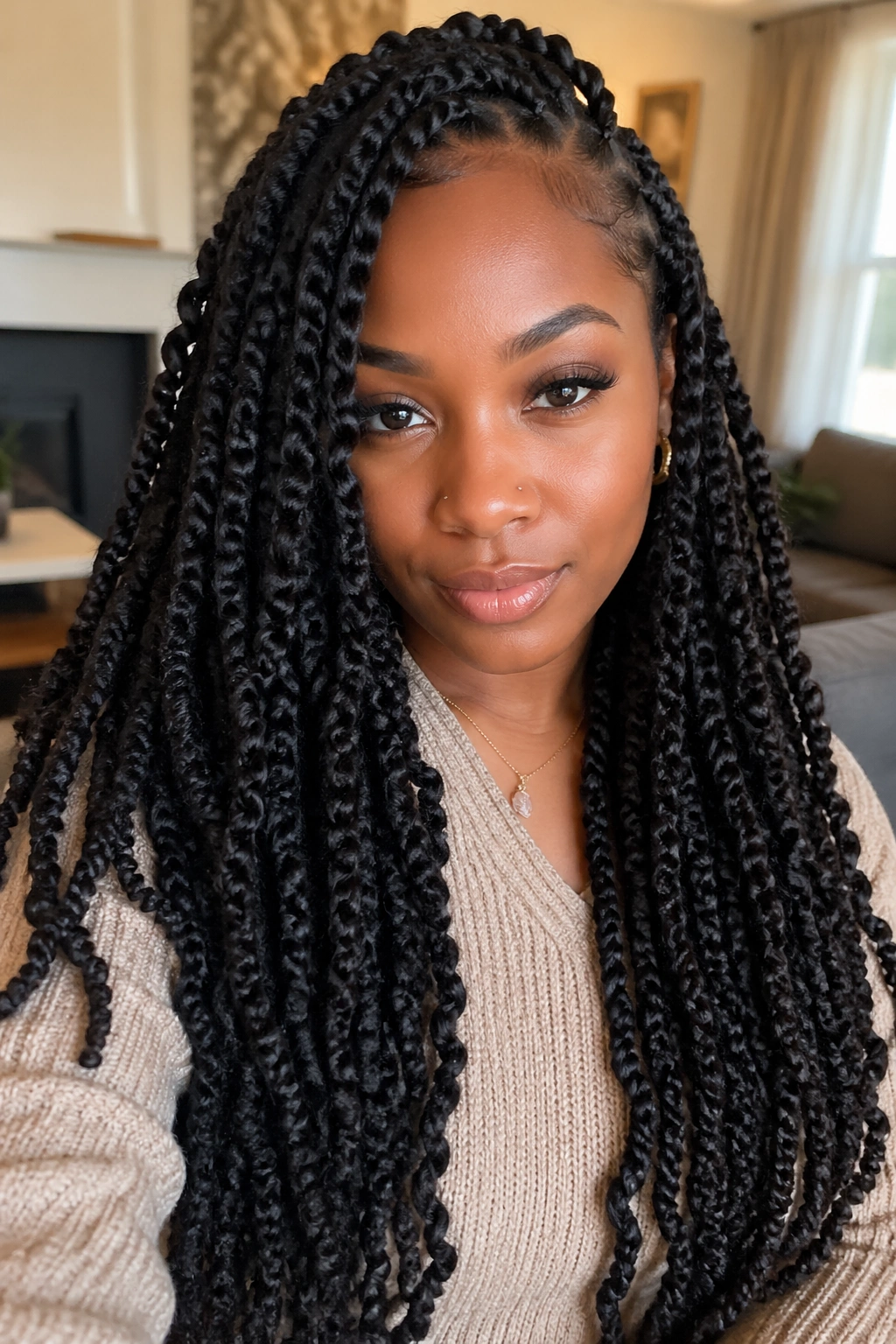
Havana twists are thicker and chunkier than Senegalese. The crochet version installs the pre-twisted Havana hair into cornrows, creating a full head of fat, statement twists.
Takes 5-6 packs of hair because of the thickness. The weight is noticeable — your neck and shoulders will feel it for the first day.
The bigger the twist, the bigger the statement. Pair with minimal jewelry and let the hair do the talking.
10. Crochet Faux Locs
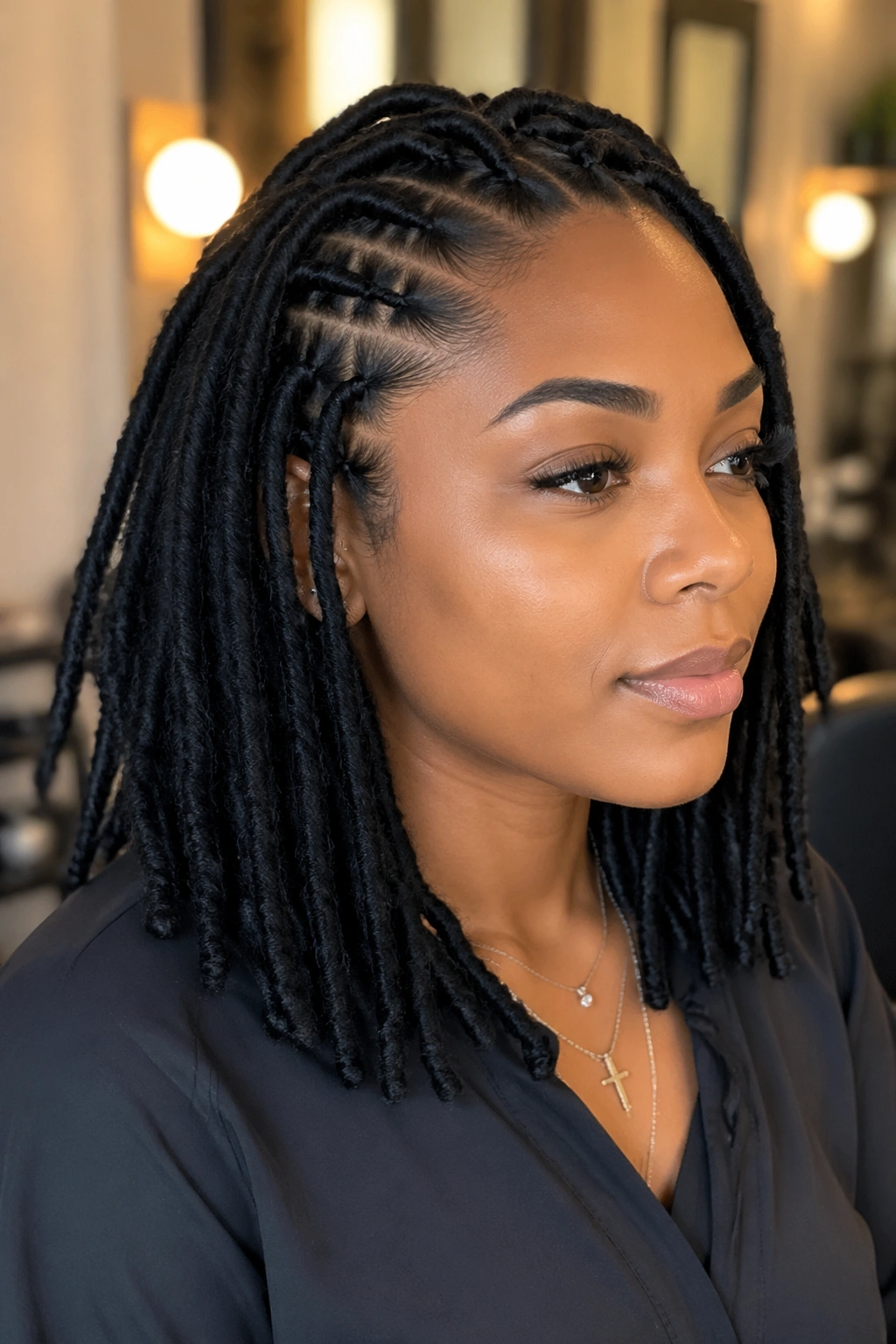
Faux locs simulate traditional locs without the commitment of growing real ones. Crochet installation uses pre-made loc extensions attached to cornrows.
The look is convincing. Most people can’t tell crochet faux locs from real locs unless they touch them or look very closely.
Install time: 2-4 hours depending on length and thickness. One of the most popular crochet styles for a reason.
11. Afro Kinky Bulk Crochet
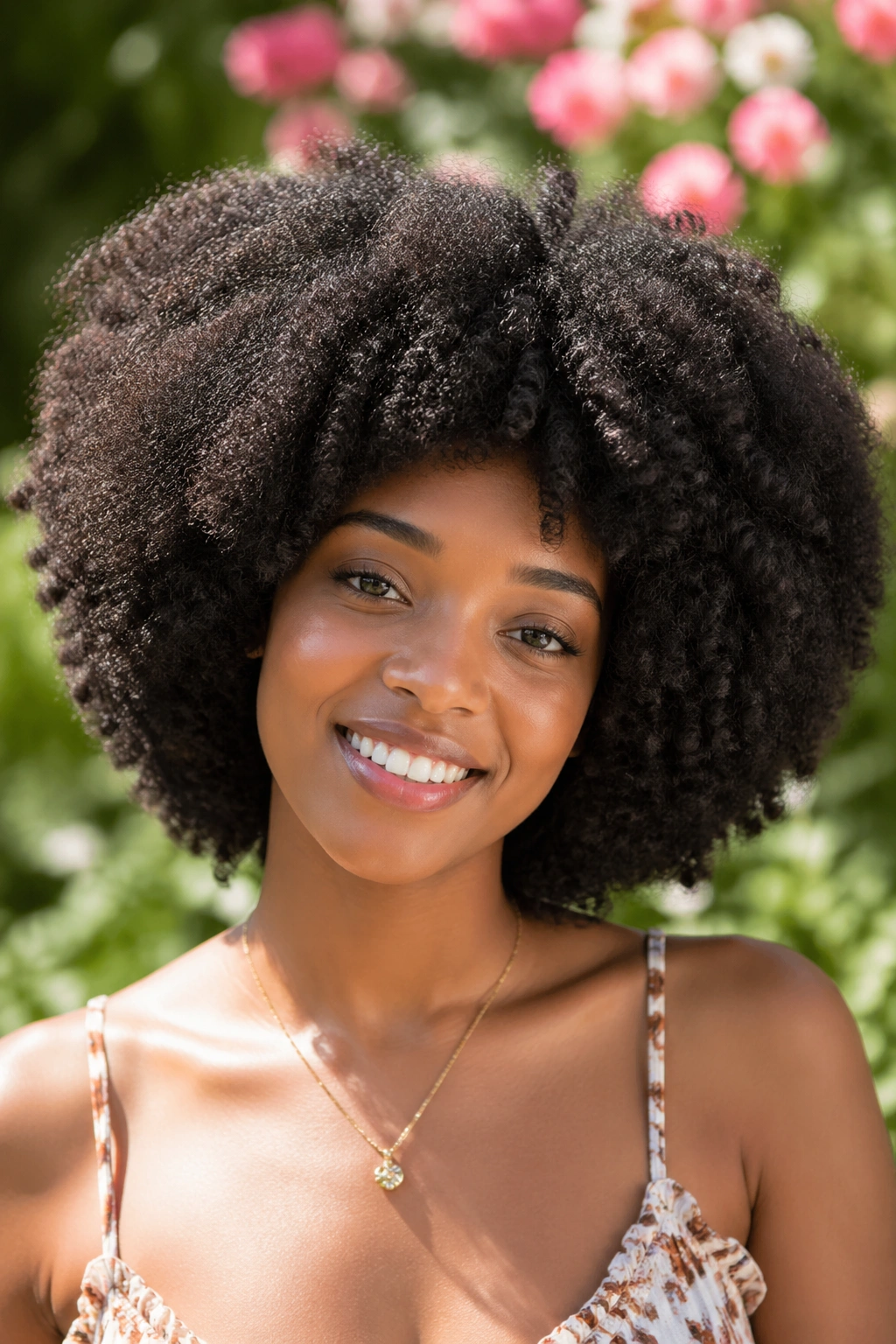
Unlike pre-twisted or pre-braided extensions, afro kinky bulk is loose, unstyled hair in a coily texture. You install it by folding and hooking through cornrows, then styling the result into a full afro.
This option gives you the most flexibility. The hair can be shaped into any style after installation — parted in different directions, pulled into puffs, or shaped into specific silhouettes.
Best for: anyone who wants a custom look rather than a pre-styled one.
12. Ombré Crochet Braids
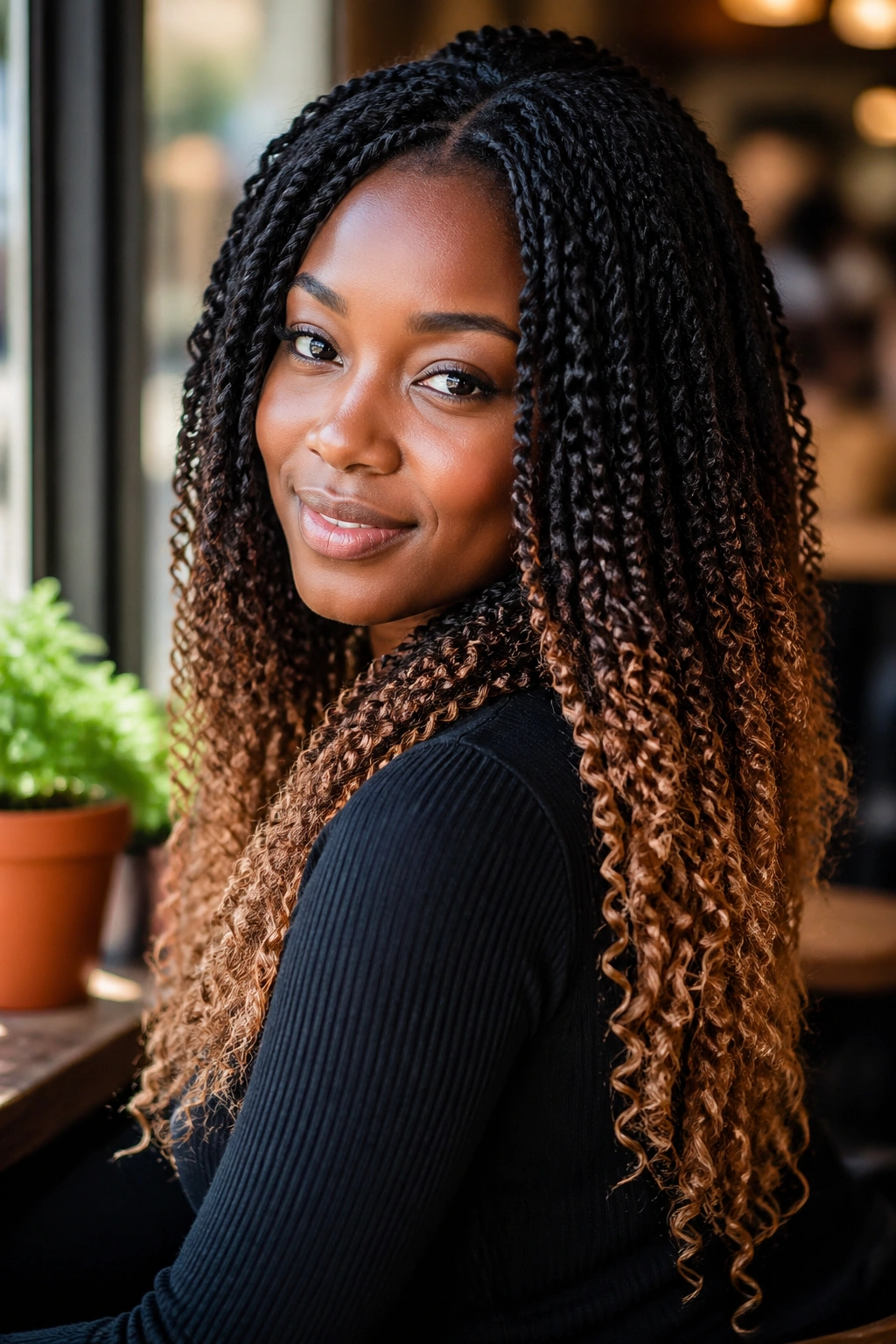
Ombré crochet hair comes in gradient colors — dark at the roots fading to lighter at the tips. Installation is standard, but the visual effect is dramatic.
Popular gradients include black to honey, black to burgundy, and dark brown to caramel. Pick a gradient that complements your skin tone.
The color adds dimension without requiring actual dye on your natural hair.
13. Jumbo Box Braid Crochet
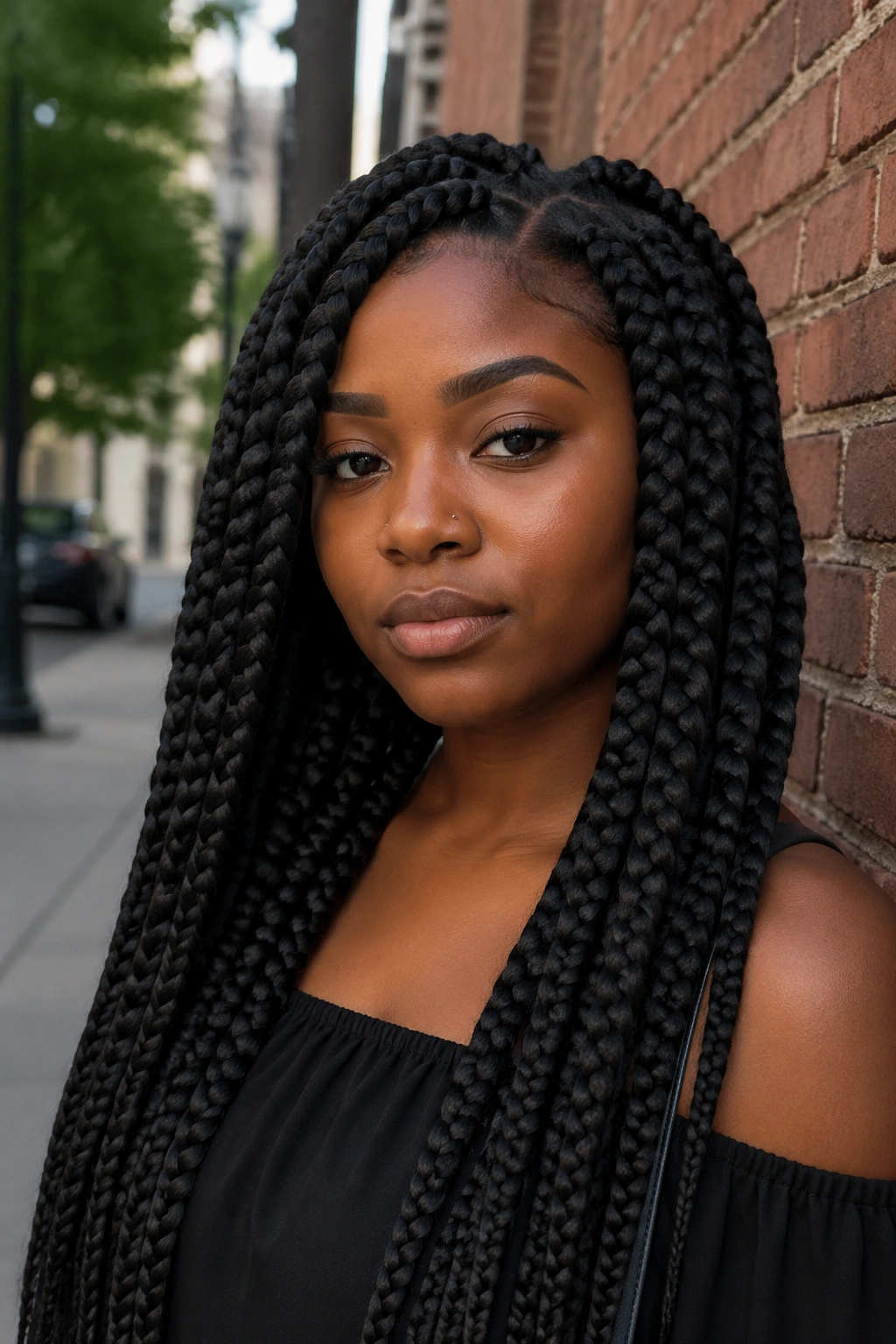
Jumbo box braids are oversized — thicker and chunkier than standard box braids. The crochet version uses pre-braided jumbo extensions.
Fewer braids cover the entire head, which means faster installation. A full head of jumbo box braids via crochet takes 1-2 hours.
Best for: low-maintenance everyday wear and people who prefer a bold, chunky look.
14. Crochet Sisterlocks
What Makes It Different
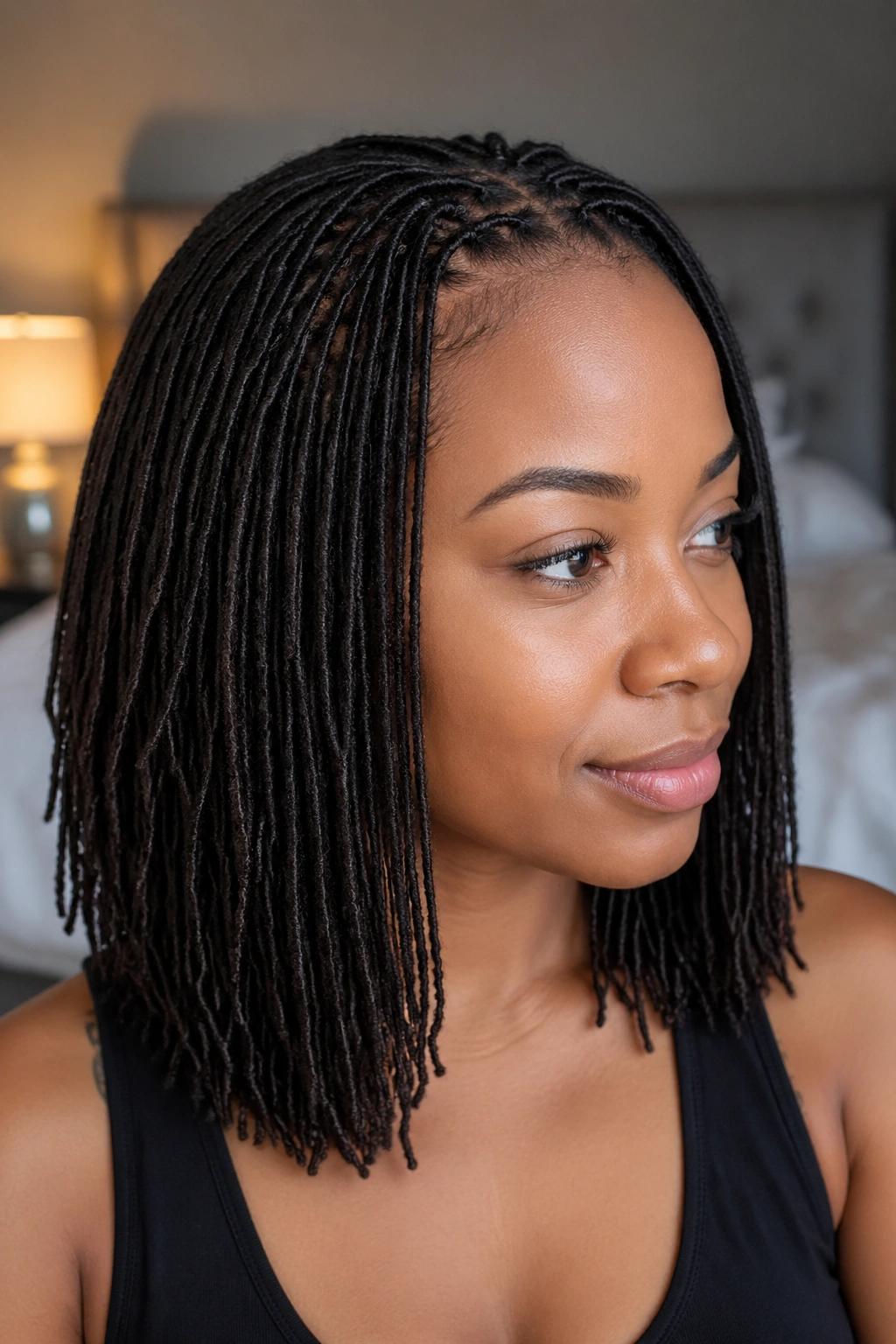
Sisterlocks are ultra-thin locs, much finer than traditional ones. The crochet version uses pre-made thin loc extensions installed in small sections.
- Install count: 200-400 individual locs
- Takes 4-6 hours even with crochet speed
- Very time-consuming but incredibly realistic
- Looks nearly identical to real sisterlocks
Who this is for: people who want the sisterlock aesthetic without the multi-year commitment of growing them naturally.
15. Curly Pixie Crochet
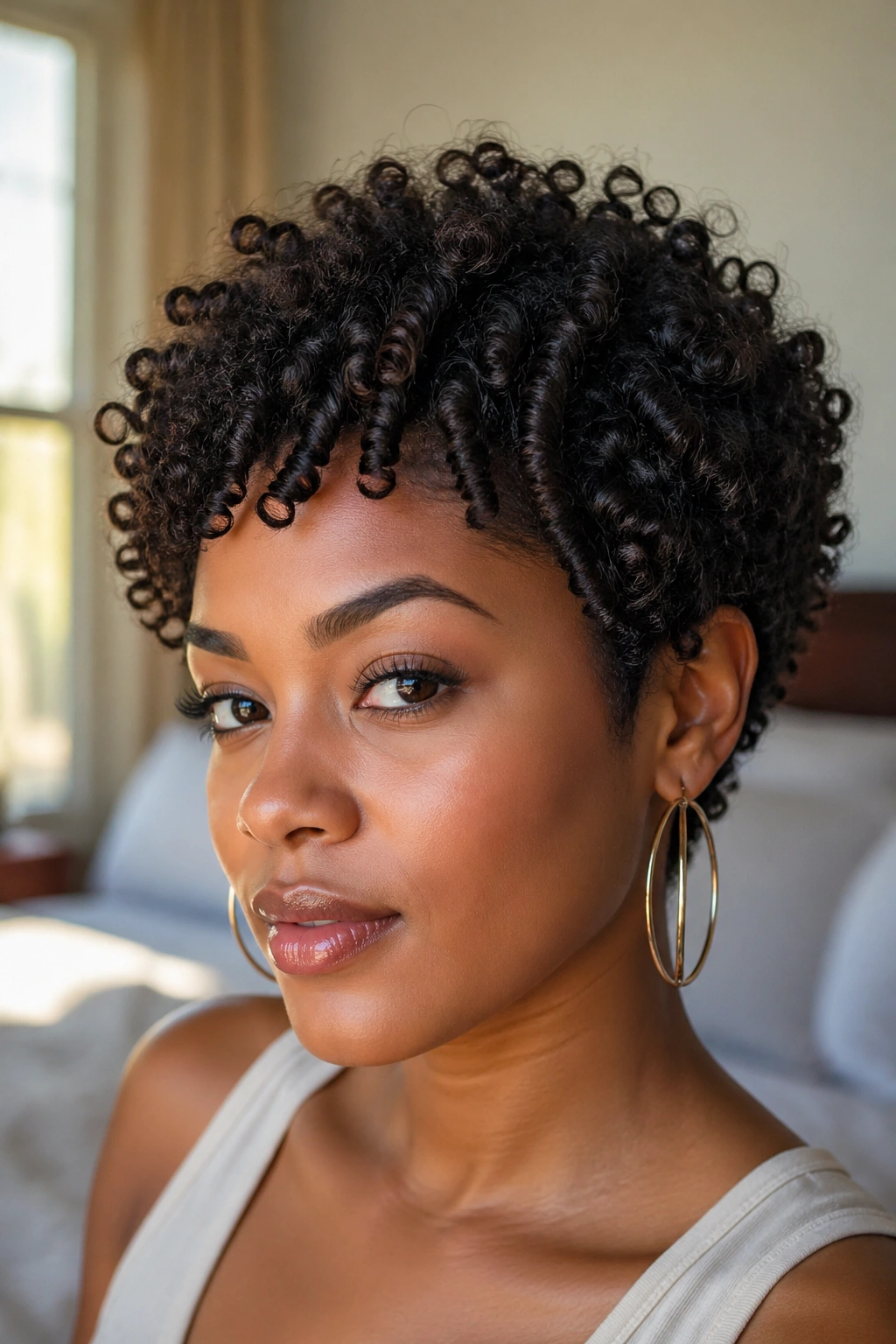
A curly pixie crochet uses shorter curly extensions to create a cropped, textured look that mimics a natural short afro. Install time is fast — 1-1.5 hours — because less hair is needed.
The pixie shape requires careful shaping after installation. Trim any extensions that stick out oddly. Fluff the rest into a rounded silhouette.
Great for: a dramatic style change without cutting your own hair.
16. Wavy Crochet Bob
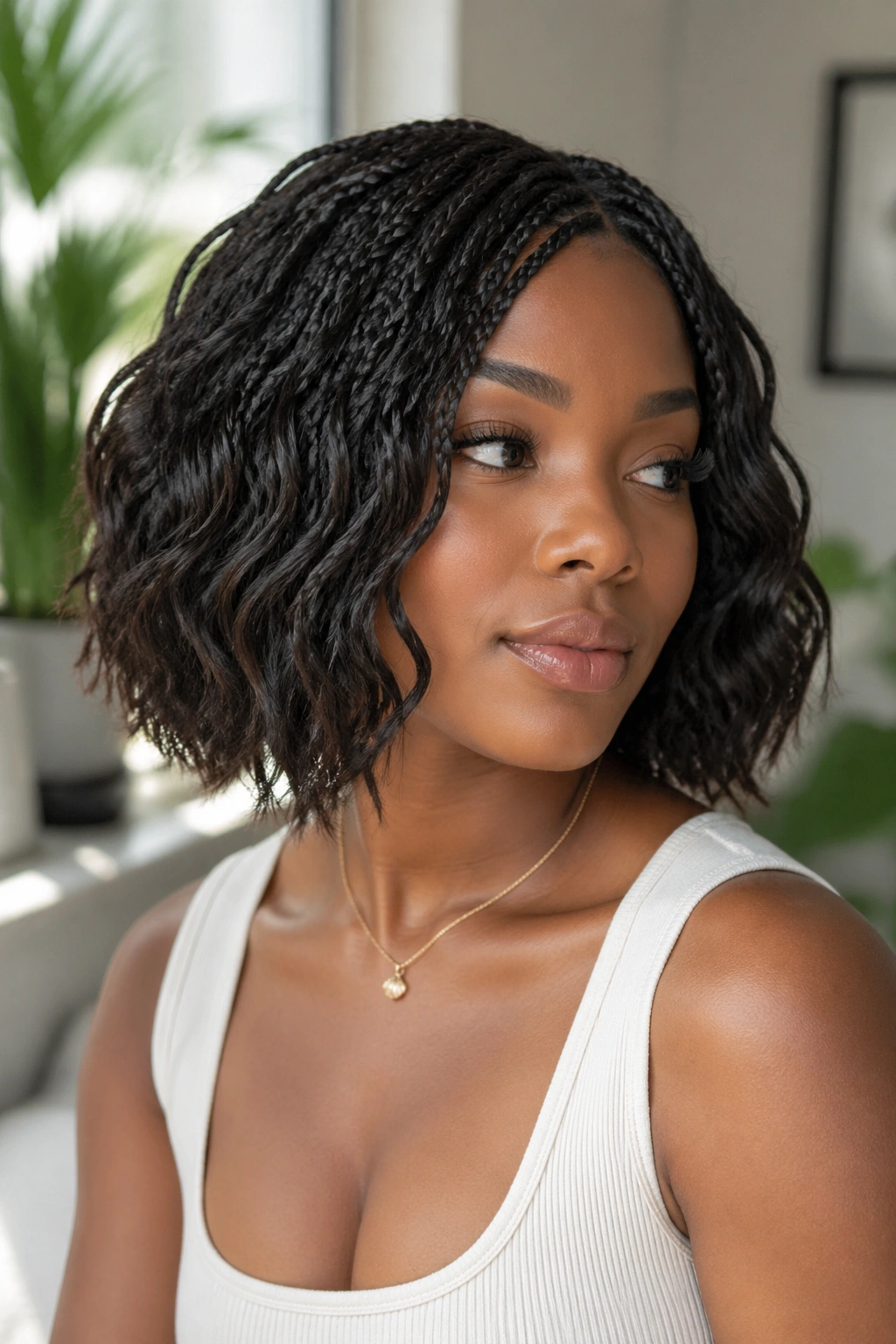
A crochet bob sits at chin or shoulder length. Wavy crochet hair gives the bob shape movement and body that straight versions lack.
The shape is flattering on almost every face. The length is professional and polished.
Trim any extensions that hang longer than the bob length. A clean bob relies on precise cutting.
17. Long Crochet Goddess Braids
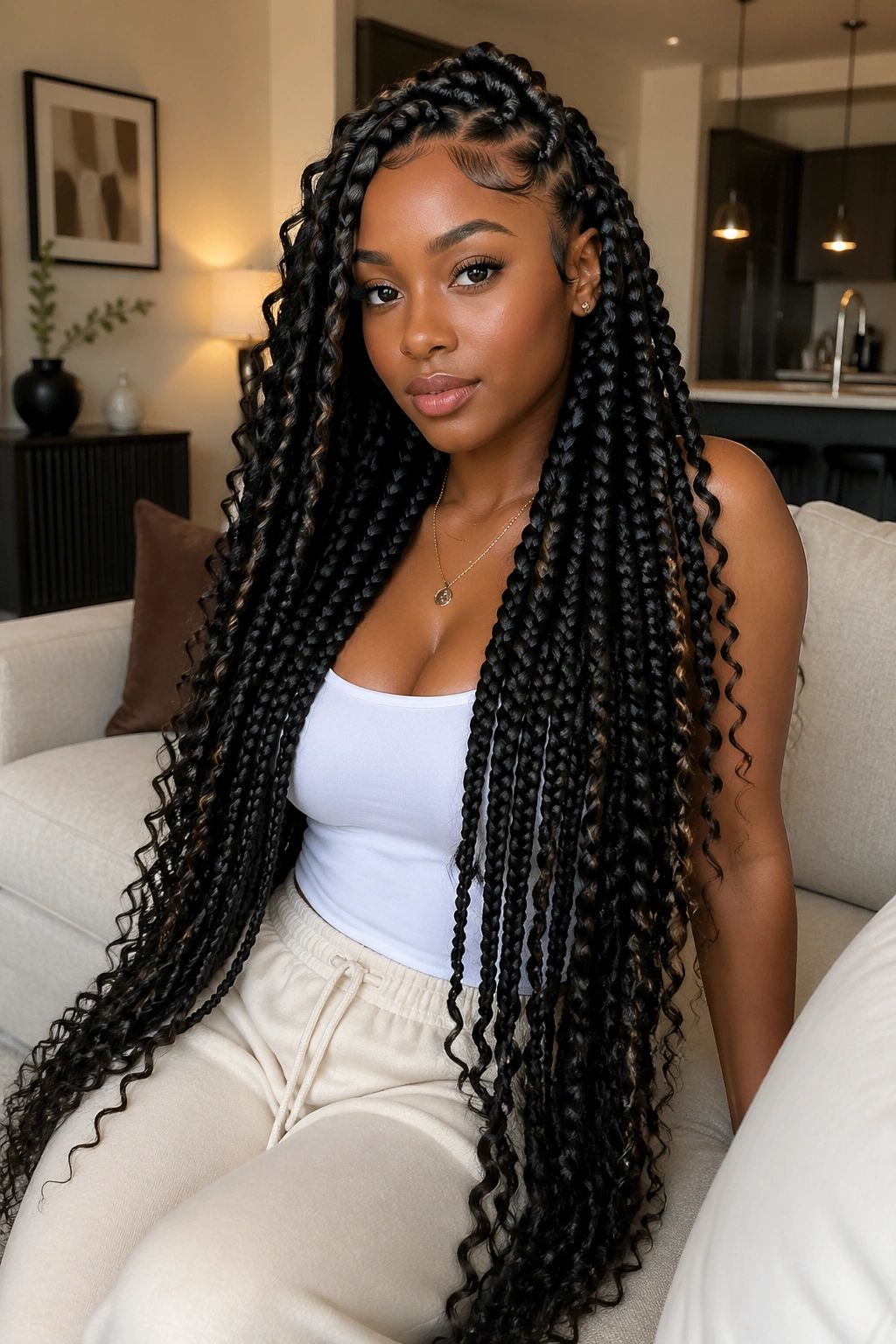
Goddess braids are thicker than standard braids with loose curls or waves at the ends. The crochet version installs pre-made goddess braid extensions that can reach waist length.
Long styles require more maintenance — longer hair tangles faster — but the dramatic look is worth it for special occasions.
Sleep with the braids loosely tied back and covered with a satin scarf to prevent tangling.
18. Crochet Senegalese With Curl Ends
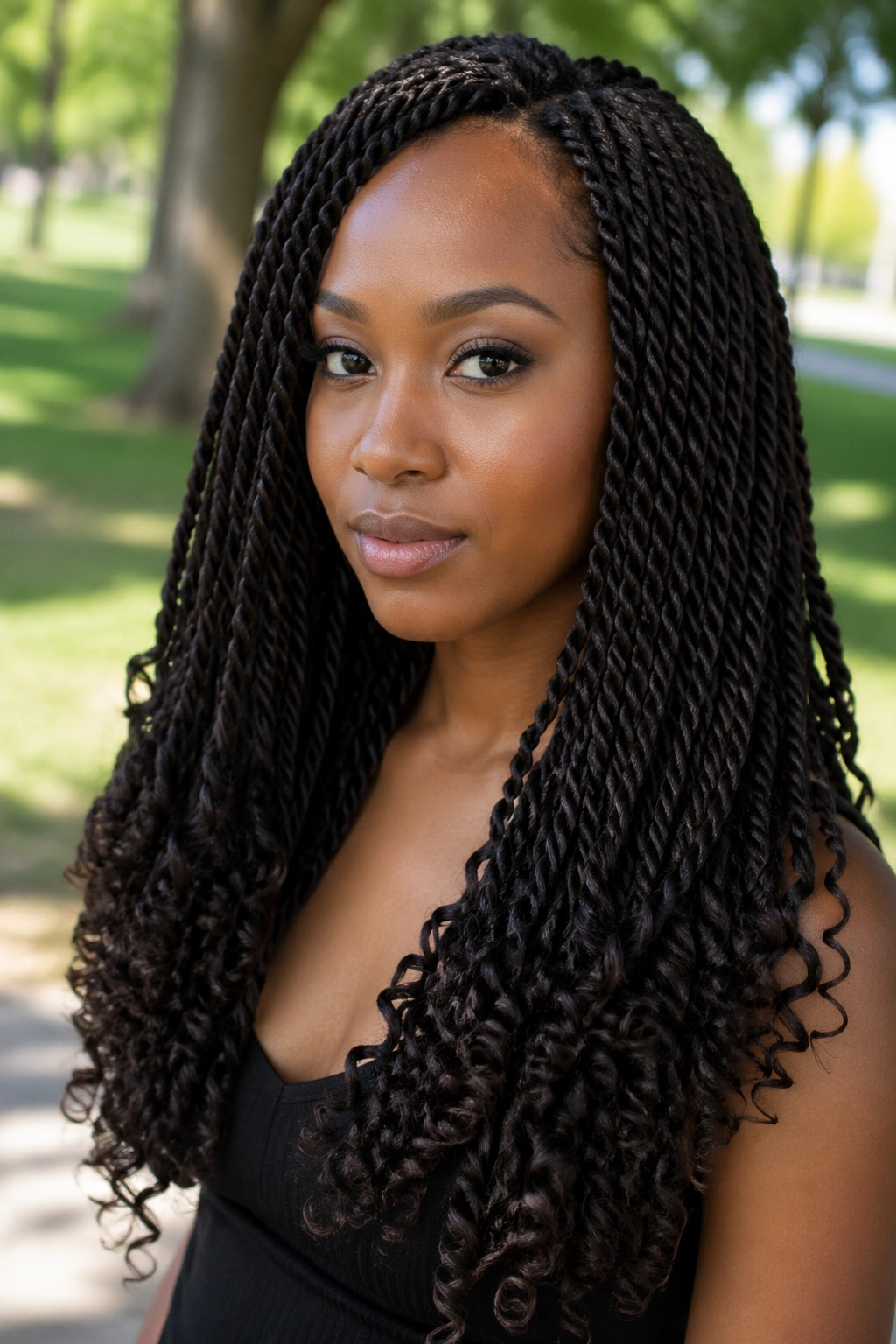
A Senegalese twist base with curl ends combines the sleek twist look with soft, romantic curls at the bottom. The combination gives you two textures in one style.
Install as a standard Senegalese twist, then attach curly ends to the last inch or two of each twist.
Works especially well at mid-to-long lengths where the contrast between sleek twists and curly ends is most visible.
19. Crochet Afro Puff Style
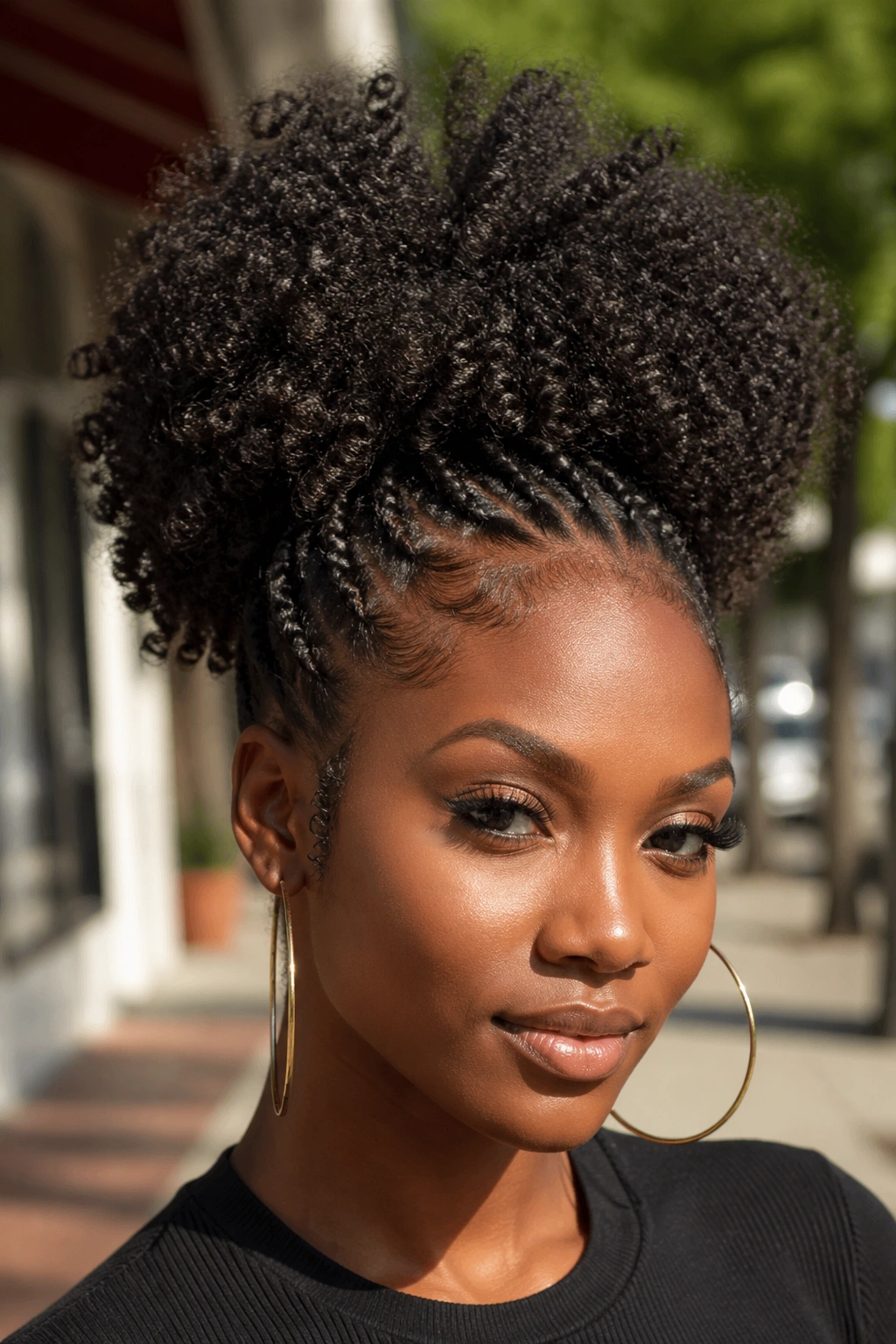
Cornrow the hair into a high puff pattern — all cornrows leading to a single point at the crown. Install curly crochet hair into the cornrows, then gather everything into a high puff.
The result is a massive, dramatic afro puff that stays in place for weeks without daily styling.
Great for: bold statement looks and anyone who wants a single high puff that doesn’t require retying every morning.
20. Half-Up Half-Down Crochet
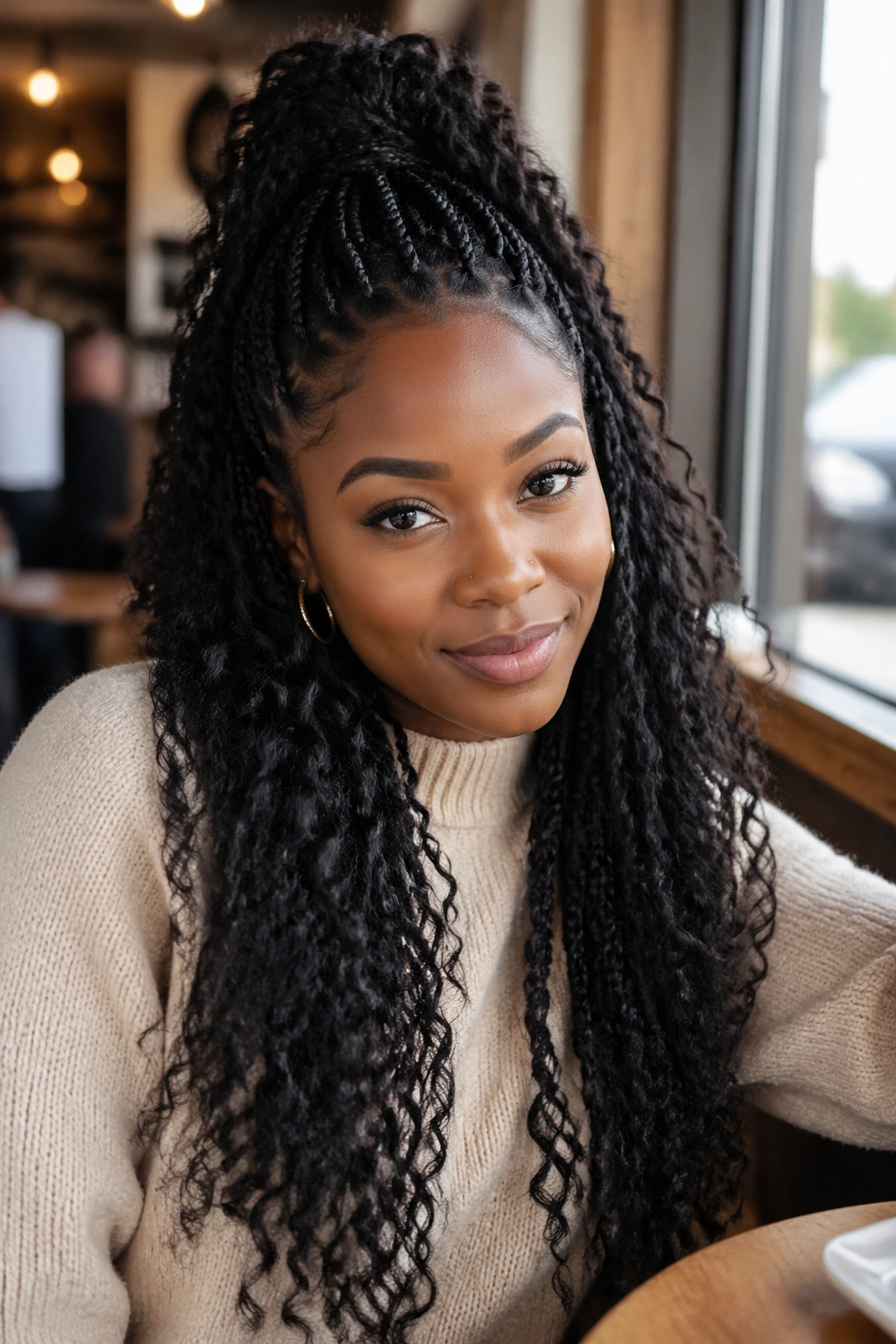
Install crochet braids, then pull the top half into a high style while leaving the bottom half hanging. The two-part styling creates versatility — you can adjust the proportions day to day.
Works with most crochet textures: curly, wavy, twisted, or locs.
Best for: versatility without committing to a single style for the full install period.
21. Short Curly Crochet With Undercut Look
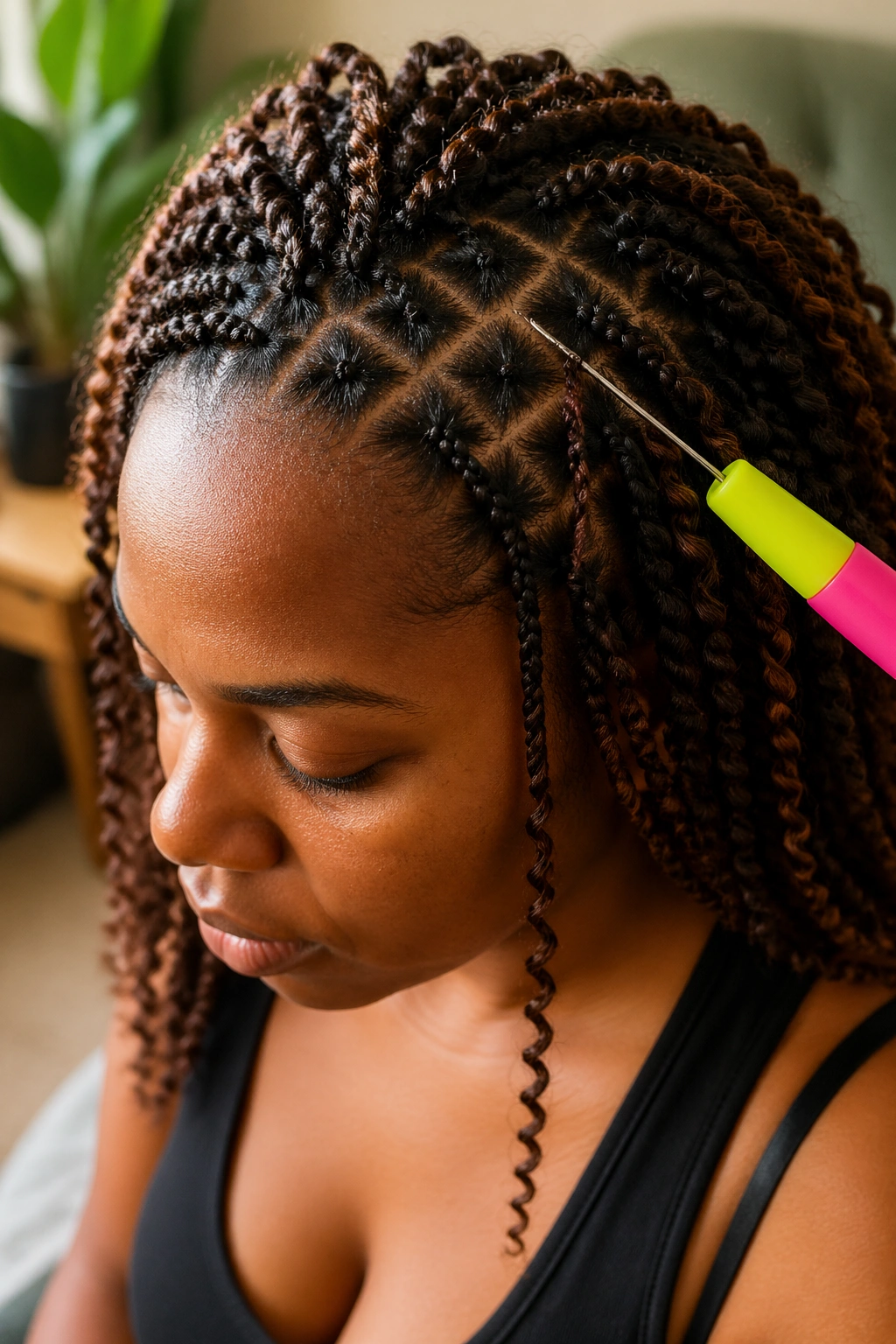
Cut the sides of your cornrows short (without actually cutting your hair) and install curly crochet only on the top section. The result mimics an undercut without the commitment.
The visual effect is edgy and modern. Pair with statement earrings and a strong lip for maximum impact.
Hide the cornrowed sides under the curly crochet if you want to flip between “undercut” and “full” styles.
22. Crochet Micro Braids
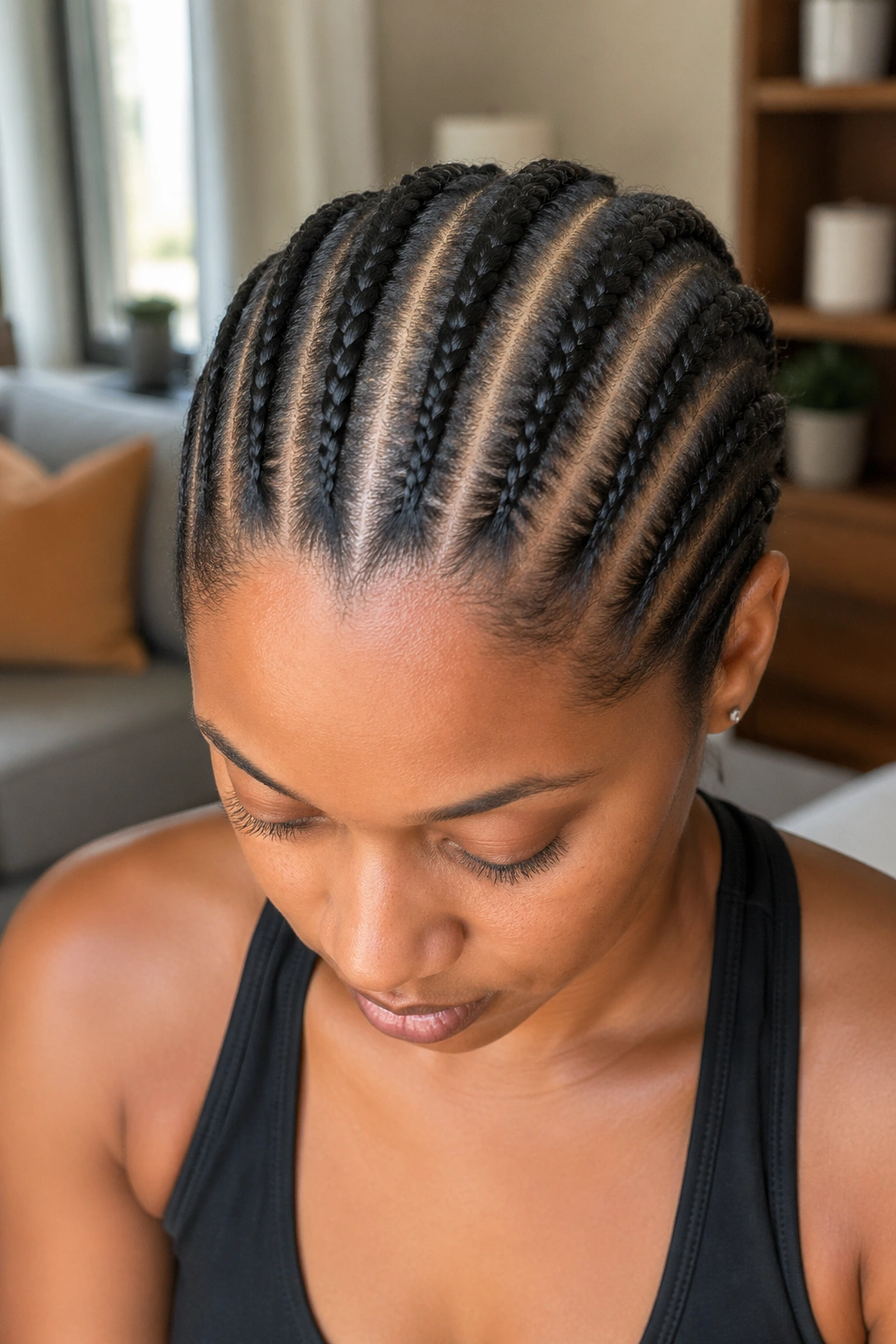
Micro braids are tiny — the smallest of the braid family. Crochet micro braids use pre-braided extensions in very fine sections.
Install time is longer because more braids are needed to cover the head, but the finished look is incredibly realistic. Micro braids move more like natural hair than any other braid size.
Plan for 3-5 hours.
23. Crochet Box Braids With Beads
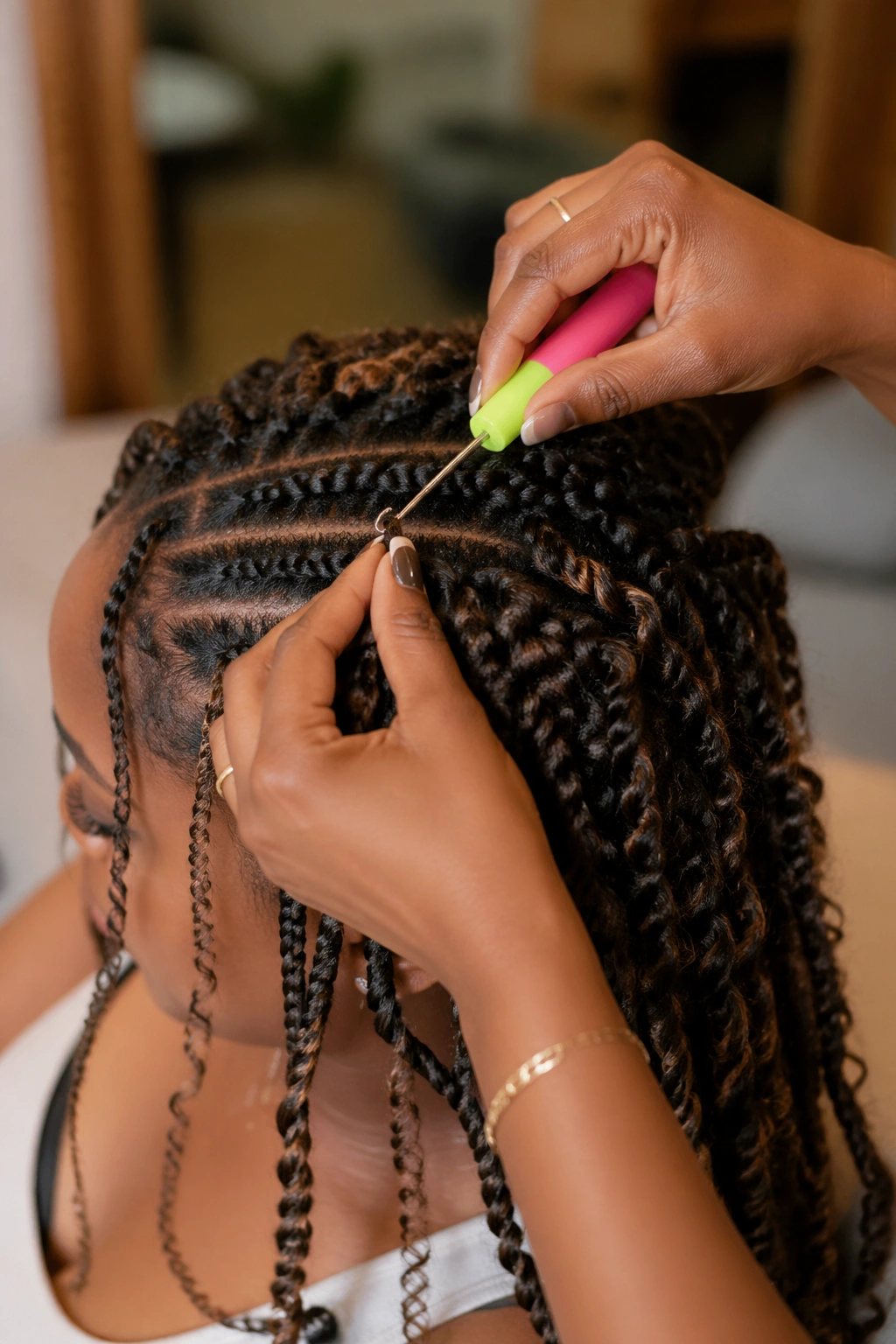
Add wooden or plastic beads to the ends of your crochet box braids for a classic finishing touch. The beads add weight and sound — you’ll hear them softly as you move.
Slide beads over the ends of the braids and secure with a small rubber band. Use wooden beads for a grown, bohemian look, or colorful beads for something playful.
Best paired with shorter lengths — long braids with beads can get heavy.
24. Kinky Curly Crochet With Highlights
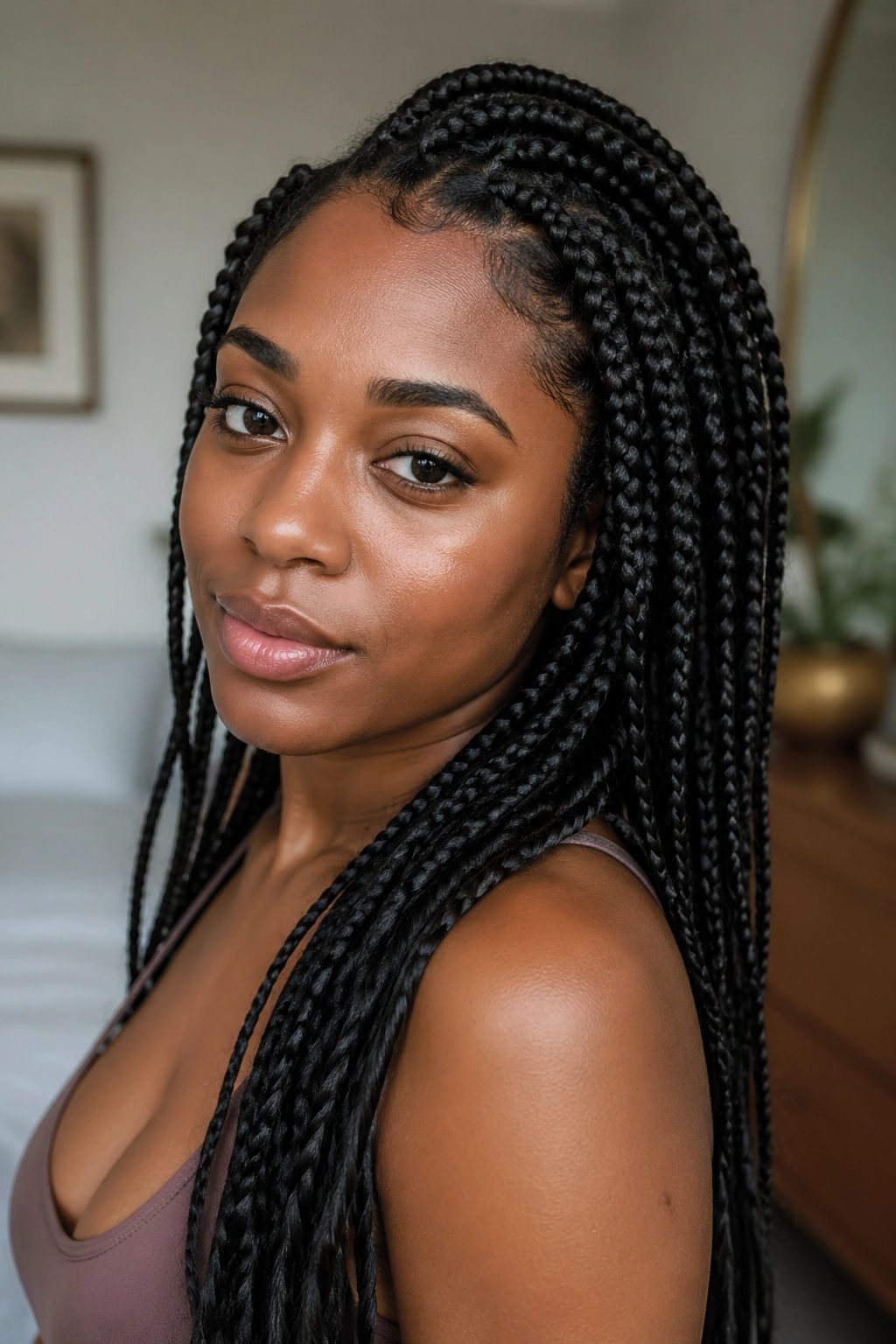
Kinky curly hair with subtle highlights (not full ombré, just lighter pieces throughout) adds dimension without being dramatic. The highlights catch the light and make the texture read richer.
Install standard kinky curly hair and look for extensions pre-made with subtle highlights.
Best for: anyone who wants subtle color without full commitment.
25. Crochet Braided Updo
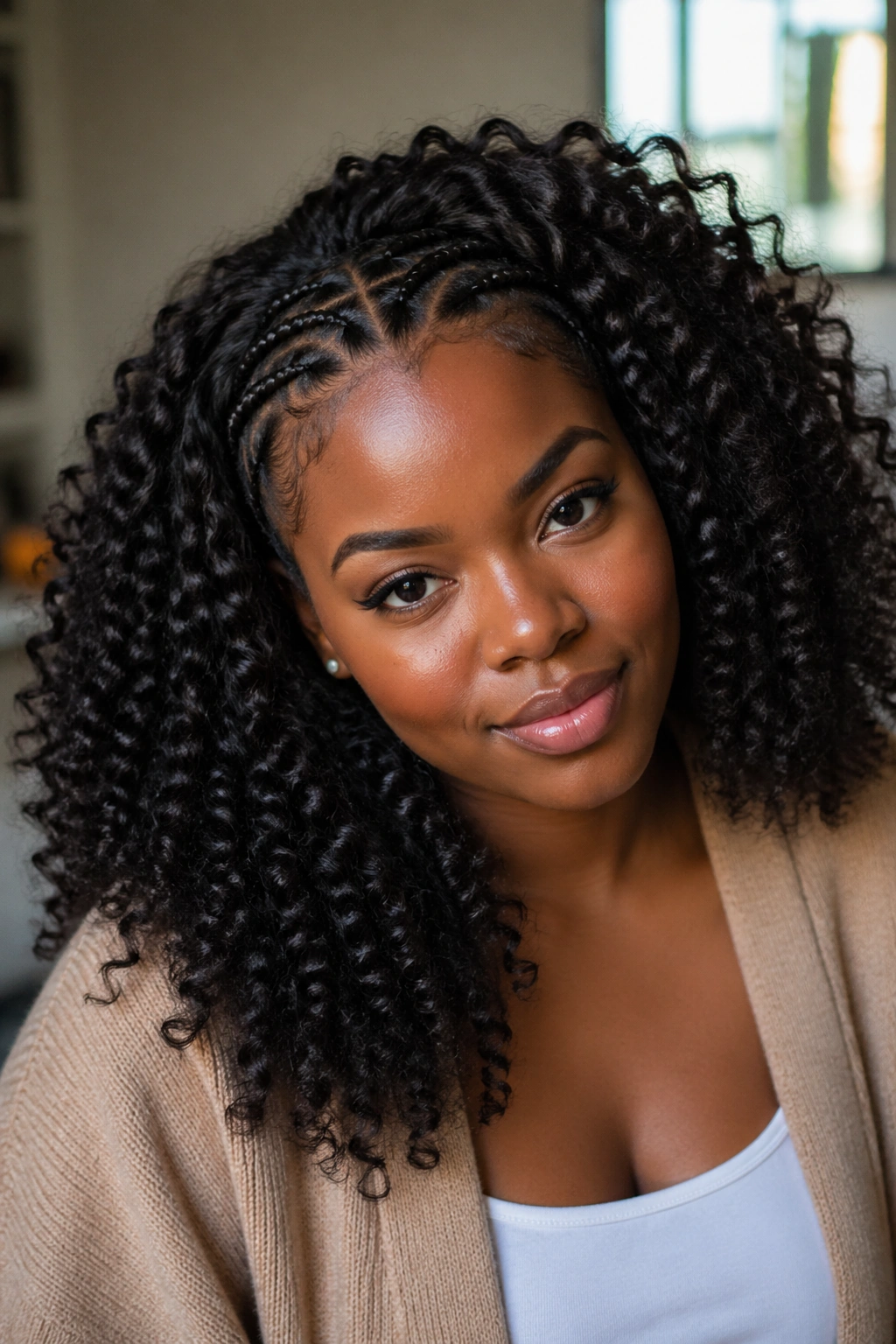
Close out the list with an updo. Install shorter crochet braids or twists, then pull the whole thing into an elaborate updo — a top knot, a braided bun, or a high sculptural shape.
The crochet base stays in for weeks, but the updo styling can change daily.
Great for: special events, weddings, and anywhere you want your hair to look intentional and dressy.
Sealing the Ends
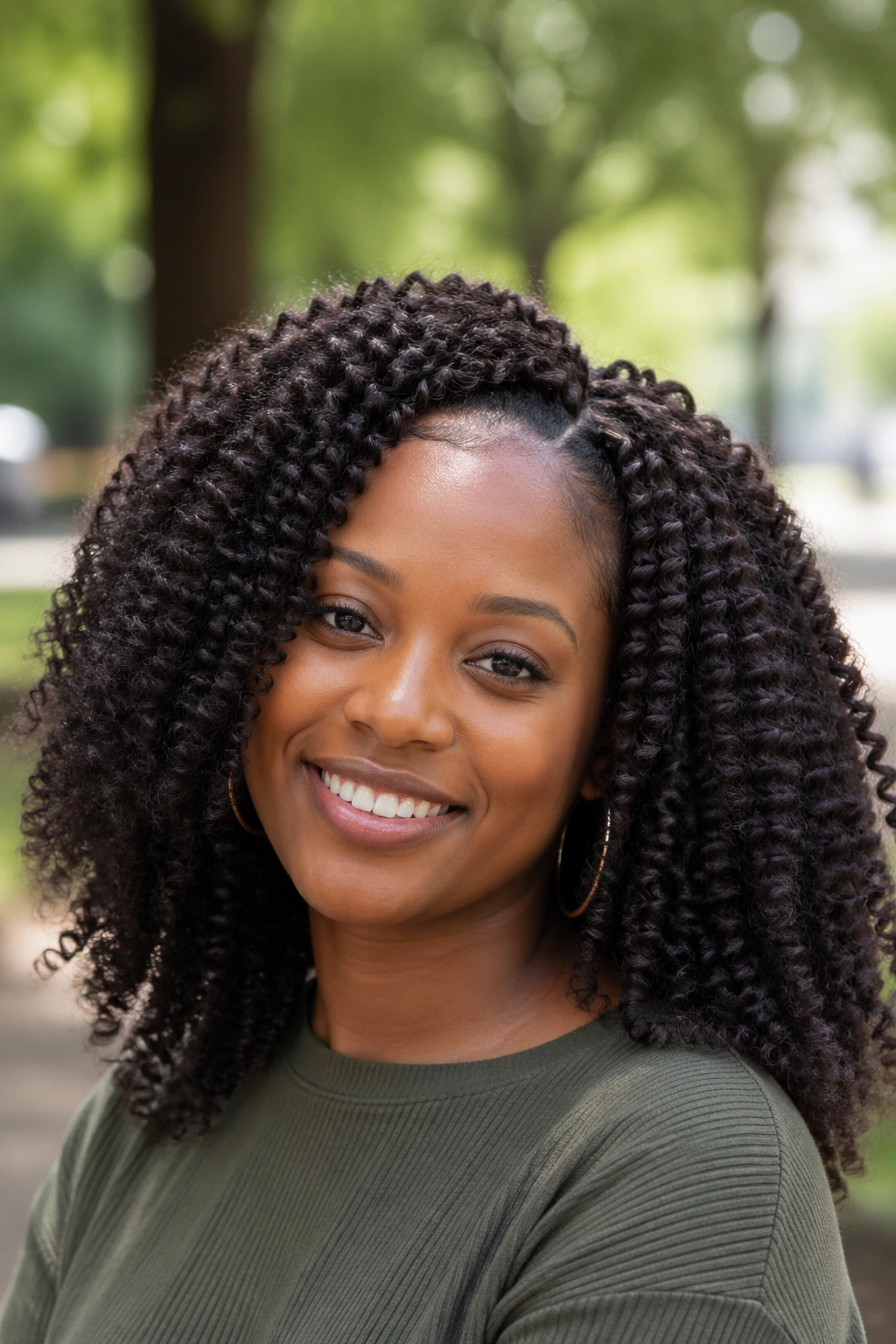
The ends of crochet braids need to be sealed so they don’t unravel. Three main methods work:
Hot water dip: boil water, let it cool slightly, dip the ends for 20 seconds. Best for curly and twisted textures.
Flat iron seal: fold the end under itself and press with a flat iron for a few seconds. Best for braided textures.
Knot seal: tie a small knot at the end of each braid. Best for micro braids and very fine textures.
Skip this step and your braids will fall apart within days.
Maintaining Crochet Braids
Wash your scalp weekly with a diluted shampoo, focusing on the scalp rather than the extensions. A squirt bottle helps reach between the braids.
Moisturize the scalp with a light oil — jojoba or argan — to prevent itching and flaking.
Cover your hair at night with a satin scarf or bonnet. The friction from cotton pillowcases will frizz out the extensions quickly.
Avoid high heat. Most synthetic crochet hair isn’t heat-resistant, and a flat iron will melt it instantly.
Taking Them Out Safely
When it’s time to remove your crochet braids, don’t rush. Cut the extension hair close to the knot without cutting your cornrow. Carefully unknot or cut the base knot. The extension comes free.
Oil your cornrows before removal to reduce friction. Detangle your natural hair slowly, starting from the ends, once all the extensions are out.
Wash and deep condition immediately. Your hair needs the moisture after weeks under extensions.
Mistakes to Avoid
Installing hair that’s too heavy for your cornrows causes breakage at the roots. Start with lighter styles if you have fine or fragile hair.
Making the cornrows too tight causes traction alopecia over time. A little tension is fine; pain is a warning sign.
Skipping scalp care during the install period leads to itching, flaking, and sometimes scalp infections. Keep the scalp clean even if the extensions look fine.
Leaving them in too long — past 8 weeks — causes tangling and breakage during removal. Six weeks is the sweet spot.
Final Thoughts
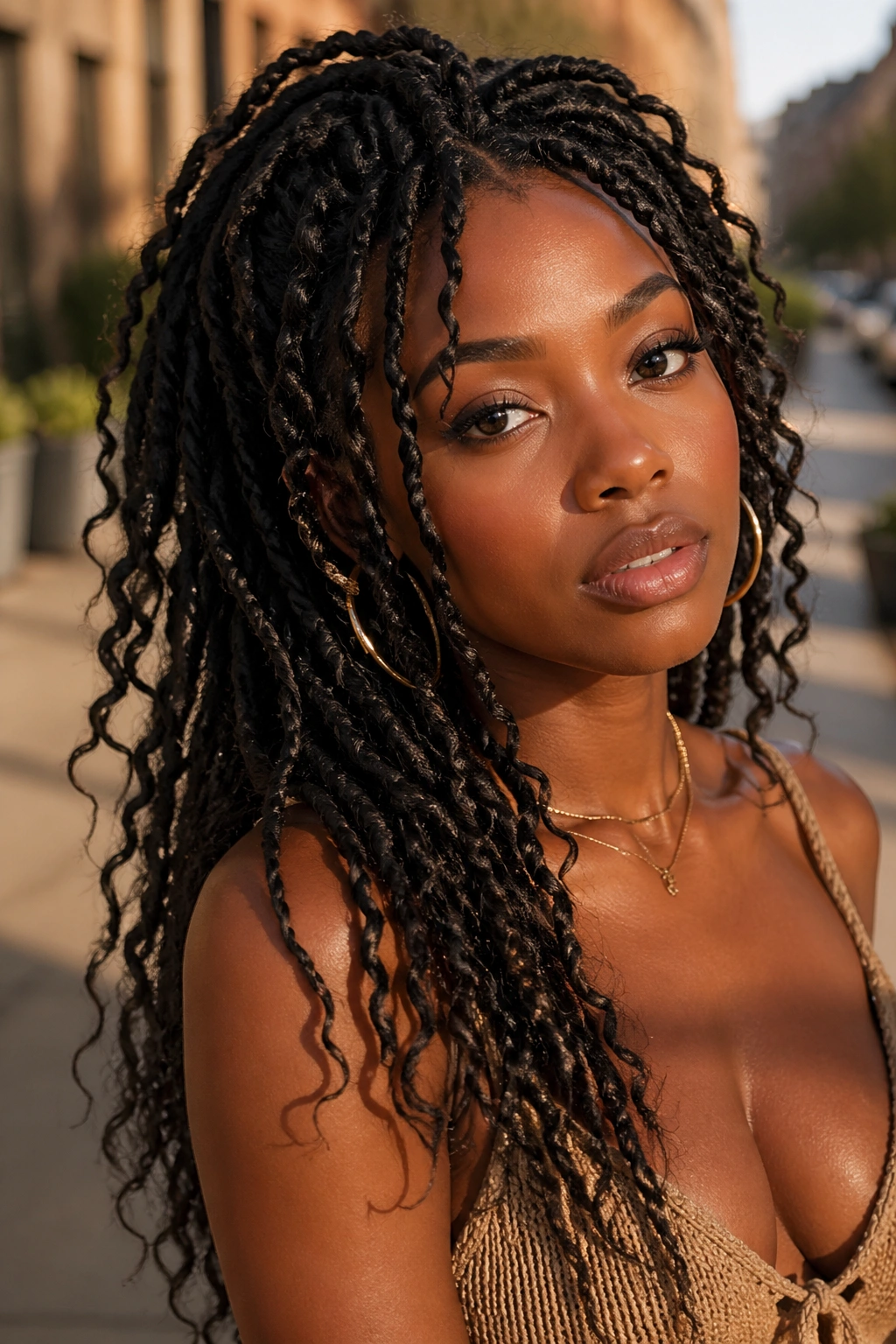
Crochet braids changed the math on protective styling. The time savings alone made them worth the effort, and as the extension quality has improved, the finished look has become nearly indistinguishable from traditional installs.
Start with a style that’s forgiving — the free-style curly crochet is perfect for beginners. Learn the cornrowing, the knot technique, the sealing methods. After two or three installs, you’ll have enough confidence to try more elaborate styles.
The beauty of crochet is that a mistake isn’t catastrophic. You can redo a section, swap out the hair, or try a completely different style within a few hours. That flexibility makes the whole process more fun and less stressful than it sounds.
Pick one style from this list that matches where you are today — time, budget, skill level, and occasion — and try it. Your hair will thank you for the break, and you’ll wonder why you waited so long to try.
