



Afro-inspired fashion for plus-size women sits at an intersection that deserves more attention than it typically gets: the point where African textile traditions, natural hair culture, bold color philosophy, and full-figured style meet and produce something genuinely spectacular. The conversation about Afrocentric dressing too often centers on bodies that don’t represent the full range of Black women, which is a strange omission given that Black women have led and defined this aesthetic for decades in every size.
Afro-inspired outfit ideas for plus-size women aren’t about making Afrocentric style “work” on a bigger body — as if the style itself has a size restriction. These ideas are about dressing with intention, in pieces that celebrate both heritage and the body wearing them. The prints are bold. The silhouettes are deliberate. And the attitude required to wear all of this well has absolutely nothing to do with size.
Getting dressed in this aesthetic is also about having opinions. Knowing which Ankara print speaks to you specifically. Understanding why a wrap silhouette might work differently on your proportions than a box cut does. Recognizing quality fabric from across a room. These are all learnable preferences, and building them is part of the pleasure of this kind of fashion.
The Foundational Principles of Afro-Inspired Dressing
What makes a look distinctly “Afro-inspired” rather than just “colorful” or “printed”? A few elements consistently define the aesthetic. African textile prints — Ankara, Kente, Kanga, Adire — are the most recognizable signature. But the aesthetic extends beyond print into silhouette: flowing maxi lengths, structured bodices, off-shoulder cuts, and draped fabrics all appear in African fashion traditions across the continent, and all carry the aesthetic forward.
Color philosophy is another defining characteristic. Afro-inspired fashion doesn’t shy away from color combinations that Western mainstream fashion might call “too much” — rich burgundy with electric teal, deep orange with vivid yellow, navy with bright red. These combinations exist in African textile tradition because they work against deep brown and black skin tones, creating contrast and richness that neutral palettes simply don’t produce.
Natural hair is part of the overall aesthetic system — the locs, the protective braids, the full afros, the wrapped heads — all of these have a design relationship with the clothing that makes the combined look greater than either element alone.
Understanding Ankara and African Print Fabrics
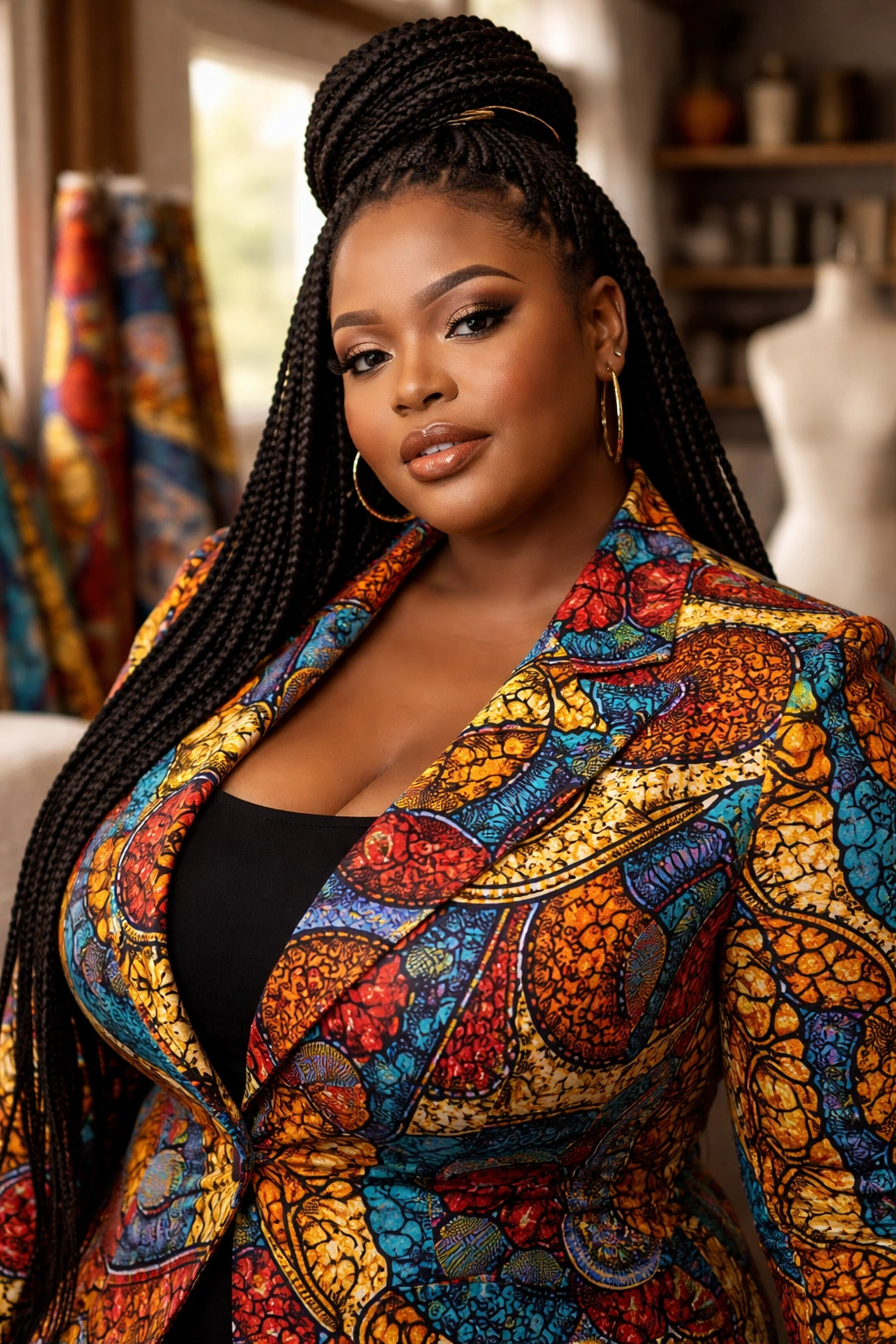
Ankara fabric (also called African wax print or Dutch wax print) is a cotton fabric printed with bold, colorful patterns using a wax-resist dyeing process. The fabric has a slightly waxy feel on the right side and a softer feel on the back. It’s substantial — not sheer, not flimsy — which makes it structure well for tailored pieces like blazers, A-line skirts, and fitted bodices.
For plus-size dressing, the weight and structure of Ankara fabric is actually an advantage over lighter, clingier fabrics. A good Ankara blazer holds its shape. An Ankara wrap skirt drapes predictably. The fabric does work for you rather than requiring you to manage it constantly.
Buying Ankara by the yard from African fabric shops — online or in person — and having pieces tailored or made is often the better path to a perfect fit than buying off-the-rack Ankara pieces. A tailor who works with this fabric regularly can make a fitted wrap dress that sits exactly at the proportions that work for your body.
Building an Afro-Inspired Wardrobe Around Your Shape
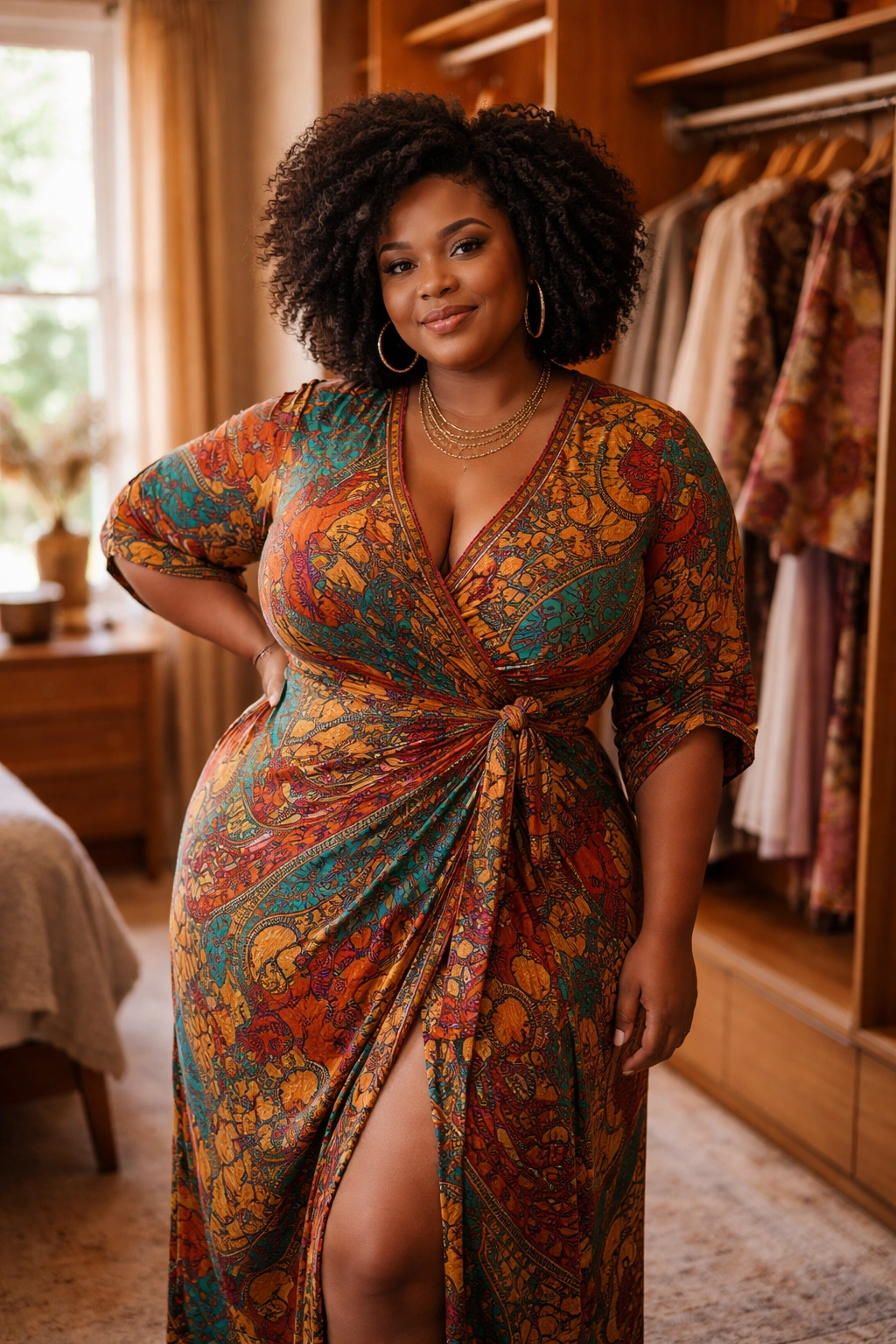
Every body — including every plus-size body — has proportions that shape how clothing falls and how silhouettes read. Before investing in a wardrobe direction, it’s worth knowing your specific proportions rather than just your dress size.
Are you fuller at the hips and narrower at the shoulders (pear-proportioned)? Fuller at the shoulders and narrower at the hips (inverted triangle)? Evenly full all around (apple or full-figure)? These aren’t categories that limit your options — they’re practical information that helps you choose between two equally beautiful styles and pick the one that’ll fit right off the rack versus the one that might need a small alteration.
The Afro-inspired aesthetic, because it includes such a wide range of silhouettes and fabric weights, is genuinely accessible across proportions. The wrap dress works for nearly every body. The Ankara blazer adapts to any size. The maxi skirt flows over everything.
The Accessories Layer
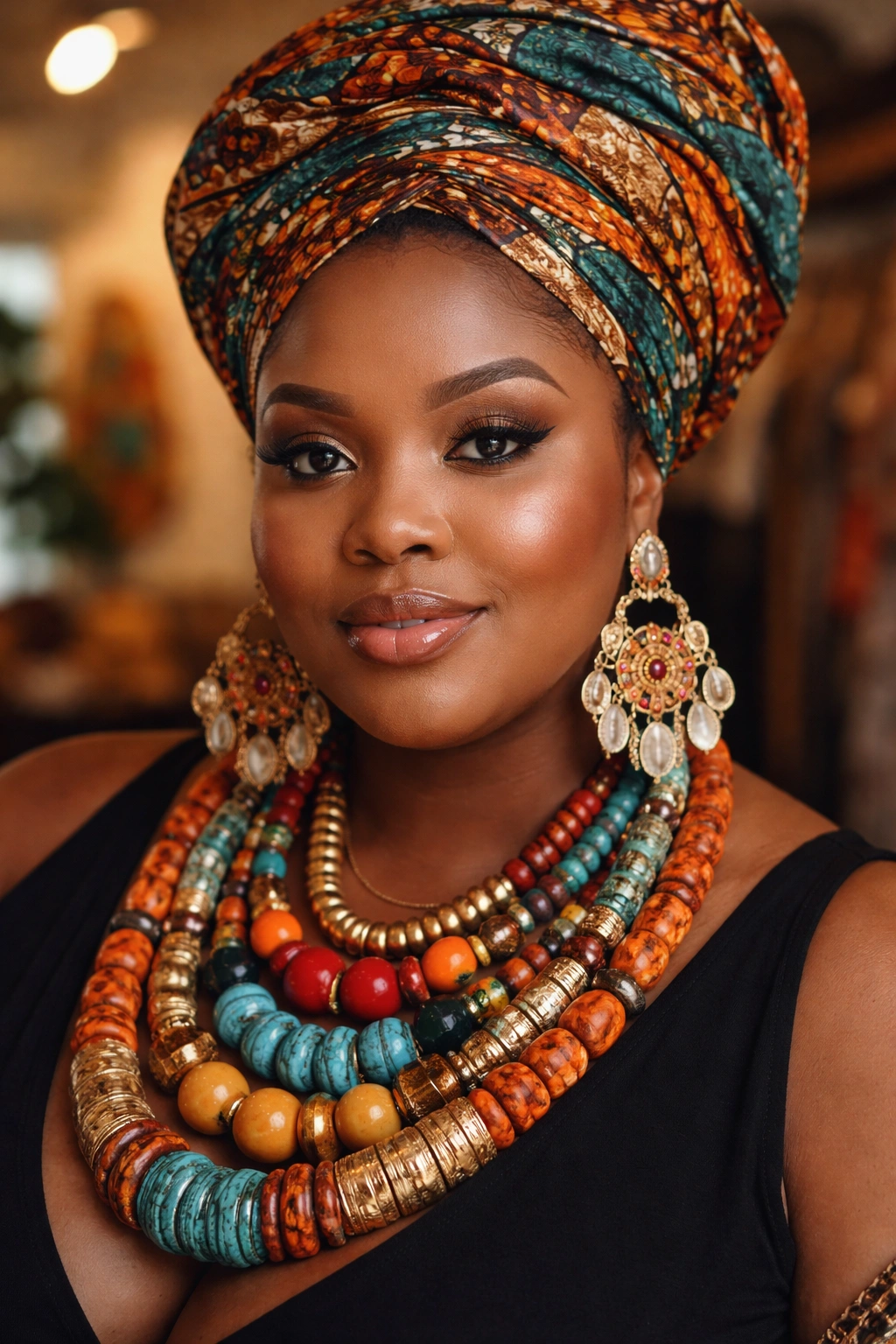
Afro-inspired fashion carries strong accessory traditions. Chunky beaded necklaces in red, gold, orange, or turquoise. Gold hoop earrings in every size from small to statement. Stacked bangles in wood, brass, or resin. Head wraps — gele in West African tradition, doek in Southern African tradition — in coordinating or complementary fabrics.
For plus-size dressing specifically, accessories at the face and collarbone draw the eye upward and create focal points that balance proportion. Large statement earrings, a chunky necklace at collarbone height, or a gorgeous head wrap all function as visual anchors that make the outfit read from the top down rather than from the widest point outward.
1. The Ankara Wrap Dress
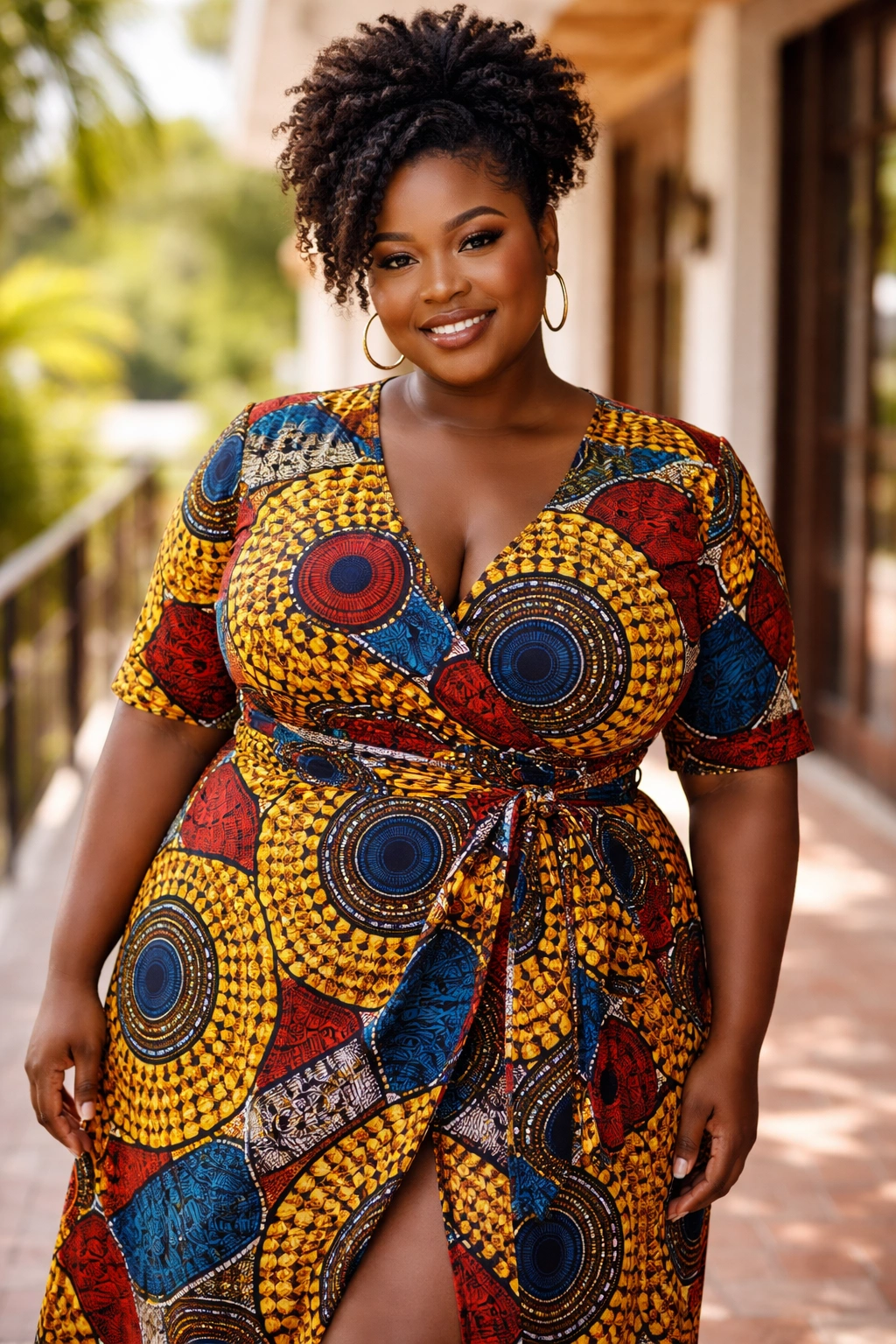
The wrap dress is the most forgiving, flattering silhouette for almost every body type, and in Ankara fabric it becomes one of the most striking things you can put on. The V-neckline created by the wrap front elongates the neck and draws the eye upward. The waist tie creates definition wherever you want it — at your actual waist, above it, or below it. The skirt flows away from the body in an A-line that moves beautifully.
Why It Works
A wrap dress in Ankara never looks casual. The fabric is too graphic, too substantial. Even with flat sandals, an Ankara wrap dress reads as intentional and composed. Pair with gold strappy sandals or block-heel mules and you’re fully dressed without trying.
For plus-size bodies, adjust the tie to wrap to your most comfortable waist or high-hip position rather than your natural waist if that feels constricting. The wrap will still create definition at whatever point you tie it.
2. The Kente-Striped Blazer
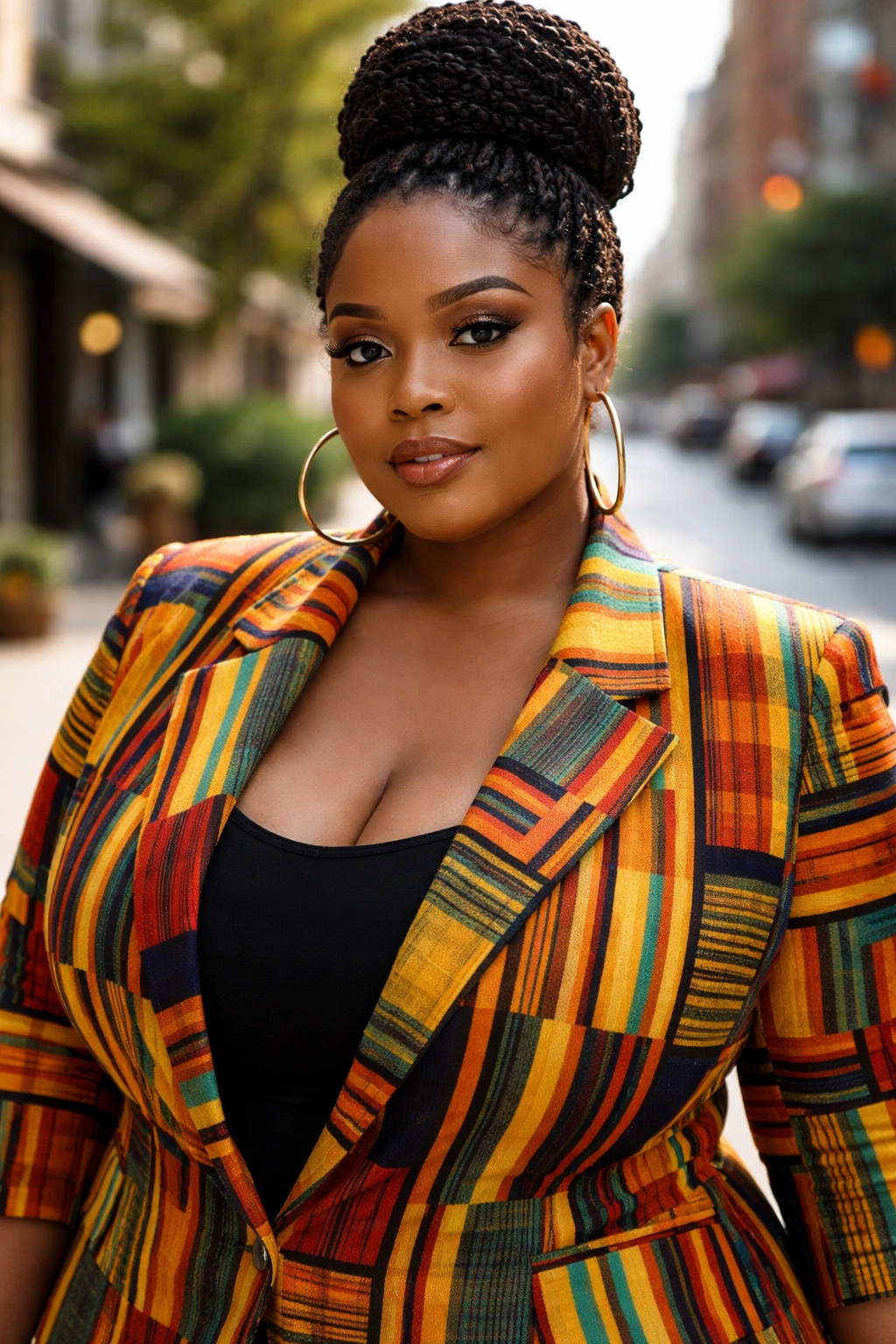
A structured blazer in Kente cloth or a Kente-inspired woven stripe fabric, worn over a solid-color base — black wide-leg trousers, a white fitted top, solid-color denim. The blazer carries all the visual weight of the outfit. Everything else is a frame.
Why this works for plus-size styling specifically: the structured, padded shoulders of a good blazer balance wider hips and create an inverted triangle effect that reads as powerful and composed. On plus-size figures, a well-fitted blazer in a bold fabric does serious work. The key word is “well-fitted” — too large reads as shapeless, too small pulls and gaps.
Kente stripes run vertically and horizontally in a geometric woven pattern. When made into a blazer, those vertical elements create visual length. That elongating effect on the torso is genuinely helpful.
3. The Maxi Wrap Skirt in Bold Print
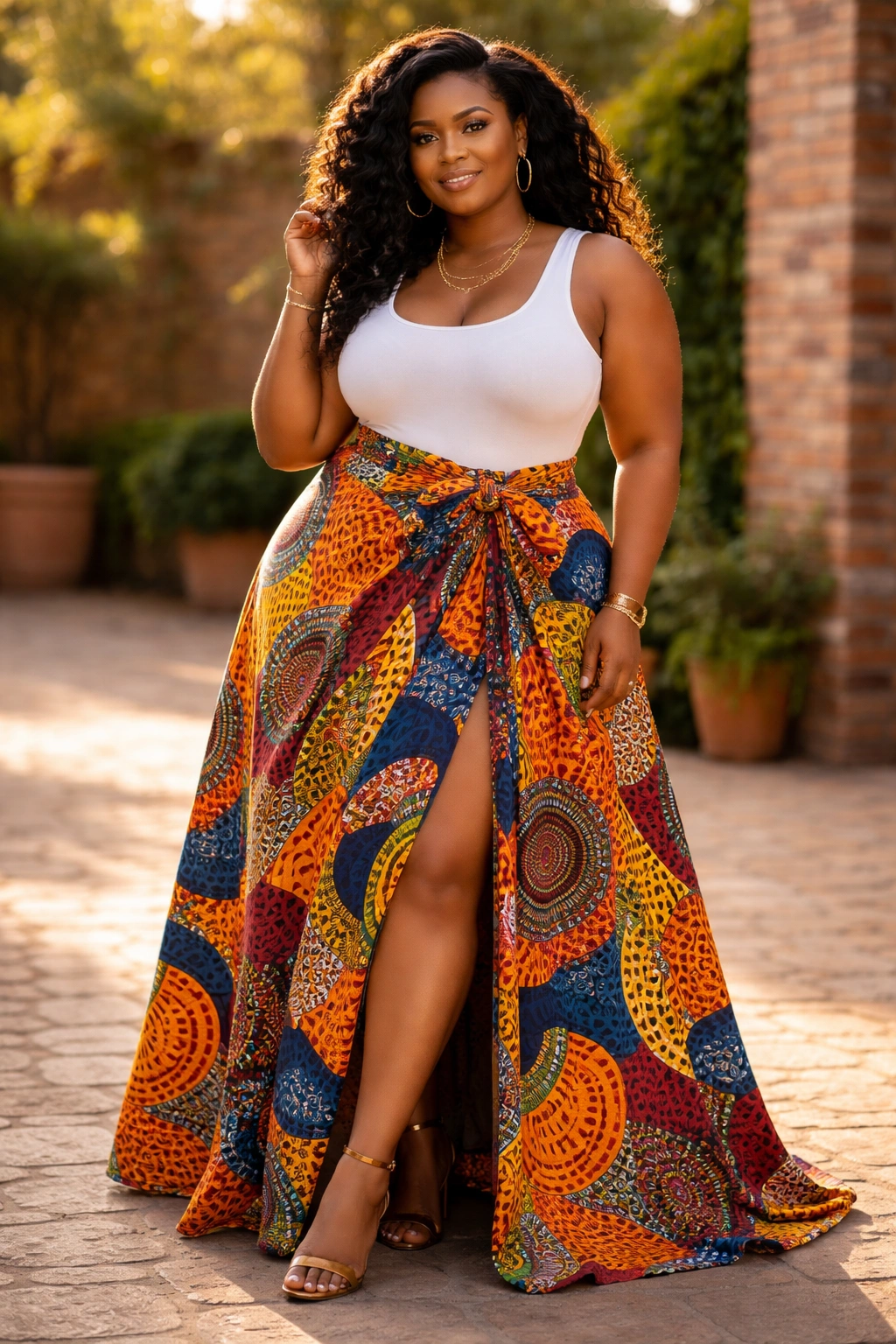
A floor-length wrap skirt in a bold Ankara or tribal print, wrapped at the waist and tied in a bow or a knot. The skirt flows all the way to the floor, creating a dramatic, sweeping silhouette that’s simultaneously formal and free. Wear with a tucked-in solid top to define the waist and let the skirt be the full visual story.
Maxi wrap skirts on plus-size figures are best at a length that actually reaches the floor — hem that hits mid-calf or ankle can look truncated on fuller-figured women and create a stumpy visual proportion. Floor-length extends the line continuously and looks intentional.
4. The Bold Ankara Jumpsuit
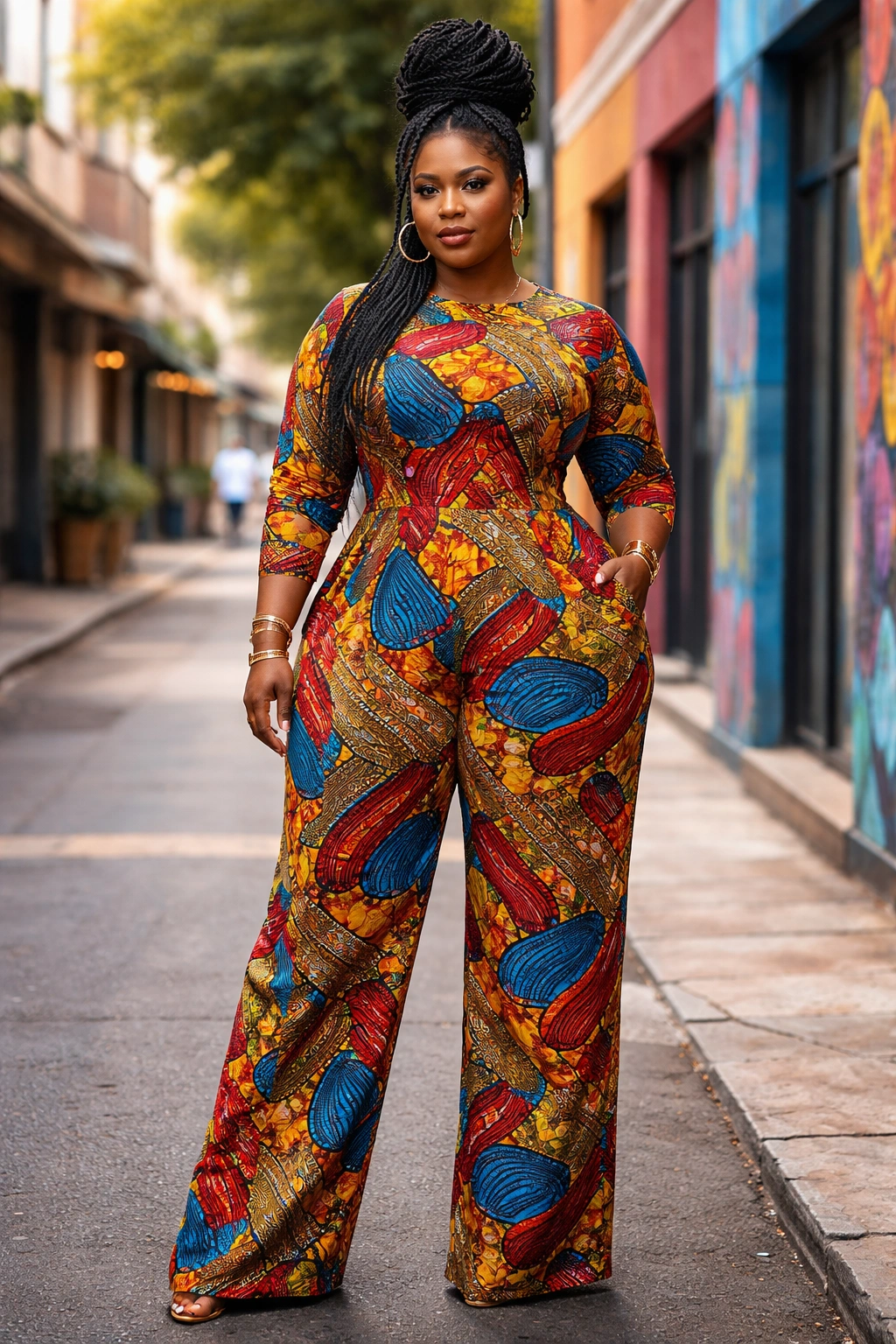
A wide-leg or palazzo-style jumpsuit in Ankara fabric. The one-piece silhouette creates a continuous, clean line from shoulder to floor. On plus-size bodies, the jumpsuit eliminates the visual “break” at the waist that can sometimes make outfits feel chopped in sections — instead, you get one unbroken visual flow.
The challenge with jumpsuits is always fit — specifically at the crotch length and inseam, which vary significantly by body shape and aren’t adjusted in most standard sizing. If you buy a jumpsuit off-the-rack, assume it may need a crotch length adjustment. This is a simple and inexpensive tailor alteration that completely transforms how a jumpsuit sits.
The print does everything at this point. An Ankara jumpsuit with a complex, colorful print and the right accessories is a complete outfit with zero additional style effort.
5. The Off-Shoulder Ankara Top with Wide-Leg Trousers
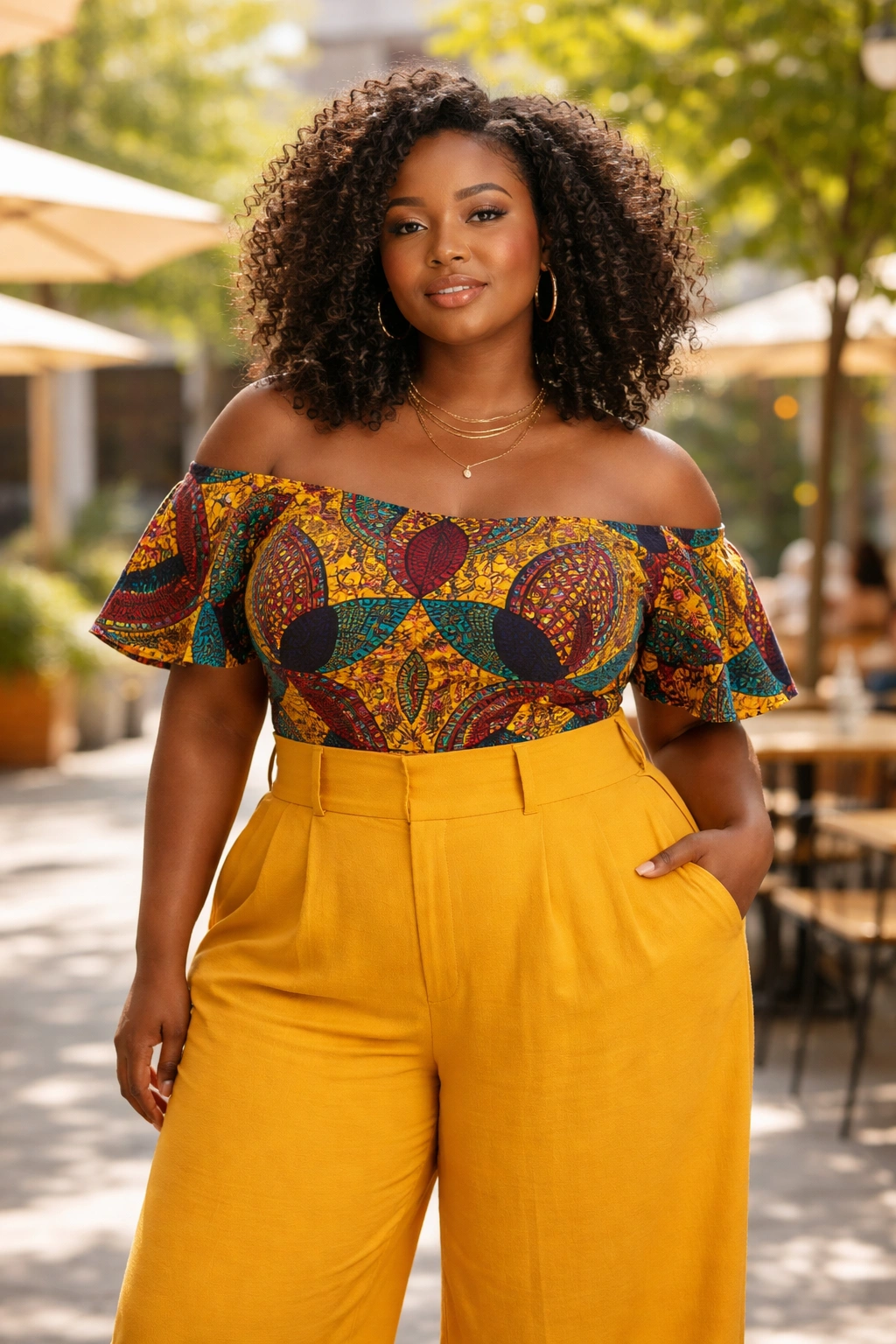
An off-shoulder top in a bold print — showing the collarbones and shoulders completely — paired with high-waisted wide-leg trousers in a solid color that picks up one tone from the print. The off-shoulder line draws the eye immediately to the face, neck, and shoulders, creating a focal point at the most universally flattering area.
For plus-size dressing, the off-shoulder works beautifully because it creates an unfettered upper-body line. There’s no collar, no lapel, no turtleneck to compete with the face — just a clean, open sweep of fabric across the chest and shoulders. Wide-leg trousers with a high waist add structure at the lower half without adding visual bulk.
6. The Kanga Wrap (Kitenge Style)
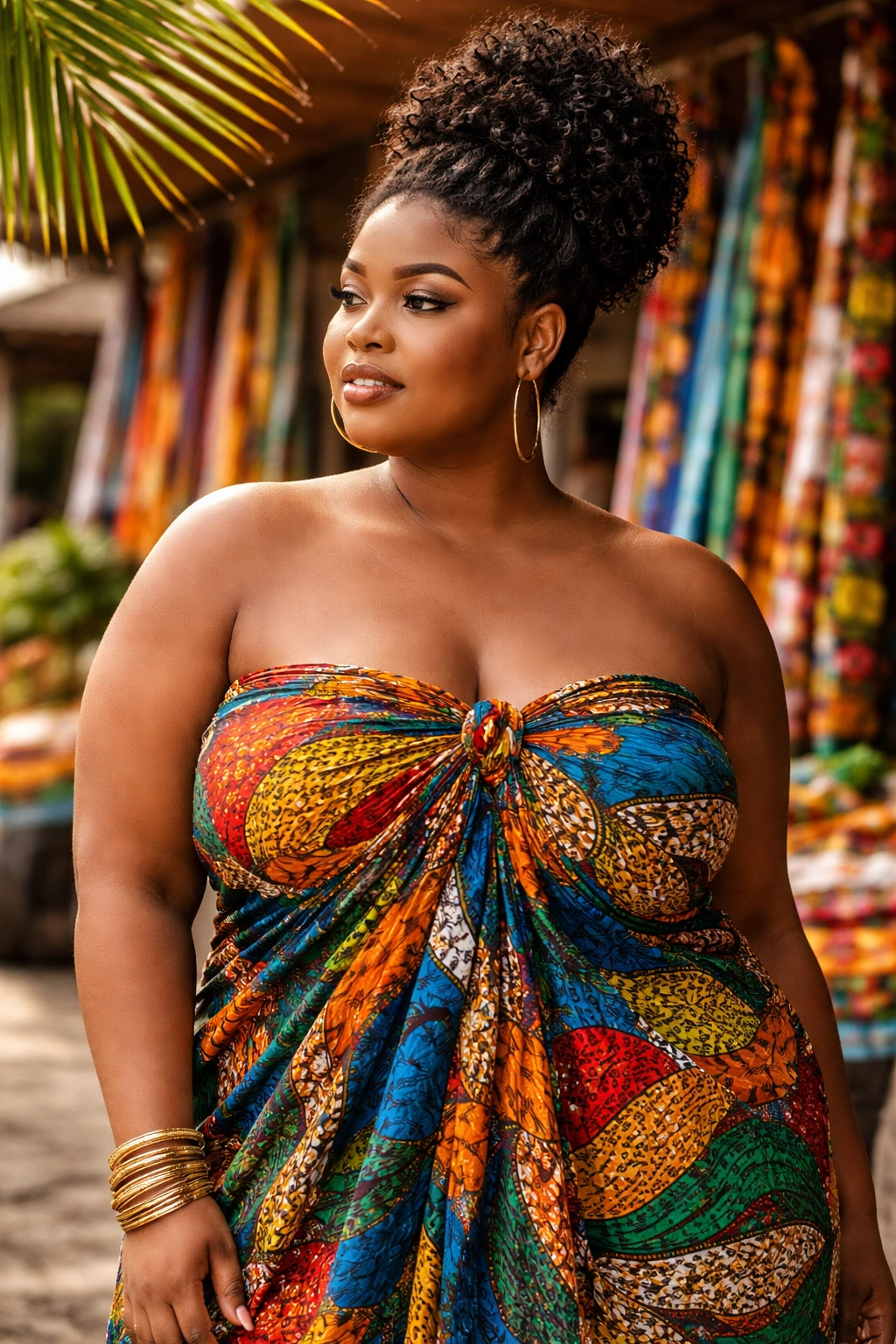
A large rectangular piece of fabric — a kanga or kitenge — wrapped and tied around the body in one of several traditional methods: wrapped at the chest as a strapless dress, wrapped at the waist as a full skirt over another piece, tied at the shoulder as an asymmetrical dress, or wrapped around the shoulders as a shawl. This is the oldest and most direct form of Afro-inspired dressing.
Wearing a kanga wrap on a plus-size body requires understanding how the fabric drapes from your specific proportions. A wrap tied at the chest holds up better with shapewear or a fitted tube top underneath as a base layer. A wrap at the waist works as a full overlay skirt over fitted trousers.
The freedom in kanga dressing is that it’s fully adjustable. You don’t need a specific size — you need a specific technique.
7. The Color-Blocked African Print Co-ord
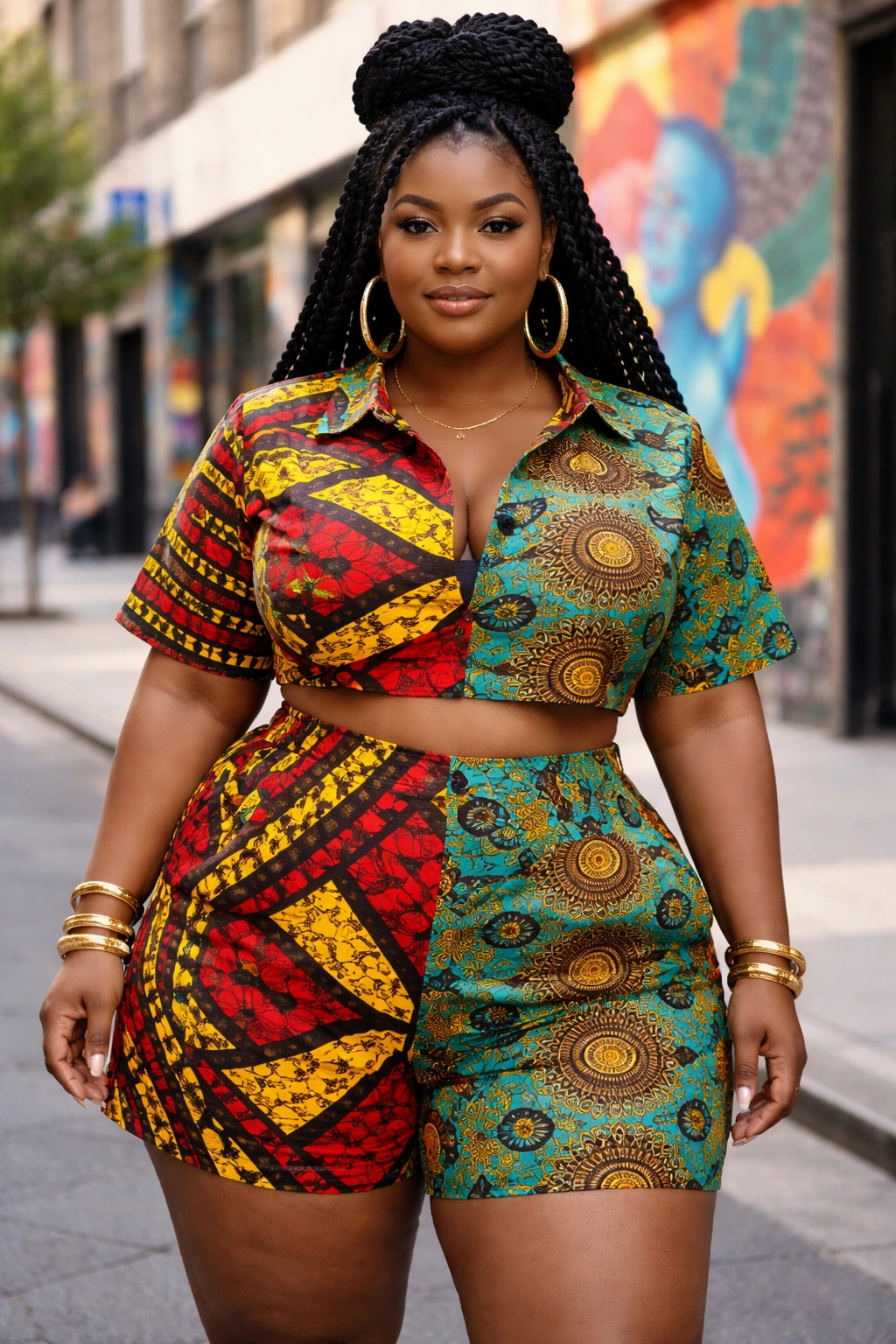
Matching top and bottom — a co-ord set — in two different but coordinating Ankara prints. The color blocking between the two pieces creates visual sections that can be strategically positioned. A top in one print color that emphasizes your chest and shoulders, a bottom in a coordinating print that plays down or plays up the hips depending on your preference.
Color blocking in Afro-inspired fashion: the rule is that the two prints need to share at least one color to create cohesion. Two completely unrelated prints in completely different color palettes creates a look that reads as costume rather than fashion. Two prints with shared colors read as intentional.
For plus-size styling, choose a bottom color that’s in the darker range of the palette — darker colors recede slightly, lighter ones advance visually.
8. The Tailored Ankara Midi Skirt
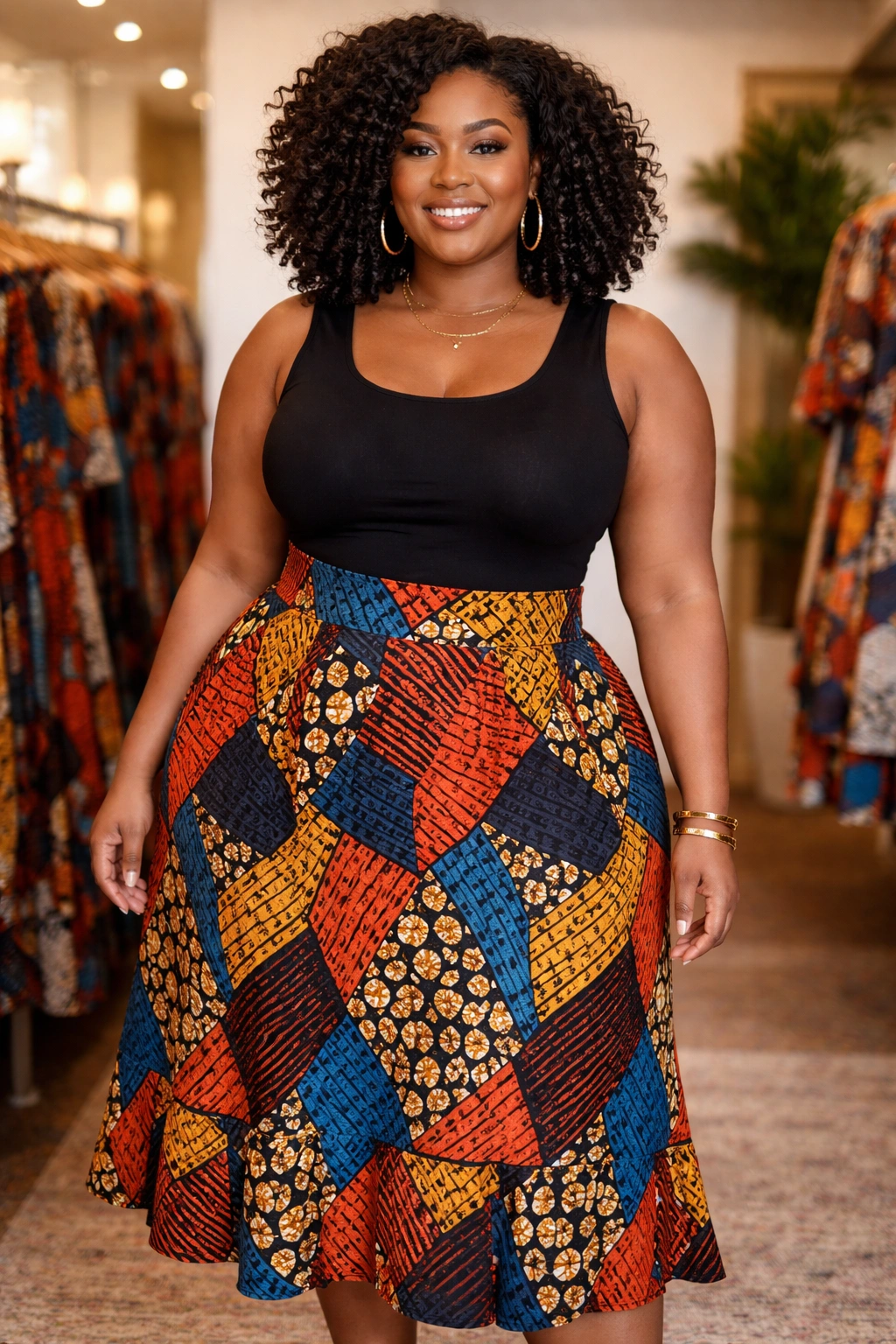
A fully tailored, structured midi skirt in Ankara fabric — fitted at the waist and hips, flaring to an A-line below the widest point, hitting at the mid-calf or just above the ankle. The tailored structure of this skirt does what loose, draped fabrics can’t: it defines shape deliberately.
On plus-size figures, a well-tailored midi skirt with an A-line below the hip creates a classic, balanced silhouette. The Ankara print adds energy and identity to what would otherwise be a conservative shape. Pair with a tucked-in solid top and heeled sandals.
9. The Statement Headwrap Outfit
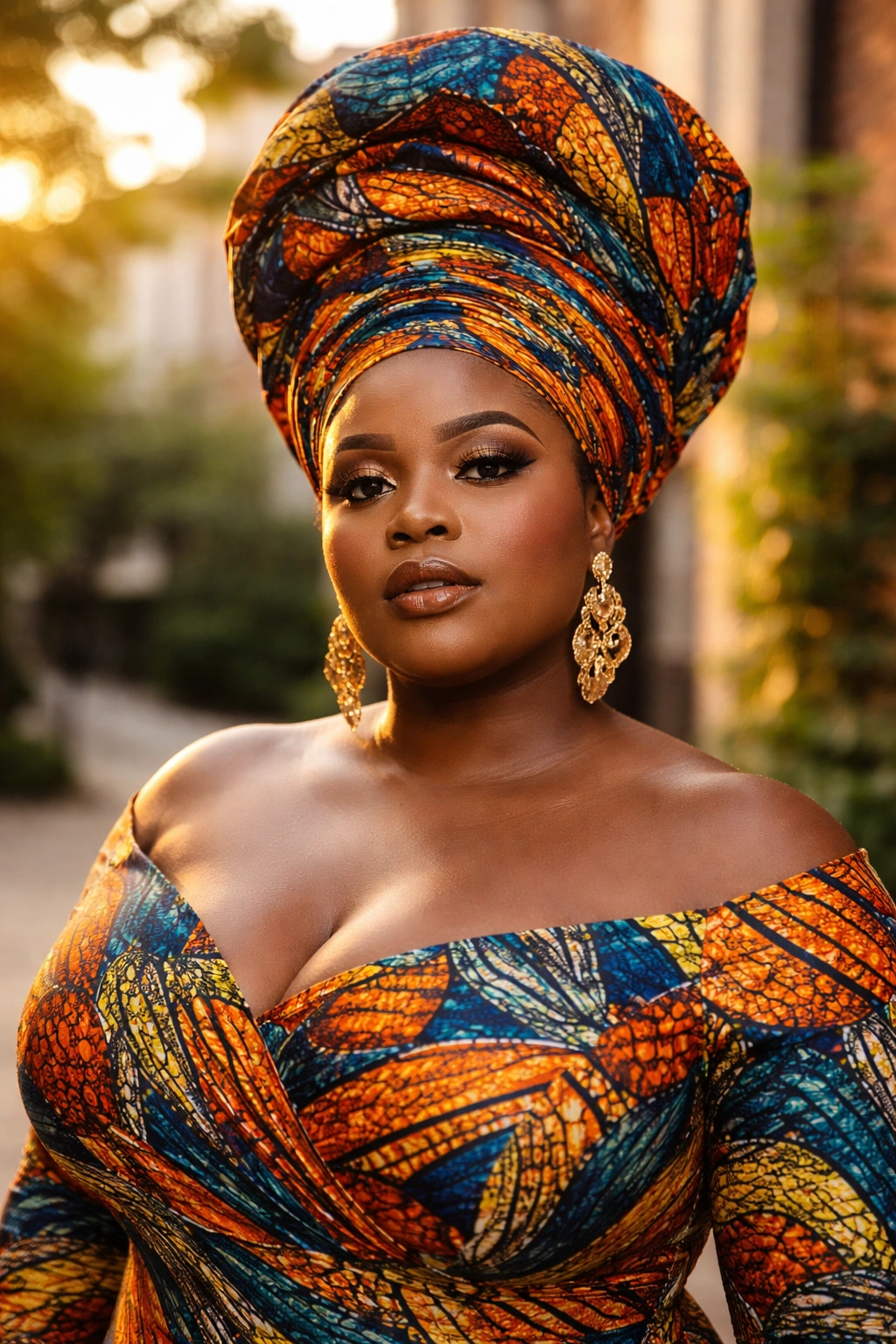
The headwrap — gele or turban style — as the anchor of the entire outfit concept. Everything else is chosen to complement the wrap. The fabric of the wrap and the fabric of a simple, fitted dress or blouse-and-skirt combination coordinate. The effect is a total look rather than a collection of separate pieces.
Headwraps on plus-size women add height — depending on how the wrap is tied and how tall it stands, you can add 3-6 inches of visual height, which changes how proportionate the full outfit looks. A tall gele on a fuller figure creates a commanding, regal overall presence.
Learning to tie a gele properly takes time and practice. There are different tying techniques for different fabric weights. A stiffer, starchier fabric holds elaborate shapes; a softer cotton wraps more casually.
10. The Embroidered Boubou Dress
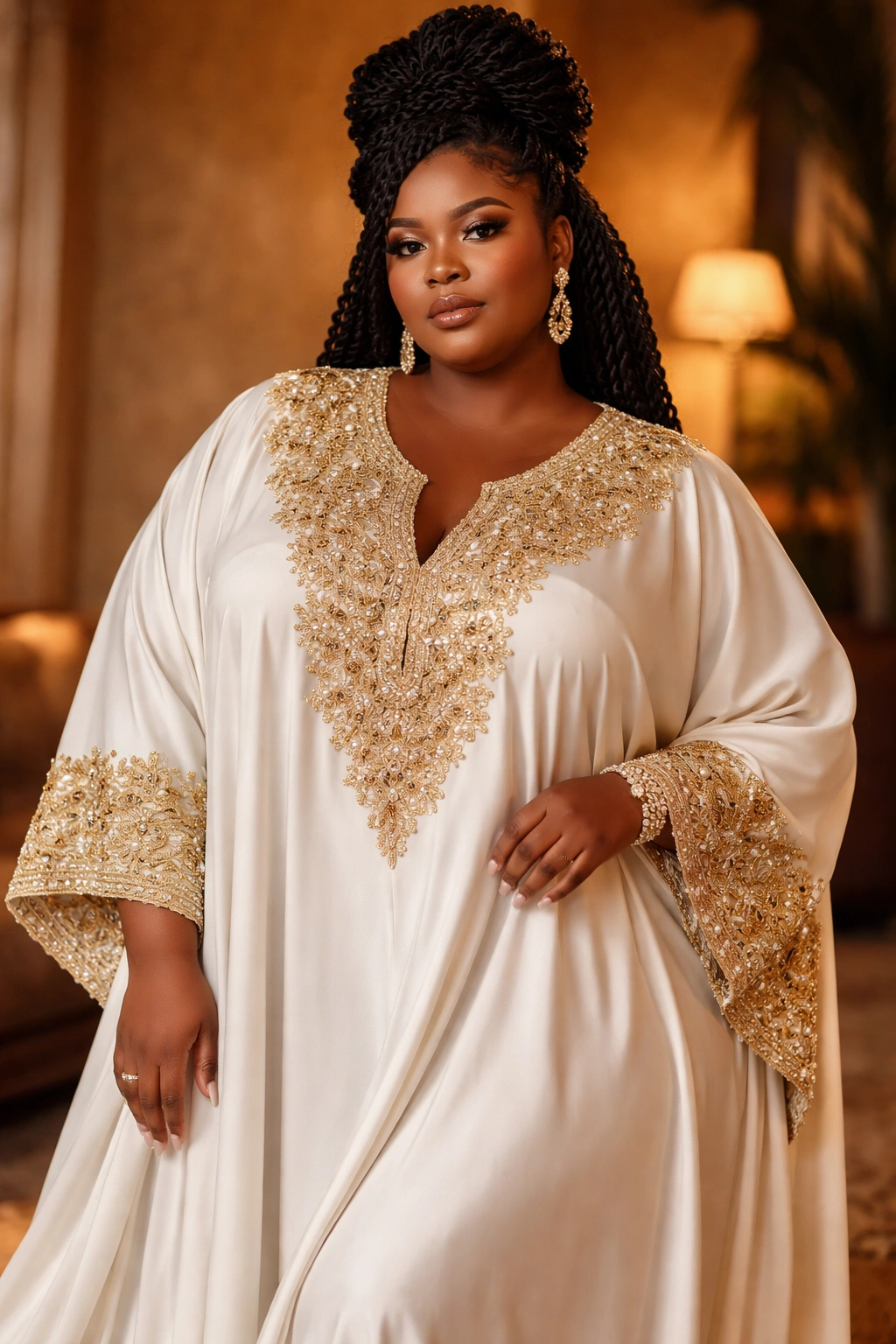
The boubou (also called a kaftan in some regions) is a flowing, wide-sleeved dress with a loose, generous silhouette that’s embroidered around the neckline and cuffs. The embroidery — often gold or silver thread on a rich solid fabric like deep blue, forest green, or burgundy — is what elevates the simple silhouette into formal wear.
For plus-size bodies, the boubou is exceptionally accommodating — the wide silhouette leaves no constraint on the body and moves with you rather than against you. It’s also genuinely comfortable in a way that fitted formal wear isn’t. Paired with gold jewelry and heeled sandals, a boubou worn correctly reads as more formal than a cocktail dress.
The length should be floor-length or nearly so. Mid-calf on a boubou looks incomplete.
11. The Fitted Adire Dress
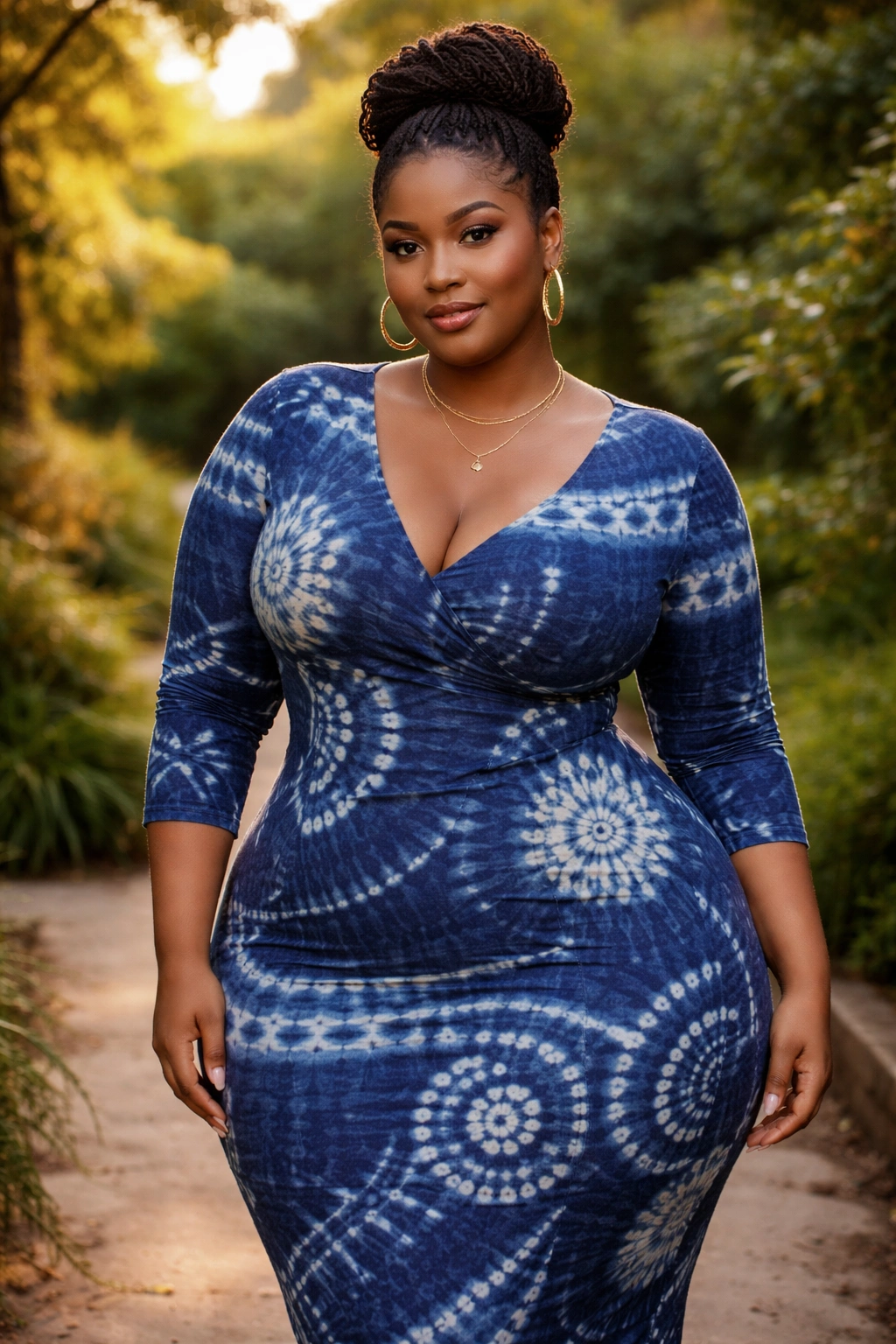
Adire is a Yoruba indigo-dyed resist textile — deep blue, dark navy, with pale resist-dyed patterns in geometric or abstract designs. It has a different visual character from the bright, multicolor Ankara print: more subdued, more artisanal-looking, with a deep-dye richness that Ankara’s wax-print finish doesn’t replicate.
A fitted midi or maxi dress in adire fabric reads as sophisticated and artisanal. On plus-size bodies, the deep indigo color is genuinely flattering — the dark base provides slimming visual effect while the pale resist patterns add interest without adding visual bulk.
12. The Wide-Leg Ankara Trousers with Solid Top
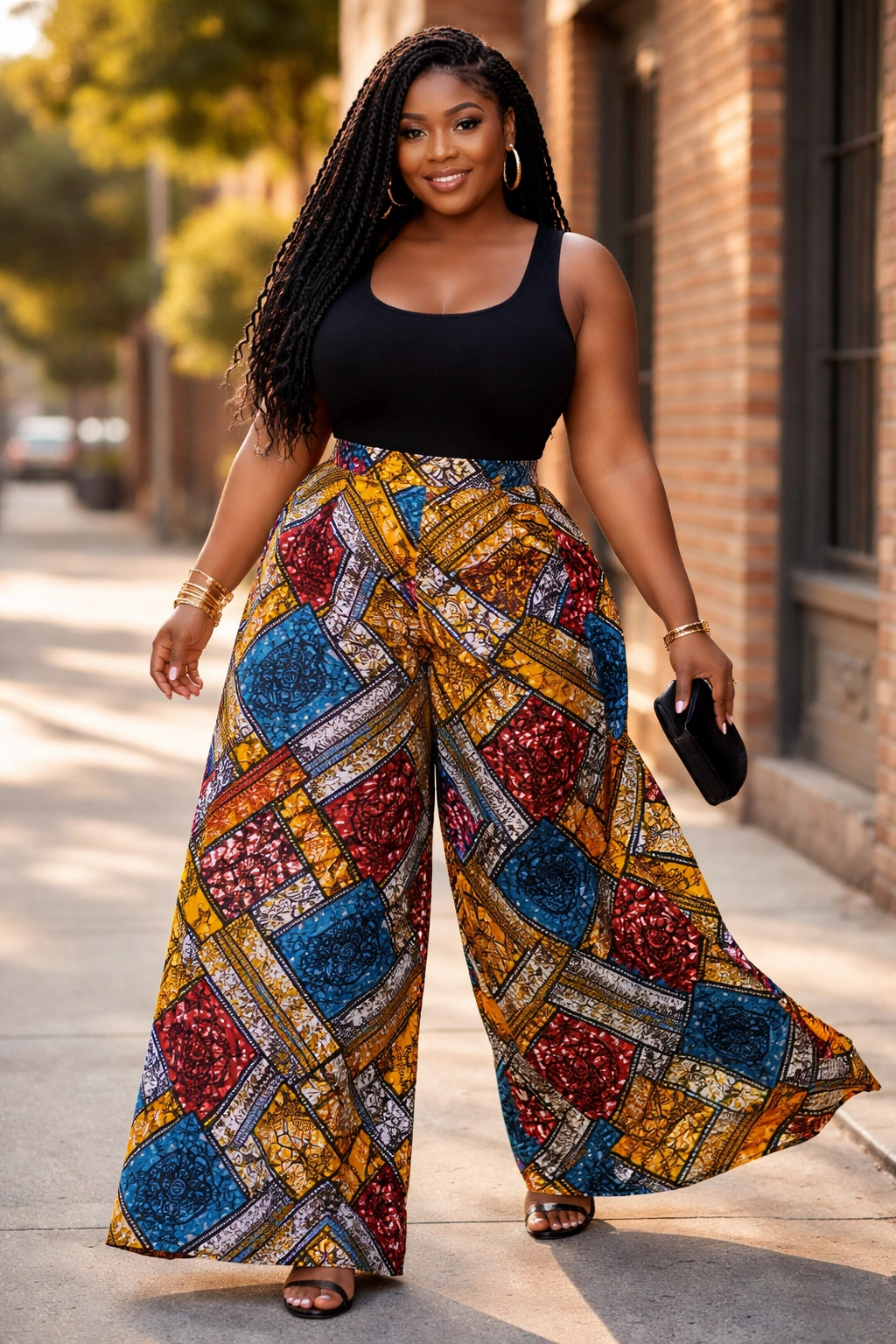
Wide-leg trousers in Ankara fabric — floor-length, high-waisted — with a solid-color fitted top tucked in. The trousers are the star; everything else is neutral support. On plus-size bodies, wide-leg trousers with a high waist create a continuous, elongated line from waist to floor that’s one of the cleanest, most flattering silhouettes available.
The Ankara print on the wide leg creates movement when you walk — the bold pattern swings with the fabric, creating a genuinely dynamic effect. A solid top in a color that anchors one element of the print (black, cream, or a single color from the Ankara palette) keeps the outfit from becoming visually chaotic.
13. The Kaftan with Statement Belt
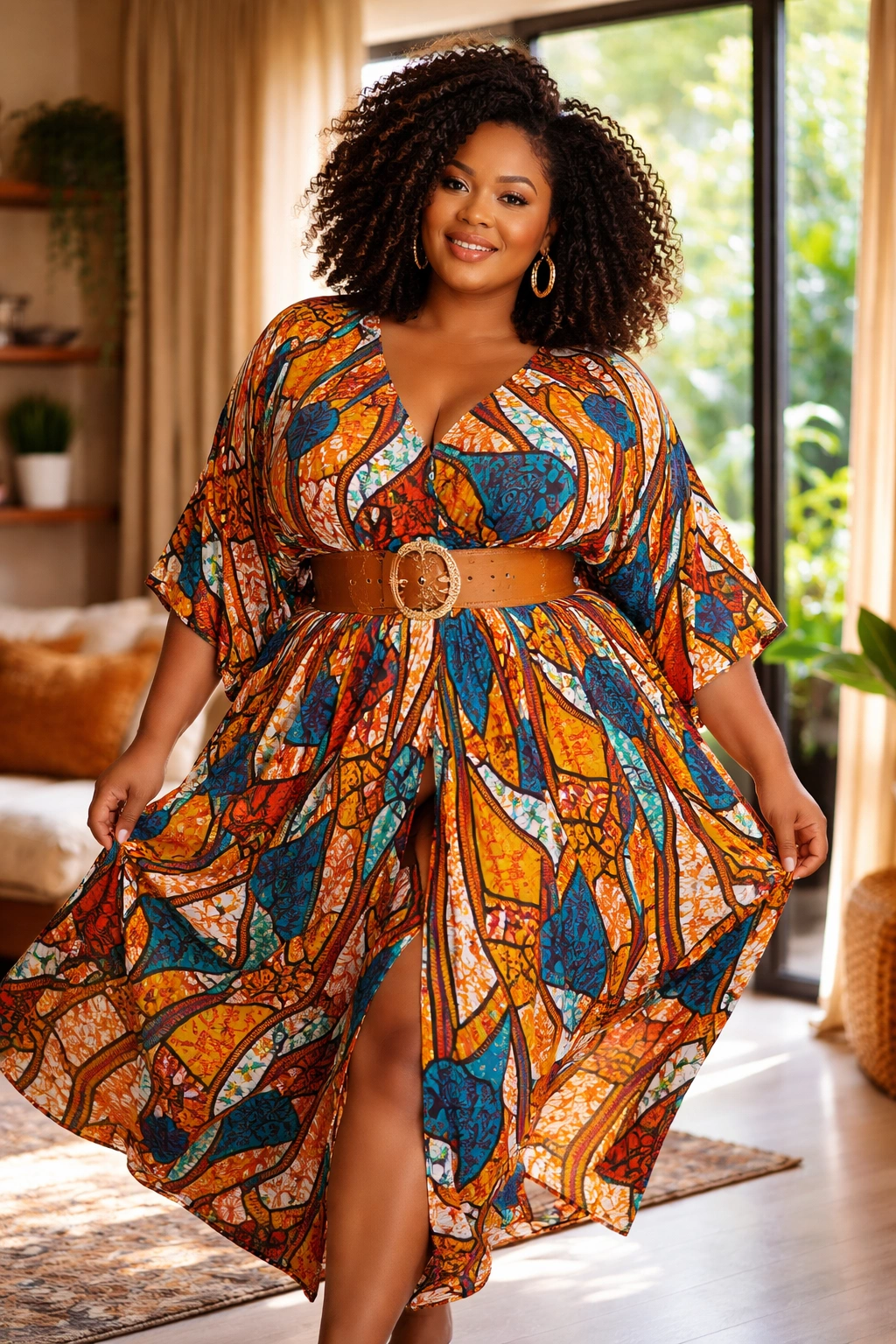
A flowing kaftan — loose, generous, in a bold or subtly patterned fabric — belted at the waist with a wide statement belt. The belt creates definition in a silhouette that would otherwise be formless, and on plus-size bodies that definition is often exactly what’s needed to make a full kaftan look intentional rather than like loungewear.
The belt needs to be wide enough and firm enough to actually create a waist rather than just sliding down. A rigid or stiff belt at 3-4 inches wide is more effective than a thin or soft belt that bends and shifts. Leather, faux leather, or a structured fabric belt in a contrasting color to the kaftan creates maximum visual definition.
14. The Ankara Blazer Over Leather or Vinyl Trousers
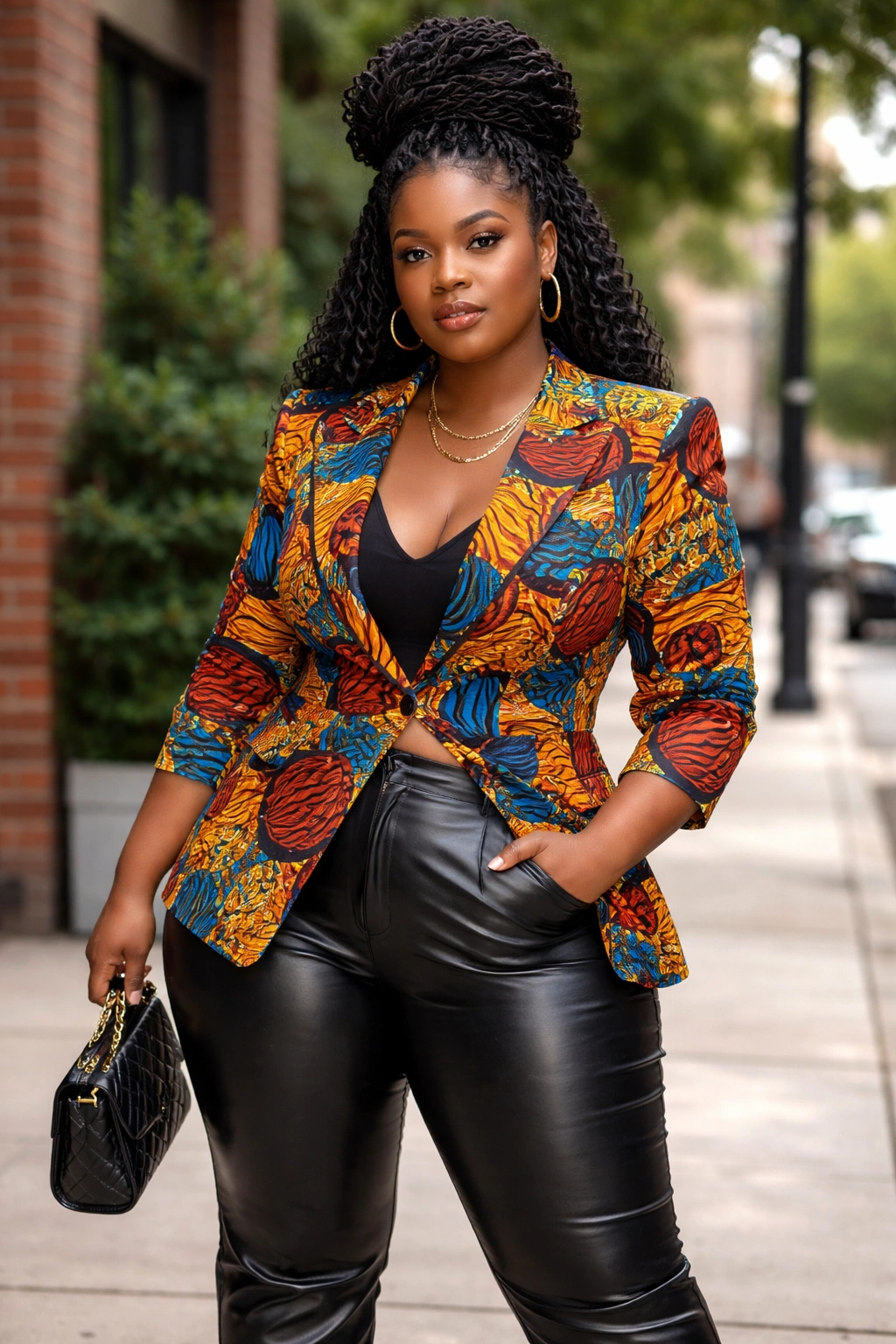
An unexpected combination: the warmth and texture of African print fabric against the cool sleekness of vegan leather or vinyl trousers. The Ankara blazer brings color, pattern, and cultural reference. The trousers bring edge, polish, and structure. The contrast is the point.
On plus-size figures, vegan leather trousers work best in a straight-leg or wide-leg cut rather than a skinny fit — the skinny fit emphasizes rather than smooths the lower body in a way that may or may not serve your style goal. Wide-leg vinyl trousers with a high waist and an Ankara blazer create an outfit that reads as fashion-forward and completely considered.
15. The Peplum Ankara Top
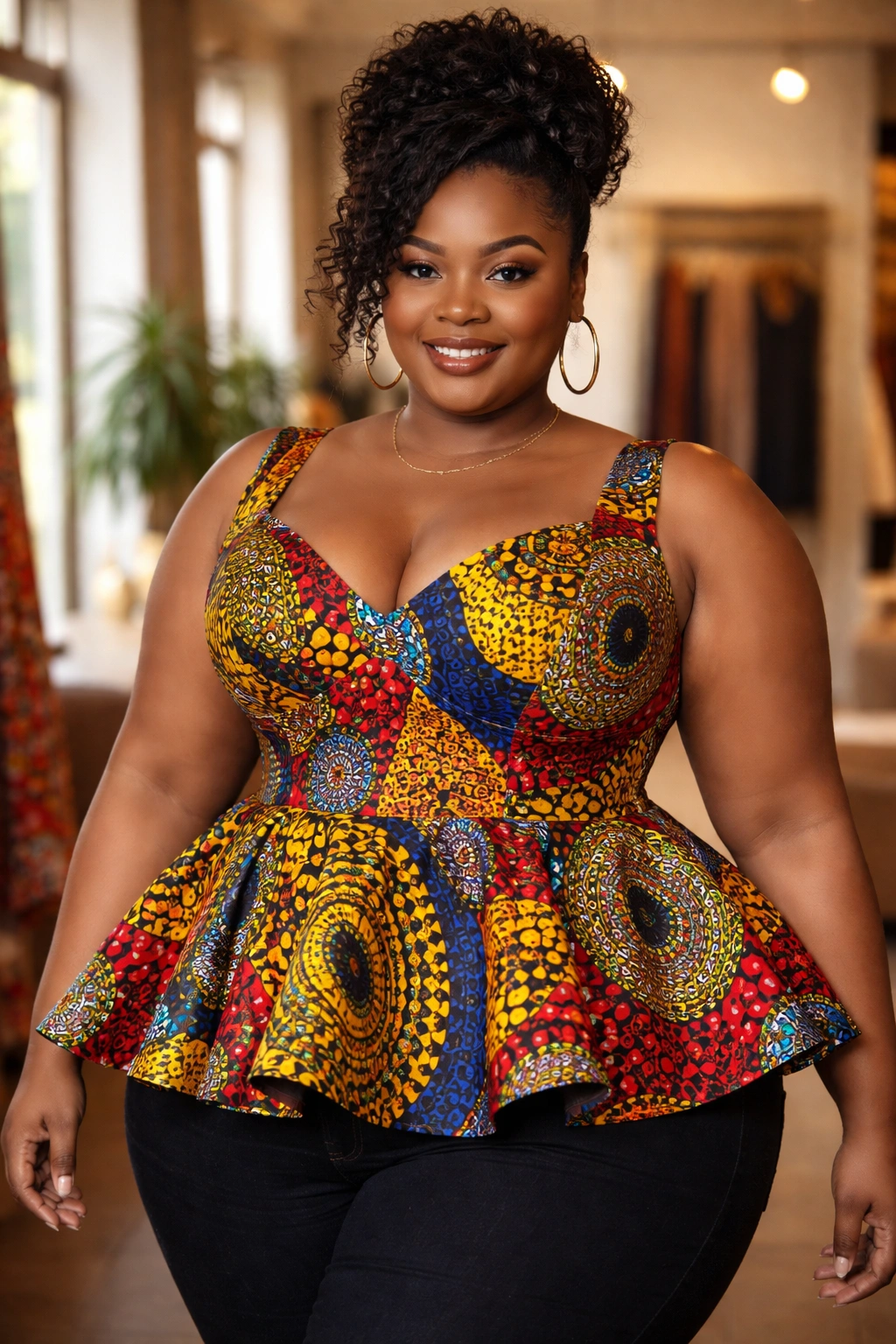
A fitted Ankara top with a peplum at the waist — a flared, ruffle-like extension of fabric just below the waist seam that flares out over the hips. The peplum creates waist definition above and skims over the hips below, which works particularly well for hourglass and apple-shaped plus-size figures.
The peplum top pairs with tailored trousers or a pencil skirt in a solid color, with the Ankara print of the top doing all the visual work. Keep the bottom simple and neutral when the top is this busy.
16. The Vintage Wrap Style with Mudcloth Print
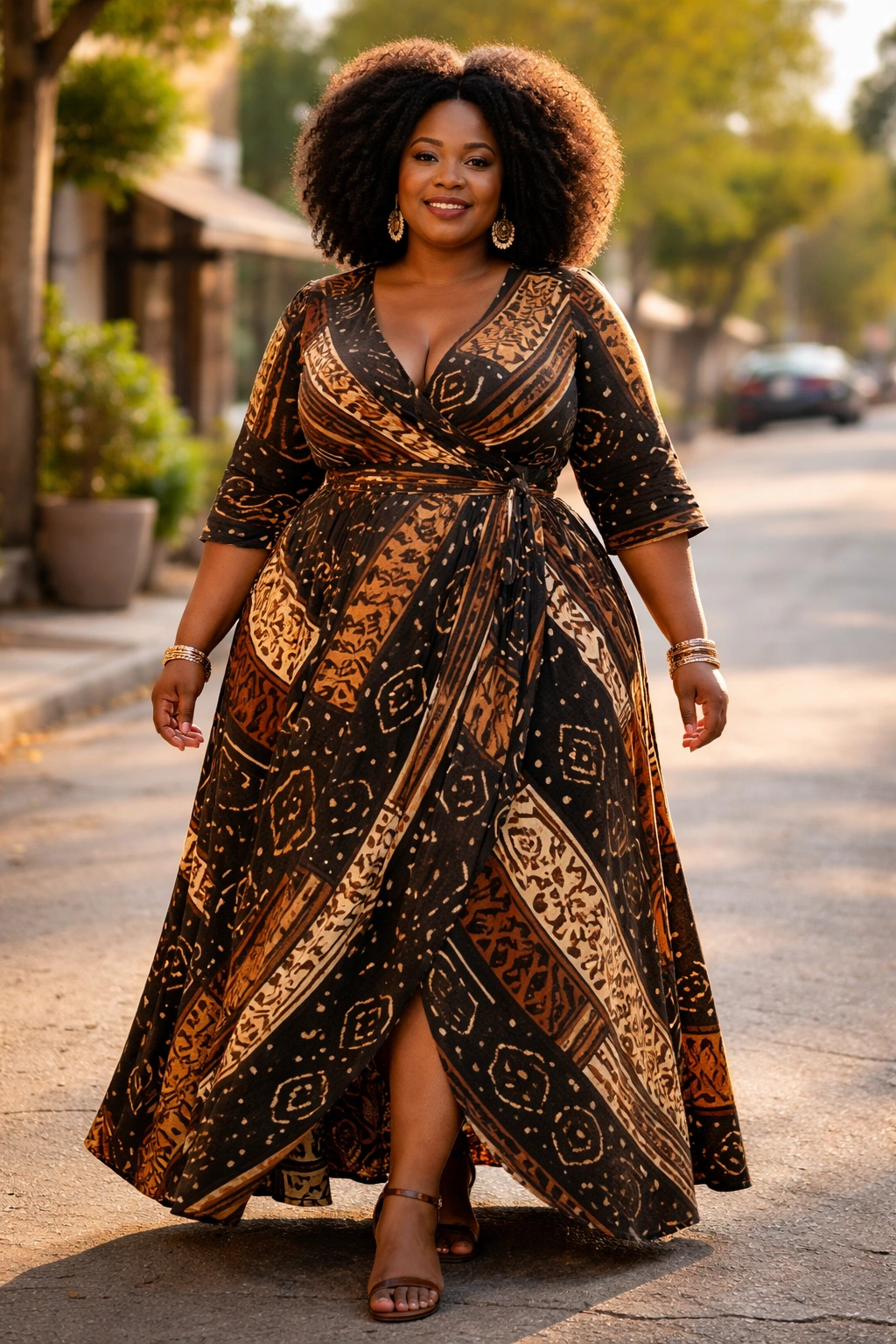
Mudcloth (Malian bogolanfini) fabric has a completely different aesthetic from Ankara — it’s earth-toned, geometric, with muted cream and dark brown or black patterns on a handwoven base. It looks completely different from the bright wax prints but carries the same cultural weight.
A vintage-style wrap dress or wrap skirt in mudcloth print gives an Afrocentric outfit a more understated, earthy quality. On plus-size bodies, the earth tones are universally flattering — especially on dark skin tones where the warm cream and brown combinations create depth rather than washing out.
Mudcloth-inspired fabrics are widely available in woven cotton that approximates the original pattern. True, handmade Malian bogolanfini is harder to find and considerably more expensive — but genuinely worth seeking out if you can.
17. The Maxi Dress with Cutout Details
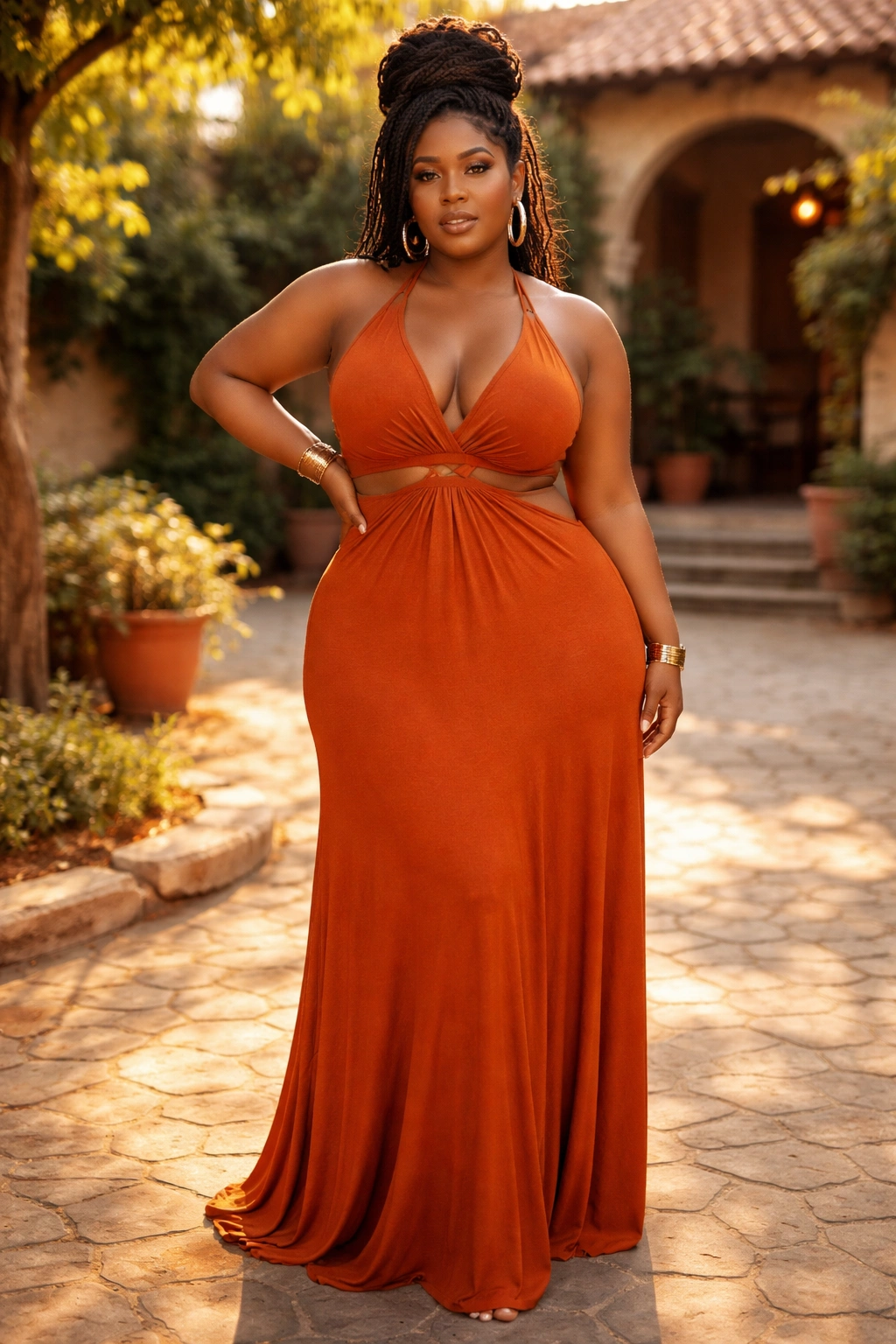
A floor-length maxi dress in a solid Afrocentric color — burnt orange, deep burgundy, vibrant teal — with cutout details at the waist, midriff, or shoulders. The cutouts create visual interest and show skin strategically, breaking up the continuous solid color of the dress.
For plus-size bodies, cutouts at the waist (rather than the midriff) tend to be the most flattering placement — they reveal a sliver of skin at the smallest point of the torso and create definition at the waist line. Shoulder cutouts are always flattering regardless of size. Midriff cutouts work when you’re comfortable with that level of exposure — they’re bold, not wrong.
18. The Two-Piece Set in Wax Print
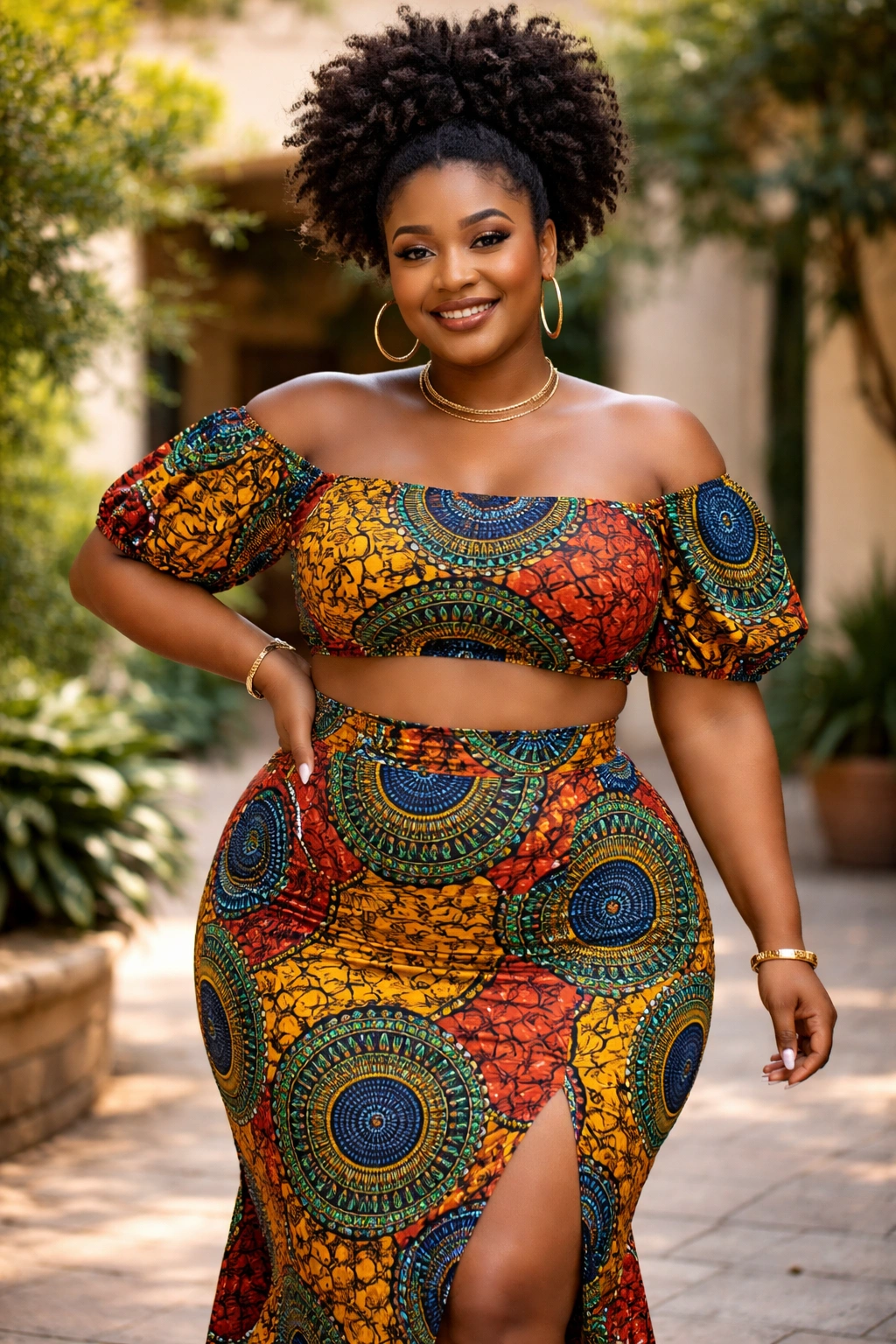
A coordinated set — typically a fitted crop top or bralette with a matching high-waisted skirt or palazzo trousers — in matching Ankara wax print. The two-piece set trend in African fashion is strong and endlessly varied: the set can range from very revealing (bralette and mini skirt) to modest (long-sleeve top and wide-leg trousers) depending on the specific pieces.
For plus-size styling, the high-waisted bottom with a slightly cropped top is often the most flattering version of the two-piece set. The high waist creates definition and coverage at the abdomen, the crop length ends just at or above the waist, and the coordinating print makes both pieces look deliberate.
19. The Regal Maxi Skirt and Structured Top Combo
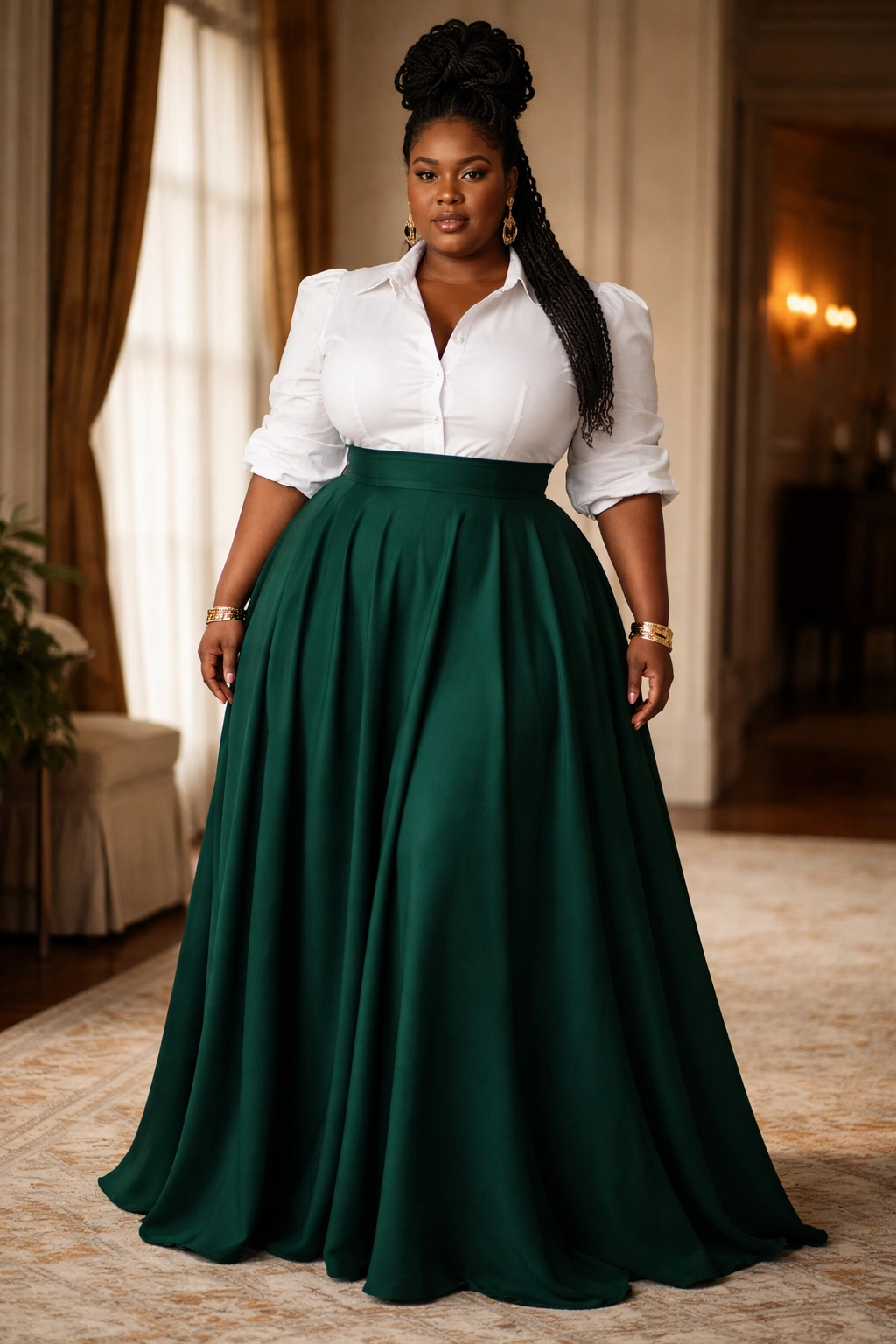
A floor-length maxi skirt in a rich, solid color — deep purple, emerald green, cobalt blue — paired with a structured, slightly embellished or embroidered top in white or gold. This combination has a West African formal wear quality that’s deeply elegant.
The structure of the top matters here. A flimsy or overly casual top against a rich maxi skirt looks mismatched. A fitted, clean-lined top with some detail at the collar or shoulder creates the right formality balance. On plus-size figures, a tucked-in top defines the waist above the full skirt length.
20. The Denim and Ankara Combination
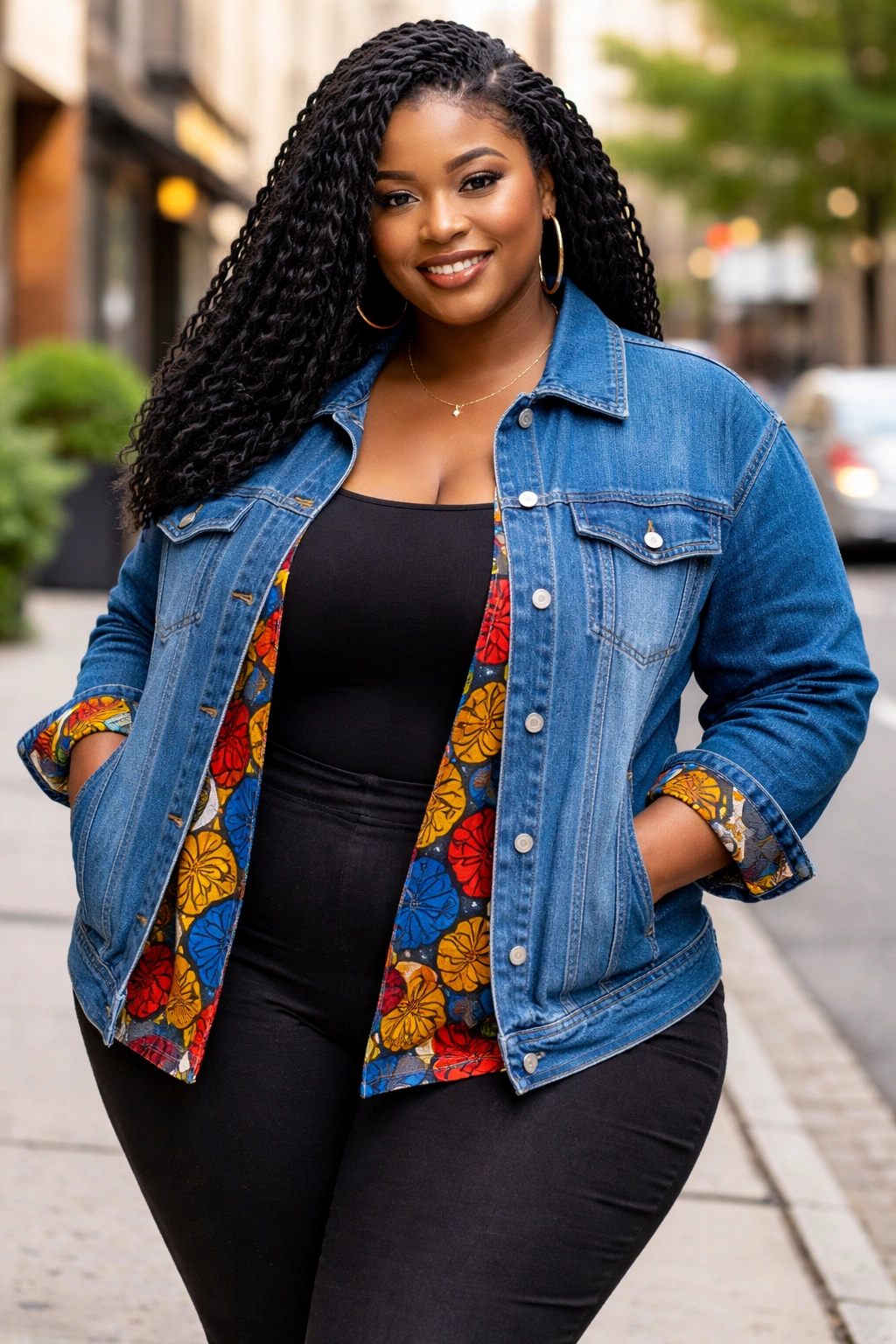
An unexpected but genuinely powerful pairing: classic denim (jeans, a denim jacket, a chambray shirt) combined with Ankara as an accent or as the dominant piece. A denim jacket over an Ankara maxi dress. Wide-leg jeans with an Ankara blouse. An Ankara headwrap with a full denim outfit. Ankara as the lining visible through cutouts in a denim jacket.
The combination works because denim’s neutral, casual quality grounds the boldness of the print, making the overall look feel accessible and wearable rather than costume-like. This is the everyday version of Afrocentric dressing — what you put on when you want to represent without staging a look.
21. The Strapless Ankara Dress with Shawl
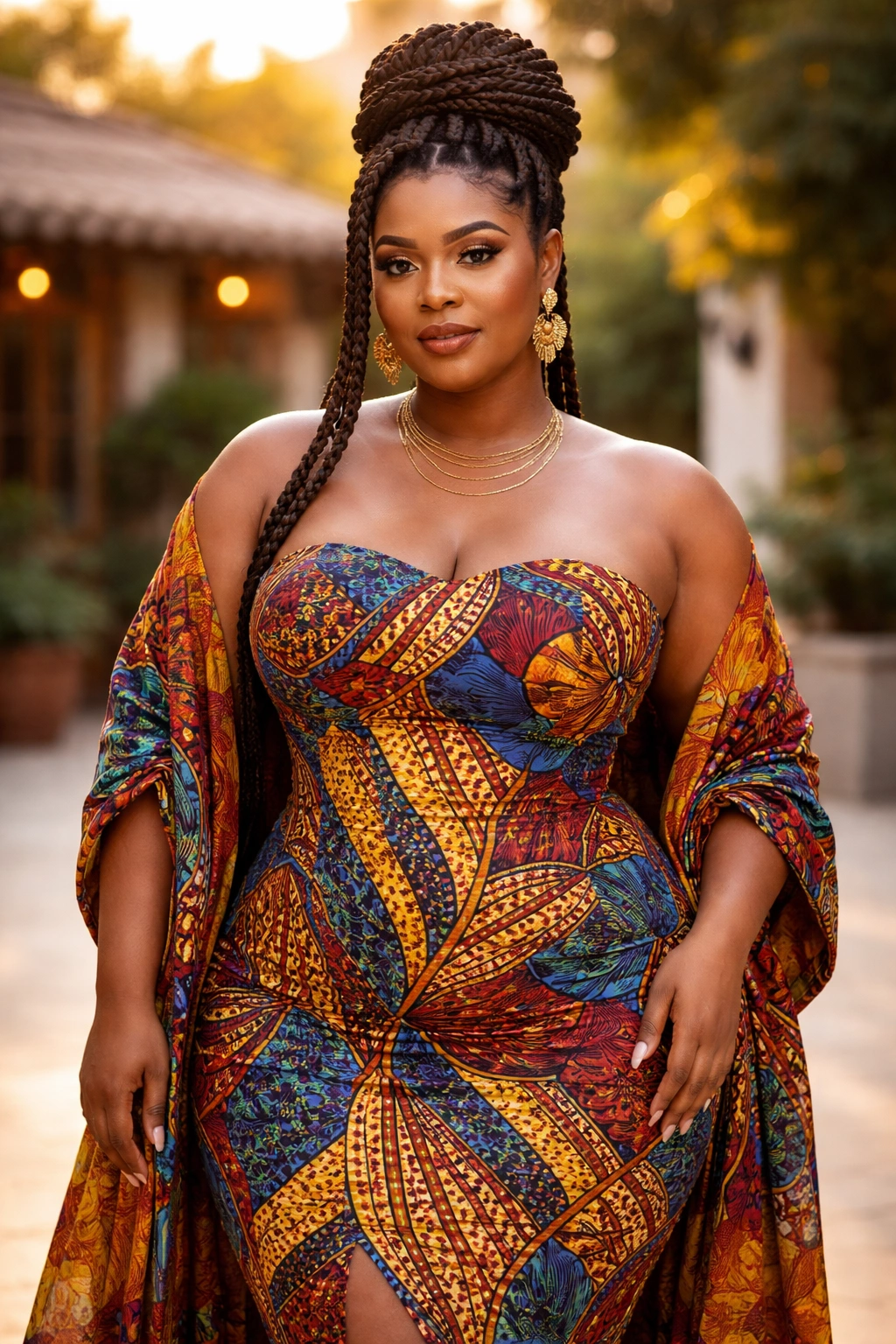
A fitted or slightly A-line strapless dress in Ankara fabric, worn with a coordinating or complementary fabric shawl draped over the shoulders or wrapped around the body. The shawl adds modesty options, coverage in cooler environments, and an additional fabric element that makes the overall look more layered and intentional.
On plus-size bodies, the strapless neckline creates a clean, open upper body line that frames the face and neck beautifully. The shawl gives you the option to cover or uncover depending on the setting. When draped over one shoulder, the shawl also creates asymmetry that breaks up the visual symmetry of a round figure.
22. The African Print Co-ord with Natural Hair
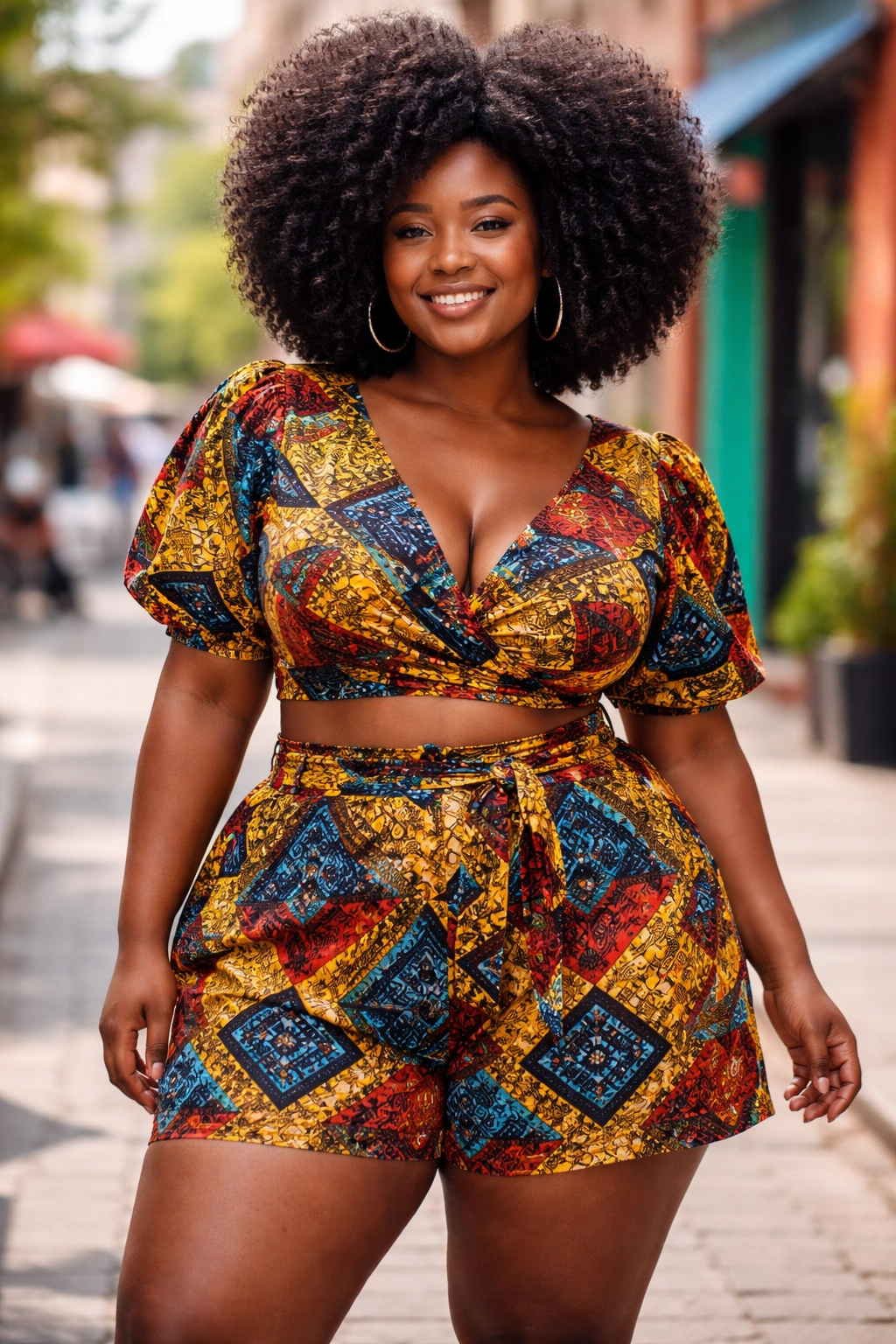
Choosing an outfit specifically to complement your natural hair style — not as an afterthought, but as a deliberate design choice. An orange and gold Ankara set with a full, rounded natural afro. A blue and white Adire dress with loc extensions. A kente-inspired blazer with fresh cornrows.
The hair and the clothing exist in the same aesthetic system. When you treat them as a combined look — choosing the outfit to work with the hair you have that day, or styling your hair to complement what you’re wearing — the result is a unified statement that’s more powerful than either element alone.
23. The Bold Bodycon with African Accessories
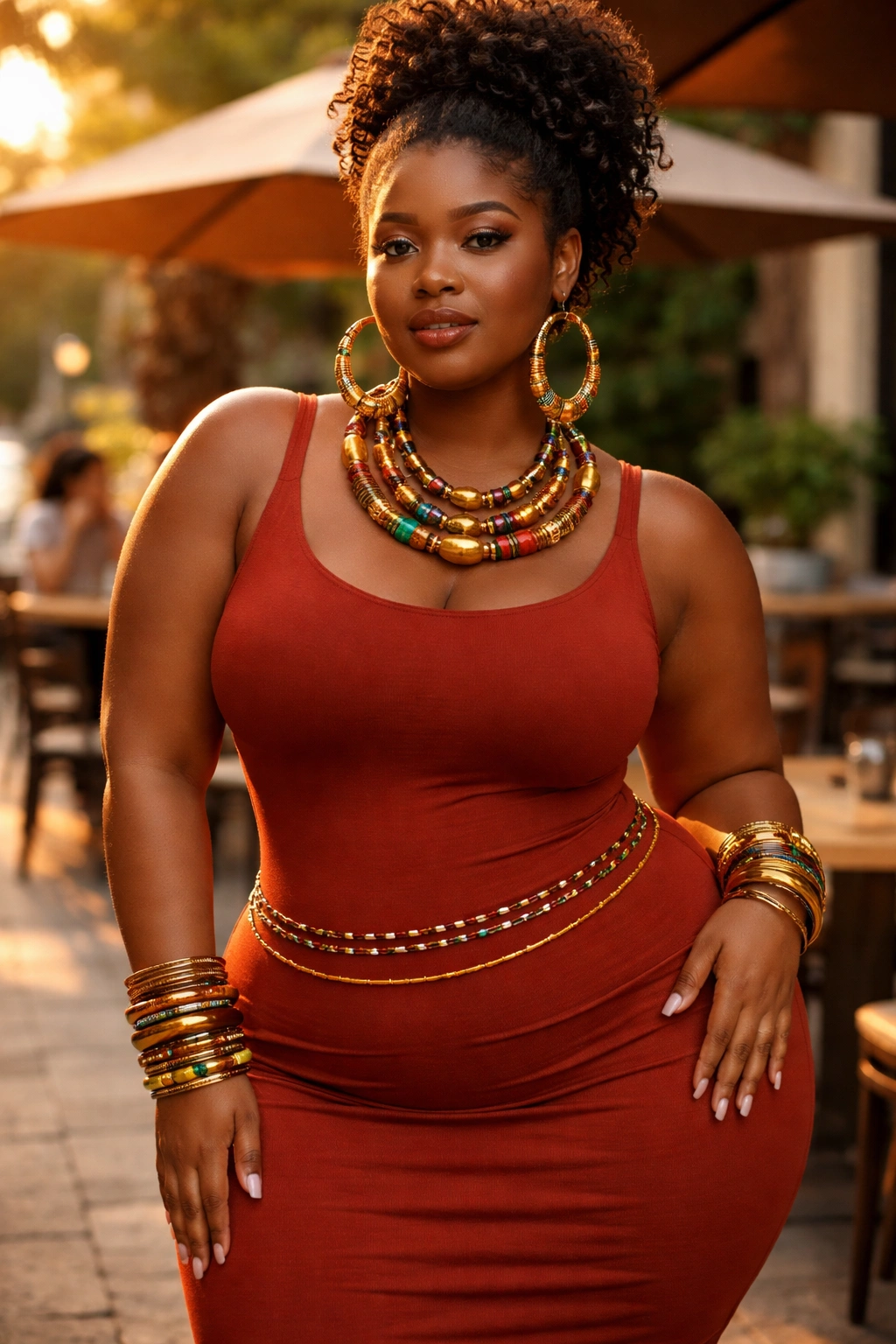
A fitted, body-conscious dress in a solid deep tone — not African print, just a clean solid — accessorized entirely with African-inspired pieces: chunky beaded necklace, large hoop earrings with traditional detail, stacked bangles, a waist bead chain visible at the midriff, and a pair of Nigerian or Ghanaian-made leather sandals.
This approach brings the cultural reference through the accessories rather than the clothing. The result is a look that’s modern and wearable in any setting but clearly rooted in Afrocentric aesthetic values. On plus-size bodies, the bodycon in a dark solid is a strong base — the bold accessories above the waist pull all attention upward.
24. The Agbada-Inspired Silhouette for Women
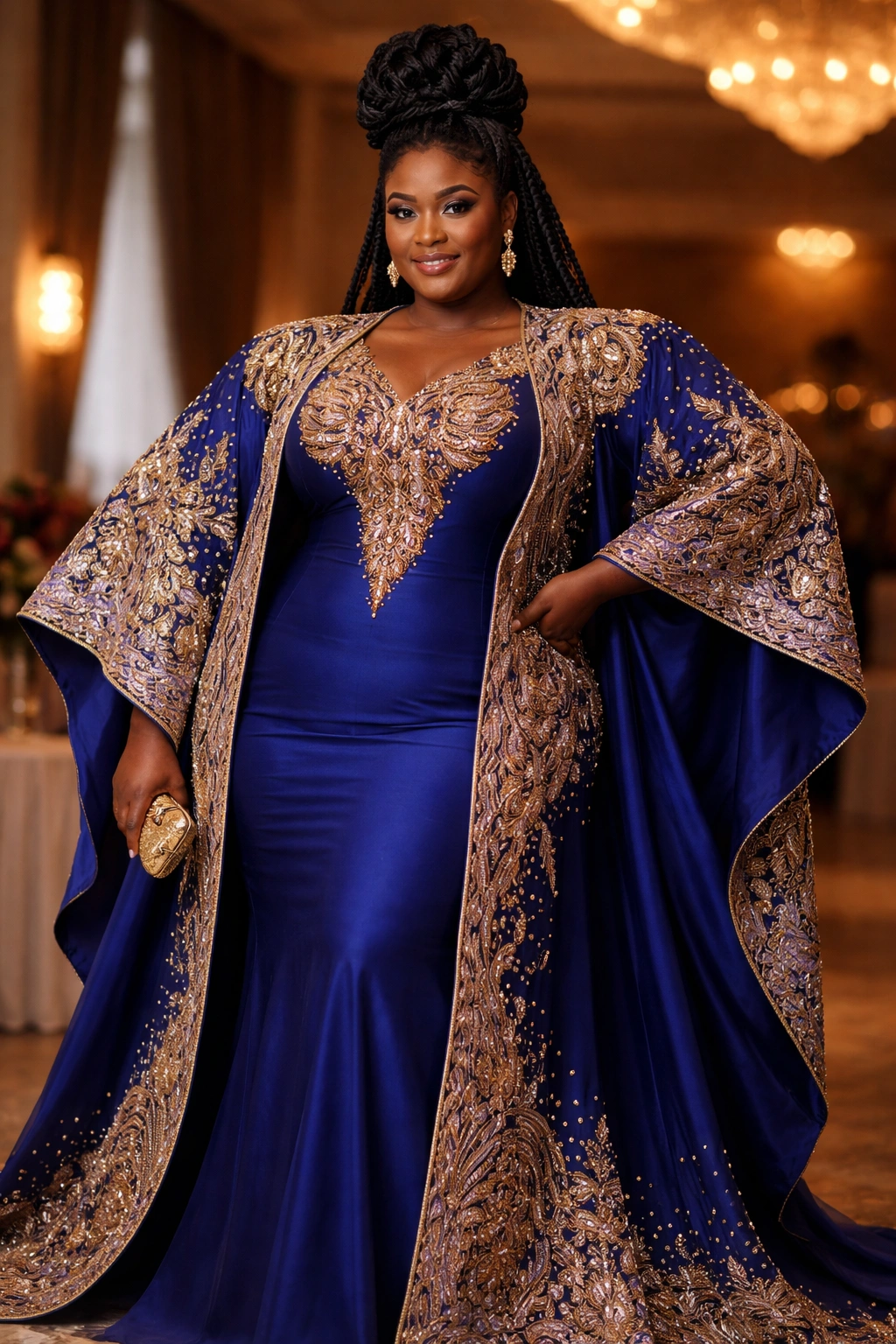
The agbada is a traditional Yoruba formal garment — a wide, flowing overgarment with elaborate embroidery, originally male but widely adopted across gender lines in contemporary African fashion. The women’s interpretation maintains the wide, dramatic sleeves and embroidered detail but restructures it into a fitted bodice with a floor-length skirt or a shorter hem.
On plus-size bodies, the agbada-inspired silhouette is genuinely extraordinary. The wide sleeves create dramatic horizontal visual weight at the shoulders, creating a powerful, deliberate presence. The embroidery at the neckline, sleeve edges, and hem adds ornamental richness. This is formal event territory — not everyday wear, but unforgettable when worn.
25. The Printed Wide-Leg Suit
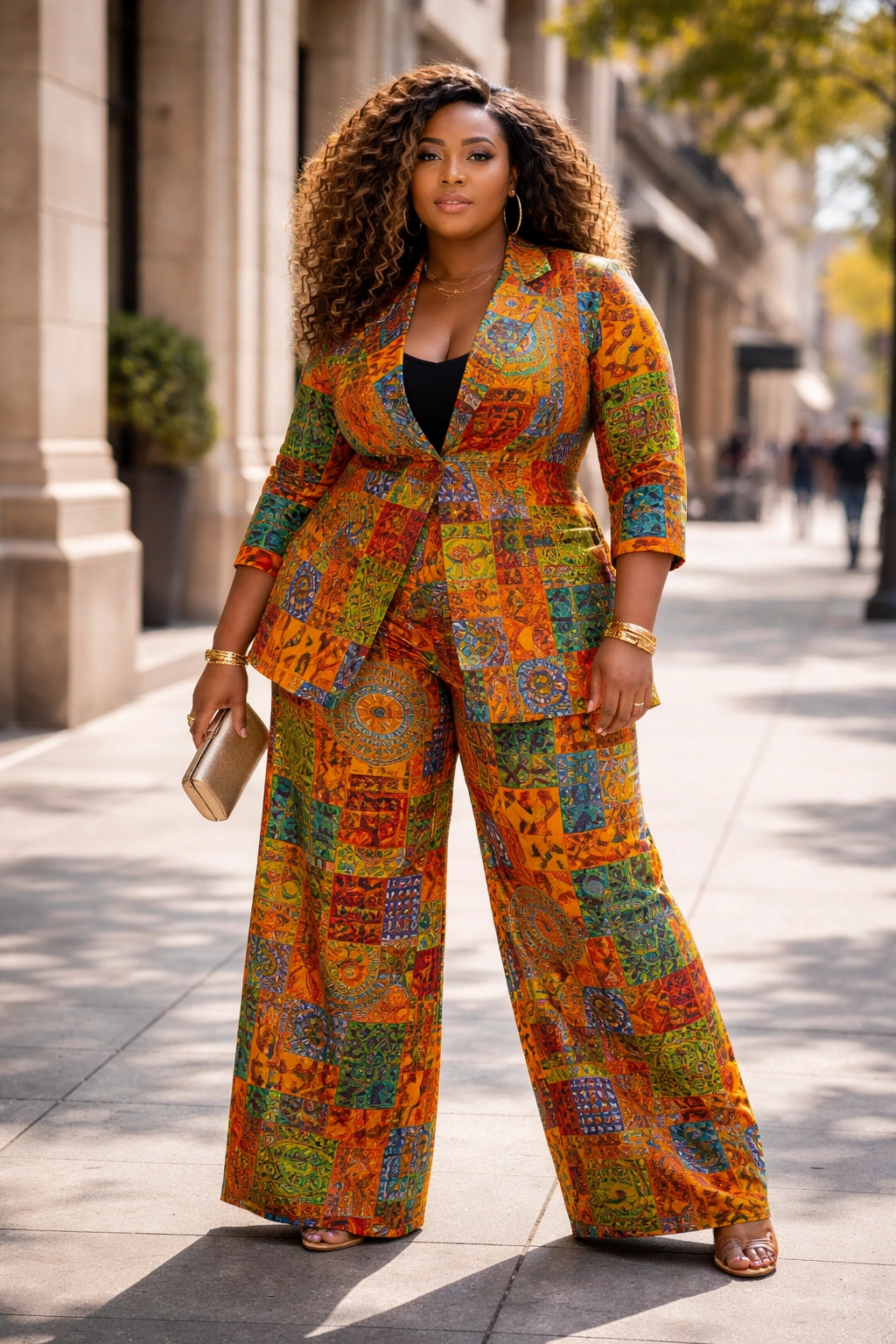
A tailored wide-leg trouser suit in Ankara or Kente-inspired fabric. Both the jacket and the trousers in matching print. This is power dressing at its most culturally specific — the suit silhouette reads as formal and authoritative; the Afrocentric print removes all doubt about whose cultural authority we’re invoking.
For plus-size bodies, the wide-leg trouser creates the best silhouette in a suit. Slim-leg or straight-leg trousers in a printed fabric can look costume-like; wide-leg flows with the body and creates a more editorial, fashion-forward read. The jacket length should fall at the hip, not the thigh — hip-length creates definition at the waist while covering the hip junction.
26. The Festival or Event Look with Full Accessories Stack
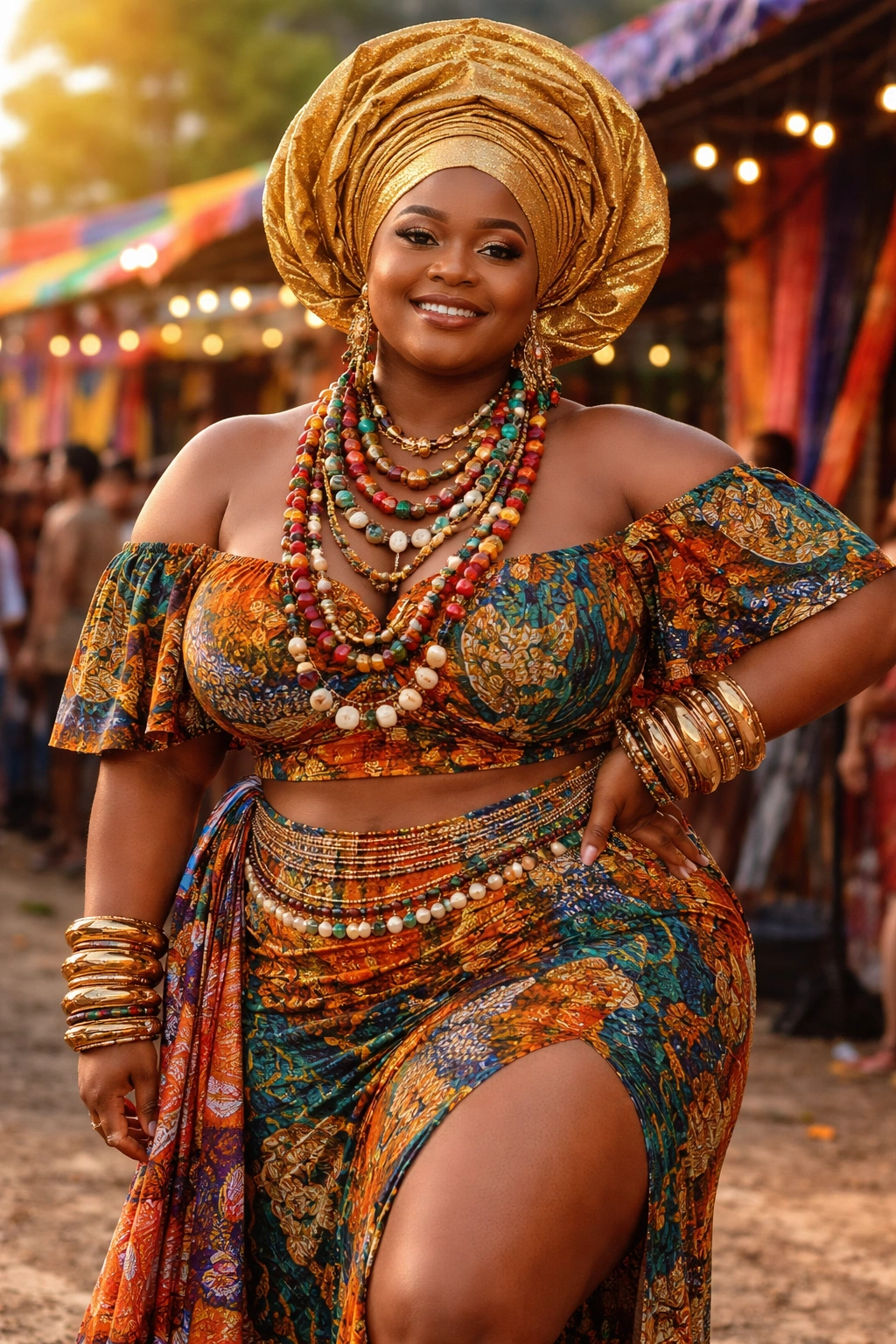
Reserved for occasions when the full expression of the aesthetic is appropriate — a cultural festival, a wedding, an Afrocentric fashion event — the full accessories stack means layering every element simultaneously. Elaborate gele headwrap. Multiple beaded necklaces at different lengths. Stacked bangles on both wrists. Waist beads showing at the hip. Embroidered statement fabric in a full silhouette.
The full accessories stack doesn’t require restraint. That’s the point. Restraint is for other aesthetics. Afrocentric formal dressing has always understood that abundance and richness are signals of celebration and cultural pride, not excess. Wear the whole thing. Add the earrings. Keep the bangles.
Dressing for Your Body With Confidence
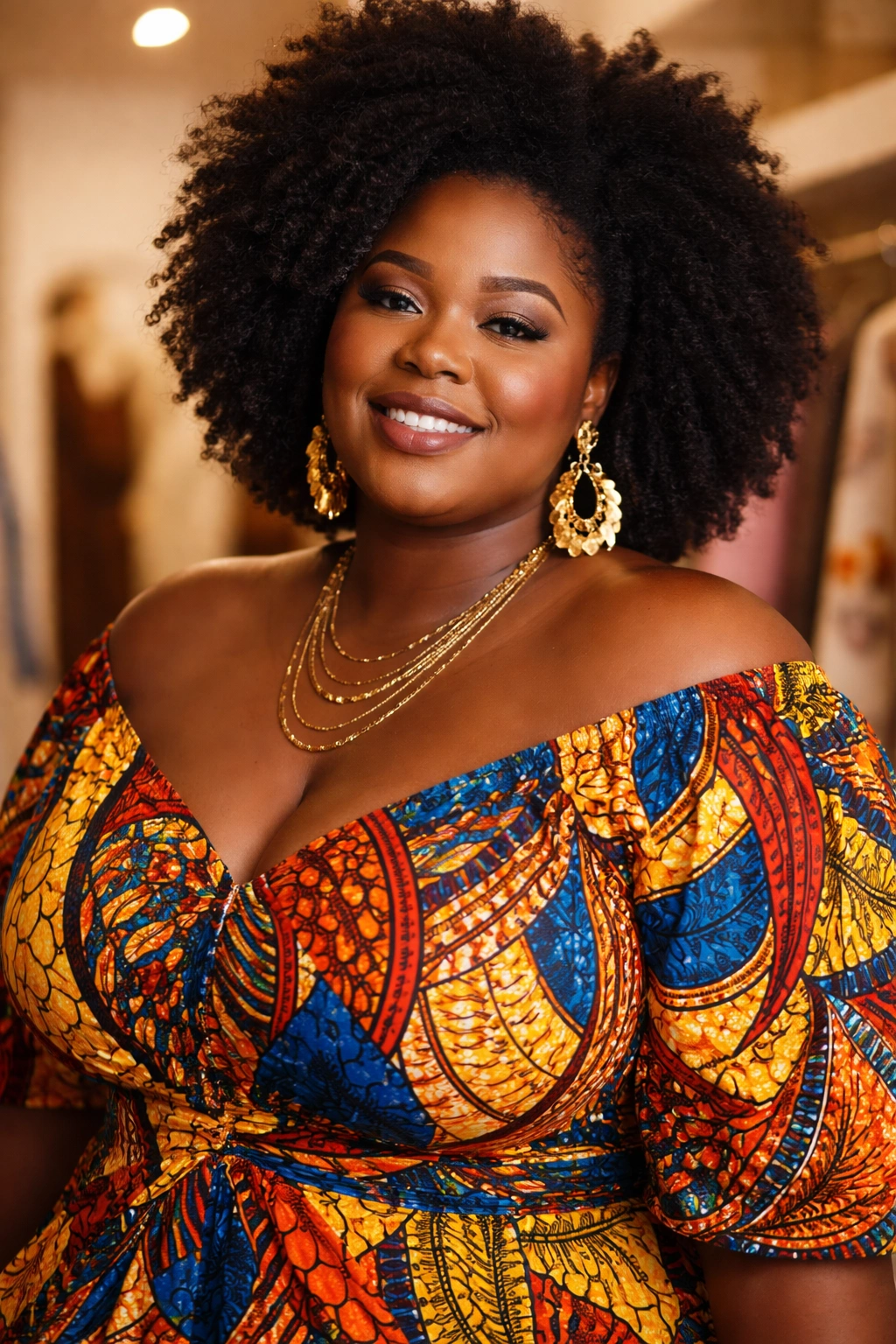
No style guide — including this one — should replace your own sense of what works for your body and your life. These 26 ideas are starting points, not prescriptions. Some of them will resonate immediately; others won’t suit your aesthetic or your lifestyle at all, and that’s completely fine.
What matters is approaching Afro-inspired dressing as something that belongs to you — that you’re not borrowing or approximating but expressing. The boldness of the colors, the intentionality of the prints, the pride in the cultural references — these are all things you get to carry fully, in whatever size you wear them.
Where to Find Quality Afro-Inspired Pieces
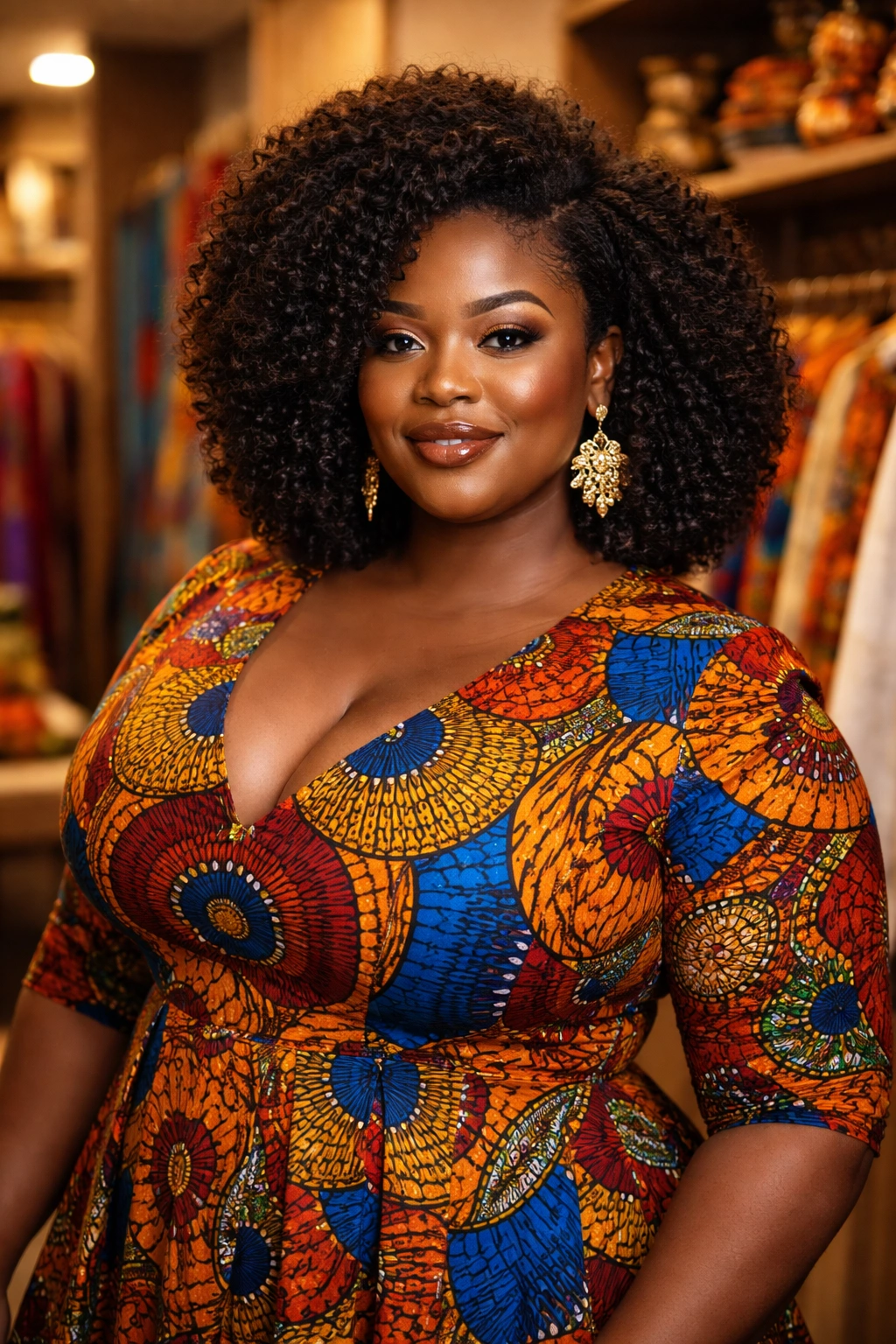
African fabric shops in major cities carry Ankara, Adire, and Kente fabric by the yard. Online markets like Etsy have hundreds of independent African fashion designers making plus-size inclusive pieces. Nigerian, Ghanaian, and Kenyan designers selling directly online often offer custom sizing and tailoring for a reasonable additional fee — and that custom fit is worth everything on these structured, distinctive fabrics.
Avoid fast-fashion versions of African print clothing. The print quality is inconsistent, the fabric is thin, and the cultural weight gets lost in the mass production. A single well-made Ankara piece from an African designer or a local tailor is worth more than a wardrobe full of imitations.
Building the Look Over Time
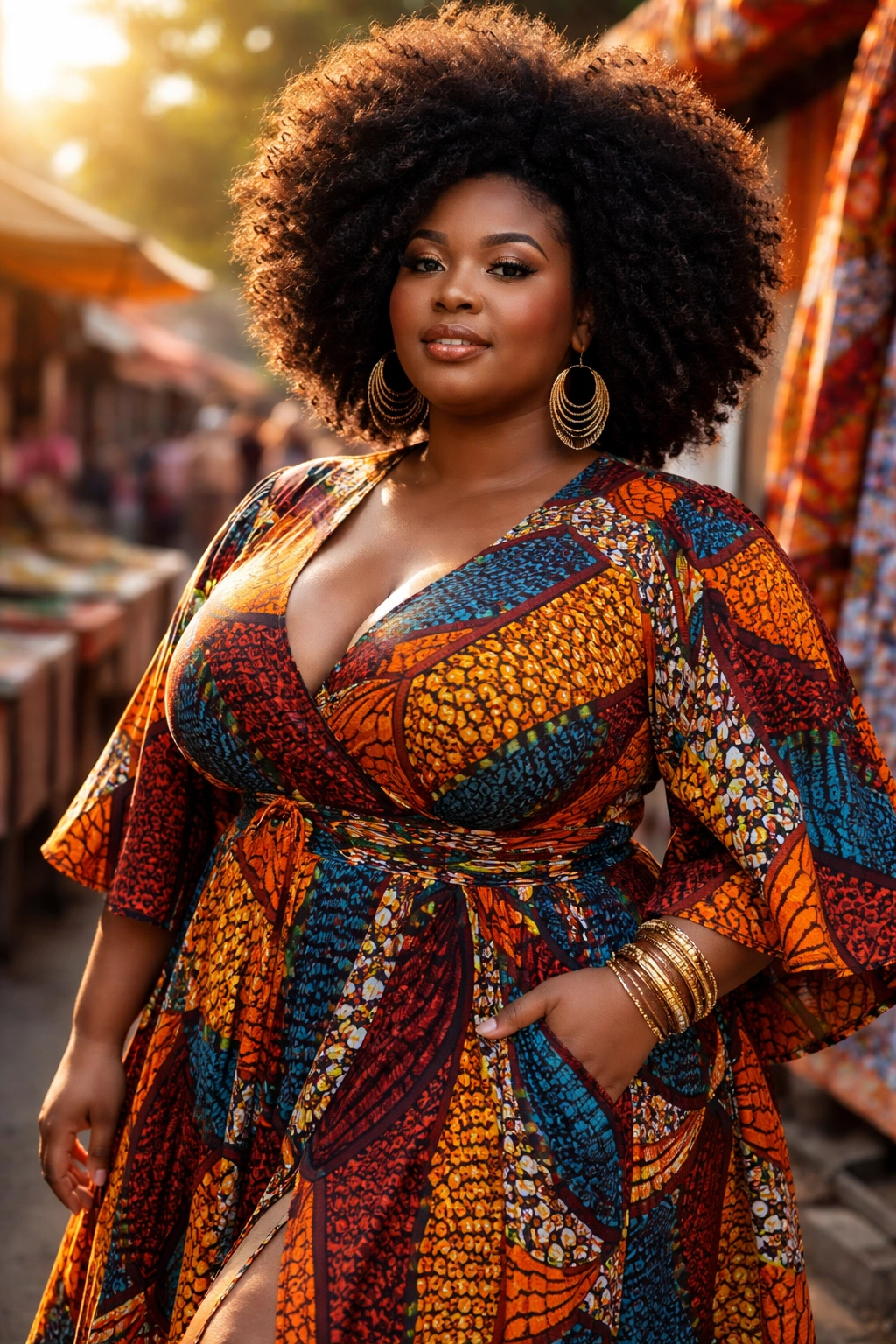
An Afrocentric wardrobe doesn’t need to be assembled all at once. Start with one or two anchor pieces — a great Ankara wrap dress, a statement blazer, a maxi skirt — and build from there. Add accessories as you find pieces that speak to you. Let the wardrobe grow with your taste and your understanding of the aesthetic.
The most powerful Afrocentric outfits always look like they come from someone who’s been wearing this for years, not someone who put it together overnight. That ease comes from familiarity with the fabrics, the silhouettes, and the accessories — and that familiarity only comes with time spent actually wearing them.
