



Short afro hair and boho braids have a complicated relationship. Most tutorials assume you’ve got length to work with — shoulder-grazing strands you can wind into loose, beachy plaits with wispy bits escaping around your face. That’s not the reality for a lot of us. When your natural hair sits at three inches or less, the usual boho braid playbook doesn’t apply, and pretending otherwise just leads to frustration and a tangled scalp.
But here’s the thing. Boho braids absolutely work on short afro hair. You just need to rewrite the rules. The aesthetic — soft, free, a little undone, a little romantic — is a mindset more than a technique. And once you stop chasing what works for long hair and start leaning into what works for short, you open up a whole category of styles that look effortless and feel lightweight.
I’ve worn short 4C hair for most of my adult life. These 21 boho braids for short afro hair are the ones I’ve actually worn, watched friends wear, and seen executed beautifully on women whose hair is even shorter than mine. None of them require pretending your hair is something it isn’t. All of them celebrate what short afros actually do — hold shape, show scalp detail, and frame the face tightly.
Soft braids don’t need length. They need intention. Let’s get into it.
What Counts as Boho on Short Hair
The boho look leans on softness, asymmetry, and a touch of messiness that reads as deliberate rather than lazy. On long hair, that comes from loose plaits and face-framing tendrils. On short hair, it comes from other places — wavy edges, exposed scalp patterns, beads and cuffs, tiny braids mixed with natural curl, and a generally relaxed hand with gel.
Crisp, tight, mathematically perfect braids are not boho. Boho braids have a pulse. They breathe. They look like they were done by someone who knows what they’re doing but didn’t overthink it.
That distinction matters a lot. You’re not aiming for salon-fresh perfection. You’re aiming for salon-fresh and then slightly ruffled, the way a lived-in ponytail always looks better than a brand-new one.
Tools That Actually Help With Short Strands
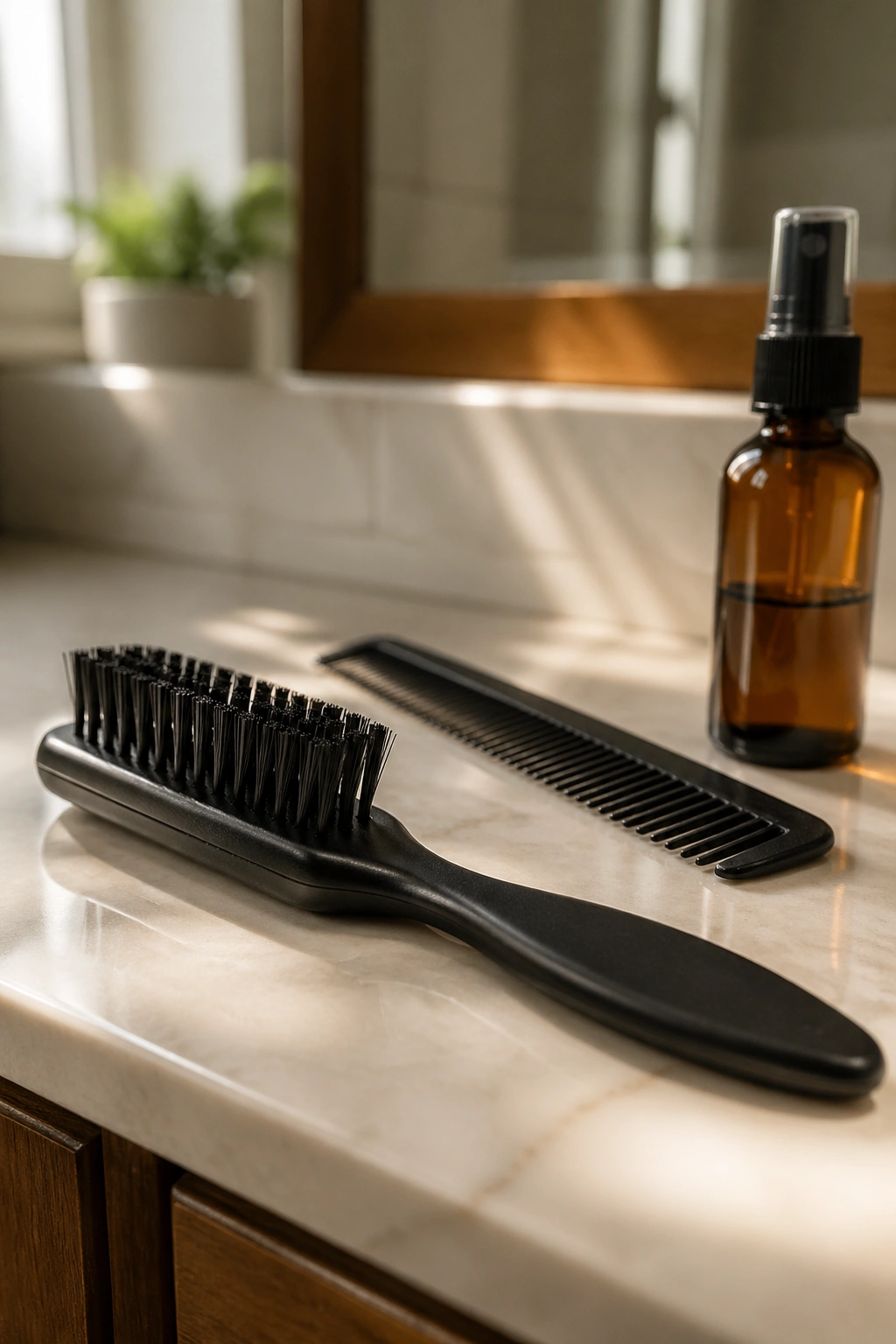
Short hair needs different tools than long hair. A detailing brush — something with a narrow, dense bristle head — gets you into tiny sections without snagging. A fine-tooth comb. A small spray bottle, maybe two ounces, so you can mist precisely without drenching.
Edge control matters more here than anywhere. Your hairline is exposed, and the edges are part of the style whether you like it or not. Pick a gel that holds without crunching and doesn’t flake when it dries. If you can’t afford to experiment, the older, more established brands are usually safer than the newest launch.
Tiny rubber bands, wooden beads, and hair cuffs round out the kit. You’ll use the cuffs more than you’d expect.
Prepping Short Afro Hair for Braids
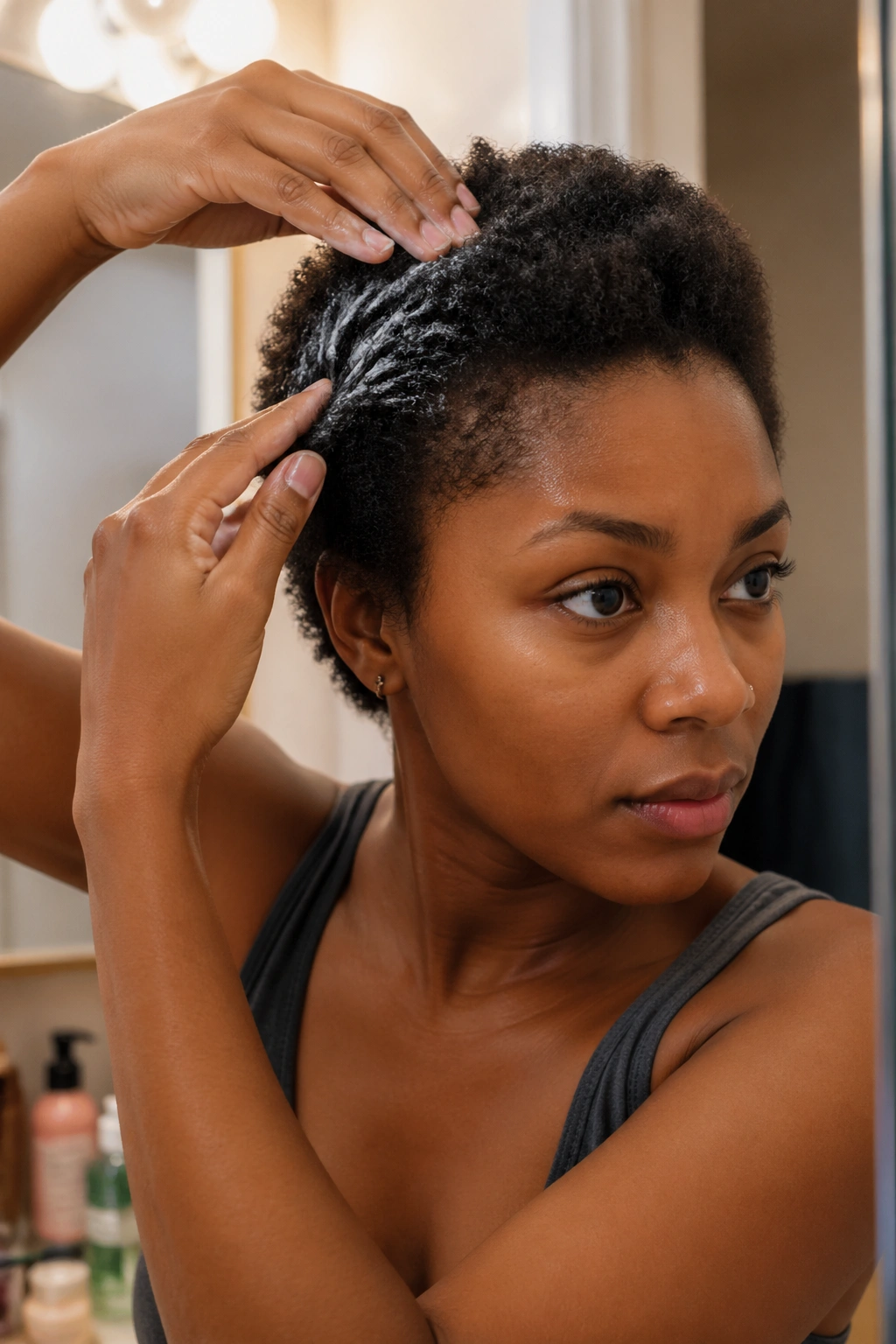
Moisture is the foundation. Dry short hair resists parting, snaps when you tension it, and fuzzes within an hour. Start with hair that’s been leave-in conditioned and at least lightly stretched. Full flat-ironed stretching isn’t necessary or even desirable — boho looks better on hair that still has some of its natural coil memory.
A light oil — grapeseed, jojoba, or sweet almond — applied after the leave-in helps seal moisture and gives strands a subtle shine. Heavy butters can weigh short hair down, so go easy.
Detangle with your fingers first, then a wide-tooth comb. Always work from ends to roots, not the other way around. This saves you from ripping through tangles and losing hair you don’t need to lose.
How Braid Size Changes Everything
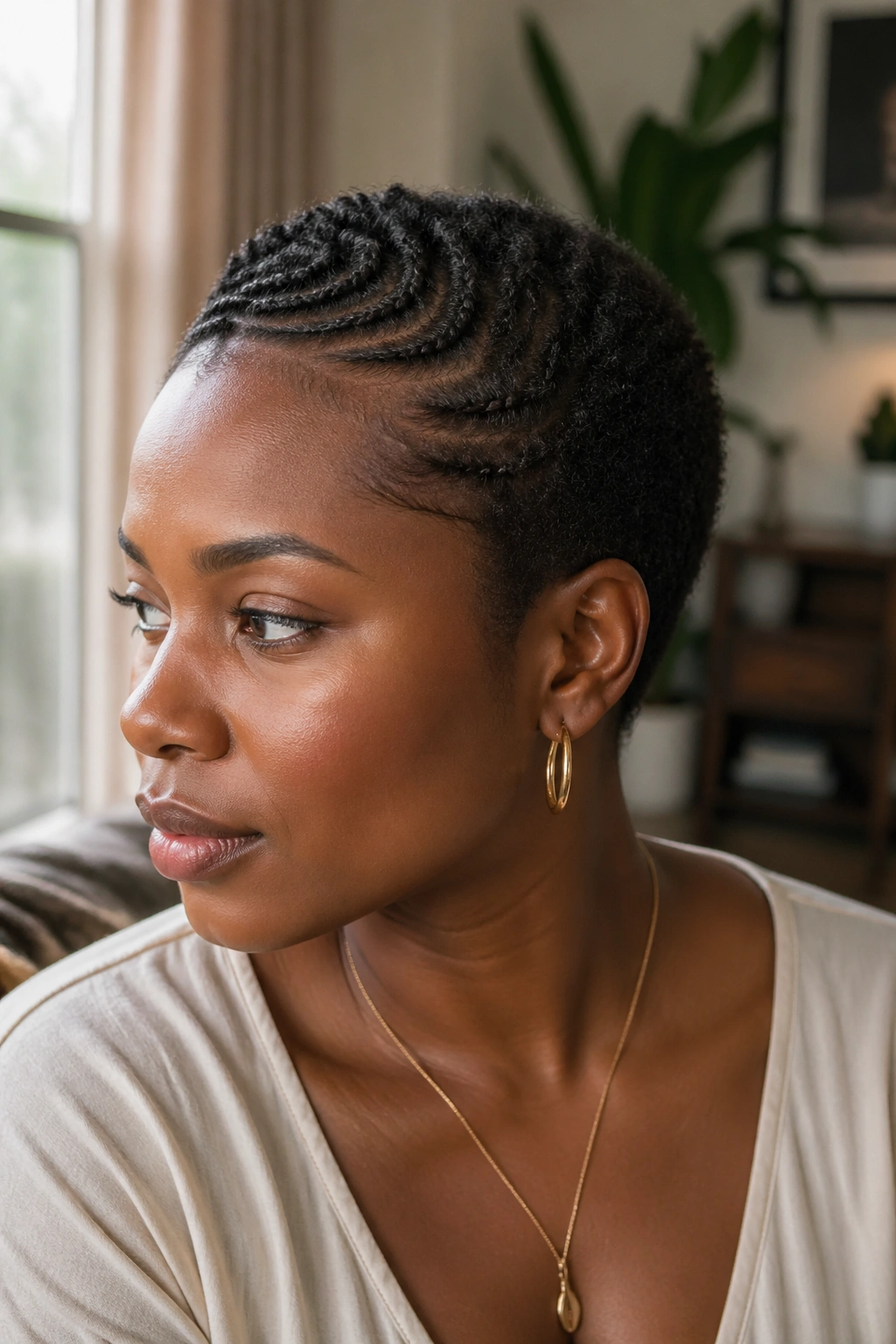
On short hair, braid size is your most powerful design choice. Tiny braids create dense visual texture — ideal when you want a full, layered look. Medium braids balance texture with speed. Thick braids, when they work at all on short hair, make bold statement pieces that draw the eye.
The mistake I see most often is using thick braids on very short hair and expecting them to look like thick braids on long hair. They won’t. They’ll look stubby. Short hair wants either very small braids that read as fine detail, or strategically placed chunky braids that only cover a small area.
Match your braid size to your hair length. That’s the rule.
1. Micro Braids With Loose Curls on Top
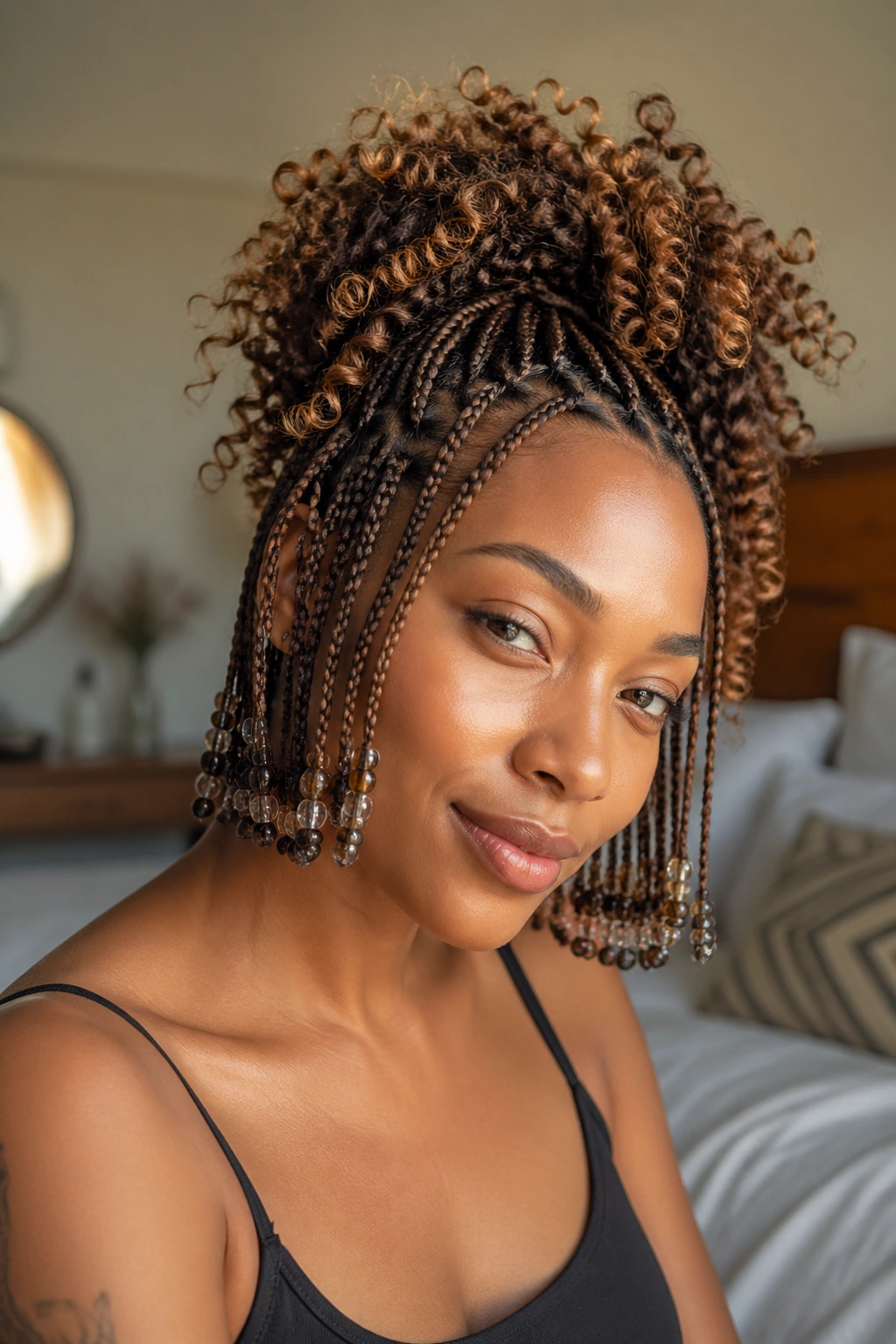
A cluster of micro braids runs from the front hairline back toward the crown, where they blend into the natural curl pattern of the rest of the head. The effect is delicate, almost lace-like, and the contrast between the tiny plaits and the loose curls above is what gives this style its boho character.
Why It Works
- The micro braids add texture without weight
- Your scalp stays cool because the unbraided section breathes
- Sleep is easier than with a full head of braids
- Takedown is quick
Pro tip: Stop the braids about two inches back from your crown, not all the way. Stopping short leaves a natural transition rather than an abrupt line.
2. A Single Accent Braid Along the Temple
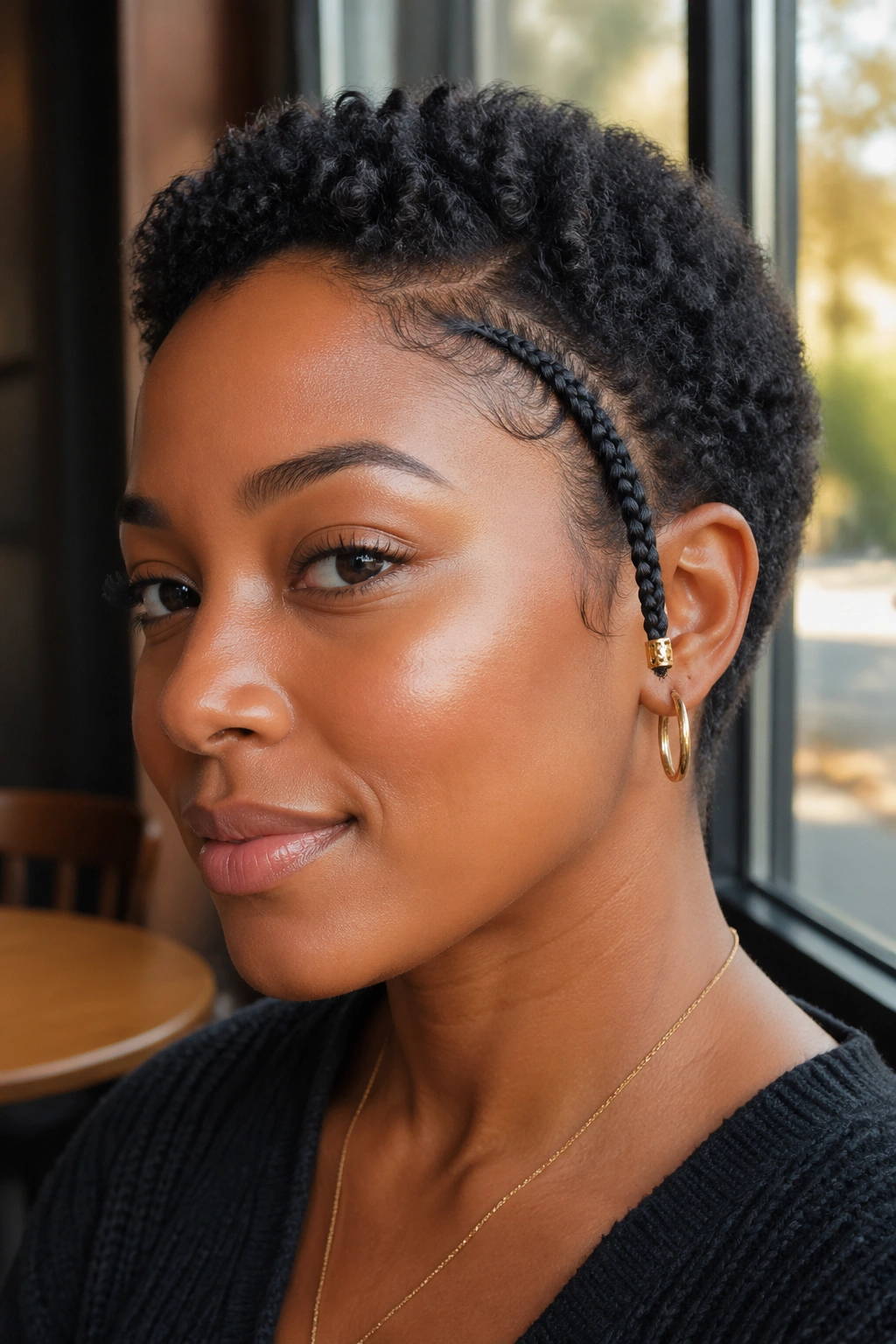
One thin braid, starting just above the temple and curving back behind the ear. Everything else stays as is. This is probably the fastest boho braid style on short hair — five minutes, tops — and it adds a hit of intentional detail without committing to a full style.
I wear this one on days when my hair isn’t cooperating and I need to make it look like I meant it. The single braid tricks the eye into seeing the rest of the hair as styled rather than undone.
Add a small gold cuff near the end of the braid for a finishing touch. The cuff keeps the braid from unraveling and adds that boho jewelry vibe.
3. Cornrows That End in Loose Curls
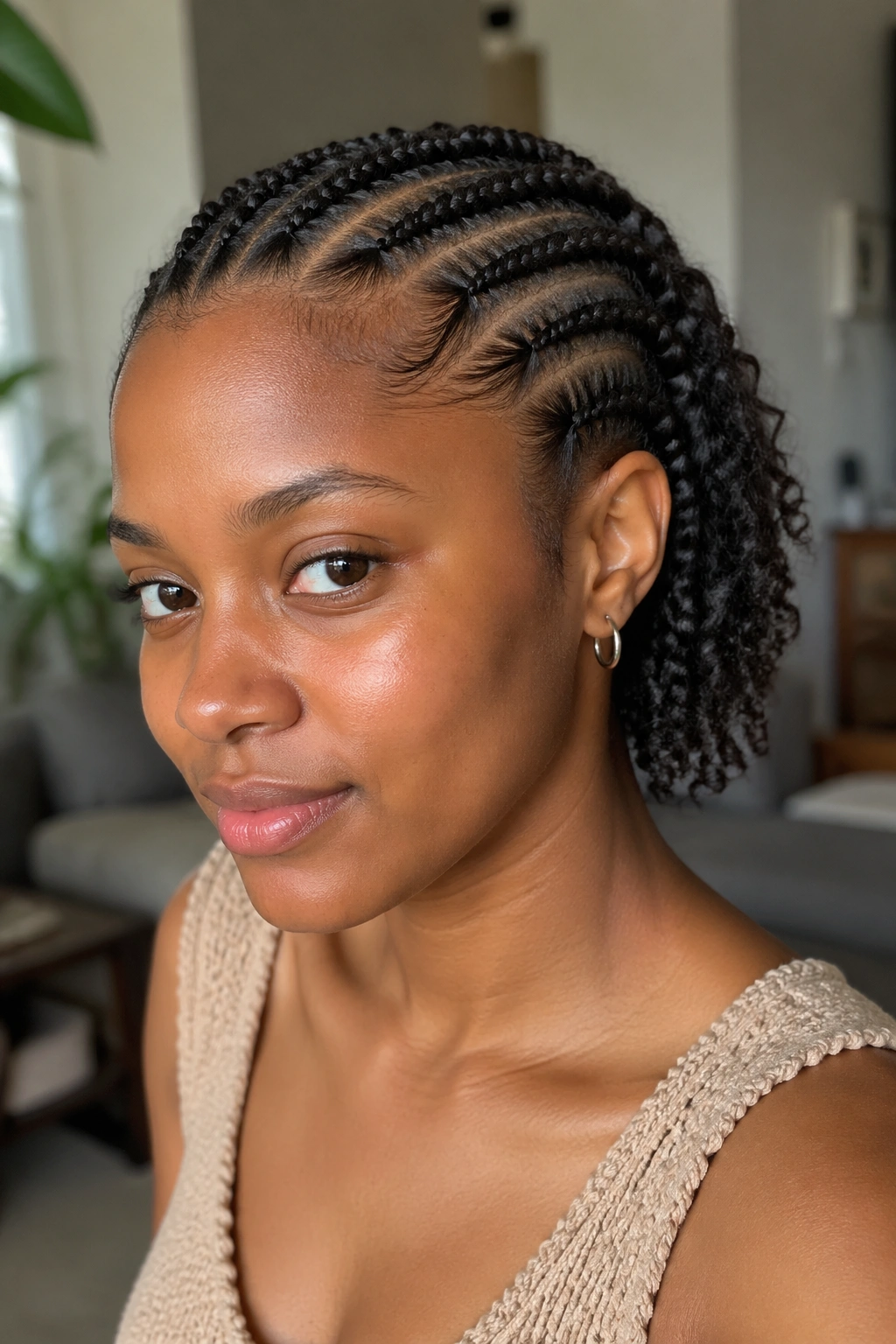
Short afros have one underrated advantage: you can cornrow halfway and stop. Most of the hair on shorter heads wraps into cornrows easily along the sides and front, and then you release the ends of each braid into the existing curl pattern at the back of the head.
The released ends are what make this a boho style rather than a basic cornrow set. They curl up, puff slightly, and add softness to an otherwise sculpted base. It’s a hybrid look that plays to short hair’s strengths.
Work each cornrow in the same direction — usually from hairline to crown — and be consistent with your stopping point. Ragged release points look messy rather than boho.
4. A Braided Headband Running Across the Hairline
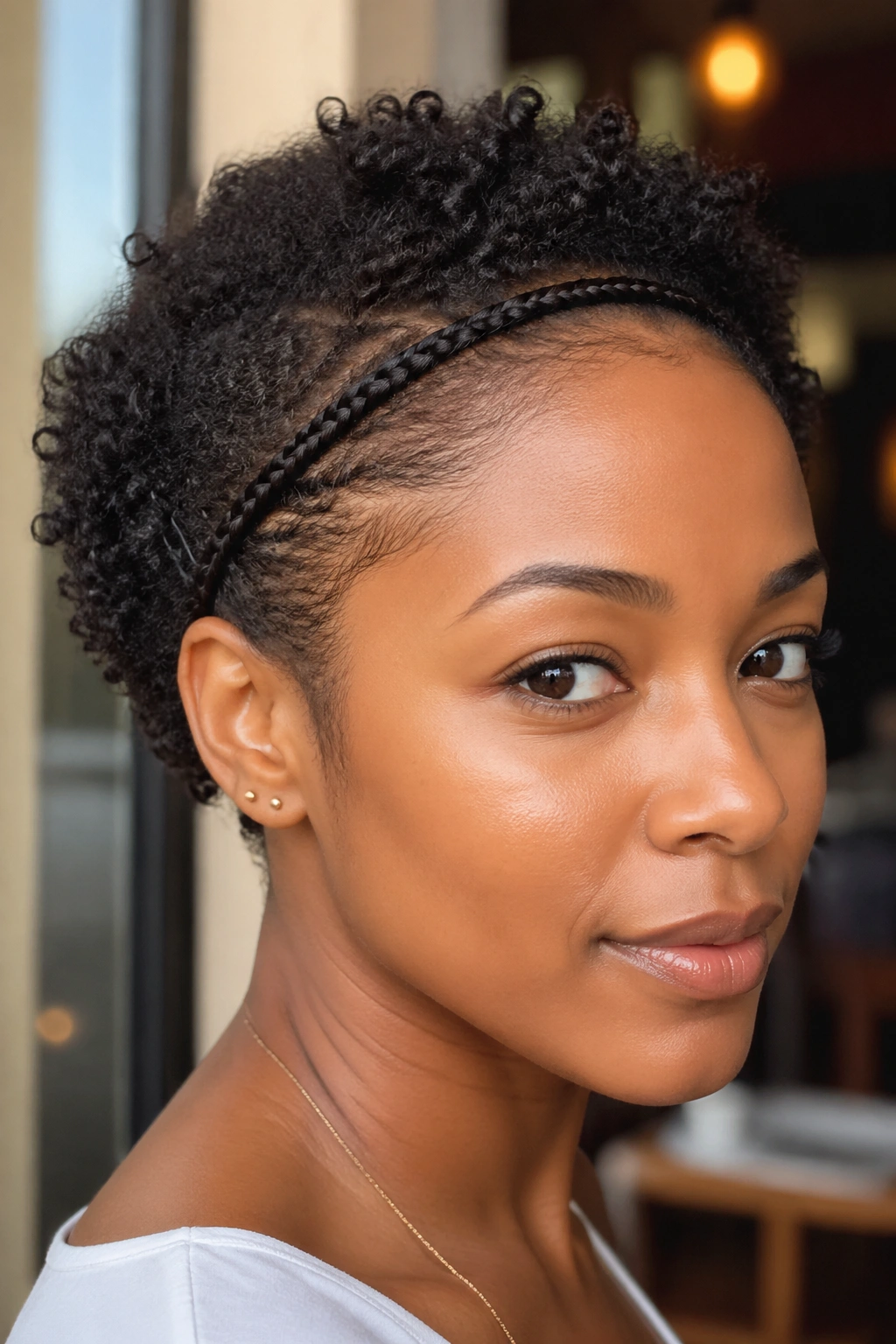
Can you make a headband out of your own hair? On short afros, yes — if you braid it in and keep it in place with bobby pins rather than expecting it to hold itself. A thin three-strand braid runs along the front hairline from ear to ear, and you pin it down on the opposite side.
The rest of your hair stays as a short curl or twist-out. The braided headband draws a clean visual line across the forehead, which is the entire point. It turns the face-framing region into a design element.
If your front hair isn’t long enough to braid across the whole hairline, use added hair that matches your color. Nothing dramatic — just enough to reach.
5. Small Braids With Wooden Beads Throughout
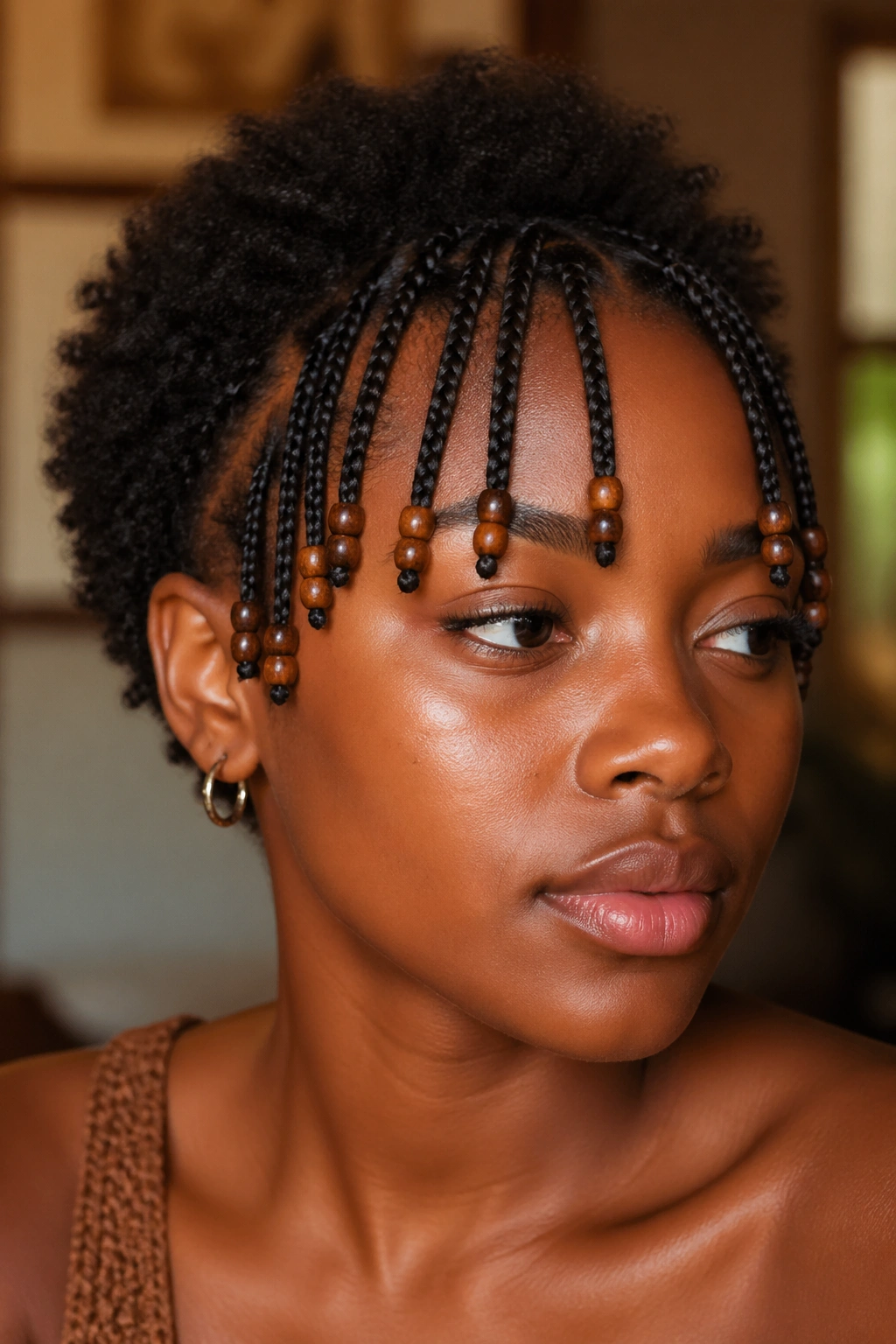
Ten to twelve small braids scattered across the front half of your head, each one ending in a wooden bead. The rest of your hair stays in its natural state. The beads add weight, movement, and sound — yes, sound, a soft clack when you turn your head — and bring a distinctly earthy boho energy.
Wooden beads look better than plastic ones. They catch light more warmly, feel better against the skin, and don’t look cheap in photos. Buy them in a natural color range — brown, honey, dark walnut — rather than bright painted shades.
The beads stay on with tiny rubber bands tied just above them. Make sure those bands are tight enough to grip but not so tight they cut the hair.
6. A Side Braid Running Along the Part
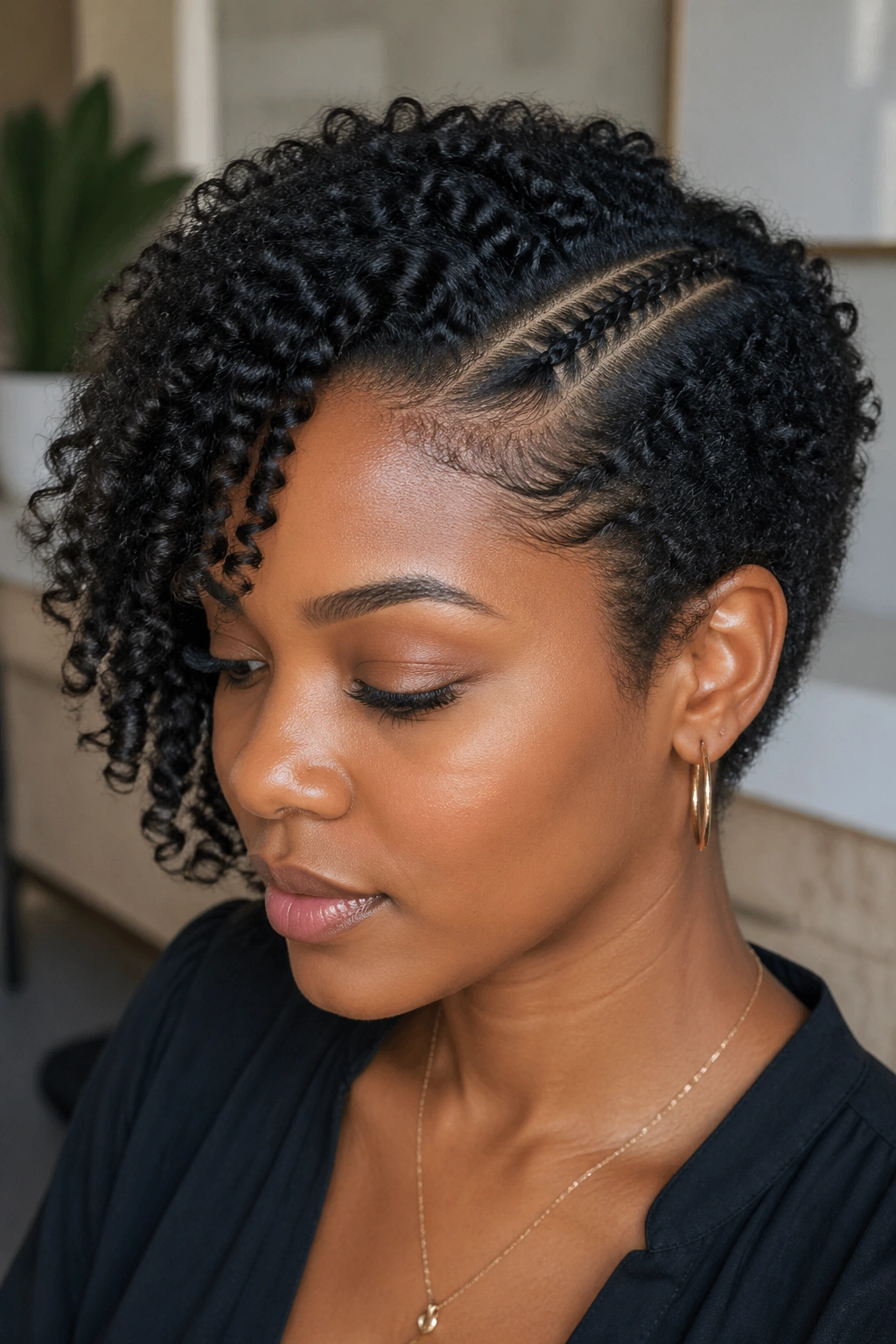
This is for short afros with enough length on top to create a side part. Comb the hair into a deep side part, then braid a thin plait along the parting line itself — following the part from front to crown. The braid becomes a decorative element running along the part.
The rest of the hair flows loose on either side, with the deeper side getting natural volume from the part. It’s a subtle, grown-up style that works beautifully for work or evening settings where you want elegance without drama.
Use a tiny bit of oil or serum on the part line before braiding. It helps the braid lie flat and gives a polished finish.
7. Triangle Part Braids Around the Crown
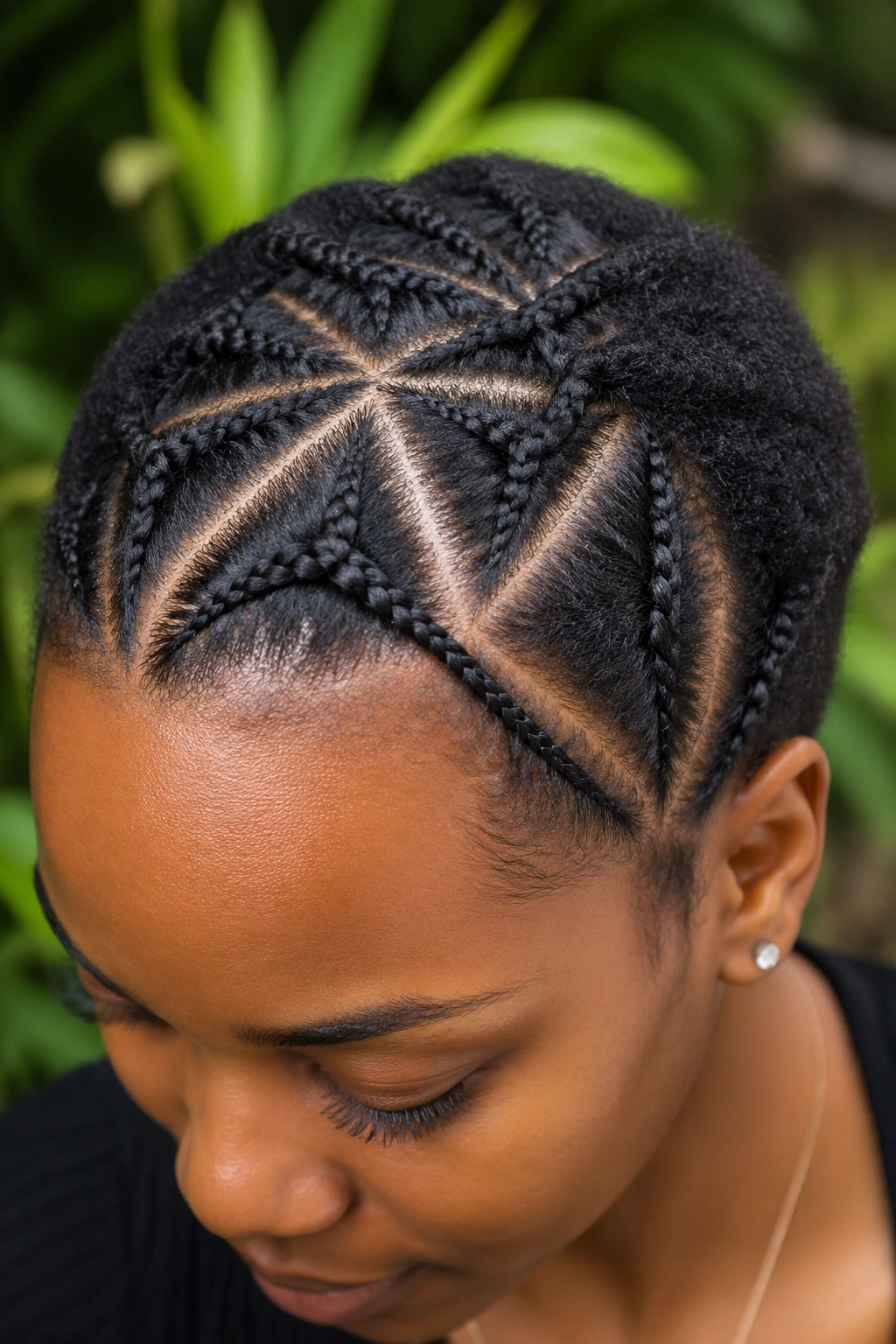
Unlike square or rectangular parts, triangular parts create a honeycomb-like pattern across the scalp. Each triangle gets its own small braid, and the braids all run toward the back crown where they meet. The exposed scalp between triangles is part of the design.
This is a more technical style, and the parting is the hardest part. Take your time. Use the pointed end of a rat-tail comb to draw the triangles, and don’t worry if they’re not perfectly geometric — slight irregularity reads as intentional.
The braids can end free at the crown, or you can gather them all into a small, soft puff if you have enough length in the back.
8. Flat Twists Instead of Braids Along the Sides
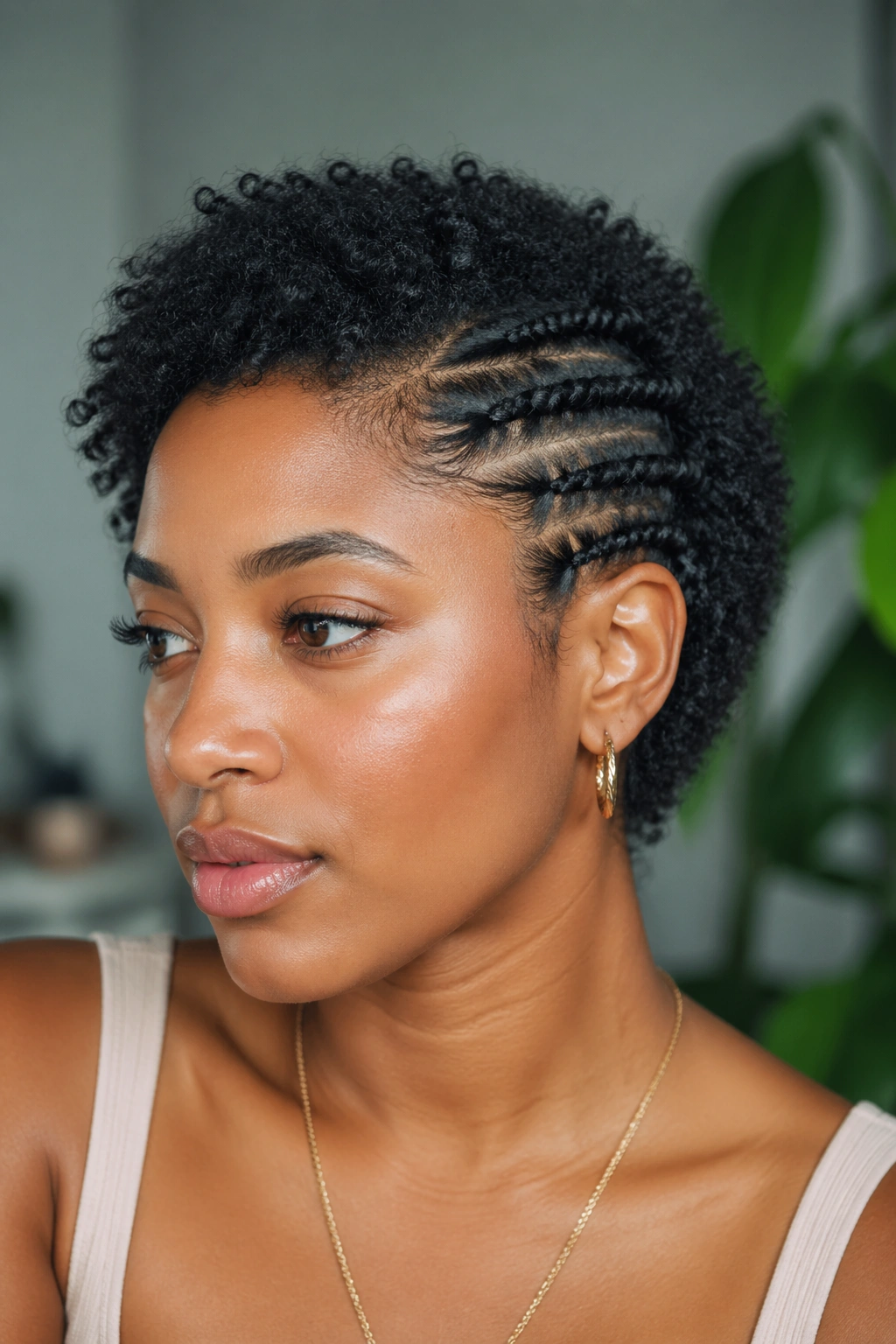
Who says boho braids have to be braids? Flat twists — the two-strand equivalent — create a similar visual effect with softer lines and less tension on the scalp. Run two or three flat twists along each side of your head, leaving the top and back loose.
The softer texture of flat twists pairs beautifully with short natural hair because it doesn’t create a hard contrast between the twisted and loose sections. The whole head feels cohesive.
Flat twists also take about half the time of cornrows, and they’re much more forgiving if you mess up. You can un-twist and redo without losing any hair.
9. One Braid Down the Center With Loose Curls Beside
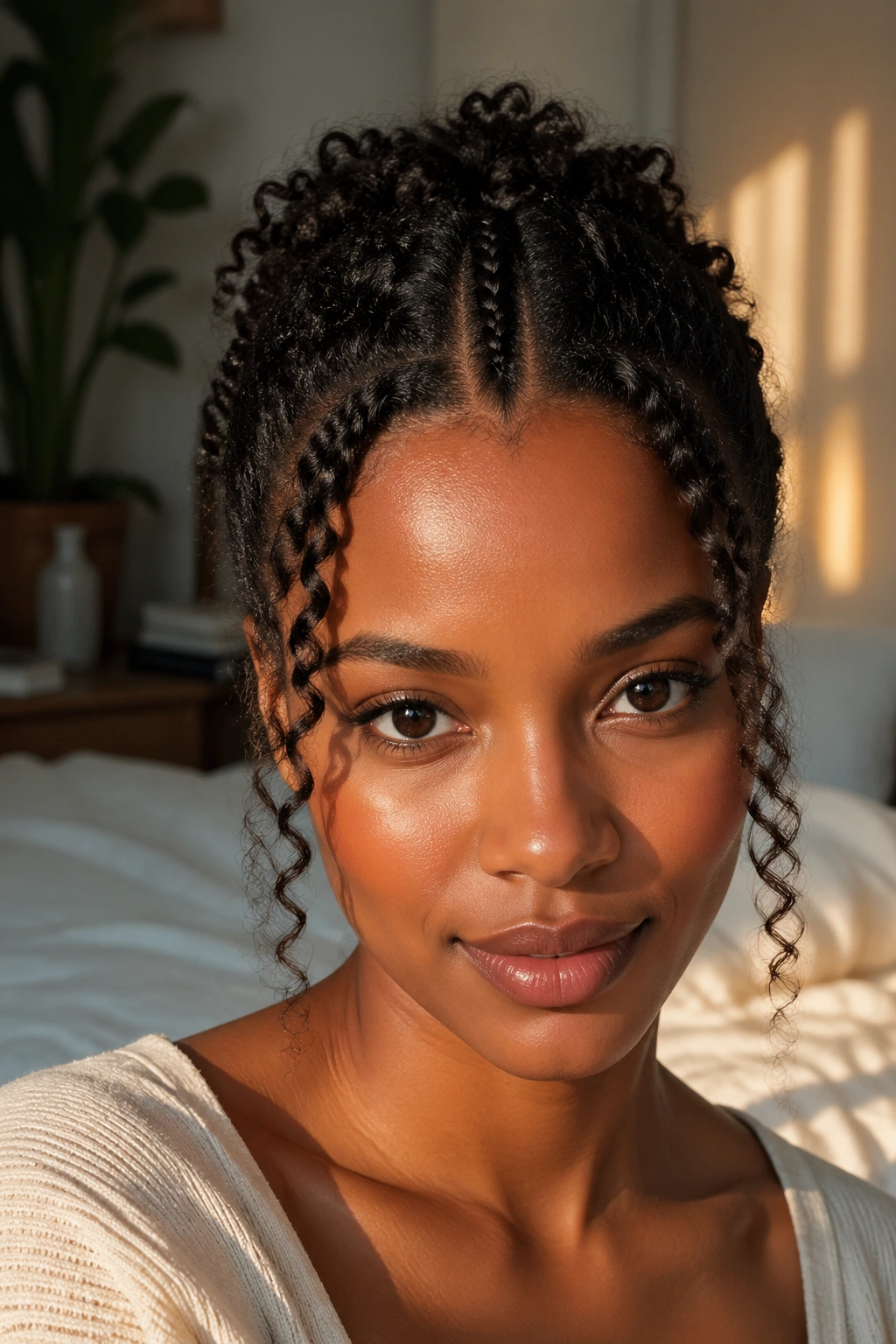
A single braid runs straight down the center of the head from forehead to crown, dividing the hair into two halves. Both halves stay loose in their natural state. It’s a surprisingly flattering style on round and square faces because the center line visually lengthens the whole look.
What to Watch For
- Make sure the braid is dead straight — crooked center parts look sloppy
- Keep the braid thin, not chunky, so it doesn’t dominate
- Finish the end with a small gold or wooden cuff rather than a rubber band
10. Two Side Braids With a Loose Cloud on Top
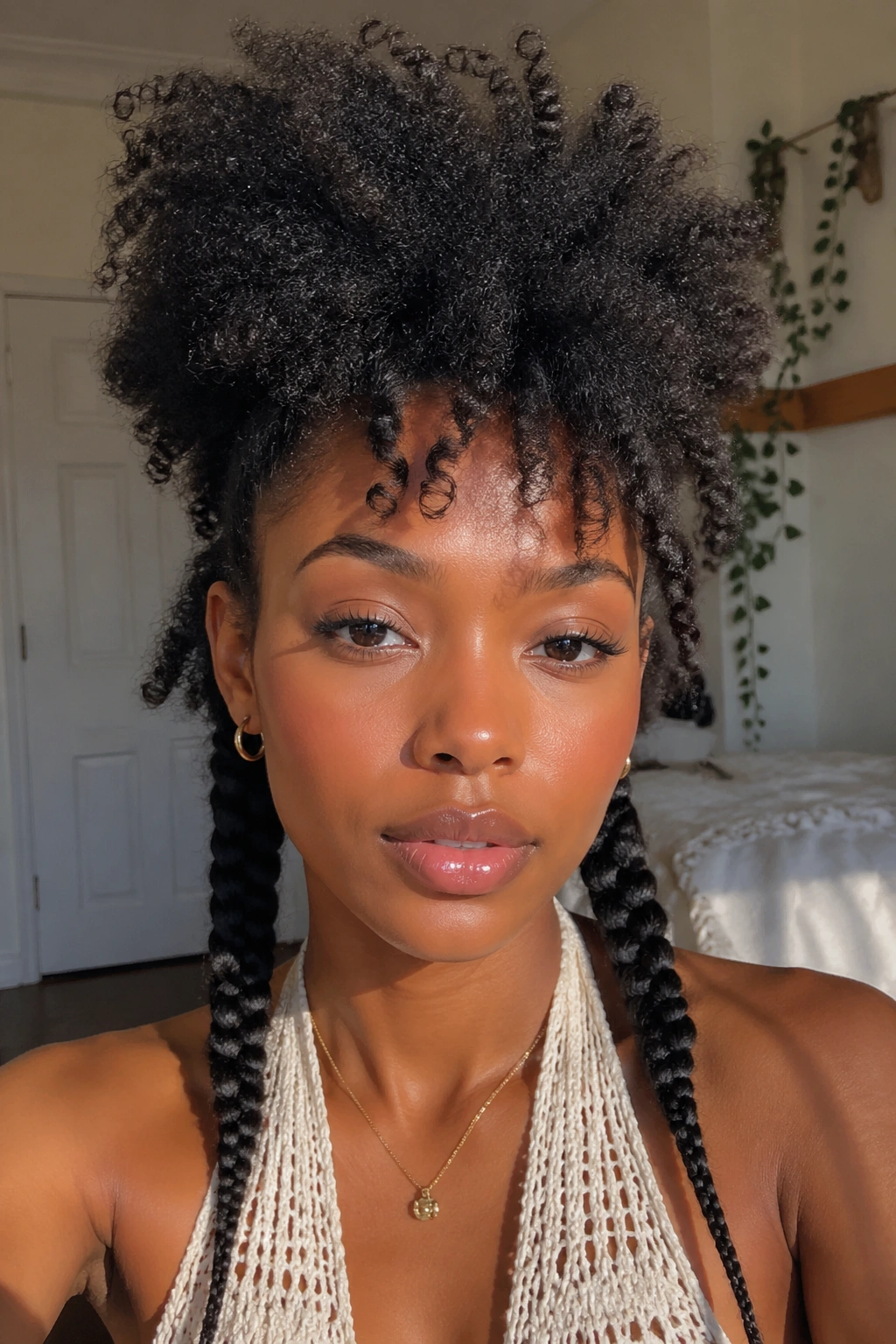
Two braids, one on each side, starting just above the ear and ending near the neckline. Between them, a loose cloud of natural hair rises up and out. This is the short-afro version of the classic two-sided milkmaid vibe.
It’s quick, it photographs well, and it leaves your forehead free of clutter. Good for faces with strong brows or statement eye makeup, because nothing competes with the face itself.
The braids don’t need to be identical. In fact, a little asymmetry — one slightly thicker, one slightly longer — reads more boho than perfectly mirrored plaits.
11. Zigzag Cornrows With Loose Ends
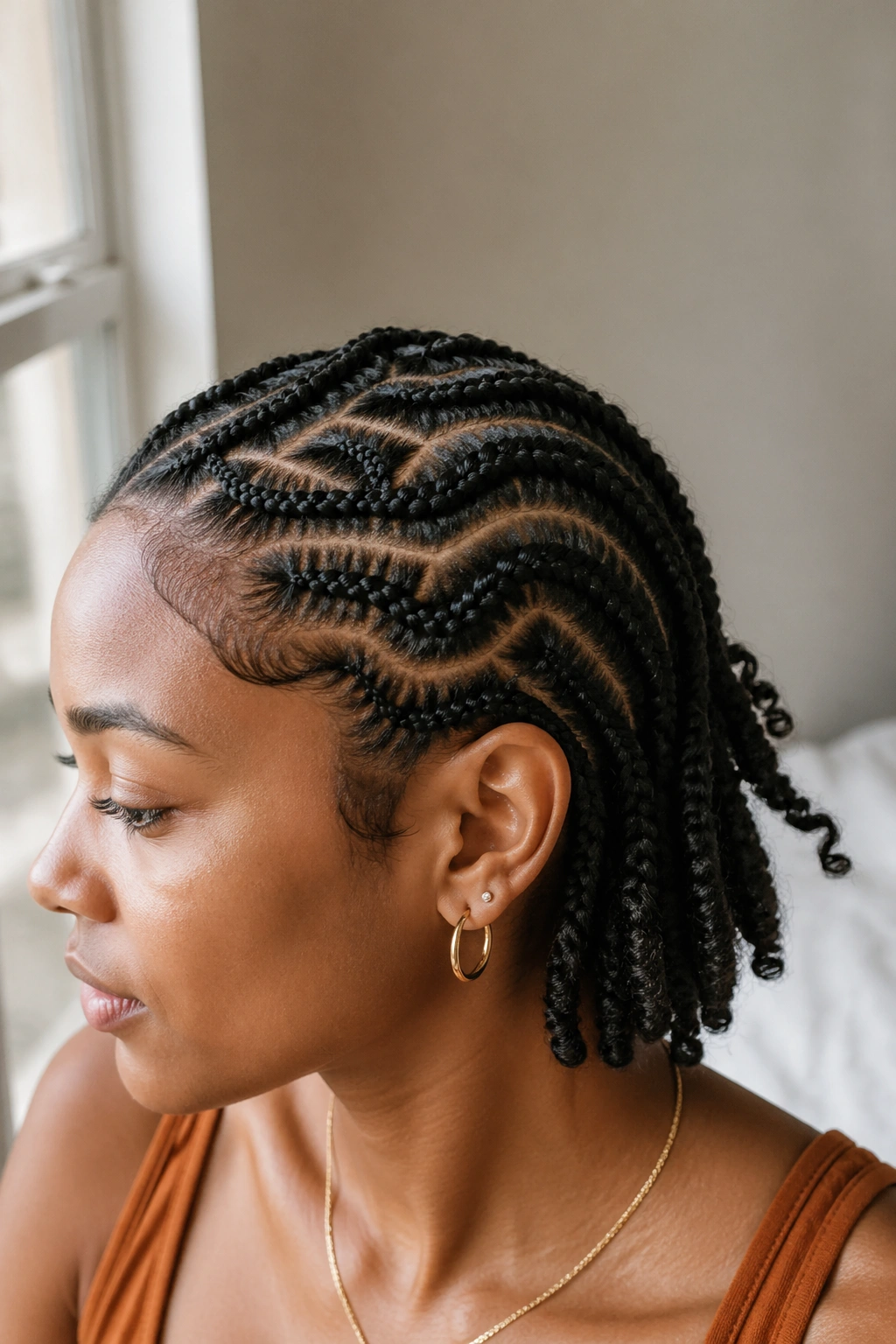
Instead of straight cornrows, the parts zigzag as they travel back across the head. Each braid follows the zigzag line, creating a playful, wave-like pattern across the scalp. At the back, if there’s enough length, the braids release into loose curls.
The zigzag takes more time than straight parts, but the payoff is real. The pattern catches light as you move, and it photographs incredibly well from above or from the side.
Don’t try to make the zigzags perfectly symmetrical. Uneven zigzags look hand-drawn and human, which is exactly the boho aesthetic.
12. Fulani-Style Thin Braids With Natural Top
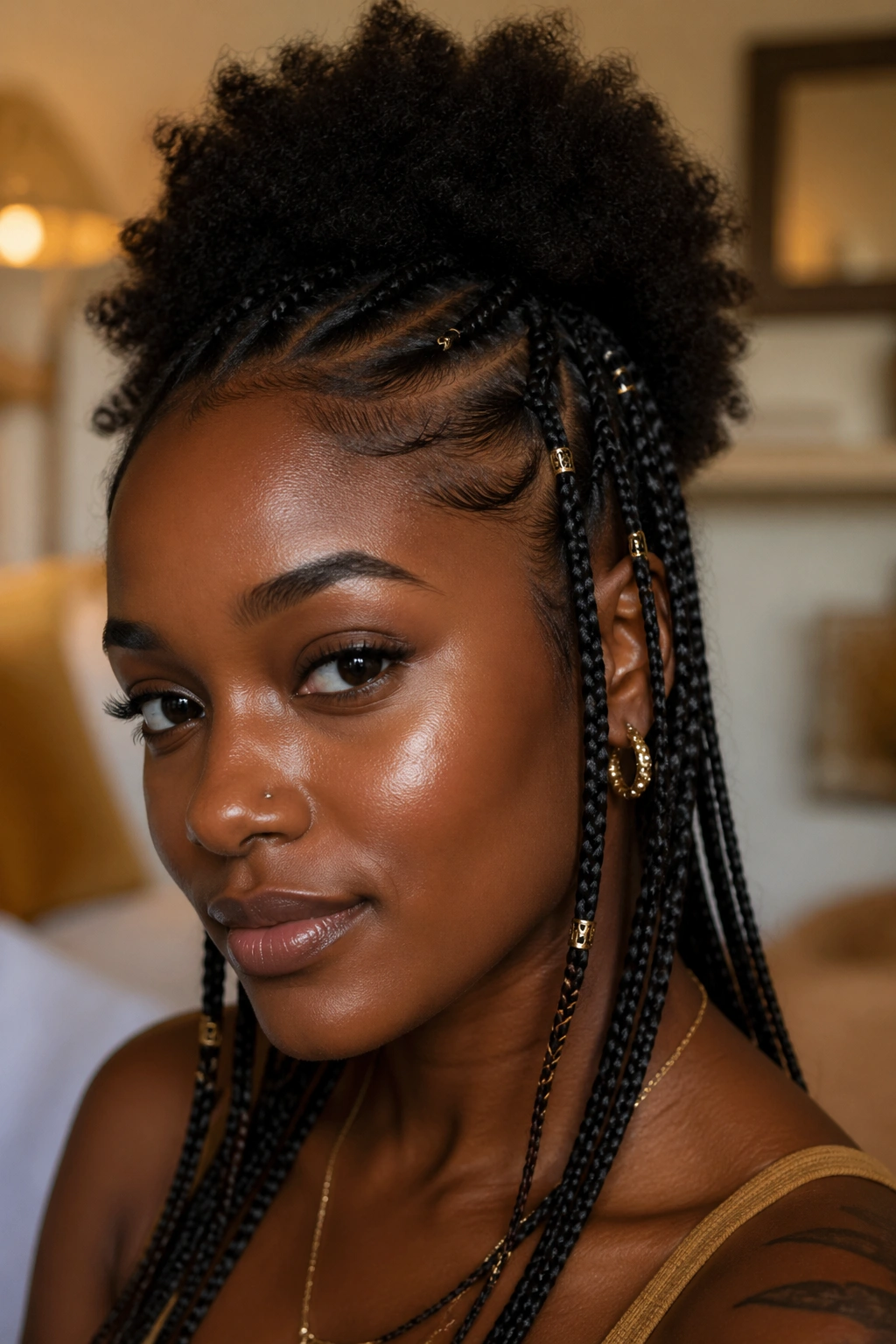
Borrowing from Fulani traditions, this style features several thin braids along each side of the head, often with small gold cuffs or beads. The crown and top of the head stay natural — just a short, fluffy afro or twist-out.
What keeps this distinctly boho rather than strictly traditional is the looseness of the top section and the modest use of accessories. Traditional Fulani styles can be elaborate. The boho version is stripped back, with just a few braids and a handful of tonal beads.
This is one of my favorite low-effort styles. It reads stylish, it respects the braiding tradition, and it takes maybe twenty minutes.
13. A Thin Braid Along the Back Hairline
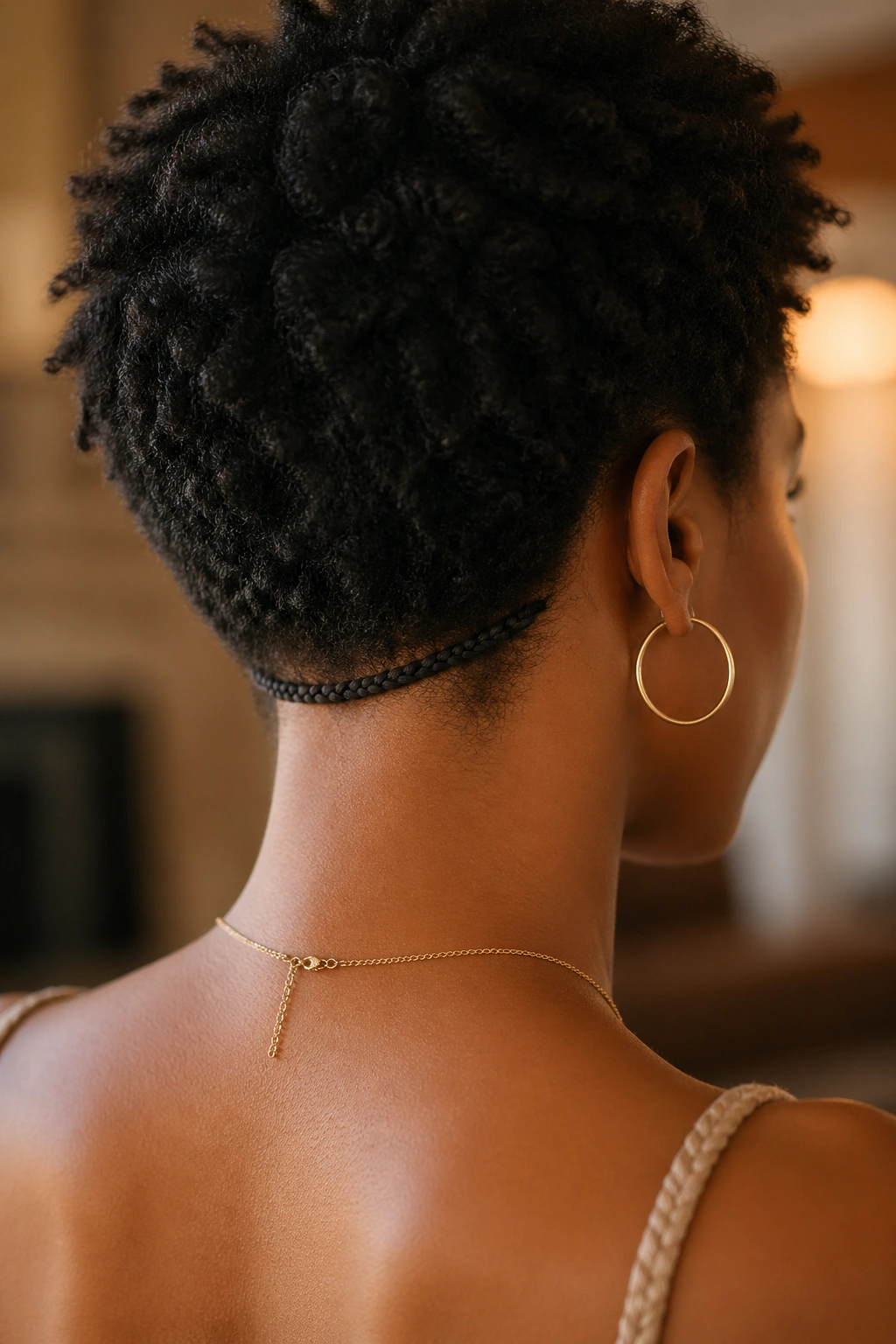
Run a single thin braid along the bottom hairline at the nape of the neck, from ear to ear. The rest of the hair stays loose above. This hidden braid detail doesn’t show from the front, but it adds a beautiful element when your hair is seen from behind or above.
This is a great style for photo-heavy events — weddings, graduations, anything with an overhead shot. The braid becomes a quiet surprise.
Because the braid sits at the back, it’s easier to do on yourself if you have a hand mirror. Face your main mirror, hold the hand mirror behind, and you can see what you’re working with.
14. Braided Bangs With a Loose Back
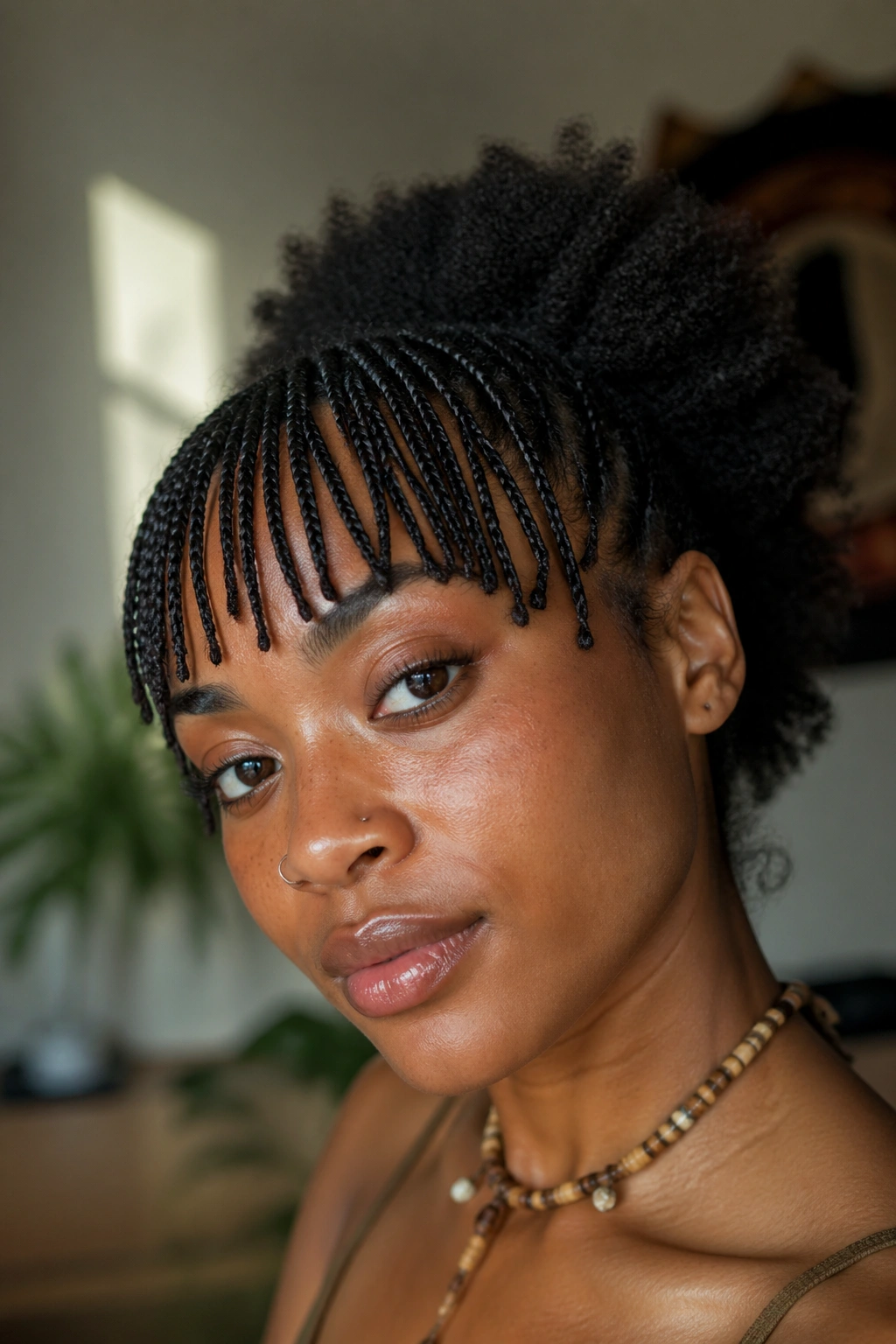
A short section at the front of your hairline gets braided into three or four tiny plaits that hang down across your forehead like bangs. The rest of the hair stays as a natural afro. The braided bangs create a distinctive boho frame for your face.
Length is critical. The front hair needs to reach at least your eyebrows for this to work. If yours is too short, skip this one — there’s no good way to fake it.
Use the tiniest rubber bands you can find to finish each braid. Adding a small bead or cuff at the end gives it a finishing polish.
15. Half-Up Braids With a Curly Crown
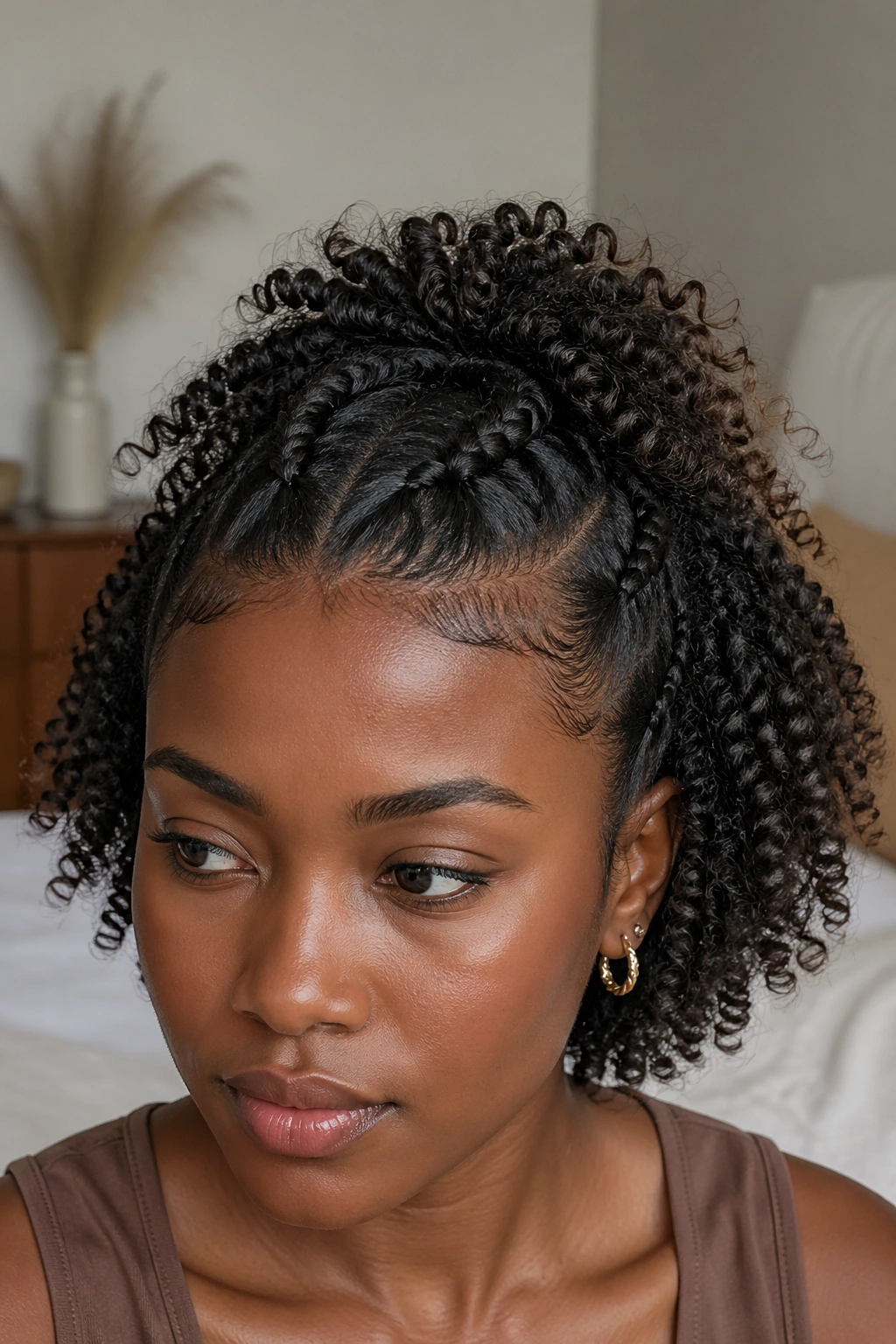
Gather the top half of your hair and braid just that portion into two or three small braids that run to the crown and join together. The bottom half of your hair stays loose in its natural curl. This creates a half-up, half-down effect without needing the length most half-up styles require.
It’s a great transition style for short afros just growing out. As the hair gets longer, the braids get more dramatic, and the style evolves naturally.
Secure the joined braids with a small elastic or wrap them with a thin section of hair to hide the band.
16. Curved Braids Framing the Face
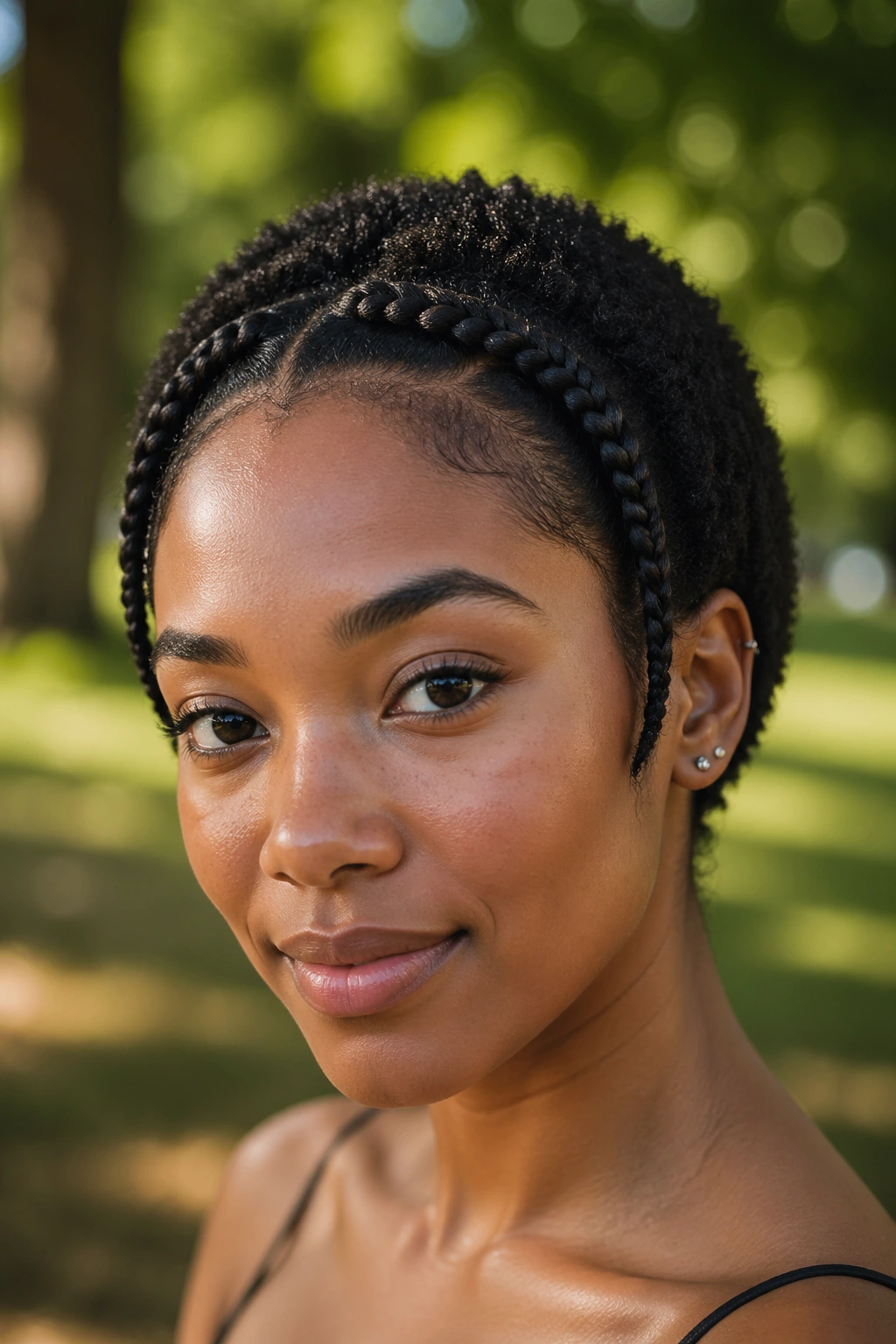
Two braids start at the center of the hairline, curve outward over the temples, and end near the ears. The curve is the key visual — straight braids would be ordinary, but curved ones follow the natural line of the face and create a soft frame.
This style is forgiving. Even if one curve is slightly different from the other, it still looks intentional. The asymmetry is part of the boho charm.
Behind the braids, the hair can stay in any natural state — a puff, a twist-out, or just loose curls. The focus is on the framing braids, not the back.
17. Loose Braids With Gold Cuffs
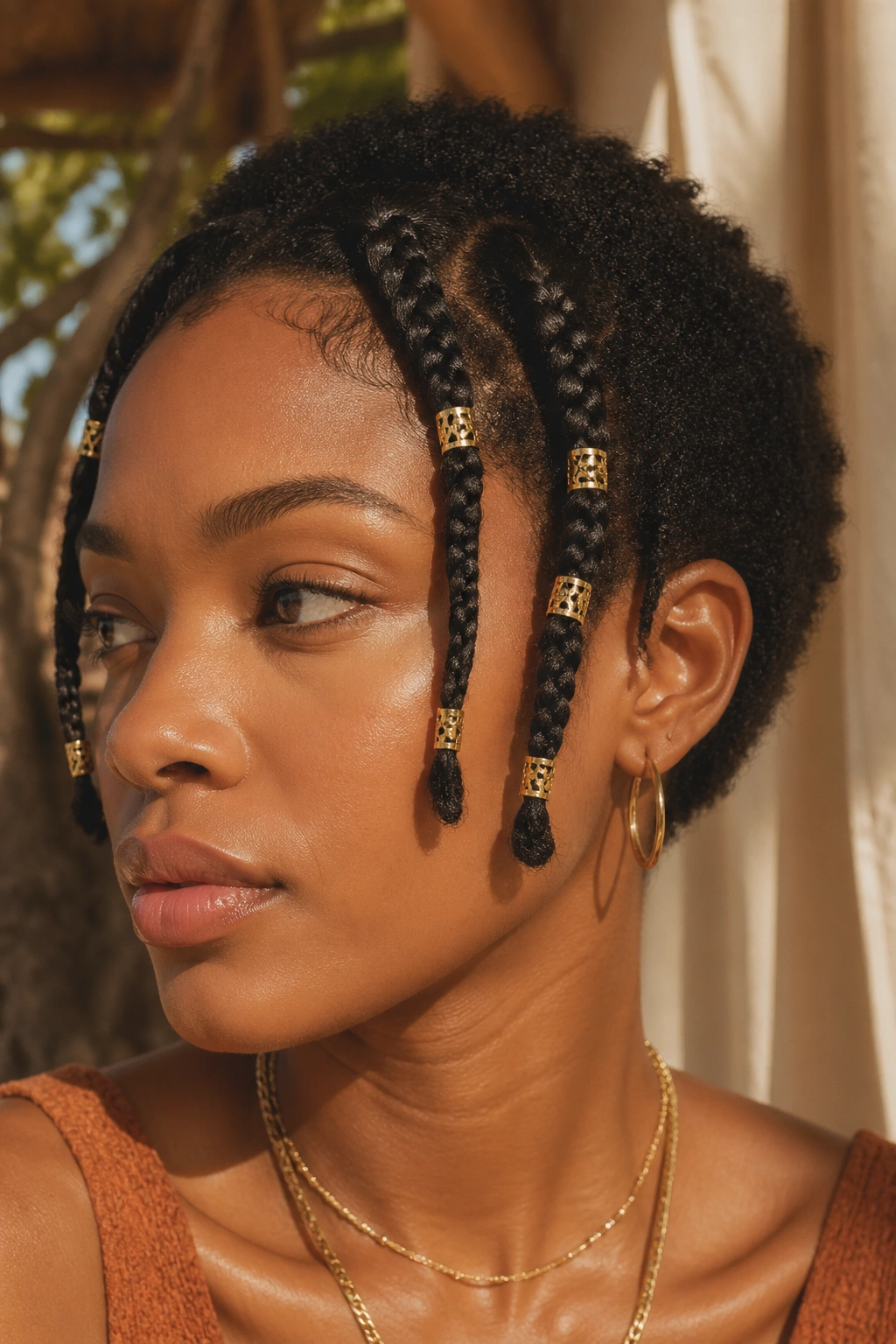
Three or four loose braids, each with two or three small gold cuffs slid along their length. The braids aren’t tight or structured — they’re done loosely on purpose, with some fuzz and movement. The cuffs add metallic shimmer and weight.
How to Use It
Work the cuffs onto each braid after you’ve finished braiding. Most cuffs have a small opening you can widen gently to slide over the braid, then pinch closed. Don’t pinch them so tight they damage the hair.
Gold tones work best on most skin tones. Silver and copper are fine alternatives if gold isn’t your aesthetic.
18. Flat Twists Into a Side Puff
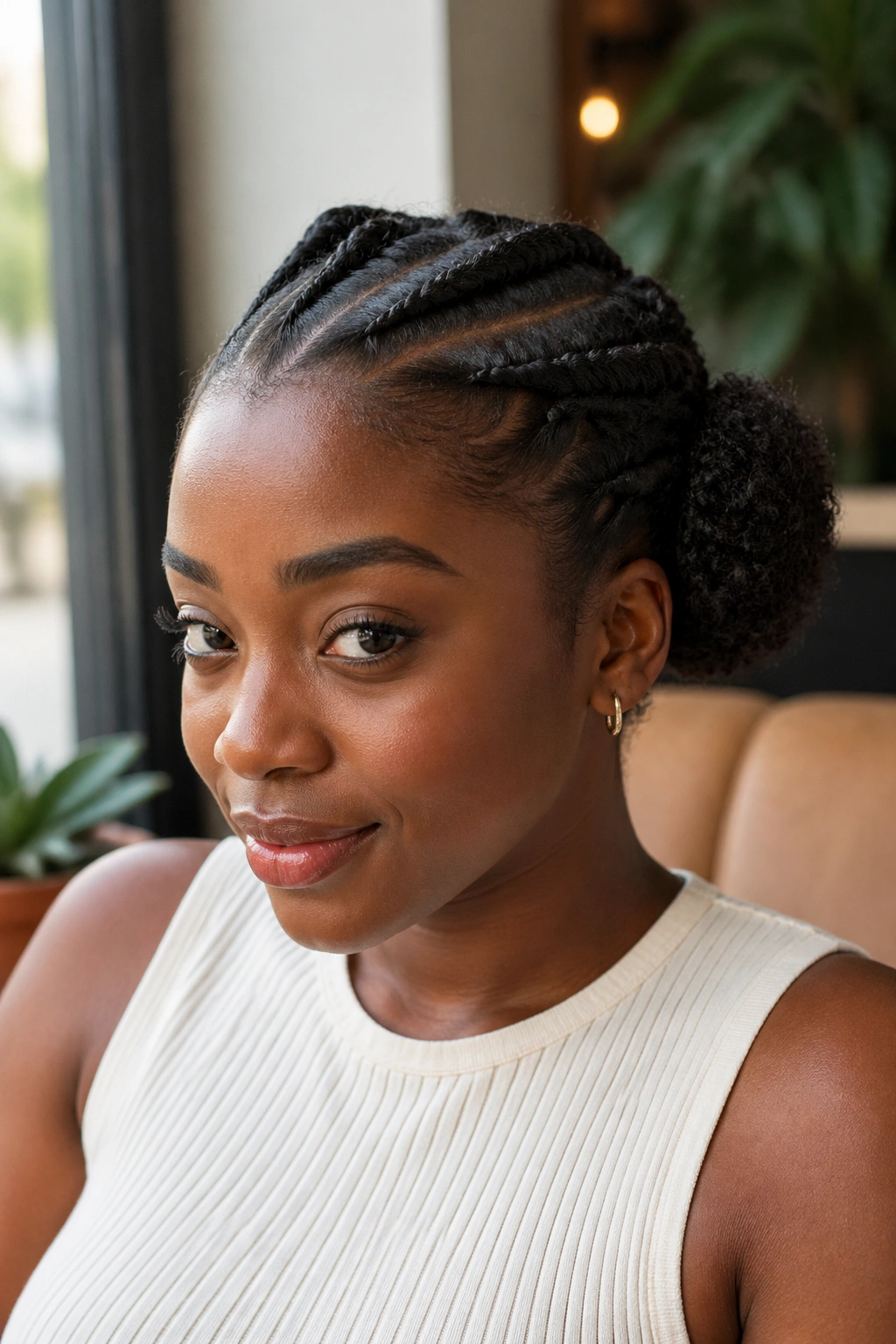
Run two flat twists along the top of your head, angling them toward one side. Everything past the twists gets gathered into a small side puff behind the ear. The twists create a clean, sculpted top section, and the puff adds boho softness at the ear.
This style is flattering on round faces because the asymmetrical puff breaks up the symmetry and visually lengthens one side. It’s also a great option if you want something slightly off-center without looking like your hair is falling sideways.
Use a small, strong clip or a soft scrunchie at the puff base. Hair ties with metal pieces can snag short hair, so avoid them.
19. Chunky Single Braid With Twist-Out Around It
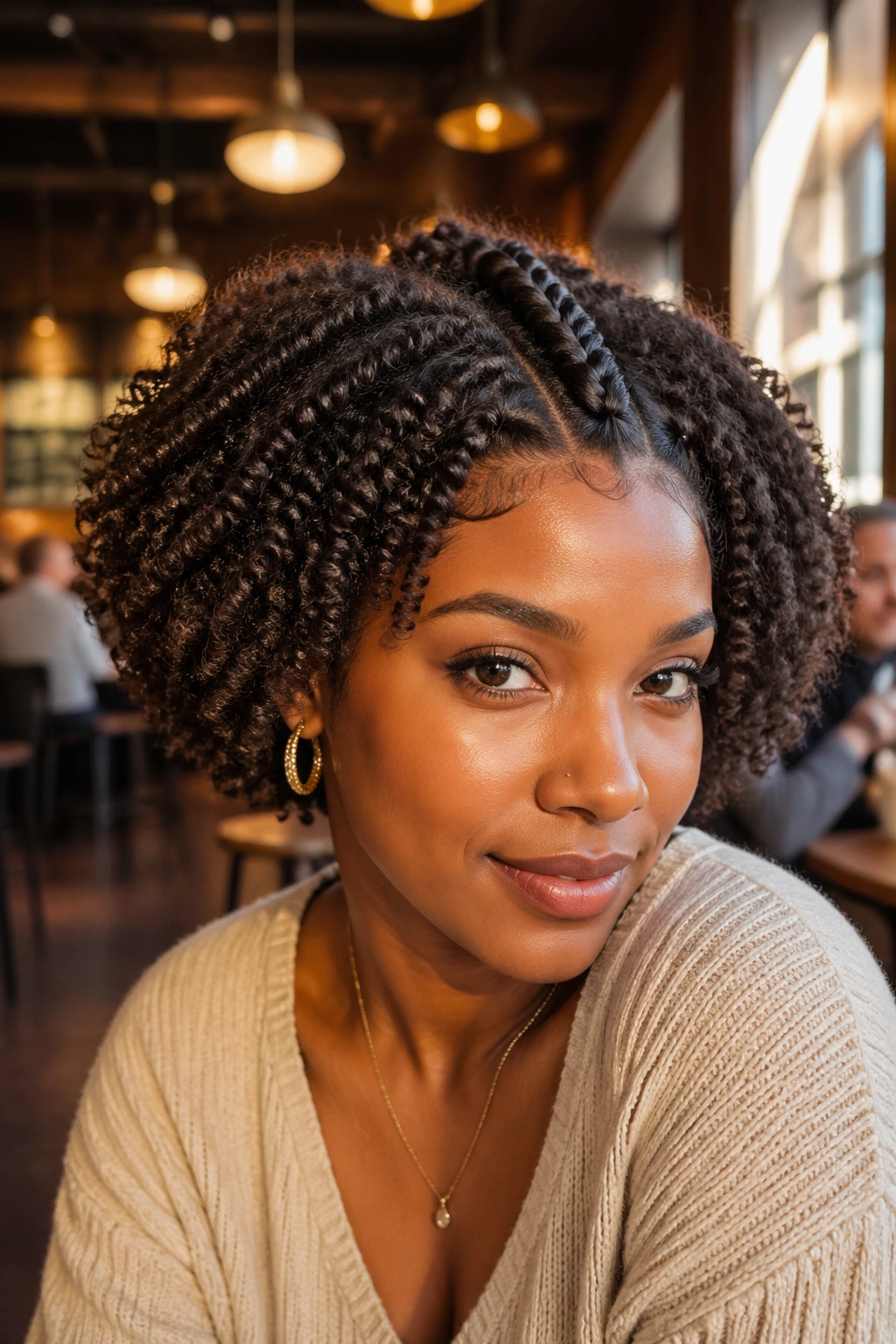
One thicker braid — about the width of a finger — runs from the front hairline straight back to the crown. The rest of the hair stays as a twist-out or defined curl pattern. The single chunky braid becomes a structural anchor in the middle of an otherwise soft, curly landscape.
This is the opposite of the single thin braid accent — here, the braid is the main visual event, and the curly sections support it. Works best when the twist-out is well-defined and the braid is crisp.
Set the twist-out the night before. Morning-of braiding over an already-set twist-out is way faster than trying to do both the same day.
20. Tiny Side Braids With Shells or Beads
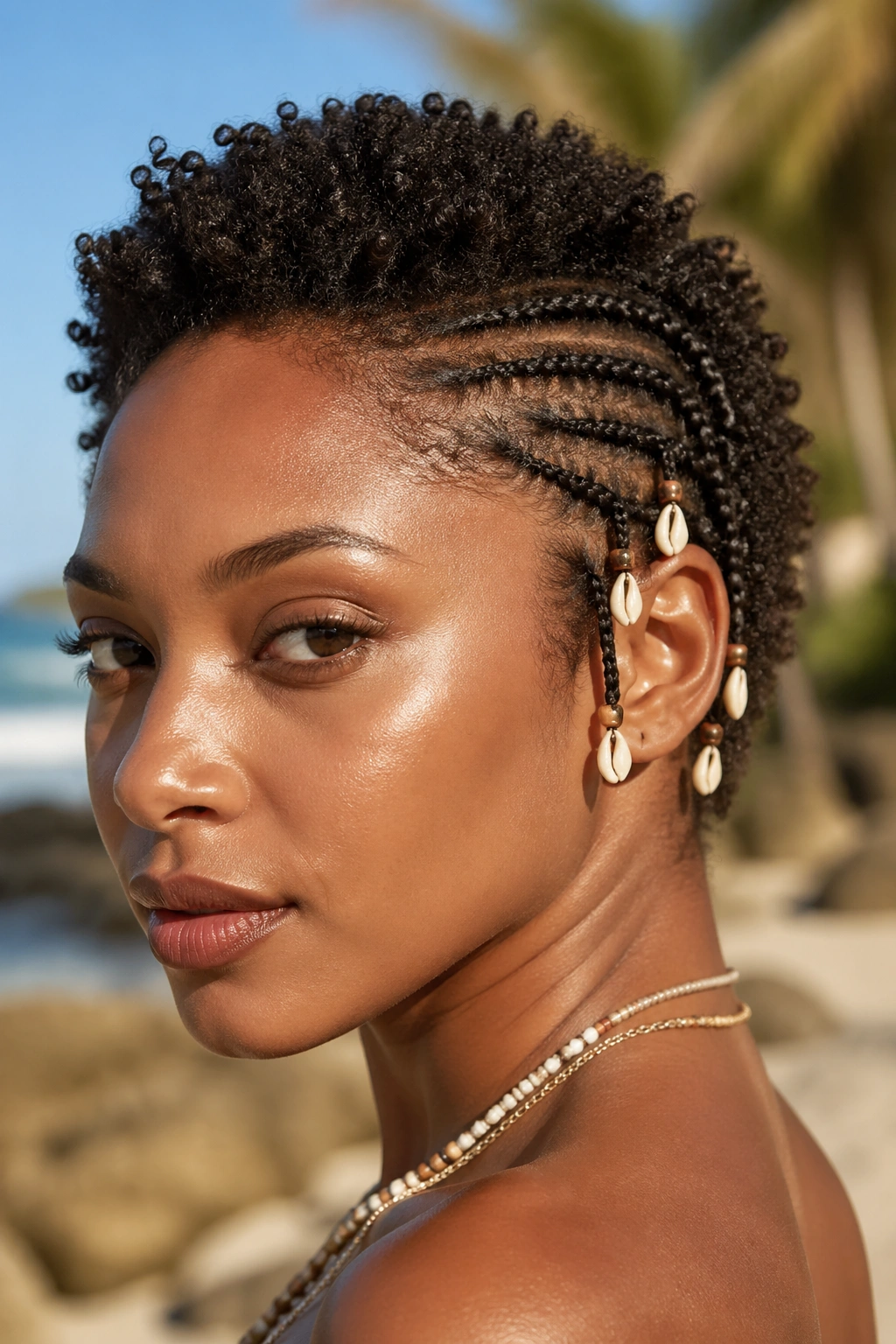
Unlike bead clusters on the ends of braids, this style places shells or small beads along the body of each tiny braid, not just at the tips. Several tiny braids running along one side of the head each carry two or three small ocean-themed accents.
The beachy vibe is real. This style is perfect for summer, vacation photos, or anywhere you want a relaxed, sun-drenched feel. It’s also one of the more distinctive looks on this list — nothing else here quite matches the vacation energy.
Cowrie shells are the classic choice, and they carry cultural weight. Wooden or ceramic beads in sand and ocean tones are good alternatives if shells feel like too much.
21. Goddess Braids Transitioning Into Loose Curls
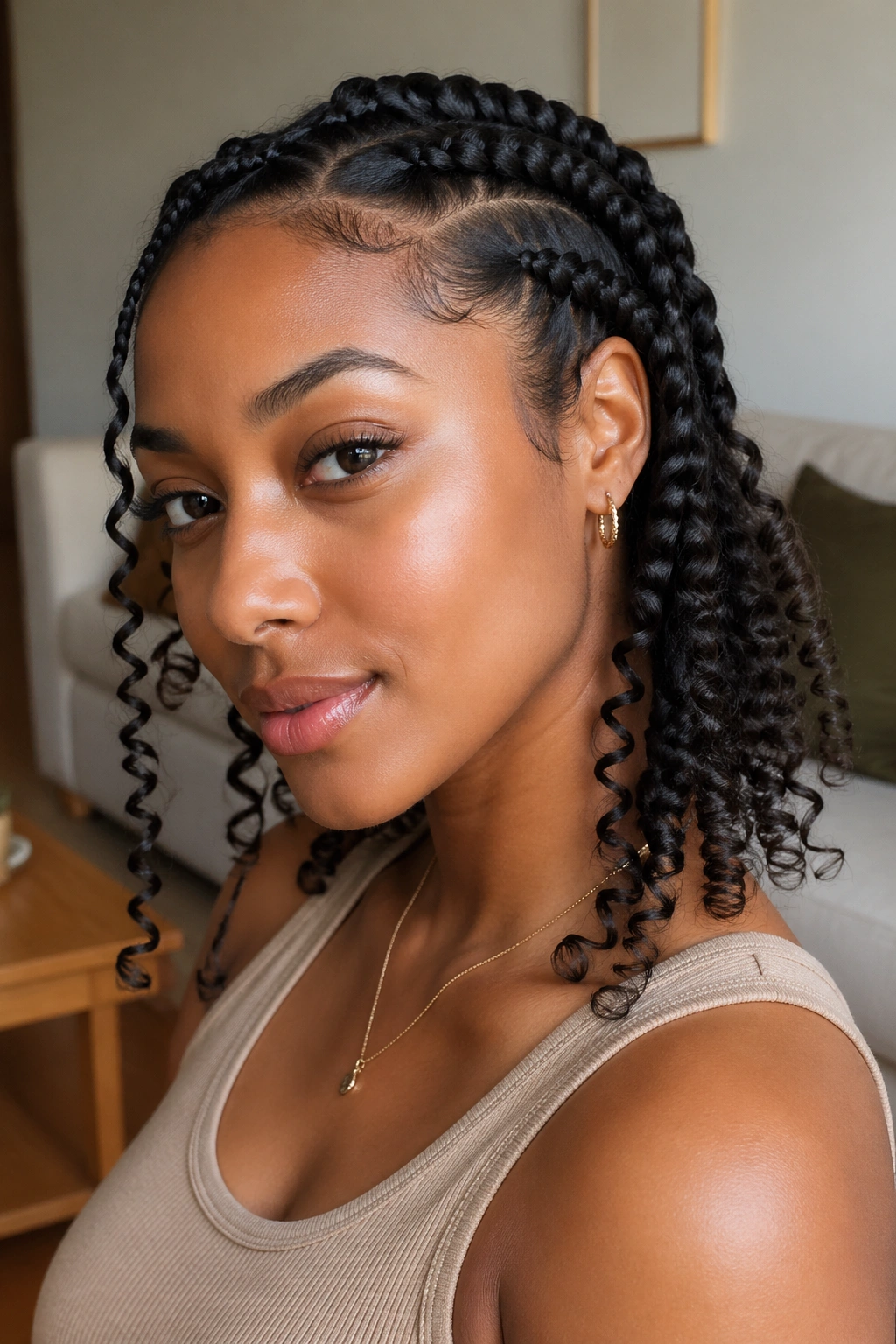
Two or three goddess braids — larger than standard cornrows, often with a small amount of added hair woven in — run along the sides and back of the head. At some point, they transition into loose curls as your natural hair takes over. The effect is sculpted at the base and soft at the ends.
Adding a small amount of hair gives the braids the volume they need to read as goddess braids rather than regular cornrows. Use a matching color and blend carefully at the roots.
This is the most complex style on the list. It takes about an hour to do well, and the result is genuinely special. Save this one for events where the extra effort is worth it.
Maintenance and Nightly Protection
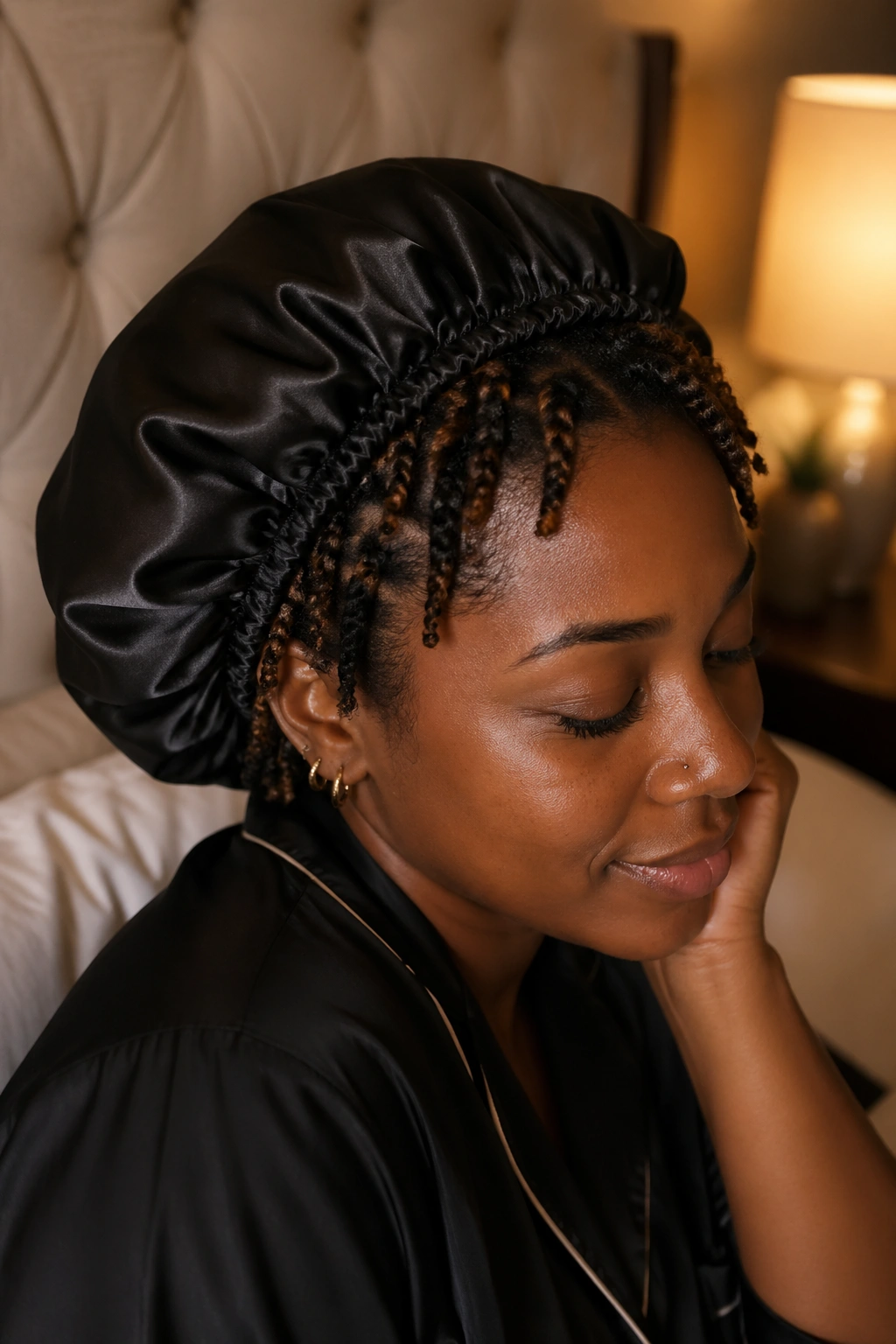
Short afro hair with boho braids protects easily with a satin bonnet or scarf. The short length means you don’t need to carefully tuck ends or worry about braids tangling — everything stays close to the head overnight.
In the morning, fluff the loose sections gently with fingers. Don’t drag a pick through, because that can flatten the tops of the braids and mess up the scalp work. A light mist of water-and-leave-in brings life back to any section that’s gotten dry or crushed overnight.
Avoid oil on the braids themselves unless they’re visibly dry. Oil sinks in and flattens them, which reads as greasy rather than polished. Keep oil for the loose curl sections.
What Goes Wrong and How to Fix It
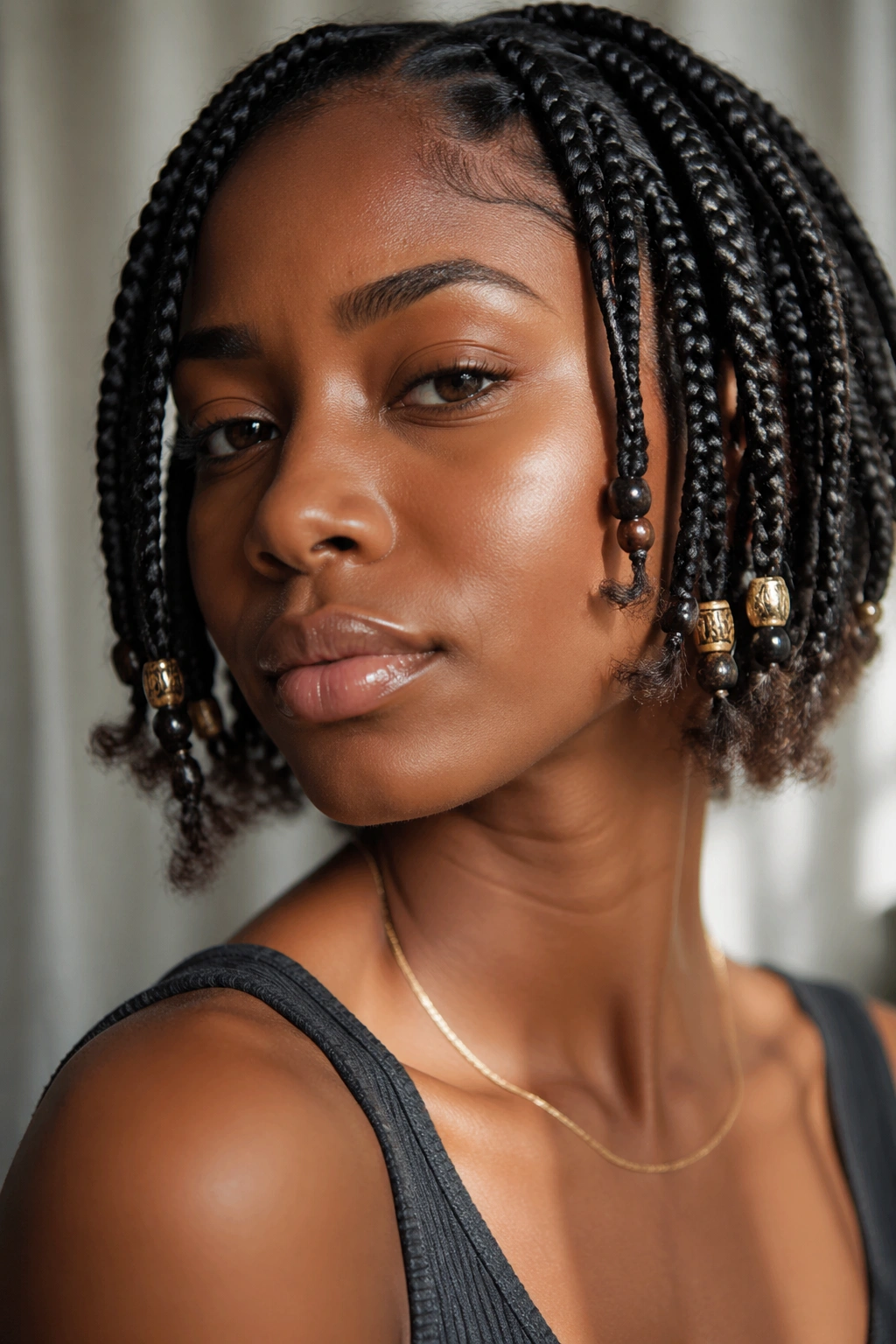
Frizz is the number one issue with boho braids on short hair. You start with crisp braids in the morning, and by lunch they look fuzzy. Some fuzz is actually part of the boho aesthetic — that’s the “lived-in” quality you want. But too much fuzz crosses into messy.
The fix is prep. Braid when the hair is slightly damp, not dry. Apply a small amount of gel along each braid as you work. Tie the braids down with a satin scarf for ten minutes before leaving the house — even that short amount of compression sets the shape.
The second most common issue is scalp tenderness. If your scalp feels sore the day after installing a style, the braids were too tight. Next time, ease the tension at the root. Tight braids don’t last longer. They just hurt more.
Third: beads and cuffs falling off. Always use small rubber bands above any accessory. If the bands aren’t gripping, swap to ones designed specifically for hair — stationery rubber bands break quickly and can snag.
How to Pick the Right Boho Braid for Your Short Hair
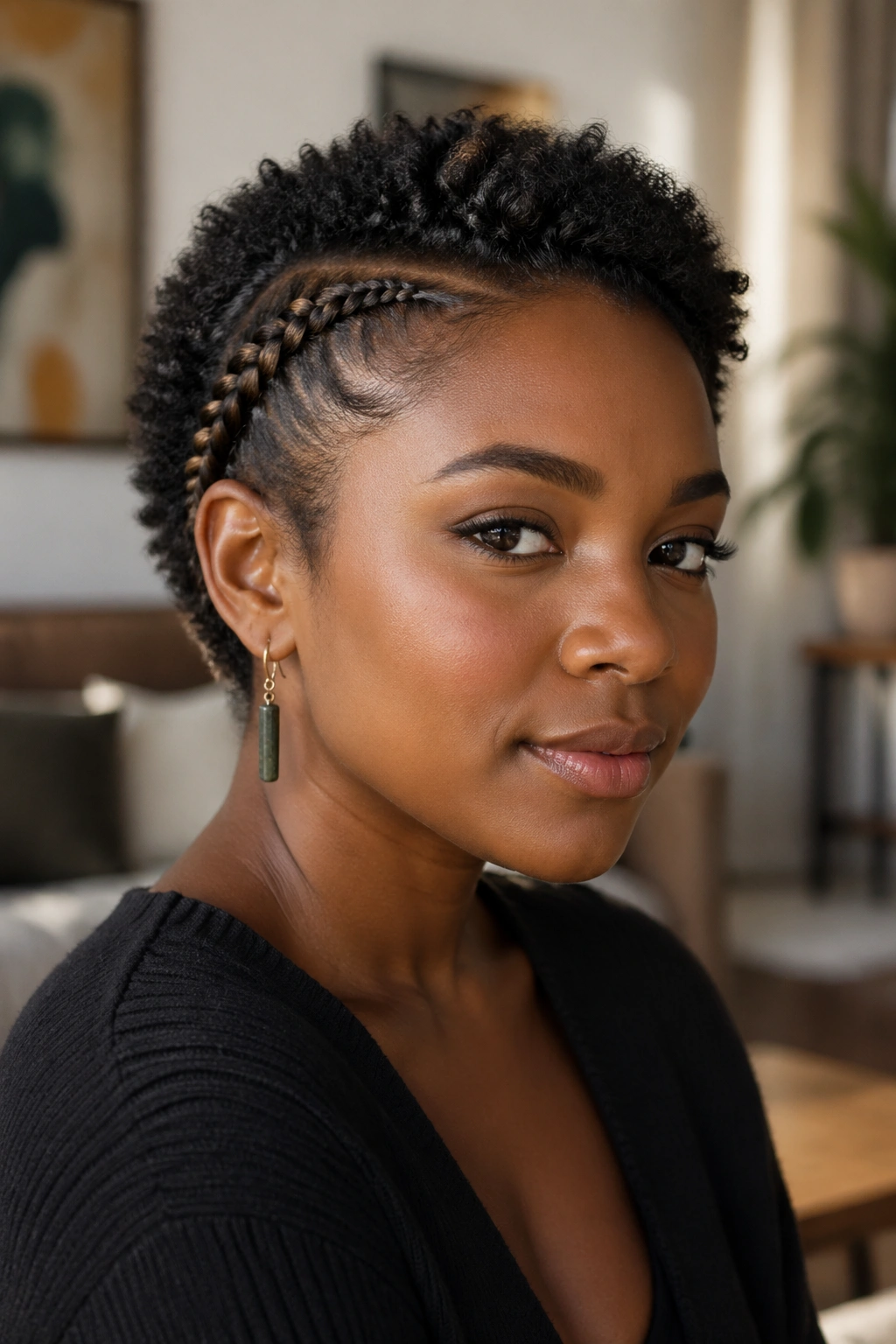
Start with length. Under two inches, stick to simple accent braids along the hairline and skip any style that needs length past the ears. Two to four inches opens up cornrows, flat twists, and most of the styles on this list. Four to six inches gives you almost every option, including the ones that need a little more hair for drama.
Consider your face shape too. Round and square faces benefit from asymmetry and vertical lines — the side braids, the center braid styles, the single diagonal accent. Oval and heart-shaped faces can handle more symmetrical looks without feeling overwhelmed.
Think about maintenance time. Some styles last five days. Others are one-day wonders. If you need something to hold up through a busy week, pick the structural cornrow styles. If you want something quick for one evening, pick a thin accent braid or a headband braid.
Final Thoughts on Boho and Short Afros
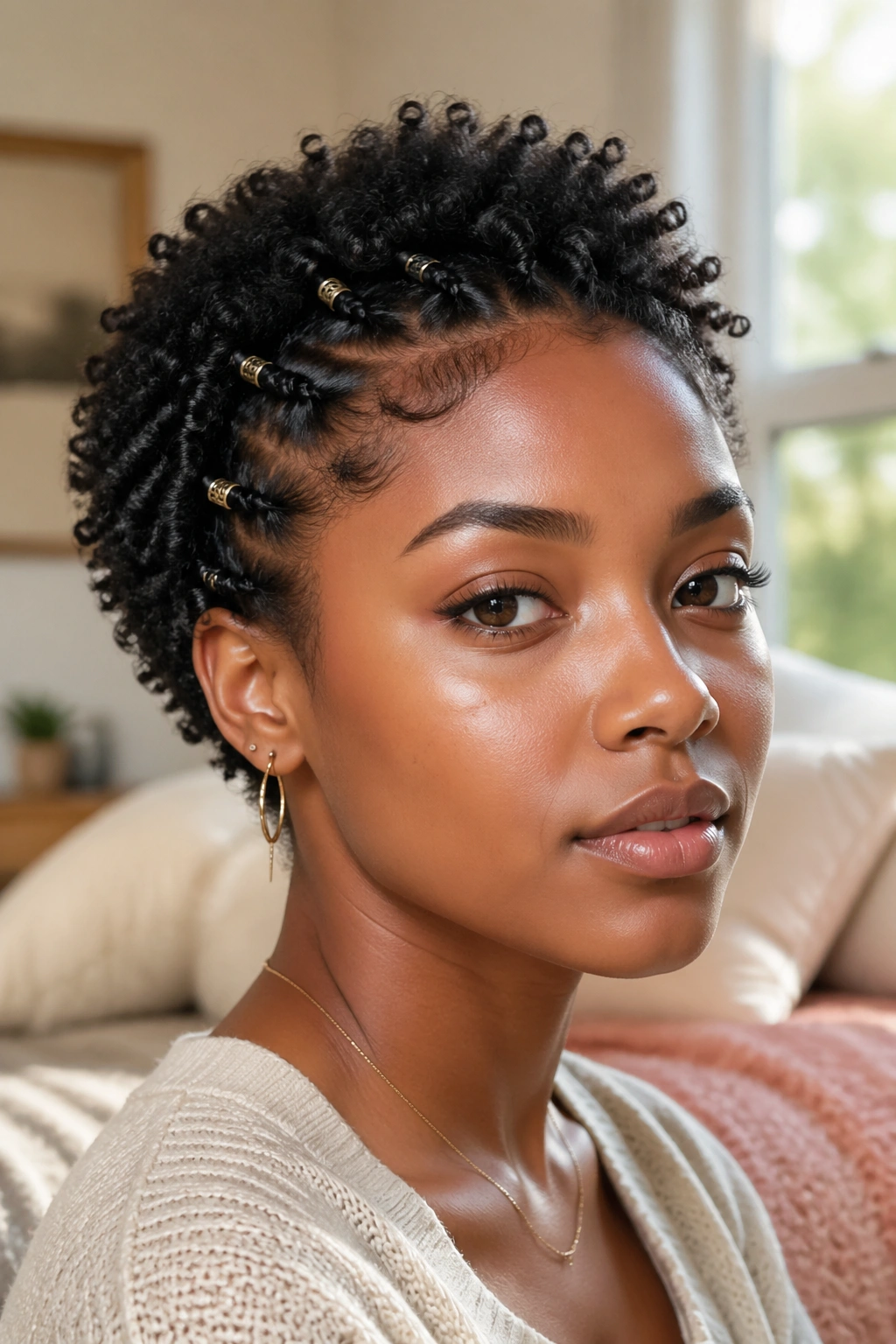
Short afro hair is a gift for boho braids. The constraints of short length push you toward styles that are lighter, faster, and more focused — and those constraints produce some of the most elegant boho looks you can wear. Long hair has its own set of possibilities, but don’t let anyone convince you that short hair is a limitation here.
The styles in this list work because they’re designed around what short afros actually do. They show off scalp detail. They frame faces beautifully. They take less time and less product than their long-hair equivalents. And they look every bit as soft, free, and intentional as any boho braid on any length of hair.
Pick one, try it, and adjust the details to fit your own hair. That experimentation is where style becomes personal — and a boho look is, at its heart, personal.
