



Baby hair is in a category entirely its own. It’s soft in a way that adult hair rarely is, fragile in a way that most parents underestimate, and simultaneously coily or kinky in a way that still requires real care and intentionality. Afro hairstyles for babies and toddlers aren’t just about looking cute — though they absolutely do — they’re about starting healthy hair habits early, protecting those delicate strands during the years when they’re establishing their growth patterns, and finding styles that are comfortable enough that your child isn’t constantly pulling at their head.
Black babies are often born with a head full of kinky or coily hair, and how you treat that hair in the first few years genuinely matters for the long term. Over-manipulation during this period — tight pulling, rough combing, frequent heat — can stress the follicles before they’ve had a chance to fully mature. The styles that work best for babies and toddlers are loose, gentle, and simple enough to be removed without a fight at the end of the day.
This is also an age when scalp sensitivity is high. Products designed for adults — with sulfates, heavy fragrances, or silicones — are too harsh for baby scalp. Gentle, fragrance-light products are the right call here.
Understanding Baby and Toddler Afro Hair Growth
Not every baby of African descent is born with the same hair type. Some babies arrive with tightly coiled 4C hair. Others have softer, looser 3B or 4A curls. Some have straight hair at birth that transitions to coily texture over the first year. This variability is completely normal and has nothing to do with what adult hair type the child will eventually have.
The hair a baby has at one year old isn’t necessarily the hair they’ll have at ten. Curl patterns can shift during toddlerhood, especially after the baby hair sheds and new growth comes in. This is worth knowing so you don’t stress about texture changes — they’re expected.
What stays consistent across all baby hair types is fragility. The strands are thinner in diameter than adult hair and the scalp is more sensitive. The protective layer of the scalp — the skin barrier — is not as robust in the first few years as it is in adulthood. This means scalp care, not just hair care, is foundational.
Age-Appropriate Style Expectations
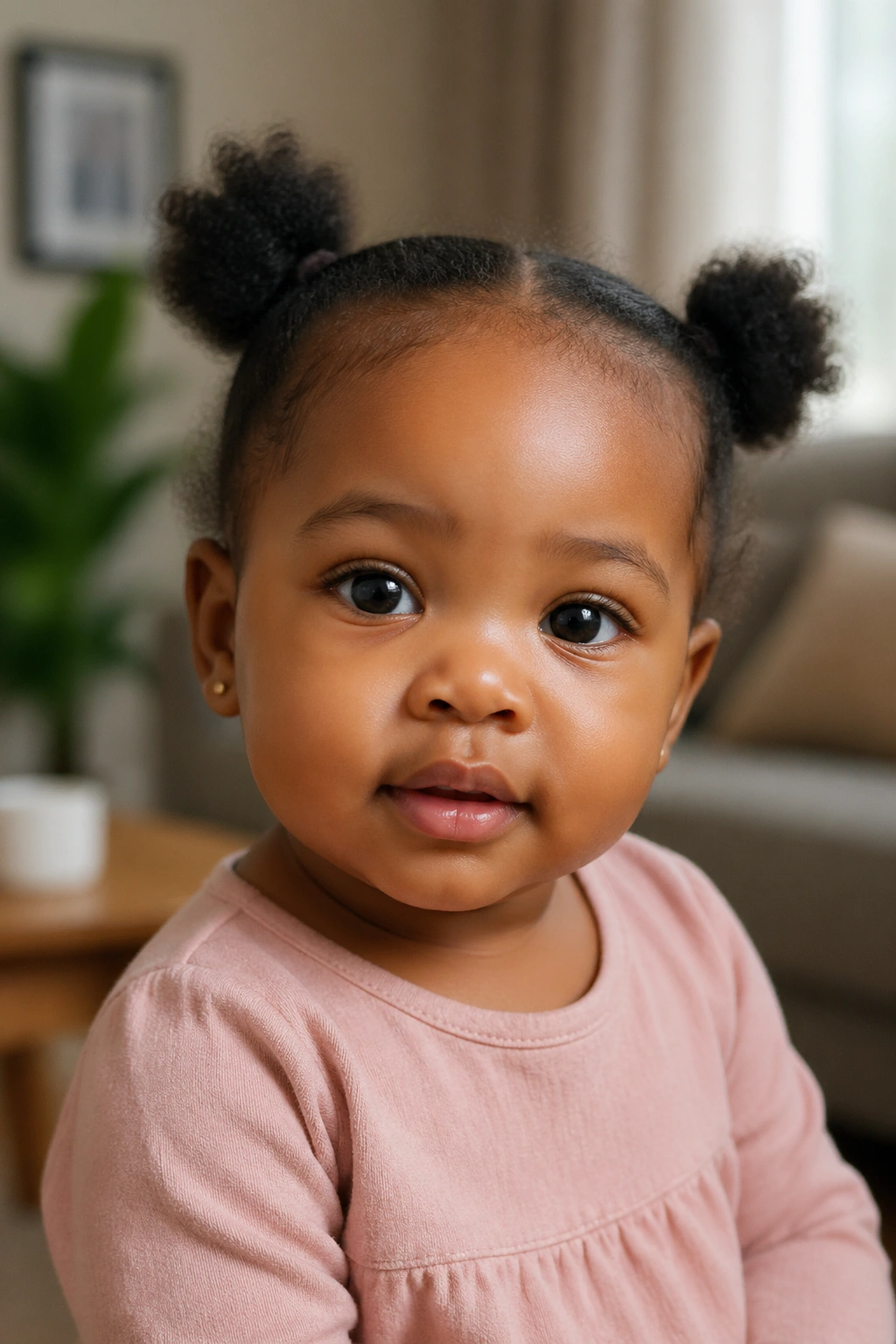
For babies under six months, the focus should be almost entirely on scalp health rather than style. The hair isn’t long enough for most styles and the scalp needs gentle, regular cleansing — every week or so — with a fragrance-free baby wash. Between wash days, light moisturizing with something like pure aloe vera or a fragrance-free baby cream is enough.
Between six months and one year, hair grows enough for simple styles — small ponytails, puffs, light twists. At this stage, even small elastics need to be the no-metal, snag-free kind. Hard plastic or metal elastics will break baby hair at the point of contact.
Toddlers aged one to three can handle a wider range of styles — small box braids, twist-outs, cornrows — but the key rule stays the same: no tight tension, no pulling, no styles that require the child to sit still for more than 30 to 45 minutes. Toddlers simply won’t cooperate for longer, and forcing the session creates a negative association with hair care that can last years.
Tools and Products for Baby and Toddler Hair
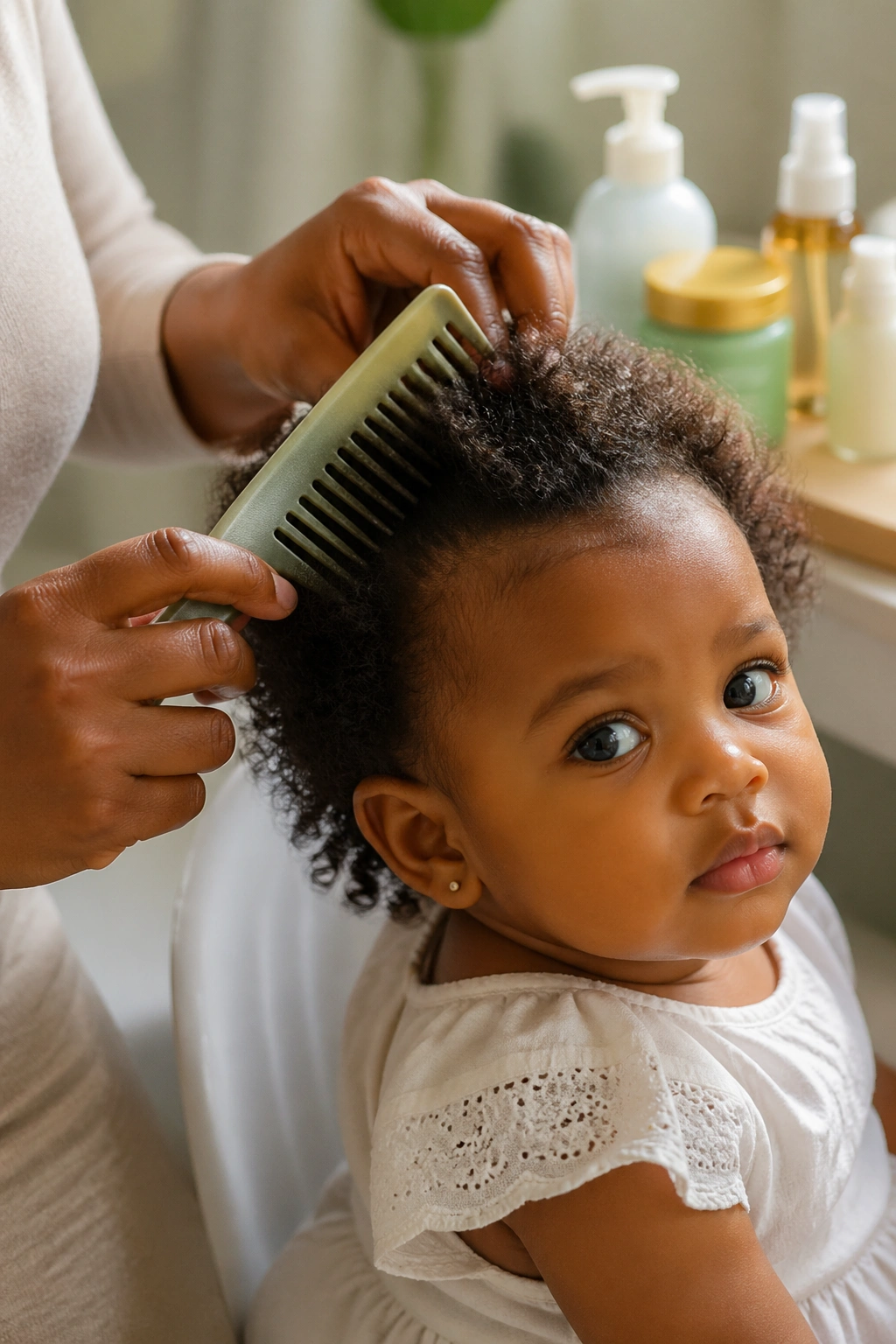
The tool list is short. You need a wide-tooth comb — the teeth should be spaced enough that they glide through wet, detangled hair without catching. A soft-bristle brush is useful for smoothing and for laying edges gently. Avoid fine-tooth combs entirely during the toddler years.
For styling small sections, use a rat-tail comb with a narrow, smooth tip. The tip should not be sharp — a sharp tip can scratch the scalp if you’re working quickly.
Products to have on hand:
Fragrance-free leave-in conditioner — apply to damp hair after washing to retain moisture through the day.
Pure aloe vera gel — the clear kind, no alcohol, no fragrance. Works as a light hold gel for edges and small styles.
Coconut oil or shea butter — a small amount on the length of the hair seals in moisture. Shea butter is thicker and better for very dry or tightly coiled hair. Coconut oil is lighter and absorbs quickly.
Detangling spray — diluted conditioner in a spray bottle works just as well as commercial detangling sprays. About one part conditioner to five parts water.
How to Make Hair Time Comfortable for Young Children
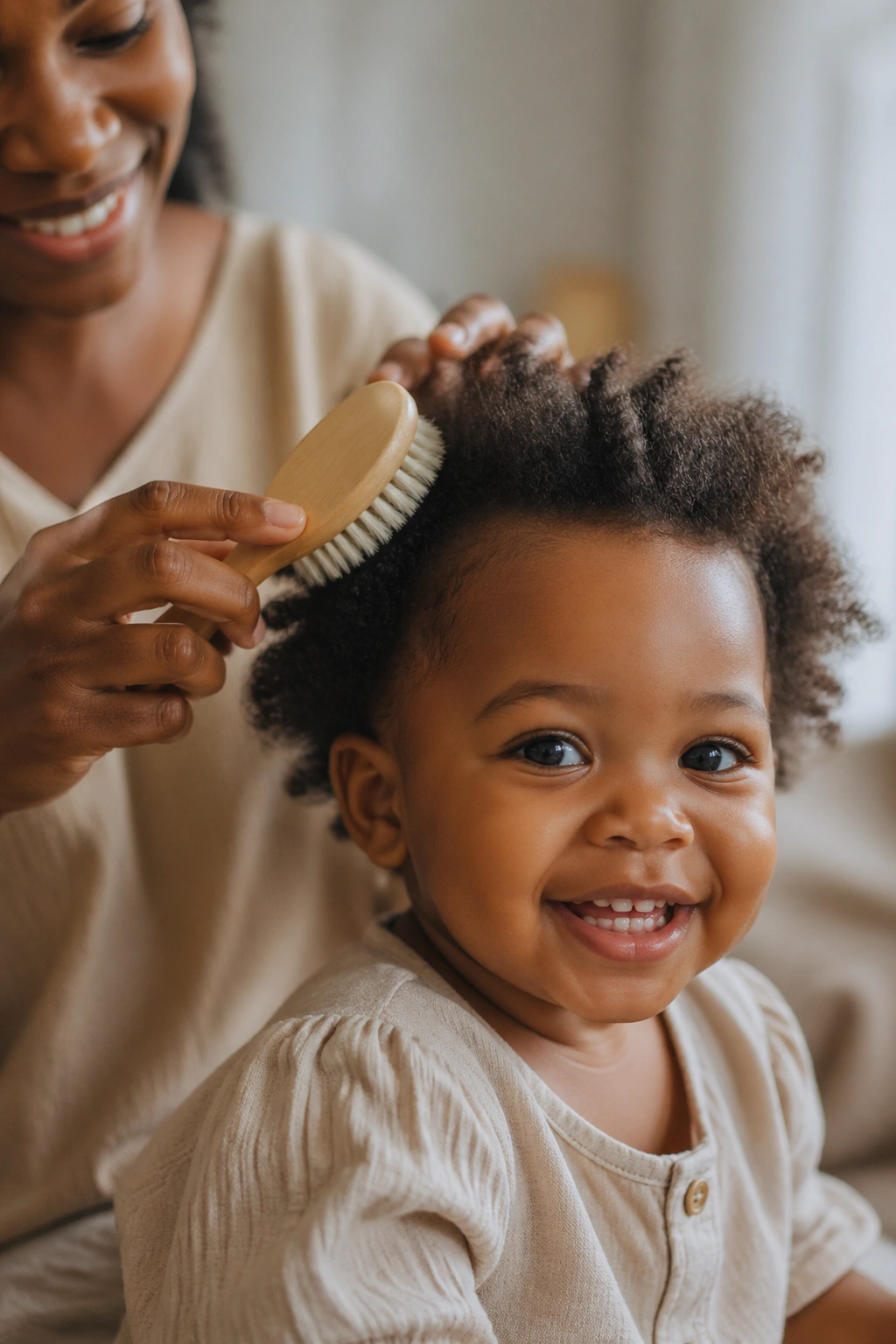
Distraction is your most important tool. Put on a favorite show, hand over a snack, give them a small toy they only get during hair time — make the session associated with something enjoyable rather than something to resist.
Keep sessions short. Aim for 20 to 30 minutes maximum for toddlers. If the style you’re going for takes longer, break it into two sessions. A fussy toddler in the middle of an unfinished style is stressful for everyone and usually results in rushing, which is when hair gets pulled and scalps get scratched.
Work on damp, detangled hair. Dry, tangled hair is painful to comb through for adults — for a toddler with a sensitive scalp, it’s genuinely distressing. Spritz with water or detangling spray before you start, detangle gently from ends to roots, then move into styling.
1. Simple High Puff
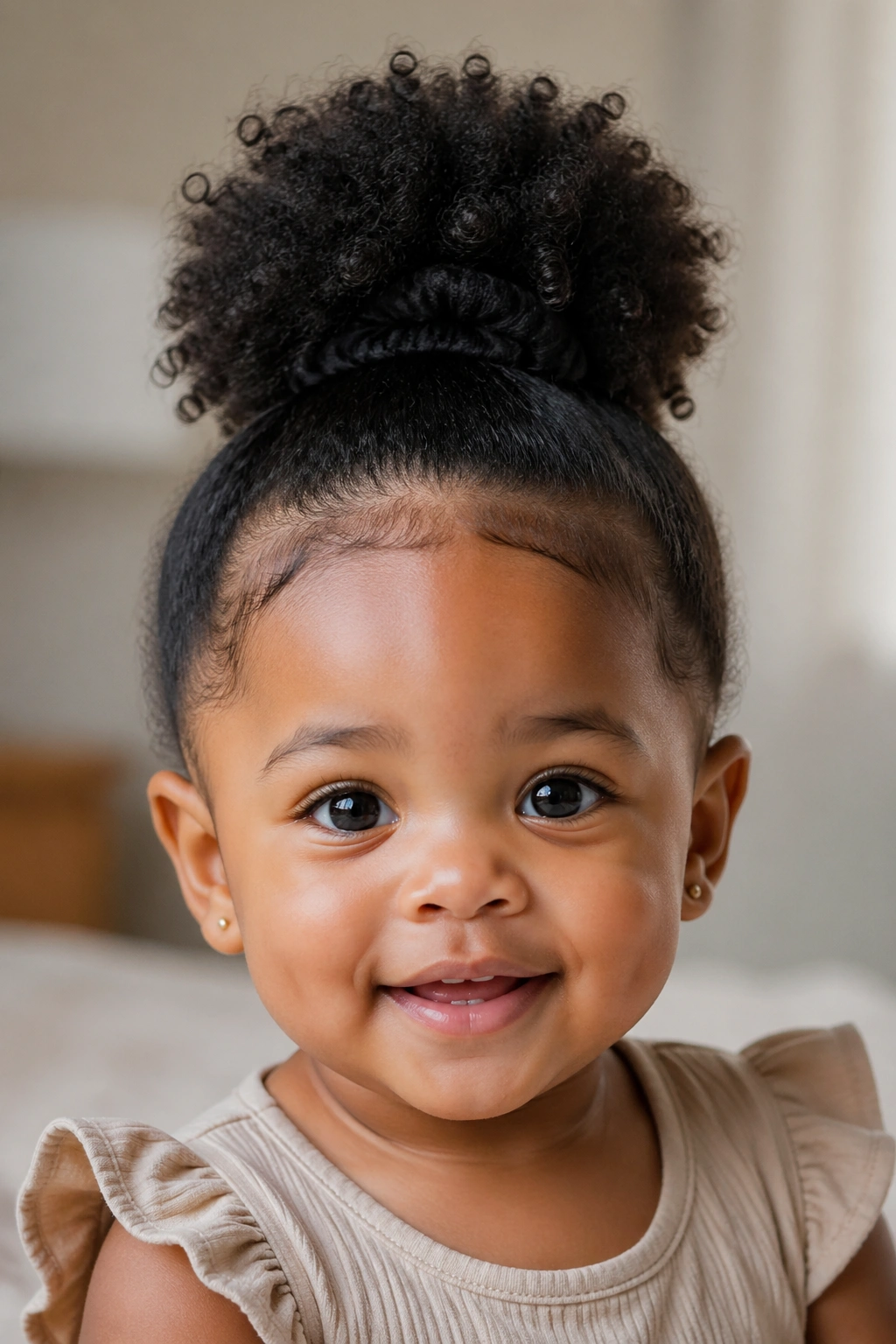
The high puff is the most reliable starter style for babies and toddlers with afro hair. Gather the hair at the crown with a soft, snag-free elastic — one smooth pull, no yanking — and leave the gathered bundle loose and rounded. The hair fans outward into a rounded puff above the elastic.
This takes about two minutes, requires zero skill, and looks genuinely adorable. The height of the puff naturally draws attention to the child’s face.
What Makes It Work
For babies, use a soft cloth scrunchie instead of an elastic. The cloth creates less friction and won’t put a crease in the hair. For toddlers with longer hair, a snag-free elastic in the child’s natural hair color reads as invisible from a distance.
The puff also works double duty: it keeps hair off the face and neck, which some babies find more comfortable, especially in warm weather.
2. Twin Puffs
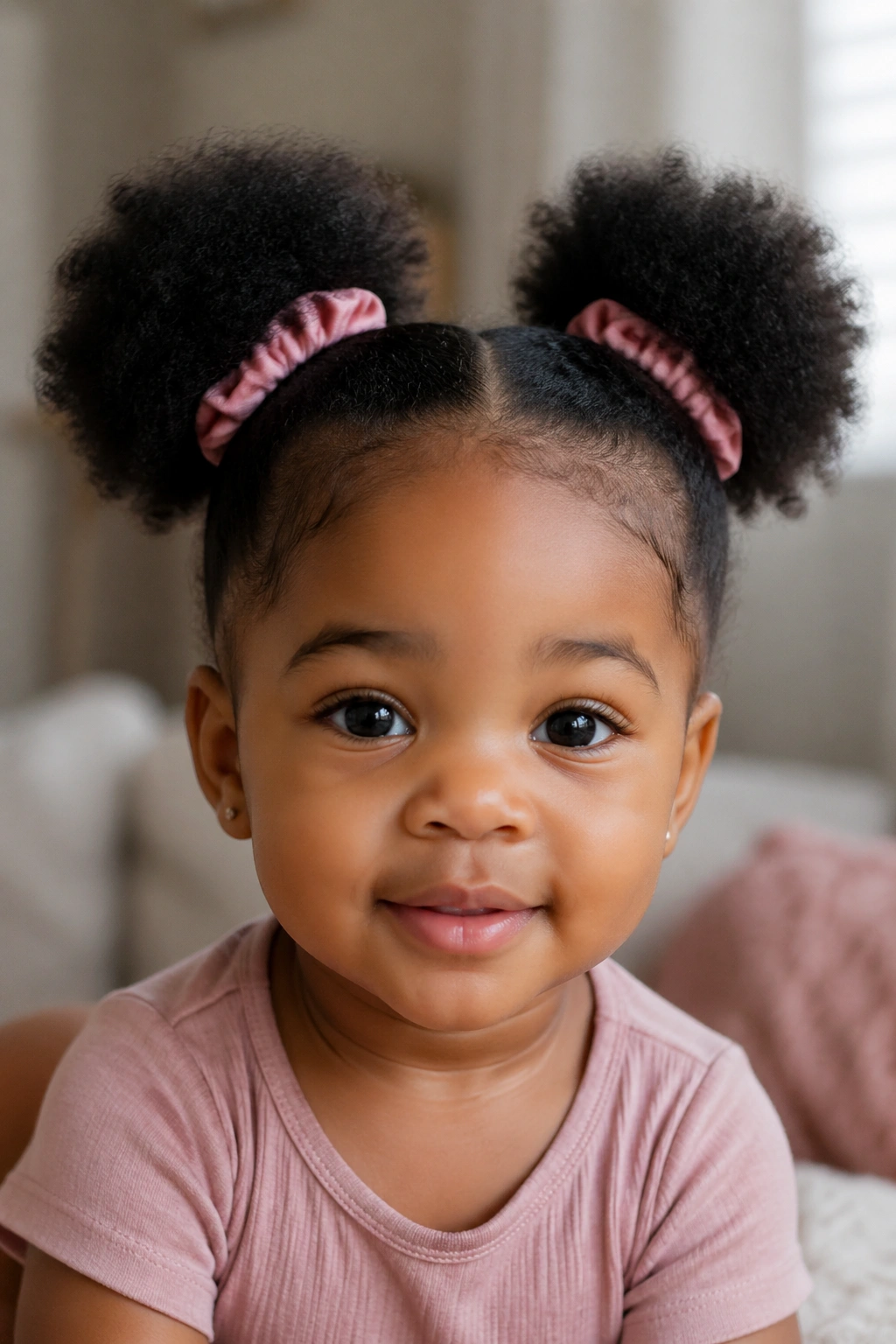
Divide the hair down the center with a clean part, gather each side into its own puff elastic, and you have twin puffs — one on each side of the head. The parting can be perfectly straight or it can be slightly off-center, which gives a more relaxed look.
Twin puffs are slightly more secure than a single high puff because the weight is distributed across two smaller sections rather than one gathered bundle. For babies who like to grab their own hair or pull at elastics, twin puffs are harder to reach.
Styling note: Matching scrunchies in the same color as the child’s outfit make twin puffs feel deliberately styled rather than functional. Small bows or clips attached to the elastic do the same job.
3. Crown Twist-Out
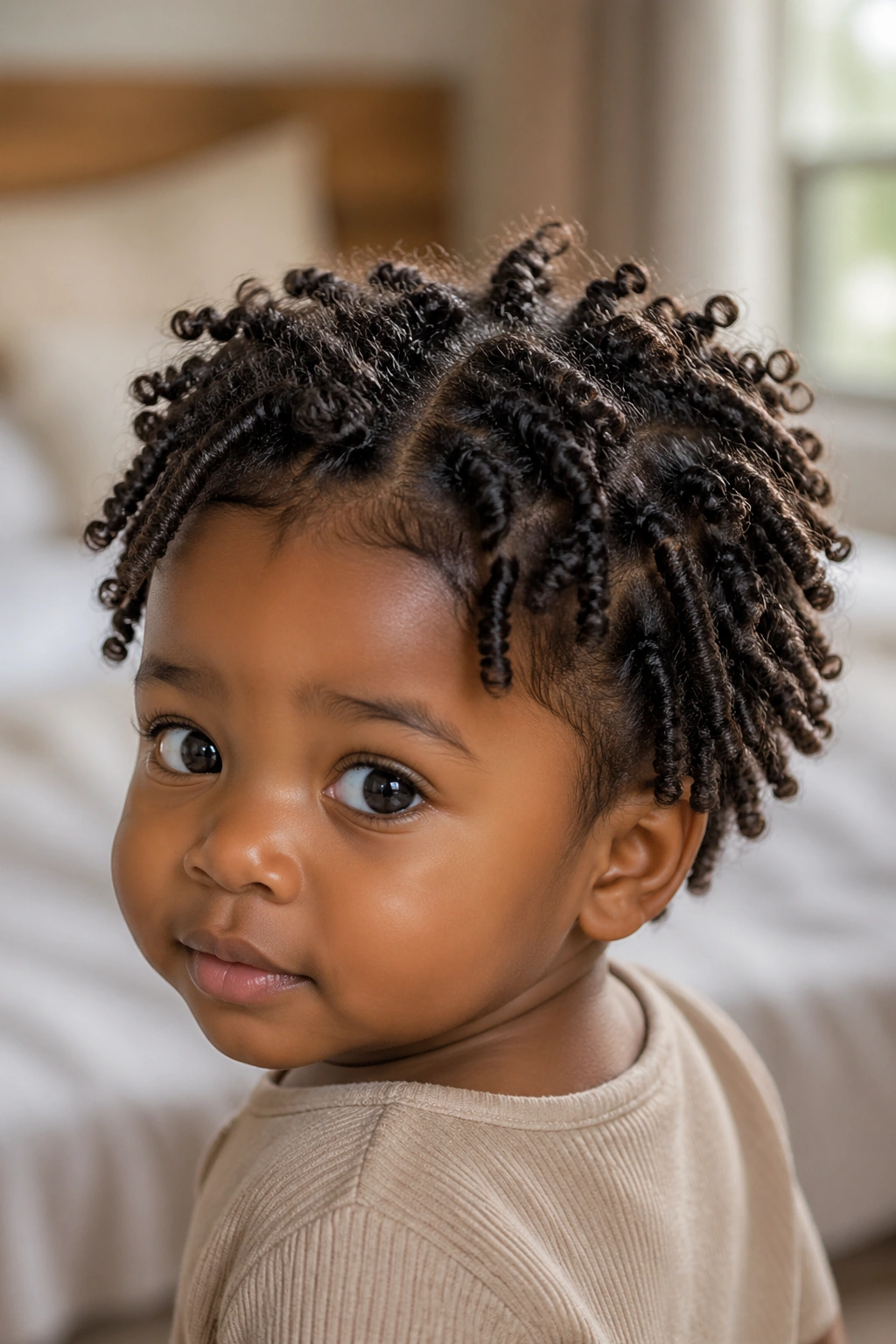
A twist-out on a toddler uses the same technique as on adult hair — two-strand twists, left to set, then opened for a defined curl pattern — but the scale is much smaller and the twists need to be much looser.
Apply a small amount of leave-in conditioner to damp hair. Divide the hair into sections — start with four to six sections for a young child — and twist each section gently from root to tip. Don’t pull. Don’t tighten. Just spiral the strands around each other.
Let the twists air dry fully — this typically takes a few hours, so install them in the morning for a nighttime dry, or before nap time. Once completely dry, open each twist by uncoiling it gently and separating the strands with your fingers. The result is a bouncy, defined curl pattern that looks full and natural.
4. Small Cornrows
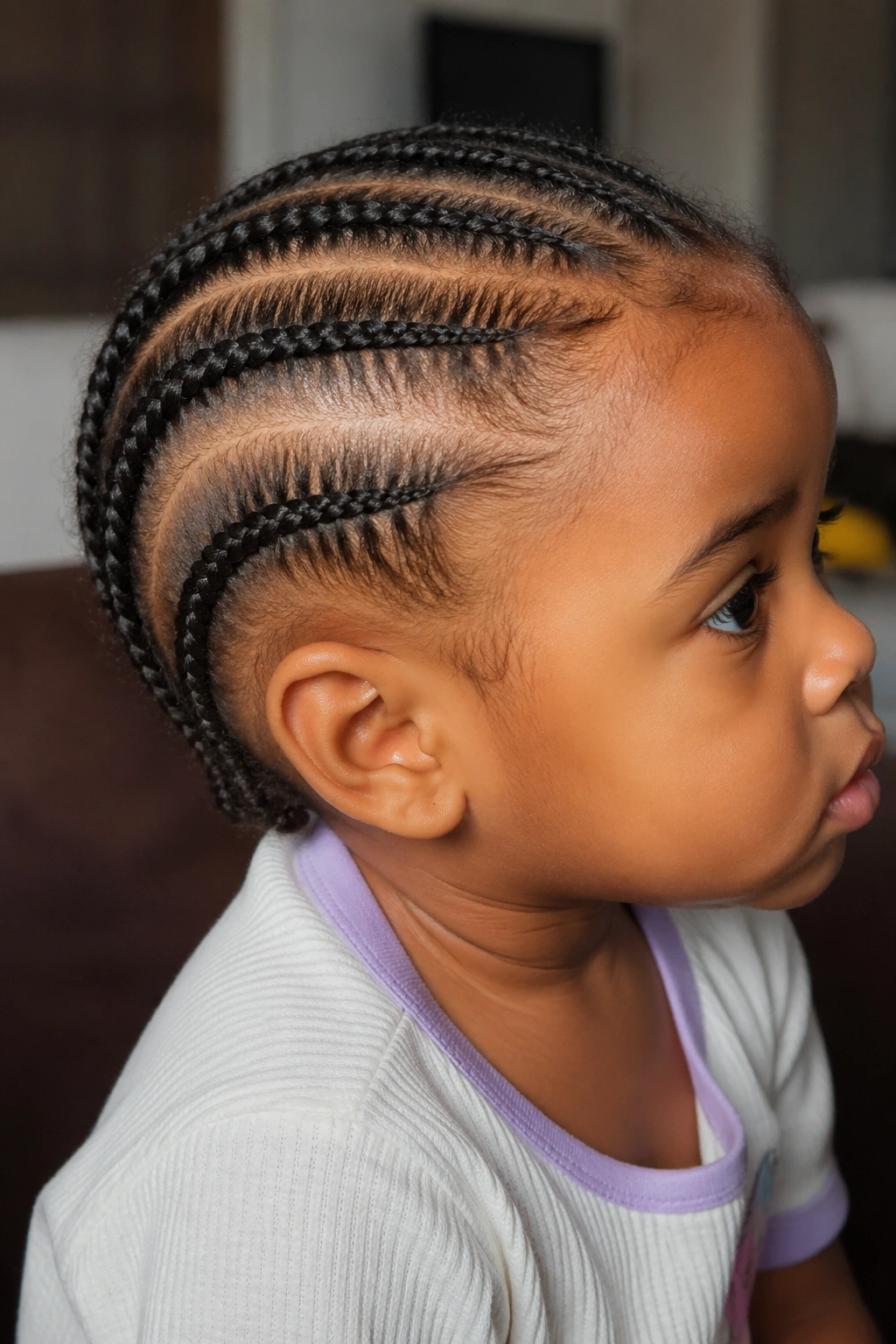
Cornrows on a toddler require patience — yours, not theirs. The technique is the same as on adult hair: create a clean part, gather a section, braid it in three strands flat against the scalp, adding more hair to the outer strand with each stitch. But the scale is much smaller and the scalp is more sensitive.
Keep the sections large enough to work with easily. Pencil-thin cornrows on a toddler scalp are not necessary and take far longer than the child will tolerate. Slightly wider rows — about the width of a finger — look tidy and last well.
How to Get the Most From It
Install two to four straight-back cornrows for a simple look, or try a simple fan pattern with three cornrows meeting at a single point. Simple geometric cornrow patterns install quickly and look intentional.
This is also one of the best styles for keeping a toddler’s hair protected during active outdoor play. Flat cornrows don’t tangle, don’t catch debris easily, and don’t require daily detangling.
5. Free Afro
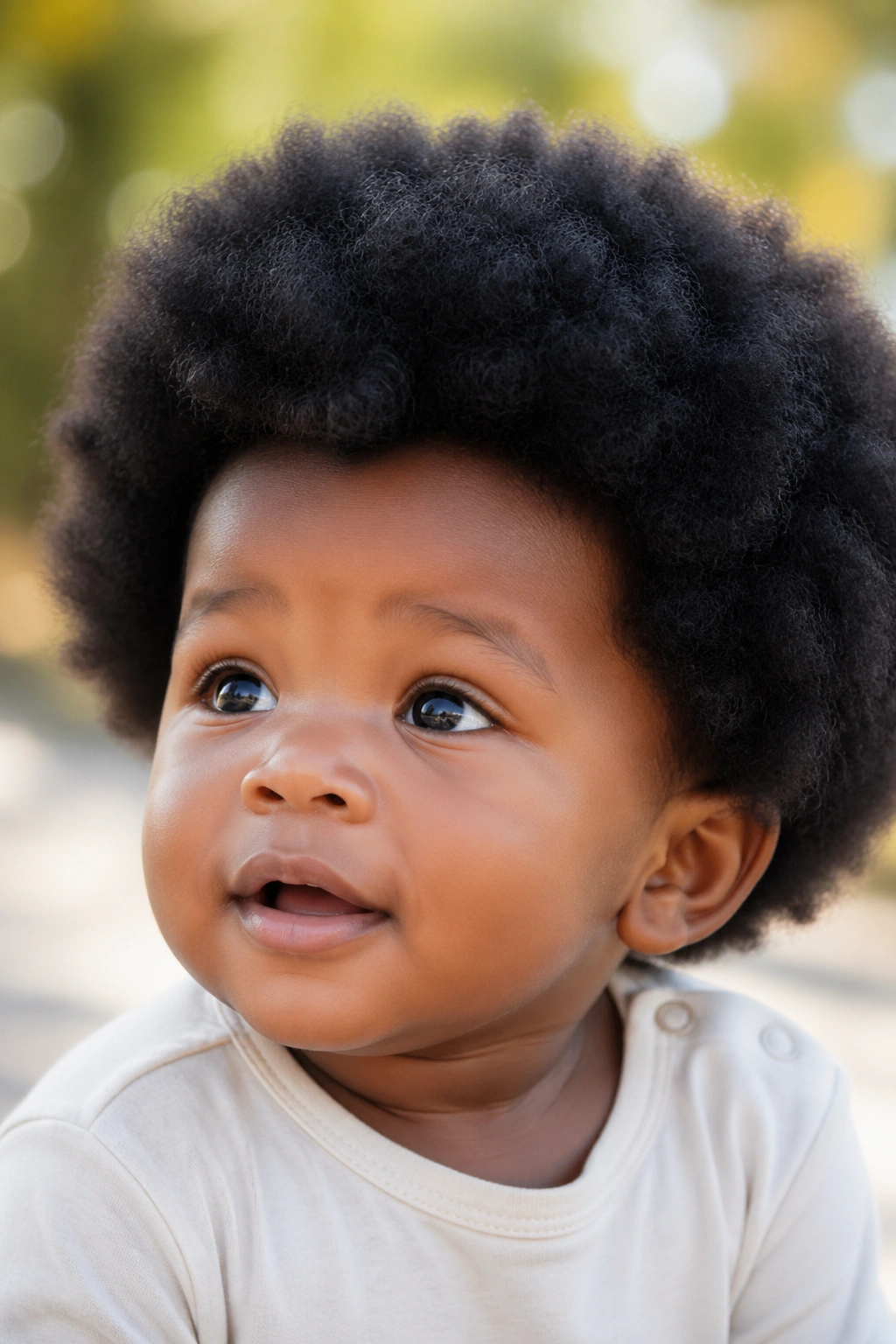
Sometimes the best style is no style at all. A free, unpinned afro on a baby or toddler is one of the most genuinely beautiful looks — the hair grows outward in a round, full shape that’s completely natural and requires zero styling products.
Maintain the shape by washing and conditioning regularly, detangling on wash days, and moisturizing with a small amount of shea butter or leave-in between washes. Let it grow and let it be.
The free afro also tells you a lot about your child’s natural curl pattern. Watching how the hair shrinks when wet and expands when dry, where it grows fastest, which sections are driest — all of this information helps you style more effectively as the hair gets longer.
6. Pineapple Updo for Toddlers
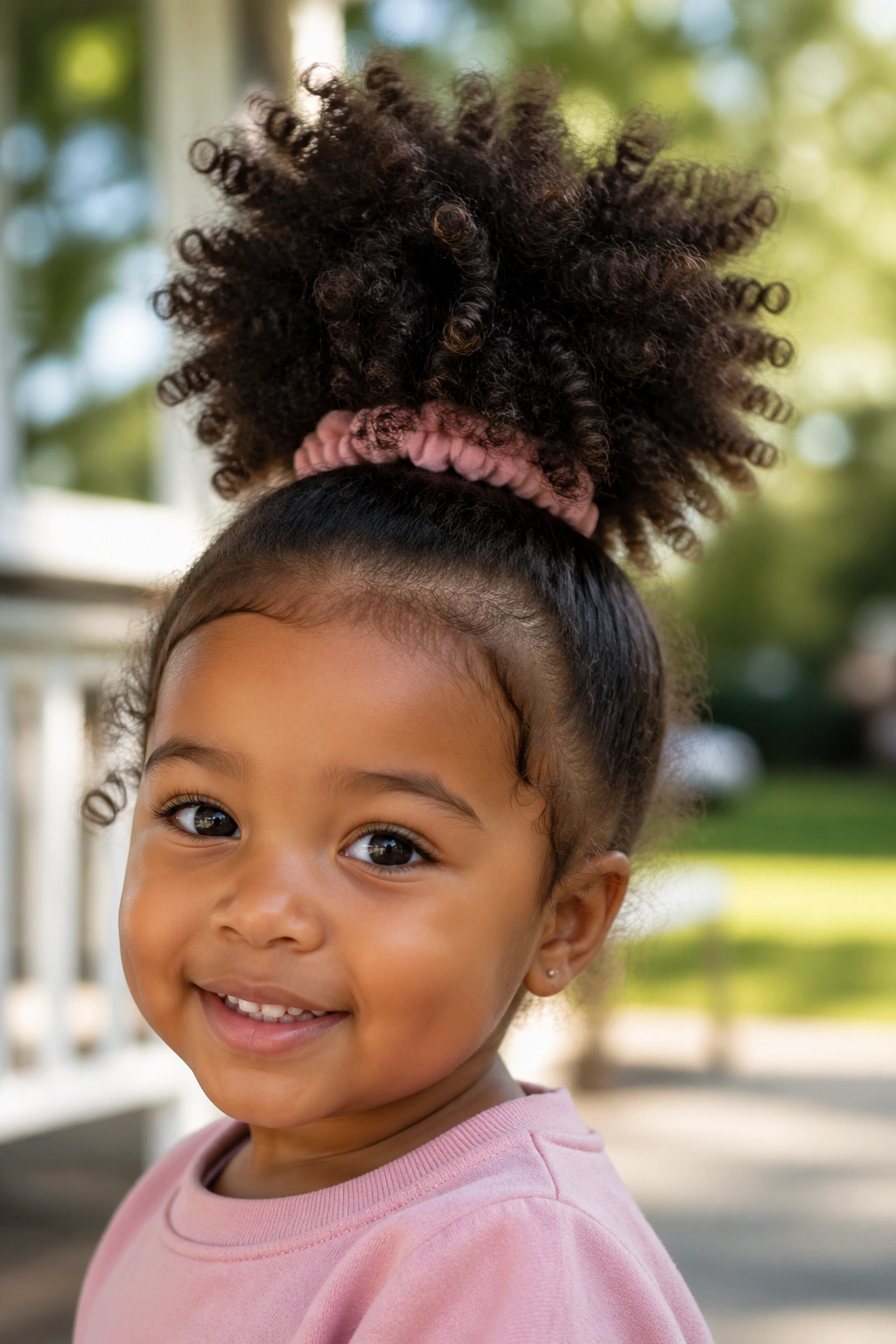
The pineapple isn’t just for adults. For a toddler with longer afro hair, gather everything at the very top of the head — not just the crown, but the very apex — with a soft scrunchie and let the gathered bundle fan outward. The hair spills over the scrunchie in every direction, creating a shape that looks exactly like the top of a pineapple.
It’s an irreverent, joyful look that suits the energy of a toddler perfectly. The high gathering also keeps the hair entirely off the neck and face, which helps on warm days.
For this style to work, the hair needs to be long enough to gather and still have length left over — roughly three to four inches of hair at minimum.
7. Two-Strand Protective Twists
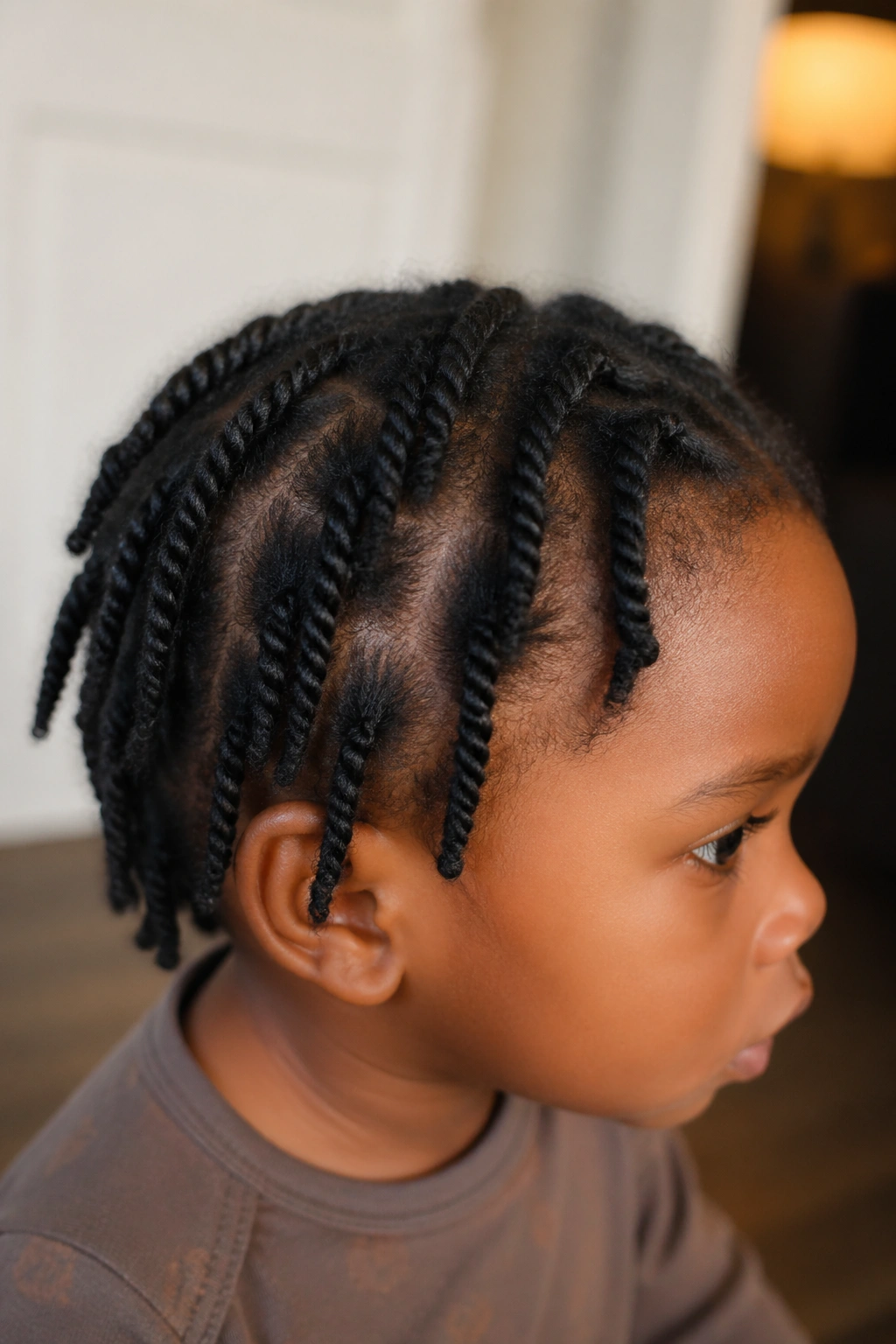
Individual two-strand twists throughout the entire head — not twisted out into a curl pattern, but left in their twist form — work as a protective style for toddlers. The twists keep the hair in defined sections, which prevents tangling and matting during play.
Use very little tension when installing. Each twist should feel secure but the root should have no visible pulling on the scalp. Loose twists last three to four days for most toddlers — enough wear to be worthwhile without being so long that the style becomes tangled or matted at the roots.
8. Baby Bantu Knots
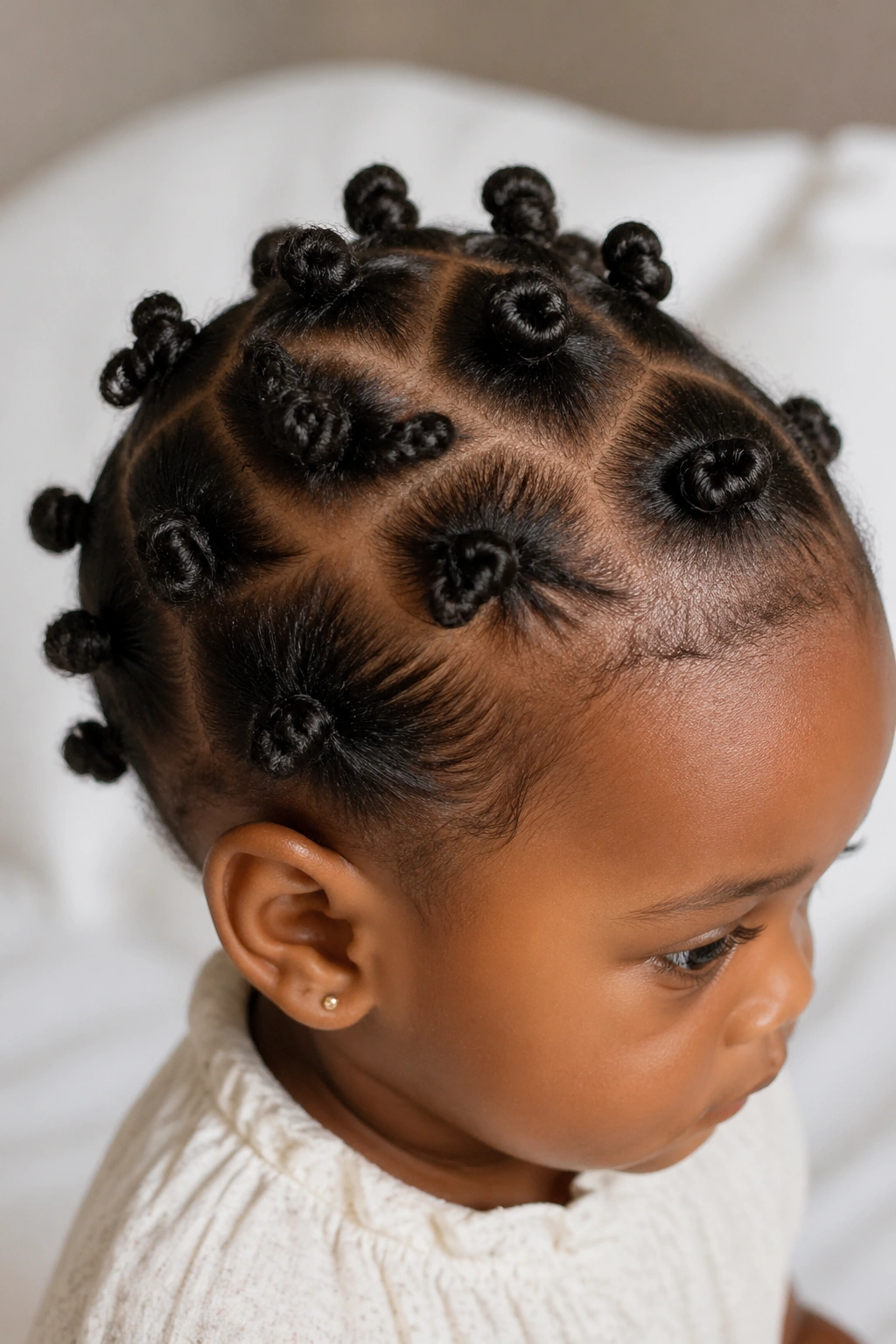
Bantu knots on a baby or toddler use the same coiling technique as adult Bantu knots but at a much smaller scale. Divide the hair into sections, twist each section tightly around itself from root to tip, and coil the twisted length into a flat spiral, pinning it at the scalp with a small clip.
For babies, two to four knots across the crown are plenty. For toddlers with more hair, six to eight knots create a more complex look.
When you open the knots after a few hours, the coiled compression creates a beautiful spiraled curl. This works especially well for 4A and 4B hair, which holds a coiled set readily.
9. Side Puff with Flat Twist
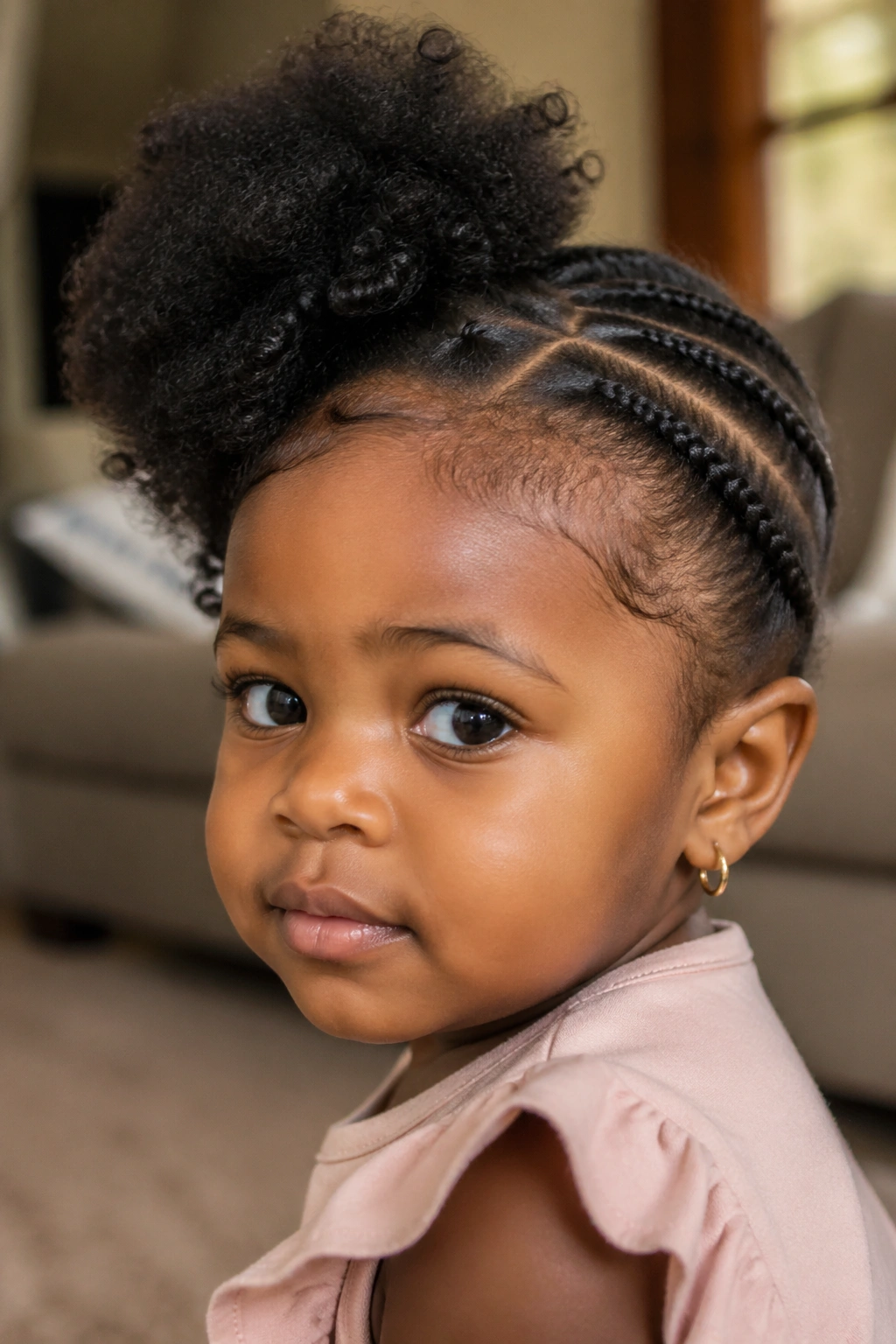
Twist a flat section of hair along one side of the head — starting at the temple and running toward the crown — then gather the rest of the hair into a single puff on the opposite side. The flat twist creates a defined line of texture on one side while the free puff adds softness on the other.
This is an asymmetrical style that looks deliberately styled and takes about five minutes once you’ve got the flat twist technique down. The contrast between the twisted section and the gathered puff is genuinely eye-catching.
10. Headband Styles
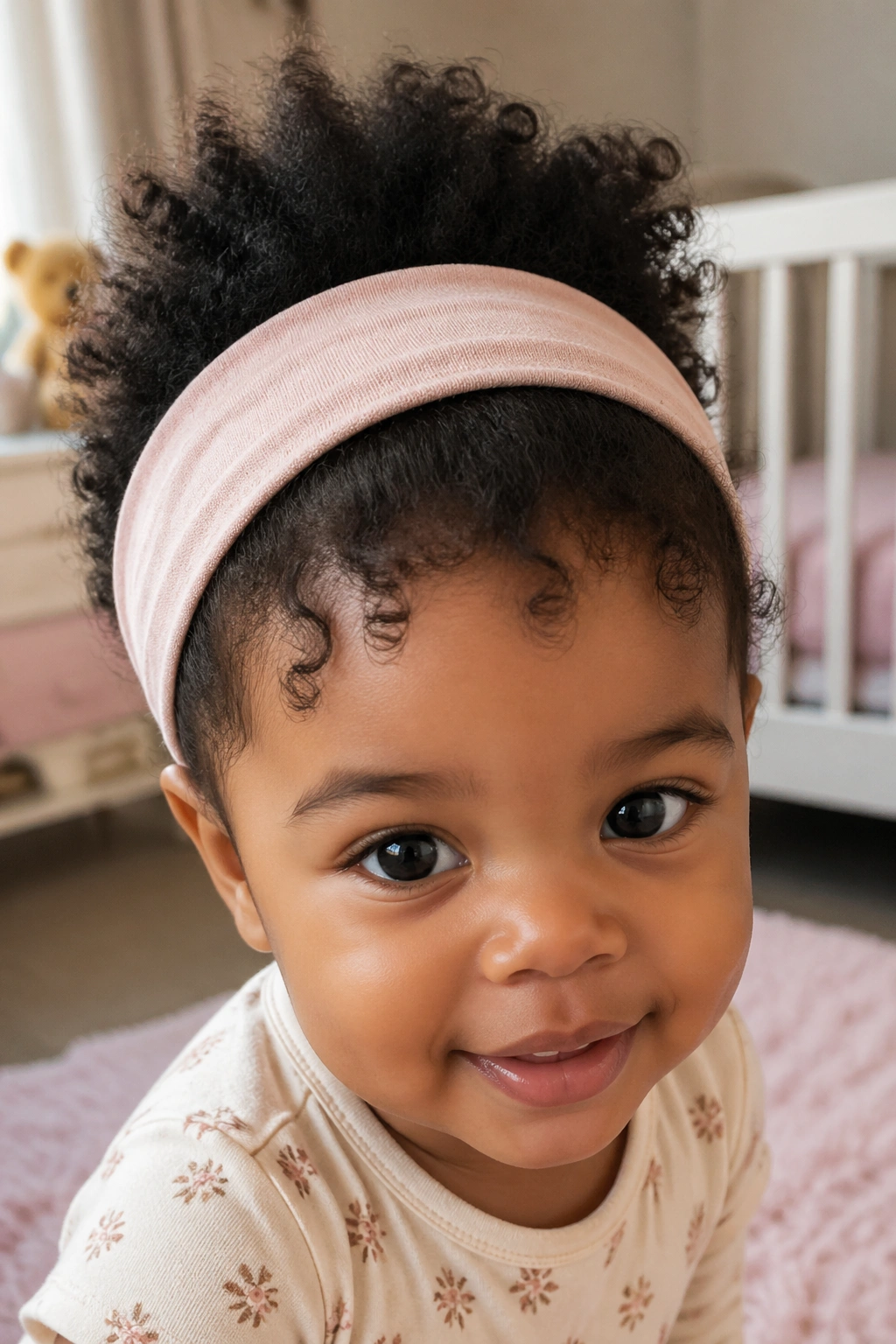
A wide, soft headband — fabric, not tight elastic — can transform even the simplest pull-back or free afro into a styled look. Position the headband about two inches back from the hairline, letting the front baby hairs fall forward beneath it. The headband holds the sides and back without pulling.
For toddlers who resist having their hair touched, headband styles are a practical compromise. The hair is still managed and the look is intentional, but no combing or manipulation is required beyond the headband placement itself.
Avoid tight headbands. Any headband that leaves a mark on the skin is too tight and can cause a specific pattern of hair loss at the front of the hairline — a line of breakage where the headband sits.
11. Small Box Braids
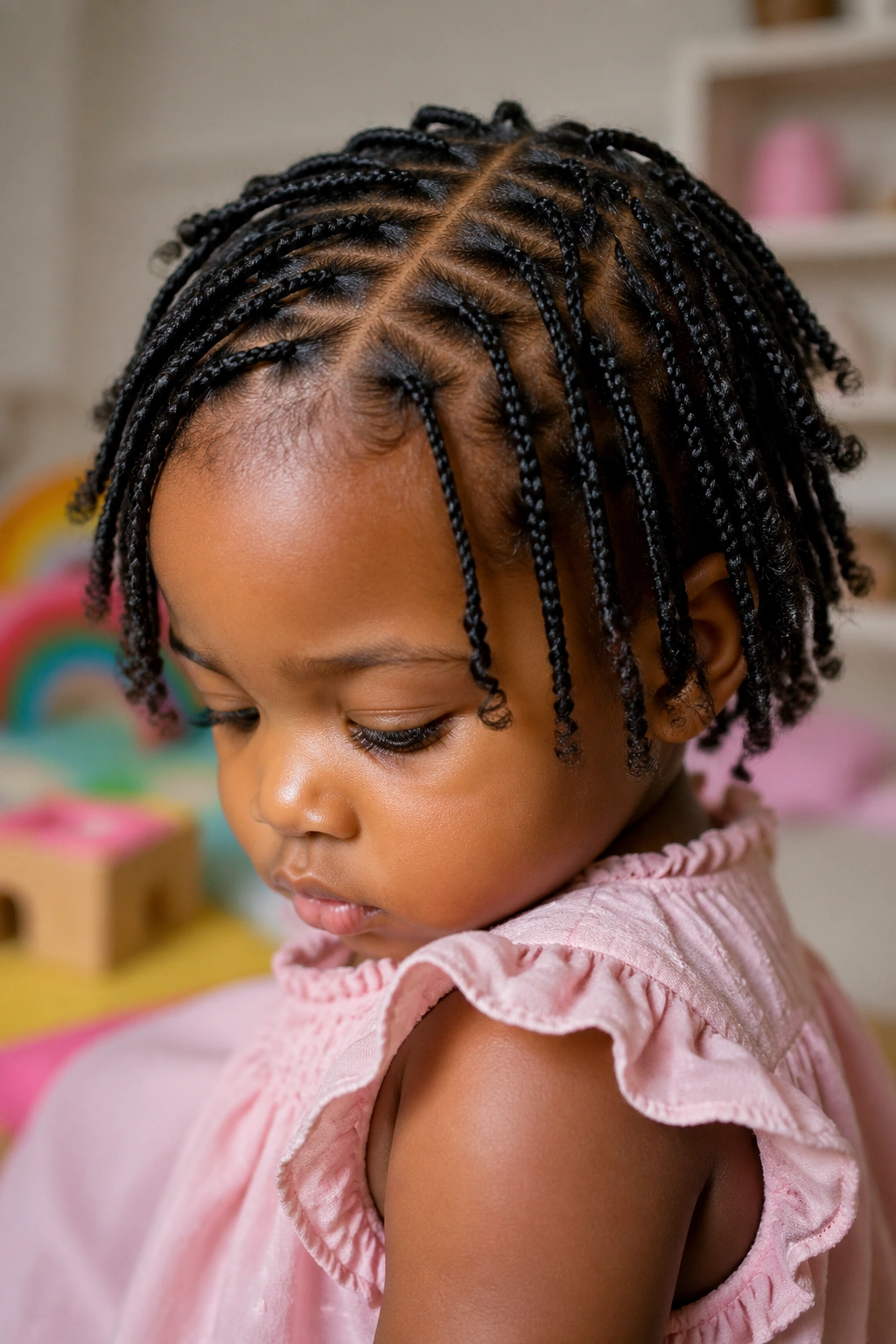
Box braids on a toddler require the same technique as on adult hair — hair divided into clean box-shaped sections, each section braided in a traditional three-strand pattern — but at a much smaller scale and with much less tension.
For toddlers, small or medium box braids (not micro) are easiest to install without causing scalp stress. Leave the ends natural — don’t add extension hair unless the child’s hair is very long — and keep the braid length to what grows naturally from the section.
The finished look is neat and lasts well. Box braids on toddlers can stay in for a week to two weeks with gentle maintenance.
12. Twist-Out on a High Bun Base
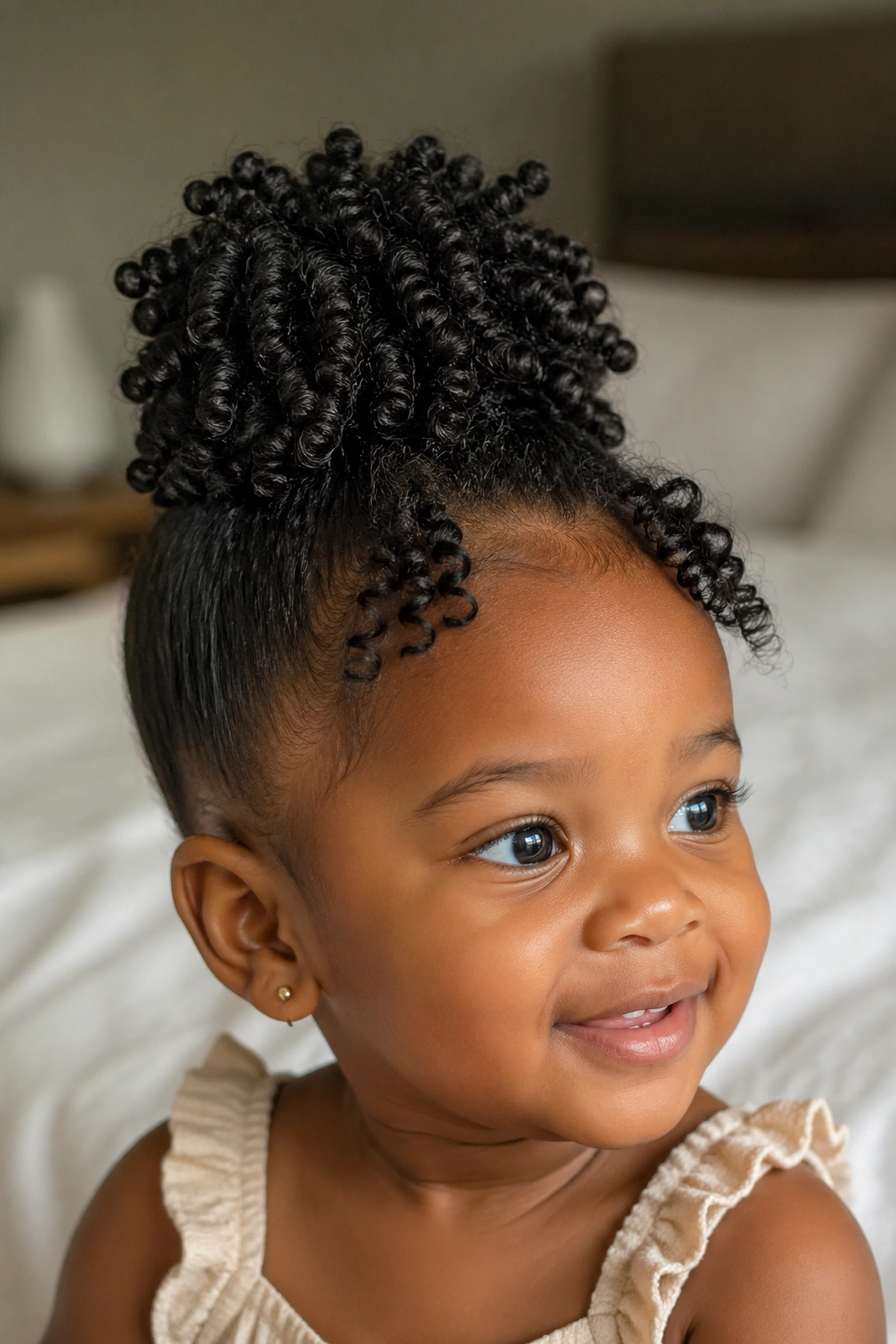
Twist the hair the night before, let the twists set overnight, then in the morning open the twists and gather the resulting curl into a high bun. The individual curls from the twist-out give the bun a textured, dimensional quality — it’s not a smooth bun, it’s a full, curly gathered shape.
This combines the maintenance benefit of an overnight twist-out with the convenience of a gathered style that stays out of the way during the day.
13. Flat Twist Updo
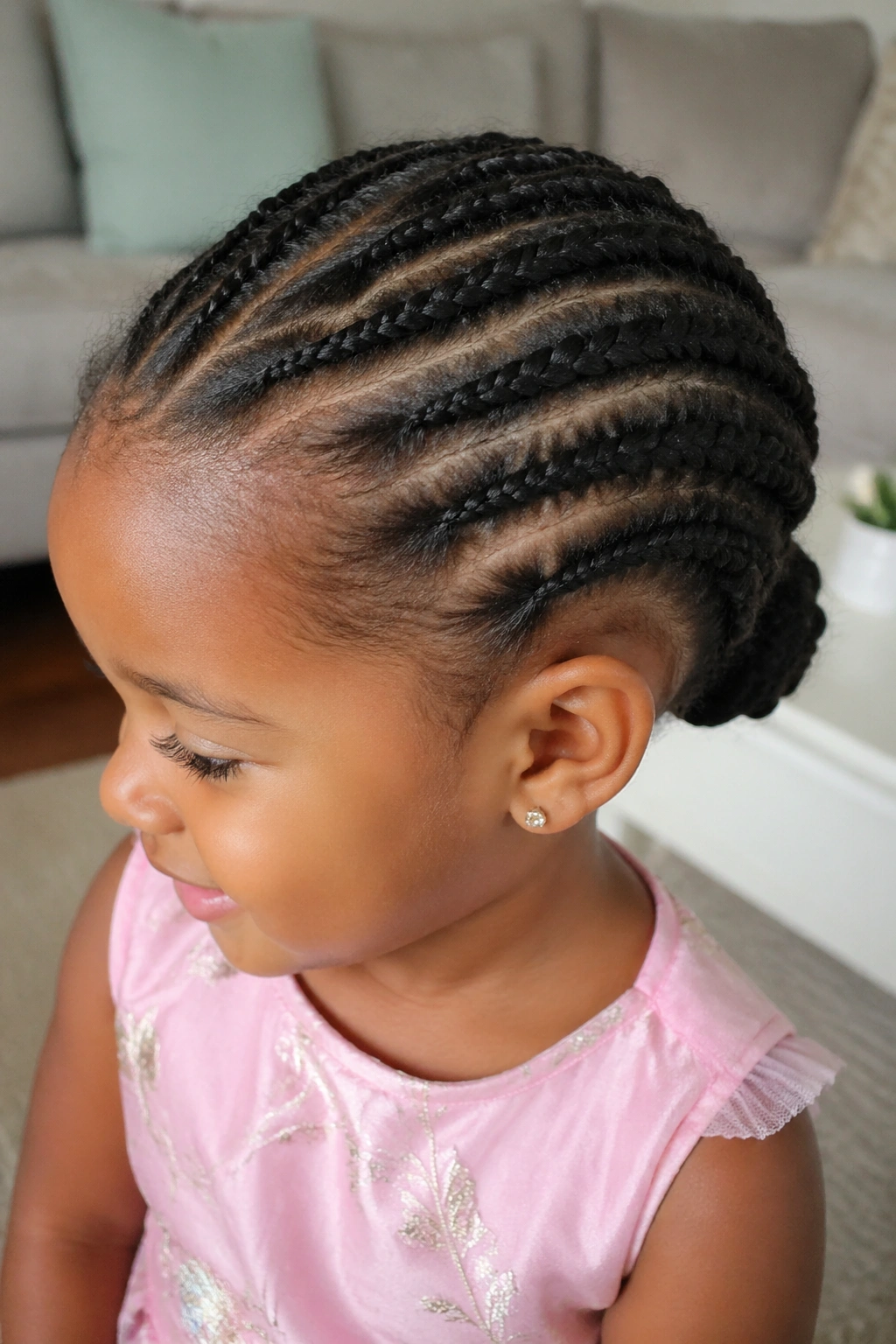
Multiple flat twists across the entire scalp, all running toward a single gathered point — either the crown or the back of the head — and then pinned up into a low updo. Each flat twist lies against the scalp like a cornrow but uses the two-strand twist technique instead of the three-strand braid.
The flat twist updo is a more formal style, appropriate for family occasions, portraits, or special events where a particularly neat, intentional look is wanted.
14. Afro Puff with Flower Clip
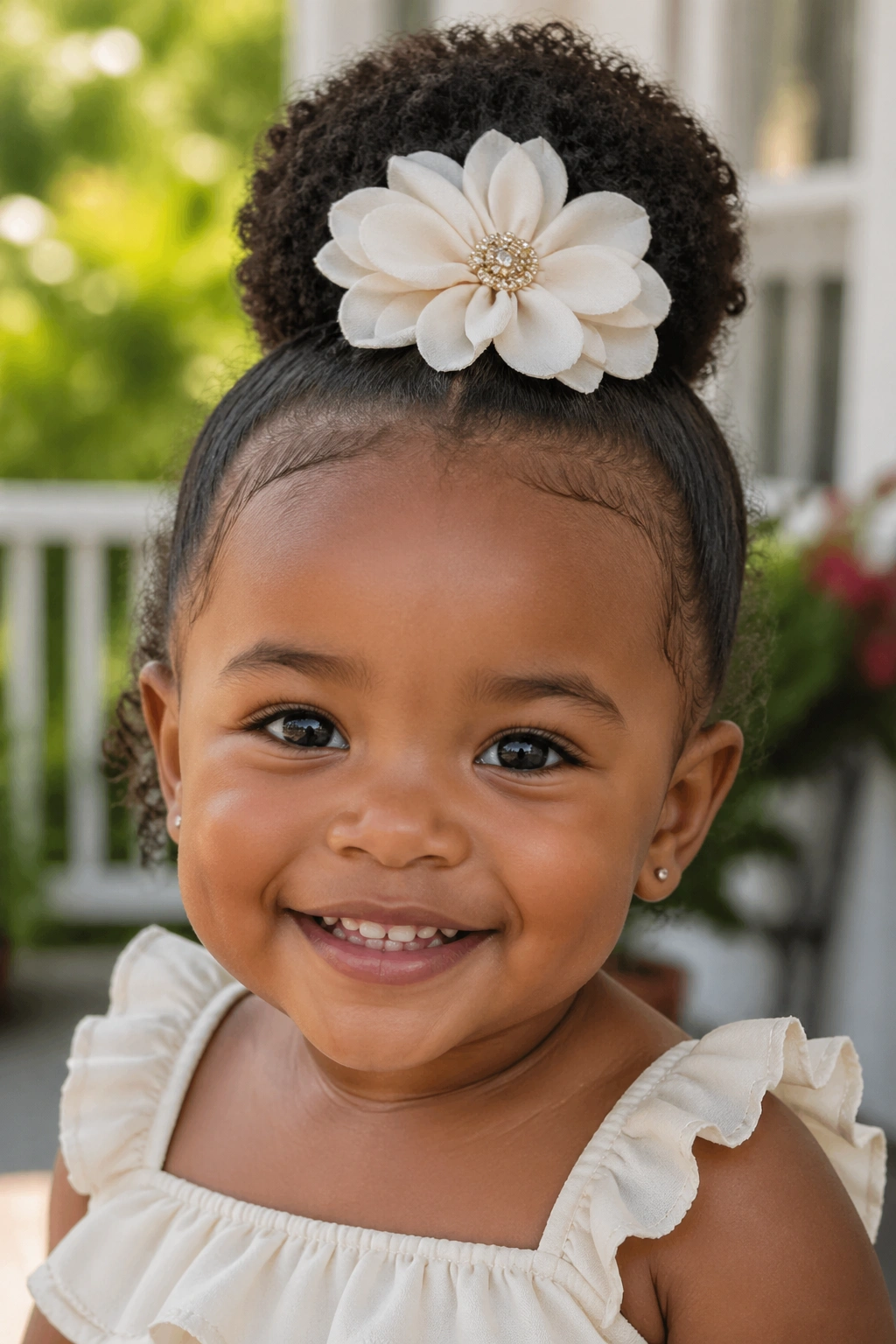
The simplest variation on the classic puff: after gathering the hair, add a large fabric flower clip — attached to the scrunchie or bobby-pinned into the gathered bundle near the hairline. The flower creates a focal point and makes the style look styled rather than functional.
For babies, avoid any hair accessories with small parts that can detach. Look for one-piece fabric flowers or clips where the decorative element is sewn directly to the clip.
15. Three-Puff Style
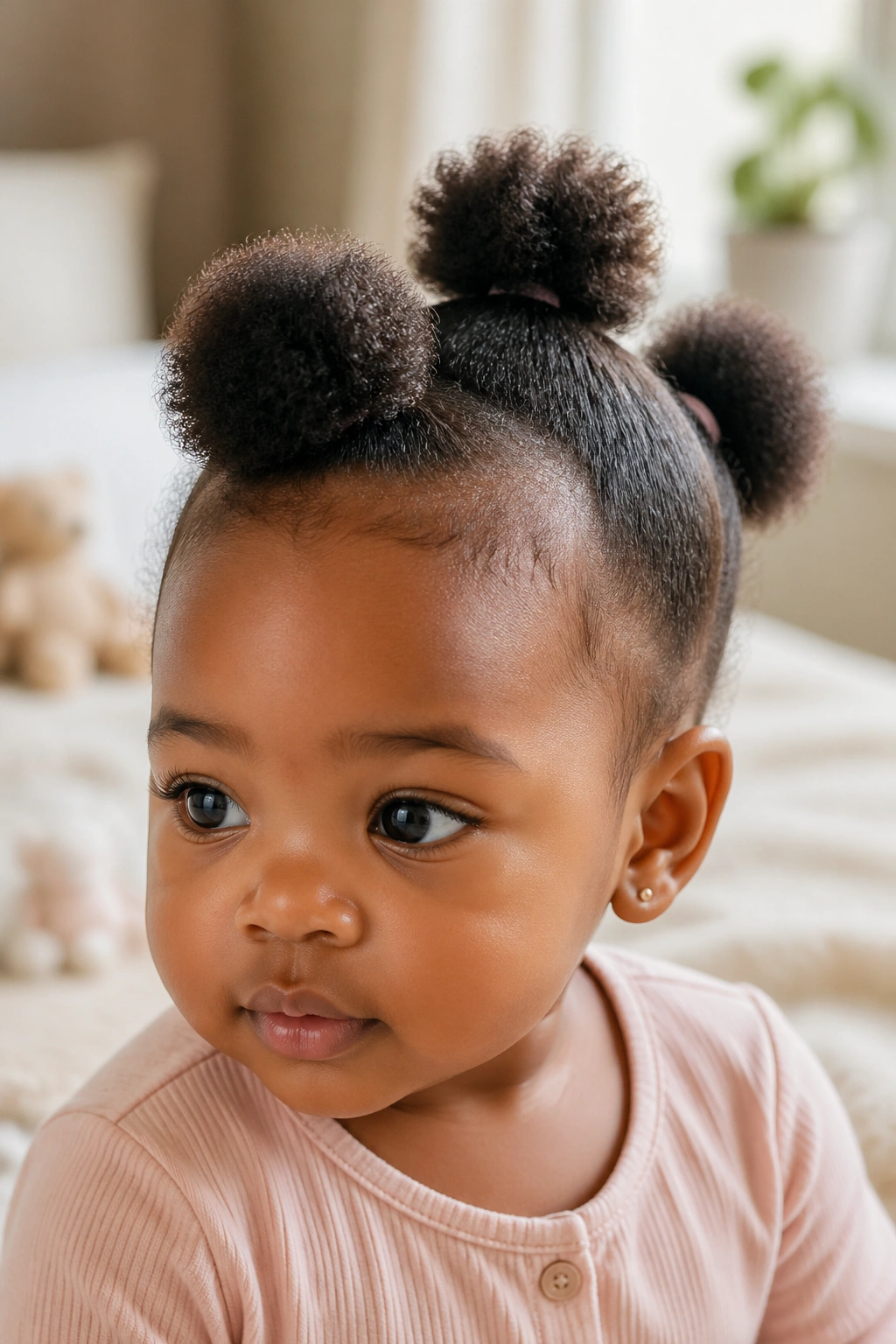
Divide the hair into three sections — one at the front crown, one at the middle, one at the back — and secure each in its own puff with a snag-free elastic. The three puffs run from front to back like a row of small pompoms.
This style looks more complex than it is, installs in about five minutes, and tends to stay neat longer than a single high puff because each smaller bundle has less movement.
16. Zigzag Part Cornrows
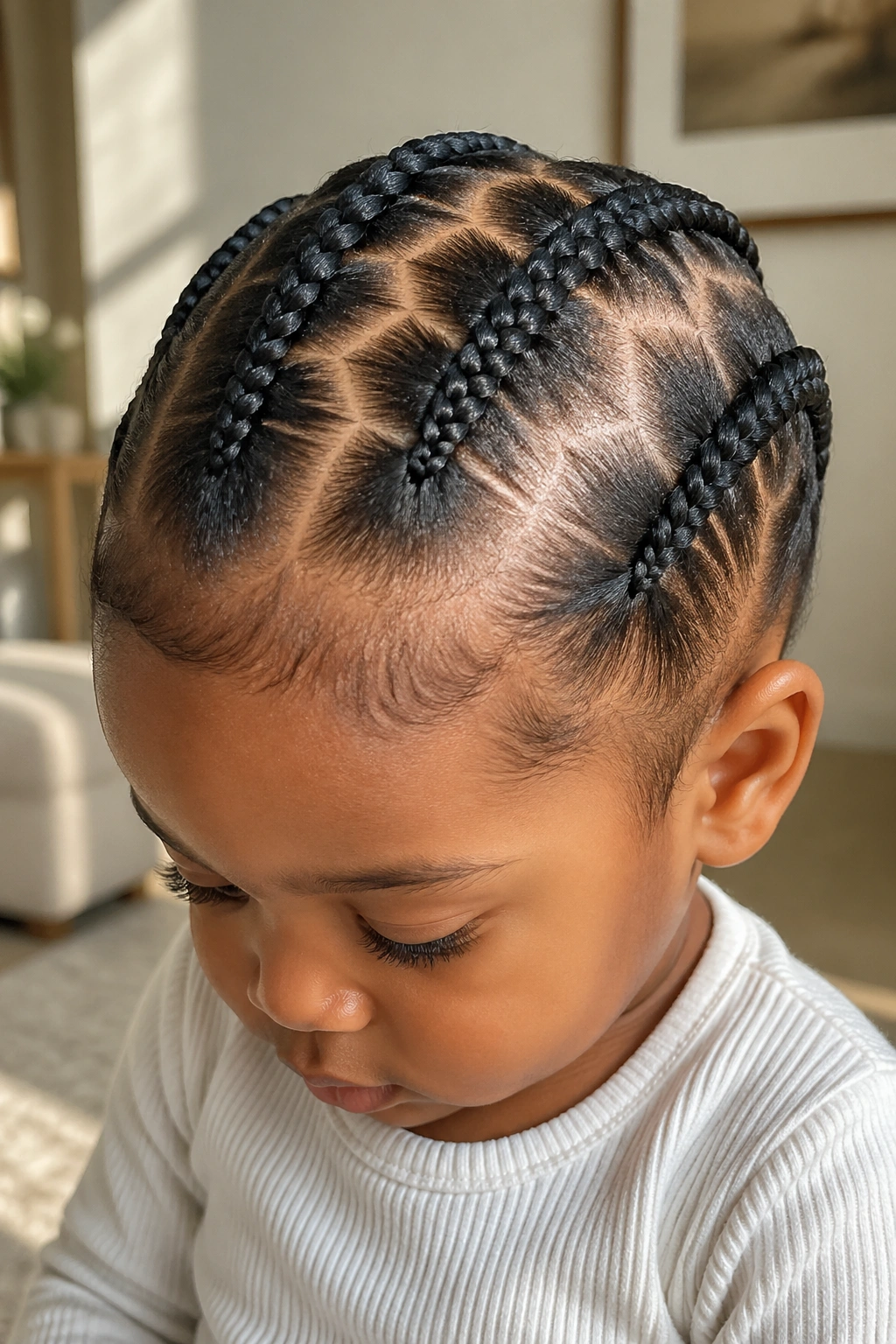
Standard cornrows use straight parts. Zigzag parts create cornrows with geometric interest — the row runs in a zigzag line rather than a straight one, and the braid follows that zigzag path across the scalp.
The technique is the same as straight cornrows. Only the parting is different. A sharp rat-tail comb creates the zigzag line, and then the braid follows.
For toddlers, two or three zigzag cornrows side by side create a noticeable visual effect without an overly long installation time.
17. Wash and Go Style
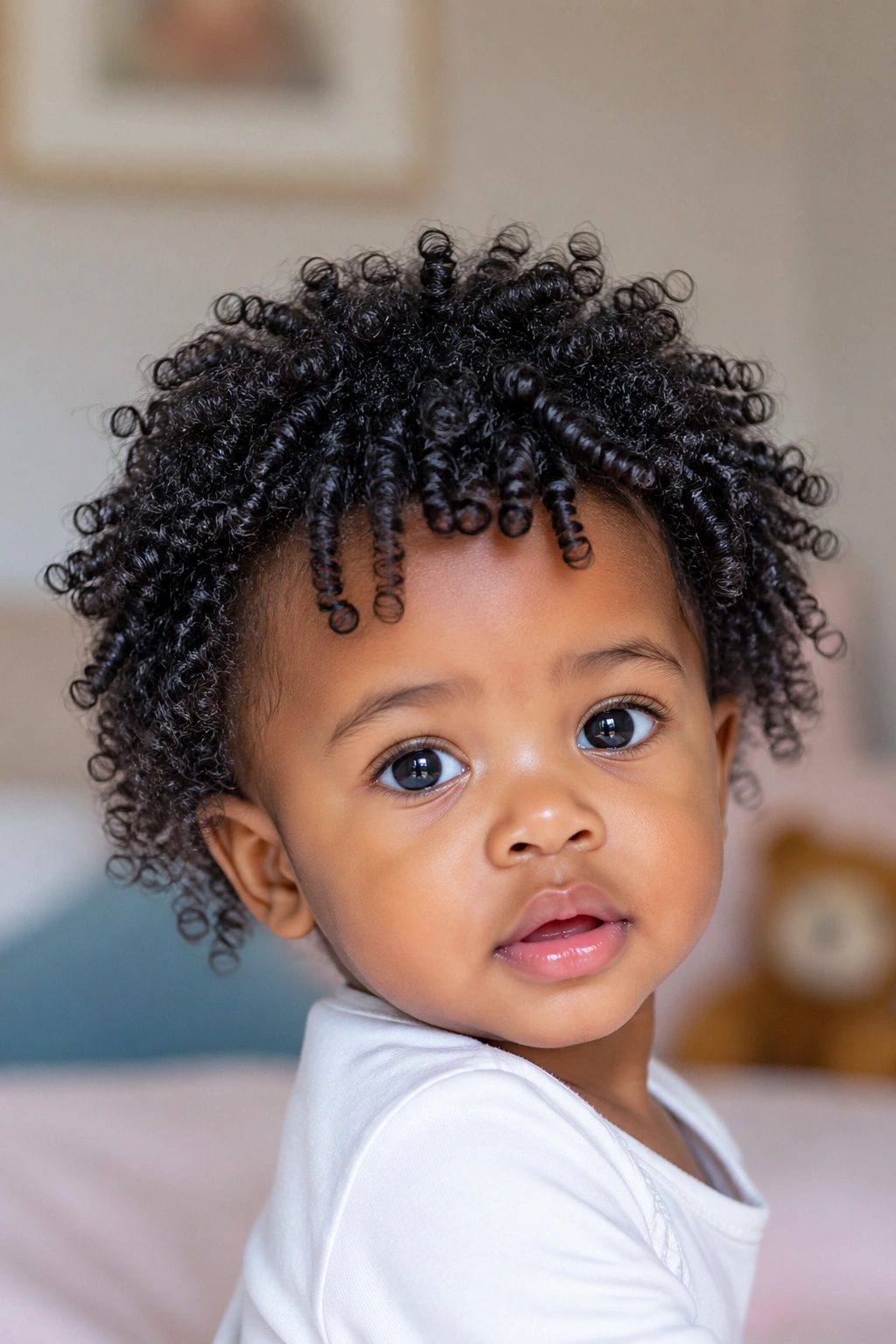
A wash and go is exactly what it sounds like: wash the hair, apply leave-in conditioner, apply a light curl-defining gel or cream, and let the natural curl pattern form as the hair dries. No twisting, no braiding, no manipulation beyond the product application.
For 4A and 4B toddler hair, wash and gos create beautifully defined curl clumps that look intentional without any styling effort. For 4C hair, the wash and go produces more of a textured, full look than defined spirals — which is also beautiful, just different.
Rake the gel or cream through the hair gently with your fingers, working from roots to ends. Don’t disturb the curl pattern once you’ve applied the product — let gravity and air do the work.
18. Braid-Out for Toddlers
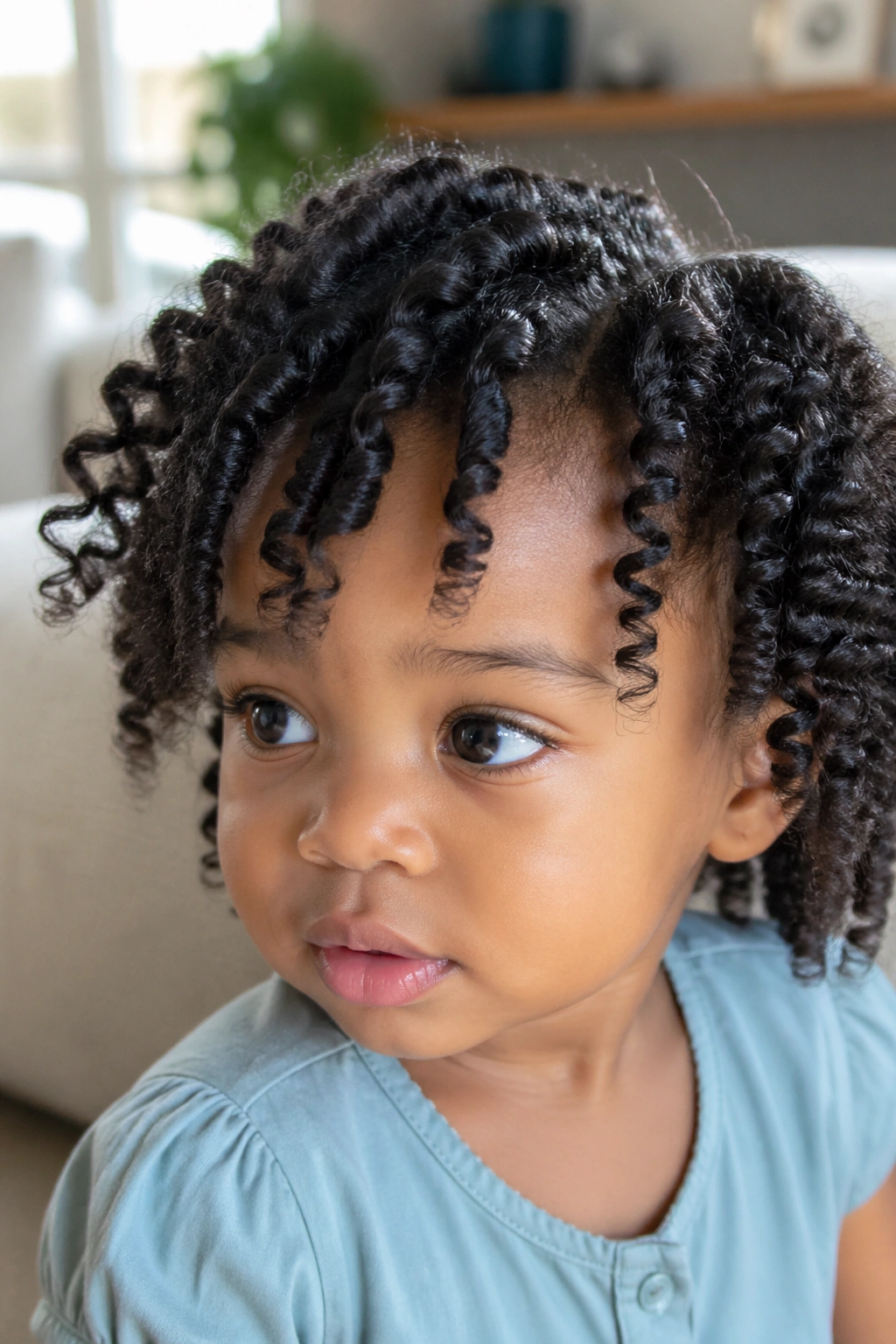
Like a twist-out, a braid-out uses the braid pattern as a setting tool rather than a final style. Braid the hair while damp — small or medium sections, not tight — and let it dry fully in the braided state. When you open the braids, the hair retains the crimp of the braid pattern, creating a beautiful, uniform wave or S-curl throughout.
Braid-outs tend to last one to two days on toddler hair before the pattern relaxes. They’re a good option for occasions when you want a defined, specific curl look.
19. Yarn Twists
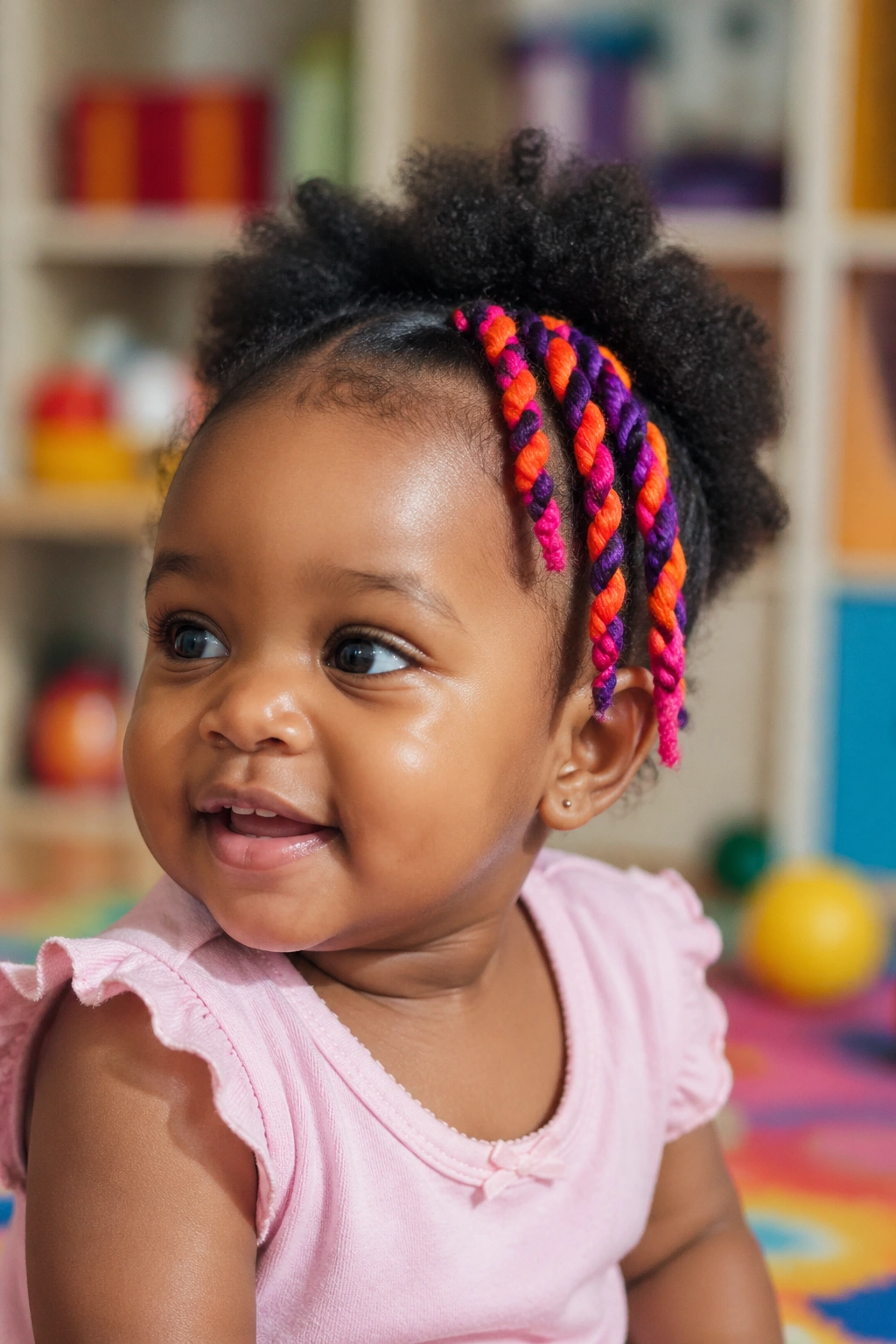
Yarn twists — made with soft acrylic yarn rather than synthetic extension hair — are a surprisingly good option for older toddlers and can be done at a small, manageable scale. Soft yarn is lightweight, doesn’t require heat to seal, and comes in every color imaginable.
For a toddler, install a small number of yarn twists at the front or sides of the head — not a full head installation, which would be too heavy — and leave the rest of the hair in a simple style. The yarn twists add color and fun without committing to a full protective style.
Use only soft, lightweight yarn. Rough or heavy yarn is uncomfortable and could irritate the scalp.
20. Knotless Mini Braids
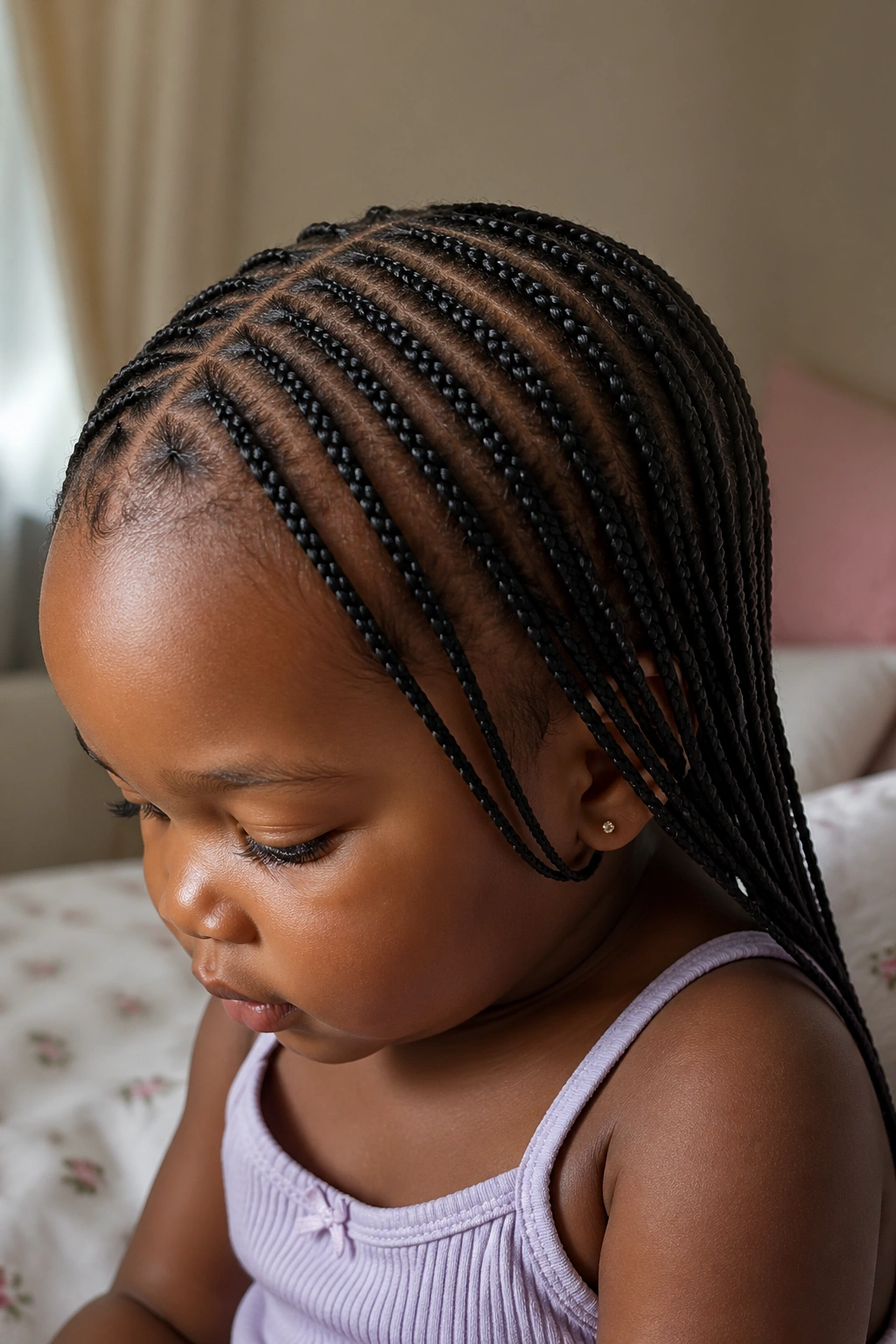
Knotless braids start without the knot that traditional box braids use at the base. Instead of tying the extension hair to the natural hair at the scalp, you gradually feed the extension hair into the braid as you work down the section. For toddlers using only their natural hair — no extensions — the knotless technique just means starting with a smooth, tight beginning to the braid without pulling a knot through.
The result at the scalp is noticeably flatter and more comfortable than traditional braids. For children with a sensitive scalp, knotless technique makes the style more wearable.
21. Headwrap Style
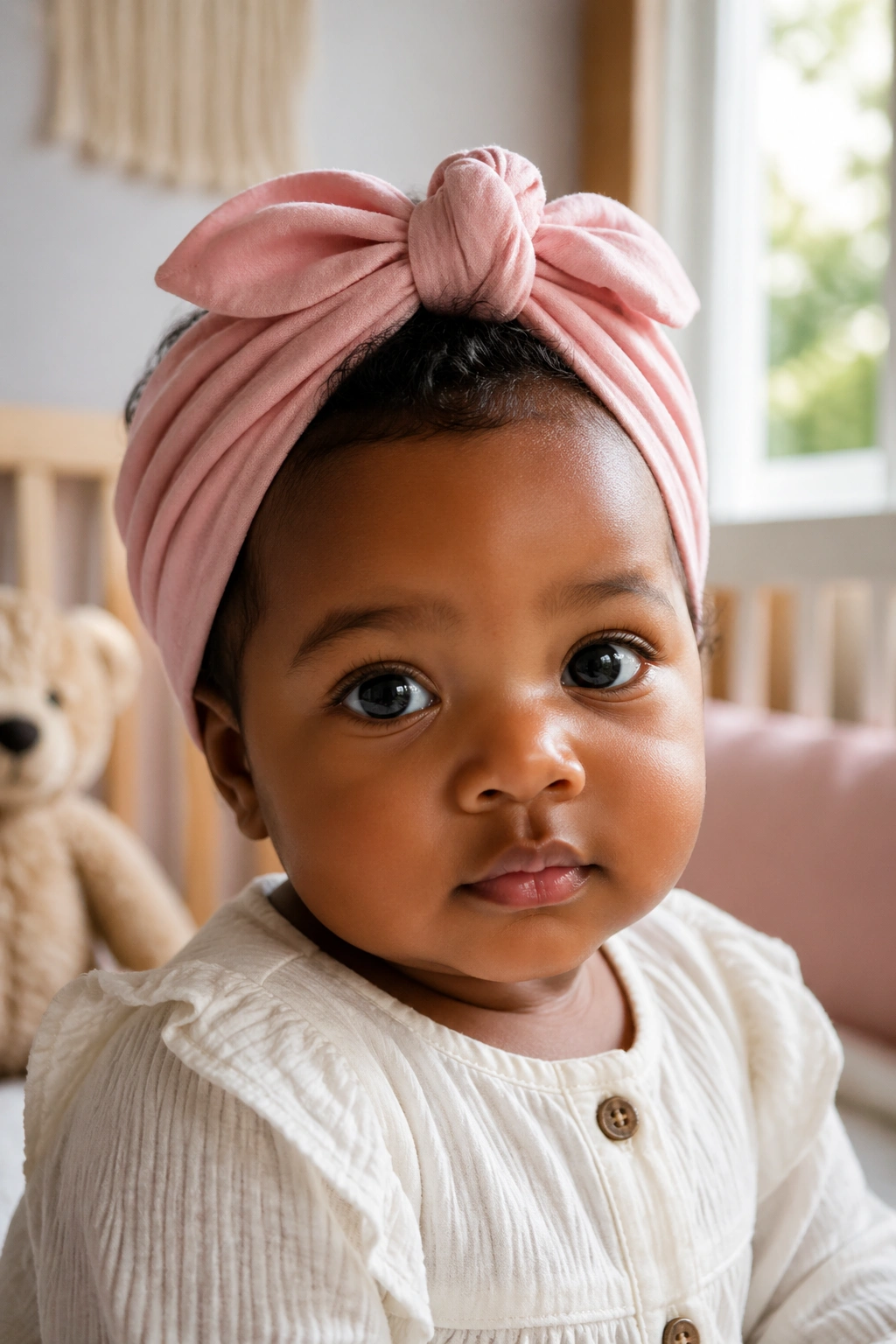
Some days, wrapping the hair in a soft fabric headwrap is the best option — for the child’s comfort, for time, or simply for aesthetics. A wide piece of soft cotton or jersey fabric wrapped around a baby’s head, folded into a knot or bow at the front, is a complete, intentional style.
For toddlers, headwraps need to be secure enough not to slide but loose enough to be comfortable. Fabrics with a small amount of stretch hold better without needing to be tied tightly.
Headwraps are also a practical protective option — they keep the hair tucked away from fingers, debris, and friction during active play, which is genuinely helpful for preservation.
Wash Day for Babies and Toddlers — What Actually Works
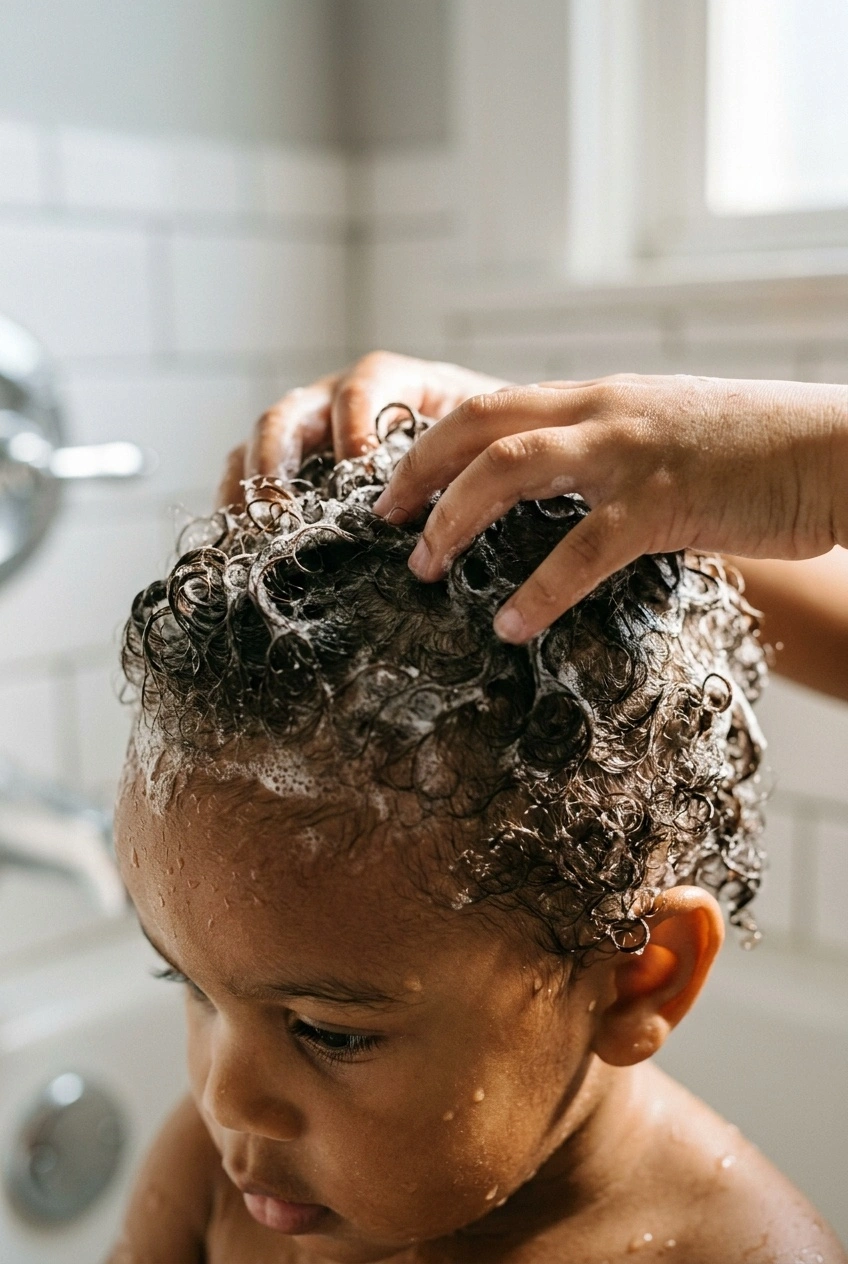
Baby hair needs washing every week to ten days. More frequently than that strips the natural oils that keep the scalp healthy. Less frequently and sebum, product, and environmental debris builds up enough to cause scalp irritation.
Use a fragrance-free, sulfate-free baby shampoo. Dilute it slightly in a small cup of water — two tablespoons of shampoo to half a cup of water — and apply the diluted mixture to the scalp directly, massaging with your fingertips in gentle circular motions. Rinse thoroughly.
Follow with a fragrance-free conditioner applied from mid-length to the ends. Leave it in for two to three minutes while you’re doing other bath activities, then rinse. The conditioner provides slip that makes detangling easier after the bath.
Detangle on wet, conditioned hair — never dry. Start at the ends with a wide-tooth comb and work upward. Patience here saves both breakage and tears.
What to Avoid During Baby and Toddler Hair Care
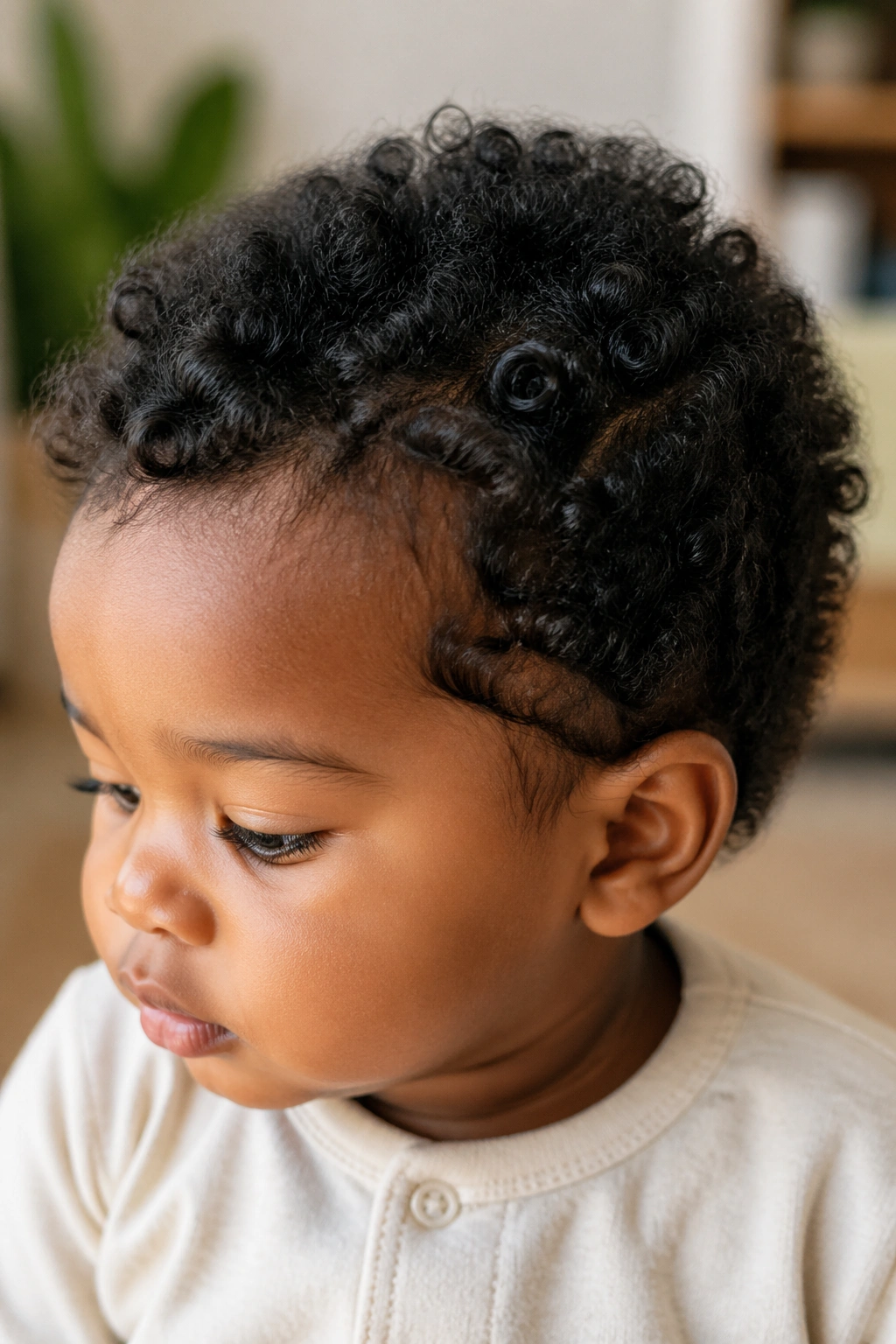
Tight elastics leave marks on the hair and put stress on the follicles. This is the number one mechanical cause of hair loss and breakage in young children. Any elastic that you can see indenting the hair shaft is too tight.
Avoid adult-formula products. They’re formulated for the concentration and needs of adult scalps, which are significantly different from a child’s scalp. Fragrances, sulfates, silicones, and alcohol-based products can cause dryness, irritation, and product buildup on baby hair.
Skip heat tools entirely during the toddler years. The hair strands are fine enough that even low heat settings cause damage, and heat styling isn’t necessary for any of the styles in this list.
Building Positive Hair Care Habits Early
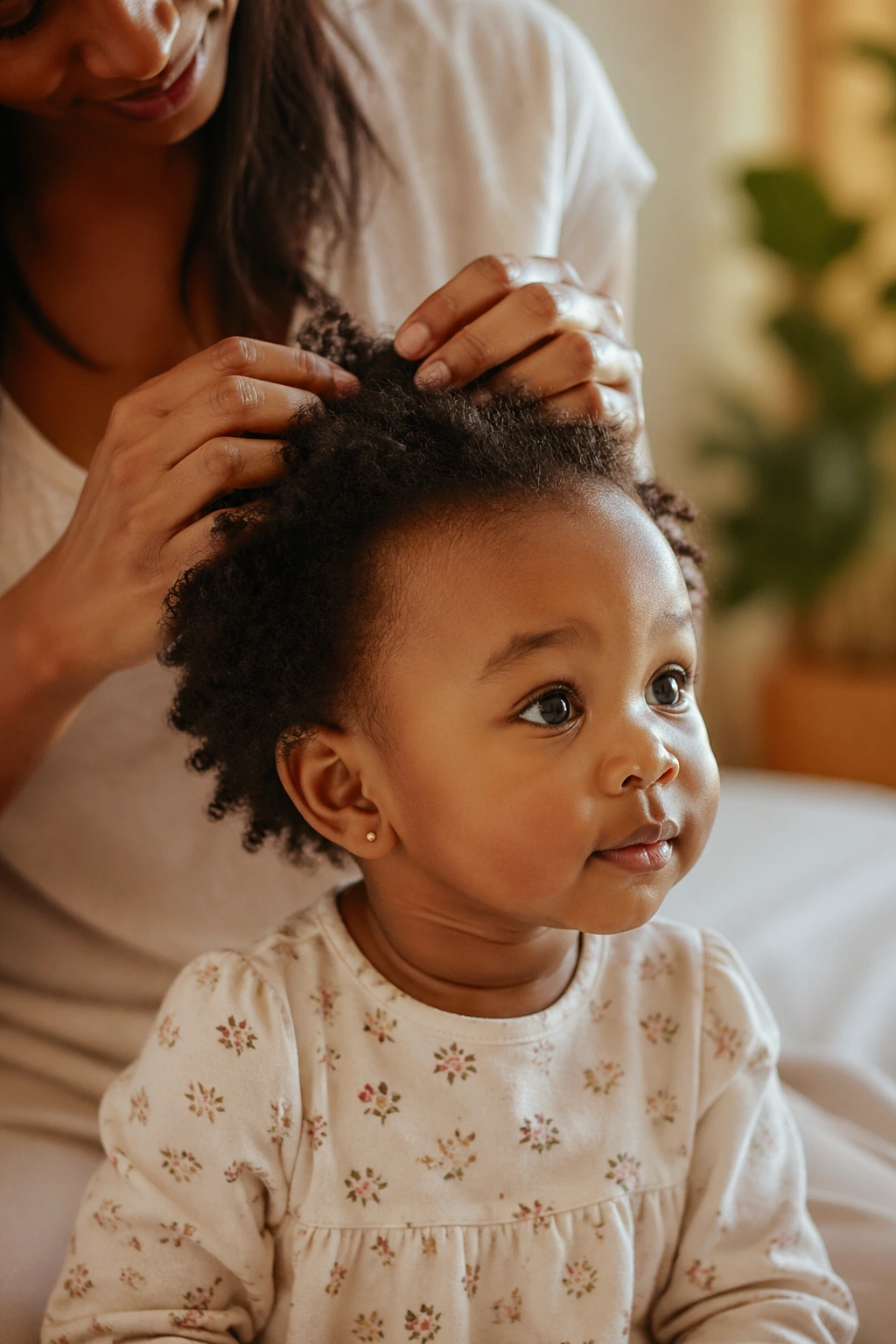
The habits a child develops around their hair in these early years shape how they relate to their hair as they grow older. Wash days that feel like a battle create children who dread and resist hair care as adults. Gentle, consistent routines — with positive reinforcement, with interesting distractions, with an attitude of care rather than frustration — build children who eventually participate in their own hair care with confidence.
Keep a consistent routine. Same day every week for washing. Same sequence: wash, condition, detangle, style. Predictability reduces resistance. Toddlers especially respond well to routine — when they know what comes next, they’re less likely to fight the process.
Celebrate the hair. Talk about it positively. Name the styles. Let children see their reflection and comment on how beautiful their hair is. This isn’t vanity — it’s identity formation. Children who grow up with positive associations around their natural texture don’t grow up wanting to change it.
Moisturizing Baby and Toddler Afro Hair Between Wash Days
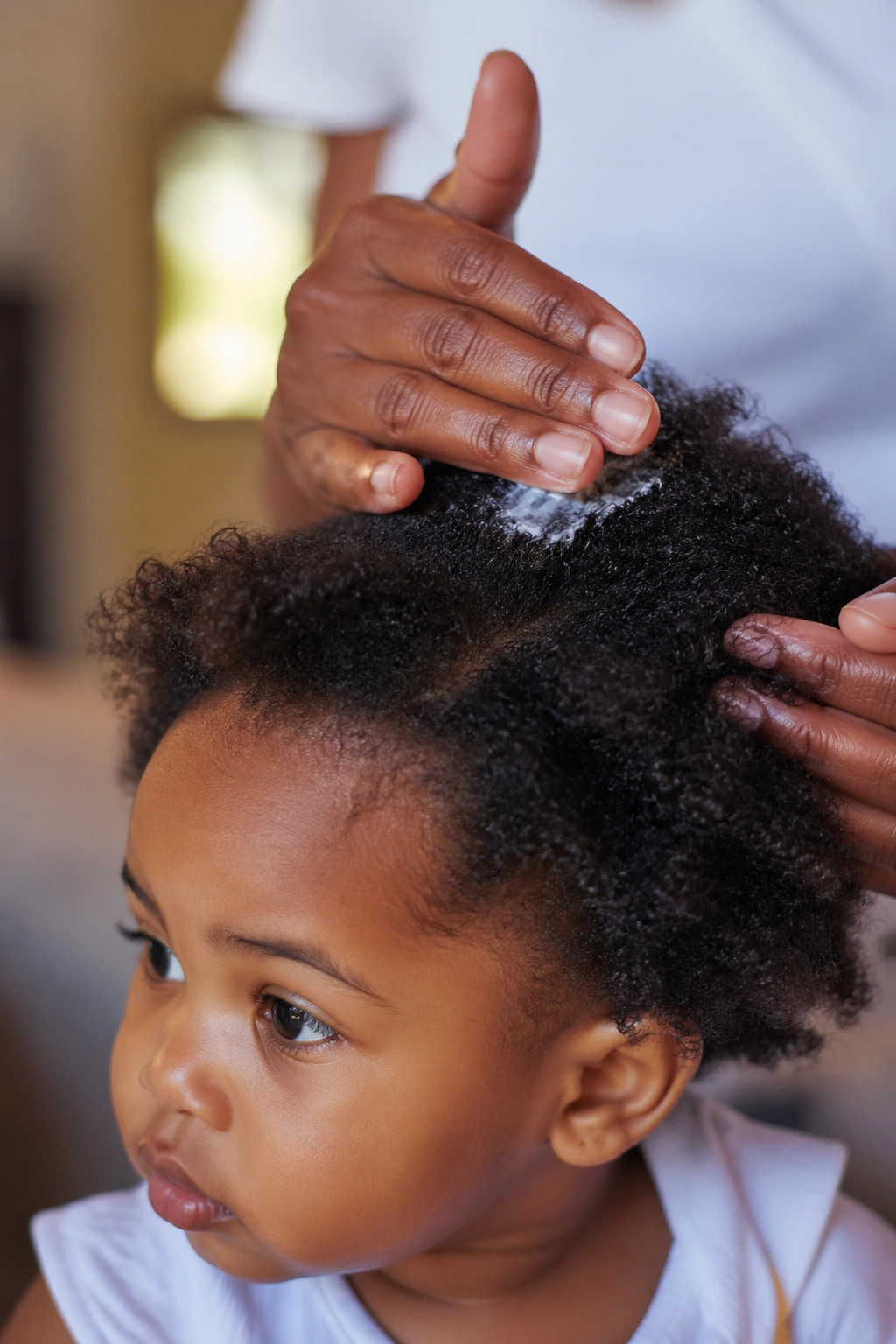
Natural hair — at any age — needs moisture to stay healthy, and baby hair is no different. The challenge with young children is that the products you’d use on your own hair are often too heavy or too fragranced for their scalps and strands.
The simplest moisturizing approach for babies and toddlers is the LOC method scaled way down. L stands for liquid — plain water spritzed lightly onto the hair. O stands for oil — a tiny amount of coconut oil or sweet almond oil patted onto the length. C stands for cream — a small dot of a fragrance-free hair cream or shea butter rubbed between the palms and then smoothed over the hair.
For babies under one year, you can often skip the oil and cream steps entirely. Plain water as a daily moisture top-up is usually enough to keep baby hair hydrated between weekly wash days. The scalp is producing natural oil — sebum — and that sebum is more abundant relative to hair volume in babies than it is in adults.
Toddler hair benefits from a slightly richer approach. The hair is growing faster, the length is increasing, and the ends are getting further from the scalp. A light leave-in conditioner — fragrance-free and diluted to about half strength with water — spritzed on the length a few times a week covers the moisture gap without leaving a heavy residue on the scalp.
Do not over-moisturize. Too much product on a toddler’s hair causes buildup faster than on adult hair because the hair strands are finer. Buildup leads to an itchy scalp, dull hair, and harder detangling sessions. A light approach maintained consistently is better than heavy application every few days.
Understanding Natural Hair Shrinkage in Young Children
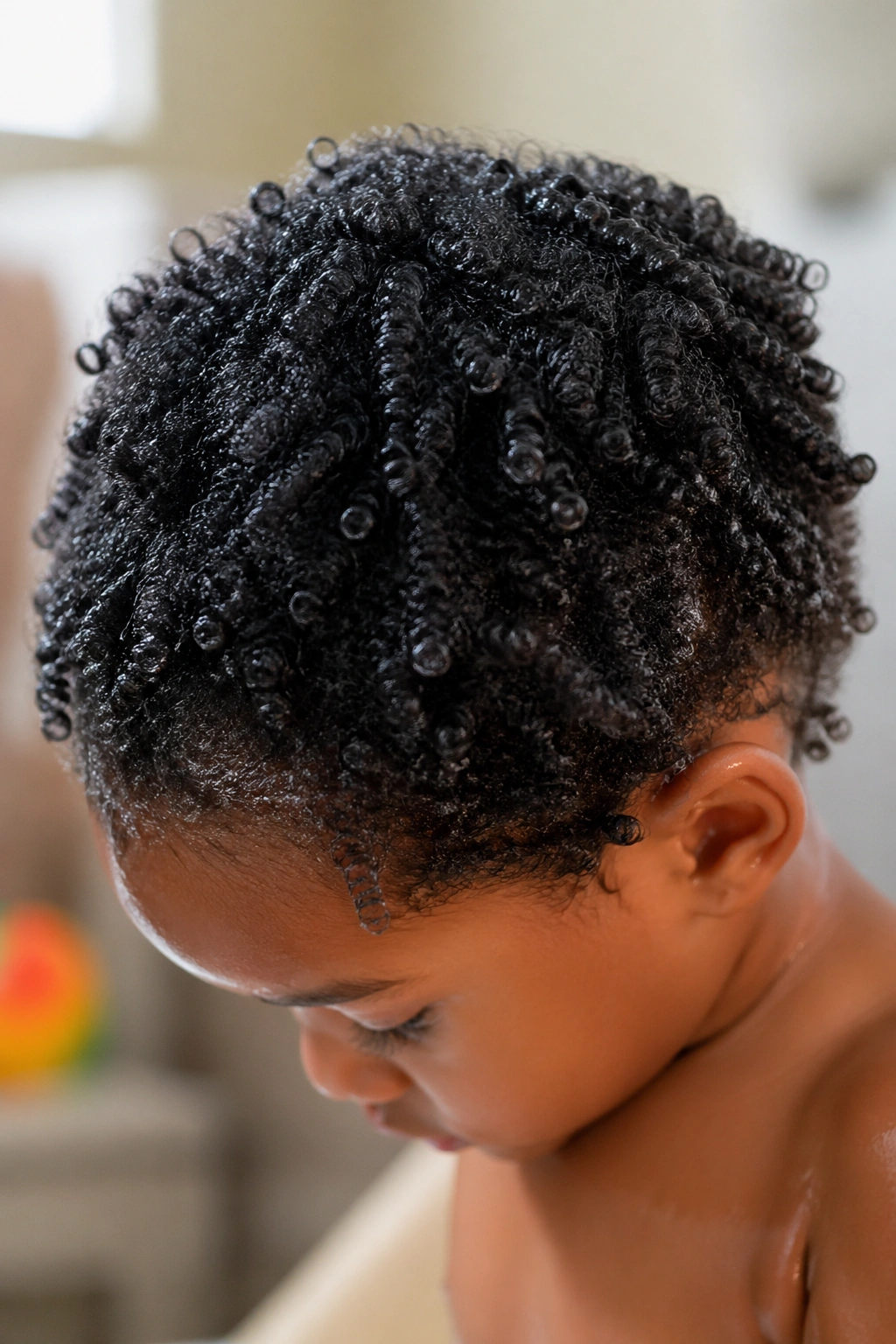
One of the most common sources of anxiety for parents of children with afro hair is shrinkage. You look at your child’s hair when it’s wet and stretched during a wash and see one length, and then it dries into what looks like half that length. This can feel alarming if you don’t know why it happens.
Shrinkage is caused by the coil or curl pattern of the hair — the tighter the curl, the more the strand contracts as it dries. A 4C strand can shrink up to 75% of its stretched length. This is a sign of healthy elasticity. Hair that doesn’t shrink doesn’t have good elasticity, and elasticity is what prevents breakage.
For parents who want to see the true length of the hair without the shrinkage, stretching techniques help. Banding — placing soft elastics at intervals along the length of small sections — stretches the hair gently as it dries without heat. By the time the bands are removed, the hair hangs longer and shows its growth better.
But a stretched length display is for your benefit, not a requirement. The shrinkage is healthy. The coiled, springy state of natural 4B and 4C hair in its unsretched form is its natural and correct state. Teaching children — and yourself — to appreciate that state rather than seeing it as a problem is one of the most important things you can do during these early years.
Protective Styling for Active Toddlers
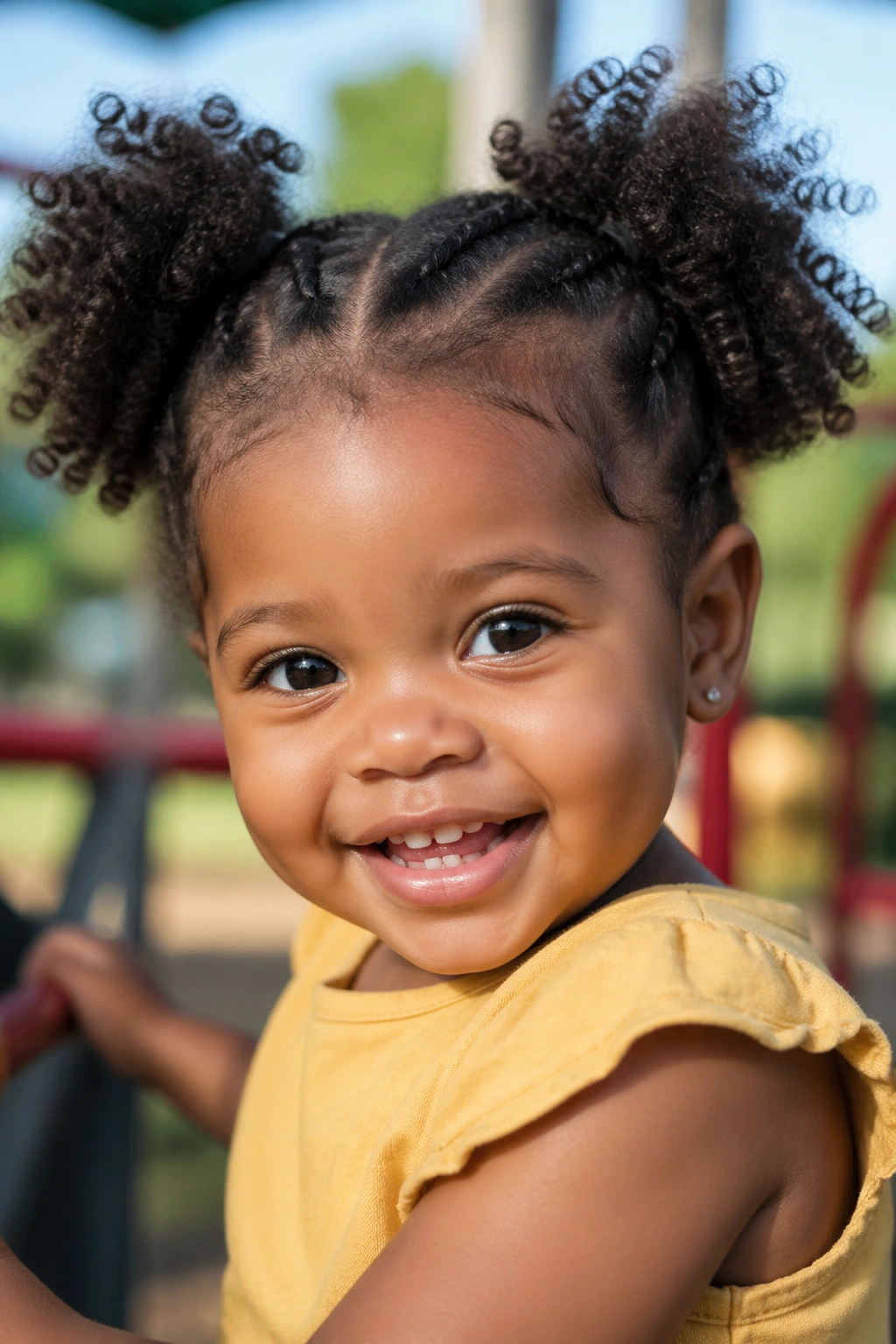
Toddlers move constantly. They roll on the floor. They slide headfirst down playground equipment. They sleep on whatever surface they land on. Hair styles for toddlers need to be able to survive this without creating traction problems or becoming a tangled disaster by mid-afternoon.
Styles that work best for active toddlers are ones with multiple anchor points rather than a single elastic. Twin puffs, three-puff rows, and cornrows all distribute the hair’s weight across several secured points, which means no single point takes all the strain when the child is tumbling around.
Avoid any style with long hanging extensions or beads on a very young toddler who is still at the stage of putting things in their mouth. Yarn twists and beaded accessories are great options for slightly older children — three and up — but need to wait until the mouthing phase has passed.
For nap time and nighttime, loose styles are better than tightly gathered ones. A simple loose braid or a soft scrunchie holding a gentle puff are comfortable for sleeping. Tight braids against the scalp or elastics left in overnight can cause discomfort and may pull at the roots as the child moves during sleep.
Responding to Other People’s Comments About Your Child’s Hair

Every parent of a child with natural afro hair has experienced unsolicited comments. Some of them are well-meaning but still land wrong — “Oh, doesn’t she need it combed?” or “Have you tried brushing it more?” Others are more pointed. Knowing how to respond, and knowing what to teach your child about those comments, is part of raising a child who loves their natural texture.
Short redirections work. “Her hair is healthy and beautifully maintained, thank you” is a complete sentence. You don’t owe anyone an explanation of your child’s hair type, your styling choices, or your care routine.
What matters more is the message your child receives. They are watching how you respond. A relaxed, confident response — or a warm but firm one — models for them how to handle similar comments as they grow older. If you bristle with defensiveness or embarrassment, they absorb that too.
Talk to your child about their hair in positive, specific terms. Not just “your hair is beautiful” — though say that too — but “your hair is so springy and strong” and “look how it grows up and out, not straight down” and “your curls hold this shape all by themselves.” Specific language about specific qualities builds specific pride, which is more durable than general praise.
When to See a Professional for Your Child’s Hair
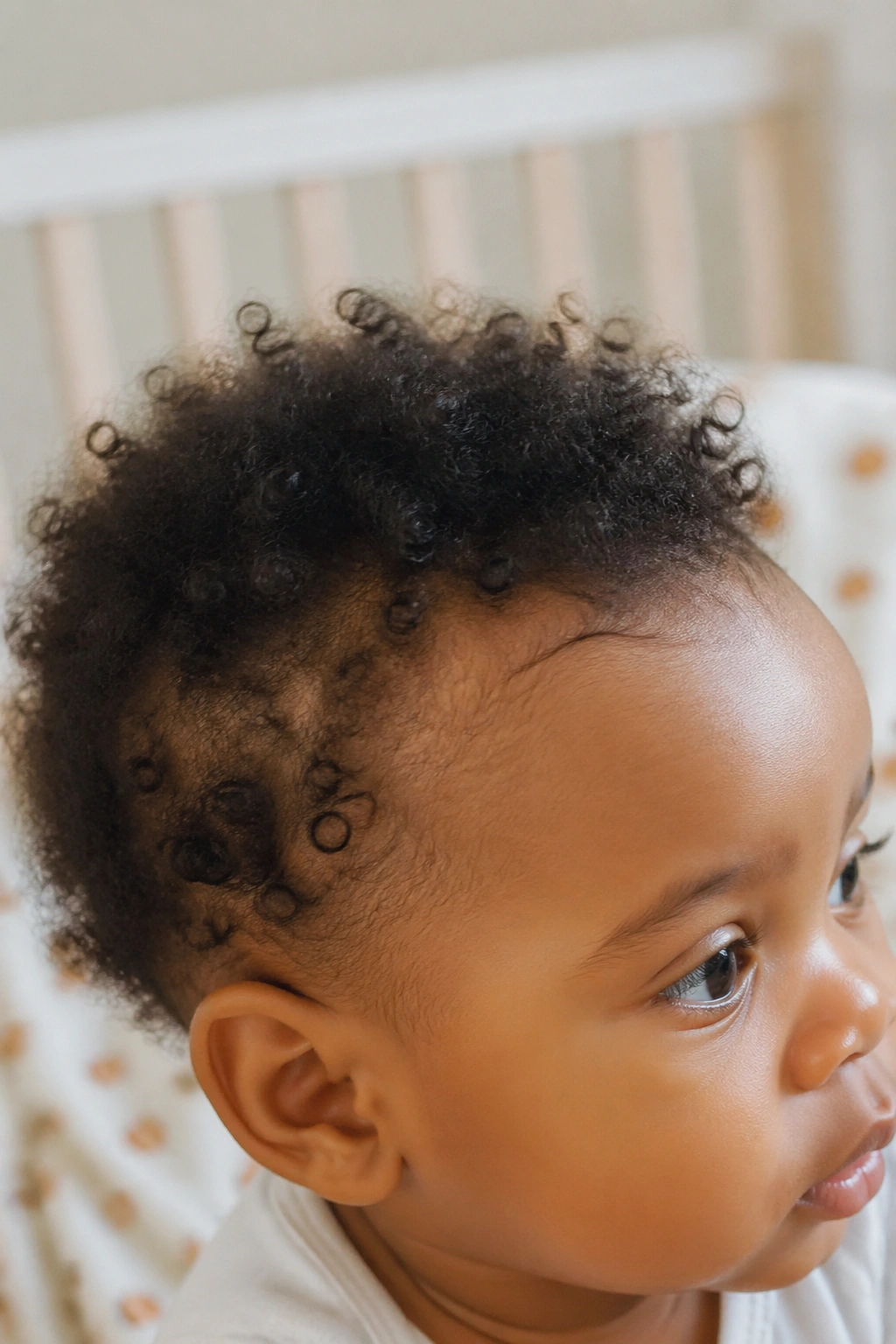
Most baby and toddler hair care can be handled at home with the right products and techniques. But there are situations where a professional consultation is worth pursuing.
If your child’s scalp is consistently scaly, flaky, or inflamed despite regular gentle washing, a pediatric dermatologist can rule out conditions like seborrheic dermatitis or eczema that require specific treatment. These are common in young children and respond well to appropriate care once properly diagnosed.
If you notice patchy hair loss on the scalp — not the normal diffuse shedding of baby hair in the first year, but distinct patches where hair is thin or absent — see a pediatrician. This can indicate alopecia areata, a condition that affects children of all backgrounds and is manageable with the right approach.
For styling specifically, visiting a loctician or a braider who specializes in children’s hair for a first formal style is worth doing rather than trying to navigate alone. Someone who works with children knows how to manage a squirming toddler, how to keep the session short, and how much tension is too much for a child’s follicles. This first professional experience sets the template for how your child understands professional hair care.
